Photos: Isa Farfan/Hyperallergic. A light well at the recently reopened Studio Art Museum in Harlem.
Suzanne and Erik lived in Harlem before they moved to Rhode Island. They loved their apartment, and they loved being able to enjoy so many of the things New York City has to offer. One of the attractions of Harlem itself was the Studio Art Museum, which now has an impressive new building, after being closed from 2018 to 2025.
Isa Farfan writes at the art magazine Hyperallergic, “The Studio Museum in Harlem has a new, stunning home. The 57-year-old New York institution, dedicated to artists of African descent, [has] inaugurated its new building. …
“Founded by a group of artists and activists, the museum closed its 125th Street location in 2018 to undergo construction of a new building, the first specifically created for the arts institution. The Studio Museum originally opened at a site on Fifth Avenue before moving to its current home on 125th Street and Adam Clayton Powell Jr. Boulevard in the 1980s, the former New York Bank of Savings building. The striking 82,000-square-foot (~7,618-square-meter) new building at the same site was designed by Adjaye Associates with Cooper Robertson. …
” ‘I have truly missed having our physical space,’ Director and Chief Curator Thelma Golden told Hyperallergic. ‘In the years we’ve been closed, our visitors, friends, members, and artists have made it known how much they miss us; everywhere I go.’
“The museum is debuting a series of inaugural exhibitions, including‘Tom Lloyd,’ a one-gallery career survey of the artist-activist’s flashing light sculptures. Works from the museum’s approximately 9,000-item collection span three galleries as part of the exhibition ‘From Now: A Collection in Context,’ which will feature a rotating display.
“Though the construction was delayed in part due to the COVID-19 pandemic, Studio Museum Curator Connie Choi told Hyperallergic that the extended timeline gave the institution a chance to look deeper within itself.
” ‘It allowed us the opportunity to do a deep dive into understanding our collection holdings, to do research, conservation, and framing,’ Choi said. ‘We’ve also done a deep dive into our institutional history in a way that we haven’t been able to do before.’
” ‘We thought very hard about how to be present while closed,’ Golden added. During its seven-year closure,the institution launched several collaborations, including the traveling exhibition ‘Black Refractions: Highlights from The Studio Museum.’ …
“Choi said she’s most excited about the Lloyd survey, noting that he was the first artist to participate in the museum’s studio program.
” ‘It’s a space of contemplation, even as the works themselves are blinking and exciting,’ Choi said. ‘We are hoping that people can slow down; they are coming off of 125th street, which is the busiest street in Harlem, into a space that allows a moment of rest and respite and contemplation of artwork.’ “
More at Hyperallergic, here. The photos of the new building really make me want to see it.
Elizabeth Catlett’s “Mother and Child” (1993) on display in “From Now: A Collection in Context” at the Studio Art Museum.
Photo: Claire Kirch. Ashley Valentine (r) of Rooted MKE, a BIPOC children’s bookstore in Milwaukee processes the membership of Shannon Taylor (c) of Pages & Volumes Bookstore in Washington, DC, while Darnelle McGuire-Nelson (l) of B & E’s Literary Treasures in Alexandria, Va. observes during New Voices New Rooms in Atlanta.
The publishing world is in a strange place right now, reaching for good literature as usual but afraid to offend anyone. So it looks like bringing worthy new voices into this environment may be harder than ever. That’s why a new organization of African American booksellers is poised to help.
Publisher’s Weekly has the story.
“The National Association of Black Bookstores, a member-based nonprofit organization which aims to support and promote Black booksellers, announced its launch [recently]. Its mission, NAB2 said in the announcement, includes ‘promoting literacy, amplifying Black voices, and preserving Black culture.’ …
“NAB2 was founded by Kevin Johnson, the owner of Underground Books in Sacramento, Calif., who is also a former professional basketball player and the mayor of that city between 2008-2016. The organization’s board represents a mix of seasoned owners of historic stores and young booksellers who have opened stores in recent years. Among the board members are Maati Primm of Marahall’s Music and Book Store in Jackson, Miss., founded in 1938, and Yvonne Black of Hakim’s Bookstore in Philadelphia, founded in 1959, as well as and Onikah Asamoa-Caesar of Fulton Street Books & Coffee in Tulsa, Okla., and Dara Landry of Class Bookstore in Houston, both founded in 2020.
“Other board members include some of the most prominent names in bookselling: Jordan Harris of Alkebu-Lan Images in Nashville; Janet Webster Jones of Source Booksellers in Detroit; Blanche Richardson of Marcus Books in Oakland, Calif.; and Troy Johnson of African American Book Lit Club in Tampa, Fla. Author Lucille O’Neal, best known as the mother of former basketball player Shaquille O’Neal, is also a board member. …
“Johnson was adamant that Black booksellers should not consider membership in NAB2 as an alternative to membership in the American Booksellers Association, which has recently come under fire for not addressing the concerns and needs of Black booksellers. In response to these criticisms, which came to the fore during a contentious community forum at Winter Institute 2024 in Cincinnati, the ABA sponsored pre-conference programming just for BIPOC booksellers at WI2025 in Denver and Children’s Institute in Portland. …
“NAB2 board members are in full agreement that Black booksellers need an organization that addresses their unique needs. Jones told PW that NAB2 is ‘an effort to pull together Black booksellers and stores in an overarching organization that would not just advocate, but also partner with other aspects of the industry.’ …
“Landry told PW that she has witnessed ‘firsthand how vital Black bookstores are to our communities — not just as places to buy books, but as cultural hubs, safe spaces, and sources of truth and empowerment. I think NAB2 is necessary because it helps connects us, amplifies our collective voice, and reminds us that we are not doing this work in isolation. We’re part of a larger legacy.’ …
“Jones and Landry both emphasized the potential of NAB2 as a vehicle to make the industry more accessible, not just for Black booksellers but also Black authors and readers; distribution, they both pointed out, is a key component in achieving this goal. Landry said she and others affiliated with NABB are committed to ‘making it easier for independent Black-owned stores to get access to the titles our readers are hungry for, while also lifting up indie Black authors who often struggle to get shelf space. Representation matters at every level.’
“The ABA registered its own enthusiasm for the new venture as well, with communications director Ray Daniels [saying] ‘several ABA members are founding board members and we look forward to working with their organization.’ …
“There is some divergence among the Black bookselling community as to how best to achieve their common goal to open up the book publishing industry to Black booksellers, authors, and readers. Last week, Ramunda Lark Young, the owner of Mahogany Books in the Washington, D.C., metro area and cofounder of the Black Bookstore Coalition [BBC] sent out a public letter disclosing that Kevin Johnson had approached BBC leaders with the suggestion that the two groups merge into one group under Johnson’s leadership. …
“ ‘After thoughtful discussion and a leadership vote, we’ve decided not to align with [NAB2] and will continue our work independently,’ Young wrote. ‘Our decision was shaped by member concerns about the significant overlap in missions, the timing and rollout of the request, and elements of Mr. Johnson’s public record that warrant reflection and due diligence.’ …
“Noting that BBC had launched a number of initiatives in the past five years, among them the Black Bookstore Coalition Bestsellers List and the Black Lit Weekend celebration of books, which is led by NAB2 board member Asamoa-Caesar of Fulton Street Books, Young said he was poised to ‘take the next steps toward formalizing our leadership structure to push this group further. … We believe there’s room for multiple efforts to thrive.”
Photo: Magdalena Wosinska for the New York Times. Ian White, an artist, against a burned house across from the park named for his celebrated father, the painter Charles White.
The outside world never knew much about the generations of Black artists enriching life in Altadena — not until after the town burned down.
As Sam Lubell wrote in February at the New York Times, “Before the Eaton fire raced across Altadena, destroying more than 9,000 of its buildings, many, even in nearby Los Angeles, barely knew of the place’s existence. This sleepy 42,000-person hamlet hugging the glowing foothills of the San Gabriel Mountains is not part of that city but an unincorporated community of Los Angeles County, and just far enough off the beaten track to blissfully avoid notice.
“Once typified by its bucolic quirkiness, tight-knit neighborhoods and generations-old churches and businesses, Altadena now consists of row after row of twisted, charred building remains, scorched car chassis, blinking or broken stoplights and the occasional khaki National Guard Humvee. The future, for now, is filled with toxic cleanup, insurance adjustments and conflicting visions for rebuilding.
“Yet the past has gained newfound prominence. With so much gone, Altadena’s histories are being unearthed, by residents, scholars and preservationists who say they may hold a key to making this a special place once again, and provide anchors for those weighing whether to stay.
“One of the most profound of Altadena’s legacies — its spectacular story of Black creative culture — had been buried not only under its seclusion, but also under layers of racial and institutional apathy, the loose accounting of informal memory, and the absence of formal plaques and other preservation markers. The fire has spurred calls for a more rigorous approach to remembrance.
“ ‘Sometimes it takes a tragedy for people to mark history,’ said Brandon Lamar, president of the N.A.A.C.P.’s Pasadena branch, whose own home was destroyed, as was his school, his grandparents’ home and their church. But that destruction, he noted, ‘does not mean that we can’t create public memories in spaces now, so that people can remember this information for generations to come.’
“Starting in the 1950s and ’60s, the west side of Altadena (and parts of neighboring northwest Pasadena not bulldozed for the 210 and 134 Freeways) drew middle-class Black families eager to buy homes.
“Many came because the redlining — discriminatory lending by banks — was less severe here, and some of the schools had been integrated comparatively early. The area became a magnet not just for Black teachers and social workers but also for Black artists from around the country, drawn to its affordability, inventive vibe, gorgeous mountain backdrop and general spirit of permissiveness.
“ ‘It had this energy of bohemian California,’ said Solomon Salim Moore, assistant curator of collections at the Benton Museum of Art at Pomona College. ‘You could have a little less scrutiny and a little more room to do your projects.’
“On Feb. 22, as part the Frieze Los Angeles art fair, a discussion called ‘Land Memories’ will feature artists’ recollections of this unique legacy. The talk will be co-hosted by the Black Trustee Alliance for Art Museums, which will also share oral histories recorded from Altadena artists and residents, and collect new histories.
“Moore, who is also an artist, grew up in Altadena and said that its nonconformist spirit has endured to the present, even as prices have climbed and the Black population has fallen, according to the U.C.L.A. Bunche Center for African American Studies, to about 18 percent from 43 percent in 1980. Artists here, he said, loved that they could set up informal studios or even family compounds, or that they could enjoy little freedoms like hosting parties without friends worrying about permit parking.
“Sometimes creative people need to step away because you need to get out of the light to see,” said Ian White, an artist, teacher and the son of Charles White, the renowned painter and printmaker whose haunting depictions of African Americans, their struggles and dignity, inspired generations of artists. He spent the last 20 years of his life in Altadena and is buried at the community’s Mountain View Cemetery. Ian lives in a house next to his father’s modest home (which he also owns) in the Meadows, a district along Altadena’s west edge that in the 1950s and ’60s became one of the first here to integrate. Virtually all of the Meadows survived the fire.
“Also living west of Lake Avenue (then the unofficial dividing line between white Altadena and Black Altadena) was John Outterbridge, the noted assemblage artist and longtime director of the Watts Towers Arts Center. His home on Fair Oaks Avenue was destroyed, along with much of his archive and family memorabilia, according to his daughter, Tami. The famed enamel artist Curtis Tann lived within walking distance, while the prolific sculptor Nathaniel Bustion, known as Sonny, lived near White in the Meadows. Betye Saar, 98, known for repurposing everyday objects into mystical collages, grew up in a home on northwest Pasadena’s Pepper Street, just blocks from Altadena’s west side.
Sidney Poitier, a good friend of White’s from New York, and the first Black actor to win an Academy Award, rented a home in west Altadena before moving to Beverly Hills.
“Ivan Dixon, the actor and trailblazing director, lived on Marengo Avenue, and the science fiction writer Octavia Butler on Morada Place.
“Later generations of Black artists continued to thrive here, including Mark Steven Greenfield, Yvonne Cole Meo, Senga Nengudi and Michael Chukes, and dozens of others holding down day jobs and creating whenever they could in this secret Eden.
“Charles White, already an established figure when he moved from New York in 1959 for health reasons — he had respiratory problems and was advised to live in a milder climate — would become the glue holding this arts community together. His home and studio, still standing, was a gathering place, with many artists competing for the honor of driving White to or from one place or another. (He didn’t drive.)
“Ian still refers to Dixon, Poitier and Charles’s good friend Harry Belafonte as his ‘fictive uncles.’ He recalled how his father set up the sculptor Richmond Barthé, a cornerstone of the Harlem Renaissance, with an apartment, and how his mother, a social worker named Frances Barrett, was his caregiver until the end.”
Photo: María Magdalena Arréllaga. “People dance into the wee hours,” writes the New York Times. “For many young Brazilians, the charme scene has become a symbol of Black identity and culture unique to Rio’s working-class areas.”
I’m always grateful when the mainstream media digs into an aspect of another culture, something I know nothing about. Today we learn of a vibrant scene that has thrilled thousands of people since the 1970s. And what did I know about it before? Nothing.
Ana Ionova writes at the New York Times, “Trucks, buses and cars rumbled overhead, drowning out Marcus Azevedo’s voice. In the distance, sirens blared and exhaust pipes backfired. From under a highway overpass, Mr. Azevedo, a dance teacher, shouted over the noise, ‘Five, six, seven, eight!’
“He hit play on his phone, and the first song started blasting from a pair of crackling speakers. Six rows of dancers began shuffling, twisting and popping their hips in unison. The playlist? All R&B classics. …
“The dance routine wouldn’t have been out of place in New York City or Atlanta or Los Angeles. But we were on the decaying fringes of Rio de Janeiro, a metropolis better known for samba. And this dance is called charme, a style born here in the 1970s as an ode to American soul, funk and, later, R&B.
“This spot, in the working-class suburb of Madureira, has become a temple for lovers of charmeover the decades. By day, it’s where many hone their moves. Once mastered, the steps are flaunted at nighttime parties known as ‘baile charme.’
“ ‘This is a magical place,’ said Mr. Azevedo, 46, who began dancing charme — Portuguese for charm — when he was 11 and now leads a dance company focused on the style. ‘There is something spiritual, an energy that can only be found here.’
“But the old-school R&B tracks shouldn’t fool anyone into thinking that this is a nostalgic crowd yearning for a throwback. This hotbed of charme is attracting an increasingly younger crop of dancers, who are keeping the scene alive — and transforming it in surprising ways.
“On a recent muggy Saturday morning, a few dozen people — from restless children and lanky teenagers to men and women in their 50s and 60s — flocked to the shady overpass. They were there for a class led by Mr. Azevedo and three other instructors, all part of a program meant to introduce charme to more people.
“A small group practiced steps before class started. ‘It’s not hard — a little step here, a little step there,’ said Juliana Bittencourt, 30, an administrative assistant, showing a fellow student how it’s done. ‘Charme is medicine, it has the power to cure anything.’
“Geovana Cruz, 20, a bank teller who had come from São Paulo by bus that morning, excitedly stepped into the front row of dancers.
“ ‘It’s addictive,’ said Ms. Cruz, who comes nearly every week and whose charme dance routines on TikTok draw thousands of likes. …
“ ‘Charme is not just music,’ said Larissa Rodrigues Martins, 25, a schoolteacher. ‘It’s a place where we share and learn from each other — not just about steps, but also about life.’ …
“The birth of charme is rooted in the influx of Black music and culture from the United States in the 1970s and 1980s. At a time when Rio’s far-flung, impoverished outskirts offered young people few sources of pride or identity, the rhythm and style of American artists like James Brown and Stevie Wonder emerged as an inspiration.
“One night in 1980, a D.J. named Corello was working at a club and decided to mix in some Marvin Gaye. ‘Now it’s time for a little charme, slow your body down,’ he called out. The term stuck and came to define the homegrown urban dance movement.
“After many Black social clubs went out of business in the 1990s, charme lovers moved the party to the nearby Madureira overpass, where they could dance undisturbed. …
“The movements that define the dance are at once familiar to urban street dancers yet uniquely ‘Carioca,’ as anyone or anything from Rio de Janeiro is known. The swings carry a hint of bossa nova’s sway; the two-steps have a distinct samba flavor; and the bold hip bounces channel Brazilian funk. …
“For many younger people, the charme scene under the overpass has increasingly become a symbol of Black identity and culture that is unique to Rio’s working-class neighborhoods.
“ ‘This is our ancestry,’ Ms. Martins said. ‘The previous generation showed us this space where we can express ourselves.’
“During the nighttime partying, older revelers mostly hung back. They swayed, stepped and turned with more subtle, sensual movements. ‘We learn from the new kids, and they learn from us,’ said Bruno Oliveira, 44, a clothes salesman wearing a bejeweled cap. ‘It’s love, it’s peace.’ ”
More at the Times, here. Great pictures, especially the videos.
Photo: Debra Brehmer/Hyperallergic. Installation view of Nordic Utopia? African Americans in the 20th Centuryat the Chazen Museum of Art in Madison, Wisconsin, showing the suitcase owned by classical pianist Eugene Haynes.
Looks like there was a good show last fall in Madison, Wisconsin, at the Chazen Museum of Art. Since it’s come and gone, I won’t be able to see it, but I was interested to learn about it from Debra Brehmer at Hyperallergic. I hadn’t known about the warm welcome that Nordic countries gave to African American artists in the last century.
Brehmer wrote, “An old suitcase with a small leather handle summons the presence of the person who once carried it across oceans and nations. Surrounding it in a display case are a pair of shoes, gloves, a hat, and a Bible, all owned by the Julliard-trained Black classical pianist Eugene Haynes. The suitcase symbolizes the flight of Black artists to European countries during the civil rights era and beyond. Although Paris was a well-known hotbed of artistic expats, Nordic Utopia? African Americans in the 20th Centuryat the Chazen Museum of Art zeroes in on a far less charted corner of Black history: the artists who ventured north.
“Haynes spent summers and winters in Denmark from 1952 to 1962 while he performed across Europe. … Even the most accomplished Black artists found the Jim Crow conditions untenable — the US wasn’t only segregated, it was dangerous.
“At this time, the Nordic countries of Sweden, Norway, Finland, and Denmark held the promise of racial equality, despite primarily White populations. And slowly, word spread. While many Black artists found solace in the Parisian avant-garde (Josephine Baker, James Baldwin, and Langston Hughes, among others), the Nordic regions, according to poet Gregory Pardlo, quoted in the exhibition catalog, were ‘hipper … for black intellectuals escaping the stifling air pollution of American racism.’
“One could get lost in the details of this research-heavy presentation, but an overall theme emerges: the need to get away, not just from an inhospitable place, but from the weight of always being defined by race. Distance from US discriminatory politics gave these artists room to experiment, to make art that wasn’t about being Black or the entrenched problems of their homeland. After he ventured to Scandinavia, the artist William H. Johnson painted van Gogh-influenced portraits, expressionistic sunrises, street scenes, and boats in a harbor. He had married Danish textile artist Holcha Krake. When he returned to the US in 1938, his art underwent a major stylistic shift as he produced folk art-influenced paintings that centered on Black life in Harlem and portraits of Black global activists, for which he is best recognized. …
“Harlem-born painter Herbert Gentry, who first spent five postwar years in Paris and then moved to Copenhagen and later Stockholm, chose cities with thriving jazz scenes as well as international art communities. Gentry often made abstract paintings on unstretched canvas that he could fold into suitcases for easy transport. Ronald Burns, who relocated to Denmark in 1965, pursued a Surrealist style of complex dreamlike compositions. Howard Smith, an artist and designer who arrived in Finland in 1962, worked across media with paper-cutting, laser-cut steel forms, porcelain sculpture, and collage. …
“Being in Europe, most of the artists absorbed the prevalent modernist influences, seeing themselves as part of a broader and more open public consciousness, an environment particularly supportive of Black swing and jazz musicians. … A brilliant documentary, Dancing Prophet (1971), shows dancer/choreographer Doug Crutchfield back home in Cincinnati in earnest conversation with his Baptist minister father about why he needs to leave the USA to pursue his dancing career.
To its credit, the exhibition does not offer simple conclusions.
“Instead it provides multiple perspectives on issues of expatriation, including the fact that racism also existed overseas. … Dexter Gordon expresses one attitude, quoted in wall text: ‘Since I’ve been over here, I felt that I could breathe, you know, and just be more or less a human being, without being white or black, green or yellow, whatever. Actually it’s very seldom that I’m conscious of color here in Europe.’ Artist Howard Smith, who lived in Finland for 14 years, suggests a different condition: ‘I got lonesome there … I need the spiritual input, I guess, of being around Black people.’ …
“Walter Williams first ventured to Denmark in 1955 on a fellowship. He previously earned recognition for his New York City urban scenes. The new landscapes of Denmark stirred him to paint sun-infused pastoral imagery. ‘Southern Landscape’ (1977–78) portrays a young Black girl in the foreground, standing in a field of blooming sunflowers. A bouquet of flowers sprouts from her shoulders. Butterflies surround her. In the background, another Black girl appears to be picking cotton in a field with a shanty behind her.”
Photo: Alex Barber/Contemporary Arts Museum Houston/Theaster Gates Studio. “We Will Save Ourselves” (2024), a painting by Theaster Gates made with roofing materials.
I have blogged before about the unusual urban planner and artist Theaster Gates. Now the New York Times has done a deep dive on the many surprising facets of his work.
Siddhartha Mitter writes, “Theaster Gates is the kind of artist whose work is perpetually on view somewhere in the world. When we met for the first time, in May at his studio in Chicago’s Greater Grand Crossing neighborhood, he had just returned from opening exhibitions at the Mori Art Museum in Tokyo and the Contemporary Arts Museum Houston. …
“He is known for installations that use supplies and furnishings from old buildings, paying tribute to their past lives — as homes, stores, churches. These installations serve double or even triple duty: They are works of art in themselves, but they can also become venues for parties or performances. His sculptures and paintings employ construction materials like wood, rubber and roofing tar. He’s a master ceramist and a musician and singer who performs with his experimental group, the Black Monks, in which he’s known as the Abbot.
“For years, Gates has acquired archives, and he sees their stewardship as integral to his work. Many preserve Black American cultural memory, like the roughly 20,000-volume library that once belonged to the Johnson Publishing Company, publisher of Ebony and Jet, and the 5,000-record vinyl collection of Frankie Knuckles, the Chicago D.J. at whose late ’70s parties house music was born.
“He is currently advising an arts-led redevelopment project in Philadelphia and an initiative to preserve Houston’s Freedmen’s Town, a historically Black district in the city’s Fourth Ward. He chairs the diversity council at Prada, where he runs a mentorship program for designers of color, and he is developing partnerships in Japan with small family-owned businesses to produce incense and sake. …
“In his hometown, Gates is recognized as an entrepreneur who buys and restores properties on Chicago’s South Side. He puts these properties to unusual, sometimes less than practical use. The core of his holdings is a quiet half-mile stretch of South Dorchester Avenue, where he started acquiring run-down houses in 2006. He filled some with archives — thousands of art books purchased from a shuttered bookshop; LPs from a defunct record store. One house became his residence. …
“Salvage from the buildings goes into his art installations; proceeds from his art sales fund his building renovations and community programs. But they also stem from shared soil — his upbringing as the son of a roofer on Chicago’s West Side, his training as an urban planner — and commingle in his projects to the point where it would be artificial to separate them. …
“He rebuffs categories like ‘social practice’ — jargon for participative art with civic goals — but cites predecessors like Donald Judd, who made furniture as well as geometric objects, and the Fluxus movement, with its interest in everyday materials and spontaneous performances. He’s an inheritor of the legacy of Marcel Duchamp and his readymades, mass-produced and utilitarian objects that the French artist displayed as art. …
Gates sees himself as helping Chicago to ‘hold its Black self together.’
“A bureaucrat before he was ever an artist, Gates worked as an art planner for the Chicago Transit Authority from 2000 to 2005. After that, he began investing in Grand Crossing when he moved to the South Side to become an arts administrator at the University of Chicago, where he’s now a professor.
“ ‘The neighborhood had stigma, but the people were great and interesting,’ he said. He recognized the terrain: Black neighborhoods that faced disinvestment and crime but were once self-contained and self-possessed — places where, he said, ‘the Black doctor and lawyer and bus driver and maid were all on the same block, and they all went to the same church.’ By revitalizing these quotidian spaces — homes, a bank, a school, hardware stores that he has bought, often with their contents, when they were going out of business — he is summoning a kind of utopian memory in the service of new functions. … Through his investments in Grand Crossing — even when they take unconventional forms — Gates sees himself as helping Chicago to ‘hold its Black self together.’
“He took me down a side street edged by commuter rail tracks where in 2021 he opened Kenwood Gardens, a sanctuary with lawns, wildflowers and a pavilion that hosts house-music parties in the summer. It occupies 13 lots that were in decline — notorious, he said, for burned-out cars and prostitution. A wall encircling the garden is made partly from bricks that he saved from St. Laurence Catholic Church, a neighborhood anchor that the archdiocese sold and that was razed in 2014.
“ ‘When I built the perimeter wall, I didn’t own the property,’ Gates said. ‘I built the wall to stop the bad stuff.’ He then bought the lots, many loaded with tax arrears. ‘The city was quite happy to help us negotiate the land sales,’ he said, ‘because they would finally have a steward.’ Building his unauthorized wall, Gates said, was a case of tactical urbanism, as citizen initiatives that bypass city bureaucracy or goad it to action are called in the planning business. …
“[Gates] is too obviously sincere, even earnest, to come across as an operator. And yet he has both an aptitude and an appetite for policy and negotiations. In a famous deal, he purchased the former Stony Island State Savings Bank, a 1920s edifice facing demolition, from the city in 2012 for $1 and the commitment to restore it — which he funded in part by selling salvaged marble slabs at Art Basel for $5,000 each. …
“Romi Crawford, 58, a professor of visual and critical studies at the School of the Art Institute of Chicago, described how Gates enfolds transactions into his art as ‘contract aesthetics.’ Gates has fielded periodic criticism that he is too amenable to the rich and powerful. He rejects this. … ‘If you’re talking about protesting, there are people who are better protesters,’ he said. ‘If you’re talking about getting [things] done in the city, I can do it better than most artists. I can do it better than most developers.’ …
“But despite the busy world Gates has built for himself, its center is paradoxically calm. At the studio in Chicago, I’d been struck by the quiet. His operation has downsized, he said — from 65 employees at its peak, around 2016, which he admitted overwhelmed him, to just 15.
“Next to go might be his collection of buildings, though it could take a while. ‘I did not attempt to amass a real estate holdings situation,’ he said. ‘I was simply trying to prove the point that artists can change a place.’ “
Photo: John Lindquist/Harvard Theatre Collection. Dancer and choreographer Alvin Ailey.
I have a special memory of dance icon Alvin Ailey, who early in his career came to Spring Valley (NY) High School to perform and offer a class. I jumped at the chance. I remember he gave me a moment of personal attention when I was trying to learn a step.
New York City’s Whitney Museum of American Art also has memories.
Rebecca Schiffman writes at Hyperallergic, “Alvin Ailey’s performing arts transcend the traditional boundaries of dance. The seminal dancer and choreographer created a living history of movement imbued with cultural memory and personal expression. Through his choreography and his company’s performances, he seamlessly interwove narratives of Black, American, and queer identity, exploring themes of struggle and liberation in performances that were both physically dynamic and deeply rooted in the human condition. His expansive vision of what modern dance could be — flexible, inclusive, and multidisciplinary — makes his work an ideal centerpiece for the Whitney’s first-ever exhibition dedicated to a performing artist.
“Edges of Aileyat the Whitney Museum of American Art blends performance footage, recorded interviews, and notes from the late choreographer’s personal archive with paintings, sculptures, music, and installations by more than 80 artists. As Ailey himself reflected in a 1984 interview, ‘There was movement, there was color, there was painting, there was sculpture, and there was the putting it all together.’ This holistic approach allows the two sides of the exhibition — Ailey’s life and work alongside art that relates to or is inspired by him — to coexist harmoniously, each enriching the other to compose a more complete story of American culture.
“Among the exhibition’s direct references to dance are Barkley Hendricks’s painting ‘Dancer’ (1977), depicting a Black woman in a white leotard set against a white ground; Senga Nengudi’s sculpture ‘R.S.V.P.’ (1975), evoking a body or body parts through stretched nylon pantyhose and sand; and two paintings of dancers in rehearsal by Lynette Yiadom-Boakye, one of which was created specifically for this exhibition.
“These works are complemented by an 18-screen video projection of various Ailey performances, played on a loop throughout the space and accompanied by scores from Josh Begley and Kya Lou. Another section hosts videos of musicians, dancers, and choreographers who influenced Ailey, including Katherine Dunham, Maya Deren, Carmen de Lavallade, and Duke Ellington.
“But the real lure of the exhibition lies in the opportunity to connect with the storied Alvin Ailey on a personal level through his notebooks, journal entries, letters, and other ephemera meticulously organized alongside corresponding artworks. Ailey was a scrupulous note taker, chronicling his life in painstaking detail. On Monday, September 20, 1982, he works through his daily minutiae: ‘Woke up at 10:30, call from Atlanta, watched soaps and drank tea, called Ernie at 12:13, Sylvia called at 2:00 to talk about …’ But in other entries, such as one from 1980 that states ‘nervous breakdown, 7 wks in hosp,’ Ailey’s brevity highlights the overwhelming weight of the experience of a mental breakdown, a reality that might be too heavy or painful to unpack in words. Aptly placed next to this entry is Rashid Johnson’s ‘Anxious Men’ (2016), a drawn alter-ego of the artist’s own anxieties.
“Born in 1931 into a lineage of sharecroppers in rural Texas at the height of the Great Depression, Ailey was raised by his mother after his father abandoned them. Constantly searching for work, she moved them from town to town; at one point, when Ailey was just five, he helped her pick cotton. This upbringing, steeped in the struggles of Southern Black life and the spiritual grounding of the church, profoundly shaped his most iconic work, Revelations.
“Drawing from the gospel, blues, and spirituality that surrounded him as a child, he transformed these memories into a montage of pain, hope, and redemption. Works like John Bigger’s portrait of a weary yet resilient Black man, ‘Sharecropper’ (1945), characterized by its dark and somber tones, or ‘Haze’ (2023), Kevin Beasley’s landscape painting of a few trees against a yellow sky in the South, depict histories that visually resonate with Ailey’s creations.”
More at Hyperallergic, here. No firewall. The exhibition, running through February 9, is accompanied by a series of dance performances. Check the Whitney website for dates and times.
Photo: Michael Claxton Collection. Ellen Armstrong as a teenager in a costume she would typically wear while performing as a magician.
Among the many accomplished black Americans almost lost to history is a young female magician called Ellen Armstrong. Today we find out what Vanessa Armstrong at the New York Times (no relation) learned about this intriguing performer when she was assigned to write a belated obit.
“In December 1949, an article in Ebony magazine showcased a dozen Black magicians as ‘among America’s oldest entertainers although few in number.’ The sole woman among them was Ellen Armstrong,. …
“Armstrong began by practicing magic onstage with her father but later performed a solo act full of illusion and humor. One trick involved a blank pane of glass in a picture frame, where a cascade of sand fell from top to bottom when she turned it upside down. When the sand cleared, the frame held an image of someone famous, like the boxer Joe Louis. In another routine, called ‘Miser’s Dream,’ she made coins appear out of thin air and land with a miraculous clunk into a metal bucket. …
“Ellen Emma Armstrong was born on Dec. 27, 1905, in South Carolina to Ida [and] John Hartford Armstrong. The Armstrongs were a magic-performing dynasty, believed to be the first to come from and focus on the Black community. Her father started performing with his brother when he was a teenager. Later, he performed with Ellen’s mother, who died soon after giving birth to Ellen, and then with his second wife, Lillie Belle.
“Ellen was only 6 when she started performing with her father and stepmother, going by the name ‘Little Zelle,’ as they traveled to Black schools and churches along the East Coast, from Key West, Fla., to Philadelphia. … They performed during a time of legal segregation, sundown towns and lynchings. …
“J. Hartford Armstrong, as Ellen’s father was billed, and Lillie Belle had what they called a ‘Second Sight’ act: One of them, blindfolded, identified people and objects while fed information by the other via an elaborate verbal code system. Ellen did some mind-reading of her own in the show, and as she grew older she developed a ‘Chalk Talk’ routine in which cartoons she drew morphed into different images as she told a story.
“ ‘There were times when she would draw hats and then a rabbit coming out of it, and then she would elaborate on the rabbit, turn it upside down, and it’d be a picture of Abraham Lincoln,’ said Michael Claxton, a historian of magic and a professor of English at Harding University in Arkansas.
“Ellen Armstrong studied at the Haines Institute, in Augusta, Ga., and Barber-Scotia College, in Concord, N.C. After she graduated, she continued in the family business. When her father died of heart failure in 1939, she worked the circuit with her stepmother for three years or so. When her stepmother retired, Armstrong continued on her own, using dozens of props she had inherited from her father. But she continued to invoke her father’s name. …
“ ‘She did everything in honor of her father,’ said Nicole Cardoza, a magician who is making a documentary highlighting Armstrong and other Black female entertainers. …
“The places where she brought her act — churches and schools, mostly — were a refuge for African Americans and integral to Black culture, serving as public squares ‘that allow for joy, that allow for pleasure, that allow for restoration amidst the climate of injustice,’ said [Treva Lindsey, a professor at Ohio State University specializing in Black popular culture and African American women’s history]. …
” ‘Armstrong was fully aware of the inequities Black people faced, and as a Black woman she faced discrimination on two fronts. ‘We talk about Jim Crow often, but we don’t often talk about Jane Crow,’ Lindsey said, referencing the term coined by the activist and legal scholar Pauli Murray.
“The magician Kenrick Ice McDonald, in an interview, touched on the same point. ‘White women had to put up with chauvinism, yes, but they could still go in the front door of a theater,’ he said. He added, ‘To travel while Black can get you killed.’
“[Armstrong] continued to practice magic until about the 1970s. ‘She performed until she couldn’t perform anymore,’ Cardoza said. …
“Armstrong died on March 21, 1994, in a nursing home in Columbia, S.C. She was 88. … In January 2024, she was posthumously inducted into the Society of American Magician’s Hall of Fame. Today, a second documentary in which she figures prominently is also in the works, titled Going Fine Since 1889: The Magical Armstrongs, by the filmmaker Jennifer Stoy.”
Photo: C. Stephen Hurst. A production of the play Coconut Cake at the International Black Theatre Festival in July 2024.
One of the interesting things about theater targeted at a particular group is that people from many demographics may be curious to see it. The production may become a kind of meeting place, a place of shared laughter and emotion. Just for example, the plays of Black playwright August Wilson were often tried out in Boston, where a very diverse audience jumped at the chance to see them.
To encourage and support more Black playwrights, several theaters have decided to collaborate.
Dorothy Marcic and Kimberly LaMarque Orman report at American Theatre, “Chicagoan and English professor Melda Beaty started writing plays in 2011 and sent them out to readings, festivals, and theatres, with limited response. Then she submitted to a contest — and won.
“Her life changed when the International Black Theatre Festival (IBTF) awarded her play Coconut Cake the Sylvia Sprinkle-Hamlin Rolling Premiere (SSHRP) Award, presented at the IBTF July 29-Aug. 3 in Winston-Salem, N.C. Named after the co-founder of the IBTF, the SSHRP award includes ‘rolling premieres’ at several Black theatres. …
“The idea for the award came from IBTF artistic director Jackie Alexander, also North Carolina Black Rep’s producing artistic director. Recalling his experiences in New York seeing great plays that disappeared after a single run, Alexander wanted to try another model. As he put it to us, ‘We have these great Black theatre companies in major cities, and if we work together on a worthy play, we don’t need critics, we don’t need funding — we can create a hit of our own.’
“He’d been talking for a number of years with various artistic directors on how to collaborate, including at a dinner with the founder/executive director of Memphis’s Hattiloo Theatre, Ekundayo Bandele, and with the artistic director of Houston’s Ensemble Theatre, Eileen J. Morris, who recalled discussions about what their theatres could do to create art in the most efficient and economical way.
“When Alexander called and asked Morris if her theatre could be one stop for the rolling premiere of a new play about Maya Angelou called Phenomenal Woman,while its writer, Angelica Chéri, was still writing it, Morris noted, ‘For me, that was cool because I believed in the play. I believed in the experience. I believed in the opportunity. Despite not seeing the final script yet, I trusted in the process. The fact the first play was about Dr. Maya Angelou — that was a great selling point.’
Their goal for the first project was to share resources: designers, director, costumes.
“Though they wanted a female director, Morris was already booked to helm several plays in her own season, so Alexander stepped in and directed productions in both North Carolina and Houston; each theatre came up with its own funding. …
“Phenomenal Woman played first in North Carolina, and by the time it opened in Houston it was selling out already because of the buzz from press in Winston-Salem. That success led to Phenomenal Woman to be picked up by producers with an eye on New York. …
“Hattiloo was recently able to produce Beaty’s Coconut Cake, [a] play about five senior men (four Black, one white), who meet every morning at the same McDonald’s to talk about marriages, health, and ambitions, while playing chess and learning important life lessons. This time around, each rolling premiere production of Coconut Cake is being produced on its own, without sharing designers or directors — a structure that allows both bigger-budget theatres like Houston’s Ensemble and theatres with fewer resources to each have their own vision. …
“Coconut Cake has been in the oven for a while; it first appeared at IBTF in a reading in 2017. This was followed by a 2020 virtual reading through Houston’s Ensemble Theatre, in collaboration with St. Louis Black Rep. Ron Himes, St. Louis Black Rep’s producing artistic director, was initially skeptical.
” ‘I was one of those adamantly opposed to streaming theatre,’ he said, ‘and I had told everyone, no, we’re not doing it. Then Eileen called, and I was in. And you know, it worked. It was great!’ …
“Another Coconut Cake cast member was the indomitable Count Stovall, who had been in the original 2017 festival reading. An avid chess player, he had inspired Beaty with some moves she uses, particularly at the end of the play, when the audience sees that the king only can move a couple spaces at a time, while ‘the queen is everything.’ Stovall also told us even though memory loss was not explicitly written into the play, the fact that all actors were in their 60s and 70s meant, ‘It was there — you just didn’t see it.’
“Also joining for the Coconut Cake rolling premiere program was the Westcoast Black Theatre Troupe (WCBTT) of Sarasota, Fla. Founder/artistic director Nate Jacobs had been mentored for years by Sprinkle-Hamlin and her husband, Larry Leon Hamlin, the Festival’s co-founder and also the director of Jacobs’s first production at the IBTF.
“As Jacobs continued attending the festival, bringing other artists, he remembered what Sprinkle-Hamlin had told him about the festival: ‘We Black artists are competing with each other. But we ain’t got anything — no money. We need to unify and become stronger, because no other people are obligated to tell our stories.’
“So when Alexander asked if Westcoast would join the rolling world premiere program, Jacobs immediately agreed. ‘The show was a hit,’ he said of Westcoast’s production of Coconut Cake in June. ‘It popped. I was happy, again, to propel another artist.’ Beaty came and took notes, making changes as the show progressed through the various productions. ‘She’s a phenomenal writer,’ Jacobs told us. ‘And we need quality. [Audiences] such as ours, love Black culture, but they don’t want mediocrity, which means we have to be better than the best.’ “
Photo: via Robert Turpin. Woody Hedspeth was one of several Black American cyclists in the early 20th-century to move abroad to further his career.
A country shoots itself in the foot when it pushes away talent. I’m thinking of asylum seekers who may have something to offer. I’m thinking of Black talent going to Europe to find a more welcoming and level playing field — writer James Baldwin, for example, singers Josephine Baker, Marian Anderson, and Paul Robeson.
Today I’m learning about Black bicycling champions turning to Europe in the early days of the competitive sport.
Rich Tenorio writes at the Guardian, “When cycling first took the US by storm in the late 19th and early 20th centuries, Black Americans joined in the new pastime. One Black cyclist, Marshall ‘Major’ Taylor, became a world champion in 1899. Yet American cycling installed a color line in professional racing. Opportunities became so limited that Black competitors had to take them wherever they could find them – including on the vaudeville stage and in Europe. Their story is documented in a new book, Black Cyclists: The Race for Inclusion, by Robert J Turpin, a professor of history at Lees-McRae College in North Carolina.
“ ‘We fall into the trap that history is linear,’ Turpin says. ‘With race relations, we think about the end of the Civil War: “Slavery ended, and things gradually got better and better for Black people.” My book shows what we already know: Things actually got worse for Black people in the US, especially from the 1880s through the 1920s … It got harder for Black cyclists to compete as professionals or even win prize money in general.’
“Turpin is a cyclist himself, and his college features a cycling studies minor, which he believes is the only such program in the US. His interest in the history of cycling extends to how it has been marketed over the decades – the subject of his previous book. …
“Turpin raises another issue: a lack of diversity in contemporary cycling. The book cites a 2020 USA Cycling survey of over 7,000 members in which just 3% reported they were Black or African American. Such underrepresentation extends to the [Olympics] and the Tour de France, where [in July] Biniam Girmay became the first Black African stage winner in the race’s 120-year history. Yet the book notes the increasing impact and influence of Black elite competitors such as 11-time national champion Justin Williams and the first Black female professional cyclist, Ayesha McGowan.
“Before attending graduate school at the University of Kentucky in 2009, Turpin learned about Taylor, whose exploits in cycling began as a teenager in Indianapolis, and crested with a world championship in the one-mile sprint in Montreal. In doing so, he became the first Black American world champion in any sport and his achievements were chronicled in an autobiography, The Fastest Bicycle Rider in the World. ‘He was an international superstar,’ Turpin says. …
“Several years later, Turpin returned to Taylor’s story. By that time, additional primary sources had been made publicly available through digitization. Turpin learned more about not only Taylor, but also his predecessors and peers. …
“Massachusetts became a venue for early Black success in cycling. David Drummond regularly won Fourth of July races in Boston. Taylor used his winnings to buy a home in Worcester – and the city’s first automobile. Katherine ‘Kittie’ Knox, a seamstress turned racing star, was famous for her self-designed outfits and her endurance. Knox illuminated challenges faced by cyclists who were both Black and female.
“ ‘If you were Black and a woman, those were two big strikes against you,’ Turpin says. …
“In 1894, a prominent nationwide cycling organization called the League of American Wheelmen, … barred all Black cyclists except Taylor from professional racing. The ban was not officially repealed until 1999 by the organization, which had been renamed the League of American Bicyclists.
“The book shows the ways in which Black cyclists responded. These included criticizing the decision in the Massachusetts state legislature and forming Black cycling leagues.
“ ‘I stress their agency,’ Turpin says. ‘I do not talk about them as victims. They were resourceful in figuring out alternative ways to still make a living and find social mobility.’ …
“Unlike Jim Crow America, international venues welcomed Black participation as professionals. Taylor left for France and Australia, and named his daughter Sydney after the city where he felt most welcome. Fellow racer Woody Hedspeth followed Taylor to France – and while Taylor returned to the US, Hedspeth remained in Paris.”
Photo: Melanie Stetson Freeman/CSM Staff. Anthony “Toons One” Martin created this mural as part of a $100 million art-focused initiative in South Los Angeles called Destination Crenshaw.
To bring out the beauty inherent in a marginalized community, you need to get everyone on board. Because the beauty is there.
Ali Martin writes at the Christian Science Monitor about Destination Crenshaw, a part of Los Angeles that used to be known as South Central.
“Growing up in South Los Angeles, Anthony Fagan was ‘very much part of all of the problems that take place in this community,’ he says. Today, he’s overseeing construction on a park that is at the heart of efforts to make the Crenshaw District a must-visit stretch of LA.
“ ‘We’re going to change lives with this park on so many different levels,’ says Mr. Fagan, an assistant superintendent with PCL Construction.
“The $100 million initiative has drawn public and private funding to transform a 1.3-mile stretch of Crenshaw Boulevard into the largest Black-centered public art display in the United States. Destination Crenshaw is a holistic plan that weaves economic and community development together with cultural celebration to recast this neighborhood as a tourism center and create economic stability for those who live here – and for generations to come. …
“Destination Crenshaw runs north-south through the Hyde Park neighborhood – part of South LA, known as South-Central Los Angeles until 2003, when the LA City Council changed the name, hoping to dissociate the 16-square-mile area from a reputation for gang violence and race riots.
“Destination Crenshaw touches three census tracts that fall in California’s highest quartile for poverty and unemployment. On average, about three-fourths of the residents who live in these neighborhoods are Black.
“In the 1950s, South LA had the highest concentration of Japanese Americans in the country. … African American families soon followed, and by the late 1960s, Crenshaw Boulevard was a corridor of flourishing Black-owned businesses. Leimert Park, capping the northern end of the district, was a center of artistic expression.
“Rosemary Williams moved here from Chicago in 1968. She opened Dog Lovers Pet Grooming on Crenshaw Boulevard in 1980. … Ms. Williams’ daughter convinced her to participate in Destination Crenshaw’s mural program, which pairs artists with storefronts. Her reluctance gave way, she said, because of the organizers’ efforts to support small businesses and to clean up the area. …
“Anthony ‘Toons One‘ Martin answered the call. He grew up in South LA in the ’70s, and remembers it as vibrant. He turned a talent for graffiti art into a career and worked around the world as a muralist. … His design is titled ‘Hey Young World,’ inspired by the hip-hop song with the same name. He hopes, in turn, to inspire the youth who live here to take pride in their neighborhood and themselves – and dream big about their futures. … He says, ‘If we want to see [solutions], we have to be a part of that process.’
“Nobody knows that better than Marqueece Harris-Dawson, City Council member representing the 8th District and a driving force behind Destination Crenshaw. The South LA native came into office as plans were underway to build a light rail station at Leimert Park.
“Residents were upset that the line would be built at street level, instead of below or above ground, bisecting their main throughway and disrupting foot traffic. But Mr. Harris-Dawson took a cue from Beverly Hills, which lobbied to have its light rail at grade to showcase the world-famous shopping district around Rodeo Drive, where palm trees punctuate power lunches and luxury stores.
“He enlisted the Crenshaw community for ideas about building on the city’s investment. … What emerged was a plan to capitalize on the art and culture that radiate from this district, stimulate economic development, and strengthen community ties. …
“People associate Black culture with Harlem, Chicago, or Atlanta, ‘but they don’t think of LA. And it’s because we just don’t put it forward,’ says Mr. Harris-Dawson. … Organizers describe Destination Crenshaw as ‘unapologetically Black.’ Sankofa Park showcases that spirit. The triangle-shaped plot sits across from Leimert Park Station, one of a half dozen pocket parks. …
“Every detail is intentional: The park name – Sankofa – is for the African bird that represents moving forward while learning from the past.”
More at the Monitor, here. No firewall. Subscriptions are reasonable.
Photo: New York Public Library. In 1925, the New York Public Library system established the first public collection dedicated to Black materials at its 135th Street branch in Harlem, now known as the Schomburg Center for Research in Black Culture.
I have read numerous accounts of what a public library has meant to poor children with insatiable curiosity. The most recent was the autobiographyUp Homeby future intellectual and university president Ruth J. Simmons. She grew up in a desperately poor Black sharecropper’s family in Texas. Books and encouragement from Black teachers meant everything.
Meanwhile in Harlem, Black librarians meant everything to generations of Northern children.
Jennifer Schuessler reports at the New York Times, “It was a banner day in the history of American libraries — and in Black history. On May 25, 1926, the New York Public Library announced that it had acquired the celebrated Afro-Latino bibliophile Arturo Schomburg’s collection of more than 4,000 books, manuscripts and other artifacts.
“A year earlier, the library had established the first public collection dedicated to Black materials, at its 135th Street branch in Harlem. Now, the branch would be home to a trove of rare items, from some of the earliest books by and about Black people to then-new works of the brewing Harlem Renaissance.
“Schomburg was the most famous of the Black bibliophiles who, starting in the late 19th century, had amassed impressive ‘parlor libraries’ in their homes. Such libraries became important gathering places for Black writers and thinkers at a time when newly created public libraries — which exploded in number in the decades after 1870 — were uninterested in Black materials, and often unwelcoming to Black patrons.
“Schomburg summed up his credo in a famous 1925 essay, writing, ‘The American Negro must remake his past in order to make his future.’ In a 1913 letter, he had put it less decorously: The items in his library were ‘powder with which to fight our enemies. …
“Today, figures like Schomburg and the historian and activist W.E.B. Du Bois (another collector and compiler of Black books) are hailed as the founders of the 20th-century Black intellectual tradition. But increasingly, scholars are also uncovering the important role of the women who often ran the libraries, where they built collections and — just as important — communities of readers.
“ ‘Mr. Schomburg’s collection is really the seed,’ said Joy Bivins, the current director of the Schomburg Center for Research in Black Culture, as the 135th Street library, currently home to more than 11 million items, is now known. ‘But in many ways, it is these women who were the institution builders.’
“Many were among the first Black women to attend library school, where they learned the tools and the systems of the rapidly professionalizing field.
On the job, they learned these tools weren’t always suited to Black books and ideas, so they invented their own.
“At times, they battled overt and covert censorship. … But whether they worked in world-famous research collections or modest public branch libraries, these pioneers saw their role as not just about tending old books but also about making room for new people and new ideas.
“ ‘These librarians were very tuned in and understood that a cultural movement also needs a space,’ said Laura E. Helton, a historian at the University of Delaware and author of the recent bookScattered and Fugitive Things: How Black Collectors Created Archives and Remade History. …
“In the 1920 census, only 69 of the 15,297 Americans who listed their profession as librarian were Black. Many cities in the segregated South had no library services at all for Black citizens. And even in the North, those branches that did serve them often had few books geared to their interests, and sometimes no card catalogs or reference collections at all.
“That started to change, if slowly. In 1924, in Chicago, Vivian Harsh became the first Black librarian to lead a public library branch there. [But] no place captures the transformations of the era more than Harlem, where, starting in 1920, a white librarian named Ernestine Rose hired four young Black librarians at the 135th Street library. …
“The poet Arna Bontemps (who himself later became a librarian) recalled visiting the 135th Street library after his arrival in Harlem in 1924. ‘There were a couple of very nice-looking girls sitting at the desk, colored girls,’ he said. ‘I had never seen that before.’ …
“Other ‘girls’ at the branch fostered the neighborhood’s artistic ferment in different ways. Among them was Regina Andrews, a young librarian from Chicago (where she was mentored by Harsh) who came to New York City on vacation in 1922 and decided to stay. She … soon settled into an apartment at 580 St. Nicholas Avenue with two friends who worked at Opportunity, a new magazine that aimed to capture the creative ferment bubbling up in Harlem. Nicknamed Dream Haven, the apartment quickly became a salon and crash pad for some of the most celebrated figures of the period.
“It was there that Alain Locke held some planning meetings for the special issue of the Survey Graphic magazine that later grew into his landmark 1925 anthology The New Negro. And it was there that many Black artists and writers who attended the 1924 Civic Club dinner now recognized as an opening bell of the Harlem Renaissance gathered.”
Photo: Rainbow Skateland. Roller skating — often in the street — has been part of African American culture for years.Today it’s really an art form.
The world of roller skating is a world I know nothing about. The one time I tried it at a kid birthday party, I was mostly frozen. But wait till you hear about the expertise of today’s Black roller skating world!
James Thomas reports from Atlanta for the New York Times, “To parse the different regional roller skating styles in metro Atlanta rinks, watch the traffic patterns.
“Sparkles Family Fun Center in Smyrna, Ga. on a recent Thursday night offered a case study: Locals skating in the hometown style churned the floor’s edge, punctuating their synced steps with hand claps that rose from the shoulder. Skaters in the New York-New Jersey-style bobbed steadily and pivoted in tight circles at the center of the crowded rink. A critical mass of skaters doing Chicago’s brand of fluid, James Brown-inspired footwork, or JB skating, carved a jet stream between the crowds.
“It was the warm-up party for the Jivebiscuit Skate Family Reunion, one of the longest-running national gatherings of Black roller skaters. The 17-year-old event, held in February, is one of several annual parties that have made Atlanta a skating hub, bolstered by a steady, decades-long influx of Black residents from other cities.
“ ‘It’s definitely like the Great Migration meets the skate migration,’ said Reggie Brown, 40, a JB skater and music producer who grew up in Chicago. Though he now lives in New York, Brown visits Atlanta frequently to skate. …
“That commingling has Atlanta’s stalwart skaters concerned about keeping their distinctly energetic and percussive style alive. They say Atlanta’s newer skaters, who have wide access to regional variants, increasingly practice a hybridized type of skating that’s not rooted in any one tradition.
“ ‘If you don’t understand the foundation, you have the potential to lose it altogether,’ said Vaughn Newton, the skating choreographer for the 2006 coming-of-age movie ATL. Newton, 58, is a respected bridge between the city’s younger and older skaters. …
“On any given night in Atlanta — certainly on a destination party night — a D.J.’s song choices can activate or chill the various pockets of culture swirling the floor. So when D.J. Arson played ‘Presha‘ by 2 Chainz and Lil Wayne, a standout of the trap subgenre, on the second night of Jivebiscuit at Stone Mountain Skates in Stone Mountain, Ga., the Atlanta-style skaters took their cue.
“Paul Antonio Johnson led a procession along the perimeter, his high knees evoking a drum major in a marching band. He called out routines; the skaters behind him clapped and matched cross slides to the pounding beat. The maneuver is a foundational element of the Atlanta style, where a skater crosses feet laterally in sync with the music. Though known by different names across regions, Atlanta skaters in the 1970s first termed it the crisscross. Younger generations smoothed it out, lifting their skates for a cross-body step they called the cross slide.
“ ‘If you know what you’re looking for,’ says Newton, ‘you’ll see the crisscross. And that’s what everything is built on.’
“Arson stayed in trap mode for the next half-hour before shifting smoothly out of the simmering, drum-heavy hip-hop into mid-tempo R&B with muscular grooves and few lyrics. The Atlanta skaters slowed down and cycled off the floor while the JB skaters took over, swaying and lunging, arms high. They had buoyancy and finesse.
“Atlanta style embodies ‘a lot of energy, showmanship, ugly face. It’s real hype,’ said Kenneth Anderson, known as Kojak. He and his wife, Tijuana Anderson, or Lady Tee, 61, are pillars of the Atlanta skating community. ‘It’s like riding a motorcycle on 285 and just letting your hair down,’ Kojak, 62, said. ‘It’s a real aggressive style.’ …
“When Joi Loftin moved to the area from Detroit in 1988, synth-funk and early hip-hop were prevalent. In 1995 she and other transplanted Detroit skaters, who were used to up-tempo R&B, began to pool their money each week. ‘We would rent Golden Glide rink just so we could play the music that we wanted to skate to,’ she said. ‘That session is still going on to this day.’
“Loftin soon developed relationships with other rink owners, D.J.s and skaters. She and John Perkins, a transplant from New York, started Sk8-a-Thon in 1996, one of the first recurring national parties that showcased Black roller skating styles. Their first event drew 836 skaters from around the country to the Golden Glide in Decatur, six miles east of downtown Atlanta. Over the years it grew to accommodate thousands in multiple rinks over four days, making a Labor Day trip to Atlanta a Black roller skating ritual Loftin hopes will continue now that she’s held her last Sk8-a-Thon in 2023.
“ ‘It’s a beautiful thing,’ said Terron Frank, 34, who traveled from Portsmouth, Va. for Jivebiscuit. ‘You can pretty much see every style you’d want to see in Atlanta.'”
Photo: Jingnan Peng/Christian Science Monitor. On a tour of Louisville’s Western Library, librarian Natalie Woods (right) shows a 1911 diploma of Louisville’s Central High School. Its former principal, Albert Meyzeek, helped create the oldest Black public library in the U.S. still independently run today.
It is often the case that people in a marginalized group excel in delivering badly needed services that others take for granted. Consider America’s oldest Black library and the man who started it.
Jingnan Peng writes at the Christian Science Monitor, “Thirty minutes into the library tour, Louisa Sarpee wants to work there. History is so close to her. One block away from her high school, the small library she had never set foot in laid the foundation of African American librarianship. What is more, the library was created by a former principal of her own school. Its archives even house a diploma of her school from the time the word ‘colored’ was still in the school’s name.
“ ‘Is there any way to volunteer at the library?’ the ninth grader asks Natalie Woods, the librarian giving the tour. …
“For Ms. Woods, the manager of Louisville’s Western Library, the gasps coming from the group of 18 students learning about its history is no surprise. She meets Louisvillians every day who know nothing about Western. The library under her care is the oldest public library in the United States independently run by and for African Americans. It was also the earliest training ground of Black librarians from around the South. It is a legacy that has changed Ms. Woods’ life, and preserving it has become her vocation. …
“The ‘Western Colored Branch’ of the Louisville Free Public Library system opened in 1905, in an era when Black communities across the South were building institutions in the wake of emancipation, says historian Tracy K’Meyer at the University of Louisville. …
“The segregated library was considered an experiment, says Ms. Woods. Its first manager, the Rev. Thomas Fountain Blue, had no formal schooling in library science – because there were no library schools open to Black people.
“Blue not only ran a successful library … he also started the first training program for Black library workers. The course became the prototype for the first degree program in library science for African Americans, which opened in 1925 at Hampton Institute in Virginia. …
“Ms. Woods remembers Blue’s cursive handwriting. The first time she held his papers, they changed her life. She never learned about Western’s history when she grew up in Louisville. The child of a Black father and a white mother, she became a page at Louisville’s Shawnee Library. There, she would hear mentions of Western’s history.
“In 2008, while working as a library clerk and attending college at night, Ms. Woods lost the vision in her left eye due to complications from surgery. She couldn’t perceive distance properly and had to relearn basic activities, such as picking up a pencil, by repetition. It was a struggle to finish college, she says, and she gave up the idea of pursuing a master’s degree in library science.
“Then, one day, a supervisor brought Ms. Woods a folder of documents to transcribe. They were the papers of Thomas Fountain Blue.
“On lined sheets, the cursive hand discussed circulation methods, library cards, and a library’s role in educating the public.
“ ‘I knew of him, but I didn’t know how deep and intentional he was in everything he did,’ Ms. Woods says. ‘And it just gave me a new love and desire to go to library school.’ She obtained her library degree at Florida State University. She became Western’s manager on March 6, 2016: Blue’s 150th birthday.
“When Ms. Woods started at Western, she found that many people living near Western did not even know the library exists.
“The library’s archive, which includes Blue’s papers and a wealth of material on Black Louisville history, was disorganized. There was no indexing, and the room was not even locked down, Ms. Woods says.
“So she started giving tours of the library, which she still offers about once a week. In 2018, she obtained a $70,000 grant to index and digitize Western’s archive.
“It is an important archive that sheds light on ‘how Black librarians, in real time, were trying to imagine what a library to serve a Black community should look like,’ says David Anderson, a professor of English at University of Louisville. …
“A child of formerly enslaved parents, Blue attended college and seminary in Virginia and ran a Louisville YMCA before starting at Western. He died in 1935, after being denied medical care for a treatable infection, says Annette Blue, his granddaughter. ‘He died from Jim Crow laws,’ she says in a Zoom interview from her home in California. …
“Ms. Woods says she does her work in honor of Blue and her parents. She tries to embody Blue’s commitment to ‘the betterment of his people.’ Her parents, who faced much opposition to their relationship as an interracial couple, taught her to ‘treat people the way you want to be treated.’ “
More at the Monitor, here. No firewall. Subscriptions are reasonable.
Art: Ernie Barnes. Photo: Ernie Barnes Estate, Ortuzar Projects and Andrew Kreps Gallery. Ernie Barnes’s “The Sugar Shack” (1976) sold well above its estimate at a Christie’s auction in 2022.
I’ve been thinking about artists whose popularity often seems to put them beyond recognition by the “academy.” Can they be taken seriously by serious people if they are popular? If their works are deliberately priced to be affordable, does that mean they are not valuable?
Adam Bradley writes at the New York Times about the long underappreciated artist Ernie Barnes, who is having “a moment” now that he has died.
Bradley writes that “in the 1970s, buying a print of Ernie Barnes’s ‘The Sugar Shack,’ the iconic 1976 dance club painting that adorns the cover of Marvin Gaye’s album released that spring, ‘I Want You,’ and appears in the credits for the classic sitcom Good Times (1974-79), required nothing more than mailing a $20 check to the artist’s West Hollywood studio.
“In 2022, the second of two originals — inspired by a childhood adventure of sneaking into a famed dance hall to watch couples drag and sway to the live performances of Clyde McPhatter or Duke Ellington — came up for auction at Christie’s, selling for $15.3 million. The buyer was the Houston-based energy trader and high-stakes gambler Bill Perkins, 54, who won a bidding war against 22 other prospects. This vast divergence of price belies a convergence of spirit: The countless individuals hanging inexpensive prints on the walls of bedrooms and barbershops share with Perkins (and no doubt with the other wealthy collectors who bid the painting up to more than 76 times its high estimate) an ineluctable desire for the nostalgia and affirmation that Barnes’s work conveys.
“Barnes, who died in 2009 at 70, left a paradoxical legacy. He was an artist of the people — most especially of Black people — selling reproductions at prices that enabled everyone to own something beautiful. He was also an artist to the rich and famous; he sold many of his original works to athletes, movie stars and musicians, from Kareem Abdul-Jabbar to Grant Hill, Diana Ross to Bill Withers, Harry Belafonte to Sylvester Stallone. He was among the most visible artists of the ’70s, with millions seeing his paintings on television each week; yet his work was excluded from major museum collections.
“The unprecedented price paid for ‘The Sugar Shack,’ Barnes’s most recognizable work, has changed everything — and nothing at all, inviting a wider (and whiter) audience to revisit an artist whose reputation among Black Americans is unassailable. More than a dozen years after his death, Barnes, long a popular painter, has become an important one, with all that term entails: a hot global market for his work (pricing out many of Barnes’s original collectors); newfound interest from museums; and, most immediately, a major gallery exhibition scheduled for next year at Ortuzar Projects in New York, which will invite a deeper look at Barnes’s varied career.
“Ernest Eugene Barnes, Jr., was born in Durham, N.C., in 1938, and grew up in a segregated neighborhood known as the Bottom. His father was a shipping clerk for Liggett & Myers Tobacco Company and his mother worked as a domestic.
“In his 1995 memoir, From Pads to Palette, Barnes recalls using sticks as a child to sketch undulating lines ‘in the damp earth of North Carolina.’ By the time he was in high school, Barnes had grown close to his full height of 6 feet 3 inches and finally gave in to the football coach’s entreaties for him to play offensive lineman.
“By 1956, he had 26 college scholarship offers; he enrolled at the historically Black North Carolina College (now North Carolina Central University), where he studied art. Though Barnes found support for his artistic endeavors on campus (he sold his first painting, ‘Slow Dance,’ a precursor to ‘Sugar Shack,’ for $90, to the recent alum and Boston Celtics guard Sam Jones), he often faced bigotry beyond it, and this led him away from art. The Baltimore Colts selected Barnes in the 1960 N.F.L. draft, and he played for four other teams in a six-year career before leaving the game because of the physical toll of injury and the psychic toll of delaying his true calling as a painter. …
“Barnes worked for a short period in the off-season as a door-to-door salesman, and as a construction worker building crypts. Then, with the endorsement of the business mogul and San Diego Chargers owner Barron Hilton, Barnes crashed the American Football League owners’ meeting to make a pitch to become the first official painter of a professional sports franchise. Many of the owners ignored him; one heckled him.
“But another, Sonny Werblin of the New York Jets, offered to pay him a player’s salary to become the team’s official painter. After a year, Barnes had built up enough of a portfolio for Werblin to sponsor Barnes’s first solo show, at the famed Grand Central Art Galleries in Midtown Manhattan. Barnes was 28. His work, which rendered football as modern-day gladiatorial spectacle, was stylized and dramatic. One could see within it the stirrings of his mature aesthetic: his loose and gestural handling of human form, his passion for portraying bodies in motion.
“His athleticism was far from incidental to his art. … Barnes understood the human body not from the outside in, in the studied manner of a draftsperson, but from the inside out, through his knowledge of how bone, muscle and ligament move in concert. …
“Barnes’s 1966 New York show might have marked his triumphant emergence into the artistic mainstream. Instead, it was greeted with indifference. ‘It was a shock to me,’ Barnes said decades later. If the art world was going to reject him, then he would reject it. ‘When I found out that I didn’t have to belong, really, to that world, he said, ‘that was much more assuring to me as a human being.’ …
“He expanded his subject matter to suit a broader audience, directing his eye for physicality toward everyday life. What does it look like to walk down the street with swagger, to hoist a heavy bag at day’s end, to jump double Dutch? Inspired in part by the Black Is Beautiful movement of the photographer Kwame Brathwaite and others, Barnes began producing works that would comprise a show titled ‘The Beauty of the Ghetto. It opened in 1972 at what was then known as the California Museum of Science and Industry and traveled the country for seven years. …
“In 1973, he met with the television producer Norman Lear, who was preparing a new program provisionally titled The Black Family. Lear was so taken with Barnes that he proposed not only using Barnes’s paintings on the show but also making the family’s eldest child, J.J. (who’d be portrayed by the actor Jimmie Walker), an artist himself. …
“ ‘His work is really about joy and positivity,’ says Ales Ortuzar, 47, who along with Andrew Kreps co-represents Barnes’s estate. ‘Those are two things that have traditionally been dismissed in the art world.’ Indeed, irony has no place in Barnes’s artistic worldview. His canvases are domains of earnestness and striving, of unalloyed celebration and pride. …
“ ‘There are a number of folks who will say, “Oh, his work has a $15 million price tag on it,” ‘ says [Derrais Carter, 39, a professor of gender and women’s studies at the University of Arizona and the curator of the Barnes exhibition at Ortuzar Projects]. ‘ “Let me pay attention to it.” And I’m like, “Well, Black folks never needed no $15 million to own that work.” It’s been in dens, college dorm rooms, on faded album covers, the whole nine. These [paintings] are like talismans, anchors of home.’ ”
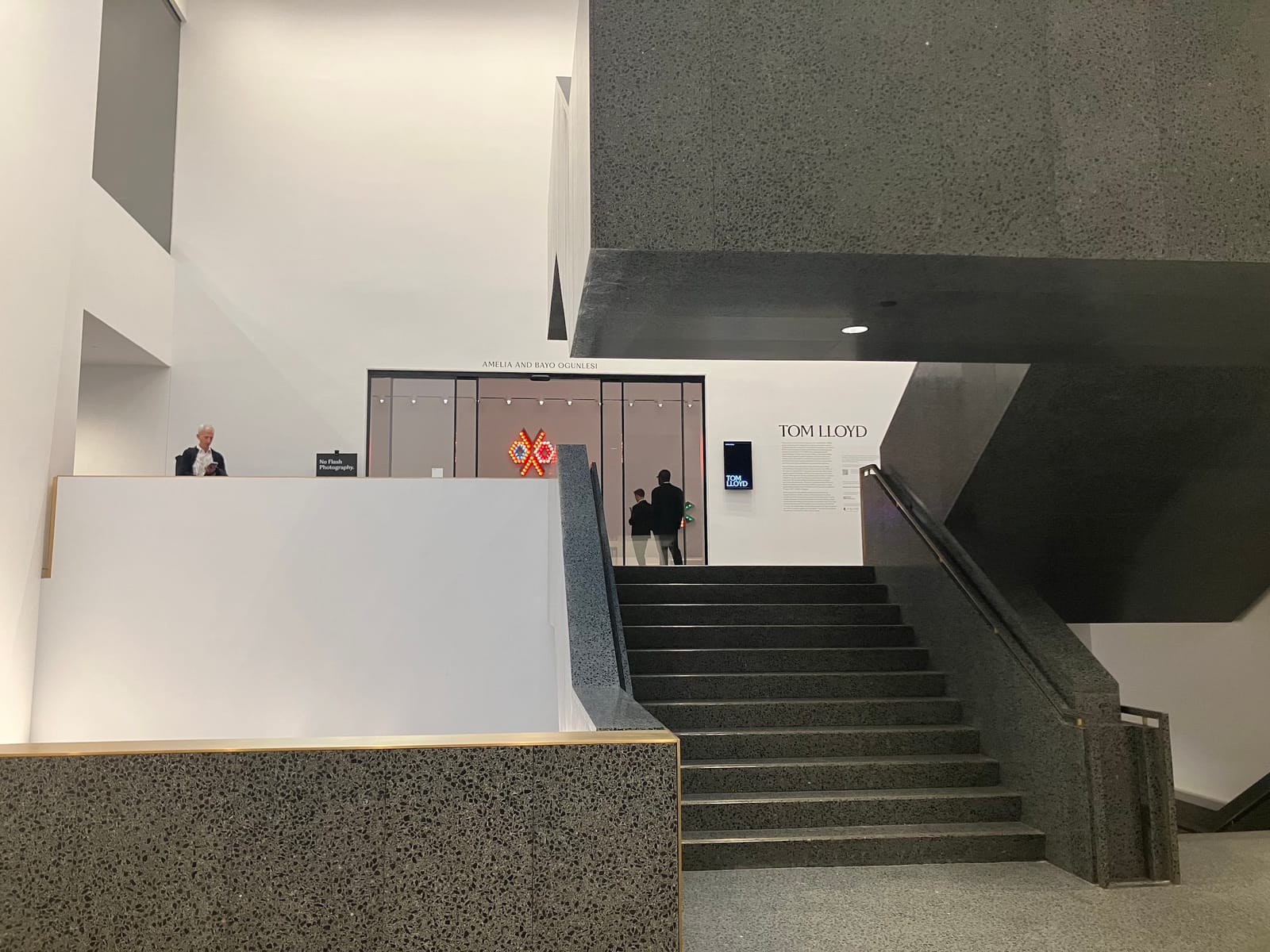
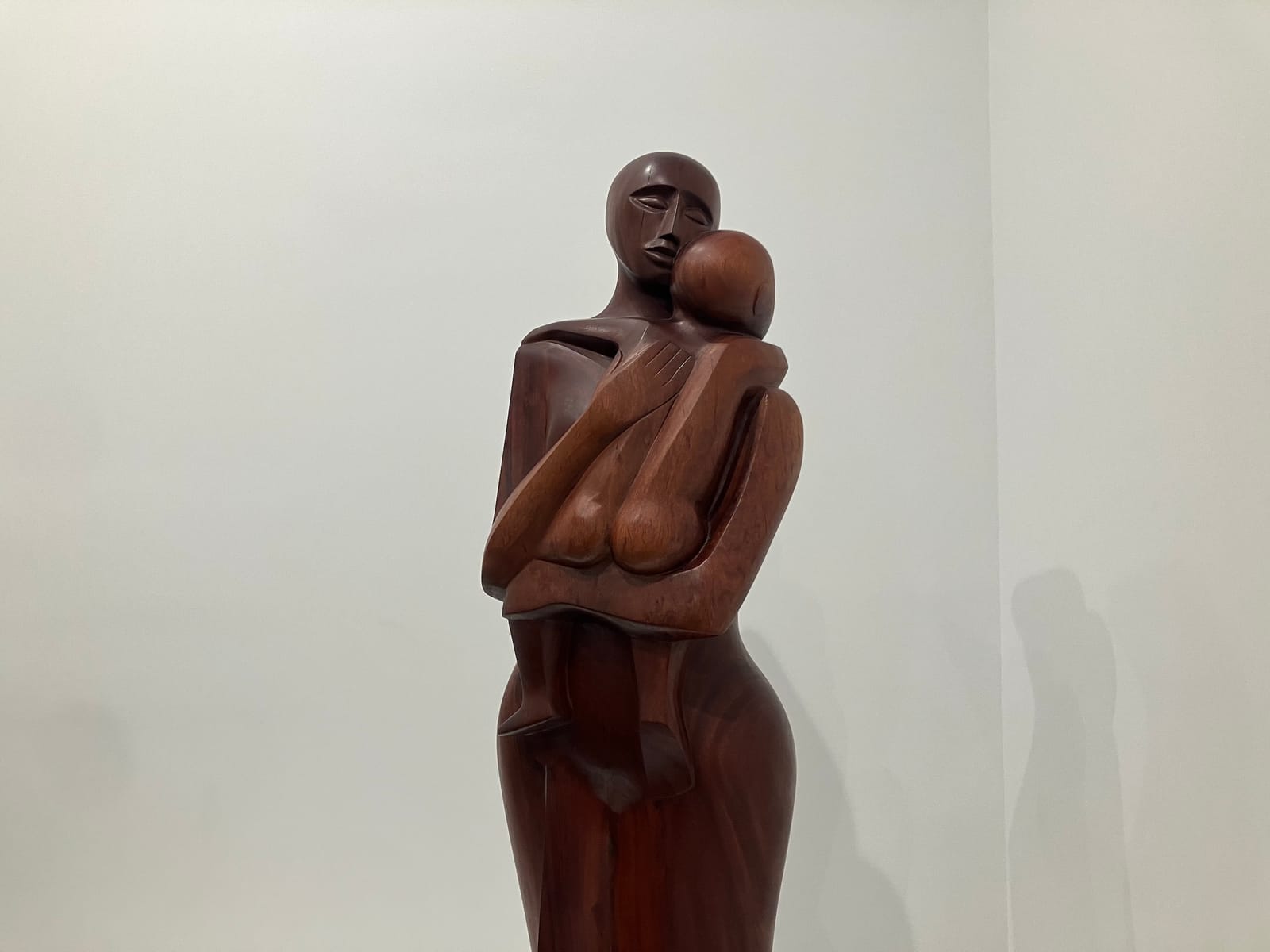
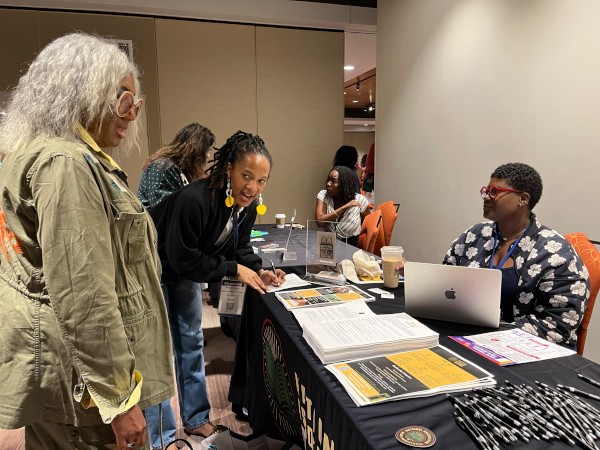


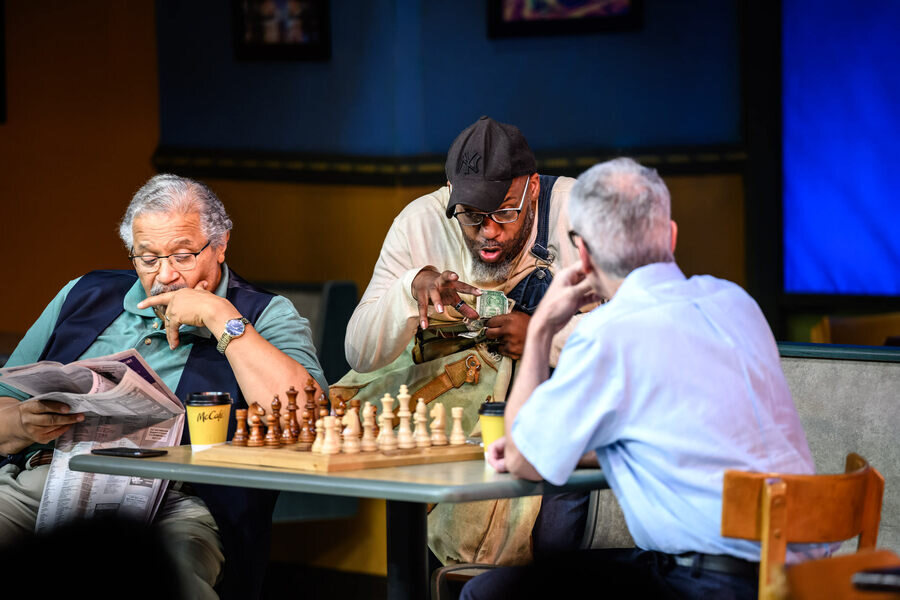
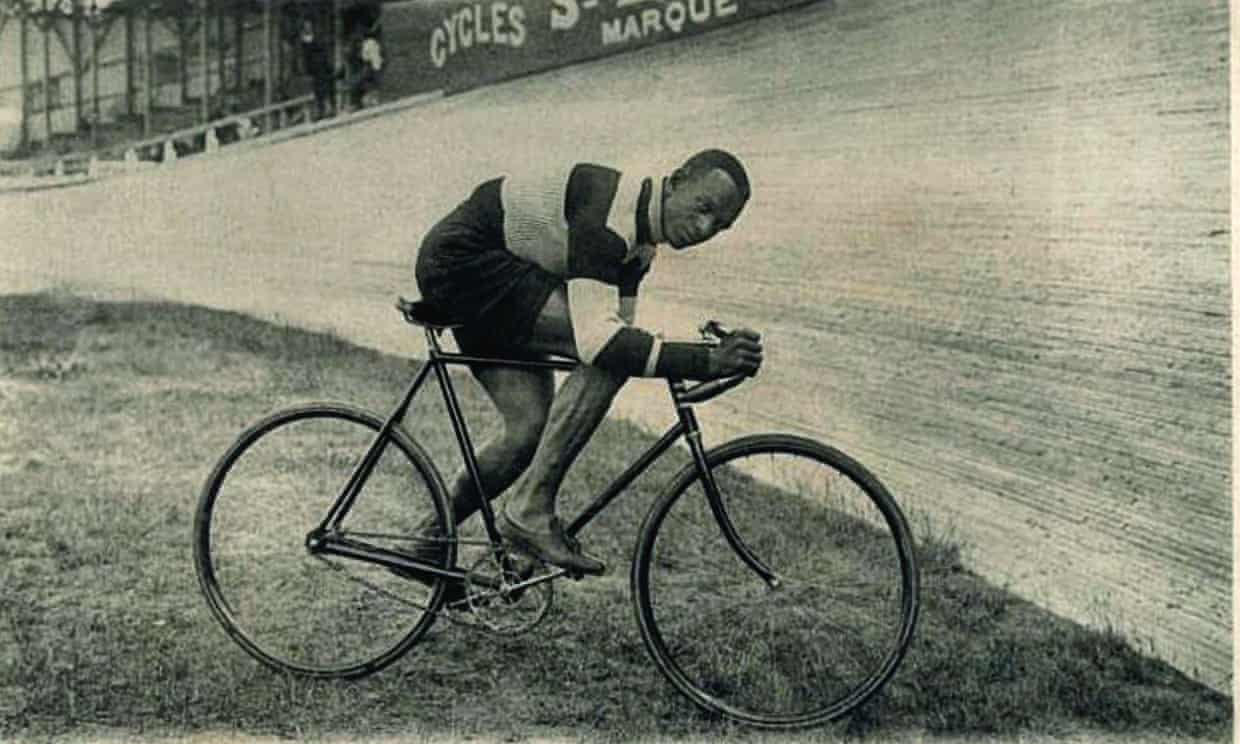
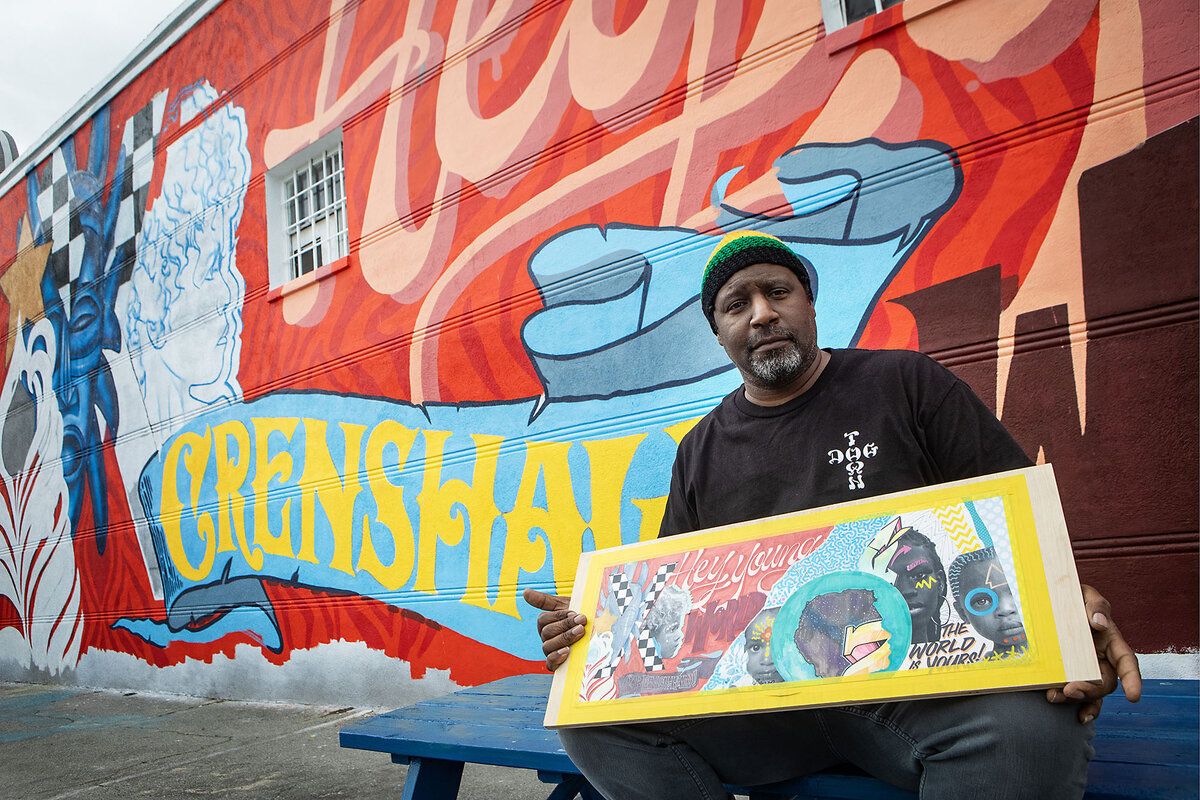
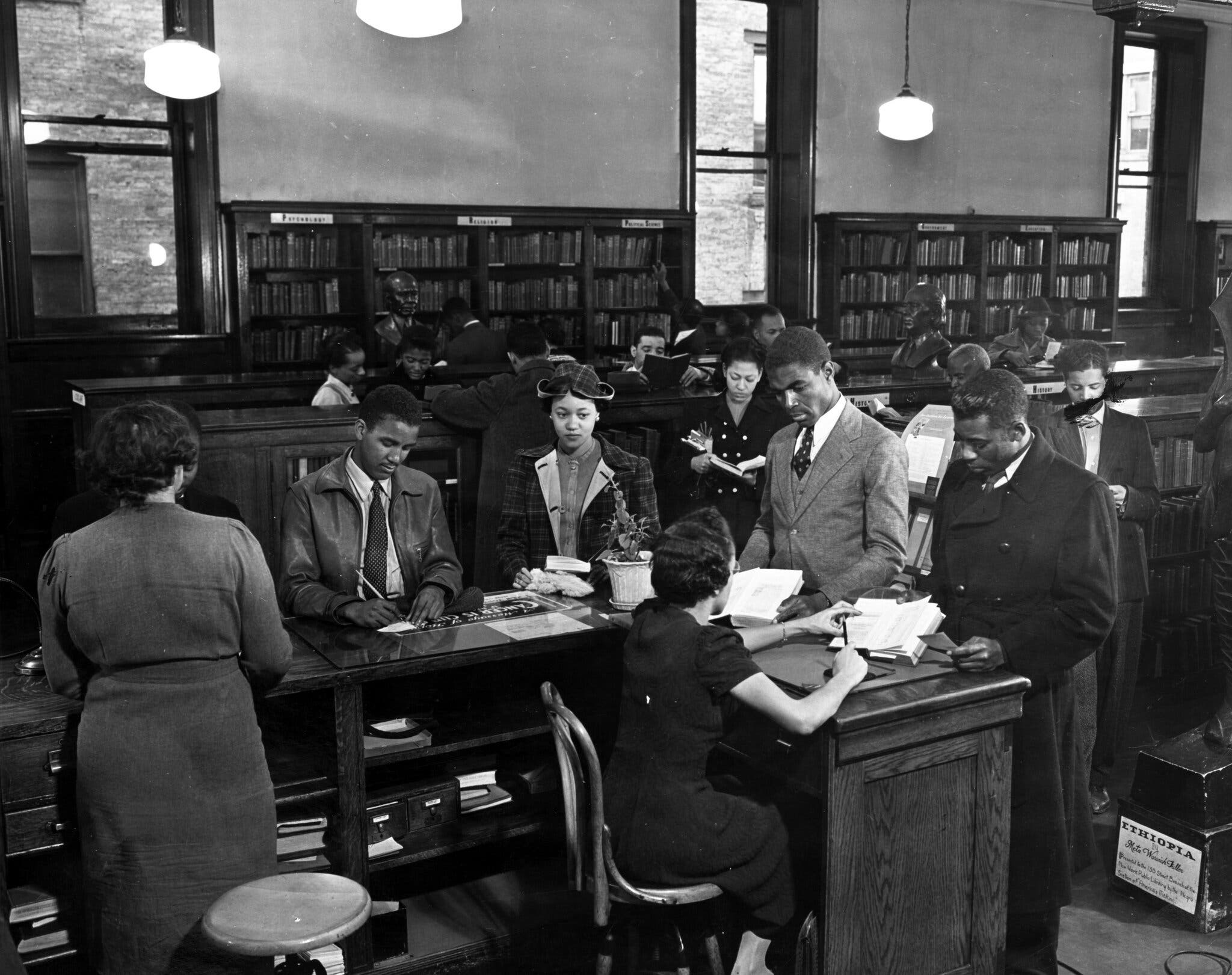

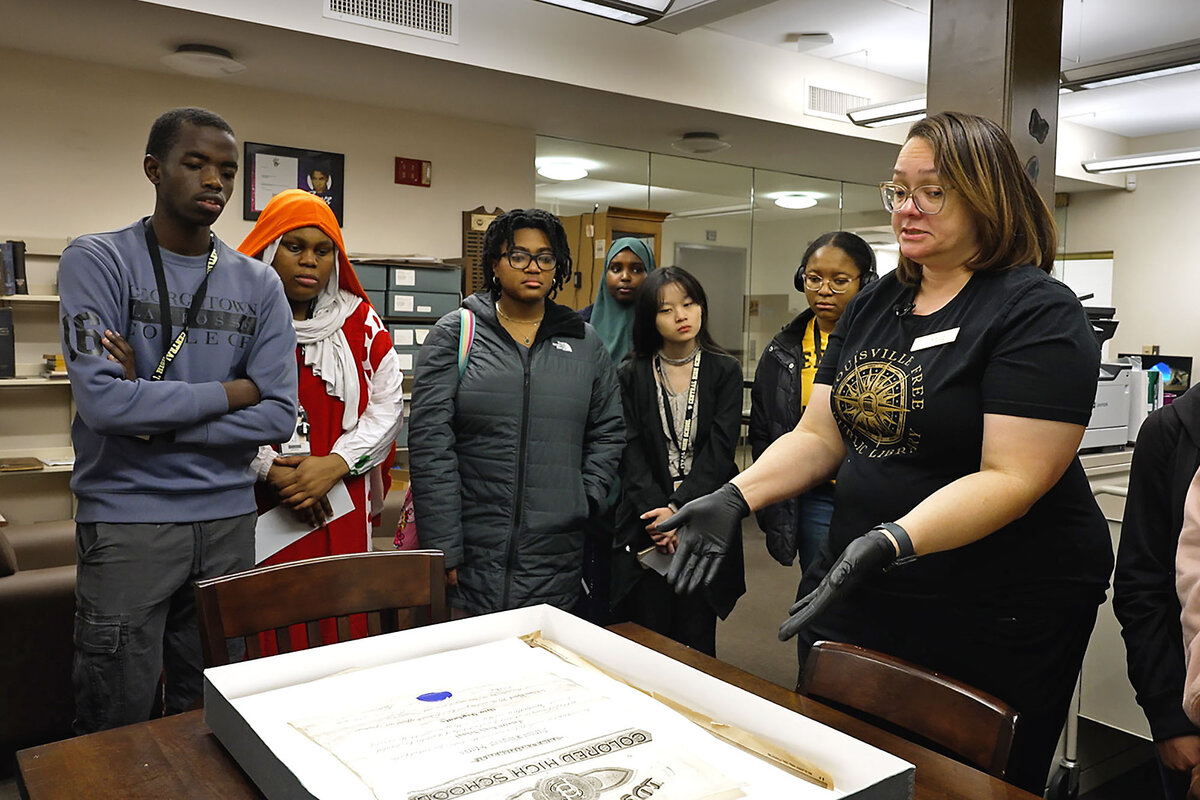
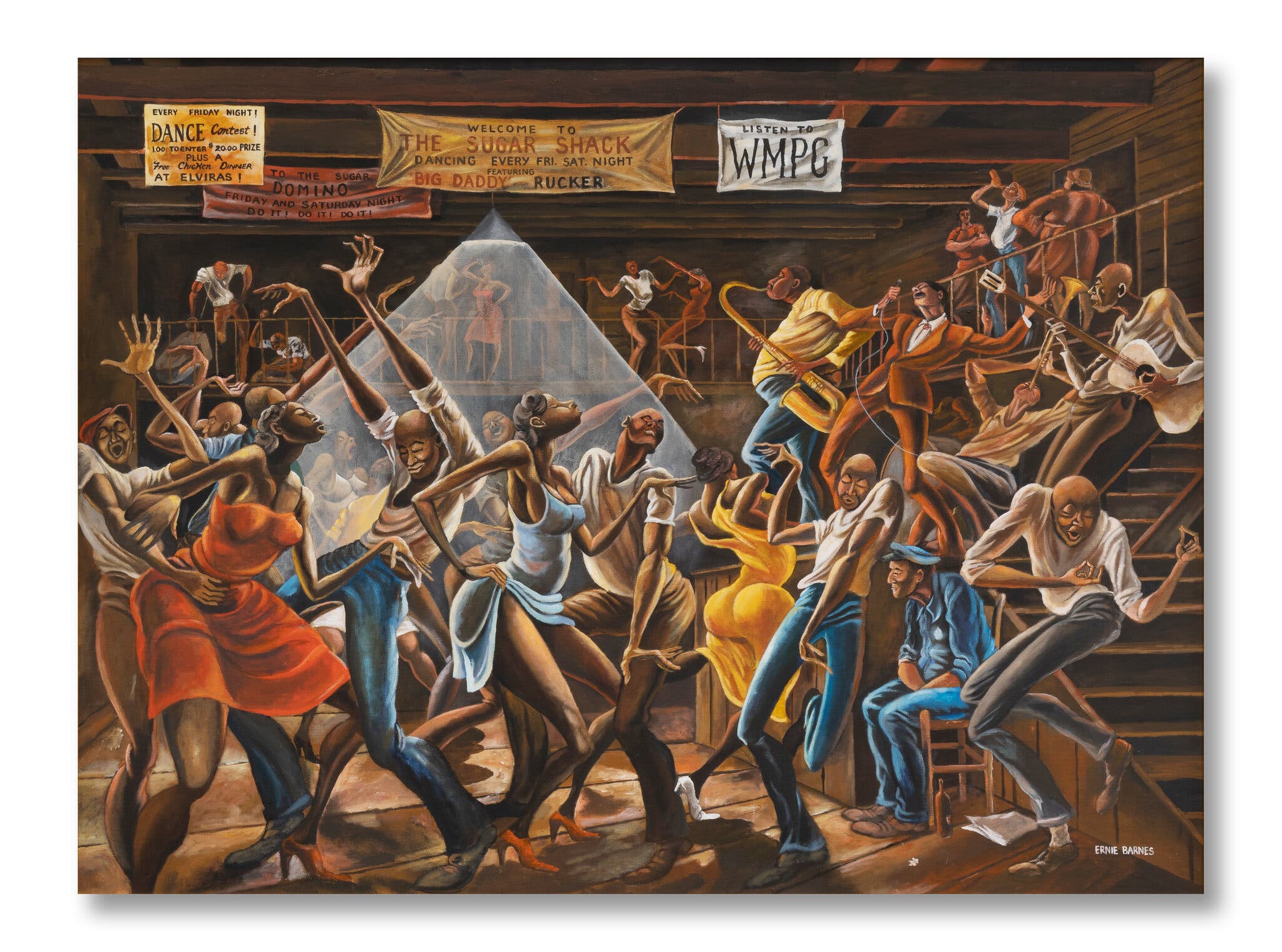

 Suzanne's Mom's Blog