Feeds:
Posts
Comments

Posts Tagged ‘brazil’

Photo: María Magdalena Arréllaga.
“People dance into the wee hours,” writes the New York Times. “For many young Brazilians, the charme scene has become a symbol of Black identity and culture unique to Rio’s working-class areas.”

I’m always grateful when the mainstream media digs into an aspect of another culture, something I know nothing about. Today we learn of a vibrant scene that has thrilled thousands of people since the 1970s. And what did I know about it before? Nothing.

Ana Ionova writes at the New York Times, “Trucks, buses and cars rumbled overhead, drowning out Marcus Azevedo’s voice. In the distance, sirens blared and exhaust pipes backfired. From under a highway overpass, Mr. Azevedo, a dance teacher, shouted over the noise, ‘Five, six, seven, eight!’

“He hit play on his phone, and the first song started blasting from a pair of crackling speakers. Six rows of dancers began shuffling, twisting and popping their hips in unison. The playlist? All R&B classics. …

“The dance routine wouldn’t have been out of place in New York City or Atlanta or Los Angeles. But we were on the decaying fringes of Rio de Janeiro, a metropolis better known for samba. And this dance is called charme, a style born here in the 1970s as an ode to American soul, funk and, later, R&B.

“This spot, in the working-class suburb of Madureira, has become a temple for lovers of charme over the decades. By day, it’s where many hone their moves. Once mastered, the steps are flaunted at nighttime parties known as ‘baile charme.’

“ ‘This is a magical place,’ said Mr. Azevedo, 46, who began dancing charme — Portuguese for charm — when he was 11 and now leads a dance company focused on the style. ‘There is something spiritual, an energy that can only be found here.’

“But the old-school R&B tracks shouldn’t fool anyone into thinking that this is a nostalgic crowd yearning for a throwback. This hotbed of charme is attracting an increasingly younger crop of dancers, who are keeping the scene alive — and transforming it in surprising ways.

“On a recent muggy Saturday morning, a few dozen people — from restless children and lanky teenagers to men and women in their 50s and 60s — flocked to the shady overpass. They were there for a class led by Mr. Azevedo and three other instructors, all part of a program meant to introduce charme to more people.

“A small group practiced steps before class started. ‘It’s not hard — a little step here, a little step there,’ said Juliana Bittencourt, 30, an administrative assistant, showing a fellow student how it’s done. ‘Charme is medicine, it has the power to cure anything.’

“Geovana Cruz, 20, a bank teller who had come from São Paulo by bus that morning, excitedly stepped into the front row of dancers.

“ ‘It’s addictive,’ said Ms. Cruz, who comes nearly every week and whose charme dance routines on TikTok draw thousands of likes. …

“ ‘Charme is not just music,’ said Larissa Rodrigues Martins, 25, a schoolteacher. ‘It’s a place where we share and learn from each other — not just about steps, but also about life.’ …

“The birth of charme is rooted in the influx of Black music and culture from the United States in the 1970s and 1980s. At a time when Rio’s far-flung, impoverished outskirts offered young people few sources of pride or identity, the rhythm and style of American artists like James Brown and Stevie Wonder emerged as an inspiration.

“One night in 1980, a D.J. named Corello was working at a club and decided to mix in some Marvin Gaye. ‘Now it’s time for a little charme, slow your body down,’ he called out. The term stuck and came to define the homegrown urban dance movement.

“After many Black social clubs went out of business in the 1990s, charme lovers moved the party to the nearby Madureira overpass, where they could dance undisturbed. …

“The movements that define the dance are at once familiar to urban street dancers yet uniquely ‘Carioca,’ as anyone or anything from Rio de Janeiro is known. The swings carry a hint of bossa nova’s sway; the two-steps have a distinct samba flavor; and the bold hip bounces channel Brazilian funk. …

“For many younger people, the charme scene under the overpass has increasingly become a symbol of Black identity and culture that is unique to Rio’s working-class neighborhoods.

“ ‘This is our ancestry,’ Ms. Martins said. ‘The previous generation showed us this space where we can express ourselves.’

“During the nighttime partying, older revelers mostly hung back. They swayed, stepped and turned with more subtle, sensual movements. ‘We learn from the new kids, and they learn from us,’ said Bruno Oliveira, 44, a clothes salesman wearing a bejeweled cap. ‘It’s love, it’s peace.’ ”

More at the Times, here. Great pictures, especially the videos.

Read Full Post »

Photo: Rentbrella.
An umbrella-sharing startup from Brazil.

I used to live in New York City, and one of the many characteristically New York phenomena I observed back then was what would happened in a rainstorm.

All of a sudden, from nowhere, sellers of umbrellas would appear. The umbrellas sold quickly, but most often they were poorly made. If there was a high wind, you would see them inside-out in a trash bin, dumped before the buyer even got home.

I can’t speak to the quality of the umbrellas in today’s story, but I’m guessing they are made of sturdier stuff — else how could they be shared repeatedly?

Aleksandra Halina Michalska and Carolina Pulice write at Reuters, “A Brazilian umbrella-sharing app, which has for several months been giving New Yorkers a way to cope with unexpected downpours, is now preparing to expand to Europe.

“Rentbrella launched in 2018 in Sao Paulo, a city known for torrential late afternoon summer rains. It offers an app that allows customers to borrow an umbrella from an automated kiosk and use it free of charge for 24 hours.

“If they don’t return the umbrella within that period, they are charged $2 for the second day under the U.S. price plan and another $2 for the third day. When the daily charges hit $16, the user can keep the umbrella.

“Freddy Marcos, one of the company’s three co-founders, said in an interview that Rentbrella aims to expand to at least 10 other countries in Europe in the next two years.

“The company launched in the New York boroughs of Manhattan and Brooklyn in October with 35 kiosks, each with 100 umbrellas, under agreements with real estate firms such as WeWork … Tishman Speyer … and Beacon Capital. Rentbrella plans to add 100 more stations throughout the United States this year.

” ‘The best thing about it is that it is free,’ said co-founder Ary Krivopisk, adding that Rentbrella aims to expand into London early this year.

“The company plans to generate revenue from advertisements printed on the umbrellas, although it has yet to sign any such deals in New York.

“The startup, which has so far raised $7 million from undisclosed investors, has around 40,000 umbrellas available in Sao Paulo.”

More at Reuters, here.

Read Full Post »

Photo: Estaban Bustillos/GBH News.
A rider mounts a bull at New England Rodeo in Norton, Massachusetts, in September.

I have seen rodeos in Madison Square Garden and in Buffalo, Minnesota, and in the Southwest. But I never expected to hear there were rodeos in Massachusetts. I should have given a little more thought to the welcome variety of national cultures that have taken root here.

Esteban Bustillos reports at GBH News, “Drivers who pull onto the small road leading them to the New England Rodeo in Norton might well feel like they’ve arrived on a different planet.

“Located about an hour from Boston, the parking lot is a sea of cowboy hats, boots and pickup trucks. And as Kelly Pina, who helps with the behind-the-scenes paperwork for the rodeo, jokes, it’s New England’s best-kept secret. …

“The event is the only weekly event in the commonwealth to feature bull riding and barrel racing, making it a lifeline for rodeo culture that’s far from home. That’s especially important for Brazilians, who make up the vast majority of the bull riders at the rodeo. It makes for a swirl of English and Portuguese, Americans and Brazilians all coming together for a sport and lifestyle they love.

“Jullia Oliveira manages the rodeo’s bull riding — and she also speaks fluent Portuguese, a crucial skill given the high number of Brazilian bull riders in the sport. …

“Since Massachusetts has one of the largest Brazilian communities in the country, Norton’s rodeo is a natural hub. The owner, Elias DaSilva, hails from Brazil, too.

“ ‘It’s nice to have a place where they can come and feel comfortable and feel welcomed,’ Oliveira said. ‘Especially since they’re coming from another country, usually without being able to speak English.’ …

“As welcoming as the rodeo may be, the back of a bull is no place for the timid. As soon as the gate to the pen opens, it’s man versus nature. And for a few electrifying seconds, the riders are locked in a mesmerizing dance that shakes the earth beneath them as supporters scream and holler.

“But gravity and thrashing bulls have a way of getting the cowboys to hit the ground. As terrifying as it looks, they all dust themselves off and hop back up. Some even do so with a smile.

“Wesley Goncalves, Oliveira’s uncle, has been riding bulls most of his life. He says bull riding and soccer are the big sports in his home country of Brazil, so having the rodeo in Norton has been very important to him. … Walter Oliveira, Jullia’s father, is a bull rider as well. And having a local rodeo has been a game changer.

“ ‘We used to travel like six hours, seven hours, eight or more, sometimes sixteen hours, to go for a ride,’ he said. ‘And to have the New England Rodeo here, for us is great. For me, it’s one hour from my house.’

“Today’s established New England Rodeo is a long way from its humble beginnings. Tim Lee, one of the rodeo’s announcers, used to be a bullfighter — the type that helps wrangle a bull after it’s thrown a rider, not the matador-with-a-cape kind.

“ ‘Sometimes rodeo can be like a dying breed, but we’re never gonna let it die,’ Lee said. “There’s just nothing like rodeo, man. You bring so many people together like that, how could you have a bad time?’

“For Pina, the rodeo is a personal affair. Along with helping to run it, she’s a professional barrel racer, zooming through the dirt of the arena and weaving through barrels on horseback. And her husband, Ed Pina, is the other half of the rodeo’s announcing duo. …

“ ‘You come here a few times, you’re family. You work with us, you’re blood, no matter what,’ he said. ‘It’s about building our family bigger and teaching the next generation how to do our sport and to make sure our sport keeps going.’ ”

Shout-out to Craig, the bull rider who ran manufacturing for my husband’s former company. Despite bones repeatedly broken, he truly loved the sport. And he provided enthusiastic support to the many little kids who got their start by riding rams!

More at GBH, here.

Read Full Post »

Photo: Eva K. via Wikimedia.
Herrerasaurus skeleton replica at a special exhibition of the Naturmuseum Senckenberg in Frankfurt am Main, the largest museum of natural history in Germany.

As we take in the horrendous flooding of two major hurricanes in the US this month, it’s hard to imagine that heavy rains and floods ever do anything beneficial. But last May in Brazil they added to human knowledge of dinosaurs, and that could be useful.

Eléonore Hughes wrote at the Associated Press, “A team of Brazilian scientists has discovered a fossilized skeleton of what they believe is one of the world’s oldest dinosaurs after heavy rains in the southern state of Rio Grande do Sul accelerated the natural process of erosion.

“The fossil found next to a reservoir in the municipality of Sao Joao do Polesine is [the oldest yet] according to paleontologist Rodrigo Temp Müller, who led the team from the Federal University of Santa Maria that found the bones in May. The claims have not been verified by other scientists or published in a scientific journal [as of this writing].

“The researcher believes the dinosaur lived during the Triassic period, when all continents were part of a single land mass called Pangaea. Dinosaurs are thought to have first evolved at that time.

“The apex predator discovered in Rio Grande do Sul belongs to the group known as Herrerasauridae — a family of dinosaurs that used to wander across lands that now make up present-day Brazil and Argentina, according to a fact sheet about the discovery shared with the Associated Press.

“The size of the bones reveals that the dinosaur would have reached around 2.5 meters (8.2 feet) in length, according to the document. …

‘Initially it seemed like just a few isolated bones, but as we exposed the material, we were able to see that we had an almost complete skeleton,’ Müller said. …

“Researchers will now try to determine whether the fossil belongs to an already known species or a new kind. That work is expected to take several months, as the process is meticulous to ensure no damaged is caused.

“Fossils are more likely to appear after rains, as water exposes the materials by removing the sediment that covers them, in a phenomenon known as weathering.

“Rio Grande do Sul saw record amounts of rainfall earlier this year. That caused devastating floods in May that killed at least 182 people, according to a toll published by the state’s civil defense on July 8. …

“Müller said that more fossils are appearing because of the heavy rains, which has launched a race against time to rescue the materials before they are ruined.

“In the field, his team observed ‘a leg bone and a pelvis bone in the pelvic region that were already being destroyed due to the rain,’ he said.”

More at APNews, here. If you’re keen on dinosaurs, check out the paleontologist’s diary of the excavation, here.

Read Full Post »

Photo: Avener Prado.
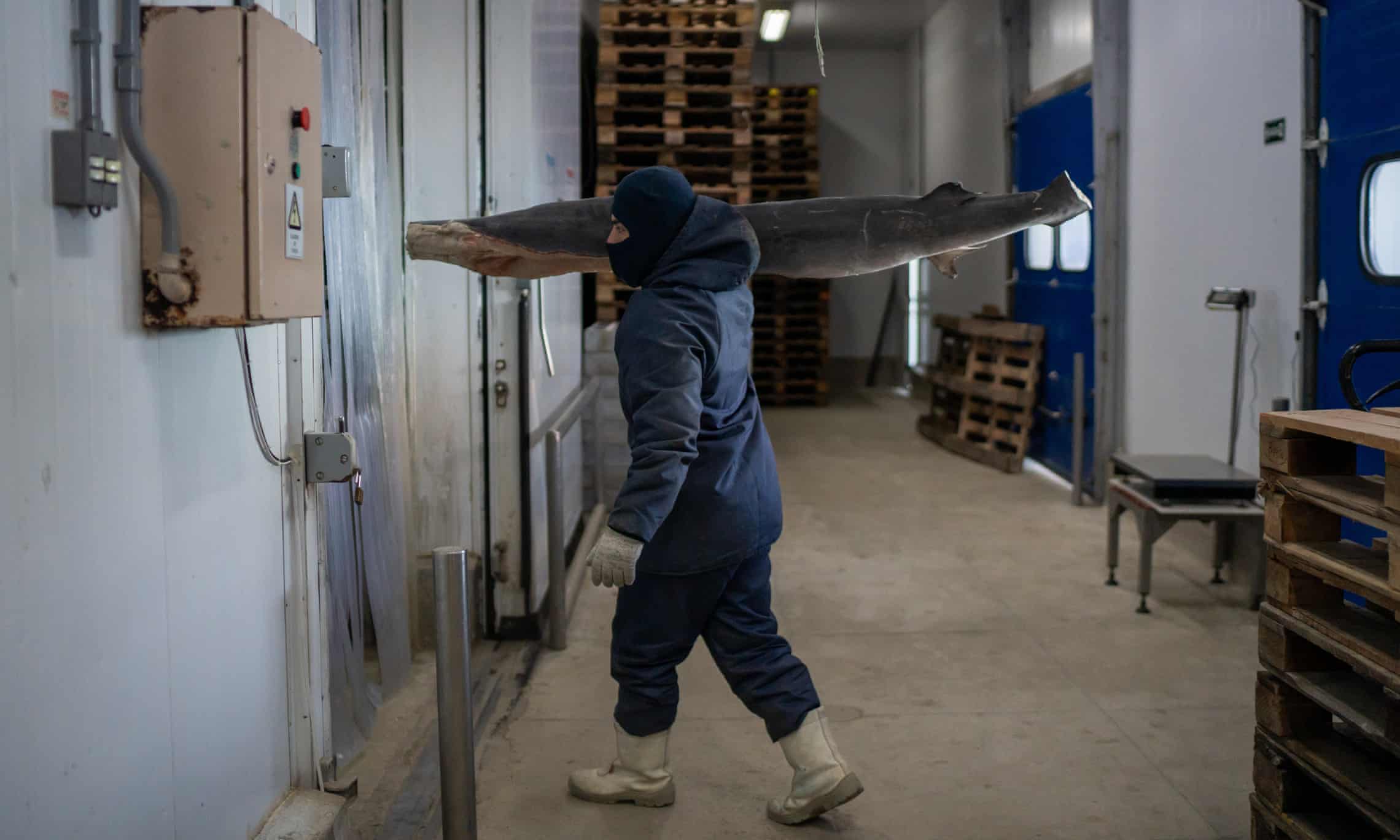
A trade that goes under the radar. Here, a blue shark is taken into cold storage in Cananéia, a fishing port in São Paulo state. Sharks reproduce slowly, but at least 80 million are killed annually
.

This is a sorry tale. Even if you don’t like the idea of swimming with sharks or keeping them as pets, I know you will be concerned that we are decimating their numbers. Today’s story explains that sometimes we are eating sharks without realizing it.

Constance Malleret reports at the Guardian that “worried conservationists say most people do not realize they are eating shark.

“The bright blue skies and calm waters of the estuary belie rough conditions at sea, and there is no sign of activity among the colourful fishing boats moored around the harbor of Cananéia, a sleepy fishing town 160 miles south of São Paulo.

“On the wharf, however, a delivery of frozen fish from Uruguay has just arrived and a few men in white gumboots are busy unloading pallets of beheaded specimens labelled Galeorhinus galeus – school shark. These thin grey fish will be kept in a cold store on shelves already stacked ceiling-high with carcasses of blue sharks, all awaiting processing and distribution to cities inland.

“ ‘Why do we work with shark?’ says Helgo Muller, 53, the company manager. ‘Because people like it; it’s good and cheap protein. It doesn’t give you crazy profits, but it’s decent enough.’

“Shark is just a small fraction of the firm’s business but they process about 10 tons a month, he says, mostly blue shark imported from countries including Costa Rica, Uruguay, China and Spain.

“Communities up and down Brazil’s 4,600-mile coastline have always eaten sharks. ‘It is part of our tradition,’ says Lucas Gabriel Jesus Silva, a 27-year-old whose grandfather moved to the area in the 1960s to fish sharks for their fins.

“However, the widespread appetite for shark meat that Muller’s company helps feed is now troubling scientists and environmentalists, who worry about unsustainable pressure on various species. …

” ‘Sharks are very vulnerable to overexploitation as they don’t reproduce as often or with as many offspring as bony fishes do,’ explains Prof Aaron MacNeil, of Canada’s Dalhousie University.

“Research published in April found that 83% of the shark and ray species sold in Brazil were threatened, according to the International Union for the Conservation of Nature (IUCN) classification.

“For years, conservation efforts focused on the fin trade with Asia and the barbaric practice of ‘finning’ – removing a shark’s fins and returning the wounded and helpless animal, often still alive, to the sea. But research from earlier this year suggests restrictions on finning have not reduced shark mortality, with at least 80 million sharks still being killed annually.

“ ‘Meat was kind of left by the wayside,’ says MacNeil, who is researching the global shark meat trade. ‘It’s only now we’re realizing how big the trade is. Its value has certainly exceeded that of fins.’ The pressure on sharks for food has risen in parallel with a decline in catches of other fish, he says.

“Traditionally, Brazilians ate shark in moqueca, a seafood stew from the states of Bahia and Espírito Santo. And many of Cananéia’s residents recall how their older relatives would use shark’s head broth and cartilage as homemade remedies. But now, sold in fillets or steaks, shark has been absorbed into Brazilians’ diet as it is cheaper than other white fish, boneless and easy to cook. It now appears in school and hospital canteens.

“The fact that few Brazilians realize they are eating shark has probably helped make it ubiquitous. While coastal people with a shark-eating tradition recognize the subtle differences in texture and flavor between shark species, to most Brazilians it is just cação – a generic term under which both shark and ray meat are sold. …

“Campaigners say the generic labelling prevents informed decisions by consumers, and this could even affect their health due to high concentrations of dangerous pollutants in these top predators. ‘If they knew, they might not eat it,’ says Ana Barbosa Martins, a researcher at Dalhousie University. …

“ ‘Fishers don’t cast their nets to catch shark specifically, but sometimes a [protected] hammerhead comes up. What can you do?’ says Lucia Rissato, who runs a fish stall in Peruíbe. … ‘We have to sell it in secret, like drugs.’ “

I guess, for vegans, getting tricked into eating shark meat is not an issue.

More at the Guardian, here. No paywall.

Read Full Post »

Photo: Valkyrie Pierce/Unsplash.
Citizen scientists are helping us learn more about seahorses.

For all its shortcomings, social media has enabled us to work together on meaningful projects if we so choose. Consider the citizen scientists who are expanding our knowledge of the natural world.

Erin Blakemore has a story at the Washington Post about the latest research on seahorses — and how you can help study them.

“Members of the public are helping to advance research on sea horses, the tiny fish that can be found in coral reefs, shallow waters and estuaries around the world, according to a study.

“When researchers looked at the results of public contributions to the iSeahorse science project between 2013 and 2022, they found the community effort enabled scientific advances in the field.

“Citizen contributions provided new information on 10 of 17 sea horse species with data once considered deficient and helped update knowledge about the geographic distribution of nine species, researchers wrote in the Journal of Fish Biology. Some of the observations even helped scientists better understand when and how sea horses breed. … According to the project website, iSeahorse has amassed about 11,000 observations from more than 1,900 contributors to date.

“Overall, the researchers were able to validate 7,794 of the observations from 96 countries and 35 sea horse species. The volunteer observers even noted rare species that traditional monitoring probably would not detect, they write.

“ ‘Seahorses are very much the sort of fascinating species that benefit from community science, as they are cryptic enough to make even formal research challenging,’ Heather Koldewey, the project’s co-founder and the lead on the Bertarelli Foundation’s marine science program, said in a news release. …

“Want to get involved? Visit https://projectseahorse.org/iseahorse/ to learn more. More at the Post, here.

And check out this page from the Journal of Ethnobiology and Ethnomedicine, here. It reads, in part, “Seahorses are endangered teleost fishes under increasing human pressures worldwide. In Brazil, marine conservationists and policy-makers are thus often skeptical about the viability of sustainable human-seahorse interactions.

“This study focuses on local ecological knowledge on seahorses and the implications of their non-lethal touristic use by a coastal community in northeastern Brazil. Community-based seahorse-watching activities have been carried out in Maracaípe village since 1999, but remained uninvestigated until the present study. …

“We interviewed 32 informants through semi-structured questionnaires to assess their socioeconomic profile, their knowledge on seahorse natural history traits, human uses, threats and abundance trends.

“Seahorse-watching has high socioeconomic relevance, being the primary income source for all respondents. Interviewees elicited a body of knowledge on seahorse biology largely consistent with up-to-date research literature. Most informants (65.5 %) perceived no change in seahorse abundance. Their empirical knowledge often surpassed scientific reports, i.e. through remarks on trophic ecology; reproductive aspects, such as, behavior and breeding season; spatial and temporal distribution, suggesting seahorse migration related to environmental parameters.

“Seahorse-watching operators were aware of seahorse biological and ecological aspects. Despite the gaps remaining on biological data about certain seahorse traits, the respondents provided reliable information on all questions, adding ethnoecological remarks not yet assessed by conventional scientific surveys. We provide novel ethnobiological insight on non-extractive modes of human-seahorse interaction, eliciting environmental policies to integrate seahorse conservation with local ecological knowledge and innovative ideas for seahorse sustainable use. Our study resonates with calls for more active engagement with communities and their local ecologies if marine conservation and development are to be reconciled.”

Read Full Post »

Photo: Douglas Magno/AFP.
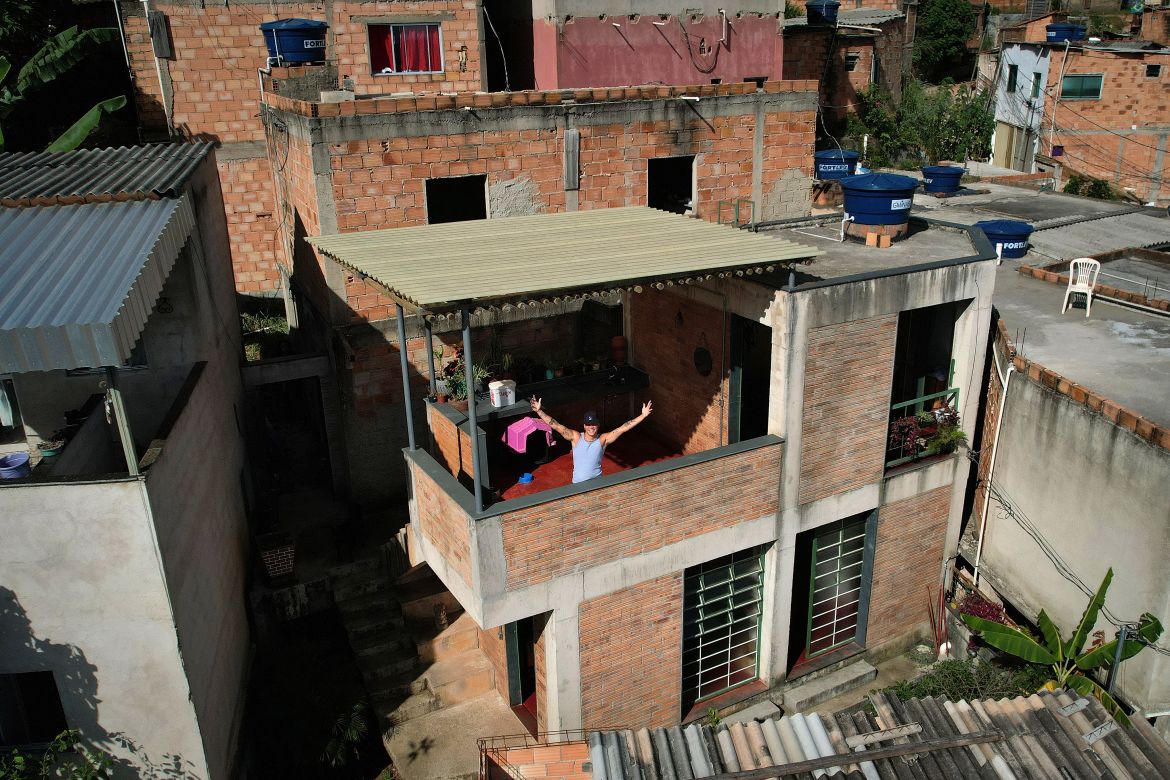
An aerial view shows Kdu dos Anjos’s house in Aglomerado da Serra, a favela complex on the outskirts of Belo Horizonte, Minas Gerais State, Brazil. The home, in an area of deep poverty, has won an architecture award.

I have mixed reactions to today’s story about upgrading a home in a Brazilian favela, or slum. On the one hand, the results are joyful. On the other hand, couldn’t our world also try to eliminate slums and poverty? (Read about a poverty-abolition movement in Matthew Desmond’s Poverty, by America.)

Al Jazeera reports on the award-winning favela home, “At first glance, it is a house like dozens of others in the crowded favelas of Brazil. But this seemingly modest dwelling of 66 square metres (710 square feet), with its exposed brick walls, has just been recognized as the ‘house of the year’ in an international architecture competition.

“The house honored by specialized website ArchDaily belongs to Kdu dos Anjos, a 32-year-old artist living in the bustling Aglomerado da Serra favela at the bottom of a hill on the edge of the southeastern city of Belo Horizonte.

“The two-story structure defeated some more imposing contest entries from India, Mexico, Vietnam and Germany.

‘I’m very proud that my house won this prize, because most of the news about the favelas talks of violence and homes destroyed by landslides,’ said dos Anjos. ‘Today, my home is on top of the world!’

“The house, built on a small lot dos Anjos purchased in 2017, is well ventilated and enjoys abundant natural light; it features horizontal casement windows and a large terrace.

“ ‘The design of the house represents a constructive model that uses common materials in the slums, with an adequate implementation and attention to lighting and ventilation, resulting in a space with great environmental quality,’ ArchDaily wrote on its website.

“For dos Anjos, who founded a cultural centre in his community, the prize carries special significance. ‘I know my house isn’t the most chic in the world, but it’s a well-built shack,’ he says with a grin. … ‘What the architects did is pure magic,’ he added. ‘We barely have [710 square feet], but I’ve had parties here with close to 200 people.’

“The design was the work of the Levante architecture collective, which does pro bono or low-cost work in the favelas. From the outside, the house resembles its neighbors, but it incorporates several features that make it both sturdier and more respectful of the environment, particularly in its ‘attention to lighting and ventilation,’ said architect Fernando Maculan, the project leader.

“One apparent difference with nearby houses is in the arrangement of the bricks, laid horizontally — not vertically — and in staggered rows, which adds solidity and improves insulation. …

“ ‘The masons were angry because they thought laying bricks this way was very time-consuming,’ Maculan said. ‘And we had a lot of trouble getting the materials up the stairs — it’s the last house on the alley, and I had to pay the workers who carried it a lot,’ he said. …

“The entire job cost 150,000 Brazilian reais ($29,000), and the investment paid off in more ways than one: Not only did the architecture prize bring international recognition, the house has helped dos Anjos realize a childhood dream.

“ ‘When I was a boy, I lived in a very modest, poorly insulated room. I even got stung by a scorpion — my sister did too,’ he said. ‘Winning this prize after having suffered from architecture-related problems represents a great victory for me.’ ”

More at Al Jazeera, here. There’s a wonderful array of pictures and no firewall.

Read Full Post »

Photo: Felipe Werneck/Ibama via Wikimedia.
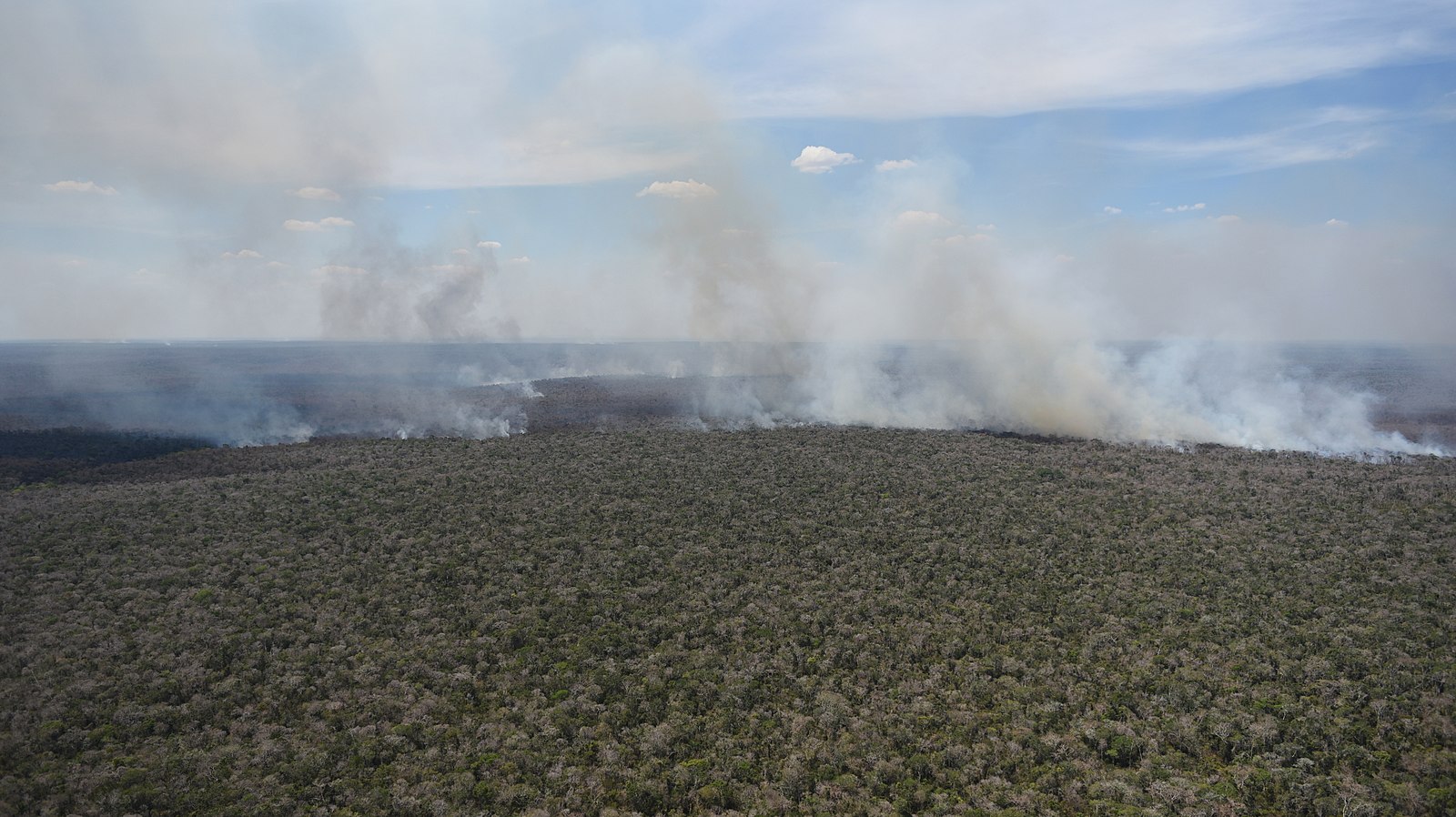
Wildfires in Brazil’s indigenous territory, 2017. Conservationists believe that restoration of the rainforest works best if a variety of seedlings are used, not just one kind.

I think humans are like ants in this regard: as soon as our anthill is destroyed, we start rebuilding. And as soon as greed destroys another swath of rainforest, conversationists, indigenous people, and fundraisers move in to rebuild. It may be hopeless, but that’s how we roll.

Bruno Vander Velde, managing director of content at Conservation International, writes at the Conversation about one rebuilding program.

“A bold initiative to regrow 73 million trees in the Brazilian Amazon has made substantial progress despite some unexpected hurdles, according to an upcoming report. While the global pandemic and an increase in Amazon fires presented setbacks, the initiative, launched in 2017, has delivered almost 20 percent of its forest restoration target, according to Conservation International in Brazil, one of several partners involved in implementation. 

“The partners point to surprising progress taking root, as the COVID pandemic shows signs of leveling off and a new incoming presidential administration publicly commits to stem the tide of deforestation. …

Launched at a Brazilian music festival, the initiative targeted areas along the southern edges of the Amazon forest, known as Brazil’s ‘arc of deforestation,’ as well as in the heart of the forest, where natural regeneration is still possible.

“By restoring these carbon-absorbing forests, the initiative is intended to help the South American country achieve its climate commitments under the Paris Agreement, as well as its target of reforesting 12 million hectares (nearly 30 million acres) of land by 2030. 

“The initiative comprises two efforts: Amazonia Live, an effort led by the Rock in Rio music festival in collaboration with Conservation International and Brazilian nonprofit Instituto Socioambiental; and the Amazon Sustainable Landscape project, a collaboration among Conservation International, the Brazilian Ministry of Environment, the Global Environment Facility, the World Bank and the Brazilian Biodiversity Fund. 

“In sum, the initiative is an experiment to ‘figure out how to do tropical restoration at scale, so that people can replicate it and we can drive the costs down dramatically,’ Conservation International CEO M. Sanjayan told Fast Company in 2017. …

“One of the initiative’s most noteworthy features was the use of a seed-planting method called ‘muvuca,’ widely advocated by the Instituto Socioambiental as a way to reduce restoration costs. Unlike typical reforestation efforts, in which tree saplings are planted one at a time, the muvuca method relies on spreading a large and varied mixture of native seeds across the targeted areas, to assure a higher diversity of trees. The technique’s results have exceeded expectations, experts say. 

‘We’re seeing a tree yield that is three times higher than our initial estimates,’ said Miguel Moraes of Conservation International’s Brazil office. 

“ ‘Rather than 3 million trees growing in 1,200 hectares (3,000 acres), as we would have expected, we’re estimating 9.6 million trees in the same area,’ based on monitoring reports, he added. …

“This restoration effort has not escaped some hard, real-world realities in Brazil’s Amazon. Some restored areas were burned by fires and will be monitored to see if they can regenerate on their own, Moraes said. (The area lost was not counted against the overall goal.) 

“Such fires — all of them set by humans, usually to clear forests for agriculture and livestock — are a sign of the times. The Brazilian Amazon has been hit especially hard by wildfires in recent years. By September 2022, more forest fires were recorded in the region than in all of 2021, amid a surge of deforestation. …

“ ‘Our initial expectation [in this effort] was to prioritize the restoration of large contiguous areas within conserved areas,’ Moraes said. Restored forests in those areas should have been more durable; however, in the past two years ‘deforestation within protected areas in Brazil has increased significantly,’ he added. 

“The resilience of the Brazilian Amazon’s many protected areas will be critical to the long-term success of the initiative. 

“As it did around the world, COVID upended life in Brazil. …

“ ‘Like everyone, we were completely unprepared for a global pandemic — not only at the project level, but also at an individual level,’ [Moreas] said. … ‘Twenty percent restored might seem a low figure — and it generates a bit of frustration. But given the context, that we were able to achieve 20 percent of our target is impressive.’

“Even in the tropics, trees take years to grow to maturity. But reforestation projects usually last only a fraction of that time. … ‘Most projects like these are an intervention at a point of time, and then they end,’ Moraes said. ‘But restoration is a long and continuous process. So, ensuring permanence is a huge issue.’

“Practitioners are taking steps to address this, including planning for long-term satellite monitoring to keep a close eye on restored forests. They will also work with communities and local governments to try to bolster on-the-ground protection of these areas. 

“Five years after the restoration initiative was announced, nearly three years into a pandemic and just weeks since a new administration took office in Brazil, project organizers are hopeful. The 2023 deadline for completion has been shifted to 2026, after some administrative challenges in the project’s early years. Organizers have now grown more comfortable managing the complexities inherent in a partnership of this size, Moraes said.

“ ‘I believe we underestimated the complexity of the challenge ahead of us. We are now trying to be more strategic. … Conservation International’s restoration efforts in Brazil go beyond just this effort,’ he said. ‘But if we succeed, we can show that we can make an impact at the scale needed to bring the forest back from the brink.’ ”

More at Conversation, here. No firewall.

Read Full Post »

Photo: David M. Jensen (Storkk) via Wikimedia.
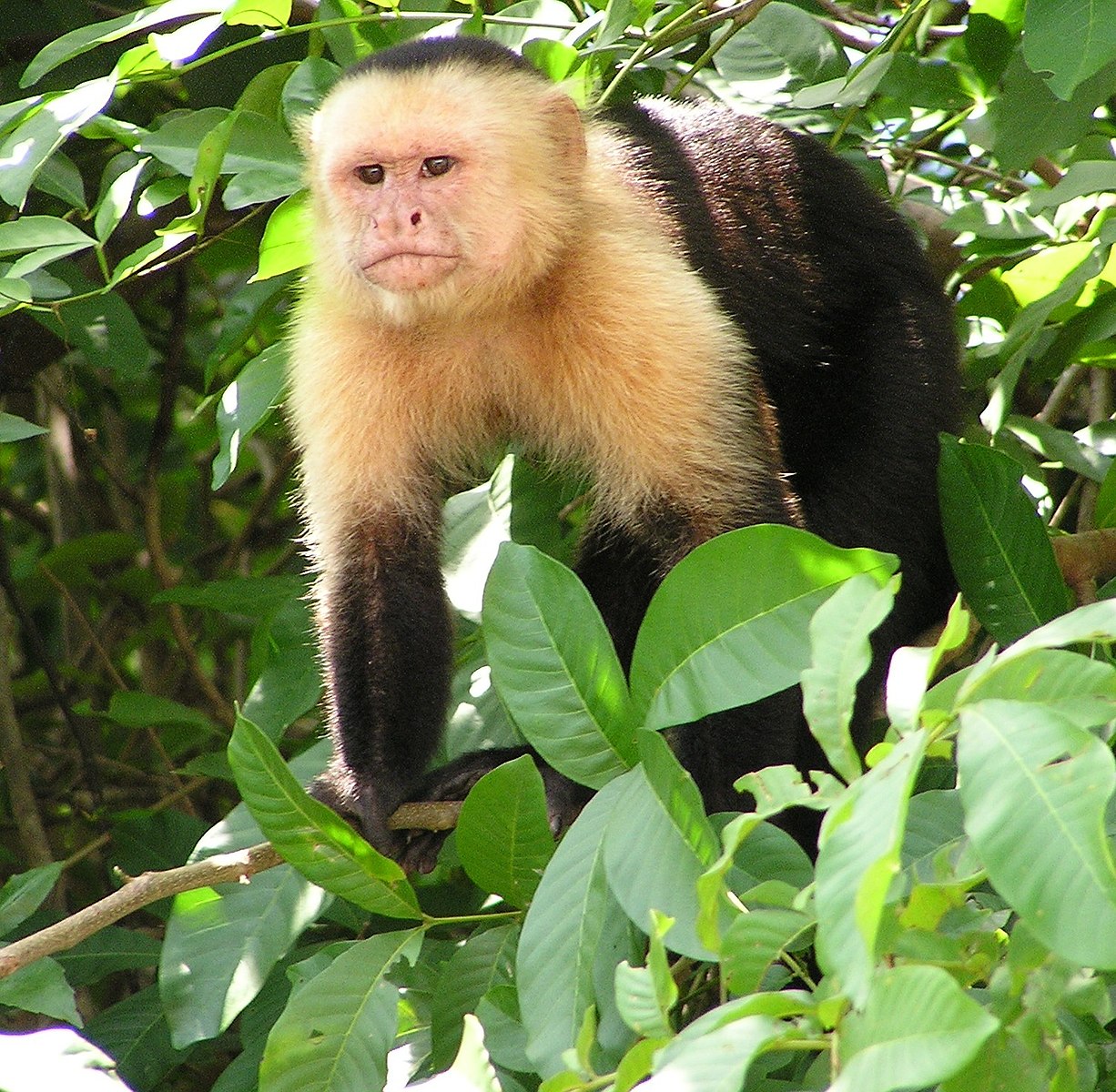
Capuchin monkeys like the same fruits that certain fish like. And the fish know it.

My husband is up very early and often checks to see what’s doing in the No Man’s Land of early morning television. There are always lots of ads for pharmaceuticals geared to the elderly. Sometimes there are ancient black and white movies. Or there might be reruns of David Attenborough nature shows.

That’s how he learned about fish that have a symbiotic relationship with monkeys. I had to search online to learn more.

One helpful article was from DPZ in Germany, here.

“Eckhard W. Heymann of the German Primate Center (DPZ) and Shin Shin Hsia von Earth Corps have found by reviewing literature, that various vertebrate species intermittently associate with primates to profit from the primates’ behavior.

“The idea suggests itself: Where one animal species feeds, remains of the food might be dropped which will be a meal to another species or potential prey might be flushed. If both species tolerate each other, they might even benefit from each others’ alarm calls against predators. But data about such associations in primates have been mostly confined to stray remarks in primate studies.”

The authors of Unlike fellows – a review of primate-non-primate associations “have now reviewed a large number of relevant studies and by comparative analysis found that such associations have been documented quite often throughout almost all ranges of primates worldwide. Highlighting this conclusion, the review adds a new role in primates’ significance for their habitat to the roster.

“The researchers have found evidence for 174 such primate – non-primate associations (PNPA) in total, involving 64 primate species and 95 other vertebrates. Most of these associations can be categorized as commensalist: They are beneficial for the one part, neutral for the other (in this case mainly the primate species).

“Most often birds associate with primates. In Africa for example, the black-casqued hornbill (Ceratogymna astrata) joins several medium-sized primate species while these feed on fruit from trees. The birds take advantage of the relative security produced by the primates’ vigilance and alarm calls against predators. Also the asiatic chital deer (Axis axis) entertains a close relation to northern plains gray langurs (Semnopithecus entellus): the deer follows langur groups on average 2.6 hours a day to eat fruit and leaves the primates drop.

“Even associations as improbable as between fish and primates are documented: In South America, fruit-eating Piraputangas (Brycon microlepis) have been spotted following a group of capuchin monkeys (Cebus apella) up to 100 yards along a river to snap up fruit dropped by the monkeys.

” ‘The geographical distribution of such associations is also significant,’ Eckhard Heymann says. Most of them are reported for the Neotropics, many for Asia and the African Continent, but none for Madagascar. ‘We have so far only documented associations for diurnal species, which in part accounts for the fact that in the madagascan species, often being nocturnal lemurs, no associations are known,’ Heymann adds.” More.

At Riozonas Acai, here, the focus is on the symbiotic relationship between certain monkeys and fish. The website hails the “ingenious fish species named piraputanga [that] can jump out the water to pick fruits off of trees that overhang the jungle rivers of Brazil. In one swift jump, it’s able to grab a handful. … This feat involves strength, agility and precision.

“The name comes from the indigenous language tupi-guarani, with two meanings, ‘fish that eats fruit’ as well as ‘reddish fish.’ Although they have a preference for fruits, their diet also consists of seeds, flowers, small fish, insects, arachnids and crustaceans. This fish lives in clear and crystalline waters, which makes it much easier to be caught. So here’s one interesting fact: if you notice crystal clear waters and little presence of piraputangas, it might be an indication that the place is not preserving the species as well as it should.

“For us humans, this fish is very well known — we could even say famous — for being hard-to-catch for those who enjoy fishing for sport. It battles and offers great resistance to be caught, and that is a great thrill for those into fishing. It is also known for providing tasty meat, being included in several recipes. It becomes slightly red when cooked, making people think tomato sauce was used during its preparation!”

Read Full Post »

Photo: Felipe Milanez via Wikimedia.
Fire at the National Museum of Brazil, in Rio de Janeiro, on 2 September 2018.

Do you remember reading about the disastrous fire at Brazil’s national museum? It was before Covid. Many irreplaceable artifacts were destroyed. I recall, for example, that the curator of entomology at the University of Texas, Austin, was devastated by the loss of that museum’s priceless insect collection.

Also lost were indigenous artifacts. But since that part of the collection had been created without tribes’ input, the rebuilding is a chance to make something better.

Mariana Lenharo and Meghie Rodrigues report at the New York Times, “In the evening of Sunday, Sept. 2, 2018, the National Museum of Brazil in Rio de Janeiro was closed, and its hallways were empty. Silent activity, however, coursed within its walls. Electricity hummed through wires connected to computers; climate-controlled storage and three air-conditioning units connected, improperly, to a single circuit breaker in the ground-floor auditorium. When one unit most likely received a surge of electricity it couldn’t handle, the overburdened system sparked. The museum’s smoke-detector system was not set. There were no sprinklers or fire doors, and a flame bloomed.

Seeing the news, staff members rushed to the building and pleaded with firefighters to let them enter and rescue something — anything. …

“Much of what was lost or severely damaged was irreplaceable: the mummy of an Ancient Egyptian priestess, a 110-million-year-old fossilized turtle, a vast collection of butterflies, the oldest known human remains in Latin America.

“The fire also obliterated an enormous assemblage of artifacts representing the cultural history of Brazil’s Indigenous populations. Masks, vases, weapons, mortars and elaborately feathered ceremonial capes dating back at least a century from the Ticuna, the Kadiwéu, the Bororo, the Tukano — at least 130 peoples in all — were gone. Researchers worked to salvage what they could from the ashes. Astonishingly, a few ceramic vases kept their original paint. One Karajá animal sculpture was found almost intact. But most ‘were fragments, scraps that would no longer be recognized by the people who made them,’ says João Pacheco de Oliveira, the head of the museum’s ethnology and ethnography division. When Ananda Machado, a social historian at the Federal University of Roraima, told members of the Wapichana people about the fire, they were devastated. ‘To them, these objects were much more than material,’ she said; they carried with them the strength of the people who made them. …

“In 2018, after 40 years with the museum, Oliveira planned to retire. But the fire pushed those plans aside. Even while mourning the tragedy, he saw possibility. Yes, the ethnographic collection was in some ways unparalleled, but he had long been vexed by what was missing from it. Many objects were collected by European travelers in the 19th and early 20th centuries who didn’t grasp the purpose that the objects served. A pot or a cape might have been chosen simply because it seemed beautiful or peculiar to a Western eye. As a curator, he found this lack of cultural context deeply frustrating.

“As an anthropologist, Oliveira was even more troubled. Since the 1970s, he has spent long periods with the Ticuna in northern Brazil trying to understand them on their own terms and to communicate their culture to a wider world. The museum was an important vehicle for his aims, but the institution came with its own inglorious history. As with other 19th-century museums, the National Museum was a repository of items plucked, purchased or plundered from Indigenous communities and had presented the people themselves as curiosities, papier-mâché figures in dioramas alongside taxidermied animals. And sometimes worse. …

“With no building to return to, Oliveira met with his team members on park benches and in cafes and explained his vision for a new collection. Indigenous people would be consulted not only about what items would go into the museum but also on how they should be identified, stored and exhibited. One of the first people he turned to was a former student named Tonico Benites.

“Benites grew up in Mato Grosso do Sul in midwestern Brazil on a reserve for the Guarani-Kaiowá, one of the country’s 305 surviving Indigenous groups. His parents never learned to read and write, but he finished high school and went on to study for a degree in education, picking up work on the side as an interpreter for anthropologists. Drawn to the questions the researchers asked, he applied to a master’s program in social anthropology offered at the museum.

“Benites’s first visit to the museum in 2006 was also his first day as a student there. Entering the ethnographic exhibition area, he saw a collection of spears and arrows and then rounded a corner. He froze, sickened. Covering an entire wall was an outsize reproduction of a woodcut from a 1557 book by the German explorer Hans Staden. The account of Staden’s captivity by the Tupinambá was immensely popular in its day, and some scholars now assert that its sensational depictions of cannibalism were used to justify European conquest of Indigenous peoples. …

“Benites raised his concerns with Oliveira, who was his research adviser. Oliveira sympathized but suggested that Benites use his research to change people’s minds. The image was removed months later, but almost a decade would pass before Benites, who had just finished his anthropology Ph.D. — the first Indigenous person to do so at the museum — began research for what he hoped would be a Guarani-Kaiowá exhibition. The fire decimated his plans. …

“The absence of Indigenous perspectives in exhibitions about Indigenous people has been acknowledged, if rarely remedied, at natural-history museums. … Unlike Indigenous groups in other countries, those in Brazil have traditionally maintained a sense of ownership over the museum, which was conceived as a museum of the nation’s history as well as of natural history, Oliveira says. Even the Wapichana, so distraught by the loss of their heritage, have committed to working with curators. Had there been arguments over ownership of older objects, the fire, in its indiscriminate destruction, made them moot. The National Museum has a unique opportunity, says Mariana Françozo, an associate professor of museum studies at Leiden University in the Netherlands. Museums in Europe would find it difficult to build a collection entirely based on collaboration, she says, ‘because they still have the old collections that carry the weight of colonialism.’ ”

More at the Times, here.

Read Full Post »

Soccer and Samba

Photo:MB Media/Getty Images.
Brazil’s players celebrate by dancing the samba after their win over South Korea. 

Is it my imagination or is there new excitement in the US over the World Cup this year? We have never been prominent among soccer teams, and that’s changing. Also, we have many immigrants and naturalized Americans from big “futball” nations. So there’s that.

In any case, it’s been fun. Suzanne and Erik and the kids each picked a team at the start, and three of them have had to swallow their disappointment and choose a second favorite. Suzanne is still standing.

Every soccer country has its own way of reacting to wins and losses. Not many are subdued. Today’s story is about the form that Brazilian soccer celebrations take.

Ed Aarons opens his story at the Guardian with a player’s memories of games in the 1930s.

” ‘I was afraid of playing football [soccer] because I had often seen a black player get struck on the pitch for committing a foul,’ said Domingos da Guia, a defender who played for Brazil in the 1938 World Cup. ‘But I was a very good dancer and that helped me on the pitch. I invented the short dribble by imitating the miudinho, a form of samba.’

Roy Keane did not like it but when Brazil’s players – and the coach, Tite – celebrated scoring against South Korea in their last-16 victory on Monday by performing Richarlison’s trademark pigeon dance, they were following a historic tradition that represents the very soul of the Seleção. Samba, which has its roots in Angola and the Democratic Republic of Congo via the African slave trade, and football were adopted by Brazil’s working classes just as Da Guia was making his international debut in 1931.

“According to Brazilian sociologist Gilberto Freyre, the distinctive style of play Brazil has become known for comes from the indelible link between the two:

‘In football, as in politics, a feature of the Brazilian racial blend is a taste for bending the rules, an element of surprise or frills that calls to mind dance steps and the Capoeira.’ …

“When a 17-year-old Pelé and the winger Garrincha inspired them to their first World Cup victory in 1958, the song A Taça do Mundo é Nossa – The World Cup is Ours – left no doubt about the vital importance of music to the team’s success. …

“According to legend, the celebrated samba singer Elza Soares fainted in the stands at the end of Brazil’s 3-1 win over Czechoslovakia in the final but recovered in time to perform a song in honor of her future husband Garrincha in the changing room.

“Pelé was among those to pay tribute to Soares in January after her death at the age of 91, describing her as a ‘legend of our music, historic, genuine, unique and unparalleled.’ …

“The tradition of celebrating goals with dance routines is generally a more recent phenomenon that has not been restricted to Brazilians. Roger Milla’s corner flag wiggle at Italia 90 and again at USA 1994 were inspired ‘by his own imagination’ according to the Cameroon striker, while Papa Bouba Diop celebrated his goal against France, the holders, in 2002 by removing his shirt and performing a mbalax dance with his Senegal teammates. But after Bebeto and Romario’s cradle-rocking routine in 1994 that was a tribute to the former’s newborn Mattheus Oliveira – now 28 and playing in the Portuguese second division – it is Brazil that has always had the strongest tradition to uphold.

“ ‘Dance is the symbol. We symbolize the joy of scoring a goal. We don’t do it to disrespect, we don’t do it in front of the opponent,’ said West Ham’s Lucas Paquetá after the South Korea match. ‘We get together, you can look. Everyone is there and we celebrate. It’s our moment, we scored the goal, Brazil is celebrating.’

“For Vinícius Júnior, who scored the first goal against South Korea, the criticism will have had particular resonance. In September, the Real Madrid forward was accused of not respecting his opponents and told to ‘stop playing the monkey’ by Pedro Bravo – a leading agent and president of the Association of Spanish Agents – on live television after celebrating his goals by dancing. …

“ ‘They say happiness upsets. The happiness of a black Brazilian successful in Europe upsets much more,’ Vinícius wrote. ‘Weeks ago they began to criminalize my dances. Dances that are not mine. They belong to Ronaldinho, Neymar, Paquetá, [Antoine] Griezmann, João Félix and Matheus Cunha. … They belong to Brazilian funk and samba artists, reggaeton singers, and black Americans. Those are dances to celebrate the cultural diversity of the world. Accept it, respect it. I’m not going to stop.’ ”

More at the Guardian, here.

Meanwhile, in Switzerland, riots break out after the World Cup loss to Portugal.

Read Full Post »

Photo: Reuters.
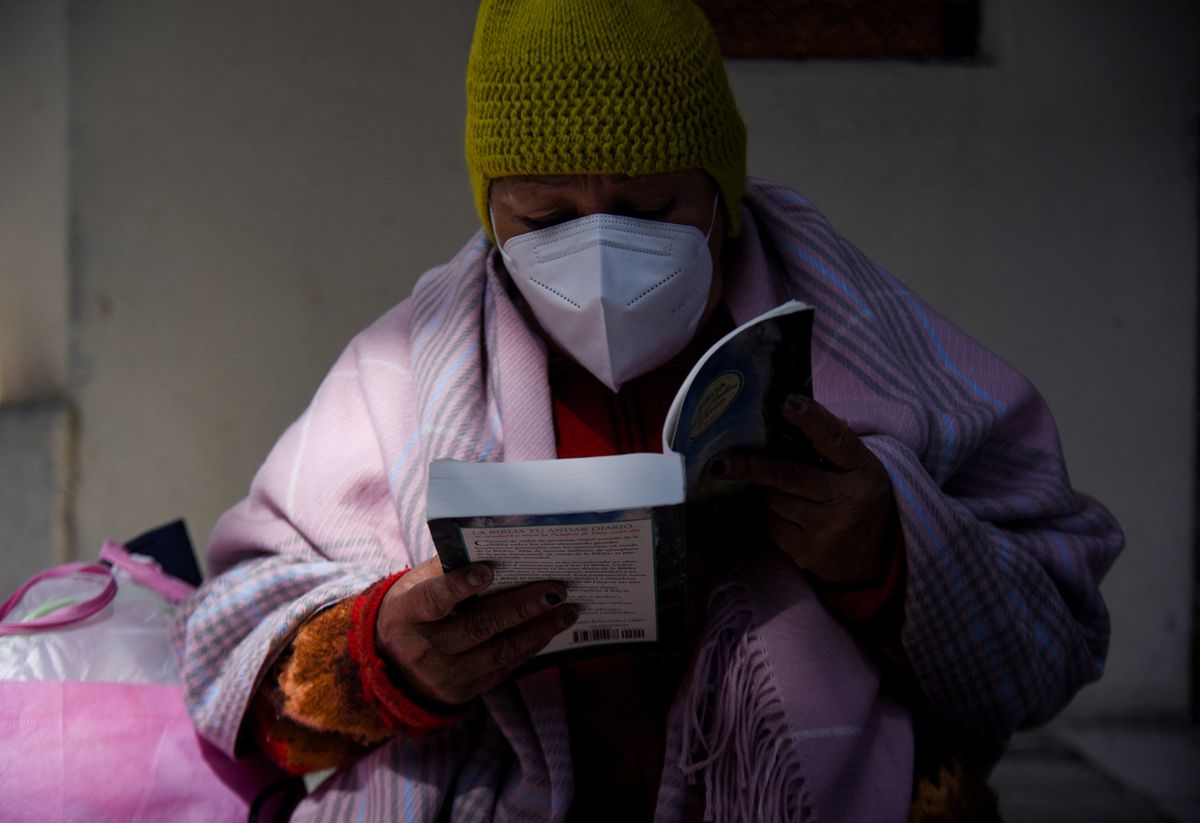
An inmate reads the Bible in prison, where she and fellow inmates have access to a small library as part of a La Paz, Bolivia, program to spread literacy and offer the chance to get out of jail earlier.

Sharing stories like today’s, I can see why someone could accuse me of being a Pollyanna. But it’s not that I think people convicted of crimes will be completely transformed if shown a little kindness. It’s more that I see no harm in testing how small kindnesses might add up, especially for people who may have experienced few kindnesses.

In 2017, Philip Reeves at National Public Radio conducted an interview in a Brazil prison about a program that Bolivia is now testing.

“Brazil’s prisons are dangerous places,” Reeves, noted, “blighted by overcrowding and drug gangs. But literacy is offering a way to shorten some inmates’ sentences: Read books, reduce your time behind bars. …

“REEVES: About 30 men are sitting behind desks in a classroom. They’re writing with pens and paper. The teacher is standing up front issuing instructions. … We could be in any school anywhere but for a couple of details. One, a wall of iron bars separates the teacher from her class. Two, the paper each man’s writing could win him a little bit of his life back. … These are inmates in a giant penitentiary in southern Brazil called the Casa de Custodia de Piraquara. …

“MARILDA DE PAULA SOARES: (Through interpreter) I am an educator. I really believe people can change.

“REEVES: Marilda de Paula Soares is the class teacher. Her students are participating in a project pioneered by the southern Brazilian state of Parana. Prisoners get four days lopped off their sentences for each book they read. To get those days of freedom, they must write a short paper about the book. They’re doing that now. Soares says each prisoner’s paper must explain …

“SOARES: (Through interpreter) … what’s caught their eye, a specific character, the language, the theme …

“REEVES: … in sufficient detail to ensure that cheating is … impossible. Douglas Seixas, an inmate here, says it’s true. You really can’t skip the reading. …

“SEIXAS: Because we need to read a book to understand. If you not read the book, no, no way.

“REEVES: Only certain books qualify under the reading program, including foreign and Brazilian classics and kids’ books for prisoners learning to read. Books with very violent themes are banned. … There’s a maximum of 12 books a year. That adds up to a month and a half remission. Admilson Rodrigues is doing 10 years for drug trafficking but is steadily whittling down his sentence by reading. … Rodrigues said he loved Gone With The Wind and also Les Miserables. Les Miserables seems particularly popular here. Rodrigues believes that’s because it’s about an ex-con who’s trying to create a new life on the outside. …

“REEVES: Is this project window dressing by Brazilian officials? Are they trying to put a gloss on a dysfunctional penal system where inmates sometimes wait years before being tried? It’s hard to know. Yet, prisoners here do seem to be benefiting. Edson Reinehr says he’s on his fourth book, which is about the adventures of Mowgli the wolf boy.

“EDSON REINEHR: Helps a lot because to keep the mind — occupied mind inside the cell instead of thinking about other bad things.

“REEVES: Staff here say the project’s about much more than just helping prisoners pass the time and get a little remission. Teacher Agda Ultchak says it’s about fundamentally changing lives.

“AGDA ULTCHAK: (Through interpreter) We hope to create a new perspective on life for them. This is about acquiring knowledge and culture and being able to join another universe.”

Meanwhile, at Reuters, Monica Machicao reports on a version of the program that was launched recently in Bolivia.

“The state program ‘Books Behind Bars’ offers detainees a chance get out of jail days or weeks in advance of their release date.

Bolivia does not have a life sentence or death penalty, but pre-trial detention can last for many years due to a slow judicial system.

“The program has been launched in 47 prisons that do not have resources to pay for education, reintegration or social assistance programs for prisoners, the Andean country’s Ombudsman’s Office says.

“So far, 865 inmates are sifting through prose, improving their reading and writing skills. One of them is Jaqueline, who has already read eight books in a year and has passed four reading tests.

” ‘It is really hard for people like us who have no income and who do not have family outside,’ she said. ‘There are people here, for example, who are just learning how to read and write.’ …

“With a daily salary of 8 bolivianos ($1.18), incarcerated Bolivians are forced to work to be able to eat and pay the high court costs to be released. The country’s prisons and jails have long suffered from overcrowded and unsanitary conditions, with some detainees staging protests over the lack of health care, according to Human Rights Watch. …

“Said Mildred, an inmate at the Obrajes women’s prison in the highland city of La Paz, ‘When I read, I am in contact with the whole universe. The walls and bars disappear.’ “

More on Brazil’s program at NPR, here, and on Bolivia’s at Reuters, here.

Read Full Post »

Photo: Raphael Alves via Washington Post.
Bored during Covid, an indigenous Brazilian girl started sharing her culture on TikTok, where she is Cunhaporanga_oficial.

Maybe I don’t follow all the right news outlets, but I hear about way more TikTok stories that are positive than negative. Today we learn that a 22-year-old from an indigenous tribe in the Amazon is teaching the world about her culture through playful TikTok posts [Cunhaporanga_oficial].

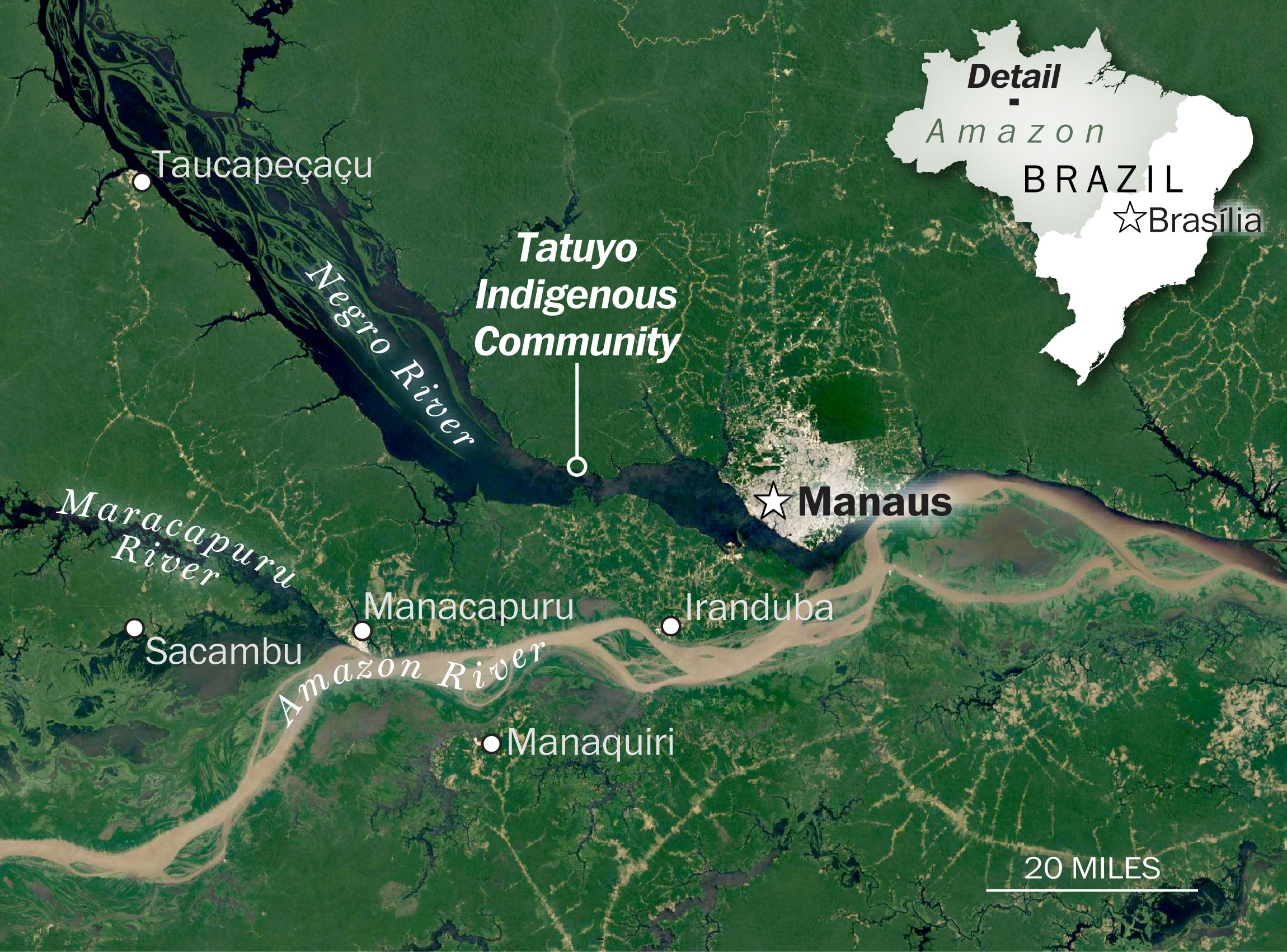
Terrence McCoy reported at the Washington Post, “In the middle of the Amazon forest, along the banks of the Rio Negro, a young woman in face paint was bored. The coronavirus pandemic had cut off the flow of visitors, further isolating this Indigenous village, accessible only by boat. So Cunhaporanga Tatuyo, 22, was passing her days, phone in hand, trying to learn the ways of TikTok.

“She danced to songs, dubbed videos, wildly distorted her appearance — the full TikTok experience. None of it found much of an audience.

“Then she held up a wriggly, thick beetle larva to the camera.

‘People ask, “Cunhaporanga, is it true that you really eat larva?” ‘

“ ‘Of course we eat them! Do you want to see?’

“The bug met its end (‘Mmmhhh,’ Cunhaporanga said), and a new viral star was born — streaming from the most remote of locations. Cunhaporanga’s home is a cluster of thatched-roof huts along the river’s edge, surrounded by nothing but Amazon jungle. The dozens of residents who live here are fellow members of the Tatuyo people. They paint their faces in bright red, wear elaborate feathered headdresses, live alongside squawking macaws that Cunhaporanga warns should not be mistaken for pets, and survive off whatever they can grow or catch.

“All of it is now a vivid backdrop for what has become one of the most dynamic and fastest-growing social media presences in Brazil. In little more than 18 months, Cunhaporanga has collected over 6 million TikTok followers, simply by showing scenes from her everyday life. To her, the activities she posted were unremarkable. But for her growing audience,they brought into sudden intimacy a world that could not have seemed more distant.

“Cunhaporanga offering a bowl of larvae to her family to eat: 6.7 million views. Cunhaporanga brandishing a tool used to make cassava flour: 16.1 million views. Cunhaporanga dancing on the pristine banks of the river — it’s still TikTok, after all — to a viral pop song: 4.1 million views.

“As social media reaches into the Amazon rainforest, one of digital media’s final frontiers, it is opening an unprecedented window into Indigenous life, clearing away the barriers once imposed by geography. For the first time, some of the planet’s most isolated peoples are in daily communication with the outside world without the traditional filters of journalists, academics or advocates.

“ ‘This is an important opportunity,’ said Beto Marubo, a member of the Marubo people, whose village just got the Internet and is already going viral. ‘The Brazilian people don’t know Indigenous people, and from this lack of information has come all sorts of terrible stereotypes like Indigenous people are lazy or indolent or unhappy.’

“The digitalization of Indigenous life is now colliding with some of Brazil’s most powerful political currents. President Jair Bolsonaro rose to power lamenting the size of Indigenous territories and advocating that they be opened up to business interests. … ‘Indians don’t speak our language, don’t have money, don’t have culture,’ Bolsonaro said in 2015 as he publicly plotted a run for the presidency. … ‘How did they come to have 13 percent of the national territory?’

“On one slice of that Indigenous land last month, Cunhaporanga — who speaks flawless Portuguese and considers herself to be fully Brazilian — was walking in the sun, TikTok on her mind. She wanted to continue to show her people’s culture but didn’t know how long she’d be able to. …

“ ‘It’s really expensive,’ she said, still unsure about how to earn much on a platform that’s often difficult to monetize. Some followers have donated a few bucks here and there, but not much. …

“She knows larvae are viral gold. Nearly every video of the squirmy little critters, which are harvested from an Amazonian palm tree and allegedly taste like coconut, brings in millions of views. But when she published that first video, they were, to her, just everyday food — as basic as flour or fish.

“She was stunned by the response: Within hours of the video’s posting, more than a million people had watched.”

More at the Post, here.

Read Full Post »

Photo: Marcio De Assis via GoodNewsNetwork.
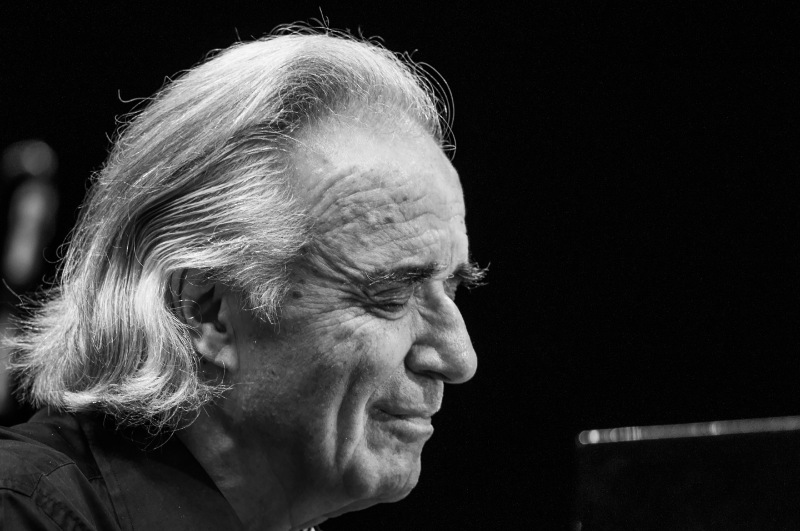
Brazilian piano maestro João Carlos Martins was deeply moved when new bionic hands enabled him to return to the keyboard.

Well, here’s some uplift for a November Monday. It concerns a Brazilian pianist who had to switch to conducting when disease and injury crippled his hands. Twenty years later, a designer tried to get in touch with the famed musician “on various platforms.” If you’ve ever tried to reach a famous person that way, you’ll appreciate the designer’s persistence.

Gabriella Paiella at GQ wrote, “Over the years, fate seemed to do all that it could to stop João Carlos Martins from playing the piano.

“It started in the 1950s, when he was 18. Something called focal dystonia. … The brain misfires and causes involuntary muscle spasms, which was mighty inconvenient for a young Brazilian piano prodigy on the precipice of world fame.

“He managed to get it under control and, by his early 20s, landed in New York City. Martins had it made back then: a tony apartment across the street from the Met, celebrated performances at Carnegie Hall and virtually every other major theater around the globe. They even had a nickname for him, the Mailman, because he always delivered. To relax, Martins would take leisurely strolls around Central Park, where sometimes he’d see his neighbor Jackie Kennedy. He played pickup soccer in the park too.

“Then one day, while chasing after the ball, he tripped.

“In the seconds between losing his footing and hitting the ground, there hung countless permutations for how skin and bone could collide with earth and inflict damage. The outcome: right elbow, sharp rock, a sliced ulnar nerve. Martins knew he was in trouble when the blood started spurting out. He knew he was really in trouble when, in the coming months, his fingers started to atrophy. And when his fingers started to atrophy, he thought about killing himself.

“Martins kept going, though his skills as a pianist were diminished. He even embarked on a decades-long quest to record the complete works of Johann Sebastian Bach. In 1995, at the age of 54, he traveled 6,000 miles from his then home in Brazil to tape in this one theater in Sofia, Bulgaria, with great acoustics. He was walking back to his hotel late at night when two muggers ambushed him with a metal pipe, and — thwack! — they took off with his passport and wallet and left him for dead. When Martins woke up in the hospital, he couldn’t feel the right side of his body.

“There had been other pain and misfortune along the way. A recurring repetitive-motion injury from practicing that was so agonizing he compares it to kidney stones. A pulmonary embolism. A coma because of that pulmonary embolism, during which Death, or at least an apparition of it, paid him a personal visit.

‘I recall an image of a carriage passing by with beautiful black horses,’ Martins says. ‘It was a beautiful carriage. The coachman asked me to get in the carriage, and I said, “No, I’m not going to get in.” That image is something I’ve never forgotten. The image is like a sign that I had a mission I had to fulfill with music.’

“In 2000, a failed surgery originally intended to restore functionality did his right hand in for good. Soon after, doctors found a tumor in his left. They removed it, along with any remaining hope of his fingers gliding over his beloved keyboard ever again. …

“At the age of 63 … Martins resigned himself to saying his most permanent goodbye to the piano yet: He chose to retire and become a conductor. He would now make music communally, after decades of being entwined in personal relationship with his instrument.

“Then along came these bionic gloves, created by an industrial designer named Ubiratan Bizarro Costa, who became familiar with Martins’s problems after he saw the maestro on a Brazilian television show in 2019. There is nothing high-tech about the gloves Costa invented, which is how he prefers it. … ‘I use minimalist design,’ Costa says. ‘The fewest number of pieces and the fewest number of expensive parts for the maximum result.’

“The gloves are both deceptively complicated looking and incredibly precise. The hand slips into a neoprene sleeve outfitted with a 3D-printed frame and stainless steel bars on the fingers. … Without the gloves, when Martins’s fingers hit a key, they stay depressed; the steel bars pop them back up.

“After seeing Martins on TV, Costa made a prototype and tried to get in touch with him on various platforms, but never heard back. The gloves lay dormant on a shelf in his office, until Costa saw that Martins and his orchestra were passing through Sumaré. …

“He went to the show, flagged down a musician, and explained his predicament. The guy thought Costa was kind of a weirdo but agreed to grab Martins. Eventually, Martins came out and Costa presented him with his invention.

“ ‘I thought he was an endearing mad scientist,’ Martins says, remembering his first encounter with Costa. [But] a few days after the concert, Martins invited Costa over for lunch. He told the designer what worked and what didn’t. Costa went home and fiddled with his model. …

“By Christmas 2019, Martins was able to place all 10 fingers on the keyboard for the first time in over two decades. Costa was pleased to see Martins playing in person, but it wasn’t until he saw the video that the gravity of the moment fully dawned on him.

“It’s like designing a paintbrush for Pablo Picasso, he thought.”

More at GQ, here. If you are on Instagram, you will be moved by this video of him playing properly for the first time in 20 years, thanks to the bionic gloves.

Read Full Post »

Photo: Radio TV Suisse/ The Literacy Project.
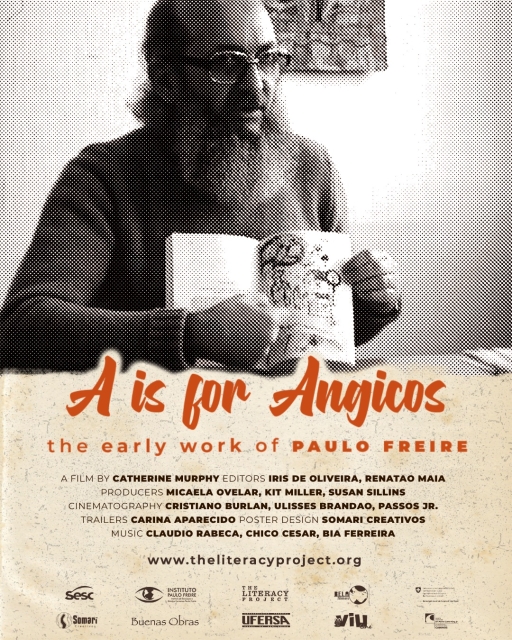
This is the poster for A is for Angicos, a documentary about an inspired literacy innovator in Brazil.

I was listening to the radio show the World the other day and was impressed by the story of the late Brazilian educator Paulo Freire. Most remarkable — and practical — was the way he approached the problem of adult illiteracy. Respectfully.

Carol Hills produced the report.

Some 60 years ago, Brazilian philosopher and educator Paulo Freire had a bold idea: teach 300 people in a poor, remote town in Brazil to read in just 40 hours of classes.

“His literacy experiment was not only successful — it was hugely influential around the world.

“Freire is best known for his groundbreaking book, Pedagogy of the Oppressed, first written in Portuguese in 1968. The book was later translated into multiple languages. …

“Freire, who died in 1997, was one of the founders of critical pedagogy, a movement that promotes the ’emancipation’ of students in the classroom and emphasizes the political nature of education. This year marks his centenary. 

“Now, a new documentary looks back at the pioneering work of Freire called A is for Angicos, made by Catherine Murphy.

“The 26-minute documentary tracks Freire’s early literacy experiments in the town of Angicos, in northeastern Brazil, where Freire worked with college-aged volunteers to mobilize illiterate villagers to learn to read and write and apply that knowledge to heighten their political consciousness. …

“Murphy joined the World‘s host Marco Werman to talk about the making of her film and Freire’s profound influence in the fields of education and social justice around the globe.

“How did Paulo Freire go about his work in that first experiment in northeast Brazil? This was the early 60s, right? 

“Yes. Paulo Freire mobilized a group of college students to be sort of co-creators with him of a technique to teach literacy in 40 hours to illiterate, mostly rural adults. And they went about designing a vocabulary system together with the people they would teach and choosing what they called ‘generative words,’ which were words in common usage in that region and held night classes to use these words to spark deeper discussion about the state of their lives and the world. …

“How different was that approach from previous approaches to literacy in Brazil?

“Well, they emphatically rejected earlier adult literacy materials that used children’s books, a children’s vocabulary. They created a methodology that used words that were in common usage, a common vocabulary that was co-created with the students and that honored their knowledge and wisdom. They had words like tijolo [‘brick’]​​​​ or ladrillo [’tile’], which are construction materials, but they also used words like povo and voto, which means ‘people’ and ‘vote.’ So, they were raising issues with people about: ‘Can you vote?’ ‘Do you have an identification card?’ … And really connecting them to these sort of larger questions about their lives and sort of social justice issues and trying to involve them in becoming protagonists in their own lives and in the world around them.

“At one point in your documentary, Catherine, we hear Paulo Freire himself talk about how he thinks of education and literacy, giving people power as change agents. … What is the essence of his philosophy, Catherine? 

“Freire talks about education as a tool for transformation. He rejects what he calls the ‘banking system’ of education, which is that you’re basically just depositing information in a person. He promotes what he calls learning to read the word and the world and to create what he also calls critical consciousness and to bring people into being change agents and agents for positive transformation in the world around them. 

“In 1964, a year after the literacy experiment in Angicos. The military came to power in Brazil and it came down hard on Paulo Freire and his methods. What happened? 

“The experience in Angicos was in full course that had the potential to become a national program. [The] coup happened on April 1, and Paulo Freire was taken prisoner the very next day, he was arrested in his home on April 2, 1964, went to jail for about 70 days and was then sent into exile and lived for many years in exile before returning to Brazil.

“He became a global figure, of course, in terms of empowerment education and published many, many books, including his most famous work, Pedagogy of the Oppressed. But the fact that he was on that early, early list of the first people that they arrested is not a coincidence. At one of the previous graduations of the newly literate adults, there were some military figures present that were involved in the coup that would then happen. And seeing this, you know, upsetting of the traditional then sort of largely feudal system in Brazil in which landless peasants were learning how to read and write, registering to vote and taking an active role in changing the world around them, well, that was exactly what the coup was trying to prevent.”

I found the whole broadcast interesting. You can read more at the World, here, or listen to the program itself.

Read Full Post »

Older Posts »