Feeds:
Posts
Comments

Posts Tagged ‘british’

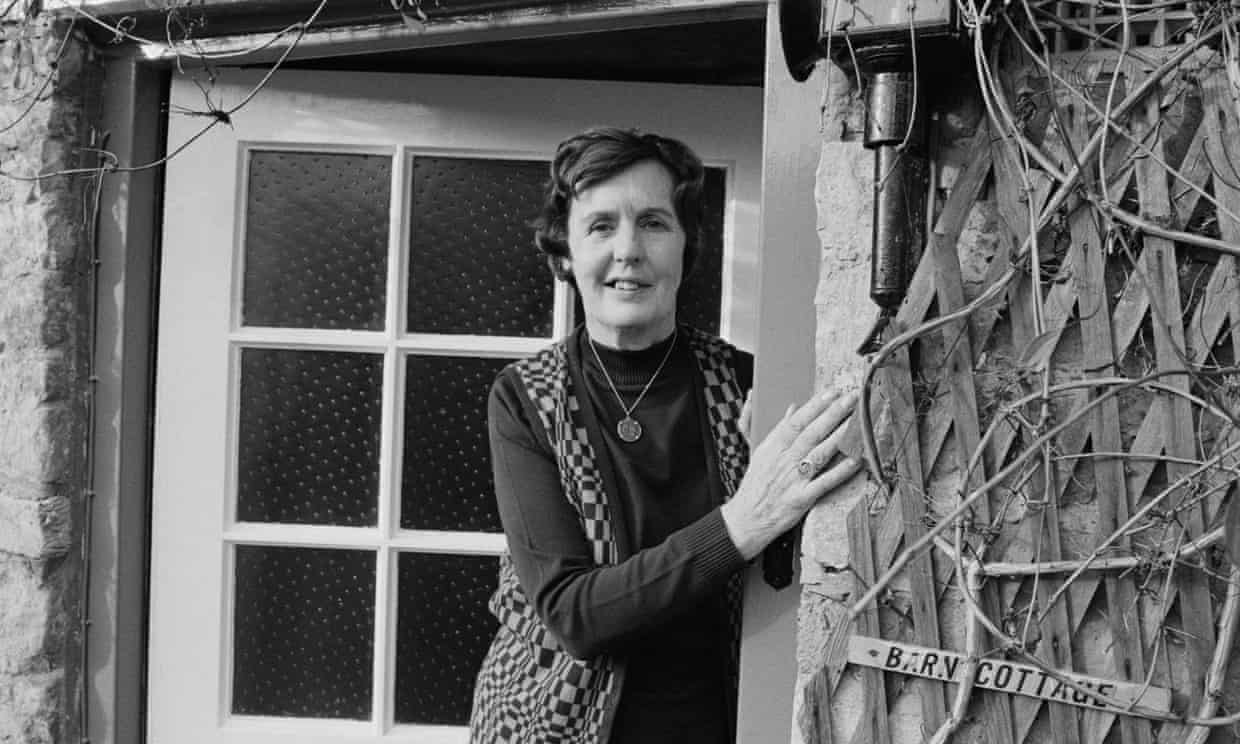
Photo: United News/Popperfoto/Getty Images.
British novelist Barbara Pym is said to have been trained as a spy.

Barbara Pym had a unique style of novel writing, very homey and at the same time, full of intrigue. I went through an intense Barbara Pym phase back in the day and am not surprised to learn that her powerful ability to observe and interpret small details might have made her a good candidate for a different field. Both wartime censorship (ugh!) and spying.

In today’s article, we learn that Pym received special training as an “examiner” to find coded messages and secret writing in normal-seeming letters. And there was probably more.

Nadia Khomami writes at the Guardian, “It is an irony that she herself would have reveled in: Barbara Pym, the author who punctured the social strictures of 20th-century Britain, worked as a censor during the second world war.

“But research suggests that rather than just poring over the private letters that must have helped hone her talent, she may have also been working for [British spy agency] MI5.

“New work by Claire Smith published {in May] proposes that Pym’s time as an ‘examiner’ for the government and in the navy could be more than a poacher-turned-gamekeeper tale about a future satirist. …

“Smith said: ‘In one of her novels, she said being an examiner was really rather dull. But when I began to look closely at her, I discovered many oddities.’

“She believes that Pym’s keen eye for detail was utilized for coded messages and secret writing in otherwise normal-seeming correspondence, becoming one of a group of female examiners who received special training.

“Smith, who worked in the Foreign and Commonwealth Office for 27 years and is the only female diplomat to have negotiated with the Taliban, said: ‘They were the ones looking for the micro dots, the secret writing, the messages concealed in ordinary letters. And because Pym was a writer, she would have noted odd ways of constructing sentences. She’d have been extremely valuable.’

“Dame Jilly Cooper described Pym as the author who ‘brought me more happiness and gentle laughter than any other writer.’ But before she became feted for works such as Excellent Women and A Glass of Blessings, Pym spent the prewar era looking for a job in publishing.

“Instead she became a censor in 1941, ostensibly charged with checking private correspondence between Irish families in Britain and Ireland.

“ ‘I thought it very odd that an Oxford graduate who speaks German and is already writing should really only be looking at letters between Irish families,’ Smith said.

“Pym made several trips to Germany in the 1930s, and even had a relationship with a young Nazi officer.

“The research, British Naval Censorship in World War II: A Neglected Intelligence Function, is being published with the support of the Barbara Pym Society. It coincides with the commemoration of Pym’s home in Pimlico, London, with a blue plaque by English Heritage.

“Within Pym’s notebooks and diaries, which are housed in the University of Oxford’s Bodleian Library, Smith discovered that she had written about learning code when she was an examiner and how she even made a submission to MI5.

“Smith said: ‘If you’re just reading everybody’s letters to strike out forbidden parts, why would you be learning code?’

“And Pym’s time as a postal censor in the Women’s Royal Naval Service (nicknamed the Wrens) also holds key clues to a hidden past.

“She was fast-tracked for promotion and became a naval censor in Southampton when the admiralty was preparing for D-day, before seeing out the rest of the war in Naples.

“It was during her time on the south coast that the biggest oddity occurred, according to Smith. ‘In the second world war, MI5 used PO Box 500 as their address, and in correspondence they were often referred to as ‘Box 500.’ That’s quite different from the box numbers that naval personnel used.

“ ‘But on the back of one of her letters that was going outside the UK, Pym – in her own handwriting – wrote her initials, [naval land base] HMS Mastodon, and Box 500.’ …

“One final piece of the puzzle Smith stumbled upon was that after Pym died, her literary executor was ‘at great pains to say one piece of work, the comic spy thriller So Very Secret, wasn’t successful because Pym didn’t know any spies.’

“ ‘I thought: why mention that at all?’ Smith said.”

So it’s still conjecture. Seems likely, though. We know from the story of Jane Austen’s sister that literary executors can be extremely cautious about revealing anything. And Pym would have been good at spying.

I think anyone who’s a little bit paranoid, a little touchy about double meanings in the words of others could be good at finding hidden messages. What do you think? Any Pym fans here?

More at the Guardian, here.

Read Full Post »

Photo: Maria Lupan via Unsplash.

At one of Suzanne’s first adult jobs she got to name some product colors. We always thought that sounded like fun. We still remember a pink color she named Flirt.

Heather Schwedel at Slate recently edited a submission by the woman behind some wild nail polish names: Amy Fisher at Butter London, which carries polishes called Yummy Mummy , Molly Coddled, Waterloo Blue, to name a few.

“My name is Amy Fisher, and I’m the senior brand and marketing manager for Butter London. I’ve been with the brand for about three years now. I do everything from naming our nail polishes and other products to creating them. I also help with some of our sales and retail. But everyone is always curious about the naming part.

“When we’re coming up with a new product — I’ll use our nail lacquers as an example — we usually start with a color. We’ll take a look at our full assortment: What do we think is missing and what is the white space in that category? Each season, we physically take our nail lacquers and our product and lay them out in front of us and see what colors are missing. We like to keep a very unique and curated assortment. So sometimes if we’re going to launch a new shade, that means we have to discontinue another one.

“Once we review that, we also look at trend data. What’s the trend right now? What’s the trend going to be in a year from now when we’re launching this? We’ll also look at past sales data. If we had a shade a couple seasons ago: How did that perform? Do we want to bring that shade back or a similar color? And we look at feedback from our customers. We get a lot of inquiries from customers about old shades that they want us to bring back.

“The naming really comes along once we have those shades or colors, whatever the product might be. Typically we come up with the name once we have the final-final shade. …

“We typically have a theme or general story that we want to tell with the shades, so we’ll do a small brainstorm with our copywriter. We’ll take that theme and then bounce ideas off of each other. It might take three to five days before we’re ready to come back to the table with some ideas. But it doesn’t really take that long to come up with a name, honestly. Sometimes it’s a brainstorm meeting. Sometimes it’s an email chain. …

“I, along with Julie Campbell, who’s the general manager of the brand, will choose the final name that we would like to proceed with and then our copywriter takes it to our regulatory team. The regulatory team makes sure that we can use the name from a legal standpoint. Sometimes there are trademarks and things of that nature that we need to be careful of. If we have to go back to the drawing board we do so, but usually for shade names, it’s pretty seamless.

“The brand was founded in 2005 in London. It was acquired by an American company a few years ago, but we really do want to stay true to those British roots and keep things cheeky and fun and really British-inspired. In my opinion, an example of a perfectly named Butter London product is All Hail the Queen, which is one of our hero nail lacquers. I absolutely love that name. It’s British, the color is beautiful — it’s like a shimmery taupe. Some other names include Cotswold Cottage — that one’s also a taupe—and Bang On!, a deep teal.

“We’ll sometimes utilize British dictionaries, and we do lots of Googling since everyone is actually American. … And then we also have a team that helps with our search engine optimization keywords. Sometimes they’ll come to the table with words that we can incorporate for a more 360-marketing approach when people are searching for different nail lacquers online. …

“I can point to our Fall 2021 holiday collection. I helped with two names in particular. One was Tickety Boo, and it was a very fun, shimmery pink overcoat. And then Proper Do was another one. That was a really beautiful, deep purple.

“I’m still developing a sense of what words sound like what color. One of our shades that we launched this past spring was called Bespoke Lace, and lace is obviously very indicative of white. That was this beautiful white sort of matte glitter overcoat. It kind of looks like lace when you apply it. But sometimes the names have absolutely nothing to do with the shade. With Tickety Boo, which means something like ‘in a jiffy,’ it’s just such a fun saying that it seemed to go well with the fun glittery overcoat. But Proper Do, which is slang for a fancy social event, that doesn’t really scream purple.

“At any rate, you just want to be fun, whimsical, and British. You really have to nail that. Sometimes a darker shade is a little bit more serious. Something like that can be a little bit harder than maybe a glitter or something like that. …

“Naming is definitely one of the more fun things I get to do, I would say, because I get to be creative. But I know there are probably people who think I sit around all day naming nail polish. Even my mom, sometimes she’ll be like, ‘What do you do again?’ It’s way more than just coming up with fun names. You know, there’s the research, there’s the retail side of it that I have to do. I think maybe people would be surprised by the amount of research that we have to do and staying on top of the trends. … But at the end of the day, it is fun. I can’t lie — it is fun.”

Can’t help thinking all this is going to be done better by ChatGPT, especially since Tickety Boo does not mean “in a jiffy.” What do you think?

More at Slate, here. No firewall.

Read Full Post »

Photo: Everett Collection.
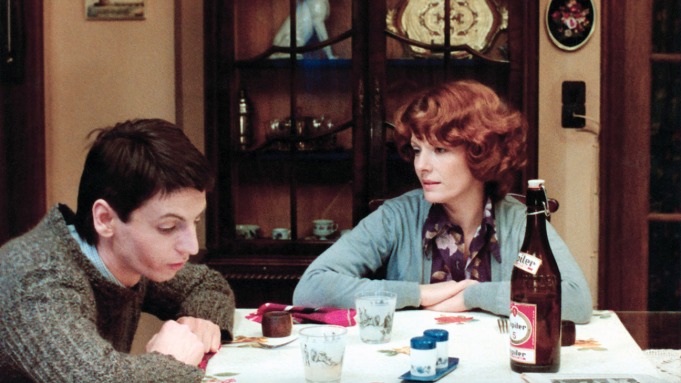
A scene from the French film Jeanne Dielman, voted best of all time at Sight & Sound magazine recently. It’s the first time the best-film honor has come to a female director, Chantal Ackerman.

Do you follow “best of” lists? I find them interesting, and I especially like seeing how judgments change over the years. Today’s story is about voting for the best film of all time. I’ve seen hardly anything on the list, but what caught my attention is that the film that has moved to the top was made by a woman. A first for the poll.

Alex Ritman writes at the Hollywood Reporter, “Almost 50 years after its release, Jeanne Dielman, 23 quai du Commerce, 1080 Bruxelles — Chantal Akerman’s groundbreaking 1975 drama following the meticulous daily routine of a middle-aged widow over the course of three days — has become the first film by a female director to top Sight & Sound magazine’s once-a-decade ‘Best Films of All Time’ poll in 70 years.

“More than 1,600 film critics, academics, distributors, writers, curators, archivists and programmers voted in the poll, which the BFI-backed [British Film Institute] publication has been running since 1952, with the results, announced Thursday, seeing Akerman’s feature — which was heralded by Le Monde in January 1976 as ‘the first masterpiece of the feminine in the history of the cinema’ — leapfrog from 36th position in 2022 to No. 1.

“The 2012 winner, Alfred Hitchcock’s Vertigo, now sits in second place, with Orson Welles’s Citizen Kane (which held the No. 1 spot for 50 years) placed third and Yasujirō Ozu’s Tokyo Story fourth. Three more films are new to the top 10, including Wong Kar Wai’s In The Mood for Love in fifth place (up from 24th in 2012), Claire Denis’ Beau travail at number seven (up from 78th) and David Lynch’s Mulholland Dr. in eighth place (up from 28th). Only four new films released since 2012 managed to break into the top 100 of the poll. …

“ ‘Jeanne Dielman challenged the status quo when it was released in 1975 and continues to do so today. It’s a landmark feminist film, and its position at the top of list is emblematic of better representation in the top 100 for women filmmakers,’ said Mike Williams, Sight and Sound editor. ‘While it’s great to see previous winners Vertigo and Citizen Kane complete the top three, Jeanne Dielman’s success reminds us that there is a world of under-seen and under-appreciated gems out there to be discovered, and that the importance of repertory cinemas and home entertainment distributors cannot be overestimated in their continued spotlighting of films that demand to be seen. What currently undervalued masterpieces might emerge in 10 years thanks to this tireless work?’

“Added BFI executive director of public programs and audiences Jason Wood: ‘As well as being a compelling list, one of the most important elements is that it shakes a fist at the established order. Canons should be challenged and interrogated and as part of the BFI’s remit to not only revisit film history but to also reframe it, it’s so satisfying to see a list that feels quite radical in its sense of diversity and inclusion.’

“See the top 20 greatest films of all time, according to Sight & Sound‘s 2022 poll, below

1       Jeanne Dielman, 23, quai du Commerce, 1080 Bruxelles (Chantal Akerman, 1975)

2       Vertigo (Alfred Hitchcock, 1959)

3       Citizen Kane (Orson Welles, 1941)

4       Tokyo Story (Ozu Yasujiro, 1953)

5       In the Mood for Love (Wong Kar Wai, 2001)

6       2001: A Space Odyssey (Stanley Kubrick, 1968)

7       Beau travail (Claire Denis, 1998)

8       Mulholland Dr. (David Lynch, 2001)

9       Man with a Movie Camera (Dziga Vertov,1929)

10     Singin’ in the Rain (Stanley Donen & Gene Kelly, 1951)

11     Sunrise: A Song of Two Humans (F.W. Murnau, 1927)

12     The Godfather (Francis Ford Coppola, 1972)

13     La Règle du jeu (Jean Renoir, 1939)

14     Cléo from 5 to 7 (Agnès Varda, 1962)

15     The Searchers (John Ford, 1956) 

16     Meshes of the Afternoon (Maya Deren & Alexander Hammid, 1943)

17     Close-Up (Abbas Kiarostami, 1989)

18     Persona (Ingmar Bergman, 1966)

19     Apocalypse Now (Francis Ford Coppola, 1979)

20     Seven Samurai (Akira Kurosawa, 1954) 

More at the Hollywood Reporter, here, and at the Boston Globe, here. I imagine that the reason several movies jumped higher up the list is that voters who had never heard of them found them and watched.

I am going to research a few and order them through our retro Netflix DVD service. Jeanne Dielman might be a bit dark for me. At least from what I’ve read about it. The selections I’ve already seen are the kinds I like: Vertigo, Citizen Kane, 2001. (How funny to think the the year 2001 is futuristic. Kubrick, you have no idea!)

Do you have any recommendations?

Read Full Post »

There’s a television show in the UK that has become such a part of American culture that Saturday Night Live regularly spoofs it. In fact it’s from SLN that I even know about the show. Today’s article helps me understand why people love it so.

Eliot A. Cohen writes at the Atlantic, “For my physical health, there is a rowing machine, but for my peace of mind, I have learned this past year, nothing beats old episodes of The Great British Baking Show, which one can binge-watch to satiety on Netflix.

“This trick of seeking temporary refuge from the realities of a grim world by indulging in fantasies of the simple pleasures situated in some lovely part of rural England is nothing new. During the Blitz, Londoners rediscovered the joys of the 19th-century novelist Anthony Trollope. …

“Trollope is still very much worth the reading. But in our fraught times—so much easier, to be sure, than the dark days of 1940—many people like me have sought refuge in a different idyllic England of our dreams. Hence the entirely deserved popularity of The Great British Baking Show — devotees were ecstatic when, the coronavirus notwithstanding, a new season began a few weeks ago.

“Every summer for the past decade, a dozen amateur bakers have trooped into a cheerful, white party tent supplied with counters, ovens, refrigerators, and all the basic paraphernalia they need. Each week is themed — breads, pastry, biscuits. …

“The setting is the lawn of a magnificent bucolic estate in Somerset or Berkshire. Most often the sun shines, but when it does not, we know somehow that the rain is more a gentle and fructifying moisture than a miserable downpour.

“The contestants are supervised by Paul Hollywood, an experienced baker (and race-car driver), and, in later seasons, Prue Leith, the chancellor of Queen Margaret University in Edinburgh and a restaurateur, an author, and a journalist. … They have two sidekicks, in the current version of the show: Matt Lucas, an actor and a comedian, and Noel Fielding, a comic who is weird but amiable, if you like Goth.

“A decent-tasting cake is not enough. … Prue is intimidating enough in her Professor McGonagall way: ‘This is rather a mess, isn’t it?’ and ‘Hmmm. Claggy. What a pity.’ But the hard man of the show is Paul Hollywood. …

“In the days of the empire, he would have been a regimental sergeant major, looking an unhappy private in the eye three inches from his face, pointing at a fleck of lint on an otherwise impeccable uniform, and saying, ‘Your uniform is filthy, you horrible little man.’ … He is one heck of a baker.

“In The Great British Baking Show, there are standards. If it looks a mess, the judges will say so, and the bakers swallow hard and acknowledge their failures. … The vaguely obscene puns — which never seem to grow tired — about flabby buns and the dreaded ‘soggy bottom’ allow no sympathy for the vagaries of fate. Results, not good intentions or effort, are what matter.

“And yet, the show is animated by the warmth of humanity. … There are college students and grandmothers; carpenters and lawyers; soldiers, sailors, and personal trainers; immigrants (or their descendants) of varying hue from Hong Kong and Jamaica and Mumbai. They are remarkably nice to one another.

“When one of the bakers is having a crisis — a cake separating in the middle, a collapsing gluten-enhanced edifice, cracked biscuits — the others rush to help out. … They even hold hands, some of them, in that agonizing wait as the sidekicks menacingly intone, ‘The bakers now await the judgment of Prue and Paul.’ In the face of a really serious meltdown, even Hollywood can be heard to murmur, ‘It’s just a bake, mate.’

“To watch The Great British Baking Show is to believe that the average guy and gal can do remarkable things, that good nature is compatible with excellence, that high achievement will be recognized, that honest feedback can lead to improvement, that there are things to life beyond work. …

“To watch it is to know that, Brexit or no Brexit, and despite royal scandals, political cock-ups, and the occasional omnishambles, there will always be an England. And that is a comforting if possibly delusional thought.

“In short, as the Brits would say, The Great British Baking Show is brilliant, thoroughly joined up, and fit for purpose. To watch it is to feel refreshed, inspired, and confident, ready to return to work with a strong heart and a clean conscience, knowing that somewhere in rural Wiltshire or Somerset, Noel and Matt will say every week in voices of varying and unmodulated creepiness, ‘Bakers! On your marks, get set, bake!’ ”

More at the Atlantic, here.

Read Full Post »

Photo: Getty Popperfoto
L.S. Lowry, (pictured in 1957), the artist from Manchester, is the subject of a major new show at the Tate Britain gallery.

Some years ago when my husband was in England on business, he acquired a print of workers coming and going outside a factory. The original was by L.S. Lowry, whose paintings of industrial Britain turn out to be very popular in the UK.

Popularity, however, is not a ticket to being shown at the Tate Britain. Belatedly, Lowry will receive a retrospective in 2014.

Oliver Wainwright at the Daily Mail writes, “Clouds of smoke belch from forests of chimneys, while armies of spidery figures scuttle to and fro between narrow terrace houses and imposing factory gates.

“Crowds of fans shiver on the edge of a football field, a fist-fight breaks out, and barefoot children tease a stray cat on the street corner.

“These are the scenes depicted in the haunting paintings of L.S. Lowry who, more than any other artist, managed to capture the strange, bleak beauty of daily life in northern industrial towns.

“His dream-like images captured the popular imagination, adorning chocolate boxes and biscuit tins, tea towels and jigsaws.

“Yet they are scarcely to be found on the walls of our major national galleries. The Tate owns 23 of his works, but has only ever exhibited one on its walls in the past 20 years — and then only briefly. …

“Why has it taken so long?

” ‘He’s a victim of his own fan base,’ said Chris Stephens, Tate Britain’s Head of Displays. ‘What makes Lowry so popular is the same thing which stops him being the subject of serious critical attention. What attracts so many is a sort of sentimentality about him.’

“This is a strangely inverted piece of art world logic,” Wainwright comments, “where the popularity of an artist is seen as an obstacle to showing their work.”

If you’re an artist, be careful to stay off “chocolate boxes and biscuit tins, tea towels and jigsaws” — or wait to be discovered by art experts of a future generation.

More here and here.

 © The estate of L.S. Lowry
L.S. Lowry, Coming out of School, 1927

Read Full Post »