Feeds:
Posts
Comments

Posts Tagged ‘church’

Photo: Gabriela Contreras González.
Saint Catherine of Alexandria, patroness of students, teachers, librarians, and lawyers.

Today’s post is about art restoration, a field that always seems brave to me. Imagine charging into some time-honored work and presuming to “fix” it! I guess a good restorer becomes the artist, too — perhaps in the way that a skilled translator of a literary work becomes a coauthor.

This month, with trepidation, my husband and I put a lovely Inuit watercolor into the hands of a conservator. Would she be able to remove all the mildew from life in a damp summer cottage? The results were nothing short of miraculous.

At Artnet, Min Chen writes about a larger work of conservation in Mexico.

“For decades, the interior of the Temple of Our Lady of the Assumption, a church in the town of Santa María Huiramangaro in Mexico, stood stark white, with blue accents. But the parish was not always so bare. A new restoration has revealed a host of resplendent 16th-century religious paintings that once spanned the ceiling of the historic church.

“The project, undertaken by participants including the Ministry of Culture of the Government of Mexico and the National Institute of Anthropology and History (INAH), dispatched a team of professionals to conserve the roof of the church. What they discovered instead were ancient images of saints and martyrs — hagiographic works rarely found in the Michoacán region — which had been painted over during the 1940s.

“The work, said Laura Elena Lelo de Larrea López, expert restorer at the INAH Michoacán Center, in a statement, ‘allowed us to recover an extraordinary work on the horizontal roof of the main altar, and to discover the rich artistic, technical and iconographic evolution that has marked this religious site.’

“The Temple of Our Lady of the Assumption was constructed in the early 16th century, when Santa María Huiramangaro was designated a district head, overseeing the communities of San Juan Tumbio, Zirahuén, and Ajuno. The building reflected the architectural styles of Mudéjar, which featured ornate motifs believed to have been originated by Muslim craftspeople in the 13th century, and Plateresque, a late-Gothic and early Renaissance aesthetic imported by the Franciscans.

“During restoration work, three pictorial layers of religious iconography were uncovered on the church’s ceiling. The oldest, from the 16th century, saw the use of tempera paint, which was applied in thin glazes to depict various characters corresponding to Saints Paul, Peter, Agatha of Cantania, and Catherine of Alexandria, as well as baby Jesus in Franciscan habit. The works were retouched with oil paints in the following century, adding volume and colors to the depicted figures’ clothing.

“When water ran dry in the region in the 17th century, the church fell largely into disrepair, as Santa María Huiramangaro lost its capital status. ‘The misfortune was a blessing in disguise, in terms of conservation,’ said Lelo de Larrea López, ‘since, not having the resources to renew its religious furnishings, the parish priests of the Temple of Santa María preserved its Plateresque ornaments. …

“Still, experts uncovered evidence of a restoration effort in the 20th century. Acrylic paints were deployed to touch up the faces of the saints. …

“During remodeling work in the 1940s, the iconography on the church’s roof was painted over in white, with blue designs. The repainting, noted Lelo de Larrea López, ’caused an alteration in the appearance of the place.’

“The latest conservation removed the repainted layer and restored missing portions of the paintings. Additionally, the ceiling was cleaned of dust and animal droppings, reinforced with joints and wood grafts, and fumigated to deter wood-eating insects. Other roof elements, such as corbels, partitions, and Franciscan cord carvings, were also given a refresh.

“The work marks the latest phase in a major restoration of the Temple of Our Lady of the Assumption, which began a decade ago with a focus on its main altarpiece. Despite a dismantling (undertaken to tackle a collapse in the church’s rear wall), conservators found the artifact in a well-preserved state. Over 2022 and 2023, they addressed damage to its cornices and carvings, and undid a repainting job to reveal its original gold leaf and polychrome.”

I admire the commitment it takes to work on projects of ten years or more like this. Have you ever had a piece of art restored?

More at Artnet, here.

Read Full Post »

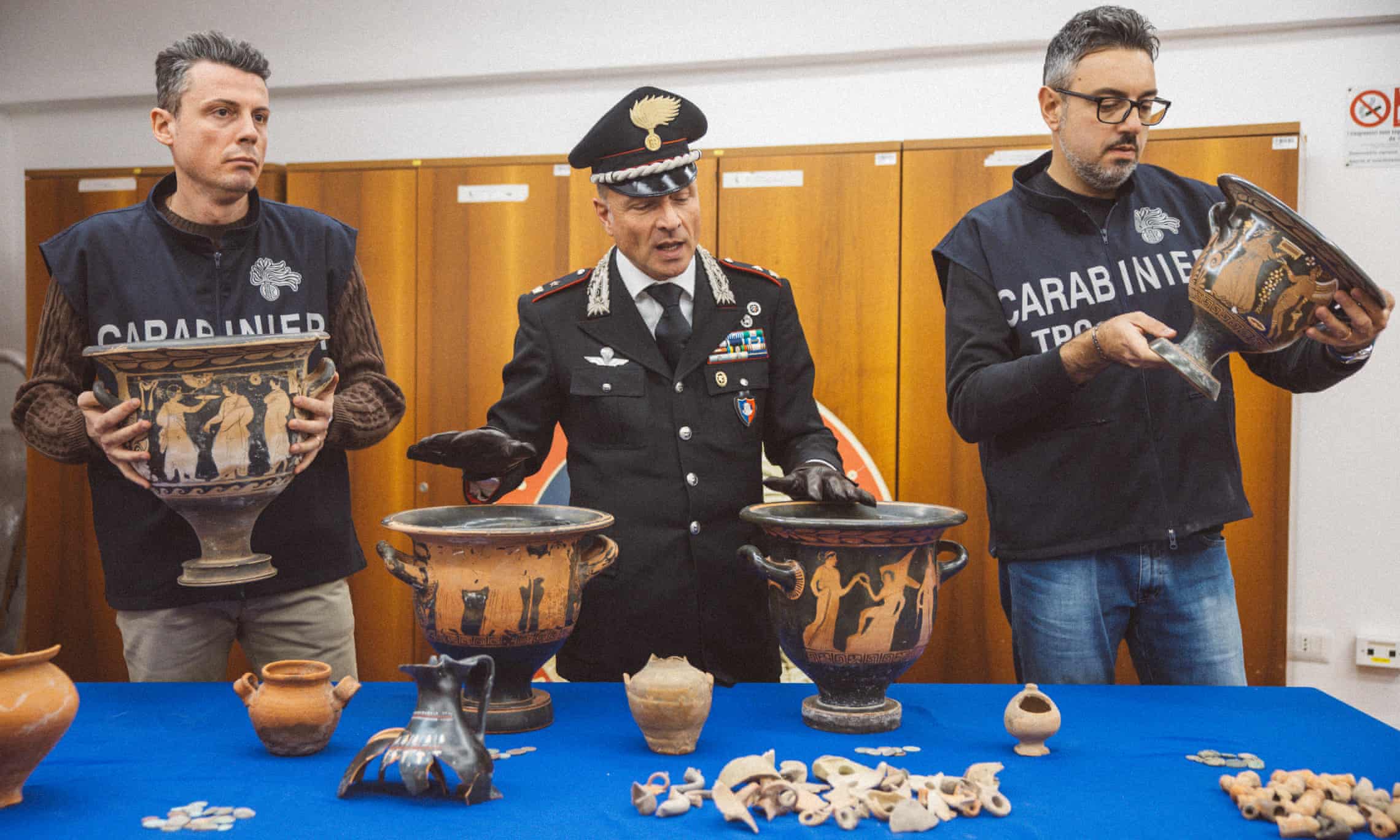
Photo: Roberto Salomone/The Guardian.
Italy’s Carabinieri cultural heritage protection squad at work. The force recently uncovered a clandestine dig in the middle of Naples
.

Every morning on the social network Mastodon, German archaeologist Nina Willburger (@ninawillburger) posts a beautiful, or at least curious, artifact from a dig. The history of archaeology suggests that not all of them were unearthed in legal ways, but they are in museums.

Nowadays there are strict laws around digging. Which is why Italy needs its cultural heritage protection squad.

At the Guardian, Angela Giuffrida wrote about the team’s latest success.

“Looking towards the semicircular apse with a frescoed image of a partially identifiable Christ on a throne staring back at them, the archaeologists crouching in the small space deep beneath a residential building in Naples were left speechless. They were amid the remains of an 11th-century church.

“The archaeologists, however, could not take the credit: the historic jewel, which had just been seized by police, was dug up by tombaroli, or tomb-raiders, illicit gangs who for decades have been plundering Italian cultural sites, in turn fueling the global market for stolen art and antiquities.

“Investigators believe the group’s leader was a local entrepreneur, currently under investigation, who owns two apartments in the building above. His cellar was turned into a well-organized excavation site, from where the tomb-raiders dug a warren of tunnels leading them about 8 metres [~26 feet] down into ancient Naples, where they unearthed medieval art. …

“But impressive though their workmanship was – they even installed concrete pillars to prevent the structure from collapsing – officers from the Naples unit of Italy’s Carabinieri cultural heritage protection squad unmasked the gang and confiscated the church after a covert investigation.

“The force also recovered 10,000 fragments of Roman and medieval pottery from the alleged gangmasters’ homes and 453 intact artifacts, including vases, terracotta lamps and coins. …

“The gangs commonly work by marking out clandestine excavation spots close to known archaeological sites, which in the Campania region surrounding Naples can include Pompeii, Herculaneum, Paestum or areas where there were Roman settlements. So uncovering a clandestine dig in the middle of the city took the specialist squad by surprise.

“ ‘When you think of Pompeii, for example, you know a dig can lead to a wealthy domus where prestigious objects can be found,’ says Massimo Esposito, the chief of the squad’s unit in Naples. ‘But it’s rare to find one in the heart of Naples.’

“The group’s alleged leader is believed to have had an inkling that there might be something beneath his home when construction works nearby on the city’s metro were interrupted and the site cordoned off after a small part of the remains of another, albeit less historically interesting, church emerged.

“The group worked for several months, carrying out their noisiest activity during the day, but not loud enough to attract complaints from the building’s residents. Little did the gang know that their comings and goings were being observed by Esposito’s team, with the squad staking out the building and wiretapping its alleged leader’s phone. Suspicions were especially aroused after seeing him carrying boxes filled with materials. …

“The Carabinieri’s cultural heritage protection squad was established in 1969 with the task of protecting Italy’s priceless cultural assets. Since then, more than 3m stolen artworks and relics have been retrieved, including those that ended up on display in some of the world’s biggest museums, such as the Getty in Los Angeles.

“Art and relics thieves in Campania especially thrived in the 1980s, taking advantage of a devastating earthquake at the beginning of that decade to ransack churches of paintings. The long-lost La Desposizione, a 2-metre high masterpiece painted by Angelo Solimena in 1664 depicting the crucifixion, was recently returned to Campania only after it was spotted on display in a museum in the Marche region. …

“Esposito met the Guardian in his unit’s office located in Castel Sant’Elmo, a medieval fortress overlooking Naples. He was surrounded by relics … including a wine amphora and a house-shaped sarcophagus believed to have contained the remains of a child, and various other funerary objects dating back to the fourth century AD. The artifacts are usually kept there pending the conclusion of judicial cases, before being either returned to their origin or entrusted to museums. …

“Data in recent years indicates a gradual decrease in crimes against cultural heritage. Laws for crimes against cultural heritage have been tightened, and work intensified to return stolen assets from abroad. … Use of social media, especially over the past decade, has also made it easier for the squad to identify thieves. A trove of funerary treasures, believed to have belonged to Etruscan princesses and illegally excavated from an underground tomb in Umbria, was retrieved in November after police came across a photo of the bungling thieves posing on Facebook as they attempted to sell it online.

“ ‘Despite the risk, there is sometimes this egotistical element: they want to boast about the beautiful items they’ve found,’ says Esposito.”

Check out the treasures at the Guardian, here. No paywall. Donations are important to the Guardian‘s journalism.

Read Full Post »

Photo: Francine Kiefer/The Christian Science Monitor.
Meetan Kaur, of United Sikhs, stands with hot meals of basmati rice and chickpea curry for fire evacuees at the Pasadena Church East Campus donation center, Jan. 17, 2025.

Despite the loss of many houses of worship in the recent Southern California fires, faith communities are rising up to help others. And helping others others is helping the volunteers themselves begin to feel hopeful. (Scientologists? Why not? We are all human beings in a disaster.)

Francine Kiefer and Sophie Hills write at the Christian Science Monitor, “Cars pull into the Pasadena Church parking lot, waved forward by a couple of Scientologists. Christian volunteers hand out groceries and diapers. Orange, yellow, and black turbans dot the crowded lot, as Sikh volunteers dish out hot chickpea curry and basmati rice and cups of steaming chai.

“The line of cars stretches around the lot. Volunteers pass meals through car windows and load back seats with pet food, toiletries, and paper goods. Some Sikhs traveled from as far as New York and Canada to cook and serve meals to people displaced by the wildfires. The chai, especially, gets five-star reviews from volunteers and evacuees alike.

“ ‘That’s what we’re really hoping to do here – it’s really offering solace, offering comfort, in this absolutely crazy time,’ says Meetan Kaur, an organizer with United Sikhs, an international aid organization.

“The Eaton Fire destroyed thousands of homes, schools, restaurants, and businesses. Houses of worship burned, too. But their congregations are still here, gathering to pray in borrowed spaces and distributing food and clothing. …

“Organized religion provides space for worship and spiritual study, but it can be especially helpful when disasters strike because there’s already ‘a built-in system of caring,’ says Cynthia Eriksson, a dean at Fuller Theological Seminary, who specializes in the intersection of faith and mental health. …

“At the Pasadena Church, Chanel Jackson is loading up SUV after SUV with free groceries. She attends the Faithful Central Bible Church in Inglewood, clear across Los Angeles. But she’s driven to this donation and distribution center by both her faith and her roots.

“Ms. Jackson grew up in Altadena, so like several other volunteers, she says this is personal. Two of her schools burned. She knows some of the people in line. Sporting a ‘Dena’ T-shirt – that’s what folks call the Altadena-Pasadena area – she talks about the imperative from Scriptures to help the poor.

“ ‘A lot of people – their faith is shaken,’ she says. ‘They’re questioning God – “Why me?” – which I completely understand and empathize with. But God is in the people; God is in the angels. God is in the people that are here at this relief center, trying to help families in need.’ …

“The tragedies and hardship calls on a core aspect of faith: community. ‘It’s about the connection to something bigger than ourselves,’ says Rabbi Joshua Levine Grater, the director of Friends in Deed, a local interfaith nonprofit. His family lost its house in the Eaton Fire, as well as its synagogue, where he was once head rabbi and is now a congregant. …

“But leaders rescued 13 Torah scrolls before the building burned. When the fire died, one wall remained, etched with a mural that members didn’t know was hiding behind drywall. It depicts people and animals in the desert, beneath a single palm tree. …

“Founded 130 years ago, Friends in Deed focuses on the most needy people, operating a food pantry and providing housing assistance and case management. Since the fires, the requests for help have only increased. But so have the donations and volunteers.

“Despite the uncertainty his family and so many others face, there’s only one choice, says Rabbi Grater. ‘We have to find the courage to rebuild a step at a time.’ … The teachings and stories of the Torah are there as ‘reminders that there’s still an immense amount of love in the world.’

“In Altadena, at least five different places of worship succumbed to the wildfire. … First Church of Christ, Scientist, Altadena, whose edifice was spared, says it plans to share its space with nearby congregations once it’s safe to return. …

“For some, that generosity is central to their faith. A gurdwara is not just a place of worship, but also a place to coordinate and supply aid, says Gurvinder Singh, international humanitarian aid director for United Sikhs.

Seva, which translates to ‘selfless service,’ is a call to action, says Mr. Singh. That goes hand-in-hand with the tradition of langar, a community meal.

“ ‘It’s really the basis of humanity,’ says Ms. Kaur at the Pasadena Church. ‘It’s bonding through food.’ ”

More at the Monitor, here. Also, see how LA libraries are helping, here. No paywall.

Read Full Post »

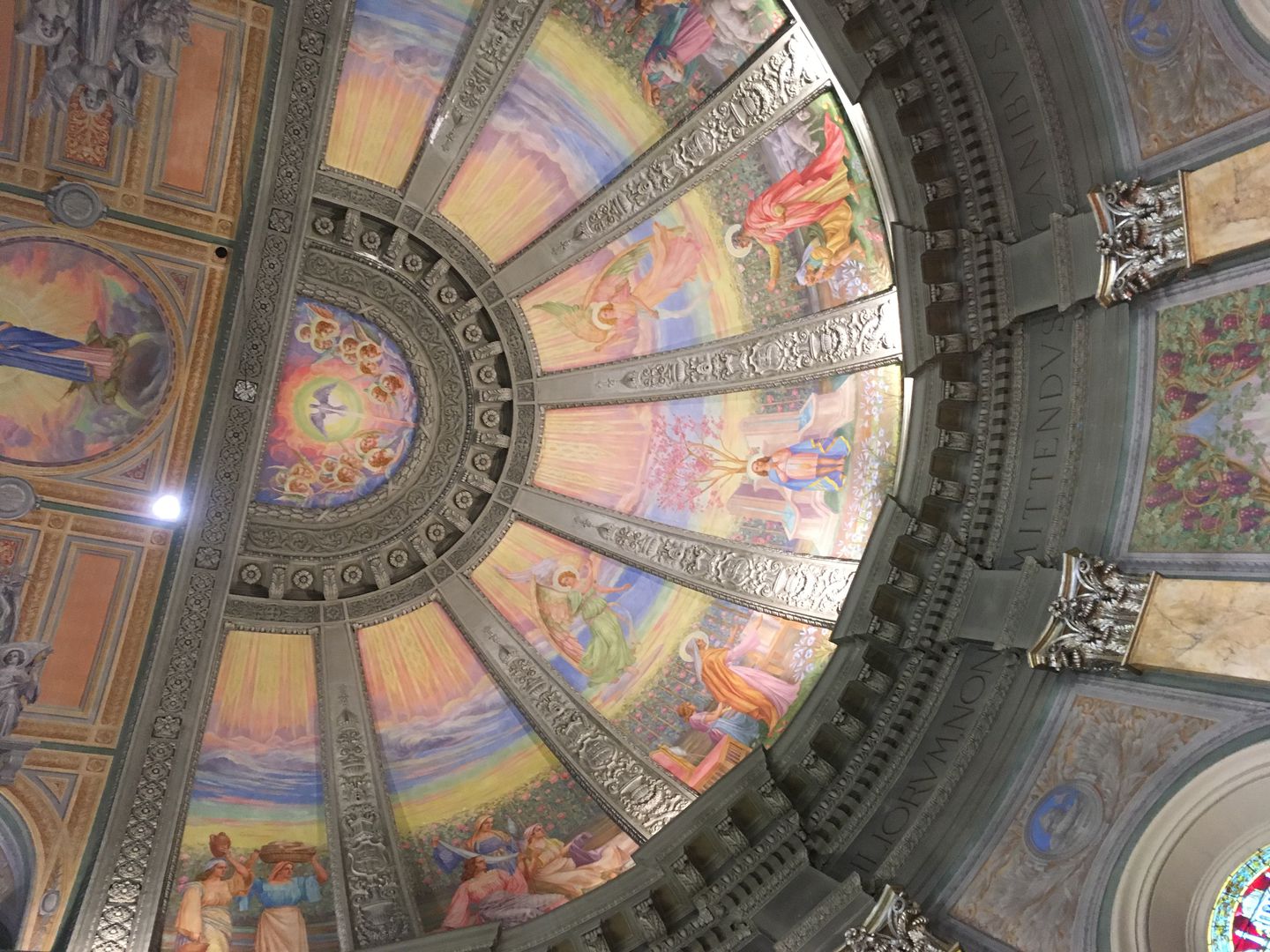
Photo: Loren King.
Art at St. Ann Art and Cultural Center, Woonsocket, Rhode Island.

For my first issue of a certain Boston Fed magazine in 2005, I was a bit panicked about learning the ropes of editing a new field. I managed to line up an article on a troubling change in bankruptcy law from Elizabeth Warren. And through my friend Nancy L, I talked to a guy who knew everyone in the community development field in the region and who put me in touch with Joe Garlick at the Woonsocket Neighborhood Development Corporation (now NeighborWorks) in Rhode Island.

And so it was that I got a memorable tour of initiatives benefiting residents of this former industrial town, where the rivers once ran with clothing dyes.

Today I learn that I better go back to Woonsocket and check out a particular church, now a cultural center.

Amanda Milkovits reports at the Boston Globe, “Swing open the heavy doors of this twin-spired former Roman Catholic church on an ordinary city street some Sunday afternoon, and enter a museum that takes your breath away.

“Elegant and intricate fresco murals soar across the barreled ceiling and along the walls of the nave, above the sanctuary and alcoves, and the choir loft. Scenes from Bible stories, and religious figures, saints and sinners, angels and devils, nearly glow from the frescoes’ warm pastel colors, painted in the style of the Italian High Renaissance.

“Years ago, Yankee Magazine dubbed St. Ann Arts and Cultural Center as the Sistine Chapel of America, and that’s no exaggeration. The former church, which is actually larger than the Sistine Chapel in Rome, is home to the largest collection of fresco paintings in North America.

“Its place here in this working-class city on the northern edge of Rhode Island, away from the tourist meccas of Providence and Newport, can make visitors feel as if they’ve discovered an incredible treasure.

“ ‘That’s why we say it’s the best-kept secret, and the worst-kept secret, too,’ said Joe Petrucci, a docent and volunteer. ‘Because it’s a wonderful gem, but not a lot of people know about it.’

“Along with the stunning frescoes, there’s the rich color and depth of 40 stained-glass windows made by artisans in Chartres, France, and the hand-carved marble altar and the marble stonework imported from Carrara, Italy. Outside, the church’s twin 165-foot cupola towers resemble those of the Shrine of Sainte-Anne-de-Beaupré outside Québec City, and have been an integral part of Woonsocket’s skyline for a century.

“But for the keepers of St. Ann, what makes the former church so distinctive to the city of Woonsocket is how an artist immortalized its residents in the frescoes.

“Guido Nincheri, an Italian-born artist considered the Michelangelo of North America, painted these ordinary people into his extraordinary artwork. The mill workers, the mischievous children, and those lost in World War II, and other residents were models for the 475 faces painted into the frescoes.

“ ‘Aside from the incredible, amazing art and the architecture, the stained glass and the marble work, my favorite part is the story of how it came to be. It’s a part of my heritage,’ said Dominique Doiron, St. Ann’s executive director and Woonsocket native, who was a parishioner until the church closed in 2000. ‘Especially in such a time of turmoil, to be able to look at something and go, What if we all just got along? Look at the great things that we can accomplish together.’

“Roll back the calendar more than a century, back when Woonsocket was nicknamed ‘Le Petit Canada’ for its large population of French-Canadians, who’d arrived in the city to work in the mills. This church on Cumberland Street, which opened in 1918, was the second French-Canadian parish in the city.

“The church was the social hub for its hardworking parishioners, and there were seven Masses on Sundays, standing room only, Doiron said. Though they were poor, the parishioners pooled together their own meager funds for the construction of their church, and later, for its beautification. …

“While the architecture was beautiful, there wasn’t enough money to complete the interior, so the gray stucco cement walls weren’t plastered. That would turn out to be a lucky accident.

“In 1925, the 35th anniversary of the founding of the parish, the parishioners raised money again to install 40 stained-glass windows, made in Chartres, France.

“During the Great Depression, the priest leading St. Ann’s still wanted to do something about those plain walls. the Rev. Ernest Morin visited different churches throughout Rhode Island for ideas, and ended up at St. Matthew Church in Central Falls, where Nincheri was painting.

“Nincheri had been knighted by Pope Pius XI as one of the great artists of the Roman Catholic Church and would win four papal awards for his work. He’d studied the Old Masters style in Florence and apprenticed in stained glass in Montreal.

“Nincheri had immigrated to Canada and later moved to Rhode Island, where he was working on churches and public projects. Morin invited him to visit St. Ann’s.

“ ‘As soon as he walks into the building, the first thing Nincheri notices is, Oh my God, the walls and ceilings aren’t plastered,’ Doiron said. ‘Now, he’s getting excited, because this is a rare opportunity to do the fresco style.’ …

“The technique, which reached its height in the Italian Renaissance, requires that an artist is both careful and quick, because there is no room for error.

“At this, Nincheri was a master. He explained the possibilities to Morin, how Michelangelo had painted the frescoes in the Sistine Chapel in Rome, and he could do the same here, at this busy Woonsocket church. They settled on a contract for $25,000 in 1940. …

“Nincheri told a reporter for the Woonsocket Call newspaper that St. Ann’s would be ‘America’s most beautiful church.’

“As Nincheri began the work, he studied the faces of people in the community. … ‘All of the faces were people of the parish and people of the city of Woonsocket at the time. He would always be on the lookout for a face that would fit a particular subject, and he would invite them to sit for him,’ Doiron said. ‘And what we now have here is a scrapbook, a pictorial history of who we now call the “Greatest Generation.” ‘ ” More at the Globe, here.

See also my 2018 post on a Sistine Chapel replica in Mexico, here.

Read Full Post »

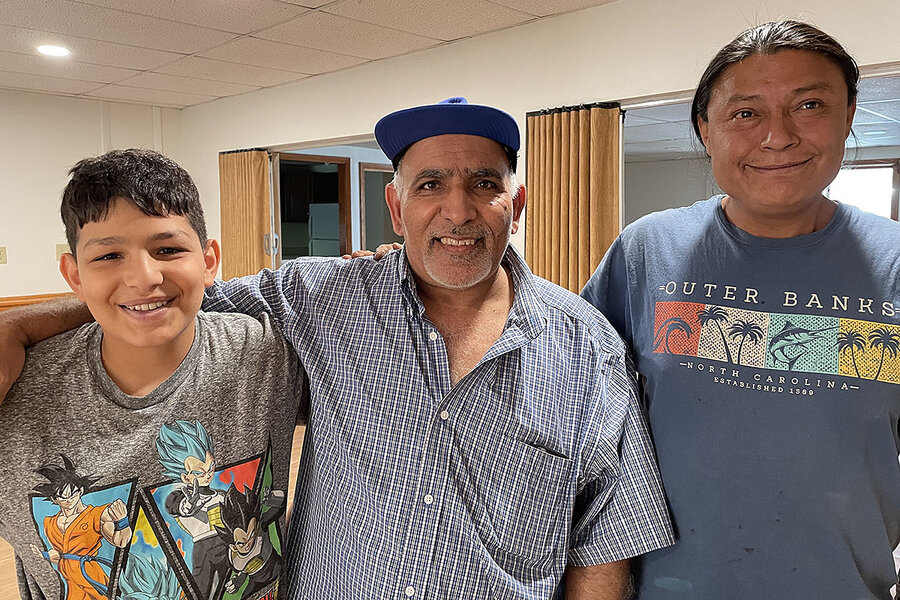
Photo: Capital Area New Mainers Project.
Abdalnabi family members (left) are seen here with property manager Efrain Ferrusca (right). The family lives in what used to be St. Matthew’s Episcopal Church in Hallowell, Maine, a building managed by Capital Area New Mainers Project [CANMP].

As church attendance decreases and buildings can no longer be supported by the remaining congregants, some properties are sold or donated to worthy causes. Tara Adhikari and Erika Page write about church transitions at the Christian Science Monitor.

“Victoria Stadnik glides on roller skates down one side of a wooden halfpipe decorated in neon spray paint. Light pours in through stained-glass windows, catching her body as she rotates through the air in the nave of what used to be St. Liborius Catholic Church [in St. Louis]. 

“After the church shut down in 1992, the building served briefly as a homeless shelter. Now, St. Liborius is better known as Sk8 Liborius – a skate park in use informally for a decade, with plans to open officially in three years.

“St. Liborius is one of hundreds of churches across the United States beginning a second life. As congregations dwindle – only 47% of American adults reported membership in a religious organization in 2020, down from 70% in 1999 according to a Gallup poll – churches are closing doors and changing hands. Developers have jumped at the chance to transform the consecrated spaces into luxury condos, cafes, mansions – even a Dollar Tree

“For some, the trend brings with it a sense of dismay. … But in some cities, residents are breathing new life into sacred spaces by giving fresh thought to what it means to serve, and who can constitute a congregation. Groups in St. Louis, Philadelphia, and Hallowell, Maine, are finding that one fundamental purpose of church – community uplift – can take many forms. 

“ ‘These places are very powerful links to the history and the evolution of our neighborhoods,’ says Bob Jaeger, president of Partners for Sacred Places, based in Philadelphia. Even though a church ‘may need repair, even though it may be empty, … it’s a bundle of assets. It’s a bundle of opportunities.’ …

“When Dave Blum, co-owner of Sk8 Liborius, speaks about his plans for the church, his voice echoes out across the sanctuary, ringing with the hope and certainty of a sermon. His team is creating not only a skate park but also an urban art studio where local artists can display and sell their work and children can learn skills ranging from metalworking to photography.  

“In every empty nook and cranny, he sees the potential to support a new congregation: underserved urban youth. He hopes skateboarding will get kids in the door – where vital lessons await. …

“The church was completed in 1889, and after years of neglect, it has a long way to go before it can pass an inspection and be formally opened to the public. Emergency exits, bathrooms, window repair, plumbing, electricity, and heat are just a few of the items on a to-do list of fixes estimated at $1 million. But donations are pouring in from supporters, and local skaters like Ms. Stadnik, who also works as a skating coach, spend weekends helping with repair work.

“ ‘A whole community came together to build these structures because it was important to them. And now, what we’re trying to do is have a whole community come together to maintain this structure,’ says Mr. Blum. 

“Welcoming newcomers into the fold is another function churches often fulfill. In Maine, a local nonprofit is continuing that mission by turning a former holy space into a home and community center.

He appreciates the sacredness of his new home and is just happy to finally have enough space to study. 

“Ali Al Braihi and Mohammed Abdalnabi came to the U.S. as refugees because war – in Iraq for the first and Syria for the second – made staying home impossible. Their journeys were different, but their families both ended up in Hallowell, Maine. Housing was limited, says Mr. Abdalnabi, and squeezing all nine members of his family into a two-bedroom apartment was ‘rough.’ Mr. Al Braihi had the same difficulty.

“Now, the 18 people that make up both families live in what used to be St. Matthew’s Episcopal Church. … 

“ ‘What I feel is fortunate and thankful,’ says Mr. Al Braihi, now a college student. His family is Muslim, but he says he appreciates the sacredness of his new home and is just happy to finally have enough space to study. 

“After closing last summer, St. Matthew’s offered the building to Capital Area New Mainers Project (CANMP), which supports the growing number of refugees and other immigrants in the area.

“The congregation chose CANMP because it ‘felt like we would be carrying on the mission,’ says Chris Myers Asch, CANMP’s co-founder and executive director. ‘We take that responsibility very seriously. It’s hallowed ground.’ 

“Mr. Myers Asch and his team of volunteers are currently renovating the sanctuary to create the Hallowell Multicultural Center. When it’s ready, anyone in the community will be able to host events: dinners, talks, movie screenings, weddings – whatever brings people of different backgrounds together.”

More about church reuse at the Monitor, here. No firewall.

Read Full Post »

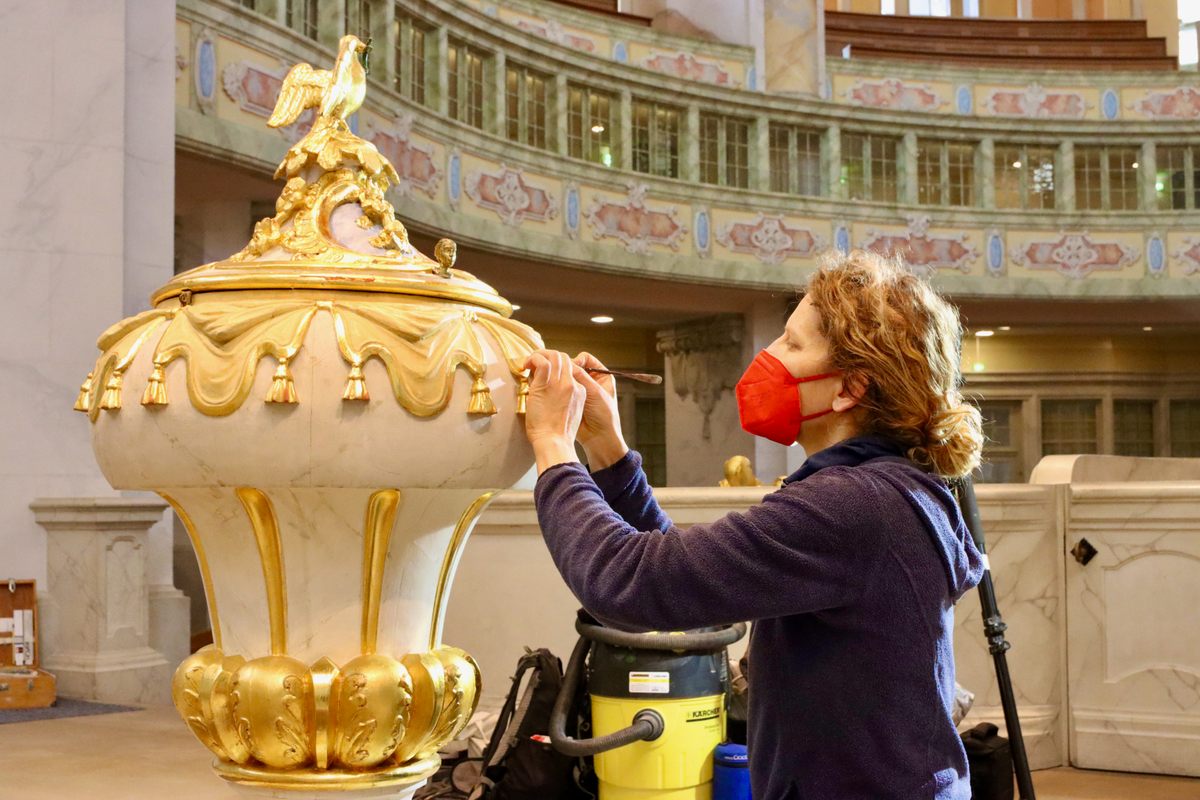
Photo: Grit Jandura/Frauenkirche Dresden.
Sweat from fingers and scratches from coat buttons take their toll on the highly ornamented interior of this historic German church. Every January, the doors close for a week so cleaners and craftspeople can get to work.

I’ve always admired people who do a real spring cleaning, a thorough “clean-up, fix-up, paint-up.” It’s not in my DNA, but I admire it. And I don’t mind lending a hand to someone else. I once helped an Orthodox friend prep her house for Passover. My job was to dig every bit of crumb and masticated baby food out of the high chair. Whew!

In Germany, a church is kept gorgeous by this kind of attention to detail. Gemma Tarlach reported at Atlas Obscura about “cleaning week at Dresden’s glorious Frauenkirche, a beloved house of worship and international symbol of reconciliation and resilience.

“ ‘It’s just a big praying room,’ says its lead architect Thomas Gottschlich, a soft-spoken man. … Gottschlich’s duties include overseeing the iconic church’s maintenance, including the annual January spruce-up, when every inch of the interior gets a once-over. …

“The Frauenkirche has been a part of the German city for a millennium, though its most famous iteration was a Baroque building envisioned by George Bähr and completed in 1743. The church earned the nickname Steinernen Glocke, or Stone Bell, thanks to Bähr’s unique design. ‘The dome construction is very special, you don’t have it that way in any other building in Europe,’ says Gottschlich. ‘Normally, the domes in other cathedrals are made with a wooden construction, which is covered with copper, lead, or whatever.’ Instead, Bähr used local sandstone for the entire dome.

“Because it is not the seat of a bishop, the Frauenkirche is technically a church, though it rivals many cathedrals in size. During construction, critics worried about the stability of that massive stone dome, which rises more than 300 feet above central Dresden. But it endured for centuries — until World War II. Although the church initially survived an intense bombing raid in February 1945, it collapsed days later.”

This is me again. In case you don’t know about the tragic US-British fire bombing of Dresden or haven’t read the novel Kurt Vonnegut wrote after he lived through it as a prisoner, Slaughter-House Five, I just want to state the obvious. Wars are bad. Let’s not have any.

Tarlach continues, “For decades the ruins of the Frauenkirche served as a war memorial and gathering point for peaceful protests under East German rule. Shortly after Germany’s reunification, an ambitious, decade-long project reconstructed the church using much of the original 18th-century sandstone. It quickly became a symbol of reconciliation and renewal. …

“While Gottschlich and his team also monitor the church’s exterior, where moss and crumbling mortar can be problematic, he says that it is the interior that demands much more attention. So, for the last 15 years, for one week in January, the church closes to visitors, and dozens of carpenters, painters, and other craftspeople and cleaners get to work. The crew repairs wobbly benches and worn wood, touches up paint, and scrubs, sands, and vacuums every nook and cranny of the highly ornamented space.

“Although the number of visitors has fallen since 2020 due to pandemic restrictions, the annual cleaning event went on as usual in early 2022. Like the constant monitoring of different climate zones around the building to ensure optimal conditions for the church’s organ, art, and load-bearing supports, the annual deep clean is an integral part of ensuring the Frauenkirche stays healthy and stands witness for several more centuries.

“Gottschlich notes that, during the reconstruction, the team chose a conspicuous interior location for the 18th-century cross that once topped the church’s tower. ‘We placed it so that, whenever you leave the church, you pass the old cross, and get an inkling of what it means to be both in history and in present time,’ he says.”

More at Atlas Obscura, here.

Read Full Post »

last-supper-detail

Photo: Evy Mages
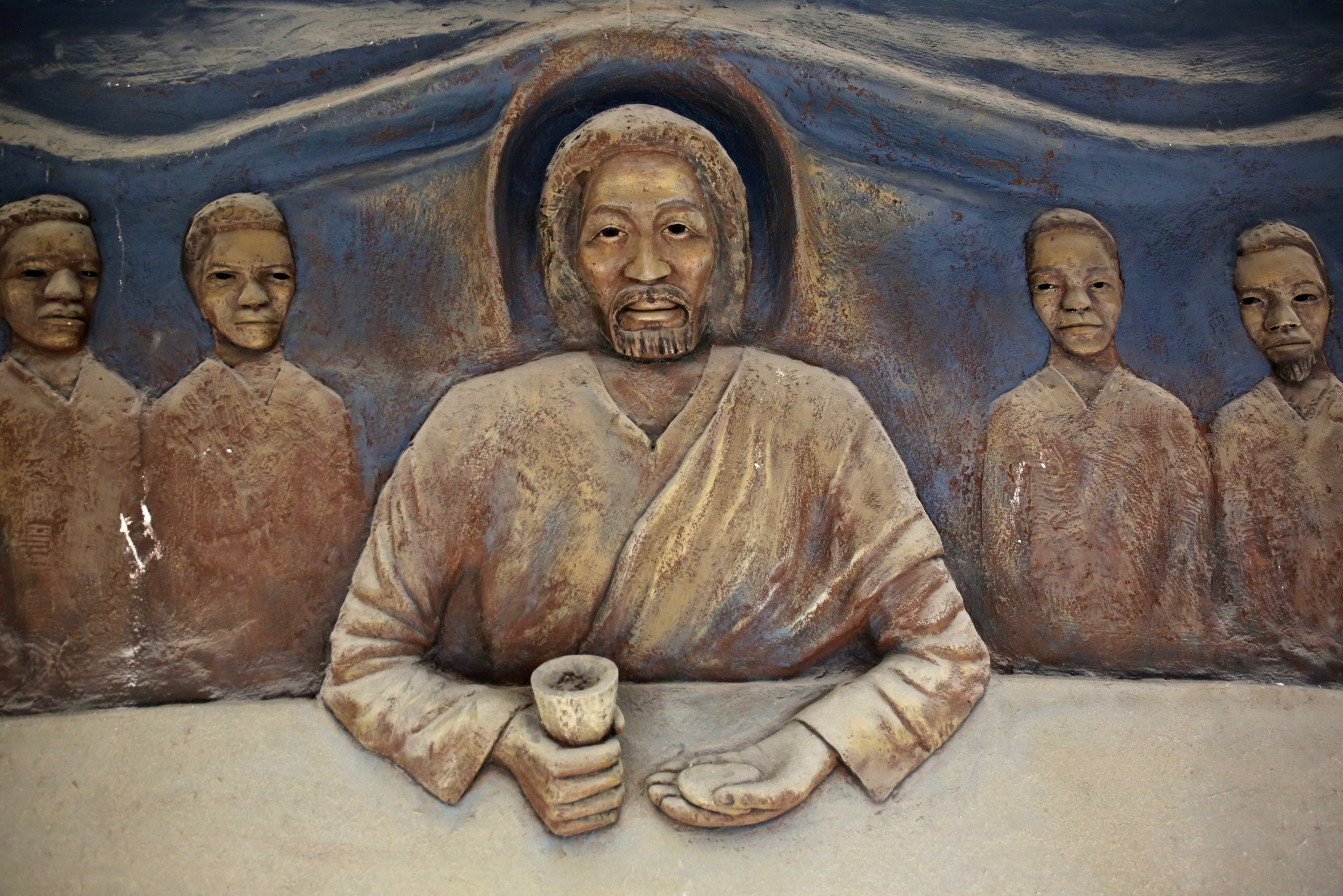
Detail from a massive sculpture of a black Last Supper discovered by a demolition crew in the Columbia Heights section of Washington, DC.

Oh, my! Imagine the wonder of the demolition crew that uncovered this artwork in a former church! I wish reporter Andrew Beaujon at the Washingtonian had tracked them down and interviewed them for their immediate thoughts.

Here’s his story.

“Joy Zinoman got an unexpected phone call [in early October]. Demolition had just begun inside a former church in Columbia Heights that she’s turning into the new home of the Studio Acting Conservatory. Now the boss of the the crew working was on the line to tell the Studio Theatre founder about a remarkable discovery his guys made: An enormous frieze of the Last Supper that was hidden behind drywall for more than a decade.

“The building on Holmead Place, Northwest, had been slated to become condos before the conservatory bought it earlier this year. It was built in 1980, city records say, to house New Home Baptist Church, which moved to Landover, Maryland, in the 1990s. After that it became a building for the Church of Jesus Christ of Latter-Day Saints. A signature on the lower right of the sculpture  leaves no doubt at which point it joined the building’s history: ‘All rights reserved 1982 Akili Ron Anderson.’ …

“New Home trustee board chairman Willie L. Morris told Post reporter Esther Iverem, ‘It was very important to us that we have a black artist. All the other Last Supper pictures we’d seen were always in a white framework.’ …

“Anderson now teaches at Howard University and some of his artwork is easier to see, particularly his work Sankofa at the east and west entrances of the Columbia Heights Metro Station as well as stained glass at Andrew Rankin Memorial Chapel and the Prince George’s County Courthouse.

“The fact that the participants in the Last Supper are black reflects a movement among African American artists, beginning in the late 1960s, to make the art in places of worship look like the people inside them. ‘I think it’s important for black children sitting in churches all over this country on Sunday morning to look up at the windows, look up at images and see themselves and believe that they can ascend to heaven, too,’ Anderson told Iverem in 1993.

“It’s not clear when the 232 square feet of religious art was covered by drywall. City records show that an inspector reviewed some ‘Close-in (concealment)-Walls Construction’ in 2003. Anderson says he undertook the artwork when he worked at Duke Ellington School of the Arts and had a coworker who attended New Home. ‘Most of the time I was in there by myself,’ he says.

‘It actually got to be something of a spiritual experience for me.’ …

“When you first view the frieze in person, as I did Friday, you’re likely to gasp: It’s difficult to convey just how large and impressive this sculpture is.

“Acting studios are supposed to be bare, and Zinoman, who likens this piece to the Sistine Chapel, really hopes it won’t end up behind a curtain at her conservatory. … She’s hoping a museum might wish to take it. Removing it from the wall will not be easy and will require a lot of skill and experience (and presumably money) to do properly. ‘All I want is for it to be in a place where people can see it,’ Zinoman says. ‘I think it’s a great work.’ ”

You can tell that a lot of love went into this frieze. If it does end up behind a curtain, at least it will still be available to visitors. If you know of any venue that could afford to move it and make it available to the public, please get in touch with the Studio Acting Conservatory, 202.232.0714.

More at the Washingtonian, here. Lots of great photos.

Read Full Post »

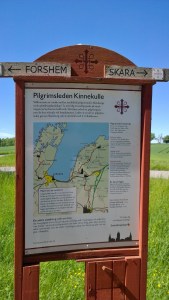
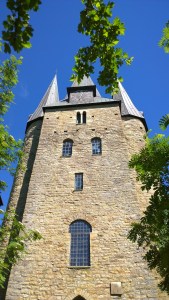
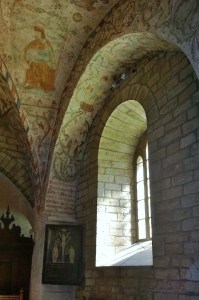
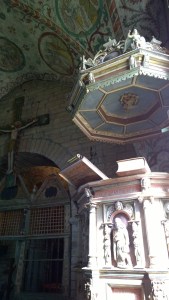
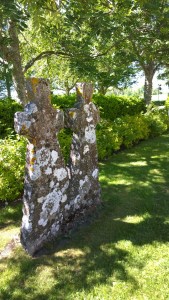
Stuga 40 followed an inspired impulse on our way to the Swedish west coast and took a detour to a historic church that she had never visited. Off in the open countryside, the Romanesque Husaby Kyrka was beautiful and serene. We felt like we were discovering it.

I am sharing a few photos, including one showing the tombstones of Queen Estrid and King Olof Skõtkonung, who was said to have been baptized at a nearby spring in 1008 by the English missionary Sigfrid. Olof was the first Christian monarch in Sweden.

060117-husaby-church-sweden.jpg

060117-husaby-church-11C-sweden


060117-husaby-church-window

060117-husaby-pulpit


060117-husaby-tombstones


Read Full Post »

Two women in San Francisco felt compassion for homeless people who have nowhere to go during the day. So they arranged with a local Catholic church to welcome them.

Patricia Leigh Brown wrote the story for the Christian Science Monitor series called “People Making a Difference: Ordinary People Taking Action for Extraordinary Change.”

“Tina Christopher’s day begins at 5:45 a.m. as she cleans the sidewalk in front of St. Boniface Catholic Church in the Tenderloin, the once-colorful vice district in San Francisco now better known as a province of the poor, the desperate, the addicted, and the down and out. …

” ‘All right my beautiful brothers and sisters!’ Ms. Christopher says in her always-chipper voice. ‘Good morning! Time to get up! Wakey wakey!’ Then she unlocks the church’s heavy iron gate.

“Soon, St. Boniface’s 74 backmost pews will cradle some 150 homeless people seeking ‘sacred sleep,’ the sound of snoring permeating the incense-filled room. Beneath the saints painted on the church’s glittering dome, they stretch out for nine hours of vital slumber, resting their heads on ad hoc sweatshirt and T-shirt pillows or sometimes their folded hands. For a brief moment, their faces, beatific and babylike in sleep, do not betray the nights of fearful wandering and the way concrete seeps into a person’s bones and stays there.

“Christopher is the program director of The Gubbio Project, a pioneering effort, believed to be the country’s first. … Cofounded in 2004 by the Rev. Louis Vitale, a well-known peace and human rights advocate, the program provides a place for homeless people to sleep during the daylight hours, when most shelters are closed.

The project is named after Gubbio, the Italian town where, the story goes, residents befriended a wolf after realizing the animal wasn’t dangerous, just hungry.

“The project’s guiding lights are two women who are devoted to the dignity of the people they call ‘guests.’ Laura Slattery, Gubbio’s executive director and public voice, is a West Point graduate-turned-social justice activist who wears jeans and hiking boots and exudes a sense of calm resolve, even in a crisis. Christopher is the exuberant all-hands-on-deck ground commander who knows the name of every guest and whose finely tuned antennae swiftly intuit their needs and issues. …

“At St. Boniface, Christopher writes daily notices on the whiteboard:

“Shower bus 8:30-2
“We have Blankets!
“Tomorrow – some socks.

“She is in constant motion, eyeglasses perched atop her head, dispensing cough drops, rubber bands, tampons, shaving cream, and other necessities from a converted confessional. She makes it a point to ask guests whether they’d prefer a pink toothbrush or a blue one, a black blanket or a brown one. ‘Even the simplest things are important to people who don’t have choices,’ she explains.

“Socks and other staples come from volunteers like Roberta Snyder, who has established relationships with housekeepers at nearby hotels and provides soaps, shampoos, and other items …

“[Slattery] thinks of The Gubbio Project as ‘the ministry of presence,’ one that dispels some popular myths about homeless people along the way. Quite a number of donations to Gubbio’s $350,000 annual budget, for instance, are made by guests. ‘Last week it was $42,’ Slattery says. ‘The week before it was 24. Flips the idea of panhandling on its head, right?’ ”

Click here to read about the women’s routes to their unusual calling — one through addiction, one through West Point.

Photo: Melanie Stetson Freeman/Christian Science Monitor
Tina Christopher (l.) and Laura Slattery run The Gubbio Project, which gives people experiencing homelessness in San Francisco a place to go during the day.

1107-pmad-mgubbio

Read Full Post »

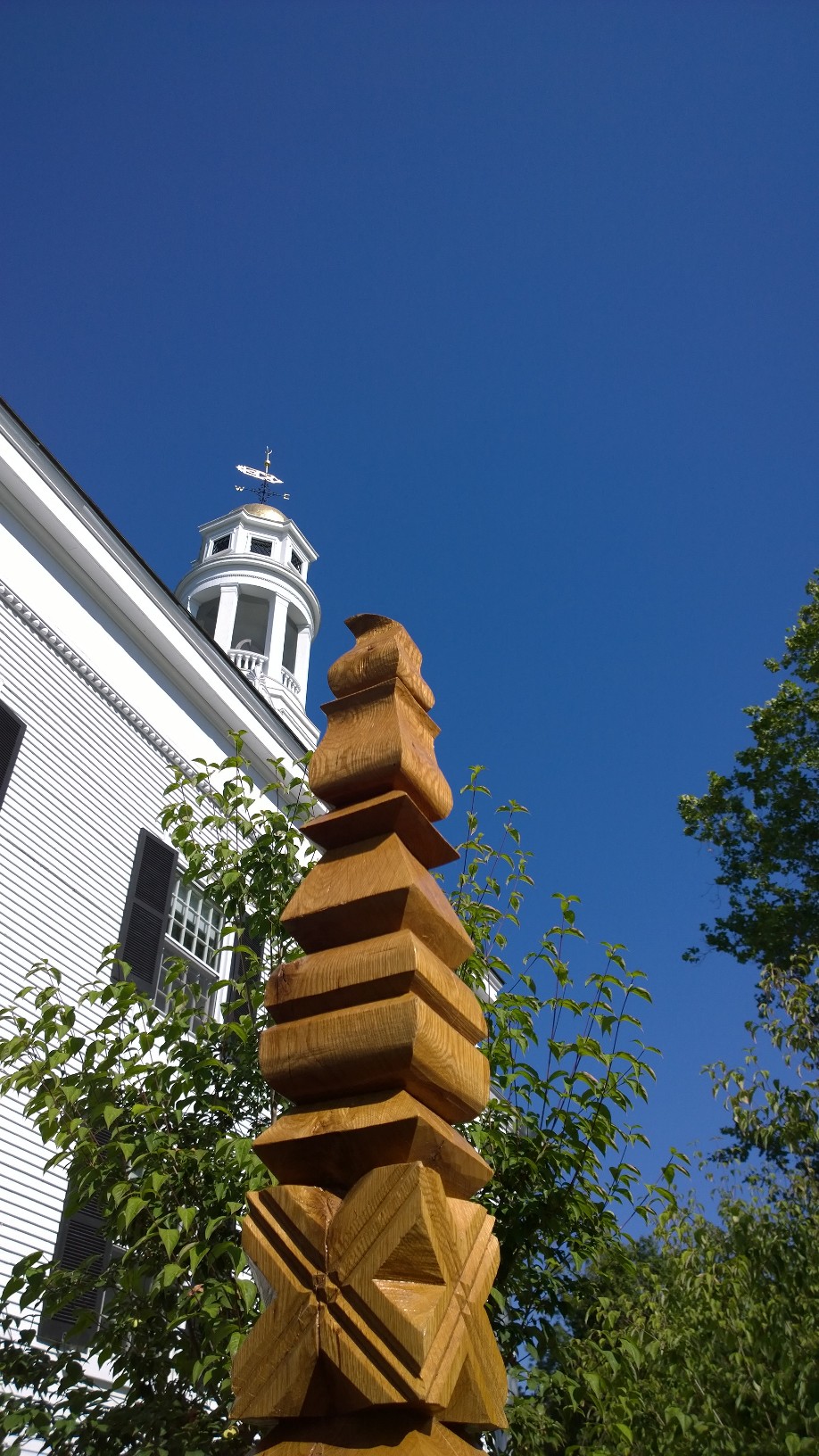
OK, it’s not really a totem pole, but I was afraid the word kopjafa wouldn’t ring any bells with readers.

Today at church we dedicated a wooden pole that was carved by the minister of our sister church in Transylvania when he visited Massachusetts last year.

A translated Wikipedia entry says that, originally, two kopjafa poles were to used to carry a coffin to a cemetery. The poles were then placed at the head and foot of the mound. But according to my minister, nowadays kopjafa poles are set outside churches and, as in our case, sometimes given to a partner church.

The minister read the poem below as he spoke about our church’s connection to Transylvanians of the (almost) same religion. The subject is a little sad for what we do at Suzanne’s Mom’s Blog, but it fits with our previous discussions about the value of preserving language and customs in minority communities. (Hungarian Transylvania was handed over to Romania after World War I, and has had some challenges, starting with language challenges.)

“Leave, if you can …
“Leave, if you think,
“That somewhere, anywhere in the world beyond
“It will be easier to bear your fate.
“Leave …
“Fly like a swallow, to the south,
“Or northward, like a bird of storm,
“And from high above in the wide skies
“Search for the place
“Where you can build a nest,
“Leave, if you can.
“Leave if you hope
“Against hope that homelessness
“Is less bitter abroad than at home.
“Leave, if you think
“That out in the world
“Memory will not carve new crosses from
“Your soul, from that sensitive
“Living tree.”

Read about the poem’s author, Hungarian poet Sandor Remenyik, here.

Transylvania-kopjafa-at-sister-church

Read Full Post »

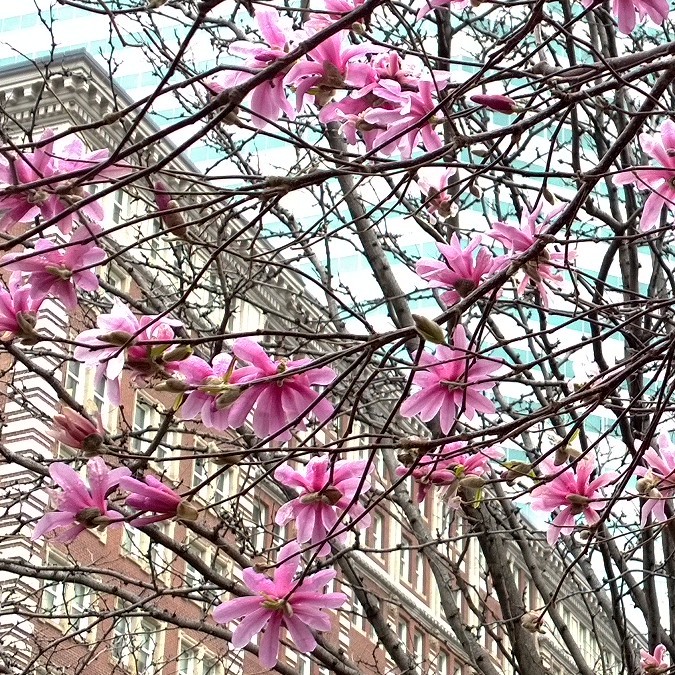
flowering-tree-BostonlEven though it was a bit chilly early on, the flowering trees and sunshine suggested that spring isn’t going back on us.

After church, we had a lively, chaotic Easter egg hunt and marching band with grandkids who are 1, 2, and 4 and very funny.

Then came a leisurely brunch with a beautiful fruit salad from my daughter-in-law, and new recipe for egg strata that turned out very well.

My husband and I got a little bonus time with Suzanne and Erik as the three of us tried to tire out the two-year-old in the playground before his car ride back home.

Suzanne is always up for an Easter egg hunt. In fact, Liz, her roommate, used to do the honors for her back in college. Liz sent Suzanne a text this year to make sure that everyone’s Easter was being taken care of.

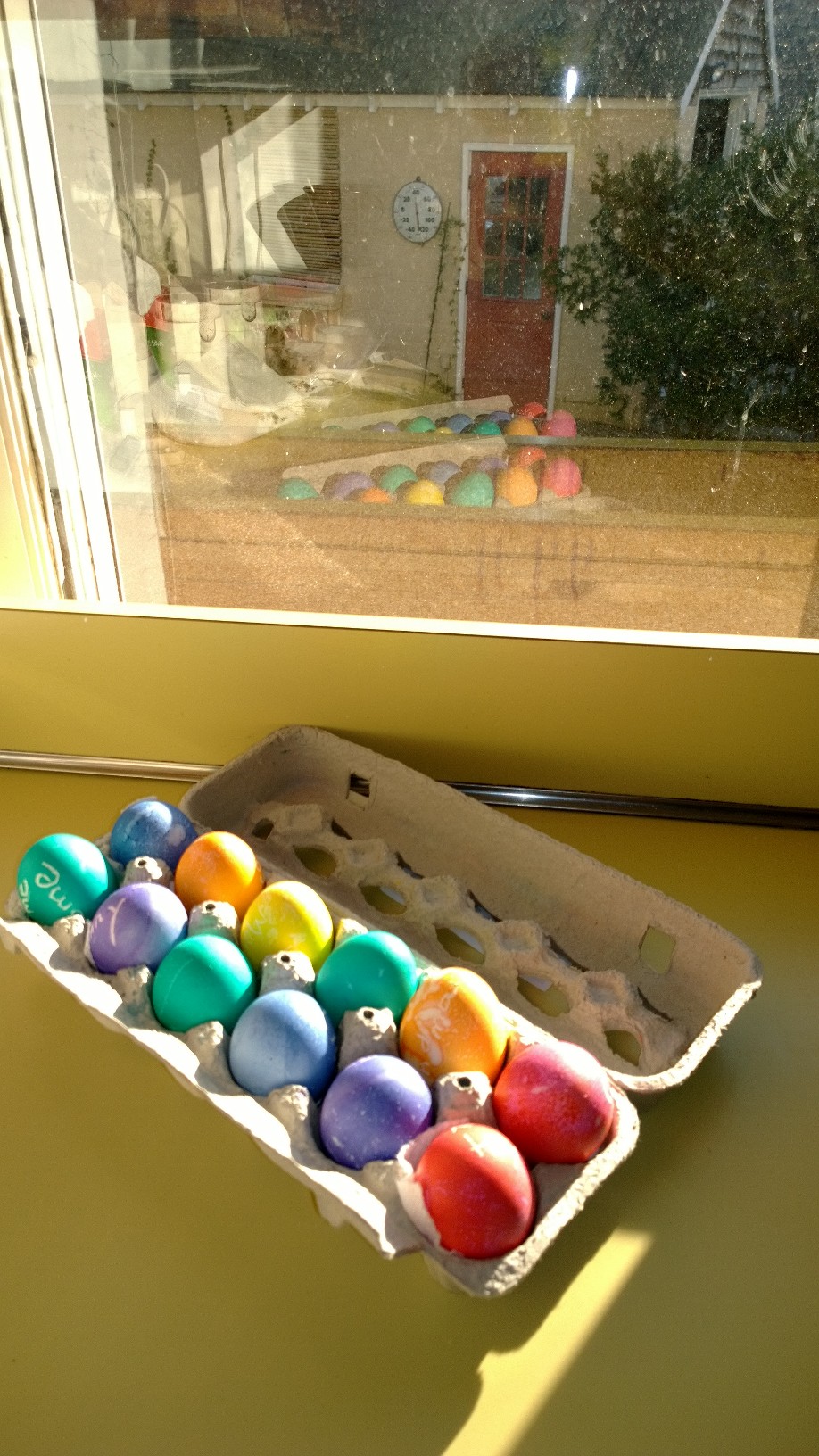
Easter-at-churchdyed-eggsWhatever you celebrate, I hope you had a sunny weekend.

Read Full Post »

If you had to guess one church in San Francisco that would be all over the idea of rooftop gardening to feed whoever needs feeding, which one would it be?

Right. Glide. I like its garden’s name: Graze the Rooftop.

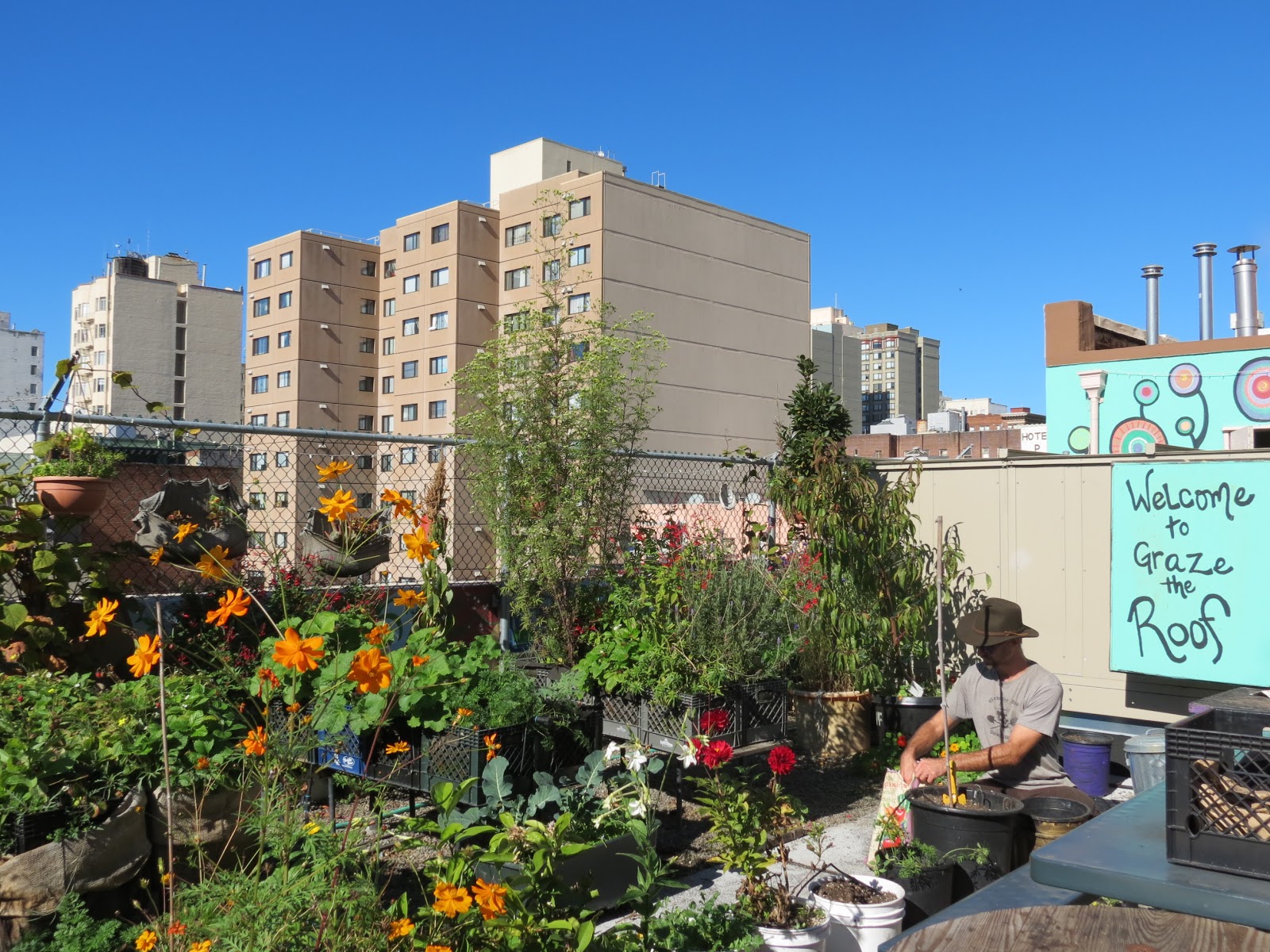
“Graze the Roof is an edible, community-produced vegetable garden on the rooftop of Glide Memorial Church, a progressive church and nonprofit located in the Tenderloin district of San Francisco.

“Graze the Roof features lightweight (upcycled) raised garden beds made from milk crates; a worm composting system and an educational mural which ties the whole project together. Glide youth and volunteers from throughout the Bay Area maintain the garden and host monthly tours and workshops.”

Do you live in the San Francisco area? Looks like there are a lot of fun workshops available, such as Designing Sustainable Habitats, Introduction to Permaculture, and Urban Fruit Tree Stewardship. Read more here.

Photo: Graze the Roof

Read Full Post »

Photograph: James Montague for The New York Times
Outside the Vakar Lajos rink, where the Hungarian name of the Romanian ice hockey team, Hoki Sport Club Csikszereda, is printed on the ice.

I don’t follow ice hockey, but a recent article on ethnic Hungarians playing for the Romanian ice hockey team caught my eye.

I already knew that a chunk of Romania is like a little Hungary because my church and a church in Transylvania (20 percent ethnic Hungarian) have a longstanding relationship. Exchanges back and forth occur nearly every year.

So in flipping past the sports section the other day, I couldn’t ignore an article by James Montague on the irony of Romania, a country that under communism repressed ethnic Hungarians, having so many of them on their national ice hockey team. A feeder team in Miercurea Ciuc, Romania, calls itself Szekely Land, after a former province of the Kingdom of Hungary.

“The Szekely Land, named for a warrior tribe that dates to the Middle Ages, is a Hungarian-dominated area of Romania, covering three counties in the center of the country. The roughly 1.2 million Hungarians represent Romania’s largest ethnic minority, about 6 percent of the country’s population. The fall of the Austro-Hungarian empire after World War I marooned millions of Hungarians in what is now Romania, Slovakia, Ukraine and Serbia. The Szekely found themselves cut off and subject to a policy of assimilation, including heavy restrictions on the use of their language, under the former communist leader Nicolae Ceausescu.”

Sometimes having so many ethnic Hungarians on the Romania team can lead to unhockeylike situations. The “anomaly reached a critical point during a 2011 game between Romania and Hungary in Miercurea Ciuc,” writes Montague. “After the game, almost all of Romania’s players joined with their opponents to sing the Hungarian anthem.

“ ‘Some of the paparazzi caught it, and it was a big scandal,’ said Attila Goga … who has played for the Romanian national team for a decade but holds dual Romanian-Hungarian citizenship. ‘It’s a little bit strange, but I can see that, too. They don’t understand our situation here.’ ” More.

My advice to autocrats: Don’t try to change people’s language. It always ends badly.

Read Full Post »

Suzanne and Erik loved attending Glide Memorial when they lived in San Francisco. It’s a big, welcoming Gospel church. It calls itself “radically inclusive,” and having been there several times, I can attest to that.

“A radically inclusive, just and loving community mobilized to alleviate suffering and break the cycles of poverty and marginalization.”

Lots of hugging goes on. Homeless people participate, society ladies, political celebrities, gay and straight … Perhaps you saw the church in the Will Smith movie The Pursuit of Happyness, based on a true story.

Besides the extraordinary choir, which is the initial draw for many churchgoers, we liked the congregant testimonials about what Glide has meant in their lives. Some people had been through pretty dark times, and Glide had been one piece of the road out.

Today as my husband and I drove home from a visit to Providence, we put on a radio broadcast from a Unitarian Universalist church, where a friend sometimes reads the announcements on air. The minister introduced a new-to-the-church idea, which I hope works out as well in Boston as it does at Glide.

He called it My Story and gave his own spiritual story as his first example, inviting parishioners to let him know if they wanted to do the same in upcoming weeks.

If nothing else, it should help the service be more interactive. And it should let members get to know each other better, especially if they are brave enough to share their rough times, the things they don’t bring up at coffee hour.

By the way, life’s difficult passages may be well served by our favorite bit of wisdom from Glide: “A setback is just a setup for a comeback.”

How many friends and even public figures would you like to tell that to?

Photograph: http://www.firstchurchboston.org

Read Full Post »

This is about a Unitarian Universalist minister who decided that community work was more important than having a church building.

As Donald E. Skinner writes of Ron Robinson in UU World, “The particular mission field that the Rev. Ron Robinson has claimed is one of America’s abandoned places.

“Turley, Oklahoma, a suburb of Tulsa, was a thriving place until the 1960s when white flight and the movement of oil industry jobs out of Tulsa began Turley’s long slide into economic and social decline.

“Today many houses in Turley are vacant and abandoned, some boarded up, others open to the elements and slowly falling down. Burned-out structures are nearly hidden by tall weeds and brush. The once robust main street is now down to a gas station, grocery, a pizza place that won’t deliver, self-service laundry, carwash, and a collection of auto repair and salvage businesses.

“Most younger residents have no health insurance and little health care. Most children qualify for free school lunches. Residents live, on average, fourteen fewer years than people five miles south, in midtown Tulsa. Unemployment is twice the national average.

“In the middle of this, Robinson, a Unitarian Universalist minister, has established A Third Place, a community center that includes Turley’s only library, several computers for public use, a free health clinic, food pantry, drop-in living room, and a place to get used clothing and household items.”

Read more here.

Read Full Post »