Feeds:
Posts
Comments

Posts Tagged ‘cows’

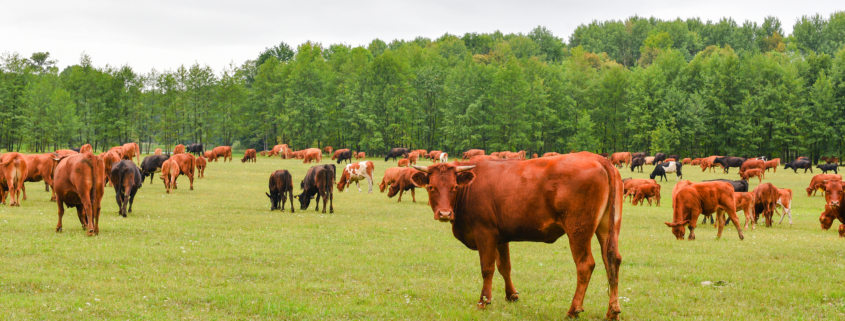
Livestock produces a lot of methane, which is unlikely ever to be balanced out by carbon captured in the soil. The Soil Association Exchange wants you to know about a few positive effects, however. 

It’s an ongoing process to keep up on the latest, especially when it comes to protecting the planet. I myself once thought that massive tree planting had the biggest bang for the charitable buck. Then I learned that, although trees are important, they can’t help much without due consideration given to where and how they are planted, and what varieties of trees they are.

Today I’m trying to bone up on the situation with cows, which we all know (including a young grandson who has cut beef out of his diet) produce too much climate-warming methane gas.

James Tapper reports at the Guardian, “New data shows [cows] may play an important role in renewing farm soil. Research by the Soil Association Exchange shows that farms with a mixture of arable crops and livestock have about a third more carbon stored within their soil than those with only arable crops, thanks to the animals’ manure.

“This also has an effect on biodiversity: mixed arable and livestock farms support about 28 grassland plant species in every field, compared with 25 for arable-only and 22 for dairy-only.

“Joseph Gridley, chief executive of SAE, which was set up by the Soil Association in 2021 to support and measure sustainable farming, said it was unlikely that carbon captured in soil would balance out the enormous amounts of methane created by cattle. Farm livestock around the world creates about 14% of human-induced climate emissions.

“ ‘It’s pretty unequivocal in the data that having livestock on your farm does mean you have more emissions – five or six times more emissions,’ he said. ‘But if you integrate livestock into the system, on every metric on soil health, there’s an improvement, and on a lot of the biodiversity measures as well.’

“Soils are degrading, but by how much exactly is unclear. In 2015, the UN Food and Agriculture Organization claimed that the world had only 60 harvests left, but researchers at Oxford University and Our World In Data said in 2021 that there was a complex picture. …

“Lee Reeves, UK head of agriculture at Lloyds bank, which helps fund SAE … suggested ministers should create a decarbonization strategy, and a standardized carbon calculator, so that farmers and other businesses could use a single tool to calculate their carbon impacts.

“ ‘Moving from traditional to regenerative farming can see a dip in profitability for the first five years, so the government needs to support farmers and banks in that,’ he said.

“[In the UK] the Department for the Environment, Food and Rural Affairs has been investigating so-called methane blockers as a way to reduce emissions. Adding substances such as essential oils, probiotics and even seaweed to cattle feed can reduce the amount of burps and wind they generate.

“Last month the Green Alliance charity said that feeding Bovaer, a methane blocker, to a third of the UK’s dairy cows would cut the country’s emissions by about 1%. Yet this is not happening, the campaign group warned, because farmers were unwilling to pay extra for something they did not benefit from. It said methane blockers should be subsidized, as other green farming schemes were.”

More at the Guardian, here. The Natural Resources Defense Council explains more about regenerative farming here.

Read Full Post »

Photo: Alexandra Genova for the New York Times.
Last year, Churchtown Dairy in Claverack, N.Y., drew hundreds of carolers. (Notice the loft above.)

Other than blogger Deb at A Bear’s Thimble, most of us have lost the daily connection with farm animals that our ancestors knew. When we take our kids to a farm, it seems exotic. No wonder people jump at the chance described in today’s story.

Arielle Gordon reported at the New York Times, “About 200 carolers had just begun the second verse of the classic Christmas song ‘The Friendly Beasts’ when a little girl let out a squeal of delight. About 20 feet below the balcony, on the floor of the large domed barn, two of the half-dozen dairy cows were butting heads. As the grazing heifers lifted their horns, their playful roughhousing seemed like a display of holiday cheer.

“[The] Churchtown Dairy in Claverack, N.Y., once again hosted a Yuletide tradition: caroling to the herd of 28 cattle that call the cathedral-like barn their winter home. What began a decade ago as a way for the farm’s staff and their families to celebrate the herd has since grown to an annual tradition that brings locals and out-of-towners to the farm’s 250-acre property each December.

“[Preregistration] for the two caroling events filled up within hours of going online. Farm staff fielded phone calls from frustrated would-be carolers, some of whom blamed an Instagram post advertising the event for its rise in popularity.

“ ‘We’re considering adding a third night next year to accommodate all the interest,’ said Grace Pullin, Churchtown’s director of partnerships and programs. …

“Attendee, Sharon Mclees, 64, has attended for six years. Growing up around cows, Ms. Mclees said she felt comforted by the tranquillity at Churchtown. ‘I love the farm atmosphere,’ she said. ‘It’s just so back to nature.’

“Churchtown Dairy was founded in 2012 by Abby Aldrich Rockefeller, the granddaughter of the business magnate John D. Rockefeller, but the property has been under her family’s purview for decades. Her mother, Peggy Rockefeller, purchased the land as part of a larger acquisition of over 2,700 acres by the American Farmland Trust, an agricultural nonprofit Peggy started in 1980.

“The younger Ms. Rockefeller partnered with the architect Rick Anderson to design the farm, traveling the country visiting barns for inspiration. For her, the dome is a sign of a healthy, biodynamic farm. … Mr. Anderson explained that its shape served a more practical purpose: ‘Cows hate corners.’

“The dairy is not unique in its caroling tradition; just a few miles up the Taconic State Parkway, Hawthorne Valley Farms has been singing to its herd in a smaller event on Christmas Eve for the past 40 years. Staff members at Churchtown each had a different theory on the origins of the practice. Ms. Pullin suggested it might have been inspired by the work of the German esoteric philosopher and biodynamic farming pioneer Rudolph Steiner, who claimed that cow horns had ‘astral-ethereal formative powers.’

“Eric Vinson, a herd manager on the farm, referenced the old European myth that animals are able to communicate with humans at Christmastime. In more contemporary contexts, scientists at the University of Leicester found that cows produced more milk when played songs with less than 100 beats per minute. (R.E.M.’s ‘Everybody Hurts’ seemed to go over especially well.) By that logic, carols, with their measured pace, could be conducive to a happy herd. …

“Carolers, armed with illustrated songbooks, began with Christmas classics — ‘The First Noel,’ ‘Silent Night,’ ‘Joy to the World,’ — before Ms. Pullin opened the floor to requests. There were shouts of ‘Free Bird,’ but the crowd eventually settled on ‘Feliz Navidad’ as the final number of the night.

“The cows wagged their tails in appreciation — or maybe they were swatting away loose hay — and for a moment, the myth seemed to come alive: Animals and humans communicating for the holiday.”

The farm sells raw, unpasteurized milk. My mother sometimes bought raw milk at a farm near brother Will’s nursery school in Rockland County, New York. That was definitely a Rudolf Steiner farm. The nursery school followed his ideas, too.

You can read about the quality control drill that keeps raw milk safe at Churchtown Dairy, here. And do let me know if you have ever sung carols to cows! I want to try it.

Read Full Post »

Photo: Boaz Rottem/Alamy.
“For hundreds of years, Rwandans with enough milk would share their supply with those in need,” says the BBC.

You learn something every day. From an article in the New York Times and another at the BBC, I just learned that drinking milk is so popular in Rwanda that milk is the main thing served at the country’s favorite bars.

Abdi Latif Dahir reports at the Times, “As the sun scorched the hilly Rwandan capital on a recent afternoon, a motorcycle taxi driver, two women in matching head scarves and a teenager wearing headphones all separately sauntered into a small roadside kiosk to drink the only thing on tap: milk.

“ ‘I love milk,’ said Jean Bosco Nshimyemukiza, the motorcycle taxi driver, as he sipped from a large glass of fresh milk that left a residual white line on his upper lip. ‘Milk makes you calm,’ he said, smiling. ‘It reduces stress. It heals you.’ …

“Men and women, young and old, sit on benches and plastic chairs throughout the day, glass mugs before them, gulping liters upon liters of fresh milk or fermented, yogurt-like milk, locally known as ‘ikivuguto.’

“Some patrons drink it hot, others like it cold. Some — respecting an old custom of finishing your cup at once — chug it down quickly, while others sip it slowly while eating snacks like cakes, chapatis and bananas. …

“ ‘I come here when I want to relax, but also when I want to think about my future,’ said Mr. Nshimyemukiza, who added that he drinks at least three liters of milk daily.

‘When you drink milk, you always have your head straight and your ideas right.’

“While milk bars have popped up everywhere over the last decade, the drink they sell has long been intrinsic to the country’s culture and history, as well as its modern identity and economy.

“Over the centuries, cows were a source of wealth and status — the most valuable gift to confer on a friend or a new family. Even royalty craved easy access to milk. During the Kingdom of Rwanda, which lasted for hundreds of years until the last king was deposed in 1961, cows’ milk was kept in wooden bottles with conical woven lids right behind the king’s thatched palace.

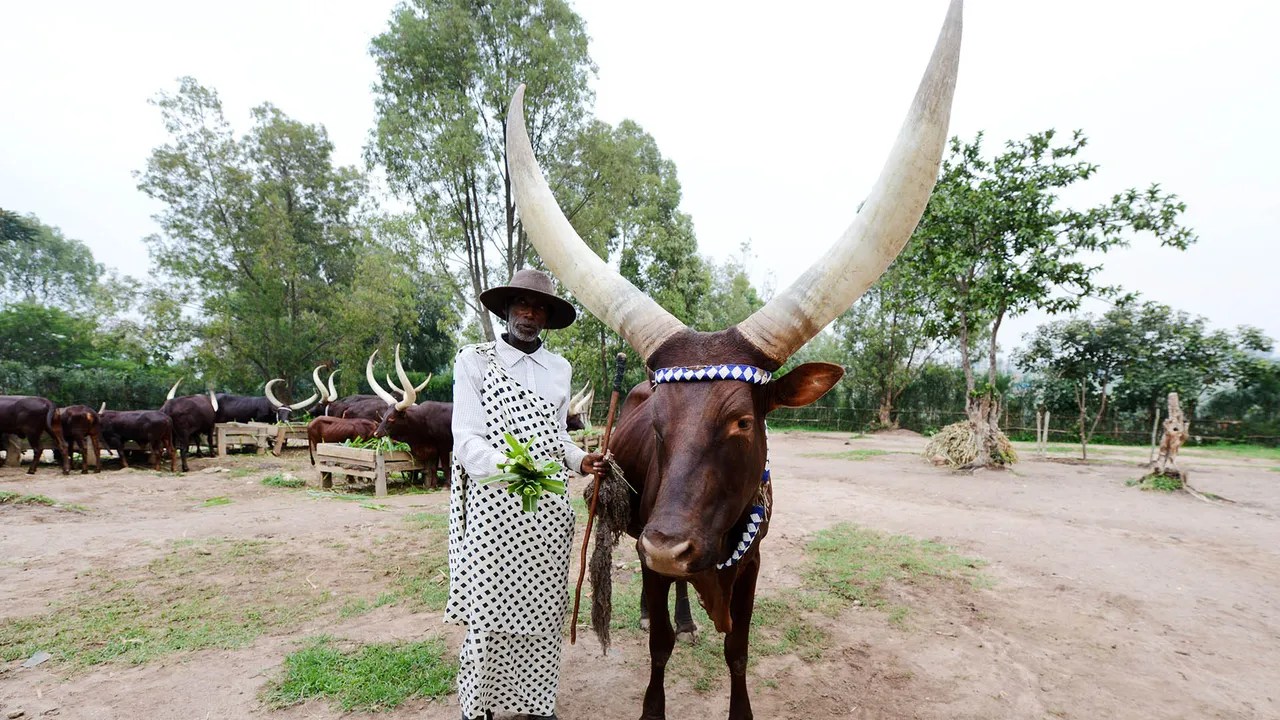
“Cows were considered so valuable they ended up in children’s names — Munganyinka (valuable as a cow) or Inyamibwa (beautiful cow) — as well as in traditional dances, where women raised their hands to emulate the giant-horned Ankole cows.

“In 1994, Rwanda was the scene of a genocide. … As the country recovered from the genocide, Rwanda’s government looked to cows again as a way to grow the economy and fight malnutrition.

“In 2006, President Paul Kagame introduced the ‘Girinka’ program, which aims to give every poor family one cow. The program has so far distributed over 380,000 cows nationwide, according to the Ministry of Agriculture and Animal Resources — with contributions coming from private companies, aid agencies and foreign leaders including Prime Minister Narendra Modi of India. …

“As milk production increased in this landlocked nation, so did the number of people who moved to urban areas for education and employment. And so were born the milk bars, which allowed farmers to sell their surplus milk and let customers drink copious amounts of it to be reminded of home. Most milk bars are in Kigali, the country’s most-populous city, with 1.2 million people.

“Steven Muvunyi grew up with nine siblings in the Rubavu district in the country’s west. After moving to Kigali to attend university, he said he missed being in the countryside, milking cows and drinking milk without limits.

“I come to the milk bars and I am overcome with nostalgia from my childhood,” he said one evening in late September, as he drank from a big mug of hot, fresh milk in downtown Kigali.

“As he sat at the bar, Mr. Muvunyi, 29, who works in Rwanda’s budding technology sector, showed photos of his 2-year-old son looking at him while he drank a glass of milk at his parents’ farm. He worried, he said, that children growing up in cities would not be as connected to the country’s dairy culture, given the easy access now to pasteurized milk at supermarkets. ‘I want to teach my children early the value of milk and cows,’ he said. …

“No matter the circumstances, Rwandans say the milk bar is here to stay. During the pandemic last year, Ngabo Alexis Karegeya started sharing images and videos on Twitter about the Rwandan attachment to cows and milk — drawing national attention. Mr. Karegeya graduated from university this year with a degree in business administration, but still fondly remembers his days tending cows as a boy. He tweeted a photo of himself in his graduation gown with the caption ‘certified cow-boy y’all.’

“ ‘Rwandans love cows and they love milk,’ said Mr. Karegeya, who owns five cows in the lush hills of his family’s home in western Rwanda and drinks three liters a day.

“ ‘The milk bar brings us together,’ he said. ‘And we will keep coming to the milk bar to drink more milk.’ ”

More at the Times, here, and at the BBC, here.

Read Full Post »

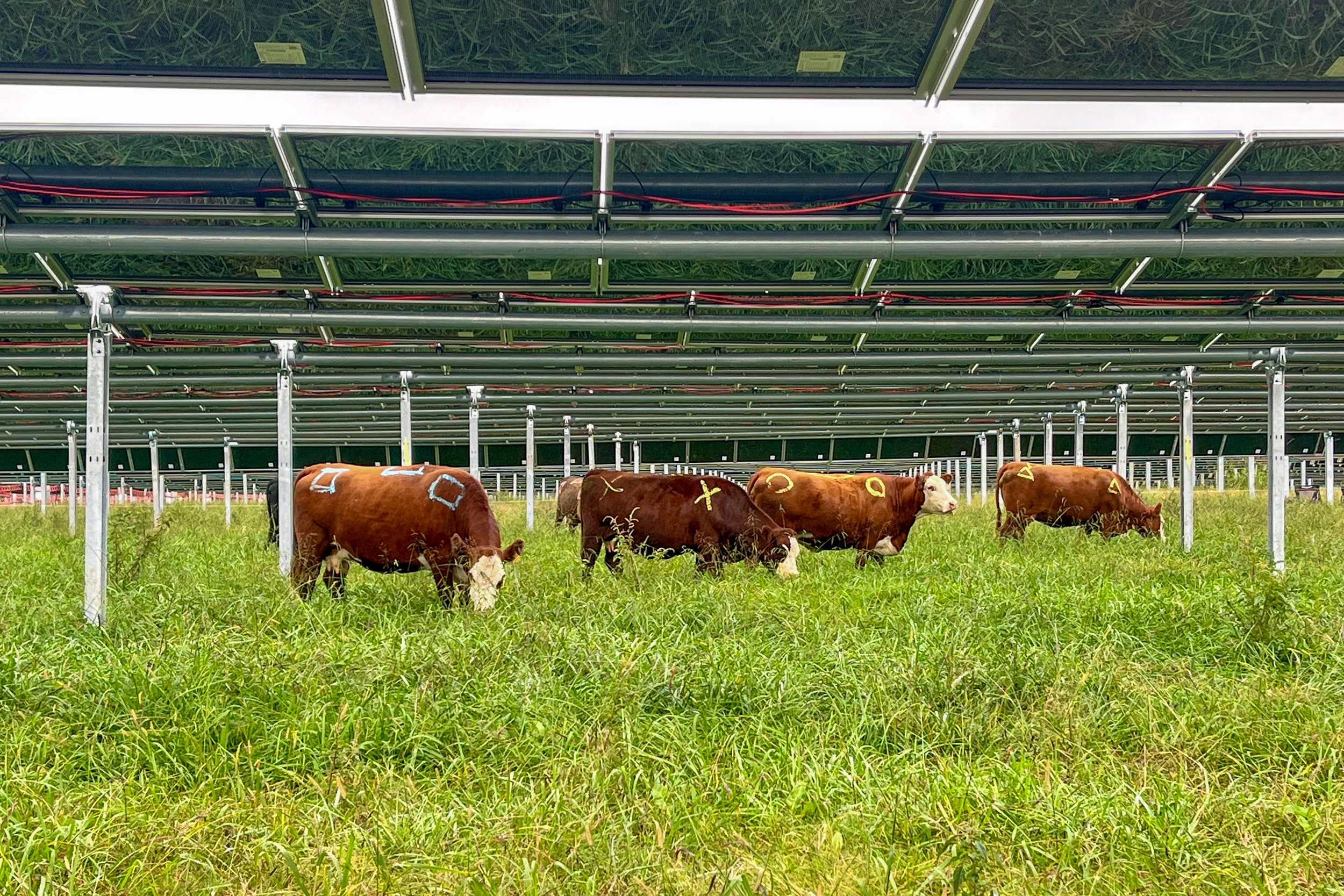
Photo: Regeneration International.

We are told we have to give up meat if we want to fight global warming, but I know that livestock farmers are not going to give up farming. Some are experimenting with techniques to have less harmful effects on the planet — for example, using methane from farm waste to power their farms. But, as Earle keeps reminding me, methane is also a greenhouse gas, and it’s better to put a greenhouse gas into the soil, not the air. It’s called sequestration.

In today’s article, we learn about a Texas farmer who is improving the quality of his land by avoiding herbicides and letting the cows stomp down weeds and brush. At the same time, he is practicing sequestration.

Henry Fountatin writes at the New York Times, “Adam Isaacs stood surrounded by cattle in an old pasture that had been overgrazed for years. Now it was a jumble of weeds.

“ ‘Most people would want to get out here and start spraying it’ with herbicides, he said. ‘My family used to do that. It doesn’t work.’

“Instead, Mr. Isaacs, a fourth-generation rancher on this rolling land in the northeast corner of the Texas Panhandle, will put his animals to work on the pasture, using portable electrified fencing to confine them to a small area so that they can’t help but trample some of the weeds as they graze.

“ ‘We let cattle stomp a lot of the stuff down,’ he said. That adds organic matter to the soil and exposes it to oxygen, which will help grasses and other more desirable plants take over. Eventually, through continued careful management of grazing, the pasture will be healthy again.

‘These cows are my land management tool,’ Mr. Isaacs said. ‘It’s a lot easier to work with nature than against it.’

“His goal is to turn these 5,000 acres into something closer to the lush mixed-grass prairie that thrived throughout this part of the Southern Great Plains for millenniums and served as grazing lands for millions of bison.

“Mr. Isaacs, 27, runs a cow-calf operation, with several hundred cows and a dozen or so bulls that produce calves that he sells to the beef industry after they are weaned. Improving his land will benefit his business, through better grazing for his animals, less soil and nutrient loss through erosion, and improved retention of water in a region where rainfall averages only about 18 inches a year.

“But the healthier ranchland can also aid the planet by sequestering more carbon, in the form of roots and other plant tissues that used carbon dioxide from the air in their growth. Storing this organic matter in the soil will keep the carbon from re-entering the atmosphere as carbon dioxide or methane, two major contributors to global warming. …

“Soil sequestration has gained favor as a tool to fight climate change. Done on a large enough scale, proponents say, it can play a significant role in limiting global warming.

“But many scientists say that claim is overblown, that soils cannot store nearly enough carbon, over a long enough time, to have a large effect. And measuring carbon in soil is problematic, they say.

“The soil-improving practices that ranchers like Mr. Isaacs follow are referred to as regenerative grazing, part of a broader movement known as regenerative agriculture.

“There are no clear-cut definitions of the terms, but regenerative farming techniques include minimal or no tilling of soil, rotating crops, planting crops to cover and benefit the soil after the main crop is harvested, and greater use of compost rather than chemical fertilizers.

“Regenerative grazing means closely managing where and for how long animals forage, unlike a more conventional approach in which animals are left to graze the same pasture more or less continuously. Ranchers also rely more on their animals’ manure to help keep their pastures healthy.

“These practices are spreading among farmers and ranchers in the United States, spurred by environmental concerns about what industrialized farming and meat production have done to the land and about agriculture’s contribution to global warming. In the United States, agriculture accounts for about 10 percent of greenhouse gas emissions.

“Agribusiness companies and large food producers are launching initiatives to encourage regenerative practices, part of efforts to appeal to consumers concerned about climate change and sustainability.

“[The] administration, in its initial moves to combat climate change, has cited agriculture as a ‘linchpin’ of its strategy. One idea is to allocate $1 billion to pay farmers $20 for each ton of carbon they trap in the soil.

“Proponents of regenerative agriculture have sometimes made extravagant claims about its potential as a tool to fight global warming. Among them is Allan Savory, a farmer originally from Zimbabwe and a leader in the movement, who in an often-cited 2013 TED Talk said that it could ‘reverse’ climate change.

Some research has suggested that widespread implementation of regenerative practices worldwide could have a significant effect, storing as much as 8 billion metric tons of carbon per year over the long term, or nearly as much as current annual emissions from burning of fossil fuels.

“While there is broad agreement that regenerative techniques can improve soil health and bring other benefits, some analyses have found that the potential carbon-sequestration numbers are vastly overstated. …

“ ‘It’s really great to see the private sector and the U.S. government getting serious about reducing agricultural emissions,’ said Richard Waite, a senior researcher at the World Resources Institute, an environmental research organization in Washington. But for carbon sequestration in soils, the institute’s analysis suggests that ‘mitigation opportunities are on the smaller side.’

“Focusing on carbon sequestration through soil also risks drawing attention from other important ways to reduce agriculture’s carbon footprint, Mr. Waite said, including improving productivity, reducing deforestation and shifting food consumption to more climate-friendly diets.”

My gut feeling is that we should use as many techniques as possible to reduce carbon emissions — that every little bit helps. Read more at the New York Times, here, and me know what you think.

Read Full Post »

It isn’t hard for me to give up eating beef — but milk? For one thing, my doctor wants me to drink it. I do know that cows and other livestock are not helping with our global-warming problem, and that’s a worry. Here’s something that could help.

Tatiana Schlossberg writes at the Washington Post, “One of the most powerful weapons in the fight against climate change is washing up on shorelines around the world, unnoticed by most beachgoers. It’s seaweed. Specifically, Asparagopsis taxiformis and Asparagopsis armata — two species of a crimson submarine grass that drifts on waves and tides all around the world’s oceans.

“It doesn’t seem like much, but it could practically neutralize one of the most stubborn sources of a powerful greenhouse gas: methane emissions from the digestive processes of some livestock, including the planet’s 1.5 billion cows, which emit methane in their burps.

“Reducing methane from livestock, and cows in particular, has long been a goal of scientists and policymakers but is especially tricky: How do you change a fundamental fact of animal biology in an ethical way that doesn’t affect milk or meat?

“In lab tests and field trials, adding a small proportion of this seaweed to a cow’s daily feed — about 0.2 of a percent of the total feed intake in a recent study — can reduce the amount of methane by 98 percent. That’s a stunning drop when most existing solutions cut methane by about 20 or 30 percent.

“Meanwhile, growing seaweed used for the feed supplement could also help sequester carbon dioxide, another greenhouse gas, and reduce ocean acidification, because the plant sucks up carbon in the water as food.

“Rob Kinley, the scientist who identified asparagopsis as a methane inhibitor, said it might just be the most promising way to eliminate methane emissions from livestock in the next decade.

“That’s significant because livestock overall account for about 15 percent of global greenhouse gas emissions, with nearly 40 percent of that linked to methane from the digestive process, according to the United Nations’ Food and Agriculture Organization. …

“In a study published in 2016, Kinley and his co-authors found that asparagopsis virtually eliminated methane emissions in lab trials. When a cow eats grass or other fibrous plants, microbes inside its rumen, or first stomach, use carbon and hydrogen from the fermentation of those plants to produce methane, which escapes from the cow mainly through burping, although about 5 percent is released through flatulence.

“Asparagopsis and other types of seaweed have specialized gland cells that make and store bromoform, an organic compound. When the blurry red seaweed is freeze-dried, powdered and sprinkled as a garnish on a cow’s meal, bromoform blocks carbon and hydrogen atoms from forming methane in the stomach.

“In response, the cow makes more propionate, a fatty acid that helps produce glucose in the metabolic process, allowing the animal to more efficiently grow or to produce more milk. That may enable farmers to use less feed and save money. …

“Some evidence suggests that herders in ancient Greece fed their cows seaweed, as did many in 18th century Iceland. The most recent effort began when

Joe Dorgan, a farmer on Prince Edward Island in Canada, observed that his cows that grazed on seaweed that rolled up on beaches had better pregnancy success, produced more milk and suffered less from mastitis than cows that didn’t eat seaweed.

“Before Dorgan could sell the seaweed to other farmers, the Canadian government required proof that it was safe, said Kinley, who was then at Dalhousie University in Nova Scotia and was hired by Dorgan. …

“Dorgan’s seaweed reduced methane by about 18 percent, [but, he says,] ‘The light came on for me that there’s probably a seaweed in the world that’s better than that.’ …

“A number of companies have been working to make asparagopsis taxiformis and asparagopsis armata into commercial products that can be added to animal feed. … While their approaches differ, they share an urgency in getting asparagopsis to farmers, something they recognize is not easy. It’s a challenge to figure out how to grow and process asparagopsis at scale and in a way that will translate into higher earnings for farmers.”

At the Washington Post, here, you can read about four companies that are working on this.

Cows by the sea.

Read Full Post »

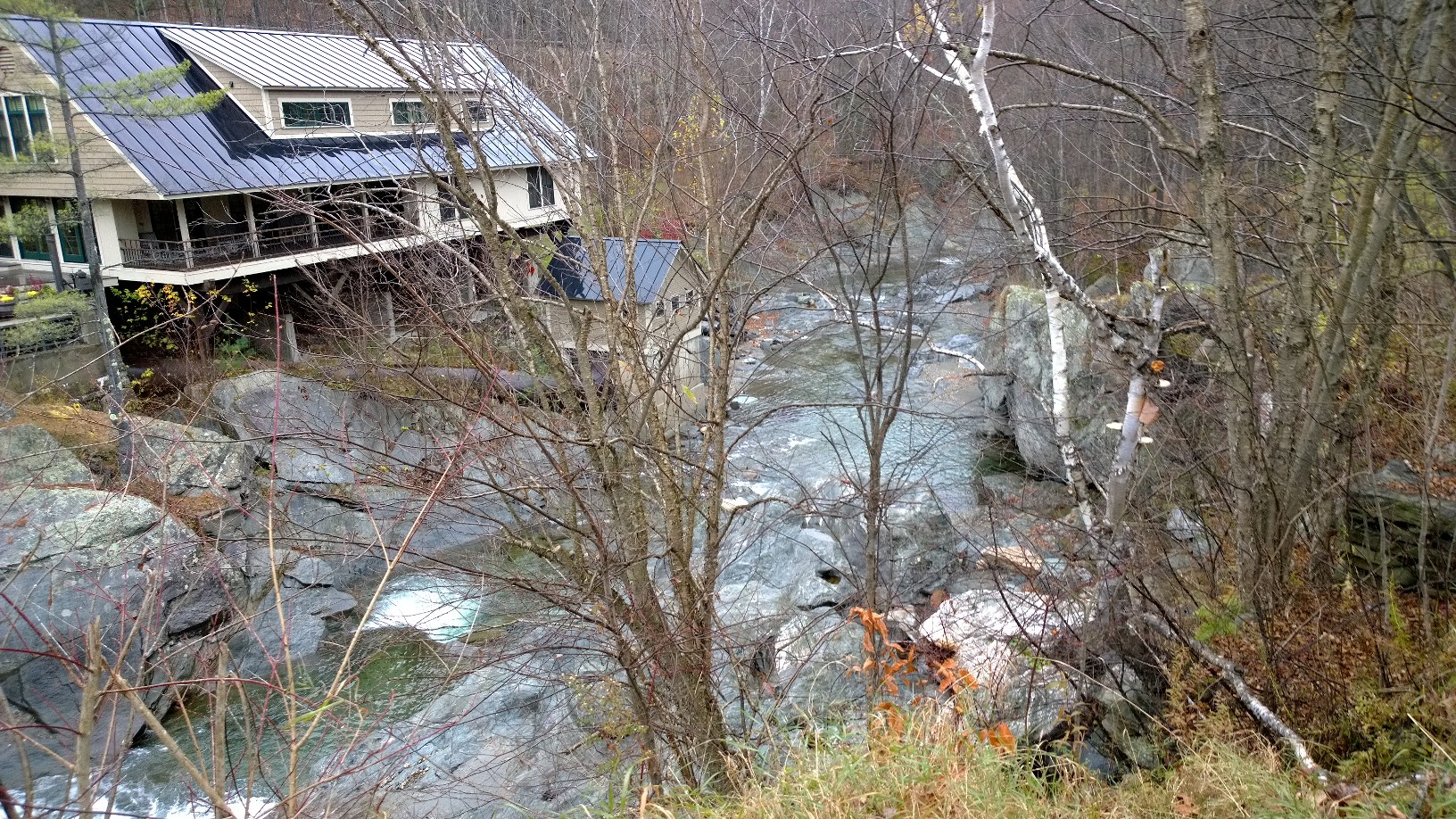
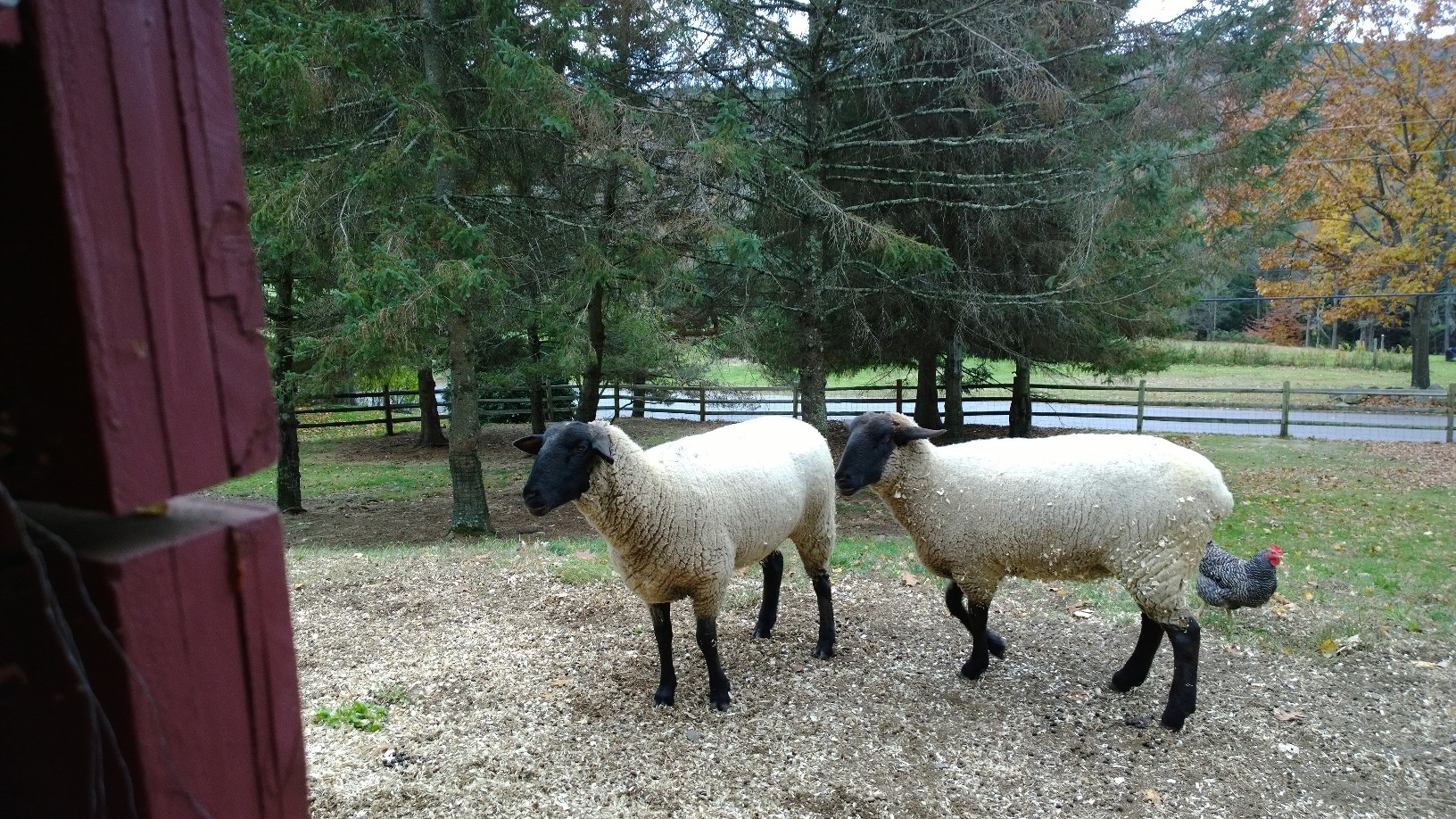
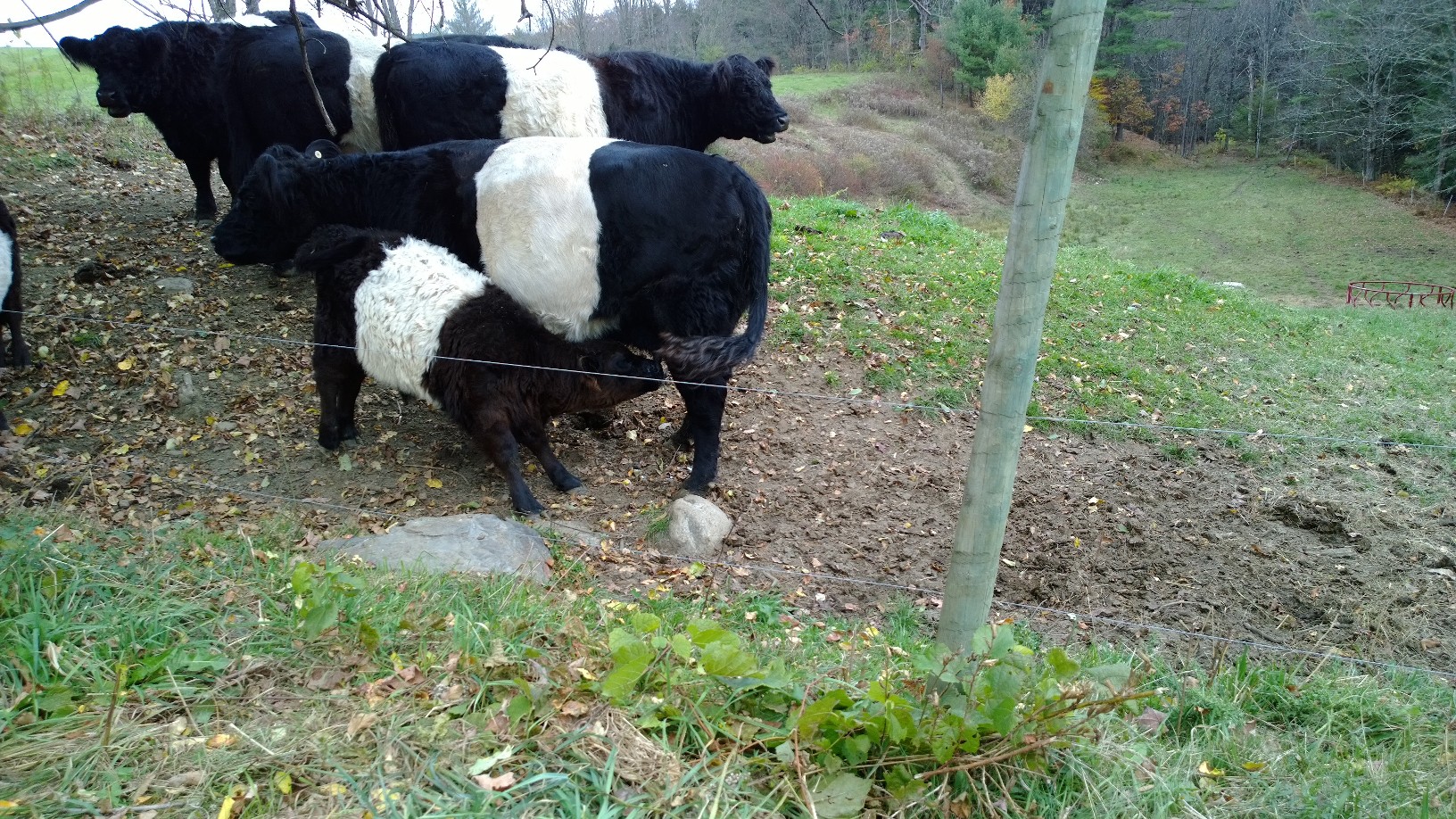
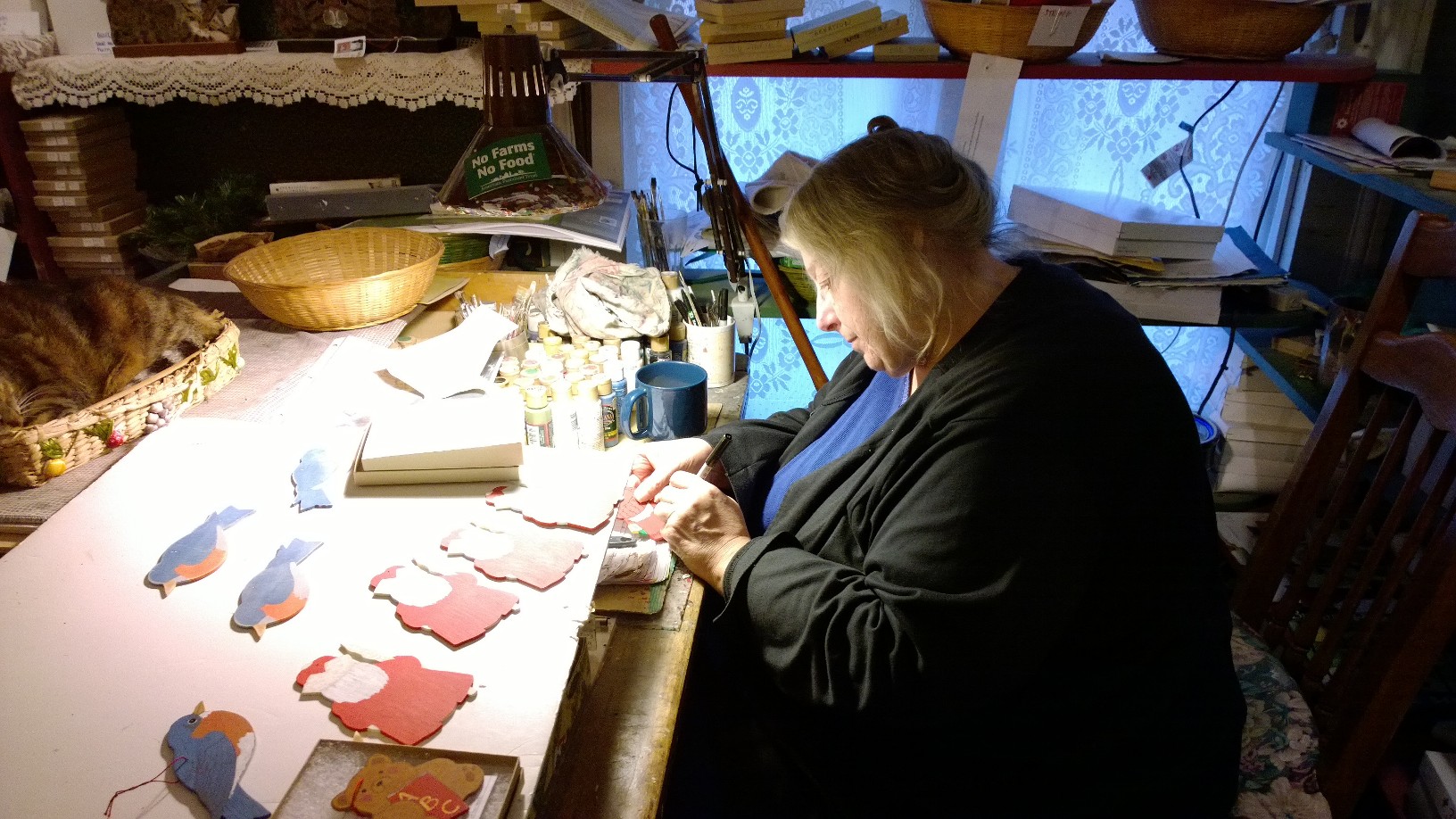
Two incredibly photogenic states.

We got a special kick out of the sheep and chickens of my husband’s cousin, a dentist. He and his wife really know how to get the most out of the rural life.

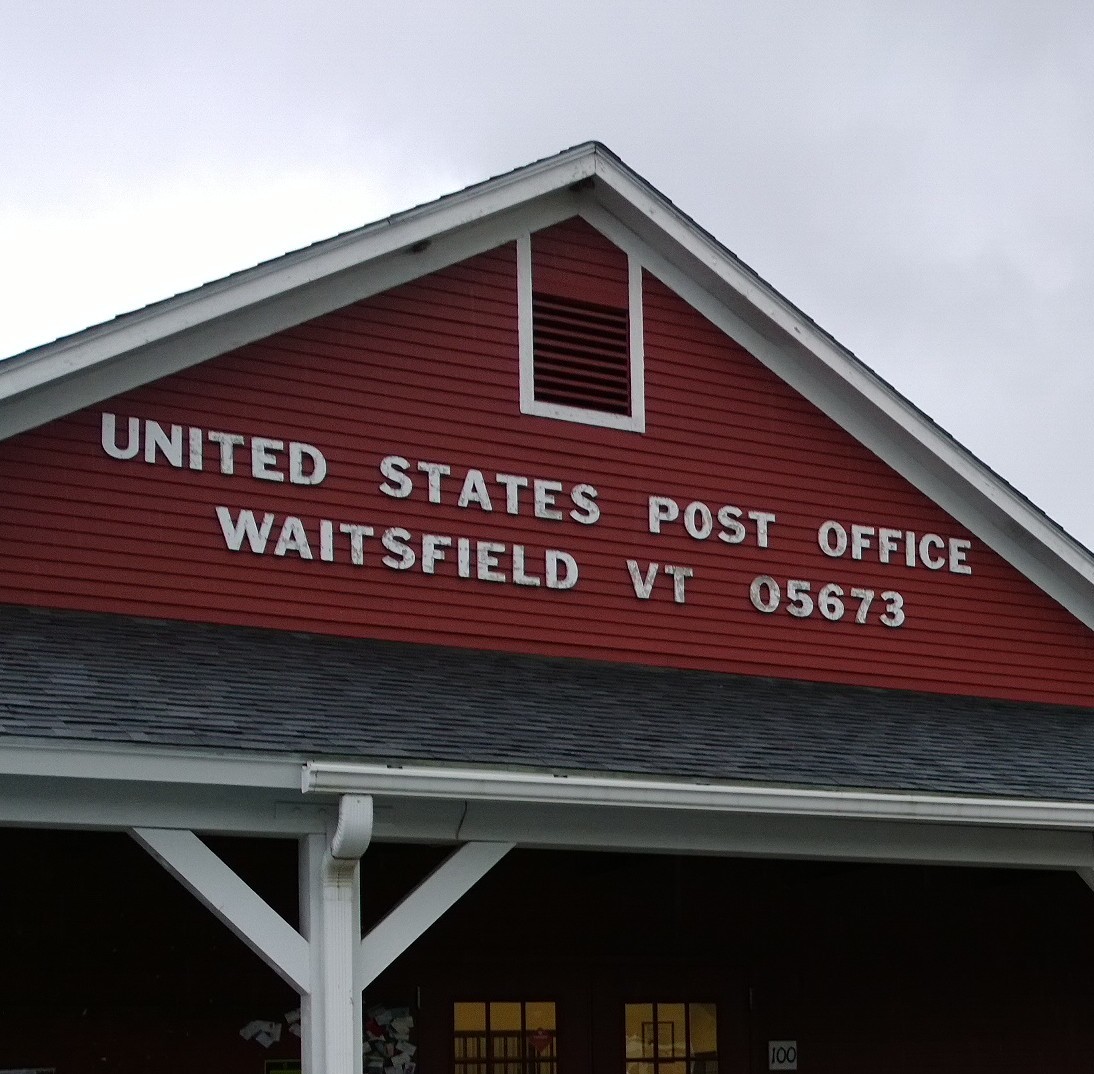
waitsfield-vt-Post-office

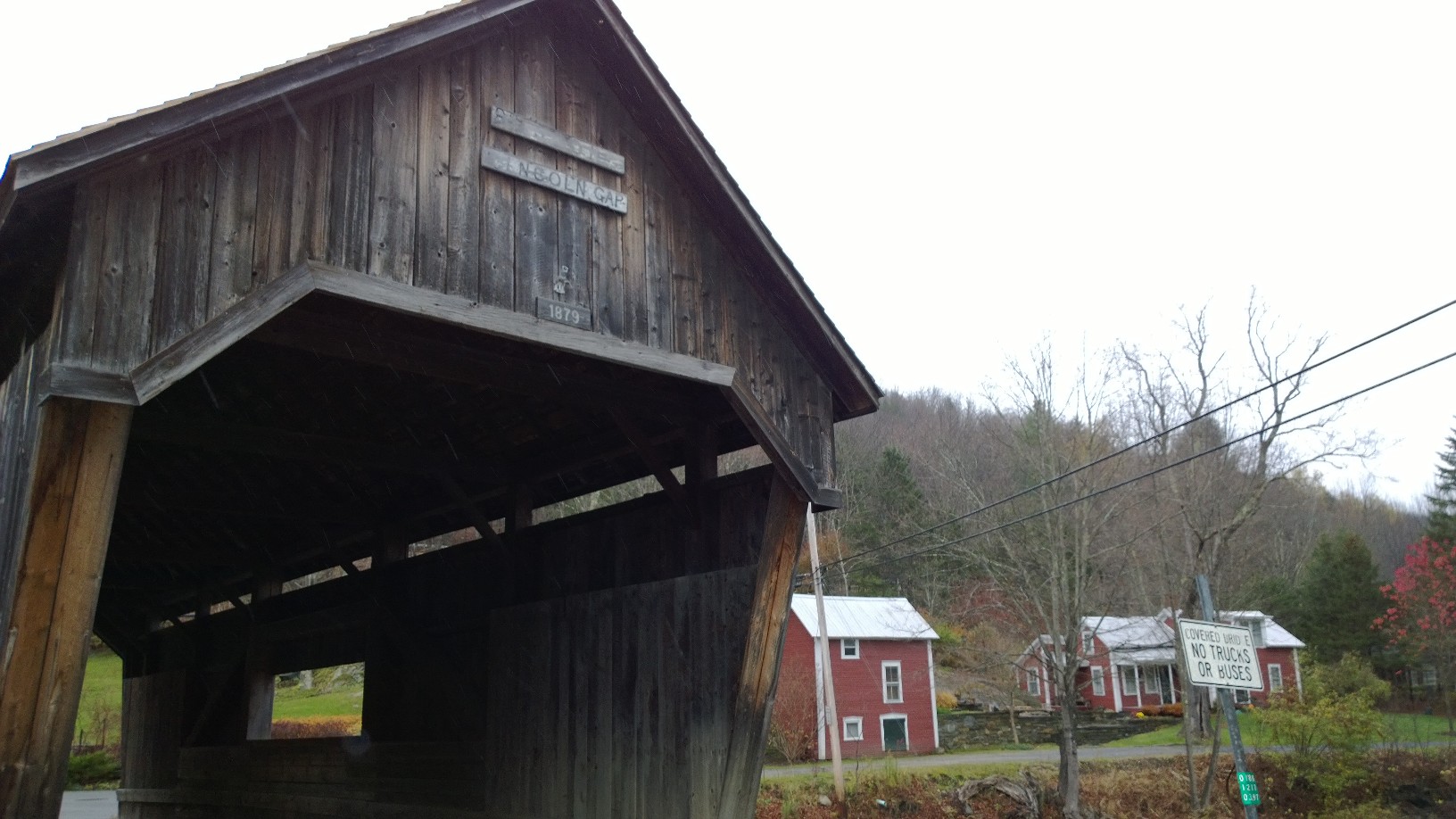
covered-bridge

vermont-river

nh-sheep

calf-nursing

artisan-and-ornaments

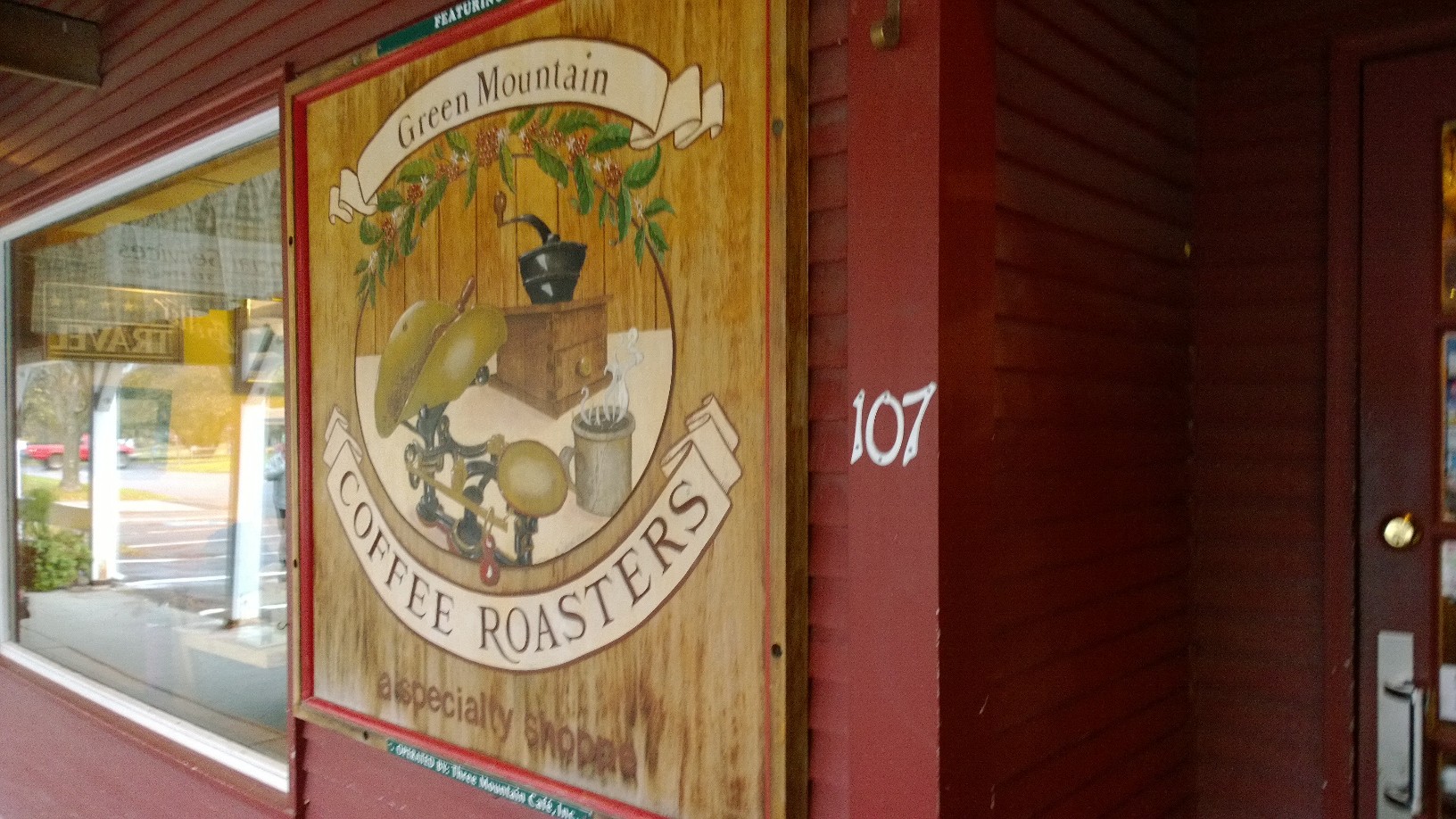
green-mt-coffee-roasters

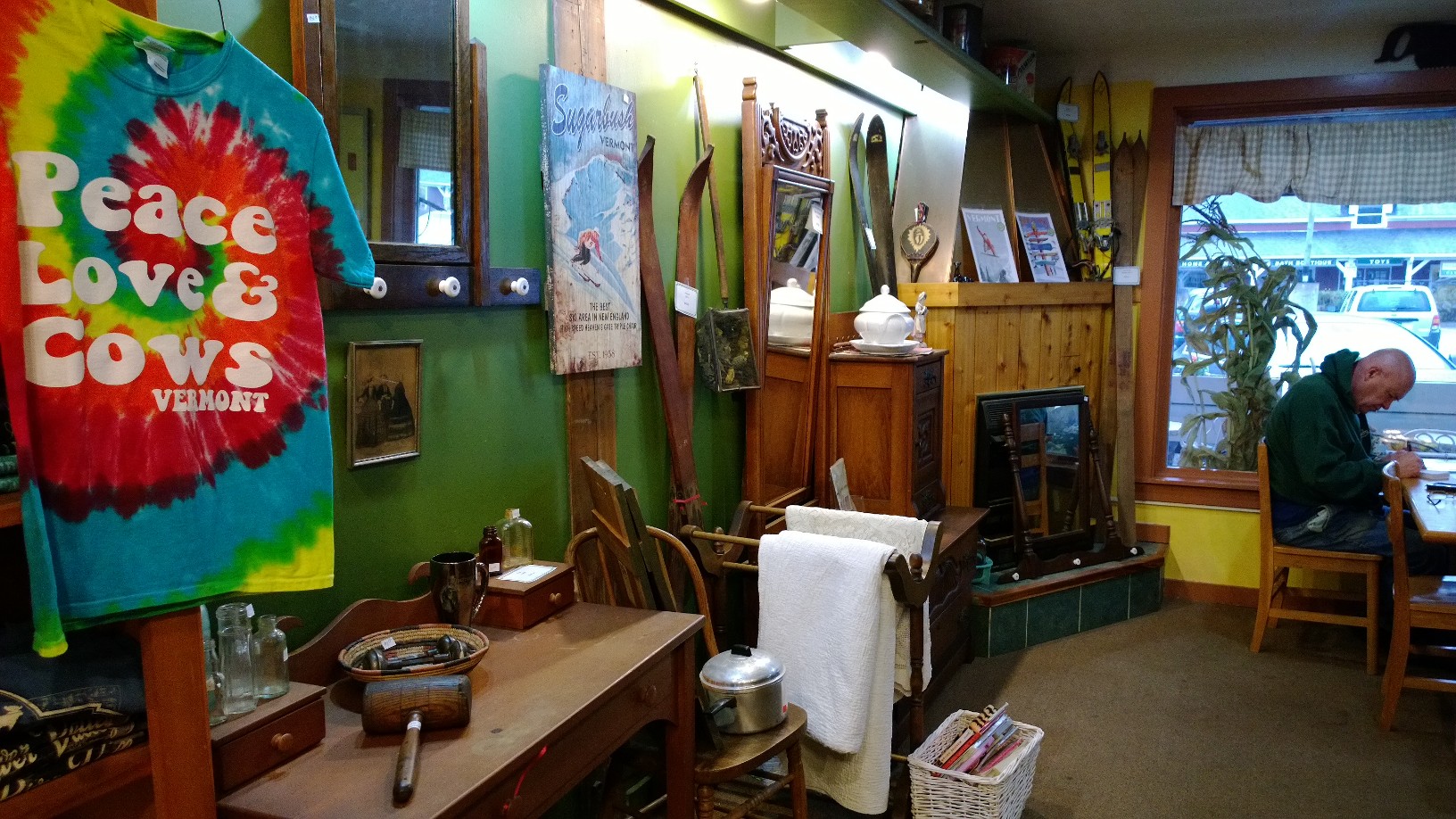
peace-love-cows

waitsfield-coffee-shop

Read Full Post »

Newport, Vermont, is way up north near Canada. It’s the southern port of vast Lake Memphremagog, whose name comes from an Abenaki Indian word meaning “beautiful waters.”

Any destination near Canada, as I should have known, means having access to French radio on the drive up, one of many small bonuses. Another bonus was the Northeast Kingdom Tasting Center, which provides shop space for sellers of many Vermont products under one roof. I bought a very nice turkey sandwich there and a bottle of Granny Squibb‘s Unsweetened Black Currant Tea. (I thought Granny might be a local, but the bottle says she’s a “Rhode Island original.”)

Discover Newport blogged about the Tasting Center in June, “The Northeast Kingdom Tasting Center, LLC, has completed its equity financing and will open its doors to the public this summer, announced Managing Partners Eleanor Leger and Gemma Dreher.

“ ‘This is a unique enterprise that we hope can serve as a model for other rural areas, not only in Vermont but in other regions that value their working landscape,’ said Eleanor Leger, the primary leader of the Northeast Kingdom Tasting Center project.

“A total of sixteen individuals and two foundations purchased equity shares in the holding company that purchased the building at 150 Main Street in downtown Newport in September of 2012.  Their equity of $562,000 is being leveraged with $750,000 in financing from Community National Bank and the Vermont Economic Development Authority [VEDA]. …

“Said Gemma Dreher, an early lead investor. ‘The Tasting Center will benefit from all of the changes happening in the Kingdom, but it will also play a key role in keeping our local farms and food producers viable for the future.’

“The building is fully leased to four local food and beverage businesses that feature products from across the region.” More.

You can learn how Newport conducted a visioning process to get input from residents on what they would like their community to be like in the future, here.

And there’s more at Newport’s website, here.

While I was enjoying my turkey sandwich and currant tea, my friends were taking a tour of nearby Jay Peak, which is benefiting from that special type green card that foreign nationals can get if they invest $500,000 in high-unemployment or rural areas. The resort is posh. I don’t think Princess Mononoke would like the loss of woodlands, but I am pretty sure the people getting the new jobs are grateful.

By the way, even if you hate superhighways, the drive  to the Northeast Kingdom, as that part of the world is known, is spectacular — green mountains, rivers, farms, red barns, cows. For all the photo ops, there are not nearly enough places to pull over and capture the autumn asters or the clouds over the mountain over the farm over the river.

Photo: http://discovernewportvt.com/fresh

Read Full Post »