Feeds:
Posts
Comments

Posts Tagged ‘design’

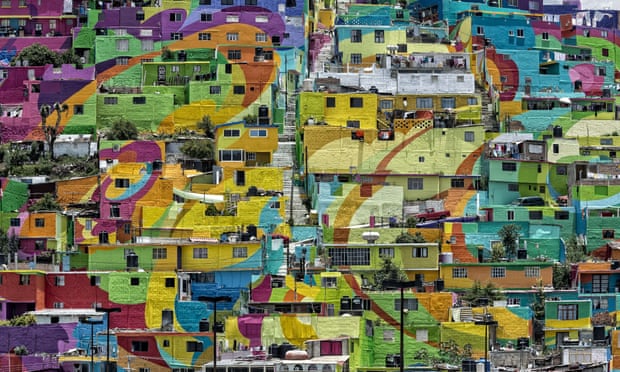
Photo: Omar Torres/AFP/Getty
Las Palmitas in Mexico, a giant example of a town painting itself.

In Gallup’s Global Emotions Report, the countries that come out best are completely different from those that top the UN’s better known Happiness Report, which gives more weight to metrics such as GDP. A design organization has taken note.

Christopher Turner provides background at the Guardian.

“The 2017 Global Emotions Report [is] an ambitious survey of the global mood. To compile it, Gallup conducted in-depth interviews with nearly 150,000 people in 142 countries.

“The report seeks to measure positive and negative daily experiences by asking people to rate their previous day. ‘Did you feel well rested yesterday? Were you treated with respect all day? Did you smile or laugh a lot? Did you experience enjoyment? Did you learn or do something interesting?’ … Conversely, interviewers asked them if they felt pain, anger, worry or stress. …

“In 2012 the UN launched its first World Happiness Report, using data also collected by Gallup, and called on member states to place more emphasis on happiness as a measure of social progress and to guide public policy.

“In the UN’s report, interviewees are asked about their perceptions of social support, personal freedom and corruption, rating their lives on a ladder from zero to 10. The results correlate closely with a list of the world’s wealthiest nations. Norway is currently the happiest country, followed closely by Denmark and Switzerland. … at the other end of the spectrum, people from Syria, Burundi, Tanzania and the Central African Republic rate life satisfaction at about three.

“In contrast, the Global Emotions Report poll of positive experiences is led by Paraguay (only 70th in the Happiness Report, and one of the poorer countries in terms of GDP), then Costa Rica.

“Indeed, Latin American countries traditionally come out top in the index, a fact attributed to the presence of strong social and family networks. …

“In the face of such statistics, what lessons can architects, designers, citizens and community activists learn from these polls? The theme of the second London Design Biennale, announced [in June], is ‘Emotional States.’ It aims to inspire a diverse, global commentary on our turbulent times, interrogating the ways in which design affects every aspect of our lives, and influences our feelings and experiences. …

“The biennale will feature an installation by Norway, in which the government is backing a decade-long initiative devoted to a people-centred approach to design. Engaging citizens in the process, it’s part of an ambitious action plan to make Norway inclusively’ designed by 2025. The government is also taking a proactive approach to the environment, and recently pledged that all cars on the roads will be electric within a decade. The exhibition includes examples of technology and innovation that employ design as a strategy for a better future.

“Guatemala, which ties for sixth place in the Global Emotions Report, will show an installation about the community action taking place in Santa Catarina Palopó. This town on the volcanic shores of Lake Atitlán is reinventing itself as a kind of conceptual art, using the paintbrush to boost civic pride and tourism. Its residents have become involved in a two-year scheme in which they are painting their houses in bold Mayan patterns, with a strict but vibrant palette of five colours sourced from local textiles.” More at the Guardian, here.

Photo: GraphicaArtis/Getty
“Now just 10 years away … a 1950s illustration of a family playing a board game while their electric car does the driving.” Ten years?

Read Full Post »

Some schools are taking the current push for STEM skills (science, technology, engineering and math) a step further and putting kids on project teams with students from around the world. While you are learning science, you are getting to know what life is like somewhere else.

Dugan Arnett writes at the Boston Globe, “In just a few weeks’ time, the students in Kathy Wright’s Richard J. Murphy K-8 School STEM class have developed a keen grasp of Costa Rican culture.

“ ‘They don’t get snow there,’ said Jayd’n Washington, a 12-year-old seventh grader at the Dorchester school. Added fellow 12-year-old Fabian Riascos, ‘They have their own currency.’

“Their burgeoning interest in the Central American country stems not from a recent geography lesson plan — it’s the result, instead, of a program called Design Squad Global, which pairs American middle-school classes with students from other countries in a kind of virtual pen-pal relationship.

“Created by WGBH Boston as a spinoff of the old PBS television series ‘Design Squad,’ the program serves, at its core, as a way to introduce young students across the globe to the importance of engineering-related projects.

“But another goal — and one that organizers seem to value as much as anything — is the program’s ability to connect children from various locations, backgrounds, and cultures. …

“The DSG program connects kids ages 10-13. Currently, it operates in 25 American cities — including Boston, Chicago, and New York — and eight countries, from Brazil to Jordan to South Africa.

“At the start of the program, which can run either six or 12 weeks, two classes from different countries are paired together. In online correspondence, they tick off their names, nicknames, and interests — and as they tackle a collection of weekly projects, a virtual relationship blossoms. …

“The focus is on real-world problem-solving. Participants are charged with designing and constructing scaled-down versions of a number of projects: a structure that can withstand an earthquake, an emergency shelter, an adaptive device for someone with disabilities.

“ ‘Middle school kids can come up with some amazing solutions,’ said Mary Haggerty, who oversees educational outreach at WGBH. ‘It makes you feel very hopeful for the future.’ ”

More here.

Photo: Jonathan Wiggs/Globe staff
Jhondell Smith-Young tested his STEM project for a Dorchester class that assigns him to an international team.

Read Full Post »

Tom Murphy wrote recently at the Providence Journal about a shop in North Kingstown that will teach you how to build your own guitar.

“Owner Dan Collins and his partner, Ariel Bodman, design and build guitars with the skill and dedication of artists,” writes Murphy. “They talk about the sound produced by different kinds of wood with terms like the ‘color’ and the ‘ring.’ …

“Dan and Ariel have brilliantly carved out a niche in the industry by sharing their deep knowledge and experience with student builders who pay a fee to craft their own custom instruments. With his background in art and hers in music, they give students a much deeper appreciation for their new instruments than they might get walking out of the average music store. …

“Many students become hooked on the experience and come back for a second, third, even a fourth build. ..

“The custom builds, the repairs and the teaching are the business side of Dan Collins’ unique shop, but from 7 to 10 p.m. on the last Saturday of each month, something really extraordinary happens.

“The floors are swept, tools are put away, equipment is pushed aside and the long work bench in the middle of the room is transformed into a banquet table as Shady Lea Guitars holds its ‘open mic night.’

“In a cleared portion of the workshop, there is a well-lit stage and an odd assortment of comfortable old chairs. It’s potluck, so students, customers, friends and enthusiasts alike can share their favorite recipes along with their music. The friendly audience always puts participants at ease, and they respond with heartfelt performances.” More here.

Read Full Post »

Well, this is a new one on me: a bookstore that sells only one title at a time.

Amy X. Wang reports at a website called Quartz that in September 2014, “Yoshiyuki Morioka, a bookseller who had been running a store in Tokyo, Japan, for 10 years, had a curious thought. Lots of customers, it seemed, dropped in during book launches and other events to buy the same title; others often appeared overwhelmed by all the extra variety. So why not start a bookstore that only sold one book at a time?

“Now, Morioka Shoten — Morioka’s new venture that threw open its doors in Tokyo’s trendy Ginza shopping district in May 2015 — operates around that very principle. The store stocks multiple copies of only one carefully selected tome each week …

“Takram, the design engineering firm that helped Morioka put together the look of his new store, says the experience highlights ‘the importance of a physical venue in the era of digital reading.’

“Books that have been displayed so far include Swedish-Finnish author Tove Jansson’s The True Deceiver, Hans Christian Andersen’s Fairy Tales, and works from well-known Japanese writers like Mimei Ogawa and Akito Akagi. Each title is displayed for six days in a row—Tuesday to Sunday—and then swapped out for a new book.

“And things are going quite well at the quiet little store. According to Morioka, Morioka Shoten has sold more than 2,000 works since it opened. Proof, then, that readers seeking deep, personal relationships with physical books are still around across the world.” More here.

You know, that last sentence strikes a chord. I was just explaining to a friend today how this blog resulted from my daughter asking if I would apply my love of blogging to support the vibe of the jewelry company she founded, which emphasizes deep, personal relationships.

If you’ve never clicked on the Luna & Stella site (or even if you have), please do now. Suzanne and Erik have posted a steady stream of new birthstone-jewelry designs and charms over the five years I’ve been blogging. Each one is full of meaning.

Photo: Takram/Miyuki Kaneko
The one-room bookstore Morioka Shoten in Tokyo

Read Full Post »

Dezeen magazine has an article on an apartment building in Australia that seems to change color depending on your viewing angle.

“The triangular window bays that project from the facade of this Sydney housing block by MHN Design Union appear either red or yellow, depending on the viewing angle.”

The apartment block was designed “for local developer Crown Group on a plot in Waterloo, a former industrial area that is gradually being redeveloped into a residential neighbourhood.

“The architects based the design of the facade on the sculptures of Yaacov Agam, an Israeli artist who is known for his brightly coloured kinetic and optical illusion works – which also influenced a series of rugs by London studio Raw Edges. …

“The building’s form tapers to a point at the rear, creating triangular floors that range from 10-high at the front to seven at the back. …

“The building is shortlisted for two awards at this year’s World Architecture Festival, which will be held in Singapore at the beginning of November.” More here.

Photo: John Gollings

Read Full Post »

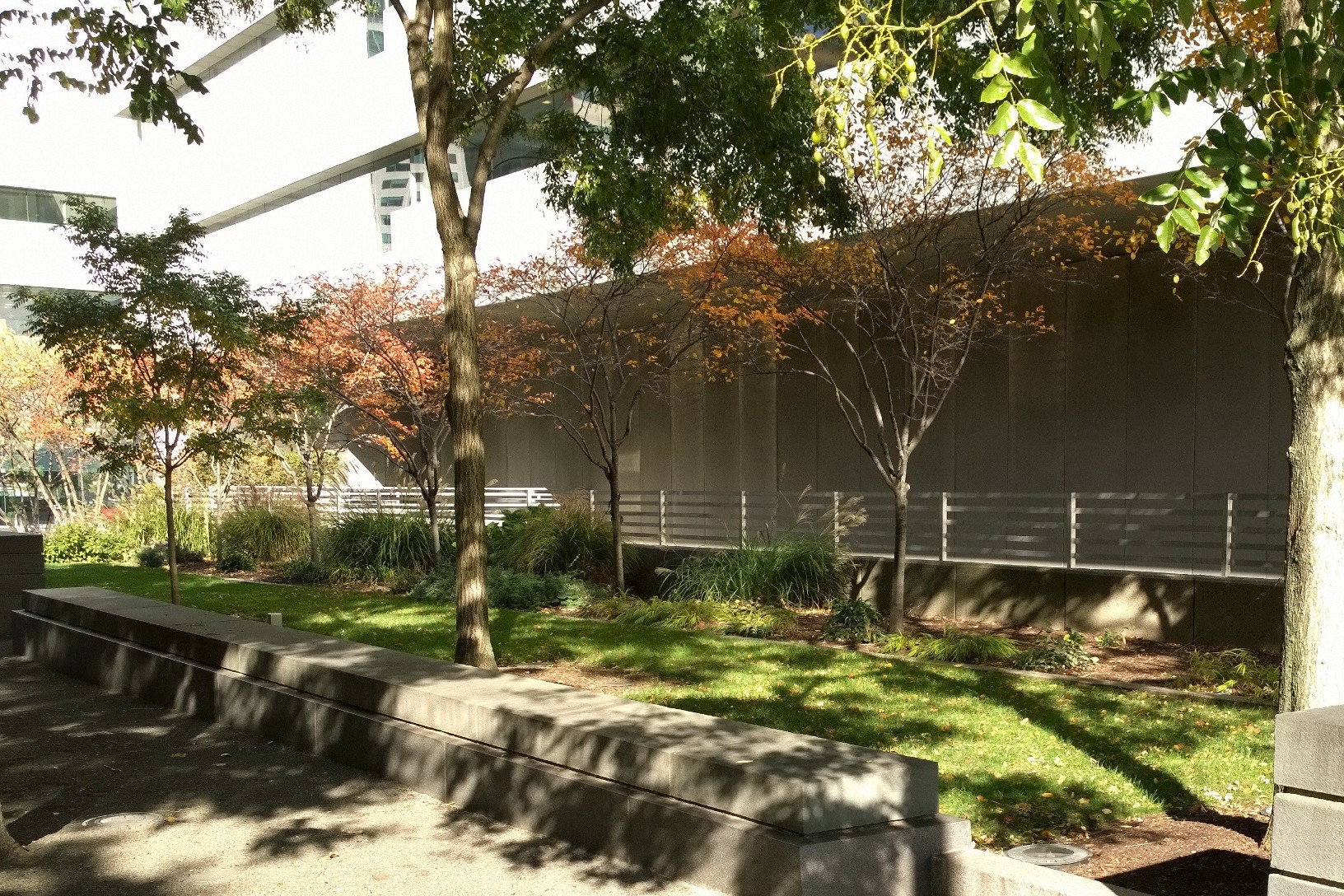
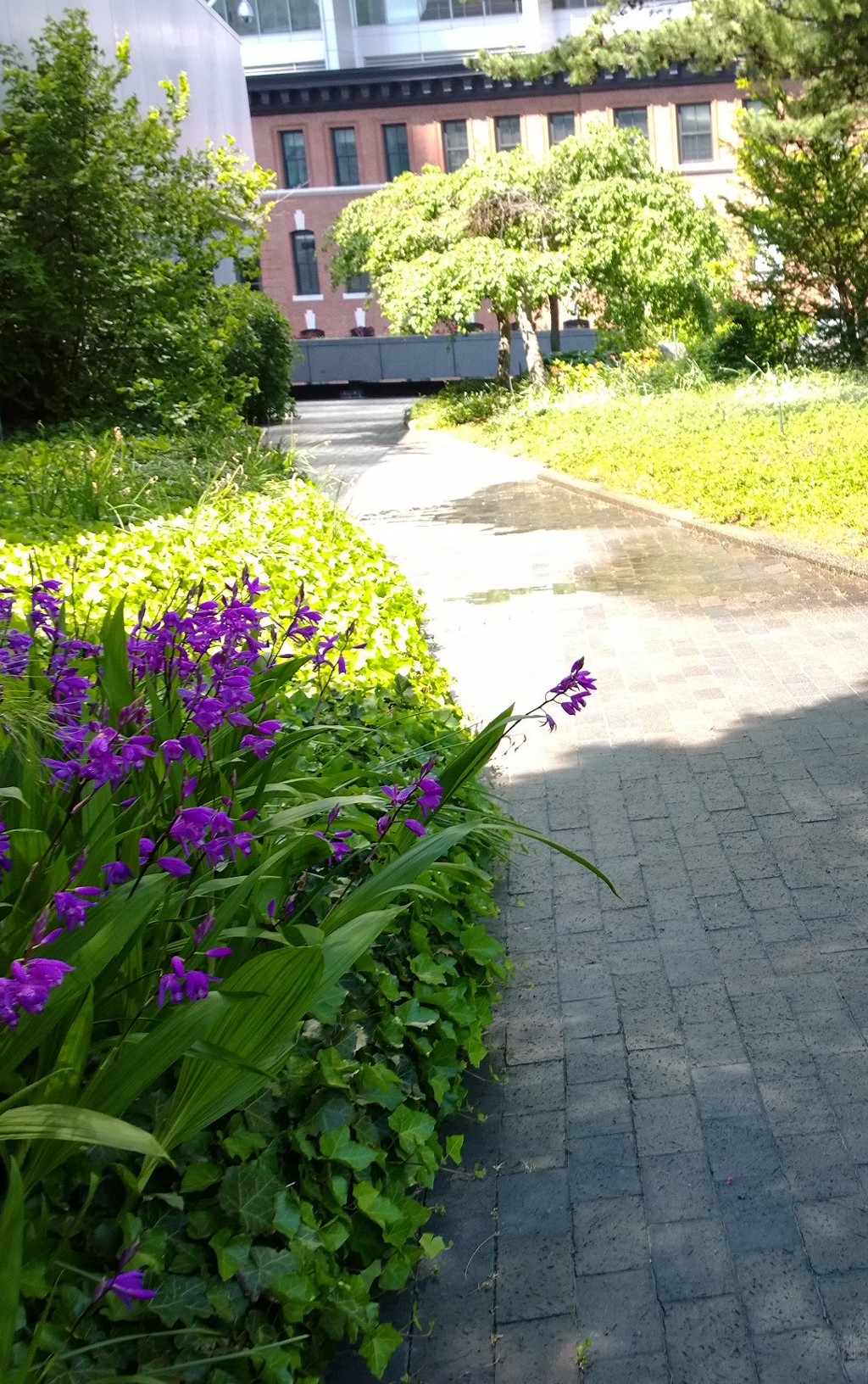
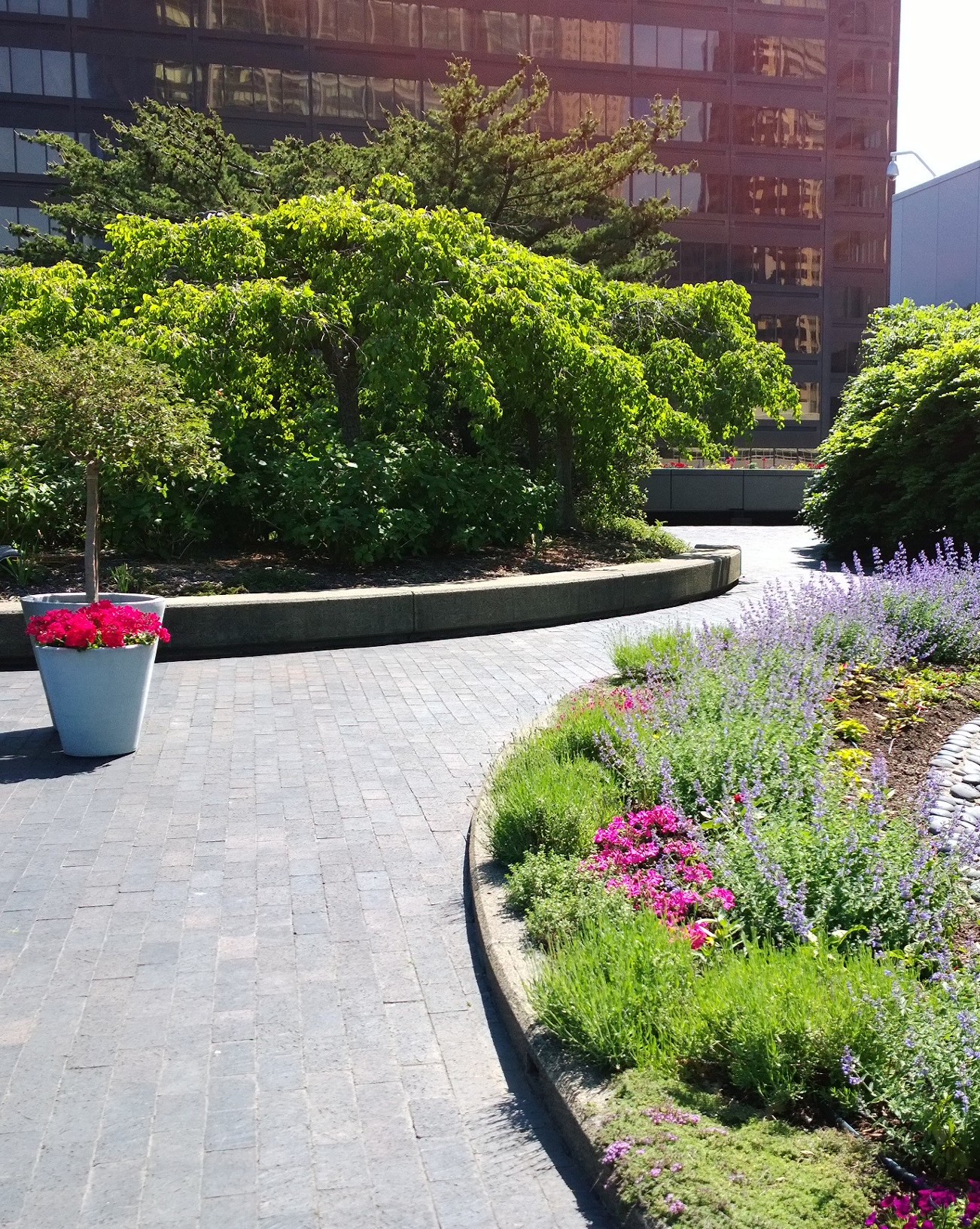
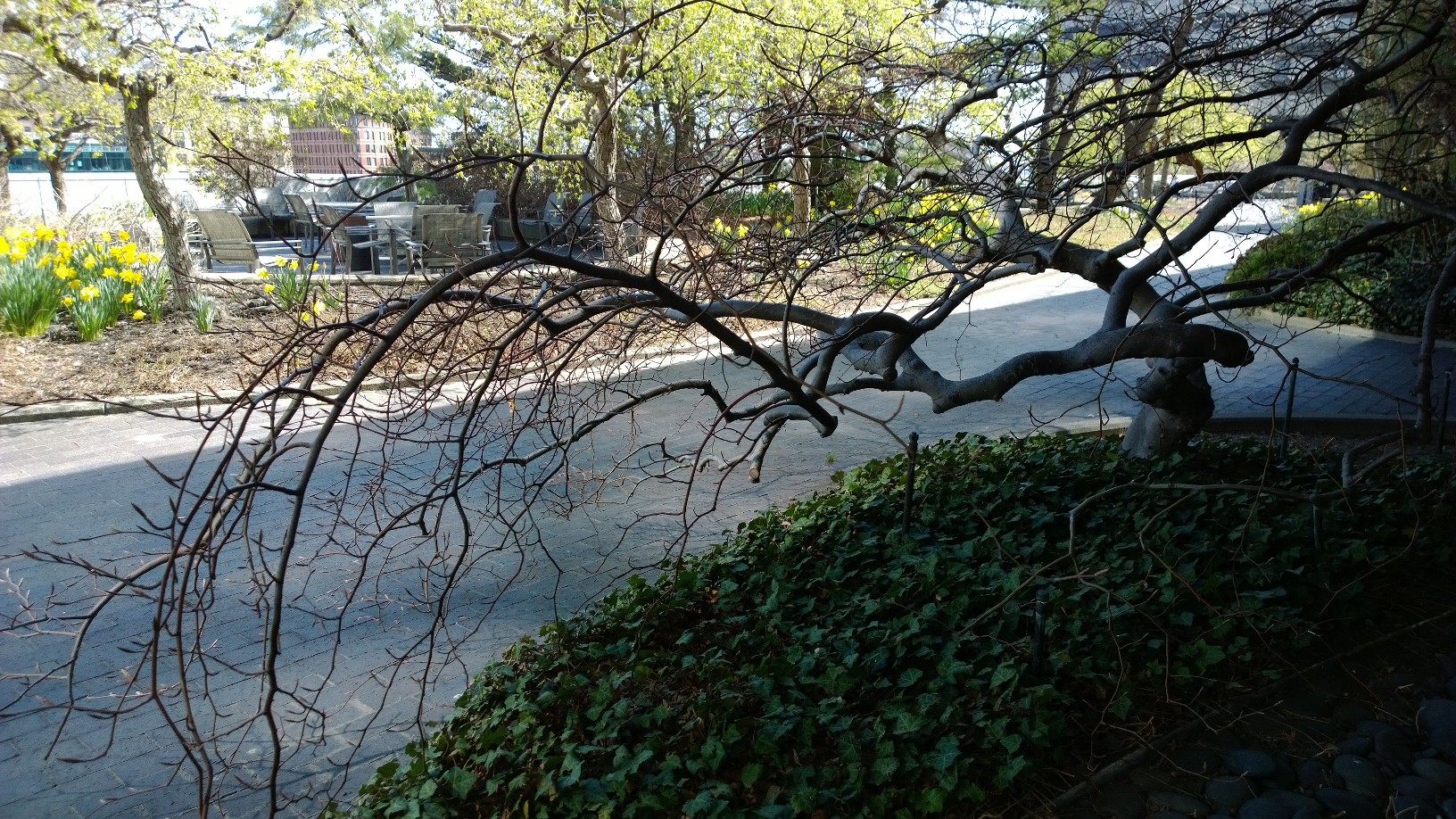
I’ve been wanting to say something about the inspired landscaper at a building in Boston. His vision is so different from that of most people responsible for office or apartment building plantings. You know what I mean: “It’s fall. Time to line up a row of yellow chrysanthemums. No, let’s do something creative this year and alternate them with maroon chrysanthemums. Just a foot apart.”

Plunk.

In contrast, landscaper Paul tells a story, writes a poem with his design, thinking about the changing seasons far ahead. Birds love him.

color
texture
light
shade
movement
dappling
swaying
open
huddled
reaching
clinging
weight
breeze
peace
song

110115-Paul-is-poet-of-lanscaping

roof-garden-at-office-building

flowering-4th-floor-roof

4th-floor-roof-garden

Read Full Post »

Gotta love MIT. There is always something crazy going on over there. And when MIT and Rhode Island School of Design (RISD) ideas come together, watch out.

At WBUR radio, Fred Thys explains about a new, multidiscipline design program.

Matt “Kressy has put MIT’s first-ever integrated design and management (IDM) students in a kind of boot camp. He wanted to immerse the engineers, designers and business school students in a project where they would have to work in concert. …

“The task: build instruments from found materials. And boy did the students find materials. Mechanical engineer Maria Tafur, from Bogota, made a clarinet from a carrot. Engineer Tammy Shen, from Taipei, has made an instrument that includes glass bottles. …

“Kressy was teaching a course at the Rhode Island School of Design when he got the idea for the new IDM master’s program. He was also teaching engineers and business students at MIT — but it was the design students from RISD that caught Kressy’s attention by asking a critical question:

‘How does this product enhance our lives?’ …

“Kressy says it took 13 years for his idea for a design program to get traction at MIT. When it did, he was able to pick 18 students with completely different criteria from what MIT typically uses.

“ ‘And that rubric had crazy metrics, such as the metric love,’ Kressy says. ‘And the love metric was basically: Does this candidate have a large capacity for love and compassion? …

“ ‘When I showed the rubric to my colleagues here, let’s just say it got mixed responses,’ he says, laughing.”

To get at the love-and-compassion metric, he asked applicants to submit a portfolio indicating their efforts to make the world a better place.

You can read here about the impressive portfolios, struggles to get to MIT from poor countries, and inventive ideas for the future.”

Photo: Jesse Costa/WBUR
MIT integrated design graduate students Maria Tafur and Masakazu Nagata play their homemade instruments along with Brave Sharab, 7, on Main Street in Cambridge.

Read Full Post »

Treehugger recently featured some rather magical lamps in the shape of mushrooms.

Kimberley Mok writes, “Whether they glow in the dark or are uncommonly rare, mushrooms are the incredible, unsung heroes of the natural world. They can bio-remediate oil spills, potentially cure diseases, and when used in your garden, can lessen its need for watering. Now, thanks to Japanese artist Yukio Takano, you can even have a LED version of them on your desk, transforming any mundane workspace into one of glowing, fungal wonder.

“Made with glass, salvaged driftwood and outfitted with energy-efficient LEDs and unique little light switches, Takano — who creates under the name The Great Mushrooming — seems to get the little details right enough to make these lamps look like the real thing (they come with hidden battery packs, to up the authentic-look factor, apparently). …

“Takano’s mushroom lights are one-of-a-kind, and while he sells at design fairs like Tokyo’s Design Festa, according to blogger tokyobling he doesn’t ship them abroad, due to the fragility of these glassworks. You can always feast your eyes over at Yukio Takano’s site The Great Mushrooming and visit the portfolio.”

More styles at Treehugger, here.

 Photo: Yukio Takano

Read Full Post »

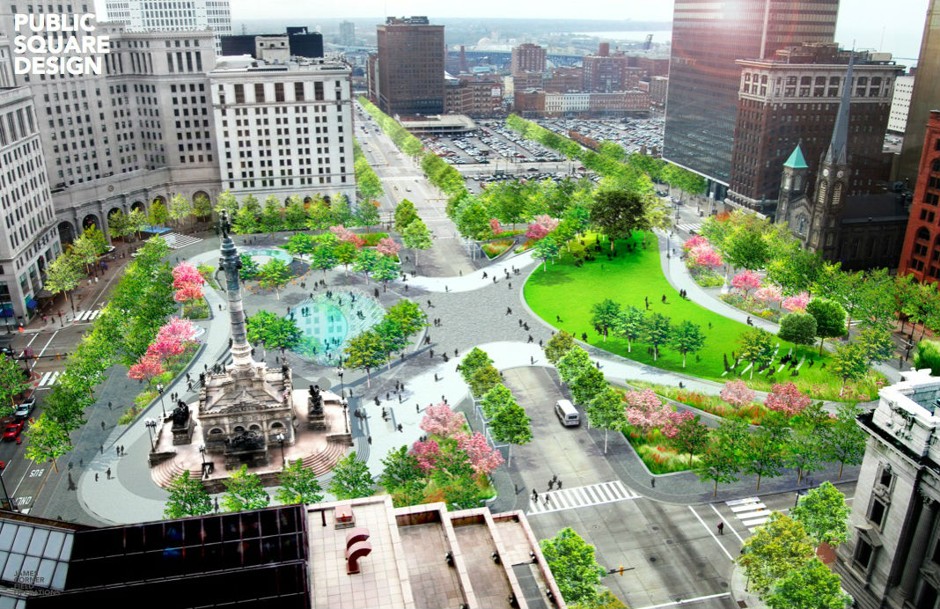
Here’s a good one from The Atlantic’s City Lab on how Cleveland is turning a traffic circle into a park.

Eric Jaffe writes, “To hear Clevelanders talk, Public Square is a place you pass through to reach somewhere else. When Moses Cleaveland laid out the town in 1796, he imagined the open area at its center as a New England-style commons: a gathering space for settlers, a grazing area for livestock. …

” ‘Over the years, it just turned into more like a series of big traffic islands,’ says the landscape architect James Corner. …

“Locals who find themselves in one of the quadrants have a tough time getting to another. If the cars aren’t enough of a hindrance, the lack of things to do or see in the area is: of the square’s 10 acres, more than six are paved over with concrete or asphalt. …

“By the time Cleveland engaged Corner’s help, in 2008, many ideas for how to revamp the square had come and gone.

“They all suffered from the assumption that traffic around the site could not be disturbed. Corner came in with a bold idea: if we can’t remove the streets, let’s build an elevated park above them.

“The hilltop-park concept didn’t pan out, because of the cost and complexity, but [Land Studio executive director Ann Zoller] says it got locals reimagining Public Square as a place prioritizing people over cars. A traffic analysis determined that the city could close one of the streets and narrow the other to a passage for buses, which could be rerouted during major events. Construction started this spring on Corner’s final design, which is estimated to cost $32 million.”

Read more here on how cities are thinking about improved public spaces.

Image: James Corner Field Operations
A rendering of the new design  for Public Square in Cleveland

Read Full Post »

One of Studio 360‘s regular hosts spoke recently with a woman who believes good design can and should be used to enhance the most mundane and cheerless places.

The radio show’s website says, “Going to the DMV, doing the dishes, commuting to work: what would you change if you could? Kurt talked with designer Ingrid Fetell about how better design can make all the difference.

“Fetell wants to ‘create principles that are informed by what the cognitive sciences are showing us about the way that objects, surfaces, colors, textures, patterns make us feel, and use those as principles for designing things that really make us feel good,’ she tells Kurt Andersen. Her curiosity stems from noticing that certain things seem to universally make people feel a sense of joy — like confetti, balloons, and bubbles. ‘It was really born out of a curiosity to understand why certain things make even babies smile.’

“She points to Edi Rama as a real-life example of putting these ideas into practice. Rama, who is now Prime Minister of Albania, was named the World Mayor in 2004 after painting much of Tirana in bright colors. The results were remarkable. ‘He found that people actually started paying their taxes after the painting,’ she tells Kurt. ‘People stopped littering as much and the shopkeepers started taking the metal grates off their windows and opening glass window fronts back out to the street.’ ” More here.

I like the idea of trying to understand what makes a baby smile. Or laugh. There are so many wonderful YouTube videos of babies laughing hysterically when someone tears paper or when a dog eats popcorn. Why is that hilarious? Because it’s startling?

By the way, Studio 360 is collaborating with Fetell and IDEO “to redesign a thing, place, or experience that is unnecessarily joyless.” Send your ideas on Twitter or Instagram, and tag #bringjoy. I sent “homeless shelter.”

Paint job: Edi Rama, who became prime minister of Albania

Read Full Post »

Although my husband and I are not in any design field, we’ve enjoyed watching videos like Gary Hustwit’s Helvetica (the history of a typeface) and his Objectified (on industrial design). It’s  interesting to see how designers think about things like a new font or machine.

Recently at National Public Radio’s Weekend Edition, Ari Shapiro talked about a new typeface meant to represent Sweden.

He reports, “Nearly every country has a national flag, a national anthem, a national bird. Not many countries have a national typeface. Sweden recently commissioned a team of designers to come up with a font to represent the country on its websites, press releases, tourism brochures and more. …

“The typeface that [Soderhavet] designers created looks pretty much the way you would expect a Scandinavian typeface to look, too.

” ‘The Scandinavian tradition is pretty humble, easygoing and clean,’ says Stefan Hattenbach, one of the designers of the new Sweden Sans. Less is more, you could say.’

“He started by collecting images of old Swedish street signs and company logos. He pulled images of Swedish wallpaper, cars and furniture, and looked for what he calls the red thread running through it all.

” ‘There’s an expression in Sweden, too,’ Hattenbach says. ‘We say lagom, which is not too much and not too little.’ ”

The ancient Greeks had a similar expression: “Nothing in excess.” The only letter with a flourish is q. Says Hattenback, “Q is not used that much, so you can often be a little more playful with that.”

See what you think of Swedish Sans, below, and read the rest of the NPR story here.

Swedish Sans, by Soderhavet
A typeface to represent official Sweden

Read Full Post »

An organization that I follow on twitter called SmallerCitiesUnite! (@smallercitiesu) tweeted today about a design for an educational marine center in Malmö, Sweden. It caught my eye because I like marine centers and because two novels I read recently took place in Malmö: Murder at the Savoy, by Maj Sjöwall and Per Wahlööand Karl Ove Knausgaard’s Book 2, based on his life. (And of course, we have a Swedish connection in the family.)

Dezeen magazine reports, “Danish studio NORD Architects has released designs for a new Marine Educational Centre in Malmö, Sweden, comprising a 700-square-metre visitor centre with a large overhanging roof structure that covers an external aquatic learning environment. …

“The education centre will be set in 3,000 square metres of landscaping, including small ponds and planting that are intended to mimic an assortment of marine ecologies and create ‘an engaging learning landscape’ that allows visitors to have a hands-on experience of nature.

” ‘In the learning landscape, users will find floating laboratories on small removable pontoons, teaching signs on the seabed and underwater sea binoculars to name a few,’ said the studio.” More at Dezeen magazine, here.

Photo: NORD Architects

Read Full Post »

One of the biggest challenges for biking in cities is the intersection.

Liz Stinson writes at Wired, “Biking through a city can feel like navigating a video game staked upon your life. You’re avoiding pedestrians and potholes all the while making sure cars don’t run into you. …

“Even protected bike lanes have an Achilles heel: the intersection. Most protected bike lanes — lanes that have a physical barrier between bicyclists and drivers — end just before the intersection, leaving bicyclists and pedestrians vulnerable to turning vehicles.

“Nick Falbo, an urban planner and designer from Portland (one of the most bike friendly cities in the nation), is proposing a new protected intersection design that would make intersections safer and less stressful than they are today. Falbo’s design is taken from the Dutch way of doing things. … Falbo’s adapted design has four main components.”

They are the corner refuge island, the forward stop bar, the setback crossing, and bicycle-friendly signal phasing. Read what they are here.

“ ‘This design requires you to have a much tighter corner radius,’ says Falbo. ‘These large truck operators, they are professional drivers they can actually make tighter turns than these standards normally say they would. The real answer is that I think you’re going to have to be a little stricter on your trucks in any number of ways.’

“It’s a battle, but Falbo thinks implementing these bike lanes are totally possible, pointing out that protected bike lanes are just now gaining support across the country. …

“‘We’re trying to attract more riders,’ he says. ‘Some of these conventional facilities, they work and they’re safe, but they’re stressful and that level of stress and lack of comfort is what will keep the average American from feeling like they can ride.’ ”

Image: Nick Falbo
Nick Falbo designed a type of bike lane that addresses dangerous intersections.

Read Full Post »

When a do-gooder from the nonprofit Kounkuey Design Initiative told poor farmworkers at a California trailer park she wanted to work with them to build a place to relax and play, they didn’t think much would come of it.

Patricia Leigh Brown writes at the NY Times why the community is happy to have been proved wrong.

“When Chelina Odbert, the 36-year-old co-founder of the nonprofit Kounkuey Design Initiative, based in Los Angeles, showed up two years ago and asked residents to propose ideas for a park that they might design and build collaboratively, most assumed she was yet another do-gooder bearing ‘muchas promesas’ that would come to naught.

“And yet, after more than a year of drawing, debating, hauling rocks and waiting out bureaucratic delays, the residents had a fiesta recently to celebrate the opening of the park, a public space built out of railroad ties and other simple materials. It has a playground, a community garden, an outdoor stage and a shade structure where neighbors can gather and gossip even on 110-plus-degree days.

“The park, which doubles as a zócalo, or traditional town square, exemplifies a new phase for both Kounkuey (KDI for short) and the field of public-interest design, which tries to put design tools into the hands of neighbors who can create local change. …

“Alberto Arredondo, 51, lives across from the garden and has become its keeper. … Before, he said, he would come home after a day in the fields picking grapes and collapse on the sofa. The park, he added, has ‘de-stressed the women.’

“His theory was borne out by Rosa Prado, whose commitment to the park never wavered. ‘It helps with depression,’ she said. ‘You go out your door, and you see a lady in the park and sit next to her.’ She added, ‘Then a few minutes later, you forget what you’re worried about.’ ”

More here.

Photo: Monica Almeida/The New York Times
Residents of all ages turn out for the opening of a new public space, by the Kounkuey Design Initiative, in St. Anthony’s Trailer Park, home to farmworkers east of Palm Springs, Calif. 

Read Full Post »

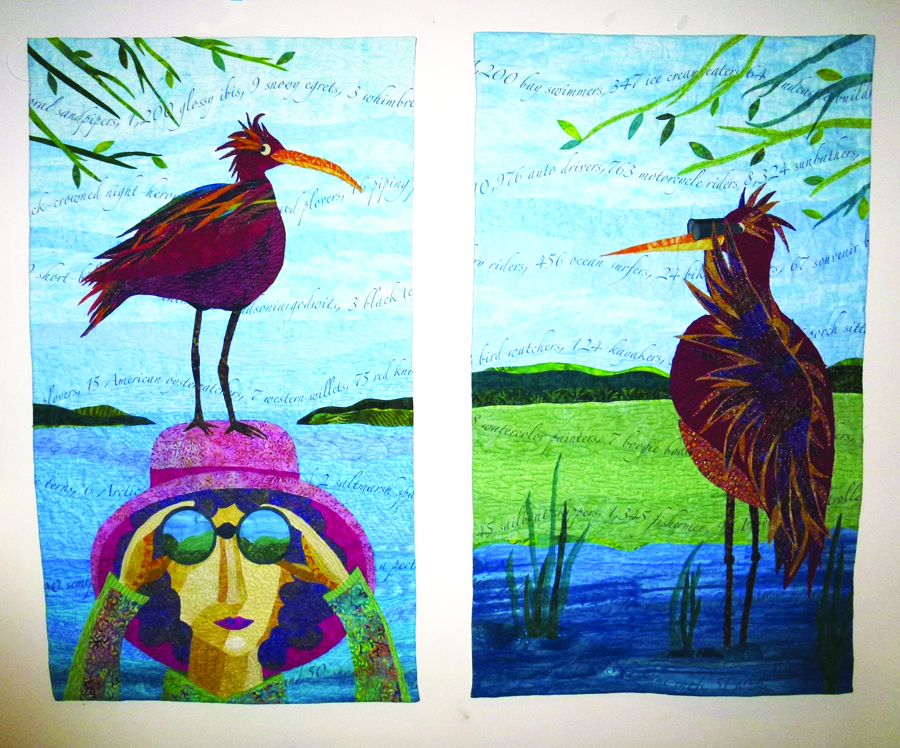
Although I have known Julie Weinstein mostly as a graphic designer, I learned from many conversations over the years that she has experience in a variety of fields. Lately she has been concentrating on quilting.

I went to see the delightful pieces below at the Emerson Community Arts Center’s Earth Month exhibit, “Life on the Edge.” Completely charming. The panels were inspired by seeing birdwatchers and wondering if the birds watch the watchers. In one panel a woman is birdwatching with binoculars. In another, a bird lifts binoculars to study the woman.

The Umbrella website says, “This year’s theme, ‘Life on the Edge,’ invites us to consider those experiences and places where people and habitats intersect. Also called ecotones, liminal or transitional zones, these points of intersection can spawn collaboration, conflict, beauty, chaos, change, and more.” The show is up until May 5. More details here.

Interesting to see the word “liminal” used for the intersection of people and habitats. At Asakiyume’s blog, her literary readers use liminal and the word “interstitial” to refer to places between worlds and ways of being. Like the platforms where Harry Potter catches a train that ordinary people can’t see.

Come to think of it, that is not so different from the intersection of the natural world and the developed one the art show describes. It’s a place where you might see three large wild turkeys sashaying down the middle of a downtown street, as my husband and I did on a recent Sunday morning.

Quilts: Julie Weinstein

julie-weinstein-quilts-sightings-at-Umbrella

Read Full Post »

« Newer Posts - Older Posts »