Feeds:
Posts
Comments

Posts Tagged ‘flower’

Photo: David Becker/Zuma Press Wire/Shutterstock.
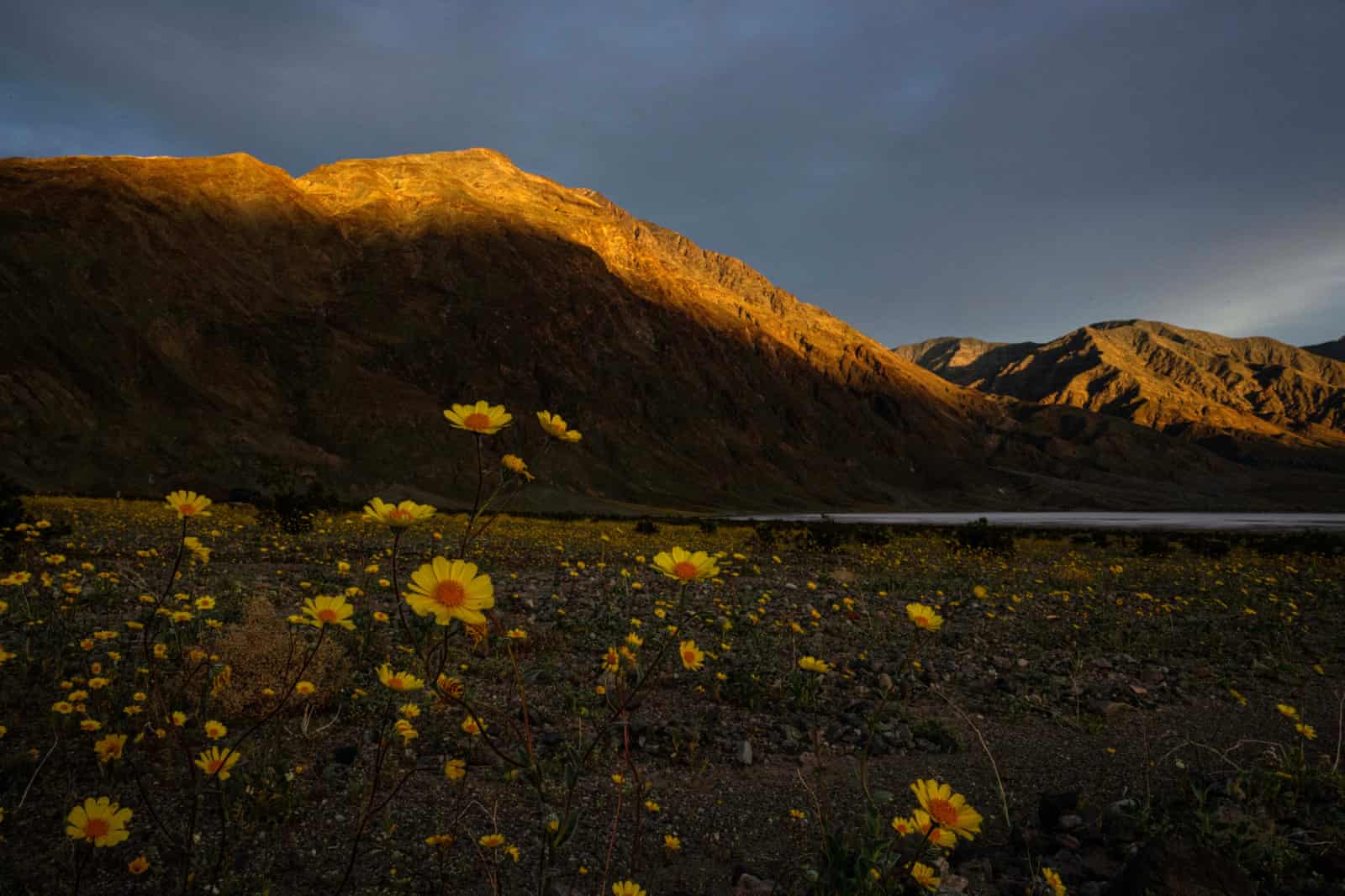
A field of blooming desert sunflowers or desert gold wildflowers are seen as the sun sets on rugged mountains inside Death Valley national park. 

Having recently recently returned to Massachusetts from California, dazzled by the exotic flora there, I find that today’s story about a superbloom in the desert is just what I need to keep feeding my sense of wonder.

According to Wikipedia, “Death Valley [is] in the northern Mojave Desert, bordering the Great Basin Desert. The World Meteorological Organization lists Death Valley as the site of the hottest surface temperature recorded on Earth.

“Death Valley’s Badwater Basin is the point of lowest elevation in North America, at 282 feet (86 m) below sea level. … On the afternoon hours of July 10, 1913, the United States Weather Bureau recorded a temperature of 134 °F (56.7 °C) at Furnace Creek in Death Valley, which stands as the highest ambient air temperature ever recorded on the surface of the Earth. However, this reading and several others taken in that period are disputed by some modern experts.

“Lying mostly in Inyo County, California, near the border of California and Nevada, in the Great Basin, east of the Sierra Nevada mountains, Death Valley constitutes much of Death Valley National Park and is the principal feature of the Mojave and Colorado Deserts Biosphere Reserve. It runs from north to south between the Amargosa Range on the east and the Panamint Range on the west. The Grapevine Mountains and the Owlshead Mountains form its northern and southern boundaries, respectively. …

“Death Valley is home to the Timbisha tribe of Native Americans, formerly known as the Panamint Shoshone. They have inhabited the valley for at least the past millennium. Their name for Death Valley is Tümpisa, meaning ‘rock paint.’ This refers to the presence of red ochre in the valley.

“The valley got the name Death Valley in the winter of 1849–1850 when a group of American pioneers were traveling through on their way to the California gold rush. The Death Valley 49ers got lost in the valley and feared that they would all perish there. They did eventually make their way out after suffering the loss of just one of the group.”

Now that I’ve filled you with dread, let me turn to the story by Sara Braun at the Guardian about the rare and thrilling superbloom in Death Valley this year.

“After a winter of record rainfall, a superbloom has erupted in Death Valley, covering the famously arid desert in a blanket of vibrant pink, purple and yellow flowers. As travelers from around the world make their way to the desert, they can expect to be greeted by fragrant air and a quilt of delicate hues.

“While there is no official definition for a superbloom, the National Park Service uses the term to ‘describe conditions when so many flowers are present that they appear as swaths of color across the landscape, rather than isolated plants, especially striking at low elevations where the ground is typically sand, gravel and rock.’

“The park last experienced a superbloom in 2016, which can only occur in ‘perfect conditions,’ with ‘well-spaced rainfall’ and mild temperatures.

“The National Park Service said that low-elevation flowers would continue blooming until mid- to late March, depending on the weather.

Higher elevations will experience blooms in April through June.

“Time is of the essence to catch a glimpse of the superbloom, so if tourists can get there in time, they should keep an eye out for some of the most commonly occurring (and eye-catching) flowers: desert gold, brown-eyed evening primrose, golden evening primrose, phacelia and mojave poppy, to name a few.”

More at the Guardian, here. See also Wikipedia, here.

Somehow, the idea that a barren desert can turn lush and fragrant after a ten-year dry spell makes me feel encouraged about the possibility of change in other realms.

Read Full Post »

Photo: Susan Bryant
The Night-Blooming Cereus blooms at night once a year. Be there when it happens.

In the same way that the sun shines on the keyhole to Smaug’s lair only once a generation — or through Suzanne’s fence and onto the stonewall only twice a year — the lovely Night-Blooming Cereus has its own moment in time, and it’s worth planning your life around it.

Margaret Renkl writes at the New York Times, “For decades, my grandmother was the caretaker of a gangly, disorganized houseplant with nothing, so far as I could see, to recommend it. The plant was ugly. … It was less a plant than something out of a nightmare. As a little girl, I thought it might bite me.

“When the evenings began to cool in early autumn, my grandmother would bring the plant indoors, set it on a table next to the fireplace, and wait hopefully for it to bloom. She called it her ‘night-blooming series.’

“It was years before I understood that the scary plant in my grandparents’ house was actually a night-blooming cereus, a catchall term for several varieties of cactus that bloom at night — often for only one night each year. That’s if it blooms at all: My grandmother’s ‘series’ apparently bloomed only once in all the decades she had it. There are just two pictures of it in full flower, and they were taken on the same night sometime during the 1960s. …

“My cutting came from my brother and sister-in-law’s plant, a proven bloomer, but it has never formed a single bud under my care.

“[In September], my brother texted a photo of the bud he’d discovered on his plant. ‘It might bloom tonight!’ he wrote. ‘I looked in my garden journal, and it was fully open by 8 p.m. in 2014.’ … So I got in the car and drove straight to his house in Clarksville, more than 50 miles from here [Nashville], stopping only for gas. With a night-blooming cereus, the transformation from bud to blossom can take less than an hour. …

“I recognize the irony: There I was, driving through a parched landscape with a full tank of gas, on a pilgrimage to do nothing more than watch a flower bloom, while the hot winds from the 18-wheelers shook my whole car as they passed.

“I am only one generation removed from the farm, and I spent much of my childhood in the very world where my mother grew up, the same one where my grandmother grew up, and my great-grandmother before her, going back farther than anyone could remember. …

“Today only 2 percent of Americans live on farms or ranches, but we have not lost our need to be among green things. Which may explain why friends and neighbors were already hurrying to my brother and sister-in-law’s house by the time I got to Clarksville, and why we all gathered together in their living room to wait for the miraculous event to unfold. The plant’s single bud, which spanned the full length of my hand, was clearly in no hurry to open, pink filaments still tightly ribbing it from stem to tip an hour after we arrived.

‘It’s like counting contractions, waiting for a baby to be born,’ someone said.

“Then, finally, the bud began to open, at first just one tiny aperture at the very end. The pink filaments began to loosen and lift. As the aperture widened, a star-shaped structure unfolded within it — a white star inside a white flower — and the translucent petals unlayered and arrayed themselves around the star. The flower was nine inches across fully opened, and its perfume filled the whole room with sweetness. It was not a nightmare plant at all. It was the flower of dreams. It would be gone by morning, not to return for another year. If then. …

“That night-blooming cereus brought my grandmother back to me in her halo of white hair. It brought back, too, her plum tree, long since cut down, and the feeling of red dirt between my toes. In a time of great cultural dislocation and environmental despair, for an hour it made me remember what it feels like when the world is exactly as it must be, and I am exactly where I belong.”

More at the New York Times, here.

Read Full Post »

WP_20160826_07_16_07_Pro
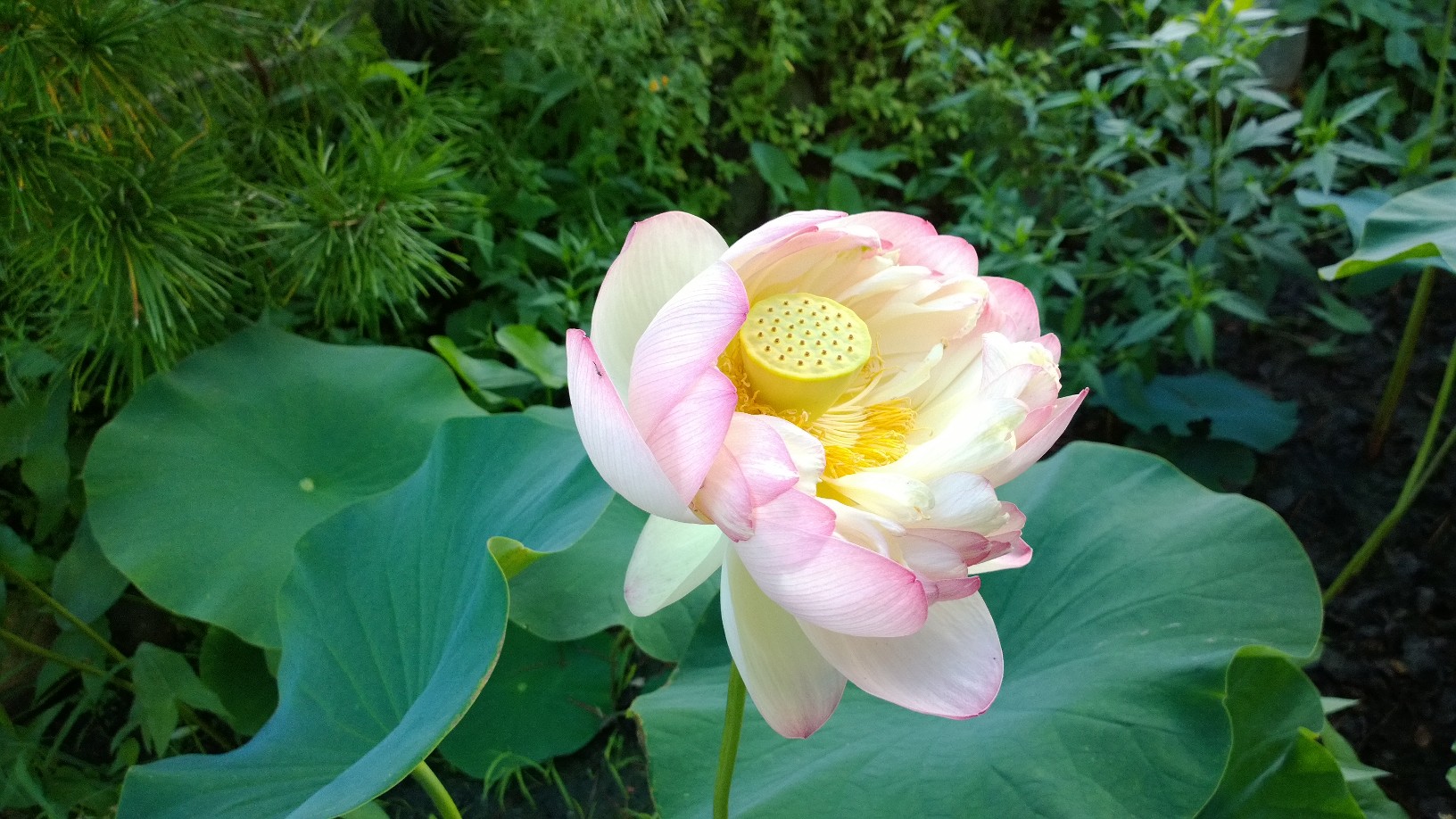
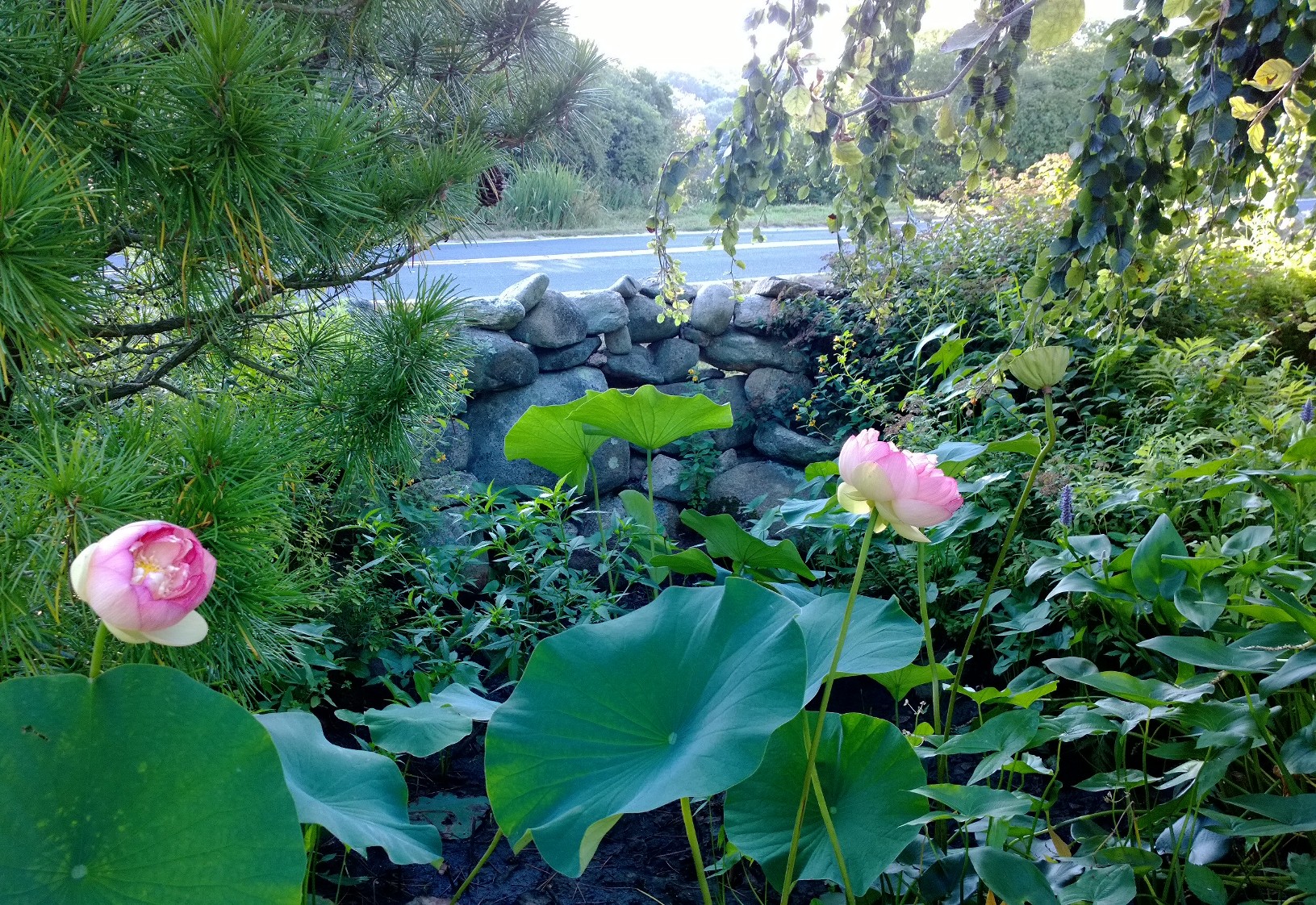
Sandra and I have been keeping an eye on a neighbor’s lotus all week, hoping to see it bloom. Today was the day. Above is what the lotus looked like at 7:30 a.m. Below is the lotus at 8 a.m., at the end of our walk.

This exciting development sent me to the Tennyson poem about Odysseus landing on the island of lotus eaters. I don’t think I had ever read the whole thing. Here are excerpts.

A land where all things always seem’d the same!
And round about the keel with faces pale,
Dark faces pale against that rosy flame,
The mild-eyed melancholy Lotos-eaters came.

Branches they bore of that enchanted stem,
Laden with flower and fruit, whereof they gave
To each, but whoso did receive of them,
And taste, to him the gushing of the wave
Far far away did seem to mourn and rave
On alien shores; and if his fellow spake,
His voice was thin, as voices from the grave;
And deep-asleep he seem’d, yet all awake,
And music in his ears his beating heart did make. …

Surely, surely, slumber is more sweet than toil, the shore
Than labour in the deep mid-ocean, wind and wave and oar;
O, rest ye, brother mariners, we will not wander more.

I’d say that’s an early example of an altered state.

According to wikipedia, however, our lotus is Nelumbo nucifera, whereas the one that hooked the Greek mariners was probably Ziziphus lotus, which doesn’t look nearly as pretty.

Sandra was interested in the showerhead-like seed pod. If you get close, you can see a blue-ish seed peeking out of every hole.

And what amazing seeds they are! As the invaluable wikipedia reveals, “An individual lotus can live for over a thousand years and has the rare ability to revive into activity after stasis. In 1994, a seed from a sacred lotus [in Northeastern China], dated at roughly 1,300 years old ± 270 years, was successfully germinated.”

WP_20160826_07_56_21_Pro

Read Full Post »

inside-the-lotus


Inside my neighbor’s lotus flower is something that looks like a shower head. I think I will make a new year’s resolution on it (the school year, say): “Because you can never imagine what’s inside the lotus, try to be alert to the subtext.”

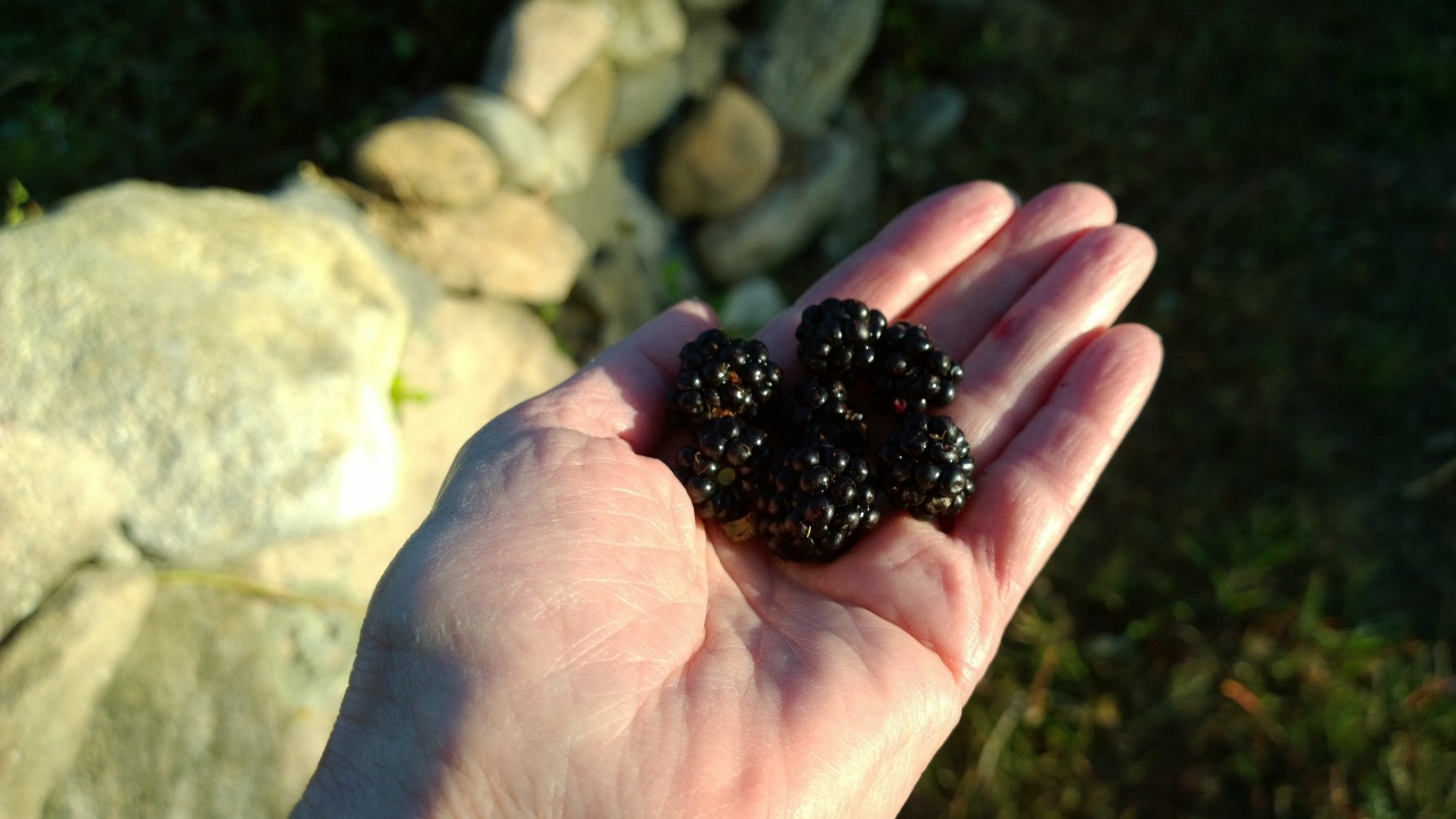
blackberries-by-the-wall

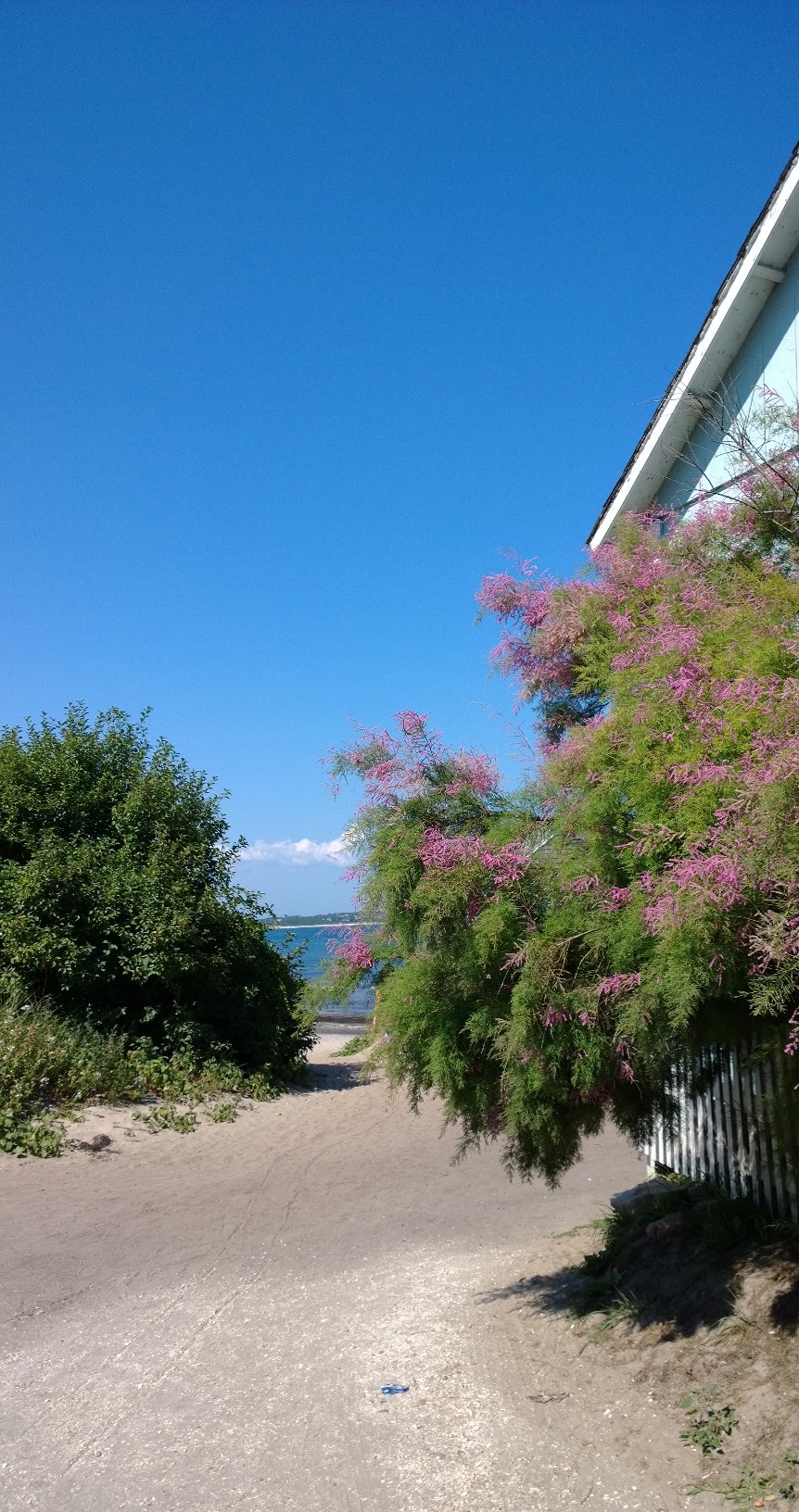
fluffy-bush-by-the-sea


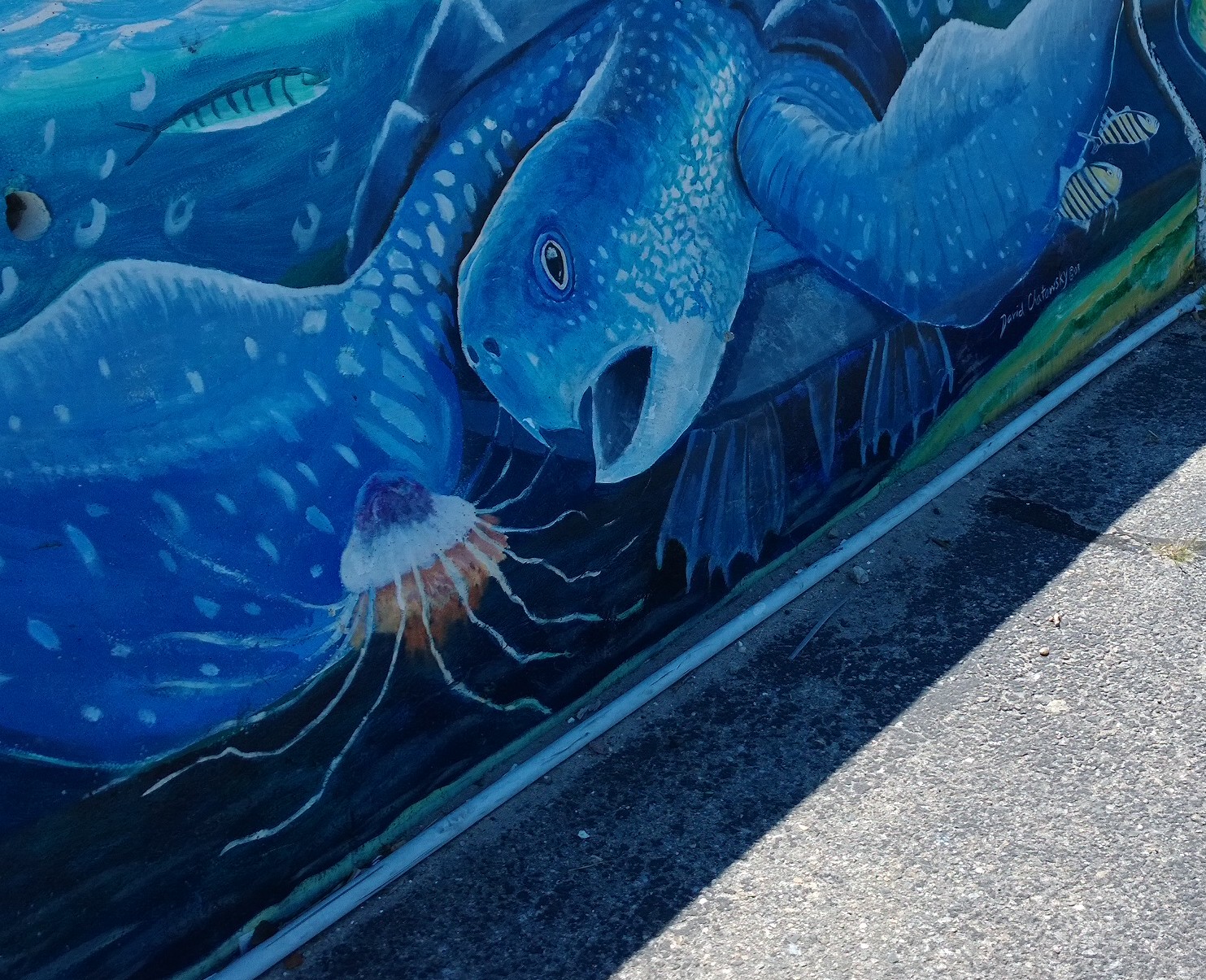
parking-lot-fish-mural

catch-the-jellyfish


flowers-and-fence-082614

long-shadow-at-beach


lotus down-the-street-bloomed-082814


Read Full Post »

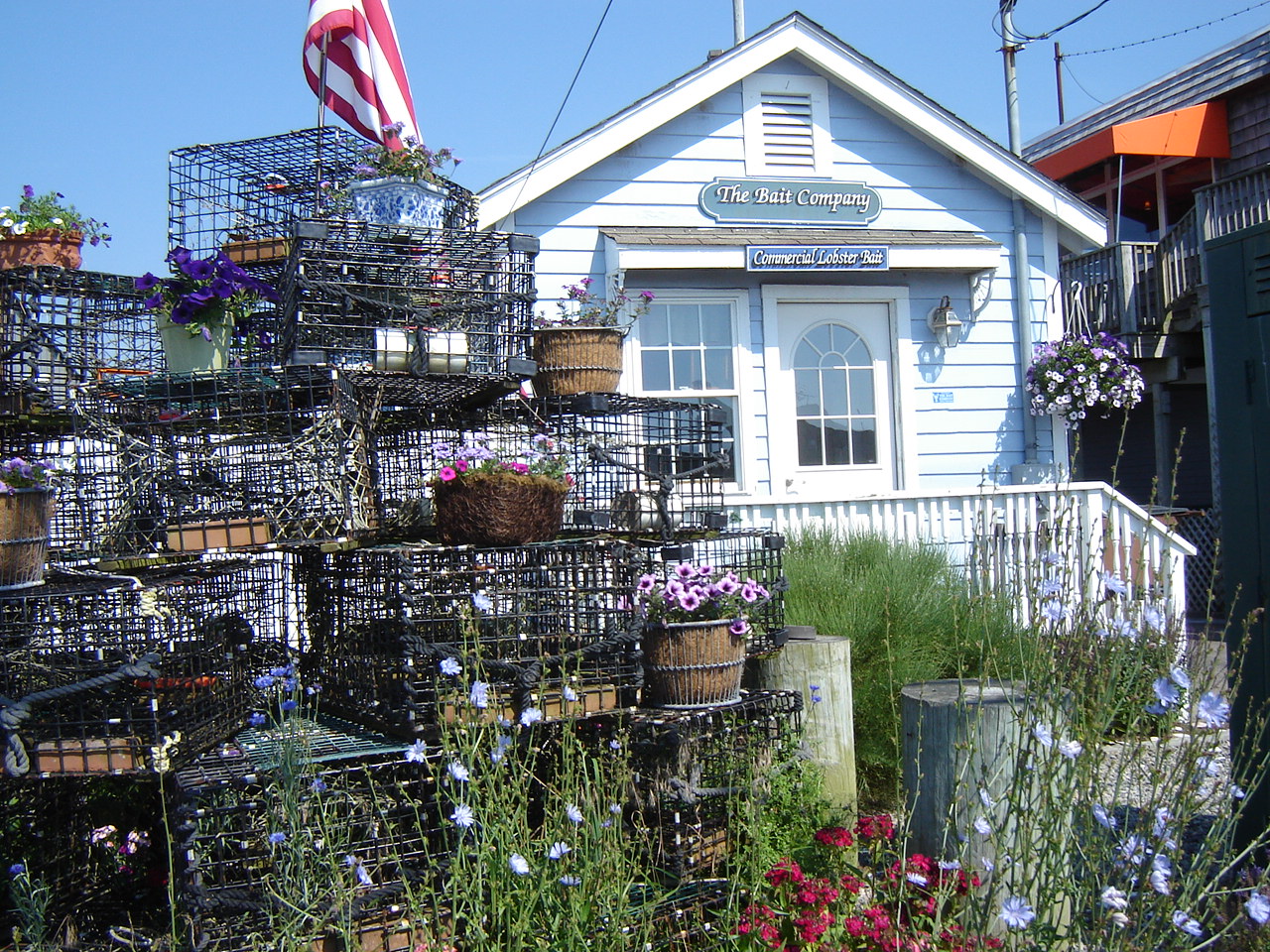
In case you find yourself with too many lobster pots, consider this approach, suitably embellished with the U.S. flag for the Glorious Fourth. (If you don’t live in the U.S., you could skip the flag.)

There is quite a variety of flowers here. The blue ones on tall stems in the front are called chicory by most people but Ragged Sailor in Rhode Island.

If you have any creative ways you have retired your own lobster posts, do leave a comment.

Read Full Post »