Feeds:
Posts
Comments

Posts Tagged ‘garden’

In a recent post, we described homes being made out of shipping containers. But an architect friend cautioned that it’s not easy to get all the permits for something like that, asking, “How many how many people do you know who would welcome a container home in their neighborhood?”

Well, here’s a story about shipping containers recycled for something that might be more manageable.

Yvonne Abraham writes at the Boston Globe, “On a blah gravel lot in East Boston sits an especially cool example of the human ability to invent and adapt. Spend enough time here, and even the most dedicated pessimist might feel hopeful about the future.

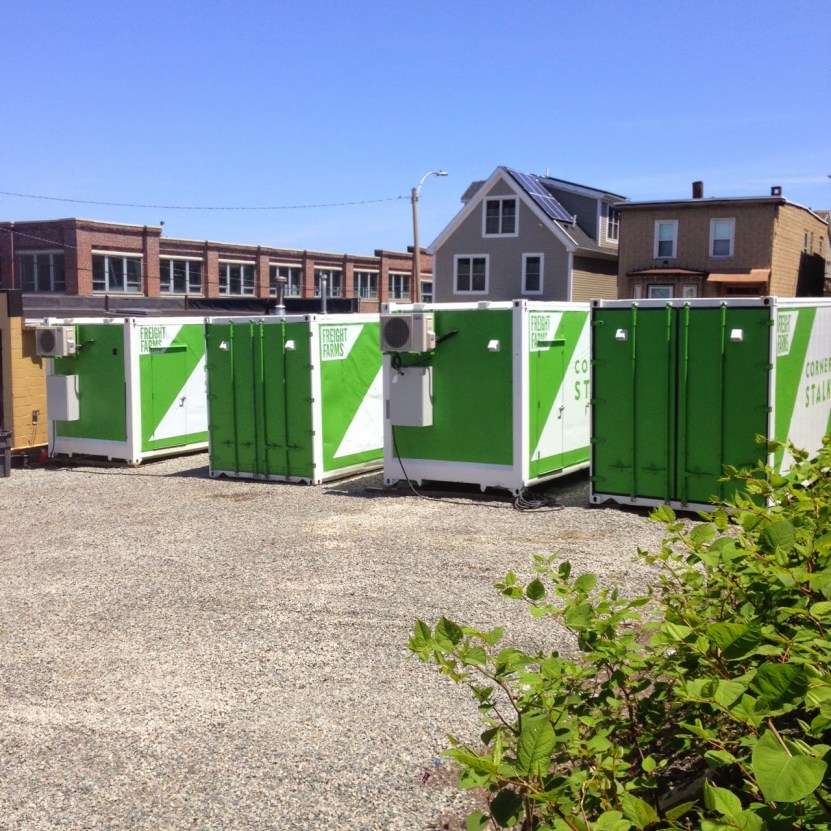
“It’s not much to look at from the outside: four recycled freight containers, painted a friendly shade of green, sharing a patch of land with some trucks at the base of Eagle Hill.

“But inside those containers, it’s spectacular. Disco-lit by thin ribbons of red and blue LED lights, all manner of leafy greens grow in long PVC planters that hang from the ceiling in tight rows. The hydroponic plants are watered and fed by an ingenious, and remarkably efficient, irrigation system. Lush and bursting with flavor, they’re neatly harvested in seconds and then it’s on to restaurants all over the city.

“These containers — which make up an operation owners Connie and Shawn Cooney have named Corner Stalk — hold the equivalent of a four-acre farm. The Marblehead couple came to farming just a couple of years ago. Connie, 63, taught in public schools for 35 years, and Shawn, 61, was a tech entrepreneur. …

“They both wanted to try something new, and they believed in what the guys who make the containers — Boston-based Freight Farms — are doing: creating computer-controlled environments that can grow produce year round, anywhere where there’s electricity and a water supply.” Read how the business grew — and where it’s headed — at the Boston Globe.

Photo: http://www.CornerStalk.com
Read Full Post »

giant-sandbox-at-playscape

gluing-nature-collage

slide-at-Ripley-Playscape

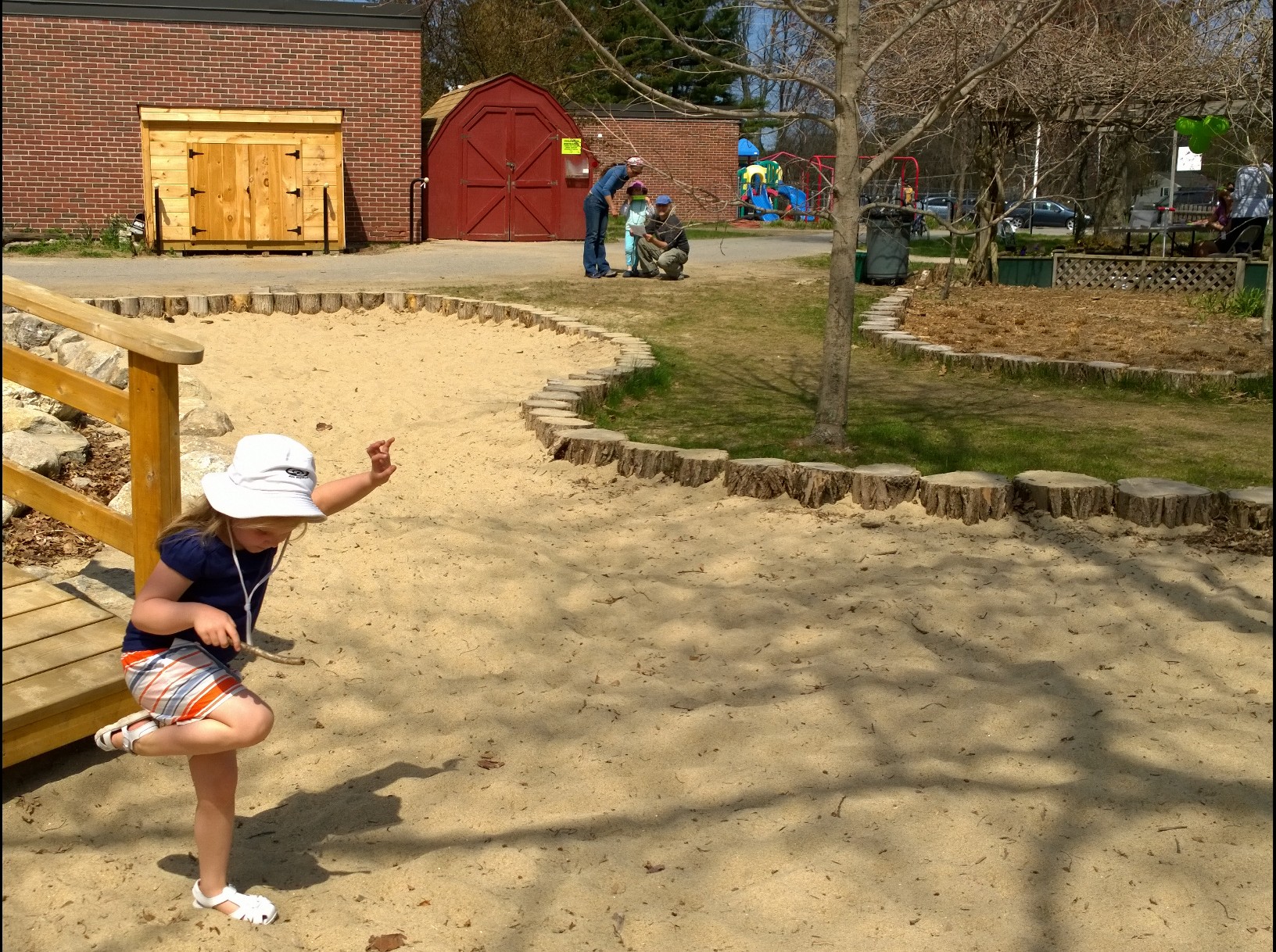
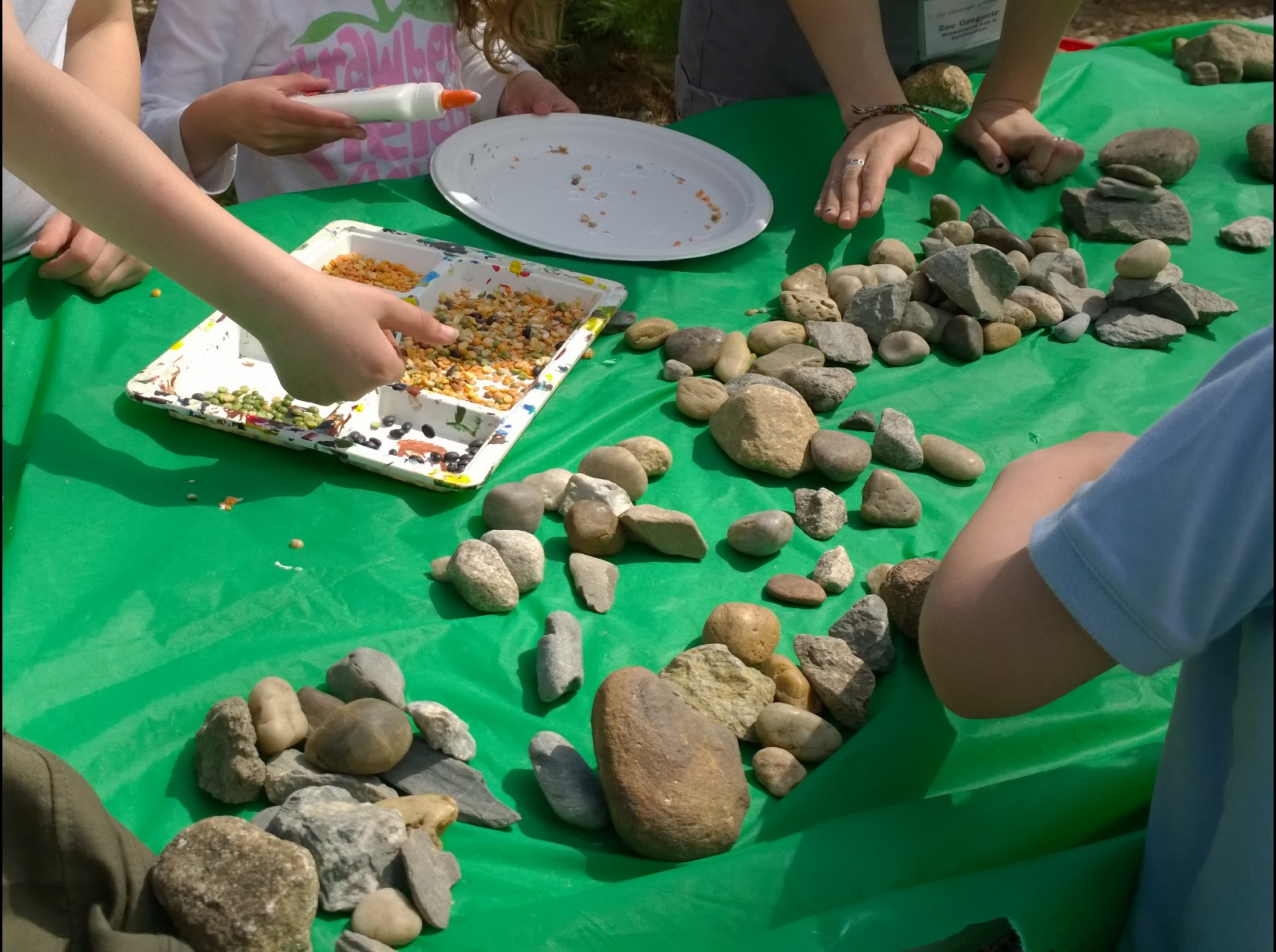
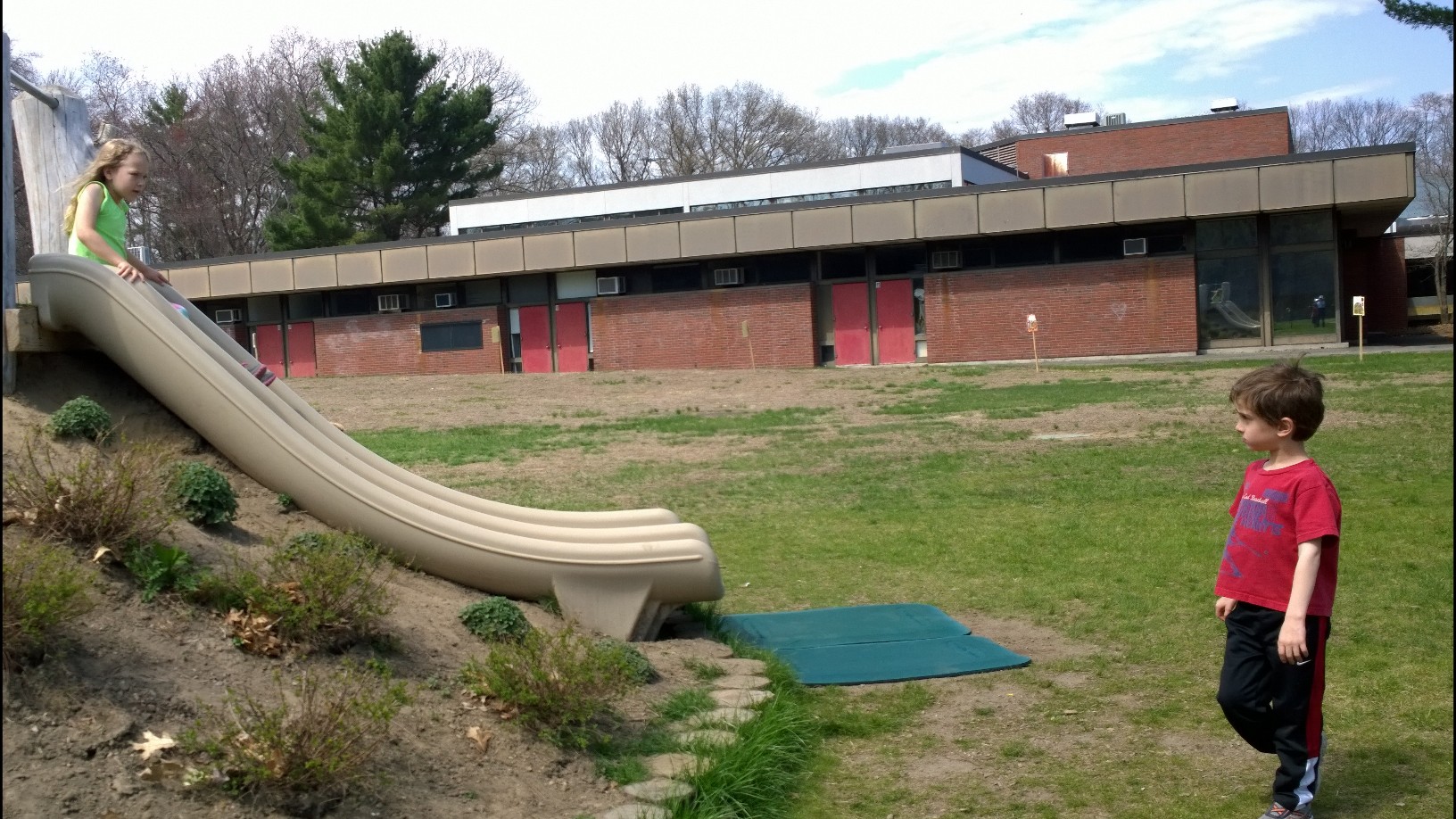
I wrote about the early stages of the Playscape at the Ripley School three years ago, here. The idea of the playscape was to incorporate nature activities into a playground. An open house was held last Sunday, and I saw lots of children, parents, and grandparents checking it out.

Perhaps because it was early in the season, perhaps because an open house seems to call for planned activities, it was hard to see if there were enough attractions available for exploring nature on quieter days. Of course, I grew up on the edge of an orchard, a forest, and a mountain, and no one told us kids how to have fun there. Anything less in nature play seems sparse.

One thing I liked was not really an interaction with nature except that you had to walk through a field to engage. It was the story walk for Lynne Cherry’s picture book on a groundhog who learns to make his own garden rather than help himself to other people’s. The laminated page spreads on posts around the field were charming and had lots of useful details about plants and seeds.

A gardening friend on my commuter train was very glad to hear the groundhog learned to grow his own food and leave hers alone.

Read Full Post »

Did you ever see tiny, straw-colored objects like the plant called Japanese Lantern at a farmers market and think, “What the heck?” I have. But I would pass them by incuriously, assuming they weren’t edible. They are husk tomatoes.

Turns out my train buddy Kathy grows them. One day this week she surprised me with a little bag of them. She said, “You just squeeze the husk and pop the little tomato into your mouth.”

The taste was sublime. Very sweet. But unlike any tomato or anything else I’ve had before. John thought they looked like a snack his family ate in Egypt, but my daughter-in-law said that was not the same. My grandson liked the idea of popping the tomato out of the husk for me.

That reminded me of car trips when John and Suzanne were little and how my niece said she could always recognize our car because the back seat was full of peanut shells. Husking peanuts was a reliable car-trip occupation for years.

Read more about husk tomatoes (also called ground cherries) here. I’m going to a farmers market Sunday, and if I see any husk tomatoes, I’m going to buy them.

Read Full Post »

When I said I was taking my laptop on vacation, Bob urged me to forget about work and release my “inner Frenchman.”

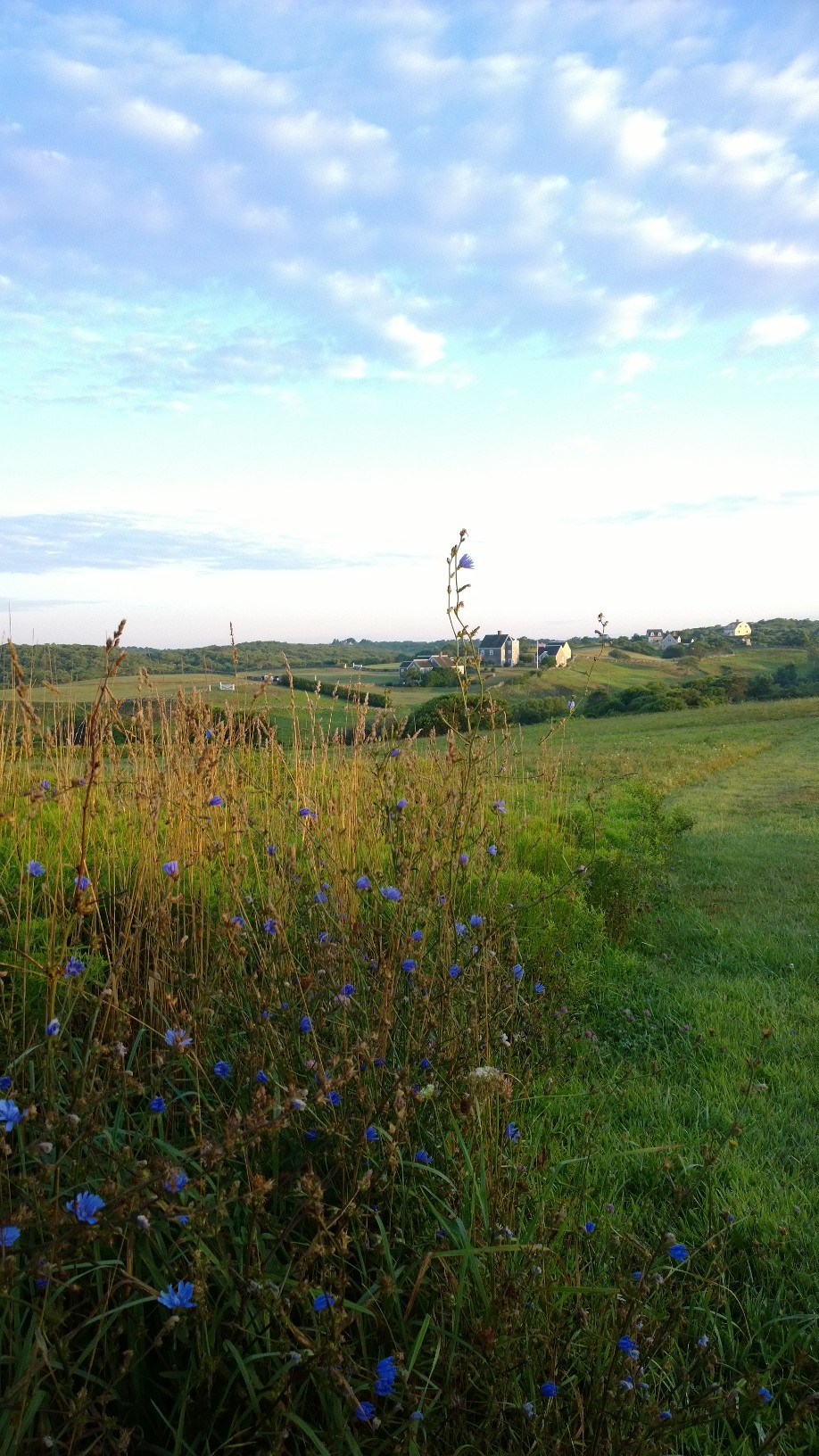
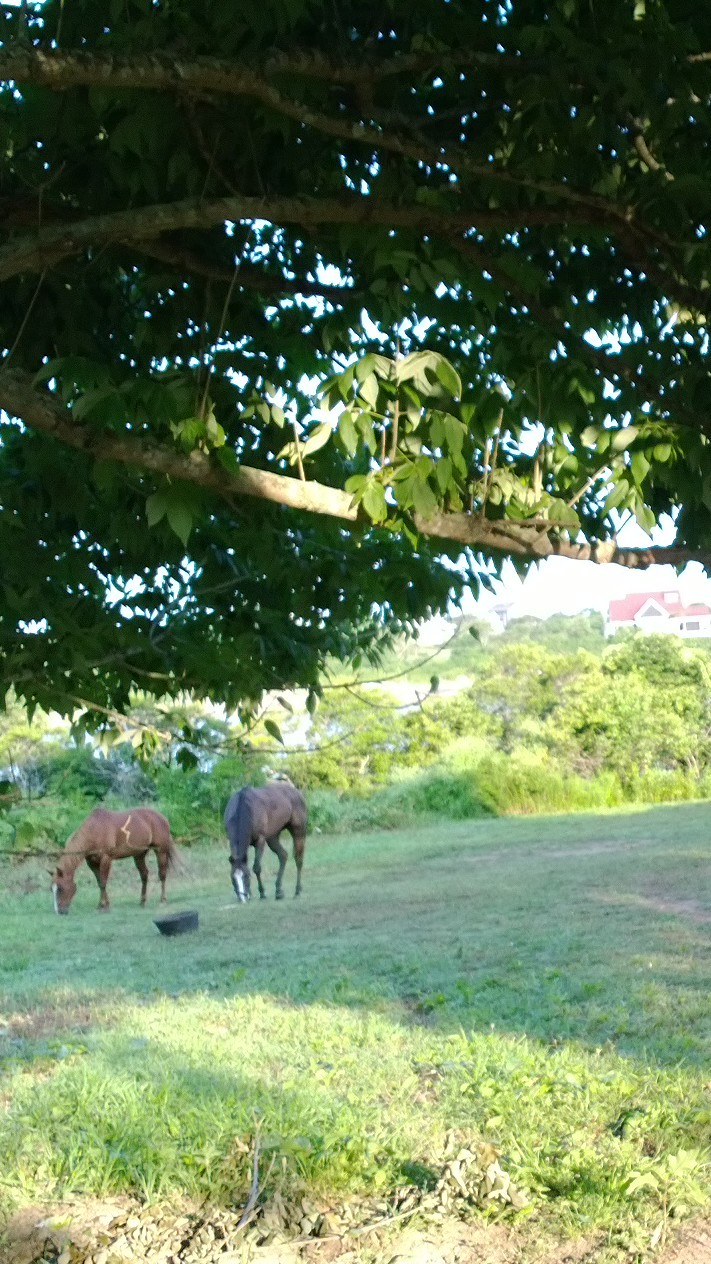
Well, my inner Frenchman is having a field day as I have a couple days without work and before the family returns to the island. I wouldn’t like it all the time, but for a brief spate, it’s nice to just take pictures and naps, read an Eliot Pattison mystery about the French and Indian War, and plan lunch with friends. The days are sunny, the evenings may feature an art opening.

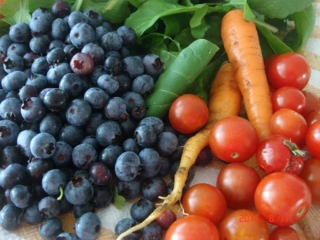
(Wish I could say the beautiful produce is mine, but it’s Sandy’s and Pat’s, from their garden.)

at-the-art-gallery


sedges-have-edges


ragged-sailor-view


two-horses-early-morning


yellow-highlight


Read Full Post »

Ron Finley is a man of humble ambitions. He aims to save the planet, beginning with urban gardeners. I heard an interview with him on America’s Test Kitchen as I was driving home today.

From his website: “Let’s grow this seed of urban guerrilla gardening into a school of nourishment and change. Help spread his dream of edible gardens, one city at a time. …

“In part of this effort, Ron is planning to build an urban garden in South Central LA that will serve as an example of a well-balanced, fruit-and-veggie oasis – called ‘HQ.’ Inspired by the idea of turning unused space such as parkways and vacant lots into fruitful endeavors, this garden and gathering place will be a community hub, where people learn about nutrition and join together to plant, work and unwind. HQ will create a myriad of jobs for local residents, and this plot of land will be a self-sufficient ecosystem.”

It all started, according to Ron, when he “wanted a carrot without toxic ingredients I didn’t know how to spell.” He began to plant food near his house, on a strip by a road.

“The City of Los Angeles owns the ‘parkways,’ the neglected dirt areas next to roads where Ron was planting. He was cited for gardening without a permit.”

After Ron “started a petition with fellow green activists, demanding the right to garden and grow food in his neighborhood … the city backed off.” More here.

When asked on America’s Test Kitchen if his gardens were not just about obesity and healthful eating but also about making neighborhoods more livable, Ron said he wanted to do that for the whole planet.

Read Full Post »

Weather like this is a reminder that simple pleasures are often the best.

A great blue heron flying over Thoreau Street. Buying three Vietnamese fresh rolls and chai tea after tai chi class. Listening to the smart Hillbilly at Harvard program in the car. Sitting on the porch dipping crackers into the famous guacamole from the shop around the corner. Reading in the bath the first Martin Beck mystery by the Swedish partners Maj Sjöwall and Per Wahlöö.

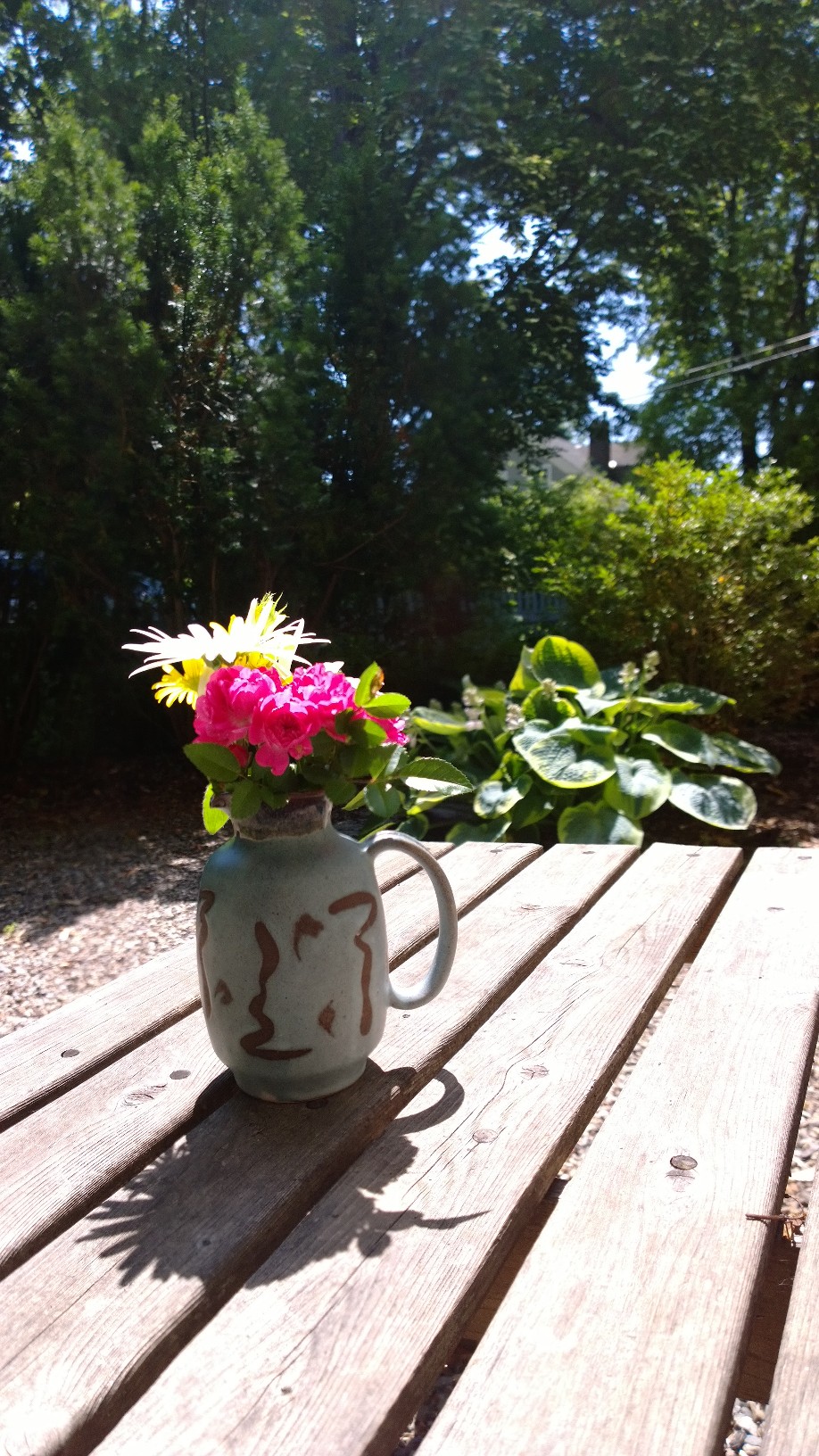
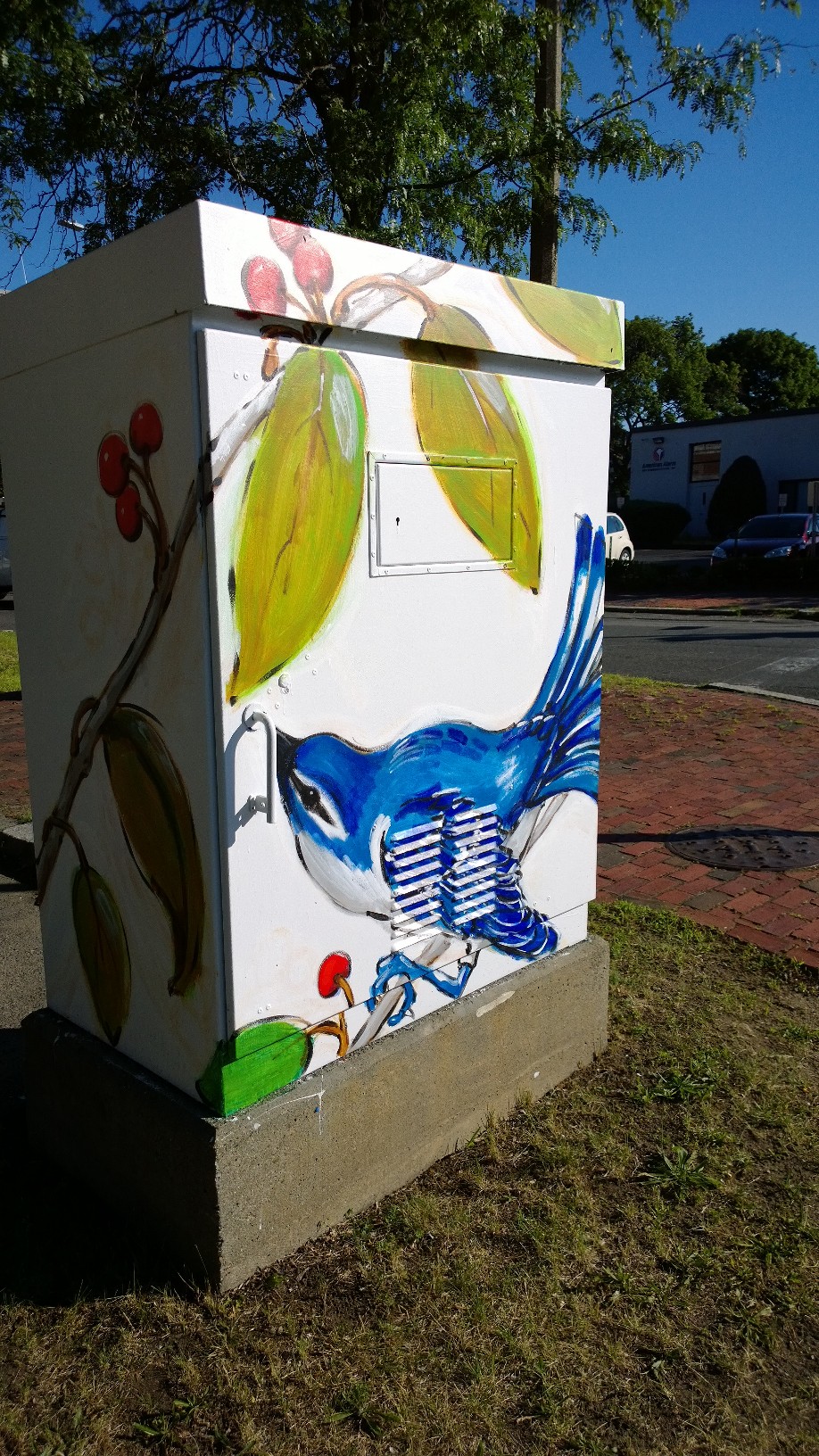
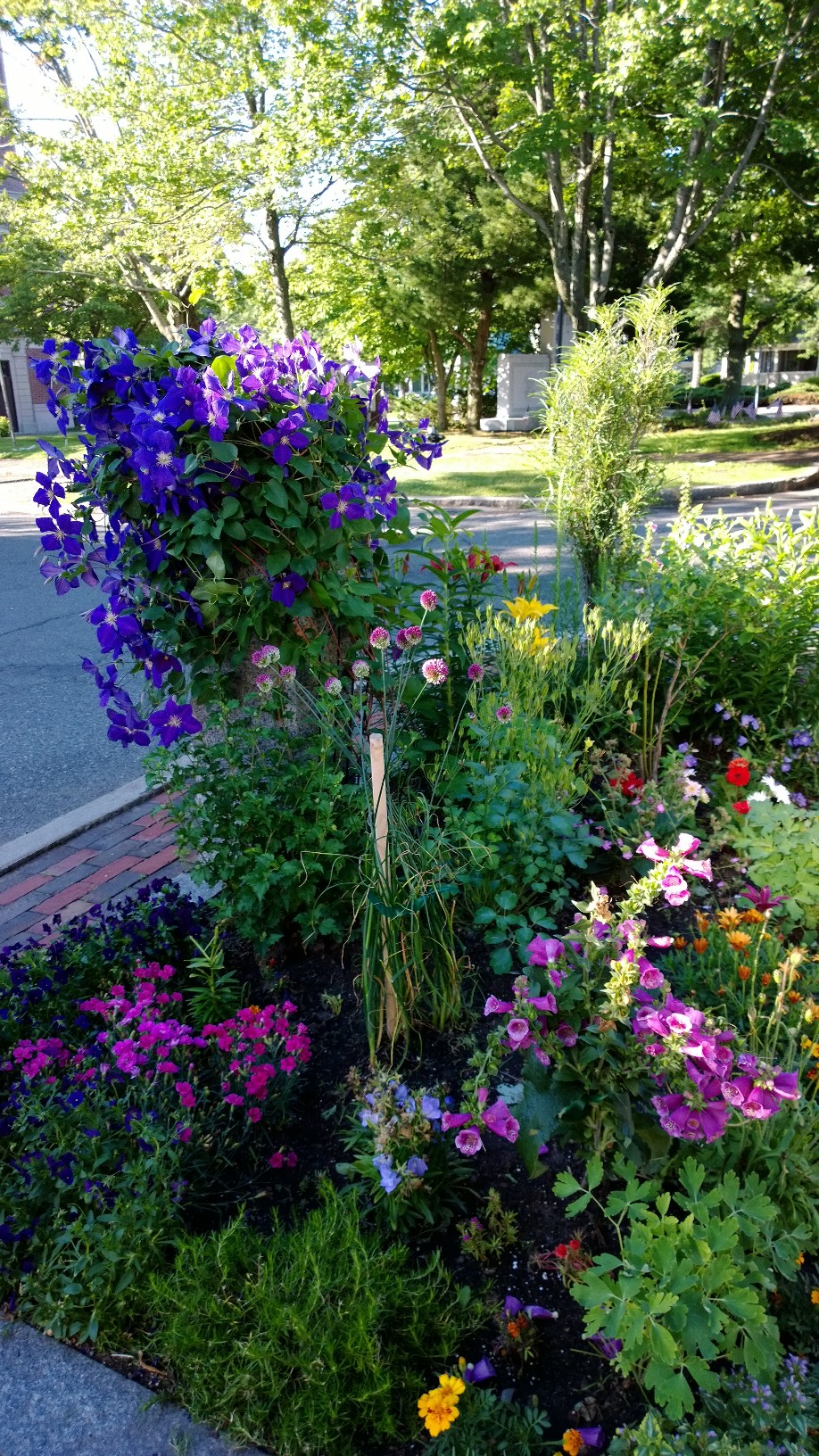
The pictures show flowers from the yard in a pitcher made by our engineer/potter friend, a bird painted on a utility box, and the garden maintained by the tai chi teacher and his youth classes. He says the care taken with the flowers is the kind of care the school devotes to students.

062714-backyard-bouquet


bird-on-utility-box


zen-ren-chuan-garden


Read Full Post »

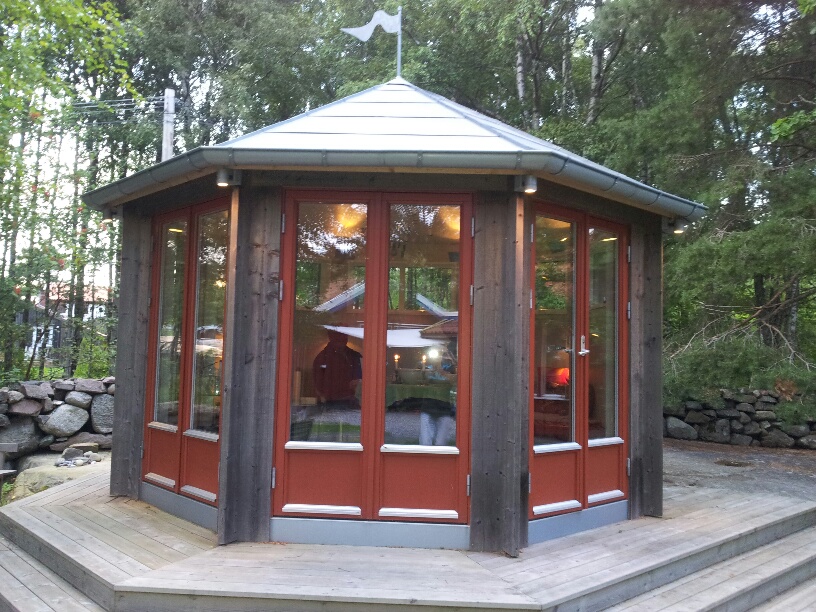
Margareta suggests that dinner in the lusthus might make a nice post.

Google Translate informs me that a “lusthus” is a “gazebo.” If you break it into two words, it’s “desire house.” I will ask Erik to explain more about that.

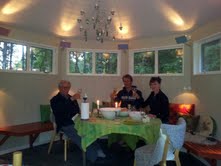
Judging from the light and the absence of high chairs, the folks are having a late dinner, after the young laird has retired for the evening. Everyone looks relaxed. I think it is a kind of shrimp they are eating.

lusthus

something-like-shrimp

garden-thru-the-window

calm-dining

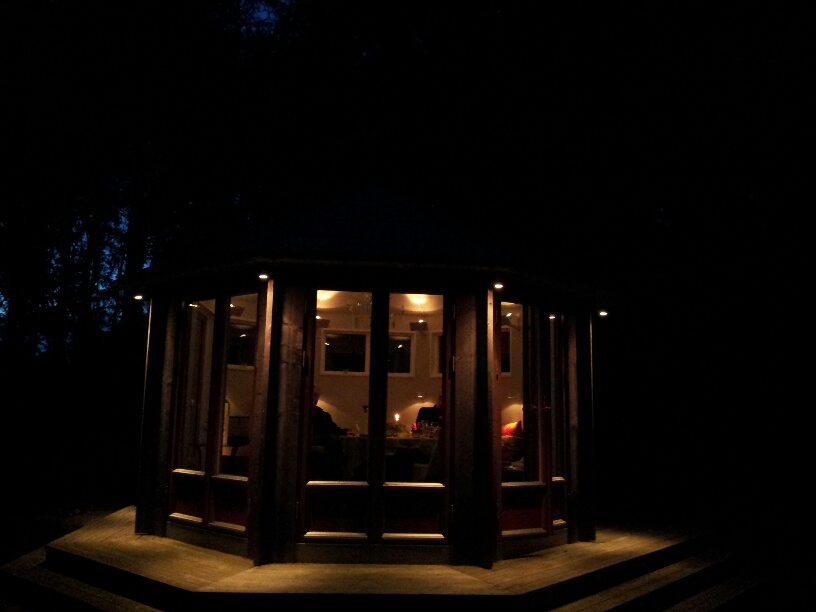
nighttime-gazebo

Read Full Post »

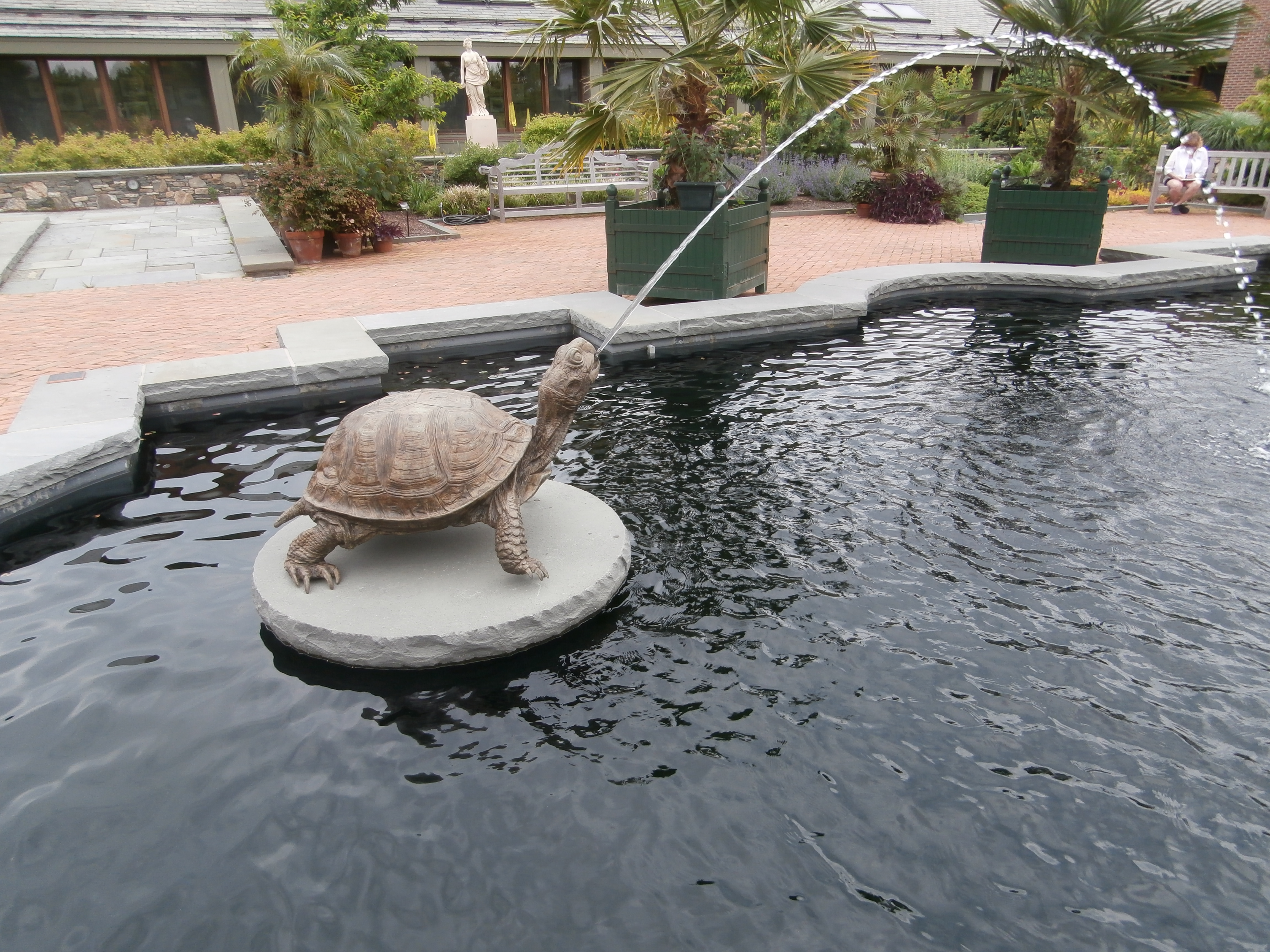
My husband suggested we go to Worcester County Horticultural Society’s Tower Hill Botanic Garden today. When we got there, we learned that this weekend, the admission is free for fathers.

All the flowers and trees have labels, so it’s another way to get your plants identified (besides MisterSmartyPlants). There were lots of plants. Lots of families, too. A curious thing: In spite of the crowds and the absence of trash cans, I did not see one single piece of litter.

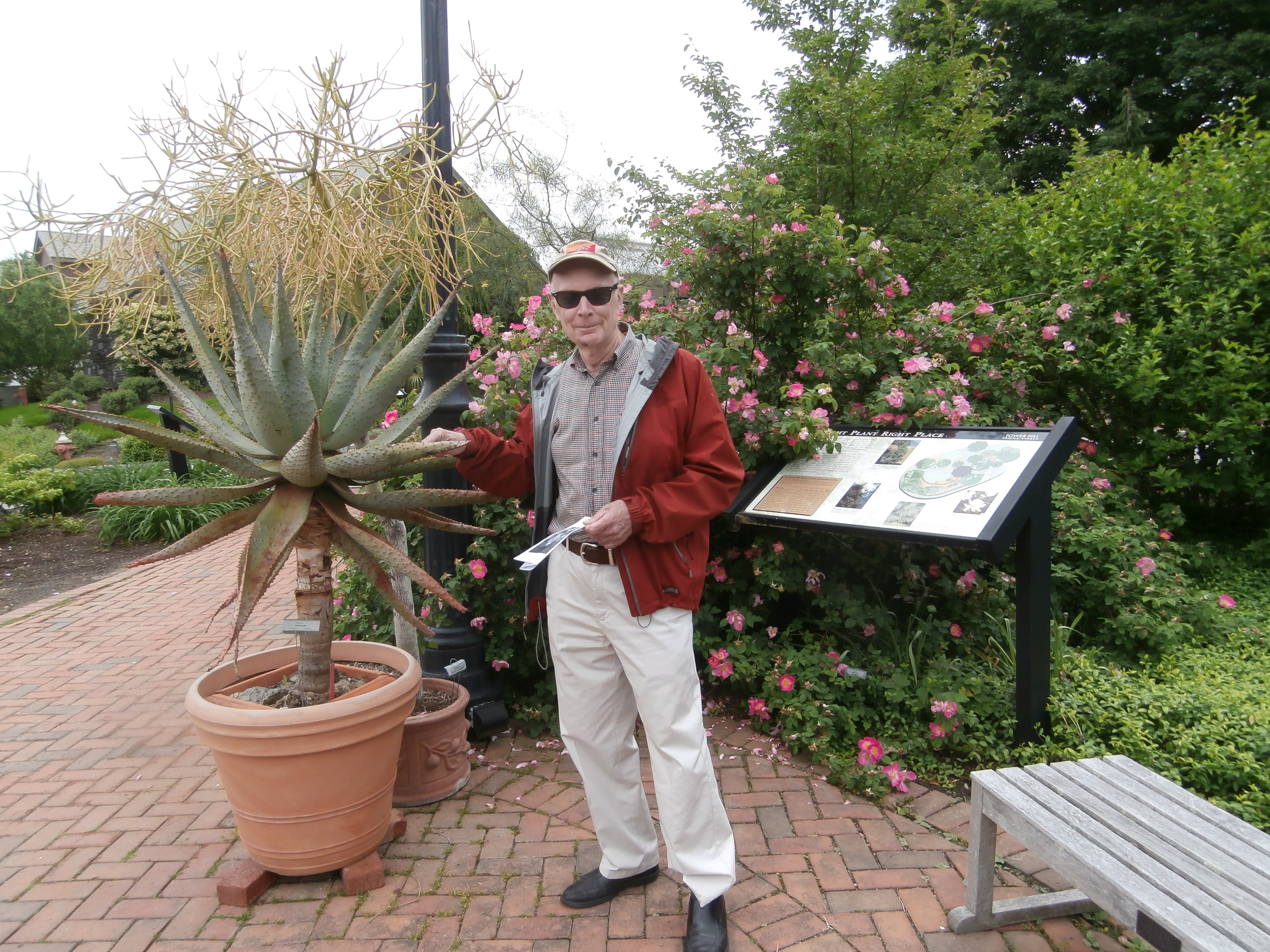
My husband chose to pose by a large aloe. Borrowing a line from A Raisin in the Sun, he said the aloe “expresses me”: prickly and healing. 🙂

grandpa-with-aloe

morfar-gets-greetings

tower-hill-fountain

tower-hill-tortoise

tower-hill-hippo

tower-hill-dad-day

Read Full Post »

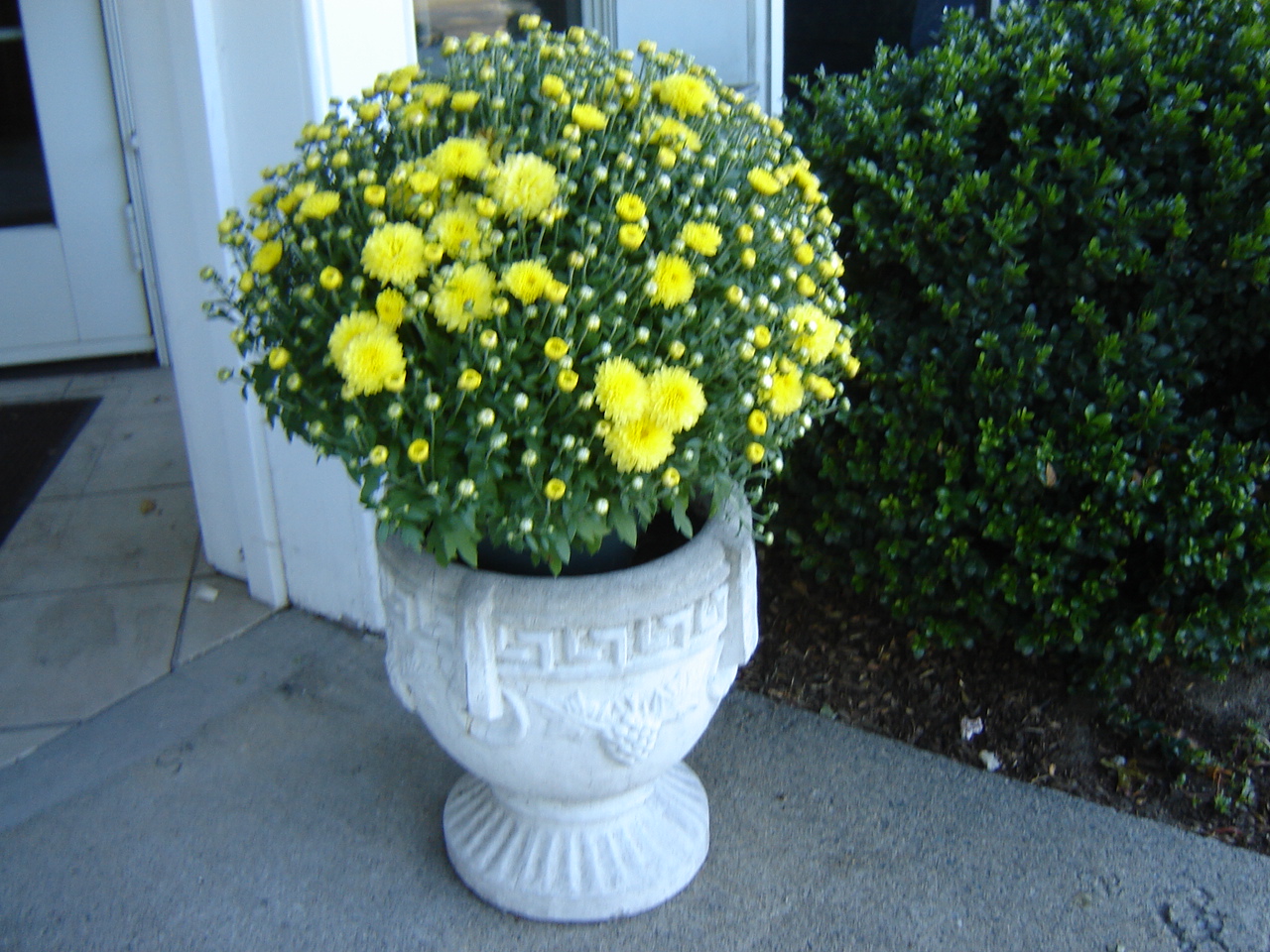
Although I have always bought chrysanthemums in the fall and put them out on the front stoop like everyone else, this year I decided I was tired of them.

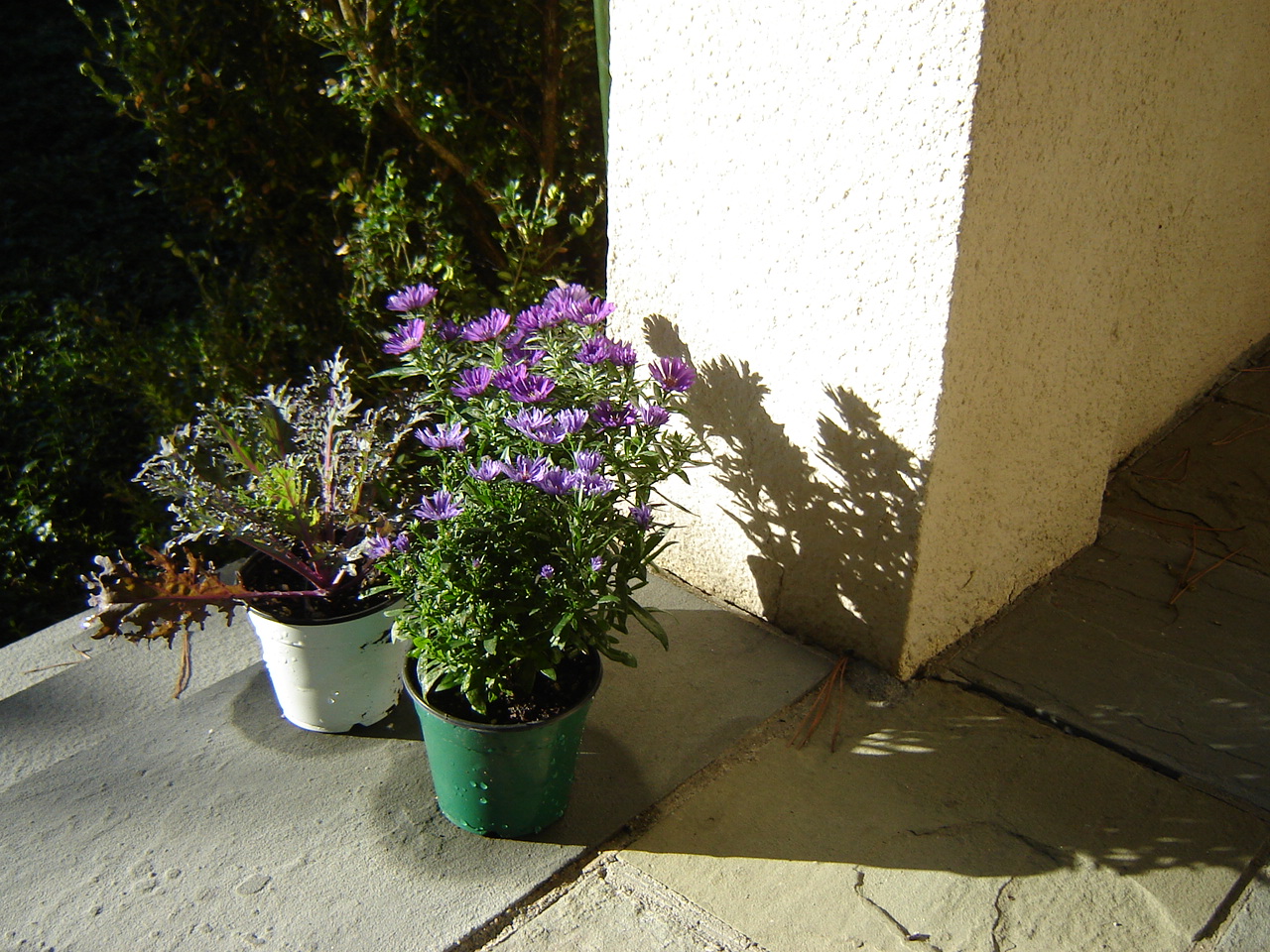
I consulted a woman who gardens, someone I see on the commuter train. She said, “How about asters? How about kale?”

So that’s what I’m doing this year. I need a few more, though, because my neighbors’ chrysanthemums do look more substantial.

In coming down rather hard on chrysanthemums, I am reminded of the A.A. Milne poem about the dormouse. Do you remember?

The dormouse’s favorite thing was to lie in bed of delphiniums (blue) and geraniums (red). But a doctor and a team of experts decided the dormouse was sick, sleeping too much. The doctor prescribed chrysanthemums (yellow and white).

The self-effacing dormouse says wistfully, “I suppose all these people know better than I.” He lets them have their way and they tear up his beloved delphiniums (blue) and geraniums (red) and plant chrysanthemums (yellow and white). The dormouse comes up with his own solution.

“The Dormouse lay there with his paws to his eyes,
“And imagined himself such a pleasant surprise:
” ‘I’ll pretend the chrysanthemums turn to a bed
Of delphiniums (blue) and geraniums (red)!’ ”

Read Full Post »

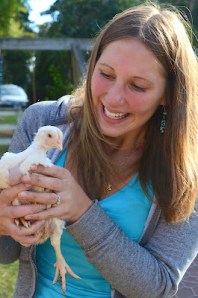
My friend’s great niece doesn’t come from professional farmers, but the gardening gene goes back at least to her Italian great grandfather. Now, having graduated from a liberal arts college and worked for various park services, she is — like a surprising number of young people today — going into farming.

At a farm blog, she describes raising organic chickens in Connecticut.

“Hi! Nichki and Laz from The Wooly Pig here, taking over the Barberry Hill Farm blog for an entry!

“We are young aspiring CT farmers who were lucky enough to meet Kelly and Kingsley last March and over the past several months they have become our good friends and farming mentors. This fall, the Goddards have been so kind as to lend us their pasture and their expertise so that we can raise our very first batch of chickens for our community.

“Our birds are pasture raised, which means they are brought up outdoors with plenty of access to fresh vegetation, open air, and sunlight.

“They are fed a strictly organic diet — an added cost for us that we feel is a worthwhile investment in our customers’ health. …

“We can’t thank our customers enough for supporting local, sustainable agriculture. Your good decisions help build strong, healthy communities right here in Connecticut. …

“For more information on our chickens, please contact us by email at TheWoolyPig@gmail.com.”

Read the engaging Barberry Hill Farm blog here. And if you live near Madison, Connecticut, get your chickens from The Wooly Pig

Photograph from http://www.barberryhillfarm.com.

Read Full Post »

You remember the advice at the end of Voltaire’s Candide? “Il faut cultiver ton jardin”? Increasing numbers of people are finding the advice to cultivate a garden a good idea for our times. But the implication of minding one’s own business is not part of it as people become more neighborly and create better communities through gardening.

“In 2002,” writes Katherine Gustafson at YES! Magazine, “two neighbors armed with spades and seeds changed everything for crime-addled Quesada Avenue in San Francisco’s Bayview-Hunters Point area.

“The street had been ground zero for the area’s drug trade and its attendant violence. But when Annette Smith and Karl Paige began planting flowers on a small section of the trash-filled median strip, Quesada Gardens Initiative was born. Over the course of the next decade, the community-enrichment project profoundly altered the face of this once-blighted neighborhood.

“Jeffrey Betcher is the initiative’s unlikely spokesperson. A gay white man driven to the majority-black area by the high cost of housing elsewhere, he moved into a house on Quesada Avenue in 1998 to find drug dealers selling from his front stoop and addicts sleeping beneath his stairs. He told me about the day that he returned home from work to discover that his neighbor Annette had planted a little corner of his yard.

“ ‘Even though there was a throng of people – drug dealers who were carrying guns, pretty scary folks – she had planted flowers on this little strip of dirt by my driveway,’ he told me. ‘I was so moved by that … I thought, that’s what life is about. That’s what community development is about. That’s what’s going to change this block faster than any public investment or outside strategy. And in fact it did.’ ” More here.

If you like this sort of thing, please read a little book called Seedfolks. You will love it.

Photograph: Katherine Gustafson

Read Full Post »

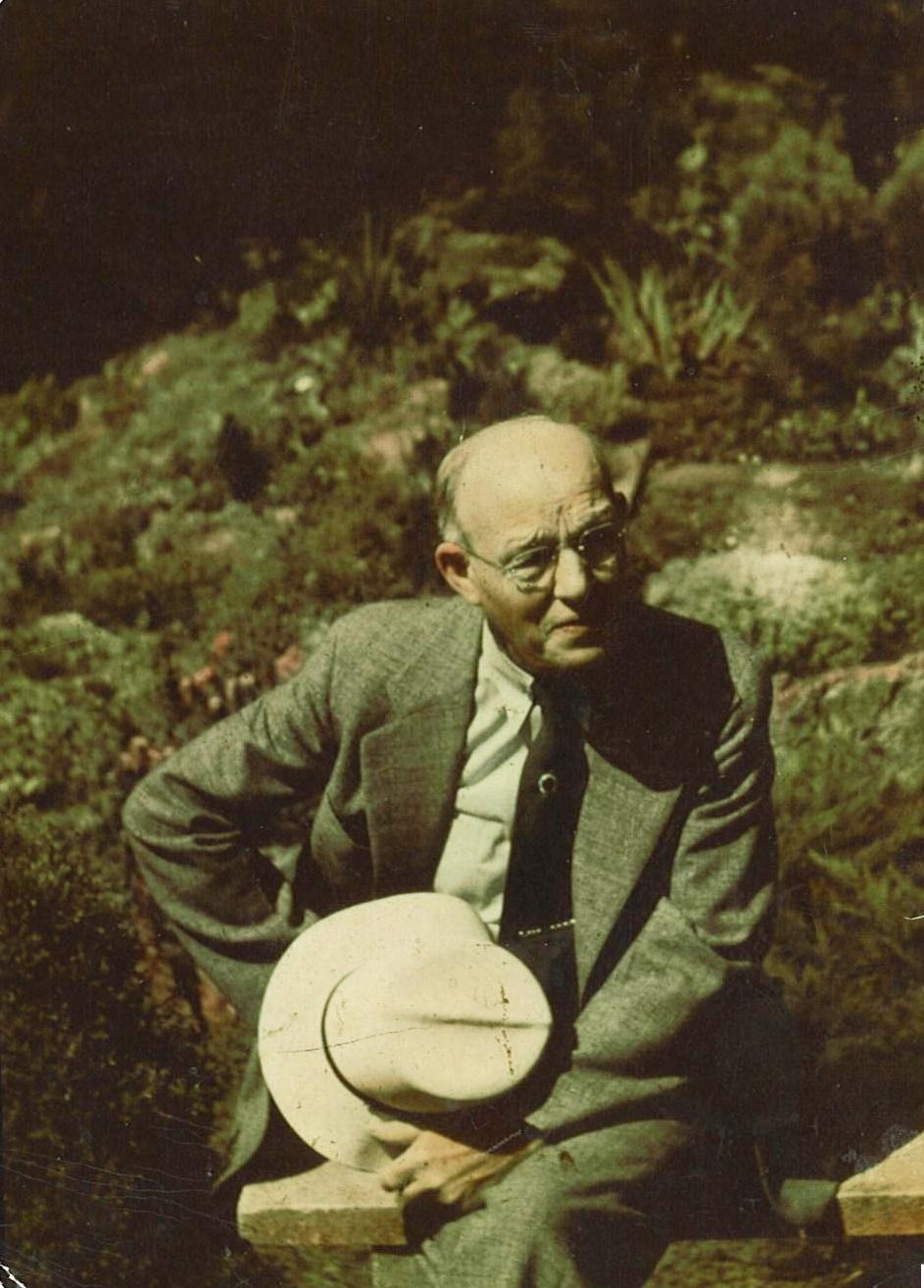
I never met my Syracuse grandfather. He was an osteopath and died before my time. But I often heard about his avocation, a remarkable alpine garden.

A garden needs a gardener, and it is understandable that the garden would fall apart after my grandfather’s death. But in recent years, neighbors got together to reconceive a garden on the site. In June 2007, their efforts paid off, with the mayor announcing the dedication of a memorial park.

“The Dr. James P. Burlingham Memorial Park will be officially dedicated on Saturday, June 30, 2007 … This park, formerly Gray Park, was originally a 2 acre meadow behind the house of Dr. Burlingham, which he slowly developed into flower gardens and a world famous alpine plant region in his spare time in the 1920s. … A small group of individuals from the neighborhood … decided to bring the park back to its original appearance with flower gardens and plants. … As part of the dedication ceremony on Saturday one of the doctor’s daughters, who is 94 years old, is expected to attend.”

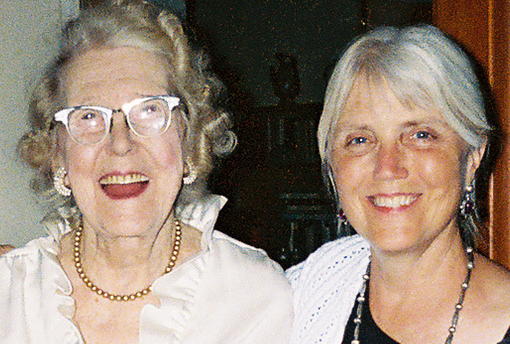
That would be my Aunt Maggie, seen here with her daughter Claire.

There’s a passage on the garden in Remembering Syracuse, by Dick Case.

A gardening gene runs in the family. My son has it, both from my side and his father’s. As part of John’s interest in identifying mystery plants in his own yard, he came up with a crowd-sourcing solution. Today, if you upload a photo to Mister Smarty Plants, you can see if someone on the Internet knows what your plant is. Check it out.

Read Full Post »

Check out this story in the Boston Globe. It seems especially timely given the increasing numbers of people growing their own food and the concerns about many others who are struggling.

“Every summer, 40 million backyard farmers produce more food than they can use, while people in their communities go hungry. If only they could link up. Enter Gary Oppenheimer, 59, of West Milford, N.J. He was directing a community garden a couple of years ago when inspiration struck. In May 2009, AmpleHarvest.org hit the Internet, connecting food pantries and gardeners. In just 150 days, Rosie’s Place in Boston became the 1,000th pantry on the site, and the growth has continued. As of Labor Day, 4,188 pantries were listed, in all states. Oppenheimer says the nonprofit organization is actively seeking grant funding to sustain what has sprung up.” Read more here.

If you have extra produce from your garden, you can go to AmpleHarvest to find a food pantry near you.

Photographs: Sandra M. Kelly

Read Full Post »

Here’s an interesting thought for harvest time.

In the NY Times, T. Lynne Pixley writes about Kelly Callahan and other Atlanta residents who forage for food among the many neglected, foreclosed properties in their neighborhoods.

Walking her dog in her neighborhood, Callahan saw “plenty of empty, bank-owned properties for sale.”

She also noticed that the “forlorn yards were peppered with overgrown gardens and big fruit trees, all bulging with the kind of bounty that comes from the high heat and afternoon thunderstorms that have defined Atlanta’s summer. So she began picking. First, there was a load of figs, which she intends to make into jam for a cafe that feeds homeless people. Then, for herself, she got five pounds of tomatoes, two kinds of squash and — the real prize — a Sugar Baby watermelon.” Others have joined in. Read more here.

I was interested to learn about “foraging” in Atlanta because I had recently read about a related activity in Vermont, called “gleaning.” Gleaning is a bit more out in the open. Farmers who are finished harvesting their crops give permission to gleaners, usually volunteers, to pick over what’s left and take it to families in need and to food pantries. One group engaged in this effort is the Addison County Gleaning Program. Read about it here.

It turns out that there is a lot of food that would otherwise go to waste. So it seems good that the food benefits someone.

Read Full Post »

« Newer Posts