Feeds:
Posts
Comments

Posts Tagged ‘healthy’

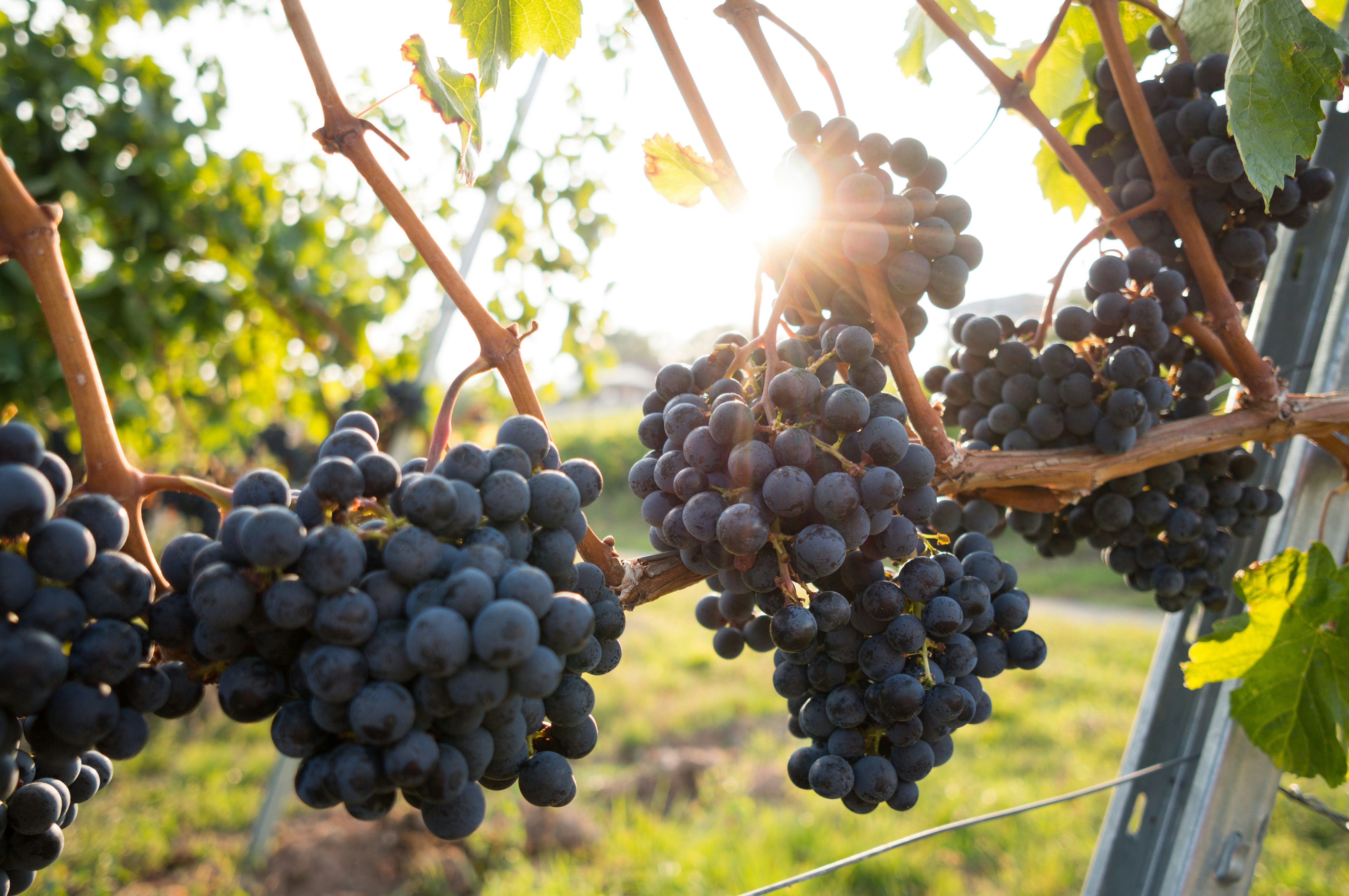
Photo: David Kohler via Unsplash.
Vintners are discovering the importance of bringing back earthworms.

In many parts of the world, growers who have relied on herbicides and pesticides are learning about the benefits of healthier soil, and so they’re getting rid of soil-damaging practices.

In today’s story, we have an example of vintners in the UK who have caught up with recent bio-friendly practices in France. They have not made their changes out of kindness to the planet, although that’s a side effect. They’ve done it to produce a better grape.

Helena Horton writes at the Guardian, “Vineyards are generally the most inhospitable of landscapes for the humble earthworm; the soil beneath vines is usually kept bare and compacted by machinery.

“But scientists and winemakers have been exploring ways to turn vineyards into havens for worms. The bare soil is problematic because worms need vegetation to be broken down by the microorganisms they eat. Pesticides are also highly harmful to the invertebrate, as is the practice of compacting the earth: worms need the soil to be porous so they can move through it.

“Earthworms … aerate soil, and they pull fallen leaves and other organic matter into the earth and recycle them. But their populations have declined by a third in the UK over the past 25 years due to pesticide use and over-tilling of soil.

“Marc-André Selosse, a professor at the National Museum of Natural History in Paris, has been urging vineyards to increase grass and plant cover on their soil, and reduce the amount they till, to save the worms.

“Selosse said: ‘In France, the vineyards are 3% of the agricultural area, and they are using 20% of the chemicals. In vineyards, for the soil there is a lot of treatments, so there’s a lot of compaction, and there is a lot of pesticides used.’ …

“Worms had not yet vanished from the most intensively farmed vineyards, he said, but they did need to be supported with more regenerative practices.

“ ‘I think the worms are at a low level,’ he said. ‘They are just surviving, but they are still there, which means that no one is thinking of buying earthworms for the soil, because they are there. It’s like Sleeping Beauty; they are there at very low level, and we have to wake them. But once again, in soil, we have resilience. It’s one part of biodiversity where they are so numerous that we were not able to kill all of them.’ …

“Selosse said the main thing vineyards could do for worms was to stop tilling the soil – breaking it up and turning it over – even if that means that herbicides such as glyphosate are used instead to remove weeds. … ‘In the future, sooner or later, we’ll have to stop glyphosate also but for now, tilling is the first cause of worm problems.’

“Now some vineyards in the UK are making worm-friendly wine. When Jules and Lucie Phillips, co-owners of Ham Street Wines in Kent, started their vineyard, they were advised to grow conventionally by tilling and using pesticides, but were horrified by the results.

“Jules said: ‘After we did that, we went out and we dug a soil pit immediately after planting, and then also later in the season, and we realized the soil was just dead.’ There were no worms. It was smelling not particularly interesting at all, and the structure was poor.’ …

“The pair had a revelation. ‘We just thought, this is completely the wrong way of farming and we need to do something different. We want life in our soils. And so we began the conversion to organic in that same year, and we’re now certified biodynamic.’

“Rather than using pesticides, they applied herbal teas to the vines to promote plant health, Jules said: ‘For example, horsetail tea has a real high silica content, and that improves the leaf cell wall and means that it’s more resilient.’

“The couple run a no-till system under the vine: ‘We’ve let the cover crop grow really long, and we typically let it grow right up into the canopy up until about flowering, and then we’ll mow it back. And the benefits of that are huge. The cover crop is really growing and really establishing that root structure and getting it to its maximum point. And finally, we put a big mulch on top of the soil that’s going to feed those worms and feed that soil life.’

“This has hugely helped their worm population: ‘We’ve seen our worm counts increase massively from basically none to around 20 or 30 in a spade full. So extrapolate that up to a square metre, and it’s a very decent volume.’

“Rob Poyser, a viticulturist at the regenerative wine consultancy firm Vinescapes, said that growing wildflowers in the vineyards they consult on had also brought great results. ‘We think in between three and five years we can take a bare soil and bring it back to life, into a thriving ecosystem,’ he said. ‘We’ve used things like cover crops to bring this vineyard to life, to build the fertility into this system, and organic matter. We’re bringing life back to these soils we’re using. We’re letting nature do it.’

“Poyser said they allowed wildflowers to grow all over the vineyards, and clients were delighted when clover, for example, sprung up because ‘clovers are great companion plants under the vine for grapevines; they’re also loved by earthworms.’ “

More at the Guardian, here. No paywall.
Read Full Post »

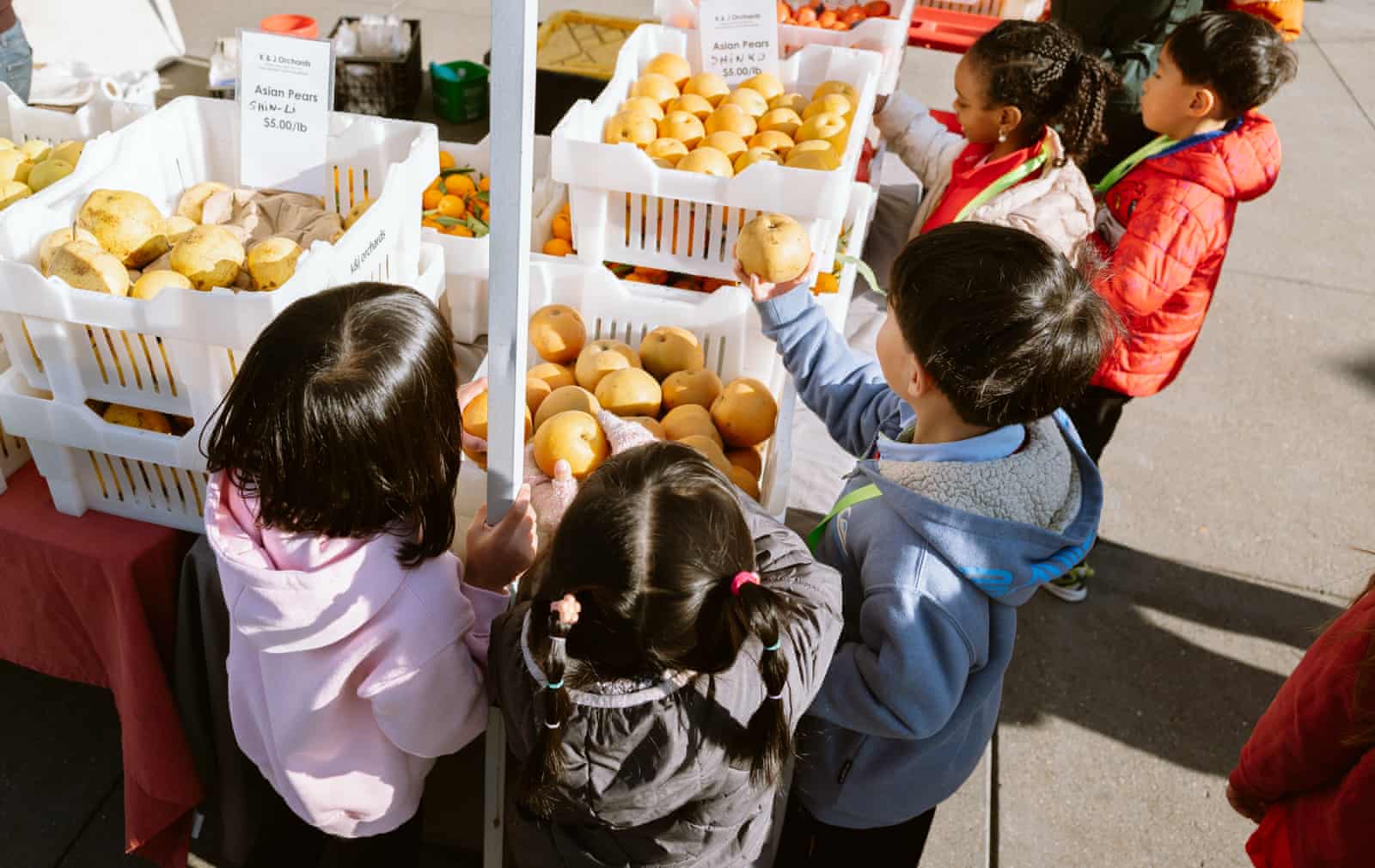
Photo:  Felix Uribe Jr/Guardian.
An organization called Foodwise Kids has brought more than 20,000 students to farmers’ markets to learn about the food system and taste new-to-them produce. Sometimes the teacher will challenge the students to join “the One-Bite Club.” 

When John came back from college the first time, one of the things he said, only half joking, was, “Why didn’t you tell me I liked mushrooms?”

He eats everything now, but as a kid, he had limited tastes, and I was no good at insisting he try something.

Today a special program for young children encourages tasting new things as part of a group.

Cecilia Nowell reports at the Guardian, “On a crisp winter morning in San Francisco, a team of six-year-olds declare that their favorite fruits and vegetables are peaches and broccoli – but then again, they have yet to venture out into the farmers’ market where produce they have never tried before awaits them. With handfuls of tokens, they will purchase persimmons, pomegranates, Asian pears, purple potatoes, kale and more from the farmers who grew them – then embark on a tasting journey, featuring new and familiar spices.

“The first-graders are visiting the Ferry Plaza Farmers Market – a Bay Area institution that draws more than 100 farmers to San Francisco’s waterfront three days a week – with 22 of their classmates from Lincoln elementary. That morning, the children had ridden the subway from their school in Oakland’s Chinatown into the city with parent chaperones and their teacher, Kathy Chen.

“Chen [knows] that at this age, her students are prone to becoming picky eaters – but what is cooked at home and what they try at school can change that. The hope is that after this field trip, when the cafeteria serves up an unfamiliar veggie or they’re offered a new fruit, the students might be a little more willing to take a bite.

“The trip is sponsored by Foodwise Kids, a nutrition and wellness program for elementary school students in the San Francisco Bay Area coordinated by the 30-year-old non-profit Foodwise. Since the program’s launch in 2012, it’s brought more than 20,000 local students out to the farmers’ market to learn about the food system. It’s focused primarily on schools with a high percentage of students of color or kids eligible for free or reduced-price school meals, and education director Tiffany Chung says the aim is to get ‘students excited about eating fruits and vegetables’ in the hopes that ‘they’ll incorporate them into their daily life and eventually lead to longer-term healthy eating options.’ …

“At folding tables, they introduce themselves to Foodwise’s staff and volunteers, and name their favorite fruits and vegetables. Chung jumps in for a moment to speak Mandarin with one student who doesn’t feel comfortable speaking English – she notes that many of the program’s volunteers are bilingual, usually in Spanish, to support the city’s diverse youth.

“While the majority of the classmates in her group prefer peaches, Temnit Desta says her favorite fruit is lemons. ‘She likes sour,’ her mom, Tehesh Hadush, explains. Although Temnit was born in California, her family is from Ethiopia and she has grown up eating lots of spicy foods. …

“Just a few years after the Loma Prieta earthquake devastated the highway running along San Francisco’s coast, community groups began discussing ways to connect downtown with the waterfront – and settled on a farmers’ market. Another aim was to educate urban dwellers about California’s farmland and sustainable agriculture while providing access to healthy, fresh produce. To this day, the market prioritizes urban families – not only by accepting Snap, previously known as food stamps, but by matching every dollar spent so families can double their Snap spending up to $15.

“After they’ve filled a basket with produce – so much that the six-year-olds are carrying the basket in teams of two – the small groups take off for a quick tour of the farmers market. When they return, Chung and other volunteers lead the groups in a game guessing which season different crops grow in. As they play, youth education manager Marcelo Clark starts chopping and roasting different trays of the produce – washing raspberries, flavoring cauliflower with jerk spice and roasting potatoes with cumin. He aims to use a mix of spices the children may have already tried at home – and others that might be new to them.

“ ‘A lot of our students are newer to America, and may not speak English,’ says Chung, but at the market ‘they’re able to see produce that is familiar to them. … They’re able to point out: “I know this. This is cilantro. I have this on tacos.” ‘ …

“When the food has been prepared, Clark carries trays of fruit and both raw and roasted veggies out to the class. The students dive into the purple potatoes, carrots, brussels sprouts, kale and cauliflower – but are more hesitant to try hummus and raw broccoli. Although her classmates and their parents exclaim at the fresh persimmon, Temnit is wary of the unfamiliar fruit.

“ ‘Today is all about trying new things and giving things a chance,’ Chung reminds the class, gently encouraging them to try just the smallest bite of everything.

“ ‘When students are unfamiliar with a fruit and vegetable, there is a lot of hesitation. We try to create this safe space where we’re telling them: “It’s OK if you don’t like it. The whole point is just to try it.” ‘ …

“By the end of the class, Temnit will be asking for more persimmon, and one of her classmates will be racing around trying to finish everyone’s leftover pomegranate seeds.”

More at the Guardian, here.

Read Full Post »

At the Guardian, teacher Steve Ritz tells Matthew Jenkin about how he began growing food in a troubled South Bronx school.

“The Green Bronx Machine was an accidental success. I wound up working at a very troubled high school in New York’s South Bronx district. It had a very low graduation rate and the bulk of my kids were special educational needs, English language learners, in foster care or homeless. It was dysfunctional to say the least.

“Someone sent me a box of daffodil bulbs one day and I hid them behind a radiator – I didn’t know what they were and figured they may cause problems in class. A while later … we looked behind the radiator and there were all these flowers. The steam from the radiator forced the bulbs to grow.

“That was when I realised that collectively and collaboratively we could grow something greater. We started taking over abandoned lots and doing landscape gardening, really just to beautify our neighbourhood. … We then moved on to growing food indoors in vertical planters around the school.

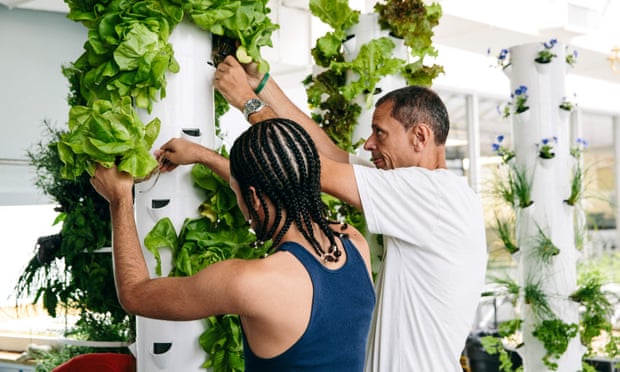
“By building an ‘edible wall’ to grow fresh vegetables in our science classroom, I gave the kids a reason to come to school. …

“Remarkably the plants grew. The kids really believe that they are responsible for them and attendance has increased from 43% to 93%. Students come to school to take care of their plants – they want to see them succeed. Along the way, the kids succeed, too.” More here.

Photo: Progressive Photos  
Steve Ritz gets students involved in the natural world. Attendance has more than doubled.

Read Full Post »

I love the idea of making use of perfectly good food that otherwise would be thrown out. Despite initial skepticism from the neighborhood where the Daily Table grocery was to open, customers are really grateful for the access and the low prices.

Taryn Luna the Boston Globe quotes the founder: ” ‘Our job at Daily Table is to provide healthy meals that are no more expensive than what people are already buying,’ said Doug Rauch, the founder of Daily Table and former president of Trader Joe’s. ‘We’re trying to reach a segment of the population that is hard to reach. It’s the working poor who are out buying food, but who can’t afford the food they should be eating.’ …

“Rauch has built relationships with suppliers to divert garbage-bound products to his shelves. He’s careful to point out that it doesn’t mean the food is ‘bad,’ expired, or unsafe to eat.

“A vendor at Haymarket, for example, donated a couple hundred pounds of summer squash he intended to throw away after the food didn’t sell. Daily Table expects to sell it for 59 cents a pound. Rauch said he has also purchased vegetables that grocery stores reject because of blemishes or other cosmetic problems that don’t affect the quality of the product.”

The Globe’s Yvonne Abraham visited after the opening: “They can’t keep the cucumber-pear-mint smoothies and salisbury steak on the shelves at Daily Table. The food emporium in Dorchester’s Four Corners has been slammed in its first week, with 300 customers a day, and three times more locals than expected signing up for free memberships.

“Everybody who works at the store — the managers wheeling out food, the white-coated kitchen staff making carrot soup behind the big picture window, the cashiers in bright T-shirts — looks exhausted, and happy.”

From the Daily Table website: “Daily Table is a not-for-profit retail store that offers our community a variety of tasty, convenient and affordable foods that will help you feel and be your best; food that will keep you moving forward, not hold you back.  We provide both ‘grab-n-go’ ready to eat meals, and a selection of produce, bread, dairy and grocery items all at prices that will put a smile on your face, and designed to fit within every budget.  Many of our items are prepared fresh daily in our own kitchen onsite. …

“There are plans to open additional stores in both the greater Boston area and additional cities across the country.

“Working together we can help reduce both the effects of poor eating habits caused by challenging economics, and the impact that wasted food and its precious resources has on our environment.”

More here.

Photo: Daily Table
Opening day in Dorchester, June 4, 2015.

Read Full Post »

Erik’s running buddy passed along a BBC story suggesting that cutting back on meat could have value for the planet.

Interestingly, that was the premise of Frances Moore Lappé‘s 1971 bestseller, Diet for a Small Planet, which my sister got me interested in when she was a vegetarian.

At the BBC, environment analyst Roger Harrabin notes research that confirms some of Lappé’s predictions.

“Research from Cambridge and Aberdeen universities estimates greenhouse gases from food production will go up 80% if meat and dairy consumption continues to rise at its current rate. That will make it harder to meet global targets on limiting emissions.

“The study urges eating two portions of red meat and seven of poultry per week. However that call comes as the world’s cities are seeing a boom in burger restaurants. …

“If [the trend] continues, more and more forest land or fields currently used for arable crops will be converted for use by livestock as the world’s farmers battle to keep up with demand.

“Deforestation will increase carbon emissions, and increased livestock production will raise methane levels and wider fertiliser use will further accelerate climate change. The lead researcher, Bojana Bajzelj from the University of Cambridge, said: ‘There are basic laws of biophysics that we cannot evade.’

“The average efficiency of livestock converting plant feed to meat is less than 3%, and as we eat more meat, more arable cultivation is turned over to producing feedstock for animals that provide meat for humans.” Read more here. And consider going in for mushroom burgers.

I only ever made the eggplant casserole Diet for a Small Planet, but it sure was yummy.

Photo: CiteLighter-Cards
In 1971, Frances Moore Lappé wrote that raising animals for food takes resources better used elsewhere. It can also put too much methane into the atmosphere.

Read Full Post »

It’s not always easy for low-income people to get access to food that is healthful, and once children get accustomed to salty, fatty, sugary snacks, junk food becomes comfort food and stores see little demand for better items. But if children know what would taste good and be good for them, they are on the road to better nutrition.

That is why the folks fighting childhood obesity are enlisting the support of several hip-hop artists that young people admire.

Winnie Hu at the NY Times writes, “Adrian Harris, known as Easy A.D. to his fans, has rapped about street life in the South Bronx as a member of the Cold Crush Brothers, a group that is among the pioneers of hip-hop.

“Now Mr. Harris also raps about broccoli.

“ ‘If you think you eat healthy, say ‘”me,” ‘ Mr. Harris called out over a pounding bass that shook the gym at the Future Leaders Institute, a charter school in Harlem, on a recent morning. A photo of a cart laden with fruits and vegetables filled a screen behind him. ‘Boys and girls,’ he added, ‘there are no Doritos on that cart.’

“Mr. Harris, calling himself a ‘health M.C.,’ aims to reach children who might otherwise tune out nutrition lessons. His vegetable rap is part of a growing public health campaign that has enlisted hip-hop artists such as Doug E. Fresh, Chuck D and DMC of Run-DMC to work alongside doctors and nutritionists in fighting obesity and related illnesses in poor communities. The campaign is being rolled out this year in 18 cities.” More here.

Photo: Ozier Muhammad/The New York Times
Adrian Harris, also known as Easy A.D., made a pitch for healthy eating recently at the Future Leaders Institute in Harlem.
 

Read Full Post »

There’s a new think tank at Babson College in Wellesley, Massachusetts, one that’s focused on food access.

Food access, food “deserts,” and sustainable agriculture are big issues these days, and Food Sol founder Rachel Greenberger believes that addressing the challenges must involve bringing together all the stakeholders, even agribusiness.

Greenberger refers to her strategy as the “uncommon table,” writes Kathleen Pierce in the Boston Globe. “Located at Babson’s Social Innovation Lab, the company seeks to identify how so-called food deserts — geographical areas without access to a grocery store or fresh food — are formed, and how to make healthy food sustainable for all. …

“Greenberger, a 33-year-old Babson MBA graduate who studied food-system dynamics and consumer behavior in the sustainable food movement, came up with the concept for a company similar to a think tank, but centered on action. By creating a digital map to pinpoint food-related issues, Food Sol intends to highlight pressing topics such as food deserts and fair trade, linking experts in the field with would-be entrepreneurs to ignite working relationships. …

“Food Sol intends to foster ‘a way into thinking about innovation in the food-supply chain, whether it’s creating more cooperatives or building agribusiness in Fall River,’ says Cheryl Kiser [executive director of Babson’s innovation lab]. ‘We are a laboratory where people can come and engage in conversation.’ ”

The theory is that companies will pay to engage in a food think tank like this. In fact, Kiser hopes to involve Cargill Inc., Monsanto Co. , PepsiCo , the Coca-Cola Co., and more. Read more here.

The mention of entrepreneurs who might address food issues is reminding me of two young women who recently launched shipping-container grocery stores in food deserts. Read about that in this NY Times article.

“Carrie Ferrence, 33, and Jacqueline Gjurgevich, 32, were in business school at Bainbridge Graduate Institute in Washington State when they noticed that many local neighborhoods were ‘food deserts,’ without easy access to fresh local produce and other grocery staples.

“Their answer was StockBox Grocers, a company that repurposes old shipping containers as small grocery stores. The company won $12,500 in a local business plan competition and raised more than $20,000 online in a Kickstarter campaign to finance its first store, which opened in the Delridge neighborhood of Seattle in September.”

Read Full Post »