Feeds:
Posts
Comments

Posts Tagged ‘hungry’

Photo: Poolbearlife via Instagram.
As communities on the outskirts of Los Angeles grow, nearby bears getting ready to hibernate are finding human food has more of the calories they need for bulking up than acorns.

I once had a close encounter with a black bear in an area of empty vacation chalets near Mount Washington Hotel in New Hampshire. From that one experience, I’ve concluded that black bears have as little interest in getting close to a human as I have in getting close to them.

But in California, the call of a discarded pizza may be just too tempting.

Nick Visser reports at the Guardian, “Every year, as summer draws to a close and fall begins, California’s bears get hungry. Black bears have long roamed the state, hunting for acorns, ants and pine nuts by the bucketload to pack on calories before hibernation. But increasingly, for every berry and root, there’s an even greater temptation: our trash and the detritus of human existence.

“That dynamic is playing out in perhaps a surprising place: Los Angeles. As communities on the outskirts of the metropolis grow, bears are butting up against humanity, drawn to residents’ pools, their chicken coops, their fruit trees and trashcans.

“ ‘Black bears are incredibly adaptable, versatile omnivores,’ said Wilson Sherman, a PhD student at the University of California, Los Angeles, who studies human-wildlife interaction. ‘They can eat everything we can eat.’

“Human-bear interactions have increased since the 1990s, Sherman said, which makes sense as communities expand and the state is now home to some 50,000 to 70,000 black bears. A few hundred of those live in the Angeles national forest, just north of the city and its millions of hungry households.

“Brian Gordon and his partner moved to the state’s bear capital – Monrovia, California – four years ago. Their house is the last before the Angeles national forest begins, and as they were buying the home, a family of bears wandered through the back garden. …

“Now, the pair regularly share their pool with a family of bears and document their exploits on an Instagram account called PoolBearLife. Videos show bear cubs with their snouts bubbling in the water, climbing – and falling from – trees and causing adorable, young bear mayhem. …

“ ‘I actually thought people get eaten by bears a lot,’ Gordon said. ‘But after we bought the house, we had bears walking through. That’s really all they’re doing.’ …

“Gordon and his partner live amongst the bears, but they’re also vocal advocates for doing so safely. Trashcans are kept clean, temptations are removed and, despite the filming, they give the bears their space. … Bears don’t even stop to sniff the trash cans and will just pass through the backyard like it’s an extension of the forest nearby, the couple said.

“In a perfect world, Sherman said, human dominated landscapes that buttress the natural world would take steps to minimize bear contact. That means making neighborhoods as unattractive to bears as possible. … It’s not that human food tastes better, it’s just much more calorie dense and therefore easier for bears to pack on the pounds. In fact, bears that live or forage near human environments tend to reproduce more often and at higher rates, likely due to the availability of our food. …

“The other major factor is climate crisis. Warmer summers can alter the availability of natural food and force bears to expand their ranges. Major wildfires like the 2025 Eaton and Palisades fires were also linked to a lack in natural food sources, prompting the bears near Los Angeles to search in neighborhoods instead.

“Alex Heeran, a research scientist at the California department of fish and wildlife who studies the human dimensions of wildlife encounters, said human and bear interactions generally peak every year in late summer and early fall. September is often a really active month as black bears finish up their pre-hibernation hungry period, known as hyperphagia. …

“It’s also a time when humans are out in force around Labor Day for the year’s final picnics and camping excursions. Fish and wildlife officials will often get reports of bears creating a nuisance and occasionally damaging fences, getting into sheds and making a mess as they look for calories. [Sometimes] conflict can escalate, which can result in a bear being euthanized or relocated. It’s rare and wildlife officials try and prevent situations from escalating to that point, but it happens.

“Earlier this year, the city of Monrovia erupted in fury after a mother bear known as ‘Blondie’ was euthanized. Officials had determined she had swiped at local residents twice, causing minor injuries. She had two cubs at the time. They are now being raised in captivity until they can hopefully be released back into the wild. …

” ‘The city was not a part of that conversation or decision,’ Becky Shevlin, the mayor of the city, which is peppered with monuments to black bears, told the Los Angeles Times in March. ‘We were absolutely devastated, especially when you think about her having the two little cubs.’ “

More at the Guardian, here. No paywall. Cute pictures. Consider subscribing.
Read Full Post »

Photo: AP/Marta Lavandier.
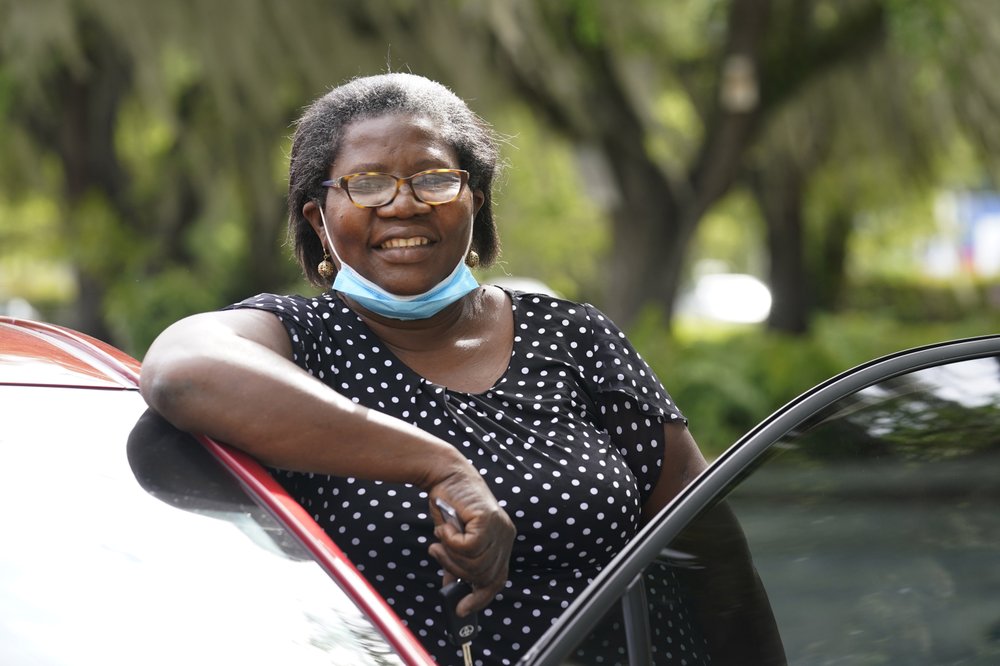
Doramise Moreau is a part-time janitor at a technical school. She spends most of her time shopping for ingredients and helping to cook meals for 1,000 to 1,500 people a week that show up for food at Notre Dame d’Haiti Catholic Church in Miami.

Last week, I finally felt safe enough to go get my hair trimmed and was glad to catch up on Tracie’s year. It was difficult at times, as it was for us all. Her teenage daughter had had a painfully lonely time at home, and her mother was relieved to see her back at in-person school, at least part time.

Tracie really lit up when she talked about giving free haircuts to residents of a nursing home. As she described the grateful things the seniors said to her, it was clear just how happy the volunteering made her.

Today’s story is about another volunteer who lights up when she can help people.

As reporter Cathy Free noted at the Washington Post earlier this month, “Miami Beach has declared a state of emergency because spring break partyers have overwhelmed the city, but across the causeway in Miami’s Little Haiti, a very different scene unfolds: Each Friday night, a school custodian finishes her day job, then spends 12 hours quietly cooking for the hungry.

“Doramise Moreau arrives at the Notre Dame d’Haiti Catholic Church each Friday, where she stays on her feet deep into Saturday morning, pausing briefly for a nap. …

“Less than 10 miles from South Beach, Moreau, 60, lovingly turns bulk-size bags of rice and beans and hundreds of chicken and turkey drumsticks into about 1,500 meals for people in her Little Haiti neighborhood who might not have enough to eat. …

“ ‘I don’t need a lot of sleep. I would rather be here making food for the people. I ask every day for more strength to keep doing what I’m doing.’

“She first volunteered to buy groceries with church donations and prepare a feast once a week, she said, when her pastor, Reginald Jean-Marie, mentioned that he was concerned about hunger in the community.

“ ‘I told him, “Don’t worry, I can do this — I have the time,” ‘ Moreau said. ‘When people are hungry, it is our responsibility to help. I know how hard it can be out there.’

“Moreau grew up with nine siblings in Haiti and often took food from her family’s pantry to give to those who had less than her family did, she said. In 1980, she immigrated to the United States at age 19 and lived with her brother in Miami until she fell in love and started a family of her own.

“When the relationship didn’t work out and she became a single mother, Moreau said, she took two hotel jobs to pay the bills and keep her four kids fed. …

“For her first batch of meals last spring, Moreau made several enormous pots of rice and beans seasoned with her special blend of green and red peppers, onions, cilantro, bay leaves and garlic. She has never used a recipe, relying instead on instinct and what she remembers from watching her aunt and sister cook in Haiti, she said.

“ ‘Who has time to measure? I just chop everything up and toss it in,’ she said. …

“Although rice and beans are a mainstay, Moreau’s fried chicken, roast turkey, baked fish and fried plantains are also popular with the 1,000 to 1,500 people she feeds each week.

“The meals are loaded into two delivery trucks and distributed on Saturday afternoons by volunteers who cruise slowly through the neighborhood in Little Haiti and hand them out to people as they come out of their apartments.

‘Sometimes I go with them to deliver the meals, and it’s rewarding when you see how it helps,” Moreau said. “For some people, this might be the only meal they get for a while.’ …

” ‘American, Spanish, Haitian — I don’t want anyone to go hungry,’ Moreau said. ‘People are suffering during the pandemic. There’s no work, the rent is high, they might not have money to go to the store. This is just one meal, [but] it’s something I can do.’ …

“Jean-Marie, the pastor, urges Moreau to occasionally take off her apron and rest. ‘I ask myself all the time how she does it,’ he said. ‘Not once do I ever hear her complain. We have to beg Doramise to take a rest, but she keeps showing up, day after day. She gives everything she has.’ ”

More here.

Read Full Post »

Art: Jean-François Millet (1814-1875)
“The Gleaners, “1857

When farmers are done harvesting their crops, or when homeowners grow fruit trees for decoration but don’t eat the fruit, an opportunity arises for gleaners. Some gleaners may scavenge for food for their own tables, but nowadays it’s become more of an activity to feed people who need extra help. I blogged about the concept in 2011, here, and 2014, here.

A recent article by Henry Schwan in WickedLocal provides an update.

He writes, “Ruth Lyddy bent over and used a sharp farm tool to take a whack out of a thick stalk of kale at Barrett’s Mill Farm in Concord. Lyddy had the look of a full-time farmer, but she’s a volunteer gleaner, which is someone rescuing crops before they are plowed over and destroyed.

“She joined other volunteers Nov. 17 at Barrett’s Mill Farm in Concord, and their leader was Dylan Frazier, who works for Boston Area Gleaners, Inc. (BAG). …

“The nonprofit formed in 2004, and is in the midst of its ’10 Tons in 10 Days’ campaign. As the name says, the goal is to gather 10 tons of food in 10 days, which is distributed to local food pantries.

“Frazier said many farms only harvest what they can sell, so BAG swoops in, takes the excess and hands it over to Food For Free in Cambridge, which distributes it to local food banks and pantries. …

“The volunteers also harvested purple-top turnips, red beets, leaks, daikon radish and Savoy cabbage, and all of it was piled into a truck, paid for with a $25,000 grant from the Harvard Pilgrim Health Care Foundation. …

“Volunteer John Pilch summed up why people give their time to BAG as he carried a box full of kale that he just cut. ‘It’s very grounding for me. I love to give back, because I’ve been so blessed in my life,’ Pilch said.”

Read Full Post »

In India, a civic-minded restaurant put a working fridge out front so patrons could join the eatery in offering leftovers to the hungry instead of throwing good food away.

Elyse Wanshel writes at the Huffington Post, “Pappadavada, a popular restaurant in Kochi, is urging customers and the community to put their leftover food in a refrigerator located outside of the eatery for the hungry to take. …

“The fridge is open 24-hours a day, seven days a week and stays unlocked. … Pauline told the Huffington Post that despite a huge response from the community and ample donations, the fridge needs to be restocked regularly. Pauline herself adds around 75 to 80 portions of food from Pappadavada a day in the fridge. …

“The idea to put a fridge on the street came to Pauline late one night when she saw a lady searching in a trashcan for food. As she watched the woman, she had a terrible thought:

“ ‘That the woman had been sleeping and was woken up by her hunger, so she had to go in search of food instead of sleeping.’

“She was especially saddened because that particular night, her restaurant had made a ton of food that they could’ve easily given the woman, instead of her searching for it.

“The experience made her feel like she contributed to waste, and avoiding waste is what Pauline is focused on.

“ ‘Money is yours but resources belong to society,” she told HuffPost. “That’s the message I want to send out. If you’re wasting your money, it’s your money, but you’re wasting the society’s resources. Don’t waste the resource, don’t waste the food.’ ”

More here.

Photo: Thesny Alikhan
Minu Pauline, right, the restaurateur behind the free food fridge, with a supporter, actor/director Thesny Alikhan

Read Full Post »

In October, Tim Faulkner of ecoRI wrote that for the local celebration of National Food Day, “there was plenty to celebrate about Rhode Island’s food industry. During a downtown food festival, leaders and pioneers in the local food movement explained how they are connecting Rhode Island’s restaurants and culinary arts sector with farming, education, environmentalism, entrepreneurism and social justice.

“This effort was best demonstrated by Julius Searight, founder of a new food truck and mobile soup kitchen. Searight’s Food4Good held its grand opening during the Oct. 24 Providence Food Day Festival, selling chicken waffle sandwiches and baked potatoes. Proceeds from food sales are expected to fund about 400 meals a week for the needy.

“Searight, 26, grew up as a foster child in Providence and graduated from Johnson & Wales University in 2013. He got the idea for the hybrid food operation after volunteering at local nonprofits and wondering what it was like for his biological mother to get fed.

“ ‘I really just saw the need to give back to those in need,’ he said.

More here.

Photo: Tim Faulkner/ecoRI News
Julius Searight is the founder of Food4Good food truck and mobile soup kitchen. Every $5 dollars earned buys two meals for people who need them.

Read Full Post »

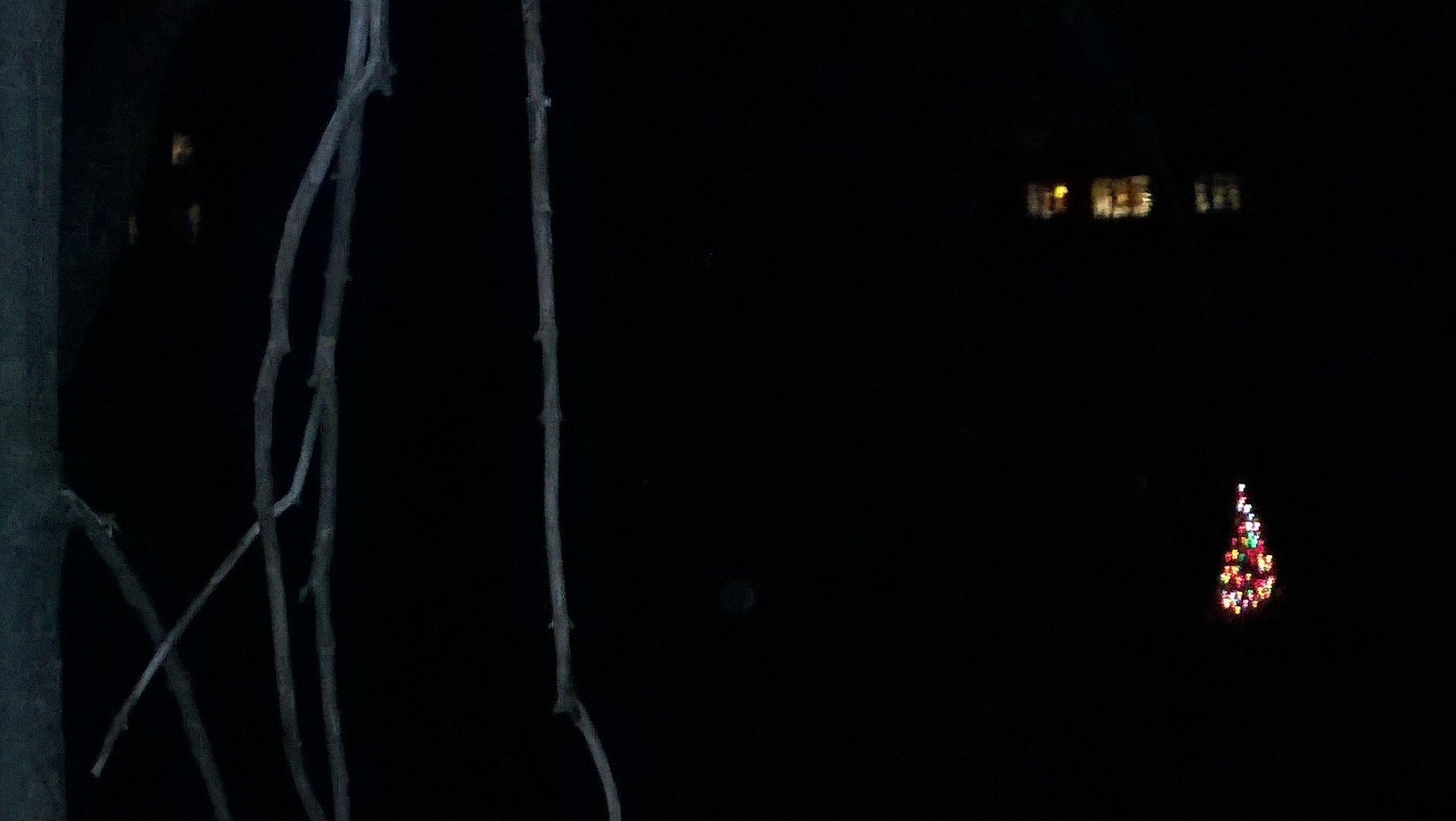
xmas-treeThis is the tree in my warm and cozy house. The tree in the picture below, a picture you may think is entirely black, is actually sitting all by itself on a river bank that floods in spring.

It makes me think of the carol about King Wenceslas, who “on the Feast of Stephen” (December 26) spied a poor man out in a blizzard and went with his page to take care of him. “Bring me flesh, and bring me wine; bring me pine logs hither: Thou and I will see him dine, when we bear them thither.”

The story goes that “heat was in the very sod that the saint had printed.”

Not being able to heat the sod underneath our feet (or command a page, for that matter), many of us consider sending a check to a food bank at this time of year. Still too many hungry people.

tree-on-river-bank

Read Full Post »

The Christian Science Monitor recently ran a story by Bryan Kay about an ongoing  community service project.

“Not even the recent furlough of federal workers was enough to snuff out the latest community outreach effort of Masjid al Islam mosque in Dallas.

“On a weekend in early October, the mosque was participating in a national initiative known as the Day of Dignity, an annual event during which mosques feed, clothe, and equip people living in poverty. But federal workers who had been scheduled to attend to speak about the details of the Affordable Care Act …  had been forced to cancel because of a partial federal government shutdown.

“It was a blow to the mosque’s boosters, says Muhammad Abdul-Jami, treasurer of Masjid al Islam and coordinator of the Day of Dignity event. But it didn’t deter them from pursuing the same purpose they have had for the last several years, he says: aiding homeless people … .

“Masjid al Islam is in an area where the homeless are a ubiquitous sight. … Because of the great need every weekend, the mosque seeks to do what the Day of Dignity event, organized in conjunction with the national charity Islamic Relief USA, does on an annual basis. Through its Beacon of Light community center, Masjid al Islam feeds approximately 300 individuals in need on Saturdays and Sundays each week, Mr. Abdul-Jami estimates. That’s more than 15,000 meals per year, paid for with donations from individuals and other mosques and served by volunteers, he says. …

” ‘There are millions of Muslims in this country who are very regular people, people who [other] Americans might consider much like them,’ Abdul-Jami says. …  ‘These events help us showcase that we are concerned about the rest of humanity, not just wanting to help Muslims.’ ”

Read more here.

Photo: Walid Ajaj

Read Full Post »