Feeds:
Posts
Comments

Posts Tagged ‘innovation’

Photo: Mitchell Joachim/Terreform ONE.

Most builders rely on steel and concrete in construction, but the production of those materials is bad for the environment. That’s why innovative thinking in architecture is so important. At Fast Company, Nate Berg describes one unusual experiment.

“In a forest along the Hudson River north of New York City, a strange new building is slowly rising. The strangeness of the building is that it’s meant to be occupied by humans, animals, and plants. The slowness of the building is that it’s made out of — made by, really — growing trees.

Fab Tree Hab is a 1,000 square foot tent-shaped pavilion that uses grafted white willow trees to form its walls and roof. Using a computer-designed scaffolding system to precisely guide their growth, these trees are bent to create a living canopy that will, through specifically placed tree grafts and planter boxes, fill out the form and structure of the almost-entirely bio-based building. The scaffold can eventually be removed and reused elsewhere. Within 10 years, it would be a kind of multi-armed and interconnected mega tree house. It’s a prototype that could show how buildings may eventually be grown rather than built.

“The project comes from Terreform One, a nonprofit art, architecture, and urban design research group led by architect Mitchell Joachim. The idea behind this project has had a tree-like maturation period, starting from seed around 2002. Habitat for Humanity had launched a design competition looking for new approaches to building suburban housing. At the time, Joachim was pursuing a PhD in architecture at the Massachusetts Institute of Technology, exploring the application of ecological processes to design.

“Along with fellow doctoral researchers Lara Greden and Javier Arbona, he began to explore new ways ecological processes might be applied to the design brief of getting massive amounts of housing built. …

“The idea of shaping trees into usable structures goes back thousands of years. ‘You can find examples of this within illuminated manuscripts, within the bible,’ Joachim says. The main problem, though, is that these structures take a long time to grow.

“Joachim and his collaborators began thinking of ways to accelerate the process. Initially they explored growing trees hydroponically, and transplanting them into a scaffold. This would have given them height very quickly, but the strength of the trees would have been less than naturally grown trees. With hopes of turning this tree-based system into a viable approach to building, Joachim and his collaborators decided they also needed that strength.

“By this point, Joachim was years into the research process, and had launched Terreform One. In looking at other methods for growing trees quickly, the team learned about biomass farms, which grow trees that are harvested and burned to create electricity. These farms grow tightly packed rows of trees that rise dozens of feet in height within just a few years. The tall, slender trees seemed perfect for use in the scaffold Joachim and his team envisioned. The design shifted and the project was reoriented around replanting white willows harvested from a commercial biomass farm.

“The Fab Tree Hab pavilion that’s now standing in the forest in New York is made up of these replanted trees. Planted together in clusters, the trees make up a few dozen vertical ribs of the pavilion. Designed to graft together over time into a thicker tree, each cluster forms what will be a pillar of the building.

“While they’re still young and pliable, the clusters have been bent into the mass timber scaffold, which is itself a unique piece of architecture, appearing somewhat like an upside-down boat hull. The ribs of the scaffold guide the trees upwards and along the path of what will eventually be a sloping pitched roof. In the wall space between the vertical trees, the scaffold is outfitted with planters and habitat for other plant and animal species, each made from biodegradable materials like hand-crocheted jute and bioplastic. After a year’s growth, it’s estimated that the tree elements will be able to physically support the weight of these planters and habitat structures.

“ ‘It is kind of a land coral, or a terrestrial reef. It attracts all kinds of things to live inside it and around it and underneath it and then thrive in that section of the forest,’”’ Joachim says.

‘On day one we had frogs move into the shelter.’

“About halfway up the arched pavilion, additional planters create space for the Fab Tree Hab’s key architectural element. This is where additional trees can be grafted onto the tree structure as it matures, enabling the building to rise even taller. …

“ ‘The point of the entire structure is a prototype to really get this right so that this could be replicated anywhere,’ Joachim says. He envisions the system being scaled up, made into a kit of parts people could use to grow, say, a garage or a backyard pergola, and eventually even a house. There could be tree-walled museums grown over a decade, or even opera houses with resonant walls of willow timber that are alive and still growing.”

More at Fast Company, here. No paywall.
Read Full Post »

Photo: Sophia Evans/The Observer.
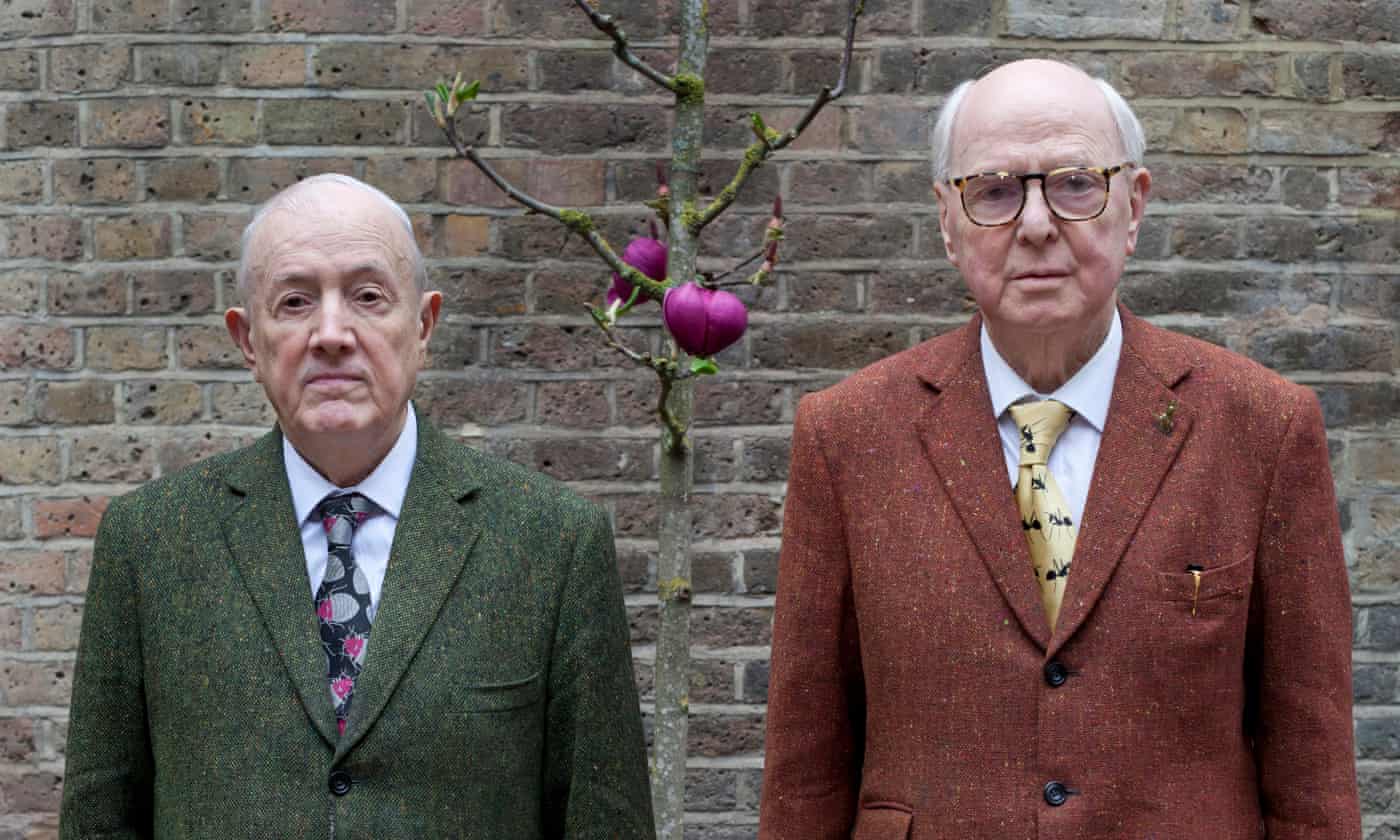
Gilbert, left, and George at their new gallery on April 1. When artists want control, they sometimes open their own museums.

I am always curious about innovations in the museum world. If you search this site on the word “museum,” you will find a wide range of posts, including one about a pandemic-era “mini museum for stir-crazy gerbils,” here, and a 2018 post on micro museums, here.

Vanessa Thorpe reported at the Guardian recently about two guys in London who decided to open a museum for their own work.

“Every creative person yearns for a room of their own,” wrote Thorpe. “But for the stars of Britain’s contemporary art world, it seems that now only a venue of their own will do. [In March] it was Tracey Emin in Margate; on [April 1] it was the turn of the veteran duo Gilbert and George.

“ ‘It is very exciting to see so many people,’ said George Passmore, 81, after the gates swung wide at 10 am to let in an orderly queue of first visitors. ‘Most amusing,’ added his lifelong collaborator – and, since 2008, civil partner – Gilbert Prousch, 79. …

“ ‘Do you know the gates [at this building] are painted in a shade called Invisible Green?’ asked Passmore. ‘It was invented for the great garden designer Humphry Repton when he noticed the grounds of the stately homes he created were being walked across by the public. He needed to put up barriers in a color that would not stand out. It is odd, because it is not invisible at all.’

“The pair’s decorative wrought-iron gates are also not intended to keep out the public. Far from it: the Gilbert and George Centre, which they have planned for years, is a built representation of their slogan ‘art is for all’ and designed as a gift to the community they have lived and worked alongside together for most of their working lives.

“Passmore, born in Devon, and Prousch, born in Italy, met in 1967 while studying sculpture at St Martin’s School of Art in London and developed a unique and entertaining style that places their own images in a variety of visual contexts and poses. ‘We are two people but one artist,’ they have been fond of explaining.

“This first show in the venue features vast photographic screens of leaves and organic products, including figs, roses, dates and leafy greens through which the artists peer or can be seen lolling on benches, either resting or in a swoon. …

“Mark Schofield, 50, a longtime fan, brought his parents, Jackie and Tony, down from Peterborough to see the show. A scientist who now lives in Boston, he was bowled over by the galleries.

“ ‘There’s this clear contrast that I love between the deadpan faces and the joy and mischief of the art. It is so English, somehow,’ he said.

“Rachel Scott, a painting conservator from Dalston, was also struck by the humor of the work. … For Bash Ali, 44, a charity worker and artist, the trip up from the south-east of the city had been well worth it. ‘It really works. It is such a great space.’

“The ‘naughty and a bit rude’ tone of much of Gilbert and George’s art was part of the appeal, said Paul Rudgley from Birmingham, who was visiting the centre with his artist friend Arran Patel from London. But in the end, as a collector of Pantone colors and a former paint industry executive, it was the bright and bold hues that won the day for him.

“The opening of the Gilbert and George Centre followed last weekend’s seaside event in Margate, Kent, when a new artists’ space run by Tracey Emin, a comparative newcomer on the subversive art scene, was unveiled. And over in south London, Damien Hirst’s Newport Street Gallery has also given space to displays of work from his own art and his wider collection since 2015. Admission to each of these three new private galleries is free, although Hirst’s is currently closed.

“Emin, 59, wore a full town crier’s outfit for the opening of her venue. Called the TKE Studios and T.E.A.R. (Tracey Emin Artist Residency), it has been constructed inside a former Edwardian bath-house after a [$1.3 million] investment. As the artist cut the ribbon, she promised: ‘We are going to make Margate an artistic mecca’ before she announced new plans to buy up a nearby derelict pavilion, for swimmers and surfers.

“Early to the trend for running his own artistic space, Turner prize finalist Yinka Shonibare offered more than just a gallery to visitors to his experimental space in east London. Called Guest Projects, and launched a decade ago, his project still offers residences for performers as well as visual artists and musicians.

“When it started, it provided food, too, in a special supper club called the Artists Dining Room where guest chefs create dinners inspired by the work of artists including Louise Bourgeois, David Lynch, Frida Kahlo and Jean-Michel Basquiat.

“ ‘Artists should have a space in which they can fail, and the art market doesn’t really allow room for failure – there’s too much at stake, Shonibare said at the time.”

More at the Guardian, here. You can enjoy all the pictures as there is no firewall.

Read Full Post »

Photo: Heida Helgadottir for the Washington Post via the Independent.
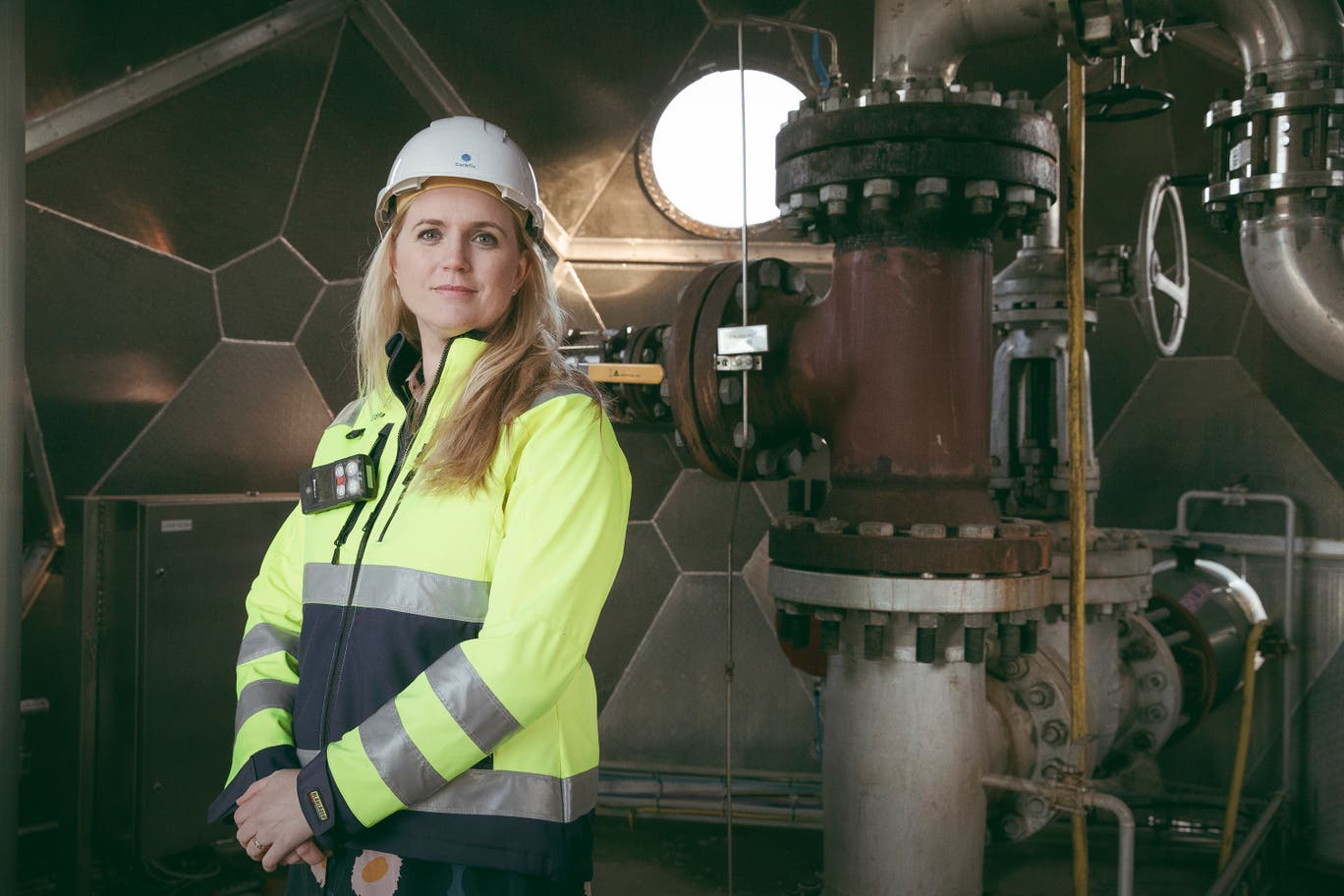
Edda Aradottir is the chief executive of Carbfix, a company that captures CO2 byproduct from the largest geothermal plant in Iceland. Many Icelandic start-ups are tackling climate change.

File this one under Hope. And maybe book a trip to the innovation hub called Iceland.

Hannah Hall has a report at the Washington Post on Icelandic companies that are taking on global environmental challenges.

“The electric red and green glow of the production facility resembles the Icelandic aurora borealis. Algae in their growth stage flow through hundreds of glass tubes that travel from floor to ceiling, all part of a multistep process yielding nutrients for health supplements. Soon, all parts of each alga will be used.

“The facility, operated by Icelandic manufacturer Algalif, is a space of inspiration for Julie Encausse, a 34-year-old bioplastic entrepreneur. During a July summer storm, Svavar Halldorsson, an Algalif executive, was guiding her through a tour of the company’s newest facility on the Reykjanes Peninsula.

“By the end of 2023, this new facility aims to triple its production. After Algalif dries the microalgae and extracts oleoresin, a third of this output then goes toward health supplements. Algalif has traditionally used the rest as a fertilizer. Now Encausse, founder and chief executive of the bioplastic start-up Marea, hopes to use that leftover biomass to create a microalgae spray that can reduce the world’s reliance on plastic packaging.

“Her newest partnership with Algalif is part of a start-up network in Iceland that focuses on inventive and creative technologies to address the climate and sustainability crisis. The Sjavarklasinn (‘Iceland Ocean Cluster’) network includes environmental entrepreneurs working across several industries.

“Thor Sigfusson founded the network in 2012 after conducting research on how partnerships between companies in Iceland’s technology sector helped expand that industry. At the time, he found that the fishing industry was not experiencing the same collaboration or growth.

“ ‘Even though companies were in the same building together, fishing from the same quotas and facing similar challenges, they were closed off,’ said Alexandra Leeper, the Iceland Ocean Cluster’s head of research and innovation.

“Three cod hanging on the wall of the second-floor entryway are the first thing to greet any visitor to the Iceland Ocean Cluster. Lightbulbs shine from their centers, and the dried scales filter the light to fill the space with an amber glow. The precise design is one that underlines the group’s belief that using 100 percent of a fish or natural resource can give rise to innovative technologies. …

“Encausse and Marea co-founder Edda Bjork Bolladottir have partnered with the cluster for 2½ years. Encausse says that involvement was core to their company’s inception.

“ ‘There is a collaborative mind-set when being on an island,’ she said. ‘We need to work together to survive, and this was passed from generation to generation.’

“In a country about the size of Kentucky, the people of Iceland have had to learn how to guard their resources. Encausse has discovered that often means using 100 percent of any material — a lesson she’s now implementing in her work with Algalif. She created a food coating from Algalif’s leftover biomass, a product she’s named Iceborea — in a nod to theaurora borealis.

“ ‘We are repurposing it and making something with value that gives it another life to avoid using more plastic,’ Encausse said. Once Algalif’s factory expands over the next year, it will have 66 tons of microalgae leftovers that Encausse’s company can tap each year.

“When sprayed onto fresh produce, Iceborea becomes a natural thin film and a semipermeable barrier that can protect against microorganisms. Iceborea can either be eaten with produce or washed off, reducing the need for plastic packaging.

“[Edda Aradottir] is the chief executive of Carbfix, a company capturing CO2 byproduct from the largest geothermal plant in Iceland, Hellisheidi, and injecting it into stone to be buried underground.

“Carbfix’s successful trials have marked a global milestone for carbon sequestration. It also has received international recognition — and Aradottir’s leadership has already served as a model for growing start-ups and other founders in the cluster trying to tackle extensive environmental concerns. …

“Another Icelandic company, GeoSilica, harvests silica buildup from the Hellisheidi waste stream to make health supplements.GeoSilica reaches the Icelandic and European markets, and its chief executive, Fida Abu Libdeh, is also working with the Philippines to pilot her silica-removal technology to create similar sustainable factory processes.

“A Palestinian from Jerusalem, Abu Libdeh moved to Iceland in 1995 at age 16, a transition she described as difficult because of the language barrier and the country’s small immigrant population. In 2012, she graduated from the University of Iceland after studying sustainable energy engineering and researching the health benefits of silica. That same year, she and Burkni Palsson co-founded GeoSilica.

“Ever since moving to Iceland, she was impressed with how the country produced electricity through geothermal sources. …

“GeoSilica is not formally part of the Iceland Ocean Cluster, but the network it has fostered reflects the same collaborative approach. Abu Libdeh has worked with cluster companies and held investor meetings at its headquarters. It’s a place that founders want to be, she said, where they want to learn from each other even if they are competitors in their fields.

“While there has been progress over the years, Abu Libdeh said, it’s still a challenge for women to enter this entrepreneurial space. In 2020, less than 1 percent of investment went to women-founded start-ups, according to a recent European Women in Venture Capital report. …

“What began as a dozen start-ups in 2012 has now grown to more than 70 members and associated firms connected to the Iceland Ocean Cluster. … There are now four sister clusters in the United States, as well as one in Denmark and one in the Faroe Islands.

“The Alaska Ocean Cluster, which was the first to follow the Icelandic model, has already accelerated policy change in the United States. Sen. Lisa Murkowski (R-Alaska) proposed legislation last year to create ‘Ocean Innovation Clusters in major U.S. port cities, which would provide grants along the U.S. coastline and the Great Lakes.

“ ‘I’ve learned a great deal from our friends in Iceland who created a roadmap of innovation and public/private partnership when they established the first Oceans Cluster in Reykjavik,’ Murkowski said in an email.”

More at the Post, here.

Read Full Post »

Photo: Pixabay.
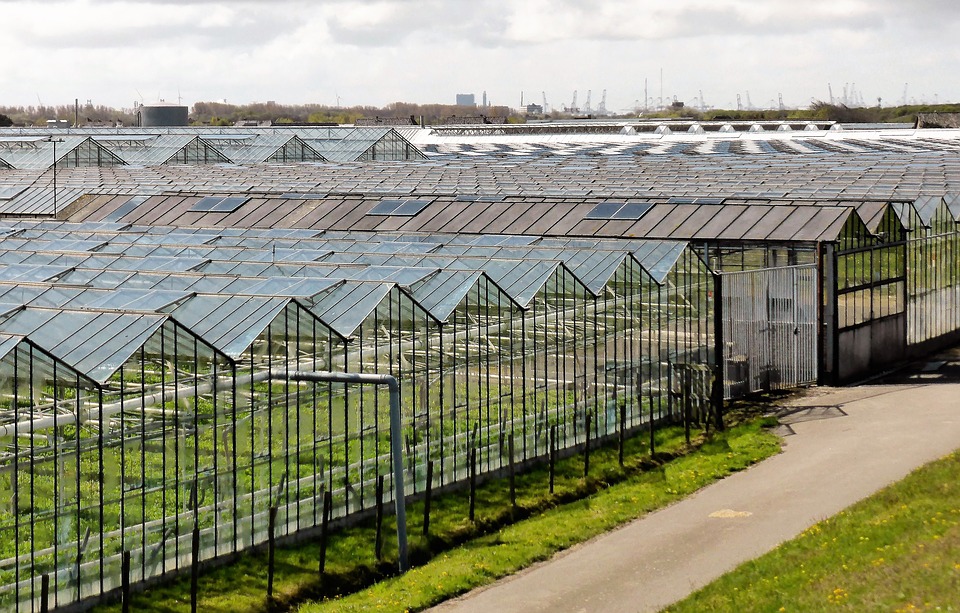
Believe it or not, little Holland is the world’s second-largest food exporter.

We know from childhood stories that the Dutch have always been innovative. Think about all that land taken from the sea by means of dikes. But who knew that such a little country as the Netherlands was the world’s second-largest food exporter? How do they do it?

Laura Reiley at the Washington Post has the details.

“The rallying cry in the Netherlands started two decades ago, as concern mounted about its ability to feed its 17 million people: Produce twice as much food using half as many resources.

“The country, which is a bit bigger than Maryland, not only accomplished this feat but also has become the world’s second largest exporter of agricultural products by value behind the United States. Perhaps even more significant in the face of a warming planet: It is among the largest exporters of agricultural and food technology. The Dutch have pioneered cell-cultured meat, vertical farming, seed technology and robotics in milking and harvesting — spearheading innovations that focus on decreased water usage as well as reduced carbon and methane emissions.

“The Netherlands produces 4 million cows, 13 million pigs and 104 million chickens annually and is Europe’s biggest meat exporter. But it also provides vegetables to much of Western Europe. The country has nearly 24,000 acres — almost twice the size of Manhattan — of crops growing in greenhouses. These greenhouses, with less fertilizer and water, can grow in a single acre what would take 10 acres of traditional dirt farming to achieve.

Dutch farms use only a half-gallon of water to grow about a pound of tomatoes, while the global average is more than 28 gallons. …

“With their limited land and a rainy climate, the Dutch have become masters of efficiency. But there are challenges: The greenhouse industry has flourished in part because of cheap energy, but Western Europe is facing soaring gas prices. And the country’s intensive animal agricultural practices are also at risk. This summer, a conservative government coalition pledged to halve nitrogen emissions by 2030, which would necessitate a dramatic reduction in the number of animals raised in the country. Farmers and ranchers have protested. …

“Dutch companies are the world’s top suppliers of seeds for ornamental plants and vegetables. There is an area in the northwest called Seed Valley, where new varieties of vegetables and flowers are in constant development. Enza Zaden is headquartered here, just north of Amsterdam.

“In three generations, Enza Zaden has evolved from a family-owned seed shop into a global market leader in vegetable breeding, with more than 2,500 employees and 45 subsidiaries in 25 countries.

“Jaap Mazereeuw, Enza Zaden’s managing director, said the company spends $100 million annually on research, introducing about 150 new vegetable varieties each year.

“ ‘We are very much a research company,’ he said. ‘With climate change, we are seeing the weather becoming more extreme. We’re looking at resilient varieties, seeds for organic farms as well as varieties that are more salt tolerant for places where water quality is not good. We need to find solutions for subsistence farmers all the way up to large-scale farmers. …

“ ‘We have our own indoor farm here where we develop the varieties of the future, crops that can grow quickly and be harvested quickly: lettuce, herbs, leafy crops. The genetics can be improved, as well as the whole technology — indoor farming will only become cheaper.’ …

“More than 12 billion heads of lettuce are grown each year from Enza Zaden’s seeds, but it was a tomato in the early 1960s that really put the company on the map — and perhaps what, in turn, put the Netherlands on the map for tomatoes. The country’s greenhouses produce nearly a million tons of tomatoes a year, with exports totaling around $2 billion annually.

“ ‘There’s a new tomato virus and we recently found the resistance to that virus in our seed bank,’ Mazereeuw said. The company stores its seeds in a temperature-controlled vault — called a seed bank — to preserve genetic diversity, but because seeds don’t stay viable forever, each stored variety must be grown out and those seeds, in turn, saved. …

“ [Eelco Ockers is] chief executive of PlantLab, which develops and operates custom-built indoor farms worldwide — systems they call ‘plant production units.’ Indoor vertical farmers trade in the free power of the sun for much more expensive electric light, but the benefit is they can much more easily control every variable to get consistent and reliable yield, Ockers said.

“The three founders put together their first prototype in 2008 and launched the company in 2010, helping Dutch greenhouse and indoor farmers increase yields with LED lights even when the technology was in its infancy. They have a system whereby enough crops to supply 100,000 residents daily with nearly half a pound of fresh vegetables each can be grown in an area no larger than two football fields. …

“PlantLab’s research and development center in Den Bosch is the largest such center for vertical farming in the world, and it uses limited light spectrum LEDs and plastic stacked production trays, and the plants grow in vermiculite with their roots in water. ‘Nothing is hand-harvested, nothing is touched by human hands,’ Ockers said. The water is recirculated, meaning no water is lost in the growing process. For now, the system is most effective for growing leafy greens, herbs and tomatoes, but he said cucumbers, zucchinis and all types of berries are suited to this growing system. And by limiting the time between harvest and consumption, he said, food waste is minimized and nutrient density is much higher than traditionally grown crops.”

Outdoor farming in Holland is really creative, too. The article covers not only growing vegetables outdoors but raising pigs, cows, and chickens. Read it all at the Post, here.

Read Full Post »


Photo: Josh Reynolds for The Boston Globe
IV Safe T developers Melinda Watman (left) and Maggie McLaughlin have spent about $5,000 to make a prototype to keep IVs from slipping out of newborns.

Nurses have been a largely overlooked source of innovative ideas although they are constantly jury-rigging improvements to keep patients comfortable. Fortunately, people in the medical-device field are beginning to recognize the possibilities.

Andy Rosen writes at the Boston Globe, “Maggie McLaughlin’s path from nurse to entrepreneur started last year when an IV tube became unhooked from an infant in the neonatal intensive care unit at Tufts Medical Center, where she works, causing the child to begin bleeding unexpectedly.

“A specialist in IV procedures, McLaughlin was asked to study ways of preventing such an incident from happening again, and she learned there is no universally accepted tool to safely lock the line onto an infant’s tiny body. …

“Since then McLaughlin has been working to develop an IV connection that lies flatter on an infant’s skin and holds more securely to the needle than the alternatives on the market today. She has teamed up with a former nurse she met at a Northeastern University event to form a company called IV Safe T to make and market the device.

“McLaughlin is among a number of nurses — with the help of programs from nursing schools and their own hospitals — who are using their bedside experience to develop new products and innovations in the medical industry.

“Rebecca Love, director of the year-old Nurse Innovation and Entrepreneurship program at NU, said research has shown that nurses spend a significant portion of each shift using workarounds and making impromptu fixes to ineffective processes or equipment. …

“The NU program, which connects nurses to resources and guidance to help them carry out their ideas, said it has attracted 1,600 people to events it has held, and it has connected at least 20 nurses to business mentors. …

“These programs strive to put nurses on equal footing with other professions, including doctors. … Some who follow innovation in health care say nurses represent a relatively untapped reservoir of expertise about improving patient care. …

“McLaughlin calls her device ‘Lang lock,’ after her maiden name. The rounded device connects tubing to an IV catheter with a single twist, and it has one flat side to make the needle approach the skin at a lower angle so it sits more securely.

“She has teamed up with Melinda J. Watman, a former nurse who later got an MBA and went into business. … NU has been helping them to protect their intellectual property and study the market.”

More at the Boston Globe, here.

Read Full Post »

I thought today would be a good day to note that, with the right supports in place, veterans who have suffered post-traumatic stress while serving the country can move forward with their lives.

The willingness of some of these service men and women to expose their story in the media strikes me as an extra level of bravery.

Kathy McCabe writes at the Boston Globe about Army veteran Michael Saunders.

“Saunders, who served from 2002 to 2006, deployed twice to Iraq … He started therapy at the VA outpatient clinic in Lynn, where a counselor suggested he focus on a new mission: going to college.

“ ‘She said I would make more money with a college degree,’ said Saunders, who worked for a lumberyard after his discharge from the Army.

“He enrolled in VITAL — an acronym for Veterans Integration to Academic Leadership — a national program that helps veterans transition from soldier to student. VITAL brings VA services, including mental health counseling, to college campuses. …

“According to Pam Flaherty, dean of students, Middlesex Community College had nearly 600 student veterans in 2014-15. In the last year, 70 who have PTSD have taken part in VITAL and received mental health care on campus. …

“The Bedford VA also offers the VITAL program at Bunker Hill Community College in Charlestown, Mount Wachusett Community College in Gardner, Northern Essex Community College in Haverhill, North Shore Community College in Danvers and Lynn, Endicott College in Beverly, and Salem State University.

“Saunders, who graduated from Everett High School in 1999, is in his second year studying liberal arts at Middlesex Community College in Bedford. He has discovered a talent for writing, and hopes to transfer to Emerson College next year.

“ ‘It was a rough start, but I’m doing fine now,’ said Saunders, who also has a job at the college’s Veterans Resource Center. ‘Had the VA not had the service in place here, I wouldn’t have come.’ …

“ ‘I can sit in class now, for an hour and 20 minutes,’ Saunders said. ‘I couldn’t sit still for 10 minutes before.’ He has a lingering fear of crowds, so he adjusted his seat in the classroom.

“ ‘ I have to be able to see the door, and I don’t like anybody behind me,’ Saunders said. ‘If I can’t do that, I can’t focus.’

“For one class, Saunders wrote a story called ‘The Dark Is Afraid of Me,’ a fictional account of a military mission in Iraq.

“ ‘It was really easy for me to tell the story,’ Saunders said. ‘When the professor read the paper, she was like, “You need to go see a publisher, now.”

” ‘Maybe I will.’ ”

More such stories at the Globe, here.

080115-flag

Read Full Post »

If you want people to innovate, get out of the way. That’s what I think must have happened when Bill Littlefield launched his sports program at WBUR. Clearly, someone gave him freedom to do it his own kooky way, and when radio stations around the country wanted to carry the program, that laissez-faire manager must have smiled.

Both sports fans and non-sports fans like Littlefield’s show. He covers all the usual sports topics but also showcases offbeat competitions like this one at the Vermont College of Fine Arts in Montpelier. Karen Given was the reporter.

“Just 15 minutes before game time, the vast and serene campus green at Vermont College of Fine Arts showed no signs of the annual Writers vs. Poets softball game. There were no bats, no balls, no bases, and no players. Suddenly, Victorio Reyes stormed onto the scene.

“ ‘First of all I’m a poet,’ he said. … ‘There’s two things,” Reyes continued. “One: the United States invests way too much money in sports and too much emotion, okay? That’s the first thing. The second thing? This game is life or death. That’s all you need to know.’ …

“No one seems to know the overall record. Louise Crowley, director of the MFA in Writing program, said the game itself is similarly imprecise.

“ ‘We might have 50 people in the outfield. It’s just kinda an informal, crazy game.’

“ ‘Eventually, will there be bases?’ I asked.

“ ‘There will be bases, yes,’ Crowley said. ‘There will be bases, there will be a batter, there will be a catcher, you know. But other than that, it’s just sort of a free flowing, everything goes.’ …

“After dinner, there’s a reading, and then hours of painstaking writing and re-writing before workshops begin again early tomorrow morning. …

“Poetry instructor Matthew Dickman had a preexisting injury this time around, so his job was to provide inspiration — of the negative variety.

“ ‘Whenever a fiction writer gets to bat, a student, I’m going to sit behind them and talk about how difficult it is to get published,’ Dickman said. ‘How they’ll probably just go back to working wherever they work and their dreams will come to an end.’  …

“Every once in a while, the pitcher lobbed in a good one and the batter managed a hit — usually a pop fly that floated over the outfield. And, although the number of outfielders had ballooned to at least a dozen, every single one of those pop flies dropped to the grass.” More at Only a Game.

I laughed all the way through this report.

Photo: Going the Distance Blog
At the annual Vermont College of Fine Arts softball game, it’s war. Cats vs. dogs have nothing on poets vs. prose writers.

Read Full Post »

The Globe‘s Callum Borchers wrote recently about an organization called Seeding Labs, which presented at the IDEAS conference in Boston.

Founder Nina Dudnick, he says, “collects and ships used lab equipment to developing countries.

“Last year, Seeding Labs hosted six scientists and researchers from Kenya, one of whom was a chemist, Mildred Nawiri, who is studying how certain vegetables that are indigenous to West Africa might help prevent cancer.

“On Wednesday, Dudnick pointed to Nawiri’s research as an example of work that is unlikely to be done in the United States, because the vegetables she is studying do not grow here.

“And whatever benefits she might discover could go unrealized without modern equipment. Before Seeding Labs, Nawiri was using techniques Western scientists employed in the 1800s, Dudnick said.”

Dudnick points out that “this talent really is everywhere. The problems that face us, like cancer, don’t respect boundaries drawn on a map, so why should our scientific community?”

More at the Globe.

Read Full Post »

Here’s an inventor who doesn’t know the meaning of giving up. After 19 years of keeping the faith, she finally got the attention she needs for her culinary invention — a marinating stick.

Jack Hitt has the story at the NY Times.

“Mary Hunter has always been happy to cook for her congregation at the Yes Lord Church in Gary, Ind. Her recipes, she told me, come directly from God.  … Prayer is ‘where I get 99 percent of my recipes.’

“Mrs. Hunter, who is 73, likes to cook big roasts for her church, ‘and if I had a difficult piece of meat I might marinate it in some beer and celery’ with a blend of her secret seasonings. When she learned that she had diabetes and high blood pressure, though, she had to cut out her salty marinades and cook the meat more blandly.

“Then, one day, God had an idea. ‘I was writing down some recipes and God said to me that I should take that ink pen and stick holes all through it and put a clip on one side so that you can open it’ — lengthwise — ‘and then put your onions and your garlic and your aromatics down the middle and put it inside your meat — then, you won’t have to eat bland foods.’ And so was born her invention, a long stainless steel device that, according to tests in restaurants and elsewhere, far outperforms those herbal injectors and other disappointing methods for introducing flavors into the interior of a big piece of meat.

“Later this month, Mary’s Marinating Sticks are scheduled to go on sale in Target stores.”

It was a long road, and it started back  in 1994. Read how stick-to-it-iveness and determination finally won the day, here.

Photo: Sally Ryan for The New York Times
It was 1994 that Mary Hunter got her idea for an innovative marinating stick. Today her persistence has paid off.

Read Full Post »

People interested in imaginative uses of space to make cities more livable should get over to the Boston Society of Architects on Congress St. before September 29, when an intriguing exhibit closes.

Eight of us visited at lunch today, and the BSA’s marketing director went around the Reprogramming the City exhibit with us pointing out highlights and answering questions.

We saw photos of a lamppost that doubles as an umbrella, a staircase in Hong Kong (below) made into a public lounge, bus stops in Sweden using sun lamps at night, a “low line” community space under a highway (like New York’s high-line concept but under not over), a repurposed parking machine that spits out “tickets” describing how a nearby problem area has been fixed by the city of Boston, street mosaics in Portugal that have a QR code for accessing tourist information, and a Dutch solution to recycling teddy bears and other usable goods curbside for passerby to pick up. The list goes on.

I tried to round up more people to join the excursion, but business meetings at lunch seem to come first. It always surprises me that folks don’t take advantage of cultural activities at lunch: we are surrounded by really nice ones. At least the farmers market is popular. People always have time for that.

More on Reprogramming the City at the BSA website, where you can take an audio tour.

Update 9/18/13 — See some great pictures from the exhibit at the Boston Globe, here.

Photo: Scott Burnham
The Cascade by Edge Design Institute, 2007, Central Hong Kong.
Right, Urban Air by Stephen Glassman, 2010.

Read Full Post »

Another good lead from the voracious reader of magazines in my household.

This Smithsonian story shows how a relatively simple invention made it possible for the Impressionists to do much more painting outdoors, en plein air.

Perry Hurt writes, “The French Impressionists disdained laborious academic sketches and tastefully muted paintings in favor of stunning colors and textures that conveyed the immediacy of life pulsating around them. Yet the breakthroughs of Monet, Pissarro, Renoir and others would not have been possible if it hadn’t been for an ingenious but little-known American portrait painter, John G. Rand.

“Like many artists, Rand, a Charleston native living in London in 1841, struggled to keep his oil paints from drying out before he could use them. At the time, the best paint storage was a pig’s bladder sealed with string; an artist would prick the bladder with a tack to get at the paint. But there was no way to completely plug the hole afterward. And bladders didn’t travel well, frequently bursting open.

“Rand’s brush with greatness came in the form of a revolutionary invention: the paint tube. Made from tin and sealed with a screw cap, Rand’s collapsible tube gave paint a long shelf life, didn’t leak and could be repeatedly opened and closed.

“The eminently portable paint tube was slow to be accepted by many French artists (it added considerably to the price of paint), but when it caught on it was exactly what the Impressionists needed to abet their escape from the confines of the studio, to take their inspiration directly from the world around them and commit it to canvas, particularly the effect of natural light.

“For the first time in history, it was practical to produce a finished oil painting on-site, whether in a garden, a café or in the countryside.” More.

Dear artist friends, I can picture what it would have been like for you traveling by train after an outing to some scenic spot before this invention. “Oh, Madame, I am so terribly sorry. I’m afraid my cobalt pig’s bladder burst!”

Photo: Chrysler Museum of Art
The tin tube, below, was more resilient than its predecessor (the pig bladder), enabling painters to leave their studios.

Read Full Post »

Pius Sawa at AlertNet (and the Christian Science Monitor) writes, “Residents of Rusinga Island in Kenya [are experimenting] with renewable energy innovations, environmentally friendly farming, tree planting, and other efforts aimed at improving the island’s environment, creating jobs, and overcoming shortages of food and water.

“For the past 16 years, Ester Evelyn Odhiambo has dedicated herself to improving life on one small island. It’s no small task.

“Rusinga Island, in the northeast corner of Lake Victoria in Kenya, is about 16 km (10 miles) long and 5 km (3 miles) wide. About 30,000 people call it home. But the island over the years has become an increasingly inhospitable environment for them.

“ ‘If you plant something, it just dries out,’ says Ms. Odhiabmo, who runs an organization to help people widowed or orphaned by AIDS [Kisibom, or “come and learn”]. ‘You try to irrigate, and the water is too little because the sun comes and dries everything.’

“The changes have come because of poor management of resources – including forests and fishing grounds – and because of increasing climate impacts.

“But now residents are experimenting with renewable energy innovations, environmentally friendly farming, tree planting, and other efforts aimed at improving the island’s environment, building resilience, creating livelihoods, and overcoming shortages of food and water.”

More.

Photograph: Pius Sawa/AlertNet
Ester Evelyn Odhiambo opens a charcoal refrigerator on Rusinga Island, Kenya. It is lined with charcoal, into which water seeps through a hosepipe fed by a bucket. The wet charcoal absorbs heat and keeps the items inside the fridge cool without needing electricity.


Read Full Post »

At work we have partnered with an urban high school for 35 years. Tomorrow a group of 15-year-olds from the school will come into the office for Job Shadow Day.

The students fill out a form in advance to let their assigned mentor know something about them — favorite subject, least favorite, hobbies, career ambitions.

My student has an unusual ambition for a 15-year-old. She wants to be a philanthropist.

Perhaps I will tell her what I read recently about how many of today’s top philanthropists are active in their causes. They don’t just give money.

“The global face of philanthropy is changing,” writes the Christian Science Monitor. “Donors no longer just open their wallets. They’re actively involved in causes, use savvy business practices, and leverage what they give to achieve more good.”

One such philanthropist is F.K. Day. Read how his work has benefited people in Zambia and beyond.

“Life in rural Zambia has improved dramatically for dairy farmer Cecil Hankambe. He has doubled his milk sales, purchased a farm, and earned enough money to send his children to school. He still milks the same cow and travels the same rugged roads to the local dairy co-op. The only difference now: Instead of lugging a heavy jug on foot, he pedals a bicycle.

“Mr. Hankambe rides a Buffalo, a bike so sturdy and basic that its steel frame can carry up to 220 pounds and be repaired with a rock. Instead of delivering only seven to 10 liters of milk a day, Hankambe can now transport 15 to 20 liters to a chilling station before it spoils, boosting his profit.

” ‘A reliable bike can create reliability in a dairy farmer’s income,’ says F.K. Day, founder of World Bicycle Relief, a foundation based in Chicago that produces the Buffalo and provides two-wheeled aid to people in developing nations. ‘You forget how important transportation is.’ ”

Day started young, as young as the girl who will visit me at work tomorrow.

“As a teenager, he flew – on his own initiative – from Chicago to Brazil to knock on the door of Irish priests who were building schools in São Paulo‘s poorest neighborhoods. They hadn’t responded to his letters. But when he showed up on their doorstep, they had no choice but to put him to work.

“That experience laid the groundwork for what followed three decades later. On Dec. 26, 2004, horrific images of tsunami-swept Southeast Asia flickered on TV screens in the United States. Day, now a successful cofounder of SRAM, an elite bicycle-parts manufacturer, wanted to do more than just fund relief efforts. …

“So he and his wife, Leah, boarded a plane to Sri Lanka. Within weeks, Day had partnered with World Vision; he eventually oversaw the distribution of 24,000 bicycles that gave thousands of people affected by the tsunami the ability to reach their jobs, schools, and health-care centers.” His bikes are now in many countries were transportation needs are great.

” ‘If you can enter something new, open and honestly with beginner’s eyes, something good is bound to happen,’ says Day.”

How does one come by that core impulse to help? Probably it shows itself at a very young age. Even at 15.

Read about seven additional innovative philanthropists in the Monitor.

Photograph: Leah Missbach Day
F.K. Day, President of World Bicycle Relief & Executive Vice President of SRAM Corporation, pictured in downtown Chicago.

other innovative philanthropists

Read Full Post »

Ashoka, which defines itself as “a global organization that identifies and invests in leading social entrepreneurs,” has a blog called Changemakers that might interest readers. The March 26 post is on teaching and empathy.

Nora Cobo at the Center for Inspired Teaching writes, “While test-based assessments are essential, they reflect only one type of data and one kind of skill that students need. Schools must also focus on students’ social-emotional growth in order to create sound learning environments. Such settings help students develop interpersonal competence and improve short- and long-term academic and personal outcomes.

“Center for Inspired Teaching partners with teachers to change the school experience for students to include these critical skills. … Instead of looking at students’ behavior as something to be corrected, we train teachers to look at students’ behavior in terms of unmet needs. In particular, we ask teachers to consider students’ needs for Autonomy, Belonging, Competence, Developmental appropriateness, and Engagement — the ABCDE of learners’ needs.

“For example, a teacher may encounter a student who repeatedly gets frustrated and leaves his seat to chat with classmates when he encounters a complicated geometry problem. Rather than assuming the student has a bad attitude, the teacher strives to figure out which of the student’s needs is not being met. The teacher may discover that the student learns best when physically engaged – and offer him the option to tackle the equation by measuring distances by walking.

“Similarly, a teacher may find a student who refuses to work in a group setting, saying she just prefers to work alone. In examining the student’s unmet needs, that teacher may discover that the student longs for more autonomy with her work – and empower that student to create on her own.

“The teacher may discover, upon further engaging her skills of empathy, that other members of the group aren’t treating the student kindly, and therefore the student’s need for belonging is not being met when classroom groups are self-selected. …

“Placing empathy at the core of teachers’ practice ensures that students learn how to think, not just what to think – and go beyond covering the curriculum to learn the skills they need in order to thrive.”

More here.

Photograph: Kate Samp, Strategies for Children

Read Full Post »

John pointed me to an article on the kinds of work environments that encourage innovation.

Aimee Groth at Business Insider writes, “In his article, Groupthink, the New Yorker‘s Jonah Lehrer says there are two types of brainstorming — a free-for-all exchange of ideas in a structured environment, and a random, unplanned debate. Only the second type really works.

“He says M.I.T.’s famous Building 20 … became one of the most innovative spaces in the country because it fostered the best kind of brainstorming.

“The building was created to provide extra room for scientists during WW II, reports Lehrer, and ‘violated the Cambridge fire code, but it was granted an exemption because of its temporary status. … The walls were thin, the roof leaked, and the building was broiling in the summer and freezing in the winter. Nevertheless Building 20 quickly became a center of groundbreaking research, the Los Alamos of the East Coast.’

“It wasn’t demolished after the war because there were too many students and too little space on campus. So the building became a hodgepodge of offices, with professors and students from all different departments squeezed in small spaces and long corridors. …

” ‘Walls were torn down without permission; equipment was stored in the courtyards and bolted to the roof. … The space also forced solitary scientists to mix and mingle.’ ”

More.

Makes me think of the layout at Mass Challenge, the accelerator incubator for entrepreneurs that I blogged about here. (Did I mention that a family member read that post, sent in an application under the wire, powered through layers of screening, and is now working away as part of the class of 2012?)

The Mass Challenge space is not dangerous like Building 20, but the founders probably heard about the benefits of Building 20’s layout through their connection to MIT. The Mass Challenge work space is an unfinished floor in an upscale office building on the waterfront, 1 Marina Park. Everything is open and interactive.

The harbor views are a bonus unknown at Building 20.


Read Full Post »

Older Posts »