Feeds:
Posts
Comments

Posts Tagged ‘installation’

Photo: Alex Barber/Contemporary Arts Museum Houston/Theaster Gates Studio.
“We Will Save Ourselves” (2024), a painting by Theaster Gates made with roofing materials.

I have blogged before about the unusual urban planner and artist Theaster Gates. Now the New York Times has done a deep dive on the many surprising facets of his work.

Siddhartha Mitter writes, “Theaster Gates is the kind of artist whose work is perpetually on view somewhere in the world. When we met for the first time, in May at his studio in Chicago’s Greater Grand Crossing neighborhood, he had just returned from opening exhibitions at the Mori Art Museum in Tokyo and the Contemporary Arts Museum Houston. …

“He is known for installations that use supplies and furnishings from old buildings, paying tribute to their past lives — as homes, stores, churches. These installations serve double or even triple duty: They are works of art in themselves, but they can also become venues for parties or performances. His sculptures and paintings employ construction materials like wood, rubber and roofing tar. He’s a master ceramist and a musician and singer who performs with his experimental group, the Black Monks, in which he’s known as the Abbot.

“For years, Gates has acquired archives, and he sees their stewardship as integral to his work. Many preserve Black American cultural memory, like the roughly 20,000-volume library that once belonged to the Johnson Publishing Company, publisher of Ebony and Jet, and the 5,000-record vinyl collection of Frankie Knuckles, the Chicago D.J. at whose late ’70s parties house music was born.

“He is currently advising an arts-led redevelopment project in Philadelphia and an initiative to preserve Houston’s Freedmen’s Town, a historically Black district in the city’s Fourth Ward. He chairs the diversity council at Prada, where he runs a mentorship program for designers of color, and he is developing partnerships in Japan with small family-owned businesses to produce incense and sake. …

“In his hometown, Gates is recognized as an entrepreneur who buys and restores properties on Chicago’s South Side. He puts these properties to unusual, sometimes less than practical use. The core of his holdings is a quiet half-mile stretch of South Dorchester Avenue, where he started acquiring run-down houses in 2006. He filled some with archives — thousands of art books purchased from a shuttered bookshop; LPs from a defunct record store. One house became his residence. …

“Salvage from the buildings goes into his art installations; proceeds from his art sales fund his building renovations and community programs. But they also stem from shared soil — his upbringing as the son of a roofer on Chicago’s West Side, his training as an urban planner — and commingle in his projects to the point where it would be artificial to separate them. …

“He rebuffs categories like ‘social practice’ — jargon for participative art with civic goals — but cites predecessors like Donald Judd, who made furniture as well as geometric objects, and the Fluxus movement, with its interest in everyday materials and spontaneous performances. He’s an inheritor of the legacy of Marcel Duchamp and his readymades, mass-produced and utilitarian objects that the French artist displayed as art. …

Gates sees himself as helping Chicago to ‘hold its Black self together.’

“A bureaucrat before he was ever an artist, Gates worked as an art planner for the Chicago Transit Authority from 2000 to 2005. After that, he began investing in Grand Crossing when he moved to the South Side to become an arts administrator at the University of Chicago, where he’s now a professor.

“ ‘The neighborhood had stigma, but the people were great and interesting,’ he said. He recognized the terrain: Black neighborhoods that faced disinvestment and crime but were once self-contained and self-possessed — places where, he said, ‘the Black doctor and lawyer and bus driver and maid were all on the same block, and they all went to the same church.’ By revitalizing these quotidian spaces — homes, a bank, a school, hardware stores that he has bought, often with their contents, when they were going out of business — he is summoning a kind of utopian memory in the service of new functions. … Through his investments in Grand Crossing — even when they take unconventional forms — Gates sees himself as helping Chicago to ‘hold its Black self together.’

“He took me down a side street edged by commuter rail tracks where in 2021 he opened Kenwood Gardens, a sanctuary with lawns, wildflowers and a pavilion that hosts house-music parties in the summer. It occupies 13 lots that were in decline — notorious, he said, for burned-out cars and prostitution. A wall encircling the garden is made partly from bricks that he saved from St. Laurence Catholic Church, a neighborhood anchor that the archdiocese sold and that was razed in 2014.

“ ‘When I built the perimeter wall, I didn’t own the property,’ Gates said. ‘I built the wall to stop the bad stuff.’ He then bought the lots, many loaded with tax arrears. ‘The city was quite happy to help us negotiate the land sales,’ he said, ‘because they would finally have a steward.’ Building his unauthorized wall, Gates said, was a case of tactical urbanism, as citizen initiatives that bypass city bureaucracy or goad it to action are called in the planning business. …

“[Gates] is too obviously sincere, even earnest, to come across as an operator. And yet he has both an aptitude and an appetite for policy and negotiations. In a famous deal, he purchased the former Stony Island State Savings Bank, a 1920s edifice facing demolition, from the city in 2012 for $1 and the commitment to restore it — which he funded in part by selling salvaged marble slabs at Art Basel for $5,000 each. …

“Romi Crawford, 58, a professor of visual and critical studies at the School of the Art Institute of Chicago, described how Gates enfolds transactions into his art as ‘contract aesthetics.’ Gates has fielded periodic criticism that he is too amenable to the rich and powerful. He rejects this. … ‘If you’re talking about protesting, there are people who are better protesters,’ he said. ‘If you’re talking about getting [things] done in the city, I can do it better than most artists. I can do it better than most developers.’ …

“But despite the busy world Gates has built for himself, its center is paradoxically calm. At the studio in Chicago, I’d been struck by the quiet. His operation has downsized, he said — from 65 employees at its peak, around 2016, which he admitted overwhelmed him, to just 15.

“Next to go might be his collection of buildings, though it could take a while. ‘I did not attempt to amass a real estate holdings situation,’ he said. ‘I was simply trying to prove the point that artists can change a place.’ “

For the the rest of the long profile, click here.
Read Full Post »

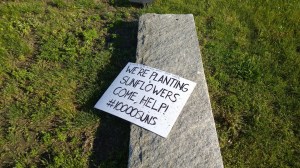
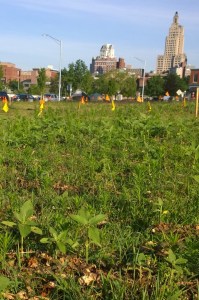
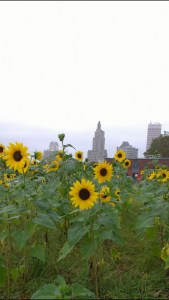
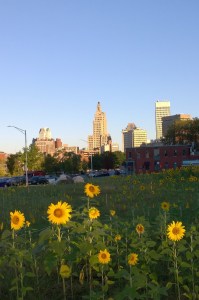
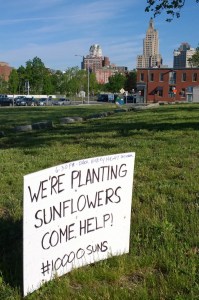
For the longest time, it looked like nothing at all, this art installation of 10,000 sunflowers where route 195 once polluted the soil.

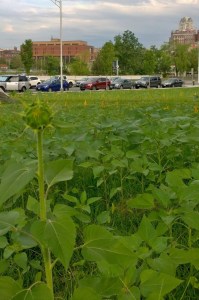
Adam E. Anderson, the brains behind the community-building project, writes on his website, “Ten Thousand Suns is a summer-long botanical performance in which over 10,000 sunflower seeds have been planted and being nurtured over the course of the summer months, on land that until recently sat under a highway, with high compaction, low-organic material, and embedded with toxicity.  …

“Rather than using high maintenance and energy intensive large swaths of turf grass, the installation uses the bio-accumulating (removes toxins) and habitat creating properties of Helioanthus (aka, Sunflower) planted in rows in a series of large circles, leaving paths in-between for intimate exploration.

“The project will create a spontaneous and unique cultural identity for the citizens of Providence and its visitors during the summer months.”

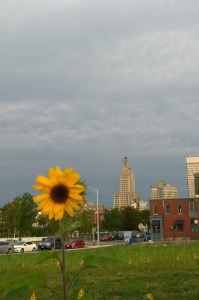
With little rain all summer, the project looked like a hopeless cause for many weeks. Until it didn’t.

In celebration of the cheery results, I want to share a few lines of a poem about a goldfinch loving a sunflower. Because who wouldn’t love a sunflower?

From poet Ross Gay‘s “Wedding Poem”

Friends I am here modestly to report
seeing in an orchard
in my town
a goldfinch kissing
a sunflower
again and again
dangling upside down
by its tiny claws
steadying itself by snapping open
like an old-timey fan
its wings
again and again
until swooning, it tumbled off
and swooped back to the very same perch …

Read more about the project at Adam Anderson’s site, here, and on Facebook, here. Click on my photos to check the dates.

060816-plant-sunflowers-superman-bldg

060816-help-us-plant-sunflowers


071216-sunflower-seedlings

081616-sunflower4


082916-finally-sunflowers

090716-sunflowers-growing


091316-sunflowers-providnece

Read Full Post »

“Will you, won’t you, will you, won’t you, will you join the dance?” go the lyrics of the “Lobster Quadrille” (the “Mock Turtle’s Song“) in Alice in Wonderland.

And Wonderland is where you may imagine you have landed if you stumble upon this irresistible invitation to dance with your shadow.

At FastCoDesign, Mark Wilson explains how the dancers are drawn in.

“At some point between ages 3 and 13, we go from the life of the wedding dance floor to being the awkward kid standing at the edge of the gym wondering why we wore a silk shirt. …

“But what if our environment could encourage us to dance — without any balloons, bridal parties, or booze? A project called Mesa Musical Shadows, by Montréal’s Daily Tous Les Jours studio, is doing just that. It’s a public installation that turns a chunk of pavement in Arizona’s Mesa Arts Center into a giant game of Dance Dance Revolution that you play by moving your shadow.

“As detailed by Creative Applications, the system itself uses light sensors, coupled with speakers built into the mosaic tiles. If the tiles sense a shadow—or even just you stepping directly on the sensor—it plays a note. And so as many people swing and kick together, these notes combine into a harmonious soundscape generated in real time. …

“Now that the physical installation of sensors and speakers is done, the studio can see how people use it, and actually program the system’s entire logic to react in more complicated ways to a user’s behavior, like ramping up with more and richer sounds as a person becomes more and more engaged.” More.

Video: Creative Applications

Read Full Post »

With a little creative thinking, a woman in Detroit was able to put a rundown house to good use, improve the neighborhood, promote her flower business, and help florists who focus on locally grown flowers.

Stacy Cowley writes at the NY Times, “Eleven months ago, a derelict house here that is now filled with 36,000 flowers contained far grimmer things. …

“Twelve thousand pounds of trash had to be hauled out before Lisa Waud, a florist who bought the duplex at auction for $250, could see what kind of canvas she had purchased.

“The house remains a structural wreck, but its atmosphere has been transformed. [In October] some 2,000 visitors [toured] Flower House, an art installation Ms. Waud and more than three dozen floral collaborators from around the country created on the site. Their goal is to cast a new light on the Detroit metropolitan area’s infamous blight, and on their own trade. …

“All of the plants and flowers filling [the rooms] are American-grown, a rarity in an industry that imports a majority of its wares from Colombia and elsewhere. …

“The inspiration for Flower House struck in 2012, when she saw images from that season’s Christian Dior couture show, held in a Parisian mansion filled with flowers in a rainbow of colors.

“ ‘It was stunning, and I knew immediately that I wanted to do that — but living in Detroit, I pictured it in an abandoned house,’ she said. ‘I’m trying to rebrand abandoned houses as a resource.’ …

“Ms. Waud estimated that she would need to raise $150,000 to cover the installation’s floral costs, but when she contacted her usual wholesalers, the California Cut Flower Commission, Mayesh and Nordlie, all three offered to donate their flowers.” Read about the inspiring results here.

Photo: Laura McDermott for The New York Times 
Lisa Waud, a Michigan florist, works on her room on the back side of the Flower House on the first day of the installation in Hamtramck. 

Read Full Post »

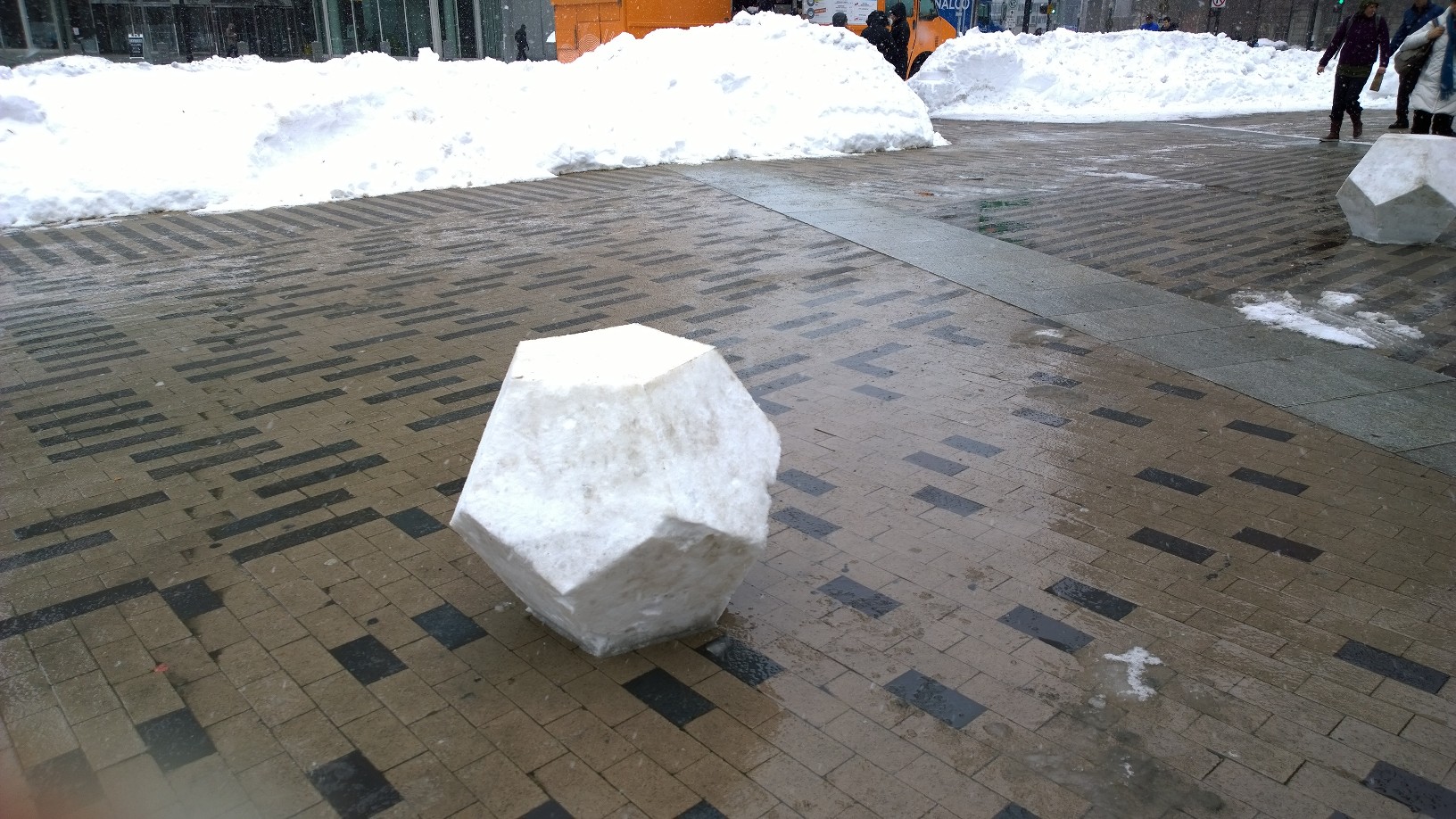
I wrote about New American Public Art back when I first posted a photo of the group’s giant geometric snowballs in Dewey Square.

I looked them up. Their tumblr blog says, “We are a collaborative of artists, engineers, programmers and designers with the mission of developing beautiful, interactive public art. Our method of development is always contextual. The existing physical and social aspects of a space are integral to the installation. The art form we create is more than the physicality of the work, it is the social curiosity and interaction of the audience with the piece.”

Alas, curious snowplows interacted with the interactive snow sculptures, and the snowballs are no more. But the artists seem to be fine with their work being ephemeral. Their approach supports the notion that it is good to notice things that can’t be captured permanently. It’s good just to enjoy. And interact.

I say that, but I’ve been regretting for two weeks that I couldn’t bring myself to capture in a photo several strangers facing me on the subway since one woman was looking my way. It would’ve been a great shot. In the midst of a sea of black-coated commuters, there were three astonishing reds: a woman with a bright red shawl, another with a red-red coat, and a young man with brilliant new red boots.

I’ve been looking for reds ever since and pondering how to take a photo without being noticed.

Check out American Public Art installations here.

NewAmPublicArt-giant-snow-balls-art


Read Full Post »

Because I have tried and failed repeatedly to upload my video of this art installation, I offer instead a still shot from the Boston Cyber Arts website. The video would have shown you the generative art installation as the tadpole becomes a frog. Having been around a newborn and a two-year-old this week, I’ve been thinking a lot about how new beings grow into beings that are both different and the same.

Elder Brother is currently more interested in the washer-dryer than anything else on earth. I heard about a man who drives big rigs with ease and was obsessed with gear shifts as a toddler. Will Elder Brother grow into a washer-dryer inventor, repairman, or salesman? Will he just be the guy who is always happy to help out with the wash? Or will this tadpole grown into a man who has no interest in washer-dryers but, for reasons unknown to him, loves the smell of detergent? Time will tell.

Getting back to the art installation, there’s a good description on the Cyber Arts website: “Chunky Frog Time is a new generative art installation by Brian Knep, created for the Boston Harbor Islands Welcome Center located on Boston’s Rose Fitzgerald Kennedy Greenway. The … animation is of a frog swimming against the tide of time, cycling from tadpole to juvenile and back with each kick. Moving across an ever changing made-made landscape, the frog’s struggles represent the ebb and flow on the islands, as well as the relationship between nature and our idea of nature.

“Brian Knep is a media artist whose works range from large-scale interactive installations to microscopic sculptures for nematodes. He was the first artist-in-residence at Harvard Medical School, working side-by-side with scientists, using their tools and techniques to explore alternative meanings and ways of connecting to the world.”

More here.

Read Full Post »

In my part of New England, Daylight Savings is drawing to a close with cold, wet, dark presentiments of the season to come. Seems like a good time to think about the fun we had in October.

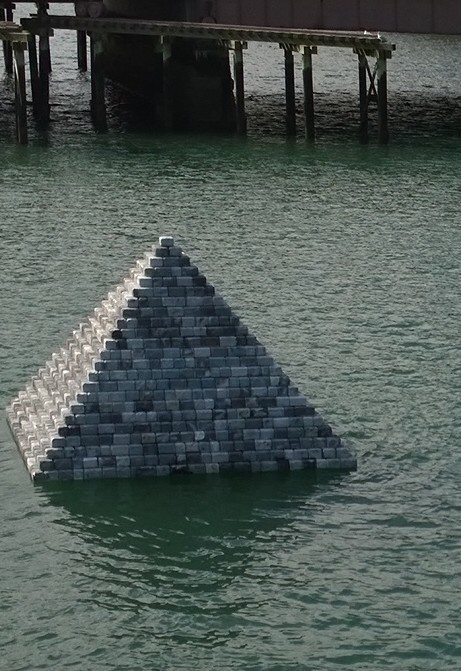
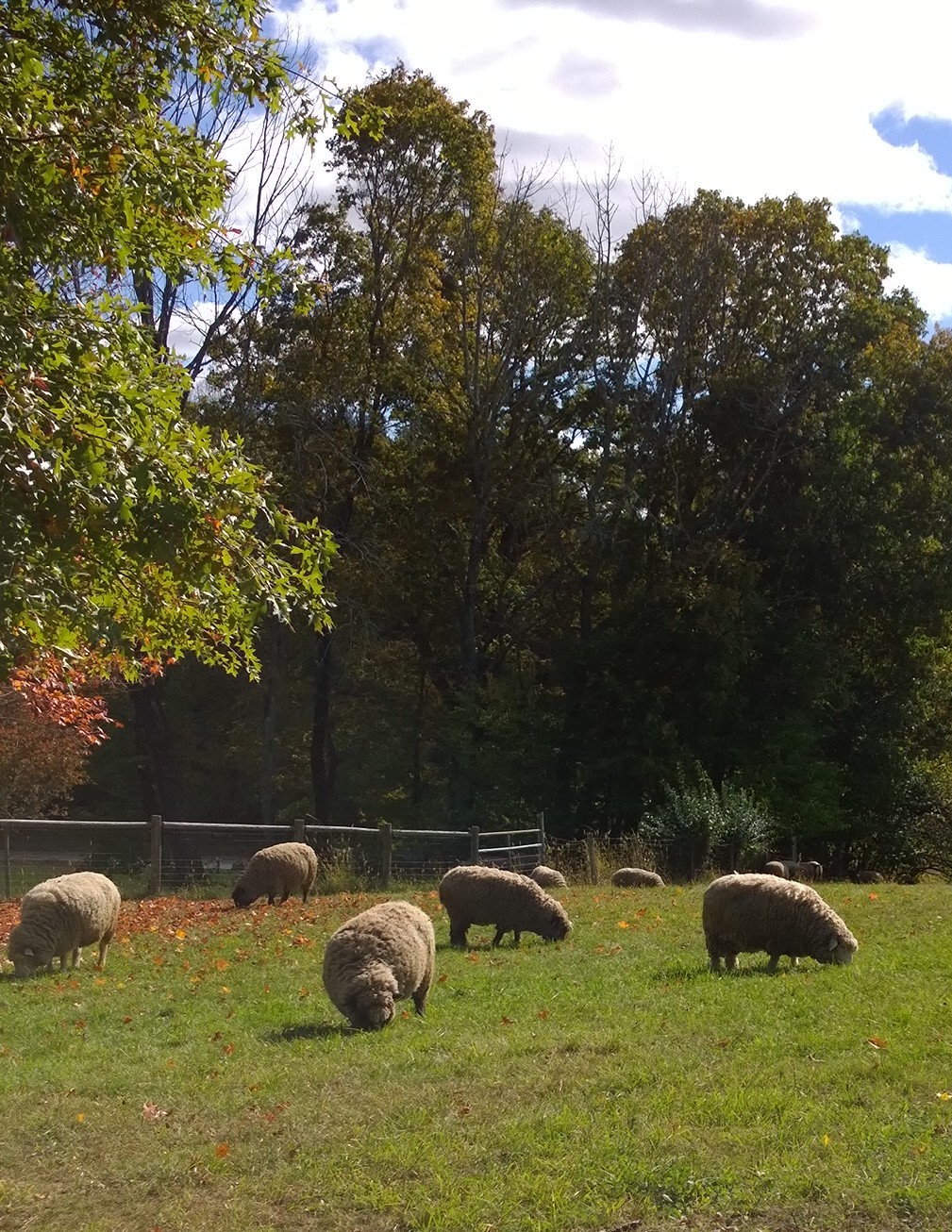
Artist Don Eyles floated a pyramid in Fort Point Channel until a storm blew up. Suzanne, my husband, and our middle grandchild visited the sheep and other animals at the Audubon Society’s Drumlin Farm.

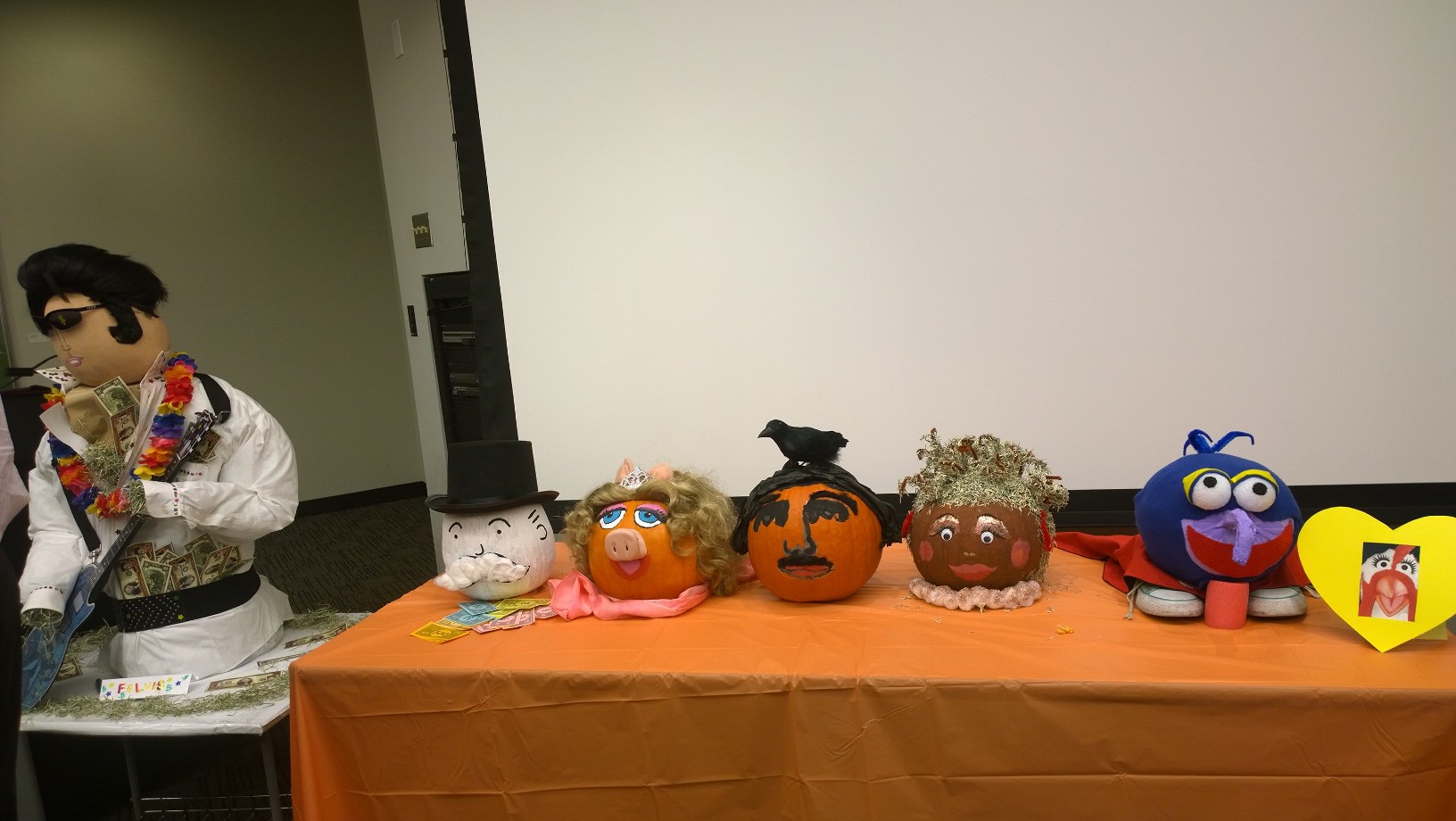
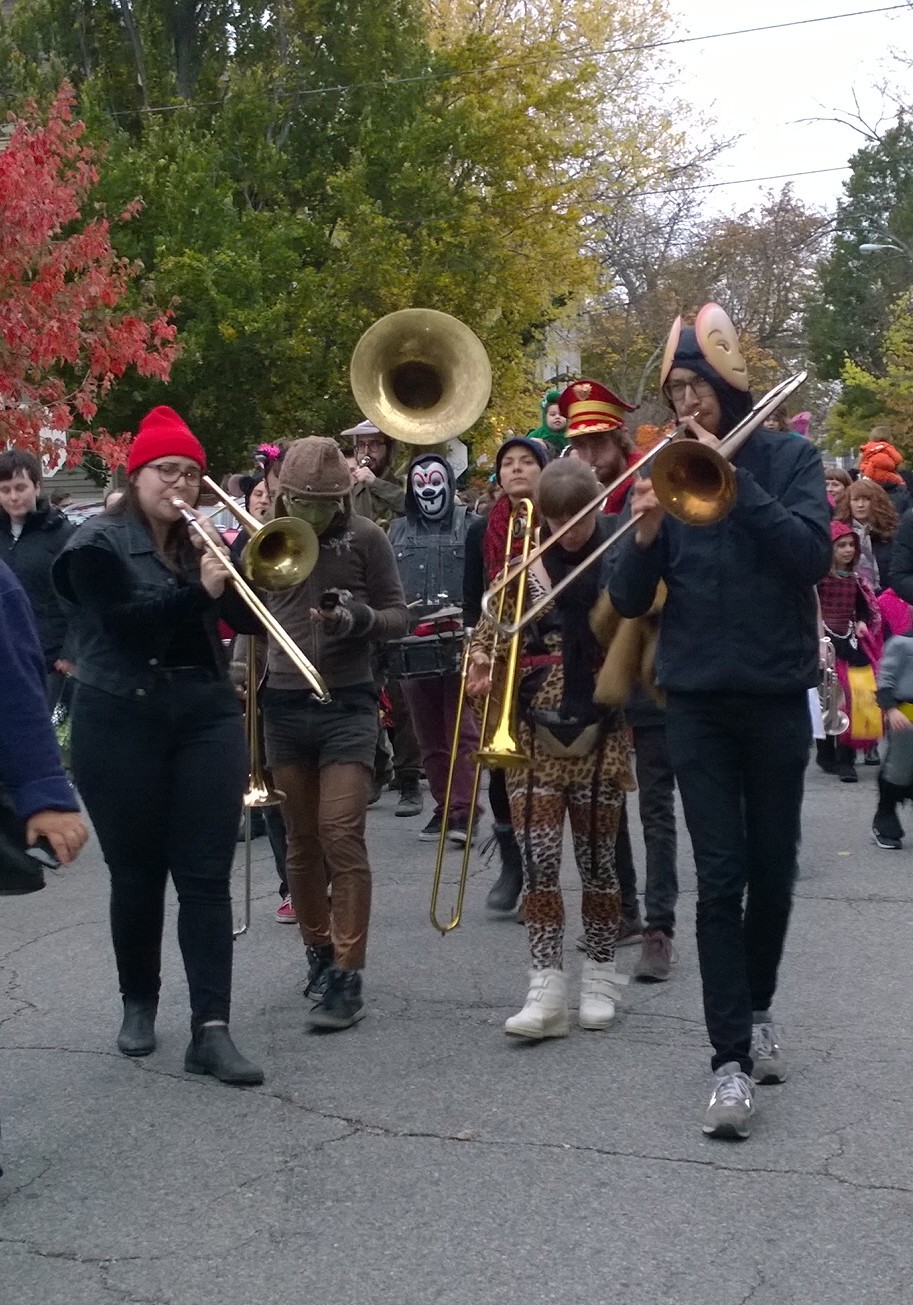
At work, we had a pumpkin-decorating contest. My team did Miss Piggy, porcine Muppet diva, to use the Wall Street Journal identifier. (Left to right, Elvis, the Monopoly Man, Miss Piggy, Edgar Allan Poe, Chia Pet, and Gonzo.) A Halloween band marched surrounded by babies, kids, and adults in costume all around blocked-off Providence thoroughfares near the Brown Street Park.

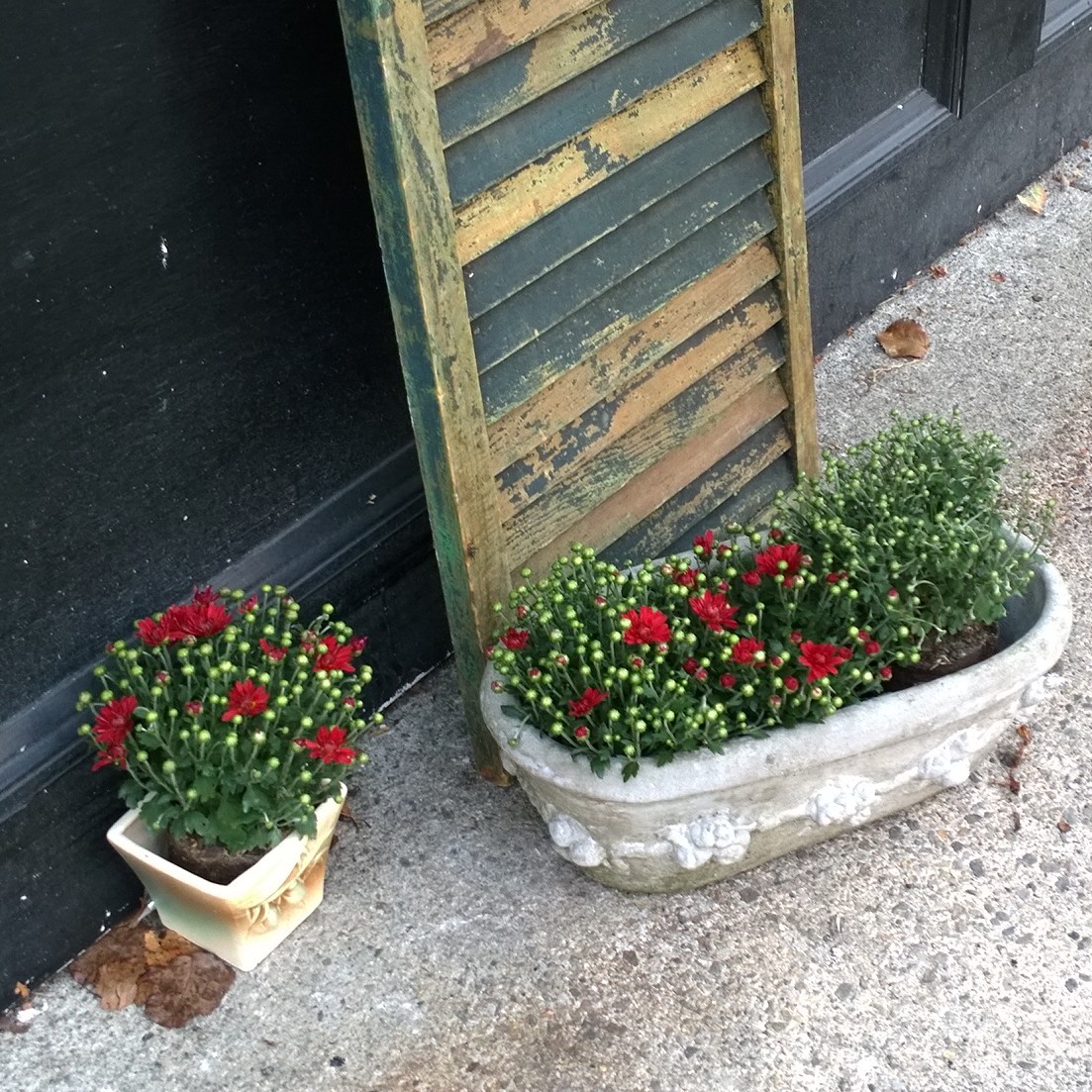
More quietly, chrysanthemums soaked up sunshine.

Here is a bit of background on the pyramid, in case you are interested.

“In 1998 Fort Point artist Don Eyles floated his first pyramid in Fort Point Channel, marking the water as a venue for art and opening the doors to years of temporary art installations to come. The installation was a bold move, made independently, and completely self-funded.”

“ ‘Consider the history that has passed along the cobbled streets of Boston — all the men and women, famous or unremembered, who have walked and rode here … always with granite cobblestones beneath their feet and wheels. I have long dreamed of making this history tangible, by constructing a great pyramid from the cobblestones uprooted by the City’s recent development.’ ”

More on the Pyramid and other Fort Point projects at tumblr, here.

pyramid-Fort-Point-Channel
101914-Drumlin-Farm-sheep
Halloween-team-bldg-at-work
Halloween-in-Providence
flower-pots-in-fall


Read Full Post »

Yesterday my husband, my cousin Dennie, and I went to the Institute of Contemporary Art (ICA) to see a video installation of Icelandic musicians performing together but in separate rooms of a crumbling mansion on the Hudson River.

Museumgoers entered a large dark gallery at any point in the performance and fixed their eyes on whichever of the nine big screens caught their attention. We happened first upon the guitarist Ragnar Kjartansson in the bathtub singing at the loudest point in the cycle. We turned to each other with our mouths and eyes wide in a huge grin, it was so incredibly crazy and far out.

Here’s what the ICA says about the installation: “A celebration of creativity, community, and friendship, The Visitors (2012) documents a 64-minute durational performance Kjartansson staged with some of his closest friends at the romantically dilapidated Rokeby Farm in upstate New York. Each of the nine channels shows a musician or group of musicians, including some of Iceland’s most renowned as well as members of the family that owns Rokeby Farm, performing in a separate space in the storied house and grounds; each wears headphones to hear the others. …

“The piece itself sets lyrics from a poem [“My Feminine Ways”] by artist Ásdís Sif Gunnarsdóttir, Ragnar´s ex-wife, to a musical arrangement by the artist and Icelandic musician Davíð Þór Jónsson; the title comes from a 1981 album from Swedish pop band ABBA, meant to be its last.” More.

From “My Feminine Ways,” by Ásdís Sif Gunnarsdóttir,
“A pink rose
“In the glittery frost
“A diamond heart
“And the orange red fire
“Once again I fall into
“My feminine ways.”

I wrote about the crumbling Hudson River estate before, here.

My husband said Rokeby would have been a great setting for the Antiques Roadshow. Dennie, who is related to the owners of Rokeby, says her friends will never believe that she, a person who always disparages far-out art, was drawn in and ended up really liking “The Visitors.” We watched it twice. I’m still singing the most-repeated line,”Once again I fall into/My feminine ways.”

Read Full Post »

Do you believe in miracles? Consider the snowflake, consider the soap bubble.

Our family is big on soap bubbles in summer. Wired magazine seems to be big on soap bubbles, too, with a recent article on an installation involving bubble magic.

Kyle Vanhemert writes, “Soap is pretty ordinary stuff – until you blow a bubble with it. Then it becomes something a little bit magical, shimmering with delicate, ever-changing color. Unsurprisingly, if you shine a light through that swirling orb, it makes for a pretty incredible show.

“That’s the gist of ‘Invisible Acoustics,’ an audiovisual installation by Royal College of Art graduate Dagny Rewera. For the project, Rewera created three apparatuses that combine light, sound, and soap to spectacular effect.

“First, a wand dips itself into a pool of water, creating a wet, soapy lens. A speaker plays tones and chords, vibrating the soap, while a light projects the proceedings on the ceiling above. …

“Each of the three units is set to play a different range of frequencies, making for three distinct sets of patterns unfolding overhead.” More here.

Art: Dagny Rewera 

Read Full Post »

Another good one from This Is Colossal: Janet Echelman’s suspended net creations.

According to This Is Colossal, “In the late 1990s artist Janet Echelman traveled to India as a Fulbright Scholar with the intention of giving painting exhibitions around the country.

“She shipped her painting supplies ahead of time and landed in the fishing village of Mahabalipuram to begin her exhibitions with one major hitch: the painting supplies never arrived.

“While walking through the village Echelman was struck by the quality and variety of nets used by the local fisherman and questioned what it might look like if such nets were hung and illuminated in the air. Could it be a new approach to sculpture? …

“Echelman is currently embarking on her largest piece ever, a 700-foot-long sculpture that will be suspended over Vancouver … In collaboration with the Burrard Arts Foundation, she’s seeking funding via Kickstarter to make it happen. There’s all kinds of great prints, postcards, and shirts available so check it out.”

More here, at This Is Colossal, where you can see lots more nets. They will make you feel happy.

Art installation by Janet Echelman

Read Full Post »

I like to think I know something about the nonwork interests of my colleagues, interests that may be — in spite of their workday professionalism — at least as much a part of who they are as their jobs. There’s the woman employed as a customer service rep who gets her kicks out of Tough Mudder competitions (extreme sports in mud). Or the editor who bakes bread every day. Or the economist who composes choral music and creates arrangements for flute choir.

Everyone has at least one other life.

But I guess if you’re not physically in the same office, if don’t have lunch together or chat in the ladies room or on the subway, you never find out about people’s other lives.

That’s why I was utterly floored this week when a hard-driving, business-oriented colleague in the Washington office sent around an e-mail saying she would be away from her desk for a month at an artist retreat in Korea. Huh?

Says I, “Oh! Are you an artist?”

Says she: “Yes” and sends me her website.

Oh, my gosh. This is who she really is: a sculptor and installation artist with a record of shows and a gorgeous portfolio. How does she even find time to be hard-driving and business-oriented in the day job?

It makes me wonder what else I’m missing, whose real life is right in front of me and I’m not noticing.

Read Full Post »