Feeds:
Posts
Comments

Posts Tagged ‘korean’

Photo: John and Suzanne’s Mom.
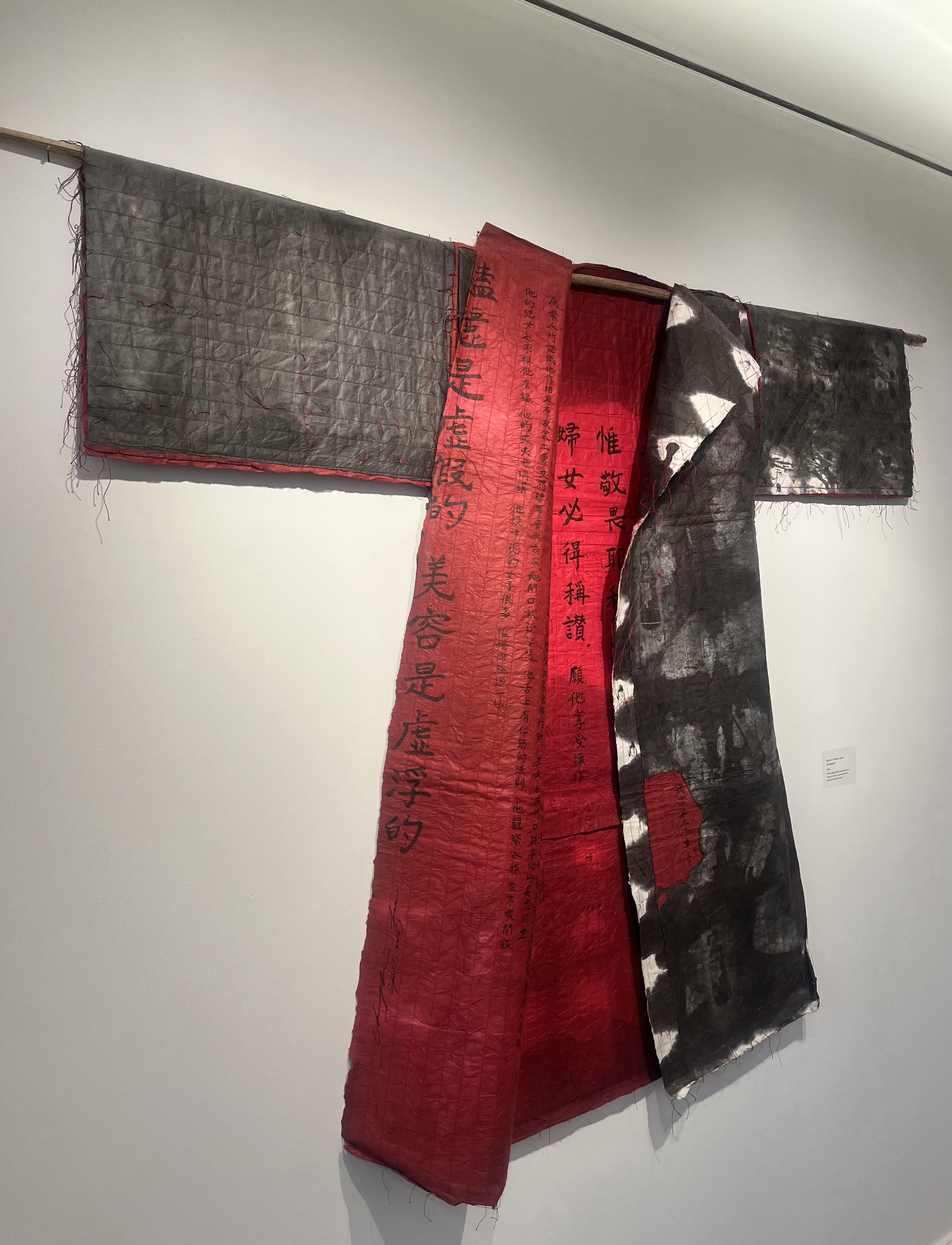
Chunghie Lee‘s bojagi style “No-Name Women Paper DuRuMaGill”: photo images silk-screen-printed on Korean mulberry paper dyed with ground oriental ink stick. At Lexington Arts in Massachusetts.

My friend Ann, the textile artist, put me on to a new/ancient type of quilting and fabric art. It’s from Korea and it’s called bojagi.

According to the websit for Beyond Above Publications, “Bojagi (Bo-Jah-ki), or wrapping cloth, is the ancient Korean folk tradition of making pieced textiles for both everyday and ceremonial use. Originally made by anonymous housewives to fulfill a practical need along with an artistic impulse, Bojagi and its techniques have recently gained attention outside of Korea due to the increasing interest in the value of handmade items, as well the use of recycled materials and the politics of sustainability in textiles and contemporary art.”

I would never know about this type of thing, but Ann is on every email list imaginable for textile art in Greater Boston and beyond. So one day I headed over to Lexington Arts and Crafts to see contemporary bojagi by artist Chunghie Lee.

Apart from appreciating Lee’s skillful needlework, I was struck by her use of sustainable materials: previously used fabrics, mulberry paper, and ground-up ink sticks for red and black dyes. Especially moving was her focus on “no-name women,” the anonymous people behind this technique to make scraps of cloth go far. Women unknown and unappreciated.

You have to look closely to see them. Lee brings them into her work with silk screens of old-time photos, barely visible. Which is why for this piece I am showing you only a close-up.
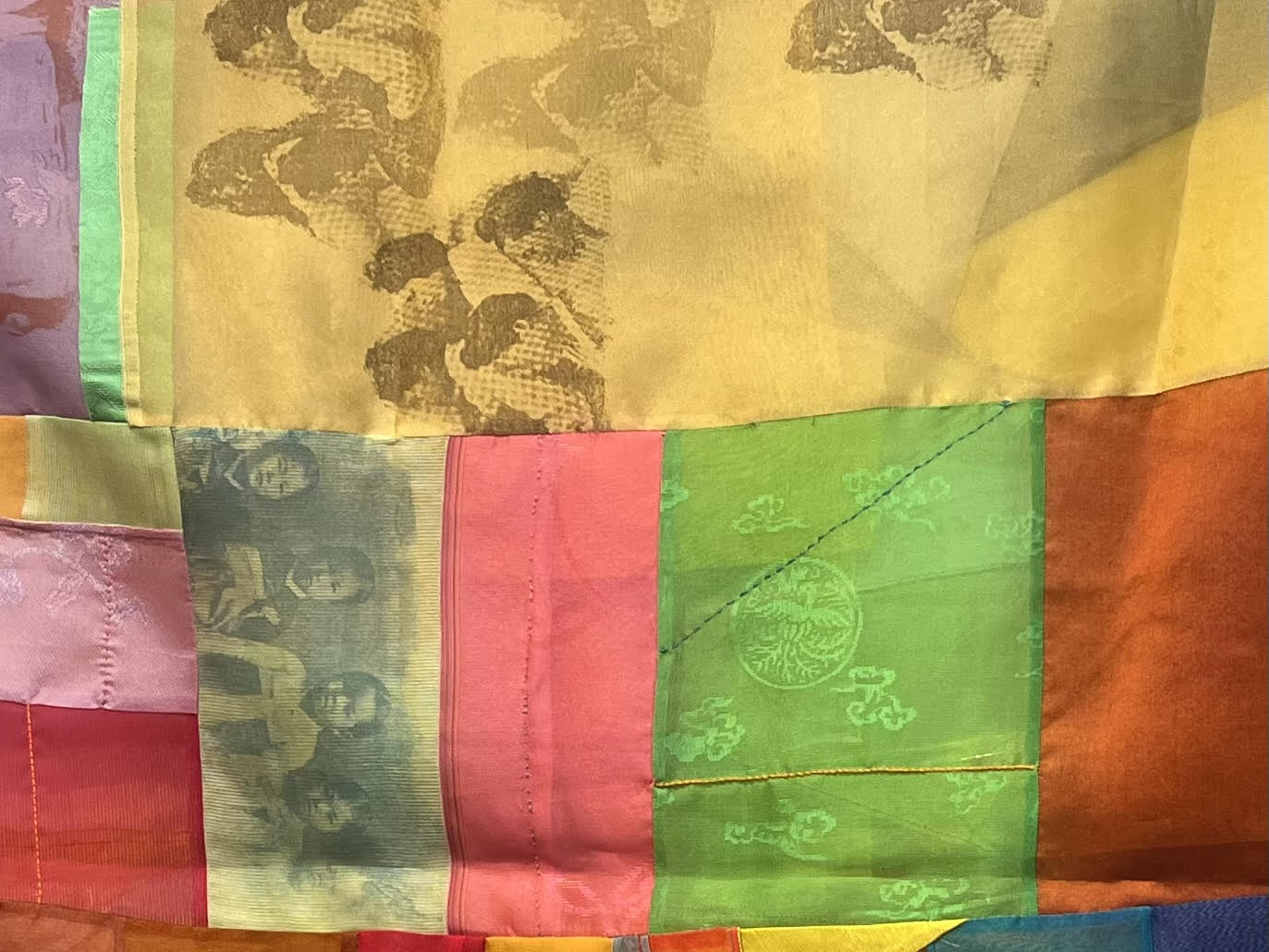
Close-up of silk bojagi “no-name women” piecework by Chunghie Lee.

Here is more detail from the publishing company Lee founded with Jiyoung Chung, a visual artist inspired by the Joomchi papermaking tradition.

“From traditional women’s work to contemporary sustainable textiles, bojagi works include delicately pieced and hand-stitched traditional bojagi, reinterpreted bojagi, wearable pieces, installations, and wall hangings.

This uniquely Korean art form made by anonymous ancestors has evolved from functional works into a contemporary art form that is embraced worldwide.

“Since the late 14th century, every household, from the royal palace to the thatched-roof hut in a mountain village, has found these wrapping cloths indispensable. The tradition of making and using bojagi was established during the Josun Dynasty (1392 – 1910), when women were restricted from leaving their households. To spend the long, tedious hours of the day, girls were taught to sew at age ten, and needlework became a big part of their lives as they moved into  adulthood. This folk art tradition was the only escape from the sequestered lifestyle of Korean women, and provided them with an artistic outlet for creative expression.”

Chunghie Lee adds, “I see this patchwork as a metaphor for human life. We may feel ourselves to be as random pieces of fabric, alone and without meaning, but God’s hand places us together in a beautiful composition, which has great harmony and meaning. As artists of all nationalities, generations and heritages, we discover we are all alike, and have been saving and making beautiful things with discarded fabric and other materials. In the eyes of artists, fabric scraps can be transformed and repurposed to fulfill the design and vision of the creator.”

More on bojagi at the website for publishing company Beyond Above, here. Follow Lee on Facebook, here.

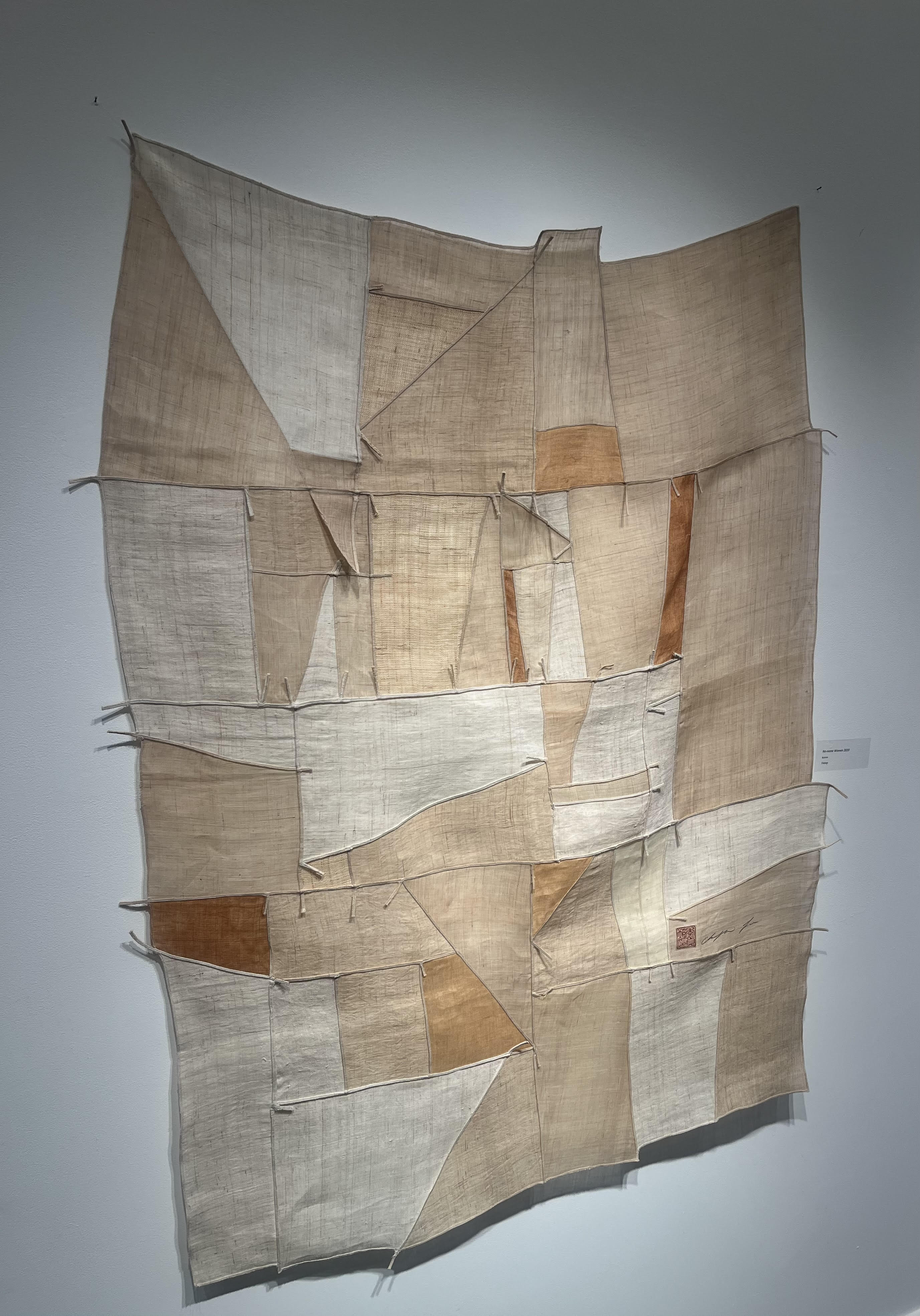
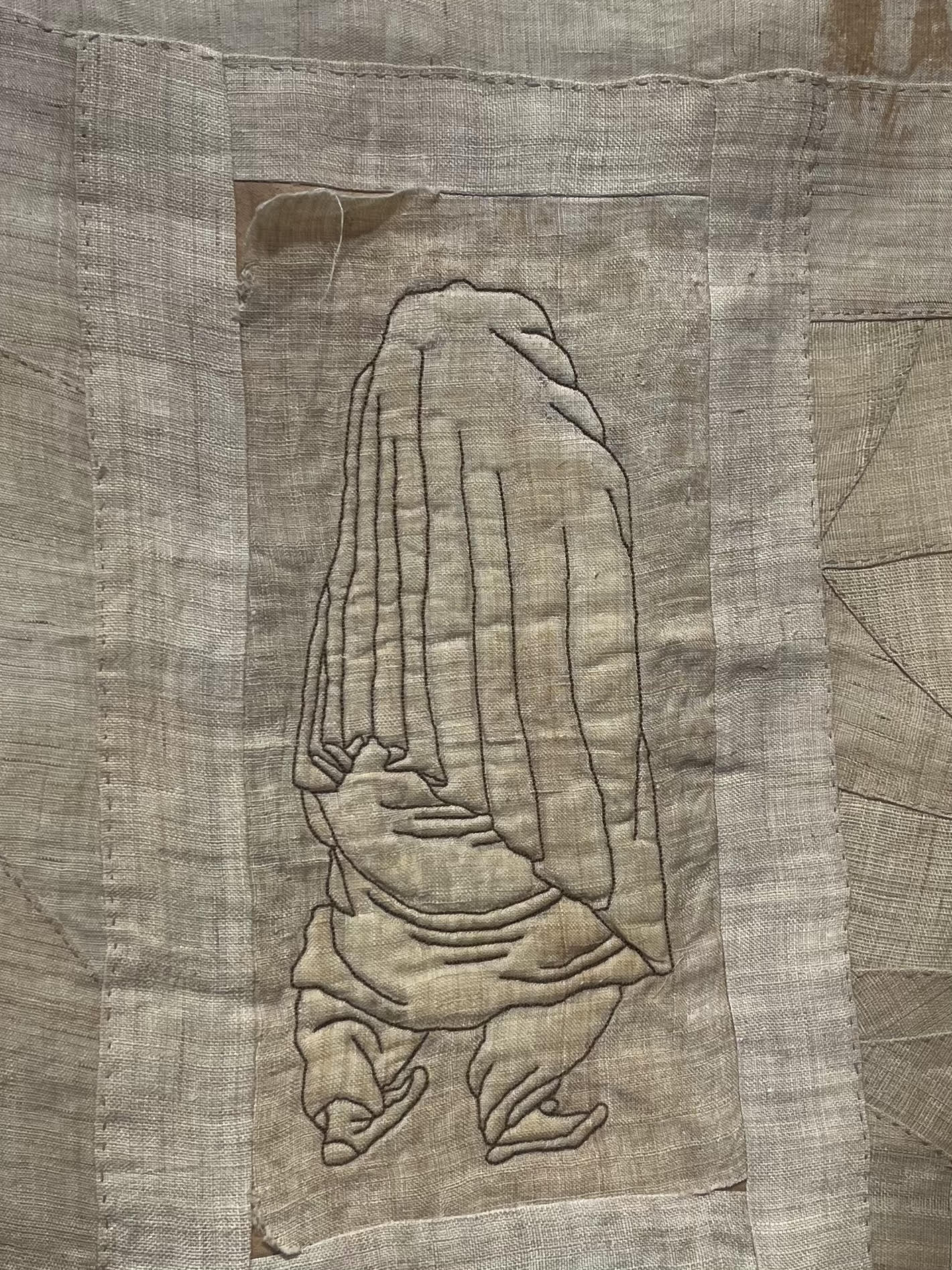
Below, Chunghie Lee’s contemporary version of Korean piecework, followed by her careful stitching for “No-name Woman with Head Covering.”
Read Full Post »

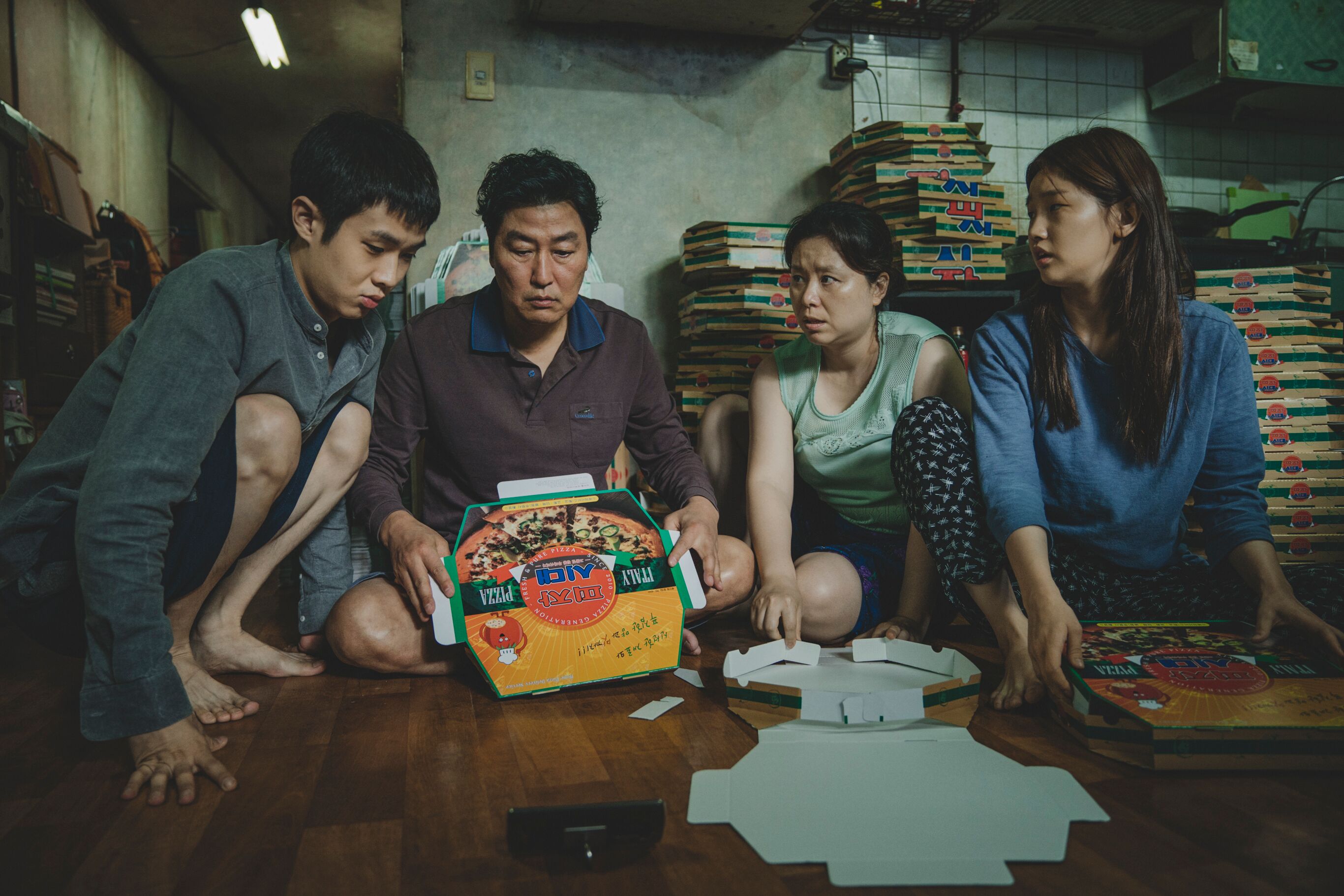
Photo: Cinetic.
From the award-winning Korean film Parasite.

Movies can raise consciousness and lead to change, often positive change. Although the wonderful flic we watched last night, The Loins of Punjab, was mostly for laughs, I think some people would take away a heightened awareness of prejudice, and what it can be like to live in a society where too many people see a terrorist behind every brown skin.

Today’s post is about a hopeful side effect of the award-winning Korean movie Parasite, which led the government to look into the plethora of barely habitable basement apartments dividing the country’s haves and have-nots — and begin to make a plan.

As Monica Castillo wrote at Hyperallergic in February 2020, “Weeks after Bong Joon-ho’s historic win at the Oscars, his film Parasite is still making headlines. … Parasite may now pave the way for housing reform in South Korea.

“The country’s government announced it would launch an initiative to help families like the movie’s working-class Kims to improve housing conditions. The Korea Herald reports that the South Korean government, Korea Energy Foundation, and the Seoul Metropolitan Government will offer ‘3.2 million won per household to enhance heating systems, replace floors, and install air conditioners, dehumidifiers, ventilators, windows, and fire alarms’ to 1,500 families in semi-basement apartments who make less than 60 percent of the median income. …

“In Parasite, the Kims live in a cramped, dingy semi-basement apartment that becomes easily flooded when heavy rains fall. They envy the wealthier Park family that lives in an elevated area with a spacious modern mansion, and hatch a plan to get each member of the Kim family in the employment of the Parks. …

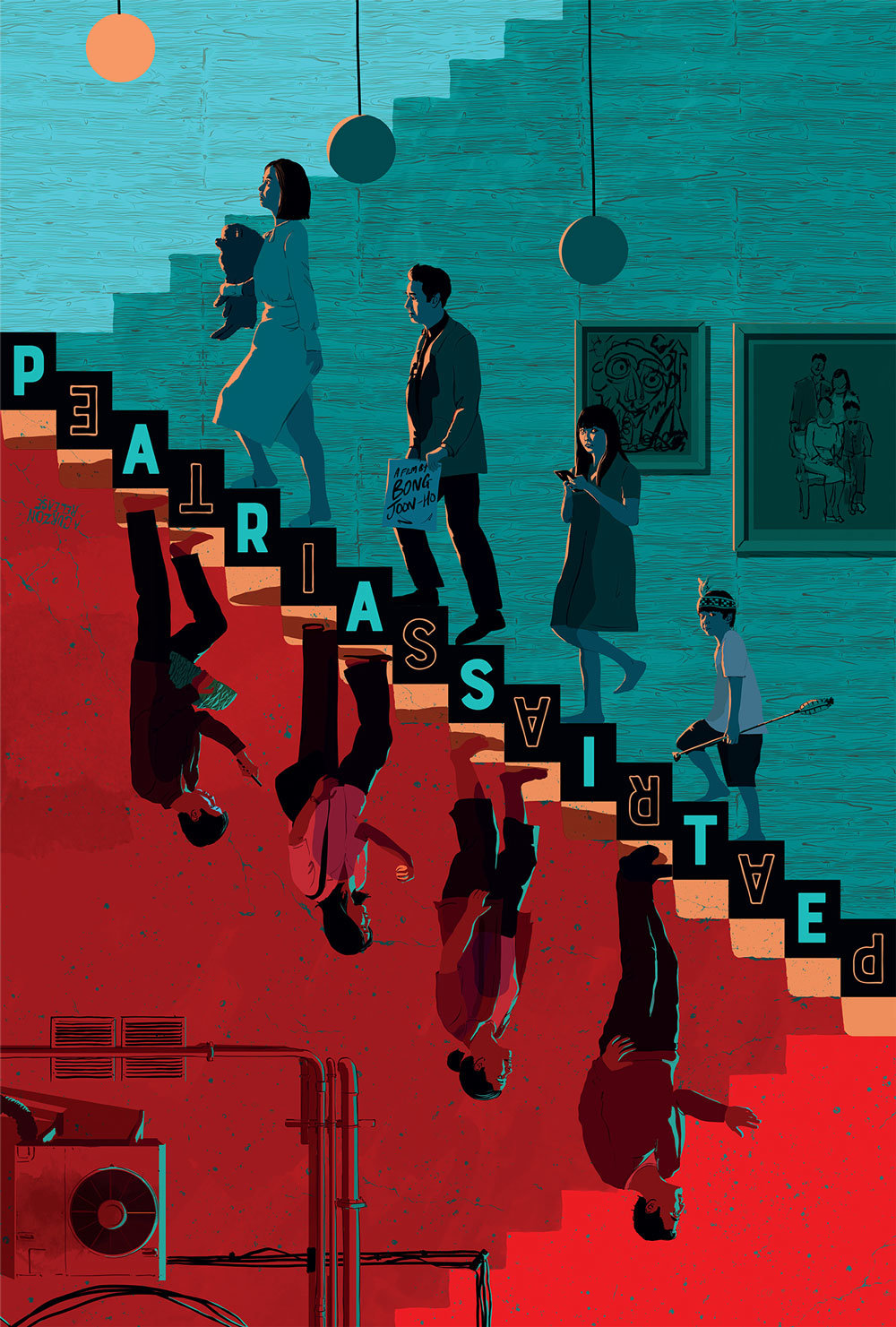
“The film’s clear class distinction between the haves and the have nots also inspired many designers. In a look at the fan art and advertising inspired by the movie, Mubi found several instances where artists visually interpreted the movie’s theme on class through metaphors. Parasite’s attention to architecture featured in a number of the pieces, as several artists incorporated both Park and Kim family homes into their designs. The works ranged from digital illustrations both intricate and deceptively simple to photographic composites reimagining the movie’s many twists and turns. 

“Even in the official movie poster, there are hints of a difference between the two families, as the post points out that the Kims have black censor bars over their eyes and the richer Parks have white censor bars. For the French release not long after its Cannes premiere, the Parasite poster featured the Kim family barefoot and the Parks in shoes, a nod to their well-heeled background.”

More at Hyperallergic, here.

At Mubu, you can check out posters the movie inspired and the emphasis on inequality. What an array! Adrian Curry wrote, “All great works of art inspire more great art and Parasite has been a gloriously fecund host for poster designers to feed off, inspiring ingenious commercial campaigns and fan art alike. The original Korean poster — the first glimpse any of us got of this soon-to-be sensation back [in April 2019] — was designed by Kim Sang-man, a film director (Midnight FM), art director (Joint Security Area), and composer. …

“Its placid yet ominous domestic scene, rendered undeniably creepy by the censor bars across the protagonists’ eyes … featured half the major players (not least that boxy, modernist home, the ultimate star of the film) and a number of significant objects (the teepee, that ornamental rock, those legs…) without giving much of the game away. One thing I didn’t register until quite recently is how the bars across the eyes are color-coded by family: black for the Kims, white for the Parks.”

I didn’t see Parasite. Did you? Did you think it made a case for affordable housing? A case against inequality?

Read Full Post »

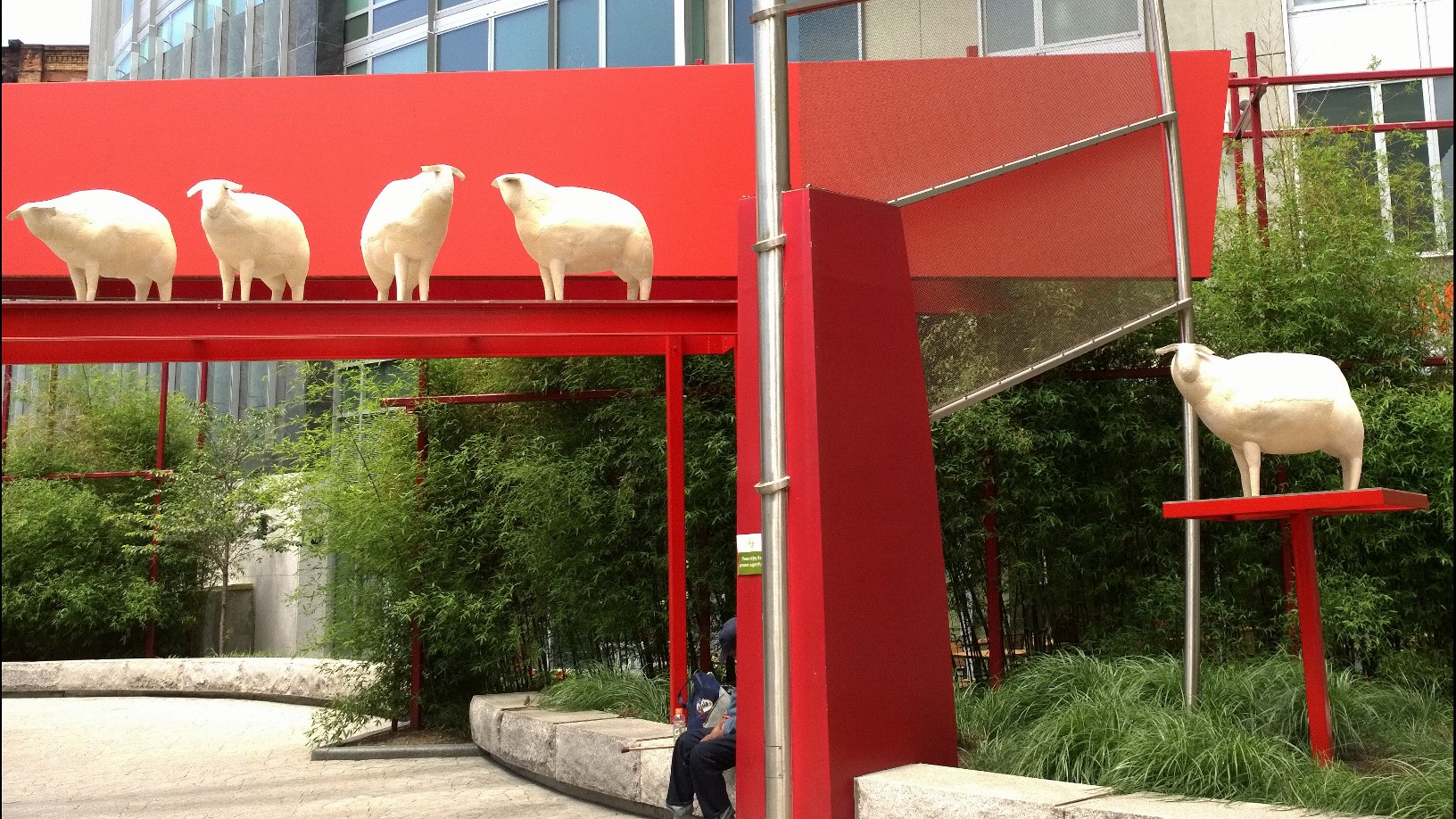
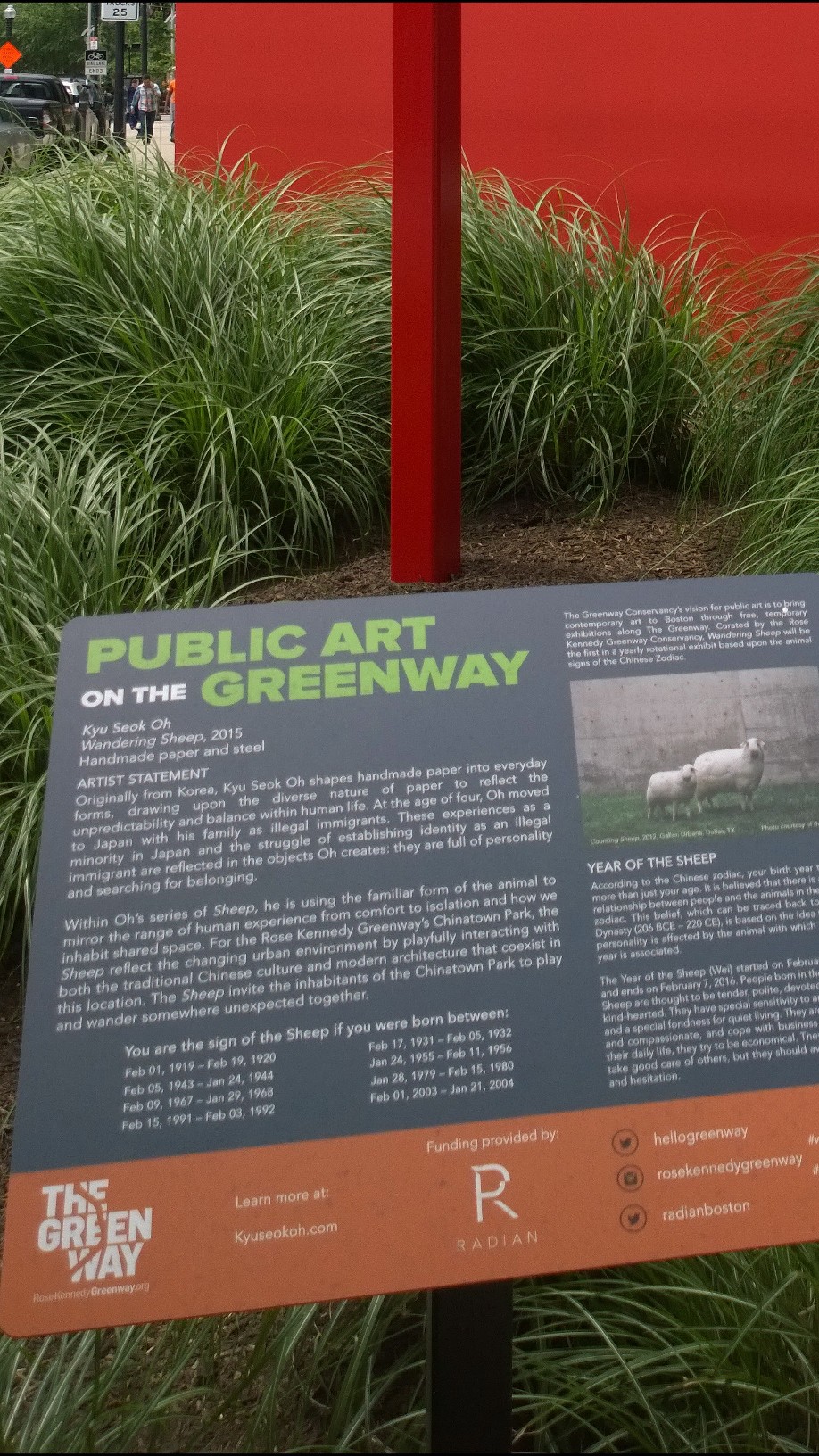
I was in Chinatown today at lunch and was charmed by several paper-and-steel sheep on the Greenway’s  Red  Gate. The Greenway website says, “Korean born, New York based artist Kyu Seok Oh has created Wandering Sheep at the Red Gate in Chinatown Park (corner of Essex St and Surface Road) This is the first of a series of exhibits based on the Chinese Zodiak calendar.” We are currently in the Year of the Ram (or the Goat, or the Sheep; I’m told the Chinese language doesn’t distinguish). I’m posting two pictures.

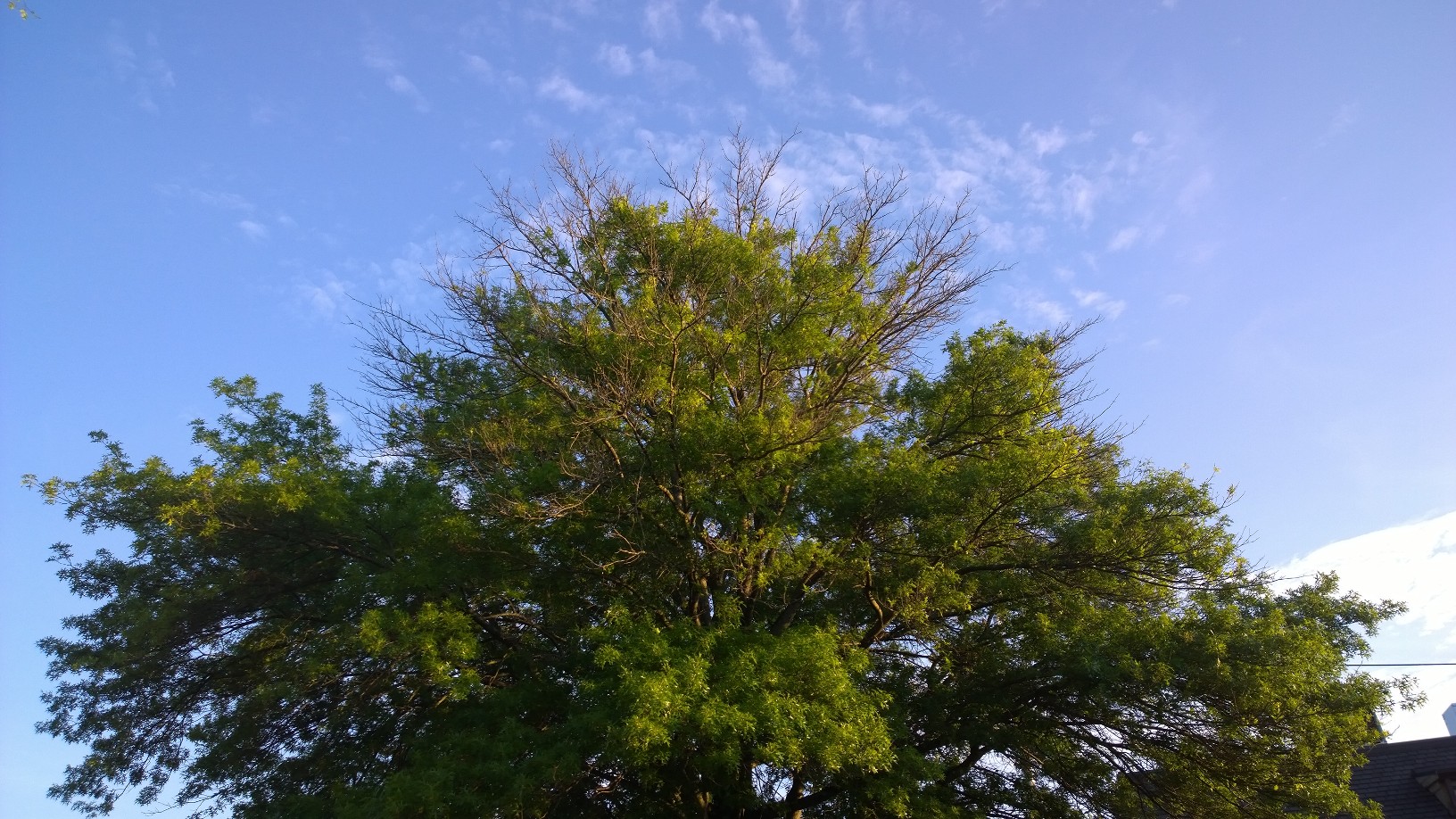
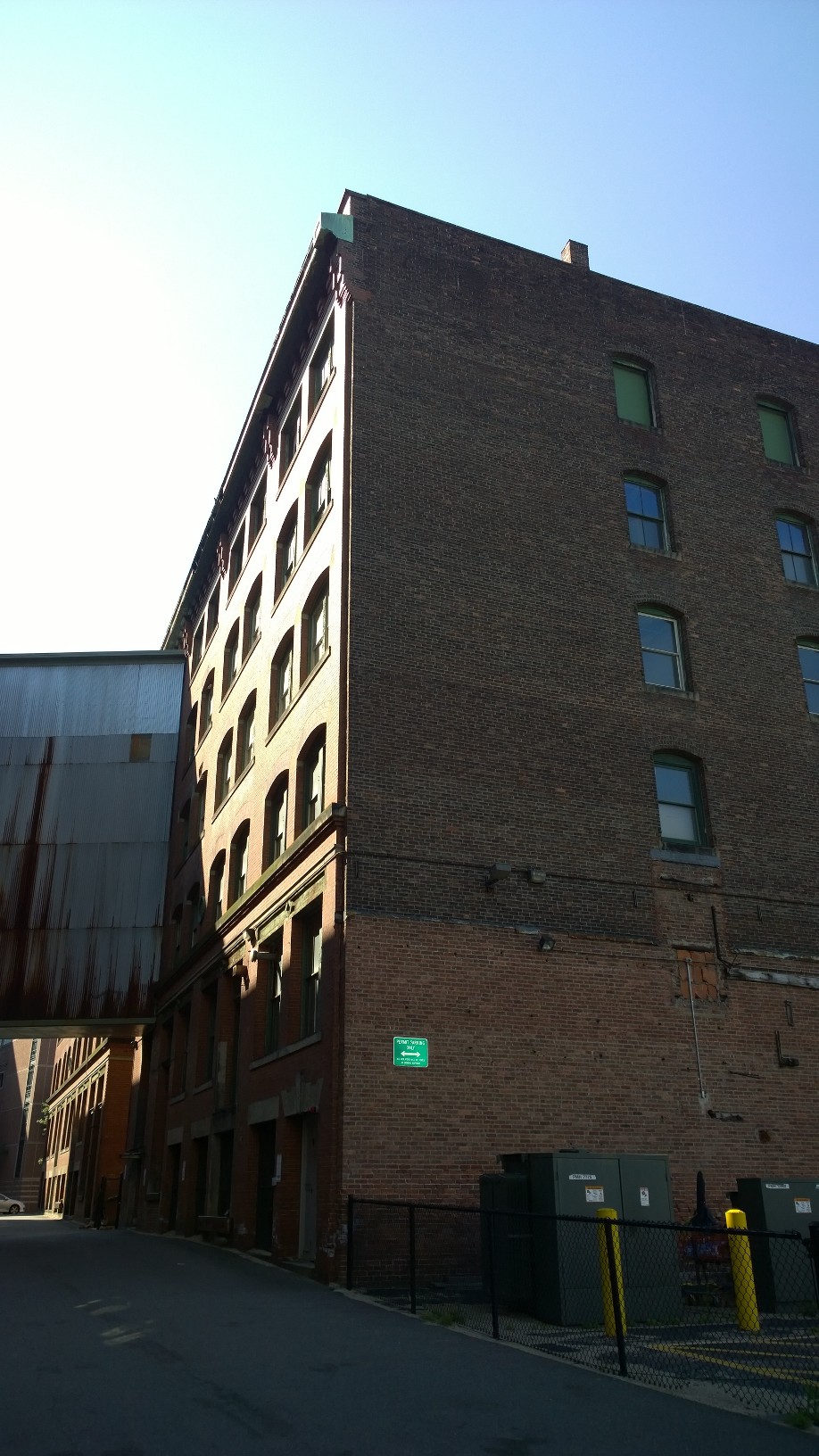
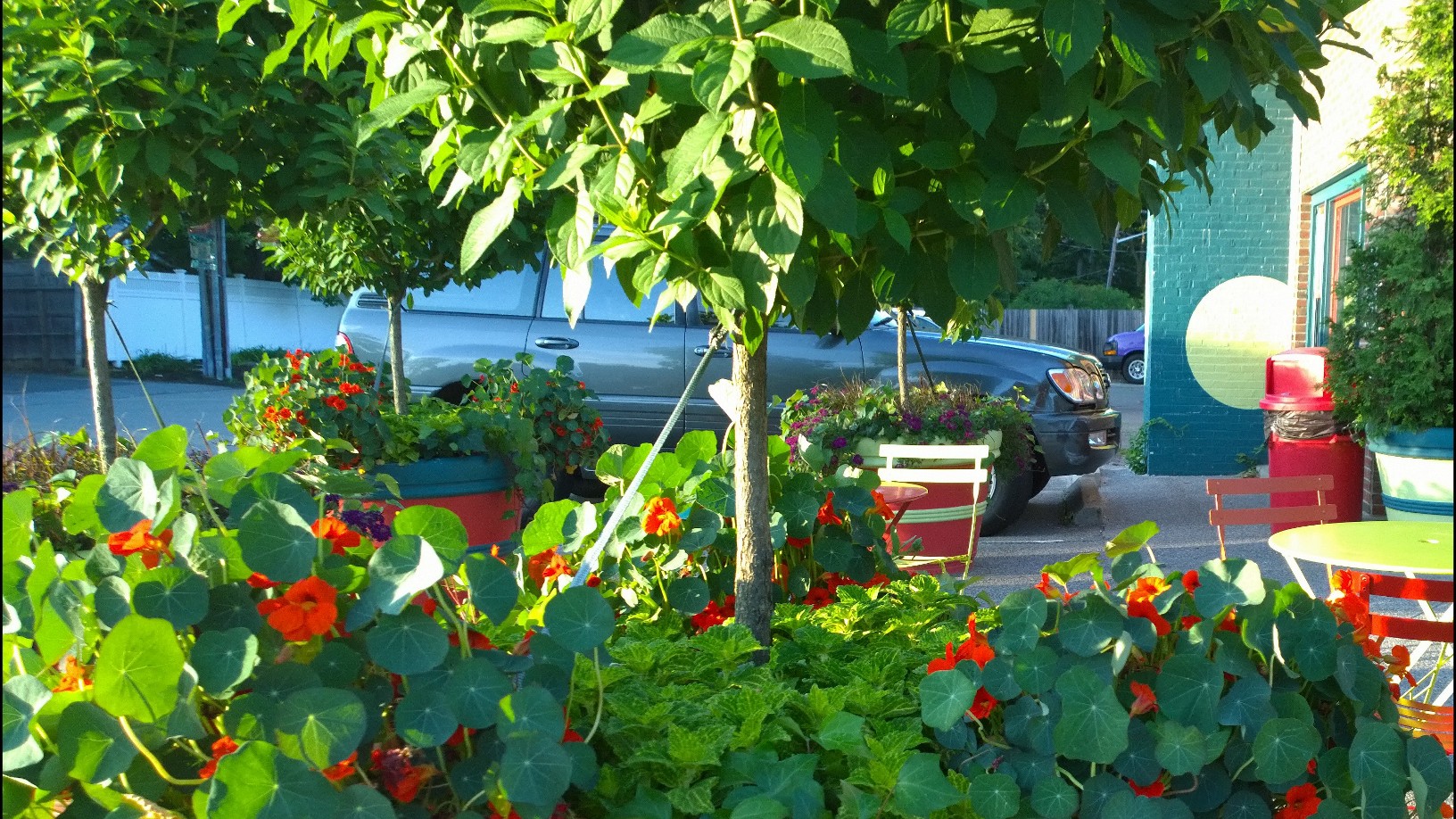
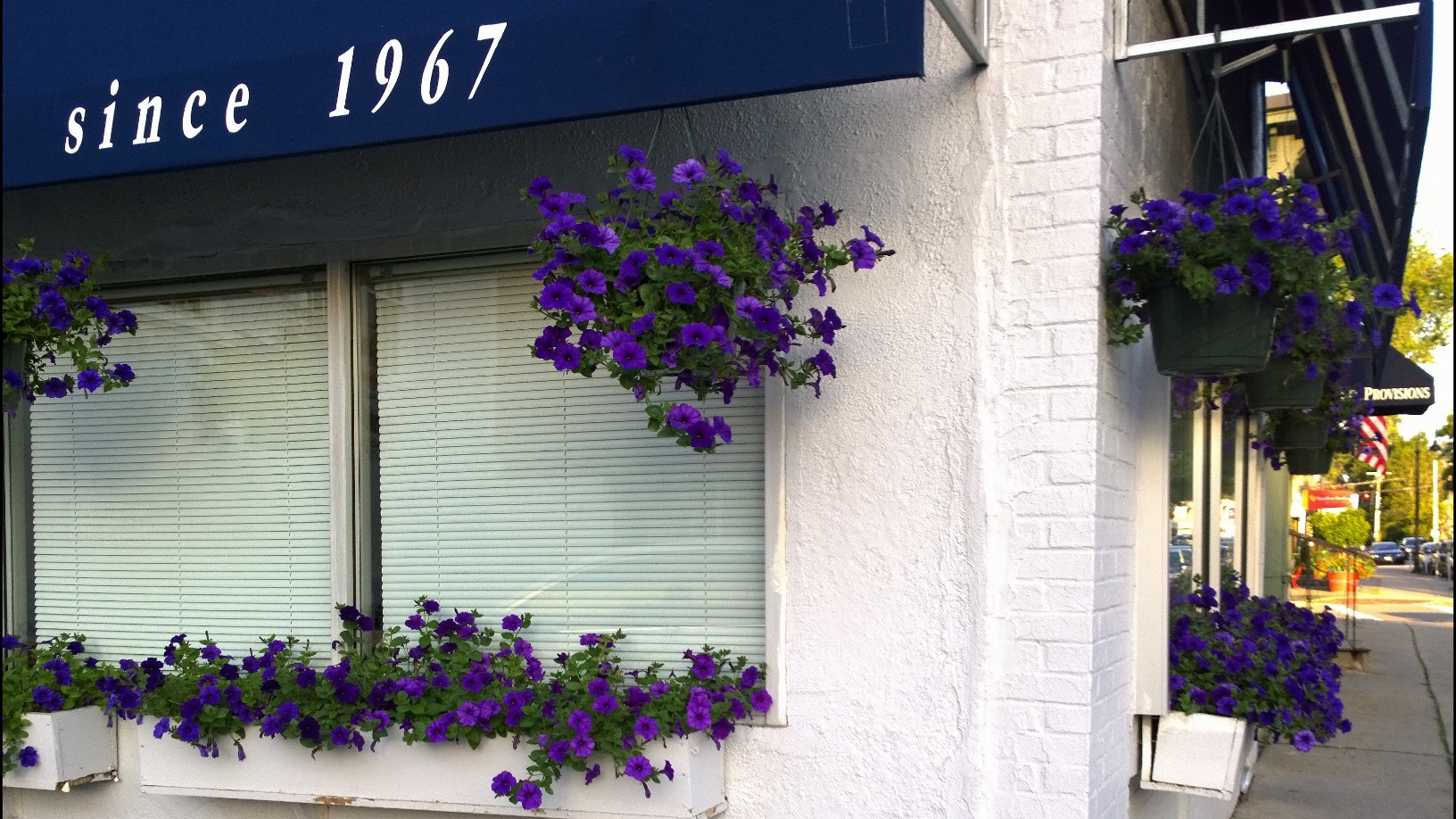
Also today, I have photos of a sunny treetop, another tree gripping the bank of the Assabet River, early morning light on a Fort Point warehouse, nasturtiums in sunshine, and the new look of the pizza place. John contributed the aspirational kite.

sheep-in-chinatown

public-art-Greenway


tree-top

roots-hold-me-close


early-light-on-a-warehouse

nasturtiium


pizza-since-1967

060715-kite-above-new-shoreham


Read Full Post »

Of the various articles written recently about the elderly Koreans hanging out in a McDonald’s in Queens, the one I liked best and learned the most from was Michael Kimmelman’s at the NY Times. He asks an intriguing question.

“Why that McDonald’s?

“The kerfuffle started when word spread that the police were repeatedly evicting elderly Korean patrons from a McDonald’s in Queens. The Koreans have been milking their stays over $1.09 coffees, violating the restaurant’s 20-minute dining limit. The news made headlines as far away as Seoul. Last week, Ron Kim, a New York State assemblyman, brokered a détente: The restaurant promised not to call the police if the Koreans made room during crowded peak hours.

“Still, the question remains. The McDonald’s at issue occupies the corner of Parsons and Northern Boulevards, in Flushing. A Burger King is two blocks away. There are scores of fast-food outlets, bakeries and cafes near Main Street, a half-mile away

“So, in the vein of the urban sociologist William H. Whyte, who helped design better cities by watching how people use spaces, I spent some time in Flushing. What I found reinforced basic lessons about architecture, street life and aging neighborhoods.” Read it all.

My key takeaways: older people, especially those with canes, think two blocks from home is OK, but not four; elderly people like picture windows and a busy street corner with a constantly changing scene; they like looking in to see if people like them are inside (the McDonald’s on Main Street has older Chinese, not Koreans); they like little nooks where a group can gather comfortably.

As a longtime booster of walkable communities, I find it all makes perfect sense. If such naturally occurring communities continue to appear, perhaps they should be encouraged, with some kind of compensation for the business owner. What if the city redirected some money for senior programs to a business that provided space in downtimes? Crazy?

My husband frequents a coffee shop group where folks hang out but not all day. That group has had its differences with the proprietor, goodness knows. There ought to be ways to make everyone happy.

Photo: Damon Winter/The New York Times
Picture windows, lively traffic and easy access for the elderly: the McDonald’s at Northern and Parsons Boulevards in Queens.

Read Full Post »

I liked this multicultural story by Fernanda Santos in the NY Times. It demonstrates that people from different cultures can adapt to one another’s foods and customs very nicely in the U.S. melting pot.

It is all happening at the Ranch Market in Phoenix.

“Tortillas are a Mexican staple of transnational appeal here, bridging divisions carved by Arizona’s tough stance on immigration and reaching far beyond Latin American borders.

“The factory, at the Ranch Market store on North 16th Street, employs a pair of Iraqi refugees to whom flour tortillas have become a replacement for the flat bread known as khubz. There are also Cubans, Salvadorans, Guatemalans and, of course, Mexicans manning the machines like the rounder, which turns the masa into balls that are then pressed and cooked in 500-degree ovens at a rate of eight dozen disks a minute.

“Refugees from Somalia buy Ranch Market tortillas as a substitute for a pancake-like bread called canjeelo. Koreans have taken to using them to wrap pieces of spicy barbecued pork, like a taco. Foodies like them because they are the closest thing to an authentic tortilla that they can find at a supermarket here.”

Read more here.

Photograph: Joshua Lott for The New York Times
The Ranch Market on North 16th Street in Phoenix churns out eight dozen tortillas a minute, cooked in 500-degree ovens.

Read Full Post »

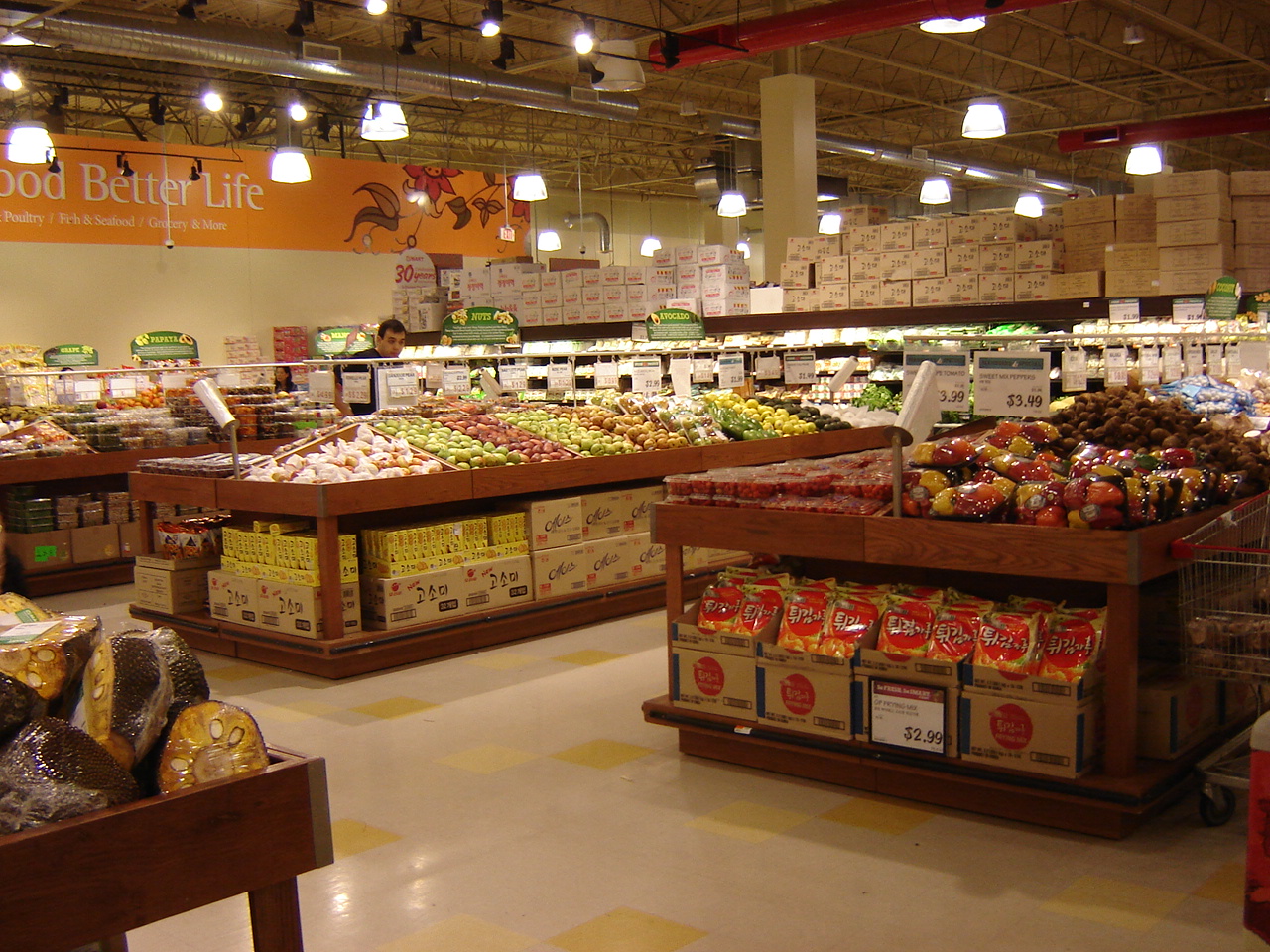
A sunny day for outings. First to the fabled Korean grocery, where salmon and pickled radish were cheap — if you don’t count the gas for the trip.

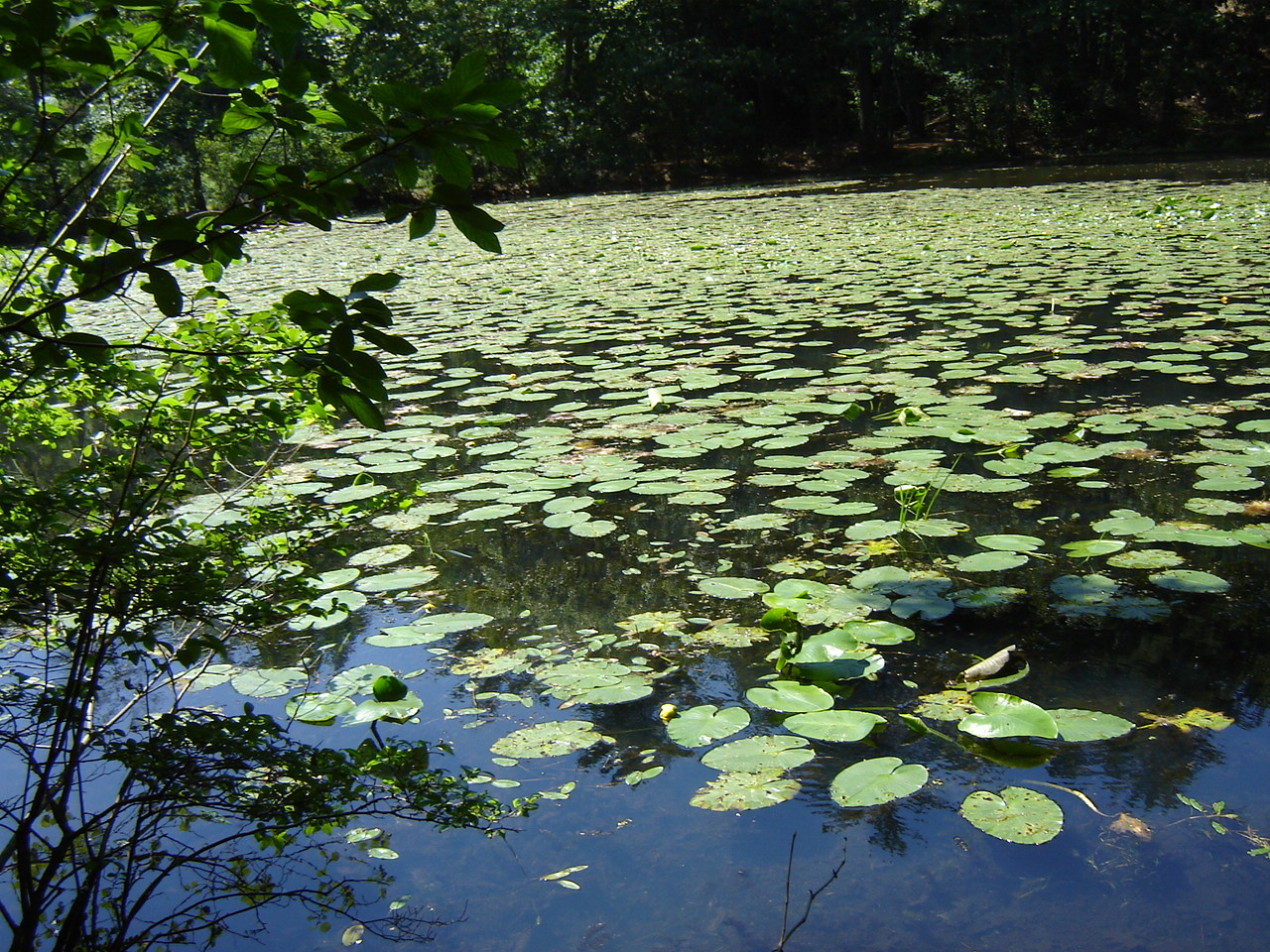
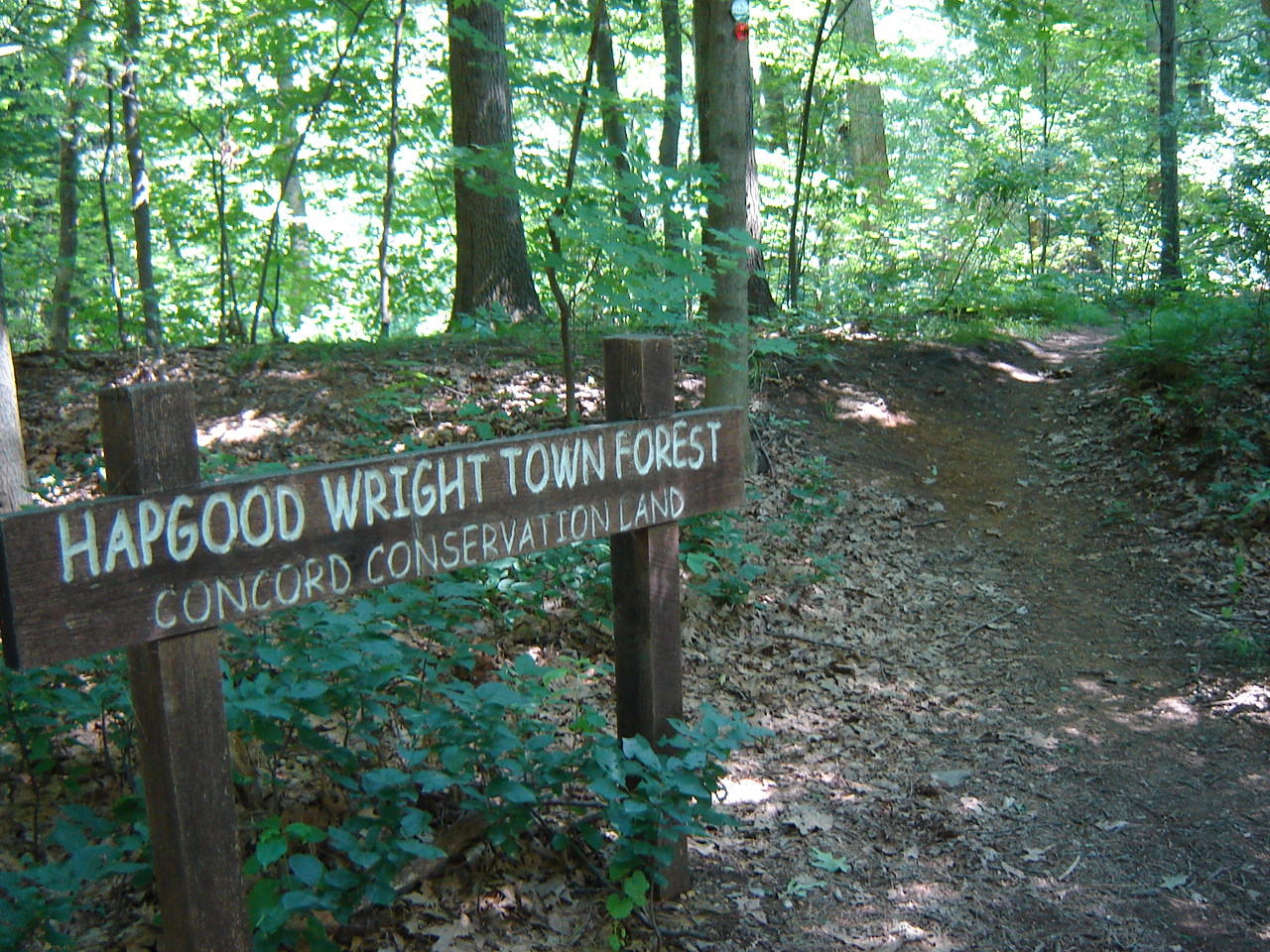
Then to the town forest for a walk with the Father in Chief.

Read Full Post »