Feeds:
Posts
Comments

Posts Tagged ‘landfill’

Photo: Tracy Nguyen for NPR.
In general, Hollywood cares little for the “circular economy,” but this helicopter at Beachwood Services, originally used in 
Black Hawk Down, has been repurposed in Terminator 4Suicide Squad and The A Team, among other movies and TV shows.

As I was working on a post in which actor Benedict Cumberbatch bemoaned the wastefulness of Hollywood, I ran across a contrary example. Apparently, some folks in that world care about the environment or maybe just see a buck to be made by repurposing sets.

A big part of Hollywood’s problem relates to being in a hurry and taking the easy way out.

First Cumberbatch at the Guardian.

Catherine Shoard writes, “Benedict Cumberbatch has called the Hollywood film industry ‘grossly wasteful,’ taking particular issue with its squandering of resources in the aid of set building, lighting – and bulking up physiques for blockbusters.

“ ‘It’s horrific eating beyond your appetite,’ Cumberbatch told Ruth Rogers on her food-focused podcast, Ruthie’s Table 4, adding that when he was shooting Marvel’s Doctor Strange, he would eat five meals a day. In addition, he would snack on boiled eggs, almonds and cheese, in order to try to ingest enough protein to transform his body.

“ ‘Going back to responsibility and resourcefulness and sustainability, it’s just like, “What am I doing? I could feed a family with the amount I’m eating,” ‘ Cumberbatch said.

“ ‘It’s a grossly wasteful industry,’ he continued. ‘Think about set builds that aren’t recycled, think about transport, think about food, think about housing, but also light and energy. The amount of wattage you need to create daylight and consistent light in a studio environment. It’s a lot of energy.’ “

So there’s that.

On the other hand, according to National Public Radio, “Beachwood Services, owned by Sony Pictures Entertainment, rents out sets and props for reuse that were originally built for its own productions.”

That spark of hope was reported by Chloe Veltman.

“For decades,” she says, “it was standard practice in Hollywood for art departments to build sets for movies and TV shows from scratch, and then break them down at the end of production and haul the pieces off to the landfill.

” ‘The dumpsters just line up at the end of the show,’ said veteran Hollywood art director Karen Steward of many productions she worked on, from the 1988 high school comedy Johnny Be Good, to the 2013 political action thriller Olympus Has Fallen. ‘And there’s no talking about it, because it’s time to get off the soundstage.’

“Steward is part of a group of like-minded Art Directors Guild members who have been pushing for more sustainable practices for years, along with other allies. At first, she said, it was hard at first to get much traction. ‘We’re all about not wasting time, and hurry up, and get it done, and time is money.’

“But Steward said things are becoming easier, as the industry is gradually coming to grips with its impact on human caused climate change. …

” ‘To find a true circular solution, a true zero waste idea, is what we’re working toward,’ she said.

“According to Earth Angel, an agency that helps productions in the U.S. and around the globe reduce their carbon footprints, the average TV show or movie in 2022 created about 240 tons of waste, with an estimated half of that amount coming from the disposal of props and sets.

” ‘There are definitely more innovative, efficient ways of working,’ said Earth Angel founder and CEO Emellie O’Brien. ‘

‘We often just don’t give people the space and the breathing room to uncover those solutions.’

“One such solution is to reuse old sets rather than always building new ones. Beachwood Services, owned by Sony Pictures Entertainment, rents out sets and props for reuse that were originally built for its own productions. Located in Santa Clarita, north of Los Angeles, its warehouses are packed with scenic gems. …

“Art directors sometimes resist the idea of reusing old sets, because they want to realize their own creative vision. But Sondra Garcia, Beachwood’s director of scenic operations, said the service allows them to alter what they rent to suit their needs.

” We tell people, “You’re going to put your own spin on it. You’re going to paint it. You’re going to reconfigure it. And then it is your design,” ‘ said Garcia. ‘The most important thing to remember is to recycle stuff because it’s less wasteful, and producers like it because it saves money.’

“And when those sets get too old to rent out to big-budget productions, they often wind up at places like EcoSet. Productions pay for the Los Angeles-based company to haul away their unwanted sets, props and construction materials. Instead of going to landfills, those treasures are then donated to whoever wants them. …

“But these solutions to Hollywood’s chronic waste problem only go so far.

“Ecoset’s owners don’t know what happens to all of the free stuff the business gives out — whether it’s recycled again or thrown away. Also, many warehouses around the region that used to keep old sets and props in circulation have downsized — Sony’s Beachwood Services formerly had five warehouses and now there are two — or have shuttered in the past couple of years, owing to rising real estate costs. …

” ‘I don’t think anyone in our industry would shy away from really hard challenges or else we wouldn’t be in our industry,’ said Everything Everywhere All at Once producer and sustainability champion Jonathan Wang. ‘But I do think it’s tricky.’

“Wang said despite people’s best intentions, a lot of materials still get thrown out in the rush to meet hectic production deadlines — including on his own sets.

” ‘I think it’s important to just acknowledge that we’re all figuring it out,’ Wang said. ‘We’re trying to do it better.’ “

More at NPR, here, and at the Guardian, here. No firewalls, but both those outlets need our support.

Read Full Post »

Photo: Cassandra Klos/New York Times.
Heather Billings, food waste reduction consultant.

Have you ever marveled at the different kinds of jobs humans have tackled in the history of the world? My mind goes to glassblowers, harness makers, oil cup salesmen, jester to the king. And there are always new jobs popping up to meet new demands.

In Massachusetts, for example, you can now find a career as a “food waste consultant.”

Somini Sengupta reports at the New York Times, “America has a food waste problem: Rotten tomatoes and pizza boxes end up in trash dumps and produce a potent planet-heating gas called methane.

“Massachusetts has a fix: A state regulation requires businesses to keep food out of dumpsters. To help them comply, the state offers a carrot, in the form of a chatty, practical, 63-year-old hand-holding food-waste-reduction consultant named Heather Billings.

“Which is how, on a frigid Wednesday morning, Ms. Billings found herself poking around the narrow kitchen of the Port Tavern, a sports bar in Newburyport, Mass.

“An owner of the Port Tavern, Abbie Hannan, [invited] Ms. Billings to look at how the restaurant managed its waste. She quickly spotted a very solvable problem at the prep cook’s station: a 23-gallon trash can into which went tomato tops and other food scraps. Then came the dumpster inspection. Could anything in there go to compost?

“Ms. Billings, a consultant contracted by the state government, took notes, snapped pictures and peered behind the bar to assess where the lemon wedges and plastic olive skewers ended up.

“She had some easy fixes for Port Tavern’s co-owner Abbie Hannan. She proposed inexpensive, four-gallon plastic buckets to nest inside the bigger trash bins to collect food scraps. She connected Ms. Hannan to compost haulers and a charity that could pick up leftover edible food.

“ ‘Our biggest challenge will be to get everyone to follow the rules,’ Ms. Hannan surmised.

“ ‘A visual reminder is always good,’ Ms. Billings replied. She opened her binder to show signs that could be affixed to the kitchen walls.

“State regulations require institutions that produce half a ton of waste per week — hospitals, universities, restaurants — to divert organic waste away from landfills and incinerators. …

“In theory, there’s a stick for those that fail to comply. If state inspectors see large amounts of food waste being trucked into a waste site, they try to trace it back to where it’s coming from. Enforcement is rare. In the last 10 years since the regulations have been in place, only 141 businesses have been cited for not complying with the regulation. …

“Some food that’s wasted is still good. There are charities in the Boston area that take the surplus from restaurants and grocery stores. Because, even as so much food goes to waste, many Americans are still hungry

“An independent study published in the journal Science concluded that among the half dozen states with composting laws, Massachusetts had gone farthest in reducing total waste in its landfills. … Environmentalists want Massachusetts to go further, by requiring residents to also keep food waste out of landfills and requiring cities and towns to offer rat-proof compost bins. ‘We’re still throwing away a lot of food,’ said Kirstie Pecci, who heads an advocacy group called Just Zero. …

“One additional benefit of the food waste rule: It has spurred new businesses around the state, like Black Earth Compost. Composting turns food waste into dirt that farmers and gardeners can use to nourish their soil. …

“[Ms. Billings’s] passion for keeping useful things out of the trash goes back decades. … She is now a senior waste reduction consultant for CET, formerly called the Center for EcoTechnology, a nonprofit group contracted by the state to help businesses comply with the regulation.

“Her job, as she sees it, is to observe and advise. Do people who work in the kitchen have to travel far to dispose of compost? Are dumpsters clearly labeled so employees know what should go in them? Can restaurants save money by reducing their trash volumes? Is there enough organic waste to send to an anaerobic digester facility, where organic matter is turned into fuel?

“At Port Tavern, the trickiest problem stood in the parking lot. The bar shares the dumpster with three other restaurants. Only if everyone agrees to hire a compost hauler would they be able to reduce the trash they generate, and the cost of trash pickup.

“ ‘It’s complicated,’ Ms. Hannan warned.

“ ‘Not insurmountable,’ Ms. Billings replied, with her signature cheer.” More at the Times, here.

Some residents where I live compost with Black Earth. But we’re still trying to persuade our kitchens to do the same. The people in charge tend to think — unlike Ms. Billings — that what is complicated is “insurmountable.”

Read Full Post »

Photo: Naja Bertolt Jensen/Unsplash.
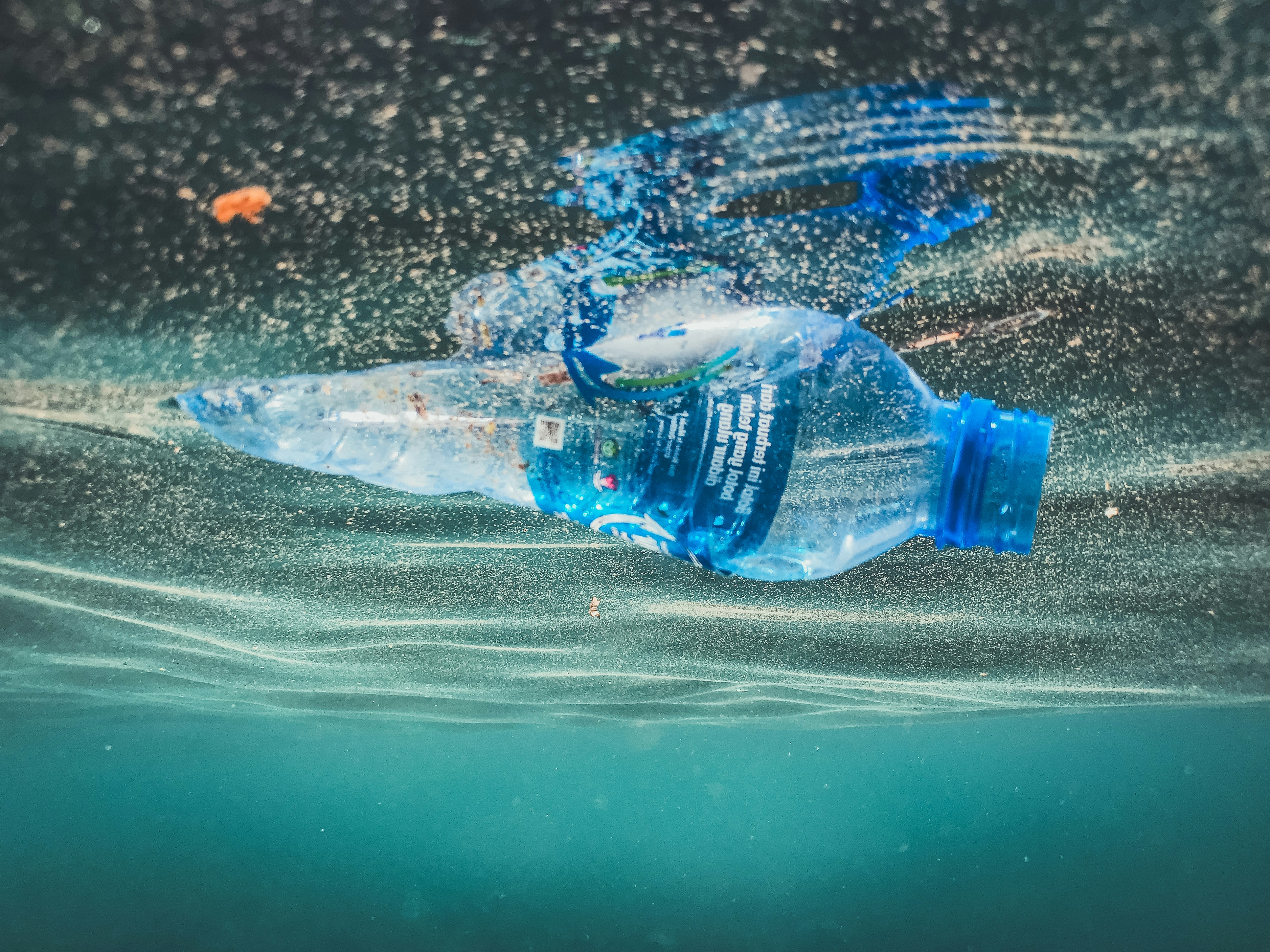
Can we ever escape plastic?

When I think about all the plastic we have created and put into our landfills and oceans, I am close to despair about ever cleaning it up.

Still, there are always people willing to fight the odds. Consider the initiative called Plastic Free July. Jacob Fenston has the story at the Washington Post.

“The idea took root in Australia more than a decade ago, and in recent years it has been gaining popularity in the United States. It all began when Rebecca Prince-Ruiz visited her local recycling sorting center in Perth, Australia, in 2011. She had always thought of herself as being eco-conscious, but after looking around at the heavy machinery sorting an endless stream of bottles, tubs, jars, cans and boxes, she had an aha moment.

“ ‘I suddenly realized that filling my recycling bin each fortnight didn’t make me the great green citizen I thought I was,’ Prince-Ruiz says. ‘The most important thing I should be doing was actually reducing my waste in the first place.’

“She decided to try to avoid single-use plastic for an entire month. The next month happened to be July. So Plastic Free July was born.

“Since then, the idea has spread around the globe. According to the Plastic Free Foundation, the nonprofit that Prince-Ruiz founded, 89 million people in 190 countries pledged to reduce their plastic use during July last year. The countries with the most participants are China and India.

“Over the last five years, participants have avoided more than 1.5 million tons of plastic waste, according to the campaign. That’s enough to fill about 80,000 garbage trucks. …

“Sending anything to the landfill or incinerator has a negative impact on the environment. But plastic is particularly problematic, experts say.

“ ‘Plastics are one of the greatest threats facing our planet today,’ says Melissa Valliant, a spokesperson for Beyond Plastics, a plastic-pollution-fighting nonprofit. … ‘We are not going to recycle our way out of this problem,’ Valliant says.

“Plastic waste chokes oceans and the creatures who live there. And plastic production is a major contributor to climate change: The industry emits four times the planet-warming emissions as the airline industry, according to a recent U.S. Energy Department report.

“But from the beginning, the Plastic Free July campaign has focused on solutions rather than the problem. In fact, the campaign’s website contains almost nothing about the harms of plastic, other than its sea turtle logo — a reference to one of the animals most at risk from ocean plastic.

The website offers ideas for plastic-free beginners — small changes like using reusable shopping bags. There are also suggestions for those further along the journey, including making your own toothpaste, sans plastic tube.

“Prince-Ruiz says that first plastic-free month was harder than she’d thought it would be. … Her best advice for newbies: Don’t try to quit plastic cold turkey. Instead, start with a quick inventory of your plastic use — go through your fridge and pantry and trash — and choose one or two places to work on eliminating or reducing your consumption. …

“Freweyni Asress, a D.C. resident who has written about living a zero-waste lifestyle, recommends finding a buddy or two to do the plastic-free challenge with.

“ ‘When there’s a community of people participating in something like Plastic Free July, it really reinvigorates you,’ Asress says. …

“Of course, going plastic-free can be more challenging depending on your circumstances. In the Midwest, for example, store clerks are not always receptive to the idea of skipping plastic bags, Harper says. On one shopping trip where he was only buying a few things and didn’t need a bag, the checker forced one on him, citing concerns about shoplifting.

“ ‘She would not let me leave without a bag,’ Harper says.

“When Asress started her zero-waste journey in 2016, she was working at a food co-op that had a large bulk section and many plastic-free products. But she found not all plastic-free products worked for her.

“ ‘A lot of the hair products that were sustainably packaged or provided in bulk bins were specifically for White people’s hair,’ says Asress, who is Black. … ‘It has to be practical, and we have to be able to figure out ways to be able to include everybody.’ …

“Valliant says the key is to move away from disposable containers and packages and go with materials that can be used over and over. Refundable deposit systems can make this economical.

“Travel to Latin America, Africa or Asia, for example, and you’ll find refillable soda and beer bottles are still common — each one can be filled, purchased and returned as many as 30 times before it breaks or is worn out.”

More at the Post, here.

Read Full Post »

Photo composite: Alessio Mamo.
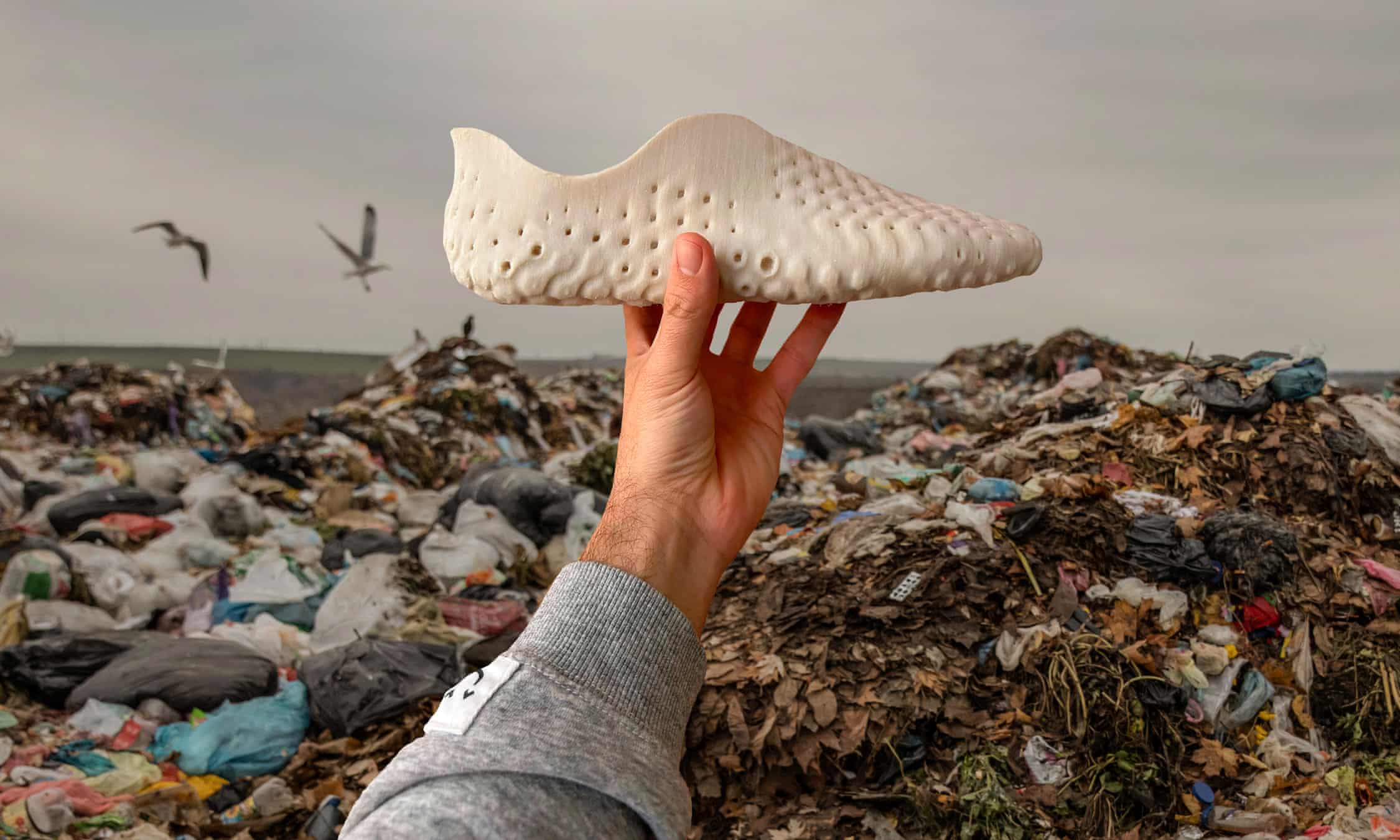
Compostable shoes are being created using 3D printing. 

Overthinking things can lead to a kind of paralysis. You want to do the right thing for the environment, you look for clothes not made with synthetics, wear the clothes many years, finally give them to Goodwill for others to use, and recycle raggedy textiles safely. But you know that a lot of this is still going to end up on the beaches of some African country. How can you do more? Do enough?

And what about shoes?

Well, one step at a time. You have to trust that every little bit helps.

At the Guardian, Patrick Greenfield writes that there is now such a thing as a compostable shoe. “The shoes may not immediately strike you as the future of mainstream fashion. Pale and porous, they resemble a cross between a beige Croc and the long-net stinkhorn fungus found on forest floors. Their creators, however, hope this will be the next huge breakthrough in sustainable footwear: the world’s first 3D printed, made-to-measure, compostable shoe, which can be broken down at the end of its life, in an attempt to stem the flow of millions of shoes into landfill each year.

“Fashion is among the world’s top polluting industries. It is responsible for about 10% of global carbon emissions and consumes huge amounts of water and land for production. Modern shoes are among the hardest items to produce sustainably because of their complexity, say industry experts, and there are few reliable statistics about the number manufactured every year for the world’s 8 billion humans. There is an almost total dearth of statistics about their environmental impact.

“Most shoes are composed of a mixture of synthetic fabric, rubber, plastic and metal, which is often held together with strong adhesives, and they are incredibly difficult to dispose of. The vast majority are bound for landfill once used, where they could take hundreds of years to break down. There are efforts to pioneer recyclable trainers [sneakers] for the world’s $70bn (£55bn) industry, with some brands offering services if customers post back.

“To produce its new compostable model, the London-based shoe company Vivobarefoot has joined forces with a material science company, Balena, to create prototypes of the shoes, which are not yet available for sale. They will be manufactured based on in-store foot scans and then printed over 30 hours. Once they have worn down, the footwear can be returned for composting at an industrial facility. …

“Says Asher Clark, a co-founder of Vivobarefoot. ‘This is about reimagining the way things are done from linear, offshore production to the world’s first scan-to-print-to-soil footwear. It is a vision for cutting out a lot of waste in supply chains and providing an end of life solution for the footwear industry.’

“There are caveats to the sustainability claims of the shoes, says Clark, which will be sold for between £200 [$255] and £260 [$331]. BioCir flex, the patented thermoplastic used to make them is 51% biological materials, 49% petrochemical. It cannot be thrown on a compost heap at the end of the garden to break down – it needs to go to a composting plant. …

“ ‘There is a trade-off between the biodegradability and durability: that is the key tension. The external factors that break down physical products are things like light, heat and moisture,’ he says. ‘The challenge is to make a shoe that will handle all those elements but also respond to the elements that start to break it down at the end of its life.’ …

“Glue and other binding materials can make shoes difficult to recycle, even when new substances are used for their main components, such as cactus ‘leather’ – a material made from the leaves of the nopal cactus – and grape-skin derivatives, says Luca Mosca, fashion lead at the sustainability consultancy Quantis. He says it is still hard to say what constitutes an environmentally friendly shoe, and that consumers should use them for as long as possible. … ‘Shoes are very complicated products.’ ”

More at the Guardian, here.

Read Full Post »

Photo: matusgajdos17/500px.
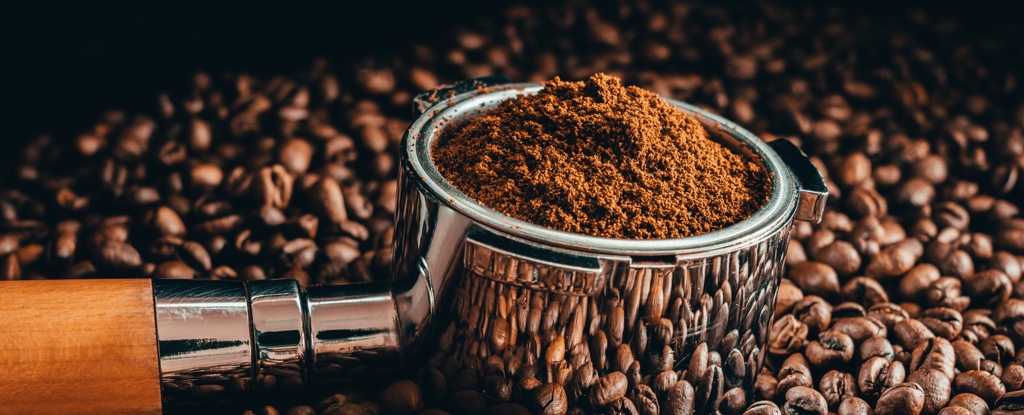
Australian researchers say concrete could be 30 percent stronger with charred coffee grounds.

Longtime coffee drinkers know that coffee is good for all sorts of things besides waking you up. Coffee grounds are great in compost, for example, and provide useful nutrients for your garden — nitrogen, potassium, and phosphorous.

But coffee grounds for construction projects? At ScienceAlert, Tessa Koumoundouros describes new research showing the possibilities.

“We could be producing concrete that’s 30 percent stronger by processing and adding charred coffee grounds to the mix, researchers in Australia discovered. Their clever recipe could solve multiple problems at the same time.

“Every year the world produces a staggering 10 billion kilograms (22 billion pounds) of coffee waste globally. Most ends up in landfills. ‘The disposal of organic waste poses an environmental challenge as it emits large amounts of greenhouse gases including methane and carbon dioxide, which contribute to climate change,’ explained RMIT University engineer Rajeev Roychand.

“With a booming construction market globally, there’s also an ever increasing demand for resource intensive concrete causing another set of environmental challenges too.

” ‘The ongoing extraction of natural sand around the world – typically taken from river beds and banks – to meet the rapidly growing demands of the construction industry has a big impact on the environment,’ said RMIT engineer Jie Li. … ‘With a circular-economy approach, we could keep organic waste out of landfill and also better preserve our natural resources like sand.’

“Organic products like coffee grounds can’t be added directly to concrete because they leak chemicals that weaken the building material’s strength. So using low energy levels, the team heated coffee waste to over 350 °C (around 660 °F) while depriving it of oxygen.

“This process is called pyrolyzing. It breaks down the organic molecules, resulting in a porous, carbon-rich charcoal called biochar, that can form bonds with and thereby incorporate itself into the cement matrix. …

“The researchers [are now] testing how the hybrid coffee-cement performs under freeze/thaw cycles, water absorption, abrasions and many more stressors. The team is also working on creating biochars from other organic waste sources, including wood, food waste and agricultural waste. …

“Said RMIT engineer Shannon Kilmartin-Lynch, ‘Inspiration for my research, from an Indigenous perspective, involves Caring for Country, ensuring there’s a sustainable life cycle for all materials.’ “

The research was published in the Journal of Cleaner Production.

More at Science Alert, here.

Read Full Post »

Photo: Dominique Soguel.
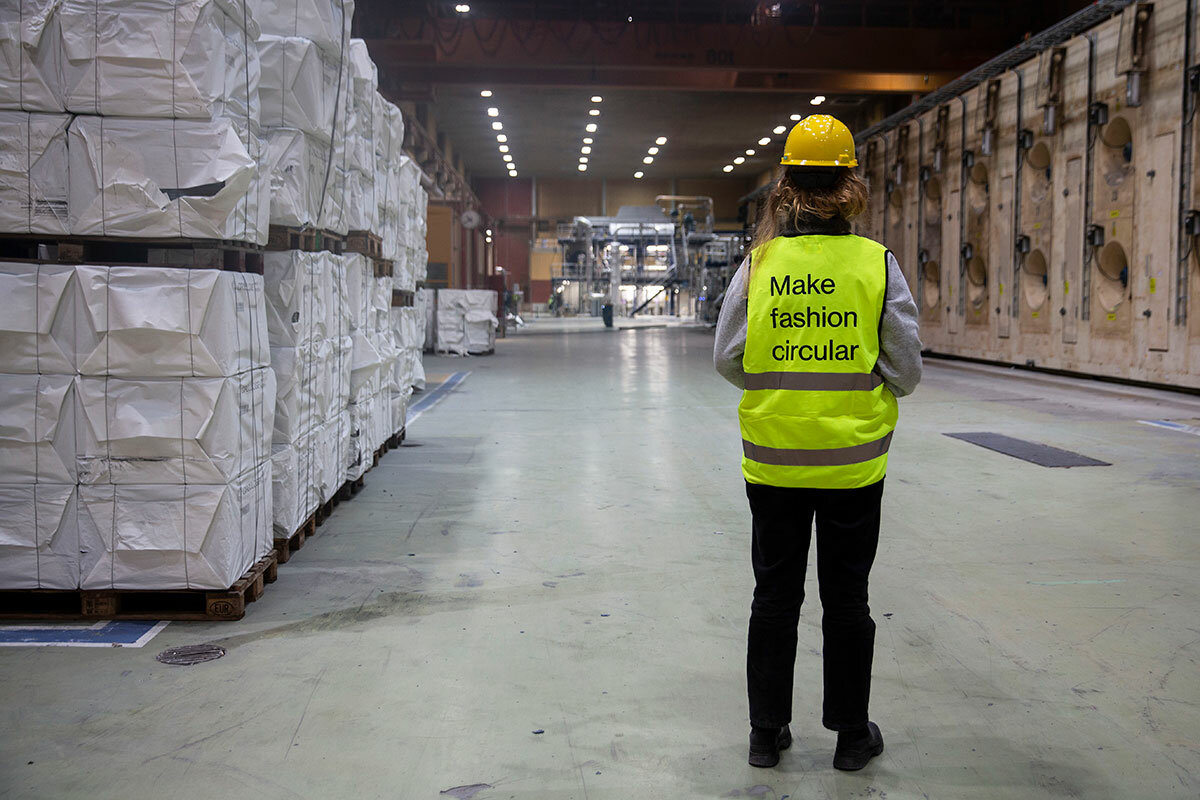
An employee stands in the industrial-scale plant of textile-to-textile recycling company Renewcell in Sundsvall, Sweden, Feb. 7, 2023.

After my youngest granddaughter toured a recycling facility in Rhode Island, she told me that one thing the state recycles is textiles. But in Massachusetts, where a new law forbids putting textiles in landfills, there are few towns that offer services for recycling worn-out clothes. At least there are plenty of outlets for reusable clothes.

In Sweden, some folks are trying to make all clothes — and the materials that go into them — reusable. That’s according to today’s article from the Christian Science Monitor.

Dominique Soguel writes, “Discarded, sorted clothes arrive by ship on the shores of Sundsvall, in the Gulf of Bothnia inlet of the Baltic Sea. But they aren’t bound for a landfill.

“Rather, they are destined for the city’s Renewcell plant, where they will be dissolved and processed into a new substance: Circulose. This material looks like white cardboard, feels like watercolor paper, and – most importantly – can be spun into yarns for textile manufacturers. …

“Renewcell’s patented technology, now available commercially, and successful launch of the world’s first industrial-scale textile recycling plant in Sweden offer a beacon of hope to brands and consumers who care about environmental sustainability.

“ ‘From an environmental perspective, it means that every year, instead of huge swaths of forest being cut down, millions of old jeans and T-shirts are being used rather than them degrading into methane in landfill,’ says Nicole Rycroft, director of the environmental nonprofit Canopy.

“The fashion industry relies primarily on three fibers – polyester, cotton, and viscose rayon – each of which is problematic for the environment.

“Polyester, made from plastic, takes hundreds of years to break down. … Soft-to-touch cotton is grown on vast, water-intensive monoculture farms using large quantities of fertilizers and pesticides. The Aral Sea, once the world’s fourth-largest lake, dried up almost completely, drained by cotton fields in Uzbekistan and Kazakhstan. …

“Viscose rayon is made from tree wood, which sometimes comes from ancient forests. Ms. Rycroft points to the 300 million trees cut down yearly to make viscose rayon, among other textiles. That consumption is slated to double within the next decade.

“On top of all this, much of what the fashion industry produces with these materials ends up as waste. Global production of textile fibers and all apparel creates 110 million metric tons of waste. On average, Europeans produce 33 pounds per year per capita, and Americans about 70 pounds per year.

“Solutions for controlling fashion’s consumption rate range from reducing overproduction and overconsumption to making longer-lasting clothes and embedding circularity into product design. But experts consider fiber-to-fiber recycling – converting textile waste into new fibers that can be used to make clothes or other textile goods – as one of the most sustainable and scalable levers available. …

“The Nordics stand out in Europe for their efforts to reduce the fashion industry’s impact on the planet. Copenhagen Fashion Week imposes sustainability requirements on brands before they hit the runway. Multiple Nordic brands offer recycling options and sell used clothes on their shelves at reduced prices.

“Sweden boasts an impressive secondhand clothes market scene; the world’s first recycling mall, Retuna; and innovative companies like Nudie. Nudie offers customers free repairs on their jeans and a 20% discount on new ones if they trade in old ones. It’s a much-loved service.

“ ‘I really like clothes, but I don’t think it’s necessary for me to buy something new to get the kind of clothes that I like to wear,’ says Tomas Persson after bringing his jeans in for repair to the Nudie shop in Gothenburg. Apart from underwear, he says has not bought a new item of clothing in years – not an uncommon claim in Sweden.

“The development of sustainable textiles is also part of Sweden’s national strategy. That keeps the Swedish School of Textiles and Science Park Borås, both part of the University of Borås, abuzz with the development of high-tech prototypes and design experiments focused on recycling, reuse, and upcycling.

“ ‘We have to find more efficient production processes … and ways of consuming garments,’ says Susanne Nejderås, textile strategist at Science Park Borås. ‘The mean use of a clothing item is around two years. We need to add another eight years to that.’ ”

I’ll just add that consumers are not only demanding sustainability these days, but human rights. There is widespread concern about China using Uyghur forced labor for cotton products. That’s why I buy cotton towels at Patagonia and fair trade cotton clothes from Fair Indigo in Peru (thanks to blogger Rebecca).

More at the Monitor, here. No firewall. Subscriptions welcomed.

Read Full Post »

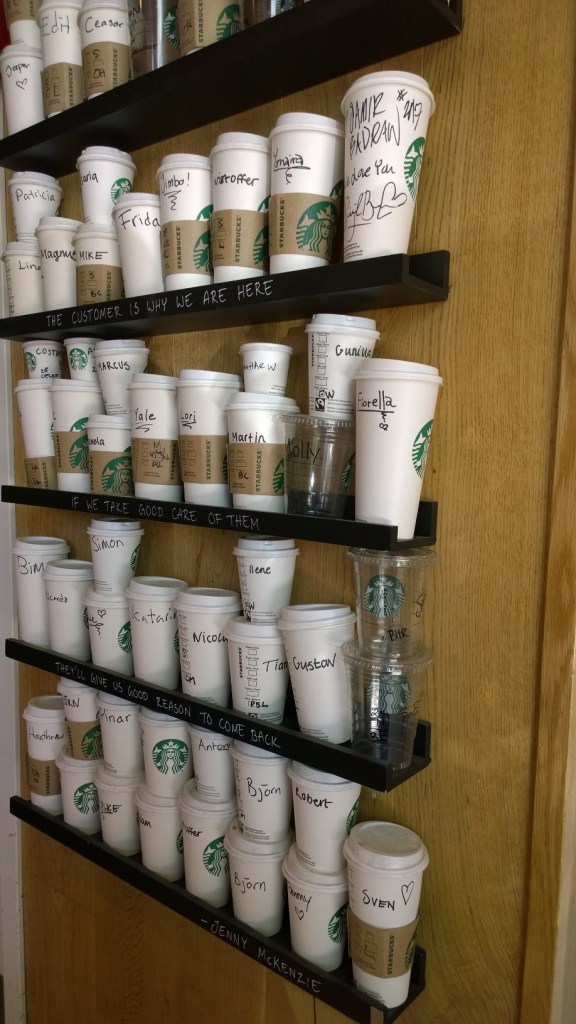
When I was in Sweden in 2017, I noticed that waste-conscious Starbucks customers could leave their cups in the shop for the next time. A Massachusetts startup carries the concept a step farther.

The party guest told Dustin Hoffman in The Graduate that “there’s a great future in plastics,” but today there’s a better future in non-plastic packaging.

At Debra’s Natural Gourmet, there’s demand for shampoo and conditioner in cardboard, skin cream in tins, water bottles in glass. I have also seen lip balm in cardboard at Earthling, here, and at Booda Butter, here. Imagine! Thoughtful people out there are noticing how often we throw plastic ChapSticks into landfills!

Joanna Detz writes at ecoRI News about a company called Usefull that is tackling our wastefulness with takeout coffee cups.

“What if your coffee shop had reusable mugs on demand that you could carry out with you and return to any other participating coffee shop when you were done? Alison Rogers Cove, founder and CEO of Cambridge, Mass.-based Usefull, envisions just such a circular foodware solution that would spell the end of disposable takeout products, most of which are not recyclable and wind up in a landfill or as litter.

“Usefull, an app-based foodware service that provides silicone-lidded stainless-steel containers for customers to check out and return (like a library book), recently wrapped up a pilot program on Block Island.

“The pilot, run in partnership with the Block Island Conservancy, was supported by a Small Business Innovation Research grant funded through the Environmental Protection Agency (EPA). A handful of cafes, a food truck, and a farmers market participated.

“ ‘The pilot was very successful in testing out a lot,’ Rogers Cove said. However, she admitted there were challenges in running the program in a largely transient community of day-trippers, where not all food-service providers opted into the system, and where single-use takeout containers were still an option. …

“Her data show a closed-loop returnable program such as Usefull’s has a better success rate in places where there is an outright ban on single-use takeout containers.

“ ‘From a business perspective, we can’t take the risk of going into a community without a ban. That’s part of our lesson learned,’ she said.

“Marin County in California is one of the few municipalities that has passed such a ban, which will take effect Nov. 10, 2023.

“As a result, Usefull has decided to focus its business efforts on serving colleges and universities invested in eliminating single-use takeout products on campus. … ‘College campuses are able to fully commit to their zero-waste goals and eliminate the option of single-use packaging.’

“On participating campuses, students download the Usefull app, place their takeout order, and scan a tracking code on their takeout container. After they are used, the containers — bowls and cups — can be dropped off at any of Usefull’s return locations on campus, regardless of where the container was checked out. Once the containers are returned, they are run through commercial-grade dishwashers and put back in circulation.

“Users are only charged if they return the container late — schedules vary by location — or if they lose the container.

“The idea for Usefull was born in 2013, when Rogers Cove was working in management consulting. … But it wasn’t until 2018 that she shared her idea outside her social circle, when she presented at a Boston Globe pitch event with angel investors. …

” ‘[The pandemic] was when we pivoted to colleges,’ Rogers Cove said, because it wasn’t clear when downtown Boston was going to reopen. She and her team figured college revenue was tied to having bodies on campus and bet that colleges would be first to reopen.

“The first college to partner with Usefull was Mount Holyoke, followed by other Bay State colleges and universities.”

More at EcoRI, here.

Read Full Post »

Photo: Pacific Beach Coalition.
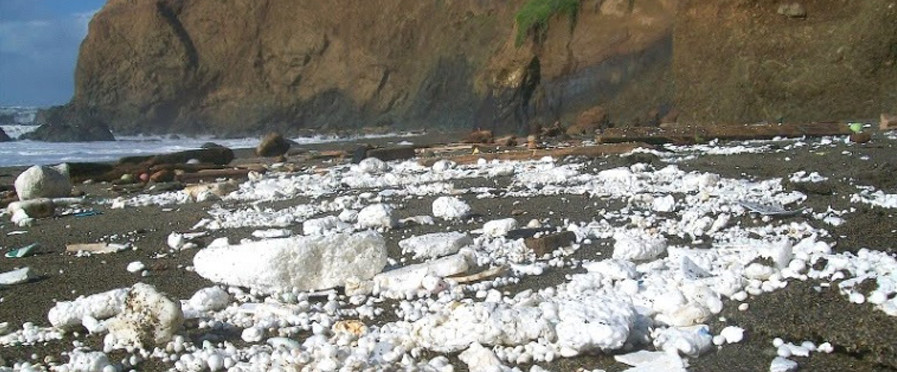
Scientists investigate whether a “superworm” can help solve our styrofoam problem.

It’s no secret that plastic has become a huge challenge for our poor old planet. Concerned people are finding solutions where they can. Ploggers of India (and other countries) pick plastic off the ground when they go jogging. Plastic Free Hackney is a UK town that aims to do without. Artists turn plastic waste into sculptures.

In today’s story, we learn about scientists testing a “superworm” that might be able to break down a particular kind of plastic, styrofoam.

Pranshu Verma reports at the Washington Post, “A plump larva the length of a paper clip can survive on the material that makes Styrofoam. The organism, commonly called a ‘superworm,’ could transform the way waste managers dispose of one of the most common components in landfills, researchers said, potentially slowing a mounting garbage crisis that is exacerbating climate change.

“In a paper released [in June] in the journal of Microbial Genomics, scientists from the University of Queensland in Brisbane, Australia, showed that the larvae of a darkling beetle, called zophobas morio, can survive solely on polystyrene, commonly called Styrofoam.

“The findings come amid a flurry of research on ways bacteria and other organisms can consume plastic materials, like Styrofoam and drinking bottles.

“Now, the researchers will study the enzymes that allow the superworm to digest Styrofoam, as they look to find a way to transform the finding into a commercial product. Industrial adoption offers a tantalizing scenario for waste managers: A natural way to dispose and recycle the Styrofoam trash that accounts for as much as 30 percent of landfill space worldwide. …

“The material is dense and takes up a lot of space, making it expensive to store at waste management facilities, industry experts said. The cups, plates and other materials made from it are also often contaminated with food and drink, making it hard to recycle. Polystyrene fills landfills, where it can often take 500 years to break down and decompose, researchers have found. …

“In 2015, researchers from Stanford University revealed that mealworms could also survive on Styrofoam. The next year, Japanese scientists found bacteria that could eat plastic bottles. In April, researchers from the University of Texas found an enzyme which could digest polyethylene terephthalate, a plastic resin found in clothes, liquid and food containers. …

“[The Microbial Genomics study’s coauthor Christian Rinke] said he was excited by his research results but noted it will take time to develop into an industrial solution, estimating somewhere between five to 10 years.

“To conduct the study, his research team in Australia fed the superworms three separate diets. One group was given a ‘healthy’ solution of bran. The second was given polystyrene. The third was put on a starvation diet.

“Ninety percent of the larvae that ate bran became beetles, compared with roughly 66 percent from the group given polystyrene and 10 percent from those forced to starve. This indicated to researchers that superworms have enzymes in their gut that can effectively digest Styrofoam.

“Next, the scientists will study those enzymes to see how well they can digest polystyrene on a large scale — modifying them if necessary to become more effective. ‘We want to not have gigantic superworm farms,’ he said. ‘Rather, we want to focus on the enzyme.’

“If the research proves successful, Rinke said waste managers could collect and grind Styrofoam materials and put them into a liquid solution made with the superworm enzyme. The solution would ideally dispose of the Styrofoam or digest it in a way that allows new plastic products to be created, thereby reducing the need for new plastic materials, Rinke said.

“ ‘If you can go all the way to the end,’ he said, ‘the idea is to use the system and come up with a biological solution to recycle plastic.’

“Despite the findings from Rinke and others, there are reasons that none have successfully translated into industry applications over the past decade, researchers said. Andrew Ellington, a professor of molecular biosciences at the University of Texas at Austin, said it has been difficult to find a plastic-digesting organism or enzyme that can operate in industrial conditions, which often process trash in very hot environments or through the use of organic solvents. … He suggested an alternative solution.

“ ‘I believe that we will be able to offer up, in the not-so-distant future, worm-based composting kits so that individuals can do this themselves,’ he said.

“Jeremy O’Brien, the director of applied research at the Solid Waste Association of North America, said there are other business challenges in putting this type of solution into use. As envisioned, the solution would require waste managers to collect Styrofoam separately from other trash, he said, which makes it cost-prohibitive.

“O’Brien also said it remains unclear what kind of organic waste the enzyme process would generate, and he worries it could harm the microorganisms landfills already use to process trash and reduce odors. He added that a more desirable and cost-effective solution would be to take Styrofoam in landfills and condense them enough so that they can be turned into new plastics.”

More at the Post, here. What do you think of this? Is breaking plastic down to enzymes enough to keep us safe?

Read Full Post »

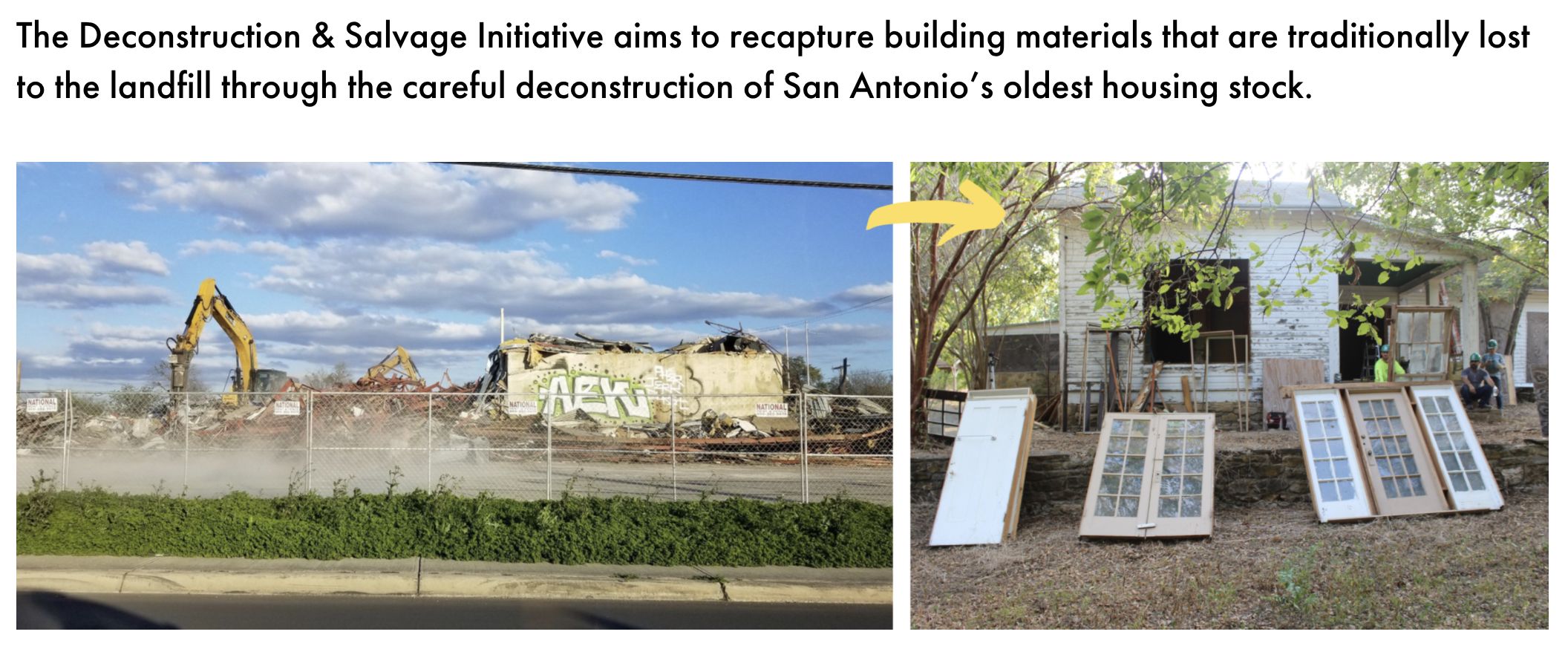
Photo: City of San Antonio.

There are so many beautiful pieces of buildings that end up in the dump when individuals or municipalities choose demolition: “wavy” glass from old homes, priceless woods, marble, stained glass, historical artifacts, and more. Fortunately, in the spirit of Reduce, Reuse, Recycle, a different approach is being tested around the country.

Aarian Marshall writes at Wired, “Emily Christensen knows this sounds a little West Coast, but when she enters the old houses her company has been hired to take apart, she senses an energy. ‘It’s intense,’ she says. ‘These houses have seen decades of human drama.’

“Christensen and her partner, David Greenhill, started their firm, Good Wood, in 2016. Portland, Oregon, where they live, had just become the nation’s first city to require houses of a certain age to be deconstructed rather than demolished. That means that, instead of using an excavator and backhoe to crush an old building, anyone scrapping an older structure in the city must hire a deconstruction crew, which takes it apart delicately — almost surgically — by hand. Rather than a jumble of smashed wood, plaster, fixtures, insulation, concrete, and dust, deconstruction firms can extract cabinetry, masonry, windows, marble, brick, and beautiful old-growth lumber. The idea is that these materials can be sold and eventually reused locally. …

“Using old materials to make new things feels meaningful. It helps, too, that reclaimed wood tends to be very pretty. But a growing number of US cities think the idea makes good policy too. In the past five years, cities as disparate as Baltimore, Cleveland, Boise, and San Jose and Palo Alto in California have adopted their own deconstruction policies; San Antonio has been working on one for four years.

“Deconstruction, city officials say, is a green alternative to demolition, sending up to 85 percent less material to landfills. Building materials and construction account for just under 10 percent of the world’s energy-related global carbon emissions, according to the Rocky Mountain Institute.

Using salvaged materials eliminates emissions associated with making and transporting new building materials. Plus, it’s not as noisy as knocking down a house, and doesn’t spew dust or toxic materials, such as asbestos, into the air.

“Backers say it creates jobs even for those without high-tech skills, while highlighting the importance of sustainability. As the climate warms, ‘the circular economy is one promising alternative,’ says Felix Heisel, an architect, assistant professor, and director of the Circular Construction Lab at Cornell University.

“Good Wood illustrates Portland’s success. Over the past four years, the city has deconstructed more than 420 single-family and duplex homes that were registered as historic places or built before 1940. Good Wood has taken apart 160 of them. Today, 19 contractors are licensed to deconstruct in the city, thanks in part to a city-sponsored training. …

“But all that manual labor comes at a cost. Deconstructing a building can be more than 80 percent more expensive than demolishing it, according to a report from Portland State University, though selling some of the recovered material can offset part of the cost.

“And sometimes the labor isn’t available. In 2018, Milwaukee required many of the city’s older structures to be deconstructed instead of demolished. But the rule is still on ice, through at least 2023, as officials still struggle to find local contractors who can take apart homes by hand.

“The delay ‘is in hopes of building a bigger pool of potential contractors,’ says Chris Kraco, supervisor of the condemnation section at the city’s Department of Neighborhood Services. Kraco and his colleagues continue to hold training sessions. … Many places also need to update their local building codes to allow contractors to build with salvaged materials.

“The complexity has prompted some cities to tackle deconstruction slowly. Pittsburgh just launched a year-long pilot project, in partnership with a local nonprofit construction materials and appliances business, to see whether taking apart old, condemned structures on city land makes financial sense there. …

“San Antonio’s Office of Historic Preservation, which has spearheaded the city’s deconstruction efforts, plans to propose an ordinance to city council later this year. In the meantime, it’s helping with demonstration projects, including one on a 1930s homestead that uncovered a basement full of moonshine bottles — something that might have otherwise been crushed in a demolition. …

“Most cities, Portland included, have targeted old buildings for deconstruction. It’s partly because limiting the pool of homes required to use the technique gives local deconstruction economies time to develop. But also, starting in the 1970s, builders tended to use materials that haven’t held their value, like second- or third-growth lumber, or particle board. Construction also used more glue, spray foam sealant, and other adhesives, which make it harder to take apart new buildings by hand.” More at Wired, here.

Read Full Post »

Photo: Daniil Shvedov.
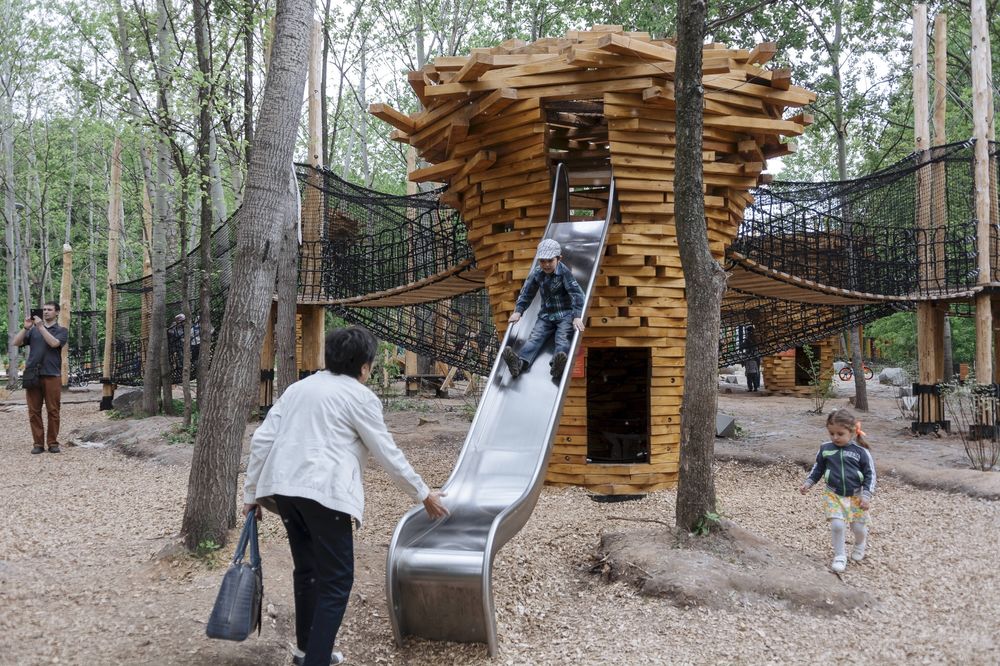
An eco-playground in the Gorkinsko-Ometyevsky Forest near Kazan.

The problem with headlines is that they tend to focus on bad stuff — a bad leader, say, planning bad moves in a country we know about only from headlines. But a leader can’t be everywhere all the time, and no country is a monolith. Especially not one as big and diverse as Russia.

Alex Ulam has a Bloomberg City Lab story about something going on way out in the semi-autonomous Russian republic of Tatarstan.

“In 2015, Natalia Fishman-Bekmambetova arrived in [Kazan] to oversee a large public works program. Then only 24 years old, she found a city with a population of 1.7 million, a renowned university, grand boulevards and major historic sites, including a Unesco-listed walled Kremlin from which Mongols once ruled.

“But Kazan also was a typical post-Soviet city — surrounded by drab concrete tower complexes and parking lots. Since the fall of the Soviet Union in 1991, little attention had been devoted to revitalizing derelict public open spaces or to building new ones.

“Six years after Fishman-Bekmambetova’s arrival, a massive initiative often referred to as a ‘green revolution‘ has dramatically reshaped this city 450 miles east of Moscow. Tatarstan’s Public Space Development Program, launched by Fishman-Bekmambetova and Tatarstan President Rustam Minnikhanov, has created or upgraded more than 420 projects throughout the republic, including parks, walkways, gardens and other kinds of landscaped areas.

“You don’t have to walk far in Kazan to see how the new public space program has changed the city. Near the center of the city is the Lake Kaban Embankments, designed by the Chinese-Russian consortium Turenscape +MAP and completed in 2017. The project transformed a formerly deserted postindustrial site around three lakes into a waterfront promenade with rows of trees, beds of wild grasses and wooden decks. At night, the area is illuminated by lights inside glowing red benches of diaphanous resin. Huge fountains rise on the lakes; restored wetlands help clean the once-heavily polluted water.

“Southeast of the city, Fishman-Bekmambetova’s team oversaw the rebirth of the 87-hectacre Gorkinsko-Ometevsky Forest, a new park that features a ski hill and an eco-playground along with preserved woodlands and performance spaces, located on a site where local activists successfully defeated the construction of medical centers and a planned road that would have bisected the park.

“The most ambitious project in the works for Fishman-Bekmambetova’s team is the Kazanska River Strategy, a plan for a 22-kilometer stretch of urban river and 68 kilometers of embankment running the entire length of Kazan; it’s one of the largest landscape projects in Russia. More at CityLab, here.

And while we’re feeling surprised about Russia, here’s a story by Fred Weir at the Christian Science Monitor about environmental action in the far north.

Arkhangelsk, a Russian region almost as big as France that borders the White Sea, is a land of permafrost and marshy tundra, with stunted Arctic forest, rolling hills, and labyrinthine lakes and rivers. It’s been inhabited by Russians for almost a thousand years; Indigenous peoples, some related to Finnish Laplanders, have been there much longer.

“People here are very conscious of history. Much of it revolves around their fragile Arctic habitat and the need to preserve it.

“About two years ago, mass popular protest forced Moscow authorities to abandon plans to build a giant waste dump near the village of Shiyes in this Arctic region that had been intended to receive 2 million tons annually of the garbage overflowing from heavy-consuming Moscow. The success of that ‘Stop Shiyes’ struggle launched a lasting ecological movement and ushered in the election of a more environment-friendly local leadership. It also planted surprisingly divergent ideas in some peoples’ minds about how to take that newfound consciousness and turn it toward a permanent transformation. ….

“For Oleg Mandrykin, a local real estate developer from the closed naval shipyard city of Severodvinsk, it served as inspiration to try and get into national politics in order to raise ecological awareness in Moscow. Anastasia Trofimova, an Arkhangelsk doctor, went a different direction, eschewing politics for [business]. And Alexandra Usacheva heads Clean North, a group that interfaces between the public and local authorities to promote ecological education.”

More at the Monitor, here.

Photo: Fred Weir.
Anastasia Trofimova, a doctor, in her shop in Arkhangelsk, Russia. She was inspired by protests against a proposed landfill to launch a business that sells around 700 products made from natural or recycled materials.

Read Full Post »

09landfill1-jumbo

Photo: Landfill Harmonic
Tania Vera Hertz showing off her recycled violin in a documentary about poor kids in Paraguay.

Today’s story is about people in Paraguay who built instruments out of recycled materials and taught the children of impoverished landfill scavengers to play. That is the nugget, and a lovely nugget it is. But as I learned at Wikipedia, fame brought conflict among the adults involved. You can read about both aspects of the story below and see what you think.

Ken Jaworowski writes at the New York Times about the documentary Landfill Harmonic, which “starts in Cateura, Paraguay, an impoverished town outside Asunción, the country’s capital. There, at an enormous landfill, thousands of slum-dwellers support their families by sifting through trash to find things to sell.

“Favio Chávez, an environmental engineer, came to the area to help with a recycling program. That failed, but he stayed to teach music to children. Instruments were so scarce that Mr. Chávez, with help from a resident, Nicolás Gómez, created them from materials found in the garbage heaps. Those include violins made with metal cans, a cello built from an oil container and a drumhead fashioned from discarded X-ray film.

“Mr. Chávez and his students formed the Recycled Orchestra of Cateura and gained fame once video of their playing these scrappy instruments went online. Soon, children who’d never left their town were traveling the world to perform.

“It’s an inspiring tale — if it were fiction you’d dismiss it as unbelievable — and Brad Allgood and Graham Townsley, the directors (Juliana Penaranda-Loftus is listed as co-director), capture some endearing moments. …

“The children of Landfill Harmonic are wonderful to watch. A section in which David Ellefson, bassist for the metal band Megadeth, comes to visit them is downright adorable. (The orchestra later performs with the group at a concert, and it’s excellent.) Here and elsewhere we see barriers disappear — those between genres, cultures and languages become meaningless. For everyone involved, there’s nothing but joyous music.” More at at the Times, here.

Wikipedia adds history and describes an ongoing controversy about who started what when.

“The orchestra originated in the ‘Sonidos de la Tierra (Sounds of the Earth) program (created and directed since 2002 by Luis Szarán) and Procicla a recycling project of the Alter Vida NGO. Szarán founded the Sonidos de Cateura (Sounds of Cateura) music school on July 7, 2006, and its first workshop, sponsored by the geAm NGO to build recycled instruments, was held on May 24, 2007, luthier Carlos Uliambre. …

“The music school began with the recyclers’ children after Szarán donated ten guitars bought with proceeds from a tribute he received at Salemma Mall. A group of children between 8 and 12 years old from the Sounds of Cateura school was presented at the regional seminary of Youth Orchestras of Sounds of the Earth in Acahay [in 2006]. …

“The first group of Sounds of the Earth musicians with recycled instruments made their debut at the former Sheldonian Theater in Oxford, England as part of the Skoll Foundation’s World Forum of Social Entrepreneurs on March 26, 2008. …

“In October 2011, Sounds of the Earth announced on its Facebook page that Orchestra of Recycled Instruments coordinator Favio Chávez had left the program. Chávez announced the formation of the Recycled, with Sounds of the Earth musicians from Carapeguá and Cateura playing recycled instruments, two months later.” Lawsuits were in their future.

Wikipedia may have more information than you want about the ins and outs, but if you are interested. click here.

Read Full Post »

Photo: CBSLocal
New York City hopes that donating reusable water bottles to high school students will make some advocates for reducing waste. The campaign is part of the city’s ultimate goal of sending zero waste to landfills by the year 2030.

After reading an inspiring book called Climate Justice, I signed up at the website 1 Million Women to get ideas for reducing my carbon footprint. One thing the site suggests is to boycott fruits and vegetables that have unnecessary packaging. You know, like those Japanese pears in plastic foam holders. Such gestures are small, but they add up if a lot of people pursue them.

In New York, meanwhile, schools are trying to wean students from plastic water bottles by giving them nice reusable ones.

CBSLocal reports, “After a recent push to ban plastic bags, straws, and bottles in New York, some local leaders are working to get the city’s high school students involved. …

” ‘When you think about it, you’re not gonna be wasting all that plastic,’ [student] Daisy Palaguachi said.

“More than 320,000 bottles made by S’well were donated to all New York City high schools throughout all five boroughs [in September].

” ‘The goal is really to extend our mission to rid the world of plastic bottles and we couldn’t help but think the best way to do that is to tap into the city’s future leaders,’ S’well Vice President Kendra Peavy said.

“The company partnered with Mayor Bill de Blasio’s Office of Sustainability for the new ‘Bring It’ campaign. They’re asking students to ditch the plastic and spread the word to their families and friends.

“ ‘To empower them with actual tools that they can bring and take to make better and more informed decisions,’ Mark Chambers, Director of the Mayor’s Office of Sustainability, said.

“The city says its goal in doing this is to try and get rid of 54 million single-use plastic bottles.

“ ‘About 167 water bottles are used by the average American every year, and so it’s important to say by using a reusable water bottle we could displace that many from going into the waste stream every year,’ Chambers said. …

“ ‘Knowing that you’re making a small change can turn into something bigger in the future,’ student Alexandra Capistran said. ‘You don’t have to spend all your money buying water bottles every day.’

“Sunset Park High School now also has a newly installed water bottle filler for that very purpose. … The bottles donated [would have cost] $19 to $35, and the campaign is part of the city’s ultimate goal of sending zero waste to landfills by the year 2030.”

More at CBS, here.

Read Full Post »

3024

Photo: The Guardian
North America’s first pay-what-you-can grocer is located in Toronto and aims to keep overstocked but perfectly good food from going to a landfill.

I love stories about efforts to get surplus fresh food into the hands of people who might be going hungry otherwise. And keeping food out of landfills at the same time means killing two birds with one stone. But true confession: I am wasteful. I use the yummy inner parts of celery and lettuce first, and when I get around to the outer parts, they don’t look worth saving. Do I put on my thinking cap and make these leftovers into soup or something? I do not. Sometimes I compost them. I’d be interested in your ideas.

In Canada, a grocery store may have the best solution yet for food that is still good to eat but overstocked.

As Ashifa Kassam writes at the Guardian, “In a bright, airy Toronto market, the shelves are laden with everything from organic produce to pre-made meals and pet food. What shoppers won’t find, however, is price tags. In what is believed to be a North American first, everything in this grocery store is pay-what-you-can.

“The new store aims to tackle food insecurity and wastage by pitting the two issues against each other, said Jagger Gordon, the Toronto chef who launched the venture earlier this month.

“Every provision is donated by a network of partners across the region, and many of them – from blemished or misshapen produce to staples that are nearing their expiry date – would have otherwise ended up in landfills. …

“The store, which also includes a pay-what-you-can bakery and cafe, is the latest initiative to emerge from his non-profit firm, Feed It Forward. The roots of the organisation trace back to 2014, borne out of Gordon’s frustration at the C$31bn (£17.6bn) worth of food that ends up in Canadian landfills and compost sites each year while one in eight Toronto households struggles to put food on the table. …

“Prices are entirely up to the customer. ‘If you can afford to pay more, go right ahead,’ said Gordon. ‘If you can’t pay for what you have, then don’t.

“ ‘What I have noticed is people look into the baskets, try to calculate what it is and then say, “is this acceptable?” And I just say, “are you kidding me? Whatever you can give is fine, but if you are unable to make a donation, we won’t let anyone go hungry.” ‘ …

“Any profits are poured back into the store, covering costs such as rent and the transport of provisions. More than 600 volunteers help to staff the store and Gordon supplements its income with fundraising events, donations and revenue from his catering business. …

“As the store nears its closing time, Gordon surveys its largely empty shelves. ‘I’m a little disappointed that I have food left. … We’re going to the streets and hand it all out. We won’t stop until our food is gone.’ …

“Many have welcomed the initiative, but others question the sustainability of its business model. Gordon is quick to brush aside such concerns, pointing to pay-what-you-can initiatives that have been successful in Europe and noting that his soup bar managed to pay for itself.”

More at the Guardian, here.


Read Full Post »

Large quantities of clothes that are damaged in textile manufacturing end up in landfills. To organizations like Renewal Workshop, that seems like a waste. So they are stepping up to the plate, with real benefits to the planet.

“As discarded clothing piles up in landfills around the country,” writes the Huffington Post, “a handful of companies are trying to save some of those garments and give them new life.

“The Renewal Workshop is one of these. It takes shirts, jackets and other items damaged during manufacturing, then repairs and resells them for 30 to 50 percent off the original price, co-founder Nicole Bassett told The Huffington Post. Its goal is to prevent imperfect items, which traditional retailers can’t sell in stores, from being tossed in the trash. …

“Companies fighting clothing waste have their work cut out for them. The average American throws out 70 pounds of clothing or household textiles a year. Only 15 percent of that is recycled, according to a report by the Environmental Protection Agency. The other 85 percent ― around 13 million tons of textiles in 2013 ― ends up in landfills, where it decomposes alongside other solid wastes, releases greenhouse gasses and contributes to global warming.

“The Renewal Workshop is attempting to combat waste in the textile industry by ‘closing the loop,’ or trying to ensure new clothes are made from recycled or used garments. … It creates every single one of its products out of existing garments.

“The company partners with apparel companies like prAna, Ibex and Toad & Co, which are all outdoor clothing brands selected specifically for their commitment to sustainability, Bassett told HuffPost.

“The Renewal Workshop takes those brands’ damaged or returned clothes ― items with broken zippers, seam tears or missing buttons ― and then repairs, cleans and resells them at a discount.

“Apparel partners provide damaged items at no cost to The Renewal Workshop, and pay a partnership fee. When a customer buys a repaired garment, the partner business that provided it gets a portion of the sales, and the customer receives an item with the original company’s brand label and a Renewal Workshop label on it.” Read more here.

And ordinary folks can always help by giving old clothes to organizations that distribute nice ones to new users.

Photo: GaijinPot

Read Full Post »

Ingenuity can make a business out of almost anything. That’s what you may conclude after reading how a small Maine company is making something useful from lobster shells.

Tom Bell has the story at the Associated Press: “A startup company in Maine is developing a children’s bandage coated with a substance extracted from crushed lobster shells that would promote blood-clotting and is resistant to bacterial infection.

“The company, Lobster Tough LLC, shipped Maine lobster shells to a processor in Iceland for testing, and so far, the results are promising, said Thor Sigfusson, an Icelandic investor in the company. …

“ ‘My dream will be to use the massive amounts of lobster shells that are being thrown into dumpsters,’ he said. …

“The lobster shells must be dehydrated to remove weight and lower shipping costs. Lobster Tough this winter is shipping a portable dehydration machine from Iceland to Maine. The company eventually plans to build a $2 million dehydration plant somewhere on the Maine coast, said Patrick Arnold, an investor who lives in South Portland. …

“The bandages would be the first commercial product developed through the New England Ocean Cluster, a new business incubator in Portland.”

More here.

Photo: Tasty Island

Read Full Post »

Older Posts »