Feeds:
Posts
Comments

Posts Tagged ‘library’

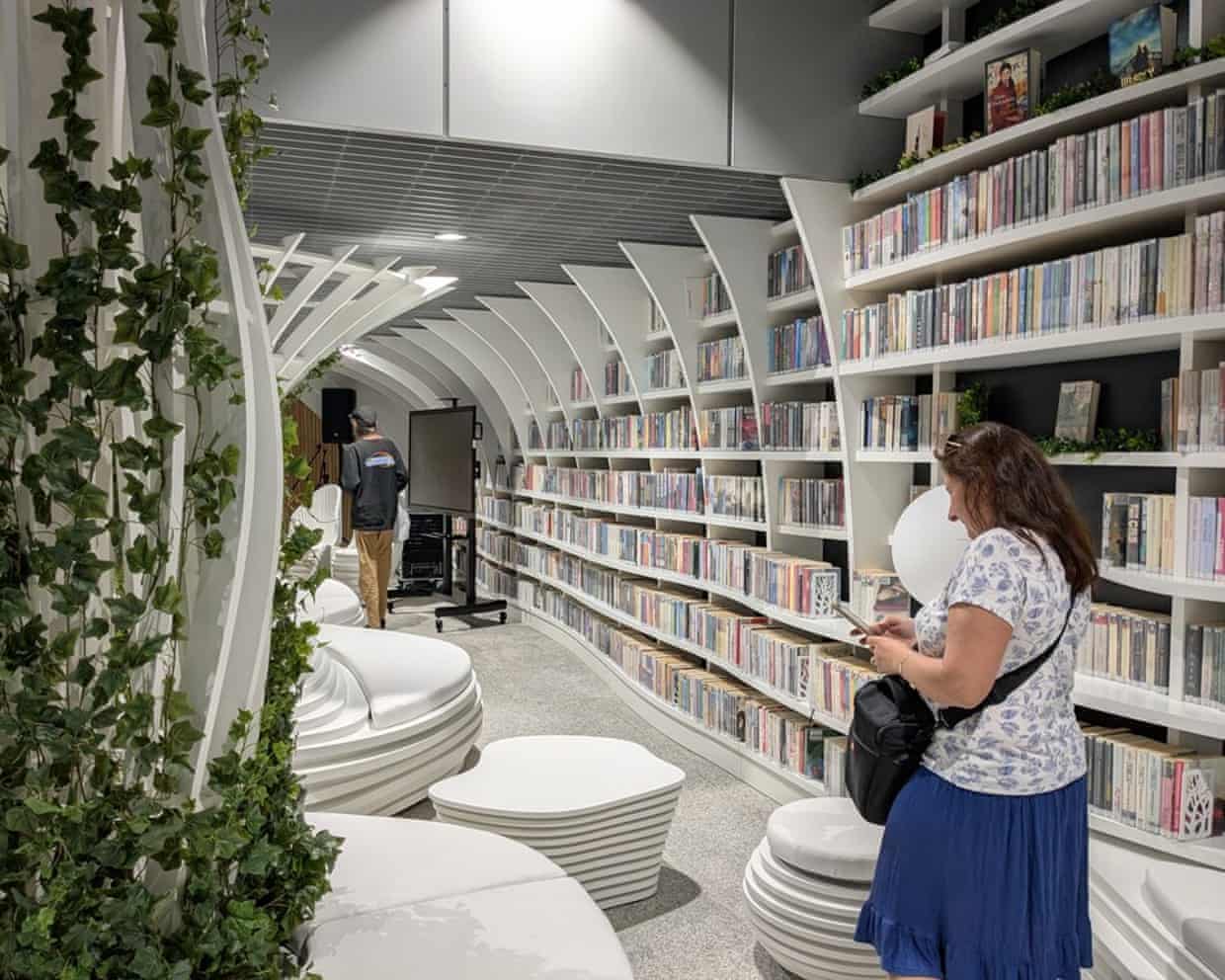
Photo: Biblioteka Publiczna w Dzielnicy Targówek m.st. Warszawy.
A library has opened in a new metro station in Warsaw. 

Fans of libraries know that libraries have a way of popping up in all sorts of unlikely — even inimical — places. If you search on the word at this blog, you will find stories about libraries on horseback, in impoverished countries, in war zones, and wherever people find comfort from reading.

Jakub Krupa reported for the Guardian about a new library in a Polish subway station.

“An ‘express’ library has opened in a new metro station in Warsaw, aiming to provide an appealing cultural space to encourage residents and commuters to forgo smartphones in favor of books and, thanks to fresh herbs growing in a vertical garden, a dash of subterranean greenery too.

“The stylish Metroteka [in] the Kondratowicza M2 line metro station in the Polish capital’s Targówek district offers two reading areas for adults and children, as well as a space for public readings and events.

“About 16,000 books are on offer. … Readers can return them on site or through a street-level parcel locker for books, available 24/7.

“Visitors can study or work in a communal area, borrow a laptop to browse the internet, or simply sit down with a complimentary coffee or hot chocolate to unwind after rush hour travel on the metro. …

” ‘Our dream is for Metroteka to become an educational and cultural centre, and not just a place where you borrow your books from,’ says the deputy director of Targówek library, Grażyna Strzelczak-Batkowska. …

“She says the unique subterranean location brings the library closer to busy commuters, ‘both geographically and in terms of time you need to spend on getting the book.’ …

“More than 400 books were leased on the first day, mostly recommended school readings, as well as travel guides and ‘all sorts of how-to books.’

“The library’s innovative model aims to encourage Poles to read more. The annual survey by the National Library of Poland found that only 41% of respondents had read at least one book in 2024, down from the high 50s in the late 1990s and early 2000s, as people turn to TV, streaming services, and phones for entertainment instead.

“These numbers are higher than in southern Europe, but lower than in the Nordic countries, or even the neighboring Czech Republic, the National Library’s director, Tomasz Makowski, says.

“He says there are historical reasons for it – with Poland losing 70% of libraries in the second world war, ‘we had several generations that did not see their parents or grandparents in front of a wall of books’ – but also cultural as ‘reading is not something associated with adulthood,’ but with ‘schools, teachers, librarians, and usually mothers reading to children.’

“ ‘Opening a library in a metro station is like a dream for us,’ Makowski says, as it challenges that stereotype. ‘Libraries should be beautiful and open; inviting, not intimidating. It’s not a shrine, but a place where you can spend time freely, take part in discussions, public consultations, or meet people,’ he says.

“He says the National Library has also opened a ‘loud’ reading room, breaking with the tradition that such areas need to maintain silence, where ‘no one shushes you or tells you to keep quiet. To our surprise, it’s still pretty quiet, but they also talk, give tutoring, different kinds of lessons.’ ”

Good photos at the Guardian, a free paper, here.

What do you think of the library’s chances? I love the optimism behind this effort but can’t help picturing what the subways I know well are like. Has anyone else commuted to work this way?

Read Full Post »

Photo: Hannah Goeke/Christian Science Monitor.
One of the National Braille Press’s braille machines operating in Boston’s Fenway neighborhood.

As I read today’s article about braille services losing funding, I am struck particularly by an activist’s comment on the importance to blind children of meeting other blind children in the braille libraries. I remember my own insensitivity to disability as a child. Children sense difference sand sometimes they are not kind. Being with others who share an issue like blindness would be huge.

But opportunities like that are now threatened — at both federal and state levels.

Hannah Goeke writes at the Christian Science Monitor, “Marci Carpenter reconnected with her love of reading through her fingertips. When her vision became more limited, learning braille gave her a new way to experience the world. She still remembers how the words of Robert Frost’s poems came alive again through soft bumps embossed on thick paper.

“But it was the Washington Talking Book & Braille Library in Seattle that gave her a place to connect.

“ ‘That was the first time I had ever experienced being around shelves and shelves of braille books. It was this really liberating experience,’ recalls Ms. Carpenter. Over the next five decades, she returned again and again to browse through the Major League Baseball schedule, check out the Constitution – and science fiction – and discover new volumes.

“Today, Ms. Carpenter, who now serves as president of the National Federation of the Blind of Washington, is facing a new urgent need.

“On July 1, the doors to the Washington Talking Book & Braille Library swung shut to the public for in-person exploration and gathering due to a lack of state funding. As needs increase and revenue growth slows, the state of Washington is facing a budget deficit. Ms. Carpenter, who was among those working with legislators to secure funding for libraries, came up empty-handed. …

“The Seattle library is one of nearly 100 libraries and outreach centers nationwide that form the network of the National Library Service for the Blind and Print Disabled, which provides free braille and audio materials through the Library of Congress.

“A small staff is determined to keep the library running. Since July 1, it has offered services by appointment only. ‘We are getting about our normal number of calls,’ writes Danielle Miller, the library’s director, in an email. ‘We have had to turn away people who wanted to come in and use the library.’ …

“Patrons say they are most saddened by that loss. Through in-person workshops and programming, the library provides a sense of belonging and community. Preserving free access to braille materials and encouraging braille literacy – especially for children – is imperative, according to experts and educators. …

“The vast majority of the 26% of employed blind people are braille readers, according to the National Braille Press in Boston. However, despite reading’s link to higher education and employment in the United States, only 12% of school-age blind children in the U.S. can read braille, the NBP estimates.

“While tape recorders and synthesized speech are useful tools, they do not teach the ability to read, write, and spell, says Kim Charlson, the executive director of the Perkins Library in Watertown, Massachusetts. …

“Braille opens the door to independence, not only on a large scale but also in small ways. What is habitual to sighted people becomes a significant hindrance for blind people, says Ms. Charlson. For example, being able to jot down a telephone number, take a note, or create labels to find the warranty for your new stove.

“Ms. Charlson shares a lesson she learned about the everyday importance of using braille after adding an unconventional ingredient to her chili recipe.

“ ‘I just opened it and tossed it in. I added my tomato sauce,’ she says with a laugh. ‘My husband [who is also blind] took a bite and he said, “This is kind of interesting.” And I said, “What do you mean? It’s chili.” And he goes, “Well, it’s got fruit cocktail in it.” ‘ Ms. Charlson now adds braille labels to her kitchen jars and cans.

“While funding uncertainty has braille libraries on edge, at the National Braille Press, President Brian Mac Donald says the demand for braille books remains high. He expects that to continue. …

“Says Mr. Mac Donald, ‘We have parents that have written testimonials saying, “I wish you could have seen the excitement of my son when he read his first book with us … in braille.” ‘

“On a recent weekday, the NBP presses are humming, business as usual, in a brownstone building in Boston’s Fenway neighborhood. In the basement, Elizabeth Bouvier binds books together with practiced precision as the rhythmic clatter of machines pressing dots into thick paper echoes off concrete walls.

“Ms. Bouvier is blind. So are many of her colleagues at the NBP, where a small staff produces millions of braille pages each year, including children’s books.

“The closure of the Seattle library means the shuttering of its children’s room. It also means the end of introductory braille workshops and story times with children’s books featuring braille pages added that allow blind and sighted kids to read together. …

“Like many, Ms. Carpenter was the only blind child in her public school. The closing of the children’s room ‘is a loss of community,’ she says. ‘It is important for blind children to meet other blind children.’

“Ms. Miller’s and Ms. Carpenter’s inboxes have been flooded with inquiries about how people can help. Ms. Carpenter is telling them to wait for the right moment. When funding talks for the next state budget cycle start in 2026, she has no doubt that the blind community will turn up in big numbers to explain why access to the library’s services is essential to them.

“ ‘You know the most impactful action people have is their story,’ she says. ‘Anyone can request to speak with a legislator.’ ”

More at the Monitor, here.

Read Full Post »

Photo: Meriem Belhiba.
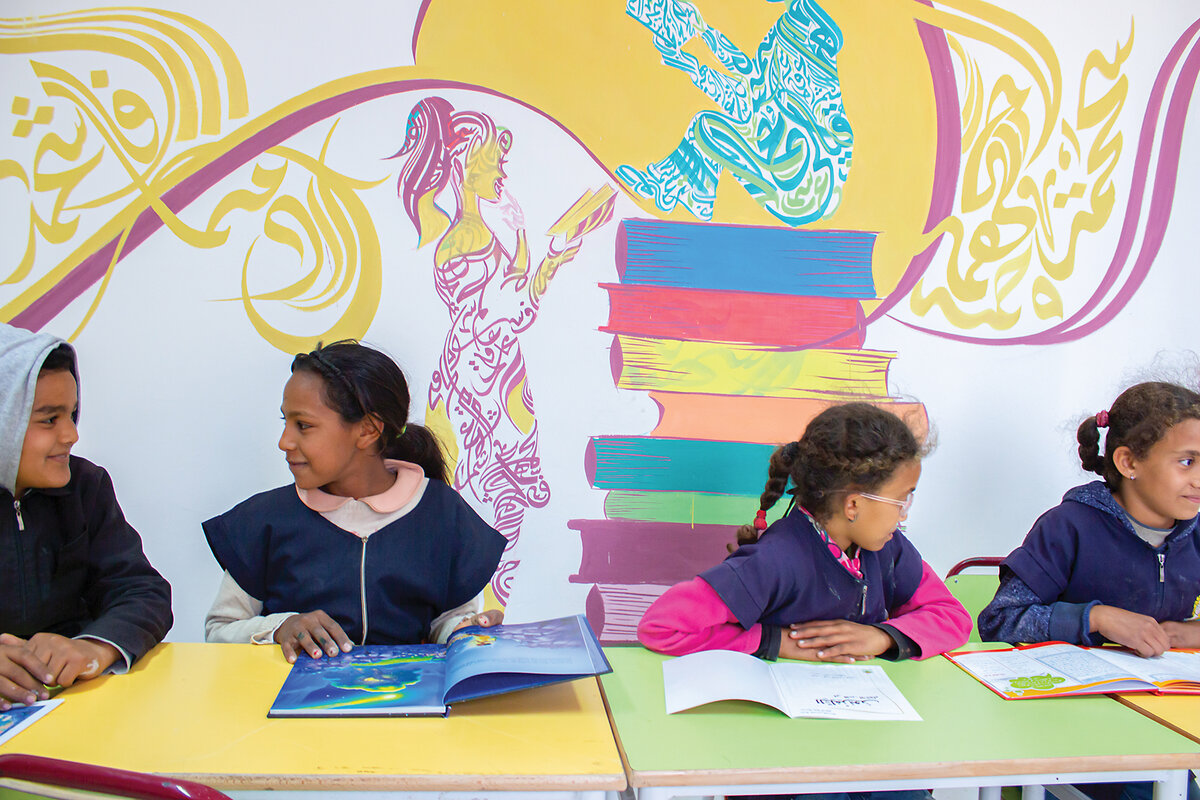
Girls explore colorful storybooks in the newly inaugurated library at Bir El Euch Primary School in Tunisia.

Meriem Belhiba wrote this story for the Christian Science Monitor.

“To children in this hilltop village, their school library is a portal to another world.

“Israa Al Trabelsi and five other 9-year-olds barely stifle their giggles as they weave – wide-eyed with curiosity – through the colorful room. They can plop down into cushioned chairs, look at bright wall art, and, of course, browse shelves bursting with books. The transformative space was built for children to dream in.

“ ‘I’ve learned so much,’ Israa says after taking a seat with a book about faraway lands in her hands. ‘It is also helping me improve my vocabulary and my writing,’ she notes, quickly adding, ‘I want to be a judge.’

“That might seem an unusual ambition for a child in Bir El Euch, a rural community of 1,600 people southwest of Tunisia’s capital, Tunis. But it makes sense when one learns that the man behind the library, Omar Weslati, is himself a judge who knows how precious books can be to children. ‘This project began as a way to reconcile with the child I once was, who had nothing,’ he says.

“Economic inequality has long been a challenge in Tunisia, a country of 12 million people. Widespread poverty in rural areas, high unemployment, and poor infrastructure were key triggers behind the 2011 mass protests that toppled a 23-year dictatorship and touched off the Arab Spring uprisings. …

” ‘I grew up in a rural school without a library, without light, without transportation, and without heating,’ Judge Weslati recalls. ‘As a bookworm, I needed to walk long distances to reach the nearest public library.’

“Launched in 2016, the initiative is led by white-collar professionals, most of whom hail from rural communities. These journalists, writers, judges, and teachers have chipped in funding to create a new library every year. Each one serves hundreds of students and takes thousands of dollars to complete.

“The project’s launch could not have been timed better. The first ‘imagination libraries,’ as they were initially called, were built in the aftermath of the violent extremism that accompanied the Arab Spring. Amid the waves of unrest that ensued across the region, Tunisia has been the biggest contributor of foreign fighters in the world – with Tunisians joining extremist groups in Syria, Libya, Iraq, and elsewhere.

“This was a factor behind the library initiative. ‘Where the book doesn’t reach, the extremist arrives first,’ Judge Weslati says. …

“Besides offering books as a source of inspiration, Judge Weslati’s team began visiting remote schools and sharing members’ personal stories. ‘We wanted to show kids that people from their own soil once dreamed, created, and contributed,’ he says.

‘We never saw this as charity; it’s about cultivation,’ he adds. ‘Planting stories where they hadn’t taken root before.’

“Beyond reading, the initiative led to something more: a writing club for rural youths. Teenagers craft short stories together and publish their work. One of the teens, Molka Hammami, credits her former teacher Jamila Sherif for lighting a spark in her.

“ ‘Reading changed my life,’ Molka says. ‘It pushed me to do more. I was published in the [club’s] collective storybook last year.’ Now she helps run a radio show for the club.

“Ms. Sherif, who has since become a school inspector, emphasizes the stakes. ‘Many kids drop out after primary school,’ she says. … ‘We’re trying to change that – one library, one book at a time.’”’

“Reports have shown that, despite declining school dropout rates across Tunisia, the problem is most acute in rural areas. Donia Smaali Bouhlila, an expert on educational inequality at the University of Tunis El Manar, says inadequate schools and infrastructure in rural areas are among the biggest reasons that students drop out.

“ ‘When learning spaces lack comfort, resources, or consistency, they stop being places of growth and become sources of alienation,’ she says. ‘Every small success – helping a child learn to read, keeping a teenager engaged – represents a meaningful step forward.’

“Safahat, a cultural organization whose name translates to ‘pages’ in Arabic, aimed to serve schools when it was founded in 2020 [but] faced logistical and financial hurdles because of the region’s remoteness. This prompted its team to pivot to a more mobile model: public bookcases. …

“Through its Maktabtena (‘our library’) initiative, the group placed red-and-white boxes of books in hospitals, youth centers, and schools, and on street corners. … Readers are invited to take a book, read freely, and donate their own books if they can. ‘We want to make reading a habit, not a luxury,’ [Khawla Mondhri, a university professor and volunteer leading the initiative] says. ‘If someone takes a book and doesn’t return it, that just means it’s being read somewhere else. ‘And that’s enough for us.” …

“So far, the team has installed 35 bookcases in accessible, safe, and visible spots. To ensure a bookcase is never empty, the team has formed partnerships with municipalities, associations, and individuals.

“ ‘We send books as often as needed. We plant small oaks,’ Ms. Mondhri says. ‘But we dream of forests.’ ”

More at the Monitor, here.

Read Full Post »

Photo: Library of Congress.

I have often thought about what we’ve lost in the digital age, when we can no longer scrutinize the thought process of a novelist from seeing her many revisions. Nor can we learn much about the significant people in her life, given that so many of her emails and texts will have been erased.

What will biographers do? How will today’s archivists deal with the challenge?

Michael Waters writes at the Atlantic (via MSN), “It was long the case that archives were full of physical ephemera. Think of Oscar Wilde’s love letters to Lord Alfred Douglas; … Sylvia Plath’s shopping list; Malcolm X’s lost poem; and other scraps of paper buried in boxes. Today, text messages and disappearing voice notes have replaced letters between close friends, Instagram Stories vanish by default, and encrypted platforms such as Signal, where social movements flourish, let users automatically erase messages. Many people write to-do lists in notes apps and then delete them, line by line, when each task is complete.

“The problem for [historians]: On the one hand, celebrities, artists, executives, and social-movement leaders are generating more personal records than ever, meaning a lucky researcher might have access to a public figure’s entire hard drive but struggle to interpret its contents. On the other hand, historians might lose access to the kind of intimate material that reveals the most. …

“The work of history starts with a negotiation. A public figure or their descendant — or, say, an activist group or a college club — works with an institution, such as a university library, to decide which of the figure’s papers, correspondence, photos, and other materials to donate. Archivists then organize these records for researchers, who, over subsequent years, physically flip through them. These tidbits are deeply valuable. They reveal crucial details about our most famous figures and important historical events. …

“Over the past two decades, the volume of these donations has increased dramatically. When Donald Mennerich, a digital archivist at NYU, first started working in the field, 15 years ago, writers or activists or public figures would hand over boxes of letters, notes, photos, meeting minutes, and maybe a floppy disk or a ‘small computer that had a gigabyte hard drive,’ he told me. Now, Mennerich said, ‘everyone has a terabyte of data on their laptop and a 4-terabyte hard drive’ … plus an email inbox with 10,000 messages or more. …

“Now many libraries possess emails that they don’t have the bandwidth to make accessible to researchers. … Even when an email archive is made public … it’s easy to get lost in the chaos. Jacquelyn Ardam, a writer and a literary scholar, was one of the first people to visit Susan Sontag’s archive, which she told me was filled with digital clutter: Sephora marketing emails, files with unlabeled collections of words (rubberyineluctable), and lots and lots of lists — of movies she’d liked, drinks she’d enjoyed. …

“Among that mess of information, however, Ardam found emails confirming Sontag’s relationship with the photographer Annie Leibovitz, which Sontag had denied. All Ardam had to do to locate them was ‘search her computer for the word Annie,’ she said. …

“In the past, even a writer of Sontag’s stature would typically have a small-enough correspondence collection that they could plausibly review the letters they were planning to donate to an archive—and perhaps wouldn’t have included missives from a secret lover. But the scope of our digital lives can make it much harder to account for everything (imagine giving up your whole social-media history to a researcher) and much easier for a historian to locate the tantalizing parts with a single search.

“Of course, that’s if historians are lucky enough to access records at all. Many people delete their old texts to save storage space. … Mennerich said he’s been locked out of the email accounts of several deceased public figures because they never shared their passwords. …

“Archivists might be able to sidestep some of these problems by rethinking how they present collections of digital records. Today, after archivists do their initial review of a collection, visitors can typically get a complete box of someone’s letters with no questions asked. With emails, conducting that whole initial review up front would be so much more time intensive that blanket access might no longer be realistic. …

“The archivists I spoke with told me they’re all bracing themselves for the moment when, inevitably, a public figure donates their smartphone. It is in some ways the most personal kind of donation someone can make, offering access to text and WhatsApp histories, photos, Tinder messages, saved recipes, TikTok likes. Such a donation seems both likely to reveal more than a person’s emails ever could and even harder to sort through and interpret.”

More at the Atlantic, here.

Read Full Post »

Photo: Ahmed Gaber for the New York Times.
The Hudson Park Library, one of more than 60 branches built in the city in the early 1900s with funding from the steel magnate Andrew Carnegie. These branches typically included an apartment for a live-in custodian.

A couple years ago, a guy was discovered living secretly in a mall in Providence, and now there’s even a movie about him.

I’m thinking of that as I read this New York Times story about the hidden apartments in Carnegie libraries. (And here’s your regular reminder that robber barons like Carnegie were once philanthropists, too.)

John Freeman Gill writes, “New York City is full of secret spaces. … But few such places so capture the imagination as the apartments hidden inside the mansion-like public branch libraries funded more than a century ago by the industrialist Andrew Carnegie. Is there a voracious reader anywhere, after all, who doesn’t relish the idea of living in a library?

“In 1901, Carnegie committed $5.2 million (the equivalent of well over $170 million today) for the construction of dozens of neighborhood libraries on land provided by the city. Designed by powerhouse firms like McKim, Mead & White, more than 60 branches were built across the five boroughs, bringing not only books but architectural grandeur to working-class neighborhoods largely deprived of both. Hidden from the public above the elegantly appointed reading rooms, each library typically contained a modest family apartment for a custodian, who performed the punishing work of stoking its coal-fired furnace around the clock.

“In the latter half of the century, these custodial apartments were gradually vacated, as the coal furnaces were replaced and the caretakers retired, the last one around 2005. Over the years, many of the units were converted for new library uses, while the remaining dwellings, left to molder for decades, took on a decrepit, ghostly appearance. Today only seven Carnegie apartments survive intact in the New York Public Library system, all uninhabited.

“ ‘The first time I saw a Carnegie apartment, I was just blown away,’ said Iris Weinshall, chief operating officer of the New York Public Library, which operates 30 Carnegie branches in Manhattan, the Bronx and Staten Island. ‘Many of them are almost like haunted houses. It’s a pretty eerie feeling.’

“Now, however, four of the abandoned apartments have been re-envisioned and renovated as part of a $176 million, city-funded modernization of five branches in under-resourced neighborhoods: the libraries at Fort Washington and 125th Street in Manhattan, Melrose and Hunts Point in the Bronx and Port Richmond on Staten Island.

“Overall, the Carnegie Branch Renovation Program preserved historic features like double-height ceilings and open-plan reading rooms, while upgrading the interiors to maximize public space and installing elevators in two libraries that lacked them. At the two Manhattan branches and Hunts Point, the custodial apartments were transformed into teen centers, while at Port Richmond, the unit became a mechanical room. The Melrose apartment, where a caretaker kept a chirping aviary of hundreds of birds in the 1950s, was lost to fire in 1959.

“Perhaps unsurprisingly, those who grew up in the city’s Carnegie libraries tend to be bookish sorts.

“ ‘I can hardly imagine what my life would’ve been like without the experience of living in that library,’ said Ronald Clark, 90, who moved into the third floor of the Georgian Revival-style Washington Heights branch as a teenager around 1949. ‘I was able to have all my questions answered as a young person growing up.’

“For example, he said, he was lying in bed one night at about age 15, ‘thinking about the things that the Bible says about the creation and the things that science, the archaeologists, have found. And I said, well, there seems to be a contradiction. So I got up and went downstairs, turned on one of the reading lights, and got out the Bible, laid it out, went to Reference, got an encyclopedia, and I read both of them and realized they were both saying exactly the same thing.’ That discovery, he added, ‘set me off on a search for all the scientific and spiritual connections that I could find.’

“Mr. Clark studied science at the City College of New York, becoming the first in his family to earn a degree. After performing classified work for the United States government in Nuremberg, Germany, he moved back to live with his custodian father, Raymond Clark, in the Washington Heights library. There he raised and home-schooled his daughter, Jamilah, for several years.

“In the evenings, Ms. Clark would accompany her grandfather downstairs to the children’s floor, where he had her sit on a table.

“ ‘He would be sweeping and mopping, and I would just sit up there and either read books, or they had a little television down there, so sometimes I would watch The Electric Company,’ she said. ‘Being that the library was closed, it was my own little paradise that I had all to myself.’ ”

More at the Times, here. Intriguing photos.

Read Full Post »

Photo: Gerry Hadden/The World.
The town of Libros, in northeastern Spain, has a population of 60.

What are you reading?

Sometimes that question is my way of greeting someone: “Hi. What are your reading?”

Books are so important to me, I make the mistake of assuming they’re important to everyone. Right now I’m reading Fresh Water for Flowers, recommended by Suzanne, who liked the French bestseller (translated) about a woman who was a cemetery caretaker.

Books are important to a town in Spain, too. How could they not be, with a name like Libros? And now the town is now planning to rebuild its economy on the back of books.

Gerry Hadden has the story at Public Radio International’s The World.

“On a typical winter’s day in the village of Libros, in northeastern Spain, about the most exciting thing that happens is the hourly ringing of the church bell, which startles flocks of pigeons living in the belfry. …

“Libros has a population of 60. But once upon a time, some 2,500 people lived here. The majority of residents worked on farms, or in the nearby sulphur mines, which closed in the 1950s. But like lots of villages in the Teruel region, most of the older population has died off over the years, while the young emigrated, said Arana, who is an electrician by trade. …

“To attract newcomers, Arana thinks the key to the town’s salvation is in its name: Libros translates to ‘books,’ and he wants to open the town’s first ever library. 

“The library’s location has yet to be determined, but Arana has already started building its collection. A year ago in June, Arana made a plea for book donations on social media with the hashtag, Libros para Libros, or ‘Books for Books,’ which went viral.

“Since then, over 70,000 volumes — including novels, kids’ books, nonfiction and encyclopedias — have poured in from all over the world — from Argentina to Germany. Twelve boxes alone came in from Mexico.

“At one point, Arana said, the postman was coming by so many times a day that they gave him a key to town hall. Books were piled up all over the building, to the point where Arana could barely reach his office. So, late last year, he worked with volunteers to move a bunch of the books to a warehouse. …

“Adrian Soriano, 37, the town’s handyman, pointed to a big, red shipping container on the edge of town. It was filled to the ceiling with books.

“Arana said that he paid $3,000 for the container, money the tiny town can’t spare. And this is where the success and euphoria of the online book drive meets the economic realities of a small village.

“ ‘Now, we just need the library itself,’ Arana said. ‘The regional government likes the idea. But they say it will cost some $4 million to build it. We don’t have the money, but I am sure we’ll find it.’

“Arana said that they’ll apply for funds from the European Union if need be. His idea is to combine the library with a hotel to pay the salary of a librarian.  

“ ‘The library hotel will generate jobs. People need work, which is why they leave to begin with. If we can bring back just seven or eight families, well, they’d count as villagers.’

“Someone, he said, needs to organize the collection. Arana said that he’s confident because there’s proof that literary tourism can work here.

“For example, bestselling Spanish author Maribel Medina talked to Teruel TV about a project she runs called My Town Reads. It stages literary events in tiny villages, including Libros, inviting famous authors to visit, sign books and spend the night.

“Libros has hosted four events with Medina’s help. Arana said that hundreds of people showed up each time.

“ ‘It seems that because of our little literary boom, folks are starting to fix up the houses here,’ he said. ‘On weekends, more people are returning.’ …

“Libros native Santiago Perez, 81, who lives past a bunch of crumbling homes, pointed to a house with scaffolding around it. ‘One of my boys has set out to fix up that one. He’s making a really nice home for himself.’ “

Is this dream unrealistic? Well, that’s another thing about books — they encourage big dreams. And big dreams are a necessary step for big accomplishments.

More at PRI’s The World, here.

Read Full Post »

Photo: Adinel C. Dincă / Biblioteca Batthyaneum.
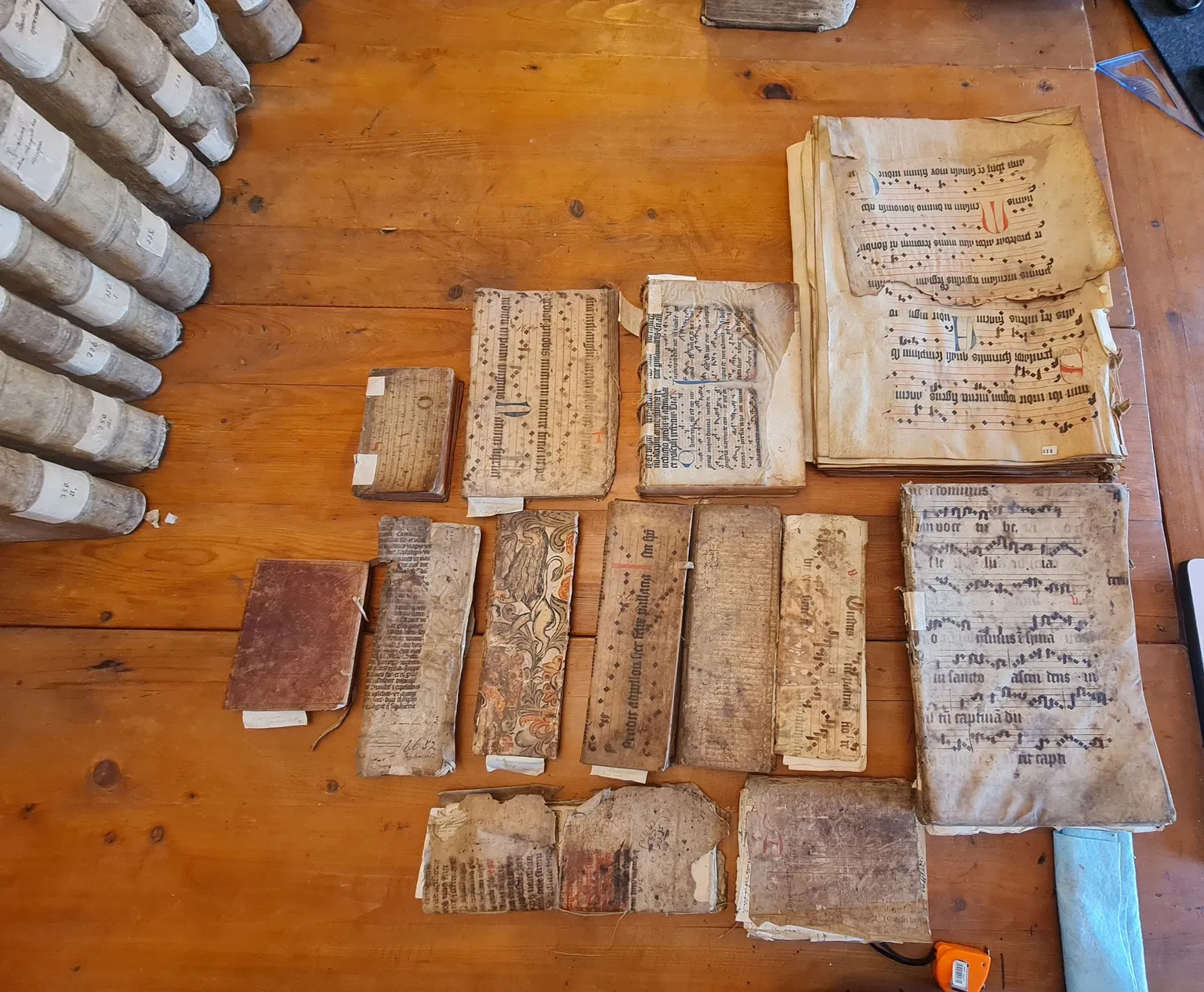
Buried for centuries in a Transylvanian church tower, a forgotten medieval library has come to light, offering a glimpse into the intellectual and cultural life of medieval Romania.

By Jove! How many treasure troves are yet to be discovered on Planet Earth? It makes me want to start a limerick using “Jove,” “trove,” “grove” …

The website Medievalists reports, “Hidden away for centuries in a Transylvanian church tower, a forgotten medieval library has come to light, revealing treasures as old as the 9th century. This extraordinary discovery of manuscripts, books, and documents offers a rare glimpse into the intellectual and cultural life of medieval Romania.

“The discovery was made two years ago in the Church of St. Margaret in Mediaș, a 15th-century Gothic structure built by the Transylvanian Saxons. A team led by Professor Adinel C. Dincă of Babeș-Bolyai University uncovered the collection in the church’s Ropemakers’ Tower, where it had remained hidden for decades, possibly centuries. Biblioteca Batthyaneum, which first announced the find, described it as a scene straight out of an Indiana Jones adventure, complete with a struggle against nesting pigeons to recover the precious volumes. The cache includes:

  • Printed Volumes: Approximately 139 books printed between 1470 and 1600.
  • Manuscript Volumes: Two manuscripts from the early 16th century.
  • Original Documents: Around 60 documents from the 14th to 16th centuries, with a few originals and copies from the 17th century.
  • Administrative Registers: About 10 registers from the 17th–18th centuries, containing fragments of medieval manuscripts. …

“Professor Dincă believes the library was deliberately hidden, possibly during a period of war or religious upheaval. The organization of the books suggests a carefully curated collection rather than a haphazard storage. ‘When I first encountered the books, I immediately noticed the disposition of the volumes according to a certain historical typology: bibles and biblical texts, patristic, theology etc,’ Dincă explained to Medievalists.net. ‘This order doesn’t look like an improvisation. …

“The items found are likely part of a larger collection held by the church. A catalogue from 1864 lists around 7,700 books in the church library, many of which were authored by key Protestant Reformers such as Martin Luther, John Calvin, and Philip Melanchthon. The cache provides researchers with the rare opportunity to match the recovered volumes with the historical records and explore what remains of this once vast repository.

“Among the most intriguing finds are fragments of medieval manuscripts, some dating as far back as the 9th century. These include texts written in Carolingian minuscule, a script commonly associated with the Carolingian Renaissance, as well as liturgical manuscripts from the 14th and 15th centuries. Many of these fragments were found recycled into administrative registers, offering insights into how older texts were reused within the community.

“ ‘One highlight of this historical collection is the large number of original 16th-century bindings, many of them dated,’ Dincă notes. ‘In addition to that, in the series of administrative registers of the parish, there are several fragments of mediaeval manuscripts, among them one copied in Carolingian minuscule, the rest of the “fragments collection” containing the usual liturgical manuscripts from the 14th to 15th century. The closed context of re-use makes it very likely that such recycled pieces of parchment are in fact remnants of a pre-Reformation stock of manuscripts locally used.’

“The discovery has launched a comprehensive research project. … Funded by Germany’s Ministry for Culture and Media, the project focuses on preserving the collection, digitally reconstructing it, and conducting detailed scientific analysis. …

“Researchers are particularly interested in the collection’s role in reflecting the intellectual and cultural life of the Transylvanian Saxons. The books and manuscripts provide unique insights into the circulation of ideas in medieval Europe. …

“Professor Dincă and his team believe the discovery represents more than just a hidden archive — it is a time capsule that offers a rare glimpse into the cultural and religious life of the region during the Middle Ages.”

More at Medievalists, here. No paywall. (Once I started thinking about rhymes for “ove,” I realized once again how weird English is. You can’t use “love” or “shove” with “trove” or “move” either.)

Read Full Post »

Photo: New York Public Library.
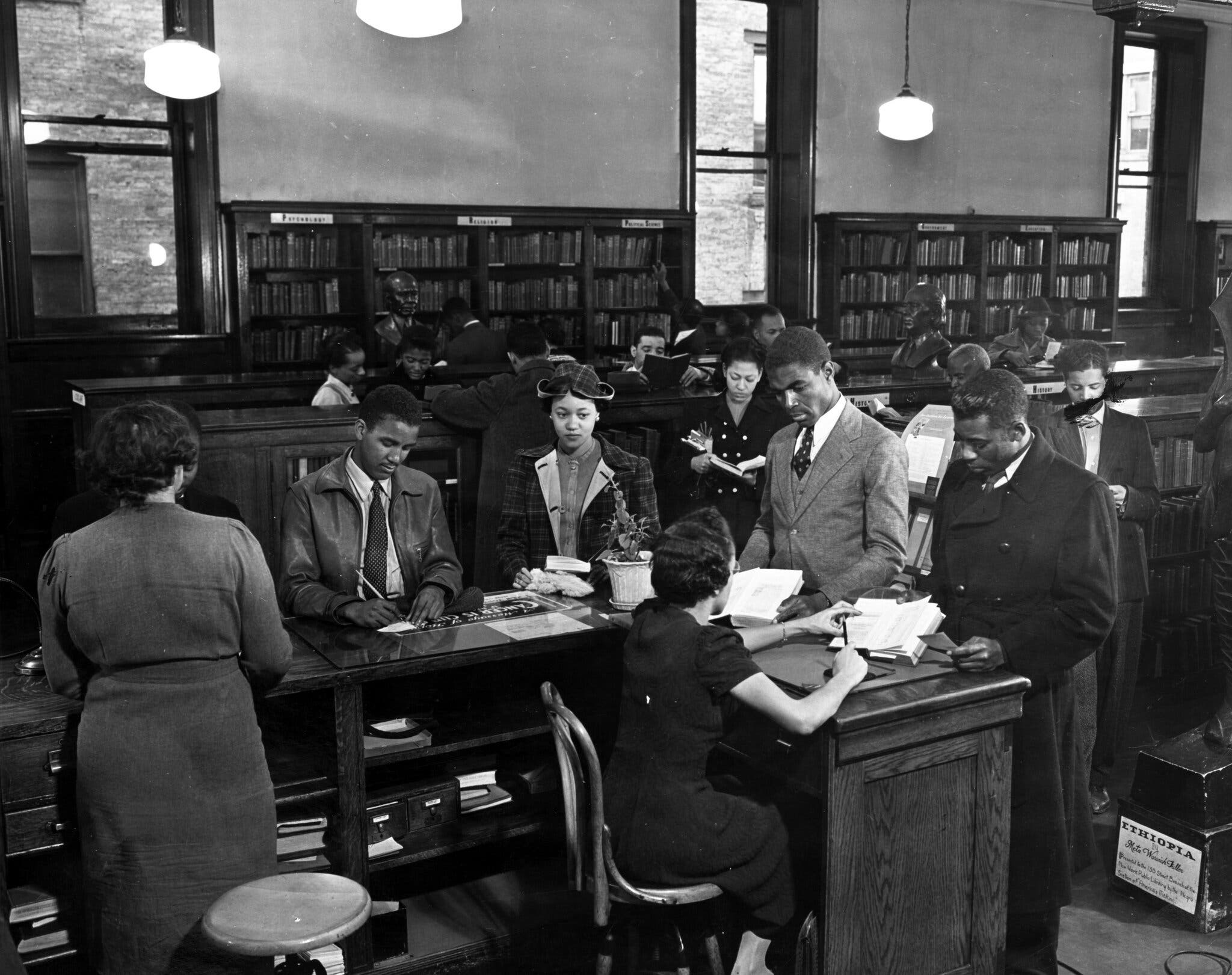
In 1925, the New York Public Library system established the first public collection dedicated to Black materials at its 135th Street branch in Harlem, now known as the Schomburg Center for Research in Black Culture.

I have read numerous accounts of what a public library has meant to poor children with insatiable curiosity. The most recent was the autobiography Up Home by future intellectual and university president Ruth J. Simmons. She grew up in a desperately poor Black sharecropper’s family in Texas. Books and encouragement from Black teachers meant everything.

Meanwhile in Harlem, Black librarians meant everything to generations of Northern children.

Jennifer Schuessler reports at the New York Times, “It was a banner day in the history of American libraries — and in Black history. On May 25, 1926, the New York Public Library announced that it had acquired the celebrated Afro-Latino bibliophile Arturo Schomburg’s collection of more than 4,000 books, manuscripts and other artifacts.

“A year earlier, the library had established the first public collection dedicated to Black materials, at its 135th Street branch in Harlem. Now, the branch would be home to a trove of rare items, from some of the earliest books by and about Black people to then-new works of the brewing Harlem Renaissance.

“Schomburg was the most famous of the Black bibliophiles who, starting in the late 19th century, had amassed impressive ‘parlor libraries’ in their homes. Such libraries became important gathering places for Black writers and thinkers at a time when newly created public libraries — which exploded in number in the decades after 1870 — were uninterested in Black materials, and often unwelcoming to Black patrons.

“Schomburg summed up his credo in a famous 1925 essay, writing, ‘The American Negro must remake his past in order to make his future.’ In a 1913 letter, he had put it less decorously: The items in his library were ‘powder with which to fight our enemies. …

“Today, figures like Schomburg and the historian and activist W.E.B. Du Bois (another collector and compiler of Black books) are hailed as the founders of the 20th-century Black intellectual tradition. But increasingly, scholars are also uncovering the important role of the women who often ran the libraries, where they built collections and — just as important — communities of readers.

“ ‘Mr. Schomburg’s collection is really the seed,’ said Joy Bivins, the current director of the Schomburg Center for Research in Black Culture, as the 135th Street library, currently home to more than 11 million items, is now known. ‘But in many ways, it is these women who were the institution builders.’

“Many were among the first Black women to attend library school, where they learned the tools and the systems of the rapidly professionalizing field.

On the job, they learned these tools weren’t always suited to Black books and ideas, so they invented their own.

“At times, they battled overt and covert censorship. … But whether they worked in world-famous research collections or modest public branch libraries, these pioneers saw their role as not just about tending old books but also about making room for new people and new ideas.

“ ‘These librarians were very tuned in and understood that a cultural movement also needs a space,’ said Laura E. Helton, a historian at the University of Delaware and author of the recent book Scattered and Fugitive Things: How Black Collectors Created Archives and Remade History. …

“In the 1920 census, only 69 of the 15,297 Americans who listed their profession as librarian were Black. Many cities in the segregated South had no library services at all for Black citizens. And even in the North, those branches that did serve them often had few books geared to their interests, and sometimes no card catalogs or reference collections at all.

“That started to change, if slowly. In 1924, in Chicago, Vivian Harsh became the first Black librarian to lead a public library branch there. [But] no place captures the transformations of the era more than Harlem, where, starting in 1920, a white librarian named Ernestine Rose hired four young Black librarians at the 135th Street library. …

“The poet Arna Bontemps (who himself later became a librarian) recalled visiting the 135th Street library after his arrival in Harlem in 1924. ‘There were a couple of very nice-looking girls sitting at the desk, colored girls,’ he said. ‘I had never seen that before.’ …

“Other ‘girls’ at the branch fostered the neighborhood’s artistic ferment in different ways. Among them was Regina Andrews, a young librarian from Chicago (where she was mentored by Harsh) who came to New York City on vacation in 1922 and decided to stay. She … soon settled into an apartment at 580 St. Nicholas Avenue with two friends who worked at Opportunity, a new magazine that aimed to capture the creative ferment bubbling up in Harlem. Nicknamed Dream Haven, the apartment quickly became a salon and crash pad for some of the most celebrated figures of the period.

“It was there that Alain Locke held some planning meetings for the special issue of the Survey Graphic magazine that later grew into his landmark 1925 anthology The New Negro. And it was there that many Black artists and writers who attended the 1924 Civic Club dinner now recognized as an opening bell of the Harlem Renaissance gathered.”

Read more at the Times, here.

Read Full Post »

Photo: Jingnan Peng/Christian Science Monitor.
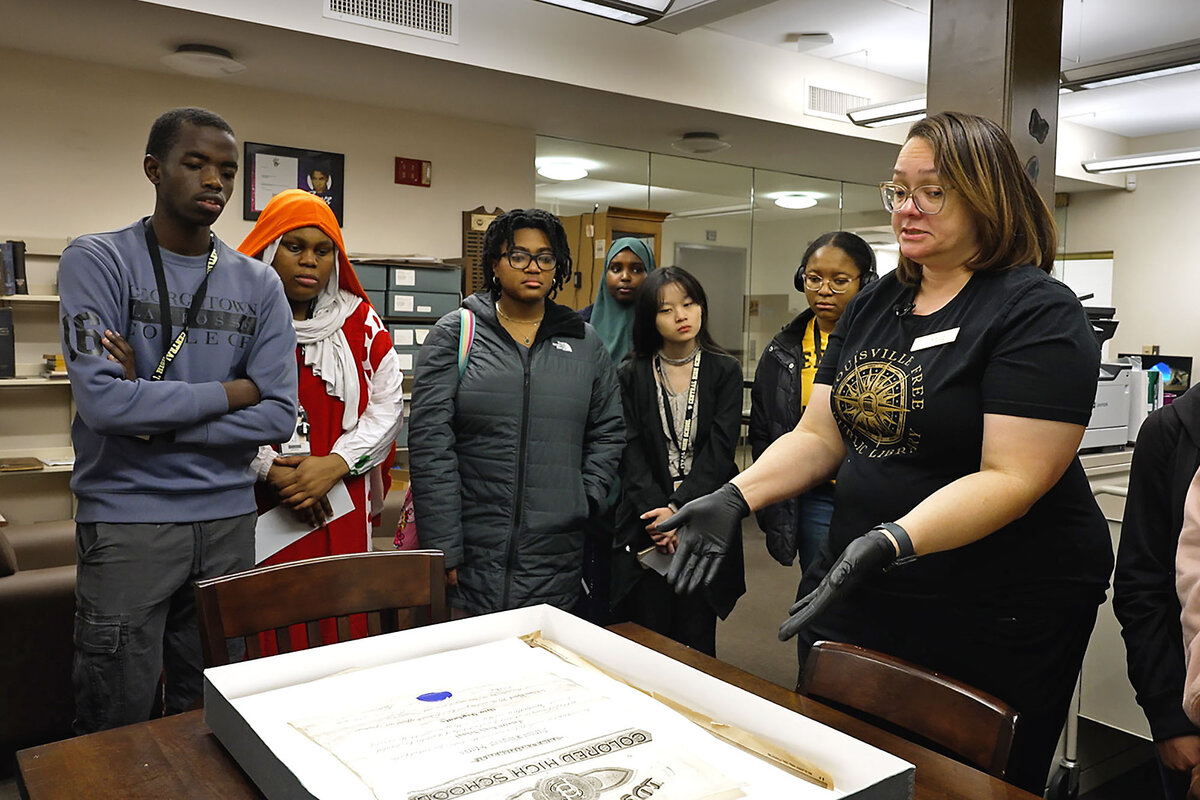
On a tour of Louisville’s Western Library, librarian Natalie Woods (right) shows a 1911 diploma of Louisville’s Central High School. Its former principal, Albert Meyzeek, helped create the oldest Black public library in the U.S. still independently run today.

It is often the case that people in a marginalized group excel in delivering badly needed services that others take for granted. Consider America’s oldest Black library and the man who started it.

Jingnan Peng writes at the Christian Science Monitor, “Thirty minutes into the library tour, Louisa Sarpee wants to work there. History is so close to her. One block away from her high school, the small library she had never set foot in laid the foundation of African American librarianship. What is more, the library was created by a former principal of her own school. Its archives even house a diploma of her school from the time the word ‘colored’ was still in the school’s name.

“ ‘Is there any way to volunteer at the library?’ the ninth grader asks Natalie Woods, the librarian giving the tour. …

“ ‘Say no more, girlfriend,’ Ms. Woods replies, beaming. ‘We’re gonna talk.’

“For Ms. Woods, the manager of Louisville’s Western Library, the gasps coming from the group of 18 students learning about its history is no surprise. She meets Louisvillians every day who know nothing about Western. The library under her care is the oldest public library in the United States independently run by and for African Americans. It was also the earliest training ground of Black librarians from around the South. It is a legacy that has changed Ms. Woods’ life, and preserving it has become her vocation. …

“The ‘Western Colored Branch’ of the Louisville Free Public Library system opened in 1905, in an era when Black communities across the South were building institutions in the wake of emancipation, says historian Tracy K’Meyer at the University of Louisville. …

“The segregated library was considered an experiment, says Ms. Woods. Its first manager, the Rev. Thomas Fountain Blue, had no formal schooling in library science – because there were no library schools open to Black people.  

“Blue not only ran a successful library … he also started the first training program for Black library workers. The course became the prototype for the first degree program in library science for African Americans, which opened in 1925 at Hampton Institute in Virginia. …

“Ms. Woods remembers Blue’s cursive handwriting. The first time she held his papers, they changed her life. She never learned about Western’s history when she grew up in Louisville. The child of a Black father and a white mother, she became a page at Louisville’s Shawnee Library. There, she would hear mentions of Western’s history.

“In 2008, while working as a library clerk and attending college at night, Ms. Woods lost the vision in her left eye due to complications from surgery. She couldn’t perceive distance properly and had to relearn basic activities, such as picking up a pencil, by repetition. It was a struggle to finish college, she says, and she gave up the idea of pursuing a master’s degree in library science.

“Then, one day, a supervisor brought Ms. Woods a folder of documents to transcribe. They were the papers of Thomas Fountain Blue. 

“On lined sheets, the cursive hand discussed circulation methods, library cards, and a library’s role in educating the public. 

“ ‘I knew of him, but I didn’t know how deep and intentional he was in everything he did,’ Ms. Woods says. ‘And it just gave me a new love and desire to go to library school.’ She obtained her library degree at Florida State University. She became Western’s manager on March 6, 2016: Blue’s 150th birthday.

“When Ms. Woods started at Western, she found that many people living near Western did not even know the library exists.

“The library’s archive, which includes Blue’s papers and a wealth of material on Black Louisville history, was disorganized. There was no indexing, and the room was not even locked down, Ms. Woods says.

“So she started giving tours of the library, which she still offers about once a week. In 2018, she obtained a $70,000 grant to index and digitize Western’s archive. 

“It is an important archive that sheds light on ‘how Black librarians, in real time, were trying to imagine what a library to serve a Black community should look like,’ says David Anderson, a professor of English at University of Louisville. …

“A child of formerly enslaved parents, Blue attended college and seminary in Virginia and ran a Louisville YMCA before starting at Western. He died in 1935, after being denied medical care for a treatable infection, says Annette Blue, his granddaughter. ‘He died from Jim Crow laws,’ she says in a Zoom interview from her home in California. …

“Ms. Woods says she does her work in honor of Blue and her parents. She tries to embody Blue’s commitment to ‘the betterment of his people.’ Her parents, who faced much opposition to their relationship as an interracial couple, taught her to ‘treat people the way you want to be treated.’ “

More at the Monitor, here. No firewall. Subscriptions are reasonable.

Read Full Post »

Photo: Melanie Stetson Freeman/CSM Staff.
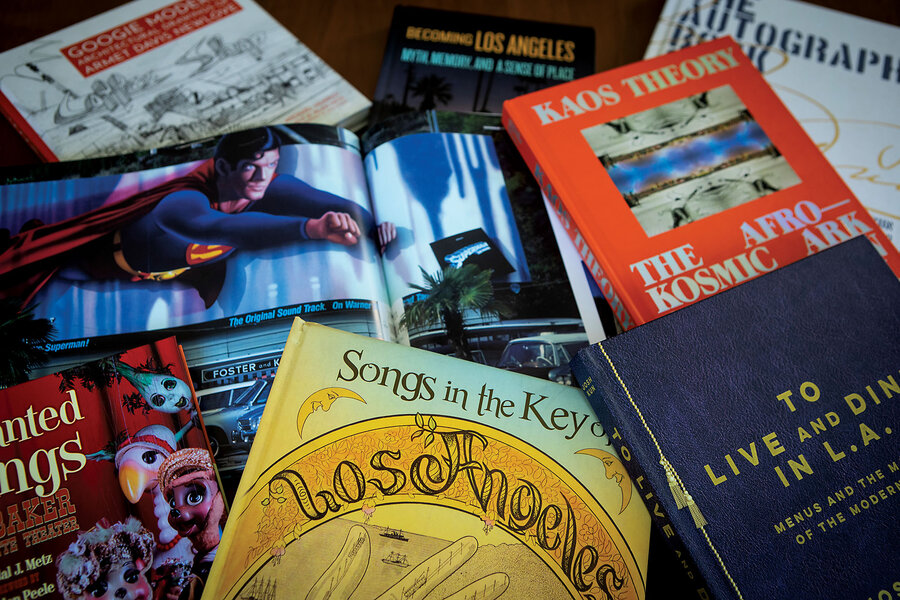
An assortment of books published by Angel City Press. The press’s owners donated the indie publishing operation to the Los Angeles Public Library in December 2023.

Libraries are under pressure because, you know, they offer people books. One library is taking the general outrageousness of book culture a step further by getting into publishing.

Ali Martin writes at the Christian Science Monitor, “The City of Angels is known for glitz … but Angelenos recognize a deeper creative spirit, found in its eclectic and diverse neighborhoods, where stories of resilience are illuminated with quirky, indelible characters. 

“ ‘There’s something really valuable in trying to reflect a true portrait of the city, not just to the people who live here, but [to people] everywhere,’ says Terri Accomazzo, editorial director for Angel City Press. …

“For more than 30 years, the small independent Angel City Press has published nonfiction by local authors. Now, the company’s founders are handing it all over to the Los Angeles Public Library (LAPL) in an arrangement unprecedented in scope — forging what the city’s top librarian describes as a natural alliance. ‘The library is about collecting stories, we’re about preserving stories, and we’re certainly about telling stories,’ says City Librarian John Szabo. …

“With e-books and self-publishing, getting a book to market has never been easier, says Andrea Fleck-Nisbet, CEO of the Independent Book Publishers Association. The hard part is connecting with an audience. 

“ ‘By taking a small indie publisher and then being able to continue its life through a nonprofit like a library that’s already serving that market, you have that built-in community,’ she says. …

“Angel City’s donation includes its catalog of published books — titles that might be retired if acquired by a company focused solely on profits, says Ms. Accomazzo, who will keep her position after the transition. It also ensures that the press ‘continues to operate with an eye toward storytelling and a focus on telling things that matter.’ …

“One of those stories is A Handful of Earth, A Handful of Sky: The World of Octavia E. Butler, by Lynell George, about the life of the celebrated science fiction writer. Ms. Butler, a Black woman, grew up poor in Pasadena during the 1950s and ’60s, finding refuge in her journals and sanctuary in the area’s libraries. 

“Ms. George, a well-published author, says Angel City’s local focus allows for a ‘much more rich conversation about shaping and sharing stories.’ Publishers from outside California often want LA stories to fit a preconceived narrative, she says. But in working with local publishers, ‘you’re just writing about what you see, what you love, what you have complicated feelings about. You’re not writing in response or retort to … a cliché.’

“In KAOS Theory: The Afrokosmic Ark of Ben Caldwell, author Robeson Taj Frazier brings to life the far-reaching cultural impact of a multimedia arts pioneer. By tracing Mr. Caldwell’s journey from his childhood in the American Southwest to filmmaking at UCLA and the establishment of his media arts center in LA’s Leimert Park neighborhood, Dr. Frazier shines light on civil rights and the Black experience in America. 

“The self-described ‘latchkey kid’ who spent much of his childhood in public libraries now runs the University of Southern California’s Institute for Diversity and Empowerment at Annenberg. …

“The LAPL is the nation’s second-largest public library by population served, with the largest digital circulation — more than 10 million e-books, audio books, podcasts, and other electronic media. That kind of reach combined with publishing can have a profound impact, says Sonia Alcántara-Antoine, president of the Public Library Association. …

“The Angel City collaboration builds on an evolution of libraries as maker spaces, where anyone can access resources to build, fix, or create things. ‘This is very much part of where we are in libraries,’ says Ms. Alcántara-Antoine, who heads Baltimore County Public Library, ‘which is not only providing access to content, but facilitating the creation of it.’ …

“Angel City’s 135-plus titles are eclectic, diverse, weird, fun, and beautiful, says Mr. Szabo. As the library picks up that mantle, ‘it’s about telling stories that might not otherwise be told.’ ”

More at the Monitor, here. No paywall.

Read Full Post »

Photo: Clatskanie Library District via Oregon ArtsWatch.
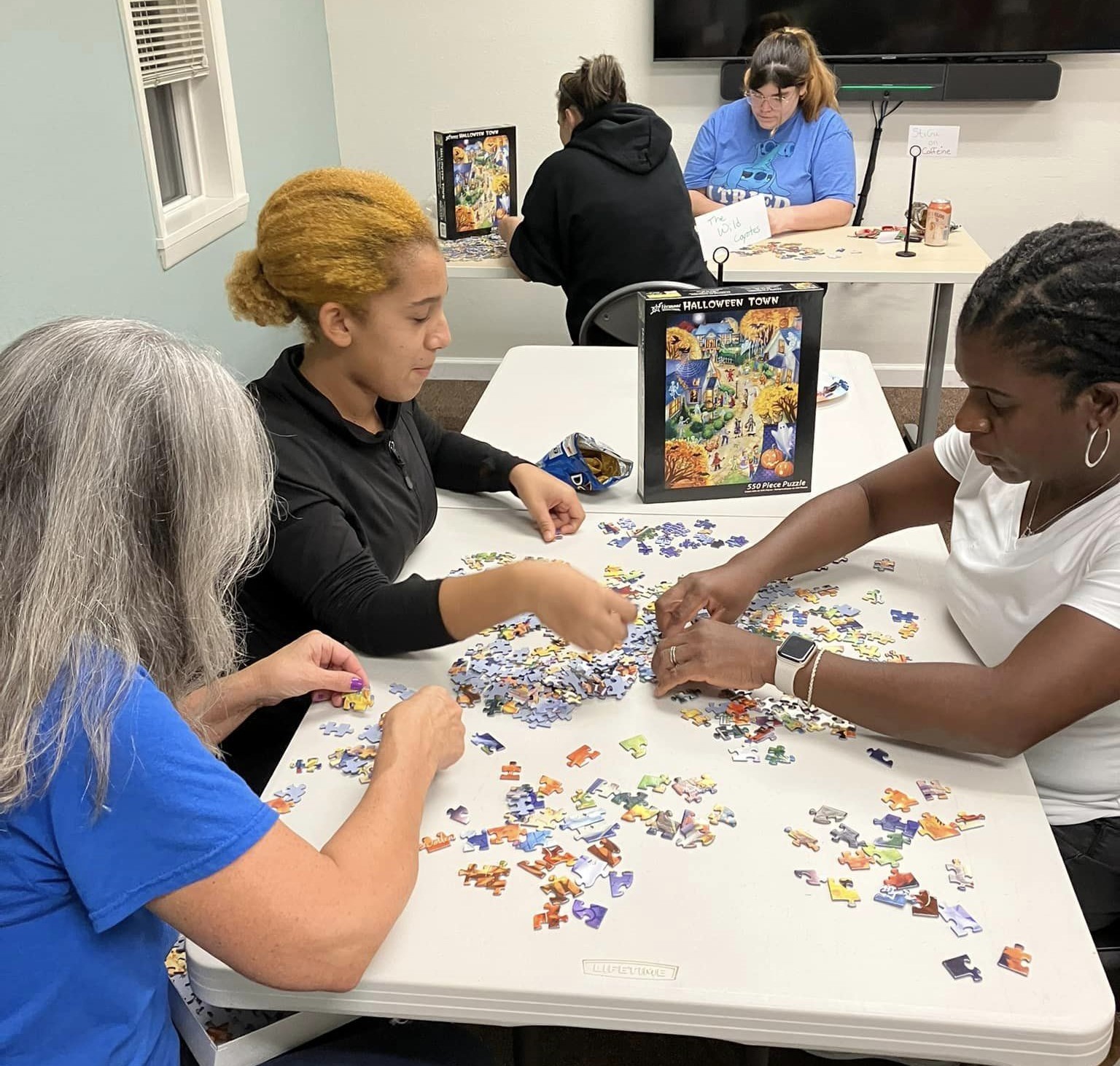
The Clatskanie Library hosted a Halloween puzzle race last fall. “We want to be the community hub,” says library director Maryanne Hirning. “I want everyone to find something at the library.”

It would be hard to overstate the value of a library to a community, a refuge in so many ways. Remember the safe haven in Ferguson, Missouri, during the riots that erupted after the police killing of black teen Michael Brown? I have been following that library on Twitter since 2014 and am impressed with their services in calmer times, too.

At Oregon ArtsWatch, Amanda Waldroupe writes that libraries are often the heart and soul of rural communities.

“During the celebration of [the town of] Maupin’s centennial anniversary last year, its public library – the Southern Wasco County Library – printed a second edition of Chaff in the Wind: Gleanings of the Maupin Community.

Chaff in the Wind is a history of Maupin and Wasco County that the library’s Friends’ group originally published in 1986. The library commissioned new chapters covering Maupin’s history since then.

“Another era also needed to be added: There was nothing about the region’s history before white people settled there, even though Native Americans had lived in the region for hundreds of years. So, Valerie Stephenson, the library’s director, reached out to the Confederated Tribes of Warm Springs.

“Delson Suppah, the Warm Springs’ cultural program coordinator, agreed to contribute – but not through writing a book chapter. Like many Indigenous cultures, the Warm Springs tribe conveys its history through oral storytelling. In two events, Suppah gave an oral history of the Warm Springs tribe’s history and presence in the area.

“Grant funding – in this case, $4,000 from Oregon Humanities – paid for the events and republishing the book. Without the grant, Stephenson said, none of it would have happened. …

“Oregon’s public libraries are well loved and well used, with one of the highest per capita circulation rates in the country. Public libraries are among the last institutions that are free and open to the general public, making them a natural gathering space for adults and children. …

“Libraries have always played a critical role in early literacy: teaching kids how to read, hosting summer reading programs, and reading and story time events for different age groups. Libraries were also early adopters in providing free access to computers and fast, broadband internet.

“Even before the COVID-19 pandemic prompted libraries to begin offering virtual and online services, libraries’ services were expanding to take on roles that blend information literacy, social, and community services. Library staff are increasingly being trained in basic mental health crisis response and how to administer Narcan or naloxone to people experiencing an opiate overdose. To serve growing numbers of immigrant communities, libraries are acquiring books in languages other than English, bilingual books, and hiring staff who speak languages in addition to English, especially Spanish.

“In many communities, libraries are a place where people experiencing homelessness can spend the day, where senior citizens find social interaction, and where kids can go after school.

“ ‘Libraries are places where people from all different backgrounds can interact,’ Buzzy Nielsen, a program manager for the State Library of Oregon, said. …

“That is especially the case in rural Oregon, where libraries are often the only places that host arts and cultural events.

“[Southern Wasco County Library] has a conference room large enough to host governmental, board, and other community meetings. The library hosts social workers from the Wasco County Health Department, who come to meet with residents and process applications for the Oregon Health Plan, SNAP benefits, disability, and other services. …

“Clatskanie’s library has started a young adult book club and hosted classes on flower arranging and cookie decorating, both taught by local business owners. …

“Libraries have also created Libraries of Things, where patrons can check out items ranging from e-readers with pre-downloaded e-books; ukuleles and other musical instruments; pots, pans, and other cooking equipment; fishing poles; and for kids, telescopes and science kits. …

“Libraries of Things reflect their community. Harney County’s library checks out canners, dehydrators, and other items necessary to preserve food.

“Wi-Fi hotspots are another common offering. Stephenson, Hancock, and others said the availability of fast, broadband internet in rural Oregon can be nonexistent. …

“Hancock said, ‘We have a lot of spots that aren’t served by internet companies.’ The library’s ten Wi-Fi hotspots are always checked out with holds placed on them. ‘They are hugely popular, she said. …

“With the expansion of library services, circulation has dramatically increased for a library’s most fundamental offering – books. [Maryanne Hirning, director of the Clatskanie Library District] said book circulation has increased by 400 percent. Other librarians say that once someone attends an event at a library, they are more likely to consider other services the library offers, become a member, and check out books.”

Lots more at Oregon ArtsWatch, here.

Blogger Laurie Graves has long understood that librarians are superheroes. And through her Great Library fantasy series, she shows that threats to libraries can be a matter of life and death.

Read Full Post »

Photo: Dua Anjum.
“Poet Hiram Sims,” the Christian Science Monitor reports,” has given poetry a permanent home in his South Los Angeles neighborhood.

This is another story about how the Covid pandemic gave some people a moment of “not much going on” to pursue a dream.

Dua Anjum writes at the Christian Science Monitor, “From Hiram Sims’ earliest memory, poetry defined his inner world – songs of praise at his church choir; the rap lyrics of The Notorious B.I.G., Puff Daddy, and Mase’s ‘Mo Money Mo Problems’; Edgar Allan Poe’s ‘The Raven’ in seventh grade.

“ ‘Poetry’s like a frequency that I can hear above all other frequencies,’ he says. … ‘When I hear that sound, I pay attention.’

“That sound became his favorite form of expression. As a kid, he wrote about candy, his thoughts about God, and a lot of verses for girls at school. In college, while he progressed to mature writing around the Black experience in America and the struggles of being young and broke, witty comic poems remained key to his repertoire. He chuckles recalling a poem comparing Ugg boots to rhinoceros feet. Now, he has published three collections of poetry and frequently writes love poems for his wife.

“While it was clear early that his calling was poetry, Mr. Sims remembers having an anchorless feeling: Poetry sections of libraries were rare, and the poetry scene was a series of countless borrowed spaces in restaurants, cafes, and bars. It felt like ‘poetry is homeless because it’s constantly couch surfing,’ says Mr. Sims, who became a creative writing and composition professor at colleges in the area, including his alma mater, the University of Southern California.

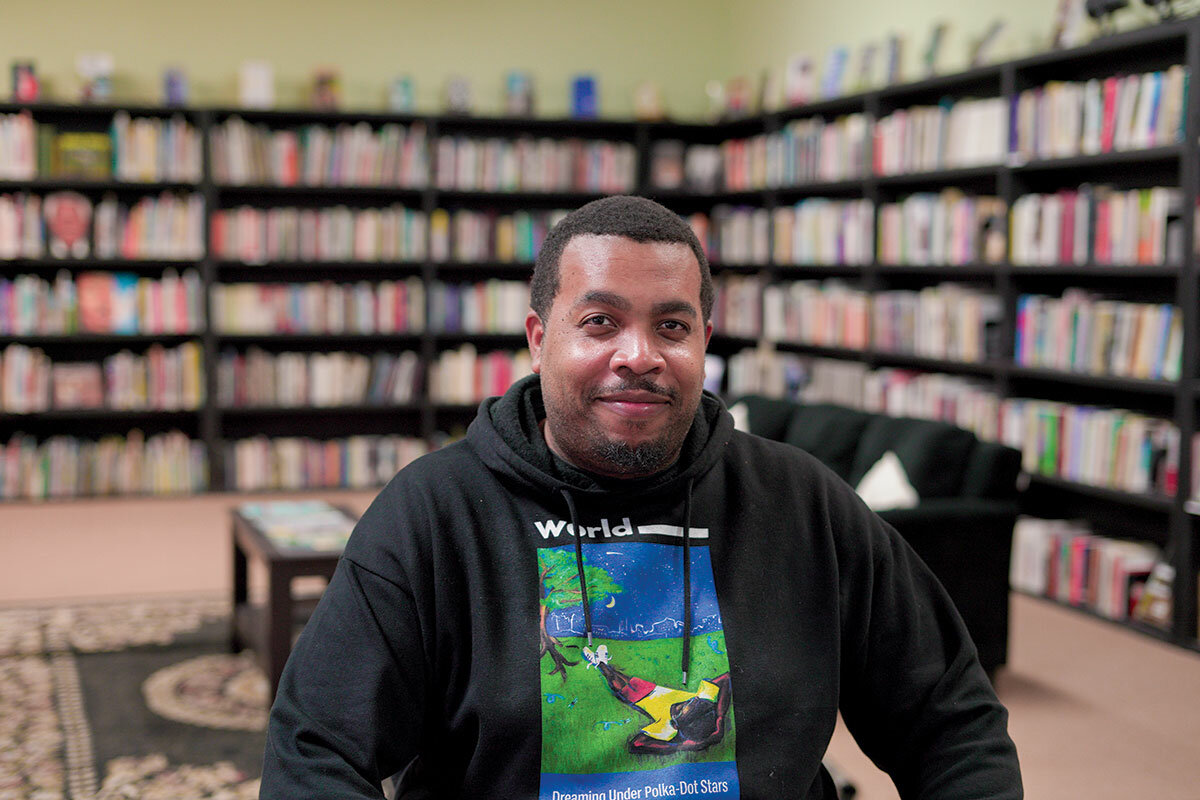
“In 2020, he gave poetry a permanent home in his South Los Angeles neighborhood, founding the Sims Library of Poetry, for reading, writing, studying, and performing poetry. 

“The space has evolved into an indispensable gathering place for anyone looking for inspiration, say poets who live nearby. It whimsically invites the public in: ‘Poetry Lives Here’ is painted on a low concrete boundary. A mural pays homage to the dragon fire that poets spit in words. A ‘Poet Parking Only’ sign peeks from a patch of grass. 

“The spiritual foundation for this landmark came from what Mr. Sims considers a personal triumph: the Community Literature Initiative (CLI), through which he helps poets produce manuscripts ready for publication and connect to presses.  

“ ‘I was at an open mic and I heard all of these amazing poets. After the show, I said, “I’d like to buy a copy of your book,” and none of them had books,’ says Mr. Sims, who has coached poets in publishing now for 10 years in space provided by USC. … Sims Library origin story goes back to a $29.99 suitcase.

After assigning his CLI students to read one book of poetry a week, he realized: They couldn’t afford them, and libraries had slim poetry offerings. 

“So, he fit 80 books from his collection into the purple-brown suitcase, carted it around in his car, unzipped it, and let students borrow poetry collections by living authors, especially local LA poets.

“ ‘One of my students said, “This is the little Sims library of poetry right here.” And I was like, “Wow.” … After that, I put all my energy into building that microcosm of the library that I had in my head.’

“The idea came to life in his garage at a birthday party-turned-library-launch. … Several poets read their own verse. And people brought boxes full of books: The party started with 300 and ended with 2,000. 

“Mr. Sims’ mother, Gwendolyn, who remembers her young son loved to read greeting card stanzas at the Rite Aid, was one of the first to donate money. The library continued to thrive with family, community, and foundation contributions of books, cash, and grants. And CLI class tuition also helped. 

“It was peak pandemic, and the preschool run by his wife, Charisse, closed. The family decided to take over the building as the next iteration of the library. Mr. Sims’ father, Edward, who is a contractor, and his brother Job helped with shelves. Word of another donation drive reached further and book donations came from across the country. …

“The nonprofit offers more than 9,000 volumes of poetry, says Mr. Sims. ‘So many of these books are people that live in LA, you know, people in this community.’ 

“Open until 8 on Saturday nights, the thrum of activity – from book launches, workshops, and open mics – spills into the neighborhood with singing voices, fingers snapping, and the rhythm of rhyme. …

“Mr. Sims says, ‘I think the library represents value for a part of people they don’t often share. So people often bring poems from their shoeboxes and folders. It’s so personal with people.’ …

“ ‘When the first volunteers came in, they expected to come to a library, but then realized, we have to build one,’ says Karo Ska, library manager and a CLI writer. For them, the best part is that the library has books that can’t be found elsewhere – pre-1950s special collections, self-published collections, periodicals, local literary journals, and handmade chapbooks.

“ ‘The idea of giving back to the community is a phrase that a lot of people use but isn’t always manifested,’  says Lynne Thompson, 2021 Los Angeles poet laureate. ‘[Hiram] is as interested in the work of others and facilitating not only the writing of it but the publishing of it as he is in his own work.’ …

“Poet bridgette bianca, who grew up in the neighborhood without a public library nearby, says: ‘We are in an area that’s very much Black, very much brown, very much working class. And that somebody built a library here is just fantastic.’ 

“Now, as a community college professor, she uses the library as a resource, encouraging students to explore the poetry collection and attend events for extra credit.”

More at the Monitor, here. No firewall, but subscriptions are encouraged.

Read Full Post »

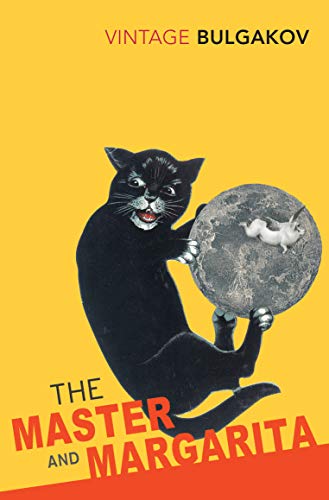
The Master and Margarita is a novel by Russian writer Mikhail Bulgakov, written in the Soviet Union during Stalin‘s regime. A censored version was published in Moscow magazine in 1966–1967, after the writer’s death.

John has worked with optical engineers in Ukraine for decades now. Some years ago, when one of the engineers was in the US to talk to clients, we got to share a meal and a chat. I remember it was a sweltering hot day. We had no air conditioning in our dining room, and we were all sweating.

At the time, I must have been reading Bulgakov’s The Master and Margarita, a fantastical satire on the USSR, written in the time of Stalin. We began to talk about it, and John’s colleague described what one had to do to read the book’s loose unpublished pages before Ukraine gained its freedom. Under the table in the library with a flashlight.

That memory came to mind in the last few days as I watched the Soviet Union try to return from the dead in Ukraine. My train of thought took me to current headlines about banned books in the US and an article in the New York Times that gave students a chance to opine on that trend.

The Times staff explains, “In the article ‘Book Ban Efforts Spread Across the U.S.,’ Elizabeth A. Harris and Alexandra Alter write about the growing trend of parents, political activists, school board officials and lawmakers arguing that some books do not belong in school libraries.

“As we regularly do when The Times reports on an issue that touches the lives of teenagers, we used our daily Student Opinion forum to ask teenagers to share their perspectives. The overwhelming majority of students were opposed to book bans in any form, although their reasons and opinions were varied and nuanced. They argued that young people have the right to read unsanitized versions of history, that diverse books expose them to a variety of experiences and perspectives, that controversial literature helps them to think critically about the world, and that, in the age of the internet, book bans just aren’t that effective. … Thank you to all those from around the world who joined the conversation this week, including teenagers from Japan; Julia R. Masterman School in Philadelphia; and Patino High School in Fresno, Calif.

” ‘I think the idea of people trying to censor speech is absolutely abhorrent. Right to freedom of speech, religion, peaceful assembly, petition, and press is our 1st amendment and one that we take for granted …

” ‘As a teenager I am still trying to find my way in this world; I want to know as many other viewpoints as possible so that I know my thoughts are my own and not just a product of a limited amount of information. Even if these books are not required reading they should be allowed in libraries. Families can decide what books are allowed in their homes but trying to force a community to get rid of a book is a way of forcing one’s beliefs on an entire community. Removing books about issues faced by marginalized groups is a way to ignore them, a way to minimize the issues faced by those groups and allow the banners to not have their opinions challenged. This is a democracy that should be open to discussion and if it is then people will find others who agree and disagree with them.’ [Jason, Maine] …

” ‘Maybe a student has past trauma that they may struggle to deal with, a book that has a topic based on their past may comfort them and bring them closure. These books also inform students on what really happens within the mind and life of someone else. Banning books is an overall loss for a school or library, it only limits human growth.’ [Alex, Michigan]

” ‘Reading the article and these comments just makes me think, ”Jeez, the fact these books are being challenged shows how much some people need education on the subjects of them.” These books may have hard topics but they essentially are a needed part of education. They might be brutal and hard to swallow, but they are the best examples of real-world problems and history. They provide a good sense of realism and give kids somewhat of an idea of what goes on and has gone on in the world.

” ‘Challenging these books is like trying to protect someone from the world. Then instead shoving them in front of something that makes them think, “Everything will always work out,” And, “These things will never happen again.” It makes them think the world has no struggle or insanely big problems. When in reality it definitely does and they will be directly affected by these problems.’ [Jordan, Massachusetts]

“While it’s reasonable to be concerned about the material your children are reading, as some material might not be age appropriate, there is almost never — honestly, never at all — justification for banning a book. …

“Books are the primary way to tell stories, to learn right from the mouths of people who have witnessed things we need to learn and grow from. Our society depends on the idea of future generations learning and progressing, and with the banning of books all we are doing is going backwards, not forwards.” [Meghan, Illinois]

Read more at the Times, here.

Read Full Post »

Photo: Ariel Cobbert.
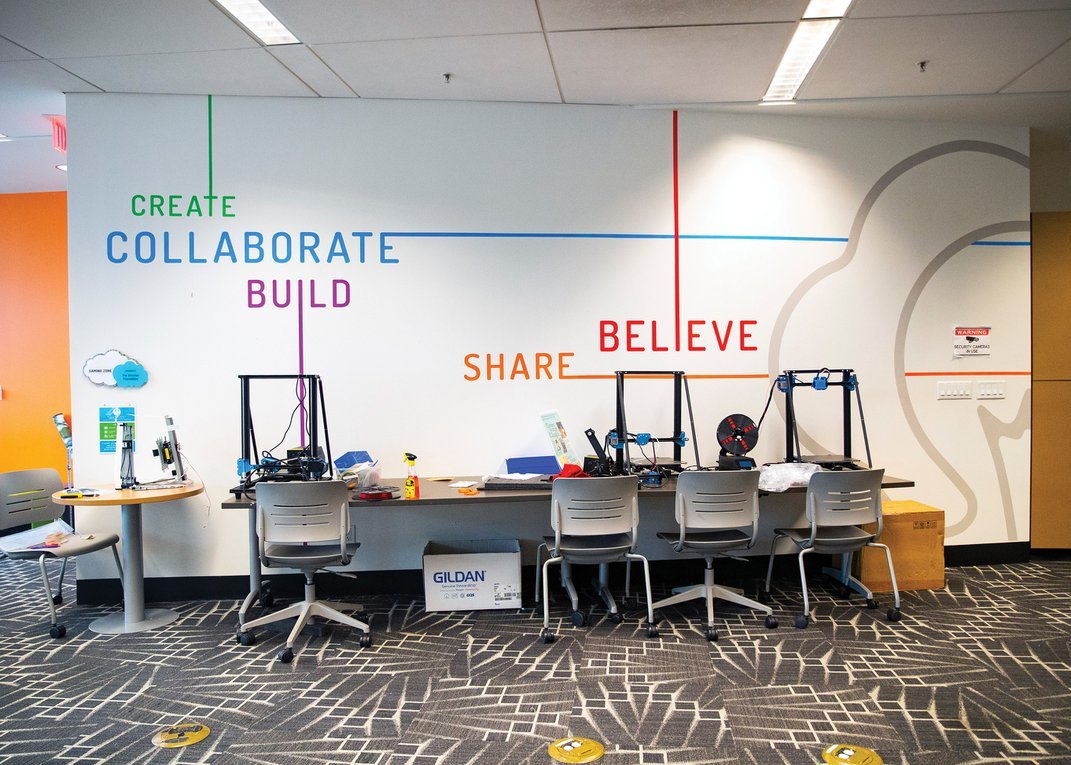
At the Memphis, Tenn., library, Cloud901’s maker space is equipped with such high-tech tools as laser cutters and 3-D printers. The workshop is open to all ages, not just teens.

Today’s story is about an astonishingly innovative library in Memphis, Tennessee. It makes me ashamed to recall that my younger tradition-bound self thought libraries should never spend money on anything but books! Who knew the extended role libraries were going to play in people’s lives — from providing shelter during Ferguson, Missouri, protests to launching kids on undreamed-of careers. My own local library was recently renovated, and I wouldn’t give up a single 3-D machine.

Richard Grant writes at the Smithsonian magazine, “The Benjamin L. Hooks Central Library, a building of pale concrete and greenish glass, rises four stories in midtown Memphis. Walking through its automatic doors on a weekday afternoon, I hear unexpected sounds, muffled but unmistakable, almost shocking in a library context: the deep, quaking bass beats of Memphis hip-hop, plus a faint whine of power tools cutting through metal. …

“Here at the Central branch in Memphis, ukulele flash mobs materialize and seniors dance the fox trot in upstairs rooms. The library hosts U.S. naturalization ceremonies, job fairs, financial literacy seminars, jazz concerts, cooking classes, film screenings and many other events — more than 7,000 at last count. You can check out books and movies, to be sure, but also sewing machines, bicycle repair kits and laptop computers. And late fees? A thing of the past.

“The hip-hop beats and power tool noise are coming from an 8,300-square-foot teenage learning facility called Cloud901 (the numerals are the Memphis area code). Two stories high, it contains a state-of-the-art recording studio staffed by a professional audio engineer, a robotics lab that fields a highly competitive team in regional and national championships, and a video lab where local teens have made award-winning films. Cloud901 also features a fully equipped maker space (a kind of DIY technology innovation workshop), a performance stage, a hang-out area and an art studio. …

“Many cities have slashed their library budgets and closed branches. Memphis, Tennessee, one of the poorest cities in the nation, chose instead to invest, recently opening three new branches, for a total of 18, and increasing the library budget from $15 million in 2007 to almost $23 million today. Attendance at library programs has quadrupled in the last six years. In 2019, before the pandemic, more than 7,000 people attended the annual Bookstock festival, a celebration of literacy and education.

Memphis Public Libraries (MPL) is the only public library system in the country with its own television and radio station, and its branches receive more than two million visits a year.

“ ‘How did this happen?’ I asked Mayor Jim Strickland, who is serving his second term in office. He was sitting in his seventh-floor office with a view of downtown and the Mississippi River. ‘I’m a strong believer in libraries as a force for good,’ he said. ‘But none of this would have happened without our library director Keenon McCloy. She is amazing. We’ve got library people coming from all over the country to see what she’s done here.’

“McCloy is high-energy, fit from running, always busy, sometimes frenetic. Though passionate about public libraries, she has no training in the highly specialized field of librarianship, not even an undergrad degree in library science, and this provoked dismay and even uproar when she took over the Memphis system in January 2008. 

“ ‘I was the director of public services and neighborhoods for the city, and the mayor — it was Mayor Herenton at the time — appointed me without doing a search for other candidates,’ McCloy says over a salad lunch near her office in the Central branch. ‘It caused quite a stir in Libraryland.’ …

“McCloy’s first big task was to reorganize the funding and administration of the library system. Then she went looking for advice. She talked with directors from other states and visited acclaimed public libraries. ‘I wanted to meet the rock stars of Libraryland with the most progressive ideas,’ McCloy says. ‘And they all wanted to help me and share what they’d learned, because that’s how library people are. No one is proprietary and we’re not competitive with each other. We’re all about the greater good.’

“In Chicago, she toured the Harold Washington Library Center, where a 5,500-square-foot facility called YOUmedia opened in 2009. It was the first dedicated teen learning center in an American library, and it had a maker space and an in-house production studio to record teenage musicians. ‘That’s where I got the idea for Cloud901,’ says McCloy. ‘People kept saying the biggest problem at the Central library was all the teens hanging around, and I thought, well, they’re in our library, let’s find a way to redirect their energy.’

“The next step was to meet with the Memphis Library Foundation, a volunteer fundraising organization with connections in the business community and social elite. ‘I asked them if they would support a teen center at the Central branch,’ says McCloy. ‘Well, not immediately, but then they started raising money, and we decided to double the expense and really go for it.’

“Instead of a basic recording studio, McCloy and her team wanted a professional-quality studio. The legendary Memphis music producer Lawrence ‘Boo’ Mitchell, co-owner of Royal Studios and a longtime supporter of the libraries, agreed to design it. For the maker space, they hired a native Memphian who had been overseeing such facilities in the Bay Area. He stocked the workshop with 3-D printers and other equipment, and brought in FedEx, a Memphis-based corporation, as a supporter. It was the same approach with the video and robotics labs: hire experts, buy the best equipment, recruit sponsors. Cloud901 opened in 2015, at a cost of $2.175 million. …

“When [when Janay Kelley, now 18] first arrived at the video lab, an instructor there, Amanda Willoughby, taught her how to use the equipment — cameras, lights, editing software. …

“The first film that Kelley made here was titled The Death of Hip-Hop. She lit and filmed herself. … ‘I was going to upload it onto YouTube, but Amanda insisted on entering it into the Indie Memphis Youth Film Fest.’ “

Read the rest of the story at the Smithsonian, here. It’s free. It’s a long article with fascinating testimonials. Pretty sure Laurie Graves will want to read the whole thing!

Read Full Post »

Photo: Jordan Salama.
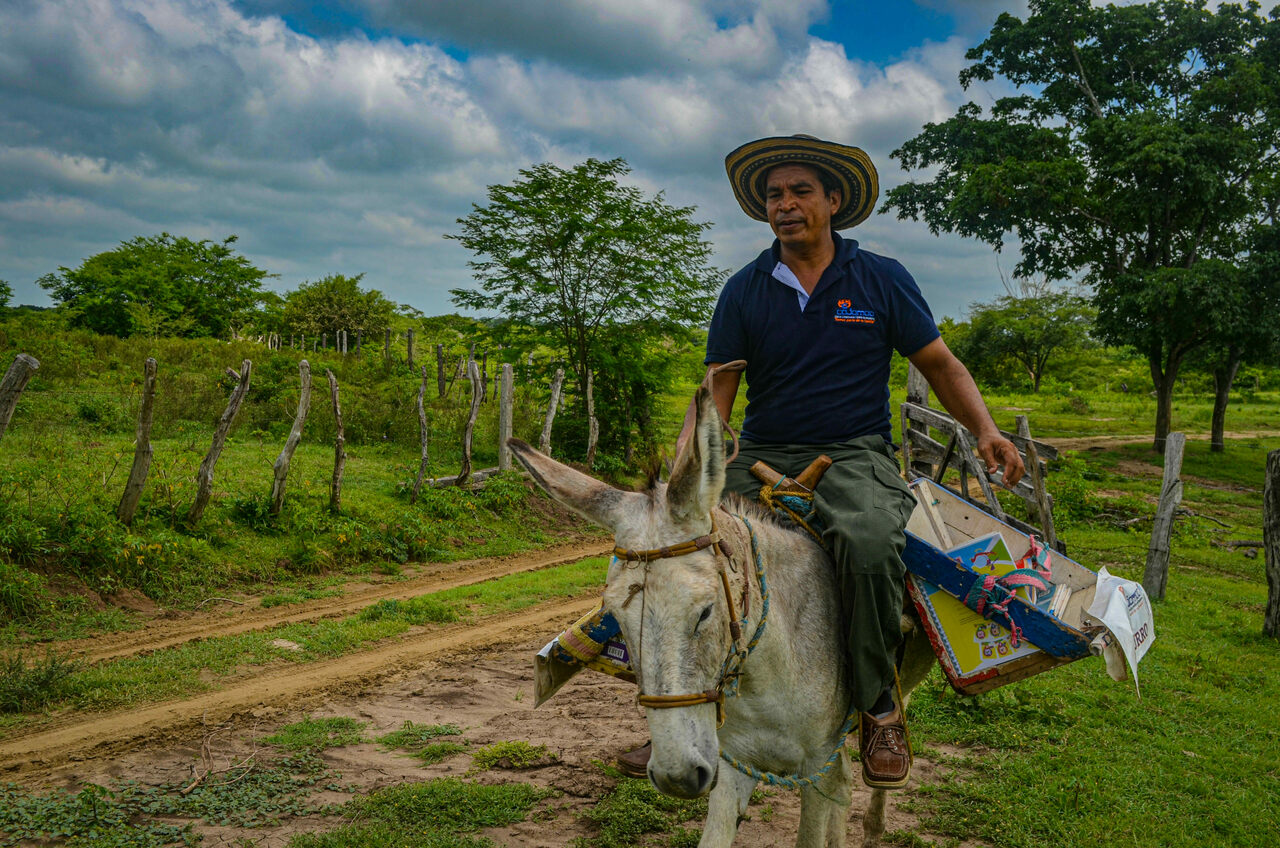
Luis Soriano and Beto, one of his two burros, set out into the Magdalena countryside with books for children who live on isolated farmsteads in Colombia.

Hannah, a friend since preschool, knows I love stories about unusual libraries. (Search on the word “library” at this blog, and see what I mean.)

I love the feeling I get that libraries have a mind of their own, that they reach out to people because we need them. This week Hannah sent me an article about a burro library. Atlas Obscura adapted it from Jordan Salama’s new book, Every Day the River Changes: Four Weeks Down the Magdalena.

“Luis Soriano was born so premature that when he arrived into the world, everyone was sure that he would die. He was born in 1972, in the very same Colombian village of La Gloria (Magdalena Department) where he grew up and made his life. His father was a cattle rancher, and his mother sold fruit and milk on the side of the road. They were hardworking campesino parents who emphasized to their many children the importance of an education over everything else.

“Luis grew up playing in the rolling fields of the Magdalena valley. La Gloria was set inland from the river by about one hour, yet the river wielded great influence upon the town. … It was said that the Magdalena dictated the rains and the floods of the nearby lowlands, which influenced the rains and the floods in La Gloria, and during droughts, the town felt the river’s pain. The river’s beaches and sandy islands yielded the yucca, plantains, and beans of the Caribbean diet — La Gloria is nearly 100 miles from the nearest Caribbean seaside town, but yes, its people will tell you, it is indeed a Caribbean place.

“Raised in the countryside, Luis learned things from the land that people from the city never understood. In the hot, humid afternoons, a line of ants hurrying across the path meant that the skies were about to open and intense rains would fall and freshen the air; at night, the sudden silence of the frogs and the toads meant that another person was approaching in the darkness. From watching the birds, he gathered certain observations about their daily routines, like which of the trees the flocks of red-and-green macaws preferred for their nightly roosts and at what hours of the day the sirirí sang its lonely song. …

“But Colombia’s escalating violence in the 1970s and ’80s meant that Luis would not be able to stay. When the paramilitaries and other criminal groups plagued La Gloria and the surrounding countryside, Luis’s parents sent him and his siblings to live with family in Valledupar, hours away. His life playing among the animals was replaced by the loud, gritty streets of a valley city.

“By the time Luis finished high school and returned to La Gloria, he decided, maybe as a product of all of this learning and absorbing in his own life, that he wanted to become a schoolteacher. He got a job in a small, rural primary school in nearby Nueva Granada, where he taught reading and writing. At the same time, he completed a remote degree from the Universidad del Magdalena.

“None of his students did any of their schoolwork or seemed to make any progress in the first few years, and Luis blamed himself for it. He thought he was a bad teacher [but] he realized that many of the children, living on isolated farmsteads that were several miles along narrow dirt paths from the nearest school, couldn’t practice reading at home because they didn’t have access to books. A teacher with limited resources himself, he decided to do the only thing he could: bring his own books to them.

“And so, before dawn one day in 1997, he took one of his donkeys and a stack of books and set off across the countryside. Covering several miles of difficult terrain, he stopped at the homes of each one of his students and read with them, before lending them the book and telling them he’d be back the next day to pick it up. And in this manner, he returned day after day, in the early hours of morning, well before school started, for he knew from experience that families living in the fields rose with the first song of the sirirí and the crows of roosters in the dark.

“More than 20 years on, he hasn’t stopped.

‘At first, people saw me as nothing more than a half-insane teacher with some books and his donkey,’ Luis liked to say. ‘Without realizing it at the time, I’d created the very same rural traveling library that the world now knows as the Biblioburro.’

“Biblioburro started out with just seventy books, all of them Luis’s own, and only one donkey. He quickly added a second donkey, affixing wooden bookcases to both of their saddles for ease of transport, and named the two animals Alfa and Beto (alfabeto, alphabet in Spanish). He started extending and diversifying each day’s route to reach more children in the area. When the beloved Colombian national radio broadcaster Juan Gossaín got wind of the Biblioburro story in 2003 and shared it with his listeners, book donations from around the world started pouring in — today, Luis boasts a collection of more than 7,000 titles.

“Yet for all the international attention, it remains a humble operation. When Luis sets off on a Biblioburro visit, he does it alone, quietly, with his two trusted donkeys. Often, he won’t encounter another person for hours as he makes his way across the rugged, lonesome terrain — an uncomfortable ride, and an even more arduous walk, beneath the merciless sun. But the children who live in these lonely places await the arrival of the Biblioburro and its stories with great fervor, running wide-eyed toward Alfa and Beto when they spot them on the horizon.

“Perhaps, in the children he serves, Luis Soriano sees some part of himself. He sees that they can beat the odds — for while Luis has easily become the most famous person to ever come from La Gloria, at the moment of his birth, you would have been hard-pressed to find anyone who imagined he would have resurged from his situation as well as he did.

“Except for one person, that is. As the story goes, his parents called upon an older woman, who was very respected in town, to come examine the child and give him her blessing. Minutes after Luis’s birth, she made her way over to the house and stood over him, looking his tiny body up and down, seeming to ponder whether he would be destined to live as long as she had. After several moments, she spoke. ‘This little one, he isn’t going to die’ was what the old woman said (though who knows if she actually believed it herself). ‘He is going to grow up and become a doctor, and he will save this town.’ “

He did not become a doctor, but whether he saved his town, you can decide after reading more at Atlas Obscura, here. P.S. I just noticed I had a short post about the burro librarian in 2015, here!

Read Full Post »

Older Posts »