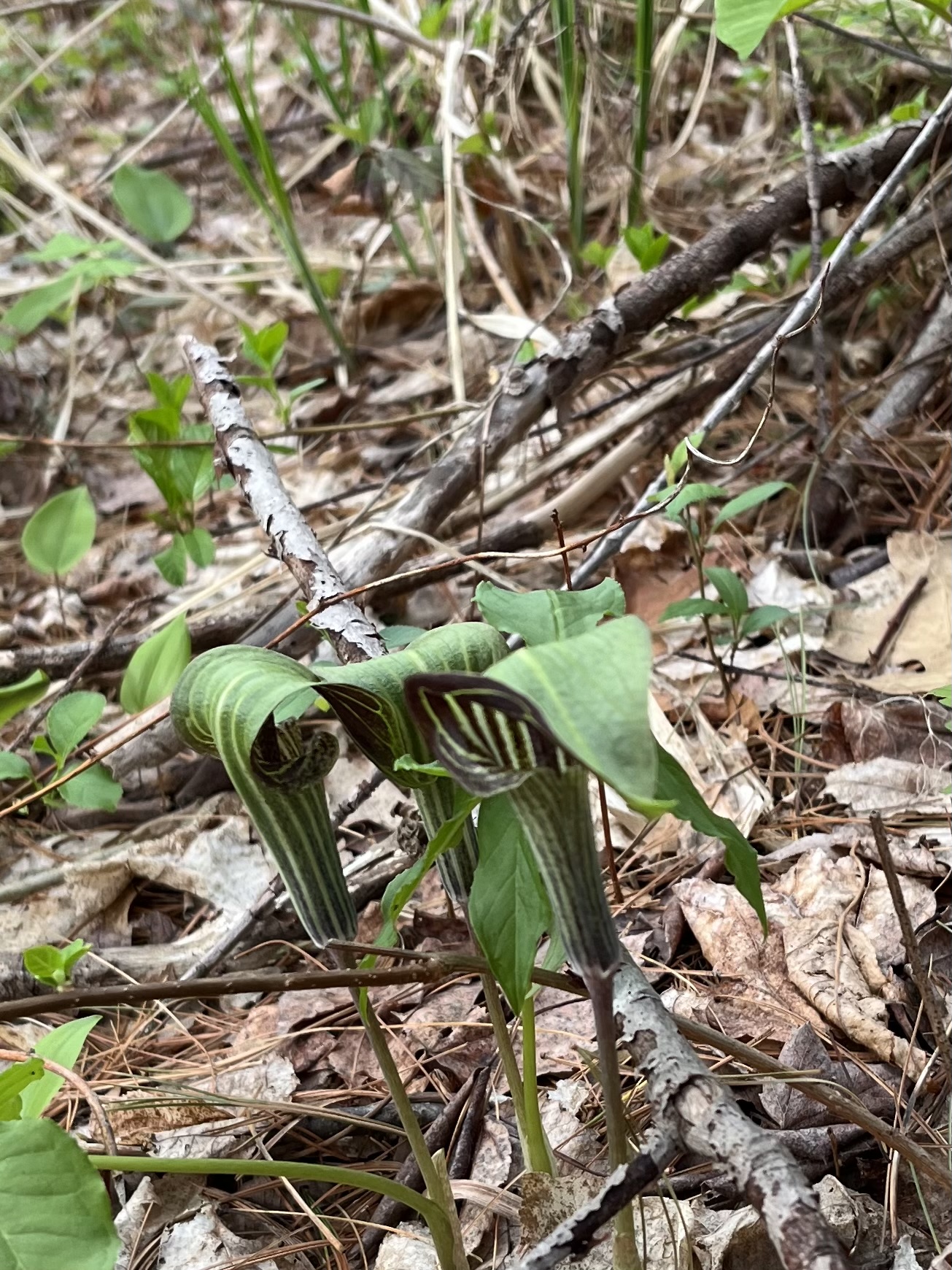
Photos: Suzanne and John’s Mom. First Jack-in-the-Pulpit I had seen in years.
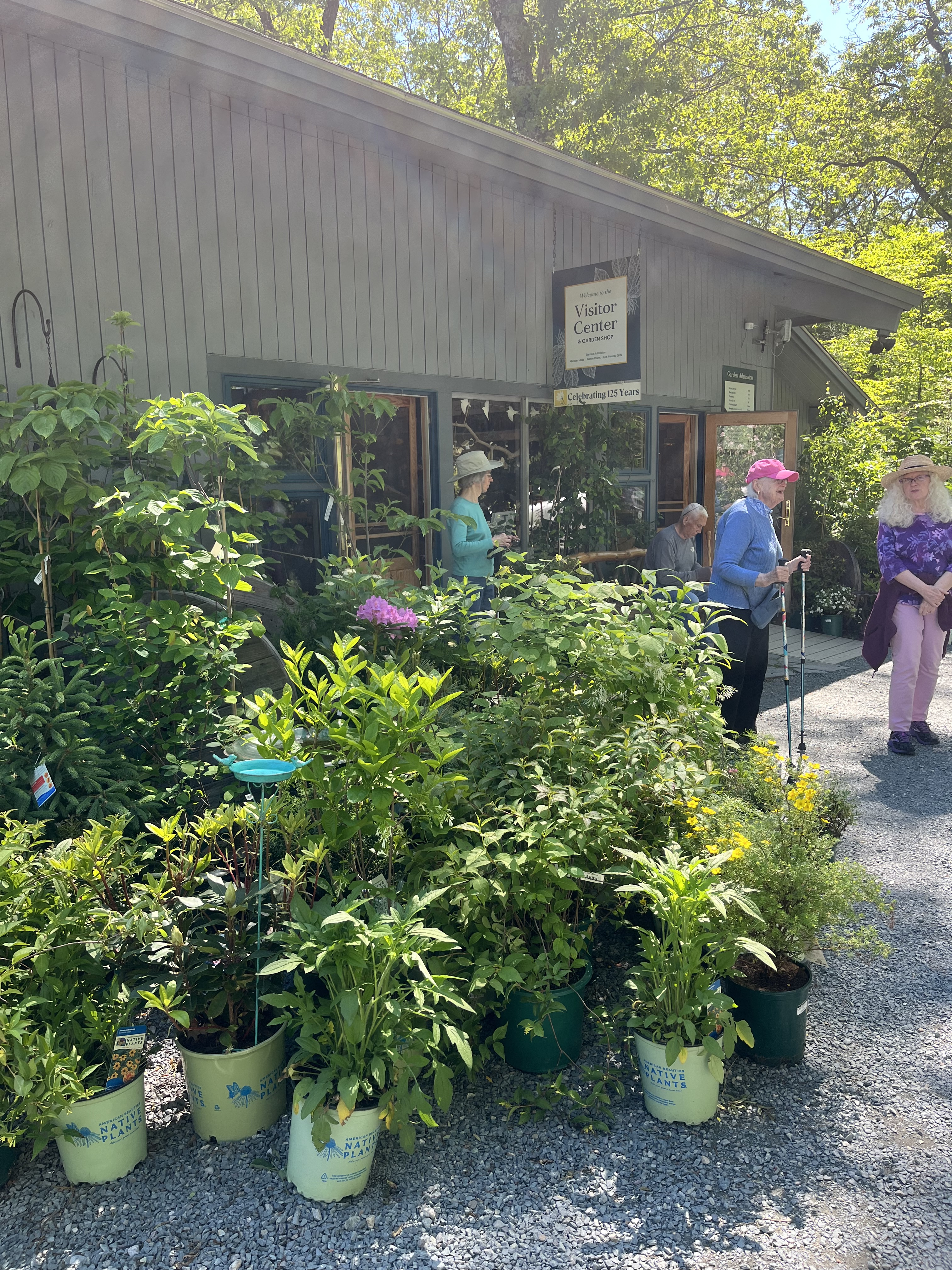
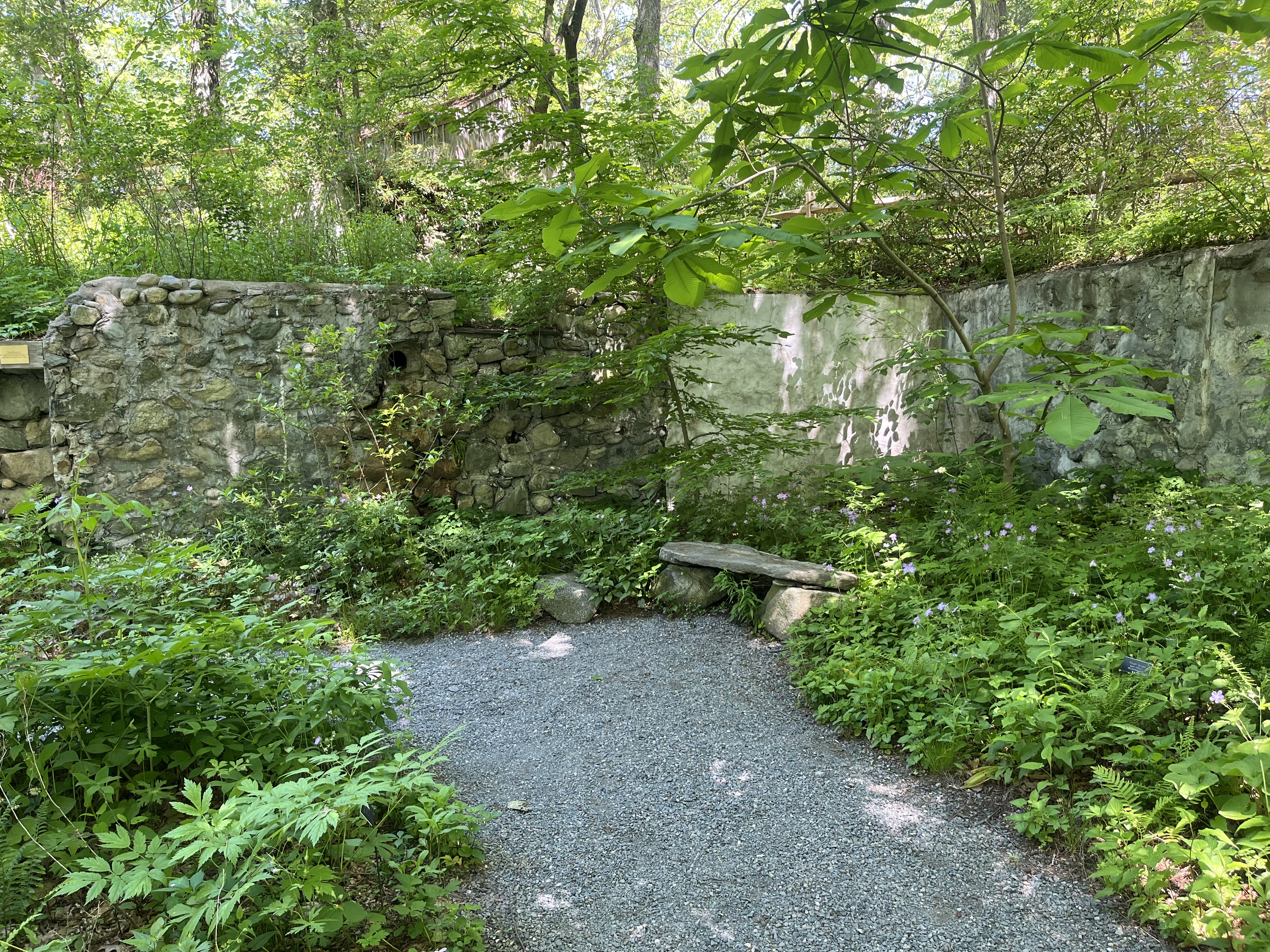
Today I’m sharing recent photos — mostly of Massachusetts spring flowers. One thing I’m especially enjoying this year is all the wildflowers. After my retirement community built a boardwalk that could accommodate walkers and wheelchairs, the administration and a group of residents started planting (ethically grown) wildflowers. Wonderful! And then we got a trip to the Native Plant Trust’s Garden in the Woods, which is entirely wildflowers.
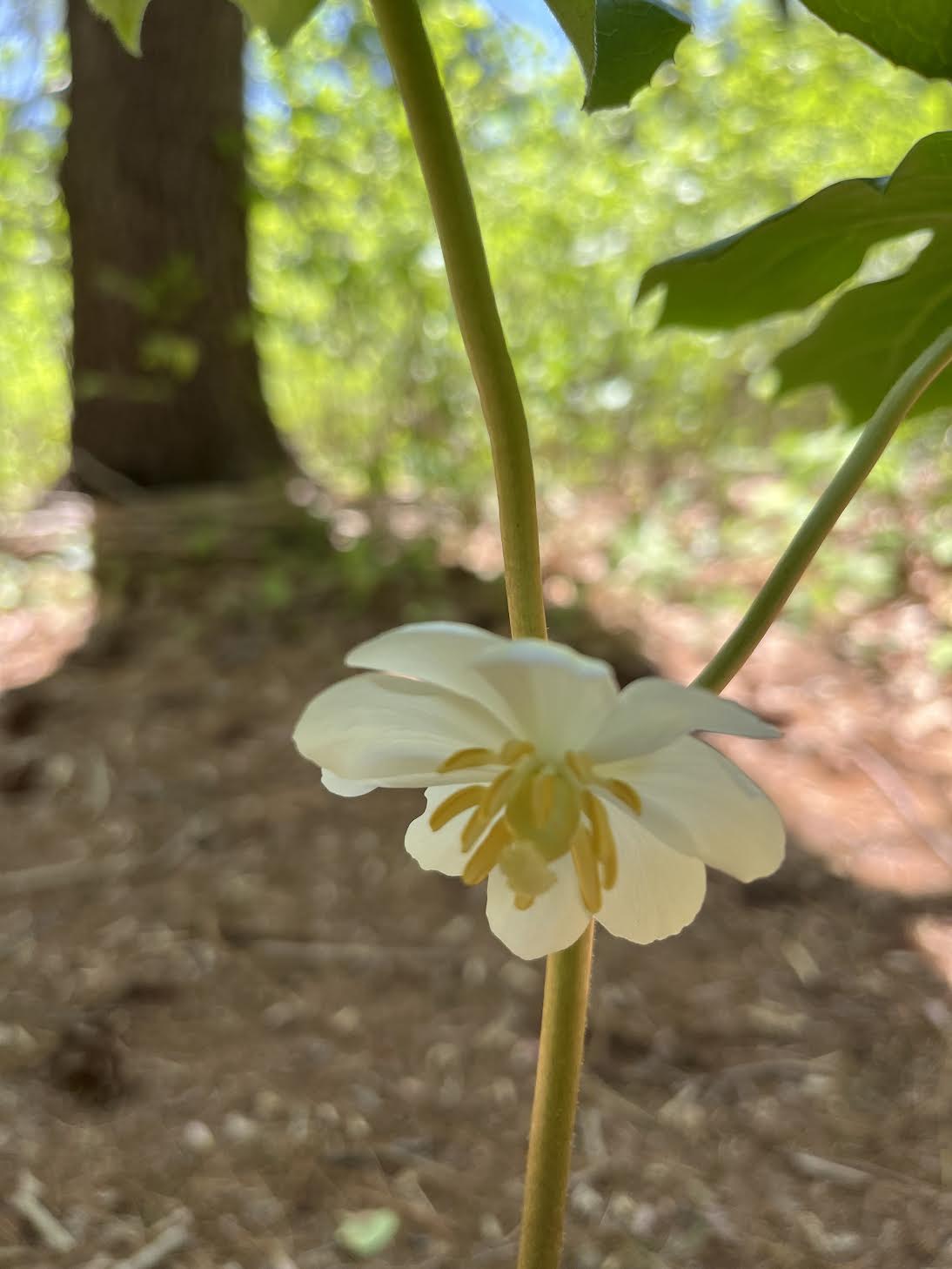
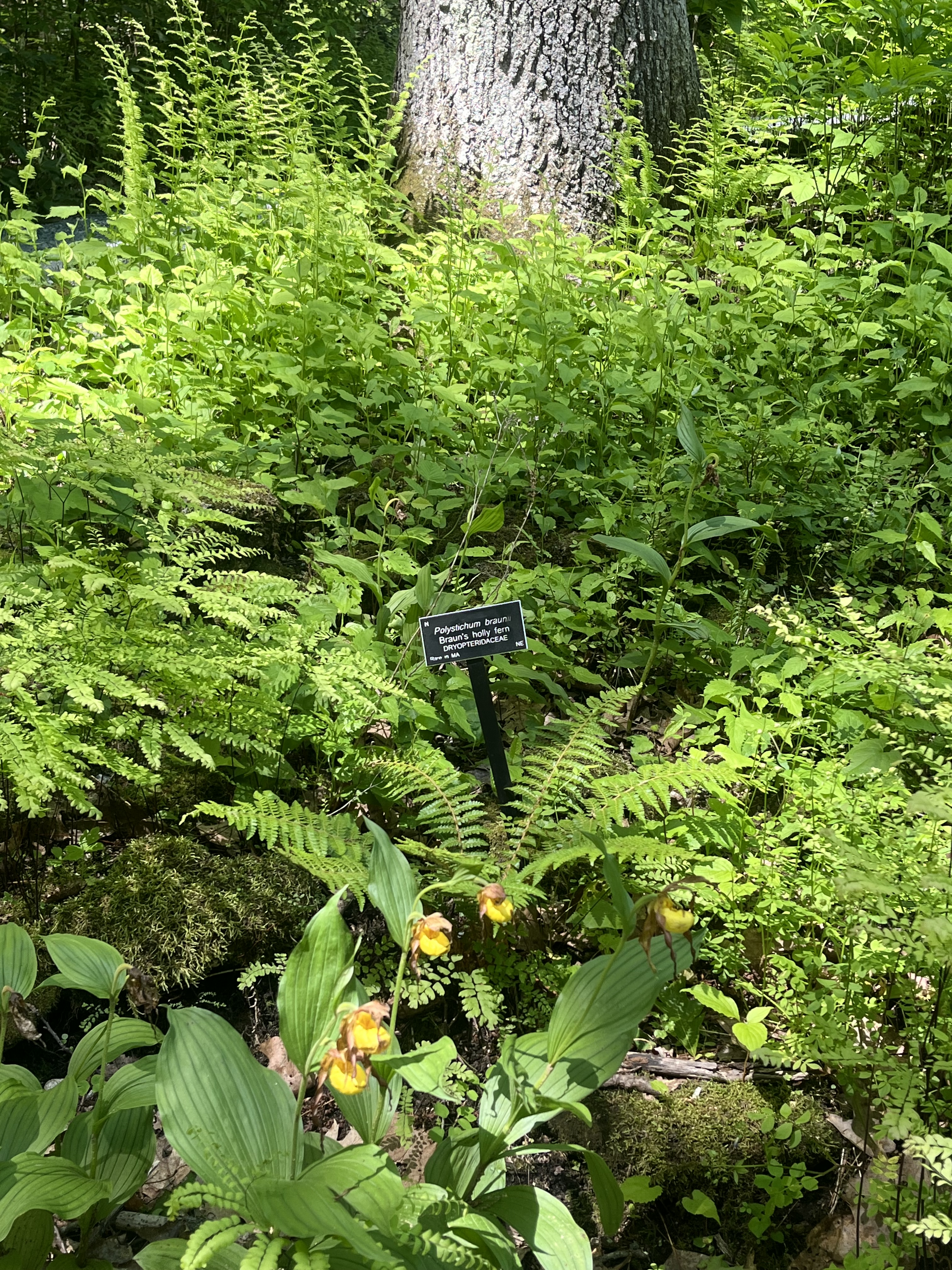
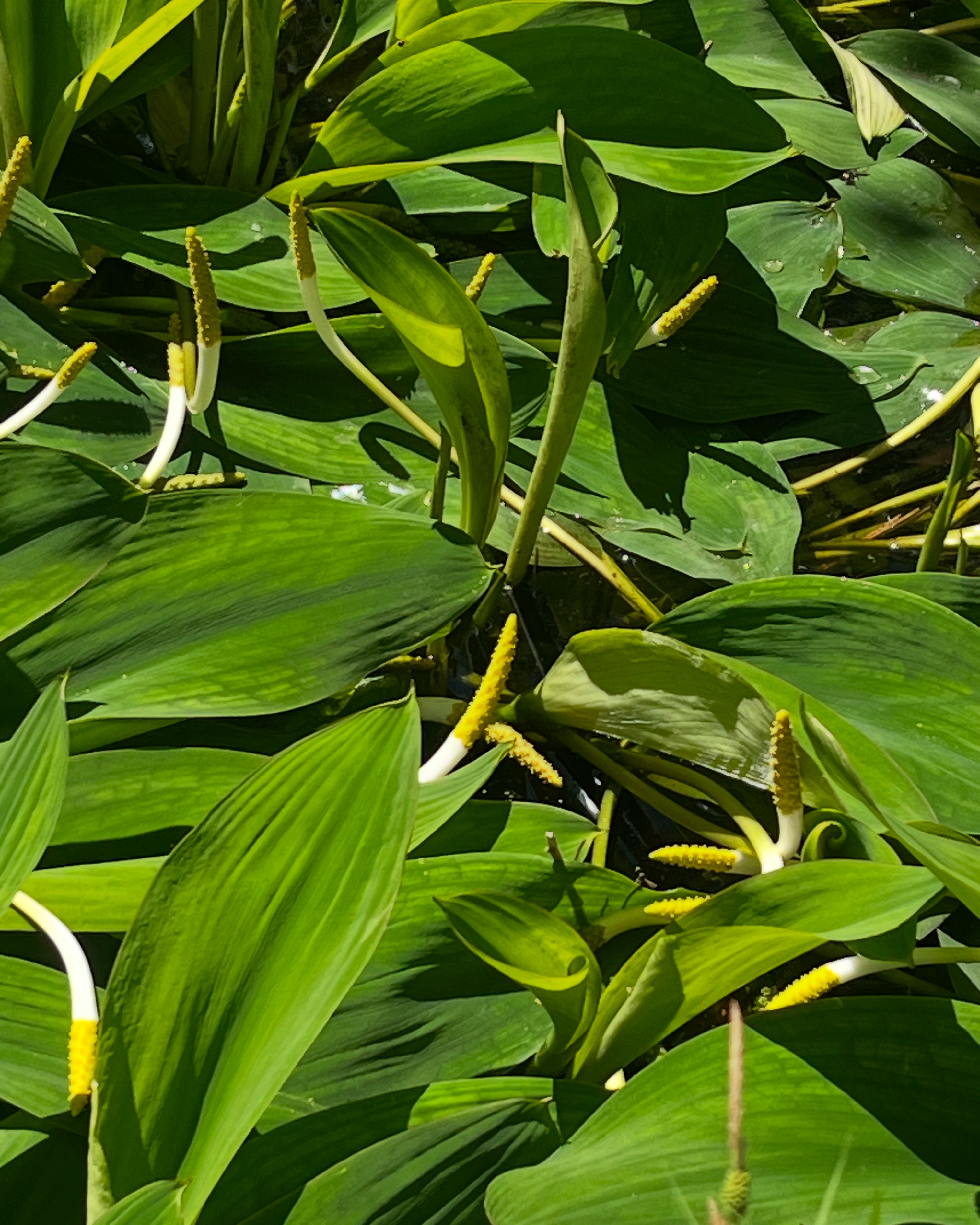
Below, note a flowering May apple near our boardwalk. It’s followed by yellow Lady slippers at Garden in the Woods. At the same nature preserve, we learned about Golden club, which is found in the wetland area. So unusual!
There are more pictures from Garden in the Woods after that.
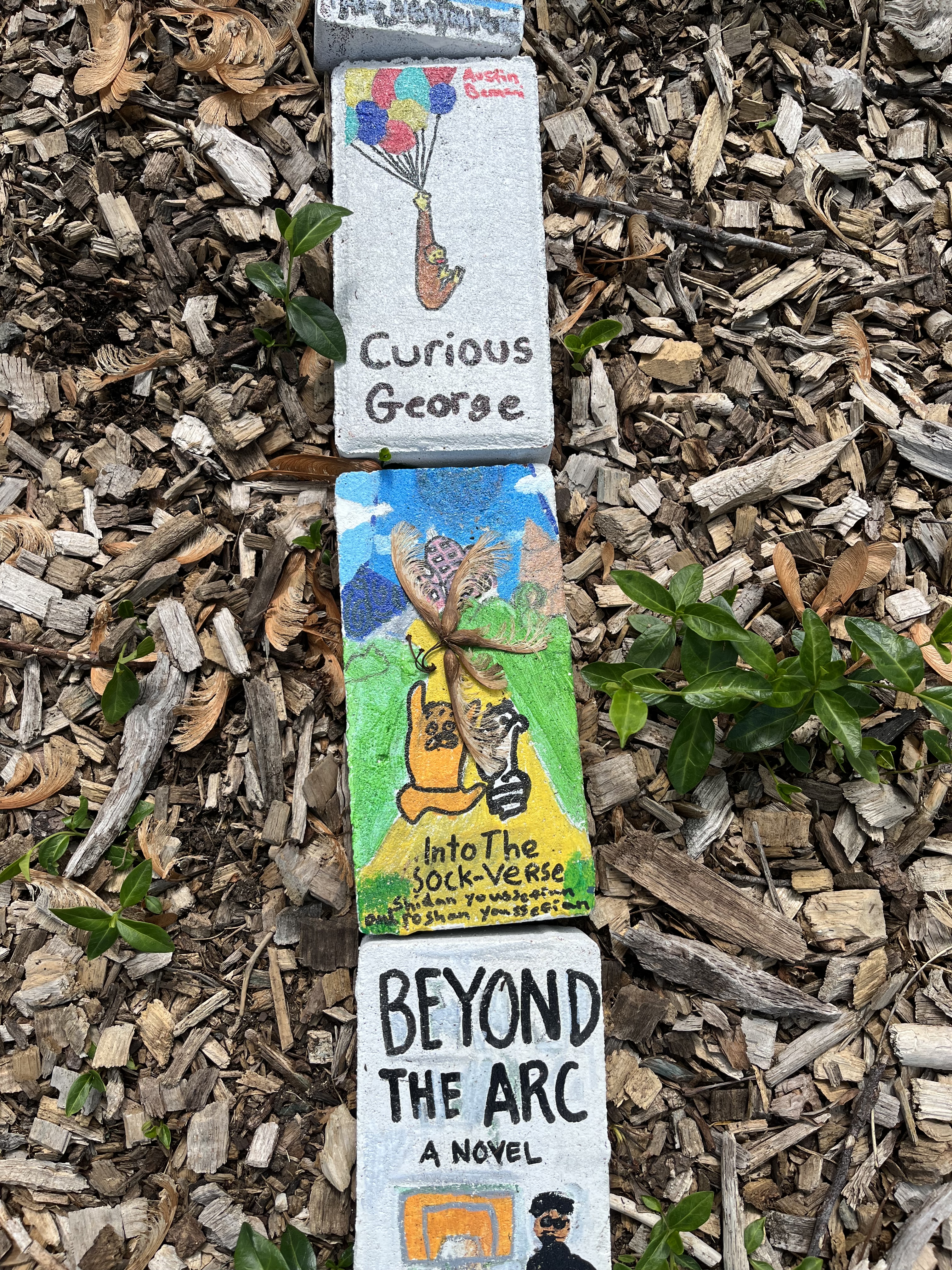
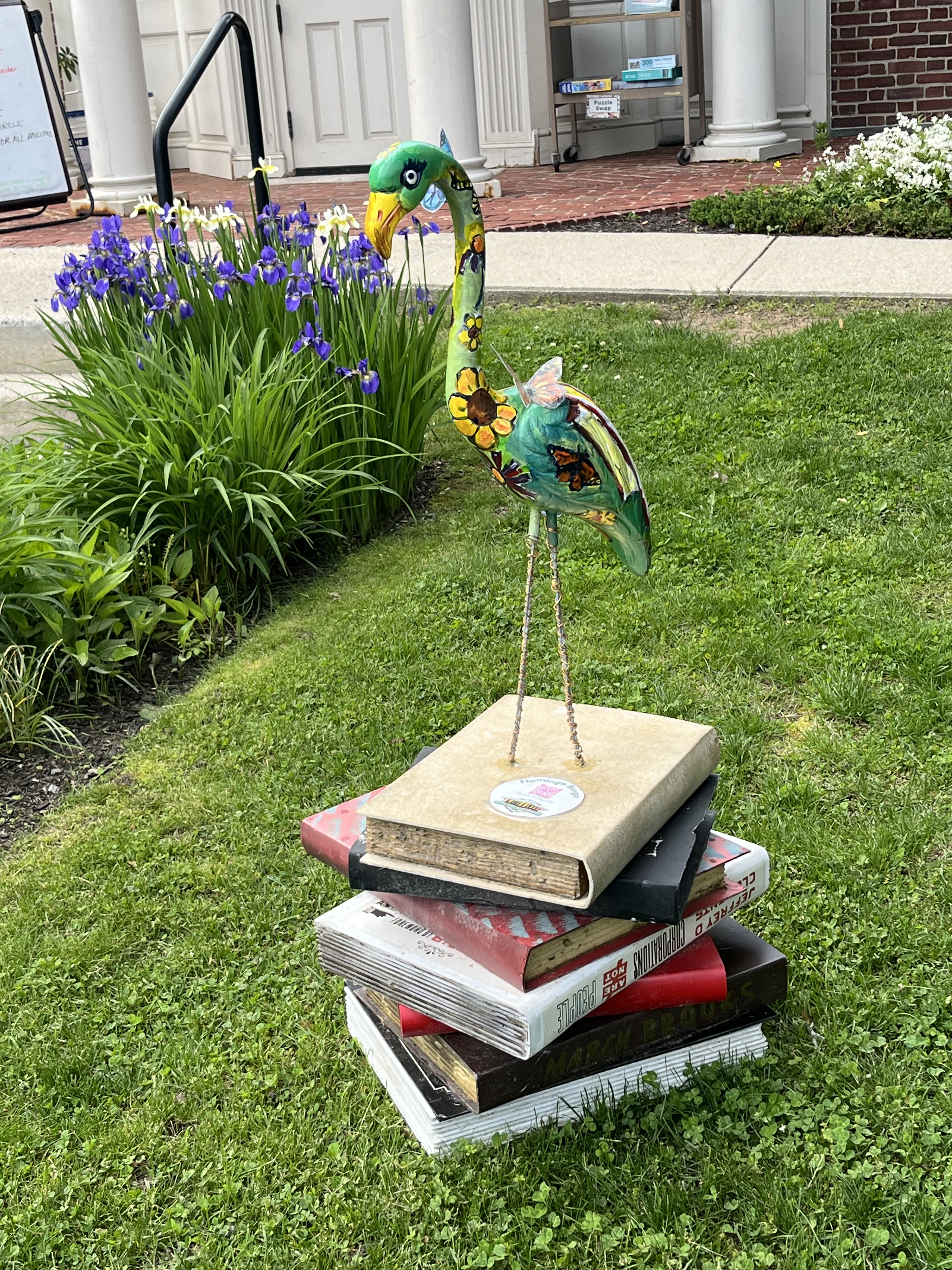
Next are a couple photos from our local library. The librarians love fun art projects, often involving child artists. They offer loads of activities for kids. For example: painting book bricks to border a garden.
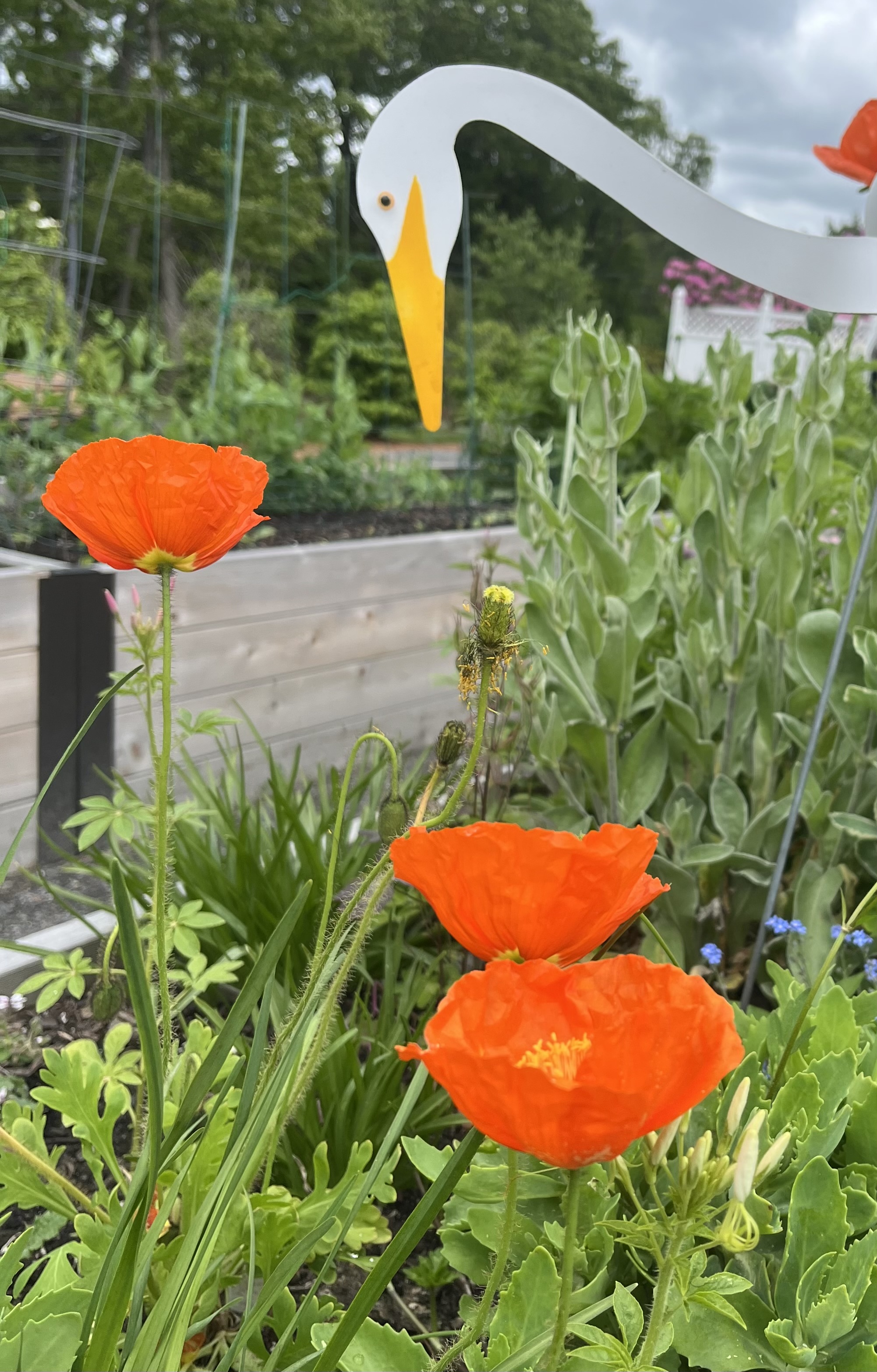
Next are Jane’s poppies. Jane has a variety of flowers and edibles in one of the raised beds in our community.
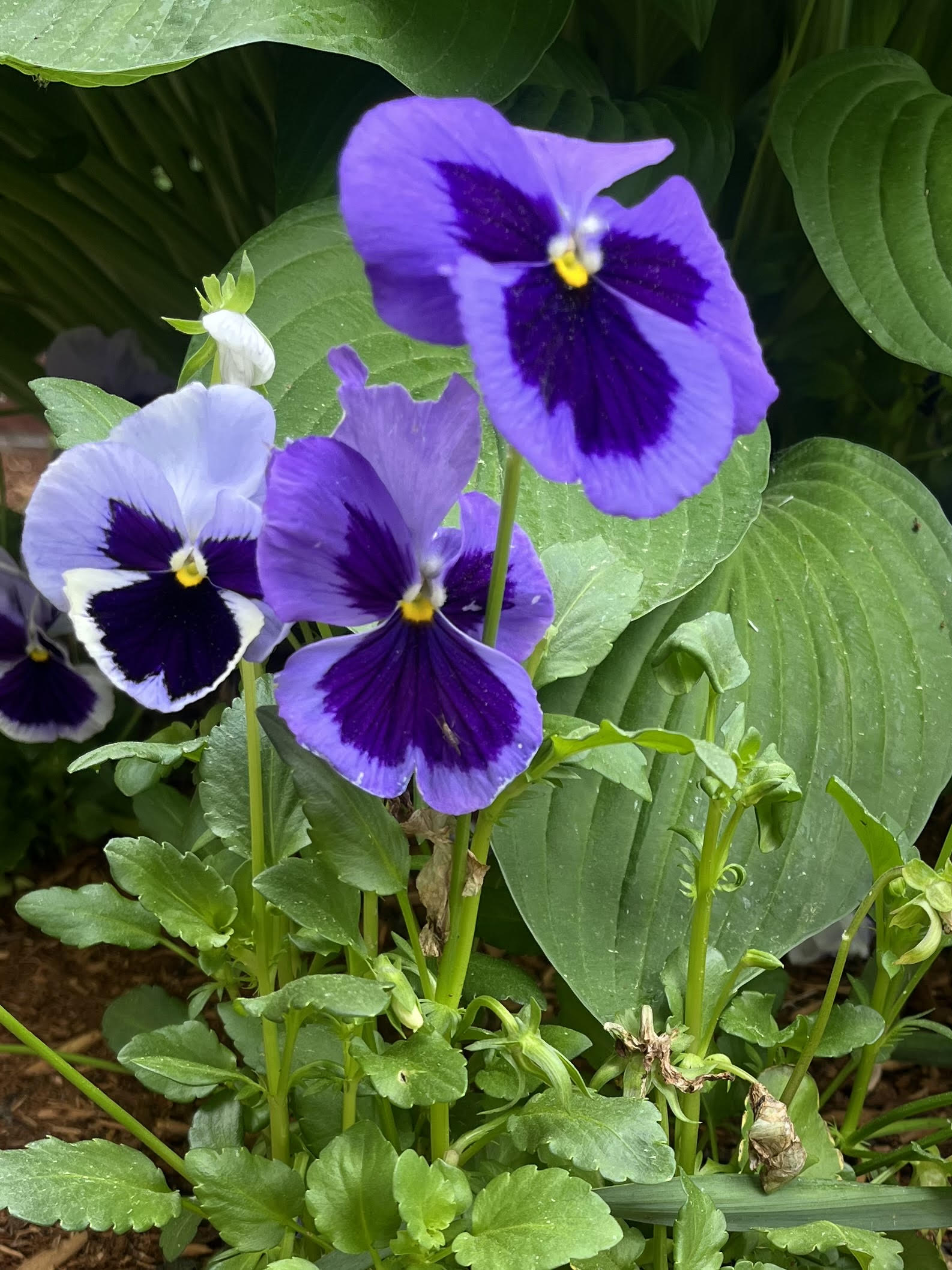
Finally, here are some pansies that seemed to sing, reminding me of the pansies in a wacky Disney remix I love.
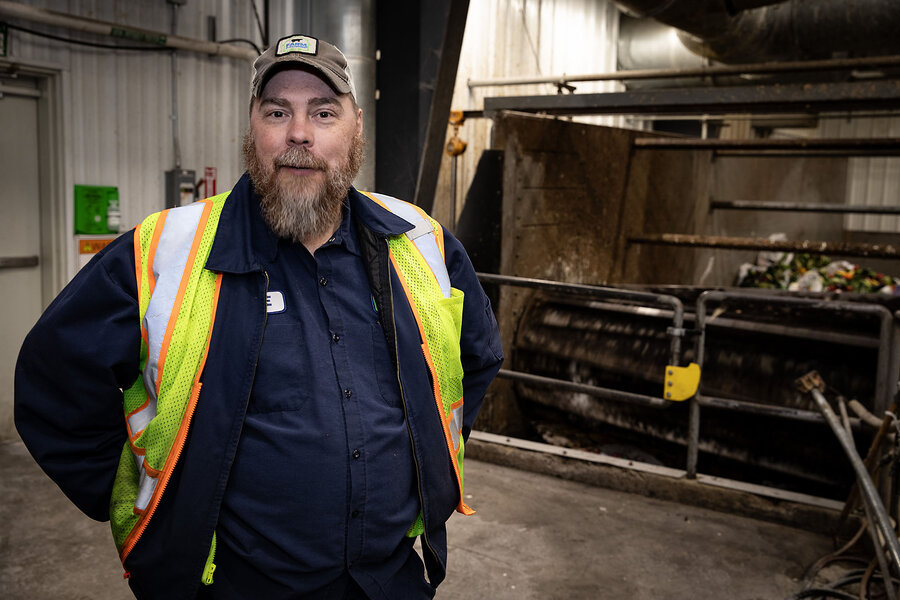
Photo: Melanie Stetson Freeman/CSM. Abe Marciniec is the site manager of Vanguard Renewables, an organics recycling facility in Agawam, Massachusetts. It processes food waste from supermarkets, distribution centers, universities, and residential drop-offs, turning it to fuel.
Today’s story about Massachusetts being the only state to reduce food waste would seem to be a triumph, and in terms of intentions, it is. But I am ambivalent about the value of turning food waste into gas. Methane, after all, is one of the worst. See what you think.
Troy Aidan Sambajon reports at the Christian Science Monitor, “On a recent Thursday, Abe Marciniec unloads two dozen pallets of ice cream – enough to fill 31 refrigerators – into a machine that transforms it into fuel.
“Today’s flavor is room-temperature rocky road, but this facility handles all kinds of food waste from supermarkets, distribution centers, universities, and even residential drop-offs.
“ ‘We get everything you can find in Aisles 1 through 12,’ says Mr. Marciniec, site manager of the Agawam Organics Recycling Facility, owned and operated by Vanguard Renewables. Mr. Marciniec’s recycling facility is one of six in the commonwealth and only one of 25 nationwide.
“As the expired ice cream funnels into a turbo separator, Mr. Marciniec watches the machine strip food from its packaging. The organic waste is then trucked to a dairy farm, where it’s mixed with cow manure and processed into renewable natural gas.
“ ‘It’s really a great circle,’ says Mr. Marciniec. ‘Food starts at the farm, and our farms turn it back into energy. Farm to table, then back to farm.’ …
“Facilities like this one, which can process up to 250 tons of food waste daily, replace manual work typically done by hand or not done at all. That’s a crucial step in diverting waste away from landfills. Americans throw out about 40% of food annually – a waste of both money and natural resources. Reducing food waste can increase food security, promote resource and energy conservation, and address climate change.
“The Bay Sate has become a leader in reducing food waste. In fact, it’s the only state to significantly do so – to the tune of 13.2% – according to a 2024 study. Massachusetts was among the first five states to enact a food waste ban in 2014. (The others were California, Connecticut, Rhode Island, and Vermont.)
“ ‘The law has worked really well in Massachusetts,’ says Robert Sanders, an assistant professor of marketing and analytics at the University of California San Diego and co-author of the study. ‘That’s due to three things: affordability, simplicity, and enforcement.’
“[Food waste is] the largest category of waste – at 25% – sent to landfills in the United States. In 2019, 66 million tons of food waste came from retail, food service, and households. Around 60% of this waste was sent to landfills, according to the Environmental Protection Agency.
“Vanguard Renewables specializes in turning organic waste into renewable energy. The Massachusetts-based company partners with dairy farms to convert food scraps and manure into biogas through anaerobic digestion.
Microorganisms in cow manure digest organic matter, releasing biogas – a mix of methane and carbon dioxide.
“The gas is captured in large steel vats on the farm and refined into renewable natural gas, which can be used to heat homes and power buildings. … Since 2014, Vanguard has processed more than 887,000 tons of food waste in New England, producing enough natural gas to heat 20,000 homes for a year. By 2028, the company plans to have more than 50 systems across the country.
“In western Massachusetts, Amherst College has become a model for limiting food waste at the source. Last year, it was recognized as the winner in the zero waste category in the Campus Race to Zero Waste Case Study Competition.
“ ‘The goal has been to push us aggressively to make sure everything is compostable,’ says Weston Dripps, director of sustainability. To achieve that, the school has phased out single-use plastics, to-go boxes, and even canned water, replacing them with refill stations and compostable materials.
“In 2023, Amherst College generated 238 tons of food waste – roughly 4 to 5 tons per week. But instead of ending up in landfills, Vanguard collected 100% of that waste and processed it at its Agawam facility.
“That total includes both pre-consumer waste – such as kitchen scraps from food prep – and postconsumer waste, like leftovers scraped off plates in the dining hall and campus cafés. ‘To really have a clean waste stream, we have to focus on the front end,’ says Mr. Dripps.
“Amherst’s approach goes beyond composting. Each month, the school donates 2,000 to 3,000 pounds of frozen surplus food to the the Food Bank of Western Massachusetts, ensuring edible food reaches those in need.
“Commercial businesses, too, are finding ways to cut down on waste. Maura Duggan, founder and CEO of Fancypants Baking Co., knows firsthand how much food can go to waste in the food industry. Her company produces hundreds of thousands of cookies each week.
“At its Walpole facility, Fancypants has large totes from Vanguard, which collect burnt cookies, food scraps, and anything that can’t be donated or sold. Last year alone, Fancypants diverted about 22 tons of waste. …
“Back in Agawam, Mr. Marciniec passes by 275-gallon totes full of leafy vegetables. Every day, he faces the reality that Americans waste 92 billion pounds of food a year – enough to make 145 million meals.
“ ‘It really makes you think about the things we take for granted,’ he reflects.
“ ‘Millions of people are starving everywhere, and the amount of food waste in this country is substantial,’ says Mr. Marciniec. ‘I’m sure we can do a better job.’ ”
Although I hate to quibble with this effort to at least do something, I know that enforcement has not reached my residential facility yet. Moreover, I’m pretty sure what we really need is not to have so much waste in the first place. What do you think? Is this a good first step?
Note Earle’s comment on my earlier post about this process, here.
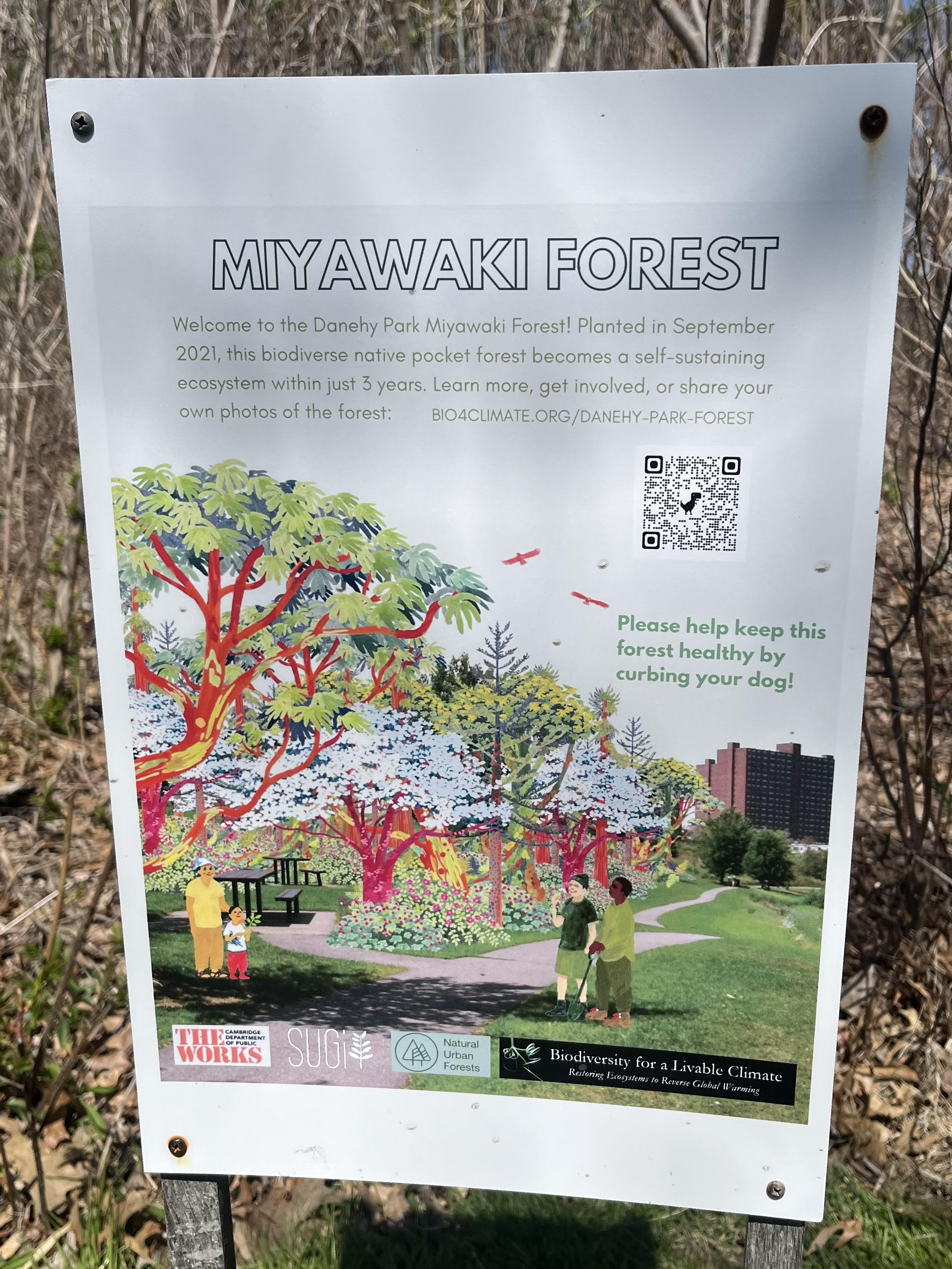
Photo: Biodiversity for a Livable Climate. A Miyawaki forest at Danehy Park in North Cambridge, Massachusetts, planted on September 25, 2021 — with the help of enthusiastic volunteers. Other Miyawaki forests don’t look like much in April. But just watch!
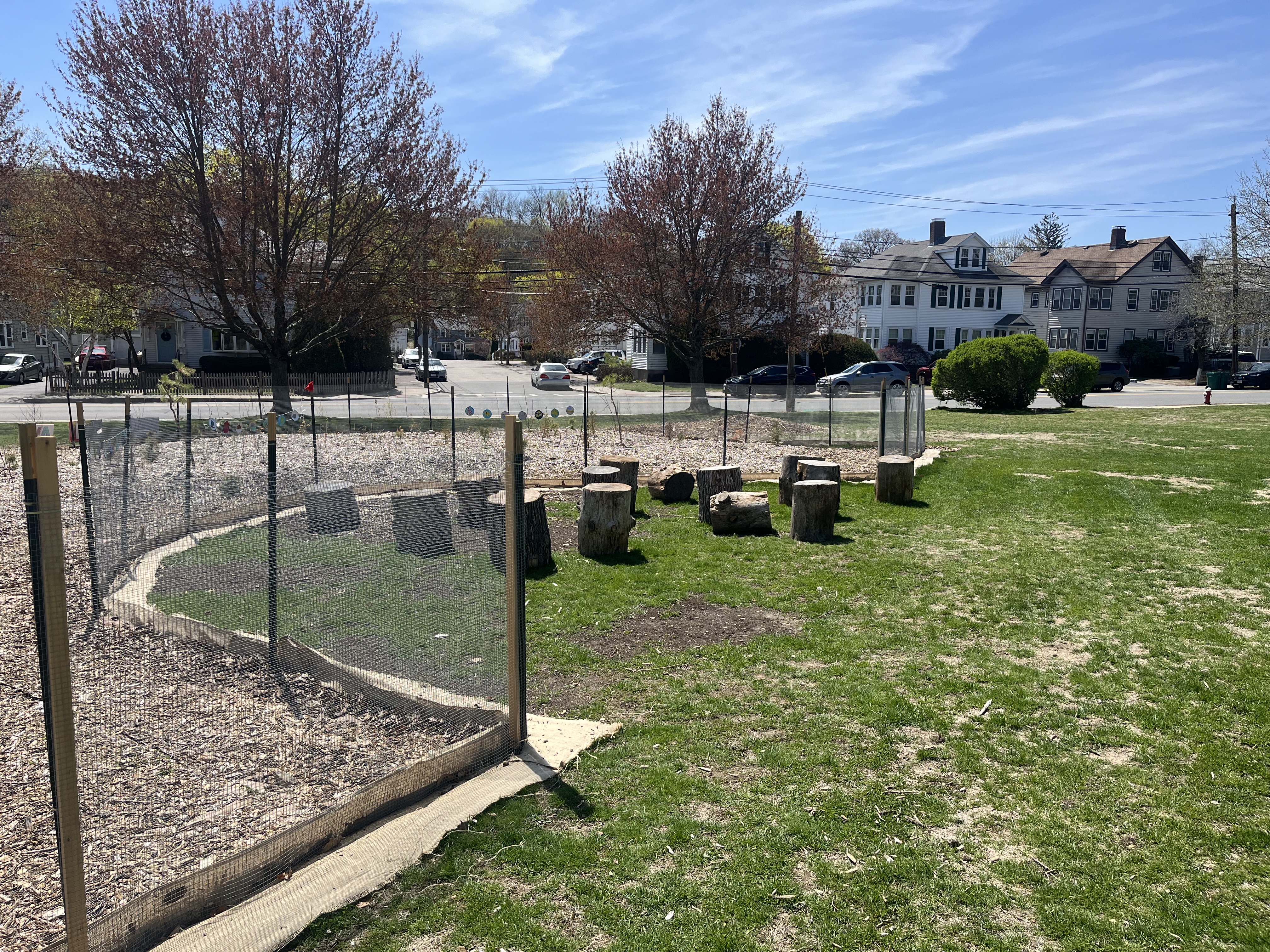
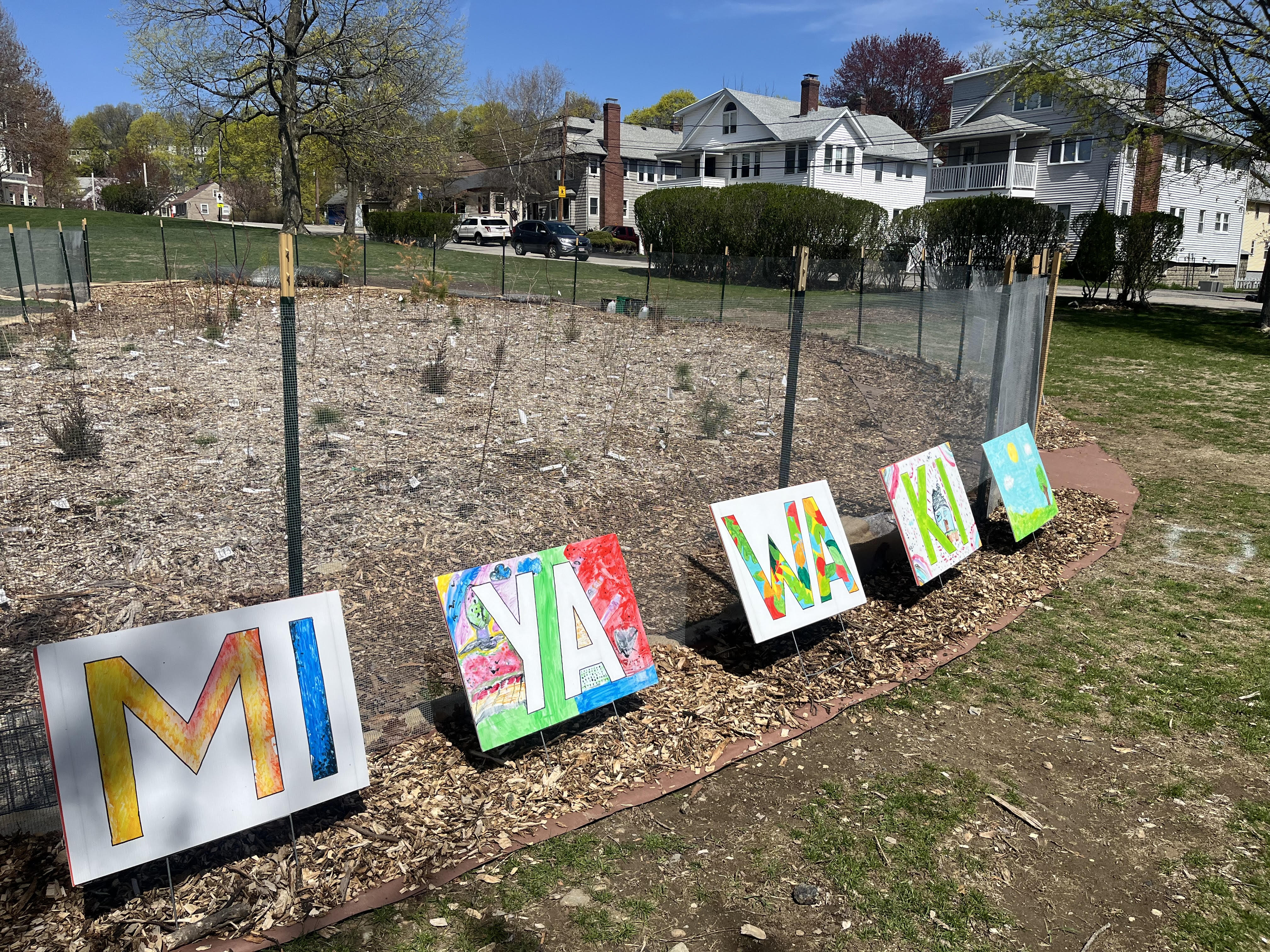
Although I blogged about Miyawaki mini urban forests in 2023, here, and again after a tip from Hannah in Philadelphia, here, I had never seen one in person and didn’t really understand the concept. These are not forests you take a walk in. They are deliberately planted too densely for entering, which is why one elementary school asked for a crescent shape to let kids see the native plants that their teachers were talking about.
On a special day in April, my friend Jean Devine of Biodiversity Builders took two of us on a tour of three Miyawaki Forests and the site for one that she and students at her local high school are building.
Now I think I get it. In order to have a healthy climate, we need a healthy, biodiverse planet. And the effects of even very small sites can spread. Birds, small animals, pollinators, and other critters flourish in these biodiverse pockets.
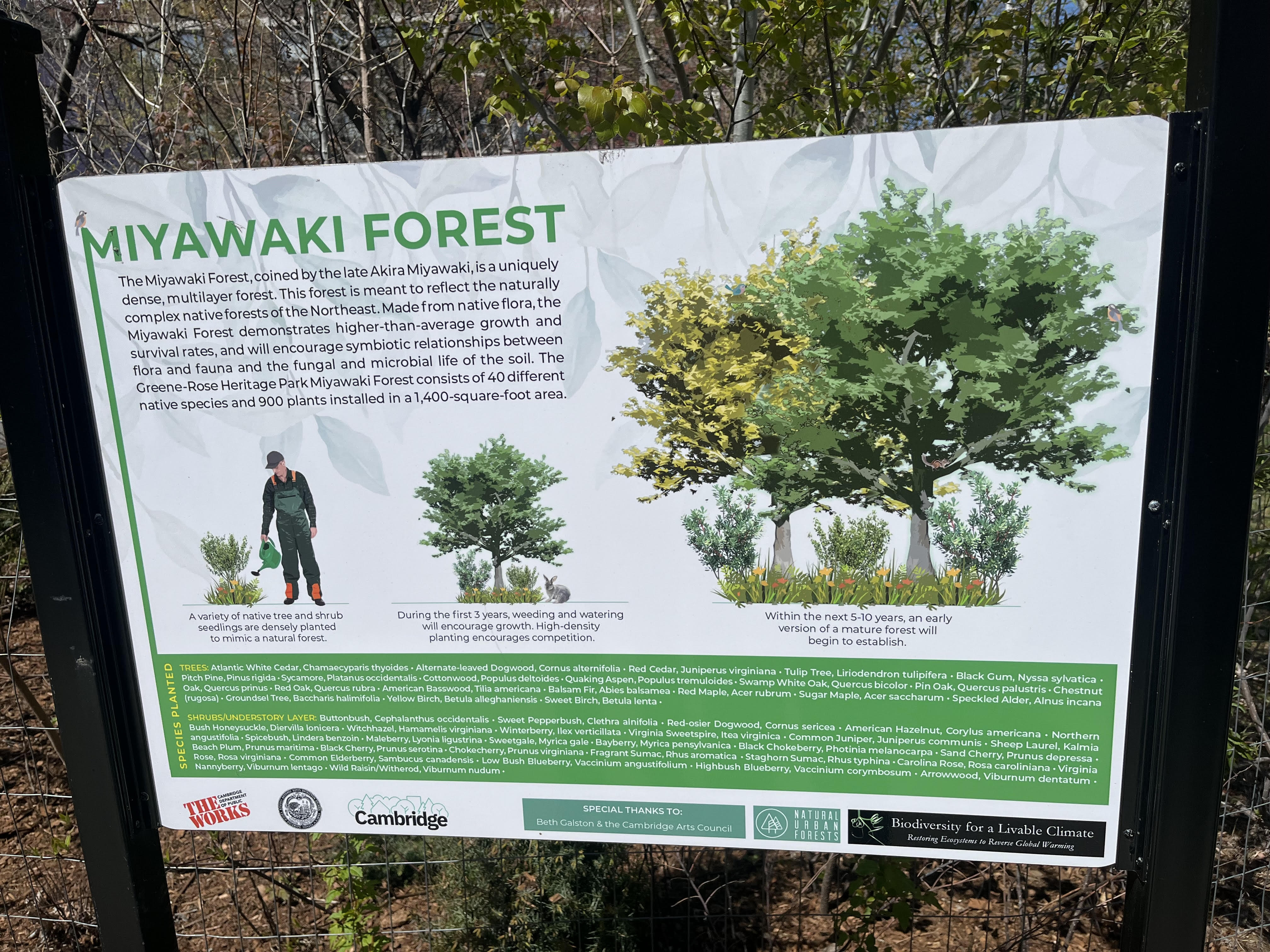
Biodiversity for a Livable Climate: Restoring Ecosystems to Reverse Global Warming says, “The Miyawaki Forest is an ultra dense, biodiverse pocket forest that recreates the complexity of natural forests and the relationships and processes that help them grow strong and resilient. By giving home to a vast array of native species, they boost the biodiversity of the area and nurture pollinators, supporting and restoring ecosystems. They sequester carbon in the soil, reduce air pollution and soil contamination, improve water absorption to buffer against flooding and erosion, and cool the surrounding area to mitigate the urban heat island effect. They also create a living classroom for people and communities to learn about native ecology, engage in stewardship, and experience the interconnectedness of the natural world.”
GBH tv provides a forum on the concept, asking, “What can hold more than 500 species, sequester more than 500 lbs. CO2/year, be 10F cooler than its surroundings, soak up lots of rainwater, and be made by and for children in a space no bigger than a tennis court? A ‘mini-forest’ planted using the Miyawaki Method, of course!
“Biodiversity for a Livable Climate hosts Miyawaki-Method advocates Hannah Lewis (Bio4Climate Compendium editor) and Daan Bleichrodt (The Netherlands’ Tiny Forest initiative leader), as they talk about mini-/tiny-forests and their role in climate resilience, urban beautification, and connecting all of us to nature.” More here.
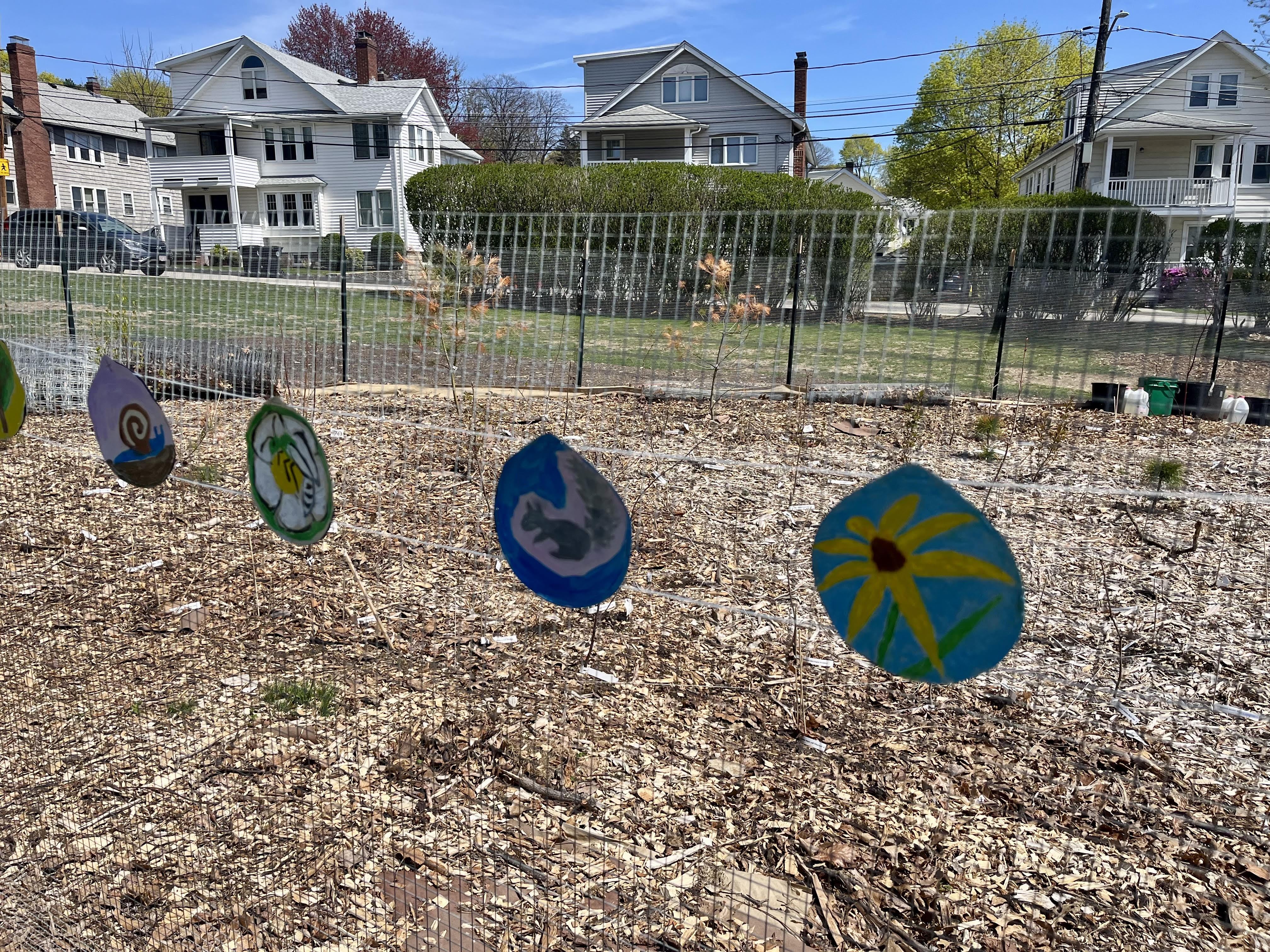
My photos are from mini forests Massachusetts, one in a large park in Cambridge, one in a Cambridge neighborhood’s pocket park, and one at an elementary school in Watertown. At the latter, the children sit on tree stumps for classes. Note the art they created for their forest, too. The forest doesn’t look like much in April, but just wait!
More at Biodiversity for a Livable Climate, here, and here.
Photos: Suzanne and John’s Mom. (Erik took the photo of my grandson.) Where I like to walk these days.
We had some gorgeous days in April, and May is shaping up nicely, too.
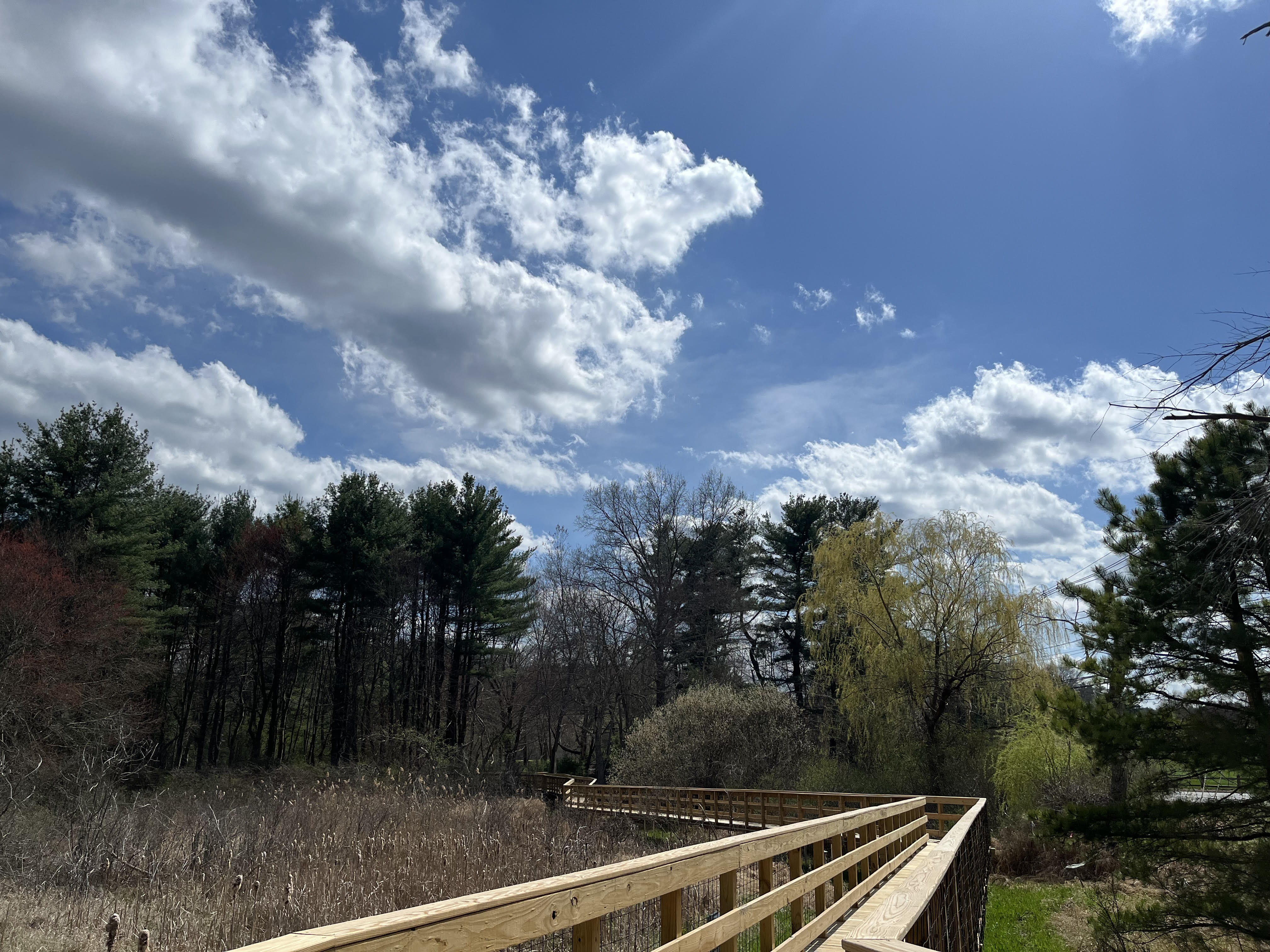
I start my latest photo round-up with the boardwalk my retirement community built according to stringent environmental regulations. I love the feeling of walking in the woods, and right now, wildflowers that were already there are coming up, while residents are planting others with the guidance of a woman specializing in the removal of invasive species.
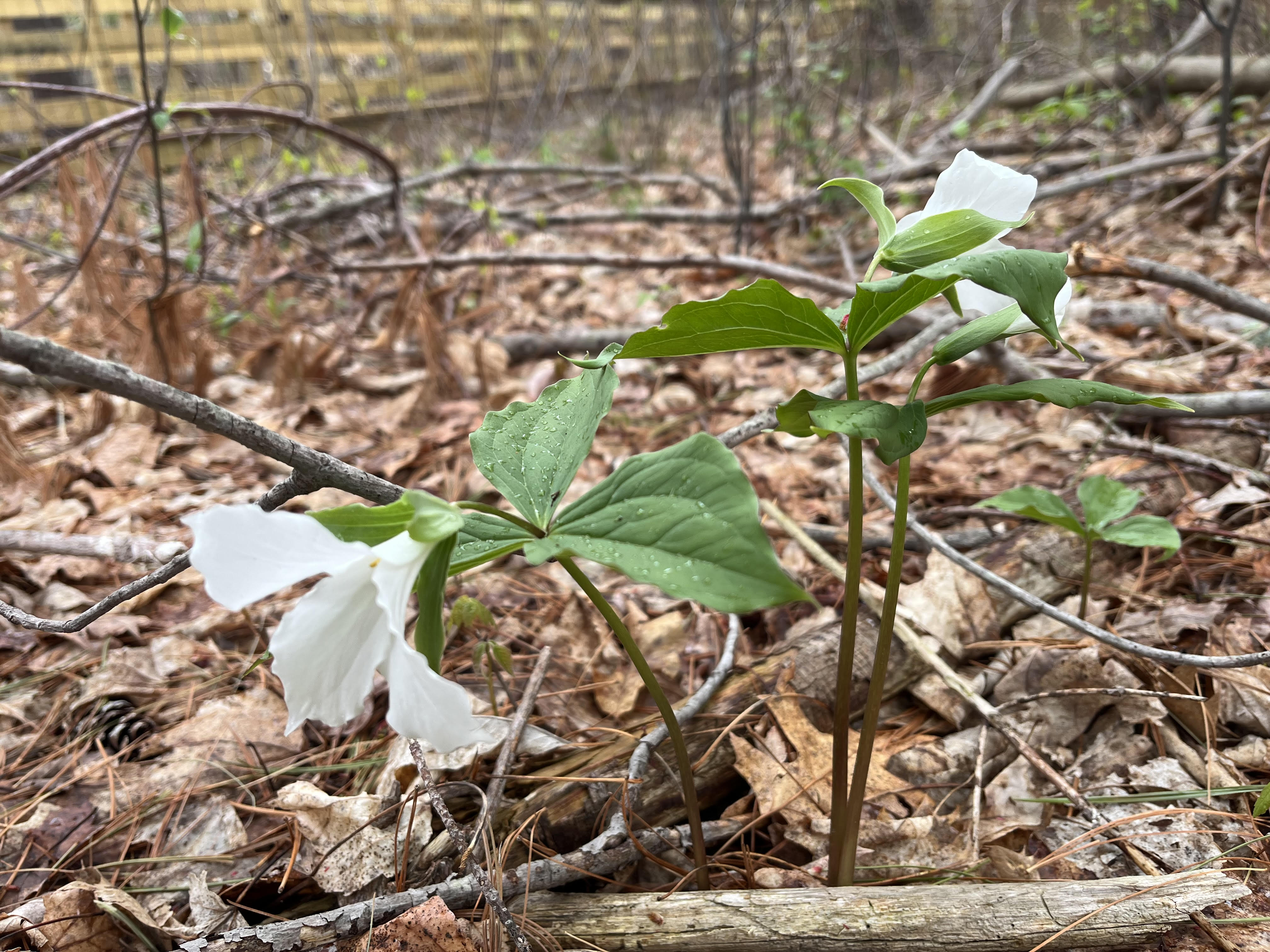
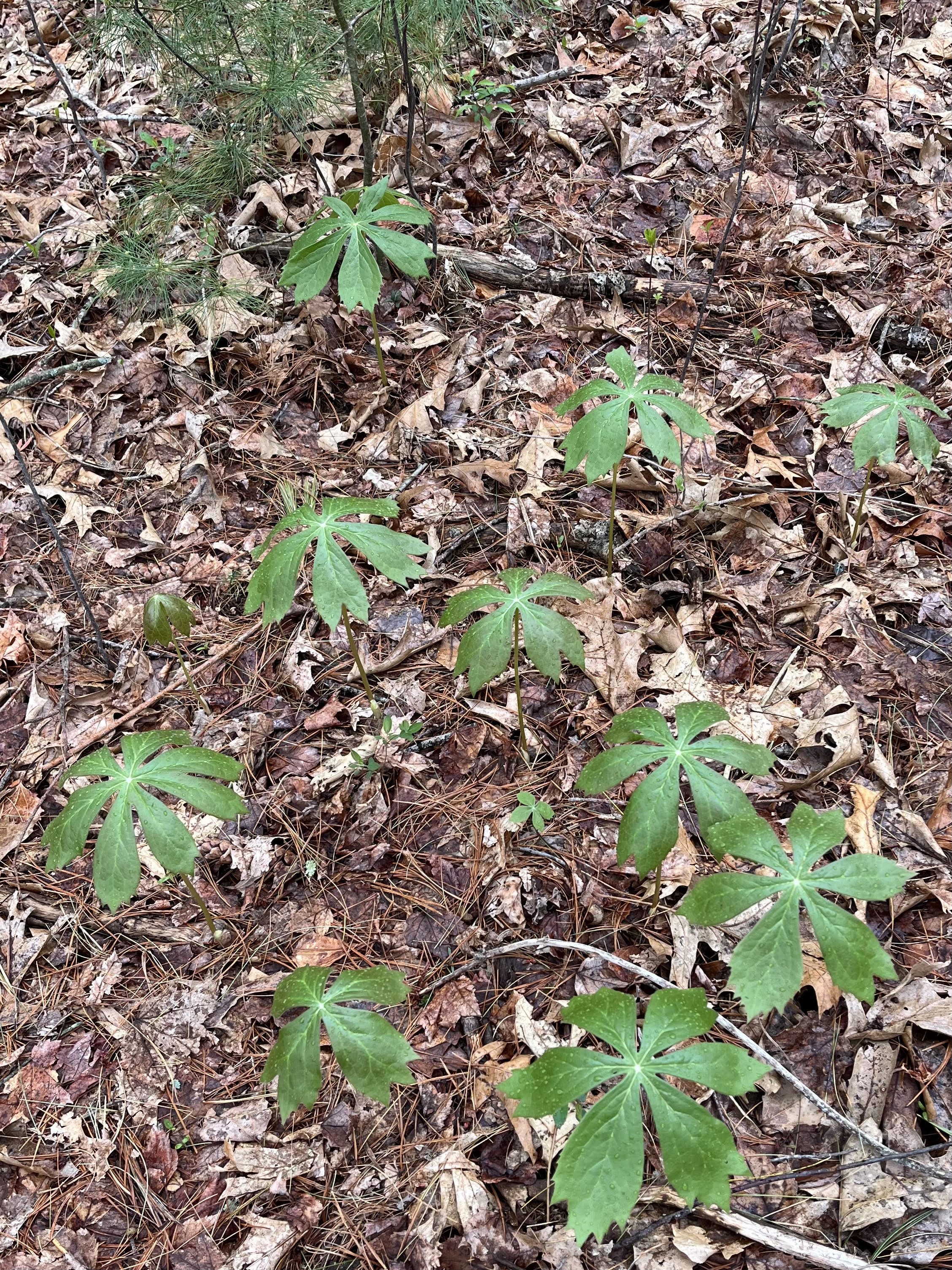
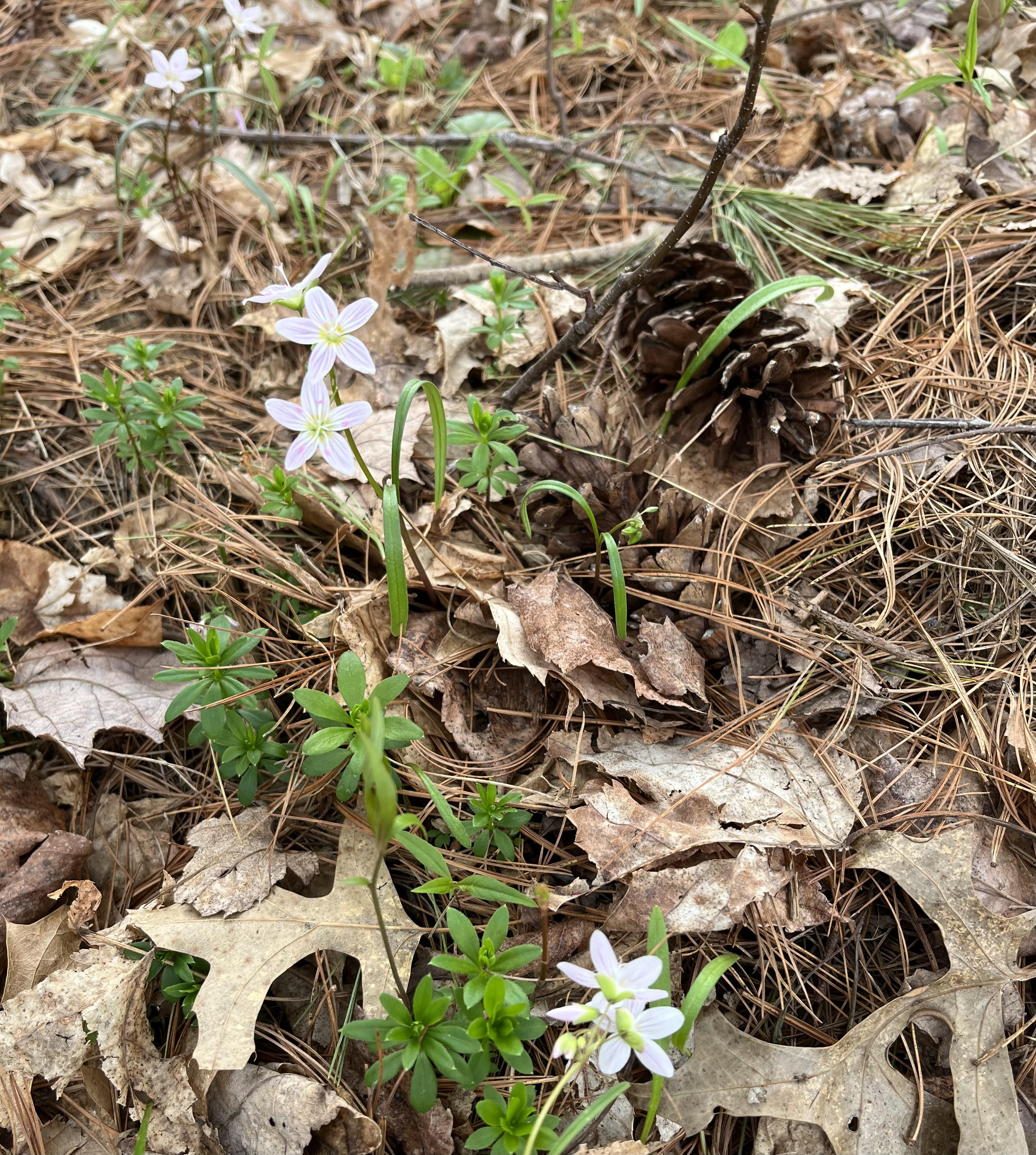
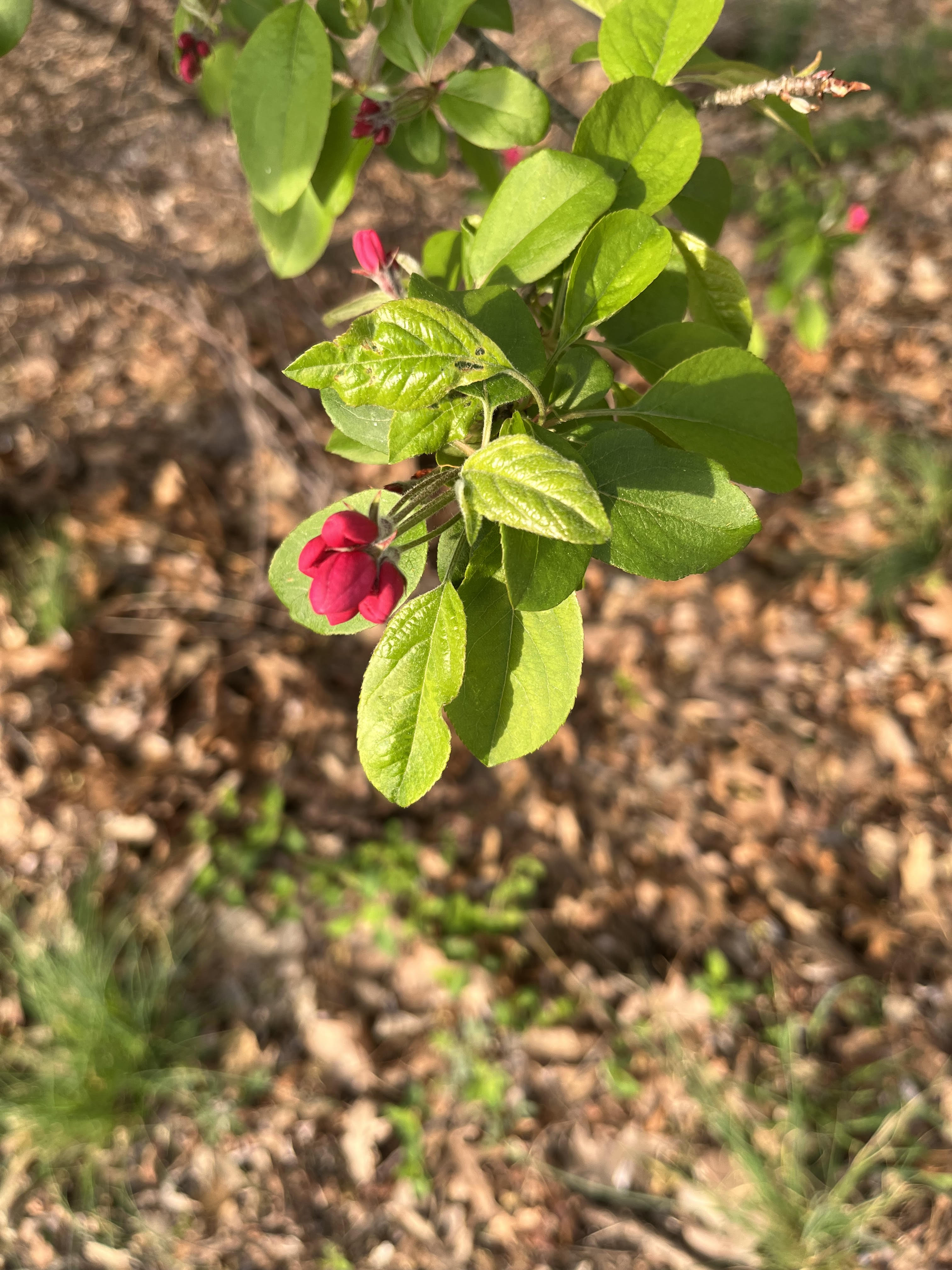
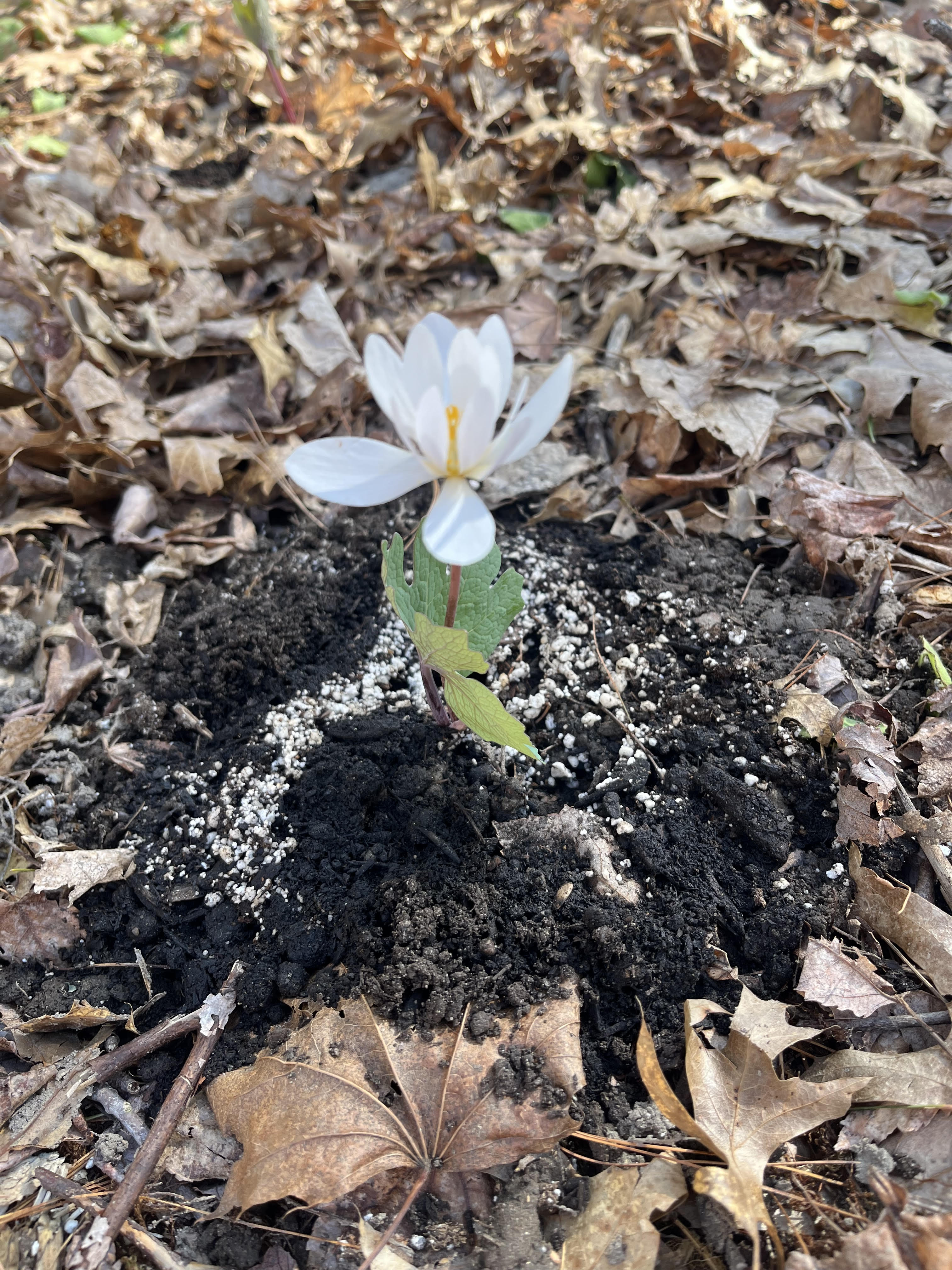
The first photo below is a white trillium. Next in the leaf litter, you see a stand of May apples and a group of Spring beauty wildflowers. The apple tree has buds about to bloom.
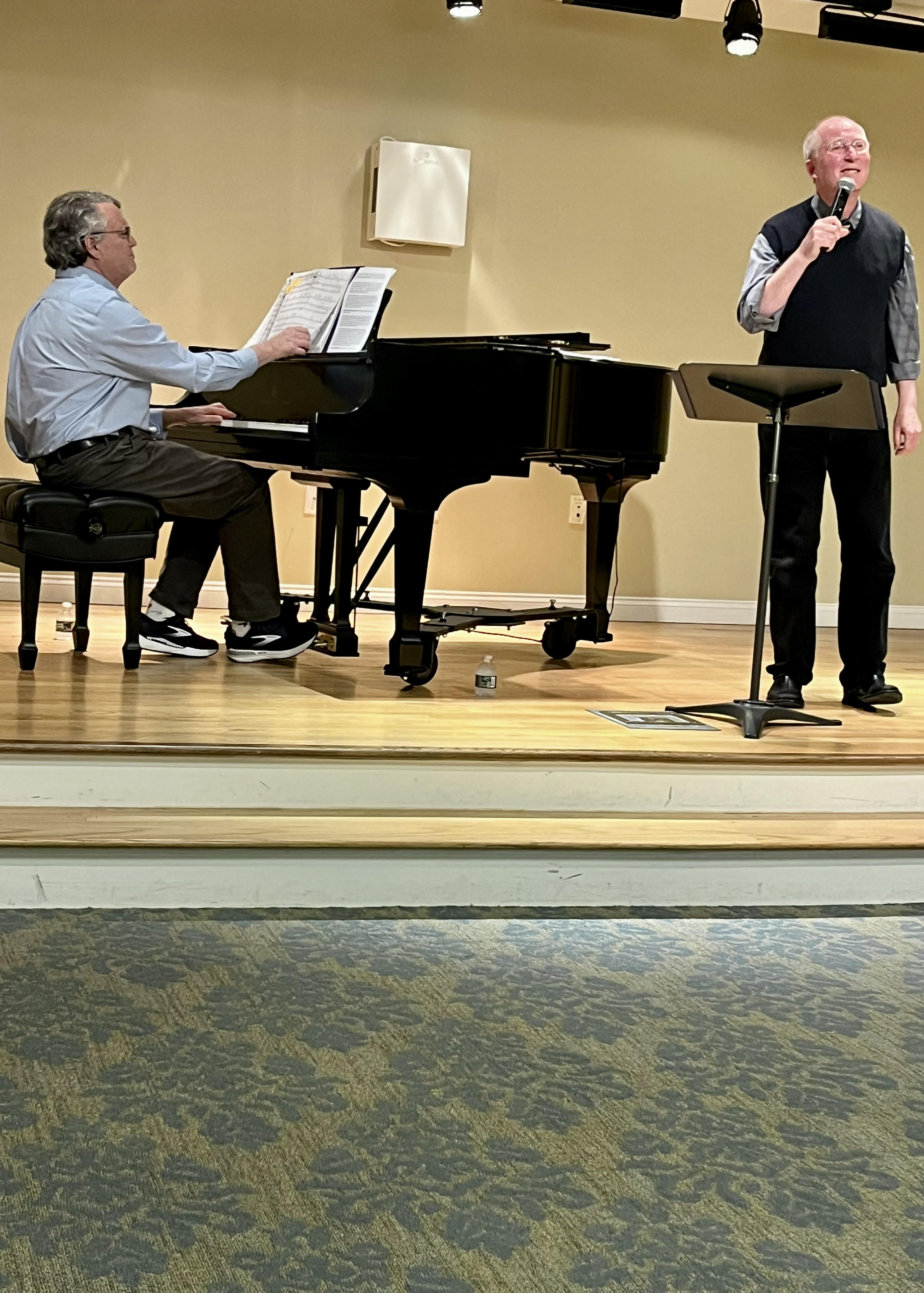
Blogger Will McMillan bloomed at my retirement community the other day with one of his deep dives into the heroes of the American Songbook. This time it was Hoagy Carmichael. It’s amazing the forgotten songs Will digs up for his shows — while also presenting classics like “Skylark” and “Stardust.” There was a funny one about a jazz band in the afterlife, where all Carmichael’s departed friends were playing.
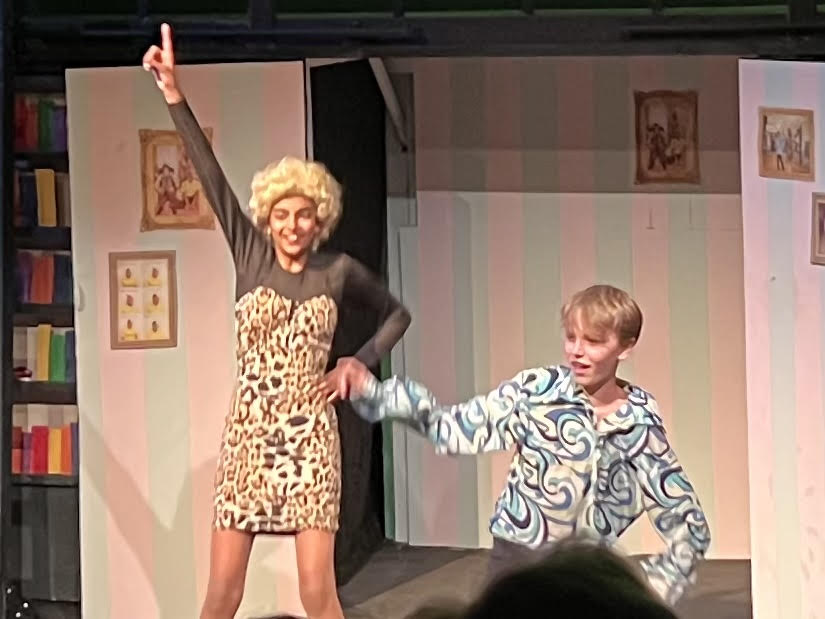
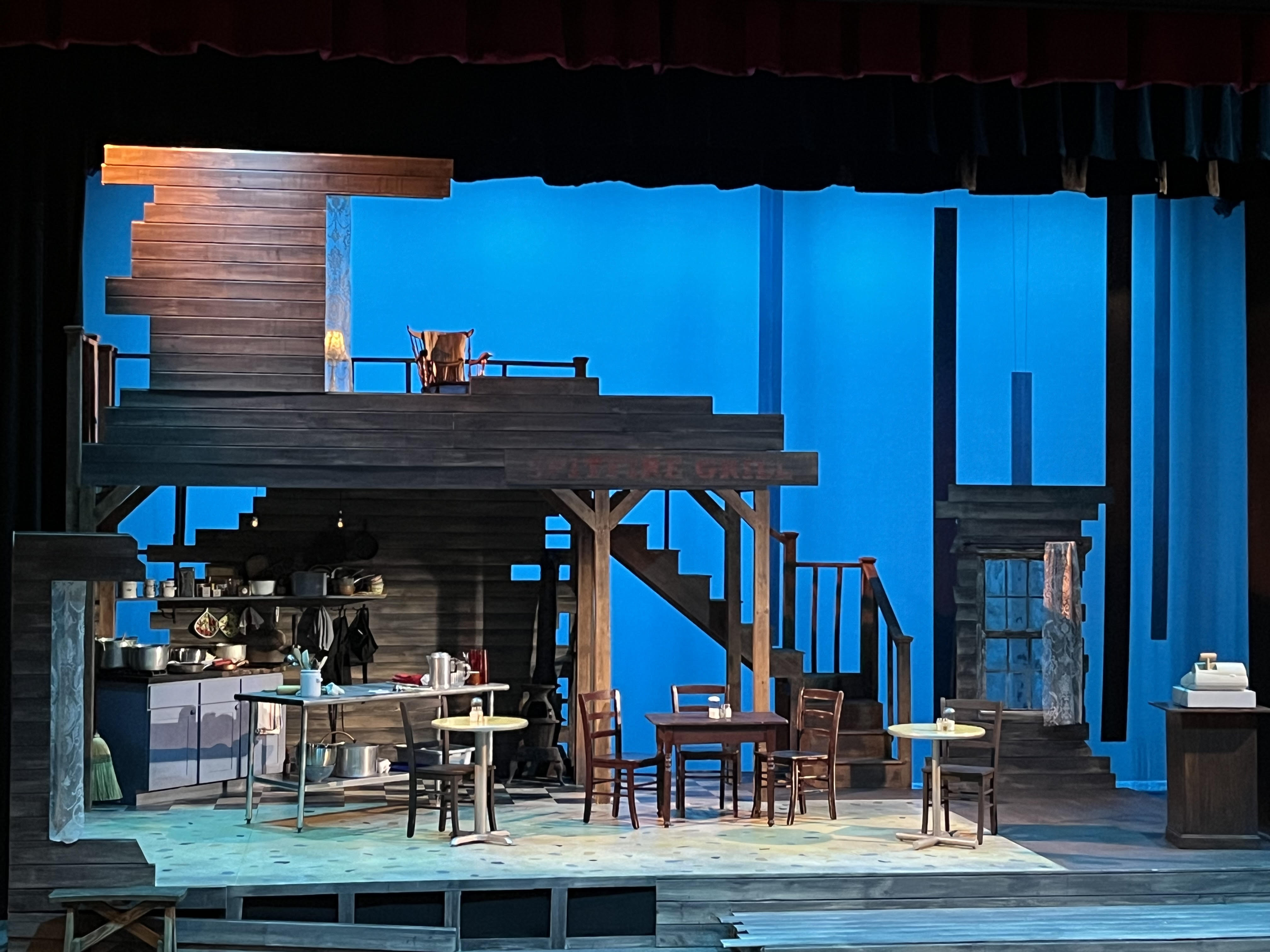
In one week, we went to see a grandson in the musical Matilda, which was polished and lots of fun, and the Spitfire Grille, which did not impress.
I also attended the Edvard Munch exhibit at the Harvard Museums, which I liked very much. It had paintings as well as a lot of prints in different stages of development to demonstrate Munch’s experiments with technique. The exhibit is there until the end of July, so try to catch it if you are ever near Cambridge, Massachusetts.
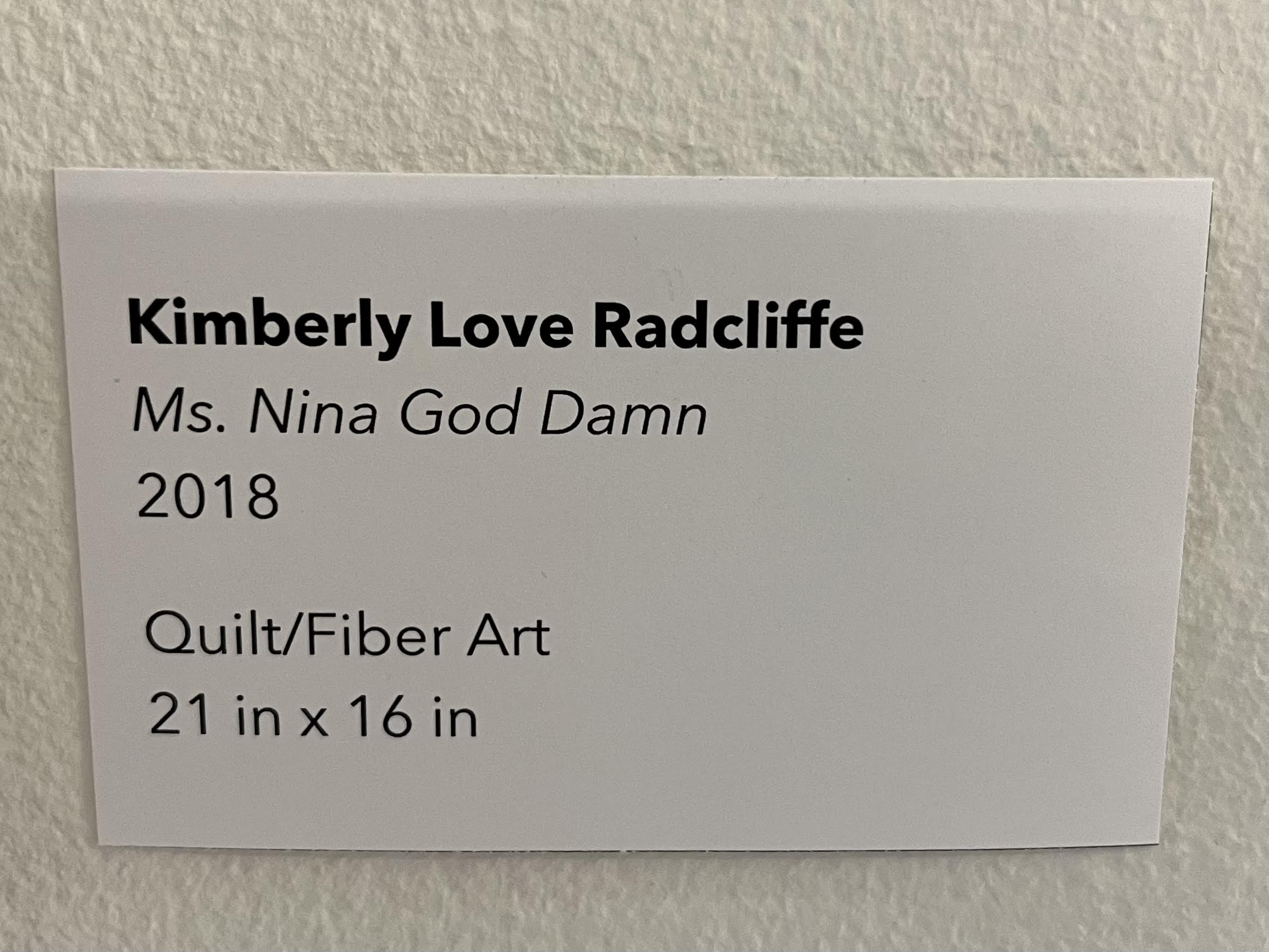
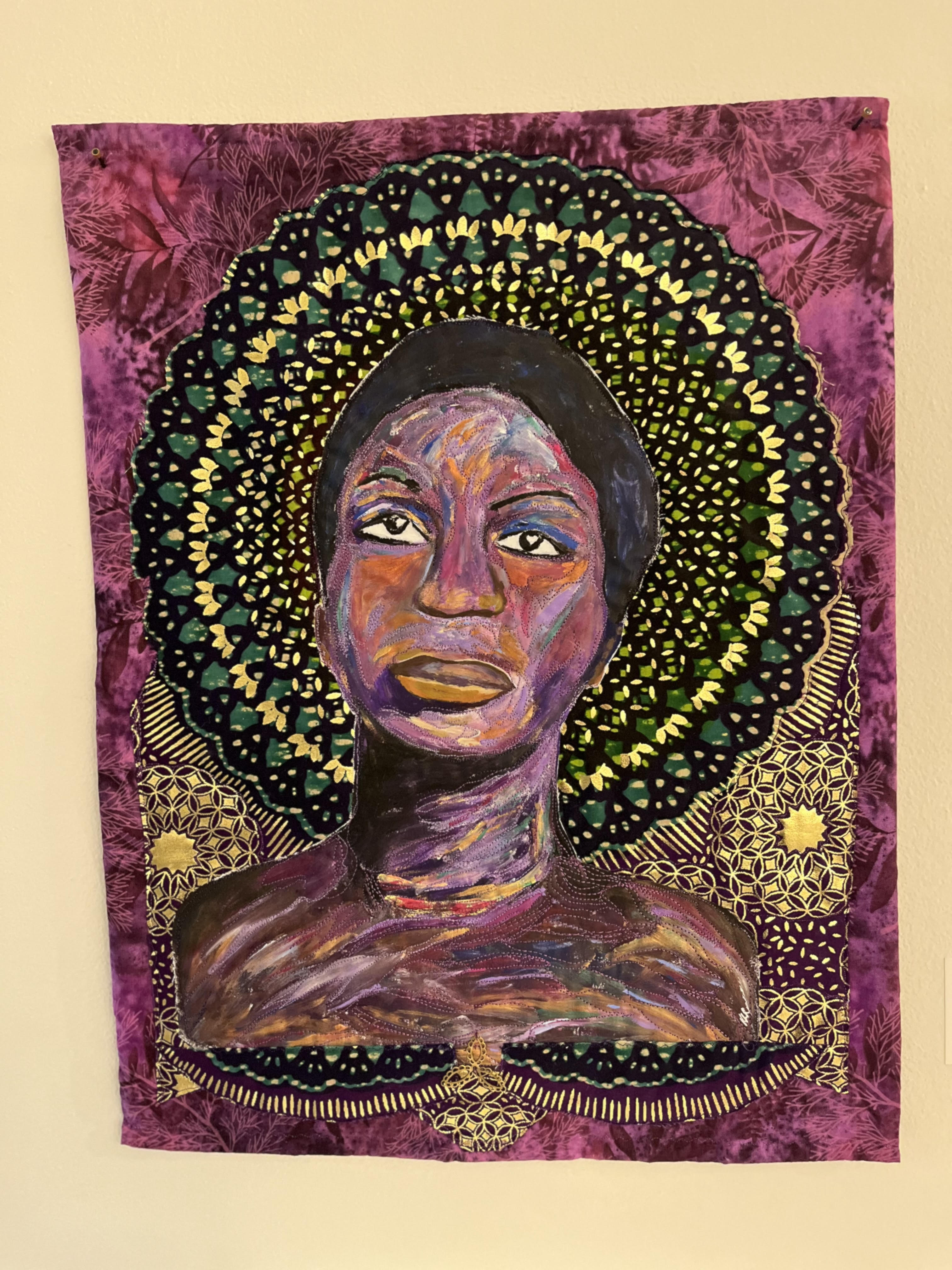
Meanwhile, at Umbrella Arts, there’s a textile show called “Weaving an Address.” The beautiful fiber art here is by Kimberly Love Radcliffe. The first one I photographed she calls “Have Faith in Art.” Then “Ms. Nina God Damn” references singer Nina Simone’s response to the murder of Black Sunday school girls in 1963. And the last Radcliffe I’m showing is a portrait of civil rights icon Fannie Lou Hamer. I just love these works.
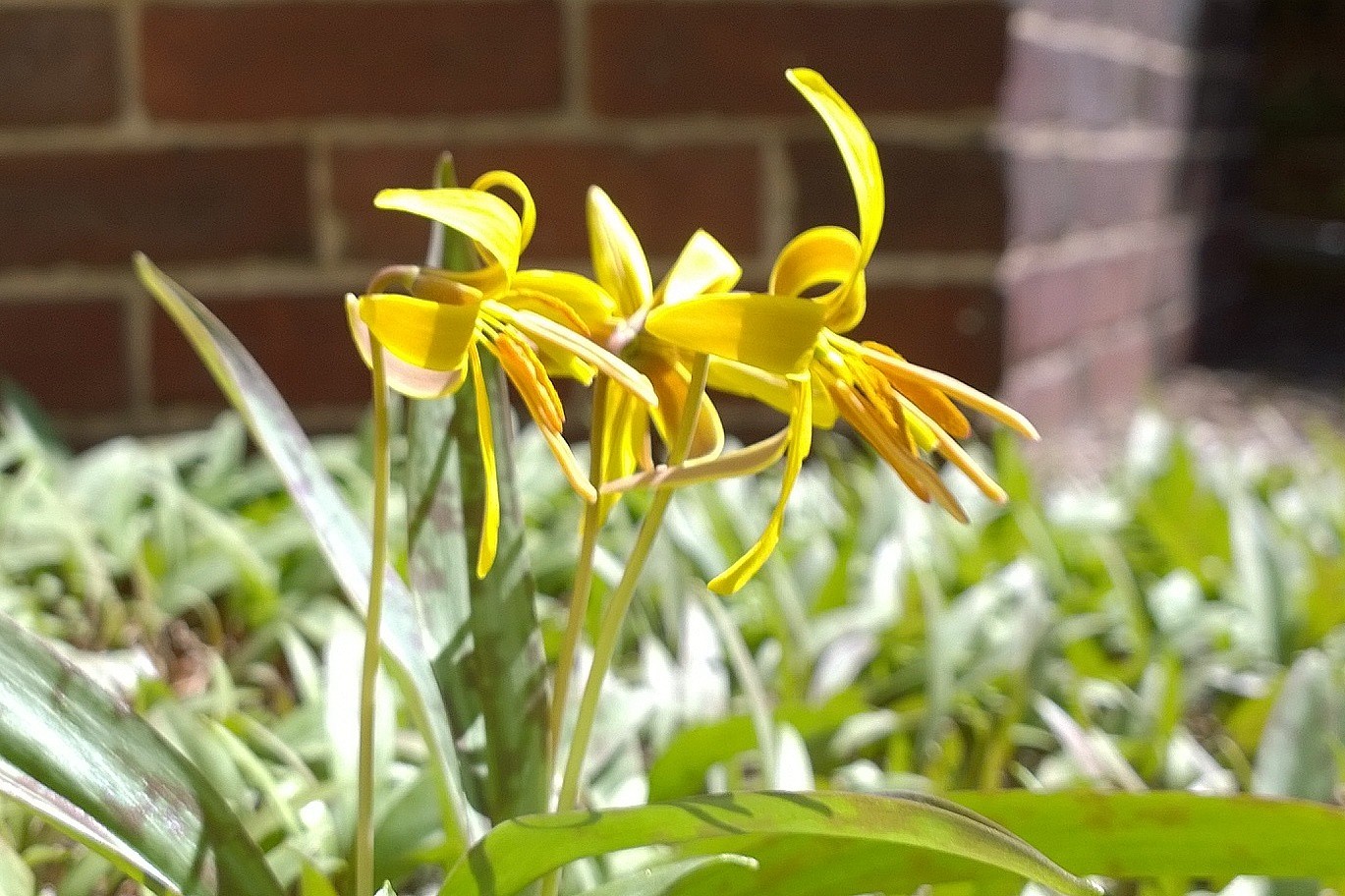
Photos: Suzanne and John’s Mom. Trout lilies in Massachusetts.
I always look eagerly for the early spring wildflowers to emerge. I even planted several kinds when we had a house. You are not supposed to transplant them, because most require very special woodland conditions, but there are vendors who grow them from scratch, like Grow Native Massachusetts and Garden in the Woods, and their flowers are safe.
It was only this year I learned that these beloved wildflowers are called spring ephemerals.
The Massachusetts government website says, “Early flowering plants that produce leaves, bloom, and set seed quickly after the snow melts in the spring are referred to as spring ephemerals. … They represent the seasons changing. Spring ephemeral flowers also provide the much-needed first nectar and pollen of the season for over-wintering pollinators, including bumblebee queens, mining bees, halictid or sweat bees, early butterflies, beetles, flies, and gnats. In return, these insects transfer pollen from one plant to another.
“Spring ephemerals are found in deciduous forests dominated by sugar maple, ash, black cherry, and hop hornbeam trees. Before the trees have their leaves, these wildflowers show up early to take advantage of the unobscured access to sunlight. While the trees are still dormant, spring ephemerals are in a race against time. They take advantage of the above-average nutrient levels in the soil (from decomposing fall leaves) to photosynthesize quickly. This provides the energy they need for flowering, setting seed, and storing carbohydrates for the following year all before the tree canopy blocks sunlight from the forest floor.
“The forest trees pull large amounts of water out of the soil when they start to grow leaves. The amount of water being absorbed by the trees is so great that it causes groundwater levels to drop. Before this happens, spring ephemerals use the higher moisture levels in the soil to carry out their life cycle. The dampness also helps them tolerate low temperatures they often face in early spring.
“Please keep in mind that the survival of a plant population depends on each plant’s ability to produce seed for the following year. If you find a location with these beautiful plants, enjoy them in place and do not pick them. Other people who follow in your path will appreciate what you have admired and left untouched, as will the many native pollinator insects that depend on spring ephemerals for their survival.”
If you are interested in more, Wikipedia gets wonky with scientific explanations of not just spring ephemerals but desert, mud flat, and weedy ephemerals. Here’s what is says about the spring ones.
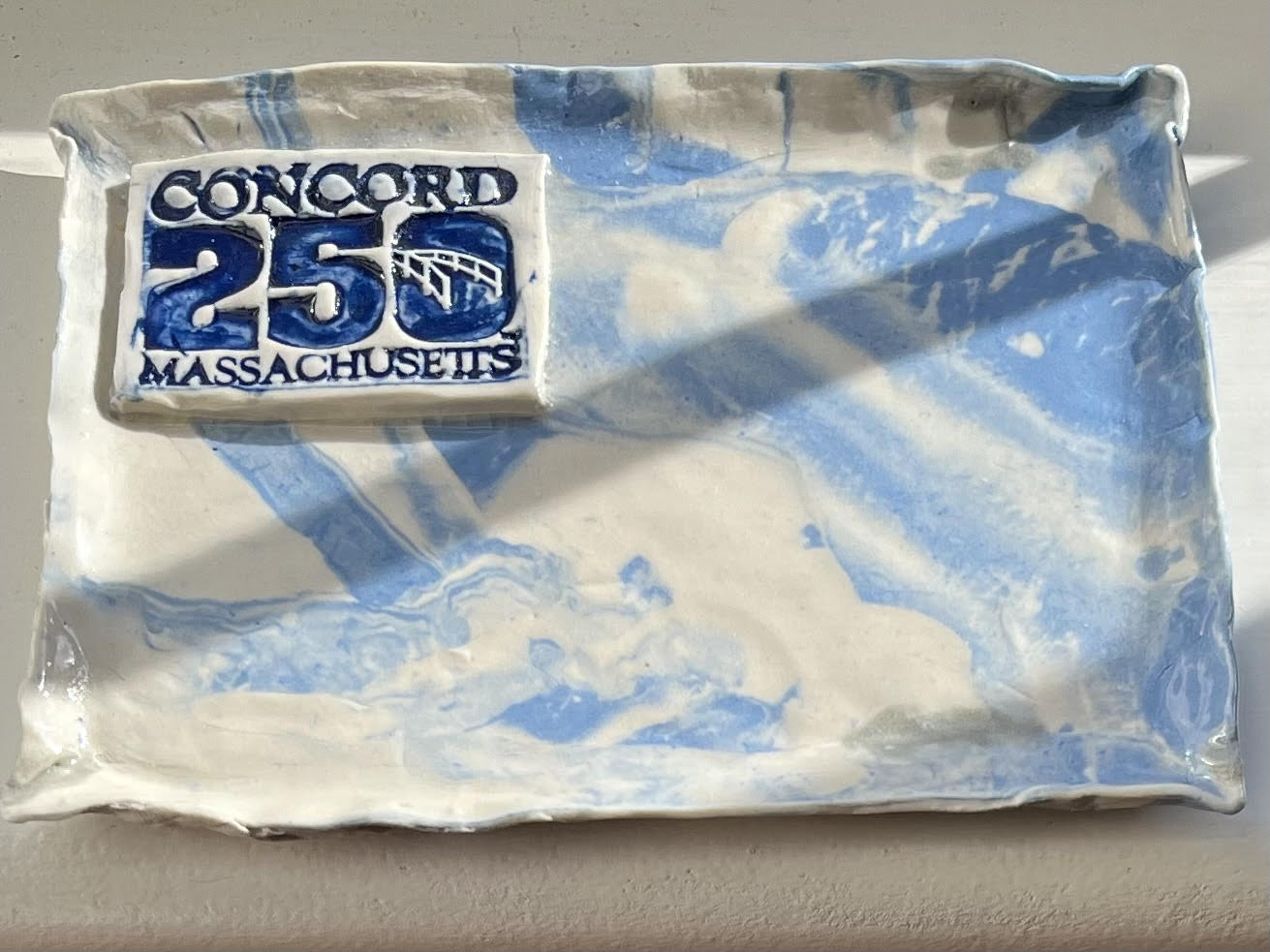
Pottery: Sue Brewster. My retirement community has prepared for the country’s 250th anniversary — counting from April 19, 1775, when “the shot heard ’round the world” was fired at the North Bridge — in charateristic ways. In the pottery workshop, for example.
You will be pleased to know that the American experiment in democracy lasted nearly 250 years. It’s nothing like geologic time, but it’s pretty good depending on your frame of reference.
There will be celebrations all around New England to recognize the key events of 1775. In our town, the day will include an extra long parade and a visiting dignitary whose name the planners withheld until the last minute.
Back in 1975, the 200th anniversary of Patriots Day, the visiting dignitary was Gerald Ford. Protesters camped out on the hill above the North Bridge, by the Buttrick Mansion. They are said to have been rowdy, and Emerson Hospital had to treat several of them. This time, extensive preparations were made to handle rowdiness.
To give you a taste of the day’s activities at just one of many locales, here is what the museum posted:
“Celebrate the 250th Anniversary of April 19, 1775, with a free community celebration at the Concord Museum. … Free admission (9:00 am – 5:00 pm), including access to the immersive April 19, 1775 galleries to see the original lantern from Paul Revere’s famous midnight ride and the new special exhibition Whose Revolution.
“A family-friendly encampment of Revolutionary Living History (10:00 am – 5:00 pm). Billerica Colonial Minutemen will drill with muskets, cook over an open firepit, and demonstrate colonial crafts.
“Family drop-in activities (9:00 am – 4:00 pm) inspired by the American Revolution and the new Barefoot Books publication Rise Up!
“A Forum with Doris Kearns Goodwin (6:00 – 7:00 pm) on the American Revolutionand its legacy. In-person attendance is at capacity. Join a stand-by line or register for virtual attendance.
“An outdoor concert with the Goodwin Band (7:30 – 8:30 pm), finishing with a view of a town-wide drone show.
“Food trucks, an ice cream truck, and a wine and beer truck all day and evening.”
Speaking of food trucks, you should know that they were a big bone of contention a few years ago at Town Meeting, when planning was getting underway. Not historically accurate, you know.
I have no idea where you can park, but if you can get here early, our tourist site notes, “church bells at 1st Parish toll at 5:45 a.m. to sound the alarm [and] Dr. Prescott arrives at the North Bridge after riding across the fields calling out the warning to towns and villages that the [British] Regulars were on the march and that their destination was Concord. The Concord Minutemen fire salutes and the Concord Independent Battery fire several volleys from the field at the Old Manse.”
I have heard the Independent Battery fire historically accurate volleys several times over the years, and my advice to you is to wear earplugs.
For other information, check the town website, here.
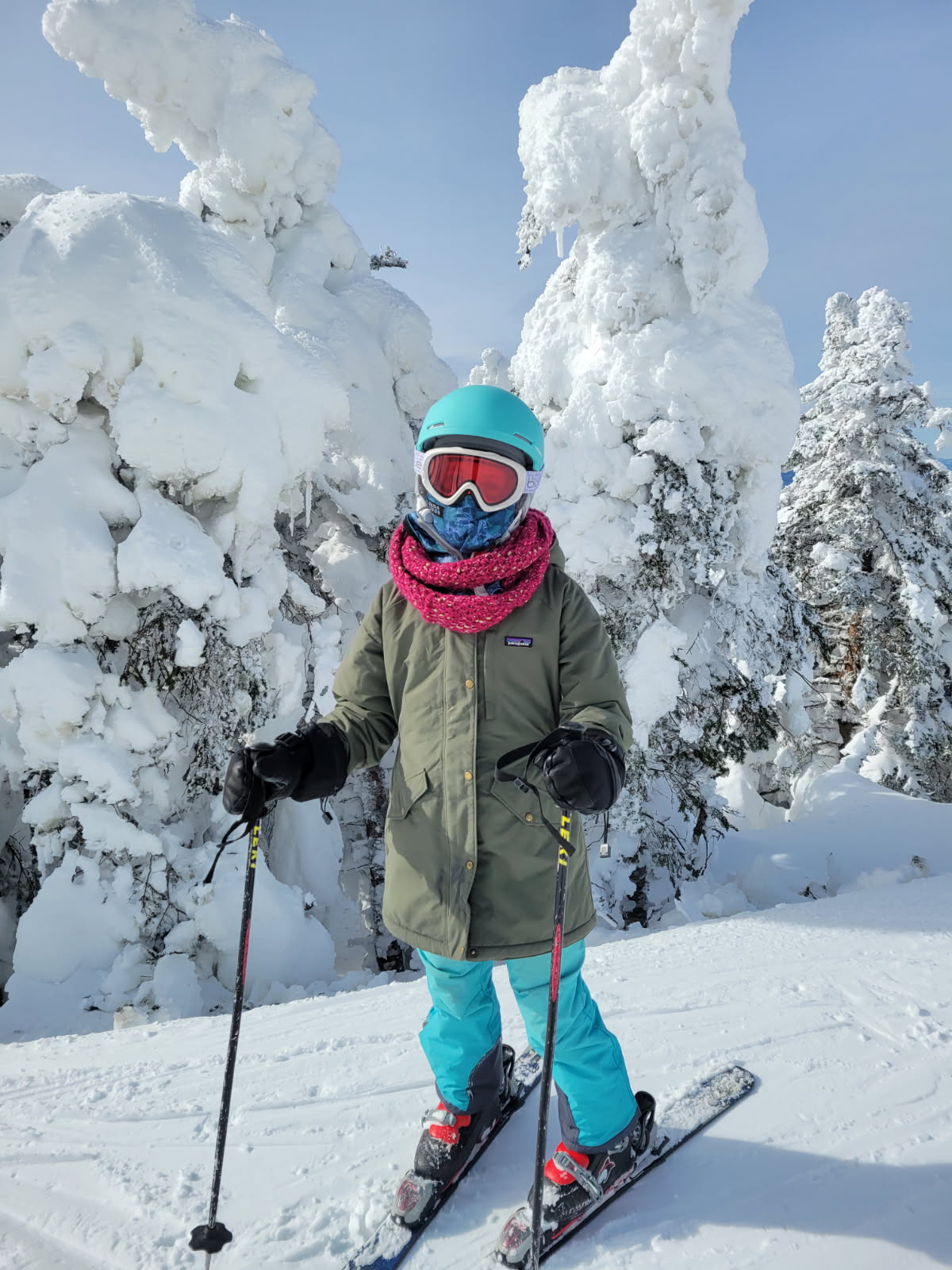
Photo: John. Our older granddaughter skiing in Maine. I’m told it was cold.
Today’s photo roundup covers some winter and some spring. The weird thing is that just as we were beginning to enjoy spring in Massachusetts, we got a snowfall on April 12th, followed by a warm and sunny day today. That makes us wonder what April 19th will be like — a big deal here. It’s the 250th anniversary of what we think of as the beginning of the American Revolution, the confrontation at the North Bridge. (Amazing to think of how long democracy has lasted among erring mortals!)
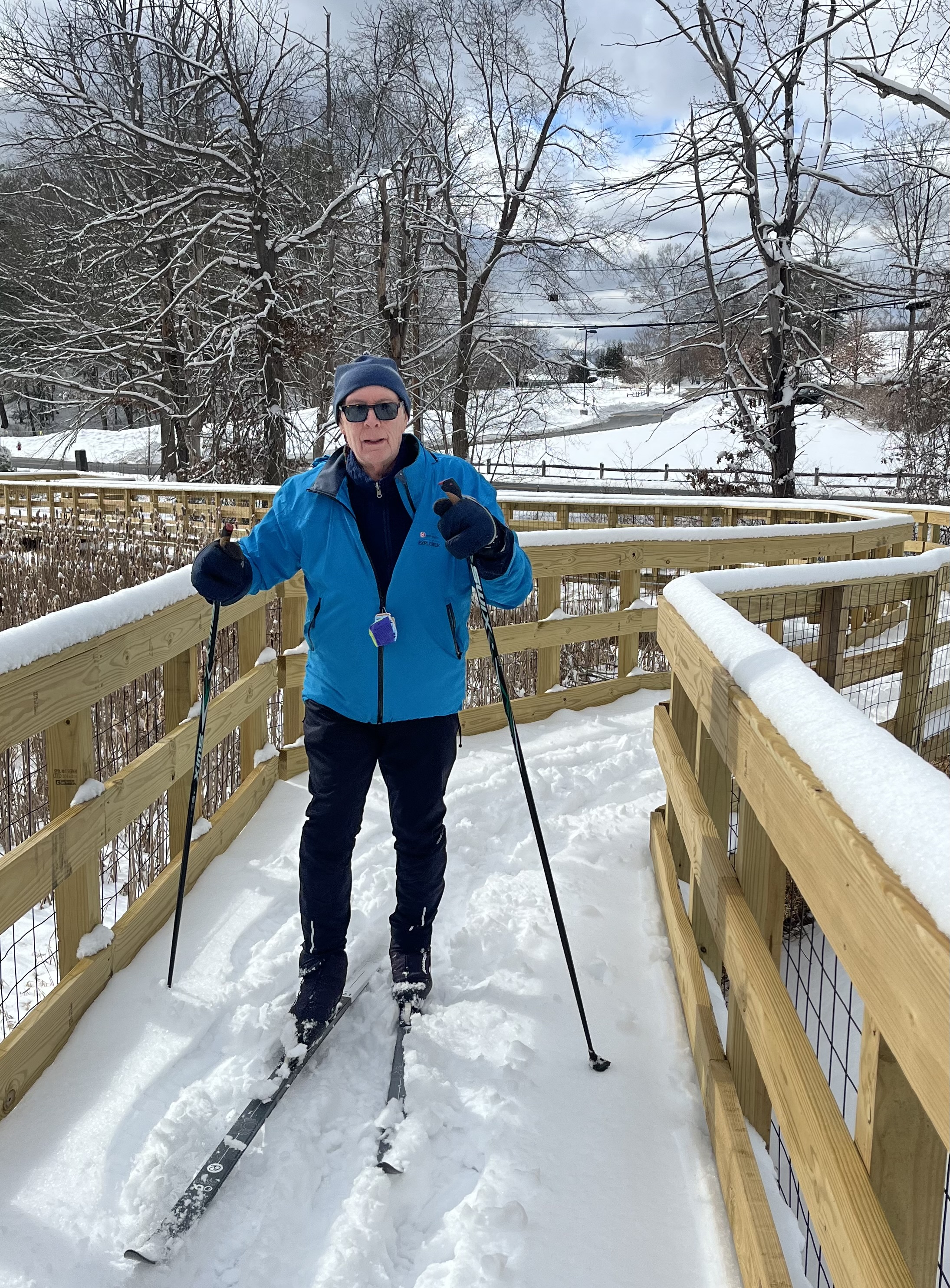
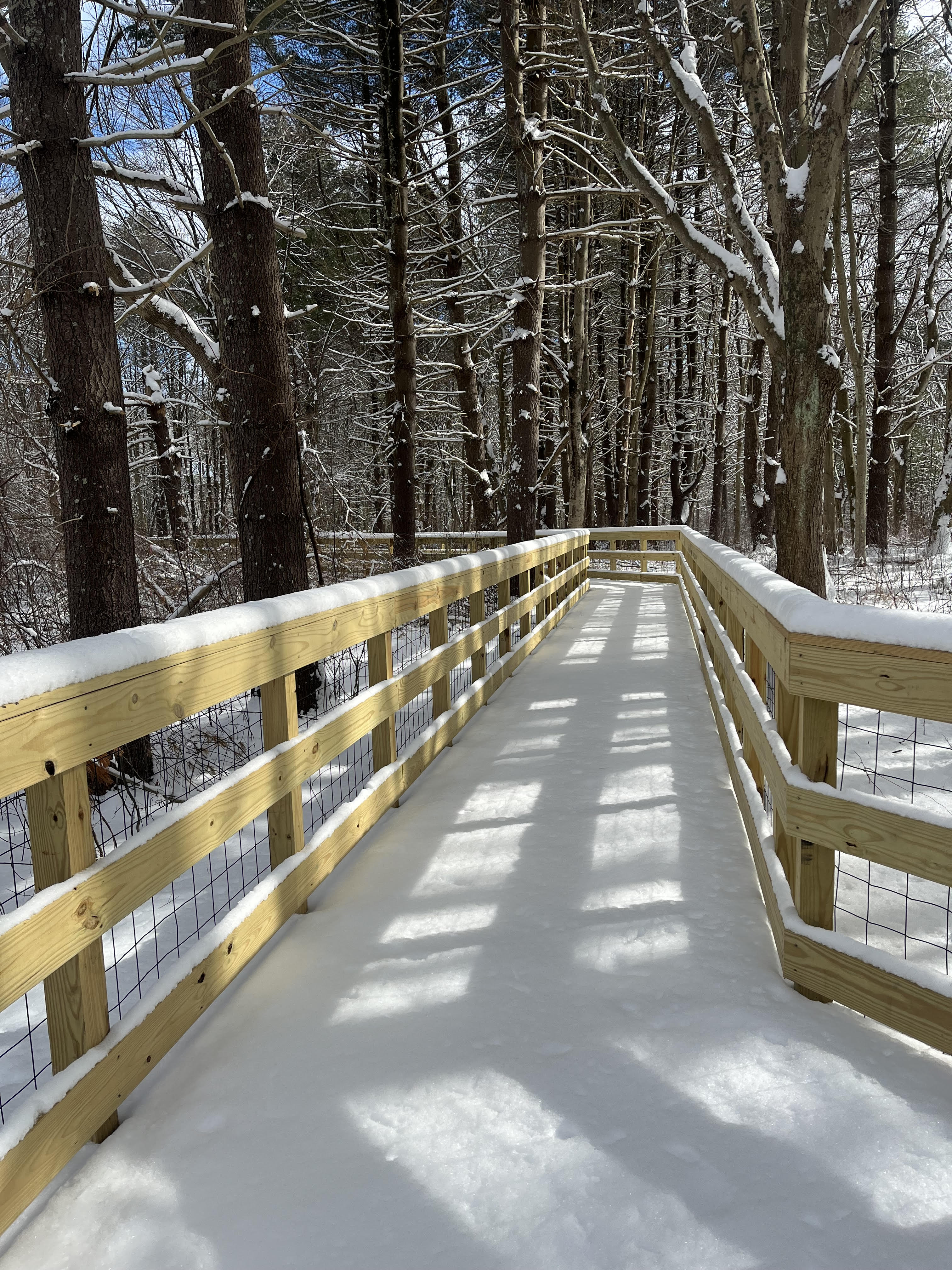
Getting back to the photos, there was fresh snow on the boardwalk in February, making it eminently skiable. But after a few days of people walking there, it was all ice.
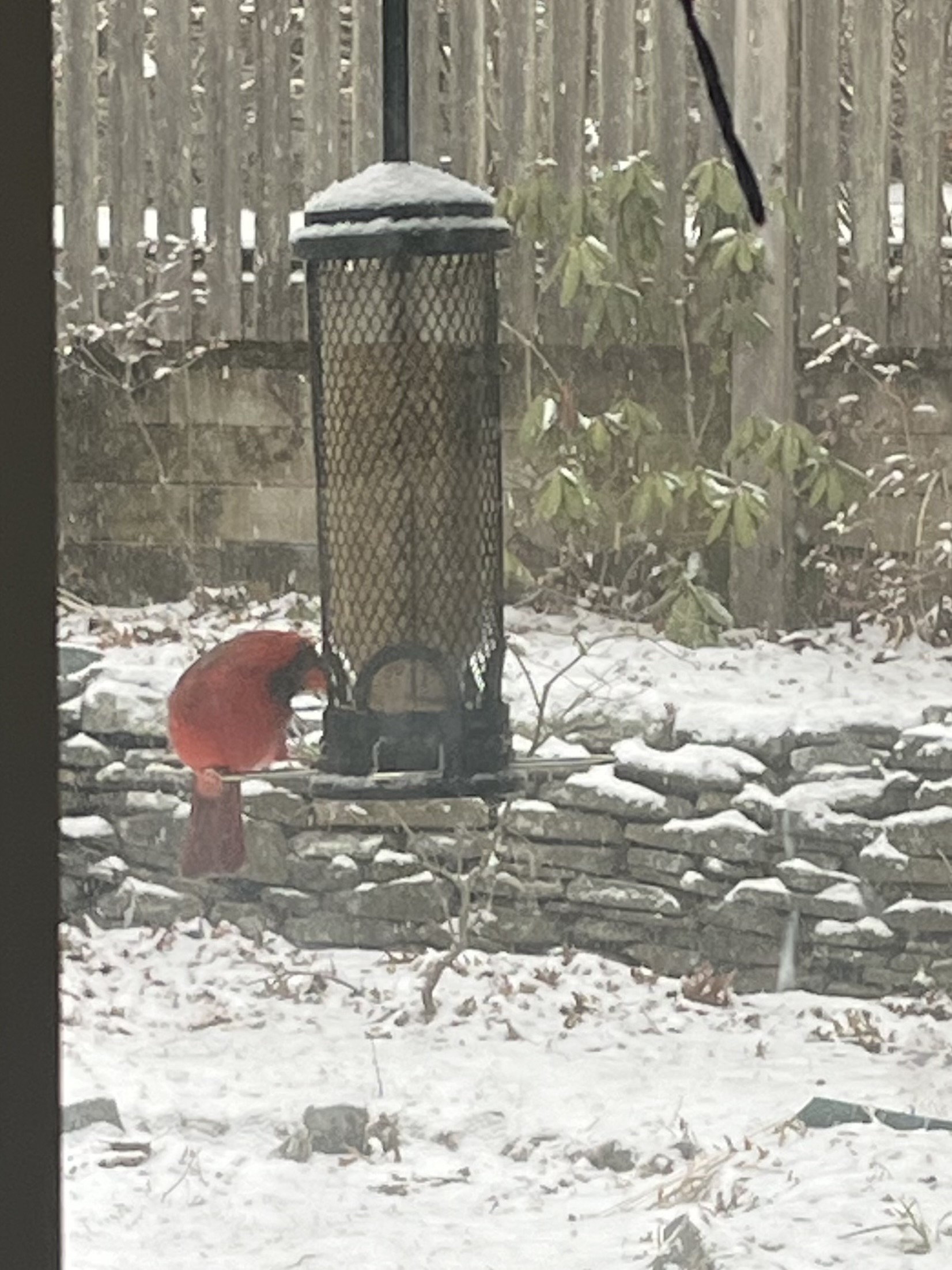
Next photo shows Erik’s Squirrel Buster birdfeeder with a visiting cardinal.
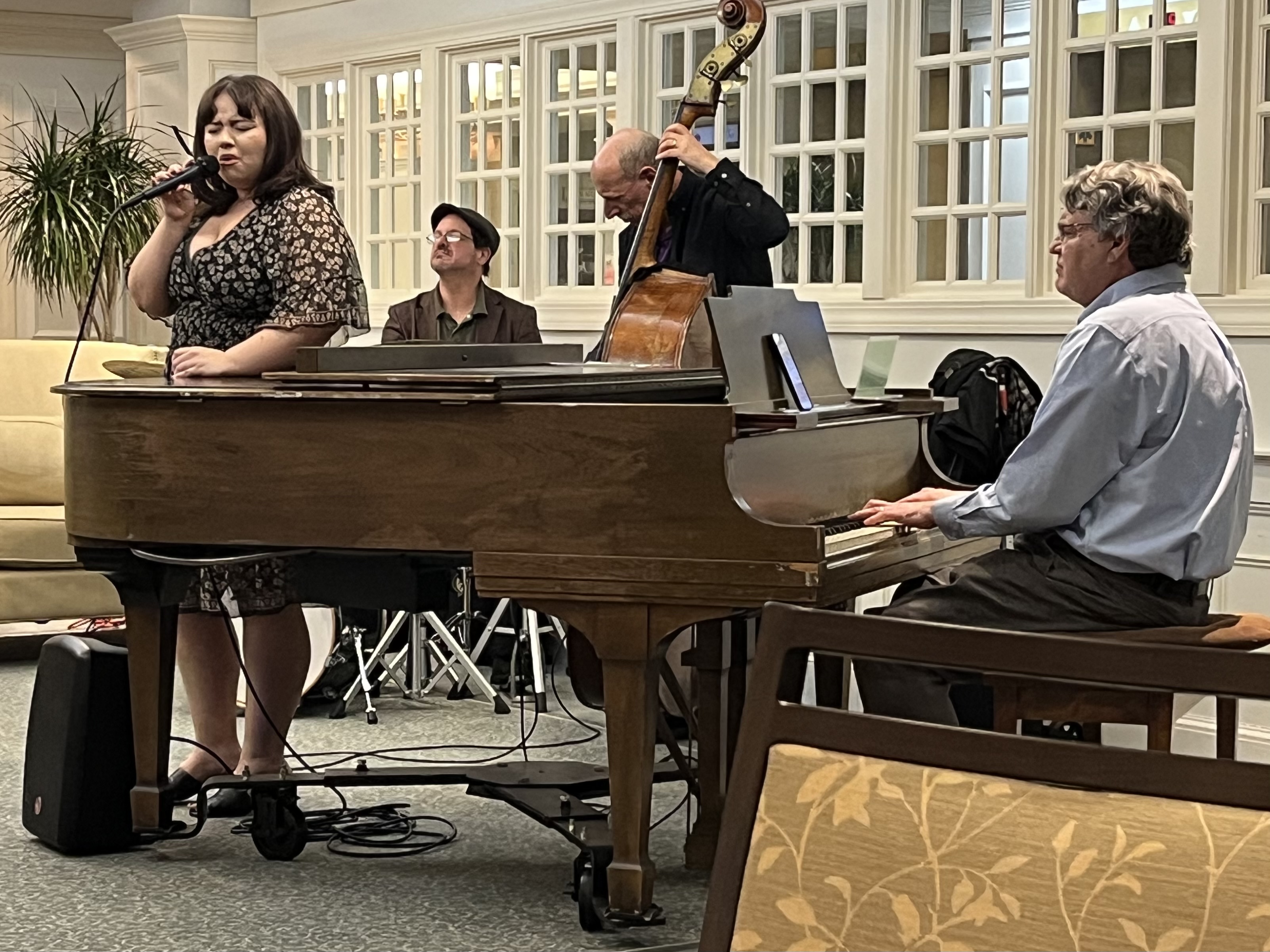
Keeping warm indoors at our retirement place, we enjoyed Joe Reid’s latest trio, with guest vocalist Mikayla Shirley from Berklee College of Music.
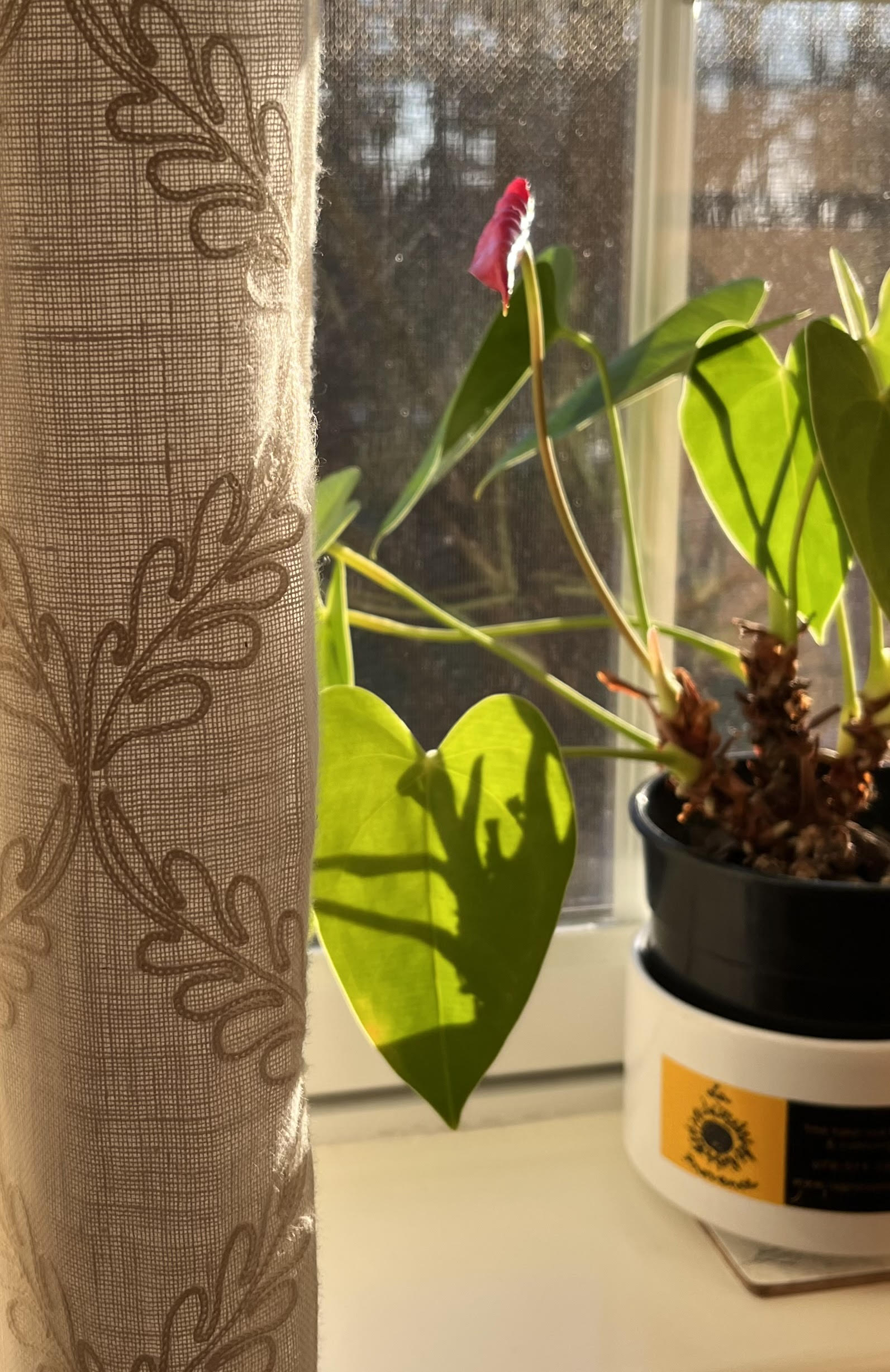
My anthurium in the sun is next.
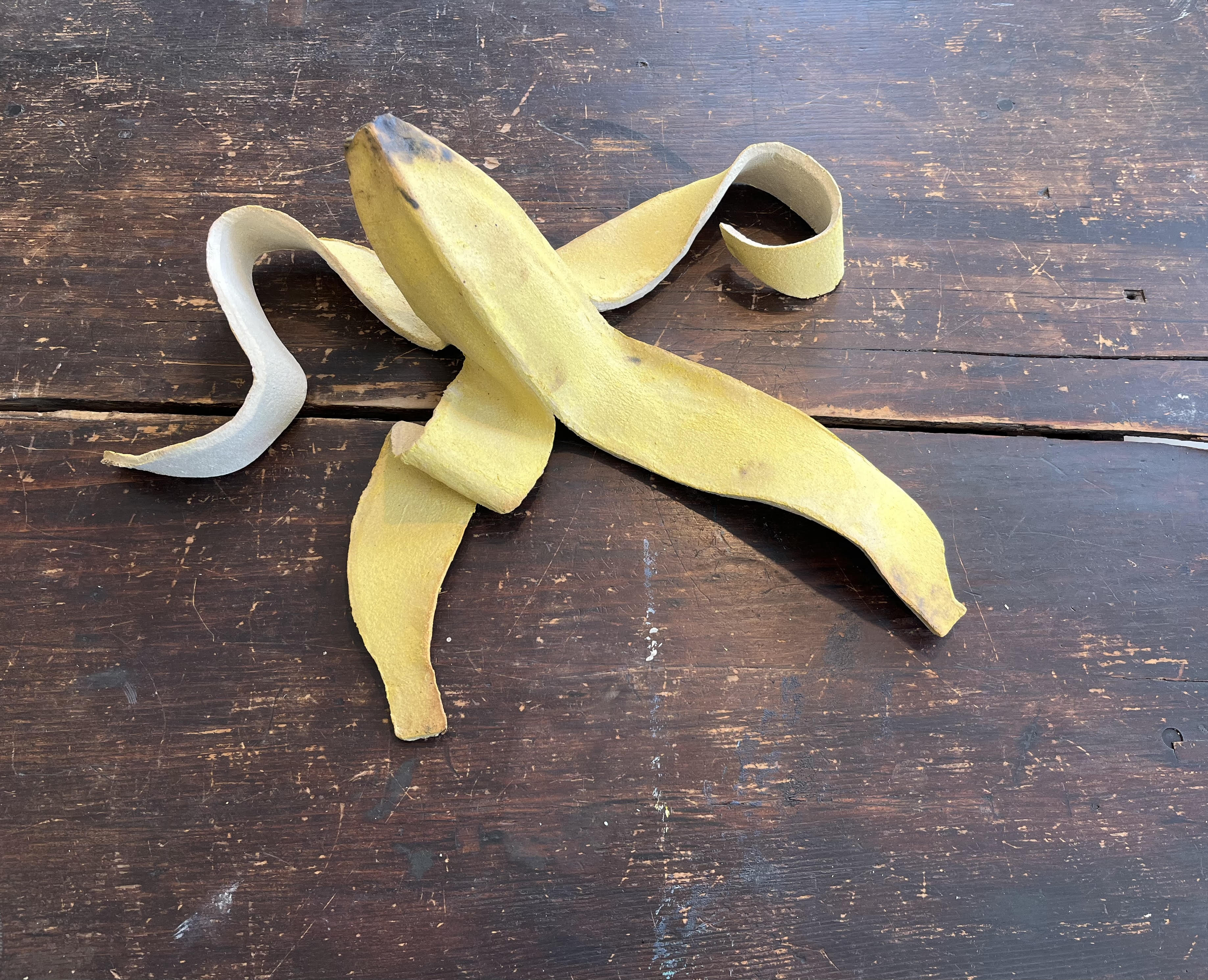
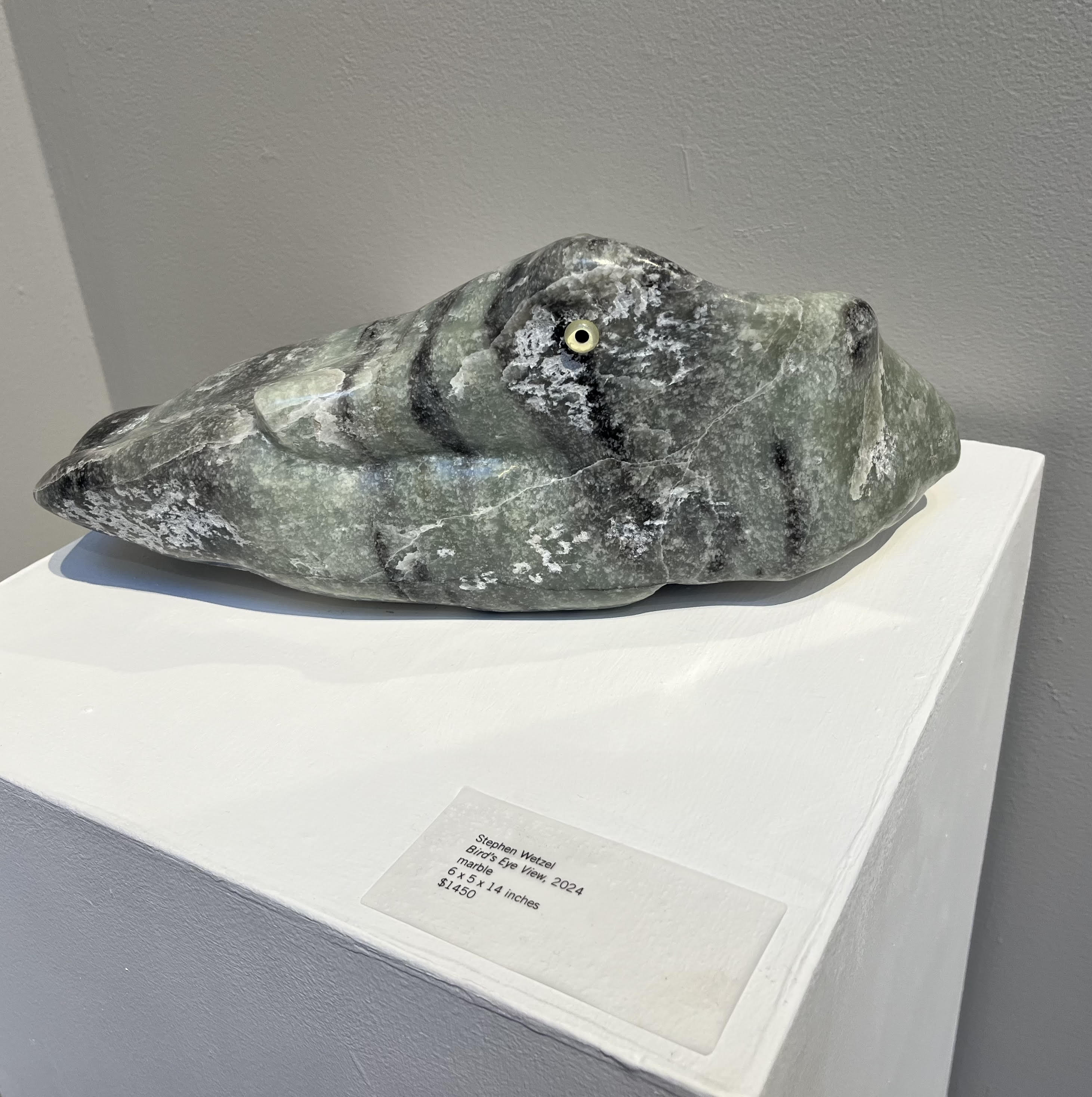
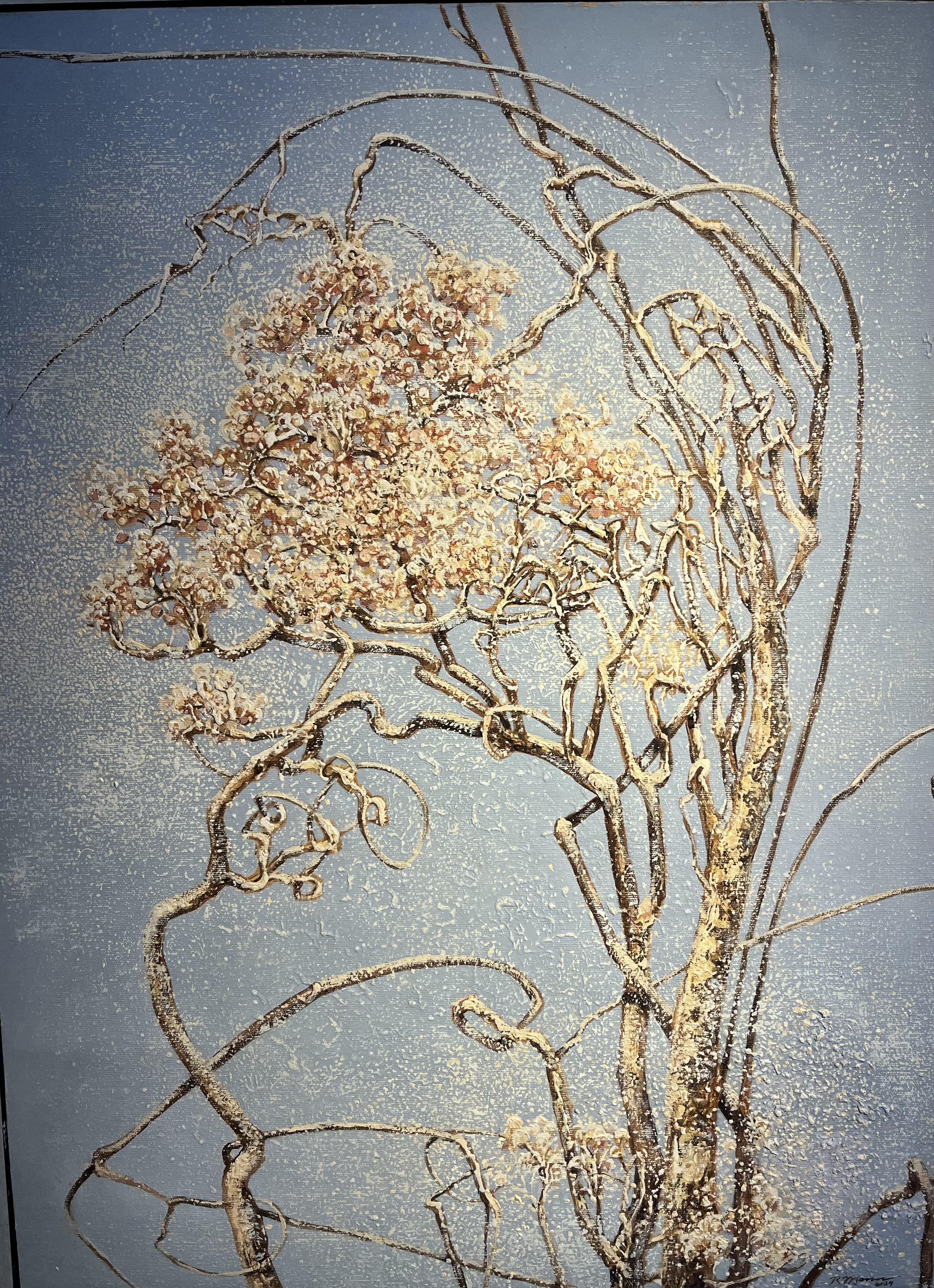
The rest of the photos are from several local art displays.
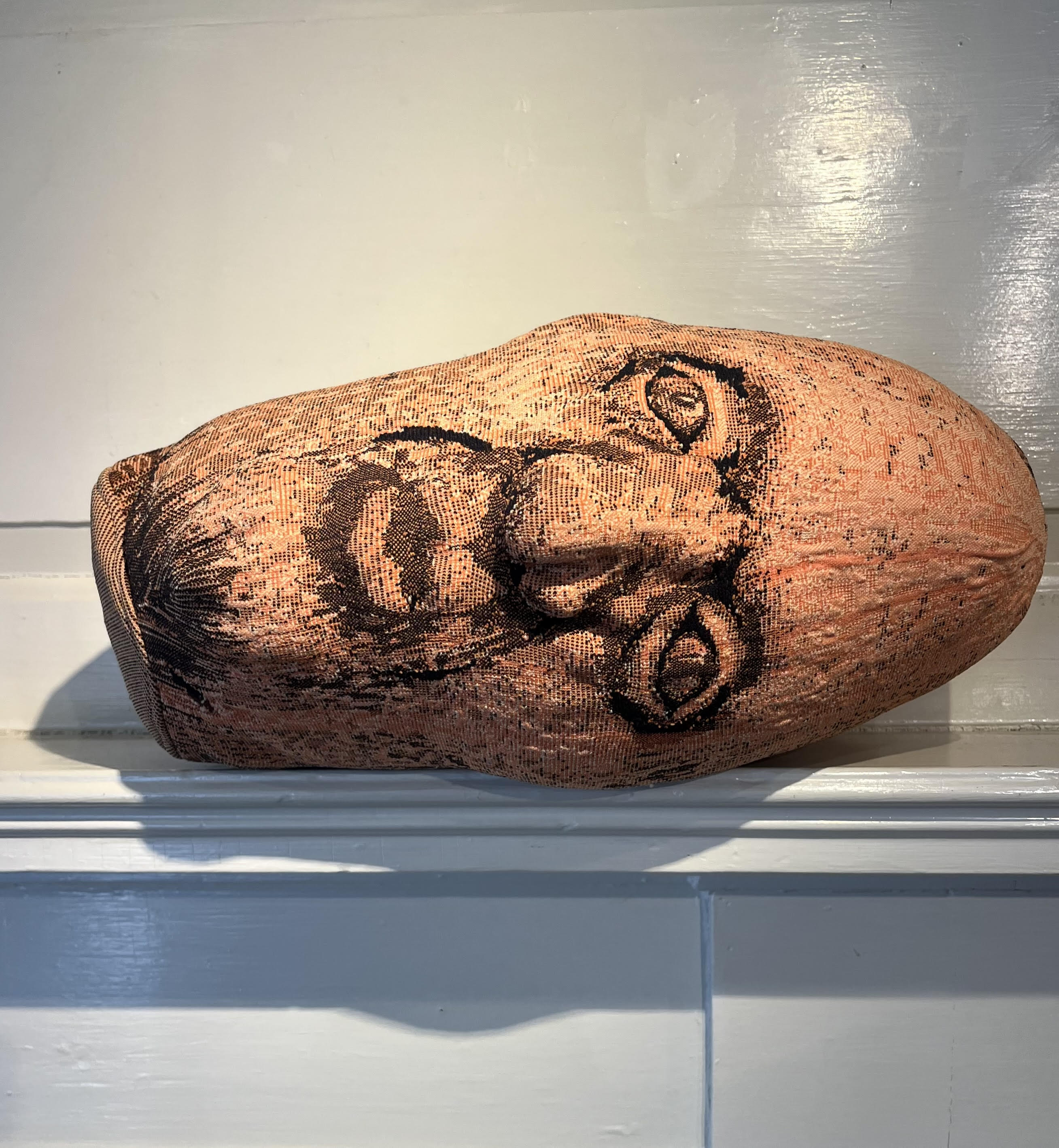
They include an outsize but otherwise lifelike banana peel by Mary Kenny, a marble bird by Stephen Wetzel, and “Pollen,” a piece of fabric art by Rebecca V. Mann expressing her preoccupation with the fragility of nature. These are followed by Felix Beaudry’s woven head. Resting.
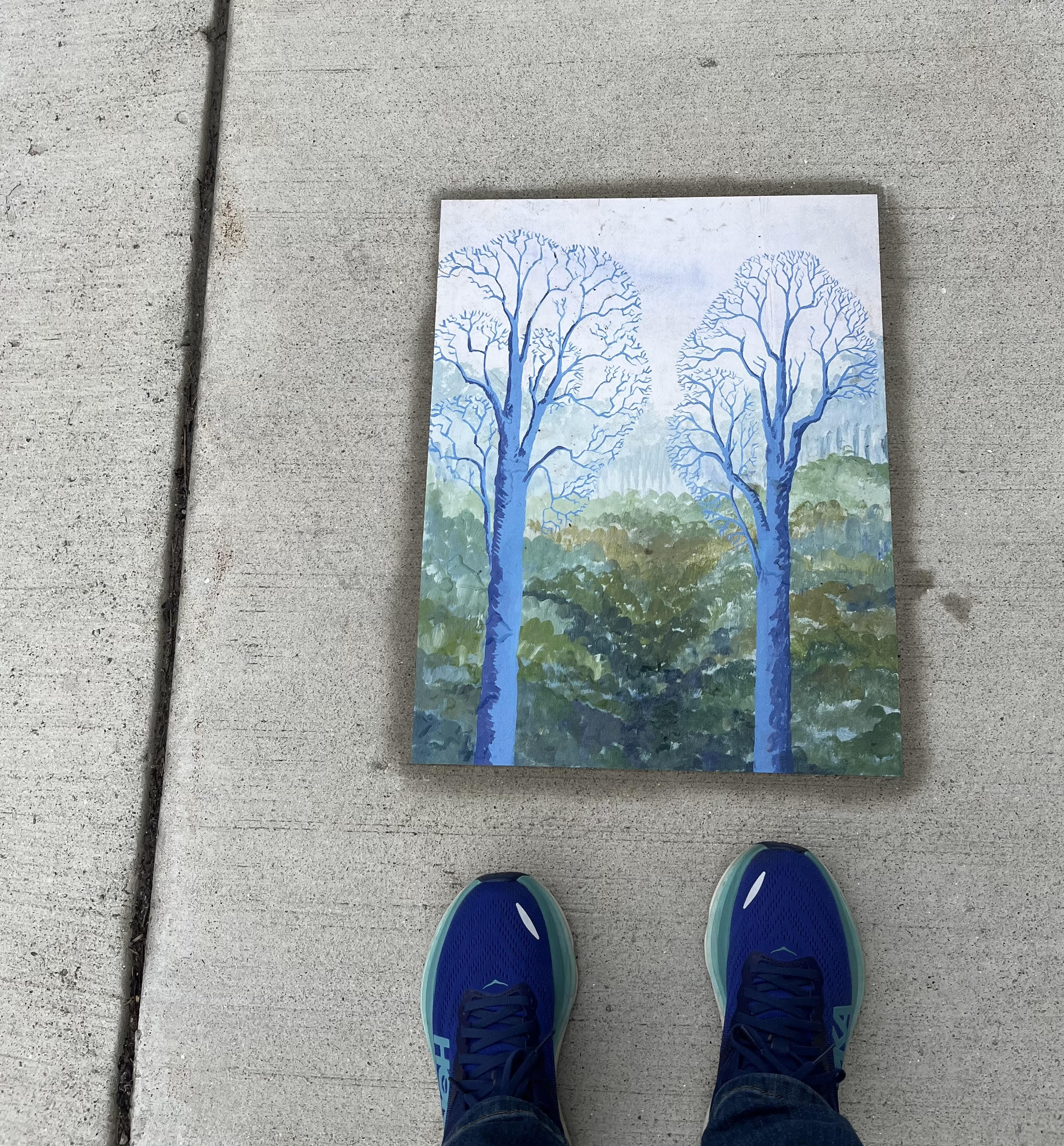
The last photos are part of an extensive sidewalk exhibit in which works by artists of all ages were somehow laminated and glued down so people could walk on them. You can see my shoes. The first, of trees, is by Jack Confrey, a young guy you’ll meet meet if you go to the website, here.
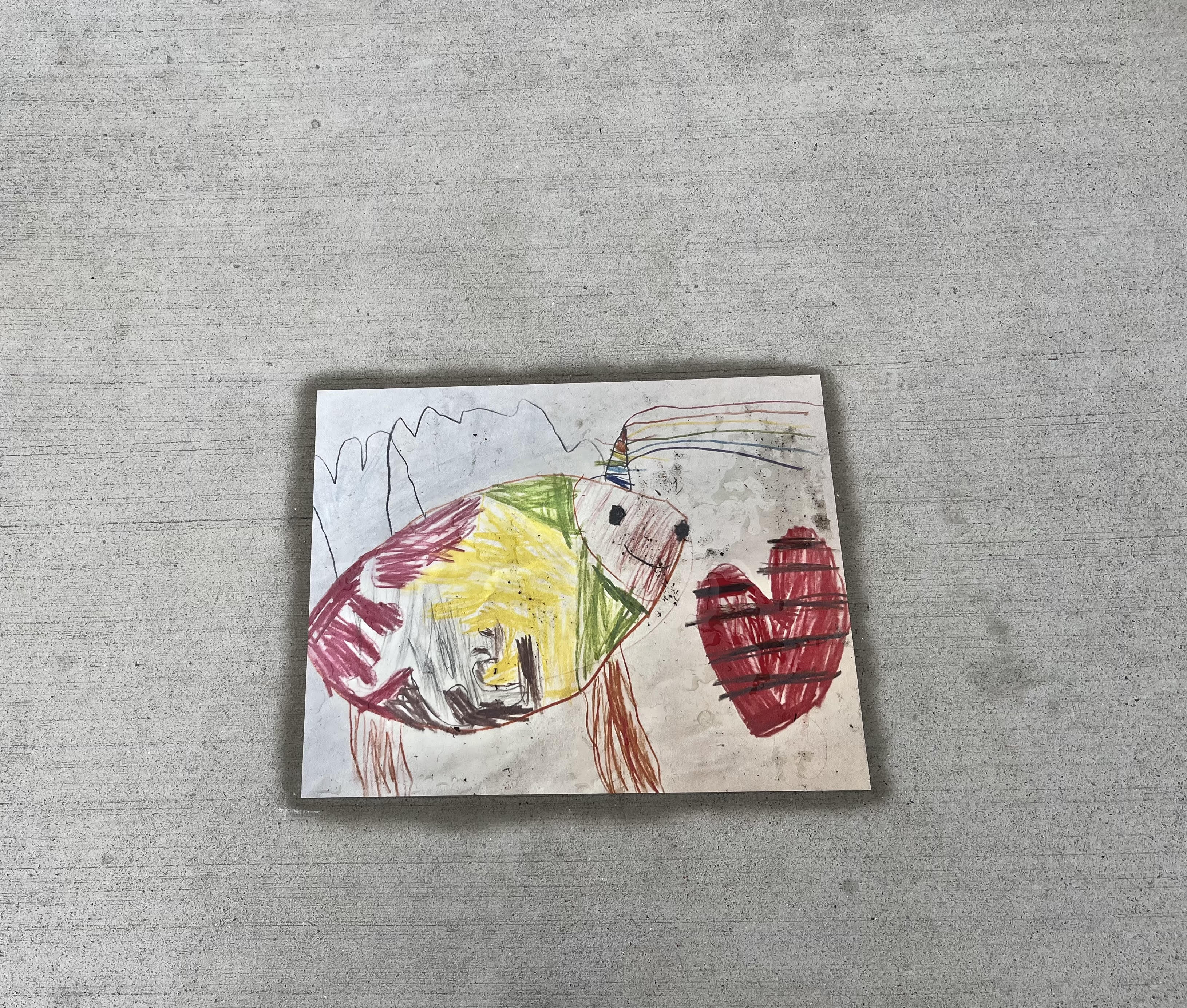
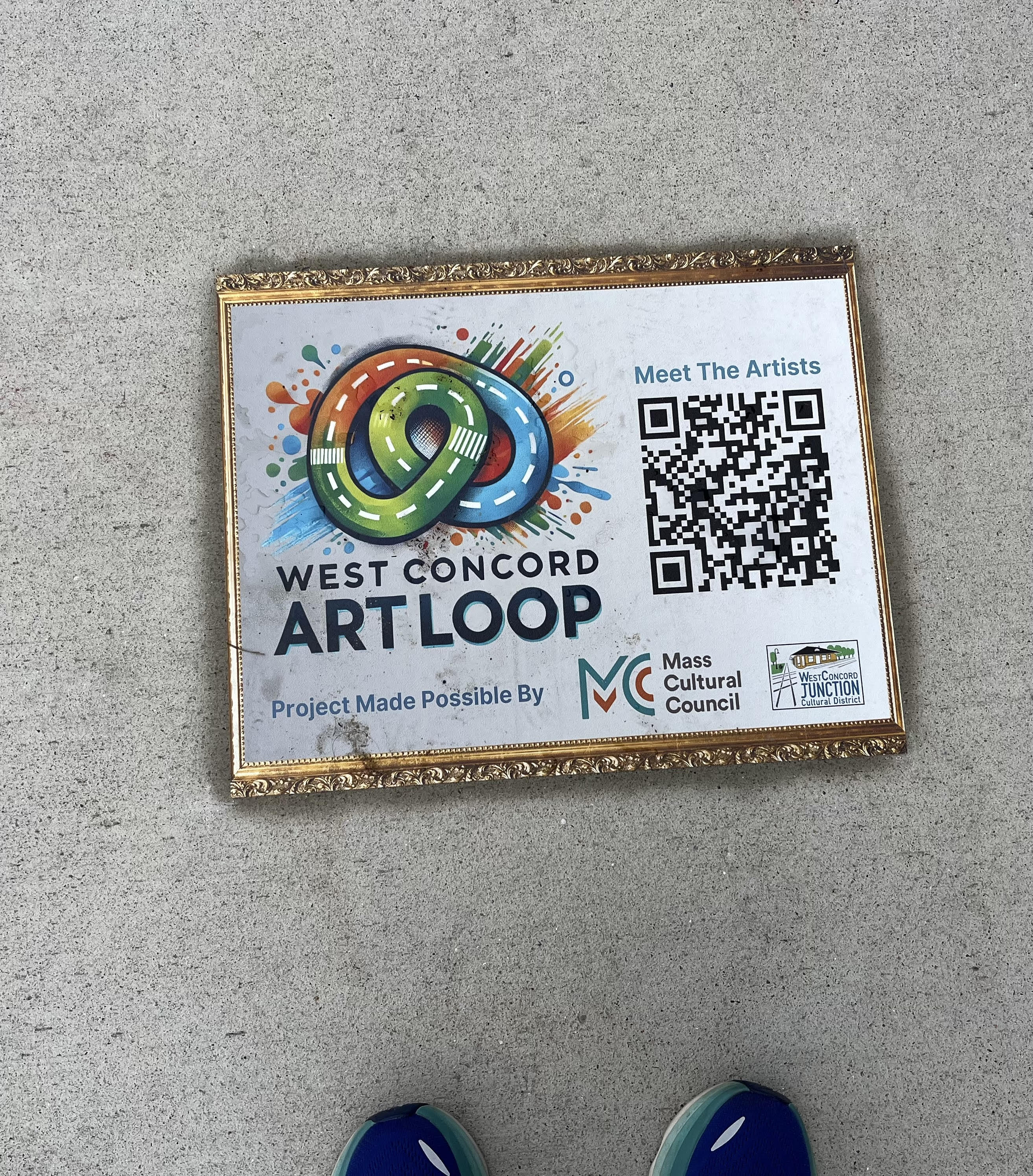
Then there’s a child’s art and a QR code for anyone interested.
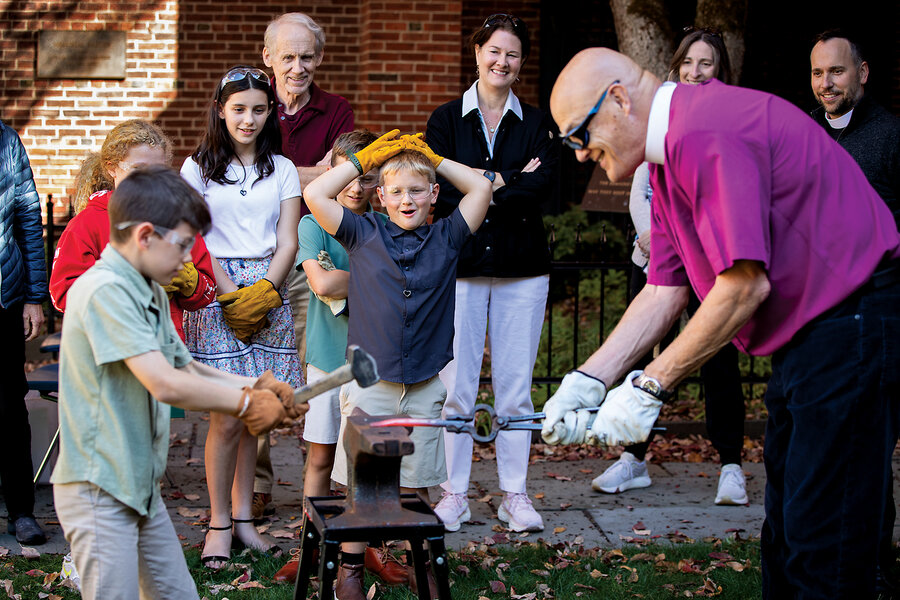
Photo: Melanie Stetson Freeman/Christian Science Monitor staff. Retired Episcopal Suffragan Bishop Jim Curry, co-founder of the nonprofit Swords into Plowshares, gives a blacksmithing demonstration in Winchester, Mass. The nonprofit’s goal is to get guns off the streets and make young people enthusiastic about peaceful projects.
In a Providence park, there’s a sculpture made from illegal handguns. It’s kind of a depressing pillar to failure, unless you look at it as the removal of guns from circulation. It’s ambiguous, which I guess art is supposed to be.
Here’s a story about an effort to turn young people away from the gun culture of the streets.
Troy Aidan Sambajon writes at the Christian Science Monitor, “Retired Episcopal Suffragan Bishop Jim Curry ignites his propane forge in the courtyard of Parish of the Epiphany church. Slowly he heats the barrel of a dismantled rifle to 2,000 degrees Fahrenheit, and then starts hammering the red-hot metal on his anvil. In minutes, a piece of once-deadly weaponry transforms into a humble weeding tool.
“Bishop Curry then invites onlookers to try their own hand at making garden tools from firearm parts, using the forge that he takes with him to various communities in the Northeast region. With each strike of the hammer, participants mold a hopeful vision of a future without gun violence.
“Before the demonstration, Bishop Curry gave a sermon explaining the mission of Swords to Plowshares (S2P) Northeast, a nonprofit that he co-founded a decade ago in New Haven, Connecticut. ‘At the forge, we hammer guns into gardening tools and art. We forge rings from shotgun barrels into hearts – symbolizing that the change we need begins in the transformation of our own hearts,’ he told parishioners.
“His work has inspired residents in Connecticut, New Hampshire, and Vermont to start their own independent S2P chapters, which host gun-surrender events in partnership with police departments. Law enforcement officials vet and dismantle the weapons, and then give the parts to the chapters for public blacksmithing demonstrations. Besides raising awareness about gun violence, the demonstrations help get young people interested in blacksmithing.
“Montrel Morrison, who runs a youth mentoring organization in Connecticut, calls S2P Northeast a ‘safe haven and beacon of hope.’ …
“Kam’eya Ingram, who spent the last two summers as a blacksmith with S2P Northeast, says that ‘when someone dies from gun violence, it’s like the world goes quiet.’ But for her, hammering on the anvil fills the silence with a resounding release of emotions. … ‘I feel like I’m bringing people peace – letting them know that one more gun is gone and that this [gun violence] might not happen to someone else.’
“Bishop Curry … studied religion at Amherst College. He graduated in 1970 and started his career working in public schools in Huntington, Massachusetts, as a middle and elementary schoolteacher for 10 years. Yet he longed to serve the spiritual needs of his community.
“That desire led him to the seminary in 1982, and, three years later, he was ordained as a deacon and priest in the Episcopal Diocese of Connecticut. He focused his ministry as a spiritual adviser, working in hospitals with families in Connecticut and addressing the devastating impacts of gun violence and suicide. By 2000, he was elected suffragan bishop of Connecticut.
“His life ‘changed entirely,’ he says, in the wake of the December 2012 shooting at Sandy Hook Elementary School in Newtown, Connecticut. … Newtown was in his diocese. …
“In early 2013, he joined other Episcopal bishops in Washington, D.C., and helped found Bishops United Against Gun Violence. Through that group, he learned about the Guns to Gardens movement, a network of nonprofits that repurposes unwanted firearms into garden tools and artwork. …
“In 2014, he co-founded his chapter, S2P Northeast, with Pina Violano, a trauma nurse and nursing professor at Quinnipiac University. The group’s namesake peacebuilding mission comes from the Old Testament (Isaiah 2:4): ‘They shall beat their swords into plowshares, and their spears into pruning-hooks.’ …
“S2P Northeast has partnered with a Colorado organization called RAWtools on a nationwide gun-surrender program and, before the COVID-19 pandemic, taught blacksmithing skills to incarcerated people. …
“For Bishop Curry, ‘the real life of the forge’ has been to empower teens from New Haven through summer job opportunities. They are paid to transform guns through blacksmithing and help lead public demonstrations. …
“Jared Sanchez, age 18, takes pride in being a junior blacksmith instead of working a teenager’s typical mundane hustle. In a single day, he can make seven or eight garden tools out of shotgun barrels. He has also created a heart necklace for his younger sister and a cross to sit beside his grandfather’s urn. …
“After two summers serving as a blacksmith alongside Bishop Curry, Mr. Sanchez has come out of his shell and come into his own as a leader. Handling so many firearm parts has revealed to him the depth of the gun violence problem in his community and the work that must be done to combat it.”
More at the Monitor, here. No paywall. Nice pictures.
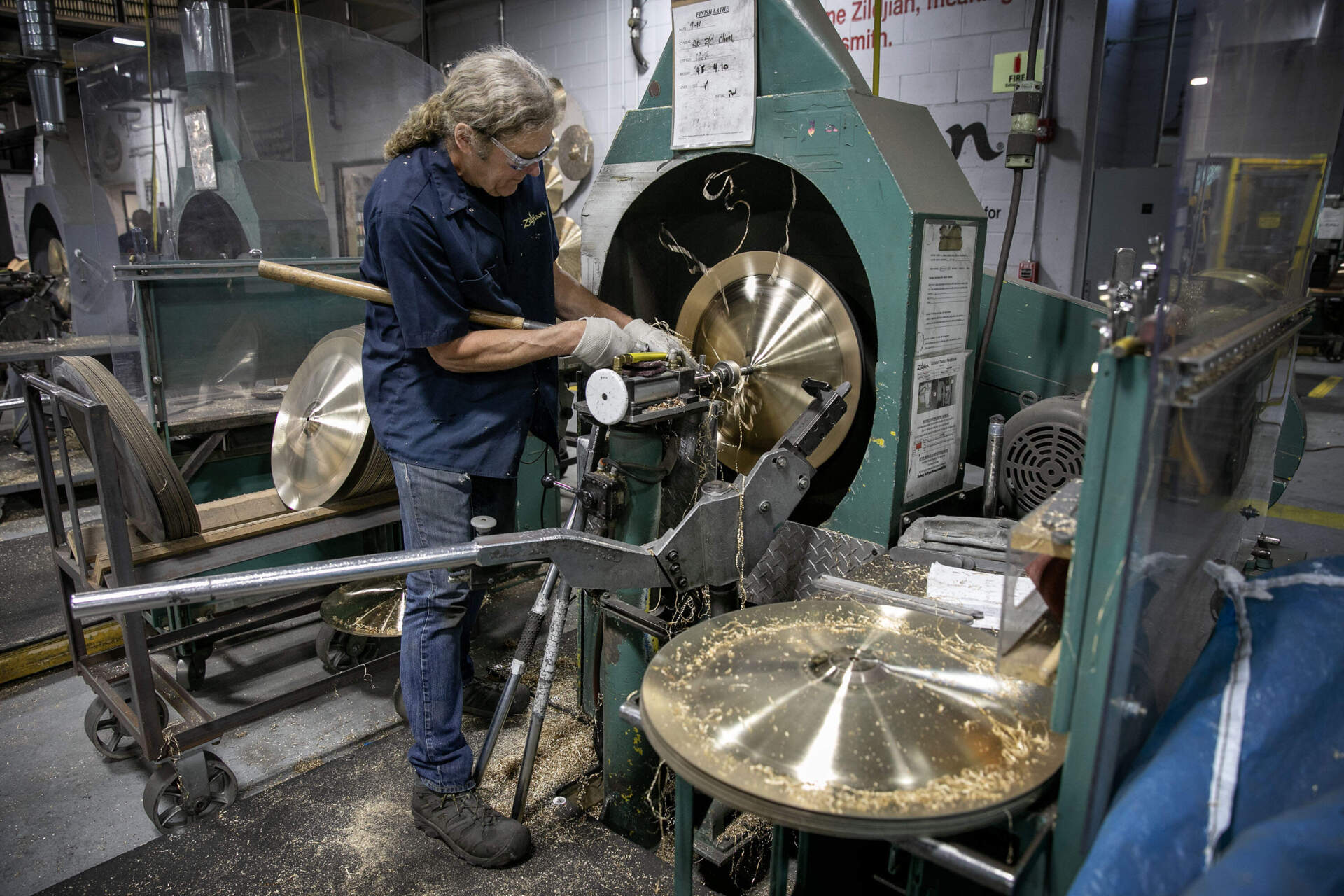
Photo: Robin Lubbock/WBUR. Cymbalsmith Peter Nelson works on a cymbal on a lathe at the Zildjian cymbal factory in Norwell, Massachusetts.
My brother has a book coming out about long-lived companies in the US. It’s not uncommon for businesses in Europe to keep reinventing themselves over centuries, but it is here. So that was one reason I was drawn to a report from WBUR radio about a cymbal maker in Massachusetts that has been turning out high-quality instruments for 400 years and counting. It’s called Avedis Zildjian Co.
Andrea Shea has the story: “From symphonies to rock music, marching bands and advertising jingles — we hear Zildjian cymbals everywhere. Drummers across the globe know that name because it’s emblazoned on every gleaming disc. What’s less known is the Zildjian family has been making their famous cymbals — with a secret process — for more than 400 years. Of course, not all of those years were in Massachusetts.
“Since the 1970s, the Avedis Zildjian Co. has operated under the radar in Norwell, Massachusetts. We jumped at the chance to get inside the world’s oldest cymbal manufacturer.
“Even in Massachusetts many people have no idea an industrial factory outside of Boston designs, casts, blasts, rolls, hammers, buffs and tests at least a million Zildjian cymbals each year.
“ ‘There’s a lot of mystique and a lot of history at this facility,’ said Joe Mitchell, the company’s director of operations, as we walked past loud, hulking machinery. He’s one of the few privy to a Zildjian process that’s been shrouded in mystery since the height of the Ottoman Empire. It begins in a room that’s off-limits to the public.
“ ‘Behind this door is where we have our foundry,’ Mitchell explained. “This is where we melt our metal and where we pour our castings.’ …
“He leaned over a bin filled with chunky, rough-hewn metal discs. Even in their nascent state, Mitchell said the castings possess the secret to Zildjian’s sound. He struck one lightly to release an enchanting, reverberant ring.
“The company’s proprietary alloy was alchemized 13 generations ago in Constantinople (now Istanbul) by Debbie Zildjian’s ancestor, Avedis I. He was trying to make gold, she said, but he ended up concocting a combination of copper and tin. ‘The mixing of those metals produced a very loud, resonant, beautiful sound,’ she said.
“Debbie explained that in 1618 the Ottoman sultan summoned Avedis to the Topkapi Palace to make cymbals for elite military bands. The metalsmith’s work pleased the ruler, who gave him permission to found his own business in 1623. The sultan also bestowed Avedis the family name ‘Zildjian,’ which actually means cymbal maker. …
“Zildjian became synonymous with cymbals after her grandfather Avedis III, an ethnic Armenian, emigrated to the U.S. in 1909. Two decades later he re-located the family’s cymbal business from Turkey to Quincy, Massachusetts, with his uncle.
“At the time jazz was exploding, so Avedis III travelled to New York City so he could develop new sounds with pioneers, including Gene Krupa. ‘Not only was he a fabulous drummer,’ Debbie said, ‘he was also very flamboyant in his style.’ This made Krupa an ideal ambassador for Zildjian.
“The company really took off with a little help from the Beatles’ 1964 appearance on the Ed Sullivan Show. ‘Everybody wanted to become a musician,’ Debbie said, ‘and it was in a matter of months that we were totally backordered because Ringo was a huge celebrity.’ …
“In 1973, Zildjian moved to a state-of-the-art factory in Norwell. Debbie said her father Armand, who was then running the company, loved music. …
“Armand, who started working in Zildjian’s melt room when he was 14, eventually brought Debbie and her sister Craigie inside to teach them the secret process. The family business had always been passed down to the eldest male, but Debbie and Craigie were their father’s heirs.
“ ‘For us, it was very natural on the inside, but the music industry had a hard time accepting women in the business,’ Debbie said. ‘The players were all men, manufacturing was done mostly by men, the salespeople were all men.’
“Craigie became CEO in 1999. Now she’s president and executive chair of the board of trustees. Debbie gravitated to manufacturing and oversees Zildjian’s proprietary alloy process taught to her by her father.
“Over the decades, drummers across all genres have embraced Zildjian cymbals – from Lars Ulrich of Metallica to Grammy Award-winning jazz drummer Terri Lyne Carrington.
” ‘I normally play about six cymbals plus hi-hats,’ she said, ‘They are the sound I’ve been playing my whole life because most jazz drummers play Zildjian cymbals.’
“Carrington founded and directs Berklee College of Music’s Institute of Jazz and Gender Justice in Boston. She’s also a Zildjian artist, which means she exclusively endorses and plays the company’s cymbals. Carrington said they’ve helped forge her musical identity since she was 10 years old. …
“Carrington’s drum kit is like a painter’s palette. The sound of each cymbal guides her to the next stroke.She’s visited the Zildjian factory many times and still marvels at what they do. ‘I don’t know the secret sauce,’ she said, ‘but to make a piece of metal sound so pretty — and become this beautiful instrument that’s a part of every kind of music that you hear — is pretty remarkable.’ ”
More at WBUR, here. Aren’t the kinds of work people get into for a career endlessly fascinating? Whokid ever imagines they will grow up to be a cymbal maker?
Photo: Paul Singer/GBH News. Ellie Paris-Miranda inside her new bookshop in downtown Brockton, Massachusetts.This shop aims to build social networks as well as sell books.
I am thinking of a friend in Manhattan, a writer who loves books. Currently in her 90s, she passed through a difficult year with her husband’s illness. After he died, she didn’t feel like doing anything. She stayed home. She turned down overtures from friends.
Then one day, she tells me, she decided to go outside and walk a few blocks on Broadway. She had heard that there was a new independent bookstore. When she walked in and felt the literary atmosphere there, she began to cry. “These are my people,” she said.
That’s just one example of what a bookstore can mean to someone.
Paul Singer reports at GBH radio about other kinds of meaning a new bookstore intends to provide: “On a chilly Sunday afternoon in Brockton, Mayor Robert Sullivan sat in a cozy corner of a new bookstore on Main Street and read a bilingual children’s book to a couple dozen patrons and staff.
“The mayor had arrived to celebrate the opening of the Dr. Ellie Paris Social Bookstore and Ice Cream Cafe, a new storefront shop intended to encourage literacy and social networking particularly among Brockton’s large immigrant population.
“The book he read, Tiagu and Vovo, is written in English and Cape Verdean Creole and tells the story of an immigrant family learning the new language.
“Ellie Paris-Miranda, the owner of the shop and an immigrant from Cape Verde herself, said having the mayor reading this book symbolizes why she wanted to open a bookstore.
“ ‘I really want to foster literacy, education, and upward economic mobility through giving communities access to not only books, but also a network,’ she said. …
“In her other job, Paris-Miranda is a tenure-track assistant professor of entrepreneurship at Wheaton College in Norton.
” ‘There’s this positive correlation between building successful business with the quality of the network, the relationships that you have that can be used as a financial resource,’ she said. ‘Especially for low income people, starting businesses and women who often don’t have all the resources needed.’
“The shop is just a few blocks from city hall and the courthouse, so she hopes her neighborhood customers will rub elbows and get to know city leaders over a sandwich or an ice cream cone.
“True to her own roots, Paris-Miranda’s shop shelves prominently feature books about financial planning and business strategy, as well as books in a variety of languages. She also refers to her customers as clients. …
“ ‘My “clients” are like long-term relationships I am building,’ she said.
“Eventually, Paris-Miranda said, she plans to teach English classes at the shop, as well as other programming on entrepreneurship and personal finance.
“The new bookstore is riding a wave of new interest in local bookshops, said Beth Ineson, executive director of the New England Independent Booksellers Association.
“ ‘We’ve had such a boom in eastern New England since basically 2020 for bookstores opening,’ Ineson said. … ‘We’ve had as many new stores join my organization in the past four years as the previous ten combined.’ …
“Part of the reason for this boom, Ineson said, is that the pandemic left many storefronts vacant, making commercial real estate more affordable. But another part of it is the need for community.
“ ‘It is really on everybody’s mind now how these stores can become places for community and for intellectual engagement,’ she said. …
“In Brockton, the Ellie Paris Social Bookstore replaces an empty storefront with the sound of chatter and a smoothie blender.
“Matt Stanton, a lifelong Brockton resident and member of the city’s Beautification Committee, said he hopes the new bookstore can be an engine for downtown revitalization.
“ ‘To me, this could be a catalyst to just, you know, really bring the downtown back,’ he said. ‘There’s a couple shops right up the street. If somebody comes in here, they walk up to the store in the next block. And it’s just great.’ ”
Photo: David L. Ryan/Globe Staff. Maya Lin’s landscape artwork in Kendall Square in Cambridge. It’s an “undulating wave field” in front of the Volpe Transportation building on Binney Street.
For most of us, sculptor Mia Lin first came to our attention when she was chosen to create the Vietnam war memorial in Washington, DC. The solemn listing of the names of the dead on black granite was a brilliant idea, endlessly moving.
Until now Lin had never created landscape art in Massachusetts, so people were surprised to learn that in fact she had had an impressive earthwork in busy Cambridge since 2023.
Scott Kirsner writes at the Boston Globe, “What if someone spent $1.3 million on a work of art, installed it in one of the busiest parts of Cambridge, and forgot to tell anyone?
“That’s effectively what happened with a piece called ‘The Sound We Travel At,’ by the New York City artist Maya Lin. She is best known for works like the Vietnam Veterans Memorial in Washington, D.C., and the Civil Rights Memorial in Montgomery, Ala. …
“But she also makes works of landscape art … and that’s what was created in Kendall in 2023. You can find it on Binney Street as you head toward Boston, to the left of a new 13-story building that houses the Volpe National Transportation Systems Center, a research center run by the US Department of Transportation. Sandwiched between a row of trees and lampposts is a series of 11 grass-covered, wave-like mounds of earth.
“Apropos of the Volpe Center’s work … the artwork outside is a physical representation of the Doppler effect. You know: the phenomenon of a sound, like a train’s horn, changing in pitch as it races past you. Some of the rippling mounds in Lin’s work represent sound waves that are approaching the viewer, and some of them represent sound waves that are receding from the viewer. Visitors are invited to walk atop, or even sit on, the work.
“There’s so much construction work in Kendall Square right now that I only noticed the artwork in November 2023, when I was visiting the Volpe Center to write a piece. … A year later, I noticed that there’s still no sign, and it doesn’t appear on the website of either the Volpe Center or the Maya Lin Studio. I couldn’t find a single museum curator or former curator in town who knew about it. …
“The artwork is part of a 14-acre site that MIT’s real estate management arm acquired from the federal government in 2017, and is redeveloping to include housing, retail, office space, parks, and a new community center. Part of that deal involved MIT building a newer home for the Volpe Center, and any time a new federal building goes up, half of one percent of the building’s cost goes to art. (That’s even true when MIT is footing the construction bill, as it was in this case.)
“Paul Ha, the director of MIT’s List Visual Arts Center, helped make the connection to Lin for the project. He was one of the few people in the local art world I could find that was aware of its existence. Ha had worked with Lin on a major exhibit when he was running the Contemporary Art Museum in St. Louis. …
“Aprile Gallant of the Smith College Museum of Art says, ‘I do believe this is Lin’s first landscape piece in Massachusetts, so it is a milestone.’ That museum hosted a major exhibit of Lin’s works in 2022, when a library that she’d designed opened on campus. …
“Did ‘The Sound We Travel At’ fall through the cracks, in a neighborhood peppered with cranes and construction fencing, and tech and biotech workers who go from garages to offices perhaps two or three days a week?
“ ‘We felt that way,’ says James Ewart, manager of the Maya Lin Studio.
“But according to the government’s General Services Administration, by the time spring rolls around, a sign will finally be installed next to the artwork.”
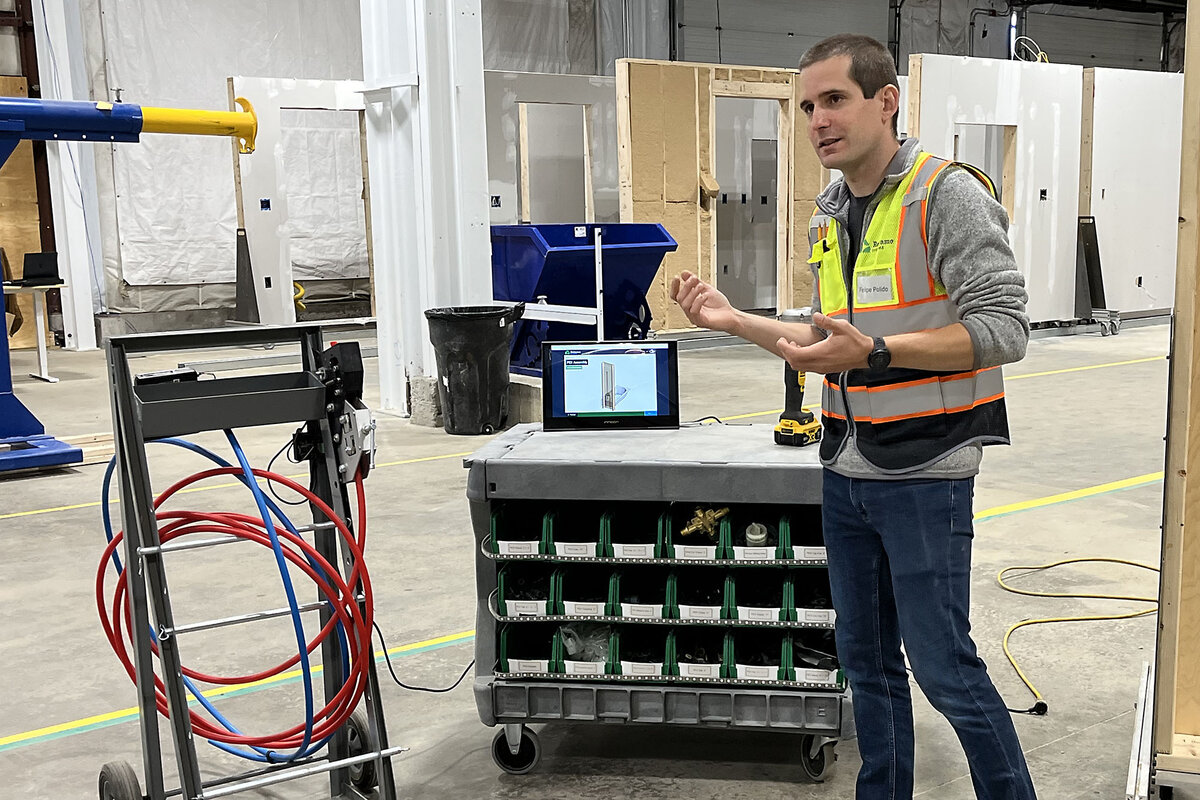
Photo: Jacob Posner/Christian Science Monitor. Felipe Polido, co-founder and head of technology at Reframe Systems, explains how the company uses robots and simplified processes in construction.
Innovations of the kind we continue to need in areas such as medicine, housing, and carbon reduction will probably rely more on entrepreneurs and businesses than on government for years to come.
I won’t be the one to begrudge any visionary a reasonable profit. In fact, the only thing that worries me about today’s story is the reduced need for human workers. See what you think.
Jacob Posner writes at the Christian Science Monitor about one company aiming to do so by benefiting others.
“A growing number of startups are trying to reinvent the U.S. homebuilding industry, with big goals of making it both more efficient and more climate-friendly. It is a disruption that many say is past due. The construction industry is not only struggling to meet housing needs but also is one of the country’s largest emitters of greenhouse gases. …
“Massachusetts-based Reframe Systems is among the new companies hoping to change one of the nation’s largest industries. Reframe is developing a ‘next generation’ modular construction method to build high-efficiency housing. Employees follow instructions on iPads to install plumbing and electrical components into robot-made walls, then transport these modules to construction sites, where they are stacked into multifloor units.
“But the challenges are myriad. Despite a huge influx of investor funding, the share of housing stock built through high-tech modular construction remains small. …
“[Recently a crowd] gathered to see a robot build a house. In a concrete-and-steel factory in Andover, Massachusetts, yellow-vested consultants, sustainable builders, and possible investors strain to see past a clear fence. Behind the barrier, a giant blue arm jutting from the floor comes to life.
“Its sensor-covered hand analyzes a pile of wood before emitting a loud hiss, then carefully suctions a two-by-four. Rotating at the shoulder and extending its elbow, the robot methodically delivers the plank to a partially completed wall.
“On the other side of the factory – about the size of a hangar for small planes – a few human workers are on their lunch break. They are employees of a three-year-old company called Reframe Systems, which is one of a growing number of startups across the United States scrambling to reinvent the homebuilding industry. …
“More than 100 startups have entered the industry in the past two decades, according to estimates by Tyler Pullen, a senior technical adviser at the Terner Center for Housing Innovation at the University of California Berkeley. He says there are likely more than 200 construction innovation companies currently doing business in the U.S.
“Like many of these, Reframe is focused on a new form of modular construction to upend one of the county’s largest industries. The company aims to create affordable, net-zero houses, which generate the same or more energy than they consume. Reframe CEO Vikas Enti says he can deliver a hefty return to investors – all while making a significant dent in the housing and climate crises. The next step, he says, is to build a factory that can produce 500 apartment units per year using lessons learned from his small, pilot factory in Andover. Then, he hopes to build a network of facilities across the country, varying their sizes to meet the demands and needs of their region. …
“So far, Reframe has completed one two-bedroom house. …
“The current model for modular construction – using assembly-line technologies to build homes – has its origin in the period after World War II. … But federal support for the movement dwindled, and in recent years, modular construction companies have mostly focused on the luxury housing market and sustainability-focused buyers. …
“The need for companies like Reframe is clear, modular boosters say.
“Energy consumed by residential buildings is responsible for around 15% of all U.S. emissions. Fossil fuels warm most of the country’s roughly 145 million apartment units and houses, in addition to keeping their stoves running and heating water. …
“Reframe was founded by roboticists who used to work at Amazon. Following instructions on iPads, its human employees insert plumbing and electrical wiring into the robot-made walls, turn them into ‘modules,’ and bring them to construction sites, where they are stacked into multifloor, highly energy-efficient homes. Because the iPad instructions are akin to a Lego or Ikea manual, Reframe can employ fewer high-cost, high-skill laborers.
“Having most of the needed professionals – electricians, plumbers, architects, engineers – under the same roof solves a problem of communication Mr. Pullen sees as endemic to the traditional construction industry. Every different professional involved must work together, but they are all ‘masters of their own kingdom,’ he says.
“While not all companies offer net-zero buildings like Reframe, Mr. Pullen says building in a factory setting lends itself to tighter structures that hold their temperature better. Plus, factory construction results in less waste. Companies know what they need to order for hundreds of projects at once; in traditional building, ad hoc orders require far more trucks and often leave behind excess material like piping and drywall.”
Photo: Charles Krupa/AP. Workers harvest cranberries at the Rocky Meadow bog in Middleborough, Massachusetts, ahead of Thanksgiving.
Recently, I read about a federal program paying “farmers to convert the land of bogs that is not efficient for growing” into wetlands that can alleviate climate change consequences. Whether or not the federal program will continue, Massachusetts is on the case, helping its own farmers with restoration.
Gloria Oladipo wrote at the Guardian last November, “As millions of cranberries were being harvested for Thursday’s US Thanksgiving holiday, Massachusetts farmers were working to convert defunct cranberry bogs back to wild wetlands, amid climate crisis woes. Several restoration projects were awarded $6m in grants to carry out such initiatives, state officials announced this week.
“The grants, provided by the New England state’s department of fish and game division of ecological restoration (DER), will ‘increase resilience to climate change for people and nature, restore crucial wildlife habitat, and improve water quality’ in 12 communities, said the Massachusetts governor, Maura Healey, in a statement. …
“ ‘These initiatives will enhance our ability to store and sequester carbon with nature and help us meet our net zero goals,’ said Rebecca Tepper, secretary of the state’s office of energy and environmental affairs. …
“The grants are being awarded through two state programs: the DER’s wetland restoration program and the DER’s cranberry bog restoration program, which converts defunct cranberry bogs into wetlands and streams.
“To date, scientists and government officials have converted 400 acres of retired cranberry bogs into wetlands, the Washington Postreported. State officials have said they hope to restore an additional 1,000 acres of bogs within the next decade. …
“As sea levels rise in Massachusetts because of the climate crisis caused by humans burning fossil fuels, scientists are looking to develop bogs into wetlands to improve coastal resilience and slow down erosion.
“Wetlands can hold more water and filter out pollutants amid increased storms that bring potential flooding. They also have other environmental benefits, acting as wildlife habitats and storing carbon dioxide from the atmosphere in their soil.
“More farmers have been drawn to the prospect of transitioning their former cranberry bogs into wetlands. The climate crisis and economic factors, including the high cost of modernizing bogs, can make cranberry farming more difficult. …
“ ‘We are in an upward trend in terms of interest in retiring cranberry bogs,’ said Brian Wick, executive director of the Cape Cod Cranberry Growers Association, to the Post. … But getting land for restoration remains a competitive process, as other businesses – such as housing developers – vie for undeveloped coastal land.
“ ‘This opportunity won’t be here in 25 years,’ said Christopher Neill, a senior scientist at the Woodwell Climate Research Center and an expert in restored bogs, to the Post. ‘These growers are not going to hang on, they’re going to make decisions and the land won’t be available forever.’
“While conservation projects have steadily increased in southeastern Massachusetts, restoration initiatives are still relatively new. The majority of finished projects are only a few years old, with 14 restoration initiatives still being designed and implemented, the Post reported.”
In addition to benefits like carbon storage and habitat for wildlife, converted cranberry bogs can be lovely for walkers.
More at the Guardian, here. Nice photos. No firewall.
Photo: Estaban Bustillos/GBH News. A rider mounts a bull at New England Rodeo in Norton, Massachusetts, in September.
I have seen rodeos in Madison Square Garden and in Buffalo, Minnesota, and in the Southwest. But I never expected to hear there were rodeos in Massachusetts. I should have given a little more thought to the welcome variety of national cultures that have taken root here.
Esteban Bustillos reports at GBH News, “Drivers who pull onto the small road leading them to the New England Rodeo in Norton might well feel like they’ve arrived on a different planet.
“Located about an hour from Boston, the parking lot is a sea of cowboy hats, boots and pickup trucks. And as Kelly Pina, who helps with the behind-the-scenes paperwork for the rodeo, jokes, it’s New England’s best-kept secret. …
“The event is the only weekly event in the commonwealth to feature bull riding and barrel racing, making it a lifeline for rodeo culture that’s far from home. That’s especially important for Brazilians, who make up the vast majority of the bull riders at the rodeo. It makes for a swirl of English and Portuguese, Americans and Brazilians all coming together for a sport and lifestyle they love.
“Jullia Oliveira manages the rodeo’s bull riding — and she also speaks fluent Portuguese, a crucial skill given the high number of Brazilian bull riders in the sport. …
“Since Massachusetts has one of the largest Brazilian communities in the country, Norton’s rodeo is a natural hub. The owner, Elias DaSilva, hails from Brazil, too.
“ ‘It’s nice to have a place where they can come and feel comfortable and feel welcomed,’ Oliveira said. ‘Especially since they’re coming from another country, usually without being able to speak English.’ …
“As welcoming as the rodeo may be, the back of a bull is no place for the timid. As soon as the gate to the pen opens, it’s man versus nature. And for a few electrifying seconds, the riders are locked in a mesmerizing dance that shakes the earth beneath them as supporters scream and holler.
“But gravity and thrashing bulls have a way of getting the cowboys to hit the ground. As terrifying as it looks, they all dust themselves off and hop back up. Some even do so with a smile.
“Wesley Goncalves, Oliveira’s uncle, has been riding bulls most of his life. He says bull riding and soccer are the big sports in his home country of Brazil, so having the rodeo in Norton has been very important to him. … Walter Oliveira, Jullia’s father, is a bull rider as well. And having a local rodeo has been a game changer.
“ ‘We used to travel like six hours, seven hours, eight or more, sometimes sixteen hours, to go for a ride,’ he said. ‘And to have the New England Rodeo here, for us is great. For me, it’s one hour from my house.’
“Today’s established New England Rodeo is a long way from its humble beginnings. Tim Lee, one of the rodeo’s announcers, used to be a bullfighter — the type that helps wrangle a bull after it’s thrown a rider, not the matador-with-a-cape kind.
“ ‘Sometimes rodeo can be like a dying breed, but we’re never gonna let it die,’ Lee said. “There’s just nothing like rodeo, man. You bring so many people together like that, how could you have a bad time?’
“For Pina, the rodeo is a personal affair. Along with helping to run it, she’s a professional barrel racer, zooming through the dirt of the arena and weaving through barrels on horseback. And her husband, Ed Pina, is the other half of the rodeo’s announcing duo. …
“ ‘You come here a few times, you’re family. You work with us, you’re blood, no matter what,’ he said. ‘It’s about building our family bigger and teaching the next generation how to do our sport and to make sure our sport keeps going.’ ”
Shout-out to Craig, the bull rider who ran manufacturing for my husband’s former company. Despite bones repeatedly broken, he truly loved the sport. And he provided enthusiastic support to the many little kids who got their start by riding rams!
It’s starting to feel like winter is around the corner, so I’ll just post a few photos from my New England autumn before the snow falls.
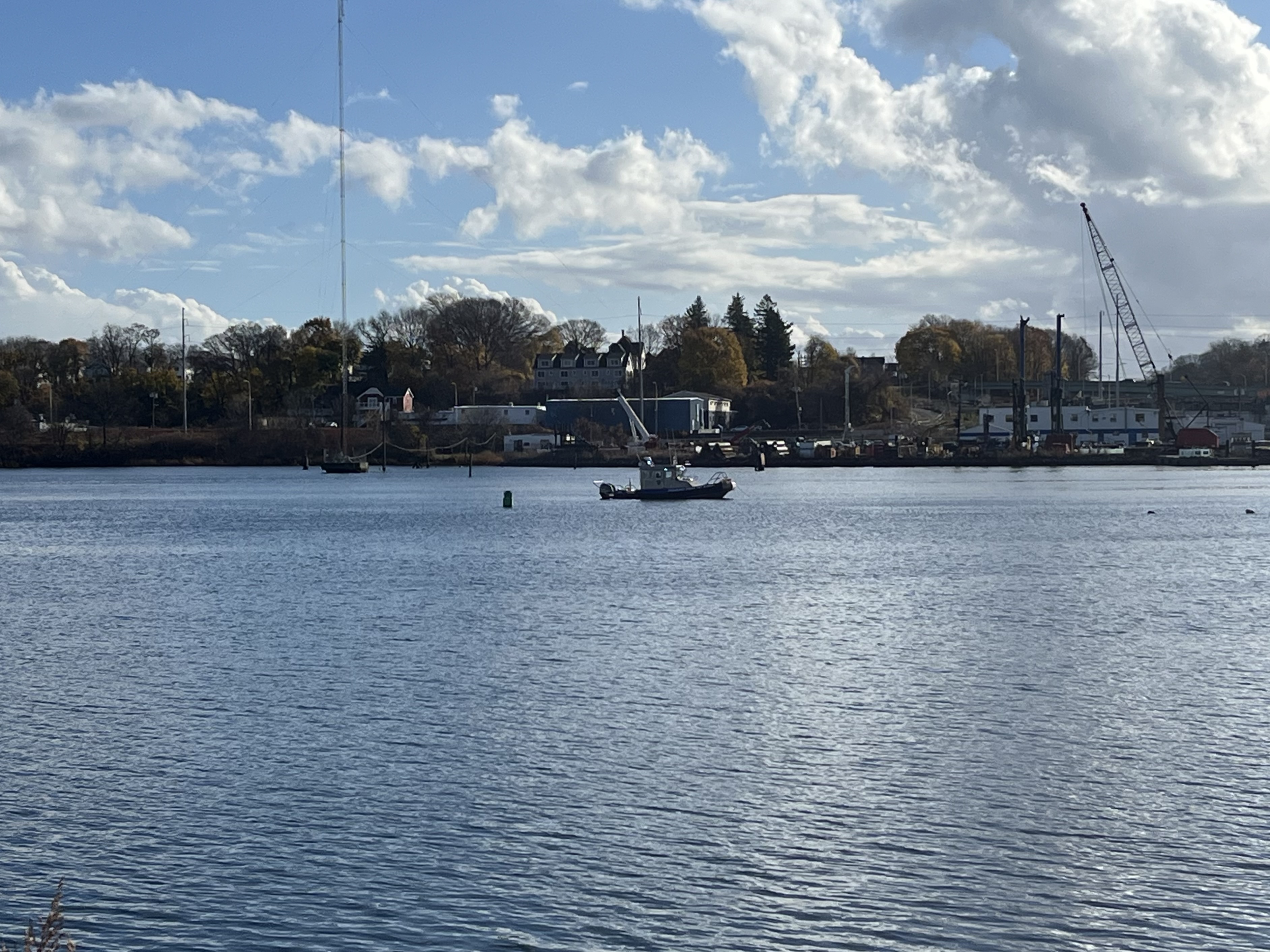
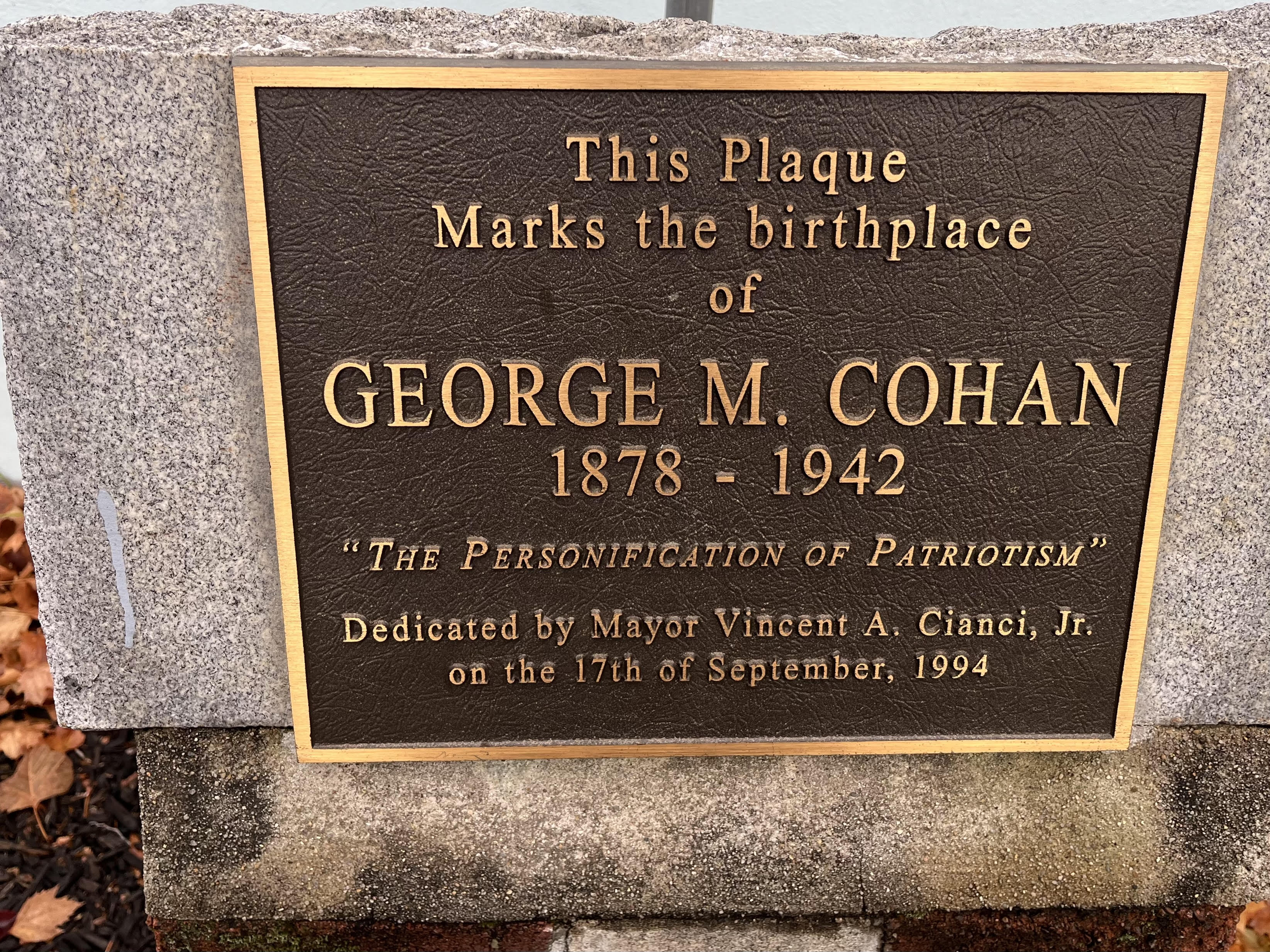
Below, clouds over the Seekonk River in Providence, Rhode Island, and chess-playing foxes in Fox Point. Also in Fox Point, the notorious Mayor Cianci’s plaque honoring both composer George M. Cohan — and Cianci himself.
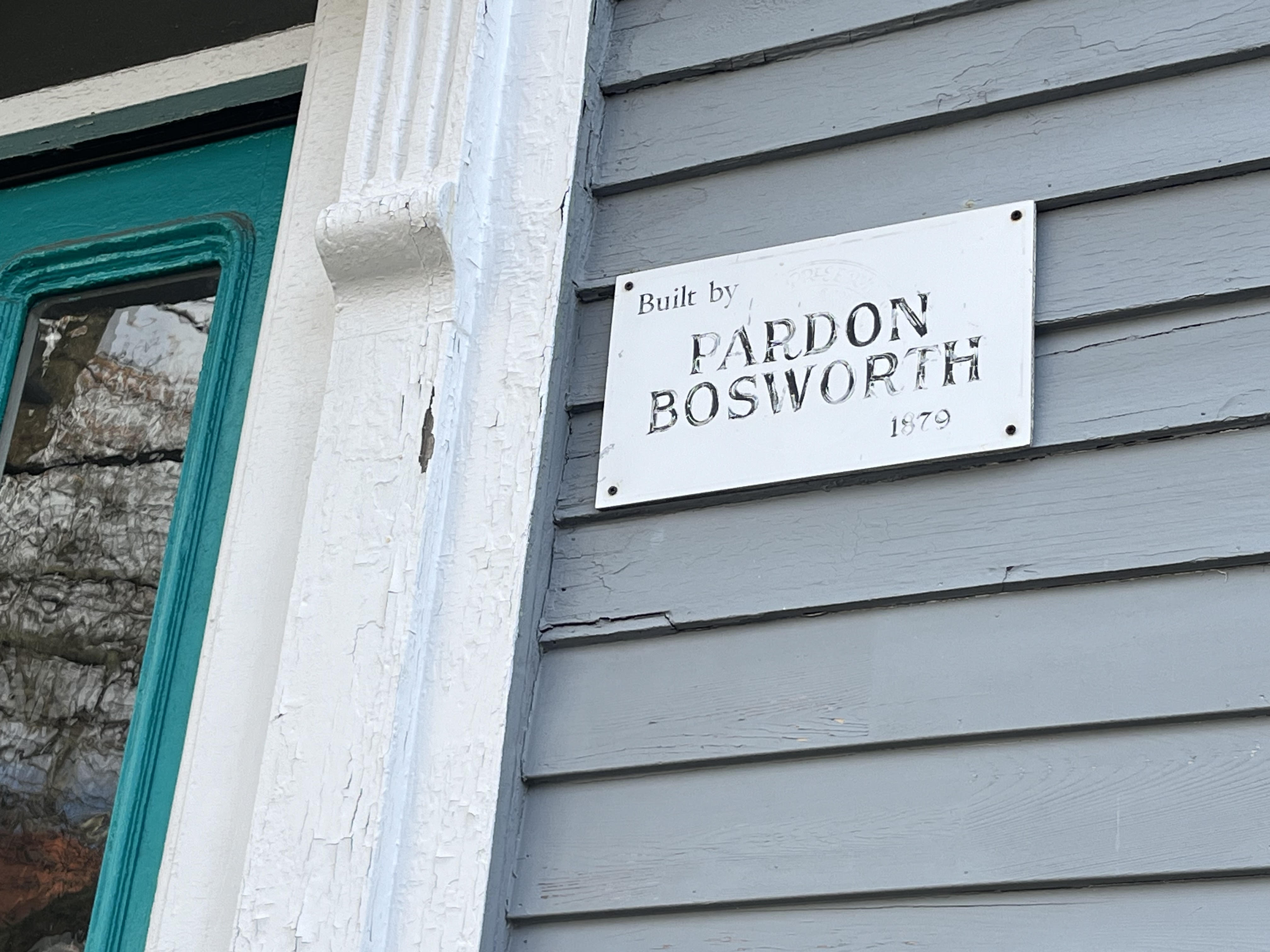
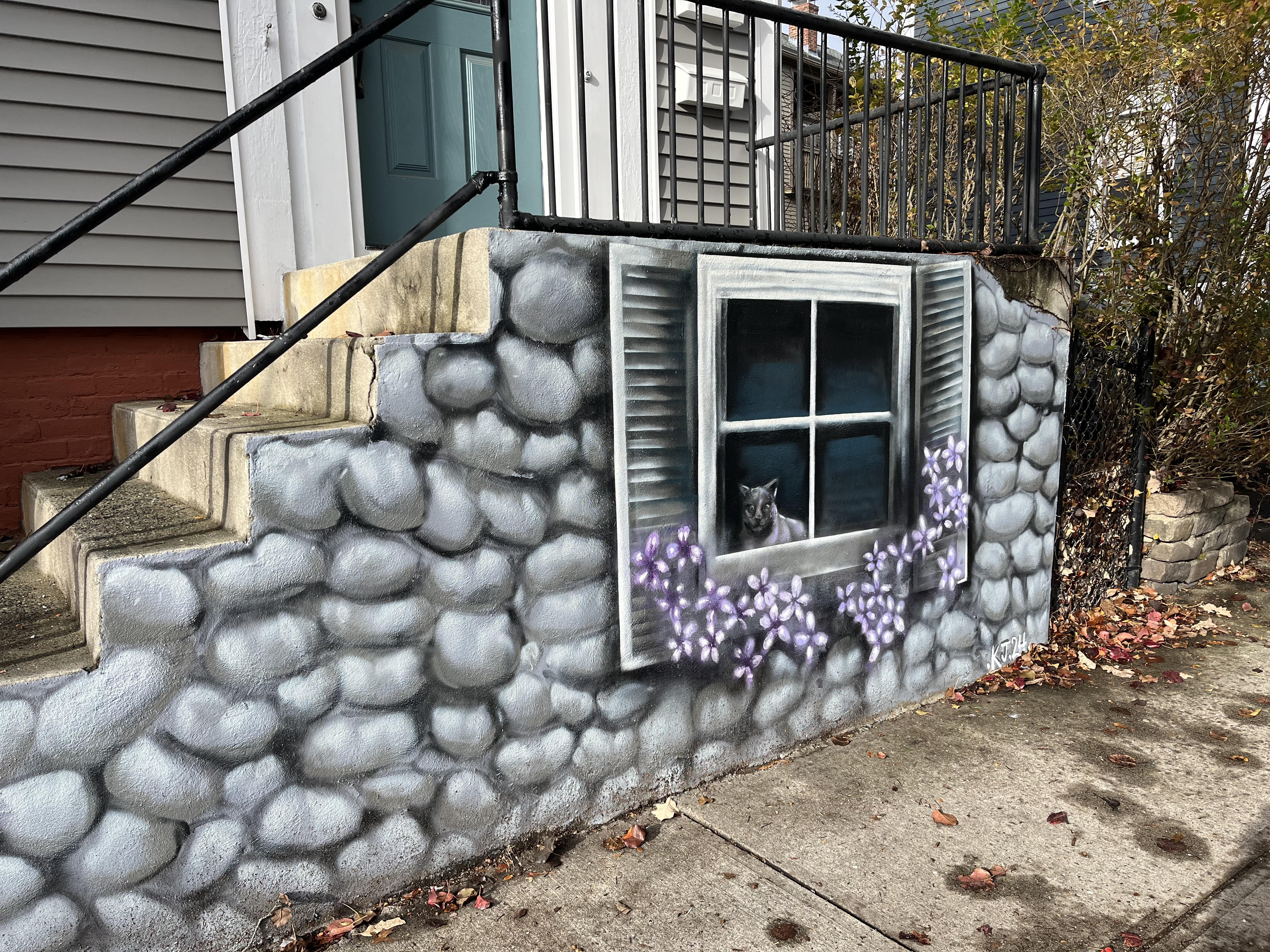
In the same neighborhood, I got a kick out of the name of a 19th century homeowner. And a jazzed-up staircase across the street.
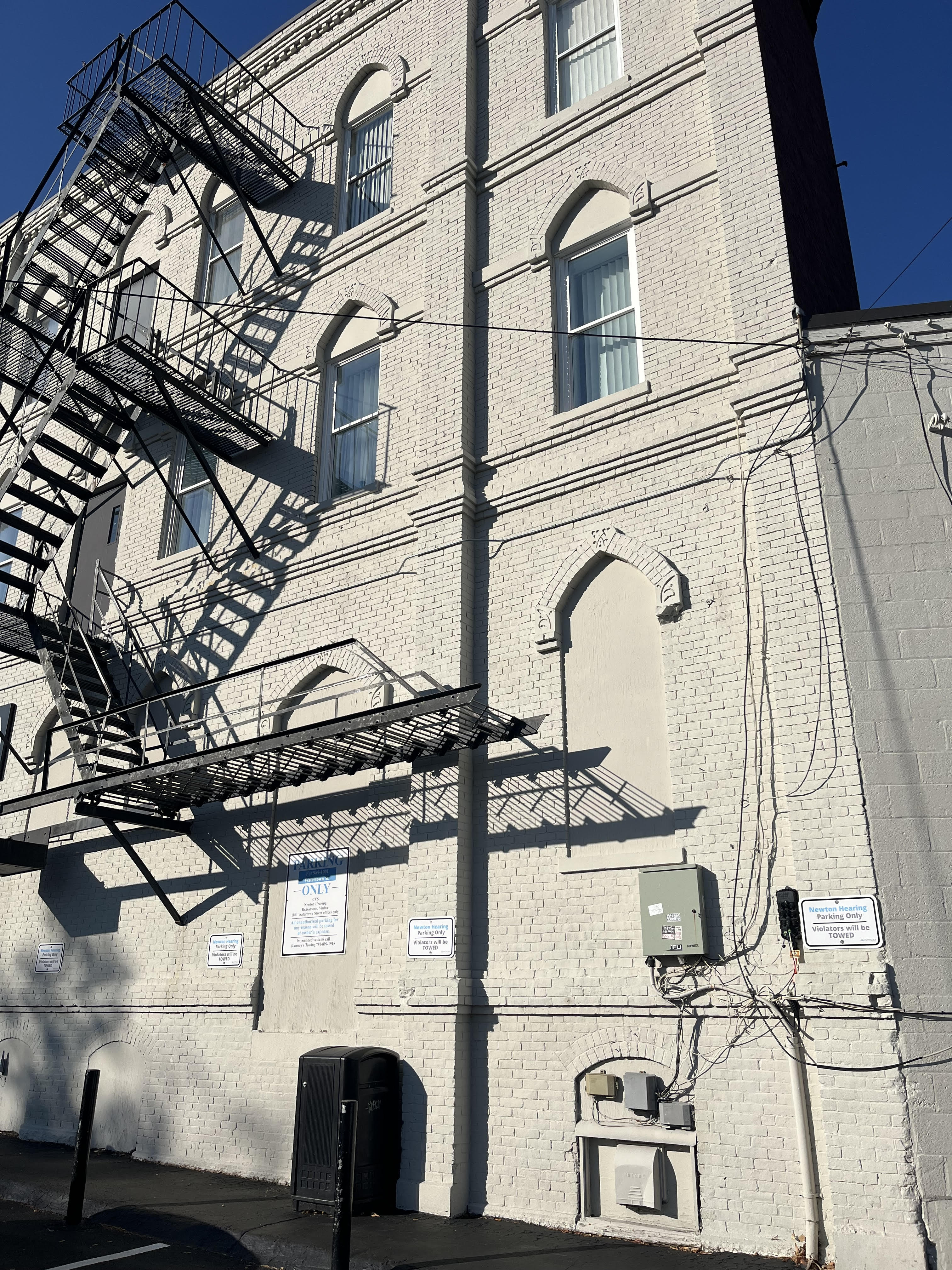
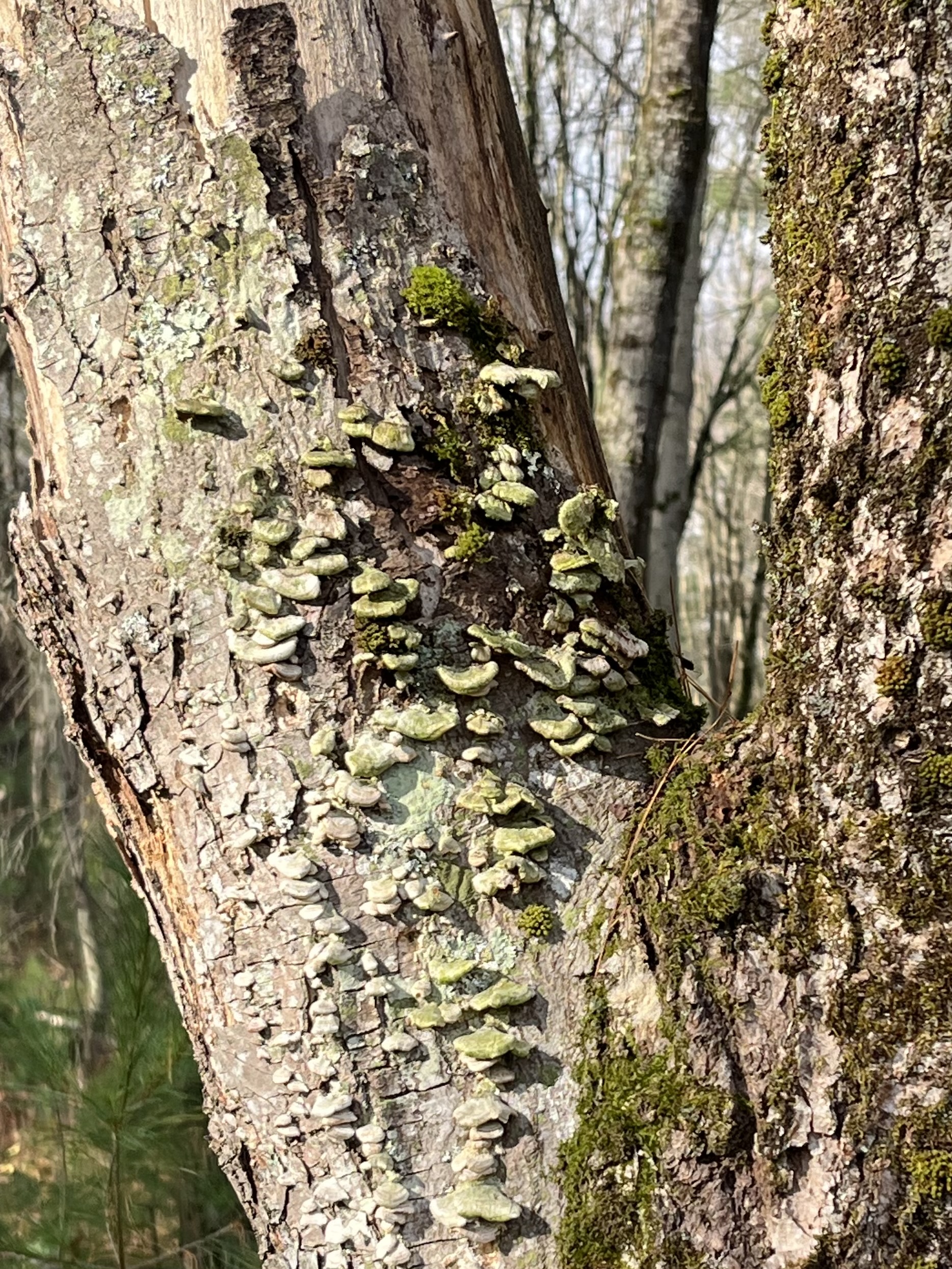
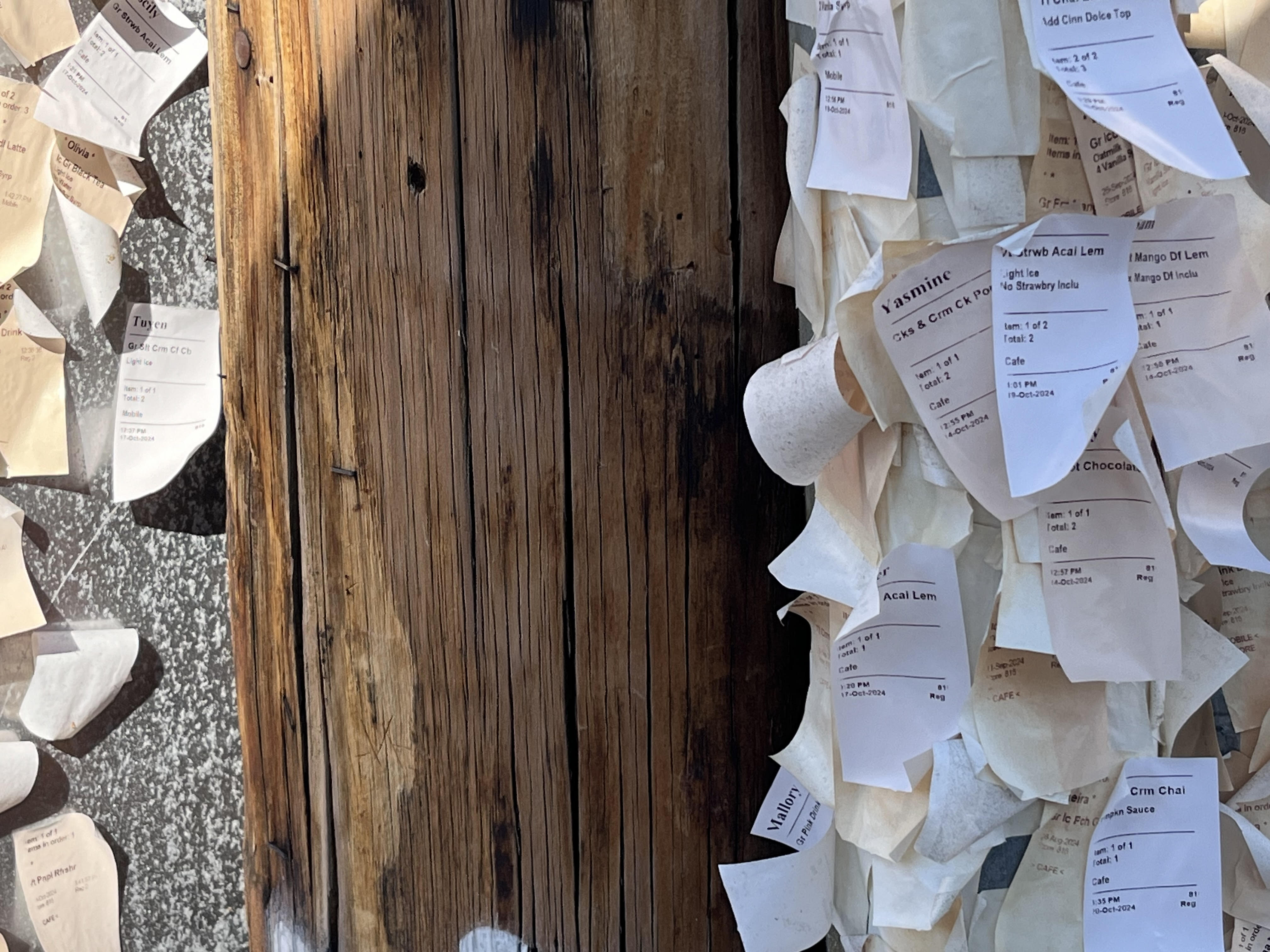
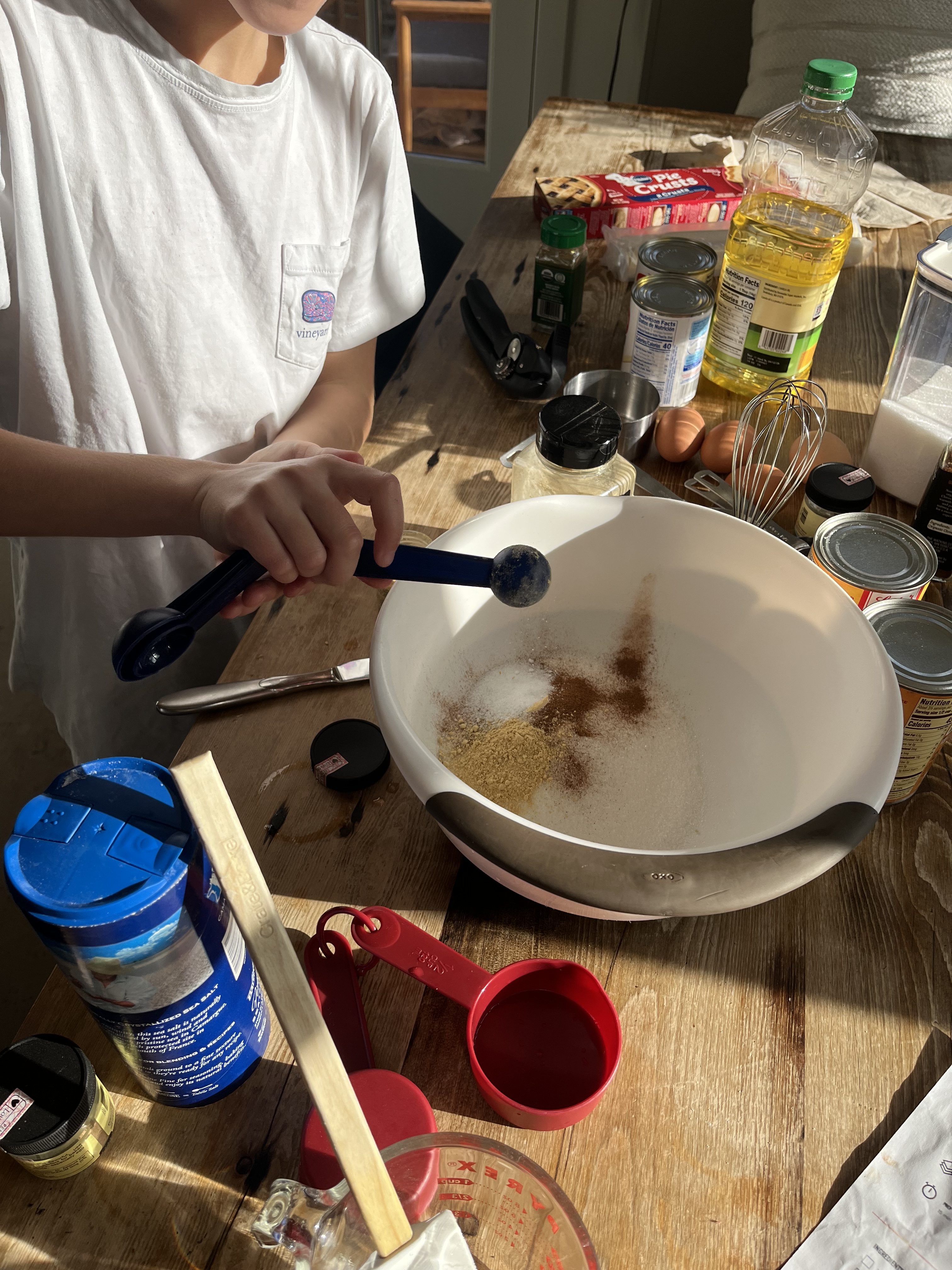
Back in Massachusetts, I found a nice shot of a different kind of staircase (jazzed up by light and shadow), then two fungus photos (one flower-like) and Starbucks receipts decorating a telephone pole. The pastry chef, age 11, has more baking experience than most adults.
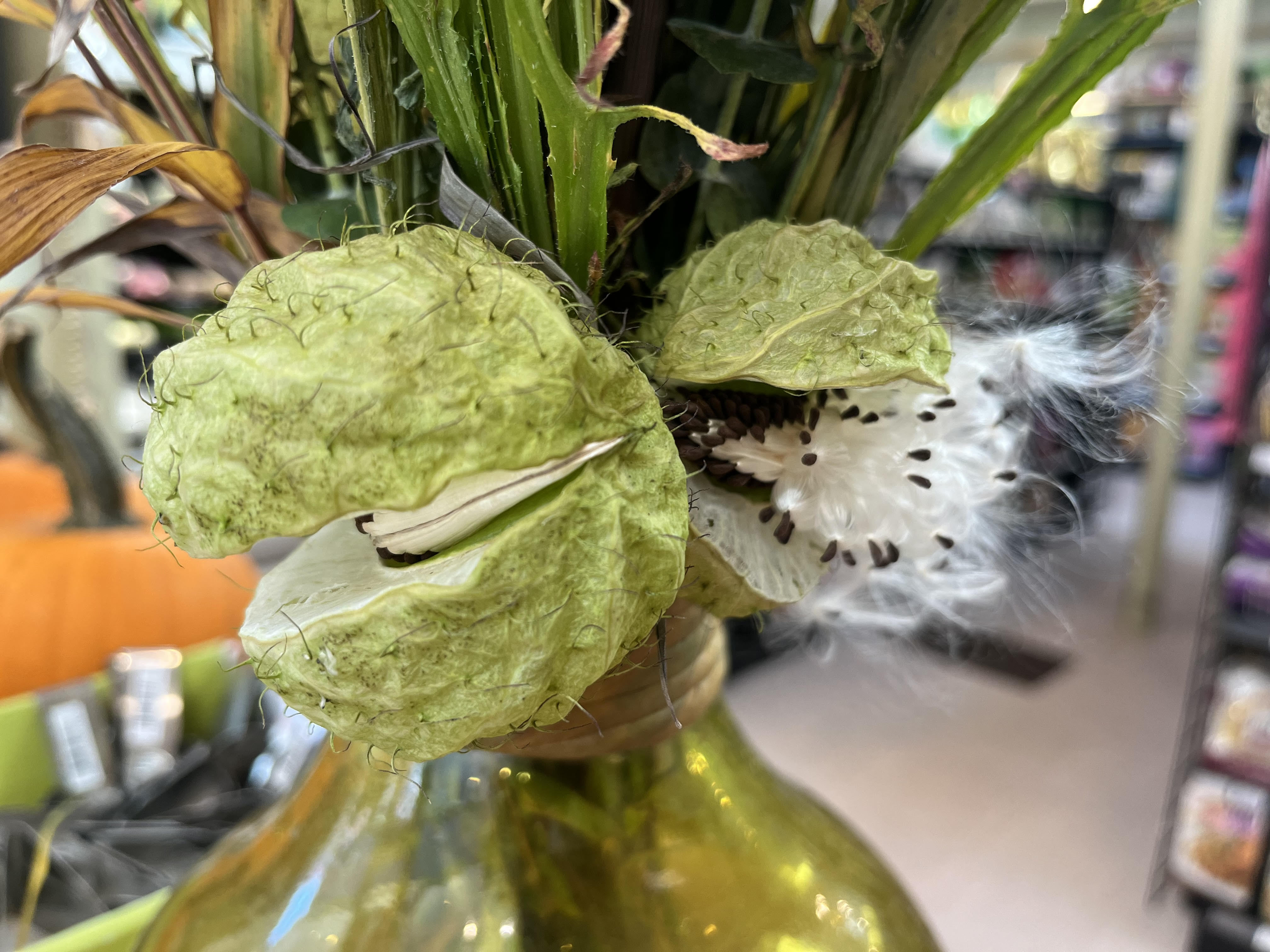
In the what-the-heck-is-it department, there’s a decorative plant at Debra’s Natural Gourmet that is not milkweed but looks sort of like it. Any ideas?
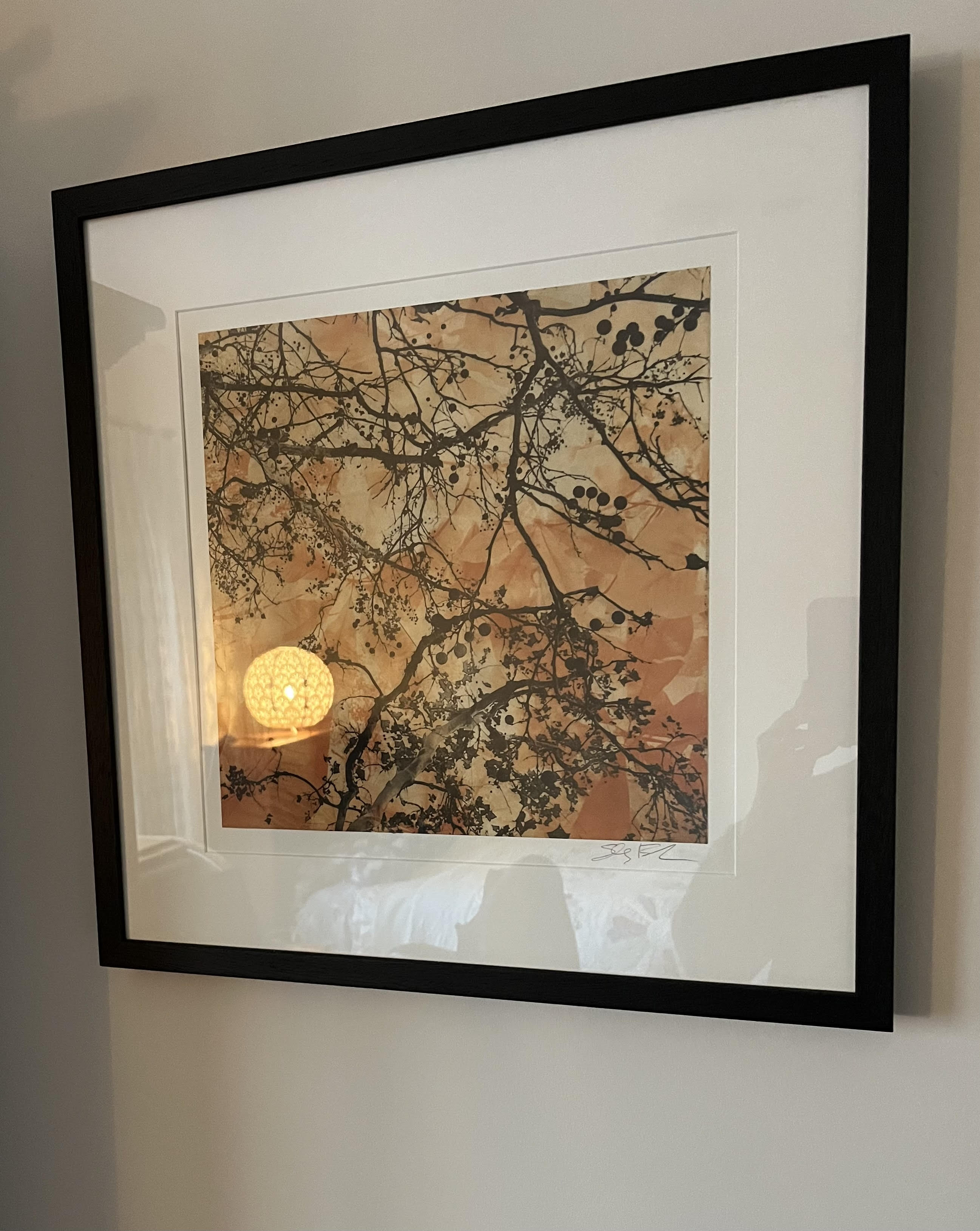
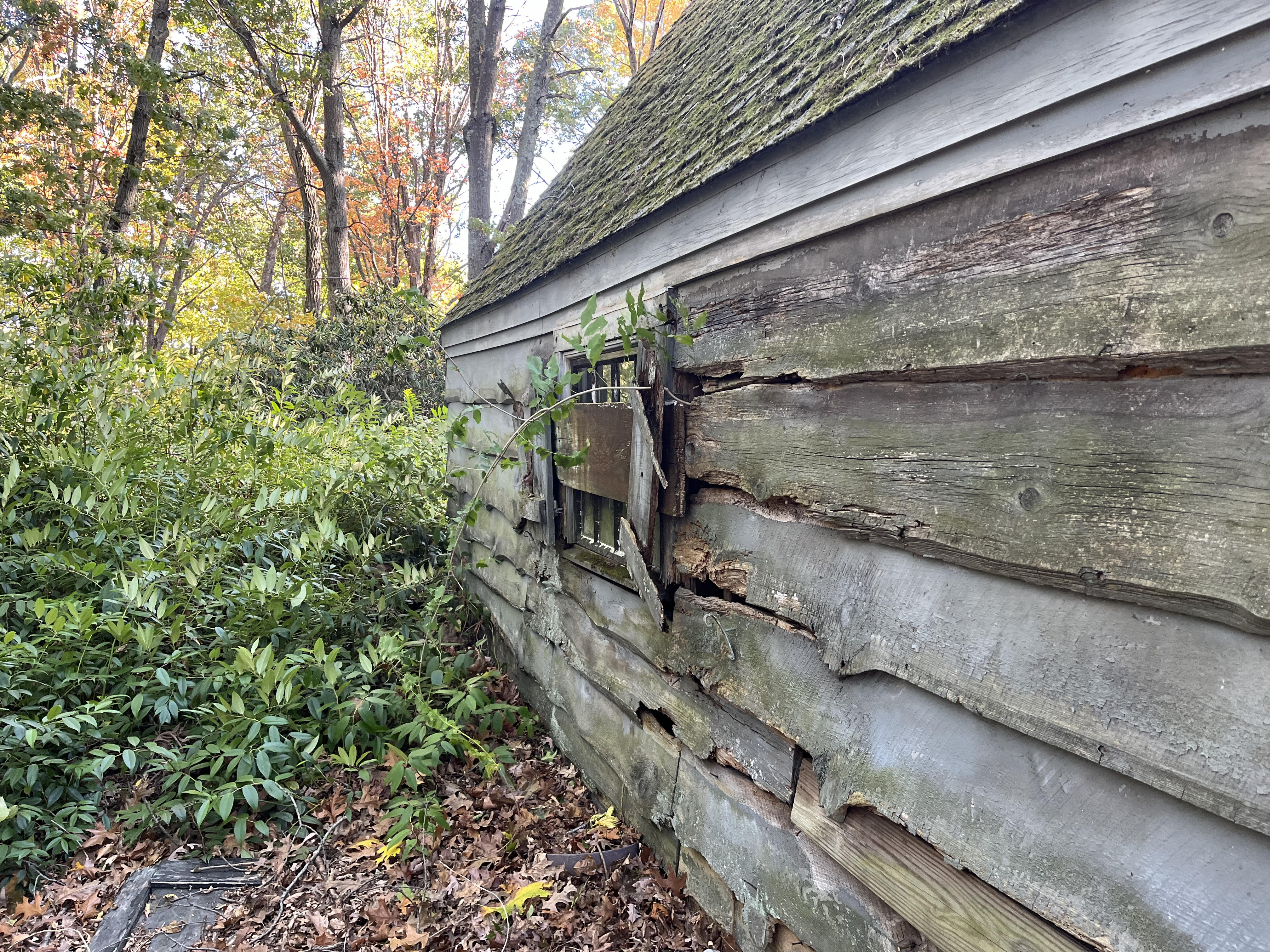
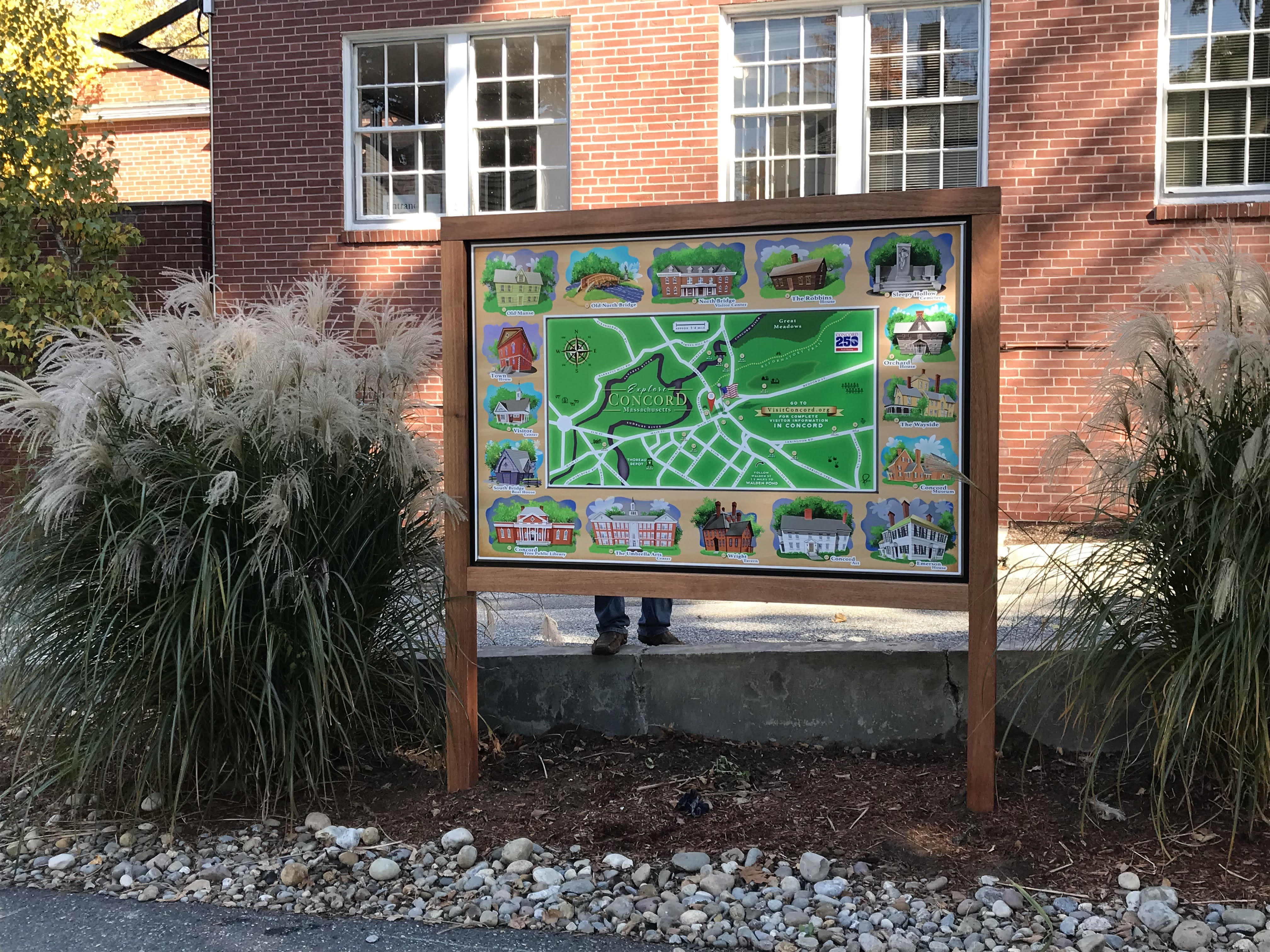
Next comes Sally Frank’s magnificent Black Sycamore print in a frame reflecting my table lamp. Then a derelict house waiting for the land developer’s bulldozer, and a special map for the town’s 250th anniversary in 2025. Did you know the Revolution started at the North Bridge? Not with the Declaration of Independence, as significant as that was.











 Suzanne's Mom's Blog