Feeds:
Posts
Comments

Posts Tagged ‘massachusetts’

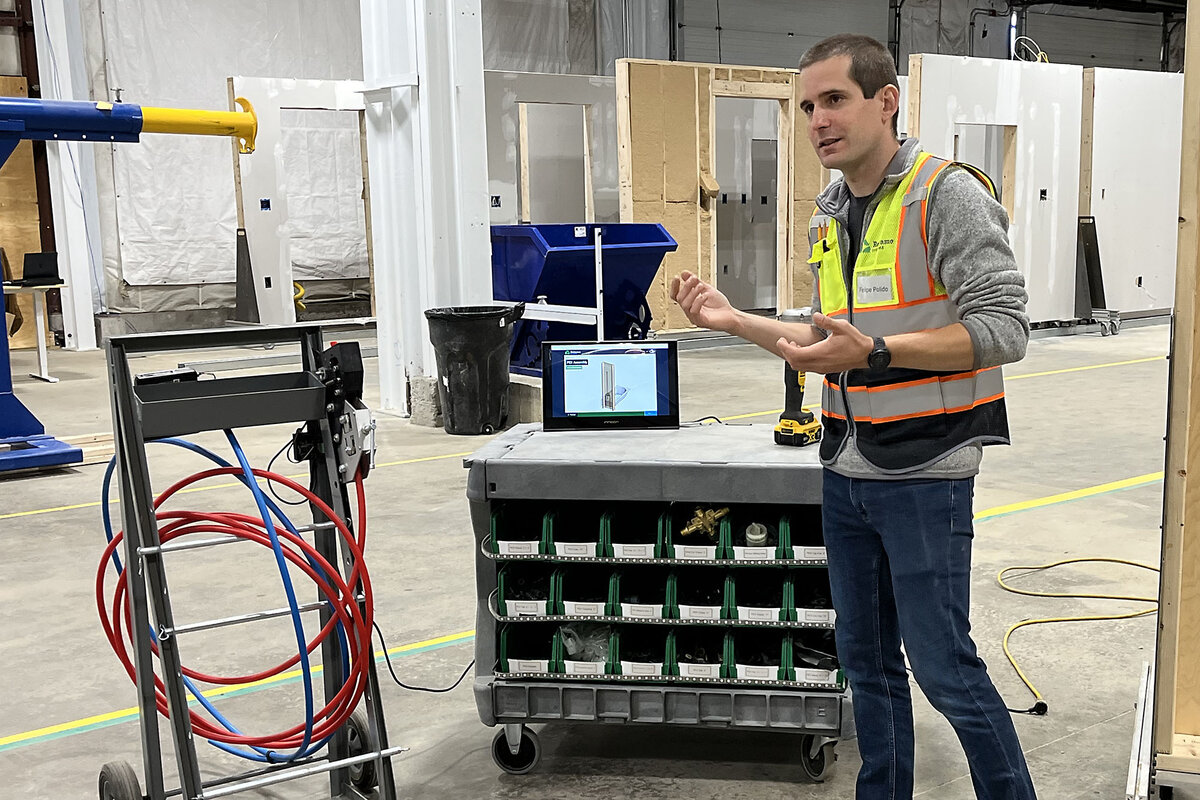
Photo: Jacob Posner/Christian Science Monitor.
Felipe Polido, co-founder and head of technology at Reframe Systems, explains how the company uses robots and simplified processes in construction.

Innovations of the kind we continue to need in areas such as medicine, housing, and carbon reduction will probably rely more on entrepreneurs and businesses than on government for years to come.

I won’t be the one to begrudge any visionary a reasonable profit. In fact, the only thing that worries me about today’s story is the reduced need for human workers. See what you think.

Jacob Posner writes at the Christian Science Monitor about one company aiming to do so by benefiting others.

“A growing number of startups are trying to reinvent the U.S. homebuilding industry, with big goals of making it both more efficient and more climate-friendly. It is a disruption that many say is past due. The construction industry is not only struggling to meet housing needs but also is one of the country’s largest emitters of greenhouse gases. …

“Massachusetts-based Reframe Systems is among the new companies hoping to change one of the nation’s largest industries. Reframe is developing a ‘next generation’ modular construction method to build high-efficiency housing. Employees follow instructions on iPads to install plumbing and electrical components into robot-made walls, then transport these modules to construction sites, where they are stacked into multifloor units.

“But the challenges are myriad. Despite a huge influx of investor funding, the share of housing stock built through high-tech modular construction remains small. …

“[Recently a crowd] gathered to see a robot build a house. In a concrete-and-steel factory in Andover, Massachusetts, yellow-vested consultants, sustainable builders, and possible investors strain to see past a clear fence. Behind the barrier, a giant blue arm jutting from the floor comes to life.

“Its sensor-covered hand analyzes a pile of wood before emitting a loud hiss, then carefully suctions a two-by-four. Rotating at the shoulder and extending its elbow, the robot methodically delivers the plank to a partially completed wall.

“On the other side of the factory – about the size of a hangar for small planes – a few human workers are on their lunch break. They are employees of a three-year-old company called Reframe Systems, which is one of a growing number of startups across the United States scrambling to reinvent the homebuilding industry. …

“More than 100 startups have entered the industry in the past two decades, according to estimates by Tyler Pullen, a senior technical adviser at the Terner Center for Housing Innovation at the University of California Berkeley. He says there are likely more than 200 construction innovation companies currently doing business in the U.S.

“Like many of these, Reframe is focused on a new form of modular construction to upend one of the county’s largest industries. The company aims to create affordable, net-zero houses, which generate the same or more energy than they consume. Reframe CEO Vikas Enti says he can deliver a hefty return to investors – all while making a significant dent in the housing and climate crises. The next step, he says, is to build a factory that can produce 500 apartment units per year using lessons learned from his small, pilot factory in Andover. Then, he hopes to build a network of facilities across the country, varying their sizes to meet the demands and needs of their region. …

“So far, Reframe has completed one two-bedroom house. …

“The current model for modular construction – using assembly-line technologies to build homes – has its origin in the period after World War II. … But federal support for the movement dwindled, and in recent years, modular construction companies have mostly focused on the luxury housing market and sustainability-focused buyers. …

“The need for companies like Reframe is clear, modular boosters say.

“Energy consumed by residential buildings is responsible for around 15% of all U.S. emissions. Fossil fuels warm most of the country’s roughly 145 million apartment units and houses, in addition to keeping their stoves running and heating water. …

“Reframe was founded by roboticists who used to work at Amazon. Following instructions on iPads, its human employees insert plumbing and electrical wiring into the robot-made walls, turn them into ‘modules,’ and bring them to construction sites, where they are stacked into multifloor, highly energy-efficient homes. Because the iPad instructions are akin to a Lego or Ikea manual, Reframe can employ fewer high-cost, high-skill laborers.

“Having most of the needed professionals – electricians, plumbers, architects, engineers – under the same roof solves a problem of communication Mr. Pullen sees as endemic to the traditional construction industry. Every different professional involved must work together, but they are all ‘masters of their own kingdom,’ he says.

“While not all companies offer net-zero buildings like Reframe, Mr. Pullen says building in a factory setting lends itself to tighter structures that hold their temperature better. Plus, factory construction results in less waste. Companies know what they need to order for hundreds of projects at once; in traditional building, ad hoc orders require far more trucks and often leave behind excess material like piping and drywall.”

More at the Monitor, here. No paywall.

Read Full Post »

Photo: Charles Krupa/AP.
Workers harvest cranberries at the Rocky Meadow bog in Middleborough, Massachusetts, ahead of Thanksgiving. 

Recently, I read about a federal program paying “farmers to convert the land of bogs that is not efficient for growing” into wetlands that can alleviate climate change consequences. Whether or not the federal program will continue, Massachusetts is on the case, helping its own farmers with restoration.

Gloria Oladipo wrote at the Guardian last November, “As millions of cranberries were being harvested for Thursday’s US Thanksgiving holiday, Massachusetts farmers were working to convert defunct cranberry bogs back to wild wetlands, amid climate crisis woes. Several restoration projects were awarded $6m in grants to carry out such initiatives, state officials announced this week.

“The grants, provided by the New England state’s department of fish and game division of ecological restoration (DER), will ‘increase resilience to climate change for people and nature, restore crucial wildlife habitat, and improve water quality’ in 12 communities, said the Massachusetts governor, Maura Healey, in a statement. …

“ ‘These initiatives will enhance our ability to store and sequester carbon with nature and help us meet our net zero goals,’ said Rebecca Tepper, secretary of the state’s office of energy and environmental affairs. …

“The grants are being awarded through two state programs: the DER’s wetland restoration program and the DER’s cranberry bog restoration program, which converts defunct cranberry bogs into wetlands and streams.

“To date, scientists and government officials have converted 400 acres of retired cranberry bogs into wetlands, the Washington Post reported. State officials have said they hope to restore an additional 1,000 acres of bogs within the next decade. …

“As sea levels rise in Massachusetts because of the climate crisis caused by humans burning fossil fuels, scientists are looking to develop bogs into wetlands to improve coastal resilience and slow down erosion.

“Wetlands can hold more water and filter out pollutants amid increased storms that bring potential flooding. They also have other environmental benefits, acting as wildlife habitats and storing carbon dioxide from the atmosphere in their soil.

“More farmers have been drawn to the prospect of transitioning their former cranberry bogs into wetlands. The climate crisis and economic factors, including the high cost of modernizing bogs, can make cranberry farming more difficult. …

“ ‘We are in an upward trend in terms of interest in retiring cranberry bogs,’ said Brian Wick, executive director of the Cape Cod Cranberry Growers Association, to the Post. … But getting land for restoration remains a competitive process, as other businesses – such as housing developers – vie for undeveloped coastal land.

“ ‘This opportunity won’t be here in 25 years,’ said Christopher Neill, a senior scientist at the Woodwell Climate Research Center and an expert in restored bogs, to the Post. ‘These growers are not going to hang on, they’re going to make decisions and the land won’t be available forever.’

“While conservation projects have steadily increased in southeastern Massachusetts, restoration initiatives are still relatively new. The majority of finished projects are only a few years old, with 14 restoration initiatives still being designed and implemented, the Post reported.”

In addition to benefits like carbon storage and habitat for wildlife, converted cranberry bogs can be lovely for walkers.

More at the Guardian, here. Nice photos. No firewall.
Read Full Post »

Photo: Estaban Bustillos/GBH News.
A rider mounts a bull at New England Rodeo in Norton, Massachusetts, in September.

I have seen rodeos in Madison Square Garden and in Buffalo, Minnesota, and in the Southwest. But I never expected to hear there were rodeos in Massachusetts. I should have given a little more thought to the welcome variety of national cultures that have taken root here.

Esteban Bustillos reports at GBH News, “Drivers who pull onto the small road leading them to the New England Rodeo in Norton might well feel like they’ve arrived on a different planet.

“Located about an hour from Boston, the parking lot is a sea of cowboy hats, boots and pickup trucks. And as Kelly Pina, who helps with the behind-the-scenes paperwork for the rodeo, jokes, it’s New England’s best-kept secret. …

“The event is the only weekly event in the commonwealth to feature bull riding and barrel racing, making it a lifeline for rodeo culture that’s far from home. That’s especially important for Brazilians, who make up the vast majority of the bull riders at the rodeo. It makes for a swirl of English and Portuguese, Americans and Brazilians all coming together for a sport and lifestyle they love.

“Jullia Oliveira manages the rodeo’s bull riding — and she also speaks fluent Portuguese, a crucial skill given the high number of Brazilian bull riders in the sport. …

“Since Massachusetts has one of the largest Brazilian communities in the country, Norton’s rodeo is a natural hub. The owner, Elias DaSilva, hails from Brazil, too.

“ ‘It’s nice to have a place where they can come and feel comfortable and feel welcomed,’ Oliveira said. ‘Especially since they’re coming from another country, usually without being able to speak English.’ …

“As welcoming as the rodeo may be, the back of a bull is no place for the timid. As soon as the gate to the pen opens, it’s man versus nature. And for a few electrifying seconds, the riders are locked in a mesmerizing dance that shakes the earth beneath them as supporters scream and holler.

“But gravity and thrashing bulls have a way of getting the cowboys to hit the ground. As terrifying as it looks, they all dust themselves off and hop back up. Some even do so with a smile.

“Wesley Goncalves, Oliveira’s uncle, has been riding bulls most of his life. He says bull riding and soccer are the big sports in his home country of Brazil, so having the rodeo in Norton has been very important to him. … Walter Oliveira, Jullia’s father, is a bull rider as well. And having a local rodeo has been a game changer.

“ ‘We used to travel like six hours, seven hours, eight or more, sometimes sixteen hours, to go for a ride,’ he said. ‘And to have the New England Rodeo here, for us is great. For me, it’s one hour from my house.’

“Today’s established New England Rodeo is a long way from its humble beginnings. Tim Lee, one of the rodeo’s announcers, used to be a bullfighter — the type that helps wrangle a bull after it’s thrown a rider, not the matador-with-a-cape kind.

“ ‘Sometimes rodeo can be like a dying breed, but we’re never gonna let it die,’ Lee said. “There’s just nothing like rodeo, man. You bring so many people together like that, how could you have a bad time?’

“For Pina, the rodeo is a personal affair. Along with helping to run it, she’s a professional barrel racer, zooming through the dirt of the arena and weaving through barrels on horseback. And her husband, Ed Pina, is the other half of the rodeo’s announcing duo. …

“ ‘You come here a few times, you’re family. You work with us, you’re blood, no matter what,’ he said. ‘It’s about building our family bigger and teaching the next generation how to do our sport and to make sure our sport keeps going.’ ”

Shout-out to Craig, the bull rider who ran manufacturing for my husband’s former company. Despite bones repeatedly broken, he truly loved the sport. And he provided enthusiastic support to the many little kids who got their start by riding rams!

More at GBH, here.

Read Full Post »

Photos: Suzanne and John’s Mom.

It’s starting to feel like winter is around the corner, so I’ll just post a few photos from my New England autumn before the snow falls.

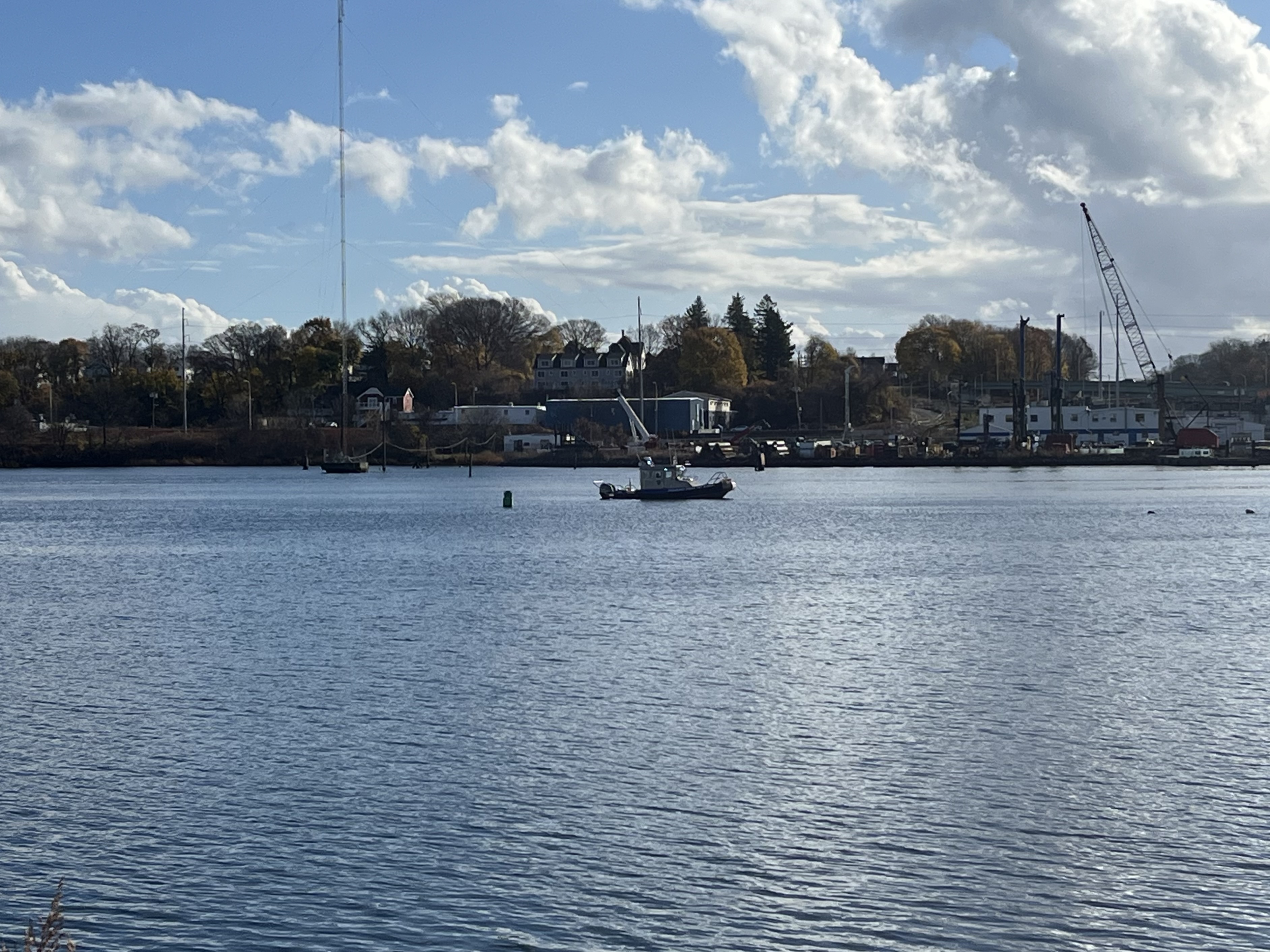
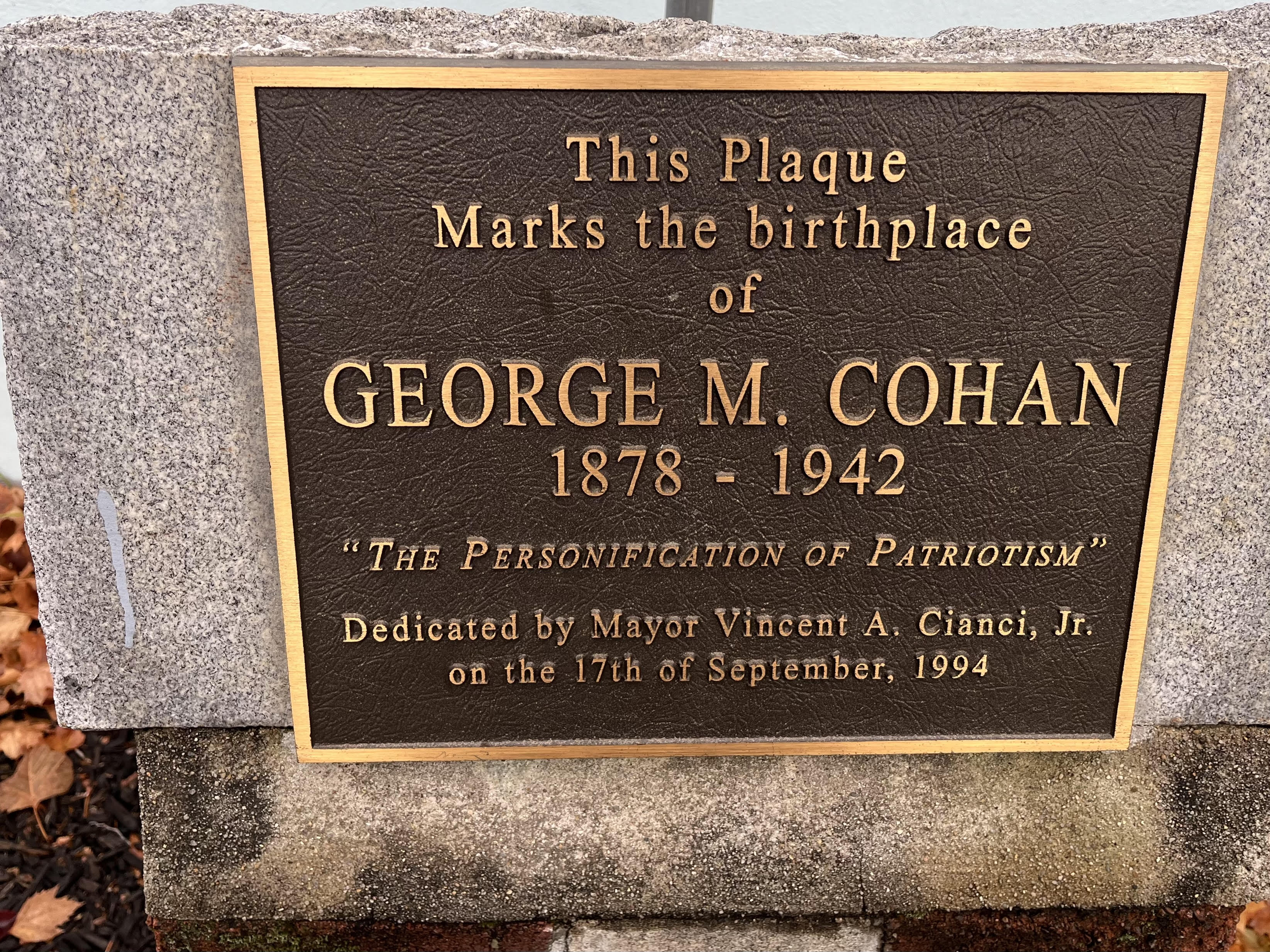
Below, clouds over the Seekonk River in Providence, Rhode Island, and chess-playing foxes in Fox Point. Also in Fox Point, the notorious Mayor Cianci’s plaque honoring both composer George M. Cohan — and Cianci himself.

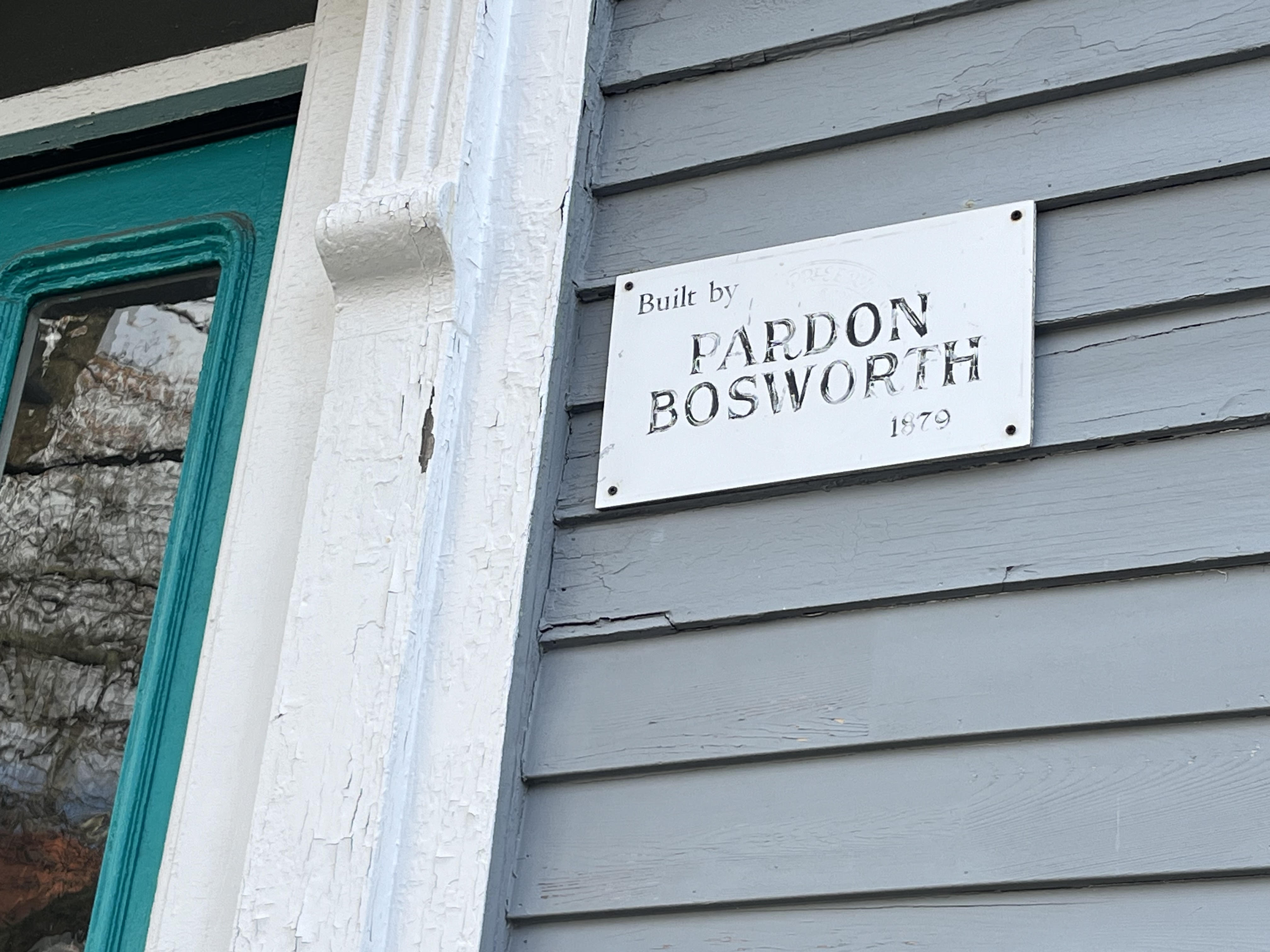
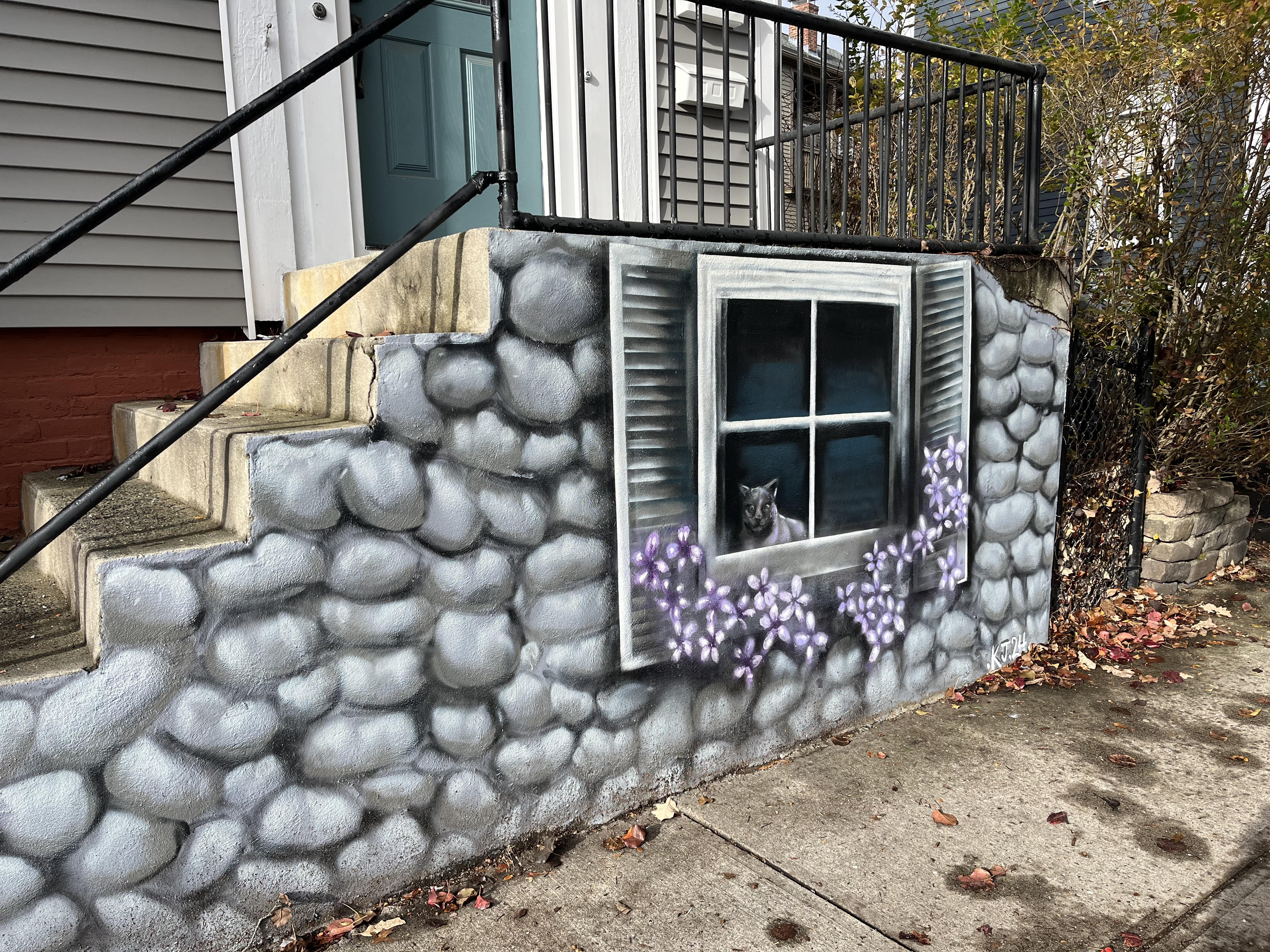
In the same neighborhood, I got a kick out of the name of a 19th century homeowner. And a jazzed-up staircase across the street.

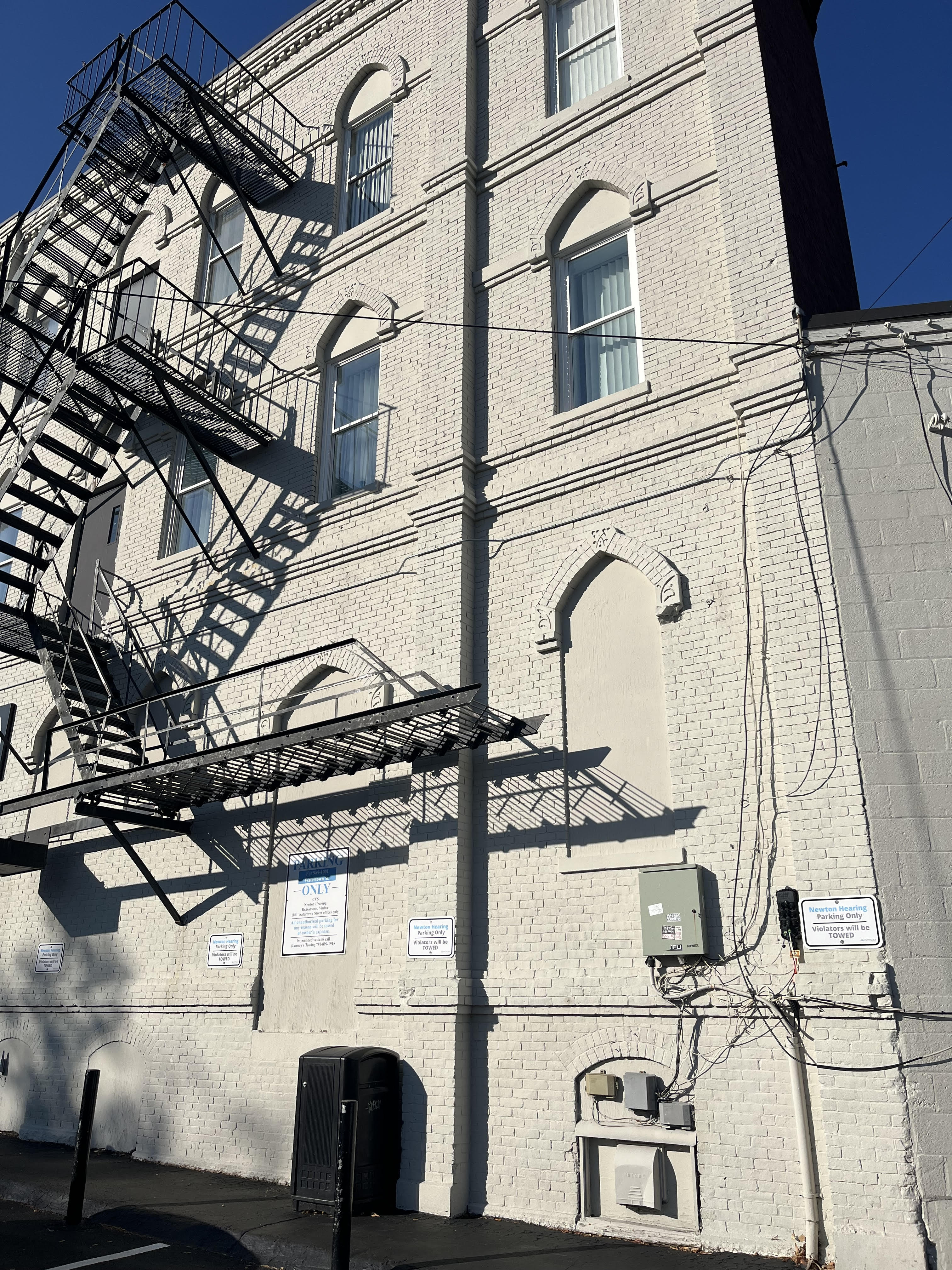
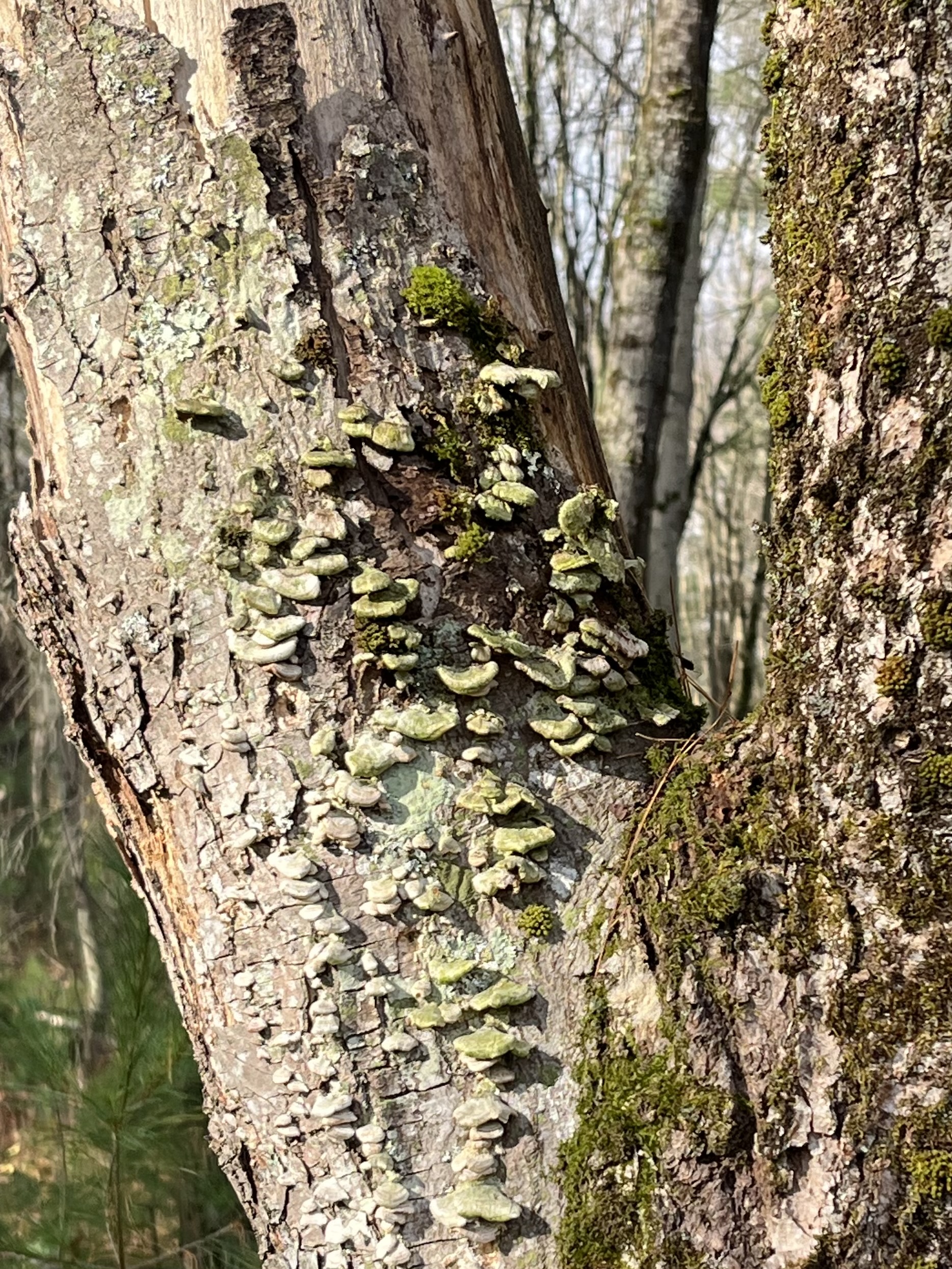
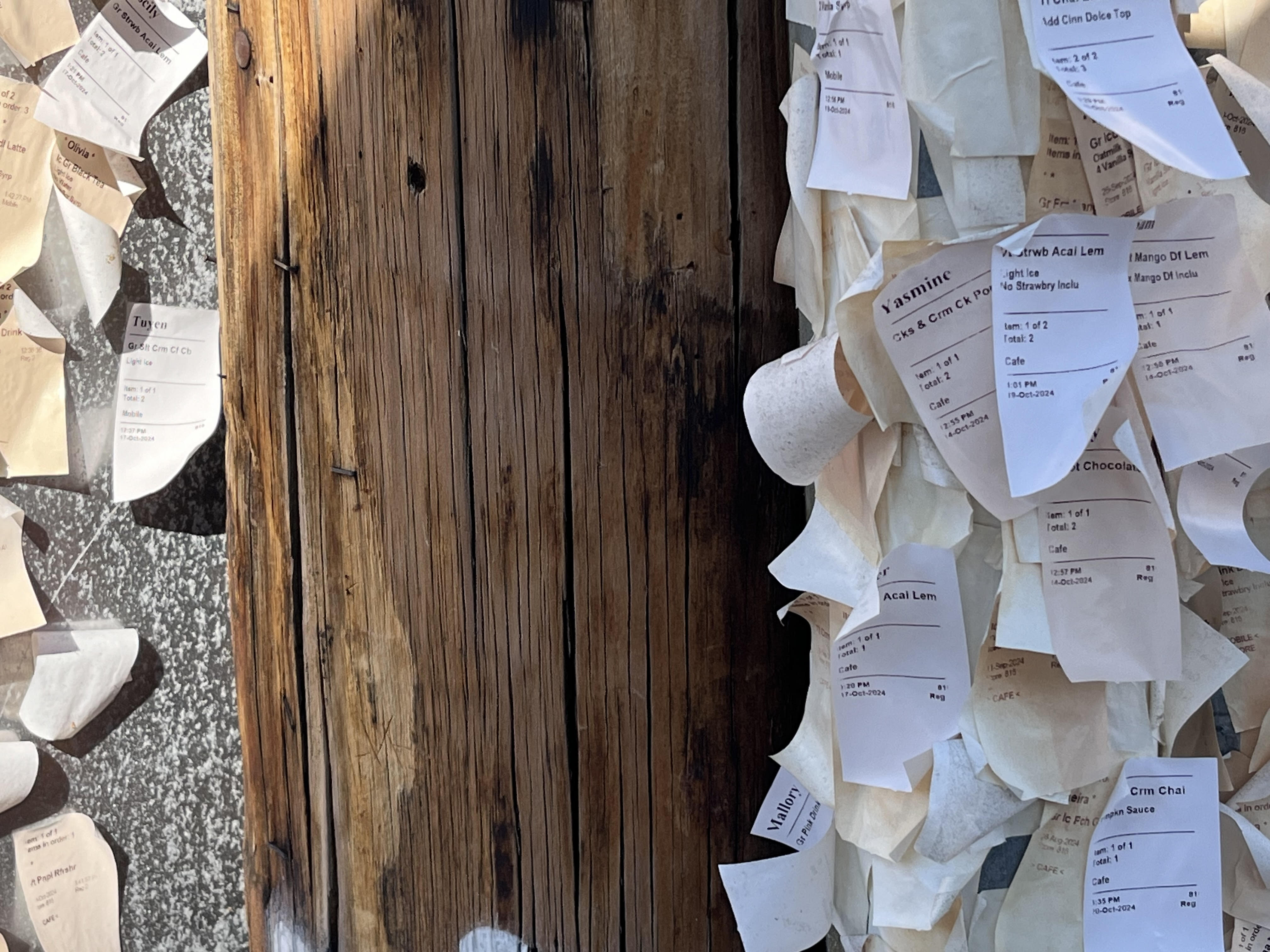
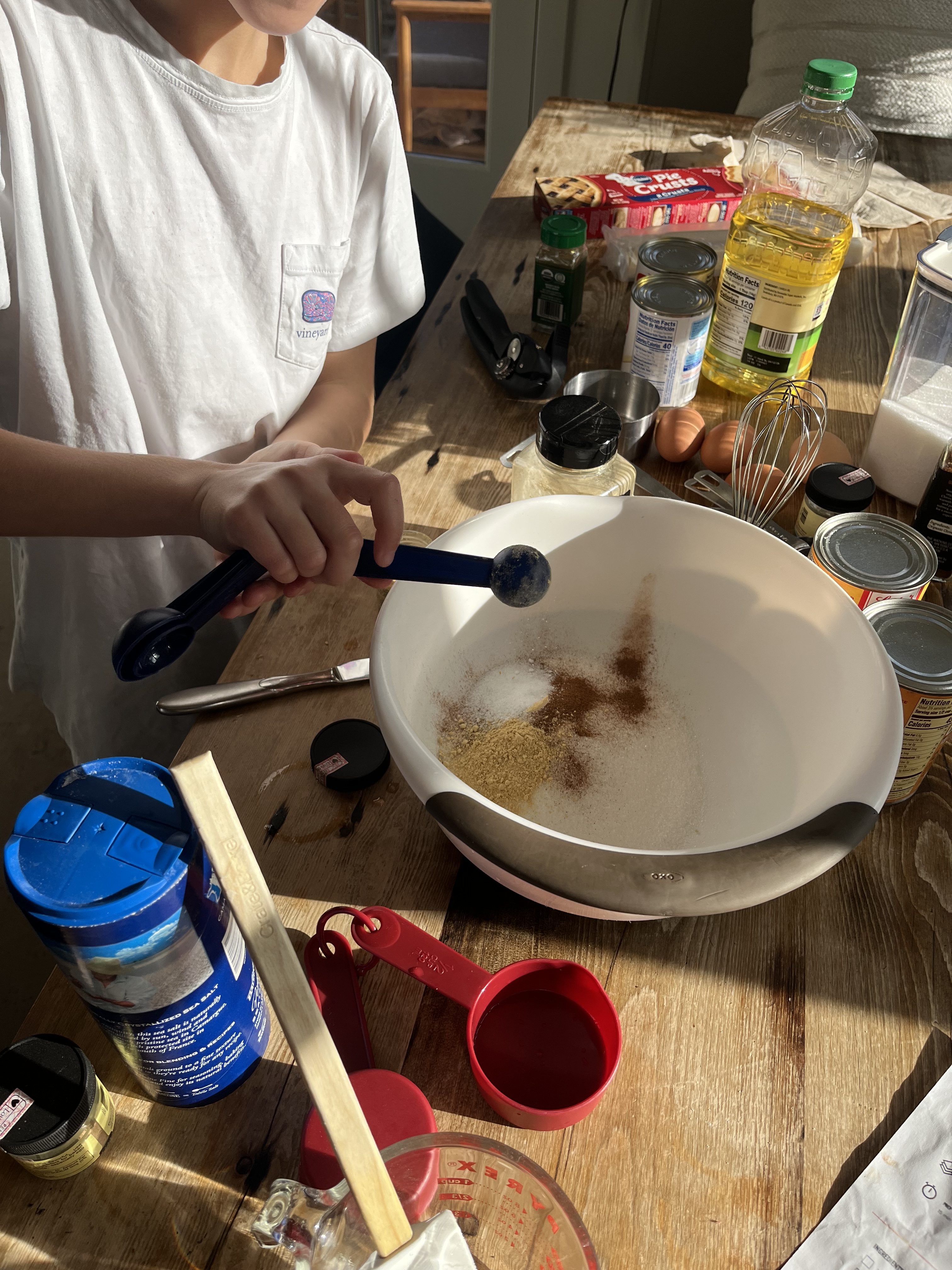
Back in Massachusetts, I found a nice shot of a different kind of staircase (jazzed up by light and shadow), then two fungus photos (one flower-like) and Starbucks receipts decorating a telephone pole. The pastry chef, age 11, has more baking experience than most adults.

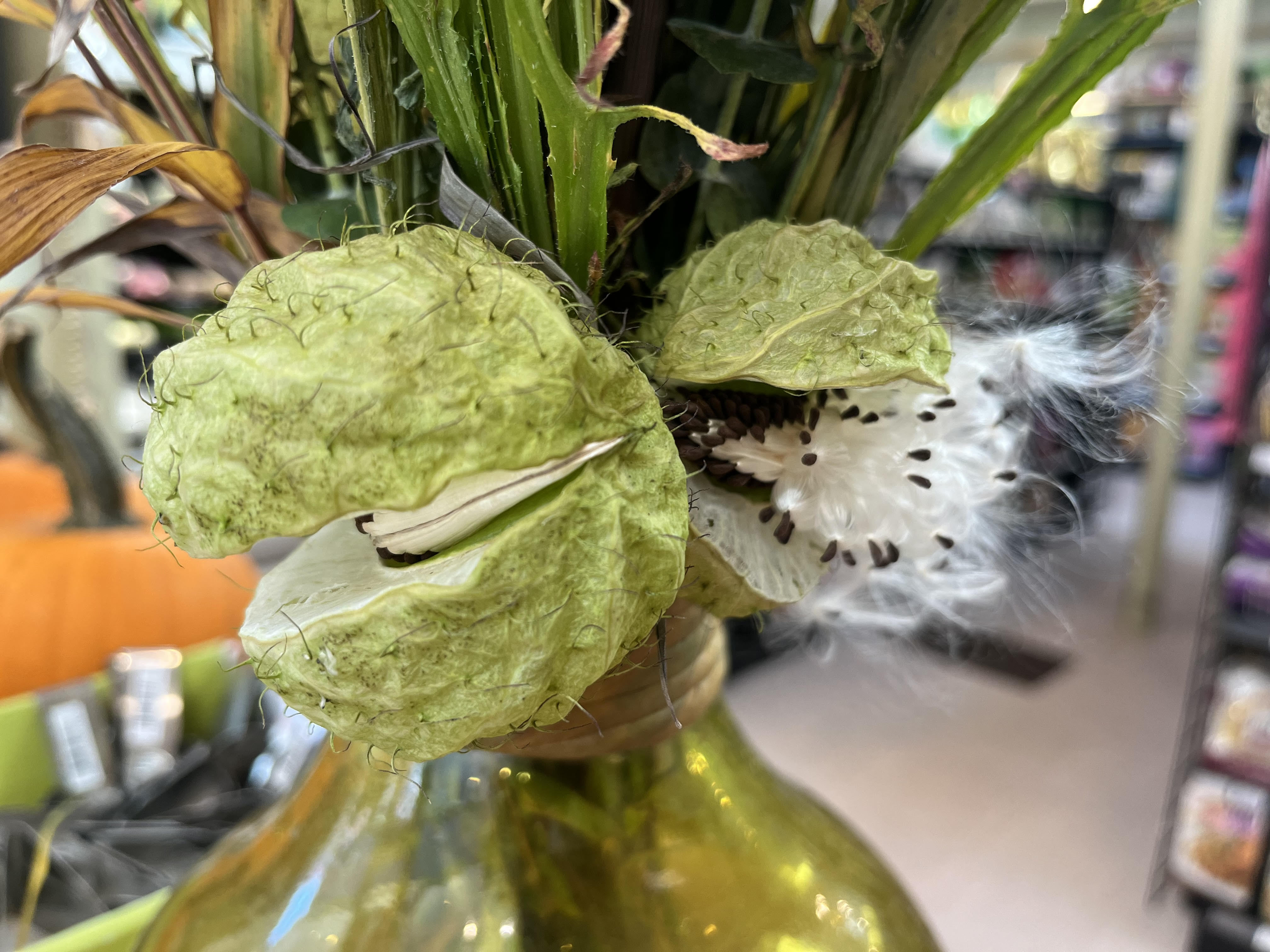
In the what-the-heck-is-it department, there’s a decorative plant at Debra’s Natural Gourmet that is not milkweed but looks sort of like it. Any ideas?

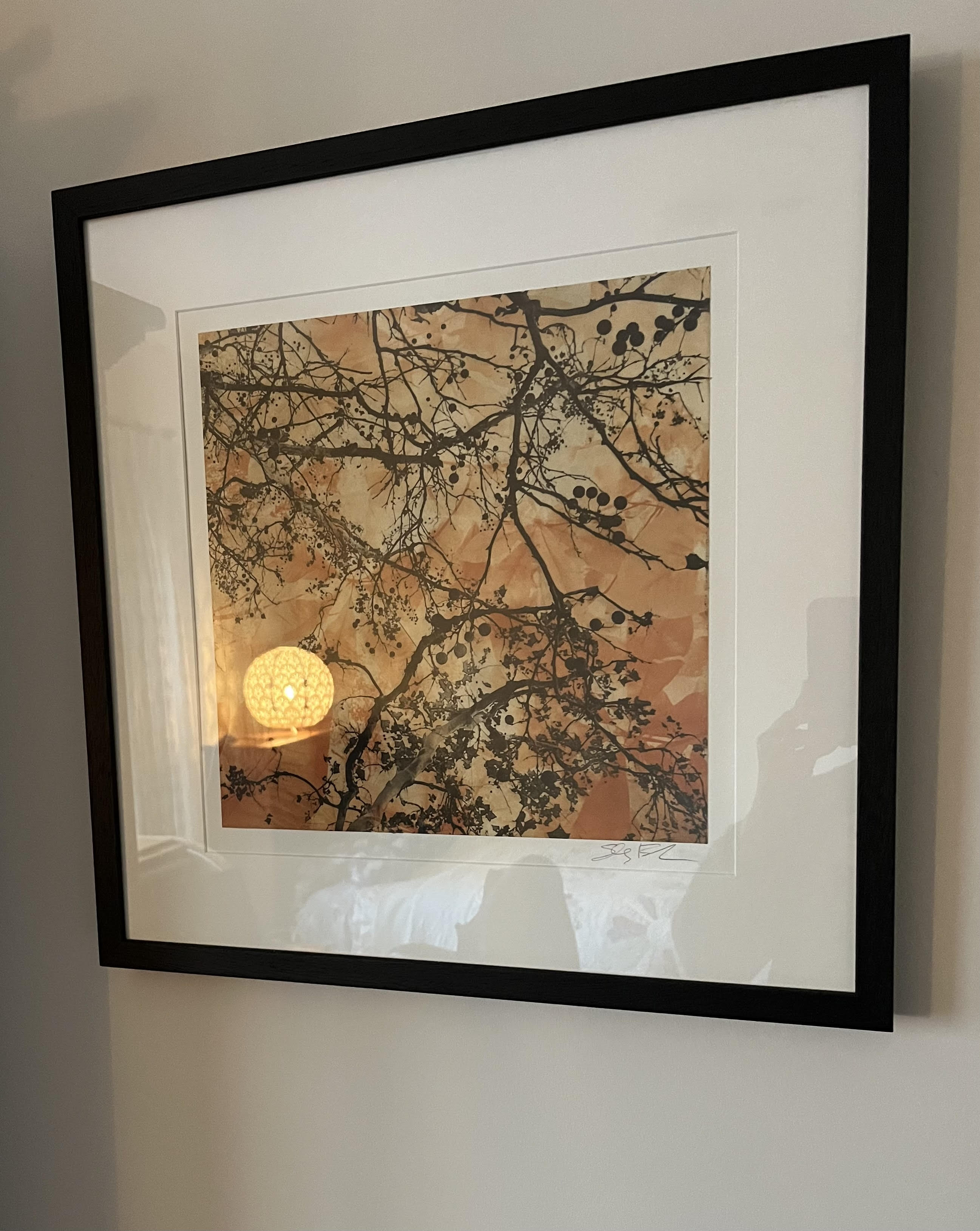
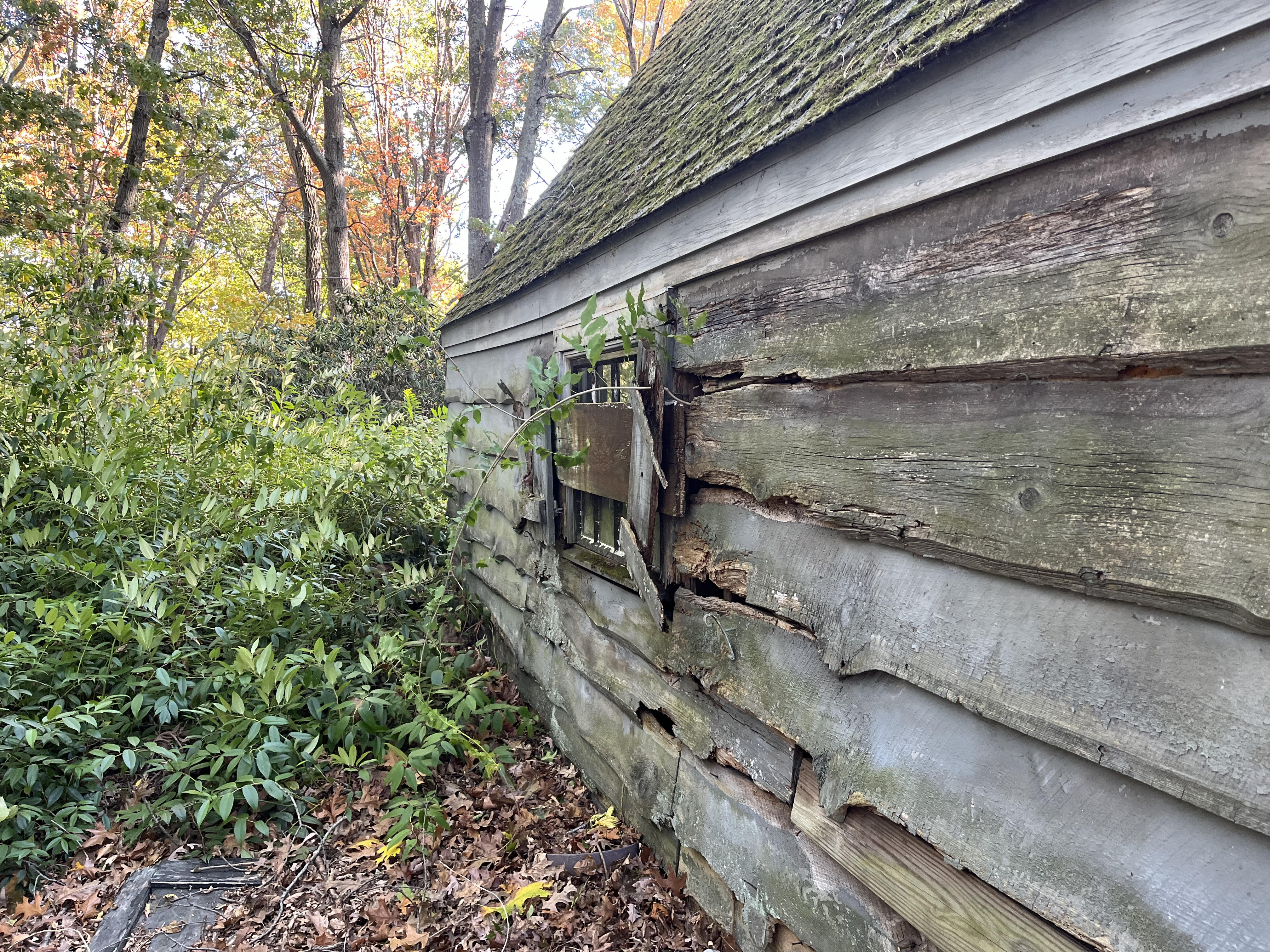
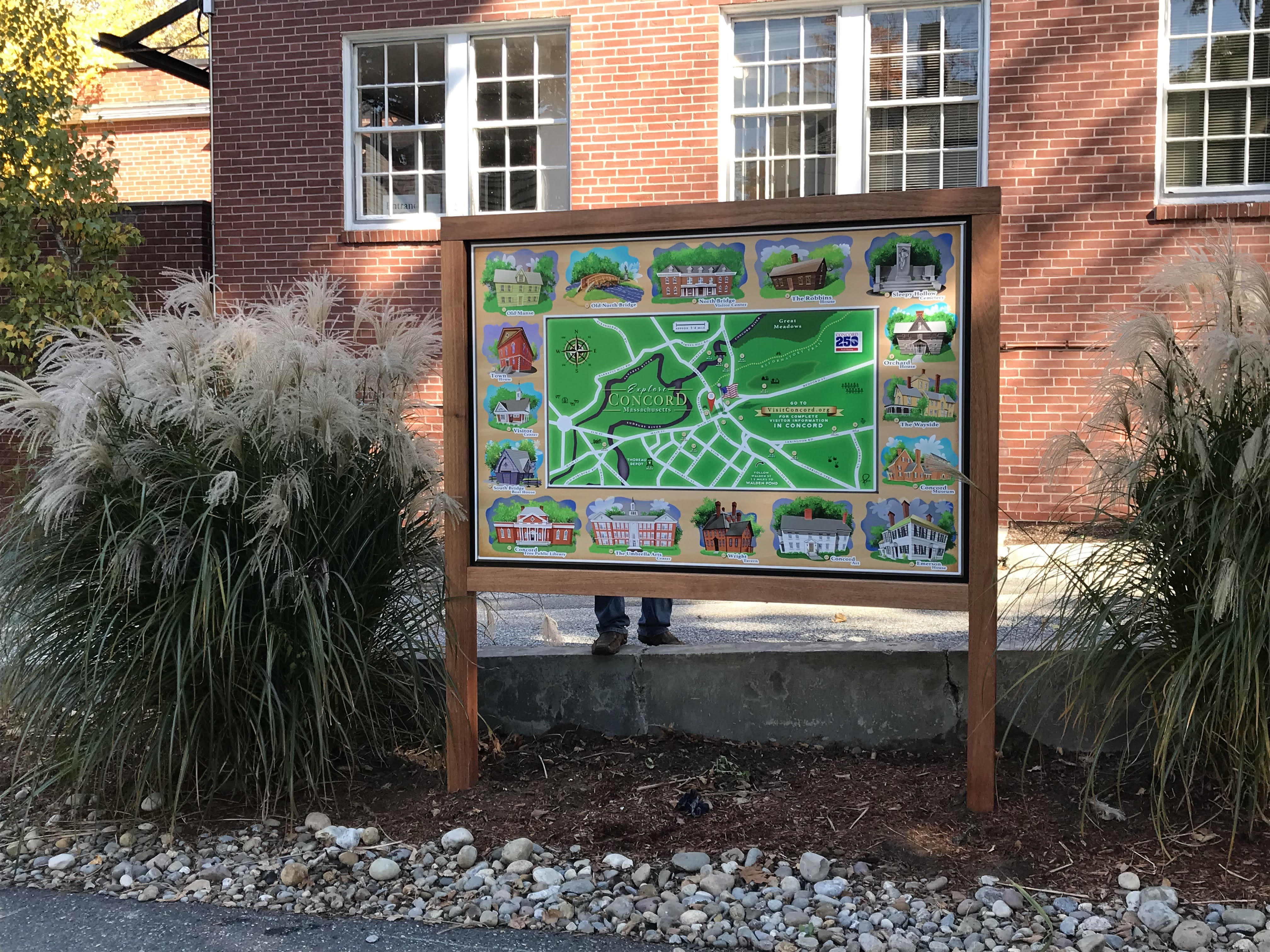
Next comes Sally Frank’s magnificent Black Sycamore print in a frame reflecting my table lamp. Then a derelict house waiting for the land developer’s bulldozer, and a special map for the town’s 250th anniversary in 2025. Did you know the Revolution started at the North Bridge? Not with the Declaration of Independence, as significant as that was.

Read Full Post »

Photo: Troy Aidan Sambajon/The Christian Science Monitor.
Tyrie Daniel poses in the library at the Charlestown campus of Bunker Hill Community College in Boston, Sept. 10, 2024.

I think most people would agree — maybe even college presidents would agree — that the cost of higher education has gotten out of hand. Two of our grandchildren, being half Swedish, could get educated for free in Sweden, but free higher ed is not an option for most Americans. That’s why Massachusetts is joining the states that have been offering options to students who could use the help.

Troy Aidan Sambajon writes at the Christian Science Monitor, “Cambridge resident Tyrie Daniel was almost at the finish line when he dropped out of Bunker Hill Community College in 2015. He just needed 16 more credits to transfer to a four-year school. But life just came hard. His family was scammed, he says, and their Social Security numbers were stolen.

“ ‘When your stomach keeps growling and you have nothing in your fridge, you can’t even focus on school,’ says Mr. Daniel, who is 33 years old. His family was struggling to pay bills at home and provide for their household of six. … ‘I had to choose between school or food on the table.’

“With five classes to go, he dropped out. He worked as a cleaner, in his family’s spice business, and in real estate. More than thrice, he contemplated returning to school. But he couldn’t reenroll until his overdue fees were paid.

“Now, Mr. Daniel is back at Bunker Hill. This time, he is debt-free and his tuition is covered by MassReconnect. The program, which started in 2023, made community college tuition free for Massachusetts residents over 25 who don’t have a degree. Mr. Daniel says he feels both enormous relief and a new motivation to succeed. …

“Says the cybersecurity major, ‘Now, I’m actually back in school to further my career in something that I really am interested in and passionate about.’

“This fall, Massachusetts is widening the halls of higher education even further. For the first time, all residents with a high school diploma can attend one of its 15 community colleges for free. Since Tennessee first pioneered tuition-free community college for all in 2017, it has spread rapidly in both red and blue states.

“With the launch of MassEducate, the Bay State becomes the 20th to offer tuition-free community college regardless of age, income, or GPA. Another 14 states offer programs targeting specific demographics, such as people over 25, or high-demand majors, such as nursing. …

“Douglas Harris, chair of the economics department at Tulane University and director of the National Center for Research on Education, Access, and Choice [says] promising universal access to community college ‘wipes away that complexity and the risk and uncertainty that goes with it.’

“ ‘Going to college is complicated,’ he says. … ‘When it gets cheaper and simpler, it makes people say yes.’ …

“ ‘This is going to change family trees for generations to come, for the better,’ says Nate Mackinnon, executive director of the Massachusetts Association of Community Colleges. … ‘More families are turning to public higher education and discovering that these institutions offer excellent quality at an affordable price.’

“Why free tuition now? The Bay State needs workers. Massachusetts has 42 available workers for every 100 open jobs, categorizing its workforce shortage as ‘most severe,’ according to the U.S. Chamber of Commerce. Meanwhile, 700,000 residents have some college credits but no degree. …

“In MassReconnect’s first year, 2023-24, some 8,411 students enrolled through MassReconnect. That was a 45% increase in students over 25 from the previous academic year. …

“As of this August, with the launch of MassEducate, total enrollment is up another 20% compared with last year. ‘It’s like the advertising value of free college is giving you a pretty big bang for your buck,’ says David Deming, an economist from the Harvard Kennedy School. … ‘The challenge in the long term is maintaining the quality of education with more students. If local colleges themselves are not getting any extra funding to accommodate the influx, the quality of the service itself might decline.’ …

“For recent high school graduates like Erick Peguero, free tuition means his family can save money while he takes classes in the hopes of transferring to a four-year program. … When he graduated from Brooke High School in June, Mr. Peguero didn’t have plans to go to college this fall. It wasn’t that the resident of the Dorchester neighborhood wasn’t interested, but his family lives in Section 8 low-income housing. When community college became free last month, he jumped at the chance to continue his education.  …

“Some community college leaders say they welcome the challenges that more students in classes bring.

“ ‘I’ve been waiting my entire professional life for this moment,’ says [Pam Eddinger, president of Bunker Hill Community College]. ‘I’ll be damned if I’m going to turn anyone away. Because if I turn somebody away now, where it takes so much for them to come to me, they may not come back.’ ”

More at the Monitor, here.

Read Full Post »

Photo: Melanie Stetson Freeman/CSM.
From left, Lynn Rosenbaum, Sam Whyte, and Patti Gurekian introduce themselves through song at a CircleSinging session at St. Mary Orthodox Church, Aug. 18, 2024, in Cambridge, Massachusetts.

Those of us worry a lot need to make a point of searching out joyful moments. Here’s one way that folks in Massachusetts fill their joy quotient: circle singing.

Oli Turner reports at the Christian Science Monitor, “The song coming from the St. Mary Orthodox Church meeting room in Cambridge, Massachusetts, has never been heard before. And it will never be heard again. 

“Fourteen singers stand in a circle of metal folding chairs, improvising an organic cacophony of harmonious and discordant sounds. Some tap their feet, sway, or bob their heads to the rhythm – but no two people engage with the music in quite the same way. 

“In CircleSinging, there’s no sheet music, no director, no pitch pipe. There’s an art to it, but not a pretentious one.

The singers have coalesced into an intergenerational network of friendship.

” ‘It’s really all about following. Following well,’ organizer Peter McLoughlin explains to the group between exercises. Mr. McLoughlin is not a teacher or a director. He gently sets the group in motion, and then blends into the circle as a participant. 

“ ‘Everybody’s welcome, and we’re not as concerned with whether you’re an excellent singer or you are an excellent harmonizer,’ he says before the rest of the singers arrive. 

“The Boston area’s CircleSinging community – tucked away in church meeting rooms in Cambridge, Arlington, Somerville, and the Jamaica Plain neighborhood – is part of an international network of CircleSingers who delight in the spontaneous art form. 

“The improvisational singing technique was developed by jazz musician Bobby McFerrin, best known for his 1988 hit song ‘Don’t Worry, Be Happy,’ the first a cappella song to go No. 1 on the Billboard Hot 100 chart. Mr. McFerrin’s vocal jam sessions relied on a call-and-response model, in which a leader improvises one vocal part at a time and other singers repeat those ‘loops.’ Any singer can volunteer to lead a composition.

“Cambridge organizer Mr. McLoughlin started the first of the four Boston-area circles in 2015 on Meetup.com, inspired by Mr. McFerrin’s ‘magnificent’ rendition of Psalm 23. The looping choruses and complex harmonies reminded him of the music surrounding his own Catholic upbringing. He was hooked.

“Mr. McLoughlin learned the technique from Mr. McFerrin himself, attending his weeklong workshops once a year for seven years. Then CircleSinging Boston was born in Mr. McLoughlin’s living room.

“Each of the four Boston groups, run by different organizers, holds two-hour meetings that prioritize openness. One Boston CircleSinger, Maureen Root, says her favorite exercise starts by singing a random word – not for its meaning, but for its sounds.

“ ‘So it’s like these different vibrations and things come out,’ Ms. Root says. ‘It’s almost like you’re bypassing the mental circuitry. … It gets me out of my self-conscious mind.’

“Some CircleSingers have no prior musical or singing experience, like Ms. Root, a retired medical technologist and yoga and meditation instructor of more than 30 years. …

“Less-experienced singers like Ms. Root share a circle with vocal professionals like Boston Children’s Chorus conductor Destiny Cooper, who moved to Boston after college, ‘knowing not a soul.’ In experimental CircleSinging, a far cry from her familiar structured choirs, she found belonging.

“ ‘Most of the members are significantly older than me, but nonetheless, I think that community was really important to give me a sense of home,’ Ms. Cooper says. Since joining the group about five years ago, she never missed a circle until the pandemic. …

“Arlington CircleSinging organizer Lynn Rosenbaum leads her meetups with all singers in mind.

“ ‘I tend to think of the arc of where we start and where we end, and bringing people along, building their confidence and their skills,’ says Ms. Rosenbaum, a seasoned improv singer herself. ‘There’s usually a big difference between the beginning and the end, especially for new people – in their level of comfort and how much they’re willing to take risks.’ …

“ ‘Singing together and playing together – I say “playing” as in “playfulness” – it just creates a connection among people,’ Ms. Rosenbaum says. ‘It’s a common denominator that we can all connect to.’ …

“ ‘[CircleSinging is] just this opportunity to express our full range of emotions and letting it out through our voices and our bodies,’ Ms. Rosenbaum explains. ‘There’s not always a lot of opportunities in everyday life to do that, so this creates a safe space for people to be silly and explore and take risks and express joy.’ ”

More at the Monitor, here.

Read Full Post »

Photos: Suzanne and John’s Mom.

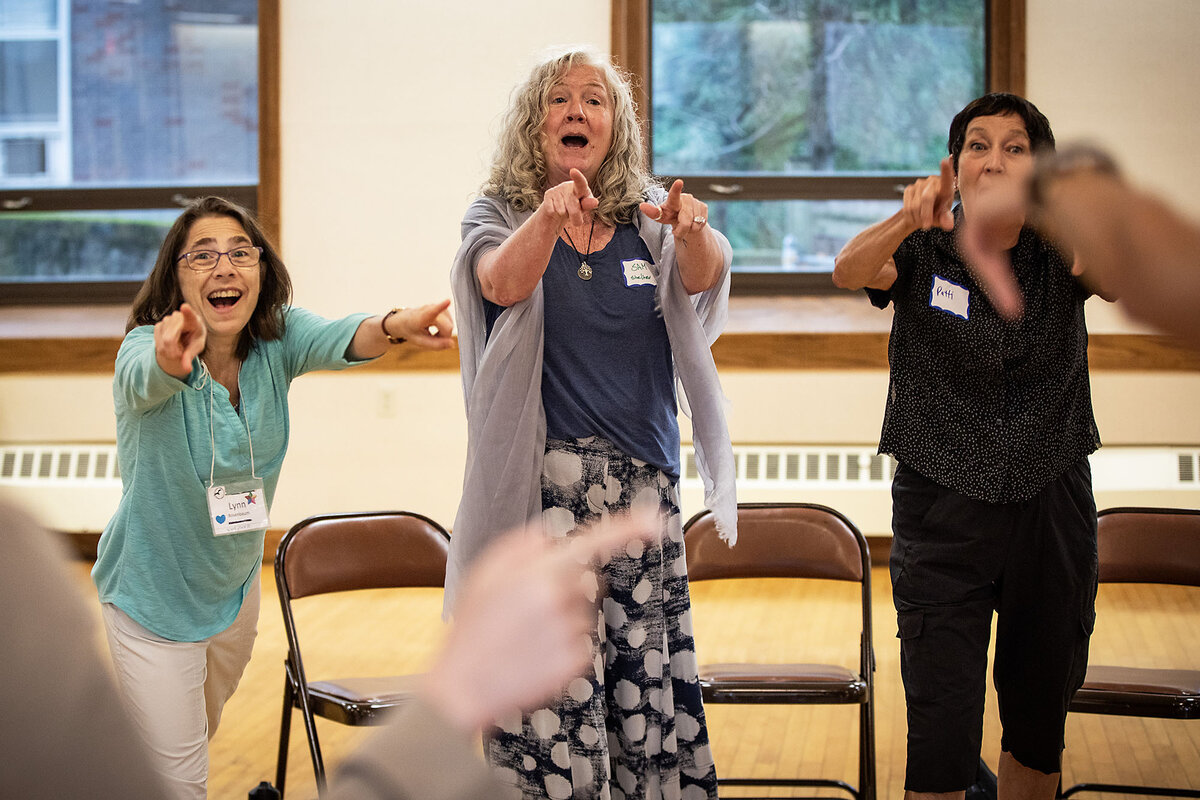
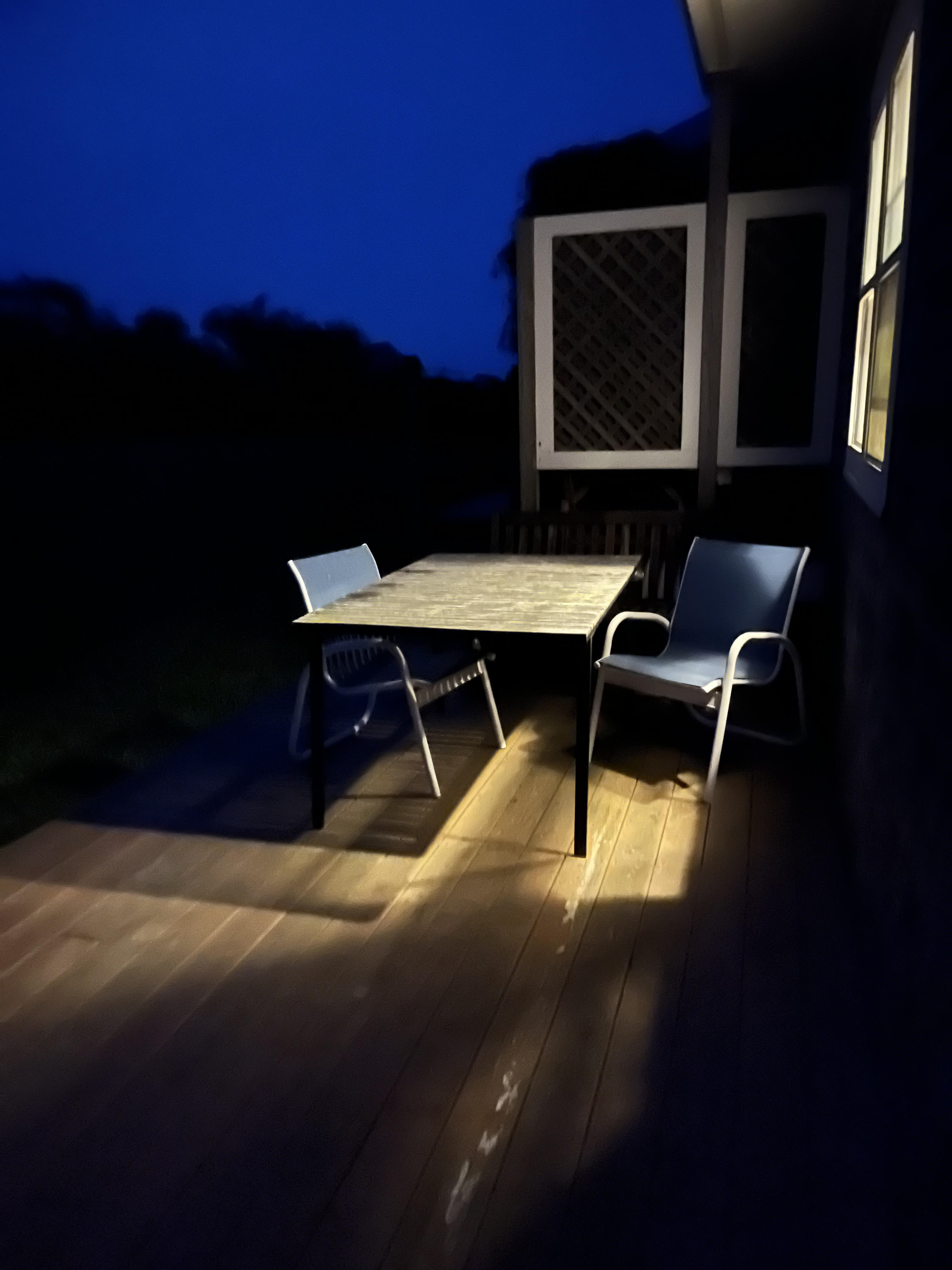
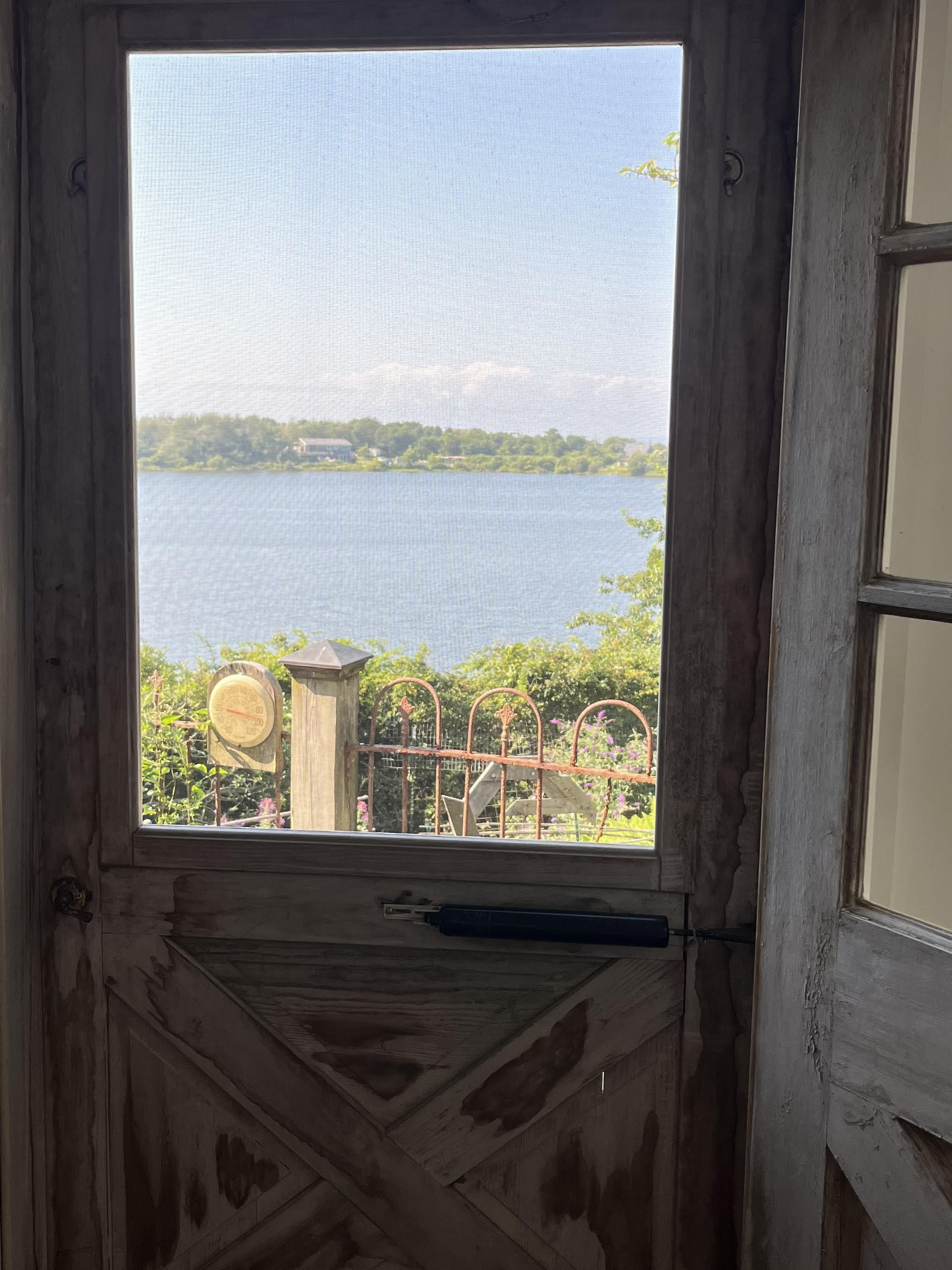
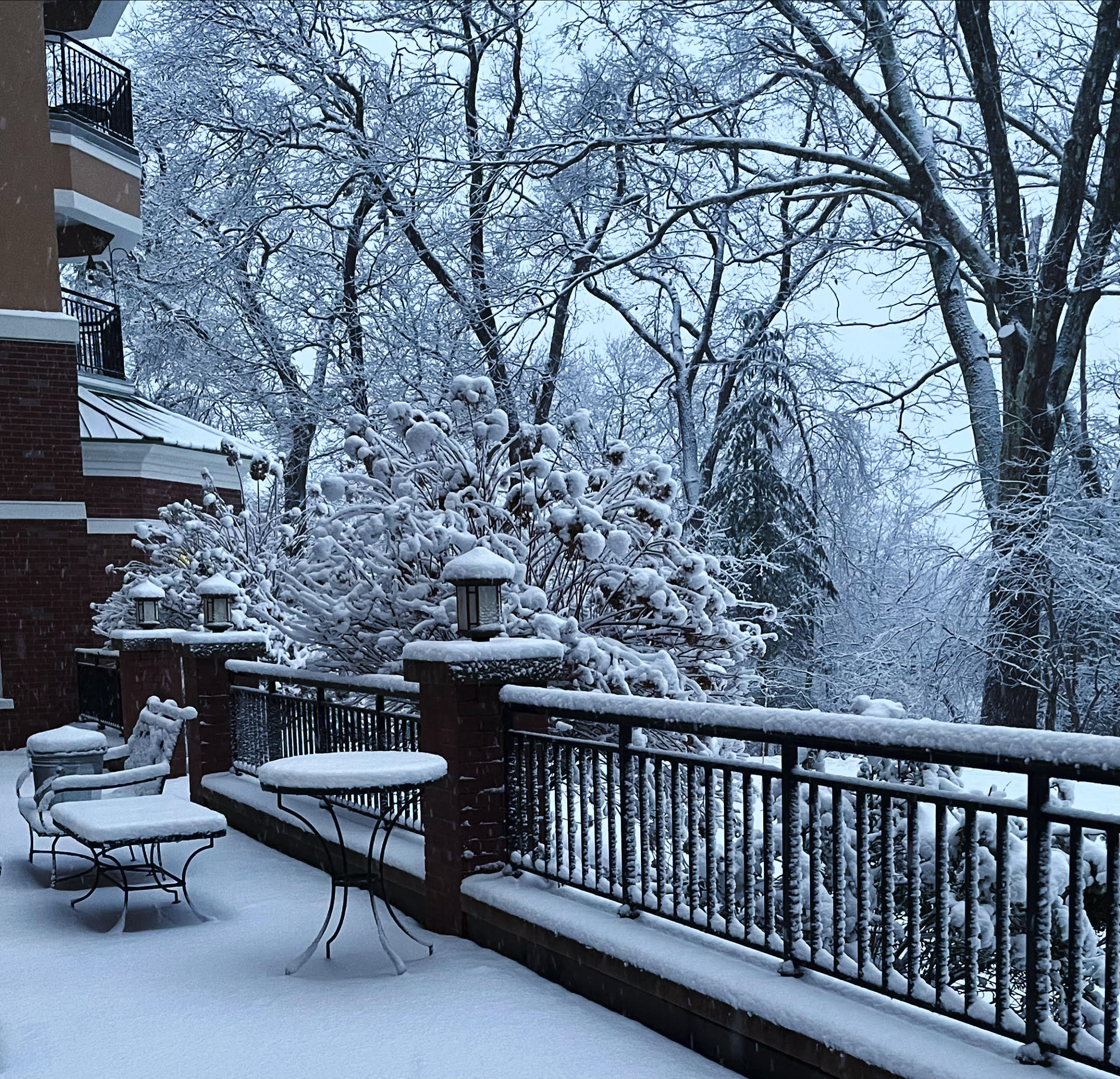
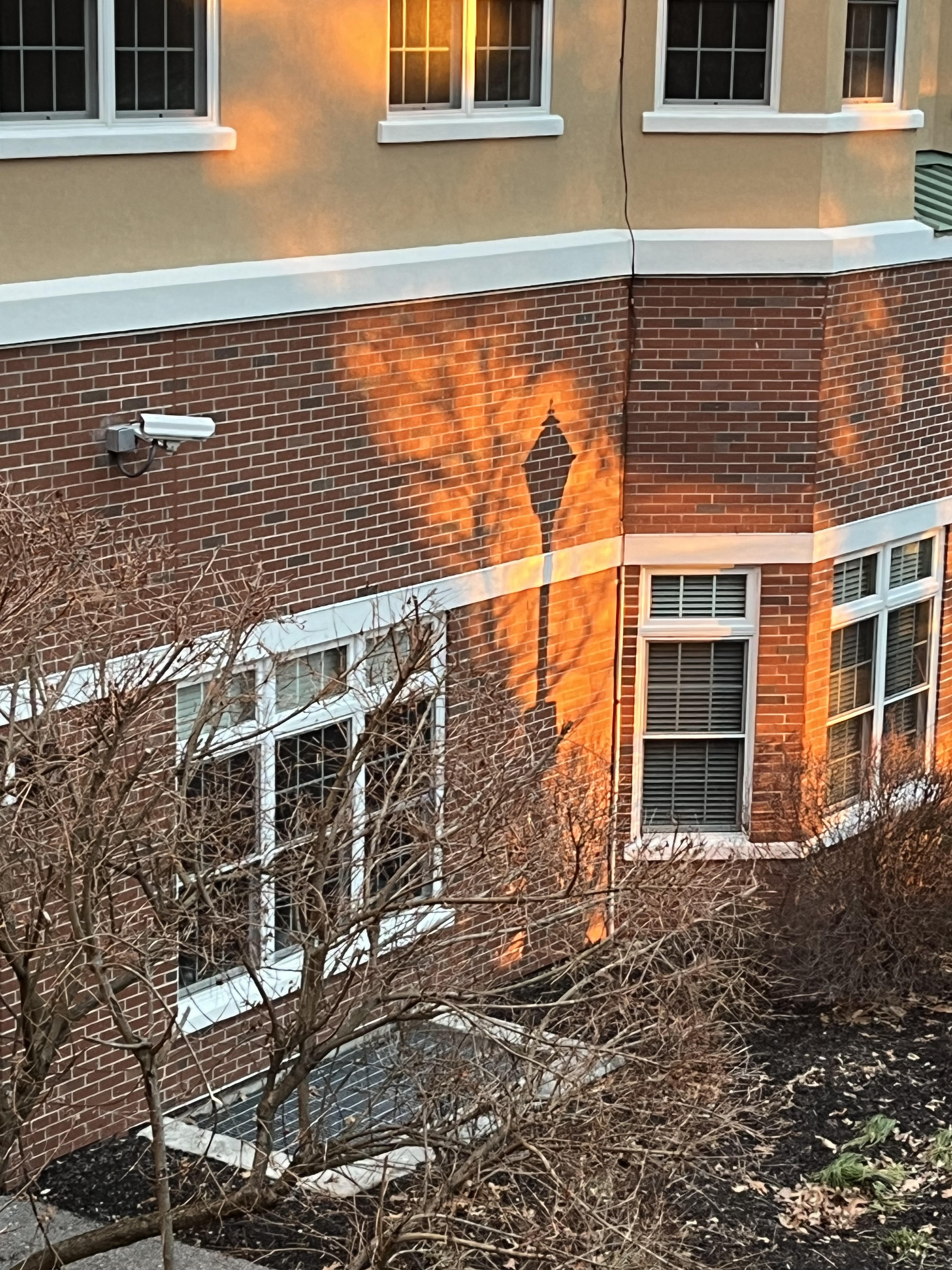
I went out to the deck early one morning and caught my breath. I knew I had to take a photo of the scene above even though all I use is a cellphone. The aperature was open a long time and my unsteady hand distorted the image a bit. My husband noticed that it created extra levels to the deck.

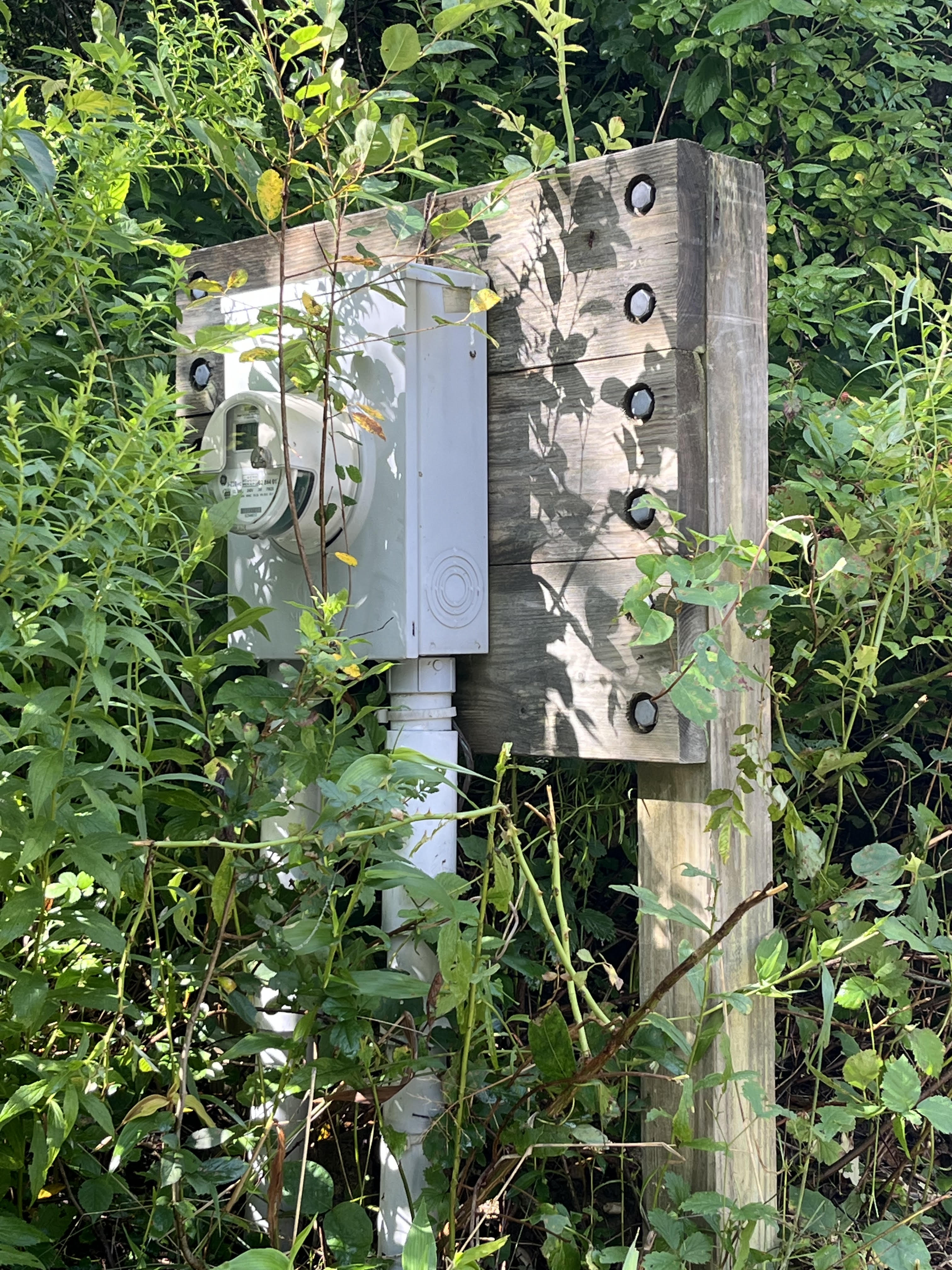
The next photo shows how much I admire Nature creating her own kind of art, often using shadows. Then for manmade art, I love visiting the late Ben Wohlberg‘s open houses. Part of the delight is to see his gardens and creatively decorated home.

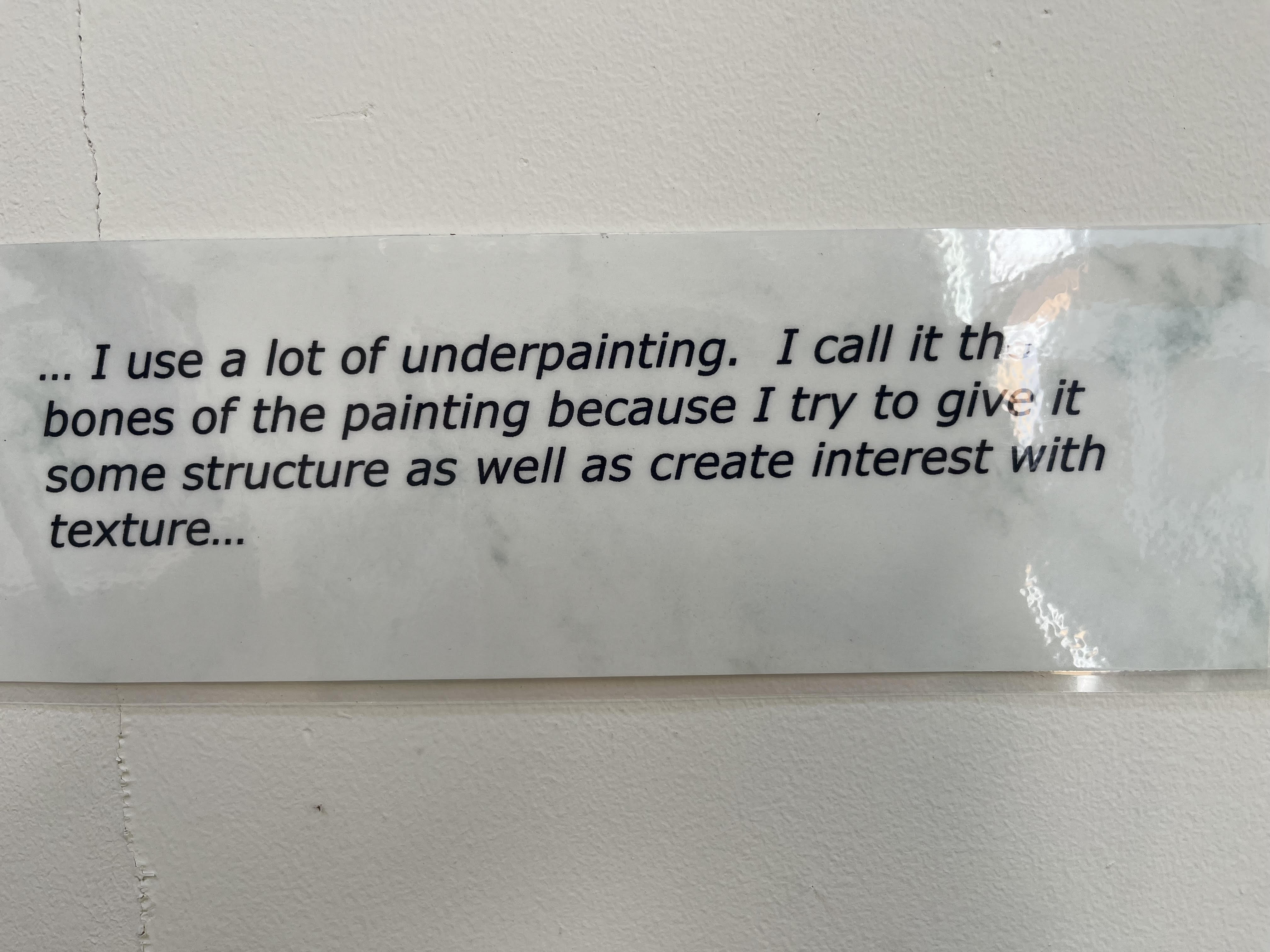
As Catherine Wohlberg told me, her husband was able to support himself with art his whole life, from magazine illustration to portraiture to abstract. He focused on abstract work in his last years, and I include one of the quotes she posted for the 2024 show. Ben’s obituary is here.

Sandra M Kelly took the next photo, the best we got from the lotus pond this year. Such an amazing flower, but one that can take over if not confined in a small space.

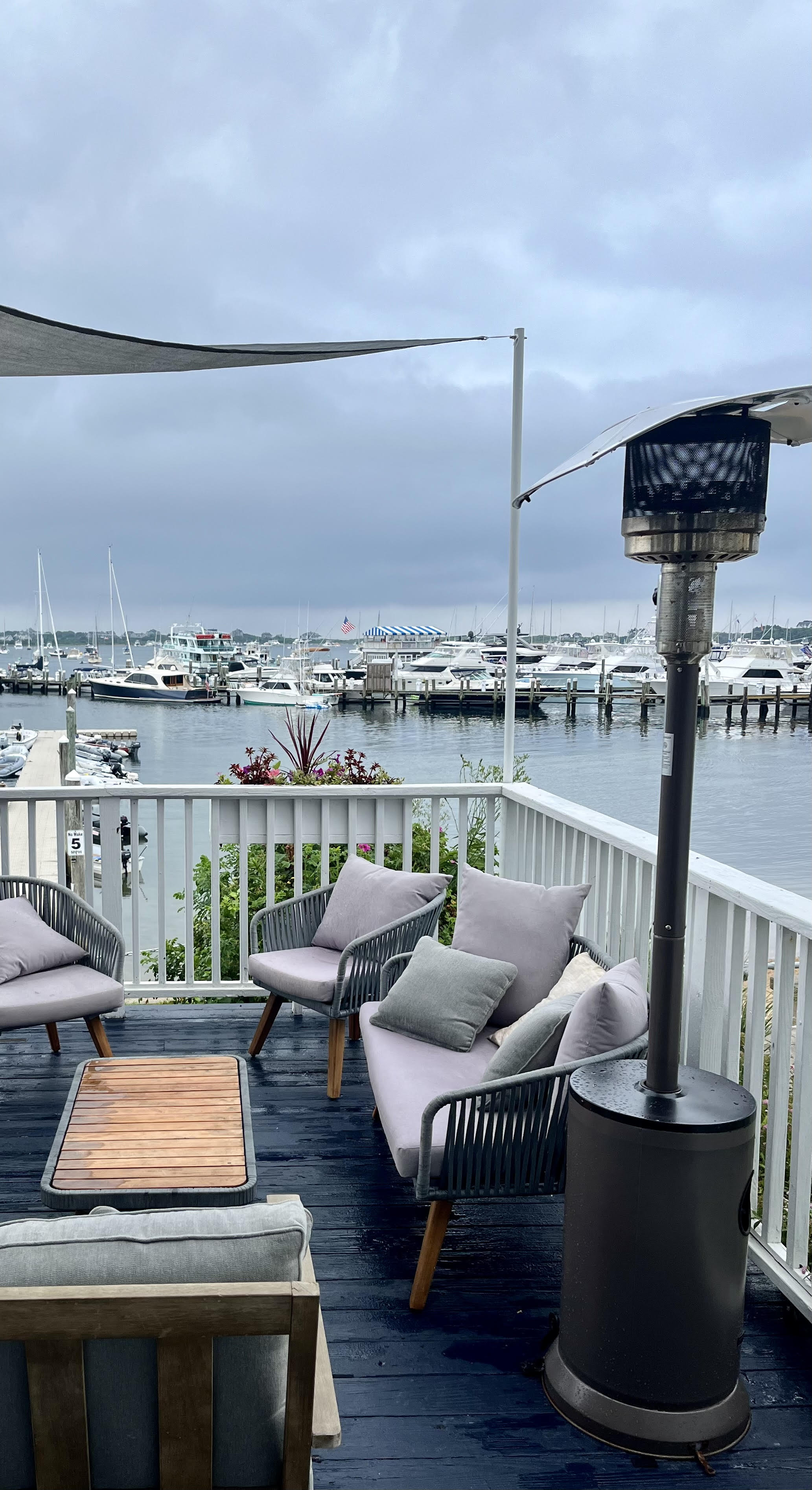
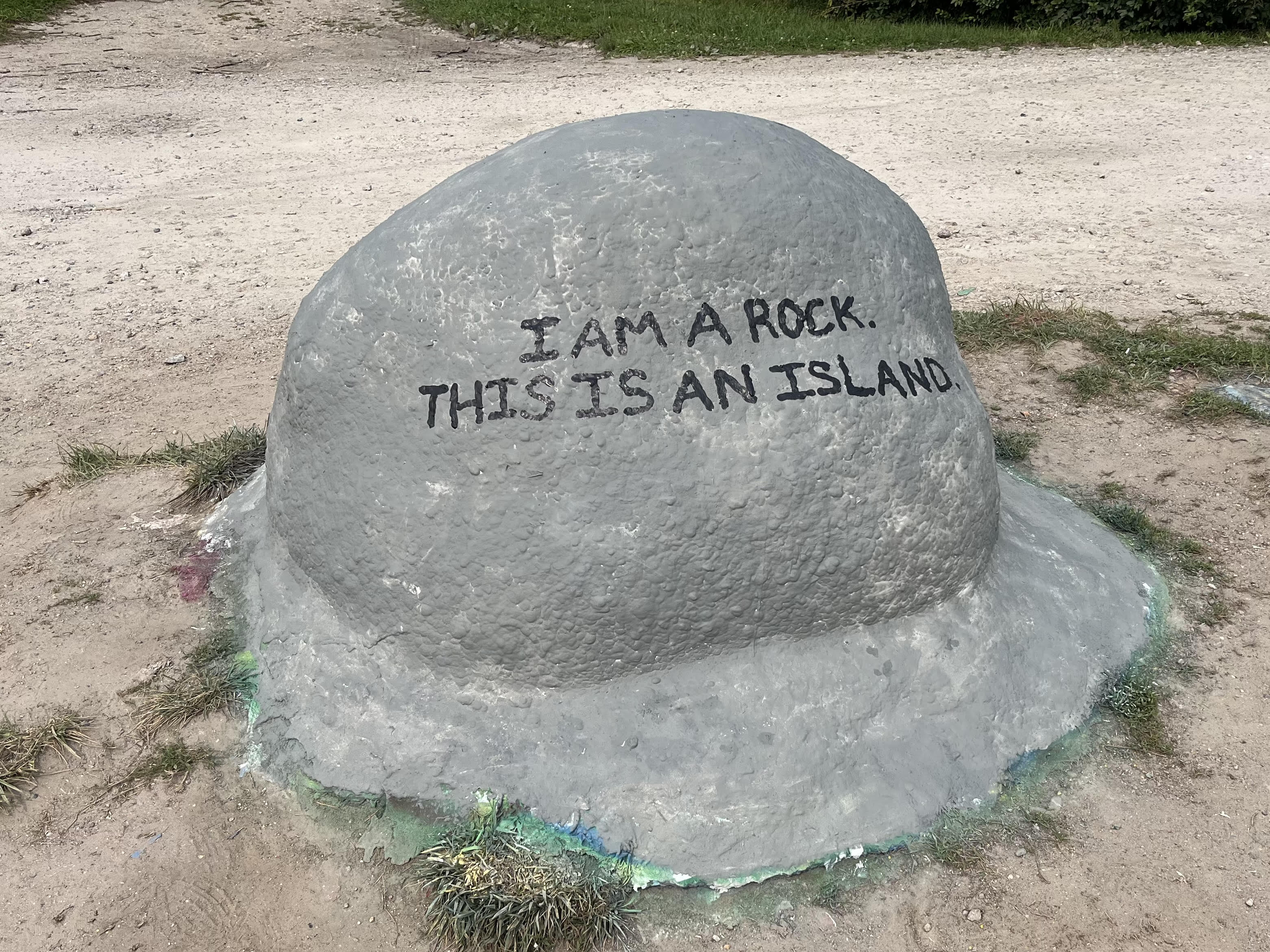
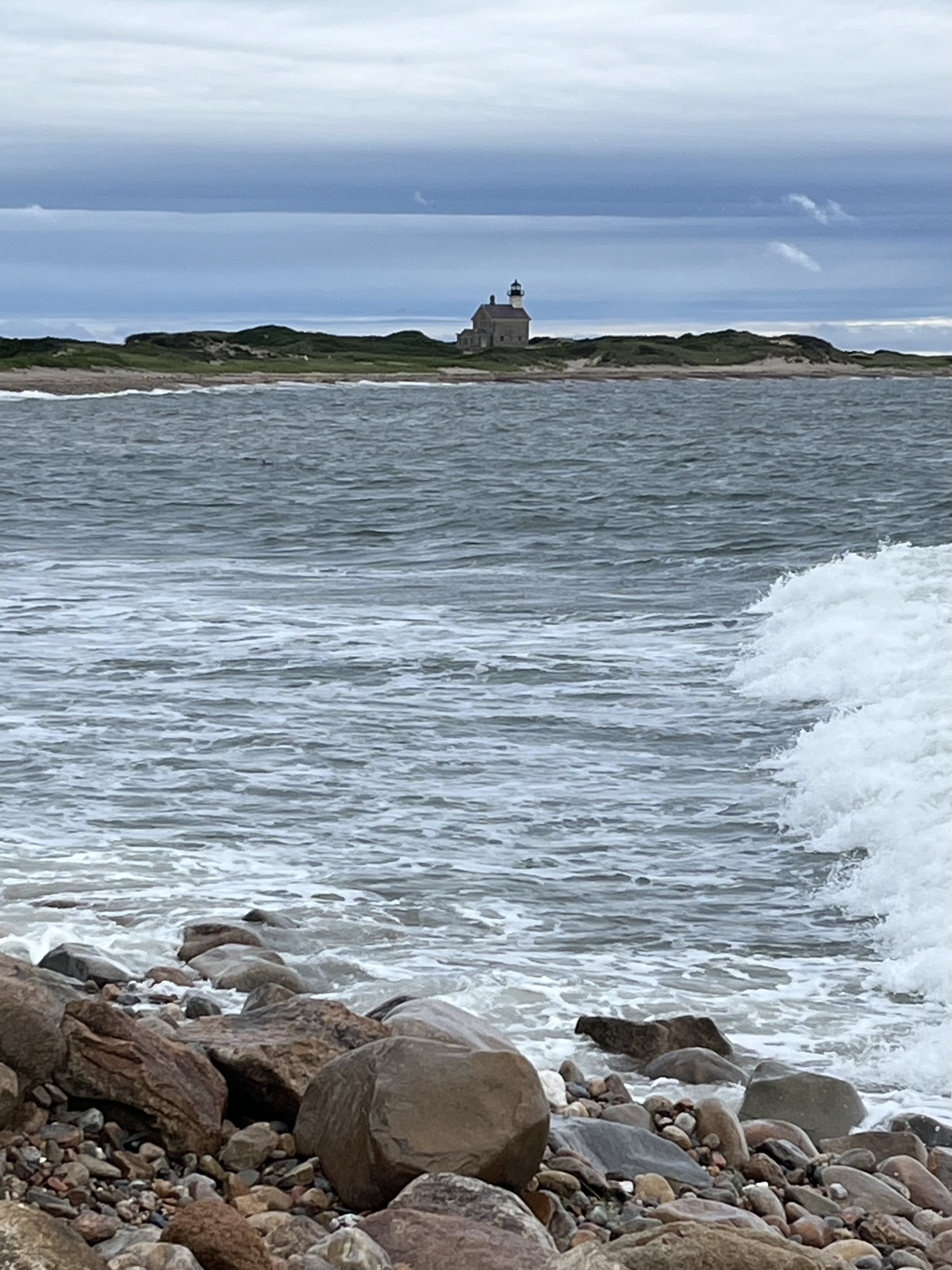
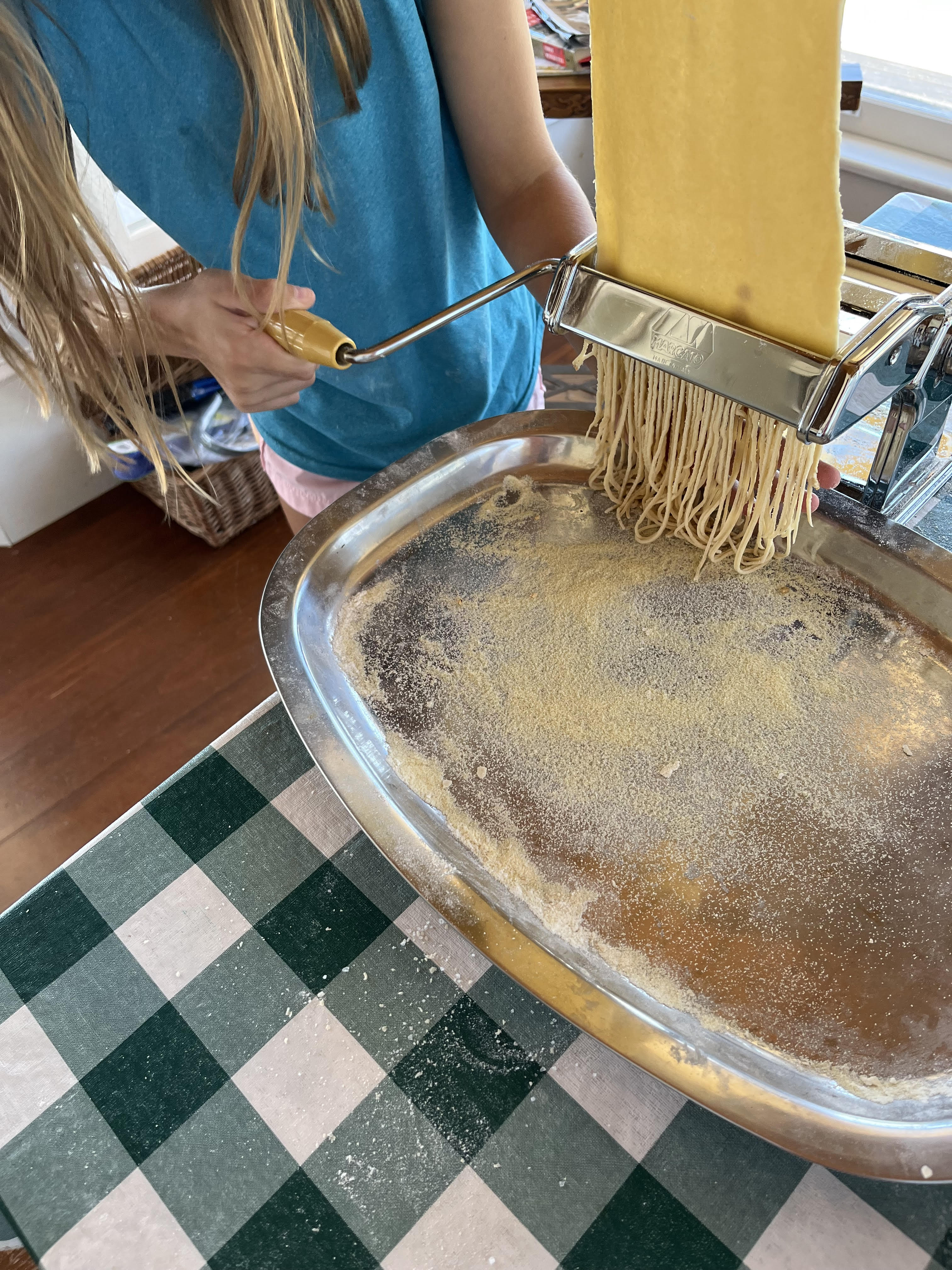
The next few photos are also from New Shoreham, including the one of my granddaughter helping her mom make fresh spaghetti. (It tasted wonderful!)

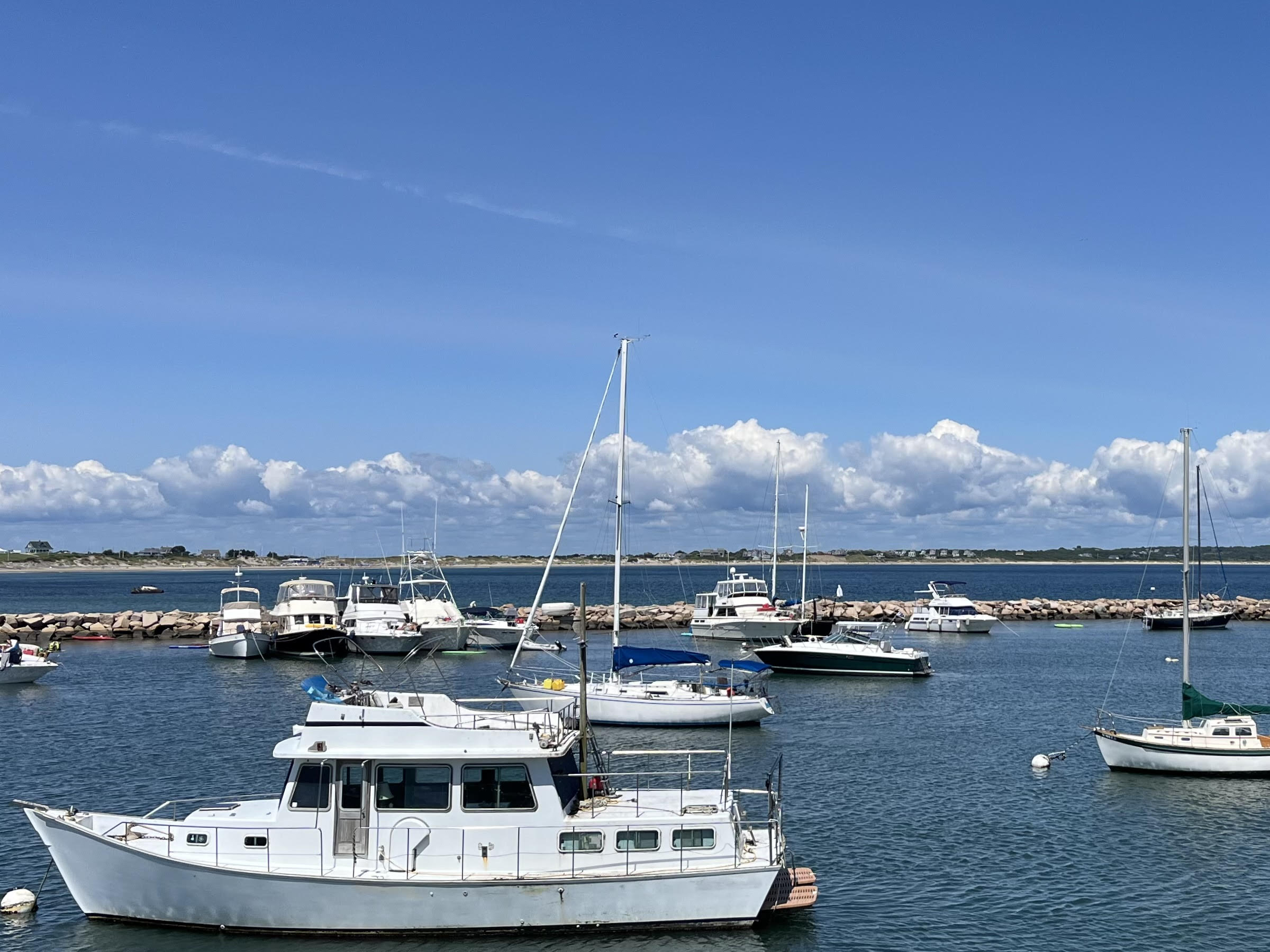
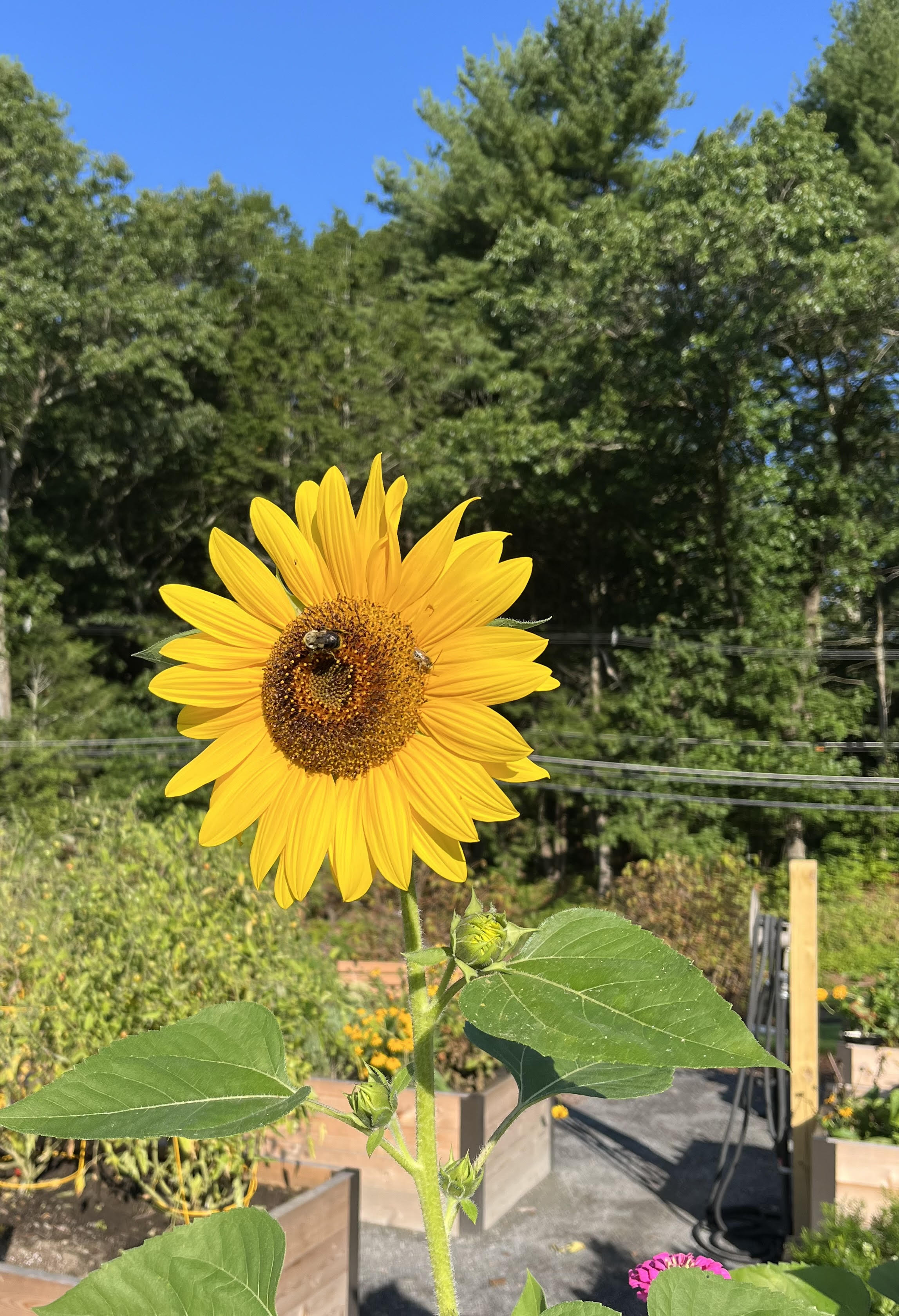
The final two pictures were taken back in Massachusetts, where we’re heading into September and harvest season.

Read Full Post »

Photos: Suzanne and John’s Mom.
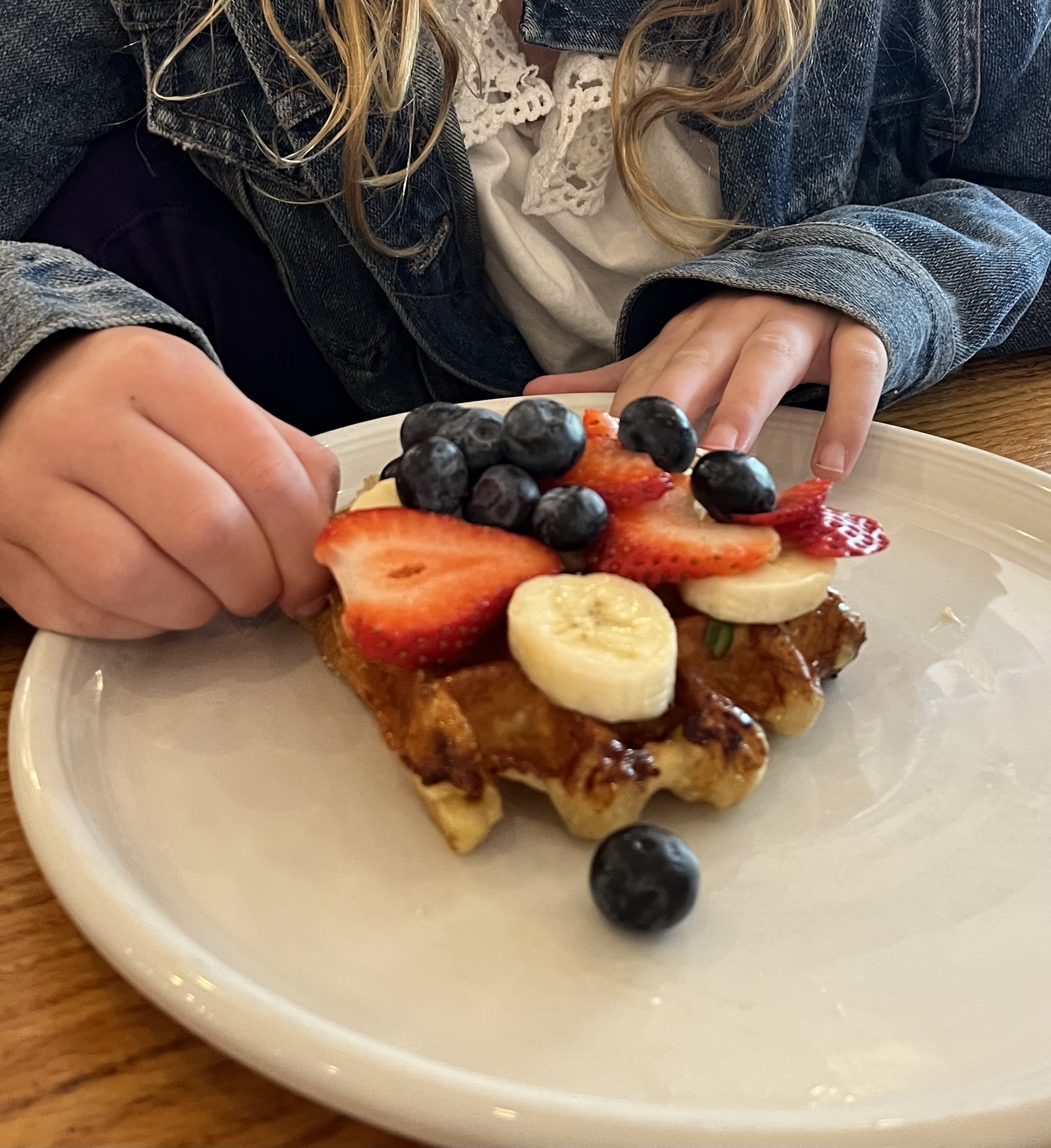
Fancy Liège waffle at the Burgundian in Attleboro, Massachusetts, the center of an Oprah-related controversy.

Probably bloggers Cook and Drink, among other readers who cook, will be too polite to scoff at my culinary ignorance, but I have always conflated Dutch pancakes with Belgian waffles.

I love Dutch pancakes — their egginess, the way they swim in butter and puff up like popovers in the required hot, hot oven. My latest mistake arose when I started reading about the Waffle Wars in Massachusetts and the Liège waffle (named for a city in Belgium) at the center of the controversy.

On Mother’s Day, my husband and I went with Suzanne’s family to check out one party to the controversy, the Burgundian in Attleboro, and I for one was expecting to taste something with a popover texture. Turns out Liège waffles have a more doughy, almost chewy, texture and are much sweeter. The web says they are made with a brioche-type batter, using yeast! (I found a recipe online at Karen’s Kitchen, here.) In any case, they were a hit with my family, if not what I expected.

Now you want to hear about the Waffle Wars and what it has to do with Oprah. Let’s turn to the website JD Supra.

“A Massachusetts waffle manufacturer, The Burgundian, recently filed a lawsuit alleging that a potential co-venturer, Eastern Standard Provisions, submitted its Liege waffles for inclusion on Oprah Winfrey’s annual ‘Favorite Things’ list without giving credit to Burgundian. Then, after Burgundian refused to sell its secret waffle recipe, Eastern Standard employed a ‘bait and switch’ by selling Liege waffles from a different company while touting Oprah’s endorsement of the Liege waffles made by Burgundian and enjoying the spoils of landing a spot on the coveted list.

“Burgundian’s owner, Shane Matlock, lacked any formal baking training and therefore developed his secret Liege waffle recipe through years of trial and error. Sensing the limits of ‘self-teaching,’ Mr. Matlock arranged to train with a master Liege waffle maker in Belgium. Mr. Matlock alleges that he was approached by Eastern Standard in 2021 to explore expanding its existing pretzel line with Liege waffles, and the two companies began exploring co-branding opportunities.

“Burgundian shared its secret waffle recipe after Eastern Standard signed a nondisclosure agreement. Eastern Standard’s pretzels had previously been selected as one of Oprah’s ‘Favorite Things’ and the two companies decided to pitch the waffles for Oprah’s 2021 list. Mr. Matlock personally prepared the waffles using his confidential recipe, which were later delivered to Oprah by Eastern Standard.

“Sensing that the waffles would be selected by Oprah for her 2021 list, Eastern Standard allegedly set out in bad faith to secure the rights to Burgundian’s waffle recipe by presenting a term sheet which, rather than proposing a co-branding relationship, contemplated a ‘recipe buy’ whereby Burgundian would sell its recipe to Eastern Standard and receive a royalty for each waffle sold.

“After Oprah selected Burgundian’s waffles to be included in her 2021 list, Burgundian and Eastern Standard’s negotiations broke down. Burgundian alleges that Eastern Standard abruptly terminated the parties’ relationship and threatened litigation against Burgundian. Eastern Standard claimed that it had decided to move forward using a waffle recipe developed by its ‘co-packer,’ which was different than Burgundian’s recipe. Burgundian alleges that the Liege waffles Eastern Standard is currently selling are not the same waffles that Mr. Matlock made and submitted to Oprah, although Eastern Standard continues to advertise its selection on the ‘Favorite Things’ list.

“After Burgundian brought suit in Massachusetts state court, Eastern Standard hit back with counterclaims against Burgundian and Mr. Matlock, alleging that they breached the parties’ NDA by publicly disclosing confidential information in the complaint. Eastern Standard also told a very different story about the parties’ relationship: it alleged that Eastern Standard negotiated in good faith to pursue a co-branding deal with Burgundian, but when Burgundian could not secure the necessary capital to secure such a deal, Eastern Standard was forced to move forward with a different manufacturer, using a different waffle recipe.” Oy, oy, oy. Punished for not raising capital.

Read more at JD Supra, here. And let me hear about your own waffle experiences.

Dutch pancake in cast iron pan I wish I still had after my move.

Read Full Post »

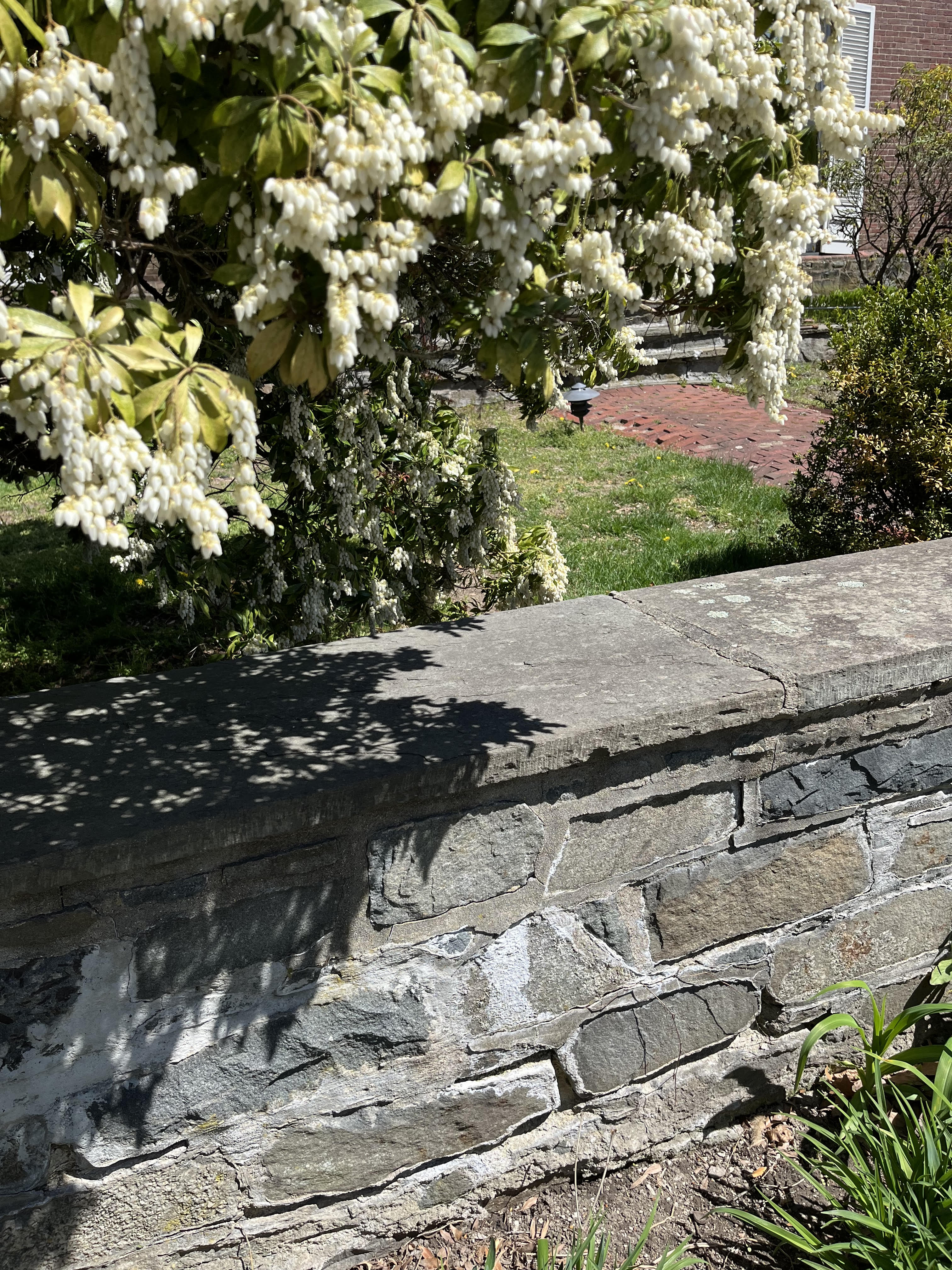
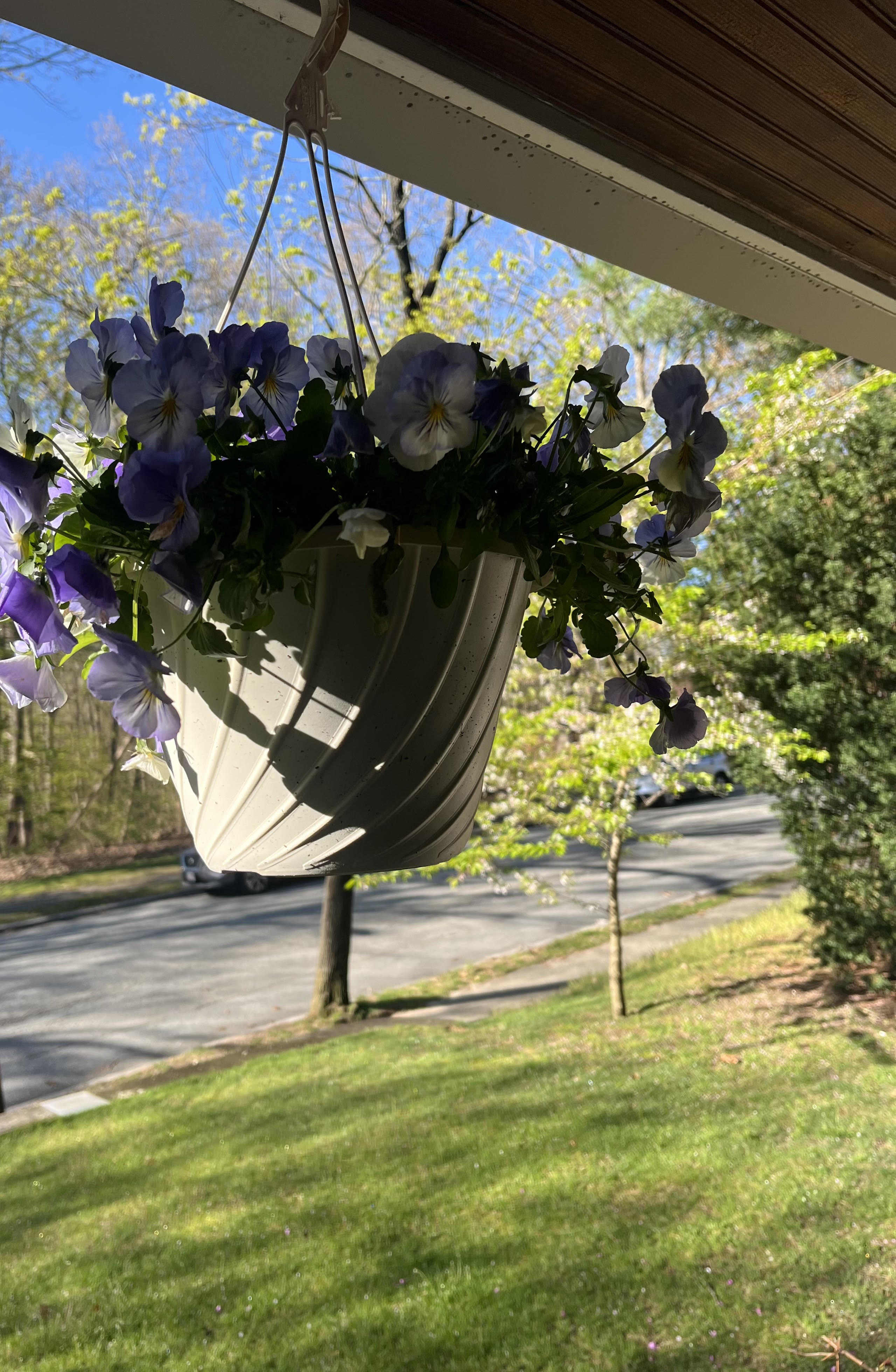
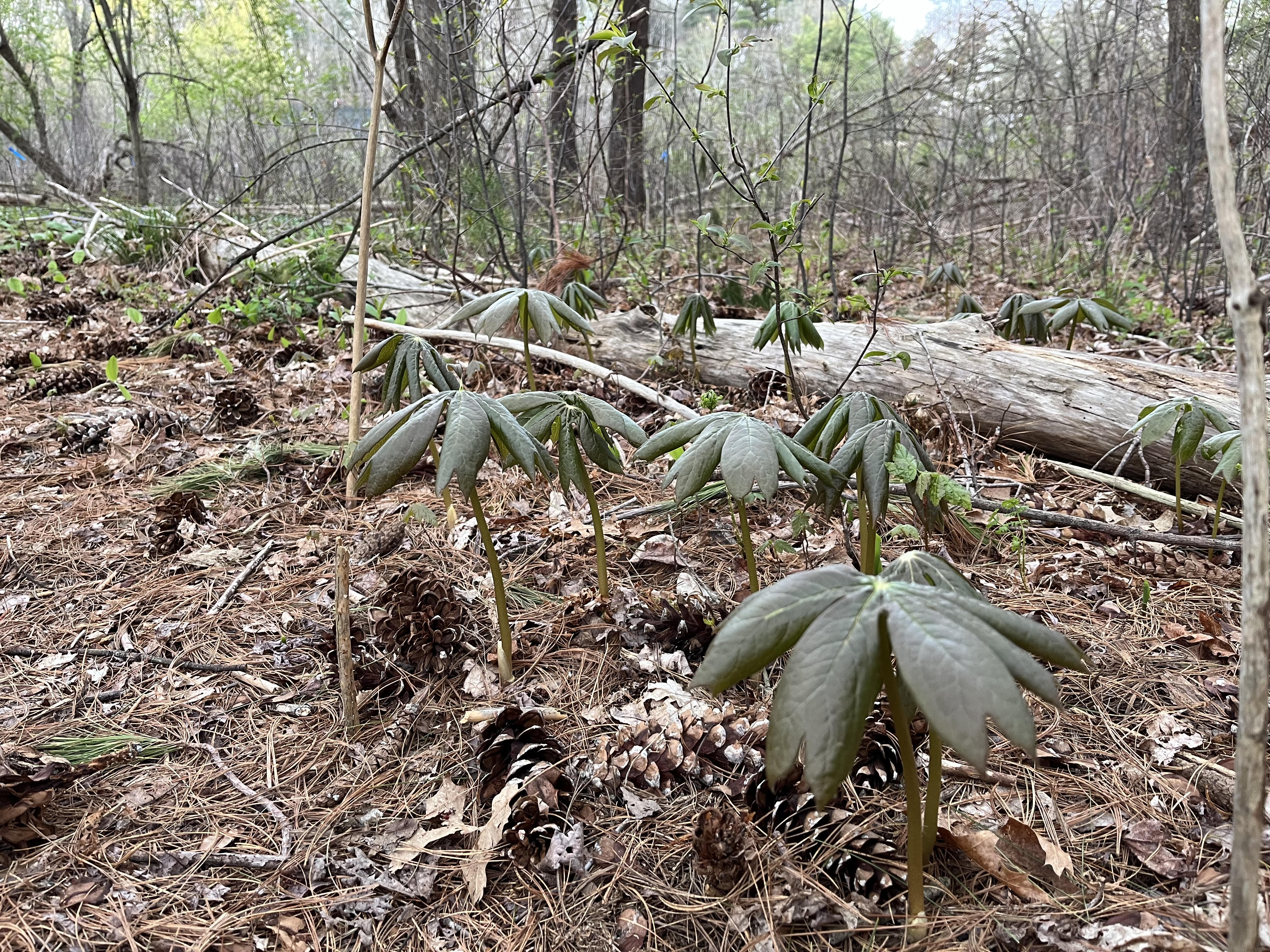
Partly, of course, spring is about the angle of sunlight, how early the sun comes up, how late it stays. I never thought I had seasonal affective disorder, wasn’t sure I believed there was such a thing. But I do find I’m cheered up by sunlight, discouraged by gray skies.

The photos today are mostly self-explanatory, but I want to point out how vibrant the moss looks in early spring. Also, the last photo is of a New England wildflower called Mayapple.

Read Full Post »

Photo: Music & Youth.
The Music Clubhouse, one of several music-focused hangouts for teens in Massachusetts, opened unexpected doors for Kristiana — forming a band, participating in a music event with the Red Sox, being accepted to the Berklee College City Music Program.

Teens always need a place to hang out with other teens. The centers in today’s story offer a lot more than hanging out.

Catherine Hurley writes at GBH radio, “Eden Troderman knew where she wanted to spend her first afternoon as a student attending the Berklee College of Music: at BTC Records, the music production space at the Brookline Teen Center that she knew well. …
“The Brookline High School graduate, who releases songs under the name Aruna, has been playing music her whole life — which included writing some ‘really cringey songs in sixth grade,’ she said. But [Aruna] didn’t start releasing music until receiving some help from BTC Records.

“Founded in 2013, the Brookline Teen Center offers a community hub for teenagers who live or go to school in Brookline. It’s one of more than 800 active youth development nonprofits in Massachusetts, according to ProPublica’s Nonprofit Explorer.

“On that cold and icy afternoon in January, the center was active with teens playing basketball in the gym and huddling around small tables with snacks after school. Others were working on music in the BTC Records studio space. …
“Bri Skywall, teen technology coordinator at the Boston Public Library, said the library’s Teen Central aims to ‘provide what we call the “third space”: a space that isn’t their home and isn’t school or work, that they can come and just be themselves.’ A space where teens ‘don’t have to pay to exist,’ she said.

“Third spaces, which broadly include include free and publicly available spaces, social services organizations and low-cost commercial establishments, are known to strengthen communities. But research shows third spaces are declining, and disparities are more present along income, race and geographic lines.

“Connections in these spaces are informal, but the plans to expand them are in writing. Strengthening the BPL’s role as a third space is listed in the city’s Imagine Boston 2030 plan. And Boston’s Third Spaces Lab, in collaboration with New Urban Mechanics, aims to ‘make it easier for grassroots organizations and individuals to grow and nurture community-based third spaces from the bottom up,’ according to the program’s website.

“BTC Music Coordinator Pablo Muñoz said the center’s goal has always been to develop a space where teens can make music, whether they have big dreams in mind or are looking to express themselves day-to-day. …

“ ‘Whenever they’re having maybe not the best week, they’ll come in here and they’ll be like, “I want to do a song. I want to talk about this.” … They’ll get it out, and then they feel better, and they’ll work on their craft,’ Muñoz said. …

“With 60-70 hours of work, Troderman writing and Muñoz producing, she released her first song, ‘Crave‘ last May, which recently surpassed 1,000 streams.

“ ‘It’s a small milestone, but it means a lot to me. If people are even listening to my music, that’s crazy,’ Troderman said.

“Tom Goldberg, a junior at Brookline High School, started taking a music production class with Muñoz in early November. He’s still learning the basics, he said, but Muñoz has already helped him create a vocal-less track, teaching him how to establish a beat.

“ ‘I think I’m more confident in myself,’ Goldberg said. … [He] said if he were to show people at school the music he likes, there would be a different reaction than at BTC Records. ‘Here, [it’s] way more welcoming,’ he said. ‘Like the sense of community is way bigger here.’ …

“Teens at the center that day milled in and out of the control room, pushing open the heavy, soundproof door in search of Muñoz, their admired teacher and collaborator. Muñoz himself started at BTC in 2022, about a year after he graduated from Berklee. …

“The next day, on a colder and icier afternoon in Back Bay, four teens huddled around computers and small keyboards. They were there for Music Production with Hamstank, a weekly digital music creation session at the Boston Public Library. Somerville-based record producer Tony ‘Hamstank’ Hamoui has led the program for the last seven years. …

“Hamstank’s routine during the hourlong sessions differs from week to week. Sometimes he’s helping teens get started — like a participant that day who opened the music software for the first time and was already making a song — but he also supports kids with more advanced music skills.

“Hamstank glanced over to another teen, calling him a ‘master-level composer and vocalist.’ The student was working on a song he started the week prior, this time re-recording vocals in the space’s audio booth. …

“Hamstank said some kids come to the session with their headphones on, wanting to work solely on their own projects. ‘And that’s fine, but you always find them slowly taking the headphones off and listening and asking questions and talking to other teens,’ he said.”

More at GBH, here. No firewall. [Note: I may have used the wrong pronouns for Troderman. The GBH article was inconsistent.]

Read Full Post »

We’re saying good-bye to our home of 42 years.

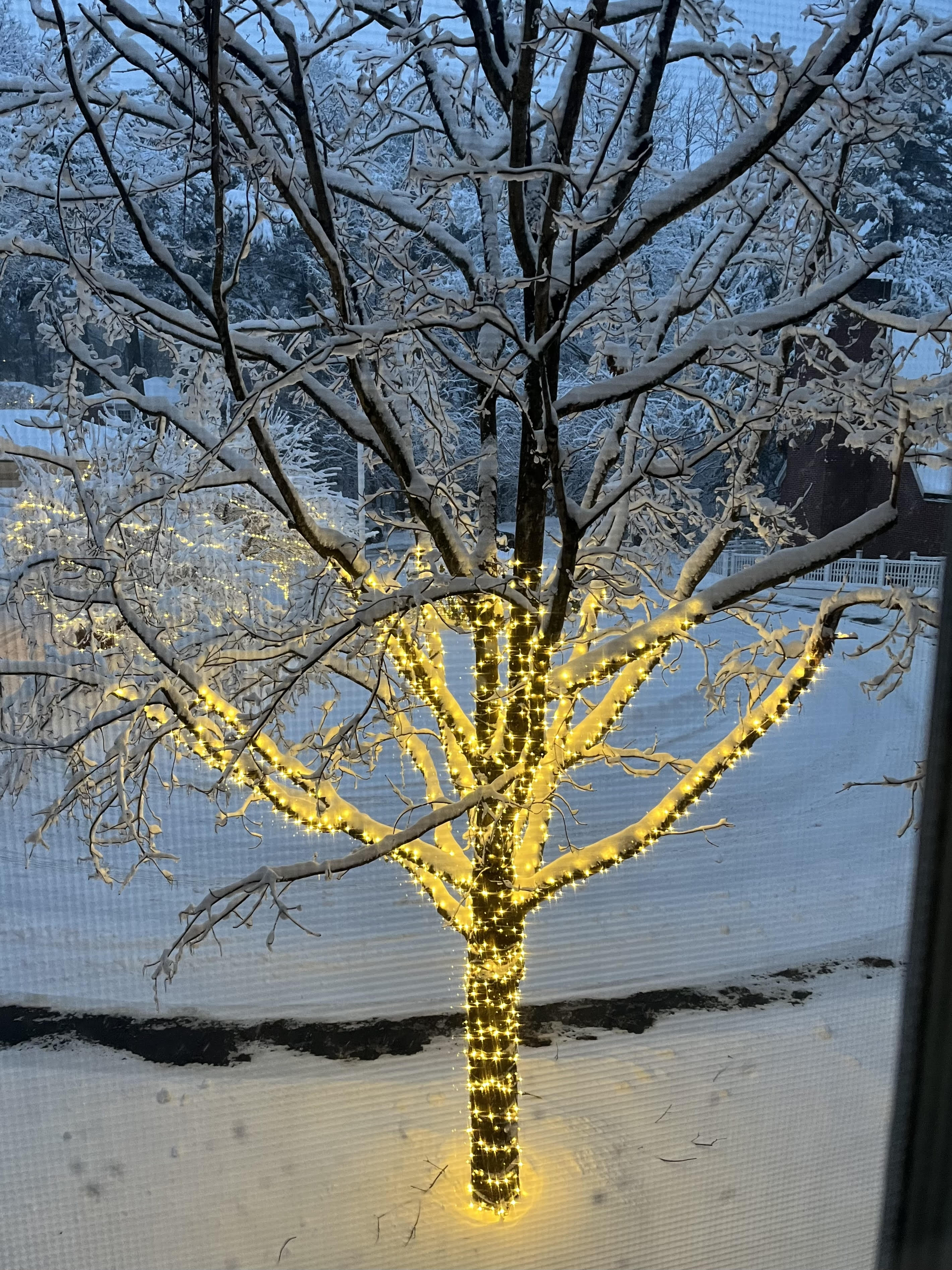
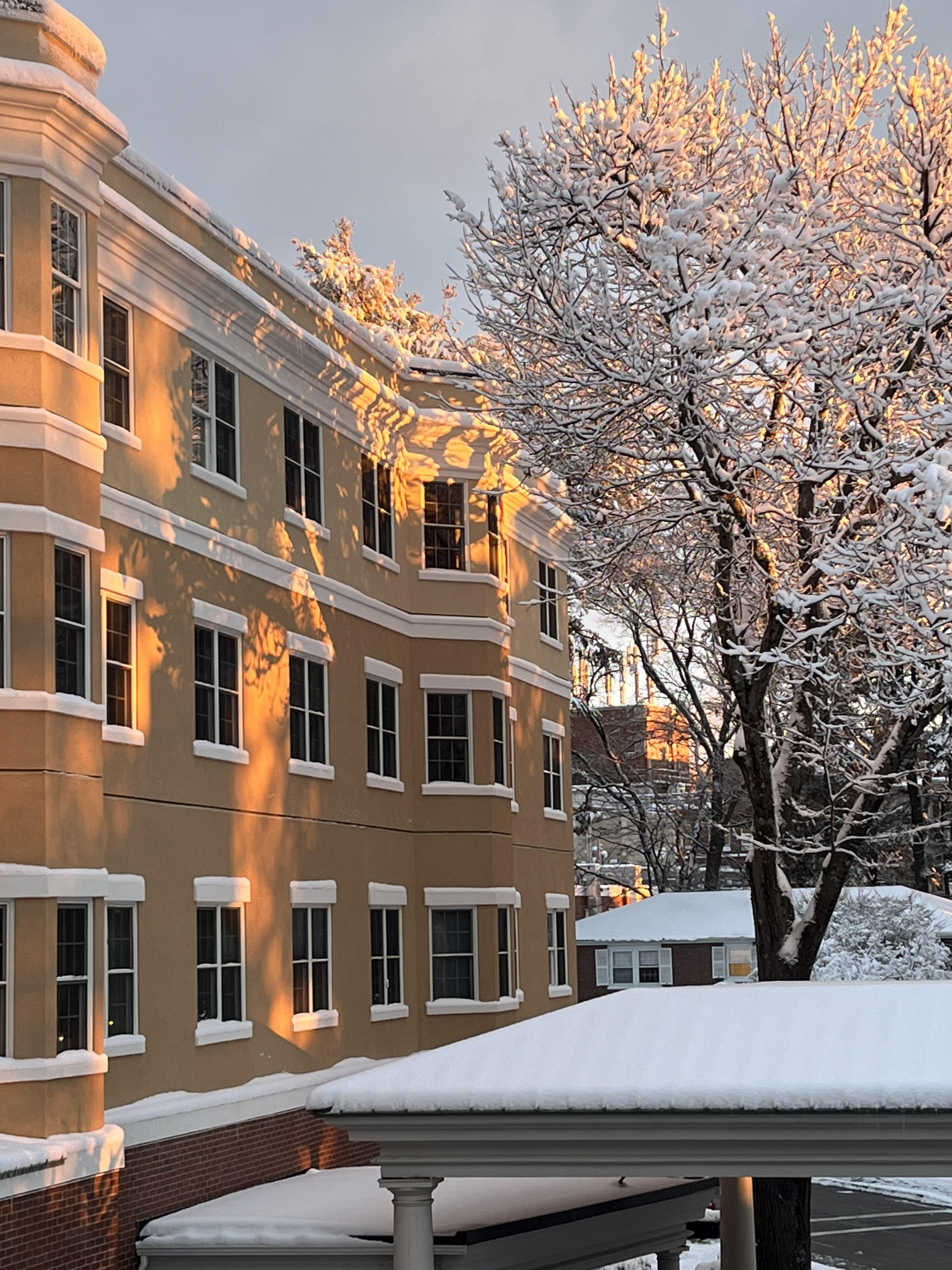
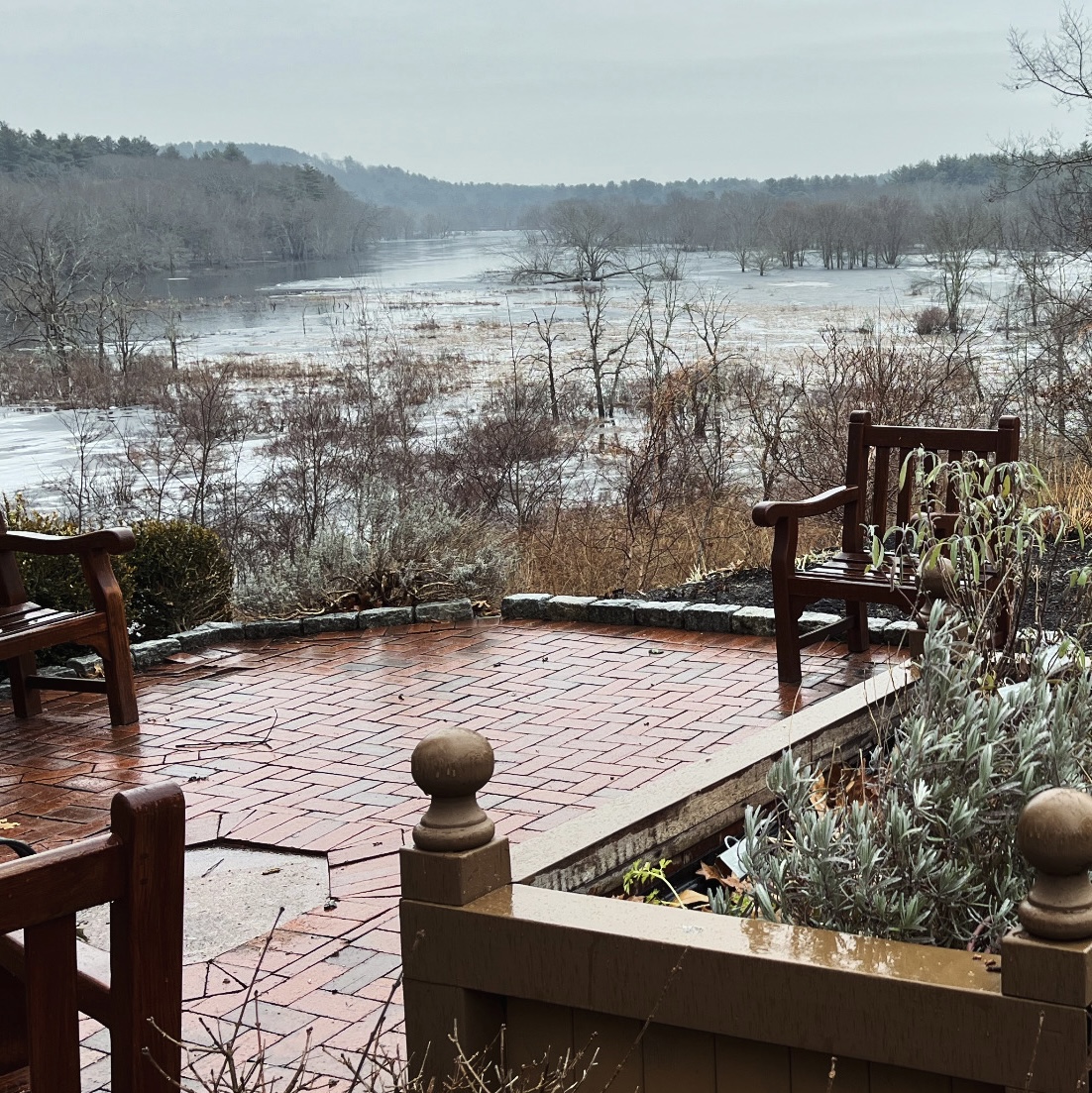
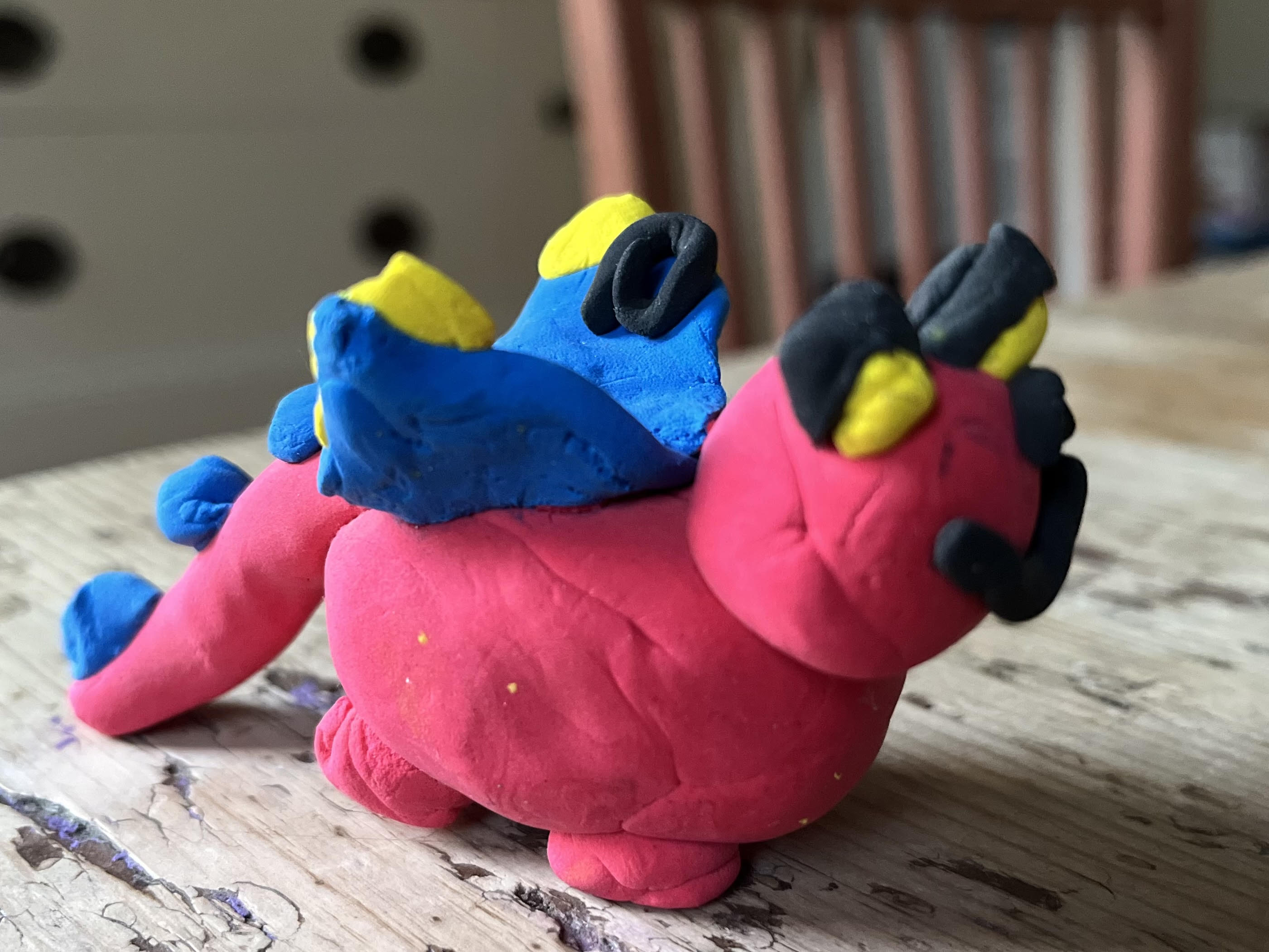
I haven’t posted photos for a while. Increasingly, I feel uninspired on cloudy, overcast days, and we have had a lot of those this winter. But here are the photos I did shoot. They were all all taken in Massachusetts, with the exception of the last one, my Providence granddaughter’s Model Magic dragon.

Happy Year of the Dragon!

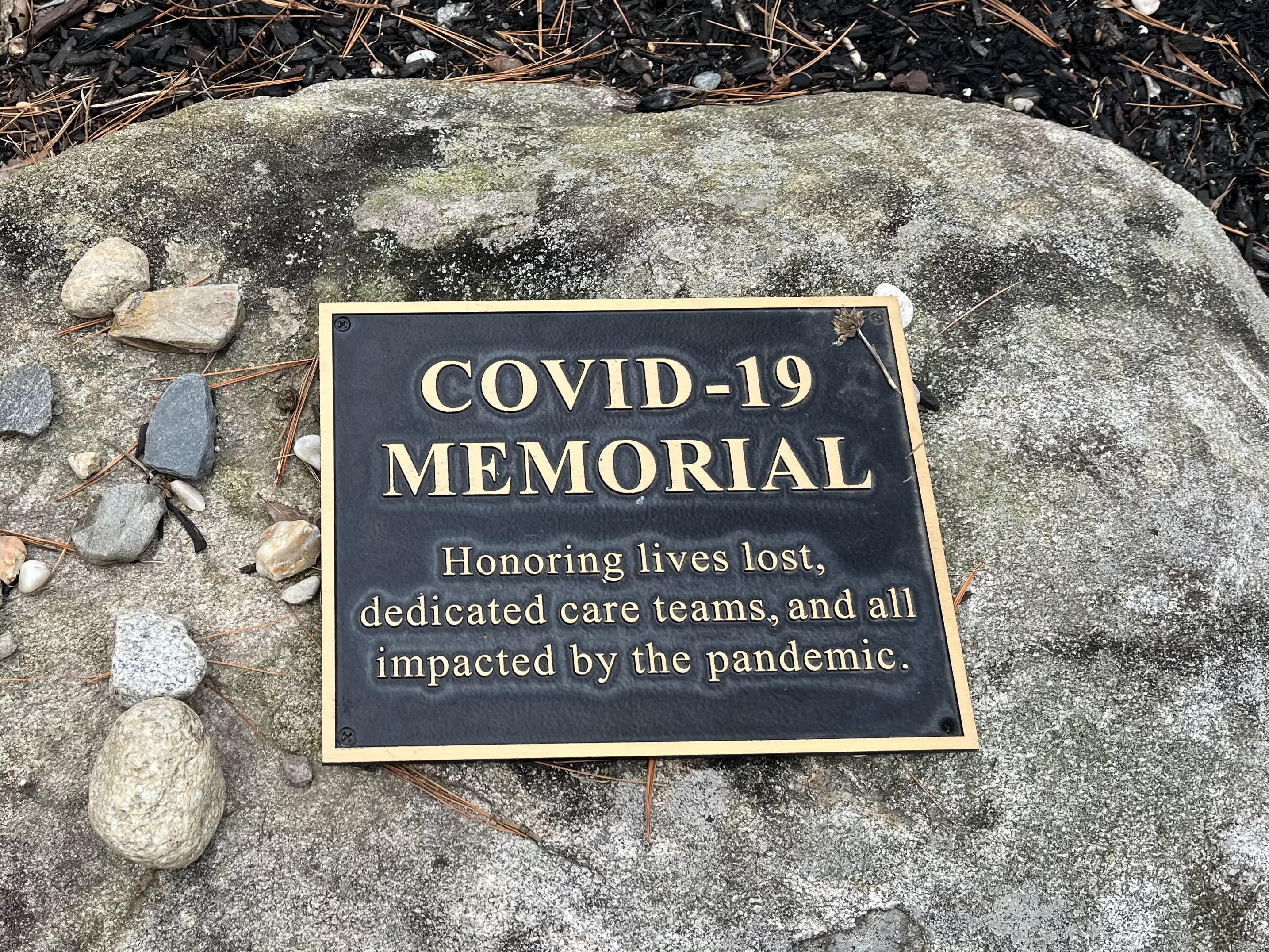
First comes the big snowfall we had in early January, then the bleak, rainy days that came after the snow melted. The river is the Sudbury. The river photo is followed by a memorial at the neighboring hospital, where everyone from our community goes, at least initially, when they have an emergency.

I think it’s good to be reminded what it was like in the early days of the pandemic.

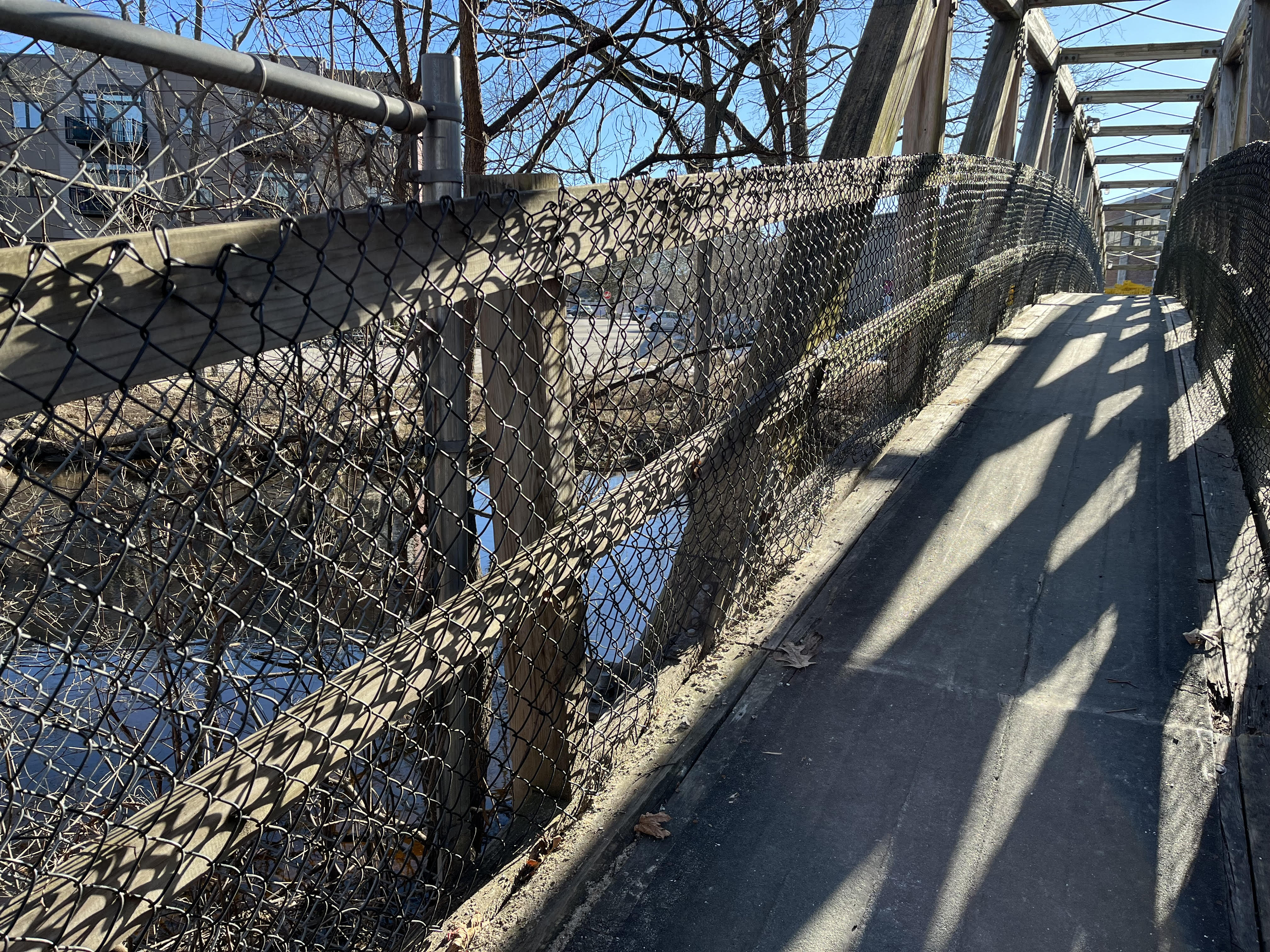
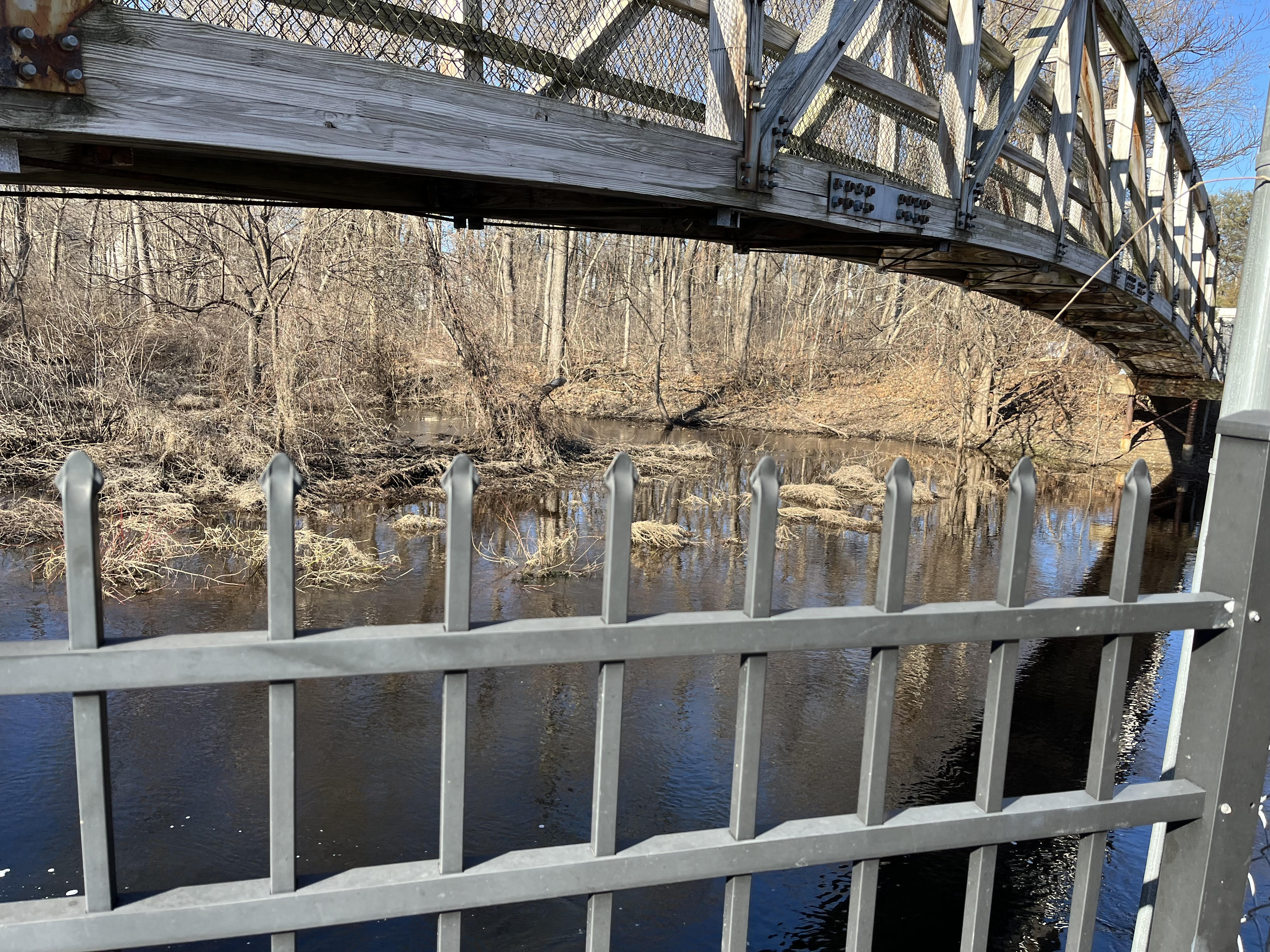
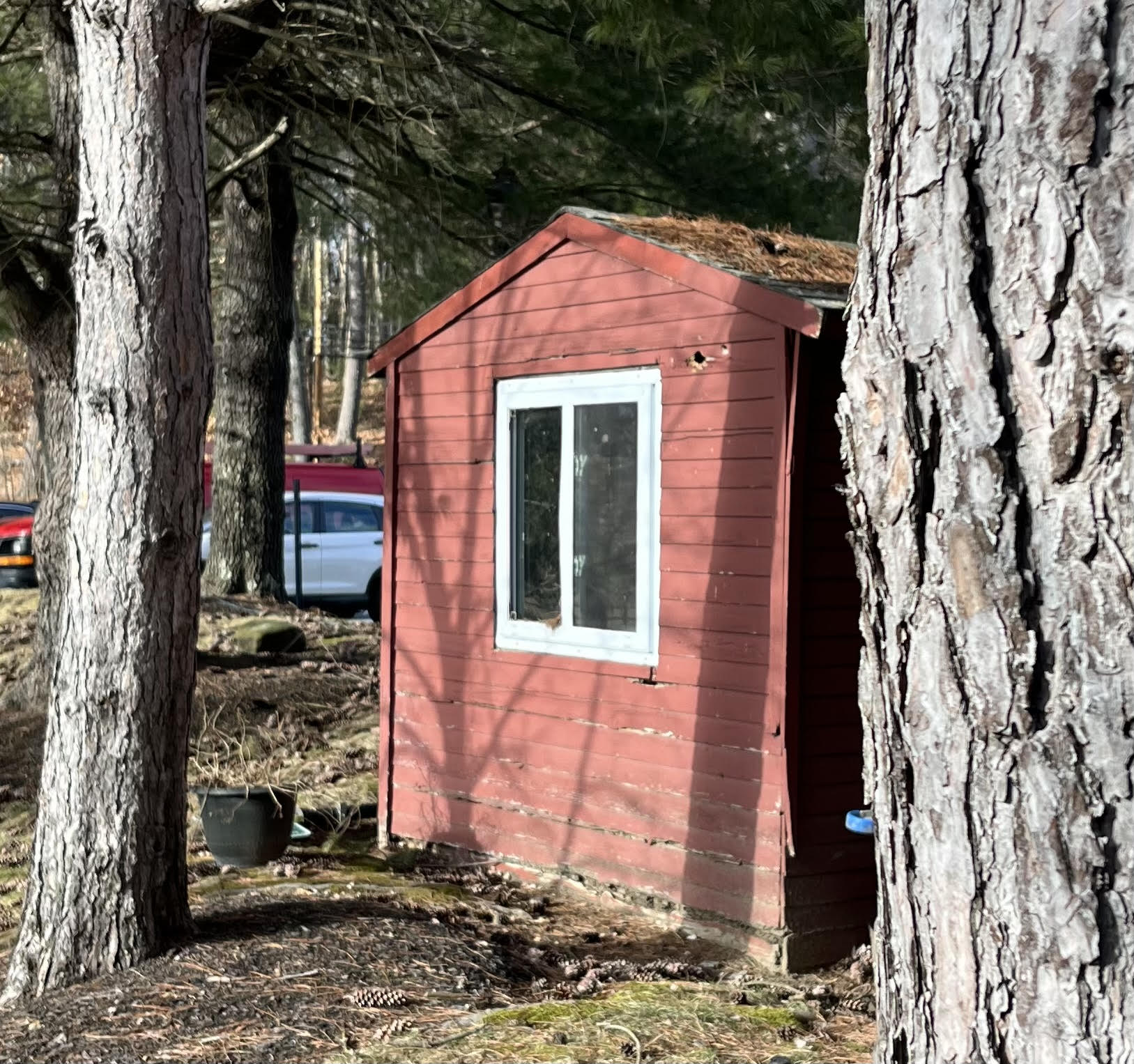
Finally the sun came out. I took photos of the footbridge over Nashoba Brook, which was hurrying along as if it were spring already. Also in sunshine, a mossy-roofed shed caught my eye.

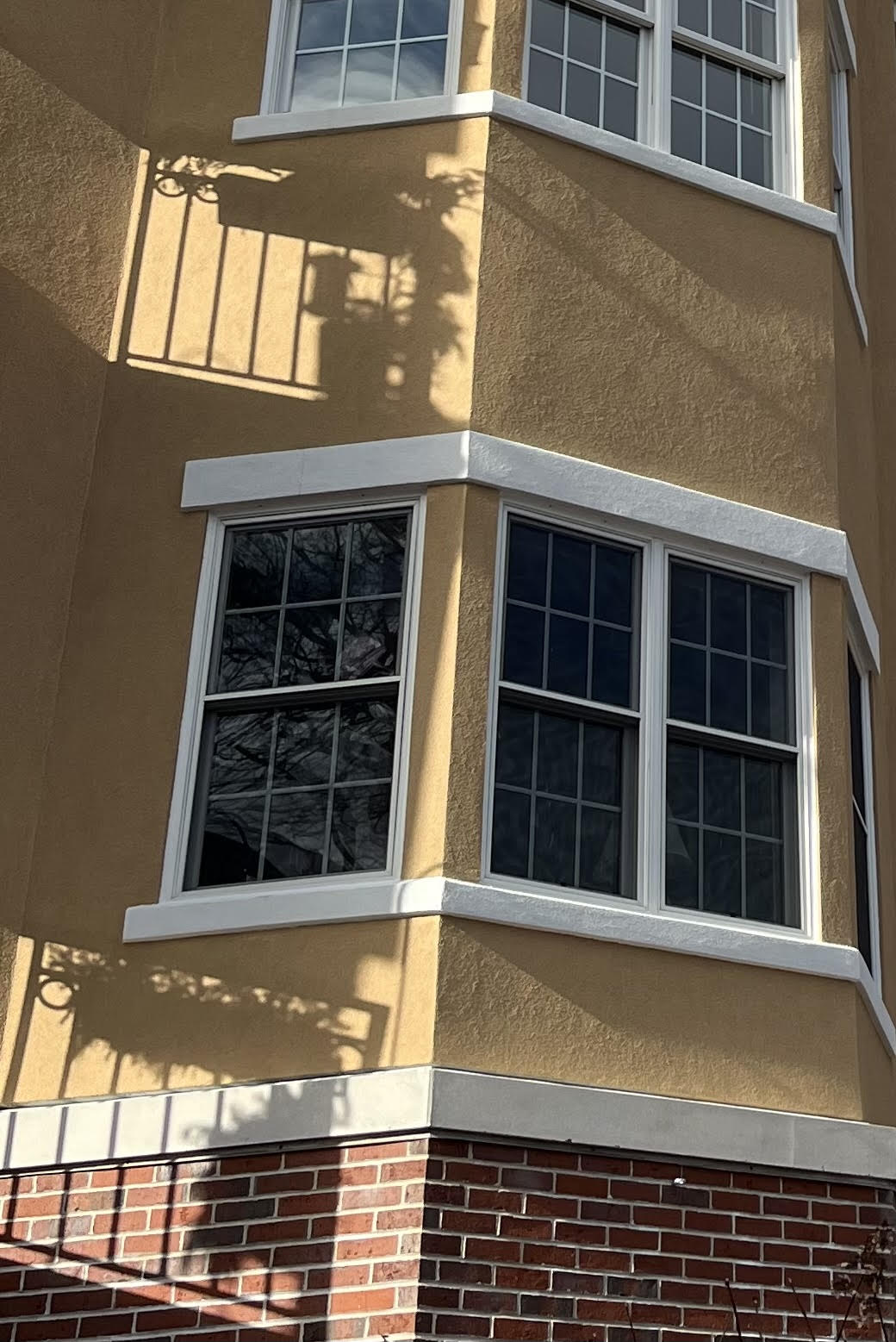
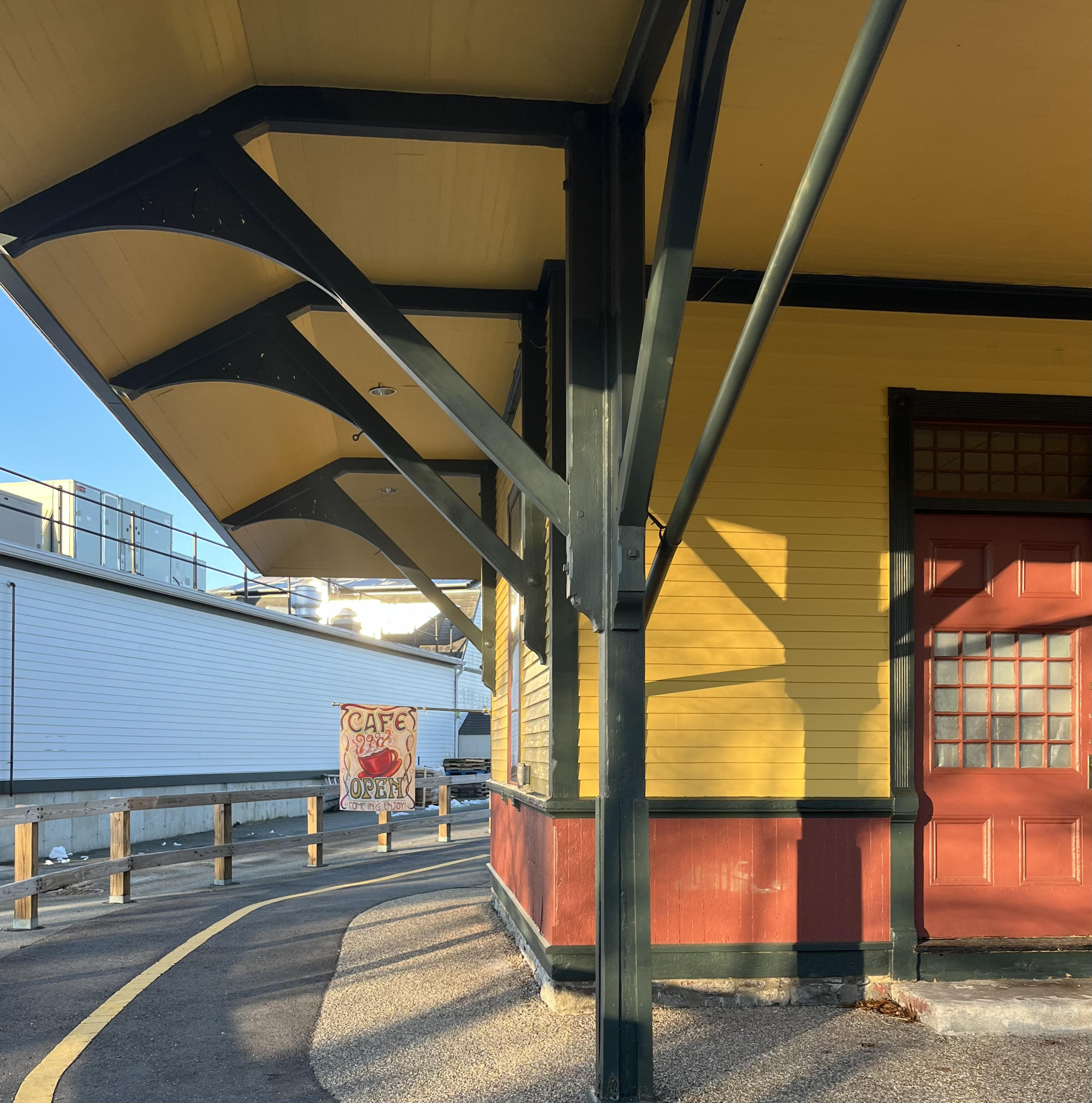
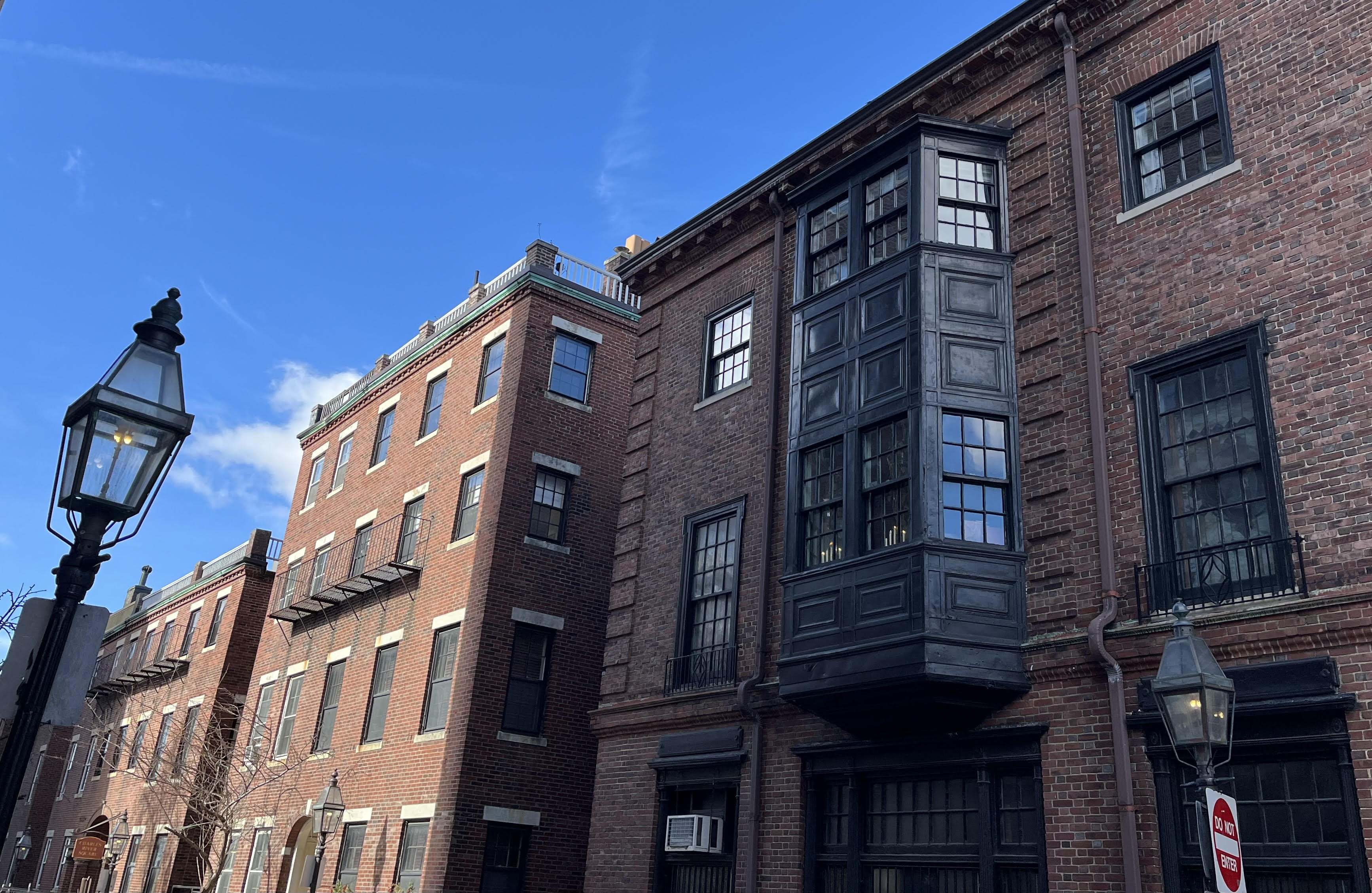
Do you see balconies next? After the balconies, is the train depot. I was there in the early morning to catch the train to Boston for annual checkups at MGH. While in town, I also took a shot of the Beacon Hill area off Charles Street.

PS All dragons smile, if we know how to look at them.

Read Full Post »

Photo: Alexandra Ionescu/Rhode Island Collective.
This floating wetland, an artificial island hosting a human-made ecosystem, was scheduled to remain in Ice Pond in Southborough, Mass., until Sept. 17.

Here’s a new thing under the sun: a floating wetland. Art and science join forces, and Frank Carini at ecoRI News has the story.

“Floating in a circle around a pond in Massachusetts is a mini-wetland built by six Rhode Islanders. Earlier this summer, the mostly natural creation was chosen as the winning installation in the seventh annual Art on the Trails outdoor art and poetry program.

“But the freshwater wetland, built by a group of Ocean State artists, designers, and a botanist, wasn’t commissioned to win an award. It was designed to raise awareness about the importance of wetlands and show how they work. Mission accomplished.

“Art juror Sarah Alexander, who chose ‘Below and Above: A Floating Wetland Supports Life” by the Rhode Island Collective as the best installation, said, ‘The amount of careful research and thoughtful response to the space, along with the combined efforts of its dedicated creators, blew me away.’ …

“The wetland has been floating in Ice Pond in Southborough since June 11. It was created by sourcing native plants, and experiments with natural cordage. It shows how pollutants could be sucked from stressed waterbodies with a little help from human hands. A single anchor line keeps the wetland floating in a 15-foot circle, and not all over the popular skating pond.

“Members of the Rhode Island Collective include Holly Ewald (visual artist), Maxwell Fertik (interdisciplinary artist), Alexandra Ionescu (ecological artist), Hope Leeson (botanist), and August Lehrecke and Matthew Muller (co-founders of an inflatable architecture studio), who led the project’s construction. …

“ ‘The floating wetland ecosystem creates a habitat for the more-than-human world below and above the water line through the growth of native macrophytes. Through the plants’ life cycles, they regenerate the food web, amplifying the natural processes between sunlight, water, and microorganisms,’ according to the Collective. …

“Their structure was built using dried Japanese knotweed, broadleaf cattails, and bamboo for buoyancy, as alternatives to petroleum-based materials such as plastic and foam typically used to construct floating wetlands. A small amount of stainless steel wire mesh and cable holds the craft together.

“The knotweed used to create the floating wetland was harvested in late winter as dry stems from Mashapaug Pond and Gano Park in Providence. Fertik said repurposing invasive species for the project’s pontoons removed some of their biomass from the environment and transformed the nonnative plants into a vessel to improve water quality and promote biodiversity. (The dead stalks weren’t capable of spreading.) …

“The craft is home to 18 native wetland plant species: American bur-reed; bayonet rush; brown fruited rush; Canada rush; common cattail; Alleghany monkey-flower; blue flag iris; boneset; cardinal flower; flat-topped goldenrod; Joe-Pye weed; New York ironweed; northern water horehound; pickerelweed; swamp milkweed; buttonbush; silky dogwood; and steeplebush. …

“Suspended in water, the plant roots provide a home for diverse communities of algae, bacteria, fungi, and protozoans, known as periphyton. As the plants upcycle nutrients from the water into their roots, stems, leaves, and flowers, the periphyton provide nutrient uptake, filtration, oxygenation, and toxin removal.

“Southern New England’s freshwater lakes and ponds, especially the shallow ones, are being stressed by development, wastewater overflows, old and failing septic systems, antiquated cesspools, and stormwater runoff carrying nutrients such as nitrogen and phosphorous from fertilizers and roadway pollutants such as polycyclic aromatic hydrocarbons. …

“The Collective’s 48-page PowerPoint presentation noted Indigenous communities built floating islands for hundreds of years by harvesting natural materials found in their surroundings. ‘By incorporating native plants from freshwater marsh and pond ecosystems, we are supporting a variety of other life forms,’ they said.

“Ice Pond, part of the 58.5-acre Elaine and Philip Beals Preserve, is a healthy ecosystem in little need of a floating wetland to pull pollutants out of the water, but it did give the Collective an opportunity to learn how floating wetlands create a habitat, observe the decay of the natural materials used to build the craft, and document the growth of the native wetland plants. … The Providence Stormwater Innovation Center has requested the craft’s presence for the ponds at Roger Williams Park. …

Art on the Trails is an annual site-specific ecological sculpture park exhibition. To watch a video about the project, click here.

More at ecoRI News, here.

Read Full Post »

Photos: John and Suzanne’s Mom.
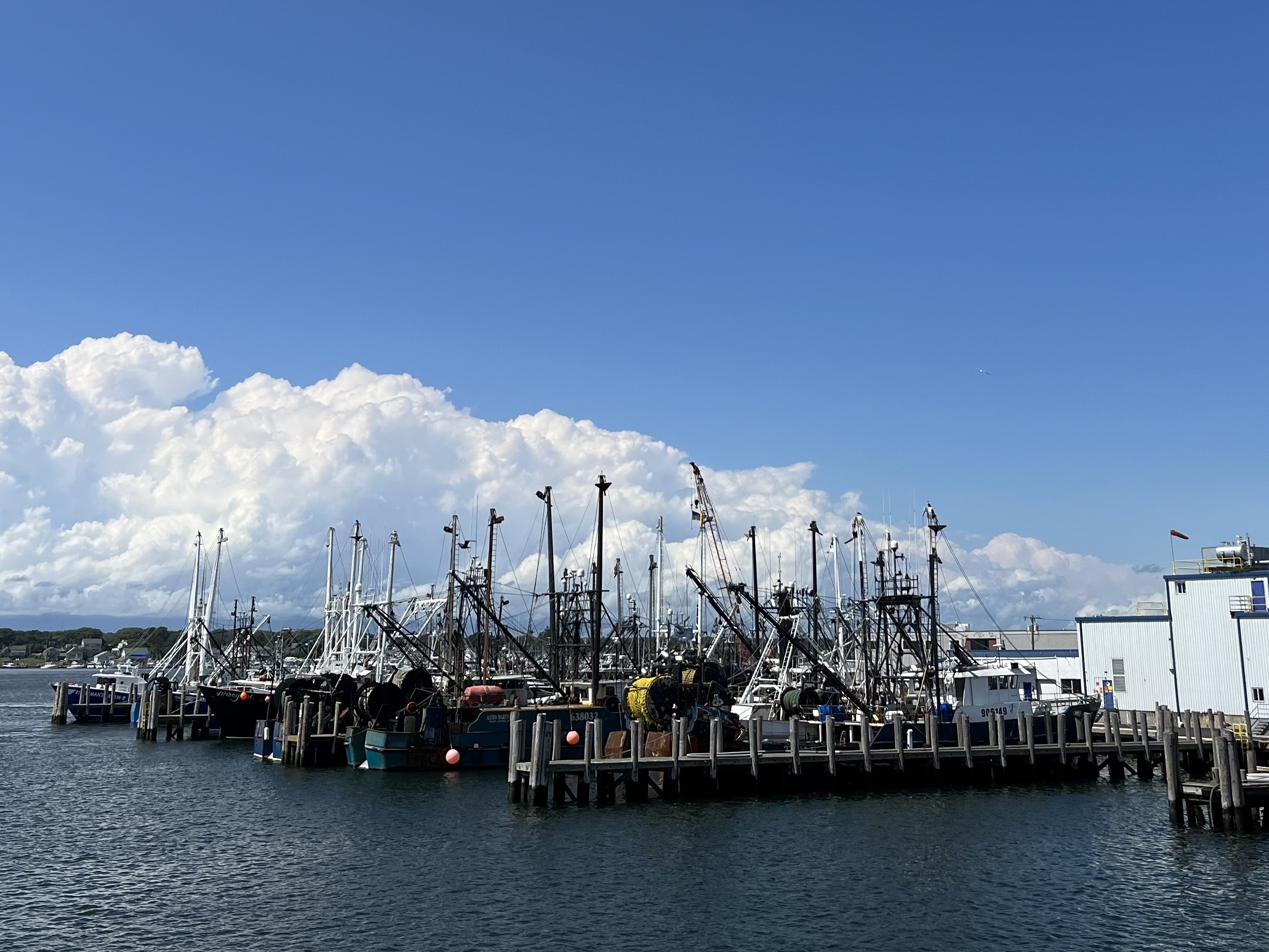
Above, the fishing flee in Galilee, Rhode Island. And some rather decent clouds.

Summer always seems to be the best time for photos. In winter I have to look harder. Here are a few recent shots from New England: specifically, from Massachusetts and Rhode Island.

A luau at our new Place had an unusual approach: Hawaiian food, Caribbean music. Well, OK, I thought, I do like the sound of a steel drum.

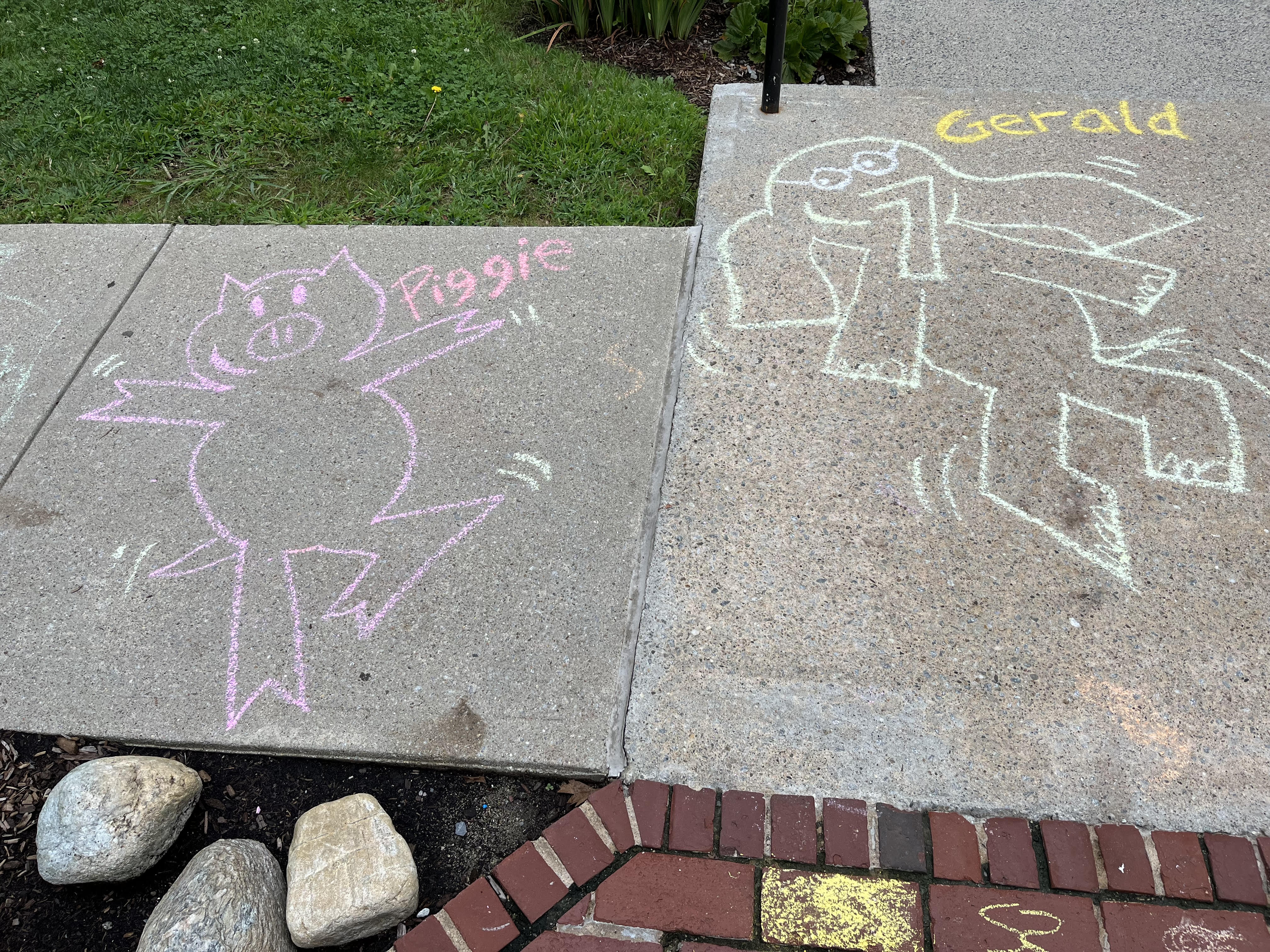
A very decent artist brought Gerald and Piggy to the front walk of the Fowler Library.

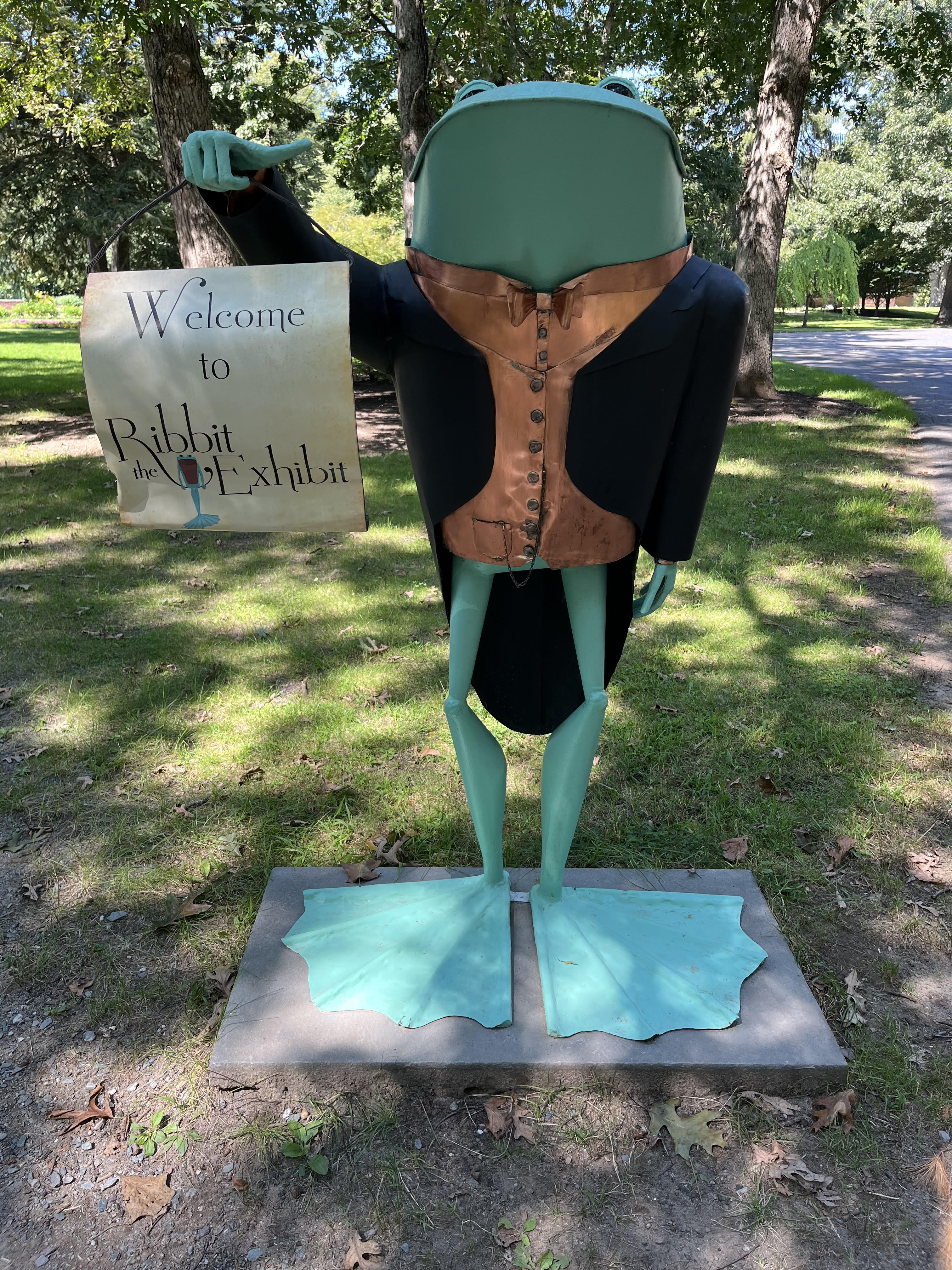
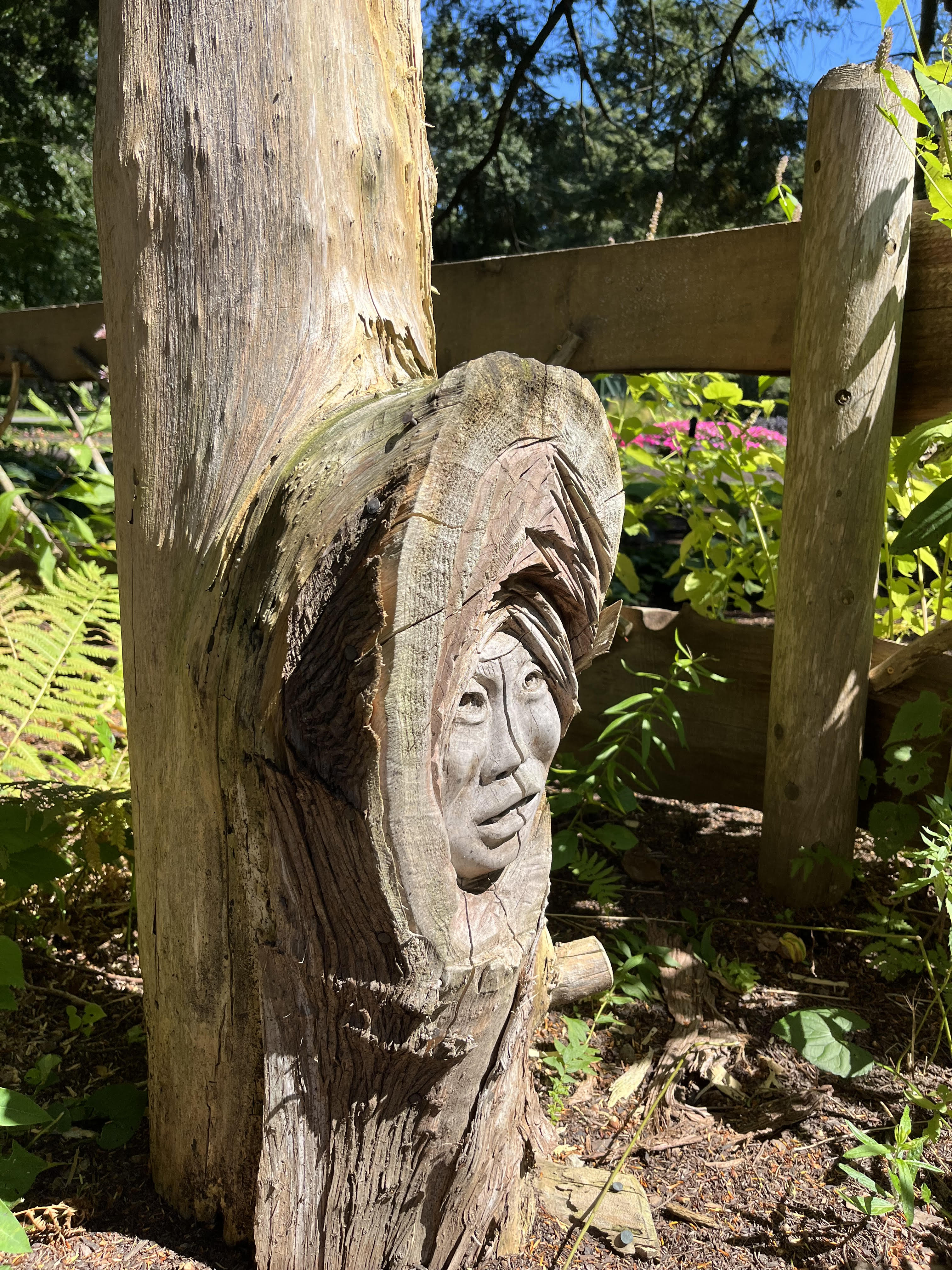
Frog characters welcomed both children and adults to Mass Horticultural Society’s Elm Bank gardens. Nancy and I liked the pollinator garden with its tinkling waterfalls and shady benches a lot more than the formal gardens. I also admired an interesting totem-like carving there.

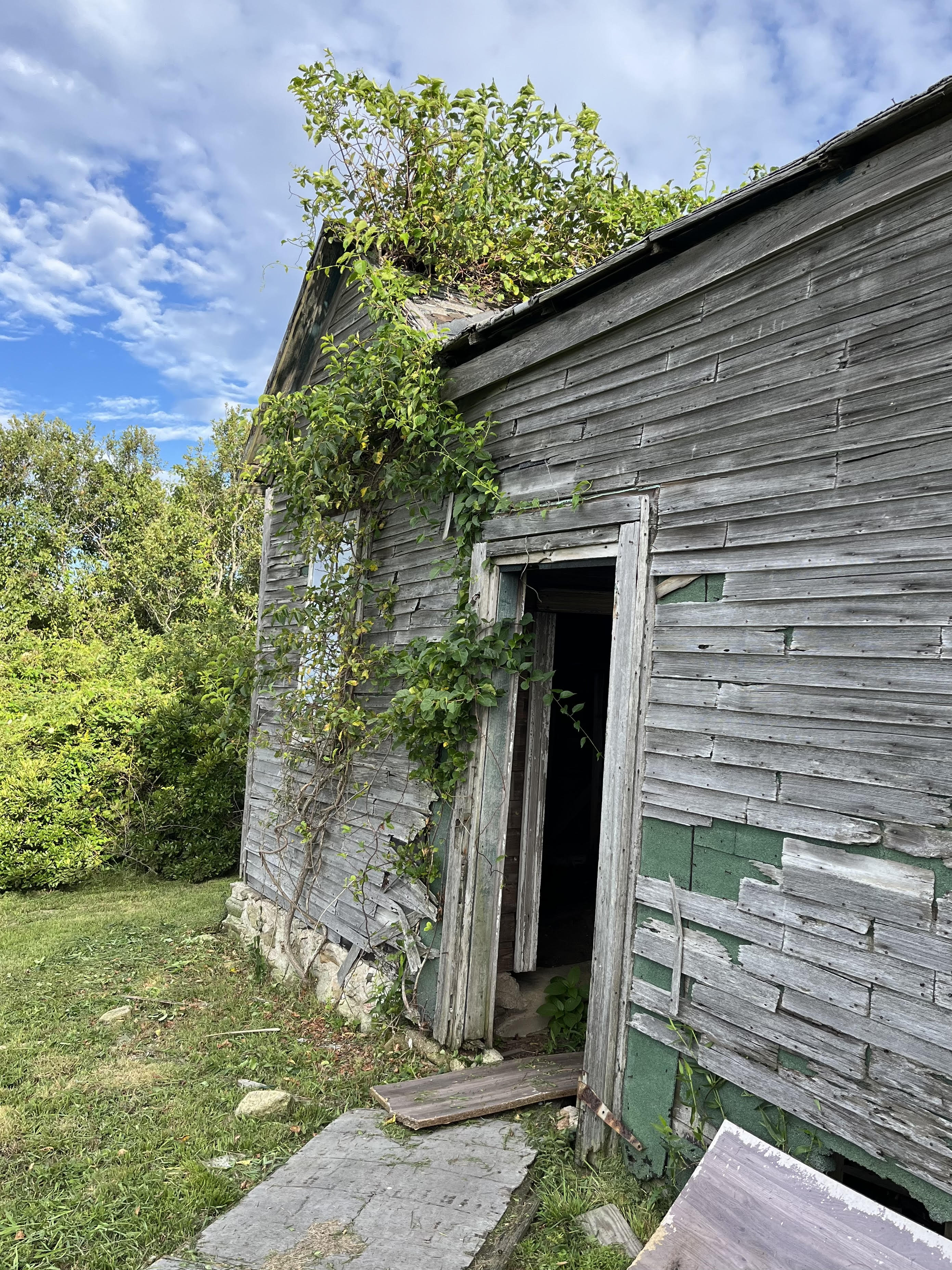
My other photos are just odds and ends that caught my eye. Let me know if you would like more explanation of any.

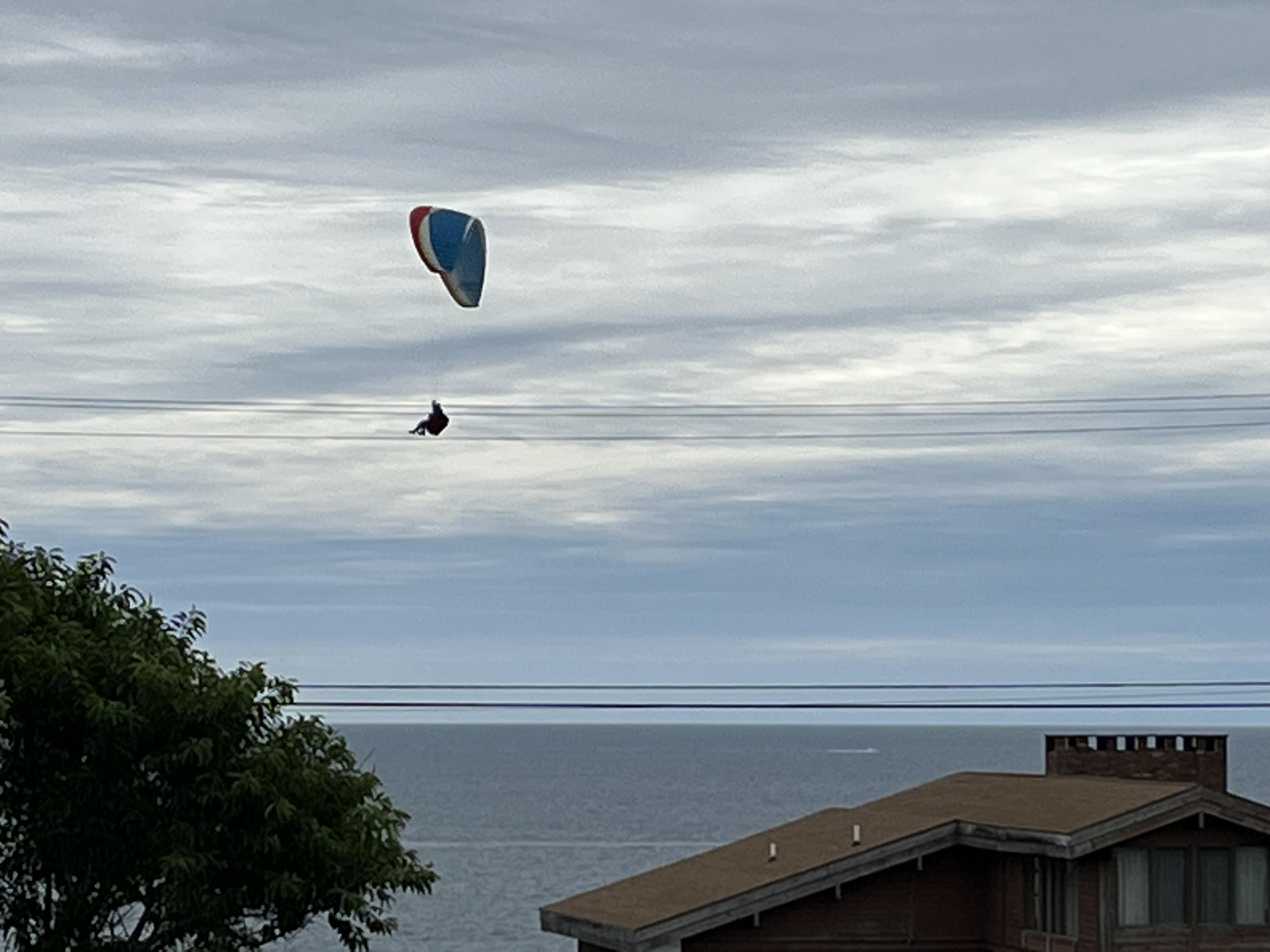
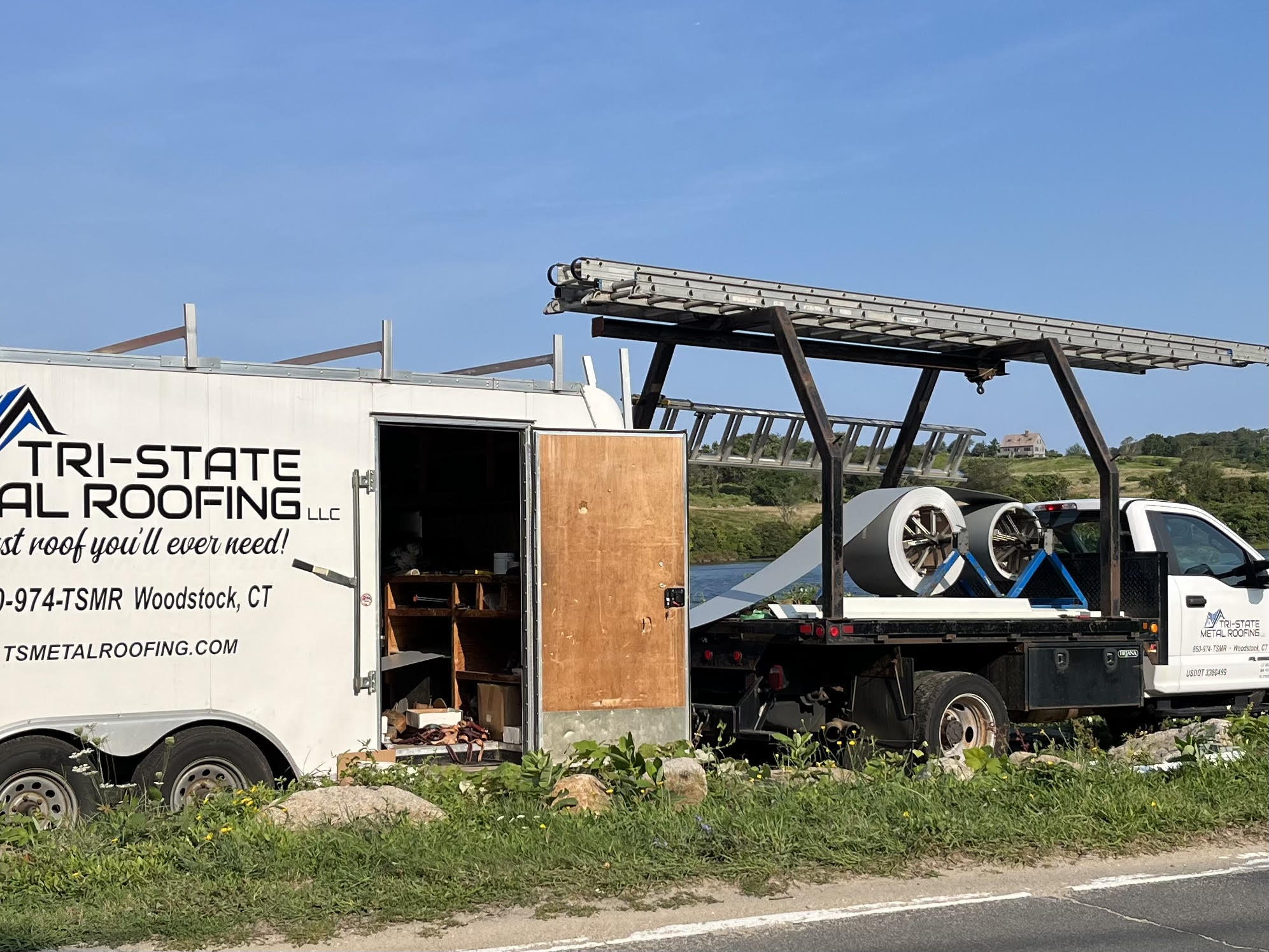
I do need to explain that the person floating along the bluffs was likely in a motorized parachute. Frightening! And the truck is included because I was fascinated that metal roofing comes off a giant roll that looks to me like nothing so much as chewing gum.

I’ll wrap up with a word on Joan Mallick’s popular “blue pottery. ” As Joan is unwell and no longer able to work, I think her distinctive mugs, plates, planters, and Christmas ornaments are likely to become collectors’ items.

The last shot shows my husband’s clematis trying to get into the house.

Read Full Post »

Photo: Pat Greenhouse/Boston Globe.
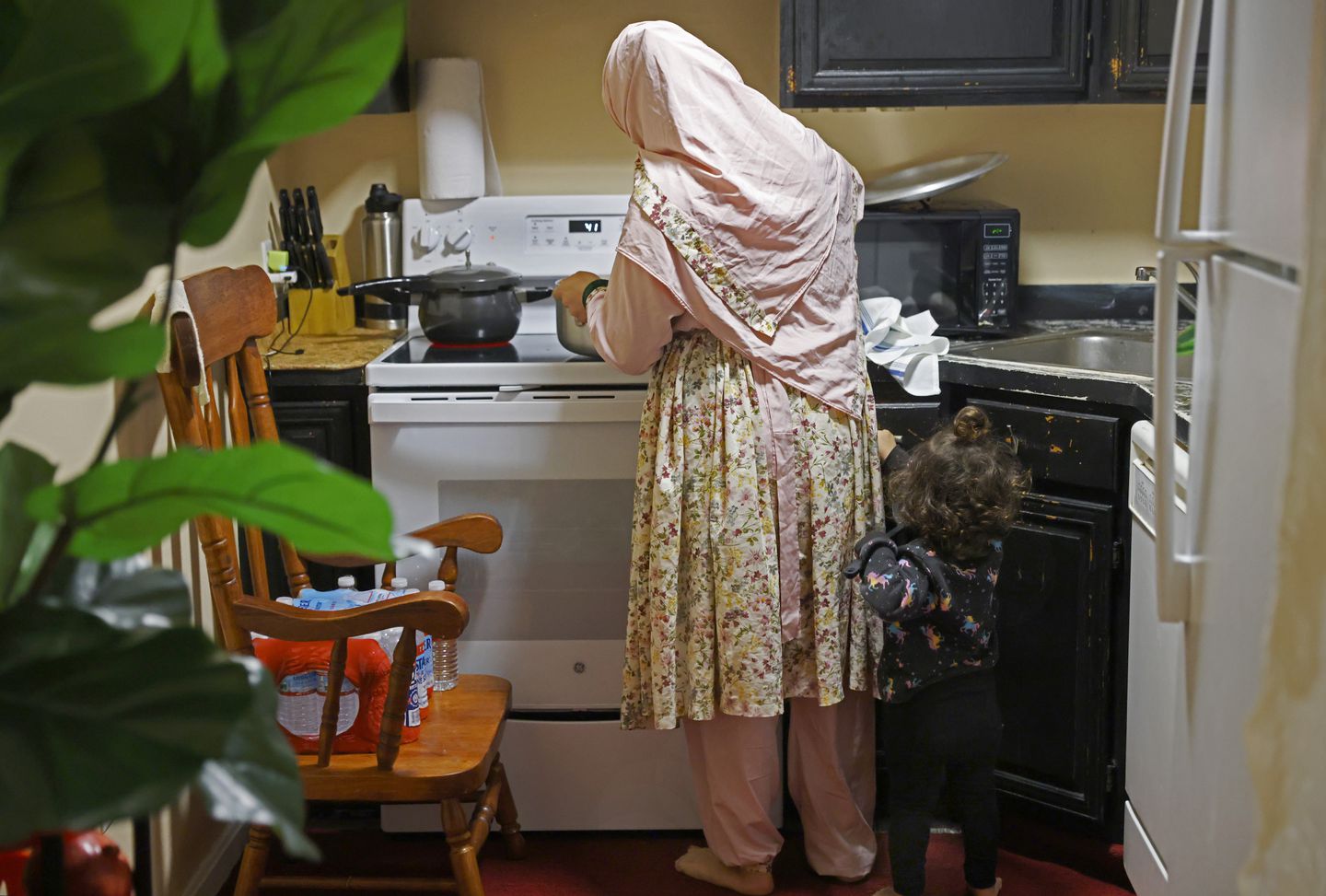
Samya prepares an evening meal. Back in Afghanistan, Samya and Noori’s fathers are out of work and their families struggle to find enough to eat. Noori sends them $200 to $400 a month.

In today’s story, an Afghan who worked as an interpreter for US troops builds a new life for his family in Lowell, Massachusetts, a longtime “gateway” city for new Americans.

Alexander Thompson reports at the Boston Globe, “Scarcely any of the 40 Afghans who trooped off planes at the Manchester, N.H., airport on an unseasonably warm day on Nov. 18, 2021, had ever heard of Lowell.

“Among the dazed and weary refugees at the airport was an irrepressibly optimistic former US military interpreter called Noori. His wife, Samya, and two young daughters, Taqwa and Zahra, were at his side. They were exhausted, but they were safe.

“Noori recalled that he didn’t know a single person in New England. He didn’t have a job. Or a car. Or an apartment. Or a winter coat. But he had his family. ,,,

“After a harrowing escape and a grueling journey halfway around the world, Noori and his fellow Afghans quickly found that life in Lowell is no Hollywood movie.

“ ‘We thought that in America all the facilities of life were going to be provided for you,’ he said. ‘It’s true that it has, if you work [for it].’

“Noori and several hundred other Afghan refugees who have been resettled in Lowell have set about doing what they could not in their own country. They’re building lives in peace while forging a united community that is, slowly, bridging the divides of language and creed that have riven Afghanistan for decades.

“ ‘The United States of America did not build a nation in Afghanistan, and now the Afghans who are here are trying to build a new nation here in the United States,’ said Jeff Thielman, president of the International Institute of New England, which resettled many of the Afghans.

“And in the past year, Noori has gone from being just another Afghan in the crowd to a community leader, always eager to help his compatriots even as he navigates his own obstacles in the new country he’s proud to now call home. …

“Getting his license at the end of March was a huge relief. It felt like a hard-earned victory after the family’s first few months in Lowell, which had been difficult at times.

“Noori was lucky that the Lowell Community Health Center hired him days after he arrived as a Dari and Pashto language interpreter for their influx of new Afghan patients. But rent, Wi-Fi, and heat were expensive. They also desperately missed their families back in Afghanistan.

“ ‘Whenever I’m talking to my mom, she was crying because we are away from her, so this is the hardest part,’ Samya said, with her husband interpreting from Pashto.

“[Samya’s] and Noori’s fathers are out of work and their families struggle to find enough to eat amid Afghanistan’s worsening humanitarian crisis. Noori sends back $200 to $400 a month.

“Worse still, as Noori would acknowledge many months later, the family was feeling trapped and helpless in a tiny apartment. Fortunately for Noori and the other 275 refugees who eventually settled in Lowell, there was a group of Afghans who had arrived in the area years earlier and who offered support and guidance. The group’s de facto leader, named Mohammad Bilal, is another former military interpreter, who arrived in 2014.

“Among the first things Bilal and the others did was establish a WhatsApp group for the new arrivals.

“ ‘We will just call to the community if there is someone available, just please help this family. … They were going to get [the refugees] food, they were there to get them to the hospital,’ Bilal said. ‘Whatever their need was, we were helping them.’

“Noori had an extra advantage: Major White [who helped him escape] was still looking out for him. White knew Noori needed a car, so he set up a GoFundMe page that raised $14,000 and bought Noori a used Ford Focus. …

“By May, doing checkups with every new Afghan, [Dr. Rob] Marlin and Noori were the clinic’s dynamic duo. Marlin brings the medical knowledge and Noori the linguistic and cultural savoir-faire. Each patient reveals aspects of Afghan life in Lowell. …

“Before one checkup, Noori pointed out to Marlin that a man’s name indicated he is a member of the persecuted Hazara ethnic group. That prompted Marlin to probe deeper about the man’s roommates and whether he feels safe.

“ ‘He will often find out something that I didn’t ask about, that I hadn’t thought about,’ Marlin said.”

Read more about the Marine who aided the family’s spine-tingling escape and about their new life, here.

Read Full Post »

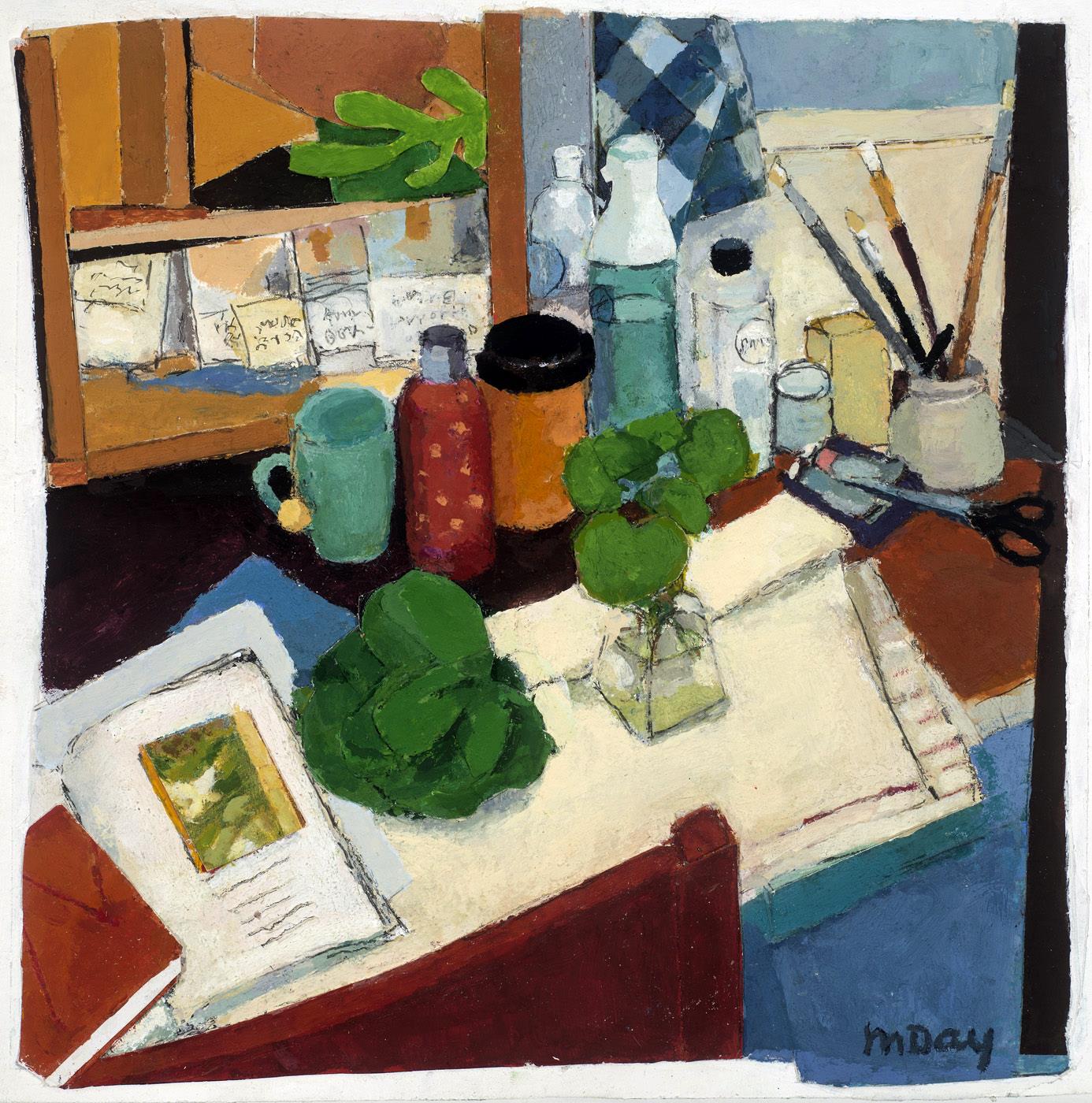
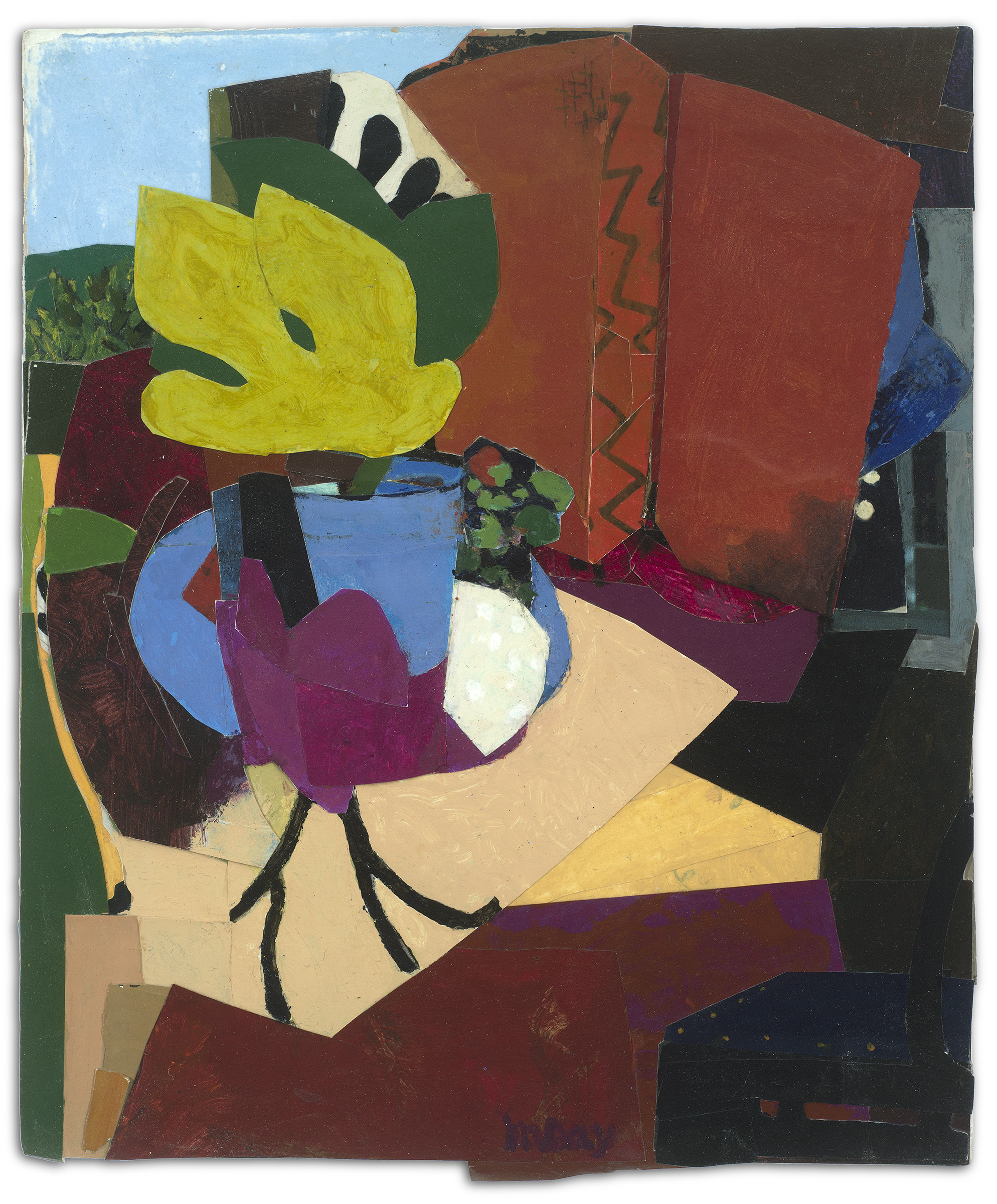
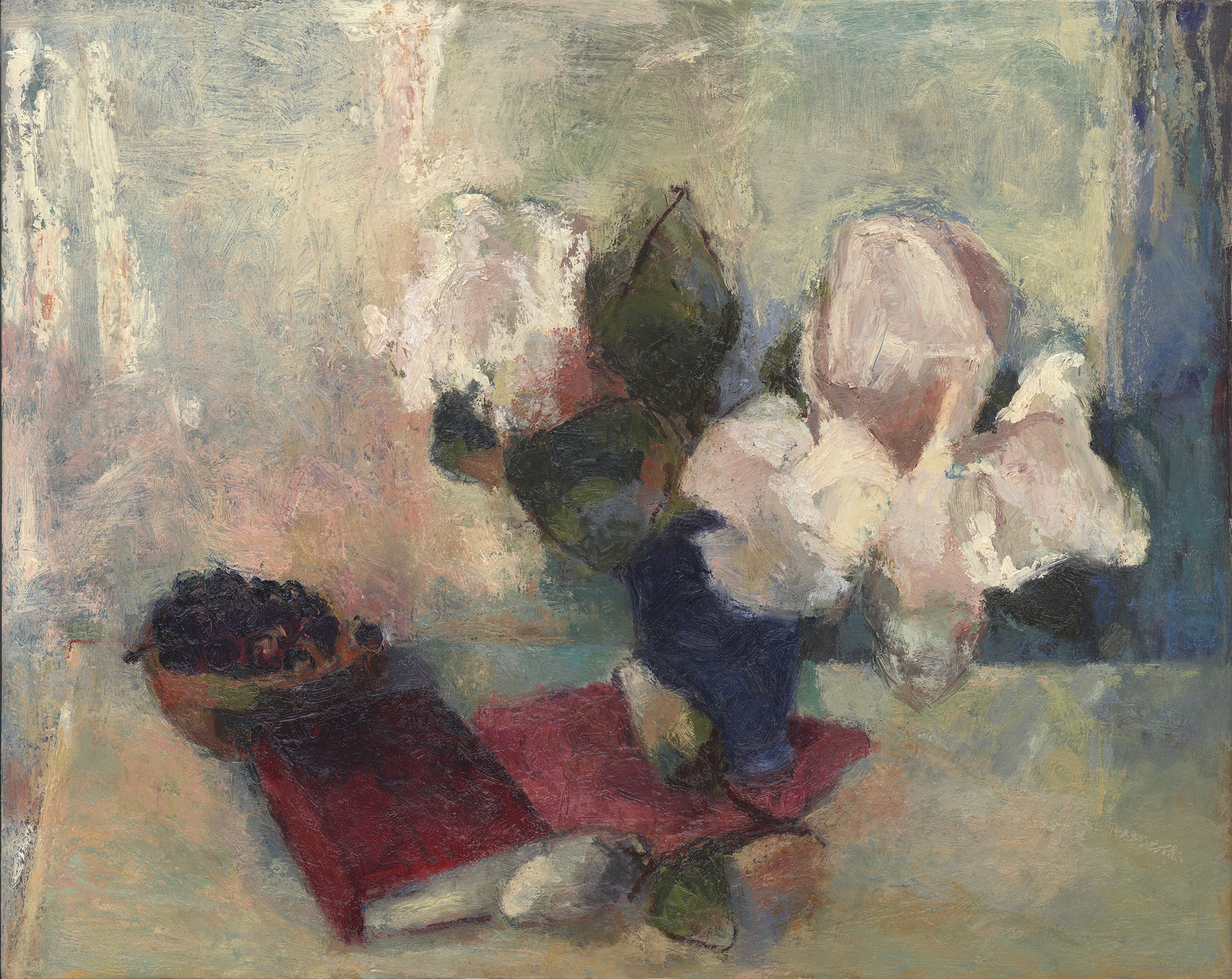
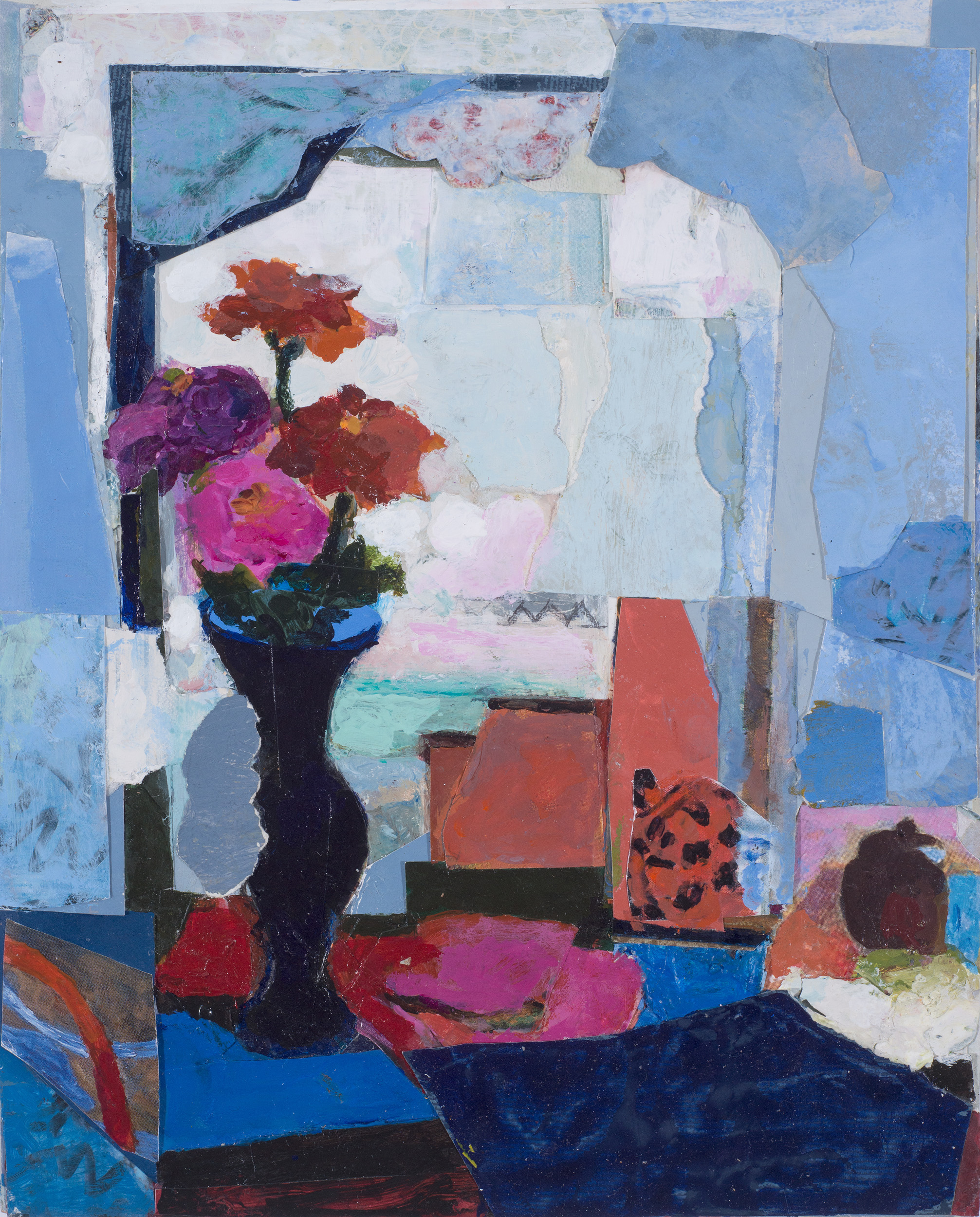
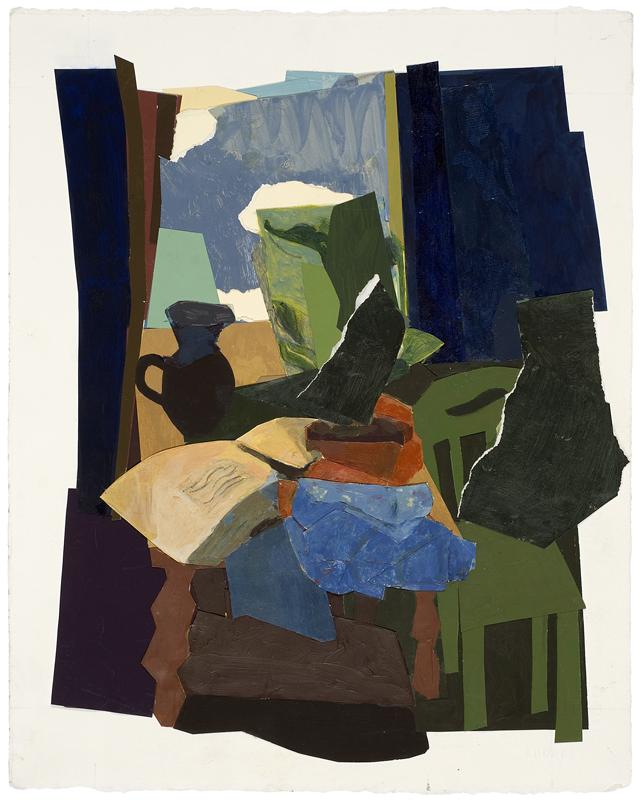
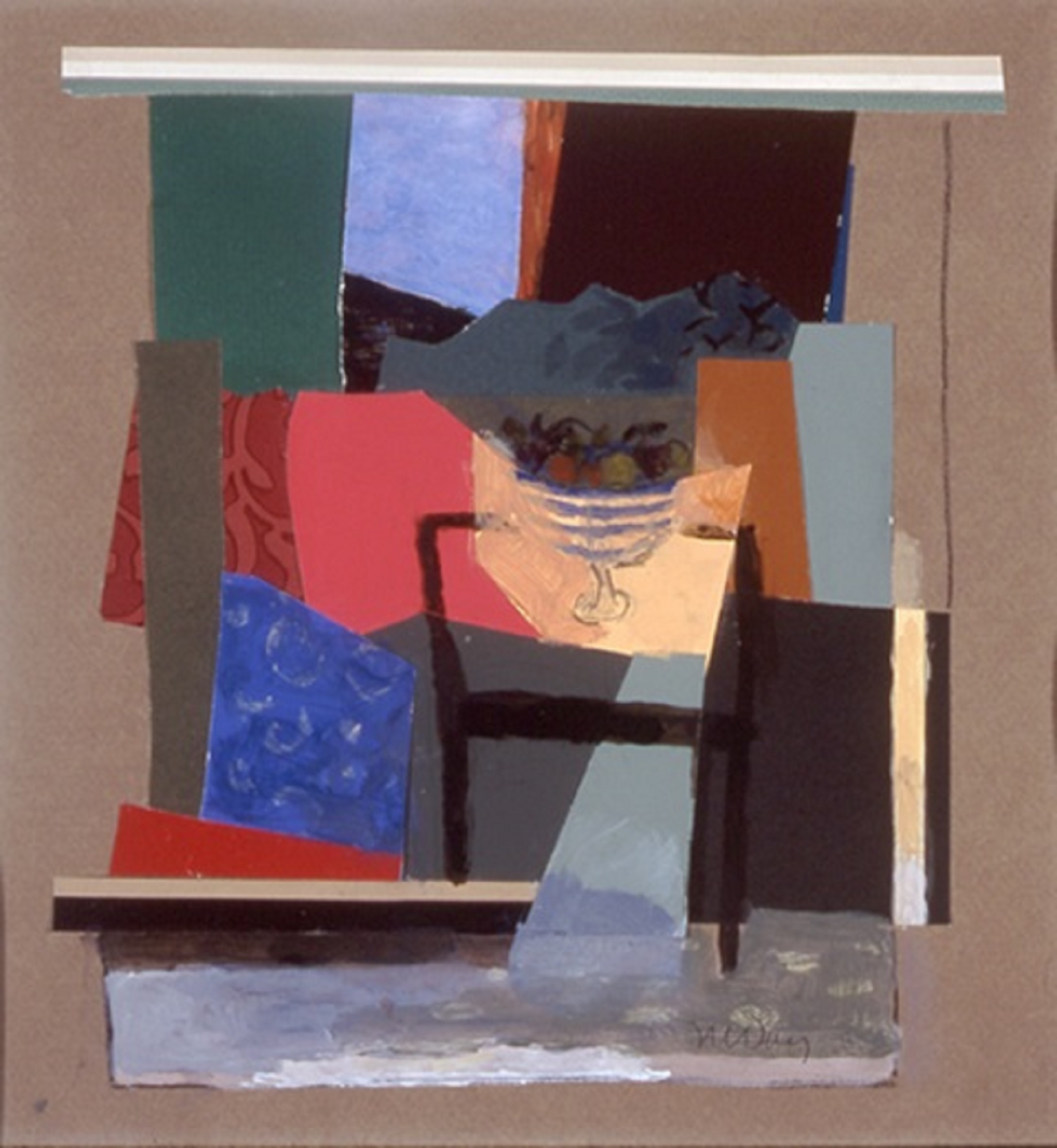
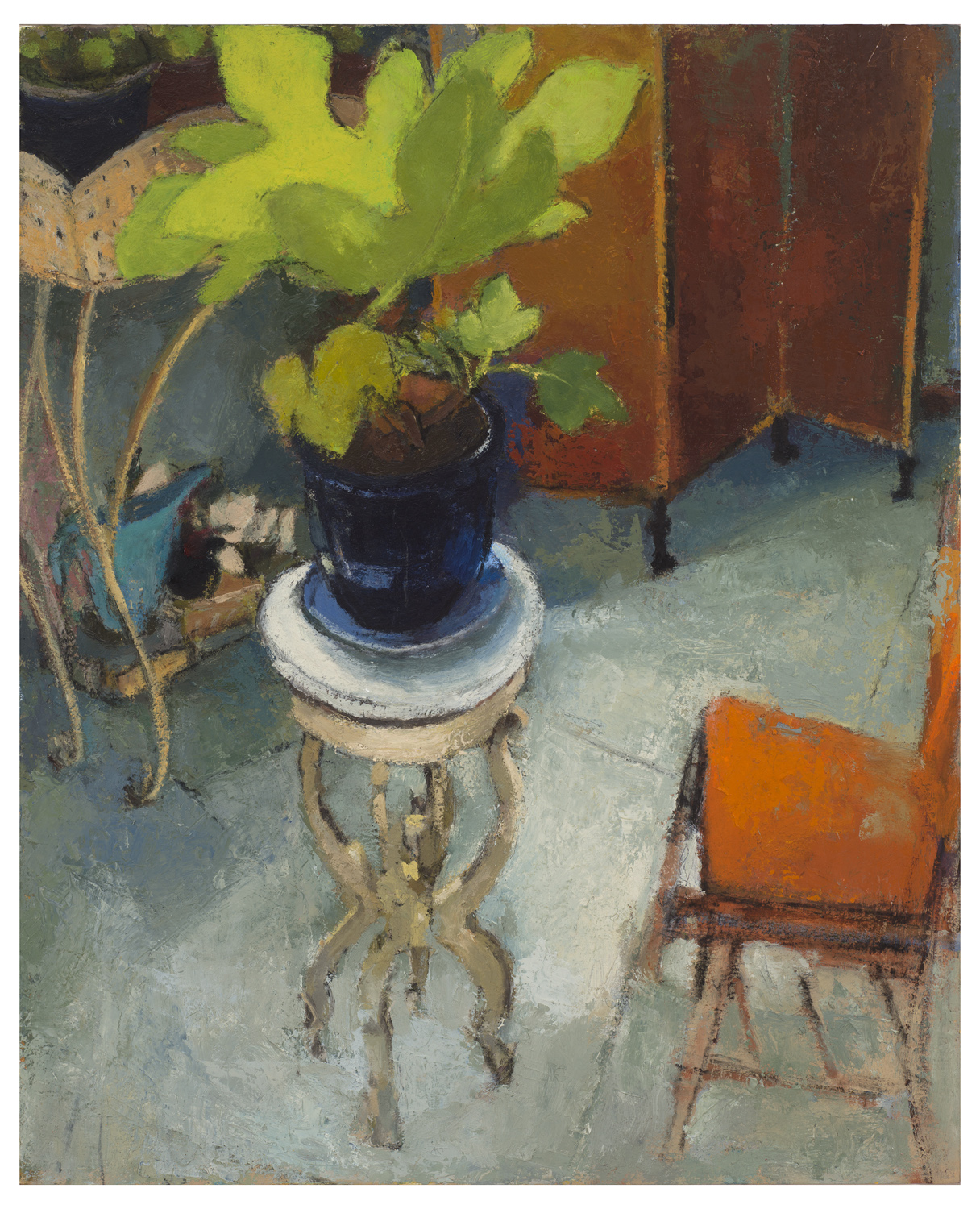
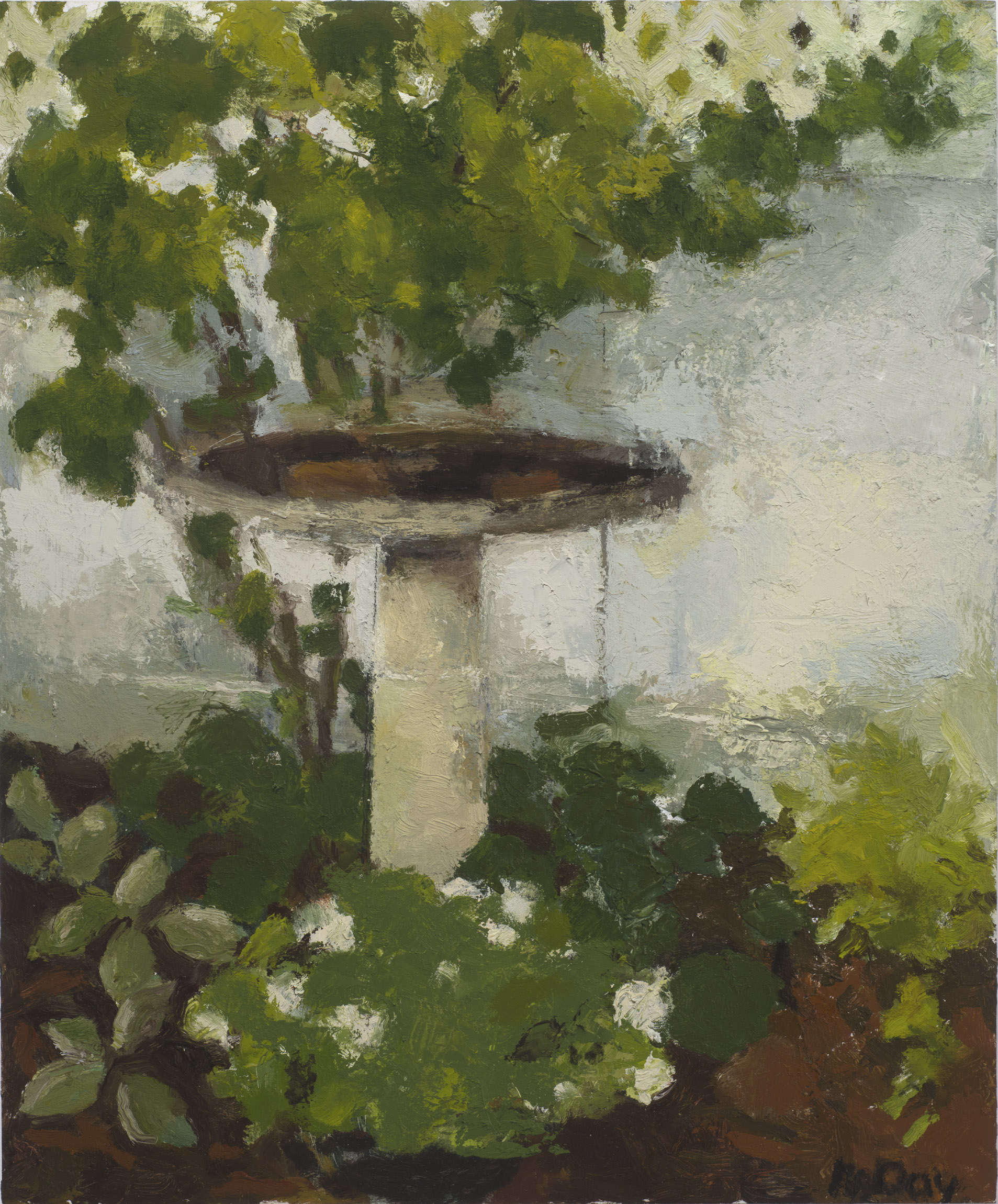
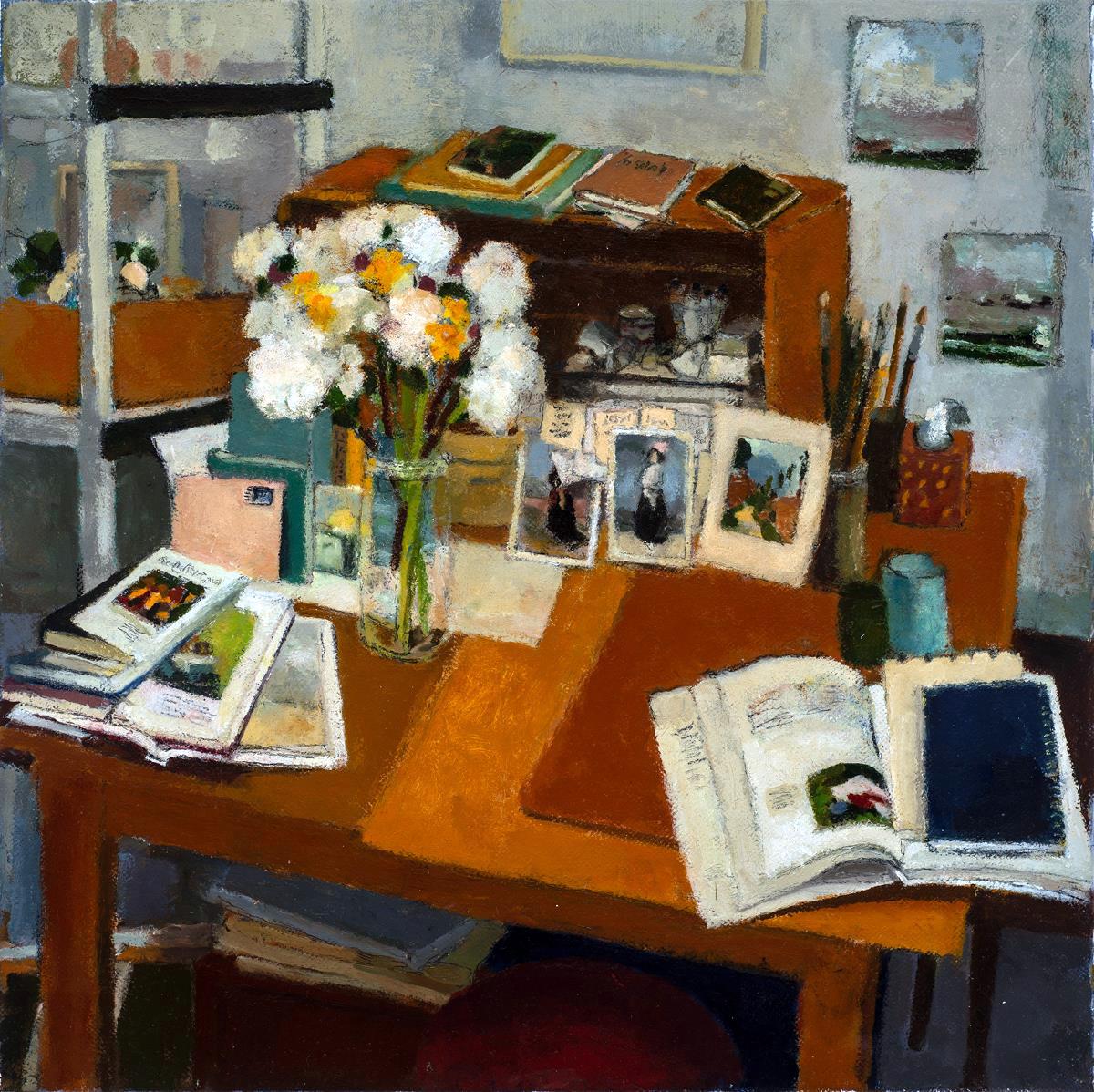
Art: Meredith Fife Day.
Studio Life.

The day job of artist Meredith Fife Day was for many years running a department at a community newspaper chain in Massachusetts. That is where I met her. She was my first boss in publishing. After retiring from the newspaper, Meredith focused on her art while teaching art at a local college during the day and working with the amazing nonprofit she founded, Making Art with Artists (MAwA). MAwA enabled low-income urban kids to practice art under the guidance of working artists. I wrote about the award Meredith received for that work here.

Recently, I asked her if I could do a post on her art, and she sent me these riches.

From her bio: “Her art reviews and essays have appeared in a variety of publications for more than 25 years and she chronicles her days through journaling. She writes poems which, like her paintings, are frequently in homage to observational response, memory and imagination.

“She has exhibited paintings for more than four decades in numerous invitational shows and national competitions. She earned an MFA degree from Boston University after receiving BA and MFA degrees from Louisiana State University in her native Baton Rouge. Meredith has been awarded fellowships at Virginia Center for the Creative Arts in Amherst, Va., and Auvillar, France, and Millay Colony for the Arts in Austerlitz, N.Y.  She has taught at Art New England/Mass Art summer workshops in Vermont and Cullowhee Mountain Arts in North Carolina.” 

Note how much the ficus plant below returns Meredith’s love by modeling for her on repeated occasions. And do you sense the joy the artist takes in homely things lifted to a spiritual level? I love her work.

Read Full Post »

« Newer Posts - Older Posts »