Feeds:
Posts
Comments

Posts Tagged ‘medieval’

Photo: Reuters.
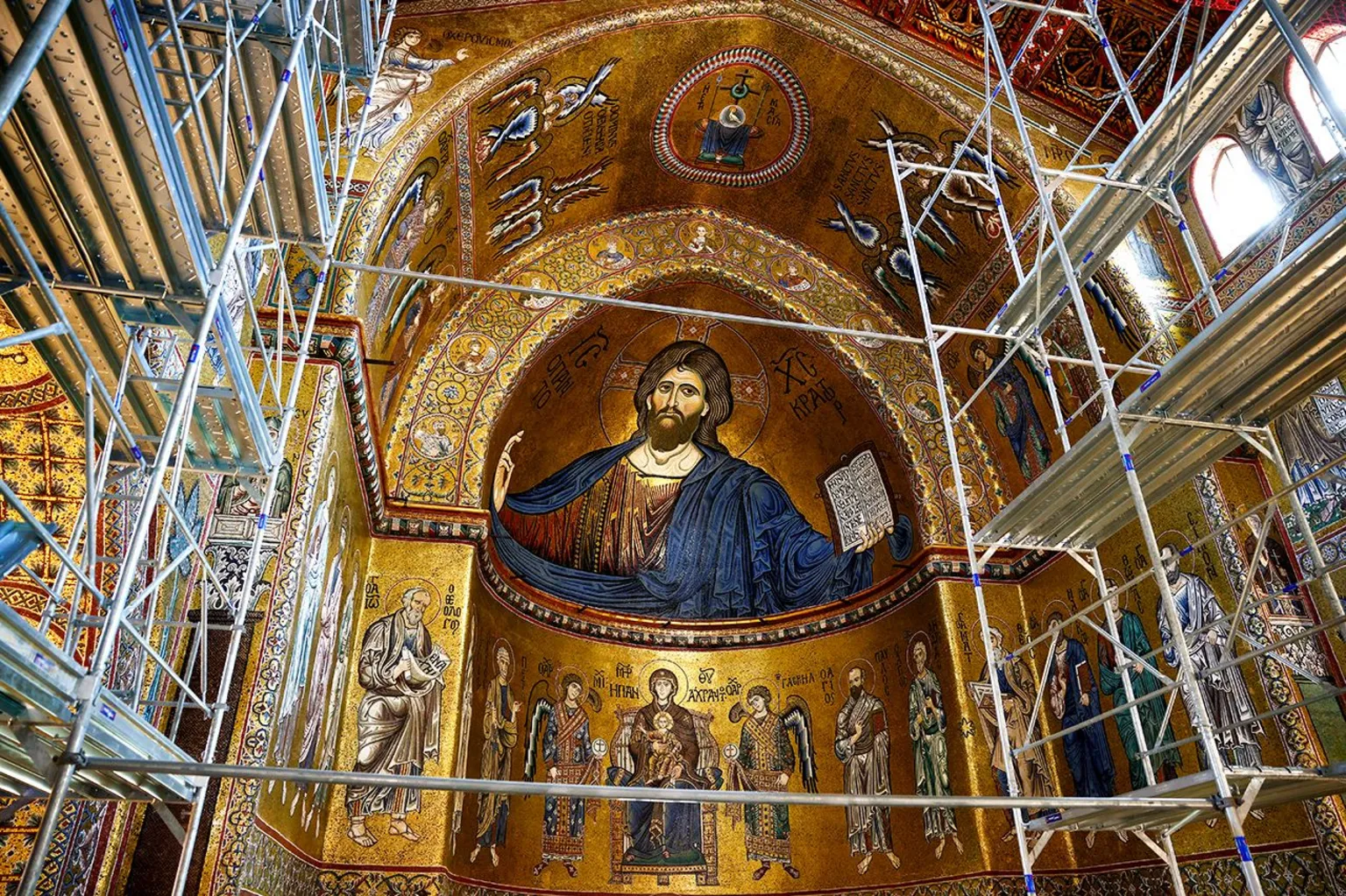
The Monreale cathedral was declared a Unesco World Heritage Site in 2015, and has recently undergone extensive restoration.

Some organized religions eschew signs of wealth and pomp. For others, such things emphasize the value they put on their faith. I always like hearing about the individual stonemasons who gave their heart and soul to carving small corners of the great cathedrals, but I have mixed feelings about covering churches in gold, however beautiful. I was not part of the fundraising for my church’s dome, which one member paid to gild, covering the sky-blue paint.

All to say that an extraordinary amount of gold is now drawing tourists to a cathedral in Sicily, a UNESCO World Heritage site.

The BBC’s Sara Monetta writes, “On a hill overlooking the city of Palermo, in Sicily, sits a lesser-known gem of Italian art: the cathedral of Monreale. Built in the 12th century under Norman rule, it boasts Italy’s largest Byzantine-style mosaics, second in the world only to those of Hagia Sophia in Istanbul.

“Now, this Unesco World Heritage site has undergone an extensive restoration to bring it back to its former glory. The Monreale mosaics were meant to impress, humble and inspire the visitor who walked down the central nave, following the fashion of Constantinople, the capital of the surviving Roman empire in the east.

“They span over [69,000 square feet] and contain about [4.6 pounds] of solid gold. …

“Local experts from the Italian Ministry of Culture led a series of interventions, starting with the removal of a thick layer of dust that had accumulated on the mosaics over the years. Then they repaired some of the tiles that had lost their enamel and gold leaf, making them look like black spots from down below. Finally, they intervened in the areas where the tiles were peeling off the wall and secured them.

“Working on the mosaics was a challenge and a big responsibility, says Father Nicola Gaglio. He has been a priest here for 17 years and has followed the restoration closely, not unlike an apprehensive dad.

” ‘The team approached this work almost on their tiptoes,’ he tells me. ‘At times, there were some unforeseen issues and they had to pause the operations while they found a solution. For example, when they got to the ceiling, they realized that in the past it had been covered with a layer of varnish that had turned yellowish. They had to peel it off, quite literally, like cling film.’

“The mosaics were last partly restored in 1978 , but this time the intervention had a much wider scope and it included replacing the old lighting system.

” ‘There was a very old system. The light was low, the energy costs were through the roof and in no way it made justice to the beauty of the mosaics,’ says Matteo Cundari. He’s the Country Manager of Zumtobel, the firm that was tasked with installing the new lights. …

“I ask Fr Gaglio what it was like to see the scaffolding finally come off and the mosaics shine in their new light. He laughs and shrugs.

” ‘When you see it, you’re overwhelmed with awe and you can’t really think of anything. It’s pure beauty,’ he says. ‘It’s a responsibility to be the keeper of such world heritage. This world needs beauty, because it reminds us of what’s good in humanity, of what it means to be men and women.’ “

More at the BBC, here. No firewall.
Read Full Post »

Photo: Cristina Baussan for NPR.
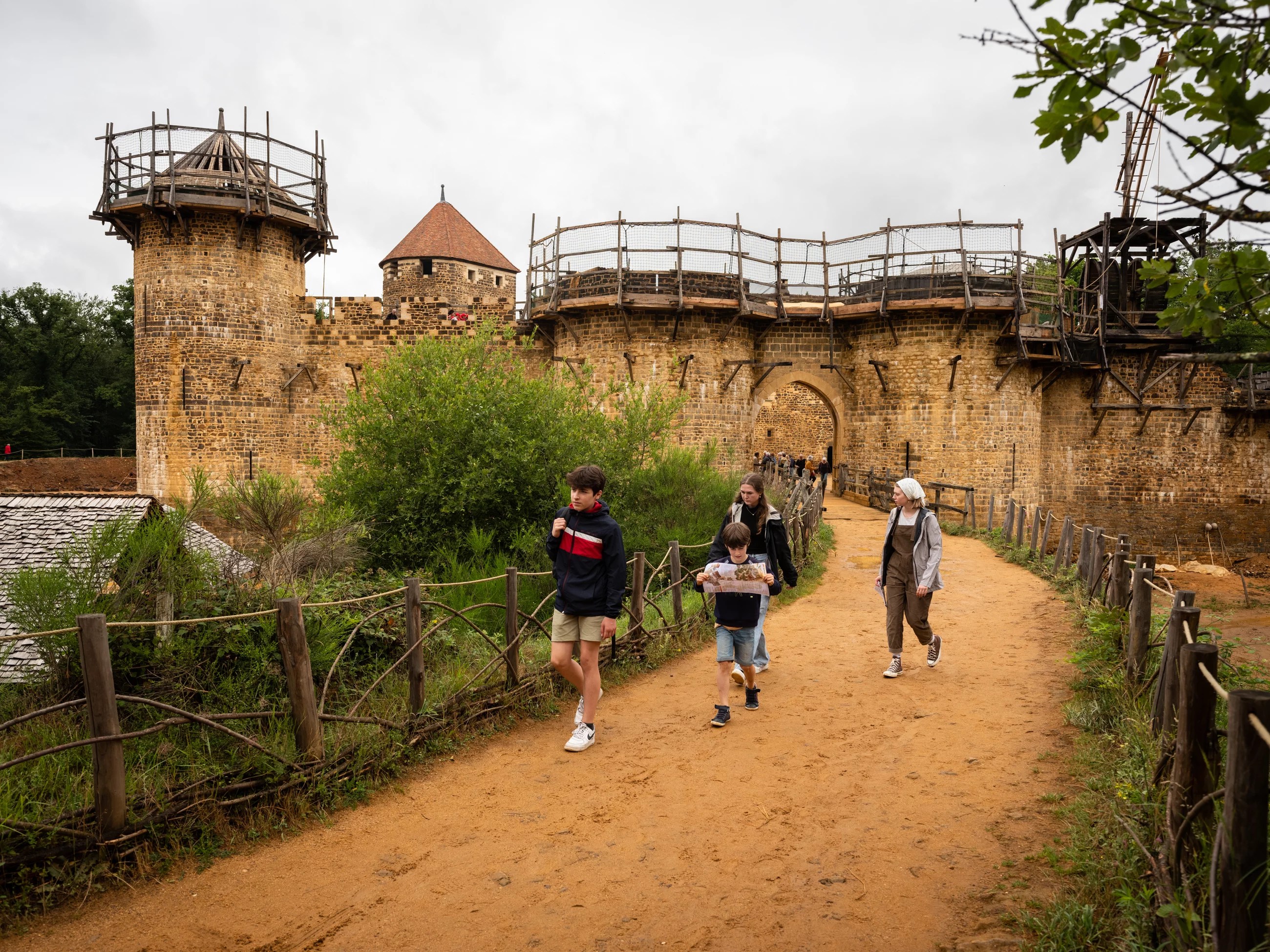
Visitors walk near the construction of Guédelon Castle, dreamed up as an exercise in “experimental archaeology” 25 years ago.

The Plimoth Patuxet Museums in Massachusetts used to be called Plimouth Plantation, and at Thanksgiving lucky visitors got to share in whatever version of the First Thanksgiving was in vogue at the time. Today the history involves the indigenous people in a much more balanced way. But a visit to the site is still a step into another century, a century without cellphones.

Not unlike a visit to a certain castle in France.

Eleanor Beardsley reports at National Public Radio, “Deep in a forest of France’s Burgundy region, a group of enthusiasts is building a medieval castle the old-fashioned way — that is, with tools and methods from the late 13th century.

“Some of those working here are heritage trade craftspeople, others are ardent history buffs, but all say they share a deep respect for nature and the planet, and a desire to return to simpler times.

” ‘This is a place you experience with all your senses,’ says Sarah Preston, communications director and guide of these grounds known as Guédelon Castle. ‘As soon as we walk onto the site you smell the woodsmoke. There’s something so evocative about these sights and sounds.’ …

“Once beyond the entrance barn doors, visitors plunge into a bygone age. There are no mechanical sounds, no motor engines — and cellphones must be turned off. The idea to build Guédelon was born in 1995 among three friends, residents of the area, who are also history buffs and nature lovers. One of the three owned a nearby 17th century château and was involved in work to restore different castles in the area.

” ‘But we thought, how amazing would it be to actually build a castle from scratch?’ Maryline Martin, CEO and a co-founder of Guédelon, told public radio station France Culture last year.

“After finding and purchasing the original 27 acres of land in a forest near a centuries-old abandoned quarry and water (necessary ingredients for any medieval construction site), the co-founders got a construction permit and, in 1997, laid the first stones. …

“Martin said Guédelon is an example of experimental archaeology — which is a way to research how people did things in the past by trying to imitate them. … The builders use the examples of other medieval castles in the area, as well as descriptions in old manuscripts and books.

“The workers are all dressed in medieval clothing, except for sturdy contemporary footwear and sometimes helmets mandated for a modern construction site. The smell of fire and a clanking sound are coming from a nearby blacksmith’s shop. That’s where 20-year-old Matisse Lacroix is forging the tools needed to build the castle. Sparks fly as he pulls a cord that operates a large bellows.

“Lacroix says the furnace temperature is around 2,000 degrees Fahrenheit, ‘so the iron is soft and malleable and I can make these nails.’ He bends and shapes pieces of iron into nails. …

“During NPR’s visit, a group of fourth-graders are at the site. They watch Lacroix pound the glowing red rods. The craftsmen stop their work to explain what they’re doing to visitors as well as train young craftsmen in heritage skills. …

“That learning aspect of Guédelon is one reason its construction is taking so long. The owners say the project is meant to discover and pass along skills and knowledge from a 13th century work site. Workers stop their tasks several times a day to answer questions from visitors — as part of the job. There are six turrets completed as well as a protective wall and inner living castle with a chapel. …

“Preston said they initially financed their work through donations and some European Union funding. Now the château is financed through more than 300,000 visitors a year (paying between 12 and 15 euros each). …

“There are all kinds of projects to recreate the kind of village that would have existed beside a castle like this 800 years ago. A garden grows plants indigenous to the area in the Middle Ages.

” ‘We grow only medieval plants,’ says Antoine Quellen, who works in the garden two days a week. ‘So that means we don’t have tomatoes, we don’t have potatoes, because those came from South America much later.’ He says people ate a lot of grains back then. The indigenous plants are hardier and help preserve the land and soil, as they have a kind of genetic memory of place in their germ cells, he says. …

“Half a dozen stone masons work near the quarry. Tendra Schrauwen, a 29-year-old from Belgium, says Guédelon is one of the few places in the world you can practice this craft using traditional methods and old tools.

” ‘Our job is to cut stones in perfect geometrical shapes,’ he says. ‘For window, doors, chimneys, staircases, stone by stone.’ He says it’s all about teamwork. ‘The stones are very heavy. It’s very dangerous, you can damage your body. So the most important thing is to work in a team.’ …

“To lift the tons of wood and stone needed to finish the castle’s outer walls, two men walk inside a contraption that looks much like a giant hamster wheel. It’s a kind of medieval crane with a central axle and ropes. Known as a treadmill crane, it can pivot and raise or lower materials, depending on which way the workers walk inside it. The only modern addition at Guédelon is a safety brake.”

More at NPR, here. No paywall. Great photos.

Read Full Post »

Images: Public domain.
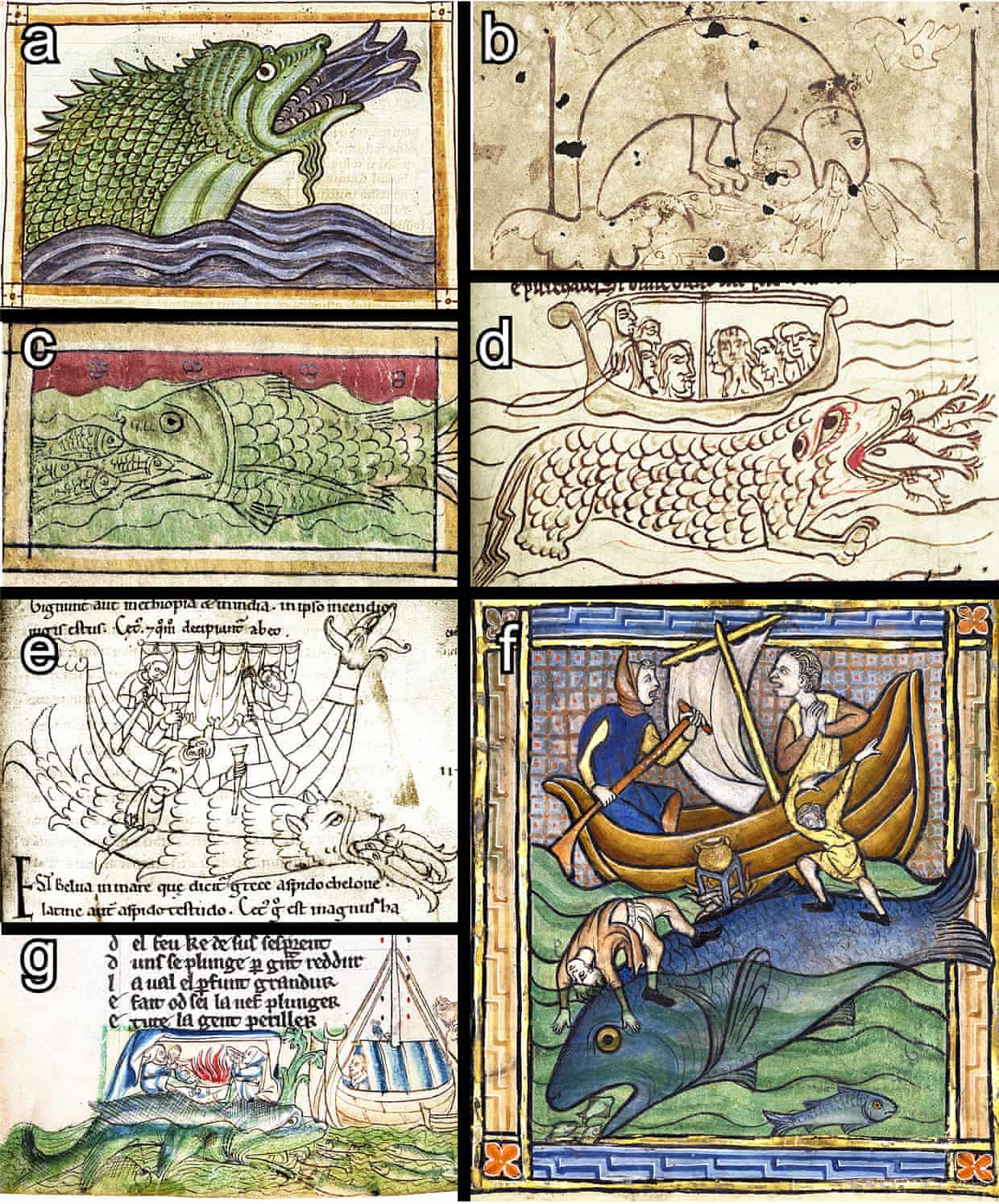
Depictions of sea creatures in 13th C manuscripts
. How marvelous these illustrations are!

The maritime archaeologist in today’s article says it was just a coincidence that he was reading ancient Norse texts and connected the description of a sea creature to recent observations of whales. But I believe it’s not a coincidence. Everything connects to everything, and the more widely you read, the more likely you are to find the connections.

The researchers noted: ‘Definitive proof for the origins of myths is exceedingly rare and often impossible, but the parallels here are far more striking and persistent than any previous suggestions.’

Donna Lu writes at the Guardian, “Mysterious whale feeding behavior only documented by scientists in the 2010s has been described in ancient texts about sea creatures as early as two millennia ago, new research suggests.

“In 2011, Bryde’s whales in the Gulf of Thailand were first observed at the surface of the water with their jaws open at right angles, waiting for fish to swim into their mouths. Scientists termed the unusual technique, then unknown to modern science, as ‘tread-water feeding.’ Around the same time, similar behavior was spotted in humpback whales off Canada’s Vancouver Island, which researchers called ‘trap-feeding.’

“In both behaviors the whale positions itself vertically in the water, with only the tip of its snout and jaw protruding from the surface. Key to the technique’s success, scientists believe, is that fish instinctively shoal toward the apparent shelter of the whale’s mouths.

“Flinders University scholars now believe they have identified multiple descriptions of the behavior in ancient texts, the earliest appearing in the Physiologus – the Naturalist – a Greek manuscript compiled in Alexandria around 150-200CE.

“Dr John McCarthy, a maritime archaeologist at Flinders University in Adelaide, South Australia, and the study’s lead author, made the discovery while reading Norse mythology, about a year after he had seen a video of a whale tread-water feeding.

“He noted that accounts of a sea creature known as hafgufa seemed to describe the feeding behavior. ‘It really was a coincidence,’ McCarthy said.

“The most detailed description appeared in a mid-13th-century Old Norse text known as Konungs skuggsjá – the King’s Mirror. It reads: ‘When it goes to feed … the big fish keeps its mouth open for a time, no more or less wide than a large sound or fjord, and unknowing and unheeding, the fish rush in in their numbers. And when its belly and mouth are full, [the hafgufa] closes its mouth, thus catching and hiding inside it all the prey that had come seeking food.’

“The King’s Mirror was an educational text used for explaining the world to young people, McCarthy said. ‘They exaggerate the size … [but] it’s not a fantastical description with any kind of supernatural elements.’ …

” 1986 analysis of the King’s Mirror had found correlations between 26 Old Norse descriptions and scientifically recognized marine animals, but had concluded that the hafgufa ‘must be relegated to the world of the miraculous.’

“ ‘The hafgufa was frustrating for these scholars because they couldn’t quite figure out any animal that this matched to,’ McCarthy said. …

“In the Naturalist – a 2,000-year-old text that ‘preserves zoological information brought to Egypt from India and the Middle East by early natural historians like Herodotus, Ctesias, Aristotle and Plutarch’ – the ancient Greeks referred to the creature as aspidochelone.

“A surviving version of the text reads: ‘When it is hungry it opens its mouth and exhales a certain kind of good-smelling odor from its mouth, the smell of which, once the smaller fish have perceived it, they gather themselves in its mouth. But when his mouth is filled with diverse little fish, he suddenly closes his mouth and swallows them.’ …

“Bryde’s whales and humpbacks are both rorquals, a type of baleen whale. The study was published in the journal Marine Mammal Science.”

More at the Guardian, here. No firewall. Donations encouraged.

Read Full Post »

Photo: Museum of London Archaeology via Hyperallergic.
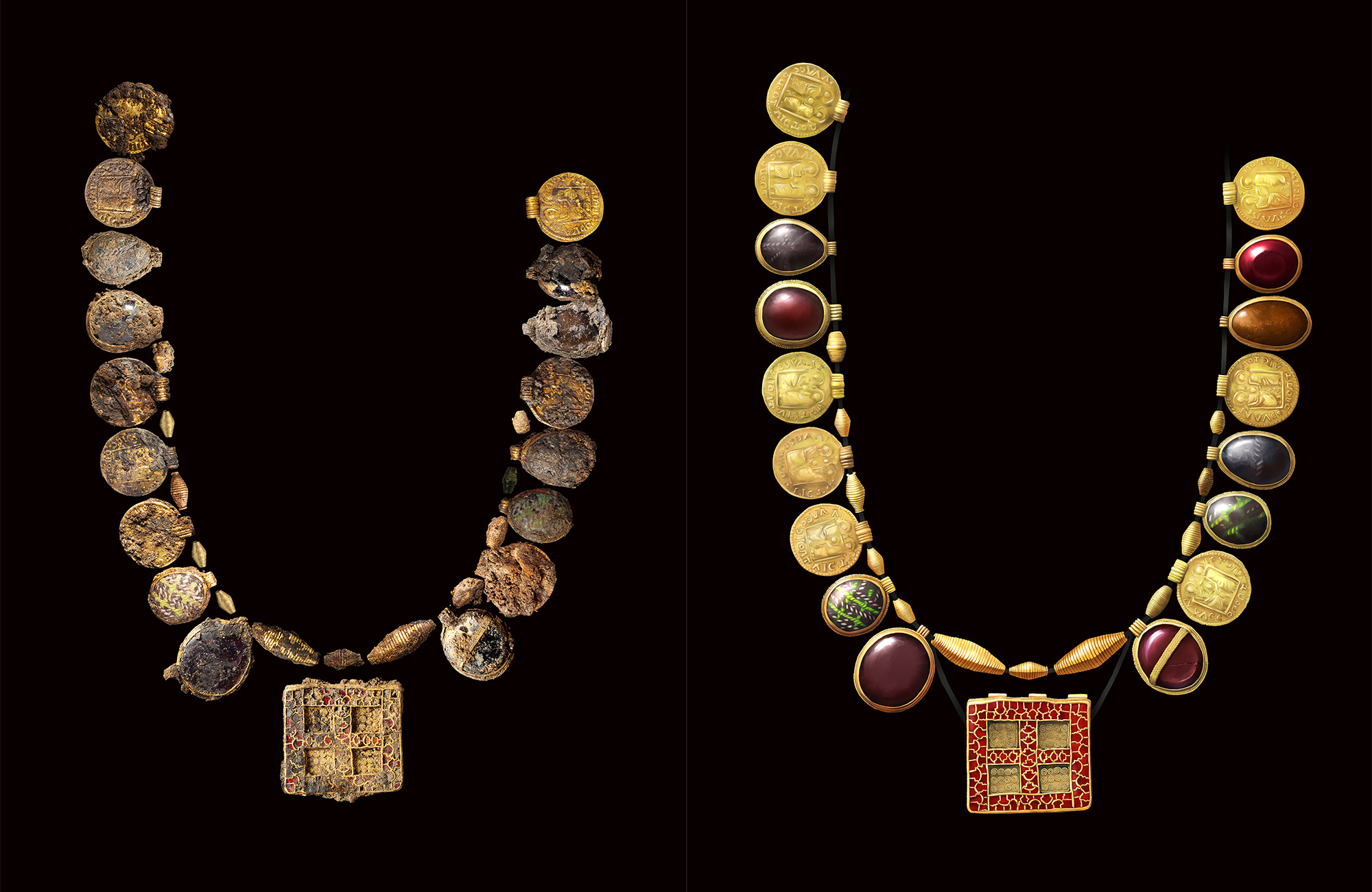
A necklace found in a UK burial site probably belonged to an “elite woman who wanted to highlight her Christian identity, says Hyperallergic.

Archaeology reminds us that there will always be surprises to uncover no matter how much we think we know. A necklace found in a medieval burial site and considered a “once-in-a-lifetime” discovery is one recent surprise. Michael Levenson wrote about it for the New York Times.

“A 1,300-year-old gold-and-gemstone necklace that was recently discovered in an ancient grave site in England may have belonged to a woman who was an early Christian leader, according to experts involved in the discovery.

“The ancient jewelry was unearthed in Northamptonshire in April [2022] during excavations that took place ahead of a planned housing development. … The 30 pendants and beads that once formed the elaborate necklace were made from Roman coins, gold, garnets, glass and semiprecious stones. The centerpiece of the necklace, a rectangular pendant with a cross motif, was also among the artifacts that were discovered.

“ ‘When the first glints of gold started to emerge from the soil we knew this was something significant,’ Levente-Bence Balázs, a site supervisor at the Museum of London Archaeology, [said in a statement announcing the find]. …

“X-rays of soil blocks lifted from the grave also revealed an elaborately decorated cross featuring unusual depictions of human faces cast in silver, the statement said.

“While the soil is being investigated more closely, ‘this large and ornate piece suggests the woman may have been an early Christian leader,’ the statement said, adding that she might have been an abbess, royalty or both. The site also contained two decorated pots and a shallow copper dish.

“The skeleton itself has decomposed, with only tiny fragments of tooth enamel remaining. But the Museum of London Archaeology said it was almost certain that a woman was buried there because similar necklaces and lavish burial sites were almost exclusively found in female graves in the period.

Scholars said the discovery pointed to the important but often overlooked role of women in the development of early Christianity.

“ ‘The evidence does seem to point to an early female Saxon church leader, perhaps one of the first in this region,’ Helen Bond, a professor of Christian origins and head of the School of Divinity at the University of Edinburgh, in Scotland, wrote in an email. ‘We know from the gospels that women played an important role in the earliest Christian movement, acting as disciples, apostles, teachers and missionaries,’ Professor Bond wrote. ‘While their role was diminished later on at the highest levels, there were always places where women leaders continued (even sometimes as bishops).’

“Amy Brown Hughes, a historical theologian at Gordon College, who studies early Christianity, called the necklace, which has been traced to the years 630 to 670, an ‘absolutely stunning’ artifact from a volatile period when Christianity was becoming established in Anglo-Saxon England.

“Noting that women have often been left out of narratives about Christianity, Professor Hughes said the necklace provides material evidence that ‘helps to reorient our assumptions about who actually had influence and authority.’ …

“Joan E. Taylor, a professor of Christian origins and Second Temple Judaism at King’s College London, said the fact that the woman was apparently buried in a village far from a main population center ‘testifies to the troubled times in this region of Britain in the 7th century.’

“ ‘Perhaps she was on a journey, or fleeing,’ Professor Taylor wrote in an email. ‘It was a tough “Game of Thrones” world with competing royal rulers aiming for supremacy. It was also a time where Christianity was spreading, and abbesses and other high-status women could play an important role in this.’ …

“The artifacts [will] be featured in an installment of the BBC series ‘Digging for Britain.’ “

More at the Times, here. See also Hyperallergic. More photos, no firewall.

Read Full Post »

Photo: DiverseAbility.
After leaving academia, Alice Sheppard “began exploring the techniques of dancing in a wheelchair and learning how disability can generate its own movement.” 

An unusual and dramatic entertainment took place in Chicago in May. It was the brainchild of Alice Sheppard, a fearless risk taker in a surprising sequence of careers. Today she is a choreographer, but as recently as 2004, she had never considered that dance could be compatible with her disability. According to DiverseAbility magazine, “she was a professor in medieval studies at Penn State.” Then a dancer with one leg dared her to try a dance class.

Lauren Warnecke says of Sheppard at the Chicago Tribune, “Alice Sheppard does not shy away from a challenge. In devising her latest dance, ‘Wired,’ she and her Bay Area disability arts company Kinetic Light had to first write the rule books for wheelchair aerial dance.

“Kinetic Light’s mission is to create art that centers disability. Sheppard and the rest of the company are disabled artists who make work for disabled performers. Key to that vision are questions and advocacy around access — who ‘gets’ to dance and who ‘gets’ to watch or experience art? Since the company’s founding in 2016, Sheppard’s work consistently explores the intersections of disability, race and gender. ‘Wired,’ premiering May 5-8 at the Museum of Contemporary Art in Chicago, is no exception, though it’s the first of Kinetic Light’s growing catalog to incorporate aerial dance.

“Actually, the first step for Sheppard was to read everything she could find about barbed wire. Sheppard, a dancer, choreographer and scholar with a doctorate in medieval studies from Cornell University, devoured the literature on this sharp-edged, steel wire’s fraught history.

“The initial spark for ‘Wired’ came from a visit to the Whitney Museum, where Sheppard viewed Melvin Edwards’ 1969 barbed wire sculpture, ‘Pyramid Up and Down Pyramid.’ …

“It led her down a barbed wire rabbit hole. Sheppard’s source material lends multiple metaphors to what has become her latest multimedia dance piece. Indeed, few pieces of steel are saddled with so much context. Barbed wire is primarily a strict form of forced separation, used in trench warfare and applied in the United States as a means of keeping incarcerated people in, for example, or livestock in and intruders out as ranchers in the American West increasingly claimed land as their personal property.

“Throughout the piece, the dancers wrestle with this unwieldy, unforgiving object, their bodies enclosed by a tangle of wires and barbs. As she continued to explore, Sheppard knew ‘Wired’ had to be an aerial dance. …

“Having never studied aerial dance before, Sheppard and Kinetic Light company members Laurel Lawson and Jerron Herman started from scratch. With support from some 30 artists and engineers with backgrounds in rigging, automation and flight, Sheppard, Lawson and Herman took to the air. …

“ ‘We are not the first disabled artists to fly, by any means,’ she said. ‘There is, of course, in circus arts, a deep and rooted history of disability and flight. That’s not random or new. And there’s a history of disabled dancers also doing aerial work in the UK, New Zealand and the U.S. Part of that history and legacy is to recognize that flight isn’t random. It is perfectly within the tradition and the culture for disabled dancers. What is new here is the construction of the show. It’s not a circus.’

“The process for ‘Wired’ started at Chicago Flyhouse in late 2019. Before the dance and other artistic elements could even begin to take shape, Kinetic Light was faced with huge technical considerations.

“ ‘Before we could even get to “here’s a pretty dance, here’s the choreography,” ‘ she said, ‘we had to get to, “how does this thing fly?” ‘ …

“Lawson, who is also an engineer, assisted in developing the chairs and harnesses needed for her and Sheppard safely ascend into the air. Company member and dancer Herman completes the cast of three and has yet another setup. Herman, who has cerebral palsy, dances sections of ‘Wired’ with a girdle-type harness used to suspend him above the stage. …

“Sheppard reiterated that she and Lawson are not the first disabled artists to fly ,,, but they are the first disabled dancers in the U.S. to explore a thorough compendium of techniques, which includes low flying on hard lines and bungees, as well as flight patterns suspended from joystick-operated, motorized cables. The pandemic enabled Kinetic Light to make connections with then-unemployed entertainment workers with expertise in automation who would not otherwise have been available.

“In a way, ‘Wired’ serves as a primer on wheelchair flight.

“ ‘Understand, this is not actually documented,’ Sheppard said. ‘There are no books. There are no teachers … All of these questions that are easily available to non-disabled aerial artists because there’s a history and tradition here — we just had to figure that out bit-by-bit.’ ”

More at the Chicago Tribune, here.

Read Full Post »

Photo: Morgan Bible, 13th century, via Wikimedia.
In this meme, @artmemescentral captions the art thus: “When I’m drunk and try to take off a turtleneck.”

There’s something entertaining happening on Instagram lately. A goofy look at the art of the Middle Ages.

At Hyperallergic, Alicia Eler writes, “Medieval imagery wasn’t meant to be funny when it was made hundreds of years ago, but all over Instagram it has been remixed, captioned, and somehow reads as peak hilarious — depending on your sense of humor.

“One evening while wasting time on the addictive social media platform, I came across a meme of a medieval battle scene; on the right, a horse was giving the sword-wielding dude some serious side-eye,” she writes.

A perfect caption made her laugh “maniacally, posting it to my Instagram story and sending it to all my close friends. How could this seemingly arcane medieval imagery, previously confined to an art museum or, perhaps, a European crypt, feel so meme-able? …

“ ‘It’s funny for the same reason that Black American Vernacular English is so sticky — because it references a level of servitude that we don’t want to admit,’ said artist Kenya (Robinson), whose work often explores privilege, consumerism, and perceptions of gender, race, and ability. She noted that the text is written in Black American Vernacular English, also known as the language of social media. …

“That’s the text. But what about the image and the side-eye horse? It actually portrays the ‘Captivity of Jeholachin King of Israel, which isn’t particularly funny. Babylonians destroy the Temple of Jerusalem, then lead the Jews into captivity. (As a Jewish person, this makes the meme feel very unfunny, and more like a story my grandma, or bubbe as we say, might have told over a holiday dinner.) … 

“But the fact that the image suddenly appears hilarious in this remixed context struck me. …

“ ‘There’s something about the surprise of the medieval,’ said Sonja Drimmer, a scholar of medieval European art, and associate professor at the University of Massachusetts Amherst. ‘One of the conceptions about the European Middle Ages has to do with blind piety, prudishness, but when people see imagery that defies that, the disjunction leads to laughter.’ …

“ ‘I think there is something about Western medieval art that seems like a safe target … some of the memes — like the side-eye horse, if it were sub-Saharan Africa — you could imagine meme-ifying it, and then imagine it becoming deeply problematic very quickly,’ said Erik Inglis, professor of Medieval art history at Oberlin College. ‘I think with the very white faces of Western medieval art, it seems innocent. We are pretty willing to condescend to the Middle Ages, [which is] not fraught as it is to condescend to other ages.’

“Most of the medieval art history memes come from broader art meme accounts, such as @artmemescentral or @classical_art_memes_official, though there are some discontinued accounts that focus only on medieval imagery. …

“ ‘Medieval imagery is so phone-friendly,’ explained Cem A., an artist and curator who runs the popular art meme page @freeze_magazine (no association with Frieze magazine), and curatorial assistant at Documenta 15.

” ‘For me, its style is more simplified, representational, and cartoonish than our classical understanding of painting. Figures in these images usually have exaggerated (and therefore easier to grasp) relationships onto which you can build a meme. Its aesthetics works better on the compact screens of smartphones.’

“At the same time, medieval imagery isn’t all just easy fodder for funny memes. It can ‘be racist and quite terrible, and ground zero for white supremacy, said Drimmer. 

“The mob that stormed the United States Capitol Building on January 6, 2021, carried … symbols associated with the Crusades. The far Right’s use of medieval iconography gained steam after the September 11 attacks, with white supremacists picturing themselves as ‘modern Christian warriors fighting to preserve the idea of America as a white, Christian nation,’ according to a report in Teen Vogue

“This is an even more troubling connection for academics and those who study the era, but also speaks to the layers upon layers of racialized remix culture that make up the ever-pervasive American visual pop culture that keeps on spreading. There’s also an impulse to turn almost anything into a meme these days.

“ ‘The funny thing about retroactively searching through history to identify memes is that you start to see memes where they might never have existed before,’ noted Daniel Shinbaum, a Berlin-based cultural critic and memes researcher. ‘Almost anything can start to look like a meme.’ ”

More at Hyperallergic, here. No firewall.

Read Full Post »

Photo: Early Music America.
Catalina Vicens often performs on an organetto replica built in 2013 by Stefan and Annette Kepler, who run the Wolkenstayn Gothic Organ company in southern Germany.

For something a little different today, let’s look at a forgotten medieval instrument that a few enthusiasts have brought back to the world’s attention: a handheld pipe organ.

Kyle MacMillan reports at Early Music America last week, “Attend a few organ recitals in a church or concert hall and you’ll know that the instruments can vary widely in size — from behemoths with several thousand pipes to moveable, chamber models with just a handful of stops.

“Almost completely forgotten, though, is that an even smaller kind of pipe organ once existed. Called an organetto, it was typically played perpendicularly on a performer’s lap and was one of the most popular instruments in the 13th and the 14th centuries.

“A contemporary reproduction of this tiny organ will be front and center this week when the Chicago-based Newberry Consort presents Music Fit for the Medicis, featuring works that would have been heard at the powerful family’s court. Showcased will be 14th-century songs and dances taken from manuscripts found in the library of Lorenzo de’ Medici (1449-1492). …

“Featured as the Newberry’s organetto soloist will be Chilean-born Catalina Vicens, an internationally known historical keyboard performer and teacher who lives in Basel, Switzerland, and Bologna, Italy. She is artistic director of the Museo San Colombano, housed in a former monastery in Bologna, which dates to the Seventh Century. She also serves as curator of the Tagliavini Collection, the museum’s prize holding and one of the largest historical keyboard collections in Europe. …

“The organetto fell out of fashion by the 16th century. ‘They weren’t use in anymore, as far as we know, and they didn’t survive,’ Vicens told me.

What experts know today about the organetto comes from its depiction in hundreds of medieval paintings, illuminated manuscripts, and stained-glass windows, and well as the literature of the period.

“The instrument is mentioned, for example, in the Roman de la Rose, a famous medieval poem written in Old French, and the organetto playing of Francesco Landini, a famed 14th-century Italian composer and organist, is described in a novella by Giovanni da Prato.

“Today’s organettos, which are based on this historical imagery and documentation and technical knowledge drawn from larger extant medieval organs, typically have 28 pipes in two rows spanning just beyond two musical octaves.

” ‘From iconography, we see mostly instruments with fewer pipes,’ Vicens said. But balancing historically informed instrument building with modern performance needs, she points out that, ‘for us, it is very convenient to take those models with more pipes, because we want to be able to play more notes.’

“Air is produced by a bellows operated with the left hand while the right plays the instrument’s keys. … Because no original organetto exists, it is impossible to know exactly how the medieval instruments sounded. The aural qualities of today’s organettos vary depending on the builder and are affected by the pipes, which can be made of such materials as copper, wood, or a tin-lead alloy.

“ ‘It does sound like a small organ,’ Vicens said of the instrument, ‘but to the ears of many, also suggested by how it looks, it sounds more like a bagpipe. Or I’ve even gotten people who think it sounds like an accordion.’

“Vicens often performs on an organetto built in 2013 by Stefan and Annette Kepler, who run the Wolkenstayn Gothic Organ company in southern Germany, with pipes in a high-leaded alloy made by Winold van der Putten in the Netherlands. ‘I have sort of a custom instrument by different builders,’ she said. …

“While a student of harpsichord performance at the Curtis Institute of Music in Philadelphia, Vicens became fascinated with the instrument’s sound and how it was produced. That curiosity led her to study the harpsichord’s origins, including how instruments from several centuries ago were constructed and what early repertoire was written for them. Her interest in turn motivated her to learn about other historical instruments like the organ and fortepianos. Drawing on this background in historical performance and her knowledge of the organ and harpsichord, Vicens taught herself to play the organetto in 2009 and 2010 and soon got regular requests to perform on the instrument across Europe and beyond.

“The organetto poses two main hurdles for performers, starting with playing the keyboard with just one hand, which makes it difficult to convey different musical voices at the same time. The larger challenge is manipulating the instrument’s single bellows. ‘I have to breathe like a singer,’ Vicens said, ‘because with one bellow, you need to fill it every time you run out of air.’ “

More at Early Music America, here. Hat tip: Arts Journal.

Read Full Post »

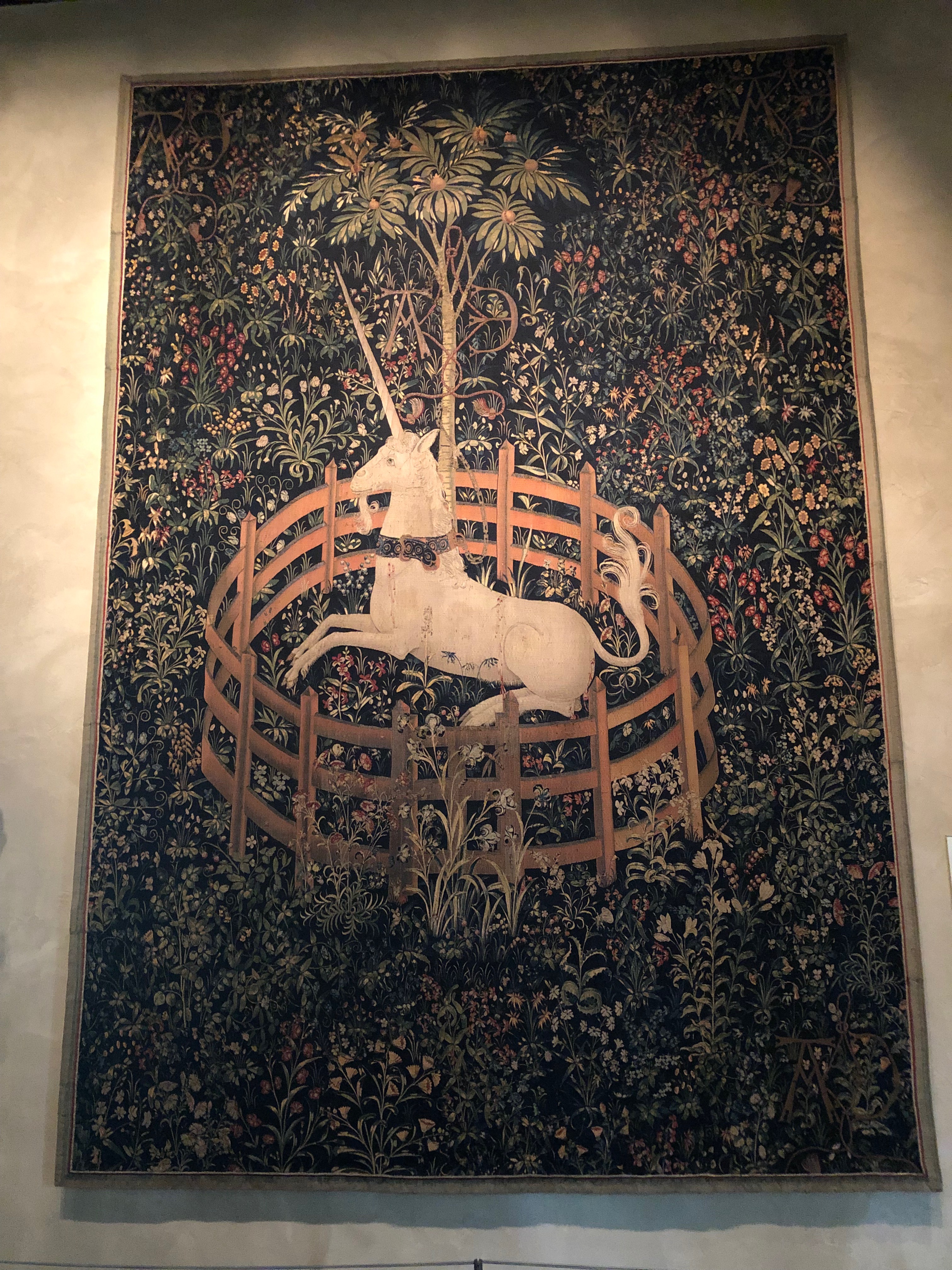
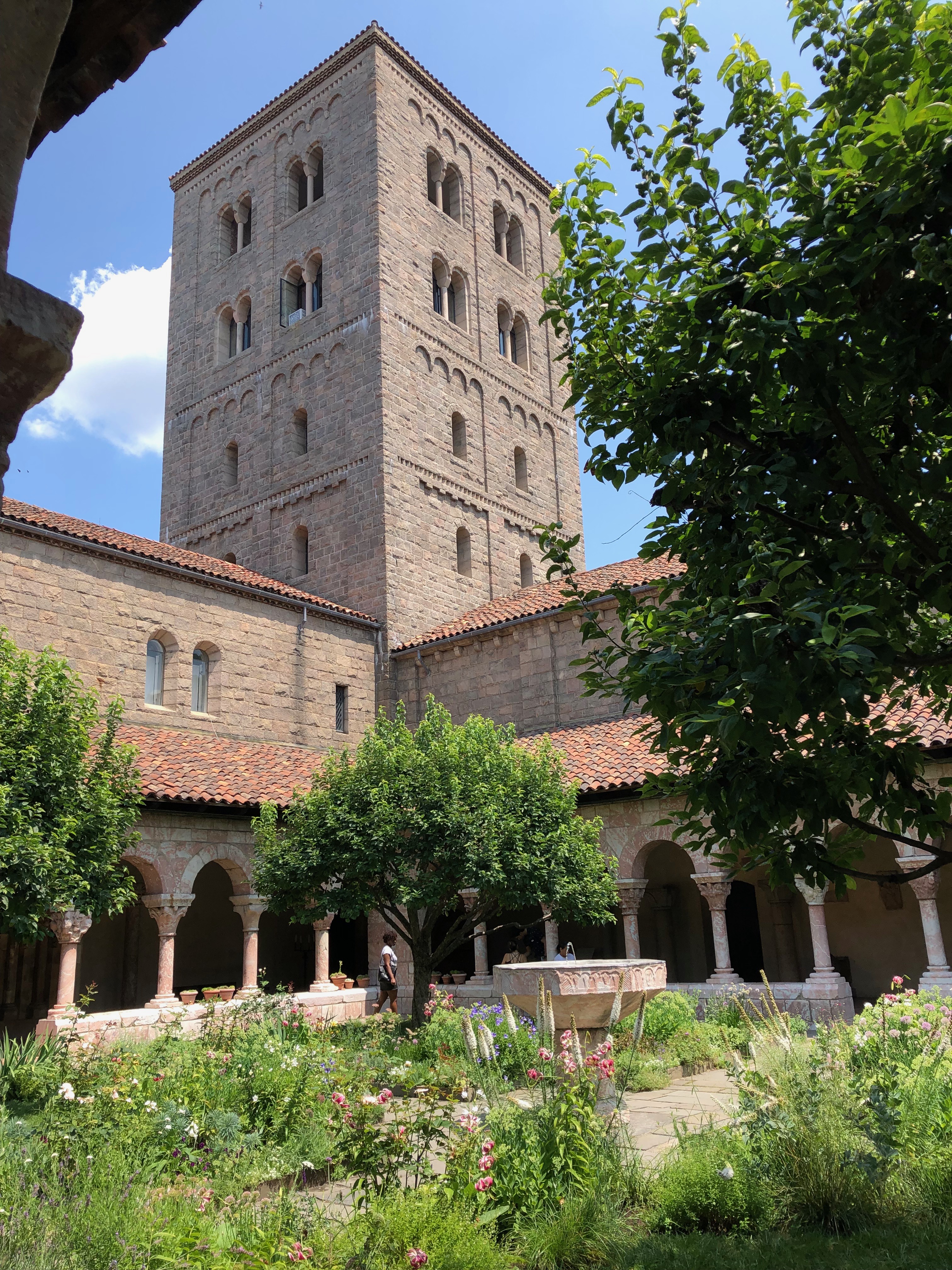
072619-unicorn-tapestry-Cloisters

I’m in New York for a few days to spend some time with my sister and brother-in-law. They indulged me in a trip to the Cloisters, an amazing castle that is part of the Metropolitan Museum. I hadn’t been there since childhood, when my family went to see the Medieval tapestries, especially the unicorn tapestries.

The Cloisters are way up north in the Washington Heights part of Manhattan, and it was a little challenging to get there. We decided not to take public transportation as my sister’s cancer has slowed her down somewhat. The taxi driver said that in his 35 years of driving a cab, he had never been to the Cloisters. But he seemed pleased to learn about it.

Here’s what Wikipedia has to say. “The Cloisters museum in Fort Tryon Park in Washington Heights, Manhattan, New York City, specializes in European medieval architecture, sculpture and decorative arts, with a focus on the Romanesque and Gothic periods. Governed by the Metropolitan Museum of Art, it contains a large collection of medieval artworks shown in the architectural settings of French monasteries and abbeys. Its buildings are centered around four cloisters—the Cuxa, Saint-Guilhem, Bonnefont and Trie—which were purchased by American sculptor and art dealer George Grey Barnard, dismantled in Europe between 1934 and 1939, and moved to New York. They were acquired for the museum by financier and philanthropist John D. Rockefeller, Jr. …

“The museum’s building was designed by the architect Charles Collens, on a site on a steep hill, with upper and lower levels. It contains medieval gardens and a series of chapels and themed galleries. …

“It holds about 5,000 works of art and architecture, all European and mostly dating from the Byzantine to the early Renaissance periods, mainly during the 12th through 15th centuries. The varied objects include stone and wood sculptures, tapestries, illuminated manuscripts and panel paintings. … Rockefeller purchased the museum site in Washington Heights in 1930, and donated it and the Bayard collection to the Metropolitan in 1931.”

We had a beautiful day and enjoyed walking around indoors and outdoors, listening in on guided tours and taking pictures. More here.

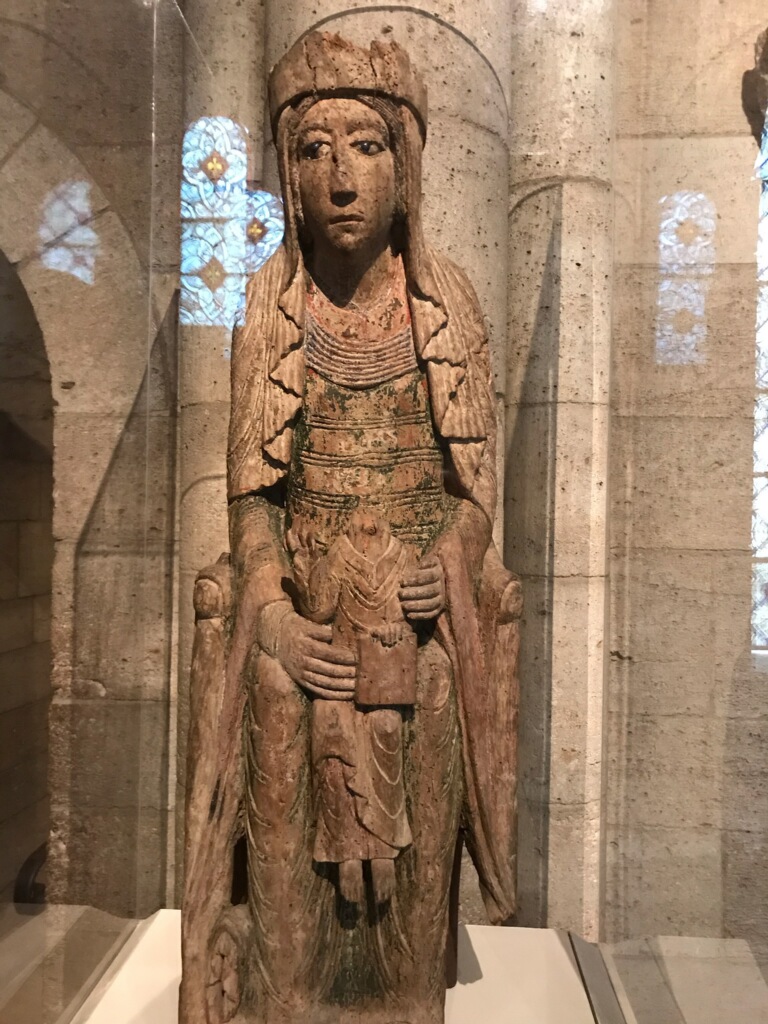
Update: I just added my brother-in-law’s photo of a beautiful Madonna, carved in wood. He was drawn to her because she looked so contemporary and because the weight of the world seemed to be on her shoulders. (The carved Baby Jesus didn’t survive intact through the centuries.)

072619-Cloisters-Met

072619-Cloisters-garden

072619-weight-of-the-world-Madonna-Cloisters

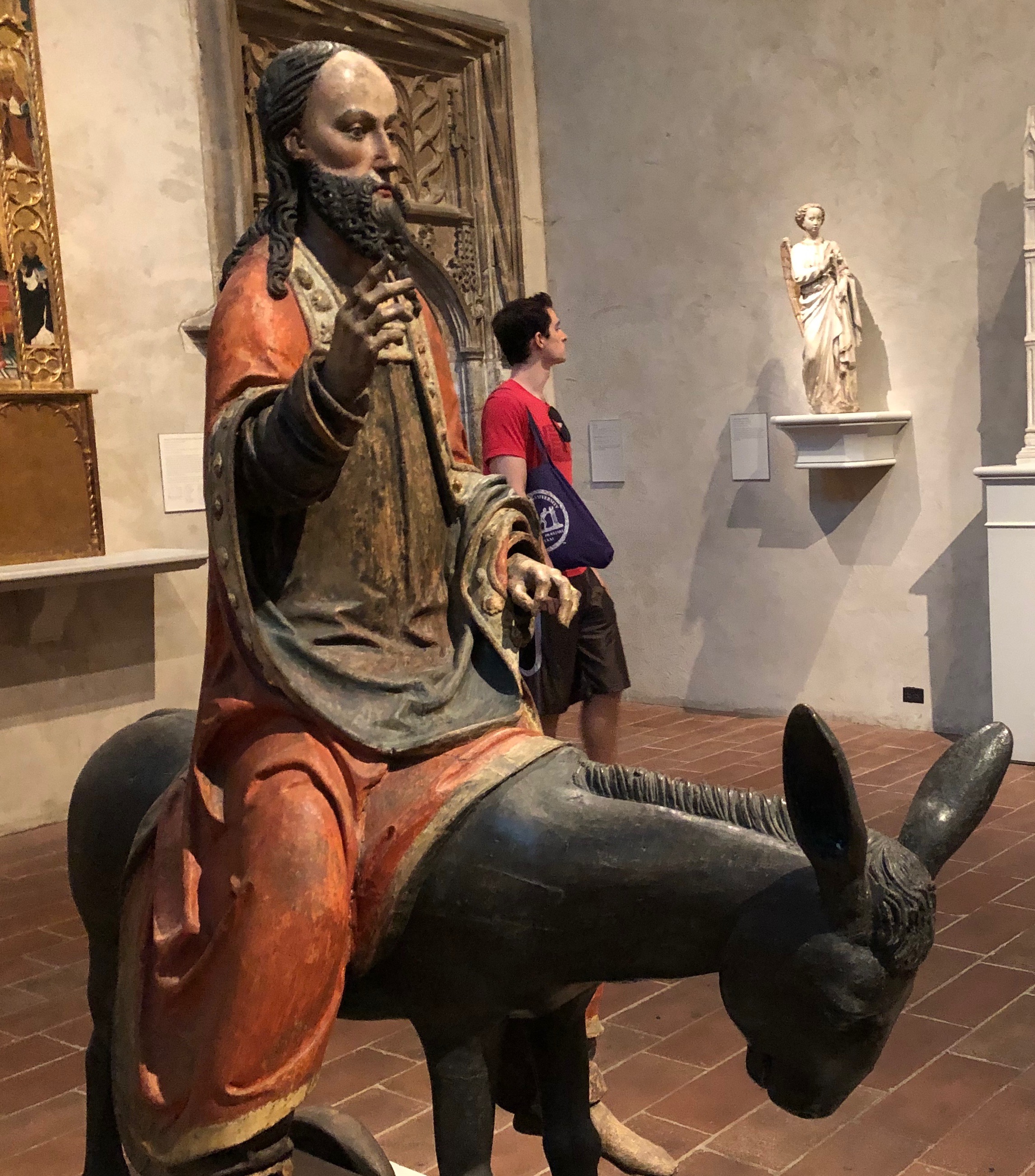
072619-Jesus-on-donkey-Cloisters

072619-Benedictine-chapel-Cloisters-NYC

Read Full Post »

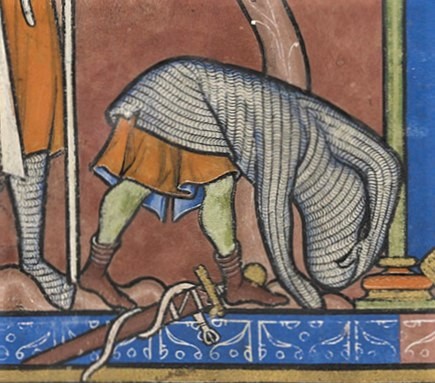
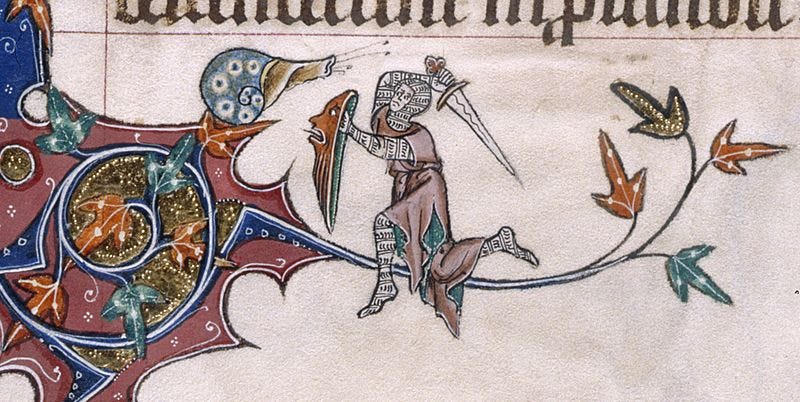
On twitter a while ago, Liz Devlin (@FLUXboston) highlighted a Vox video presenting an explanation of why snails appear in the margins of many medieval illuminated texts.

Vox reports that a Germanic people called Lombards, who had invaded Italy, were roundly scorned in the 1200s. Over time they became less warrior-like and more usurious. That is, they were money lenders, which gave them another kind of power. The theory is that the snail represents both the the hated Lombards’ lack of fighting ability and their power.

A group of librarians in the UK also looked into the research. They report as follows: “There has been much scholarly debate about the significance of these depictions of snail combat. As early as 1850, the magnificently-named bibliophile the Comte de Bastard theorised that a particular marginal image of a snail was intended to represent the Resurrection, since he discovered it in two manuscripts close to miniatures of the Raising of Lazarus.

“In her famous survey of the subject, Lilian Randall proposed that the snail was a symbol of the Lombards, a group vilified in the early middle ages for treasonous behaviour, the sin of usury, and ‘non-chivalrous comportment in general.’

“This interpretation accounts for why the snail is so frequently seen antagonising a knight in armour, but does not explain why the knight is often depicted on the losing end of this battle, or why this particular image became so popular in the margins of non-historical texts such as Psalters or Books of Hours.

“Other scholars have variously described the ‘knight v snail’ motif as a representation of the struggles of the poor against an oppressive aristocracy, a straightforward statement of the snail’s troublesome reputation as a garden pest, a commentary on social climbers, or even as a saucy symbol of female sexuality. It is possible that these images could have meant all these things and more at one time or another; it is important to remember, as Michael Camille, who devoted a number of pages to this subject, once wrote: ‘marginal imagery lacks the iconographic stability of a religious narrative or icon.’ “

Read more at the British Library website, here. Lilian M.C. Randall’s study “The Snail in Gothic Marginal Warfare” can be found here, at the University of Chicago Press journals site. Watch the video, too. It’s quite fun.

Read Full Post »