Feeds:
Posts
Comments

Posts Tagged ‘montana’

062120whitefish20lake

Photo: Doug Struck
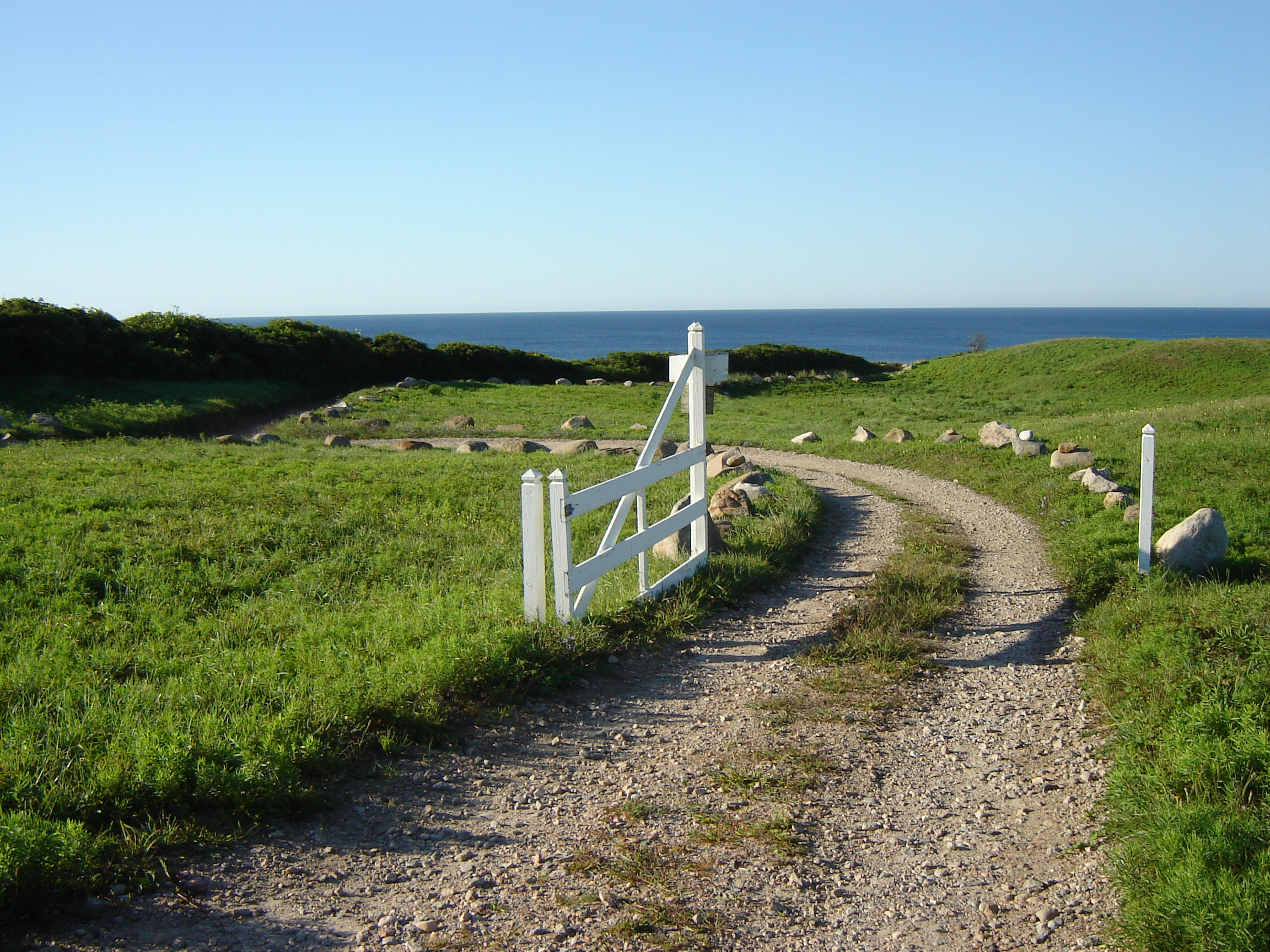
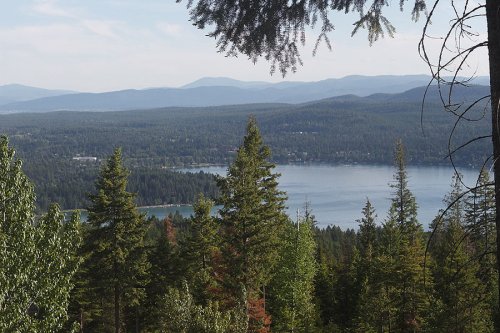
Access to streams in Whitefish, Montana, was threatened by development, so the town used the increasingly popular strategy of buying rights to the forest.

People can change their minds.

That’s what happened in Montana as property-rights advocates began to see that their water bills would be cheaper if they let government entities buy rights to forests on private lands.

Doug Struck writes at the Christian Science Monitor, “When the appetite for high-priced housing threatened the water source of [Whitefish, Montana], the residents raised taxes and spent money on forests. Three years later, when rising tourism upped the summer demand for water, more money was raised to buy more forests.

“The equation used by local and state officials, nonprofit groups, and private residents was straightforward: It’s cheaper and easier to have the forests cleanse the water than to throw chemicals and machinery at the task.

“ ‘Protecting forests of watersheds makes economic sense,’ says John Muhlfeld, the mayor of this town of 7,000 nestled in Montana’s Rocky Mountains. ‘And it’s a much different way of traditionally looking at a public water supply infrastructure.’ …

“As town planners look at the high cost of building water filtration plants and operating them year after year, the thought of letting the trees do it becomes a budgetary no-brainer.

“And the trees do it well. The natural filtering process that rain and snow undergo in seeping through forest canopies and forest beds, slowly toward streams and lakes, is so effective that five major cities in the United States – New York, Boston, Seattle, San Francisco, and Portland, Oregon – can pump unfiltered water from distant pristine watersheds to customer homes.

“New York is the poster-city example in this country. Twenty years ago, the city engaged in a wrenching political battle over whether to build a $6 billion water filtration plant that would cost $300 million per year to filter water for the city. Instead it gambled and spent $2 billion to protect the forested watershed in the Catskill Mountains, 125 miles away, the source of 90% of the city’s water. It was a bold and controversial decision – and it worked.

“ ‘Here we are, 20 years later they have been meeting the safe drinking water standards through tropical storms and superstorms,’ says Paul K. Barten, one of the junior architects of the original Catskills program who now chairs a current National Academy review of the system. …

‘People are not necessarily doing it because they love trees. … ‘They are doing it because it’s a lot less expensive.’ …

“The state and national park programs that began to emerge in the U.S. 150 years ago, and evolved at the prodding of such visionaries as John Muir, Frederick Olmsted, Gifford Pinchot, and Teddy Roosevelt, now preserve 13% of U.S. land, according to the World Bank. Another 56 million acres are held by various forms of private or public ‘trusts’ that allow some use but prohibit development, according to the Land Trust Alliance in Washington, D.C.

“In the case of Whitefish, that meant keeping land for logging. The Haskill Basin northeast of town was forestland owned for more than a century by the Stoltze lumber company. …

“Over the years, development pressures loomed larger as Whitefish blossomed into a high-end, expensive resort town sprouting multimillion-dollar second homes. … Stoltze ‘could have gotten an offer that they couldn’t refuse,’ says Kris Tempel, a biologist at the Montana Fish, Wildlife and Parks agency. …

“The Trust for Public Land … helped bring together $9 million from federal conservation funds. And Stoltze agreed to take a $4 million cut on the $21 million price of giving away development rights to its 3,000 acres in Haskill Basin. …

“That left a shortfall of $8 million. City residents had balked before about increasing the town’s ‘resort tax’ on restaurants, lodging, and retail. But in 2015, after a ‘Vote Yes for Water’ campaign by the mayor and others, residents gave an overwhelming 84% approval to a 1% tax increase. Late last year, the purchase of another 13,000-acre property helped protect a watershed for Whitefish Lake, a secondary source of water for the town.

” ‘The public support is a change in a place where encroachment on private land is viewed with suspicion, says [Montana Fish, Wildlife and Parks resource conservation manager Alan Wood]. ‘Twenty years ago there was a lot of opposition’ to these proposals.’

“But this deal ‘gave everyone what they wanted,’ says Mr. Wood. The town kept its access to clean and cheap water. Stoltze can keep harvesting timber on the land, employing an average of 110 workers.”

More at the Christian Science Monitor, here.

Read Full Post »

Photo: Rebekah Welch, Missoulian
Two refugee children hurry to watch a soccer game at Fort Missoula in Montana.

I’m back volunteering with refugees and other immigrants, and it feels great. I took a hiatus to rethink my schedule after my sister was diagnosed with brain cancer. Now I’ll be doing only one day a week instead of three, assisting at a morning ESL class in a Providence resettlement agency and an afternoon class down the street. It makes me feel like I’m doing something worthwhile in retirement.

In today’s story, volunteers and staff at some unusually stable refugee programs in Montana feel the same. The article reminds me that my ignorance of much of the country has kept me from appreciating how every state has people with similar values.

In October, Kim Briggeman wrote at the Missoulian, “Montana’s lone resettlement office is just big enough to dodge the ax lowered by the [administration’s] slashed refugee cap, but small enough to escape the staff reductions others face.

“ ‘In Salt Lake City we were staffed to serve 600 arrivals (per year). Well, when you get half of that, you start losing staff,’ Patrick Poulin said in Missoula last week.

“Poulin is acting regional director of 13 International Rescue Committee [IRC] offices in seven Pacific Northwest states, and serves as executive director of the one that opened in Missoula two years ago. …

“The U.S. State Department has ‘pretty much told resettlement agencies’ that offices serving fewer than 100 refugees a year will be shuttered, Poulin added.

“Missoula’s IRC office received 115 refugees in fiscal year 2018, which ended Sept. 30. Poulin said that was up from 78 in the first full year, and included a welcome but unexpected rush of 26 Congolese in July and another 23 Congolese and Eritreans in August. Those represent the top two months for refugee arrivals since the IRC began receiving them in August 2016. …

“The U.S. Secretary of State [announced] in mid-September a proposal to lower the number of refugees allowed into the country from a maximum of 45,000 to 30,000 for fiscal-year 2019. Both are fractions of the 110,000 set by President Barack Obama in his final months of office in 2016, a cap that was ratified by Congress. …

“ ‘This is not only the lowest goal in the history of the U.S. program — the average has been 95,000 — but puts U.S. resettlement, as a proportion of population, well behind Sweden, Canada, Australia and the United Kingdom,’ noted a guest commentary co-authored by Helena mayor Wilmot Collins that appeared last Monday in The Hill. Collins [is] a refugee from Liberia. …

“Missoula Federal Credit Union (MFCU) … donates roughly 7.5 percent of its annual net income to community programs like these. …

“[Mary Poole of volunteer-reliant Soft Landing Missoula] said it was another reminder of how Missoula Federal and its president, Jack Lawson, have supported local refugee resettlement from the start.

“ ‘We’ve had, I think, three or four meetings with Jack where he’s asking, “What’s next? What can we do beyond money to help?” And of course there’s always an answer for that,’ she said.

“The IRC works with schools and organizations to set up classes such as English language and computer literacy courses to help refugee families integrate into the community. In the credit union’s case, it’s financial literacy support. …

“[Gwen Landquist of Missoula Fed] said a ‘fantastic’ family of Congolese has agreed to be taken under the wing of a financial mentor from MFCU for a year.

“ ‘The husband and wife met at a refugee camp and moved here in July with their three children and one of their mothers,’ she said in an email. …’ The husband speaks about seven languages, including English, and his kids are learning Spanish in school. He has taken some prep classes to prepare for attending school. He is currently employed and is eager to get a car so they can get to church and work.’ …

“A study that came out in July found that the 4,600 refugees and other immigrants in the Missoula region generate more than $26 million in tax revenue each year and contribute disproportionately to goods produced and services provided.”

More at the Missoulian, here.

Read Full Post »

Once again, Andrew Sullivan provides me with a thought to chew on. I had heard of building tunnels under highways to let wildlife maintain their historic routes, but  an Orion magazine article on the topic includes an overpass.

Andrew Blechman wrote the article. “When the Montana Department of Transportation approached the Confederated Salish and Kootenai Tribes about widening the portion of U.S. Highway 93 that bisects the Flathead Indian Reservation, the tribes resisted. They first wanted assurances that any highway expansion would address the spirit that defines this region of prime wildlife habitat and natural wonders. The primary goal for the tribes was to mitigate the impact of the road on wildlife.

“While people view highways as a means of getting from one place to another, to wildlife they are just the opposite: a barrier….

“Collaboration between the tribes and highway engineers, with help from Montana State University and Defenders of Wildlife, led to the creation of the most progressive and extensive wildlife-oriented road design program in the country.

“The 56-mile segment of Highway 93 now contains 41 fish and wildlife underpasses and overpasses, as well as other protective measures to avoid fatalities. As creatures become accustomed to the crossings, usage is increasing—at last count, the number was in the tens of thousands. Motion cameras have captured does teaching their young to run back and forth through the crossings, much like human mothers teach their children to safely cross a street.” More at Orion.

See the overpass below.

Read Full Post »

A woman in Estonia watching a webcam trained on an osprey nest in Montana was able to alert researchers that an endangered baby osprey was in trouble.

My husband, who likes to read nature magazines, knew this story was a good one for Suzanne’s Mom’s Blog the minute he saw it this afternoon.

Doug Stewart writes at National Wildlife, “The nest overlooks the parking lot of a nursing home in Hellgate Canyon near Missoula. All summer, hundreds of thousands of people watched online as three nestlings screamed deliriously at fish deliveries or listened to their parents vent their fury at encroaching bald eagles.

“At one point last summer, one of the three chicks became entangled in monofilament line from a fish brought back to the nest. Fishing line can quickly strangle an osprey chick. It was a Sunday, and the researchers had not been online to check the nest.

“ ‘We were first alerted to the fishing line by an email from a woman in Estonia,’ says [biologist Erick] Greene. ‘Then we heard from a woman in Wales.’ The researchers also had set up a Facebook page for the ospreys, and in no time it became filled with alerts from concerned visitors. Borrowing a truck equipped with a bucket that can raise up to the level of the nest, the biologists raced to the scene to cut away the line from the chick and removed a fish hook embedded in its wing. The bird survived.”

More great details at National Wildlife, including a description of 700 kids at an urban school watching the webcam and tweeting questions about the osprey to researchers, here.

Watch the osprey here.

Photo: National Wildlife

Read Full Post »

A while back I watched the movie The Little Red Truck, a documentary by producer Pam Voth and director Rob Whitehair highlighting the work of the Missoula Children’s Theatre. It was a moving experience.

The Missoula (Montana) Children’s Theatre travels by truck from city to city all over America to put on productions with children in low-income urban and rural areas. The transformation of some of these children in the week it takes to produce a full-scale, one-hour musical is something to see, with many insecure children discovering talents that no one, including the children themselves, knew they had.

For kids who have never seen a play and have no place to rehearse — nor any props or costumes or sets other than what the theater company can pack into the truck —  putting on a production seems unimaginable.

As the movie unfolds, you see how doing the unimaginable builds self-confidence, and generates both laughter and ideas about possible futures. It’s not about growing up to be actors. It’s about seeing that there are options, and starting to think differently.

And in case anyone is more interested in the academic skills boosted through theater, this Education Week article makes that case. Not a bad case to be made, but it’s the magic of Queen Mab that speaks to me.

Read Full Post »