Feeds:
Posts
Comments

Posts Tagged ‘museum’

Photo: Pat Greenhouse/Globe Staff.
Dutch artist Hendrick Avercamp’s winter scene, stolen in 1978, arrived in May at the Worcester Art Museum in Massachusetts. 

As an inveterate reader of mystery novels, I do love a yarn about art thieves, especially if there’s a clever sleuth who figures out what happened. It’s best if the perps end up in jail, but you can’t have it all. These things take time.

At the Boston Globe, Malcolm Gay has a good story about Clifford Schorer, a former president of the Worcester Art Museum’s board as well as “an international art dealer and sleuth who spends his days (and many nights) hunting ‘sleepers’ — lost masterpieces whose true identities have been obscured through the ages.

“Schorer had flown from Brussels [on a day last May] with the painting he now carried in his hands, a winter scene by the acclaimed Dutch Golden Age artist Hendrick Avercamp.

“The artwork was stolen nearly half a century earlier in a sensational 1978 heist from the baronial estate of Helen and Robert Stoddard, a Worcester industrialist. The Avercamp picture, along with numerous other paintings and other valuables taken from the home that night, had not been seen since. Local officials were stumped. So was the FBI. …

“[Schorer] and a conservator carefully unwrapped the package, revealing the aged but unscathed picture of Dutch figures skating in winter.

“ ‘It was nirvana,’ Warner Fletcher, a nephew of the Stoddards, said of the moment. …

“The Avercamp originally disappeared the night of June 22, 1978, when thieves broke into the 36-acre Stoddard estate, hacking open sofa cushions to cart away valuable works by Camille Pissarro, J.M.W. Turner, and Pierre-Auguste Renoir, among others. …

“That night, with Helen undergoing cancer treatment at a Boston hospital, Robert turned in just before midnight. [He] was sound asleep when thieves broke in through the sun porch.

“The burglars ransacked the home, rifling through drawers and closets. They drank the couple’s liquor and ate food from the fridge, according to later news reports. They made their way through each room, snatching paintings from the walls and pocketing collectibles including miniature carvings, silver tea sets, watches, and valuable music boxes.

“When Stoddard awoke the next morning, he realized the house had been robbed when he found his glasses on the floor. …

” ‘We never had a suspect,’ Ralph E. Doyle, a retired detective sergeant with the Worcester Police Department, told the Telegram & Gazette in 2000.

That‘s not to say there haven‘t been breakthroughs.

“The most valuable work in the Stoddard’s collection, Pissarro’s 1902 oil on canvas, ‘Bassins Duquesne et Berrigny à Dieppe, temps gris,’ surfaced at a Cleveland auction house in 1998. …

“The discovery of the Pissarro prompted authorities to look closely at a Springfield-area art dealer named Robert Cornell and his ex-wife, Jennifer Abella-Cornell, who had brought the painting to Ohio. But the estranged couple gave wildly conflicting accounts. [An FBI] spokesperson later told the Telegram & Gazette that reconciling their stories was ‘like beating a dead horse.’ …

“The trail of the Avercamp and other missing works then went cold. Frustrated by the lack of progress and still hoping they might be retrieved, Fletcher, the Stoddards’ nephew, finally turned to Schorer in 2021. He put information about the missing artworks in a manila envelope and sent it to the sleuth.

“Fletcher was by then familiar with Schorer. … He’s renowned in the trade, and he’d recently discovered a previously unknown drawing by Northern Renaissance master Albrecht Dürer that was purchased at a Concord estate sale for $30.

“Schorer was only vaguely aware of the Stoddard theft at the time, but as he looked through the envelope’s contents, he began to concentrate on the works he found most interesting: the Avercamp, the Turner, and an oil painting by 19th-century Dutch painter Johan Jongkind. …

“His search came up empty. But from his years of experience tracking down stolen art, Schorer knew that disreputable dealers will sometimes misrepresent works to evade detection.

“ ‘Finally, I said, “All right, if I had that painting, who would I fence it as?” ‘ Schorer recalled thinking.

“He knew that Avercamp, a mute painter who specialized in outdoor winter scenes, had a nephew, Barent Avercamp, who mimicked the style of his more gifted relative. Schorer turned again to his computer, this time searching for winter scenes by the famed painter’s nephew.

Bingo: Fifteen minutes later, he came across a throw pillow that was selling for $18.40 with a portion of the missing Avercamp scene — including a distinctive arch — printed on its case. …

“Schorer had made a breakthrough. The only known images of the Avercamp were grainy black and white photos from the ’70s. But this image was in color. It could mean only one thing: The photo was taken after the theft.

“ ‘I clicked on that, and it took me to a page trying to sell me a pillow,’ Schorer recalled. There, just above the asking price, he also found the logo of the image licensing company that held the source file.

“Schorer navigated to the site and paid $39 to download the photo. As he parsed its metadata, he discovered the copyright on the image: L.S.F.A.L., an acronym for Lawrence Steigrad Fine Arts Ltd., a dealer he’d known for years.

“Steigrad told Schorer he’d taken a photo of the painting for Newhouse Galleries, which had offered the artwork at a fine arts fair in the Netherlands in the mid-90s.

“Working another angle, Schorer discovered the name of the person who’d originally sold the work to Newhouse: Sheldon Fish. Fish told Schorer he’d purchased the painting at the Brimfield Antique Flea Market, a short drive from Worcester.”

Brimfield, Holy Cow! It’s a really famous flea market in our area, where Suzanne found most of the antique lockets she sold. I followed her around as she shopped one rainy weekend before Covid.

I love reading this stuff. The rest of the story is at the Globe, here.

Read Full Post »

Photo: @risdmuseum on Instagram.
Conservator Ingrid Neuman (left) with Rhode Island School of Design undergrad student Sophie Bugat, doing repair work on a statue of Pan.

When a new artwork is acquired by a museum, it doesn’t go right on display. At least one expert must look it over and make sure it’s in good shape.

At the Rhode Island School of Design [RISD ] in Providence that expert is often Ingrid Neuman.

Kristine Yang writes at the Providence Eye, “This past November, Ingrid Neuman, senior conservator at the RISD Museum, wheeled a twelfth-century Japanese wooden Bodhisattva Avalokiteshvara into Hasbro Children’s Hospital for a CAT scan. Conservators have repaired the ancient figure, a revered Buddhist symbol, over centuries — Neuman’s examination would reveal exactly where and how they had carried out those repairs. …

“Over time, sculptures accumulate dirt and often chip, show wear, or even break. Some arrive with broken parts or past repair attempts that complicate restoration. Preparing these pieces for public exhibition falls to the museum’s conservation team.

“Through a meticulous process that integrates chemistry, art history, and craftsmanship, conservators work to stabilize and restore each object. … Neuman’s background in organic chemistry is essential to her work. Sculptures are vulnerable to a host of natural forces over time such as ultraviolet radiation, pollution, humidity, and fluctuations in temperature – all of which can degrade original materials. Pieces with organic materials like wood and ivory, along with metals such as bronze or iron, are particularly prone to these ‘agents of deterioration’ and can experience accelerated degradation if not properly maintained, says Neuman.

‘An ancient bronze beaker from China wants to corrode. It wants to go back to its original copper ore,’ says Neuman. ‘We’re trying to keep it from doing that.’

“Corrosion is a natural chemical reaction that occurs when metals like bronze are exposed to oxygen, moisture, or pollutants over time. This reaction, called oxidation, causes the metal to slowly break down. Left unchecked, this chemical process can eat away at the surface of a sculpture. …

” ‘We borrow a lot of techniques from dentists and doctors,’ says Neuman. ‘There’s a lot of overlap with the medical field.’ With limited in-house instrumentation at the RISD Museum, Neuman often relies on nearby hospitals such as Hasbro’s and research institutions for specialized evaluations.

“Understanding a sculpture’s composition and preservation history is crucial, as it directly informs the selection of repair materials. … Conservators intentionally choose repair materials that are visually similar to the original but chemically distinct, ensuring that their work can be easily differentiated from the artist’s upon chemical evaluation.

“ ‘We don’t like to use the same materials as the artist,’ Neuman says. ‘We’re not trying to be the artist, or be better than the artist, or confuse people.’ 

“The ease with which any added materials can be removed is also a crucial consideration for conservators, as they must ensure that any restoration work can be undone without damaging the original piece. …

“For this reason, conservators use inpainting – a technique used to fill in missing parts of an artwork – with materials that can be easily distinguished and removed. For example, Neuman says conservators often use acrylic paint when filling in an oil painting. Acrylic is water-based and chemically different from oil paint, allowing it to be safely removed. …

“Neuman emphasizes the importance of reversibility and the chemical properties of adhesives. ‘There’s so many glues in the world. A zillion,’ she says. ‘Everyone uses epoxy or Gorilla Glue, but we never use them because they’re too strong.’

“If conservators use a glue that is stronger than the sculpture’s original material, any physical stress on the object could result in new fractures, rather than breaking along existing lines. … She prepares her own adhesives in the lab, including wheat starch paste and Funori, a traditional Japanese adhesive made from seaweed — both of which are gentle yet effective enough for conservation work.

“While conservators intentionally make their repairs distinguishable from the original through their selection of materials, their work must remain invisible to the viewer. … This means conservators must address each deformity with painstaking precision and care. Inpainting demands an especially detailed approach. … Neuman says, ‘You have to use a very tiny brush, with only a few hairs in it, and you have to be really good at color matching.’

“One of the challenges of inpainting is a color perception phenomenon called metamerism, where colors that match under one light source may look different under another. … To navigate this, she moves the piece back and forth on wheeled carts between her sunlit lab and the gallery space to ensure the colors match under different lighting conditions.

“Once the restoration is complete, detailed documentation is essential, Neuman says. Photographs of the piece before, during, and after the process, along with written records, are uploaded to the museum’s database for future conservators’ reference. ‘It’s important to leave a record,’ Neuman says.”

More at the Providence Eye, here. This story reminds me of the work that Sotheby’s did on one of my mother’s Pousette-Dart paintings, one that had been too close to a chimney fire!

Read Full Post »

Photo: rkd/Mauritshuis.
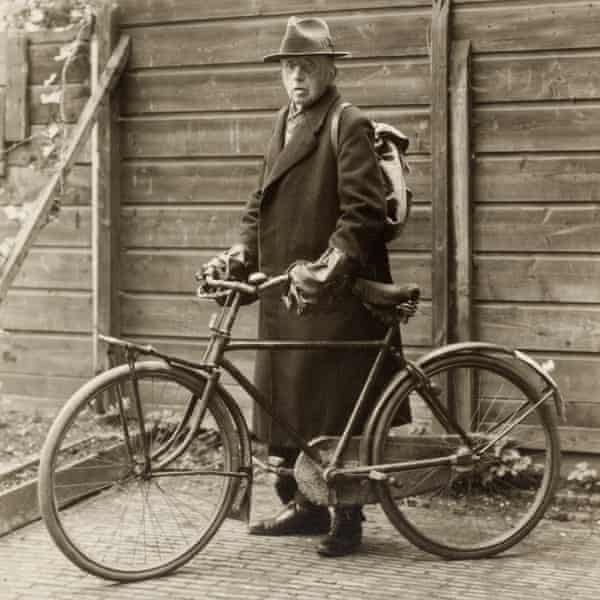
Wilhelm Martin, the director of the Mauritshuis museum, quietly resisted by removing artworks from the museum during the Nazi occupation. And he hid people.

Today we go back to WW II to gather new information on the difficult choices that people had to make under Nazi occupation and how some Dutchmen practiced resistance while hiding in plain sight.

The Guardian‘s Senay Boztas reported the story from the Netherlands.

“The 13-year-old boy answered the doorbell,” she begins. “ ‘Tell your dad I’m here,’ said a man, who stored his bicycle and then disappeared upstairs.

“It was 1944, and right under the noses of Nazi command, people were hiding in the attic of The Hague’s Mauritshuis museum from forced labour conscription – Arbeitseinsatz – under which hundreds of thousands of men from the Nazi-occupied Netherlands were conscripted to work in Germany.

“The memories of 93-year-old Menno de Groot – a Dutch-Canadian who was that young boy – form an extraordinary part of a book and an exhibition of the secret history of the Dutch museum during the second world war.

“ ‘He must have gone all the way to the attic,’ De Groot tells his granddaughter Kella Flach in a video for the exhibition, referring to the man who he assumed had arrived to go into hiding. ‘I don’t know how many were up there. I have no idea how they lived up there, how they got there.’

“The chance find of a logbook by De Groot’s father, Mense de Groot, an administrator who from 1942 lived in the Mauritshuis museum with his wife and children, including Menno, inspired researchers to examine the museum’s history.

“ ‘People were hiding in November 1944 because of the Arbeitseinsatz, but hiding in the Mauritshuis was hiding in plain sight,’ Quentin Buvelot, a researcher and curator, said. ‘It was a house in the storm.’

“Art from the museum, including Johannes Vermeer’s Girl With a Pearl Earring, was first hidden in a bomb-proof bunker underneath the building and later stored in locations around the Netherlands. The German-born museum director Wilhelm Martin played a careful role, allowing the Nazis five propaganda exhibitions while also quietly resisting.

“A newly discovered note on Martin’s retirement in 1953 revealed he was involved in supporting people who had gone undercover on Assendelftstraat and in the museum. ‘Martin doesn’t say how many, but he says that on a daily basis, 36 loaves of bread were delivered. …

“Secret concerts were also held in the museum’s basement between 1942 and 1944, according to Frank van Vree, an author and researcher at the NIOD institute for War, Holocaust and Genocide Studies. ‘They were held to support musicians who were cornered by their resistance to German measures, especially compulsory membership of the Nazi Kultuurkamer,’ he said. …

“Mense de Groot, who was hired to work at the museum when the janitor retired, also worked for the resistance. ‘He usually got Trouw, an underground newspaper,’ Menno de Groot says in the exhibition. ‘And my dad, he copied them, made more copies. …

“Life under occupation was a series of difficult choices, according to Eelke Muller, a historian and NIOD specialist in looted art. ‘There was little knowledge [before this research] about how culture could be a political instrument for resistance from the Netherlands but also a strong ideological instrument for the occupier,’ she said. ‘Every museum, every civil servant in times of war was confronted with huge dilemmas: do you choose principled resistance, enthusiastically get behind Nazi ideas, or are you somewhere in the middle?’ More at the Guardian, here. No paywall.

Nina Siegal at the New York Times adds details about the famous Vermeer that Martin also hid.

“At first it went to a bomb shelter in the basement of a museum, then an art bunker built into the dunes on the North Sea in the Netherlands. Toward the end of the war it was hidden in a secured cave in Maastricht, a Dutch city near the Belgian border.

“Starting in 1939, as war in Europe spread and the Nazi invasion of the Netherlands loomed, leaders of the Mauritshuis, the jewel box museum in The Hague, took extraordinary steps to protect Johannes Vermeer’s ‘Girl With a Pearl Earring’ and other works central to its collection.

“Wilhelm Martin, the museum’s director at the time, removed it and other famous works … before the Germans arrived because he understood that they would be in peril, both from bombardments and from potential Nazi looting afterward.

“The survival of these works, through strategic planning, diplomatic appeasement and the German affinity with the conquered Dutch as ethnic brethren, is now the subject of an exhibit at the Mauritshuis. ‘Facing the Storm: A Museum in Wartime,’ which is on view until June 29, coincides with the 80th anniversary of the liberation of the Netherlands in 1945 and is based on extensive new research.”

I hope blogging chefs Michiel and Jeen in the Netherlands get to see this.

Read Full Post »

Photo: British Museum.
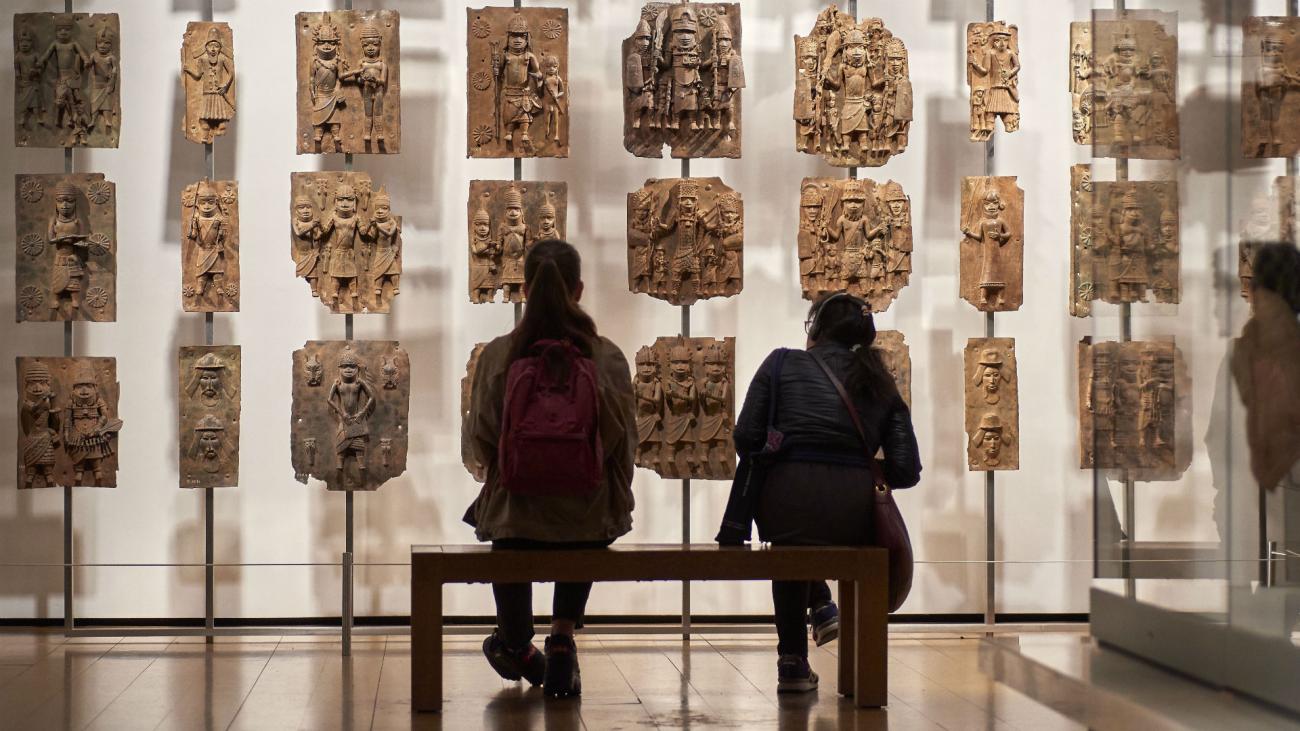
Benin bronzes.

Around the world, looted national treasures are beginning to return home. Among the most famous are the bronze plaques made in Benin, Africa. Now that country is building museums to protect its returning bronzes — and all its art.

Chinma Johnson-Nwosu writes at the Arts Newspaper, “The Republic of Benin, which is making its debut appearance at the Venice Biennale this year, is turning to culture as part of a strategy to spur economic growth. Its government is building four new museums in a range of locations and a cultural quarter in the largest city, Cotonou, in addition to boosting investment in arts education.

“A museum in the coastal city of Ouidah, from where the last recorded shipment of slaves to the US departed in 1860, will explore the history of slavery. It is scheduled to be completed at the end of this year, the first of the four new museums slated to open over the next five years in Benin. Maison de la Mémoire et de l’Esclavage aims to tell the history of slavery from African, American and Caribbean and European perspectives, says Alain Godonou, the director of museums for the national agency of heritage and tourism.

“Between 2016 and 2026, the Benin government plans to invest €250m [more than $5 million], with the goal of making culture the economy’s second pillar after agriculture. In addition to building museums, the government’s focus is on preserving non-material heritage, increasing cultural tourism and offering financial incentives to private investors.

“Promoting the arts goes beyond fostering a sense of national identity, says Babalola Jean-Michel Abimbola, the country’s minister of culture. ‘It’s a fight against poverty, allowing us to create jobs and build a better economy.’

“Construction began last year on a new cultural quarter in the centre of Cotonou [Le Quartier Culturel et Créatif] which is to host a contemporary art museum, a sculpture garden, a Franco-Beninese cultural institute, a concert arena, commercial galleries and a crafts village showing local crafts and heritage. …

“Further plans include the Musée des Rois et des Amazones du Danhomè in Abomey, where visitors will in future be able to explore the 300-year history of the kingdom of Dahomey. Musée International du Vodun, located in the capital, Porto-Novo, aims to rehabilitate the image of a much-maligned and globally poorly understood Indigenous religion, also known as Voodoo.

“The government hopes that the new museums will build on the success of a 2022 exhibition, where 26 recently repatriated royal artefacts went on display in the presidential office. These were shown alongside the contemporary exhibition, Art of Benin From Yesterday and Today: From Restitution to Revelation.

“The show drew more than 230,000 visitors in the three months it ran, 90% of whom were citizens of Benin, Godonou says. … While he concedes it may be too ambitious to expect to replicate the 2022 success annually, he believes a target of 100,000 would be sustainable.

“Last year, the government launched an Agency for the Development of Art and Culture. The ministries of tourism and finance are also seeking to introduce tax relief policies for the cultural industries.

“The kind of publicly funded, government-led major museum projects Benin is undertaking have little precedent in Africa. … The Benin government’s plan does, however, envisage involving the private sector. By showing entrepreneurs that people in the country are interested in art, Abimbola hopes to spark business interest. In some parts of Cotonou that is already happening. Septième Gallery, which already had a space in Paris, launched in Cotonou in 2022. …

“Investment in arts education and professional training is also increasing. Sèmè City, a government-backed development project, has revealed plans for a new Africa Design School campus located in Ouidah. The school launched in Cotonou in 2019 in partnership with L’École de Design Nantes Atlantique and has since added a masters programme and an exchange programme, in which 11 French students participated in 2023. …

“Last year, the École du Patrimoine Africain, which trains heritage professionals, celebrated its 25th anniversary. When it began, only 5% of the people working in Beninese museums were trained in heritage preservation. Now the figure is 80%.”

More at the Art Newspaper, here. Can you guess what country was the colonizer? Consider the names of the museums.

Read Full Post »

Photo: Nora Hickey/ Hyperallergic.
A Veronica comic strip drawn by Dan DeCarlo.

What cartoonists and comic strips did you read as a kid? My mother wanted me to be a child always, so she bought Little Lulu comics until I was into my teens. Not that I didn’t like Little Lulu, but I really, really wanted to know about the romantic adventures of Archie, Veronica, Daisy, Jughead, and all that gang. I wanted to understand why the blond was never as popular as the brunette.

Comics are an art that draws in young and old. But they have not often received attention as an art. Until now.

Nora Hickey reports at the art magazine Hyperallergic, “In an unendingly flat city nicknamed ‘Cowtown,’ the Ohio State University (OSU) erupts as an archetypal college campus. A miscellany of stone and brick buildings from various eras look over pedestrian paths bisecting green lawns. In one of these limestone, academy-coded buildings resides a museum and library dedicated to a genre long thought to be miles from the ivory tower: comics.

The Billy Ireland Cartoon Library & Museum claims to house the world’s largest collection of cartoon- and comics-related materials, including a range of inked paper, artifacts, newspaper clips, magazines, scrapbooks, and even the drawing board used by Chester Gould, who created the Dick Tracy comic strip (1931—77).

“But it is much more than an archive: it is at once a museum, center for scholarship, and venue for events, all of it surprisingly accessible. … First, it costs nothing to attend. Also, the materials and displays are easy for anyone to understand, comics aficionado or not. And, if you — that is, anybody — want to see any of the holdings, you can request to view it onsite.  

“This approachability may be due in part to the fact that the comics genre has been routinely underestimated, despite its outsize impact. It’s one of the only historically disposable art forms — think of those painstakingly conceived, drawn, inked, and colored newspaper funny strips smeared with wet from their hasty relegation to the recycling bin. …

” ‘The Billy Ireland was founded back in 1977 through a donation from the cartoonist Milton Caniff — who was at one point one of the most successful and influential American cartoonists in American history,’ explains Caitlin McGurk, curator of Comics and Cartoon Art and associate professor at OSU. Caniff, a ‘celebrity’ artist (‘he would appear on late night TV,’ McGurk tells me) who created the widely read Terry and the Pirates (1934–73) and Steve Canyon (1947–88) adventure newspaper strips, was an Ohioan and a 1930 alum of OSU. As he prepared for retirement, he aimed to donate all of his work to the library of the university to which he felt he owed his career. ‘The libraries at OSU actually turned it down,’ McGurk told Hyperallergic in an interview. …

We show visitors the archive and people cry — especially if you’re a maker of this form that has been so long disrespected.

“Luckily, as Caniff produced newspaper comic strips, the journalism department decided to take his archives. … With Caniff’s encouragement of his fellow comic creators and Caswell’s outreach, the Billy Ireland would become a top choice for donations.

“Bill Watterson, for instance, the famously private artist of the beloved Calvin and Hobbes (1985–95), entrusted his entire backlog to the museum — the only collection in the world to hold his archive. There are also lesser-known treasures, like the namesake of the museum itself, editorial cartoonist Billy Ireland, whose fame waned after his death but was resurrected by the Museum. …

Behind the Ink: the Making of Comics and Cartoons … explores the variety of tools and art-making techniques employed by cartoonists over the years. The other current exhibit is Depicting Mexico and Modernism: Gordo by Gus Arriola, which details the life and work of the Modernist Mexican-American cartoonist.  Then, in May, a bonanza exhibition of the sardonic, iconic Nancy goes up, accompanied by a weekend-long Nancy fest on the 24 and 25 where Nancy scholars, cartoonists, and fans will dig into their favorite wisecracking character.   

“Below the exhibition spaces are the archives themselves. ‘Since OSU is part of a land grant institution, our archive is completely open to the public, which is pretty rare,’ McGurk explains. Some highlights are zines from the Riot Grrrl movement of the 1980s, which bear the raw emotion of their creators, and scrapbooks of cartoon engravings kept by a wealthy English family in the 1700s that painstakingly depict events long past. … There’s also a collection of 2.5 million comic strips saved by a single man (Bill Blackbeard). Personally, I loved seeing the colorful mid-century manga laid out as a huge page of frenzied activity punctuated by moments of photorealistic pictures. 

“The ability to see the comics in all stages of development — from nascent sketches, to embryonic penciled pages, to White’d Out and inked final pages — is a rare treat because of how such work is typically experienced: in reproduction on a mass scale, in frequent installments. To see the original version of a comic read by so many of us feels like seeing the artist at work. …

“ ‘We show visitors the archive and people cry — especially if you’re a maker of this form that has been so long disrespected,’ McGurk said. ‘Then you see this place and you’re like, all this is for comics? This is amazing.’ “

More at Hyperallergic, here. No firewall but subscrptions are encouraged.

Read Full Post »

Photo: Sophia Evans/The Observer.
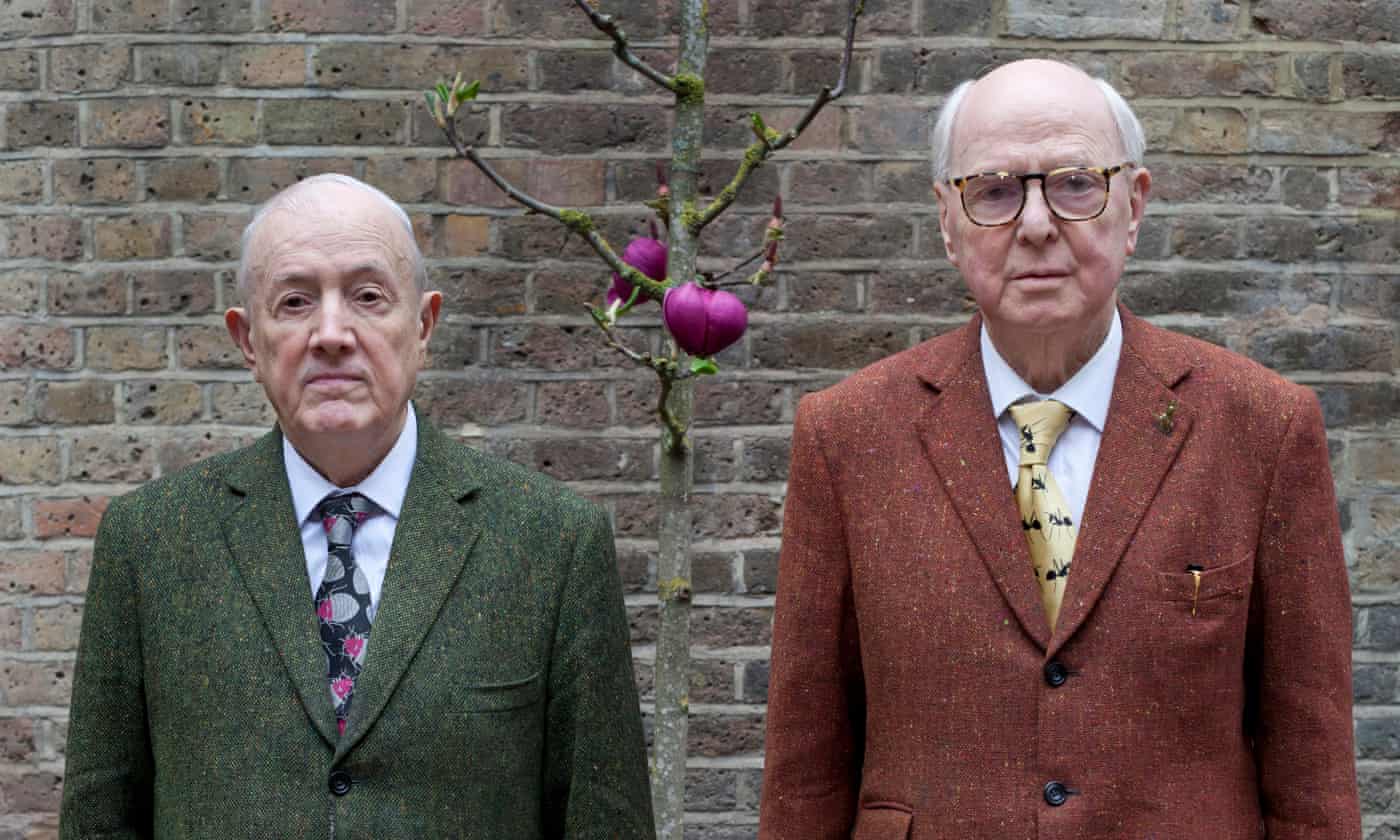
Gilbert, left, and George at their new gallery on April 1. When artists want control, they sometimes open their own museums.

I am always curious about innovations in the museum world. If you search this site on the word “museum,” you will find a wide range of posts, including one about a pandemic-era “mini museum for stir-crazy gerbils,” here, and a 2018 post on micro museums, here.

Vanessa Thorpe reported at the Guardian recently about two guys in London who decided to open a museum for their own work.

“Every creative person yearns for a room of their own,” wrote Thorpe. “But for the stars of Britain’s contemporary art world, it seems that now only a venue of their own will do. [In March] it was Tracey Emin in Margate; on [April 1] it was the turn of the veteran duo Gilbert and George.

“ ‘It is very exciting to see so many people,’ said George Passmore, 81, after the gates swung wide at 10 am to let in an orderly queue of first visitors. ‘Most amusing,’ added his lifelong collaborator – and, since 2008, civil partner – Gilbert Prousch, 79. …

“ ‘Do you know the gates [at this building] are painted in a shade called Invisible Green?’ asked Passmore. ‘It was invented for the great garden designer Humphry Repton when he noticed the grounds of the stately homes he created were being walked across by the public. He needed to put up barriers in a color that would not stand out. It is odd, because it is not invisible at all.’

“The pair’s decorative wrought-iron gates are also not intended to keep out the public. Far from it: the Gilbert and George Centre, which they have planned for years, is a built representation of their slogan ‘art is for all’ and designed as a gift to the community they have lived and worked alongside together for most of their working lives.

“Passmore, born in Devon, and Prousch, born in Italy, met in 1967 while studying sculpture at St Martin’s School of Art in London and developed a unique and entertaining style that places their own images in a variety of visual contexts and poses. ‘We are two people but one artist,’ they have been fond of explaining.

“This first show in the venue features vast photographic screens of leaves and organic products, including figs, roses, dates and leafy greens through which the artists peer or can be seen lolling on benches, either resting or in a swoon. …

“Mark Schofield, 50, a longtime fan, brought his parents, Jackie and Tony, down from Peterborough to see the show. A scientist who now lives in Boston, he was bowled over by the galleries.

“ ‘There’s this clear contrast that I love between the deadpan faces and the joy and mischief of the art. It is so English, somehow,’ he said.

“Rachel Scott, a painting conservator from Dalston, was also struck by the humor of the work. … For Bash Ali, 44, a charity worker and artist, the trip up from the south-east of the city had been well worth it. ‘It really works. It is such a great space.’

“The ‘naughty and a bit rude’ tone of much of Gilbert and George’s art was part of the appeal, said Paul Rudgley from Birmingham, who was visiting the centre with his artist friend Arran Patel from London. But in the end, as a collector of Pantone colors and a former paint industry executive, it was the bright and bold hues that won the day for him.

“The opening of the Gilbert and George Centre followed last weekend’s seaside event in Margate, Kent, when a new artists’ space run by Tracey Emin, a comparative newcomer on the subversive art scene, was unveiled. And over in south London, Damien Hirst’s Newport Street Gallery has also given space to displays of work from his own art and his wider collection since 2015. Admission to each of these three new private galleries is free, although Hirst’s is currently closed.

“Emin, 59, wore a full town crier’s outfit for the opening of her venue. Called the TKE Studios and T.E.A.R. (Tracey Emin Artist Residency), it has been constructed inside a former Edwardian bath-house after a [$1.3 million] investment. As the artist cut the ribbon, she promised: ‘We are going to make Margate an artistic mecca’ before she announced new plans to buy up a nearby derelict pavilion, for swimmers and surfers.

“Early to the trend for running his own artistic space, Turner prize finalist Yinka Shonibare offered more than just a gallery to visitors to his experimental space in east London. Called Guest Projects, and launched a decade ago, his project still offers residences for performers as well as visual artists and musicians.

“When it started, it provided food, too, in a special supper club called the Artists Dining Room where guest chefs create dinners inspired by the work of artists including Louise Bourgeois, David Lynch, Frida Kahlo and Jean-Michel Basquiat.

“ ‘Artists should have a space in which they can fail, and the art market doesn’t really allow room for failure – there’s too much at stake, Shonibare said at the time.”

More at the Guardian, here. You can enjoy all the pictures as there is no firewall.

Read Full Post »

Photo: National Research and Restoration Center.
The location of Russia’s attacks, says Richard Kurin at Smithsonian magazine, suggest they target “sites that are significant to Ukrainian history, culture and identity.” (Above, although many items in storage were already in fragile condition, the conservation task is now more difficult.)

Today I have a couple articles about efforts to protect Ukrainian culture since the full-scale Russian invasion.

Richard Kurin writes at the Smithsonian, “Russian leader Vladimir Putin has wrongly made culture both a justification and an object of war with Ukraine. As in other regions of Europe, the population of the geographic region of modern Ukraine reflects a diversity of ethnic migrations and cultural influences, as well as a succession of political rulers and changing boundaries over millennia.

“Putin, though, claims that Ukrainians lack the history, culture and identity worthy of a national state separate from Russia. While drawing on periods of the czarist Russian Empire and the Soviet era to make his case, Putin denies crucial cultural realities.

“The Ukrainian language, the country’s art and its history — including the Slavic-Christian state centered in Kyiv a thousand years ago, the 19th-century flowering of Ukrainian culture and nationalism, the post-World War I Ukrainian republic, the Ukrainian independence movement of the early 1990s and its reaffirming Orange Revolution in 2004 and the Euromaidan Revolution in 2013-2014 — all represent an undeniable Ukrainian identity that is centuries in the making. …

“We take a close look at the ongoing work of hundreds of professionals across a landscape of Ukrainian and international organizations to defend endangered cultural heritage.

“Crucial investigations are underway that will one day provide an accounting of Russia’s devastating war crimes. These attacks are not just random, nor do they represent collateral damage. Rather, they suggest a targeted attack on Ukrainian history, culture and identity, a means toward Putin’s ends — the destruction is a deliberate attempt to obliterate Ukrainian history and culture.

“To support Putin’s wrongful argument that Ukraine doesn’t have a culture and history independent of Russia, his forces figure they can simply bomb away the country’s cultural heritage.

“To date, almost 1,600 cases of potential damage to Ukrainian cultural heritage sites have been documented, including some 700 monuments and memorials, and more than 200 museums, archives and libraries. Notably, more than 500 are religious sites — places of worship and cemeteries — with those of the Ukrainian Orthodox Church specifically targeted. The greatest number of cases are associated with regions of the most aggressive Russian attacks: Kyiv, Kharkiv, Mariupol and Luhansk. And the work of organizations, including the Smithsonian, mobilized thanks to years of cultural heritage training efforts, is aiding the country in its effort to protect artifacts, books, documents and artworks from these insidious attacks. …

“[In 2010], the Smithsonian formally established [Smithsonian Cultural Rescue Initiative or] SCRI under the direction of curator and former U.S. Army  ‘monuments woman‘ Cori Wegener. … As part of SCRI’s expanding research and training activities, [Ihor Poshyvailo, now director of the Maidan Museum in Kyiv] became first a trainee and then an instructor for the program and stayed in close contact with Wegener. …

“Last year, with the Russian invasion of Ukraine on February 24, the lab ramped up its efforts employing [satellites], including some with specialized sensors that can detect heat signatures to record ‘kinetic’ activity. That enables the monitoring of bombings, missile strikes, artillery shelling and fires. Using that data, the lab’s analysts are able to see how closely the heat signatures align with cultural sites. If proximate, they call up satellite photographic imagery to examine possible damage. Given satellite coverage, they can reference images over a period of time to pinpoint when the damage occurred and how extensive it is.” More at the Smithsonian, here. No firewall.

Meanwhile at CNN, there’s a great story about one woman’s quiet campaign to get US museums to relabel Ukrainian art misidentified as Russian.

For example: “Repin, a renowned 19th century painter who was born in what is now Ukraine, has been relabeled on the Met’s catalog as ‘Ukrainian, born Russian Empire’ with the start of each description of his works now reading, ‘Repin was born in the rural Ukrainian town of Chuhuiv (Chuguev) when it was part of the Russian Empire.’ …

“One of Repin’s lesser-known contemporaries, Kuindzhi was born in Mariupol in 1842 when the Ukrainian city was also part of the Russian Empire, his nationality has also been updated. The text for Kuindzhi’s ‘Red Sunset’ at the Met has been updated to include that ‘in March 2022, the Kuindzhi Art Museum in Mariupol, Ukraine, was destroyed in a Russian airstrike.’

“In reference to the recent relabeling process, the Met told CNN in a statement that the institution, ‘continually researches and examines objects in its collection in order to determine the most appropriate and accurate way to catalogue and present them. The cataloguing of these works has been updated following research conducted in collaboration with scholars in the field.’ …

“Semenik told CNN that she channeled her anger about the Russian invasion into her efforts to identify and promote Ukraine’s art heritage, using her Twitter account [Ukrainian Art History, or @ukr_arthistory] to showcase Ukrainian art to the world.

“Semenik is herself lucky to be alive. She was trapped in the Kyiv suburb of Bucha for weeks as Russian forces laid waste to the area last March, hiding out in the basement of a kindergarten before eventually walking some 12 miles to safety with her husband and their cat in tow.

“She began her campaign after a visit to Rutgers University in New Jersey last year. While helping curators there, she was surprised to see artists she always considered as Ukrainian labeled as Russian.”

So interesting! Read more here. No firewall.

Read Full Post »

053017-rockc-wall-Artipelag-bathroom
Photo: Suzanne and John’s Mom.
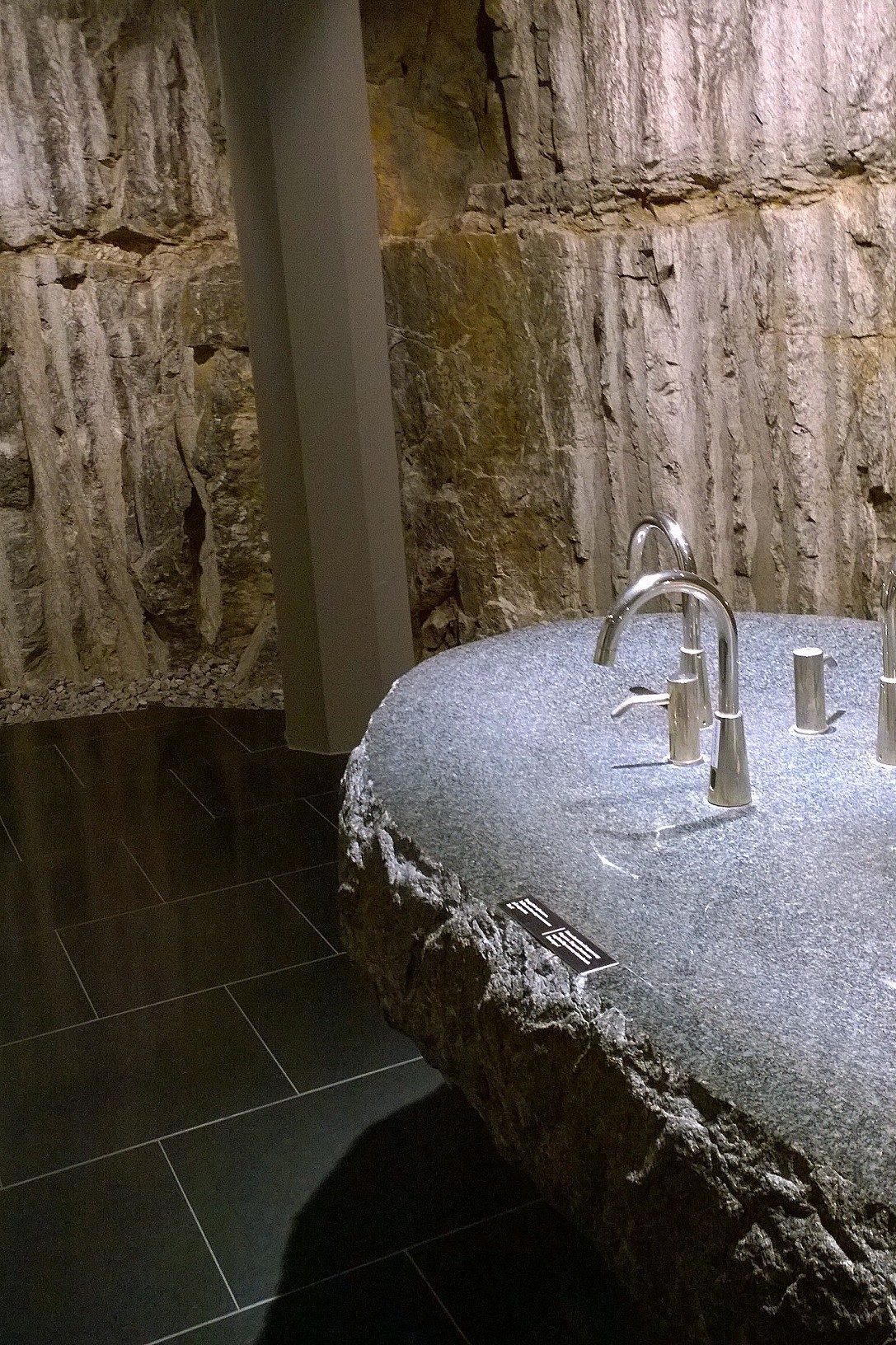
The ladies room at the Artipelag museum in Sweden.

My friend Penny always knew where to find the nicest public bathrooms in Philadelphia. It turned out to be an important bit of knowledge. Where I live now, the reliable church bathroom has been closed since Covid, but the national park bathroom is available most of the year. And Debra’s Natural Gourmet just added two gorgeous public bathrooms in the new branch, Debra’s Next Door. I always buy something when I go into a shop to take advantage of its facilities.

Meanwhile, have you noticed how glam the museum bathrooms have gotten in recent years? Hyperallergic shared a great list for your amusement (and hour of need).

Sarah Rose Sharp wrote, “A recent poll by the American Alliance of Museums (AAM) asked museum professionals to submit their nominations for best museum bathrooms, and the results prove that Marcel Duchamp was only the first, but not the last, to find art in the commode. Joseph O’Neill, a content manager and editor for the AAM, dutifully compiled the results.

“ ‘Every month, we put out questions for museum people to connect around, and we were surprised as anyone to find out how much enthusiasm there is for this fun topic,’ O’Neil told Hyperallergic. …

“The most-mentioned nominee was Smith College, home to two famous artist-designed bathrooms: The men’s bathroom was designed by Sandy Skoglund while the women’s bathroom designed by Ellen Driscoll. [Patti: Do you know about these?] …

“Next up is the John Michael Kohler Arts Center (JMKAC) in Sheboygan, Wisconsin. Obviously, bathrooms are going to be a point of pride for an institution founded by the manufacturer of bathroom implements, including sinks, toilets, and more. But JMKAC has gone above and beyond, with the ‘Sheboygan Men’s Room,’ furnished with hand-painted porcelain tile and bathroom fixtures by once-artist-in-residence Ann Agee; Cynthia Consentino’s ‘The Women’s Room’; and Matt Nolen’s ‘The Social History of Architecture (men’s washroom).’ …

“Coming in third, the Mariners’ Museum and Park in Newport News, Virginia, garnered praise for its bathroom series, A Head of Its Time: A Brief History of Going at Sea. …

“Of course, modern artists know that everything can be art, so it’s no surprise that SFMOMA is placed fourth on the list for its series of monochrome bathrooms in different colors on every floor, designed by the architecture firm Snøhetta. ‘This one makes me feel like I’m peeing in a Kubrick movie,’ commented Instagrammer Gabriel Toya-Meléndez.

“Fifth on the list is the Glore Psychiatric Museum, located on the site of a former psychiatric hospital in St. Joseph, Missouri. … The themed bathrooms are full of mind games, including hauntings, phobias, and worst of all, Sigmund Freud. …

“In sixth place, there was a collective mention of various 21c Museum Hotel locations. Never content to limit visitor experience to the galleries, all 21c locations feature art that extends into elevators, on the hotel art TV channel, through lobbies, and yes — even into the bathrooms.

“The Charleston Museum snagged seventh place with its cheeky chamber pot installation in the restroom. … The Baltimore Museum of Art celebrated hometown hero John Waters, granting his request that the museum’s bathrooms be renamed in his honor in exchange for his donation of his private art collection to the museum. The result is four new all-gender washrooms. …

“The Denver Art Museum closed came in ninth with its set of Singing Sinks, designed by Denver artist Jim Green. … The sinks are installed in the second-floor bathroom at the Martin Building Welcome Center, and sing ‘Row, Row, Row Your Boat’ while they run.

‘You can get the sinks to sing in canon if you time it right,’ nominator Melody Lowe told the AAM.

“Finally, the Carle Museum rounds out the top 10. [Asakiyume and I have been to that one!] The picture book museum was founded by Eric Carle, author of the iconic children’s book The Very Hungry Caterpillar. … All the urinals feature a tiny fly.”

More at Hyperallergic, here. No firewall.

I also want to draw your attention to the bathroom at Artipelag, a beautiful museum in Sweden. My photo, above, doesn’t do justice to what Trip Advisor calls “The World’s Most Beautiful Bathroom“!

Read Full Post »

Photo: Emli Bendixen/Arts Fund/PA.
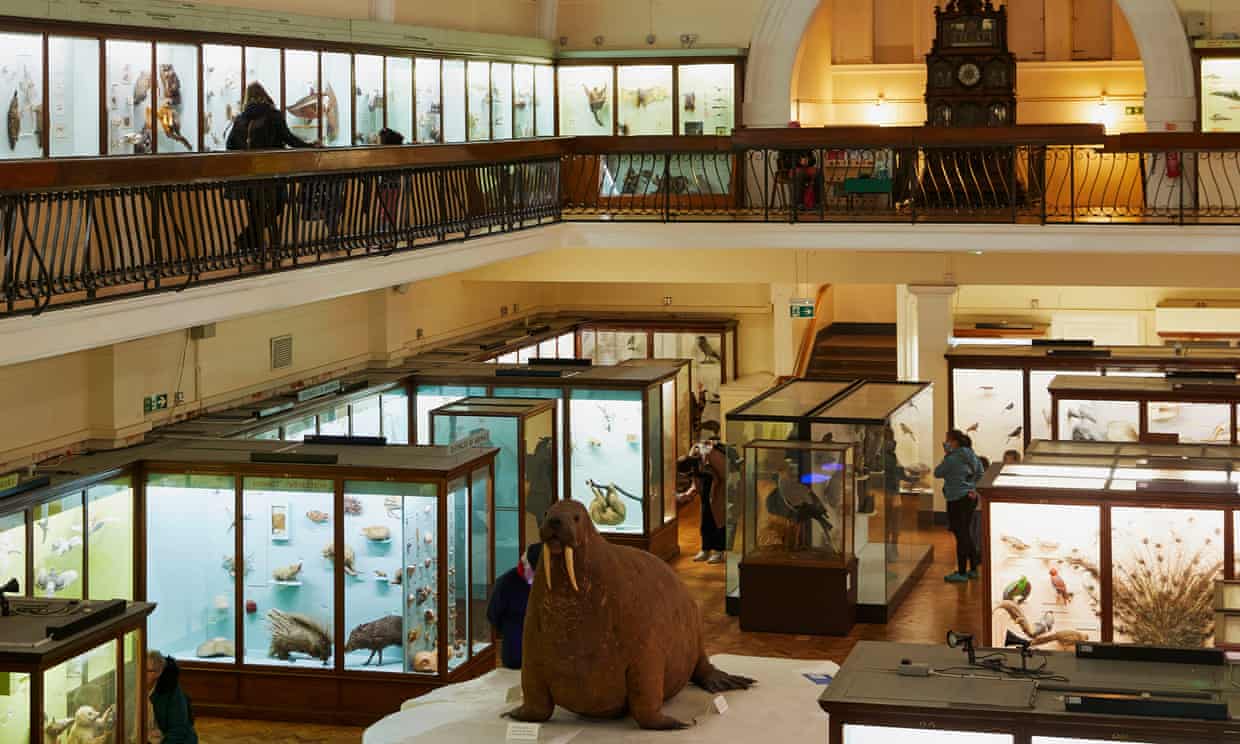
The venue in London’s Forest Hill, says the
Guardian,”is the capital’s only museum where environment, ecology and human cultures can be seen side by side.”

What special features are people looking for in museums these days? The traditional recorders of art and history keep changing. A look at a museum award in the UK may provide an insight into what is currently valued.

Nadia Khomami writes at the Guardian, “The Horniman museum in London has been crowned the Art Fund museum of the year 2022 for its work to inspire the next generation. …

“Its director, Nick Merriman, was presented with the £100,000 [about $117,000] prize – the world’s largest museum prize – by the DJ and broadcaster Huw Stephens at a ceremony at the Design Museum. … The Horniman was commended for completely reconfiguring its program in 2021 after the pandemic, Black Lives Matter and the increasing urgency of the climate crisis.

“It set up its ‘Reset Agenda,’ which focused on reorienting activity to reach diverse audiences more representative of London. This included embedding a Climate and Ecology Manifesto – from an online club of Environment Champions to the creation of a microforest to combat local air pollution.

“ ‘From a takeover of the galleries by children to its youth panel of 14-19-year-olds, work experience opportunities and Kickstart apprenticeships, the museum is inspiring the next generation,’ Art Fund, the UK’s national art charity, said.

“A further focus of the Reset Agenda was the 696 Program, an interrogation of the power and responsibility that public organizations have in supporting local music.

“The museum was said to showcase Black British creativity through a sold-out festival that reached 8,000 visitors, while nearly 20,000 experienced the related exhibition.

“Jenny Waldman, Art Fund director and chair of the judges, said: ‘The Horniman museum and gardens has now blossomed into a truly holistic museum bringing together art, nature and its myriad collections.’ …

“Dame Diane Lees, director-general of the Imperial War Museums and fellow judge, said the museum was championing the natural environment and commissioning artists and music festivals ‘to bring the eclectic collections of Frederick Horniman new relevance with diverse communities.’ …

“The 2022 edition of the annual award championed organizations whose achievements told the story of museums’ creativity and resilience, and particularly focused on those engaging the next generation of audiences in innovative ways.

“The other four shortlisted museums – the Story Museum in Oxford, the People’s History Museum in Manchester, Ty Pawb in Wrexham [Wales], and the Museum of Making in Derby – each received a £15,000 [about $18,000] prize in recognition of their achievements.”

I’m looking at an example form the Horniman website. An upcoming show, “We Breathe, Together: A Day of Community Air Action and Exploration” invites all who “dream of a clean air future – and want the tools to take action.

“From building (and racing!) your own hydrogen car, learning the skills to create a 2D stop motion clean air animation, to co-designing immersive climate adventures and ink breath painting. Meet incredible local campaigners in our Clean Air Village and listen to expert talks.

” ‘We Breathe, Together’ extends the conversation around ‘Breathe:2022‘ by artist Dryden Goodwin, the ambitious multi-site artwork exploring air pollution produced by Invisible Dust. ‘Breathe:2022’ combines over 1,000 new drawings, appearing as large-scale still and moving images on sites close to the heavily polluted South Circular Road and beyond, from May to December 2022.

“As part of the day, you can also immerse yourself in ‘Airborne,’ artist Sarah Stirk’s audio-visual installation that seeks to make the invisible threat of pollution visible.”

More at the Guardian, here. I know I have friends in the UK. If you go, will you share your reactions?

Read Full Post »

Photo: Blanton Museum of Art.
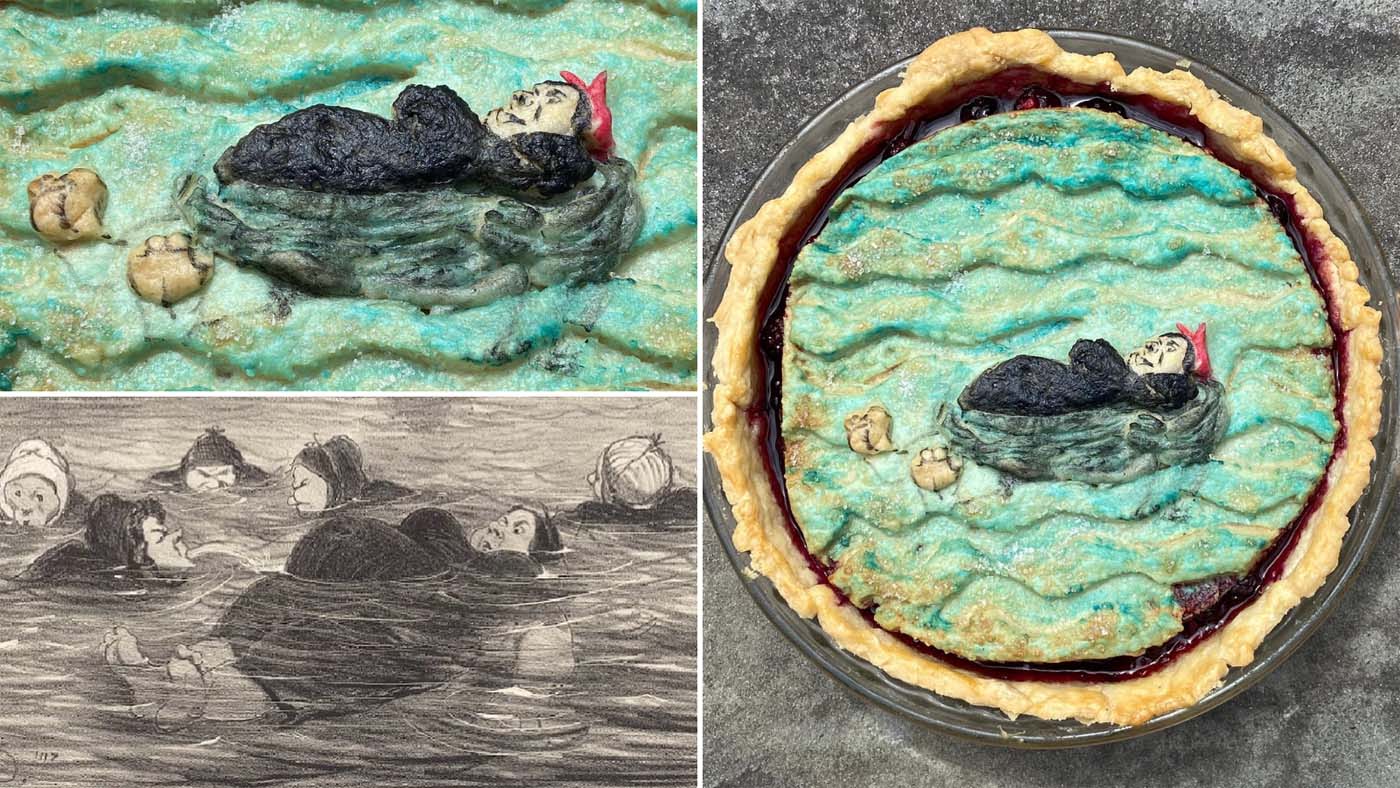
Pie by Christine Williams of Cookies del Mundo, inspired by Honoré Daumier’s “Naiads of the Seine” (1847).

Remember how, at the beginning of the pandemic, shut-in families took funny pictures of themselves imitating famous art? The Getty Museum in California was the first I knew to promote the meme, but people all over the world were soon doing it. I wrote about it here.

Well, something similar is going on at a museum in Texas. This time it’s about art turned into pastry.

Sarah Rose Sharp wrote at Hyperallergic about the Blanton Museum of Art in Austin, Texas, and the third annual Great Blanton Bake-Off.

“The contest, conceived in 2020 by Lizabel Stella, the Blanton’s social media and digital content manager, asks art lovers and amateur and professional bakers to recreate a work from the Blanton’s collection in edible treat form. In addition to a regular collection and a host of contemporary exhibitions, the museum is famous for Ellsworth Kelly’s ‘Austin,’ built into the museum’s architecture. …

“Stella told University of Texas student newspaper The Daily Texan, ‘I feel like baking is something that appeals to all ages because it’s so multisensory. You can’t eat or smell art … so this is a completely new way for people to engage with art from our collection.’

“Competition was fierce among the Adult Amateur category, with riffs on everything from Ray Johnson to a red-figure Apulian plate dating back to around 340 BCE. Ultimately, a competitive and humorous field was eclipsed by some expert joconde Imprime work by Blythe Johnson. The technique involves baking a design directly into a sponge cake (rather than simply using the decorative layer of the cake to figure the artwork), and perfectly suited the gentle geometrics of Mac Wells’s ‘Untitled, Meander Paintings, River‘ (1968), in whose likeness it was created. Shout-out to Lois Rodriquez for an iteration of the sculpture ‘The Barefoot Clown‘ (1999) by Tré Arenz (aka Tre Arenz) that offers the disgusting opportunity to eat a foot. …

“The Adult Professional category was a tighter competition, with a series of works on postcards from the Blanton’s collection, converted to cookie form by Hannah Erwin, taking top prize. This beat out a pie by Christine Williams of the Austin bake shop Cookies del Mundo in what is perhaps a miscarriage of justice, as cookie art is a medium with many icing possibilities, but pie offers limited means and requires a sculptural touch. Regardless, the results look all-around delicious, which is hard to say about a pie that has been tinted blue (you made the right choice with blueberry filling there, Christine).

“Finally, the junior bakers came through, a small field that nonetheless proves there is hope for the future. The top prize was taken by Georgia Gross, who meticulously reconstructed a colorful tapestry by Luis Montiel in friendly-looking fondant, but one must frankly tip the hat to the raw ambition of runner-up Jules Beesley, who attempted a functional rendition of the 1987 work of installation art by Cildo Meireles ‘Missão/Missões [Mission/Missions] (How to Build Cathedrals).’ Beesley built a net-covered scaffolding over his cake, the top of which was adorned with golden chips to imitate the 600,000 coins that filled the well of Meireles’s piece. If we haven’t got a baker on our hands, we’ve at least got an arteest.

“But really, everyone is a winner when it comes to competitive baking, because even if you have to eat humble pie, at least you also get to eat regular pie. As Stella emphasized in an interview with Smithsonian Magazine, the point of the event is to feel good.

“ ‘We’re going through a lot of hard things and political stuff right now,’ Stella said. ‘It’s important to remember that it’s okay to take a break — not to ignore the things that are happening, but to make time for the things that move you,’ said Stella.”

I liked this baker cameo at the Smithsonian: “The first time Blythe Johnson, winner of this year’s amateur category, baked a loaf of bread was in elementary school. She eventually started making cookies, cupcakes and pies … but the 40-year-old Austin resident, whose day job consists of medical billing, decided to cut gluten and dairy from her diet a few years ago in order to combat chronic illness. She took a step back from baking, until watching baking competitions, like the Great British Baking Show, rekindled her interest. … Yet, it wasn’t until she heard about the Blanton Bake-Off that she decided to give baking a cake a try. …

“For each Bake-Off, Johnson sets a goal or picks a skill she wants to learn to avoid being overly focused on winning or losing. This year, after seeing that the Great British Baking Show featured the ‘Joconde Imprime,’ a decorative design baked into a light sponge cake, she knew what her next Bake-Off entry would be.

“ ‘I was immediately interested in an Untitled piece by New York artist Mac Wells when I was looking through the museum’s catalog,’ Johnson said. ‘The colors of the painting made me think of blueberry and almond, and the rest just fell into place after that.’

“The cake, which had layers of blueberry almond sponge, lemon curd and whipped cream, was a challenge for Johnson. She made the joconde five or six times to achieve the perfect colors to match the artwork, and worked endless hours, broken up over a two-week period, to finish the cake.”

More at the Smithsonian, here, and at Hyperallergic, here. Wonderful pictures. No firewalls.

There’s a young baker in my neighborhood who could ace this competition. Maybe she’ll try.

Read Full Post »

Photo: Bihar Museum.
Tens of thousands of schoolchildren have visited the Bihar Museum in Patna, India, thanks to a government initiative.

I like being exposed to parts of the world I know nothing about. That’s why most of the mystery books I read are set in froreign countries.

Today I’m learning about a region just south of Nepal in India’s northeast, Bihar. In the town of Patna, the government-owned Bihar Museum is working to expand the horizons of its large population of children.

Kabir Jhala writes at the Art Newspaper, “At India’s last census, Bihar was the nation’s youngest state, with 58% of its more than 104 million citizens under 25 years old. The museum hopes, through a unique scheme, [to] create a generation of future art lovers.

“Since 2019 Bihar’s Ministry of Education has pledged to provide 20,000 rupees ($260) to every primary school in the state for museum visits, with the money going towards transport, entry tickets and lunches. While the sum might not seem great, multiplied by the state’s 67,000 eligible schools, it amounts to more than $17.4 million, a considerable sum in a country where most public museums have virtually no engagement programs.

“At the museum, children can explore dedicated sections for young visitors, including works that can be touched, labels at child-friendly heights and workstations in which they can mint their own coins and simulate parts of an archaeological excavation.

“So far the scheme has only been rolled out in the nearest districts to Patna, the state’s capital, and Covid-19 has limited its reach. But from April 2019 to March 2020, the only full year in which the scheme was untouched by the pandemic, 33,000 students from 1,000 schools visited the museum. …

“ ‘I want the children to go back to their communities and rave about their time at the museum,’ says the institution’s director, Anjani Kumar Singh. ‘Through word of mouth, I think we can transform not just this generation into museum-goers, but the whole state, too.’ …

“ ‘Many of these children live in rural areas with parents who can’t read or write [Bihar’s literacy rate is one of the lowest in India] and the concept of museums and art are totally alien,’ Singh says. ‘But despite Bihar being one of the country’s poorest states, I am proud that we have pioneered a scheme that is totally unprecedented in terms of scale in India — no other museum comes close to this level of youth engagement.’ …

“Singh says his next plan is to fill a vehicle with photographs, films and replicas from the collection to create a traveling museum to tour the state.”

More at the Art Newspaper, here.

I went to Wikipedia to learn more. Of the Children’s Gallery, it says, “Its collection of artifacts and exhibit items is divided into six domains: the Orientation Room, the Wildlife Sanctuary, the history sections on Chandragupta Maurya and Sher Shah Suri, the Arts and Culture section and the Discovery Room. Among the exhibits are a simulated the Asian paradise flycatcher, the Indian giant flying squirrel, animals, birds, trees and plants native to the state of Bihar. The gallery’s focus is family learning; most exhibits are designed to be interactive, allowing children and families to actively participate.’

A history gallery boasts “artifacts from the Harappan Civilization, also known as Indus Valley Civilization, the second urbanization and Haryanka. The whole collection of this gallery represents the advanced technology and sophisticated lifestyle of the Harappan people. The gallery has objects from the fourth century BCE to the first century BCE. It has objects spanning three major dynasties of India: the Mauryas, the Nandas and the Shishunagas. The gallery also houses fragments of railings from various ancient Stupas that are carved on with episodes from Buddha‘s and Mahavira’s life.”

And I’ll just add a bit about the Diaspora Gallery, which “provides the historic context of how Biharis were relocated to countries like Mauritius, Bangladesh and beyond. Some were recruited as laborers in the early days of the East India Company, and others explored foreign lands on their own initiative. Activate an interactive map to learn about the origins of Bihari culture, trade routes and how the population has relocated in foreign lands. Aside of the past movements, also discover recent stories of the people of Bihar, their accomplishments and their involvements, to understand the influence Bihar has had around the world.”

Read Full Post »

Art: Jacobo Bassano.
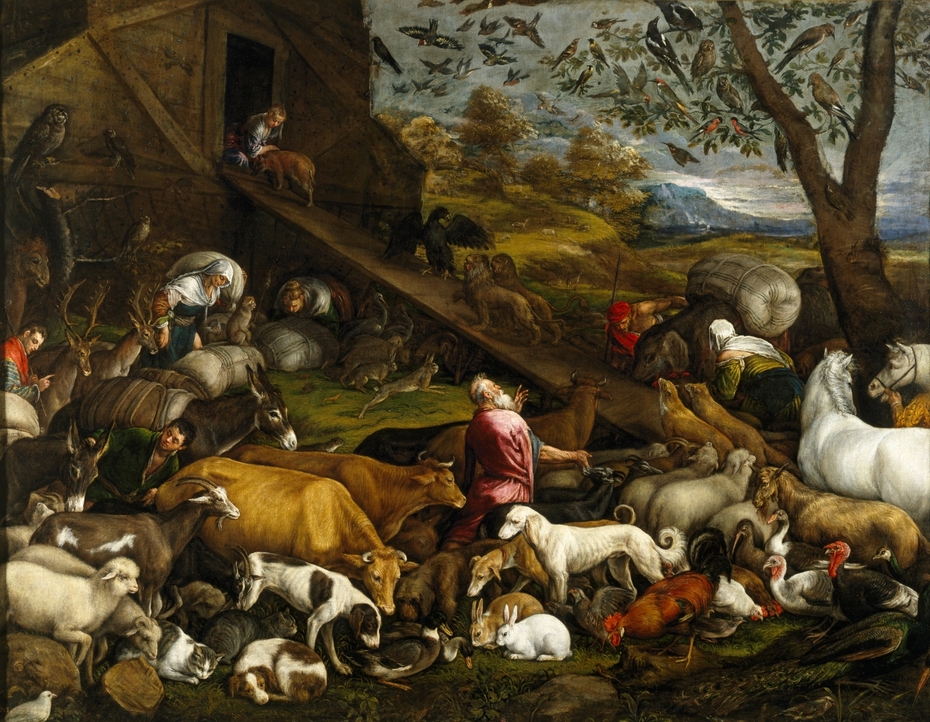
Museum security officer Joan Smith chose a painting called “The Animals Entering Noah’s Ark” for a special staff-curated exhibit at the Baltimore Museum of Art.

Last fall, my husband and I took Minnesota visitors to the Isabella Stewart Gardner Museum in Boston. The museum’s amazing landscaping and art were not the only treats. One gallery’s security guard was deeply enthusiastic about the art, especially the pieces in his room that had been stolen, and the background he provided really enriched our experience.

That’s why today’s post about giving museum security guards a chance to curate an exhibit makes so much sense to me.

Cathy Free writes at the Washington Post, “Security officer Ricardo Castro spends most days on his feet at the Baltimore Museum of Art, where he answers a lot of questions. …

“ ‘If you’re a guard, you hear it all,’ said Castro, who has worked for the museum’s security team for three years. ‘I enjoy the interaction — especially when you can tell that people are really moved by something hanging on the wall,’ he said.

“Now Castro is prepared for questions of a different kind when an exhibit he curated with 16 other guards opens at the museum March 27. … Castro’s selections, three objects by unidentified artists from Indigenous cultures, reflect his desire to see more works in the museum that spotlight early cultures, including his own Puerto Rican ancestry, he said. …

“The idea to have security guards take a turn at selecting pieces for an exhibition came about in February 2020 when Baltimore Museum of Art trustee Amy Elias went to dinner with the museum’s chief curator, Asma Naeem.

“ ‘We were talking about ways to engage with the security guards, who spend more time with the art than anyone. … ‘I thought, “Wouldn’t it be interesting to hear from the guards about which pieces of art were the most meaningful to them?” ‘ [Elias] said. …

“She and Naeem said they thought about the possibilities for a while, then put out a memo last year to the museum’s 45 security guards: Would any of them be interested in developing an exhibition based on their personal selections from the museum’s vast collection? They would be paid for their time as guest curators in addition to their regular hourly wage.

“ ‘For the past few years, the Baltimore Museum of Art has tried to bring in new voices that haven’t been heard before,’ Naeem said.

“ ‘Our guards are always looking at the art and listening to people as they talk about the art,’ she said. ‘People enjoy talking to them, and their education is really a “hands on” gallery experience. We wanted to see things from their perspective.’ …

“The 17 guards who signed up attended Zoom meetings for a year to learn how to put on an exhibition, from framing artworks and writing description labels for the public to making sure that each piece has correct lighting, Naaem said.

“ ‘We asked them each to select up to three objects, and they then did a deep dive with our librarian to research each one,’ she said. …

“Several guards chose social justice and change as a theme for their selections, she added, while others chose pieces to match their experiences of rotating each day between the museum’s galleries.

“Alex Lei chose Winslow Homer’s ‘Waiting for an Answer'(1872), because ‘it’s strangely reflective of the experience of being a guard — a job mostly made up of waiting,’ he said.

“Ben Bjork said he selected Jeremy Alden’s ’50 Dozen’ (2005/2008) — a chair made entirely of pencils — because he sometimes fantasizes about sitting down when he is tired.

“Sara Ruark chose two works, including Karel Appel’s ‘A World in Darkness'(1962), because she wanted to convey the current uncertainty in the world, she said. …

“’These are disconcerting times’ … she added. ‘There are people pushing for positive change, but somehow we just keep winding back in time.’

“Alex Dicken, a security guard for two years who recently moved to the museum’s visitor services team, said he chose Max Ernst’s ‘Earthquake, Late Afternoon'(1948), because he was struck by how the painting appears serene and detached from the crisis it depicts. …

” ‘Working as a security officer involves so much more than just standing in a gallery,’ said Dicken, 24. “When you have repeated exposure to the artwork, you learn a lot about it. I hope I was able to pass that along to the people who visit.’

“Ricardo Castro said he feels the same way. ‘When I first came here as a guard, I thought it would just be something to do to pay my bills,’ he said. ‘But I really came to love it, especially when I’d see how joyful people were when they looked at the art.’ “

Don’t you wonder how the surprise opportunity to act as a curator will affect these people’s lives going forward? You have until July 10 to see the show.

More at the Post, here. The Denver Channel version of the story has no firewall.

Read Full Post »

Photo: American Alliance of Museums.
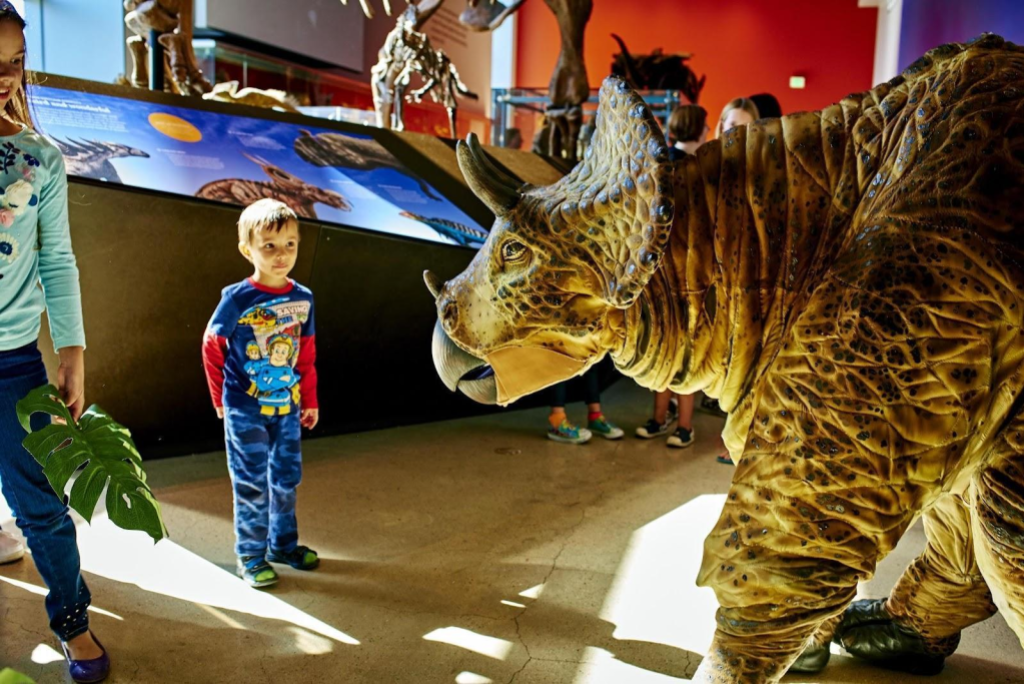
A young visitor is captivated by Dakota, Natural History Museum of Los Angeles County’s full-suit Triceratops puppet.

When Suzanne was a few months old, John was learning about dinosaurs, and we got into a kind of chanting routine reeling off all the fancy names we knew. Baby Suzanne seemed to think they were hilarious. If she was fussy, dinosaur names would distract her and make her laugh.

Dinosaurs and their names have always enchanted small children. To up the enchantment, a museum in Los Angeles has begun experimenting with bringing dinosaurs to life. Sort of.

Ilana Gustafson writes at the American Alliance of Museums blog, “The anticipation of an imminent transformative journey is palpable in the diorama hall at the Natural History Museum of Los Angeles County (NHMLAC), where a Dinosaur Encounter is about to begin.

“During the show, the audience cheers as a young guest, decked out in a bedazzled dinosaur shirt, is called onstage to feed the juvenile Triceratops known as Dakota. … The audience falls into a quiet anticipation as Dakota’s feet shuffle impatiently, her beak opening and closing, indicating that she’s hungry. The child onstage gets closer to the dinosaur, leaf in hand, and reaches their arm out nervously toward her beak. Slowly Dakota approaches. …

“Dakota opens her mouth and suddenly clamps it closed with the leaf in its clutches and excitedly wiggles her tail. The audience cheers as the child onstage, grinning from ear to ear, watches a dinosaur playfully eat a leaf right at their feet. The host of the show thanks the young visitor. …

“The full-suit Triceratops puppet, created by the fabulous puppeteers at Erth, is made of aluminum and plastic boning, foam, and lycra painted with acrylic, and contains an internal speaker and other mechanisms. Inside is a puppeteer … holding the sixty-five pounds of the weight of the puppet on their back, using largely their shoulders and core strength to maneuver it. Many technical elements need to come together to bring the dinosaur to life, but when they all unify in a performance, the audience forgets to focus on the mechanisms at work. …

“This act of relating to the characters on stage is another thing that make theater so powerful. In a study published in the Journal of Experimental Social Psychology, researchers discovered that watching theater can lead to increased empathy, the ability to understand the feelings of others. … I would make the argument that this empathy toward the dinosaur increases intellectual curiosity about these creatures, paleontology, and other related studies. …

“The father of a dedicated fan shared with us in an email the love his son had developed for our puppet, and in turn for the Natural History Museum.

‘Lev didn’t just watch T-Rex and Triceratops. Lev became T-Rex and Triceratops. After each show, Lev would show us his improvisational reproduction of the show we had just watched. He insisted upon silence while he delivered his performance, mirroring and perfectly mimicking the T-Rex right down to lifting his legs, bending over with retracted arms, and delivering his ferocious ‘roar’ while bobbing his head back and forth seeking his prey.’ …

“The designs of the full-suit Triceratops and T. rex puppets were informed by the museum’s paleontologists, including Dr. Luis Chiappe, Senior VP of Research and Collections, who advised the fabricators on how best to merge entertainment with science. The physical characteristics of our juvenile Triceratops and T. rex puppets were based on our paleontological collections and research. The museum’s scientists were keen to have some of the current research on dinosaurs reflected in these creatures. After a performance with our T. rex puppet, known as Hunter, we often get the question from a visitor (young and adult alike), ‘What’s that fluffy stuff all over his body?’ This opens up a conversation about proto-feathers, and how scientists have been able to make the connection between theropod dinosaurs and modern-day birds. …

“The experts at NHMLAC see the value these puppets have in garnering interest and support for their research. Dr. Nathan Smith, Curator at NHMLAC’s Dinosaur Institute, says … ‘The puppets are a truly unique way where we can envision these species as living animals, but also allow visitors to interact with them.’ “

More at the American Alliance of Museums blog, here. If you missed the giant puppet at the San Diego Zoo, you can read about it here. And here‘s a post from last fall on the one that strode across Europe.

Read Full Post »

Photo: Suzanne Kreiter/Boston Globe.
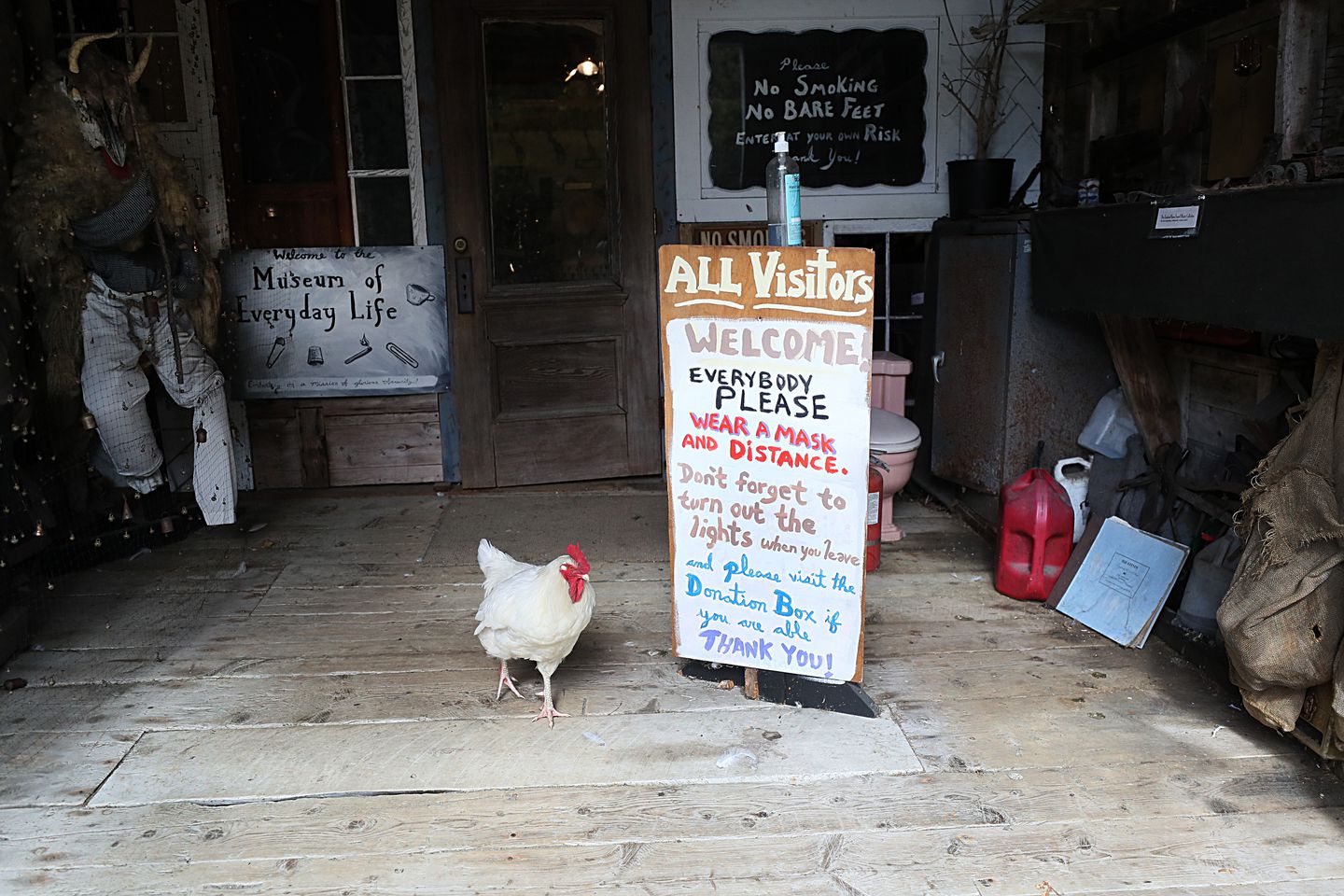
George, a chicken, and a sign to turn out the lights at the entrance to the Museum of Everyday Life in Glover, Vt.

I knew this Boston Globe article was for me as soon as I saw it was about celebrating the everyday. Most people have bucket lists of adventures they expect will be highlights of their lives. But after we check an item off our list, how do we feel when we get back home?

Maybe we should be enjoying what we do every day. A “museum” founder in Vermont thinks so.

Dana Gerber writes at the Boston Globe, ” ‘What would a museum look like if it was dedicated to ordinary objects of no monetary value, but immense everyday life consequences?’

“That’s the question Clare Dolan seeks to answer at the Museum of Everyday Life in Glover, Vt. Dolan, who founded the museum in 2011, has no interest in celebrating the precious, the rare, the famous. She’d rather honor the stuff of junk drawers — toothpaste tubes, safety pins, old to-do lists — and present them with reverence.

“So, she set out to create a museum that would redefine what is valuable, and whose lives are worth putting on display.

‘We need a museum that’s about us, too — the ordinary people,’ said Dolan, 54, who has dubbed herself the Chief Operating Philosopher of the museum. ‘We’re here, and there’s something lovely about our lives.’

“In a remote corner of the bucolic Northeast Kingdom, the Museum of Everyday Life beckons from the side of the road. There is no admission fee or lock on the door; patrons let themselves in and turn the lights off when they’re done. Dolan, who lives in a house next door, works as an ICU nurse at Northeastern Vermont Regional Hospital in nearby St. Johnsbury, so she’s often not home to greet visitors. The only security is a feisty chicken named George.

“The museum grew out of her childhood love of the material world. ‘I was the kind of kid that would talk to chairs,’ said Dolan, who’s originally from the Chicago area. After she bought her Vermont home in 2004, ‘I found the means to start making the thing that I wish I could come across.’

“The museum, now in its 10th year, champions the small to illuminate the universal. The front of the museum boasts the ‘greatest hits’ of exhibits past, like a trove of tone balls — dust that accumulates inside of instruments — and a violin made of matchsticks. Matchboxes from around the world rest on a wooden table, some from Dolan’s travels, others from outside contributions.

“Each of the exhibits, which run from one summer to the next, are communally curated. Dolan puts out a call for submissions in February when she announces that year’s object of focus. Throughout the 1990s, she worked as a puppeteer at the nearby Bread and Puppet Theater, a political troupe that has tackled a litany of social justice issues throughout its decades-long history — but she also enlists her ‘philosophers at large,’ or board of advisers, to assist her in creating each exhibit.

“This year’s exhibit highlighting notes and lists received the most submissions of any in the museum’s history, Dolan said. The selection is organized by category: love notes, bucket lists, and unfinished lists, like one that reads, ‘Things that have never happened: 1. I’ve never been asked to dance.’ There is a number two, but it is left blank.

“ ‘My heart just broke for that person,’ said Corina Orias, a California elementary school teacher visiting the museum with a local friend on a recent rainy Sunday. ‘I just hope that she did get asked to dance, sometime, someplace.’

“Why lists and notes? Dolan loves their inherent intimacy: the content, but also the way they bear the signs of human use; a pencil smudge here, a crinkle in the paper there. ‘They’re so connected to a person and a person’s story,’ she said. ‘They’re snapshots into how we make our way through the world.’ …

“ ‘It’s a lot of work, and it’s sort of thankless work in a way,’ Dolan said, ‘but it brings a lot of joy to me.’ ”

She brings joy to herself every day. Good idea. Could be at least as satisfying as checking off a bucket list. More at the Boston Globe, here.

Do you know other cool museum concepts? I’m remembering, for example, one man’s Museum of Questionable Medical Devices in Minneapolis and the Museum of Bad Art in Dedham, Mass. The blog has also covered the Mermaid Museums, the Museum of Aromas, the Covid Art Museum, a Museum for Gerbils, and more. Search on the word “museum” at the blog when you have time for joy.

Read Full Post »

Photo: International Mermaid Museum.
This mermaid museum is in Washington State. It opened about the same time as one in Maryland.

I have a granddaughter who is into mermaids big time. And my friend Asakiyume has done considerable research on people who give expression to their inner mermaid on a regular basis. (See Asakiyume’s interview with a “mer-tail maker,” here.)

So I’m not as surprised as some folks might be that the interest in mermaids is enough to support two museums in the US, at least for now.

Hakim Bishara reports at Hyperallergic, “A curious, almost mystical coincidence occurred earlier this year when two separate mermaid-themed museums debuted almost simultaneously on opposite ends of the United States. First, it was the Mermaid Museum in the town of Berlin, Maryland, which opened its doors on March 27. Days later, on March 29, the International Mermaid Museum started welcoming visitors outside the coastal town of Aberdeen in Washington state.

“So, how can we explain this coast-to-coast siren call in the span of one week last spring? According to the respective founders of the two museums, Alyssa Maloof and Kim Roberts, they were just as surprised as anyone at the concomitance of their mermaid-centric projects. …

“Variations of the myth of fish-tailed people, first appearing in Mesopotamian art from the Old Babylonian Period, exist in nearly every oceanic culture, from Europe and the Americas to the Near East and Asia. Their magic endures, as evidenced by the stories behind these two new American mermaid museums.

“Both museums are self-funded, women-led projects that hold personal importance to their founders. And both happen to be located about nine miles from the ocean.

“Maloof, a visual artist and photographer, lived between Philadelphia and Berlin, Maryland, since 2018, until she eventually permanently settled in the small seaside town with her 7-year-old. She rented a studio space and prepared for a new chapter of her life and career, but then COVID-19 happened, forcing her to conjure up a new plan.

“It’s around then that the second floor of a 1906 building — built by the secret society of the International Order of Odd Fellows, as a wall insignia testifies — became available. Maloof used her savings to purchase the 2,200-square-foot space and started conducting research and collecting items for the museum.

“ ‘I thought of it as re-feminizing the space,’ she told Hyperallergic in a phone conversation, explaining that the project was a long-held dream driven by her ‘love of the feminine and the water.’

“Accrued from thrift shops and internet sites like eBay, the museum’s collection spans dozens of mermaid-related artifacts, most prominently a Fiji Mermaid, a mythical half monkey-half fish said to have been caught off the coast of Fiji. …

“The museum also features a timeline of mermaid sightings by sailors and pirates from the first century CE to as recently as 2017. It also offers activities for children, including a scavenger hunt and an opportunity to dress up like a mermaid. The Mermaid Museum’s gift shop sells aquatic paraphernalia crafted by local artists. …

“Thousands of miles away, on the other side of the country, the International Mermaid Museum is a nonprofit created with an educational mission to teach ocean ecology ‘from seashore to seafloor’ through mermaid mythology. According to Roberts, the museum is currently developing a curriculum for school children and will soon launch a scholarship program for individuals who wish to work in the marine industry. The museum’s board of directors is comprised entirely of local women leaders with an interest in ocean preservation.

“Roberts is an architect, author, and local entrepreneur who runs several businesses in Aberdeen with her husband Blain, an underwater photographer. … Roberts, a pioneering boat captain, has also authored three mystery novels set on Maui, where she and her husband formerly owned the island’s largest scuba charter.

“Roberts is also a venerated member of the West Coast mermaid community. In July, she received the 2021 Mermazing Citizen Award from the Portlandia Mermaid Parade and Festival. …

“Portland, Oregon, is home to one of the biggest modern-day mermaid societies in the country. Other groups are active in Seattle, California, Florida, and New York. They are part of a global community of merpeople (or ‘mers’) of all genders, who commune to swim together in mermaid costumes and tails. … They have a vibrant online community and local pods and meetup groups that organize conventions, festivals, and competitions. …

“The idea of creating a mermaid museum occurred to Roberts when a friend sent her a shipment of special seashells, among them a single ‘mermaid comb,’ also known as the Venus Comb murex. ‘That’s when it’s all clicked,’ she said. The museum was set to open in March of 2020, but because of the COVID-19 lockdown, the official opening was postponed to March 29 this year, which marks the annual International Mermaid Day.”

More at Hyperallergic, here. And if you have a middle grade reader who likes mer people, there are a few in Eva Ibbotson’s wonderful children’s fantasy Island of the Aunts, which has a not exactly hidden theme about protecting the sea.

Read Full Post »

Older Posts »