Feeds:
Posts
Comments

Posts Tagged ‘mushroom’

Photo: Jordan Freeman/Sam Shoemaker.
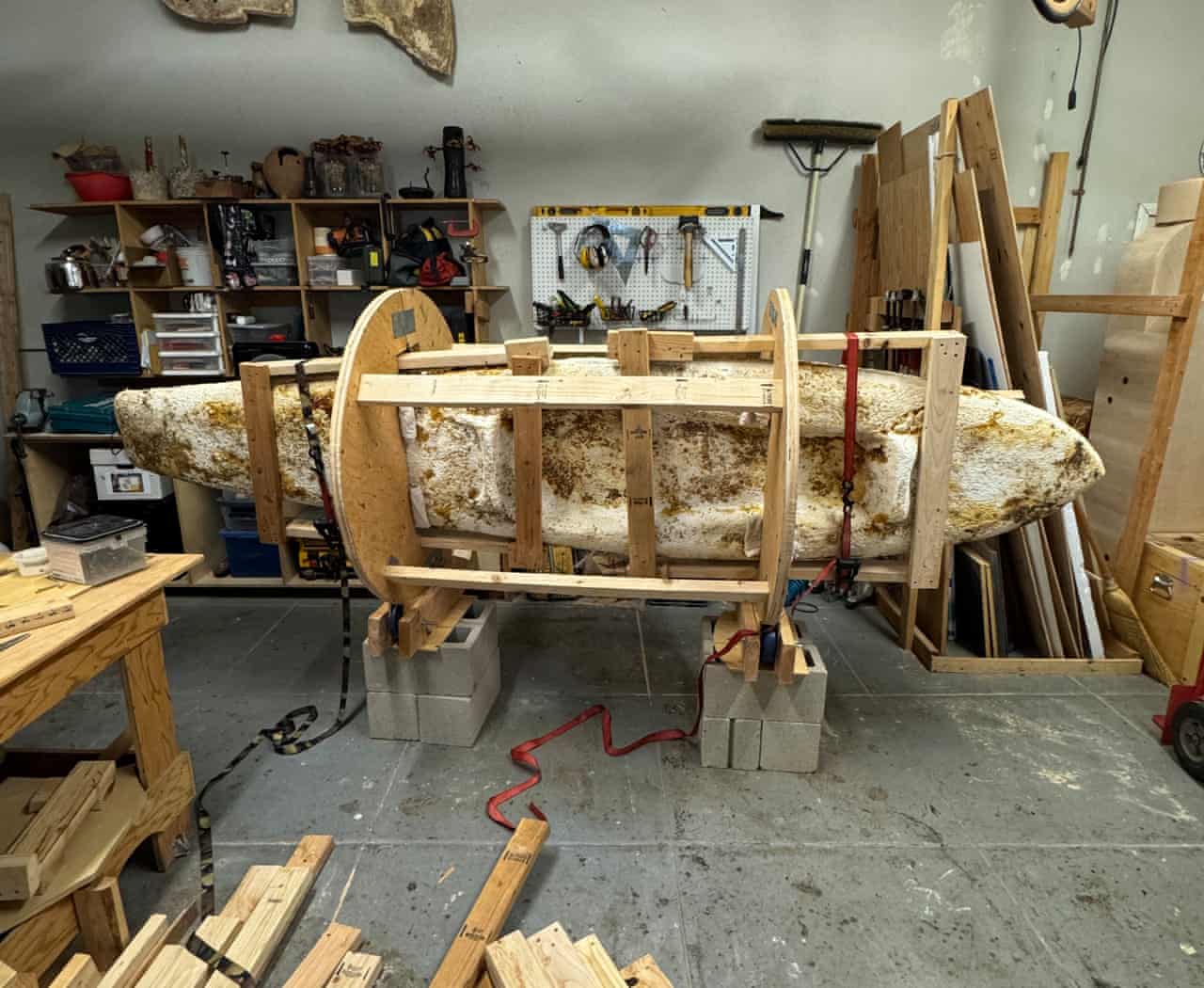
Sam Shoemaker made a kayak entirely from mushrooms.

Mushrooms! What next?

This week I chatted with Ann about a class where she learned to use mushrooms for natural dyes. And you may remember a post, here, about human caskets made from mushrooms.

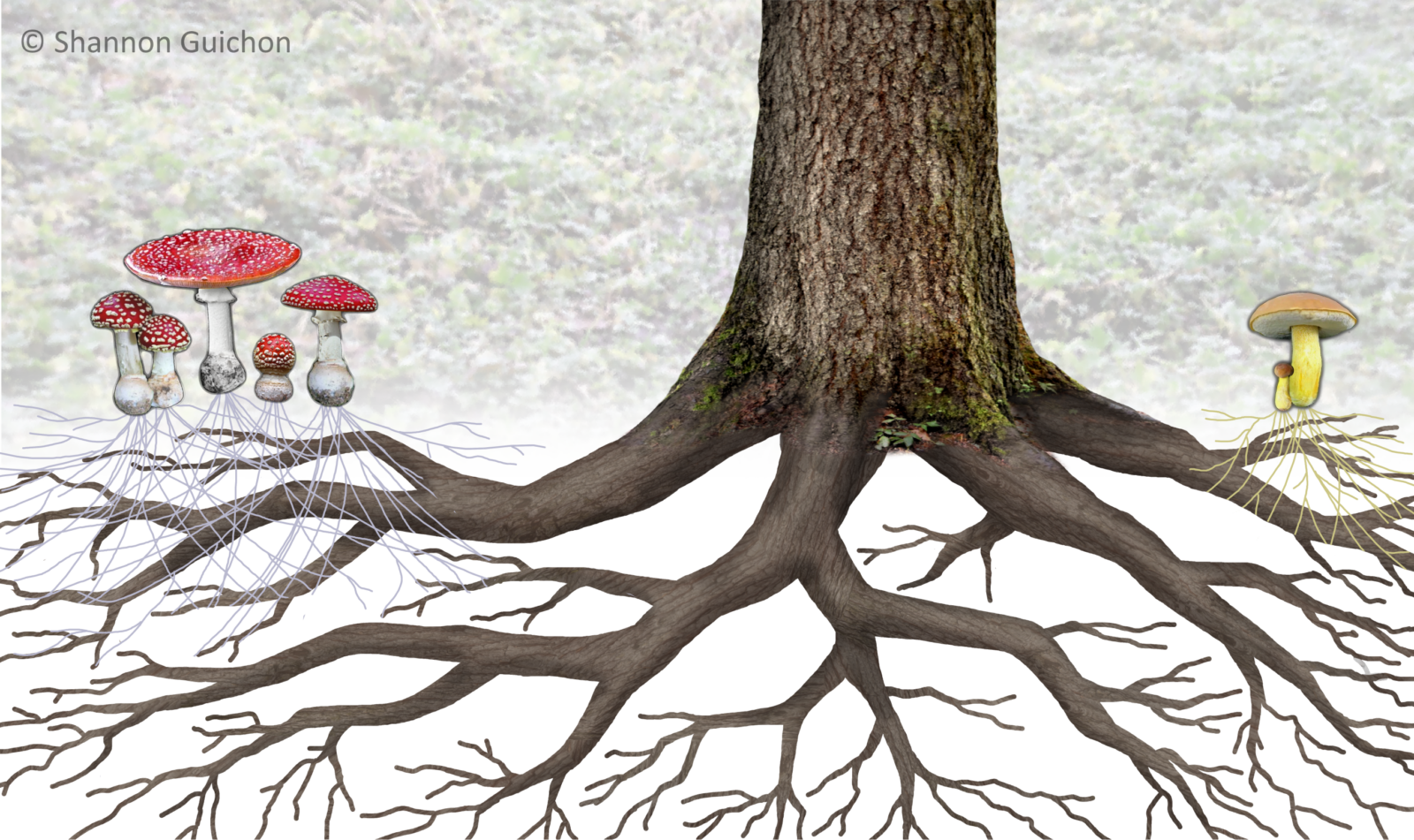
But, wait! There’s more, says Open Fung, a nonprofit advancing the future of fungi-based technologies, materials, and the arts. Their latest endeavor: making a kayak from mushrooms.

Lisa Kwon reports at the Guardian, “On a clear, still morning in early August, Sam Shoemaker launched his kayak into the waters off Catalina Island and began paddling. His goal: to traverse the open ocean to San Pedro, just south of Los Angeles, some 26.4 miles away.

“But upon a closer look, Shoemaker’s kayak was no ordinary kayak. Brown-ish yellow and bumpy in texture, it had been made – or rather, grown – entirely from mushrooms. His journey, if successful, would mark the world’s longest open-water journey in a kayak built from this unique material.

“With his phone, GoPro camera, walkie talkie, and a compass affixed to his life vest, Shoemaker left shortly before 6am in order to avoid the worst of the swells in the forecast. But three hours in and powering through his ninth mile, the coastline still out of sight, Shoemaker began feeling seasick.

“Suddenly, he heard the sound of a large animal breaching the waters. To his left, a fin whale flashed its glistening tail, then trailed slowly behind him. As the 50-ft creature followed him for three more miles, Shoemaker found the strength to finish out the maiden voyage … which took him 12 hours.

“As he stumbled onto shore with his mushroom kayak still intact, the artist and mycologist embraced his friends and family. …

“Shoemaker began his career as an artist creating sculptures with propagated mushrooms. Upon returning to Los Angeles after graduating from Yale with an MFA in 2020, he began exhibiting artwork that captured the unique behavior of mushrooms as they grew out of hand-built ceramic vessels and blown glass. … Shoemaker now belongs to a small community of scientists and artists exploring the potentiality of fungal innovation as an alternative material that could be used in everything from kayaks and buoys to surfboards.

“Their focus is on mycelium … a pivotal connective tissue in the animal kingdom. Mycelium-based materials in an aquatic context are known as AquaFung, a term coined by Shoemaker’s mentor Phil Ross, an artist and the co-founder of a biotechnology company called MycoWorks that engineers mycelium-based materials including a mushroom ‘leather‘ that can be used in furniture, handbags and biomedical equipment. After cofounding MycoWorks, Ross cofounded Open Fung. …

“Ross argues that AquaFung has many of the appealing properties as plastic – such as being lightweight and buoyant – but without the harmful footprint. …

“Shoemaker began working on his first mycelium boat in 2024. …

He modified a used fishing kayak to serve as his fiberglass mold, then grew the mycelium network inside the mold …

“Shoemaker meticulously dried the resulting kayak composite structure using fans over the course of several months. …

“Confident in his prototype, Shoemaker began searching for appropriate support. Shoemaker met Patrick Reed, the lead curator of the Pasadena-based arts organization Fulcrum Arts, in December 2023 through mutual friends. After a studio visit, Reed was blown away by everything that the artist had to show him. … Shoemaker completed his second mushroom boat in June; grown from the same wild Ganoderma polychromum mycelium. …

“The completion of Shoemaker’s boat marks the second ever water-tested mushroom boat to be made after Katy Ayers, who holds the Guinness World Record for growing, then testing, what was then the world’s longest fungal mycelium boat on a Nebraska lake in 2019.

“ ‘A lot of people really didn’t think it was possible,’ says Ayers, who grew her boat after being inspired by a documentary called Super Fungi. …

“Ayers and Shoemaker credits mycology pioneers like Ross for making the technology more accessible. And mushroom-based materials are slowly beginning to pop up in the mainstream: In 2021, Stella McCartney made headlines with its launch of the world’s first-ever garments made from lab-grown mushroom leather, in consultation with Ross.”

More on the future of fungal materials at the Guardian, here. No paywall: Please consider offering some financial support to the Guardian.
Read Full Post »

Photos: Suzanne’s Mom.

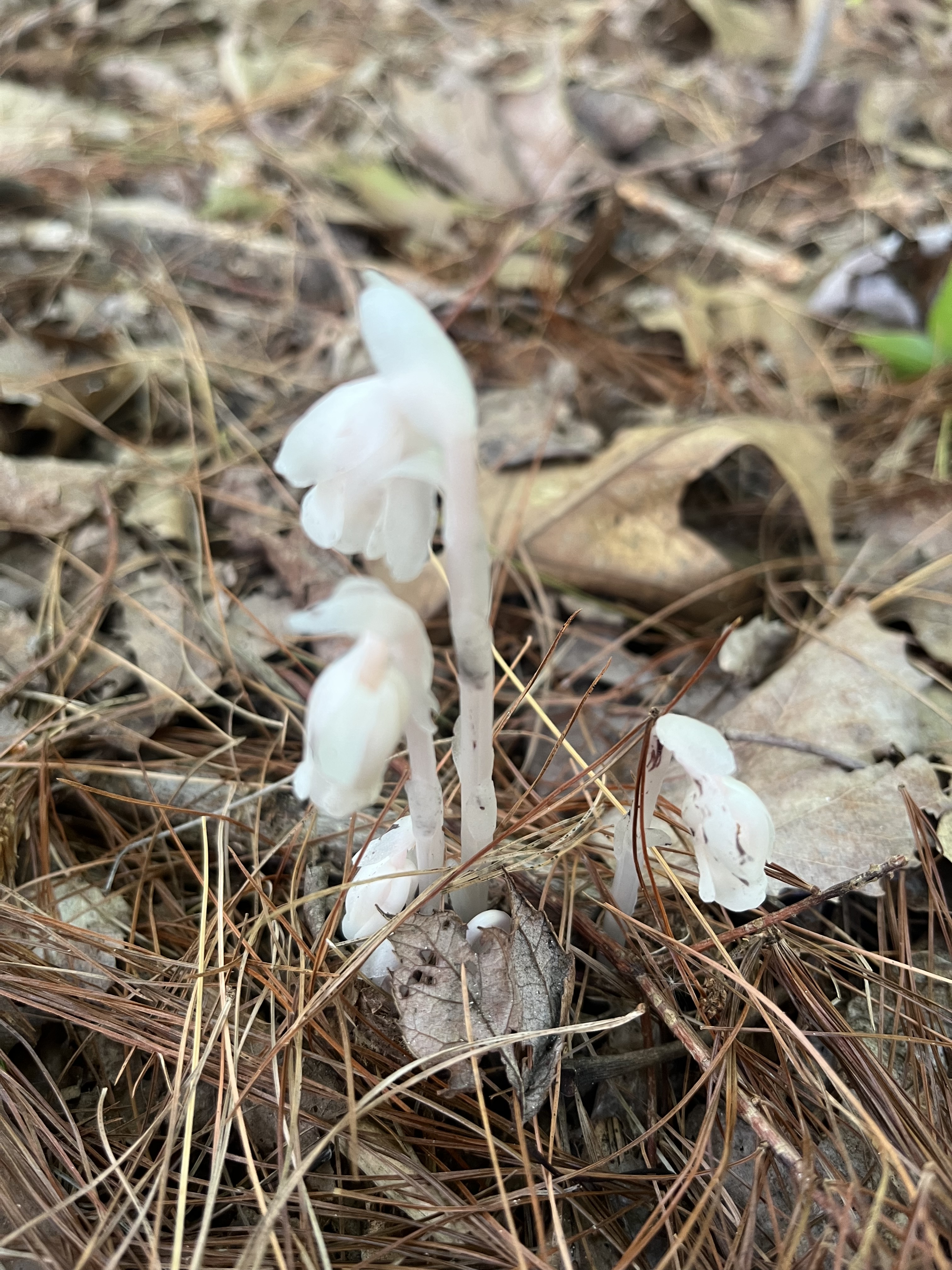
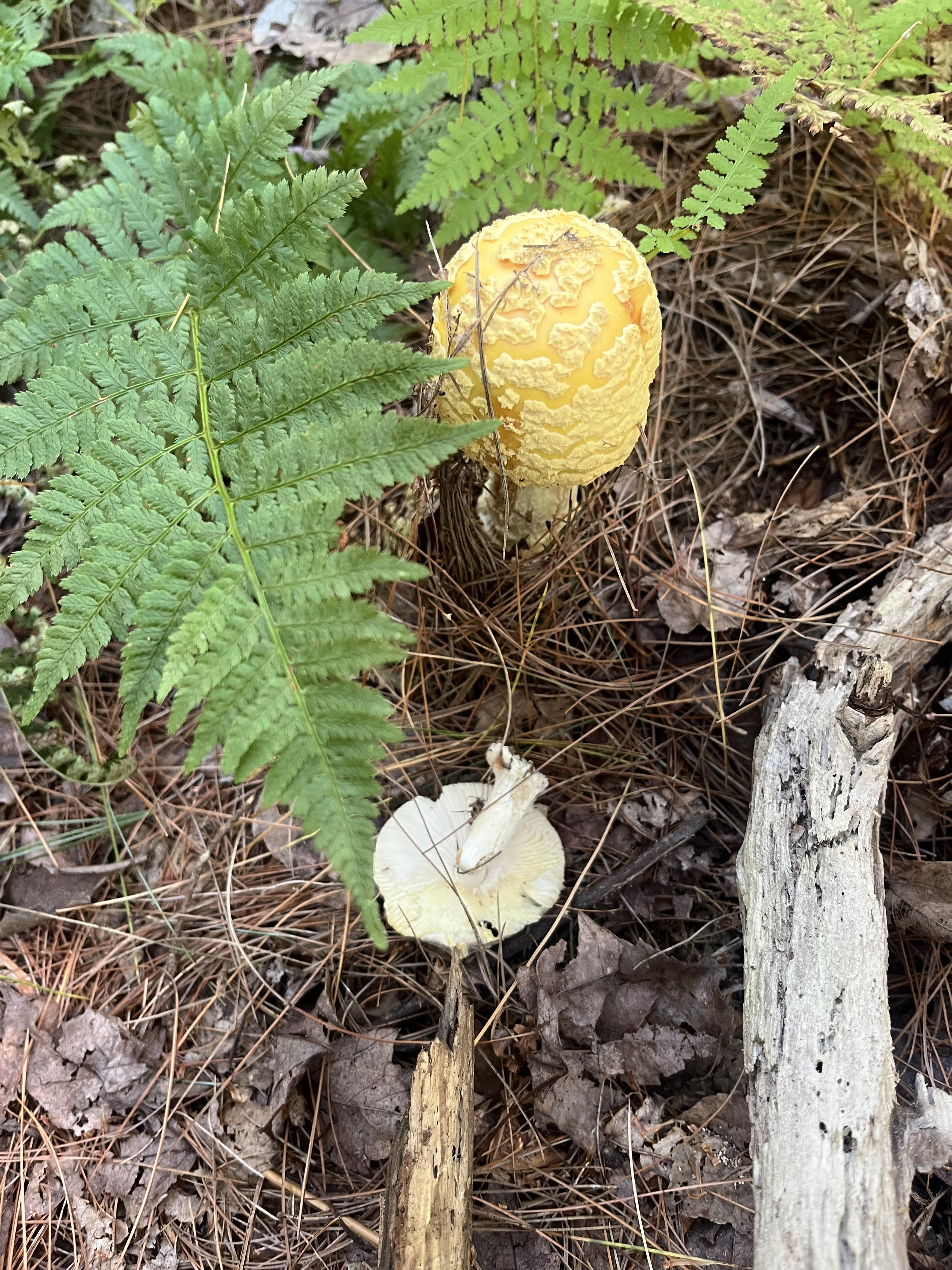
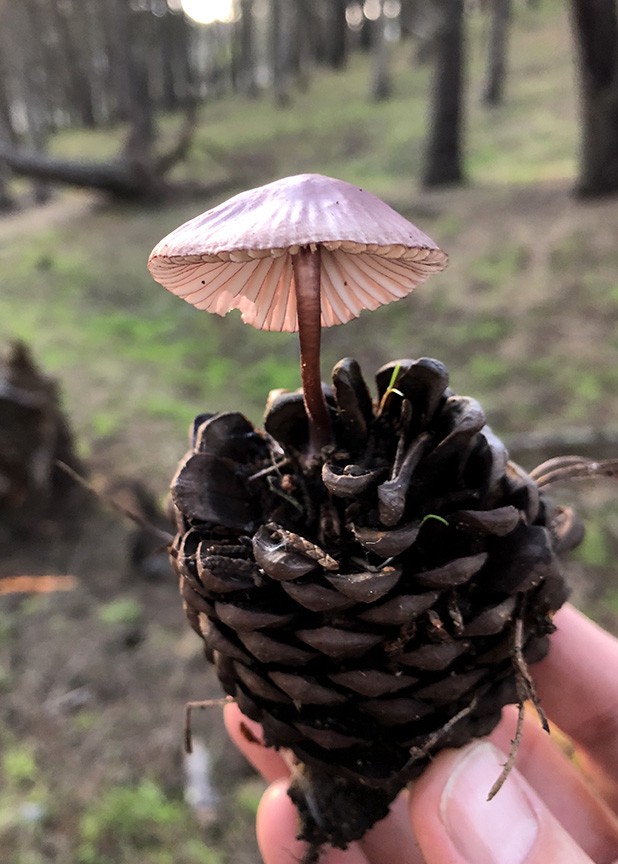
After an unexpected visit from mushroom hunters in September, I’ve started paying attention to what pops up after rain. It’s not that I want to eat wild mushrooms, but I would like to know something about them. Their names for example. I do know the one above. It used to be called Indian pipe, but nowadays, it’s called Ghost pipe, a name that works for me. [Late note: See naturalist Kim Gaffett’s helpful corrections in the comments below.]

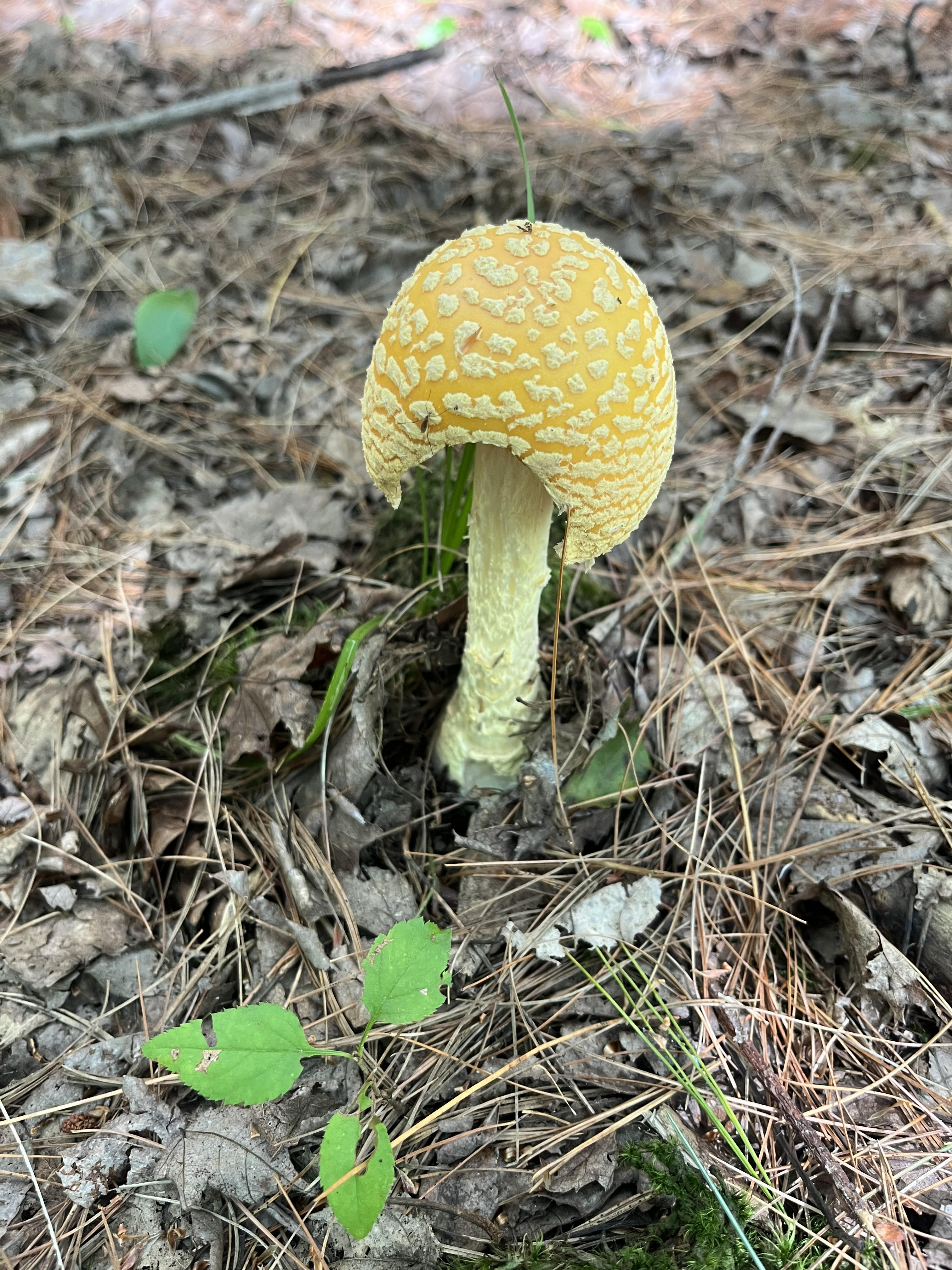
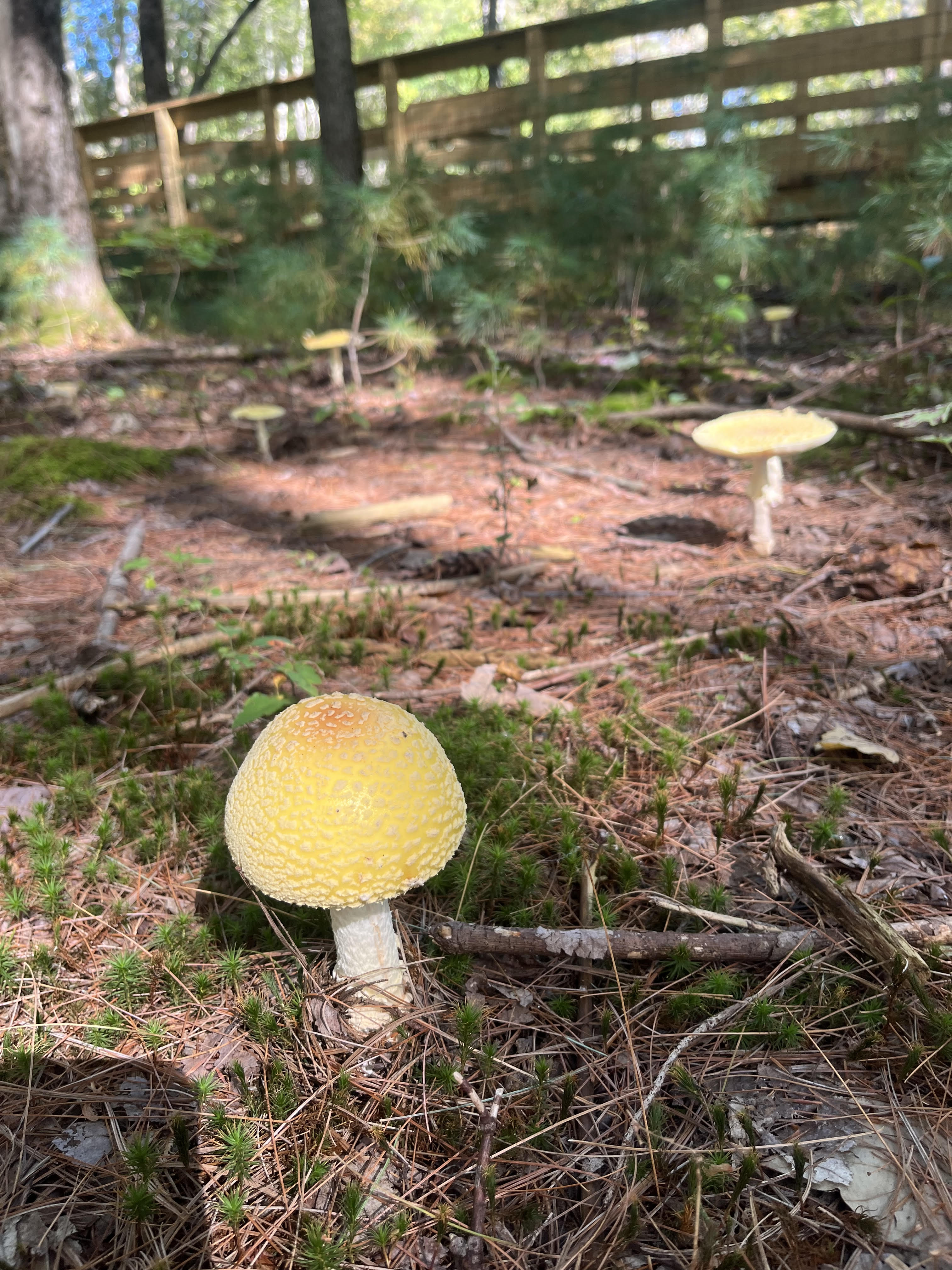
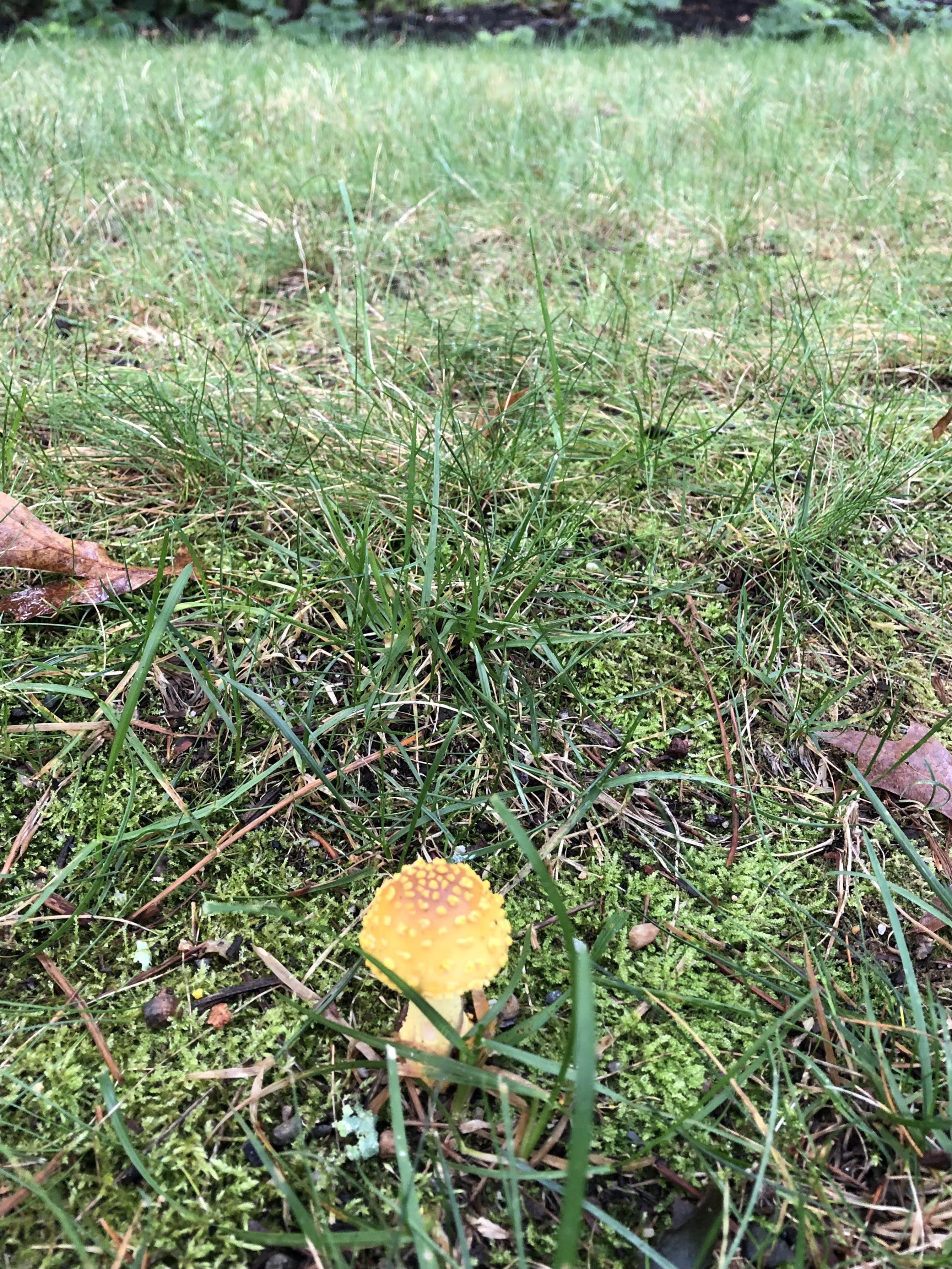
Just from noticing a little more, I’ve realized that the round yellow ones with the white dots flatten out after a few days. I haven’t decided if I want to pay for the mushroom-identifier app, so if you’re a micologist, maybe you could tell me the little guy’s name.

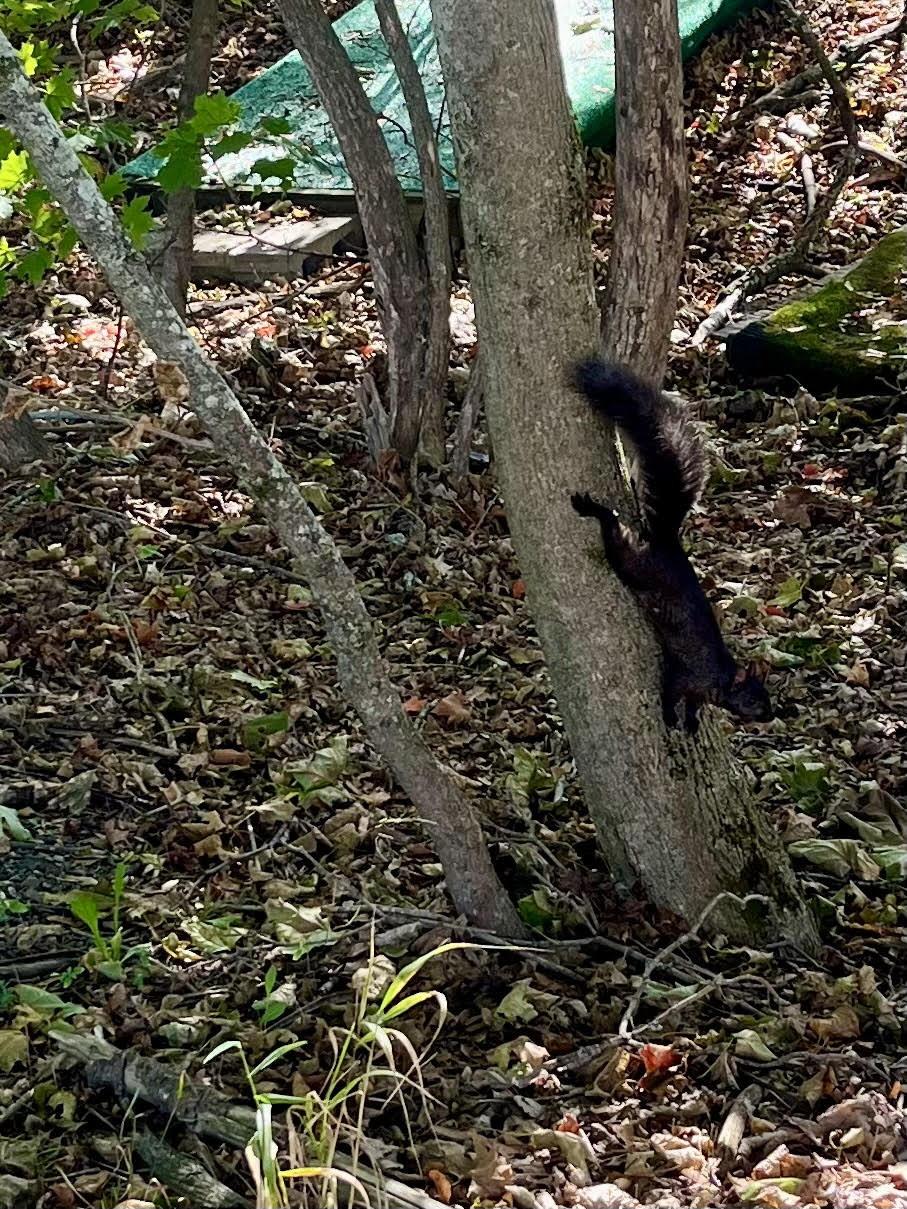
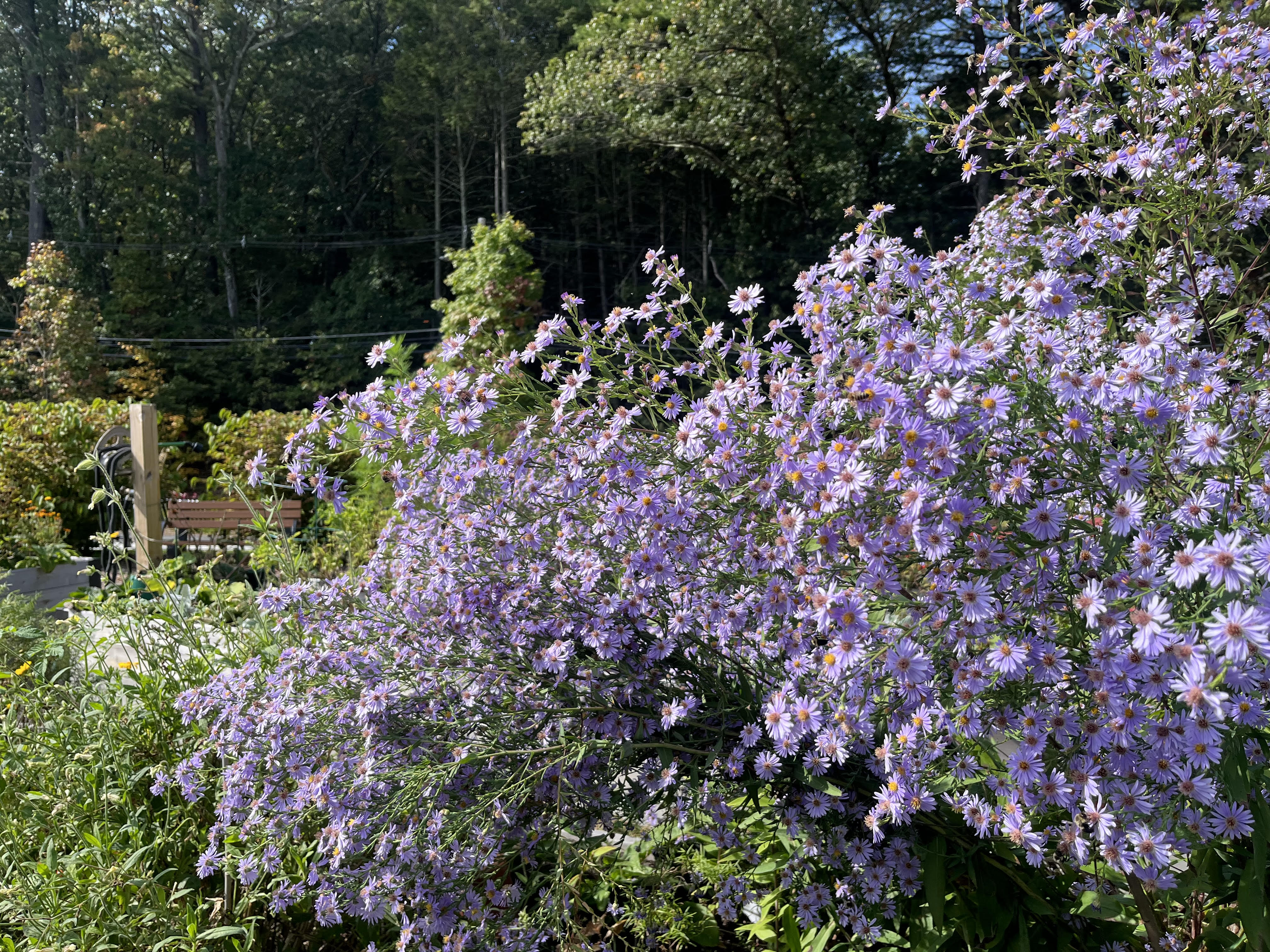
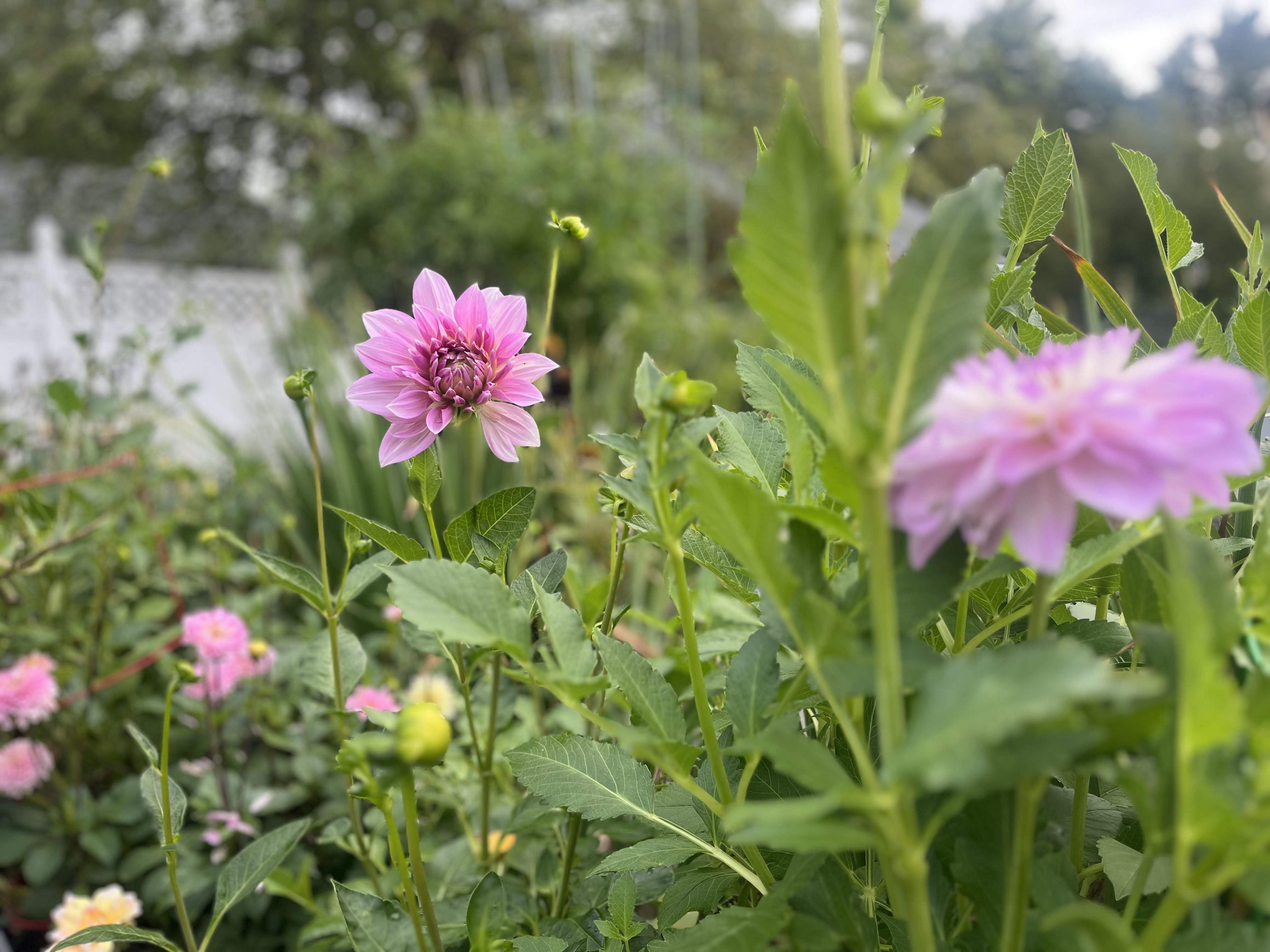
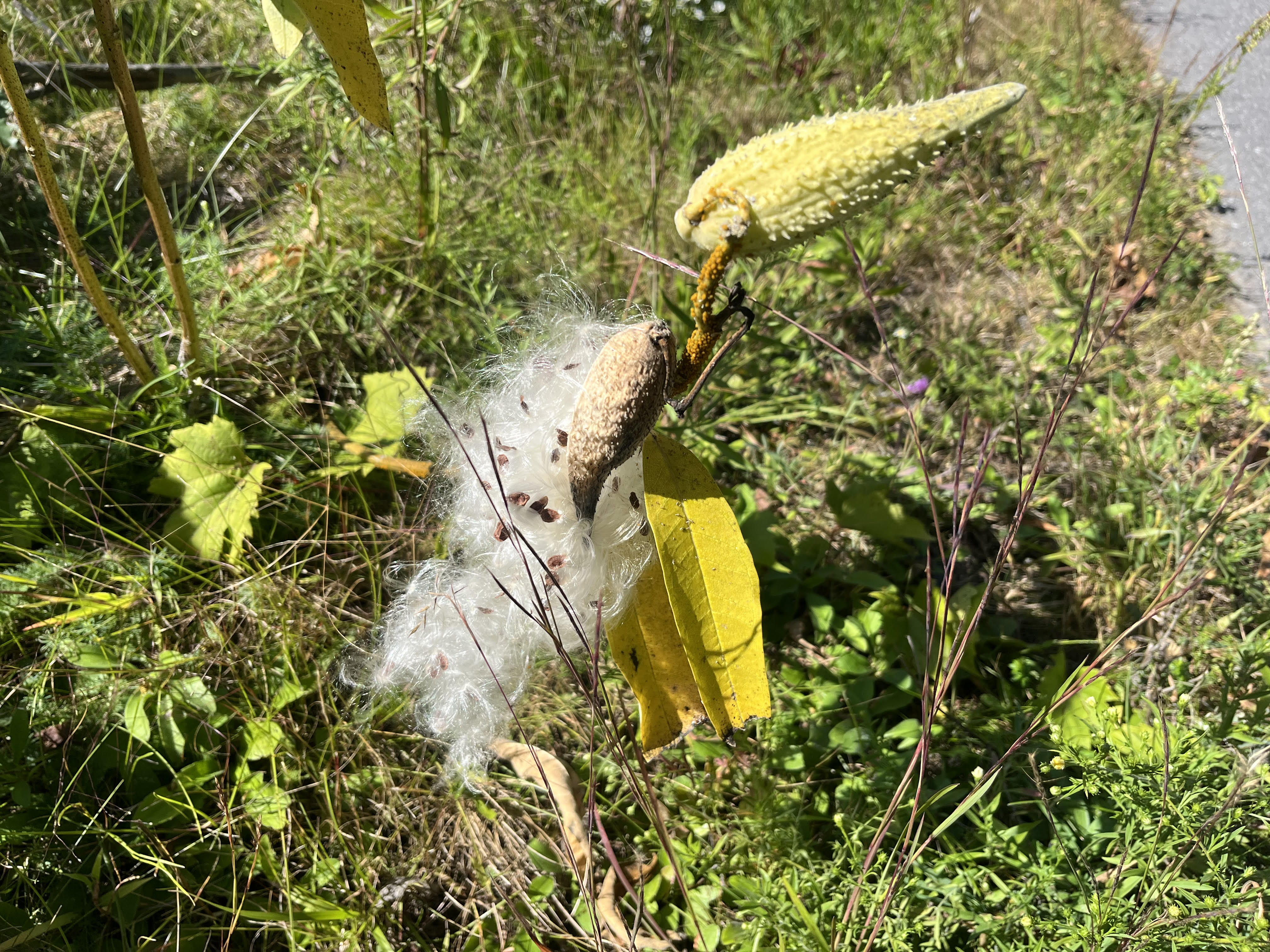
From my walks in Massachusetts: there’s a black squirrel who lives along the bike path, unusual around here. Kathleen’s garden box features a gigantic aster practically dancing with buzzing pollinators. Pat’s garden box has late-blooming dahlias. The milkweed announces fall.

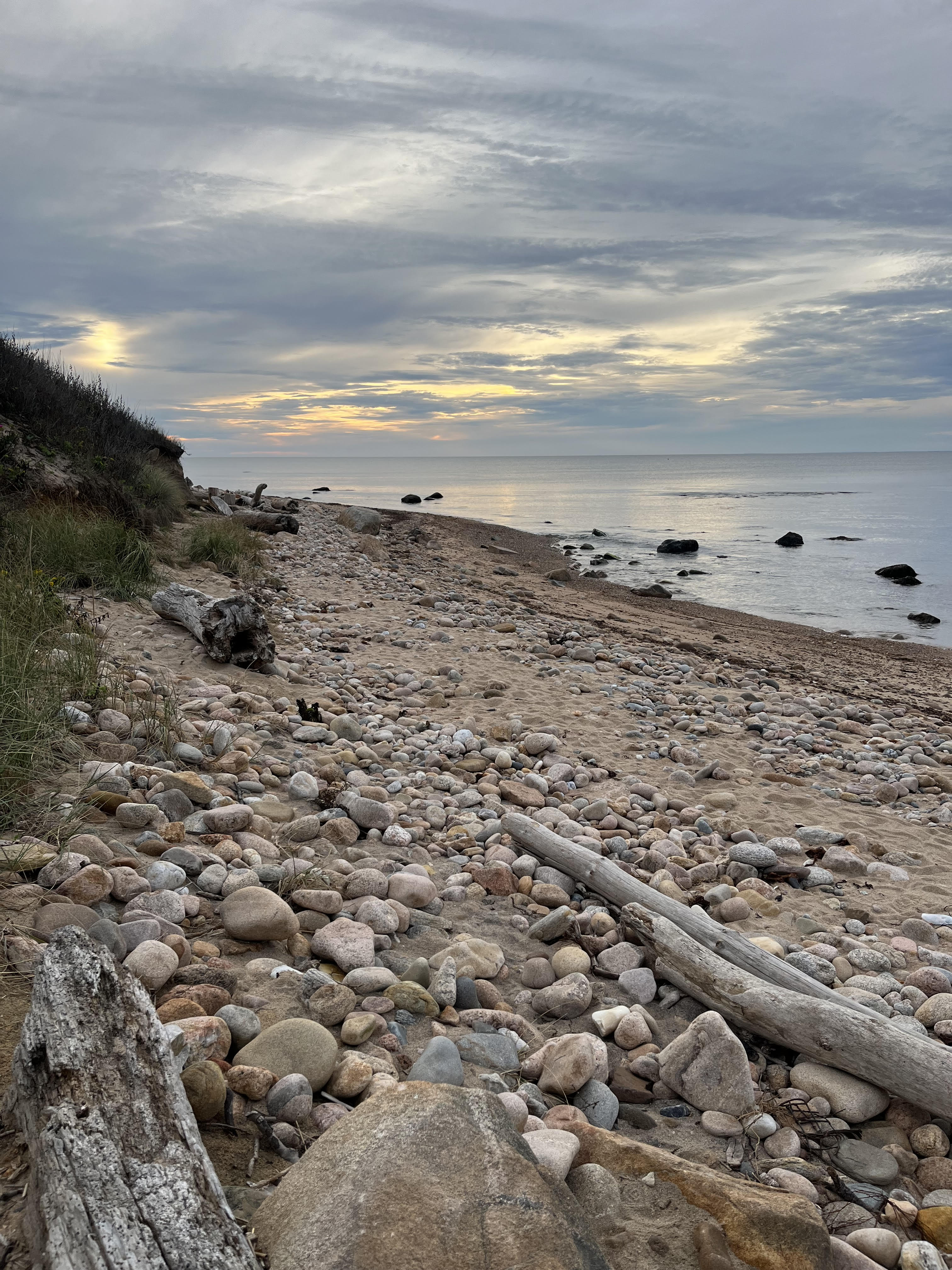
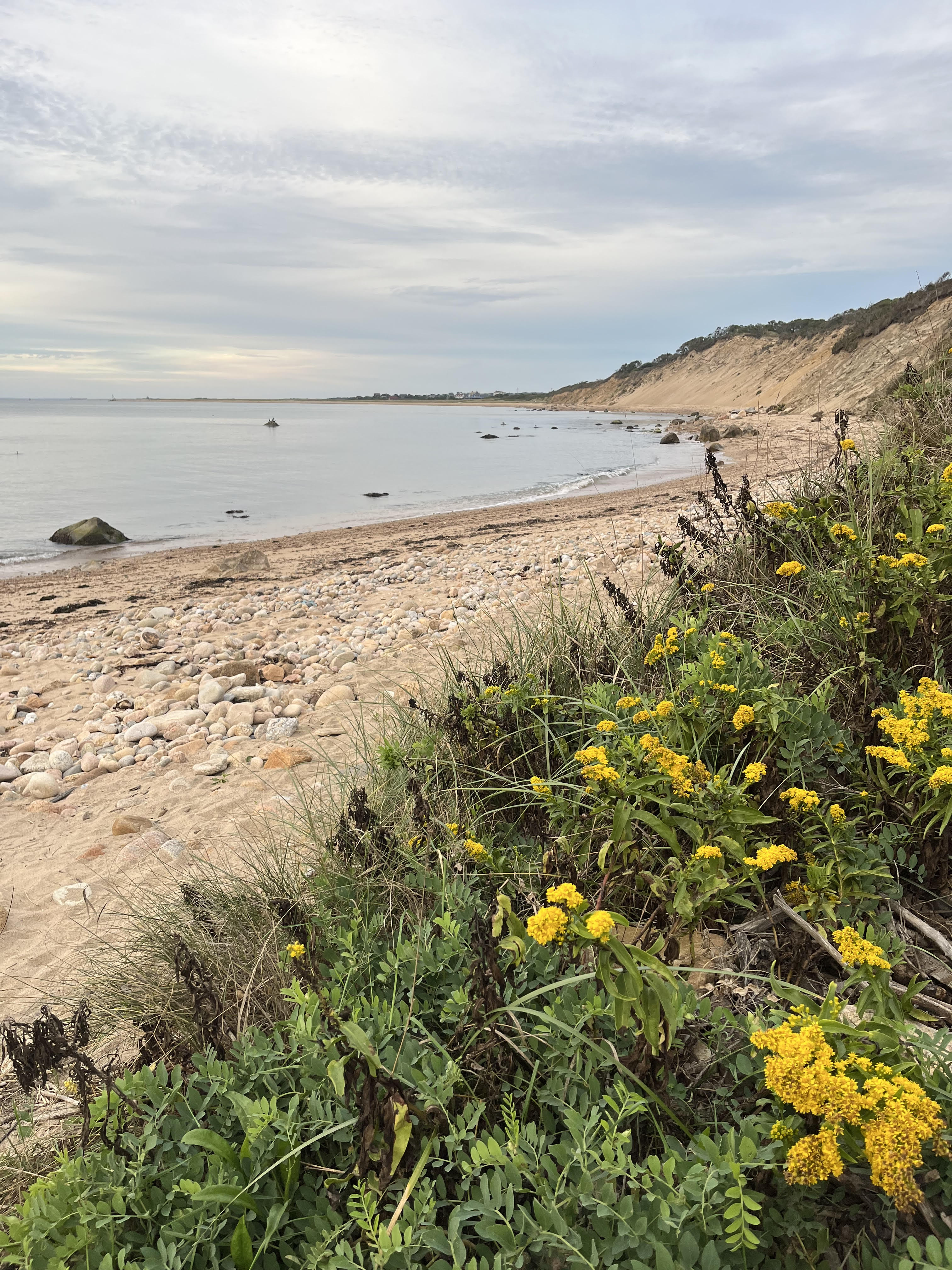
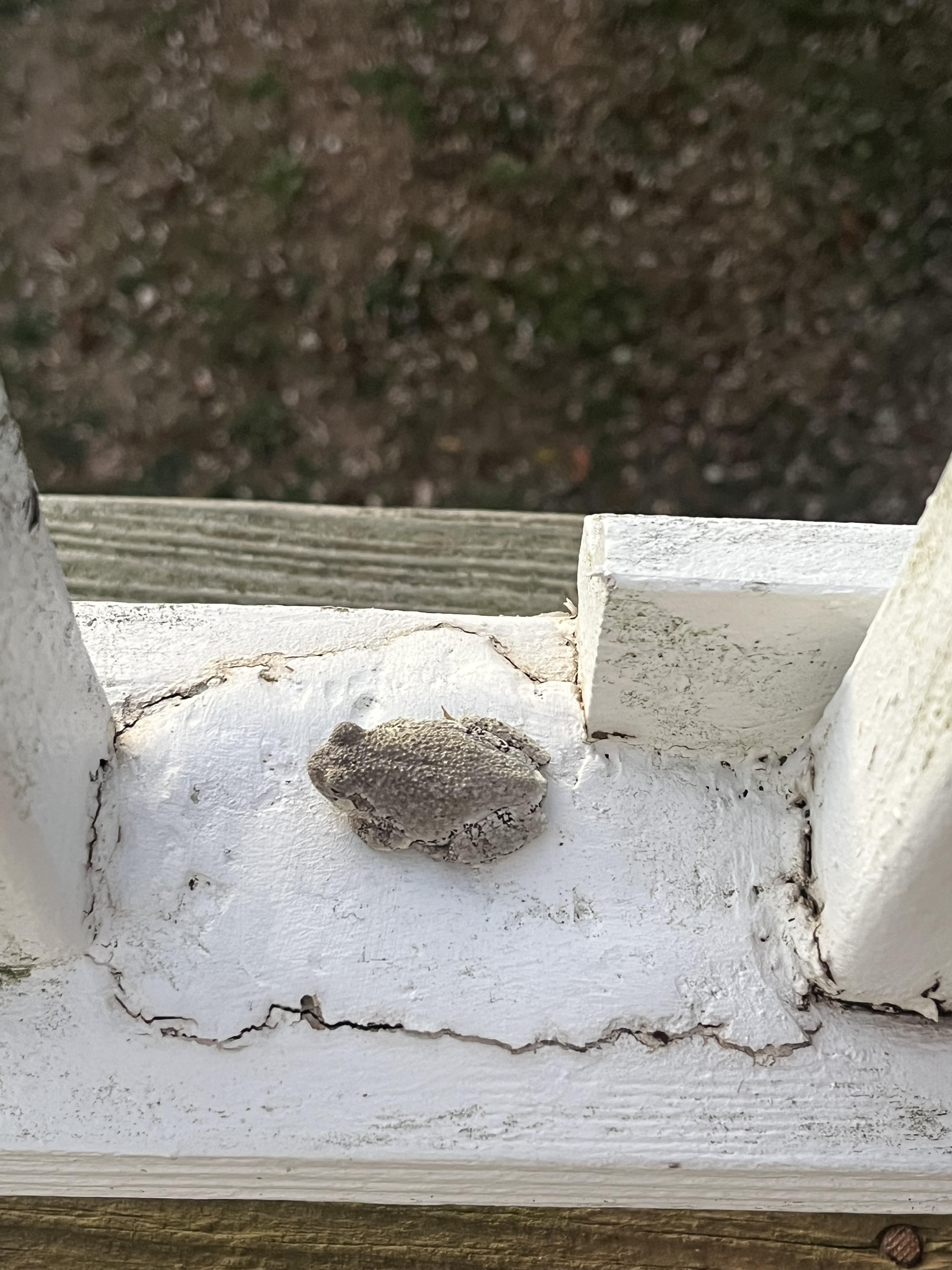
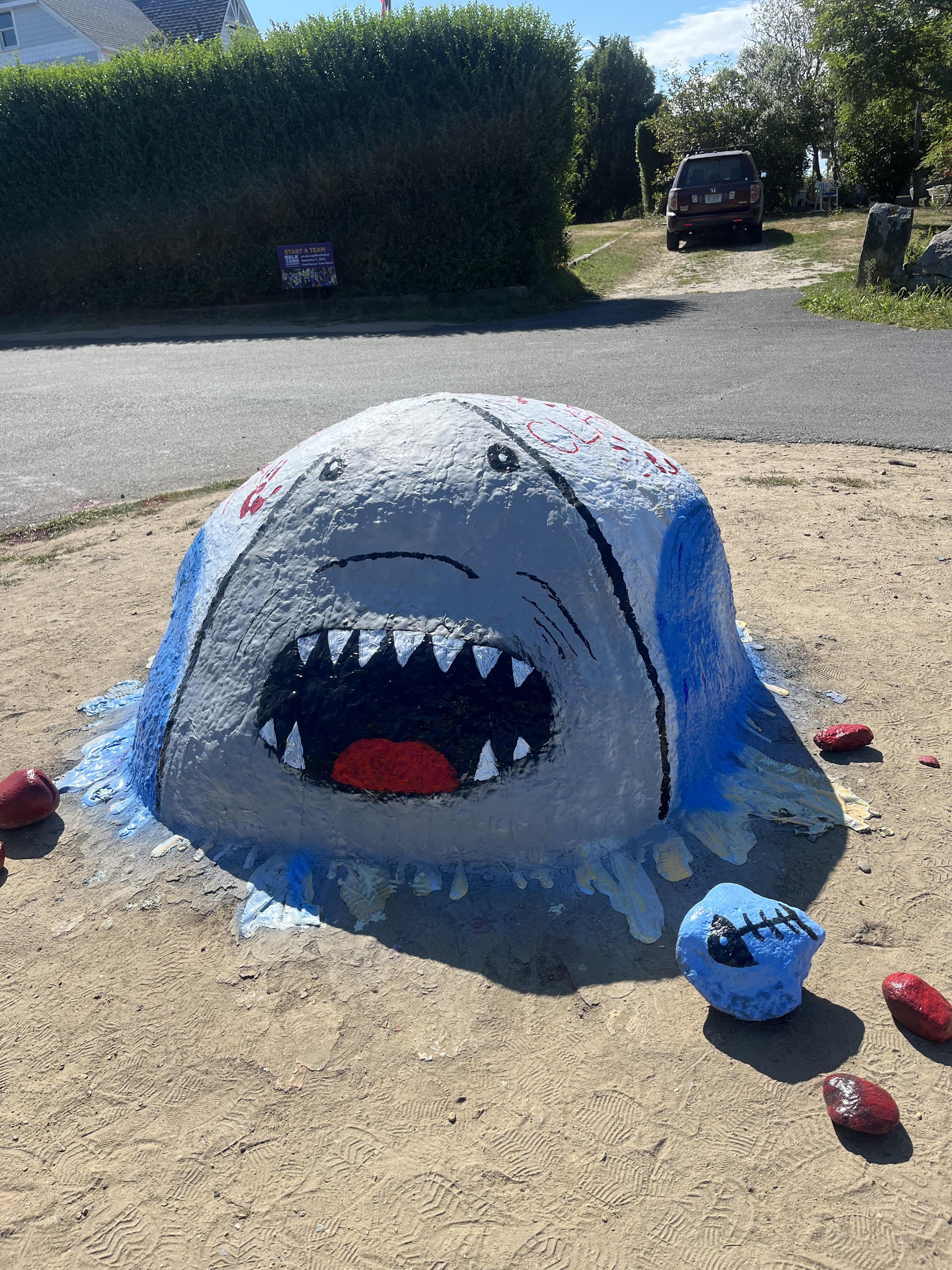
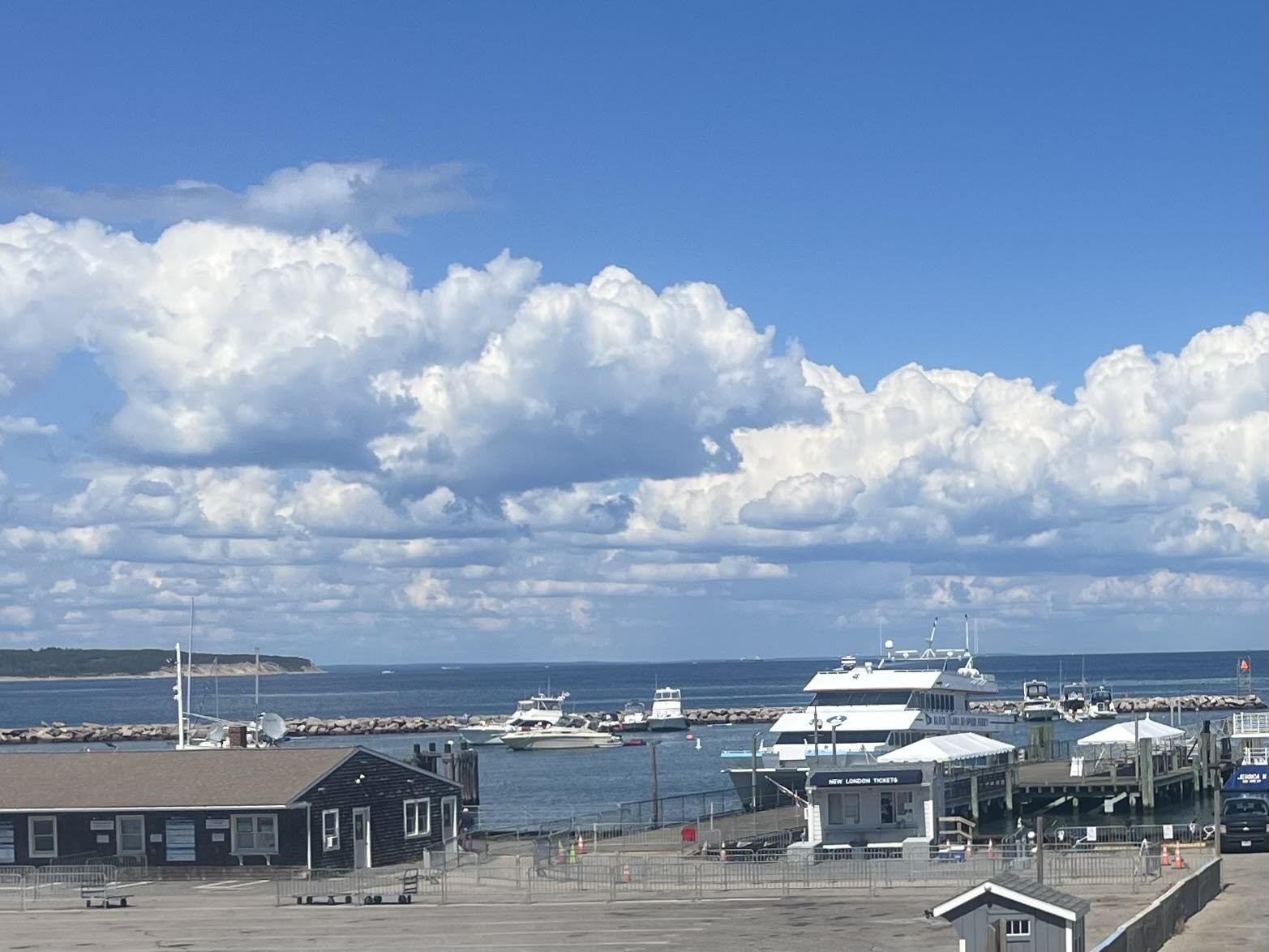
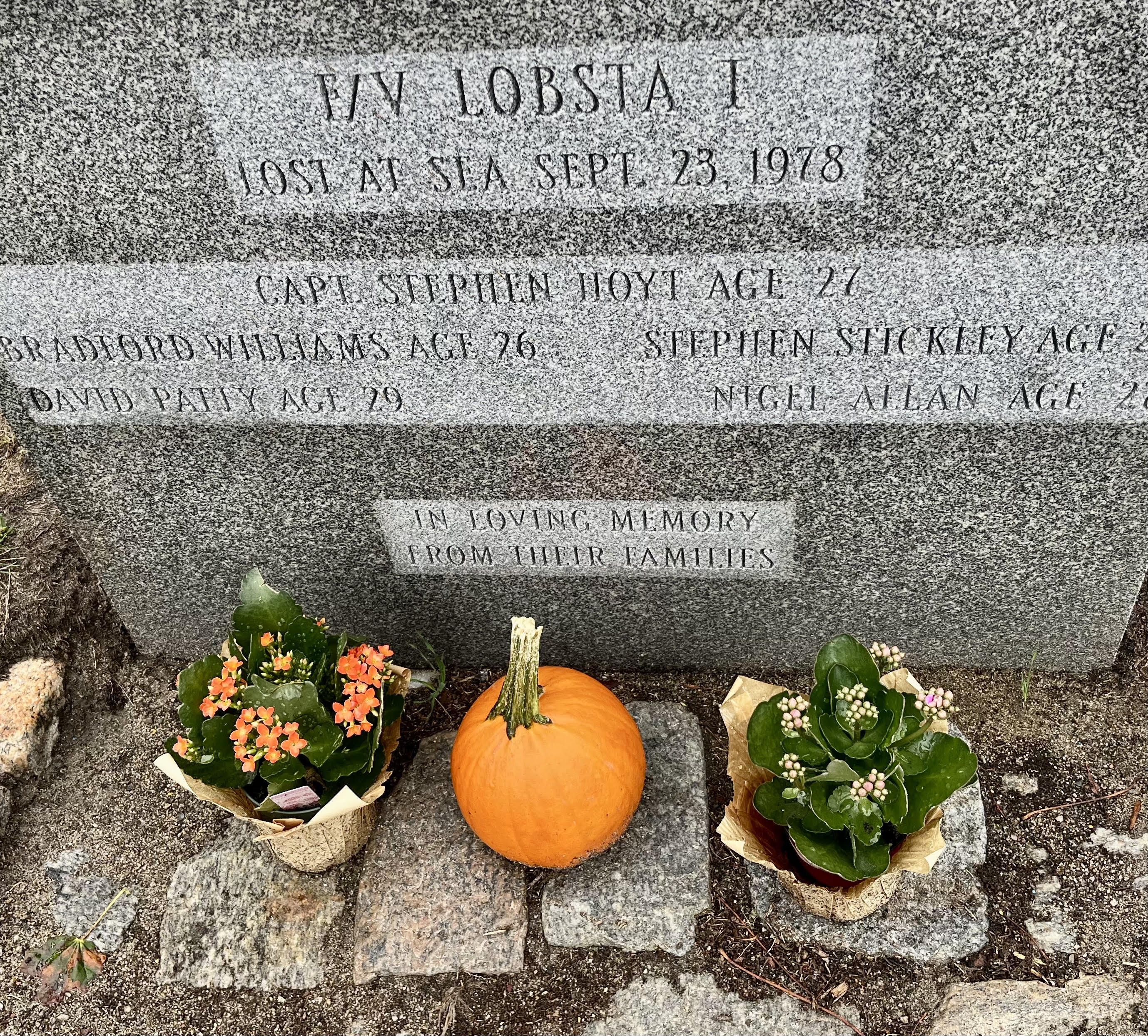
From my walks in Rhode Island: New Shoreham’s West Side beaches are quiet in the evening. One view shows the goldenrod that covers the island at this time of year. The tiny frog is, I think, a peeper, normally seen in spring. The shark on the rock celebrates a big anniversary for a famous movie that gave white sharks a bad name. The cloud photo shows the sea at its most benign. The one after that shows its dark side, a tombstone for fishermen whose bodies will never be found.

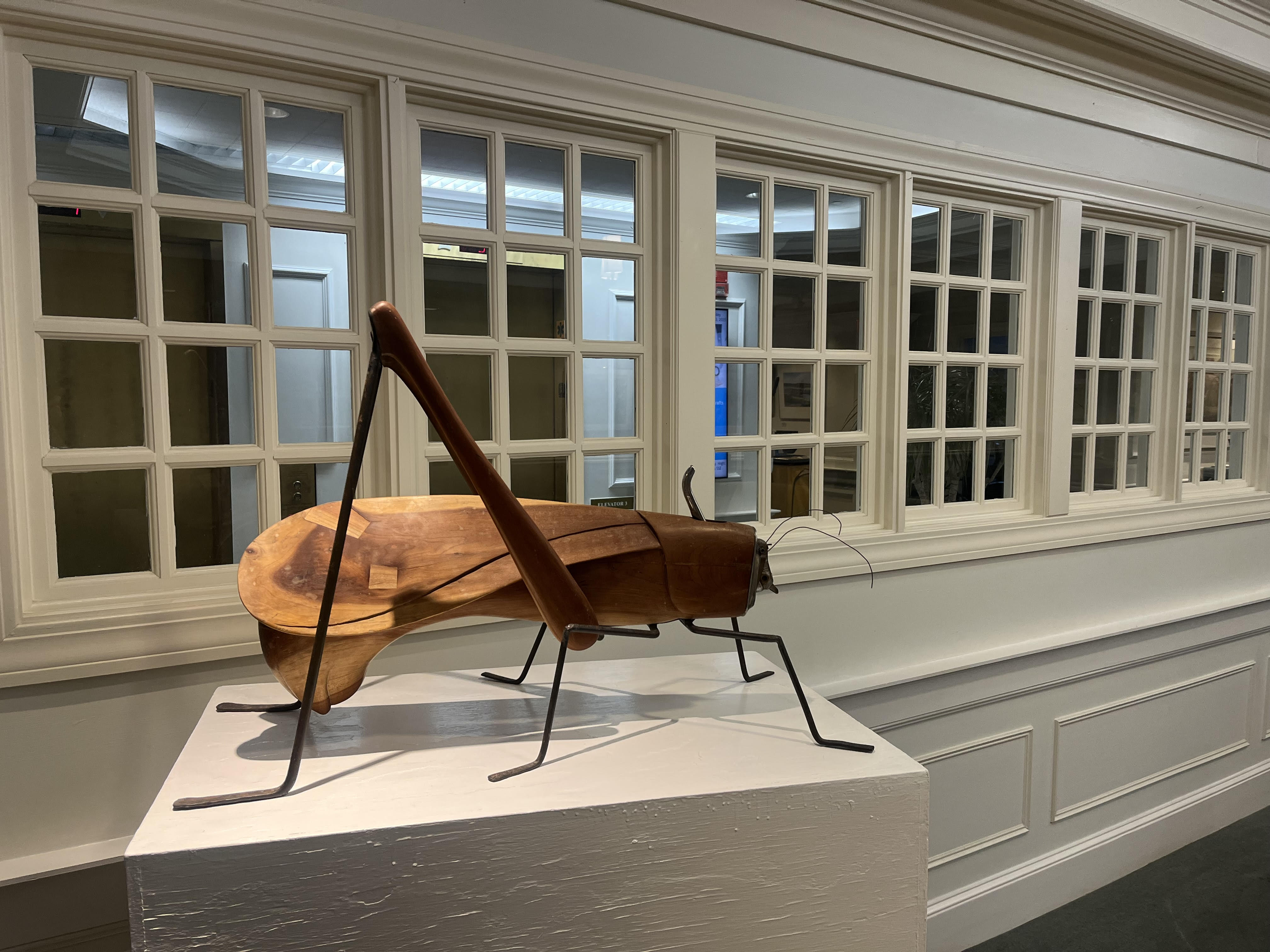
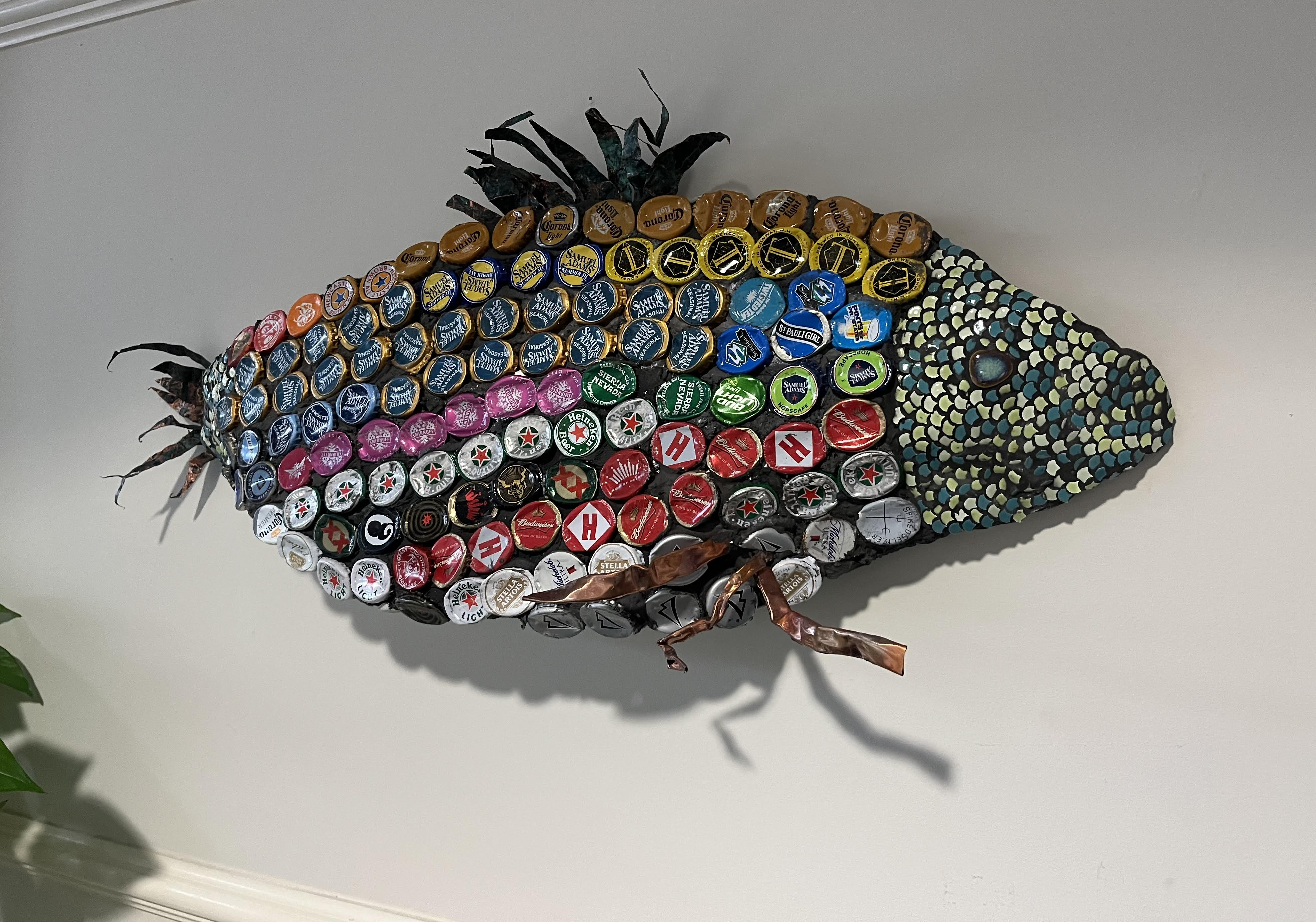
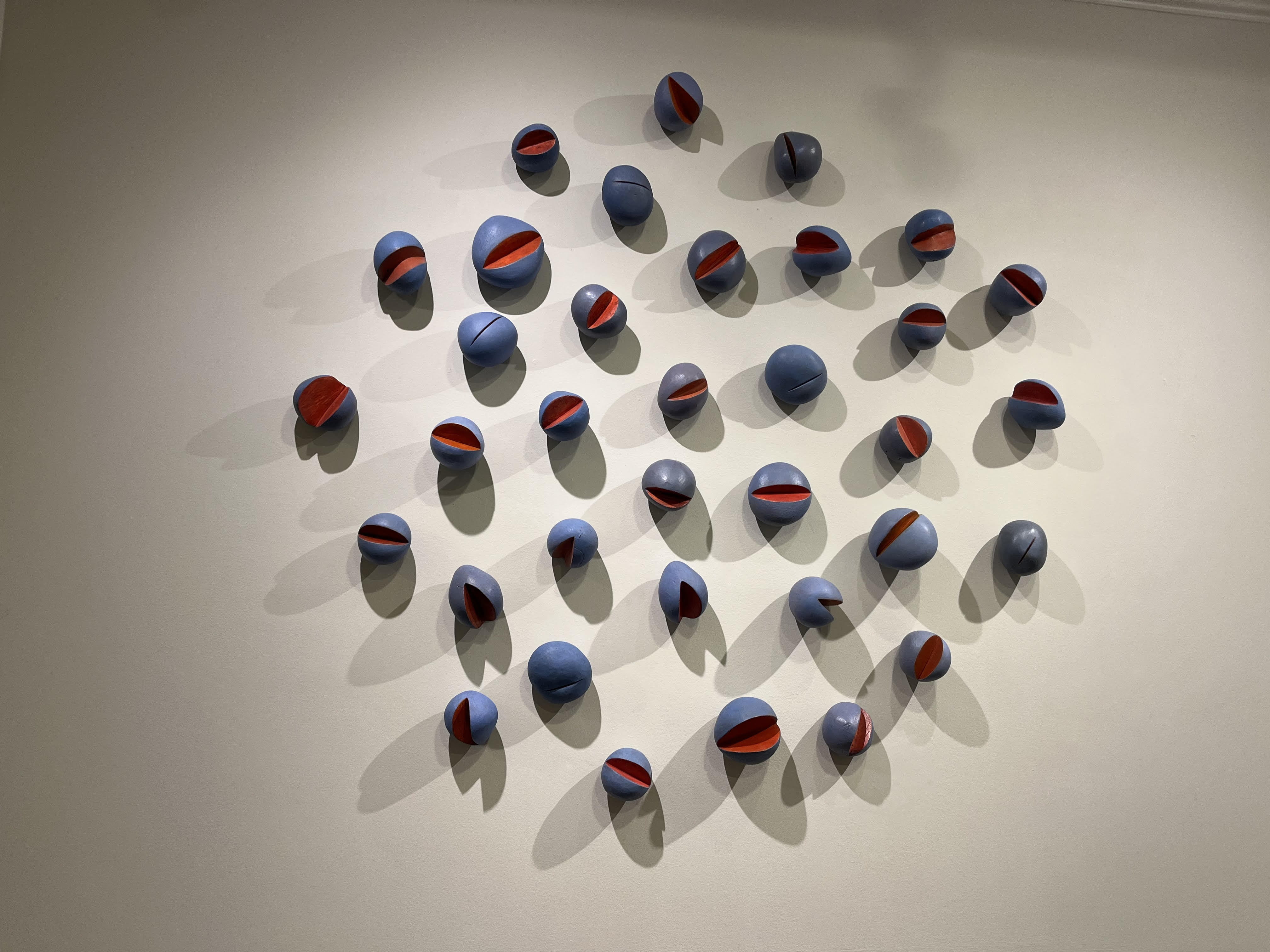
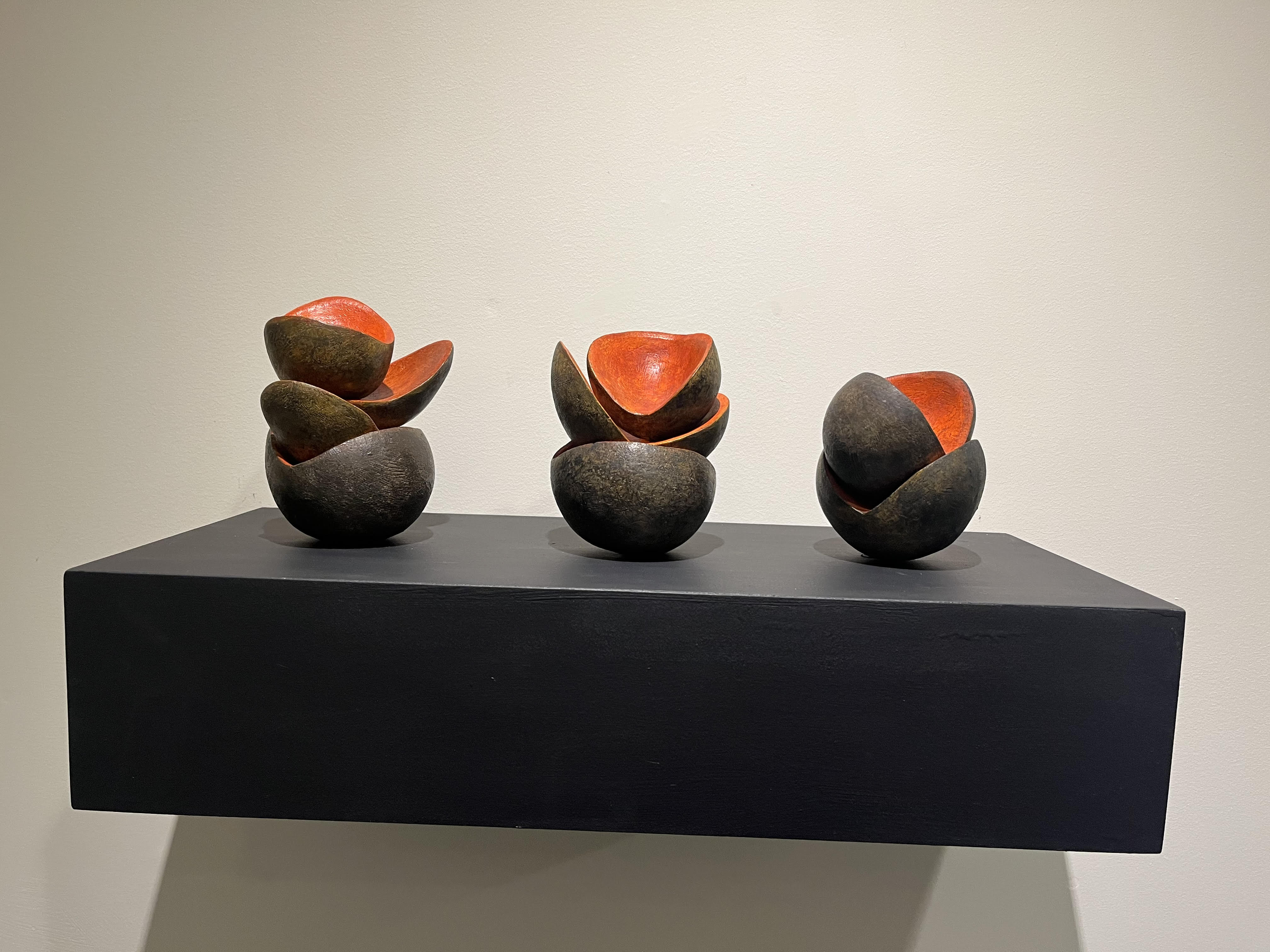
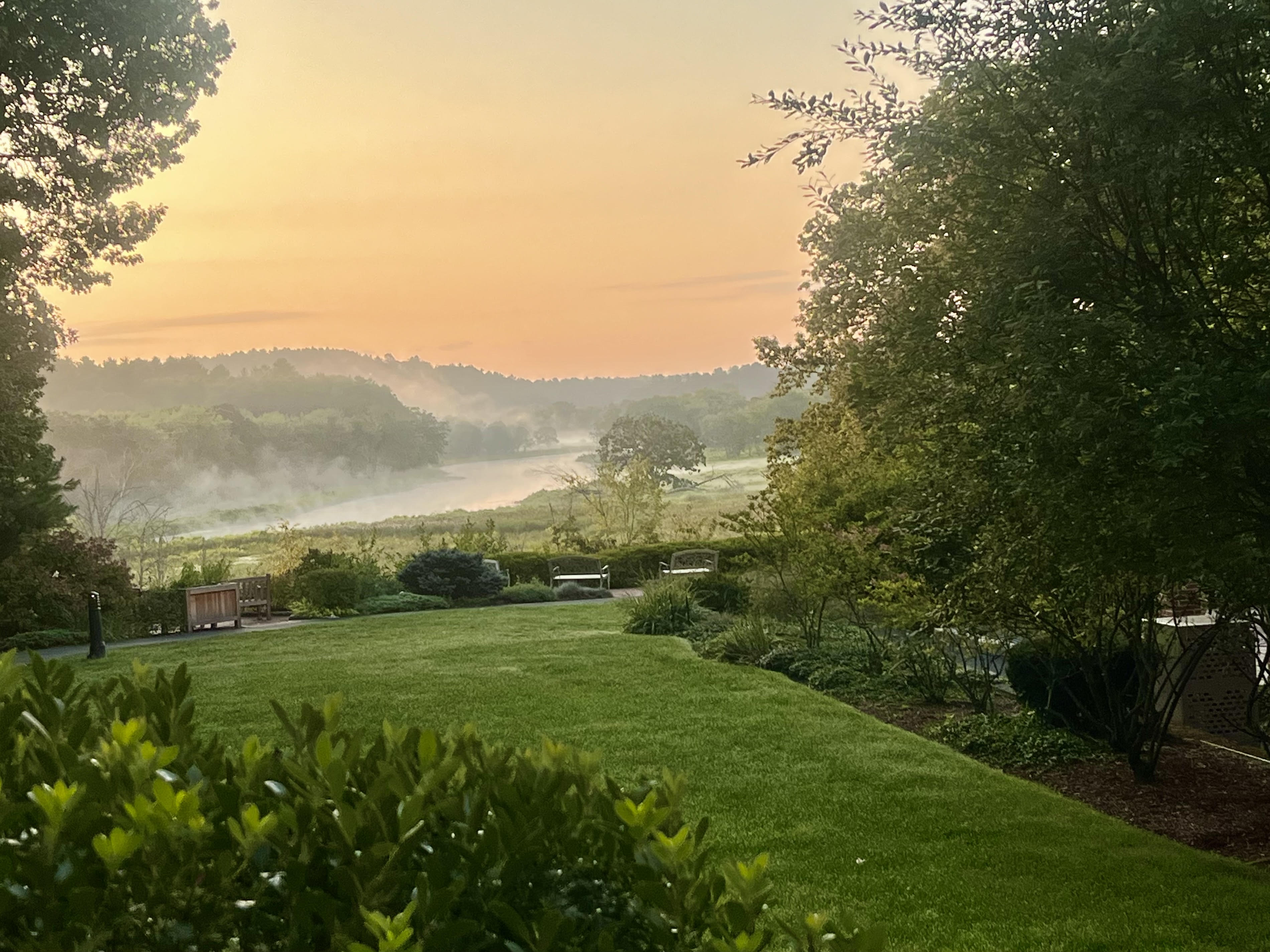
From where I live now: artwork that includes a metal fish by Cassie Doyon and Muppet-like shapes by Joan Mullen. Finally, an early morning view of the Sudbury River from our fitness center.

Read Full Post »

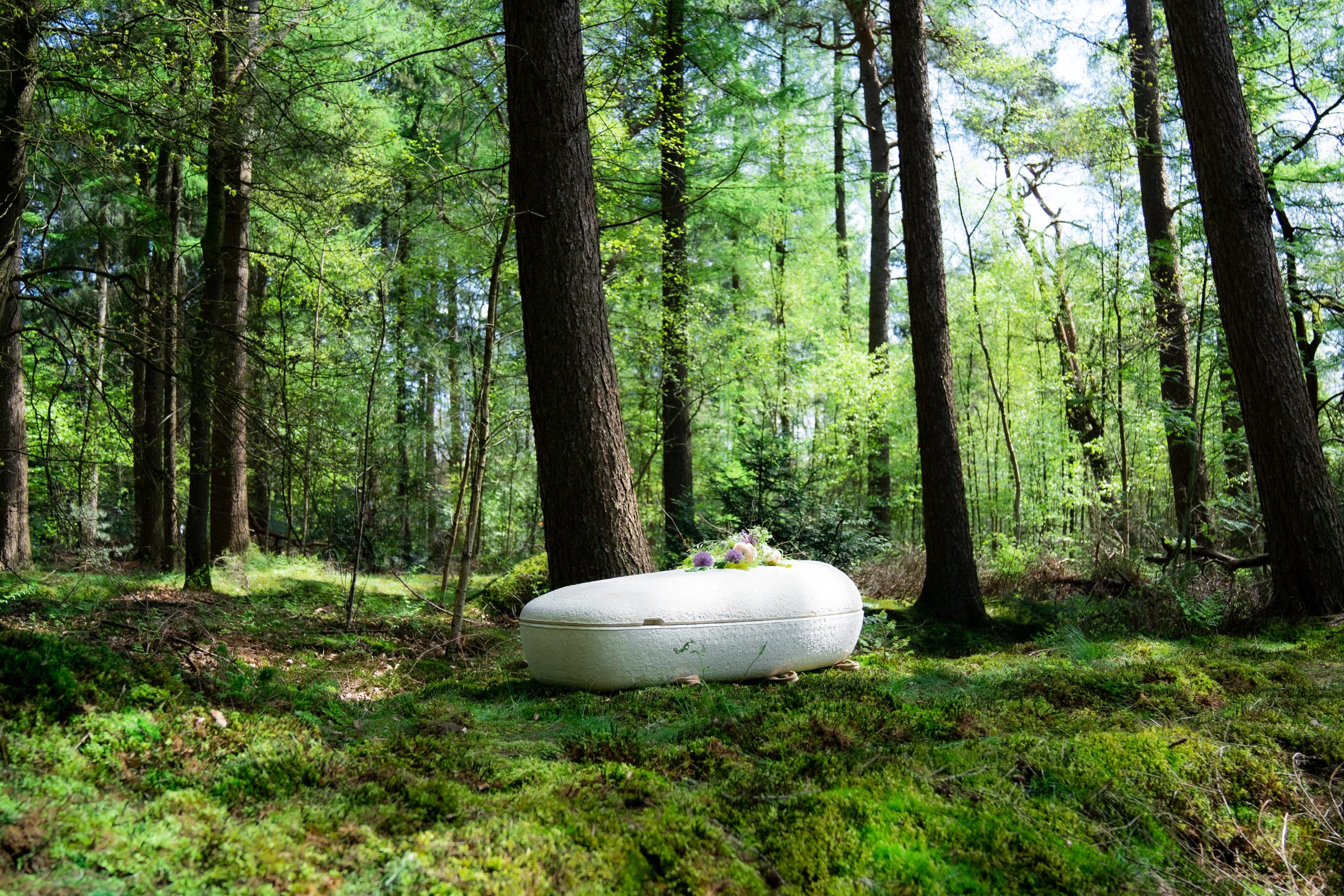
Photo: The Optimist Daily.
Website the Optimist Daily says, “Mushroom caskets offer an earth-friendly goodbye in North America’s first burial of its kind.”

Blogger Will McMillan at A Musical Life on Planet Earth gave me the lead for today’s story. And because my husband and I just recently entertained two mushroom enthusiasts from a recent conference, I decided today was a good day to tell you how some folks take their love of mushrooms to the end — and beyond.

“Traditional burials,” writes the Optimist Daily, “though deeply meaningful, often come at a steep environmental cost. The chemicals, hardwood, and land use involved can have long-term ecological impacts. But a quiet revolution in burial traditions is beginning to bloom and its roots are made of mushrooms.

“In a first for North America, a burial using a fully biodegradable mushroom casket took place on a serene hillside in rural Maine. The Loop Living Cocoon, developed by Dutch company Loop Biotech, is made entirely from mycelium, the intricate root system of fungi. The casket is grown in just one week, naturally breaks down within 45 days, and enriches the soil it returns to.

“ ‘My father always told me that he wanted to be buried in the woods on the property that he loved so much,’ said Marsya Ancker, whose father Mark C. Ancker was laid to rest in the pioneering casket. ‘He wanted his final resting place to nourish the land and plants he cherished.’ …

“Though this was a first for North America, Loop Biotech has already facilitated more than 2,500 burials across Europe using mushroom caskets. Green burials are an alternative that avoids embalming fluids, hardwood caskets, and steel-reinforced concrete vaults, and they’ve been steadily growing in popularity since the 1990s.

“ ‘Since 2005, the Green Burial Council has certified over 250 providers and recorded 400+ green cemeteries across the U.S. and Canada: a clear sign of growing demand for environmentally conscious end-of-life choices,’ said Sam Perry, president of the Green Burial Council.

“The statistics are striking. According to the Council, conventional U.S. burials consume roughly 20 million board feet of wood, 4.3 million gallons of embalming fluid, and 1.6 million tons of concrete each year.

“Bob Hendrikx, founder of Loop Biotech, believes funerals can be more than a final goodbye. ‘We created the Loop Living Cocoon to offer a way for humans to enrich nature after death. It’s about leaving the world better than we found it.’

The Global Green Burial Alliance, founded in 2022, is helping reshape global perspectives on death. Entirely volunteer-run, the organization connects families with green providers and empowers people to reclaim their voice in end-of-life decisions. …

“Ed Bixby, founder of the Global Green Burial Alliance, believes these choices create a legacy of compassion. … ‘To embrace the living with our death becomes the final act of kindness we can bestow upon our planet.’

“With innovations like the mushroom casket and a groundswell of interest in sustainable options, a cultural shift appears to be underway. It asks that we reimagine death not as an ending, but as a way to nourish new life.”

So there’s that.

Sometime I’ll tell you about our mycologist visitors. Theirs is a whole different world. And when you live in a retirement community and are in danger of too much sameness, “different” is especially welcome.

Consider for example, how we learned from these guys that truffles are actually all over the world but buried very deep. And how they might even have been the “manna” in the desert described in the Bible. They do grow in desert places like Saudi Arabia.

So says the CEO of MycoSymbiotics, William Padilla-Brown, who, we learned, was a speaker at the conference. His bio describes him as a “Multidisciplinary Citizen Scientist practicing social science, mycology, phycology, molecular biology, and additive manufacturing. William founded MycoSymbiotics in 2015, and has since developed it into the innovative practical applied biological science business it is today. William holds permaculture design certificates acquired through Susquehanna Permaculture and NGOZI, and a certificate from the Bigelow Laboratory for Ocean Sciences in algal culturing techniques. He has published the first English-language books on cultivating the cordyceps mushroom and regularly leads courses on their cultivation. William’s research has been sponsored by several organizations and his work has been featured in multiple publications, including Fantastic Fungi and VICE. He also founded and manages MycoFest, an annual mushroom and arts festival, now on its eleventh year.”

So many unusual pursuits in this world! I am not knowledgeable enough to recommend the ideas of any mycologists or herbalists, nor am I planning a mushroom burial, but I sure am a sucker for anything interesting.

Doesn’t curiosity keep us all going?

More at the Optimist, here.
Read Full Post »

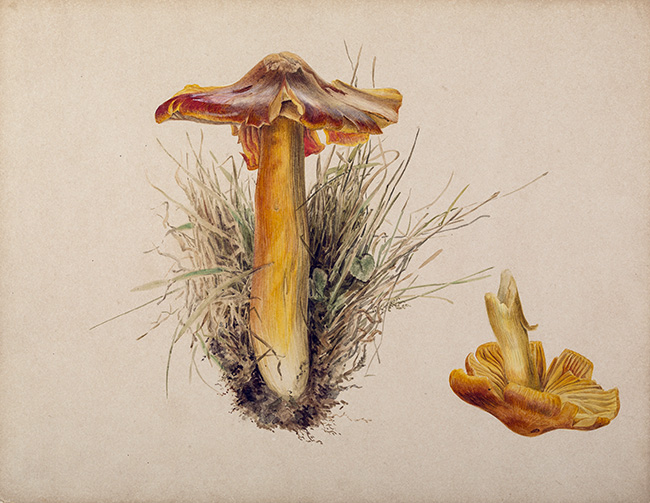
Art: Beatrix Potter via the Marginalian.
The mighty mushroom.

As the blogger at Spores, Moulds, and Fungi in New Zealand could tell you, mushrooms are important to the efficient functioning of the planet.

Today’s article explains how, if encouraged to do their own thing, fungi can prevent the worst climate-change wildfires. Here are excerpts from Stephen Robert Miller’s report at the Washington Post.

“If you’ve gone walking in the woods out West lately, you might have encountered a pile of sticks. Or perhaps hundreds of them, heaped as high as your head and strewn about the forest like Viking funeral pyres awaiting a flame.

“These slash piles are an increasingly common sight in the American West, as land managers work to thin out unnaturally dense sections of forests. …

“The federal government has committed nearly $5 billion in the Inflation Reduction Act and Bipartisan Infrastructure Law to thinning forests on about 50 million Western acres over the next 10 years. Although this can be accomplished with prescribed burns, the risk of controlled fires getting out of hand has foresters embracing another solution: selectively sawing trees, then stripping the limbs from their trunks and collecting the debris.

“The challenge now is what to do with all those piles of sticks, which create fire hazards of their own. Some environmental scientists believe they have an answer: mushrooms. Fungus has an uncommon knack for transformation. Give it garbage, plastic, even corpses, and it will convert them all into something else — for instance, nutrient-rich soil.

“Down where the Rocky Mountains meet the plains, in pockets of forest west of Denver, mycologists like Zach Hedstrom are harnessing this unique trait to transform fire fuel into a valuable asset for local agriculture.

“For Hedstrom, the idea sprung from an experiment on a local organic vegetable farm. He and the farm owner had introduced a native oyster mushroom to wood chips from a tree that fell in a windstorm.

“ ‘That experiment showed us that the native fungi were helping to accelerate the decomposition really substantially,’ he said. Working with local governments, environmental coalitions and farmers, he is now honing the method. …

“When slash piles are set alight, they burn longer and hotter than most wildfires over a concentrated area. This leaves behind blistered soil where native vegetation struggles for decades to take root. As an alternative, foresters have tried chipping trees on-site and broadcasting the mulch across the forest floor, where it degrades at a snail’s pace in the arid climate. Boulder County also carts some of its slash to biomass heating systems at two public buildings.

“ ‘We’re removing a ton of wood out of forests for fire mitigation,’ Hedstrom said. ‘This is not a super sustainable way of managing it.’ He hopes to show that fungi can do it better.

“Jeffrey Ravage is a forester with the Coalition for the Upper South Platte, which manages protection and restoration of a more-than-million-acre watershed in the mountains southwest of Denver. He describes the action of saprophytes, a type of fungi that feeds off dead organic matter, as ‘cold fire.’ Like a flame, saprophytic fungi break organic material into carbon compounds.

Mycelium, the often unseen, root-like structure of the fungi, secretes digestive enzymes that release nutrients from the substrate it consumes.

“Whereas a flame destroys nearly all organic nitrogen, mycelium can fortify nitrogen where it’s needed in the forest floor. … Standard thinning costs somewhere around $3,000 per acre, about a third of which is spent hauling out or burning the slash. Using mycelium could drastically reduce that cost. With the right kind of fungi, he said, ‘we can do in five years what nature could take 50 years to a century to do: create organic soil.’

“Though the method is new, it’s not untried. At the Balcones Canyonlands Preserve, north of Austin, biologist Lisa O’Donnell deploys mycelium to combat invasive glossy privet [successfully]. … For mycelium to be a truly viable solution to wildfires, however, it would have to work at the scale of the Western landscape. Hedstrom is experimenting with brewing mycelium into a liquid that can be sprayed across hundreds of acres. …

“Ravage doubts it could be so easy. ‘Half the battle is how you target the slash,’ he said. Success stories like Balcones are rare. Ravage has spent a decade cultivating wild saprophytes and perfecting methods of applying them in Colorado’s forests.

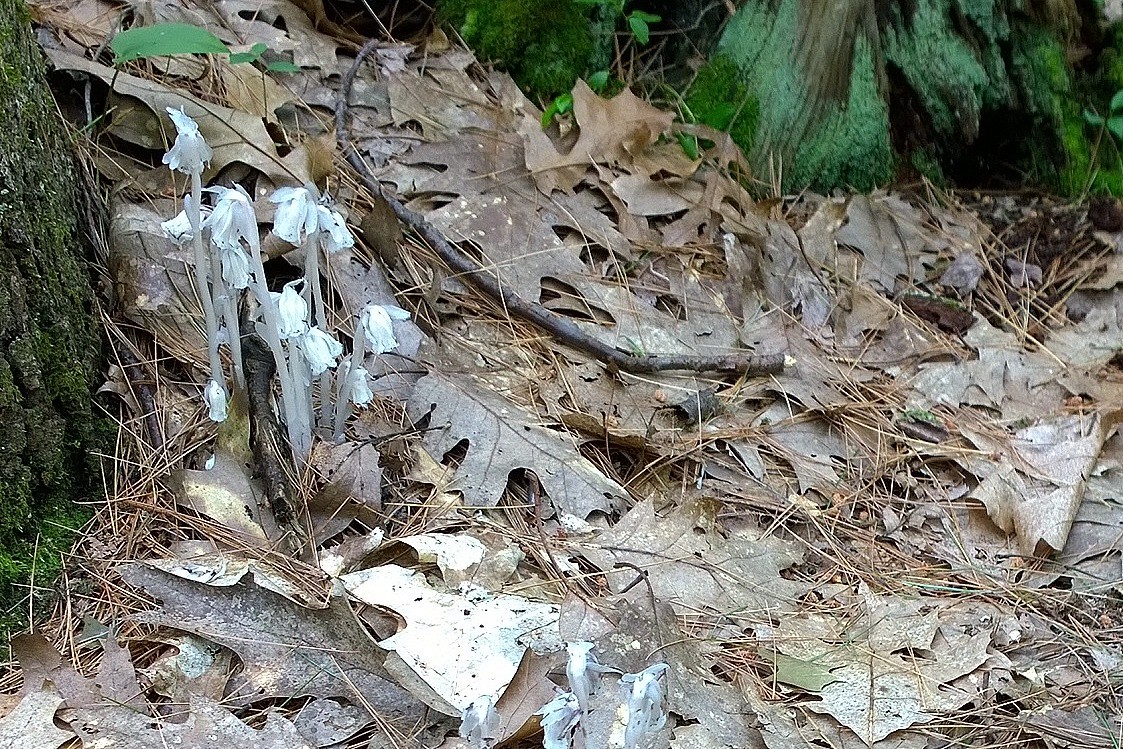
Photo: Suzanne and John’s Mom
Indian Pipe is a kind of saprophyte.

062917-Indian-Pipe-fungus-ConcordMA

“He begins by mulching slash to give his fungi a head start. Then he seeds the mulch with spawn, or spores that have already begun growing on blocks of the same material, and wets them down. Fungi require damp conditions and will survive in the mulch if it is piled deeply enough. Given the changing character of Western forests, however, aridity poses a serious hurdle.

“At his lab in the Rockies, Ravage grows about a ton of spawn annually. To meet the demands of forest-fire mitigation, he wants to produce 12 tons every week. This presents an opportunity for intrepid mushroom farmers, should the government choose to fund them.”

The article was produced in collaboration with the Food & Environment Reporting Network.

More at the Post, here.
Read Full Post »

Last night my husband reported that Massachusetts had just experienced its wettest July ever, breaking the record set in 1938.

Now, if you live in New England, you have no need to be told what happened in 1938. Most of us call it the Hurricane of ’38, and many books have been written about it. The one I loved had the awesome title A Wind to Shake the World. My mother experienced that wind firsthand.

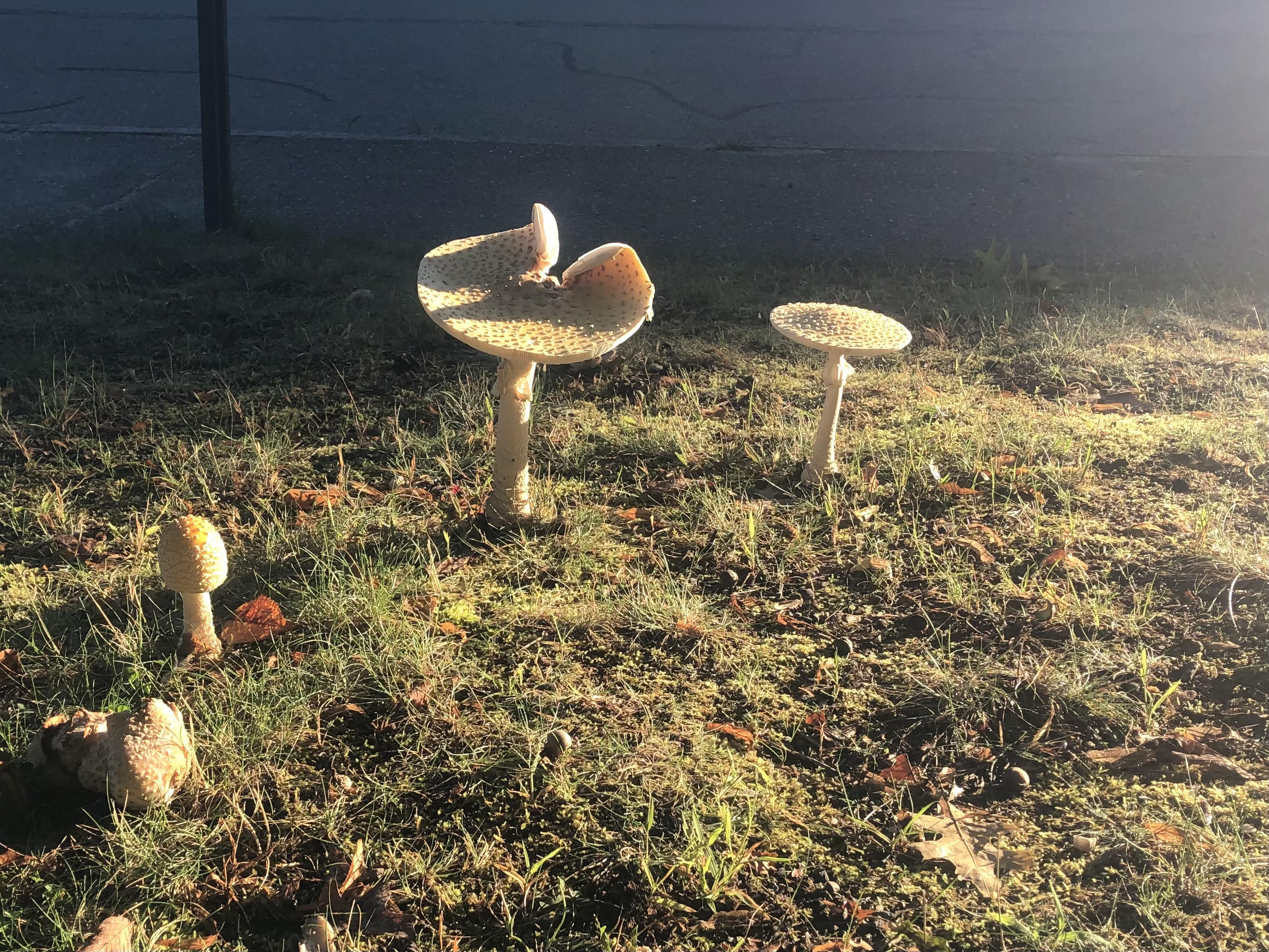
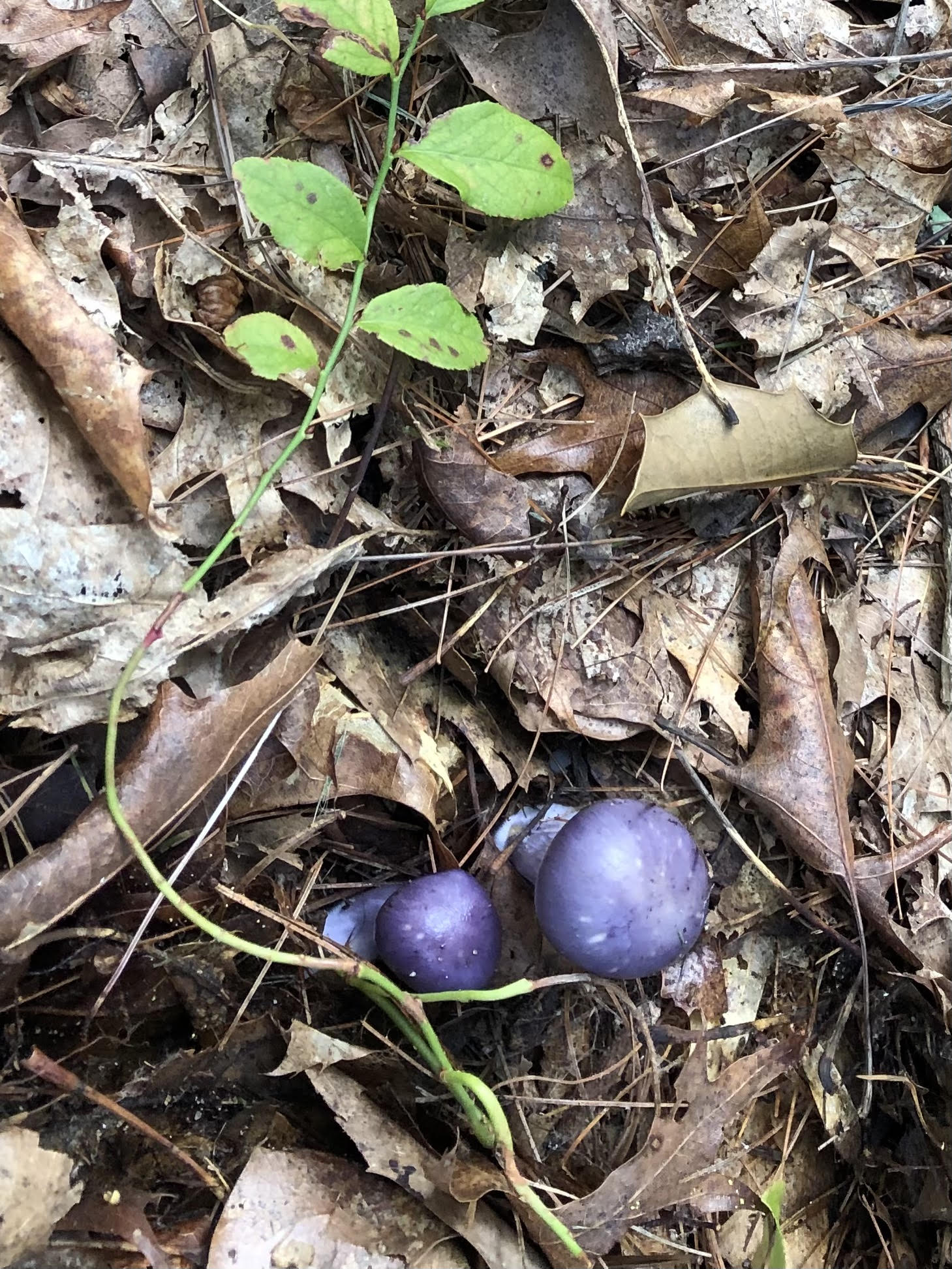
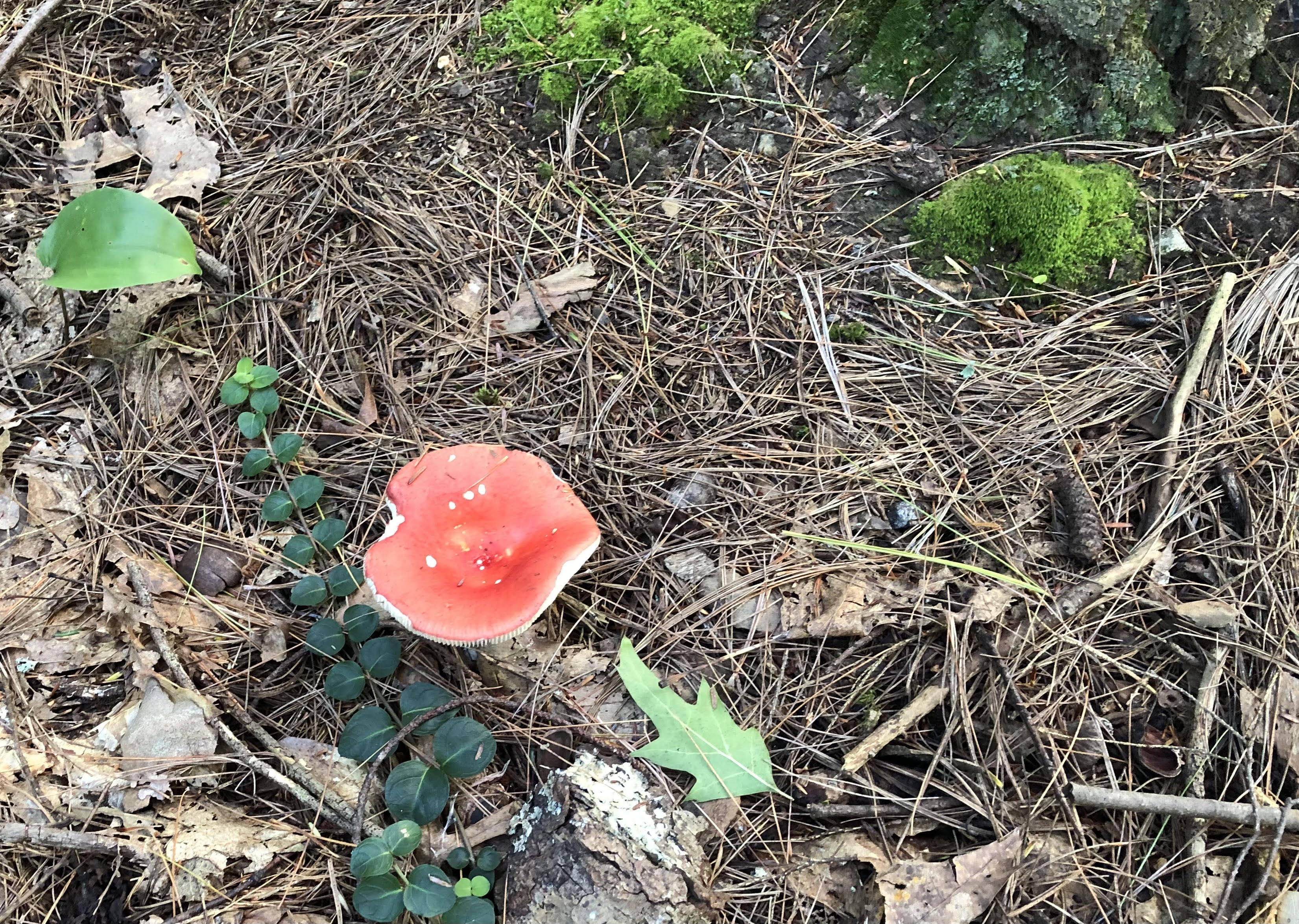
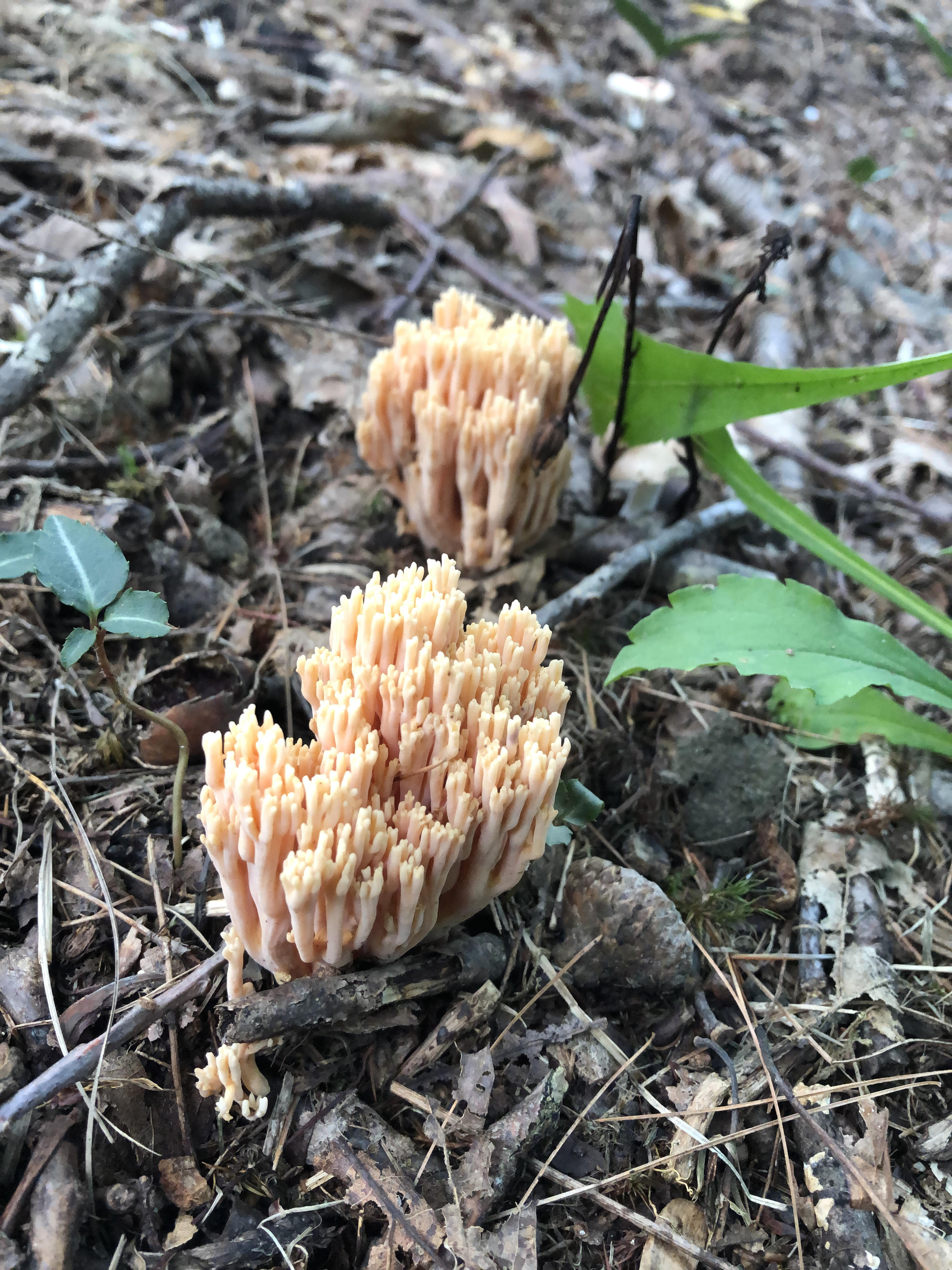
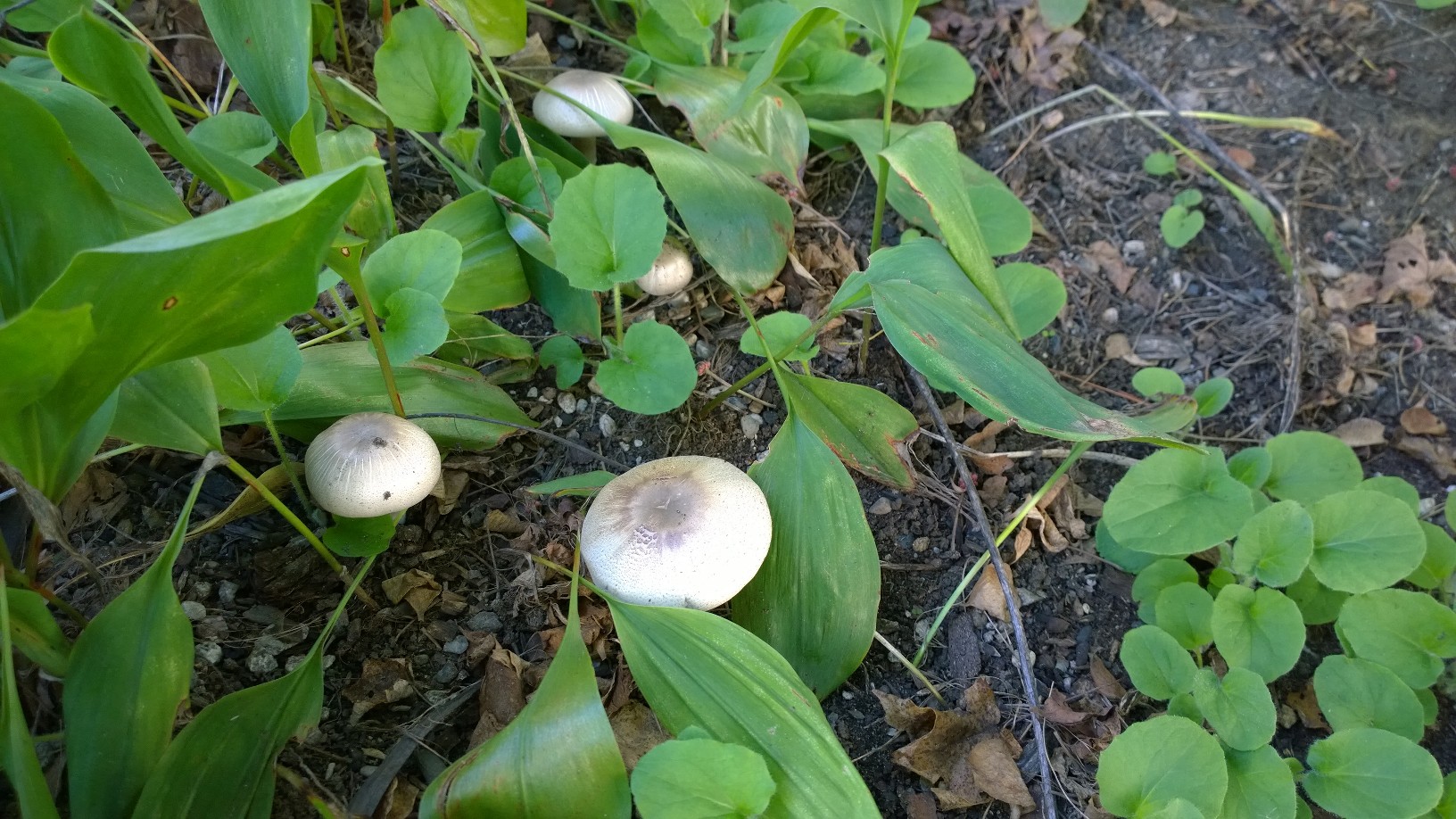
But today’s post is not about hurricanes: its about wet weather and what follows it. Because lately on my walks, I’ve been noticing an unusual number and variety of mushrooms blooming in the wet. (Does one say “blooming” in regard to mushrooms? Let’s say they are “mushrooming.”)

I’ve blogged about mushrooms before. Last year’s Love for Fungi post described how these natural wonders “knit Earth’s soils into nearly contiguous living networks of unfathomable scale” and may ultimately save the planet.

I love the idea of anything knitting the world together without boundaries. Just imagine how wonderful it would be if we took the concept a step farther and began advocating for earthworm diplomacy — a kind of interaction among nations recognizing that certain aspects of borders are about as meaningless for humans as they are for an earthworm. Consider Covid. Consider climate change.

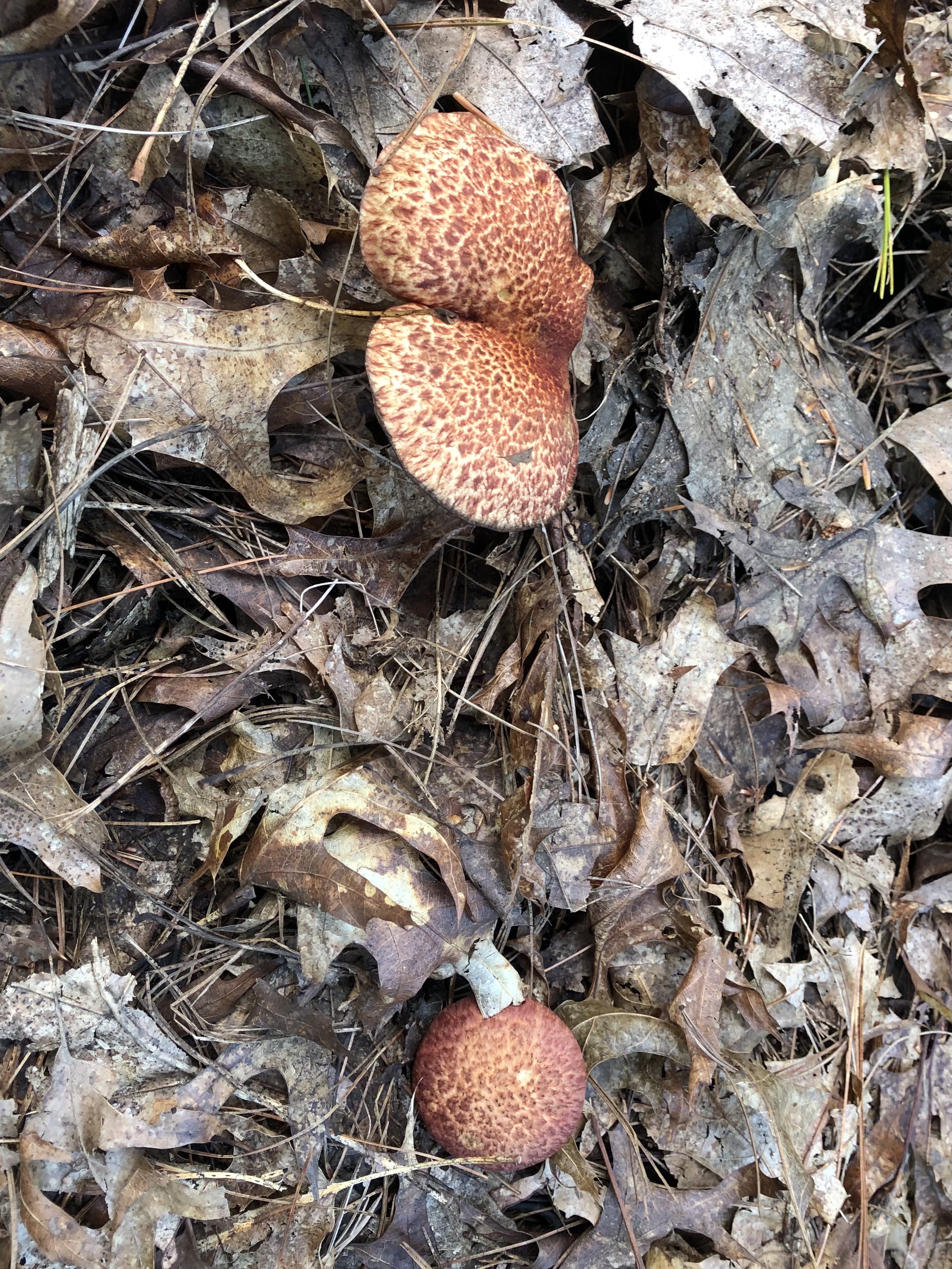
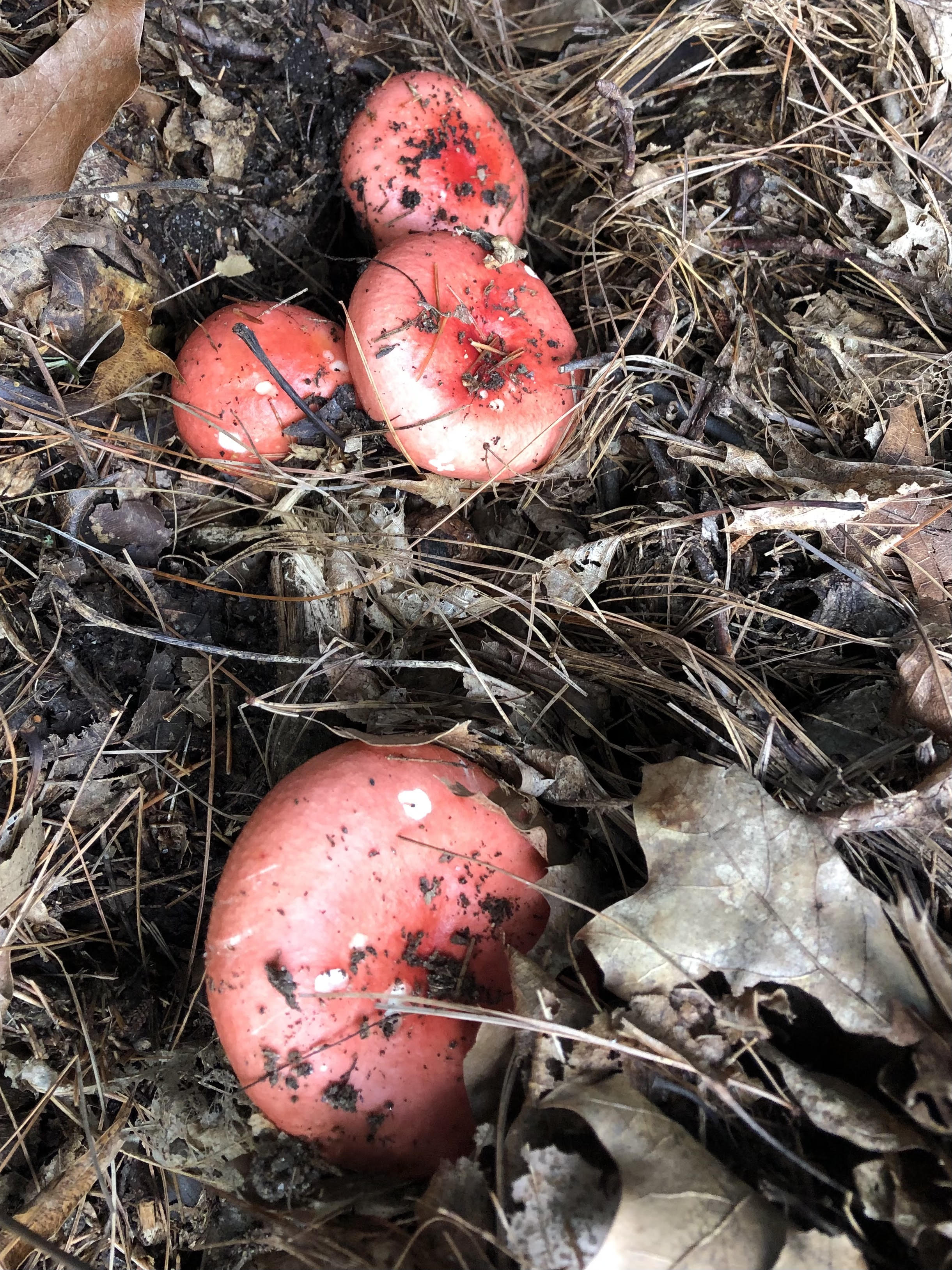
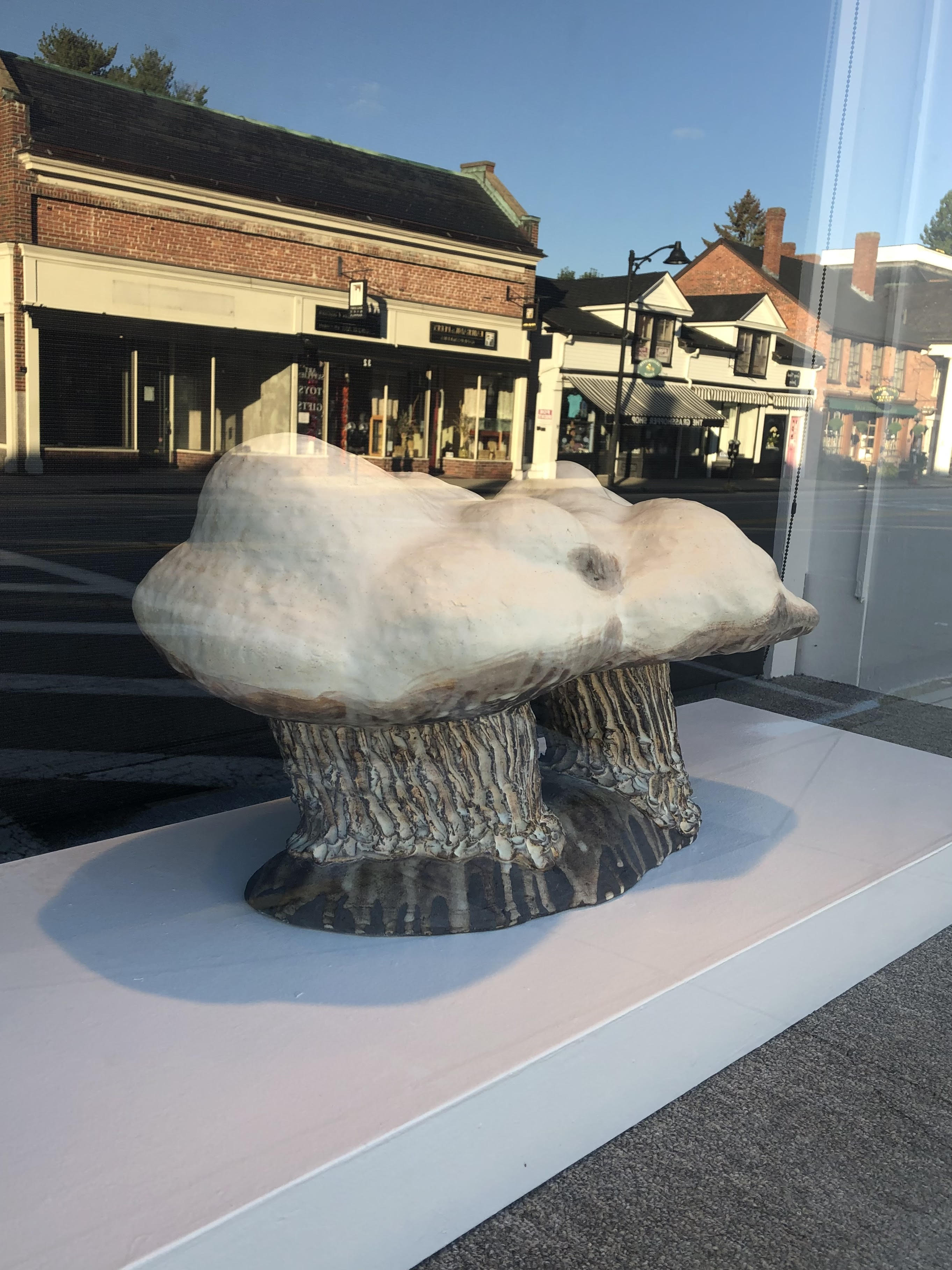
Anyway, here are the kinds of mushrooms our wettest July has engendered: speckled, yellow, red, blue , bizarre … I wind up with a window photo of something Lena Takamori, a mushroom-inspired artist, created.

Would love to see mushrooms from where you live.

Read Full Post »

Photo: Charles Russo.

Mushrooms, lichen, and fungus are increasingly fascinating to me. I’ve posted photos here and on Instagram, where I especially love the mushroom pictures of @chasonw.

When John’s employees visited from Ukraine, they used to enjoy looking for wild mushrooms to eat, but I don’t know any Americans who are sure enough of themselves to take a chance.

Today’s article by Margaret Roach at the New York Times explains why you really need mushrooms in your yard — and also which ones are safe to eat. (A tip of the hat to Hannah for the story!)

“They appear spontaneously, or so it seems, popping up out of the mulch, rising in a single spot on the lawn or bursting from between the pathway pavers like little marshmallows. But there is an intricate master plan at work, just not one to which most gardeners are privy. What are the mushrooms in our gardens trying to tell us — and would you be surprised to learn it’s mostly good news?

“ ‘Without the fungi we wouldn’t have soil, at least not the way we know it now,’ said John Michelotti, of Catskill Fungi in Big Indian, N.Y., a family farm on land his great-great-grandfather bought, where Mr. Michelotti spent his childhood summers. ‘Their filamentous underground mycelia are essential for the nutrient cycling and balance of our soils, plants, microbial life — and ecosystems as a whole.’

“Today, Mr. Michelotti leads guided mushroom walks, teaches classes about mushroom growing and medicinal mushrooms at the New York Botanical Garden and elsewhere, and produces health extracts from fungi — in between occasional calls to identify mushrooms in his role as a poison-control volunteer. …

Photo: Missouri Department pf Conservation
Giant puffball.

“Fungi serve various critical ecosystem roles. The saprobic species act as powerful decomposers: Oyster mushrooms, for instance, work to recycle a dead tree.

“Mycorrhizal fungi help plants build resilience and resistance to pathogens. In a symbiotic partnership, they translocate water and mine nutrients and micronutrients, making those resources available to plant roots. Some 92 percent of plant families rely on such services, according to the North American Mycological Association.

“In return, up to a third of the energy that plants make through photosynthesis goes to feeding simple sugars to the fungi, Mr. Michelotti said: ‘This plant-fungi symbiosis is how the earliest plants accessed essential nutrients that helped them inhabit land in the first place. …

” ‘People come up to me to ask, “I’ve got these mushrooms in my lawn — how do I get rid of them?” ‘ he said. …

“His message, always delivered patiently: ‘Can we perhaps look a little deeper about what the fungi are doing here?’

“Mushrooms — the fruiting or reproductive bodies of fungi — are not a disease, but a sign of health, he explains. They indicate that, under the grass, ‘your soil is running with vast networks of mycelial mats and trillions of microscopic organisms working together, helping break down organic matter to make nutrients available to plants.’

“His questioners might have seen some thin-stemmed, pointy-topped little Conocybe apala, mushrooms that come and go quickly, often unnoticed. Or maybe something more emphatic just erupted? From late summer into fall, soccer-ball-like giant puffballs (Calvatia gigantea) are the headliners.

“ ‘Watch the film “Fantastic Fungi” if you want to really appreciate the puffballs in your lawn,’ said Mr. Michelotti, who has a walk-on in the documentary — and a favorite recipe for puffball piccata.

“Again: Enough with the eradication efforts. First, you can’t eradicate them — most of the fungi’s life is unseen, below ground, and continues even if the fruiting bodies are removed. And ‘if you pick them and toss them somewhere, or mow them, you’re actually helping spread their spores,’ Mr. Michelotti said.” More here.

Read how Michelotti makes his delicious piccata from giant puffballs in the fall.

Photo: Suzanne’s Mom

100616-mushrooms-in-fall

Read Full Post »

There was more to Beatrix Potter than Flopsy, Mopsy, and Cottontail. Her meticulous drawings of flora and fauna made serious contributions to the science of the day.

Maria Popova at Brain Pickings shares Potter’s mushroom drawings and more.

“At a time when women had no right to vote and virtually no access to higher education, very rarely owned property and were themselves considered the property of their husbands, Potter became a commercially successful writer and artist, using the royalties from her books to purchase her famed Hill Top Farm, where she lived simply and with great love for the land for the remaining four decades of her life. …

“Linda Lear’s altogether magnificent Beatrix Potter: A Life in Nature (public library) — [is] by far the best book on Potter and one of the finest biographies ever written, Lear’s prose itself a supreme work of art.

“A formal scientific education was virtually inaccessible to women, except for the rare Ada Lovelace or Maria Mitchell, and membership in scientific societies was strictly reserved for men. But Potter’s scientific work was exceptional in that she deliberately tried to penetrate the very institutions that dismissed women’s scientific labor solely on the basis of gender. …

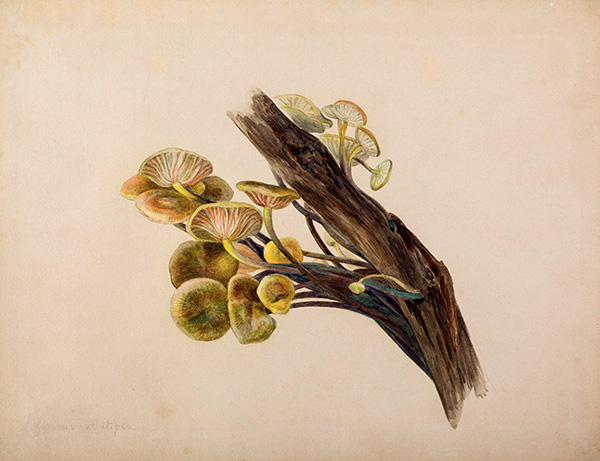
“By her early twenties, Potter had developed a keen interest in mycology and began producing incredibly beautiful drawings of fungi, collecting mushroom specimens herself and mounting them for careful observation under the microscope. … Lear writes:

Beatrix’s interest in drawing and painting mushrooms, or fungi, began as a passion for painting beautiful specimens wherever she found them. She never saw art and science as mutually exclusive activities, but recorded what she saw in nature primarily to evoke an aesthetic response. She was drawn to fungi first by their ephemeral fairy qualities and then by the variety of their shape and colour and the challenge they posed to watercolour techniques. Unlike insects or shells or even fossils, fungi also guaranteed an autumn foray into fields and forests, where she could go in her pony cart without being encumbered by family or heavy equipment.

More here.

Art: Beatrix Potter
Flammulina velutipes (Armitt Museum and Library)

Read Full Post »