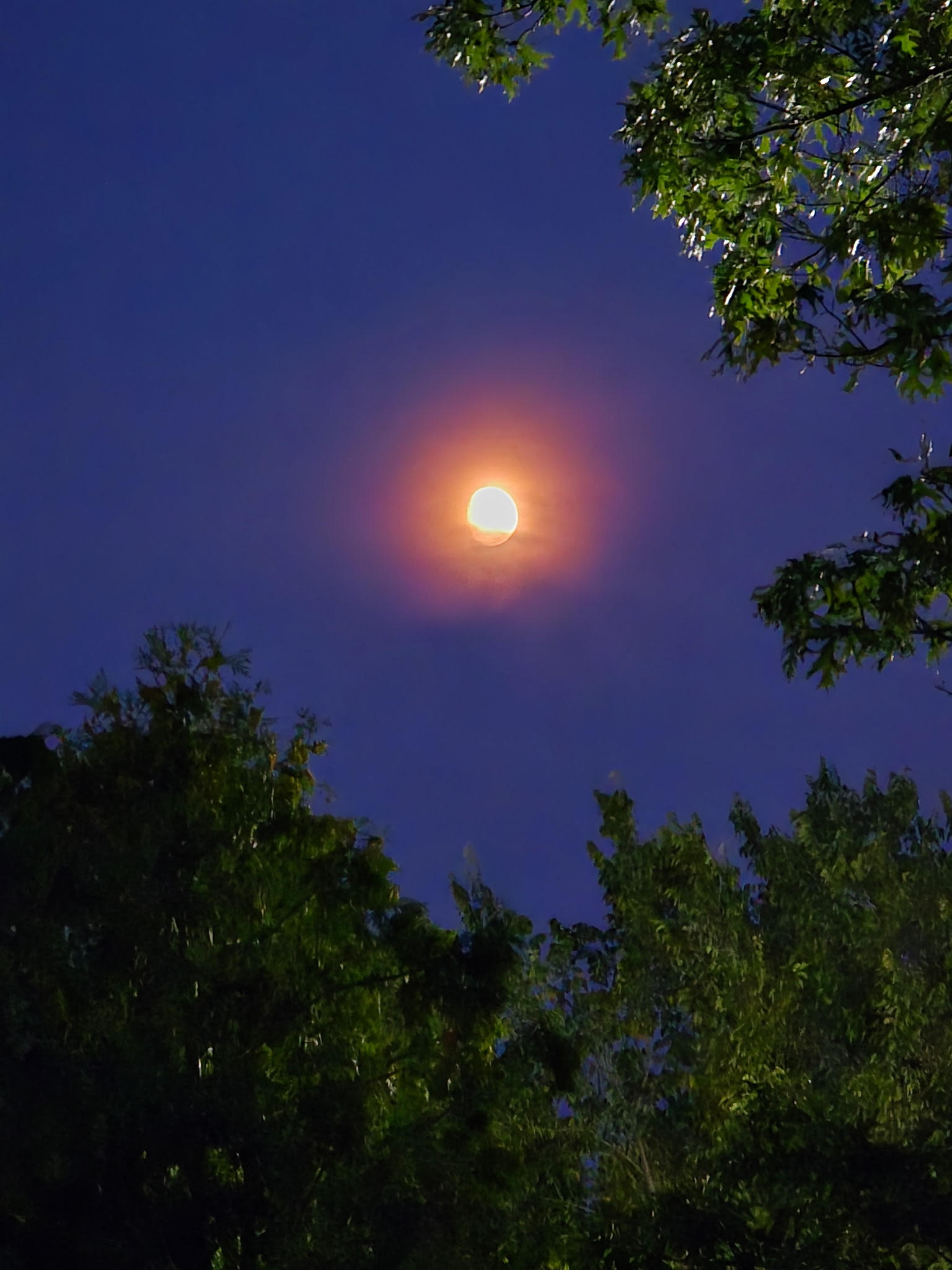
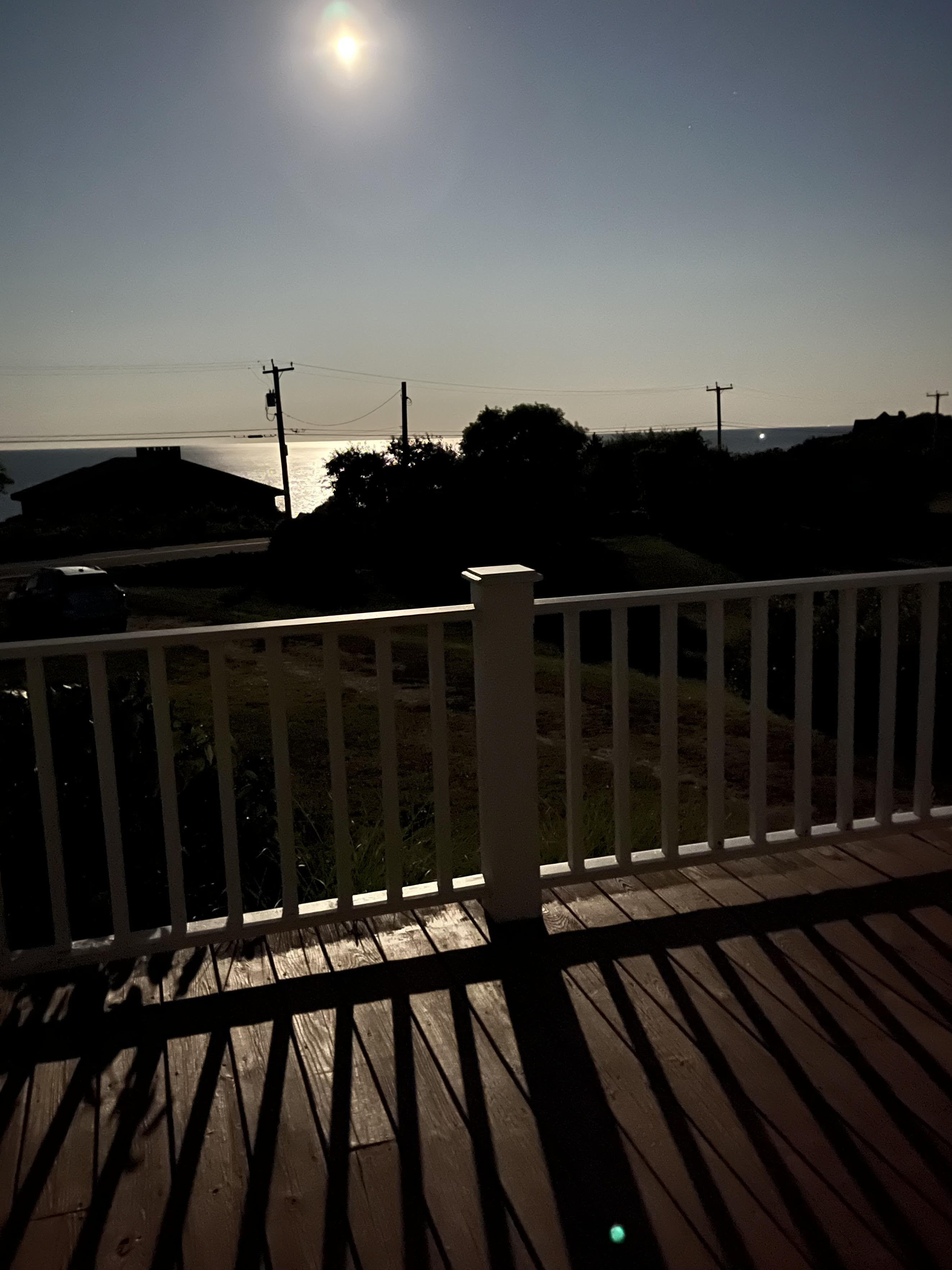
Photo: Nancy’s nephew Andrew. Beautiful poison.The moon is clothed in smoke from a distant wildfire.
Here are recent photos in no particular order. They cover Massachusetts, Rhode Island, and Pennsylvania, where we attended my brother-in-law’s funeral.
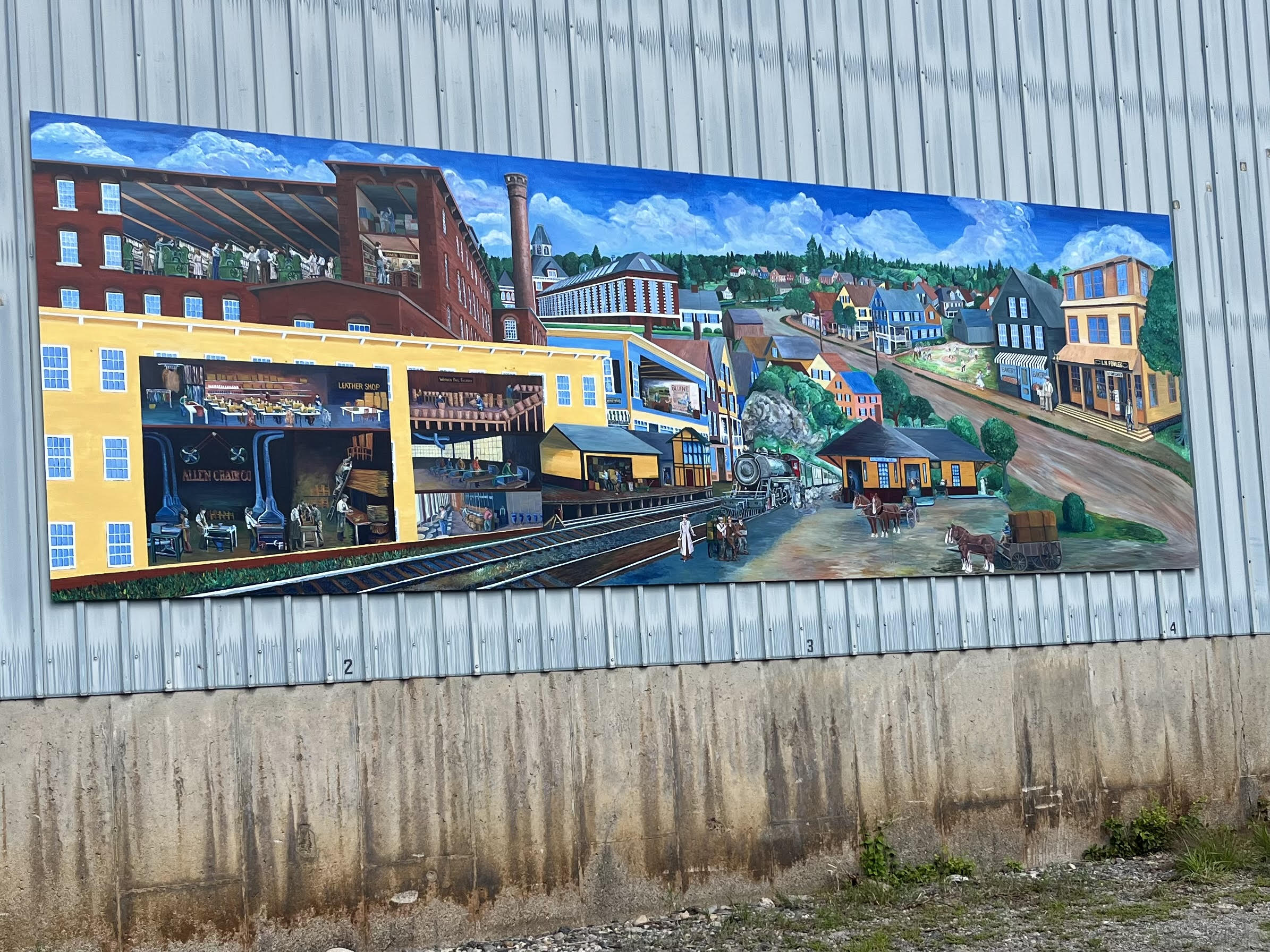
I start off below with an ambitious dog on the rail trail. His owner told me firmly, “He’s not taking that one home.” Then I have a photo of the nearby mural depicting our town in the 19th century.
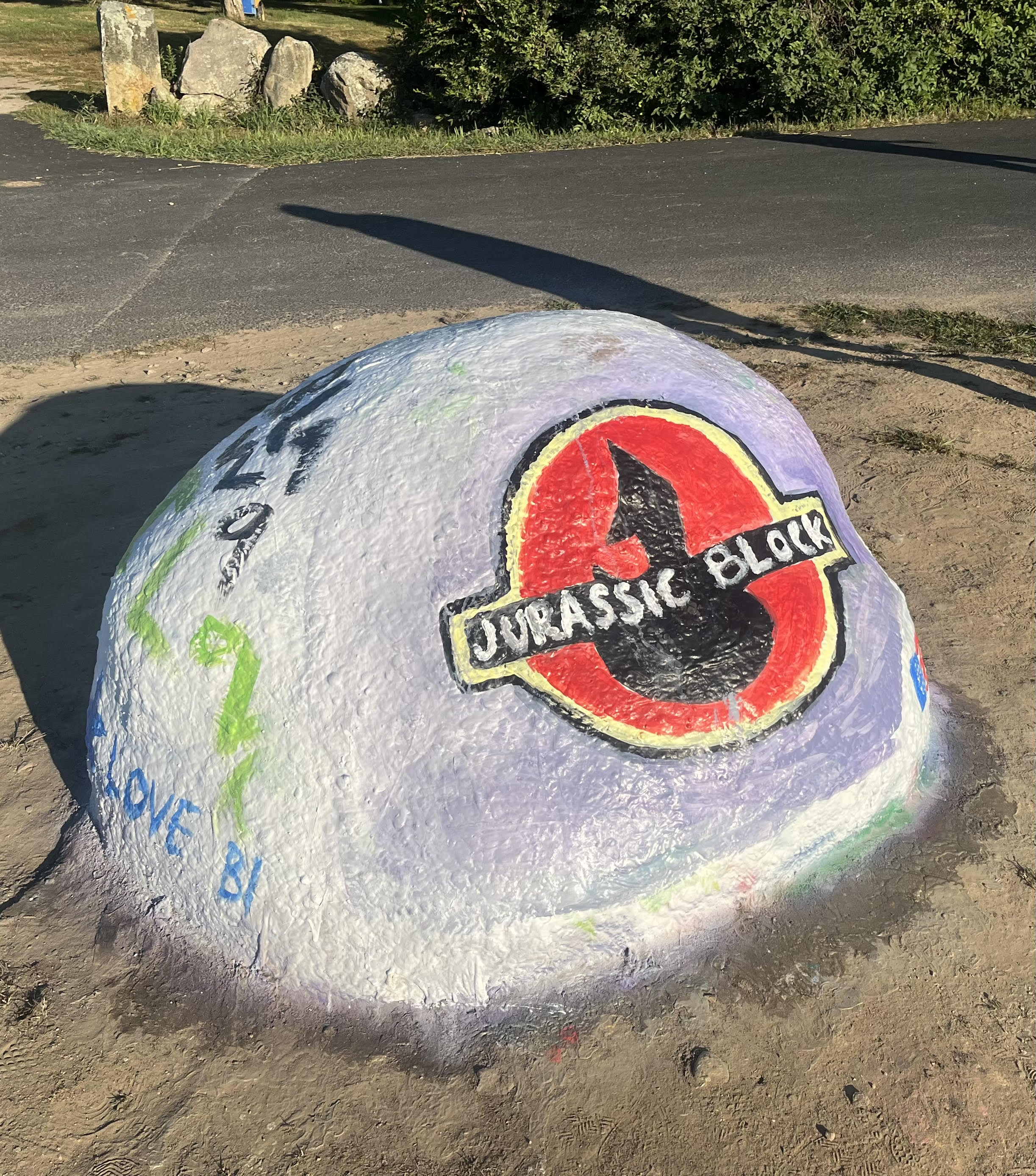
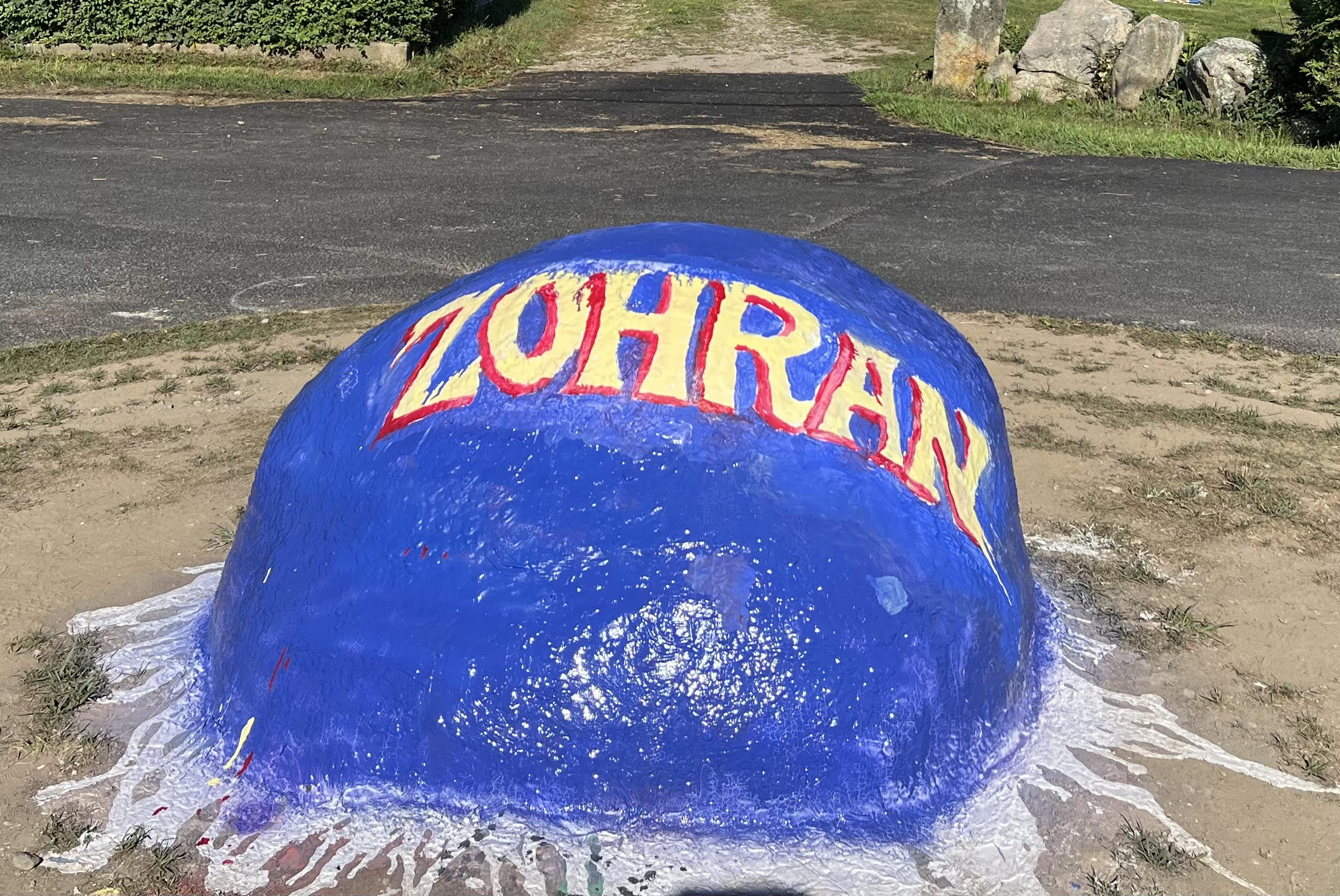
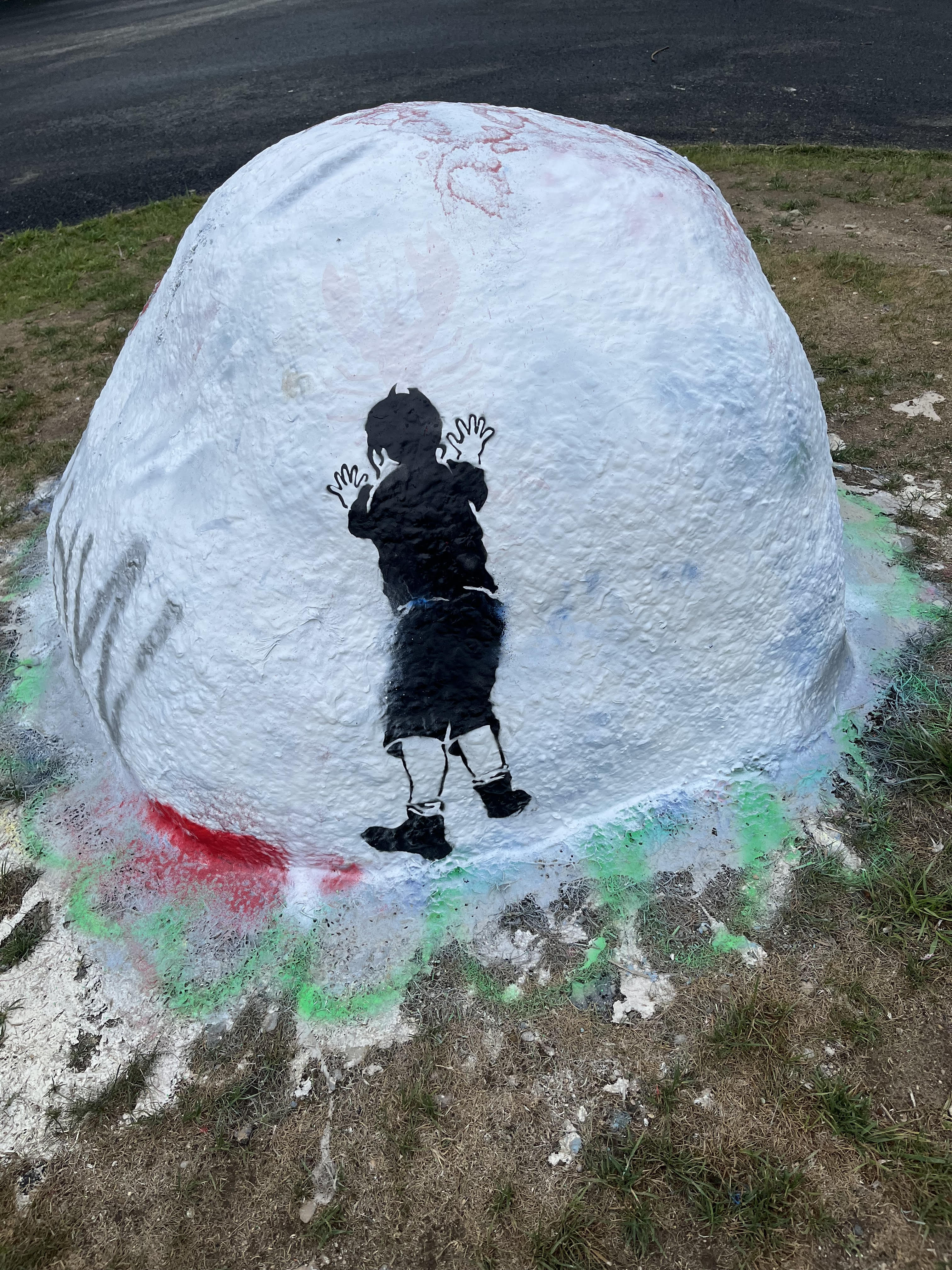
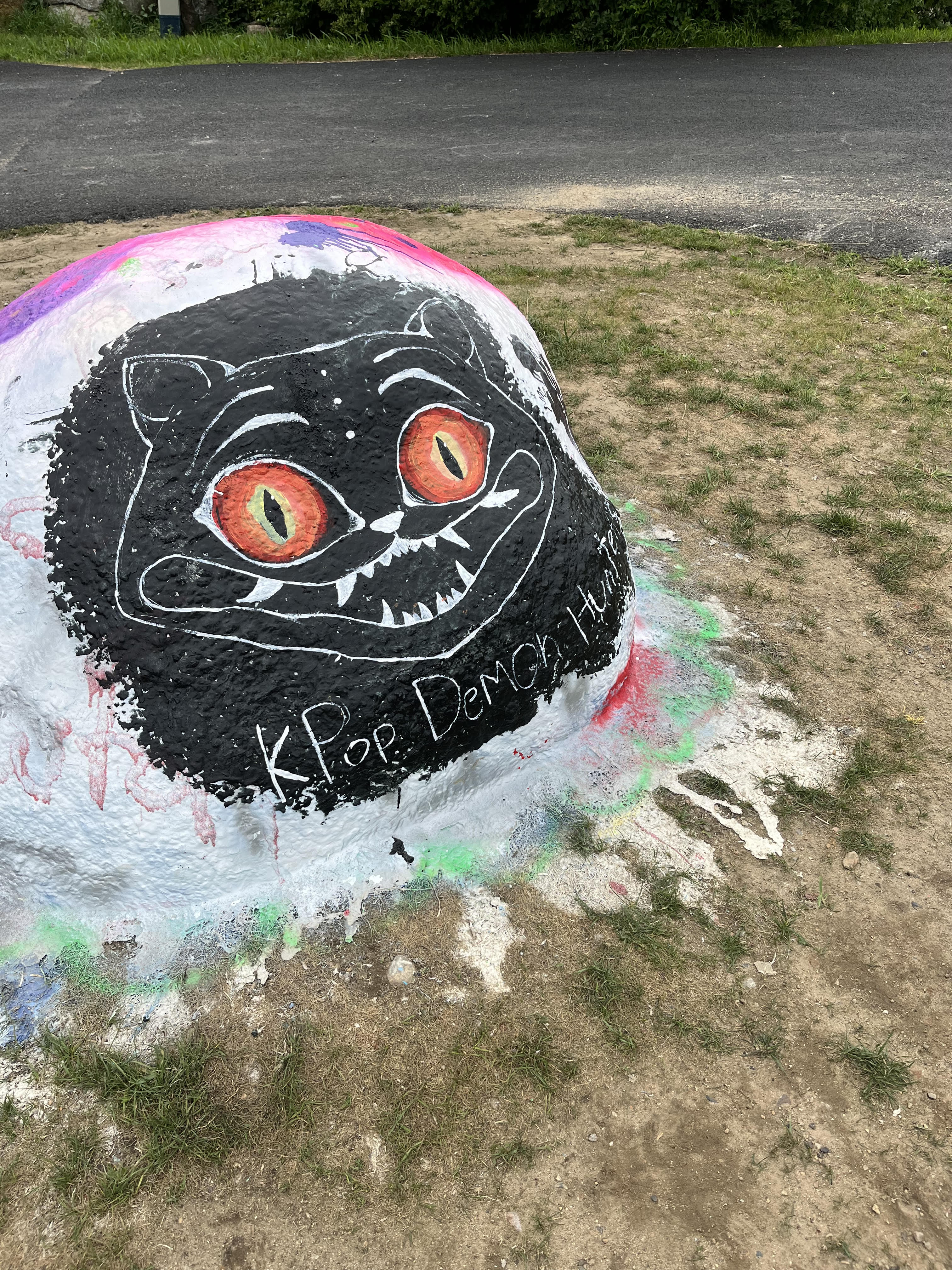
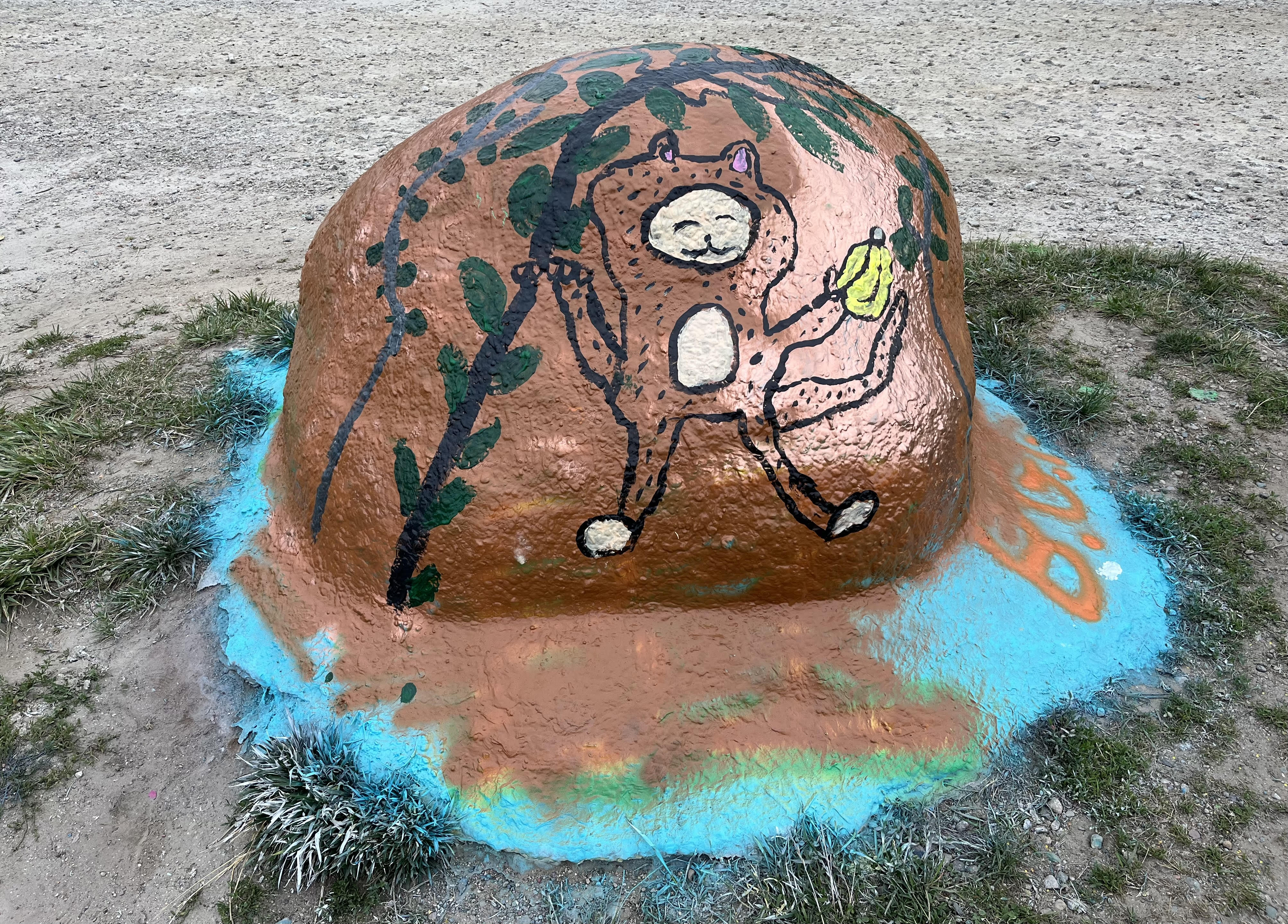
A couple of painted rock offerings come next. (Someone is a fan of the New York City mayoral candidate who won his primary.)
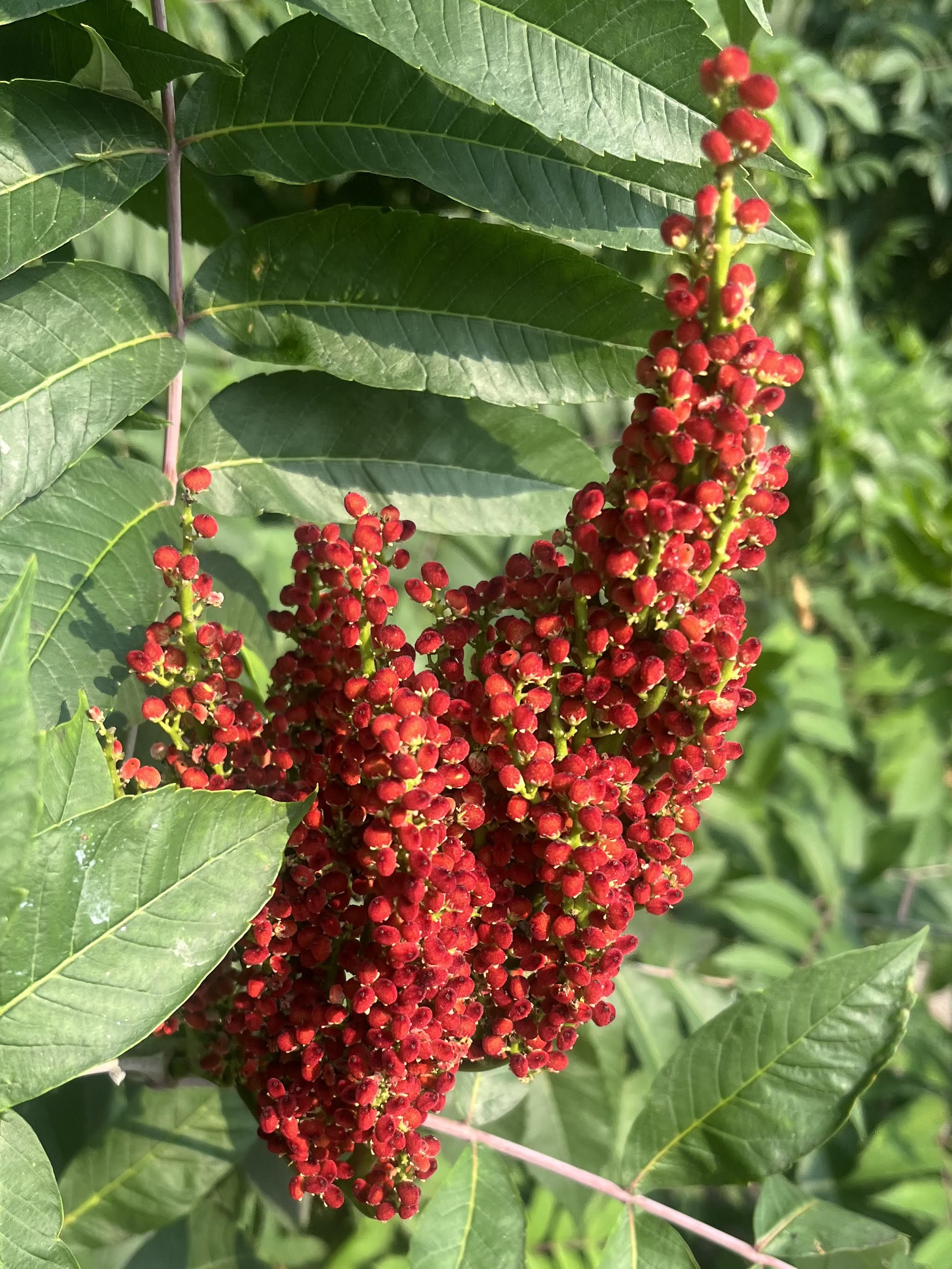
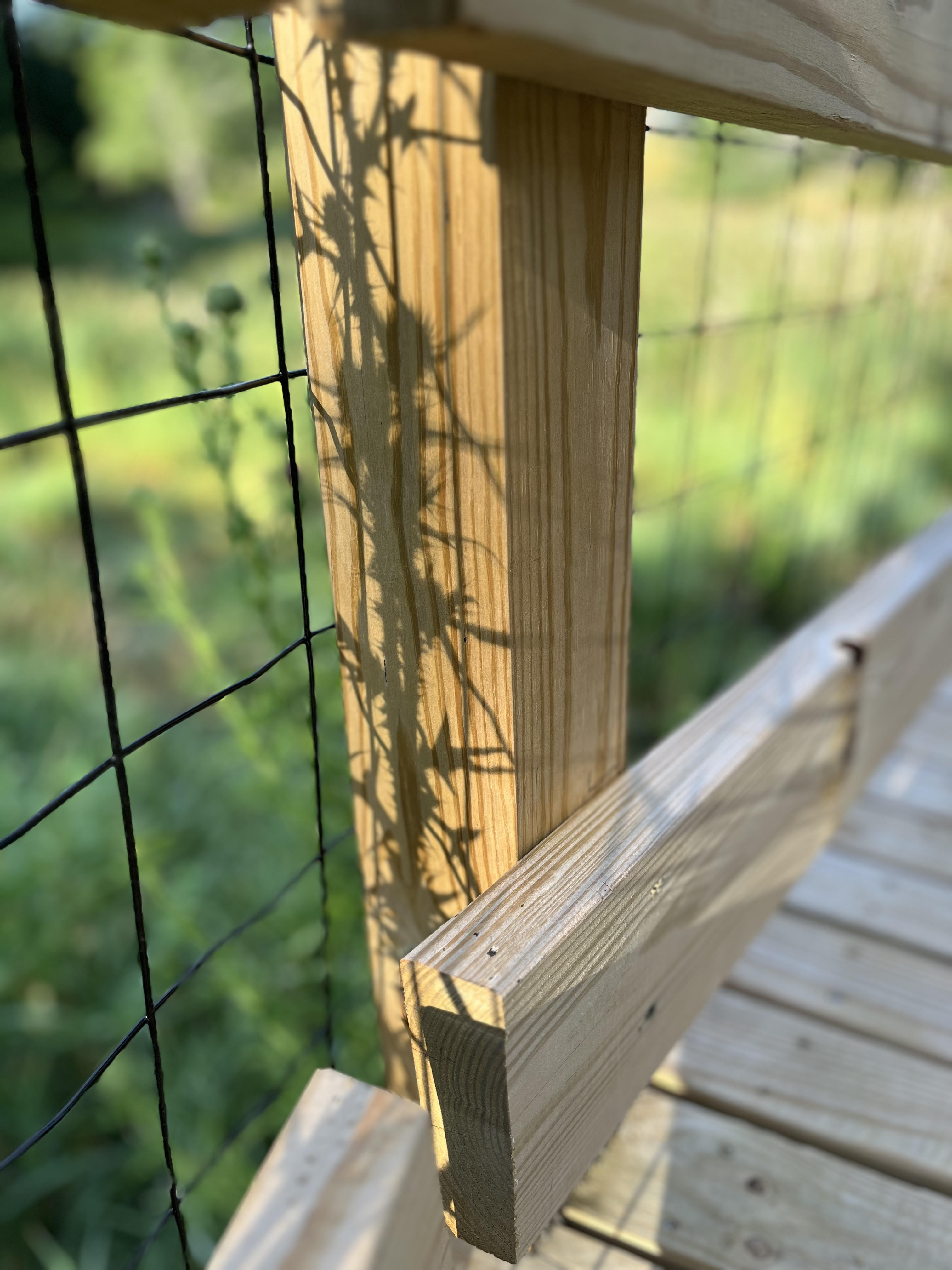
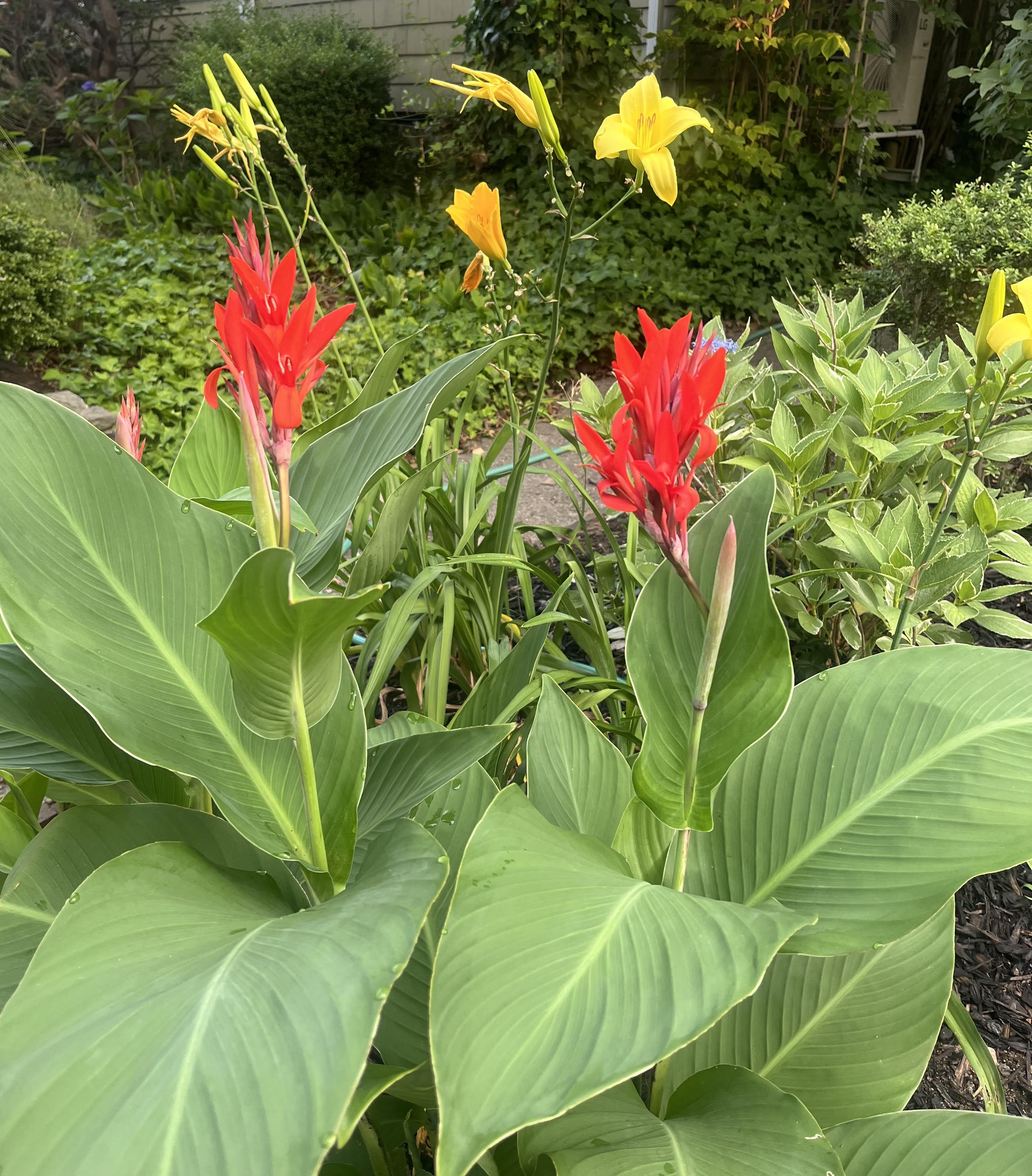
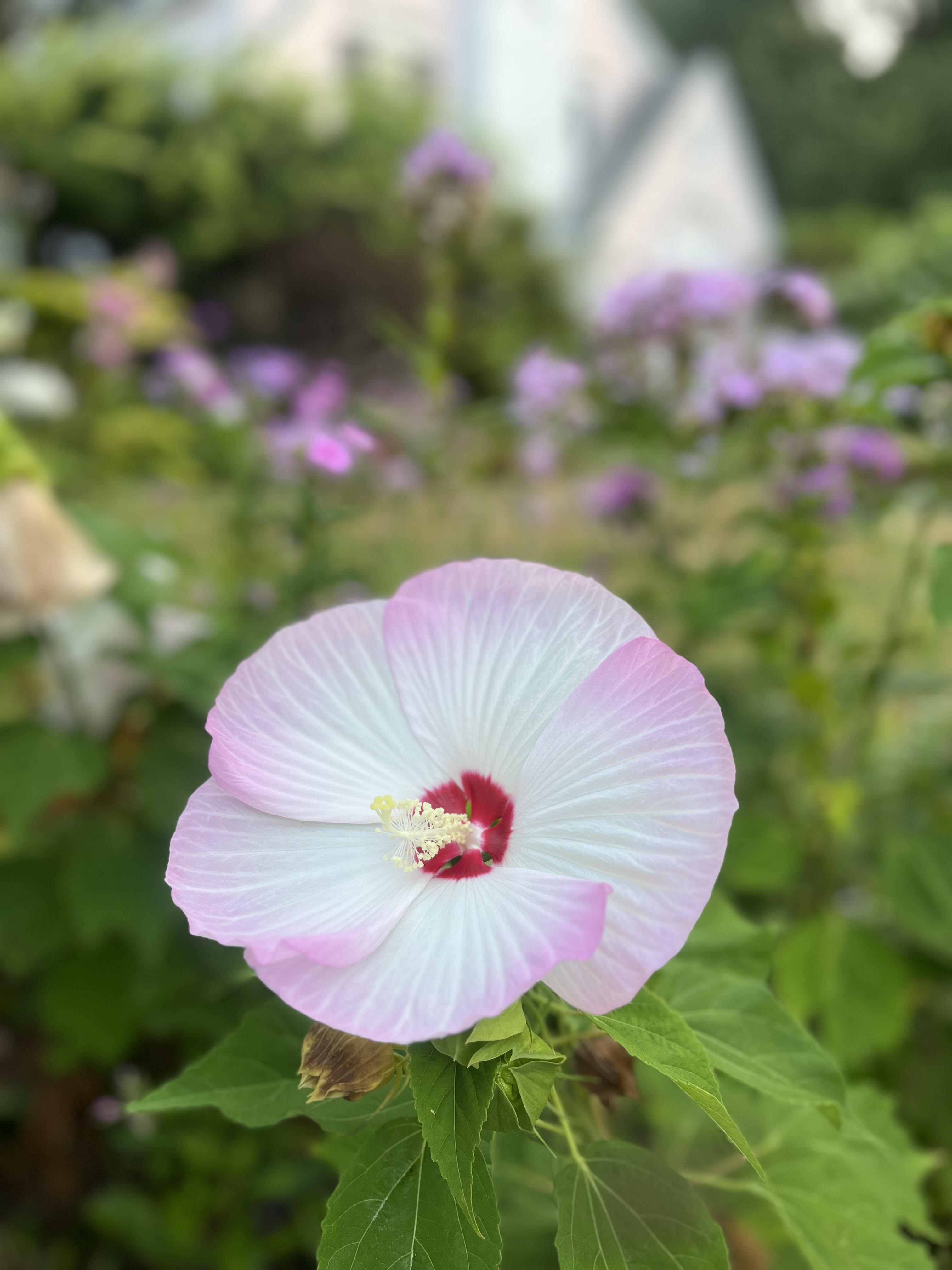
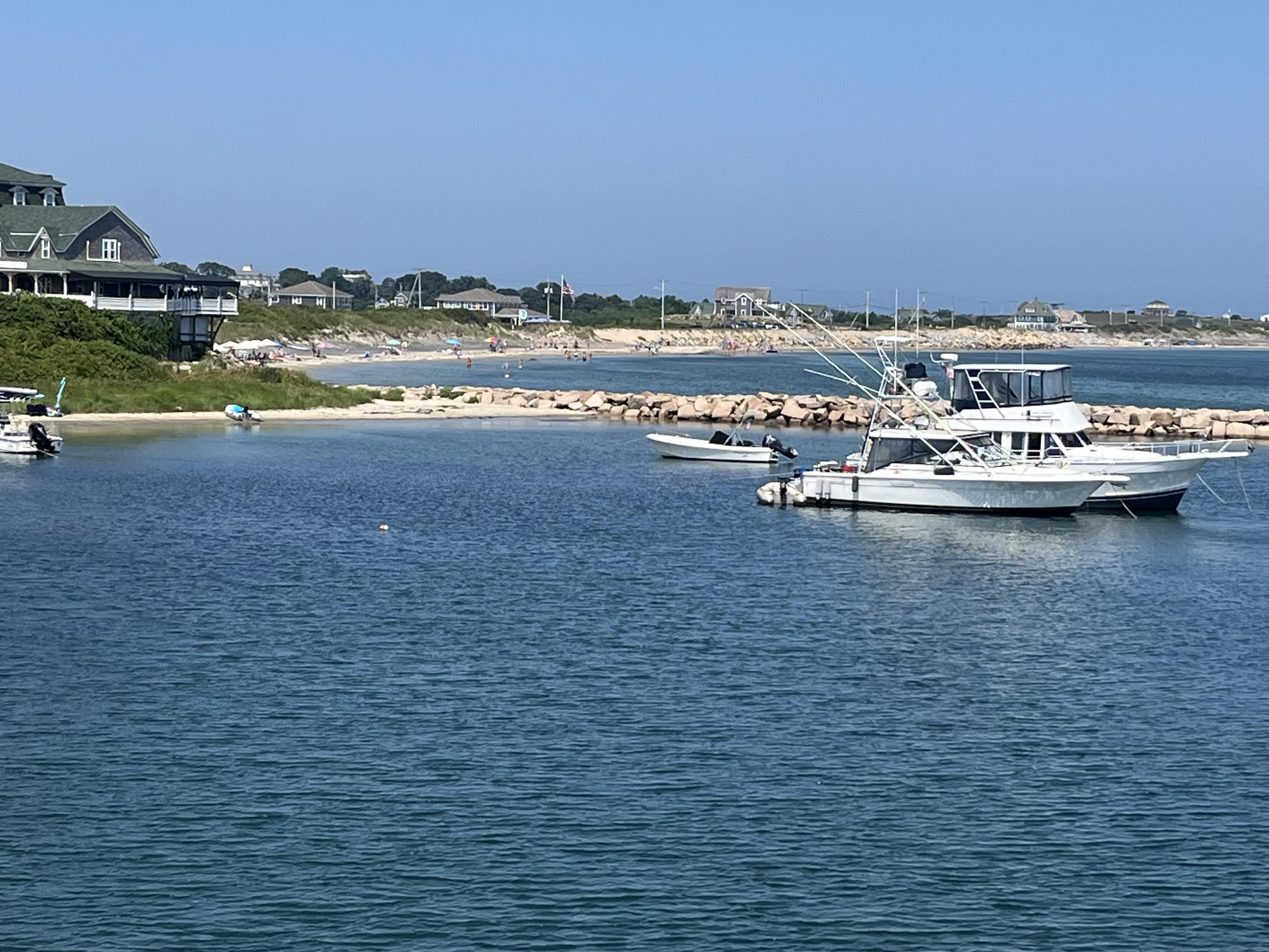
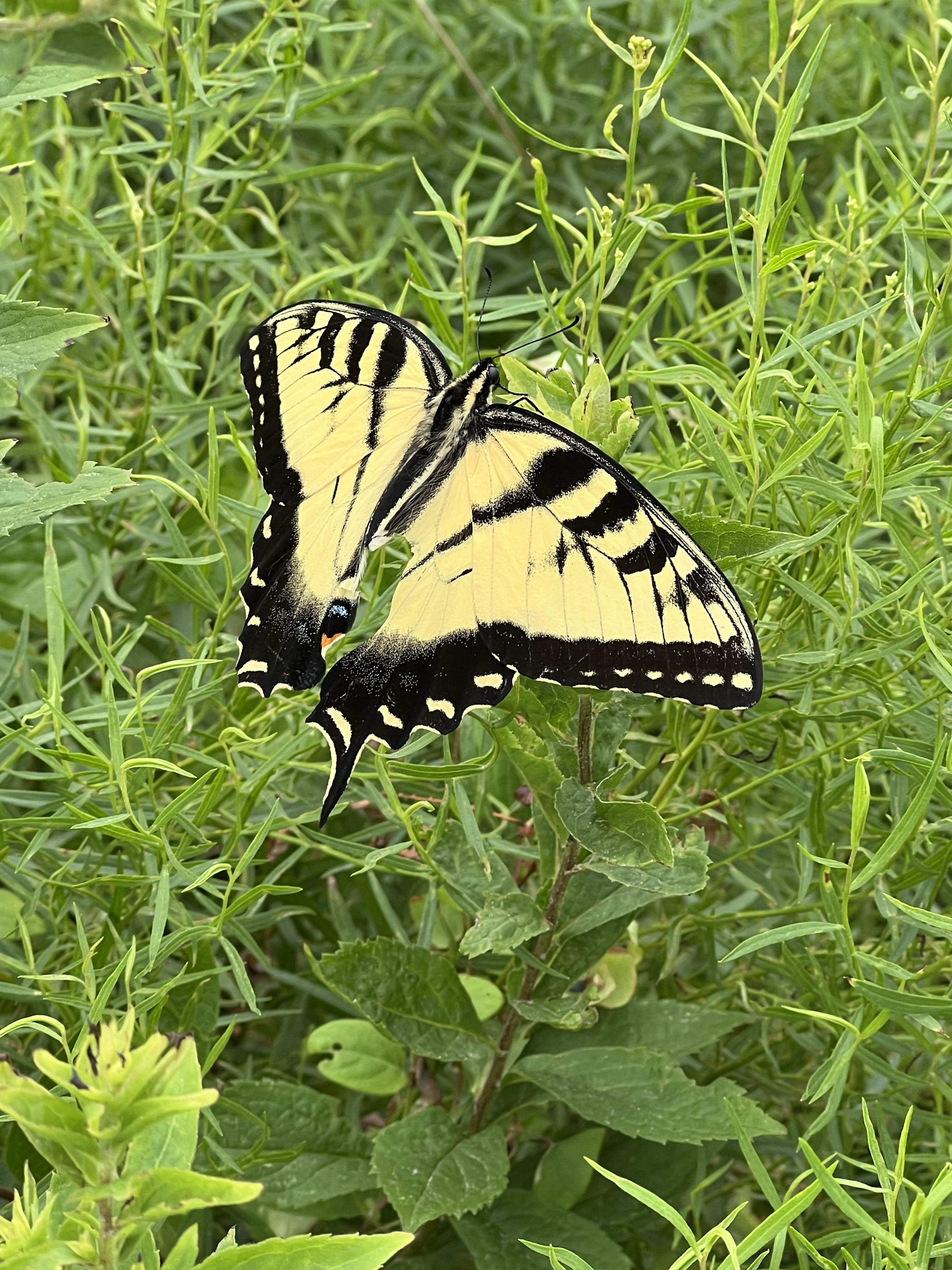
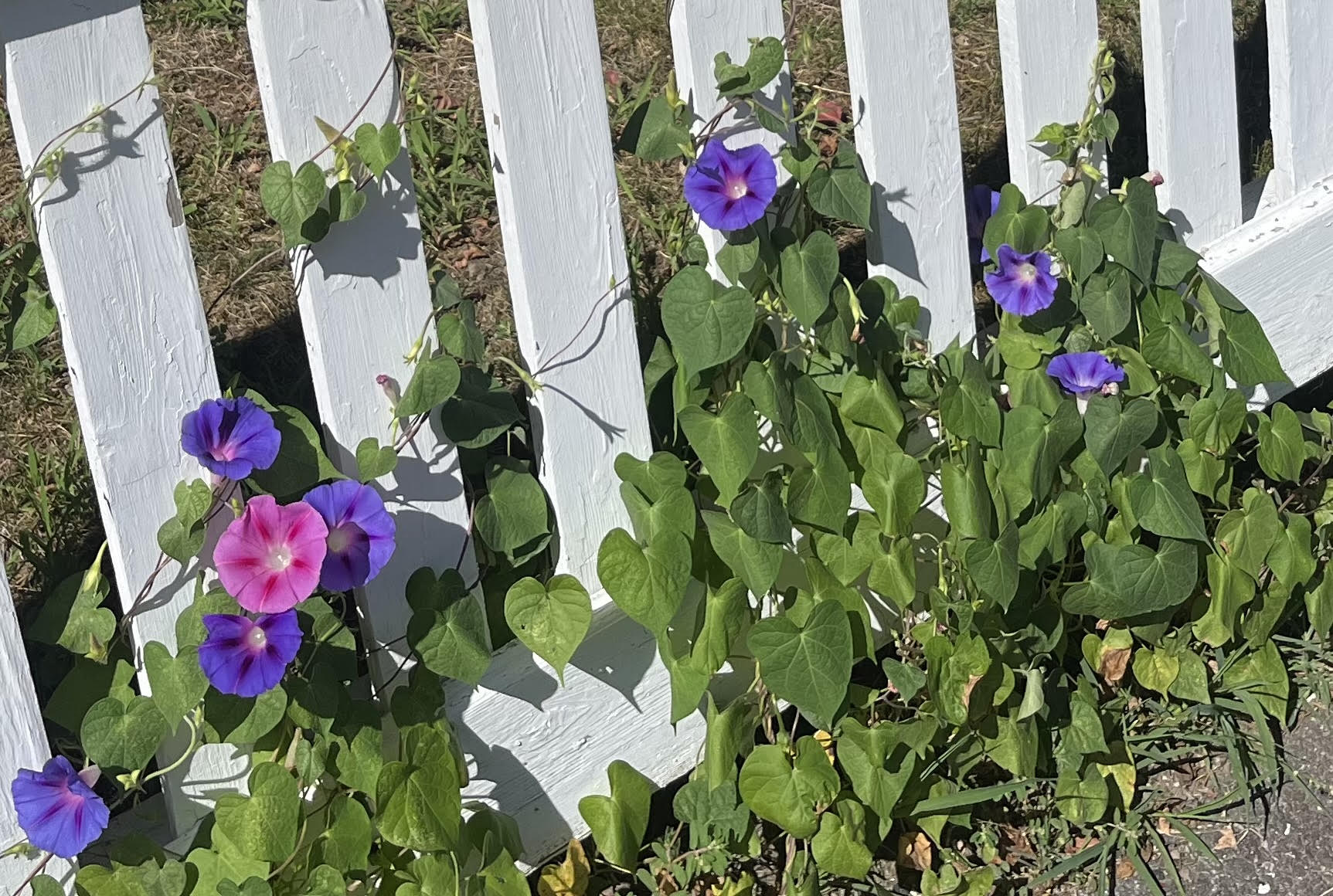
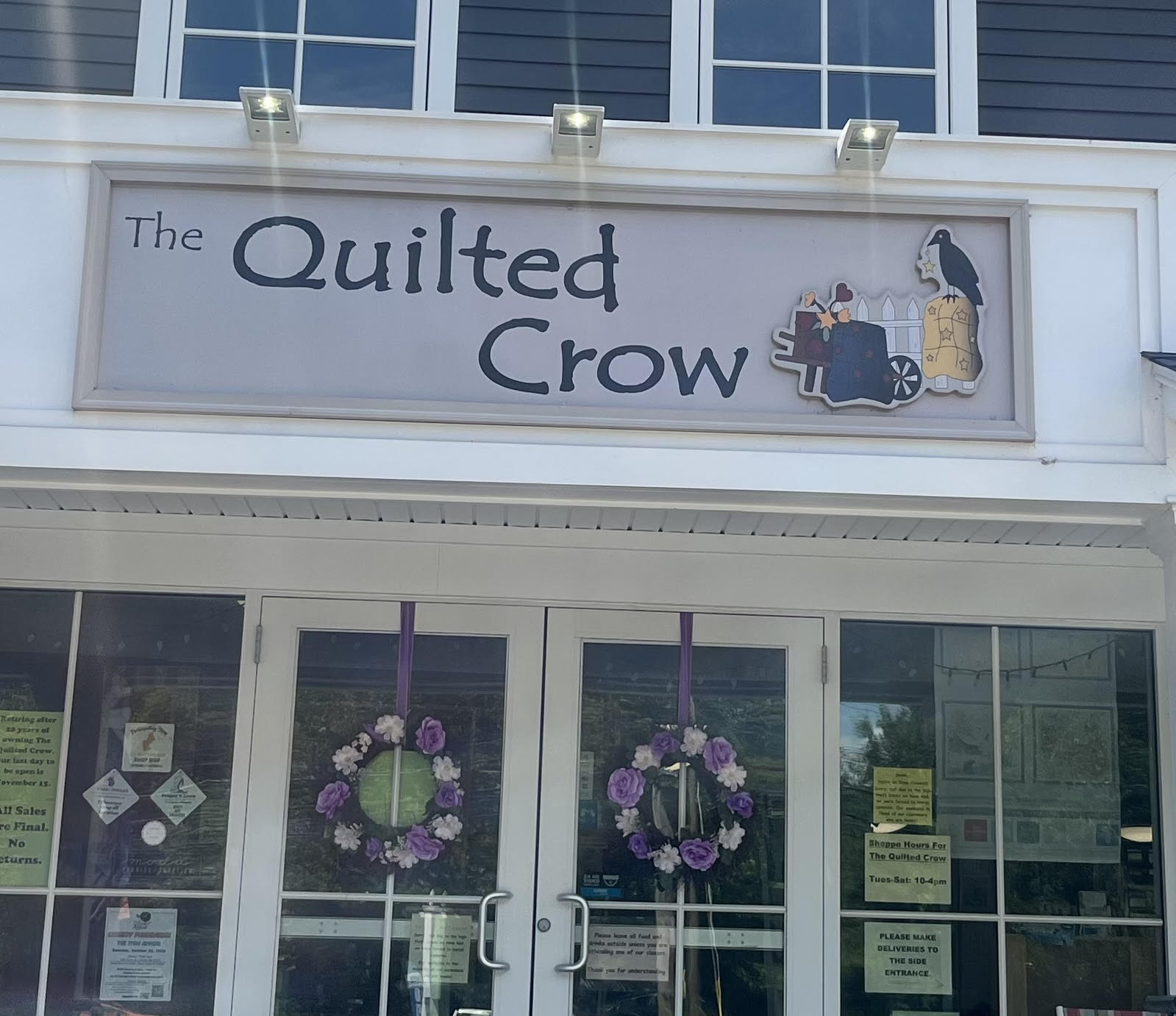
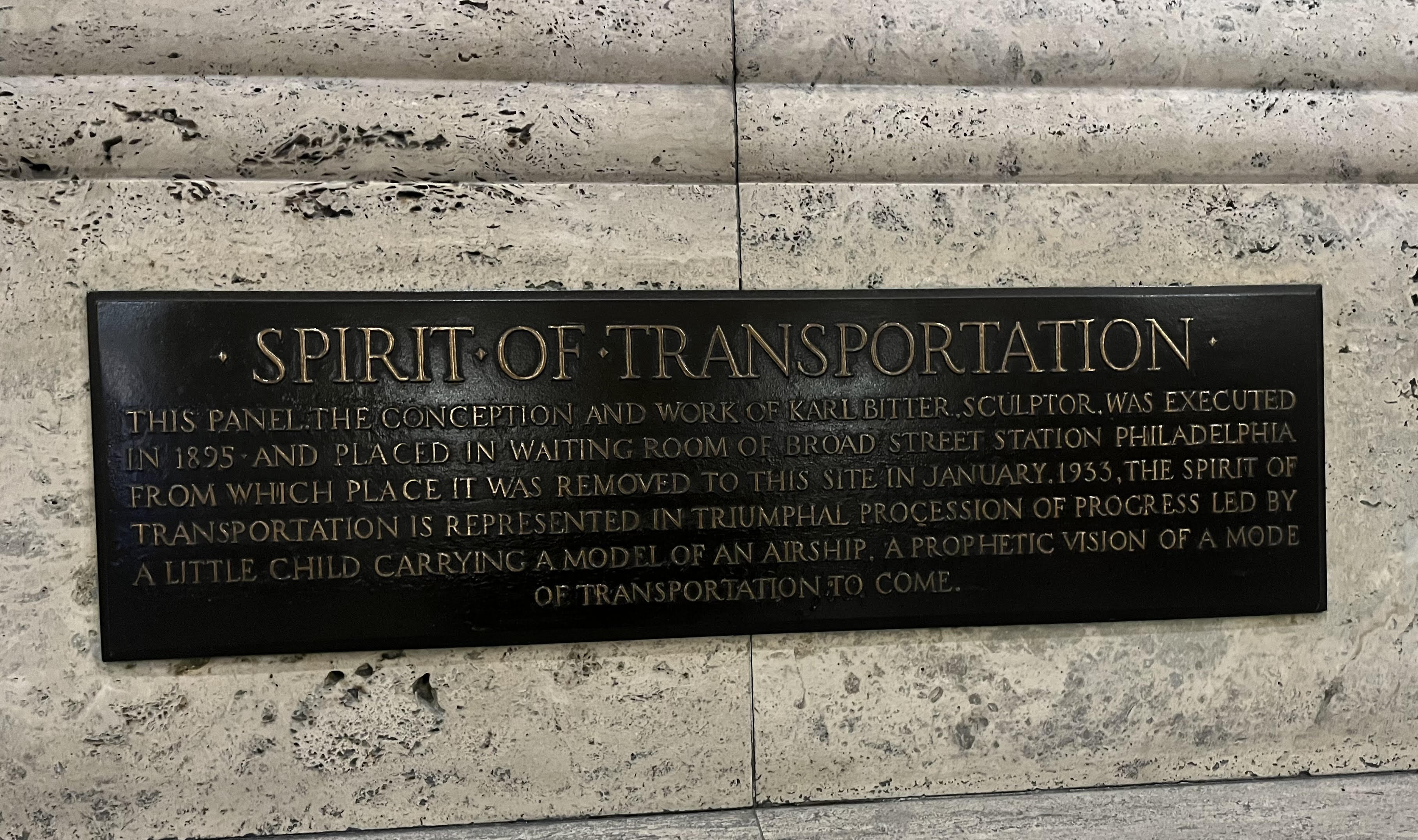
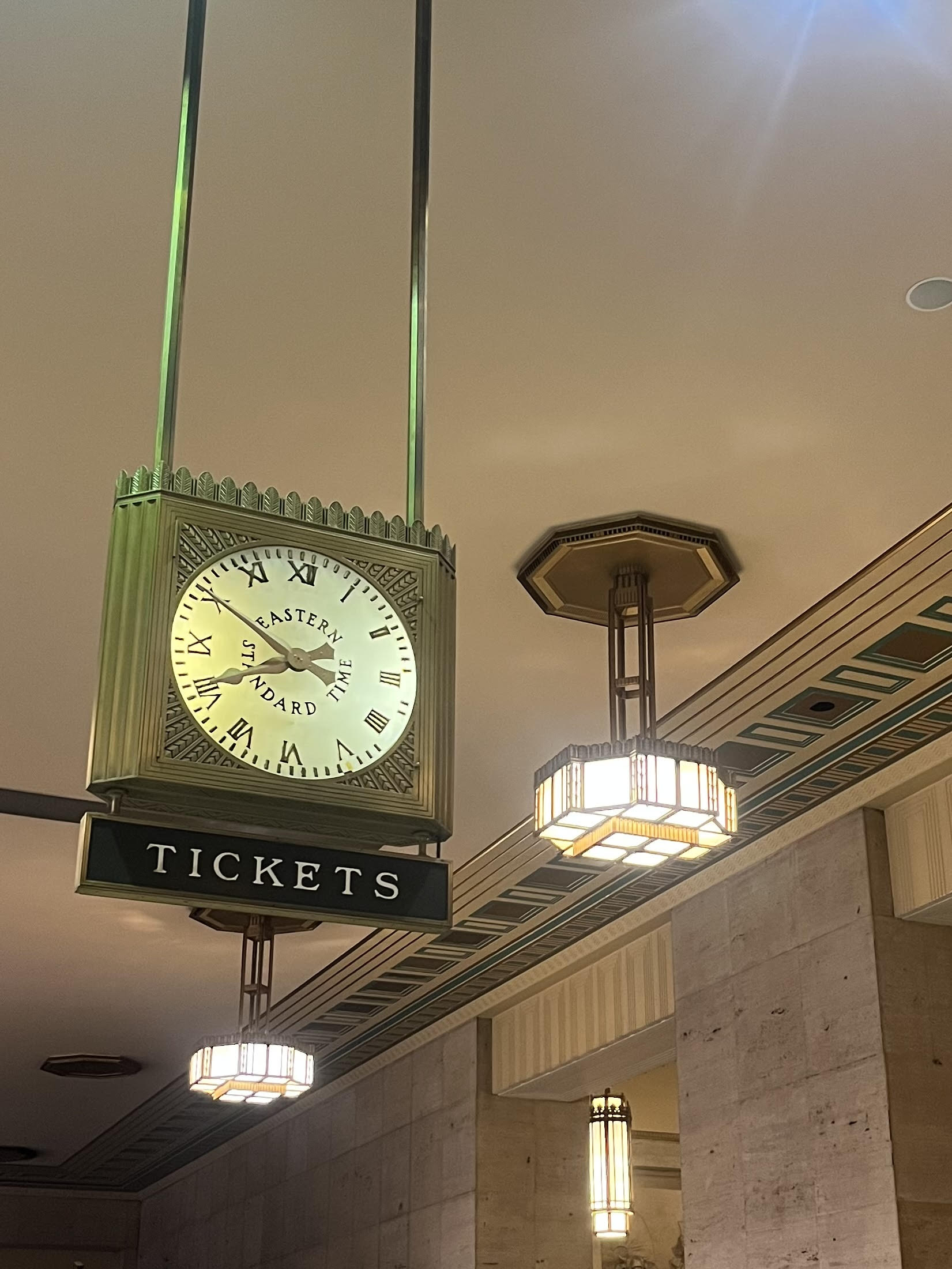
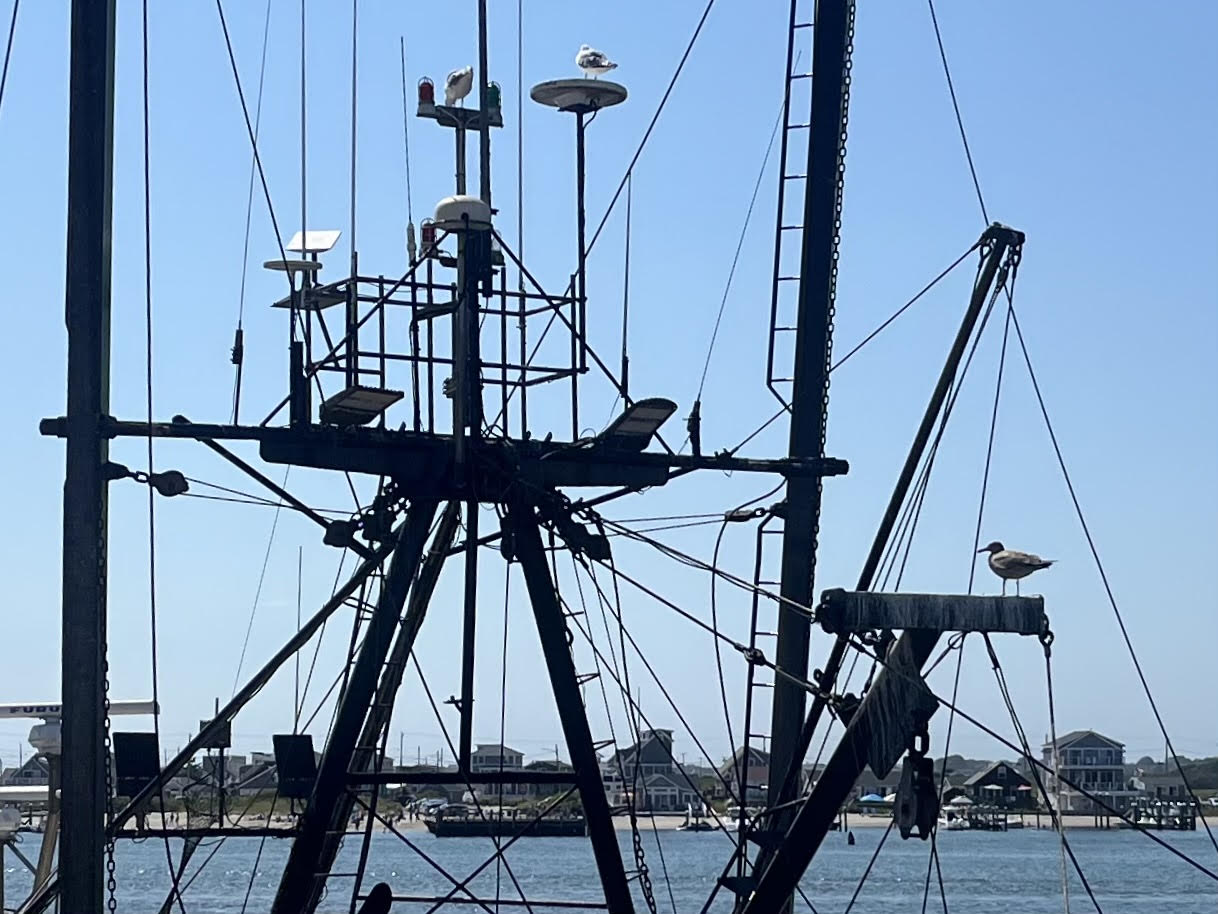
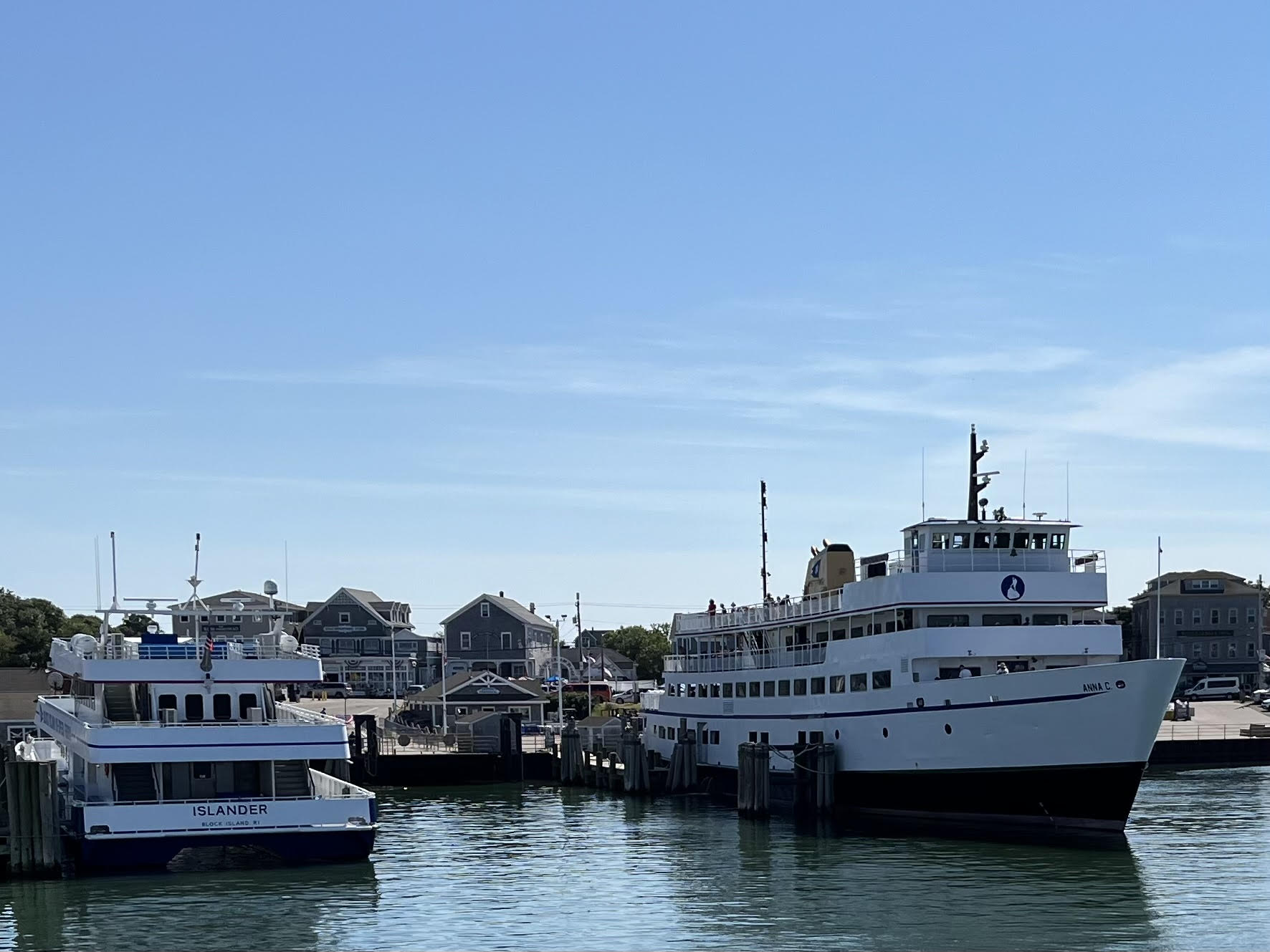
Staghorn sumac, thistle shadows, a blooming August yard, swamp rose mallow, New Shoreham’s Old Harbor, the Assabet River, a swallowtail butterfly holding still for photographer Sandra M Kelly, Casey Farm, Morning glories or bindweed (not sure which), the shop where I got my 100-year-old quilt repaired, the 30th Street Amtrak station in Philadelphia, and gulls on a fishing vessel in Galilee.
Photo: Brett Phelps for the Boston Globe. At her new studio space in Providence, Felicia Neuhof holds a bag of shells she gathered at her sister’s wedding to create new products sustainably.
Today’s story is about a designer who looked around for a way to do her work using more-sustainable materials and found them almost under her nose.
Alexa Gagosz writes at the Boston Globe, “After spending seven years as an art director in New York City working for Fortune 500 brands, Felicia Neuhof grew increasingly frustrated with the unsustainable materials of her industry. She was constantly surrounded by plastic with a single-use lifecycle that would later become landfill waste.
“When she moved to Providence to earn her master’s degree at the Rhode Island School of Design, she started eating a ton of shellfish and wondered what would eventually happen to the discarded shells, which were typically thrown away. That‘s when she set out on a mission. She started by experimenting with the shells being tossed into dumpsters behind her favorite restaurants, and began molding them into building materials.
“Neuhof is now the founder and chief executive officer of Shellf Life, a Providence startup that transforms discarded seafood shells into innovative building materials. She’s also received international praise, winning the Terra Carta Design Lab, a global competition where she was able to place her material into the hands of King Charles III.
“What is Shellf Life and how does it work? “Shellf Life transforms discarded seafood shells into innovative building materials through a process I developed on my kitchen stove. We take what restaurants throw away — oyster, mussel, clam, crab, and scallop shells — and create architectural surfaces, furniture, and lighting with properties ranging from rigid to flexible to translucent. Since winning the Terra Carta Design Lab competition, I’ve been scaling operations at our 50 Sims [incubator] facility in Providence.
“[We turn] waste into valuable building materials through processes accessible to people from all backgrounds and skill levels.
“How much seafood waste is there in New England? “The numbers are staggering. One Rhode Island shellfish processor alone generates 7 tons of shell waste weekly — that’s 728,000 pounds annually, enough material for 30,000 square feet of tiling. When combined with restaurant waste across New England, we’re looking at a tremendous resource: Rhode Island could produce enough material for 3,000 kitchen backsplashes annually, Massachusetts enough for 5,000 bathroom floors, Maine sufficient for 20,000 serving bowls that return to the restaurants supplying the shells, Connecticut enough for 1,500 countertops, New Hampshire enough for 1,000 shower surrounds, and even my home state of Vermont contributes. …
“What kind of materials are you creating? Furniture and fixtures? Raw materials? “Both. I create three product lines: furniture for residential and commercial settings, homeware like bowls and lighting, and architectural materials including tiles and surfaces. I’m also developing specialized applications for marine environments — working with City Island Oyster Reef to create alternatives to concrete currently used in aquaculture farms and coastal defense. …
“Walk me through the process. “I collect shells from restaurant partners, clean and sanitize them, then crush them into a calibrated material. This is blended with my proprietary binder — much like following a recipe — and molded into form. During curing, the material actually captures CO2. At my facility at 50 Sims [Ave.] in Providence, I’ve scaled this process from my kitchen to a manufacturing microlab. I’ve secured a provisional patent on both the material composition and manufacturing method, which was an important step for commercialization. My goal has been to develop a system so refined that making a tile is as easy as flipping burgers. …
“What kind of seafood waste are you using? “I primarily use oyster, mussel, clam, and scallop shells — any bivalve shells typically tossed in restaurant dumpsters. Each brings unique qualities: oysters provide strength and texture, mussels offer beautiful color and luminosity, clams contribute creamy hues with flecks of purple, and scallops add structural pattern variability. Like a chef selecting ingredients, I blend these shells in various ratios to customize the material for specific applications.
“What was it like to meet King Charles, and develop Shellf Life as part of the Terra Carta Design Lab? “Meeting King Charles III was transformative. … He asked thoughtful questions, revealing someone who truly understood the potential, calling the idea ‘genius.’ What struck me most was seeing how Shellf Life made intuitive sense to everyone — from farmers and chefs to a King.
“How can restaurants, consumers, and others direct seafood waste to Shellf Life? “I’ve made it as simple as recycling. For restaurants, I provide collection buckets and regular pickup that fits into their existing workflow. … For individual consumers, I’m looking to establish community collection points. My goal is to make shell recycling as normal as glass or paper recycling.
“Do you have any investors? “The Terra Carta award has funded my initial development. Now I’m seeking additional investment to support my two-year growth plan as I move from R&D into commercial production. I’m looking for partners who understand both the environmental opportunity and the social impact — investors who recognize the value of creating accessible manufacturing jobs while addressing environmental challenges.”
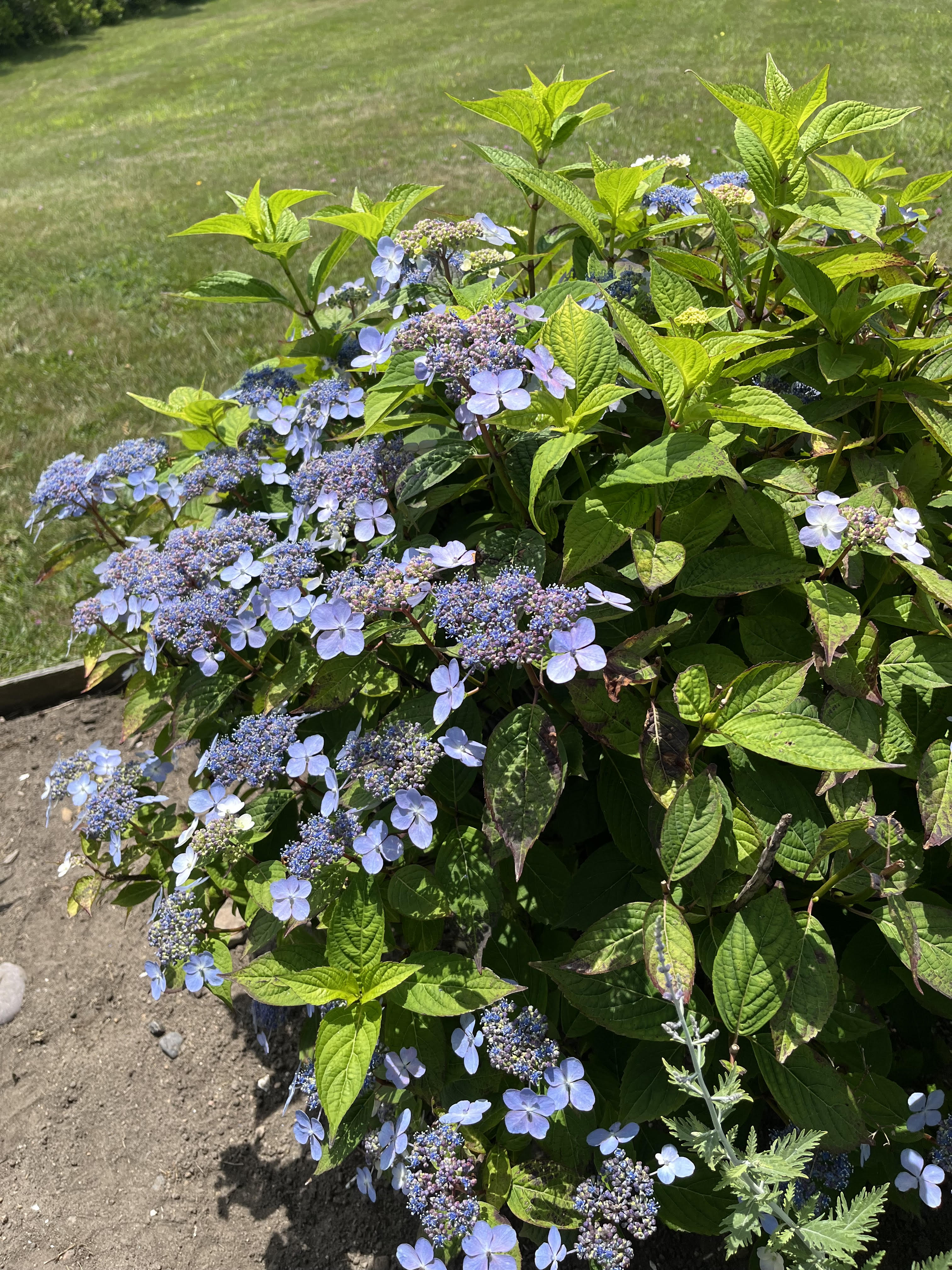
Photos: Suzanne and John’s Mom. Blue lacecap hydrangea on a sunny day.
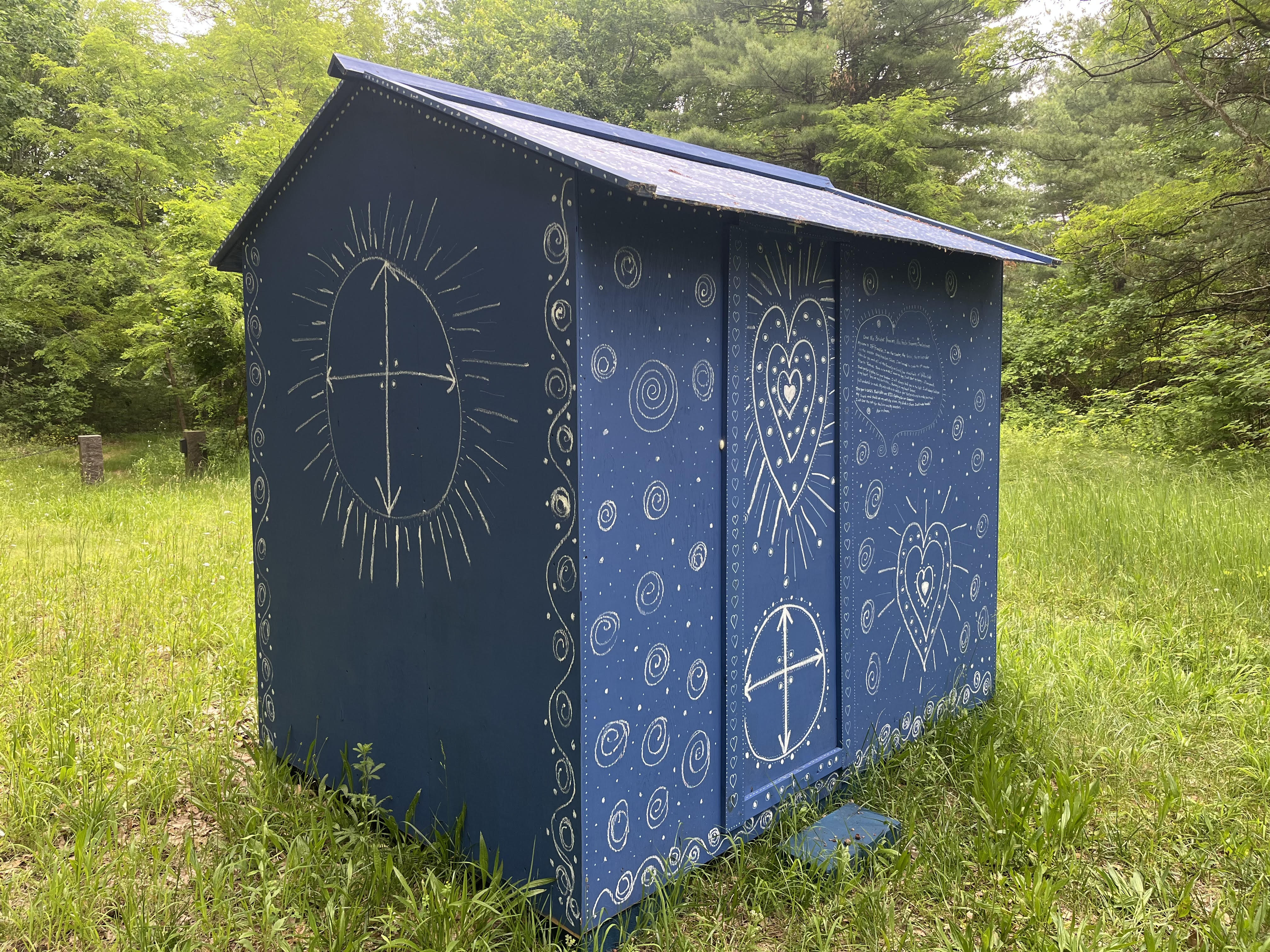
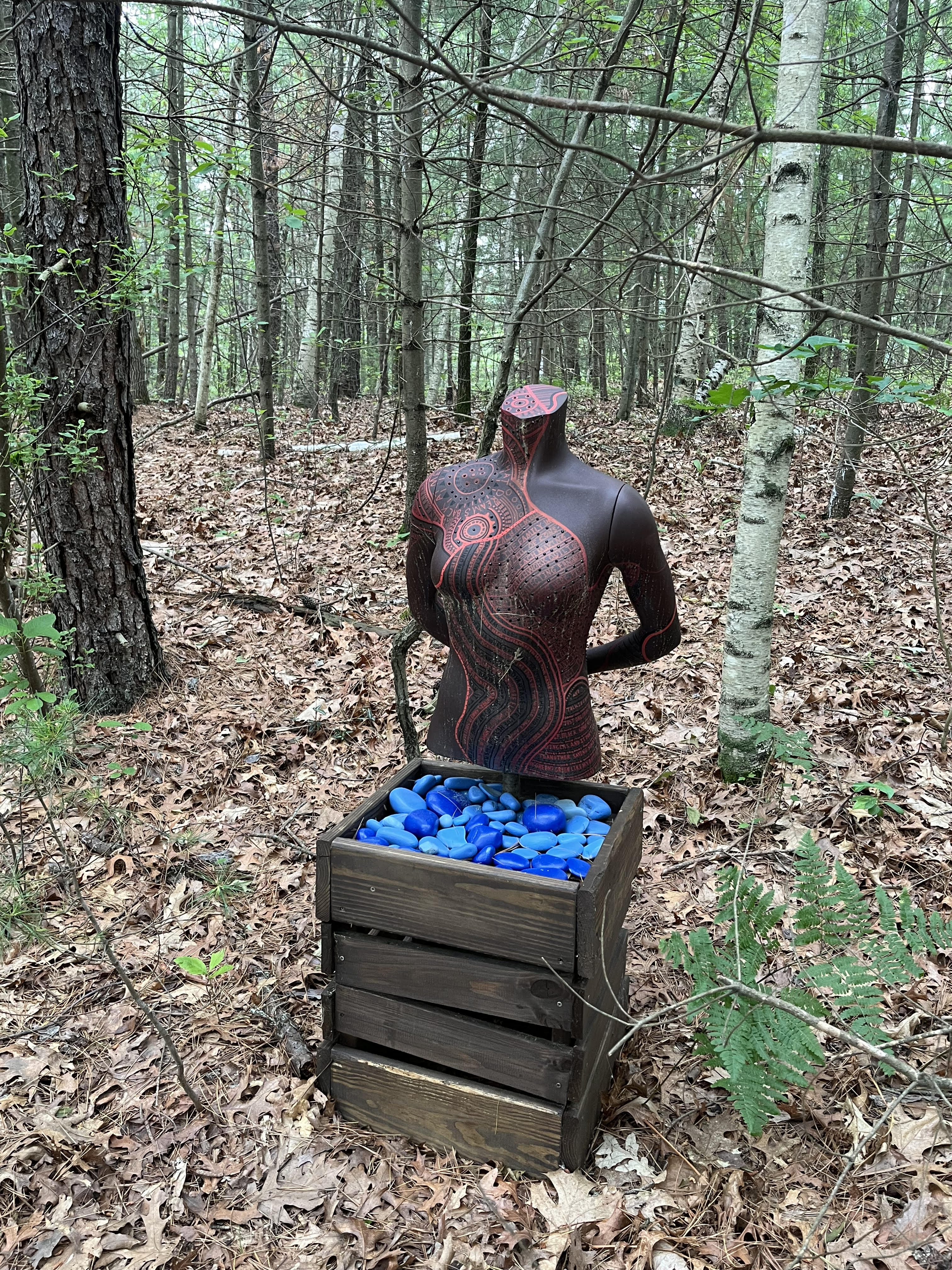
The photo collection below starts with my visit to the annual Umbrella Art show in the woods, which this year was located on Brister’s Hill for the town’s 250th Anniversary.
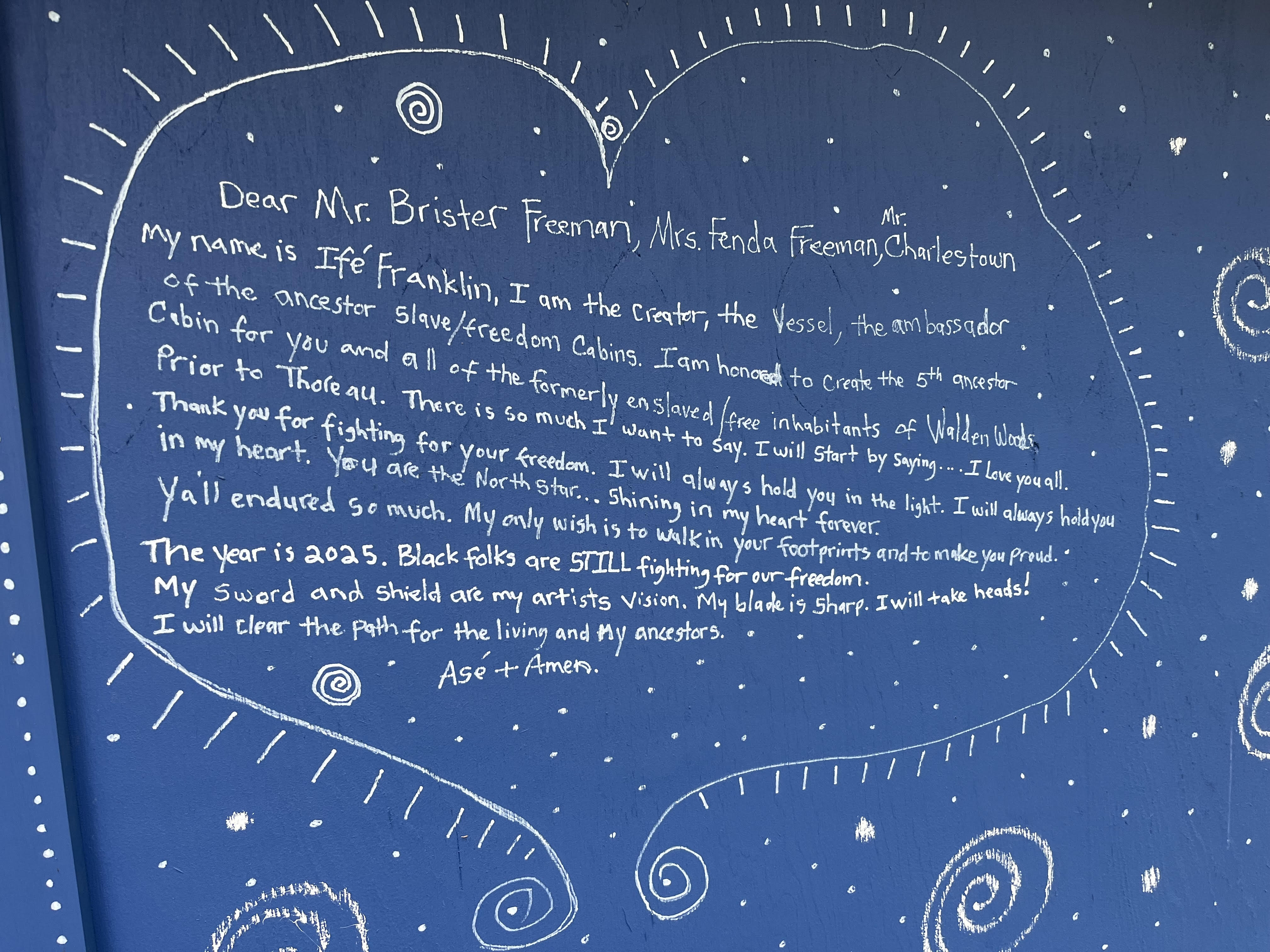
Brister Freeman was a man who started life in slavery. Thoreau spoke of him. The art show honors the travails and aspirations of enslaved Americans in New England, which was not an exception to slavery. You can read about the show, “Weaving an Address,” here.
The artist of the indigo slave cabin, Ifé Franklin, wrote a personal message to Brister Freeman and his wife on one wall. The color indigo references slavery’s “other cash crop.” Click here for info on that.
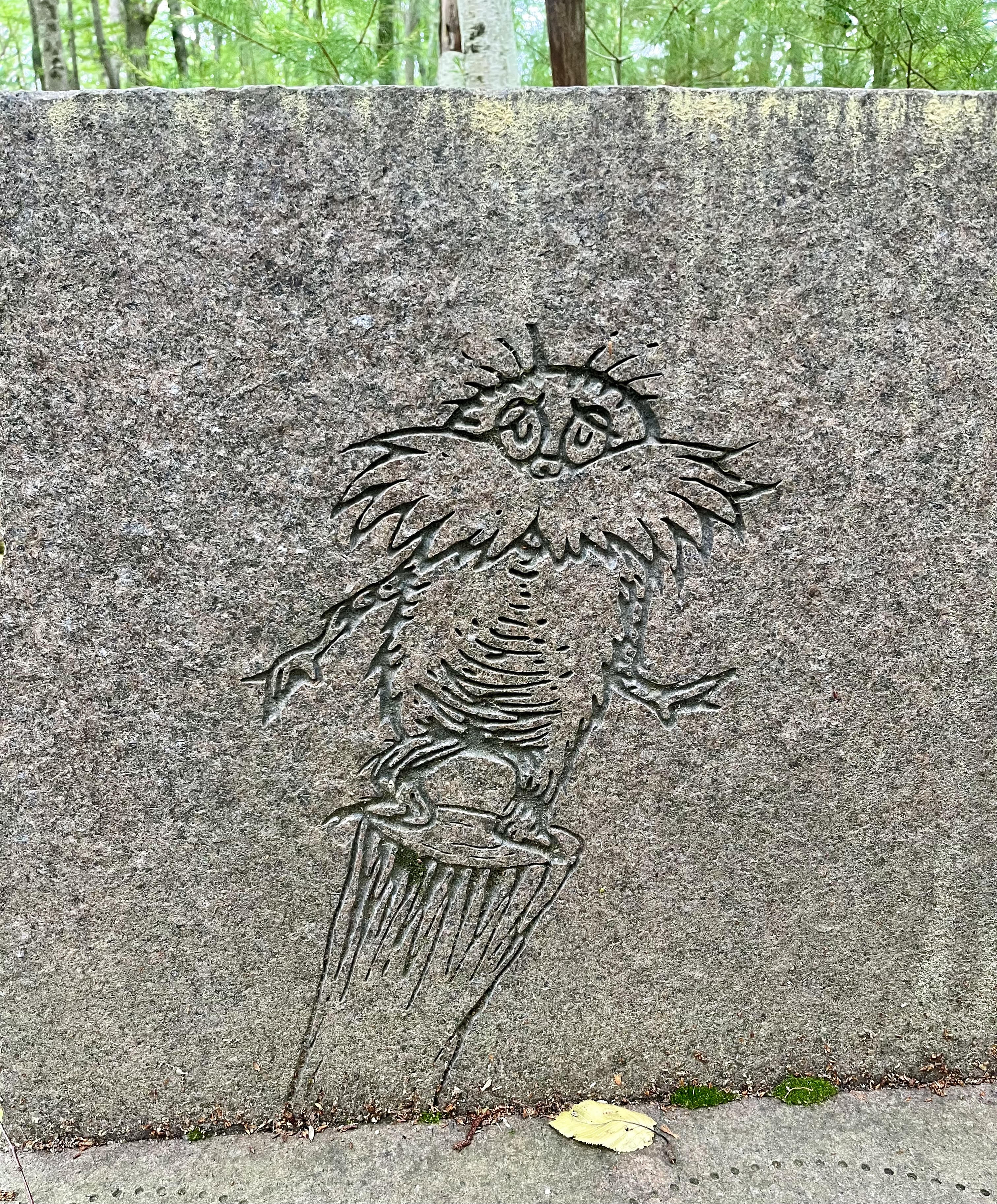
Incongruously, a Lorax hangs out in nearby Walden Woods. I had to take a picture of him as he represents what Dr. Seuss had to say about protecting nature.
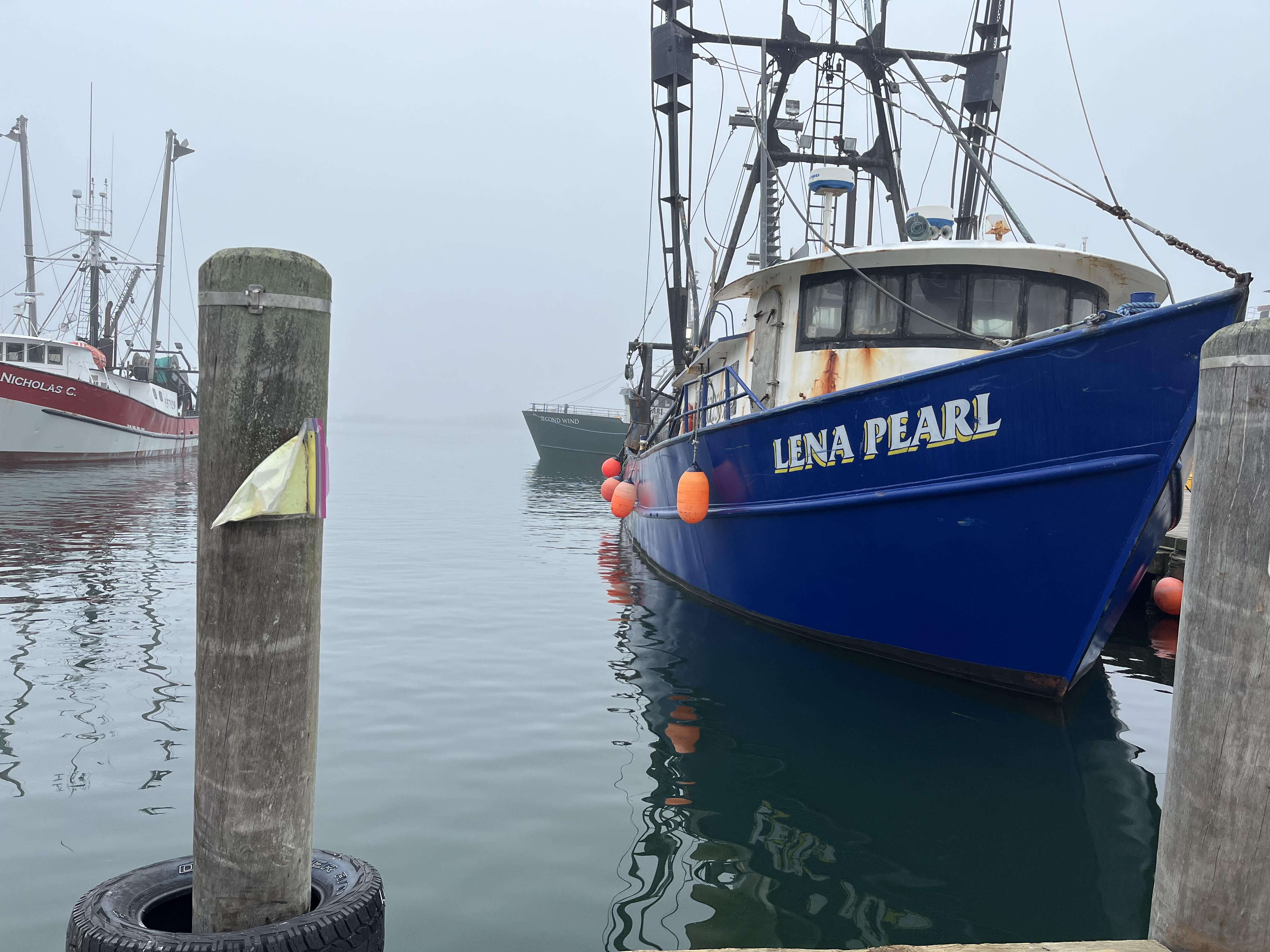
Transitioning from Massachusetts to vacation in Rhode Island, I include a fishing boat seen in Point Judith on a foggy day. Point Judith is where I catch the boat to New Shoreham, but it’s also a working port.
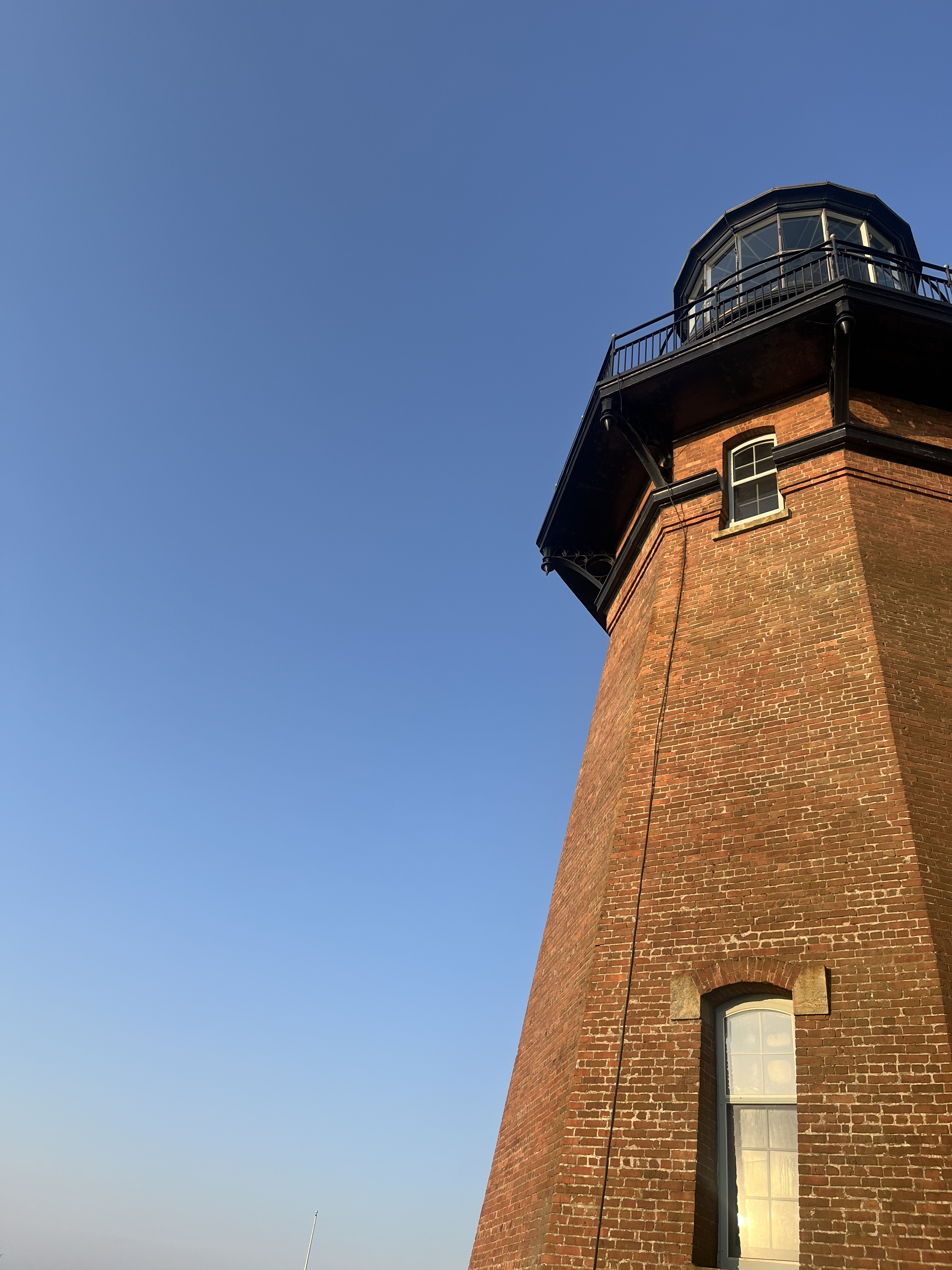
New Shoreham’s iconic Southeast Light is the first of my recent New Shoream photos.
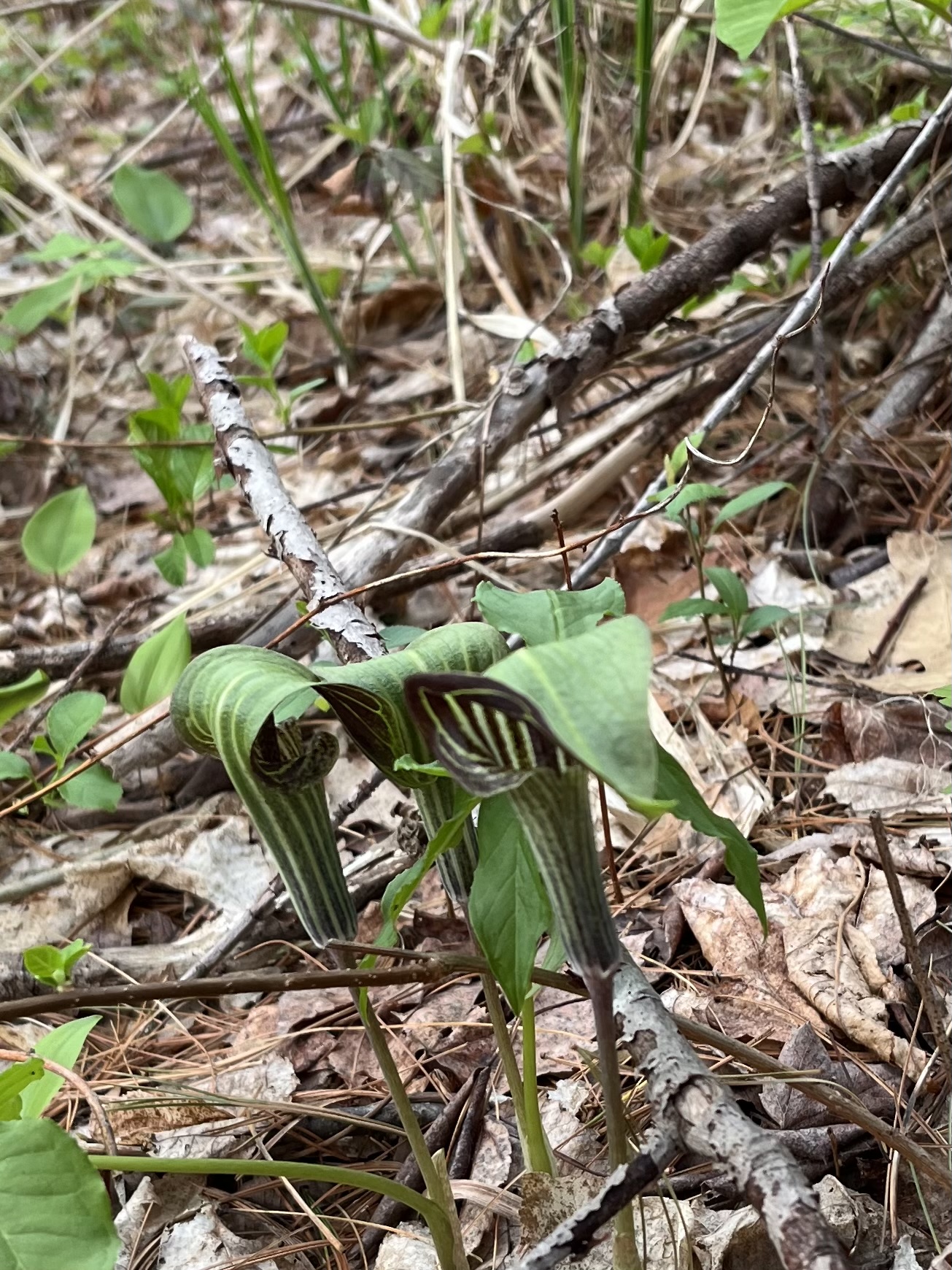
Photos: Suzanne and John’s Mom. First Jack-in-the-Pulpit I had seen in years.
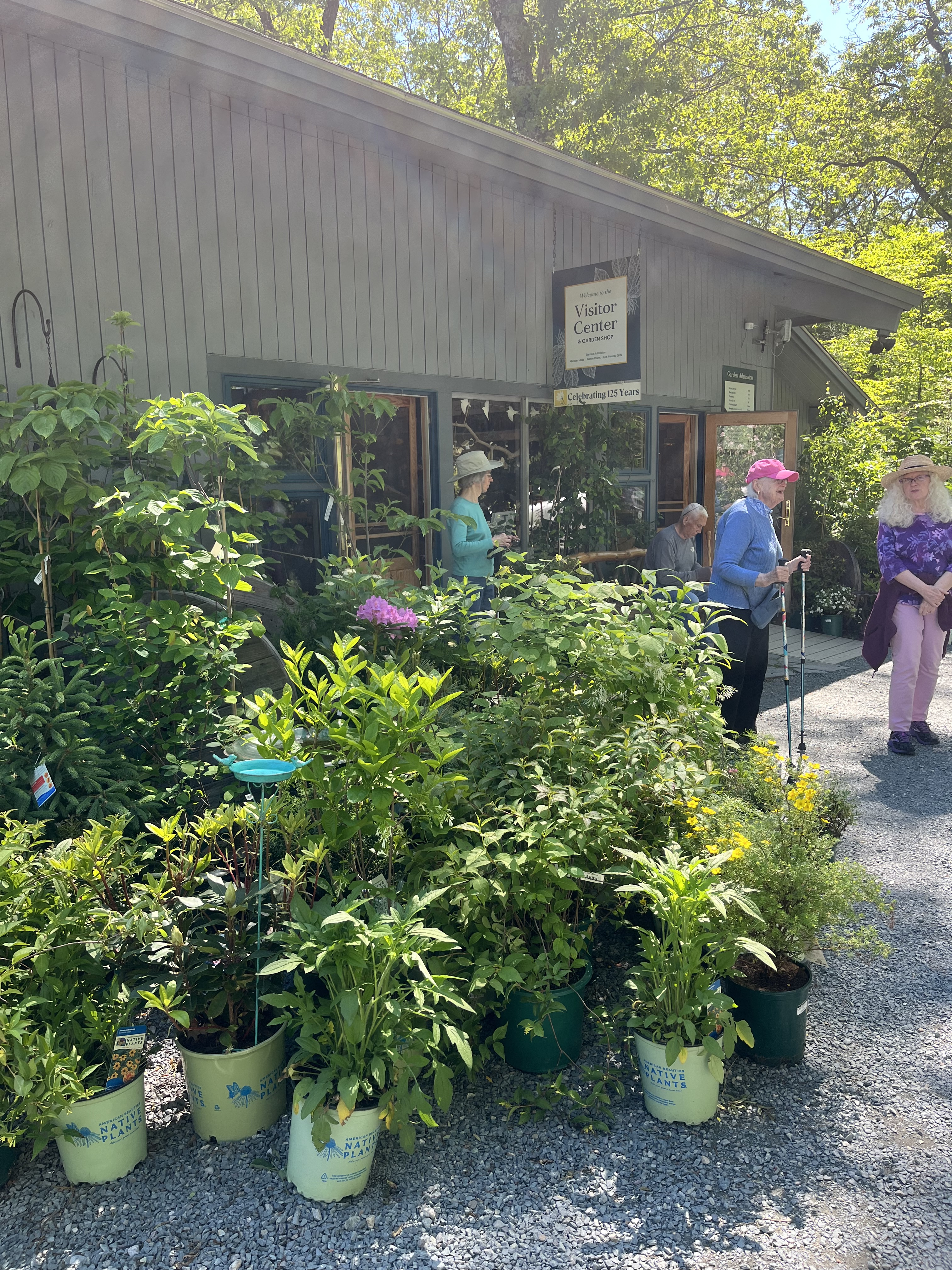
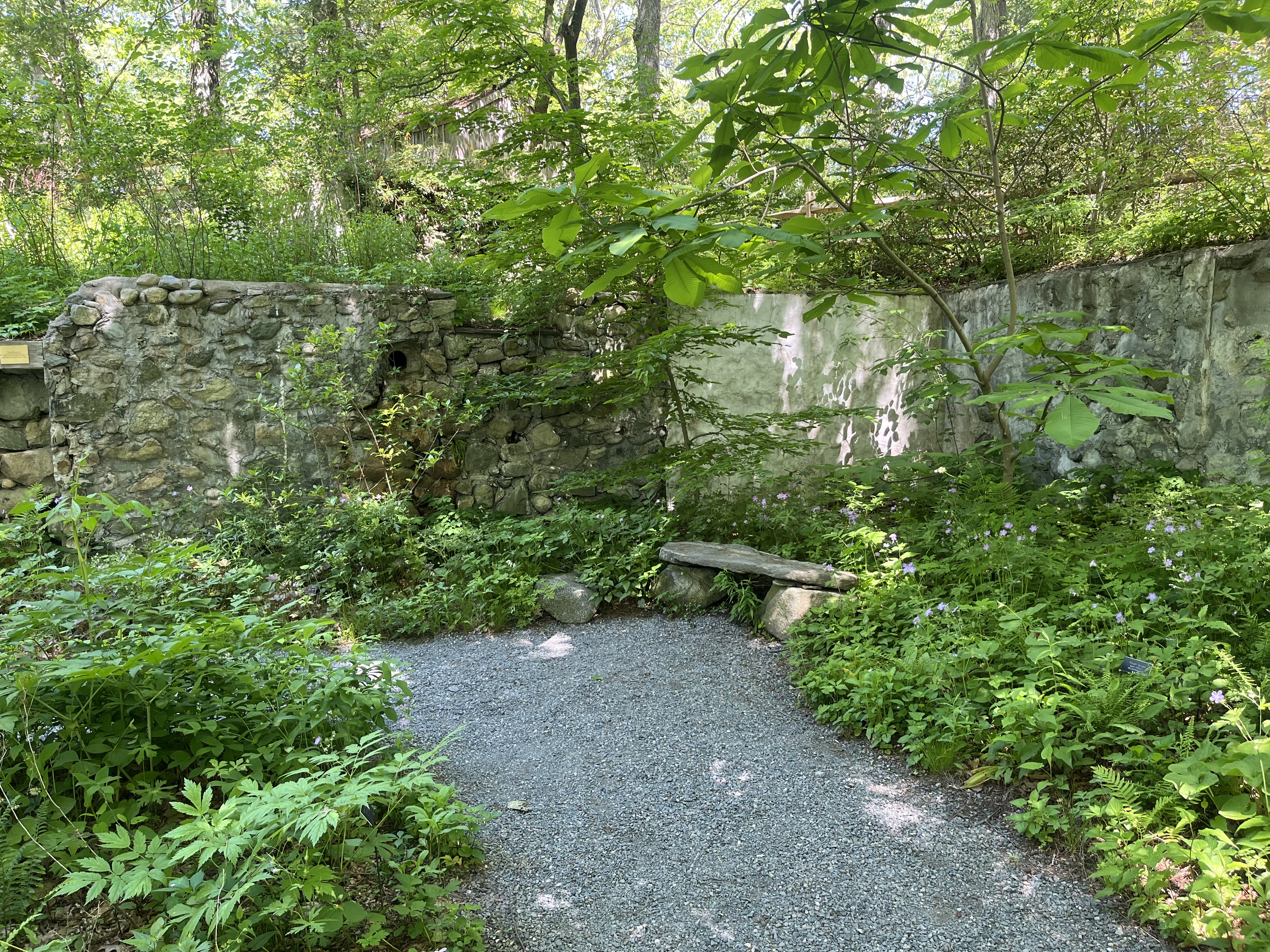
Today I’m sharing recent photos — mostly of Massachusetts spring flowers. One thing I’m especially enjoying this year is all the wildflowers. After my retirement community built a boardwalk that could accommodate walkers and wheelchairs, the administration and a group of residents started planting (ethically grown) wildflowers. Wonderful! And then we got a trip to the Native Plant Trust’s Garden in the Woods, which is entirely wildflowers.
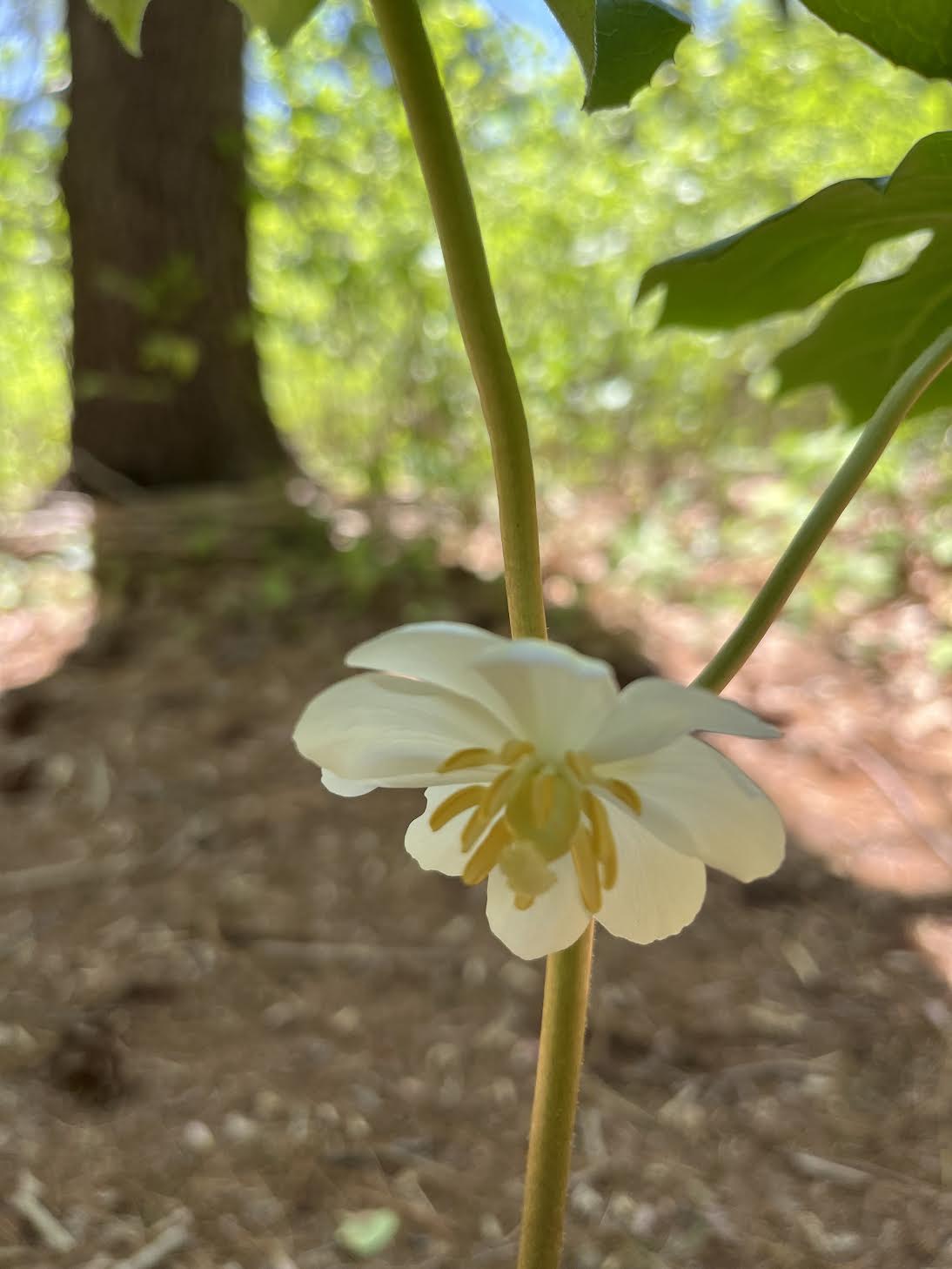
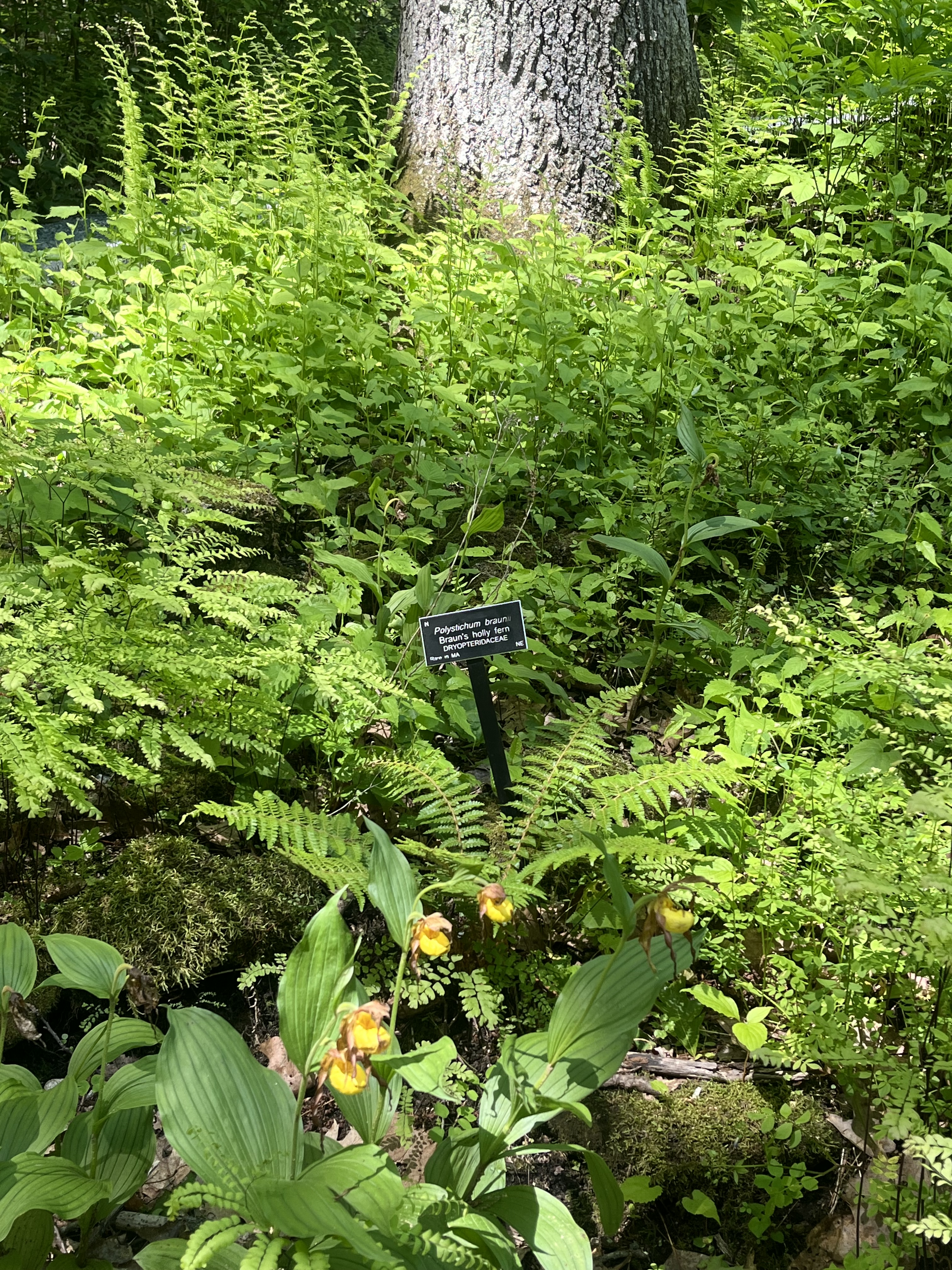
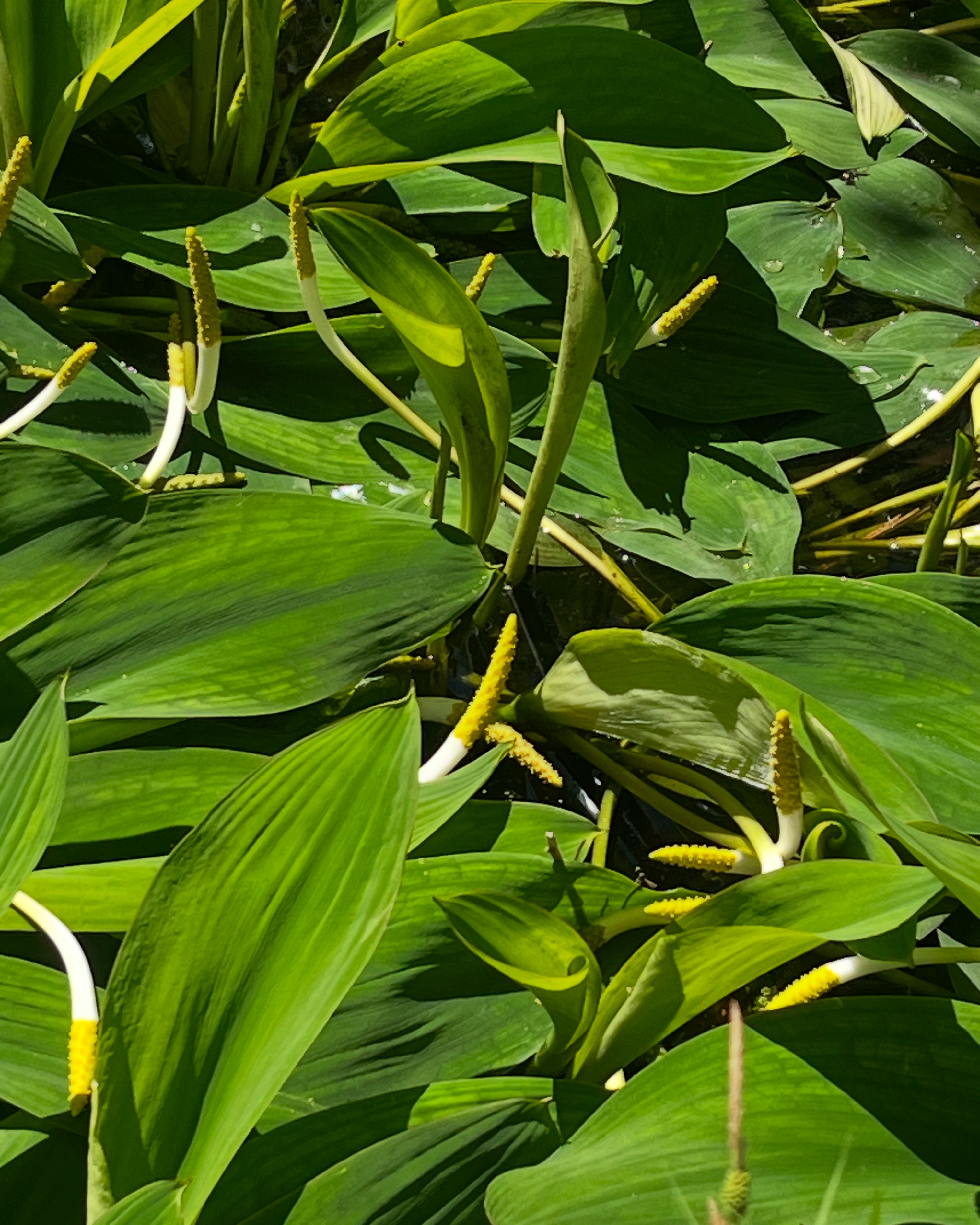
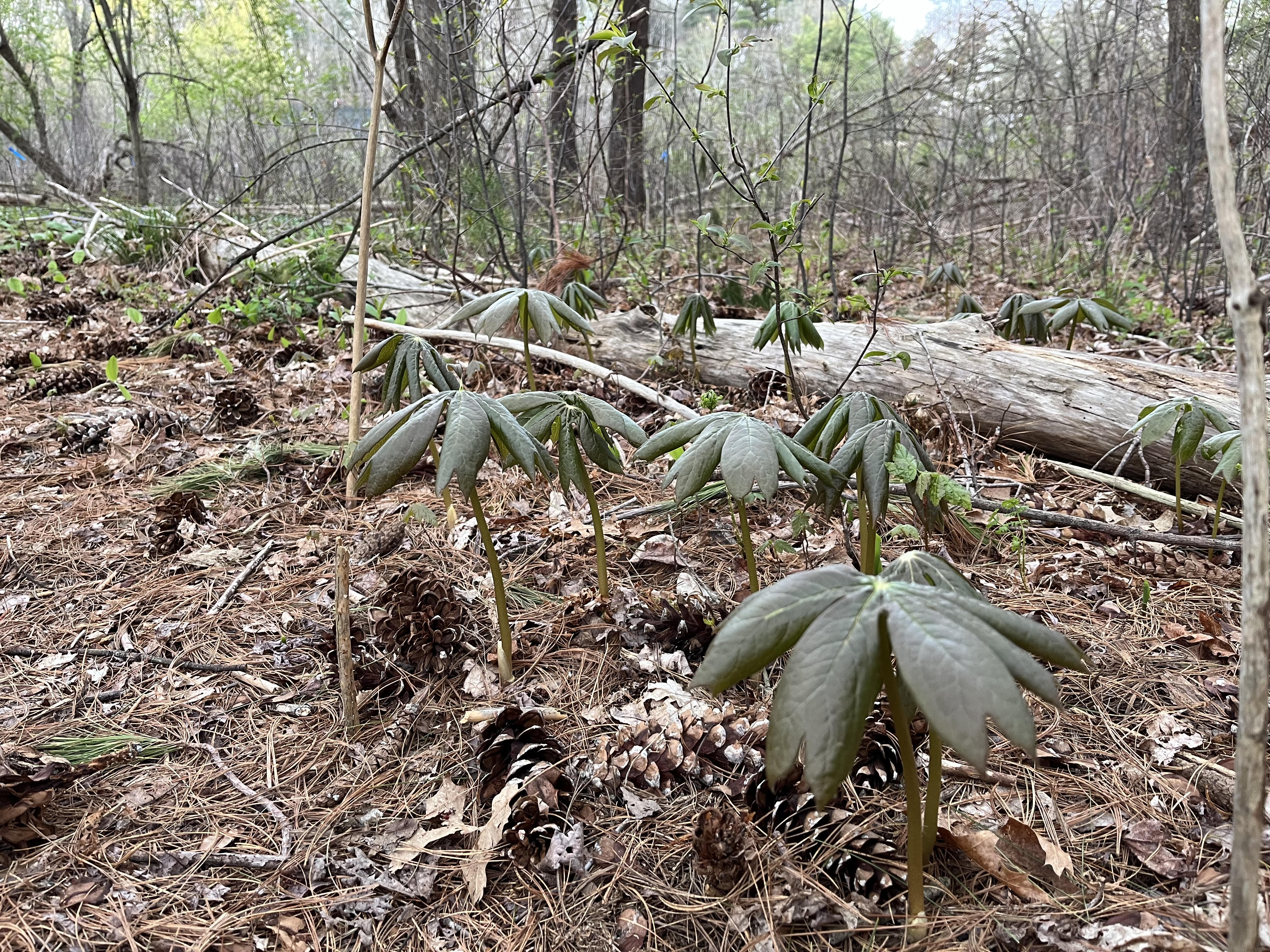
Below, note a flowering May apple near our boardwalk. It’s followed by yellow Lady slippers at Garden in the Woods. At the same nature preserve, we learned about Golden club, which is found in the wetland area. So unusual!
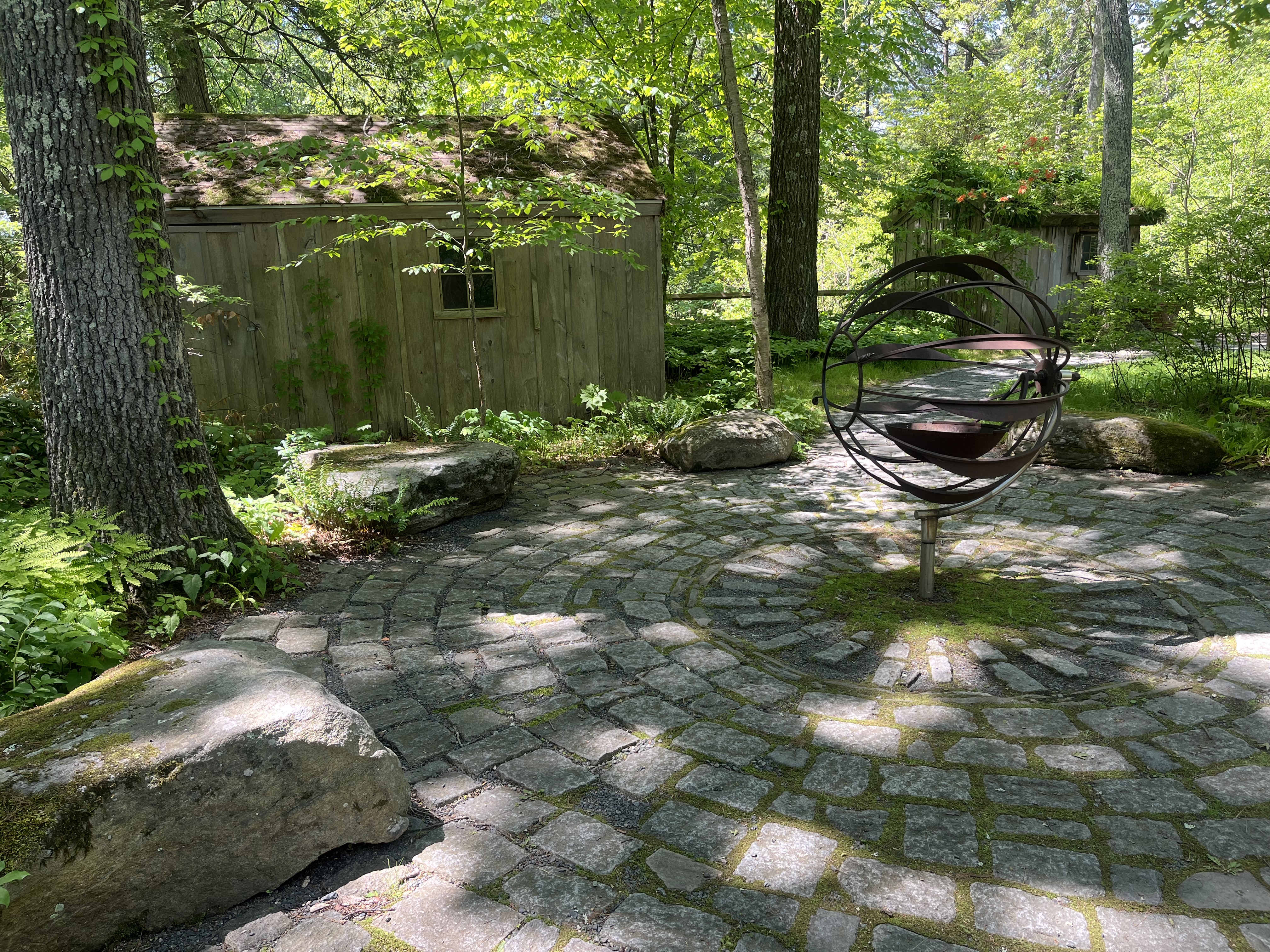
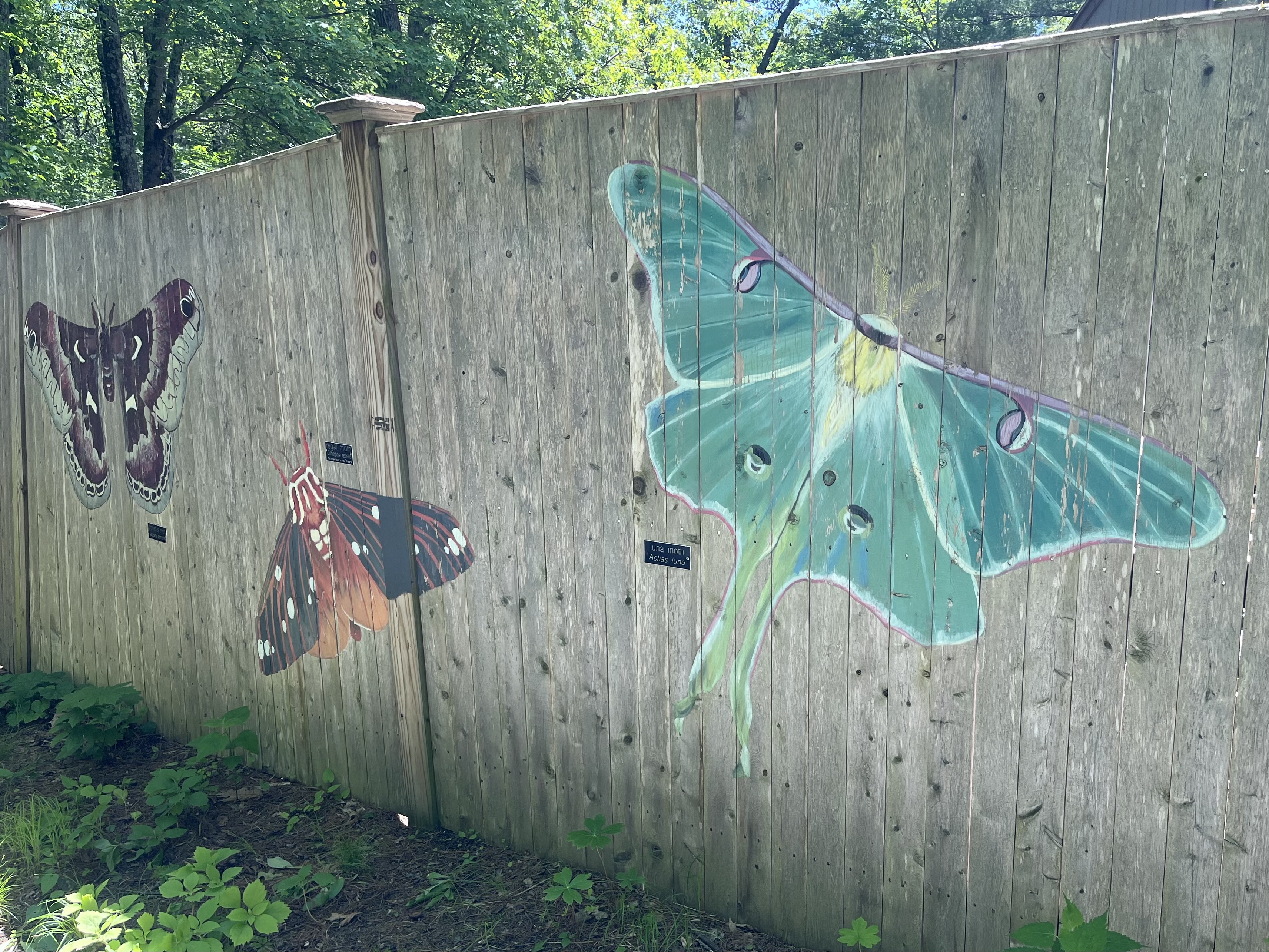
There are more pictures from Garden in the Woods after that.
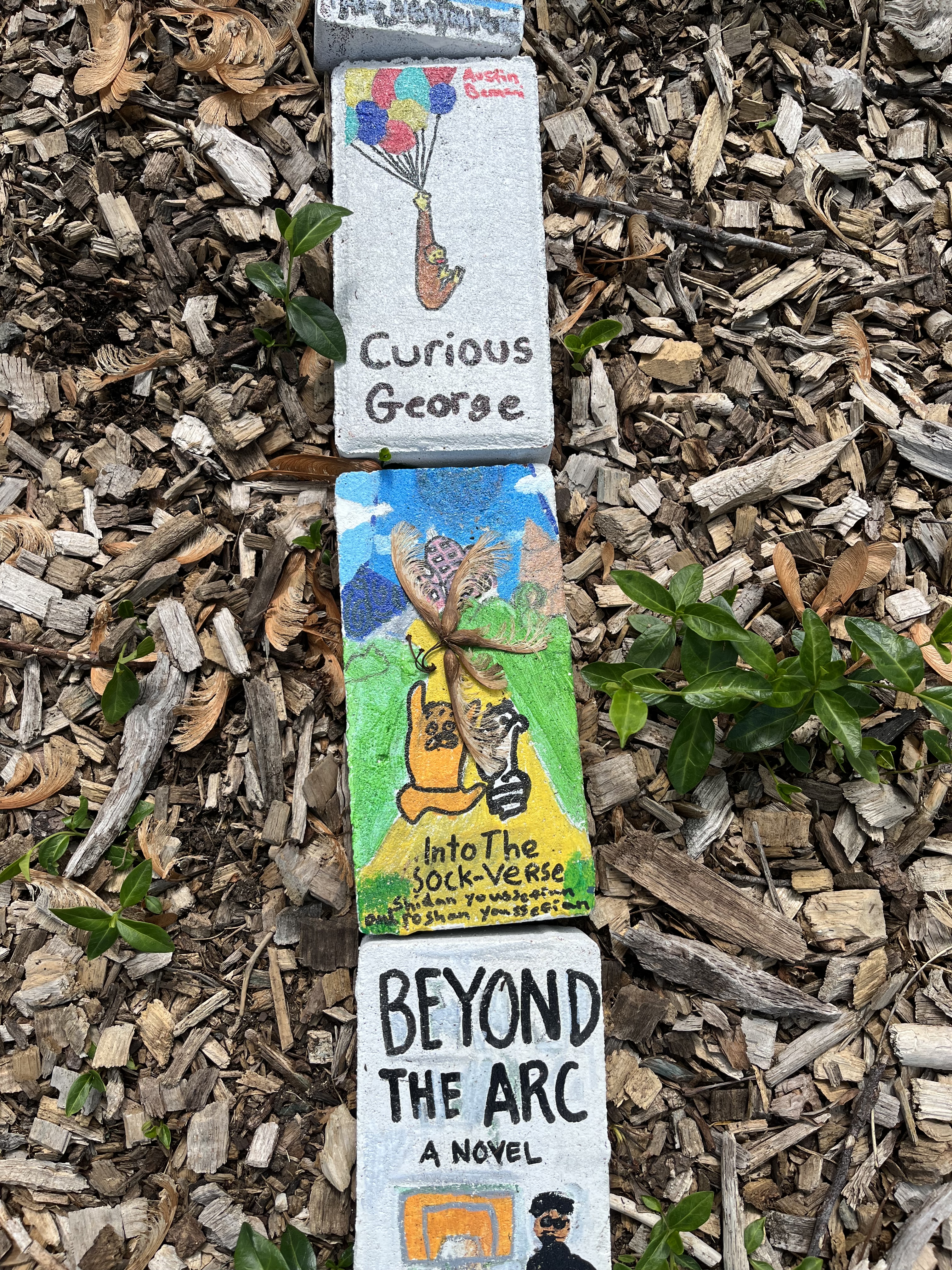
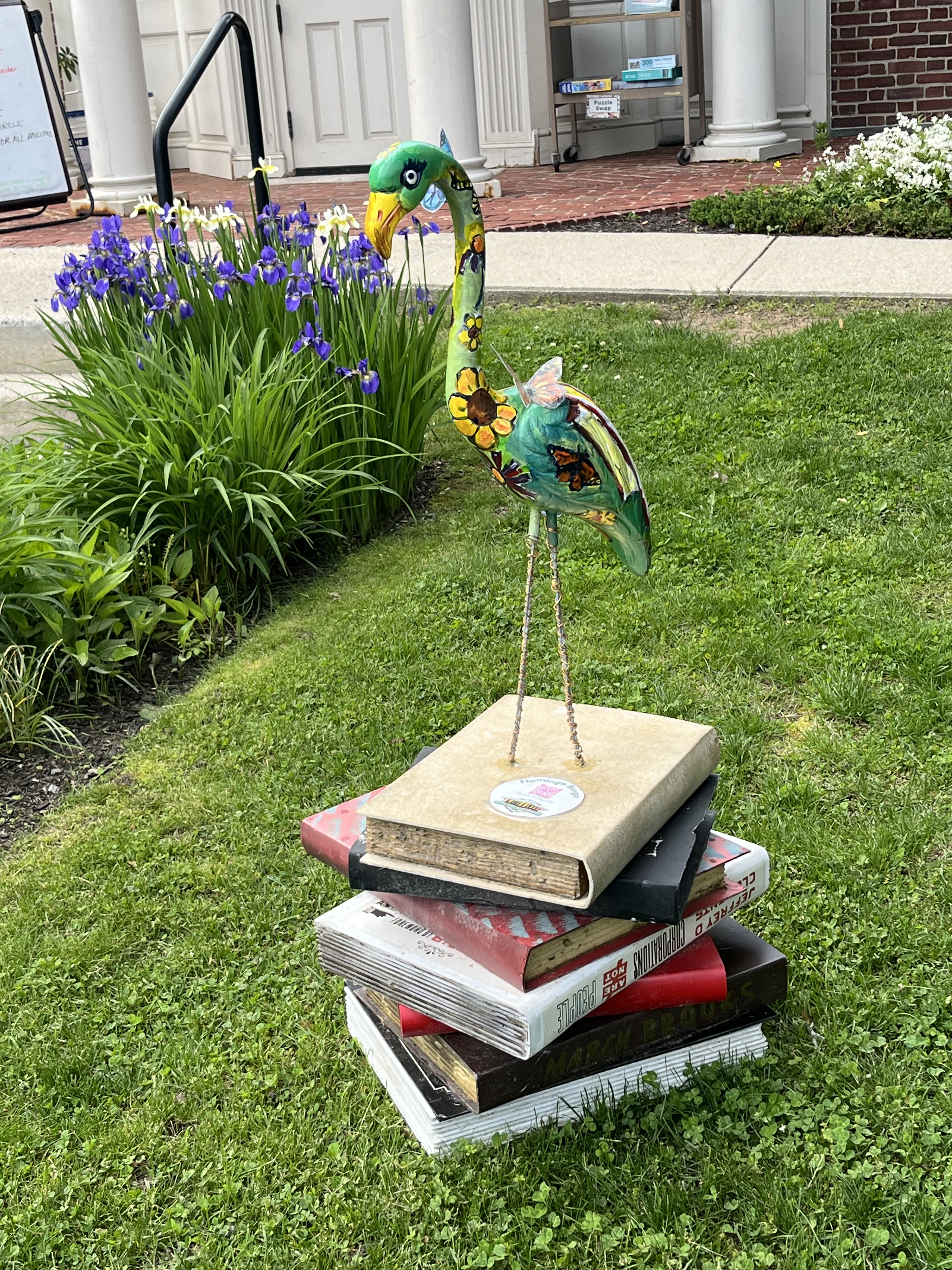
Next are a couple photos from our local library. The librarians love fun art projects, often involving child artists. They offer loads of activities for kids. For example: painting book bricks to border a garden.
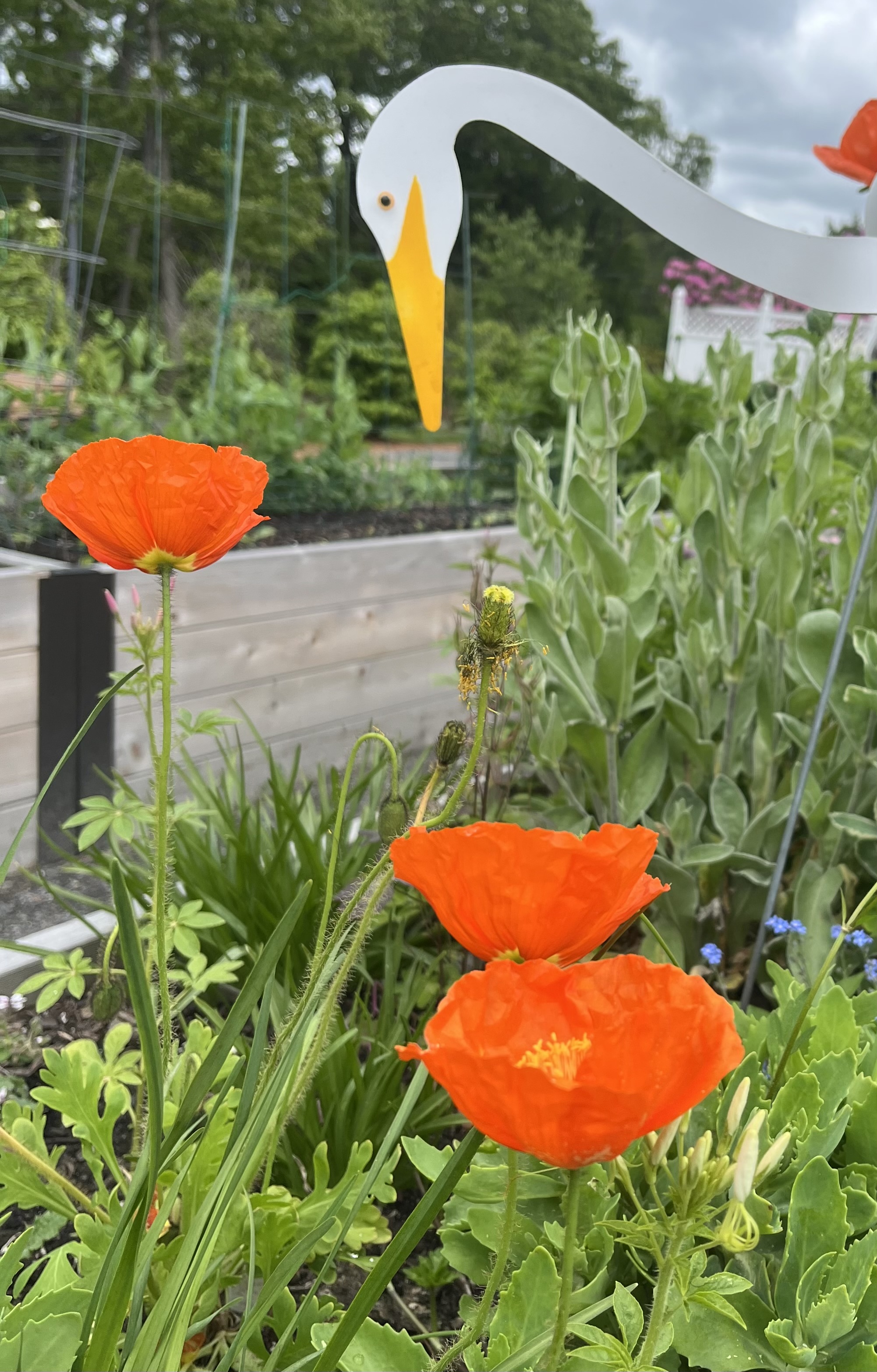
Next are Jane’s poppies. Jane has a variety of flowers and edibles in one of the raised beds in our community.
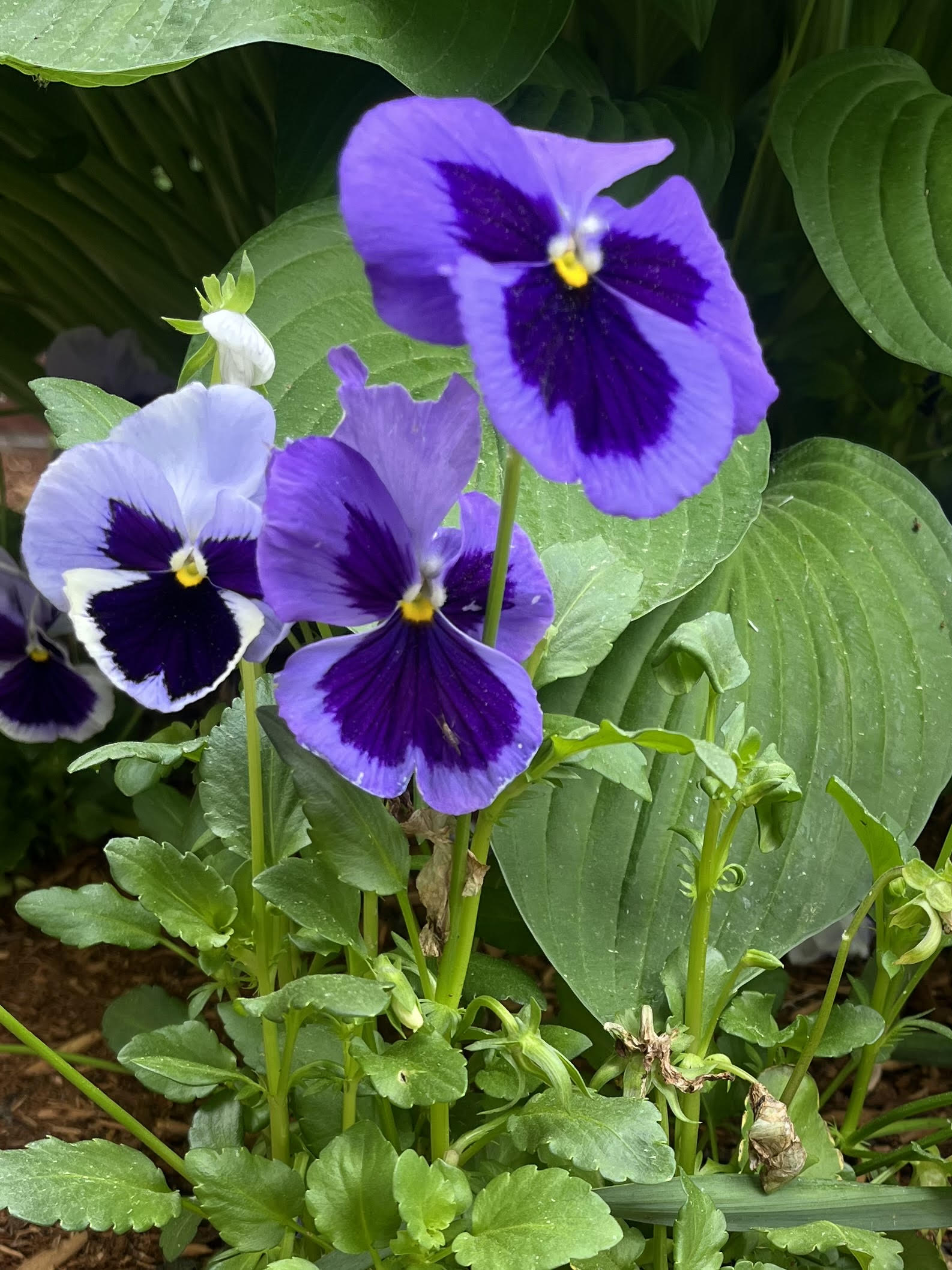
Finally, here are some pansies that seemed to sing, reminding me of the pansies in a wacky Disney remix I love.
It’s starting to feel like winter is around the corner, so I’ll just post a few photos from my New England autumn before the snow falls.
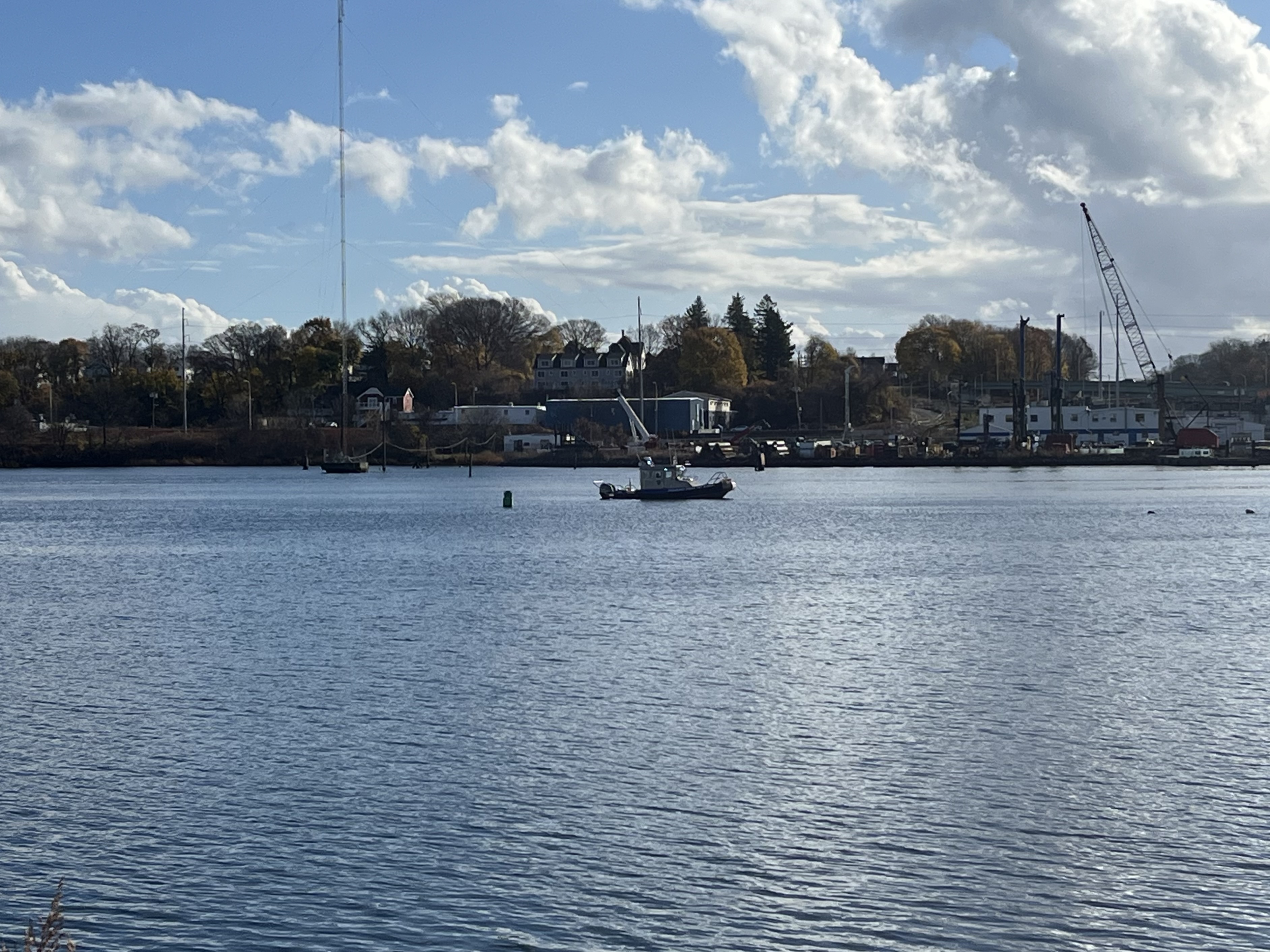
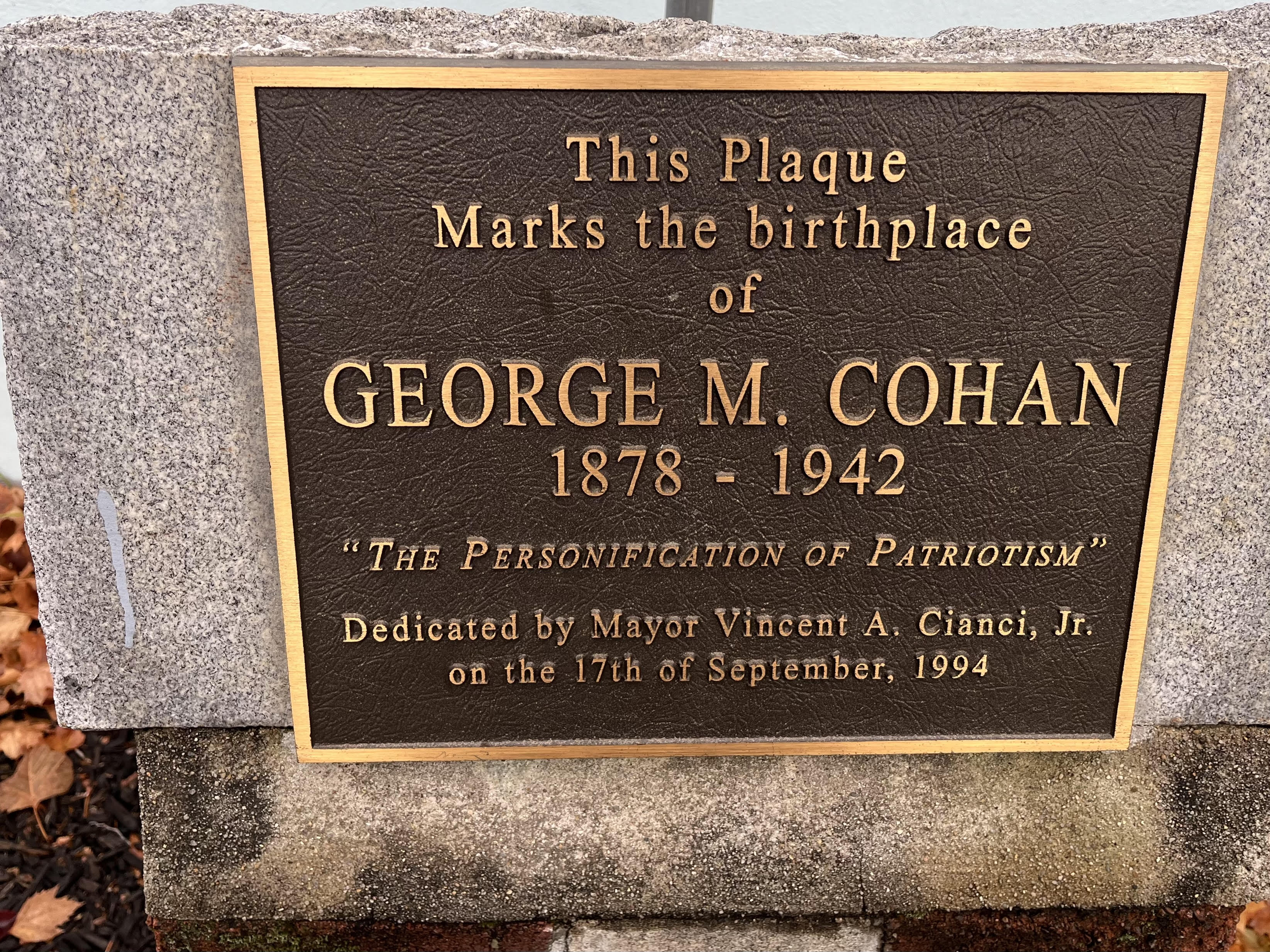
Below, clouds over the Seekonk River in Providence, Rhode Island, and chess-playing foxes in Fox Point. Also in Fox Point, the notorious Mayor Cianci’s plaque honoring both composer George M. Cohan — and Cianci himself.
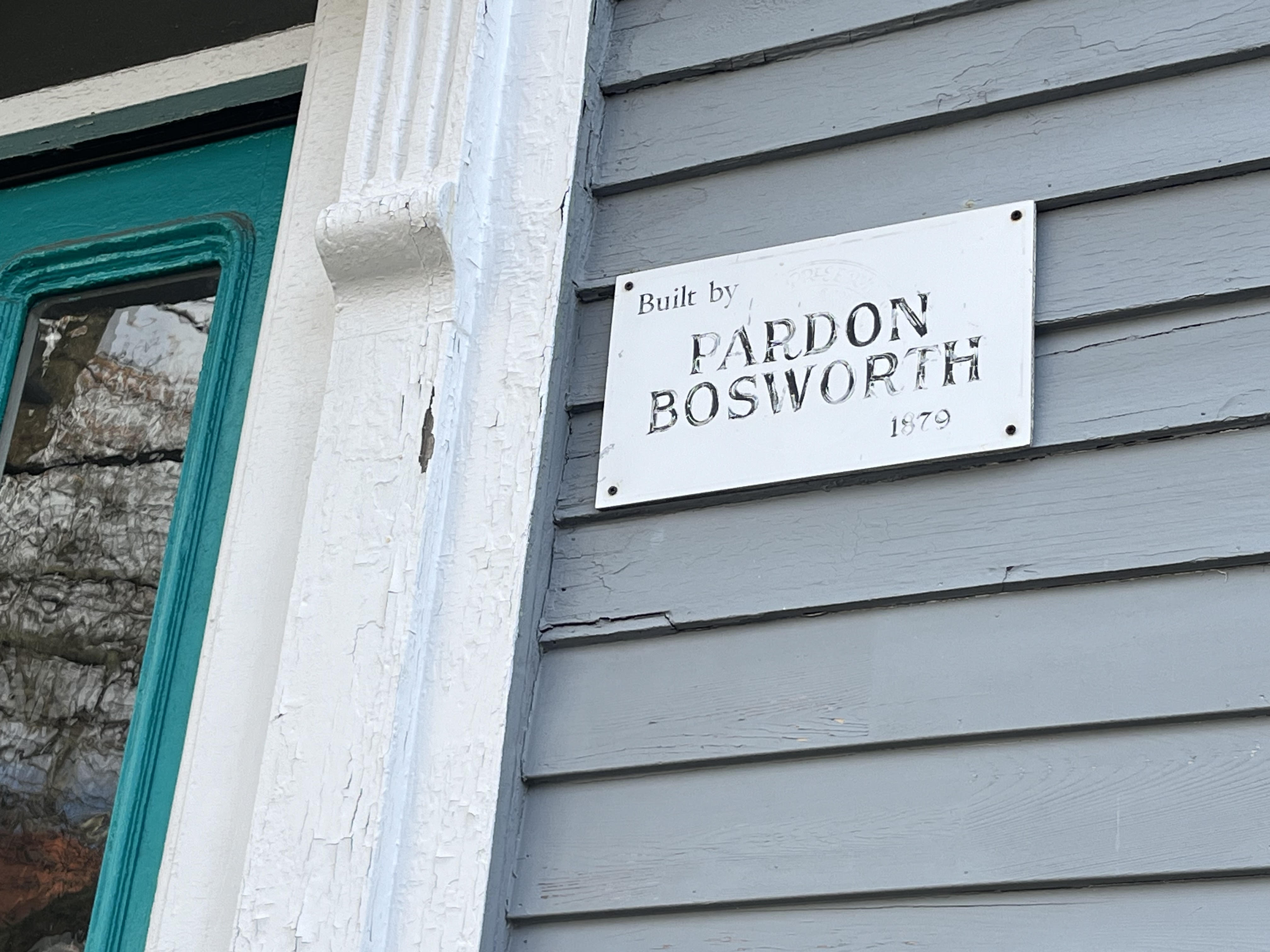
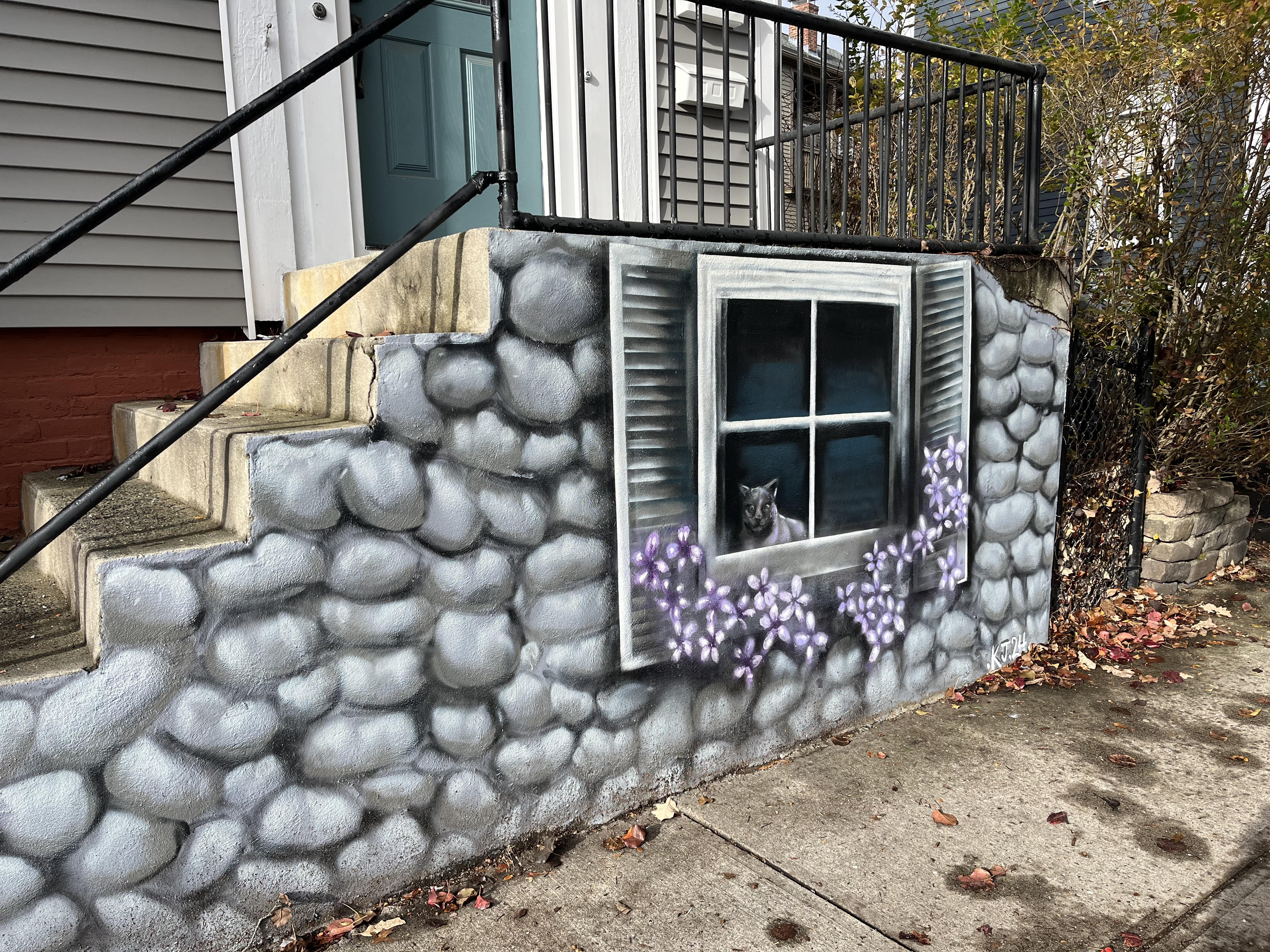
In the same neighborhood, I got a kick out of the name of a 19th century homeowner. And a jazzed-up staircase across the street.
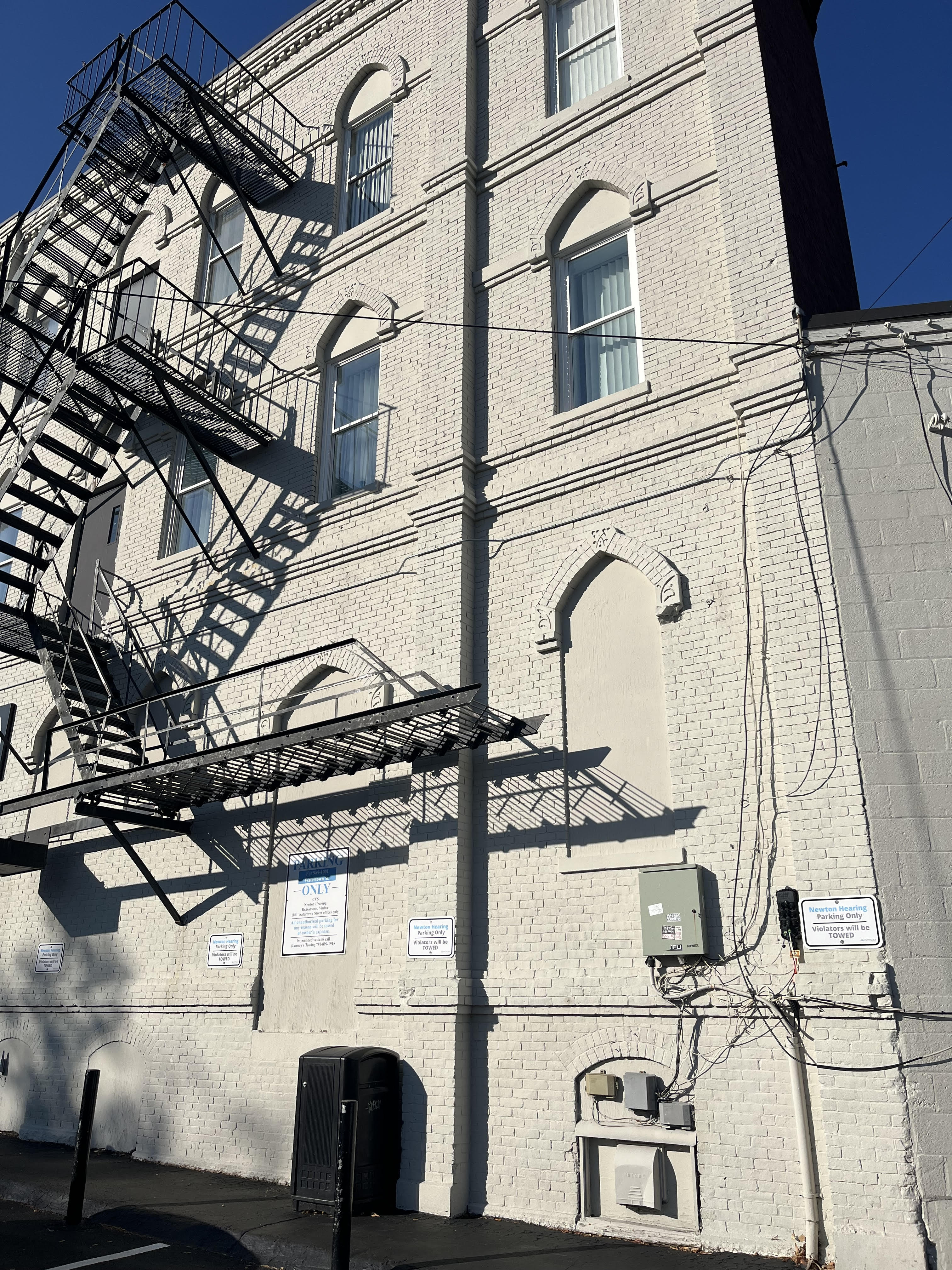
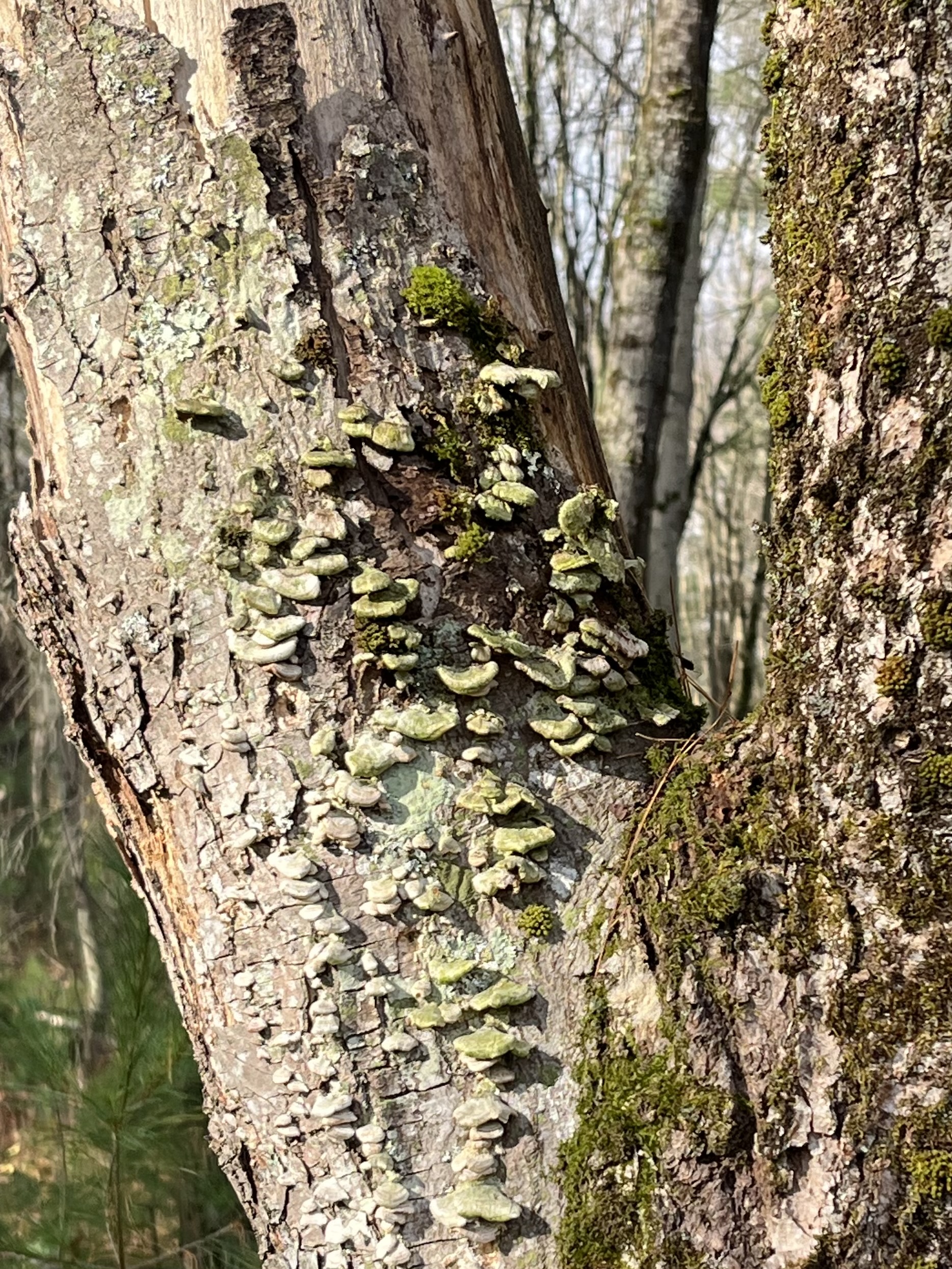
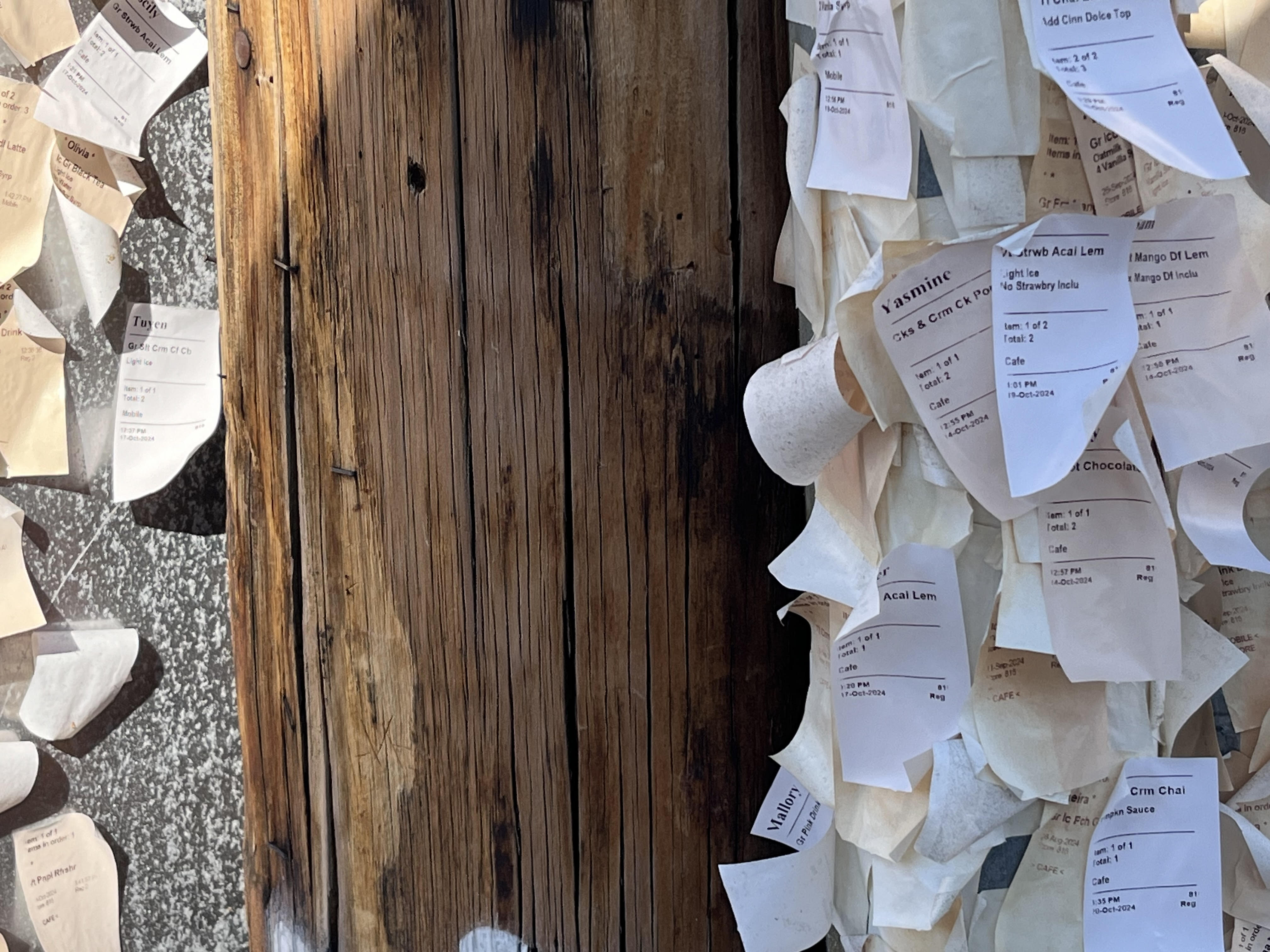
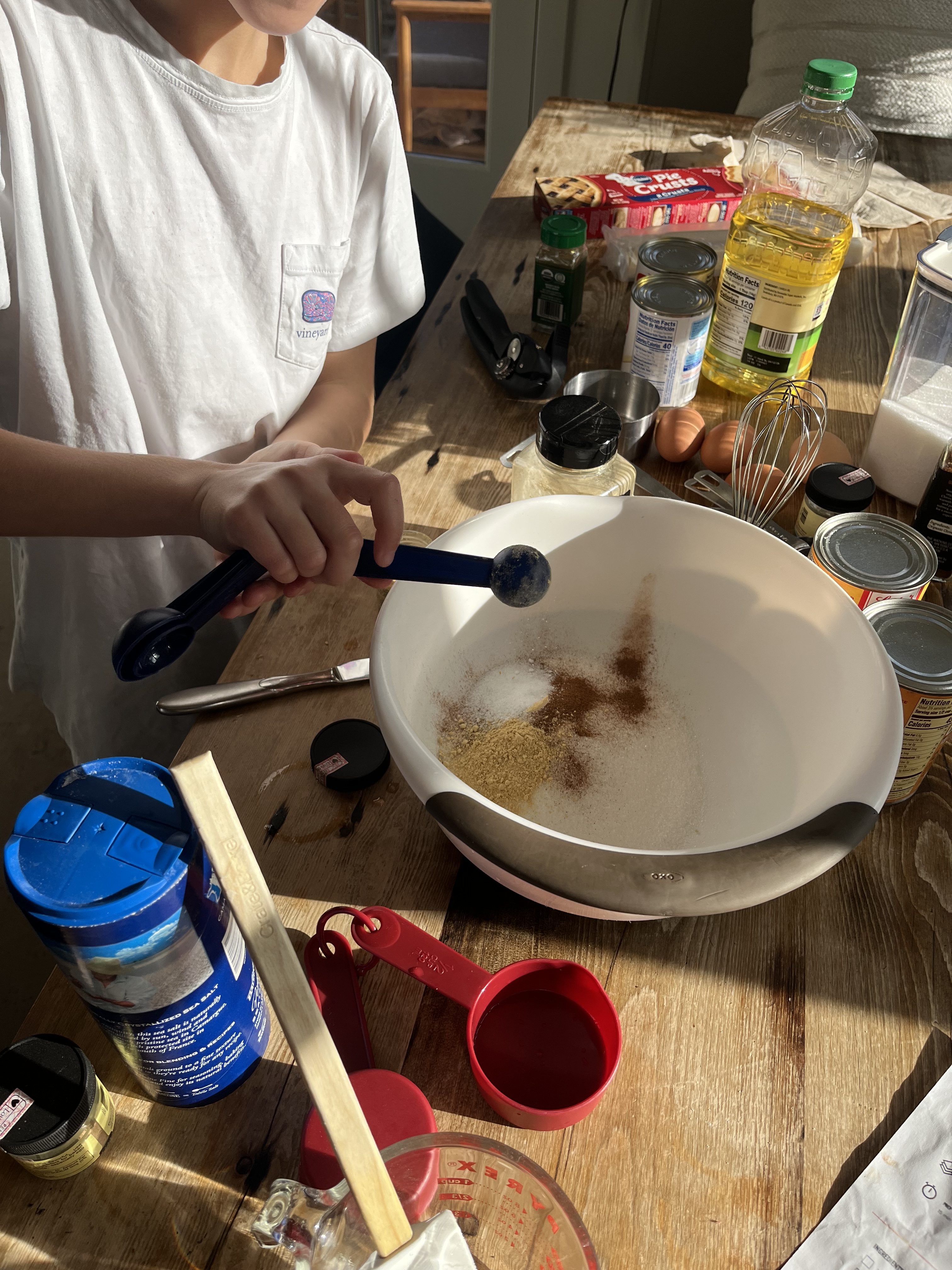
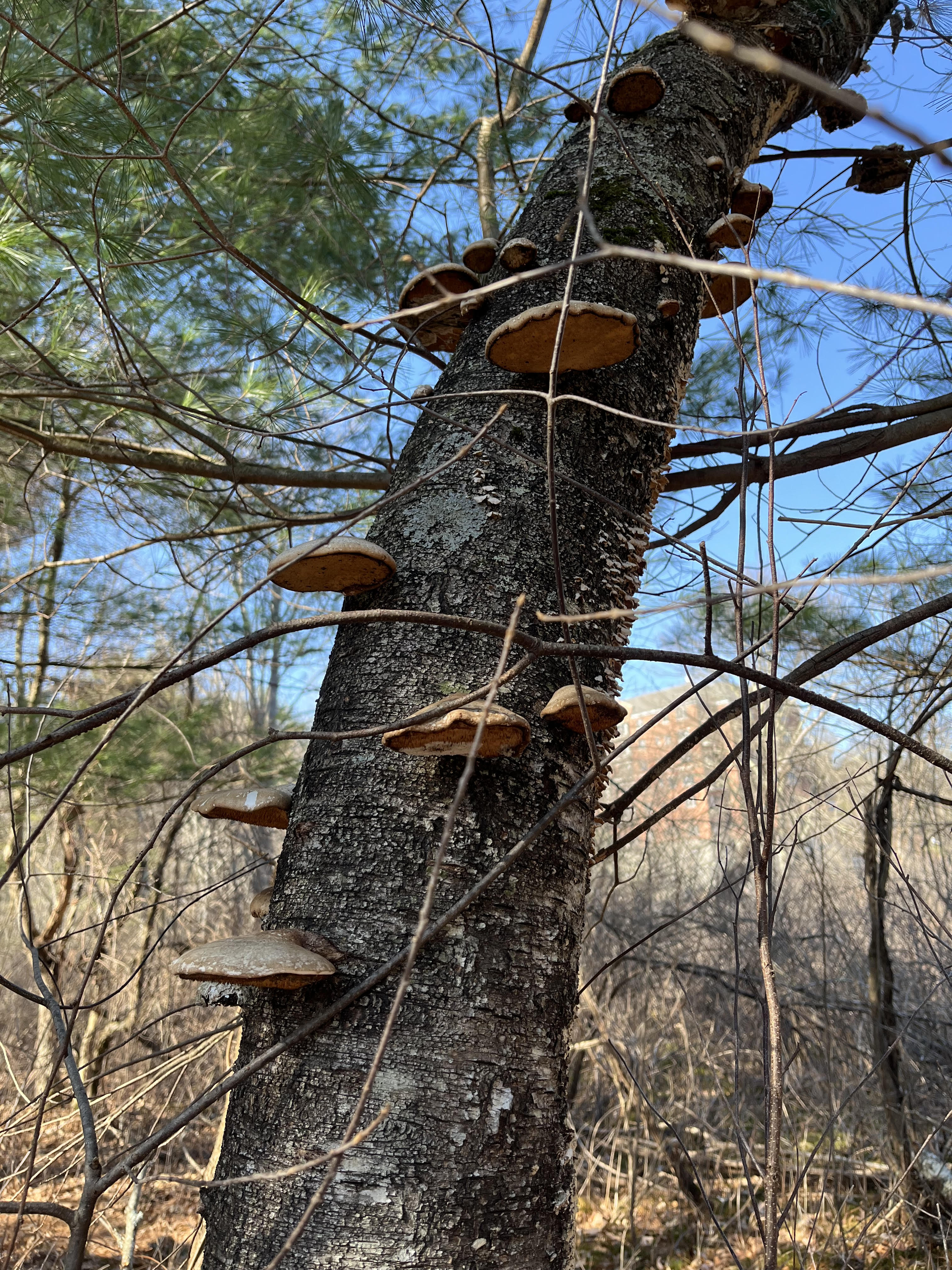
Back in Massachusetts, I found a nice shot of a different kind of staircase (jazzed up by light and shadow), then two fungus photos (one flower-like) and Starbucks receipts decorating a telephone pole. The pastry chef, age 11, has more baking experience than most adults.
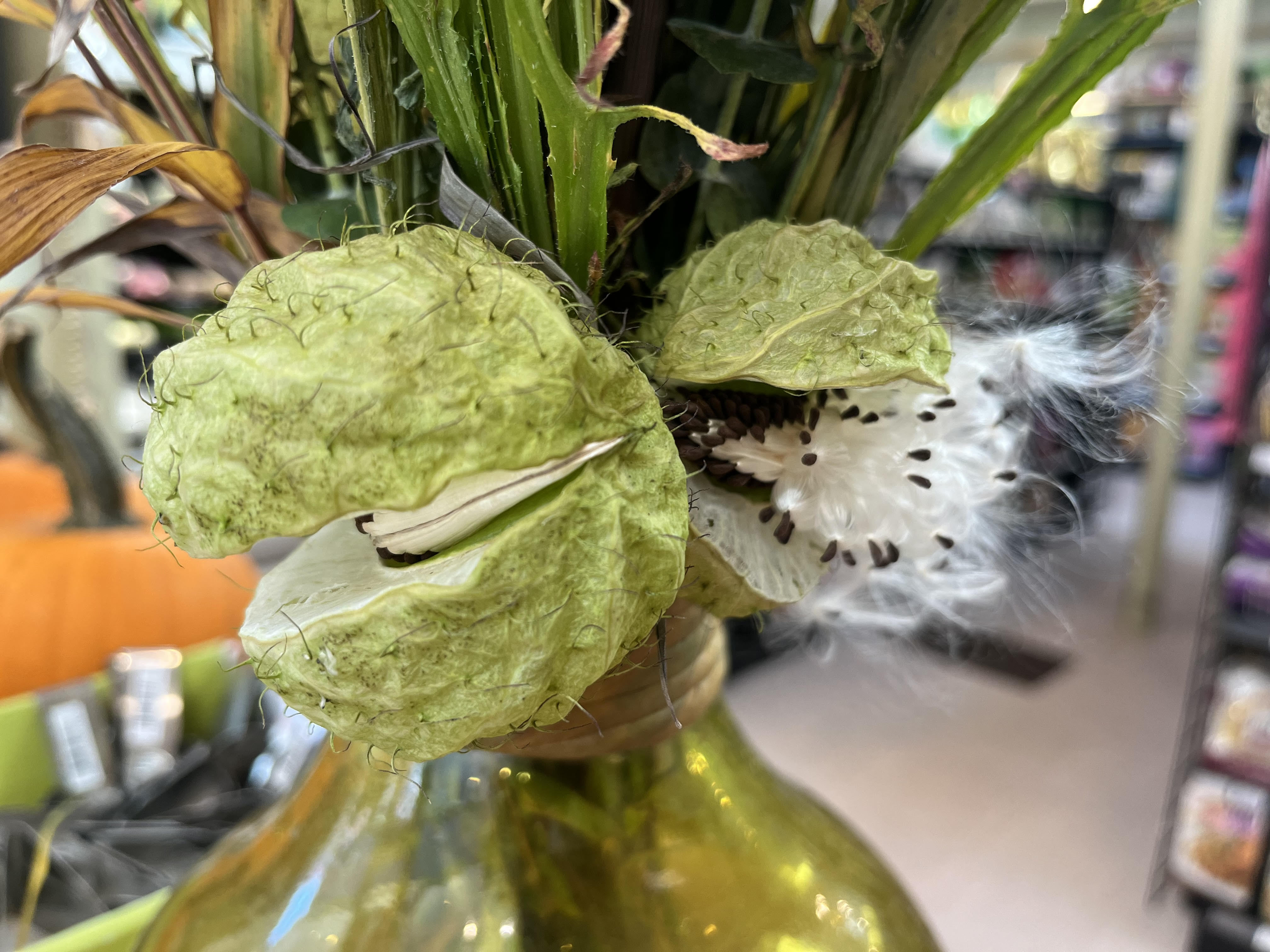
In the what-the-heck-is-it department, there’s a decorative plant at Debra’s Natural Gourmet that is not milkweed but looks sort of like it. Any ideas?
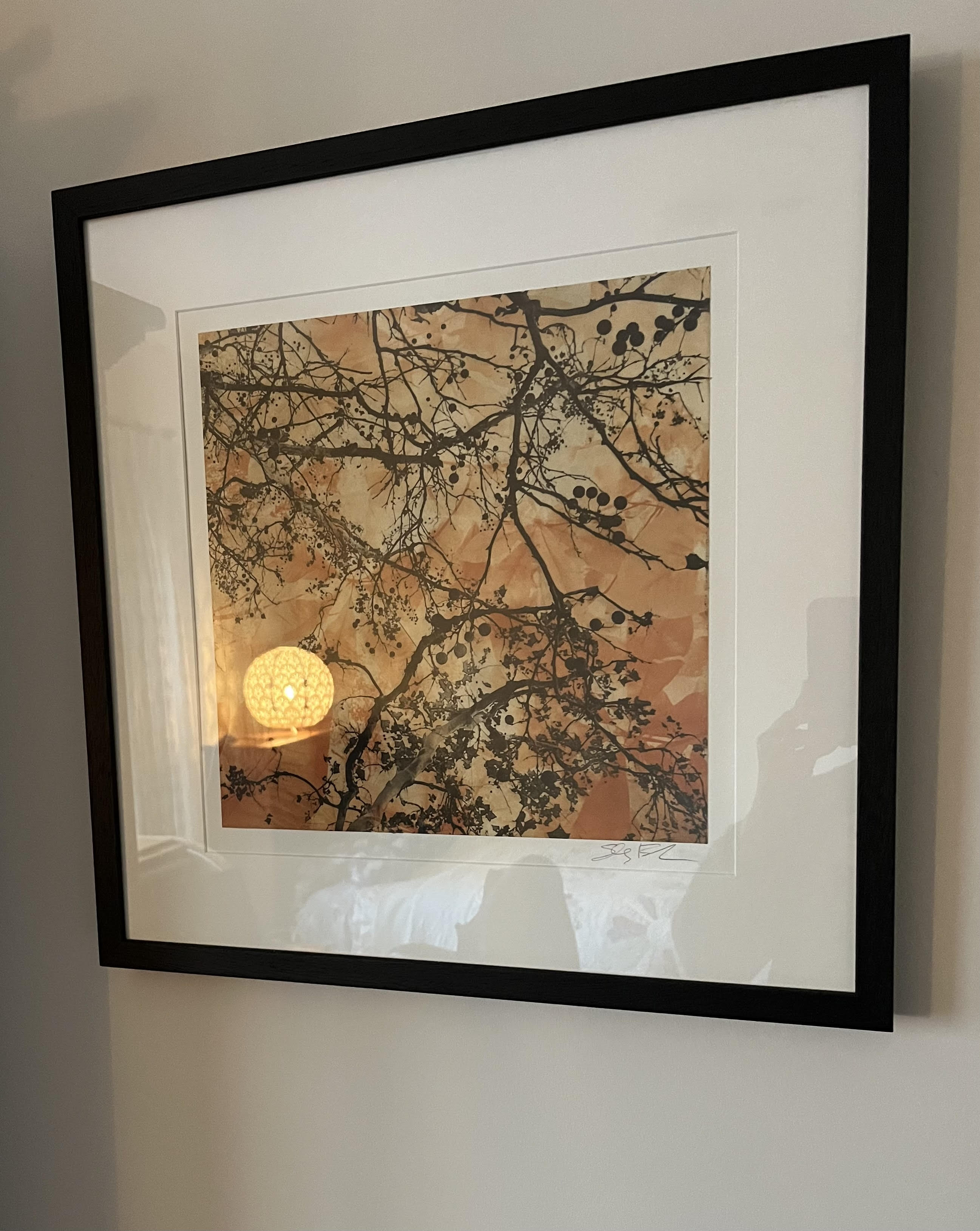
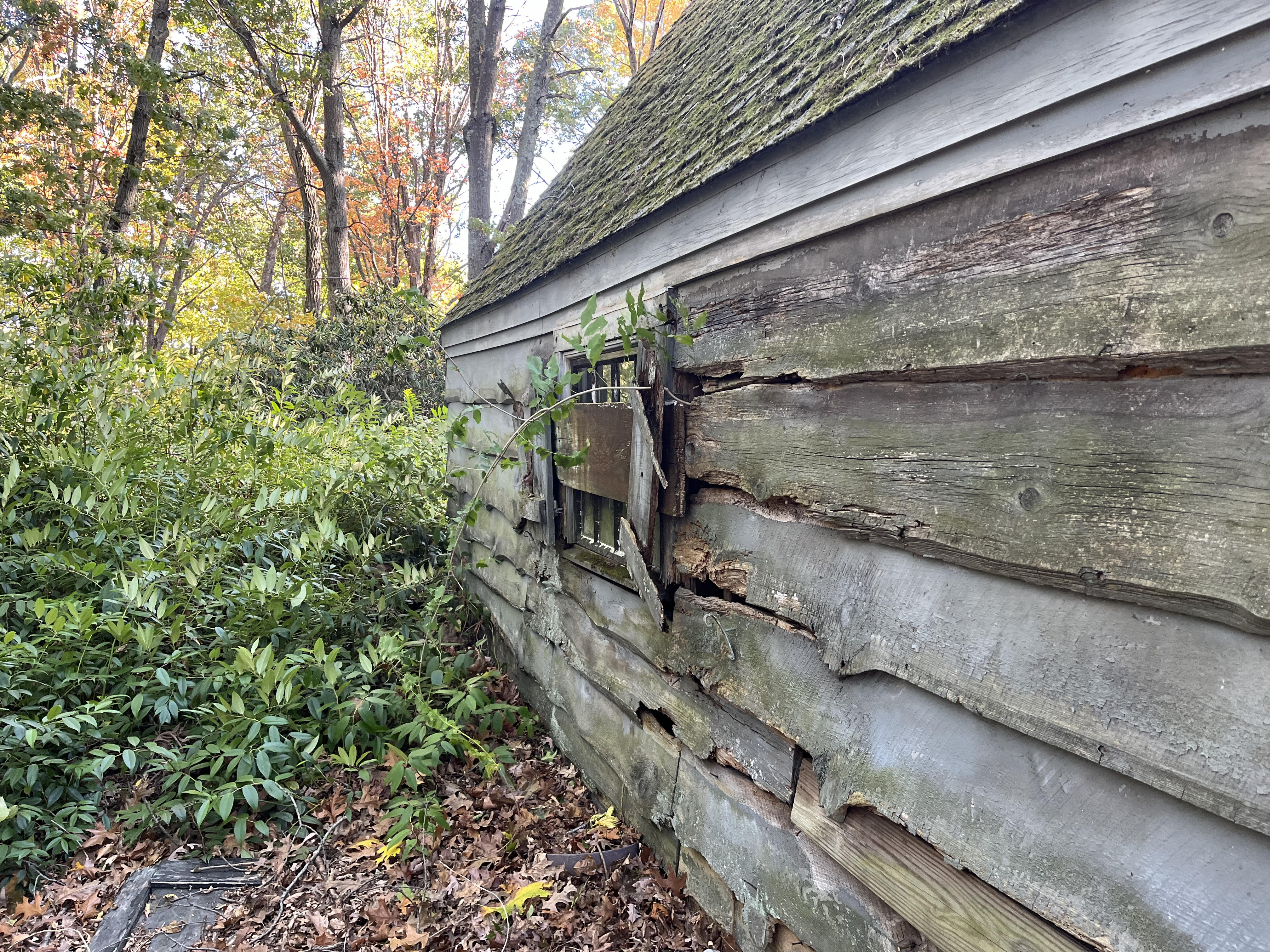
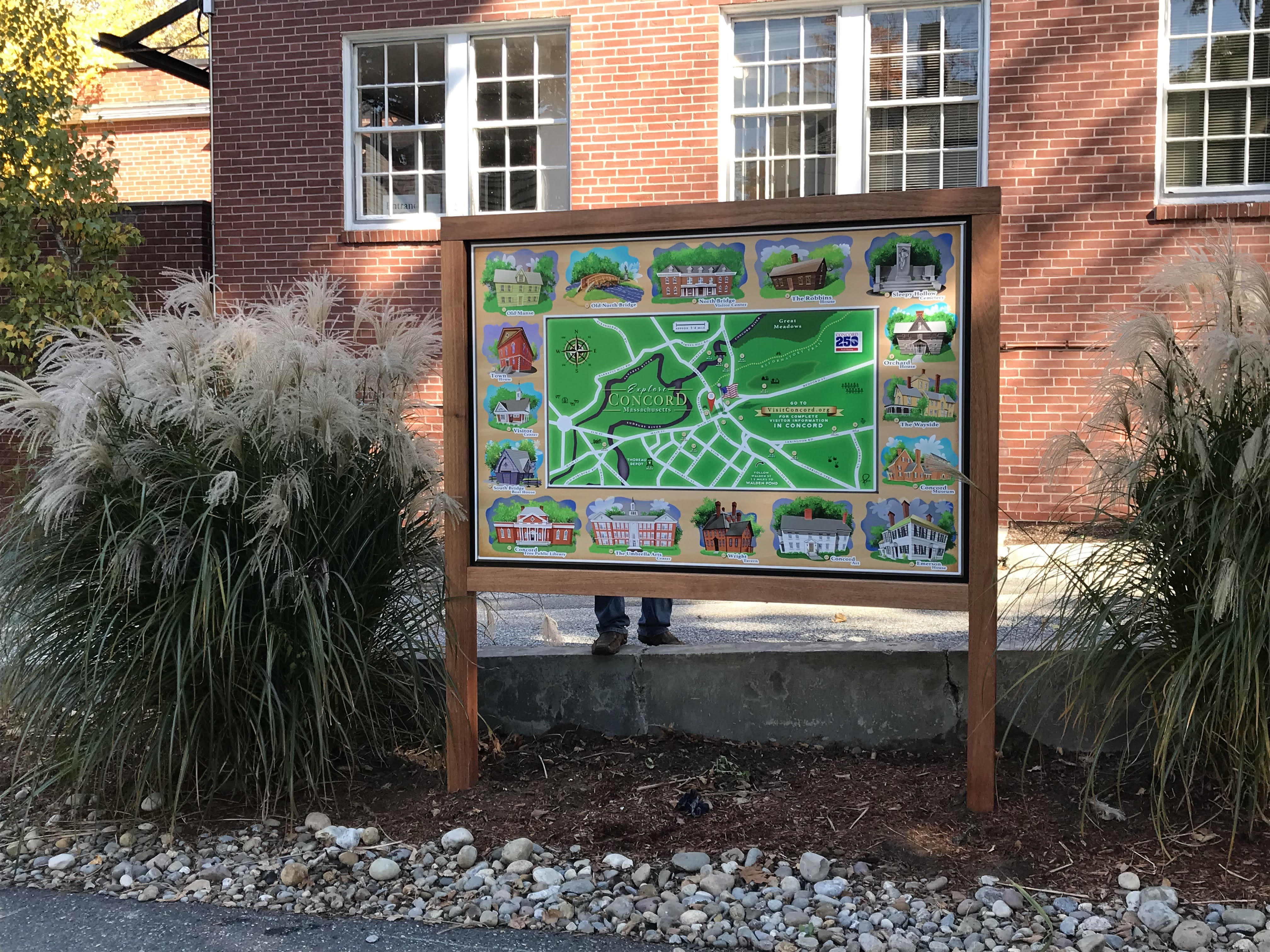
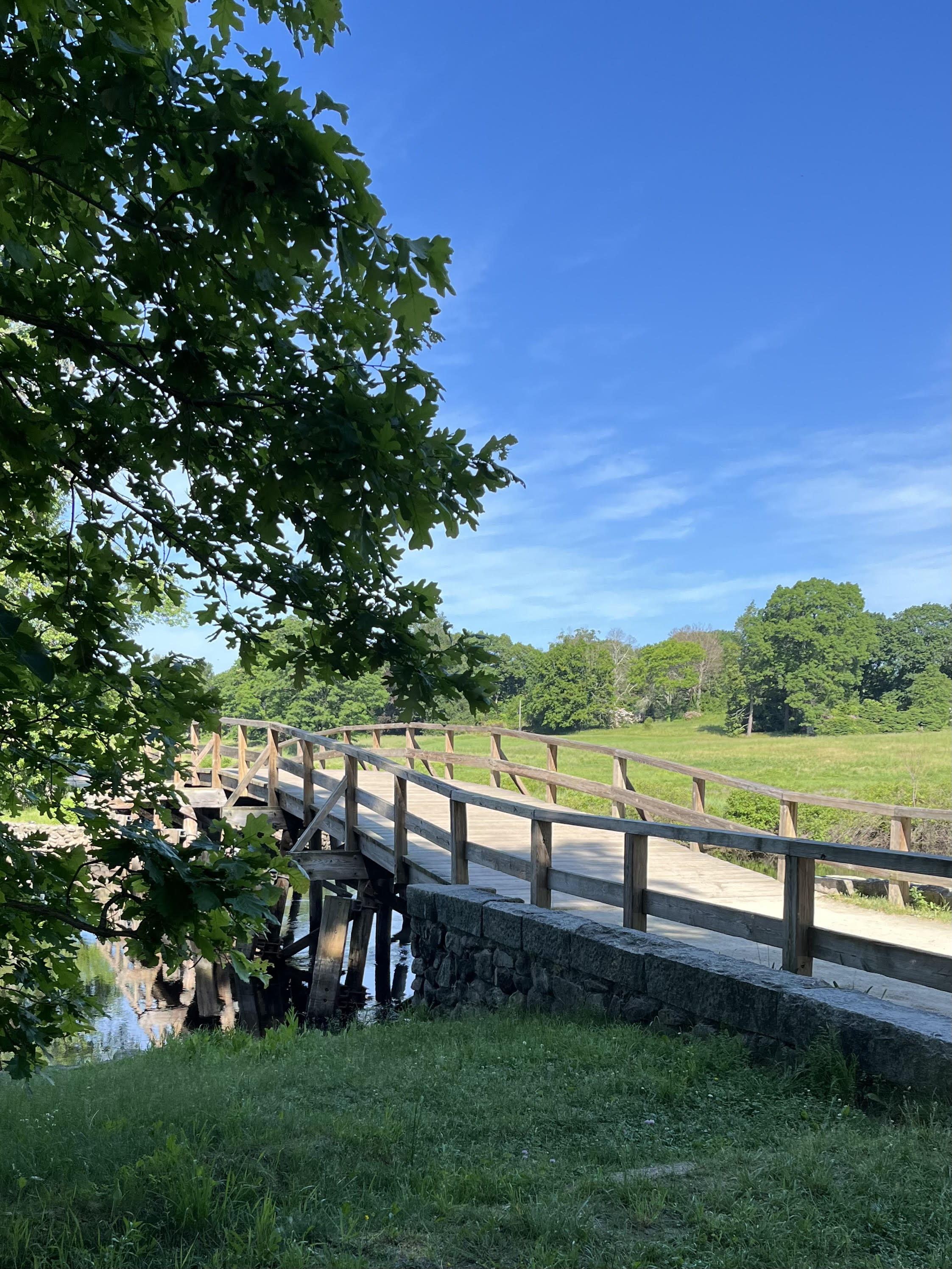
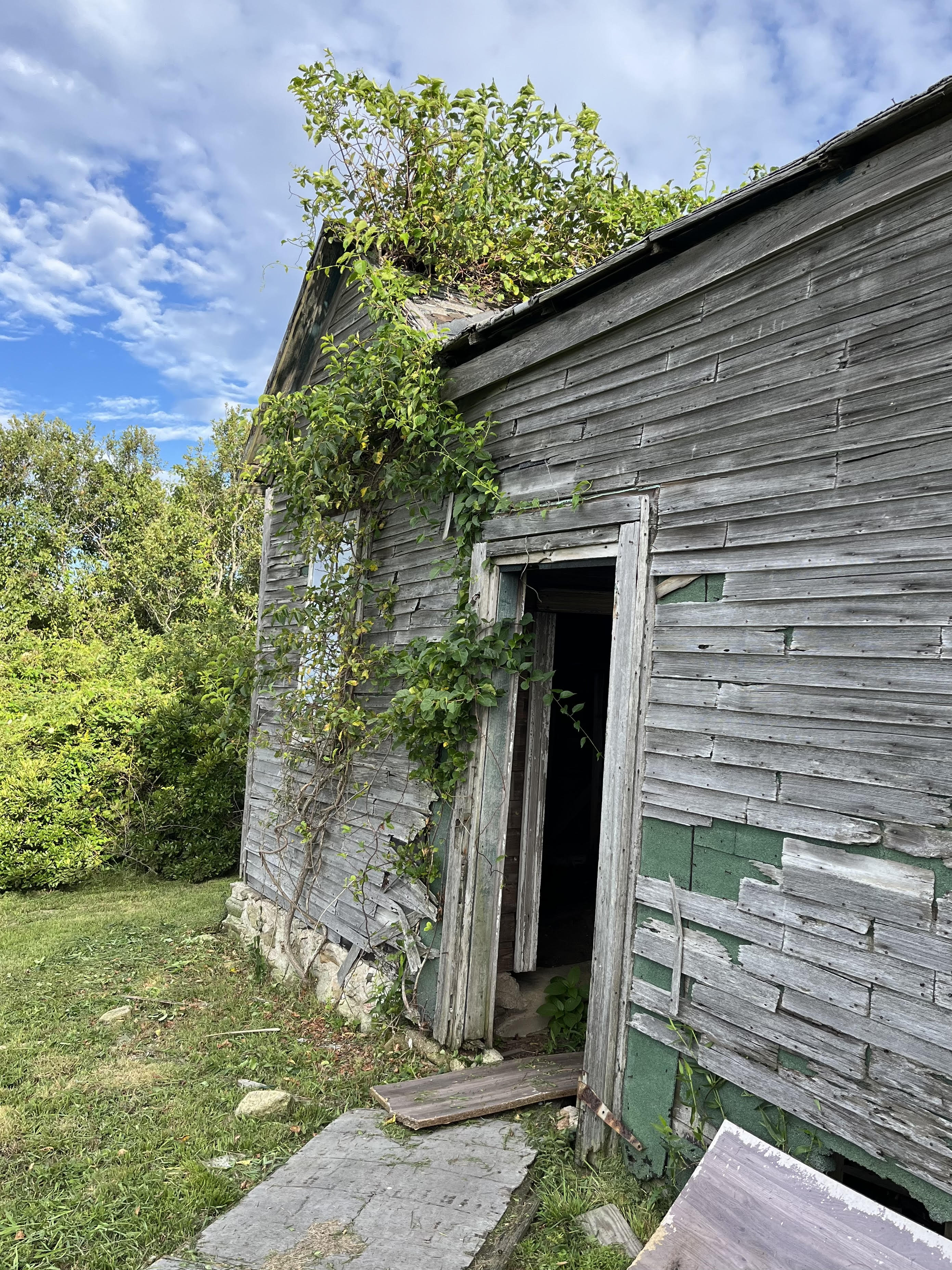
Next comes Sally Frank’s magnificent Black Sycamore print in a frame reflecting my table lamp. Then a derelict house waiting for the land developer’s bulldozer, and a special map for the town’s 250th anniversary in 2025. Did you know the Revolution started at the North Bridge? Not with the Declaration of Independence, as significant as that was.
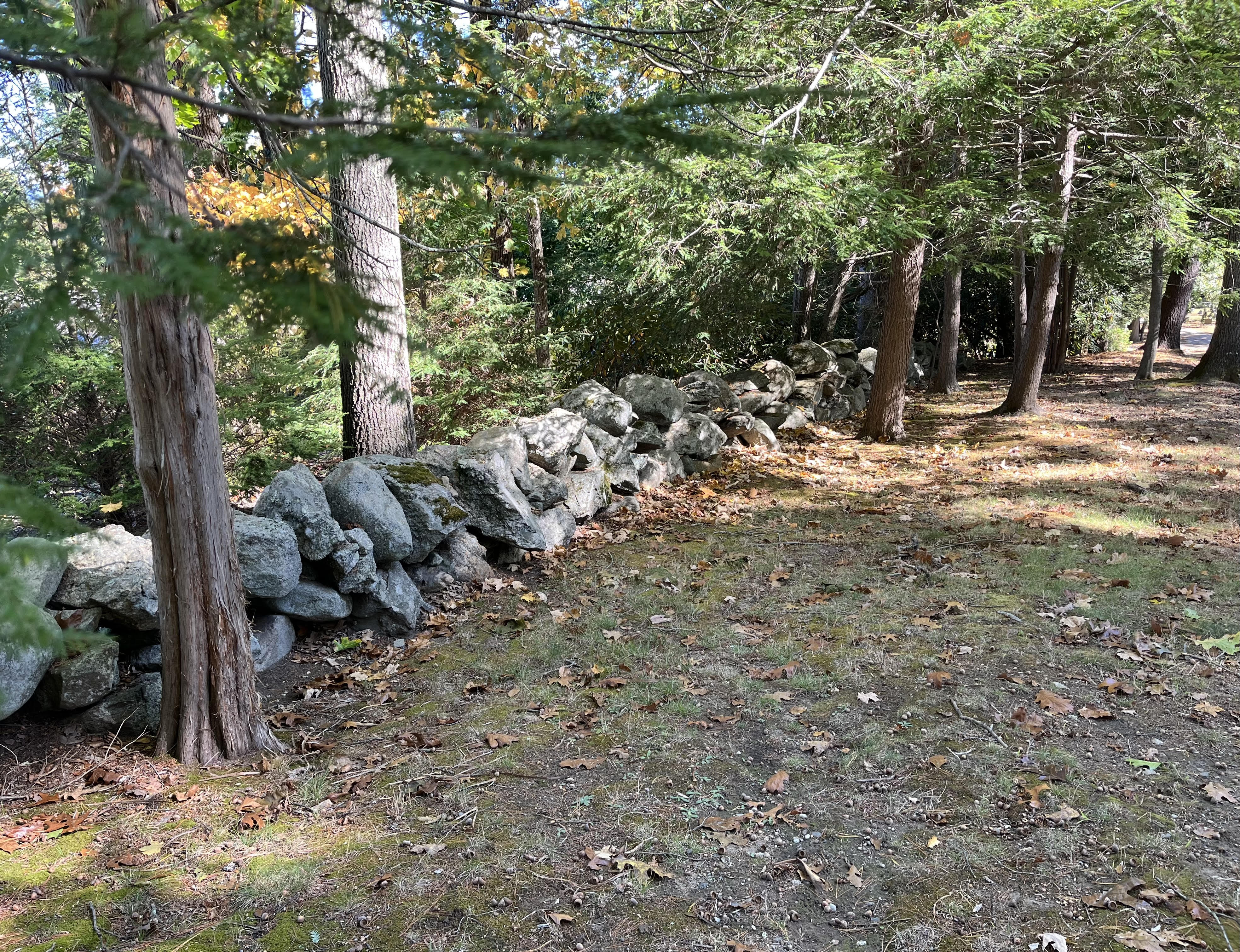
Time for photos from the last few weeks, starting with a typical New England sight — the stone wall. When my husband’s uncle visited us years ago, he couldn’t get over all the stone walls, having lived in a busy city or at the shore.
And you may remember all the stories of the early colonists not fighting “fair,” according to British soldiers used to marching in straight lines. Our side was unfairly fighting from behind stone walls.
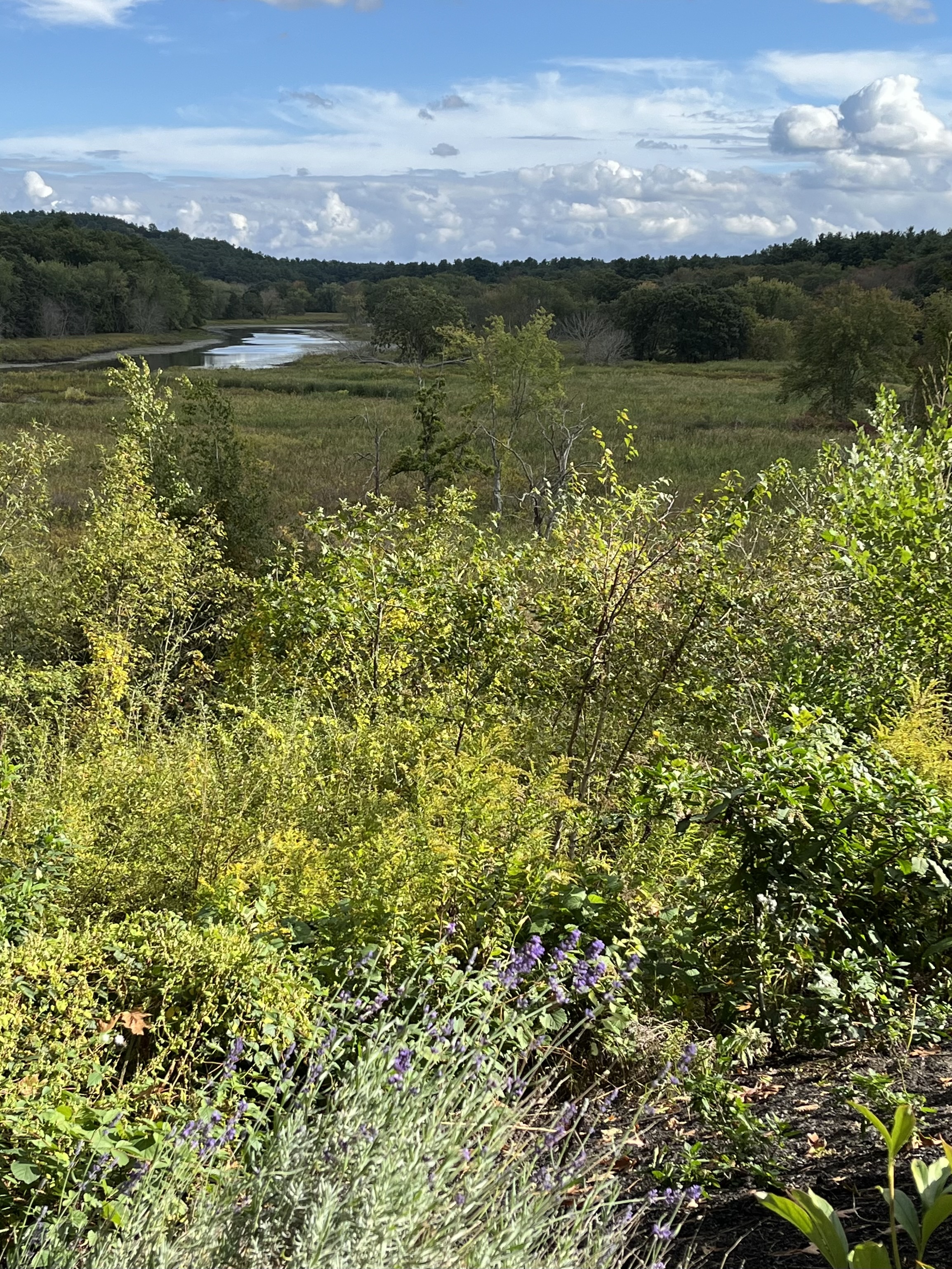
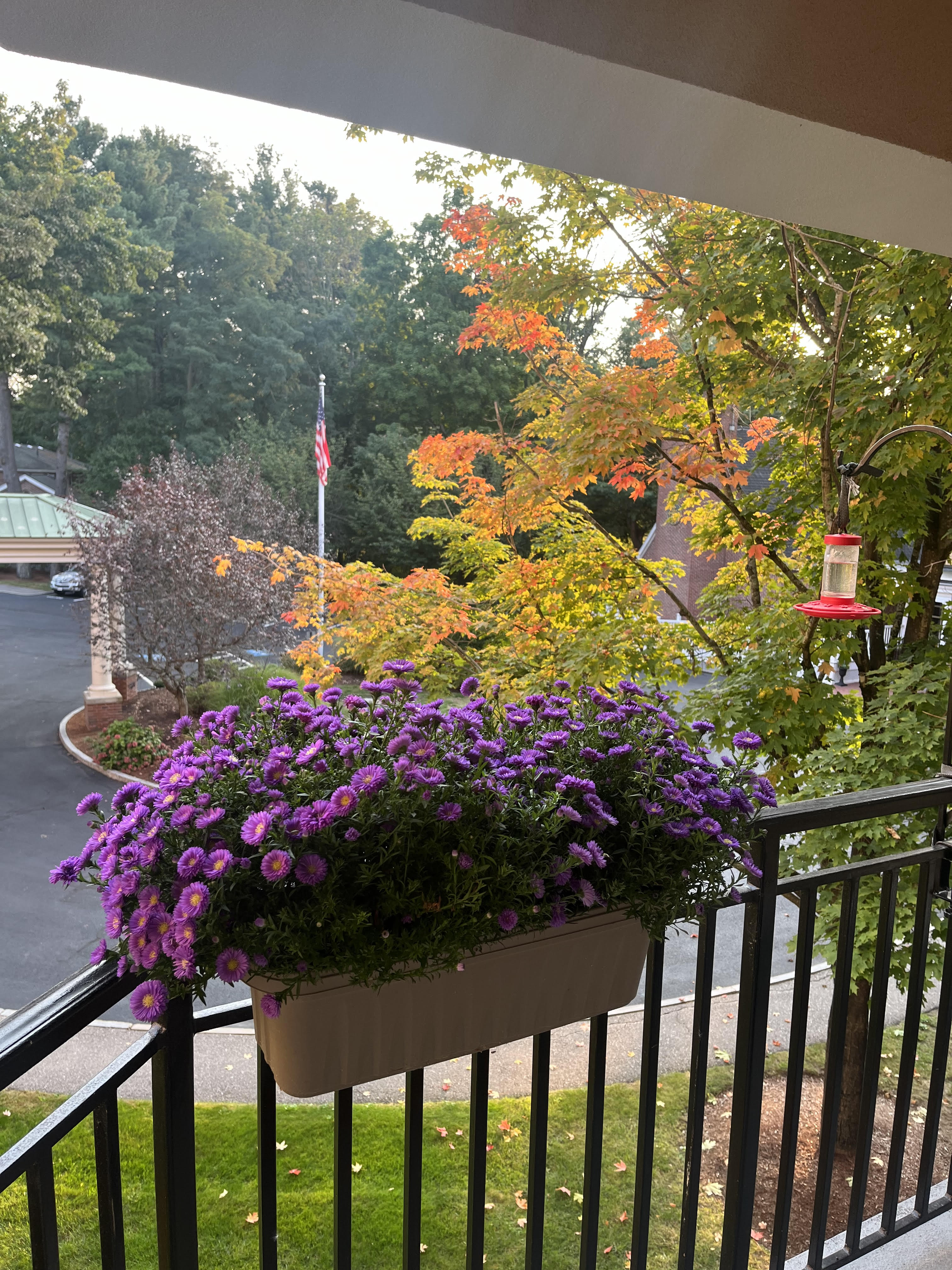
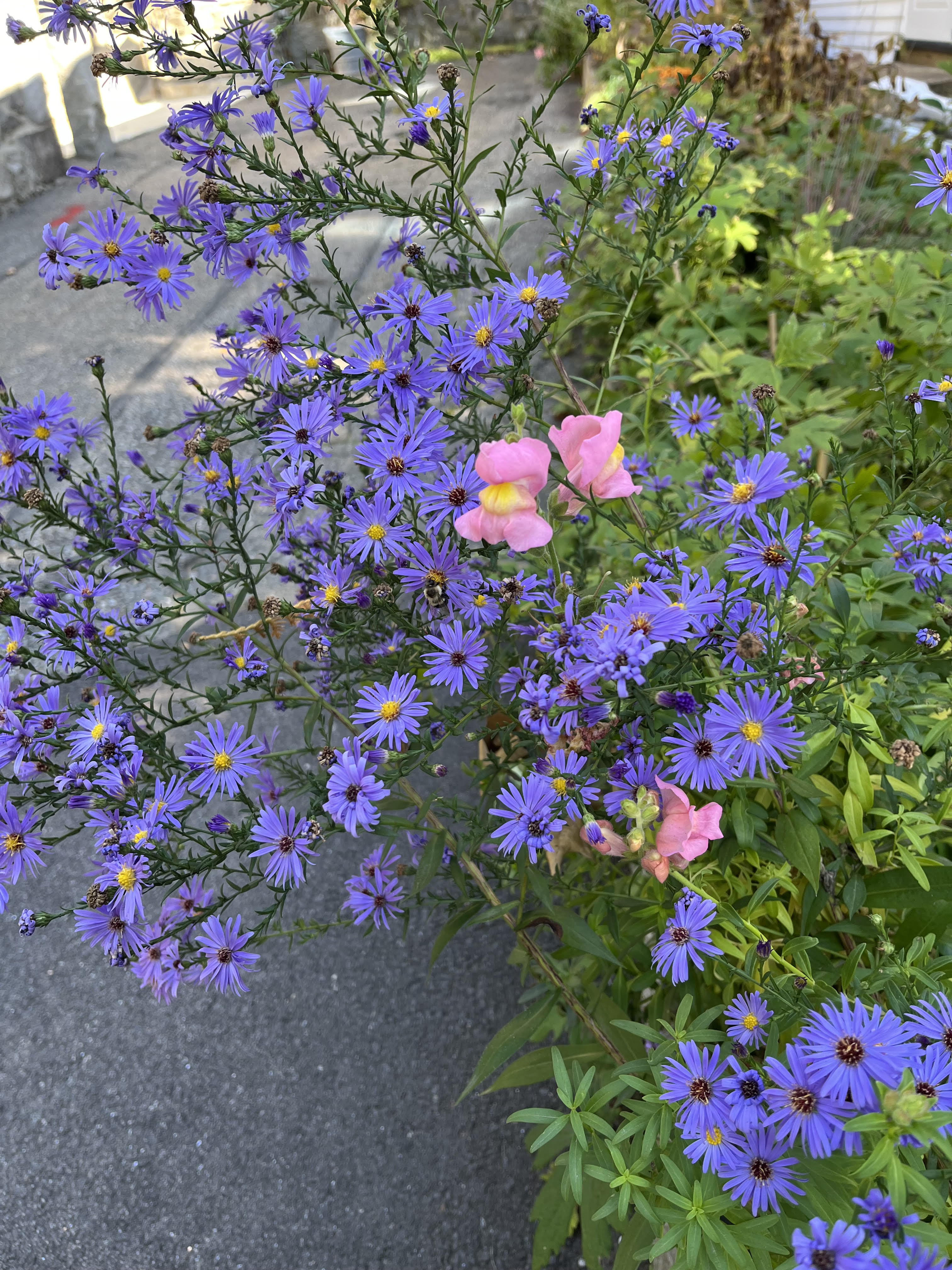
The next photo shows the dry Sudbury River out back of our retirement community. The asters on our balcony did not last long, but the asters in the wild flourished weeks after ours were all brown.
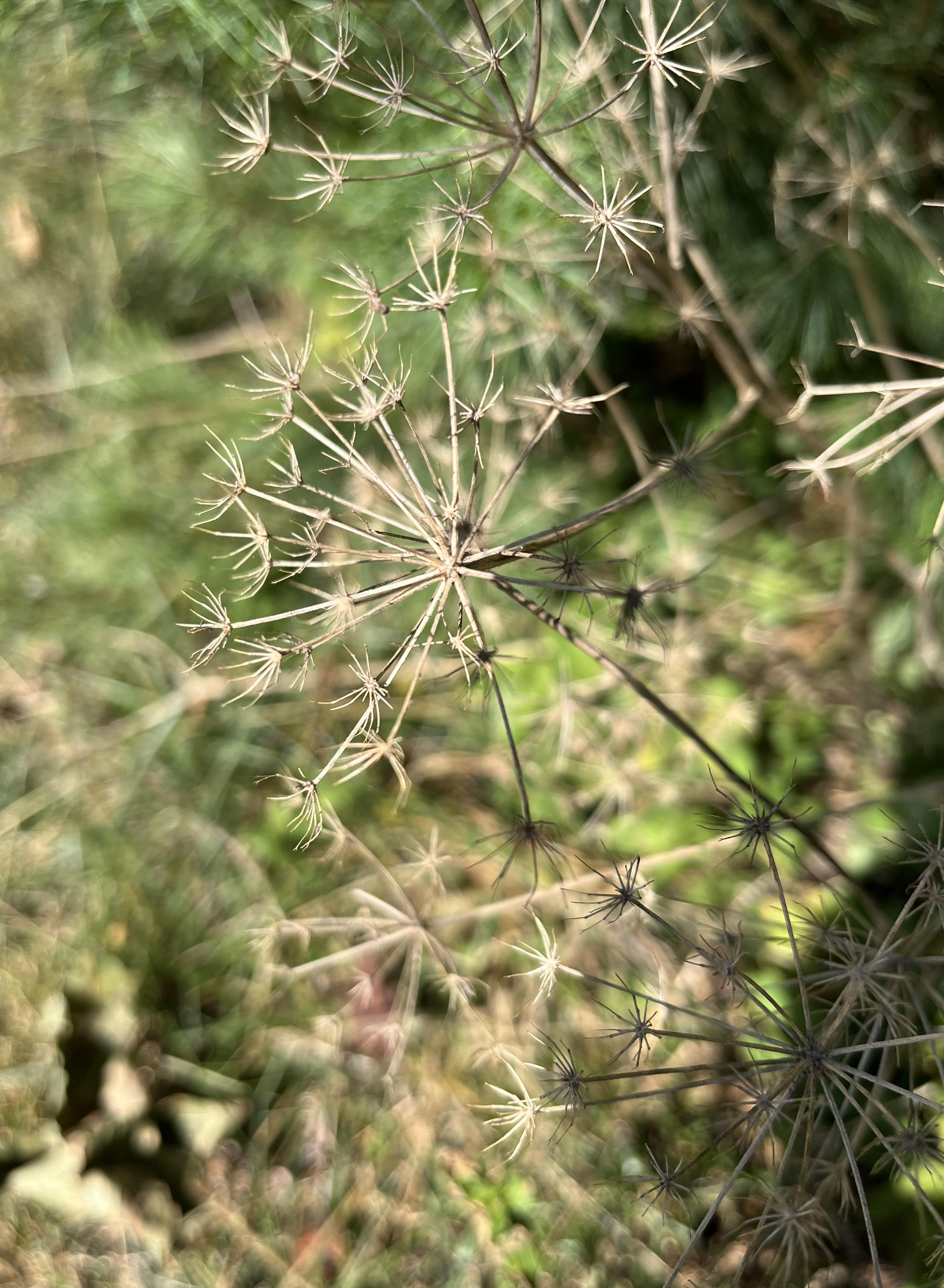
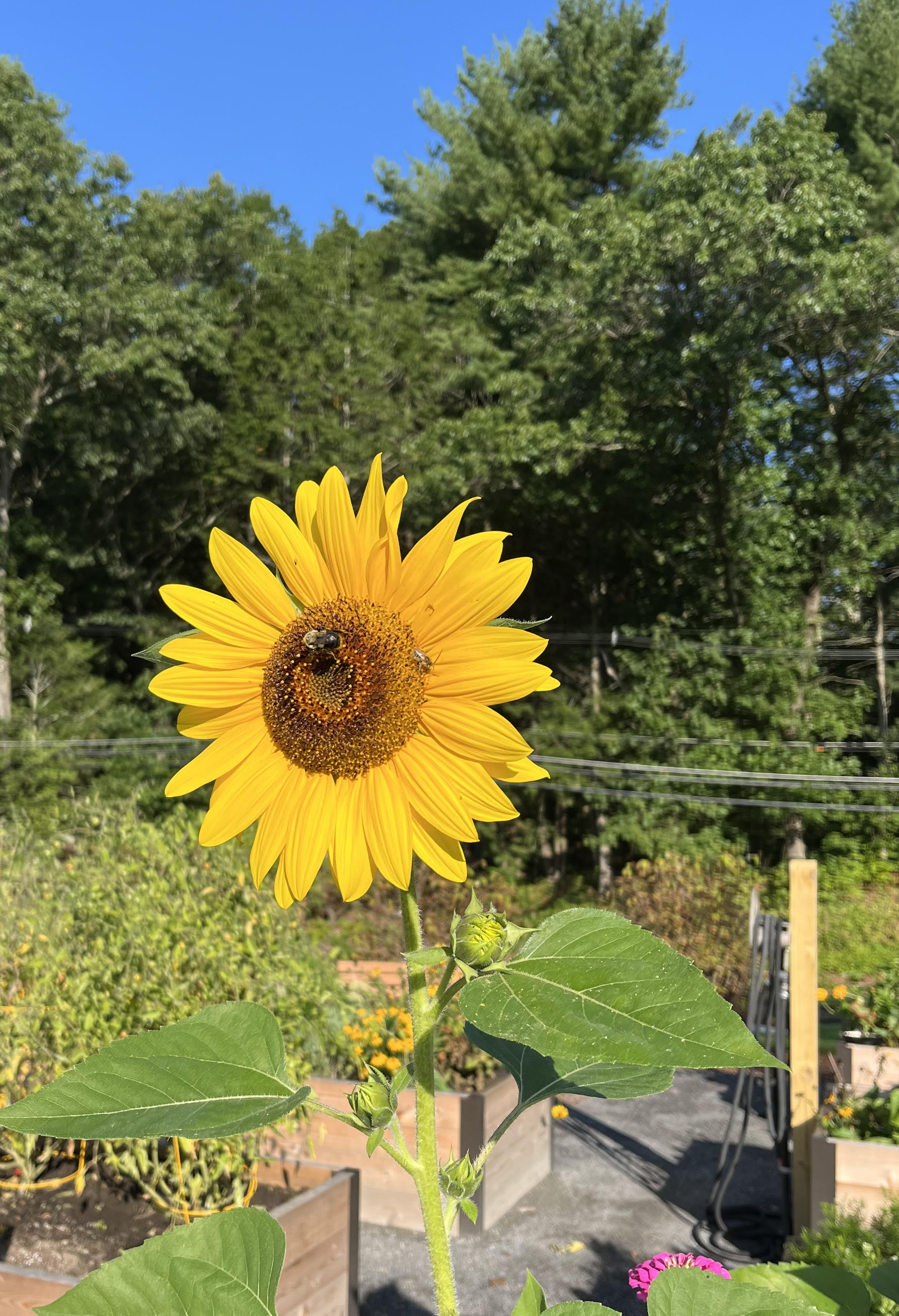
I liked the starlike effect of a dried weed. My PictureThis app says it’s a wild carrot. Next I show bittersweet. You can understand why people picked it for floral displays and wreaths — it’s so pretty. But inadvertently, they spread the seeds and it became a plague. Next is a bee, drunk on sunflower nectar.
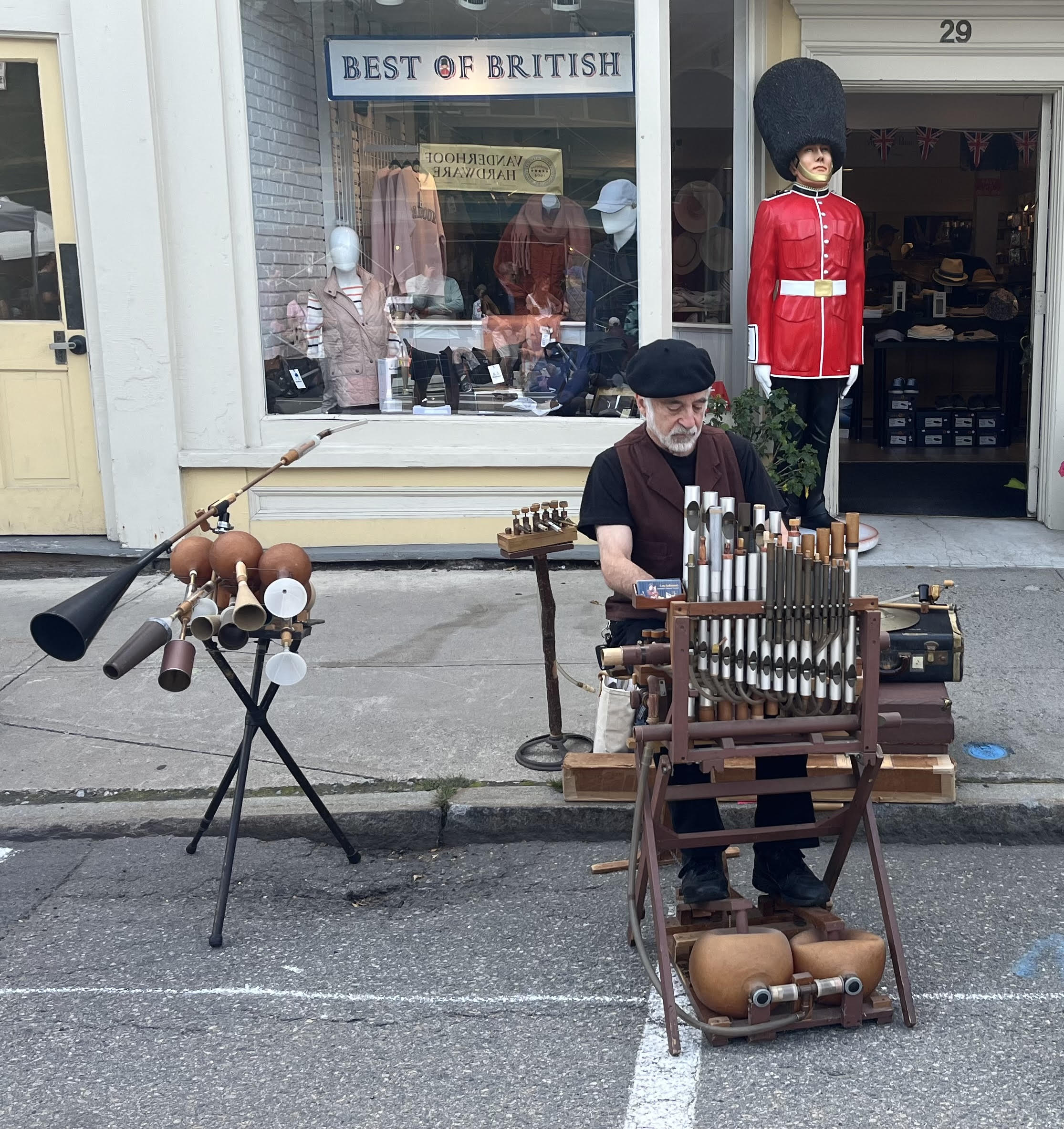
Musician Len Solomon plays his homemade pipe organ in front of the British shop at our town’s harvest market. Nowadays Americans love the British. We stopped shooting at them from behind stone walls.
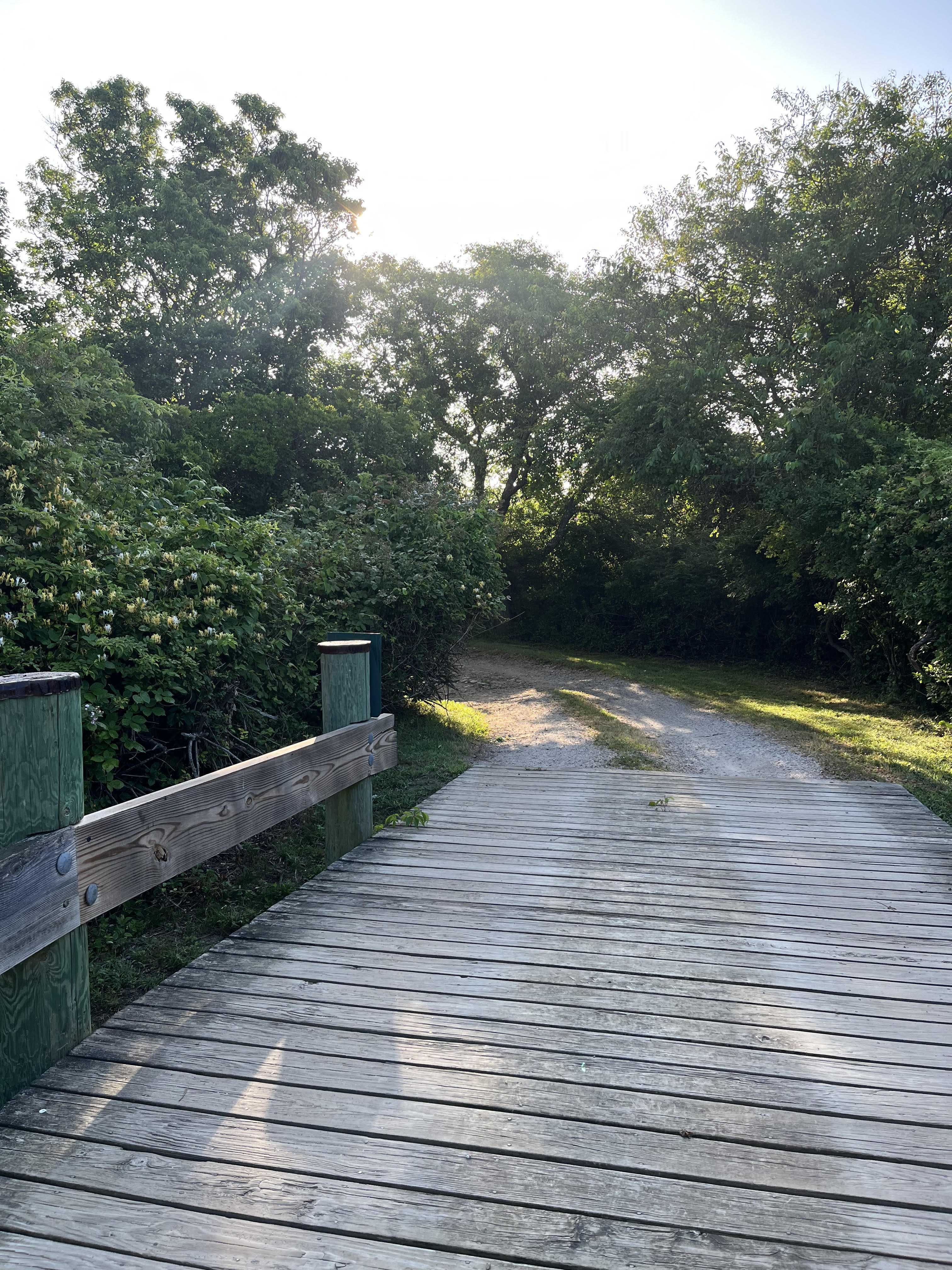
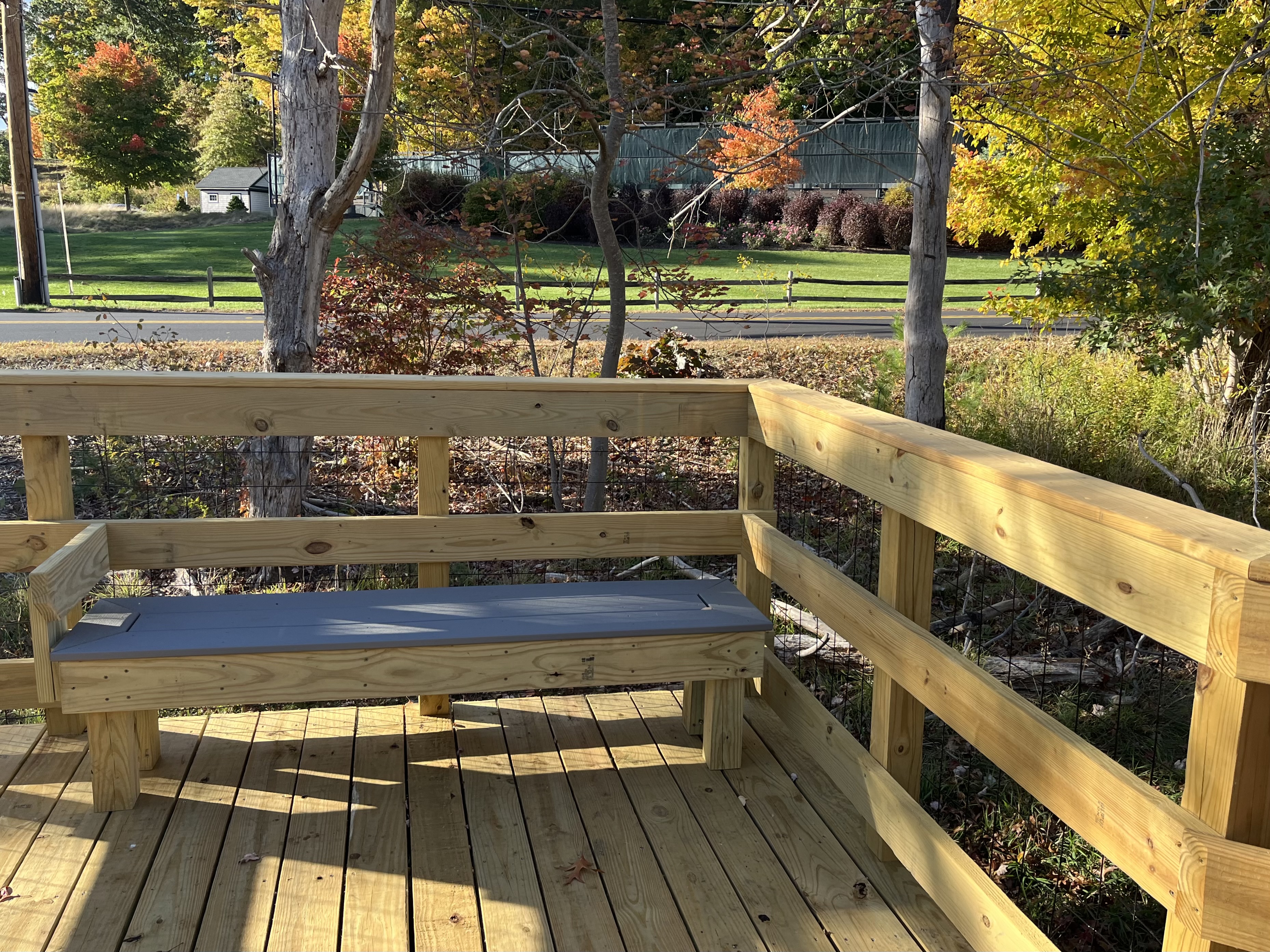
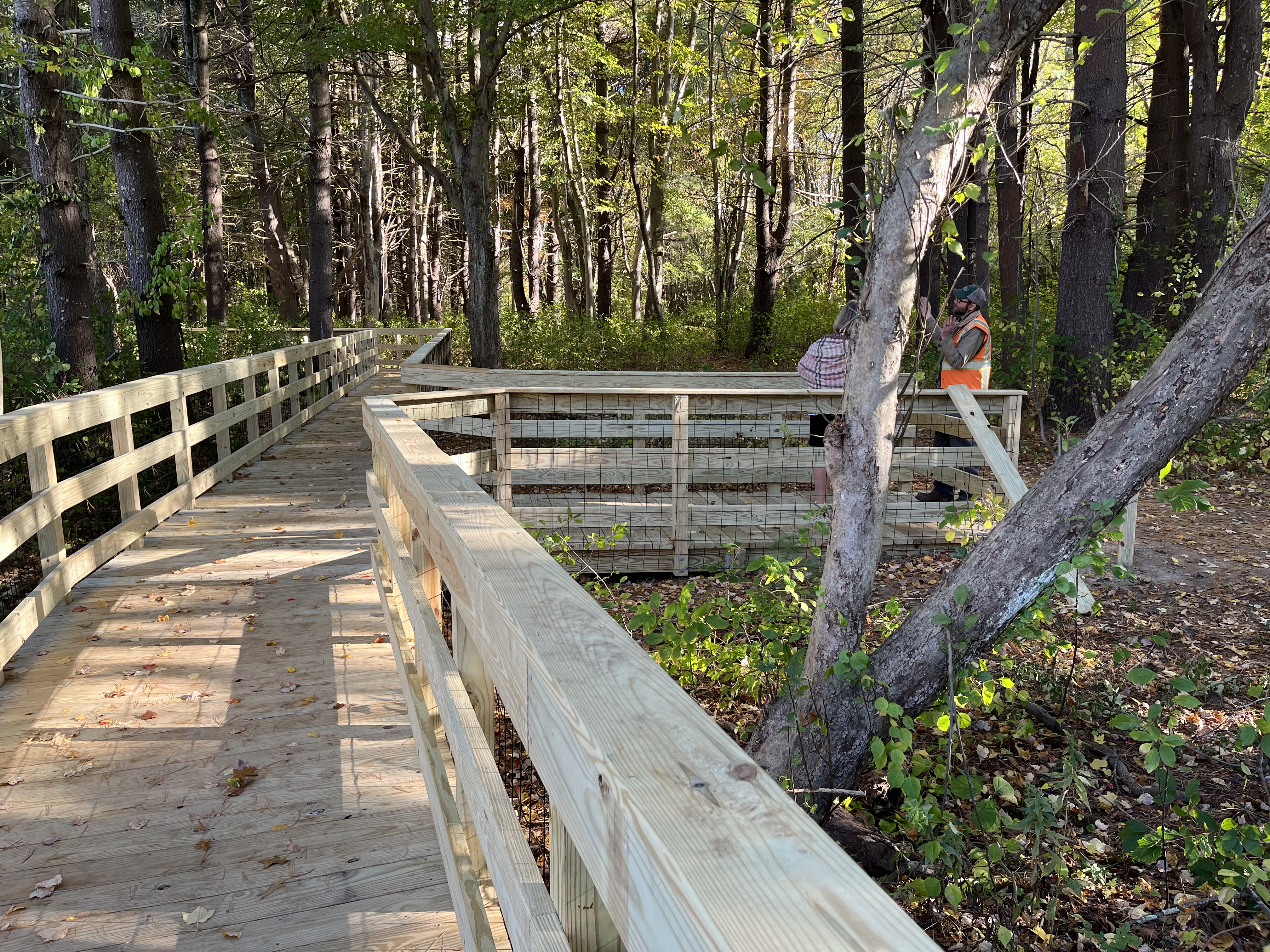
There are two photos of the new boardwalk where we live. Everyone was excited for the opening. The path accommodates wheelchairs.
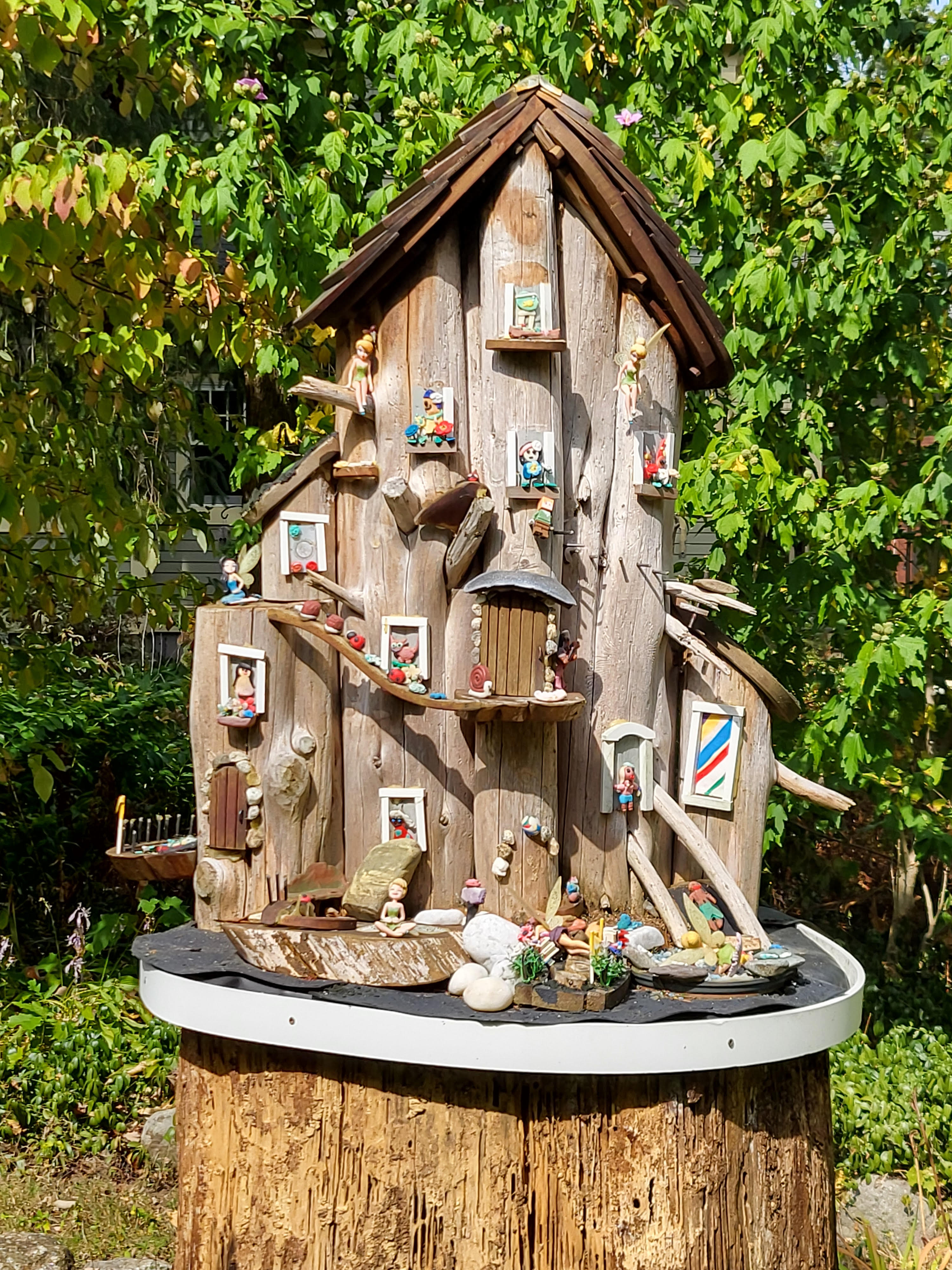
Kristina Joyce took the picture of the little house Ralph Shaner built for his grandchildren to decorate in the height of the pandemic.
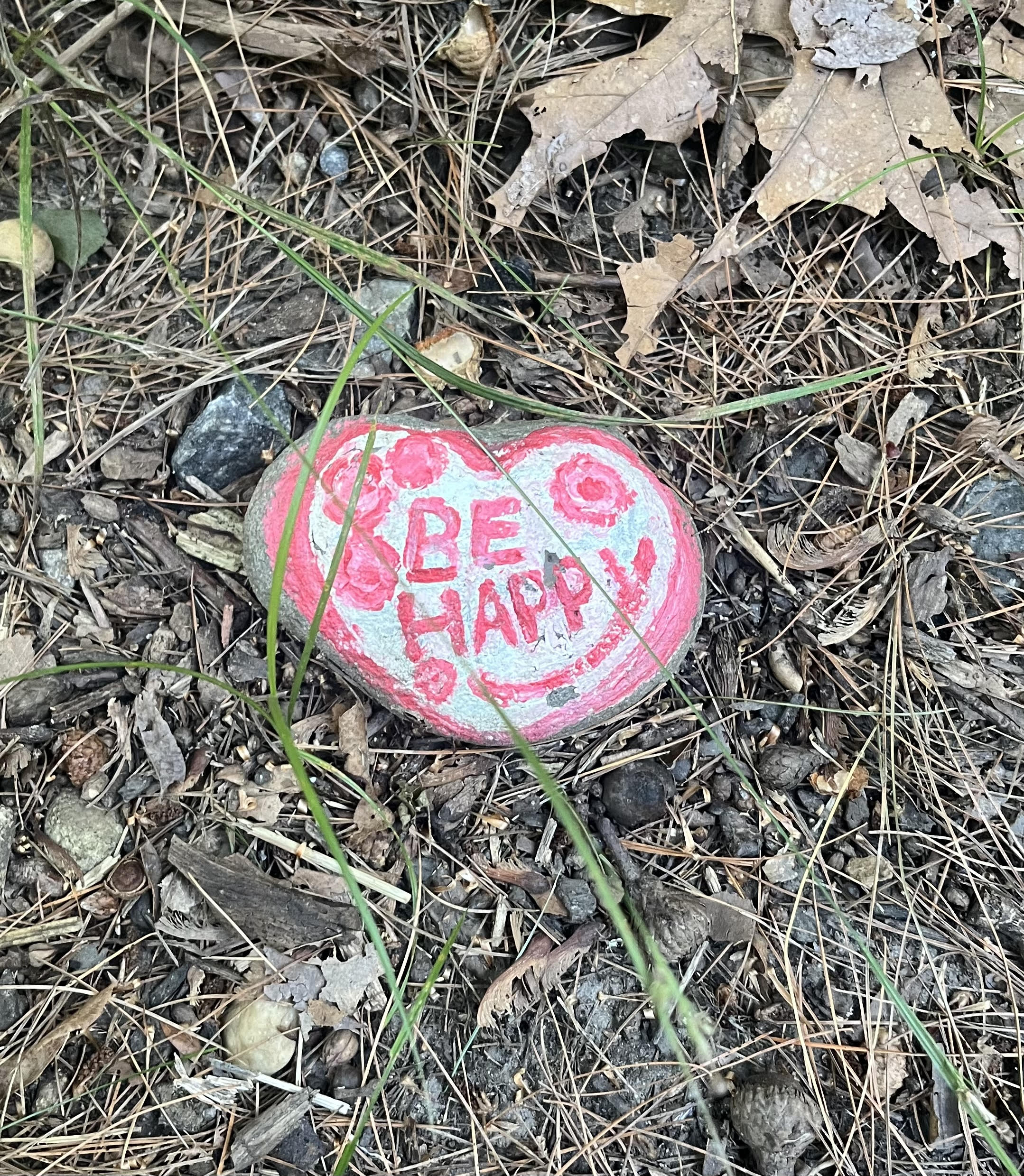
The little painted rock was along a trail in the woods.
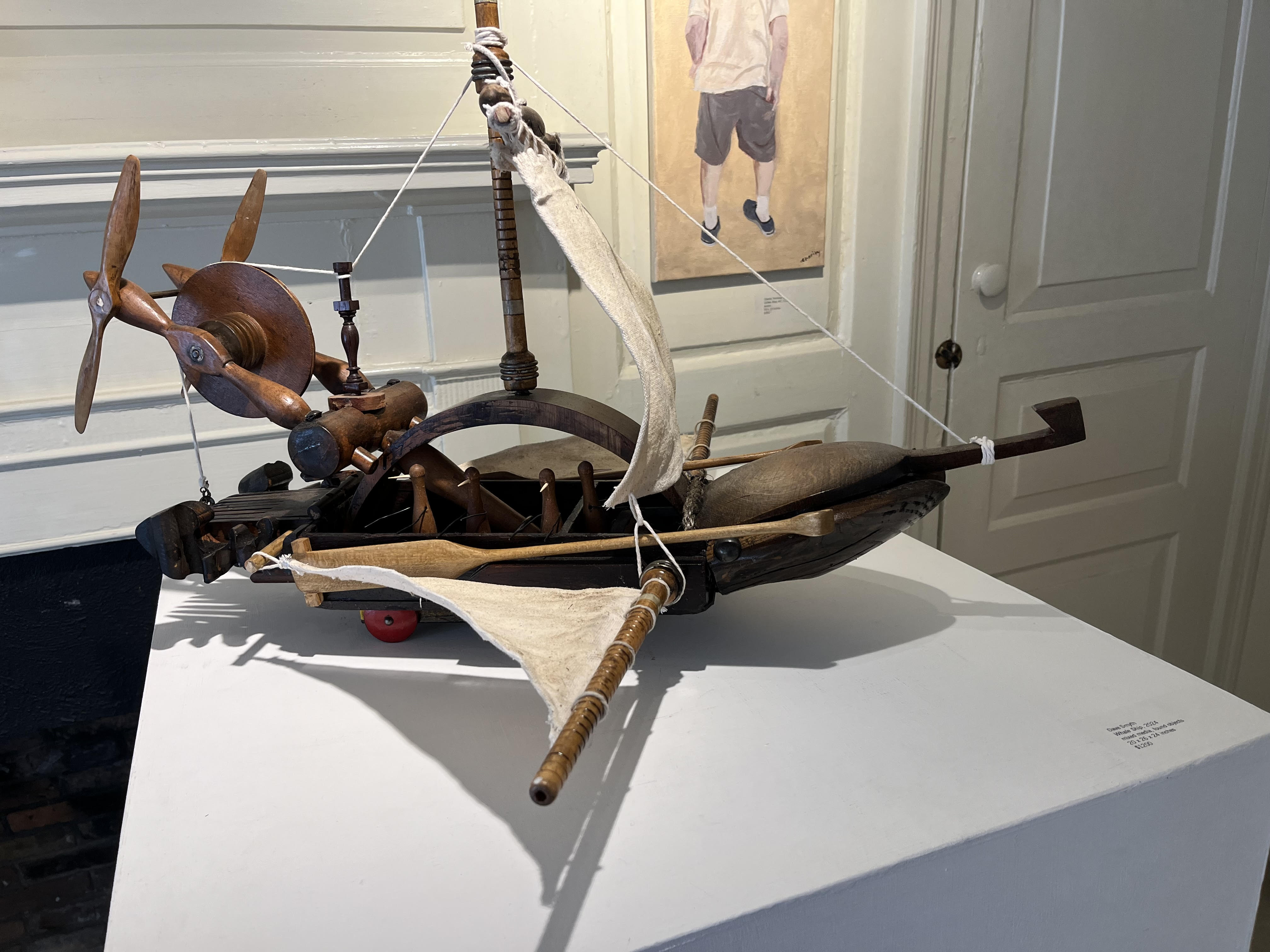
David Smyth created the whale ship for the juried show at Concord Art.
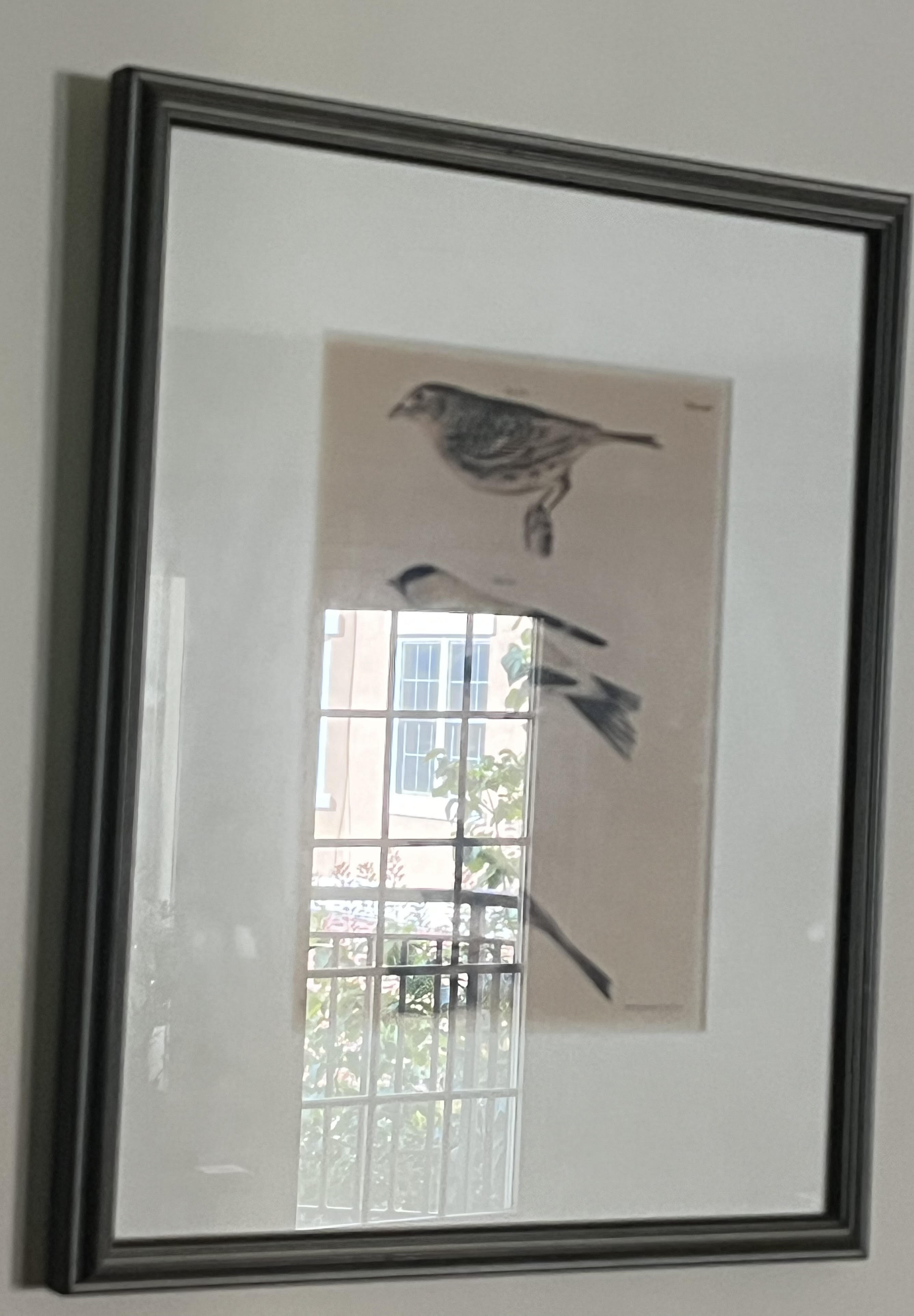
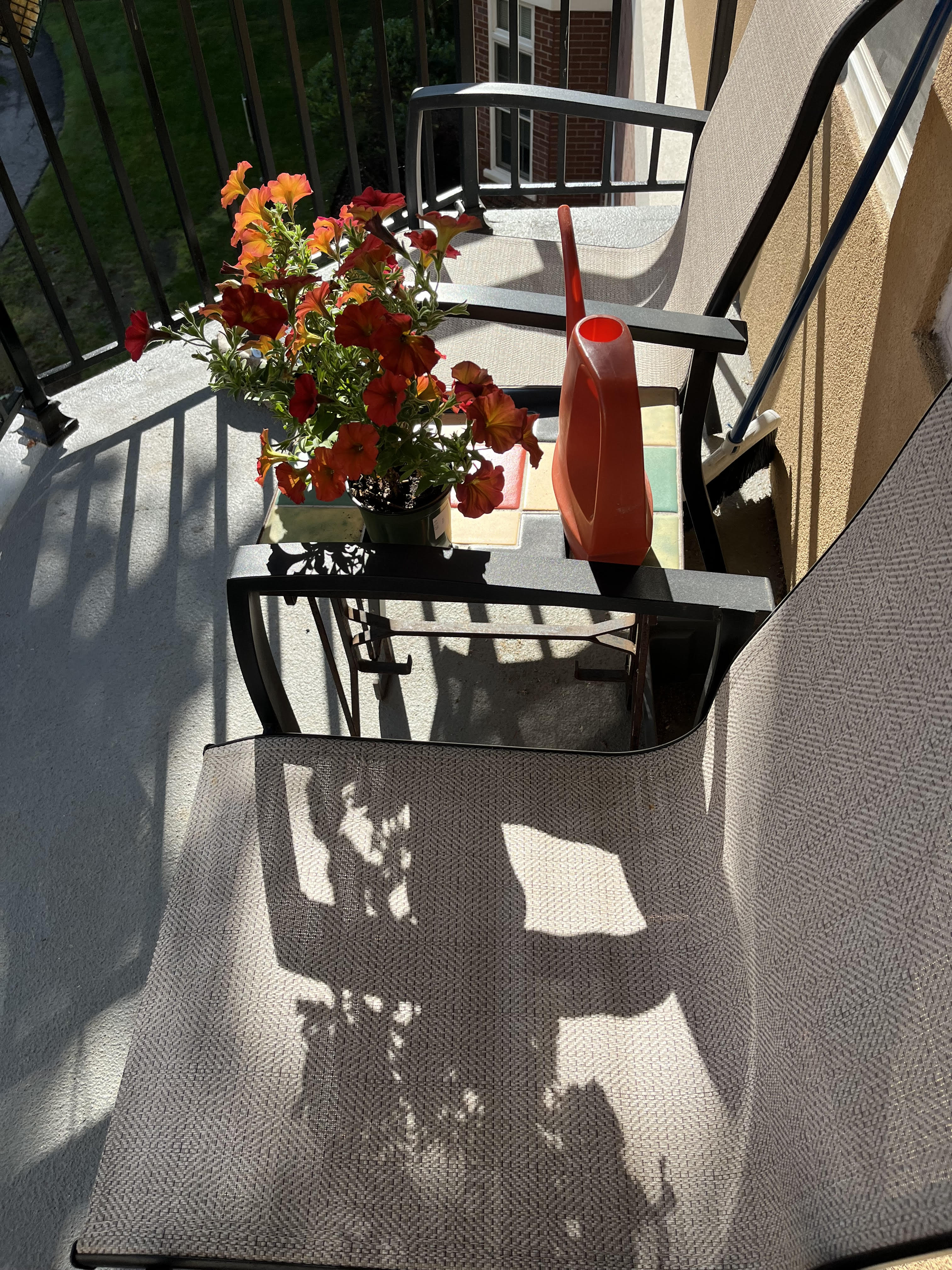
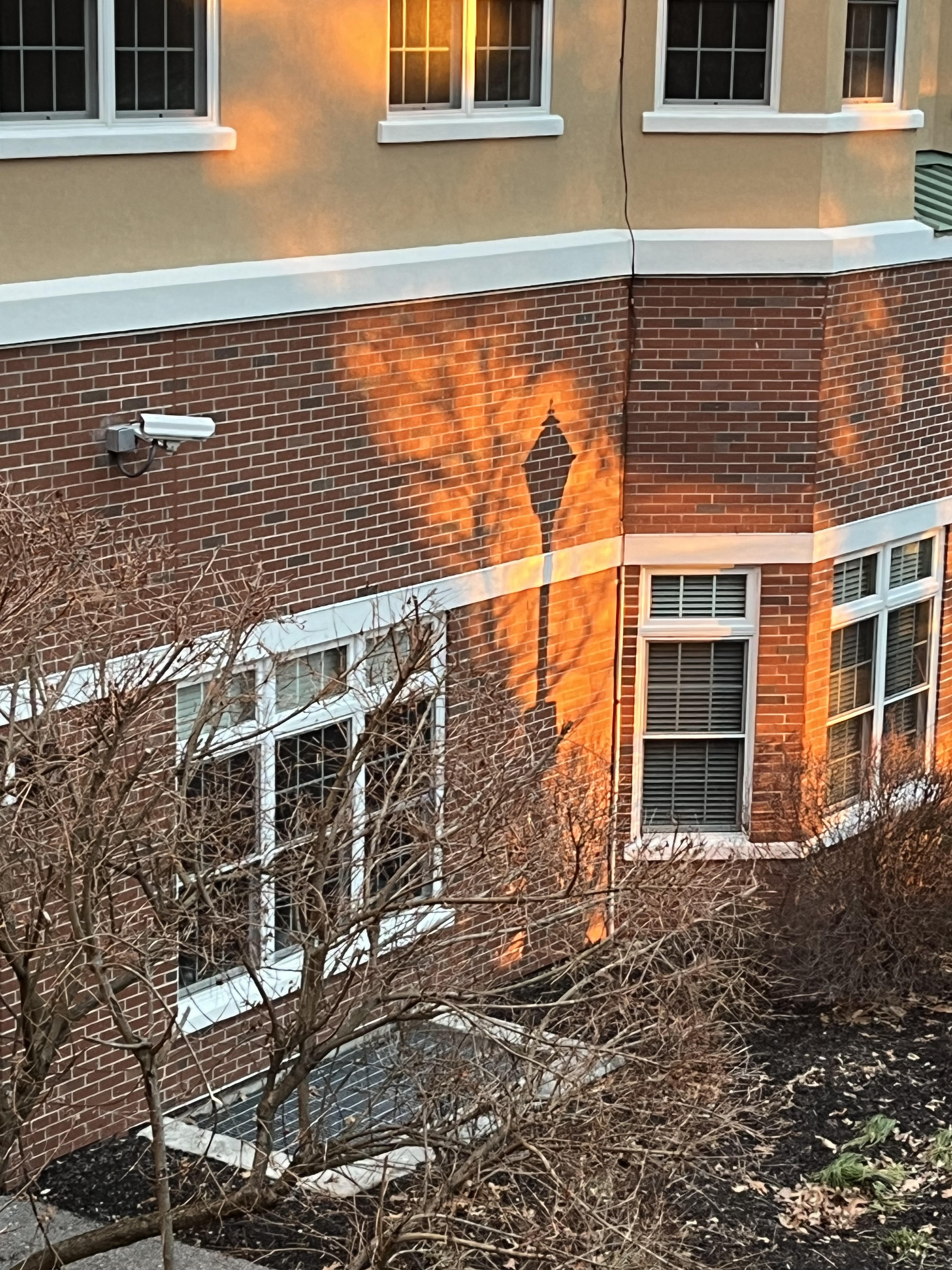
I wind up with a couple of my favorite photographic interests — reflections and shadows.
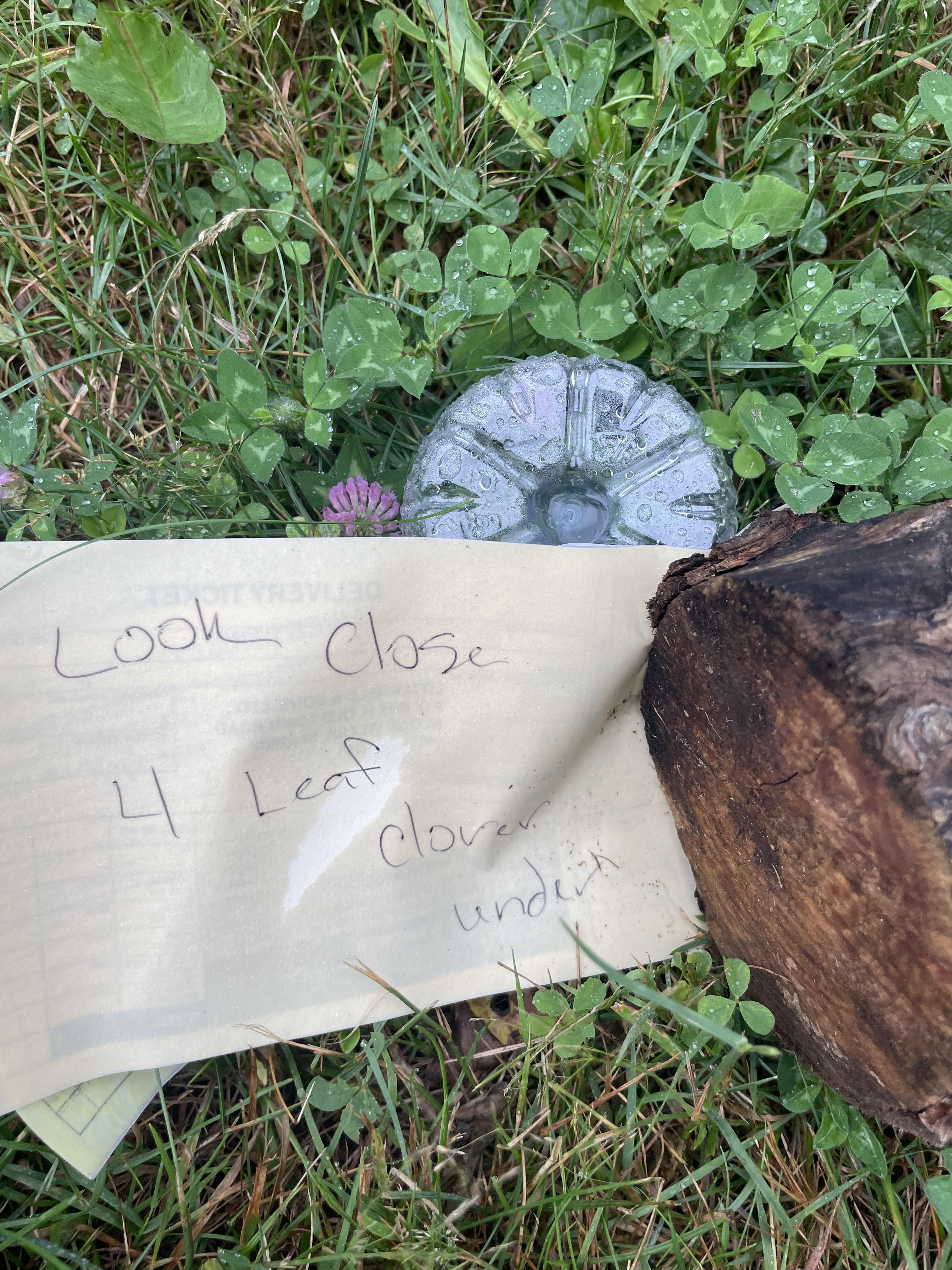
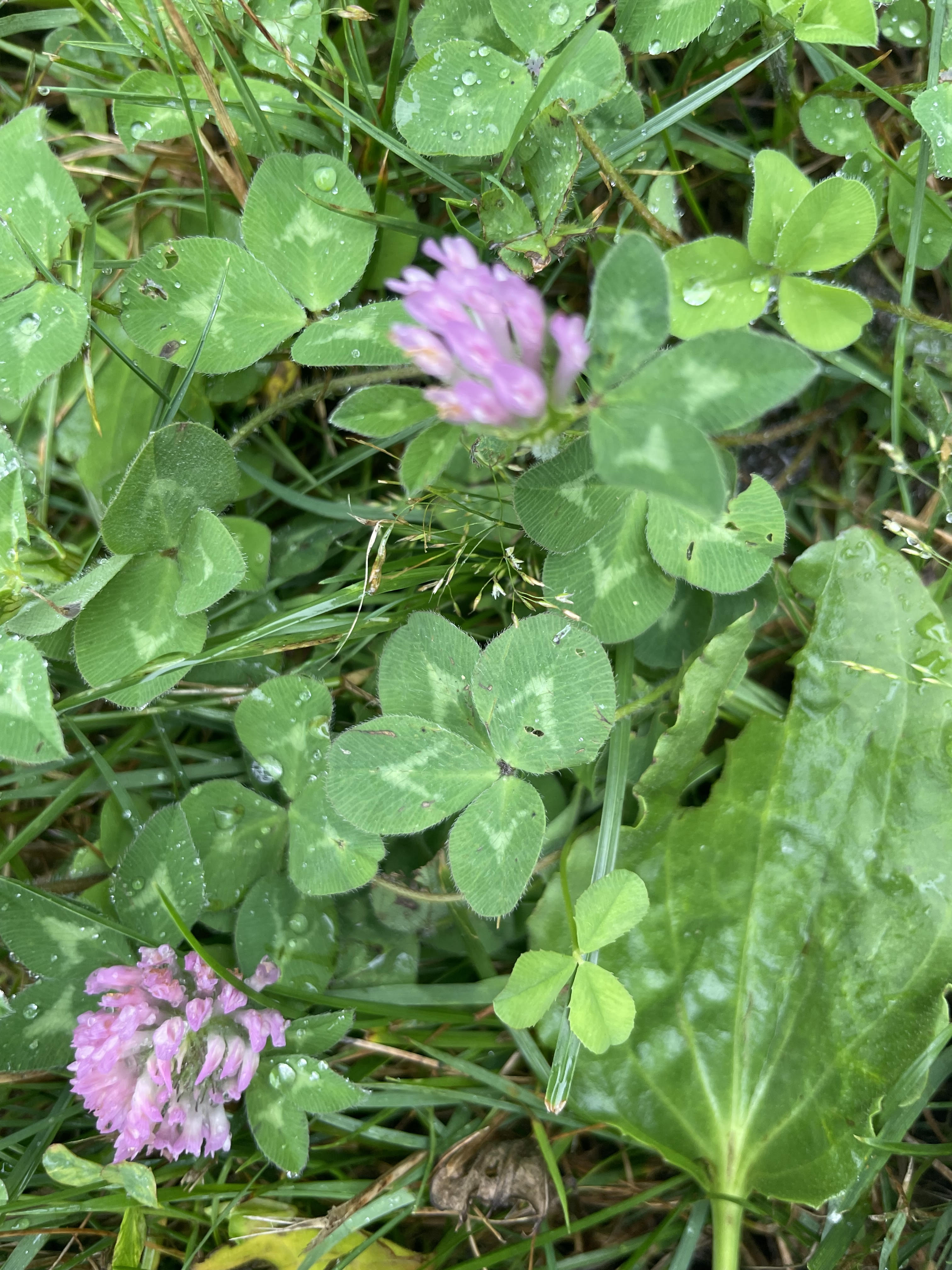
Clover photos: Suzanne. What the propane-delivery guy left for us.
Summer sunshine is always good for photos. And when we haven’t been swimming in a pea-soup fog here, we’ve had beautiful sunshine. A few of today’s photos have little stories that go with them, too.
Here’s one. In New Shoreham, we still need propane. The person who delivered our last tank somehow noticed a four-leaf-clover in the grass by the garage. When we came back from wherever we were that day, we found a note and a small display under a piece of plastic bottle. How amazing is that? I called the propane company to say thank you.
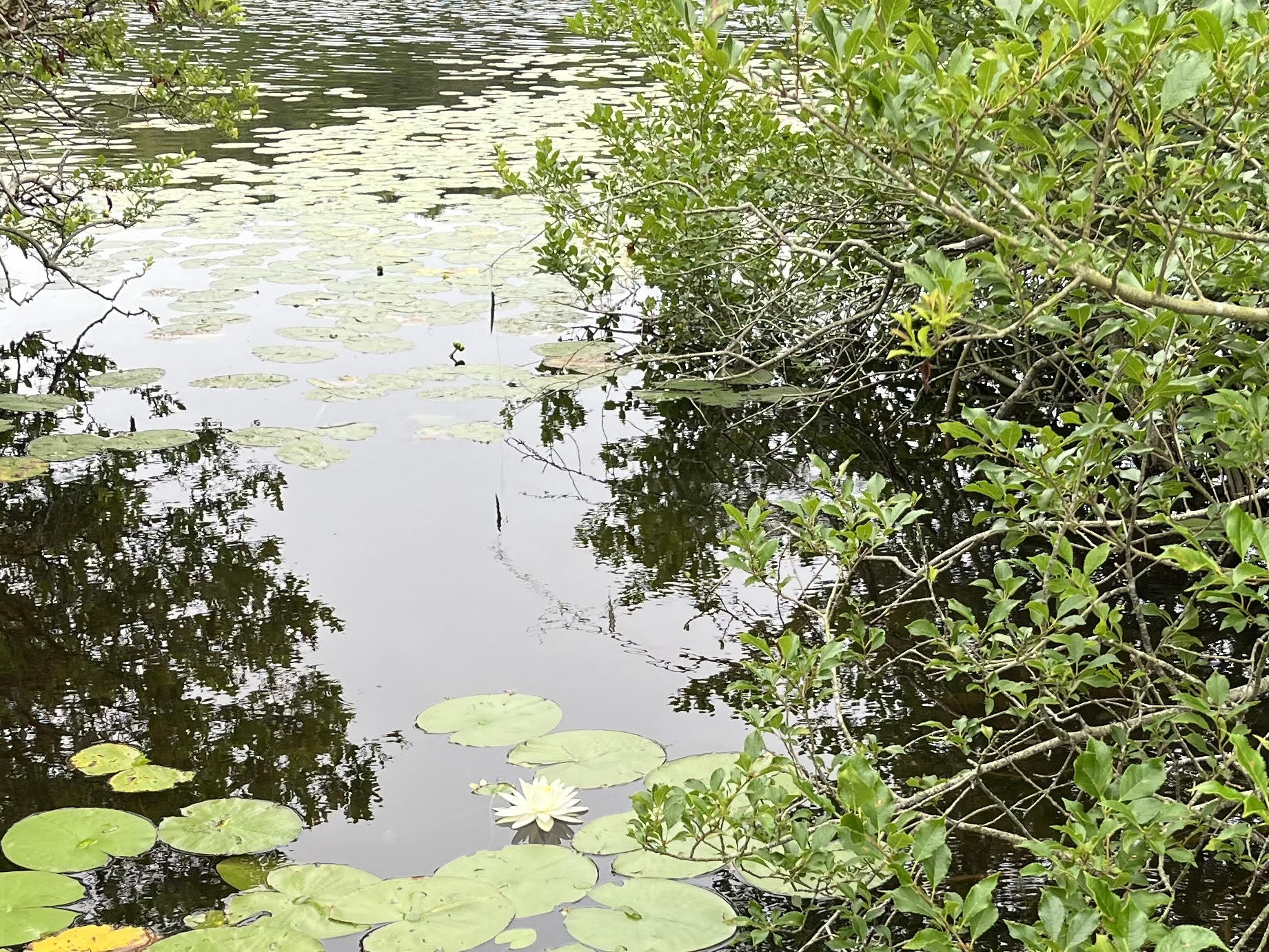
Water lilies are still the flower for July despite the changes to our climate.
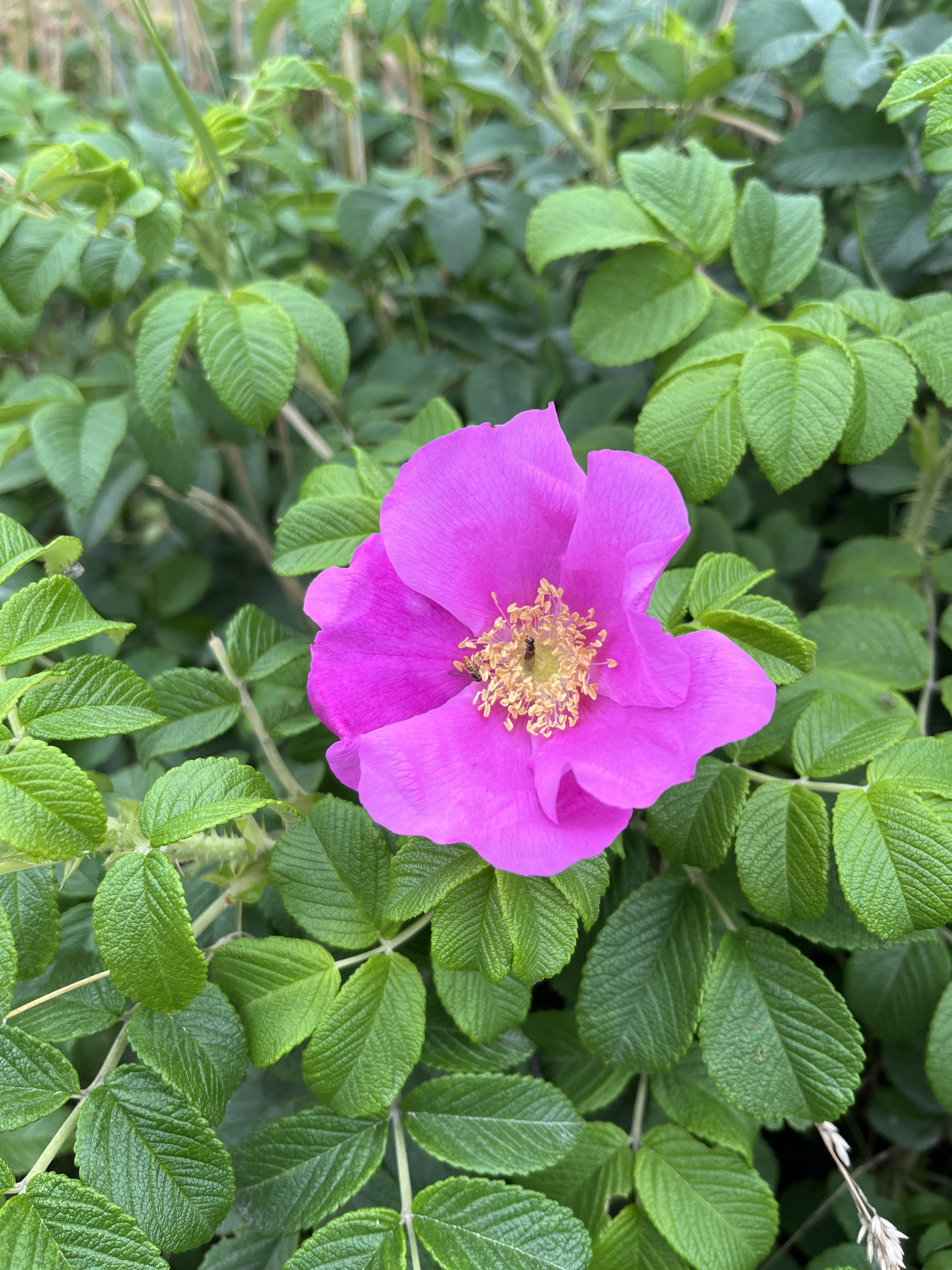
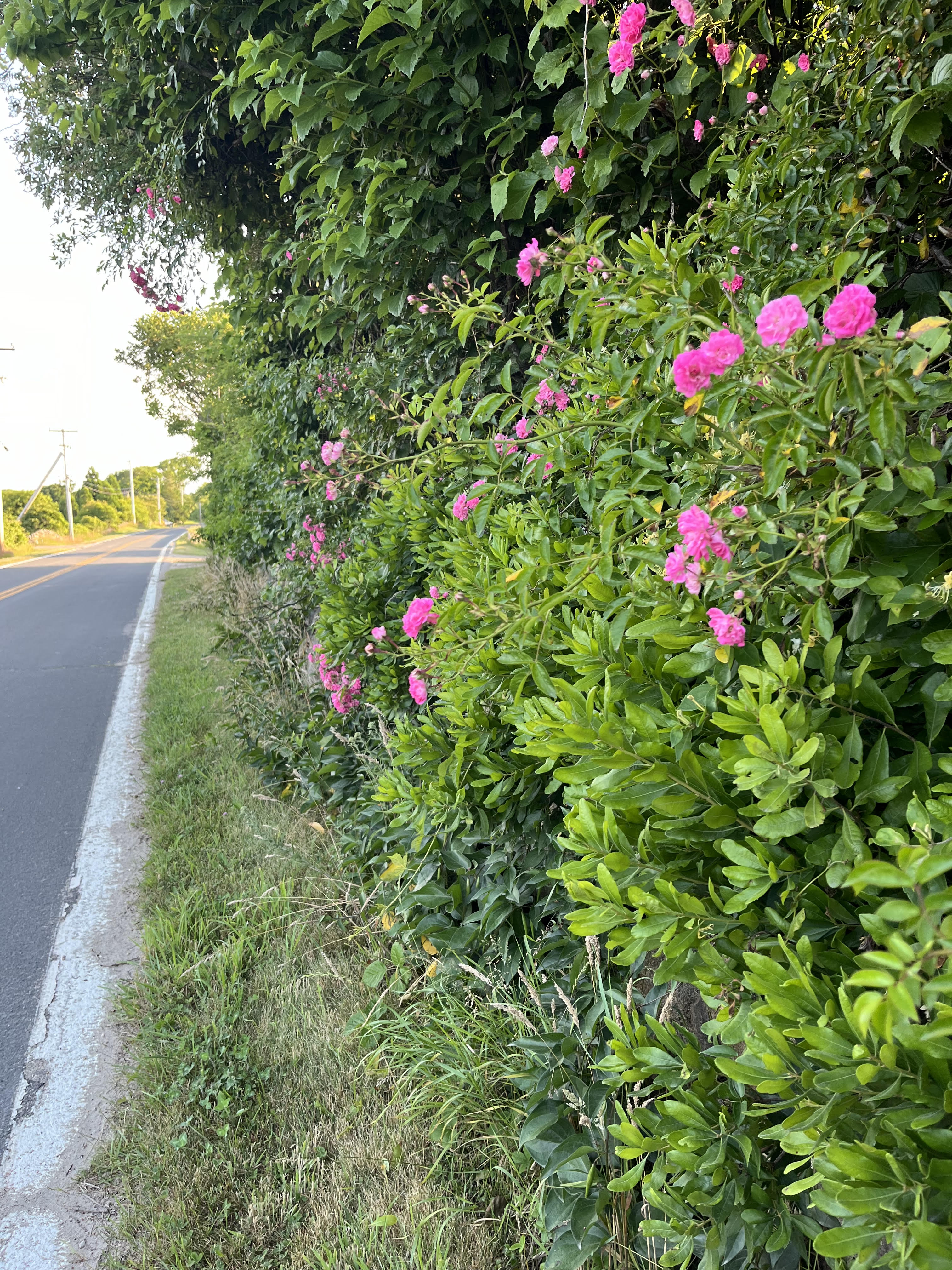
Rosa Rugosa grows everywhere. Also this other wild rose. My app calls that one a China rose.
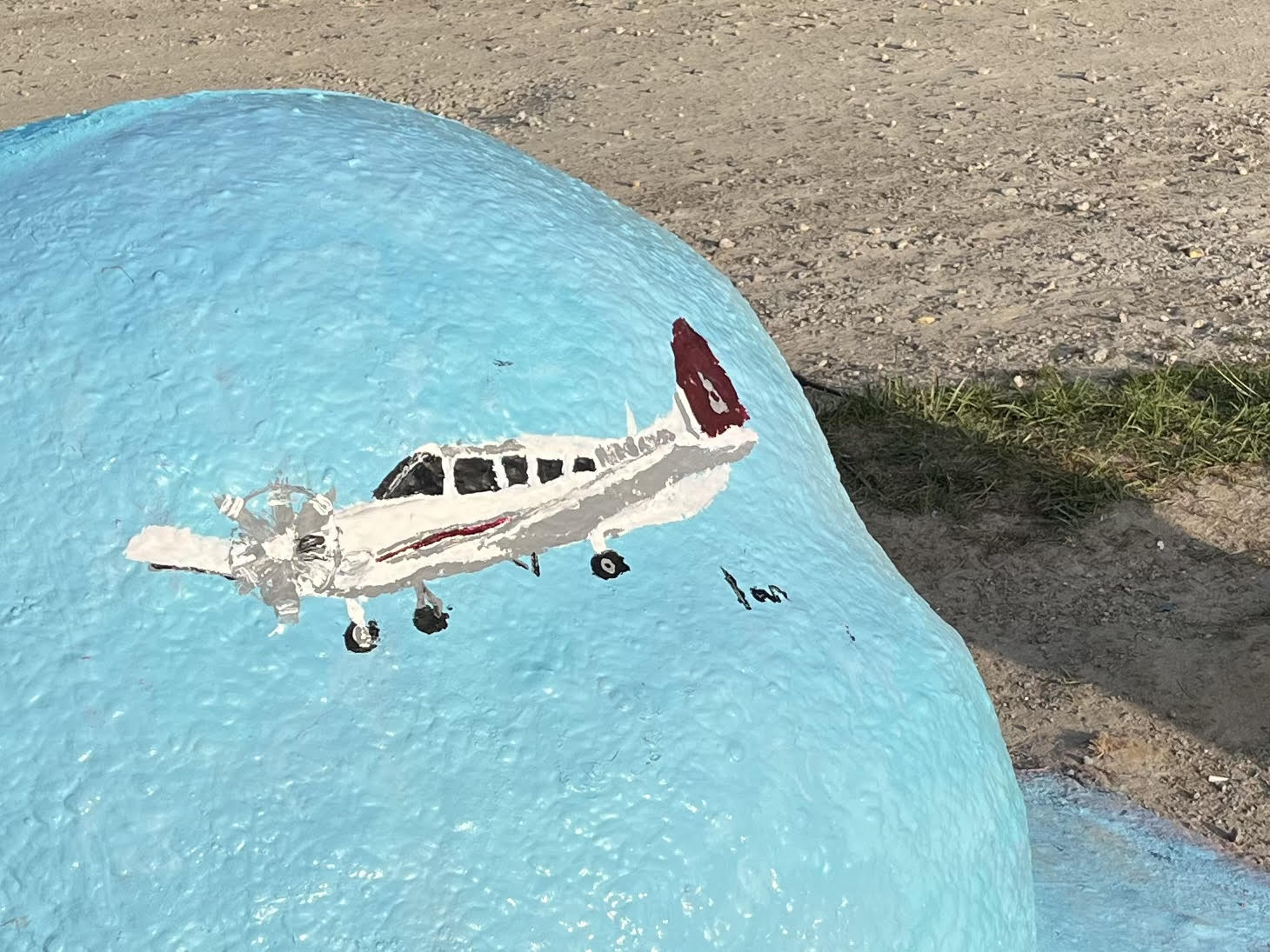
Next is the Painted Rock, a path to the bluffs, the eroding bluffs, a cactus (What? In New England?), and one granddaughter’s concept of a modern hotel. She tells me that there is a village in this hotel and a park with trees on top.
Midsommar arrived with a heat wave in these parts, and now it’s summer. I decided to round up some things that caught my eye in spring before I start shooting summer.
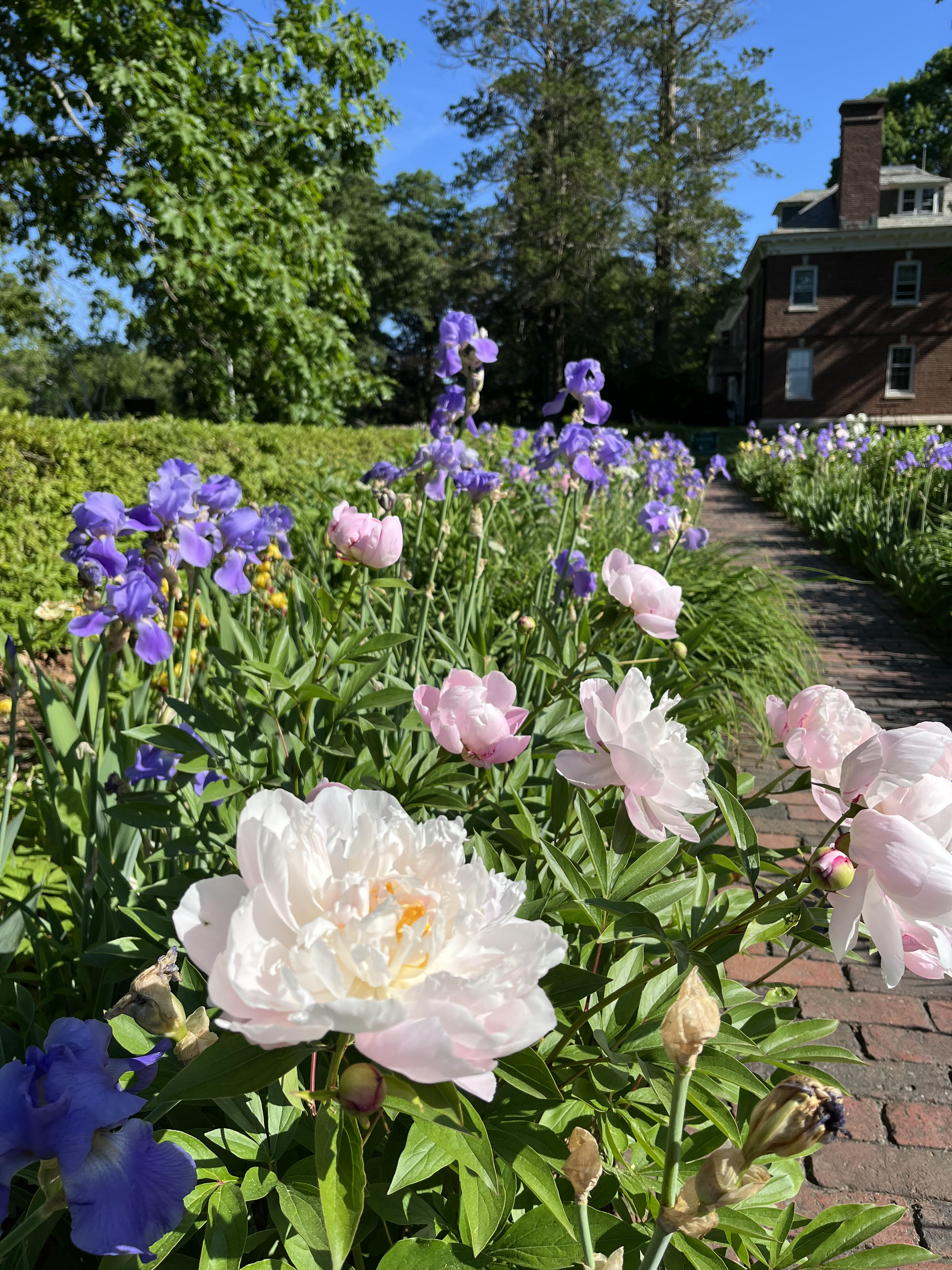
Above is a Minuteman Park garden at the Buttrick House, featuring iris and peonies.
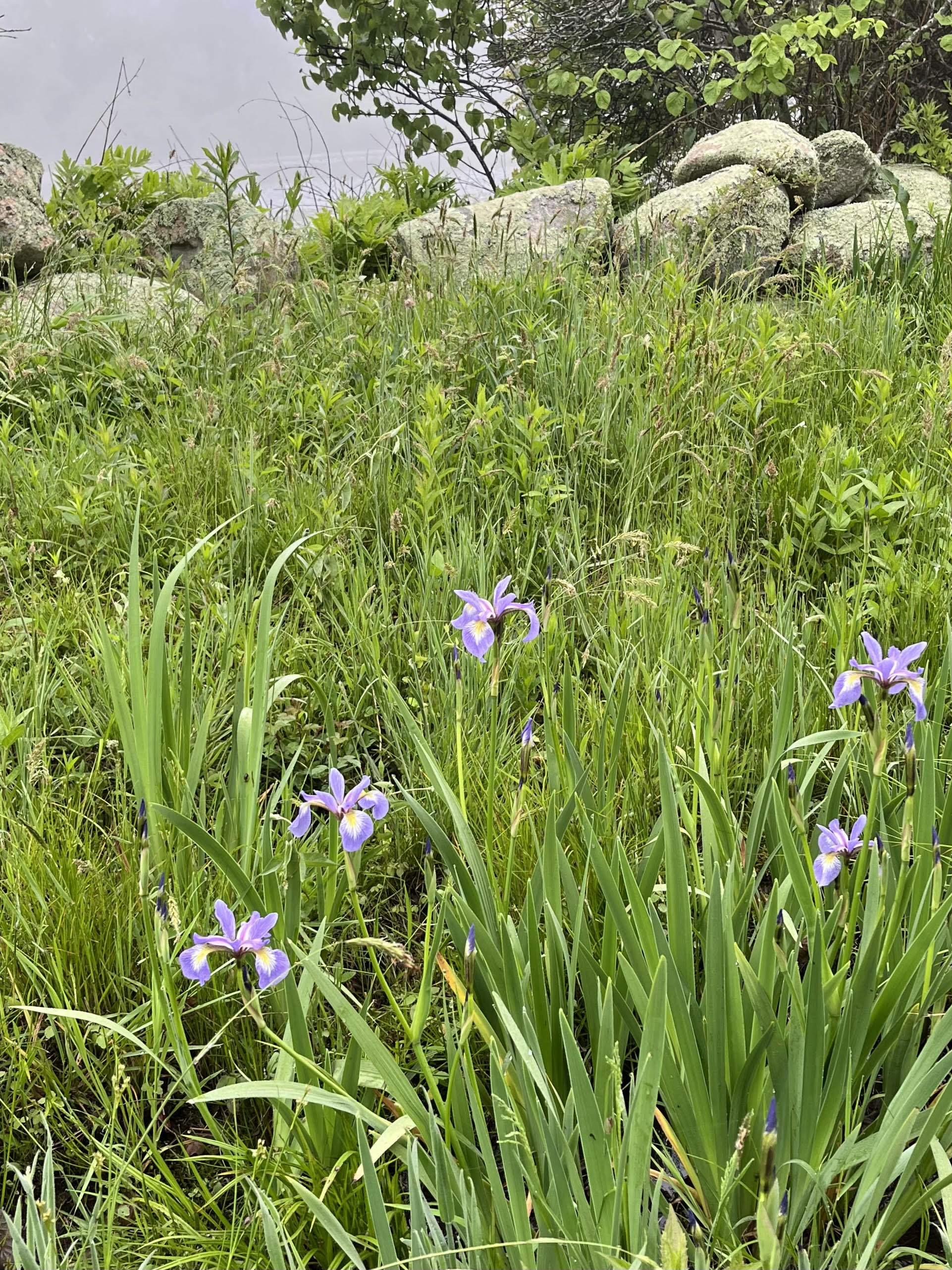
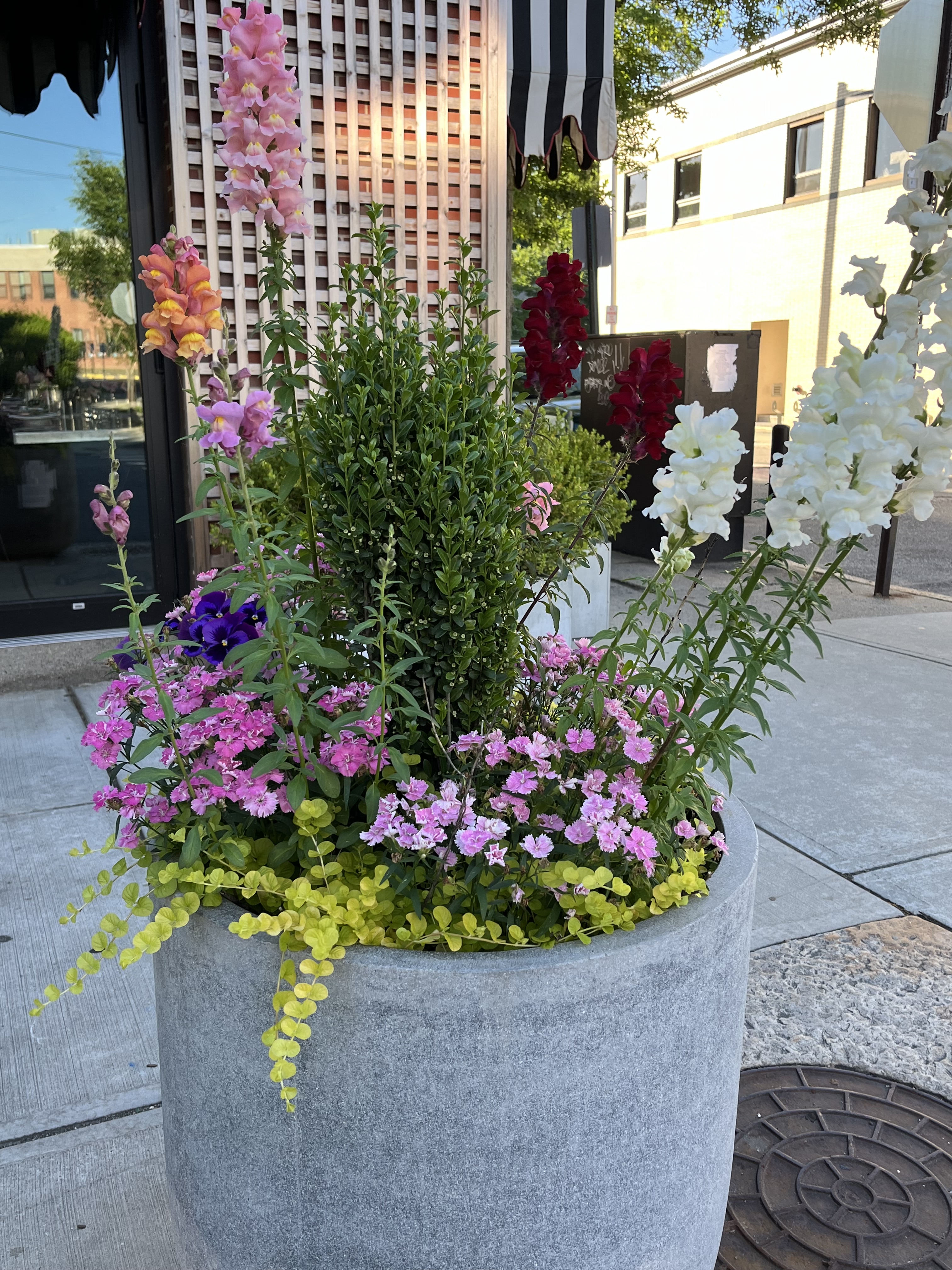
Wild iris bloom near a New Shoreham pond, and a flowery display decorates Wayland Avenue in Providence.
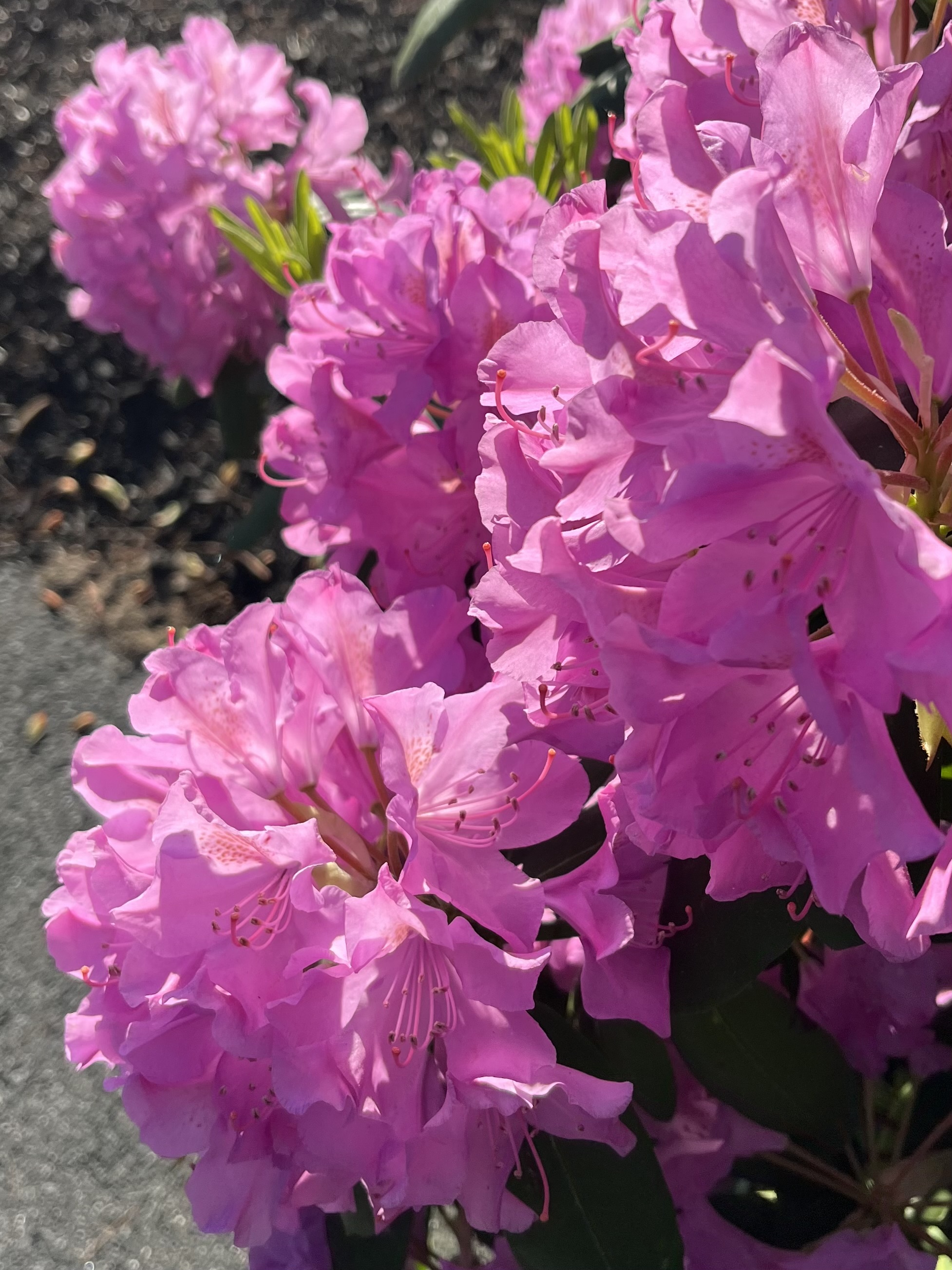
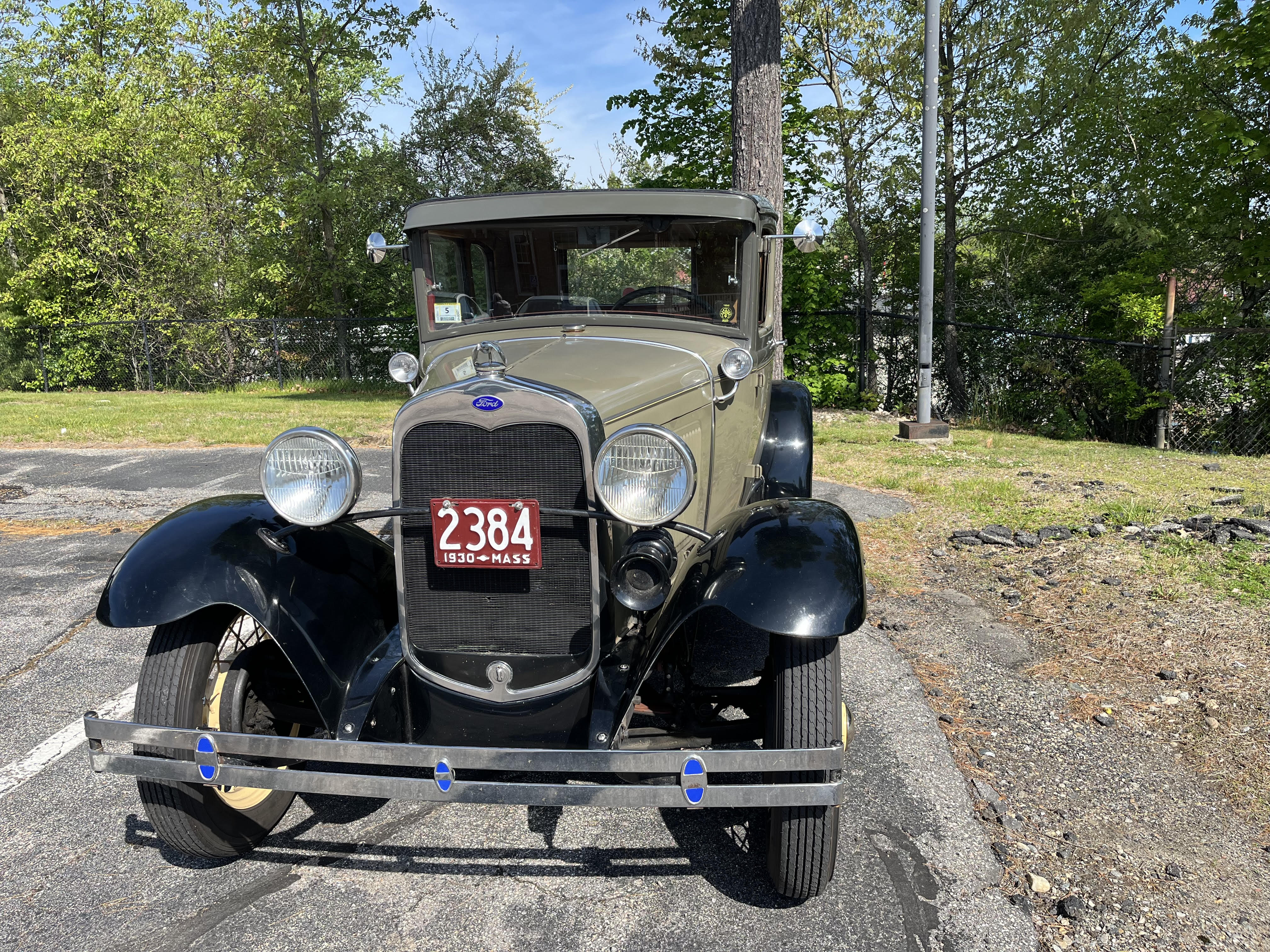
Rhododendrons on my early morning walk. The North Bridge in Concord. A well-loved antique car.
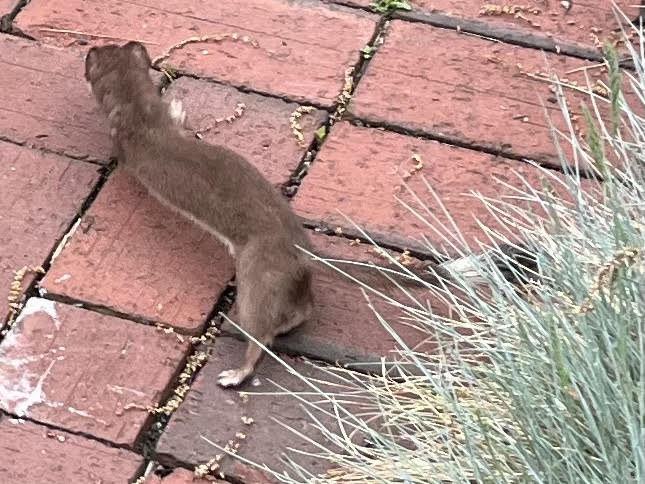
A weasel on the terrace at my retirement community — lots of excitement.
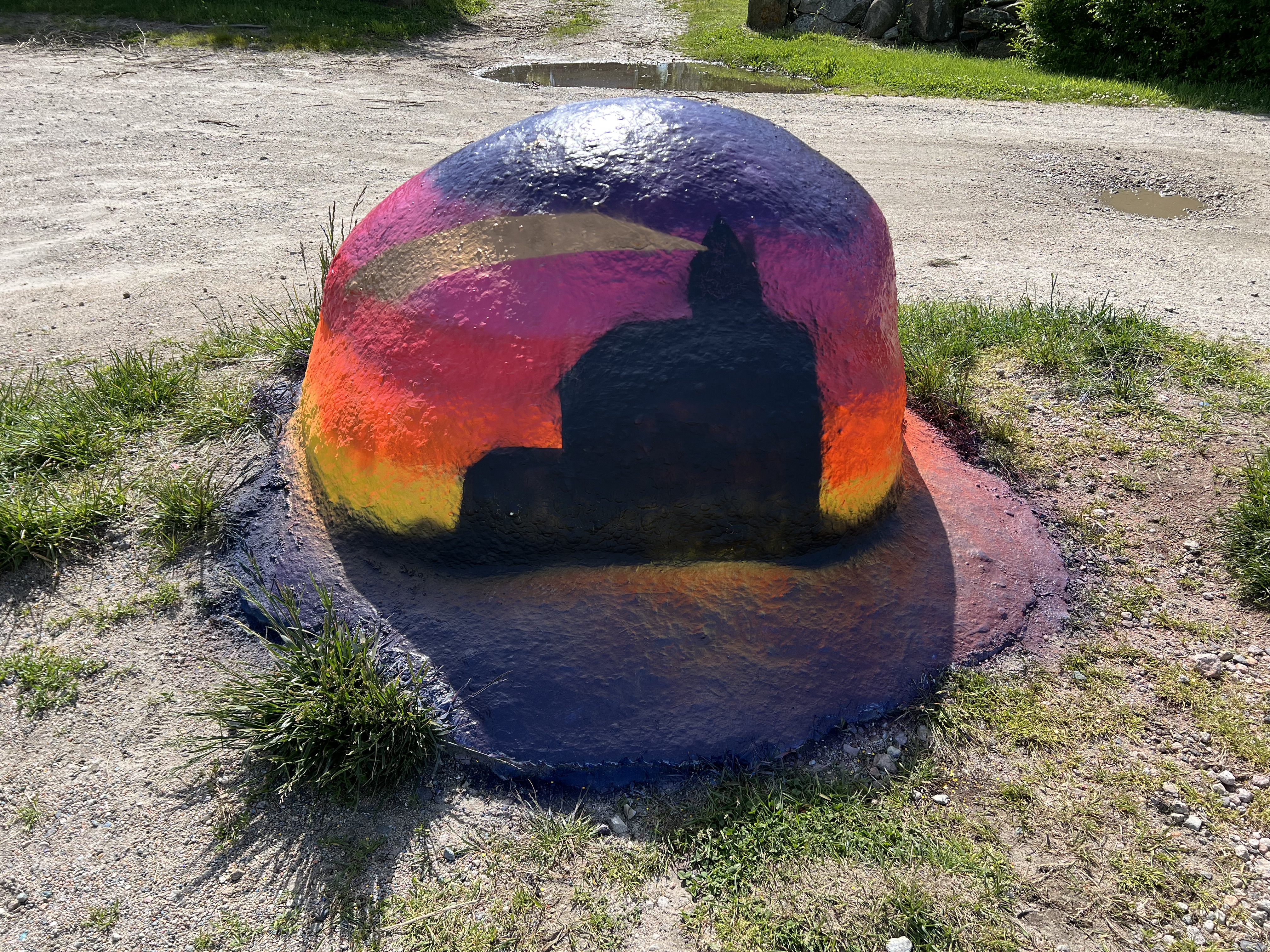
Sandra M. Kelly shot the photo of the Painted Rock, artist unknown. The work shows the island’s North Light, presumably at sunset.
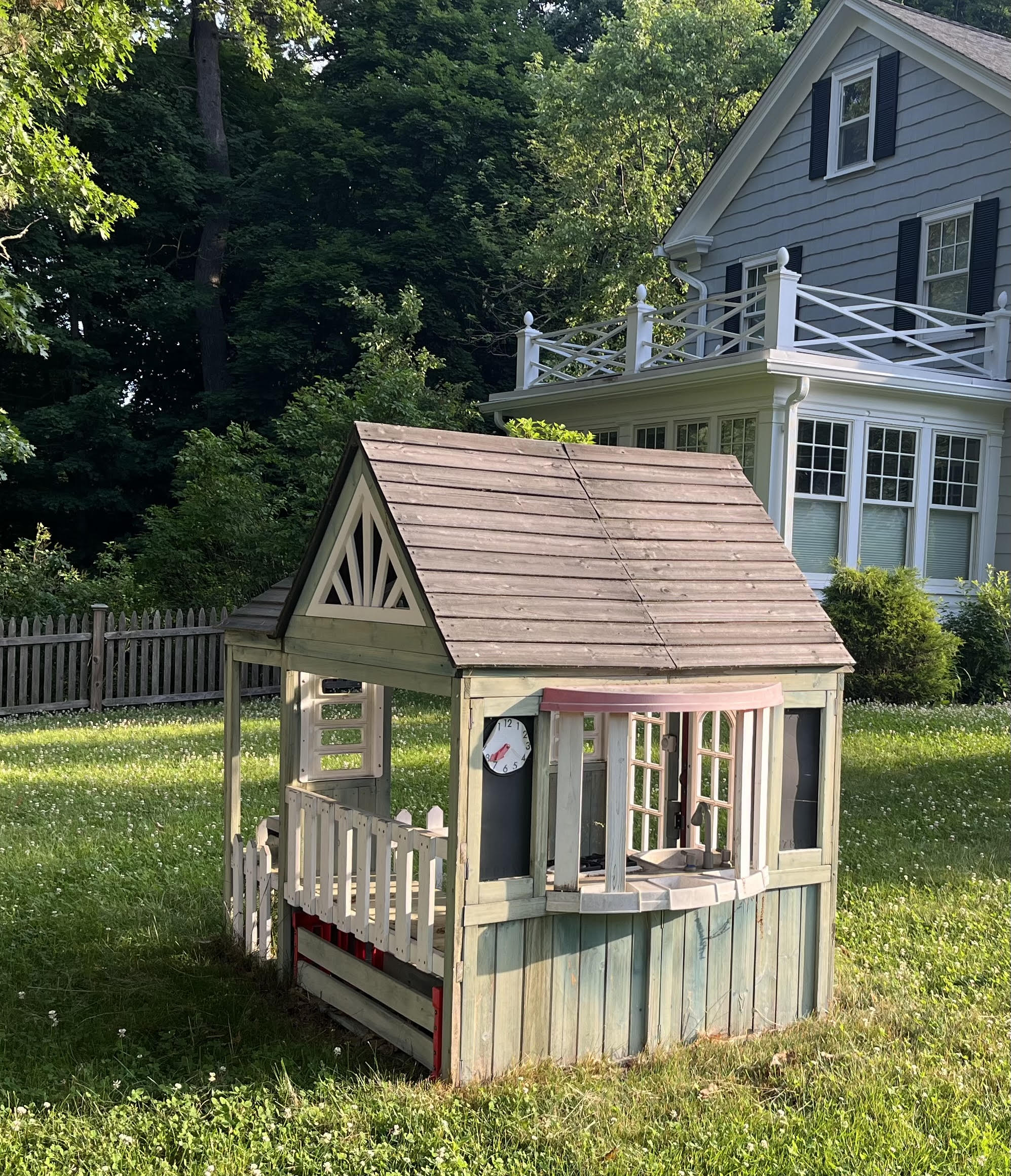
I liked the early shadows at a playhouse I saw on my walk.
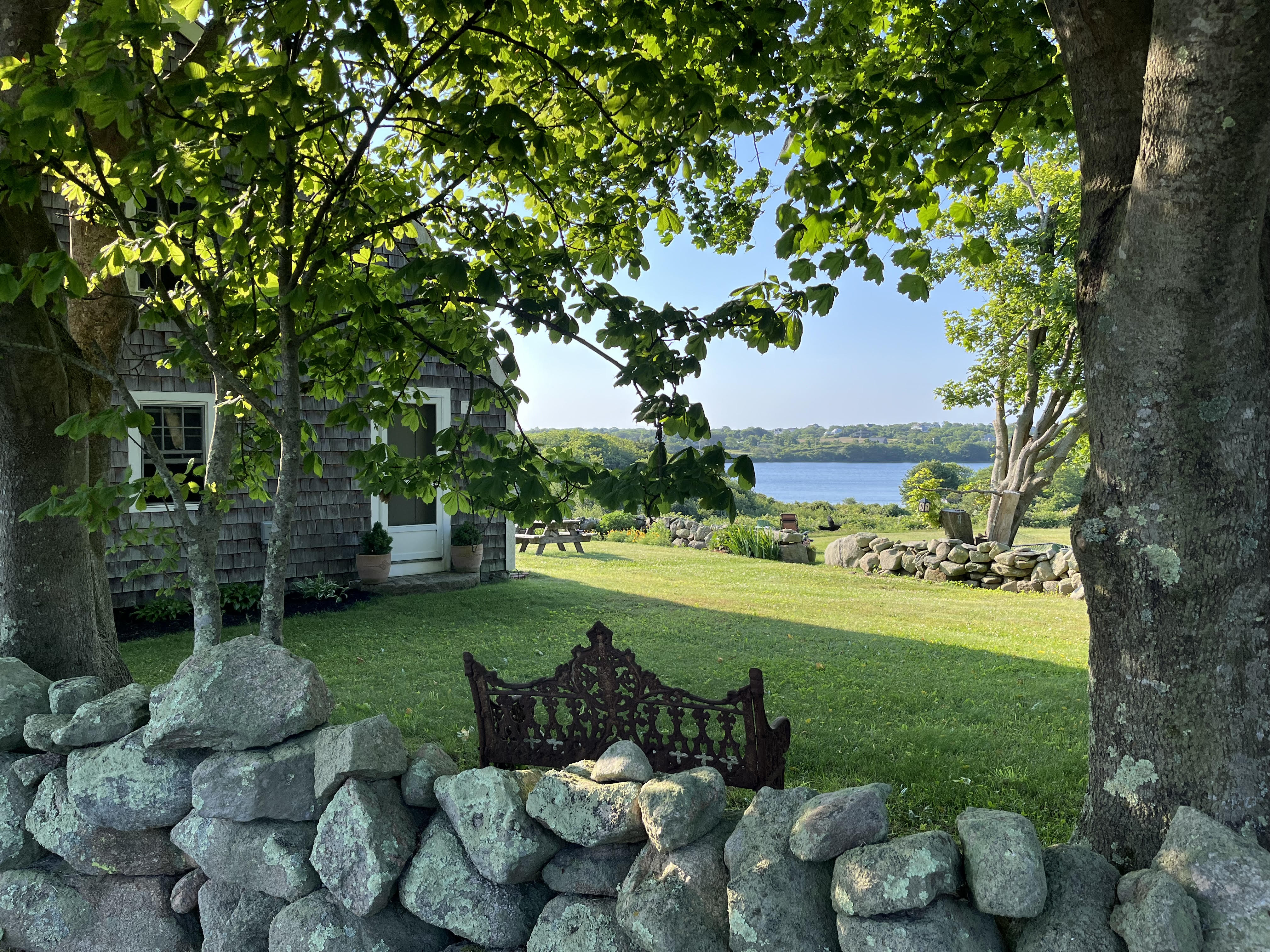
The stone fence near the historic house Smilin’ Through has a sweet view of Fresh Pond.
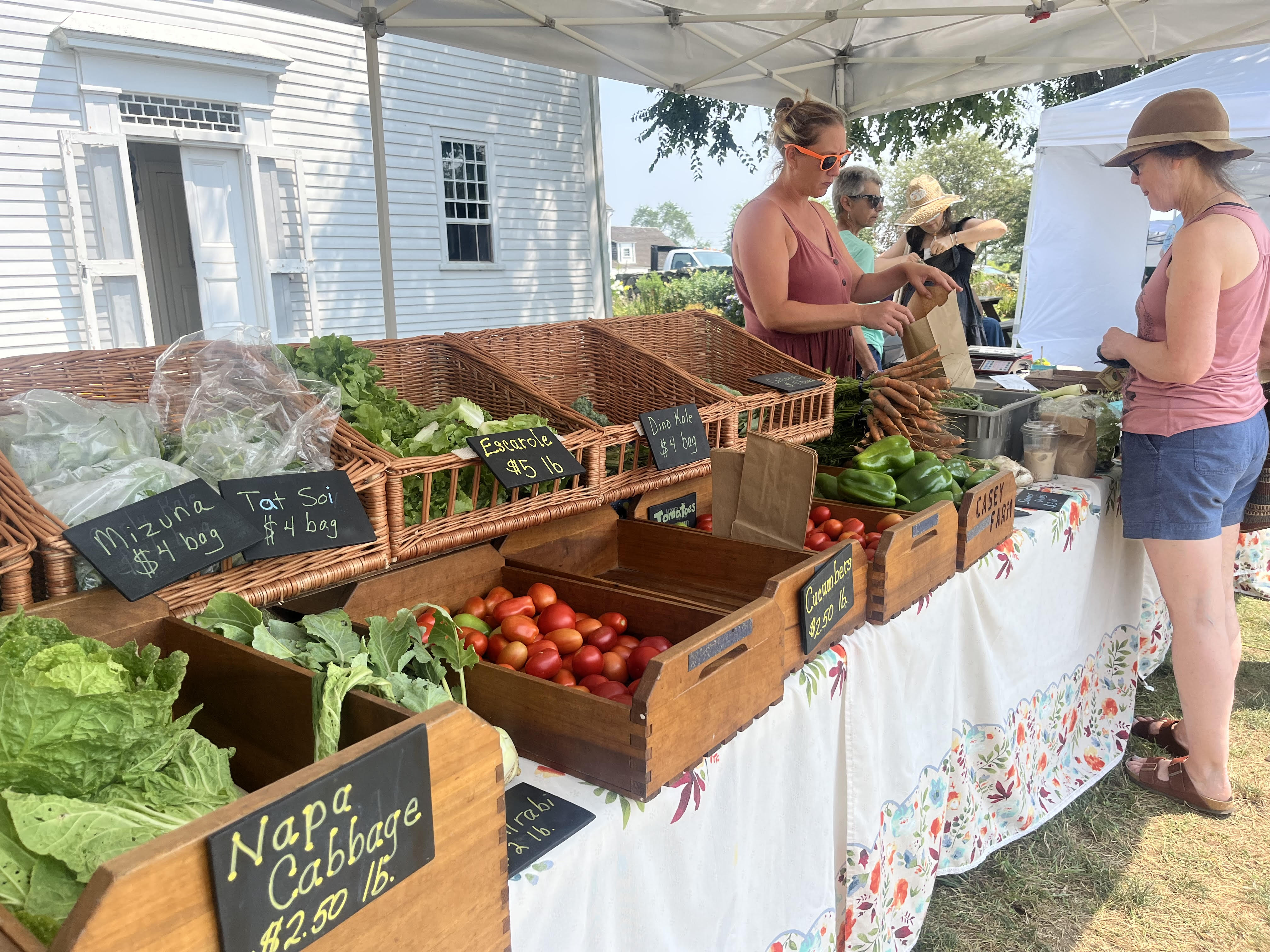
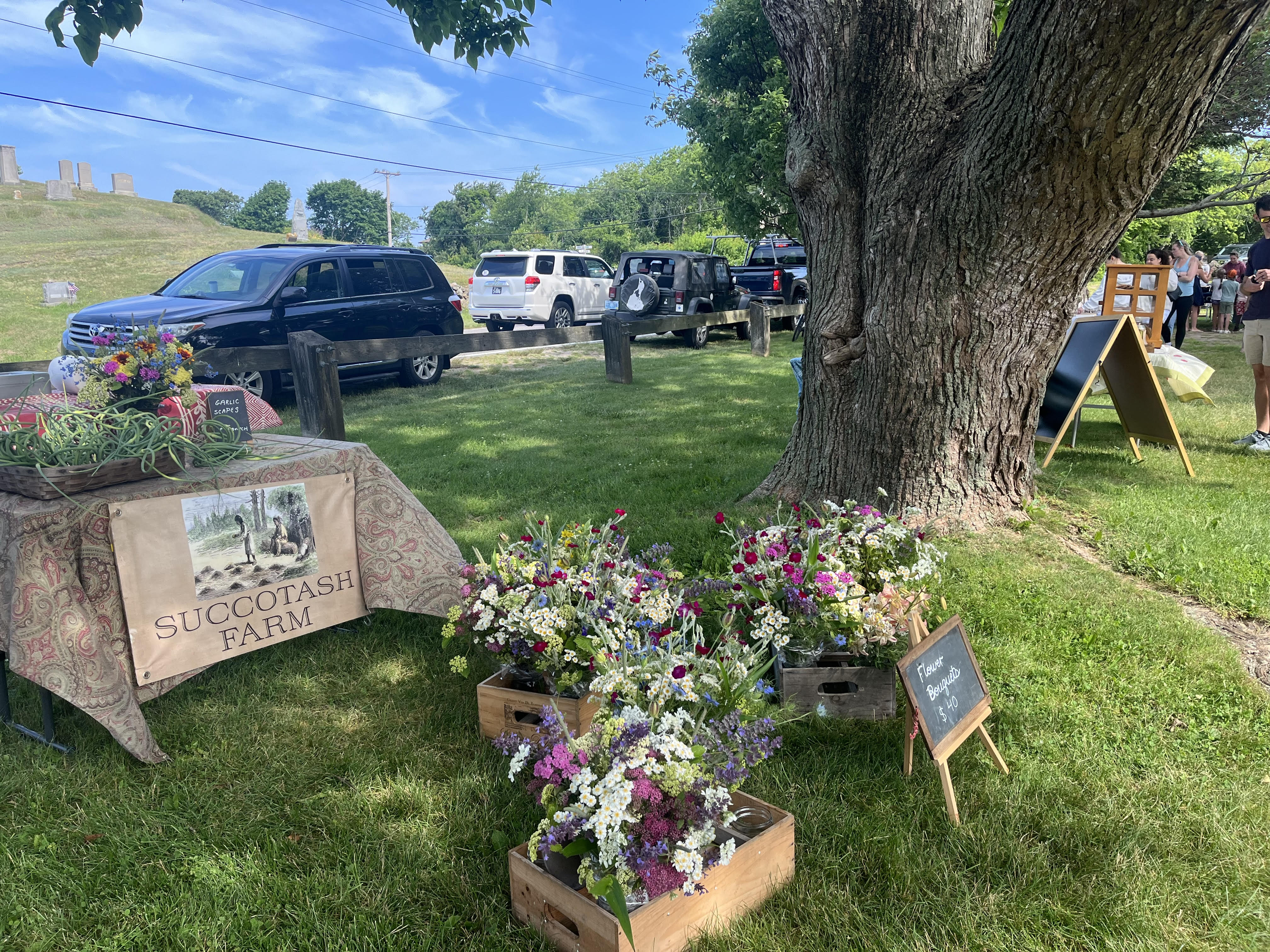
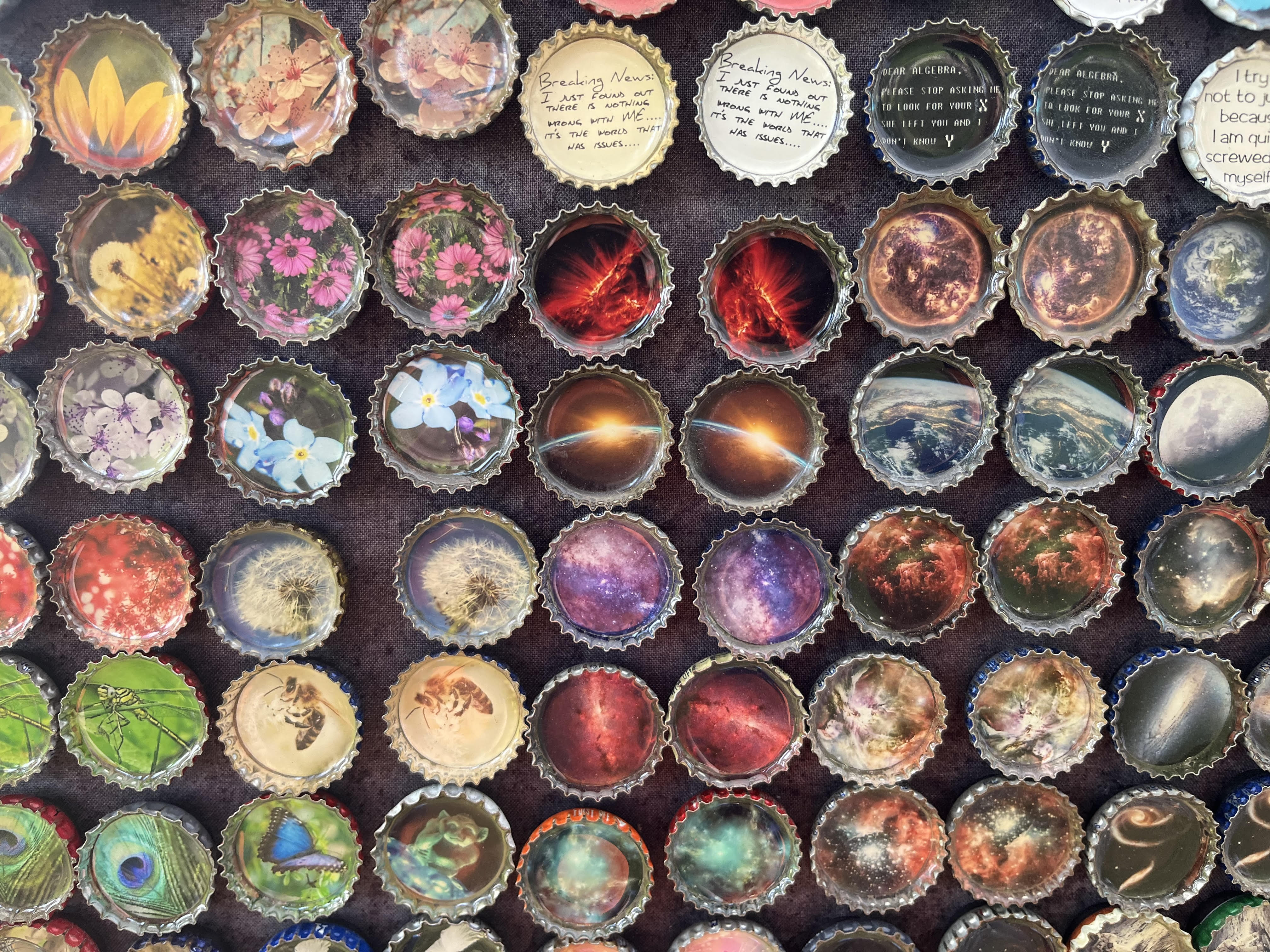
I bought a wonderful carrot-ginger soup at the farmers market. And I talked to a woman who was selling bottle-cap art and making more as she waited for customers.
Partly, of course, spring is about the angle of sunlight, how early the sun comes up, how late it stays. I never thought I had seasonal affective disorder, wasn’t sure I believed there was such a thing. But I do find I’m cheered up by sunlight, discouraged by gray skies.
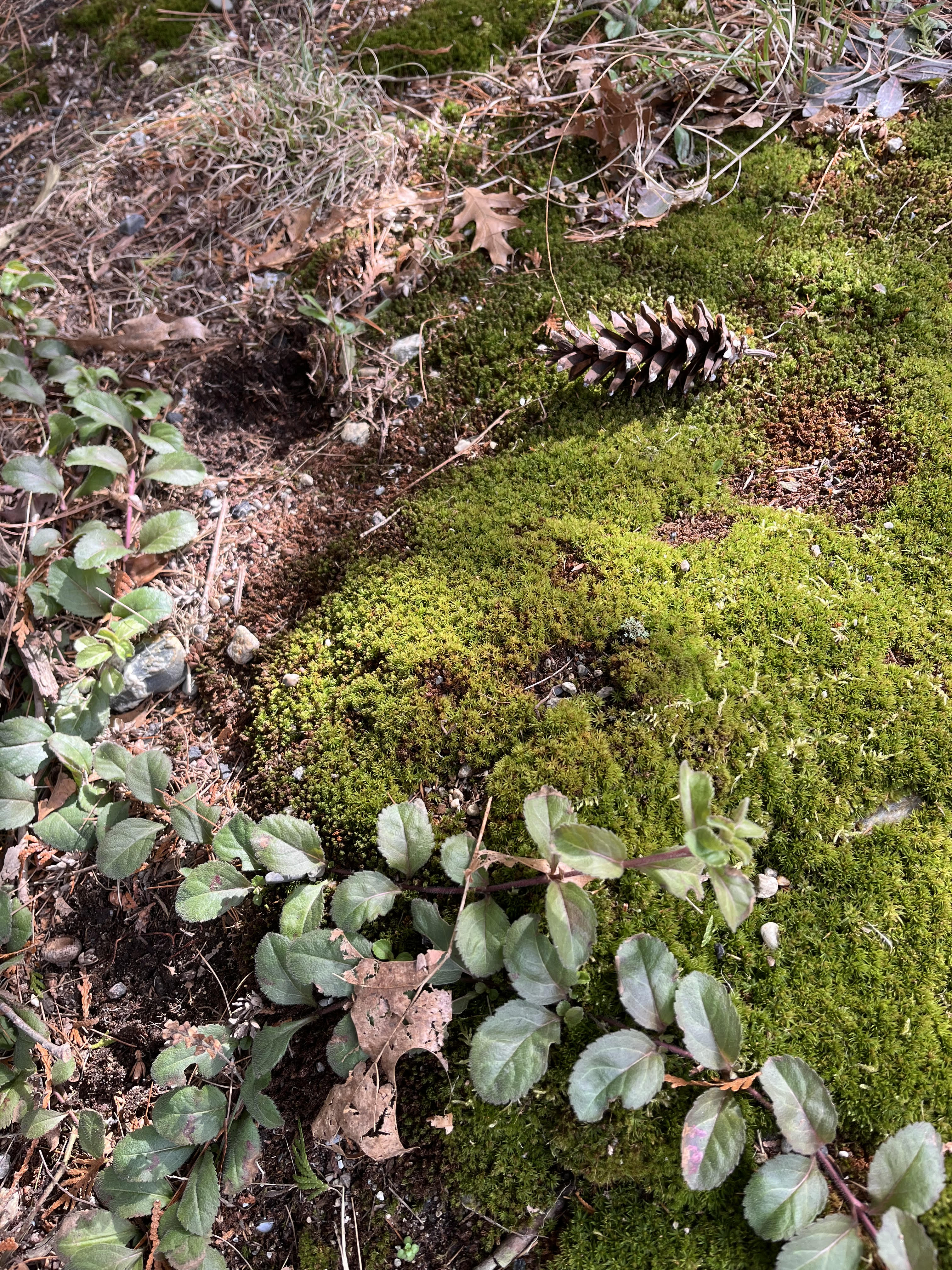
The photos today are mostly self-explanatory, but I want to point out how vibrant the moss looks in early spring. Also, the last photo is of a New England wildflower called Mayapple.
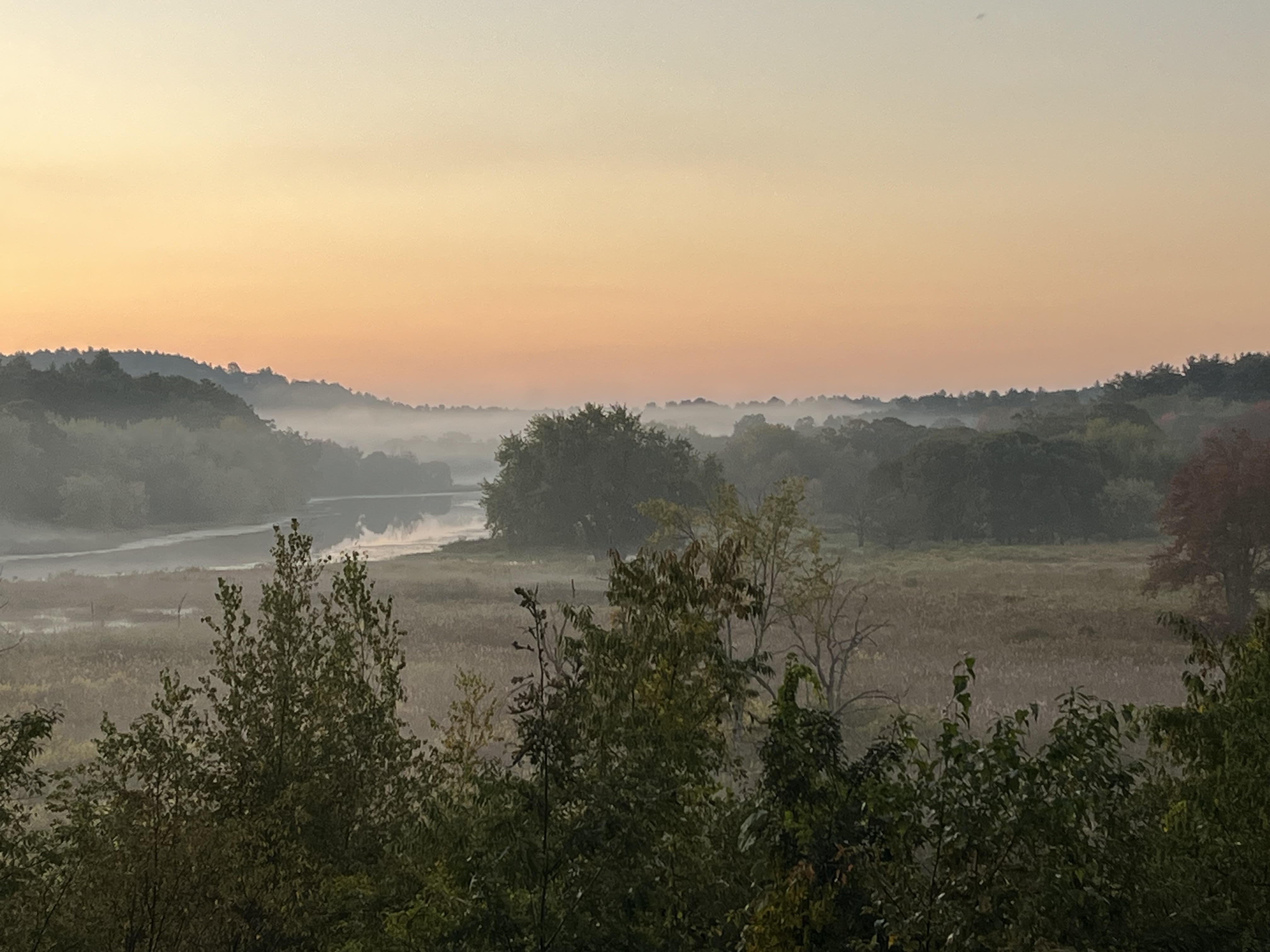
Photos: Suzanne and John’s Mom. Above, early fall morning on the Sudbury River.
Leaves are falling like gold coins in New England and it’s getting cool enough for a wool scarf on early morning walks. When I wrap mine tightly around my neck, I think of my friend Pam, who died in April after a bad fall. So many things remind me of her, but the scarf reminds me how she said that if her neck is warm on cold days, she’s OK. I’m the same.
Where I live now, I have a nice view of the Sudbury River from the fitness center treadmill. The photo above cuts out the buildings that I normally see in the view. Isn’t it beautiful?
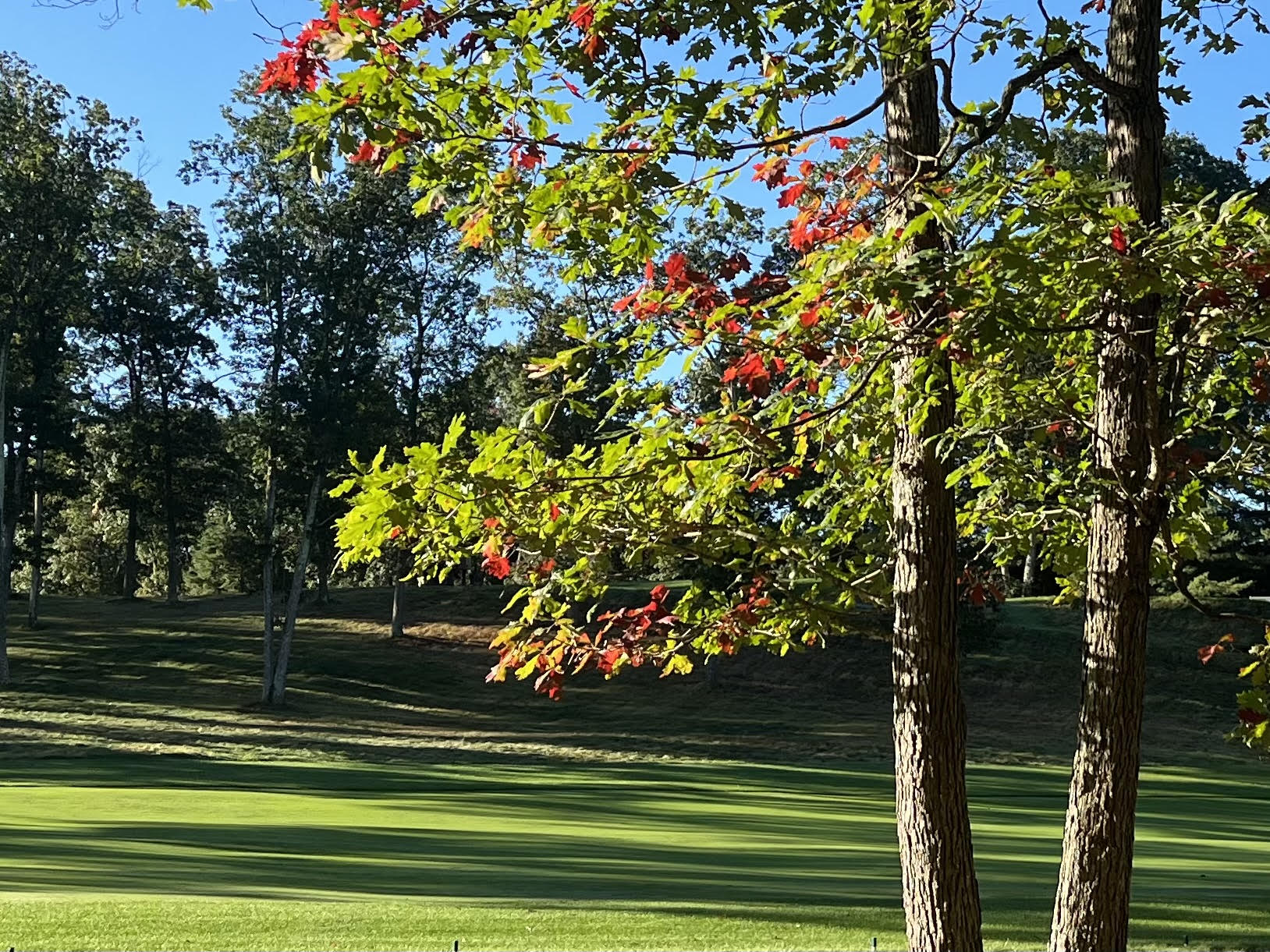
I take my usual walk past the local golf course, seen in the next picture. Golf makes me think of another friend, one who golfs almost every day in Florida. I sent her a picture, too.
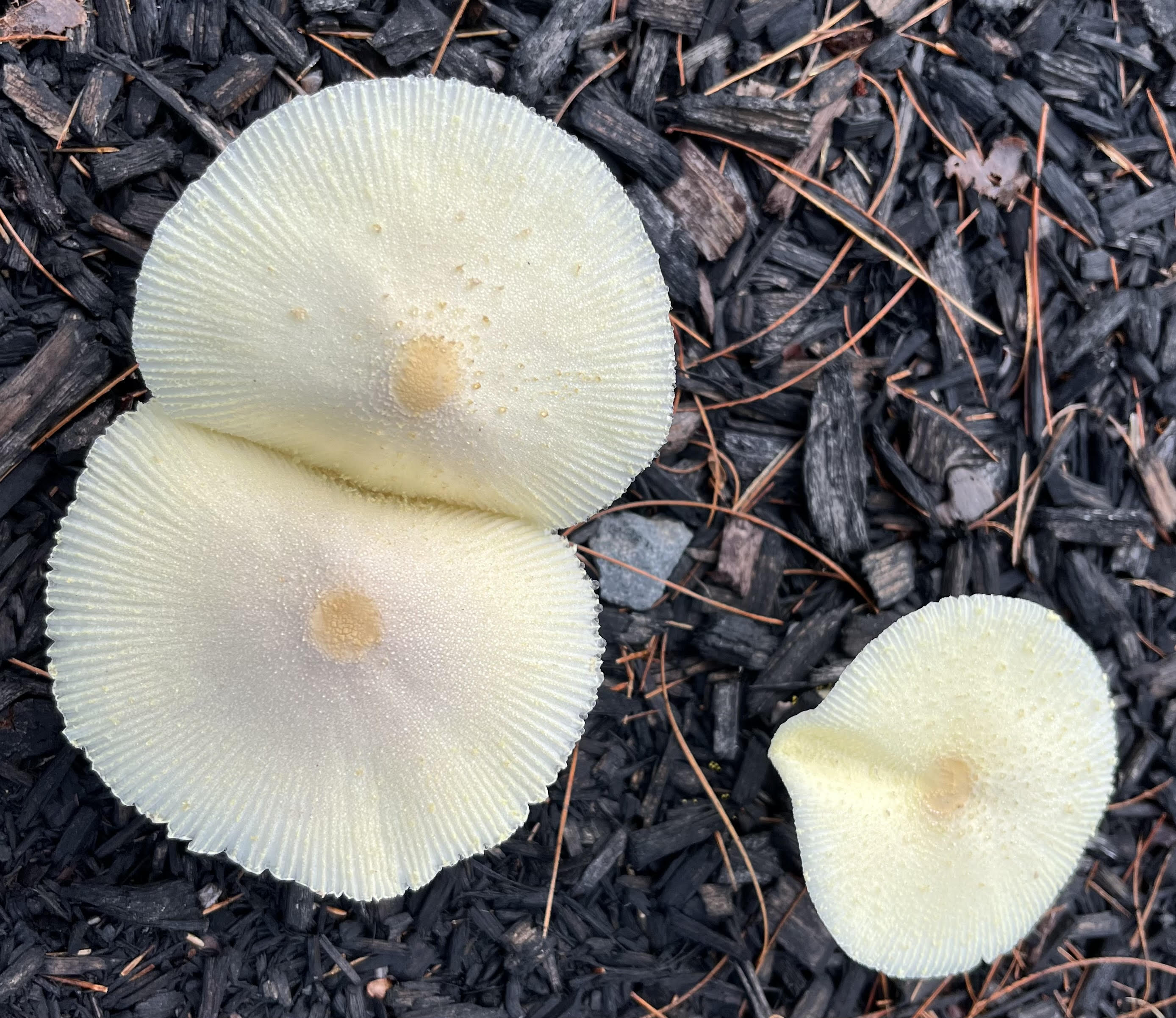
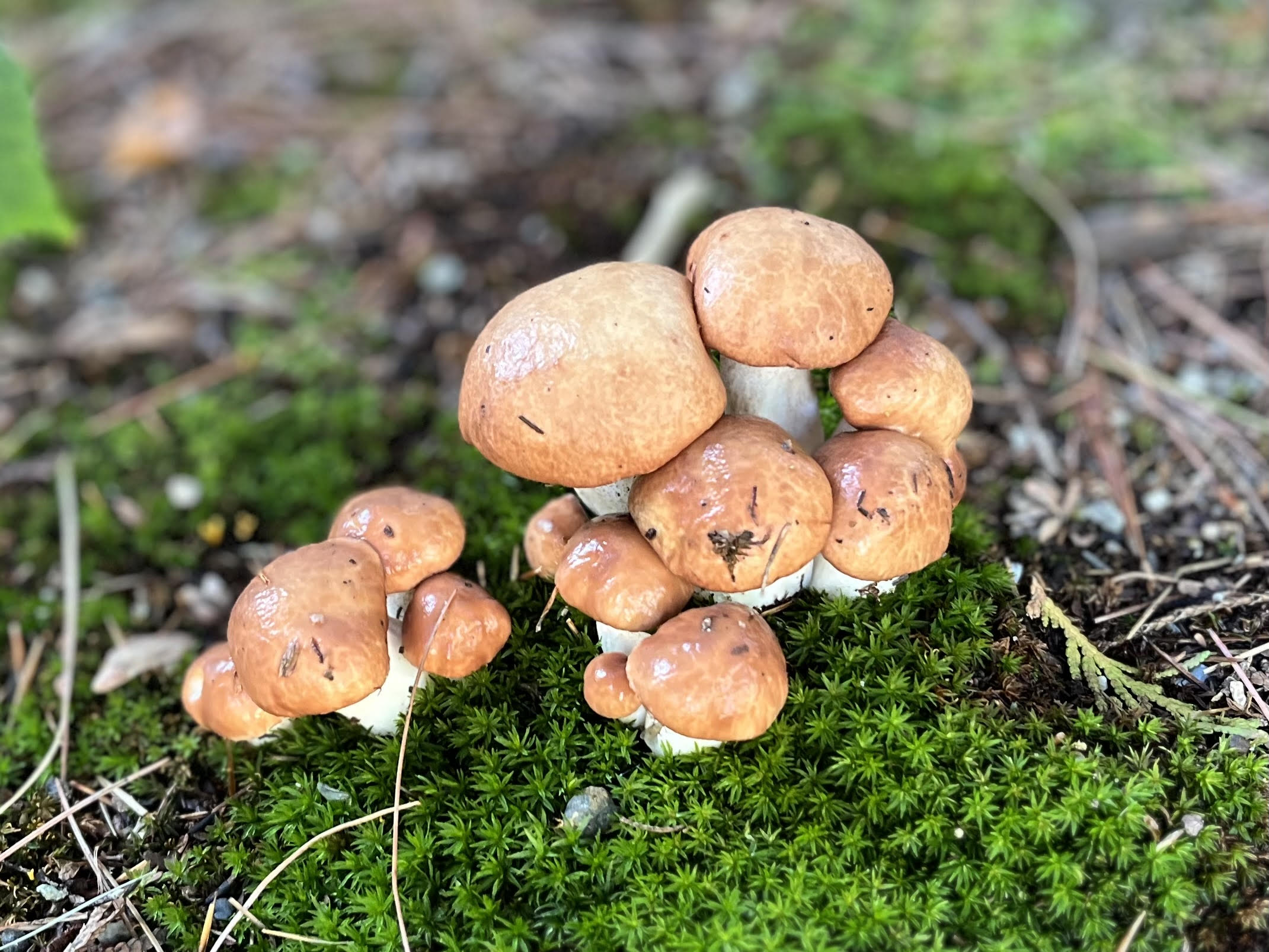
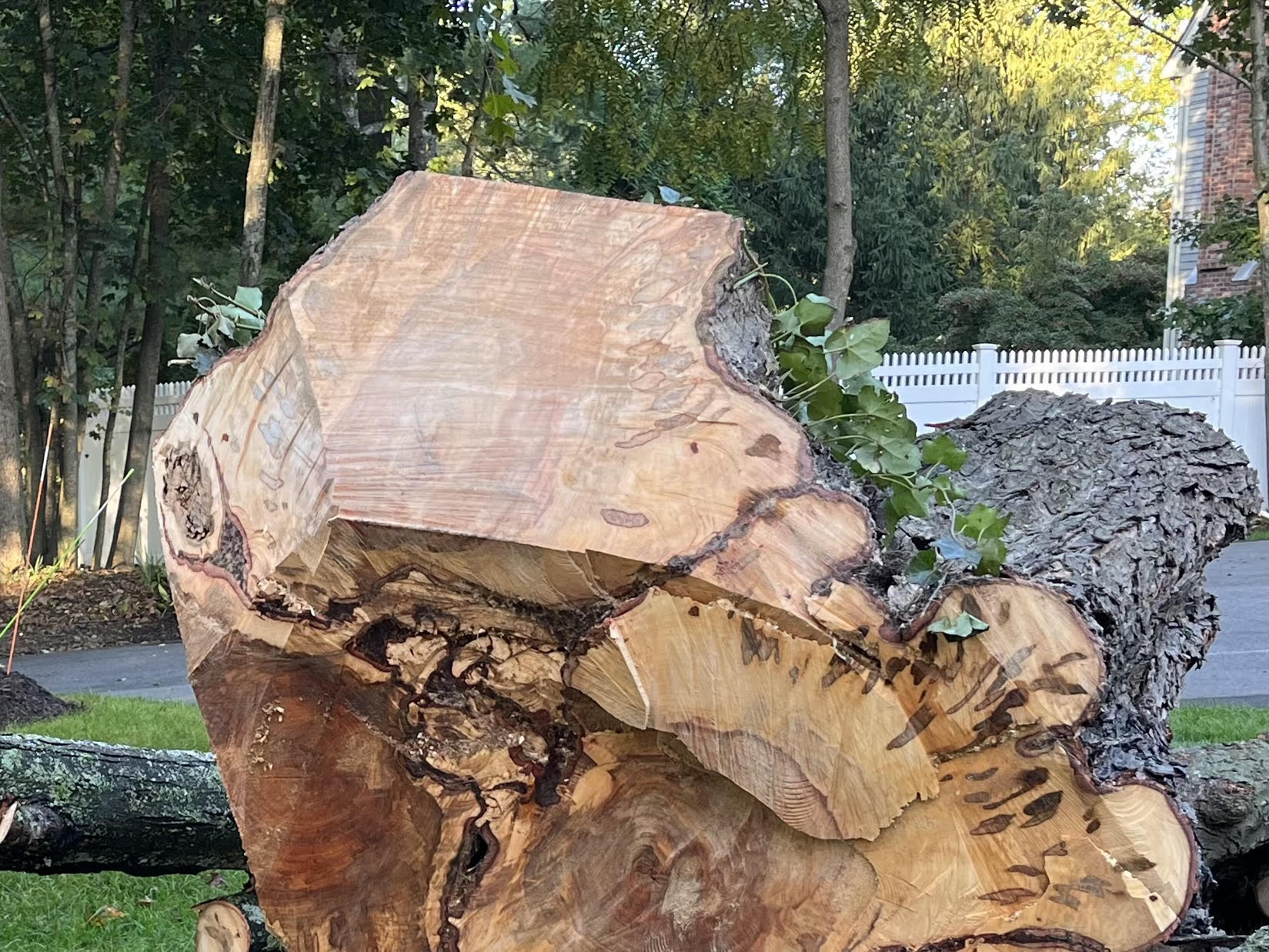
I’m seeing lots of pretty fungi and mushrooms and expect that before long there will be new and interesting ones emerging from the stump left behind by the monster tree below. I can’t help wondering why such a nice, big tree was cut down. I’m sure it didn’t want to be.
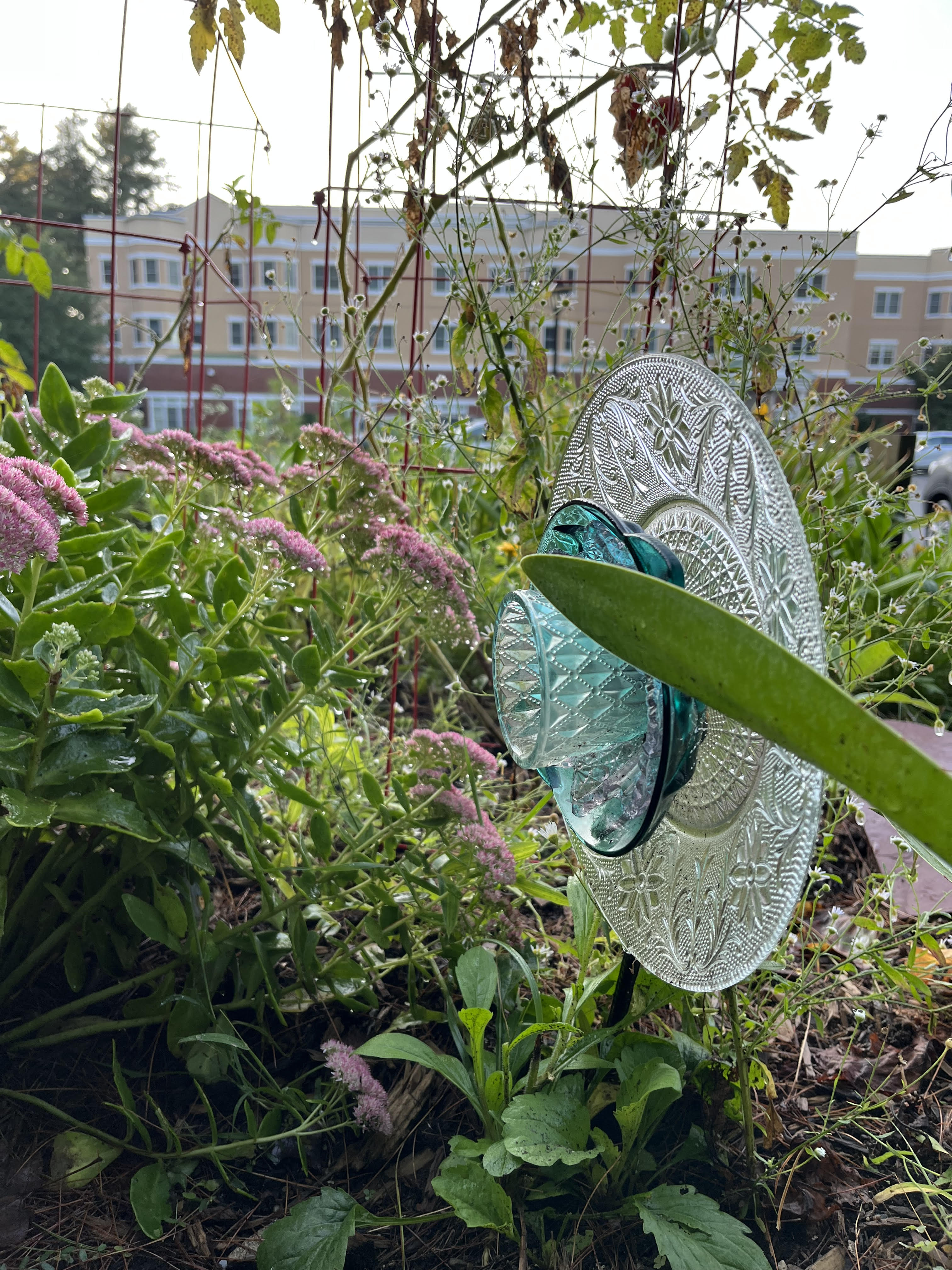
I don’t see fungi in the little garden plots where I take my compost offerings every few days. Just rich soil, flowers, tomatoes, and curious artifacts like the decorative tea cup in the photo.
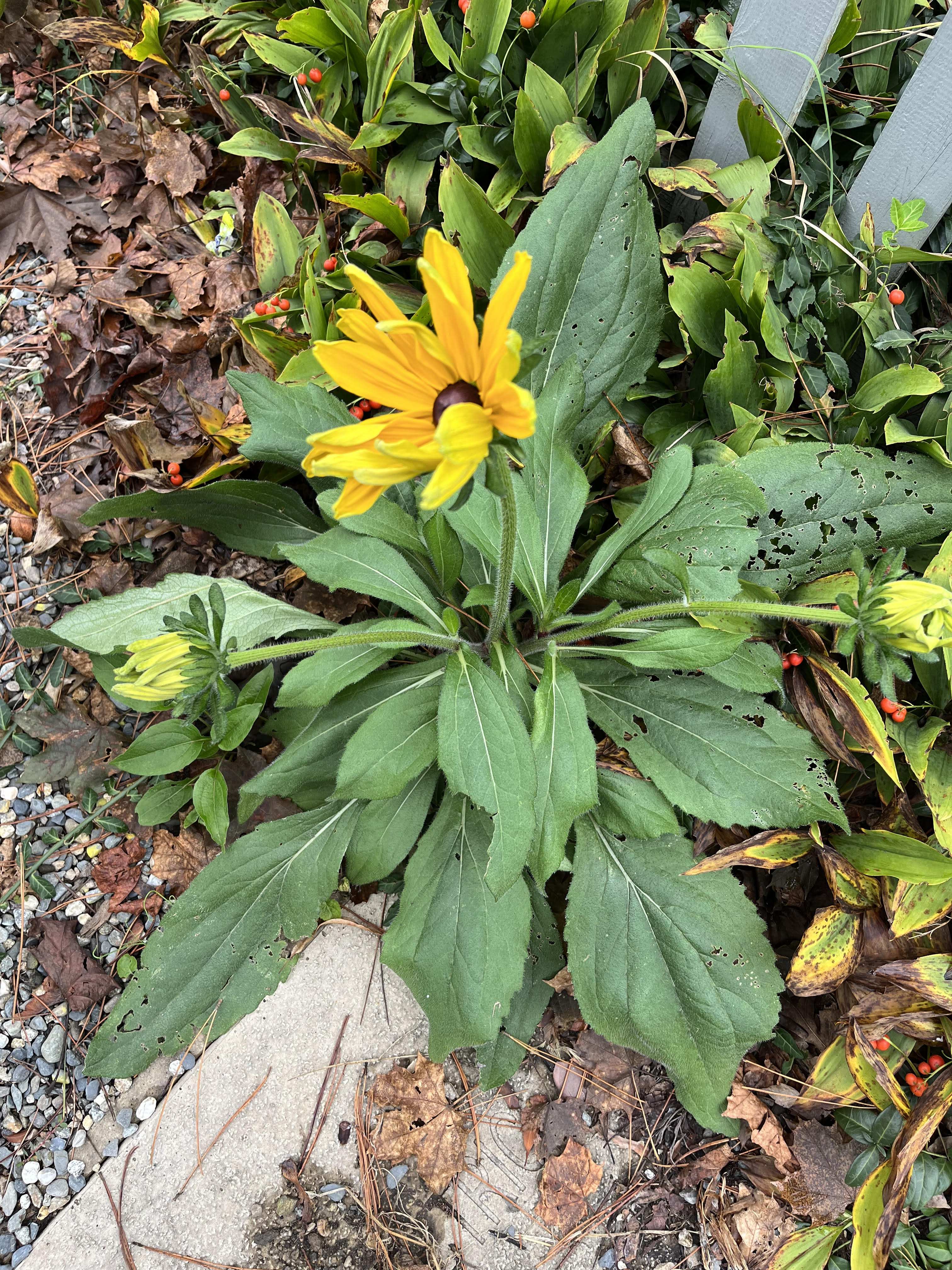
The big echinacea at the house we are selling took me completely by surprise. I don’t remember when I planted it, and I know it never bloomed before. It strikes me as something dropped in from outer space. And as my kids know, that is likely to remind me of the 1978 version of The Invasion of the Body Snatchers.
Because so many things do remind me of that movie.
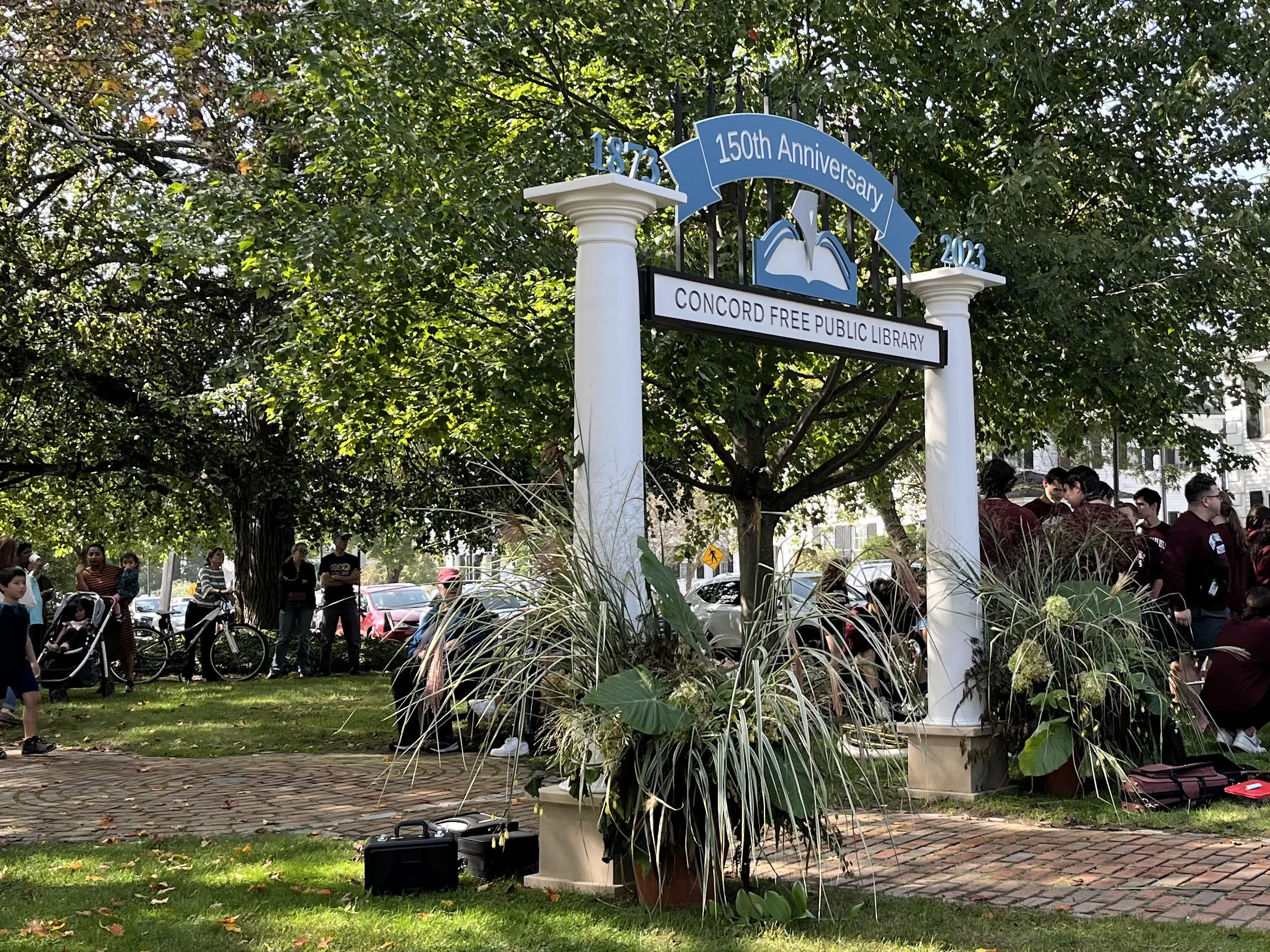
My next shot notes the 150th celebration of the local library, for which a beautiful day came through, as ordered. (Costume parade, Anyone? Speeches by Ralph Waldo Emerson?)
Next, there’s a photo of a typical sight near Boston’s North Station, where I went to have coffee with my friend Lillian one day. A number of tour businesses use Segways to get people from one historic site to another. Remember when Dean Kamen’s invention was going to revolutionize transportation? So far, it seems to have revolutionized only tourism.
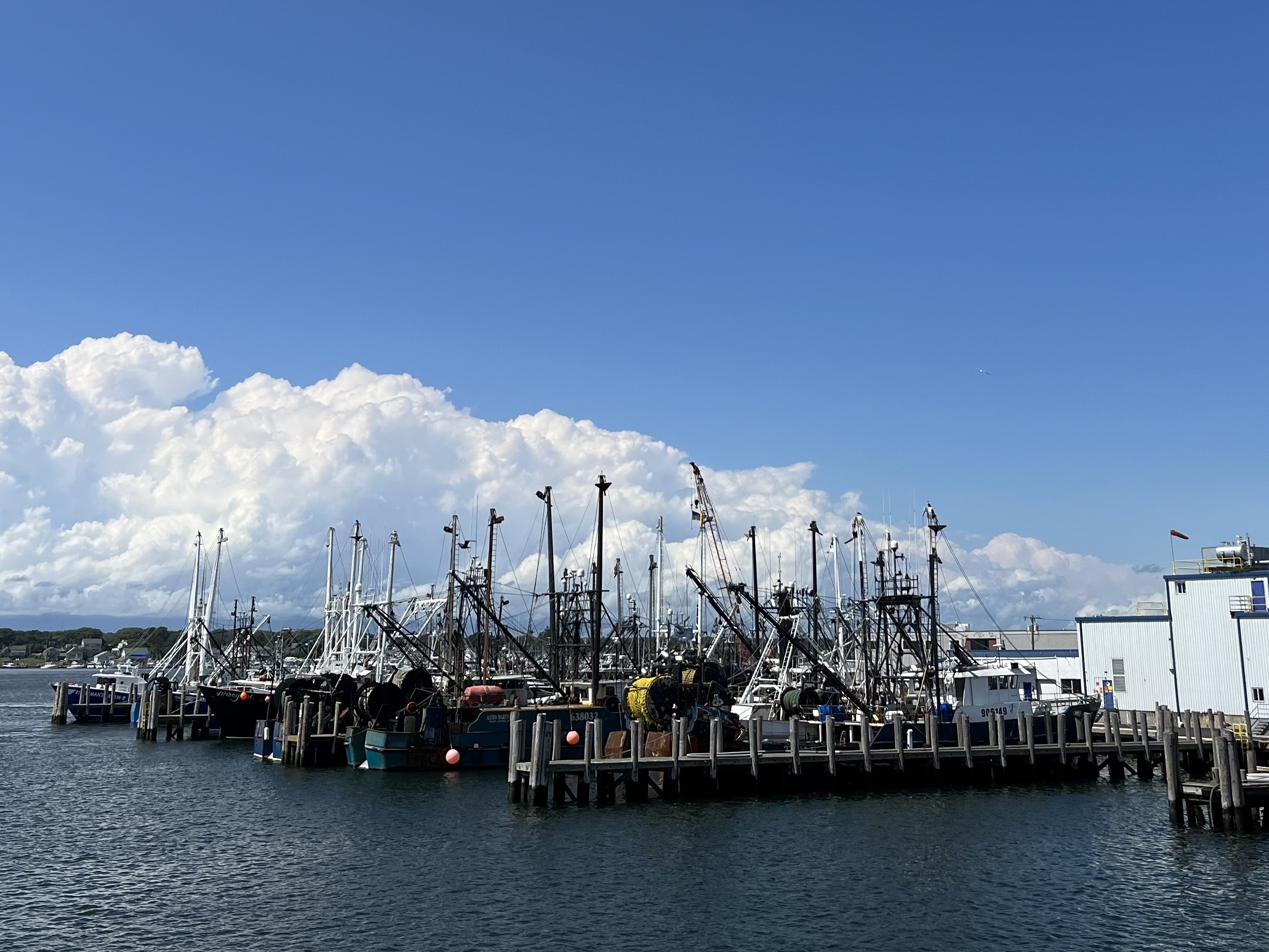
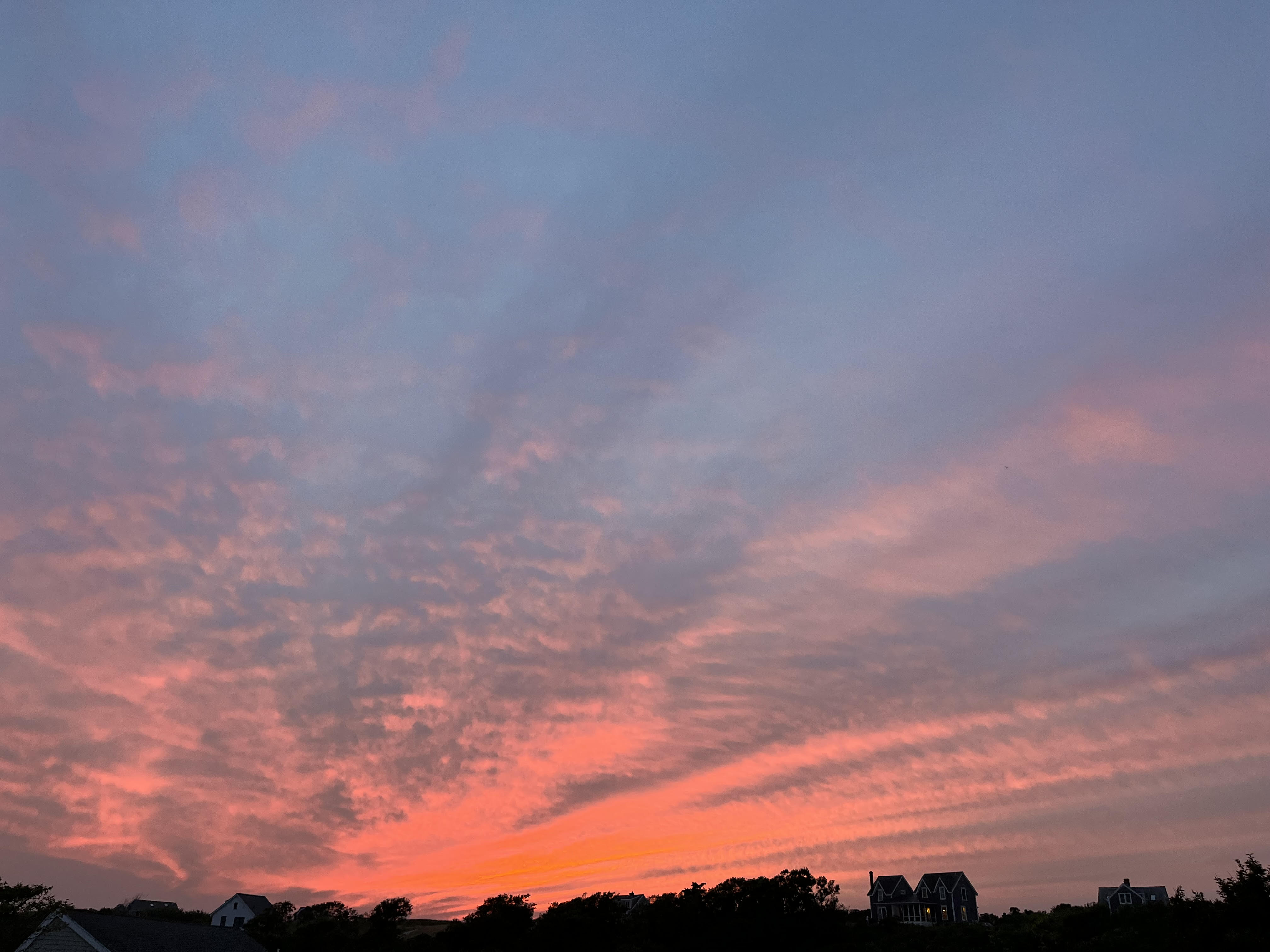
Photos: John and Suzanne’s Mom. Above, the fishing flee in Galilee, Rhode Island. And some rather decent clouds.
Summer always seems to be the best time for photos. In winter I have to look harder. Here are a few recent shots from New England: specifically, from Massachusetts and Rhode Island.
A luau at our new Place had an unusual approach: Hawaiian food, Caribbean music. Well, OK, I thought, I do like the sound of a steel drum.
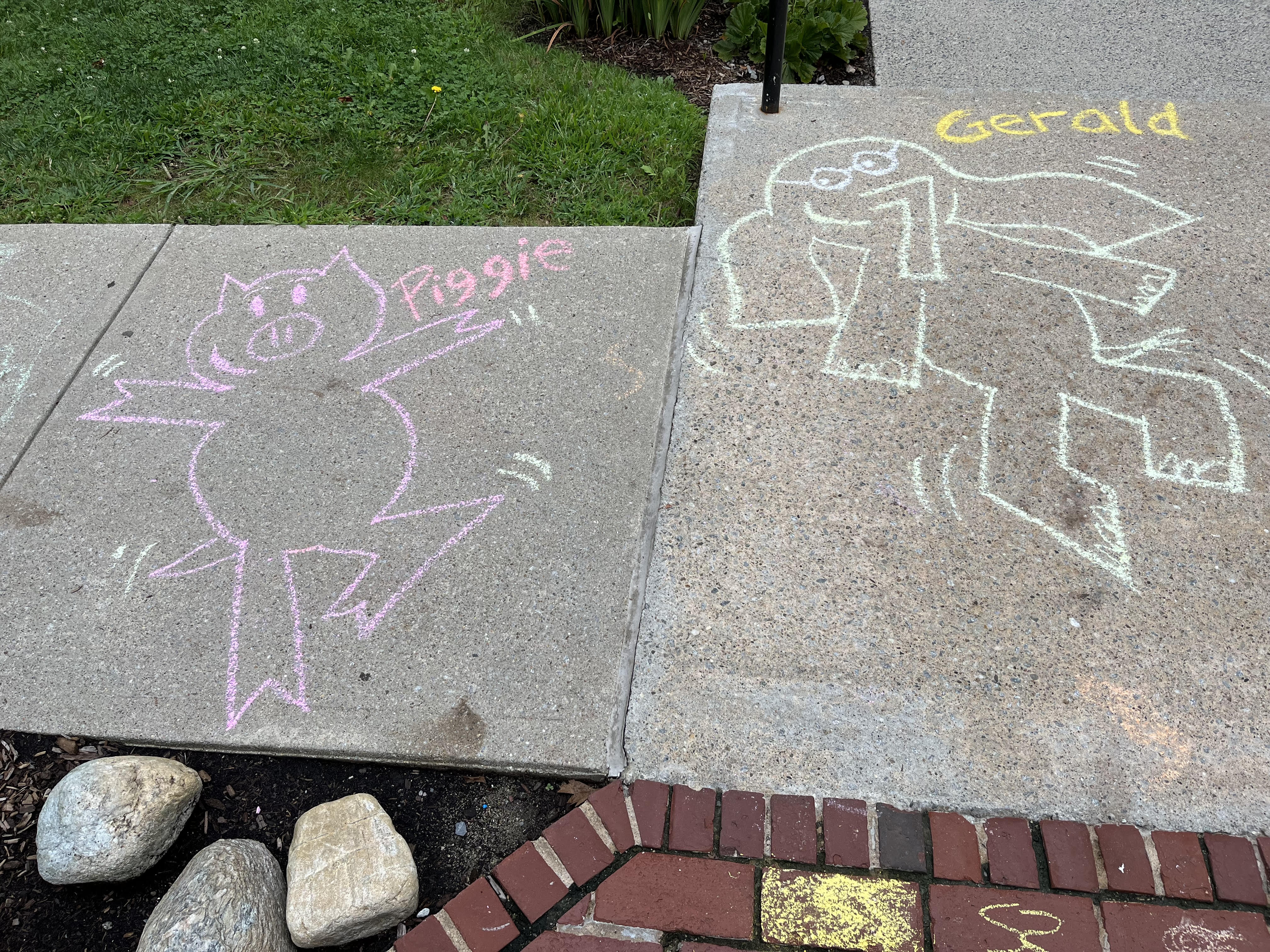
A very decent artist brought Gerald and Piggy to the front walk of the Fowler Library.
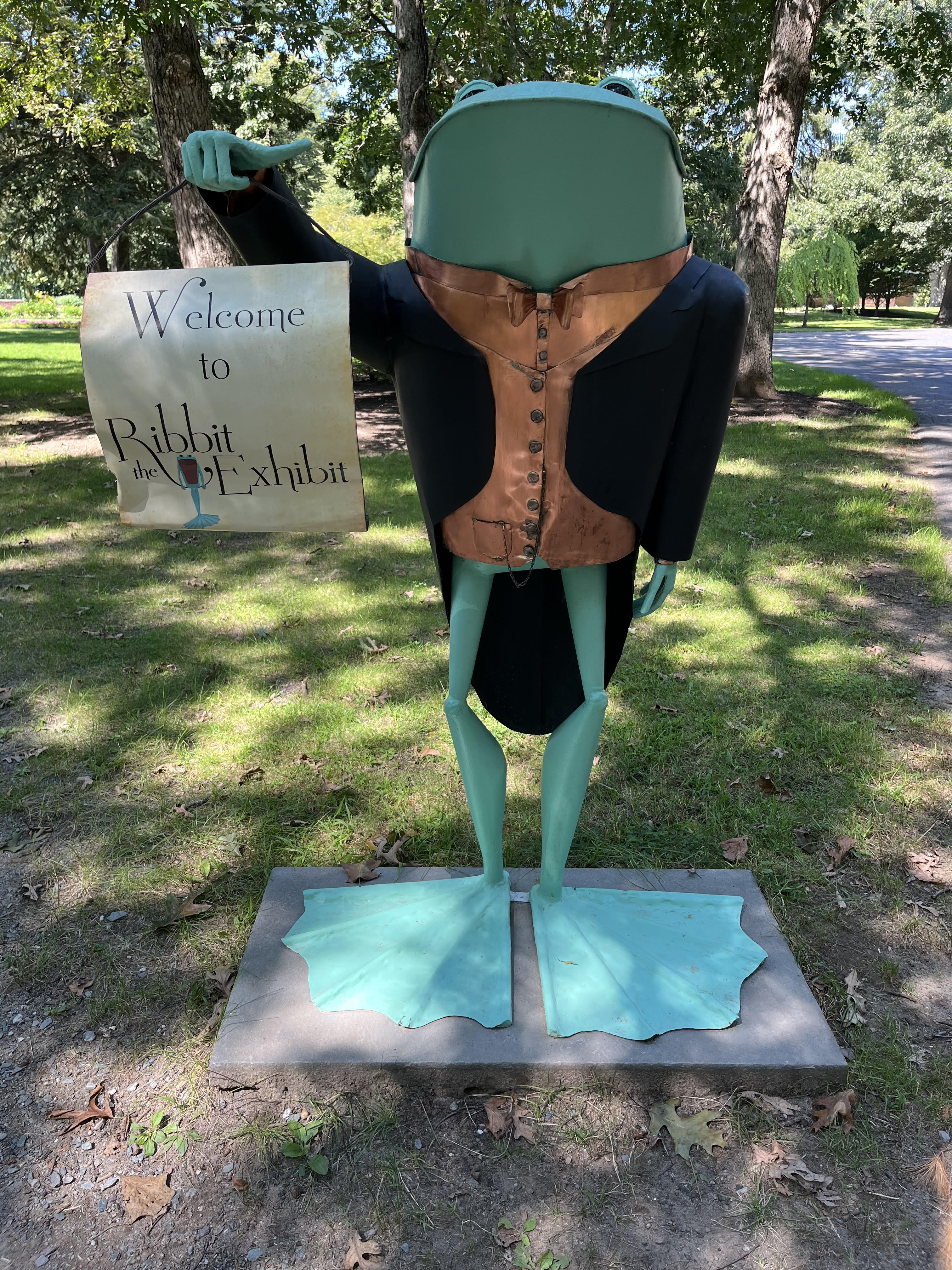
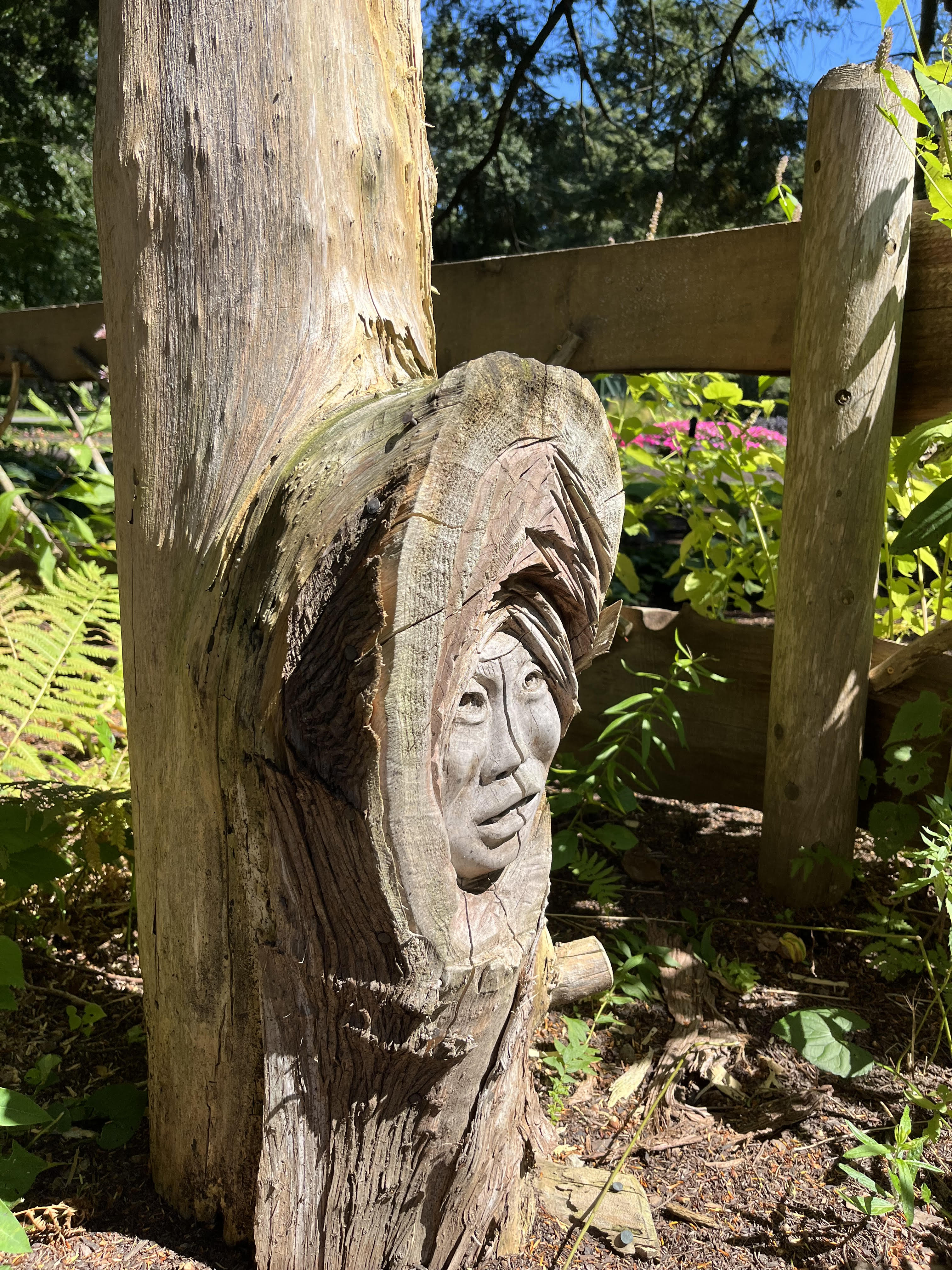
Frog characters welcomed both children and adults to Mass Horticultural Society’s Elm Bank gardens. Nancy and I liked the pollinator garden with its tinkling waterfalls and shady benches a lot more than the formal gardens. I also admired an interesting totem-like carving there.
My other photos are just odds and ends that caught my eye. Let me know if you would like more explanation of any.
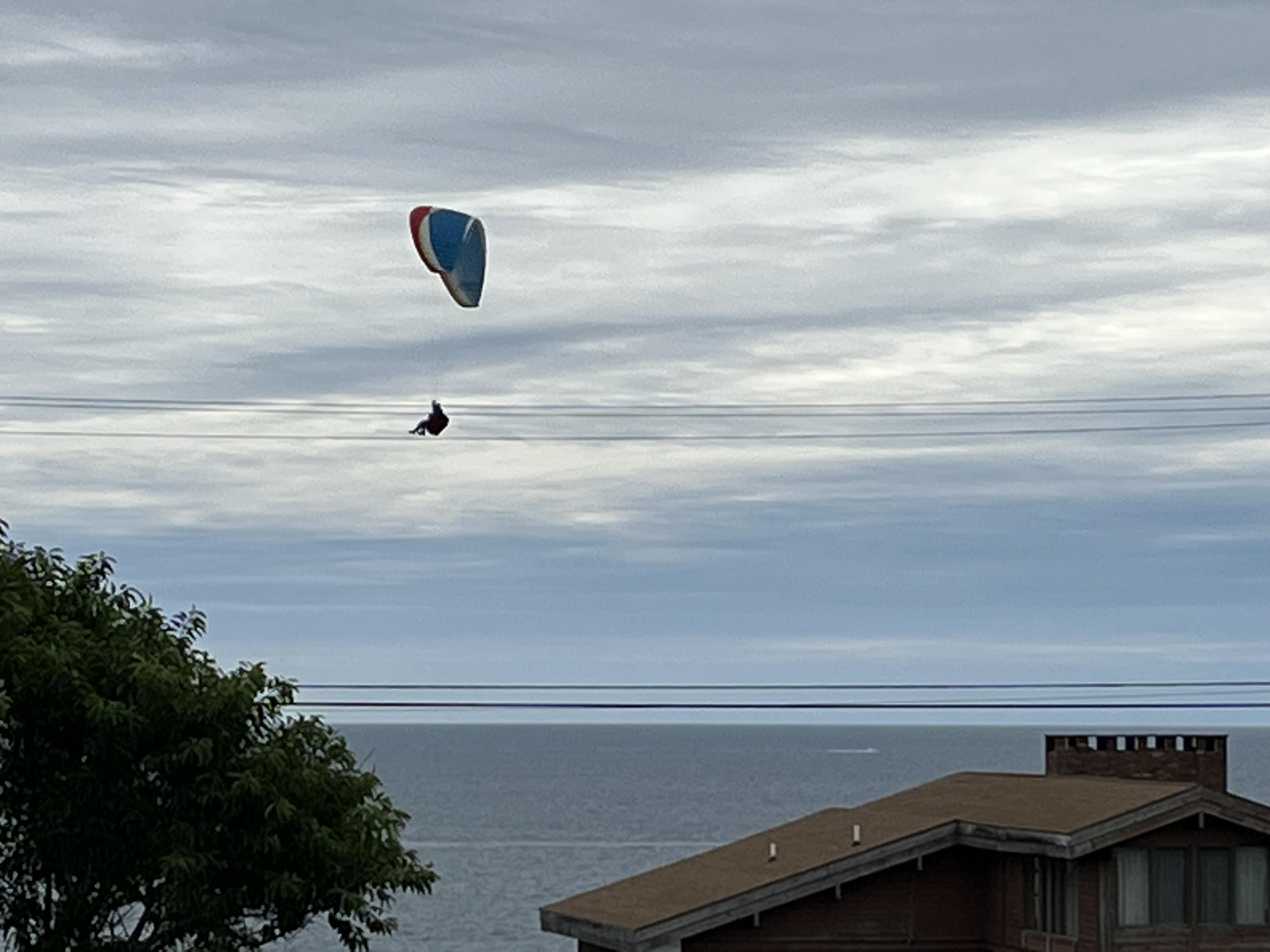
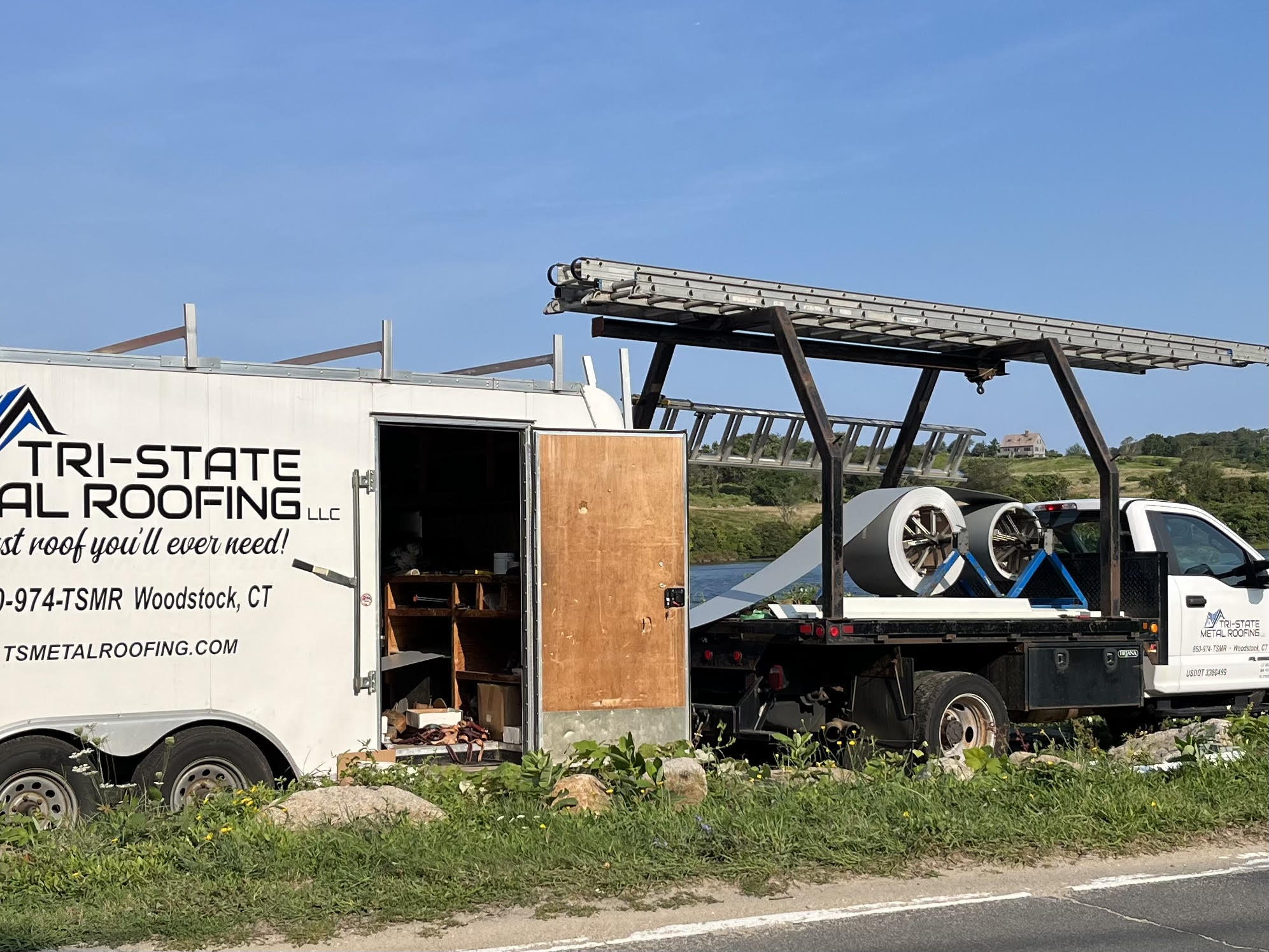
I do need to explain that the person floating along the bluffs was likely in a motorized parachute. Frightening! And the truck is included because I was fascinated that metal roofing comes off a giant roll that looks to me like nothing so much as chewing gum.
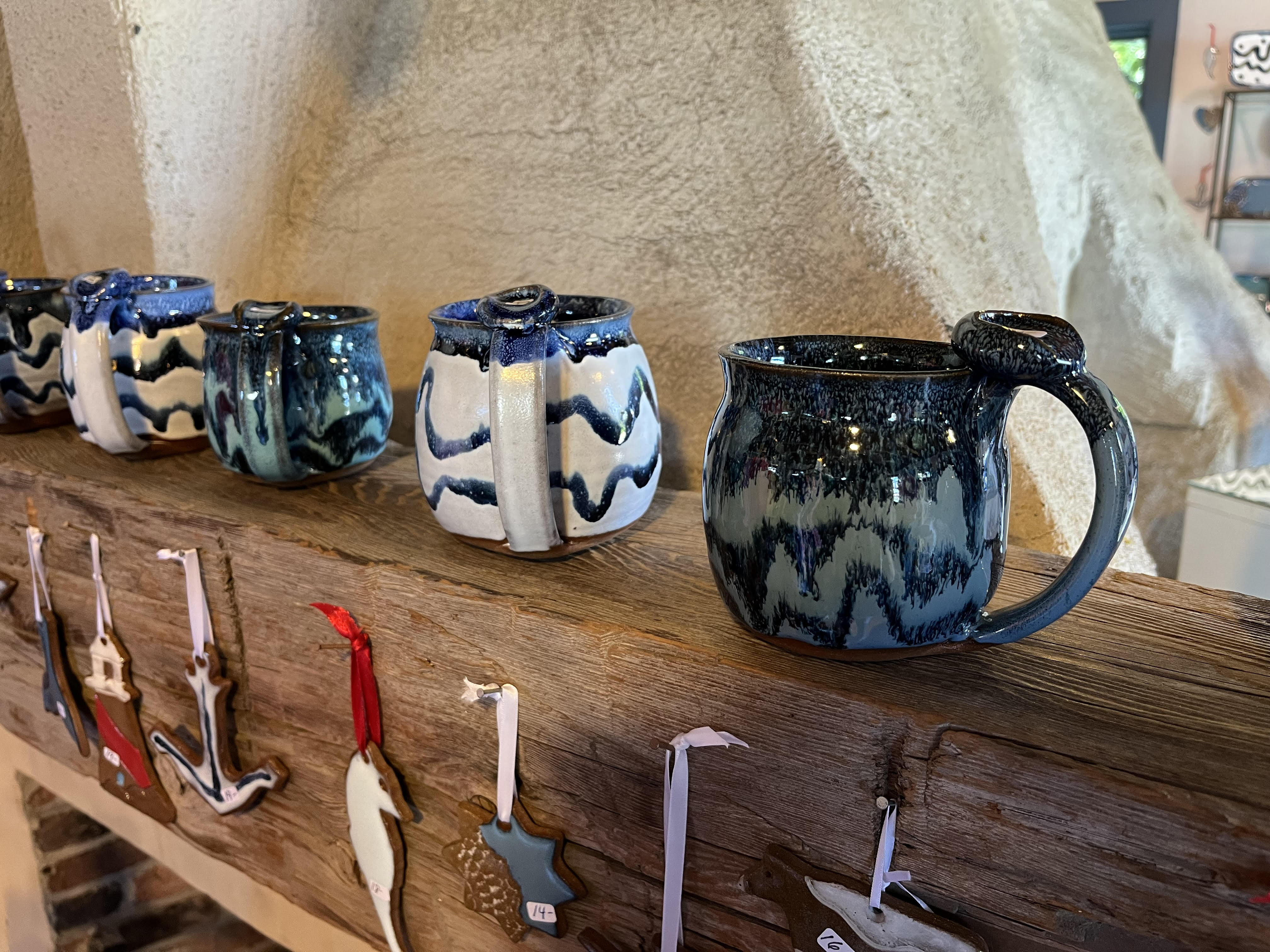
I’ll wrap up with a word on Joan Mallick’s popular “blue pottery. ” As Joan is unwell and no longer able to work, I think her distinctive mugs, plates, planters, and Christmas ornaments are likely to become collectors’ items.
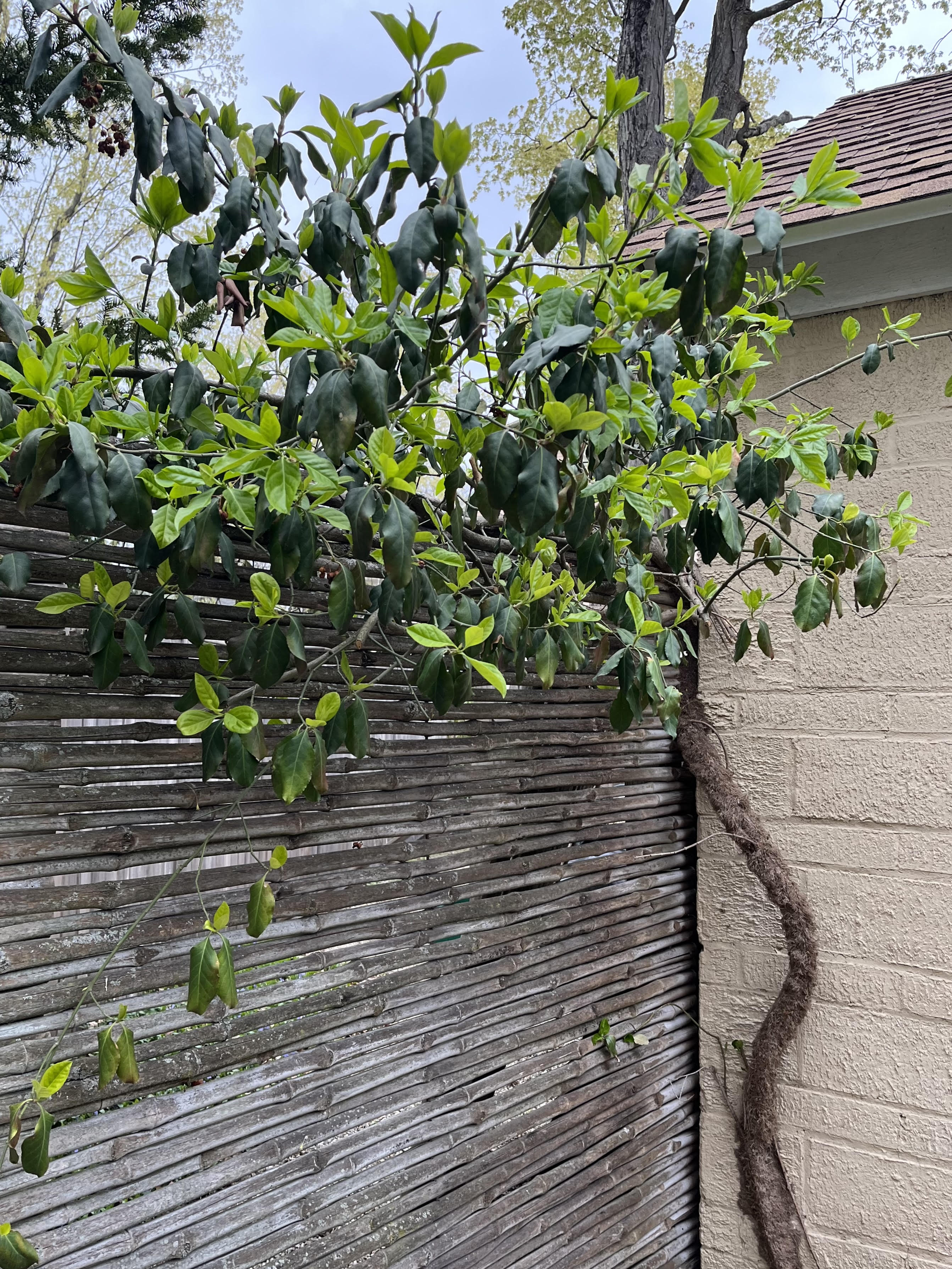
The last shot shows my husband’s clematis trying to get into the house.
Here it is August already and I haven’t even gotten to July photos. Some days it was just too hot to do anything, but as one internet Cassandra has predicted, 2023 will be remembered as cooler than any year to come. Oy.
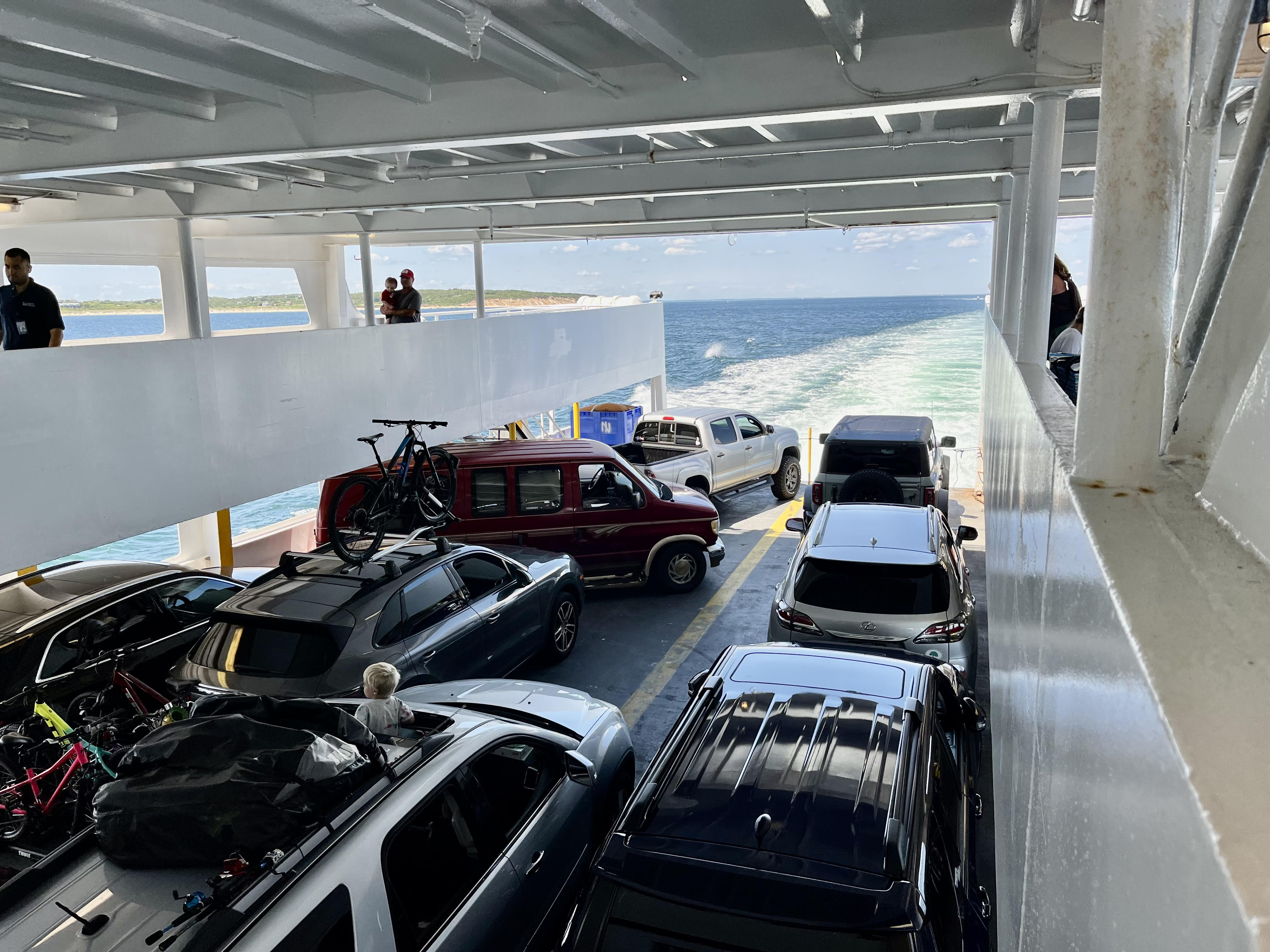
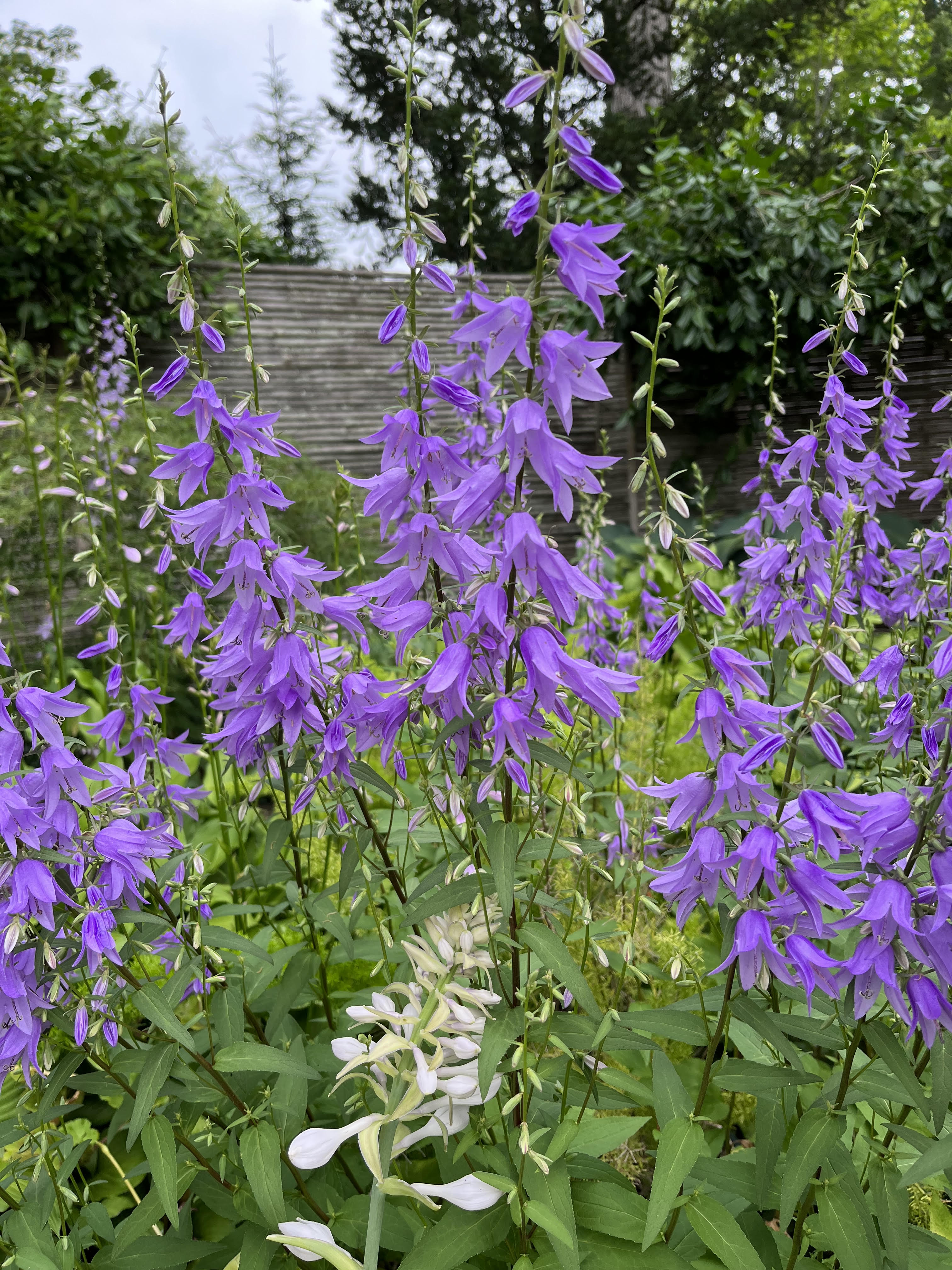
In the first photo, a little boy pops up from the family car like a turtle to observe the wake of the boat. Next we have Creeping bellflower, sometimes called “Evil Twin” because it is not a true bellflower.
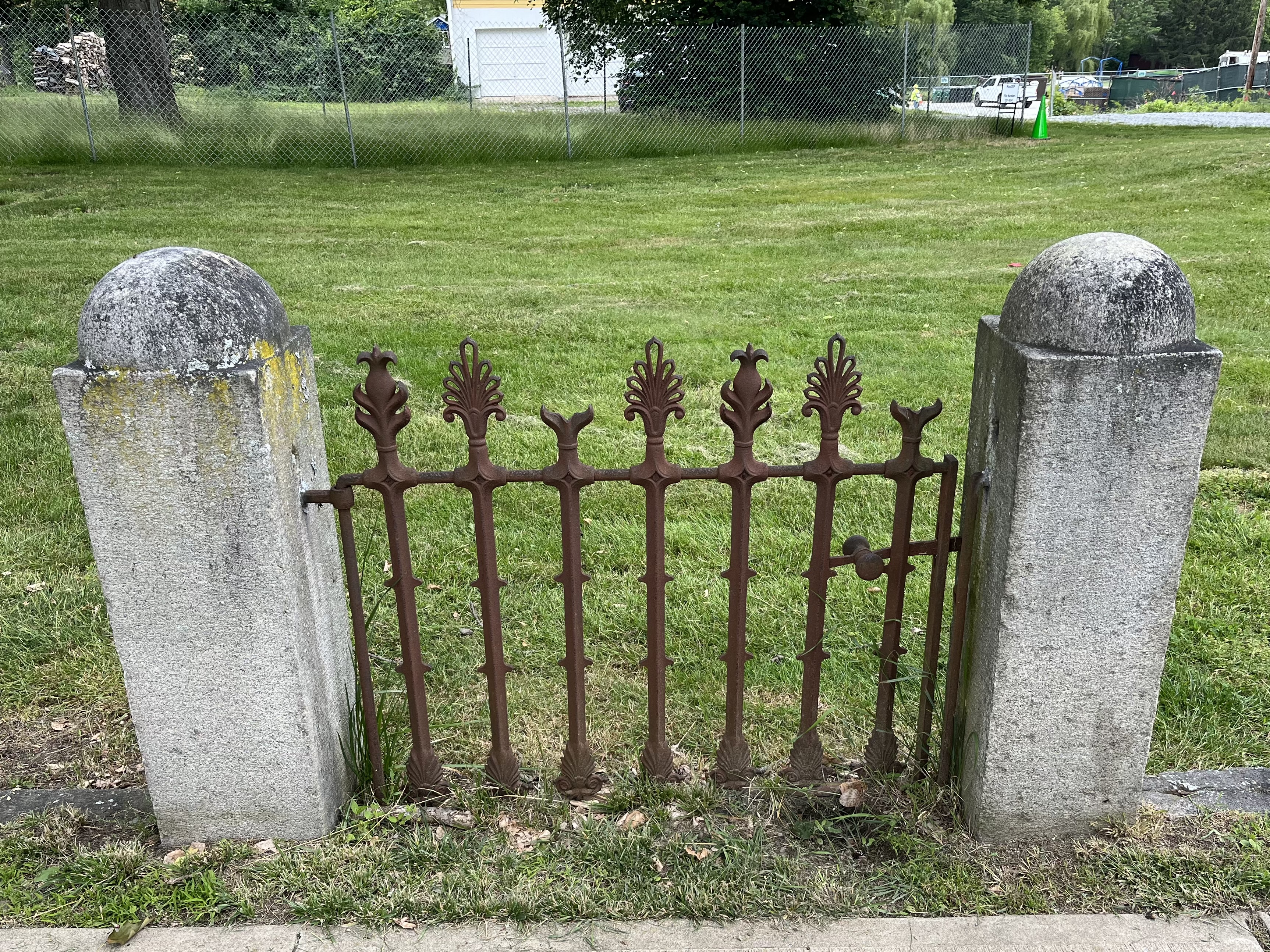
I’m amused by fancy gates that keep nothing in or out.
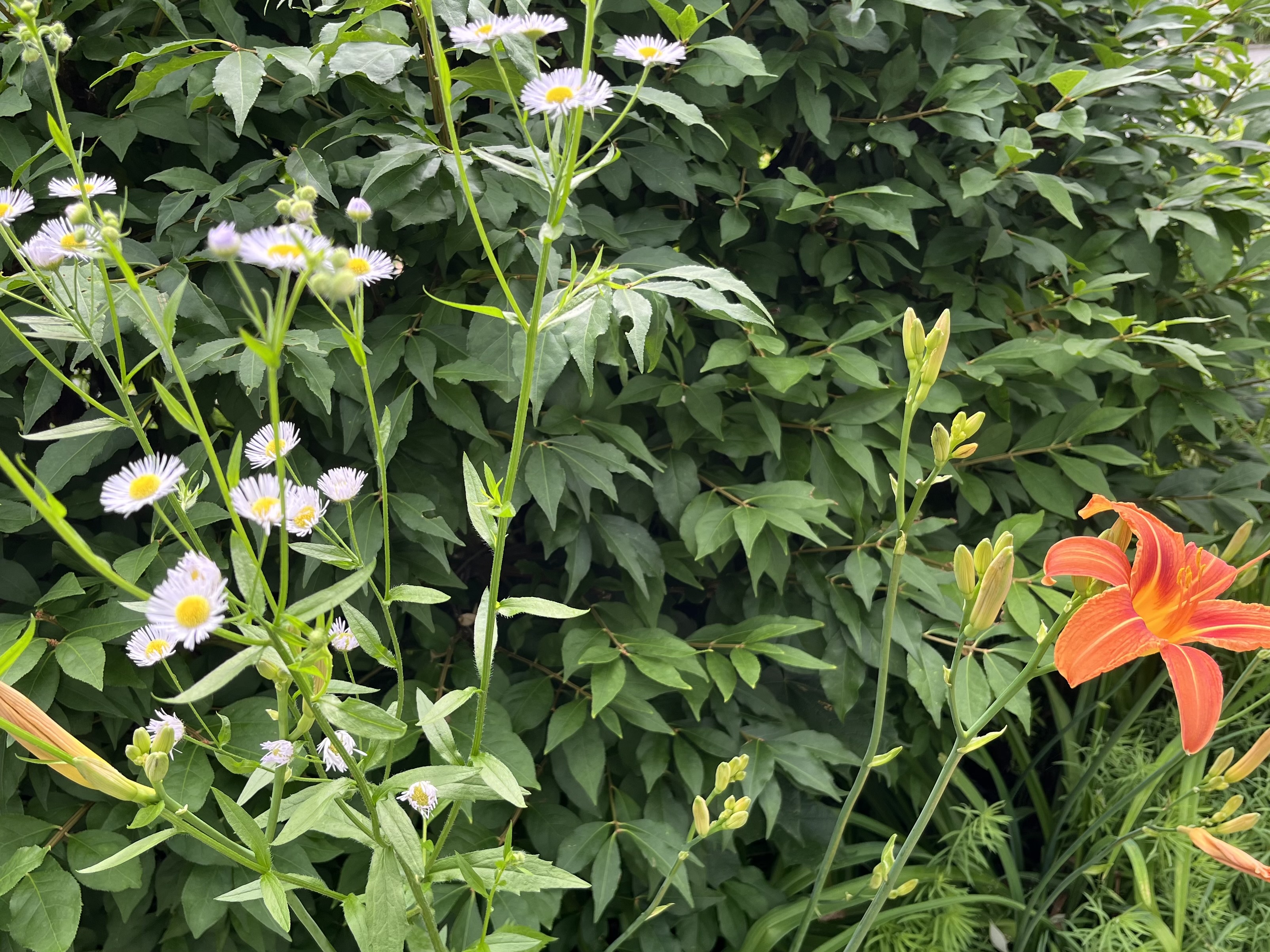
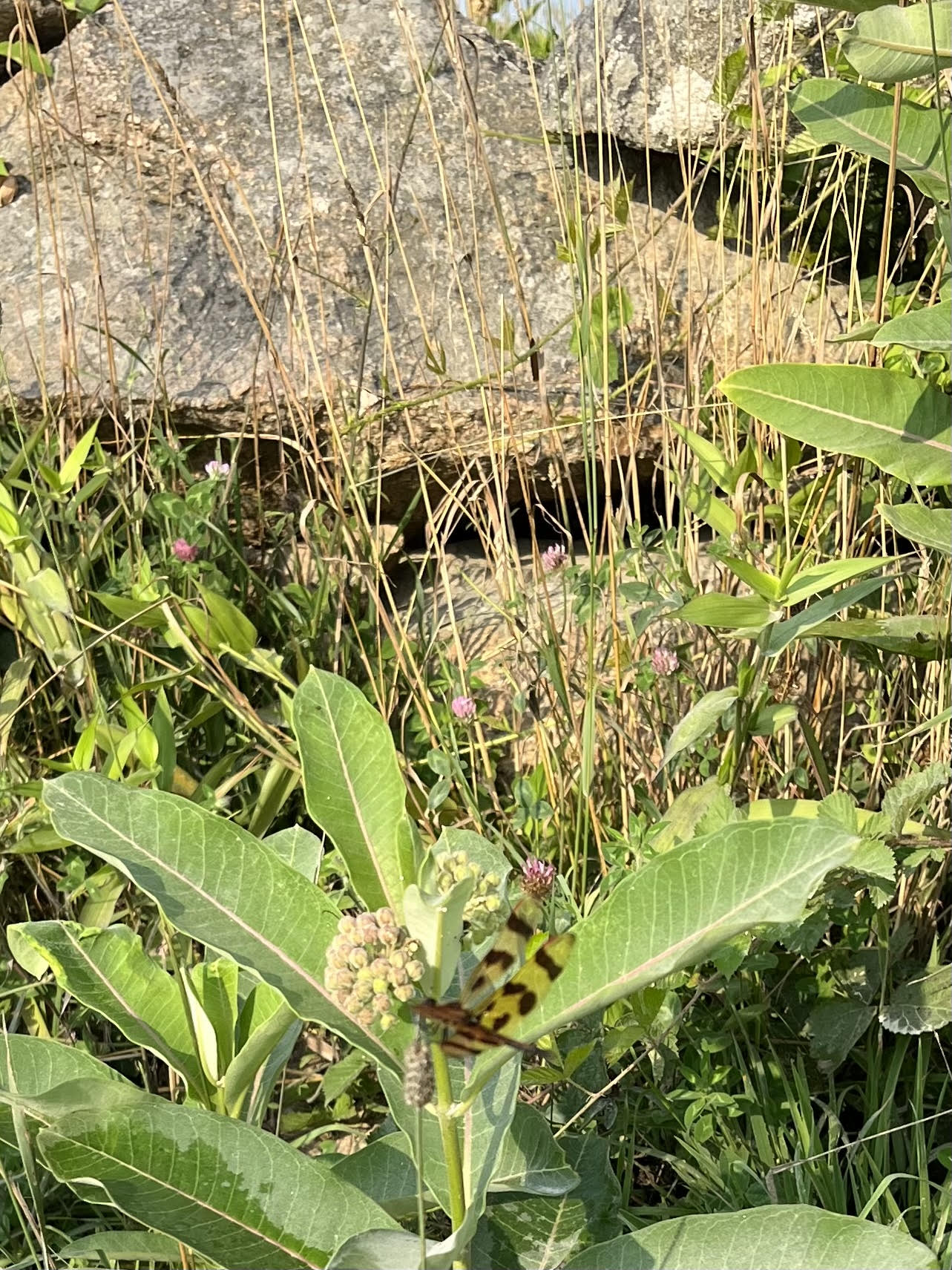
In the yard beside the orange daylily is Daisy fleabane, or so my app tells me. In the next photo, note the dragonfly trying hard not to be seen.
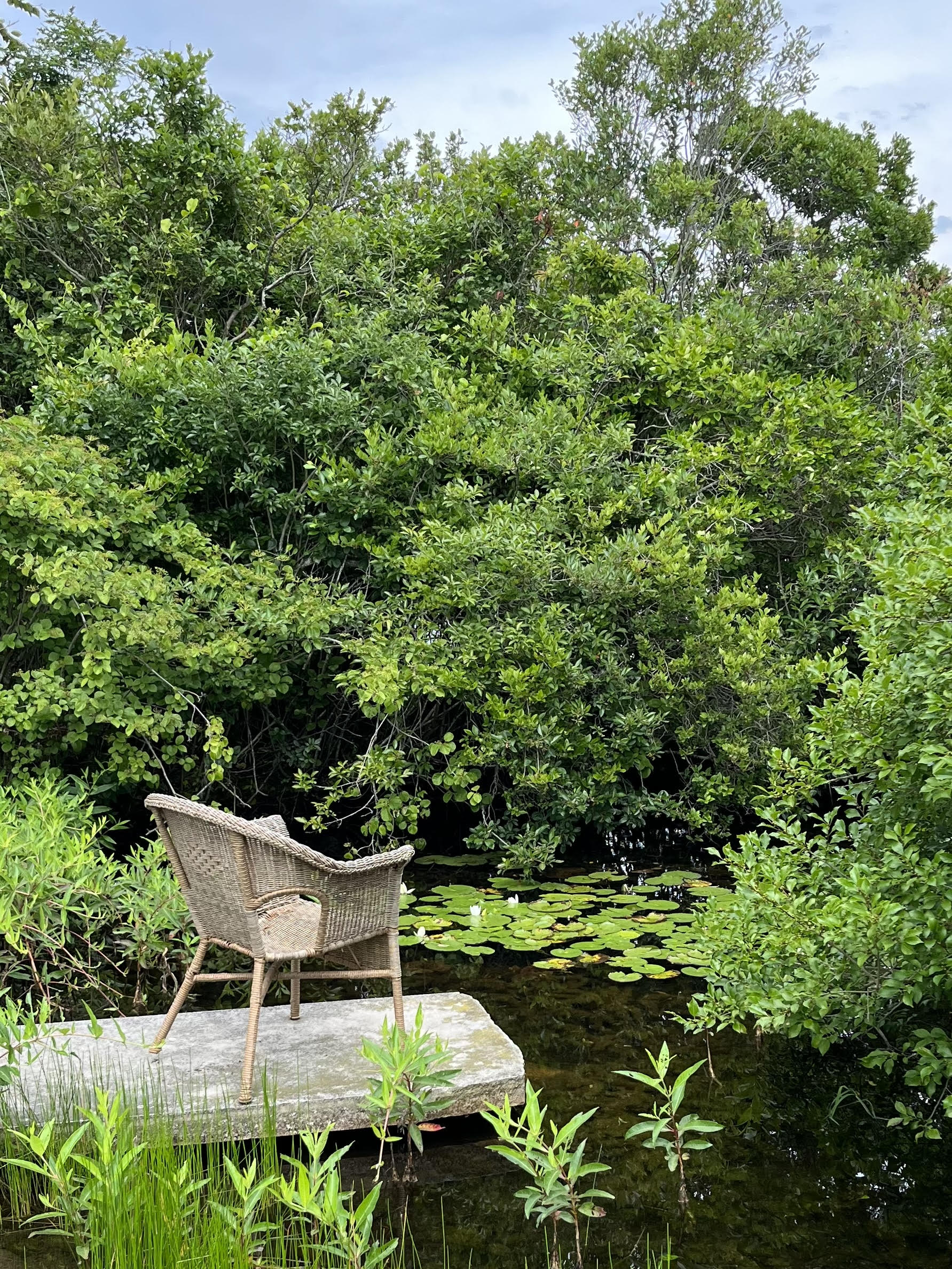
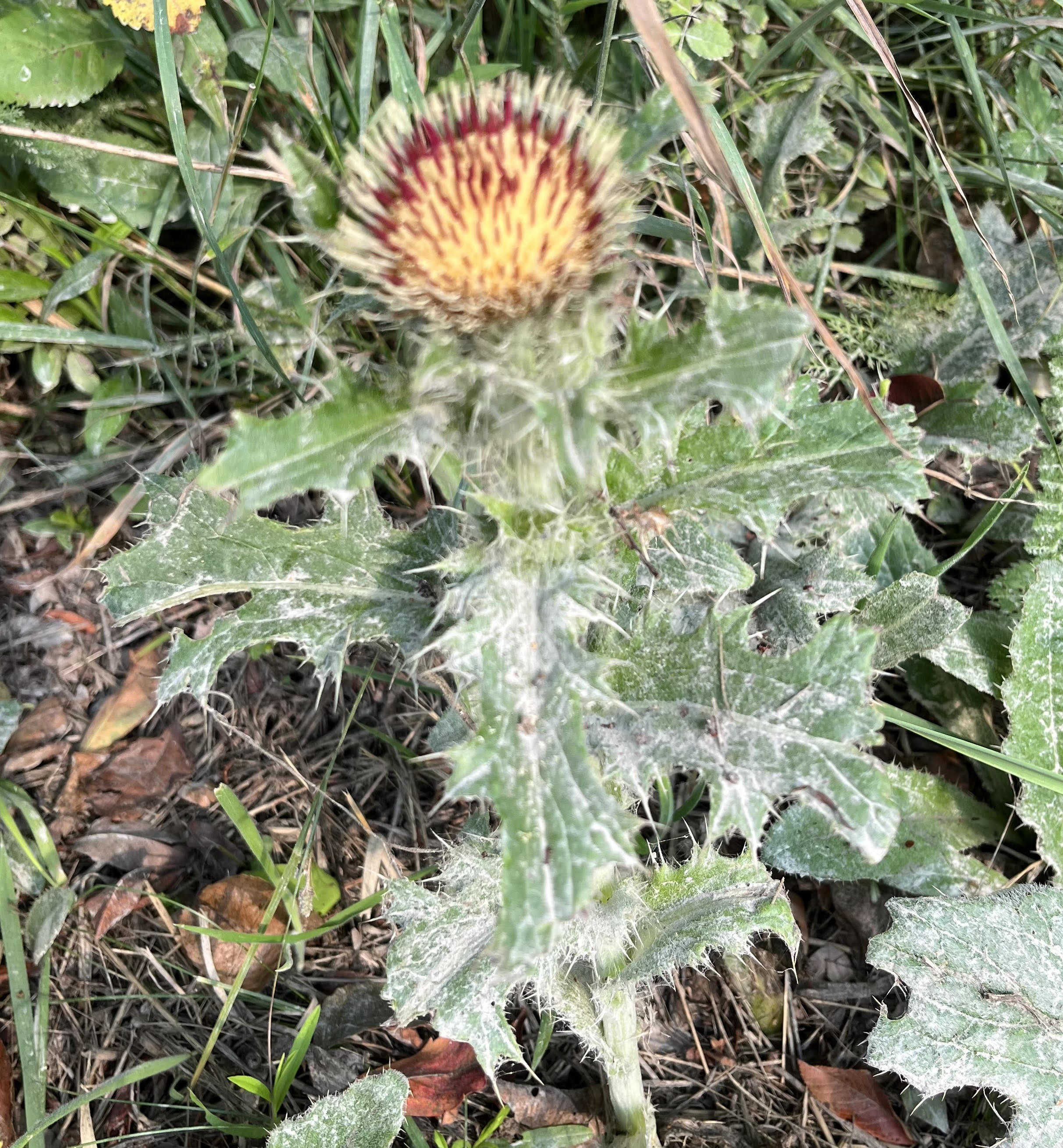
A comfortable chair sits by the summer-blooming water lilies. A mean-looking bull thistle aims to scare off all comers.
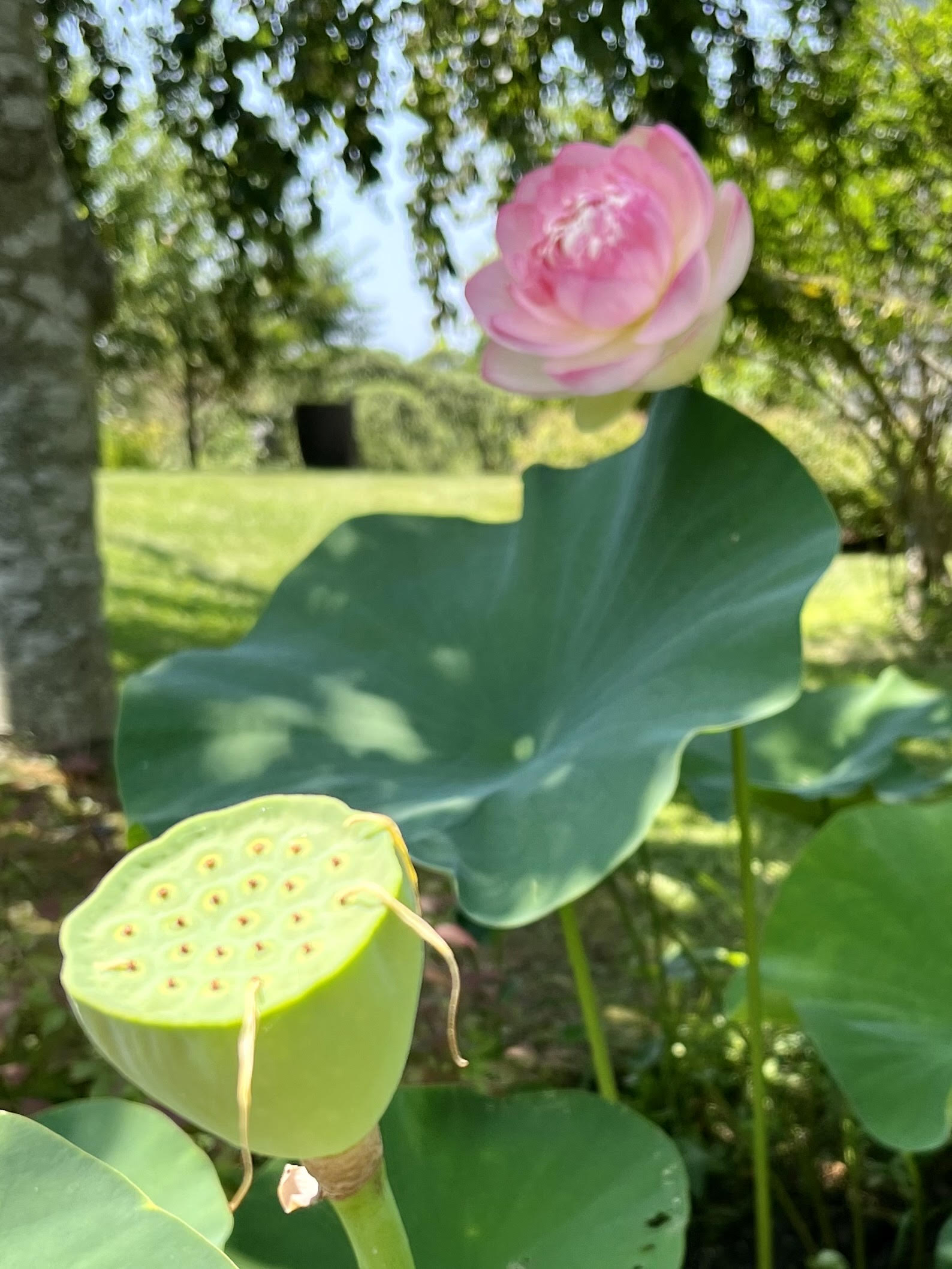
Now take a good look at the foreground of the lotus. This is what is revealed when the flower part dies: its inner self. I like to say that the inner self of a lotus is a shower head.
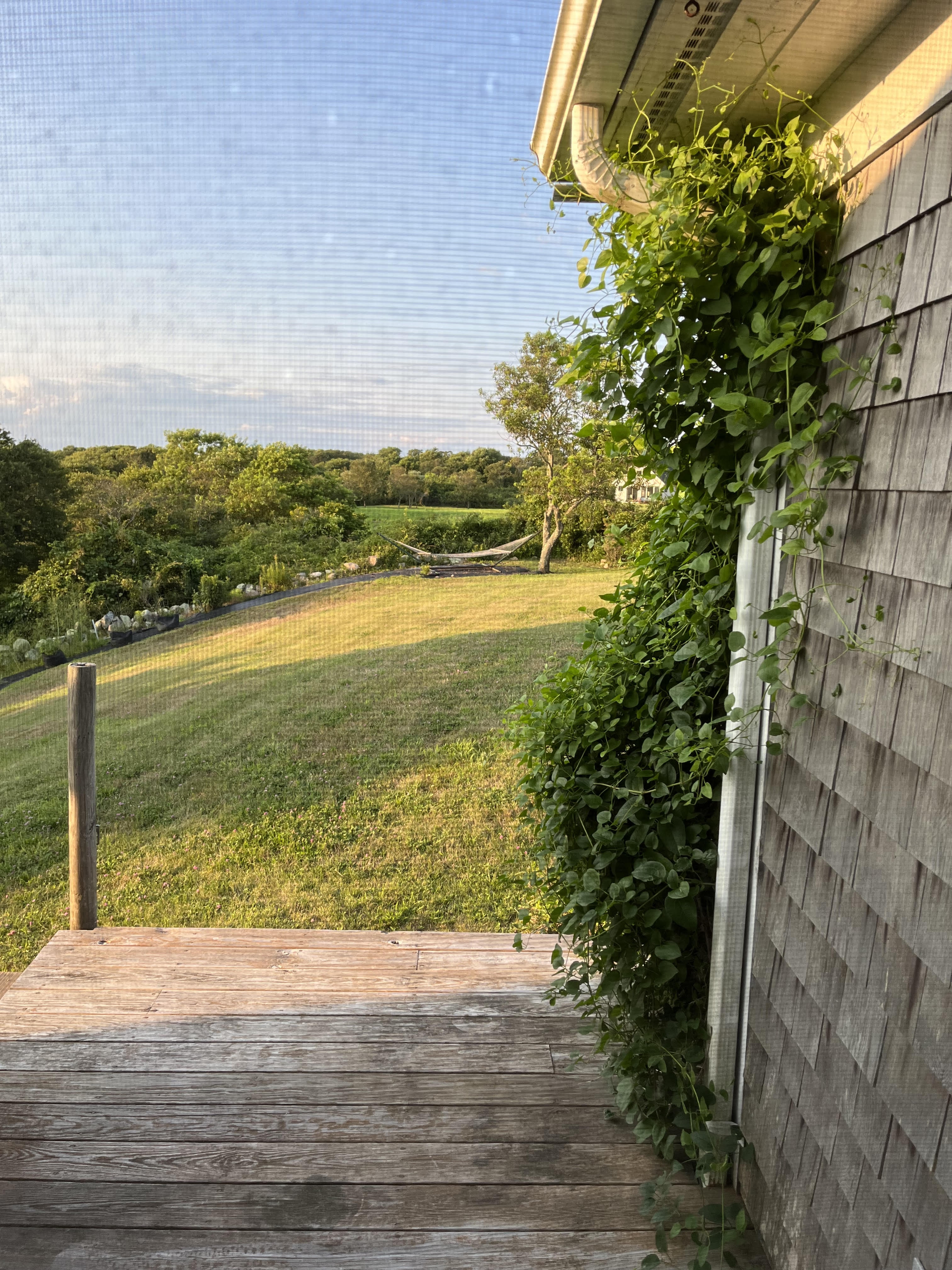
The next scene is dusk in a New Shoreham yard. Soon the deer will pop up from the other side of the stone wall and go looking for free snacks.
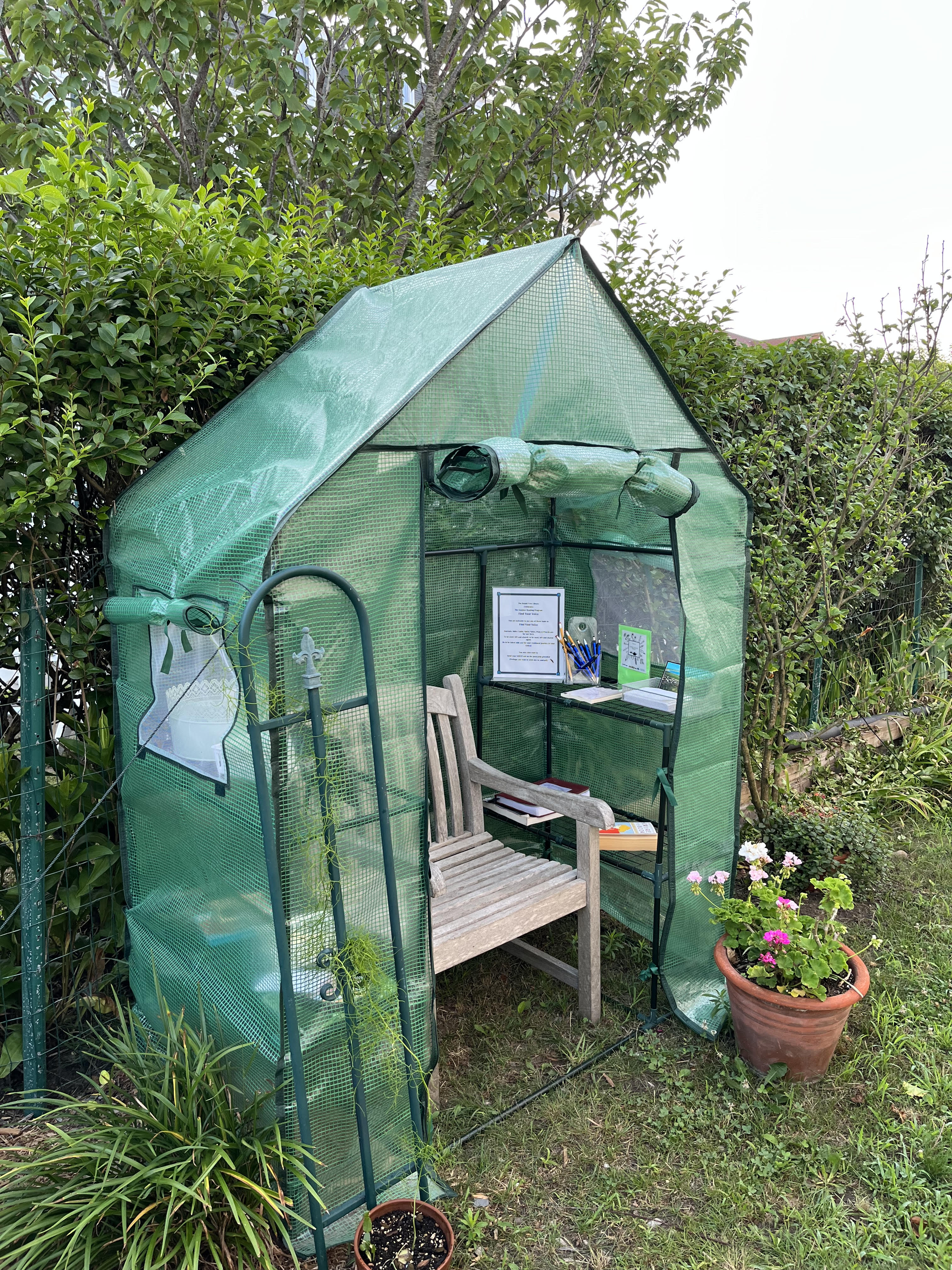
At the island library, where my younger grandson challenged all comers to a game of chess before he went to the nationals in Michigan, you can admire the little tent the librarians set out for quiet pondering and note-taking about books — or anything.
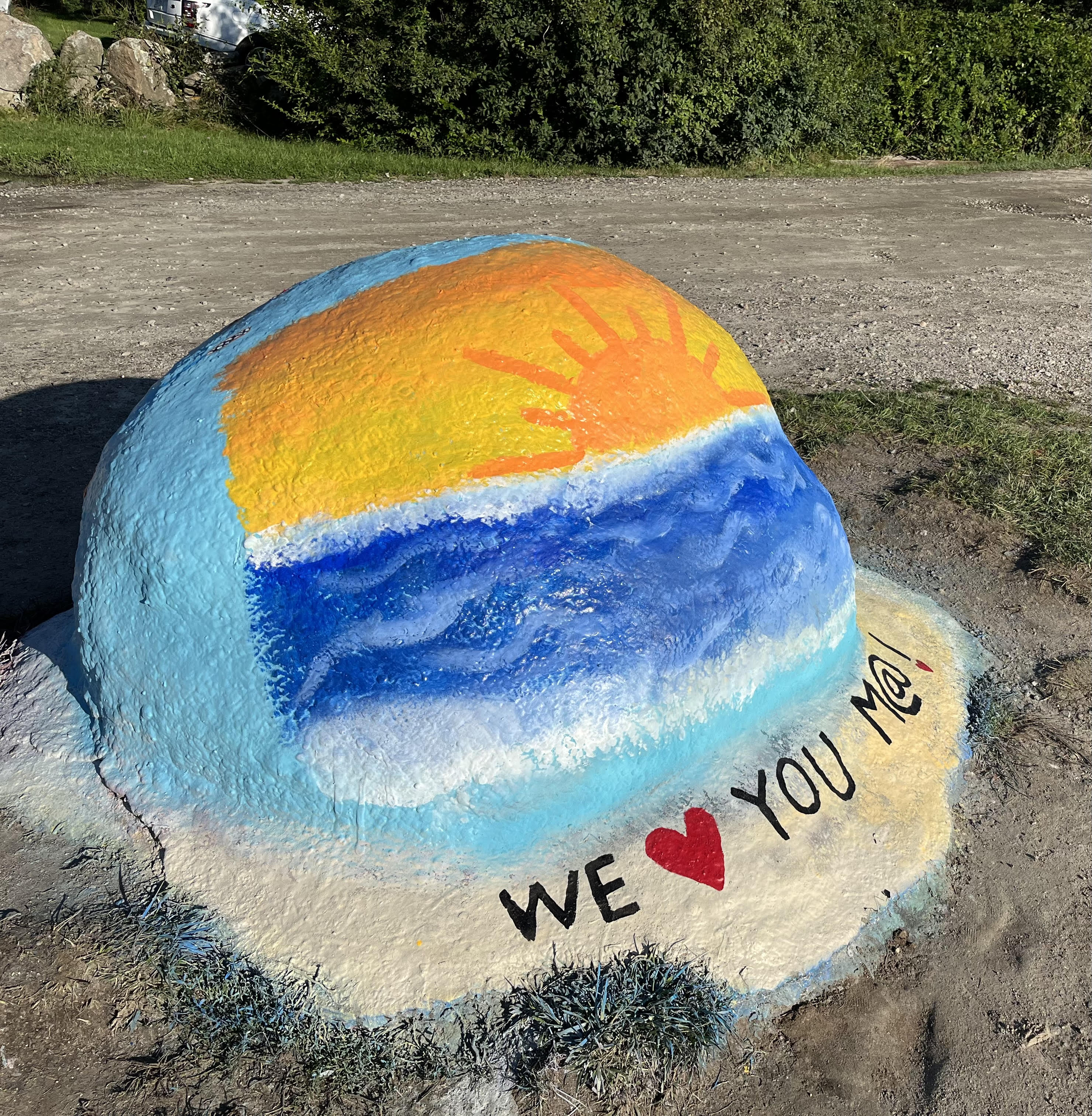
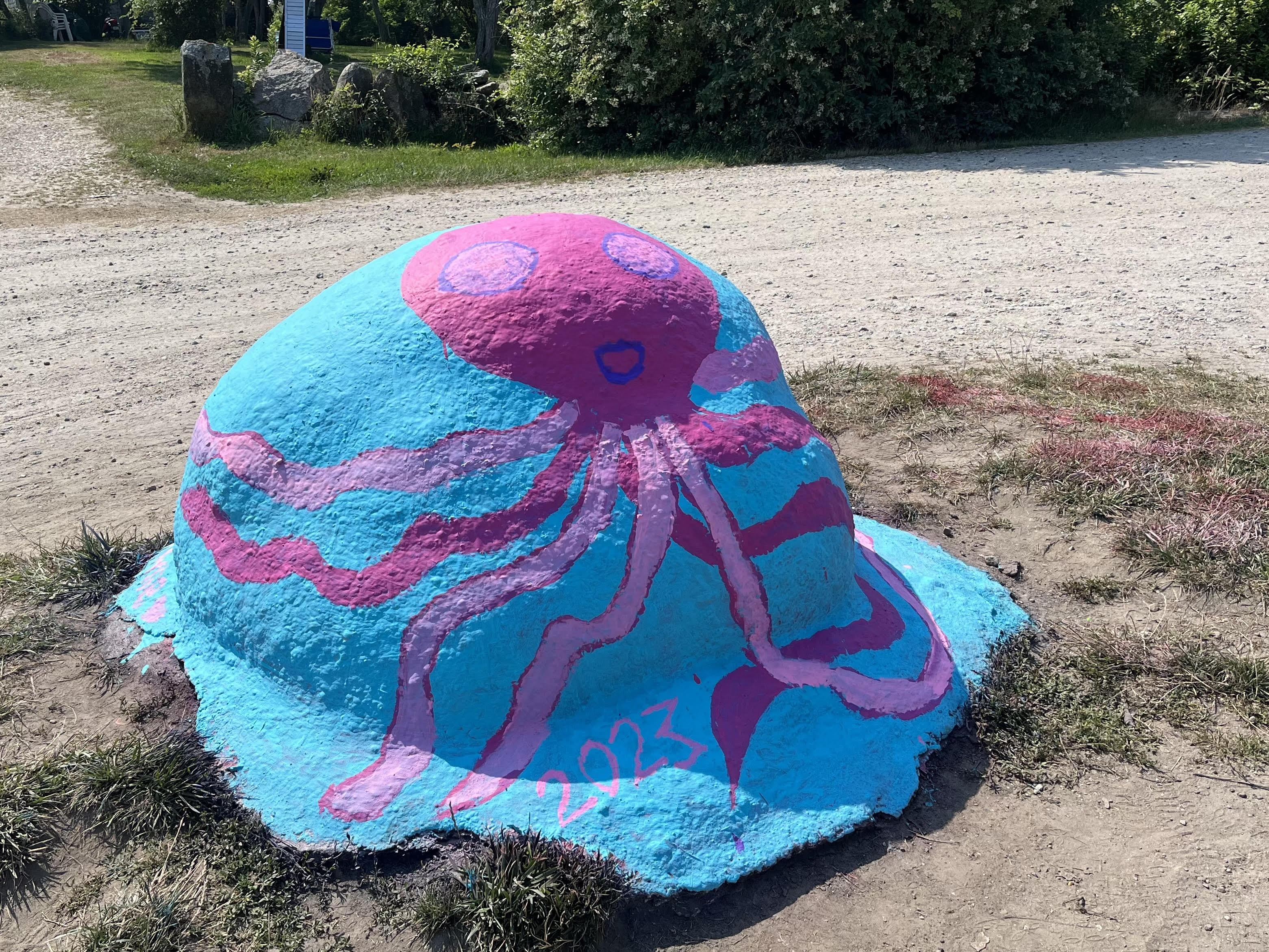
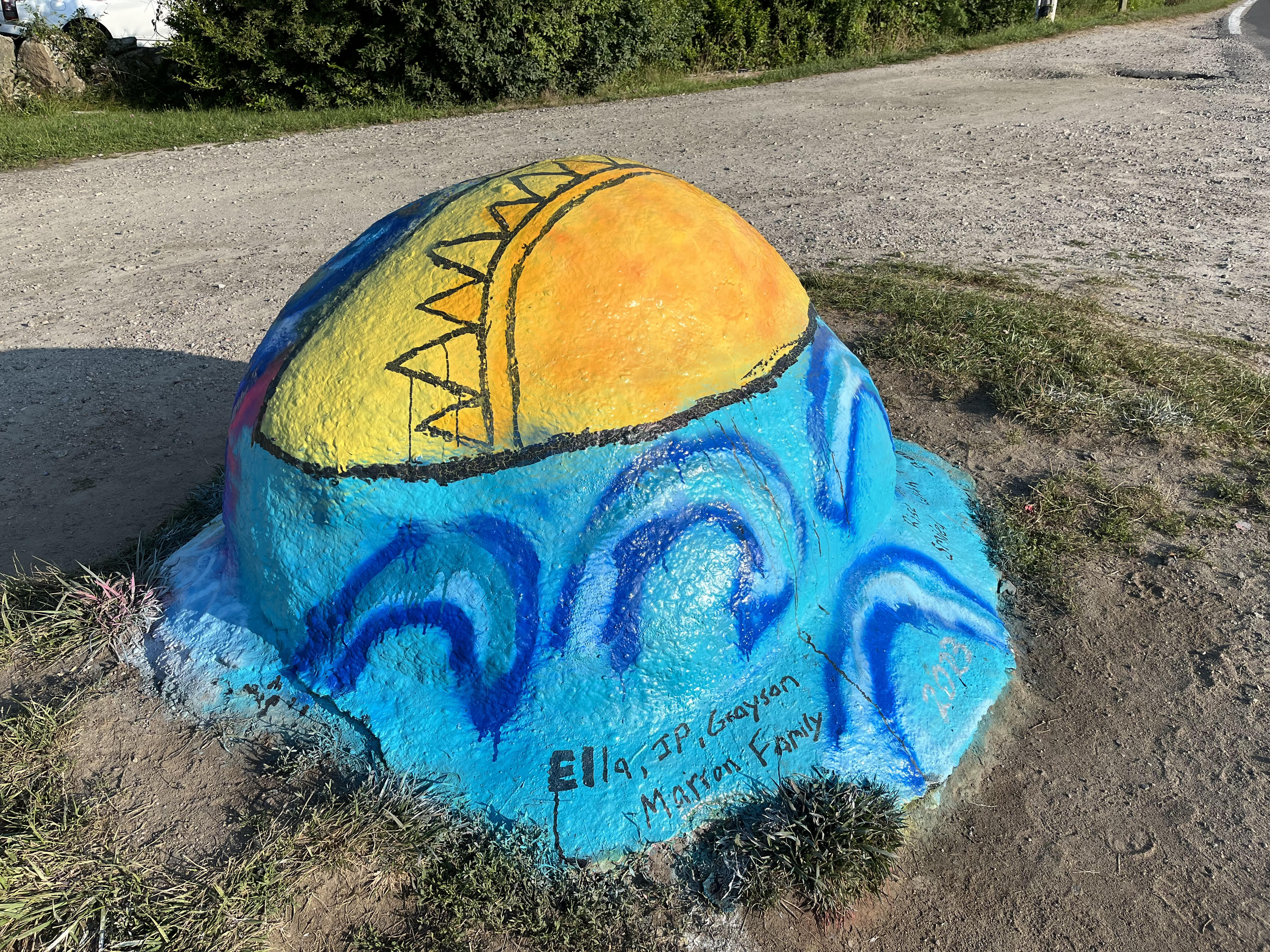
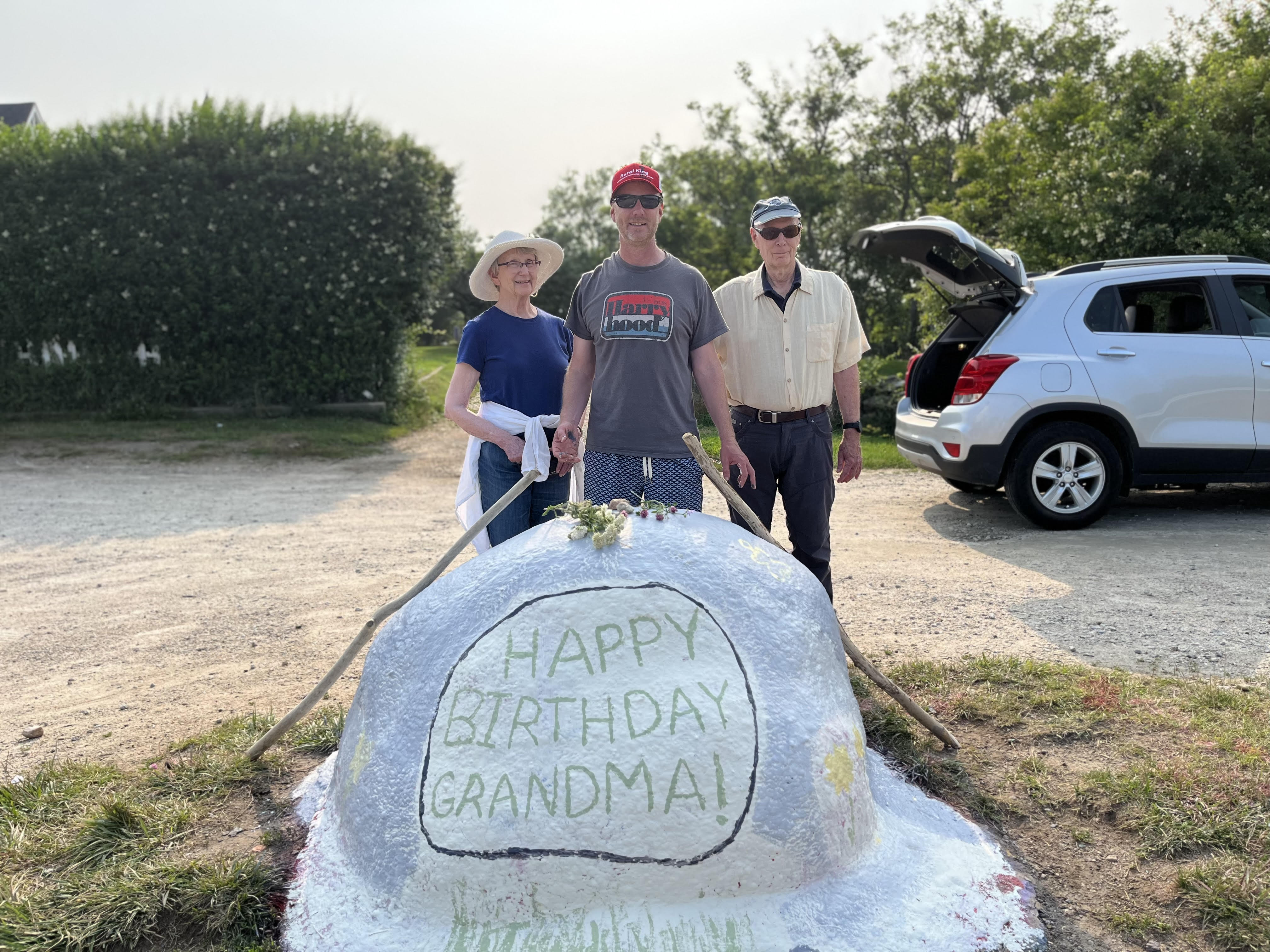
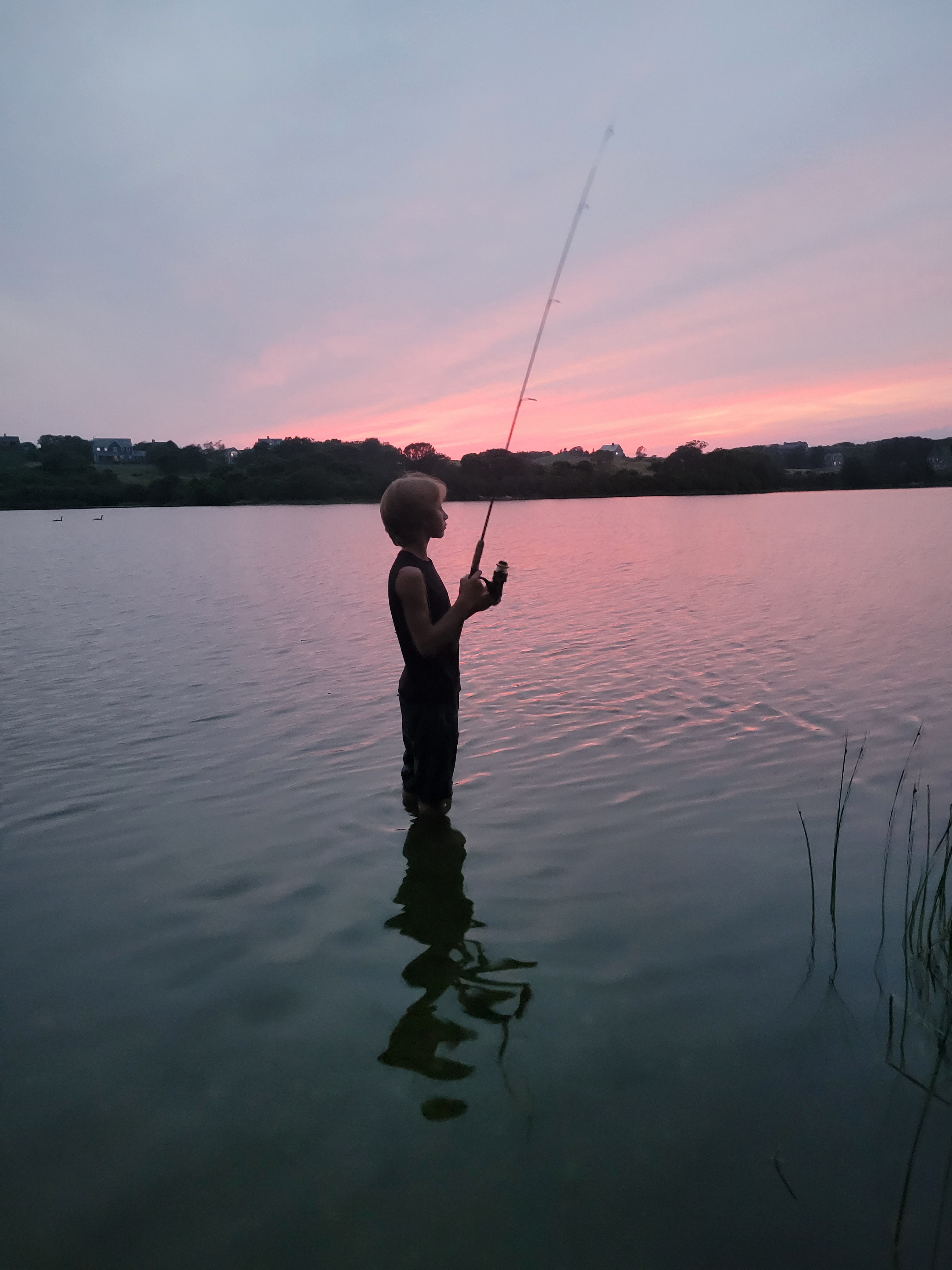
Moving right along, we can check on a few of the summer’s better painted rocks — a surprised-looking octopus, a celebration of sun and sea, and one of my birthday. Pretty much the whole family worked on that last one. My oldest granddaughter did the careful lettering. She also was the photographer for the picture below of her brother fishing at sunset.
A real New England spring is tender, touching. The seasonal changes are not always dramatic or photogenic. I would have liked to share with you, for example, the carpets of tiny, blue forget-me-nots I saw all along the edge of a field yesterday, but my phone camera is not sensitive enough. In a photo, they would look like an undifferentiated smear of white.
Still, there is plenty to show, and I hope it’s all welcome, especially to those in the South who are already wilting in the heat of summer.
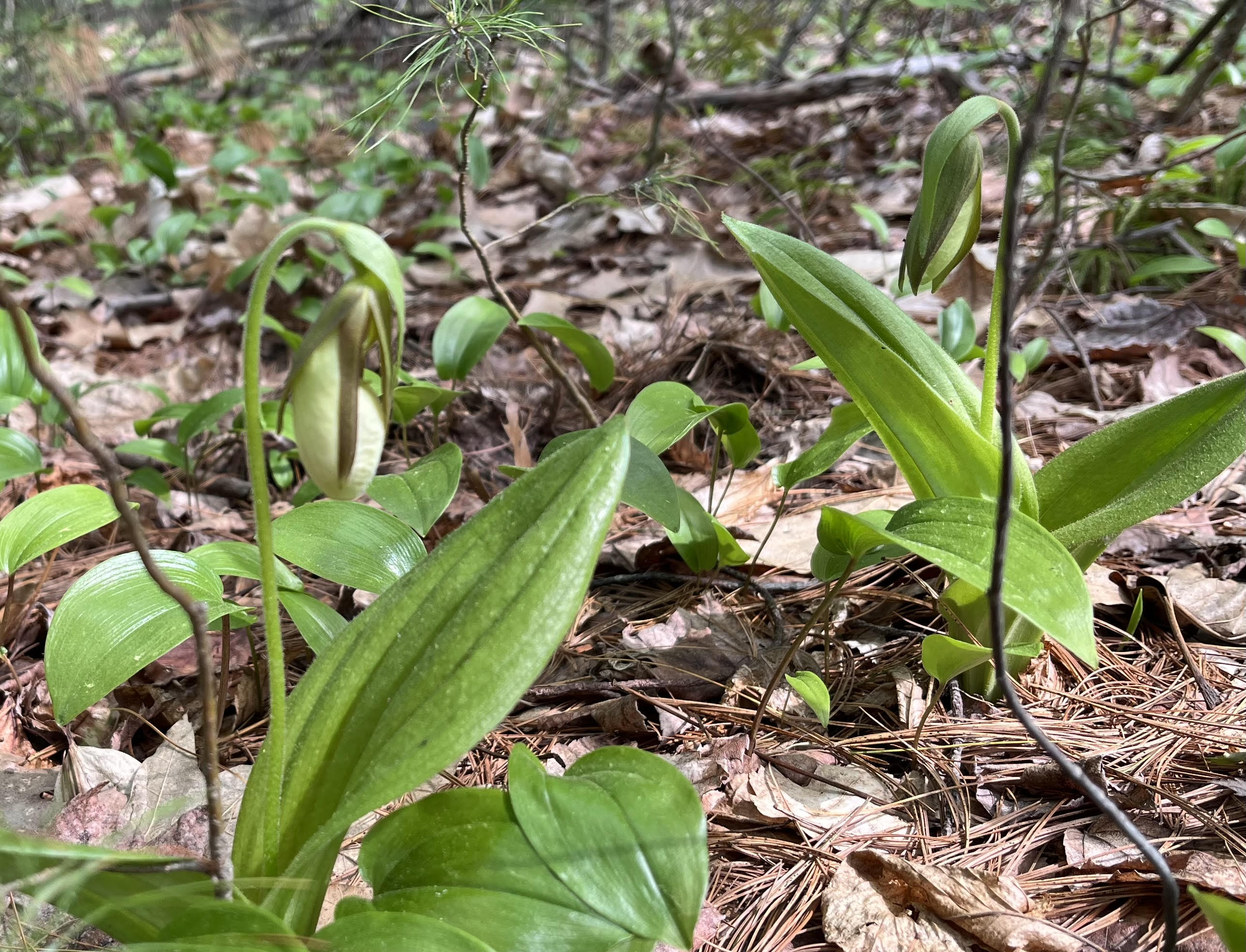
I found the Lady Slippers along a woodland trail. They will soon turn pink.
I liked the way the euonymus below spoke of new and old growing along together.
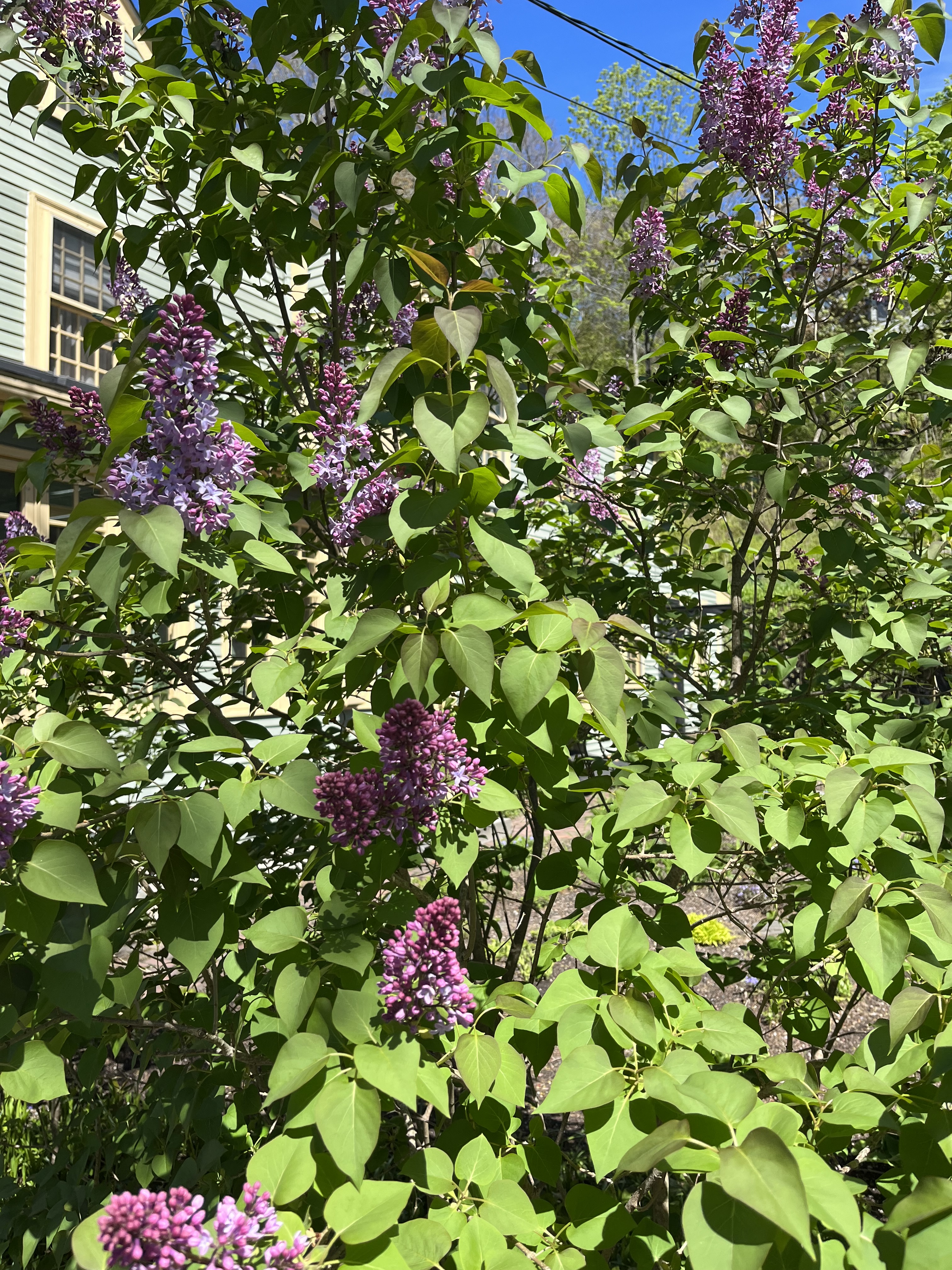
Wish I could share how wonderful those lilacs smell — or the fragrance everywhere of little lilies-of the-valley.
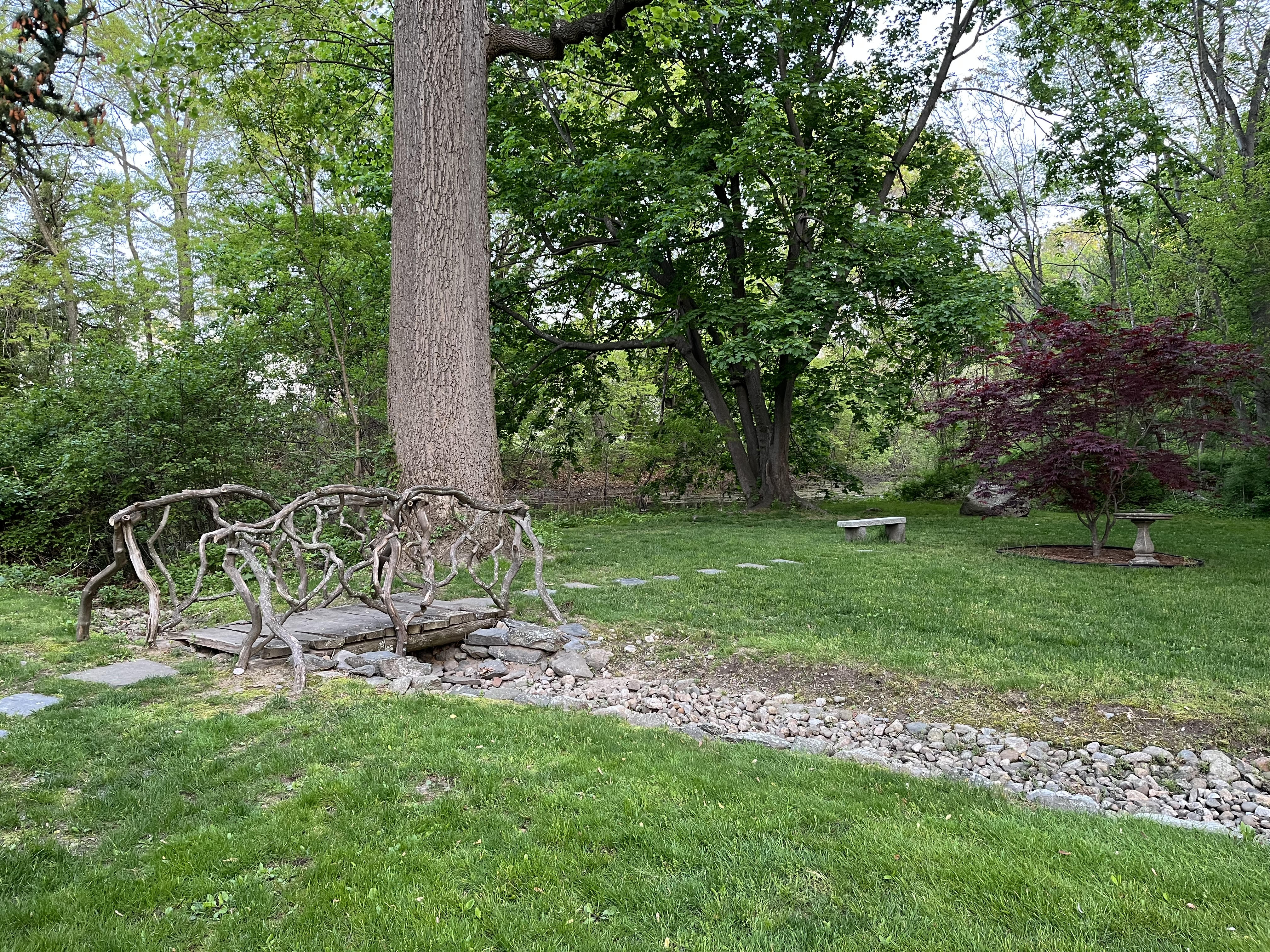
The quirky fairy bridge on the campus of Butler Hospital in Providence reminded me of similar ones in New York’s Central Park that filled me with delight during that sad year I was visiting my ailing sister.
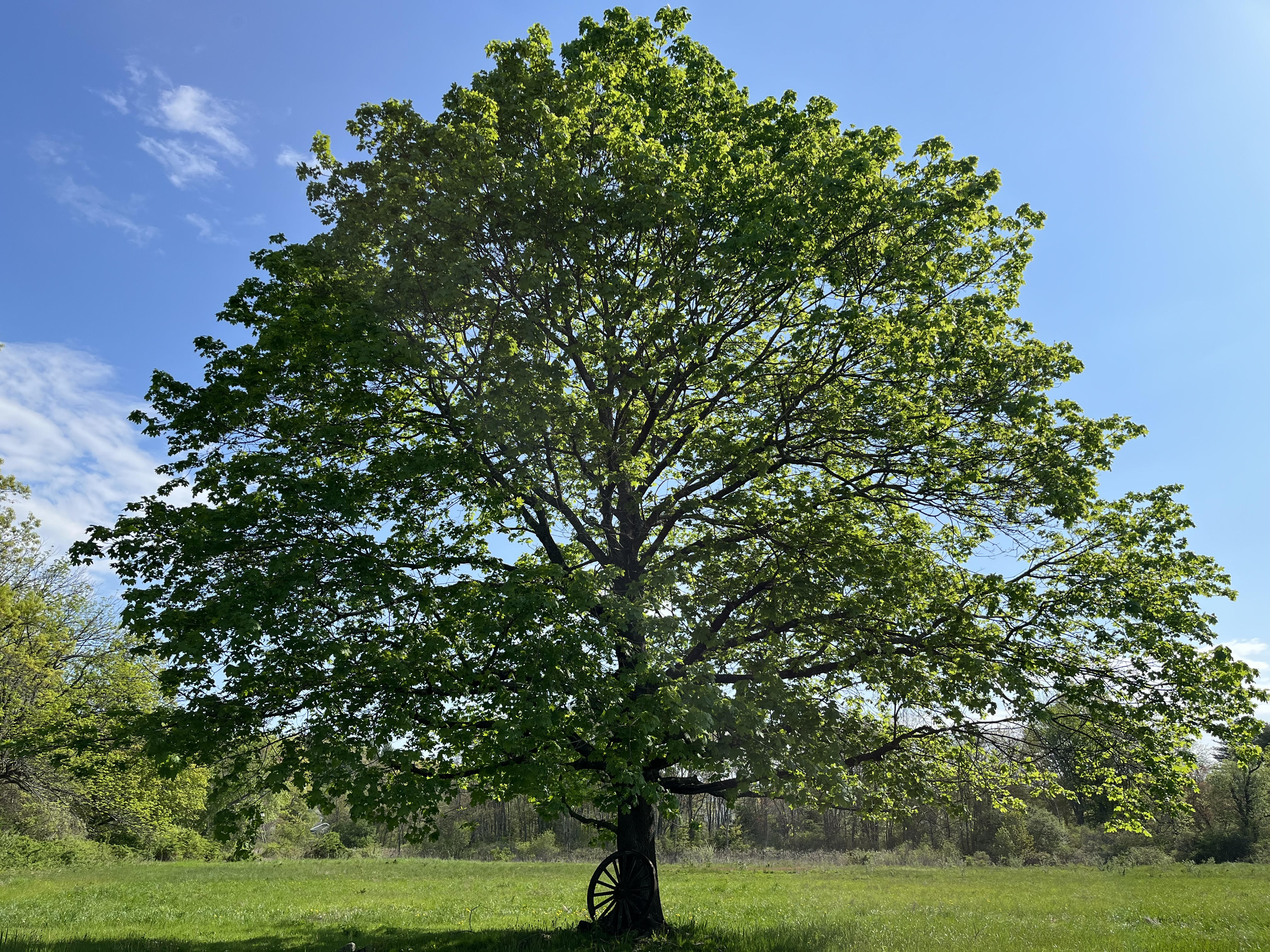
In the next photo, I wanted to capture how tired that old wheel looked in the energetic sunshine.
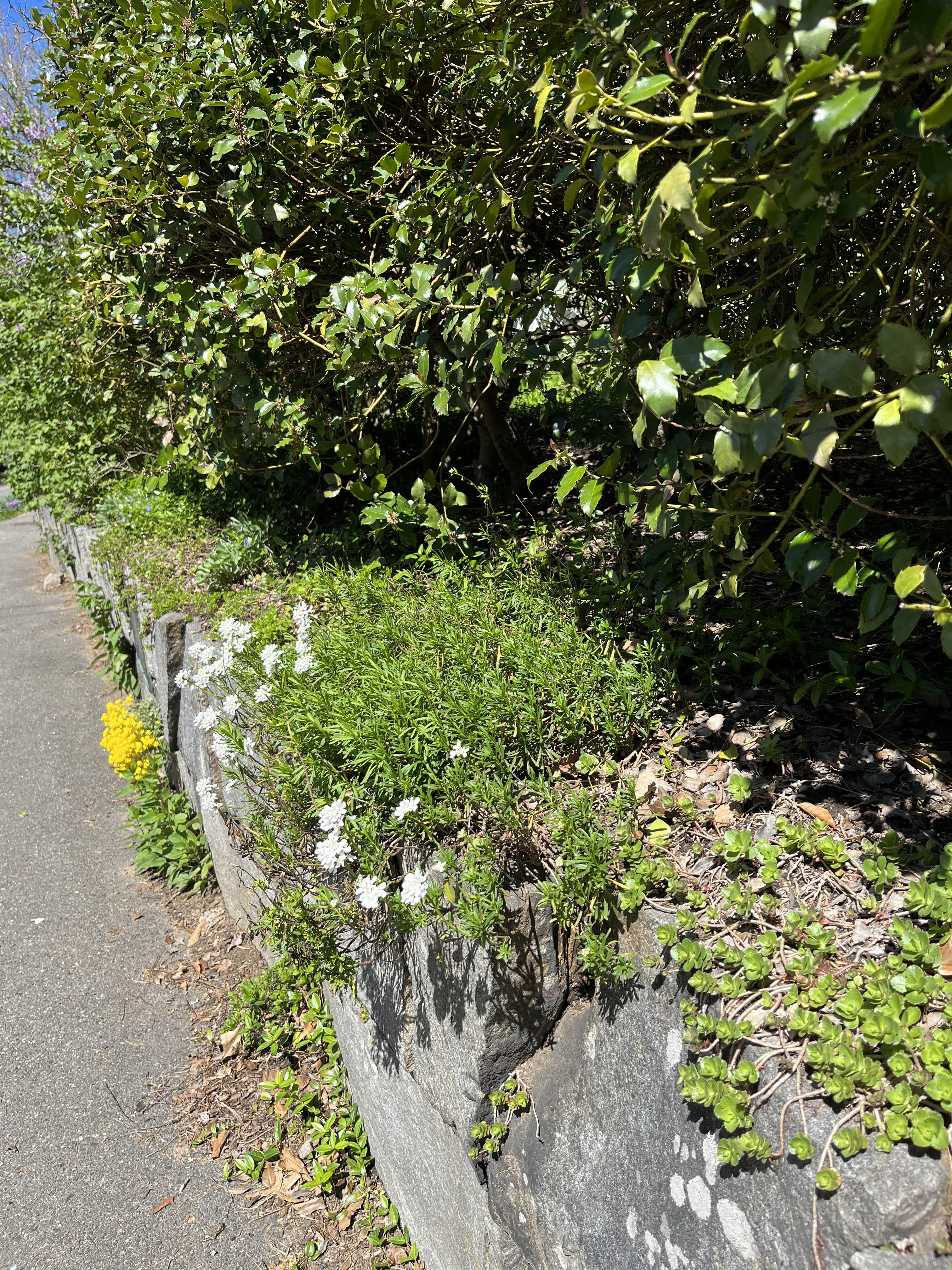
I liked how the stone wall nurtures its floral decorations.
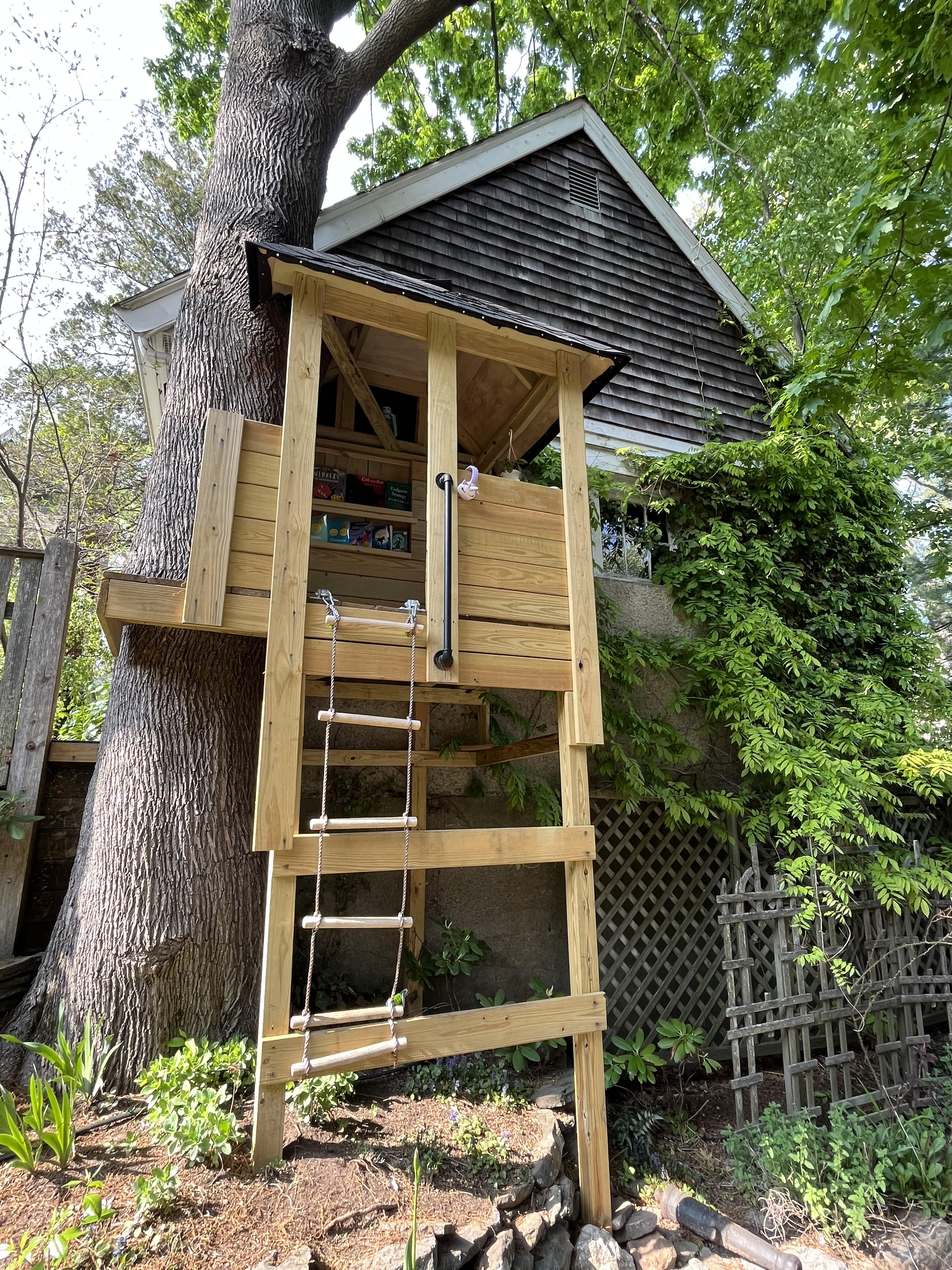
Erik finished the tree house — a triumph of his and a small child’s imagination and will.
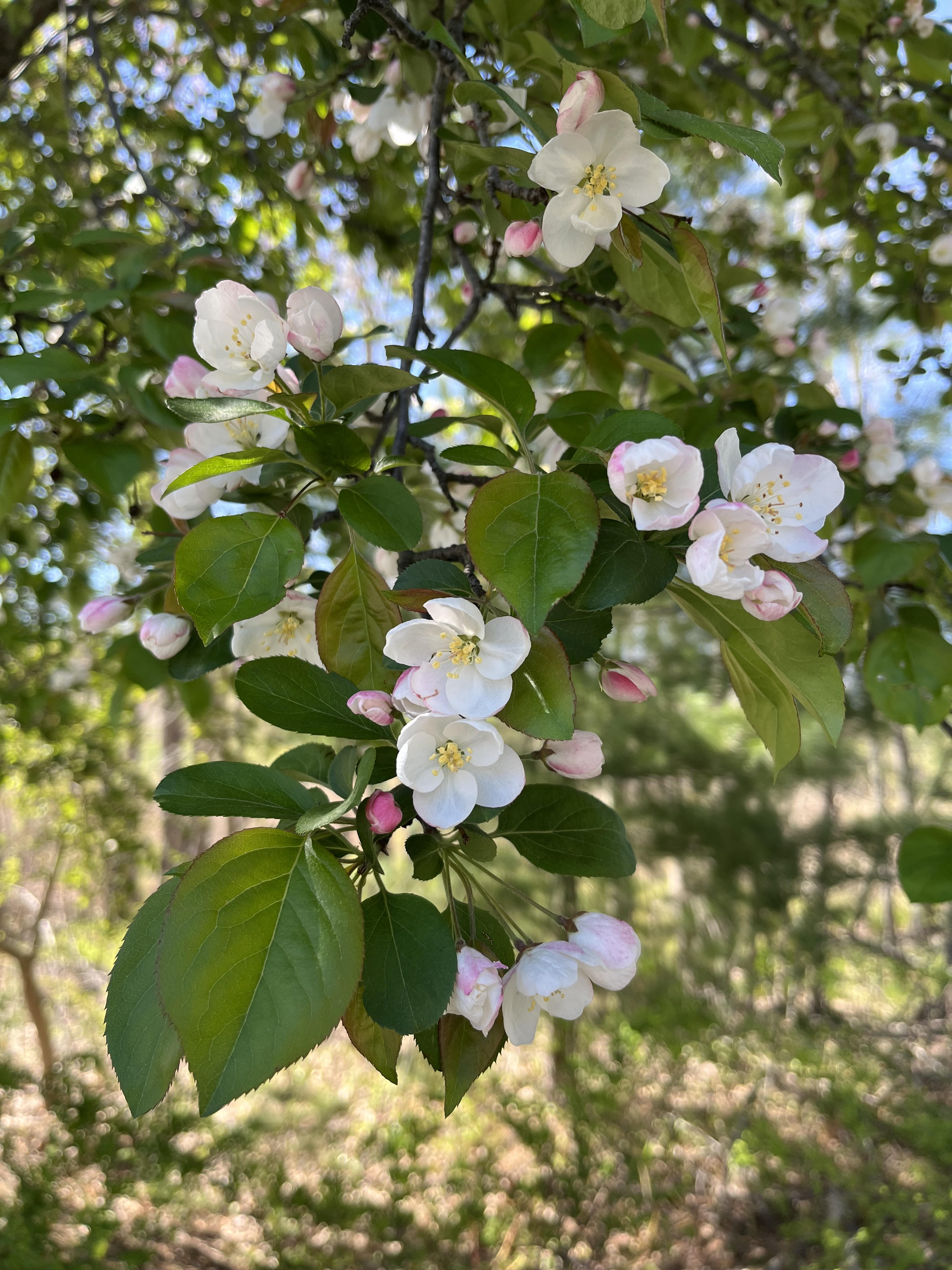
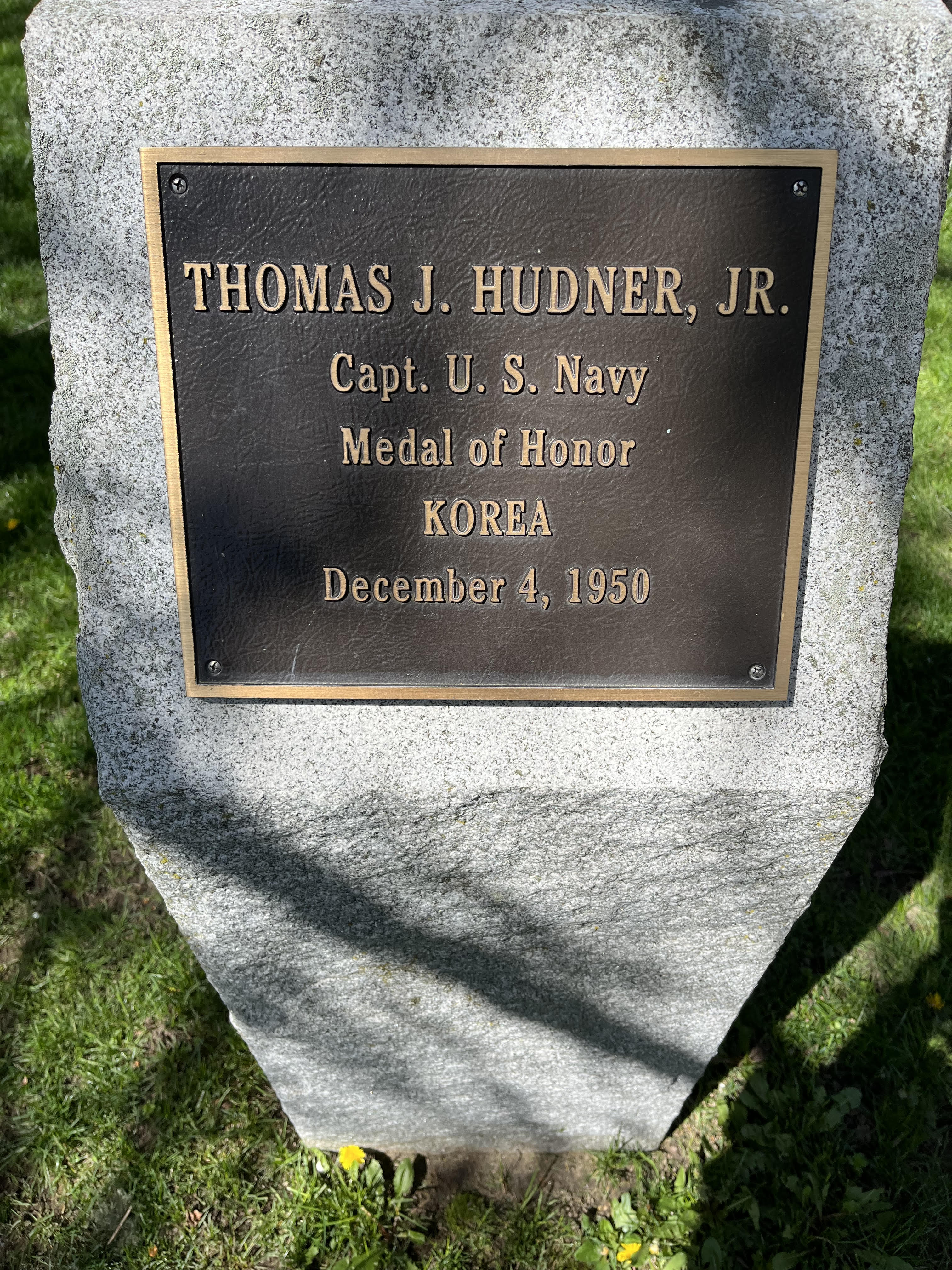
After the crabapple blossoms come a couple of the signs I can never resist, including one honoring a local Korean War hero, featured in the recent film Devotion.
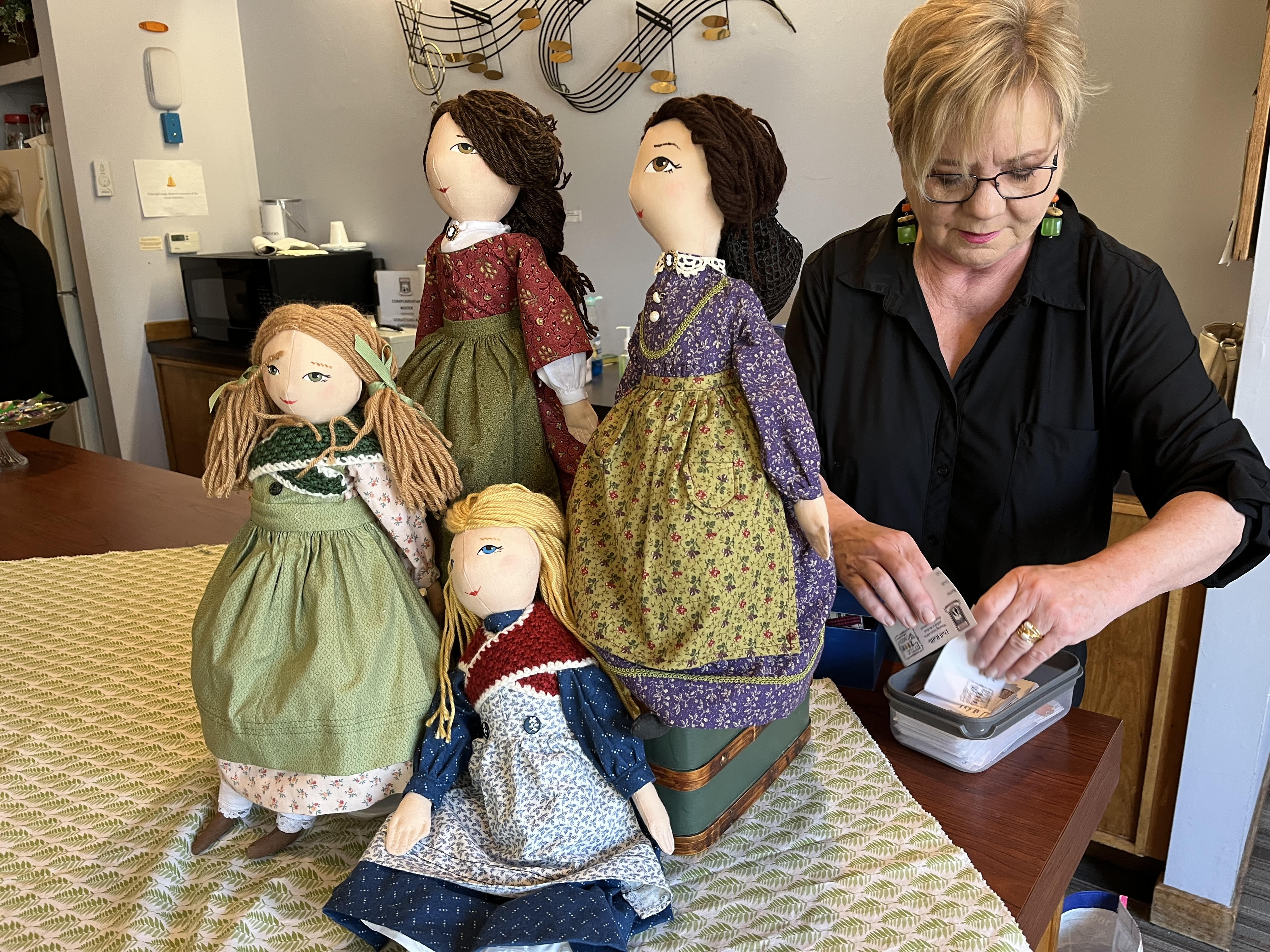
The talented costume designers for the decennial production of Little Women honored a local author with dolls featuring the main characters in her book. A lucky theatergoer with the right ticket number got the dolls after the show.
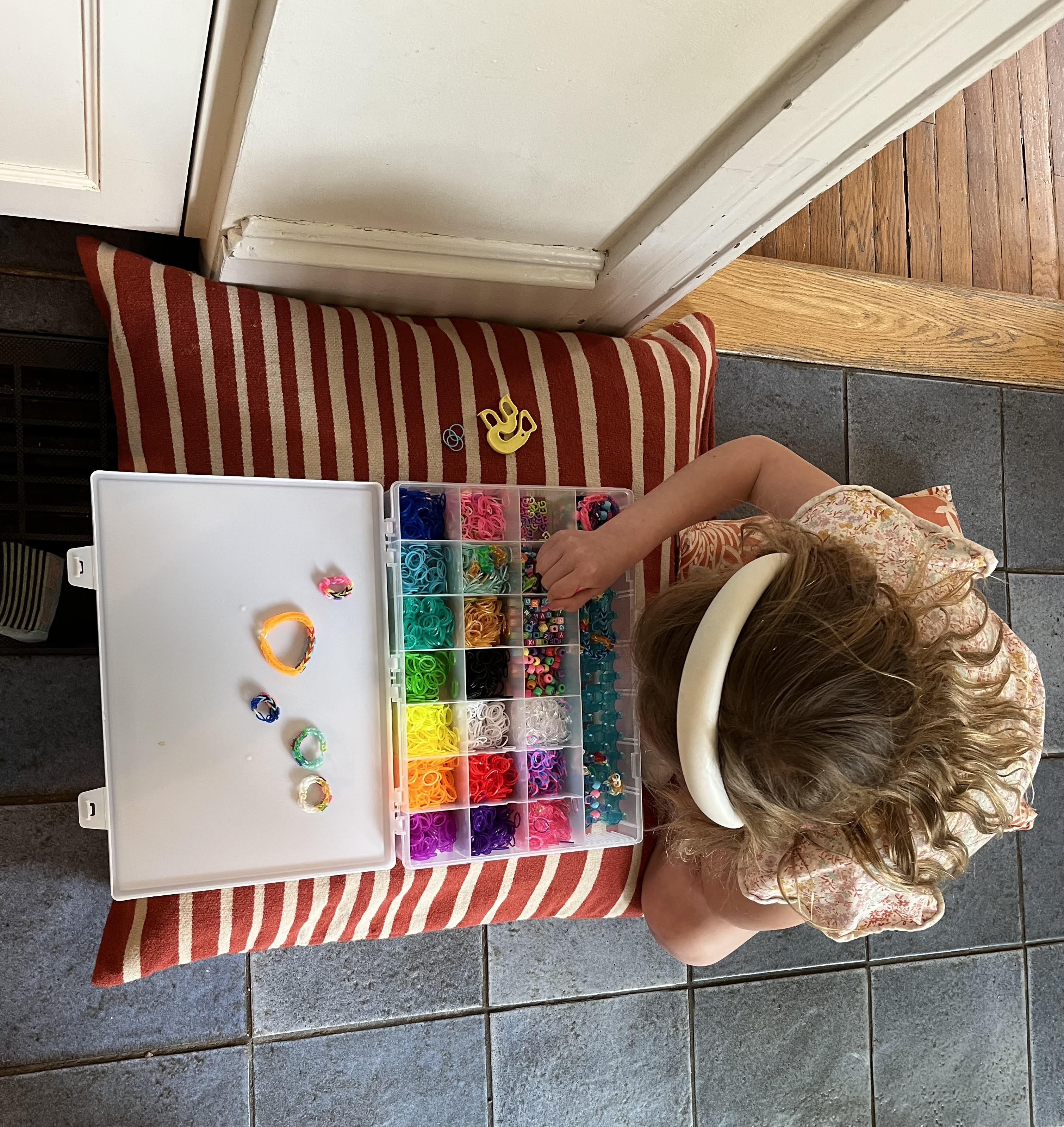
A little crafter is oblivious to all on a sunny spring day.
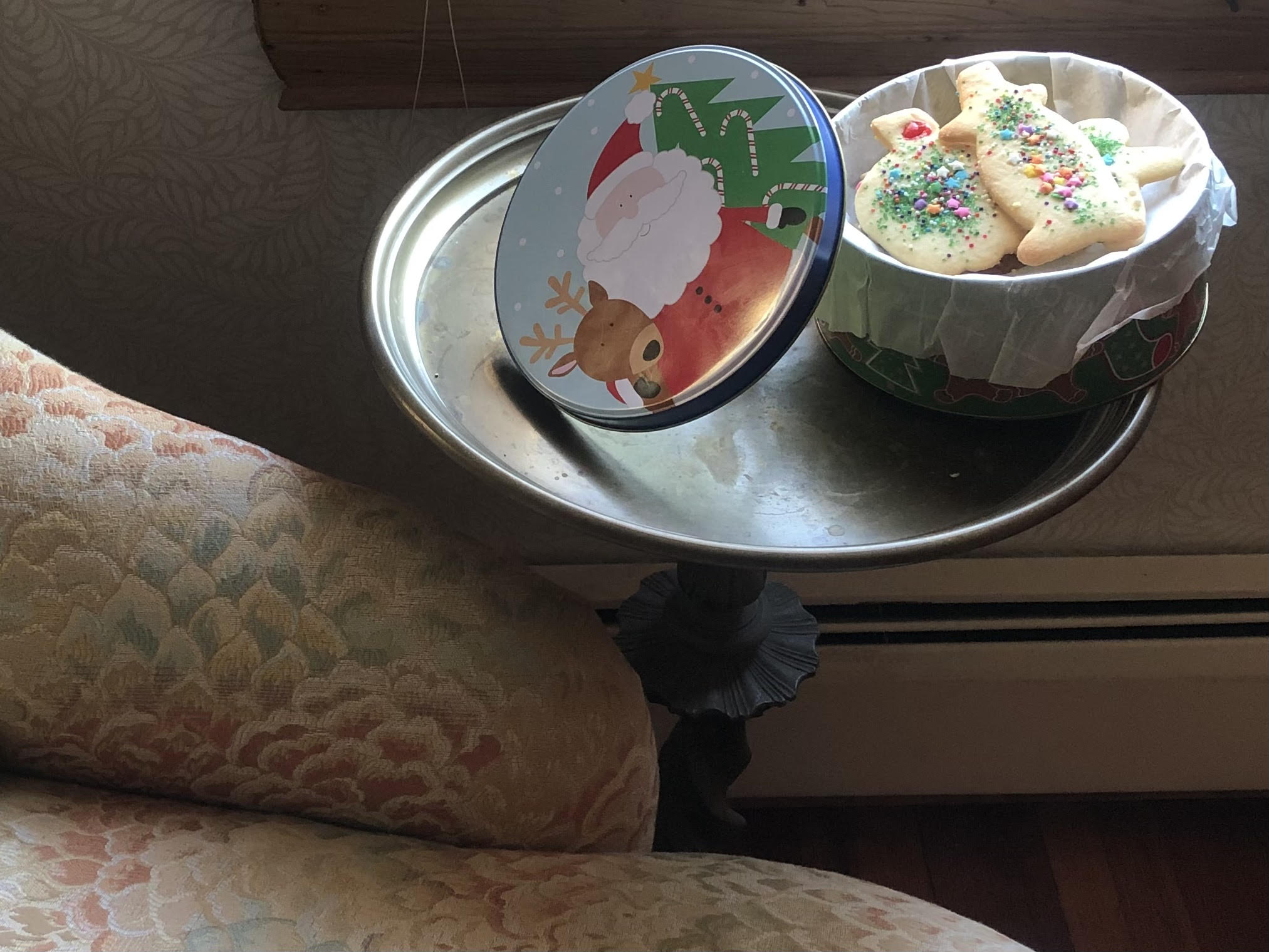
Photo: Suzanne’s Mom. One of my granddaughters made this gingerbread house from a kit. The idea for a carrot was her own.
Time for another photo round-up.
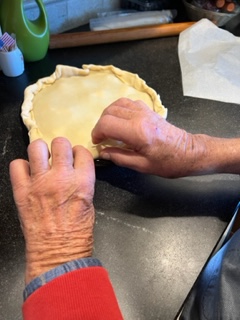
Sandra M. Kelly surprised us with a picture of Patrick making a mince pie for Thanksgiving. And, here, we thought Sandra was the only chef!
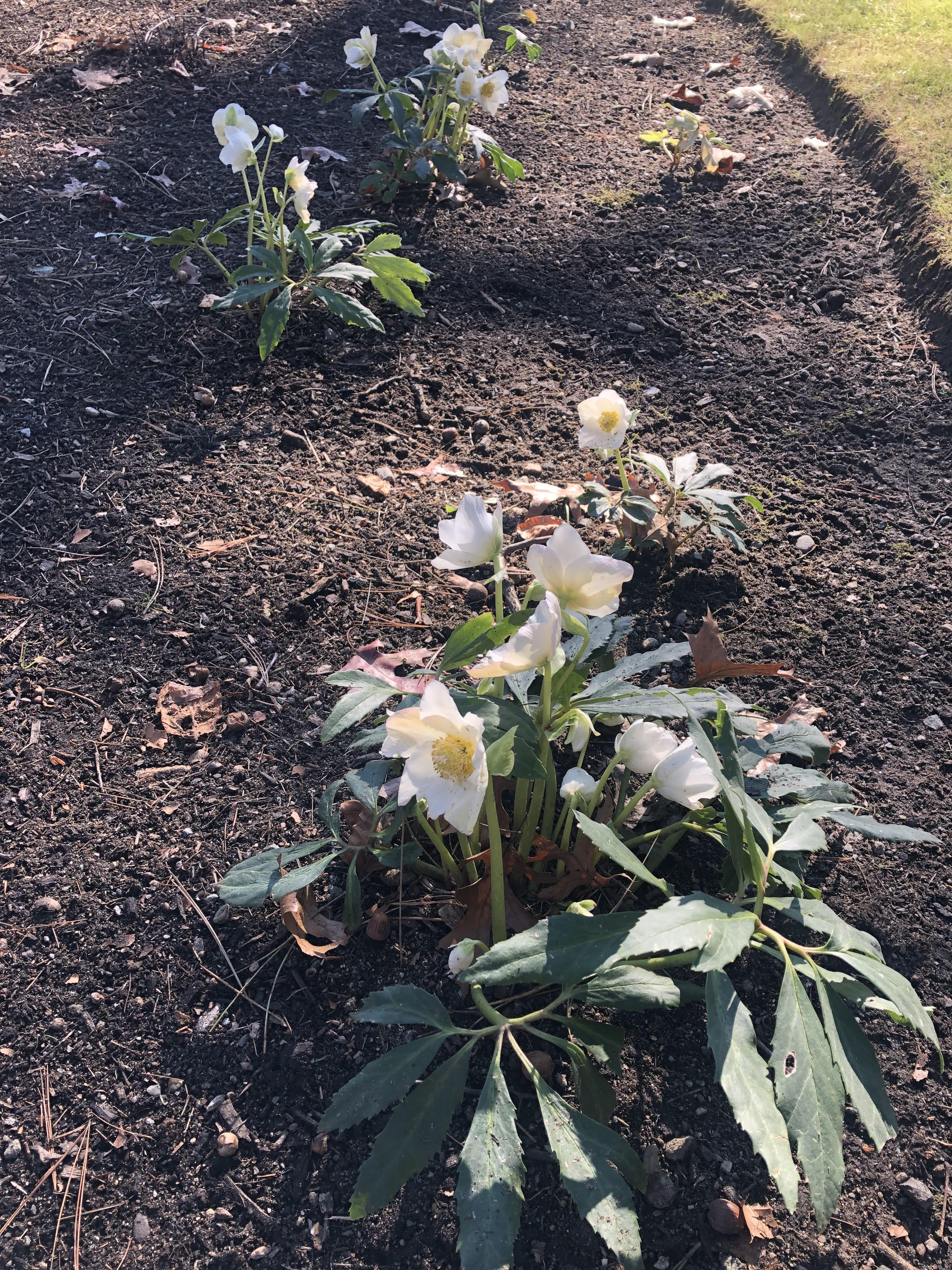
The hellabore below loves cold weather. You can understand why it’s sometimes called Christmas Rose.
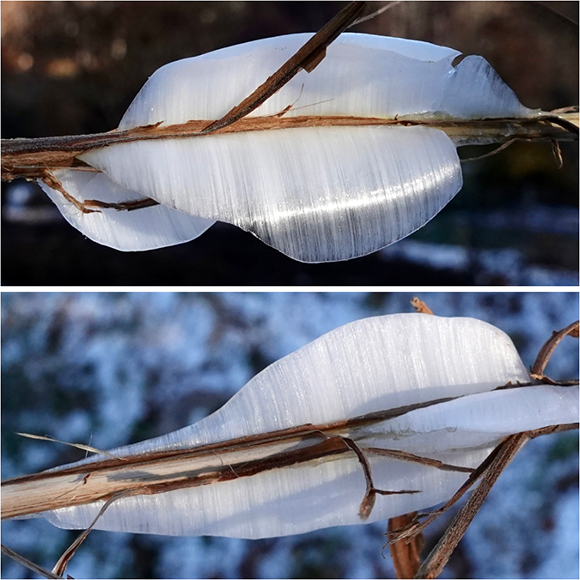
My husband sent me photos of mysterious “ice flowers,” taken by Ned Friedman, director of Harvard’s Arnold Arboretum. The flowers formed the other day on a herbaceous Chinese plant called Isodon henryi, and even Friedman doesn’t know for sure what conditions cause the phenomenon.
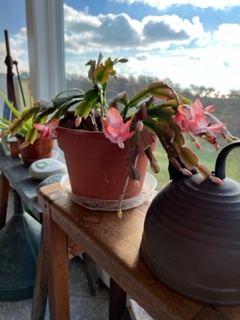
Sandra also sent the photograph of the Christmas cactus. She’s a genius at rescuing cacti that people like me can never get to bloom. I have her instructions if you want to try.
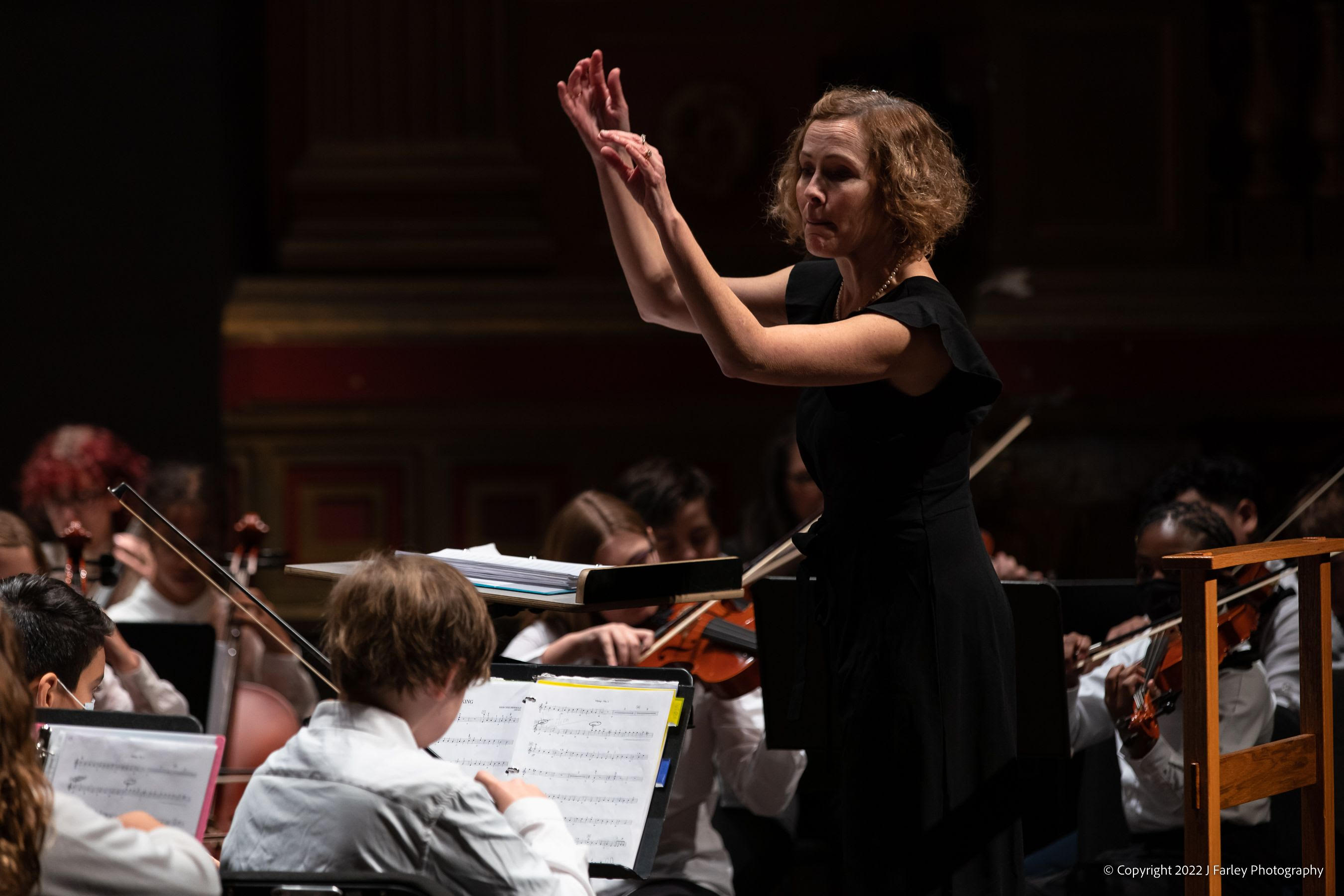
In the next picture, you see our niece, who’s a genius with youth orchestras in North Carolina. She gets pretty worn out with concerts at this time of year.
Stuga40’s snowy image was shot in Stockholm. She is now in New England for a visit with Erik, Suzanne, and our half-Swedish grandchildren. Maybe she’ll have other snowy photos after the family goes skiing in Vermont.
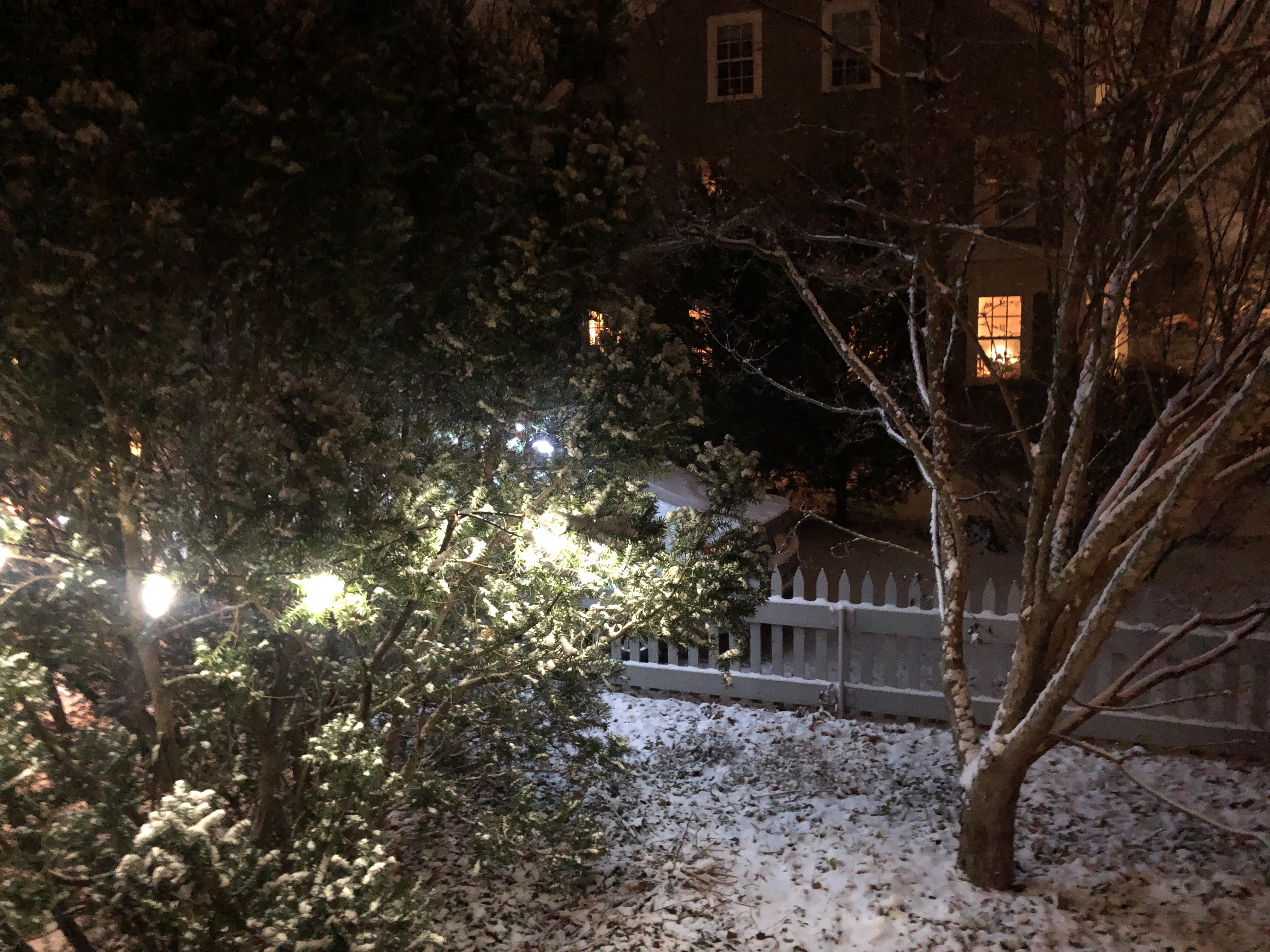
The next snow scene was shot in my own yard. Our first snow this year. The last two photos need no explanation.
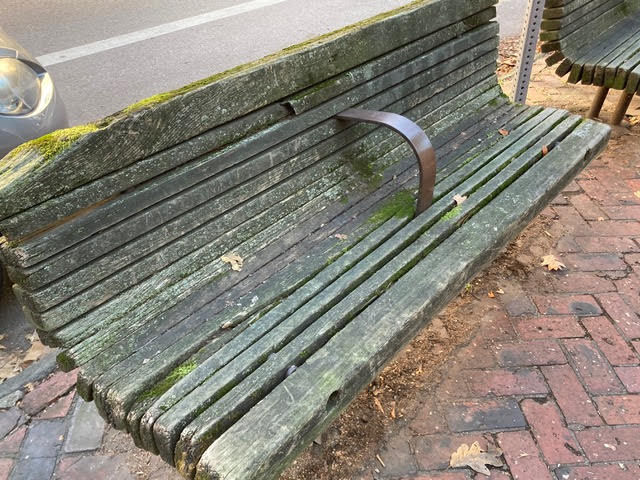
PS. 12/22/22. I’m sharing the worn bench at Hannah’s church in Philadelphia, because I love worn benches. I wish I had photographed the really beat-up one I admired on a train platform yesterday.
Emily’s Oysters in Maine, Sun Farm Oysters in Rhode Island, and Cuttyhunk Shellfish Farms in Massachusetts are a few of the hardy crews eager to supply oysters for your Thanksgiving stuffing.
One of Suzanne’s oldest friends runs an oyster business on Cuttyhunk Island, Massachusetts, and Thanksgiving is a big time for her. That’s because, in New England at least, many people see oysters as traditional for Thanksgiving.
The radio show Living on Earth recently did a show on the topic.
“STEVE CURWOOD: In the 19th century, oysters were a popular food item in the US, especially with the advent of commercial food canning, and by 1900, Americans were gobbling down some 160 million pounds of oysters a year. But overconsumption, sanitation concerns about raw oysters and the huge expansion of the beef and pork business that the railroads made possible, led to the oyster’s decline.
“Farmed correctly, oysters can be sustainable and their reefs protect coastal areas, so in recent years the popularity of local foods has spawned new oyster farmers — farmers that were hit hard this year with a drop in demand during the Covid crisis. Not everybody loves them of course, but oysters can be eaten in many ways beyond the half-shell. Celebrity chef Barton Seaver joins us from his kitchen near the harbor of South Freeport, Maine, to show how oysters can even lend flavor to Thanksgiving stuffing. … So tell me, why have the oyster farmers and fishermen been hit so hard by COVID-19?
“BARTON SEAVER: Oysters are, well, they’re so important to the restaurant industry. And that’s where so many of us go to get them. By some anecdotal accounts, in March, April, May, large oyster dealers around the country I’ve talked to lost 98% of their business, who were selling into restaurants; some of that has come back. Massachusetts has some hard data, around about 60 to 70% of their oysters landed, that business was lost. …
“CURWOOD: Where I live in southern New Hampshire near the Great Bay … I noticed that there were folks who actually had set up stands along the side of the road to sell oysters individually to people.
“SEAVER: Yeah! Well, that’s been one of the great success stories. And that’s sort of the inherent nature of oyster farming is that these are small businessmen and -women who are running a farm, and they are entrepreneurs, and they were able to pivot quite quickly. And as, in COVID, we turned our attentions anew to local food systems, oysters are a prominent part of that for those of us on the coasts. There is no food that is of place as much as are oysters, clams, mussels. …
“CURWOOD: Now, we know from history that Native Americans brought shellfish to the pilgrims that came here to the New England area in the 1600s. To what extent do you think oysters and shellfish should regain a place at the Thanksgiving table?
“SEAVER: Well, oysters were one of the foundational foods of this country and long before the white man set foot on this continent, oysters were serving and sustaining native populations for aeons. … But through decimation of local oyster populations in the wild, throughout the United States and our coastlines, we lost access to oysters. …
“CURWOOD: Tell me why you think they’re so important ecologically.
“SEAVER: Oysters, amongst other shellfish, are you know, what was known as a keystone species. They’re fundamental to the health of the ecosystems in which they are prevalent. They provide water quality, they provide habitat for countless other species. They are the bedrock upon which ecosystems’ health and resiliency relies. And in the absence of wild oysters, because we’ve decimated them through overfishing, through disease, etc., habitat loss, oyster farming has stepped into the role of providing those ecosystem services, those vital services.
Every oyster you eat encourages an oyster farmer, a small businessman or -woman, to plant many more, to augment and expand upon those ecosystem services provided by them.
“And in that way, I think it’s our patriotic duty to eat as many farm-raised shellfish as we can.
“CURWOOD: Yeah, in fact, you know, as the storms pick up with climate disruption, oyster reefs are a great way to slow down the storm surge, huh?
“SEAVER: Absolutely. We’ve seen this with Katrina, we saw this with Superstorm Sandy, that these vulnerable civic centers are made more vulnerable by the lack of those natural oyster reefs that naturally stopped those storm surges. …
“CURWOOD: There’s a project going on that the Nature Conservancy is a big part of. They’re [buying up] oysters that are otherwise going unsold to the restaurants during this pandemic, to help farmers who need to have a source of cash, and they’re using those oysters to restore more shellfish reefs. Why is it important to have oysters in local communities? …
“SEAVER: [Sustainable small business.] In my village, there’s a young woman named Emily — ‘Emily’s Oysters.’ She grew up here, and she went to school out in Puget Sound, and she was looking for something to do. [You know there’s a] brain drain in small, rural communities. But oyster farming caught her heart … and now she’s farming 50, 60, 70,000 oysters out in the waters that I can see from my house, pretty much. And she’s selling at local farmers’ markets. [To me, that’s] the quintessential story of success and of human sustainability acting in concert with our ecosystems. …
“CURWOOD: You have some delicious recipes, Barton, on your website. There’s — oh, the oyster risotto, the broiled oysters Rockefeller. And I believe you’re going to show us how to make an oyster stuffing, being that we’re close to Thanksgiving, huh? Now, I must say I never knew the stuffing on my Thanksgiving table could feature shellfish.”
More at Living on Earth, here, where you also can get the recipe for stuffing. Barton Seaver’s book is The Joy of Seafood: The All-Purpose Seafood Cookbook, with almost 1000 recipes.



















 Suzanne's Mom's Blog