Feeds:
Posts
Comments

Posts Tagged ‘new york city’

Photo: Elliott Jerome Brown Jr. for the New York Times.
Recently, the New York City subway system featured an audio-based public art project by Chloë Bass. Composer Jeremy Toussaint-Baptiste created the distinctive sound that starts each announcement. His shirt says, “If you see something, free something.”

In September and October, the New York City subway system, the MTA, had some fun with an art installation that involved the public address system. If you’ve ever traveled underground in New York, you know that there is art everywhere, some of it permanent, like mosaics, others ephemeral like this one.

Aruna D’Souza announced it at the New York Times: “Through Oct. 5, commuters making their way through the crowds at 14 subway stations throughout New York may notice a new type of announcement on the public address system. ‘What we hear changes how we feel. How we feel changes what we do. And what we do changes the world around us, even if just for a moment,’ one says.

“Some sound like snippets of overheard conversations: ‘Remember when Aretha Franklin died and people were singing her songs together on crowded train cars?’

“Each will end with the words ‘If you hear something, free something,’ which is also the title of this ambitious public art project by the conceptual artist Chloë Bass. …

“Bass turns around the instruction to be ever-vigilant in the face of threat, coaxing us instead ‘to return to ourselves in public space, and to experience it as a place where we engage with others instead of only being suspicious of others.’

“The project is a collaboration among Bass, the public art organization Creative Time and the Metropolitan Transportation Authority’s Arts & Design department. The M.T.A. has had a robust public art program over the years … but this is the first time they’ve allowed an artist to broadcast over the M.T.A.’s public address system.

“The 10- to 45-second announcements, 24 in all, will be aired in English, Spanish, Arabic, Bangla, Haitian Kreyòl, and Mandarin — six of the top 10 commonly spoken languages in New York City. (ASL translations will also be available on the Creative Time website.)

They are voiced by a range of vocalists, assembled in part through an on-the-street casting of regular New Yorkers. …

“Bass, 41, conceived the project over the course of her long train and bus commutes between Brooklyn and Queens College, where she taught in the visual arts program for more than eight years. [She says] ‘after 2016, there were more and more announcements, and they were really wrecking my emotional landscape.’

While broadcasts conveying basic information or emergency instructions were understandable and necessary, she said the constant reminders of police presence and increasingly frequent attempts to shape people’s behavior disrupted her thoughts. ‘We’re constantly being asked to internalize the idea that we are supposed to be watchful over each other, not in a supportive or caring way, but to report things to someone else,’ she said. …

“Diya Vij, curator at Creative Time, said that when she and Bass started thinking about what the project could achieve, they realized ‘it could help people see themselves and each other again and think about being neighbors and community differently in a space that might feel more tense than it should.’ …

“In addition to voices, the messages include sonic elements made in collaboration with the musician Jeremy Toussaint-Baptiste, who created the musical tone that opens each. (It draws in part from Bass’s research into the healing qualities of certain frequencies.)

“Before writing the scripts, Bass convened a series of focus groups composed of commuters, M.T.A. employees, transportation advocates and teenagers. (‘Large groups of teens are everybody’s subway nightmare, but they’re New Yorkers, too,’ she said.)

“Maggie Murtha, part of the project team at the M.T.A., said one of her takeaways from the focus groups was that ‘there was a longing to feel connected to the people around you.’ ”

More at the Times, here.

Read Full Post »

Photo: Maya Pontone/Hyperallergic.
Grand Central Station hosts the New York subway system’s newest public artwork, “Abstract Futures” (2025) by a collective called Hilma’s Ghost. The work was supported by the city’s Percent for Art program, which has brought more than 400 commissioned public works into the transit system.

Hilma af Klint is having a moment. I hadn’t heard of this mystical Swedish pathbreaker before the Guggenheim mounted a retrospective in 2018.

Now some artists inspired by her work have merged her eerie geometric style with Tarot cards to make beautiful subway art beneath New York’s streets. Maya Pontone at Hyperallergic has a report.

“Celestial motifs and cosmological geometries strewn across a prismatic landscape comprise ‘Abstract Futures’ (2025), the newest public artwork to grace the walls of the New York City subway system. Designed by the feminist art collective Hilma’s Ghost, the 600-square-foot glass mosaic mural now greets transit riders between the turnstiles and escalators at the 42nd Street entrance to the 7 train in Manhattan’s Grand Central Station. …

“The project was commissioned by the Metropolitan Transportation Authority’s (MTA) Arts and Design program through the four-decade-old Percent for Art initiative, which has brought site-specific works by more than 400 artists into the city’s subways, buses, commuter rail stations, and other transit areas. …

‘Abstract Futures’ [fuses] reinterpreted tarot archetypes with classic heroic tales to highlight the shared transformations experienced by commuters on their individual journeys.

“The first segment of the mosaic begins with the story of ‘The Fool,’ a tarot card signifying new beginnings and opportunity. … The next panel is laden with earth-toned tiles as the fool grapples with challenges and spiritual evolution, represented by the symbol for the ‘Wheel of Fortune‘ tarot archetype in the center. Situated closer to the subway turnstiles, the final section of the mosaic traces a spiritual metamorphosis in which the main character discovers a deepened [self-knowledge]. …

“Brooklyn-based artists Sharmistha Ray and Dannielle Tegeder, the founding duo of Hilma’s Ghost, told Hyperallergic that the artwork was developed over two years and executed in close collaboration with master mosaic fabricator Stephen Miotto, who has been working with the MTA since the 1980s. It shares the same name as their first visual art project, which consisted of a limited-edition abstract tarot deck, building on the collective’s commitment to reimagining historically under-recognized spiritual practices and gendered cultural narratives.

“Inspired by the work of Swedish Theosophist artist Hilma af Klint, Hilma’s Ghost has engaged in a variety of art projects since its founding in 2020. …

“Ray and Tegeder described their new mural as ‘both a celebration and a meditation on the city’s perpetual cycles of arrival, growth, and renewal honoring New York’s resilience, ambition, and the shared sense of collective belonging.’

“ ‘Our intention is to create a contemplative space that centers inclusivity, connection, and healing,’ the pair added.”

More at Hyperallergic, here. No firewall, but membership are sought.

Read Full Post »

Photos: John and Suzanne’s Mom.
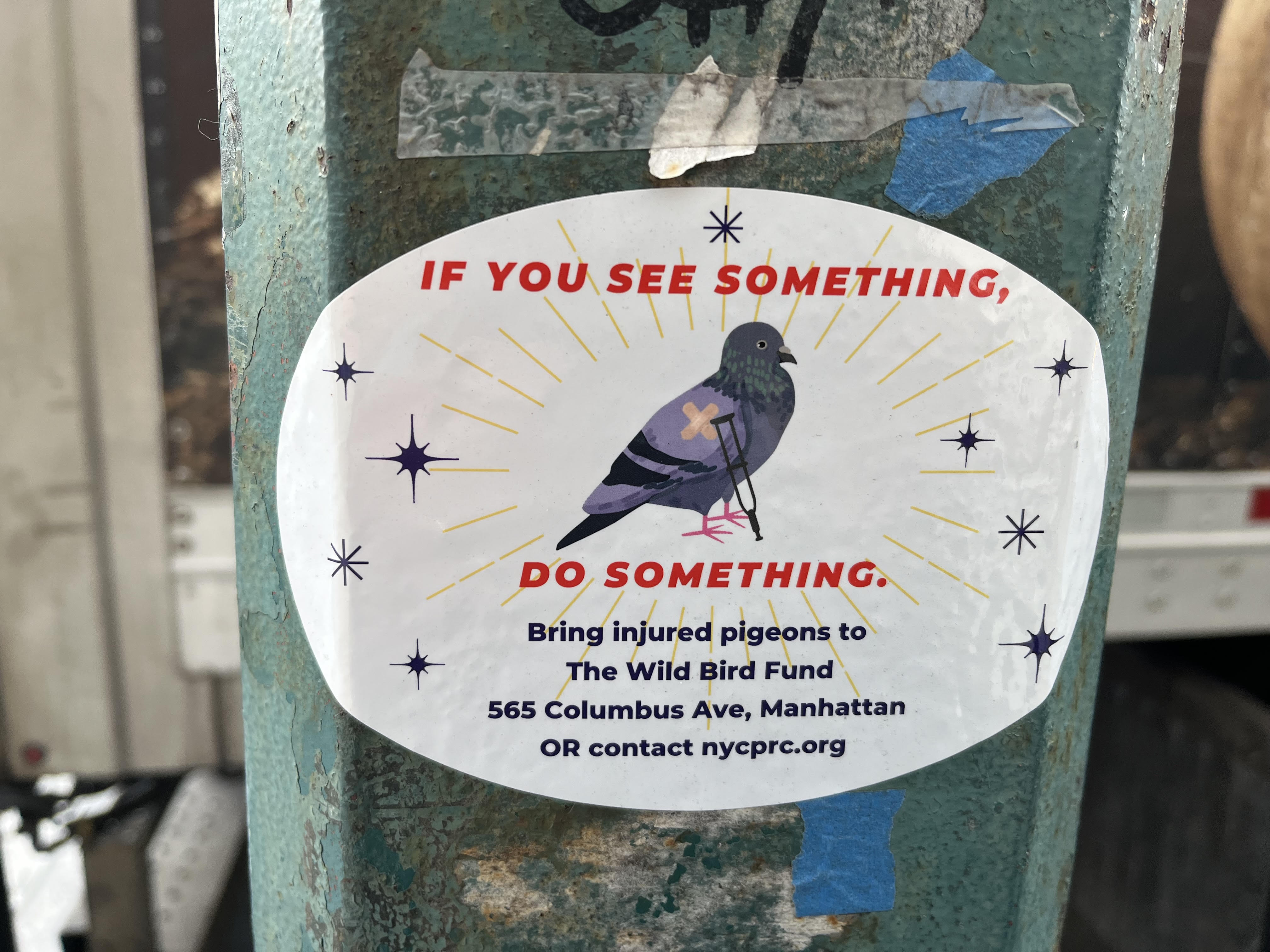
Only in New York will you find people who care what happens to pigeons.

I was in crazy and wonderful New York for a few days. The occasion was the memorial for my friend Manny Kirchheimer, who was, as A.O. Scott of the New York Times once said, “an indispensable New York filmmaker, a noticer and a listener without peer.”

I walked around a lot and took pictures. And since I was in the city, I went to see “Egon Schiele: Living Landscapes” at the Neue Galerie, which was great. I do think New York museums have an awful lot of rules and waiting lines, but if you expect that, it’s easier to accept.

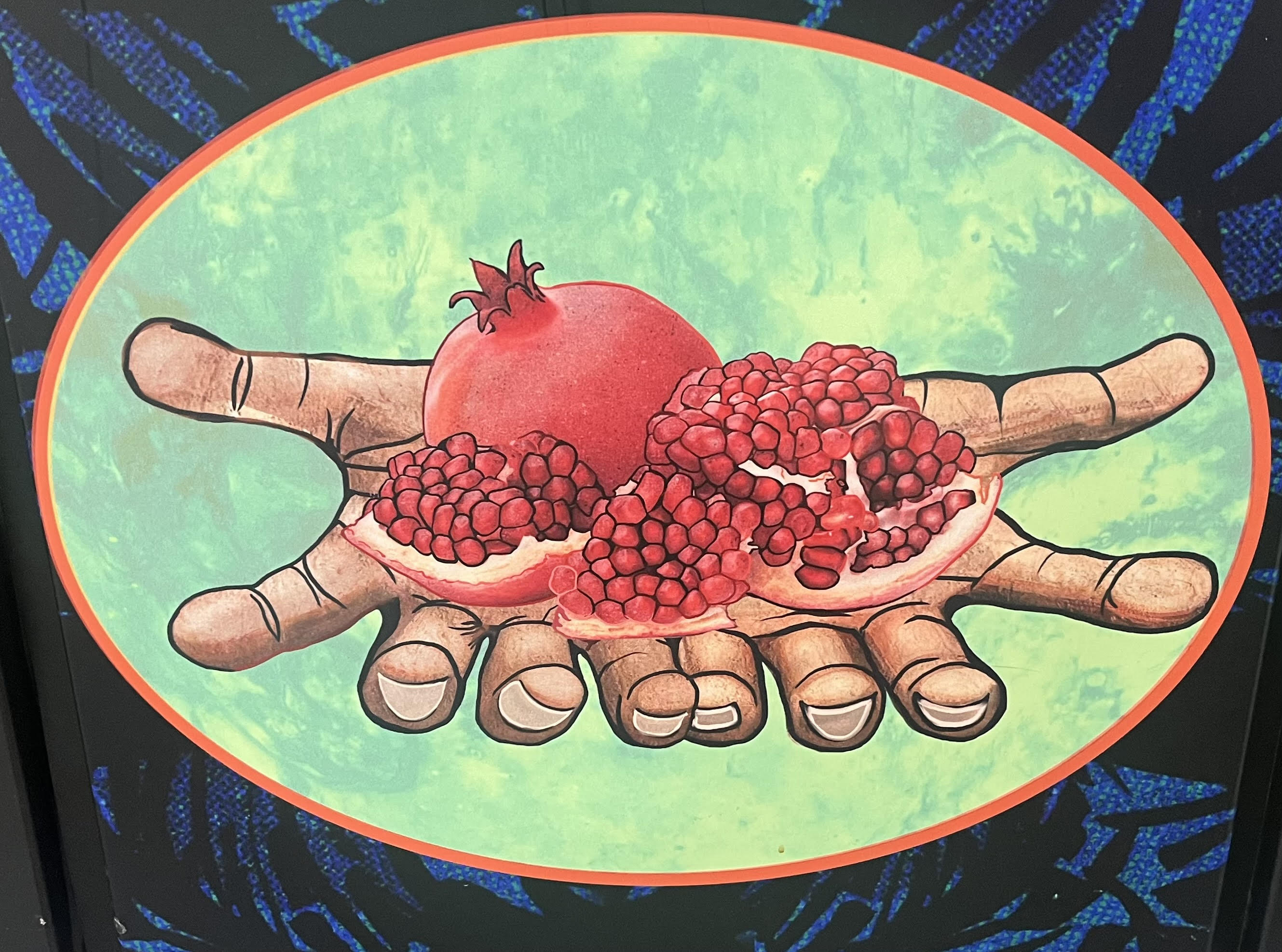
Among sights that caught my eye were giant murals by Chitra Ganesh in Penn Station (see Art at Amtrak). The hands offering pomegranates were on a pillar.

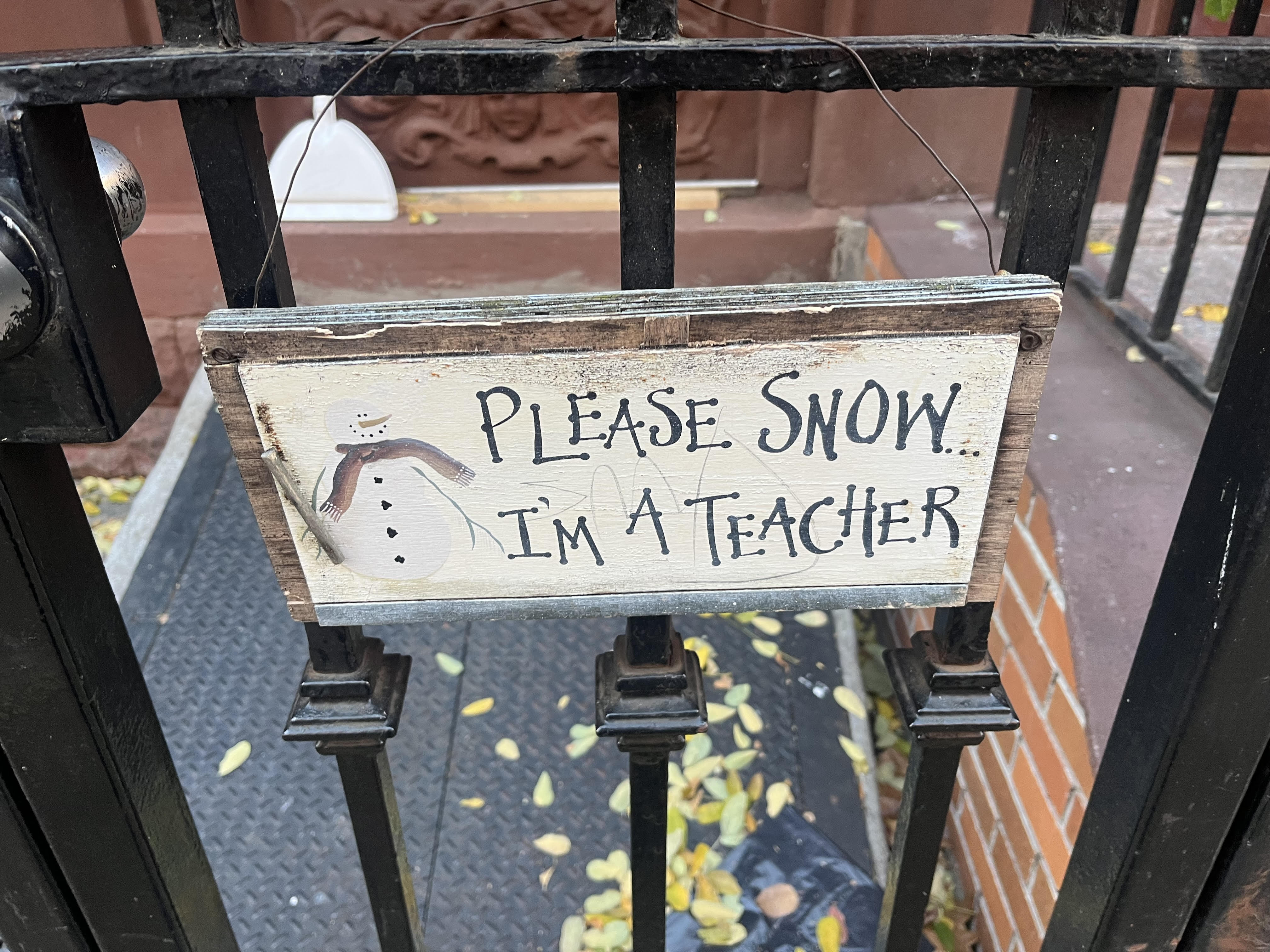
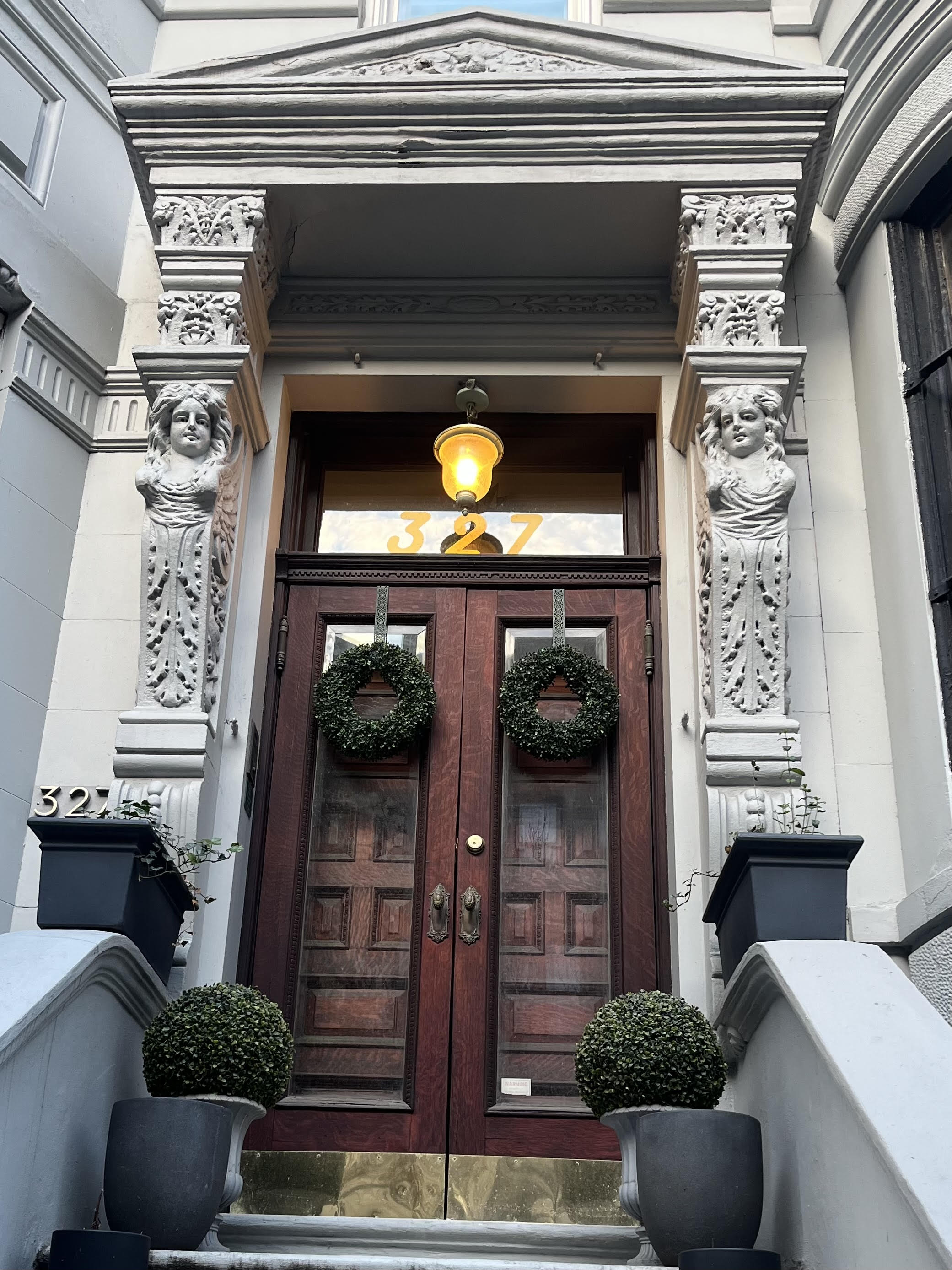
Although I can never compete with blogger Sherry’s Thursday Doors, which she gathers on a continent that really knows doors, I shot a New York one for her.

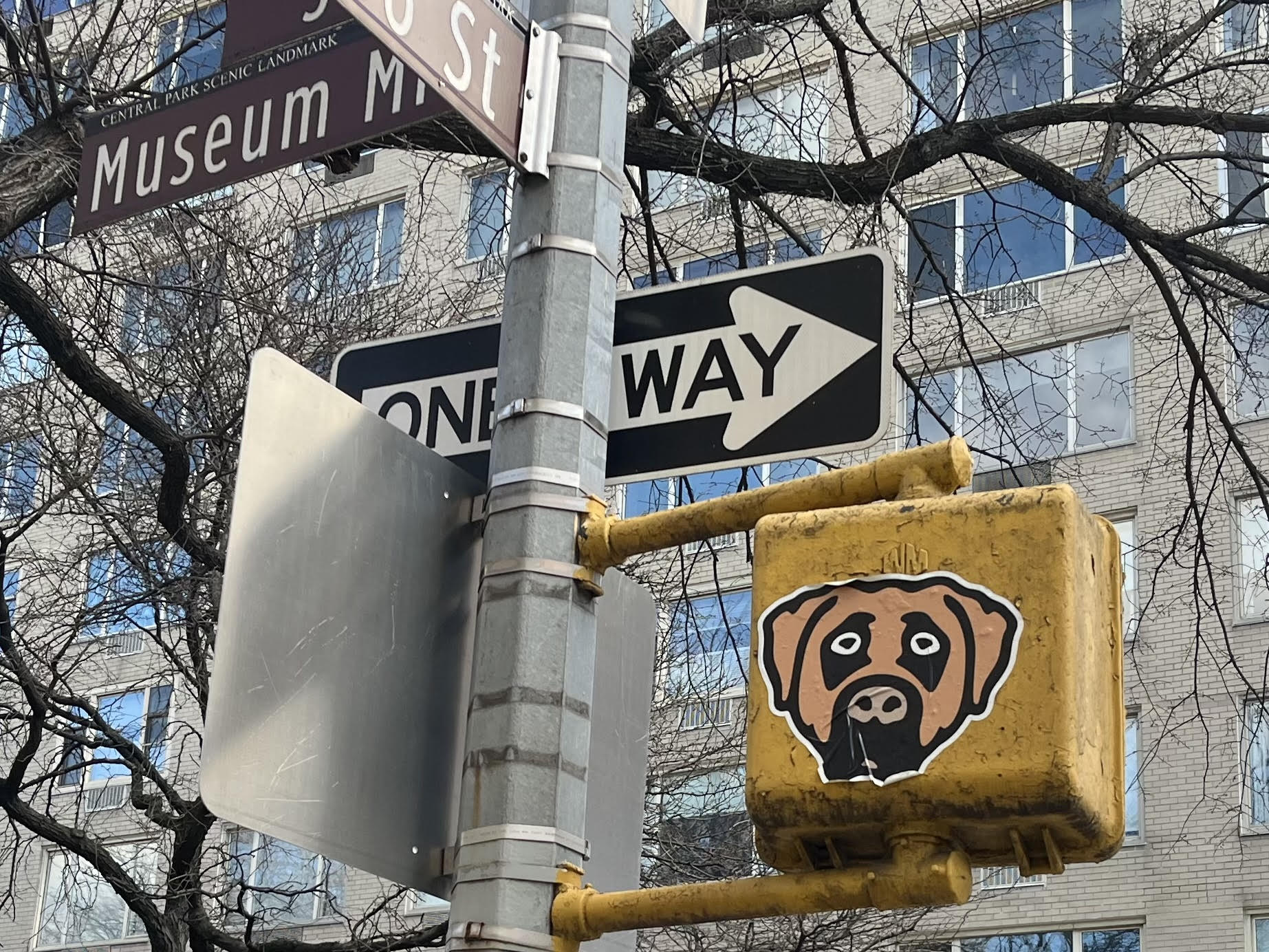
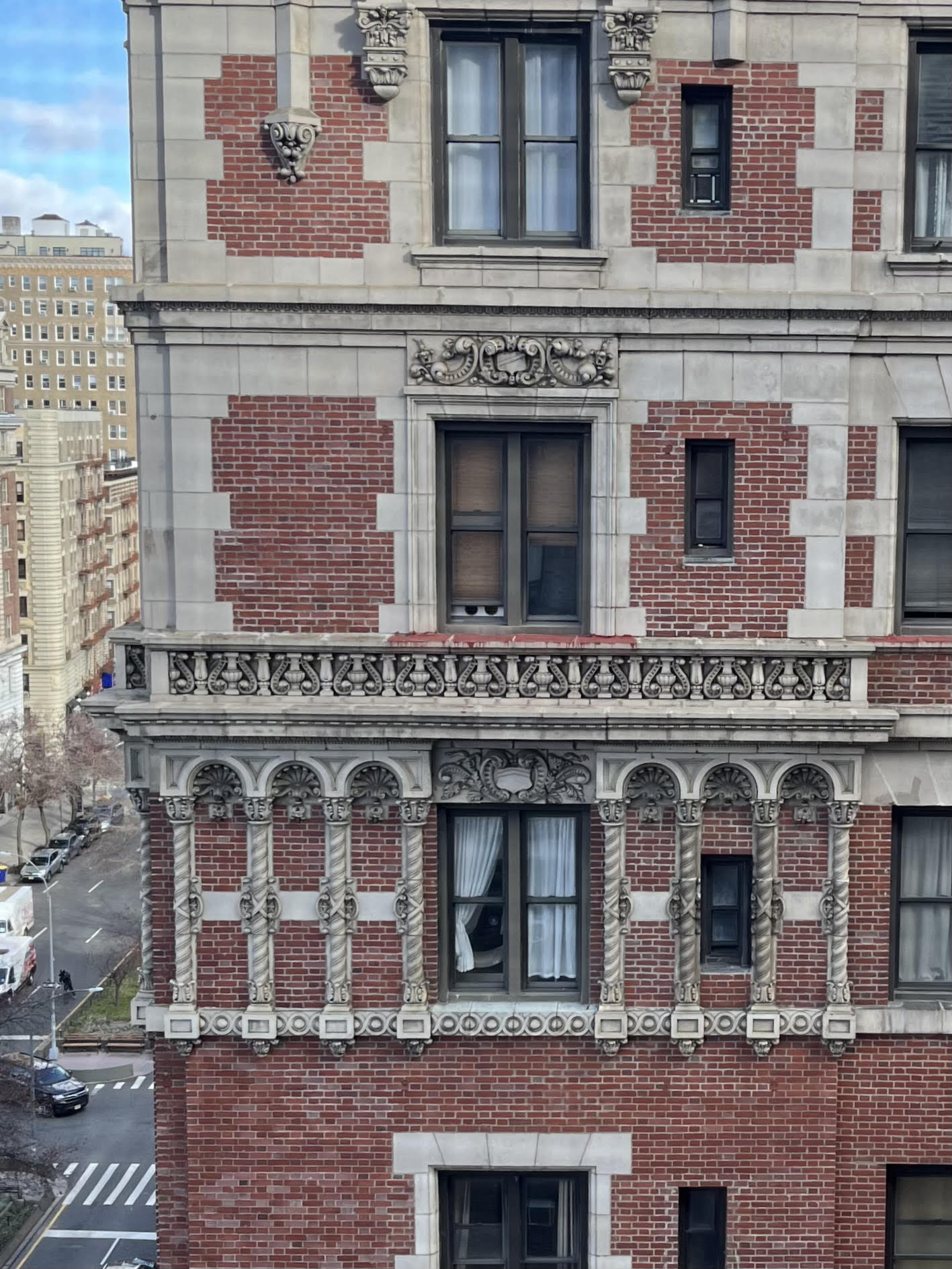
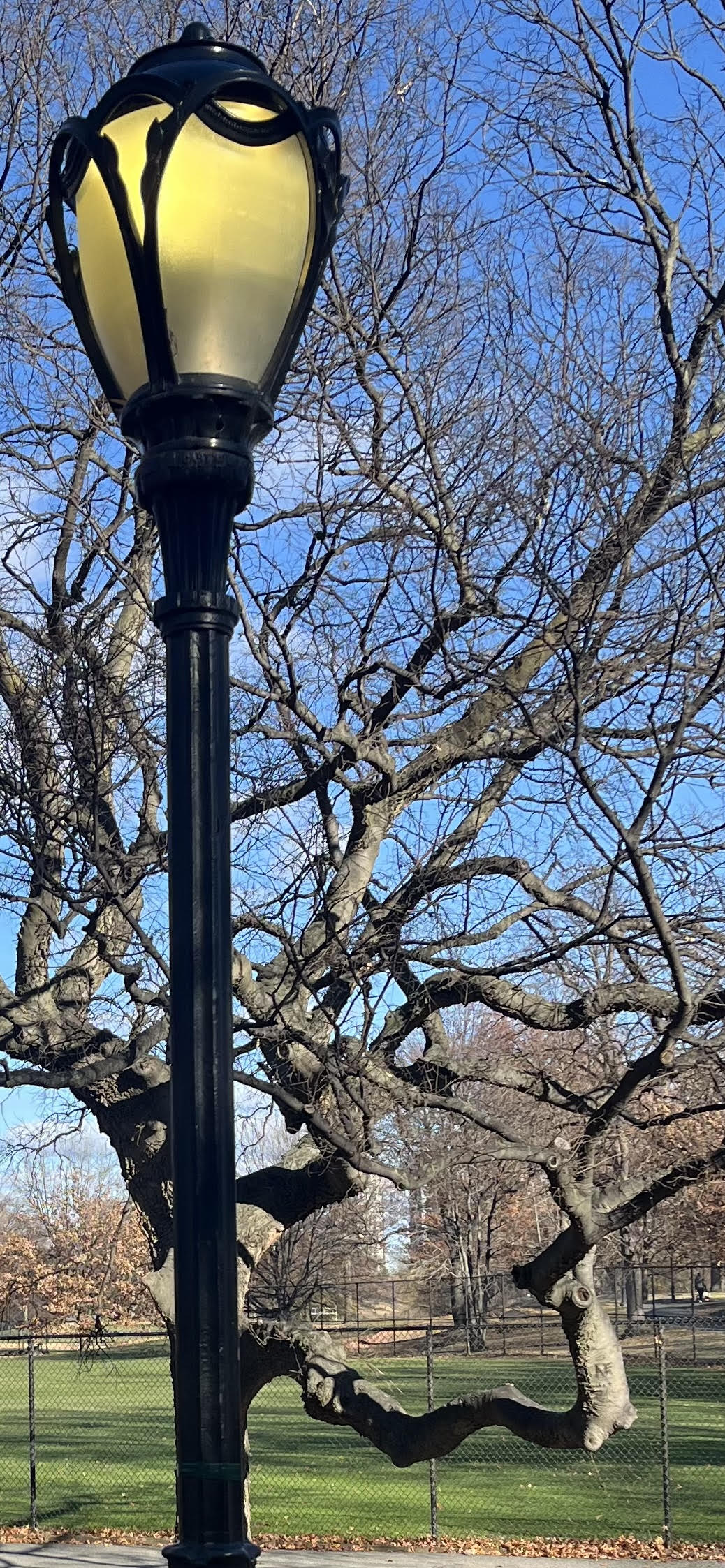
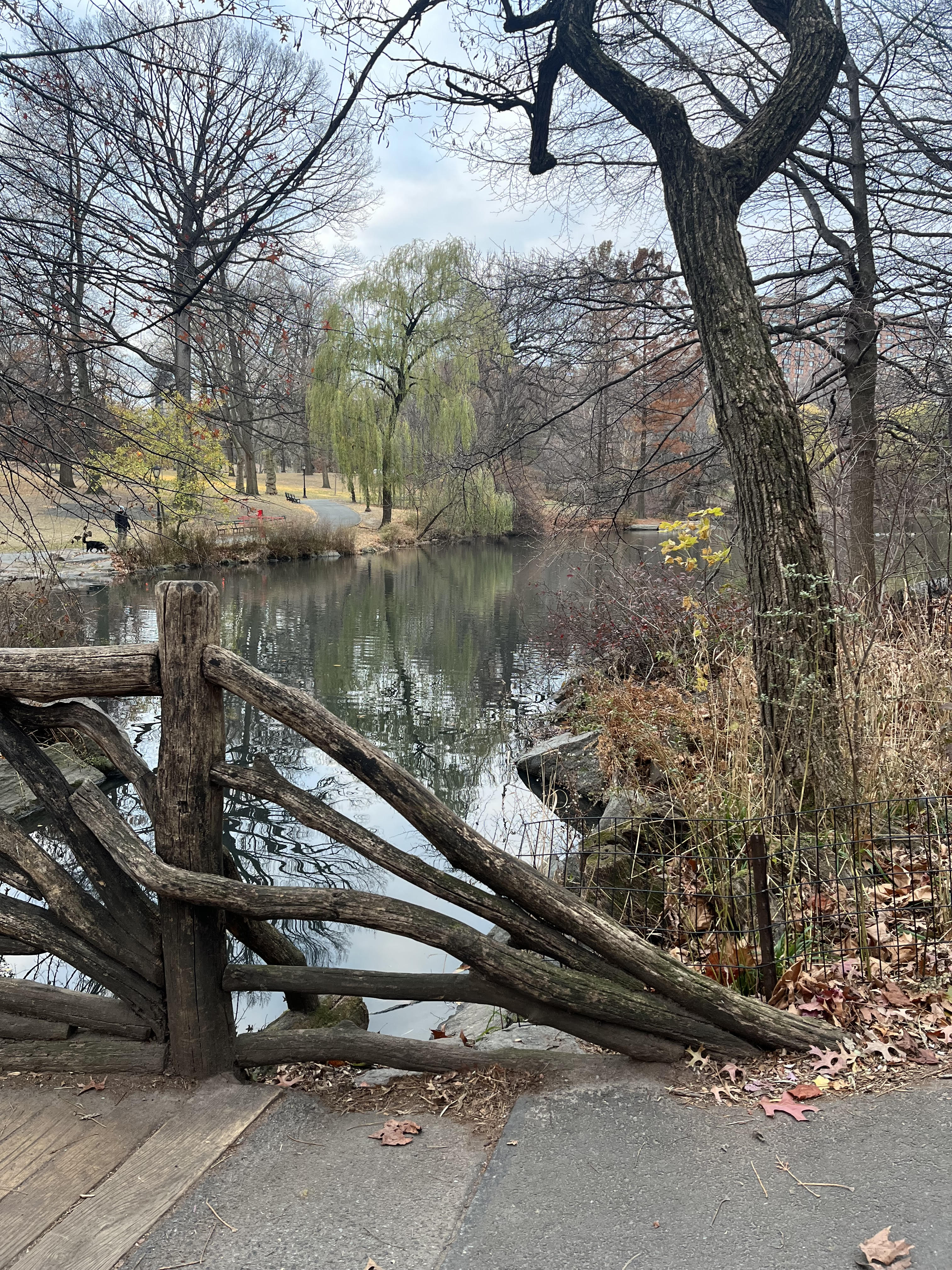
The two shots of Central Park are similar to ones I’ve taken before and shared, but every time I see that fantasy bridge or the Narnia lamp posts, I see them anew.

Read Full Post »

Art: Xiomara Morgan and Kathy Urbina, “Found in New York City” (2023), styrofoam life preserver, found Metrocards, plastic water bottles, candy wrappers, snack bags, labels, and bottle tops with a crocheted ribbon of plastic, rope, and caution tape.

Artists can turn anything into art. And I have learned that among New York City Parks employees, there are a few who are artists like that and a few who just have fun playing at art.

Maya Pontone wrote about a New York City Parks’ exhibition called “Wreath Interpretations” in 2023.

“More than 30 original holiday wreaths handcrafted from unexpected materials, including discarded Metro cards, thumbtacks, artificial hot dogs, pharmaceutical vials, and candy wrappers,” she reported were “on display in Central Park for the 41st iteration of New York City Parks’‘Wreath Interpretations‘ exhibition [bringing] together an eclectic assortment of alternative wreaths created by Parks employees, commissioned artists, and New York City residents for a whimsical display.

“Wreaths have historically played a number of roles. In Roman and Greek antiquity, they were emblems of power and victory, frequently awarded to the winners of sporting competitions and appearing in depictions of various deities, such as Apollo in Antonio Canova’s marble sculpture ‘Apollo Crowning Himself‘ (1781–1782). In Christianity, evergreen wreaths symbolize eternal life and everlasting faith; during Advent season, laurel rings are decorated with four candles that are subsequently lit each week leading up to Christmas.

“But the artists in ‘Wreaths Interpretations,’ go beyond these classic meanings to transform a holiday staple into new works of art, from an aluminum and gold leaf display commemorating Caribbean cooking to a diorama wasp nest containing a hidden memorial honoring Ukraine. On one wall, an unsettling wreath crafted out of plastic eyeballs tackles sleep deprivation, while another piece made of yellow Post-It notes playfully comments on work-life imbalance.

“In another corner, a pizza box with wiry rat tails emerging from the center — an unmistakable homage to the viral ‘Pizza Rat‘ — is situated between a spiral of playing cards and a ring of glistening frankfurters, humorously titled ‘The Wurst Wreath Ever Made: You Never Sausage a Terrible Wreath’ (2023). As Elizabeth Masella, Public Art Coordinator for the NYC Department of Parks & Recreation, told Hyperallergic, ‘the weirder, the better.’ …

“Many of the artworks are constructed out of found objects and recycled materials, such as Xiomara Morgan and Kathy Urbina’s joint project ‘Found in New York City’ [above]. … Marie Ucci’s ‘The Shape of Dreams’ (2023) is an assemblage of ceramic shards, dried fruits and vegetables, scraps of felted wool, and feathers, carefully pieced together like a bird’s nest, while Suzie Sims-Fletcher’s ‘All is Calm, All is Bright (Home for the Holidays)’ (2023) comprises cleaning puffs, scouring pads, plastic mesh, and rubber gloves. …

“Several of the displays also focus on environmental issues plaguing the city’s parks. A work by Maria Magdalena Amurrio employs repurposed water bottles for a wreath of butterflies, an insect increasingly threatened by climate change and human development, while Jean-Patrick Guilbert’s ‘Coral Wreath’ (2023) calls attention to the destruction of our oceans’ coral reefs. Another wreath made of saltmarsh cordgrass, hay, lavender branches, and other natural materials native to Staten Island’s William T. Davis Wildlife Refuge tackles the issue of marsh degradation. The work was created over two days by a team of eight ecologists, wildlife biologists, and botanists from NYC Parks Environment and Planning.

“ ‘The wreath is meant to symbolize how New York City salt marshes are at risk of drowning from sea level rise under climate change,’ Desiree Yanes, an NYC Parks wetlands restoration specialist, told Hyperallergic, pointing out the materials’ symbolic placement around the circle.

“ ‘We’re very much a science driven team, but it was a really refreshing mindset shift just to undertake an artistic endeavor together,’ Yanes added.”

More at Hyperallergic, here. No paywall. Does it make you want to try your hand at a wreath this year? You still have time.

Read Full Post »

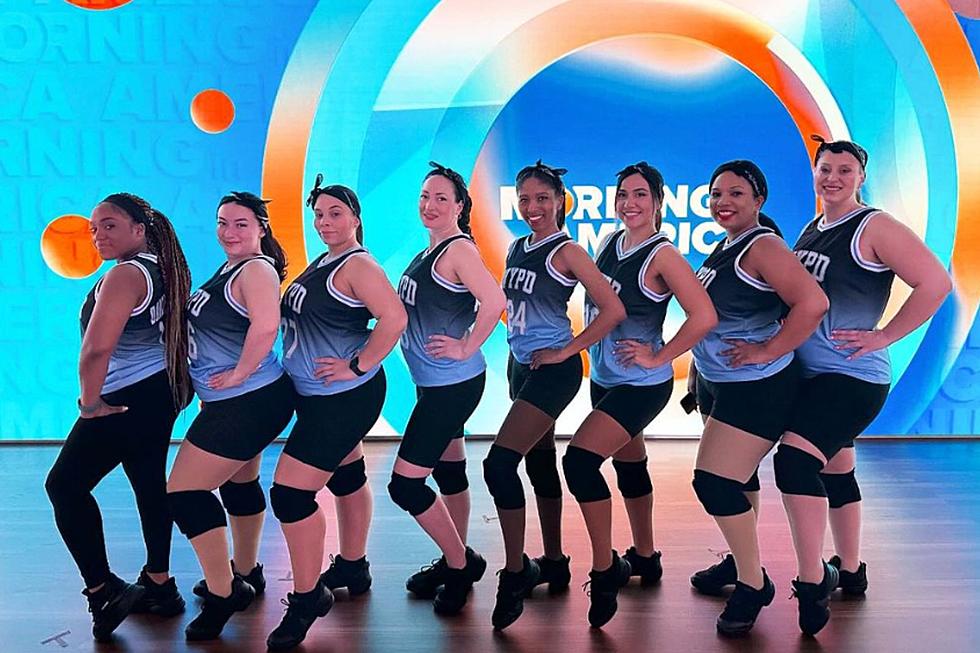
Photo: NYPD Dance Team via WYRK.
People of good will may disagree on whether recreation for stressed police officers is money well spent.

Controversy over the New York Police Department has broken out. But it’s not about the usual law enforcement complaints (that they’re not hard enough on crime; that they’re too hard). It’s about the dance team.

Maria Cramer has background at the New York Times, “Officer Lauren Pagán looked at the line of dancers in the overheated cafeteria at a Queens high school on a recent Monday night and frowned. They were gyrating through moves choreographed to ‘Mamacita,’ a pulsating, Reggaeton-inflected song by the Black Eyed Peas and Ozuna. …

“The seven-officer team has mastered hip-hop and salsa and is playing around with bachata and bhangra, the fast-paced, energetic movements drawn from the traditional folk dance of India’s Punjab region. The group is figuring out how to fold in step and pom, where dancers wave pompons while synchronizing their moves.

“But what they really need is recruits to fill out a robust, diverse roster of at least two dozen dancers who can travel and compete against other groups, ideally other officers (although they would be happy to dance off against paramedics and firefighters).

“The dance team, which was formed in 2022, is among about four dozen competitive groups within the department that include traditionally macho squads like N.Y.P.D. Paint Ball, the N.Y.P.D. Rugby Football Club and the N.Y.P.D. Pistol Team.

“Department employees have been branching out. There is a chess club, yoga is popular and there is interest in starting a reading group and even a knitting circle, said Inspector Mark Wachter, a commanding officer with the department’s health and wellness unit, which approves applications. Dance team members hope that more of their brothers in blue will find the rhythm within. …

“In September, on the department’s Fraternal Day, when all of the clubs sought recruits at the Police Academy, 33 people signed up to try out for the dance team, said [Officer Autumn-Raine Martinez, who works in crime analysis at the 108th Precinct and is the team’s president]. Three were men trying to sign up their daughters. …

“She suspects that men fear being mocked. The group’s original emblem — a teal silhouette of a lithe dancer mid-leap — did not help.

“ ‘They’re like fifth-graders,’ Officer Pagán said. ‘They saw a ballerina and they went, “Ew.” ‘ The team redesigned its emblem. …

“The groups’s schedule is intense, a tough sell for police officers who work long hours. The dancers rehearse twice a week for two hours. … They perform at parades, schools, neighborhood fairs and at halftime during games of other Police Department sports teams. The expectation is that members will make it to rehearsals and shows, Officer Pagán, 39, said. …

“Detective Jessica Gutierrez came to the practice at the school cafeteria while nursing a case of conjunctivitis. … Officer Martinez arrived after working 12 hours starting at 5 a.m. Sgt. Benely Santos was scheduled to work an overnight shift at the 111th Precinct after practice. …

“The women range in age — from 26 to 42 — and experience. Sergeant Santos was a novice when she joined. Officer Martinez, on the other hand, has been dancing since she was 4, but has been bedeviled by her height. As a girl, she tried out for the role of Nala in the Broadway cast of The Lion King, but was too tall to make the cut. Later, when she considered auditioning for the Rockettes as a teenager, she was unable to: At 5-foot-5, she was an inch shy of the minimum height requirement at the time.

“Officer Alyssa Blenk, 32, who danced competitively in high school and college, joined the team when she saw pictures of it on Instagram. Her desire to be part of a squad was especially strong following the stress she was feeling as a result of the pandemic and the protests that erupted in New York in 2020 after the police killing of George Floyd in Minneapolis.

“ ‘I need to do this,’ she thought when she saw the Instagram posts.”

More at the Times, here. People of good will may disagree on whether recreation for stressed police forces is money well spent. What do you think? All I can say is I’d rather not have tense, strung-out officers answering a call.
Read Full Post »

Photo: The Nation.
Choreographer Mark Morris at the Ojai Music Festival.

Many people know Mark Morris as a great choreographer, but much of his success has depended on his devotion to teaching his dancers.

Alastair Macaulay wrote recently about this side of Morris at the New York Times. “New York City has often been called the world’s dance capital. One good reason is that a number of the world’s foremost choreographers not only lived and worked in New York, but also taught class here. Martha Graham, George Balanchine, Merce Cunningham and many others helped to lure dancers to the city.

“Fewer and fewer of today’s top dance-makers carry on that tradition. The foremost exception is Mark Morris. … While there have been seasons when his choreographic inspiration has dipped, his performers have almost invariably looked wonderful. This is a tribute to how he and his teaching colleagues prepare them each day.

“The dancers don’t present themselves as virtuosos. And they’re all such distinct individuals — each exuding what seems natural — that it’s easy to make the mistake of thinking they don’t share training. But it’s precisely their schooling with Morris, whose company, the Mark Morris Dance Group, was established in 1980, that makes them look so natural.

“ ‘I first taught when I was 13 — Spanish sevillanas — and first taught ballet in my later teens,’ Morris, 66, said in an interview at the Union Square Cafe. ‘As an adult, I used to teach modern or jazz or ballet. I would take class all over the city, which is how I met so many fabulous people: We were all dancing together. And when I gave workshops, I’d ask the most talented people to come back and be in my next piece.’ …

“ ‘It’s just the last year or two I’ve cut back,’ he said. He now shares teaching assignments with company alumni. Surprisingly, for a modern-dance master, he teaches a ballet class, with a live pianist. The dancers start by standing at the barre, bringing more and more parts of the body into play with each exercise. Then, after about 40 minutes, they work without support in the center of the room. Finally they move expansively across the room, in phrases involving turns and jumps.

“It’s ballet — though with a difference or two. Like other modern-dance choreographers (he particularly credits Hannah Kahn), Morris will sometimes ask his dancers to articulate and bend the spine in ways largely foreign to ballet — they alternate convex and concave shapes of the spine at the barre — and to phrase in irregular counts. And there’s no work on pointe: the dancers are barefoot or in socks or soft shoes. …

“The Morris class is ‘a very pure form of ballet that strives to be stripped of its affectations,’ Billy Smith, a dancer who joined the company in 2010, wrote in an email. ‘We do use our torsos in a more “modern” way than maybe a ballet company would in class. But at the core our classes are very much oriented toward the purity of ballet technique.’ …

“Morris, an invariably entertaining talker, speaks exuberantly to his dancers, between exercises — about what’s on television, about an unmissable Broadway show (and about the long lines for the ladies room in Broadway theaters), about New York traffic gridlock, about Olive Oyl. But this spiel isn’t just a one-way Morris event: He wants his dancers to be people with lives and interests, not just dance executants, and he enjoys their repartee. …

“Sam Black, who became a full-time Morris dancer in 2005 and is now the company director sharing the teaching assignments, will give his stage farewell during the Joyce season. In an interview at the Mark Morris Dance Center in Brooklyn in July, he recalled how he used to stretch his arms too straight upward in certain positions. Morris would say, ‘You only have three joints in your arm. You have to make a curve with only three joints. That takes imagination.’

“Many dancers have remained with the company more than 10 years, their longevity in part attributable to Morris’s growing concern with anatomical efficiency. …

“It was not until 1988, when the Morris dancers moved for three years to Brussels to become the resident company at the Théâtre Royale de la Monnaie, that he began to teach them a daily ballet class. That was when Megan Williams, now a ballet teacher, joined. She remembers that, in class, he enjoyed giving them one exercise for footwork and one for the upper body.

“ ‘He would show us the feet pattern, and then the port de bras pattern — separately!’ she said. ‘We had to put them together like a puzzle. It was almost impossible, like that exercise of rubbing your stomach and patting your head at the same time.’ “

More at the Times, here.

Read Full Post »

Photo: Dezeen magazine.
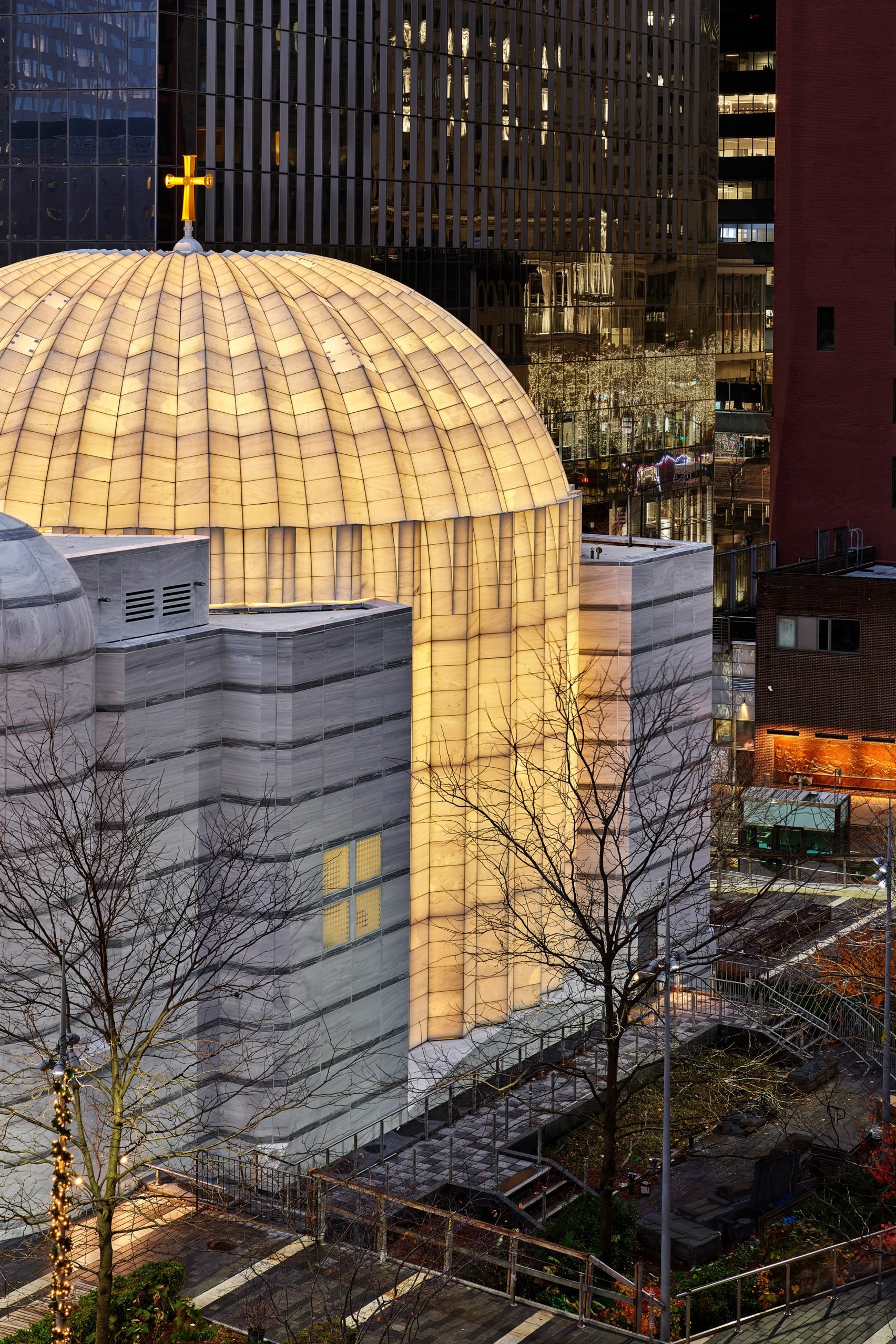
The translucent walls are made of Pentelic marble. So lovely!

You may recall reading about the Greek Orthodox church near the World Trade Center in New York City that was ruined on September 11, 2001. Fortunately, 9/11 was not the end of the story for that church. Tom Ravenscroft reports at Dezeen about Santiago Calatrava’s new illuminated wonder.

“The St Nicholas Greek Orthodox Church, which replaces a church destroyed in the 9/11 attack, has officially opened at the World Trade Center site in New York.

“Designed by Spanish architect Santiago Calatrava, the building replaces a 19th-century church that was destroyed on 11 September 2001. … The church is located alongside the 9/11 memorial that stands on the site of the former twin towers.

“It was designed by Calatrava to be a ‘sanctuary for worship’ but also a reminder of the impact of the terrorist attacks. …

“Said Calatrava, ‘I hope to see this structure serve its purpose as a sanctuary for worship but also as a place for reflection on what the city endured and how it is moving forward. [Architecture] can have an intrinsic symbolic value, which is not written or expressed in a specific way but in an abstract and synthetic manner, sending a message and thus leaving a lasting legacy.’

“Built on top of the World Trade Center Vehicle Security Center, the church is raised around 25 feet above (seven metres) above street level and was designed to be a beacon.

“Informed by Byzantine architecture and the Hagia Sofia in Istanbul in particular, the church is arranged around a central drum-shaped form that is topped by a dome.

“The walls of this central section were made from thin sheets of Pentelic marble so that the building can be illuminated at night.

” ‘This Shrine will be a place for everyone who comes to the sacred ground at the World Trade Center, a place for them to imagine and envision a world where mercy is inevitable, reconciliation is desirable, and forgiveness is possible,’ said Ioannis Lambriniadis archbishop elpidophoros of America.

” ‘We will stand here for the centuries to come, as a light on the hill, a shining beacon to the world of what is possible in the human spirit, if we will only allow our light to shine before all people, as the light of this Shrine for the nation will illuminate every night sky to come in our magnificent city.’

“Surrounding the central domed spaces are four stone-clad towers that give the building an overall square shape.

“The entrance to the church, which faces a large open plaza, was placed between two of these towers and leads directly to the main series of liturgical spaces.

“The altar directly faces the entrance, while the two side niches were completed with translucent arched windows. Above the main space, the domed is surrounded by 40 translucent windows divided by 40 stone ribs, reminiscent of the Hagia Sofia.

“Alongside the main liturgical spaces, several community rooms and offices were placed on the upper floors of the towers.

“To mark the 20th anniversary of the 9/11 attacks last year, Dezeen explored how the site was rebuilt and the numerous buildings created on the site including the World Trade Center Transportation Hub, which was also designed by Calatrava.”

More at Dezeen, here. Lots of beautiful photos by Alan Karchmer. No firewall.

The New York Times and many other publications reported on the reopening of the church, now a national landmark. From the article by Jane Margolies: “Olga Pavlakos grew up going to St. Nicholas Greek Orthodox Church in Lower Manhattan. She was baptized there. Her parents were married there. She has memories of her father, who worked in restaurants, volunteering there on Sundays, and of celebrating Epiphany every January, when parishioners would walk to the Hudson River, toss a gold cross into the frigid water and watch divers plunge in to retrieve it. …

“Her connection to St. Nicholas can be traced to her grandparents, who left Greece in the early 1900s and settled in Lower Manhattan, then a bustling immigrant community. Residents there scraped together money and bought a tavern on Cedar Street that they converted to a place of worship, eventually adding a bell at the top.

“These original parishioners, who had arrived by boat, named their church after the patron saint of seafarers — a saint who fed the hungry and clothed the needy and inspired the character of Santa Claus. … The tiny church was obliterated during the terrorist attacks.

“Twenty-one long and difficult years later, St. Nicholas has reopened. But it is no longer a humble church, exclusively for its parishioners. Its mission is larger, as is its splendor.

“St. Nicholas Greek Orthodox Church & National Shrine, as it’s now called, has become a destination for all. It offers a bereavement center that will serve as a place for meditation and prayer for people of any faith. … The new church is a prominent expression of Orthodox Christianity in the city, and it is a source of great pride for the Greek American community.

“For the few remaining longtime parishioners of St. Nicholas, there is relief that their beloved church has finally reopened. But now, their intimate community hub is a global destination, and some wonder about the future of their once tight-knit parish.” More at the Times here.

Read Full Post »

Photo: Likolani Arthurs Bro.
“Likolani Brown Arthurs [with her father, left] danced with the New York City Ballet for 15 years. Now, she’s moving to a new stage, NYU Langone’s operating theater,” says the New York Post.

Talk about planning ahead! This ballerina knew that dance would be a short career for her and wasn’t inclined to spend the rest of her life teaching ballet or creating choreography. She went to medical school instead.

Hannah Sparks reports at the New York Post, “Likolani Brown Arthurs, 36, spent 15 years dancing with the New York City Ballet. Now, she’s moving to a new stage: NYU Langone’s operating theater, where the retired ballerina will begin her surgical residency.

“With her 6-month-old son, Kaipo, on her hip, in a room full of hospital-bound hopefuls at NYU Grossman School of Medicine, Arthurs opened her Match Day letter during the nationwide annual event, when medical students across the county learn where they will launch their careers as resident doctors.

“ ‘I realized a lot of the things I love about ballet exist here,’ she told the Post of her desire to enter the medical field, spurred by personal tragedy when she lost her father to cancer.

“Arthurs, also mother to 2-year-old Bronson, may have struggled with some imposter syndrome during her uncommon career change. ‘I came in questioning if I would fit in.’ …

“Her transition from the ranks of one of the world’s most storied dance companies to the roster of world-class heath-care providers in NYC was never in step with the Hawaii-born daughter of an activist and a lawyer. ‘Not everyone comes from these “doctor families,” ‘ she said of her entry into medicine. …

“Arthurs set out at 16 to join the ranks of NYC’s prestigious School of American Ballet — just weeks before the attacks on the World Trade Center on Sept. 11, 2001.

She recalled being told that ballet practice would go on as scheduled even after the first tower had been struck. ‘I remember riding the elevators up to change and seeing only one tower still standing. And then when I came down, after changing, both towers were down. That’s when they canceled everything and we took some time off,’ said Arthurs. …

“It was a ‘very special place,’ she said of her experience at SAB, which culminated with her landing a coveted spot — one of 10 placements — with the New York City Ballet. … After a yearlong apprenticeship, she scored a contract with the company’s corps de ballet, making it official.

“ ‘I turned down Harvard,’ the self-described math and science geek told the Post. ‘I knew I could only dance when I was young.’ … Her successful tenure included dancing some of her dream roles, including all three of ballet legend George Balanchine’s ‘Jewels’ … as well as the ‘mysterious’ Arabian dance solo of ‘The Nutcracker.’ …

“ ‘I always thought ballet would be it for me,’ she remembered, but couldn’t shake the feeling she had more to do. … An inclination toward STEM led her to believe she should go pre-med at Columbia University, which she credited with guiding her to the right coursework in her spare time ‘when the theater was dark.’ …

“She could see parallels between medicine and dance during her early days as an emergency room volunteer. ‘I saw a lot of teamwork,’ she said. ‘A lot of creativity and artistry there.’ And the rush she got ‘was similar to what I felt on the stage during a live performance.’

“At NYU, she would eventually land on her calling in general surgery, guided in part by the untimely death of her father due to a slow-growing sarcoma that, at the time it was discovered 18 years prior, required an incredibly invasive open-chest surgery to access. Unfortunately, close monitoring of his disease ‘fell through the cracks.’ By the time he began to show advanced symptoms, his condition was no longer treatable.

“ ‘I just felt that if a surgeon had attended to him earlier in his course, especially with the new advances … things could have been different for him,’ she said.”

More at the New York Post, here. (Lovely ballet photos. No firewall.)

Read Full Post »

What you need today — a day that even in the best of times can mean anxiety about travel or kitchen prep or argumentative relatives — is Pizza Rat.

Valentina Di Liscia and Hyperallergic explain what I mean. “The internet is squeaking with delight this week at a 23-second-long clip of a figure in a rat costume, complete with a long tail, whiskers, and mousy gray suit, dragging a life-sized pizza slice up the stairs in a New York City subway station.

“As surreal as it may be, the sight is intimately familiar to urban dwellers who remember video footage of a real rodent carrying an entire cheese slice up the platform steps a few years back. The strangely endearing, ubiquitous New Yorker became lovingly known as ‘Pizza Rat.’

“The man behind the very realistic mask in the more recent viral video [is] Jonothon Lyons, an accomplished dancer, theater artist, and puppeteer whose previous credits include the Blue Man Group, Sleep No More, and the Metropolitan Opera’s 2019 staging of Madame Butterfly. For his latest act, however, no tickets are needed. …

“Buddy the Rat, as Lyons has baptized his wiry-tailed character, brings the stage to the streets and the subway platforms: getting pets on the Brooklyn Bridge, showing off for Minnie Mouse in Times Square, and encouraging train riders to wear a mask.

“In an interview with Hyperallergic, below, Lyons tells us how Buddy was born and why he’s shaking up the performance art scene right now.

HyperallergicWhat’s the story of Buddy the Rat? How did the character originate?

Jonothon Lyons: Twelve years ago, I was working for a theater company in Portland, Oregon, called Imago Theater, and they have a show called Frogs, where we played big animal characters in masks. I played a frog, a polar bear, an anteater, and a penguin, but I never played a rat, and I always wanted to. In 2009, I made my own rat mask and went out in Times Square and ran around, put it up on YouTube, and it got around 70,000 views. It wasn’t gigantic, but it was enough that in the back of my mind I kept thinking, ‘I need to take this rat out again.’

H: I’ve just emerged from a rabbit hole of TikTok videos of you performing in the costume. They’re incredible, and they’re really resonating with people right now. How did Buddy go viral?

JL: I’m friends with this film director Todd Strauss-Schulson (Isn’t It Romantic, The Final Girls, A Very Harold and Kumar 3D Christmas). I told him I had this rat character I’ve been wanting to do more with it, so we conceived of a little three and a half minute-long film.

“We shot it the week leading up to the election, in abandoned SoHo, as the windows were being boarded up — a very surreal and uncommon vision of New York. After the first night of shooting, a stranger had posted a video of me that got 1.7 million views that day. We wrapped up the movie, and over the next few days I started going out on my own and posting the content to TikTok and Instagram, and it really took off.”

Folks, I’m thankful for a whole lot of things today, but at this particular moment, I’m thankful for anyone who says they always wanted to play a rat! More at Hyperallergic, here.

Read Full Post »

Art: Liu Xiaodong
“Thank you 2020.4.9” (2020), watercolor on paper, at New York City’s Lisson Gallery.

People from around the world often perceive New Yorkers as brash, rude. But if you have spent any time in the city, you know there’s another side, a side that is helpful and kind, that will drop everything to give a stranger detailed directions to the Empire State Building or a place to buy the freshest lychee nuts.

During the height of the pandemic, artist Liu Xiaodong seems to have seen the generosity, humanity, and vulnerability of New Yorkers and to have captured it in his watercolors.

John Yau writes at Hyperallergic, “Charles Baudelaire said in his 1863 essay that the ‘painter of modern life’ is the ‘passionate observer’ who can be ‘away from home and yet […] feel at home anywhere.’

“Among contemporary artists, the Chinese observational painter Liu Xiaodong is the closest embodiment of Baudelaire’s ideal that I know. For years, he has been, in the words of Baudelaire, an ‘independent, intense, and impartial spirit’ who observes the ‘ebb and flow’ of the world around him. This has led him to set up a temporary studio near an orphanage in Greenland and one among Uyghur jade miners in China’s harsh northwest. …

“In 1978, when Liu was 15, his family sent him to live with his uncle, who had studied Western painting at the Jilin Academy of Fine Arts and had gone on to become the art editor of a magazine. His uncle taught him watercolor, and showed him the books he had about English watercolors, European oil painting, and the Peredvizhniki, a group of late 19th-century Russian realists who believed that Russia and its people possessed an inner beauty.

“The date of 1978 is significant: it is two years after the death of Mao Zedong, the end of the Cultural Revolution, and the Tangshan earthquake, which devastated the region where he and his family lived. Born in 1963, Liu belongs to a generation that has both witnessed and been directly affected by the convulsive social, political, and economic changes that China has undergone during Mao’s lifetime, and since his death. …

“His instinct to respond to what is directly in front of him with whatever medium he has on hand endows his views with an unrivaled propinquity. He is, to cite Baudelaire, at the very center of the world he is depicting, and unseen by it. …

“[A recent exhibition provided] a visual and written record of a specific area of Manhattan, determined by what he can walk to.

Liu made his watercolors during an extreme period in New York’s history, starting with the empty streets during the first months of the COVID-19 quarantine, and including the Black Lives Matter protests and demonstrations in response to the video-recorded murder of George Floyd.

“Even in this acute moment in our history, he is able to slow down his looking to find and celebrate the beauty of human determination, as well as recognize feelings of wariness and displacement. …

“The watercolor ‘Kitchen Paper cannot be flushed down the Toilet, right, 2020’ [is] a wonderful tonal view of a roll of paper towels resting on a toilet tank, a quick yet careful placing of pale yellows, blues, off whites, and grays. …

“[But] the range of subjects and views underscores a person who is remarkably open to the world, from a blooming tree, to children’s toys left at a park, to an evening view of the top of the Empire State Building, seen between two buildings, to a homeless man’s legs sticking out of a doorway. … You never get the feeling that he is looking for something; there is no hierarchy to what he chooses. …

“As Manhattan transitioned from the largely empty streets of the quarantine to demonstrations and large groups of police, Liu kept looking, kept going out, and kept making watercolors and taking photographs, to work on later.  His attention to detail, to the color and light, is masterful and precise. … The merging of mark and color, and his sensitivity to light and dark, feel effortless, though we know they are not. This is Liu’s genius; there are no signs of hesitation in his work.

“In Liu’s watercolors and painted-over photographs, the viewer encounters scenes in which hand, eye, and intelligence work in astonishing tandem. … We are the lucky beneficiaries of a vision at once candid and sophisticated, open and sincere, witty and compassionate — an unlikely combination in this dark, nerve-fraying, and isolating period in history.”

To see an array of Liu Xiaodong’s New York paintings, go to Hyperallergic, here. And fall in love with that city all over again.

Read Full Post »

tf6jpcshny6opk4chij2zicauq

Photo: Celeste Sloman for the Washington Post
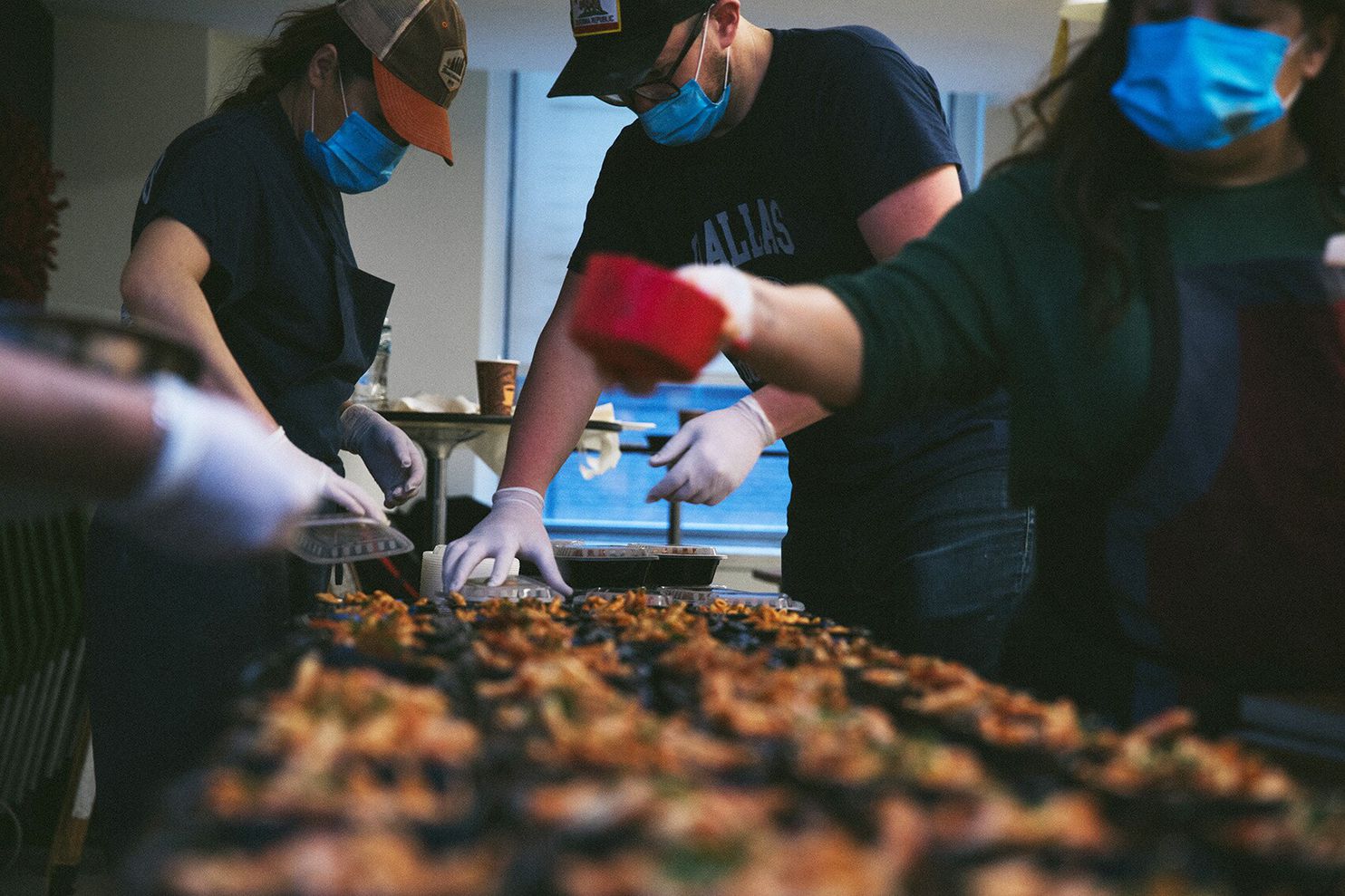
In New York City, where the Covid-19 lockdown is putting many residents in danger of going hungry, immigrants at Migrant Kitchen are feeding multitudes.

I always like stories about how much immigrants benefit America, and this one from the Washington Post is a great example.

Richard Morgan writes, “At 5:30 a.m. in a godforsaken industrial crevice of Queens, Daniel Dorado recently waited in a line of mostly undocumented restaurant workers before the opening of Restaurant Depot, a wholesaler like Costco on steroids available only to the industry. His goal was 2,000 meal containers, and, boom, he was in and out in 12 minutes.

“The containers would soon be packed with sumptuous entrees: citrus garlic salmon with Cuban black beans and coconut herb rice, or moussaka-stuffed zucchini with dirty rice and beans, or mojo chicken with chimichurri and roasted potatoes with grilled shishito peppers. …

“Dorado, an American-born son of a Mexican immigrant, has been running what is probably New York’s largest restaurant-quality active cooking operation during the pandemic lockdown, serving 6,000 meals a day.

“Last year he and two former colleagues from Ilili, a Lebanese-Mediterranean restaurant in the Flatiron District, formed the Migrant Kitchen NYC, ostensibly a catering company, which orchestrated an alliance with four other kitchens. …

“As much attention as beleaguered restaurants have gotten in the pandemic’s lockdown, far less attention has been paid to catering companies, which can produce food on a massive scale but not within the limits of a la carte orders available through delivery apps. Enter Migrant Kitchen. They pay wages of $20 to $25 an hour in their kitchen, [Nasser Jaber, a Palestinian immigrant who was an Ilili waiter,] said, and with the four other kitchens pooled 40 largely undocumented workers from Make The Road, a civil rights group — plus workers and volunteers who handle packing and delivery. …

What started out on March 13 with 100 meals to hospitals and shelters quickly grew to 6,000 meals a day to 13 hospitals, four food pantries, three homeless shelters, three senior centers, public housing complexes in the Bronx and Queens, a Queens mosque and dozens of covid-19-infected families. …

“A few days before Ramadan began on April 23, they switched all meals to halal-certified. ‘We don’t just want to give people food,’ Dorado said. ‘We want them to know we took their needs into consideration. We don’t want anyone getting food that they don’t want to eat. It’s for them, not for us.’ For families, Migrant Kitchen also makes grocery bags of staples like eggs and milk, and tucks in chicken tenders or pizza for children. Even diapers. …

“Sam Bloch, [World Central Kitchen’s] director of field operations, laid out Migrant Kitchen’s strength: ‘It’s beautiful, right? How many win-wins can you have? Where the food is coming from, who’s making it, how it’s supporting that individual person, how it’s supporting that [kitchen], and all that built on top of the fact that someone who really needs that plate of food is receiving it.’ …

“Head chef Ryan Graham explained the [Migrant Kitchen] mission: ‘A lot of big-batch cooking … doesn’t monitor seasoning, the flavor, the texture, the veg, the meat, the starch, the digestion, the nutrition.’ By contrast, he noted, he was slow-cooking a sauce that included 20 spices for nine hours. One of his cooks also recommended that a dish’s tomato paste be caramelized. (Bloch called the approach ‘food with dignity.’) …

” ‘I’m trying to keep myself strong. I’m alone but I don’t feel lonely,’ said a 76-year-old Bangladeshi man who lives by himself in the heavy-hit Elmhurst neighborhood of Queens. …

“He said he was ashamed to be publicly identified as in need. He hasn’t left his home since the first week of March. His income is $500 a month. Through [social justice group Desis Rising Up and Moving, DRUM, his Migrant Kitchen meals — two a day — come every afternoon, but, in accordance with Ramadan, he waits until sunset and pre-dawn to eat them. ‘It’s a blessing for old people,’ he said. ‘It’s an example for humanity.’ ”

More here.

Read Full Post »

Photo: Shutterstock/Elizaveta Galitckaia

She looked me dead in the eye and said: ‘How do I know I’m real?’

It takes nerve to put yourself out there to answer people’s philosophical questions. After all, most potential questioners have only the fuzziest idea of what philosophy is or what questions would be relevant to a philospher’s expertise. Some people are bound to treat the philosopher as a Dear Abby advice columnist, a psychiatrist, or an astrologer.

Here is what Boston University philosopher Lee McIntyre experienced, according to his report at the Conversation.

“The life choices that had led me to be sitting in a booth underneath a banner that read ‘Ask a Philosopher’ – at the entrance to the New York City subway at 57th and 8th – were perhaps random but inevitable.

“I’d been a ‘public philosopher‘ for 15 years, so I readily agreed to join my colleague Ian Olasov when he asked for volunteers to join him at the ‘Ask a Philosopher’ booth. This was part of the latest public outreach effort by the American Philosophical Association, which was having its annual January meeting up the street. …

“I sat between Ian and a splendid woman who taught philosophy in the city, thinking that even if we spent the whole time talking to one another, it would be an hour well spent. Then someone stopped.

“At first glance, it was hard to tell if she was a penniless nomad or an emeritus professor, but then she took off her hat and psychedelic scarf and came over to the desk and announced, ‘I’ve got a question. I’m in my late 60s. I’ve just had life threatening surgery, but I got through it.’

“She showed us the jagged scar on her neck. ‘I don’t know what to do with the rest of my life,’ she said. ‘I’ve got a master’s degree. I’m happily retired and divorced. But I don’t want to waste any more time. Can you help?’

“Wow. One by one, we all asked her to elaborate on her situation and offered tidbits of advice, centering on the idea that only she could decide what gave her life meaning. I suggested that she might reach out to others who were also searching, then she settled in for a longer discussion with Ian.

“And then it happened: A crowd gathered. …

“One young woman, who turned out to be a sophomore in college, stepped away from the group with a serious concern. ‘Why can’t I be happier in my life? I’m only 20. I should be as happy as I’m ever going to be right now, but I’m not. Is this it?’

“It was my turn. ‘Research has shown that what makes us happy is achieving small goals one after the other,’ I said. … ‘You can’t just achieve happiness and stay there, you have to pursue it. … You’ve got to choose the things that make you happy one by one. That’s been shown from Aristotle all the way down to cutting-edge psychological research. Happiness is a journey, not a destination.’ …

“Again it was quiet. Some who passed by were pointing and smiling. A few took pictures. It must have looked odd to see three philosophers sitting in a row with ‘Ask a Philosopher’ over our heads, amidst the bagel carts and jewelry stalls. …

“And then I spotted her … an interlocutor who would be my toughest questioner of the day. She was about 6 years old and clutched her mother’s hand as she craned her neck to stare at us. Her mother stopped, but the girl hesitated.

” ‘It’s OK,’ I offered. ‘Do you have a philosophical question?’ The girl smiled at her mother, then let go of her hand to walk over to the booth. She looked me dead in the eye and said: ‘How do I know I’m real?’

“Suddenly I was back in graduate school. Should I talk about the French philosopher Rene Descartes, who famously used the assertion of skepticism itself as proof of our existence, with the phrase ‘I think, therefore I am’? …

“Then the answer came to me. I remembered that the most important part of philosophy was feeding our sense of wonder. ‘Close your eyes,’ I said. She did. ‘Well, did you disappear?’ She smiled and shook her head, then opened her eyes. ‘Congratulations, you’re real.’ ”

More here.

Read Full Post »

3466

Photo: The Guardian
What it looked like when a swarm of bees attacked a New York City hotdog stand.

As you know, I think New York City is an endlessly unspooling entertainment reel. This adventure with swarming bees is a typical example. Wish I had seen it. The police officer in charge must have been surprised to discover that a bit of obscure training would actually come in handy someday.

As Adam Gabbatt reported at the Guardian, “Productivity came to a halt across New York City offices on Tuesday afternoon, as hordes of people eagerly followed the removal of 20,000 bees from a hotdog stand. …

“Thousands watched a Reuters livestream – the stand is located outside the news agency’s New York headquarters – and followed on Twitter as a police officer was called in to remove the bees. With a vacuum cleaner. …

“Officers from the New York police department stood guard, some more willingly than others, as one of their colleagues donned a beekeeper’s hat and approached the hotdog stand.

“The bees had gathered in a densely packed, roughly 15-square-foot clump, and the unidentified officer, who wore a white jacket, thick gloves and has a moustache, proceeded to vacuum up the bees. The bee cleansing took about 40 minutes, much of which was watched online.

“By around 3 pm, the officer, who told journalists he ‘has training,’ had removed the bulk of the bees, but many remained in the area, swarming around a selection of soft drinks displayed on the hotdog stall. …

“Andrew Coté, who runs the New York City beekeepers’ association, had answered a call from the NYPD and was watching as the bees were removed. Removal by vacuum cleaner – it was a specially adapted vacuum cleaner – was common, Coté said. He estimated there were 20,000 bees on the umbrella, but said: ‘You’ve got to count the legs and divide by six to be sure.’

“Coté said … this late-August swarm had likely occurred because of an ill-managed beehive. He said there were a number of hives within a block of the hotdog stand.

“By 3.15 pm police had re-opened the street, although a number of bees were still on the scene.” More here.

You definitely have to know what you’re doing with bees. I’m sure a transplanted Minnesota beekeeper I know in Berlin, Massachusetts, would have managed his hives better if he had set up in a city. Beekeeping is serious business, and you don’t want to be responsible for anyone with an allergy getting stung.

Video: Reuters

Read Full Post »

stations_4_wide-7cb1980f2ae4e8384c90c9a4d04c3b722b040355-s800-c85

Still shot of Manfred Kirchheimer’s nonverbal documentary Stations of the Elevated, which depicts the graffiti and anxious ambience of New York City in the late 1970s.

There’s a story about a documentary created by my sister’s friend Manny Kirchheimer. For years, though admired by critics, Stations of the Elevated could not be distributed because it was not possible to meet the price set by a jazz musician’s widow for use of the music.

Then a film buff from Artists Public Domain discovered the artistic, wordless evocation of a New York moment tucked away on a shelf.

As Joel Rose reported at NPR in 2014, “The first film to point a camera at the graffiti movement in New York City was Stations of the Elevated, which debuted at the New York Film Festival in 1981.

“The film hasn’t been seen much since, except by generations of graffiti fans and writers who watched it on VHS tapes. Now it’s being re-released on the big screen. …

Stations of the Elevated is not a documentary in the usual sense. It’s only 45 minutes long; there’s no narrative and hardly any dialogue. The camera follows subway cars painted from top to bottom with vibrant graffiti compositions over a soundtrack of jazz by Charles Mingus. One critic compared Stations to a nature film, in which director Manny Kirchheimer stalks graffiti-covered subway cars in their native habitat.

” ‘He went big-game hunting, and he caught the big game, you know?’ says graffiti writer Lee Quinones, whose work is featured prominently in the film. … ‘This is the first film of its kind that captured a beautiful golden age where a lot of these cars were being painted, and that urgency,’ he says. ‘He was able to capture that, and way before the established art world even got a pulse that this was going on underneath their feet.’

“Kirchheimer … was born in Germany and fled to New York with his parents in 1936. He was in his late 40s when he shot Stations of the Elevated in 1977. He didn’t know anyone who wrote graffiti, and he’d never given it much thought.

” ‘As a matter of fact, there was a great deal of graffiti around that I didn’t pay much attention to,’ Kirchheimer says. Then he found himself driving up to the Bronx early in the morning, and he saw the trains running overhead.

” ‘They would come by and it would be screaming full of colors — just gorgeous,’ he says. ‘The smart thing I did was shoot it all outdoors. Most of the lines are indoors, and the way most people see these paintings was indoors. Doing it outdoors gave a whole other perspective.’

“It was a grittier time in New York’s history, when the city could barely afford to clean subway cars, inside or out. Most straphangers considered graffiti writers a nuisance, or worse. But Kirchheimer was focused on ‘elevating’ their work. …

” ‘The genre, if there is one, is one that goes back to the beginning of cinema. That’s the city symphony,’ says Jake Perlin, who is reissuing Stations of the Elevated through his company, Artists Public Domain. …

Stations of the Elevated contrasts the painted subway cars with outdoor advertising on billboards — giant images of cigarettes, alcohol and semi-nude women. Artist Quinones says the film captures something essential about a moment in the history of the graffiti movement, and of New York City, which is long gone.” See more at NPR, here.

You may also check out Criterion for a review by Joshua Brunsting: “This short documentary contains some really beautiful richly colorful photography of the elevated subways and the neighborhoods around them circa 1980. It’s filled with impressionistic scenes of subway cars, passengers and track workers, junkyards, neighborhood kids, billboards – scenes of everyday life. Interludes of Mingus drift in and out along with background subway announcements and ambient noise and conversation.”

And now that Artists Public Domain has settled the music rights question, you can get the movie here.

Read Full Post »

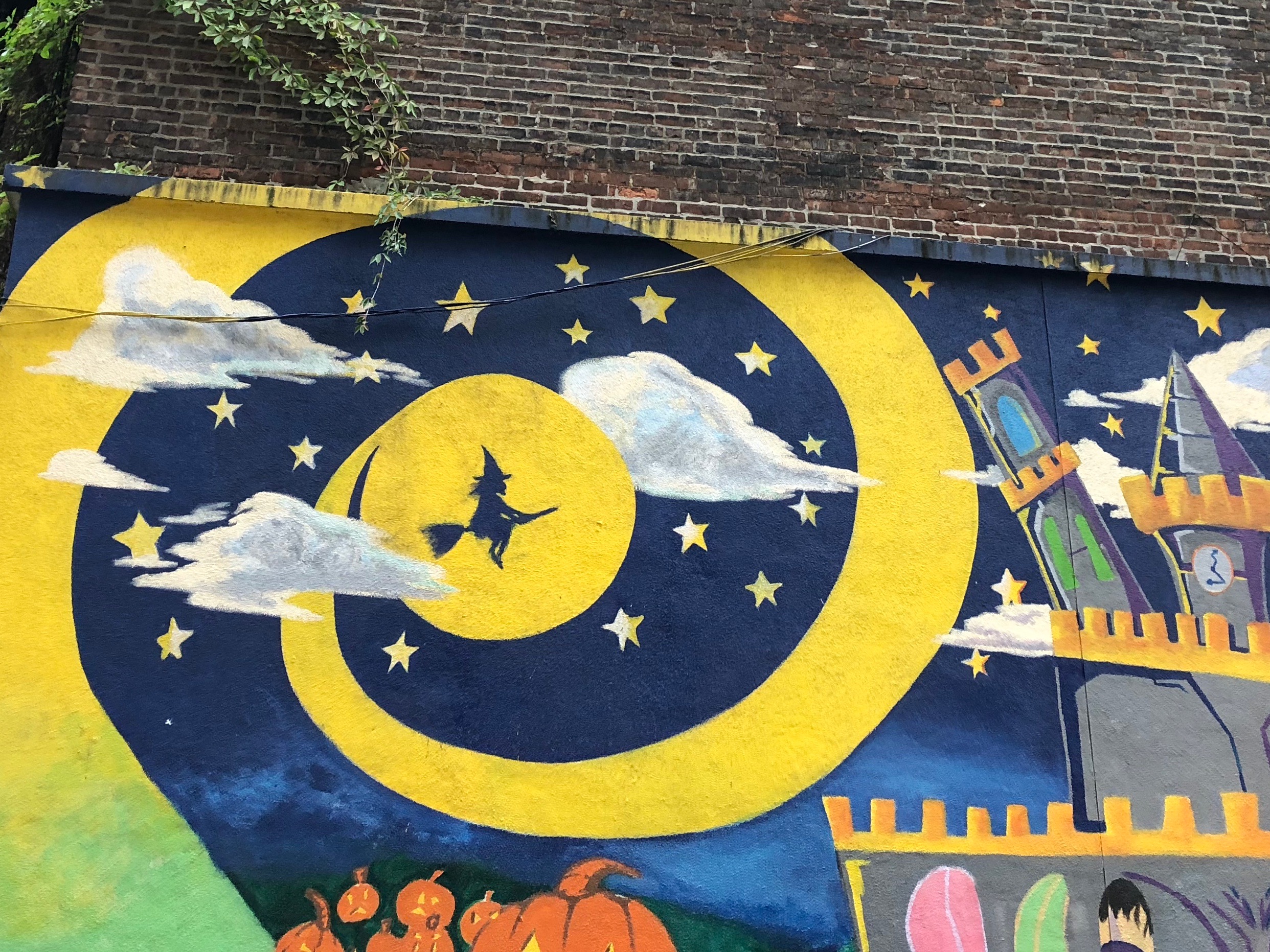
091818-witch-flies-over-moon

I’m still getting used to having an iPhone and was surprised to learn that my new one was counting my steps. When my husband told me that in Japan, walking 10,000 steps a day is considered ideal for good health, I wondered if I could manage that. At home, it means taking two constitutionals a day, a feat I doubted I would be able to keep up in the winter.

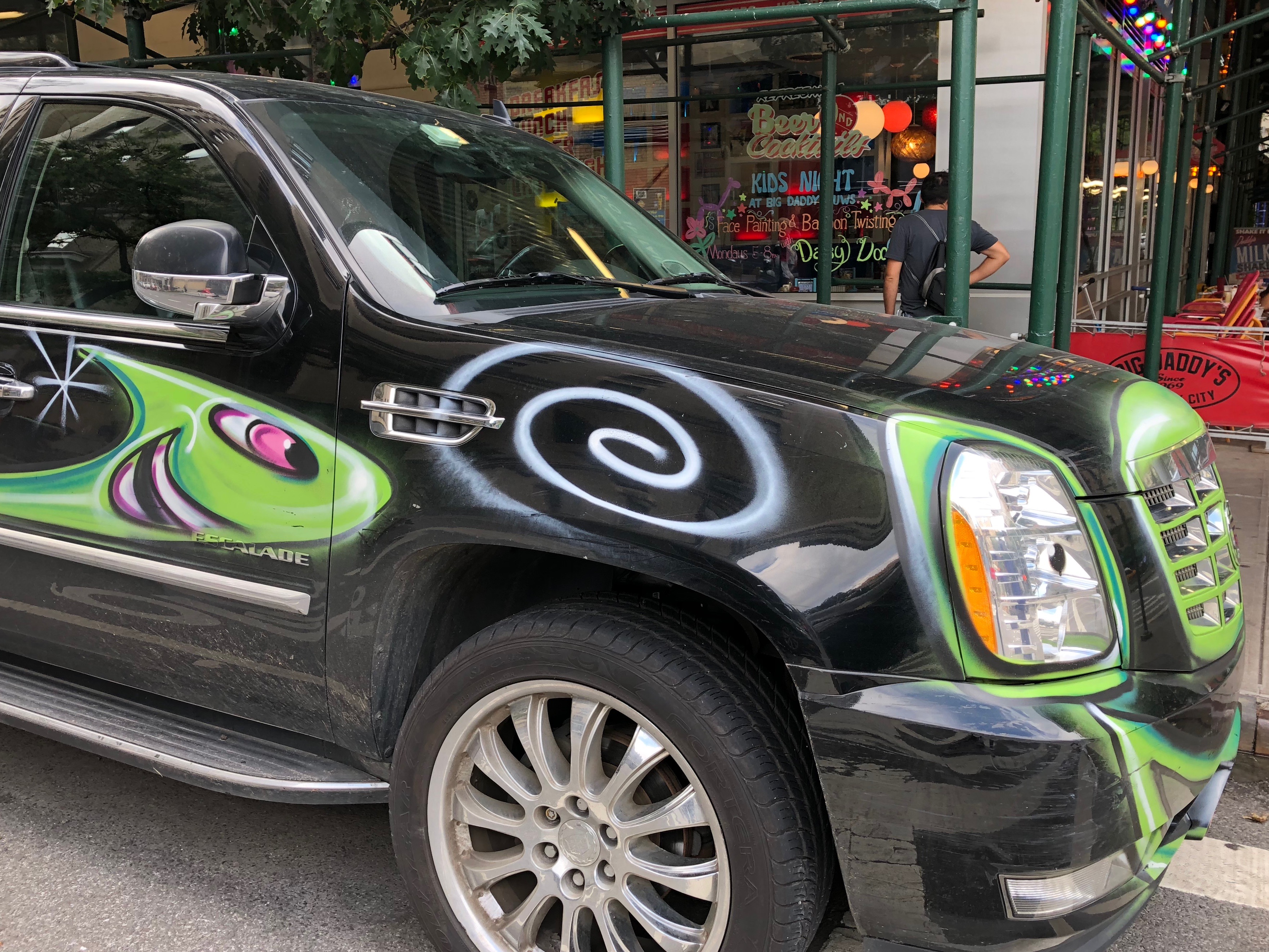
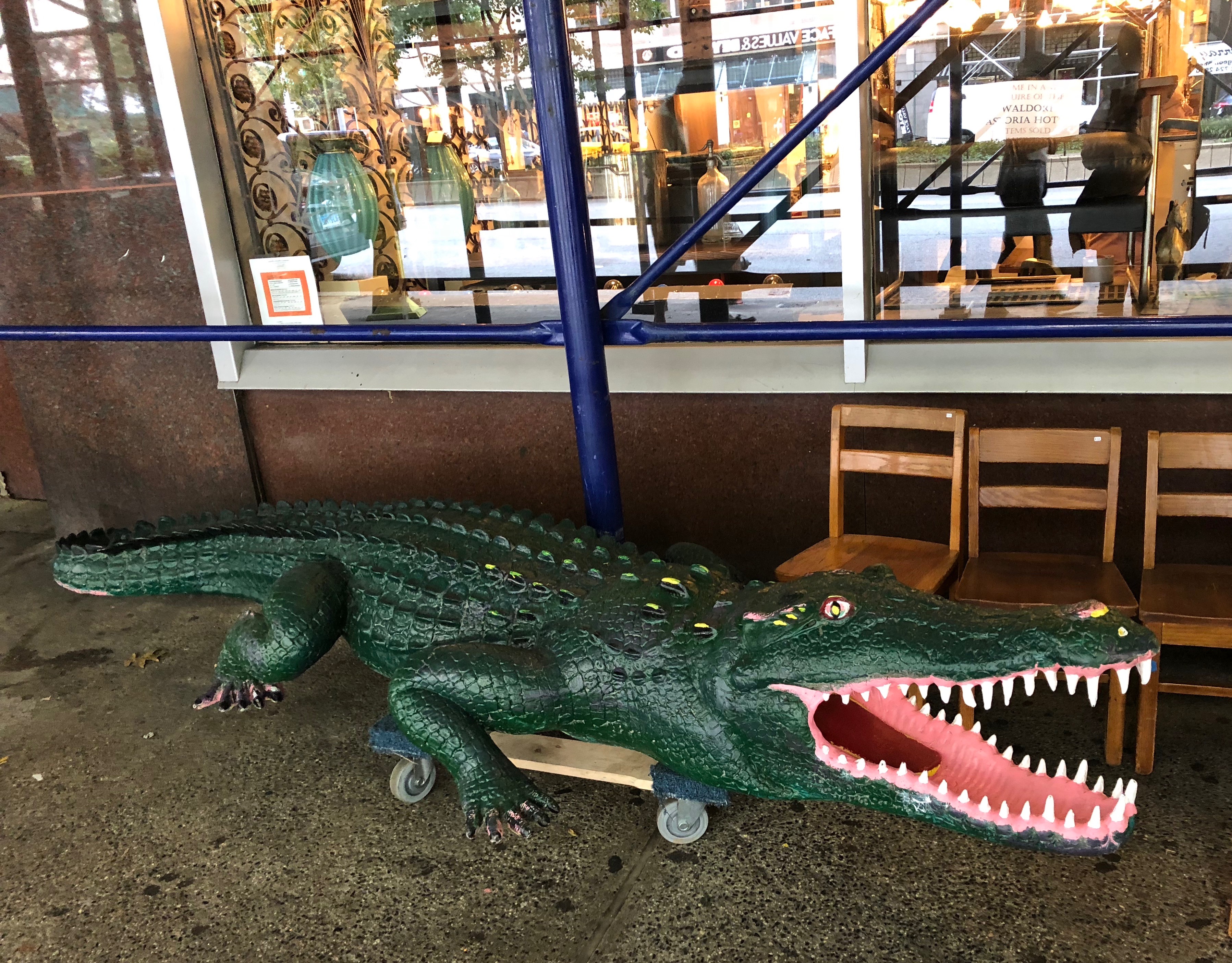
But in New York City, no problem! One day this week I walked more than 16,500 steps without thinking twice. New York is just such a fun place to walk — so much to look at, constantly entertaining. Maybe the storefronts don’t change numerous times a day, but the array of people does. And their pushcarts, fruit stands, clothes, behaviors.

People seem so uninhibited in New York that you could express your inner self to an unheard-of degree and no one would blink. Of course it’s sad that some people on the streets clearly have mental illness. But being used to living around them seems to free up New Yorkers not to care much what people think of their own behavior. I watched one guy oblivious of furiously honking rush-hour traffic and blocking a whole lane while he tried to hook a car to his shish-kebob trailer after work.

Another slammed into wet leaves on a rented Citi Bike and wiped out with a loud crash in the middle of an intersection, picked the bike up, and went on his way. If that happened where I live, it would be on the front page of the local bugle the next Thursday.

Most of what I saw happened too fast for me to get a picture, but I include a couple things that stayed still.

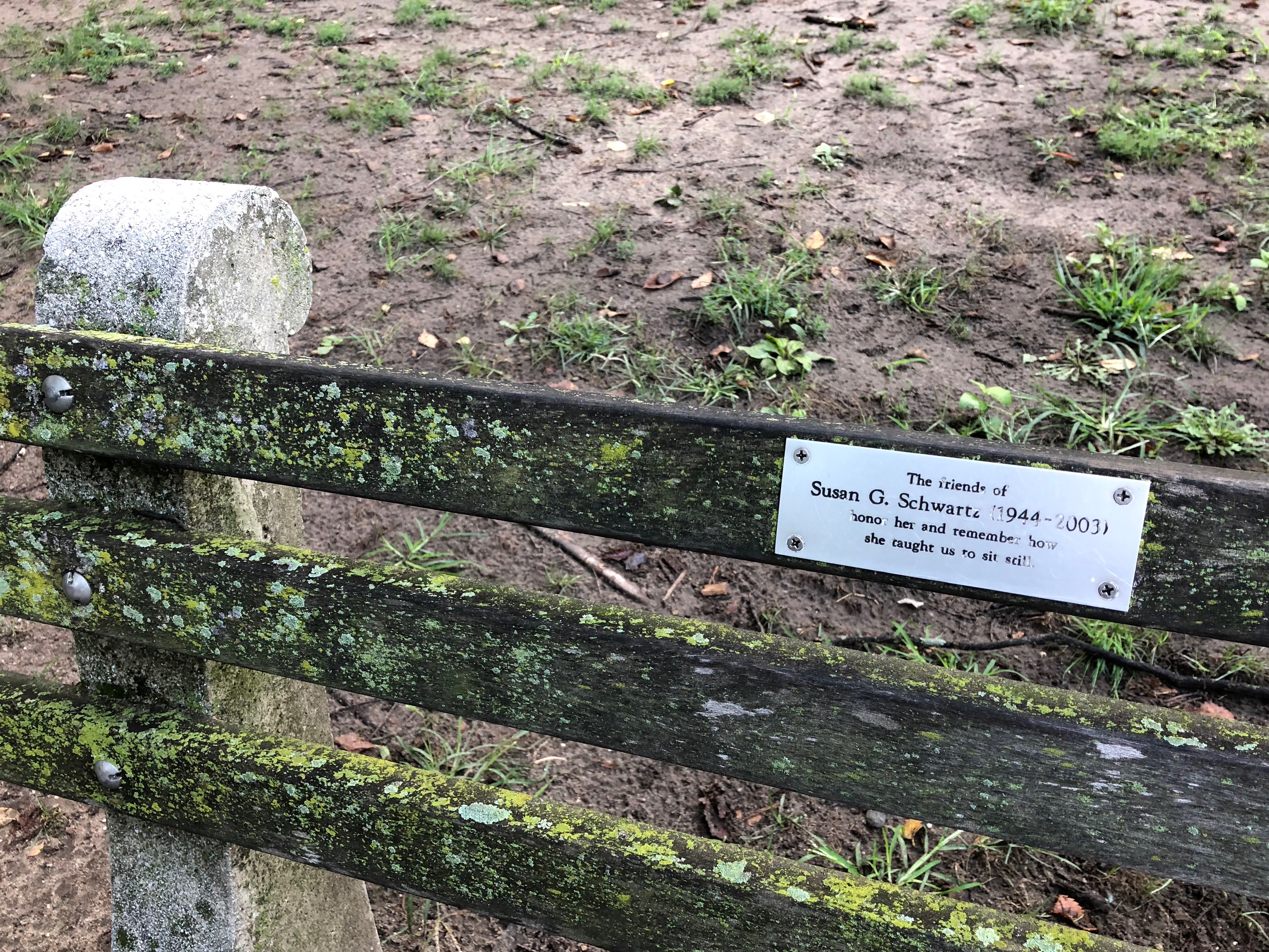
It’s relatively quiet to walk along Riverside Drive in the early morning, and many people and dogs do. Other people sit on the benches and read the paper or drink coffee. This worn park bench had a plaque I particularly liked. It says, “The friends of Susan G. Schwartz honor her and remember how she taught us to sit still.”

Going home today to sit still.

091918-remember-how-she-taught-us-to-sit-still

091918-New-York-car

091918-alligator-in-New-York


Read Full Post »

Older Posts »