Feeds:
Posts
Comments

Posts Tagged ‘nyc’

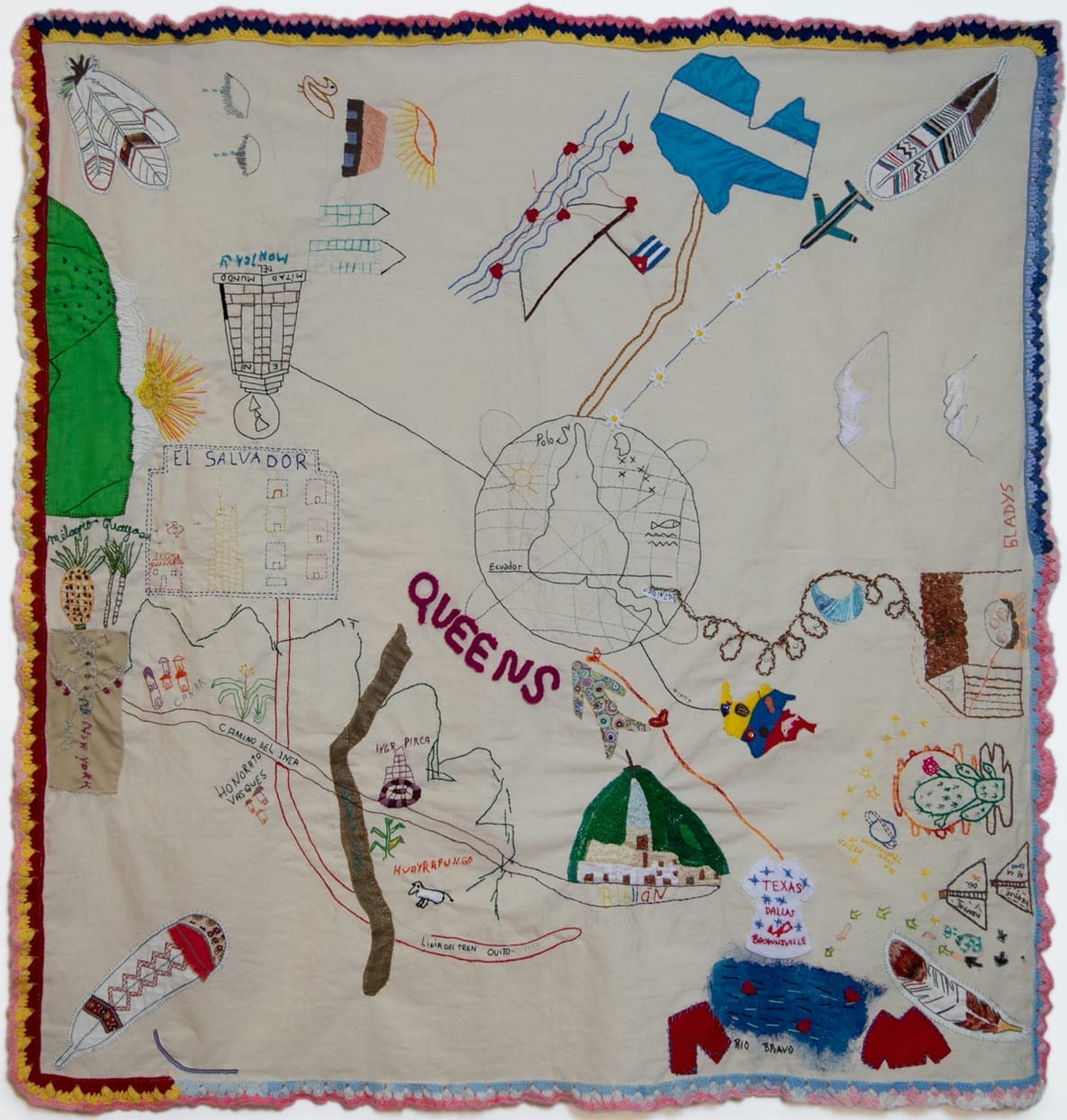
Photo: Andrés Altamirano.
“The Collective Map of Paths” is needlework created by immigrant women in New York City.

A needlework cartography project that some of the textile makers call ‘un mapa extraño (‘a weird map’) uses emotional parameters rather than a birds’ eye approach to mapping migration journeys. The inventive results are one more reason to love the richness that immigration has brought to our land. (Always recognizing that the original in habitants may have a different view of all us immigrants.)

Amalia Uribe Guardiola writes at Hyperallergic, “For the past two years, I have been working with two immigrant-led costureros: circles of women from all over Latin America that gather to create textiles together. Located in different community centers in Northwestern Queens in New York City, these spaces have become a safe haven for many undocumented, working-class immigrants. …

“The first group, BordeAndo, was founded in 2018 as a community engagement initiative of the Queens Museum, though it soon grew beyond the institution to become an independent collective. Its name plays with multiple meanings in Spanish: bordar (to embroider), borde (border or frontier), and the suffix –ando, which evokes movement or walking. Most of its members come from the Ecuadorian highlands (la Sierra), though others are from the Dominican Republic, El Salvador, and Mexico. They range in age from 30 to 83 and have lived in the United States for between 10 and 50 years.

“Las Comadres Bordadoras was founded in 2021 in the aftermath of the COVID-19 pandemic by two Mexican immigrants, who sought to bring women out of isolation and foster a mutual support network. Their name, also difficult to translate, gestures toward camaraderie and kinship. The comadre refers specifically to women who are, in their words, ‘a midpoint between friend and family.’ The comadres come from Mexico, Cuba, El Salvador, Uruguay, Colombia, Ecuador, and Argentina; range in age from 35 to 75; and have lived in the United States for between two and 30 years. They mostly embroider Mexican cloth napkins, but all forms of needlework are welcome. …

“Last year, BordeAndo and Las Comadres Bordadoras were the protagonists of ‘Thread of Voice / Un hilo de voz‘ at the Queens Museum. The exhibition, which I curated, featured Andrés Altamirano’s photographs of the costurero members along with film by documentarian Eleonora Privitera. …

“I see these costureros as living archives — as sites where craft traditions converge, and concrete embodied and material practices connect geographies of affect and displacement, like a woman knitting a stitch learned by her grandmother back home or another embroidering a napkin for the altar of a dead loved one whose grave she cannot visit because of her migratory status. “Text” and “textile” share an etymological root — the Latin verb texere — that reveals both that texts are woven and textiles written. In this sense, textiles are texts that we have forgotten how to read. …

“Based on the premise that mapmaking should not be a practice exclusive to traditional ‘expert’ cartographers, I invited the women of the costureros to make a collective map of their migration paths. ‘Where to begin? What to draw?’ many asked at first, reluctant to make the first stitches when faced with the blank surface. I proposed not drawing a croquis of the bird’s-eye view of either northwestern Queens or their home countries because it would prescribe their drawings. … Drawing a map freehand invites the women to express with their own hands and dimensions geographical and emotional landmarks, rooted in their own experiences and in dialogue with one another.

“Collectively, we chose three spatial parameters for the textile project: there’ — homeland, point of origin — stitched on the edges of the fabric; ‘path’ — journey, trail — stitched on the middle; and ‘here’ — destination, arrival point — stitched in the center. The map has been worked on in public libraries, community centers, the Queens Museum, and the homes of over 10 women. It is still in progress, moving between costureros. I consider it a countercartography because it does not abide by the dominant parameters of mapmaking — scale, legend, orientation, grid — but is rather dictated by the subjectivities and hands of its immigrant Latin American makers. It, too, is also an archive, a growing document of the transnational memory of its makers, ever changing, ever growing.”

More at Hyperallergic, here. No firewall but membership is solicited. The article was part of a series focusing on underrepresented craft histories, researched and written by the 2025 Craft Archive Fellows, and organized in collaboration with the Center for Craft.

Read Full Post »

I had dinner with friends at Harvard Square’s Casablanca last night.

Hadn’t seen them in ages. Their older son is moving to New York City with his family this summer. A key attraction is an experimental “international” school opening in Chelsea in the fall. My friends’ granddaughter will start in the new middle school and their grandson in the new elementary school.

Avenues School is the brainchild of publishing whiz Chris Whittle, best known for his not-so-successful Edison Schools. He puts that experiment in a positive light on the Avenues website, saying that it helped to spark the charter school movement. My friends say that experienced and inventive educators from all over have rushed in to help with Whittle’s new global approach to education.

“Begin by thinking Avenues Beijing, Avenues London, Avenues São Paulo, Avenues Mumbai,” says the website. “Think of Avenues as one international school with 20 or more campuses. It will not be a collection of 20 different schools all pursuing different educational strategies, but rather one highly-integrated ‘learning community,’ connected and supported by a common vision, a shared curriculum, collective professional development of its faculty, the wonders of modern technology and a highly-talented headquarters team located here in New York City.”

Erik went to an international school in Wales, a United World College, and made lifelong friends from many nations. As Avenues plans to do, United World Colleges has campuses in different countries. The one in Wales is for high school, but other UWC schools are, like Avenues, preschool to 12th grade, even beyond. Kim Jong-Il’s grandson attends the one in Bosnia!


Read Full Post »

When playwright Willie Reale started the 52nd Street Project in 1981 it was to meet a need. Children living in poverty in and around the Hell’s Kitchen section of New York City often had little joy in their lives. A group of theater people decided to use the art they knew best to change that.

“The mission of The 52nd Street Project is to bring together kids (ages 9 to 18) from the Hell’s Kitchen neighborhood, with theater professionals to create original theater.  The primary activity of the Project is to present free theater to a general audience. The Project’s deeper purpose is to use the art form of theater to engage the children’s imaginations, broaden their means of expression, and increase their sense of self worth, their literacy skills and their appreciation for the arts. With the addition of our expanded Clubhouse and our own theater, the Project has been able to add programming in various other art forms (such as Photography, Poetry, Theatrical Design and Dance). Additionally, the Project runs a free, after school homework help and academic mentoring program.”

In the early years, I saw some of the plays created when one child and one actor bonded and collaborated. Delightful. As Reale says, “There is no way to fast forward and know how the kids will look back on this, but I have seen the joy in their eyes and have heard it in their voices and I have watched them take a bow and come up taller.”

In this clip, kids work with adult partners on haiku.

Read Full Post »

I was chatting with a colleague in the washroom today, asking what she was doing this weekend, and she said she was going to New York to cheer for her brother in the marathon. She also mentioned in a proud but modest way that there was an article about him in today’s NY Times. We went and looked for the article, and I realized I had already read it word for word.

What an unusual brother! Kevin Dwyer decided as a child to be a dancer and had a ballet career, all while suffering from cystic fibrosis. The youngest in a family of seven children, he was the fourth to have CF. He didn’t tell people.

Although he and his siblings have a mutation of the disease that means it is not as severe as for many, it takes a real toll. Nevertheless, this weekend Kevin is running a marathon. His aim is to raise money for Team Boomer (started by the retired quarterback Boomer Esiason),  which funds much-needed CF research.

The NY Times writes that Kevin has “chronicled [his marathon training] in a lively blog, Kevin Running. When he goes out this Sunday, he will have lung capacity of 58 to 60 percent.

“ ‘I can beat this, in one little way,’ he said. ‘For at least one day, I can beat it. We’ve trained at 11-minute miles, but I think we will go kind of slow, maybe 11:45 or 12 minutes, so I can take everything in. Take everybody in. Make it a celebration.’ ” Read more.

I highly recommend chatting with colleagues in the washroom. I have learned so much that way!

P.S. Kevin was on the Early Show the next day.

Read Full Post »

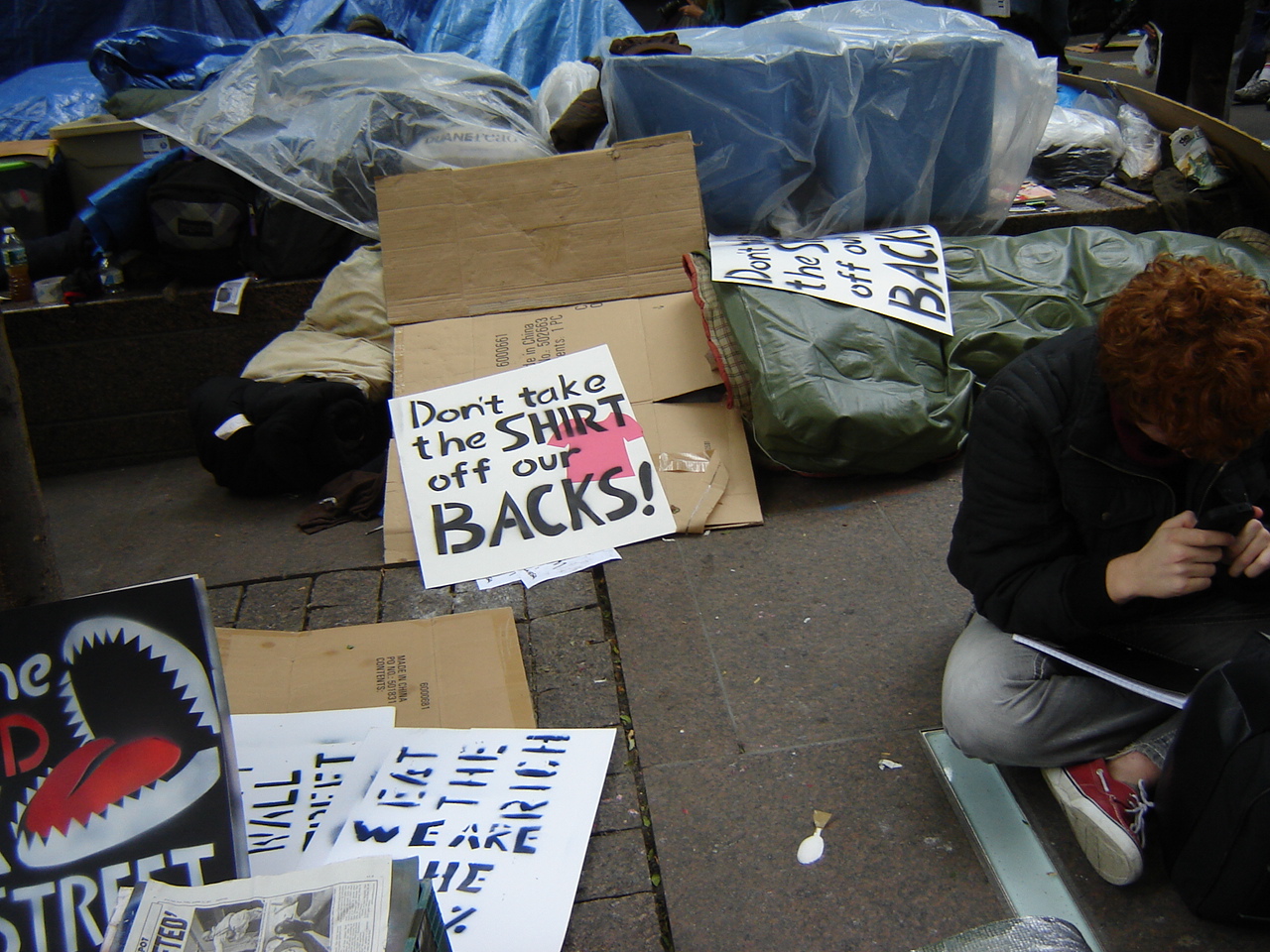
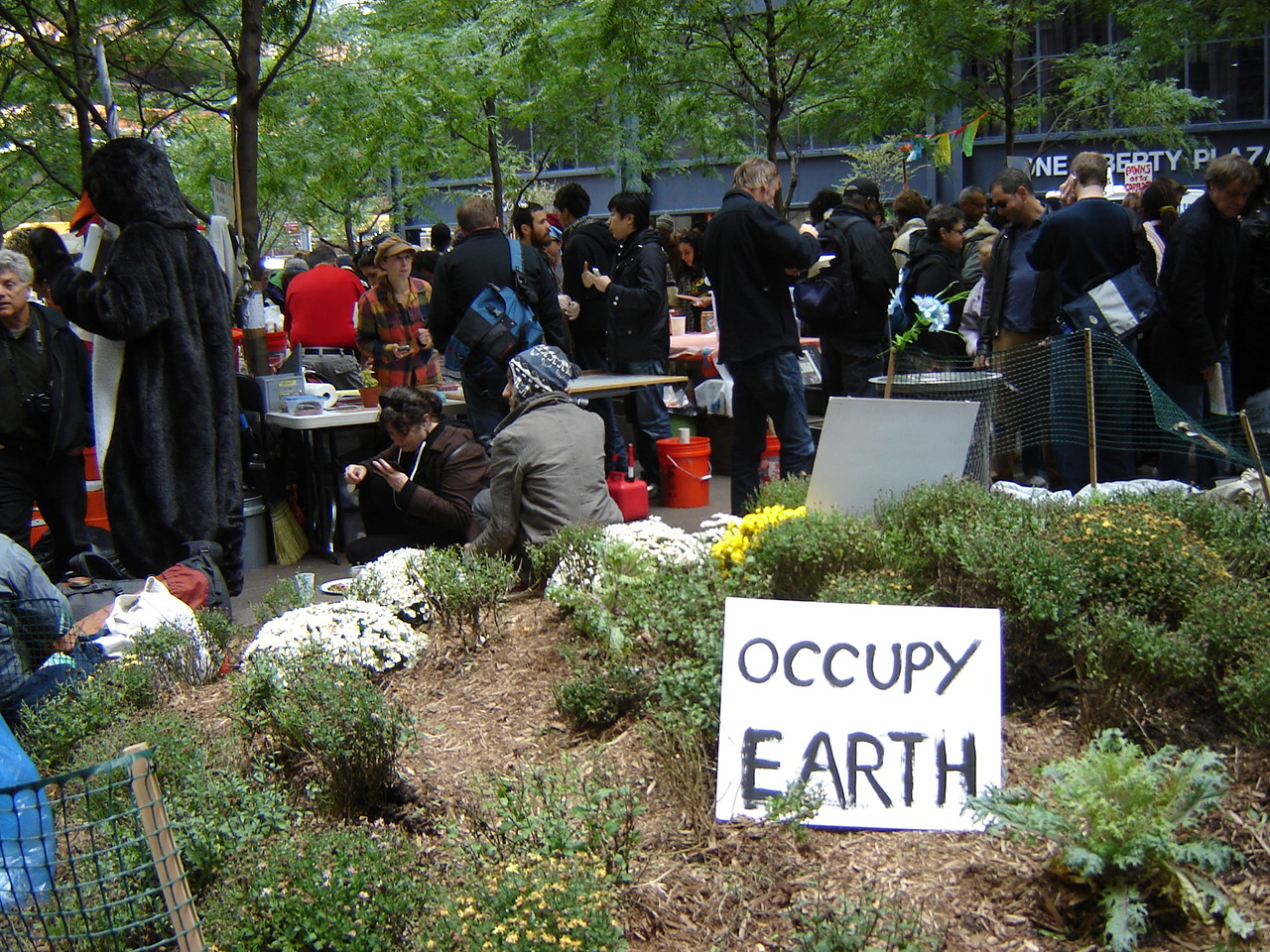
I couldn’t resist the pull of Occupy Wall Street yesterday, and I think that was true for most of the tourists in the Ground Zero area.

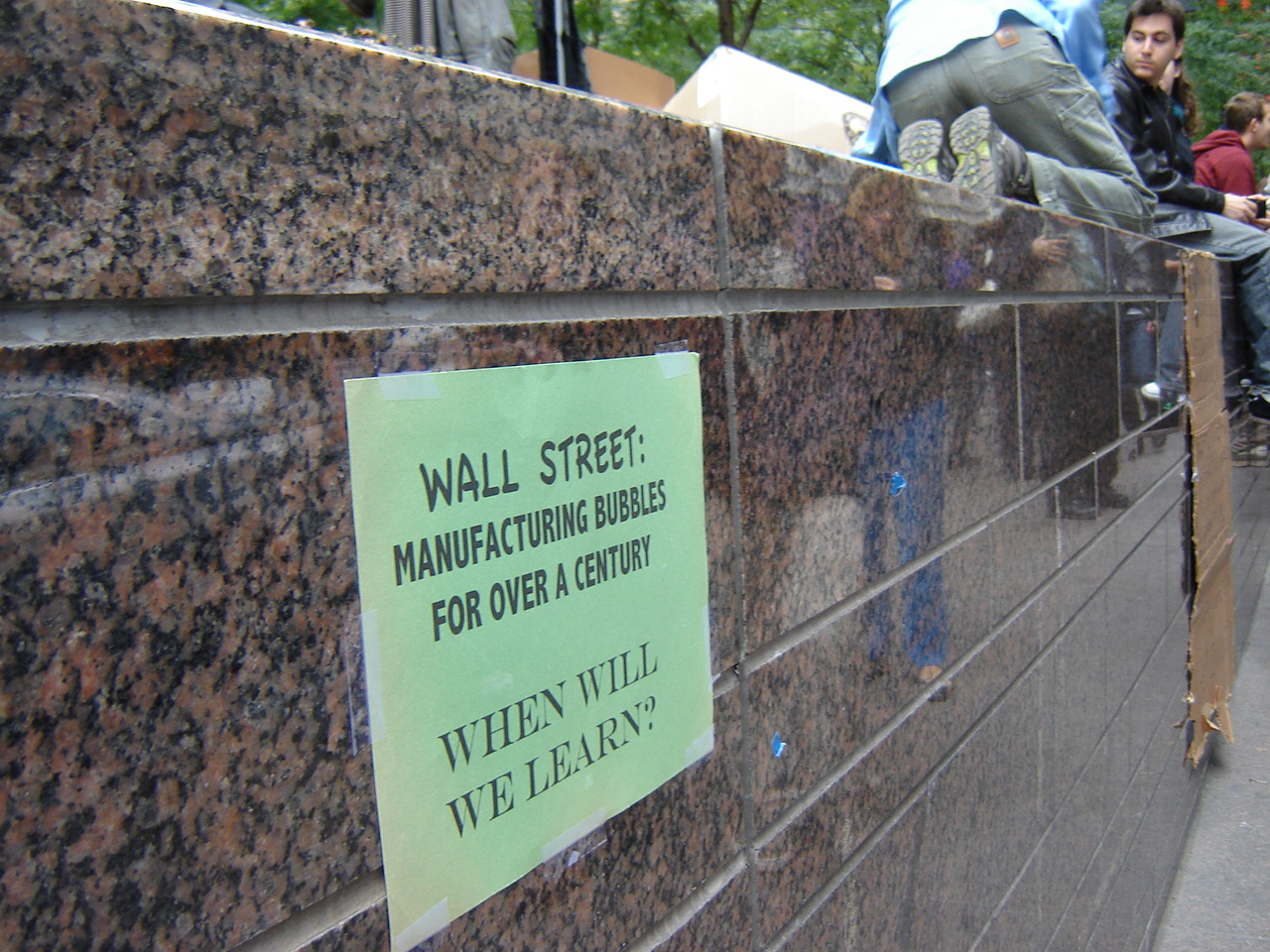
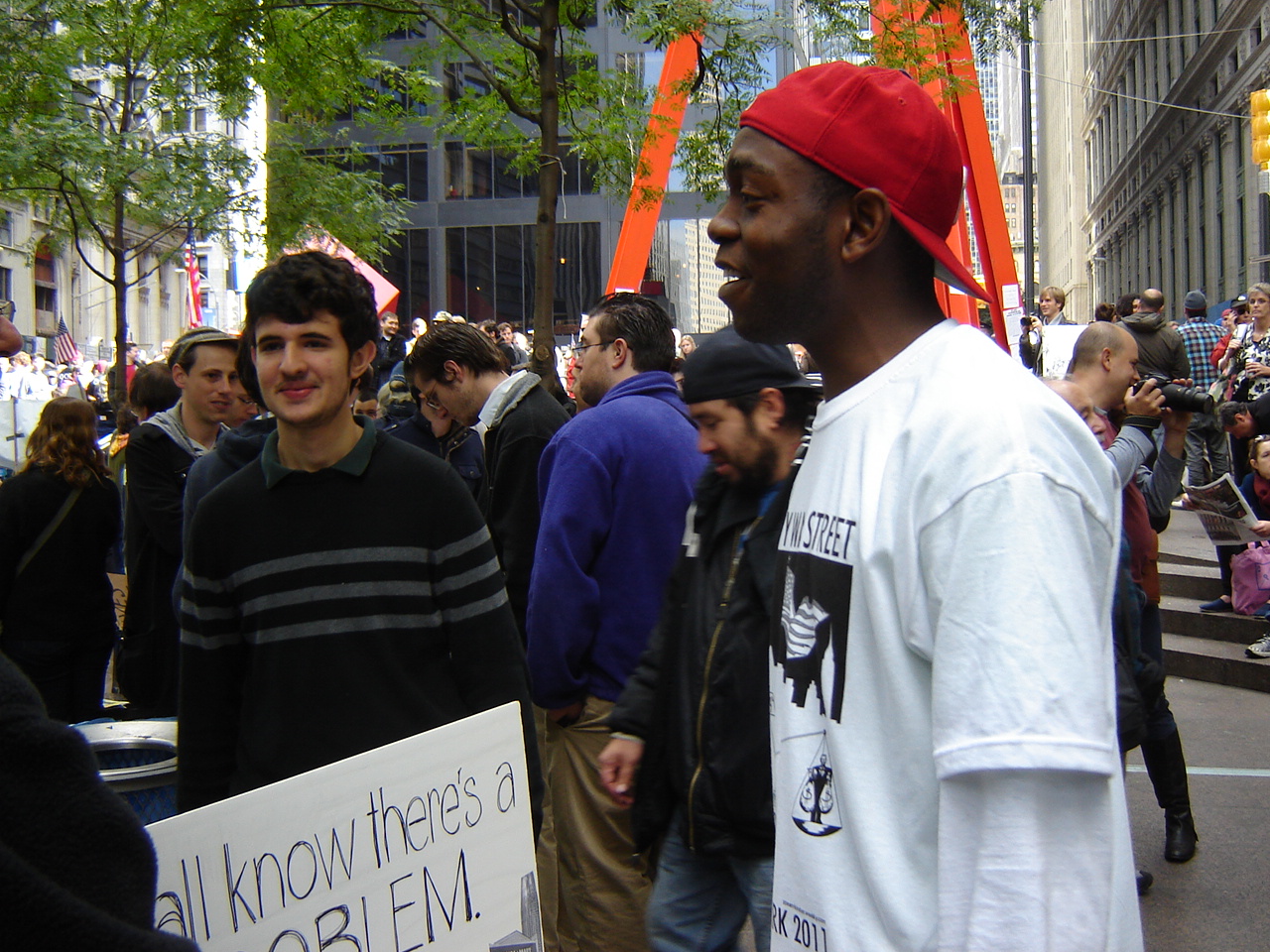
Everyone had a camera out, and most occupiers were taking advantage of being on display by holding up signs for their causes or handing out flyers. Souvenir buttons were on sale.  A brass band whooped it up. Both occupiers and visitors danced.

I got to thinking about the documentary I saw in September on how to start a revolution. The movie was about the work of 80-something Gene Sharp, an influential exponent nonviolent ways to overthrow despotic regimes. (See my blog entry here.) After the screening, I listened to Sharp as he answered audience questions. One thing he said was that he believed the uprising in China’s Tiananmen Square in 1989 failed because the organizers were winging it and didn’t have an adequate plan for next steps.

Today’s Occupiers also seem to be winging it. But they are not aiming to overthrow the government, and I’m not sure it matters that a central theme has yet to stand out. I’m willing to wait and see what emerges. In the meantime, here are pictures from Saturday.


Read Full Post »

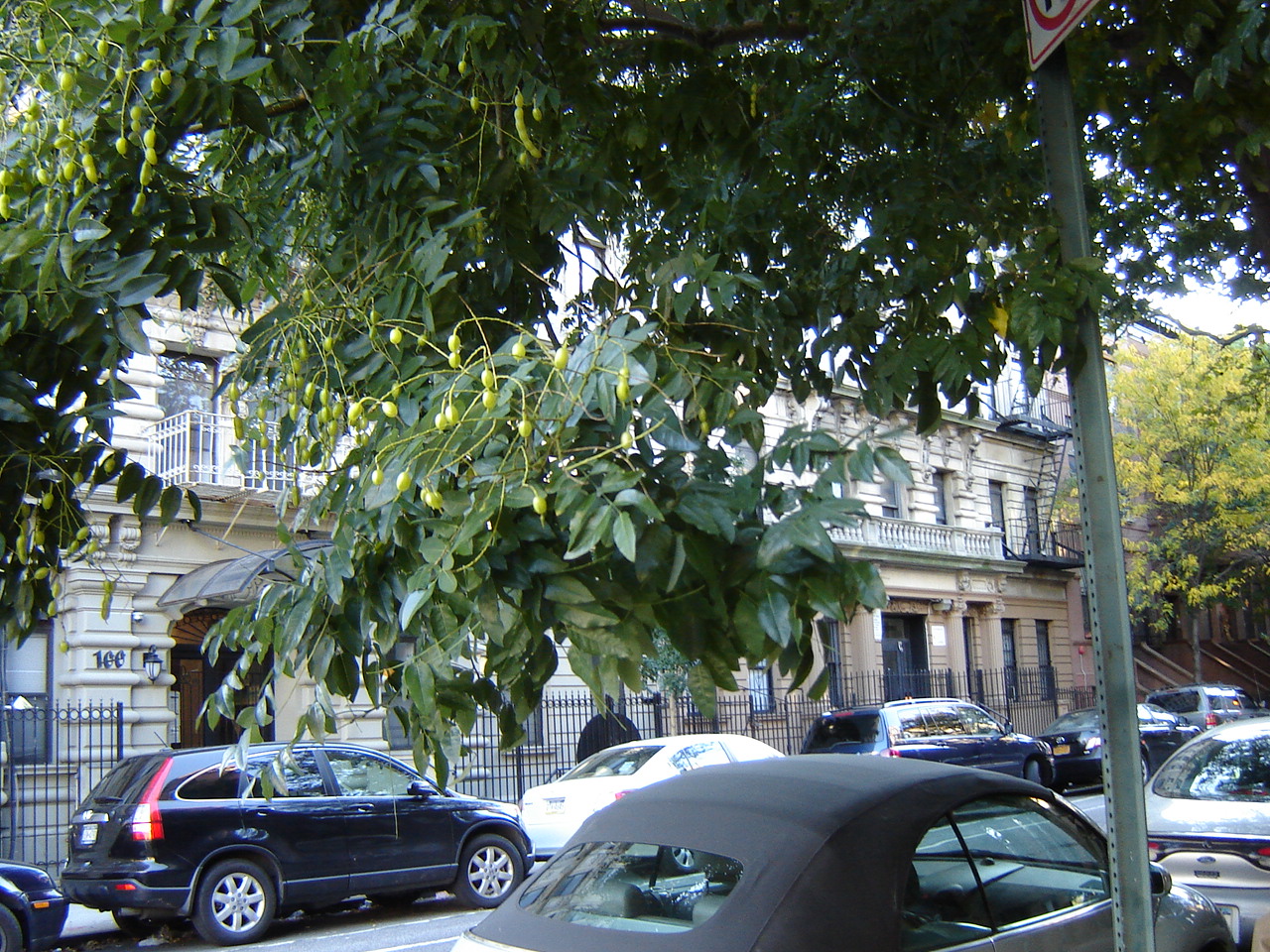
I’m in Harlem this weekend with five other family members in a leafy neighborhood, mostly very quiet.

Well, not always quiet in the middle of the night when, on more than one occasion, I’ve woken up wondering, “Should I be calling 911?” Fortunately, last night’s commotion didn’t seem like a true 911 issue. Her: “Don’t touch me! Don’t touch me! Don’t touch me!” Him: “But I love you!”

I went back to sleep.

Margareta and Jimmy, mostly recovered from the jetlag caused by a long flight from Sweden on Wednesday, spent Friday afternoon wandering around Chelsea art galleries.

They got a kick out of taking the bus back north, watching as the mostly white clientele became the mostly black clientele, observing the people interactions, and trying to understand the rapid English conversations. (Of course, like most Swedes, they are great at English, and a whole bunch of other languages.)

Margareta was fascinated by one episode that took place as the bus approached Harlem. A boy of about 10 tried to sneak on behind his friend. It seemed that he did not have the bus pass that is routine for New York school children. Margareta was impressed that the driver was not too stern and just told him to have the pass next time. Meanwhile a woman on the bus, possibly from his school, told the boy not to worry, that the school would help him get a new pass.

A day in the life.

Read Full Post »