Feeds:
Posts
Comments

Posts Tagged ‘painting’

I continue to be a fan of street art and the way it allows informal artists to express themselves while also letting passersby enjoy both homespun and professional achievements as they go about their errands.

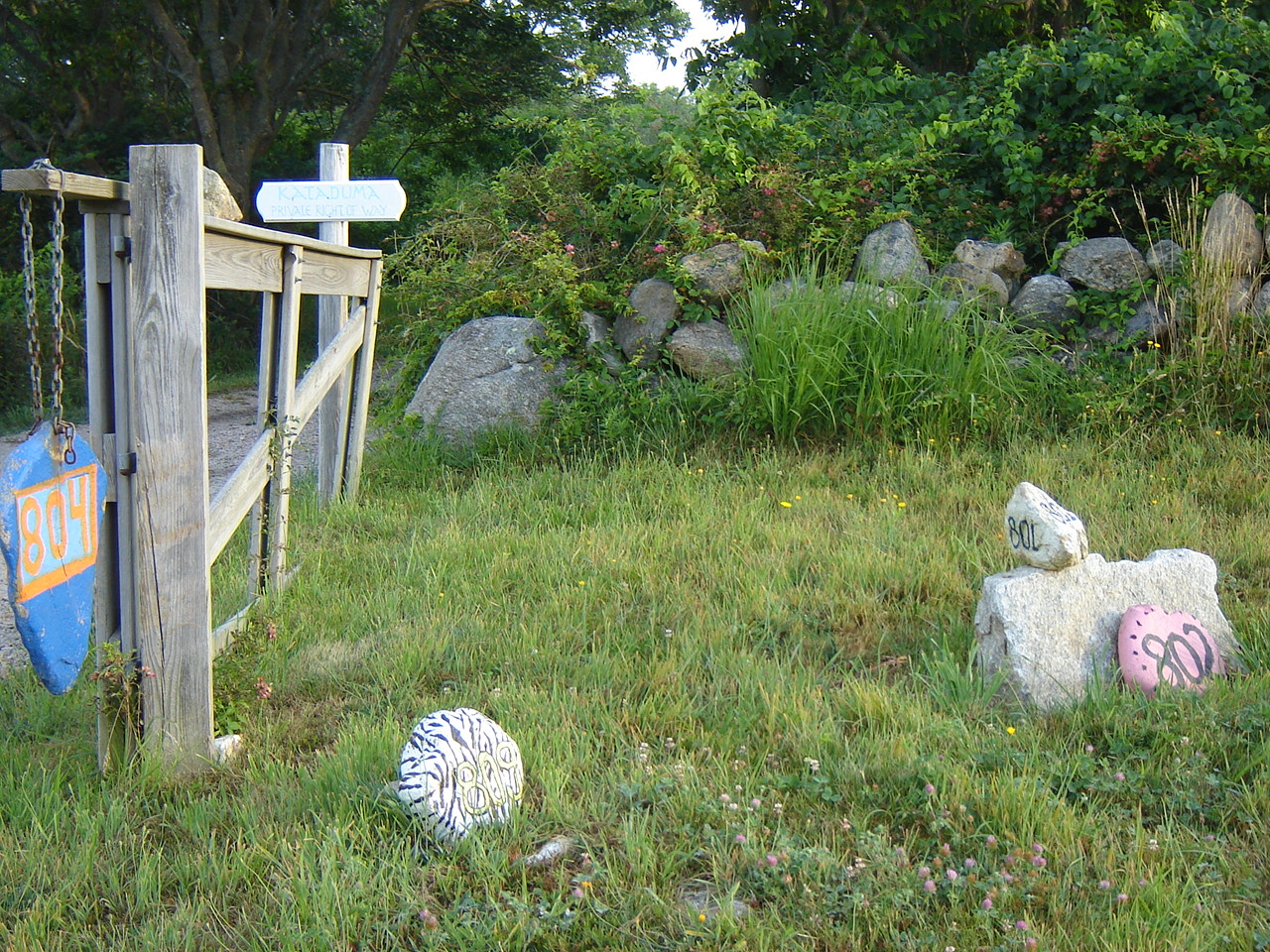
In Rhode Island, there’s a painted rock. Everyone paints it, and no painting lasts for long. In the summer, paintings wishing someone happy birthday may last only a few hours, as mine did one Birthday Week when Suzanne turned 16 and John turned 21. (They didn’t wake up in time to see it.)

There has also been some amazing work by experts on that rock, too, but it gets respect for only a couple days. It’s essential to capture it with a camera.

Yesterday I passed along an idea to a gallery owner that she liked. How about painting the painted rock to look like a rock!? Crazy, huh? She may do it, too. She has a painting of rocks in the current show that she could replicate. She knows she’d have to take a photograph, though, or the rock might be painted over before anyone sees it.

Meanwhile, here’s a nice story about street art in the Bushwick section of Brooklyn.

Amy O’Leary writes at the NY Times, “Growing up, Joseph Ficalora would sit on the roof of his family’s steel fabrication business. In Bushwick, Brooklyn, in the 1980s, it was one of the few safe places outdoors. The view was grim. The streets were dirty. Graffiti was endless. …

“Most people want to hold onto their past as it was, but Mr. Ficalora has found greater comfort in obliterating it, bathing the neighborhood in paint.

“Today the rooftop of [his] family business, GCM Steel, offers an eye-popping panorama of street art. More than 50 multicolored murals have transformed a swath of nearby buildings into a vast outdoor gallery called the Bushwick Collective, anchored at the intersection of Troutman Street and St. Nicholas Avenue.” More.

Photo: Victor J. Blue for The New York Times
Gaia, well-known among street artists, paints — legally — on a building in Bushwick, Brooklyn.

Read Full Post »

Another good lead from the voracious reader of magazines in my household.

This Smithsonian story shows how a relatively simple invention made it possible for the Impressionists to do much more painting outdoors, en plein air.

Perry Hurt writes, “The French Impressionists disdained laborious academic sketches and tastefully muted paintings in favor of stunning colors and textures that conveyed the immediacy of life pulsating around them. Yet the breakthroughs of Monet, Pissarro, Renoir and others would not have been possible if it hadn’t been for an ingenious but little-known American portrait painter, John G. Rand.

“Like many artists, Rand, a Charleston native living in London in 1841, struggled to keep his oil paints from drying out before he could use them. At the time, the best paint storage was a pig’s bladder sealed with string; an artist would prick the bladder with a tack to get at the paint. But there was no way to completely plug the hole afterward. And bladders didn’t travel well, frequently bursting open.

“Rand’s brush with greatness came in the form of a revolutionary invention: the paint tube. Made from tin and sealed with a screw cap, Rand’s collapsible tube gave paint a long shelf life, didn’t leak and could be repeatedly opened and closed.

“The eminently portable paint tube was slow to be accepted by many French artists (it added considerably to the price of paint), but when it caught on it was exactly what the Impressionists needed to abet their escape from the confines of the studio, to take their inspiration directly from the world around them and commit it to canvas, particularly the effect of natural light.

“For the first time in history, it was practical to produce a finished oil painting on-site, whether in a garden, a café or in the countryside.” More.

Dear artist friends, I can picture what it would have been like for you traveling by train after an outing to some scenic spot before this invention. “Oh, Madame, I am so terribly sorry. I’m afraid my cobalt pig’s bladder burst!”

Photo: Chrysler Museum of Art
The tin tube, below, was more resilient than its predecessor (the pig bladder), enabling painters to leave their studios.

Read Full Post »

Anna%20Ancher.%20%22Breakfast%20before%20the%20hunt%2C%22%201903.%20On%20view%20at%20the%20%22A%20World%20Apart%3A%20Anna%20Ancher%20and%20the%20Skagen%20Art%20Colony%22%20exhibit%20at%20the%20National%20Museum%20of%20Women%20in%20the%20Arts.%20%28Courtesy%20Skagens%20Museum/%29

Anna Ancher painting from the Skagens Museum: “Breakfast before the hunt,” 1903.

Kristina often gives me her Women in the Arts magazine after she’s done with it. This time I was particularly taken with a story on a show in Washington called “A World Apart: Anna Ancher and the Skagen Art Colony.”

DeNeen L. Brown writes that among the 64 paintings and oil sketches, the depiction of light is breathtaking.

She says, “At its height in the 1880s and ’90s, Denmark’s Skagen Art Colony attracted dozens of artists who were drawn to the isolated fishing village by the light and the unspoiled land- and seascapes.

“While the exhibition focuses on Ancher, the most prominent woman, it also includes works by her husband, Michael Ancher, as well as Laurits Tuxen, Viggo Johansen, Christian Krohg, Oscar Bjorck, Holger Drachmann, Carl Locher and P.S. Kroyer, whose large-scale oil paintings capture the ‘heroic’ life of fishermen in Skagen. …

“Ancher, who was the only native of Skagen among the artists in the colony, became an icon in Denmark not only for her art but for breaking social boundaries. She was a wife and mother who painted at a time when most women abandoned work after they married and had children. She also painted during an era when women were prohibited from studying at the Royal Danish Academy of Fine Arts. …

“The Skagen colony artists became known as part of the modern breakthrough movement, shrugging off the academic tradition of neoclassical painting styles preferred at the Academy of Fine Arts in Copenhagen and building on realist, naturalist and impressionist movements to depict everyday life and everyday people in an unidealized way.” More.

In case you should be in Washington in the next few weeks, the show runs through May 12 at the National Museum of Women in the Arts.

Read Full Post »

Suzanne says I have an art esthetic. That makes me laugh.

My esthetic, as far as I can tell, is mostly a preference for painting that is wavy: Charles Burchfield, Virginia Lee Burton, Grant Wood, Marsden Hartley, Kate Knapp, Edvard Munch, Reginald Marsh.

A massive mural by one of my wavy favorites, Thomas Hart Benton, has recently been rescued from storage. Carol Vogel has the story in the NY Times.

“On New Year’s Day 1931, a new and radically different building opened amid the town houses of West 12th Street: Joseph Urban’s International-Style New School for Social Research, with one room in particular as a star attraction. Thomas Hart Benton, the American realist painter, had lined the third-floor boardroom with nine panels of what would be a 10-panel mural, ‘America Today,’ depicting a panoply of pre-Depression American types, from flappers to farmers, steel workers to stock market tycoons. Lloyd Goodrich, a prominent art historian, pronounced it a breakthrough that heralded a new approach to mural painting, ‘of actually taking reality and making mural art directly out of it.’

“Eight decades later, ‘America Today,’ now considered one of the most important and famous examples of American scene painting, is languishing in storage. That will change, however, because AXA Equitable, the insurance company that bought it nearly 30 years ago, has decided to donate it to the Metropolitan Museum of Art. …

“The only problem,” writes Vogel, “is that the museum is so squeezed for space that the mural’s first public appearance after the handover won’t be until at least 2015, when the Met takes over the Whitney Museum of American Art’s landmark Marcel Breuer building on Madison Avenue (after the Whitney’s move to the meatpacking district).” More.

Something to look forward to in 2015.

Photograph: The Metropolitan Museum of Art, New York

Read Full Post »

I keep a folder of things I want to check out in walking distance of the office. Today I pulled out a Boston Globe article from 2-1/2 years ago, “Depression-era mural gets a second chance to shine,” and set out.

A Stephen Etnier mural of Boston Harbor that had been rolled up and stored away in 1981 was back on display.

Etnier, as Brian Ballou wrote in the Globe, was “one of hundreds of artists across the country picked by the federal government in the late 1930s to early ’40s to depict characteristic scenes of their region in post offices. …

“In early 2005, postal employee Brian Houlihan came across the painting and alerted Dallan Wordekemper, the federal preservation officer for the United States Postal Service. The mural was sent to Parma Conservation in Chicago, which began to restore the artwork in late 2008.”

The restored painting, “Mail for New England,” was unveiled in April 2010, but it took me until today to get to the post office branch at Stuart and Clarendon.

I got an extra bonus, too, because on the way I saw a completely unexpected bit of street art by the famed Gemeos twins, whose work at the ICA and Dewey Square was described in an earlier post.

Read Full Post »

I liked Jacki Lyden’s story at National Public Radio about some unusual artists in the 1960s.

“If you traveled by way of Florida’s Route 1 in the 1960s, you might have encountered a young, African-American artist, selling a lushly painted oil landscape from his car. They weren’t allowed in galleries during Jim Crow segregation — but motels, office buildings and tourists would buy their vivid works.

“Together, they formed a loosely associated band around Fort Pierce, Fla., that came to be known as The Highwaymen. At $20 a painting, they made their way out of agricultural jobs like citrus-picking and defined the cultural look of an era.

“Their paintings departed from an earlier tradition of landscape painting in Fort Pierce. A.E. ‘Beanie’ Backus, considered the father of the landscape movement there, caught the clouds and savannahs and inlets that were falling to developers in the mid-century. He would teach many youngsters who came to his studio, including the teenage Alfred Hair, leader of The Highwaymen.

“These artists would take off in their own direction. But success has brought enduring tensions on their home turf, raising questions about art, race and cultural legacy. …

“The who’s who of The Highwaymen can be tricky. (A curator named Jim Fitch coined the name in the ’90s and it stuck.) Gary Monroe, author of The Highwaymen, Florida’s African-American Landscape Artists, counts 26 original painters — 18 of whom are still living. That’s how many were inducted into the Florida Artists Hall of Fame in 2004.”

Lots more.

Photograph: Gary Monroe
Alfred Hair (left) and Robert Lewis

Read Full Post »

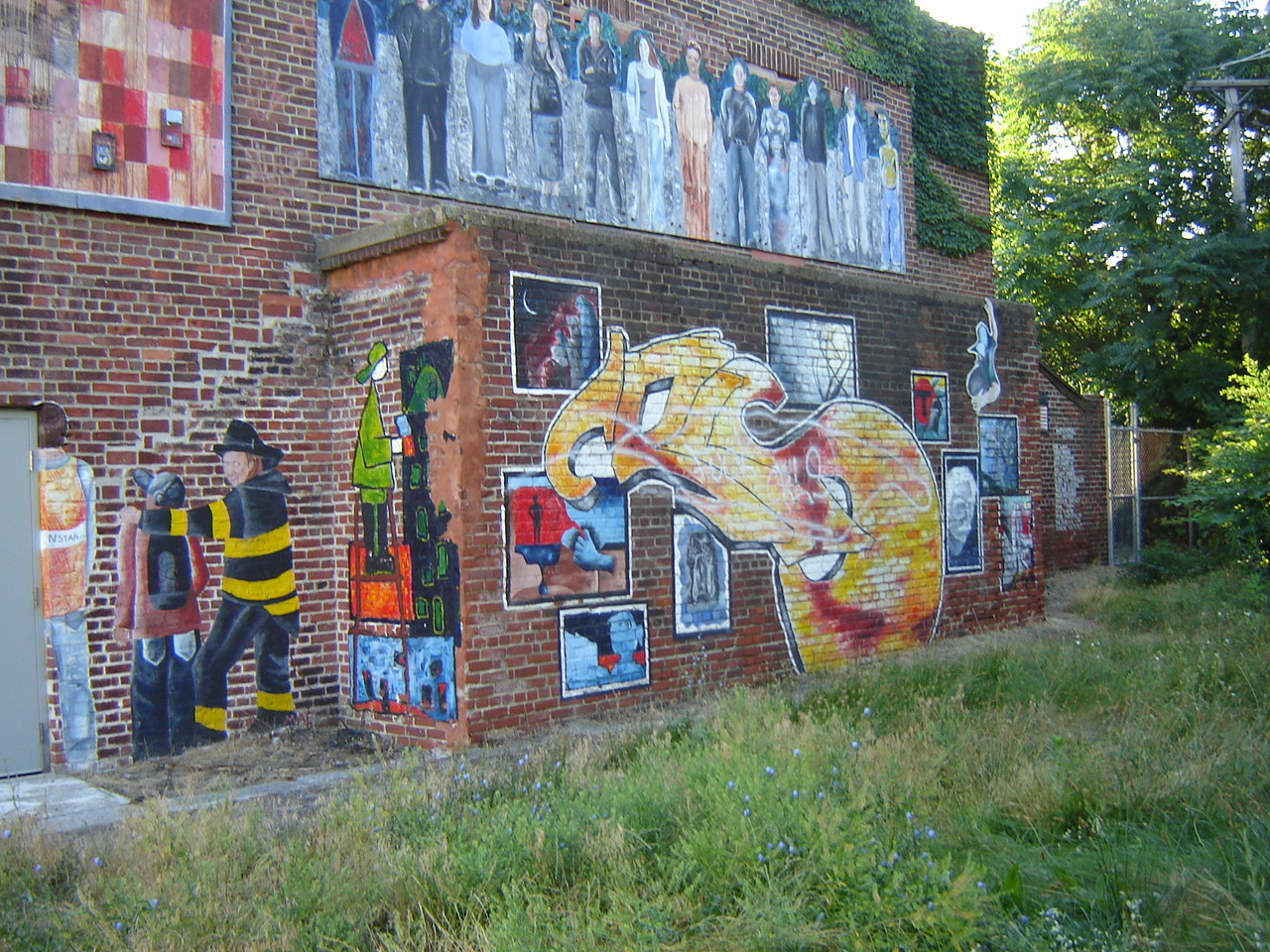
These two murals are from Somerville and Gloucester. Do you get the feeling that the towns themselves have different personalities? One seems to record the history of the city in a formalized way. The other is more about people’s lives today.

If you know more about the genesis of these murals, I’d love to hear it. In both cases, the murals seem to have been created with permission. I wonder if you think that permission subverts the subversiveness of street art?

Makes me think of the kids in eighth grade who were asked to create nice Halloween paintings on shop windows so the windows wouldn’t get soaped as a Halloween prank.

The goody-two-shoes kids painted windows with pumpkins and witches. The rough kids still soaped windows.

Read Full Post »

For an artsy, literary treat, take a look at the Project Gutenberg version of painter Marsden Hartley‘s out-of-print book, Adventures in the Arts: Informal Chapters on Painters, Vaudeville, and Poets, dedicated to Alfred Stieglitz.

Hard to resist an introduction like this:

“Sometimes I think myself one of the unique children among children. I never read a fairy story in my childhood. I always had the feeling as a child, that fairy stories were for grown-ups and were best understood by them, and for that reason I think it must have been that I postponed them. I found them, even at sixteen, too involved and mystifying to take them in with quite the simple gullibility that is necessary. But that was because I was left alone with the incredibly magical reality from morning until nightfall …

“I was constantly confronted with the magic of reality itself, wondering why one thing was built of exquisite curves and another of harmonic angles. It was not a scientific passion in me, it was merely my sensing of the world of visible beauty around me, pressing in on me with the vehemence of splendor, on every side. …

“It is because I love the idea of life better than anything else that I believe most of all in the magic of existence.”

(Thank you, Ellen Levy, for sending me the link.)

Art:  Marsden Hartley

Read Full Post »

Whenever I walk by this field, I think of the Andrew Wyeth painting “Christina’s World.” But Christina doesn’t live in the house. An old woman does, visited by her son, who lives nearby.

One day, I suspect, the field will be sold and summer cottages will sprout there to take in the view of the pond.

From today’s walk: note the bumble bee on the button bush. And the water lilies.

Read Full Post »

I have admired the New England artist James Aponovich for some time but had not seen his paintings up close until the Clark Gallery in Lincoln had a show of his recent work. Amazing!

I am probably not using accepted art history terms, but the paintings  make me think of Italy and the Renaissance and are breathtakingly luminous. He might feature, for example, a large, glorious amaryllis flower in an ornate urn on a wall high over a traditional, distant landscape. You just want to go there.

The work in the current show is the result of Aponovich making up his mind to create a painting a week for an entire year. He succeeds splendidly, often making everyday items like Chinese takeout feel exceptional. For my money, there is not a dud in the bunch. (Although my money can’t stretch to even the smallest of the 52 pictures.)

I am so grateful to galleries that make work like this free for anyone who walks in off the street to view. Museums, wonderful as they are, don’t often let you in free.

Read Aponovich’s blog about the 52 weeks. Cate McQuaid in the Globe captures the essence of the show. Check her out, too.

Read Full Post »

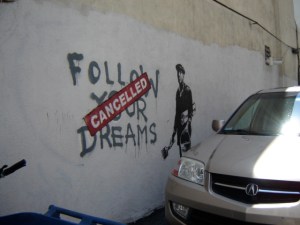
I am intrigued by street art, and have blogged a few times about the British street artist Banksy. For example, here.

So I wanted to share Nicholas Barber’s article “The Full Banksy Experience” at More Intelligent Life.

“Last week I was driving home along an unlovely stretch of main road in east London,” writes Barber, “when I saw what looked like a billboard on the side of a building. It had a friendly message printed in neat black letters: ‘Sorry! The lifestyle you ordered is currently out of stock.’

“It took a few seconds to process. It was definitely pithy, and definitely cheered me up at the end of a boring drive, but what was it? An advert? Did it have The Economist’s red logo at the bottom? Or was it … could it be … a Banksy?

“A few days later, an item in the local paper confirmed that it was indeed a Bansky, and a photo was on the artist’s website. I felt as if I’d lucked into a new artistic experience.

“The pleasure you get from a Banksy comes from the whole process: the chancing upon on an artwork in the unlikeliest of places, the speculation over how it got there, the uncertainty over whether it’s his or not, the subsequent authentication, and then the knowledge that it might have been rubbed out by the time you return.”

That is similar to my own reaction, except for the fact that I knew what I was looking for. And to this day, it has not been “authenticated.” Do you think it looks like a Banksy?

Read Full Post »

Today I went to the last performance of Red, a drama about Abstract Expressionist painter Mark Rothko at the SpeakEasy Stage. It starred the inimitable Thomas Derrah with a young actor who was new to me, Karl Baker Olson.

It’s always interesting to read reviews of shows that touch different creative realms. For example, an opera critic who reviews Porgy and Bess might have a different take from a theater critic.

In the case of Red, theater critics were full of praise, but an art critic I read found the story thin.

Not being either kind of critic, at least not at the moment, I thought it moving, well acted, and well directed. The set by Cristina Todesco and featuring Rothko’s studio was amazing, dim, with the chapel-like quality Rothko found necessary for communing with a painting and seeing it vibrate.

Read Full Post »

It’s amazing how much the arts can help people.

I have blogged about programs that use the arts to turn convicts toward something positive, to build up the self-worth of the homeless, to turn Brazilian slums into more hopeful places. The list goes on.

Recently ArtsJournal.com alerted me to a BBC story on an arts initiative that helps veterans reacclimate to civilian life.

“Many veterans are turning to charities for help. One is using the unlikely weapon of art to help fight the psychological wounds of war, while another organisation is actively encouraging artwork in the army. Outside of the [national health service] the charity Combat Stress is the biggest provider of support to armed forces veterans with conditions such as post-traumatic stress disorder (PTSD), depression and anxiety.

“Art therapy is one of the treatments it uses. Drawing, sculpting and painting are helping patients manage their symptoms with great success.

” ‘Traumatic memories take a different path from our normal memories and tend to be frozen in the body in the central nervous system,’ explains Janice Lobban, who has been a trauma therapist at Combat Stress for the past 10 years. …

“Group sessions typically begin with the therapist giving a one or two word brief to inspire creativity before veterans are given a selection of materials for painting, modelling or writing. After 45 minutes of quick work, the group then get together to talk about and describe what they’ve just created.

” ‘I try to keep a blank mind and just let images and feelings rise out from my unconscious to my hand and things start appearing,’ says Richard Kidgell … who served in the Royal Air Force from 1978 to 1985. ‘What surprises me is that while I’m drawing I don’t know what it is — they’re just images, but by the end of the session I’ve made a complete story. It’s quite enlightening as sometimes I’m not entirely sure what I’ve drawn until I speak to others about it.’ ”

Read more of Genevieve Hassan’s story on arts therapy for veterans here.

Read Full Post »

I have not been blogging that long for Luna & Stella, but already interesting things have happened. For example, one customer who found the blog decided Suzanne’s Mom was OK and probably Suzanne’s business was, too. She became a Luna & Stella customer.

Another interesting thing occurred after I blogged about an artist I once knew, Lucille Corcos. I had written her up with the goal of creating an entry for her on Wikipedia. (The entry is still to come. I need a good block of time to make the changes Wikipedia asked for.)

Soon I began to notice in my WordPress site statistics that someone was doing Internet searches on “Lucille Corcos.” I wondered if it might be one of her sons. Sure enough, I eventually received an e-mail from artist Joel Corcos Levy, saying, “Who are you and when were you in our house?” So I e-mailed him, and we had a nice back-and-forth. He generously sent me a piece of his mother’s art, an illustration for a children’s book.

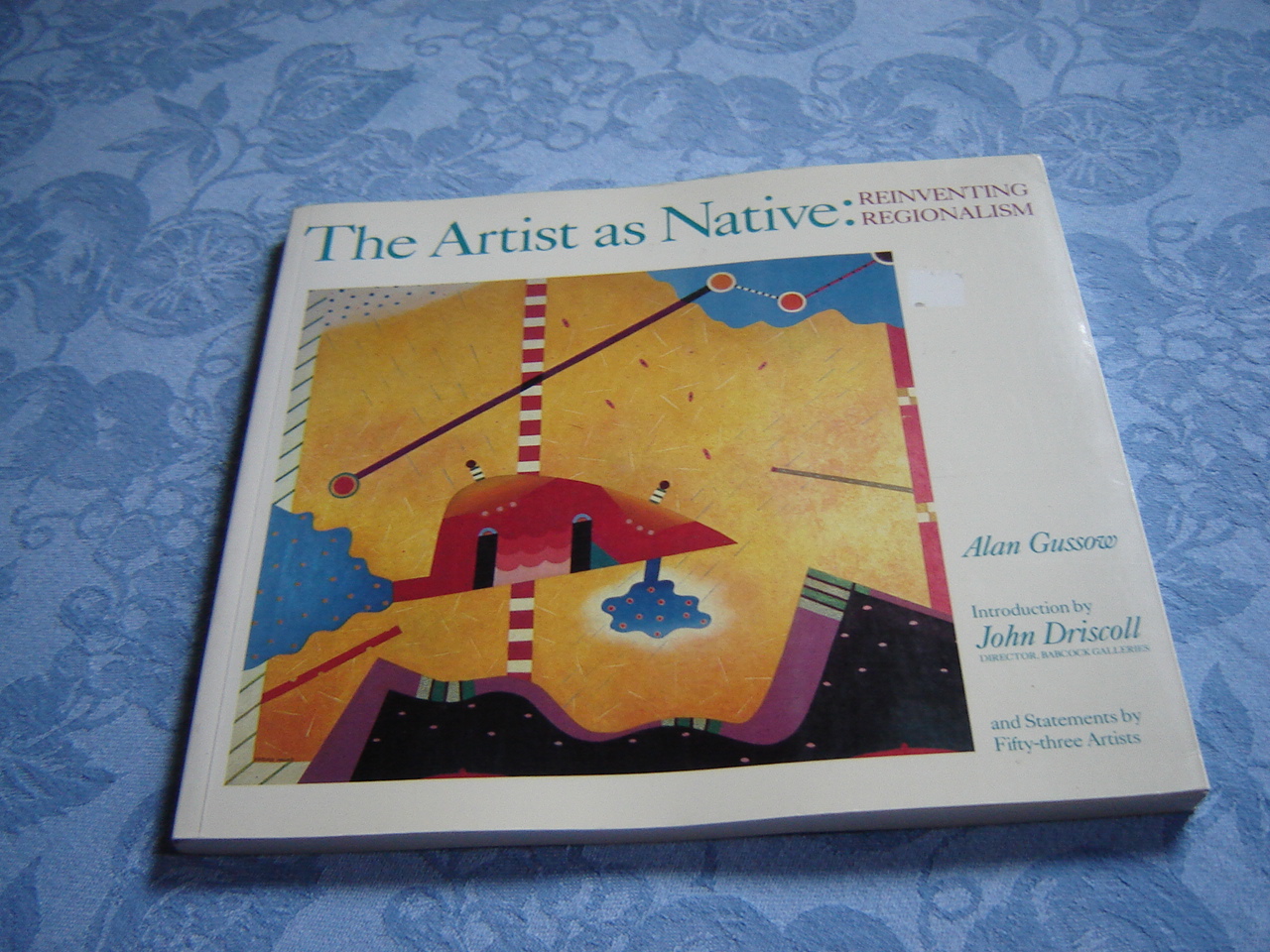
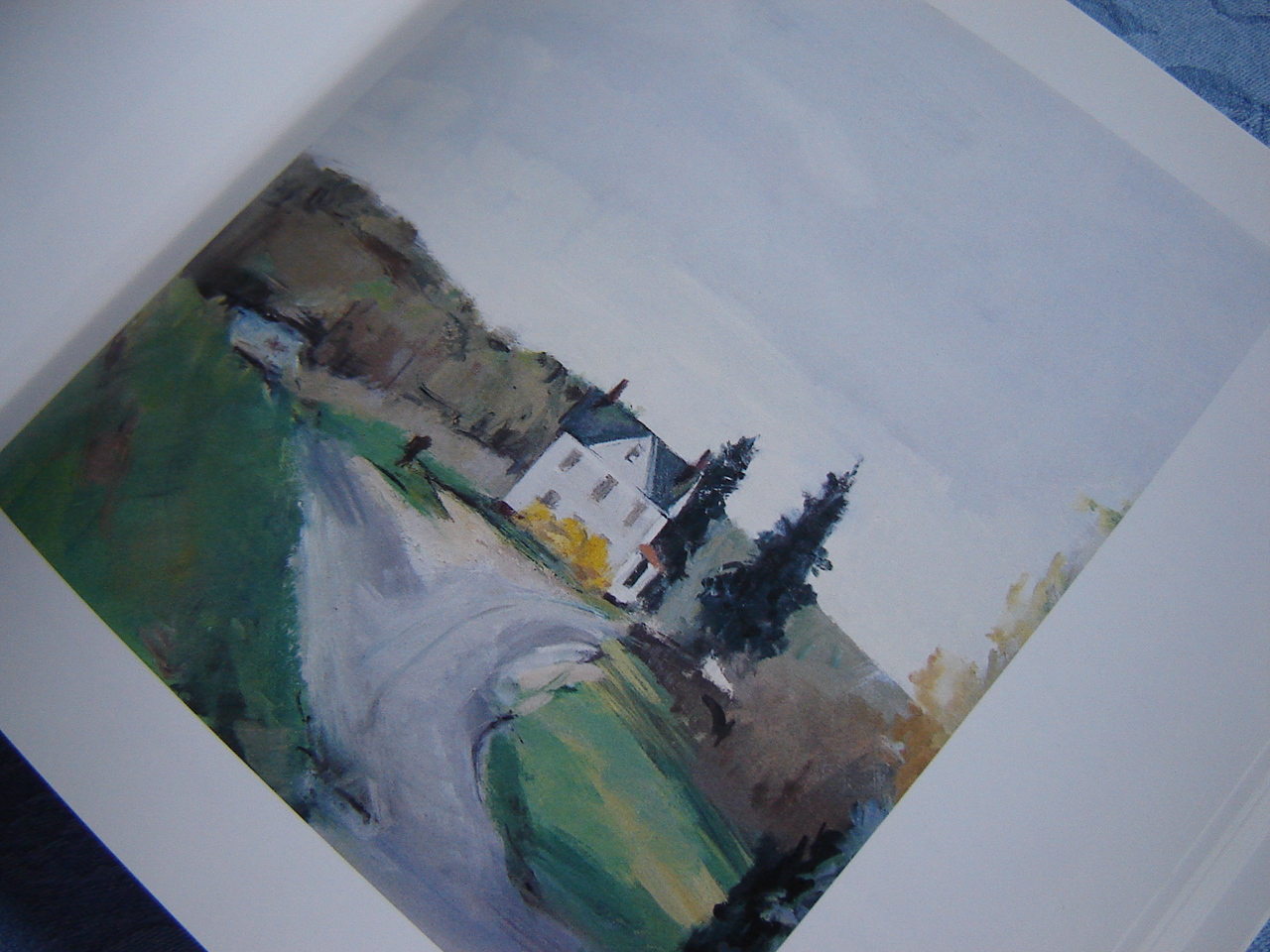
Joel himself appears in an art book called The Artist as Native: Reinventing Regionalism, by Alan Gussow. The book features Joel’s painting of the Davies farmhouse and pine trees. Nice, huh? The other selections are great, too.

Not sure if Joel is OK with having this on the web. I’ll take it down if asked.

Read Full Post »

I’ve been thinking of Lucille Corcos the last couple weeks. I have no idea why, but I hope eventually to reconstruct the train of thought that led to her. She was an artist I knew when I was a child. I rediscovered her art in the 1990s in a Minnesota museum. That was when I realized I love it.

Since Corcos wasn’t in Wikipedia, in spite of having works in museums, I taught myself how to write a Wikipedia contribution and am just waiting for the Wiki experts to let me post it.

As Cipe Pineles Golden and Martha Scotford write in Cipe Pineles: A Life in Design (New York: W.W. Norton & Co., 1999), Corcos and her artist husband, Edgar Levy, moved from New York City to the artsy South Mountain Road in Rockland County, New York, in 1941.

“Corcos was a successful painter and illustrator by this time. In the 1930s, fashion, culture and home magazines published her work and her popularity continued into the 1960s. Cipe Pineles’s close friendship with Corcos had begun when Pineles commissioned Corcos’s work for Seventeen and Charm. Her humor in personal interactions and in her art made her an engaging collaborator. Corcos’s paintings were densely packed with many small stories and commentary. The compositions had detailed multiple subjects; perspective and scale were distorted for practical and expressive purposes. This new modern primitivism was considered part of a native tradition in American art and its ‘unacademic’ nature was celebrated. Corcos’s subjects included rural landscapes and urban scenes, ranging from Christmas Eve, Rockfeller Center to The Oyster Party  to Everybody Meets the Boat. In addition  to doing commissioned illustration, Lucille Corcos built her career as a fine artist and was a steady participant in New York gallery shows from 1936 to 1954. During the same time, she was a part of major exhibitions in Chicago, Pittsburgh, Philadelphia, Washington, D.C., and other institutions in New York.”

I found a few other tidbits about her by Googling around. For example,  I found an article in the July 12, 1954, issue of Life magazine that shows two Corcos paintings, one of her life in winter in Rockland County, another of activities around her Fire Island house in summer. And here is a 1950 painting of her Fire Island house. I remember the house well.

Levy was often spoken of as the great artist in the family, with his numerous Picasso-esque paintings of his wife as mostly feet and eyes, but my mother pointed out that Corcos herself had an art career. Levy is not in Wikipedia either, but I leave it to an admirer of his art to fix that lapse.


Read Full Post »

« Newer Posts