Feeds:
Posts
Comments

Posts Tagged ‘plants’

Photo: Mark Vonesch / Modern Biology.
“Fungi whisperer” Tarun Nayar started experimenting with connecting a synthesizer to plants and fungi during the early days of the COVID-19 pandemic. 

Today we have another example of the creative work that got a lift during the pandemic. Not that we ever want a pandemic, but it doesn’t hurt to remember that good things can flourish in the shelter of nothing-much-going-on.

Radhika Iyengar writes at Atlas Obscura about some pandemic-era experiments. “On a pleasant December morning, Tarun Nayar was at a mangrove reserve in Mumbai, where he plugged his synthesizer into a thick leaf. The sound that emerged was hypnotic and otherworldly, blending a sense of the future with nostalgic echoes of 1980s synthwave. It felt like something right out of Stranger Things.

“Nayar is not your traditional musician—he’s a fungi whisperer. By connecting cables from his custom-built modular synthesizers to mushrooms, fruits, and leaves, he transforms their natural bioelectric signals into captivating sounds. …

“Over the last five years, Nayar has jammed with myriad types of fungi, including trumpet-shaped chanterelles and the glorious, red-roofed fly agaric mushrooms. He has also collaborated with a giant ficus tree, clumps of bamboo, sword ferns, a pineapple, and even the odd-looking citrus fruit called Buddha’s Hand. ‘It’s an intoxicating feeling to be able to make all these crazy sounds and program really interesting melodies, many of which will probably be impossible to play on a traditional instrument,’ he muses.

“Music has always been central to Nayar’s life. Born to a Punjabi father and a Canadian mother, he was immersed in Indian classical music from an early age, particularly through his training in tabla, a type of hand drum. But for the past four years, the former biologist, who is based in Montreal, has been experimenting with what one may describe as plant music.

“Nayar’s journey into this experimental soundscape began during the COVID-19 pandemic, when he was living on a tiny island north of Vancouver, surrounded by nature. That’s when he began ‘messing around’ with flora. He recalls plugging a software synthesizer into a salmonberry bush. ‘All of a sudden, the synthesizer started playing a piano patch,’ he says. ‘I could actually “listen” to the salmonberry bush.’ …

“In 2021, Nayar started posting videos of his ‘little experiments’ on the internet under the stage name Modern Biology. While initially his videos on TikTok received only three to four views, slowly they gained momentum and worldwide attention, leading to tens of thousands of people appreciating his work. ‘To be honest, I was quite surprised that people were interested in this relatively niche practice. It really gave me a feeling of community during the pandemic when my bubble was quite small,’ admits Nayar. Today, he has over 379,000 followers on Instagram alone.

“To be clear, fruits, fungi, and trees don’t make music. They don’t even produce sounds that lie within the audible range of human hearing. But as Nayar explains, ‘almost every behavior in plants and fungi is mediated by electrical impulses, just like in humans. Every thought, every movement, every little cellular division is associated with an electrical activity. These signals or processes are all reflected in the conductivity of the organism’s body. All I’m doing is tapping into these fluctuating electrical fields and translating the electrical signals into musical notes.’…

“His interest in sound synthesis began several years before the pandemic, sparking a deep fascination that eventually led him to build his own analog synthesizers at home. He pursued courses focused on DIY synthesizers made out of breadboards—versatile plastic boards with perforated holes, designed for assembling electronic circuits by plugging in jumper cables. …

“One of the first exercises in the online course involved the humble orange. ‘We had to use it in a circuit as a resistor,’ Nayar recalls. ‘Everything has electrical resistance, but some materials are so resistant that current can’t even pass through them. Fruits and vegetables, however, are effective conductors, allowing electrical current to flow through them.’

“When Nayar squeezed the orange, he realized that its conductivity changed, and the sound changed with it. ‘The pitch of the oscillator went up or down depending on whether you were squeezing it or not,’ he says, adding with a hint of amusement, you can actually play the synthesizer just by squeezing the orange!’

“From holding festivals in parks to conducting intimate gatherings at restaurants, Nayar has been gaining attention for his experimental music. His goal is to encourage people to reconnect with nature. ‘For the most part, as human beings we kind of forget that the world is alive,’ he says.”

Lots more at Atlas Obscura, here, where you can also listen to some musical results.
Read Full Post »

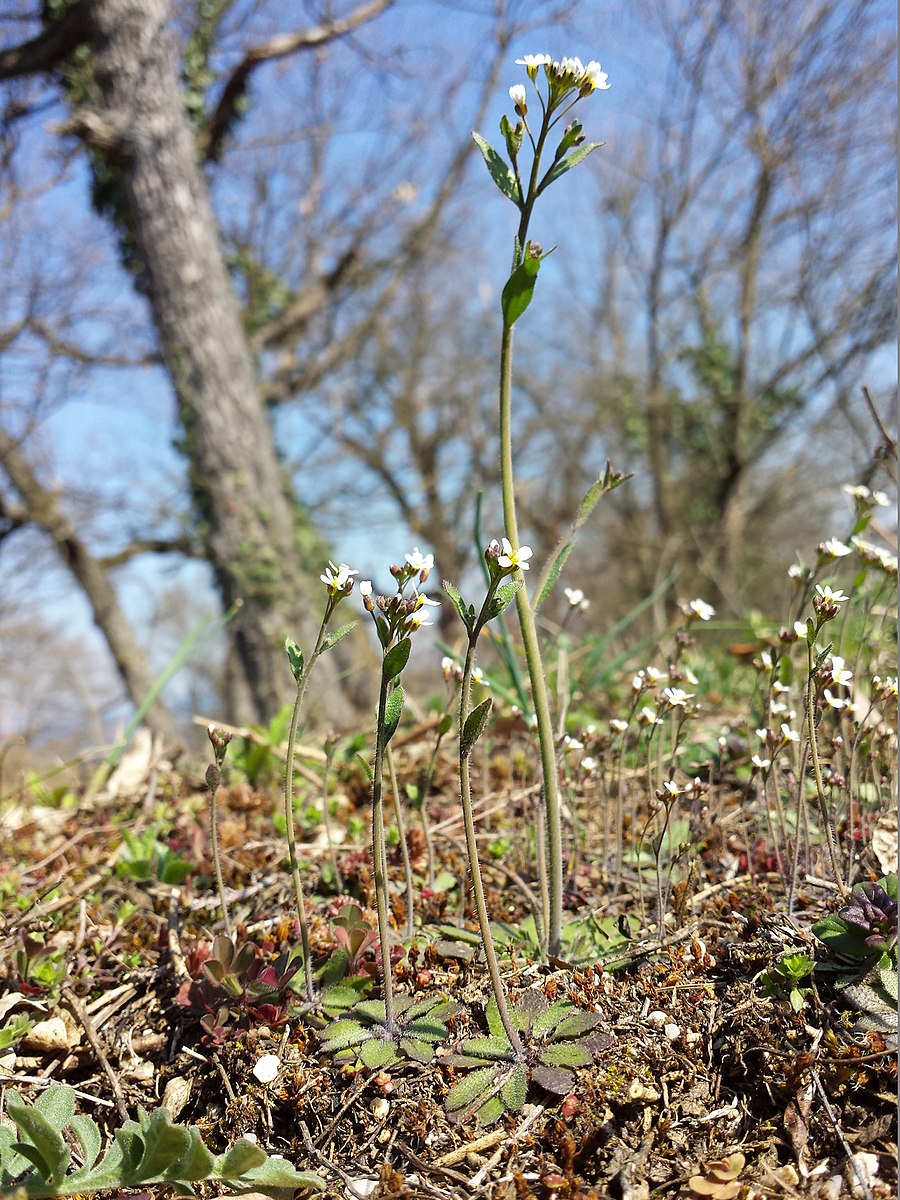
Photo: Stefan Lefnaer via Wikimedia.
In the video below, an Arabidopsis plant warns of danger from a hungry caterpillar.

I think we are lucky to be learning so much about the natural world these days. I didn’t study much science in school, but who wouldn’t love scientific research that reveals such wonders as plants’ communications systems.

Kasha Patel at the Washington Post writes that some plants actually warn their brethren when it’s necessary to increase defenses.

“Trees on our Earth can communicate and warn each other of danger,” she says, “and a new study explains how.

“Injured plants emit certain chemical compounds, which can infiltrate a healthy plant’s inner tissues and activate defenses from within its cells, the new research found. …

“For the first time, researchers have been able to ‘visualize plant-to-plant communication,’ said Masatsugu Toyotasenior author of the study, which was [published] in Nature Communications. ‘We can probably hijack this system to inform the entire plant to activate different stress responses against a future threat or environmental threats, such as drought.’

“The idea of ‘talking’ trees started to take root in the 1980s. Two ecologists placed hundreds of caterpillars and webworms on the branches of willow and alder trees to observe how the trees would respond. They found the attacked trees began producing chemicals that made their leaves unappetizing and indigestible to deter insects. …

The scientists discovered healthy trees of the same species, located 30 or 40 meters away and with no root connections to the damaged trees, also put up the same chemical defenses to prepare against an insect invasion.

“Another pair of scientists around that time found similar results when studying damaged sugar maple and poplar trees. …The trees sent chemical signals to one another through the air, known today as plant eavesdropping. Over the past four decades, scientists have observed this cell-to-cell communication in more than 30 plant species, including lima bean, tobacco, tomato, sage brush and flowering plants in the mustard family.

“But no one knew which compounds were important and how they were being sensed — until now. …

“Plants obviously don’t have ears and eyes, but past research shows they communicate with their surroundings by emitting chemicals known as volatile organic compounds, which we can smell. … Plants can produce an array of these compounds for different purposes. Some are used to attract pollinators or as defense against predators.

“However, one class of these compounds are emitted when a plant is injured: green leafy volatiles. These are emitted by, as the name suggests, pretty much every green plant with leaves, and are produced when a plant experiences physical damage. An example of this compound is the smell released from fresh-cut grass.

“In the new study, Toyota and his colleagues manually crushed leaves and placed caterpillars on Arabidopsis mustard or tomato plants to trigger the emission of various green leafy volatiles. Then, they spread individual fumes to healthy plants to see if the plants would react.

“To track the healthy plants’ responses, the team genetically modified the plants so calcium ions would fluoresce when activated inside individual cells. Calcium signaling is important for cellular functions in most living organisms on Earth, including humans. … Depending on the plant, it can trigger messages to close its leaves or digest an insect.

“After testing many green leafy volatiles, the team found only two seemed to increase calcium ions inside cells. Additionally, they found calcium signaling first increased in guard cells forming the plant’s leaf pores, or stomata — an important finding, because it shows the compounds are absorbed into the plant’s inner tissues. …

“The calcium signaling, Toyota said, is like a switch to turn on the defense responses from the plant. … For example, Toyota said the plant may start producing certain proteins to inhibit insects from munching on them, giving the insects diarrhea. …

“With this new understanding, researchers say plants could be immunized against threats and stressors before they even happen — the equivalent of giving a plant a vaccine. For instance, exposing healthy plants to insect-ridden plants or the associated green leafy volatiles could boost their genetic defenses, so farmers use less pesticides, Kessler said. The revelation could also help make plants more resilient during a drought, signaling the plants to retain more water.”

More at the Post, here.

Read Full Post »

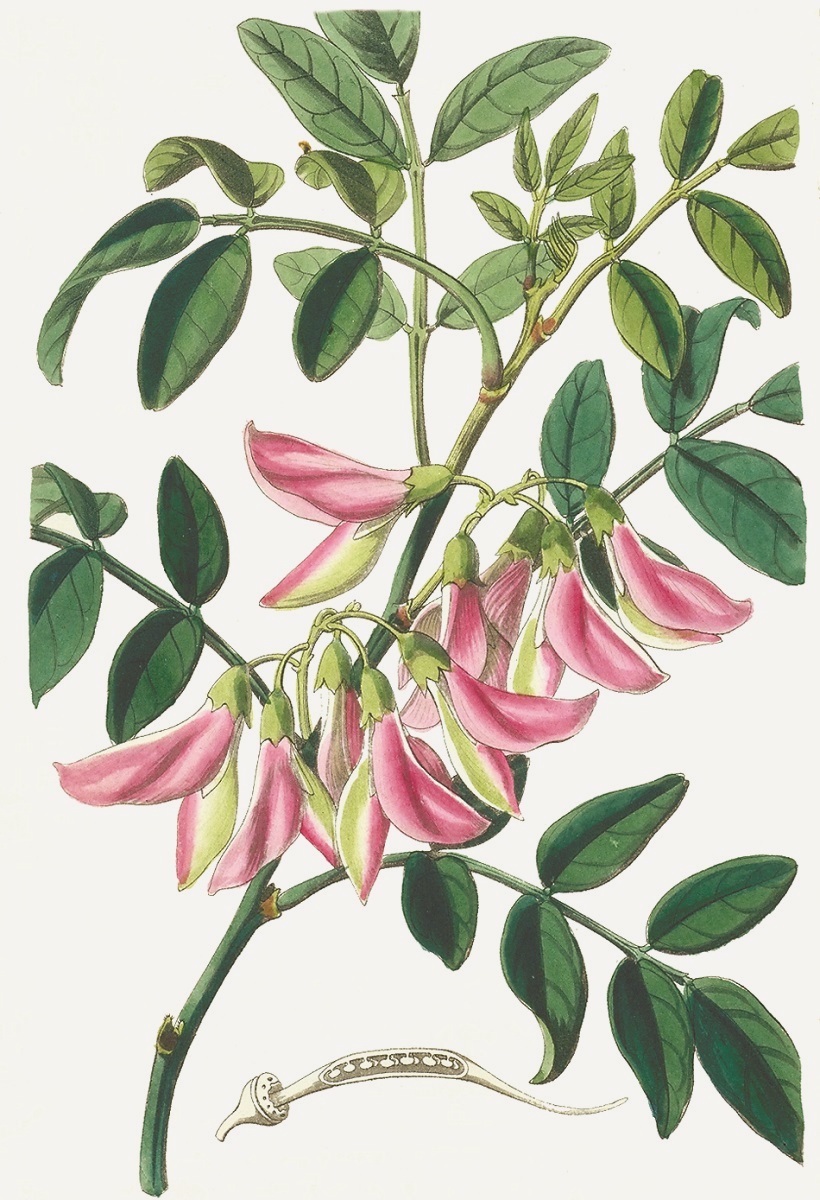
Photo: Edwards’s Botanical Register.
The Phillip Island glory pea, which once grew in Australia, is a leading candidate for de-extinction, according to e360

Do you get visions of Frankenstein’s monster when you hear about reversing extinction? Maybe we start with plants, but then what? Dinosaurs?

Well, it’s hard for me to be against anything that extends knowledge, so I’m keeping an open mind about the Yale Environment 360 report on the de-extinction of plants.

Janet Marinelli writes, “In January 1769, botanists Joseph Banks and Daniel Solander found a daisy in Tierra del Fuego, at the southern tip of South America. Later named Chiliotrichum amelloides, it is one of a thousand plant species unknown to European scientists that the two men collected during Captain Cook’s first voyage on the HMS Endeavor. … The plant was dried and pressed for future study. Today, the 254-year-old specimen is among the almost 8 million preserved plants in New York Botanical Garden’s William & Lynda Steere Herbarium.

“ ‘When a plant goes extinct,’ says Giulia Albani Rocchetti, a postdoctoral researcher at Roma Tre University and the lead author of the paper, ‘we don’t just lose a species, we lose a member of a habitat community with a specific role and relations with other species; … we lose genes which could have provided insight into the species and its community and yielded new pharmacological compounds and other products.’ …

“For nearly five centuries, herbaria have helped botanists identify, name, and classify the world’s floral diversity. Now these vast botanical libraries are being tapped to try to create a new chapter in the 500-million-year history of Earth’s terrestrial plant life. In Nature Plants in December, an international group of biologists published the first-ever list of globally extinct plants they believe can be returned from the dead, using seeds available in herbarium specimens. …

“In recent decades, the seeds of rare and imperiled species have been preserved in seed banks at low humidity and temperatures that ease the embryos inside into a kind of state of suspended animation to maximize their longevity. However, species already lost remain only as specimens in the collections of dried and pressed plants known as herbaria, and only in some (lucky) cases. … Only a few of these plants happened to be in fruit and in seed when they were collected. And even when herbarium seeds are discovered, there is no easy way to tell if the embryos inside are dead or lying dormant, waiting to sprout when conditions are right. …

“Abby Meyer, executive director of Botanic Gardens Conservation International in the United States, points to the rise in recent decades of the field of bioinformatics, which has transformed the trove of biodiversity information once locked up in natural history collections — such as herbarium specimens of extinct plants that contain seeds — into browsable digital databases. New York Botanical Garden (NYBG), for example, began digitizing its herbarium specimens in the mid-1990s, and today some 4 million, or about half of its preserved plants, have been scanned and can now be called up on a computer screen by anyone around the globe.

“Data aggregators such as the Global Biodiversity Information Facility provide researchers looking for seeds with instant access to millions of scanned specimens, along with associated ‘metadata’ such as the GPS coordinates where the plants were collected. At the same time, scientists have been refining in vitro embryo rescue techniques, increasing the odds that old or weak seed embryos can grow into viable plants. …

“While attempts to de-extinct the dodo, the woolly mammoth, and other charismatic megafauna continue to grab headlines, they would result at best in a hybrid, genetically engineered animal — a proxy of an extinct species. By contrast, recovering plants by germinating or tissue-culturing any surviving seeds or spores preserved in herbaria would result in the resurrection of the actual species. …

“One of the biggest hurdles is figuring out how to germinate the precious few seeds of often genetically unique plants found only on dried specimens. There is little margin for error, and before attempting to germinate the extinct species itself, scientists must perfect methods for germinating seeds of any closely related species that survive. …

“In December 2019, Giulia Albani Rocchetti sat in Florence’s Central Herbarium, marveling over the remains of Ranunculus mutinensis, an endemic buttercup that once grew in moist floodplain forests of the Po River, as it threads through northeastern Italy. … It was a thrill for her to find not just one but two Ranunculus specimens with numerous mature fruits called achenes. She then spent months at her desk in Rome, blowing up digitized images of extinct plants from herbaria across the globe on her computer screen in the improbable search for seeds.

“She was also spurred on by the knowledge that some seeds have the astonishing ability to survive adverse conditions and sprout after decades, even centuries — such as the Judean date palm, which a team of scientists successfully germinated in 2005 from a 2,000-year-old seed. …

“Albani Rocchetti and colleagues … identified 556 specimens that contained seeds, representing 161 of the extinct plant species [and] proceeded to devise a pioneering roadmap for prioritizing species for de-extinction. Assuming that species whose close kin produce long-lived seeds and newer specimens are the most likely to contain seeds that survive, they combined data on the seed behavior and longevity of closely related plants, as well as the age of each specimen, to create a DEXSCO, or best de-extinction candidate score for each species. …

Streblorrhiza speciosa, a spectacular member of the pea family, was [so] unique that it is considered the only member of its genus, or closely related group of plants. The species’ striking cascades of pink blossoms clambered exuberantly over trees on Phillip Island in the Pacific Ocean east of Brisbane, Australia. Collected in 1804 by Austrian botanist Ferdinand Bauer, the Phillip Island glory pea was an instant hit in Europe, coveted by every wealthy family with a conservatory. Meanwhile, however, Phillip Island was being overrun by pigs, goats, and rabbits introduced by British officers overseeing a nearby penal settlement, leaving barely a scrap of the remote island’s unique vegetation, and the glory pea was never seen in the wild again. …

“The glory pea is now presumed extinct, but at number three is near the top of the list of recommended de-extinction candidates. …

“Another challenge of plant de-extinction is the lack of financial support for pursuing it. But on the bright side, plant de-extinction has not kicked up the controversy surrounding attempts to resurrect, say, the wooly mammoth or passenger pigeon. ‘For whatever reason, the human brain doesn’t seem to be as concerned about plants as about animals,’ Knapp says. ‘But in this case, we’re literally just germinating seed. We’re not reconstructing a genome. And that’s way less intimidating. Everyone can understand that.’ “

More at e360, here. No firewall.

Read Full Post »

Photo: Thorsten Becker via Wikimedia.
Fairy circles in Namibia, Africa. According to the New York Times, Namibia’s fairy circles may become “embedded within a matrix of fresh green grasses” during the rainy season.

Have you ever wondered about “fairy circles”? So have a lot of other people, scientists included. If you search on the term at this blog, you can see that I have been trying to keep readers abreast of the latest news about fairy circles as it becomes available. Today’s report is by Rachel Nuwer at the New York Times.

“The strange, barren spots pepper the vast Namib Desert, which stretches from southern Angola to northern South Africa. They are known as ‘fairy circles,’ and for a natural phenomenon with such a whimsical name, scientific debates over their origins have been heated.

“ ‘The to and fro between opposing camps has often been nothing less than vitriolic,’ said Michael Cramer, an ecophysiologist at the University of Cape Town who has studied fairy circles.

“Despite decades of research, no consensus exists about the origin of the mysterious formations. Theories have included poisonous gases, noxious bushes and plant-killing microbes or fungi. Two of the explanations — the circles are made by termites, or they result from plants competing over limited water — have dominated the scientific debate. …

“A rigorous study published in October will not end this fight, but it does seem to give the water-related hypothesis a clear lead over the termite theory.

“ ‘Plants are forced to create these circles to redistribute water to maximize their chances of survival,’ said Stephan Getzin, an ecologist at the University of Göttingen in Germany and an author of the study. ‘We call it ecosystem engineering.’

“The Namib Desert is one of the driest places in the world, usually receiving only a few inches of rain each year. Researchers first proposed in 2004 that plants, in competition for water in this harsh ecosystem, may self-organize into fairy circles — an idea originally adapted from pattern-formation theory developed by the mathematician Alan Turing.

“Over the past decade, Dr. Getzin and others have published more than a dozen papers in support of the hypothesis, known as plant water stress.

“For their latest study, Dr. Getzin and his colleagues spent three years examining fairy circles at 10 study sites across 620 miles of desert. One of those years, 2020, was a drought, while 2021 and 2022 were exceptionally rainy — a lucky break that permitted the researchers to compare different conditions, Dr. Getzin said.

“They used soil moisture sensors to collect continuous readings every 30 minutes of water content in the sand in and around fairy circles. They also examined hundreds of individual grass shoots and roots excavated at various intervals from within the circles and the surrounding areas.

After rain, the researchers found that grasses germinated both inside and outside fairy circles, but that within about 20 days virtually all of the young shoots inside a circle had died.

“They also found that the top eight inches of soil within fairy circles quickly dried out, something they hypothesize is caused when established plants surrounding fairy circles actively draw water toward them.

“Plants are constantly transpiring — or losing water — through their leaves. Their roots, meanwhile, take water in. In Namibia’s sandy soil, this creates a vacuum effect that moves water from the interior of fairy circles toward the plants’ roots at the circle’s fringe and beyond. …

“The new paper also speaks to the termite hypothesis, which has been championed by Norbert Jürgens, an ecologist at the University of Hamburg in Germany. He reported in 2013 that fairy circles were in fact generated by sand termites that damage grass roots.

“In the new paper, Dr. Getzin and his colleagues noted that termites were conspicuously missing from their study sites, and that they found no signs of root damage in grass that died after rainfall.

“ ‘We can say the reason is not termites, because there were no termites present at all,’ Dr. Getzin said. ‘The reason is desiccation.’

“Dr. Jürgens declined a request to comment.

“Walter Tschinkel, an entomologist at Florida State University who was not involved in the research but who has published papers in support of the water-stress hypothesis, said the new findings provided ‘more nails in the termite coffin.’ …

“Yvette Naudé, an analytical chemist at the University of Pretoria in South Africa who was not involved in the research, agreed that the new study seemed to confirm that, ‘contrary to popular belief, termite activity does not cause the fairy circles.’ …

“Advocates of the water-stress hypothesis still need to contend with other explanations, Dr. Naudé said. She continues to suspect, based on earlier studies, that something about the composition of fairy circle soil is inhibiting plant growth. …

“One of the reasons so many different fairy circle theories persist, Dr. Cramer said, is that it is exceedingly difficult to prove causation for ‘a long-lived ecological pattern that cannot be replicated in the lab.’ To finally put the debate to rest, he called for ‘some manipulative experiments to test the ideas in the field.’ “

Ready to take sides? Read more at the Times, here. Personally, I will always believe the circles are created by fairies, and no amount of rigorous science will change my view.

Read Full Post »

Photo: Franco Folini, CC BY-SA 2.0/flickr.
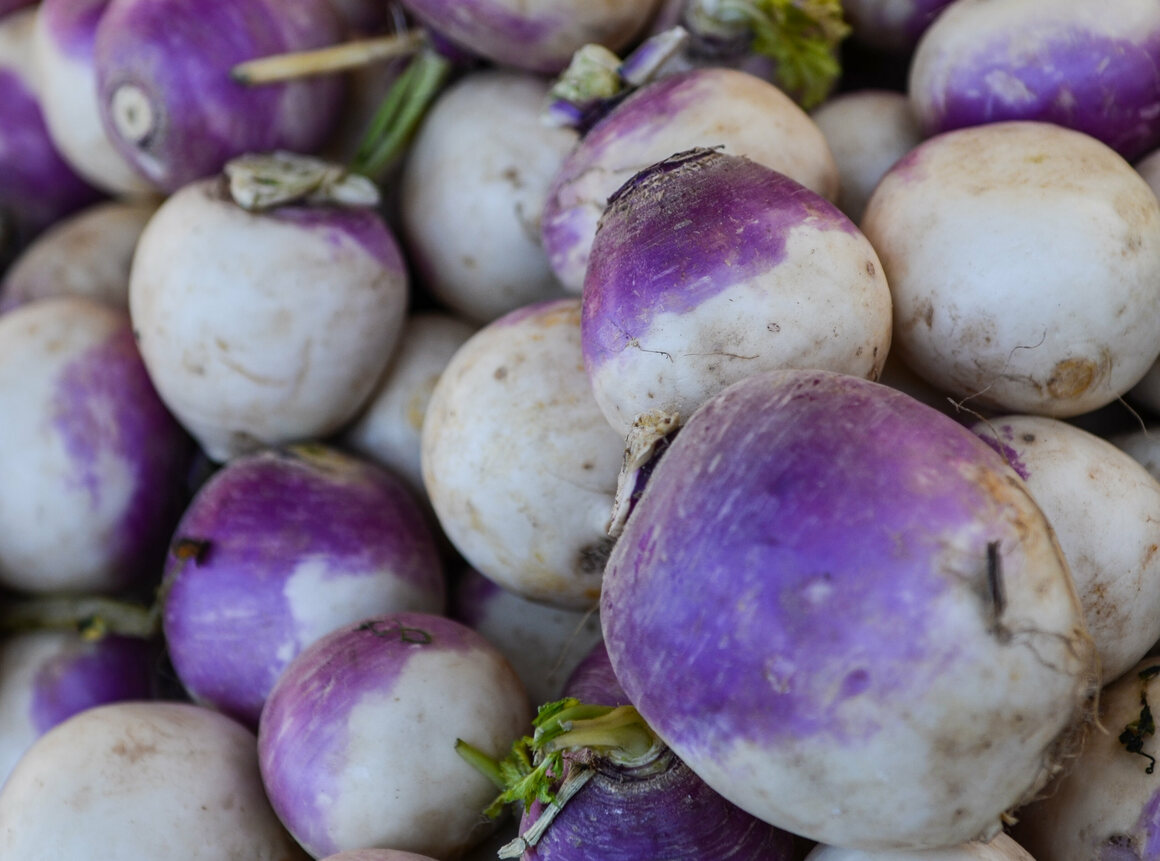
Says Atlas Obscura, “Genetic research indicates that the turnip was likely the first Brassica rapa crop, originating up to 6,000 years ago in Central Asia.”

For something a little bit different, consider “the vegetable that took over the world.” It turns out that different cultures not only develop their own versions of music and art but their own versions of the same edible plant. It helps that the plant in question has triplicated genes.

Gemma Tarlach reports at Atlas Obscura about “the single species that gives us turnips, bok choy, broccoli rabe” …

“The plant known as Brassica rapa has quite the history, one that, after decades of debate, is finally emerging. The single species, which humans have turned into turnips, bok choy, broccoli rabe (also known as rapini), and other residents of the produce aisle, began up to 6,000 years ago in Central Asia.

“[In June] Molecular Biology and Evolution published findings from an unprecedented study of B. rapa that pulled together genetic sequencing, environmental modeling, and the largest number of wild, feral, and cultivated samples ever collected. … The paper is a significant step forward in understanding how one of the planet’s most important agricultural species might weather climate change.

“ ‘This study is really great. I like the approaches they took, and the framework they placed it in,’ says Nora Mitchell, a plant evolutionary biologist at the University of Wisconsin-Eau Claire. Mitchell, who was not involved in the research. … She says the new paper’s environmental modeling — reconstructing conditions under which B. rapa was adapted to different locations, as well as forecasting what changing conditions might mean for its future — makes the study particularly compelling. …

” ‘The work is a particular achievement when you consider both the diversity and global spread of B. rapa crops, wild relatives, and feral varieties that have escaped farmers’ fields’ … says Alex McAlvay, lead author of the study and a botanist at the New York Botanical Garden. Now, he says, B. rapa, in various forms, ‘grows from Alaska to Tierra del Fuego. They grow in Oceania, they grow from Spain to Japan.’ …

B. rapa’s ability to survive as a feral plant worldwide had created a lot of uncertainty about its origins. Botanists often look to wild relatives of crops to help understand where the plants were first domesticated. But B. rapa is everywhere and, before the new research, distinguishing truly wild species from feral escapees was almost impossible. …

“While genetic detective work is always a complex undertaking, McAlvay says he and his colleagues were particularly challenged by a ‘crazy mess’ of genes that originated in the ancestor of both B. rapa and its close relative B. oleracea, another single species that provides multiple vegetables: broccoli, cauliflower, cabbage, kale, and more.

‘One reason we think these species have this incredible diversity is that their ancestor had not only a duplication of their genome, but a triplication,’ says botanist Makenzie Mabry, who coauthored the new paper. …

“While humans and many other organisms inherit a single set of chromosomes, one half from each parent, some plants inherit double sets. The Brassica ancestor had three sets that, says Mabry. …

“ ‘There’s an additional layer of weirdness,’ on the road to domestication and diversification, adds McAlvay: Different cultures selected for certain traits in different parts of the plant. For example, we’re familiar with tomatoes in all colors, sizes, and flavor profiles, but they’re all the fruit of the plant Solanum lycopersicum. For B. rapa, however, ‘with turnip, you’re looking at the root, the underground stem of the plant. Tatsoi is the leaves. Broccoli rabe is the flowers,’ says McAlvay.

“ ‘In China, people saw the same kind of raw material, the turnip, and they did something totally different than the Italians and Spanish did,’ he adds, running down a list of water-rich bok choy, chunky turnips, bitter greens, jagged-leaf mizuna, and other B. rapa permutations worldwide. …

“Digging up B. rapa’s roots is more than an exercise in botanical history. … ‘Food security is a big issue, especially global food security. And with Brassica having so many crops, not only vegetables but for oils as well, it’s really important to continue producing these crop species in the face of climate change, increased drought, and nutrient changes, as well as crop blights and crop diseases,’ Mitchell explains. ‘It’s important to understand not only what happened in the past but how these plants might respond in the future, and to know what kind of genetic resources could increase diversity.’

“McAlvay believes the paper’s findings on weedy, feral varieties may prove particularly significant for breeding better B. rapa crops in the future. ‘For most of recent history, people have dismissed the stray dogs of the plant world as not particularly useful,’ he says. ‘But because they’re already adapted to really rough, tough environments, there’s some push, with the advent of gene editing, to be inspired by those turnips gone wild.’ ”

What a miracle is Nature! More at Atlas Obscura, here.

Read Full Post »

garden-1-68900ca38e336b897218a6c87d045f1c0de407fe-s600-c85

Photo: Dana Cronin/NPR
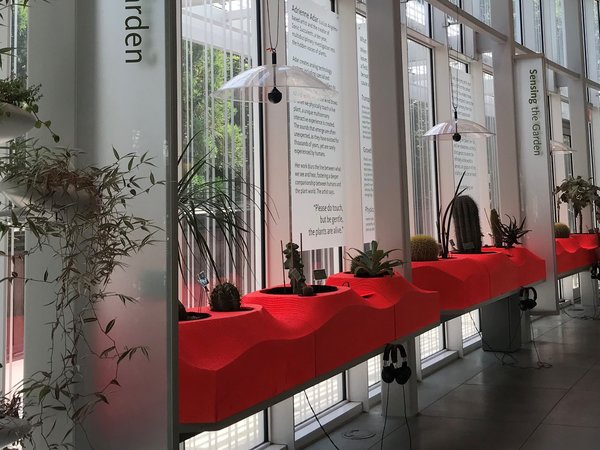
As part of the “Sonic Succulents” exhibit at the Brooklyn Botanic Garden, visitors are encouraged to touch plants and listen to what that contact sounds like.

Although inevitably preoccupied today, I always find that writing a little or even editing a little is comfortable for me. So I scrolled through the list of possible topics that I store for the blog and found one that fits my mood. It’s about listening to the sounds of plants as they grow and as we touch them.

Dana Cronin reports at National Public Radio (NPR), “There’s an old belief among farmers that on a quiet night, if you listen closely, you can hear the sound of corn growing.

“A new exhibit at the Brooklyn Botanic Garden proves that theory to be true.

“The exhibit, ‘Sonic Succulents: Plant Sounds and Vibrations,’ is the artist Adrienne Adar’s vision come to life.

“Adar is a sound artist based in Los Angeles. She’s passionate about the natural world and says her goal is to show people that plants aren’t that different from us: They grow, breathe and even communicate in their own ways.

“And so, back in May, she planted a patch of corn within the Brooklyn Botanic Garden and has surrounded it with large yellow megaphones that visitors can stick their heads inside to listen to what a growing stalk sounds like.

It turns out the sound is almost extraterrestrial.

” ‘It can be a little bit meditational … children were sitting on the ground and putting their heads in the lower horns and just hanging out,’ she said. …

“Adar says she’s inspired by the work of scientists like Monica Gagliano, an ecologist at the University of Western Australia, whose research focuses in part on how plants, like animals, are sentient beings with cognitive abilities. They can learn, remember and have their own methods of communication. Gagliano has done experiments showing that plants are able to detect specific vibrational frequencies, like the sound of water, and grow toward that sound.

“Adar was fascinated with the idea that plants are sentient. In conceptualizing the exhibit, she says audio was the most effective way to get that idea across. …

” ‘If you hear something in your apartment moving, you kind of assume it’s an animal. You always think there’s an alive quality,’ she said.

“Inside the exhibit there’s a long line of potted plants, including cacti, palm plants and succulents, paired with headphones. Visitors are encouraged to touch the plants, at which point tiny microphones embedded in the planters pick up the vibrations of the touch and make it audible.

“Adar says she wants visitors to hear those sounds and realize the impact we have on plants … ‘Listen to what it feels when you touch it,’ she said. ‘So when you step on a plant … maybe next time it changes the behavior.’

“The exhibit runs through Oct. 27.”

More at NPR, here, where, for example, you can listen to the sound of corn growing.

Read Full Post »

04garden1-jumbo

Photo: Mark Baldwin
A dense carpet of woodland perennials. Thomas Rainer, a landscape architect, calls plants “social creatures” that thrive in particular networks.

Today we understand that trees and other plants are the lungs of the planet and that we are losing too many every year, so it behooves us to understand them better and do what we can to help the remainder thrive. Even in our yards.

At the New York Times, Margaret Roach offers some tips from a landscape architect.

“Thomas Rainer and I have both been doing the botanical thing for decades,” she writes. “We know, and use, many of the same plants — and even much of the same horticultural vocabulary. But what he and I see when we look at a butterfly weed or a coneflower, or what we mean when we say familiar words like ‘layering’ or ‘ground cover,’ is surprisingly not synonymous.

“It turns out I’ve been missing what the plants were trying to tell me, failing to read botanical body language and behavior that could help me put plants together in combinations that would solve challenges that many of us have: beds that aren’t quite working visually, and garden areas that don’t function without lots of maintenance. … I asked Mr. Rainer, a landscape architect based in Washington, D.C., to lend us his 3-D vision.

“Roach: You visit a lot of gardens, and probably hear from gardeners like me with beds that just aren’t working. What’s the most common cause?

“Rainier: First, we have to understand that plants are social creatures. Our garden plants evolved as members of diverse social networks. Take a butterfly weed (Asclepias tuberosa, named this year’s Perennial Plant of the Year by the industry group the Perennial Plant Association), for example. The height of its flower is exactly the height of the grasses it grows among. Its narrow leaves hug its stems to efficiently emerge through a crowded mix. It has a taproot that drills through the fibrous roots of grasses. Everything about that plant is a reaction to its social network. And it is these social networks that make plantings so resilient.

“So if we think about the way plants grow in the wild, it helps us understand how different our gardens are. In the wild, every square inch of soil is covered with a mosaic of interlocking plants, but in our gardens, we arrange plants as individual objects in a sea of mulch. We place them in solitary confinement.

“So if you want to add butterfly weed to your garden, you might drift it in beds several feet apart and tuck some low grasses in as companions, like prairie dropseed, blue grama grass or buffalo grass.

“Start by looking for bare soil. It is everywhere in our gardens and landscapes. Even in beds with shrubs in them, there are often large expanses of bare soil underneath. It’s incredibly high-maintenance. It requires multiple applications of bark mulch a year, pre-emergent herbicides and lots and lots of weeding.

“The alternative to mulch is green mulch — that is, plants. This includes a wide range of herbaceous plants that cover soil, like clump-forming sedges, rhizomatous strawberries or golden groundsel, and self-seeding columbine or woodland poppies.

“Roach: If I want to try to do it more as nature does, what am I aiming for? Where do I take my cues?

“Rainier: The big shift in horticulture in the next decade will be a shift from thinking about plants as individual objects to communities of interrelated species. We think it’s possible to create designed plant communities: stylized versions of naturally occurring ones, adapted to work in our gardens and landscapes. This is not ecological restoration, it’s a hybrid of ecology and horticulture. We take inspiration from the layered structure in the wild, but combine it with the legibility and design of horticulture. It is the best of both worlds: the functionality and biodiversity of an ecological approach, but also the focus on beauty, order and color that horticulture has given us. It’s possible to balance diversity with legibility, ecology with aesthetics.

“And it is a shift in how we take care of our gardens: a focus on management, not maintenance. When you plant in communities, you manage the entire plantings, not each individual plant. This is a pretty radical shift. It’s O.K. if a plant self-seeds around a bit, or if one plant becomes more dominant. As long as it fits the aesthetic and functional goals. We can do much less and get more.” More here.

What do you think? I’m not a gardener, but I have a little yard, and I take Rainier’s point about how every patch of bare soil creates problems. I wonder what the Meadowscaping folks might have to say about combining horticulture and ecology in this way.

Read Full Post »

Photo: North Carolina Arboretum
Plant physiologist Joe-Ann McCoy extracts seeds from black cohosh collected in western North Carolina.

A plant physiologist, worried about the future effects of global warming on biodiversity in Appalachia, is not only preserving seeds but working to attract preservation-based economic development. It would be almost like getting a sponsor for one of the plants there, a plant whose roots are used in popular herbal remedies.

At Yale Environment 360, Nancy Averett writes, “When she can spare the time — away from the grant applications, journal articles, and economic reports strewn across her desk — plant physiologist Joe-Ann McCoy laces up her hiking boots and heads to the Pisgah National Forest in western North Carolina.

“Dodging copperheads and black bears, she winds her way deep into the forest, her eyes scanning the lush understory for black cohosh, a native plant whose roots have been used in herbal remedies for centuries, primarily to treat symptoms related to menopause. When she spots her quarry, McCoy gently pulls the plant’s seed pods — tiny brown orbs that rattle when shaken — off the stem and slips them into a paper envelope.

“The seeds inside those pods — which will be cleaned, vacuum-packed, and then stored in a freezer at -20 degrees Fahrenheit — give McCoy hope. As the director of the North Carolina Arboretum’s Germplasm Repository, her job is to preserve native seeds in this highly biodiverse area in southern Appalachia before climate change makes it impossible for some native vegetation to survive there.

“But the black cohosh holds another promise, as well. The plant’s roots are used in top-selling herbal remedies, and, if someone could succeed in growing black cohosh as a crop and manufacturing supplements here [it] could help drive economic development in this job-scarce region. …

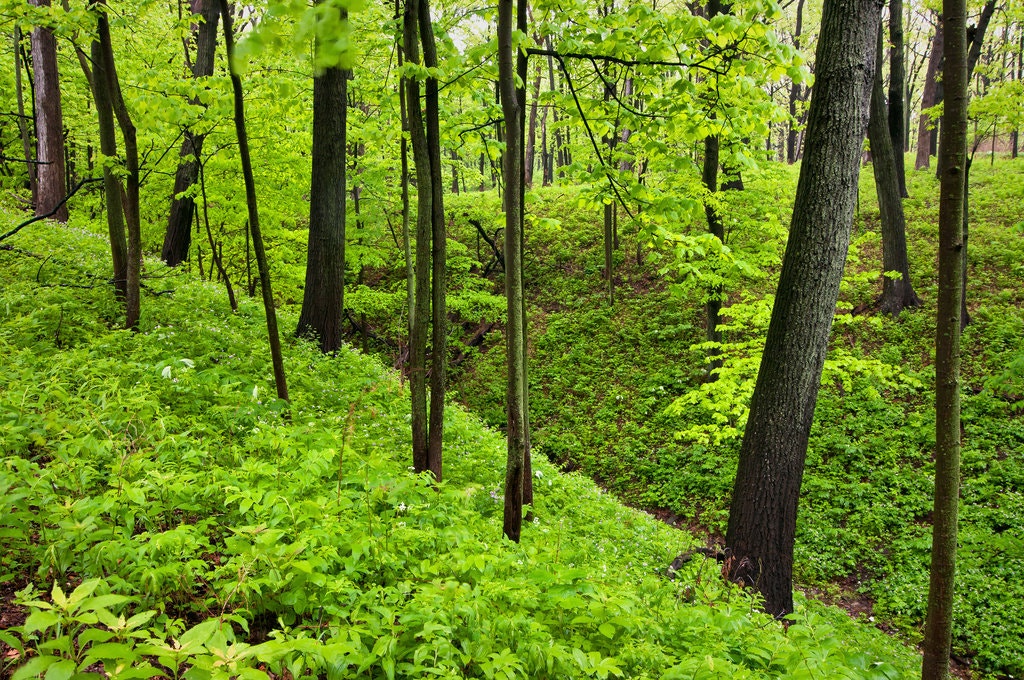
“North Carolina [is] special in terms of biodiversity. Studies have documented more than 4,000 species of plants, 2,000 species of fungi, and 500 species of mosses and lichens in the region. Unlike much of the U.S. East Coast, during the last three ice ages the ground in this region did not freeze, which means the plants here have a much longer genetic history and more diversity than in other areas.

‘If I had to pick one place in the entire U.S. for this project,’ McCoy says, ‘it would be here. This is the ultimate spot.’ …

“When she first came to the arboretum, she focused on black cohosh and creating a robust seed collection from the plant’s entire geographic range — she has 22 different strains — and then growing plants from each strain so she would have enough seeds to back up her collection in three different repositories. These include two federal storage sites — in Ames, Iowa and Fort Collins, Colo. — plus the Svalbard Global Seed Vault in Norway.”

After cataloging the seeds, McCoy turns her attention to the economic possibilities. Read here about her work with investors. The Yale article also describes her ginseng efforts and her assistance to Cherokees who value plants used in traditional medicine.

Read Full Post »

John is a great source for articles on cutting-edge technologies. He sent me this one Thursday about using plants to make electricity. The students in Spain who designed the technology are nothing if not ambitious. Their goal is to have the whole world covered in trees making electricity. You can watch their video, below, or bear with me as I channel Google Translate’s English rendition of a Spanish blog post.

, at Blog Think Big, says, “Thanks to Bioo system, created by the students of the Autonomous University of Barcelona and Ramón Llull University with the startup Arkyne Technologies, families could cover their basic electricity needs through 10 × 10 meters of vegetation panels. But how?

“The prototype initially created by the students of the UAB is a plant in a pot that lets you charge a mobile phone. According to the explanation for the 4YFN space last Mobile World Congress in Barcelona, the system ‘generates power 3-40 watts per square meter from some vegetable panels and a biological battery that takes energy waste (matter organic) that plants need not despise.’ [Oops: that has to be Google. Shall we change it to ‘plants don’t need’?]

“Thus, the device is able to steadily produce electricity through a self-supply system. In addition, according to the engineers, the operation does not affect the plants and is economical.

“Students are betting on a ‘smart city’ concept that allows people using Bioo buy or sell electricity. The goal, in addition to developing these systems in homes, [is to extend them to] agriculture or green roofs of public buildings.”

Maybe you better watch the video. But there’s more here, if you read Spanish.

Video: Bioo Lite

Read Full Post »

David Wilkes has a great story at the Daily Mail about a self-contained garden that hasn’t had to be watered in decades.

“To look at this flourishing mass of plant life you’d think David Latimer was a green-fingered genius. Truth be told, however, his bottle garden – now almost in its 53rd year – hasn’t taken up much of his time. …

“For the last 40 years it has been completely sealed from the outside world. But the indoor variety of spiderworts (or Tradescantia, to give the plant species its scientific Latin name) within has thrived, filling its globular bottle home with healthy foliage.

“Yesterday Mr Latimer, 80, said: ‘It’s 6ft from a window so gets a bit of sunlight. It grows towards the light so it gets turned round every so often so it grows evenly. Otherwise, it’s the definition of low-maintenance. I’ve never pruned it, it just seems to have grown to the limits of the bottle.’

“The bottle garden has created its own miniature ecosystem. Despite being cut off from the outside world, because it is still absorbing light it can photosynthesise.”

More here.

Photo: BNPS.CO.UK
Still going strong: Pensioner David Latimer from Cranleigh, Surrey, with his bottle garden that was first planted 53 years ago and has not been watered since 1972 — yet continues to thrive in its sealed environment.

Read Full Post »

giant-sandbox-at-playscape

gluing-nature-collage

slide-at-Ripley-Playscape

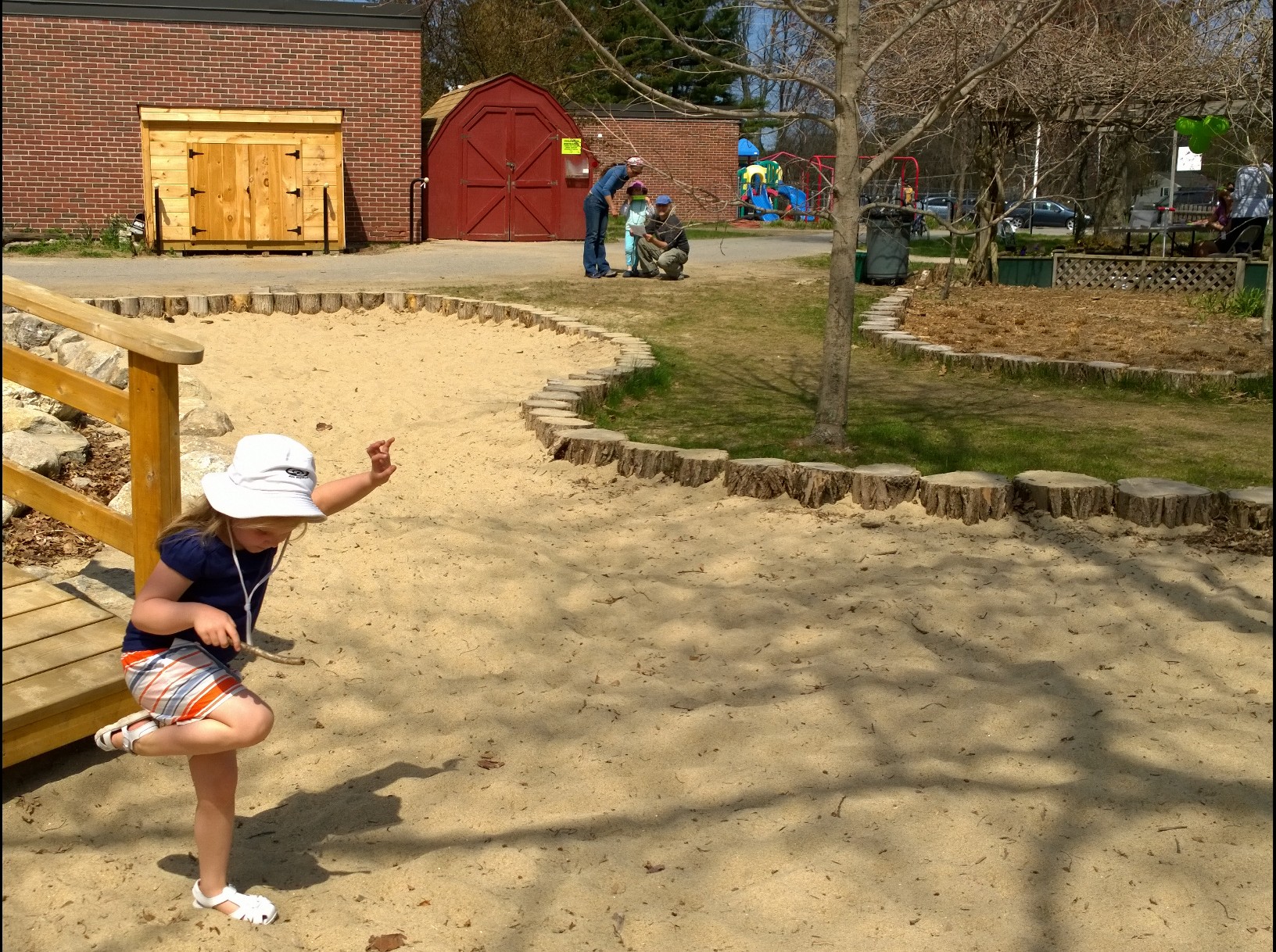
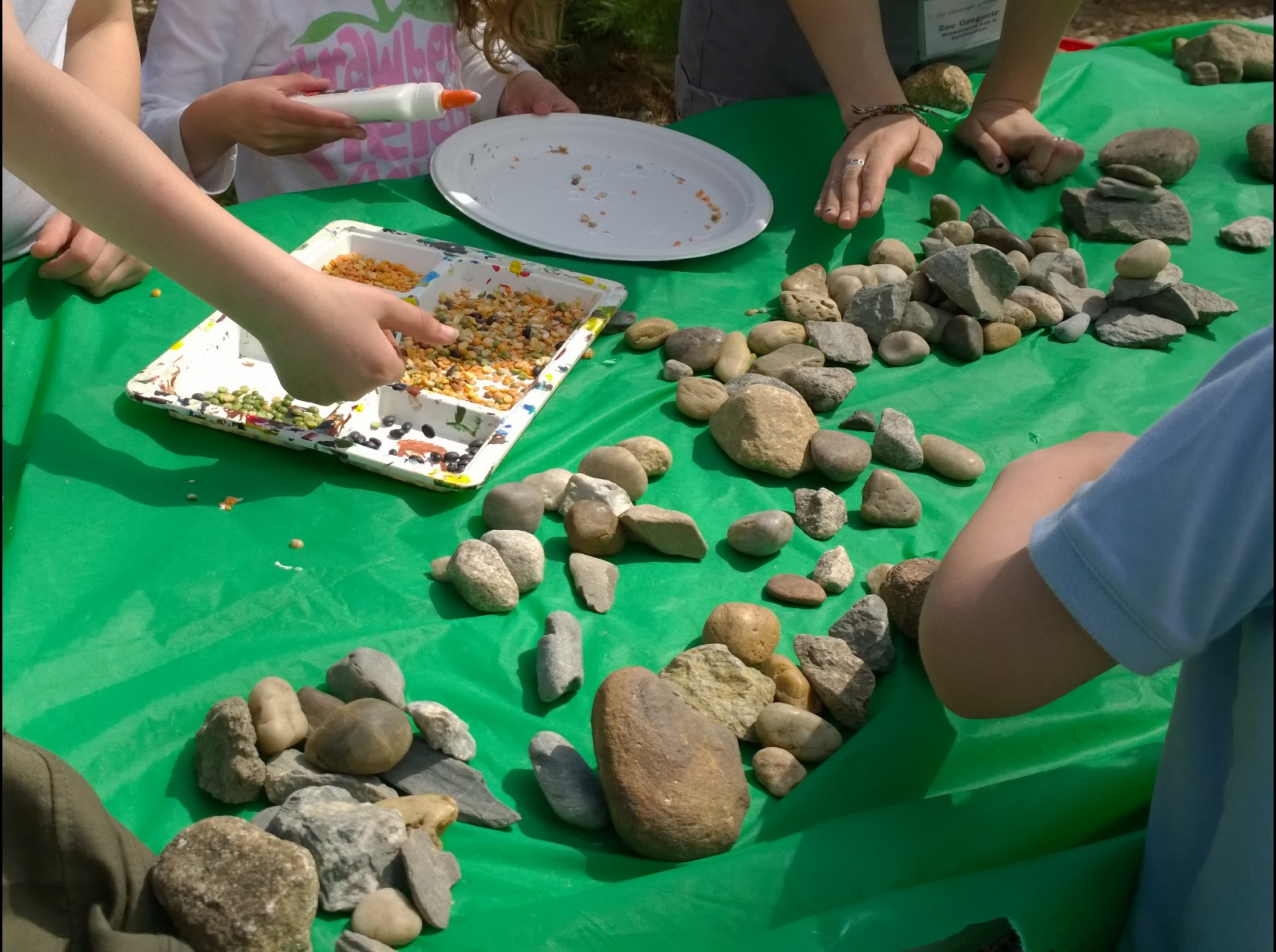
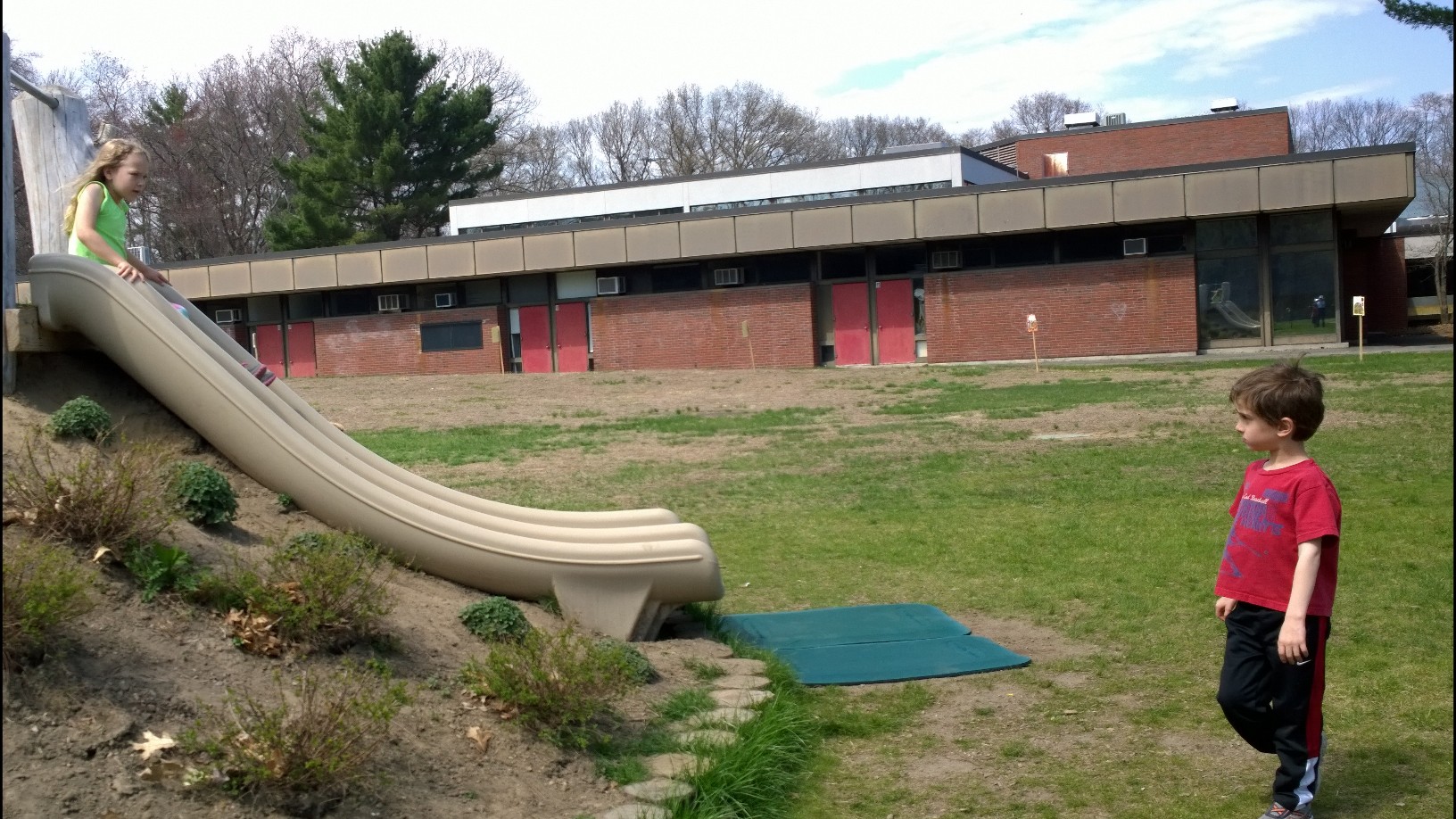
I wrote about the early stages of the Playscape at the Ripley School three years ago, here. The idea of the playscape was to incorporate nature activities into a playground. An open house was held last Sunday, and I saw lots of children, parents, and grandparents checking it out.

Perhaps because it was early in the season, perhaps because an open house seems to call for planned activities, it was hard to see if there were enough attractions available for exploring nature on quieter days. Of course, I grew up on the edge of an orchard, a forest, and a mountain, and no one told us kids how to have fun there. Anything less in nature play seems sparse.

One thing I liked was not really an interaction with nature except that you had to walk through a field to engage. It was the story walk for Lynne Cherry’s picture book on a groundhog who learns to make his own garden rather than help himself to other people’s. The laminated page spreads on posts around the field were charming and had lots of useful details about plants and seeds.

A gardening friend on my commuter train was very glad to hear the groundhog learned to grow his own food and leave hers alone.

Read Full Post »

Goats are becoming increasingly popular for controlling invasive plant species.

Joanna Jolly writes at the BBC News Magazine, “Each country has its own invasive species and rampant plants with a tendency to take over. In most, the techniques for dealing with them are similar — a mixture of powerful chemicals and diggers. But in the US a new weapon has joined the toolbox in recent years — the goat.

“In a field just outside Washington, Andy, a tall goat with long, floppy ears, nuzzles up to his owner, Brian Knox. Standing with Andy are another 70 or so goats, some basking in the low winter sun, and others huddled together around bales of hay. …

” ‘We started using them around this property on some invasive species. It worked really well, and things grew organically from there.’

“They are now known as the Eco Goats — a herd much in demand for their ability to clear land of invasive species and other nuisance plants up and down America’s East Coast. …

“One of the reasons goats are so effective is that plant seeds rarely survive the grinding motion of their mouths and their multi-chambered stomachs — this is not always the case with other techniques which leave seeds in the soil to spring back.

“One of the more high profile jobs they have worked on was cleaning up the Congressional cemetery in Washington two years ago. Large crowds came to watch as the animals spent a week chomping the overgrowth of Honeysuckle, Ivy and Poison Ivy. …

“This is one of the things he likes about taking goats into urban areas — the response of the city-dwellers, who are ‘fascinated,’ he says, to see how efficiently the goats gobble up the vegetation. …

“Goats aren’t a silver bullet. Knox often combines the goat clearance with some manual root cutting and even with a chemical treatment if needed. But his goats have started to make an impact on the weeds choking America and, he says, they are having a lot of fun doing it.”

More of the story — and some great pictures —  here.

Photo: BBC News

Read Full Post »

Did you know that plants can protect themselves from predators?

Writes Douglas Quenqua at the NY Times, “It has long been known that some plants can respond to sound. But why would a plant evolve the ability to hear? Now researchers are reporting that one reason may be to defend itself against predators.

“To see whether predator noises would affect plants, two University of Missouri researchers exposed one set of plants to a recording of caterpillars eating leaves, and kept another set of plants in silence. Later, when caterpillars fed on the plants, the set that had been exposed to the eating noises produced more of a caterpillar-repelling chemical. …

“Plants exposed to other vibrations, like the sound of wind or different insects, did not produce more of the chemical, suggesting they could tell the difference between predator noises and atmospheric ones. The researchers published their work in the journal Oecologia.” More here.

I have an idea. How about farmers, instead of using genetically modified seed to protect plants, just pump recordings of crunching predators into their fields so that the plants could protect themselves?

As they say where I work, “More research is needed.”

The NY Times posted this Pieris Silhouette video by mubondlsc
Can you hear the crunching of the caterpillar?

Read Full Post »

The Globe‘s Callum Borchers wrote recently about an organization called Seeding Labs, which presented at the IDEAS conference in Boston.

Founder Nina Dudnick, he says, “collects and ships used lab equipment to developing countries.

“Last year, Seeding Labs hosted six scientists and researchers from Kenya, one of whom was a chemist, Mildred Nawiri, who is studying how certain vegetables that are indigenous to West Africa might help prevent cancer.

“On Wednesday, Dudnick pointed to Nawiri’s research as an example of work that is unlikely to be done in the United States, because the vegetables she is studying do not grow here.

“And whatever benefits she might discover could go unrealized without modern equipment. Before Seeding Labs, Nawiri was using techniques Western scientists employed in the 1800s, Dudnick said.”

Dudnick points out that “this talent really is everywhere. The problems that face us, like cancer, don’t respect boundaries drawn on a map, so why should our scientific community?”

More at the Globe.

Read Full Post »

welcome-to-carousel

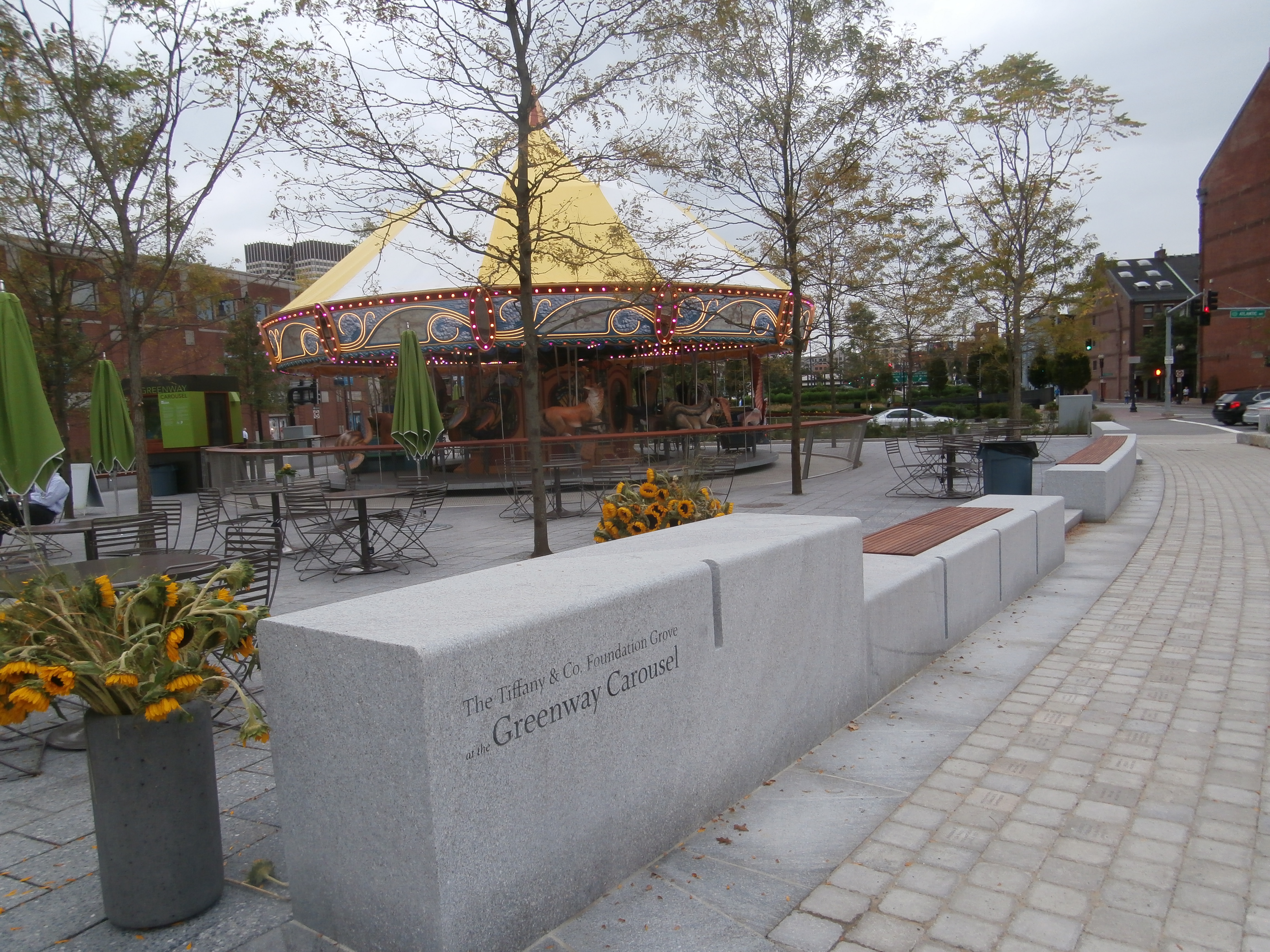
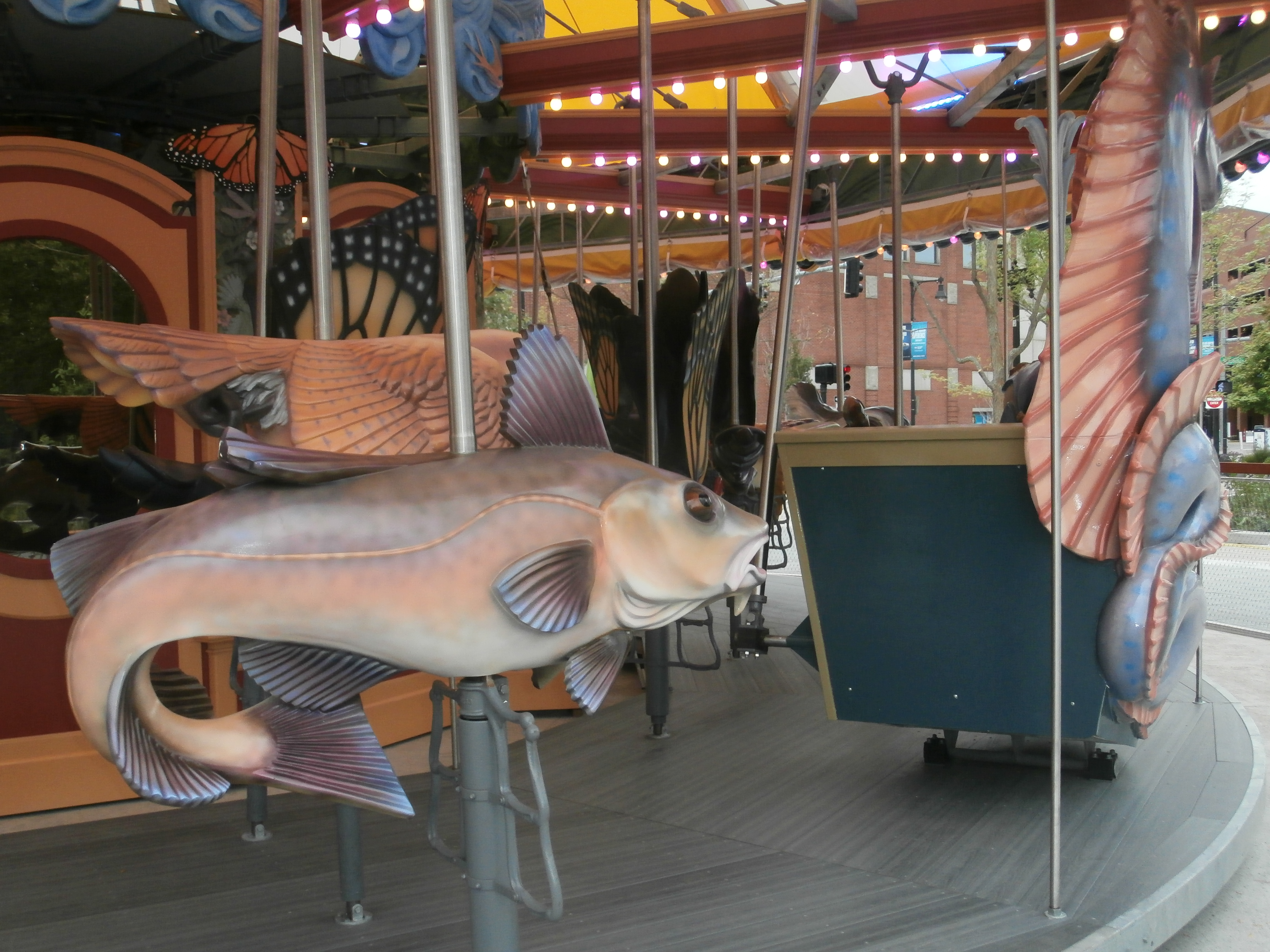
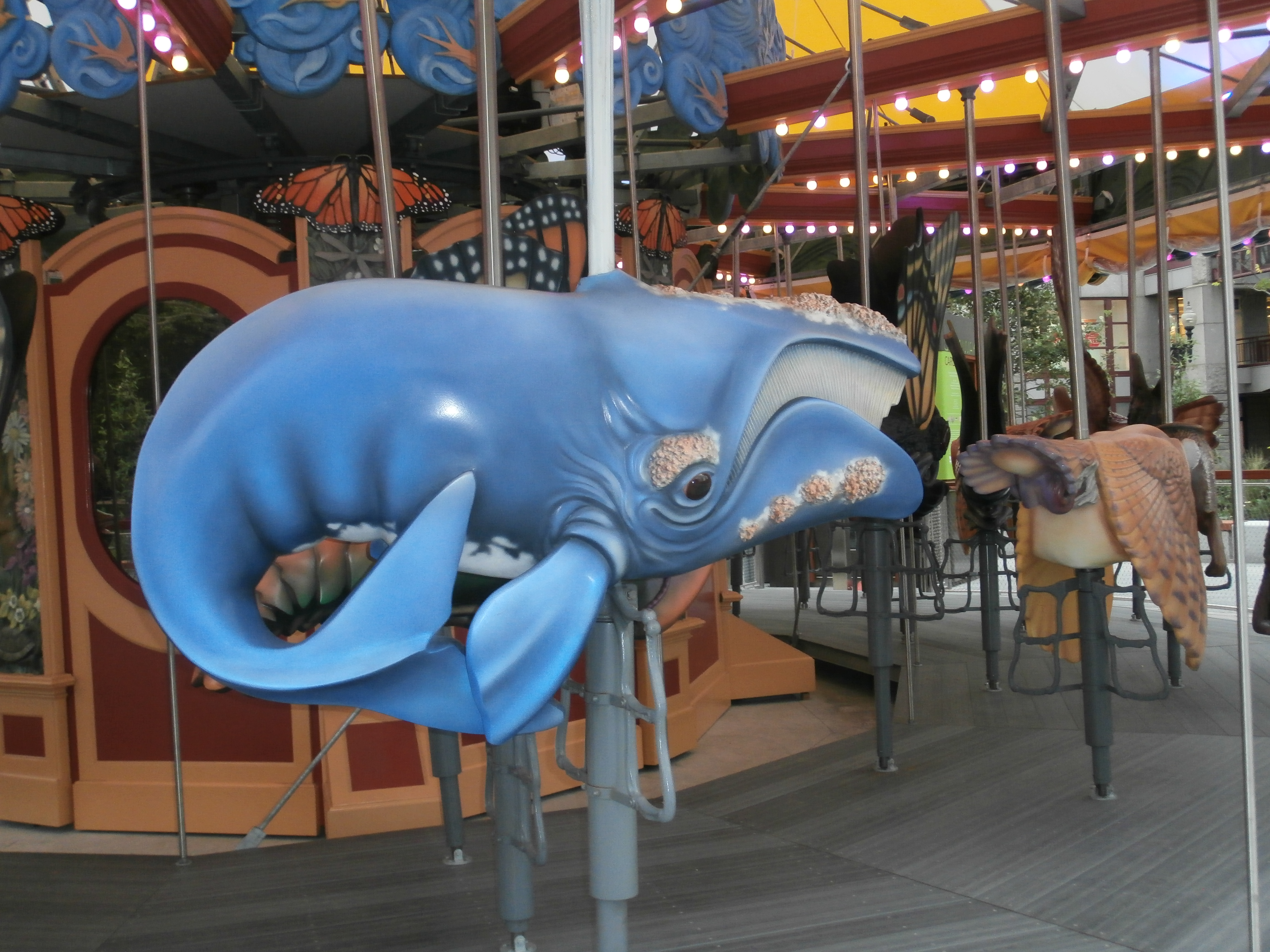
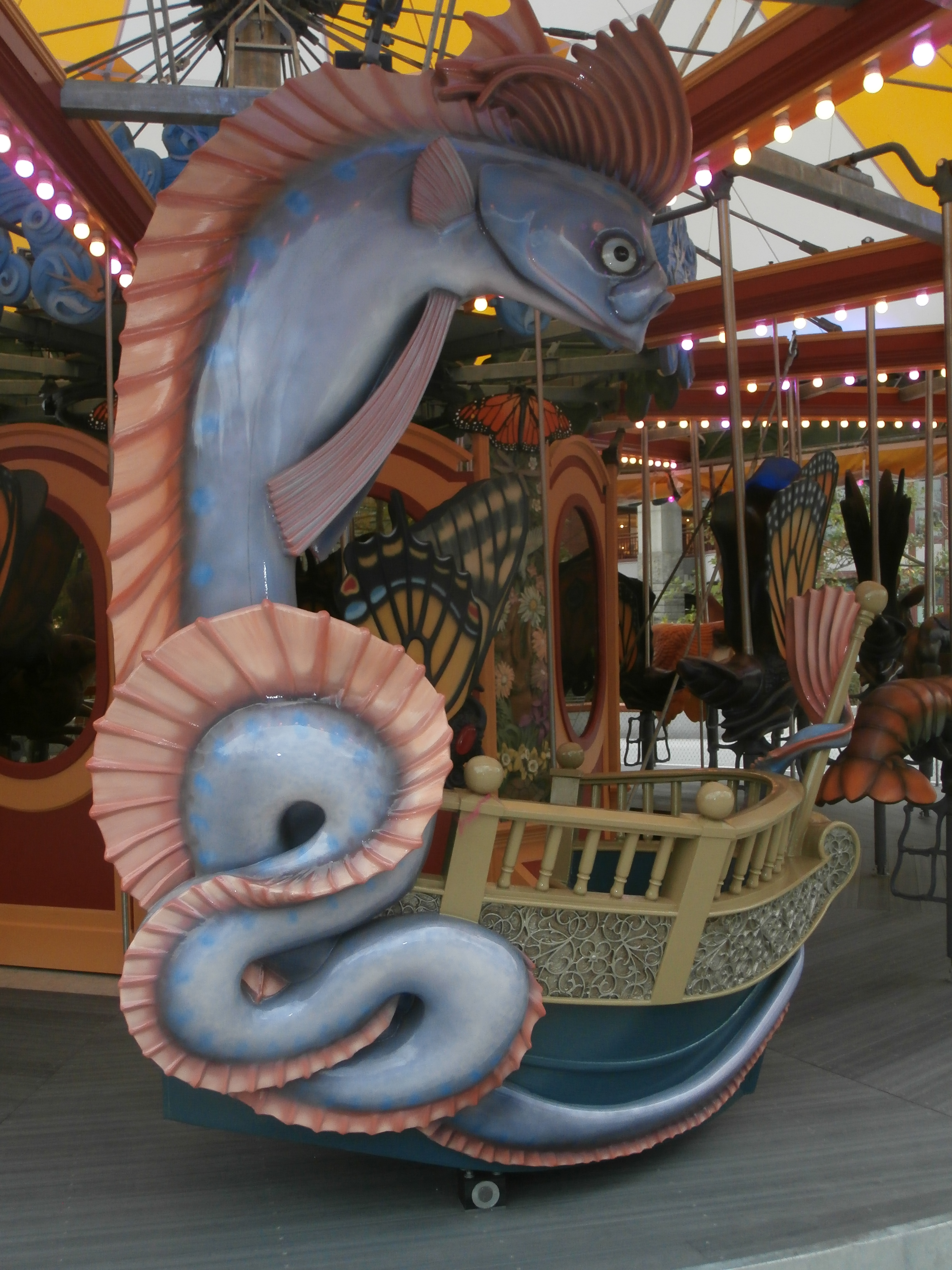
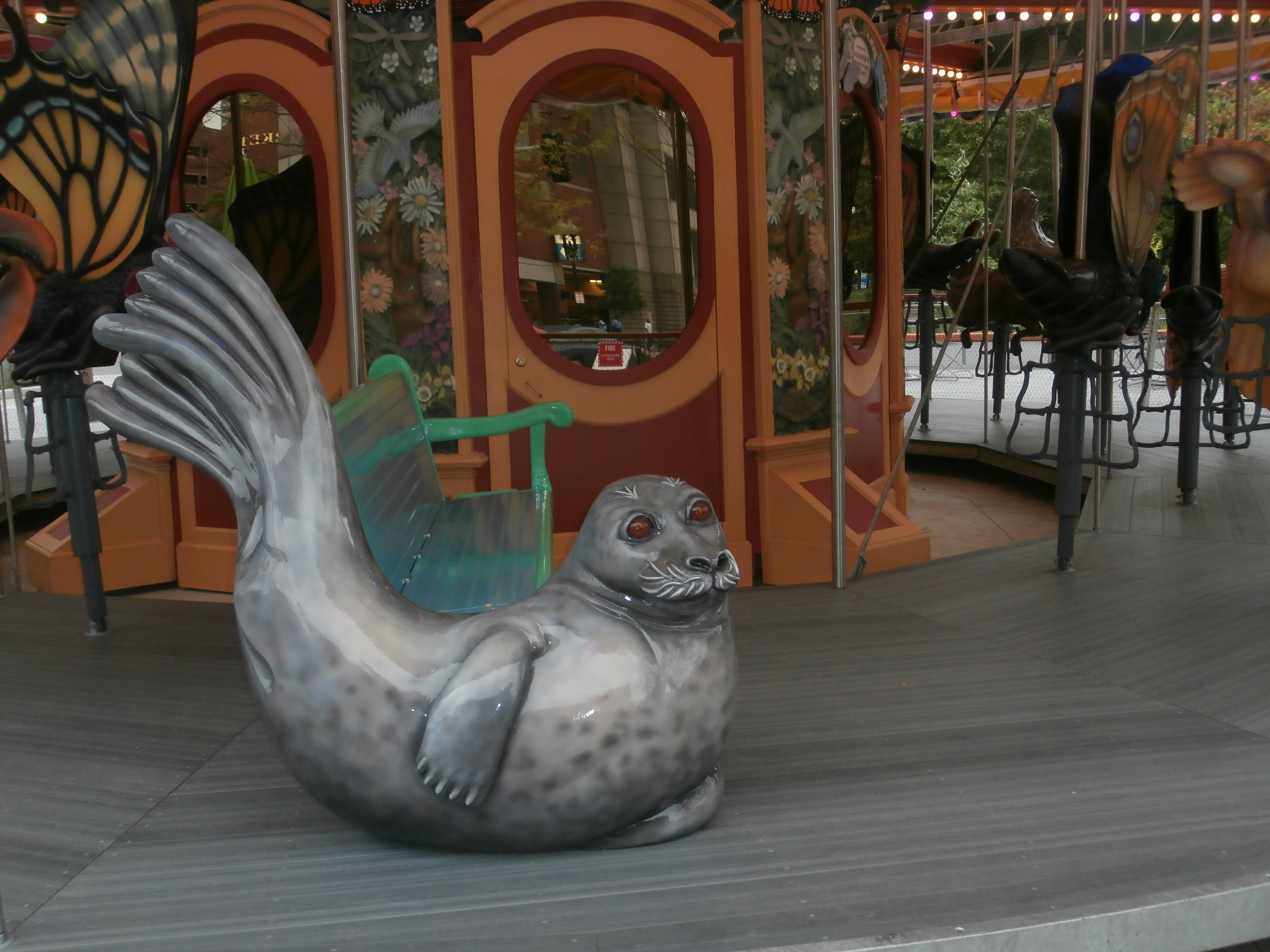
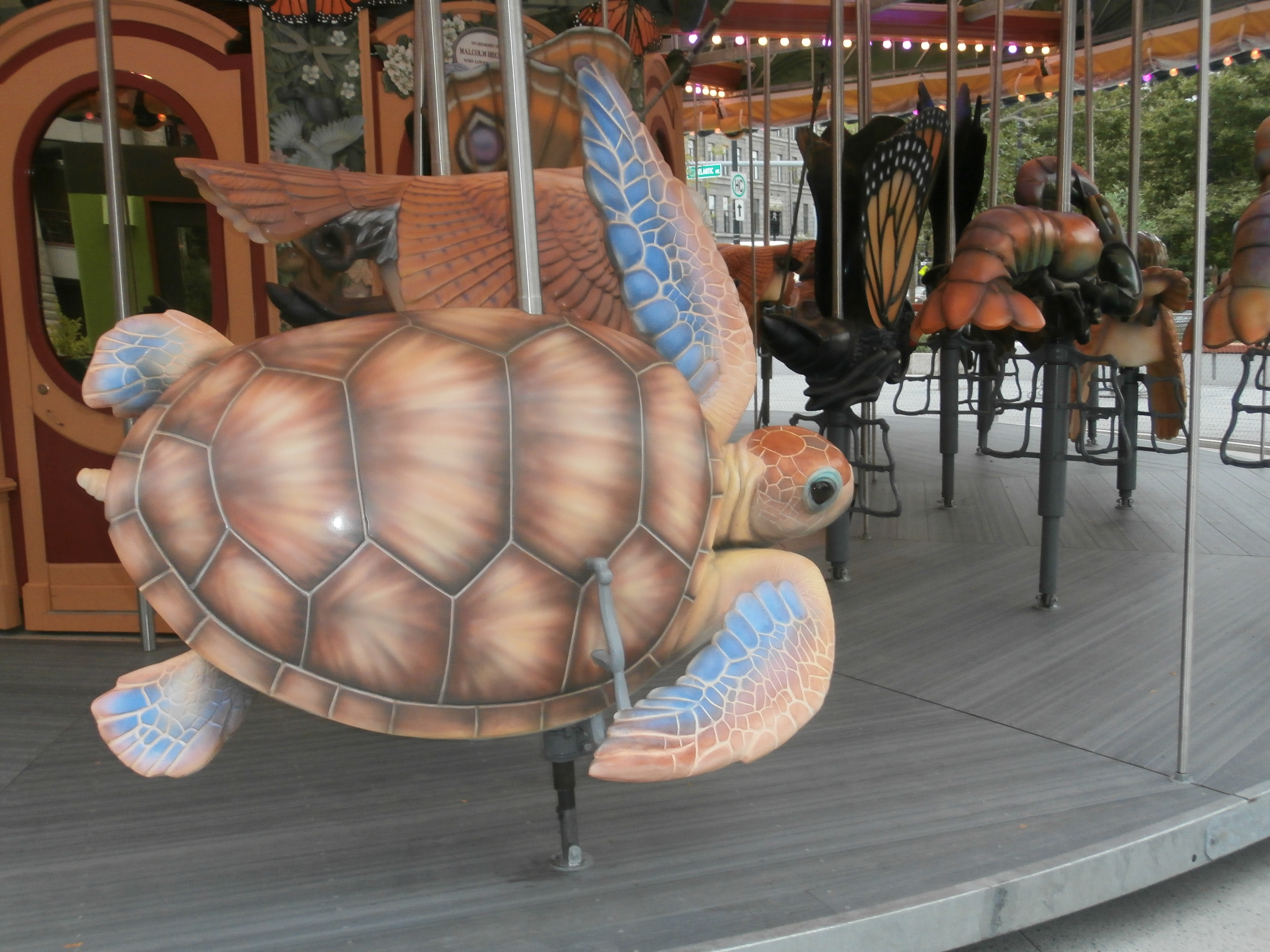
The Rose Kennedy Greenway just gets better and better. Not only is the new carousel a wonder, but little signs have begun to appear identifying the plantings, many of them quite exotic.

Now, if they would just decide to create bike paths or else enforce the rules about “no wheels,” we walkers would at least know where it was safe to walk while daydreaming.

What do you think of these sea creatures?

Greenway-carousel-fish

Greenway-whale


sea-serpent

Greenway-carousel-seal


OLYMPUS DIGITAL CAMERA


Read Full Post »

Older Posts »