Feeds:
Posts
Comments

Posts Tagged ‘poet’

“New York City is using poetry to boost traffic safety. The city is installing 200 colorful 8-inch square signs featuring haiku about safety at cultural spots, schools, and high accident areas. In an age when many messages compete for attention, officials hope that ones such as

‘Oncoming cars rush
‘Each a 3 ton bullet
‘And you, flesh and bone’

“will encourage pedestrians to exercise caution.”

So writes the Innovators Insights listserv, linking to the CBS New York news story, where you will find some amused and amusing comments from New Yorkers.

“ ‘What we’ve learned that is that the more innovative the message and with a little bit of humor, or something a little off beat, is much more effective form of communication,’ Transportation Commissioner Janette Sadik-Khan said.”

Reminds me of my October post on traffic mimes in Caracas. Remember? There’s something delightfully incongrous about traffic adminsitrators being the ones, out of all possible professions, to use mimes and haiku to further their work objectives.

But maybe I don’t know much about traffic administrators.

Read Full Post »

Who wouldn’t love this story? Remember the mime Marcel Marceau? Now try to picture him directing traffic in a crazy intersection.

According to an article in the Canadian Press, by Christopher Toothaker (really his name), “Caracas, Venezuela, is placing over a hundred mimes on its busy streets to admonish reckless drivers and pedestrians. The mimes, dressed in clown-like outfits and wearing white gloves, may frown and gesticulate the command of ‘stop’ to motorcyclists roaring towards crosswalks or wag their fingers at jaywalking pedestrians. Although some reprimanded motorists have predictably hurled insults, mimes have reported that most people have reacted agreeably. Caracas is following the example set by Bogota, Columbia, which has successfully used mimes in a broader effort to increase commuter civility.”

Let’s bring back the Works Progress Administration and employ people as mimes. I can think of lots of intersections that need them, mostly in Boston. (But learning to be a mime is probably not as easy as it seems.)

****

With the increase in vehicle crimes
Caracas has turned to some mimes.
They’ve slowed down the speeding,
Which no one was needing,
And inspired these few awkward rhymes.

Your turn. (If you use the French pronunciation, “meem,” that opens a whole other slate of rhyming options.)

P.S. Isn’t there a literary character — probably in Dickens — who keeps “dropping into poetry”?

Read Full Post »

At their wedding, Suzanne and Erik seated me next to Erik’s uncle on one side and Jonathan on the other. Jonathan was into literature. In fact he wrote a poem for Suzanne and Erik that he read as a toast. (You would not believe how many toasts Swedes give at weddings. It’s an awful lot of fun!)

Jonathan knew a lot about American and English poets, and I asked him to suggest a Swedish poet that I could read in translation. I figured that Google Translate might not be optimal for poetry. He recommended Tomas Tranströmer. After the wedding, I bought Tranströmer’s The Half-Finished Heaven, translated by Robert Bly. (Who knew Robert Bly translated Swedish?)

Last week, Tranströmer was awarded the 2011 Nobel Prize for Literature. Here is a short Tranströmer poem from the book, illustrated by a photo my husband took before Hurricane Earl in 2010. (The photo is called “Red Sky at Morning, Sailors Take Warning.”)

Storm, by Tomas Tranströmer

The man on a walk suddenly meets the old
giant oak like an elk turned to stone with
its enormous antlers against the dark green castle wall of the fall ocean.

Storm from the north. It’s nearly time for the
rowanberries to ripen. Awake in the night he
hears the constellations far above the oak stamping in their stalls.

Read Full Post »

I really like Michelle Aldredge’s blog on writing and the arts, Gwarlingo. (The word gwarlingo, Aldredge says, is Welsh for the rushing sound a grandfather clock makes before striking, “the movement before the moment.”)

See my post about Gwarlingo and artistic Japanese manhole covers here.

This week Aldredge wrote that she had recently “stumbled across a small online collection of rare color images taken by photographers from the Farm Security Administration and Office of War Information. The … photograph of Jack Whinery and his family was so remarkable and surprising that I immediately began exploring the online archive of the Library of Congress, which owns the images. The 1,610 Kodachrome transparencies were produced by FSA and OWI photographers like John Vachon, Marion Post Wolcott, Jack Delano, and Russell Lee. They are less well known and far less extensive than their black and white images, but their rarity only increases their impact.”

Check out the America in Transition photos.

*Jack Whinery, homesteader, and his family. Pie Town, New Mexico, October 1940. Photo by Russell Lee. Prints and Photographs Division, Library of Congress*

Another great Gwarlingo post was on poetry bombing.

“Since 2001,” writes Aldredge, “the Chilean art collective Casagrande has been staging ‘Poetry Rain’ projects in cities like Warsaw, Berlin, Santiago de Chile, Dubrovnik, and Guernica – all cities that have suffered aerial bombings in their history. The most recent event took place in Berlin in 2010 and was part of the Long Night of Museums. Crowds of thousands gathered in the city’s Lustgarten as 100,000 poems rained down from the sky.” Read more here.

I also found a happy video.

Read Full Post »

Huck Gutman, the chief of staff for Vermont Senator Bernie Sanders, is a man who knows the value of putting your head into a poem once in a while and leaving the chaos behind. And according to the Boston Globe, an increasing number of people are signing up for his poetry listserv.

“The chief of staff for the Senate’s liberal firebrand has created an unlikely patch of common ground. That place lies in the power of the poetry that longtime University of Vermont professor Huck Gutman … distributes by e-mail to 1,700 readers who include all the Senate chiefs of staff, several White House staffers, university presidents, academics, journalists, and former students.” Read more.

Wallace Stegner has written, “No place is a place until it has a poet.” In fact, there are countries where poetry, ancient and modern, is core to national identity. Perhaps surprising to Americans, one such country is Iran.

I have blogged about Mirrors of the Unseen: Journeys in Iran before. It’s taking me a while to finish it because, for a travel book, it is seriously intellectual. (Here is a post in which author Jason Elliot describes the earliest known electric battery. And here is my post called “Horse Agrees Not To Be Extinct.”)

One of the most intriguing aspects of Elliot’s book is how many ordinary people he meets who have interests that would seem quite high brow to the average Westerner. Workmen who know all about ancient architecture. Postal employees who are still angry that the Greeks twisted the facts about Persia hundreds of years ago. And people who love poetry.

In one anecdote, Elliot makes a vague poetic reference to a seatmate on an airplane who encourages him to go on and read from the blind poet Rudaqi. “I read the first couplet in Persian,” writes Elliot, “but before I could reach the second [my seatmate] said, ‘No, no, it’s like this.’ ” He reads the rest with deep feeling, adding, “Poetry … makes us very emotional.”

Similarly, at a private home, Elliot watches a man rapt and gently swaying to a musical recitation of classical poetry. The man turns out to be the Foreign Minister.

And when Elliot goes to see the chief of immigration police in Isfahan on a routine matter, he interrupts him reading a poetry book and observes that “the final syllables as he stood up, with an unmistakably distant look on his face, were still fading visibly from his lips.”

Read Full Post »

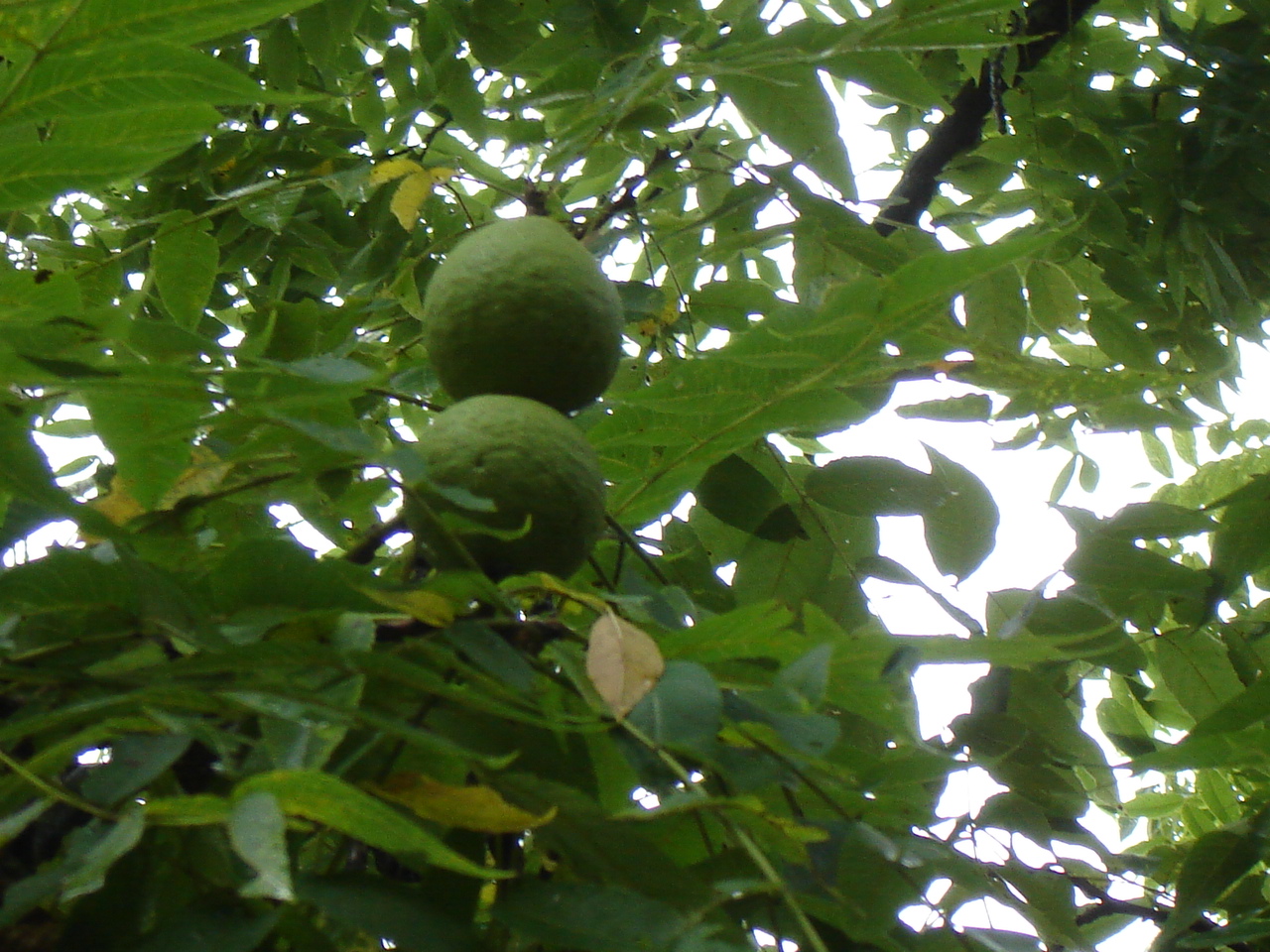
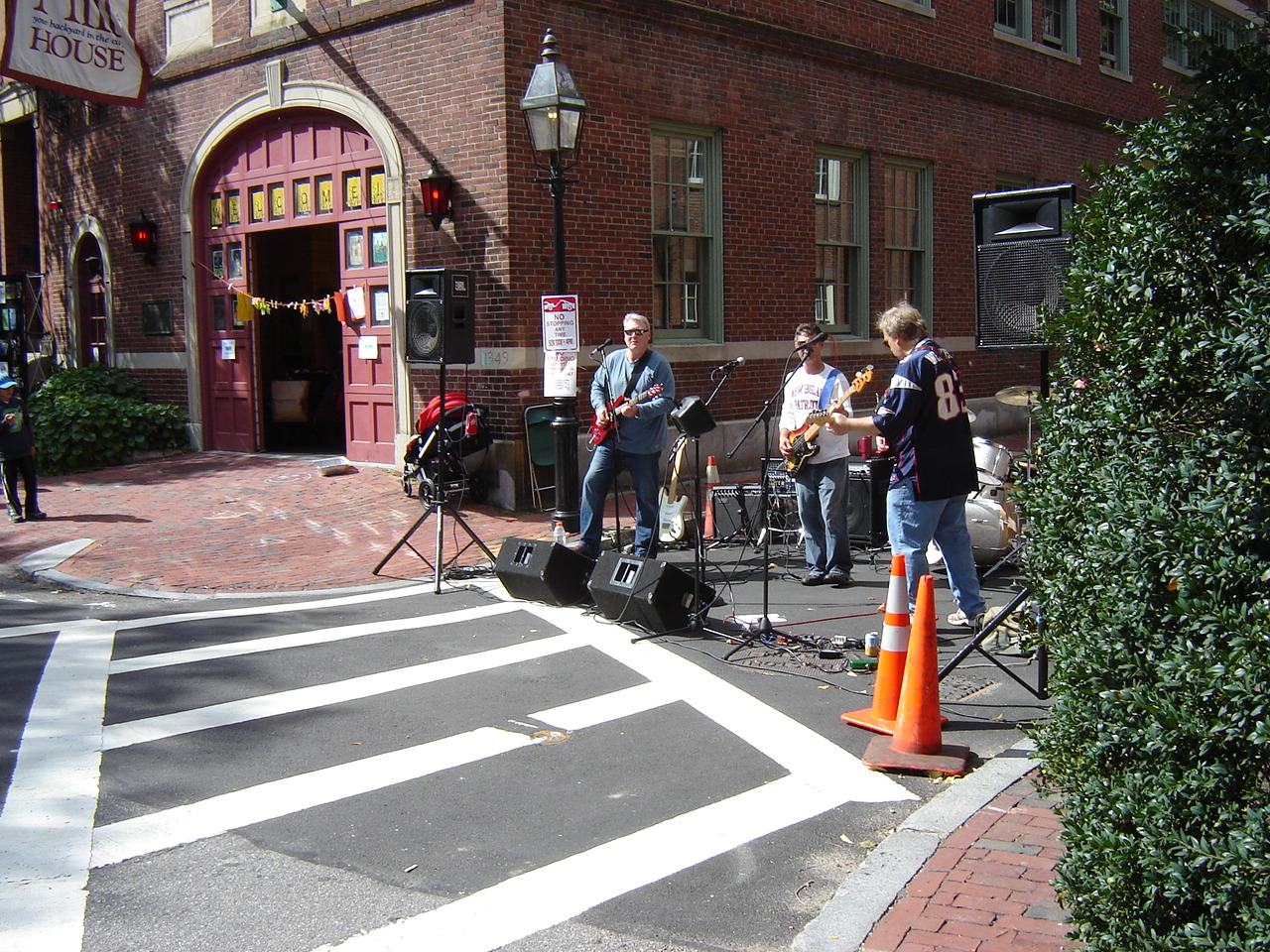
This is the time of year for walnut trees to bear fruit, for bees to bring in the last of the wine, and for block parties. Beacon Hill’s party is way more elaborate than any block party in Concord and is considered a time to raise funds for a cause. See if you can guess which party is which.

Orchard
by H. D.

I saw the first pear
as it fell—
the honey-seeking, golden-banded,
the yellow swarm
was not more fleet than I,
(spare us from loveliness)
and I fell prostrate
crying:
you have flayed us
with your blossoms,
spare us the beauty
of fruit-trees.

The honey-seeking
paused not,
the air thundered their song,
and I alone was prostrate.

O rough-hewn
god of the orchard,
I bring you an offering—
do you, alone unbeautiful,
son of the god,
spare us from loveliness:

these fallen hazel-nuts,
stripped late of their green sheaths,
grapes, red-purple,
their berries
dripping with wine,
pomegranates already broken,
and shrunken figs
and quinces untouched,
I bring you as offering.

Read Full Post »

Dear Poetry Lovers,

Please send me a haiku of yours to post. You may use the e-mail suzannesmom@lunaandstella.com or put your haiku in Comments. Let me know if you want me to use your first and last name or not.

I’ll start with one of mine.

Struck by lightning bug
Years ago, I know to look
For veiled messages.

Jane is letting me share this one of hers

Dandelions

 A child’s crayon suns,
Galaxies strewn on green skies;
The leaves are bitter.

Here is one Asakiyume wrote on a Halloween in the 1990s. She has probably forgotten.

Leaves salute the sun
Then fade away; the planet
Tilts toward dark, and night.

You can subscribe to A Poem A Day from the Academy of American Poets. I signed up after a tip from Ronnie, and I like the daily fix. It reminds me of book my friend Pam gave me when I moved to Minneapolis for a few years. It, too, was called A Poem A Day, and I liked getting into the habit of a daily read. Later, during a year of cancer ups and downs, a photocopied book of daily readings selected by patients was soothing. It’s out of print, and I’ve yet to find one I like as much for friends going through the same business. If you know a good one, I’m all ears.


Read Full Post »

Try to praise the mutilated world.

Remember June’s long days,
and wild strawberries, drops of wine, the dew.
The nettles that methodically overgrow
the abandoned homesteads of exiles.
You must praise the mutilated world.
You watched the stylish yachts and ships;
one of them had a long trip ahead of it,
while salty oblivion awaited others.
You’ve seen the refugees heading nowhere,
you’ve heard the executioners sing joyfully.
You should praise the mutilated world.
Remember the moments when we were together
in a white room and the curtain fluttered.
Return in thought to the concert where music flared.
You gathered acorns in the park in autumn
and leaves eddied over the earth’s scars.
Praise the mutilated world
and the gray feather a thrush lost,
and the gentle light that strays and vanishes
and returns.

—Adam Zagajewski (Translated, from the Polish, by Clare Cavanagh.)
Published in the New Yorker, September 24, 2011

Read Full Post »

Ever since the kids were little, we used the term “collapsing fit” to mean an emotional meltdown. It doesn’t need much explanation.

Then around 1990, I read about fainting goats and was fascinated by the idea that some animals collapse when frightened. Needless to say, goats that collapse when frightened by an enemy are fairly rare. Makes it hard to get away.

*

*

But one time I saw the ability to collapse benefit the human animal. Or maybe not.

It happened that a bunch of us teachers back in my first career, were concerned about an angry, out-of-control sixth-grader, so we called a meeting with his mother. After we laid out the problems as gently as possible, she fainted. After she came to, no one ever said anything to her about her son again. His classmates and teachers went for decades thinking they would read a headline about about some guy going postal and it would turn out to be this kid. I’m happy to say we were wrong. I never did learn the medical reason for his mother’s collapse.

This train of thought is the result of my reading in the science section of yesterday’s NY Times about a rare illness associated with the death of certain brain cells. It’s called cataplexy. And cataplexy is — get this — “a tendency to collapse when swept by strong emotions.”

I should write a poem. “A tendency to collapse when swept by strong emotions.” How great is that?

Or maybe one of you poets reading this blog would follow your personal train of thought, and write a poem related to cataplexy or collapsing. I would love to print one here.

Read Full Post »

Philip Levine, 83, is a poet laureate for our times. He expresses, as the NY Times puts it, the “gritty voice of the workingman.”

“Half an hour to dress, wide rubber hip boots,
gauntlets to the elbow, a plastic helmet
like a knight’s but with a little glass window
that kept steaming over, and a respirator
to save my smoke-stained lungs. I would descend
step by slow step into the dim world
of the pickling tank and there prepare
the new solutions from the great carboys
of acids lowered to me on ropes — all from a recipe
I shared with nobody and learned from Frank O’Mera
before he went off to the bars on Vernor Highway
to drink himself to death. A gallon of hydrochloric …”

Read the Times article.

Levine’s appointment as poet laureate feels timely to me for several reasons.

While income inequality in the country has become increasingly pronounced over the last few decades, public attitudes toward the labor unions that worked to level the playing field have become markedly negative. Are unions really no longer needed? Certainly, there have been abuses of their power: for example, the way some teachers unions have protected bad teachers. And weak government officials in Central Falls (RI), having routinely succumbed to the demands of public safety workers, now find there is no money to pay the promised benefits. This summer Central Falls filed for bankruptcy.

But intensely hostile antilabor actions in Wisconsin, Ohio, and even Maine are like throwing the baby out with the bathwater.

A balance between workers and other stakeholders seems to make more sense. Workers are still sometimes abused, after all. That’s why I was happy to see unions helping out foreign “cultural exchange” students to protest conditions at a Hersey’s plant in Pennsylvania last week. (I blogged about that here.)

Read Full Post »

An island neighbor has just published Criminal Ingenuity: Moore, Cornell, Ashbery, and the Struggle Between the Arts (Modernist Literature and Culture). Ellen has been studying poets Marianne Moore and John Ashbery, and artist Joseph Cornell for some years — first as a member of the faculty at Vanderbilt and now at Pratt. I don’t know much about Joseph Cornell, but I did hear novelist Jonathan Safran Foer give a lecture about how Cornell’s work inspired him to cut up Bruno Schulz’s “Street of Crocodiles” every which way from Sunday and make a kind of art book out of it.

A few poets read this blog from time to time, so you might want to take a look at Ellen’s book. If you read it, could you send me a short review to post?

Read Full Post »

James is an Irish poet, widely considered part leprechaun. Every few years he comes to stay with his cousins for a couple weeks, across the street from my house. James is on the left in this photo, which I took at the Fourth of July parade.

James has two main modes of conversation: storytelling and poetry recitation. It is a pure delight to chat with him. As we waited for the parade, he narrated pages of Irish history, including dates, and recited from W.B. Yeats and our own Nathaniel Hawthorne, among others.

Earlier, he was sitting on his cousins’ front porch and saw a young woman he knows coming across the street. He was moved by the way she walks, as he told me, and with a kind of poetic spontaneous combustion, intoned on the spot:

Meran, fairest maid art thou,

Lovely is thy stride.

My heart goes out to thee

As ebbs the great sea tide.

But, ah, my kind Meran, I’ll not forget thee.

Nor the kind words you said unto me.

James has self-published a couple books of lore in his unique style. He and his brother, both lifelong bachelors, sell peat. On certain Sundays, James bikes 18 miles to the ruins of an old monastery, where he narrates the history for visitors. Then he bikes 18 miles home. In any kind of weather. James is 73.

Read Full Post »

Suzanne began her retail career working summers just a few hours a week at a tiny toy store called Mouse House where her brother, John, had worked before. Between Mouse House and leaving college, there were at least two clothing stores and many restaurants. When she  graduated from college, she worked for a popular clothing manufacturer in New York, in the merchandising group. One of her tasks was to make up names for lingerie colors. A particular color she remembers was a shade of pink that she called “flirt.”

The NY Times just published an amusing article on the accelerating trend of naming colors to evoke an idea or a mood. There is an art to it.

“At Valspar, located in a Chicago high-rise near O’Hare airport, colorists can meet in ‘vignette’ rooms that encourage storytelling. One resembles an outside deck, replete with a porch chair and mural of Wrigley Field. Ms. Kim assigns the colorists homework, like browsing certain magazines and blogs. One, called colourlovers.com, allows users to create and share their own palettes; among more than one million offerings are I Feel Sorry for You and When Time Ran Out. They also watch movies and visit stores. And a few times a year, they head downtown for a big brainstorming session at a loft building called Catalyst Ranch and its brightly colored meeting spaces, which are intended to help employees think creatively. …

“Taryn Look, 25, an actress, who was checking out Home Depot’s Behr collection the other day, rolled her eyes at some of the names. ‘I wonder how much these people get paid,’ she mused, glancing at Genteel Lavender, a color
she said she would rebrand My Gay Best Friend. But she did pause at a color named Lightweight Beige, and soon she was telling a story about when her parents met. Her father told her mother that he liked her in beige, and so she swapped her once-colorful wardrobe for one that was all beige. Ms. Look said she would rename the color My Mother, After She Met My Dad.” Read more.

This reminds me of the poet Marianne Moore being asked to brainstorm names of cars. She came up with Turtle Top, but the idea was not adopted.

Use the comments feature to suggest a name for  a color? I’ll start. How about a sparkly blue called “Tanya Running through the Sprinkler”? Or a dark purple called “Black Fly Season.” Or a gold-orange called “At Last the Missing Manuscript.”

Not sure this will ever be my forte.

Read Full Post »

I have always liked reading poetry, but there is something extra delightful about actually knowing people who write good poetry.

Nancy Greenaway is a friend I see summers in Rhode Island. I learned last weekend that among other output, she recently published this poem at the Texas Observer site. It begins:

Salaam.

You write ghazals under shade of an acacia,

speak Farsi or Pashto,

eat qurmas, sabzi, lamb kebabs,

wear burqas and hijabs.

I write free verse under shade of a maple,

speak English,

eat pizza, cod, corn on the cob,

wear jeans and t-shirts. 

Read it here. 

Francesca Forrest has several online poetry outlets. In the tantalizing “Temptation,” an internal voice whispers,

Throw yourself down from here; try!

This is a dream, and you will fly.

Read “Temptation” here, published at the Linnet’s Wings. Two other poems by Francesca are “Songs Were Washing Up,” in the publication Scheherzade’s Bequest, and “Old Clothes Golem,”  at the site Stone Telling.

When Suzanne was getting ready to launch Luna & Stella, she came to the conclusion that a poet should write the descriptions of the birthstones, because only a poet would have the right artistic sensibility. As it happened, she knew a poet who also did copywriting, Providence-based poet Kate Colby. Here is what Kate wrote about the gems for Luna & Stella.

You might also like to read one of Kate’s poems, “A Body Drawn By Its Own Memory.” It begins :

Certain labels are impervious

to solvents, impermeable

as drawn bridges. …

I will post poems from time to time. Perhaps you will let me know what you like. Try the comments feature. Or e-mail me at suzannesmom@lunaandstella.com.

Nancy writes: 
“Thought you might be one of the few who would appreciate our adventures in Boston/Cambridge on Sunday and Monday. Malcolm and I had a one-night vacation by driving to Cambridge on Sunday, staying at the Marlowe Hotel (with a view of the Charles) and hearing Naomi Shihab Nye read and then receive the Golden Rose Award from the Poetry Club of New England. She concluded with her poem about the Block Island ferry (which will appear in her new book of poems to be released by BOA Editions in September.) Before the reading, to the amazement of all in the audience, she rushed up the center aisle directly to me and gave me a wonderful hug.”

Read Full Post »

« Newer Posts