Feeds:
Posts
Comments

Posts Tagged ‘postaday’

Rodin’s the Thinker, Wikipedia Commons

Went to Augusta, Maine, yesterday for a conference, where I took a bunch of pictures but not a single good one. Even when a conference is interesting, as this one was, it’s very hard to make it look interesting, although in one shot a panelist looked as absorbed as Rodin’s The Thinker.

I need a camera that shows thought processes — or a cartoonist who can draw light bulbs over people’s heads.

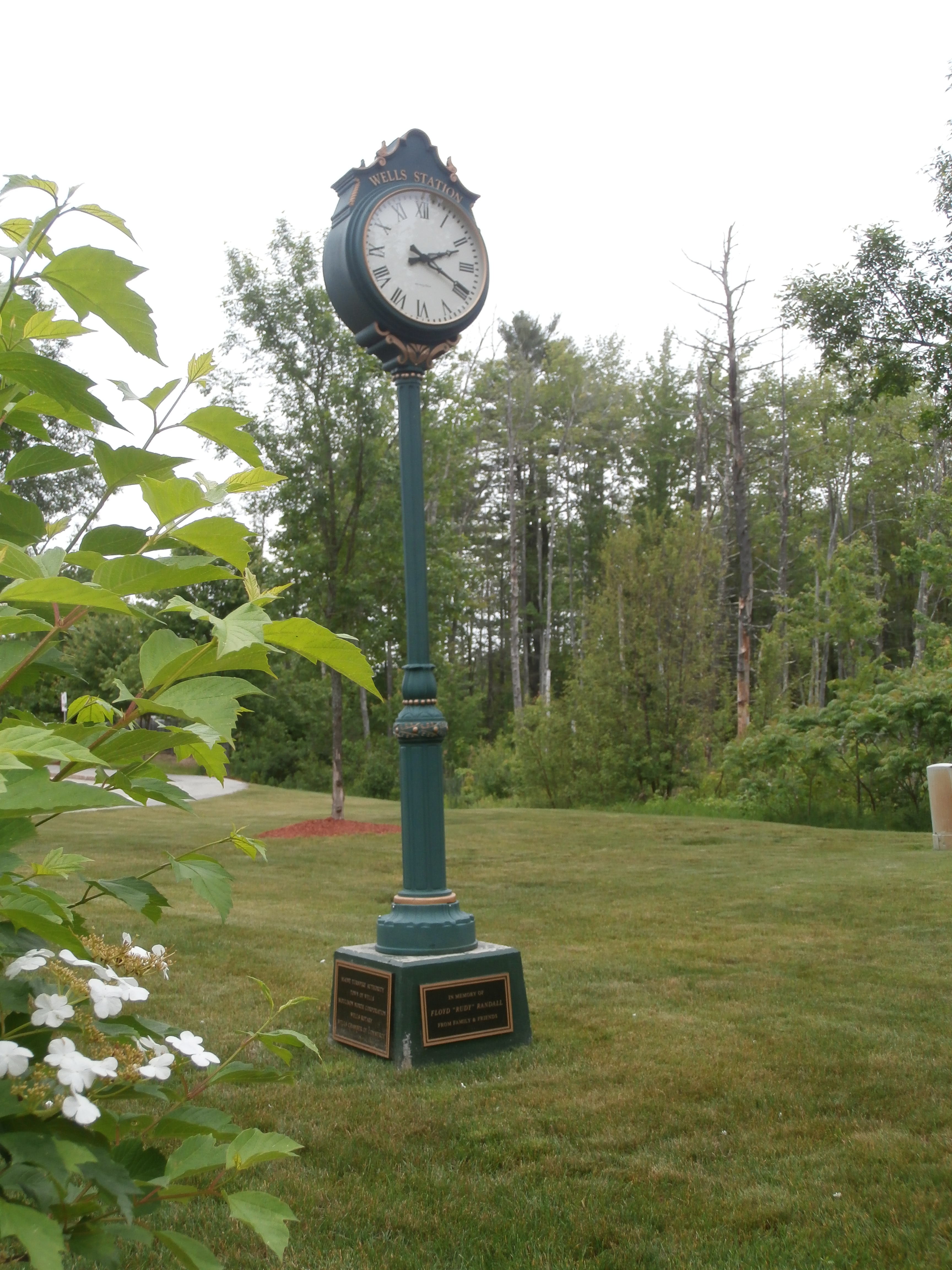
So here are few photos of a stretch-my-legs stop instead. Wells was about halfway to the Augusta, and I was curious about it as I always heard that a founder of Wells (Edmund L. Littlefield) was an ancestor. I couldn’t stay long, but the spiffy little train station made me want to take the Downeaster from Boston someday. Maybe spend a weekend in Portland and check out its art museum. …

wells-maine-train-station

wells-train-clock

wells-stop-on-Downeaster

Read Full Post »

“JR,” a French street artist, has created a series of murals called “The Wrinkles of the City.”

The wrinkles are the intriguing faces of older people, often pictured on crumbling edifices. Kevin Harnett writes about them at the Sunday Globe, here.

“JR, a Frenchman whose real name is unknown, has become an international art celebrity thanks to his work flyposting oversized black-and-white photographs, often portraits of ordinary people’s faces, to the sides of buildings in cities around the world. …

“JR’s series ‘The Wrinkles of the City,’ which he began in Cartagena, Spain, has also appeared in Los Angeles and Shanghai. More recently he and collaborator José Parlá took to Havana, where they bedecked the old communist capital with the faces of dozens of Cuban Revolution survivors wearing expressions of deep-creased sanguinity. ‘The Wrinkles of the City, Havana, Cuba’ has been adapted for display at the Bryce Wolkowitz Gallery in New York City.” The show may be seen until July 12.

Street art in Cuba by JR

Read Full Post »

“How did the turtle get its shell?” asks Carolyn Y. Johnson in the Globe.

“A group of scientists at Yale University and the Smithsonian Institution argue that a reptile fossil that has been gathering dust in museum collections is actually a turtle ancestor, and that its reduced number of ribs, distribution of muscles, and T-shaped ribs could help settle the question once and for all.

“In a paper published Thursday in the journal Current Biology, they unveil the argument that a 260 million-year-old creature called Eunotosaurus africanus was a turtle ancestor, hoping to help resolve a debate that has split the scientific community for decades. …

“The ink spilled so far has roughly divided the scientific community in two camps. On one side are those who believe that the turtle shell came about as external bony scales, similar to the ones found on armadillos or certain lizards, that eventually fused together with the reptile’s internal rib cage. On the other side are those who believe that reptiles’ ribs instead began to broaden until they eventually formed the bony protrusion that is the shell, mirroring the way that turtles develop in the egg.”

Which theory does the 260-million-year-old Eunotosaurus support? Read up.

“ ‘The results are pretty convincing; previously I was skeptical as to whether Eunotosaurus was a likely relative of turtles,’ [Kenneth Angielczyk, a paleobiologist from the Field Museum in Chicago], wrote in an e-mail. ‘But Tyler [Lyson]’s results make me think it is a plausible idea.’  ”

Scientists clearly have a lot of fun, but let me try a more Kipling-esque approach to the turtle question.

When the world was new, Oh, Best Beloved, the Turtle was a small, soft creature who played all day with other small, soft turtles on the banks of the great gray greasy Limpopo River all set about with Giant Eucalyptus Trees. He was timid. He was shy. He kept his distance from the great beasts of the jungle. But he was watchful, too, and he learned from what he saw. And so it happened, Oh, Best Beloved, that at the very day, hour, and minute that the Giant Python Rock Snake stretched out the stumpy nose of the Elephant’s Child, the Turtle felt a great fear come upon him. And he ran and rolled himself in the grease of the greasy Limpopo River all set about with Giant Eucalyptus Trees, raced to the most gigantic of the Giant Eucalyptus Trees, embedded his sticky self in the most gigantic of the Giant Eucalyptus Trees seeds, and there remained.

When he felt brave enough to stick his head out, he reported to all the small, soft turtles what he had seen. And thus the world gained not only a Turtle with a Shell, but the very first embedded reporter.

Photo: Luke Norton
This South African sideneck turtle bears a structural resemblance to the fossil of a creature called Eunotosaurus africanus.

Read Full Post »

As a scientist with young children, Gregg often tweets ideas for engaging kids in science. Recently @gfavalora tweeted about a website with instructive and fun videos. It’s called The Kid Should See This.

The site describes the video below thus:

“To celebrate World Ocean Day 2013, director and animator Akiko McQuerrey created a Papa Cloudy stop-motion music video: Overfishing Song from Papa Cloudy’s Restaurant.

Overfishing—catching fish faster than they can reproduce—is an urgent and devastating issue, and may be the single biggest threat to ocean ecosystems… The global fishing fleet is operating at 2.5 times the sustainable level—there are simply too many boats chasing a dwindling number of fish.

“What can we do to help? With more sustainable practices, our oceans can be healthy and plentiful for everyone. Recommendations from the Monterey Bay Aquarium suggest that we select sustainable fish from restaurants and stores, and diversify the kinds of fish we eat beyond just the popular choices.

“To help make these choices easier, they created a Monterey Bay Aquarium Seafood Watch pocket guide and mobile app. They even have recipes and more information about how to solve our ocean challenges.”

More videos here.

Read Full Post »

This is the story of how a song saved a cultural center in the Catskills.

Dennis Gaffney writes for the NY Times that at a recent celebration of success,  “Jay Ungar, a fiddler wearing a black vest and hiking boots, and his wife, Molly Mason, playing guitar, stood on a stage in a barnlike performance hall that did not exist a year ago. ‘Can you stand to hear this tune one more time?’ he asked the audience. …

“The tune is ‘Ashokan Farewell,’ the bittersweet lament familiar to millions as the theme song that the filmmaker Ken Burns used for the emotional crescendos of his Civil War series. But most do not know that Mr. Ungar’s moving hymn helped save the Catskill place that inspired the song, resulting in the Ashokan Center, a $7.25 million campus here dedicated to traditional music, Catskill history, environmental education, and local arts and crafts. …

“Many still assume that Mr. Ungar wrote ‘Ashokan Farewell’ with the Civil War in mind. But he wrote it on a September morning in 1982, after the end of his third Ashokan summer music and dance camp on this property, which the State University of New York at New Paltz owned and had used since 1967 as a field campus for environmental education.

“ ‘I left on a cloud of utopian euphoria,’ Mr. Ungar said of that summer. ‘You try to keep it alive, but it evaporates.’ ”

The song went on to have a life of its own, and Ungar even performed it at the White House. NY Gov. Pataki had heard it, too, and when a dismayed Unger contacted him about the pending sale of the Ashokan Center in Olivebridge,  the governor took action.

Soon a lot of people were on board, with the wistful song always at the heart of their efforts.

Writes Gaffney, “Mr. Ungar has come to believe that his song, like a traditional hymn, evokes much more than loss. In the mid-1990s, he got an e-mail from a man in Africa who said he was driving in his car when he heard ‘Ashokan Farewell’ on the radio. ‘He started crying uncontrollably and he had to pull off the road,’ Mr. Ungar recalled. ‘He said that in his culture, after the age of 10, men don’t cry, but he needed to cry.’ ”

More.

Photo: Nathaniel Brooks for The New York Times
Jay Ungar and Molly Mason playing “Ashokan Farewell” at the Ashokan Center.

Read Full Post »

Heavy rain Friday night stunned our dogwood. I include before and after, plus a gaggle of other photos from my springtime meanderings.

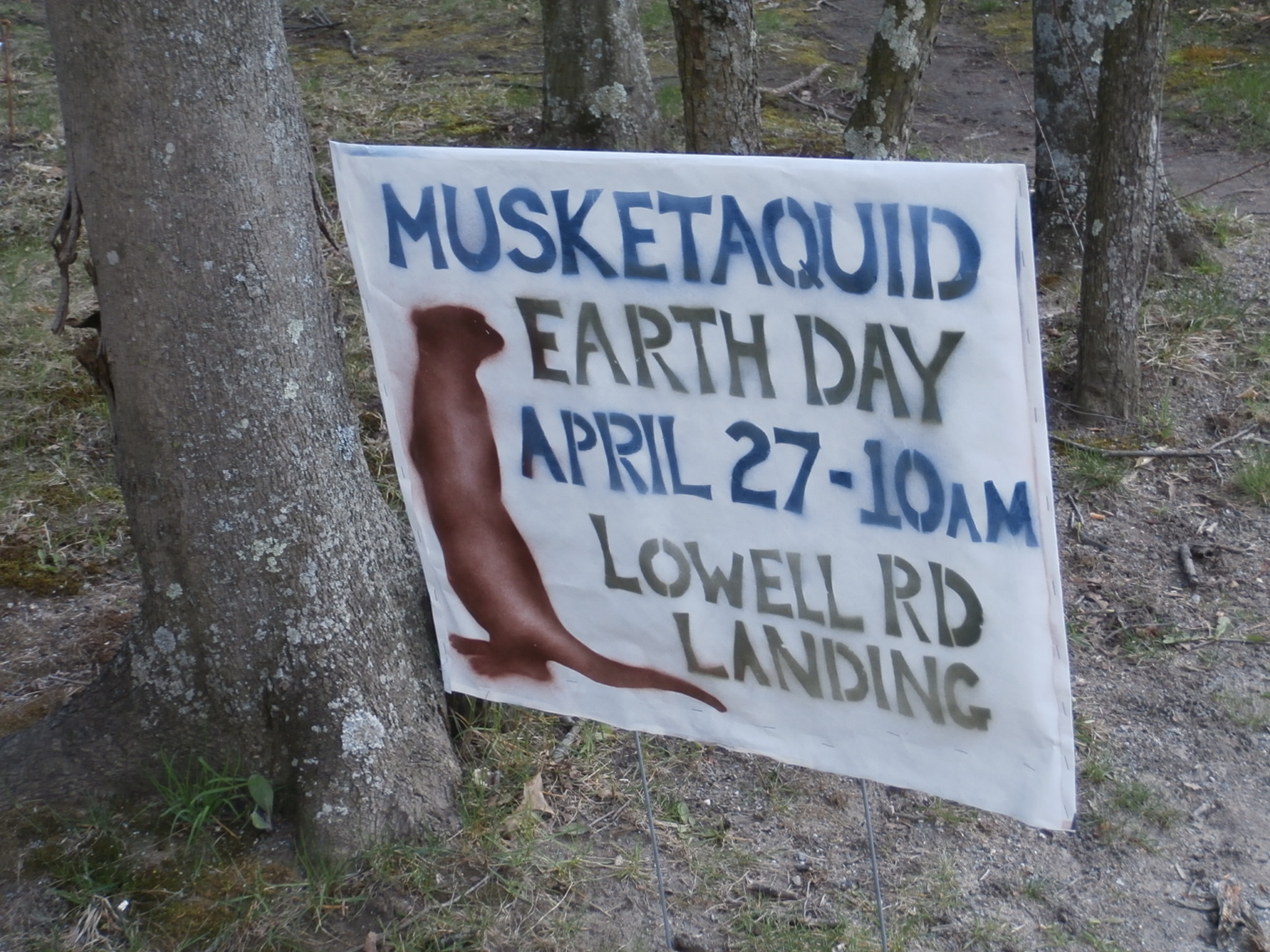
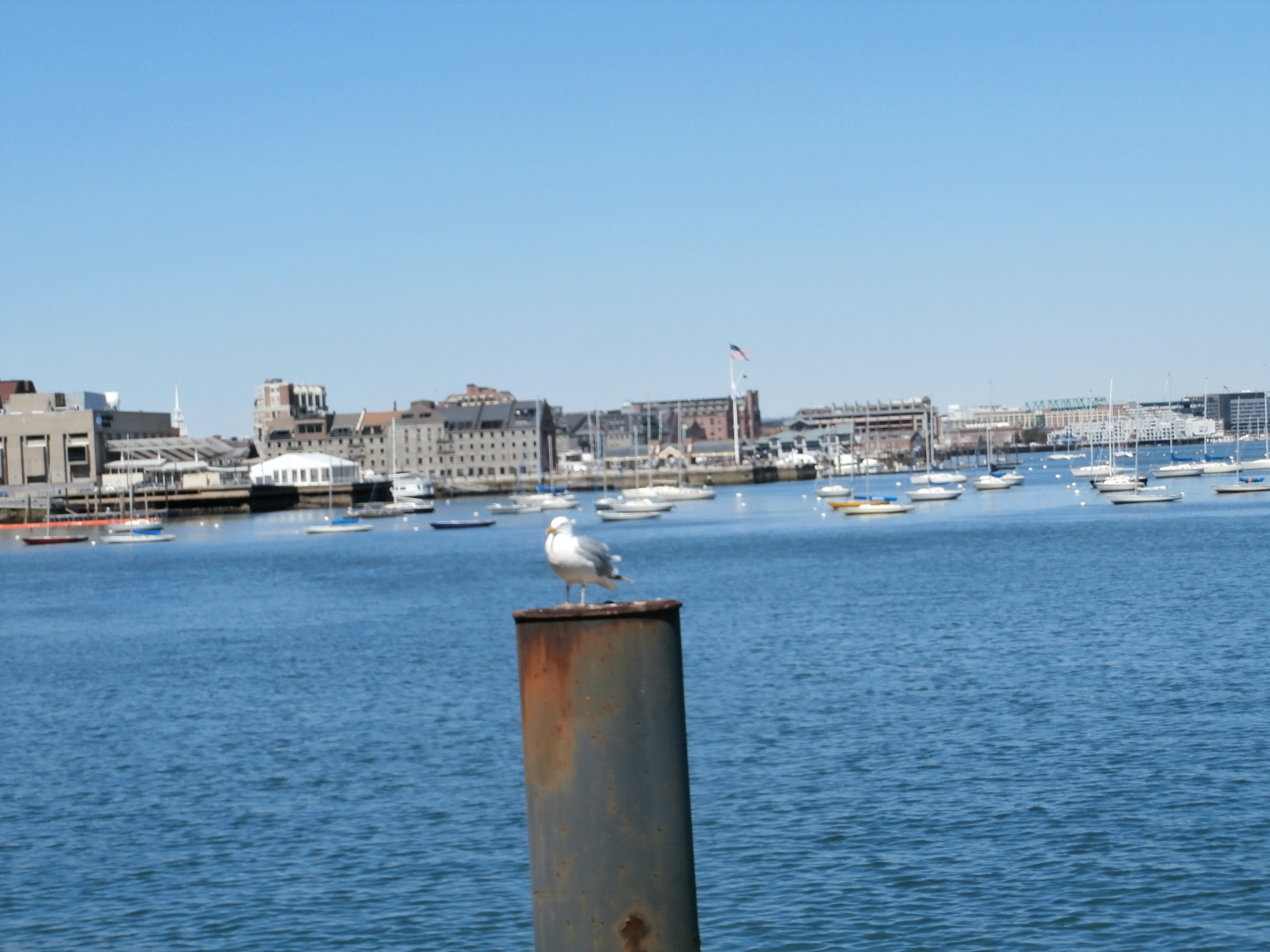
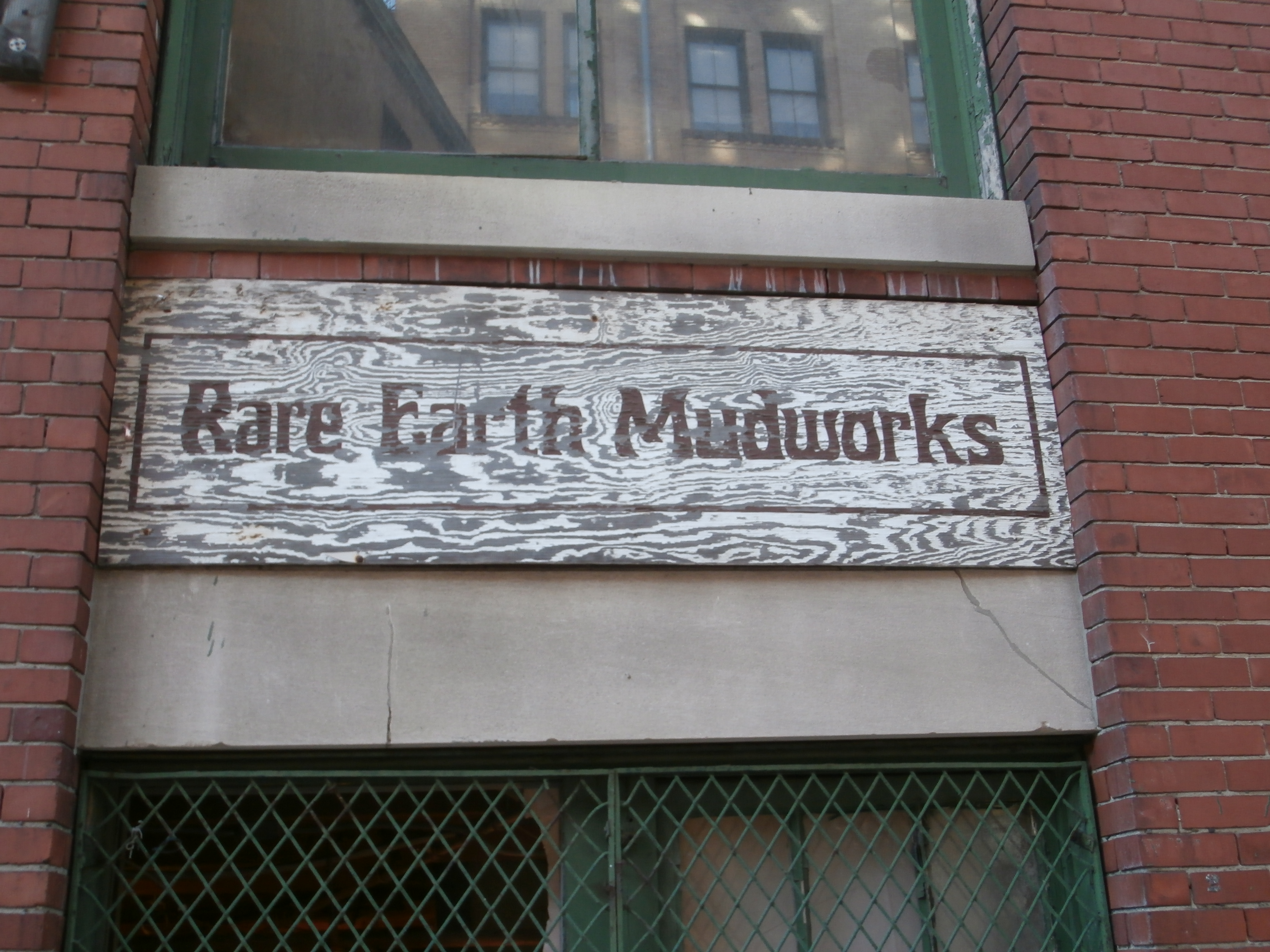
The elephant mural is at the entrance to Boston’s Chinatown. The fancy light fixture is outside Trade restaurant. The fence with crocheted wheels is at the Davis Square subway stop. The fountain is next to a rose garden honoring the mother of President Kennedy, Rose. The urban birdhouse is in the Greenway. The herring gull is at Boston Harbor. The Canada Geese are too prolific. The Mudworks sign is in Fort Point. And the flowers are at Verrill Farm.

dogwood-late-May

rain-pummeled-dogwood

elephant-mural-chinatown

trade-restaurant-lamp

earth-day-concord-mass

davis-square-somerville

rose-kennedy-garden-fountain

birdhouse-downtown-boston

gull-boston-harbor

canada-geese-goslings

fort-point-sign

verrill-farm-concord-mass

Read Full Post »

A WordPress blogger who clicked on one of my posts has a nifty site, here. The blogger is Razvan, from Romania. Razvan apologizes for a lack of fluency in English, but I am grateful for any amount. Wish I could speak other languages.

You will like Razvan’s origami. Here’s a description of the fruit basket below.

“I want to introduce another model Origami3d origami fruit basket, this 3d origami model  consists of about 3,000 pieces. Origami 3d basket is 25 cm diameter and 9 cm tall and is made of around 1,100 pieces.Pieces are made from rectangles of paper with dimensions of 5.2-3.6 cm and took me about 16 hours to finish. 3D Origami fruit are  made of around 170-500  pieces . Pieces are made from rectangles of paper with dimensions of 3.8-2.7cm and took me about 24 hours all.”

I hope Razvan checks out a couple of my past posts on paper art. This one is from Tokyo Bling. This one involves a stealth project in English libraries. And Peter Gentenaar’s Flying Paper Jellyfish and other paper artworks are gorgeous.

3-D Fruit Basket Origami: Razvan at Razcaorigami.

Read Full Post »

Speaking of forebears, I interrupt this program to ask, Do you have something for your grandfather or father on June 16? Luna & Stella has unusual locket cufflinks into which you can put tiny mementos or birthstones of family members.

Read Full Post »

You have heard of Let Us Now Praise Famous Men, the Depression era book on poverty in the South by James Agee and photographer Walker Evans. The forerunner was an article assigned by Fortune magazine to a young Agee but never published. This past Tuesday it was published as a book.

There are a couple aspacts to Christine Haughney’s NY Times story on the new book that intrigue me. One is the image of a young Agee moved by the plight of the sharecroppers and indignant at the magazine’s apparent exploitation of them.

The other is  how the original subjects, and later, their children, were embarrassed and didn’t want names used, but the grandchildren are able to see the beauty in their forebears.

Writes Haughney, “In 1936 Fortune magazine’s editors assigned a relatively unknown and disgruntled staff writer named James Agee to travel to Alabama for the summer and chronicle the lives of sharecroppers. When Agee returned, he was inspired by the subjects he had met and lived with, but frustrated by the limitations of the magazine format. His subjects, he argued, warranted far more than an article.

“What readers have known for decades is that Agee used his reporting material to create his 1941 book, Let Us Now Praise Famous Men, a literary description of abject poverty in the South, accompanied by starkly haunting Walker Evans photographs.

“The original magazine article was never published, as Agee squabbled with his editors over what he felt was the exploitation and trivialization of destitute American families. In the early pages of Famous Men, he wrote that it was obscene for a commercial enterprise to ‘pry intimately into the lives of an undefended and appallingly damaged group of human beings.’ What readers are about to discover now is what all the fighting was about.

“Melville House [is publishing] Agee’s original, unprinted 30,000-word article in book form, under the title Cotton Tenants: Three Families. The publication gives Agee fans a glimpse of an early draft of what became a seminal work of American literature.

” ‘With the book, we have a much better map of him writing Let Us Now Praise Famous Men,’ said John Summers, who edited Cotton Tenants and printed an excerpt from the article in a literary journal he edits, The Baffler. …

“Irvin Fields, whose grandfather Bud Fields was featured in the book, said he didn’t mind that the names were now being published.

“ ‘It makes me appreciate my relatives for bearing up under those circumstances and making me appreciate what I’ve got today.’ ” More.

A photo by Walker Evans, from “Cotton Tenants: Three Families,” via Library of Congress

Read Full Post »


After seeing a beautifully composed NY Times photo of people walking by bluish and rose-colored buildings in a nearly empty North Korea street, I began following the photographer on twitter, .

David Guttenfelder is one of the few Western photographers in North Korea. He was there when former Secretary of State Madeline Albright met with the previous ruler, Kim Jung Il. He takes pictures for media outlets and for his own amusement. His Instagram pictures of “artifacts” like a frilly computer screen cover and visitor handbooks can be hilarious or creepy.

Nina Porzucki had a lovely piece about Guttenfelder at Public Radio International’s “The World,” here. If you go to the PRI site, you have your choice of reading the transcript or listening to the report via SoundCloud.

The photographer tells Porzucki, “Over the years, every time I’ve gone back I’ve had more access, I’ve seen more. I’ve actually met people, I’ve seen real things.

“And I had this transformation. I kind of feel like that’s what I’m trying to do with my photography, is to take people who see my pictures through the same process. When they opened up the 3G local network and suddenly I could post pictures or tweet from the streets, from North Korea, that was more revolutionary than it would be anywhere else in the world, for sure. It’s sort of anything goes. I can just stop and take pictures of all these little mundane things in life that aren’t really so-called ‘newsworthy.’

“These are the things you run past on your way to covering the news. You know, a picture of bar snacks or a little yellow computer cover over a computer terminal, and none of them are great pictures the way photographers describe great pictures, ‘Oh, that’s a great picture.’ …

“It has as big of an impact probably as my professional daily newspaper work does. … I know that I’m not photographing anywhere near everything that’s going on in the country, especially the darkest things. But this is a long-term project, and we’re pushing to do as much as we can. If I’m not there, the only pictures that we’re getting out of Korea are distributed by Korean Central News Agency, where propagandist is not a dirty word.” More.

Photo of North Korea: David Guttenfelder, AP


Read Full Post »

Nearly every morning when I was four or so, my mother would send me upstairs to wake my father, and he would sing in a hungover gravelly voice “Minnie the Moocher.”

Last weekend I sang a few lines to my Swedish son-in-law, including “She had a ro-mance with the King Sweden/ Who gave her things that she was needin’.” I won’t repeat what he said about another King of Sweden.

See all the correct lyrics here.

Anyway, I was pondering the phrase “she was the roughest, toughest frail” when I happened upon a radio talk show on how we date ourselves if we use older terms: if we say “blouse” instead of “shirt” or “slacks” instead of “pants.” The radio host made a big deal of young people who don’t know that a “churchkey” opens bottles, for example.

Photo of a “churchkey”: Wikipedia.com

Churchkey is a fun term, but older terms from my father are even more fun. Do you know “infradig,” for example? Other words he used will come to me later, and I’ll update.

Meanwhile, what is a “frail,” rough and tough or otherwise? The Slang Dictionary provides the usage in a sentence:

“n. a girl; a woman. (Underworld. frail frame = dame. Detective novels and movies):  ‘I’ll shoot the frail if you don’t hand it over!’ Dictionary of American Slang and Colloquial Expressions, by Richard A. Spears. Fourth Edition.
Copyright 2007. Published by McGraw Hill.

By the way, almost any song from the musical Guys and Dolls will give you a flavor of the period I’m talking about.

And here’s Cab Calloway, who made Minnie famous.

Read Full Post »

I love stories like this in any field, even a field as foreign to me as mathematics.

A mathematical puzzle that most experts didn’t expect to see solved in their lifetime has been quietly mastered by a professor in New Hampshire. He just got an idea and worked it out.

Carolyn Y. Johnson covers the story for the Boston Globe:

“A soft-spoken, virtually unknown mathematician from the University of New Hampshire has found himself overnight a minor celebrity, flooded with requests to give talks at top universities.

“On May 9, mathematician Yitang Zhang, who goes by Tom, received word that the editors of a prestigious journal, Annals of Mathematics, had accepted a paper in which he took an important step toward proving a very old problem in mathematics.”

He showed that there are “an infinite number of primes separated by less than 70 million. [It] excites mathematicians because it is the first time anyone has proved there are an infinite number of primes separated by an actual number. … News of the feat rippled across the math world.

“ ‘This is certainly one of the most spectacular results of the last decade,’ Alex Kontorovich, a mathematician at Yale University, wrote in an e-mail. ‘Many people expected not to see this result proved in their lifetime.’

“Zhang said that he began to think seriously about solving the problem four years ago. … The epiphany did not come to him until July 3 of last year, when he realized he could modify existing techniques, building on what others had tried.

“ ‘It is hard to answer “how,” ‘ Zhang wrote in an e-mail. ‘I can only say that it came to my mind very suddenly.’

“The mathematician lives a simple life that he says gives him the ability to concentrate on his work. … Zhang’s achievement shows what can be accomplished by the elegant instrument of the human mind, working alone.

“ ‘Keep thinking, think of it everyday,’ Zhang said he would tell himself. ..

“ ‘The old adage is that mathematics is a young person’s game, and moreover most of the top results come from people or groups of people known to produce them,’ Kontorovich wrote. “Professor Zhang has demonstrated not only that one can continue to be creative and inventive well into middle-age [he’s in his 50s], but that someone working hard enough, even (or especially) in isolation, can make astounding breakthroughs.’ ”

I love the reminder about the importance of time to think. Everyone needs time to think. Even people who are not solving math puzzles for the ages.

Photo: Boston Globe

Read Full Post »

Every day I look at the statistics that WordPress supplies to its bloggers.

On May 31, for example, I had 25 visitors (other than the folks who subscribe) and 35 views of different entries. There were a bunch of visitors from the United States, three from Germany, and one each from Japan, Poland, Haiti, Canada, Denmark, Switzerland, and Indonesia. No clicks on any of my links that day.

I would love to know more than just bare bones about these visitors. If I knew more, I’d try to post about things that might interest them.

Words have double meanings, which is why I eventually had to elide the two-word name of a certain white whale. And there is apparently a bus company called R*d Bus (guess the missing letter) that finally forced me to remove my picture of a r*d bus. It was just too lame to be getting all those hits from folks wanting tours of Australia.

Here are the search terms that brought folks to me on Friday: “corinna da fonseca-wolheim,” “inflatable flood tubes flooding house,” “swidish [sic] mom blog rose,” “coffee planting business model,” “mom storytelling to child, reuters,” “christy maclear,” “naomi shihab nye ghazal,” “mom blog income.”

Sometimes I have no idea why a search engine sent a particular query here. Sometimes I can guess. Corinna writes for the NY Times, and I have featured her articles several times. And I did have a post on inflatable flood tubes.

Unless they are in the archives, WordPress shows me which entries got viewed by the visitors on a given day. So I can assume that my post on a coffee business in Haiti was the draw for the search term “coffee planting business model.”

No one should come to me for “mom blog income.” But I am amply paid in technology and the great satisfaction of mastering a daily challenge and helping out.

Photo at Verrill Farm, Mother’s Day, 2013

3 grandchildren

Read Full Post »

On Saturday I took a miserable walk in the wind and rain, temperature in the 40s. Today the temperature is in the 90s. Well, you know New England.

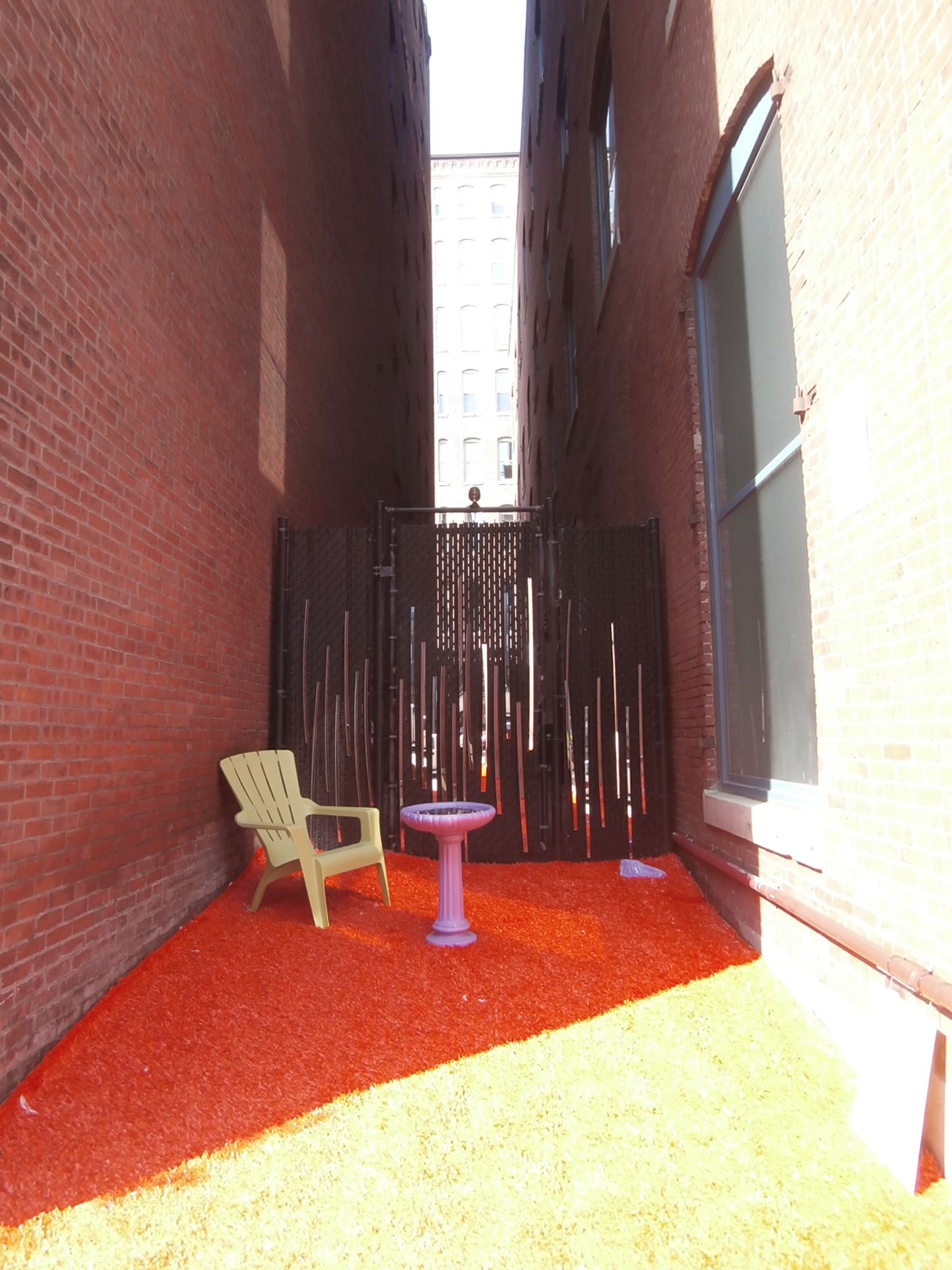
In the nicer weather I’ve been walking around and clicking. Would love to have you weigh in on any of these pictures, especially the ones that make you say, “What the heck?”

mural and graffiti, concordfort point fire escape


congress st nookleaning in - fort point


mysteriy plant like fireworksfort point - urban rebirth


random angel

random glam angel

Read Full Post »

When I got my current job, I went through the human resources “onboarding” with a young man from Mali. Even though he went back to Africa a couple years ago, we keep in touch. Naturally, I was worried when radicals took over Timbuktu, Mali, for a while. Fortunately, Mamoudou wasn’t living in Mali at the time, although he says Guinea is not that much safer.

Because of Mamoudou, I continue to follow the Mali news, and was especially interested in a link at the Arts Journal blog today: “Mali’s Underground Railroad: How Timbuktu’s Ancient Manuscripts Were Smuggled To Safety.”

Writes Sudarsan Raghavan of the Washington Post, “It was 7 o’clock on a hot night in August, and Hassine Traore was nervous. Behind him were 10 donkeys, each strapped with two large rice bags filled with ancient manuscripts. The bags were covered in plastic to shield them from a light rain.”

Radicals had taken over Timbuktu four months earlier and “had demolished the tombs of Sufi saints. They had beaten up women for not covering their faces and flogged men for smoking or drinking. They most certainly would have burned the manuscripts — nearly 300,000 pages on a variety of subjects, including the teachings of Islam, law, medicine, mathematics and astronomy — housed in public and private libraries across the city.”The scholarly documents depicted Islam as a historically moderate and intellectual religion and were considered cultural treasures  …

“A secret operation had been set in motion … It included donkeys, safe houses and smugglers, all deployed to protect the manuscripts by sneaking them out of town.

“This is the story of how nearly all the documents were saved, based on interviews with an unlikely cast of characters who detailed their roles for the first time. They included Traore, a 30-year-old part-time janitor, and his grandfather, a guard. …

“The New York-based Ford Foundation, the German and Dutch governments, and an Islamic center in Dubai provided most of the funds for the operation, which cost about $1 million.

“ ‘We took a big risk to save our heritage,’ said Abdel Kader Haidara, a prominent preservationist who once loaned 16th- and 18th-century manuscripts from his family’s private collection to the Library of Congress. ‘This is not only the city’s heritage, it is the heritage of all humanity.’ ”

There are heroes everywhere, keeping a low profile. And I am also pretty impressed with the funders, springing into action like that.

More here.
Map: National Geographic

Read Full Post »

« Newer Posts - Older Posts »