Feeds:
Posts
Comments

Posts Tagged ‘reading’

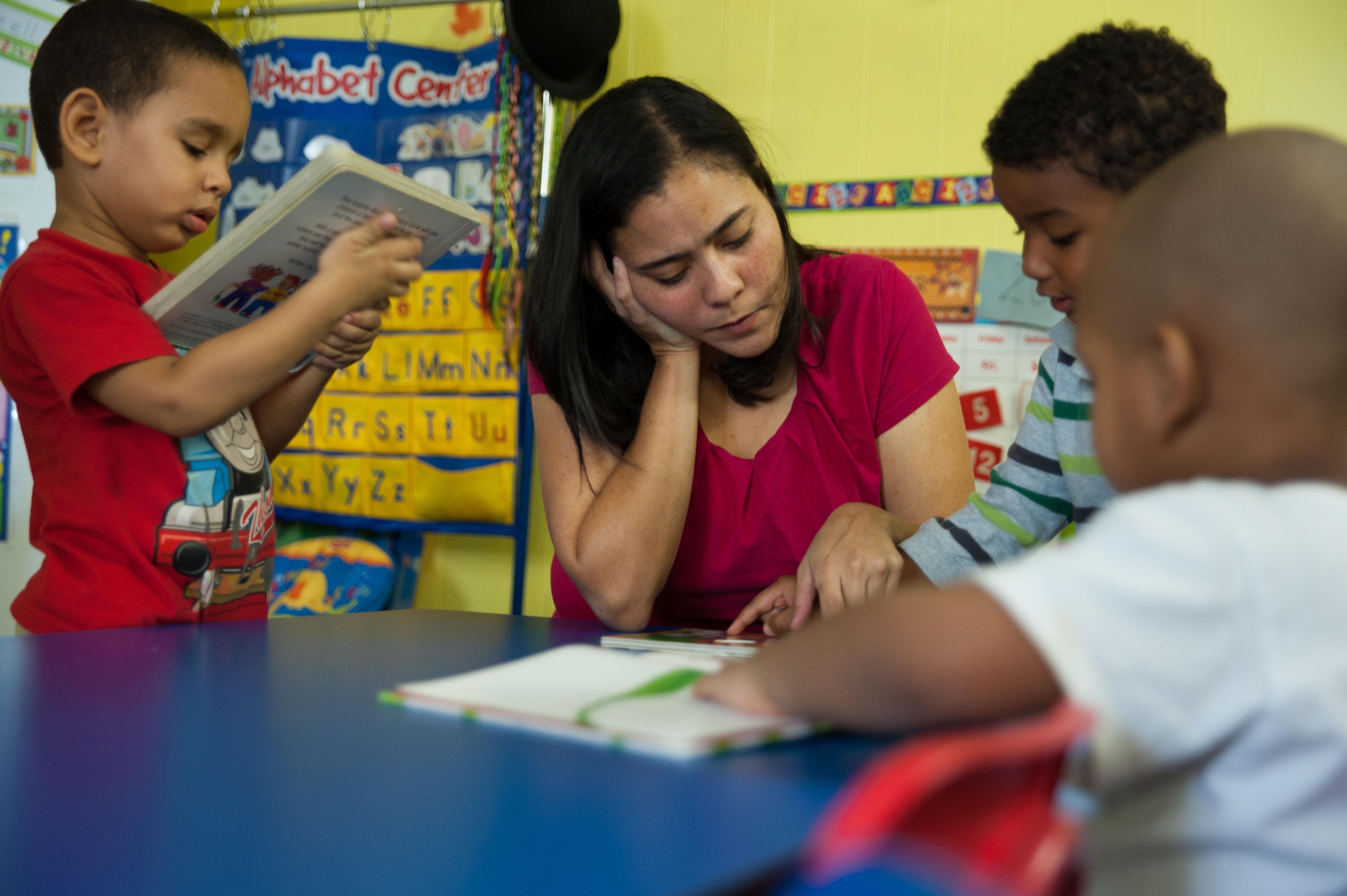
Back in first-grade, we learned to read from books featuring invariably blond, blue-eyed children. Today, primers have more variety, but multicultural pleasure reading, where it exists, is not always available to poor children.

Leslie Kaufman wrote recently at the NY Times that a  “nonprofit called First Book, which promotes literacy among children in low-income communities, announced the Stories for All project, a program intended to prod publishers to print more multicultural books. …

“In a 2012 study, the Cooperative Children’s Book Center at the University of Wisconsin-Madison evaluated some 3,600 books, looking for multicultural content. Of the books examined, 3.3 percent were found to be about African-Americans, 2.1 percent were about Asian-Pacific Americans, 1.5 percent were about Latinos and 0.6 percent were about American Indians.” More.

First Book picked two winning publishers in its first Stories for All competition — HarperCollins and Lee & Low Books — and purchased $500,000-worth of books from them. The books “will be available beginning in May through the First Book Marketplace, a website offering deeply discounted books and educational materials exclusively to schools and programs serving kids in need.”

Among the books are:  “Shooter”, Walter Dean Myers (HarperCollins); “Tofu Quilt”, Ching Yueng (Lee & Low Books); “In the Year of the Boar and Jackie Robinson”, Bette Bao Lord (HarperCollins); “The Storyteller’s Candle: La Velita de Los Cuentos”, Lucia Gonzalez (Lee & Low Books); “El Bronx Remembered: A Novella and Stories”, Nicholasa Mohr (HarperCollins); and “Passage to Freedom: The Sugihara Story”, Ken Mochizuki (Lee & Low Books).

More information at FirstBook.org.

Photograph: Strategies for Children

kids--teacher

Read Full Post »

A Little Free Library has come to Cambridge.

Writes Jan Gardner at the Sunday Globe, “About a block from the Cambridge Public Library, its Lilliputian cousin is perched atop a post on the sidewalk. At this Little Free Library, open since mid-October, there are no due dates, late fees, or library cards. Made out of recycled wood, it consists of a single shelf that holds about 20 books.

“The library’s founders are Laura Roberts and Ed Belove who put it in front of their house at 1715 Cambridge St. so they can keep an eye on it. …

“Sabrina Françon, a student at the nearby Harvard Graduate School of Design, sees the Little Free Library as an example of tactical urbanism, a trend she is studying. She wants to determine whether small playful citizen projects like the Little Free Library influence a neighborhood’s social capital.” Roberts reports to Françon what she sees from the window.

“The little library had its origins on Facebook. A friend of Roberts posted a message about Little Free Library, a nonprofit that started in Wisconsin three years ago. Founder Todd Bol built the first library in tribute to his late mother, a book lover.”

More from the Globe. You may also want to read my earlier post on the concept here. By the way, have you ever noticed that the Globe posts weekday articles fast, but Sunday Globe articles like this one may wait until Tuesday.

Photograph: Laura Roberts

Read Full Post »

When I worked with Denise at a certain hyped management magazine, I always knew she had better things in her than the tasks she was given there.

Moreover, she was the most sensible 25-year-old I had ever met. After moving on to better jobs, including writing for teens at Scholastic, she turned to the hardest and most important work in the world. And on the whole, it seems to suit her.

But nothing can stop the itch to write. Here she shares the joy and frustration of reading repetitive stories to book-hungry kids:

“Nothing brings me more joy than knowing how much my 5-year-old son, Isaiah, looks forward to sitting in our rocking chair while I read him books at bedtime. And my heart swells with love whenever my 2-year-old twins, Joel and Nina, bring me books and say, ‘Read book, please.’

“But, holy moly, I’ve run into a very serious problem. While Isaiah can enjoy a variety of different stories, the twins are all about sameness. Even though I rotate their books constantly so we’re not reading the same ones every week, the repetitiveness of reading these books is driving me crazy.

“I’m sure many parents are familiar with the rhythm and rhyme scheme of many children’s board books, ‘Bend and reach, touch your toes. Now stand up straight and touch your nose!’ Lately, I’ve been adding a few colorful rhymes in my head as I read these books to the twins. ‘Clap your hands, then point to your shoes, reading this book is driving me to booze!’ ” Read more.

(I admit I felt the same way about Richard Scarry. The pictures were darling, but the words, not so, even if I did let “five-seater pencil car” become part of my vocabulary.)

For a mom with twins, it is must be twice as much “bend, reach, touch your toes,” but for sure these kids will grow up to be readers.

This is Denise with one of her three book mavens.

Read Full Post »

March 1 is World Book Day. Who knew?

Alison Flood and Michael Bonnet write about the event in The Guardian: “Celebrated in over 100 countries around the world, World Book Day is the UK’s largest festival of reading and aims to encourage a lifelong love of literature in children. Thousands of schools and nurseries are joining in, with more than 14m book vouchers given out to children, and hundreds of events – from Where’s Wally ‘flash mobs’ to author talks and literary fancy dress competitions – taking place up and down the country.” Read more.

The World Book Day website says this is the event’s 15th year. “It’s a celebration of authors, illustrators, books and (most importantly) it’s a celebration of reading. In fact, it’s the biggest celebration of its kind, designated by UNESCO as a worldwide celebration of books and reading.”


Read Full Post »

Do you ever look at ArtsJournal? It has the best links!

Today there’s a fun link to the Post-Standard in Syracuse about a library in a phone booth.

Writes Maureen Nolan: “The Little Free Library credo is ‘take a book, leave a book.’ That’s pretty much the only rule. Every Little Free Library is supposed to have a volunteer community steward, and Mother Earth, whose given name is Taywana James, is a natural. She lives barely a block from the library. She is a mother, poet and artist involved in a number of projects to better the Near West Side, and she loves books.  …

“Rick Brooks, co-founder of the Little Free Library movement, estimates there are 300 to 400 little libraries in 33 states and 17 countries. He doesn’t know if most people bring books back. In the Little Free Library movement, the return rate doesn’t seem to be a critical data point.” More here on Little Free Libraries.

I am reminded of the Uni Project, which I blogged about here. It’s a portable reading room, first deployed in New York City last September.

One of the founders of the effort, Sam Davol (also a cellist in the band the Magnetic Fields), writes about the Uni Project here: “On Sunday, Sep. 11, the Uni was put into service for the first time. Lower Manhattan residents joined us to inaugurate the Uni by gathering to browse and read our small collection on a difficult morning. While most of the surrounding blocks were locked down and public libraries in Manhattan were closed, the Uni began its journey among good people who came out to visit a public market and meet the Uni.”

(That was the same day Suzanne and Erik startled the guardians of the people by renting a small boat and going sailing in New York harbor.)

Read Full Post »

Central Falls, Rhode Island, may be best known today for going bankrupt and forcing its police and fire unions to accept cuts to pension benefits, but it has more going for it than angst.

It has people who care, like Mike Ritz and chocolatier Andrew Shotts, who are selling Chocolateville chocolate bars to help children at risk.

It also has a charter school that has quietly improved children’s reading skills, spreading its success to public schools in the city.

Joe Nocera writes in the NY Times that before starting The Learning Community in Central Falls, Meg O’Leary and Sarah Friedman “spent three years working with the Providence school system on a pilot program designed to come up with ways to ‘transform teaching practices and improve outcomes.’ ”

In 2007, when Frances Gallo became the Central Falls Schools superintendent, she began to investigate why families were so excited about getting into The Learning Community.

“The school drew from the same population as the public schools. It had the same relatively large class sizes. It did not screen out students with learning disabilities. Yet the percentage of students who read at or above their grade level was significantly higher than the public school students. When Gallo asked O’Leary and Friedman if they would apply their methods to the public schools, they jumped at it.

“ ‘At first it was, “Oh, here comes another initiative,” ‘ recalls Friedman. There were plenty of venting sessions at the beginning, along with both resentment and resistance. But The Learning Community invited the teachers to visit its classrooms, where the public school teachers saw the same thing Gallo had seen. And very quickly they also began to see results.”

Read about how they do it here.

Read Full Post »

A while back I wrote about stealth — in particular about a sculptor of paper dragons leaving works of art in libraries around the UK. I also mentioned a few of my own stealth projects.

Here is a stealth project I haven’t yet tried. It requires a camera. The idea is to move a book in bookstore to a shelf that you think suits the topic better, then take a picture of what you have done and post it to the “reshelving” group on Flickr. For example, an especially opaque tax-preparation book might go in the poetry section. A wildly imagined novel about, say, Jane Austen could get moved to biography. And a nonfiction book by a politician you don’t admire could be moved to the fantasy section.

You probably don’t want to mess things up in libraries, but just one book in bookstore … how bad can it be? Come to think of it, when my friend Paul Nagel’s biography of John Quincy Adams kept being put in a less prominent location than David McCollough’s book on John Adams, a malignant spirit took hold of me every time I entered that shop, and by the time I left, the Nagel cover was facing outward on the top shelf.

Even if you don’t sign up to post stealth photos of reshelved books, at least take a look at the Ministry of Reshelving site here.

Read Full Post »

Among children’s books, I especially like books that are fifth-grade level. Although I enjoyed all the “color” fairy books when I was in third grade or so — Andrew Lang’s Blue Fairy Book, the Orange Fairy Book, the Rose Fairy Book, and so on — it wasn’t until about fifth grade that I really got hooked. Flashlights under the cover and all. I had a relative who worked for Dan Wickenden (The Amazing Vacation), and she sent me Mrs. Piggle Wiggle and the Narnia books. My cousin Patsy got me into George MacDonald’s The Princess and the Goblin. I reread that one a couple years ago, and it’s as great as ever.

After college, I  taught fifth and sixth grade for a few years and read to the kids as time allowed. I remember how one class only gradually realized they were really starting to like Frances Hodgson Burnett’s The Lost Prince. Reading can sneak up that way.

Today I am one of the volunteers who go out from our workplace to an inner-city school where there has long been a tutoring relationship. It started with a team who read picture books chosen by teachers to first graders. Then other teams were added (such as fourth grade math tutoring), and now there are teams reading with fifth graders. The books are chosen by the librarian. Each fifth-grade volunteer has a group of three children, and grownups and children all take turns reading and discussing. Even though the kids see teams once a week, most individual volunteers only go monthly. It’s not hard to fit into one’s schedule. I have learned about a lot of books by volunteering at the school. I already knew about From the Crazy Mixed-up Files of Mrs Basil E. Frankweiler, but not about Holes, Maniac Magee, Hatchet, or Hidden Talents, to name a few.

One colleague, having found out that I liked this age level, introduced me to the Golden Compass series. Heaven! I also like her suggestion of The Island of the Aunts and recommend it.

Better sign off. The last time we had a storm like the one outside my window, my computer was hit.

Read Full Post »

« Newer Posts