Feeds:
Posts
Comments

Posts Tagged ‘reading’

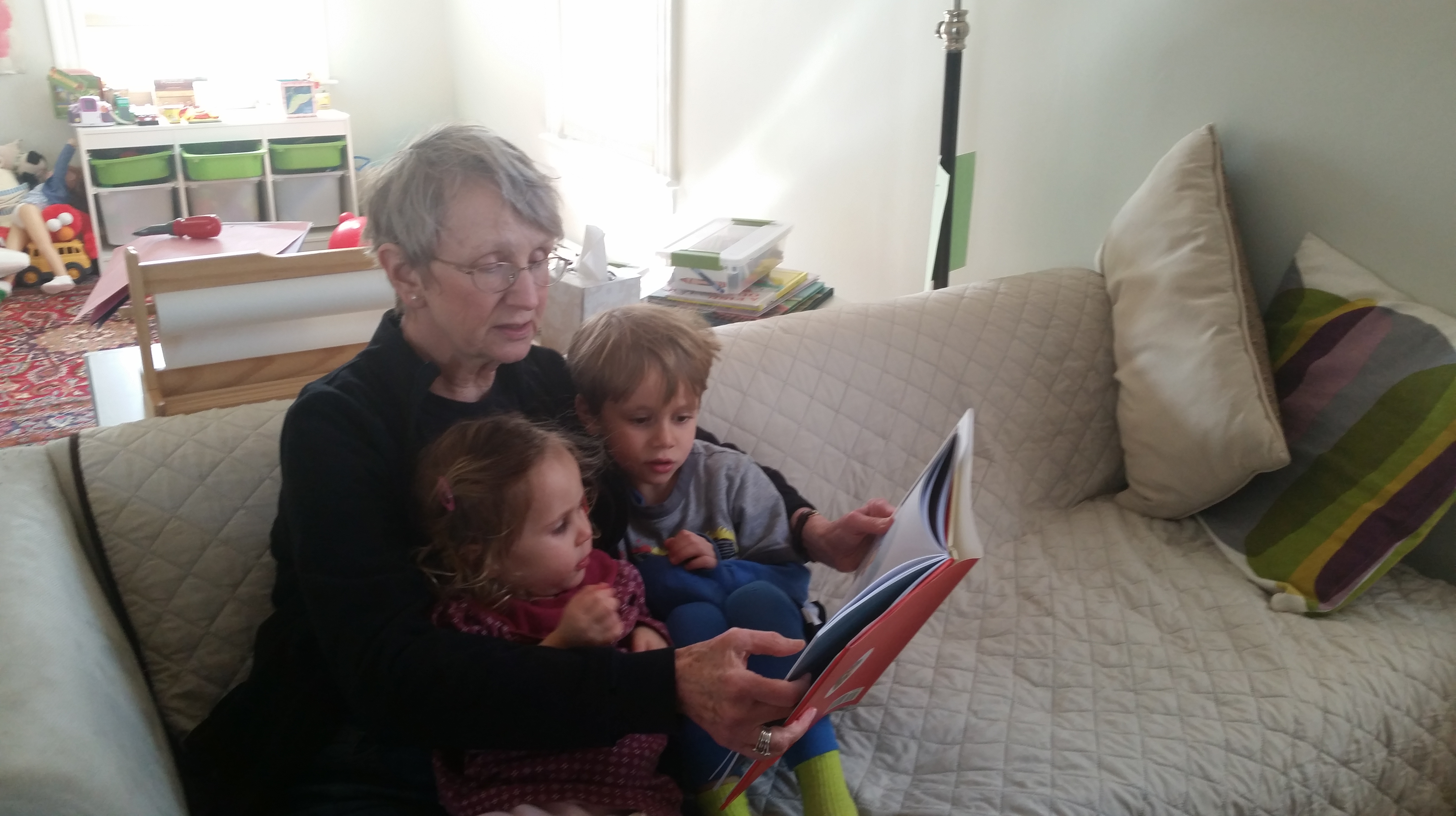
Photo: JRE.
Now almost 12 and 15, these two are good readers.

I recently learned about a group called Grandparents for Truth, organized in reaction to other groups pushing book bans in schools and threatening librarians.

I am not a member, but I think reading is important and I understand enough history to know what happens to countries that start with book bans, so I thought I would share the information.

Huda Hassan wrote at MSN.com in late 2024, “Last August, a retired special-education teacher named Holly Hall joined a rally of grandparents warring against book censorship in Temecula, a small Southern California town. Locals had gathered to oppose a school-board decision to ban a social-studies reader, Social Studies Alive!, for citing Harvey Milk — the first openly gay politician elected in the state. ‘The Harvey Milk reference was in the supplemental materials,’ 72-year-old Hall says, ‘which meant that it wouldn’t have even been mentioned in some classes.’

“The world of literature is currently ablaze with rapidly escalating book bans targeting narratives and histories about gender and sexual identity, race, class, and just about anyone deemed ‘other.’

“[In 2024] alone, 1,128 books have been challenged, according to the American Library Association, which documents ongoing censorship attempts across the nation. Florida is the state with the most banned books (3,135 bans, according to PEN America), and in the 2022–23 school year, there were book bans in 153 districts across 33 states, including Texas, Missouri, Utah, and Pennsylvania.

“Earlier this year, schools in Escambia County, Florida, removed 1,600 books on gender and race from school libraries and, through this process, even banned multiple dictionaries. In August, New College of Florida, a public liberal-arts college, disposed of hundreds of library books, emptying the school’s Gender and Diversity Center. Then, this fall, major publishers — including Simon & Schuster, Penguin Random House, and HarperCollins Publishers — filed a lawsuit against book-removal provisions in Florida (through HB 1069, a law introduced in 2023).

“When Hall, who taught in California for 40 years, spoke out at that rally in Temecula, she gave an impassioned speech about censorship in her state. ‘I addressed the dangers of banning books,’ she says. ‘It’s not 1933 Germany.’ Opponents attended the Temecula rally too, such as Moms for Liberty, a Florida-based parenting group formed in 2021 that’s pushing for banning books on race and what it calls ‘gender ideology.’ A few months prior, the same three school-board trustees Hall spoke against had voted to ban the school’s study of critical race theory the day they were sworn into office. This preemptive act confused many, as no courses on critical race theory had been offered at the school. …

“As parents across the country and groups like Moms for Liberty have joined the attacks on literature, grandparents like Hall are mobilizing in response, and they are afraid. ‘I am so concerned about my country, our freedom, and the world,’ Hall says.

“But she felt encouraged to speak in front of her peers and opponents last year because she knew she was not alone. She was invited to the rally by Grandparents for Truth, a national organization formed in the summer of 2023 to fight for the right to read. ‘A neighbor walked by and told me about the group. He had a sign in his yard,’ says Hall. …

“In Philadelphia, Ruth Littner, one of the earliest members to join Grandparents for Truth last summer, discovered the collective through her daughter, Alana Byrd, the national field director of People for the American Way. Like Hall, the pair are committed to countering book banning despite heckling or pushback from the police. ‘I am the daughter of two Holocaust survivors,’ Littner says on the phone from her home. ‘When Alana told me she had an initiative to fight this kind of authoritarianism, I jumped right on that. I was the first one to get the Grandparents for Truth T-shirt.’

More at MSN, here. No paywall.
Read Full Post »

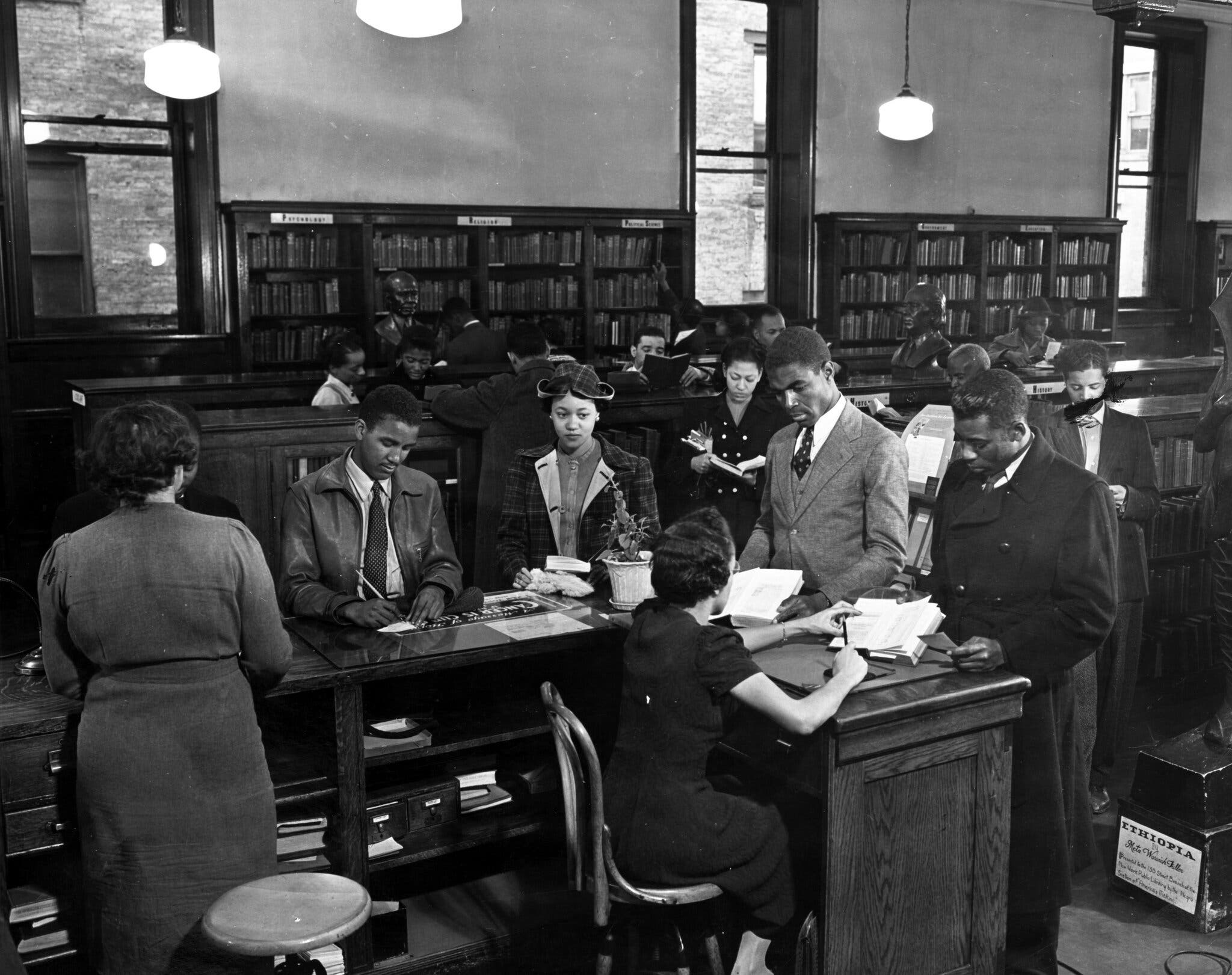
Photo: New York Public Library.
In 1925, the New York Public Library system established the first public collection dedicated to Black materials at its 135th Street branch in Harlem, now known as the Schomburg Center for Research in Black Culture.

I have read numerous accounts of what a public library has meant to poor children with insatiable curiosity. The most recent was the autobiography Up Home by future intellectual and university president Ruth J. Simmons. She grew up in a desperately poor Black sharecropper’s family in Texas. Books and encouragement from Black teachers meant everything.

Meanwhile in Harlem, Black librarians meant everything to generations of Northern children.

Jennifer Schuessler reports at the New York Times, “It was a banner day in the history of American libraries — and in Black history. On May 25, 1926, the New York Public Library announced that it had acquired the celebrated Afro-Latino bibliophile Arturo Schomburg’s collection of more than 4,000 books, manuscripts and other artifacts.

“A year earlier, the library had established the first public collection dedicated to Black materials, at its 135th Street branch in Harlem. Now, the branch would be home to a trove of rare items, from some of the earliest books by and about Black people to then-new works of the brewing Harlem Renaissance.

“Schomburg was the most famous of the Black bibliophiles who, starting in the late 19th century, had amassed impressive ‘parlor libraries’ in their homes. Such libraries became important gathering places for Black writers and thinkers at a time when newly created public libraries — which exploded in number in the decades after 1870 — were uninterested in Black materials, and often unwelcoming to Black patrons.

“Schomburg summed up his credo in a famous 1925 essay, writing, ‘The American Negro must remake his past in order to make his future.’ In a 1913 letter, he had put it less decorously: The items in his library were ‘powder with which to fight our enemies. …

“Today, figures like Schomburg and the historian and activist W.E.B. Du Bois (another collector and compiler of Black books) are hailed as the founders of the 20th-century Black intellectual tradition. But increasingly, scholars are also uncovering the important role of the women who often ran the libraries, where they built collections and — just as important — communities of readers.

“ ‘Mr. Schomburg’s collection is really the seed,’ said Joy Bivins, the current director of the Schomburg Center for Research in Black Culture, as the 135th Street library, currently home to more than 11 million items, is now known. ‘But in many ways, it is these women who were the institution builders.’

“Many were among the first Black women to attend library school, where they learned the tools and the systems of the rapidly professionalizing field.

On the job, they learned these tools weren’t always suited to Black books and ideas, so they invented their own.

“At times, they battled overt and covert censorship. … But whether they worked in world-famous research collections or modest public branch libraries, these pioneers saw their role as not just about tending old books but also about making room for new people and new ideas.

“ ‘These librarians were very tuned in and understood that a cultural movement also needs a space,’ said Laura E. Helton, a historian at the University of Delaware and author of the recent book Scattered and Fugitive Things: How Black Collectors Created Archives and Remade History. …

“In the 1920 census, only 69 of the 15,297 Americans who listed their profession as librarian were Black. Many cities in the segregated South had no library services at all for Black citizens. And even in the North, those branches that did serve them often had few books geared to their interests, and sometimes no card catalogs or reference collections at all.

“That started to change, if slowly. In 1924, in Chicago, Vivian Harsh became the first Black librarian to lead a public library branch there. [But] no place captures the transformations of the era more than Harlem, where, starting in 1920, a white librarian named Ernestine Rose hired four young Black librarians at the 135th Street library. …

“The poet Arna Bontemps (who himself later became a librarian) recalled visiting the 135th Street library after his arrival in Harlem in 1924. ‘There were a couple of very nice-looking girls sitting at the desk, colored girls,’ he said. ‘I had never seen that before.’ …

“Other ‘girls’ at the branch fostered the neighborhood’s artistic ferment in different ways. Among them was Regina Andrews, a young librarian from Chicago (where she was mentored by Harsh) who came to New York City on vacation in 1922 and decided to stay. She … soon settled into an apartment at 580 St. Nicholas Avenue with two friends who worked at Opportunity, a new magazine that aimed to capture the creative ferment bubbling up in Harlem. Nicknamed Dream Haven, the apartment quickly became a salon and crash pad for some of the most celebrated figures of the period.

“It was there that Alain Locke held some planning meetings for the special issue of the Survey Graphic magazine that later grew into his landmark 1925 anthology The New Negro. And it was there that many Black artists and writers who attended the 1924 Civic Club dinner now recognized as an opening bell of the Harlem Renaissance gathered.”

Read more at the Times, here.

Read Full Post »

Photo: The Guardian.
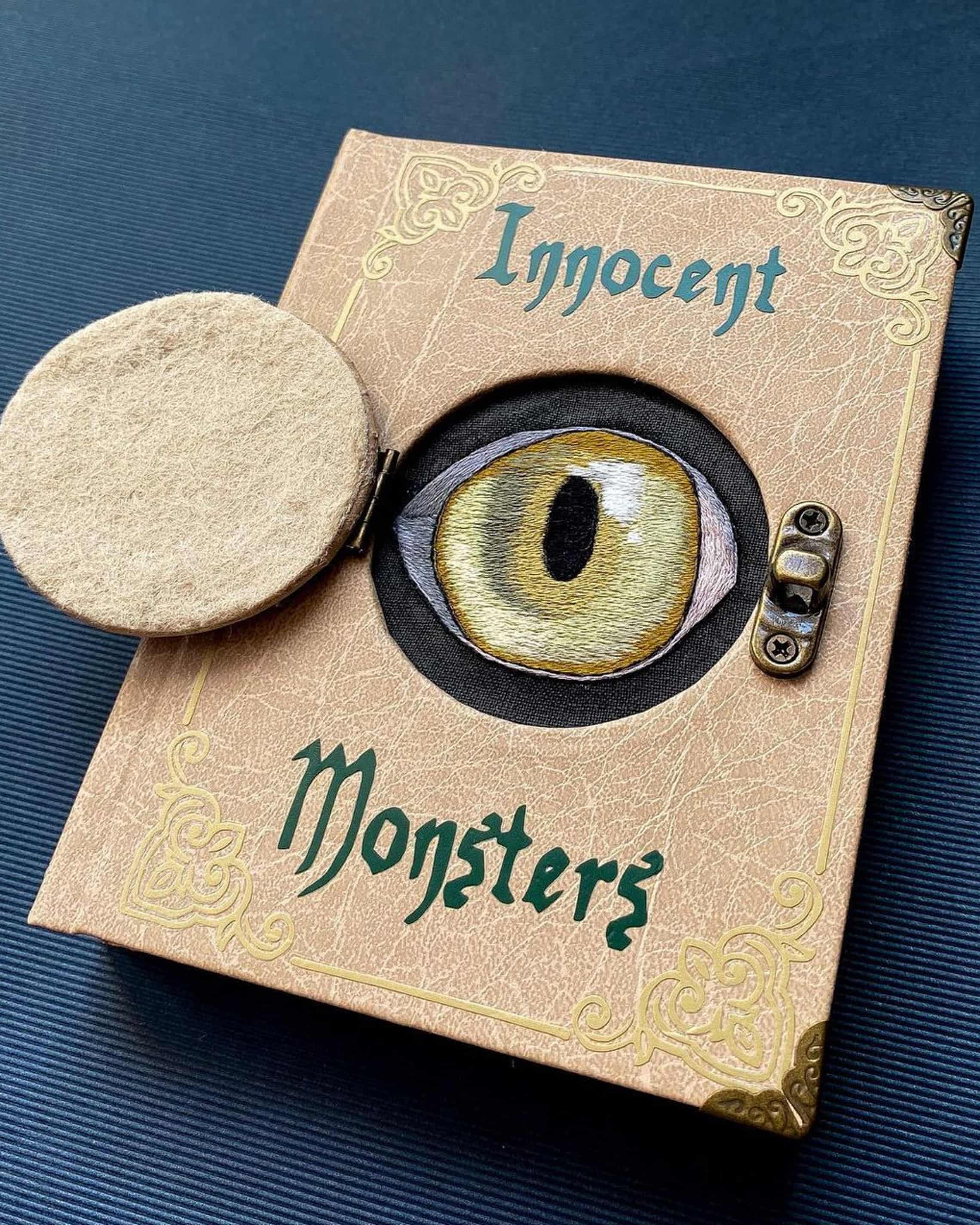
Innocent Monsters is an example of a book bound by Geena of ‘beaudelaireslibrary.’ Bookbinding is attracting interest on TikTok.

TikTok comes in for a lot of criticism these days, not least because people think its Chinese ownership enables the Chinese government to spy on the US. For all I know, that could be a legitimate concern, but some activities on TikTok sure seem innocent. I can’t imagine any government secrets hidden in bookbinding lessons, for example.

David Barrett reports at the Guardian about the curious hobby that has taken hold there.

“The videos often begin with every bibliophile’s nightmare: a person ripping the covers off a book. They are not vandals, however; they are bookbinders, taking part in a growing trend for replacing the covers of favorite works to make unique hardback editions, and posting about their creations on TikTok and Instagram.

“Mylyn McColl, a member of the UK-based Society of Bookbinders, runs their international bookbinding competition. She said: ‘It is great to see people taking on our craft and turning their favourite novels into treasured bindings.’ …

“Emma, 28, posts on social media as The Binary Bookbinder, after discovering the hobby a year ago. ‘I was scrolling through social media and I came across a video of someone doing it and was intrigued,’ she said. …

“After a practice attempt with a few sheets of printer paper and some card-stock, Emma, who lives on the East Coast in the US, graduated to re-binding books from her favorite genre, fantasy. ‘It is deeply satisfying re-binding a book to look like it would belong in the world I’m reading about,’ she said. …

” ‘Overall it is a relaxing hobby, but it still comes with its challenges. I like to use my tech background to integrate 3D printed, laser cut, or electronic parts in the books I rebind and that can be difficult.’ …

“A search for ‘bookbinding’ on TikTok produces more than 60 million results, with high-speed time lapse videos showing a brand new product emerging from a mass-produced paperback. Bookbinding tools and equipment include specialist glues, and vinyl cutters for making silhouettes or cameos on covers, which can cost more than £300 [~$384].

“Emma said interest in bookbinding was being driven in part by BookTok, the TikTok genre that has boosted sales for the publishing industry, and the general increase in reading post-pandemic. … ‘Different parts of the same story will resonate with people, so owning a copy of a book that has your favourite quote, image or symbol from the book on the cover is something special.’

“McColl, of the Society of Bookbinders, said: ‘Historically the society was made up predominantly by older people, often retirees enjoy new free time. But that is changing … on the London committee there are now people in 20s, 30s, 40s.’

“Some bookbinders do it for their own enjoyment, while others sell their creations through platforms like Etsy. Geena, who posts on Instagram as baudelaireslibrary, saw it as an opportunity to give physical form to a genre generally only available online – fan fiction.

“The 33-year-old from Wiltshire said: ‘I started bookbinding nearly a year ago. I had been reading Harry Potter fan fiction for about two years. … I had absolutely previous knowledge on how to create a book – I didn’t know it was possible to do at home without commercial equipment.’

“Geena says bookbinding encompasses ‘four or five hobbies,’ allowing her to use skills from her other pastimes, such as embroidery and crochet. She says, ‘With the rise of screens dominating people’s time, I think that creative hobbies where you use your hands and make something from scratch bring a simple joy that [people] haven’t experienced before. It taps into a part of the brain that can improve mental health, and is a real mood booster.’

“Geena says she has made new friends through the hobby, and is hoping to attend a meet-up of British amateur bookbinders later this year. Emma has attended meet-ups in the US. She said: ‘The community aspect is wonderful, and I’ve really been able to bond with people across the world.’

“Jennifer Büchi of the American Academy of Bookbinding, based in Colorado, said there had been a shift in how people discovered the hobby. …

” ‘We saw a big increase in students who’d started learning to bind books online and through social media after the pandemic. It’s been great for us because there’s a lot more interest in our classes – our introductory courses fill up within hours of being posted. Anything that drives interest in the book ultimately helps more students find us, and more students means more folks carrying the craft forward.’ ”

More at the Guardian, here.

Read Full Post »

Photo: Zofeen T Ebrahim/The Guardian.
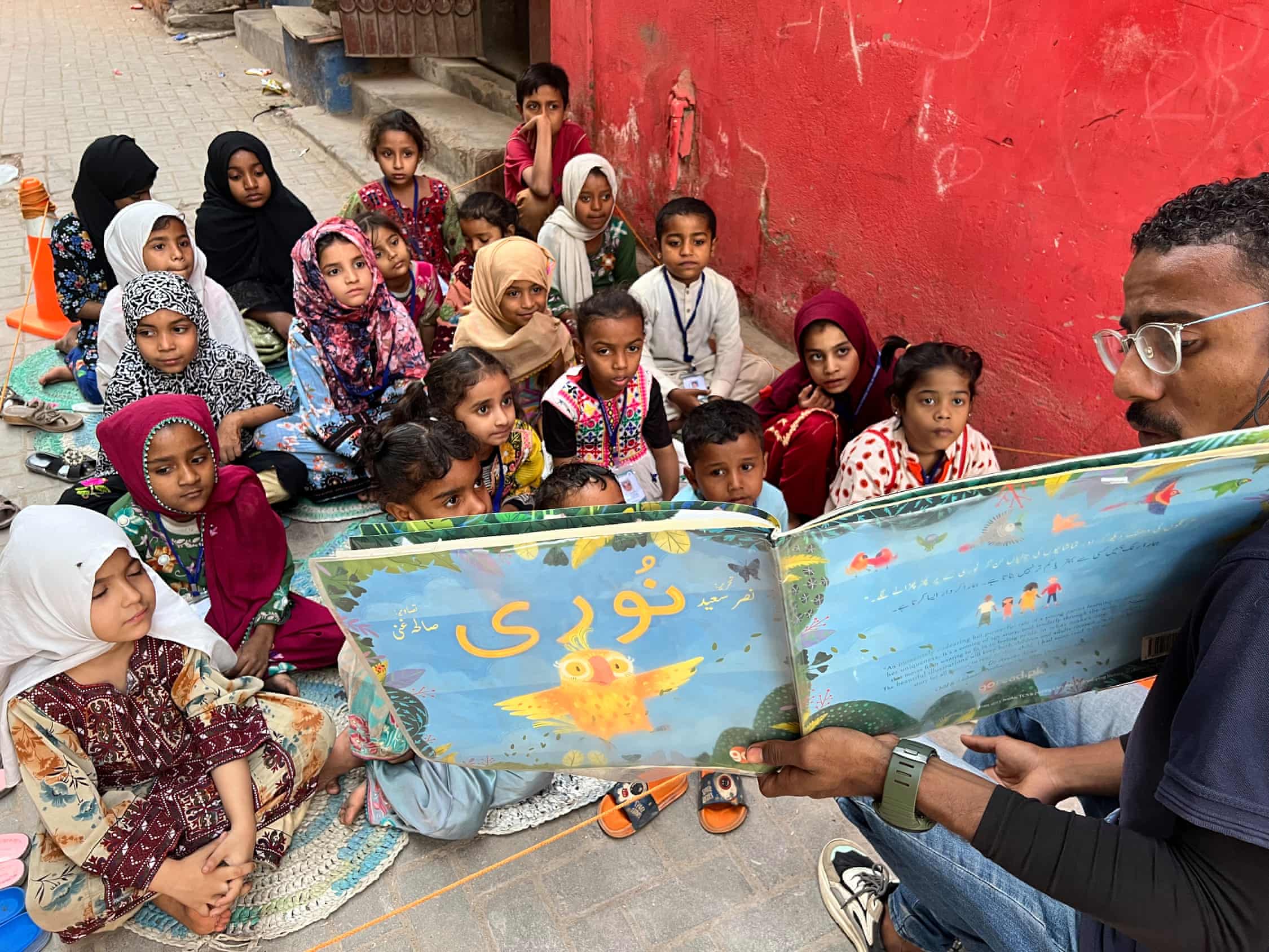
A GoRead worker helps to educate children in Pakistani slums through storytelling. The GoRead director says, “We cannot expect children to want to read if we don’t read to them first.”

If it’s true that Sauron is always collecting his strength to rise again, it’s also true that people who do good never stop doing good. Whatever happens, you can’t completely stamp out kindness or good works. They gather strength, too.

I hate hearing decent people’s defeatism. I like focusing on stories like today’s, stories of people trying to make the world a little better wherever they are.

Zofeen T Ebrahim writes at the Guardian, “Pedaling down a narrow alleyway in Karachi’s crowded Lyari Town, Saira Bano slows as she passes a group of children sitting on the ground, listening to a man reading aloud from a book. The eight-year-old gets off her bike, slips off her sandals, and sits on the mat at the back.

“She has already heard the story from Mohammad Noman, who is entertaining more than a dozen children with the tale of Noori, an insecure yellow parrot. ‘I don’t mind listening to it again,’ says Saira. ‘He’s so funny.’

“Noman, 23, is spending two weeks in Lyari pedaling an old ice-cream cart through its lanes, stopping to read his stories and leaving behind books for the children to borrow. He dropped out of school himself as a teenager but has returned to education and is now studying for his high school certificate.

“He is also one of two storytellers working part-time for the Kahaani Sawaari (Stories on Wheels) program, run by GoRead.pk, which is working to improve literacy among underprivileged communities in Karachi, Pakistan’s largest city.

“ ‘I become a kid when I am around the children,’ says Noman. In the past 18 months, he has visited 30 areas of Lyari, one of the most densely populated and deprived neighborhoods of Karachi, with more than 660,000 residents, mostly from the marginalised Baloch ethnic group.

“ ‘I have learned so much,’ says Noman. ‘It has brought a change in me as well. I’ve become more tolerant of people and developed patience. I think I have a certain rapport with children and they listen.’ …

“Education is free and compulsory in Pakistan yet, according to the UN, it has the world’s second-highest rate of children absent from school, at 44% of five to 16-year-olds. And 77% of 10-year-olds are unable to understand simple text, according to the World Bank. Books and uniforms can be prohibitively expensive in Pakistan. Saira dropped out of school a year ago when her father, who worked in a toy shop, lost his job as Pakistan’s economy was hit by rocketing food and fuel prices. …

“Erum Kazi, GoRead’s program director, says parents have told her how their children have developed a love for reading since the scheme began. …

“Nusser Sayeed, GoRead’s director [and] a former teacher, was inspired to set up the program after seeing ‘very little joy in the lives of children studying in schools in underprivileged neighborhoods.’ Children were growing up without anyone reading them stories, she says, adding: ‘We cannot expect children to read if we don’t read to them first.’ “

More at the Guardian, here. And in a related Guardian story, read about how a camel delivered books to poor children in Pakistan when Covid closed schools, here.

Read Full Post »

Photo: Alex Bakley via Washington Post and Italy 24.
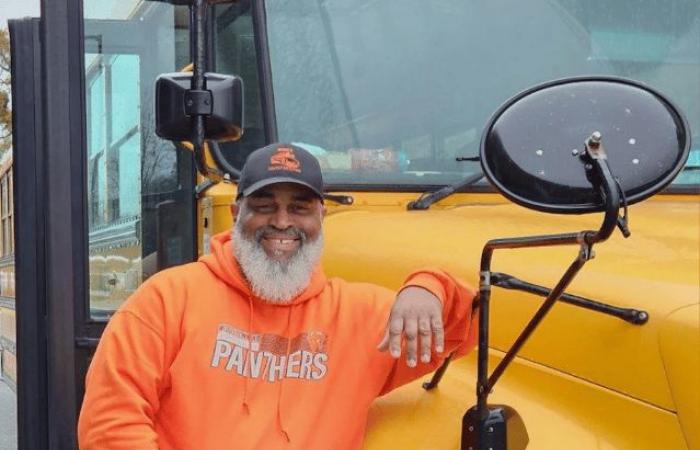
Herman Cruse is a school bus driver who is a regular volunteer in classes at Middle Township Elementary No. 1 in Cape May Court House, N.J.

I like that every week the Washington Post sends subscribers a collection of upbeat stories it calls “The Optimist.” It’s good to be reminded that there are people doing kind and generous things every day. We just don’t hear about them often.

Today’s story, by Cathy Free. is about a school bus driver who was concerned when a child on his bus was discouraged about reading. It’s about how his decision to help out led to a whole new avocation.

“New Jersey school bus driver Herman Cruse noticed that a kindergartner seemed a little sad and out of sorts during one morning ride to Middle Township Elementary #1.

“ ‘Bus drivers are the eyes and ears of students when they’re away from home,’ said Cruse, 55, who drives students of all ages for Middle Township Public Schools in Cape May Court House, N.J.

“ ‘We have an uncanny gift to discern what kids are feeling,’ he said.

“When Cruse asked the kindergartner what was wrong, he said the boy explained that he wasn’t able to complete his reading assignment because his parents were busy with his four siblings at home. It was hard to find one-on-one time to practice reading with his mom or dad, he told Cruse.

“Cruse said an idea popped into his mind.

‘I told him, “Listen, I have some free time, and if you don’t mind, I’d like to come to the school and read with you,” ‘ he said.

“Cruse received permission from the 6-year-old’s teacher, Alex Bakley, to show up at her kindergarten classroom the following week. When he walked in, he said the boy shouted, ‘Hey, that’s my bus driver!’

“ ‘We went into a quiet corner and began reading together,’ Cruse said. … ‘So he read to me, I read to him and we read together, and from there, it took on a life of its own. … A second student wanted to read to me, then a third. All these kids were going to the teacher asking, “Can I read with Mr. Herman?” ‘

“Almost two years later, Cruse now volunteers to help Bakley’s 18 kindergarten students and another kindergarten class with reading two days a week, and on a third day, he tutors the school’s first- and second-graders. After dropping the kids off at school, of course. …

“Middle Township Elementary Principal Christian Paskalides said every child at the school looks up to Cruse, both on and off the school bus. … ‘Positive adult interactions can sometimes dictate a child’s day, and a bus driver is the first and last adult interaction for most students other than family,’ Paskalides added. ‘This is more than just a job to Herman — he’s a great role model and mentor.’

“Cruse said he’s never wanted to be anything other than a bus driver. … Because he lives in Egg Harbor City, N.J., about 40 miles away, it didn’t make sense for him to drive home after delivering students to high school, middle school and elementary school, he said. … ‘Instead, I’d hang out at the gym, go the library or sit in my car and go to sleep to fill up the time,’ Cruse said.

“It wasn’t until he offered to help the kindergartner on his bus last year that he realized there was something more rewarding he could be doing, he said. Cruse had spent a lot of time reading to his own five children when they were growing up.

“ ‘They’d say, “Dad, how come you read so much?” and I’d say, “Come on over and find out,” ‘ he said. ‘I’d tell them, “The book is always better than the movie.” There’s nothing better than time spent with a good book.’ …

“When Bakley showed him the round table where children would read to him in her classroom, he pulled up a small chair and made himself at home, he said. … He spends about 20 minutes reading books with each child on a rotating basis, and he also challenges them to word games like alphabet bingo.

“LaCotia Ruiz said her son Kingsly, 5, is more excited about books since he started reading with Cruse.

“ ‘Kingsly had a rough time with reading at the beginning of the school year, but he’s doing much better because of this fun one-on-one time,’ Ruiz said. ‘In the morning he wakes up excited and says, “I’m going to read with Mr. Herman!” ‘ she said. …

“ ‘There’s now another bus driver who wants to help me out between his routes,’ [Cruse] said. “What started out as a way to kill time has now blossomed into a way to make a difference in the heart of a child.’ ”

Props to him and props to that first kindergartner, too. I’m going out on a limb here and opine that the little boy sensed he could reveal his problem to this adult and maybe have something good happen. More at the Post, here.

Read Full Post »

Photo: PenguinRandomHouse.
In Iceland, Christmas Eve signals the long-awaited “book flood,” Jólabókaflóð. Icelanders love to read. And the prime minister writes books herself.

Up at a Vermont ski lodge as Christmas approached, Suzanne’s family experienced the power outage from the latest winter storm. What is there to do in darkness but read a book by candlelight — or at least by headlamp? They did.

In Iceland, where winters are especially dark, Icelanders love to read.

David Mouriquand reports, “Euronews Culture was recently in Reykjavík for the European Film Awards, and while in the city, we sat down with Iceland’s Prime Minister Katrín Jakobsdóttir, one of only eight women in power in Europe. 

“She made her mark on the global cultural map this year when she published her first thriller novel, entitled Reykjavík, which she co-wrote with best-selling author of the ‘Dark Iceland’ series Ragnar Jónasson.

“Jakobsdóttir, former minister of education, science and culture, is the chairperson of the Left-Green movement and has been serving as the prime minister since 2017. …

I’d be remiss not to mention the fact that you published a novel this year, a crime novel. It’s not the first time that this has happened in Iceland, as one of your predecessors, Davíð Oddsson, published a novel when he was in office. What is it about writing and the crime / noir genre that appeals to you?

“I used to study crime fiction. I studied Icelandic literature and crime fiction was my main topic, so I have always enjoyed crime. In fiction, not in reality! And I actually was writing my master’s thesis when the Icelandic crime novel was flourishing and becoming rather big. It has become even bigger in the last decade or so. And it has been a longstanding dream to write a novel of my own, but I definitely would not have done it if I didn’t have this co-author (Ragnar Jónasson), who pushed me and said: ‘We have to do this together!’

“I must admit that I really enjoyed writing it, and I think that even us politicians can be creative. I think it’s very good for us, because sometimes we are not very creative in our politics! And it’s because the writing time was during the time of the pandemic, when I was totally absorbed in the virus and was getting, let’s say, obsessed with the virus and its effects and what we were doing.

“So having this kind of pet project to think about sometimes late in the evening or when I had an hour or two actually saved my mental health during the pandemic.

The more I thought about you writing your novel, the more I thought: Wouldn’t the world be a better place if world leaders took the time to embrace a creative outlet? So, tap dancing for Biden, or oil painting for Macron… Terrible ideas, granted, but as you say, it’s very good for politicians to get creative…

“I definitely think that the world would be a better place! Not just politicians, but all of us. I don’t think we all do major works of art, but I think it’s a very healthy thing to really grow and nurture that creative strength that I think we all have. I don’t think we do enough of it. So, yes definitely, the world would be a better place.” More at EuroNewsCulture, here.

Sara Miller Llana at the Christian Science Monitor stresses that Iceland as a whole is a book-loving country: “Hördur Gudmundsson spends the better part of his day with a book in his hands – but only in winter.

“As the skies darken, he will spend full mornings at his favorite bookstore, IÐA Zimsen, near the Icelandic capital’s harbor. After supper he’ll turn to his hobby: bookbinding. He’s already bound all the works of Iceland’s most famous author, Nobel laureate Halldór Laxness, and now is deep into the works of Gunnar Gunnarsson.

“By Icelandic standards, this doesn’t make him a fringe book buff. Iceland is known as one of the world’s most literary countries, when it comes to the love of both reading and writing. 

‘It must be in our mother’s milk,’ says Mr. Gudmundsson, a retired trades teacher.

“Books in Reykjavík, the first nonnative English-speaking city to be designated a UNESCO City of Literature, are everywhere. At one breakfast spot, the counter serves as a giant bookshelf. Tomes are piled onto the sills of steamed-up cafe windows.

“The streets of Reykjavík are an ode to the characters of the medieval sagas. Written in the 13th and 14th centuries, the Icelandic sagas retell the exploits of Norse settlers beginning in the ninth century. The works are a source of pride and a pillar of Iceland’s literary sensibilities. Tours in Iceland’s only city take visitors to the birthplaces of authors like Mr. Laxness and the scenes of plot twists in Nordic noir, a booming genre.” More here.

The WordPress site Jólabókaflóð.org posted the “founding story,” here.

And if you search on the word “Jólabókaflóð,” you will find lots of other fun articles.

Read Full Post »

Photo: Reuters.
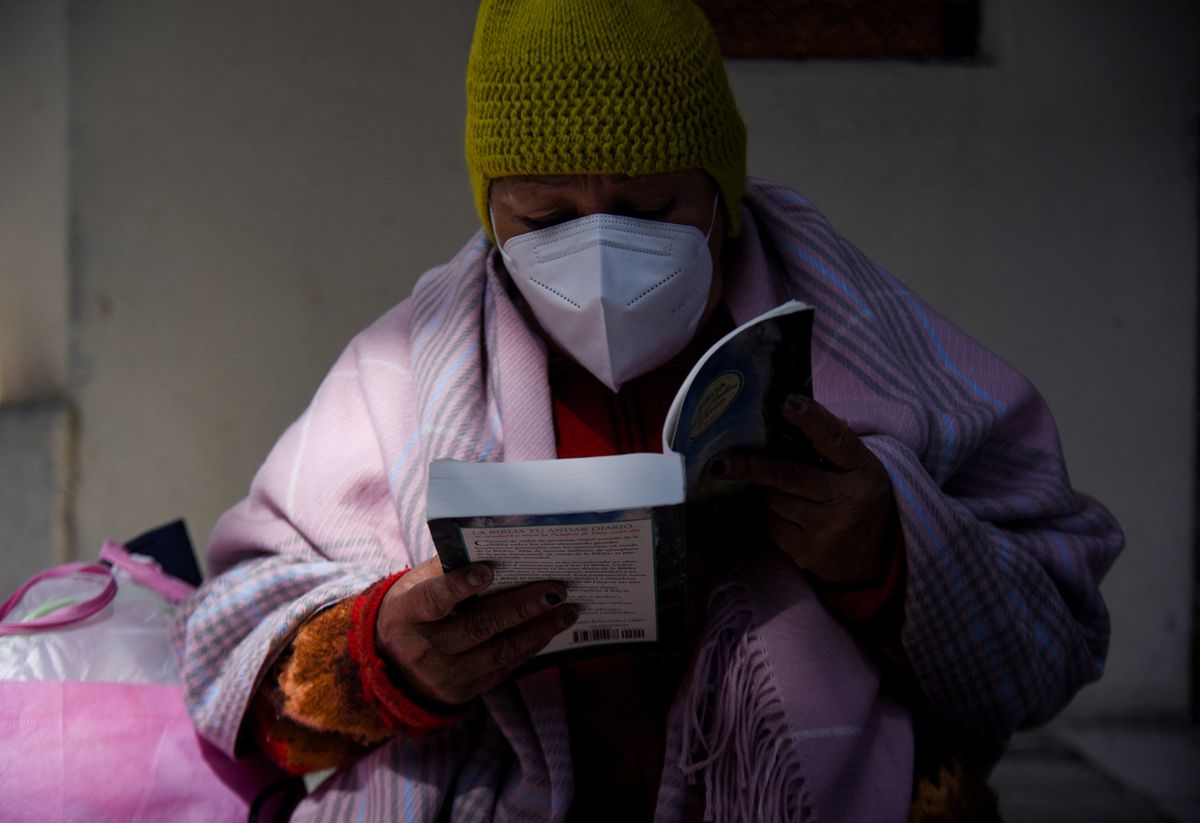
An inmate reads the Bible in prison, where she and fellow inmates have access to a small library as part of a La Paz, Bolivia, program to spread literacy and offer the chance to get out of jail earlier.

Sharing stories like today’s, I can see why someone could accuse me of being a Pollyanna. But it’s not that I think people convicted of crimes will be completely transformed if shown a little kindness. It’s more that I see no harm in testing how small kindnesses might add up, especially for people who may have experienced few kindnesses.

In 2017, Philip Reeves at National Public Radio conducted an interview in a Brazil prison about a program that Bolivia is now testing.

“Brazil’s prisons are dangerous places,” Reeves, noted, “blighted by overcrowding and drug gangs. But literacy is offering a way to shorten some inmates’ sentences: Read books, reduce your time behind bars. …

“REEVES: About 30 men are sitting behind desks in a classroom. They’re writing with pens and paper. The teacher is standing up front issuing instructions. … We could be in any school anywhere but for a couple of details. One, a wall of iron bars separates the teacher from her class. Two, the paper each man’s writing could win him a little bit of his life back. … These are inmates in a giant penitentiary in southern Brazil called the Casa de Custodia de Piraquara. …

“MARILDA DE PAULA SOARES: (Through interpreter) I am an educator. I really believe people can change.

“REEVES: Marilda de Paula Soares is the class teacher. Her students are participating in a project pioneered by the southern Brazilian state of Parana. Prisoners get four days lopped off their sentences for each book they read. To get those days of freedom, they must write a short paper about the book. They’re doing that now. Soares says each prisoner’s paper must explain …

“SOARES: (Through interpreter) … what’s caught their eye, a specific character, the language, the theme …

“REEVES: … in sufficient detail to ensure that cheating is … impossible. Douglas Seixas, an inmate here, says it’s true. You really can’t skip the reading. …

“SEIXAS: Because we need to read a book to understand. If you not read the book, no, no way.

“REEVES: Only certain books qualify under the reading program, including foreign and Brazilian classics and kids’ books for prisoners learning to read. Books with very violent themes are banned. … There’s a maximum of 12 books a year. That adds up to a month and a half remission. Admilson Rodrigues is doing 10 years for drug trafficking but is steadily whittling down his sentence by reading. … Rodrigues said he loved Gone With The Wind and also Les Miserables. Les Miserables seems particularly popular here. Rodrigues believes that’s because it’s about an ex-con who’s trying to create a new life on the outside. …

“REEVES: Is this project window dressing by Brazilian officials? Are they trying to put a gloss on a dysfunctional penal system where inmates sometimes wait years before being tried? It’s hard to know. Yet, prisoners here do seem to be benefiting. Edson Reinehr says he’s on his fourth book, which is about the adventures of Mowgli the wolf boy.

“EDSON REINEHR: Helps a lot because to keep the mind — occupied mind inside the cell instead of thinking about other bad things.

“REEVES: Staff here say the project’s about much more than just helping prisoners pass the time and get a little remission. Teacher Agda Ultchak says it’s about fundamentally changing lives.

“AGDA ULTCHAK: (Through interpreter) We hope to create a new perspective on life for them. This is about acquiring knowledge and culture and being able to join another universe.”

Meanwhile, at Reuters, Monica Machicao reports on a version of the program that was launched recently in Bolivia.

“The state program ‘Books Behind Bars’ offers detainees a chance get out of jail days or weeks in advance of their release date.

Bolivia does not have a life sentence or death penalty, but pre-trial detention can last for many years due to a slow judicial system.

“The program has been launched in 47 prisons that do not have resources to pay for education, reintegration or social assistance programs for prisoners, the Andean country’s Ombudsman’s Office says.

“So far, 865 inmates are sifting through prose, improving their reading and writing skills. One of them is Jaqueline, who has already read eight books in a year and has passed four reading tests.

” ‘It is really hard for people like us who have no income and who do not have family outside,’ she said. ‘There are people here, for example, who are just learning how to read and write.’ …

“With a daily salary of 8 bolivianos ($1.18), incarcerated Bolivians are forced to work to be able to eat and pay the high court costs to be released. The country’s prisons and jails have long suffered from overcrowded and unsanitary conditions, with some detainees staging protests over the lack of health care, according to Human Rights Watch. …

“Said Mildred, an inmate at the Obrajes women’s prison in the highland city of La Paz, ‘When I read, I am in contact with the whole universe. The walls and bars disappear.’ “

More on Brazil’s program at NPR, here, and on Bolivia’s at Reuters, here.

Read Full Post »

By Golly, it pays to read the alum magazine. The people I knew at grad school are no longer posting their achievements, but younger people are doing plenty of creative and interesting things! Consider a 2017 Syracuse University grad who launched a national campaign not far from where I live.

Brandon Dyer wrote about her initiative at Syracuse University Magazine. “When in-person instruction at her school was canceled for the rest of the year because of the pandemic, school guidance counselor Sarah Kamya ’17 decided to work from her hometown of Arlington, Massachusetts. Unlike her New York City apartment, her home in Arlington had enough room to accommodate a makeshift office.

“After her online workday was over, Kamya often tried to spend time outside. ‘I would go on a lot of walks every day, and I passed a few Little Libraries in my neighborhood,’ she says. The Little Free Libraries are part of a national network of outdoor, weatherproof, publicly accessible bookshelves that serve as a free book exchange in many communities. ‘I found that they were a great place to get or share books,’ Kamya says. …

“As an undergraduate majoring in child and family studies [at Syracuse’s] Falk College, Kamya had interned at a local middle school. Although she enjoyed her hands-on experience, it underscored the fact that people of color are still underrepresented in materials used to support the curriculum — an observation Kamya recalled from her own childhood as a book lover who rarely saw herself represented. …

“For the past year, Kamya has been working at Manhattan’s Public School 191, the Riverside School for Makers and Artists, where she has seen how important an inclusive curriculum is to the students, who are predominately people of color. …

“In the Little Free Libraries near her home office, Kamya saw an opportunity to enlighten her community. She began by placing books that offered full, relatable portrayals of Black characters. ‘It was a light bulb, and it just worked out with the timing of being home, the timing of the protests going on. … Why not take this opportunity to really spread awareness and open up people’s eyes to things that they hadn’t seen before?’

“Kamya says these books can potentially enhance awareness, providing access to literature that is new to many families and giving all children an opportunity to read stories that feature Black excellence. She believes books have the power to create change. ‘That change may be within ourselves or spread to others.’ She calls her project Little Free Diverse Libraries.

“To finance books, she started with a request on social media. She asked her family and friends to make a donation and promised all proceeds would be spent at Black-owned bookstores. This idea resonated with people, and she raised $10,000. Then, New York City author Eva Chen amplified Kamya’s message to her own 1.4 million followers and suggested a way to streamline the donation process. …

“ ‘People are really supportive of this project and have been helping me expand this further than I ever imagined.’

“To date, 28 different states have received or will be receiving books from Kamya’s collection. She filled 15 Little Libraries in her hometown of Arlington, and volunteers in Austin, Texas, filled five. Three Little Libraries in Los Angeles have received books like Undefeated, written by Kwame Alexander and illustrated by Kadir Nelson, and Hair Love, written by Matthew Cherry and illustrated by Vashti Harrison. Other examples include Angie Thomas’ The Hate U Give, Michelle Obama’s Becoming, and Beverly Daniel Tatum’s Why Are All the Black Kids Sitting Together in the Cafeteria?

“During her summer vacation, Kamya is spending a lot of time in her dining room processing the piles of books. She’s enlisted friends and her parents, calling the project a team effort. ‘I had to make my mom relocate her home office, but it’s okay,’ she says. When donations arrive, Kamya spends at least an hour unboxing everything. Each book is outfitted with individual stickers that say: ‘Black stories matter. This book was chosen with love by anti-racist educators. Please treat it with care and return it to the Little Free Library so that others can enjoy it.’

“Although her project is time consuming, the potential benefits for people of color inspire Kamya.

‘My hope is that these younger people and students will really feel motivated. Hopefully students of color can see themselves represented and go out there and make change.’ …

“Kamya’s goal is for these books to be accessible to all people and to inspire conversations. ‘I want the books to keep replenishing themselves. I want Black authors to keep writing books, and for characters that are minorities to be represented.’ ” More.

The original Little Free Library team also interviewed Kamya, asking, for example:

“What advice do you have for Little Free Library stewards who want to share diverse books in their libraries?
“My advice for Little Free Library stewards is to reach out to those in the community. When I started this project, I had people reach out to me saying they were a teacher or a parent, and they had some books they would like to donate, or their kid had outgrown the books and they were happy to drop off these books so the next person could have them. Sometimes people don’t even know what they have until they take a closer look at their collection!  I would also suggest thinking about your own community, who is represented, who is not represented and what books can you add to your library to welcome or educate those within the community. …

“Can Little Free Library stewards apply to receive books from you?
“I am continuing to send books, as long as I have the books and the funds. If stewards would like to receive books they can reach out to me via email, through the [Little Free Library stewards’ private] Facebook group, or on Instagram.

“What are your top 10 favorite diverse children’s books?
“1. Tallulah the Tooth Fairy CEO by Dr. Tamara Pizzoli
“2. I Am Enough by Grace Beyers
“3. Julian is a Mermaid by Jessica Love
“4. Jabari Jumps by Gaia Cornwall
“5.The Undefeated by Kwame Alexander
“6. Amazing Grace by Mary Hoffman
“7. The Proudest Blue by Ibtihaj Muhammad
“8. The Day you Begin by Jacqueline Woodson
“9. Hair Love by Matthew Cherry
“10. Of Thee I Sing by Barack Obama”

More at the Little Free Library site, here. For a podcast by Kamya, click at Syracuse University Magazine. And check out the Little Free Diverse Libraries Instagram profile.

Read Full Post »

Photo: The Guardian
Mashed Mahjor says she started Book Cottage in Afghanistan because there children don’t have a lot of opportunities to talk freely and ask questions.

Today’s post is another in a series about what books mean to people. At least since the age of 10, I myself have found that getting lost in a book is about the most consistently comforting thing I do, and it seems that many other people feel the same.

Stefanie Glinski writes for the Guardian, “In a dimly lit room in west Kabul, stacked with shelves full of books, a small crowd gathers around the warmth of a gas heater. Books clamped under their arms, they are eager to share the stories they’ve read over the course of the week.

“Members of Afghanistan’s youngest reading club, the Book Cottage, range in age from four to 13. The club is just one of many reading circles that are springing up across the capital and reviving a book culture that, once lost, is now vibrant, liberal and expanding once again.

” ‘You have to start them young,’ explains the initiative’s founder, 25-year-old Mashed Mahjor. ‘The country is still at war, so children don’t have a lot of opportunities to talk freely and ask questions, especially girls. We have to bring our book culture back to life.’

“After starting the reading club six years ago, she now has up to 20 regular members – and hundreds of book donations from all over the world.

“But trends are shifting. In west Kabul, a neighbourhood with laid-back coffee shops, small startup businesses, a quick-growing dating scene and – at its heart – Kabul University, reading circles for all ages are expanding. They have started to provide a platform for Afghans to discuss, in a mixed-gender environment, issues not on the public agenda of a conservative society. …

“One such space is found in a basement room of one of the city’s universities, where a group of up to 20 book lovers meets weekly. Some travel the length of the city to participate.

“ ‘It’s worth it,’ says Attash Mashal, a civil engineer and government employee. ‘Most of the books we read can’t be accessed in Afghanistan, so we search for them online and print out copies. We read novels, poetry and philosophy.

“ ‘This one is censored though,’ he adds, holding a copy of Albert Camus’ The Fall. ‘We just found out.’ …

“It’s the translations that most people are after, as it can be difficult to read books in English or other languages. At Aksos, the city’s biggest and most diverse book store, people squeeze into the tight space, examining new titles, reading in corners, or taking selfies against a backdrop of bookshelves. Books are the new cool.

“Aksos holds anything from The Kite Runner – another book previously banned in the country – to The Daydreams of Ashraf Ghani, the country’s president.

“ ‘Once again, the city is boasting poets, writers and creatives pushing against the recent norm,’ says [Syeda Quratulain Masood, who has been researching Kabul’s book culture for her PhD at Brown University in the US].

“ ‘I think it’s because in book clubs, or when writing poetry, we can share our ideas and beliefs without restrictions,’ says Yalda Heideri, a student in her twenties who attends a university book club.

“ ‘Afghanistan has restricted us a lot, especially us women, so we found a way to have discussions that would be embarrassing or even impossible outside.’ But for Heideri, literature has also become an escape from daily life in a wartorn country where there were 3,804 civilian deaths last year, according to the UN assistance mission in Afghanistan.

‘When I get tired of it all, I escape into poetry. It’s a whole different world.

” ‘Kabul is improving and becoming more open, which makes me hopeful. But regardless of where peace negotiations are going, we have to find our own way to cope, and books are just that for me.’ ”

More at the Guardian, here.

Read Full Post »

Photos: Sian Cain/The Guardian
Where libraries are scarce, Indonesians have risen to the challenge. Sutino ‘Kinong’ Hadi, above, runs the Bemo mobile library in a Jakarta suburb.

Books are important for children, but there are many places around the world where books are scarce. Caring adults do what they can to fill in the gaps, sometimes even going without food in order to buy more books.

Sian Cain writes at the Guardian, “With a great heave, a young man pushes the ancient, three-wheeled rickshaw down a ramp and it splutters to a start. The driver, Sutino ‘Kinong’ Hadi, laughs as he putters his tiny Bemo in a loop outside a preschool in Tanah Abang, in central Jakarta. It’s all the signal the children need; around 20 flood out to envelope the car, pulling at hangings, clambering into the front seat. It’s an exciting time: their library has arrived.

“Kinong is one of thousands of Indonesians who have opened their own library in their own communities. Estimates suggest there are thousands of such libraries in Indonesia, started by ordinary people with great initiative to address the lack of books in their area and funded by occasional donations.

“There is the Perahu Pustaka, a library boat that sails around West Sulawesi. There are libraries on the back of vegetable carts, shelves lugged around by horses in Serang and in West Papua. Across Banten, a 200-strong motorbike gang called the Komunitas Motor Literasi (Moli), brings books to homes from a box attached to their vehicles, delivered with the ease of a takeaway. …

“The persistent myth that Indonesians aren’t interested in reading still pervades; last September, Jakarta governor, Anies Baswedan, told the Jakarta Post: ‘We are challenged to improve our reading interest, particularly in an era where people are far more interested in reading WhatsApp [chats] than in reading books … People nowadays prefer to skim rather than read.’

“But civilians argue that interest isn’t the problem, it’s the lack of infrastructure. ‘Reading appetite isn’t low in Indonesia, it’s just hard to get books,’ says Laura Prinsloo, a publisher … ‘A lot of the people operating these libraries don’t have an education, which makes it hard in a place where it’s about who you know. So if you don’t know anyone, you just do it yourself.’

“Like Andri Gunawan, a wiry young man who heads up the Komunitas Motor Literasi. He never had a library in any of his schools and only became a voracious reader as an adult. ‘Contrary to what a lot of people say, it’s not that there is no interest in reading, it is that there are no books,’ he says. …

“Or Kiswanti, a 52-year-old woman who started out delivering books door-to-door for free on her bicycle. Now, her library and school Warabal, found in Parung, Java, is 21 years old and houses 15,000 books, looked after by 25 volunteers for 1,700 members. …

“ ‘My father apologised as he couldn’t send me on to further education’ she says. ‘But he told me, if I wanted to be smarter, I had to read.’ …

“When Kiswanti opened Warabal in 1997, she even began fasting 10 days each month to buy more.

‘I needed 3,000 rupiah (16p) to eat a day,’ she explains. ‘If I didn’t eat, I can save 30,000 (£1.66) in 10 days – so I could take our best students by taking them to bookshops and buy them any book they want.’ …

“ ‘Reading transports me and introduces me to new worlds – I want to give children that.’ ”

More at the Guardian, here. For similar stories on seat-of-the-pants libraries around the world, search the blog on the word “library.”

This mobile library has been running since 2013. The children are eager for books, but Hadi has found it’s not advisable to let the books go home if  he wants them back.

Read Full Post »

Poetry readings are held every few months in the periodical room of the library. The tables are moved, and rows of folding chairs get set up.

I like going to poetry readings. The Friends of the Library present poets every couple months, and I go to as many readings as I can. The most recent featured work by poets Adam Scheffler, Carla Schwartz, and Alison Stone. The poems were remarkably accessible as well as profound, funny, and inspiring. The following is not meant to detract from my overall admiration.

When I got home after the reading, my husband asked me if any readers had used the Poet Voice, and I said I had heard it a little. He went straight to the web to see what others say about the phenomenon. Turns out, I’m not the only one who has noticed contemporary poets dropping into this odd, monotonous reading style.

Rich Smith, a poet himself, made a good effort to define the Poet Voice in a 2014 article at City Arts, here: ” ‘Poet Voice,’ is the pejorative, informal name given to this soft, airy reading style that many poets use for reasons that are unclear. The voice flattens the musicality and tonal drama inherent within the language of the poem and it also sounds overly stuffy and learned. In this way, Poet Voice does a disservice to the poem, the poet and poetry.”

Smith recommends that poets adopt a character suited to each poem as an actor might, or — if reading is not a strength — have someone else do it, or even refuse to give readings! He does come up with an example of the Poet Voice used appropriately: Yeats reading “Innisfree.”

Atlas Obscura describes the listener experience: “You walk into the bookstore. You sit in your folding chair, or on the floor, with your paper cup of wine. The poet approaches the microphone, affably introduces himself, and maybe cracks a joke. He shuffles his papers, launches into his first verse — and all of a sudden, his voice changes completely! Natural conversational rhythms are replaced by a slow, lilting delivery, like a very boring ocean. Long pauses — so long — hang in the air. Try and get comfortable. There’s no helping it. You’re in for a night of Poet Voice.

“Many performance-related professions and avocations,” says Atlas Obscura‘s Cara Giaimo, “have developed an associated ‘voice’: a set of specific vocal tics or decisions. Taken together, these mannerisms make up a kind of sonic uniform, immediately cluing a listener into who or what they’re listening to. There’s ‘Newscaster’s Voice,’ for example, characterized by a slow cadence and a refusal to drop letters. There is ‘NPR’ or ‘Podcast Voice,’ which the writer Teddy Wayne has diagnosed as a ‘plague of pregnant pauses and off-kilter pronunciations,’ and which radio host Ira Glass once said arose in direct response to those butter-smooth anchors. And then there’s Poet Voice, scourge of the open mic and the Pulitzer podium alike.”

So there you have it. It’s been puzzling me for years, and I still don’t know why poets use it. Below, you can hear Pulitzer Prize winner and former poet laureate Louise Glück reading from Faithful and Virtuous Night in the Poet Voice.

By the way, I know of several poets who read this blog, and I would love it if they would weigh in.

Read Full Post »

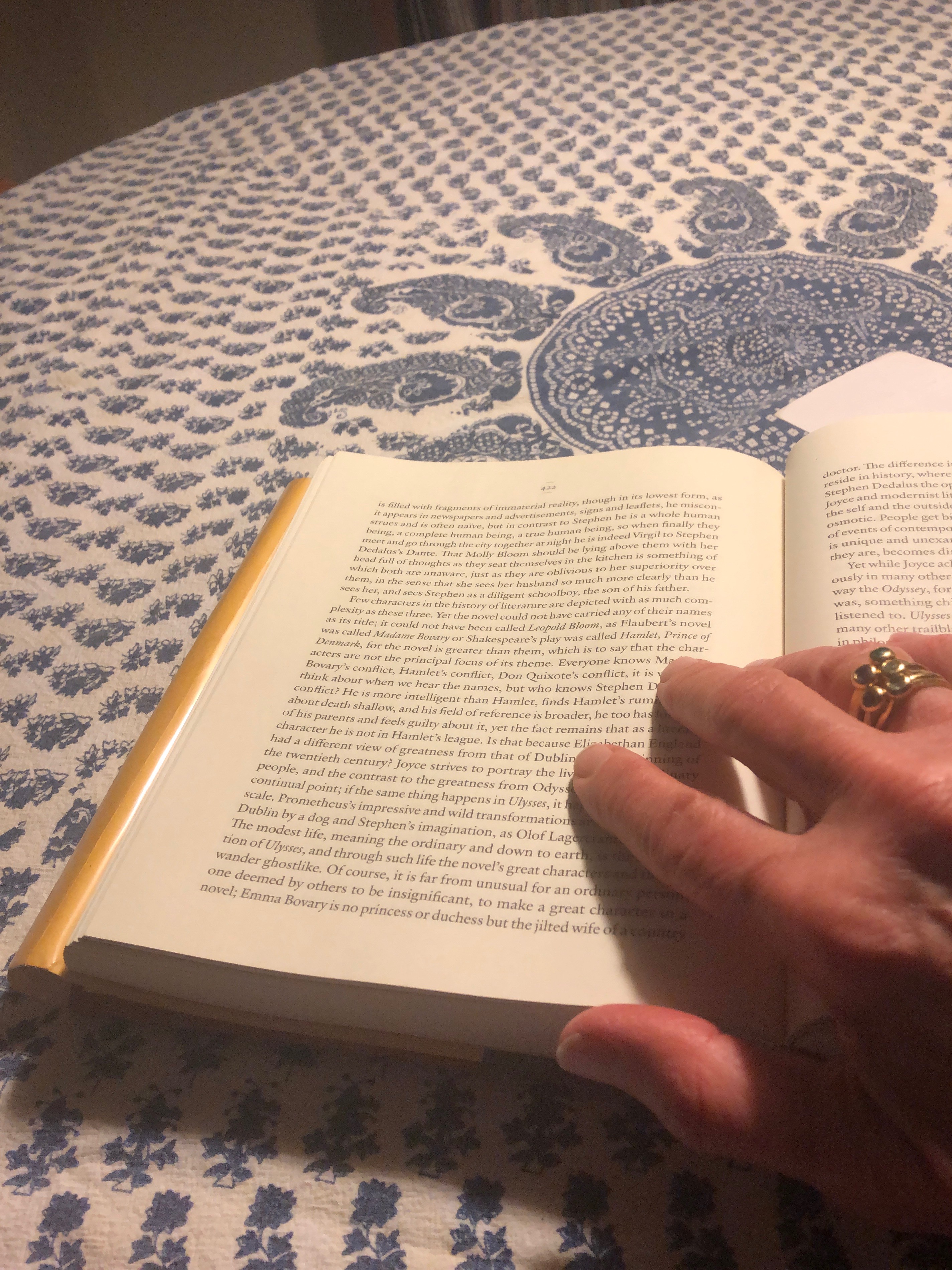
120218-Luna-and-Stella-rings-Knausgaard-book

I’m reading Book Six of Karl Ove Knausgaard’s My Struggle. The rings with the birthstones of my grandchildren are from Luna & Stella.

It’s always nice to learn that something you do anyway is good for your health. For example, I love to read. Now an article in the San Diego Union-Tribune tells me that reading books may help older folks stave off dementia.

Doug Williams writes, “If you want to live a long, healthy life, be sure to exercise, eat your veggies, get plenty of sleep and surround yourself with family and friends.

“Oh, and read a few good books each year, too.

“Several studies in recent years indicate that reading — especially reading books — is beneficial to health, wellness and even longevity.

“In 2016, research done by a team at the Yale University School of Public Health found that of more than 3,600 men and women 50 and older in a long-term health and retirement study, book readers — reading at least 3½ hours per week — had a 20 percent lower risk of dying over the next 12 years than non-book readers.

“Books, even more than long magazine or newspaper articles, seem to enhance quality of life, the researchers said.

“ ‘You have to engage more, hold on to information longer,’ says Avni Bavishi, one of the researchers and authors of the study done while she was completing her master’s in chronic disease epidemiology at Yale. …

“Bavishi, now a medical student at Northwestern, says regular book readers can find relaxation in reading. That can be an oasis — an old-school refuge — in this era of constantly changing stimuli from the Internet and 24-hour news cycle. Lifelong readers, too, may develop better critical thinking skills, vocabulary and empathy that can improve quality of life.

“The researchers believe books promote ‘deep reading’ that is a slow, immersive process. That cognitive engagement may help a reader over his or her lifetime to develop better skills for reasoning and concentration that can improve quality of life (better schools, jobs, income, standard of living). Plus, reading books can ‘promote empathy, social perception and emotional intelligence’ that can help create what they call a ‘survival advantage.’ …

“A study published in the journal Neurology in 2013 also cited the benefits of a lifetime of reading as a barrier to ‘late-life cognitive decline.’ It found that although there is no cure for dementia, ‘reading, writing and playing games’ can slow the progress of that affliction. …

“In a 2009 study at the University of Sussex in the United Kingdom, researchers found reading reduced stress levels by 68 percent, better even than listening to music or taking a walk. Stress reduction was indicated by a lower heart rate and reduced muscle tension.

“Other studies show reading — especially before bedtime — promotes better sleep. It also can enhance social skills and can boost overall intelligence and academic success. …

“In 2012, Stanford researchers — using magnetic resonance imaging (MRI) — tracked blood flow to the brain of men and women critically reading excerpts of a Jane Austen novel. They found positive physical results, including increased blood flow to the brain in general, not just to the areas responsible for ‘executive function.’ ” More here.

FYI, I post mini reviews of all the books I read at GoodReads. You can email me at suzannesmom@lunaandstella.com about that.

Read Full Post »

Photo: Bookstr
This is a short story vending machine.

What do you do when you have to wait a long time in a line? Or when you are alone in a restaurant and forgot to bring a book? You know perfectly well that your phone is not always interesting.

That’s when you need to pull a short story out of a vending machine.

Laura M. Holson reports at the New York Times, “Short Edition, a French community publisher of short-form literature, has installed more than 30 story dispensers in the United States in the past year to deliver fiction at the push of a button at restaurants and universities, government offices and transportation hubs. …

“Here’s how a dispenser works: It is shaped like a cylinder with three buttons on top indicating a ‘one minute,’ ‘three minute’ or ‘five minute’ story. (That’s how long it takes to read.) When a button is pushed, a short story is printed, unfurled on a long strip of paper.

“The stories are free. They are retrieved from a computer catalog of more than 100,000 original submissions by writers whose work has been evaluated by Short Edition’s judges, and transmitted over a mobile network. Offerings can be tailored to specific interests: children’s fiction, romance, even holiday-themed tales. …

“Short Edition gets stories for its catalog by holding writing contests. It is currently holding one for students and faculty at Penn State called ‘New Beginnings.’ [Scott Varner, executive director of strategic communications for Columbus City Schools in Ohio,] asked if the company might hold a contest for stories about Columbus by local students and they are considering it, he said.

“ ‘It would be great to have 10th graders writing stories for third graders,’ he said. …

“The dispensers cost $9,200 plus an additional $190 per month for content and software. The only thing that needs to be replaced is paper. The printed stories have a double life, shared an average of 2.1 times, said [Short Edition export director Kristan] Leroy.

‘The idea is to make people happy,’ she said. ‘There is too much doom and gloom today.’ …

“[Andrew Nurkin, the deputy director of enrichment and civic engagement at the Free Library of Philadelphia,] has high hopes for his city. ‘We are interested in finding sites to engage audiences who aren’t necessarily coming to the library,’ he said. So much so, the library is considering installing dispensers at the Family Court Building and the Philadelphia International Airport.”

What a great concept! Surely, every motor vehicle office in America should have one. Hmmm. Maybe those stories would have to be longer.

More at the New York Times, here.

PS. The Guardian was two and a half years ahead of the Times on this innovation. I blogged about the roll-out in Europe here.

Read Full Post »

Photo: Star Tribune
Police officers working to build a free-standing Little Free Library in Minneapolis as part of an initiative to encourage reading.

According to Libor Jany at the Star Tribune, some Minneapolis police officers are starting to engage with communities in a new way.

“In a partnership with Little Free Library, the department will turn a pair of its police cruisers into bookmobiles with the hope of teaching the importance of reading.

“Community policing officers will carry books while they are making their rounds on the city’s North and South sides. They’ll still respond to certain emergencies, but won’t be dispatched to calls for help, freeing them up to visit neighborhoods without libraries and give away books to anyone who wants them.

“The program is the first of its kind in the country, organizers say. …

“From a distance, the [Little Free Library] boxes could be mistaken for a birdhouse or an oversized mailbox. An unfinished dollhouse, even. But when they’re finished, officials say they’ll be stocked with dozens of all kinds books. People are encouraged to take a book or leave a book, without fear of overdue fines. …

“Police Chief Medaria Arradondo said in a statement that he was thrilled by the exercise in community building, ‘an incredible way to empower our youth and reach them in a positive way.’ …

“Little Free Library Executive Director Todd Bol started the book exchange in his hometown of Hudson, Wis., in 2009, building the first mini-library out of an old garage door in honor of his late mother. Today, there are more than 60,000 libraries in all 50 states and more than 80 countries around the world. In recent years, the little book boxes have sprung up in far-flung places like Australia and Qatar. …

“For now, available titles to be given away range from children’s books like ‘Camp Wildhog’ and ‘The Box Car Children: The Yellow House Mystery’ to more adult fare, including a well-thumbed unauthorized biography of Martha Stewart.” More.

Trust those Minnesotans to take a great concept a step farther!

A couple of my other posts on Little Free Libraries may be found here and here.

Read Full Post »

Photo: DollyParton.com.

For years, country music legend Dolly Parton has been giving back to the community with an initiative to boost child literacy. It started small in Tennessee and spread across the world.

What’s interesting, writes Melville House editor Ryan Harrington at mhpbooks.com, is that the small Knoxville mailing service that her foundation tapped to help in the literacy effort has kept up with the demand.

“Way way back in 2012,” writes Harrington, “we wrote about the international impact of Dolly Parton’s child literacy initiative, Imagination Library. We offered this bit of background on the project:

Launched by singer/actress Dolly Parton, the Imagination Library is a literacy program run by Parton’s Dollywood Foundation that sends enrolled children a free book every month from the month of their birth until they enter kindergarten. Growing up in rural Sevier County, Tennessee, Parton had friends and relatives who were illiterate, which was part of what led her to start a literacy program in her home county. The Imagination Library has been reproduced in 566 counties in the US, across 36 states, as well as in Canada. …

“The story of Dolly’s project is one of non-stop growth — and the once-tiny Knoxville company contracted to manage the original mailings has kept up with an amazingly increased volume.

“Direct Mail Services began its relationship with the Dollywood Foundation twenty years ago, mailing 1,000 books per month to children around Sevierville. A few years later, the foundation announced that the program would be open to any communities across that US that wanted to participate, and Direct Mail Services’ business exploded. …

“The company is preparing for more growth, as the foundation remains committed to expanding its reach. [Cortney Roark reporting for the Knoxville News Sentinel says], ‘Five percent of the U.S. population younger than 5 years old receives a book through the program. The goal is to reach 10 percent by 2024.’ ”

I could easily imagine a small company crumbling under such sudden high demand, so congratulations to Direct Mail Services for rising to the challenge.

More at Melville House, here.

Read Full Post »

« Newer Posts - Older Posts »