Feeds:
Posts
Comments

Posts Tagged ‘reading’

Just saw this 2015 article on Facebook. Originally reported in the Telegraph Herald, the story is about a remarkably wise barber in Iowa.

“Dubuque, Iowa, barber Courtney Holmes is a member of the Dubuque Black Men Coalition (DBMC,) an organization that works to improve the quality of life within their community by providing support and leadership to programs that seek to make a difference in the lives of African-American youth.

“As a father of two, he understands the importance of encouraging kids to read, but also realizes that not all parents share this sense of encouragement, so he decided to take matters into his own hands by rewarding children with a free haircut, if they read books to him while he works.

“The concept began at a back to school event in Comiskey Park, where non-profit organizations gather to support kids in getting ready to go back to school. Holmes started with a few kids, and before he knew it there was a line of over 20 kids getting ready to read a story in exchange for a new look. At the end of the event there were still kids in line so he decided to give out vouchers for them to come back to the salon to read to him and receive their hair cut. …

“Holmes hopes to continue his good work through a monthly event at the salon. He’s also been receiving books from people who want to help keep the movement alive.

‘There’s a lot going on in the world. But it only takes one person to change something. I am just trying to make a difference.’

Check out the rest of the story at Earthables.

Photo: Telegraph Herald
Courtney Holmes, a barber and member of the Dubuque Black Men Coalition, offers free haircuts for children who read to him.

Read Full Post »

Are you familiar with the “Lens” blog at the NY Times? It focuses on “photography, video and visual journalism.” Here David Gonzalez writes about the photos of Putu Sayoga.

[Hat tip: Asakiyume on twitter.]

“If you live in a far-off place, a library may be something you’d only read about in books. That is, if you had books to begin with.

“That became the mission of Ridwan Sururi, an Indonesian man with a plan — and a horse. Several days a week, he loads books onto makeshift shelves he drapes over his steed, taking them to eager schoolchildren in the remote village of Serang, in central Java. ..

“Mr. Sayoga, a co-founder of the collective Arka Project, had seen something about the equine library on a friend’s Facebook page. It reminded him of his own childhood, where his school had only out-of-date books. Intrigued, he reached out to Mr. Sururi, who offered to put Mr. Sayoga up in his home while he spent time photographing Mr. Sururi on his rounds. …

“Mr. Sururi made a living caring for horses, as well as giving scenic tours on horseback. One of his clients, Nirwan Arsuka, came up with the book idea as a way of doing something to benefit the community, specifically a mobile library. He gave Mr. Sururi 138 books for starters. Most were in Indonesian, and the books included a lot with drawings.

“Children at the schools he visits can borrow the books for three days, and demand has been so great that he now has thousands of books.” More here. Check out the slide show.

Photo: Putu Sayoga

Read Full Post »

Do we praise the work of librarians enough? I started following the Ferguson Library on twitter and Facebook after reading how it was the calm eye of the storm in Ferguson, Missouri, amid the 2014 riots. As a result, I now get good leads about other libraries. Here is a report on Ohio librarians who go the distance — and beyond.

Katie Johnson at School Library Journal describes her experience with “Play, Learn and Grow, a pop-up storytime and early learning program created through a collaboration between Twinsburg (OH) Public Library and Akron Metropolitan Housing Authority (AMHA). …

“I noticed that none of the children living in the housing development were coming to storytime at our library. I reached out to AMHA representatives, hoping they would be open to the idea of the library hosting a weekly program at the development. They were, partnering me with one of their employees, Kellie Morehouse, who was already working with families within the complex.

“We set up Play, Grow, and Learn in an unused room behind the apartment leasing office. Our initial goal was to get to know children age five and younger and their families through storytime, crafts, and free play. As the weeks went on, we saw everything that these families lacked: employment, education, transportation, healthy food, proper healthcare, access to preschool, even reliable phone service.”

They got involved in all those areas — helping children get vaccinations and nutritious food, for example, and arranging for isolated young mothers to address depression.

“Early experiences with storytime revealed a desire of the young mothers to interact with one another.  This led the AMHA representative to suggest teaming storytime with one of the organization’s programs for moms.  AMHA and a local behavioral health agency had been working together to provide maternal depression support groups to low-income women in other parts of the county. …

“Twice a month, the moms in our storytime are able to meet in a group setting with a professional to discuss their frustrations and worries. Mom-ME Time has become key, as so many of our moms are dealing with heavy pressures every day, and most do not have a strong support network. Being able to vent and get helpful parenting advice can be crucial to the choices they are making for their young children.”

It is worthy of applause when a librarian sees the whole child, not just a child in storytime, and tries to tackle the barriers to a better life. More here.

Photo: Katie Johnson/School Library Journal
Moms are included in programming for children.

Read Full Post »

It always seems so limiting to put anything in a category. Some WordPress bloggers are good at categorizing their posts, and I’m sure that helps many readers, but my posts are never about one thing only.

Netflix makes movie recommendations based on categories that pigeonhole movies we’ve rated highly. But the approach seems clunky. Just because we have liked a lot of foreign films (Wadjda, Son of Rambow, Princess Mononoke), that doesn’t mean we like all foreign films. Maybe we like the ones we’ve seen for some other reason than being foreign. Maybe they are less glitzy, more honest, or more entertaining.

He are some funny categories Netflix recommended for my husband and me: “emotional, independent films based on books,” “critically acclaimed foreign movies,” “mind bending movies,” “anime,” “musicals,” “social & cultural documentaries,” “critically acclaimed emotional movies,” and “horror movies.” Horror!? Where did they get that?

At the late, lamented Kate’s Mystery Books in Cambridge, you could get pretty sound advice on books from Kate herself. She would ask you to name some mysteries you liked, and you might say you had read all of Tony Hillerman and Arthur Upfield. Then she would say, “Different cultures.”

Well, ye-es. But what kept me coming back to those authors were detectives who were likable and endings that were positive in some way. no matter how small. Kate did give me some authors I loved, like Eliot Pattison (mysteries about Tibet and, more recently, several about 18th century American Indians), but other books about different cultures might be too noir for me or too fluffhead, like mysteries with animal detectives.

I suppose categories help a bit. I just think they are clunky. Where would I file this post, now? Movies? Books? Retail? Misconceptions? Colin Cotterill, Dr. Siri, Laos?

Colin Cotterill writes a series that is both funny and deadly serious about a 70+ coroner in Laos, Dr. Siri, a likable antihero with an offbeat bunch of equally likable cronies.

Read Full Post »

Jordan Teicher at National Public Radio reports that Icelanders really love their books.

“Iceland publishes more books per capita than any other country in the world,” writes Teicher, “with five titles published for every 1,000 Icelanders. But what’s really unusual is the timing: Historically, a majority of books in Iceland are sold from late September to early November. It’s a national tradition, and it has a name: Jolabokaflod, or the ‘Christmas Book Flood.’ …

“Iceland has a long literary history dating to medieval times. Landmarks of world literature, including the Sagas of the Icelanders and the Poetic Edda, are still widely read and translated there, according to the United Nations Educational, Scientific, and Cultural Organization. …

” ‘Generally fiction and biographies would be the mainstays, although it varies a lot,’ [book researcher Baldur] Bjarnason says. Two years ago one of the surprise best-sellers was a pictorial overview of the history of tractors in Iceland.’ …

“The Book Flood tradition, according to The Reykjavik Grapevine‘s Hildur Knutsdottir, dates to World War II, when strict currency restrictions limited the amount of imported giftware in Iceland.

” ‘The restrictions on imported paper were more lenient than on other products, so the book emerged as the Christmas present of choice. And Icelanders have honored the tradition ever since,’ Knutsdottir writes. …

“The book in Iceland is such an enormous gift, you give a physical book. You don’t give e-books here,” [Bryndís Loftsdottir of the book chain Penninn-Eymundsson] says.”

More at NPR, here.

Turning briefly to the UK, here’s a columnist who believes in books. She aims to solve any personal problem you send her by recommending a book.

My own advice? Reread another Dickens.

Photo: Bryndís Loftsdottir
Browsing at an Icelandic book chain.

Read Full Post »

Renée’s Christmas letter said she sometimes got children’s book ideas from this blog, which inspires me to increase my effort in that department.

Maria Popova’s extraordinary Brain Pickings website is a great source for children’s book recommendations, and I love that she often makes her finds in libraries.

Recently she described a sweet book called The Jacket, about a little girl who falls in love with a book.

Popova begins, ” ‘A book is a heart that only beats in the chest of another,’ Rebecca Solnit wrote in her sublime meditation on reading. But how that transplant happens is a matter wholly subjective and deeply mysterious. In the unusual, wonderful, and magically meta picture-book The Jacket (public library | IndieBound), writer Kirsten Hall and illustrator Dasha Tolstikova explore the beauty and terror of falling in love with a book from the perspective of the book itself. …

“ ‘Book was a book that had just about everything,’ the story begins. ‘He was solid and strong. His words were smart and playful. The problem was, Book didn’t feel special.’

“Book does want to be noticed … And then, one day, it happens. A little girl walks into the bookstore and falls in love with Book.”

But Book has to compete with the little girl’s dog for her affection. One day at a picnic, the dog accidentally splatters Book with mud.

“That night, her mother helps clean Book up, but the girl is ‘too sad and gloomy’ to read. … But when the girl opens her eyes in the morning, ‘something had changed.’

“She has a plan. With quiet excitement and optimism, she sits down at her desk with some art supplies as [her dog] and Book wonder what she’s working on.

“And then, the reveal: a colorful handmade jacket for Book, which she wraps around him as she beams a smile.” You learn how to make a jacket for your own book.

I love that after the girl sleeps on her problem, she wakes up with a solution, a feeling that she can do something about this. Strangely perhaps, my associations are to the Prodigal Son (“And when he came to himself, he said …”) and the ancient Greeks (“A dream came and stood at her head and said …”).

More at Brain Pickings, including lots of pictures.

Art: Dasha Tolstikova
Maria Popova says, “The Jacket comes from Brooklyn-based Enchanted Lion Books, by far the most intelligent and imaginative picture-book publisher today.

Read Full Post »

Adele Peters writes at FastCoExist that some schools, “like Ward Elementary in Winston-Salem, North Carolina, are starting to fill classrooms with exercise bikes, so students can work out while they learn.

“The Read and Ride program at Ward began five years ago. One classroom is equipped with enough exercise bikes for a full class of students, and teachers bring students throughout the day to use them. As they ride, they read. The combination burns calories, but it turns out that it also helps students learn better. As the elementary school analyzed testing data at the end of school year, they found that students who had spent the most time in the program achieved an 83% proficiency in reading, while those who spent the least time in the program had failing scores–only 41% proficiency.” More here.

The concept, which I learned about at Andrew Sullivan’s blog, is interesting. I hope most such efforts are in addition to recess, not instead of, but I know from experience that physical motion can helping with learning. And if the kids like it, so much the better.

Photo: Read and Ride

Read Full Post »

I have blogged before about the Little Free Library movement (for example, here), and I have sometimes wondered if everyone uses the libraries as intended, taking a book and returning it or contributing another.

Today John sent this link from BookRiot.com. A woman who sponsors a Little Free Library, Swapna Krishna, is stamping all her books with a message that folks should play by the rules.

She writes, “One thing I started doing a month ago (and I’m very glad of now) is that I ordered a custom stamp for my library and started stamping the books I put out. It doesn’t require that the person return the book (and honestly, I don’t care whether they do or not), but it does tell a used bookstore or library that they really shouldn’t be buying that book or accepting it for donation. And I hope that if something like this happens, they’ll make their way back to me eventually.

“I purchased the stamp off Etsy from TailorMadeStamps. They were easy to work with and did a pretty awesome job in not much time!” The stamp is below, with her address blotted out for the Internet.

I love the idea of TailorMadeStamps and can think of a number of stamp messages that might come in handy. How about this variation on an old friend’s rejection to rejection slips: “Thank you for your recent scam letter about reducing my debts. I’m obliged to inform you that it does not meet my needs at the current time. However, I have forwarded it the attorney general, who may have a use for it.”

On second thought, that might be a little too long for a stamp — and expensive. How about “Just returning your unsolicited credit card account offer in this unstamped envelope”?

Read Full Post »

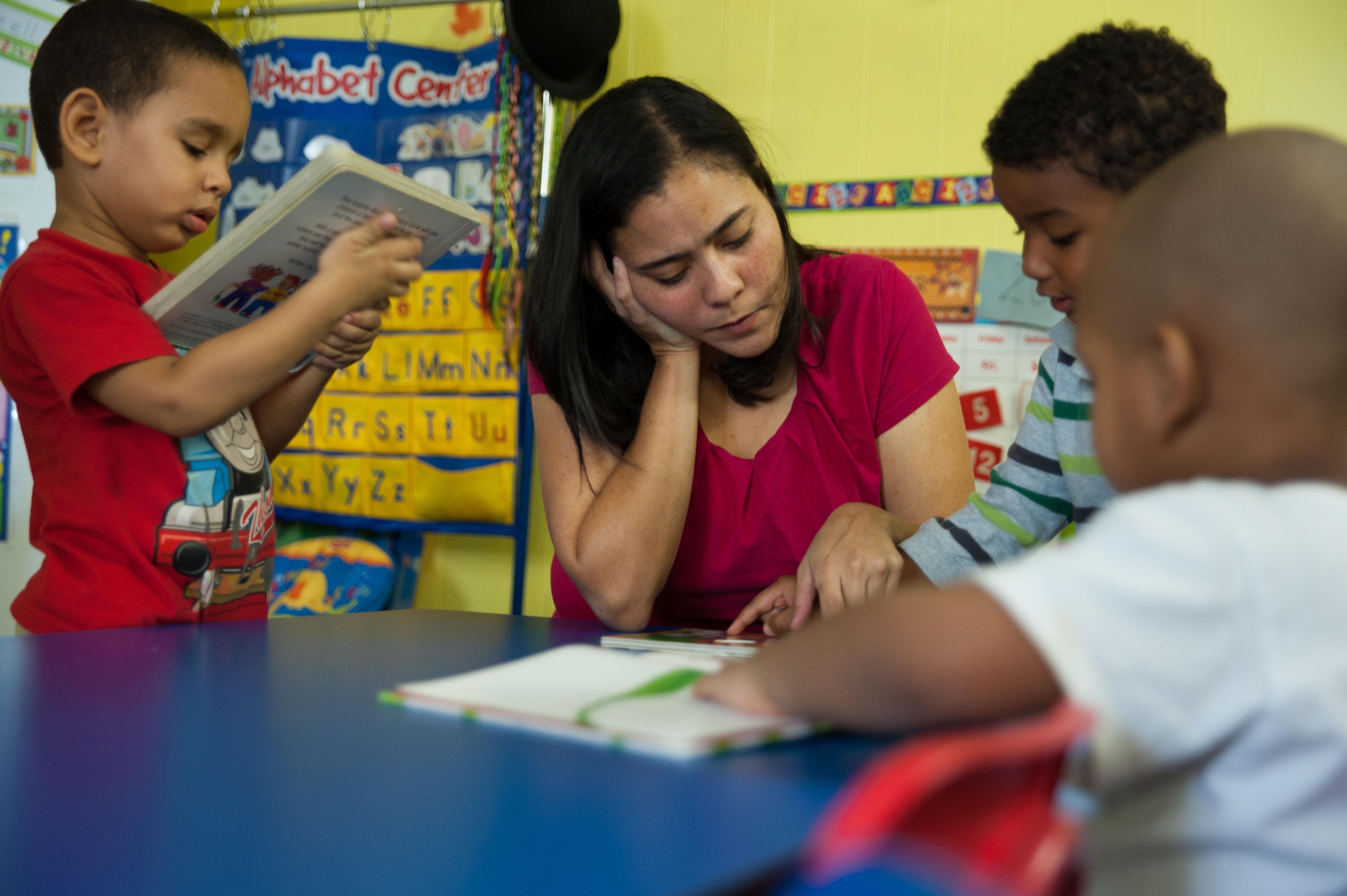
Holmes-School-Dorchester-MaA new employee goes to the Oliver Wendell Holmes School in Dorchester with the team I’m on. He can’t get over how great it is to work for an organization that gives you time to do this. We go out once a month from January to June, and other teams go once a month so that we cover every week.

I started eight years ago with the team that read picture books to a room of first graders. Then I read for a few years with fifth or fourth graders who received chapter books from the librarian. These were students whose teachers thought they would appreciate the extra reading. We all read aloud, with the adult volunteers only taking a turn if the story seemed to lag.

Holmes is a minority-majority urban school with many dedicated teachers who are tolerant of the extra work it takes to herd volunteers. (We also have volunteers who work on math.)

This year, the team I’m on includes the woman who started the whole relationship with Holmes 20 years ago and is now retired. We are assigned to read copies of printed passages and help the children answer multiple-choice questions from tests they have had in the past.

Given the current nationwide emphasis on testing and these third graders’ tendency to keep guessing wildly, I consider it my role to focus on the thought process and deemphasize getting the right answer. I ask, Why do you think that’s the answer? How did you get there?

The administrators often tell us that we make a difference. We’re probably just a drop in the bucket. But, you know, One and One and 50 Make a Million.

More employers should make it so easy to improve the world in which they operate. Other employees probably spend the hour and a half it takes to go out, tutor, and get back once a month in less valuable ways.

Read Full Post »

Back in first-grade, we learned to read from books featuring invariably blond, blue-eyed children. Today, primers have more variety, but multicultural pleasure reading, where it exists, is not always available to poor children.

Leslie Kaufman wrote recently at the NY Times that a  “nonprofit called First Book, which promotes literacy among children in low-income communities, announced the Stories for All project, a program intended to prod publishers to print more multicultural books. …

“In a 2012 study, the Cooperative Children’s Book Center at the University of Wisconsin-Madison evaluated some 3,600 books, looking for multicultural content. Of the books examined, 3.3 percent were found to be about African-Americans, 2.1 percent were about Asian-Pacific Americans, 1.5 percent were about Latinos and 0.6 percent were about American Indians.” More.

First Book picked two winning publishers in its first Stories for All competition — HarperCollins and Lee & Low Books — and purchased $500,000-worth of books from them. The books “will be available beginning in May through the First Book Marketplace, a website offering deeply discounted books and educational materials exclusively to schools and programs serving kids in need.”

Among the books are:  “Shooter”, Walter Dean Myers (HarperCollins); “Tofu Quilt”, Ching Yueng (Lee & Low Books); “In the Year of the Boar and Jackie Robinson”, Bette Bao Lord (HarperCollins); “The Storyteller’s Candle: La Velita de Los Cuentos”, Lucia Gonzalez (Lee & Low Books); “El Bronx Remembered: A Novella and Stories”, Nicholasa Mohr (HarperCollins); and “Passage to Freedom: The Sugihara Story”, Ken Mochizuki (Lee & Low Books).

More information at FirstBook.org.

Photograph: Strategies for Children

kids--teacher

Read Full Post »

A Little Free Library has come to Cambridge.

Writes Jan Gardner at the Sunday Globe, “About a block from the Cambridge Public Library, its Lilliputian cousin is perched atop a post on the sidewalk. At this Little Free Library, open since mid-October, there are no due dates, late fees, or library cards. Made out of recycled wood, it consists of a single shelf that holds about 20 books.

“The library’s founders are Laura Roberts and Ed Belove who put it in front of their house at 1715 Cambridge St. so they can keep an eye on it. …

“Sabrina Françon, a student at the nearby Harvard Graduate School of Design, sees the Little Free Library as an example of tactical urbanism, a trend she is studying. She wants to determine whether small playful citizen projects like the Little Free Library influence a neighborhood’s social capital.” Roberts reports to Françon what she sees from the window.

“The little library had its origins on Facebook. A friend of Roberts posted a message about Little Free Library, a nonprofit that started in Wisconsin three years ago. Founder Todd Bol built the first library in tribute to his late mother, a book lover.”

More from the Globe. You may also want to read my earlier post on the concept here. By the way, have you ever noticed that the Globe posts weekday articles fast, but Sunday Globe articles like this one may wait until Tuesday.

Photograph: Laura Roberts

Read Full Post »

When I worked with Denise at a certain hyped management magazine, I always knew she had better things in her than the tasks she was given there.

Moreover, she was the most sensible 25-year-old I had ever met. After moving on to better jobs, including writing for teens at Scholastic, she turned to the hardest and most important work in the world. And on the whole, it seems to suit her.

But nothing can stop the itch to write. Here she shares the joy and frustration of reading repetitive stories to book-hungry kids:

“Nothing brings me more joy than knowing how much my 5-year-old son, Isaiah, looks forward to sitting in our rocking chair while I read him books at bedtime. And my heart swells with love whenever my 2-year-old twins, Joel and Nina, bring me books and say, ‘Read book, please.’

“But, holy moly, I’ve run into a very serious problem. While Isaiah can enjoy a variety of different stories, the twins are all about sameness. Even though I rotate their books constantly so we’re not reading the same ones every week, the repetitiveness of reading these books is driving me crazy.

“I’m sure many parents are familiar with the rhythm and rhyme scheme of many children’s board books, ‘Bend and reach, touch your toes. Now stand up straight and touch your nose!’ Lately, I’ve been adding a few colorful rhymes in my head as I read these books to the twins. ‘Clap your hands, then point to your shoes, reading this book is driving me to booze!’ ” Read more.

(I admit I felt the same way about Richard Scarry. The pictures were darling, but the words, not so, even if I did let “five-seater pencil car” become part of my vocabulary.)

For a mom with twins, it is must be twice as much “bend, reach, touch your toes,” but for sure these kids will grow up to be readers.

This is Denise with one of her three book mavens.

Read Full Post »

March 1 is World Book Day. Who knew?

Alison Flood and Michael Bonnet write about the event in The Guardian: “Celebrated in over 100 countries around the world, World Book Day is the UK’s largest festival of reading and aims to encourage a lifelong love of literature in children. Thousands of schools and nurseries are joining in, with more than 14m book vouchers given out to children, and hundreds of events – from Where’s Wally ‘flash mobs’ to author talks and literary fancy dress competitions – taking place up and down the country.” Read more.

The World Book Day website says this is the event’s 15th year. “It’s a celebration of authors, illustrators, books and (most importantly) it’s a celebration of reading. In fact, it’s the biggest celebration of its kind, designated by UNESCO as a worldwide celebration of books and reading.”


Read Full Post »

Do you ever look at ArtsJournal? It has the best links!

Today there’s a fun link to the Post-Standard in Syracuse about a library in a phone booth.

Writes Maureen Nolan: “The Little Free Library credo is ‘take a book, leave a book.’ That’s pretty much the only rule. Every Little Free Library is supposed to have a volunteer community steward, and Mother Earth, whose given name is Taywana James, is a natural. She lives barely a block from the library. She is a mother, poet and artist involved in a number of projects to better the Near West Side, and she loves books.  …

“Rick Brooks, co-founder of the Little Free Library movement, estimates there are 300 to 400 little libraries in 33 states and 17 countries. He doesn’t know if most people bring books back. In the Little Free Library movement, the return rate doesn’t seem to be a critical data point.” More here on Little Free Libraries.

I am reminded of the Uni Project, which I blogged about here. It’s a portable reading room, first deployed in New York City last September.

One of the founders of the effort, Sam Davol (also a cellist in the band the Magnetic Fields), writes about the Uni Project here: “On Sunday, Sep. 11, the Uni was put into service for the first time. Lower Manhattan residents joined us to inaugurate the Uni by gathering to browse and read our small collection on a difficult morning. While most of the surrounding blocks were locked down and public libraries in Manhattan were closed, the Uni began its journey among good people who came out to visit a public market and meet the Uni.”

(That was the same day Suzanne and Erik startled the guardians of the people by renting a small boat and going sailing in New York harbor.)

Read Full Post »

Central Falls, Rhode Island, may be best known today for going bankrupt and forcing its police and fire unions to accept cuts to pension benefits, but it has more going for it than angst.

It has people who care, like Mike Ritz and chocolatier Andrew Shotts, who are selling Chocolateville chocolate bars to help children at risk.

It also has a charter school that has quietly improved children’s reading skills, spreading its success to public schools in the city.

Joe Nocera writes in the NY Times that before starting The Learning Community in Central Falls, Meg O’Leary and Sarah Friedman “spent three years working with the Providence school system on a pilot program designed to come up with ways to ‘transform teaching practices and improve outcomes.’ ”

In 2007, when Frances Gallo became the Central Falls Schools superintendent, she began to investigate why families were so excited about getting into The Learning Community.

“The school drew from the same population as the public schools. It had the same relatively large class sizes. It did not screen out students with learning disabilities. Yet the percentage of students who read at or above their grade level was significantly higher than the public school students. When Gallo asked O’Leary and Friedman if they would apply their methods to the public schools, they jumped at it.

“ ‘At first it was, “Oh, here comes another initiative,” ‘ recalls Friedman. There were plenty of venting sessions at the beginning, along with both resentment and resistance. But The Learning Community invited the teachers to visit its classrooms, where the public school teachers saw the same thing Gallo had seen. And very quickly they also began to see results.”

Read about how they do it here.

Read Full Post »

« Newer Posts - Older Posts »