Feeds:
Posts
Comments

Posts Tagged ‘rescue’

Photo: Gianmarco Di Costanzo.
Lek Chailert devoted her life to rescuing abused elephants. Now caring for 120 of them, she fears for their future in Asia.

The stylist at my salon sometimes talks about her love for elephants. She’s the one who opened my eyes to what elephants and other animals suffer from captivity. I had never thought much about it, assuming that zoos were good, helping children to learn about the wild and saving endangered animals from extinction. Those things may be true to some extent, but not always.

Today’s story is about a woman who set up a rescue operation for elephants in her homeland.

Patrick Greenfield writes at the Guardian, “Saengduean Lek Chailert was five years old when she saw an elephant for the first time. It was in chains, lumbering past her home in rural Thailand on its way to help loggers pull trees from the forest. Back then, she saw the giant mammals like everyone else – as animals that served humans. But that changed the day she heard a scream from the forest.

“Chailert was 16 when she heard the terrible noise. She scrambled through the trees until she found the source: a bull elephant scrabbling in the mud as it tried and failed to drag a log out of a ditch. Every failed attempt was met with punishment from the loggers and mahout, the elephant keeper. …

“ ‘The elephant looked at me and I felt the fear and anger. I felt helpless and confused. My heart hurt a lot,” says Chailert. …

“The incident changed the direction of Chailert’s life forever. She was from a poor family – there was no electricity or school in her village – but she vowed to do something for the animals she loved.

“Before a ban on logging in natural forests in Thailand in 1989, elephants were a key part of the industry. In the early 20th century, there were an estimated 100,000 elephants in Thailand. Thousands were worked to death or left with severe injuries. …

“After the ban, many elephants were used by the country’s rapidly growing tourism industry to give performances and rides. …

” ‘Camp owners were competing with each other for tourists,’ she says. ‘They would train their elephants to dance, ride a motorbike, play darts or hula hoop, walk on a rope or play a harmonica. This brought more suffering to elephants.’

“It took Chailert a few attempts to fulfill her dream of finding a way to care for Thailand’s elephants. In 1996, she sold everything she had and borrowed money to set up an elephant sanctuary. She paid $30,000 for four hectares (10 acres) of land to provide a home to nine elephants.

“She insisted that there would be no elephant rides or performances. Her family invested money to help but after disagreements over how to run the park, she left the project, taking the elephants with her.

“Then, Chailert got lucky. National Geographic was filming a documentary with the Hollywood star Meg Ryan about Thailand’s wild elephants, which were estimated to number 4,000 to 4,400 by 2023; Chailert and her newly released elephants featured in it.

“In the US, a Texas couple, Bert and Christine Von Roemer, saw the TV program and contacted Chailert, donating enough money to buy a 20-hectare parcel of land in the Mae Taeng district of northern Thailand, near Chiang Mai. In 2003, Elephant Nature Park was born.

‘Today, about 120 rescue elephants are at the park, which has grown to more than 1,000 hectares, home to a small fraction of the 3,900 or so domesticated elephants in the country. The sanctuary’s work has an enormous social media following on Instagram and Facebook.

“Elephants arrive from all over Thailand. …

” ‘Some arrive with huge mental issues. Some stand like a zombie; some are aggressive, they swing their head back and forth. When they arrive, we do not allow our staff to use any tools or do anything that might make them feel threatened. We are gentle. We have to give them our love to make them trust us. We have to be patient,’ she says.

“New arrivals are almost always put into quarantine and slowly introduced to the herd. Over time, they are accepted. When their ears start to flap and their tails start to whirl, the elephants are happy, says Chailert. …

“Today, the conservation scheme is funded by visitors and volunteers who pay to work on the project. But despite the success of the sanctuary, Chailert fears for the future of Asian elephants, which she believes are decreasing in Thailand, despite official figures showing a steady increase in the population.

“ ‘Throughout Asia, many people are starting to hate elephants. Human-wildlife conflict is a big problem. Many died from being shot and poisoned,’ she says.

“ ‘Many have lost their habitat and water sources so they have to go to golf clubs and rice fields – places that don’t belong to them. So, people get angry and make the elephant into a monster. The future will depend on the government policy to resolve this,’ she says.”

More at the Guardian, here. PS. The Guardian doesn’t have a paywall. Please consider donating to keep their journalism alive.
Read Full Post »

Photo: Atlantic Shark Institute.
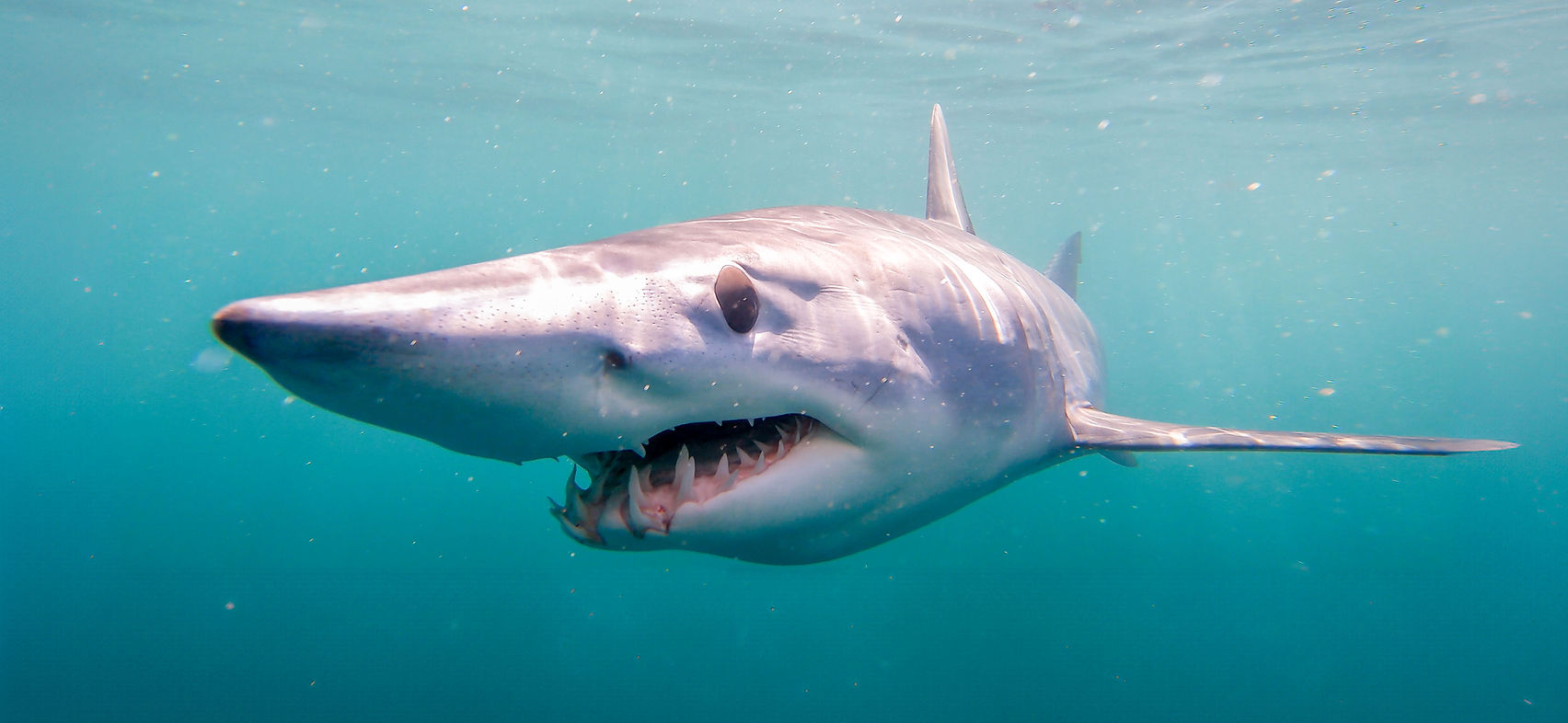
A Great White shark.

Here I am on the island of New Shoreham reading about a Great White shark that people in Australia actually dared to rescue. Oy! Some sharks are harmless, but keep me away from that particular shark!

In New Shoreham, we know that warming seas are bringing more seals north. And seals, of course, mean lunch to the Great White. Grandchildren are told to keep clear of seals.

Recently, I read an Associated Press article at the Guardian about a different kind of shark adventure down under. A rescue.

“Tourist Nash Core admits he felt some fear when he and his 11-year-old son waded into the ocean off the Australian coast to help rescue a three-meter [10 foot] great white shark stranded in shallow water.

“Three local men managed to return the distressed animal from a sand bank into deeper water after an almost hour-long rescue effort [near] the coastal town of Ardrossan in South Australia.

“ ‘It was either sick or … just tired,’ said Core, who was visiting with his family from the Gold Coast in Queensland. ‘We definitely got it into some deeper water, so hopefully it’s swimming still.’

“Core came across the unusual human-shark interaction while traveling around Australia with his wife, Ash Core, and their sons, Parker, 11, and Lennox, 7.

“Nash Core used his drone to shoot video of the writhing shark before he and Parker decided to help the trio who were struggling to move the shark into deeper water. …

“The three men had used crab rakes – a garden rake-like tool for digging small crabs from sand – to move the shark into deeper water by the time the father and son arrived. …

“ ‘They … got it into deeper water where I thought it’s probably not a good idea to go any further. That’s its territory and I’ll stay back,’ he said. …

“Macquarie University wildlife scientist Vanessa Pirotta said while shark strandings were not common, they were becoming more visible through social media. …

“ ‘If you see something like this, human safety comes first and foremost,’ Pirotta said. ‘You can contact environmental authorities … who will get someone appropriate to come and assist.’ More at the Guardian, here.

Meanwhile, here is a relevant research project being conducted at the Atlantic Shark Institute. It’s called “White Shark and Seal Interaction — Block Island, RI.”

“The focus of this study is the White Shark (Carcharodon carcharias), a growing Gray Seal (Halichoerus grypus) population, and the potential for interaction between the two in the waters off Block Island, RI.

“Through the use of an extensive acoustic array, the tagging of white sharks and seals with acoustic transmitters, the tagging of seals with satellite (SPLASH) tags, and detailed seal counts and assessment using cameras and visual counts, the team hopes to better understand the ecology of white sharks and gray seals in this area, and potential interactions between the two.

“With a wide variety of white sharks being tagged (young-of-the-year [YOY],  juvenile, sub-adult and adult) and little baseline data for either species at Block Island, this is a unique opportunity to investigate if and when predator-prey dynamics are established. The Atlantic Shark Institute, RI Department of Environmental Management, Mystic Aquarium, NOAA Northeast Fisheries Science Center, Dr. Greg Skomal, Atlantic Marine Conservation Society and the Block Island Maritime Institute are collaborating on this study.”

Read about other Atlantic Shark Institute studies here

Read Full Post »

Photo: BBC.
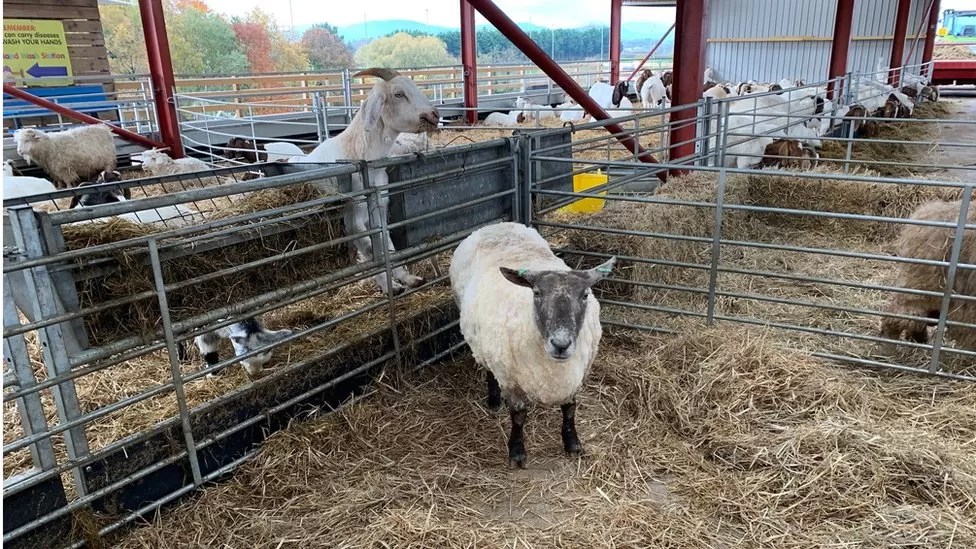
Fiona was called the loneliest sheep, but having been rescued from another winter alone at the bottom of a cliff, she can now look forward to having friends.

You may have seen this story, but I couldn’t resist sharing it anyway. A sheep in Scotland had gotten herself into such an inaccessible spot that the Scottish equivalent of the ASPCA had given up the idea of rescuing her before winter. She was going to spend winter alone. Again. Then local sheep shearers decided that it just wouldn’t do.

Fiona needed first to lose 10% of her weight and become a bit easier to carry. Fortunately, shearers can make that happen.

Giancarlo Rinaldi reported at the BBC, “The sheep described as the loneliest in Britain is said to be settling in well to her new home. The ewe, now named Fiona, was rescued on Saturday after being stranded for more than two years at the foot of cliffs in the Scottish Highlands. …

“She arrived at Dalscone Farm ‘under cover of darkness’ on Sunday and is said to be in good condition.

“The sheep’s plight hit the headlines last month after a kayaker photographed her still trapped at the foot of a steep cliff at the Cromarty Firth, two years after a previous sighting. She was dubbed ‘Britain’s loneliest sheep’ and an online petition to rescue her attracted thousands of signatures.

“Plans to move her to the farm park in southern Scotland provoked a ‘peaceful, non-violent demonstration’ at the site amid concerns she would become a ‘spectacle.’

“Farmer Ben Best of Dalscone Farm said it had been a ‘stressful’ couple of days to get the sheep to Dumfries. [But] ‘she has settled in absolutely brilliantly. She has been eating, drinking. We couldn’t be happier with how she has settled in. …

” ‘Everything is transparent what we do – we are known worldwide for our animal care,’ he said. The farm section of the visitor attraction is currently closed to the public but it posts regular live updates on its Facebook page.

“Saturday’s rescue operation was led by professional shearer Cammy Wilson. He told BBC Radio’s Good Morning Scotland program, ‘I have never worked with a sheep as calm as she is. She has essentially had unlimited grass to eat for two years and she is what we would describe as fat in the sheep world.’ …

“Fiona weighed in at [200 lbs] without her wool, and the wool itself weighed [20 lbs].

“Mr Wilson said the wool was quite poor quality, but it was hoped it could eventually be made into something and used in a raffle for charity.

“He also explained the cinematic inspiration behind the sheep’s name. ‘I came up with the name Fiona because, several years ago now, the world was taken by storm by a sheep called Shrek in New Zealand who had been living alone in a cave,’ Mr Wilson said. ‘I thought Shrek is the male version of this situation so it has to be Fiona. It is also a good Scottish name.’ …

“He said they had waited until the ‘coast was clear’ to take the sheep to the farm park on Sunday night where he was confident she would be well looked after.

“Mr Wilson added: ‘She will live out the rest of her life down there at Dalscone, probably being better looked after than I will be.’ “

Yesterday, I heard rescue leader Cammy Wilson tell Marco Werman at PRI’s The World about being very nervous shearing Fiona at the bottom of the cliff because he knew that people around the world would end up seeing his skill on Facebook.

More at the BBC, here. And you can listen to the Wilson interview at PRI’s The World, here. Wilson’s delight is infectious.

Read Full Post »

Photo: Brocken Inaglory/Wikimedia.
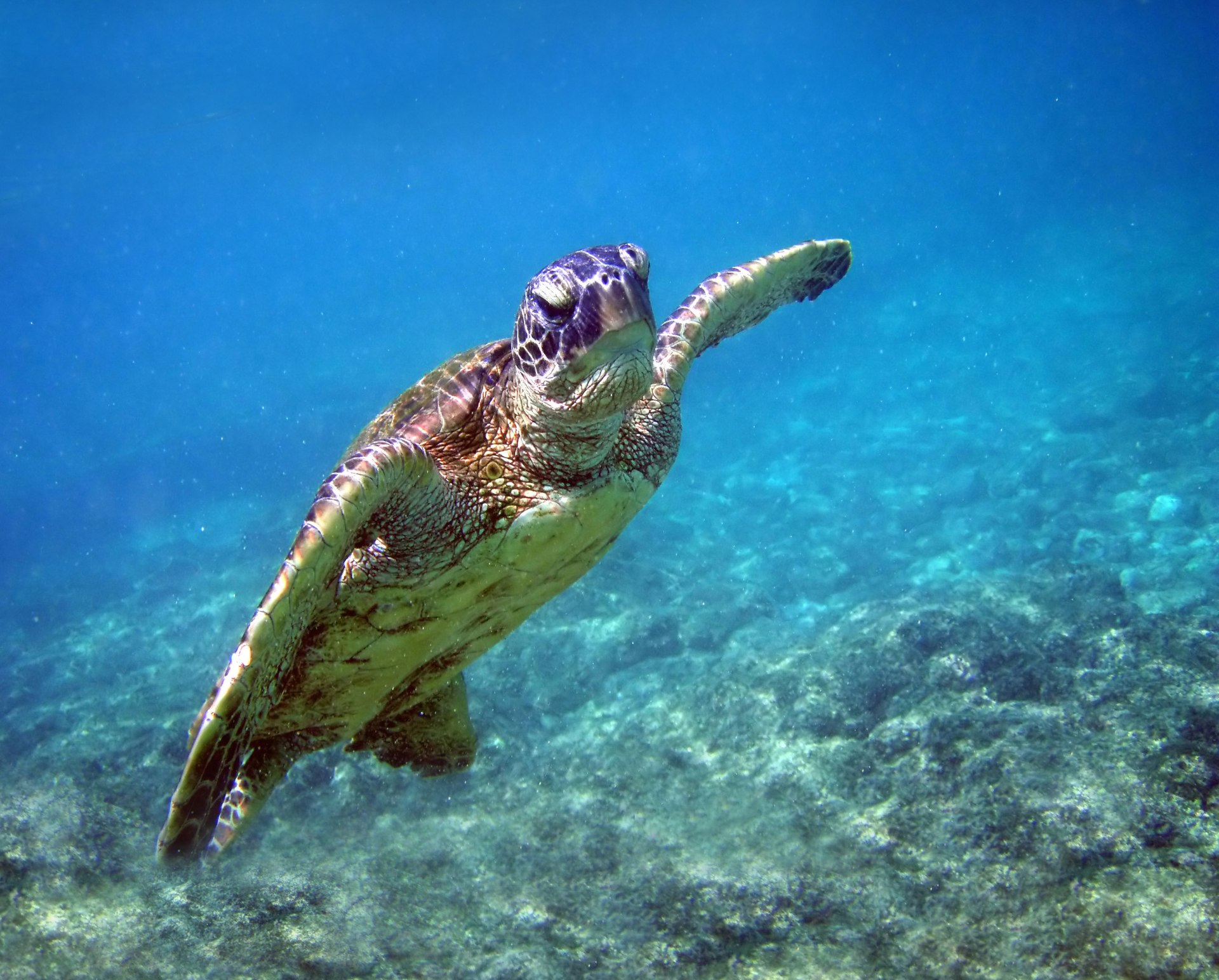
The green sea turtle above is in Hawaii. Others are in Florida, Egypt, and around the world. When threatened species like these get in trouble, they may receive care at a New York rehab center.

Americans are pretty good at volunteering, and there are so many ways to volunteer that everyone should be able to find something that suits them. I like assisting in English classes for immigrants. The volunteers in today’s story get involved with sea turtles under the guidance of scientists.

Dodai Stewart reports at the New York Times, “On a recent Thursday morning, Maxine Montello was at work making breakfast for 48 hungry diners.

“She had a stack of numbered plastic trays, and a clipboard with a list of corresponding menu orders. Methodically, she placed each tray on a scale, cut up pieces of frozen squid and cold raw herring and added them — including heads and tails — measuring just the right amount.

“Pills were hidden inside some of the fish, and Ms. Montello referred to notes about her customers. ‘Some of them don’t like the tails,’ she said. ‘And Number 7 doesn’t like the squid.’ …

“Ms. Montello is the rescue program director at the New York Marine Rescue Center in Riverhead, Long Island, a nonprofit organization stretched to its limits after receiving a record number of sick sea turtles in urgent need of aid this season. …

“The sea turtle swims under the radar. ‘Even people that might spend a fair amount of time on the water in the Northeast might never see a sea turtle,’ said Barbara Schroeder, the sea turtle coordinator for National Oceanic and Atmospheric Administration Fisheries. ‘But they do use Northeast waters extensively.’ …

“The rescue center mainly sees two types of sea turtles: green and Kemp’s ridley. Both varieties generally travel north in the summer and spend winters in warmer waters down south.

“The green sea turtle, a threatened species with a beautiful starburst pattern on its shell, can be found all over the world. The Atlantic Ocean population often nests in Florida and travels as far as Massachusetts in the summer. They live to about 70 years old, growing to three feet long and 350 pounds.

“The Kemp’s ridley sea turtle, a critically endangered species that nests in Mexico and eats crabs in the waters of New England and the Mid-Atlantic States, is smaller, growing to about 100 pounds.

“Once on the edge of being extinct, the Kemp’s ridley sea turtle has ‘a very positive conservation story,’ said Ms. Schroeder. Shrimp trawling and the killing of nesting turtles and their eggs at their very restricted nesting beaches had caused their numbers to plummet into the hundreds, but the Endangered Species Act, signed 50 years ago, has helped stabilize the population.

“Climate change has created new challenges to the turtles’ survival. Warming waters mean that ‘turtles and other species are expanding their normal territory,’ Ms. Montello explained. ‘So more and more turtles are going further north.’ Then, when cold weather arrives, often suddenly, the turtles are stranded. … Sea turtles are coldblooded, so when the water temperature drops, so does their body temperature. They become cold-stunned — similar to hypothermia — and go into a state of shock, washing up on beaches.

“The rescue center, founded in 1996, usually treats about 30 or 40 cold-stunned sea turtles during the winter. Ms. Montello has looked at records dating back to 1980, and said this year’s numbers are concerning. … ‘This year we had 95.’

“Of the 95 turtles found cold-stunned this season, 48 are still alive and in the care of the rescue center. The others were either dead when they washed up or perished soon after.

‘Their survival is dependent on how quickly they’re found,’ said Ms. Montello. …

“A lot is unknown about these creatures’ lives in the New York area, and much of the data comes from stranded turtles, not thriving ones. Ms. Montello’s research plans involve recording turtle behavior using customized video cameras that will be attached with suction cups to the backs of healthy turtles when they are released. …

“After the raw fish was loaded onto plastic trays, Victoria Gluck, a biologist on staff, carried a tray over to a turtle tank and doled out the meals with tongs, piece by piece, to the corresponding patients, whose numbers were written on their backs with nontoxic paint. Two volunteers, Britney Dowling and Cecilia Gonzalez, used nets to keep the other hungry turtles away as Ms. Gluck placed fish in front of each turtle, ensuring that they all got their allotted share; a turtle is supposed to eat 2 percent of its body weight a day.

“In the wild, sea turtles are solitary, so being in a tank alongside others in the rescue center makes some of the residents grumpy. On a whiteboard in the kitchen, the team had compiled a list of ‘tank bullies’: turtles known to push their tank mates or try to steal their food. …

“A veterinarian visits once a week, but otherwise the staff members — eight total, four full time and four part time, all women — and a small army of citizen scientists and volunteers are responsible for spotting cold-stunned turtles and helping them recuperate.” Read the rest of the story at the Times, here.

Read Full Post »

Photo: Lauren Owen Lambert.
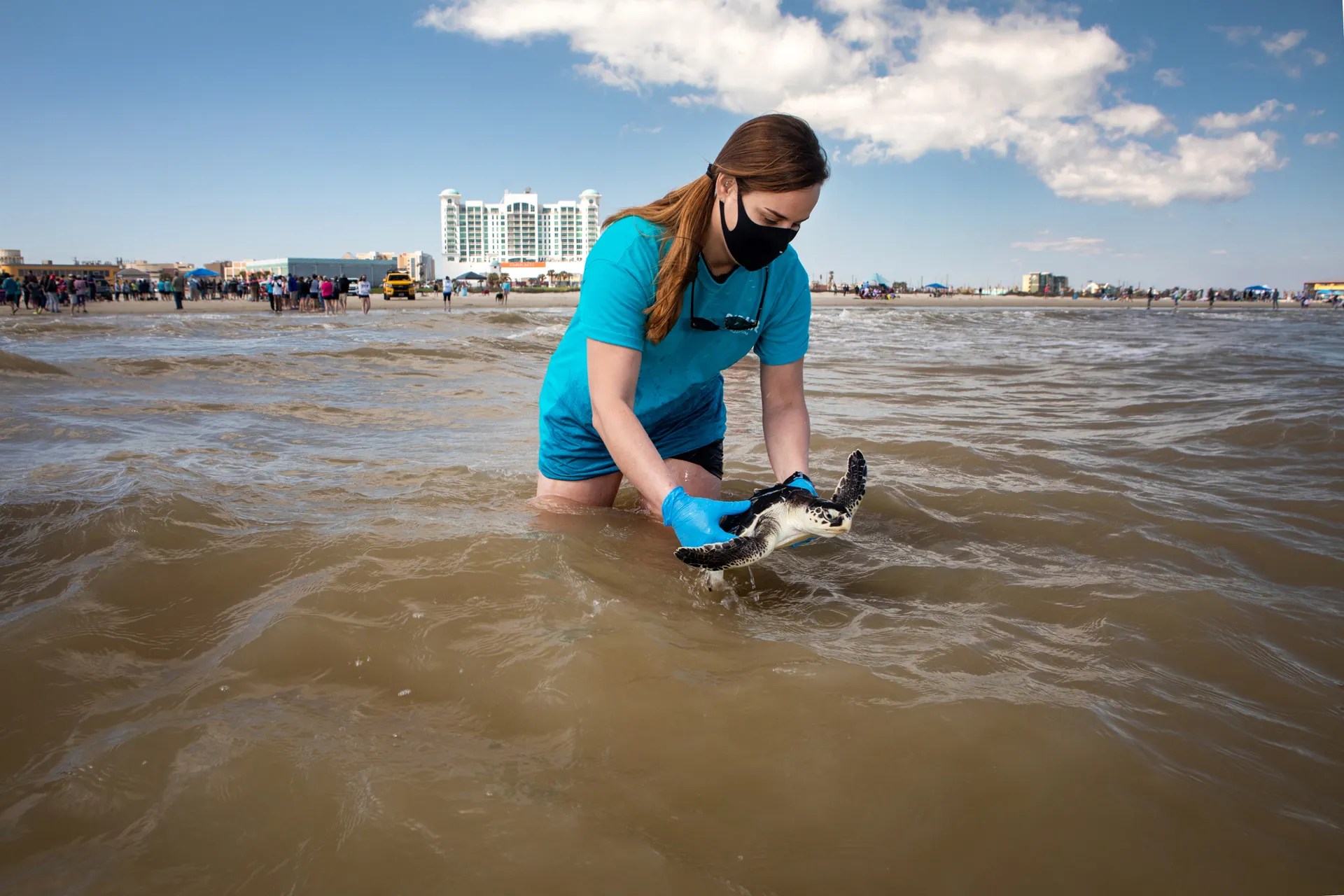
A rehabilitator with the Sea Life Aquarium holds one of approximately 85 endangered Kemp’s ridley sea turtles released at Galveston Beach in Texas last year.

When Suzanne and Erik and the kids were visiting the island of Eleuthera, a local guide gave them a treat. As they maneuvered their rented kayak, the guide stood on his paddle board and led them to where they could see green turtles without harming them. Though listed as endangered, the turtles seemed very happy in Eleuthera. According to Suzanne, they swam really fast and playfully.

Some other endangered turtles have been moving a little too fast — to the hook of Cape Cod, Massachusetts, where they get in trouble. That’s when local rescue operations go into high gear.

Lauren Owens Lambert at Vox has the story.

“Sea turtles appear to fly as they swim beneath ocean waves. With long, gray-green flippers that move like slow wingbeats, they glide through the water as birds do through the sky. Actually flying through the air, though, at 10,000 feet above the ground, the reptiles seem anything but graceful.

“Inside the airplane, 120 sea turtles, 118 of which are juvenile Kemp’s ridleys (Lepidochelys kempii), shift uncomfortably among beach towels inside stacked Chiquita banana boxes, their crusty eyes and curved pearlescent beaks peeking through slot handles. The windowless metal cabin vibrates with the sound of propellers as the pilots work to keep the plane aloft and the internal air temperature at a turtle-friendly 22 degrees Celsius (72 degrees Fahrenheit). It’s December 2020, and outside, the cold air above New England slowly gives way to balmier southern temperatures. The pilots are taking the turtles on a 2,900-kilometer (1,800-mile) trip from Massachusetts to Texas’s Gulf Coast.

“Eight hours later, they’re nearly there. ‘We’re coming into Corpus Christi,’ says Mike Looby, a pilot with a sea turtle rescue organization called Turtles Fly Too, as airport runways come into view among the sprawling buildings below. Looby and co-pilot Bill Gisler, both from Ohio, will visit four different locations in Texas to offload the animals. This is the largest number of turtles the organization has transported to date.

“Once the plane is on the tarmac, staff and volunteers from several aquariums and marine rescue facilities crowd around. The pilots gently slide each box of turtles toward the cargo door, and the group lines up to carry them to vans parked nearby.

“ ‘What happened to these guys?’ someone asks.

“ ‘They were found stranded on Cape Cod, in Massachusetts,’ says Donna Shaver, chief of the division of Sea Turtle Science and Recovery at Padre Island National Seashore, as she grabs a box.

“In the summer months, the waters in the Gulf of Maine where Cape Cod is located are warm, calm, and full of food, serving as a natural nursery for 2- to 4-year-old Kemp’s ridleys, the smallest and most endangered sea turtle in the world. Migrating loggerheads (Caretta caretta), green sea turtles (Chelonia mydas), and the occasional leatherback (Dermochelys coriacea) also visit Cape Cod Bay. But as water temperatures plummet in November, December, and January, the cold-blooded turtles must migrate out or perish.

Many lose their way and wash up, cold-stunned, on the inside edge of the hook-shaped Cape, which curls into the ocean like a flexing arm, forming what some locals call ‘the deadly bucket.’ …

“ ‘This area is increasing in water temperature faster than 99 percent of water bodies in the world,’ says Kate Sampson, sea turtle stranding and disentanglement coordinator at the National Oceanic and Atmospheric Administration (NOAA), who helps coordinate turtle transport. ‘Because of that, it seems like it’s drawing more sea turtles.’

“Fortunately for the turtles, hundreds of volunteers and several staff members organized by the nonprofit Mass Audubon Wellfleet Bay Wildlife Sanctuary stand at the ready to patrol every inch of the 105-kilometer (65-mile) stretch of beach lining the inner Cape, twice a day, from November through December, no matter the weather. When they find a turtle, the animal begins a logistically complex journey from rescue to rehabilitation and, eventually, to release.

“Saving each flight’s worth of little lives involves approximately five vans, 1,000 miles, four organizations, and 50 people. Without this monumental collaboration across North America’s Eastern Seaboard, other efforts to save the Kemp’s ridley sea turtle from extinction might be futile.”

Read why turtle strandings are on the rise at Vox, here. No firewall.

Read Full Post »

Photo: Jessica Lustig.
Jessica Lustig, left, and Lesley Friedman Rosenthal, part-time Berkshires residents, went to Portugal to greet students, faculty and family from the Afghanistan National Institute of Music. Thanks in part to their efforts, the school was rescued and is resettling in Portugal, along with its founder and director, Dr. Ahmad Sarmast, center.

There are still small community newspapers that are doing actual reporting. Not where I live, where the the “local” paper mostly republishes content from a chain headed up by USA Today. It’s been so bad for so long, a group of community leaders is raising money for a nonprofit local newspaper such as we’ve begun to see around the country.

But I digress. Today’s Berkshire Eagle article is not a local story but I am not sure it would have happened if the reporter had not taken the time to interview local people.

Felix Carroll wrote that from a home in Otis, Massachusetts, “a daring, dangerous, complicated and ultimately successful rescue effort was coordinated beginning last August. …

“The denouement came on Dec. 13, when a community of school children from the Afghanistan National Institute of Music (ANIM) landed in Lisbon, Portugal — to safety, freedom and a future far afield from one that would have demanded their silence.

“Lesley Friedman Rosenthal, a part-time resident of Otis, was in Portugal to greet them. So was Jessica Lustig, a part-time resident of Great Barrington.

“ ‘It was remarkable to watch the young music students, their faculty and families come off the plane,’ said Rosenthal, president of the United States-based Friends of ANIM. ‘These 273 individuals, whose names, birth dates and national ID numbers I had helped work through so many lists for government agencies, and about whose lives and safety I had been so concerned in the past four months, suddenly appeared before us, with a look on their faces I can only describe as hopefulness.’

“Rosenthal and Lustig make up two-thirds of the board members of Friends of ANIM, the charitable group that, beginning in 2016, has supported the school, the first and only music academy in Afghanistan’s capital, Kabul.

“The school, which was inaugurated in 2010, had gained international fame for teaching Afghan and Western music to a co-ed student body against the backdrop of threats from the Taliban, the militant Islamist regime that had prohibited nonreligious music outright when it led Afghanistan from 1996 to 2001.

“The third member of Friends of ANIM is the school’s founder and director, Dr. Ahmad Naser Sarmast, who still suffers the physical effects following a Taliban attack on his school in 2014.

“The philanthropic efforts of Friends of ANIM took a dramatic turn in August upon the withdrawal of U.S. military troops in the country and the ensuing consolidation of control by the Taliban.

“Rosenthal, who serves as chief operating officer of The Juilliard School, the performing arts conservatory in New York City, and Lustig, the founder of a New York City-based publicity, advocacy and consulting business, engaged in round-the-clock efforts to assist Dr. Sarmast in rescuing the school.

“They reached out and received the support of political leaders, military veterans, academics, and artists, including local musicians Yo Yo Ma and Emanuel Ax.

‘It became clear, just in a matter of days, that the only way to salvage the school was to actually do a mass evacuation and airlift of the entire school community,’ Rosenthal said.

“In the meantime, videos began surfacing of Taliban members making a public show of destroying musical instruments. The Taliban had taken over the school campus. …

“News reports from Kabul told of how seven busloads of people associated with the school were left waiting at the airport for 17 hours, unable to board their plane amid fears of a terrorist attack. With that in mind, the evacuation efforts became less conspicuous; the efforts moved more slowly and comprised waves of smaller groups.

“In the end, the evacuation consisted of five airlift flights of 273 school members (including students, staff and immediate family) over a six-week period from Oct. 2 through late November.

“The first stop was Doha, in Qatar, whose government provided shelter and helped negotiate with the Taliban to ensure safe passage. Then, the school community flew on Dec. 13 to Portugal, where they have been offered asylum.

“ ‘Friends of ANIM is now working to reestablish the school in Portugal so that Afghan music and music education can continue for the girls and boys of the ANIM community,’ said Rosenthal.

“Rosenthal and Lustig had never imagined that their charitable efforts to support a school 7,000 miles away would ever come to this — essentially to establishing a war room in the Berkshires in the year 2021. …

“In December 2014, [a] suicide bomb attack at a student concert [in Kabul killed] an audience member and injured many others. Sarmast had to be airlifted to Australia for treatment. His hearing has been permanently damaged.

“ ‘The needs were clear,’ said Lustig. ‘He had threats to his life and threats to his school.’

“With the formation of Friends of ANIM in 2016, Sarmast and his staff and students would come to know that the world has his back.”

More at the Berkshire Eagle, here.

Read Full Post »

Photo: Hikespeak.
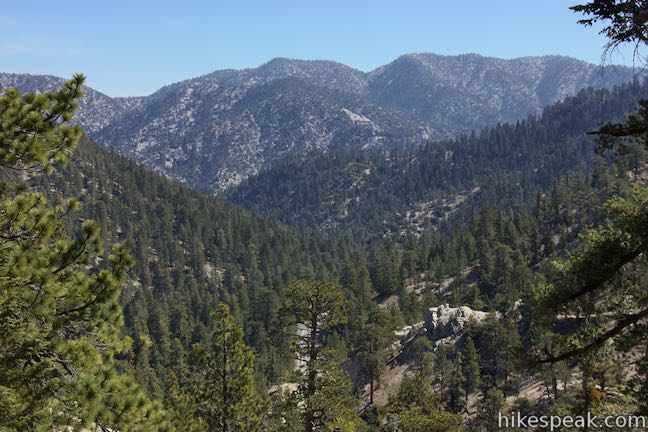
Because it’s possible to get permanently lost in the Mt. Waterman area of the Angeles National Forest, a hiker was lucky that someone in a different part of California had a hobby identifying the location of photos
.

People have unusual hobbies, things they like to dig deep into just because. A stranger’s passion for figuring out where photos were taken turned out to be lucky for hiker Rene Compean. Sydney Page at the Washington Post has the life-and-death story.

“When Rene Compean snapped a photo of his soot-stained legs hanging over a steep cascade of rocks, he feared it was the last picture he’d ever take. Hopelessly lost while hiking in Southern California, he thought he might die. … He repeatedly yelled for help and used charred sticks to write SOS on any open surfaces he could find.

“Compean had trekked through the Angeles National Forest trails more times than he could count, he said, but after venturing along a new path April 12 — for what he intended to be a two-hour outing — he lost his way.

“Several hours into the solo hike, after many failed attempts at getting his bearings, he was scared. The temperature was dropping fast in the remote, rugged terrain, and the winds were whipping.

“Compean grabbed his cellphone, which had less than 10 percent battery remaining, and climbed to a spot where he was able to get at least one bar of signal.

” ‘SOS. My phone is going to die. I’m lost,’ Compean texted a friend, along with two photos showing where he was — though only one went through. It was the picture of his legs.

“The photo offered minimal information and, given Compean’s lack of cellphone signal, the resolution was very low. More importantly, though, Compean didn’t realize his location settings were disabled on his phone.

“Still, the grainy image was somehow detailed enough for a total stranger to decipher the hiker’s exact location.

“Ben Kuo was working at his home about 60 miles away in Ventura County, Calif., when he stumbled upon a tweet from the Los Angeles County Sheriff’s Department, along with the photo of Compean’s legs.

“The sheriff’s search-and-rescue teams had already spent the previous night unsuccessfully looking for Compean, so they released the photograph to the public hoping someone could help.

“Sgt. John Gilbert said they figured Compean was on the mountain at about 7,000 feet elevation, and the blasts of wind were ‘definitely a concern.’ …

“The department tweeted: ‘Are You an Avid Hiker in the Mt. Waterman Area? #LASD SAR Teams need help locating a hiker.’

Kuo, 47, inspected the image and thought, ‘I bet I could find that spot,’ he recalled.

“Kuo works in the tech industry, but he is also an amateur radio operator. For several years, as a hobby, he has used his Twitter account to alert the public about natural disasters. He regularly examines satellite imagery to identify and track local wildfires.

“Plus, he has another unusual pastime: ‘I have always loved looking for where photos are taken,’ Kuo said. He frequently tries to identify where movie scenes, television shows or commercials were filmed. …

“So when he came across the blurry image of Compean’s legs surrounded by an endless landscape of rocks and vegetation, he instinctively pulled up a satellite map. Since the sheriff’s department said Compean’s car was found near Buckhorn Campground, he narrowed his search to the surrounding area.

‘There’s an amazing amount of information you can get from satellites,’ said Kuo, who is also a hiker, though he has never visited the area where Compean was lost.

“The first thing he noticed in the picture were patches of greenery. ‘I realized he’s got to be on the south side because there’s not really any green valleys on the north side,’ he explained.

“That finding tightened his search considerably and helped him zero in on one area that closely resembled the terrain in the image. The final step was cross-referencing the original photo with Google Earth and comparing specific details.

“ ‘By punching in the time and date that the photo was taken, you can compare the view in Google Earth,’ said Kuo. ‘They matched.’

“He shared a screenshot of the satellite imagery on Twitter and called the sheriff’s department to notify officials of the coordinates he uncovered.

“After vetting the findings in relation to the information they were able to glean about Compean’s whereabouts, ‘we felt pretty confident that Ben’s information was good,’ Gilbert said. A search-and-rescue team swiftly boarded a helicopter and flew to the area.”

Read what happened next at the Washington Post, here.

Read Full Post »

Photo: Nadia Tugwell.
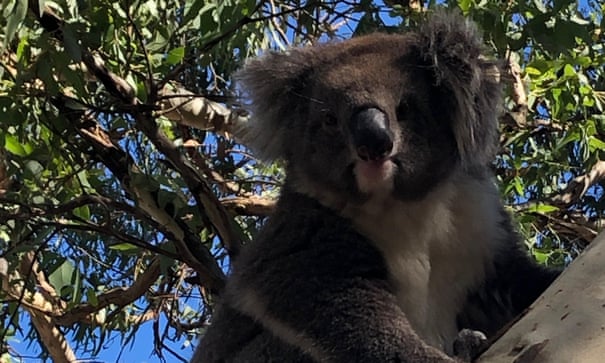
After the koala caused a multi-vehicle crash by ‘stomping’ on an Australian freeway, Nadia Tugwell put it in her car and called for help. The koala played around with the car’s steering wheel while waiting for Adelaide Koala Rescue and was ultimately released at a safe distance.

It was only last summer, when bushfires raged through koala habitat in Australia, that the adorable marsupials were threatened with extinction (story). Here’s a recent article about one that got itself into a different kind of danger but stayed calm and carried on.

Josh Taylor reported at the Guardian, “A koala crossing one of South Australia’s busiest freeways has led to a six-car pile-up as drivers abandoned their vehicles to mount a rescue of the ‘calm’ marsupial.

“[South Australia] police confirmed the multi-car crash occurred on Adelaide’s South Eastern Freeway. … A male driver reportedly was the first person to stop his car to try to rescue the koala before 7am. His car was then hit from behind, causing a chain reaction.

“An Adelaide woman, Nadia Tugwell, was behind the pile-up and said at first she couldn’t tell what was causing the delay in traffic. … Then Tugwell saw the koala moving between the cars and a concrete barrier in the middle of the freeway.

“ ‘The koala was just cute … sort of stomping between the cars and the barrier. Then I saw a lady running behind it, trying to catch it with a blanket or something.’

“Tugwell grabbed a jacket from her car and also raced towards the koala.

‘When it saw me it instantly turned around to run backwards but the other lady was there and so we jumped it, bundled it up, and it ended up in my car because she had children,’ she said.

“Tugwell had previously rescued animals from other roads so she had the number for the Adelaide Koala Rescue centre saved in her phone. She arranged to meet them at a nearby service station.

“While she waited an hour for the rescuer to arrive, Tugwell said the koala made itself at home in her car, including on the steering wheel.

“ ‘I was sitting there entertaining myself but I had to jump out of the car at that stage when he decided to take over,’ she said. …

“ ‘He was actually quite a calm koala, he didn’t even fight about being in the bag, he was just calm and went into the basket,’ Tugwell said.

“The volunteer released the uninjured koala back into the wild a kilometre from the freeway.

“An Adelaide Koala Rescuer volunteer, Ann Bigham, told the ABC, … ”The koala was in really good condition, it was lucky it hadn’t been hit at all and thanks to the rescuers it was kept safe.’ “

Wouldn’t it be something to have that experience? I’d love to be a koala hero like Tugwell. Can’t see it happening in New England, though.

More at the Guardian, here.

Read Full Post »

Photo: Reuters Marketplace/UK World Online Report.
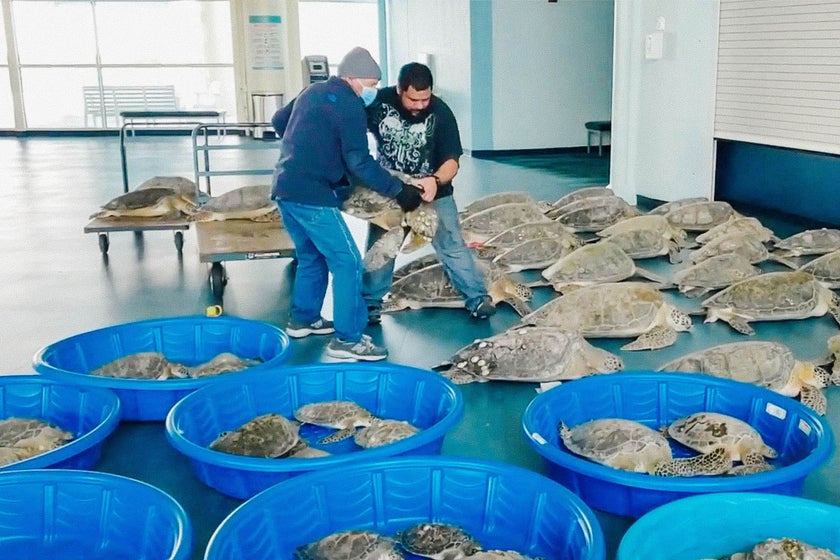
Endangered Green Sea Turtles are placed in bins and kiddie pools to help them warm up gradually.

Sometimes a crisis can bring out the best in human nature. Consider all the people making food for health-care workers in the pandemic or the volunteers manning pantries for 2020’s many unemployed.

This morning, as I was reading about the failure of the Texas electric grid, I learned that one supermarket, having suddenly lost power, couldn’t operate cash registers and let customers go home without paying.

Meanwhile, Texas nature lovers, despite hardships of their own, are rescuing sea turtles from the extreme cold. Many thanks to Hannah for pointing me to the story.

Raechel Allen reports at Slate, “An unprecedented winter storm provoked massive disruption in Texas this week: Millions lost power, hundreds were displaced from homes. [And] because of the temperature, thousands and thousands of sea turtles cannot move.

“An endangered species, these sea turtles usually live off the waters of South Padre Island, which is off the southern coast of Texas. Over the past week, they’ve been loaded into dinner cruise boats and minivans. The rescue center at the nonprofit Sea Turtle Inc. is used to rehabilitating injured sea turtles and responding to minor cold snaps but cannot hold all the turtles — so they’re also filling up a convention center. … Slate spoke to Wendy Knight, Sea Turtle Inc.’s executive director. Our conversation has been edited and condensed for clarity.

Rachael Allen: Can you walk me through what’s been going on this week with the turtles?
Wendy Knight: We are in the midst of the single largest cold-stun event in history. We have approximately 4,800 cold-stunned, federally protected, endangered sea turtles. … On Sunday things really started to hype up and we had local boat owners go out and find hundreds of floating sea turtles.

“What does it mean for a sea turtle to be cold-stunned?
“Sea turtles are cold-blooded so they need the temperature of water to regulate their own body temperature. … If the water gets below a certain temperature, the turtles are no longer able to sustain their own body temperature. Usually, they don’t think about all of their instincts — moving their flippers to swim, eating, diving to the bottom of the ocean, lifting their head up to draw breath. In a cold-stun event, they’re still aware they need to do those things, but because their body is frozen, or cold-stunned, it’s is not reacting to the instinct message. As a result they’re not able to swim, so the turtle floats to the top of the water and because their body is not responding by lifting their head to breathe, they drown in the ocean. I’m sure as we get farther away from the stun event, there will be perished turtles found, regardless of our best efforts.

“How did your team rescue thousands of turtles?
“This is a nesting beach where thousands and thousands of hatchlings are born each season, so everybody is keenly aware that we’re sharing space with sea turtles. We have almost 500 registered volunteers, plus all the city employees, who participate in training at the beginning of cold-stun season. That plan was executed here, just on a much bigger scale.

It’s important to remember that when all this was happening these hundreds of community members didn’t have power of their own. They hadn’t had electricity or running water in days. …

“They had their own personal tragedy happening. And despite that, they took time away to serve an animal that can’t serve itself.

“I can’t explain what it’s like to stand in a convention center that’s probably a football field and a half, and see 4,200 sea turtles laying tip to toe as far as the eye can see. And that’s not even all of them — that’s the overflow. … Nothing happens when they’re stunned — no bodily functions. It’s like a catatonic state. The best thing you can do is to let them rest. As things go along, they will start to wake up, but there are consequences that can come from cold stuns that require antibiotics and IV therapy, like pneumonia. We’ll watch them all closely, and as they recover and become more alert, we’ll start releasing them incrementally back into the Gulf of Mexico.”

I shouldn’t overlook the fact that there are people who volunteer year-round. Which is just to say that it doesn’t always take a crisis to bring out the best in human nature. More at Slate, here.

Read Full Post »

Photo: Barbara Crossette/PassBlue
Fathiah Zakham studied tuberculosis in Yemen until a bomb destroyed the university where she was working. Through the Scholar Rescue Fund, she received safe haven in Helsinki, Finland, to study.

Scholars and scholarship are generally endangered in authoritarian countries and in war zones. Fortunately, there are activists determined to keep the search for truth alive among all nationalities. The Scholar Rescue Fund was established to place refugee scholars in safe institutions where they can continue their work. Even in today’s isolationist America, refugee scholars are getting a future.

Deborah Amos reported on international placement efforts at National Public Radio (NPR) last fall.

“Around the globe, more scholars are now threatened and displaced than since World War II began. In response, U.S. universities have sponsored endangered scholars and recently created a consortium that offers a broader academic community to refugee scholars threatened by war and authoritarian governments.

” ‘There is a moral obligation to do something,’ said Arien Mack, a psychology professor at New York City’s New School for Social Research, who launched Endangered Scholars Worldwide in 2007 to draw attention to the threats facing academics. She now oversees the New University in Exile Consortium, which will bring exiled scholars together over the next two years for seminars, workshops and conferences. The New School has recruited 10 other universities to the consortium, and is urging more to join. …

” ‘We are trying to nurture intellectual capital, we are saving brains,’ Mack said at a Sept. 6 event in New York City to launch the project. ‘Even when [refugee scholars] are safe, what is painfully absent is that they don’t get integrated, they are isolated, they suffer from estrangement.’ …

“Syrian academic Mohammad Alahmad, a specialist in Arabic literature, had to negotiate with Islamist radicals to continue teaching at Al-Furat University’s campus in Raqqa. In 2014, the militants declared Raqqa the capital of the Islamic State. …

“He escaped the city with his family, smuggling them across a dangerous border into Turkey after ISIS shut down his university. He was awarded a fellowship by the Institute of International Education’s Scholar Rescue Fund, an organization that helps arrange emergency placement and funds for academic figures at risk. He was matched with Georgetown University where he is now a lecturer at the Center for Contemporary Arab Studies. …

“The Scholar Rescue Fund, established in 2002, has helped more than 700 scholars find academic placements in 43 countries. About 40 percent have been placed in American educational institutions.

“Indian activist and academic Binalakshmi Nepram says her work advocating for gender rights and a women-led disarmament movement in her home state of Manipur, in northeast India, led to threats and intimidation. … Now she is a visiting scholar in residence at Connecticut College.

” ‘We have all left everything behind,’ she said. … Her placement in Connecticut is a lifeline. She has continued her activism, giving a recent lecture on how the women of Manipur state worked together to confront violence in a decades-old armed conflict between insurgents and the Indian military.

‘Before I got this job, [American] people told me I could be a bartender or a babysitter,’ she said. ‘Every job has its dignity, but we have our skills.’

More at NPR, here.

Read Full Post »

What I liked about this story on rescuers in Iceland was how the volunteer tradition started when “women banded together and organized a rescue crew to curtail the loss of their men at sea.” The part that wasn’t so great was about tourists endangering everyone with harebrained feats for their bucket list.

Nick Paumgarten writes at the New Yorker, “Iceland, with a population of little more than three hundred thousand, is the only NATO country with no standing Army. It has police, and a coast guard, but these, like the citizens they are paid to protect, are spread thin, so come accident or disaster, disappearance or storm, the citizens, for the most part, have always had to fend for themselves.

“[Slysavarnafélagið Landsbjörg, or, in English, the Icelandic Association for Search and Rescue] has evolved into a regimented volunteer system that serves as a peerless kind of national-emergency militia. It is not a government program, and so represents a tithing of manpower. There are close to ten thousand members in all, with four thousand of them on ‘callout’ duty, on ninety-seven teams. … They are well trained and well equipped, self-funded and self-organizing, and enjoy a near-mythical reputation among their countrymen, who, though often agnostic regarding the existence of elves and gnomes, are generally not inclined toward reverence or exaggeration. …

“Landsbjörg traces its roots back to the formation, in 1918, of a rescue team in the Westman Islands, an archipelago just off the southern coast. The women on shore banded together and organized a rescue crew to curtail the loss of their men at sea, and in time other fishing communities established similar groups and protocols. Eventually, the fishing industry, as it grew, supported these efforts with donations. On land, farmers, left to their own devices, looked after each other, as they will.” More at the New Yorker, here.

You may get a kick out of the fundraising based on selling fireworks. Setting them off is legal in Iceland once a year. “Last year, Icelanders blew up five hundred tons of fireworks.”

Photo: Benjamin Lowy / Getty Images for The New Yorker
“People think of the rescue teams as the Guardians of the Galaxy,” a mountain guide said. “They forget these are normal people.”

Read Full Post »