Feeds:
Posts
Comments

Posts Tagged ‘research’

Photo: Laura Chouette/Unsplash.
A study by McGill University in Montreal, Canada, asked participants to listen to different types of music and rate how it affected their pain levels.

The other day on the radio I heard a doctor talk about treating pain in the age of the opioid crisis. His ideas sounded risky and seemed based on a study of one — himself. Having been in recovery from opioid addiction for 15 years, he found he could handle a lot of opioids when he broke his leg. He didn’t get addicted again.

Can every recovering addict do that? Seems like there ought to be better ways. So far, opioids are the only thing that works for severe pain. Today’s story talks about a way to reduce suffering, but only a little.

Nicola Davis writes at the Guardian, “If you are heading to the dentist, you may want to turn up a rousing Adele ballad. Researchers say our preferred tunes can not only prove to be powerful painkillers, but that moving music may be particularly potent.

“Music has long been found to relieve pain, with recent research suggesting the effect may even occur in babies and other studies revealing that people’s preferred tunes could have a stronger painkilling effect than the relaxing music selected for them.

“Now, researchers say there is evidence that the emotional responses generated by the music also matter.

“ ‘We can approximate that favorite music reduced pain by about one point on a 10-point scale, which is at least as strong as an over-the-counter painkiller like Advil [ibuprofen] under the same conditions. Moving music may have an even stronger effect,’ said Darius Valevicius, the first author of the research from McGill University in Montreal, Canada.

Writing in the journal Frontiers in Pain Research, Valevicius and colleagues report how they asked 63 healthy participants to attend the Roy pain laboratory on the McGill campus, where researchers used a probe device to heat an area on their left arm – a sensation akin to a hot cup of coffee being held against the skin.

“While undergoing the process, the participants [listened] to two of their favorite tracks, relaxing music selected for them, scrambled music, or silence.

“As the music, sound or silence continued, the participants were asked to rate the intensity and unpleasantness of the pain. …

“When the auditory period ended, participants were asked to rate the music’s pleasantness, their emotional arousal, and the number of ‘chills’ they experienced – a phenomenon linked to sudden emotions or heightened attention, that can be felt as tingling, shivers or goosebumps.

“The results reveal participants rated the pain as less intense by about four points on a 100-point scale, and less unpleasant by about nine points, when listening to their favorite tracks compared with silence or scrambled sound. Relaxing music selected for them did not produce such an effect. …

“Further work revealed music that produced more chills was associated with lower pain intensity and pain unpleasantness, with lower scores for the latter also associated with music rated more pleasant.

“ ‘The difference in effect on pain intensity implies two mechanisms – chills may have a physiological sensory-gating effect, blocking ascending pain signals, while pleasantness may affect the emotional value of pain without affecting the sensation, so more at a cognitive-emotional level involving prefrontal brain areas,’ said Valevicius, although he cautioned more work is needed to test these ideas. …

“The researchers say it is not yet known if moving music would have a similar chill-creating effect in those who do not favor it, or if people who favor such music are simply more prone to musical chills.

“What’s more, they say the size of the study might mean some relationships cannot be detected, while the relaxing music may not have been played for long enough for an effect to have been seen.”

More at the Guardian, here. No paywall. Guardian readers voluntarily donate to support the news.

Read Full Post »

Art: Asher Durand.
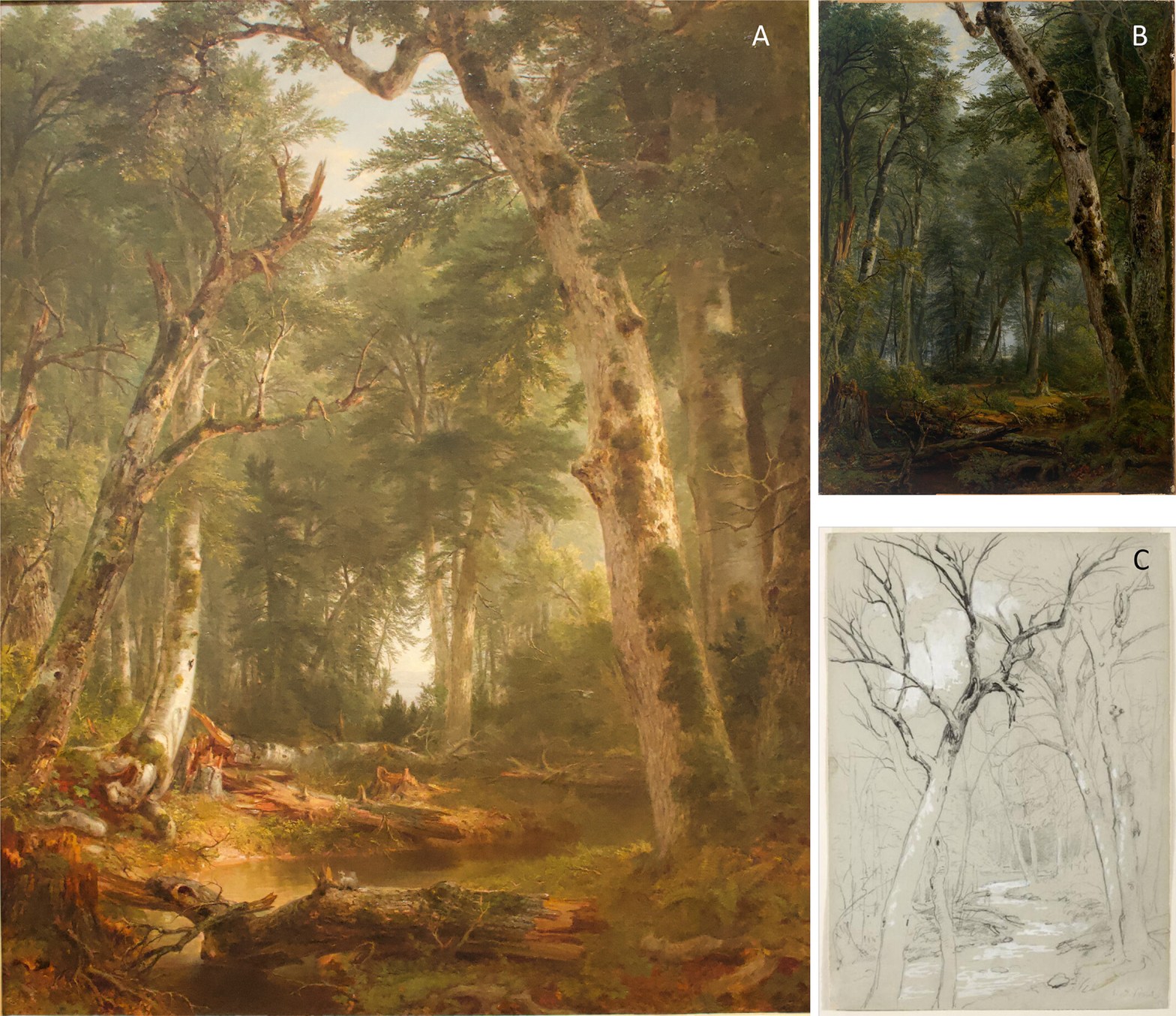
Nineteenth-century paintings of old growth forests are helping ecologists learn about what we have lost. Asher Durand, for example, understood the way that beech trees fit into their forest habitats. A) “In the Woods” (1855); B) “Woodland Interior” (c. 1854), oil on canvas; C) “A Brook in the Woods” (c. 1854), graphite, gouache, and white lead on paper.

Call me retro, but I’ll always love the Hudson River School paintings of a long-gone majestic American wilderness. So do ecologists, as it turns out.

Elaine Velie reports at Hyperallergic on a new study showing that the 19th-century paintings have a value beyond the aesthetic.

“The Hudson River School movement is an enduringly popular slice of 19th-century American art history,” Velie writes, “but as beloved as it is, its paintings of bucolic hills drenched in golden light are not particularly known for their adherence to reality. In a recently published study, a team of ecologists and art historians set out to determine just how true to life these works really were.

“Using onsite sketches and historical writings, the team determined that some of these paintings were true to life. … 

Some were so detailed that they could even help scientists today learn about the centuries-old forests that were destroyed before the advent of color photography.

“Dana Warren and Harper Loeb of Oregon State University published their findings last month in the academic journal Ecosphere along with scholars Peter Betjemann, Isabel Munck, William Keeton, David Shaw, and Eleanor Harvey.

“ ‘I have been interested in understanding older forests and old growth forest systems in the Northeast for a while,’ Warren told Hyperallergic. … ‘I was interested in these 19th-century paintings, but I had always thought that issues of artistic license removed the potential for any of these images to be used in a rigorous quantitative way.’ She paired up with art historians to investigate.

“The interdisciplinary team focused on Hudson River School paintings completed between 1830 and 1880, when Northeastern forests were being cleared for farms but more remote regions still remained untouched by European colonizers. Blights and invasive species had yet to arrive, and trees like the chestnut, ash, and elm still shaded the woodland floor. …

“In the early 1800s, American painters began working en plein air. Portable oil paints had come into fashion, and growing infrastructure made it easier to venture upstate. A fascination with ‘wilderness’ in literature and art emerged alongside the dark underpinnings of ‘manifest destiny‘ and colonial expansion. 

“As creators emphasized nature, they were acutely aware of the changing landscapes around them.

“ ‘The beauty of [untouched] landscapes is quickly passing away,’ Thomas Cole, the painter credited with founding the Hudson River School movement, wrote in 1836. ‘The ravages of the axe are daily increasing — the most noble scenes are made desolate.’

“While painters like Cole crafted dramatic allegorical renderings of the forests disappearing around them … other artists adhered to observational truth. 

“Warren and her team used the interior forest scenes of prominent Hudson River School painter Asher Durand (1796–1886) as a case study, examining his onsite sketches, writings, and oil paintings to establish the veracity of his finished works. …

“Durand explicitly stated his emphasis on depicting the natural world just as he saw it. Like other artists, Durand had been familiarized with the specimen-based botany that had been available in published form since the 1700s. 

“The scholars examined an 1855 Durand painting of the Catskills titled ‘In the Woods’ — a calm depiction of a shady stream lined with beech trees. Notably, an 1854 painting of the same scene excludes these plants, but an onsite sketch of a similar setting includes them, signifying that the artist added the trees into his final painting from a real sketch. …

“Warren said her recent study is a ‘proof of concept,’ and that she thinks the team’s exploration of Durand’s paintings can extend to the work of other artists. For now, Hudson River School depictions of microhabitats — groupings of flora like mushrooms on tree trunks and mats of moss on bark — can help ecologists learn about what old growth forests were really like. 

“With an interdisciplinary approach to ecology and art history, the scholars think paintings of the American West could help scientists learn about long-melted glaciers and plowed prairie biomes, and artworks showing the coast could help researchers study lost marsh habitats.”

Today we have lots of color photography, but if any of you artists out there want to help the scientists of the future, you know the way.

Check out the art at the Hyperallergic, here. No firewall, but subscriptions solicited.

Read Full Post »

Photo: Tom Pumford/Unsplash.

New research has come out to support something you probably always knew. Sad music can make you feel great.

Oliver Whang says at the New York Times, “This is the paradox of sad music: We generally don’t enjoy being sad in real life, but we do enjoy art that makes us feel that way. Countless scholars since Aristotle have tried to account for it. …

“[Joshua Knobe is] an experimental philosopher and psychologist at Yale University. … In a new study, published in the Journal of Aesthetic Education, he and some colleagues sought to tackle this paradox by asking what sad music is all about.

“Over the years, Dr. Knobe’s research has found that people often form two conceptions of the same thing, one concrete and one abstract. For example, people could be considered artists if they display a concrete set of features, like being technically gifted with a brush. But if they do not exhibit certain abstract values — if, say, they lack creativity, curiosity or passion and simply recreate old masterpieces for quick profit — one could say that, in another sense, they are not artists. Maybe sad songs have a similarly dual nature, thought Dr. Knobe and his former student, Tara Venkatesan, a cognitive scientist and operatic soprano.

“Certainly, research has found that our emotional response to music is multidimensional; you’re not just happy when you listen to a beautiful song, nor simply made sad by a sad one. In 2016, a survey of 363 listeners found that emotional responses to sad songs fell roughly into three categories: grief, including powerful negative feelings like anger, terror and despair; melancholia, a gentle sadness, longing or self-pity; and sweet sorrow, a pleasant pang of consolation or appreciation. Many respondents described a mix of the three. (The researchers called their study ‘Fifty Shades of Blue.’) …

“Some psychologists have examined how certain aspects of music — mode, tempo, rhythm, timbre — relate to the emotions listeners feel. Studies have found that certain forms of song serve nearly universal functions: Across countries and cultures, for instance, lullabies tend to share similar acoustic features that imbue infants and adults alike with a sense of safety.

“ ‘All our lives we’ve learned to map the relationships between our emotions and what we sound like,’ said Tuomas Eerola, a musicologist at Durham University in England and a researcher on the ‘Fifty Shades’ study. …

“Other scientists, including Patrik Juslin, a music psychologist at Uppsala University in Sweden, argue that such findings clarify little about the value of sad music. He wrote in a paper, ‘They simply move the burden of explanation from one level, “Why does the second movement of Beethoven’s Eroica symphony arouse sadness?” to another level, “Why does a slow tempo arouse sadness?” ‘

“Instead, Dr. Juslin and others have proposed that there are cognitive mechanisms through which sadness can be induced in listeners. Unconscious reflexes in the brain stem; the synchronization of rhythm to some internal cadence, such as a heartbeat; conditioned responses to particular sounds; triggered memories; emotional contagion; a reflective evaluation of the music — all seem to play some role. Maybe, because sadness is such an intense emotion, its presence can prompt a positive empathic reaction: Feeling someone’s sadness can move you in some prosocial way.

‘You’re feeling just alone, you feel isolated,’ Dr. Knobe said. ‘And then there’s this experience where you listen to some music, or you pick up a book, and you feel like you’re not so alone.’

“To test that hypothesis, he, Dr. Venkatesan and George Newman, a psychologist at the Rotman School of Management, set up a two-part experiment. In the first part, they gave one of four song descriptions to more than 400 subjects. One description was of a song that ‘conveys deep and complex emotions’ but was also ‘technically very flawed.’ Another described a ‘technically flawless’ song that ‘does not convey deep or complex emotions.’ The third song was described as deeply emotional and technically flawless, and the fourth as technically flawed and unemotional.

“The subjects were asked to indicate, on a seven-point scale, whether their song ’embodies what music is all about.’ … On the whole, subjects reported that deeply emotional but technically flawed songs best reflected the essence of music; emotional expression was a more salient value than technical proficiency.

” ‘In the second part of the experiment, involving 450 new subjects, the researchers gave each participant 72 descriptions of emotional songs, which expressed feelings including ‘contempt,’ ‘narcissism,’ ‘inspiration’ and ‘lustfulness.’ For comparison, they also gave participants prompts that described a conversational interaction in which someone expressed their feelings. (For example: ‘An acquaintance is talking to you about their week and expresses feelings of wistfulness.’) On the whole, the emotions that subjects felt were deeply rooted to ‘what music is all about’ were also those that made people feel more connected to one another in conversation: love, joy, loneliness, sadness, ecstasy, calmness, sorrow.

“Mario Attie-Picker, a philosopher at Loyola University Chicago who helped lead the research, found the results compelling. After considering the data, he proposed a relatively simple idea: Maybe we listen to music not for an emotional reaction — many subjects reported that sad music, albeit artistic, was not particularly enjoyable — but for the sense of connection to others. Applied to the paradox of sad music: Our love of the music is not a direct appreciation of sadness, it’s an appreciation of connection.”

More at the Times, here.

Read Full Post »

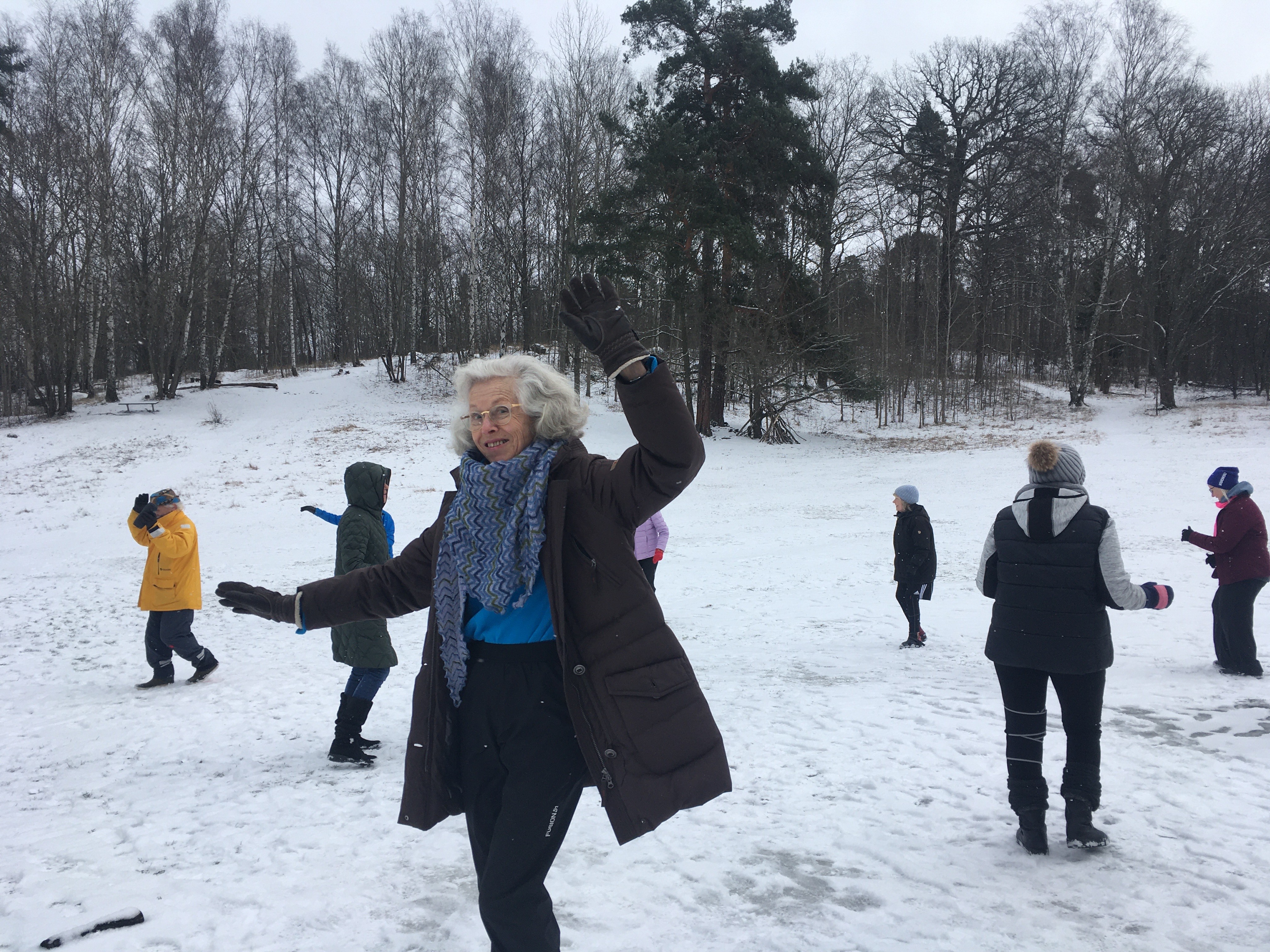
Photo: Stuga40 leading outdoor exercise during the pandemic in Stockholm.

I’ve been looking into the fitness offerings now available to me. There is quite a variety, including an exercise class specifically designed to boost brain health. I hope to try everything, as I keep reading that exercise does a lot more than build muscles.

For example, Gretchen Reynolds wrote at the Washington Post, “New findings from a 350,000-person study make the strongest case yet that exercise improves cognition. 

“To build a better brain, just exercise. That’s the message of two important new studies of how physical activity changes our minds. In one, scientists delved into the lives, DNA and cognition of thousands of people to show that regular exercise leads to much sharper thinking.

“Another study helps explain why exercise is good for the brain. Researchers found that just six minutes of strenuous exertion quintupled production of a neurochemical known to be essential for lifelong brain health. …

“These studies reinforce the idea that ‘absolutely, exercise is one of the best things you can do’ for your brain, said Matthieu Boisgontier, an associate professor at the University of Ottawa, who oversaw one of the studies.

“The first inklings that exercise remodels brains and minds came decades ago in mouse studies. Active, running animals in these experiments scored much higher on rodent intelligence tests than sedentary mice, and their brain tissues teemed with elevated levels of a substance known as brain-derived neurotrophic factor or BDNF, often referred to as ‘Miracle-Gro’ for the brain. BDNF prompts the creation and maturation of new brain cells and synapses. It bulks up brains.

“Studies in people have since established that exercise also raises BDNF levels in our bloodstreams, although it’s harder to look inside our brains and see if it rises there. Multiple, large-scale epidemiological studies, meanwhile, have linked more exercise to better memories and thinking skills and less risk for neurodegenerative diseases, such as Alzheimer’s.

“Qualms have lingered, though, about just how potent exercise really is for our brains. … Many human studies of exercise and cognition have been too small or otherwise limited to show persuasive benefits for brain health from working out.

“The study from Boisgontier and his colleagues, published [in March] in Scientific Reports, uses a novel and complex type of statistical analysis to go beyond traditional observational research and firmly establish that exercise does improve your brain skills.

“They turned to DNA and Mendelian randomization, a recently popularized method of using genetic variations to characterize and sort people. We each are born with or without certain snippets of DNA, some of which are known to contribute to a likelihood of being physically active. From before birth, we are, in effect, randomized by nature to be someone who is or isn’t prone to move. Other gene snippets play a similar role in cognition.

“By cross-checking the cognitive scores of people who have or lack the exercise-promoting snippets against those of people with the gene variants related to cognition, scientists can discern the extent to which exercise contributes to thinking skills. … People with a genetic predisposition to exercise typically did exercise, they found, and scored better on tests of thinking, if their exercise was at least moderate, comparable to jogging.

“And, yes, you can get brain benefits from exercise even if you don’t have the gene snippets. …

“The other new study, although comparatively small, may help explain how exercise keeps your brain healthy.

“In this experiment, 12 healthy, young people rode an exercise bike at a very leisurely pace for 90 minutes, followed by six minutes of intervals consisting of 40 seconds of all-out pedaling interspersed with 20 seconds of rest. Before, during and after each session, researchers tracked BDNF in people’s blood.

“They also measured levels of lactate. Muscles release lactate, often called lactic acid, during exercise, especially if it’s strenuous. It can travel to and be sucked up by the brain as fuel. … During easy riding, lactate levels rose slightly in people’s blood after about 30 minutes, as did the amounts of BDNF in their blood. But during and after the six minutes of hard, fast pedaling, lactate soared and so did BDNF.”

More at the Post, here.

Read Full Post »

Photo: World Farmers.

Immigrants to the US, if they were farmers in their home countries or just want to grow food they can’t find here, may end up working in agriculture. And as this University of Rhode Island professor’s research shows, many are joining the new wave of urban growers.

Frank Carini reports at ecoRI News on John Taylor, associate professor of agroecology at URI, who recently received a $973,479 award from the National Institute of Food and Agriculture for his research.

I had to look up that new-to-me field of study. The Soil Association says that “agroecology is sustainable farming that works with nature. Ecology is the study of relationships between plants, animals, people, and their environment – and the balance between these relationships. Agroecology is the application of ecological concepts and principals in farming. [It] promotes farming practices that mitigate climate change … work with wildlife … put farmers and communities in the driving seat.” Read all about it here.

Carini writes, “The $973,479 award from the National Institute of Food and Agriculture was one of 12 to receive funding through the institute’s Urban, Indoor, and Other Emerging Agricultural Production Research, Education and Extension Initiative. The agency’s $9.4 million in grants are part of a broad U.S. Department of Agriculture investment in urban agriculture, funding research that addresses key problems in urban, indoor, and emerging agricultural systems.

“The project will bring together Taylor’s research with immigrant gardeners and farmers in Rhode Island, Julie Keller’s agriculture-focused work with diverse communities, Melva Treviño Peña’s work with immigrant fishers, and Patrick Baur’s work on food safety and urban agriculture. …

“Although always a part of city life, urban agriculture has recently attracted increased attention in the United States, as a strategy for stimulating economic development, increasing food security and access, and combating obesity and diabetes.

“Food justice is about addressing access to healthy and affordable food for low-wealth and marginalized communities. It seeks to ensure the benefits and risks of where, what, and how food is grown, accessed, distributed, and transported are shared equally.

“Many neighborhoods in metropolitan areas, including in Rhode Island’s urban core, have little to no access to fresh food or full-service grocery stores — a situation often referred to as living in a ‘food desert.’ Other marginalized communities are surrounded by ‘food swamps,’ areas in which a large amount of processed foods, such as fast food and convenience-store fare, is available with limited healthy options.

“One solution to this environmental justice problem is to encourage the growing of local food. Developing effective policies and programs demands as a first step the accurate mapping of existing urban agriculture sites, according to Taylor. He hopes to provide that template.

“Taylor and colleagues at URI, the University of Maryland, and the University of the District of Columbia will soon begin mapping the alternative food provisioning networks of immigrant communities and communities of color in three East Coast cities — Providence, Baltimore, and Washington, D.C. — to better understand these networks.

“He hopes this transdisciplinary research will reap new information about alternative food provisioning networks in the Northeast, evaluating their impact on food system outcomes, and identifying opportunities for policy support. …

“At URI, Taylor’s ‘home garden’ is a quarter-acre plot at the Gardiner Crops Research Center [at] the bottom of the Kingston Campus. His plot, visible from Plains Road, represents in microcosm the immigrant foodways he will be studying for his research during the next few years.

“At URI’s Agrobiodiversity Learning Garden and Food Forest, he grows crops that are integral to the food traditions of Rhode Island’s diverse communities: South American sweet potatoes, Mexican tomatillos, Haitian tomatoes, Mediterranean herbs, Asian bok choy, and produce from an African diaspora garden. Taylor tends the garden with students in URI’s Plant Sciences and Sustainable Agriculture and Food Systems programs and URI master gardeners, demonstrating how sustainable farming reinforces community-building.

“With the learning garden, he follows a lead set by generations of immigrants who moved to Providence and cities like it, bringing their growing practices, and sometimes seeds, with them. …

“A descendant of five generations of Pennsylvania farmers, he grew up on a 100-acre integrated crop-livestock farm near Pittsburgh. Taylor began gardening at the age of 6 and started a market garden while in high school. He left the farm to attend the University of Chicago … then managed federal education studies for 10 years before returning to school to study horticulture and practice landscape architecture.”

More at ecoRI News, here.

Read Full Post »

From “The Ants Go Marching” song, via Kylie Van Dam.

When I was young, I remember being horrified and fascinated to learn that hospitals sometimes use live maggots in wound care because of their precision.

Maggots clear away gangrene and leave healthy tissue. The UK National Health Service says, “They also help fight infection by releasing substances that kill bacteria and stimulate the healing process.” It’s called biosurgery.

Now researchers are finding that ants also have medical uses. Dino Grandoni has the story at the Washington Post.

“The ant oncologist will see you now.

Ants live in a world of odor. Some species are completely blind. Others rely so heavily on scent that ones that lose track of a pheromone trail march in a circle, until dying of exhaustion.

“Ants have such a refined sense of smell, in fact, that researchers are now training them to detect the scent of human cancer cells.

“A study published []in the journal Proceedings of the Royal Society B: Biological Sciences highlights a keen ant sense and underscores how someday we may use sharp-nosed animals — or, in the case of ants, sharp-antennaed — to detect tumors quickly and cheaply. That’s important because the sooner that cancer is found, the better the chances of recovery.

“ ‘The results are very promising,’ said Baptiste Piqueret, a postdoctoral fellow at the Max Planck Institute for Chemical Ecology in Germany who studies animal behavior and co-wrote the paper. He added, however: ‘It’s important to know that we are far from using them as a daily way to detect cancer.’

“Stretching out their pair of thin sensory appendages atop their heads, the insects detect and deploy chemical cues to do almost everything — find food, swarm prey, spot colony mates, protect young. This chemical communication helps ants construct complex societies of queens and workers that operate so in sync with scent that scientists dub some colonies ‘superorganisms.’

“For his study, Piqueret’s team grafted pieces of a human breast-cancer tumor onto mice and trained 35 ants to associate urine from the tumor-bearing rodents with sugar. Placed in a petri dish, the silky ants (Formica fusca) spent significantly more time near tubes with urine from the ‘sick’ mice compared with urine from healthy ones. …

“The way we diagnose cancer today — by drawing blood, taking biopsies and conducting colonoscopies — is often expensive and invasive. Animal behaviorists are imagining a world in which doctors one day tap species with keen senses to help spot tumors quickly and cheaply.

“Dogs can sniff out the presence of cancer in body odor, past research has shown. Mice can be trained to discriminate between healthy and tumor-bearing compatriots. Nematodes are attracted to certain organic compounds associated with cancer. Even the neurons of fruit flies fire in the presence of certain cancerous cells.

“But ants, Piqueret suggested, may have the edge over dogs and other animals that are time-consuming to train.

“Piqueret conducted the research while studying at the Université Sorbonne Paris Nord in France. During covid lockdowns, he brought silky ants into his apartment outside Paris to continue his experiments. He chose the species because it has a good memory, is easy to train and doesn’t bite (at least not hard). …

“Piqueret’s team plans to test ants’ ability to sniff out the markers of cancer in urine from actual patients. …

“If ants are ever used in cancer screening, Piqueret wants to make one thing clear: No, they will not need to crawl on you.

“ ‘There will be no direct contact between ants and patients,’ he said. ‘So even if people are afraid of insects, it’s fine.’ “

More at the Post, here. Interested in the wonders of ants? Follow this professor: @alexwild.

Read Full Post »

Photo: Wikimedia.
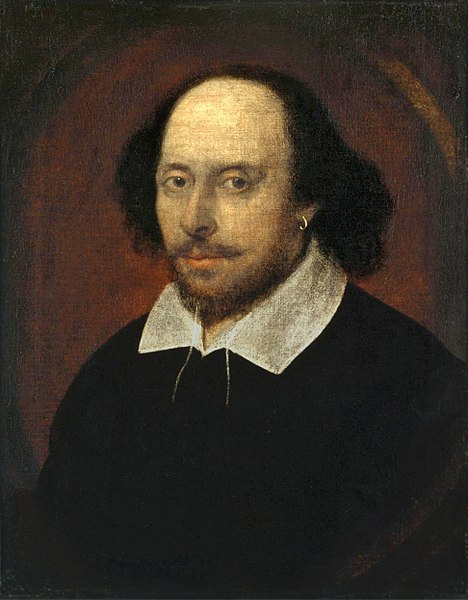
Above, the portrait of William Shakespeare that was long thought to be the only one with any claim to have been painted from life — until the Cobbe portrait was revealed in 2009.

A week ago I saw that the Globe Magazine had a cover story on a newly discovered source for Shakespeare, but I didn’t think I was interested. Like others who have read theories about Shakespeare, I thought, “Here we go again.” And I have an extra reason to roll my eyes. A great uncle I never met was known for trying to prove that Francis Bacon was Shakespeare. His theory was put to rest by his own codebreakers.

But then blogger Carol got in touch to tell me the article was about her brother-in-law, and I got interested.

Michael Blanding, a Boston-based journalist, has written a book about self-taught Shakespeare researcher Dennis McCarthy and his quest to uncover a possible Shakespeare source. The Globe article was an excerpt.

It seems that McCarthy, a polymath with no academic credentials but with expertise in deep internet searches, has identified a 16th century writer called Thomas North as the source of a lot of Shakespeare themes and even some phrases. North was already known as a writer, but his plays are no longer in existence. Nevertheless, 16th century references to his work are a treasure trove if you know what you’re looking for. No one else has done McCarthy’s deep dive into North. Blanding’s aim seems not only to cover the new ground but to make a sort of scandal out of it by using words like “plagiarism.”

Blanding recounts his first reaction to McCarthy: “Oh, he is one of those, I thought to myself — a conspiracy theorist who thought Shakespeare didn’t write Shakespeare. But McCarthy hurriedly added that in fact he believed the Bard of Avon wrote every word attributed to him during his lifetime. He also believed, however, that Shakespeare had used the earlier plays written by Thomas North for his ideas, his language, and even some of his most famous soliloquies.” Blanding is eventually persuaded.

My reaction: Sure, why not? If the guy has proof of Shakespeare using similar language to North’s, so what? Proof is proof. The importance lies in its newness. Blanding’s emphasis on McCarthy’s — and Darwin’s — lack of standard credentials strikes me as irrelevant.

After all, this is what writers do. They build on previous writers.

Look. Here is T.S. Eliot writing “Ash Wednesday”:

“Because I do not hope to turn again
“Because I do not hope
“Because I do not hope to turn
“Desiring this man’s gift and that man’s scope …”

And here’s Eliot’s source, Shakespeare’s Sonnet 29: “Desiring this man’s art, and that man’s scope.”

Would anyone accuse Eliot of plagiarism for that? Just because so many centuries have passed and manuscripts have been lost, does that mean Shakespeare was hiding a deep, dark secret? And just because McCarthy has no PhD or scholarly cred, does that mean he can’t notice things?

I admit I don’t have a PhD either and I’m often accused of being gullible, but I have no problem with research into a possible inspiration for some of Shakespeare’s art, especially as no one is saying he didn’t write the plays and poetry himself. For me, the only problem that McCarthy and Blanding could have would be over-hyping and using words like “plagiarism.” I really wish them success getting the word out, though.

More at the Globe, here.

Read Full Post »

Did you ever wonder why you have to work so hard at exercise when for millennia, humans did OK with whatever movement was part of their normal day? Some folks say we’ve been overdoing things.

At National Public Radio (NPR), Terry Gross interviewed Daniel Lieberman, a professor in the department of human evolutionary biology at Harvard, about his new book on exercise. The interview relieved me of some preconceptions, but I didn’t see anything about getting the heart beat up.

“For much of history, human beings needed to be physically active every day in order to hunt or gather food — or to avoid becoming food themselves. … a professor in the department of human evolutionary biology at Harvard [says] that the notion of ‘getting exercise’ — movement just for movement’s sake — is a relatively new phenomenon in human history. …

“Lieberman says, ‘When I go to these [remote African tribal] villages, I’m the only person who gets up in the morning and goes for a run. And often they laugh at me.’…

“Lieberman has spent a lot of time with indigenous hunter-gatherers in Africa and Latin America, cataloging how much time they spend walking, running, lifting, carrying and sitting. He writes about his findings, as well as the importance of exercise and the myths surrounding it in his new book, Exercised.

” ‘If you actually look at what our ancestors do, they walk about 5 miles a day, which turns out to be, for most people, about 10,000 steps,’ Lieberman says.

“Lieberman notes that many people are moving less than they did before the pandemic. He says if 10,000 steps feels out of reach, it’s OK to shoot for less — just so long as you’re focused on movement. Even fidgeting can keep your muscles engaged.

‘The more we study physical activity, the more we realize that it doesn’t really matter what you do. You don’t have to do incredible strength training. … It’s all good in different ways.’

Prof. Daniel Lieberman

Interview Highlights
On the demonizing of sitting as “the new smoking”
“When I walk into a village in a remote part of the world where people don’t have chairs or a hunter-gatherer camp, people are always sitting. … Some friends and colleagues of mine actually put some accelerometers on some hunter-gatherers and found that they sit on average about 10 hours a day. …

“It’s not unnatural or strange or weird to sit a lot, but it is problematic if, of course, that’s all you do. As I started to explore the literature more, I was fascinated because most of the data that associates sitting a lot with poor health outcomes turns out to be leisure-time sitting. …Then the numbers get a little bit scary.

On the importance of “interrupted sitting”
“Just getting up every once in a while, every 10 minutes or so — just to go to the bathroom or pet your dog or make yourself a cup of tea — even though you’re not spending a lot of energy, you’re turning on your muscles. … It uses up fats in your bloodstream and sugars in your bloodstream, and it produces molecules that turn down inflammation. So the evidence is that interrupted sitting is really the best way to sit. In hunter-gatherer camps, people are getting up every few minutes, to take care of the fire or take care of a kid or something like that. …

“A seat back essentially makes sitting even more passive than just sitting on a bench or a stool because you lean against the seat back and you’re using even fewer muscles, even less effort to stabilize your upper body. And the result is that we end up having very weak backs. So there are a lot of muscles that we use in our backs to hold up our upper body, and those muscles, if we don’t use them, just like every other muscle in your body, they atrophy. And weak muscles then make us more prone to back pain. …

On the idea that running is bad for your knees
“There’s this kind of general idea out there that running is like driving your car too much, [but] study after study has shown that in terms of ‘wear’ — by which we really mean arthritis, degeneration of the cartilage in your joints — that people who run more are not more likely to get arthritis in their knees. … That said, it’s also true that the most common site of injury for runners is their knees. But a lot of those injuries, I think, are preventable by learning to run properly. …

On becoming frail with age
“One of the most important points about physical activity is that as we age, it becomes not less but more important to be physically active. Muscle atrophy is the perfect example. … We have plenty of evidence that older individuals in America are less physically active and they do fewer activities that involve strength. And one of the really sort of serious negative consequences of that is that our muscles dwindle, they atrophy. … That’s the bad news.

“But the good news is that it doesn’t take a huge amount of physical activity to kind of reverse that, turn it around. Think about Ruth Bader Ginsburg. She was celebrated for her vim and vigor, which meant that a lot of that came from the fact that she kept working out and as she got older, she went to the gym several times a week. Now, she didn’t do crazy. … She did a few rounds of weight training every week and that helped keep her marvelously active and vigorous up until her late 80s. “

Lots more advice at NPR, including how much sleep we actually need, here.

I better stand up now. I’ve been sitting more than 10 minutes.

Read Full Post »

One day last week, I was writing a letter to Brandeis admissions to help Shagufa get a bit more support for grad school, and I used a thumbnail description of this blog to explain how I met her. I said it was tied to my daughter’s jewelry company, which I always say, but then I added something I’d just thought of: “my goal is to share inspiring stories.”

Is that right, Dear Reader? These stories are not always inspiring, but I didn’t think the university would care that they were merely topics some stranger calling herself Suzanne’s Mom finds interesting. I’d be grateful for your own thumbnail description of SuzannesMomsBlog.

Today’s story is in the interesting department. (I wonder if everything interesting is by its nature also inspiring.)

Sarah Cascone writes at Artnet, “We may never fully solve all the mysteries of Stonehenge, the monumental prehistoric circle of stones built on the Salisbury Plain in Wiltshire, England. But a new study suggests that it may have been designed to amplify sound in very specific ways.

“To recreate the acoustic properties of the stone circle as it was originally built around 2,500 BC, acoustics engineers at the University of Salford in Manchester constructed a 1:12 scale model they called ‘Minihenge.’ The results of their research have been published in the Journal of Archaeological Science.

“ ‘Constructing and testing the model was very time consuming, a labor of love, but it has given the most accurate insight into the prehistoric acoustics to date,’ Trevor Cox, the project’s lead researcher, said in a statement. ‘With so many stones missing or displaced, the modern acoustic of Stonehenge is very different to that in prehistory.’

“Thanks to laser scans of the site conducted by the governmental research group Historic England, Cox and his team were able to replicate the exact dimensions and precise topography of the monoliths using a computer-aided model and a 3-D printer. Missing stones were replaced where they were believed to have originally stood — 157 in all, based on the latest archaeological research.

The simulated stones were treated to replicate the acoustic properties of the site’s actual materials, allowing for more accurate results than in past models. … Researchers then tested the model, placing speakers and microphones in and around it while working at the university’s Acoustics Research Centre, which boasts a specialist acoustic chamber. (To account for the difference in scale, all sounds were 12 times their normal frequency, in the ultrasonic range.)

“The study found that people who spoke or played music inside the monument would have heard clear reverberations against the massive standing stones. Testing on the model also suggests that the stones increased the volume on interior sound, kept exterior sound out, and made it hard for anyone outside the structure to hear what was going on inside. …

“The placement of the stones was capable of amplifying the human voice by more than four decibels, but produced no echoes. Music and other sounds would have been enhanced such that someone standing within the outer circle of stones would have heard conversations from the center with perfect clarity, even as the sound was obscured to those outside. …

“While sound appears to have been an important consideration for the ancient builders, researchers still believe that astrological alignment was the primary factor in the placement of the stones. And mysteries about Stonehenge’s musical properties still abound.

“ ‘Stonehenge hums when the wind blows hard,’ musicologist Rupert Till of the University of Huddersfield in England, who has previously conducted acoustic research on the site, told ScienceNews.

“There is also speculation that some of the smaller stones used in the ancient site’s construction may have been chosen for their musical qualities. Making a sound much like a metallic gong when struck, they could have been used as percussion instruments, Cox suggested in the Guardian in 2014.

“That theory was tested in a 2013 study conducted by researchers from the Royal College of Art in London, who were able to ‘play’ Stonehenge’s ringing stones like a giant xylophone in a unique form of ‘rock’ music. According to their findings, published in Time & Mind: The Journal of Archaeology, Consciousness, and Culture, the stones’ musical properties were likely even more pronounced in antiquity, before they were set in reinforced concrete.”

More at Artnet, here.

Read Full Post »

Photo: Dieter Nagl/Xinhua News Agency/Getty Images
The Vienna Philharmonic Orchestra performed their first post-lockdown concert at
Vienna’s Musikverein in Austria on June 5, 2020. Only 100 guests were allowed in attendance. 

Covid-19 guidance seems to change every few days. In the beginning, we were very anxious about wiping down every little thing with Clorox. Now we are more worried about the droplets we breathe in and whether the kids’ schools have adequate air circulation.

Performers worry, too, which is why one European orchestra armed itself with facts before bringing in an audience.

Eva Amsen reports at Forbes, “Last week, violinist Daniel Froschauer was in Salzburg with the Vienna Philharmonic, of which he is also the Chairman. The orchestra played at the Salzburg Festival the entire month of August, under strict regulations to ensure that the musicians and their audience are at minimal risk of catching or spreading the SARS-CoV-2 coronavirus. …

The Vienna Philharmonic was one of the first professional orchestras to return to rehearsals and performances since the start of the Covid-19 pandemic, but it wouldn’t have been possible if they hadn’t carried out their own small research study into the way droplets disperse on stage while musicians play. …

“The case of a choir rehearsal in Washington state back in March was a wake-up call for many musical ensembles. The choir thought they were prepared. They didn’t hug, they stood six feet apart throughout their two-and-a-half-hour rehearsal, and they didn’t share food during the break. Despite their precautions, 53 members of the 61-piece choir caught Covid-19, and two died.

“If such a spread could happen at a choir rehearsal, then an orchestra or band rehearsal – particularly one with wind and brass instruments – might pose a similar risk. The virus can be passed on through tiny airborne droplets called aerosols from an infected individual’s mouth or nose. …

“Until a few months ago, we knew very little about how wind instruments spread droplets. It was only since the Covid-19 pandemic that orchestras and other ensembles suddenly needed to understand exactly how singing or playing instruments could spread the virus so that they could mitigate the risk. …

“The Vienna Philharmonic enlisted the help of physician Fritz Sterz. Initially, Sterz and Froschauer hoped that the Vienna Philharmonic members were immune already. The orchestra had passed through Wuhan on a tour of Asia in late 2019, perhaps already encountering the virus there. But this didn’t seem to be the case: Only one member of the orchestra tested positive in an antibody test.

“The next step was to figure out how rehearsals were putting them at risk, by determining how aerosols were formed around their instruments. …

“Sterz and the orchestra found a creative way to visualise the aerosols’ movement. Each musician was placed in front of a dark background and wore a device up their nose to produce aerosols as they breathed.

While playing their instruments, the musicians dispersed the droplets, and a photographer captured images of the cloud of aerosols surrounding each musician.

“By measuring the dispersal of the droplets for each instrument, Sterz was able to get a sense of which musicians created the largest air flow around them. Unsurprisingly, it was the wind musicians. …

“In lieu of the traditional peer review process that follows most scientific studies, the Vienna Philharmonic worked with a notary to verify that they carried out the procedures as they said they did, and that the results were what they measured. It wasn’t the way research is usually done, but it was enough to convince the Austrian government.

“In May, Froschauer got a call from the Austrian Prime Minister. The Vienna Philharmonic was allowed to rehearse, record and perform again, albeit under very strict conditions. To make it work, the musicians are regularly tested, stay a safe distance apart on stage, wear masks when they have to be near each other in the hallways, and limit the size of the audience. …

“In the United States, the National Federation of State High School Associations and the College Band Directors National Association funded the Performing Arts Aerosol Study to determine the best recommendations for school bands, orchestras and other performing arts groups returning to practice this fall term.

Shelly Miller, professor of environmental engineering at the University of Colorado Boulder, is one of the lead researchers on the study. She explains, … ‘Once we knew what the flow looked like, we probed those flows to measure the particles in the flow.’ …

“From the preliminary results, the Performing Arts Aerosol Study concluded that certain safety precautions needed to be put in place before bands and school orchestras could return to rehearsals.

“It’s worth noting here that these various studies into the spread of aerosols between musicians nicely illustrate how the pandemic has changed the pace of scientific research. Normally, research is slow and the process of verifying, publishing and reviewing the work can be slower than the studies itself. But everything was different this summer. Music groups needed advice about returning to rehearsals and pushed for the research to be carried out, soon. …

“ ‘It’s really intense,’ says Miller.” More at Forbes, here.

Read Full Post »

Photo: Carol and Brian Smith/Educational Passages
Brian Smith posed with a boat made from a kit at a Massachusetts school. He and his wife found it after it washed ashore on Dalyellup Beach in Australia.

How’s this for a school project? Following a boat you built as it braves the high seas for science.

Steve Annear (who in my opinion gets all the fun assignments at the Boston Globe) reported on the excitement of hearing that the first of several such research boats was found after more than a year.

“After spending 463 days on the unforgiving ocean, the ‘Sacred Heart Star of the Sea’ made its final landing on the shores of Western Australia late last month, plucked from the sand by an unsuspecting couple out for a sunset stroll.

“It was a long and closely watched voyage that began in the classrooms of the Sacred Heart School in Kingston last year, where students assembled the small ship as part of a class project before it was packed with a GPS monitoring system and a weighted keel, and [taken to a launch site] in the Indian Ocean with dozens of personal letters to whomever might discover it one day.

“Now, that day has come. And at its new home on the other side of the planet, the miniature research vessel is being heralded as something of a small-town hero, paraded around to schools and local offices as residents marvel at it.

” ‘This boat is a popular chat topic,’ said William Power, a geoscientist in Australia who had been tracking the boat’s final movements toward land, in an e-mail.

“On July 2, officials from Bunbury posted on Facebook about the vessel’s arrival at a beach in Dalyellup, a southern suburb.

“Though a search party led by Power had scoured the beach a few days earlier, hoping to find the mini-boat, it was Carol and Brian Smith who happened upon the ‘Star of the Sea’ first. …

“Carol Smith said in an e-mail, ‘What caught our attention was the sticker that said, “If found please e-mail” … We didn’t know at the time but groups were looking for the mini-boat.’

“The couple strapped it to their roof rack and took it home. After doing research, they learned the boat was part of an educational mission by students in Kingston, some 10,000 miles away.

The boat was put together by students at the Catholic school in January last year, led by Maine-based Educational Passages, a nonprofit that supplies students with kits to construct the ships, send them out to sea, and track them online. …

“When the 5½-foot boat eventually landed in Australia, its sail and mast were gone, and it was covered in barnacles, Smith said, a sure signs of an arduous journey that lasted more than a year. But the rest was spared, including the letters onboard.

” ‘It was so exciting to open up the waterproof compartment, and see all the intact letters,’ Smith said. …

“Winifred Dick, an English teacher at the school, [helped] get the boat kit from Educational Passages. Dick’s husband, Henry, is a chief scientist at Woods Hole Oceanographic Institution, and was the lead chief scientist on the cruise at Marion Rise, where the vessel was first lowered into the sea. …

“The boat first visited Australind Primary School, where Smith teaches, and is now on display at City of Bunbury offices. It will go on to visit other schools, and later Fremantle, a port city near Perth. …

“At some point the boat will undergo repairs. There’s also talk of sending it back out on the water for another adventure.”

More at the Boston Globe, here.

Read Full Post »

lead_720_405

Photo: Irena Schulz
This is YouTube personality Snowball the dancing parrot.

Internet videos of cute animals doing surprising things can sometimes lead to research that expands scientific knowledge. Such was the case with Snowball, better known on YouTube as the dancing parrot.

Ed Yong writes at the Atlantic, “Before he became an internet sensation, before he made scientists reconsider the nature of dancing, before the children’s book and the Taco Bell commercial, Snowball was just a young parrot, looking for a home.

“His owner had realized that he couldn’t care for the sulfur-crested cockatoo any longer. So in August 2007, he dropped Snowball off at the Bird Lovers Only rescue center in Dyer, Indiana — along with a Backstreet Boys CD, and a tip that the bird loved to dance. Sure enough, when the center’s director, Irena Schulz, played ‘Everybody,’ Snowball ‘immediately broke out into his headbanging, bad-boy dance,’ she recalls. She took a grainy video, uploaded it to YouTube, and sent a link to some bird-enthusiast friends. Within a month, Snowball became a celebrity. When a Tonight Show producer called to arrange an interview, Schulz thought it was a prank.

“Among the video’s 6.2 million viewers was Aniruddh Patel, and he was was blown away. Patel, a neuroscientist, had recently published a paper asking why dancing [was rare in animals.] …

“Patel reasoned that dancing requires strong connections between brain regions involved in hearing and movement, and that such mental hardware would only exist in vocal learners — animals that can imitate the sounds they hear. …

“In 2008, he tested Snowball’s ability to keep time with versions of ‘Everybody’ that had been slowed down or sped up. In almost every case, the parrot successfully banged his head and lifted his feet in time. Much like human children, he often went off beat, but his performance was consistent enough to satisfy Patel. …

“Meanwhile, Snowball was going through his own dance dance revolution. Schulz kept exposing him to new music, and learned that he likes Pink, Lady Gaga, Queen, and Bruno Mars. He favored songs with a strong 4/4 beat, but could also cope with the unorthodox 5/4 time signature of Dave Brubeck’s ‘Take Five.’ …

“In 2008, Patel’s undergraduate student R. Joanne Jao Keehn filmed these moves, while Snowball danced to ‘Another One Bites the Dust’ and ‘Girls Just Want to Have Fun.’ And recently [she] she combed through the muted footage and cataloged 14 individual moves (plus two combinations). Snowball strikes poses. He body rolls, and swings his head through half circles, and headbangs with a raised foot. …

“His initial headbangs and foot-lifts are movements that parrots naturally make while walking or courting. But his newer set aren’t based on any standard, innate behaviors. He came up with them himself, and he uses them for different kinds of music. …

“Snowball’s abilities are all the more impressive because they’re so rare. Ronan the sea lion, for example, was recently filmed bobbing her head to music (including, again, the Backstreet Boys), but she was trained. And when [another researcher, Adena Schachner,] combed through thousands of YouTube videos in search of animals that could be charitably described as dancing, she found only 15 species that fit the bill. One was the Asian elephant, which sometimes sways and swings its trunk to music. The other 14 species were parrots.”

Are any of you owners of parrots? I wonder if you have seen dancing behaviors. Read more here. And be sure to note the videos of early and late Snowball moves.

Read Full Post »

idea_kate-holt-10706364576_463ab61e34_b

Photo: Kate Holt/Flickr
The joy on the faces of these performers in Kenya illustrates a universal truth: people love to dance. And it turns out, dancing informs our development in significant ways.

There’s something about being human that inclines one to dancing. Not necessarily ballet or hip hop or ballroom dancing, but dancelike movement that is part of everyday lives. The research on this may surprise you.

Kimerer LaMothe writes at Aeon, “Dancing is a human universal, but why? … What if humans are the primates whose capacity to dance (shared by some birds and mammals) was the signature strategy enabling the evolution of a distinctively large and interconnected brain, empathic heart and ecological adaptability? And what if dancing plays this role for humans not just in prehistoric times, but continuing into the present? …

“Researchers are discovering the vital role played by bodily movement not only in the evolution of the human species, but in the present-day social and psychological development of healthy individuals. Moreover, it is not just bodily movement itself that registers as vital in these cases, but a threefold capacity: to notice and recreate movement patterns; to remember and share movement patterns; and to mobilise these movement patterns as a means for sensing and responding to whatever appears. This threefold capacity is what every dance technique or tradition exercises and educates.

“According to the New York University neuroscientist Rodolfo Llinás, writing in the book I of the Vortex (2001), bodily movement builds brains. A brain takes shape as it records patterns of neuromuscular coordination, and then remembers the outcomes in terms of pain or pleasure, emotional tags that help it assess whether to mobilise that movement again, and if so, how.

“In so far as bodily movements build the brain, every movement a human makes matters. Each repetition of a movement deepens and strengthens the pattern of mind-body coordination that making that movement requires; and the repetition also defines avenues along which future attention and energy flow. Every movement made and remembered shapes how an organism grows – what it senses and how it responds. …

“Humans have a unique capacity to notice, recreate and remember patterns of movement. More abundant in the human brain than any other mammalian brain, mirror neurons fire when a person notices a movement, recreating the pattern of neuromuscular coordination needed to make that movement. In this way, humans can learn to recreate the movement of others – not only other humans, but also trees and giraffes, predators and prey, fire, rivers and the Sun. As the neuroscientist V S Ramachandran writes in his book The Tell-Tale Brain (2011), mirror neurons ‘appear to be the evolutionary key to our attainment of full-fledged culture’ by allowing humans ‘to adopt each other’s point of view and empathise with one another.’

“Nevertheless, the term ‘mirror’ is misleading; it hides the agency of bodily movement. A brain does not provide a passive reflection. As eyes register movement, what a person sees is informed by the sensory awareness that his previous movements have helped him develop. He responds along the trajectories of attention that these previous movements have created. From this perspective, dance is a human capacity, not just one possible activity among others. …

“In this light, every dance technique or tradition appears as a stream of knowledge – an ever-evolving collection of movement patterns discovered and remembered for how well they hone the human capacity for movement-making. Most of all, dancing provides humans with the opportunity to learn how their movements matter. They can become aware of how the movements they make are training them – or not – to cultivate the sensory awareness required to empathise across species and with the Earth itself. In this regard, dance remains a vital art. From the perspective of bodily becoming, humans cannot not dance.”

This Aeon article came from the website Arts Journal, which brings together arts stories from around the world. Read more at Aeon, here.

fe3196d4677e1f7438618fa78f777e18

Read Full Post »

Photo: Steve Atwood
The wrybill uses its laterally curved bill to reach insect larvae under rounded riverbed stones.

I was intrigued by new research showing that some cells in nature have a left or right orientation and, when disrupted, are able to repair themselves. The Quanta Magazine article reposted at Wired is long and technical. I’m hoping to capture the basics here.

Tim Vernimmen writes, “In 2009, after she was diagnosed with stage 3 breast cancer, Ann Ramsdell began to search the scientific literature to see if someone with her diagnosis could make a full recovery. Ramsdell, a developmental biologist at the University of South Carolina, soon found something strange: The odds of recovery differed for women who had cancer in the left breast versus the right. Even more surprisingly, she found research suggesting that women with asymmetric breast tissue are more likely to develop cancer.

“Asymmetry is not readily apparent. Yet below the skin, asymmetric structures are common. Consider … how our heart, born from two identical structures fused together, twists itself into an asymmetrical pump that can simultaneously push oxygen-rich blood around the body and draw in a new swig from the lungs, all in a heartbeat. …

“In her early years as a scientist, Ramsdell never gave asymmetry much thought. But … after her recovery, Ramsdell decided … to start looking for asymmetry in the mammary glands of mammals.

In marsupials like wallabies and kangaroos, she read, the left and the right glands produce a different kind of milk, geared toward offspring of different ages. …

“Research from [the lab of Michael Levin, a biologist at Tufts University] suggests that communication among cells may be an under-explored factor in the development of asymmetry.

“The cellular skeleton also directs the transport of specialized proteins to the cell surface, Levin said. Some of these allow cells to communicate by exchanging electrical charges. This electrical communication, his research suggests, may direct the movements of cells as well as how the cells express their genes.

“ ‘If we block the [communication] channels, asymmetrical development always goes awry,’ he said. ‘And by manipulating this system, we’ve been able to guide development in surprising but predictable directions, creating six-legged frogs, four-headed worms or froglets with an eye for a gut, without changing their genomes at all.’

“The apparent ability of developing organisms to detect and correct their own shape fuels Levin’s belief that self-repair might one day be an option for humans as well.

“ ‘Under every rock, there is a creature that can repair its complex body all by itself,’ he points out. ‘If we can figure out how this works,’ Levin said, ‘it might revolutionize medicine. Many people think I’m too optimistic, but I have the engineering view on this: Anything that’s not forbidden by the laws of physics is possible.’ ”

The original story appeared in Quanta Magazine. Check the Wired reprint here.

Photo: SEFSC Pascagoula Laboratory; Collection of Brandi Noble, NOAA/NMFS/SEFSC
The twospot flounder lies on the seafloor on its right side, with both eyes on its left side.

Read Full Post »

Photo: National Oceanic and Atmospheric Administration
A sponge the size of a minivan was found in summer 2015 in the Papahānaumokuākea Marine National Monument off Hawaii.

One of Earth’s oldest living animals is a sea sponge. As big as a minivan, it has been growing for generations unnoticed and undisturbed in waters off Hawaii.

Elahe Izadi writes in the Washington Post that a remotely operated vehicle (ROV) “captured footage of the spectacularly large sponge during a National Oceanic and Atmospheric Administration deep-sea expedition, and the species was identified for the first time in a study published [in May] in the journal Marine Biodiversity. …

“There’s more to this sponge than its girth: It could also be among the oldest living animals on earth. … Sponges can live for hundreds or even thousands of years. ‘While not much is known about the lifespan of sponges, some massive species found in shallow waters are estimated to live for more than 2,300 years,’ the study authors write. …

“ ‘Finding such an enormous and presumably old sponge emphasizes how much can be learned from studying deep and pristine environments such as those found in the remote Papahānaumokuākea Marine National Monument,’ Daniel Wagner, Papahānaumokuākea research specialist, said in a statement. …

“Christopher Kelly, NOAA research scientist and co-lead for the expedition, said the sponge ‘just appeared’ on the ROV’s high-definition camera, Australia’s Pacific Beat radio reported.

” ‘We were looking for deep water corals and sponges, and we had just gotten some close ups of some corals, then turned away to continue the survey and the sponge appeared out of nowhere.’ ”

I can just picture that cinematic moment of discovery.

More at the Washington Post, here.

Read Full Post »

« Newer Posts - Older Posts »