Feeds:
Posts
Comments

Posts Tagged ‘reuse’

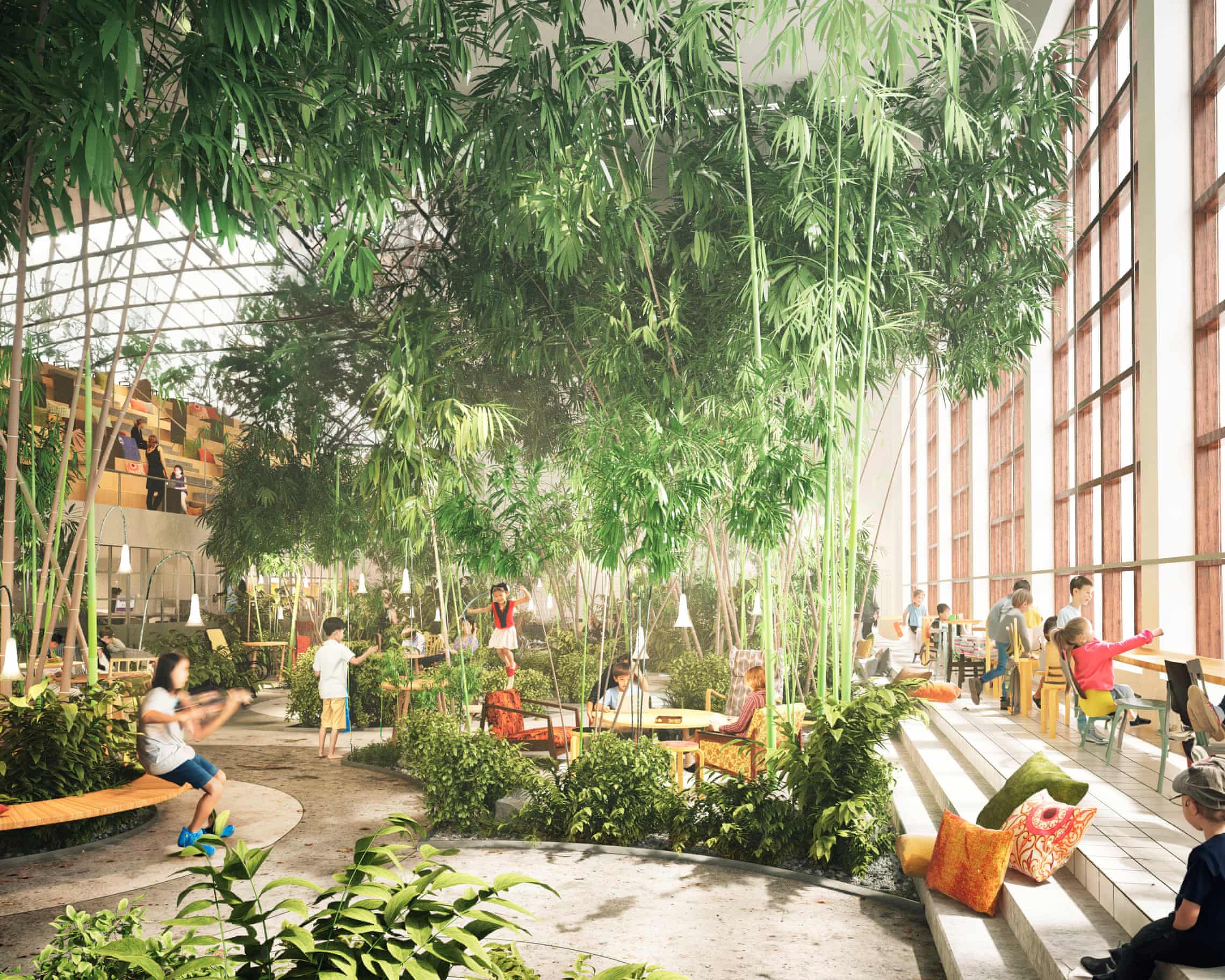
Illustration: Wingårdhs.
Tomelilla, a town in southeast Sweden, is focused on sustainability and has plans to build a school with reused materials.

With half of my family in Sweden for the fall semester, I am interested in Swedish stories. Here is one about residents in the Skåne district determined to live sustainably.

Abigail Sykes reports at the Guardian, “In a small town in Sweden, the local authority is carrying out an unusual experiment.

“In 2021 one of the team had been reading an article about the concept of doughnut economics – a circular way of thinking about the way we use resources – and he brought it up. ‘I just mentioned it casually at a meeting, as a tool to evaluate our new quality of life program, and it grew from there,’ says Stefan Persson, Tomelilla’s organizational development manager.

“The concept, developed by British economist Kate Raworth is fairly straightforward. The outer ring or ecological ceiling of the doughnut consists of the nine ‘planetary’ boundaries. These are the environmental limits that humans are at risk of passing – we’ve already crossed the safety thresholds on climate change, ocean acidification and biogeochemical flows, for example, but remain within safe limits on our atmospheric aerosol loading. The inner ring forms a social foundation of life’s essentials, and the ‘dough’ in between corresponds to a safe and just space for humanity, which meets the needs of people and planet. …

“ ‘Doughnut economics is like running a farm. Using an excess of resources, like nutrients, on your crops is a mistake. Not using enough is a mistake too,’ says Persson’s colleague Per-Martin Svensson, who is a farmer when he is not doing council work. …

“Doughnut economics is being used in Tomelilla, in Sweden’s southern Skåne region, in several ways. It has been integrated into financial planning and decision support, so that rather than building a new ice rink, the plan is now to revamp an existing building.

“The local government produces an annual portrait of how well it is doing at meeting doughnut economics targets. The best results in the latest diagram were on air quality, housing and social equality. Air quality in the area was good to begin with, but in order to keep improving it, young people at lower and upper secondary school have been given a free travel card for public transport. It is hoped the measure will also improve social equality in terms of access to education and health. Overcrowding and income disparities have both decreased, but it’s hard to link that directly to any of the council’s work.

“Education is a priority, but targets such as carbon emissions, biodiversity and health are more difficult to meet. Emissions have not been decreasing, but in 2023 the town council adopted a climate program to achieve net zero by 2045. …

“Tomelilla’s flagship doughnut economics project, though, is planning a new school. The council hasn’t built a school – or any other big development – since the 1990s. The project is still at an early stage so no decisions have been made about the final construction.

“Last year, a consultant report made recommendations for the project. These included using existing and carbon-neutral materials as far as possible, growing hemp as a building material on the current site; building the school around a greenhouse for growing vegetables as well as for educational and social activities; and making the school an off-grid energy producer using solar power and batteries. …

“This vision has carried over into the council’s procurement requirements, although budget constraints and other considerations have meant it is still unclear whether all of these ideas will come to fruition. …

“It has certainly been demanding. Is it even possible to use the resources needed for a large construction project and stay within the doughnut? Persson thinks it may not be possible but he is focusing on the bigger picture, with a more holistic view of social change. ‘In individual projects, there are always trade-offs. But we’re also looking at how the local community as a whole can move towards the doughnut model. I think that if we’re going to build anything, it should be democratic meeting places and schools.’ …

“Tomelilla is the first local government to attempt to deliver infrastructure and education using doughnut economics. … With a population of about 7,000, it is certainly one of the smallest towns in the international network of the Doughnut Economics Action Lab, dwarfed by Barcelona, Glasgow and Mexico City, which are all putting Raworth’s theories into practice in local governments. …

“The people of Tomelilla welcome the challenge and are extremely proud of the way their town is forging a path. As Jonna Olsson, one of the staff at the council says: ‘Doughnut economics is a really interesting way to work with sustainability. It feels cool to be a cog in international change.’ ”

More at the Guardian, here. No firewall.
Read Full Post »

Photo: Melanie Stetson Freeman/CSM.
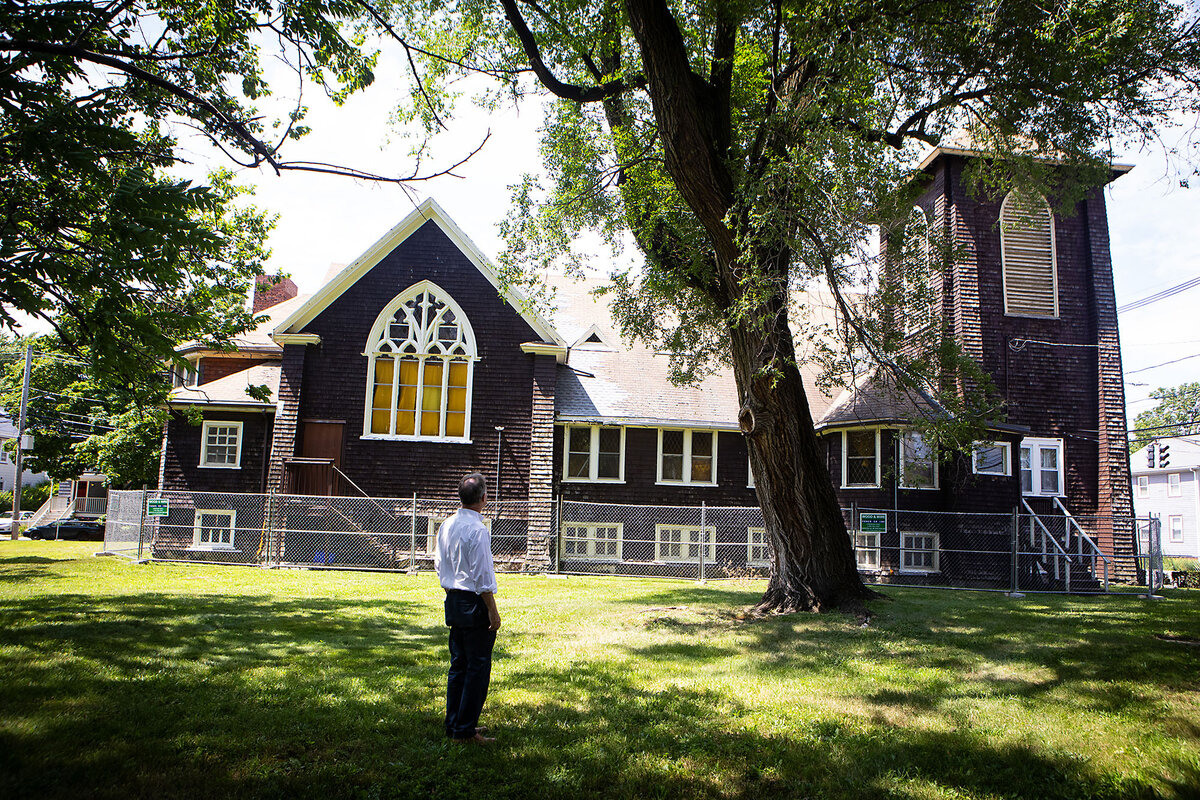
John Woods, director of Allston Brighton Community Development Corp. in Massachusetts, stands in front of Hill Memorial Baptist Church in July. The church and grounds are being turned into a housing complex for older adults.

My 9-year-old granddaughter assures me that the best place to stay overnight in Nova Scotia is a converted church. The light from the stained glass was beautiful, she says, and so was the rest of the building.

Her family’s rental was privately owned, but in today’s story we learn about a Boston-area initiative to turn other unused churches into subsidized housing. And Boston is not alone.

Troy Aidan Sambajon reports for the Monitor, “With its 58-foot bell tower standing sentinel, Hill Memorial Baptist Church has witnessed Allston-Brighton’s dramatic transformation. Upscale apartments and condos now stand on the site of once-bustling stockyards. Gourmet food shops have replaced affordable grocery stores. Now, the 120-year-old church is set for its own transformation. … The church is finding a new role in the community: much-needed affordable housing for older people.

“Churches and faith communities across the United States are increasingly closing their doors. Five years ago, The American Baptist Churches of Massachusetts, noting a dwindling congregation in Allston-Brighton, considered downsizing or repurposing the land. The choice was ultimately left to Hill Memorial’s congregation.

“In a final act of generosity, members chose to sell the land to fulfill the church’s ‘mission of giving back to the Allston community in the form of senior housing,’ says the Rev. Catherine Miller, former pastor, over email. With the blessing of its former congregation, the site will become 50 apartments for older adults on a fixed income. Today, the average price to rent a one-bedroom apartment in Allston is $2,786 per month, according to Apartments.com. The average wait time for senior housing in Boston currently stretches more than five years.

“ ‘Something good needed to happen here,’ says John Woods, executive director of Allston Brighton Community Development Corp., a housing developer. …

“Across the country, more faith communities are opening their doors to creative affordable housing solutions: Some are building homes on underutilized land or converting unused residences.

“In California, the grassroots ‘Yes in God’s Backyard’ movement led to the Affordable Housing on Faith Lands Act. This makes it legal for faith-based institutions to build affordable, multifamily homes on lands they own by streamlining the permitting process and overriding local zoning restrictions.

A federal version, the Yes in God’s Backyard Act, was introduced this spring by Ohio Sen. Sherrod Brown. …

” ‘It’s sad when a church closes,’ says Donna Brown, executive director of the South Boston Neighborhood Development Corp., which is leading the conversion of a former convent. ‘When they sit empty, it leaves a real void in the neighborhood. But when a building can be converted to housing so that people can stay in that community – it can be a wonderful thing to knit a community back together.’

“The U.S. is not building housing fast enough to support America’s aging population, according to Housing America’s Older Adults 2023 report, recently released by Harvard University’s Joint Center for Housing Studies. … By 2030, Americans age 65 and older will make up more than 20% of the population, according to Census Bureau projections. The need for affordable housing for this demographic will only grow. Meanwhile, homelessness is rising among older adults. …

“Sometimes, those being priced out of a neighborhood have lived there for decades. Moving means leaving not only friends but also support structures. Take Allston-Brighton, which was once a very affordable neighborhood, says Karen Smith, president of Brighton Allston Elderly Homes Inc. With rising rent costs and the cost of care, it’s tough for older adults on a fixed income to stretch their budgets thousands of dollars more a year. …

“In densely populated cities, the space to build affordable housing is often far from where it is needed most, says the Rev. Patrick Reidy, associate professor of law at the University of Notre Dame. However, faith communities and former churches are typically located in high-density areas that are accessible to the most people.

“ ‘These kinds of adaptive reuse projects for affordable housing are a win-win-win,’ says Professor Reidy. ‘The local governments that are desperately in need of land for affordable housing are given access by faith communities seeking to live out their religious mission, and those who need affordable housing don’t always have to uproot their lives from their neighborhood.’

“Boston is a prime example of this trend. The transformation of former churches … illustrates how adaptive reuse can unite communities in finding solutions to the housing crisis. The locations of older church properties in New England are unique for other reasons. Many are quite literally older than zoning laws, which were first passed around the 1920s.

“Blessed Sacrament Church sits at the heart of the historic Latin Quarter. It is set to become a sanctuary of affordable living, with 55 income-restricted units, along with a performance and community space.

“The building sat empty for years. High restoration costs prompted its owners to contemplate selling it to developers on the open market to become high-end apartments. Former parishioners and residents opposed the sale and advocated for community input. In the end, after meetings attended by hundreds in the area, the selected proposal from developer Pennrose aimed to preserve the historic exterior of the church while renovating the interior to create affordable housing.”

More at the Monitor, here. No firewall. Subscriptions are reasonable. For more on repurposing old church buildings, see the other part of the Monitor series, here.

Read Full Post »

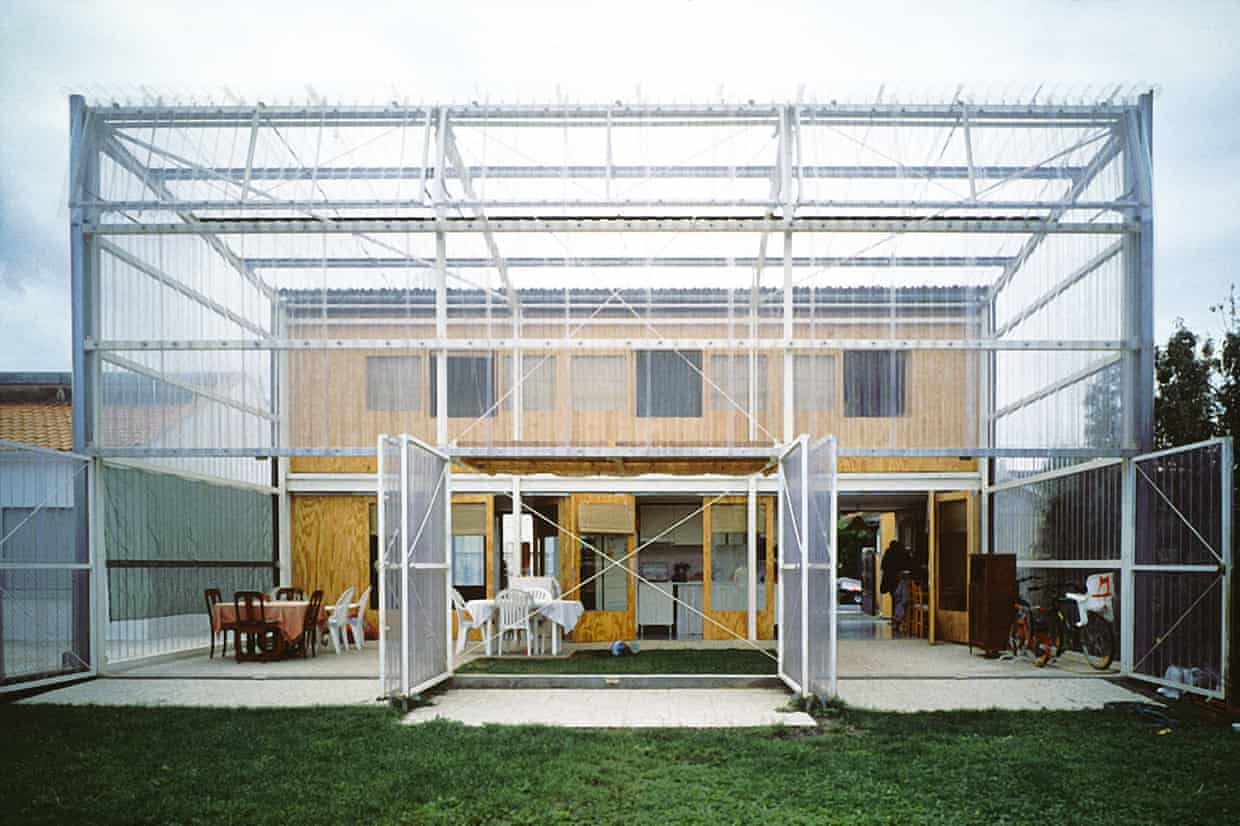
Photo: Philippe Ruault.
By adding a double-height conservatory at a family home in Floirac, Bordeaux, the architects “doubled the floor area their clients expected, while staying within a very limited budget,” the Guardian reports.

It’s generally considered cheaper and more efficient to tear down a building and build new than to renovate or reuse. Two acclaimed French architects have found the opposite, and their insights are timely. More people are realizing that standard construction practices are unnecessarily wasteful — and damaging to the planet.

Rowan Moore describes the architects’ approach at the Guardian. “The French architects Anne Lacaton and Jean-Philippe Vassal are famous for their belief in keeping existing buildings whenever possible, no matter how unpromising or unloved they may be. They follow, in effect, an architectural version of the Hippocratic oath – ‘first, don’t demolish.’ It’s a message that has never been more pertinent, as it dawns on the construction industry that constant demolition and rebuilding is an environmentally devastating activity.

“The husband-and-wife team have been putting this idea into practice for decades. … Keeping the already-there is not, though, their only concern, nor is it to do with sustainability alone. They like to use words such as ‘generosity,’ ‘kindness’ and, above all, ‘freedom,’ which means that they are always looking to find and create spaces additional to those asked for in a brief, ‘with no utility, no function,’ as Vassal puts it, ‘in which the user will feel the possibility to be inventive for themselves.’ …

“ ‘We really feel enclosed in a brief,’ says Lacaton, ‘that has so many rules, so many recommendations and impositions.’ … They strive against an attitude that ‘in architecture everything must be quantified… everything should be uniform.’ …

“In the early 1990s, they designed a new family house in their home city of Bordeaux, where they doubled the floor area their clients expected, while staying within a very limited budget. Their secret was to erect a double-height conservatory built like a simple greenhouse, which gave a sense of generosity and freedom to the rest of the house, a two-story structure with also basic construction. …

“[They have] a fondness for adapting humble and disregarded ways of building. ‘We found we were conditioned by our education as architects,’ says Lacaton, ‘to say that one way of constructing is the right one and the other one is not good. We discovered that we could use any tool, any material, anything if it’s used in an intelligent way.’ They also developed the idea of reusing the already-there, as with a seaside house in Gironde, south-west France. which was built among 46 pine trees, along with arbutuses and mimosas, without cutting any down. With the Palais de Tokyo in Paris, a 1930s building remodeled as a centre of contemporary art in two phases, in 2001 and 2012, they took pleasure in making only minimal alterations to its damaged interior. …

“Where they differ from other architects is in their attitude to control. In the John Soane museum, every detail and experience is minutely managed and directed. Contemporary practitioners often photograph their works unpopulated, at the precise moment between completion and inhabitation, where the perfection of their idea is most immaculate. For Lacaton and Vassal, it’s important to know when to stop, when to leave it to residents to occupy and embellish their homes. They enjoy and photograph the different things that people do to their spaces.

“Their way is humane and intelligent. It’s also invaluable. In Britain and elsewhere, there’s a desperate need to create more homes without incurring unacceptable bills for carbon emissions and energy consumption. Reuse is an obvious answer.”

More at the Guardian, here.

Read Full Post »

In the interest of bringing you some of the latest ideas in sustainability, here is a story on reusing building materials, leasing instead of buying products, and other ideas to lighten the planet’s burden. And they are not just ideas.

Jessica Camille Aguirre reports at the New York Times, “When the Dutch National Bank moved into its Amsterdam headquarters in 1968, the new buildings were epic and stylish. A sprawling Modernist landmark that took up an entire city block off the banks of the Amstel Canal, it was distinguished by a towering high-rise of polished ochre tile. …

“A few decades into the new millennium, the entire complex began to show signs of wear. Tiles fell off the facade. Pipes began to leak. And, perhaps most troubling in a country that prized itself on environmental innovation, its overextended heating systems burned too much fuel.

“In 2020, an architecture firm completed a design plan that would update the original structures and transform the inner courtyard into a public garden. …

“Typically, the fate of a building that has outlasted its usefulness is demolition, leaving behind a huge pile of waste. The Netherlands and other European countries have tried to reduce that waste with regulations. Buildings there are often smashed to pieces and repurposed for asphalt. … A Dutch environmental engineer named Michel Baars thought he could do better than turn [a building] into material for a road.

Mr. Baars considers himself an urban miner, someone who extracts raw materials from discarded infrastructure and finds a market for them. …

“Lean and no-nonsense, Mr. Baars belongs to an emerging group of architects, engineers, contractors and designers who are determined to find a new way to build. This group shares a philosophy rooted in a set of ideas sometimes called the circular or regenerative economy, the cradle-to-cradle approach, or the doughnut economy.

“There are two main tenets to their thinking: First, on a planet with limited resources and a rapidly warming climate, it’s crazy to throw stuff away; second, products should be designed with reuse in mind. The first idea is a recognizable part of our everyday lives: Recycling has retrieved value from household trash for a long time. More recently, the approach has started to gain a toehold in industries like fashion, with secondhand retailers and clothing rental services, and in food production, with compostable packaging. The second takes more forethought and would require companies to rethink their businesses in the most basic ways. Translating either concept to the infrastructure of human settlements requires considering reuse in much longer time scales. …

“Buildings use a prodigious amount of raw materials and are responsible for nearly 40 percent of the world’s climate emissions, half of which is generated by their construction. The production of cement is alone responsible for eight percent of global emissions.

“In recent years, concern about waste and the climate has led cities like Portland, Ore., and Milwaukee to pass ordinances requiring certain houses to be deconstructed rather than demolished. Private companies in Japan have spearheaded new ways of taking high-rises down from the inside, floor by floor. China promised to repurpose 60 percent of construction waste in its recent five-year plan. But perhaps no country has committed itself as deeply to circular policies as the Netherlands.

“In 2016, the national government announced that it would have a waste-free economy by 2050. At the same time, the country held the rotating Council of the European Union presidency, and it made circularity one of the main concepts driving the industrial sector across the bloc. Amsterdam’s city government has set its own goals, announcing plans to start building a fifth of new housing with wood or bio-based material by 2025 and halve the use of raw materials by 2030. Cities like Brussels, Copenhagen and Barcelona, Spain, have followed suit.

“Even in the Netherlands, though, creating a truly circular economy is challenging. Nearly half of all waste in the country comes from construction and demolition, according to national statistics, and a stunning 97 percent of that waste was classified as ‘recovered’ in 2018. But most of the recovered waste is downcycled — that is, crushed into roads or incinerated to produce energy. A 2020 report by the European Environment Agency pointed out that only 3 to 4 percent of material in new Dutch construction was reused in its original form, which means that trees are still being cut for lumber and limestone still mined for cement. …

“Mr. Baars, who runs a circular demolition company called New Horizon, sent a crew of around 15 people to take down the office partitions [in the bank tower]. They packed off interior glass and plasterboard to companies that could make use of the materials. Then, starting at the top of the 86,000-square-foot tower, they began removing the glass facade. A crane lifted pieces to a quay, where they were loaded onto barges in the Amstel Canal for the seven-mile trip upriver to Mr. Baars’s warehouse.”

A 2012 McKinsey report presented at the Davos World Economic Forum suggested that companies were missing out on opportunities to create new business models. “What if, for example, manufacturers could make more money by leasing, rather than selling, their products?

“Thomas Rau, an architect in Amsterdam, is a leading proponent of this idea. In 2015, he appeared in a Dutch documentary called The End of Ownership, in which he didn’t argue for abolishing ownership so much as for shifting it from individuals to manufacturers.

“If manufacturers retain ownership of their products, he argued, they will want to make products that last longer and need fewer repairs. Just as significant, they will want to design stuff that can be easily taken apart and used again. Theoretically, this could help consumers, too. No one wants to own a computer or television or washing machine, Mr. Rau claimed; they just want the services those products offer: computing ability, visual entertainment, textile cleaning. … Think about the speed with which subscription music-streaming services replaced ownership of CDs.” More at the Times, here.

Read Full Post »

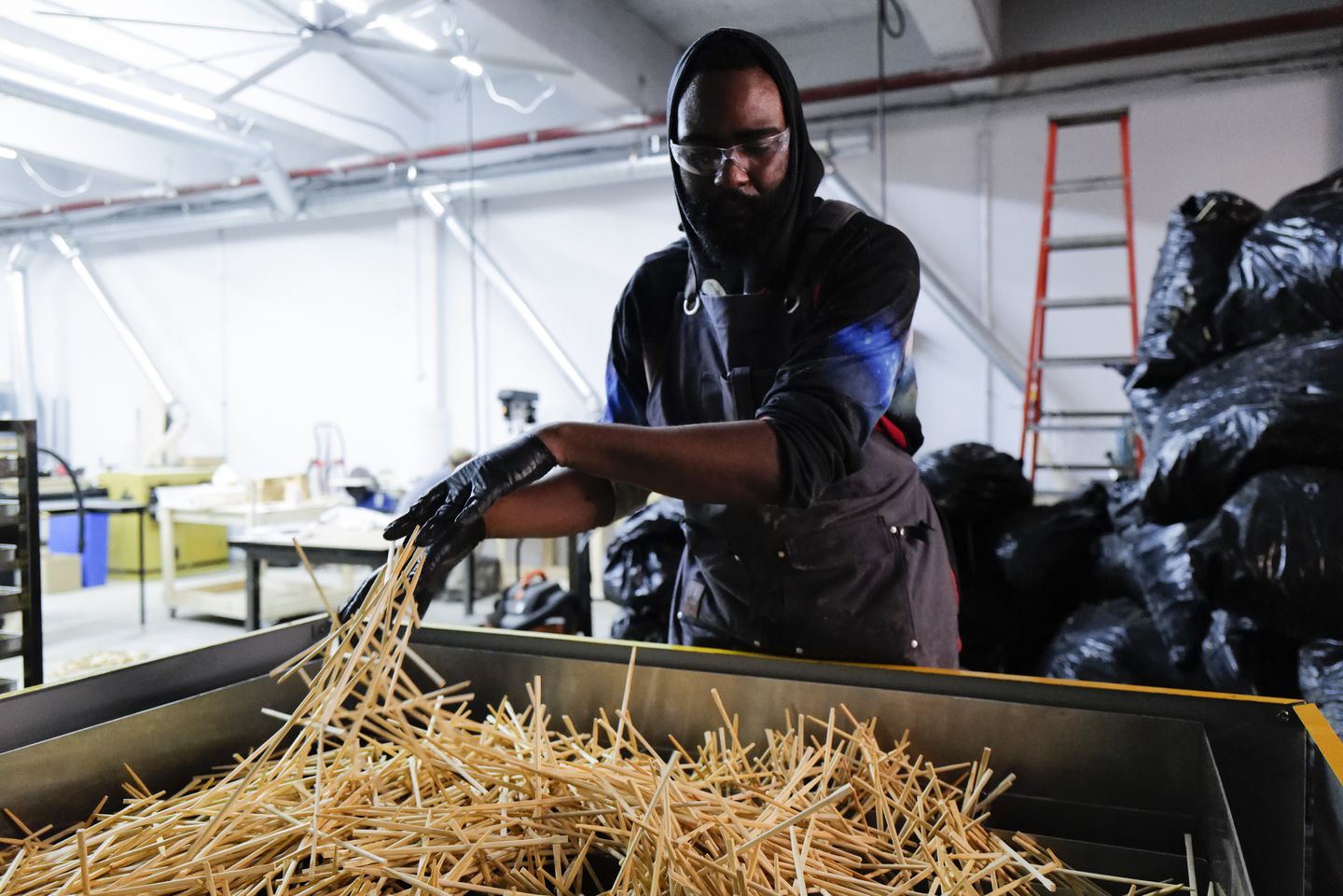
Photo: Carlin Stiehl/Boston Globe.
The Boston Globe reports that at ChopValue, bags of used chopsticks get “sorted — and made into everything from coasters to furniture.” ChopValue is a Canadian company that franchises factories.

Do you find yourself noticing more often just how many items we use and throw out? Many of us now seek out products that are reusable. We do this on our own because anytime a law is made, companies find a way to get around it.

Our town bans plastic take-home bags and plastic bottled water. Guess what? CVS merely made a heavier plastic bag and called it reusable. Bottled-water companies added a hint of flavoring, a loophole that allows them to sell plastic bottles here. So let’s do what we can on our own for sustainability.

Diti Kohli writes at the Boston Globe, “Elaine Chow believes your chopsticks can be more than utensils. In fact, she knows they can.

“The Savin Hill resident is giving ‘a mountain of chopsticks’ a second life at a new micro-factory that was launched in Charlestown in early September. … There, Chow melds the breakable wooden staples of Asian food into something more: cellphone stands ($11), charcuterie boards ($67), and even tables ($960).

“It’s all possible through ChopValue, a Canadian company that franchises factories that create chopstick-based homewares to people like Chow. … She leads the charge locally by collecting used utensils from more than 100 Greater Boston restaurants and running the machines that turn them into their final form. Chow eventually packs and delivers online orders of cribbage boards and workstation desks — all once used to eat sushi or stir-fry — all over New England.

“The draw for her is sustainability, and the ChopValue micro-factory already reigns as one of the only entirely cyclical businesses in Eastern Massachusetts, Chow said. …

‘People are realizing more and more that we can’t just continue to consume and build up piles of trash. We can do better.’

“Here’s how it works. Four days a week, a ChopValue truck visits restaurants around the region, picking up bags of used chopsticks. That itself is a win-win: Businesses are left with less waste to dispose of, and Chow has raw materials to work with. In six months, she has amassed 2.5 million chopsticks, weighing 15,000 pounds, and that number keeps growing.

“Back at the factory, Chow and three employees sort the sticks by color and separate them into mesh baskets. Then the utensils are dipped into resin and baked for 12 hours at 200 degrees, a process that allows them to harden and the resin to crystalize. Staffers then press a 3,000-pound machine on the sticks to flatten them, and what comes out on the other side is a durable tile — one of three sizes — that can be connected, sanded, and cut into the finished product.

“The process has proved to be labor-intensive, and Chow is on the hunt for two more employees, which is tough in the tight labor market. … After years of working in human relations, she has fallen in love with the factory’s green mission — and the chance to build on a love for woodworking that she picked up during the pandemic. Chow built a picnic table and shed to cover her trash bins during early COVID, before quitting her job and buying the franchise in September 2021.

“ ‘I have forever and ever been obsessive [with] recycling,’ she said. But she found ChopValue while scrolling through social media one day. ‘I actually have the computer algorithm to thank. It finally did a good thing.’ ”

More at the Globe, here.

Read Full Post »

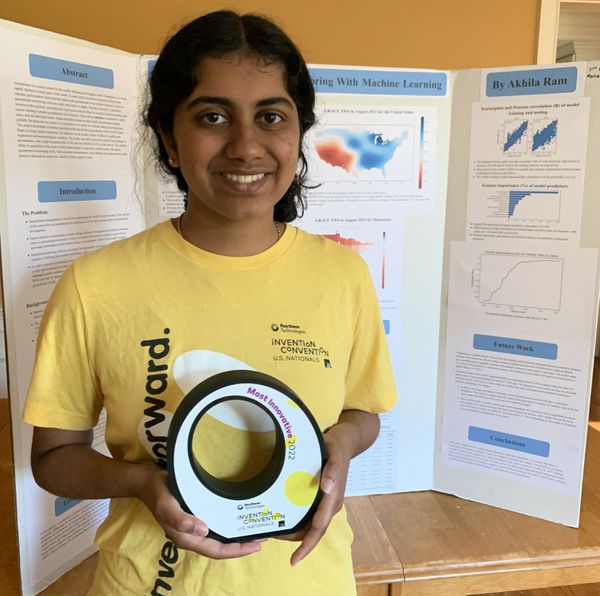
Photo: Akhila Ram.
High School student Akhila Ram won a 2022 ‘Most Innovative’ award for her invention to measure groundwater.

When I get discouraged about what we’re doing to the planet, I remind myself of all the young people coming along who like to solve problems.

Today’s post is about those who are addressing water scarcity. Akhila Ram, a high school student in Lexington, Massachusetts, won a science award for her groundwater-measuring gadget. And at the University of Illinois Chicago (UIC), there are young professors focused on reusing wastewater to save on potable water.

Collin Robisheaux writes at the Boston Globe, “Akhila Ram, a 12th-grader at Lexington High School, isn’t exactly like other high school students. In her free time she enjoys baking, painting – and inventing technologies to map out groundwater levels across the United States in order to monitor problems like water depletion.

“Ram’s invention is a computer model that uses machine learning to interpret data collected by NASA’s GRACE satellite in order to predict groundwater within a few feet of its actual level. While groundwater monitoring tools already exist, they can be expensive to install.

“Ram’s system could give farmers, well owners, and local officials a cost-effective method of monitoring groundwater. According to Ram, this model is the first to use a statistical approach on a large region to predict changes in groundwater levels. …

“The inspiration behind the invention is personal for Ram.

“ ‘My grandparents live in India, and their city faced a major drought,’ Ram said in an interview. ‘It was because of poor management. And I wanted to [do research on] solutions that could be used to properly manage water resources. … I’ve always been really passionate about climate change,’ Ram said. ‘That’s what led me here. I’ve always been trying to come up with ideas in this realm of sustainability and the environment.’ More at the Globe, here.

Meanwhile young college professors at the University of Illinois Chicago (UIC) are finding ways to make better use of wastewater.

David Staudacher reports at Rise magazine, “Water is our most precious resource, but climate change, pollution, and a growing human population has made this resource even more scarce. More than 2 billion people live in water-stressed countries. …

“To reduce this scarcity, two professors in civil, materials and environmental engineering are looking around in the world to find better ways to reclaim and reuse both fresh water and wastewater.

“To find best practices in water reuse, Associate Professor Sybil Derrible and his team have studied the work done in cities and countries around the world. In search of new water sources, many countries are turning to ocean water. …

“ ‘In places like Singapore, Hong Kong, Saudi Arabia, and Israel, there are only a few ways to get water,’ Derrible said. ‘One is from the sea through desalination, and another is by reclaiming used water. Desalination requires a lot of electricity. Recycling used water can save energy and money.’

“Derrible and his team are developing a framework to analyze water circularity — which is the practice of not wasting or losing water and recovering the resources it contains as it is reused in multiple applications — by examining how cities collect, treat, and reuse water. In Singapore, for example, municipalities collect rainwater and recycle wastewater back to industries where it doesn’t need to be treated.

“Derrible wants to create a universal framework that takes into account ideas like this and that can be used anywhere in the world, including places where fresh water is not scarce.

“ ‘Many industries require extensive volumes of water, but the water does not need to be potable. Here, used water that was minimally treated can be sufficient,’ he said. Some places in the United States are already reusing wastewater. In warm climates like Las Vegas, wastewater is used to irrigate golf courses.

“ ‘It’s a big deal because the future of many cities includes reusing water and it is becoming more and more common for many cities in the world because water is a precious resource,’ he said.

“Also, in most countries, water distribution systems consist of large, highly pressurized pipe networks that require an excessive amount of energy and that are vulnerable to large-scale contamination if something goes wrong. However, in Hanoi, Vietnam, water is distributed at low pressures, and most buildings are equipped with a basement tank, a rooftop tank, and separate water treatment processes, resulting in a system that consumes less energy and that is more resilient. …

“Even a city like Chicago — with its vast freshwater resource in Lake Michigan — can benefit from reusing water. Professor Krishna Reddy is working with the Metropolitan Water Reclamation District of Greater Chicago (MWRDGC) and several UIC professors on an interdisciplinary project investigating ways to reuse treated wastewater from MWRDGC processing plants in the region and beyond.

“The district discharges some treated water into the Chicago River, where it makes its way into the Mississippi River and ultimately into the Gulf of Mexico. But ‘from a sustainability point of view, this is not a good reuse of a resource,’ Reddy said. ‘We suggest recycling the treated water where it can be reused for beneficial purpose without any further treatment.’ The researchers are gathering data to understand how much water MWRDGC produces, uses, and discharges, and are examining the quality of the water the plants both take in and discharge. One goal is to find new uses for wastewater.

“ ‘One interesting thing is that there are a large number of industries near the water reclamation plants, and they use a lot of water,’ Reddy said. ‘Maybe some of the industries nearby could use the treated water, or it could be used for other applications like agriculture or recreational parks irrigation, toilet flushing, landscaping, and golf courses.’ “

More at the UIC College of Engineering, here.

Photo: Jim Young
Sybil Derrible and his team are developing a framework to analyze “water circularity.

Read Full Post »

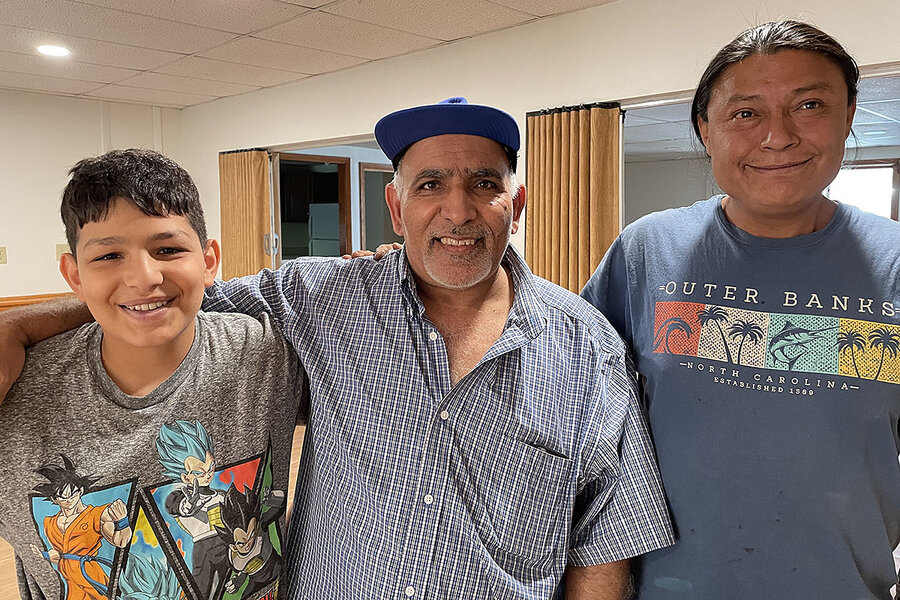
Photo: Capital Area New Mainers Project.
Abdalnabi family members (left) are seen here with property manager Efrain Ferrusca (right). The family lives in what used to be St. Matthew’s Episcopal Church in Hallowell, Maine, a building managed by Capital Area New Mainers Project [CANMP].

As church attendance decreases and buildings can no longer be supported by the remaining congregants, some properties are sold or donated to worthy causes. Tara Adhikari and Erika Page write about church transitions at the Christian Science Monitor.

“Victoria Stadnik glides on roller skates down one side of a wooden halfpipe decorated in neon spray paint. Light pours in through stained-glass windows, catching her body as she rotates through the air in the nave of what used to be St. Liborius Catholic Church [in St. Louis]. 

“After the church shut down in 1992, the building served briefly as a homeless shelter. Now, St. Liborius is better known as Sk8 Liborius – a skate park in use informally for a decade, with plans to open officially in three years.

“St. Liborius is one of hundreds of churches across the United States beginning a second life. As congregations dwindle – only 47% of American adults reported membership in a religious organization in 2020, down from 70% in 1999 according to a Gallup poll – churches are closing doors and changing hands. Developers have jumped at the chance to transform the consecrated spaces into luxury condos, cafes, mansions – even a Dollar Tree

“For some, the trend brings with it a sense of dismay. … But in some cities, residents are breathing new life into sacred spaces by giving fresh thought to what it means to serve, and who can constitute a congregation. Groups in St. Louis, Philadelphia, and Hallowell, Maine, are finding that one fundamental purpose of church – community uplift – can take many forms. 

“ ‘These places are very powerful links to the history and the evolution of our neighborhoods,’ says Bob Jaeger, president of Partners for Sacred Places, based in Philadelphia. Even though a church ‘may need repair, even though it may be empty, … it’s a bundle of assets. It’s a bundle of opportunities.’ …

“When Dave Blum, co-owner of Sk8 Liborius, speaks about his plans for the church, his voice echoes out across the sanctuary, ringing with the hope and certainty of a sermon. His team is creating not only a skate park but also an urban art studio where local artists can display and sell their work and children can learn skills ranging from metalworking to photography.  

“In every empty nook and cranny, he sees the potential to support a new congregation: underserved urban youth. He hopes skateboarding will get kids in the door – where vital lessons await. …

“The church was completed in 1889, and after years of neglect, it has a long way to go before it can pass an inspection and be formally opened to the public. Emergency exits, bathrooms, window repair, plumbing, electricity, and heat are just a few of the items on a to-do list of fixes estimated at $1 million. But donations are pouring in from supporters, and local skaters like Ms. Stadnik, who also works as a skating coach, spend weekends helping with repair work.

“ ‘A whole community came together to build these structures because it was important to them. And now, what we’re trying to do is have a whole community come together to maintain this structure,’ says Mr. Blum. 

“Welcoming newcomers into the fold is another function churches often fulfill. In Maine, a local nonprofit is continuing that mission by turning a former holy space into a home and community center.

He appreciates the sacredness of his new home and is just happy to finally have enough space to study. 

“Ali Al Braihi and Mohammed Abdalnabi came to the U.S. as refugees because war – in Iraq for the first and Syria for the second – made staying home impossible. Their journeys were different, but their families both ended up in Hallowell, Maine. Housing was limited, says Mr. Abdalnabi, and squeezing all nine members of his family into a two-bedroom apartment was ‘rough.’ Mr. Al Braihi had the same difficulty.

“Now, the 18 people that make up both families live in what used to be St. Matthew’s Episcopal Church. … 

“ ‘What I feel is fortunate and thankful,’ says Mr. Al Braihi, now a college student. His family is Muslim, but he says he appreciates the sacredness of his new home and is just happy to finally have enough space to study. 

“After closing last summer, St. Matthew’s offered the building to Capital Area New Mainers Project (CANMP), which supports the growing number of refugees and other immigrants in the area.

“The congregation chose CANMP because it ‘felt like we would be carrying on the mission,’ says Chris Myers Asch, CANMP’s co-founder and executive director. ‘We take that responsibility very seriously. It’s hallowed ground.’ 

“Mr. Myers Asch and his team of volunteers are currently renovating the sanctuary to create the Hallowell Multicultural Center. When it’s ready, anyone in the community will be able to host events: dinners, talks, movie screenings, weddings – whatever brings people of different backgrounds together.”

More about church reuse at the Monitor, here. No firewall.

Read Full Post »

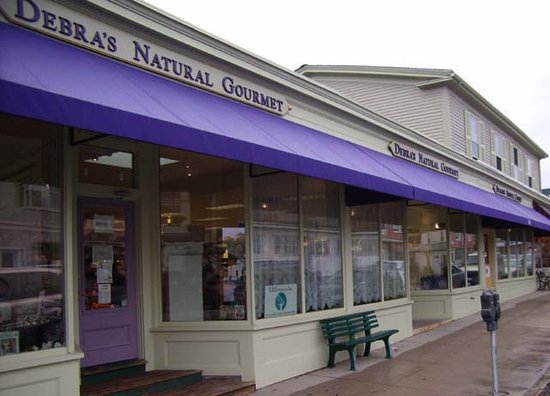
storefront-west-concord

Photo: TripAdvisor
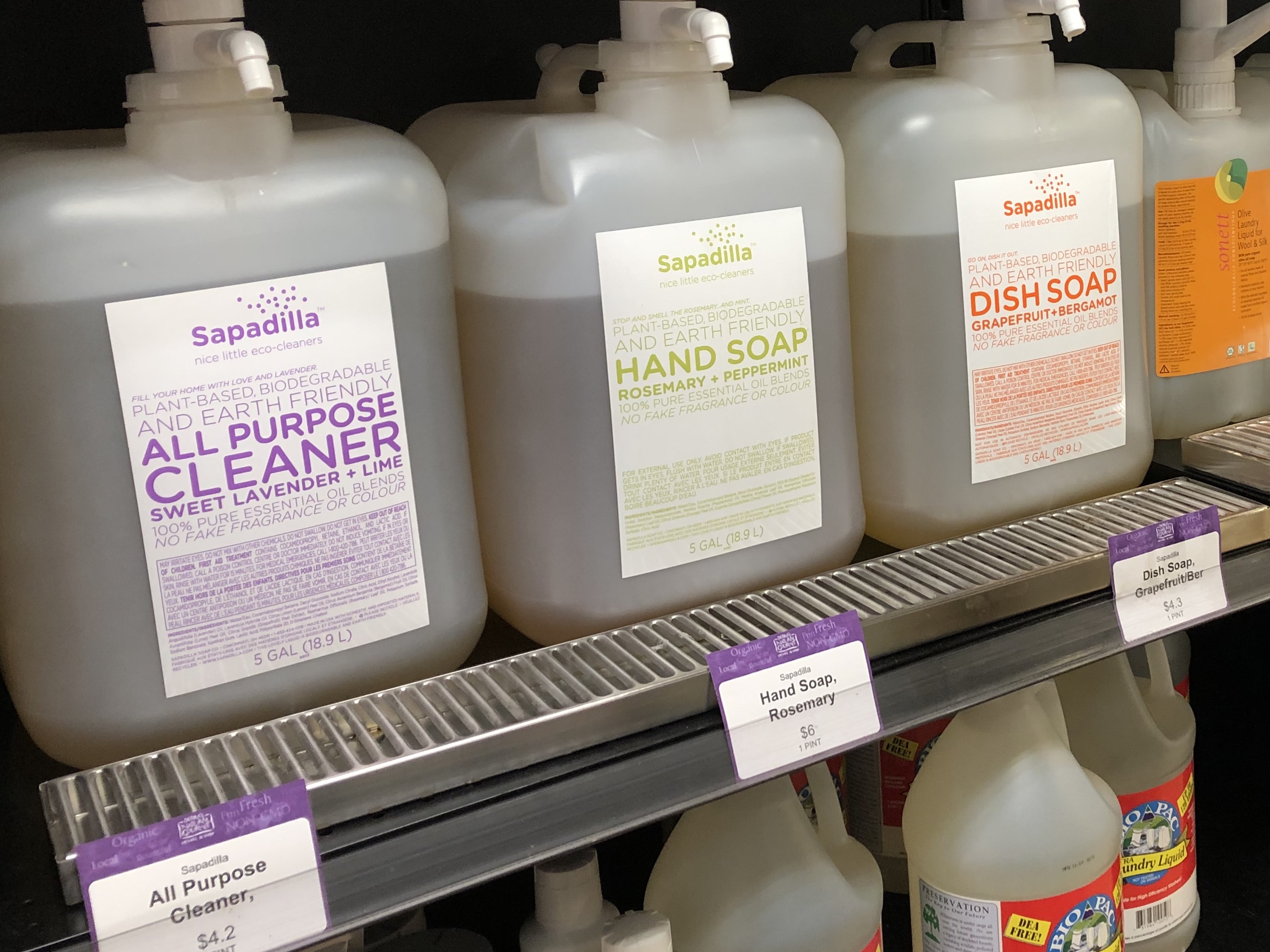
Debra’s Natural Gourmet helps customers cut back on plastic like liquid-soap bottles. They don’t have an answer yet to takeout containers, though.

Every day I’m trying to think of ways to cut back on plastic like the good people at Plastic Free Hackney in England. How am I doing so far? Not great. Plastic is so ubiquitous. But “one and two and 50 make a million,” and there is help from like-minded businesses.

I found a dish-soap concentrate that lets me reuse bottles (etee dish soap), and now a local organic store is letting folks reuse bottles from home over and over by filling up from the store’s large dispensers.

According to Emily Holden at the Guardian, we need to cut back because recycling of plastics is not really working. No one wants them. Holden offers tips on reducing our plastics dependency.

“As plastics corporations ramp up production,” she writes, “they are also promoting a failing recycling system.

Just 9% of plastics get recycled. Traditional plastics are made from extracted oil and gas, and they contribute to the rising temperatures behind the climate crisis.

“Environment experts are increasingly calling for a reduction in plastic use, as the waste accumulates in the oceans, poor countries and even human bodies. Plastics are also burned, as China – which once accepted the bulk of America’s waste – has begun to refuse it. And more than a million Americans lived next to polluting incinerators.

“Significant reductions will require systemic change, researchers say. But there are also some easy tips for individuals who want to cut back on plastics. (If this list is overwhelming and you’re not sure where to start, collect your plastic waste for a month and conduct an audit. Cut back on what you find the most of.)

“1. Carry a reusable bottle, fork/spoon and bag …

“2. Refuse the lid on your coffee cup. … (Some coffee shops will say they are required to give you a lid, citing possible liability for burns.)

“3. Choose products in glass or cans if they are an option. Recycle those materials. … Glass and aluminum cans are much more likely to be recycled. Glass is most efficient when reused (ie. with returnable milk bottles).

“4. When possible, eat in the restaurant instead of taking it to go. Unless you have a physical disability, let your server know in advance that you won’t need a straw.

“5. If you order takeout or delivery, tell the restaurant you don’t want plastic utensils or straws. …

“6. Opt for products with less packaging. Say no to bagged lemons, apples, onions and garlic, and tea that comes in plastic packets. Choose more fresh produce for snacks to avoid individual plastic wrappers.

“7. Shop from the bulk section and use your own containers. …

“8. Use bars of soap (also available for shampoo and shaving) instead of bottles. … For an extra environmental benefit, avoid palm oil.

“9. Use a razor that requires replacing only the individual blades. … You will save money over time. Note that TSA does not allow passengers to fly with individual blades.

“10. Use a bamboo toothbrush or one with a replaceable head.

“11. Buy concentrated cleaners that can be mixed with water in a reusable container. …

“12. Choose frozen, concentrated juice that comes in cardboard tubes instead of the plastic jugs. …

“13. Don’t buy bottled water. …

“14. Buy fewer clothes, or shop secondhand. Wash your clothes less so they last longer. Hang them to dry. …

“15. When shopping online, group as many items together as possible, so you can receive fewer plastic envelopes.”

More here.

022320-fill-your-own-soap-bottle

Read Full Post »

Photo: Toast Ale 
Toast Ale brews its commercial ales with surplus bread at a brewery in Yorkshire. It also pairs up local breweries and bakeries to help them tackle food waste in their own communities.

I have never been a beer drinker, but I have to give a thumbs-up to Toast Ale in the UK because it’s trying to reduce food waste through an unusual brewing process.

Carolyn Beeler of PRI’s The World has the story. “It’s a Wednesday night in central London and the trendy Temple Brew House pub is packed with people out for after-work beers and burgers. A crowd in one corner is sipping intently from half-pint tasting glasses, savoring a beer they helped brew about a month earlier using an unusual ingredient: leftover bread. …

“The beer was brewed at the pub’s tiny in-house brewery in collaboration with Toast Ale, a British craft beer company that uses waste bread to make beer on a commercial scale.

“ ‘In the UK, 44 percent of all bread is wasted,’ says Toast Ale’s chief brand and finance officer Louisa Ziane. ‘So we take surplus bread from bakeries and sandwich makers, and we replace a third of the barley that would otherwise have been used to brew, upcycling bread that would have otherwise been wasted.’ …

“Once the company starts turning a profit, it plans to donate those profits to Feedback, a charity that fights against food waste and shares a founder, Tristram Stuart, with the beer brand. (The company says it’s been able to make donations to Feedback already through its local collaborations.) …

“Around the world, about one-third of the food that’s produced ends up going to waste. That’s a big problem for the world’s hungry, but it’s also a big contributor to climate change: Producing that food emits as much greenhouse gases as many individual countries. …

“ ‘There are bakeries up and down the country who are left with surplus bread at the end of the day, and there are also over 2,000 breweries in the UK,’ Ziane says, so Toast is playing matchmaker with these local bakeries and breweries. …

Toast says it works with bakeries to make sure they’ve exhausted the options to get bread to people who would eat it before agreeing to turn it into beer. …

“Michael Mulcahy, who helped stir up that mash with a red plastic shovel, says, ‘It takes it away from being a hippie environmentalist thing,’ Mulcahy says. ‘It’s the pub. It’s the guys at the bar drinking beer, it’s football and baseball.’

Toast’s beer recipe is online for home-brewers to try, and the company has franchised or licensed its brand in South Africa, Brazil and Iceland. Last year they expanded to the New York City area.” More here.

My husband once tried home brewing, but it was a lot of work, and the beer that resulted didn’t taste as good as the beers he could buy. Still, if someone is into home brewing, the Toast recipe could be fun to try.

Read Full Post »

What to do about our throwaway culture? Well, Sweden has a proposal: tax breaks to encourage people to get things repaired.

Charlie Sorrel at fastcoexist.com explains that the idea involves “halving the tax paid on repairs and increasing taxes on unrepairable items. …

” ‘If we want to solve the problems of sustainability and the environment we have to work on consumption,’ Sweden’s finance and consumption minister Per Bolund told the Local. ‘One area we are really looking at is so-called “nudging.” That means, through various methods, making it easier for people to do the right thing.’ …

“The proposed legislation would cut regular tax on repairs of bikes, clothes, and shoes from 25% to 12%. Swedes would also be able to claim half the labor cost of appliance repairs (refrigerators, washing machines and other white goods) from their income tax. Together, these tax cuts are expected to cost the country around $54 million per year. This will be more than paid for by the estimated $233 million brought in by a new ‘chemical tax,’ which would tax the resources that go into making new goods and computers.

“In 2015, France passed a law requiring manufacturers to label products with information about how long spares will be available, and also requires free repair or replacement for the first two years of the product’s life. That’s another step forward, but it’s also cheaper for manufacturers to replace a broken cellphone than to repair it.

“Apple takes a third path—it swaps out your broken phone for a new one, often free of charge, and then breaks down your old unit, reusing its internals if possible, or recycling them.”

More here. Not sure how you benefit if you do the repair yourself. But knowing those Swedes, they’ll figure out something.

Photo: Geri Lavrov/Getty Images

Read Full Post »

One of the things I like about twitter is being exposed to stories I probably wouldn’t read about in the New York Times. This one is from a UK website called Foodism and highlights an effort to build businesses from food leftovers that might otherwise be wasted.

“It’s 4pm at Borough Market and the gaggle of children are elated, having spent the day growing, buying and selling market produce. Now trading time is over, and it’s time for their little stall to close, there’s only one question left.

” ‘What will you do with your leftover produce?’ asks development manager David Matchett, who runs the market’s Young Marketeers project for local schools. ‘We can make it into leftovers for tomorrow,’ pipes up one kid. ‘Or we can give it to people!’ ‘We give our food to my old auntie,’ shouts another.

” ‘I’ve been running this project five years,’ Matchett tells [Foodism reporter Clare Finney], ‘and not once in that time has a child ever suggested throwing the food away.’ ”

Other uses are found, Finney writes, giving a new heat source at home as an example.

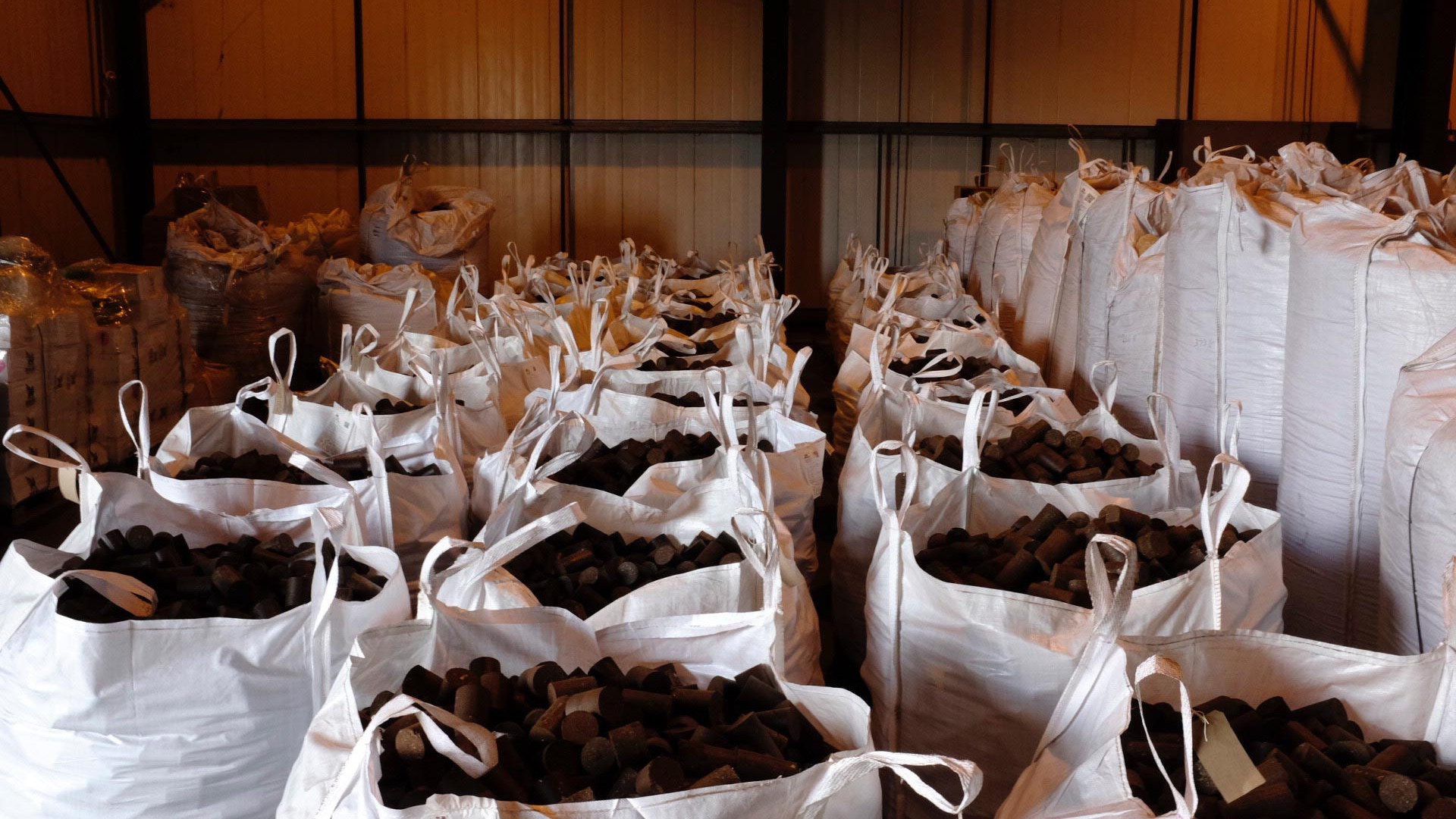
“The heat source is used coffee grounds, recycled by the innovative clean technology company Bio-bean into pellets for biomass boilers, biodiesel and briquettes for wood burners. …

“With its sharp branding, smart technology and simple but potentially revolutionary innovation, Bio-bean is irresistibly representative of the new generation of companies applying principles of modern business, as well as slick design, to an issue that can often appear stale and tasteless: wasted food. …

” ‘These are viable businesses,’ Kate Howell, director of development and communications at Borough Market, says of Bio-bean, and of those other companies turning food waste or surplus into consumables. Indeed, many of the biggest names in the world today actually started here with the market, which has provided a seedbed for sustainable businesses like Rubies in the Rubble, which makes a range of chutneys and sauces from supermarket rejects, Chegworth Valley of apple juice fame, and the street food stall selling meat from previously unwanted billy kids, Gourmet Goat.’ …

“A few months ago, [the grocery chain] Sainsbury’s launched a trial of banana breads made from bananas too bruised to sell in store, to enormous accolades. ‘Originally we estimated they would sell 1,000 loaves,’ says Paul Crew, director of sustainability at Sainsbury’s, with palpable excitement. ‘Customer feedback has been overwhelmingly positive and we’ve already sold 3,000, saving just as many bananas.’ ”

Hey, that’s what we all do with bruised bananas! Now you and I can claim to be trendy as well as thrifty.

Read the Foodism article here.

Photo: Foodism
Bio-bean turns used coffee grounds into pellets for biomass boilers, biodiesel and briquettes for wood burners.

Read Full Post »