Feeds:
Posts
Comments

Posts Tagged ‘rewilding’

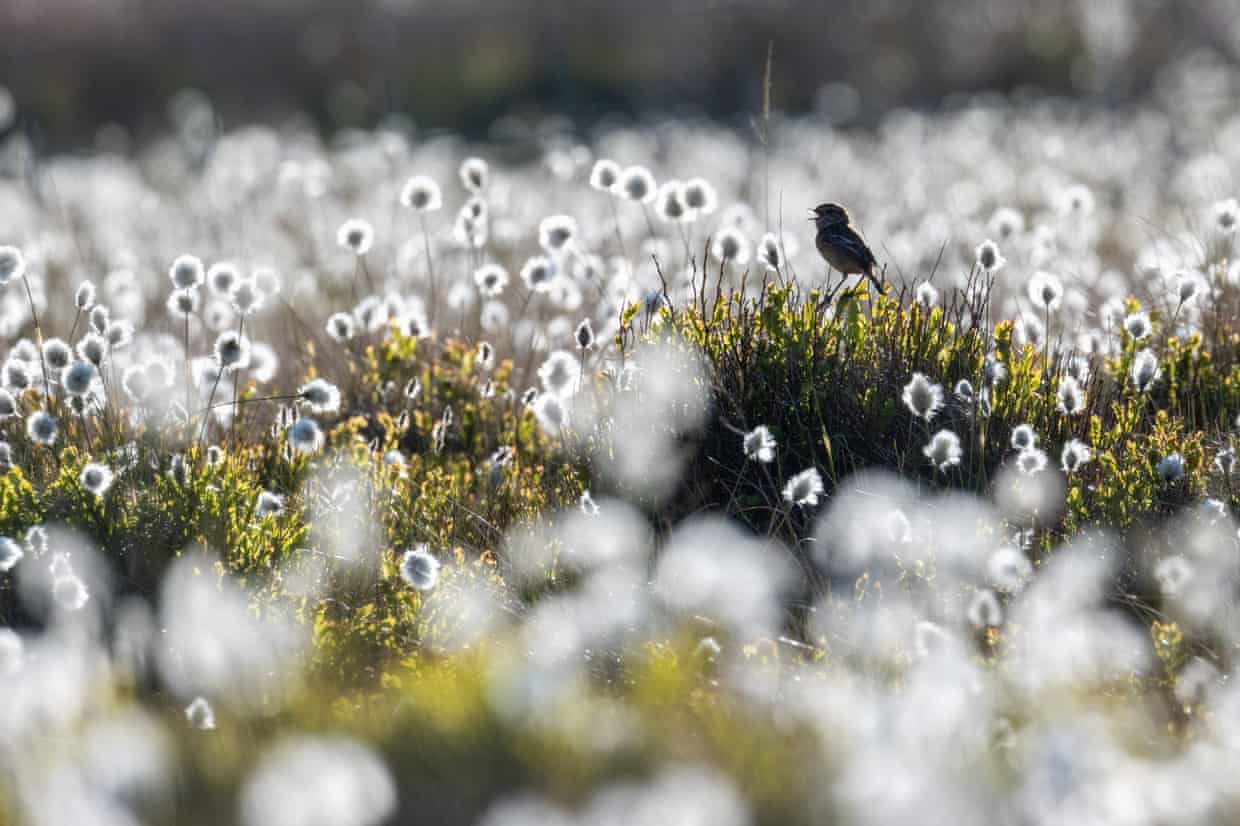
Photo: Rebecca Cole.
A female stonechat calls from a bilberry bush. Cooperation between farmers and conservationists in England is bringing back “ghost woodlands” and wildlife habitat.

When do tree-planting programs accomplish what they set out to do? That is the question as we hear more and more that some massive initiatives haven’t worked. In a story from Yorkshire we learn that cooperation among different interest groups is one route to success. Another is using native species to reawaken ancient species buried deep in the soil.

Phoebe Weston writes at the Guardian about a restoration effort by both conservationists and farmers to transform barren sheep fells.

“The Howgill Fells are a smooth, treeless cluster of hills in the Yorkshire Dales national park, so bald and lumpy that they are sometimes described as a herd of sleeping elephants. Their bare appearance – stark even by UK standards – has been shaped by centuries of sheep grazing. Yet beneath the soil lie ancient tree roots: the silent traces of long-lost ‘ghost woodlands.’ …

“Over the past 12 years, 300,000 native trees have been planted across these hills in sheep-free enclosures. The results are beginning to be seen: birds and flowers are returning. … Says ecologist Mike Douglas from South Lakes Ecology, who is monitoring birds in the enclosures, ‘We are 10 years into what was ecologically very damaged land.’ …

“Big rewilding projects often happen on private land with limited public access. These enclosures are a result of agreements reached between dozens of farmers on common land with public access. ‘Doing so much tree-planting on a common was groundbreaking,’ says Peter Leeson from the Woodland Trust. …

“Bluebells are popping up and there are patches of bracken, which suggest the soils and seed banks retain the memory of being a woodland despite hundreds of years of sheep grazing. “We call these memories ‘ghost woodlands,’ says Leeson. These ancient woodland indicators could offer a blueprint of where trees should return. …

“Last year, there were 14 breeding species here. Before the enclosure was created, he says, just four would have been found: meadow pipit, skylarks, wren and grey wagtails. Eleven new breeding bird species have been recorded since the original 2016 survey, with numbers increasing year-on-year. ‘I’m surprised by how quickly birds have colonized, and the diversity of species,’ says Douglas. …

“The enclosures were possible thanks to a 10-year government agri-environment scheme, signed by farmers with grazing rights to the fell as part of the Tebay Common Grazing Association, and the owner of the fell, Lonsdale Estates, supported and monitored by the Woodland Trust. …

“Across Europe, conflicts between farmers and conservationists are increasing due to the need for maintaining food production while creating space for nature. This conflict tends to be especially pronounced in the uplands because the land is relatively unproductive for farming. ‘Farmer and conservation collaboration is the real joy,’ Leeson says. ‘We want the same things. We want to be listened to, and heard and involved. I’d say we’re friends now.’

“John Capstick, chair of the Ravenstonedale Common Graziers Association, which hosts 187 hectares (462 acres) of fenced off land, says at first some farmers ‘were dead against it being fenced off. They were frightened it was an ulterior motive to get sheep off the fell.’ …

“In fact, the trees are not proving a threat to hill farming. The money is a lifeline for farmers, who earn as little as £7,500 a year from selling sheep and have been reliant on disappearing government subsidies. The Tebay scheme provides payments of £25,600 a year for maintaining the trees and fences and for loss of grazing rights, which are shared equally between the landowner and the farmers.

“Twenty-five years ago, there were 25 farmers on Tebay common. Now there are 10. For those who still graze on the common, the payments are ‘keeping them going,’ says Tim Winder, chair of the Tebay Common Grazing Association, whose father’s family have been farming for as long as they can remember.

“Now Winder is working with researchers on using the fells for peatland restoration and natural flood management. ‘We have to look at different ways of farming,’ he says. ‘We’ll invite anyone to work with us.’

“In the years to come, patches of mature woodland and scrubland will develop here, and common birds such as great tits, blue tits, dunnocks and blackbirds, will move in, says Douglas. It is a mystery what these hills may have looked like hundreds of years ago – no detailed historical records exist. Ghost woodlands speak of not only what has been lost, but what could one day return. ‘This was a leap in the dark for the farmers, as much as anyone else,’ says Leeson. ‘Hats off to them.’ “

More at the Guardian, here.

Read Full Post »

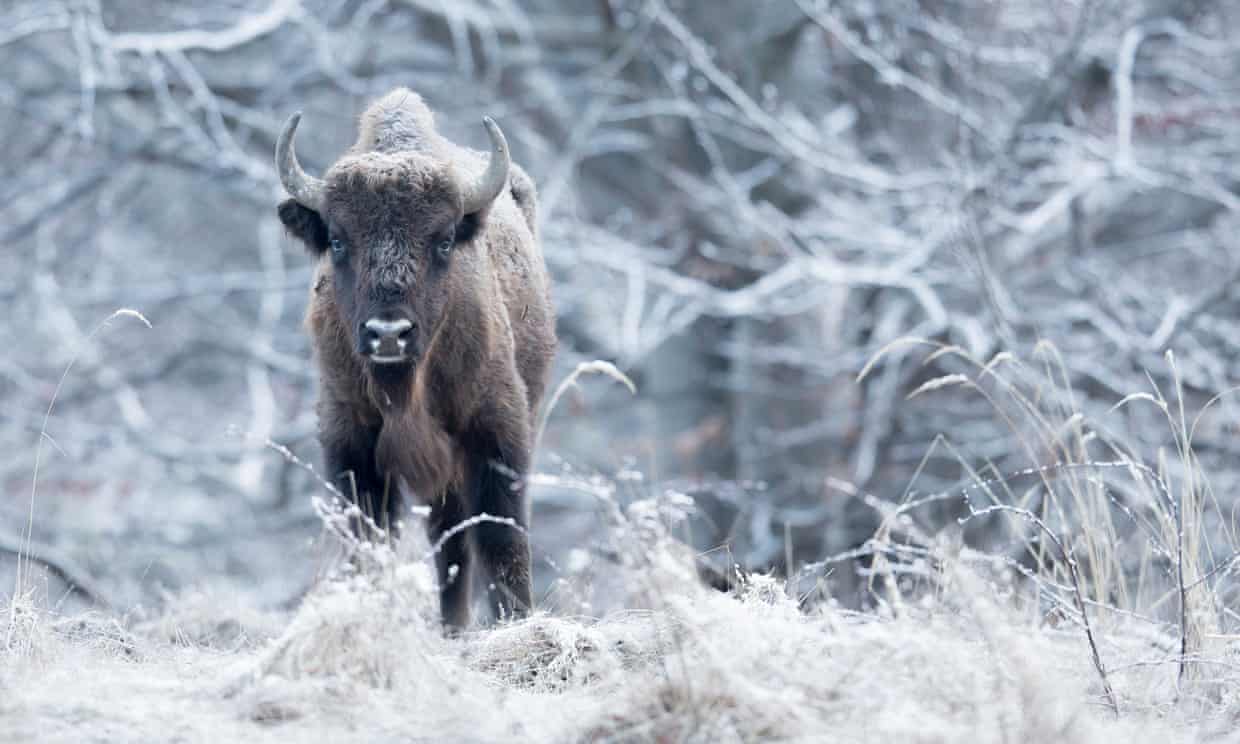
Photo: Michel Doutemont.
“European bison disappeared from Romania more than 200 years ago,” says the Guardian, “but the species was reintroduced to the southern Carpathian mountains in 2014.” 

We think of bison as iconically North American. Who knew about the bison in Europe — also nearly wiped out by humans? It turns out they are worth bringing back, if only to store carbon.

Graeme Green explains at the Guardian, “A herd of 170 bison reintroduced to Romania’s Țarcu mountains could help store CO2 emissions equivalent to removing 43,000 US cars from the road for a year, research has found, demonstrating how the animals can help mitigate some effects of the climate crisis.

“European bison disappeared from Romania more than 200 years ago, but Rewilding Europe and WWF Romania reintroduced the species to the southern Carpathian mountains in 2014. Since then, more than 100 bison have been given new homes in the Țarcu mountains, growing to more than 170 animals today, one of the largest free-roaming populations in Europe. The landscape holds the potential for 350-450 bison.

“The latest research, which has not been peer-reviewed, used a new model developed by scientists at the Yale School of the Environment and funded by the Global Rewilding Alliance, with the bison paper funded by WWF Netherlands. The model, which has been published and peer reviewed in the Journal of Geophysical Research: Biogeosciences, calculates the additional amount of atmospheric CO2 that wildlife species help to capture and store in soils through their interactions within ecosystems.

“The European bison herd grazing in an area of nearly 50 sq km [~19 square miles] of grasslands within the wider Țarcu mountains was found to potentially capture an additional 54,000 tonnes of carbon a yearThat is nearly 9.8 times more carbon than without the bison – although the report authors noted the 9.8 figure could be up to 55% higher or lower, so making the median estimate uncertain. This corresponds to the yearly CO2 released by a median of 43,000 average US petrol cars, or 84,000 using the higher figure, or a median of 123,000 average European cars, due to their higher energy efficiency, the researchers said.

“Prof Oswald Schmitz of the Yale School of the Environment in Connecticut in the US, who was the lead author of the report, said: ‘Bison influence grassland and forest ecosystems by grazing grasslands evenly, recycling nutrients to fertilize the soil and all of its life, dispersing seeds to enrich the ecosystem, and compacting the soil to prevent stored carbon from being released.

“ ‘These creatures evolved for millions of years with grassland and forest ecosystems, and their removal, especially where grasslands have been plowed up, has led to the release of vast amounts of carbon. Restoring these ecosystems can bring back balance, and “rewilded” bison are some of the climate heroes that can help achieve this.’

“[Alexander Lees, a reader in biodiversity at Manchester Metropolitan University, who was not involved with the study] said more in-the-field research would help validate the models and assist understanding of how long it would take for bison benefits to accrue, adding: ‘This study reinforces an emerging consensus that large mammals have very important roles in the carbon cycle.’ …

“A keystone species, bison play an important role in ecosystems – their grazing and browsing helps maintain a biodiverse landscape of forests, scrub, grasslands and microhabitats. In the Țarcu mountains, their return has also inspired nature-based tourism and businesses around rewilding. Schmitz noted that the Carpathian grasslands have specific soil and climate conditions, so the effect of the European bison could not necessarily be extrapolated internationally – American prairies, for example, have much lower productivity.

“ ‘This research opens up a whole new raft of options for climate policymakers around the world,’ said Magnus Sylvén, the director of science policy practice at Global Rewilding Alliance. ‘Until now, nature protection and restoration has largely been treated as another challenge and cost that we need to face alongside the climate emergency. This research shows we can address both challenges: we can bring back nature through rewilding and this will draw down vast amounts of carbon, helping to stabilize the global climate.’ …

“Schmitz said the team had looked at nine species in detail, including tropical forest elephants, musk oxen and sea otters, and had begun to investigate others. He added: ‘Many of them show similar promise to these bison, often doubling an ecosystem’s capacity to draw down and store carbon, and sometimes much more. This really is a policy option with massive potential.’ “

More at the Guardian, here.

Read Full Post »

Photo: Gabrielle Canon/The Guardian.
Lakeside Farms, near Oregon’s Upper Clamath Lake, now features a wetland drawing harmful pollutants out of the soil. It also serves as a sanctuary for birds.

This may sound strange, but one of the things I most want to be able to do as an old person is to relearn things. I have a lot of preconceptions and outdated information that I’ve relied on, and I don’t want my feet to stay stuck in mud.

In today’s story, an Oregon farmer shows he was capable of relearning.

Gabrielle Canon reports at the Guardian that he once allowed his land to leak “pollution into a nearby lake. Now, 70 acres are home to waterfowl, turtles and endangered fish.”

Canon continues, “Birdsong hums over the rumble of Karl Wenner’s truck as it bounces along the dusty trails that weave through his property. For almost 100 years, this farm in southern Oregon grew barley, but now, amid the sprawling fields, there lies a wetland teeming with life.

“Wenner installed the wetland on 70 of the farm’s 400 acres to help deal with phosphorus pollution that leaked into the adjacent Upper Klamath Lake after his land flooded each winter. With support from a team of scientists and advocates, the project has become a welcome sanctuary for migrating and native birds that are disappearing from the area.

“Today, this corner of Lakeside Farms looks far different from a typical American farm. Waterfowl nest among the vegetation, joining pond turtles and even endangered native fish near rows of sprouting barley.

“Looking out at the swaying cattails and wocus plants peeking through the water on an afternoon in June, Wenner beams:

‘This place wanted to be a wetland.’

“It’s a remarkable transformation and a promising example of a symbiotic solution to one of the world’s most pressing environmental problems.

“The stakes are high. Considered ‘among the most productive ecosystems in the world,’ wetlands are disappearing rapidly. Roughly 80% around the world have already vanished. In the expansive Klamath basin that straddles the California-Oregon border, once described as the ‘Everglades of the west,’ more than 95% of wetlands have been drained, diverted or dried.

“Wenner, a co-owner of the land, hopes the farm won’t be unique for long. With an unprecedented amount of federal funding available through the Biden administration’s Inflation Reduction Act and other government programs, Wenner and his partners are encouraging more farmers and ranchers to follow in their footsteps. …

“The Lakeside Farms wetland broke ground in 2021, flattening the barley fields and carving dikes and channels for water flows that would leave small artificial nesting islands. The water, produced from a natural spring on the property, quickly germinated seeds for marsh plants that had been dropped by birds and long left dormant.

“By the summer of 2022, the vegetation began to do its work, feeding fowl and cleaning the farm’s runoff, pumped within its banks rather than into the lake. … Wenner says his costs have largely been covered with government funds, and there’s a lot more to go around. …

“The benefits, Wenner says, have been almost immediate. Wetlands serve as a natural sponge, soaking up harmful minerals and pollution before they seep into the watershed. …

“ ‘You set the stage and Mother Nature takes over,’ Wenner said. ‘It’s just a magical thing to see.’

“Wenner is convinced the move has been a boon to business. The farm is no longer running afoul of regulations, while a plan to add a rotating wetland on other parts of its land will enable it to go organic, yielding ‘a much higher price for the crop.’ …

“The climate crisis is making the Klamath basin hotter and drier, creating stress for farmers and wildlife alike. Populations of migrating birds have plummeted, falling from roughly 5.8 million observed in 1958 to a peak of just 93,000 counted last year.

“Many are finding hope in plans to demolish four dams along the Klamath River – the largest dam removal project in US history – bringing the ecosystem one step closer to recovery. But more solutions will be needed. …

“The work is not without obstacles. ‘Our biggest challenge is where water is available to manage wetlands,’ said Ed Contreras, a coordinator of the Intermountain West Joint Venture, an organization dedicated to building public-private partnerships to support bird habitats. He added that the Lakeside Farms project was an important case study. …

“Thousands of miles away, Paul Botts is confronting the same challenges. As the executive director of the Wetlands Initiative, a non-profit conservation organization in Chicago, he is determined to expand the use of what he calls ‘smart wetlands’ across productive farm belts. …

“ ‘The ultimate goal here is that one day my children or grandchildren are driving around the midwest and every other farm field has one of these wetlands,’ he said. …

“These natural systems help blunt climate catastrophes, holding water for dry times and slowing the speed of floods. ‘We view smart wetlands as an excellent example of a big-picture climate adaptation solution,’ Botts added.”

More at the Guardian, here. No paywall but donations keep it free.

Read Full Post »

Photo: Rewilding Europe.
By 1627, the massive auroch had been hunted to extinction across its entire range. But strands of its DNA remain alive, and in 2013, Rewilding Europe, together with the Dutch Taurus Foundation, embarked on a program to bring the auroch back to life.

Are you up for another “extinct but still around” story? This one is about the mighty auroch, whose bull form Zeus assumed in one Greek myth. The rewilding folks in Europe are using the auroch’s remaining DNA to bring it back.

Gerry Hadden at PRI’s The World reported recently on the herd being “back-bred” in Spain.

“The auroch — giant, wild cows — date back nearly 10,000 years and once roamed freely across Europe. Until they were hunted to extinction by humans. The last ones died in Poland in 1627, according to Ricardo Almazán, a safari guide in the mountains of Albarracín, Spain, where a herd of modern-day aurochs can be found. 

“Today, the wild bovine — called tauros in Spanish — are here once again thanks to the nongovernmental organization Rewilding Spain.

“They are working to ‘rewild’ the auroch — or bring back the animal hunted out of the area to restore the wilds as they were before. …

“Aurochs played a key role in the ecosystem — namely, grazing the largest brush and small trees to keep forests from growing too dense and prone to burning. …

“Reintroducing the auroch to the wild involves crossbreeding cows with the ancient genes of the aurochs, according to Lidia Valverde from Rewilding Spain.

“So, taking the ‘genetic features from different breeds of cows that we know that are descendants of that wild ancient cow’ to create a new breed, she explained. But they’re not introducing an entirely new species — scientists have managed to recover more than 90% of the aurochs’ DNA, she said.

“Rewilding Europe, together with the Dutch Taurus Foundation, began the program to bring back the auroch in 2013. Now, the breeding of aurochs is happening in a selective way in Spain, Portugal, Croatia, Czech Republic, Romania and the Netherlands. And, more than 600 of the animals have been bred since the end of 2017, according to Rewilding Spain.

They are reminiscent of fighting bulls, but up to three times bigger.

“Almazán said these new aurochs look and behave just like their forebears. They are reminiscent of fighting bulls, but up to three times bigger. An auroch may weigh over 2,000 pounds, with horns hovering 7 feet above the ground. They are Europe’s largest herbivore.

“Almazán said their presence in the forest is evident in the fact that a lot of trees have been knocked down — the aurochs walk along and smash them flat and then eat the wood and everything. The cows’ behavior has a larger, ecological benefit, he said. The new clearing has allowed the sun to reach the forest floor for the first time in years, giving other plants the chance to grow and attracting insects, birds and other grazers, like deer.

“Local farmer, Paco Rollola, who works with Almazán to help keep the aurochs from straying too far, said that lightning struck a tree nearby recently, but it didn’t start a fire because there was no undergrowth around the tree. The aurochs had eaten it all, he said. Without them, he said, everything would have burned down.

“Valverde of Rewilding Spain said that the beasts are not only making this forest healthier, but they’re also helping the local economy [by] attracting tourists to an area seldom visited.”

More at the World, here. I am fascinated by rewilding projects, but as for these giant animals, I just hope they don’t bulldoze (to coin a phrase) the wrong trees. Can’t you just imagine a science fiction film in which the program runs amok?

All innovations need supervision, I guess.

Read Full Post »

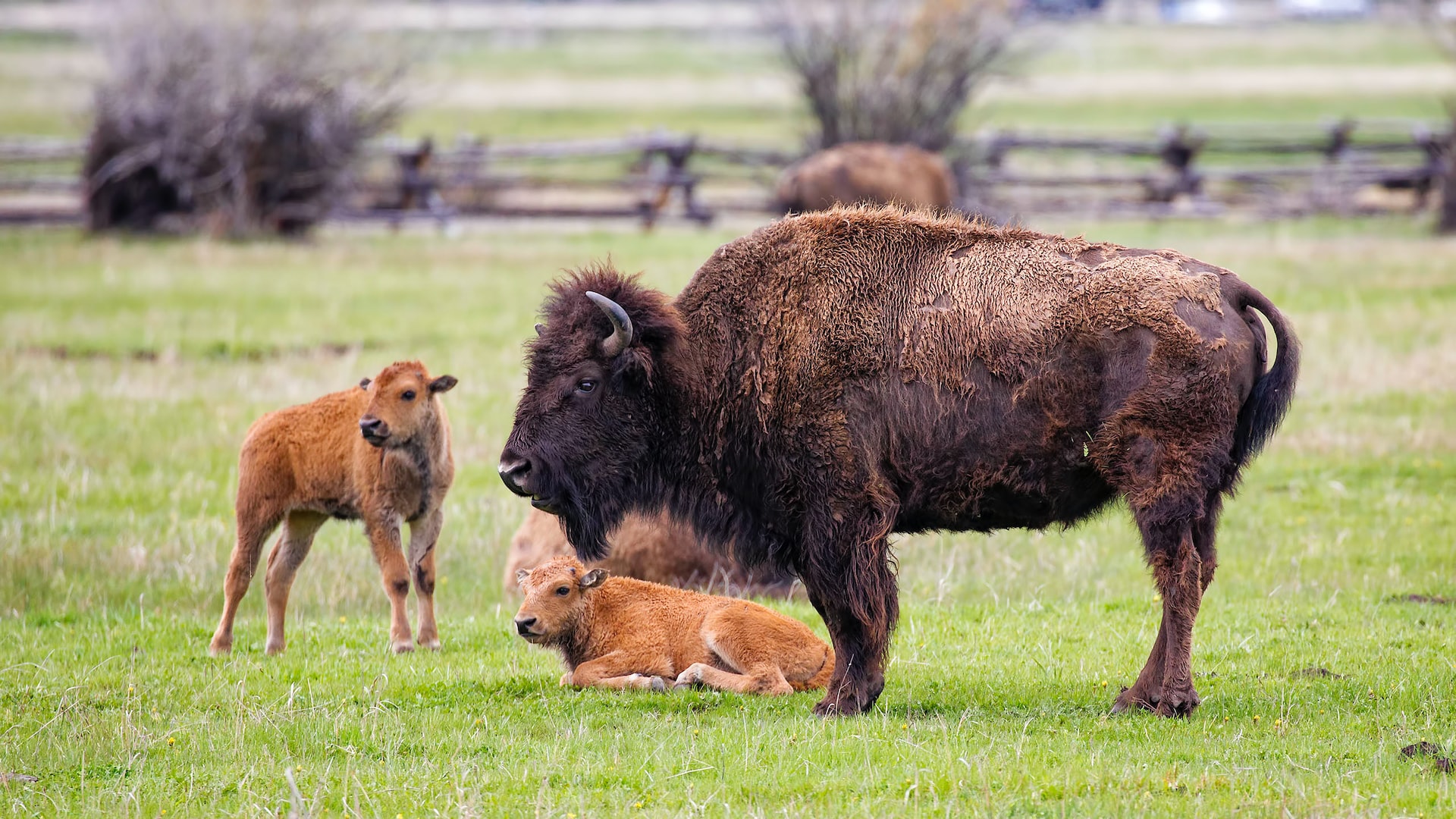
Photo: Philip Brown/Unsplash.
Bison are being brought back in the US West.

Recently on Twitter, @LakotaMan1 shared a photo of a rare white buffalo, sacred to some indigenous tribes. Its location was being kept secret from the modern version of those hunters who nearly wiped out bison in the West. I was excited to see Lakota Man’s picture as I remember the white buffalo in the old television show Rin Tin Tin — and even the words to the song about it.

Janet Marinelli writes at YaleEnvironment360 that large mammals like the bison are being deliberately brought back around the world to create healthier ecosystems.

“For thousands of years, bison herds thundered freely throughout the Chihuahuan Desert on both sides of what is now the U.S.-Mexico border. In November 2009, after three frantic months of chasing down the required permits, Rurik List and Nélida Barajas watched as 23 bison from Wind Cave National Park in South Dakota arrived by tractor-trailer at the Santa Teresa international cattle crossing in southeastern New Mexico.

“The animals, 20 females and three males, galloped through the dusty stockyards, across the border, and into the state of Chihuahua. A permanent herd of wild bison had been missing from Mexico for more than 150 years. ‘It’s hard to describe the feeling,’ says Barajas. ‘We were bringing the bison back home.’

“Two weeks later, 140 miles southwest of the border crossing, the bison were released from a quarantine corral at El Uno ranch, a 46,000-acre oasis of recovering grasslands in a Chihuahuan Desert landscape severely degraded by the overgrazing of domestic livestock.

“List, a conservation biologist at Mexico’s National University who had drafted the bison restoration plan for northern Mexico, and Barajas, a Nature Conservancy scientist and the ranch manager at the time, were joined by 700 government officials and local ranchers and farmers and their families to witness the event. When the gates opened, a bull led the herd into an iconic Western tableau of big sky and luminous sweeps of golden desert grasses backed by the rugged peaks of the Sierra Madre Occidental.

“Bison, which can reach six and a half feet at the shoulder and weigh as much as 2,000 pounds, are critical to the continued recovery of the desert grasslands. Unlike cattle, which graze grasses to the root, bison roam while they graze, leaving enough of each plant to enable it to continue to grow. They also wallow, sculpting depressions in the ground where water can accumulate and sustain healthy stands of grass.

In the past two or three decades, research has underscored the importance of large mammals like bison as ecosystem engineers, shaping and maintaining natural processes and sequestering large amounts of carbon.

“But the world’s large herbivores and predators continue to suffer alarming losses. Researchers estimate that almost two-thirds of the world’s large carnivores are threatened with extinction. Fewer than 6 percent of 730 ecoregions worldwide studied by scientists still have the extensive, intact large-mammal communities that were dominant 500 years ago.

“After several decades of research refining the understanding of the importance of large mammals to healthy ecosystems, scientists are now proposing a concrete plan about which herbivores and predators to reintroduce and where, and how this might best be done, given the challenges.

“In a paper published earlier this year, a global team of researchers led by the U.N. Environment Programme World Conservation Monitoring Centre and the U.S. nonprofit organization RESOLVE proposed a detailed strategy to reverse the global decline of large mammals and the ecoregions they once inhabited. …

“According to the study, published in the journal Ecography, reintroducing just 20 large mammals — 13 herbivore and seven predator species — can help biodiversity bounce back around the world and tackle climate change in the process. Among these candidates for rewilding are brown bears, bison, wild horses, jaguars, reindeer, Eurasian beavers, elk, moose, wolverines, tigers, and hippopotamuses.

“The researchers also identify 30 priority ecoregions on five continents that meet key criteria: They lack no more than one to three of the large herbivores and predators historically present, provide extensive habitat, and can feasibly be restored in the coming decade. These areas range from the flooded grasslands of South Sudan and the dry puna of the Central Andes to the xeric grasslands and shrublands of the Chihuahuan Desert, where intact communities of large mammals could be restored in the next five to 10 years, the scientists say. …

“Restoring intact communities of large mammals such as these won’t be easy. Throughout history people have feared large animals, particularly predators, justifying politically expedient measures to minimize their numbers — or even eliminate them altogether. Oregon State University researchers Christopher Wolf and William J. Ripple calculate that 64 percent of the world’s remaining large carnivores are at risk of extinction and 80 percent are declining. According to Jens-Christian Svenning, a professor of ecology at Denmark’s Aarhus University and co-author of the Ecography paper, the state of the world’s large herbivore species is almost as dire, with 59 percent of the 74 species of large herbivore species weighing 220 pounds or more threatened with extinction.

“The body of scientific literature documenting the importance of top predators and herbivores has revealed how their loss destabilizes and even unravels ecosystems. In the absence of predators, for example, populations of herbivores often explode. In the eastern U.S., deer were once kept in check by wolves and mountain lions. Today, booming deer populations are preventing keystone species such as oaks from reproducing and have literally devoured the understory habitat of hooded warblers and other birds.

“Research has also demonstrated that healthy animal populations play an important role in sequestering carbon. Yale School of the Environment ecologist Oswald J. Schmitz notes that even if we could completely stop all our emissions, switch to renewables, and stop deforestation, it wouldn’t keep global temperature rise under the tipping point of 1.5 degrees Celsius.

” ‘We have to draw out a significant amount of CO2 and store it on the planet to stabilize the temperature,’ he says. ‘Animals can help us get to this goal a lot faster.’ Schmitz and colleagues in the Global Rewilding Alliance calculate that rewilding, restoring, and conserving endangered and threatened animals could increase carbon uptake by 1.5 to 3 times or more around the world.”

More at E360, here.

Read Full Post »

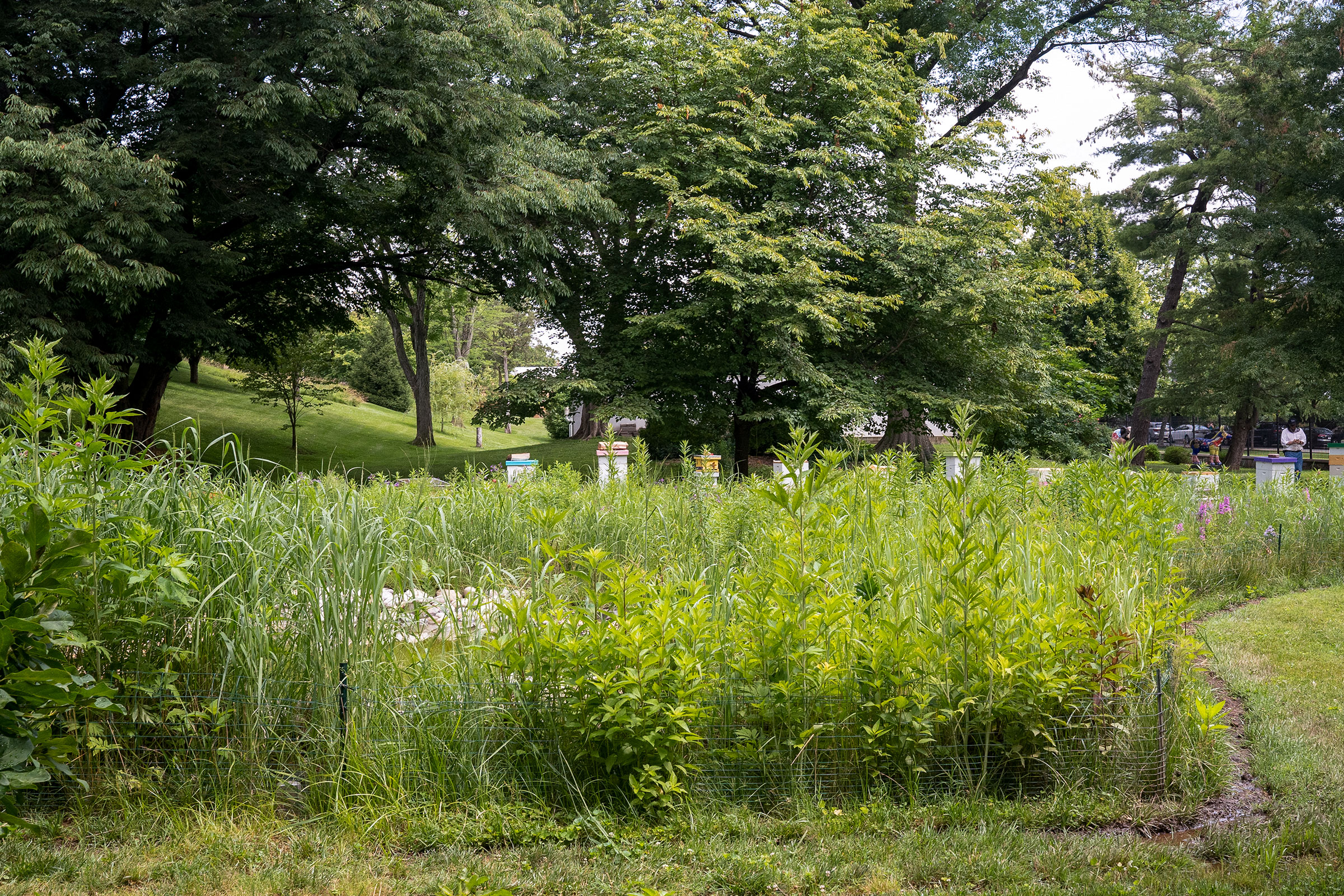
Photo: Embassy of Switzerland in the United States of America.
The Swiss embassy has created a bird sanctuary in the heart of Washington, DC.

When a Swiss bird lover became the ambassador to the United States, he was horrified that his embassy in Washington was maintained like a golf course. He decided to create grounds more welcoming to birds — and did a big favor to everyone who cares about biodiversity.

Molly McCluskey reports at Audubon magazine, “When Jacques Pitteloud arrived at his new home and office in the fall of 2019, he was dismayed to discover the state of the property. As Switzerland’s new ambassador to the United States, he had a piece of prime real estate in northwest Washington, D.C.,— a historic six-acre stretch of land that once was a farm called Single Oak. Now it hosted the country’s sleek, modern residence, and an embassy under renovation. But the grounds looked and were treated like a golf course.

‘I felt a tremendous amount of guilt and shame when I took over the residence,’ he says. ‘Golf courses are nice to look at, but they’re ecological disasters. … [Now] we have so many fireflies at night, it’s like fireworks.’

Normal diplomatic life was soon upended by the pandemic, and since then he’s been on a mission to rewild the expansive grounds, aiming to create a biodiversity reserve marked by the native plants of the region. He forbid the use of pesticides and allowed the lawn to grow out in spotty patches. Using resources such as Audubon’s native plants database and guide to birds, he worked closely with a local landscape designer, Aldertree Garden, that specializes in native plants. They uprooted all the non-native bushes and trees, such as ornamental burning bush and non-productive grass, and replaced them with meadows, bushes, and native trees, including white oak, scarlet oak, black oak, and others.

“Wildlife was also a part of his rewilding vision. Local beekeepers now manage the embassy’s colony of 50 hives, and he built a home for…

” ‘Within a short time, the results are amazing,’ Pitteloud tells me as he walks through the grounds, bending down from time to time to check on the plants or to take a closer view at the frogs in a newly installed pond. ‘We have so many more birds, butterflies. It’s incredible how quickly they returned. We have so many fireflies at night, it’s like fireworks.’ …

“Soon after his arrival in Washington, with the pandemic in full swing and diplomatic life thrown into disarray, Pitteloud immersed himself in local birding clubs and outings as a way of getting to know his new community and environment. His snapshot of an unusual Painted Bunting sighting on the Chesapeake & Ohio Canal National Historical Park — a bird more typically found in Florida than in southern Maryland — was featured in the Washington Post.

“Pitteloud’s efforts to rewild the embassy and residence are a part of a growing movement of local embassies adding more natural elements to their buildings and grounds. The Finnish embassy prides itself on being the first U.S. Green Building Council LEED-certified embassy in Washington. The Irish ambassador’s residence has a low-impact, xeriscaped garden. The Tunisian embassy and residence both have wild, untamed pollinator gardens, in addition to vegetable gardens. The Canadian residence on Pennsylvania Avenue has beehives, and a community-engaged program around beekeeping.

“But the Swiss are perhaps going the furthest on the land they tend. Pitteloud says the efforts are labor- and cost-intensive, but he sees no other option. And staff in D.C. and back in Switzerland at the foreign ministry, he says, have largely applauded the work — especially as the effects of climate change, and the dramatic loss of birdlife around the world, gain more attention. Around the time he took the helm at the embassy, in September 2019, a team of scientists concluded that North America has lost some 3 billion breeding adult birds since 1970, with every biome impacted.

“The news hit Pitteloud hard: ‘We’re five minutes to midnight on biodiversity loss,’ he says. ‘In 30 years, we’ll have empty skies, with no songbirds left. We’ll have to carry bees around because we won’t be able to pollinate our agriculture.’

“Though the Swiss embassy in Washington is only one property, Pitteloud hopes that by fostering favorable habitats for wildlife and inviting in beekeepers and other neighborhood groups, he is engaging in a form of ‘environmental diplomacy.’ Essentially his goal is to set an example for others, whether local neighbors or other embassies (or maybe even the White House, a property whose garden is notably lacking in native plants).

“Because ambassadors and their staff often cycle in and out of their posts every few years, Pitteloud may never see the full effects of the landscaping changes come to fruition, but he hopes the legacy lasts.”

More at Audubon, here.

Read Full Post »

Rewilding in the UK

Photos: Murdo MacLeod
Scotland is inviting nature to return to abandoned industrial spaces.

The idea of “rewilding” industrial spaces, or turning them back to nature, makes me happy. One often reads about it happening in the UK, but we could do it, too, if we wanted to.

This photo essay in the Guardian is about how, in Scotland, rewilding often happens through benign neglect. Bella Bathurst wrote the text and Murdo MacLeod took the photos.

“Since the idea of rewilding took hold, it has generally been seen as a rural pursuit involving withdrawal from farmland so that animals and vegetation can restore their own ecology. At its most herbivorous, it includes allowing hedgerows or scrub to flourish unchecked. At its most primal, it involves deliberately releasing animals such as beavers or wolves in the belief that the re-entry of a single alpha species brings with it a cascade of ecological benefits. …

“The perception is that it is expensive, far away and often inaccessible. It certainly isn’t something that just anyone can do.

“But what if the wildest places of all were right under our feet? In the forgotten spaces in our cities, rewilding has always happened naturally, land falling under stone and resurging again, concrete lids flipped off before submerging once more. In the margins and the demilitarised zones, the abandoned embankments, the bits we don’t want or the lands already contaminated beyond human tolerance, ecology is thriving.

“In some places – such as the land around the abandoned Chernobyl nuclear plant in Ukraine – plant and insect life has adapted to the extreme conditions: boars have moved in, there is a new radiation-munching fungus and, in the thin strip of no-man’s land between the borders of North and South Korea, leopards and Asiatic black bears have been spotted. …

“In Scotland, the 40-mile strip between Glasgow and Edinburgh has always been mined, for not just coal, but stone, gravel, lead and even gold. After centuries of hard pickings, parts of Lanarkshire and Ayrshire have an upended appearance. What was underground is now on top and what was above has gone below, with buildings and bridges slumped over old drift mines and razor-lined spoil heaps terraced by extraction tracks. Wildfowl nest on lochs made from old coal holes and an orchid called Young’s helleborine, discovered in 1975, favours only the best iron ore. …

“At an explosives factory once owned and operated by the Alfred Nobel Company, [sections] are still in use, but most of the 330-acre site was long ago abandoned. Along the cracks in the old pipelines and through the decaying buildings, it would be quicker to list the native plants that are no longer there than those that are. …

“Public feeling is that big business should be obliged to make good what it has taken, but human attempts to restore land are often amateurish. Planting a few conifers and flinging around a mix of wildflowers may be a quick fix, but sometimes it appears that the best thing to do is nothing. …

“In 1913 the 13th Earl of Home tried to lift local unemployment at Douglas by allowing mining nearby. The mining unseated [his] castle, it was demolished, and the flooded workings (known locally as the Black Hole) are now so patterned with commuting birdlife that it resembles an avian Heathrow. …

“On the other side of the Clyde, between the Erskine Bridge and the old John Brown shipyard, lies what used to be the Beardmore naval construction works in Dalmuir. In the early 20th century it produced munitions, planes, submarines and warships before being converted into a fuel-supply depot and then being gradually abandoned.

“Now a cycle path runs through it, but otherwise there is nothing new here except nature: golden leaves of birch springing from the concrete jetty, hawkweed drifting Ophelia-like in the drowned oil storage tanks, wrens nesting in the rusted embankments, mallards cackling from the blackthorn scrub. …

“Dalmuir is beautiful, dangerous – and almost certainly contaminated. … Halflands like these can be among the most joyous and optimistic places on earth, but they can also carry with them a polluting sense of menace. Finding them means that you may end up meandering across an indeterminate line between a walk in the park and full-scale urban exploration; you explore at your own risk. …

“They also have a habit of vanishing. Brownfield sites tend to be classified as wasteland, and with the pressure on housing, they are first in line for redevelopment. Ardeer is intended for ‘regeneration’ and Dalmuir will shortly be dug up to make way for the Scottish Marine Technology Park, a deepwater ship hoist and a new small-vessel fabrication yard.”

More at the Guardian, here.

Abandoned naval construction works in Dalmuir, Scotland. Explore at your own risk.

Read Full Post »

rewilding_longhorn-cattle-in-knepp-repton-park-landscape

Photo: Charlie Burrell/ Knepp Estate Castle
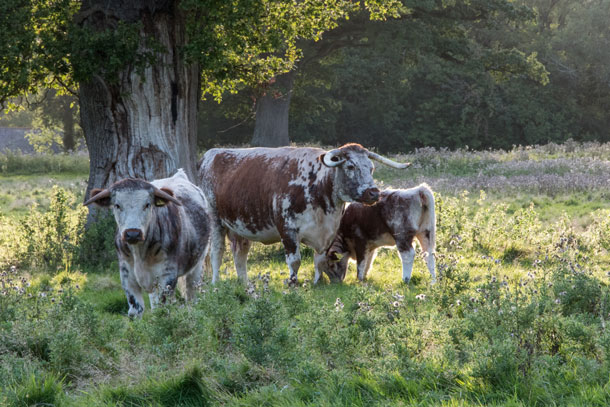
Longhorn cattle were chosen for a UK “rewilding” project as stand-ins for their extinct ancestor, the auroch.

Here’s a concept that was new to me: “rewilding” the countryside — that is, bringing the land back to an earlier and less developed state.

At the radio show Living on Earth, we learn that a UK couple was able to turn a large, unprofitable farm into a profitable one by letting the land go back to nature.

“BOBBY BASCOMB: When writer Isabella Tree and her husband, Charlie Burrell, inherited an estate in West Sussex, England, they assumed they would continue to farm as generations of family had before them. But the intensive agriculture of their predecessors grew increasingly difficult, and they decided that farming was no longer a viable option. So they began to mull over another idea: Give the land back to nature and let it take its course. Isabella Tree’s recent book is titled Wilding, and its the story of what happened to the land when they gave up farming and let nature take the reins. …

“ISABELLA TREE: We inherited this piece of land from my husband’s grandparents [in] the 1980s. And it had been intensively farmed for ever since pretty much the Second World War. [But] the farm was losing money hand over fist. [We] kept buying … bigger machines, throwing more pesticide, more fertilizer, more nitrates, built bigger dairies and changed our types of cows to more higher-milk-yielding cows. …

“We tried contract farming [and] sold all our farm equipment. It was a very, very black day. … Charlie’s ancestors have been here since the Nash castle was built two hundred and twenty or so years ago. It really isn’t for us an option to sell. [We’re] stewards of this land, and we can’t just sell up and move out. …

“BASCOMB: Well, how did you even come up with that alternative? I mean, for most farmers, I think it’s probably pretty counterintuitive to just let the land go. I mean, that’s not what you do as a farmer.

“TREE: It is a very, very difficult thing to do, you’re absolutely right. …

“BASCOMB: You talk a lot in your book about the importance of introducing herbivores. What animals did you introduce and why? …

“TREE: We had to introduce animals that we knew would be able to survive outside all year round without supplementary feeding, that would be able to fend for themselves even in a harsh or wet winter. So, we chose old breeds, we chose Old English Longhorn, wonderful cows with great white finching stripe down their backs and great big horns. And then Exmoor ponies, one of our oldest breeds of horse, they are fantastic at surviving, out in any landscape. Very, very hardy, indeed. And Tamworth pigs, another old breed that’s very closely related to Iberian swine. So, they’re the closest we felt that we could get with an English variety of pig to the wild boar. And then we had roe deer here already in low numbers. And then we introduced fallow deer and red deer. …

“BASCOMB: What does it look like? What does it smell like, even sound like, and how is that different from what you started with? …

TREE: When you walk around Knepp today is the sound of insects, for a start. On a day like this, it’s a hot, sunny day, you’ve just got the sound of crickets and grasshoppers, you’ve got bees, you’ve got hover flies, you’ve got every sort of insect out there. It’s thick with insects. If you go out there on a bicycle, you have to wear sunglasses or, you know, because you’re getting insects in your eyes. …

“This used to be the norm 50 years ago. But in the era of pesticides, we just don’t see insects anymore. So the sound of insects is astonishing. And then, of course you’ve got the bird song, surround sound bird song. Go out into the thickets, it’s sort of like the African scrub. … It’s a wonderful thing to be sitting in the middle of.

“But it’s a double edged sword because we now go on walks in other places in the UK, places where we always used to enjoy, you know, an hour or two to walk, and now we notice what isn’t there. And it’s that, it’s what Aldo Leopold called that sadness, that tragedy of having an ecological education. You know what isn’t there and what could be there, what should be there. …

“We literally haven’t introduced anything apart from the free-roaming animals. So, they’ve all found us on their own. [We] have 13 out of the 18 breeding species of bat in the UK. One of them called the Bechstein’s bat is so rare, it’s rare even in Europe. … We have Peregrine Falcons, we have them nesting in a tree. Usually you associate Peregrine falcons with cliffs and clifftops. They nest in steeples and cathedrals, but not in a tree. Nightingales are another species that is associated with woodland, but at Knepp they’re taking up territories our exploding hedgerows and our thorny scrub. And so they’re choosing a very different habitat because it’s suddenly available to them. So, it’s really changing the science books, we’ve forgotten that this is where nightingales love to be.

“And I think that’s one of the lessons from Knepp, is that we’re so used to seeing species in a very, very depleted landscape, that that’s where we think they want to be. But in fact, they’re often clinging on by their fingernails to habitat that just isn’t optimal for them. And where they’d much rather be is in the kind of habitat that we’re presenting for them at Knepp.”

More at Living on Earth, here.

Read Full Post »