Feeds:
Posts
Comments

Posts Tagged ‘school’

I was interested in an article in today’s NY Times about a school that gives chronically failing students another chance. It succeeds against all odds, but success is a slow process. New York’s mayor is not a fan, because many kids take six years to graduate.

Aniah McAllister, once a lost and wandering soul, has one of the happier stories. Reporter Michael Powell writes that she seems amazed to have earned 46 credits and to be headed to college.

“ ‘This school made realize,’ she says, ‘that I am much better than I thought I was.’

“That’s a pretty fair bottom line for any school,” writes Powell, “although in the up-is-down world of public education in New York, it might just be an epitaph for this small marvel of a high school. Known as a transfer high school, Bushwick Community admits only those teenagers who have failed elsewhere. Most students enter at age 17 or 18, and most have fewer than 10 credits.

“You can muck around quite a bit trying to find someone who has walked the school’s corridors, talked to its students and faculty, and come away unmoved. Most sound like Kathleen M. Cashin, a member of the State Board of Regents and a former superintendent. ‘They care for the neediest with love and rigor,’ she said. ‘They are a tribute to public education.’ ”

Read the article. I’m hoping it will have an influence on the policymakers and let an initiative that sounds so positive keep going.

Aniah McAllister, left, Justin Soto and Kassandra Barrientos attend Bushwick Community High School. Photograph: Kirsten Luce, NY Times

Read Full Post »

A reason that poor children are sometimes unprepared for school is that the words they are starting to read in books may not convey meaning to them. What does it mean to park a car if you have never ridden in a car?

The NY Times has a lovely article about one NYC school’s unusual field trips, designed to fill some gaps in knowledge that textbook writers take for granted.

Michael Winerip writes, “Experiences that are routine in middle-class homes are not for P.S. 142 children. When Dao Krings, a second-grade teacher, asked her students recently how many had never been inside a car, several, including Tyler Rodriguez, raised their hands. ‘I’ve been inside a bus,’ Tyler said. ‘Does that count?’

“When a new shipment of books arrives, Rhonda Levy, the principal, frets. Reading with comprehension assumes a shared prior knowledge, and cars are not the only gap at P.S. 142. Many of the children have never been to a zoo or to New Jersey. Some think the emergency room of New York Downtown Hospital is the doctor’s office. …

“Working with Renée Dinnerstein, an early childhood specialist, [Ms. Levy] has made real life experiences the center of academic lessons, in hopes of improving reading and math skills by broadening children’s frames of reference.

“The goal is to make learning more fun for younger children. … While many schools have removed stations for play from kindergarten, Ms. Levy has added them in first and second grades. [And] several times a month they take what are known as field trips to the sidewalk. In early February the second graders went around the block to study Muni-Meters and parking signs. They learned new vocabulary words, like ‘parking,’ ‘violations’ and ‘bureau.’ JenLee Zhong calculated that if Ms. Krings put 50 cents in the Muni-Meter and could park for 10 minutes, for 40 minutes she would have to put in $2. They discovered that a sign that says ‘No Standing Any Time’ is not intended for kids like them on the sidewalk.” Read more.

One thinks of all the small daily interactions one has with one’s own children and the learning occurring without forethought. There are interactions and learning in poor families, too, but if the words and concepts are not what they kids will encounter in school, I think these excursions can be very helpful.

Photograph: Librado Romero, NY Times

Read Full Post »

People where I work have been volunteering in an inner-city school for years. It started with reading picture books to first graders and expanded to second grade reading, fourth grade math, and fifth grade “Book Club,” the one I do. I once taught fifth grade, and I would still read the books written for that age even if I weren’t volunteering in the school.

This past week, the NY Times had an interesting article on using technology to enable tutors to work with elementary school kids remotely.

“Edward’s tutor was not in the classroom. His school, a 20-minute walk from the nearest subway stop in a crime-plagued neighborhood, has long had trouble finding tutors willing to visit. ‘It is hard to get anyone to volunteer,’ said the school’s principal, Luis Torres, who sometimes cancels fire drills because of the gunfire he hears outside.

“Now, newly designed software for the tutoring of beginning readers has bridged the gap, allowing volunteers to meet students online from a distance. P.S. 55 is testing the program with students in its four first-grade classes.

“Edward’s tutor, Jenny Chan, was an hour away in Midtown, on a bustling trading floor at JPMorgan Chase, where she provides technology support. She was talking to Edward by phone and seeing the story he was reading with screen-sharing software on her desktop computer.

“JPMorgan Chase is sponsoring the remote tutoring program and encouraging its employees to get involved from their desks during the school day.” Read more.

There’s nothing like face-to-face contact, but if people can’t take work time for the commute, perhaps more people will tutor.

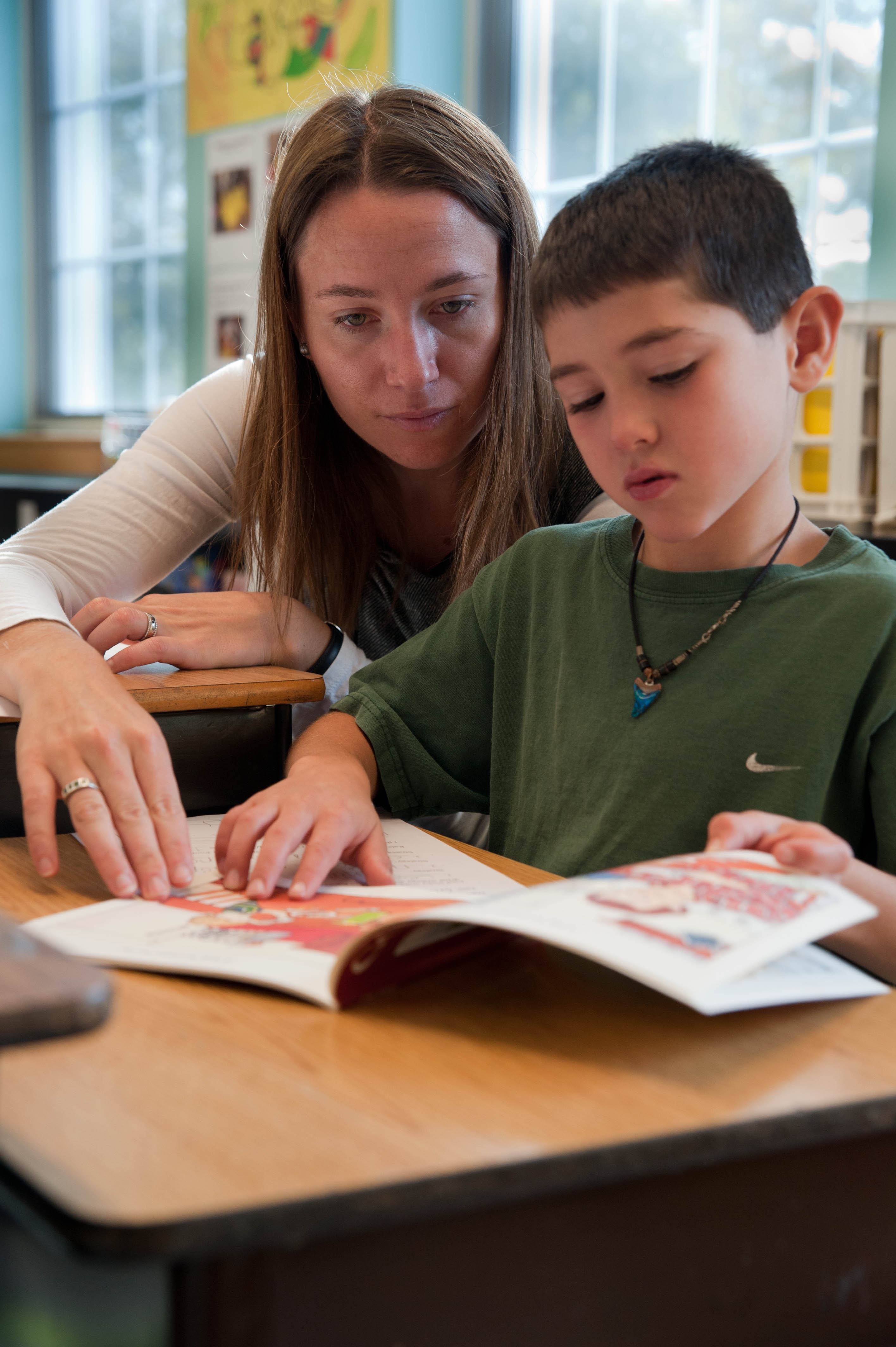
Photo: Librado Romero, NY Times

Read Full Post »

Creativity at Age 8

We have a fierce wind here today. A woman in the elevator where I work said she went outside to mail a letter, and all the pedestrians were walking at a 45 degree angle trying not to be blown off their feet. Which gives me a great opportunity to highlight the creative endeavors of a young relative (age 8) who, with a classmate, wrote a quite wonderful poem about the wind.

The Wind
By Axel L-R and Constantinos F

I may be scary
I may be cold
I’m all around you and I never get old
If you enter the woods you may hear me howl
Or maybe it´s just an owl
When I get angry I become a hurricane
Look out!
You may not want to come out
The apples tumble down the hill after I throw them off their branches
I shake things
I take things and sink all the ships
I am the wind
Something that´s everywhere and you should take care of me
Or I will never be there

You might be interested to know that Axel has other creative irons in the fire. While my husband was in Sweden, Axel interviewed him for a possible article in a magazine he was putting together. The interview didn’t make the cut, but the magazine came home, all in Swedish, crossword included. 5 kroner.

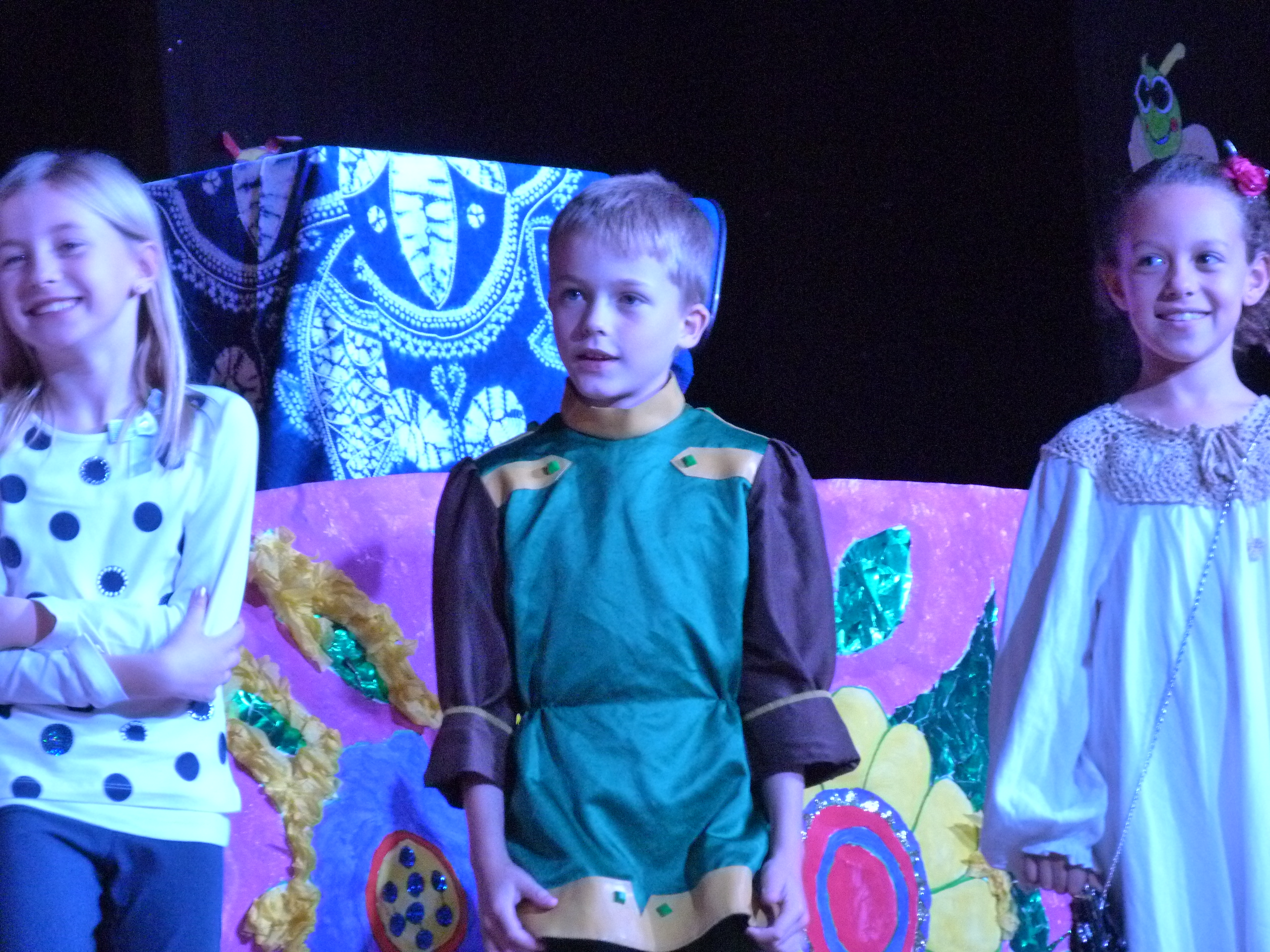
Here is Axel as the wily Ali Baba.

Read Full Post »

Among children’s books, I especially like books that are fifth-grade level. Although I enjoyed all the “color” fairy books when I was in third grade or so — Andrew Lang’s Blue Fairy Book, the Orange Fairy Book, the Rose Fairy Book, and so on — it wasn’t until about fifth grade that I really got hooked. Flashlights under the cover and all. I had a relative who worked for Dan Wickenden (The Amazing Vacation), and she sent me Mrs. Piggle Wiggle and the Narnia books. My cousin Patsy got me into George MacDonald’s The Princess and the Goblin. I reread that one a couple years ago, and it’s as great as ever.

After college, I  taught fifth and sixth grade for a few years and read to the kids as time allowed. I remember how one class only gradually realized they were really starting to like Frances Hodgson Burnett’s The Lost Prince. Reading can sneak up that way.

Today I am one of the volunteers who go out from our workplace to an inner-city school where there has long been a tutoring relationship. It started with a team who read picture books chosen by teachers to first graders. Then other teams were added (such as fourth grade math tutoring), and now there are teams reading with fifth graders. The books are chosen by the librarian. Each fifth-grade volunteer has a group of three children, and grownups and children all take turns reading and discussing. Even though the kids see teams once a week, most individual volunteers only go monthly. It’s not hard to fit into one’s schedule. I have learned about a lot of books by volunteering at the school. I already knew about From the Crazy Mixed-up Files of Mrs Basil E. Frankweiler, but not about Holes, Maniac Magee, Hatchet, or Hidden Talents, to name a few.

One colleague, having found out that I liked this age level, introduced me to the Golden Compass series. Heaven! I also like her suggestion of The Island of the Aunts and recommend it.

Better sign off. The last time we had a storm like the one outside my window, my computer was hit.

Read Full Post »

Last night we finally watched the DVD of “Waiting for Superman.” We had to wait until we were up for it. We knew it would be good, but painful to watch. It’s a documentary about the broken public education system in this country.

I see now why people come away from this movie saying, “It’s the unions.” But although we clearly need to find a way to dismiss bad teachers and reward good teachers, to just say, “It’s the unions,” seems too simple to me. Even if it is true, when you consider the context of poverty, unemployment, the highest rates of incarceration in the developed world, the War on Drugs, three other wars, confused approaches to immigration, Wall Street greed at the expense of the poor and middle class, antigovernment bias, and many skewed political priorities, to lay the problems of inequality in public education at any one door seems too simplistic.

Still, as the movie makes clear, we need to get rid of bad teachers immediately and make sure children get high-quality teachers before they give up hope. Lotteries to get into better schools are too cruel to too many. Activists can check out this site.

By the way, the film is very well done. We loved the creative graphics making the data real and the clips of Superman movies and past political speeches and TV shows.

Reader Asakiyune writes: “I very much agree with what you said about unions and teaching and the documentary–it bothers me when a problem as complex as that is reduced to one soundbite.”

Read Full Post »

« Newer Posts