Feeds:
Posts
Comments

Posts Tagged ‘sustainable’

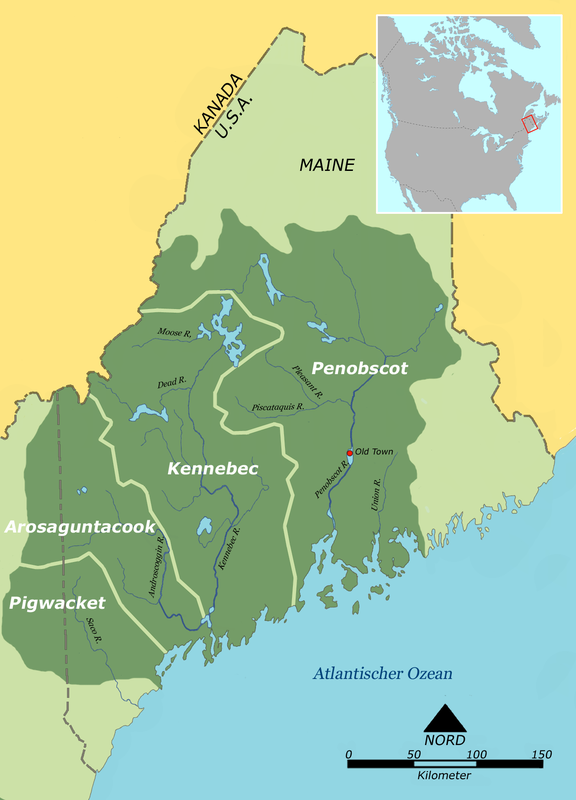
Map: Wikipedia.
Eastern Abenaki tribes (Penobscot, Kennebec, Arosaguntacook, Pigwacket/Pequawket). Indigenous people often exhibit the best stewardship of natural resources.

What can we learn from people who have been taught from infancy how to live in harmony with the natural world? In an op-ed at the Washington Post, Bina Venkataraman suggests that “in Maine, a return of tribal land shows how conservation can succeed. …

“On a recent morning at the Penobscot Nation headquarters, moose mating rituals dominated the office banter: the wacky way a lovesick moose had stumbled around someone’s pickup truck [when] he heard a hunter’s [mating call]. …

“The Penobscot Nation’s record of caring for nature while still using it — hunting moose and duck while keeping their populations steady, selectively harvesting timber to preserve forests and restoring rivers to support fisheries — inspired an effort to return a 31,000-acre tract of forested land to tribal ownership.

“Late last year, the Trust for Public Land, a conservation group, bought the parcel from an industrial timber company, and today it announced it will give the land to the tribe once it pays off $32 million in loans. …

“The land is close to Mount Katahdin, sacred in Penobscot tradition, and to an 87,000-acre national monument created in 2016 in the North Woods of Maine. It contains 53 miles of streams in the watershed of the Penobscot River, which has been for the tribe a central highway and a source of food and water.

“The transfer is part of a movement to return lands to Indigenous stewardship and work with tribal communities to protect biodiversity. The hope is both to restore justice for tribes that were long ago stripped of their ancestral homelands and to learn from long-standing Indigenous practices new ways to save a beleaguered planet. The pending land return in Maine, or ‘rematriation’ as some Indigenous people call itstands out because of its scale — many previous land returns in the eastern United States have been on the order of hundreds of acres — and because the Penobscot will decide how the land will be managed.

“This is a significant change. For most of the past two centuries, Western conservationists have largely ignored Indigenous people’s knowledge of landscapes and wildlife, along with tribes’ historic claims to the land. But that is no longer tenable. Worldwide, Indigenous-managed lands host 80 percent of the world’s biodiversity, by some estimates, and encompass much of the world’s remaining intact forests, savannas and marshes. If environmentalists and political leaders hope to conserve more natural landscapes … collaboration with tribal nation leaders is critical.

Modern environmentalism has been deprived of Indigenous knowledge, in part, because it has seen nature as something apart from humans.

“Early thinkers hold some responsibility for this. John Muir, long lauded as the father of the national parks, believed that natural landscapes needed to be stripped of the Native Americans who lived on them to create his ideal of pristine wilderness. In the Muir tradition, the U.S. government drove tribal people out of areas that today are considered America’s most beloved landscapes — Yellowstone, Yosemite, the Everglades — a history documented by David Treuer, an Ojibwe writer.

“The federal government created the National Bison Range in 1908 by evicting tribal members from more than 18,000 acres of the Flathead Indian Reservation — ignoring century-old practices for keeping up the bison herd. Only recently has the government returned the land to the Confederated Salish and Kootenai Tribes, whose successful traditional methods for maintaining the herd are featured in a forthcoming ABC documentary.

“When Henry David Thoreau … traveled to the Maine woods in the 19th century, he distinguished between ‘scientific men’ and Indian guides, even as he acknowledged the latter’s navigational expertise. It’s laughable now to think that communities that had inhabited a place for centuries, gaining intimate knowledge of the natural features, flora and fauna and passing down that knowledge across generations, could have less to offer scientifically than settlers encountering those lands for the first time. Yet it was only last year that the U.S. government formally recognized how much tribes can contribute to ecological knowledge of their ancestors’ landscapes. …

“For decades, tribal members in Maine advocated bringing down Penobscot River dams that once powered saw and paper mills to restore an Atlantic salmon fishery. The Penobscot method of timber harvesting, which leaves 75- to 100-foot buffers of trees around rivers and streams, creates ideal conditions for salmon. Salmon like to spawn upriver in shady pools, created by allowing the forest at a river’s edge to thicken and birch trees to fall into it. …

“Some evidence suggests that, globally, the track record for Indigenous management of wildlife is at least as good as that of formal conservation. Researchers have shown, for instance, that Indigenous-managed lands in Canada, Australia and Brazil contain biodiversity equivalent to that of areas designated for conservation.

“But perfect alignment between tribes and environmental groups doesn’t always happen. The economic challenges that many tribes face — and their efforts to acquire land to reclaim sovereignty — often force tough decisions about development, gambling and heavy industry. Some tribal nations have greenlighted oil and gas drilling. The Penobscot have allied with conservationists to oppose a proposed zinc mine in northern Maine because of its likely harm to fisheries. But several tribal members expressed to me their misgivings about wind farms, which most environmentalists see as essential to combat climate change.

“Penobscot leaders have varying visions about how they might one day develop the land that is now being returned to them. Some imagine using it to adapt to sea-level rise — by building housing or growing food; others envision ecotourism lodges or a cultural center that could be accessed by the general public. In the near term, tribal leaders aim to make it accessible to hikers and hunters with permits and to offer public access to the national monument via an old logging road.

“In other parts of North America, co-management of conservation areas is becoming more common. … Groups such as the Trust for Public Land and the Nature Conservancy are brokering more land returns and collaborating with tribes to manage ecologically important landscapes. But more private landowners, philanthropists, nonprofit groups and governments should mimic the efforts in Maine. …

“Environmental movements might have better protected nature if they had long sought to conserve cultures and communities along with land. Earning the trust now of people who have inherited wisdom for living in balance with nature will give conservation a fighting chance on a warming planet.”

More at the Post, here.
Read Full Post »

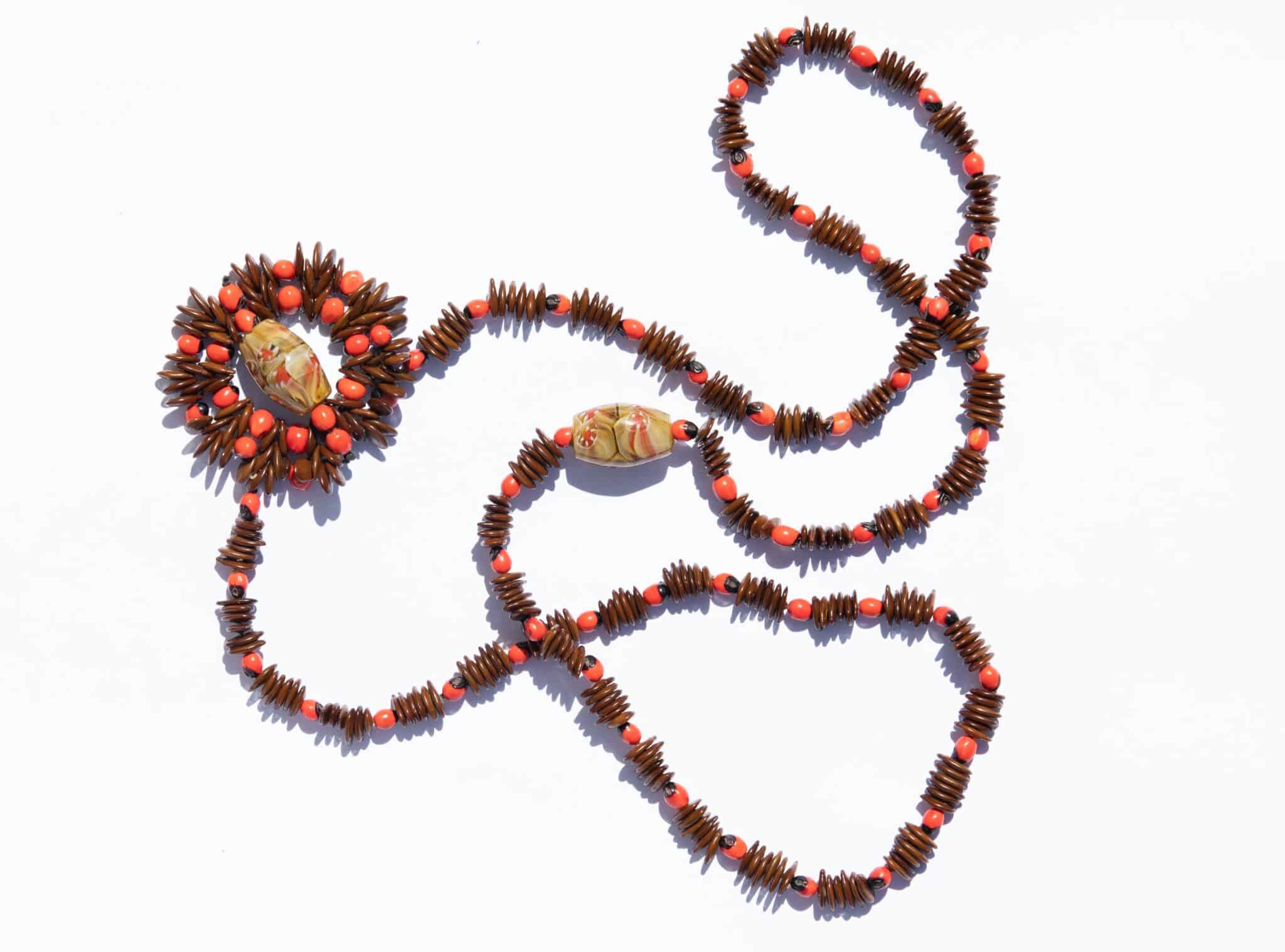
Photo: Botanique Studios & Thomas Barzilay Freund.
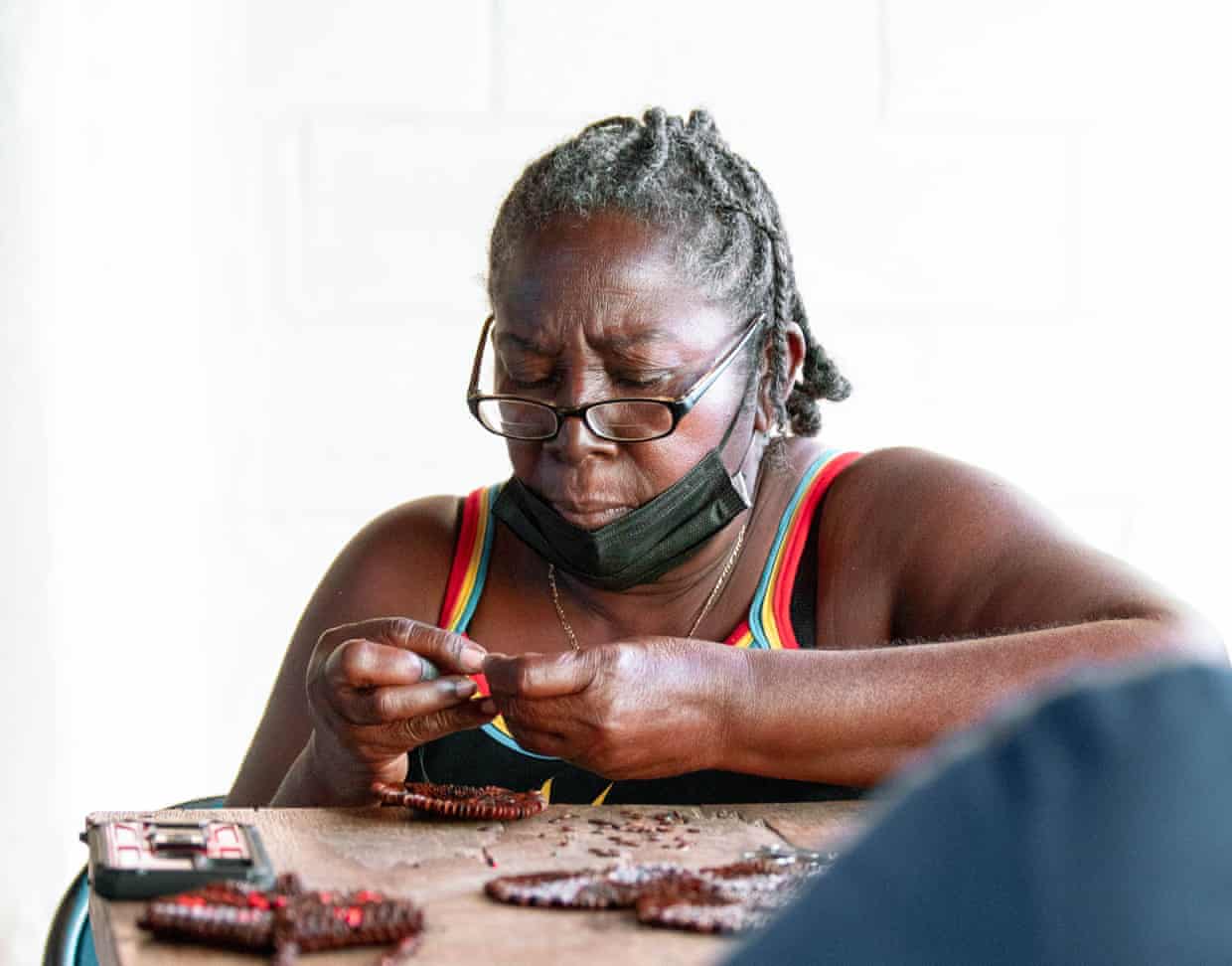
“Louise Edwards has been making jewelry from tamarind seeds for more than 50 years,” the Guardian reports.

Today’s story is bringing back memories. I’d completely forgotten that as a child I had a seed necklace like one of these. I have no idea where my mother got it. Maybe on my parents’ trip to St. Thomas. Did you ever see one?

Sarah Johnson writes at the Guardian, “For a little more than 50 years, Louise Edwards has been collecting tamarind seeds that grow wild on the Caribbean island of Antigua to create earrings, mats and belts.

“Edwards grew up surrounded by women stitching the seeds, but today she is one of only five remaining master artisans on the island, all in their 70s.

“ ‘It’s a dying art,’ she says. ‘We will soon give it up when we can’t see.’

“Practiced for centuries in the twin-island nation of Antigua and Barbuda, home to about 100,000 people, seed work began among enslaved African women forcibly brought to the islands and post emancipation it became a source of income. …

“Anne Jonas, secretary to the governor general of Antigua and Barbuda, with the help of Barbara Paca, the country’s cultural envoy, have applied for funding to expand free workshops to teach seed art.

“In 2017, Jonas founded Botaniqué Studios, dedicated to revitalizing the practice. ‘This is extremely transformative in terms of my appreciation for what we consider to be uniquely Antiguan and Barbudan heritage artisanship,’ says Jonas. …

“Seed work is laborious. Wild tamarind (Leucaena leucocephala) is one of the world’s 100 most invasive species; it grows everywhere, and collecting seeds causes no environmental damage.

“The seeds are boiled in sea water and kept moist, before being strung together by hand – Edwards has lost a number of fingernails during her career due to accidentally stabbing her finger with the needle. Once the seeds dry, they remain hard for decades.

“It takes Edwards an hour to make earrings, but more intricate pieces, such as placemats, can take a week. ‘The young ones don’t want to do it. They say it’s too much work and not enough money for the work they put into it,’ Edwards says.

“But the workshops are a start to renewing interest, says Jonas.

“Denise Walcott, 47, went to her first workshop in June with her 16-year-old daughter. ‘My daughter likes it, and I love it,’ she says. ‘The pieces are beautiful and the designs are so intricate. … This is an Antiguan culture and it should be a way of life for us. It is something that is empowering for us to use as an avenue to go along with our tourism industry.’ …

“As well as the Botaniqué website, Jonas showcases products on social media. Seed work featured as part of Antigua and Barbuda’s offering at the Venice Biennale, one of the world’s longest-running cultural festivals, and is on display at the Frank Walter exhibition at the Garden Museum in London.

“Michelle Donawa, another workshop attendee, learned seed art from her grandmother and is working on a book. ‘It’s something to preserve culture, as well as an educational tool,’ she says. …

“ ‘I think if young people see this, and how you can make something so beautiful that can [also bring in an income], they’d become very interested, especially if they are at home with nothing to do,’ says Walcott. ‘I really hope to see this being produced in Antigua on a larger scale, and exported.’ “

Folks, if you ever despair of humanity, think about how humans make art out of everything they see. More at the Guardian, here. No firewall.

And for a different kind of seed art, see my recent post on the Minnesota State Fair, here.

Photo: Thomas Barzilay Freund.
Botaniqué Studios
 Best of Both Worlds necklace. Style meets sustainability.

Read Full Post »

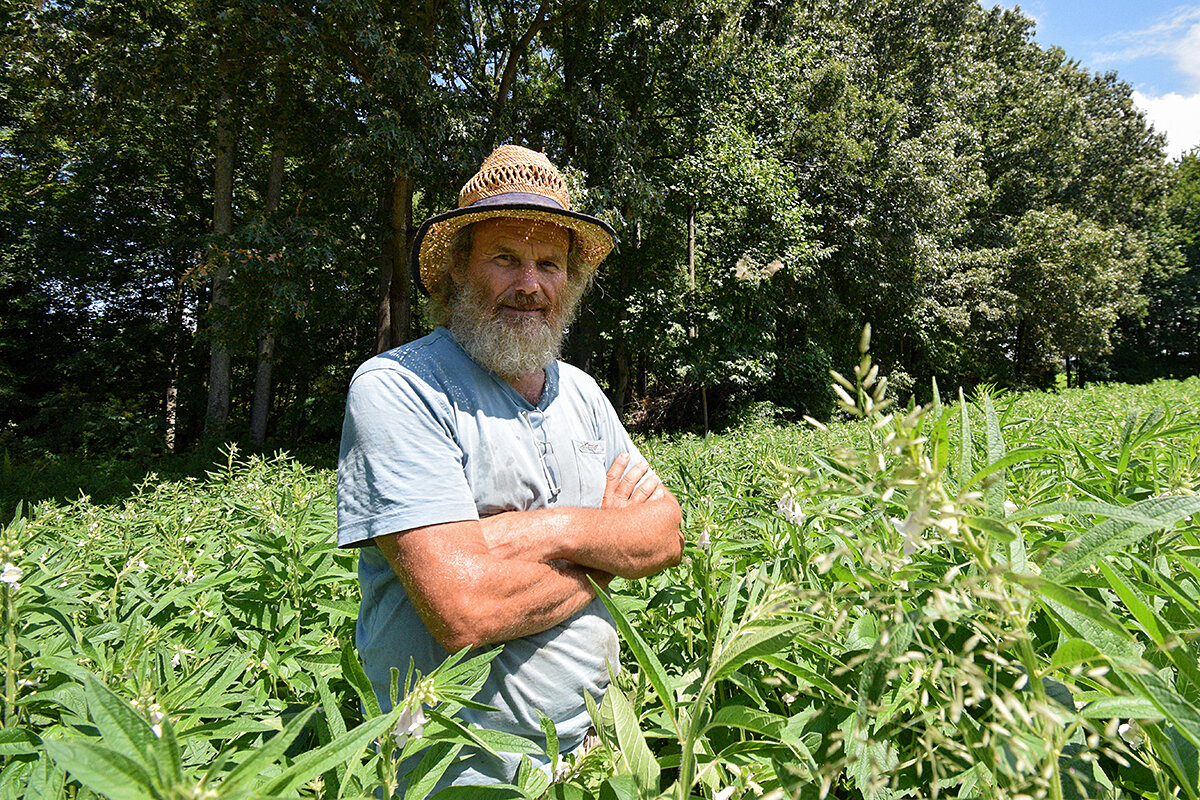
Photo: Sophie Hills/The Christian Science Monitor.
Heinz Thomet stands in a field of sesame on his farm in Newburg, Maryland, Aug. 17. Mr. Thomet tries to grow nearly everything he eats.

I love the first line of today’s story about “one of only two commercial rice farmers in Maryland.” Because who knew there were rice farmers anywhere in the US? Don’t you think of rice farmers as being almost entirely in places like Japan and Vietnam?

Sophie Hills writes at the Christian Science Monitor, “Heinz Thomet is one of only two commercial rice farmers in Maryland. The other is Nazirahk Amen of Purple Mountain Organics. Not one to accept the status quo, Mr. Thomet grows six varieties of rice on his farm in southern Maryland, where most fields are planted with soybeans and corn. Mr. Thomet didn’t start growing rice until sometime during the past decade. His explanation for why he added the crop is simple: ‘I eat rice.’ …

He is the sort of person who has utter faith in natural processes but none in institutions.

“He’s always been a farmer, from growing up on a farm in Switzerland to working on a famed biodynamic farm in the United States as a young man. Since 2000, he’s farmed in Newburg, Maryland. There, in addition to the rice, he grows barley, Sichuan peppers, bananas, grapes, bitter lemons, oats, kiwis, sesame seeds, figs, and more, depending on the season. 

“It’s difficult to make a profit on rice in Maryland. Farm-to-table was a natural concept for Mr. Thomet even before the movement expanded out of California in the early 2000s.

And though small-scale, direct-to-consumer farming is difficult to justify commercially, Mr. Thomet’s main concern remains the quality of the food he grows and stewardship of his land.

“In this case, that means successfully producing rice – a crop grown by few others on the East Coast. ‘Nothing of what I do makes sense for a cheap food system, but if you recognize a decentralized food system as food security, then I start to make sense,’ says Mr. Thomet. ‘If you look at diversified farms as part of the resilience towards a global weather pattern change, then I start to make change.’

“In an era of climate disruptions that are changing where everything from coffee and cacao to mustard and olives can be successfully grown, a decentralized food supply – like the one Mr. Thomet espouses – is getting a second look.

“After decades of factory farming and reliance on a global food chain that sends bananas, grapes, mangoes, and avocados thousands of miles to stores, returning to the idea that food should be grown where it is eaten is no easy task. And rice-growing is a useful case study.

“It’s unusual to find rice farmers anywhere on the East Coast, says Raghupathy Karthikeyan, Newman endowed chair of natural resources engineering at Clemson University in South Carolina. Rice production in the U.S. now takes place mainly on commercial farms in the Midwest and the South. But Mr. Thomet and fellow farmer Mr. Amen are holding on, despite the tight profit margin for small-scale, organic farmers.

“Both Mr. Thomet and Mr. Amen grow upland rice, a method that doesn’t use water for weed control, instead requiring labor-intensive weeding. While both sell their rice, neither grows enough to register on the U.S. Department of Agriculture census. Historically, Maryland farms mainly grew tobacco, and South Carolina was rice country. But the end of slavery and changing weather patterns made rice-farming less profitable. At one time, about 225,000 acres in South Carolina were planted with rice. Today, it’s somewhere between 25 and 50 acres. In Maryland, it’s 2.

“Agriculture in Maryland, as in most of the U.S., doesn’t supply much of the produce purchased in the state. Maryland farms produce more grain than other crops, and most of that is used for livestock feed and seed. 

“Mr. Thomet’s interest is in locally grown crops for food, and he has a loyal base of customers, including restaurants. 

“For Mr. Thomet, it’s not just about protecting the locavore movement. It’s also about stewardship. He quotes the motto of his family’s farm, Next Step Produce: ‘Committed to growing nourishing food in harmony with nature.’ …

“He eats what he grows and tries to grow whatever he wants to eat. In fact, Mr. Thomet has a nearly complete food system growing on the 30 acres he cultivates. The one thing he can’t grow is sugar cane, so he grows sweet sorghum instead, which is made into molasses. 

“Day length, sun exposure, and night temperature in Maryland are all sufficient for rice to thrive, he says. Next Step Produce starts the rice in a greenhouse and then transplants it, allowing for more growing days so the farm can grow higher-yield varieties.

“Whether upland or lowland, rice is no longer profitable to grow in South Carolina – the historical center of U.S. rice-farming – unless it’s grown as a hobby, says Dr. Karthikeyan, who’s leading a study on climate-resilient rice production. The remaining commercial rice farms he’s aware of in the U.S. all grow lowland rice in paddy fields.

“Rice is a labor-intensive crop, even if you flood it, says Dr. Karthikeyan. The yield gap between upland and lowland rice is large, making it hard to turn a profit growing commercial varieties upland. That extra labor limits how many acres of rice Mr. Thomet plants, since they’re weeded by hand. It’s also reflected in the price, he says.

“Still, in his eyes, everything comes down to priorities and societal values. There’s no good reason everyone shouldn’t have access to nutritious, locally grown food, he says. Next Step Produce, which he runs with his wife and daughters, was certified organic for two decades until last year, when a red-tape snarl was the last straw for Mr. Thomet. But his customers don’t care about the label at this point, he says. They know his growing practices. …

“Benjamin Lambert, the executive chef at Modena, a restaurant in Washington, D.C., has bought from Mr. Thomet since 2007, when he met him at a local farmers market. ‘As a chef, you look for good ingredients,’ he says, standing in the restaurant, a James Beard Award hanging just behind him.”

More at the Monitor, here. No firewall. Subscriptions solicited.

Read Full Post »

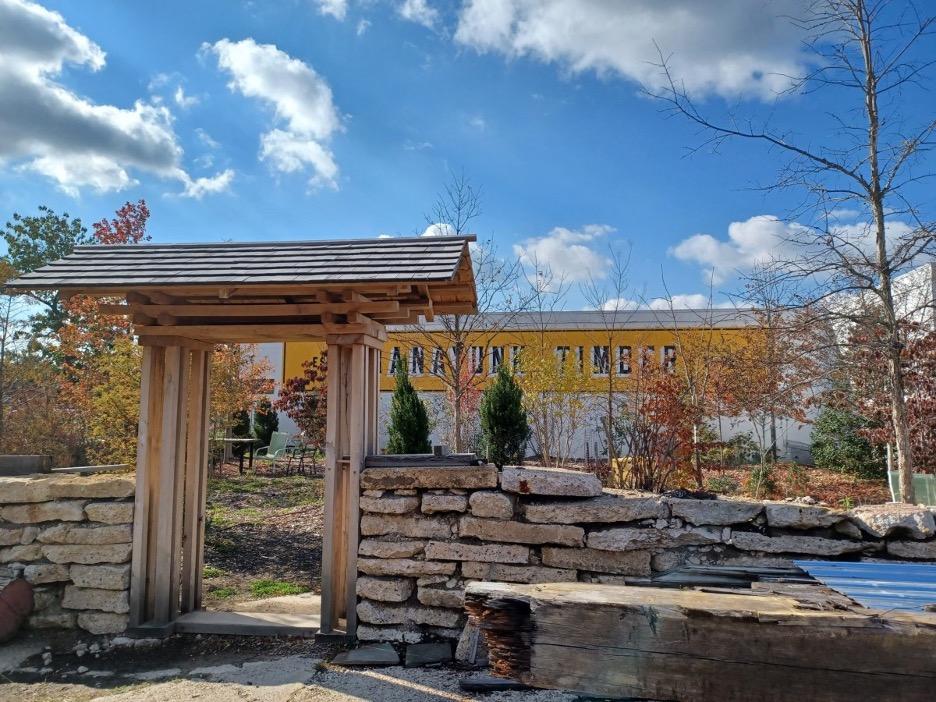
Photo: Nick Jaramillio/Billy Penn.

When Hannah saw an October post about mini urban forests, here, she was reminded of something similar going on in Greater Philadelphia, the Manayunk area to be exact. Wednesday she sent me an article about what people are working on there.

Nick Jaramillio reports at WHYY’s Billy Penn neighborhood newsletter, “A parking lot is being transformed into a thriving indigenous forest at Manayunk Timber, and will feature a new gate entrance with sculptures from internationally renowned wood artist Roger Wing.

“ ‘The forest that they planted is a poetic metaphor for what’s going on here,’ Wing told Billy Penn. ‘So much of what happens in the forest is unseen to our eyes. It’s the microbes, the animals that come out at night, the seeds, the germination in the soil, and the changing of the seasons.’

“A project from the team behind Manayunk Timber, Philly’s only sustainable sawmill, the burgeoning forest has benches where the public can sit and appreciate the surroundings, or enjoy a bite from the new bread shop next door.

“Manayunk Timber owner Steve Ebner decided to transform the former parking lot a year ago. At first, he wanted to plant an orchard.

“The plan changed when John Cox, a local wholesale florist, introduced him to the Miyawaki method, a technique developed by Japanese ecologist Akira Miyawaki to cultivate fast-growing native vegetation. Cox also gave Steve a book on ‘pocket forests’ that showed the method could be replicated on smaller plots of land.

“A typical Fairmount Park forested area has about one plant every square foot, per Cox. The plot at Manayunk Timber is about 3,500 square feet, so Ebner calculated it would need about 3,500 plants to become a mature forest. Currently, it has around 250, he said — a work in progress. 

“The project so far has cost around $30,000, Ebner estimated, which included tearing up the concrete, building a ‘rubble wall’ out of the broken-up concrete, putting in the topsoil, and buying tree specimens. 

“Native tree species already planted include cedars, hawthorns, red oaks, maples, witch hazel, winter king, American beech, honey locusts, hornbeams, and buckeyes. 

“Sculptor Wing, who is based in West Philly, hopes his contribution by creating a notable gate will help make the forest a hub for landscapers, designers, and developers who share Manayunk Timber’s commitment towards sustainability. …

“By wintertime Ebner hopes to start cultivating the ‘undergrowth,’ adding small trees and low-lying plants like shrubs and mosses to enrich the soil and provide food and shelter for small animals. Eventually, the 70-year-old entrepreneur wants to open a bookstore. 

“He’s ready for his daughter Rebecca to take over the urban sawmill business. …

“ ‘I hope this forest shines a light on what’s possible for what was: a non-used, ugly, concrete area,’ Rebecca added. So far the forest has been a hit. Ebner’s newest tenant, the wholesale bakery Dead King Bread, just celebrated the new location with an open house and live music. Tables, chairs, and a fire pit was set up in the forest for attendees.

“This is the first time Wing gets to carve pieces from Manayunk Timber. As a sustainable sawmill, it only processes wood from fallen trees or reclaimed antique beams.

“For the gate, Wing is working with timber salvaged from an 150 year-old warehouse. The wood survived a fire, giving it a blackened rippling surface wherever it was charred. ‘It’s almost too beautiful to cut into,’ the sculptor told Billy Penn. …

“ ‘Manayunk Timber has become this nexus for people interested in sustainability, forest ecology, and making ourselves better stewards living with the forest,’ Wing said. ‘Rather than dominating the entire ecosystem, we can live within the ecosystem, as part of the whole.’ ”

More at Billy Penn, here.

Read Full Post »

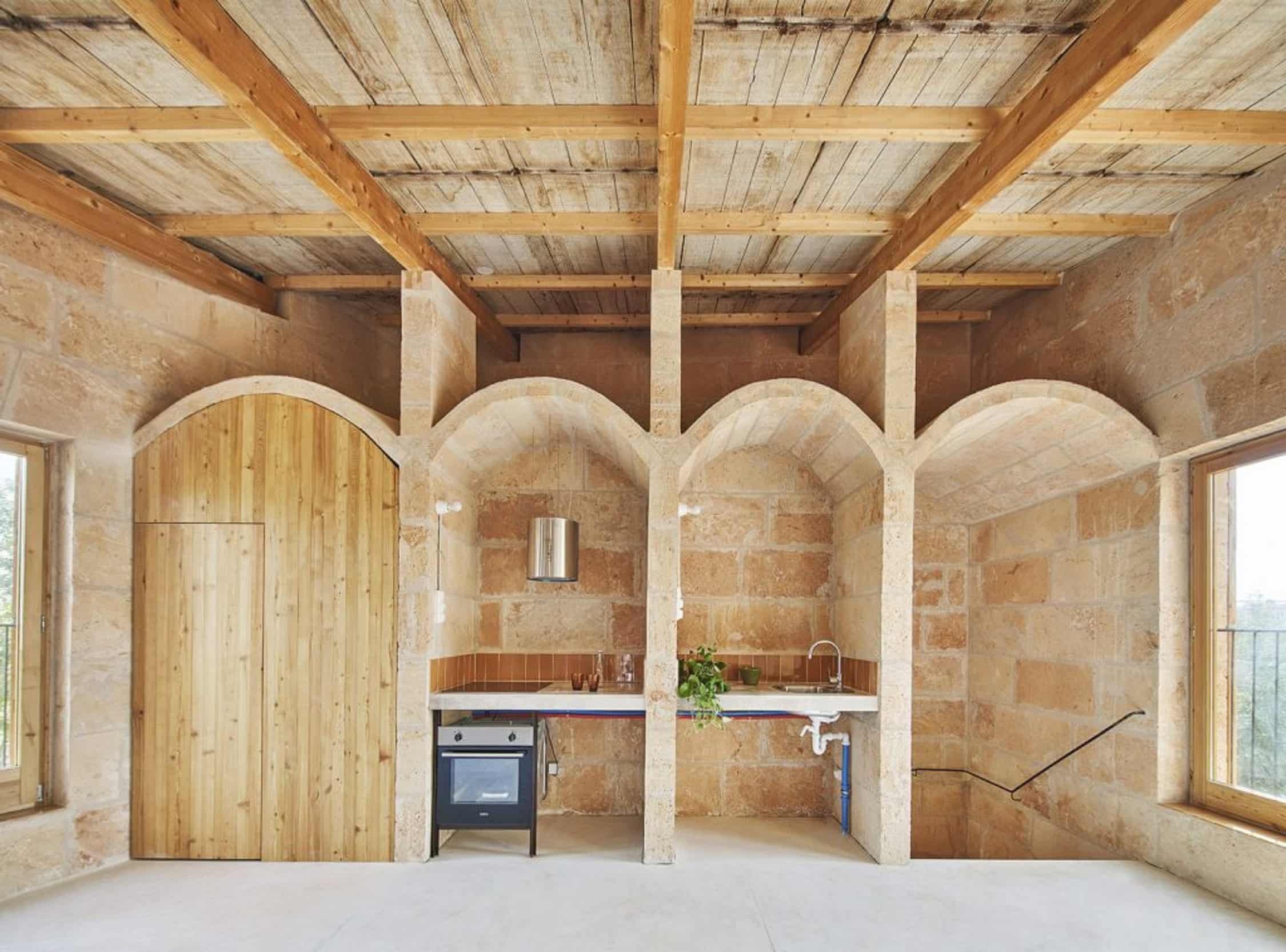
Photo: José Hevia.
The Guardian reports on “affordable housing near Palma, Mallorca, built by Balearic social housing institute Ibavi, constructed from load‑bearing stone quarried locally.” 

The materials we use these days for constructing new buildings are generally harmful to the environment, at least in their creation. Now some architects are advocating for the old ways, the more sustainable and beautiful old ways.

Rowan Moore writes at the the Guardian, “Imagine a building material that is beautiful, strong, plentiful, durable and fireproof, whose use requires low levels of energy and low emissions of greenhouse gases. It is one of the most ancient known to humanity, the stuff of dolmens and temples and cathedrals and Cotswolds cottages, but also one whose sustainability makes it well-suited to the future. Such a material, according to a growing body of opinion in the world of construction, is among us. It’s called stone.

“Last week I sat in the roof garden of a hefty pile of masonry in central London, talking to three advocates of this magnificent substance: engineer Steve Webb, Pierre Bidaud of the Rutland-based Stonemasonry Company and architect Amin Taha. … The building on top of which we met is their joint creation: the six-storey, five-year-old Clerkenwell block where Taha has his office and his home.

“Their point is that stone has been supplanted in the industrial era by steel, concrete and mass-produced bricks, and is used (if at all) mostly as a thin cosmetic facing, while the hard work of holding up a building is done by the upstart alternatives. They argue that solid stone can once again form the walls and structure of building, with benefits for the environment and for the beauty of architecture. Any form of the material – limestone, sandstone, basalt, granite – can, depending on its properties, be used.

“Webb explains how the strength of stone compares well with steel and concrete, yet its environmental impact is far lower. The latter require several different energy-consuming activities, including extraction, smelting, transport, processing and installation. Stone only needs to be cut out from a quarry, taken to a site and put in place. Where the many ingredients of steel and concrete require multiple holes to be dug in the ground, not to mention such things as blast furnaces and rolling mills, the stonework for a given project only needs one.

“The planet, as Taha points out, is made mostly of stone. … We are in no danger of running out. For the same reason, stone should almost always be locally available, which keeps the environmental costs of transport down. The material is long-lasting and recyclable. ‘Any stone building is a quarry,’ says Bidaud. ‘It can be dismantled.’

“At the same time, 21st-century engineering allows stone to be used more effectively than ever before. The material is naturally strong in compression – that is, when loads are pushed down on it – which means it is good for walls, columns and arches, but less so if it is stretched or bent, as in beams or floor slabs.

It is now possible to combine stone with a (sparing) use of steel such that it can perform like reinforced concrete. …

“Next year, a 10-storey residential tower is due for completion on Finchley Road in north London (by Taha’s practice Groupwork and Webb’s firm Webb Yates Engineers), whose load-bearing stone structure will make it one of the most remarkable buildings in modern Britain. The three are collaborating on a grand new private house whose masonry vaults look almost medieval in their craftsmanship.

“They also cite works by others, such as an eight-storey, all-stone social housing building in Geneva by local architects Atelier Archiplein, and the Salvador Espriu project on the edge of Palma, Mallorca, whose graceful stone ceilings belie the fact that these are affordable homes built by a government housing institute called Ibavi. …

“Webb, Bidaud and Taha argue that stone doesn’t have to be costly. Taha, for example, has demonstrated that you can cut stone into bricks at the same cost or cheaper than the more usual fired-clay kind, with less than one fortieth of the carbon emissions, which has led to 10 quarries offering them as a commercial product. The problem is rather ‘forces of habit in the building industry.’ …

“Meanwhile, [2 billion] bricks of the traditional, energy-hungry, carbon-intensive kind are bought in this country every year. Steel and concrete remain the standard options for a wide range of building tasks. Webb is scathing about professional inertia on the subject, about architects ‘who protest about climate emergency, cycle to work and eat locally grown tomatoes’ but don’t examine their own decisions about construction techniques.

“You can get a glimpse of the highly appealing alternatives in a display at the Design Museum in London, How to Build a Low-Carbon Home, where the work of Taha, Webb and Bidaud is on show (until March 2024) alongside structures in wood and straw. …

“Who could look at the solid stone structure of, for example, the Mallorcan social housing, where the forces of nature and the work of humans is evident in the fabric, and prefer the processed surfaces and plasticized finishes of their British equivalents? And the great thing about stone is that, having been used for millennia, it’s well tested.” More at the Guardian, here.

Construction in the UK is often shoddy. Consider the tragic Grenfell Tower fire, here, and the completely avoidable death toll. “The fire was started by an electrical fault in a refrigerator on the fourth floor. This spread rapidly up the building’s exterior, bringing flames and smoke to all residential floors, accelerated by dangerously combustible aluminum composite cladding and external insulation, with an air gap between them enabling the stack effect.”

My husband has been following that story and says more has been spent on lawyers than on fixing the materials in buildings or adding sprinklers.

Read Full Post »

Photo: Asif Hassan/AFP/Getty Images.
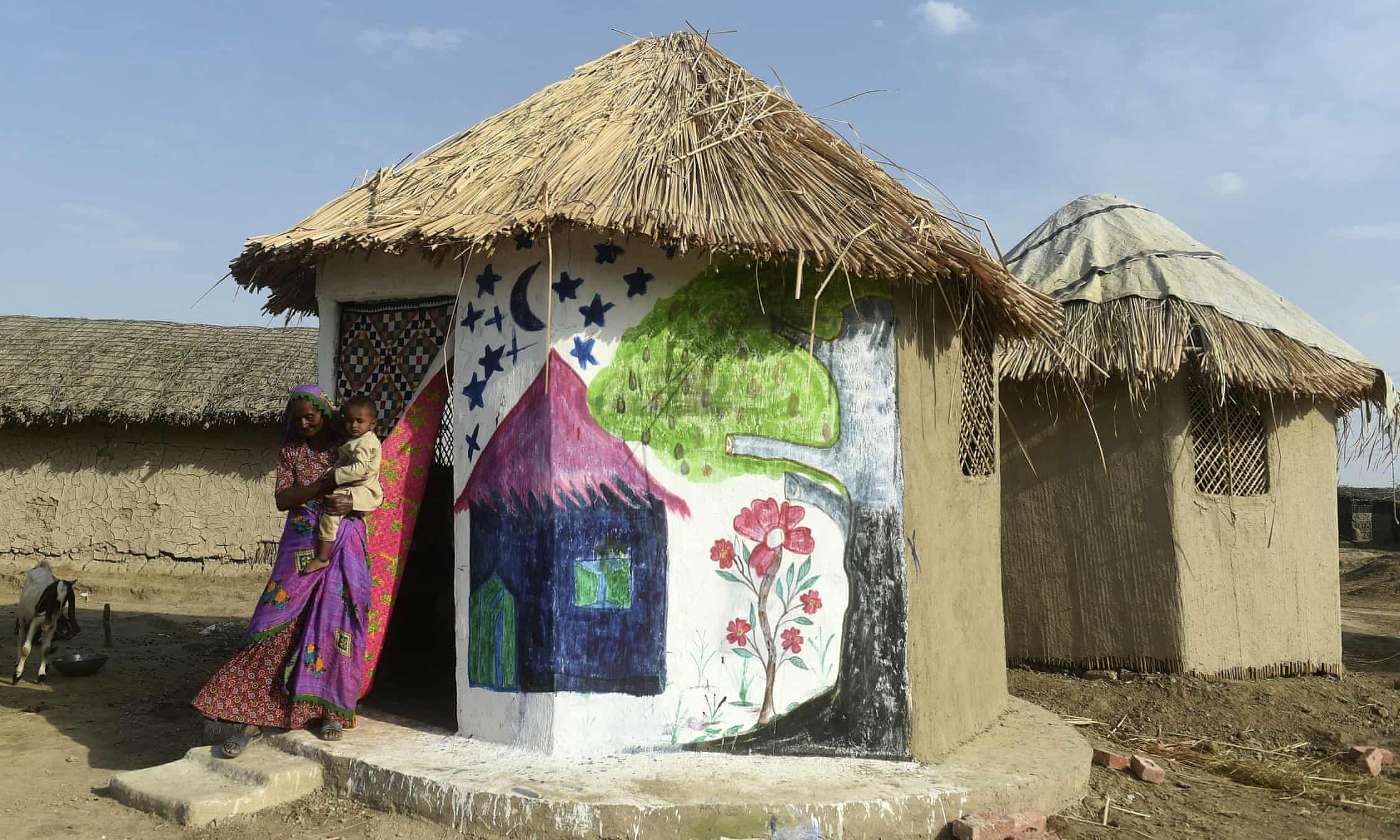
A resident with her flood-resistant hut made from bamboo at a cost of about $87.

The news of floods this week is tragic. In Libya a dam suddenly broke, wiping away villages, and even near me, a quixotic rainfall — 11 inches in about 6 hours — submerged many homes in one city while the rest of the region was untouched.

Pakistan, of course, has suffered worse. That’s why it’s extra interesting to read about a sustainable, cost-efficient way that some poor areas there are rebuilding.

Zofeen T Ebrahim writes at the Guardian, “A year ago, Shani Dana’s mudbrick house was swept away in the worst floods on record to hit Pakistan. More than 1,700 people were killed and 900,000 homes damaged or destroyed. Sindh province, where Dana lives, was the worst affected.

“While waiting for government money to rebuild her home in Wasram village, in the Tando Allahyar district, word reached Dana that the Heritage Foundation of Pakistan (HFP), founded by a renowned architect, Yasmeen Lari, was building one-room homes in neighboring Pono village.

“The buildings ‘looked like rounded chauhras [traditional huts], but were octagonal in shape and the walls were much sturdier,’ says Dana.

“The foundation agreed to help Wasram rebuild and in March the HFP team joined villagers to construct 50 new homes. Prefabricated bamboo frames were built on meter-high raised platforms. Walls made of bamboo canes were fixed and plastered with mud mixed with rice husk and lime, and radial-style conical roofs were fitted. Four solar panels, six water hand pumps and 25 toilets were also built.

“ ‘This will not be swept away if the floods come again. It is not built at ground level, it’s airier and brighter since there is a window – ours didn’t have one before – and also looks much neater, since the walls and floor are plastered,’ says Dana outside her new home. …

“The HFP has helped build more than 5,000 chauhras since September [2022]. ‘In the next two months, I should be able to build another 2,600 homes,’ says Lari, who is urging every villager who has built their home to help 10 others build theirs.

“A year after the floods, tens of thousands of people are still waiting for help to rebuild. Organizations like HFP and the NGO Karachi Relief Trust have been stepping in.

“About 250 of the 1,000 one-room homes KRT is building in villages across Sindh, Punjab and Balochistan provinces … are being built using burned-earth bricks or cement blocks with roofs made of steel girders and precast cement slabs. ‘The houses we built in 2010 have survived and aged well,’ said Ahsan Najmi, the trust’s architect. …

“The Sindh People’s Housing Foundation (SPHF), which is overseeing the rebuilding, hopes 50,000 one-bedroom ‘resilient’ cement, brick and steel homes will be livable by September. It has enough money to cover the cost of 350,000 homes, but needs at least $500m to finish all the work. …

“However, Lari questions the cost of the project and believes rebuilding could be cheaper and more sustainable. The houses SPHF is asking people to build cost 300,000 rupees [~$1,030] each, about the same amount KRT’s homes are costing.

“HFP homes, which are made of fully cured bamboo, the ends of which are covered with lime to protect them from termites, cost just 25,000 rupees. The lime in the plaster and bamboo also absorb and store carbon from the air, helping mitigate the effects of the climate crisis.

“ ‘I’m not doing anything new. I may have tweaked the design, but the material used is age-old, indigenous and easily available,’ says Lari, who began her humanitarian work after a 7.6-magnitude earthquake shook northern Pakistan in 2005. …

“Lari, who is this year’s recipient of the Royal Institute of British Architects’ royal gold medal, one of the world’s highest honours for architecture, says she would like the government to adopt sustainable alternatives to housing. ‘I am happy to provide any assistance if they would like to provide a better quality of life for the poor,’ she says. ‘Our design is open source, available free. We can also identify many trained master artisans. It is up to the government. We are there to further the cause.’

“An essential part of Lari’s work is involving communities in the rebuilding process so they learn a trade. While the foundation pays for the bulk of the materials and brings its expertise, local people collect the mud and rice husk, and provide the labor.”

More at the Guardian, here. No firewall. Donations encouraged.

Read Full Post »

Photo: Suzanne and John’s Mom.
Wild black cherries are edible. They are more pit than pulp, but they taste good.

It’s been a while since I’ve written a post on foraging, but if you search on the word at this site, you will find a few — like the post about the homeless teen who learned life skills from foraging, here.

Lauren Colella has some new thoughts on the ancient art at Sierra magazine: “Summertime for me brings back childhood memories of backyard harvesting. Inspired by books like My Side of the Mountain, I used to search for edible plants: sassafras for tea, wild cherries for pies, and walnuts for snacking. I learned the hard way that walnut juice stains your hands.

“I didn’t know it, but I was participating in the millennia-old act of foraging. The practice is about more than free food and the thrill of the search — it’s an opportunity to engage with local ecosystems and learn more about the species in your area. …

“While today only a few hunter-gatherer groups live off what they hunt and gather, foraging has been a common human practice for hundreds of thousands of years. Members of the working classes depended on it to supplement their diets up until the 1800s. Thanks to these traditions — along with intel from contemporary botanists and mycologists — modern foragers can access extensive catalogs of edibles, often in the form of handy apps like Forager’s Buddy and iNaturalist. Chances are that no matter where you live, you’ll find naturally growing and uncultivated plants, fungi, and insects to eat.

“When scouting spots, be wary of areas near roads or industrial sites that could be contaminated with pollutants, and avoid harvesting plants near farms or lawns likely treated with pesticides and herbicides.

“Start by seeking out commonly found harvestables — like wild onions, berries, and apples — then carefully cut them from the stem or branch and avoid damaging nearby plants or fungi. Be aware that not all wild plants may be consumed raw. Do your research before popping anything into your mouth.

“While many Americans live within walking distance of edible wild plants such as hawthorn berries, yarrow, dandelions, and chickweed, ‘most people have no clue how useful these plants are in terms of food, fiber, and medicine,’ says Lynn Landes, founder of Wild Foodies of Philly. Among the free online resources listed on her organization’s site, Landes names Plants for a Future as a particularly reliable directory, thanks to its extensive descriptions of plants fit for consumption. She also recommends Eat the Planet because it includes details on bugs and mushrooms to eat and avoid.

Fallingfruit.org maps forageable plants and indicates whether they’re on private or public land. Many universities encourage staff and students to nosh on campus flora. … At the Bay Area’s California School of Traditional Hispanic Herbalism, Charles Garcia passes on wisdom learned from his mother, a curandera (folk remedy healer). Garcia points out that many forageable plants have dual uses, such as stinging nettle, which can be eaten or made into anti-inflammatory salves and extracts, and Pacific blackberry, a tasty plant whose leaves treat diarrhea. …

“Among the Millennial and Gen Z foragers who’ve taken to social media, perhaps the most famous is Alexis Nikole, or @blackforager, an Ohio-based outdoors educator whose Instagram and TikTok feeds abound with recipes and sustainable harvesting guidelines. Nikole touts an “honorable harvest” mindset—collecting only what you need, expressing gratitude by giving back to the earth (like composting), and harvesting only from legally permissible areas. …

“Foraging laws and regulations — generally designed to reduce damage to topsoil and avoid disruption to wildlife and gaps in vegetation where invasive species can flourish — vary by state and dictate what you’re allowed to take. … Volunteering during city parks’ weed-removal days can be a great way to legally source larger quantities of dandelion, mustard, and Japanese knotweed, which are routinely removed before they overpower neighboring plants.”

Check Colella’s Do’s and Don’ts list at Sierra, here, where you can also see her excellent illustrations. No firewall.

Read Full Post »

Photo: Dominique Soguel.
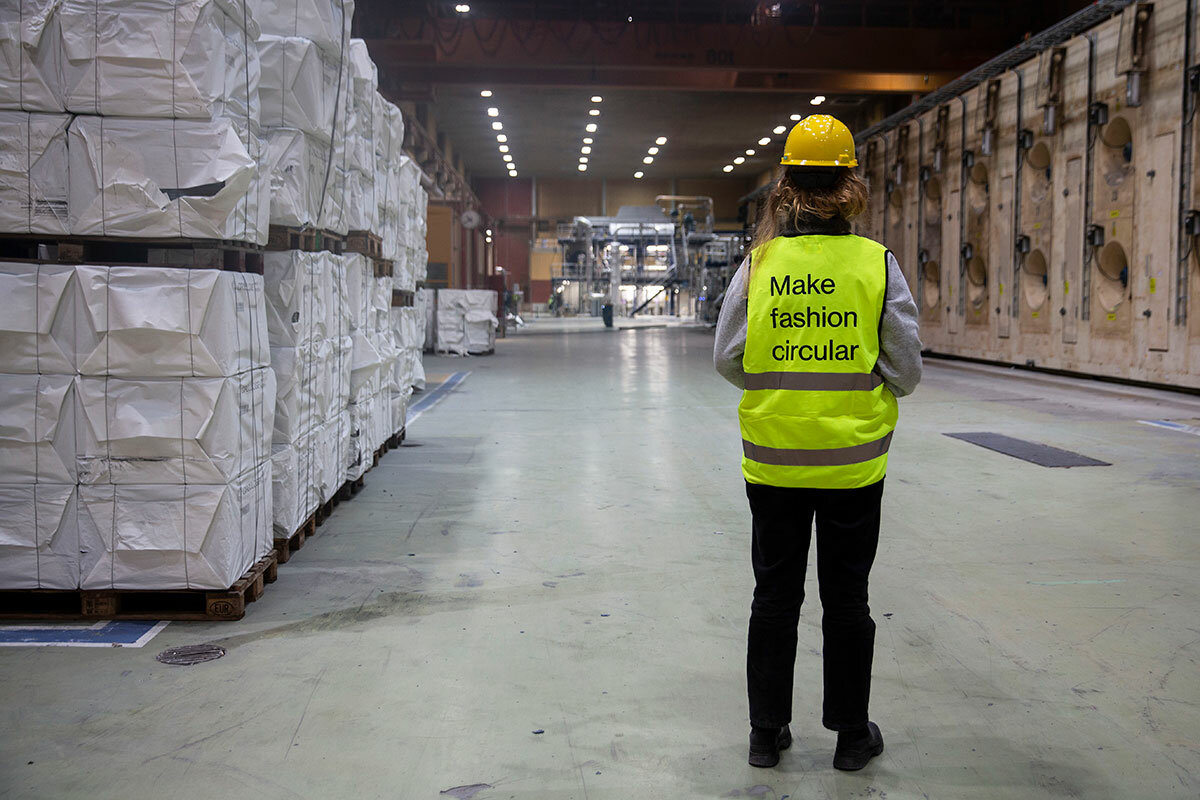
An employee stands in the industrial-scale plant of textile-to-textile recycling company Renewcell in Sundsvall, Sweden, Feb. 7, 2023.

After my youngest granddaughter toured a recycling facility in Rhode Island, she told me that one thing the state recycles is textiles. But in Massachusetts, where a new law forbids putting textiles in landfills, there are few towns that offer services for recycling worn-out clothes. At least there are plenty of outlets for reusable clothes.

In Sweden, some folks are trying to make all clothes — and the materials that go into them — reusable. That’s according to today’s article from the Christian Science Monitor.

Dominique Soguel writes, “Discarded, sorted clothes arrive by ship on the shores of Sundsvall, in the Gulf of Bothnia inlet of the Baltic Sea. But they aren’t bound for a landfill.

“Rather, they are destined for the city’s Renewcell plant, where they will be dissolved and processed into a new substance: Circulose. This material looks like white cardboard, feels like watercolor paper, and – most importantly – can be spun into yarns for textile manufacturers. …

“Renewcell’s patented technology, now available commercially, and successful launch of the world’s first industrial-scale textile recycling plant in Sweden offer a beacon of hope to brands and consumers who care about environmental sustainability.

“ ‘From an environmental perspective, it means that every year, instead of huge swaths of forest being cut down, millions of old jeans and T-shirts are being used rather than them degrading into methane in landfill,’ says Nicole Rycroft, director of the environmental nonprofit Canopy.

“The fashion industry relies primarily on three fibers – polyester, cotton, and viscose rayon – each of which is problematic for the environment.

“Polyester, made from plastic, takes hundreds of years to break down. … Soft-to-touch cotton is grown on vast, water-intensive monoculture farms using large quantities of fertilizers and pesticides. The Aral Sea, once the world’s fourth-largest lake, dried up almost completely, drained by cotton fields in Uzbekistan and Kazakhstan. …

“Viscose rayon is made from tree wood, which sometimes comes from ancient forests. Ms. Rycroft points to the 300 million trees cut down yearly to make viscose rayon, among other textiles. That consumption is slated to double within the next decade.

“On top of all this, much of what the fashion industry produces with these materials ends up as waste. Global production of textile fibers and all apparel creates 110 million metric tons of waste. On average, Europeans produce 33 pounds per year per capita, and Americans about 70 pounds per year.

“Solutions for controlling fashion’s consumption rate range from reducing overproduction and overconsumption to making longer-lasting clothes and embedding circularity into product design. But experts consider fiber-to-fiber recycling – converting textile waste into new fibers that can be used to make clothes or other textile goods – as one of the most sustainable and scalable levers available. …

“The Nordics stand out in Europe for their efforts to reduce the fashion industry’s impact on the planet. Copenhagen Fashion Week imposes sustainability requirements on brands before they hit the runway. Multiple Nordic brands offer recycling options and sell used clothes on their shelves at reduced prices.

“Sweden boasts an impressive secondhand clothes market scene; the world’s first recycling mall, Retuna; and innovative companies like Nudie. Nudie offers customers free repairs on their jeans and a 20% discount on new ones if they trade in old ones. It’s a much-loved service.

“ ‘I really like clothes, but I don’t think it’s necessary for me to buy something new to get the kind of clothes that I like to wear,’ says Tomas Persson after bringing his jeans in for repair to the Nudie shop in Gothenburg. Apart from underwear, he says has not bought a new item of clothing in years – not an uncommon claim in Sweden.

“The development of sustainable textiles is also part of Sweden’s national strategy. That keeps the Swedish School of Textiles and Science Park Borås, both part of the University of Borås, abuzz with the development of high-tech prototypes and design experiments focused on recycling, reuse, and upcycling.

“ ‘We have to find more efficient production processes … and ways of consuming garments,’ says Susanne Nejderås, textile strategist at Science Park Borås. ‘The mean use of a clothing item is around two years. We need to add another eight years to that.’ ”

I’ll just add that consumers are not only demanding sustainability these days, but human rights. There is widespread concern about China using Uyghur forced labor for cotton products. That’s why I buy cotton towels at Patagonia and fair trade cotton clothes from Fair Indigo in Peru (thanks to blogger Rebecca).

More at the Monitor, here. No firewall. Subscriptions welcomed.

Read Full Post »

Photo: Evan Qu/Unsplash.
Self-healing concrete at the Pantheon in Rome.

I grew up in a family that placed high value on the humanities — the arts, literature — and the people who practiced them. With the exception of our beloved Uncle Jim, who was a chemist, and Margaret Lawrence, who was a physician, we didn’t know how to admire people who didn’t fit our limited definition of “creative.”

But today, I’m bowled over by the imaginative pragmatism of people who invent solutions to real-world problems like those who reengineer gasoline engines to use electricity, for example, or who invent building materials that reduce the dangerous carbon dioxide we pump into the atmosphere.

I think even my parents would have loved that today’s scientists are finding inspiration in the ancients. After all, it was fine to admire archaeologists.

Adele Peters reports at Fast Company on research that suggests new possibilities for ancient wisdom.

“A road or bridge made from modern concrete might only last 50 years. But the massive Pantheon building in Rome, made from unreinforced concrete, has been standing for nearly two millennia. And nearby, some ancient concrete aqueducts still deliver water to the city. What made ancient Roman concrete so much more durable?

“A new study from researchers at MIT and Harvard University, along with labs in Italy and Switzerland, suggests that an ancient manufacturing technique can create self-healing concrete that naturally fills in cracks. Using a similar process now could help shrink concrete’s massive carbon footprint. ‘We’re looking to the ancient world as a source of inspiration,’ says chemist Admir Masic, an engineering professor at MIT who focuses on sustainable construction materials.

“Cement, the glue that binds concrete together, is responsible for up to 8% of global emissions when it’s made, both because of the energy it uses and the process of heating up limestone, a key ingredient in the material, which releases CO2 directly. Multiple startups are now working on alternatives: including companies that replace limestone with different rocks or add captured CO2 to the final product.

“The Roman-inspired approach is different. By making concrete last much longer, far less of it would need to be made in the first place. … The older production method also happens at a lower temperature, so it uses less energy.

“The researchers studied samples from a 2,000-year-old city wall in an Italian city. They focused on tiny white fragments of lime that aren’t found in modern concrete, but are ubiquitous in old ruins throughout the former Roman Empire. …

“In the past, some researchers thought that the fragments, called lime clasts, were the result of sloppy mixing. But it’s more likely that they were formed deliberately, and the study suggests that they are the reason the concrete lasts so long.

When tiny cracks form in the concrete, water travels to the lime clasts, which dissolve and then fill the cracks with calcium carbonate.

“The researchers attempted to duplicate the manufacturing process that created the lime clasts, and then tested the material against samples made with modern techniques. After cracking the samples and adding rainwater, they watched what happened: The old-school concrete healed itself within two weeks, while in the modern version, the cracks remained.

“Other approaches to ‘self-healing’ concrete also exist now. For example, it’s possible to embed bacteria in concrete that can fill cracks; but it’s costly to make. ‘Current self-healing concretes are very expensive because they are based on very complex chemistry, while our material is super cheap,’ Masic says. … The ancient process involves adding quicklime, a calcium oxide-based material (also known as lime), directly to other ingredients before adding water.

“A new startup is now spinning out from the research to bring the concrete to market. It may later add other features that the lab is studying, including making concrete that can absorb CO2 as it sits outside.” That would be amazing!

More at Fast Company, here.

Speaking of “creative,” check out the varied interests of that MIT chemistry professor: “Professor Masic’s research focuses on the science-enabled engineering of sustainable construction materials for large-scale infrastructure innovation. A chemist by training, with expertise in biomineralization, he specializes in the development of multifunctional cement-based materials, ranging from self-healing concrete materials to carbon absorbing concretes and electron conducting cement-based materials.

“He is a principal investigator in the Concrete Sustainability Hub at MIT, a faculty fellow in Archaeological Materials at MIT’s Center for Materials Research in Archaeology and Ethnology (CMRAE), and the faculty director of the Refugee ACTion Hub (ReACT) at MIT. MIT ReACT aims at providing new professional content development for displaced learners around the world.”

Read Full Post »

Photo: Heida Helgadottir for the Washington Post via the Independent.
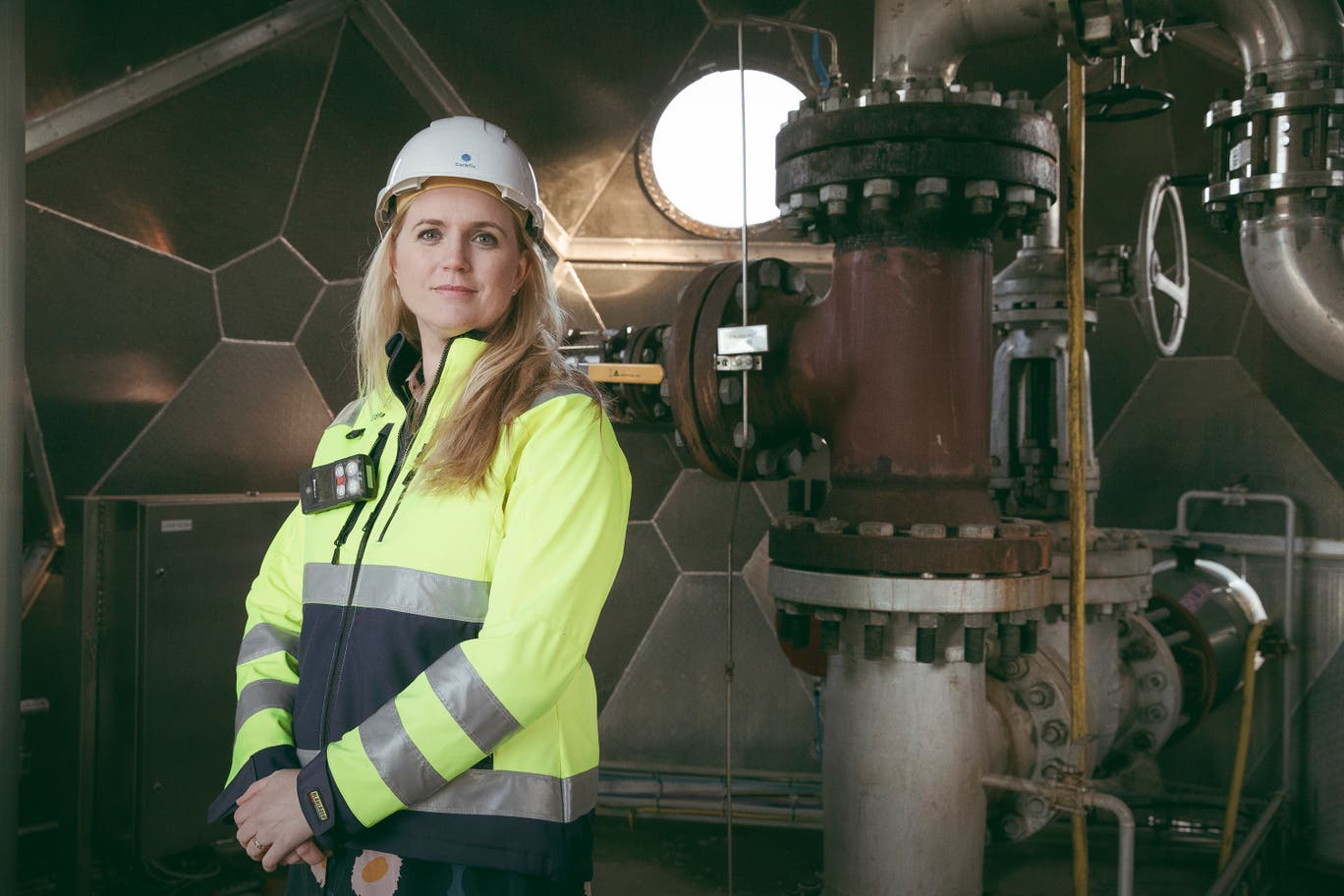
Edda Aradottir is the chief executive of Carbfix, a company that captures CO2 byproduct from the largest geothermal plant in Iceland. Many Icelandic start-ups are tackling climate change.

File this one under Hope. And maybe book a trip to the innovation hub called Iceland.

Hannah Hall has a report at the Washington Post on Icelandic companies that are taking on global environmental challenges.

“The electric red and green glow of the production facility resembles the Icelandic aurora borealis. Algae in their growth stage flow through hundreds of glass tubes that travel from floor to ceiling, all part of a multistep process yielding nutrients for health supplements. Soon, all parts of each alga will be used.

“The facility, operated by Icelandic manufacturer Algalif, is a space of inspiration for Julie Encausse, a 34-year-old bioplastic entrepreneur. During a July summer storm, Svavar Halldorsson, an Algalif executive, was guiding her through a tour of the company’s newest facility on the Reykjanes Peninsula.

“By the end of 2023, this new facility aims to triple its production. After Algalif dries the microalgae and extracts oleoresin, a third of this output then goes toward health supplements. Algalif has traditionally used the rest as a fertilizer. Now Encausse, founder and chief executive of the bioplastic start-up Marea, hopes to use that leftover biomass to create a microalgae spray that can reduce the world’s reliance on plastic packaging.

“Her newest partnership with Algalif is part of a start-up network in Iceland that focuses on inventive and creative technologies to address the climate and sustainability crisis. The Sjavarklasinn (‘Iceland Ocean Cluster’) network includes environmental entrepreneurs working across several industries.

“Thor Sigfusson founded the network in 2012 after conducting research on how partnerships between companies in Iceland’s technology sector helped expand that industry. At the time, he found that the fishing industry was not experiencing the same collaboration or growth.

“ ‘Even though companies were in the same building together, fishing from the same quotas and facing similar challenges, they were closed off,’ said Alexandra Leeper, the Iceland Ocean Cluster’s head of research and innovation.

“Three cod hanging on the wall of the second-floor entryway are the first thing to greet any visitor to the Iceland Ocean Cluster. Lightbulbs shine from their centers, and the dried scales filter the light to fill the space with an amber glow. The precise design is one that underlines the group’s belief that using 100 percent of a fish or natural resource can give rise to innovative technologies. …

“Encausse and Marea co-founder Edda Bjork Bolladottir have partnered with the cluster for 2½ years. Encausse says that involvement was core to their company’s inception.

“ ‘There is a collaborative mind-set when being on an island,’ she said. ‘We need to work together to survive, and this was passed from generation to generation.’

“In a country about the size of Kentucky, the people of Iceland have had to learn how to guard their resources. Encausse has discovered that often means using 100 percent of any material — a lesson she’s now implementing in her work with Algalif. She created a food coating from Algalif’s leftover biomass, a product she’s named Iceborea — in a nod to theaurora borealis.

“ ‘We are repurposing it and making something with value that gives it another life to avoid using more plastic,’ Encausse said. Once Algalif’s factory expands over the next year, it will have 66 tons of microalgae leftovers that Encausse’s company can tap each year.

“When sprayed onto fresh produce, Iceborea becomes a natural thin film and a semipermeable barrier that can protect against microorganisms. Iceborea can either be eaten with produce or washed off, reducing the need for plastic packaging.

“[Edda Aradottir] is the chief executive of Carbfix, a company capturing CO2 byproduct from the largest geothermal plant in Iceland, Hellisheidi, and injecting it into stone to be buried underground.

“Carbfix’s successful trials have marked a global milestone for carbon sequestration. It also has received international recognition — and Aradottir’s leadership has already served as a model for growing start-ups and other founders in the cluster trying to tackle extensive environmental concerns. …

“Another Icelandic company, GeoSilica, harvests silica buildup from the Hellisheidi waste stream to make health supplements.GeoSilica reaches the Icelandic and European markets, and its chief executive, Fida Abu Libdeh, is also working with the Philippines to pilot her silica-removal technology to create similar sustainable factory processes.

“A Palestinian from Jerusalem, Abu Libdeh moved to Iceland in 1995 at age 16, a transition she described as difficult because of the language barrier and the country’s small immigrant population. In 2012, she graduated from the University of Iceland after studying sustainable energy engineering and researching the health benefits of silica. That same year, she and Burkni Palsson co-founded GeoSilica.

“Ever since moving to Iceland, she was impressed with how the country produced electricity through geothermal sources. …

“GeoSilica is not formally part of the Iceland Ocean Cluster, but the network it has fostered reflects the same collaborative approach. Abu Libdeh has worked with cluster companies and held investor meetings at its headquarters. It’s a place that founders want to be, she said, where they want to learn from each other even if they are competitors in their fields.

“While there has been progress over the years, Abu Libdeh said, it’s still a challenge for women to enter this entrepreneurial space. In 2020, less than 1 percent of investment went to women-founded start-ups, according to a recent European Women in Venture Capital report. …

“What began as a dozen start-ups in 2012 has now grown to more than 70 members and associated firms connected to the Iceland Ocean Cluster. … There are now four sister clusters in the United States, as well as one in Denmark and one in the Faroe Islands.

“The Alaska Ocean Cluster, which was the first to follow the Icelandic model, has already accelerated policy change in the United States. Sen. Lisa Murkowski (R-Alaska) proposed legislation last year to create ‘Ocean Innovation Clusters in major U.S. port cities, which would provide grants along the U.S. coastline and the Great Lakes.

“ ‘I’ve learned a great deal from our friends in Iceland who created a roadmap of innovation and public/private partnership when they established the first Oceans Cluster in Reykjavik,’ Murkowski said in an email.”

More at the Post, here.

Read Full Post »

Oh, the ingenuity of our species when we put our minds to a problem! Lack of water in the Canary Islands seems to have inspired problem solvers to pull water from thin air.

Colette Davidson at the Christian Science Monitor writes, “On a clear day, the tiny hamlet of La Vega, stacked up high on the hillsides of northern Tenerife, offers spectacular views of the rugged Atlantic coast. But this afternoon, the thick mist spiraling through Jonay González Pérez and Sara Rodríguez Dorta’s farmland sets an eerie Alfred Hitchcock filmlike scene. Nearly ripe for fog harvesting.

“ ‘There’s almost enough fog to start collecting it,’ says Mr. González Pérez, trudging through ankle-high grass in rubber galoshes as he snaps dead leaves off an artichoke plant. ‘But we need to wait a little longer, until the fog is at the same level as the catcher.’

“Since 2018, Mr. González Pérez and his wife have relied solely on fog collecting to water their 3.7 acres of farmland – which includes lemon and plum trees, artichoke plants, and 50 chickens – when rain is in short supply in the summer months.

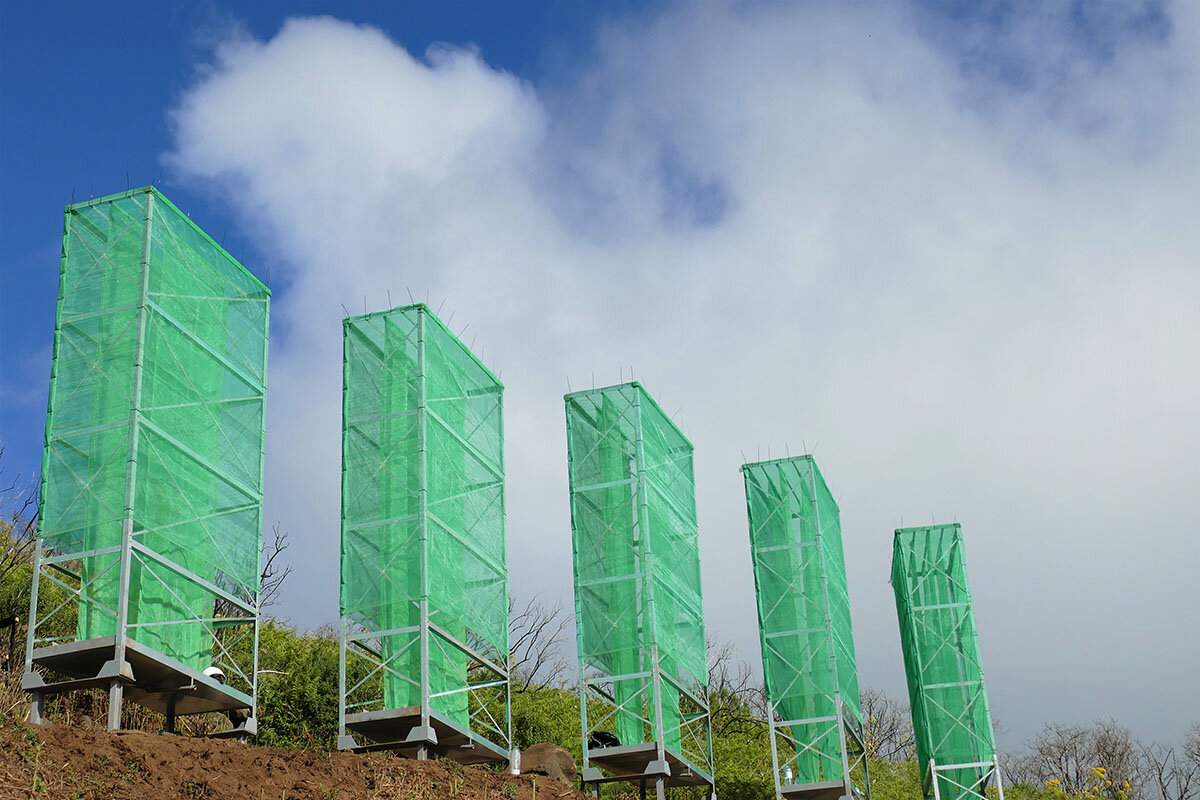
“On a good day, the couple’s 435-yard-long wall of collectors – vertical U-shaped nets cemented into the ground by metal poles – can harvest 475 gallons of water. The suspended fog droplets fall from the nets and flow through 220 yards of black tubing, which snake down the back of their property into a 95,000-gallon storage tank that resembles a giant waterbed.

“Their system – which the couple built with their bare hands over the course of a year – was entirely paid for through government subsidies, after they won a local award for the best initiative in rural farming.

“But this isn’t just a pet project for small-scale farmers. In 2020, the European Commission partnered with the local government in neighboring Gran Canaria to fund the Life Nieblas fog-collecting project, which aims to reforest areas decimated by drought or forest fire. Harvested fog water meets the World Health Organization’s standards on drinking water safety and has provided isolated communities with a much needed resource for decades.

“As the Canary Islands and regions around the world look to combat the effects of climate change, fog collecting is becoming an increasingly viable technology for communities facing soil erosion and water supply challenges.

“ ‘Fundamentally, we depend on our groundwater in the Canary Islands and water is always scarce,’ says María Victoria Marzol Jaén, a retired climate scientist at the University of La Laguna on Tenerife and one of the pioneering researchers into fog collecting in the Canary Islands in the 1990s.

“ ‘Fog water alone can’t supply this, but it can be useful for reforestation purposes, like in the case of forest fires. But for rural zones, where water consumption is much lower, [fog collecting] is more than just helpful. It can be the solution to water problems.’

“The first documented experiments into fog as an alternative water resource can be traced to South Africa in the early 1900s. In 1963, Chilean physicist Carlos Espinosa’s invention of ‘mist traps’ were patented and offered to UNESCO for free use around the world. Since then, researchers have made significant developments into the green technology, and research sites can be found in Chile, Peru, South Africa, Morocco, China, the United States, and the Canary Islands. …

“Apart from the initial materials and building costs, fog collection is a low-energy operation, whose structures, like netting, can blend more seamlessly into natural environments than wind turbines or solar panels. Upkeep involves merely clearing away overgrown plants and cleaning the filters.

“ ‘Fog collecting doesn’t consume any energy and doesn’t affect any other natural resources,’ says Ricardo Gil, a technical architect in Tenerife who runs the Nieblagua company. He has installed around 100 fog collectors across the Canary Islands, mainland Spain, and Portugal. ‘It also takes the pressure off extracting water from aquifers or desalinating ocean water.’

“Each of Nieblagua’s catchers can withstand winds of up to 62 mph, and use four sheets of netting to collect up to 8,000 gallons of water per year in optimum conditions. In several of the Canary Islands, which benefit from around five hours of fog per day, this translates to almost one person’s entire water needs. …

“For thirsty, drought-stricken regions, that can mean the difference between survival and desertification – especially when multiple catchers are set up in one area. In Arafo on Tenerife, 12 of Nieblagua catchers provide an estimated 26,000 gallons annually to new almond tree plantations.

“ ‘It’s not a fantasy. We’re using up our natural resources all around the world,’ says Mr. Gil. … ‘Here we have a natural resource right in front of us. We need to take advantage of it.’ ”

More at the Monitor, here. No firewall.

Read Full Post »

Emily’s Oysters in Maine, Sun Farm Oysters in Rhode Island, and Cuttyhunk Shellfish Farms in Massachusetts are a few of the hardy crews eager to supply oysters for your Thanksgiving stuffing.

One of Suzanne’s oldest friends runs an oyster business on Cuttyhunk Island, Massachusetts, and Thanksgiving is a big time for her. That’s because, in New England at least, many people see oysters as traditional for Thanksgiving.

The radio show Living on Earth recently did a show on the topic.

“STEVE CURWOOD: In the 19th century, oysters were a popular food item in the US, especially with the advent of commercial food canning, and by 1900, Americans were gobbling down some 160 million pounds of oysters a year. But overconsumption, sanitation concerns about raw oysters and the huge expansion of the beef and pork business that the railroads made possible, led to the oyster’s decline.

“Farmed correctly, oysters can be sustainable and their reefs protect coastal areas, so in recent years the popularity of local foods has spawned new oyster farmers — farmers that were hit hard this year with a drop in demand during the Covid crisis. Not everybody loves them of course, but oysters can be eaten in many ways beyond the half-shell. Celebrity chef Barton Seaver joins us from his kitchen near the harbor of South Freeport, Maine, to show how oysters can even lend flavor to Thanksgiving stuffing. … So tell me, why have the oyster farmers and fishermen been hit so hard by COVID-19?

“BARTON SEAVER: Oysters are, well, they’re so important to the restaurant industry. And that’s where so many of us go to get them. By some anecdotal accounts, in March, April, May, large oyster dealers around the country I’ve talked to lost 98% of their business, who were selling into restaurants; some of that has come back. Massachusetts has some hard data, around about 60 to 70% of their oysters landed, that business was lost. …

“CURWOOD: Where I live in southern New Hampshire near the Great Bay … I noticed that there were folks who actually had set up stands along the side of the road to sell oysters individually to people.

“SEAVER: Yeah! Well, that’s been one of the great success stories. And that’s sort of the inherent nature of oyster farming is that these are small businessmen and -women who are running a farm, and they are entrepreneurs, and they were able to pivot quite quickly. And as, in COVID, we turned our attentions anew to local food systems, oysters are a prominent part of that for those of us on the coasts. There is no food that is of place as much as are oysters, clams, mussels. …

“CURWOOD: Now, we know from history that Native Americans brought shellfish to the pilgrims that came here to the New England area in the 1600s. To what extent do you think oysters and shellfish should regain a place at the Thanksgiving table?

“SEAVER: Well, oysters were one of the foundational foods of this country and long before the white man set foot on this continent, oysters were serving and sustaining native populations for aeons. … But through decimation of local oyster populations in the wild, throughout the United States and our coastlines, we lost access to oysters. …

“CURWOOD: Tell me why you think they’re so important ecologically.

“SEAVER: Oysters, amongst other shellfish, are you know, what was known as a keystone species. They’re fundamental to the health of the ecosystems in which they are prevalent. They provide water quality, they provide habitat for countless other species. They are the bedrock upon which ecosystems’ health and resiliency relies. And in the absence of wild oysters, because we’ve decimated them through overfishing, through disease, etc., habitat loss, oyster farming has stepped into the role of providing those ecosystem services, those vital services.

Every oyster you eat encourages an oyster farmer, a small businessman or -woman, to plant many more, to augment and expand upon those ecosystem services provided by them.

“And in that way, I think it’s our patriotic duty to eat as many farm-raised shellfish as we can.

“CURWOOD: Yeah, in fact, you know, as the storms pick up with climate disruption, oyster reefs are a great way to slow down the storm surge, huh?

“SEAVER: Absolutely. We’ve seen this with Katrina, we saw this with Superstorm Sandy, that these vulnerable civic centers are made more vulnerable by the lack of those natural oyster reefs that naturally stopped those storm surges. …

“CURWOOD: There’s a project going on that the Nature Conservancy is a big part of. They’re [buying up] oysters that are otherwise going unsold to the restaurants during this pandemic, to help farmers who need to have a source of cash, and they’re using those oysters to restore more shellfish reefs. Why is it important to have oysters in local communities? …

“SEAVER: [Sustainable small business.] In my village, there’s a young woman named Emily — ‘Emily’s Oysters.’ She grew up here, and she went to school out in Puget Sound, and she was looking for something to do. [You know there’s a] brain drain in small, rural communities. But oyster farming caught her heart … and now she’s farming 50, 60, 70,000 oysters out in the waters that I can see from my house, pretty much. And she’s selling at local farmers’ markets. [To me, that’s] the quintessential story of success and of human sustainability acting in concert with our ecosystems. …

“CURWOOD: You have some delicious recipes, Barton, on your website. There’s — oh, the oyster risotto, the broiled oysters Rockefeller. And I believe you’re going to show us how to make an oyster stuffing, being that we’re close to Thanksgiving, huh? Now, I must say I never knew the stuffing on my Thanksgiving table could feature shellfish.”

More at Living on Earth, here, where you also can get the recipe for stuffing. Barton Seaver’s book is The Joy of Seafood: The All-Purpose Seafood Cookbook, with almost 1000 recipes.

Read Full Post »

Photo: Anne Pinto-Rodrigues.
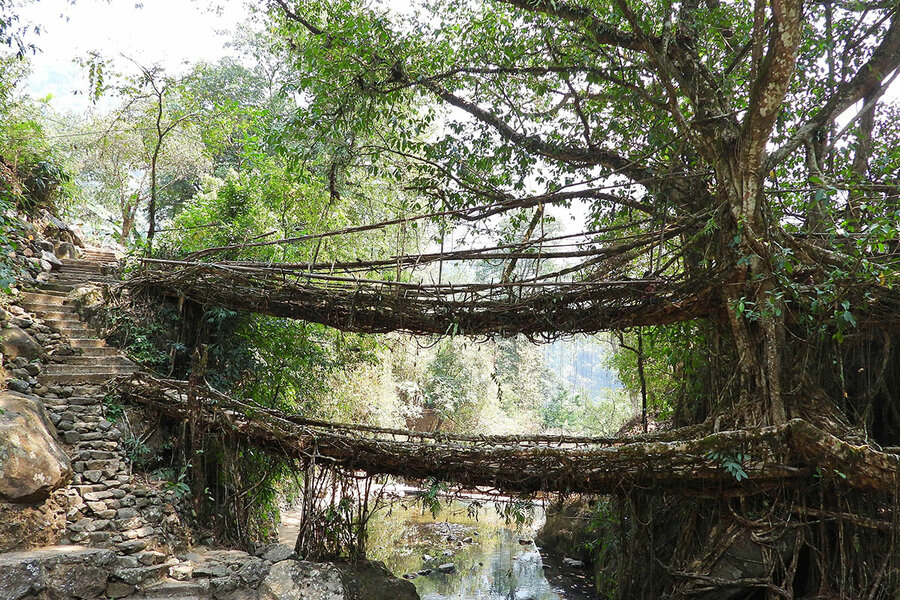
According to the Christian Science Monitor, this double-decker bridge in India’s Nongriat village is among the most famous of the region’s many living-root bridges. Locals say it’s about 250 years old.

I’m reading a quirky, amusing novel about India right now, Tomb of Sand, in which at times the author reminds one that many of the things Westerners think they invented already have a long history in South Asia.

Today’s post shows that at least some Westerners are garnering architecture ideas from Indian villagers.

Anne Pinto-Rodrigues reports at the Christian Science Monitor, “Covered with thick subtropical forests and streaked with streams and rivers, the hilly state of Meghalaya in India’s northeastern corner is one of the wettest places on the planet. During the monsoon season, torrential rains turn docile rivers into raging waterways, and people rely on centuries-old bridges to access farms, schools, and markets. 

“But these aren’t typical overpasses made of wood or steel – the bridges are alive. 

“For hundreds of years, the Khasis of Meghalaya have manipulated the aerial roots of the rubber fig tree (Ficus elastica) to build sturdy bridges, known in the Khasi language as jingkieng jri. There are at least 150 such bridges in Meghalaya, according to Morningstar Khongthaw, who works to preserve and educate the public about the community’s architectural traditions. The figure includes the famous double-decker living root bridge of Nongriat village, which locals estimate is about 250 years old. Mr. Khongthaw’s village, Rangthylliang, has 20 living root bridges. ‘The oldest one is about 700 years old,’ he says, with great pride.

“Today, the jingkieng jri are not only a big tourist draw, but also an important proof of concept for engineers and designers interested in practicing living architecture. Integrating plants into architectural design lessens the need for harmful construction materials and promotes biodiversity, but it can also take generations to test and develop the right building methods. Bioengineers from around the world are studying the living root bridges in the hopes of applying aspects of the Khasi tradition to projects in their own countries.

“ ‘The Khasis have a brilliant understanding of architectural engineering, totally different from the western way,’ says Ferdinand Ludwig, professor of green technologies in landscape architecture at the Technical University of Munich. …

“ ‘There are different ways of designing, building, and growing a living root bridge,’ says Mr. Khongthaw. The most popular model of construction, and the fastest, involves the creation of a bamboo framework, over which the roots of a nearby rubber fig tree are pulled and intertwined, until the roots reach the opposite bank. The bamboo framework itself serves as a temporary bridge while the living root structure takes shape. Over time, the bamboo rots away while the roots grow and merge together, making the structure sturdier and more stable. 

“Mr. Khongthaw says a bridge crossing a stream would be about the length of a school bus, and take nearly 20 years to become functional, whereas a bridge across a river would take 70-80 years. In places where there are no rubber fig trees nearby, villagers must first plant a sapling on the river bank and wait 10-15 years for the aerial roots to appear before building the bamboo framework. 

The time required to reach the first functional stage – when the bridge is strong enough to hold about 500 pounds, or roughly three people with loaded baskets – depends on the required length of the bridge.

“In all stages of their development, the bridges require regular maintenance. This happens in monsoon season when the roots are more pliable. ‘Everyone in my village takes part in maintaining the bridges,’ says Mr. Khongthaw. ‘Whoever crosses the bridge, spends five or 10 minutes working on the roots to make the structure stronger.’ …

“In addition to bridges, the Khasis construct cliffside ladders, tree platforms, swings, and tunnels using traditional techniques passed down orally from one generation to the next. …

“In Germany, Professor Ludwig has been studying examples of living architecture from around the world for nearly two decades. He has designed and overseen the construction of several structures that integrate plants, including a footbridge that uses living willow plants as the sole supports.

“Professor Ludwig first learned of the living root bridges of Meghalaya in 2009, via a documentary, and was struck by the Khasi approach to building. ‘They do not prescribe the structure itself. They only prescribe the aim,’ he says. ‘They want to go from A to B in a safe and comfortable way.’ …

“One of his students at the Technical University of Munich, Wilfrid Middleton, is studying Meghalaya’s living root bridges as an example of regenerative design – an increasingly popular concept wherein structures are not just sustainable (built with minimal and efficient use of resources) but they also replenish the resources required for their functioning and enrich their surroundings, thus having a net-positive effect on the environment.

“In cities, living structures like the footbridge designed by Professor Ludwig can help sequester carbon, create a cooling effect, and provide a habitat to birds and other urban wildlife. …

“Mr. Middleton has visited 70 jingkieng jri so far, and with the consent of the village elders, he photographs the bridges to create precise 3D models. ‘Each year, as the bridge grows and changes, we are able to capture its incredibly complex structure,’ he says. ‘We are trying to learn from the Khasis.’

“While there is increasing international appreciation of the living root bridges, back in Meghalaya, Mr. Khongthaw says many villagers aspire for a modern lifestyle, complete with concrete houses and bridges. Worried that traditional Khasi knowledge may feel irrelevant to younger generations, Mr. Khongthaw founded the Living Bridge Initiative in 2016, with the objective of preserving, protecting, and increasing the number of living root bridges. He regularly visits educational institutions to speak about his work. …

“Mr. Khongthaw has also started a sapling center to address the shortage of rubber fig saplings, which are not easy to find in the forest. The biggest threat to these ancient bridges, however, are the development projects in their vicinity.”

More at the Monitor, here. No firewall. Additional pictures at the Better India, here, are also worth checking out.

Read Full Post »

Photo: Yano via Wikimedia.
Kamikatsu, Japan, has worked for years to become a zero-waste town.

Here’s an update on an ambitious Japanese town I wrote about here a few years ago. It’s Kamikatsu, where the residents are still working hard at creating a completely sustainable way of life.

Michelle Ye Hee Lee and Julia Mio Inuma have a report at the Washington Post. “Tucked away in the mountains of Japan’s Shikoku island, a town of about 1,500 residents is on an ambitious path toward a zero-waste life.

“In 2003, Kamikatsu became the first municipality in Japan to make a zero-waste declaration. Since then, the town has transformed its open-air burning practices for waste disposal into a system of buying, consuming and discarding with the goal of reaching carbon neutrality. Now, the town estimates it is more than 80 percent of its way toward meeting that goal by 2030.

“But even for a town its size, carbon and waste neutrality is a high bar. And with more than half of its residents over 65 years old, the rural community is rapidly shrinking. The town is working with manufacturers to encourage them to use more recyclable materials, which would help reduce waste and burning. …

“The Zero Waste Center is the town’s recycling facility, where residents can sort their garbage into 45 categories — there are nine ways to sort paper products alone — before they toss the rest into a pile for the incinerators. …

“The town offers an incentive system in which people can collect recycling points in exchange for eco-friendly products. There are signs depicting what new items will be made out of those recycled items, and how much money the town is saving by working with recycling companies rather than burning the trash. …

“ ‘When residents cooperate, the money used for recycling is reduced at the same time, so you can see the merit to cooperating,’ said Momona Otsuka, the 24-year-old chief environmental officer of the center.

“Two things are key to creating a culture of widespread recycling, she said: policies, such as the 1997 Japanese law that gave towns and cities authority to recycle waste, and the cooperation of residents.

“Attached to the Zero Waste Center is a thrift shop where residents can drop off items they don’t want anymore, and others can take them free. All they need to do is weigh the item they take from the shop and log the weight in a ledger so the shop can keep track of the volume of reused items.

In January alone, about 985 pounds’ worth of items were rehomed — from unused batteries and sake glasses to furniture, maternity clothing and toys. The number is displayed inside the shop. …

“Rise and Win Brewing Co. brews two types of zero-waste craft beer, made of farm crops that would otherwise be thrown out because they are too misshapen to be sold publicly. … For years, the brewery tried to find an efficient way to donate leftover grain from brewing beer. Composting took a long time, and delivering fertilizer to farmers was a lot of work. So last year, they developed a way to convert used grain into liquid fertilizer, which is then used to grow barley for beer. …

“Hotel Why opened in 2020 as a part of the Zero Waste Center facility, which is constructed in the shape of a question mark to depict the question: Why do we create so much waste? The hotel feels like a secluded cabin in the woods, and at night, the stars resemble a planetarium.

“Each guest is given six bins to sort garbage during their stay. The sleek decorations are all reused materials, including a patchwork quilt made of denim scraps, and a wall display made of ropes. The furniture is salvaged from showroom models.

“The hotel emphasizes using just what you need. At check-in, guests cut individual bars of soap so they get just the amount they need for their stay. Coffee beans are ground based on the number of cups the guest wants, so that nothing goes to waste.

“Kamikatsu residents and businesses work to minimize as much food waste as possible. For example, at Cafe Polestar, there was one dish available for lunch to reduce waste: curry made with local vegetables.

“Even the leaf used to decorate their dishes was produced locally, from a company called Irodori, which has been selling products made from Kamikatsu’s lush forestry since 1986. There are 154 families in town involved with the project, mainly women aged 70 and older who can pick leaves to create intricate designs. The leaves are then sold to high-end spas, hotels and restaurants in Japan and other Asian countries, to create sustainable decorations.

“ ‘Our business helps people realize that there are valuable items even in mundane everyday things around them,’ said Tomoji Yokoishi, Irodori’s chief executive.”

More at the Post, here, where you can also read about the town’s ride-share system and its roughly 40 drivers, including the mayor, who use “a handful of cars so they can drive residents or visitors.”

I loved so many of the ideas and like to imagine towns everywhere coming up with their own unique ones.

Read Full Post »

Photo: Angel Valentin/The Guardian.
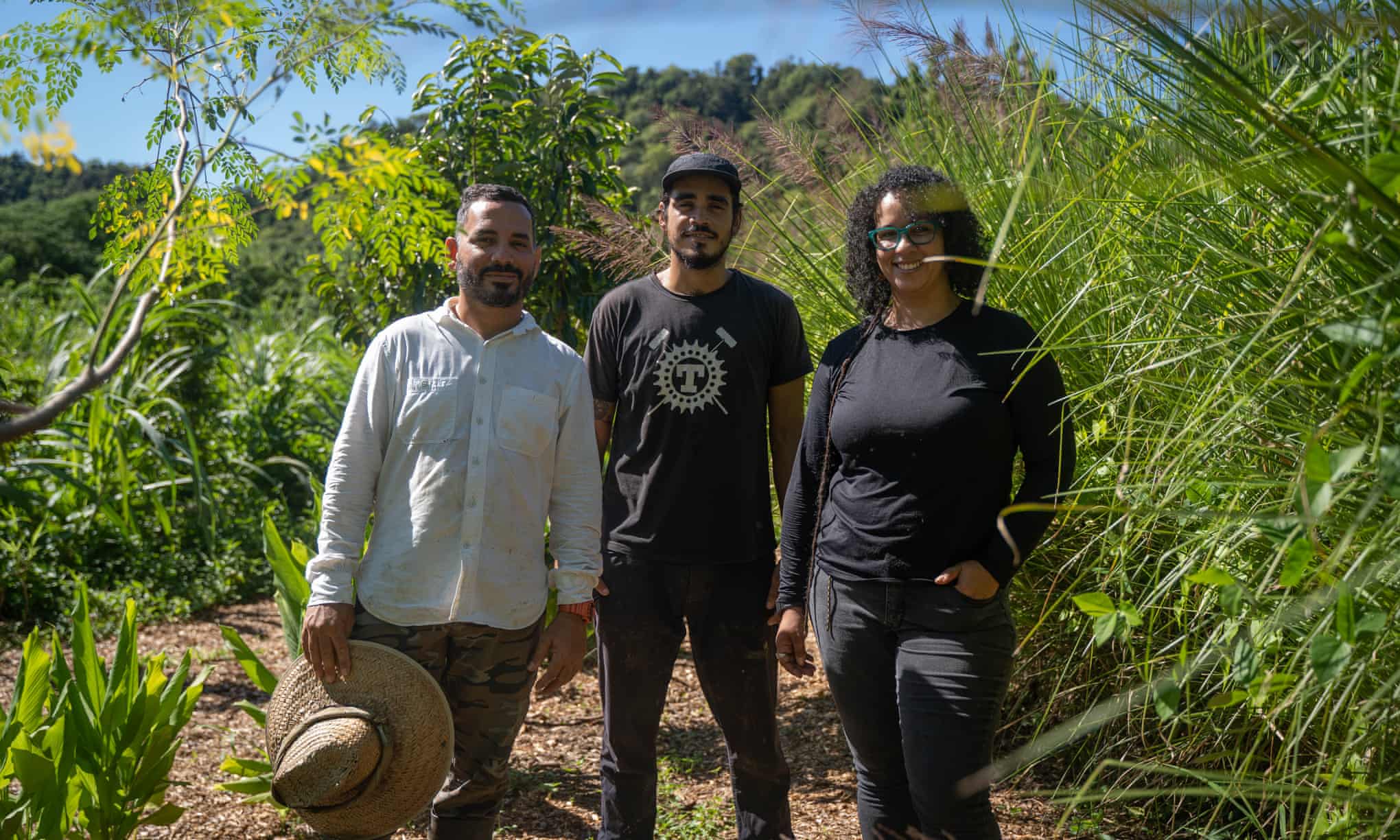
“Puerto Rico imports 85% of its food,” the Guardian reports. The three farms of Güakiá Colectivo Agroecológico in Dorado “seek food sovereignty and climate solutions.”

The UK-based Guardian has some of the best coverage of North America to be found anywhere, and it’s free. Readers are asked to contribute, and I recommend doing so if you want to support good journalism.

A few days ago, the Guardian posted this update on an agricultural movement in Puerto Rico that, if taken up elsewhere, could make a big difference to the planet.

Nina Lakhani wrote, “Puerto Rico was once a thriving agricultural hub thanks to its tropical climate, rich biodiversity, and sustainable farming traditions. Today, less than 2% of the workforce is employed in agriculture and tens of thousands of acres of arable land sit idle. Meanwhile 85% of the food eaten in Puerto Rico is imported, grocery prices are among the highest in the US and last year two in five people experienced food insecurity.

“ ‘Unemployment is brutal, prices are brutal, migration from the island is brutal,’ said Denise Santos, who runs Puerto Rico’s food bank.

“Puerto Rico, a mountainous Caribbean archipelago, is also one of the places in the world most affected by extreme weather such as storms, floods and droughts. In 2017, Hurricane Maria devastated the islands and people went hungry as ships were unable to dock at the damaged ports.

“In the face of so many challenges, a new wave of interest in food and farming among younger Puerto Ricans is flourishing, as part of a wider movement demanding political, environmental and social justice. Small scale sustainable farming known as agroecology is driving a resurgence in locally grown produce that chefs, farmers, entrepreneurs and researchers argue can help revitalize the local economy, improve food sovereignty and both mitigate and adapt to the climate crisis.

“Agroecology is low impact agriculture that works with nature and local conditions to produce food sustainably so as to protect biodiversity and soil quality while drawing carbon out of the atmosphere.

  • “It involves a set of farming principles and practices that can be adapted to any ecosystem, microclimate and culture – a way of life practiced for thousands of years by indigenous people and peasant farmers. Farmers often integrate crops, livestock and trees (agroforestry) in order to maximize ecological conditions, such as a fruit orchard that aids water retention and provides shade for crops and grazing animals who in turn fertilize the earth to improve the yield.
  • “Crop rotation and crop cover are fundamental to this holistic approach, that takes into consideration the well-being of the Earth, those who produce the food as well as the local communities who eat it. …
  • “Advocates say agroecology offers locally driven solutions to a myriad of interconnected crises including food insecurity, biodiversity loss, environmental degradation and global heating.
  • “Agroecology is a social and political movement seeking to influence public policies so that sustainable farming benefits from government support (tax breaks, subsidies, and bailouts) currently propping up the dominant industrial agriculture system which is a major cause of biodiversity loss and accounts for more than a quarter of global greenhouse gases.”

The Guardian goes on to profile “three agroecology farms striving to change what and how Puerto Ricans eat by challenging the political, economic and agricultural status quo.” Here is one.

Güakiá Colectivo Agroecológico “is the collective brainchild of four graduates from [the Josco Bravo project] whose main objective is to improve access to healthy affordable food for vulnerable local communities. The farm is located off a highway in Dorado, an economically divided municipality with both multimillion dollar beach homes and families living hand-to-mouth in houses without indoor plumbing.

“The land belongs to a New York-based order of nuns who agreed to rent them 11 acres in 2017 for a symbolic amount ($1 per acre per year) after they’d almost given up hope of finding somewhere affordable. Back then it was a mess, having been used for years as an unauthorized rubbish dump, and they were still cleaning up when Maria struck, leaving many without work, shelter, food or clean water.

By the beginning of 2018, they were able to share the first crop – plantain, beans, yuca and papaya – with families going hungry.

” ‘Agroecology has always been a form of resistance against colonial capitalism, and here we are trying to rescue collective working and reject individualism by reconnecting people to the land and food, and building trust and solidarity,’ said Marissa Reyes-Diaz, 32, a biology graduate who also works for the nonprofit El Puente: Latino Climate Action Network. (All four members of the collective have second jobs.)

“Agroforestry is a big focus here, and there are fragrant fruit trees growing alongside a variety of crops, which has created multiple small ecosystems that help keep precious nutrients and rainwater in the ground. (Diversity enhances a farm’s resilience, as different crops are vulnerable and resistant to different pests, climate extremes and soil deficiencies.)

“So far the orchards have helped them survive two very dry spells, but it’s not enough to sustain and grow the farm, even with rainwater tanks and water from a neighbouring farmer. They’re trying to raise $40,000 to build a well connecting to the underground aquifer as water remains the biggest obstacle to long term success.

“But Güakiá is not just a farm, it’s also a community hub where neighbors come to enjoy the green spaces and try unfamiliar produce such as beets, turmeric roots and wild basil, as well as taste tomatoes fresh from the vine.

“Some locals volunteer, others exchange their food waste (needed to make compost) for vegetables, and prices remain accessible. They’ve hosted festivals with live music, art exhibitions, self defence classes, yoga and dominos — a very popular Caribbean pastime — and have built an emergency shelter fitted with solar panels ready for the next climate catastrophe. Reyes-Diaz said: ‘Agroecology has never been just about producing food, it’s also about sustaining our physical and mental health and spiritual well-being.’ ”

More at the Guardian, here.

Read Full Post »

« Newer Posts - Older Posts »