Feeds:
Posts
Comments

Posts Tagged ‘sweden’

Sweden has taken in a lot of refugees from troubled countries, but like the U.S., it sometimes struggles to find the best approach for absorbing the influx.

At the NY Times, Suzanne Daley writes about one Swede who may have found an important way to speed integration, a way that enriches the experience of Swedes and newcomers alike.

“Last year, when Ebba Akerman, 31, was teaching Swedish to immigrants in the suburbs of this city, she ran into one of her students on the train and asked him whether he enjoyed living in her country.

“She found the answer deeply disturbing. The man shrugged, saying his life here was not much different from the one he had left behind in Afghanistan. It became clear to her that most of her students, living in neighborhoods packed with immigrants, had virtually no contact with native Swedes.

“In the months that followed, Ms. Akerman decided to try to change that, calling herself the minister of dinners in charge of the Department of Invitations and using Facebook and Instagram to try to bring individual Swedes and immigrants together for a meal, something like a dating service.

“ ‘We let people into our country, but not into our society,’ Ms. Akerman said on a recent Friday night. … ‘I finally decided that I had to do something. I could be the connector.’ …

“On a recent evening, Ms. Akerman was feeding about a dozen people, including a middle-aged couple from Bangladesh who had brought a chicken dish, a recent arrival from Cameroon with her two children, a Swedish marketing expert, the mother of one of Ms. Akerman’s friends and a young Swedish doctor in training, all of whom had been early participants in her project. All told stories of good times and miscues.

“The marketing expert, Henrik Evrell, said he had served spaghetti Bolognese, the most Swedish dish he knew, to his guest from Ivory Coast. At first they had trouble communicating because his guest’s Swedish was so poor. But soon they discovered that they both spoke French and loved the same Ivory Coast musicians. After eating, they spent the rest of the evening in front of a computer, taking turns pulling up music on Spotify that each thought the other would like.” More here.

Photo: Casper Hedberg for The New York Times
Ebba Akerman set a table on her backyard for a meal that brought Swedes and immigrants together. 

Read Full Post »

My WordPress stats indicated that someone from the Åland Islands clicked on this blog today, and I said to myself, “Where are the Åland Islands?”

Naturally, Wikipedia had an answer. They are between Sweden and Finland.

They are “an autonomous, demilitarised, monolingually Swedish-speaking region of Finland that consists of an archipelago lying at the entrance to the Gulf of Bothnia in the Baltic Sea. …

“Åland comprises Fasta Åland (“Main Island”, on which 90% of the population resides) and a further 6,500 skerries and islands to its east. Fasta Åland is separated from the coast of Sweden by 38 kilometres (24 mi) of open water to the west. In the east, the Åland archipelago is contiguous with the Finnish Archipelago Sea. Åland’s only land border is located on the uninhabited skerry of Märket, which it shares with Sweden.

“Åland’s autonomous status means that those provincial powers normally exercised by representatives of the central Finnish government are largely exercised by its own government.” More here.

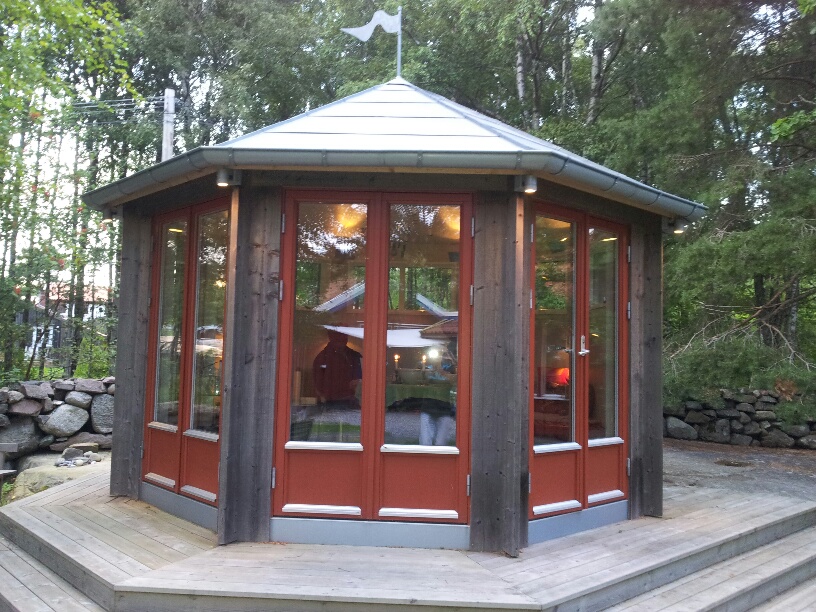
What brought a reader from that part of the world to Suzanne’s Mom’s Blog? Was it the same person who (according to WordPress stats) searched on the word “lusthus”? A reasonable guess. Here are my pictures of Margareta and Jimmy’s lusthus, or gazebo, when Suzanne and Erik were visiting in Sweden.

I wonder if the reader from the Åland Islands is there on vacation right now or lives there all year ’round. And if you live there all year ’round, what kind of job can you have there?

Map from Wikipedia

Read Full Post »

Photo of John Bauer: Wikimedia Commons

When I was poking around the web for art to illustrate my post Iceland Has Elves, I found a lovely picture by John Bauer.

I didn’t know anything about him. But Stuga40 wrote in the comments that he was Swedish. She knew where he had lived before his untimely death in 1918 and said she grew up on his fairy stories.

I decided I wanted to know more.

Wikipedia says John Bauer is “best known for his illustrations of Bland tomtar och troll (Among Gnomes and Trolls). Princess Tuvstarr and the Fishpond  [is] perhaps Bauer’s most notable work. …

“Bauer’s early work was influenced to a large extent by Albert Engström and Carl Larsson, two contemporaries and influential painters. Bauer’s first major work was commissioned in 1904, when he was asked to illustrate a book on Lappland. It was not until 1907 that he would become known for his illustrations of Bland tomtar och troll, the yearly fairy tale book.”

A contemporary story collection called Swedish Folk Tales uses Bauer’s illustrations and is available here. Also, someone posted a bunch of his illustrations on Pinterest, including a sweet Santa Lucia.

John Bauer art showing a boy and a troll: Wikimedia Commons

Read Full Post »

I can’t remember at the moment how I came across this tidbit, but I knew as soon as I saw it that I wouldn’t be able to resist something cool about  Stockholm.

I took the Stockholm subway a few times in the 1990s, but I don’t remember anything like this. Relatives living in Stockholm will have to let me know if the subway today is really the magical mystery tour that Dangerous Minds suggests.

Go to the Dangerous Minds website for a wonderful array of pictures. It sure doesn’t look like the Red Line. If the Red Line looked like this, I would expect to encounter Ming the Merciless around every corner.

Might make the commute more interesting.

Click here.

Photo: Dangerous Minds
A human emerges from a wall in the Stockholm subway’s “wild underground fantasia.”

ssssdddwwwcccc

Read Full Post »

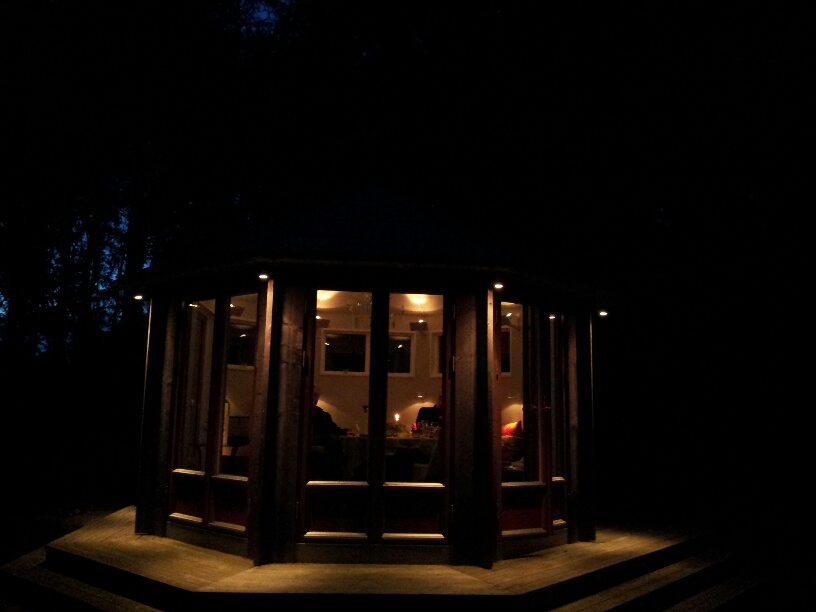
Margareta suggests that dinner in the lusthus might make a nice post.

Google Translate informs me that a “lusthus” is a “gazebo.” If you break it into two words, it’s “desire house.” I will ask Erik to explain more about that.

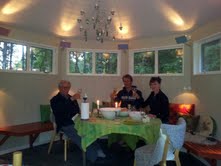
Judging from the light and the absence of high chairs, the folks are having a late dinner, after the young laird has retired for the evening. Everyone looks relaxed. I think it is a kind of shrimp they are eating.

lusthus

something-like-shrimp

garden-thru-the-window

calm-dining

nighttime-gazebo

Read Full Post »

Maria writes, “Some memories from our very traditional midsummer in Dalarna.” That’s in Sweden. Erik or Margareta, care to explain what we see here?

I learned this much on the web:

“Ask a Swede what the most important holiday of the year is and Midsummer will come up as often as Christmas. Get older Swedes talking and their eyes will well up as they reminisce about community spirit, songs, barn dancing and the mystical atmosphere surrounding the Midsummer gatherings of their youth. Sure, there was a lot of drinking, fistfights and frolicking, but everyone shook hands in the end. For younger generations, Midsummer is mainly about heading out to the summer cottage and celebrating with a group of friends or family.” There’s more at the site Sweden.se, here.

Read Full Post »

I just got a great lead from Erik. It seems that Sweden has run out of garbage for running its waste-to-energy program. Fortunately, Norway has garbage it can spare. (I wonder if Erik’s buddy Svein knows that.)

Check out Matt Hickman at Mother Nature Network:

“Sweden, birthplace of the Smörgåsbord, Eric Northman, and the world’s preferred solar-powered purveyor of flat-pack home furnishings, is in a bit of a pickle: the squeaky clean Scandinavian nation of more than 9.5 million has run out of garbage. The landfills have been tapped dry; the rubbish reserves depleted. And although this may seem like a positive — even enviable — predicament for a country to be facing, Sweden has been forced to import trash from neighboring countries, namely Norway. Yep, Sweden is so trash-strapped that officials are shipping it in — 80,000 tons of refuse annually, to be exact — from elsewhere.

“You see, Swedes are big on recycling. So big in fact that only 4 percent of all waste generated in the country is landfilled.

“Good for them! However, the population’s remarkably pertinacious recycling habits are also a bit of a problem given that the country relies on waste to heat and to provide electricity to hundreds of thousands of homes through a longstanding waste-to-energy incineration program. So with citizens simply not generating enough burnable waste to power the incinerators, the country has been forced to look elsewhere for fuel. Says Catarina Ostlund, a senior advisor for the Swedish Environmental Protection Agency: ‘We have more capacity than the production of waste in Sweden and that is usable for incineration.

“Public Radio International has the whole story (hat tip to Ariel Schwartz at Co.Exist), a story that may seem implausible in a country like garbage-bloated America where overflowing landfills are anything but scarce.” Read more.

Photograph: Smath/Flickr

Read Full Post »

Asakiyume writes that an old friend visited her and brought along an unusual harp. Asakiyume explains that the nyckelharpa is “a Swedish musical instrument that’s both keyed and bowed.”

That sounds harder than walking and chewing gum. Even the hurdy-gurdy that I hear in the subway doesn’t look as hard as that sounds, and the hurdy-gurdy involves keying and cranking.

“It’s older than the violin,” Asakiyume says of the nyckelharpa, adding, “my friend tells me there are old tapestries and paintings showing the angels playing these nyckelharpa in heaven.”

(Readers of this blog will note that I can seldom resist tidbits about Sweden. Egypt is another favorite. Both for family reasons.)

Here is Asakiyume’s friend playing the nyckelharpa.


Read Full Post »

Most of my family (other than me) does a lot of biking. John, for example, biked from Arlington, Mass., to Syracuse, N.Y., last week just because he felt like it. It took several days.

My husband bikes most weekends in good weather. And he reads a biking magazine where he saw a story he thought would interest my Swedish readers.

Writes April Streeter at Treehugger (reprinted by the biking magazine), “If you want to find an unassuming place where bicycling is a way of life and nobody makes a big deal about it, head south. The south of Sweden, that is, where the small university town of Lund has a big bicycle habit. They just don’t advertise it.

“In Lund, 60% of the populace bikes or takes public transport to go about their daily tasks. And then there’s Malmö, Sweden’s third largest city — only 20 miles southwest of Lund. Malmö also doesn’t have a reputation for fantastic biking. But some [Swedes] say it is the country’s best biking city — ahead of both Stockholm, the capital; Gothenburg, the second largest Swedish metropolitan area, and a host of smaller bike-friendly burgs.

“Just across the Øresund sound from Copenhagen, Malmö has always lived a bit in the shadow of the Danish capital. But in the last few years it has done a lot to take a place among the great biking cities of Northern Europe, mostly by its investment in infrastructure and pure commitment to get people on their bikes. That has paid off — cycling has increased 30% each year for the last four years, while car trips under five kilometers have dropped.

“Now Malmö is upping the stakes by putting up 30 million Swedish crowns (about US$4.1 million) toward the building of a four-lane super cycling highway between it and its bike-happy northern neighbor city Lund.” See the article here.

Here is a slide show on Lund, at the NY Times.

Ramboll/Screen capture

Read Full Post »

A new $100 bill is in the works. For security, it will have half a million tiny lenses in a special strip, and the lenses will create a particular optical effect as you tip the bill this way and that.  Kind of like a hologram, is my understanding. There will be even more tiny lenses on the Liberty Bell and the numeral 100, and as you tip the bill, the one will turn into the other, thanks to the lenses.

This rather surprising information I learned from a speaker today — Doug Crane, vice president of the family company that has been making America’s currency and some other nations’ currencies since 1801. He makes paper only from cotton (80%) and linen (20%).

There are a lot of interesting old documents about the history of Crane & Co. — and how it overlapped with key events and players in American history — at this blog on WordPress.

More information is on the regular website of the company, which is based in Dalton, Massachusetts, and employs 850 people locally. Among them are the people who make print so tiny you could “print the Bible twice on a dime.” They also employ optical engineers who create the micro lenses and are responsible for Crane’s 80 patents.

Other employees work in Tumba, Sweden, ever since Sweden asked Crane to take over its currency making. At the Tumba site, Crane makes currencies for additional countries.

A paper-making enterprise requires a lot of energy, so Crane is working with numerous alternatives as it moves toward its goal of 100% sustainability. It has   already drastically cut its oil use in a partnership with a steam-producing landfill enterprise. Hydroelectric is proving trickier because there are so many jurisdictions on the Housatonic River to give permission to remove waterfalls.

Perhaps the river could become a Blueway and get everyone working together. (See yesterday’s post.)

Postcard from cranesbond.com

Read Full Post »

Margareta sent me a poem in Swedish by Karin Boye. She said it was apt for Erik and Suzanne, who are embarking on several new “voyages” simultaneously.

Erik sent a follow-up: “That poem is very well known in Sweden; everyone will know the sentence ‘Nog finns det mål och mening i vår färd-Men det är vägen, som är mödan värd,’ which roughly means that it is the act of voyage, and not the end goal, which is the purpose of acts, and life.”

Erik also sent me a poem by his childhood friend Jonathan. “The poem is written with the Lake District in mind, where he traveled frequently with his family as a child.”

FALLS, by Jonathan Wallis

Waterfalls,
silently,
crystal clear to frozen ground
Snowdrifts from currents, lightly
muted all disturbing sound

Colours bound, in touch of frost
Summer’s splendour lost,
and found

Touched now, mirth is drained
Laughter caught, angels choir stained

No whisper above, but below,
Scurrying
feet

Hair twisting,
body rushing, twisting

Here I cannot see only feel

In dark,
colours shift too rapidly
Body heat, maddeningly
Why did I laugh at the beauty of such curiosity?

Run, silently
beneath covering snow
and in time
warm life shall grow

Waterfalls
lightly now,
Crystal clear to spring warm ground
Naked body laughs
All is sound
Colours unbound,
in touch of waters tossed
Dreams are lost,
and found

Read Full Post »

Creativity at Age 8

We have a fierce wind here today. A woman in the elevator where I work said she went outside to mail a letter, and all the pedestrians were walking at a 45 degree angle trying not to be blown off their feet. Which gives me a great opportunity to highlight the creative endeavors of a young relative (age 8) who, with a classmate, wrote a quite wonderful poem about the wind.

The Wind
By Axel L-R and Constantinos F

I may be scary
I may be cold
I’m all around you and I never get old
If you enter the woods you may hear me howl
Or maybe it´s just an owl
When I get angry I become a hurricane
Look out!
You may not want to come out
The apples tumble down the hill after I throw them off their branches
I shake things
I take things and sink all the ships
I am the wind
Something that´s everywhere and you should take care of me
Or I will never be there

You might be interested to know that Axel has other creative irons in the fire. While my husband was in Sweden, Axel interviewed him for a possible article in a magazine he was putting together. The interview didn’t make the cut, but the magazine came home, all in Swedish, crossword included. 5 kroner.

Here is Axel as the wily Ali Baba.

Read Full Post »

In Eastern Massachusetts, it’s been a mild and sparkling day.

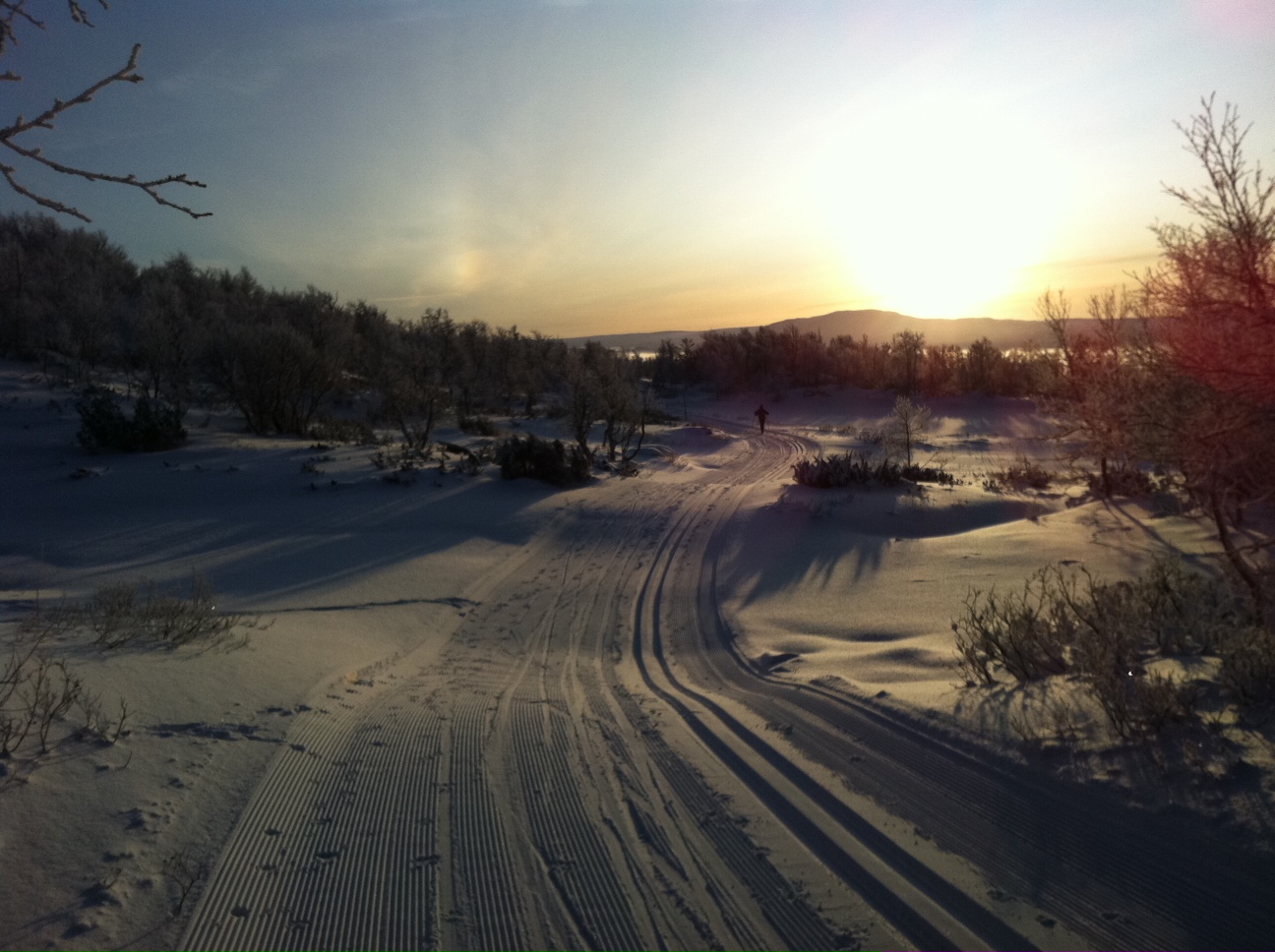
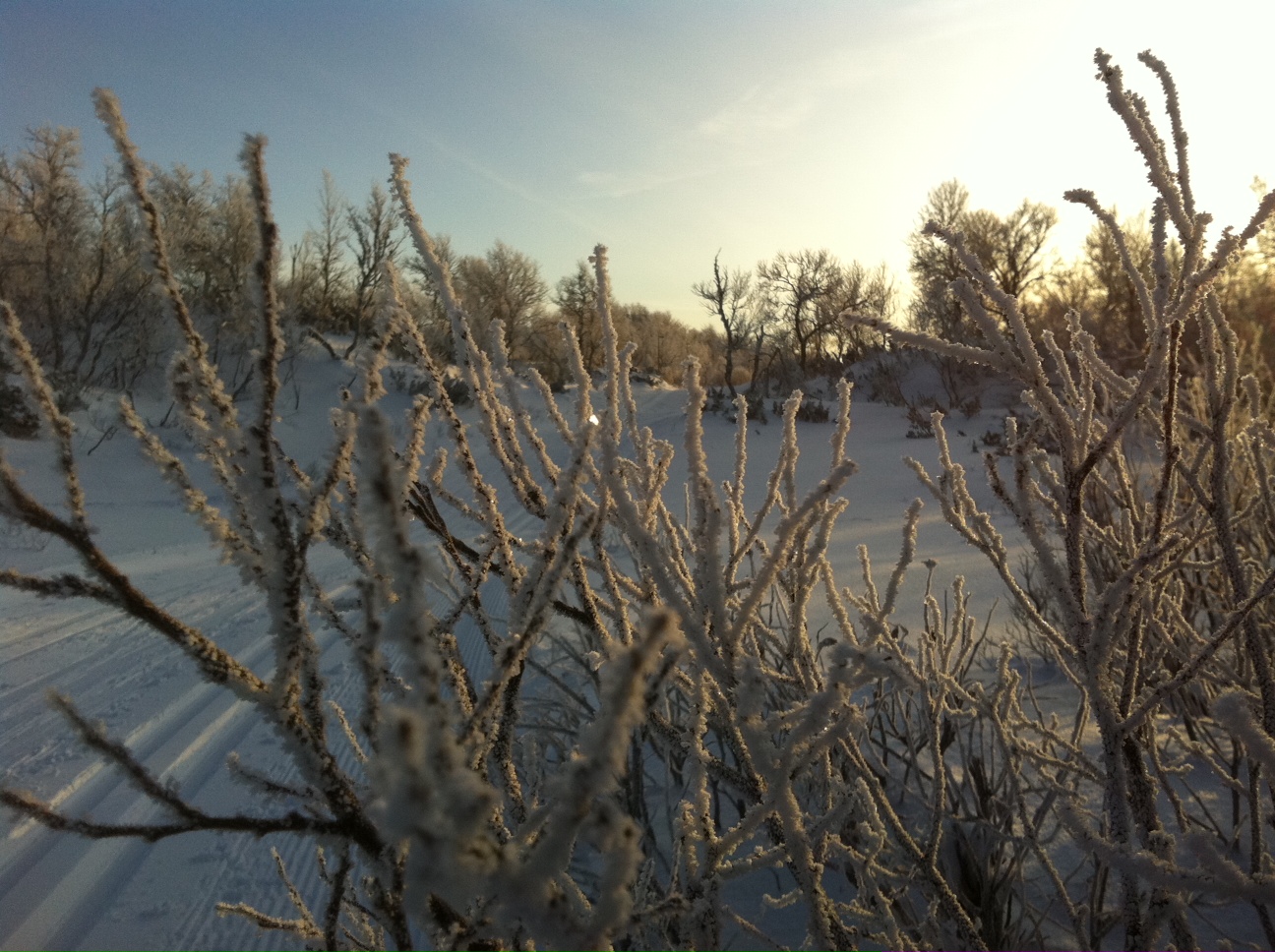
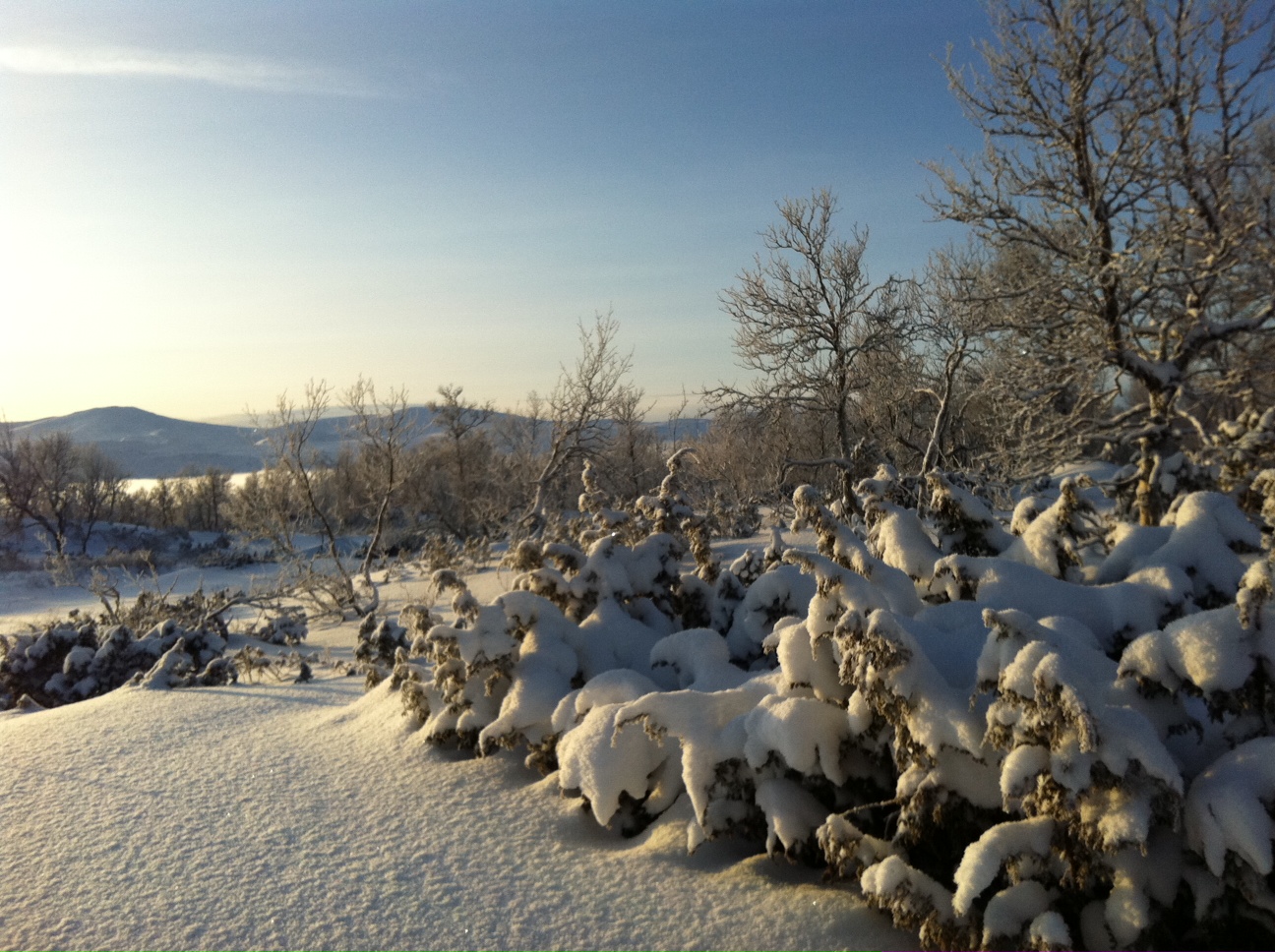
In Northern Sweden, there’s snow.

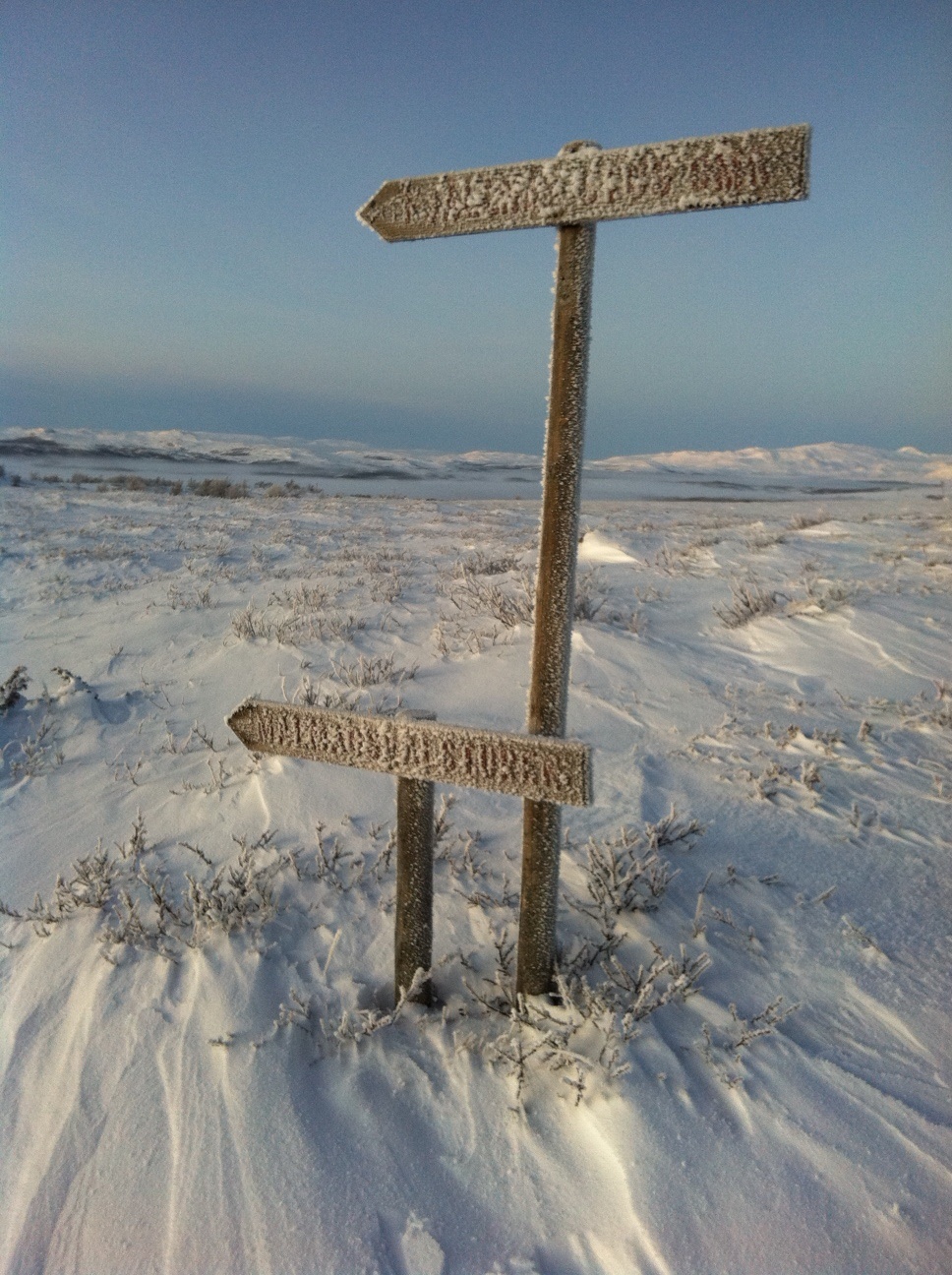
Suzanne, her dad, Erik, and Erik’s family are doing cross-country skiing there. At Fjallnas hogfjallshotel and Strandgarden, where Erik’s extended family stays every year between Christmas and New Year’s, dusk descends at 1 p.m.

Can you read the signpost for Strandgarden? Me neither. But it’s pretty nice for skiing in those latitudes. Last year, dog sledding was on the agenda, too.

Read Full Post »

We’re hopping an early Acela train Wednesday to join Suzanne, Erik, and other family members for Thanksgiving.

I’m assigned to make cranberry sauce, stuffing, and a squash dish. Although I have already placed my ingredients order and can’t use the recipe I just saw at another WordPress blog, you might like to. It’s a maple-citrus-ginger-cranberry sauce.

The blog in question is the public face of a collaboration in Upstate New York, the “From Scratch Club”: “We are a small group of women, living within the Capital Region of NYS (Albany, Troy, Schenectady, Saratoga Springs) striving for a sustained connection to the whole food we, our loved ones, and our communities consume.

“We meet twice a month for food swaps, and maybe even a food-related adventure, field trip, cheesemaking party or potluck. Once a month we participate in community outreach at various local farmers markets in our area.”

These ladies understand that the key to enjoying great cooking is to have others to share the results with.

Consider Thanksgiving. Thanksgiving is mostly about preparing lots of food and bringing groups of people together to eat the food and talk and not rush off to anything.

This year at Suzanne’s, my sister and her husband will join the fun. Also Erik’s cousin and her family, who have just relocated from Sweden to the U.S. It’s great that little kids will be part of the festivities.

Read Full Post »

At their wedding, Suzanne and Erik seated me next to Erik’s uncle on one side and Jonathan on the other. Jonathan was into literature. In fact he wrote a poem for Suzanne and Erik that he read as a toast. (You would not believe how many toasts Swedes give at weddings. It’s an awful lot of fun!)

Jonathan knew a lot about American and English poets, and I asked him to suggest a Swedish poet that I could read in translation. I figured that Google Translate might not be optimal for poetry. He recommended Tomas Tranströmer. After the wedding, I bought Tranströmer’s The Half-Finished Heaven, translated by Robert Bly. (Who knew Robert Bly translated Swedish?)

Last week, Tranströmer was awarded the 2011 Nobel Prize for Literature. Here is a short Tranströmer poem from the book, illustrated by a photo my husband took before Hurricane Earl in 2010. (The photo is called “Red Sky at Morning, Sailors Take Warning.”)

Storm, by Tomas Tranströmer

The man on a walk suddenly meets the old
giant oak like an elk turned to stone with
its enormous antlers against the dark green castle wall of the fall ocean.

Storm from the north. It’s nearly time for the
rowanberries to ripen. Awake in the night he
hears the constellations far above the oak stamping in their stalls.

Read Full Post »

« Newer Posts - Older Posts »