Feeds:
Posts
Comments

Posts Tagged ‘theft’

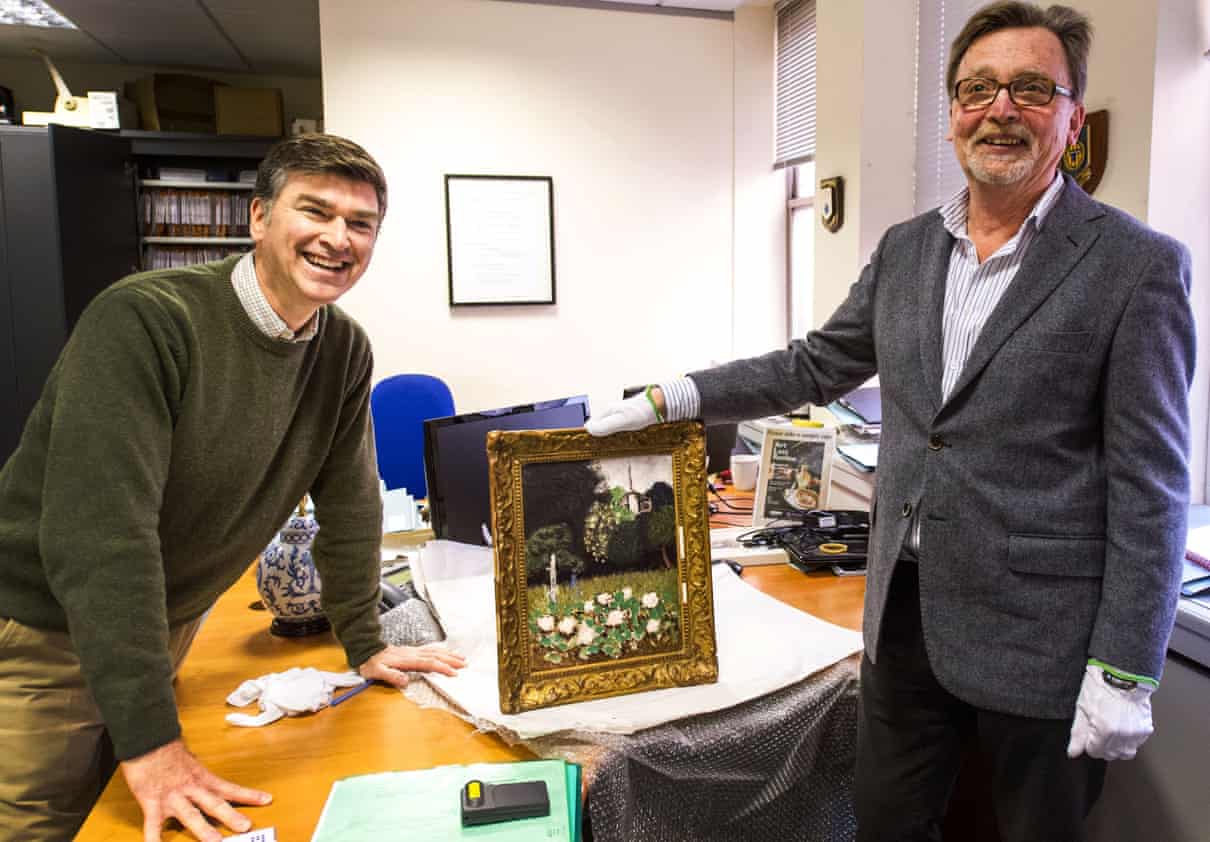
Photo: Arthur Brand.
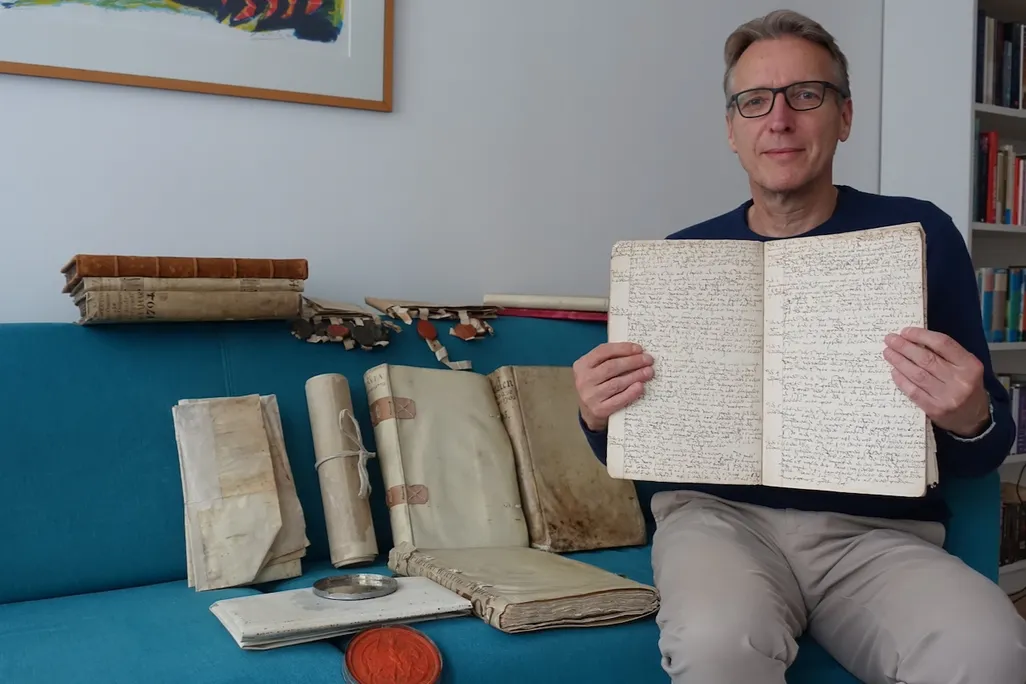
A box given to art sleuth Arthur Brand contained records from the Dutch East India Company. They had been stolen a decade ago from the Hague in the Netherlands.

Everyone likes a mystery, especially one that gets solved in a satisfactory way. Of course, “satisfactory” is in the eye of the beholder. I myself like to have the perp brought to justice. Other people prefer something brutally realistic.

France 24 reported recently on a mystery solved by Arthur Brand, the “Indiana Jones of the Art World.” In this case, the perp is long gone.

“A Dutch art sleuth has recovered a priceless trove of stolen documents from the 15th to the 19th century, including several UNESCO-listed archives from the world’s first multinational corporation. Arthur Brand [ said] the latest discovery was among his most significant.

” ‘In my career, I have been able to return fantastic stolen art, from Picassos to a Van Gogh … yet this find is one of the highlights of my career,’ Brand told AFP.

“Many of the documents recount the early days of the Dutch East India Company (VOC), whose globetrotting trading and military operations contributed to the Dutch ‘Golden Age,’ when the Netherlands was a global superpower.

“VOC merchants criss-crossed the globe, catapulting the Netherlands to a world trading power but also exploiting and oppressing the colonies it conquered. The company was key to the slave trade during that period, with generations of enslaved people forced to work on Dutch plantations. …

“The company was also a leading diplomatic power and one document relates a visit in 1700 by top VOC officials to the court of the Mughal emperor in India.

” ‘Since the Netherlands was one of the most powerful players in the world at that time in terms of military, trade, shipping, and colonies, these documents are part of world history,’ said Brand.

UNESCO agrees, designating the VOC archives as part of its ‘Memory of the World’ documentary heritage collection.

” ‘The VOC archives make up the most complete and extensive source on early modern world history anywhere,’ says UNESCO on its website.

“The trove also featured early ships logs from one of the world’s most famous admirals, Michiel de Ruyter, whose exploits are studied in naval academies even today. …

“No less enthralling is the ‘who-dunnit’ of how Brand came by the documents.

“Brand received an email from someone who had stumbled across a box of seemingly ancient manuscripts while clearing out the attic of an incapacitated family member.

“This family member occasionally lent money to a friend, who would leave something as collateral – in this case the box of documents. …

“Brand investigated with Dutch police and concluded the documents had been stolen in 2015 from the vast National Archives in The Hague. The main suspect – an employee at the archives who had indeed left the box as collateral but never picked it up – has since died. …

“The art detective said he spent many an evening sifting through the documents, transported back in time.

” ‘Wars at sea, negotiations at imperial courts, distant journeys to barely explored regions, and knights,’ he told AFP.

” ‘I felt like I had stepped into Robert Louis Stevenson’s Treasure Island.’ ” More at France 24, here.

Don’t you love that UNESCO has a category of valuables called “Memory of the World”? Wow, what else belongs to the Memory of the World, and is it being protected for the very reason that we don’t remember it? Is Robert Louis Stevenson in Memory of the World?

Read Full Post »

Photo: Pat Greenhouse/Globe Staff.
Dutch artist Hendrick Avercamp’s winter scene, stolen in 1978, arrived in May at the Worcester Art Museum in Massachusetts. 

As an inveterate reader of mystery novels, I do love a yarn about art thieves, especially if there’s a clever sleuth who figures out what happened. It’s best if the perps end up in jail, but you can’t have it all. These things take time.

At the Boston Globe, Malcolm Gay has a good story about Clifford Schorer, a former president of the Worcester Art Museum’s board as well as “an international art dealer and sleuth who spends his days (and many nights) hunting ‘sleepers’ — lost masterpieces whose true identities have been obscured through the ages.

“Schorer had flown from Brussels [on a day last May] with the painting he now carried in his hands, a winter scene by the acclaimed Dutch Golden Age artist Hendrick Avercamp.

“The artwork was stolen nearly half a century earlier in a sensational 1978 heist from the baronial estate of Helen and Robert Stoddard, a Worcester industrialist. The Avercamp picture, along with numerous other paintings and other valuables taken from the home that night, had not been seen since. Local officials were stumped. So was the FBI. …

“[Schorer] and a conservator carefully unwrapped the package, revealing the aged but unscathed picture of Dutch figures skating in winter.

“ ‘It was nirvana,’ Warner Fletcher, a nephew of the Stoddards, said of the moment. …

“The Avercamp originally disappeared the night of June 22, 1978, when thieves broke into the 36-acre Stoddard estate, hacking open sofa cushions to cart away valuable works by Camille Pissarro, J.M.W. Turner, and Pierre-Auguste Renoir, among others. …

“That night, with Helen undergoing cancer treatment at a Boston hospital, Robert turned in just before midnight. [He] was sound asleep when thieves broke in through the sun porch.

“The burglars ransacked the home, rifling through drawers and closets. They drank the couple’s liquor and ate food from the fridge, according to later news reports. They made their way through each room, snatching paintings from the walls and pocketing collectibles including miniature carvings, silver tea sets, watches, and valuable music boxes.

“When Stoddard awoke the next morning, he realized the house had been robbed when he found his glasses on the floor. …

” ‘We never had a suspect,’ Ralph E. Doyle, a retired detective sergeant with the Worcester Police Department, told the Telegram & Gazette in 2000.

That‘s not to say there haven‘t been breakthroughs.

“The most valuable work in the Stoddard’s collection, Pissarro’s 1902 oil on canvas, ‘Bassins Duquesne et Berrigny à Dieppe, temps gris,’ surfaced at a Cleveland auction house in 1998. …

“The discovery of the Pissarro prompted authorities to look closely at a Springfield-area art dealer named Robert Cornell and his ex-wife, Jennifer Abella-Cornell, who had brought the painting to Ohio. But the estranged couple gave wildly conflicting accounts. [An FBI] spokesperson later told the Telegram & Gazette that reconciling their stories was ‘like beating a dead horse.’ …

“The trail of the Avercamp and other missing works then went cold. Frustrated by the lack of progress and still hoping they might be retrieved, Fletcher, the Stoddards’ nephew, finally turned to Schorer in 2021. He put information about the missing artworks in a manila envelope and sent it to the sleuth.

“Fletcher was by then familiar with Schorer. … He’s renowned in the trade, and he’d recently discovered a previously unknown drawing by Northern Renaissance master Albrecht Dürer that was purchased at a Concord estate sale for $30.

“Schorer was only vaguely aware of the Stoddard theft at the time, but as he looked through the envelope’s contents, he began to concentrate on the works he found most interesting: the Avercamp, the Turner, and an oil painting by 19th-century Dutch painter Johan Jongkind. …

“His search came up empty. But from his years of experience tracking down stolen art, Schorer knew that disreputable dealers will sometimes misrepresent works to evade detection.

“ ‘Finally, I said, “All right, if I had that painting, who would I fence it as?” ‘ Schorer recalled thinking.

“He knew that Avercamp, a mute painter who specialized in outdoor winter scenes, had a nephew, Barent Avercamp, who mimicked the style of his more gifted relative. Schorer turned again to his computer, this time searching for winter scenes by the famed painter’s nephew.

Bingo: Fifteen minutes later, he came across a throw pillow that was selling for $18.40 with a portion of the missing Avercamp scene — including a distinctive arch — printed on its case. …

“Schorer had made a breakthrough. The only known images of the Avercamp were grainy black and white photos from the ’70s. But this image was in color. It could mean only one thing: The photo was taken after the theft.

“ ‘I clicked on that, and it took me to a page trying to sell me a pillow,’ Schorer recalled. There, just above the asking price, he also found the logo of the image licensing company that held the source file.

“Schorer navigated to the site and paid $39 to download the photo. As he parsed its metadata, he discovered the copyright on the image: L.S.F.A.L., an acronym for Lawrence Steigrad Fine Arts Ltd., a dealer he’d known for years.

“Steigrad told Schorer he’d taken a photo of the painting for Newhouse Galleries, which had offered the artwork at a fine arts fair in the Netherlands in the mid-90s.

“Working another angle, Schorer discovered the name of the person who’d originally sold the work to Newhouse: Sheldon Fish. Fish told Schorer he’d purchased the painting at the Brimfield Antique Flea Market, a short drive from Worcester.”

Brimfield, Holy Cow! It’s a really famous flea market in our area, where Suzanne found most of the antique lockets she sold. I followed her around as she shopped one rainy weekend before Covid.

I love reading this stuff. The rest of the story is at the Globe, here.

Read Full Post »

Photo: Roberto Salomone/The Guardian.
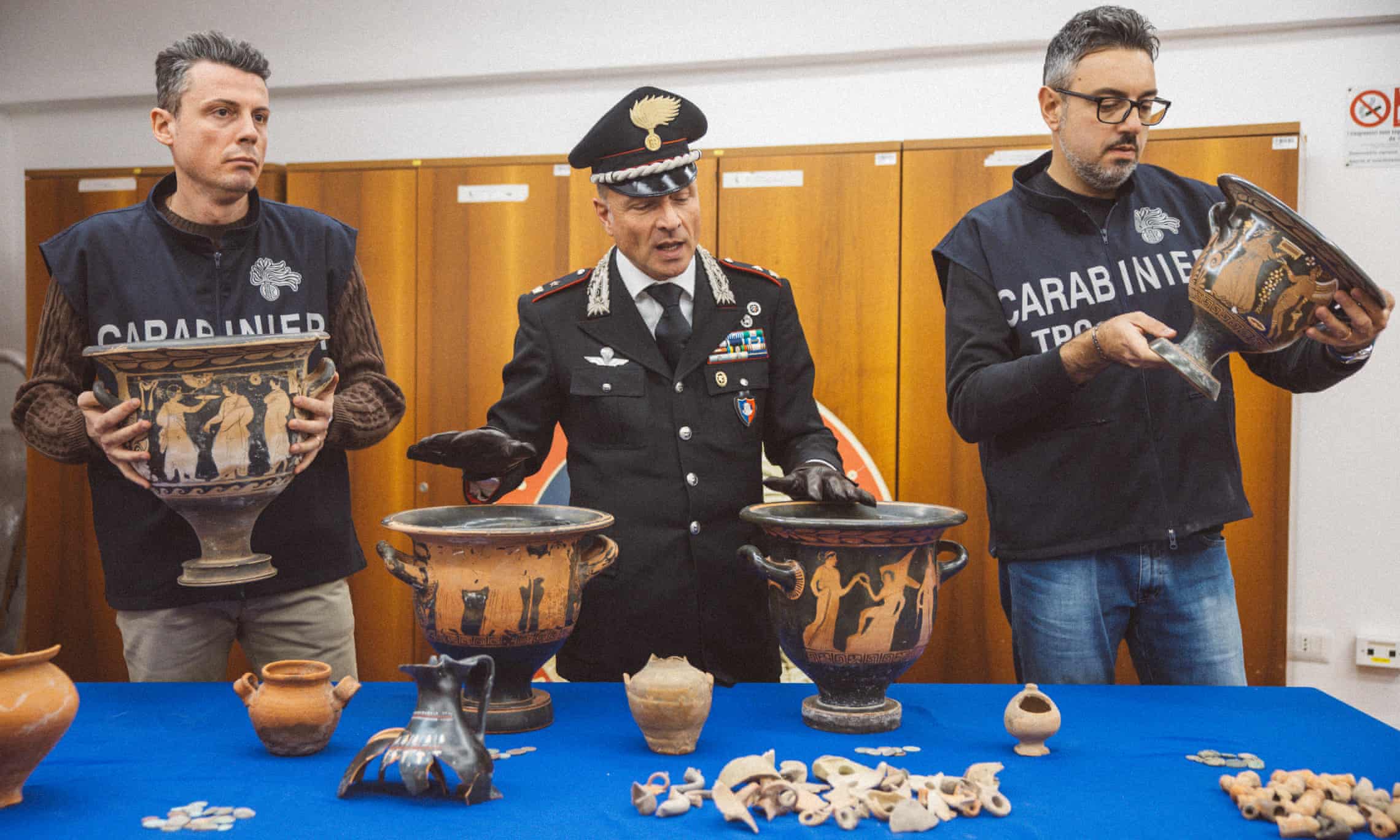
Italy’s Carabinieri cultural heritage protection squad at work. The force recently uncovered a clandestine dig in the middle of Naples
.

Every morning on the social network Mastodon, German archaeologist Nina Willburger (@ninawillburger) posts a beautiful, or at least curious, artifact from a dig. The history of archaeology suggests that not all of them were unearthed in legal ways, but they are in museums.

Nowadays there are strict laws around digging. Which is why Italy needs its cultural heritage protection squad.

At the Guardian, Angela Giuffrida wrote about the team’s latest success.

“Looking towards the semicircular apse with a frescoed image of a partially identifiable Christ on a throne staring back at them, the archaeologists crouching in the small space deep beneath a residential building in Naples were left speechless. They were amid the remains of an 11th-century church.

“The archaeologists, however, could not take the credit: the historic jewel, which had just been seized by police, was dug up by tombaroli, or tomb-raiders, illicit gangs who for decades have been plundering Italian cultural sites, in turn fueling the global market for stolen art and antiquities.

“Investigators believe the group’s leader was a local entrepreneur, currently under investigation, who owns two apartments in the building above. His cellar was turned into a well-organized excavation site, from where the tomb-raiders dug a warren of tunnels leading them about 8 metres [~26 feet] down into ancient Naples, where they unearthed medieval art. …

“But impressive though their workmanship was – they even installed concrete pillars to prevent the structure from collapsing – officers from the Naples unit of Italy’s Carabinieri cultural heritage protection squad unmasked the gang and confiscated the church after a covert investigation.

“The force also recovered 10,000 fragments of Roman and medieval pottery from the alleged gangmasters’ homes and 453 intact artifacts, including vases, terracotta lamps and coins. …

“The gangs commonly work by marking out clandestine excavation spots close to known archaeological sites, which in the Campania region surrounding Naples can include Pompeii, Herculaneum, Paestum or areas where there were Roman settlements. So uncovering a clandestine dig in the middle of the city took the specialist squad by surprise.

“ ‘When you think of Pompeii, for example, you know a dig can lead to a wealthy domus where prestigious objects can be found,’ says Massimo Esposito, the chief of the squad’s unit in Naples. ‘But it’s rare to find one in the heart of Naples.’

“The group’s alleged leader is believed to have had an inkling that there might be something beneath his home when construction works nearby on the city’s metro were interrupted and the site cordoned off after a small part of the remains of another, albeit less historically interesting, church emerged.

“The group worked for several months, carrying out their noisiest activity during the day, but not loud enough to attract complaints from the building’s residents. Little did the gang know that their comings and goings were being observed by Esposito’s team, with the squad staking out the building and wiretapping its alleged leader’s phone. Suspicions were especially aroused after seeing him carrying boxes filled with materials. …

“The Carabinieri’s cultural heritage protection squad was established in 1969 with the task of protecting Italy’s priceless cultural assets. Since then, more than 3m stolen artworks and relics have been retrieved, including those that ended up on display in some of the world’s biggest museums, such as the Getty in Los Angeles.

“Art and relics thieves in Campania especially thrived in the 1980s, taking advantage of a devastating earthquake at the beginning of that decade to ransack churches of paintings. The long-lost La Desposizione, a 2-metre high masterpiece painted by Angelo Solimena in 1664 depicting the crucifixion, was recently returned to Campania only after it was spotted on display in a museum in the Marche region. …

“Esposito met the Guardian in his unit’s office located in Castel Sant’Elmo, a medieval fortress overlooking Naples. He was surrounded by relics … including a wine amphora and a house-shaped sarcophagus believed to have contained the remains of a child, and various other funerary objects dating back to the fourth century AD. The artifacts are usually kept there pending the conclusion of judicial cases, before being either returned to their origin or entrusted to museums. …

“Data in recent years indicates a gradual decrease in crimes against cultural heritage. Laws for crimes against cultural heritage have been tightened, and work intensified to return stolen assets from abroad. … Use of social media, especially over the past decade, has also made it easier for the squad to identify thieves. A trove of funerary treasures, believed to have belonged to Etruscan princesses and illegally excavated from an underground tomb in Umbria, was retrieved in November after police came across a photo of the bungling thieves posing on Facebook as they attempted to sell it online.

“ ‘Despite the risk, there is sometimes this egotistical element: they want to boast about the beautiful items they’ve found,’ says Esposito.”

Check out the treasures at the Guardian, here. No paywall. Donations are important to the Guardian‘s journalism.

Read Full Post »

Photo: Sanjaya Dhakal/BBC Nepali.
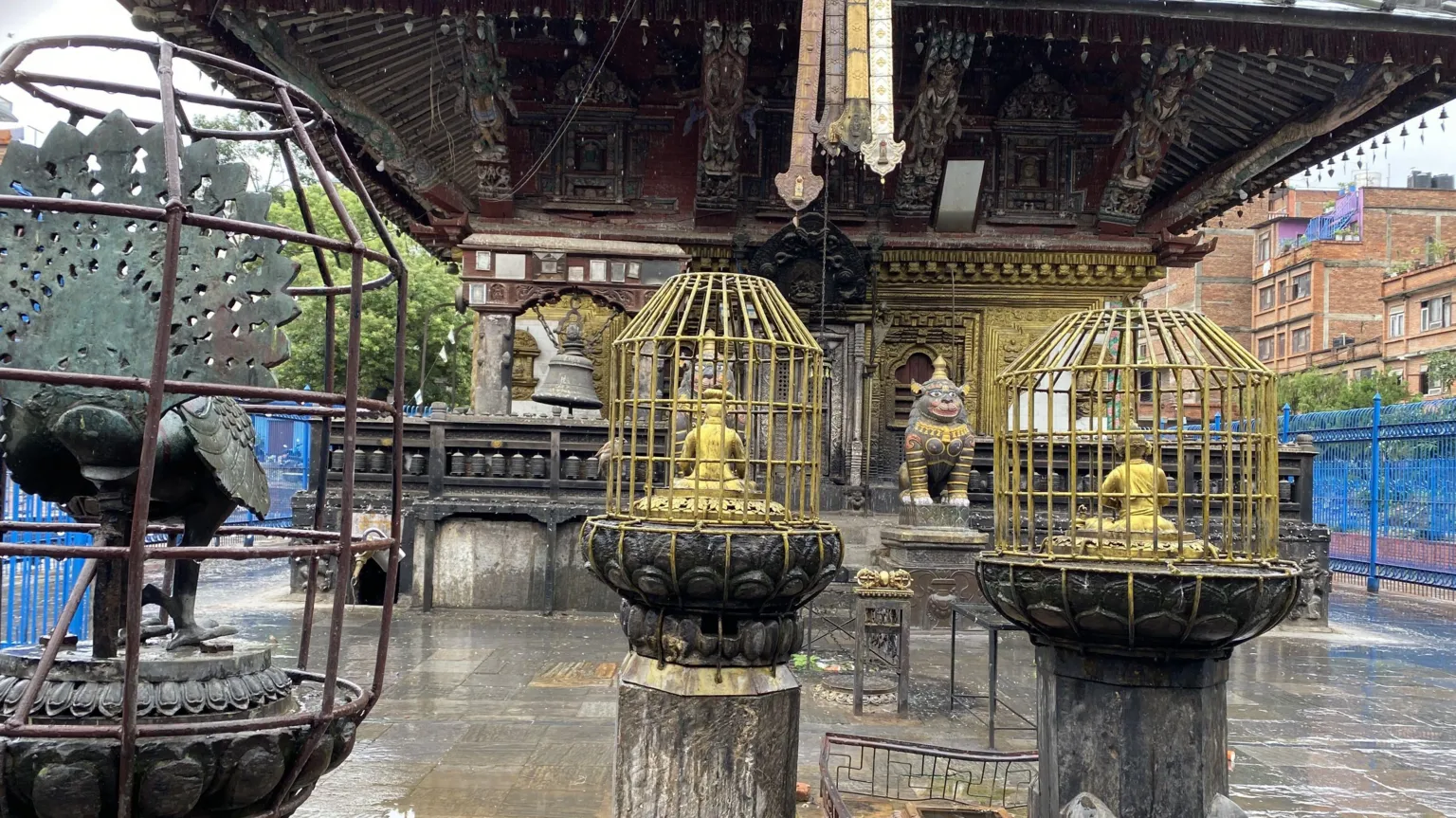
In Nepal, some communities have put their recovered idols in iron cages for security.

Who does art belong to? For centuries, looters have justified their thefts by asserting that they aim to protect the stolen art for posterity. That no longer holds up, and now art is getting returned to the plundered countries.

And if you play nice and return Nepali idols, you may be given an accurate replica.

Sanjaya Dhakal writes at The Guardian, “Along a small street in Nepal’s Bhaktapur city stands an unassuming building with a strange name — the Museum of Stolen Art. Inside it are rooms filled with statues of Nepal’s sacred gods and goddesses.

“Among them is the Saraswati sculpture. Sitting atop a lotus, the Hindu goddess of wisdom holds a book, prayer beads and a classical instrument called a veena in her four hands.

“But like all the other sculptures in the room, the statue is a fake. The Saraswati is one of 45 replicas in the museum, which will have an official site in Panauti, set to open to the public in 2026.

“The museum is the brainchild of Nepalese conservationist Rabindra Puri, who is spearheading a mission to secure the return of dozens of Nepal’s stolen artifacts, many of which are scattered across museums, auction houses or private collections in countries like the US, UK and France.

“In the past five years, he has hired half a dozen craftsmen to create replicas of these statues, each taking between three months and a year to finish. The museum has not received any government funding. His mission is to secure the return of these stolen artifacts – in exchange for the replicas he has created.

“In Nepal, such statues reside in temples all across the country and are regarded as part of the country’s ‘living culture,’ rather than mere showpieces, says Sanjay Adhikari, the secretary of the Nepal Heritage Recovery Campaign. Many are worshipped by locals every day, with some followers offering food and flowers to the gods. …

“It is also common for followers to touch these statues for blessings — meaning they are also rarely guarded — leaving them wide open for thieves.

“Nepal has categorized more than 400 artifacts missing from temples and monasteries across the country, but the number is highly likely to be an underestimate, says Saubhagya Pradhananga, who heads the official Department of Archaeology.

“From the 1960s to the 1980s, hundreds of artifacts were looted from Nepal as the isolated country was opening up to the outside world. Many of the country’s most powerful administrators back then were believed to have been behind some of these thefts — responsible for smuggling them abroad to art collectors and pocketing the proceeds.

“For decades, Nepalis were largely unaware about their missing art and where it had gone, but that has been changing, especially since the founding of the National Heritage Recovery Campaign in 2021 – a movement led by citizen activists to reclaim lost treasures. …

“There are many hurdles. The Taleju Necklace, dating back to the 17th century, is a case in point. …

“It’s still unclear how it might have been stolen and many in Nepal had no idea where it might have gone until three years ago, when it was seen in an unlikely place – the Art Institute of Chicago.

“It was spotted by Dr Sweta Gyanu Baniya, a Nepali academic based in the US who said she fell to her knees and started to cry when she saw the necklace.

“According to the Art Institute of Chicago, the necklace is a gift from the Alsdorf Foundation — a private US foundation. The museum told the BBC it has communicated with the Nepali government and is awaiting additional information.

“It’s not just a necklace, it’s a part of our goddess who we worship. I felt like it shouldn’t be here. It’s sacred,” she told the US university Virginia Tech. …

“But [Saubhagya Pradhananga, who heads the official Department of Archaeology] said Nepal’s Department of Archaeology had provided enough evidence, including archival records. On top of that, an inscription on the necklace says it was specifically made for the Goddess of Taleju by King Pratap Malla.

“It’s these ‘tactics of delay’ that often ‘wear down campaigners,’ says one activist, Kanak Mani Dixit. ‘They like to use the word “provenance” whereby they ask for evidence from us. The onus is put on us to prove that it belongs to Nepal, rather than on themselves on how they got hold of them.’ …

“Many worshippers are now a lot more paranoid — putting these idols in iron cages to protect them from going missing.

“Mr Puri however hopes his museum will eventually have its shelves wiped bare.”

More at the BBC, here. No paywall.

Read Full Post »

Photo: Neal’s Yard Dairy/Instagram.
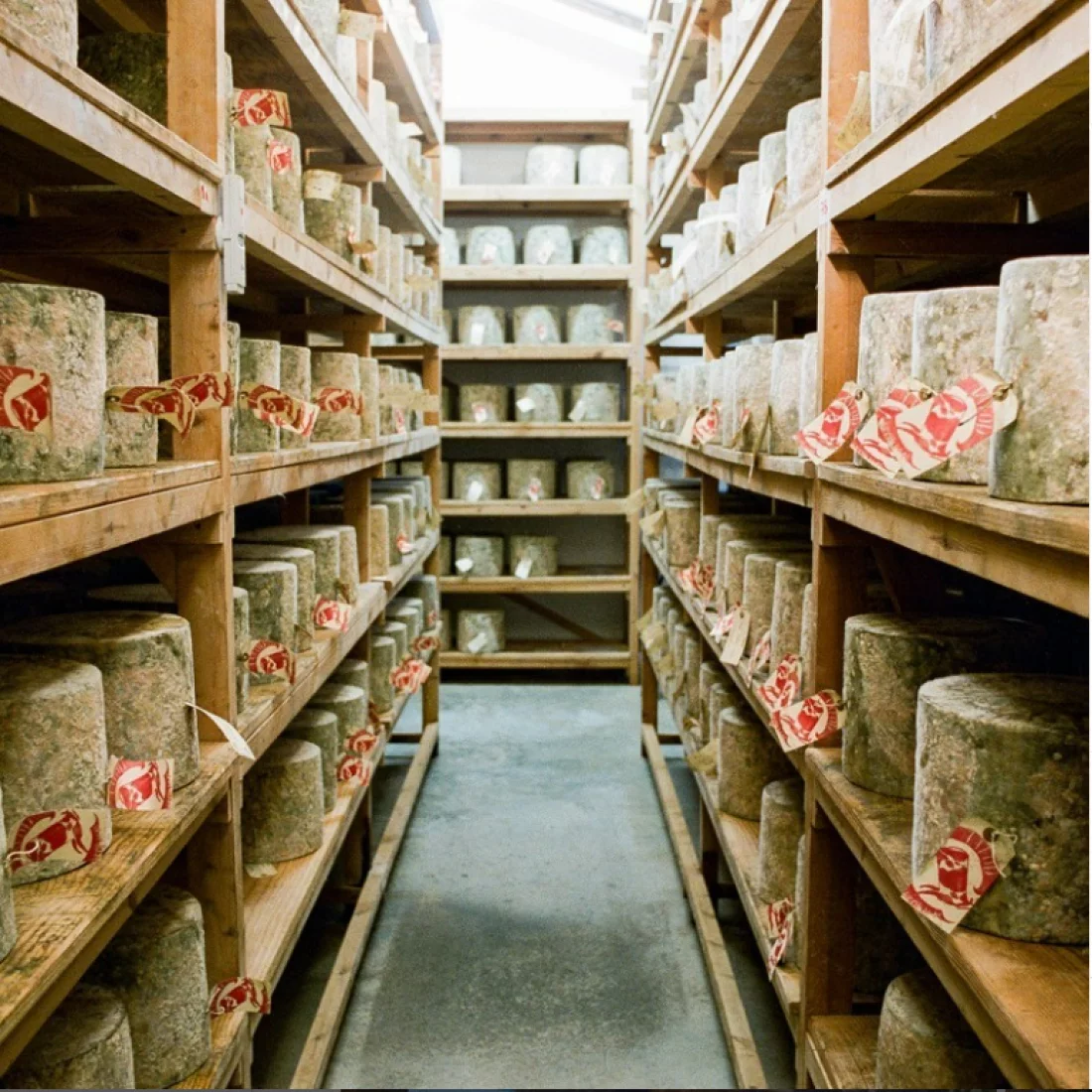
London-based distributor Neal’s Yard Dairy announced recently on Instagram that it was “the victim of a sophisticated fraud” involving high-value cheddar cheese.

You really don’t want to get mixed up with people who are intense about cheese. Years ago, when I was a member of Cheese Lovers International, I crossed knives with the highly emotional founder, whose name I no longer recall. To compensate for something I once complained about, he told me he would give me a discount on every order for my life. Unfortunately, his staff had no way of knowing about my discount. Explaining got to be too much work.

Rachel Treisman and Juliana Kim have a great cheese story at National Public Radio.

“Authorities in London have arrested a 63-year-old man in connection with the cheese heist of 2024, in which tens of thousands of pounds of high-value cheddar were stolen from a major distributor. ..

“ ‘The man was taken to a south London police station where he was questioned. He has since been bailed pending further enquiries,’ a police spokesperson said.

“Over the past week, the British artisanal cheese community has been reeling after Neal’s Yard Dairy announced it had been the ‘victim of a sophisticated fraud resulting in the loss of over £300,000 worth of clothbound Cheddar’ — the equivalent of more than $389,000.

“ ‘The theft involved a fraudulent buyer posing as a legitimate wholesale distributor for a major French retailer, with the cheese delivered before the discovery of the fraudulent identity,’ the company said.

“The thief made off with 950 wheels — over 22 metric tons, or roughly 48,500 pounds — of Hafod, Westcombe and Pitchfork cheddar. … The wheels came from three different artisan suppliers across England and Wales.

“ ‘Between them, these cheeses have won numerous awards and are amongst the most sought-after artisan cheeses in the U.K.,’ Neal’s Yard Dairy said. … The crime cuts deep: Cheddar, which originated in a village by the same name in Somerset, England, is the best-selling cheese in the U.K. and a big source of national pride.

“Last week, British celebrity chef Jamie Oliver explained in an Instagram video that there is ‘only a small handful of real cheddar cheese makers in the world,’ and that’s where the stolen cheese came from. …

“Neal’s Yard Dairy is shouldering the cost of the crime, having already paid the artisan cheesemakers in full. The company says it is now taking steps to ensure its own financial stability. …

“Tom Calver with the cheesemaker Westcombe says they were led to believe they were sending their products to France via Neal’s Yard Dairy.

“ ‘These guys … basically impersonated a wholesaler-slash-customer, quite a large retailer over in France,’ he said in an Instagram video, showing a row of empty shelves and noting he had posted excitedly about the 10-ton order just weeks earlier. ‘It was a hoax, it was theft, it was fraud. I mean, it’s nuts.’

“Patrick Holden, whose Hafod Welsh cheddar was taken, told the BBC … he believes they may be trying to sell it in the Middle East or Russia, ‘because people won’t ask questions there.’

“ ‘I think if they tried to sell it closer to home they’d find it difficult,’ he said, naming North America and Australia as examples. ‘Because the international artisan community is very connected.’ …

“Neal’s Yard Dairy is asking its ‘esteemed community of cheesemongers around the world’ to keep an eye out for the cheese and contact them if they are offered or receive any suspicious deals — especially clothbound cheddars of certain weights (10 kg and 24 kg) with the tags detached. …

“ ‘Because we can potentially trace it back — hopefully, maybe, I don’t know.’ “

I have one more question: Where was Ratatouille at the time of the crime?

More at NPR, here.

Read Full Post »

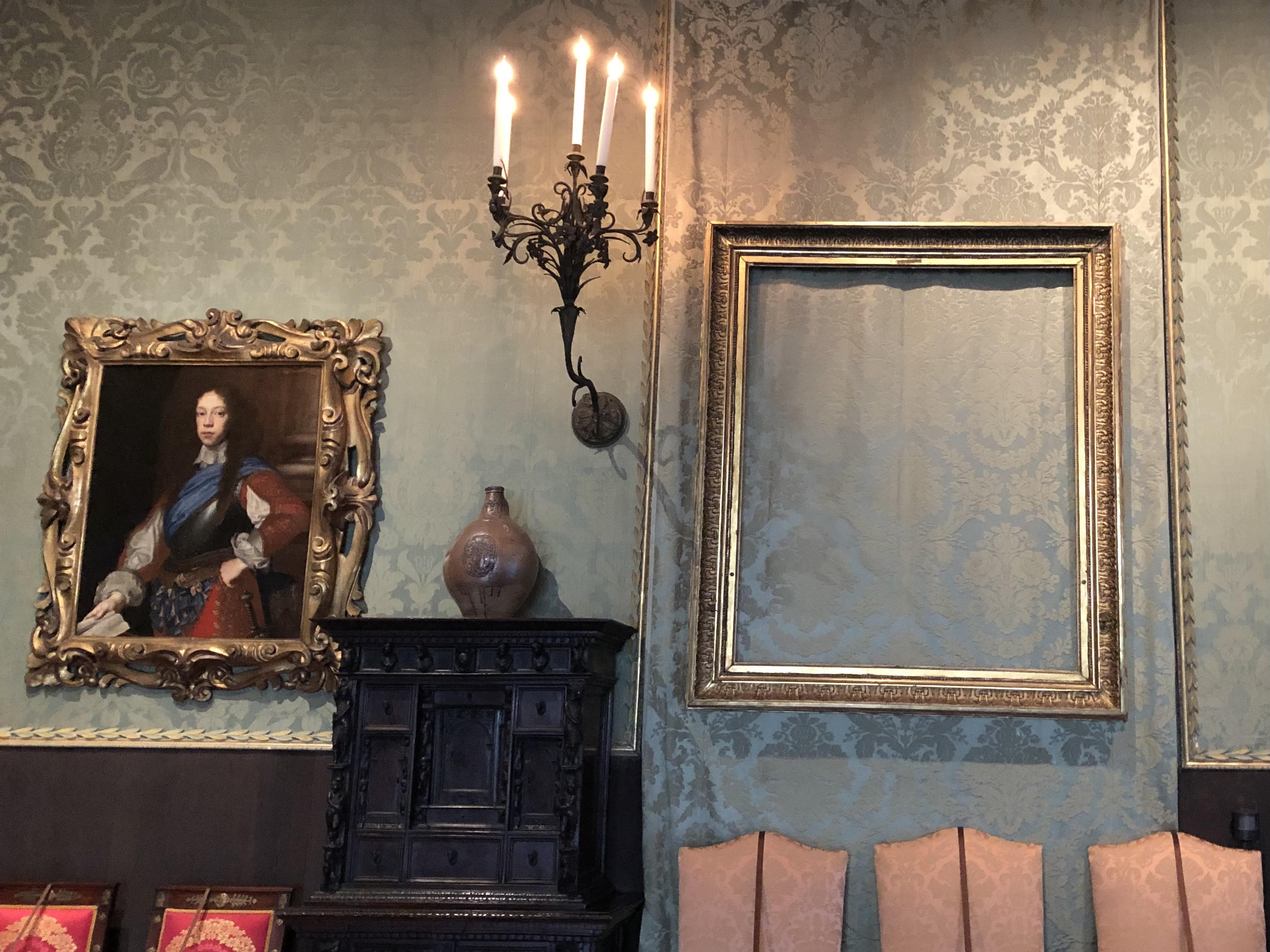
In March 1990, thieves broke into Boston’s Isabella Stewart Gardner Museum and “cut Rembrandt’s ‘Christ in the Storm on the Sea of Galilee‘ and ‘A Lady and Gentleman in Black,’ ” among other works, from their frames.

A renewed flurry of interest in the 1990 art heist at the Isabella Stewart Gardner Museum occurred the week that my husband and I took Minnesota friends to see the collection.

It was the week that “Robert V. Gentile, a Connecticut mobster long suspected by federal authorities of having information about the whereabouts of $500 million worth of masterworks stolen from Boston’s Isabella Stewart Gardner Museum decades ago,” died. (See Boston Globe story.)

Visitors still flock to see the blank places where the missing pieces were once exhibited, and the museum staff is well primed on details. (Our friends asked one guard how long it took the thieves to get in and out with the goods. “Eighty-one minutes,” he answered promptly.)

So today I will share some pictures from our visit as well as a few other photos of the season.

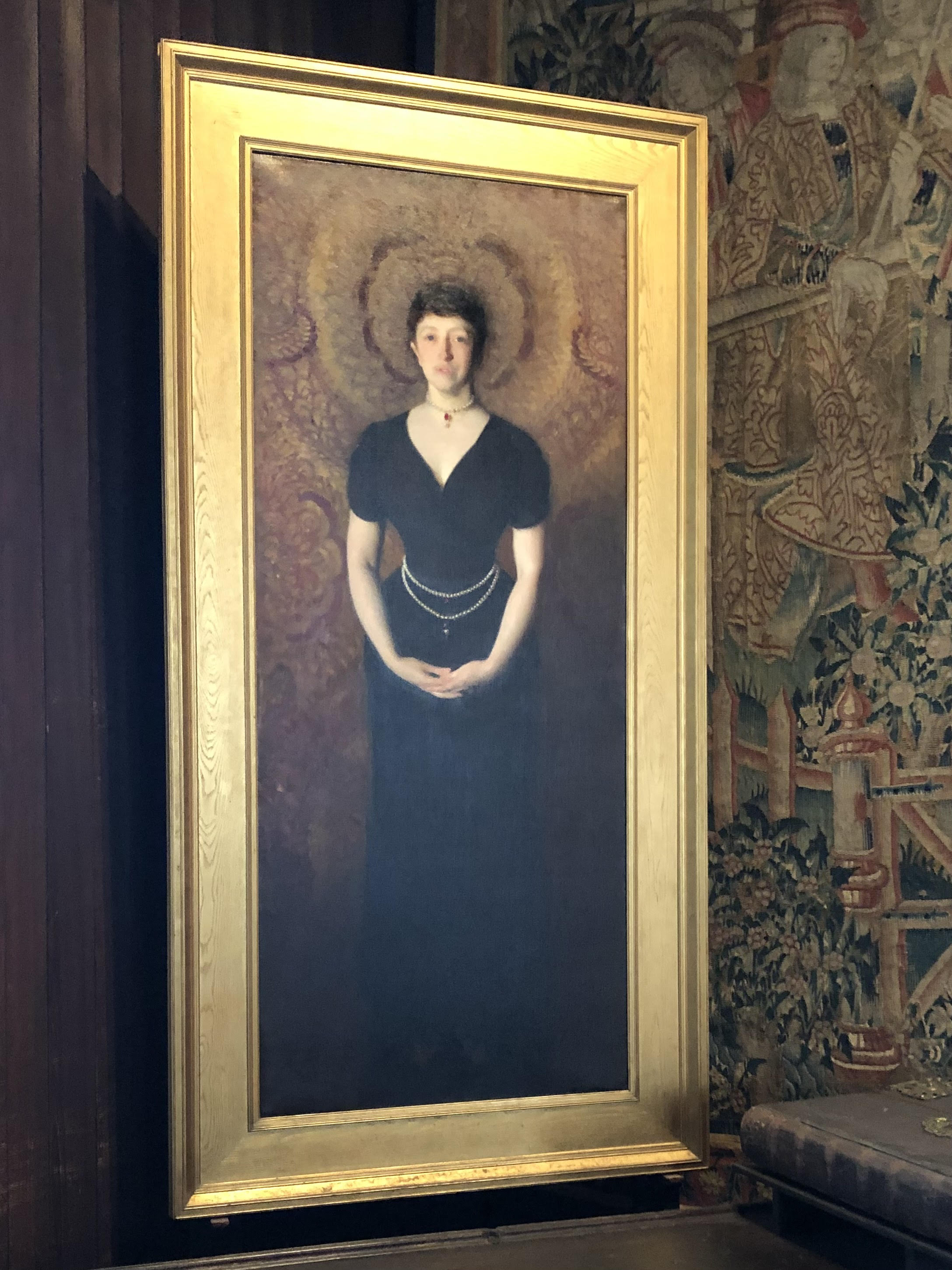
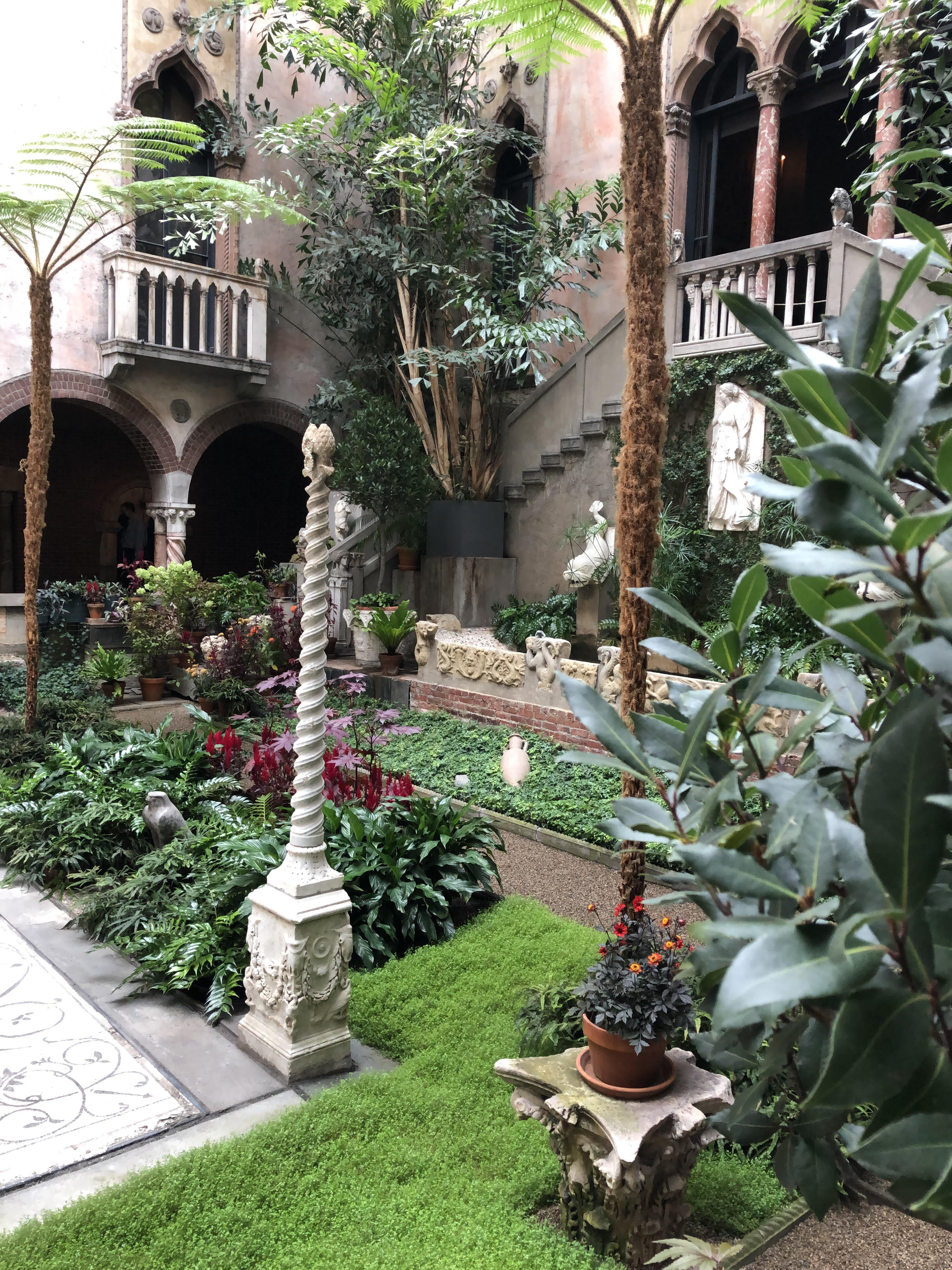
Isabella Stewart Gardner, seen in the portrait below, was an unusual, wealthy woman who imported the courtyard and many other rooms and reconstructed them in the mansion that became a museum. She insisted in her will that nothing ever be changed after her death.

That posed a challenge for trustees. So in recent years, a separate building was constructed and connected to the mansion museum. In the new building, we saw the Titian exhibition, which features a series of paintings that Titian created between 1551 and 1562 for King Philip II of Spain. The most famous of the series is a painting Gardner actually owned.

The scenes of violence against women from Roman Mythology have forced curators to jump through a few hoops. Read about that here.

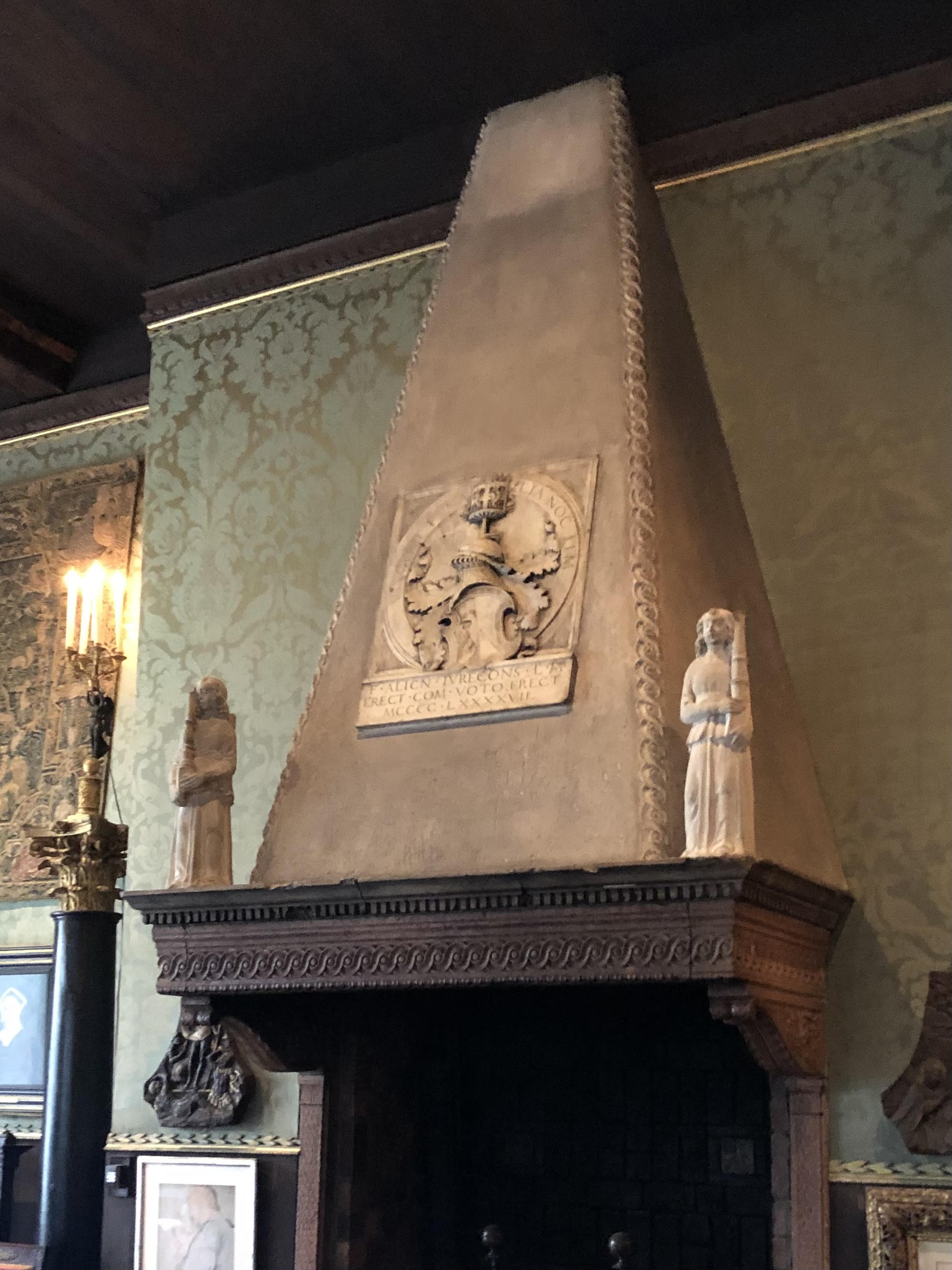
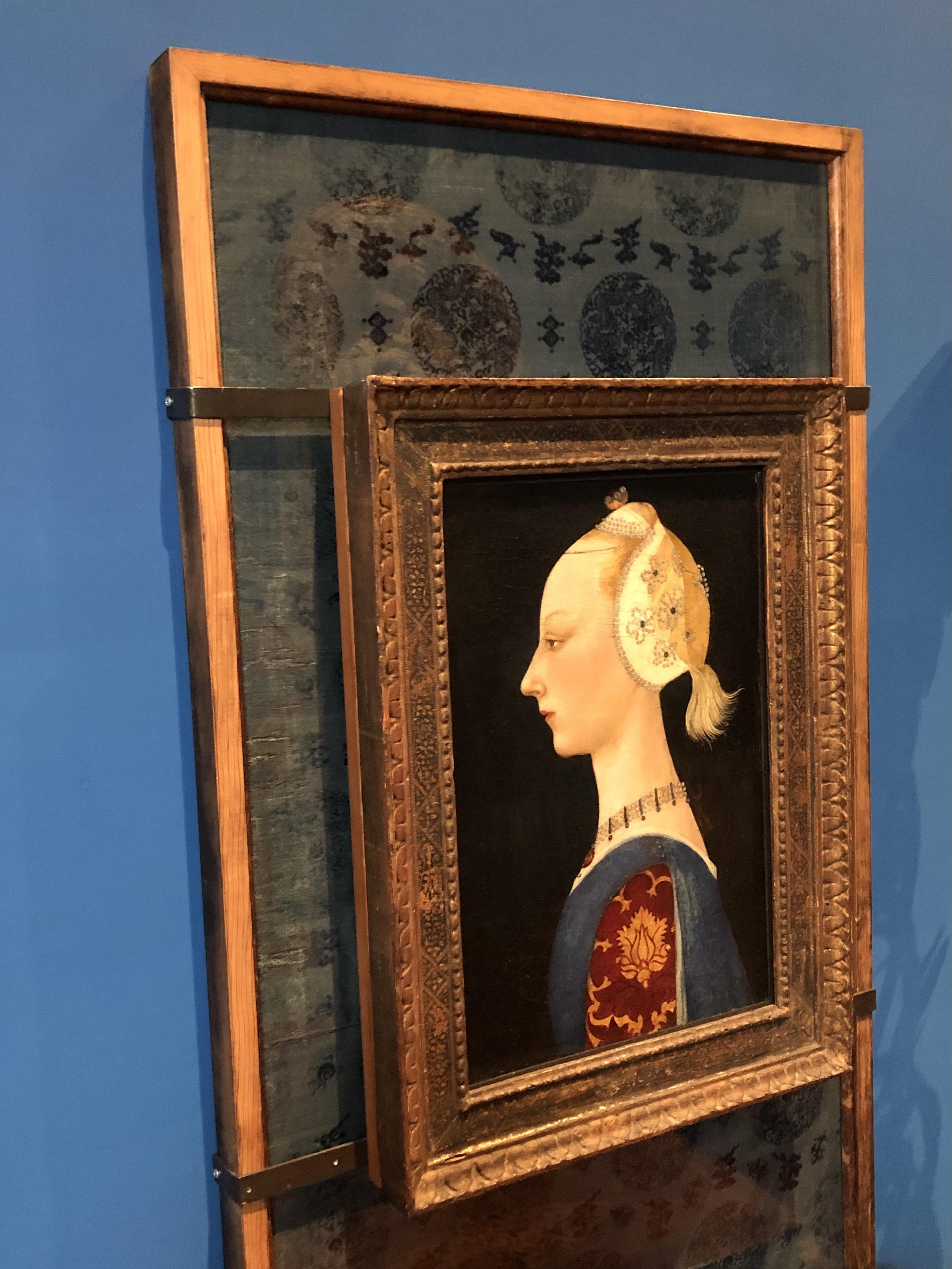
I have included a photo of the fireplace in the Dutch Room, the room from which most of the art works were stolen, and 15th century artist Paolo Uccello’s “A Young Lady of Fashion.”

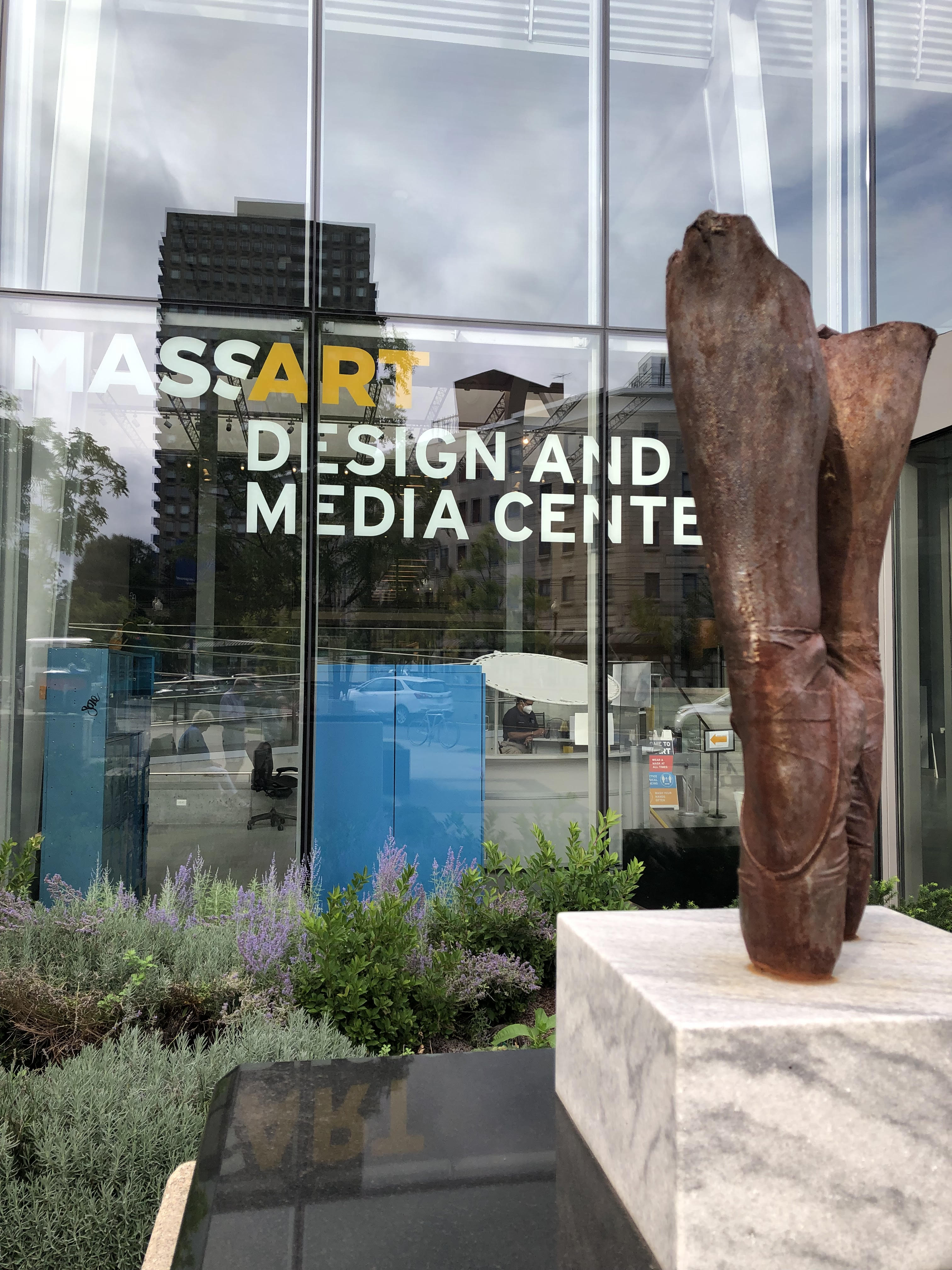
The sculpture of ballet feet was outside the Mass College of Art, where we sat for a while to chat with our friends without masks that day.

Later, when I was back home, I shot the formal garden of a house in town, thinking how much it reminded me of the Gardner courtyard.

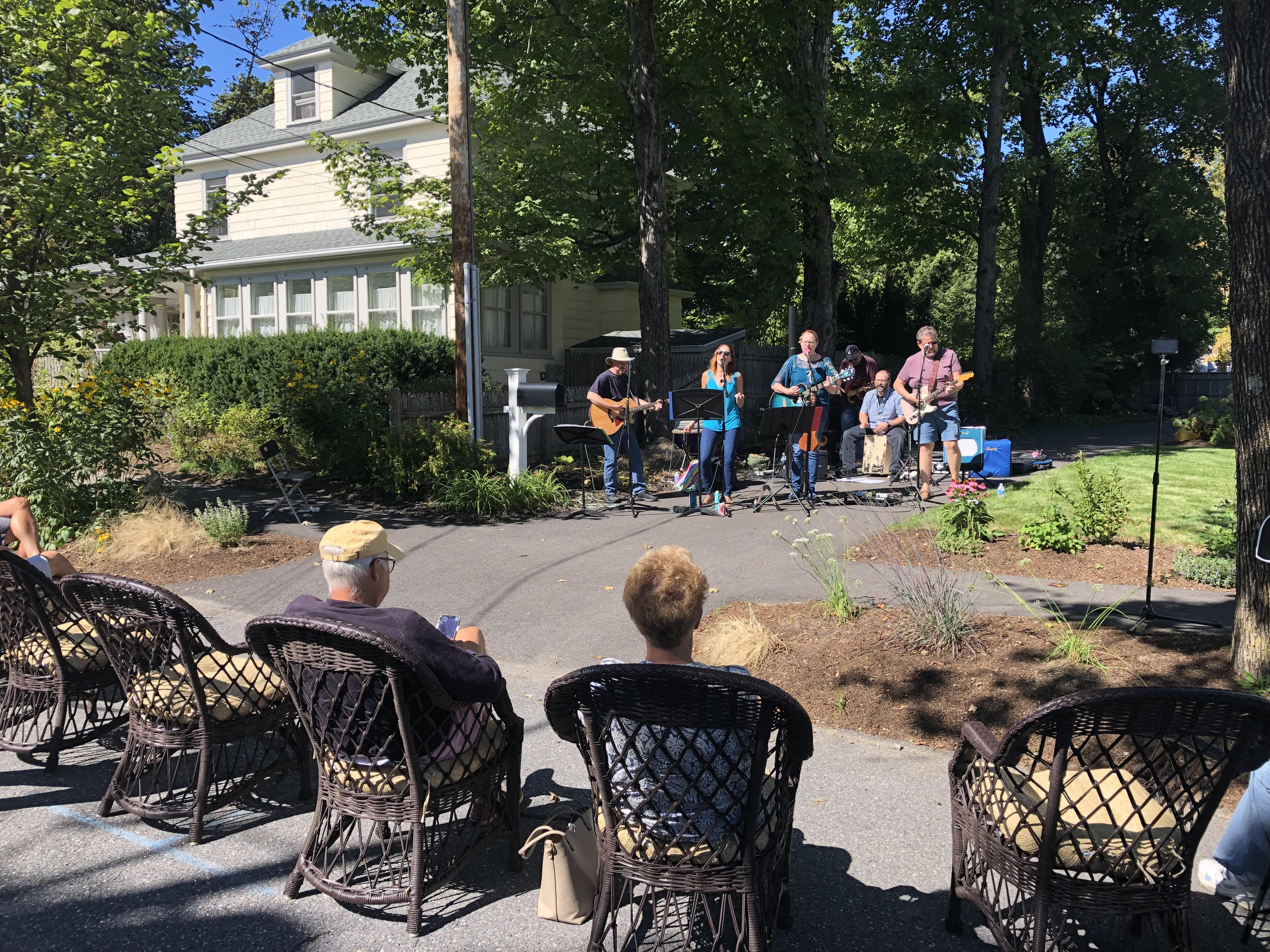
Also in town, there was a neighborly Porchfest once again, having been canceled last year because of Covid.

For the red flower picture, I very carefully tried to exclude all the clutter around it, but there is still an orange traffic hat peeking through in back. The next shot features a creative Toyota bumper.

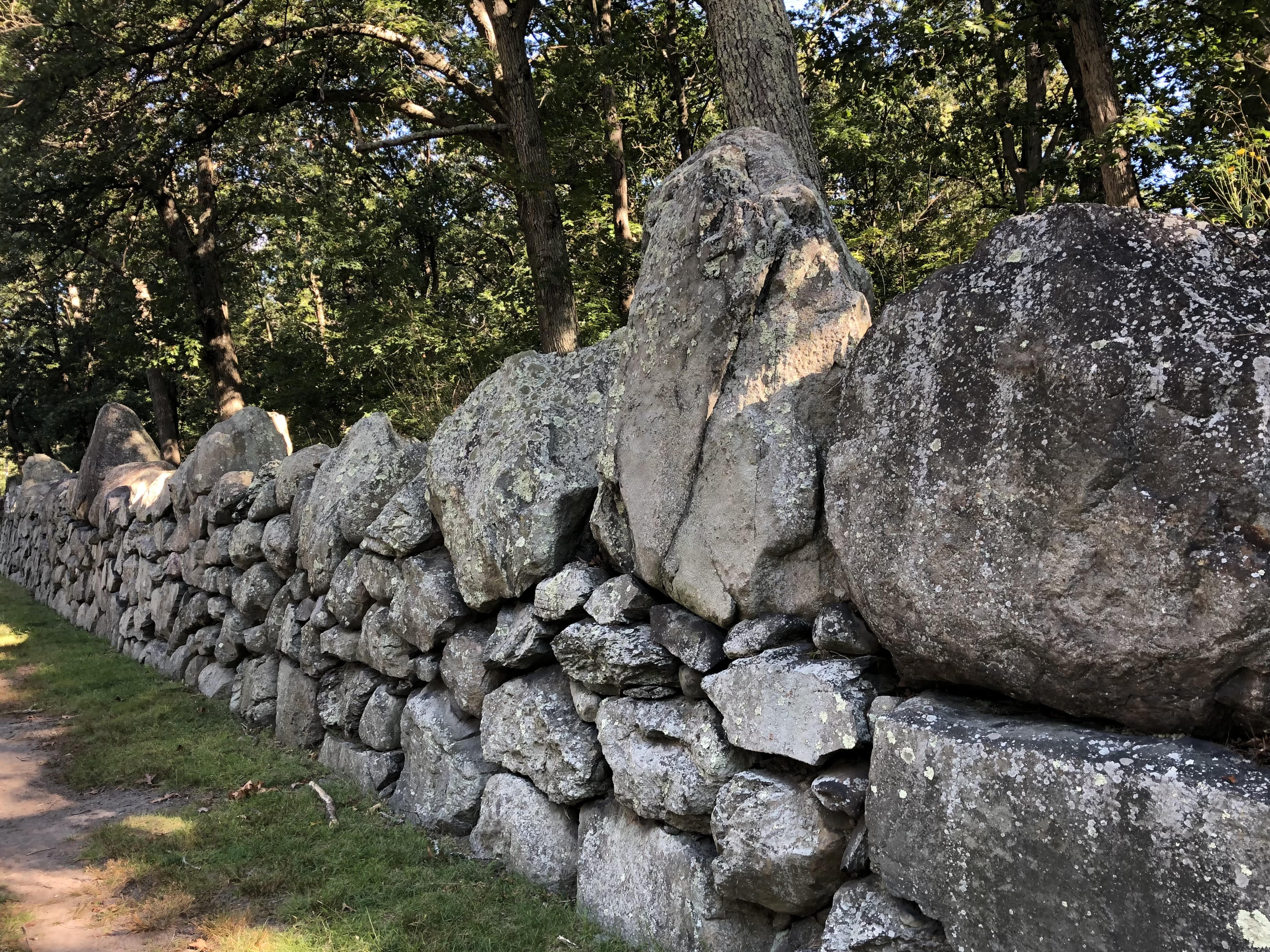
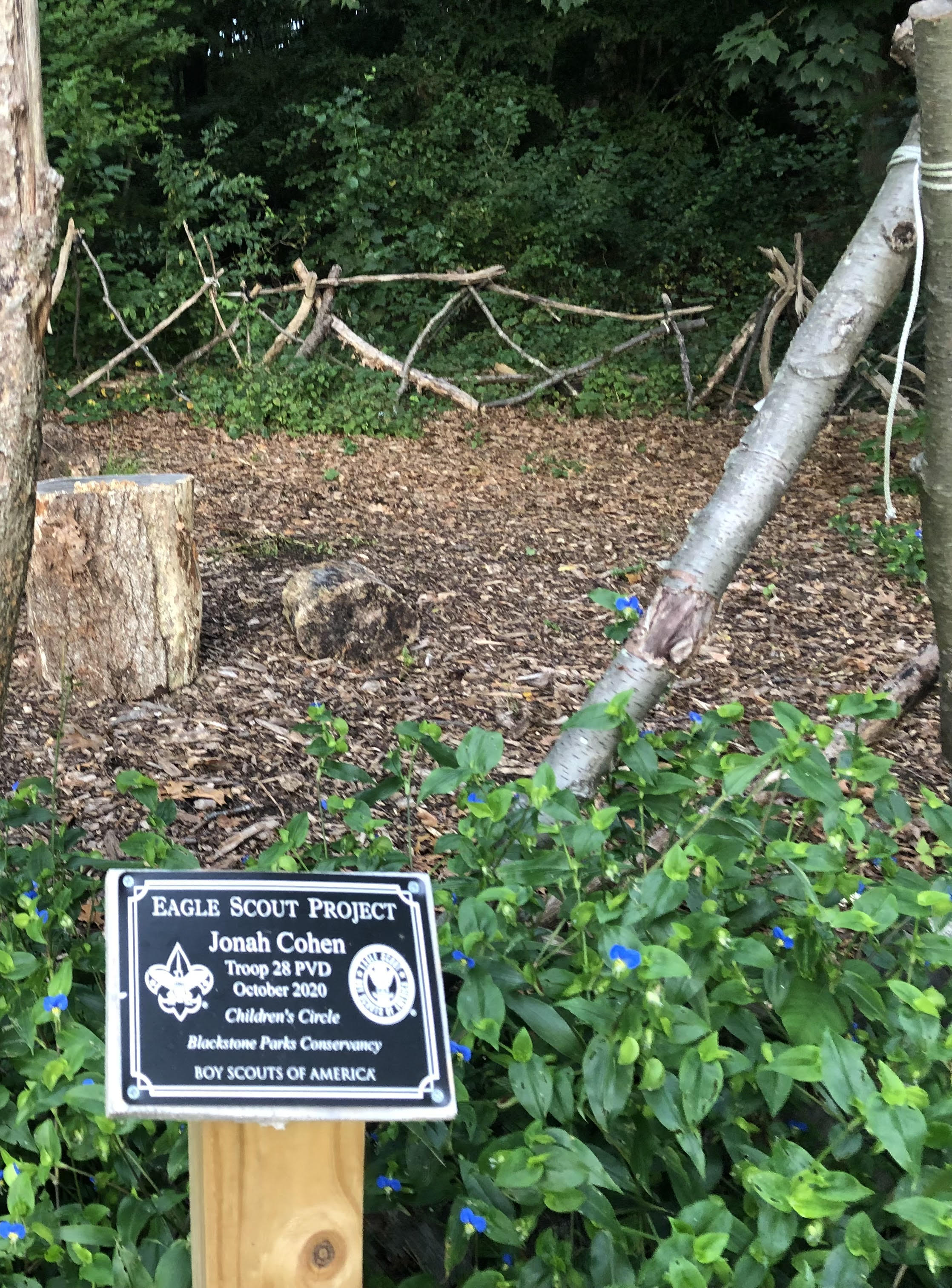
Finally, a few photos from Rhode Island — a wall of giant stones and a Blackstone Park Eagle Scout project that created an activity space for children.

Read Full Post »

Photo: Ibl/REX/Shutterstock.
Art detective Christopher Marinello, left, returning the long-lost Le Jardin by Matisse to Lars Bystrom of the Modern Museum in Stockholm in 2013.

Now for something completely different, how about we delve into the life of a lawyer who walks some dangerous paths to recover stolen art?

Alex Daniel writes at the Guardian, “One summer morning in 2008, Christopher Marinello was waiting on 72nd Street in Manhattan, New York. The traffic was busy, but after a few minutes he saw what he was waiting for: a gold Mercedes with blacked-out windows drew near. As it pulled up to the kerb, a man in the passenger seat held a large bin-liner out of the window. ‘Here you go,’ he said. Marinello took the bag and the car sped off. Inside was a rolled-up painting by the Belgian artist Paul Delvaux, Le Rendez-vous d’Ephèse. Its estimated worth was $6m, and at that point it had been missing for 40 years.

“Marinello is one of a handful of people who track down stolen masterpieces for a living. Operating in the grey area between wealthy collectors, private investigators, and high-value thieves, he has spent three decades going after lost works by the likes of Warhol, Picasso and Van Gogh. In that time, he says he has recovered art worth more than half a billion dollars. …

“Cases tend to go the following way. A stolen artwork – in this instance, a bird by the Martin Brothers pottery makers, which was swiped from a London library in 2005 – will often turn up at auction or on social media. It then falls to Marinello to establish whether it is actually the missing work and, sometimes, to get it back. This, he says, is usually relatively simple.

“Stolen works often change hands several times before resurfacing, leaving subsequent possessors in the dark about their provenance. This is most likely what happened with the Delvaux. The painting, completed in 1967, depicts several nude women in a dreamlike landscape that’s part classical architecture, part mid-century tram station. Delvaux himself sold it a year later, but it was stolen before it reached the buyer. In 2008, Marinello got a call from somebody who wanted to return it. What happened to it in the intervening 40 years is unclear, although its final location is known. It was rolled up, says Marinello, in the wardrobe of ‘a very well-heeled celebrity. And their very expensive lawyer made it clear they would never be named.’ …

“A slight, 58-year-old Italian American with a soft Brooklyn accent, Marinello … trained as a lawyer, cutting his teeth as a litigator in New York representing galleries, collectors and dealers in cases involving disputed works. ‘Eventually, it developed into a full-time art recovery practice,’ he says. In 2013, he formed his own company, Art Recovery International, which is based in Venice but has offices in London. …

He says. ‘[I’m] a pretty good negotiator. I can convince people to do the right thing. … The bottom line [is] that if you are trying to sell something that is stolen, you’re the one with a problem, not me.’ …

“He adds: ‘With a lot of art crime, there is nobody to arrest and people rarely go to prison. It’s just a matter of recovering the work.’

“However, sometimes a suspect will refuse to cooperate. Then, things are different. ‘We go after them like pitbulls and never let go,’ he says. ‘And that is when they start getting nasty, when they are concerned they’re going to go to prison.’ “

More at the Guardian, here. If you don’t follow the Guardian online, do check it out. I really love it. It’s free, but grateful readers volunteer to pay what they can.

Read Full Post »