Feeds:
Posts
Comments

Posts Tagged ‘union’

Photo: Riley Robinson/CSM.
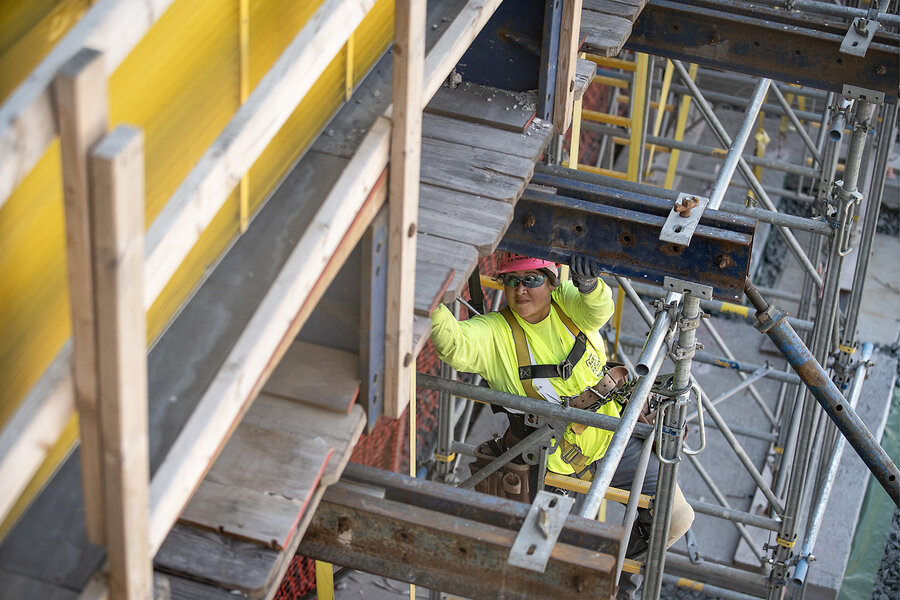
Above, Lucy Lujana, a carpenter with United Brotherhood of Carpenters and Joiners Local 54 in Chicago. As of 2023, only 3.1% of carpenters were women. Sometimes they call themselves the “Sisters of the Brotherhood.”

In the US, some women have moved into jobs traditionally held by men, but progress seems slow to me. In countries including India, Australia, Finland, England, and Israel, women have served at the very top, same as being president in the US. America’s oddly progressive and backward character is something to ponder.

Today we consider women in unions.

Richard Mertens writes at the Christian Science Monitor, “Last year, Lisa Lujano, a longtime member of the United Brotherhood of Carpenters and Joiners Local 54, found herself in very unfamiliar company. She had been tasked to build stairs in one section of the Obama Presidential Center on Chicago’s South Side. When she showed up for work, she discovered she would be part of a crew of five, all women.

“ ‘I don’t know how it came about,’ Ms. Lujano says. … Most of the time, when she shows up for work, she’s the only woman on the crew. And she and her fellow tradeswomen know as well as anyone an inescapable truth: The American construction site is still a man’s world. Until that moment, at least, when suddenly it wasn’t.

“ ‘It was a good experience,’ Ms. Lujano says, looking back on the 11 months working alongside other women carpenters. ‘We were able to relate, be more comfortable with each other. Then she adds, almost exultingly, ‘We’re sisters in the brotherhood!’ …

“Ms. Lujano has been a member of her union for almost 25 years. The journeyman carpenter loves her work, the daily routine. But she still puts up with unpleasant conversations. At lunch she’ll sometimes sit by herself, or take a nap in her car. …

“On a recent Friday, she was … on a team of about 60 workers rebuilding a train station at the edge of the University of Illinois Chicago campus. She’s one of only five women at the site today, the only one on her crew of 10. …

“Over the past decade, the number of women in the construction sector of the U.S. economy has risen steadily, from about 800,000 in 2012 to about 1.3 million in 2023, according to the U.S. Bureau of Labor Statistics.

“Only 11% of jobs in construction industries are held by women, and the majority of these jobs are in office work, sales, or other support services. A growing number are even becoming managers. But on construction sites themselves, the vast majority of construction workers remain men. …

“ ‘The whole process of diversifying the construction trades has been an incredible slog,’ says Jayne Vellinga, executive director of Chicago Women in Trades, an organization that has worked for decades to help women find jobs in the skilled trades.

“[Yet] there’s been a surge in demand for construction workers. … About 94% of construction firms report being unable to hire the skilled workers they need, according to the Associated General Contractors, a trade group in Arlington, Virginia. Experts estimate this shortage numbers more than a half-million workers.

“Given these shortages, the contractors trade group also found last year that 77% of construction companies report that ‘diversifying the current workforce at our firm is critical to strengthening our future business.’

“This doesn’t mean companies will be hiring more women. There remains a significant cultural obstacle to bringing more women into and training them for the skilled trades: Construction is still widely believed to be the domain of men. …

“Like many women, Ms. Lujano followed an unconventional path into the trades. She had no family connections, no uncle or father to bring her into the business, as young men often had. She had dropped out of high school to care for a son who was just a year old. ‘I couldn’t support him,’ she says. …

“In 1998, she saw a flyer from Job Corps, a federal program that offers young people preapprenticeship training and a chance to finish high school. The flyer listed different jobs: plumber, electrician, carpenter, secretary, and more.

“She enrolled in a program in Golconda, a small Illinois town on the banks of the Ohio River. There, over 13 months, she earned a GED certificate and received hands-on training in how to build things. She and other students built ladders, bunk beds, and even frame houses. ‘It was just so cool,’ she says. ‘I ended up loving it.’

“But it wasn’t easy. In her first job she spent four months demolishing and rebuilding porches for a nonunion contractor. Then she got her first union job, working on a bridge in Skokie, just north of Chicago. She was the only woman in a crew of young men in their early 20s. The men would make vulgar comments to her, or about her, even in her presence. …

“Ms. Lujano is no longer a rookie apprentice, but a journeyman carpenter making the full journeyman’s wage: $55 an hour, plus health benefits and a pension. She’s also a union steward, responsible for making sure the workers are properly credentialed and helping them deal with complaints or problems on the job. …

“Looking out over the worksite at the train station in Chicago’s Near North Side, Ms. Lujano sees both good and bad, both progress and the limitations of that progress. Including her with the carpenters, there is one woman among the electricians, one among the ironworkers, one among the bricklayers, and one among the painters. Tradeswomen often feel they are only tokens of diversity on the job site. But to Ms. Lujano, one woman is better than none. …

“Now in her third decade as a union carpenter, she feels keenly the need to help younger women as they face the challenge of working in a world that has, for so long, been dominated by men.”

More at the Monitor, here. No firewall. Subscriptions solicited.
Read Full Post »

Photo: Library of Congress, LC-USZ62-51058, via Axios.
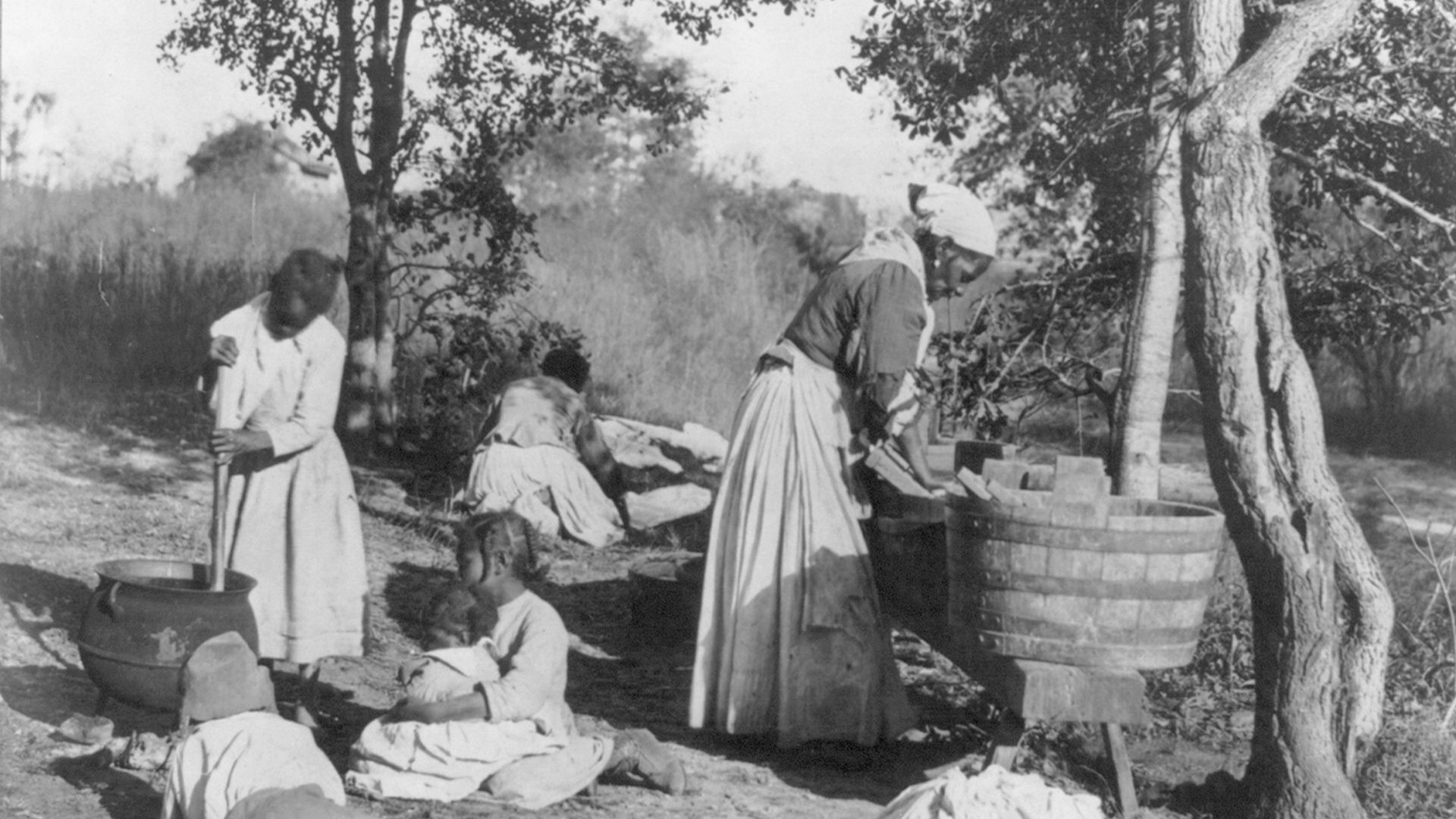
African American women and girls doing laundry with a scrub board and tub, c. 1900.

Today I’m thinking about how good things get accomplished when people submerge their differences and focus on what they have in common. And I’m remembering that even people who say they don’t like unions routinely reap the benefits of the labor movement.

One early labor milestone happened when Black washerwomen in the South had just had enough. Kim Kelly wrote up the story for the Washington Post.

“There is no one location or event that can lay a definitive claim to the founding of the American labor movement, but what is certain is the enormous debt it owes to women.

“During the Victorian era … waged labor was seen as the exclusive realm of men, and for most middle- and upper-class women, the thought of earning money for their toil was wholly foreign.

“Of course, these standards were applied specifically to native-born White women, whose status as a protected class separated their experiences from those of working-class women of color in the United States — particularly Black women, whose relationship with work in this country began with enslavement, violence and forced labor. Following Emancipation, their lives were still often defined by exploitation, abuse and wage theft. Whether held in bondage or living freely, Black women were expected to work from the moment they were old enough to hold a broom.

“These women were hardly alone. By the 1830s, the American genocide against Indigenous people had been well underway for decades, and the few Indigenous women allowed into the workforce were treated abominably. As immigration ramped up during the middle of the 19th century, female workers from other ethnic groups — including Irish immigrants fleeing a colonial famine and Russian Jews seeking to escape brutal repression — were also targeted. …

“But that restrictive social fabric quickly began to fray as the Industrial Revolution took flight. … On a balmy spring 1824 day in Pawtucket, R.I., 102 young women launched the country’s very first factory strike, and brought the city’s humming textile industry to a standstill.

“The 19th-century Northern U.S. textile industry was almost entirely White. It wasn’t until 1866, a year after Emancipation, that formerly enslaved Black female workers were able to launch a widespread work stoppage of their own — and by doing so, jump-start a wave of Black-led labor organizing that would spread through multiple industries and set the stage for decades of labor struggles to come.

On June 16, 1866, laundry workers in Jackson, Miss., called for a citywide meeting.

“The women — for they were all women, and all were Black — were tired of being paid next to nothing to spend their days hunched over steaming tubs of other (White) people’s laundry, scrubbing out stains, smoothing the wrinkles with red-hot irons, and hauling the baskets of heavy cloth through the streets. At the time, nearly all Black female workers were employed as domestics by White families, to handle the cooking, cleaning and child care, hauling water, emptying chamber pots, and performing various and sundry other tasks that the lady of the house preferred to avoid.

“Laundry, at the time a labor-intensive day-long process, topped that list in an era in which families were large, personal hygiene was negligible, and running water was scarce. The washerwomen’s wages were kept so low that even poor White families could afford to send their laundry out for Black women to clean.

“The work itself was onerous, but the relative flexibility and independence it afforded was attractive to Black female workers: They were able to work out of their own homes, which in turn allowed them to plan around their own familial and community obligations, and it was a trade that could be passed down to their own daughters. …

“In modern terms, the washerwomen were independent contractors, with lists of clients who paid a set rate for weekly service. … White employers were shocked and appalled whenever Black workers exercised their rights as free wage-earning people or dared to engage in small acts of resistance against mistreatment. One of their most powerful weapons was, simply, to quit, and go looking for more desirable clients as their former employers scrambled to hire replacements.

“This growing tension between employer and employee came to a head in 1866, when the washerwomen of Jackson presented Mayor D.N. Barrows with a petition decrying the low wages that plagued their industry and announcing their intention to ‘join in charging a uniform rate’ for their labor. As their petition read: ‘Any washerwoman who charges less will be fined by our group. We do not want to charge high prices, we just want to be able to live comfortably from our work.’ The prices they’d agreed upon were far from exorbitant: $1.50 per day for washing, $15 a month for ‘family washing,’ and $10 a month for single people. They signed their letter ‘The Washerwomen of Jackson,’ and in doing so, gave a name to Mississippi’s first trade union.

“The media response to their action was withering, dismissing the women’s intelligence and skills, predicting abject failure, and, in a move that would become common as more Black workers’ organizing efforts spread, assuming that the strike had been planned by Northern White male agitators.

“There is no record of the 1866 strike’s outcome, but the action itself had an immediate ripple effect in Jackson and farther afield. Throughout the Reconstruction era of 1865 to 1877, Black workers rose up and struck in Virginia, Tennessee, Alabama, Georgia, Louisiana, South Carolina and Washington, D.C.

“In 1869, the Colored National Labor Union was formed to represent the unique interests of Black workers who had been shut out of the larger National Labor Union. Its second president was Frederick Douglass, elected in 1872. The Great Railroad Strike of 1877, a series of often violent work stoppages in which more than 100,000 railroad workers struck over wages and dangerous working conditions, temporarily brought the railroad barons to their knees and unleashed a roving spirit of dissent that captured the imagination of workers across industries from coast to coast.

“Those winds of change arrived in Galveston, Tex., in July and August, when hundreds of workers crossed the color line and struck together several times to protest their low wages.”

For the long and interesting article at the Post, click here. A summary of the washerwomen’s strike is at the AFL-CIO site, here. No firewall for that.

Read Full Post »

Photo: Alfredo Sosa/CSM Staff.
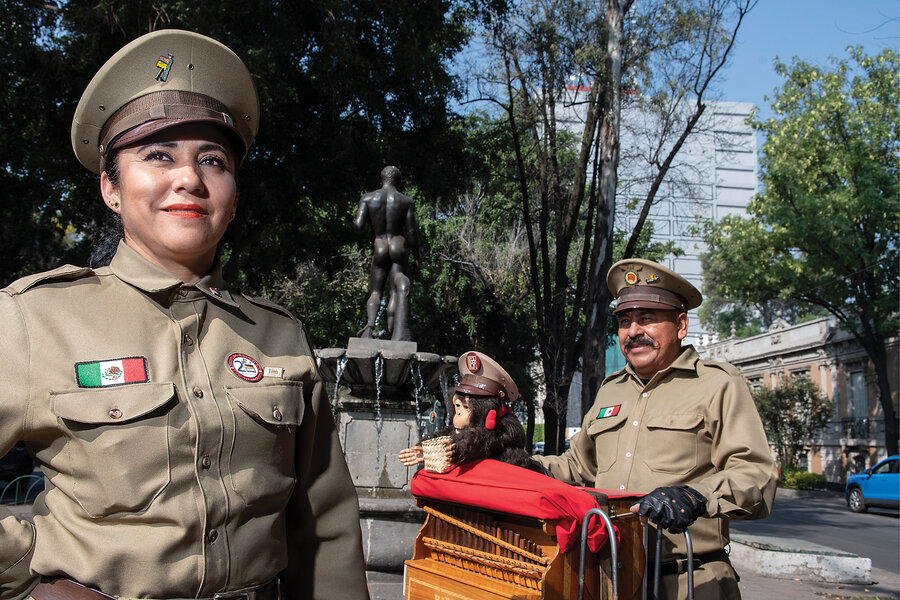
Elsi Sastre (left) and Cresencio Torres work as a team of organ-grinders in the Roma neighborhood of Mexico City.

Between the two of us, my husband and I can tell our grandchildren about having seen an ice-delivery man, a huckster selling vegetables door-to-door, a traveling knife-sharpening guy. Wouldn’t it be great to show such things in person once in a while, not just in historic villages with costumed interpreters?

Today’s article is about something we will need to hurry up to see before it fades into history: the traditional organ grinder in Mexico.

Whitney Eulich writes at the Christian Science Monitor, “Hunched over a weatherworn hand-crank organ in his repair shop, Roman Dichi explains why the work of Mexico’s organilleros has endured for a century and a half. 

“ ‘This music evokes happiness, tradition, and childhood memories of going out to a plaza with Mom and Dad – or of falling in love,’ says Mr. Dichi, president of the organ-grinders union in Mexico City. …

“Organ-grinders, especially ubiquitous in Mexico City’s historic center, date back to the presidential administration of Gen. Porfirio Díaz in the late 1800s. The dictator’s adoration of all things European inspired Mexico’s elite to import organs into their homes. Eventually, the instruments moved out of private parlors and onto the streets as public entertainment. They were used to draw customers to circuses, with the help of monkeys, and to keep soldiers in good spirits. Over time, the European songs inside the machines were replaced with revolutionary ballads and local classics, such as ‘Las Mañanitas,’ the Mexican birthday song.

“Despite these deep roots, today the tradition is at risk. Not everyone is charmed by the tip-seeking musicians. A crank organ’s sound – akin to the pitchy puff of air from a slide whistle – can be loud. In the wrong hands, an organ can be positively off-key, an assault against the ears. …

“The organs are also expensive, with many organilleros renting them from the small stock available locally. And upkeep gets costlier with each passing year. The heavy instruments can get damaged while being wheeled down crowded city streets or warped by weather and time. 

“Edgar Alberto Méndez Hernández has been slowly turning the crank on his organ in the capital’s historic center for some 15 years. He nets about 250 pesos (a little more than $15) on a good day after paying 250 pesos for his rental. …

“After several hours working along a bustling sidewalk near the Bellas Artes theater, he pushes his black-and-brown antique wooden organ on its dolly and heads several blocks toward the Zócalo square. When he shows up at this even busier – and potentially more lucrative – spot, the two young men already playing organs there take their cue, as if in a dance, and move to a side street. These shifts are imperceptible to the public but tediously negotiated with the union’s help. …

“They ‘live off of tips,’ notes Yuleina Carmona, the Mexico City coordinator for Women in Informal Employment: Globalizing and Organizing, an international nonprofit. Shoeshiners and strolling mariachi bands have fixed rates for their services, but organ-grinders churn out music whether they are paid or not. …

“In March, Mr. Dichi’s union submitted a proposal to Mexico City’s Congress to have organilleros’ work recognized as a cultural heritage. It was the fourth attempt – and this time it was approved.

“The legal recognition is expected to translate to better protection on the street from police harassment and greater support for organ-grinders in their disputes with residents and businesses. Ms. Carmona notes it will also give organ-grinders ‘a seat at the table’ – a say in how Mexico City uses funds for cultural activities in the center.”

More at the Monitor, here. Great pictures. No paywall.

Now, what is the coolest old-timey thing in your memory?

Read Full Post »

Unions Resurgent

Photo: CNN.
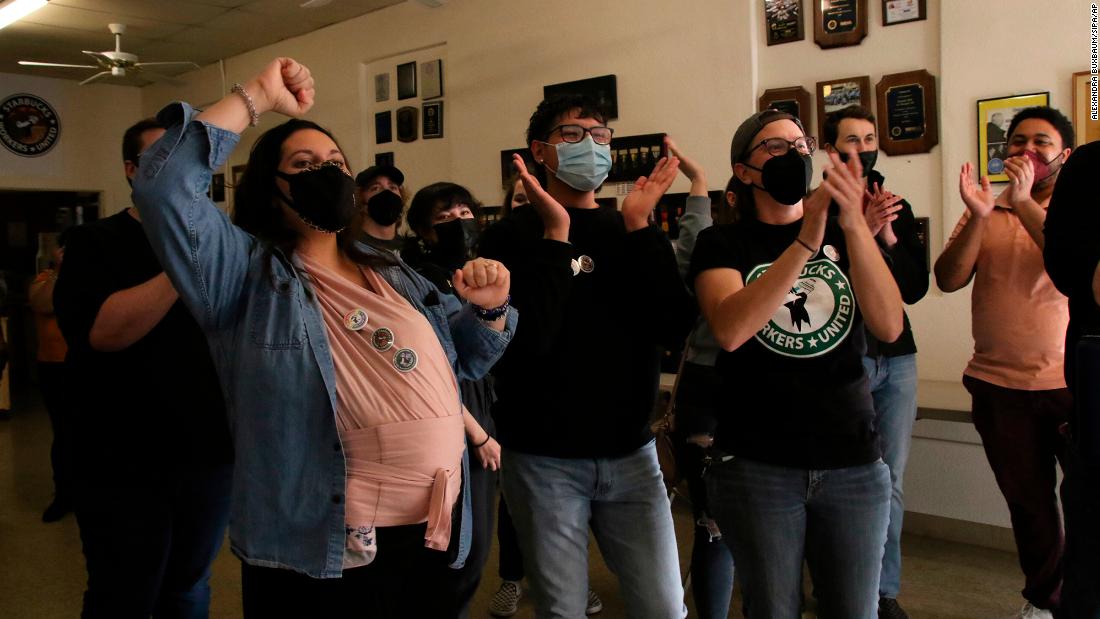
Starbucks Workers United partners celebrate a victory after watching the union vote count in Mesa, Arizona.

On Labor Day weekend, I’m thinking about traditional labor unions and how they benefited not only members but nonunion workers, too. I know there were abuses once the leaders got too powerful, but power has swung back too much in favor of corporations, I think.

So today I’m taking a look at recent actions on the fringes of the movement and pondering what it might mean for the future.

In April, Chris Isidore and Sara O’Brien of CNN reported on the relatively small but meaningful wins at Starbucks and Amazon.

“Labor unions haven’t had this much success in decades. After years of failed organizing efforts and a long, steady decline in the number of private sector workers represented by unions, two grassroots upstart groups have scored recent victories at two of the nation’s largest employers: Amazon and Starbucks. …

” ‘I think it’s very significant, even though it’s a small percentage of the workforces so far,’ said Alexander Colvin, dean of Cornell University’s Industrial and Labor Relations School. …

“The National Labor Relations Board reports that from October 2021 through last [March], 1,174 petitions were filed at the agency seeking union representation. That’s up 57% from the same period a year earlier — and the highest level of union organizing in 10 years.

“The Amazon and Starbucks victories are important to union organizing efforts, Colvin said.

“That sentiment is echoed by Chris Smalls, who went from fired Amazon employee to the the leader of the Amazon Labor Union, which recently became the first union to win a representation vote at one of Amazon’s facilities. …

” ‘I think what we did … is a catalyst for a revolution with Amazon workers, just like the Starbucks unionizing effort,’ he said on an interview on CNN+. …

“Over at Starbucks, since December workers at 17 stores from Boston to its hometown of Seattle have voted to be represented by Starbucks Workers United — a separate grassroots union effort that has filed to hold votes at more than 100 additional stores.

“Starbucks has about 235,000 workers spread across 9,000 company-operated US stores. Fewer than 1,000 workers at the 17 stores have voted for the union. It’s similar at Amazon, where some 8,300 hourly workers were eligible to vote at the Staten Island facility. That’s not even 1% of the company’s US workforce of 1.1 million employees, including both warehouse and office workers. …

“Still, the efforts seem to be having an effect. Starbucks recently announced it suspended repurchases of its stock, a move that would benefit primarily its shareholders, in order to invest more in its employees. The company also instituted two wage increases in the last 18 months, and in October said it would raise wages. …

“Many of the unions’ demands stem from the difficulties of working during the pandemic during the last two years, said John Logan, professor of labor and employment studies at San Francisco State University.

” ‘Part of what’s changed is we’re just in a different moment, [with] frontline workers feeling they were not rewarded or treated with respect during the pandemic,’ said Logan. …

“It’s an uphill battle for unions to win new members, but that doesn’t mean they can’t succeed, said Erik Loomis, a labor historian and associate professor at the University of Rhode Island.

” ‘Amazon is the GM or the US Steel of our time — and it took decades to organize those places,’ he said last month, before the vote results at Amazon were known. ‘It took many different forms of campaigns led by different ideologies, different modes of organizing … before these kind of companies were finally successfully organized.’ “

Lauren Kaori Gurley at the Washington Post had more to add in August: “Workers have voted to unionize for the first time in recent weeks at Trader Joe’s and Chipotle. Unions have also made significant inroads at AmazonStarbucksApple and REI, employers that have long resisted unionization.

“Behind these small, but notable, victories is renewed popular support among Americans for the labor movement: Seventy-one percent of Americans approve of unions, matching a 53-year high, according to a Gallup poll released Tuesday. …

“According to a monthly report released Tuesday by the Bureau of Labor Statistics, the number of people who quit their jobs remained elevated although below its peak, at 2.7 percent, as record numbers of Americans continue to reconsider their employment options. The report offered signs that workers will remain emboldened to engage in workplace activism. …

“The July jobs report shocked many economists: Employers added 528,000 jobs, shattering expectations. … Economists say tight labor markets tend to give workers more leverage to form unions and to demand higher wages and better working conditions, while downturns leave workers less willing to make collective demands of their employers.

“ ‘Unless the labor market cools off a lot, there’s going to continue to be a lot of workers demanding collective bargaining power,’ [Guy Berger, principal economist at LinkedIn] said.

“Still, even a cooling-off economy would not necessarily undo cultural shifts that have resulted in the rising popularity of unions, particularly among young, college-educated workers. …

“Despite a 56 percent uptick in filings for union elections nationwide in the first three quarters of the 2022 fiscal year, labor experts say that many of these victories at major employers such as Amazon and Starbucks are mostly symbolic, covering a mere sliver of these companies’ enormous workforces. Meanwhile, although support for unions has been steadily increasing since the pandemic, union membership in the United States declined last year; only 1 in 10 workers are union members. …

“ ‘There’s still a huge disconnect between this recent organizing wave and long-term national membership trends,’ said [Logan]. ‘The real significance of these campaigns is not in the number of new members, which is pretty meaningless, but the excitement, optimism and inspiration they generate in some sections of the labor force — especially among young, politicized, educated workers in the low-wage service sector.’ ” More at CNN, here, and the Post, here.

Read Full Post »

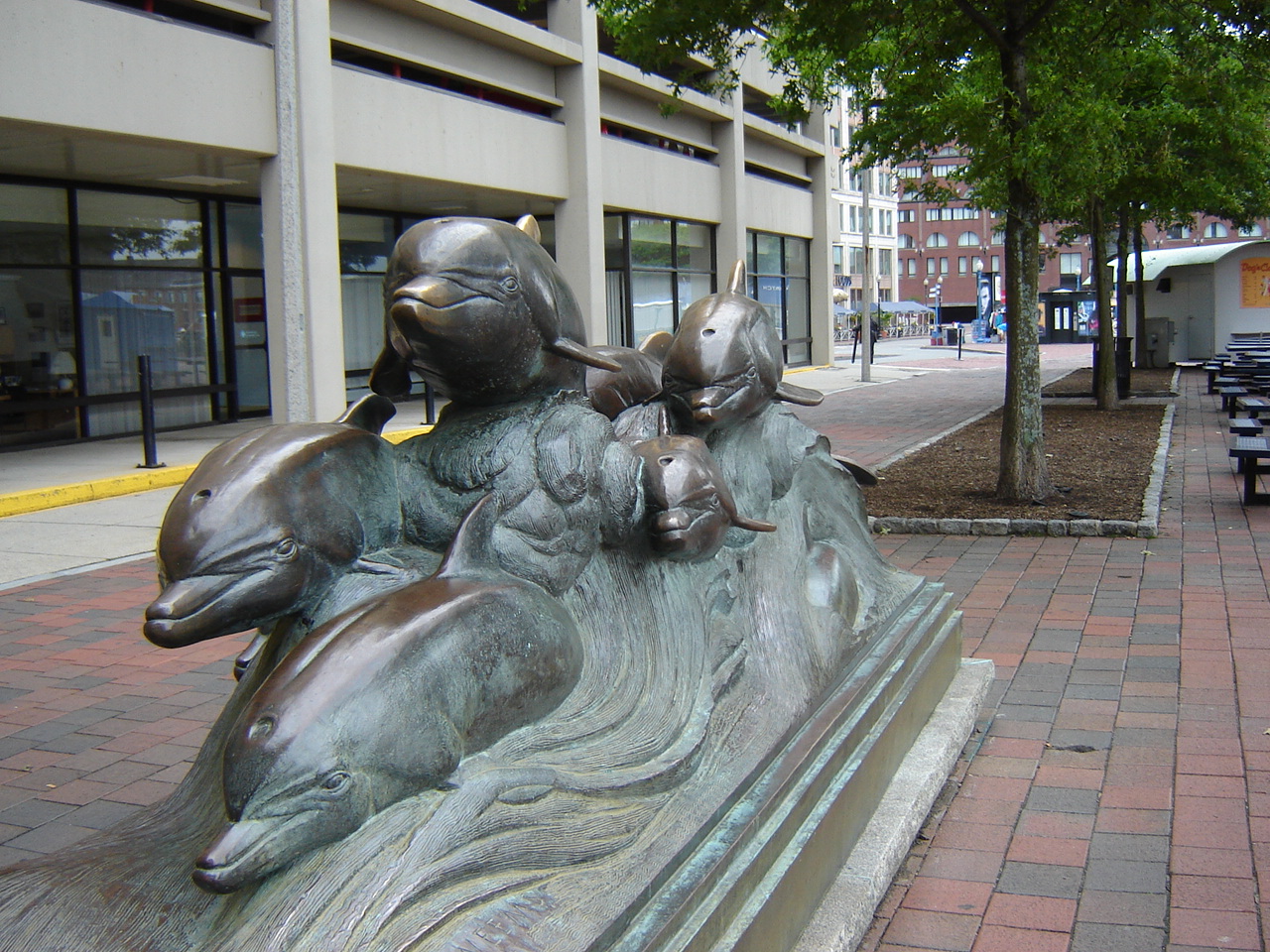
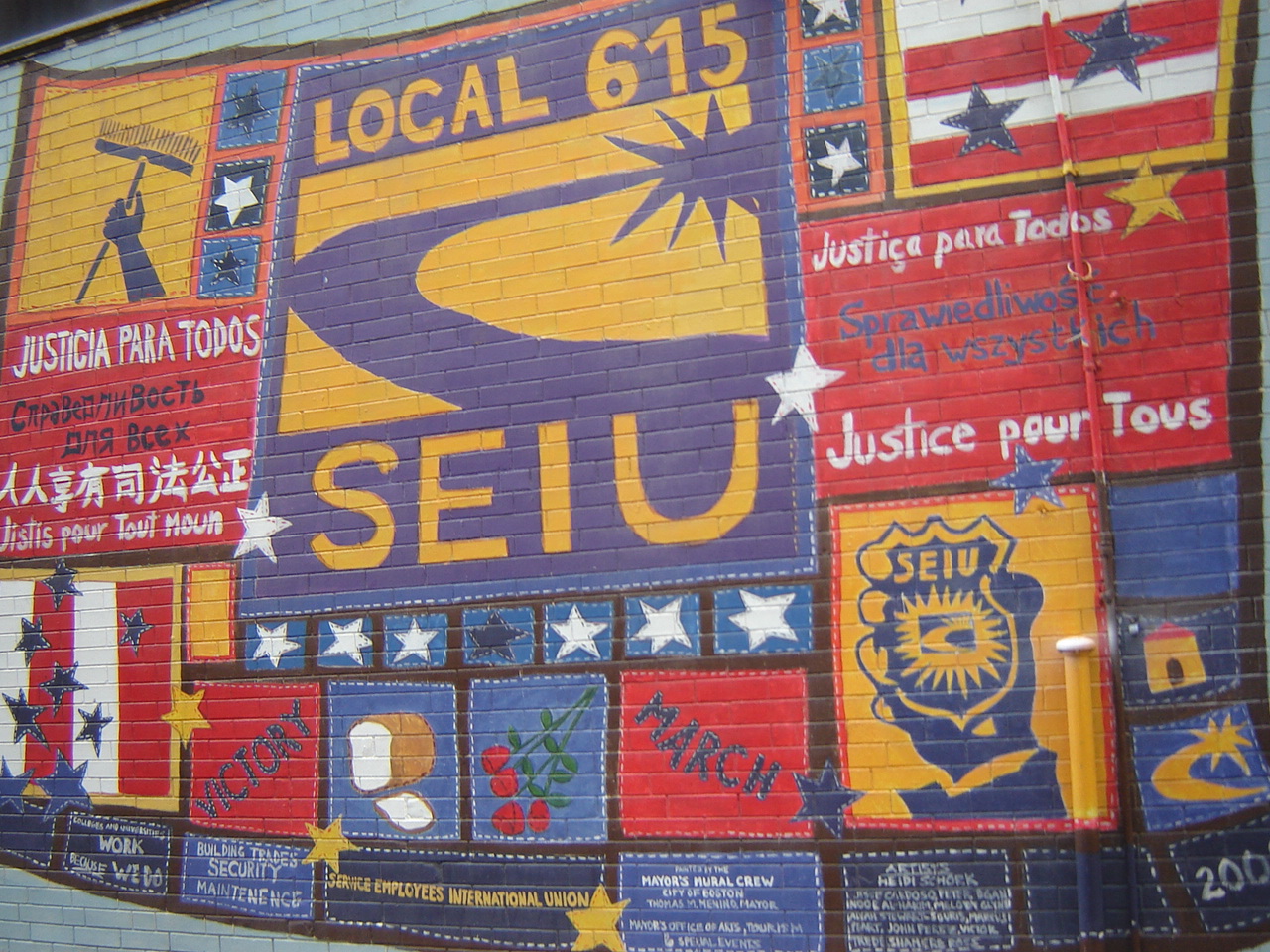
Some days I walk in Boston and snap the sights down side streets. The first photo was taken near the harbor. The others were taken near Downtown Crossing.

I like the Adrienne Rich line painted on a bookstore wall: “You must write, and read, as if your life depended on it.”

Read Full Post »

The president recently handed out the Medal of Freedom awards. Maybe in the excitement around around Bob Dylan, Toni Morrison, and John Glenn, you missed that Dolores Huerta, co-founder of the United Farm Workers union, also was honored.

Fox News-Latino wrote, “The White House will present the lifelong unionist and immigrant rights advocate with the Medal of Freedom. …

“Huerta’s sense of justice developed from an early age. Raised in Stockton, Calif., Huerta watched her father work for little pay in the fields, while her mother managed a hotel that often let poor migrants stay for free, according to the Daily Beast.

“Along with César Chávez, Huerta founded the National Farm Workers Association in 1962, which later evolved into the United Farm Workers of America. …

“Using strikes, marches, boycotts and hunger strikes, the UFW has defended the interests of farm workers. … Huerta has been arrested 22 times and been beaten for her activism.

Notwithstanding her run-ins with the law, Huerta has been influential in passing far-reaching legislation. Her accomplishments as a labor rights activist include helping pass California’s Agricultural Labor Relations Act of 1975 and helping secure disability insurance for California farmworkers. …

Huerta launched the Dolores Huerta Foundation in 2002, with the mission of supporting community organizers and budding political leaders.Read more.

Getty Images

Read Full Post »

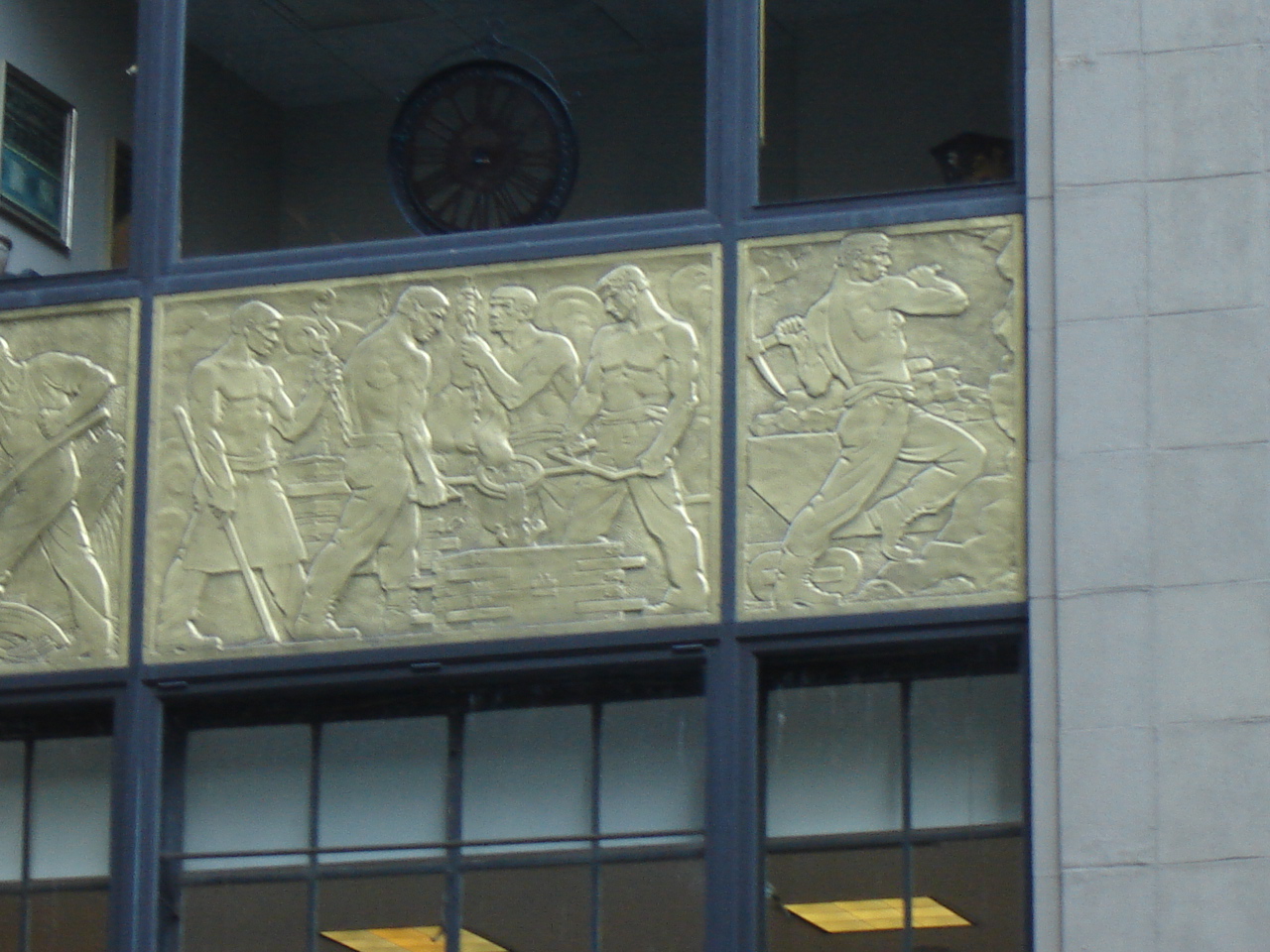
Back before “labor” became a dirty word in the minds of some politicians, “workingmen” were more appreciated.

A corporation might even honor workers in the architecture of a headquarters. (Note the photo taken in Boston’s financial district.)

These days, looking around the subway at the tired bodies heading home at night, I’ve begun to think of almost everyone as the workingman. All but a few folks who are very well off. There is hardly anyone in the middle anymore.

The people slogging back and forth, doing whatever they have to do, are unconscious of a kind of heroic aura that envelops them collectively. You can see it if you look.

Read Full Post »

Philip Levine, 83, is a poet laureate for our times. He expresses, as the NY Times puts it, the “gritty voice of the workingman.”

“Half an hour to dress, wide rubber hip boots,
gauntlets to the elbow, a plastic helmet
like a knight’s but with a little glass window
that kept steaming over, and a respirator
to save my smoke-stained lungs. I would descend
step by slow step into the dim world
of the pickling tank and there prepare
the new solutions from the great carboys
of acids lowered to me on ropes — all from a recipe
I shared with nobody and learned from Frank O’Mera
before he went off to the bars on Vernor Highway
to drink himself to death. A gallon of hydrochloric …”

Read the Times article.

Levine’s appointment as poet laureate feels timely to me for several reasons.

While income inequality in the country has become increasingly pronounced over the last few decades, public attitudes toward the labor unions that worked to level the playing field have become markedly negative. Are unions really no longer needed? Certainly, there have been abuses of their power: for example, the way some teachers unions have protected bad teachers. And weak government officials in Central Falls (RI), having routinely succumbed to the demands of public safety workers, now find there is no money to pay the promised benefits. This summer Central Falls filed for bankruptcy.

But intensely hostile antilabor actions in Wisconsin, Ohio, and even Maine are like throwing the baby out with the bathwater.

A balance between workers and other stakeholders seems to make more sense. Workers are still sometimes abused, after all. That’s why I was happy to see unions helping out foreign “cultural exchange” students to protest conditions at a Hersey’s plant in Pennsylvania last week. (I blogged about that here.)

Read Full Post »

Last night we finally watched the DVD of “Waiting for Superman.” We had to wait until we were up for it. We knew it would be good, but painful to watch. It’s a documentary about the broken public education system in this country.

I see now why people come away from this movie saying, “It’s the unions.” But although we clearly need to find a way to dismiss bad teachers and reward good teachers, to just say, “It’s the unions,” seems too simple to me. Even if it is true, when you consider the context of poverty, unemployment, the highest rates of incarceration in the developed world, the War on Drugs, three other wars, confused approaches to immigration, Wall Street greed at the expense of the poor and middle class, antigovernment bias, and many skewed political priorities, to lay the problems of inequality in public education at any one door seems too simplistic.

Still, as the movie makes clear, we need to get rid of bad teachers immediately and make sure children get high-quality teachers before they give up hope. Lotteries to get into better schools are too cruel to too many. Activists can check out this site.

By the way, the film is very well done. We loved the creative graphics making the data real and the clips of Superman movies and past political speeches and TV shows.

Reader Asakiyune writes: “I very much agree with what you said about unions and teaching and the documentary–it bothers me when a problem as complex as that is reduced to one soundbite.”

Read Full Post »