Feeds:
Posts
Comments

Posts Tagged ‘Virginia’

Photo: Graeme Sloan for the Washington Post.
Wild ponies swim across the Assateague Channel in a 100-year-old tradition. Remember Misty of Chincoteague?

Today’s story reminds me of a book series I loved as a child, one that I have learned is too slow for today’s kids, who love slam-bang spy adventures.

Remember Misty of Chincoteague and the annual swim? Hau Chu at the Washington Post wrote about the 100th real-life swim.

“By sunrise at 6:03 a.m. on Wednesday, hundreds of people already had their legs smeared with mud and their brows filled with sweat as their eyes gazed across the Assateague Channel along Virginia’s Eastern Shore.

“They trudged through the marsh to stake out a spot of shoreline. Some woke up as early as 3 or 4 a.m. Others planned more than a year ago from their homes in Massachusetts, Texas and beyond to be in this exact spot.

“These people wrestled with all these things to see wild ponies [at] Pony Swim Lane.

“ ‘Let me tell y’all, you guys are hardcore,’ Chincoteague Mayor Denise Bowden said to the crowd, nearly two hours later, while standing on a pier overlooking the water. … ‘That mud will wash off, but your memories are gonna last forever.’

“The annual wild pony swim at Chincoteague brings thousands of visitors and locals to the town every summer. This year marked the 100th year of the event. Ponies are corralled by the volunteer fire company on neighboring Assateague Island and swim over at slack tide, when the current is still. Officials say they do this to manage the population of ponies that inhabit the land: The festivities culminate in an auction of some of the foals that provides money for the company and veterinary care. …

“Andrea Lucchesi of Southampton, Massachusetts, knew plenty about it. Like some others, she had long dreamed of attending because of her fondness for Misty of Chincoteague, a 1947 children’s novel by Marguerite Henry.

“The book, and subsequent 1961 film, were inspired by a real pony, who is memorialized with a statue along the town’s Main Street. Business signs, restaurant menu specials and residential decorations throughout Chincoteague incorporate the wild creatures. Visitors and locals alike are clad for days in apparel with pony imagery or the Saltwater Cowboys, the group of firefighters responsible for managing the ponies.

“Those cowboys brought the ponies to the edge of Assateague Island at about 8:06 a.m. …

“And off they went. Dozens of ponies’ heads stayed above water and inched closer to the shore within minutes. All made it over to a pen on Pony Swim Lane. …

“Some have criticized the swim over concerns about the horses’ welfare and the desire to tame wild animals. Scott Rhoads, 69, was standing along a fence of the pony pen after the swim. He went back and forth on how he felt about it.

“ ‘You just wonder, these ponies, what they’re thinking,’ Rhoads, a retired small-animal veterinarian, said before taking a second to pause. ‘I worry,’ he paused again, ‘how it affects them, but I’m sure they get over it quickly.’ …

“People like Ashley Le embraced the summer beach town atmosphere and the novelty and spectacle of the event. Le, 28, had been to Chincoteague a few times before but never during pony swim time, she said. She lives in the Logan Circle neighborhood of Northwest Washington but was born and raised in Ho Chi Minh City, Vietnam.

“ ‘It’s a very American thing, but it’s not like a military American thing; it’s a small-town American thing,’ Le said. ‘I feel like a lot of unique American things you think of is like July 4 or like fireworks and that kind of stuff. But this isn’t it; this is so outside of that zone. … I think just being here makes me feel like taking a breath of fresh air away from everything that’s happening in America. And the ponies are just so cute.’

“By sunset at 8:12 p.m., hundreds of people were cleaned up at the Chincoteague Carnival Grounds on Main Street. …

“Bowden, 56, was sitting in a chair inside the information booth at the carnival entrance. She was born and raised in Chincoteague. She’s a Saltwater Cowboy, and her family’s participation in the event goes back to her grandfather. But Bowden was injured in an April roundup of the ponies. The wild horses started charging and fighting and threw her off her horse. The distal femur in her right leg was crushed, she said. Still, this was all worth it.

“ ‘If they had to drag me down there on a stretcher … if they had to helicopter me in, it didn’t matter,’ Bowden said. ‘I wouldn’t miss this for anything.’ ”

More at the Post, here. Have you ever been to that part of Virginia? I was there once but didn’t see the ponies. The main thing I recall is eating my first oyster fritters.

Read Full Post »

Photo: Mike Belleme for the New York Times.
Barbara Kingsolver said she felt indebted to the people who shared their stories when she was doing research for her novel about addiction, and wanted to give back. 

Long before popular author Barbara Kingsolver decided to base a novel on one by Charles Dickens, Mr. Dickens was taking controversial positions on social justice. I think he believed he was not having an influence, but he kept shouting, and over time other voices chimed in and change happened.

There’s a time and place for writers to be impartial, but not in novels. And recently Kingsolver put her money where her mouth is by deciding to take the profits of her novel on the opioid crisis and give it to an addiction center.

Alexandra Alter wrote at the New York Times about Kingsolver’s decision.

“When Barbara Kingsolver was writing Demon Copperhead, a novel that explores the devastating effects of the opioid crisis in southern Appalachia, she was doubtful that people would want to read about such a grim subject.

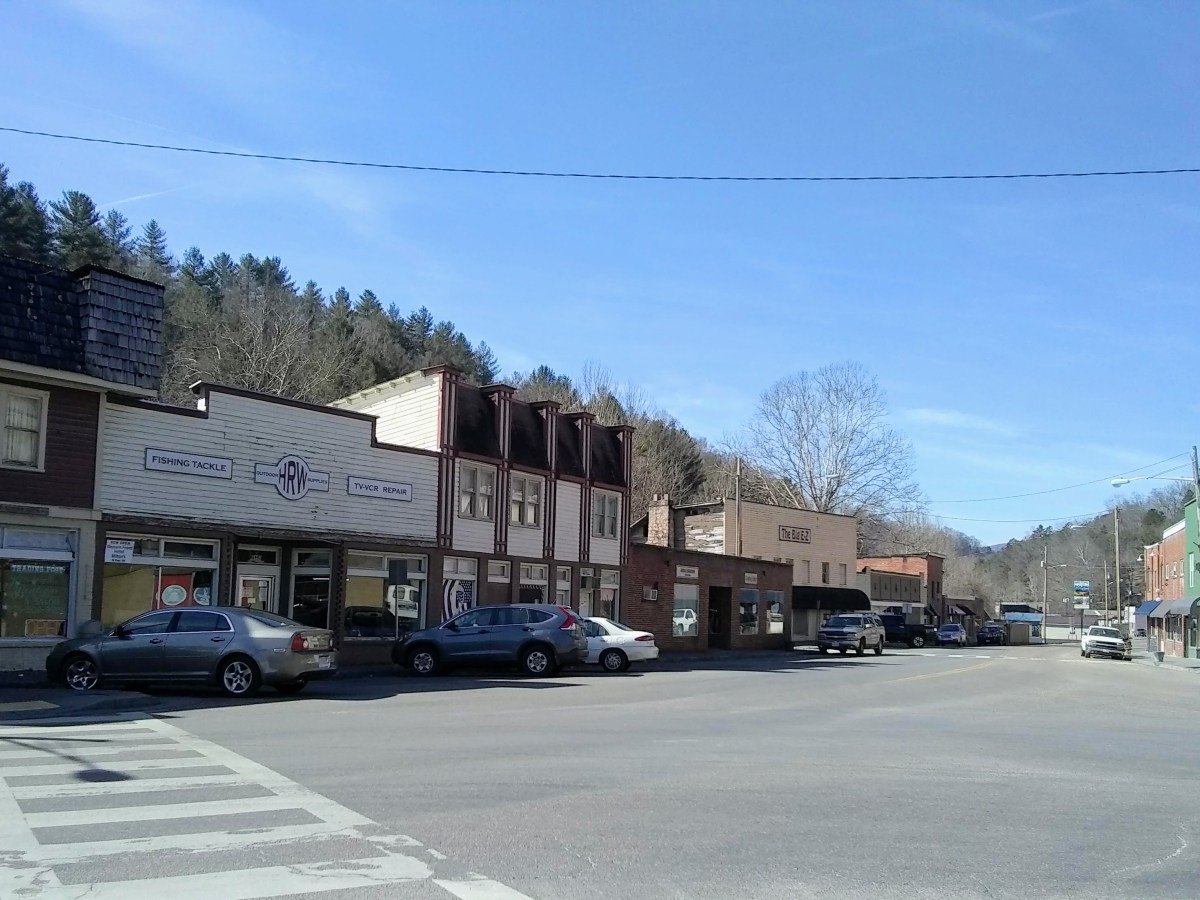
“To draw readers in, she knew she would have to ground the narrative in real stories and push against stereotypes about the region. So she traveled to Lee County, Va., a corner of Appalachia that’s been battered by drug abuse, and spoke to residents whose lives had been wrecked by opioids.

“ ‘I sat down and spent many hours with people talking about their addiction journey,’ Kingsolver said. …

“The novel was an instant success, in time selling three million copies and winning a Pulitzer Prize for fiction in 2023. But even before the novel came out, Kingsolver felt indebted to the people who shared their stories. …

“Kingsolver decided to use her royalties from Demon Copperhead to fund a recovery program for people battling addiction [and] founded a recovery house for women in Lee County, where the novel is set.

“The center, Higher Ground Women’s Recovery Residence, will house between eight and 12 women recovering from drug addiction, offering them a place to stay, for a small fee, for up to two years, as well as counseling and other forms of support, like free community college classes.

“Kingsolver grew up in rural Kentucky and lives on a farm in Virginia. As someone raised in the region, she said, she felt she couldn’t ignore the opioid epidemic in her fiction. But she struggled for years with how to write about the issue in a way that would make readers pay attention.

“While on a book tour in England, Kingsolver stayed in a bed-and-breakfast where Charles Dickens had worked on his novel David Copperfield, and found inspiration in the story and its resilient young narrator.

“In Demon Copperhead, which is loosely based on Dickens’ novel, Kingsolver tells the story of Damon Fields, a boy who is born to a single teenage mother who struggles with drug addiction. He ends up in foster care and later succumbs to opioid abuse. …

“ ‘I had these royalties that Demon brought me. I took that money and went back to Lee County and said, what can we do with this?’

“The biggest need, she learned, was for support for people in recovery, who often had no housing or job prospects. She and her husband, Steven Hopp, started a nonprofit, Higher Ground, to create a residential home for women, and provided the funds for the nonprofit to purchase the property last summer. …

“Kingsolver said she’s been heartened by support the project has received from local organizations, including church groups that have helped get the living space in shape, a local store that donated furniture and a grant from the Lee County Community Foundation.

“ ‘You might, in earlier times, have expected stigma, for people not to be open to this, but instead it’s been, “Yes in my backyard,” ‘ Kingsolver said.

“ ‘This is the reality of where we live,’ she continued. ‘Everybody knows someone touched by the opioid epidemic.’ ”

Have you read the novel or are you a Kingsolver fan? Say something about this.

More at the Times, here.

Read Full Post »

Photo: Kyle Cummings/Randolph-Macon College.
Kayla Smith, left, and Hannah Winton help Andy Valero try on an Eisenhower jacket from the World War II era at his Virginia home.

Although in the US we tend to move national holidays to a Monday, Veterans Day is always November 11. This year the 11th just happens to land on a Monday. The holiday was established in commemoration of the Allies and Germany signing an armistice on Nov. 11, 1918, to end WW I. (One historian says this was unfortunately “a peace to end all peace” because the eventual agreement contained the seeds not only of WW II but of endless conflicts in the Middle East.)

In honor of Veterans Day, Cathy Free shared a WW II veteran story at the Washington Post.

“Kayla Smith was looking forward to taking a World War II history class in college two years ago when she learned on the first day of school that the class had been canceled with no explanation.

“ ‘I was so disappointed, because I’d really been looking forward to learning what the Greatest Generation went through,’ said Smith, 23, a history and archaeology major at Randolph-Macon College in Ashland, Va. …

“ ‘I started thinking, “There must be some World War II veterans who are still alive,” ‘ she said. …

“She enlisted the help of a friend, Hannah Winton, and the two of them began calling veterans organizations in central Virginia.

“ ‘We were told that most of the World War II veterans were gone, but we decided to keep looking,’ Smith said. …

“That year, she and Winton were at the Virginia State Fair when they noticed a woman running a booth with information about Veterans of Foreign Wars. The woman put them in touch with a veterans support group in Norfolk, and that’s how Smith and Winton met Andy Valero and Leo Dormon, who are 99 and 100, respectively.

“Valero, a U.S. Army veteran who survived the Battle of the Bulge, and Dormon, an aviator who served in the U.S. Navy, invited the college students to their homes in the Tidewater, Va., area to chat.

“ ‘Something unexpected happened,’ Winton said. ‘We enjoyed talking to them so much that we wanted to keep going back.’

“She and Smith now visit the men several times a month — often with freshly baked brownies — to talk or have lunch. They also accompany them to veterans events, funerals and World War II commemorations.

“ ‘I never thought that at 21, some of my best friends would be 99 and 100,’ Winton said. ‘You can read about war and study it, but these guys actually lived it. I feel honored to be their friend.’ …

“Dormon is recovering from a recent stroke, Winton said, which has given her a deeper appreciation for the visits she has had with him and Valero.

“ ‘We savor every minute, because you never know when it might be the last time you see them,’ she said. ‘When they are gone, their history goes with them.’

“She and Smith said they spent hours asking the two veterans about their war experiences and looking through photos. …

“ ‘I feel really bonded with Leo, and I love to listen to him,” Winton said. “Since his stroke, he has slower recall, but just being with him is important to me. We don’t always have to talk.’

“Dormon, who was a Navy flight instructor, flew more than 35 different aircraft and trained more than 300 pilots during World War II. He also flew during the Korean and Vietnam wars.

“ ‘I’m an aviation nerd, and he’s a fighter pilot with more than 10,000 flight hours,’ said Winton, who hopes to become a Navy pilot someday. ‘We took him and Andy to an air show in June, and Leo was thrilled to go up in one of the vintage planes.’ …

“Dormon said he always looks forward to spending time with Winton and Smith.

“ ‘Hannah and Kayla have been regular visitors, and I have been so thankful to see both,’ he told the Washington Post in a written statement. ‘Taking the time to visit an aging person takes courage and patience, and they’ve made my life much happier. Bless them both.’ …

“[In December 1944] ‘it was the worst winter in 25 years, and we had frozen fingers and trench foot,’ he said, referring to the painful condition that results from standing for a lengthy time in a cold and wet environment.

“Valero lost several of his close comrades in the battle.

“ ‘I didn’t talk about it for many years, but I felt comfortable talking about it with Kayla and Hannah,’ he said. ‘They’re very caring and they feel like family to me. They’re like angels who came out of nowhere.’ ”

More at the Post, here.

Read Full Post »

Photo: Signature Theatre.
A behind-the-scenes look at the rehearsal process for the musical Private Jones, featuring deaf and hard-of-hearing artists.

When we were watching the Hulu series Only Murders in the Building, we noticed efforts by the producers to be inclusive. For example, a key character is deaf. When he is on, he uses sign language and we read subtitles. A few other characters use signing for his benefit. He can also read lips.

A push for diversity and inclusion is not happening only in streaming services. At the Signature Theatre in Virginia, for example, deaf and hard-of-hearing characters powered a whole musical.

As Thomas Floyd has the story at the Washington Post.

“Signing, singing and soundscapes are intermingled on a late-January afternoon at Signature Theatre’s Arlington, Va., rehearsal studio, where the cast of Private Jones is marching through the world-premiere musical’s opening scene.

“Loosely inspired by Gomer Jones, a deaf sniper who fought in World War I, the show opens in rural Wales with an 8-year-old Jones getting a lesson from his gruff father in sharpshooting and hard truths. As the only scene before Jones loses his hearing, it uses radio-play-like foley effects to create the sounds that will echo in the character’s head through the rest of his life — and give deaf and hard-of-hearing audiences visual cues to associate with those sounds.

“When Johnny Link, the hard-of-hearing actor playing Jones, raises a prop rifle, another performer flaps an umbrella to conjure the sound of birds fluttering overhead. A ratchet replicates a rifle cocking. A snare drum stands in for a gunshot. All the while, two actors narrate — one in spoken English, one in American Sign Language — and writer-director Marshall Pailet reminds his cast to be aware of the open captions that will flank the stage at every show. …

“Accessibility is a guiding principle for [writer-director Marshall Pailet], the hearing playwright and composer who wrote the book, music and lyrics for Private Jones. … The musical features a cast of hearing, hard-of-hearing and deaf actors performing dialogue in three languages — English, ASL and British Sign Language — while also delivering Pailet’s Celtic-inspired score. To Pailet and Alexandria Wailes, the show’s director of artistic sign language, no scene should be staged without careful consideration of how narrative intent is both seen and heard.

“ ‘If the piano does something that is supposed to evoke an emotion and there’s not a visual equivalent of that, we haven’t done our job,’ Pailet says. ‘Theater is taking psychology and turning it into behavior. So everything is visual, everything is behavioral, and it’s also therefore a perfect medium for sign language, which is a visual language. It exists to be seen.’

“Pailet acknowledges that the origins of Private Jones are fairly mundane: He was interested in writing a World War I trench warfare story — specifically exploring how being asked to commit violence can reorient a person’s worldview — when he came across an article with a couple of sentences about the deaf Welsh sniper. …

“After traveling to Wales … and tracking down war records he believes belonged to Jones, Pailet took an early iteration of the show to Connecticut’s Goodspeed Festival of New Musicals in January 2020. He subsequently connected with Wailes, the ASL master on the Oscar-winning film CODA, and the duo began swapping ideas during the pandemic on how to better integrate deaf and hard-of-hearing perspectives.

“While the show features a narrator performing in ASL, Wailes pitched the idea of also incorporating British Sign Language during dialogue exchanges between characters who would have spoken in that wholly different dialect. …

“Finding the right actor to enlist as Jones — a deaf character who tricks his fellow soldiers into thinking he’s hearing and carries much of the show’s vocals — also proved critical. As a musical theater performer who has used hearing aids since childhood, Link came with connections to the hearing and deaf worlds that the character bridges. …

“ ‘I have never felt so seen in a character,’ Link says. ‘Truly, this is one of the most special projects I’ve ever worked on because it pulls from different parts of my life. I feel a lot of the things that Gomer feels. I just knew I had to do it.’

“Pailet says unfamiliar perspectives are at the core of Private Jones, which uses its innovative soundscapes to place the audience in Jones’s shoes while interrogating how people empathize with or dehumanize those they don’t understand. …

“Having spent the better part of five years developing the show, Pailet hopes this isn’t his last shot at envisioning Jones’s journey onstage.”

More at the Post, here.

Read Full Post »

Photo: Kinfolk.
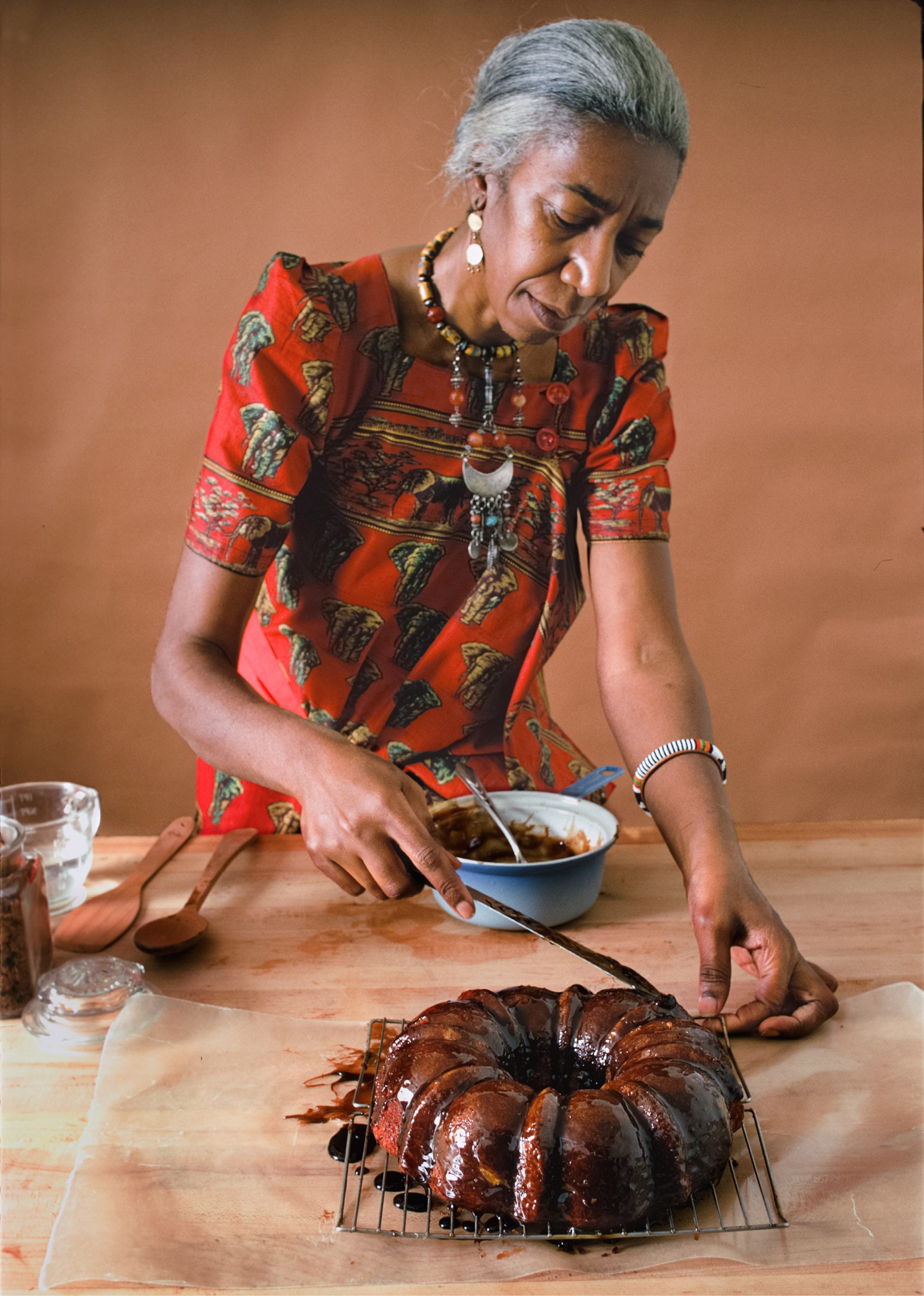
Edna Lewis, sometimes called the “Grande Dame of Southern cooking.”

A long time ago, I made an Edna Lewis cake recipe that had been featured in the New York Times. Apart from its being delicious, the thing I remember most were curious little tips on cooking that she added. For example, she said to stir the batter only in one direction. To me that meant that I shouldn’t beat up on a cake while beating it.

Lewis died in 2006, a monumental figure in the world of cooking. At the Washington Post, Aaron Hutcherson wrote about taking a tour of Edna Lewis country.

“It was late afternoon when I checked into my hotel perched on the top of a hill in Virginia’s Piedmont region. The front-desk attendant mentioned the lovely view from my room as he handed me the keys. … With time to kill before my dinner reservation, I decided to rest. As I lay on the bed gazing out the window at the sun setting over the Blue Ridge Mountains, I was struck by the beauty of this majestic setting — and I began to understand why Edna Lewis loved her birthplace so much.

“ ‘I grew up in Freetown, Virginia, a community of farming people,’ Lewis wrote in her 1976 memoir/cookbook, The Taste of Country Cooking. ‘It wasn’t really a town. The name was adopted because the first residents had all been freed from chattel slavery and they wanted to be known as a town of Free People.’

“Throughout her career, Lewis’s work served as a means of preserving the memory of Freetown and its people, and to share that with the world through cooking. About 10 miles from the town of Orange, there isn’t much of Freetown still standing save for the remnants of a couple of buildings, but through the creation of the Edna Lewis Menu Trail, its legacy in this region lives on.

“Organized by the Orange County Office of Tourism, the menu trail launched on Thanksgiving in 2022 to celebrate the 50th anniversary of The Edna Lewis Cookbook, and it runs through Memorial Day. It includes seven restaurants within 33 miles of one another, whose menus are featuring recipes from Lewis’s cookbooks or dishes inspired by her.

“Often described as the ‘grande dame of Southern cooking,’ Lewis was an accomplished chef and cookbook author who helped increase America’s understanding of the breadth and elegance of Southern cuisine. ‘It’s not all fried chicken and greasy greens,’ she said in a 1990 Washington Post interview. Beyond that, Lewis inspired the now-ubiquitous farm-to-table movement by championing the virtues of growing one’s own food and cooking with local, seasonal ingredients. When she died in 2006, she had been honored by just about every American culinary group, including the Southern Foodways Alliance and the James Beard Foundation, and now her impact is resonating again.

“The menu trail was created to celebrate the place that shaped Lewis’s culinary philosophy and educate visitors and locals alike about what she stood for. ‘She always insisted this is the area where it all started,’ said her son Afeworki Paulos from his home in Georgia, and I was ready to explore this nurturing ground.

” ‘My first stop was ClearWater Fire Grill in Locust Grove, where the whipped sweet potatoes with brandy, brown sugar and freshly grated nutmeg were a lovely match for the simply seasoned pork chops draped with a pan sauce. My server’s bubbly warmth put me at ease after the 90-minute drive from D.C. And with every interaction along the trail, I began to realize I was on the receiving end of the Southern hospitality Lewis embodied.

“ ‘The memories of that community that she grew up in and the care they took of each other and the hope they had for their future left an indelible mark on her,’ Lewis’s niece Nina Williams-Mbengue said over the phone from her home in Colorado.

“Lewis was born in 1916, one of eight children, and she learned to cook from the people in Freetown, who lived an agrarian lifestyle. After her father died, she moved North at age 16, first to Washington and then New York, where she found work as a seamstress. In 1949, she partnered with a friend who knew of her cooking prowess to open Cafe Nicholson, a French-inspired restaurant frequented by artists and celebrities, and served as its head chef. The Edna Lewis Cookbook, her first book, was published in 1972 and explored a variety of cuisines while tying recipes to her focus on seasonality.

“Chef Andrew Eppley was drawn to that tendency when skimming through Lewis’s work to find a dish for his menu at Vintage Restaurant at The Inn at Willow Grove in Orange — the site of that evening’s dinner.

“He settled on a rabbit dish from Lewis’s second book, The Taste of Country Cooking, then put his own creative spin on it. … ‘Some people come down and they don’t know who Edna Lewis is,’ Eppley said. ‘It creates a really great talking point and experience for our guests, giving them a little bit of history of culinary arts in the region, and everything she did not just for Southern cooking but cooking in general.’ …

“Eppley said what most stood out about Lewis’s cooking was the love. ‘It wasn’t like, “I’m trying to be the best in the world,” ‘ he said. ‘She was trying to cook food that she loves for the people and the community she loves.’ …

“Lewis ‘was very driven to let people know the contributions of African Americans to cooking,’ her niece Williams-Mbengue said. …

“Next to the [Bethel Baptist Church in Unionville] under a canopy of trees, there’s a group of picnic tables where I imagine Edna Lewis may have sat when she made her annual pilgrimage for the church’s summer revival.

“ ‘Her and my mother would serve food outside the church for revival,’ said family friend Mary Freeman, whose father farmed with Lewis’s brother. ‘She wasn’t a Southern cook who had all the awards when I was a kid. She was just Miss Edna.’ On top of the delicious pies, cakes and tarts Lewis prepared, Freeman remembers her as ‘a very quiet-spirited lady’ who was ‘very self-assured, very confident.’ ” More at the Post, here. Mouth-watering pictures.

A nice Kinfolk article — with no firewall — delves deeper into Lewis’s biography. Read it here.

Read Full Post »

Photo: AllAboutBirds.
The northern bobwhite quail has a hopeful story.

This is a comeback story. When habitat is lost through ignorance, knowledge can restore that habitat — and the wildlife that used to live there. Humans can learn.

At the Washington Post, Dana Hedgpeth reports on a charming bird that says its name.

‘I don’t want to shoot them anymore — I just like to see them around and hear them whistle,’ said a landowner

“In his teen years, when Joe Graves heard the unique call of quail on his family’s 800-acre farm in rural Virginia, he and his brother Clark would often go out with their dogs and hunt them.

“But due to development and a shift in agricultural practices, the birds that once flourished on their farm in Halifax County and in the state have become harder to find. Now Virginia wildlife experts, hunters and landowners, including the Graves brothers — who are now in their 70s — are working to restore quail habitats in an effort to increase their population.

“ ‘We want to see quail be a part of the Virginia landscape, so we’re trying to create habitats that are critical for their survival,’ said Graves.

“Northern bobwhite quail, which are roughly the size of a softball, have short legs, short wings and don’t fly much. From afar they look like small, plump chickens that walk with their chests puffed out. Male quail typically have a white coloring on their neck area. Quail are best known for their unique sound — similar to a sharp whistle, which they make to communicate with each other and as a way to attract a mate.

“Because they spend most of their life on the ground — much like pheasants and turkeys — quail need a mix of habitat: Honeysuckle and briers provide protection from predators, and they walk among shrubby patches, between weeds and grasses, pecking at seeds. In the fall and winter, quail typically live in flocks, or coveys, with about a dozen birds. They roost in a circle, shoulder-to-shoulder to stay warm, and face outward to watch for predators.

“When a snake, hawk or raccoon approaches, a quail’s defense mechanism is to escape by leaping into the air, flying fast for a few seconds, though they don’t go far — about half the length of a football field. The longer they’re in the air, the more exposed they are to a predator. …

“Quail habitats have been ruined by several factors, including encroaching development and farming practices that have changed because many landowners want neat, well-kept fields between planting seasons. Justin Folks, a wildlife biologist for the Virginia Department of Wildlife Resources, said simply, ‘Quail like weeds and brush, and farmers don’t.’

“Hudson Reese, 84, who owns 1,000 acres in Halifax County, said as a teen, he could regularly find eight coveys of quail on his farm, and now that’s down to one or two. ‘People have tractors, bush hogs and mowers now,’ Reese said. ‘They want to keep their property looking like a golf course. You don’t have quail on a golf course.’ …

“With the destruction of their habitats, the quail population in Virginia has plunged nearly 80 percent since the 1960s, and so too has interest in hunting them. …

“Nationally, experts said quail were once in the mid-Atlantic region, Southeast and Midwest but are now considered one of the top birds suffering a major population decline.

“ ‘It’s amazing we have any because our environment of modern, manicured land doesn’t suit them,’ [John Morgan, director of the National Bobwhite & Grassland Initiative at Clemson University] said. ‘They’re just hanging on and slowly slipping away.’

“While northern bobwhite quail are not considered an endangered species, they are a ‘species of concern,’ according to Jay Howell, a wildlife biologist and small-game project leader who works on the quail recovery team for the Virginia Department of Wildlife Resources. He is worried that continued population declines could make them even more rare.

“Over the past 13 years, Virginia wildlife officials have made a concerted effort with hunters and more than 3,300 landowners to revive their population, and there are signs of success. Howell said the state’s quail population, though still low, is starting to reach equilibrium, and the rate of decline is slowing.

“Landowners are trying to improve quail habitat through controlled burns of forest areas. That process gets rid of pine needles, leaf debris and dead vegetation, leaving more easily walkable areas for quail. The more open ground encourages the growth of new plants and seeds and attracts insects — all of which in turn appeal to quail.

“There are similar efforts in neighboring Maryland. Officials have conducted timber harvests and controlled burns in Pocomoke State Forest since 2013, and last year quail were heard for the first time in decades, according to a 2022 report by the National Bobwhite and Grasslands Initiative, a group that promotes quail conservation.

“Overton McGehee, who owns 150 acres in Virginia’s Fluvanna County, is also working with state wildlife experts to bring quail back.

“ ‘Quail are one more of the species in Virginia that we don’t want to see disappear,’ he said. ‘They’re like a canary in a coal mine,’ he said. ‘If we don’t have the right habitat for quail, then we probably don’t have the right habitat for a variety of birds and pollinators — from whippoorwills and goldfinches to monarch butterflies and bumble bees.’ ”

When I was a kid, I was surprised that organizations of people who fish and hunt were great supporters of conservation, but it stands to reason they need places to hunt. Today I’m grateful for this example of how very different ideologies can work together for common goals.

More at the Post, here.

Read Full Post »

Photo: Garrett Houston.
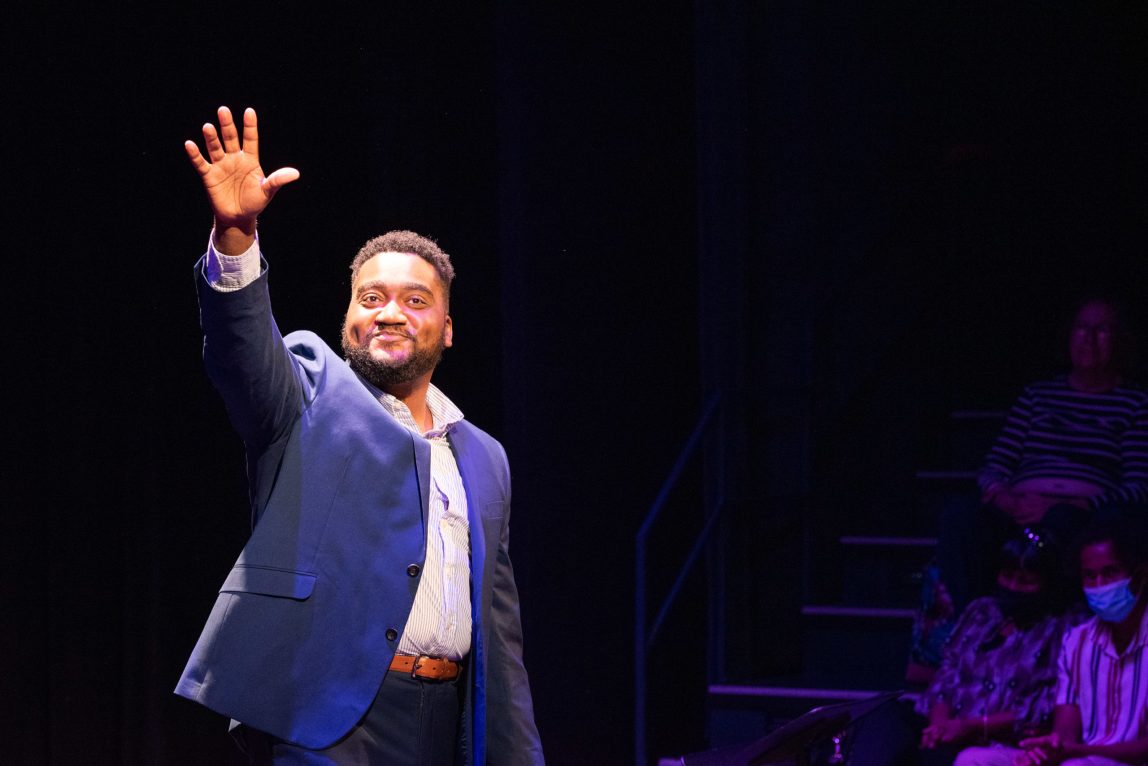
Terrance Jackson came to Virginia’s Barter Theatre as an actor and now leads Barter’s Outreach and its Black Stories Black Voices initiative.

I have always loved August Wilson’s plays about the Black families in the Pittsburgh neighborhood where he grew up. I’ve seen most as many were tried out in Boston during Wilson’s lifetime. But there are other Black playwrights achieving success, and today’s article from American Theatre highlights efforts to help still more develop their skills.

Former Barter Theatre director Karen Sabo writes, “Barter Theatre in Virginia isn’t unique in their current position: It is a predominantly white institution that is currently attempting to better serve audiences and artists of color. But the innovative structure of Barter’s new Black Stories Black Voices program … could well serve as a national model for inclusive art-making that embraces and empowers Black communities at mainstream theatres.

“It may seem like a departure, but in some ways it’s also a continuation. When, 90 years ago, Robert Porterfield founded Barter in his rural, mostly white hometown of Abingdon, Va., in the midst of the Great Depression, he brought New York actors to this Appalachian agricultural area to match unemployed — and in some cases, underfed — actors with local farmers struggling to sell goods to people with little money. The price of admission was 40 cents, or an equivalent amount of produce, dairy, or livestock. ‘Porterfield and his partners accepted almost anything as payment,’ according to Encyclopedia Virginia. ‘A pig was worth 10 tickets, while two quarts of milk bought one ticket.’ …

“Full disclosure: I spent six years working as a director and resident actor at Barter in the early 2000s. My immersion in this organization gave me an appreciation for certain aspects of the institutional culture of this rural LORT [League of Resident Theatres] theatre. …

“During my tenure, Barter had an acting company made partly of out-of-towners — big-city pros who landed at Barter and stayed — alongside some home-grown artists. A few particularly talented local performers made their artistic home at Barter, and the Barter Players, the young, non-Equity company, produced many actors who eventually joined the resident acting company.

“While few would deny that the creation of regional theatres in the United States was a positive development, in their early days these organizations often operated with a kind of cultural imperialism, as they attempted to enlighten or elevate audiences by bringing work from the cities to ‘the provinces.’ In an attempt to better serve its Appalachian population, 20 years ago Barter started the Appalachian Festival of Plays and Playwrights. This encouraged writers to tell the stories of the unique region where Barter is located, and while some of these new plays featured characters who were Black, Indigenous, or people of color, they mostly told stories of the majority-white population of the Southern Appalachian Mountains.

“Just before the pandemic, Katy Brown became Barter’s new producing artistic director, only the fourth in the theatre’s 90-year history. Brown herself is a home-grown leader; I remember seeing her first performance 25 years ago with the Barter Players shortly after she finished college. Like many other predominantly white theatres, Barter has begun hiring more people of color, and producing more shows telling stories of Black Americans. They’ve also designated that at least one play in the yearly Appalachian Festival of Plays and Playwrights be written by a Black artist. But in the spirit of Barter’s culture of empowerment, honoring its region, and developing local artists, they’ve also created the program Black Stories Black Voices (BSBV).

“BSBV is the brainchild of collaborative thinking from many on the Barter leadership team. The first public performance under this new initiative was the 2022 Shine project last April 24, which featured professional actors reading new monologues submitted by Black residents of the counties surrounding Barter. …

“The Barter team wanted input from an authority regarding presenting more inclusive stories. They reached out to Dr. William H. Turner, a known expert on Black life in the South and Appalachia, and Turner suggested that rather than just focusing on producing Black plays, they help create Black playwrights.

“ ‘We wanted people who knew nothing about playwriting to get involved, so that’s where the story collection idea came from, and that came through Cathy,’ Brown said, referring to Barter’s resident playwright, Catherine Bush. Bush suggested asking local people to share stories and then hiring Black artists to help turn stories into monologues. At Shine, those monologues were performed by professional actors, and the Barter team intends the next steps to be turning monologues into scenes and eventually full-length plays.

“But to encourage the sharing of stories, Barter needed to strengthen their outreach and build relationships, especially with communities of color. Enter Terrance Jackson, a Florida native who initially came to Barter as an actor, and who now leads both Barter’s Outreach and Black Stories Black Voices.

“ ‘Our statement of intent is to provide a safe space for Black Appalachian artists to share their stories and showcase their work, while also fostering our Black community with a safe space to see theatrical work,’ said Jackson. … ‘I will be reaching out to different groups and different people, not just Black and brown people, but all types of people, and letting them know that they matter at our theatre, and that they have a place here.’ …

“Jackson summed up his experience with the project so far by saying, ‘Barter is a predominantly white institution still, and we are actively doing our best to, not necessarily to change that, but to make it equitable, and to build a space where all people feel comfortable to work and to see plays. We’re not done creating dope Black stuff — we’re just beginning. And hopefully we do work that really matters to Black folks in Appalachia, but also to the entire theatre world and theatre industry as a whole.’ ”

More at American Theatre, here. No firewall.

Read Full Post »

I wanted to share something from the Christian Science Monitor editor about about a reporter who died recently.

“David Clark Scott traveled the world: He roamed throughout Latin America as the Mexico City bureau chief and reached into Southeast Asia as Australia bureau chief. He supported and counseled dozens of Monitor reporters as international editor.

“When he wrote columns, his favorite stories were of people taking the time to help one another. He even produced an entire podcast.

In these times, when everyone is fixated on what went wrong, it’s important to look for what is going right, and sometimes, frankly, it needs to be at the top of the page.

“Dave passed on this week. On his last day of work, he pitched three stories, any one of which would have made a lovely column. But, he told me, he’d already ‘put a call in to the principal at the Nansemond Parkway Elementary School cuz, well, that’s the intro that tugs at my heart.’

“It did mine, too, so I wanted to share it with you.

“The Nansemond students in Suffolk, Virginia, have been learning a new language: sign language, so they can communicate with food nutrition service associate Leisa Duckwall, who is deaf. It started with a fourth grade teacher, Kari Maskelony, who has deaf family members and started teaching her class. This month it spread when Principal Janet Wright-Davis decided the whole school would learn a new sign every week in honor of Disabilities Awareness Month.

” ‘I don’t think [the students] saw it as a disability,’ Dr. Wright-Davis told me over the phone. It was just a new way to communicate. Her biggest surprise? ‘How much they want to learn it.’ Their favorite sign: pizza.

“The difference in the cafeteria is palpable, she says. Instead of pointing, as they used to, the students sign their requests. ‘She’s smiling and they’re smiling, and it’s just a different environment,’ says Dr. Wright-Davis.

“Ms. Duckwall has come to morning announcements to teach everyone new signs and has signed that day’s menu. Dr. Wright-Davis gets stopped in the hall by students signing good morning and wanting to show her what they’ve learned. Instead of stopping at the end of this month, the students are going to keep learning all year.

“The school had its Trunk or Treat event Thursday evening, and the children were signing as they celebrated Halloween. ‘One gentleman came out, and he was signing,’ Dr. Wright-Davis says. It made her realize the lessons wouldn’t be confined to the lunchroom or even the school. ‘They’re going to encounter someone, even if it’s just to say good morning, or please, or thank you. … Now they know a little bit more to show some gratitude.’

“There’s plenty to learn from Nansemond: Show some gratitude, look for ways to make people feel welcome, and seek out kindness and celebrate it when you find it. Dave always did.”

See the Monitor, here, and more at WAVY television, here. No firewalls.

Read Full Post »

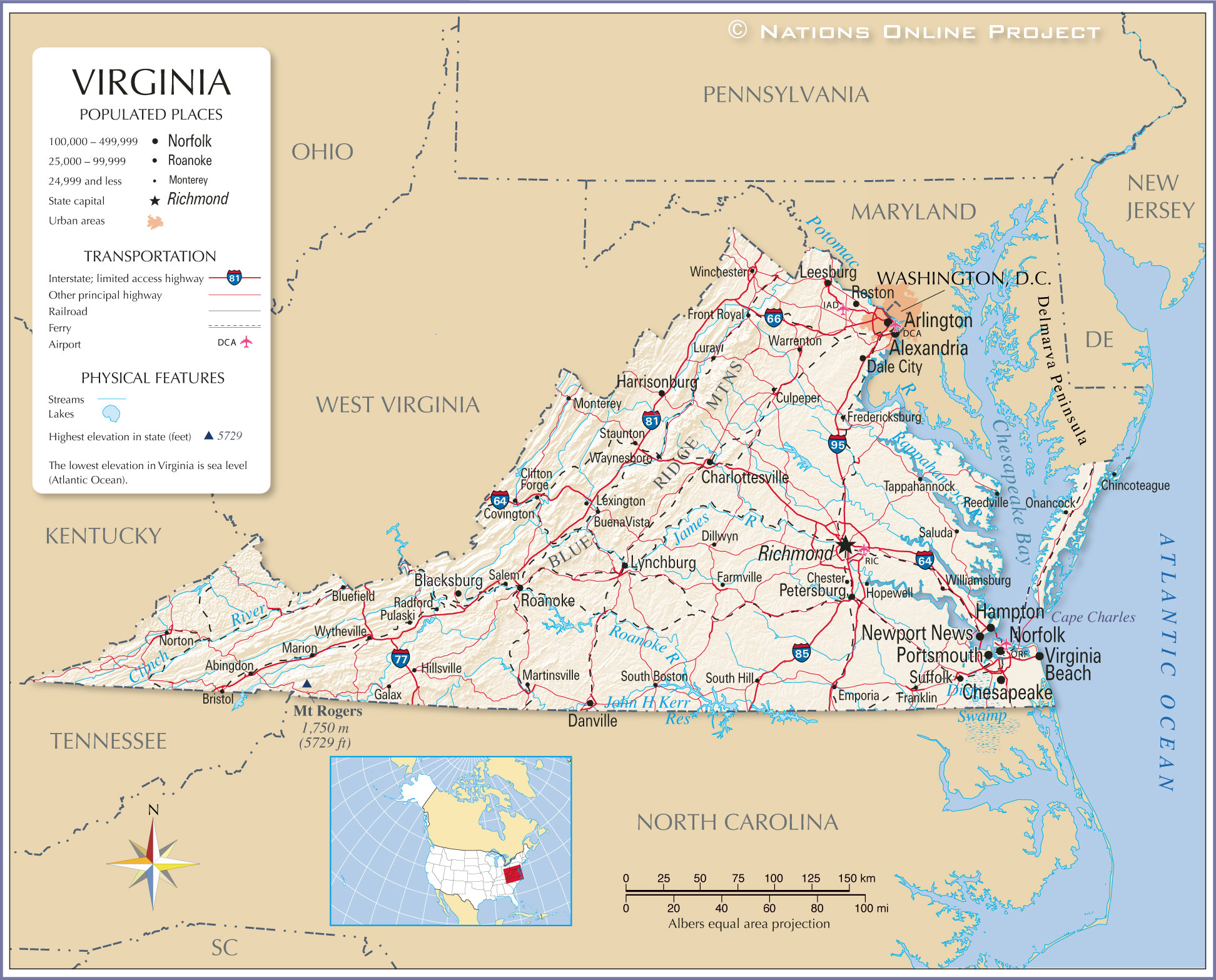
Image: Nations Online Project.
At an unnamed trailer park in Northern Virginia, residents help one another.

One recent morning as I returned from my walk, I was stopped by a woman even older than me walking slowly with a cane. She wanted directions to the hospital, apparently to visit a patient. “But,” I said, “you can’t walk there! It’s over a mile!” “I have to get to the hospital,” she said.

After trying unsuccessfully to come up with other transportation options for her (my own car was in the shop), I gave her directions and off she went. I hope she made it. Sometimes women are beyond amazing.

In August, Theresa Vargas at the Washington Post, wrote about how a group of immigrant women turned a manufactured-housing park into a real community.

“The heat was unforgiving and the mosquitoes were biting, but the women who filled the foldout chairs in Imelda Castro’s backyard didn’t seem bothered. During the pandemic, that small strip of greenery tucked behind a Northern Virginia trailer park has been a haven for them. It has served as a classroom, an office and a community play space.

“That backyard is where the women learned from a health-care worker what medical services their children are entitled to receive. That backyard is where a DJ played music on Día del Niño, Day of the Child, and the community invited a police officer to take a swing at a piñata. ‘She had never hit one before!’ said a woman who captured that moment on video. That backyard is where, every Friday, the women form an assembly line and empty with impressive efficiency a truck filled with fresh produce and other goods, and then make sure everyone in the trailer park who needs food gets it.

“ ‘If we didn’t have this community we’ve built, we’d be very vulnerable,’ Rosalia Mendoza said in Spanish as she sat in one of those foldout chairs. ‘We’re united, and it makes us stronger. What affects one trailer affects the whole community.’ …

“That’s why the women want people to know what they’ve created in that trailer park on Route 1. From a shared struggle, they have built something special — a network of moms who regularly check on one another, inform one another and push one another.

To spend time with those moms is to recognize this: Alone, some could find themselves drowning. But together, they’ve been able to do more than tread water.

“ ‘This is unique,’ Patricia Moreno said of the community. ‘This is not everywhere.’

“Moreno has spent the last two decades as an outreach worker for Anthem HealthKeepers Plus, a job that takes her into low-income communities throughout Northern Virginia to teach residents about their Medicaid benefits. Her fluency in Spanish and willingness to go into even the most neglected of neighborhoods has made her a welcome presence among Latino immigrants who don’t trust easily authority figures.

“Moreno first learned about the women when one of them, Ana Delia Romero, called to ask whether she could come speak to them about health care. …

“The population of the trailer park is one that nonprofit workers often worry about. The majority of the residents are immigrants from Central and South America, and their families are tied to the local economy by threads that are usually among the first to be severed during economic downturns. Most of the men work in construction and restaurant jobs, two industries that were hit hard during the pandemic, and many of the women don’t work because of a lack of access to transportation and child care. In the last few years, several families have gone weeks without income, and some have faced eviction.

“Moreno said many people in the communities she visits are hesitant to ask for help, or accept it, but these mothers have worked hard to turn their trailer park into a village. They watch one another’s children. They give one another rides. They invite people to come teach them about subjects that will benefit their families and their neighbors. …

“ ‘I’ve been doing this for 20 years, and I’ve never seen a system like this,’ Moreno said.

“On the day I visited, she sat with eight of the women in the foldout chairs. Also there was Ivana Escobar, director of collective impact for United Community, a nonprofit that provides food to the trailer park and support to the women.

“ ‘We go to every community in this area,’ Escobar said, ‘and these women have made something stronger than anywhere else.’

“As the women tell it, Ana Delia Romero, who is partially blind, is the one who started bringing them together. She was the first person in the community to test positive for the coronavirus, and she ended up in the hospital for six days. After she recovered, she started volunteering with the Health Department. She knew many Latinos were hesitant to learn about the virus and the safety precautions they could take, and she wanted to help get that information to more people.

“She also wanted to make sure none of her neighbors was going hungry during the pandemic. She got involved with free food-distribution efforts and started knocking on her neighbors’ doors to ask whether they had enough to eat. …

“Escobar said that Romero asked United Community whether a truck could deliver food to the trailer park, and now, a truck comes every Friday. When it arrives, the women unload the contents and distribute them. On the day I met the women, all but one were wearing a United Community T-shirt. Escobar said they don’t get paid by the organization. They handle the food distribution as volunteers.

“ ‘The women here, they mobilized themselves,’ Escobar said. ‘You wouldn’t even know they’re struggling because of how they show up.’ …

“ ‘When Ana asked, “Who wants to volunteer?” the answer was “Me, me, me,” ‘ Elizabeth Villatoro said. ‘This community doesn’t have excuses. Ana doesn’t say, “I lost my vision, I can’t do anything.” Alberta doesn’t say, “I have children with special needs, I can’t do anything.” We do what we need to do.’ “

More at the Post, here.

Read Full Post »

Photo: Regional Conservation Needs.
Wood turtles are said to make nice pets. Too nice for their own good: their reputation leads to poaching.

There’s a popular kind of turtle that’s losing habitat, like so many species these days. Here’s a story about a man who was determined to preserve his own land for these turtles, particularly for one specimen — his friend Stumpy.

Sadie Dingfelder reports at the Washington Post, “With his brow furrowed, Tom, 70, stomps on the damp leaf litter — thump, thump, thump, thump — and then we wait. A woodpecker cackles; bluebells tremble in the breeze. Stumpy is nowhere to be found. …

“A wild turtle, Stumpy has been meeting up with Tom in these West Virginia woods every spring for more than 30 years. Like his fellow wood turtles, Stumpy spends his winters brumating (the reptile equivalent of hibernating) in a clear, fast-moving stream. As days warm, he emerges from his aquatic home and roams the nearby woods in search of food ⁠— first tender leaves, then flowers and, finally, berries. Early on Stumpy’s circuit is Tom’s former house, where the human tosses him huge, juicy strawberries — months before the wild berries are ready to eat.

“It took a while for Tom to figure out Stumpy’s species, because Stumpy’s shell is worn and scuffed. Usually, wood turtles have gorgeous shells that appear to have been hand-carved from mahogany.

‘He was already old when I first saw him, so he must be really old now,’ says Tom. ‘Of course, he could say the same thing about me.’

“Curious, personable and uncommonly pretty, wood turtles are highly sought-after as pets, says Andrew Walde, chief operating officer of the Turtle Survival Alliance, whom I called after my first visit to Stumpy Acres. This combination of characteristics makes them vulnerable to poachers, who sell them as pets. ‘Whenever anything gets published about a particular population, that population is done for,’ Walde says. (To protect Stumpy and the other wood turtles from poachers, we aren’t publishing his exact location or his human friends’ last names.)

“The eastern panhandle of West Virginia is among wood turtles’ last strongholds, Walde says. Across most of their range, they are in steep decline. Indeed, half of the world’s 357 turtle species are threatened with extinction due to habitat loss, poaching and other human pastimes. This is an animal that survived not one, but two mass-extinction events. …

“Tom no longer lives in Stumpy’s territory. Last spring, he sold his house and moved to a more remote spot, high on a nearby mountain. He loved being by the river, but the pandemic brought an influx of tourists and new homeowners. The noise and traffic were bad enough, but worst of all was their aggressive landscaping.

‘One family clear-cut all the way down to the river,’ Tom says. ‘They didn’t want any brush or shrubbery — they are afraid of snakes or this or that — and they kinda destroyed the habitat.’

“He was determined to find a buyer who would be a good steward of the land — not just for vague environmental reasons, but for Stumpy’s sake, too. Luckily, the first person who came to look at the house fit the bill. Tommy, a 28-year-old computer programmer from D.C., told Tom about the sea turtle conservation project he had worked on one summer in Costa Rica, and he promised not to clear-cut the property to get a river view or better internet access. …

“Does Stumpy represent nature? Survival against the odds? The relentless ravages of time? Tom dismisses all these possibilities. ‘Stumpy is just Stumpy,’ Tom says. ‘He’s an individual. That’s what makes him special.’

“We drive to Tommy’s house and commence stomping. Stumpy should really be out of hibernation by now, but he’s not in their meeting spot near a large fallen tree, and he’s not on the berm by the river. He’s not basking on his basking log, and neither is he napping beneath the papaw trees. …

“If you spend time outdoors, you’ll eventually see something brutal, and you’ll be forced to accept it with equanimity, because nature is obviously beyond our judgment. Loving nature also feels a little tragic, because no matter how much you care about it, it will never care about you.

“But perhaps I’m wrong, because suddenly I hear a rustle in the leaves. Tom makes an excited sound. ‘There he is!’ he says, pointing. About 10 feet in front of us, a little brown turtle is running on his tiptoes — who knew turtles could run? And even though I’m closer and I’m also carrying strawberries, he’s beelining straight to Tom. …

“Pretty soon, Stumpy’s face is covered in pink pulp, and he’s got half a strawberry hanging from his chin. His species may be threatened, his habitat may be imperiled, but in this moment Stumpy seems delighted. ‘He’s such a messy eater,’ says Tom. ‘Do you see that? What a pig.’ Stumpy usually hangs out for a few weeks, making intermittent appearances, Tom says. As to where he goes afterward, no one knows — but Tom has a theory. ‘Maybe he visits lots of people, up and down the river, and we all think he’s ours.’ ”

More at the Post, here.

Read Full Post »

Photo: Cardinal News.
Cardinal News calls itself “an independent, nonprofit, nonpartisan news site serving Southwest and Southside Virginia.”

Local news is desperately needed as chains buy up papers for their advertising potential and show little interest in actual communities. The need is especially dire in rural areas.

Margaret Sullivan reports at the Washington Post on one hopeful development in western Virginia, where “veterans of a once-great newspaper are starting something small with big ambitions for serving Appalachian readers.”

She writes, “Two photographs tell the story of Cardinal News, a start-up news site in a mostly rural section of Virginia.

“One shows a lawn chair and small table set up just outside the Fincastle branch of the Botetourt County public library. It’s where editor Dwayne Yancey sometimes goes to use the broadband Internet access that he lacks at his nearby home. When he needs to upload big digital files — particularly photographs he wants to publish on the news site — his mobile hotspot can’t get the job done.

“The other photo is of the ravaged interior of Patty Coleman’s home in Hurley, a community close to the Kentucky and West Virginia state lines, where a flood and mudslide destroyed dozens of homes and caused one death last summer. After Yancey sent Megan Schnabel, one of Cardinal’s two reporters, to Hurley for several days, along with a photographer, their in-depth reporting about the devastation brought much-needed attention to Hurley’s suffering residents — and may help them get $11 million of state aid.

“ ‘Without that story, we wouldn’t have had the awareness we needed,’ said Will Morefield, a state legislator who has proposed a funding bill that is moving forward; the money is sorely needed after the Federal Emergency Management Agency denied the state’s request for financial help to individual homeowners. …

“Like many similar start-ups around the nation, Cardinal — named for Virginia’s state bird — is helping to fill the gap left by the shrinking of traditional local news organizations, particularly newspapers. Most of the staff came from the Roanoke Times.

“Yancey made the move after watching the Times scale back its staff in recent years, especially after its sale by longtime owner Landmark Communications in 2013.

Now the Times, like many other Virginia newspapers, is in the hands of Lee Enterprises, which has been fighting off a takeover bid by Alden Global Capital, a hedge fund that is perhaps the worst newspaper owner in the country. …

“More than 1,800 local papers have closed since 2004 as print advertising revenue plummeted and reader habits shifted to online sources. The shuttering of those papers, along with the shrinking of other local news sources, is having profound negative effects on society. …

“ ‘It was basically like getting the band back together,’ Yancey told me last week. They have also been joined by Markus Schmidt, the Cardinal’s second reporter, who is a veteran of the state politics beat at the Richmond Times-Dispatch. He remains based in Richmond, focused on reporting government news of particular interest to Cardinal’s part of the state.

“[Chief development officer, Luanne Rife, a former Times health reporter] told me she took a buyout from the Roanoke paper after she was told she would no longer be able to do many in-depth stories on the health beat, even in the midst of a pandemic.

“ ‘I had always enjoyed my work, but I was burned out,’ she told me. ‘I would go to my keyboard in the morning and start to feel tears rolling down my face.’ When a foundation approached her about a reporting project it wanted to fund, it lit a spark of inspiration for her — and she started exploring whether she could start her own project, one that would be more ambitious and permanent.

“Cardinal’s territory extends far beyond the Roanoke metro area; its mission is to … what Yancey calls ‘Cumberland County to the Cumberland Gap.’

“Much of it is considered part of Appalachia — ‘an easy part of the state to stereotype,’ Yancey noted. Cardinal’s mission includes providing a more nuanced picture of the region to the rest of the state.

“With no paywall, the site’s funding comes from foundations, businesses and individual donors; it has applied for nonprofit status.

“Rife says she’s heartened by the way those contributions have grown from a handful when the site launched last September to more than 700. A new grant will allow Cardinal to add a reporter soon in Danville, along the North Carolina border; Rife also would like to hire an education reporter and one dedicated to health coverage.

“ ‘We’ve been amazed, overwhelmed and humbled by the support,’ Rife told me. The other day, she picked up the mail to find five checks — one for $25, another for $10,000. Cardinal lists its donors on the site and discloses in stories if a person or organization it writes about is a significant contributor.

“In Cardinal’s first big story about the devastation in Hurley, Schnabel describes Coleman’s house: ‘A blue tarp partially draped the door frame where the mud had rushed in. The floor had caved in, and mold and mildew covered the walls.’

“The house was beyond repair. Coleman didn’t have flood insurance; she did have a homeowner’s policy, but the insurer, according to the story, had given her the crushing news that nothing would be covered.

“Now there may be help on the way after all. And a tiny news start-up with big ambitions will have made a difference.”

More at the Post, here.

Read Full Post »

Photo: David L. Ryan/Globe Staff.
Aminullah Faqiry, newly arrived with his family in Rhode Island, was an interpreter for the US military, in Afghanistan. He talks with Edward Fitzpatrick about his life there and his sorrow about the failure of 20 years of fighting the Taliban.

Because I’ve volunteered with refugees for several years, I know firsthand that these people do not leave jobs, friends, and family in their home country because they prefer to live in the United States or any other country. They leave because the situation at home is untenable. And it breaks their hearts.

Consider the sadness of the former military interpreter who recently arrived with his immediate family in Rhode Island, forced to abandon other family members who are now in grave danger. Ed Fitzpatrick, a reporter for the Boston Globe, talked to him.

He writes that Aminullah “Faqiry said he was overcome with emotion as he prepared to board the plane to leave Afghanistan, and people began looking at him, wondering why he wasn’t happy to be escaping an incredibly precarious situation. But he knew the source of his tears.

“ ‘I am a very patriotic person,’ Faqiry explained. ‘I cried for my people, for my country, for the system being destroyed, for so many sacrifices that we had made.’

“He said he cried for the family members he was leaving behind — for his mother and father, who are struggling with health problems, and for the widow and the children of his brother, who was killed by the Taliban. …

“He said he was crying because the Afghan people had been ‘liberated’ before the Taliban arrived.

“ ‘Women were able to go to school, and a girl was able to walk on the streets free without tension and without fear,’ he said. ‘Afghanistan was growing up. We were on the move to compete in the world.’ …

“But now, he said, it was clear ‘We were going to go back — my country was going to be thrown back like 50 years. … We are leaving everything behind to the Taliban, who we fought for 20 years and who are a terrorist organization. … We were not able to hold on — we had fallen. … I wanted my country and my people to have been peaceful. It just didn’t happen,’ Faqiry said. ‘I was crying because we lost everything.’ ”

But as you know, people do what they have to do. Most refugees regroup, find or create work to support their families, and give back to their host countries. Today, in Virginia, former refugees are offering a warm welcome to Afghans.

Story Hinckley reports at the Christian Science Monitor, “For many Americans, it’s difficult to imagine what the tens of thousands of newly arrived Afghan refugees are going through. 

“But Arshad Mehmood doesn’t have to imagine. He knows. Only seven years ago, Mr. Mehmood was in their shoes, fleeing Pakistan. He describes being kidnapped and tortured by the Taliban for being a local politician. 

“Now, as the regional coordinator for a national nonprofit, Mr. Mehmood as well as his team in northern Virginia, many of whom are refugees themselves, is helping these new arrivals with everything from finding apartments to translating school enrollment forms from English to Pashto. They have assisted more than 80 Afghan families over the past three months and expect to help almost 200 by the end of the year.

“And while this practical aid is important, says Mr. Mehmood, it’s not what newly evacuated Afghan allies need most right now. That would be encouragement and empathy. And here in Virginia, Afghans are finding this support in local communities – especially from the refugees who came before them.

“ ‘English was my third language, but I did it. We live a good life here,’ says Mr. Mehmood. His wife, who is a manager at T.J. Maxx, feels welcomed to wear her hijab on the job. His daughter will start her first year of college this fall, and his son is a defensive star on his American football team.’ ”

Read on. There is light in darkness. Perhaps after reading these stories, you will find a way to help a refugee family. And if like blogger Milford Street you already do help refugees, please share a word about your experience.

More at the Monitor, here, and at the Globe, here.

Read Full Post »

gordon-stewart
Photo: Victory Hall Opera.
Miriam Gordon-Stewart (above), artistic director of Victory Hall opera in Charlottesville, Virginia, and music director Brenda Patterson had the original idea for deaf opera.

Right before the pandemic, a cutting-edge company in Virginia put on an opera with deaf performers. The company is still going strong. Undaunted by Covid, it claims it was made for this moment and is offering a roster of outdoor performances for its 2021-2022 season.

An example of the company’s creativity was the deafness project. Thomas Floyd wrote the report for the Washington Post.

“Alek Lev understands that he’s not exactly a member of the deaf family, but he feels comfortable enough calling himself an ‘in-law.’ As a student at Wesleyan University, he took a sign-language class on a whim and subsequently dated a deaf person. Over the past two decades, the writer, director, actor and American Sign Language interpreter has largely worked in the deaf community on films and stage productions.

” ‘As someone who is fluent in sign language and has done this for such a long time, just seeing people sign onstage isn’t particularly thrilling now,’ Lev says. ‘It needs to be thrilling for some other reason.’

“One such reason arose in 2018, when Miriam Gordon-Stewart and Brenda Patterson of the boundary-pushing Victory Hall Opera in Charlottesville pitched Lev on a production of Francis Poulenc’s 1957 opera Dialogues of the Carmelites, but with deaf performers.

“The concept came about after Gordon-Stewart, Victory Hall’s artistic director, and Patterson, the music director, read Andrew Solomon’s 2012 nonfiction book Far From the Tree, about how families accommodate children with disabilities. The book mentioned ASL’s roots in French Sign Language, dating to the deaf community of 18th-century Paris. They then drew parallels to Dialogues of the Carmelites, which follows a convent of Carmelite nuns pressured to renounce their vocation during the French Revolution.

” ‘Within the deaf community, there are a lot of similar issues that come up,’ Gordon-Stewart says. ‘There’s a pressure to assimilate with hearing culture, for example, which is intensely political. These things worked together for us into the idea of a production of Dialogues of the Carmelites that would be set in a deaf convent.’

“Victory Hall Opera [took] a step toward making the production a reality with a workshop Feb. 27 [in 2020, featuring] three sopranos singing alongside three deaf actors. …

” ‘There’s something about the challenge of figuring out how to do this and why to do this each time that is just more exciting to me than putting on yet another version of a play that’s been put on several times. … I like that we have a whole new problem now. We have sign language. We have deaf actors. We have hearing actors who don’t know sign language. I love the puzzle.’

“ ‘I’ve done a lot of workshops and productions that include hearing and Deaf actors, but the fascinating thing about those experiences is that it’s never the same,’ [Sandra Mae Frank, who in 2015 played the lead role of Wendla in Deaf West Theatre’s Tony-nominated revival of Spring Awakening on Broadway] writes in an email. …

“Most of the roles in that Spring Awakening production were doubled by a deaf actor, who used sign language, and a hearing actor, who simultaneously performed the vocals. Although that has become a common template for deaf theater, the [Victory Hall] team wants its performers to complement one another in an artistically innovative way. … The deaf actors act out the plot while the singers serve as spiritual guides, representing women who have endured similar oppression.

” ‘If we’re going to create an art form out of this, then we need to push the concept one step further than it’s been pushed before,’ Gordon-Stewart says. ‘There’s a potential for the result being a marriage between two art forms, rather than just the two art forms being simultaneously performed. You bring a potentially heightened physicality to both ends of that equation, making it a more visually compelling art form for the deaf performance, and making it a more heightened experience for the hearing audience.’ ”

More at the Washington Post, here.

Read Full Post »

I’m one of those nosy old ladies who calls the police for things like abandoned bicycles. I used to see them a lot near the train, and if a bike was in the same place with no lock for several days, I would call. The police usually have a list of people upset about a stolen bike.

Kyle Melnick reports at the Washington Post about an assistant pastor who was also upset when his bike disappeared. At least at first.

“Someone stole Robbie Pruitt’s mountain bike off the rack of his Honda Odyssey in September. Pruitt visited a local bicycle store in Ashburn, Va., the next day only to find there were very few bikes in stock available to buy.

“That’s when an idea hit him — the thief might have stolen the bike because they’re in short supply during the coronavirus pandemic. What if the thief needed the bike to get to work? Pruitt, 44, wanted to help people who might be in such a predicament.

“Pruitt, an assistant rector at the Church of the Holy Spirit in Leesburg, Va., posted on a private Loudoun County Facebook page that he’d fix anyone’s bicycle free. In the post he also said he was accepting unwanted bikes, which he’d fix and donate to people in need. …

“That day, he received about 30 bicycles at his townhouse. After his next post, about 500 people expressed interest in either donating bikes or having Pruitt fix them.

“He set a goal of fixing 100 bikes before the end of 2020. He surpassed that, repairing more than 140 bicycles — donating about 60 percent of them and returning the rest to their owners. He gives bikes to anyone who asks, but tries to support children and families who are struggling. …

“Perhaps more important, along the way, he has taught more than a dozen young people in Loudoun County to mend their own bikes and the bikes of others. …

“Pruitt’s interest in helping people with their bikes during the pandemic started a couple of months before his was stolen.

“One July evening, after returning from a mountain bike ride in Reston, Pruitt was revamping the disc brake on his red Diamondback bicycle in front of his house when a group of four children from the neighborhood approached on their own bikes. Pruitt asked if they wanted to learn how to repair parts of a bike. Pruitt also noticed their bicycles were in bad condition, and some had flat tires. That night, he fixed them. It was the start of a friendship, and a neighborhood project.

‘All the neighborhood kids are spending a lot more time doing something that’s hands-on,’ said Danny Offei, Pruitt’s next-door neighbor. ‘Almost everybody in the neighborhood has a bike now, and he’s helped put those bikes together.’ …

“Pruitt grew up with his mother and two siblings in Columbia, S.C., where he said he’d always been interested in building and fixing. … In 2004, when working for Epiphany Episcopal Church in Herndon, Pruitt began repairing and donating bicycles as part of a church project. …

“In July after his family moved to Ashburn, [he] saw the condition of some of the neighborhood children’s bikes. Now, many nights, Pruitt is online, buying materials such as seats, brake levers, handlebars, training wheels, shifters, pedals and brakes. He estimates he has spent almost $1,500 on parts. Pruitt said repairing each bike takes around 30 minutes, depending on what it needs. He tries to restore each one so it’s as good as new.

“ ‘The feeling you get when somebody rides off with a bike that didn’t have one … there’s a lot of gratification,’ said Pruitt. …

“Pruitt’s favorite part of his bike project is creating friendships. He said after he fixes bikes, the owners will sometimes drop by his backyard just to chat. Some people will bring him food, including a Greek family that dropped off chicken souvlakia on Christmas Eve.”

More at the Washington Post, here.

Read Full Post »

Today’s story is about the kindness of one stranger. But something I especially like about it is that it’s also an example of more than one person making the kindness happen. For the woodworker in Virginia to make something that an Alzheimer’s patient in North Carolina would enjoy, it required the patient’s sister to think up the idea and put out a request to the Reddit universe.

Cathy Free reported the story at the Washington Post. “John Adams has been anxious lately. The nuclear engineer and his wife brought home their newborn son shortly before the pandemic started, and working from home has been challenging.

“For stress relief, Adams, who lives in Bedford, Va., likes to scroll through social media looking at woodworking projects, and one of his favorites places is Reddit, where there’s a community dedicated to woodworking. About a month ago, a post jumped out at him.

“ ‘Are there any craftsmen here who would be willing to make a shallow cabinet for me so I can create a “busy box” for my brother with Alzheimer’s?’ it read.

“The poster, Sharon Elin of Mechanicsville, Va., near Richmond, explained that she hoped to attach several kinds of latches and hooks on the doors to provide her brother with something to fiddle with and engage his mind. Her brother had become more frustrated lately and had been wandering around his two-acre property in North Carolina.

“Adams, 31, knew right away that he was the person for the task. … He agreed to make the box, then he stayed awake in bed for hours that night coming up with a design for it.

‘I thought, “I can’t pass this up — it seems like fate,” ‘ said Adams. … ‘I had plenty of scrap wood waiting to be used in my shop.’

“After consulting on Reddit with Elin, Adams spent a weekend in his shop building a polished pine busy box. As he worked, he kept in mind Elin’s brother, a retired chemistry teacher he’d never met, hoping the box would engage him and bring him joy.

“Elin had mentioned that fidget lap quilts with buttons, pockets and zippers can help keep people with dementia busy and give them something to do with their hands when they become agitated. She said she’d noticed that as her brother’s memory loss progressed, he became more restless and could spend hours doing the same tasks repeatedly, often old habits, such as folding towels or arranging bird feeders on the porch.

“ ‘That’s when I started thinking that maybe a busy box would help,’ Elin said. … ‘He’s always loved tools and tinkering with things, and I thought he’d enjoy something that had hardware on it instead of some of the lap cloths I’d seen with zippers and Velcro,’ said Elin, 65.

“ ‘I could envision a “busy box” in my mind, but I had no idea how to make it myself,’ she said. …

“She and Adams messaged on Reddit about her idea, then he designed a box that he thought [her brother, Chad] Chadbourne would appreciate. … ‘Sharon initially said she wanted a cabinet, but then we agreed that something lightweight was better,’ he said. …

“ My wife’s grandmother is going through dementia right now, and my grandmother passed away from it about six years ago,’ he said. ‘I know that she would have enjoyed something like this. I thought about her a lot when I went into the shop to work on the box that weekend.’

“Adams said it took him about 10 hours to make and put the finishing touches on the busy box. Then on Sunday, he arranged to meet Elin in a store parking lot in Lynchburg, about 30 minutes from his house. Elin arrived with the latches she’d bought for the project, and Adams brought along his drill and attached them.

” ‘He put them on right there on the spot,’ Elin said. ‘I’m so appreciative of what he did for my brother. He didn’t want to accept payment. … It’s really been heartwarming.’ …

“Over the summer, Kathryn Chadbourne took [Elin’s brother] to a gerontologist. Tests revealed that he had middle-stage Alzheimer’s disease. …

“Before he lost his memory, Chadbourne had a small day lily flower farm that he’d started as a hobby on his property, and he carried a pair of clippers everywhere in his pocket, she said. As Alzheimer’s took hold and he began cutting flowers repeatedly, her sister-in-law replaced the clippers with a set of pliers to help keep him safe.

“ ‘It became important for him to have those pliers in his pocket,’ Elin said. ‘Being outdoors on his farm was calming and took him back to something he enjoyed doing.’ …

“Several people on Reddit told Adams how much they admired what he did — one called it ‘some Mr. Rogers-level kindness’ — and a few told their own stories of relatives with Alzheimer’s.

“Adams responded that Elin ‘caught me in a rare period where I had finished everything on my wife’s honeydo list for the year but still had some warm-weather months left and was itching for another project. Came across B’s post while doomscrolling reddit and couldn’t pass up the opportunity to help!’ …

“ ‘We’re going through a stressful change, so this kindness is coming at the perfect time,’ Kathryn Chadbourne said. ‘My husband has always loved to do things with his hands. It’s perfect.’ ”

Here’s the follow-up on Reddit.

“A while back I posted on the woodworking subreddit for advice on finding or building a box I envisioned for my brother in the mid-stages of dementia — something he could fiddle with that was ‘masculine’ with hardware. Other Alzheimer’s busy toys are often geared toward feminine objects (such as a lap cloth with zippers, velcro, buttons, and furry textures). A big shoutout to u/vtjadams for volunteering and taking the time & materials to build this awesome unit!! I’m overwhelmed with admiration for his talent and gratitude for his helpfulness!”

More at the Washington Post, here.

Read Full Post »

Older Posts »