Feeds:
Posts
Comments

Posts Tagged ‘women’

Art: Charles Arthur Cox, “Bearings” (1896), via Hyperallergic.
Art Nouveau posters often reflect both a love of books and young women enjoying more freedom.

Do you like the Art Nouveau, a style identified as roughly 1890 to 1910 in Europe? After reading about the literary posters of that time, my already considerable appreciation for it is has only increased.

Sarah Rose Sharp writes at Hyperallergic about a recent exhibition at the Metropolitan Museum of Art in New York.

“The literary poster occupies a special place at the intersection of American art history and literature. Advances in color printing technology at the end of the 19th century made way for a flood of colorful and intricately detailed materials, often in the form of handbills and posters, which were suddenly more affordable as a vehicle to advertise the latest books, magazines, periodicals, and other forms of literature.

“Accompanying an eponymous exhibition at the Metropolitan Museum of Art, The Art of the Literary Poster: The Leonard A. Lauder Collection illuminates the expansive genre through several examples culled from the titular collection, accompanied by essays on the form by exhibition curator Allison Rudnick, scholar Jennifer A. Greenhill, paper conservator Rachel Mustalish, historian Shannon Vittoria, and Lauder himself. …

“Both historically astute and visually delightful, the book captures the influence of the Art Nouveau movement on printed materials at the turn of the century, as well as showcases the evolution of graphic design as innovations in multi-color plate printing that allowed text and imagery to come together in increasingly complex ways. Vittoria’s essay highlights the particular power of literary posters as a genre ‘by women, for women,’ noting that American illustration was one of the few professions young women were encouraged to pursue at the time.

” ‘As male artists and critics worked to defeminize illustration by minimizing women’s contributions to the field, female artists and advocates saw the potential of the visual arts, particularly printed media, to advance the campaign for women’s suffrage,’ Vittoria writes. ‘The art poster became a potent tool in this struggle.’

“Turn-of-the-century literary journals like Lippincott’s Monthly Magazine and Harper’s were some of the first publications to avail themselves of this new technology, with cover art featuring thoroughly modern Gibsonesque girls riding bikes, snuggling cats, and of course, reading. Though the magazine and visual digest Bradley, His Book was only published between 1896 and ’97, the cover works by Art Nouveau illustrator and film director William H. Bradley, its publisher, are dazzling examples of the intricacies made newly possible in literary art posters. …

“In her catalog essay, Rudnick examines a cover of the July 1896 issue of Lippincott’s as the essence of the burgeoning form. Created by Joseph J. Gould Jr., the image features a woman in a day suit equipped with the exaggerated sleeve caps and narrow skirt of the era, perched calmly on a bike with a straw hat on her head, which partially obscures the masthead’s bold red letters. She is biking out of a richly blue background, presumably off to enjoy the copy of Lippincott’s held against the handlebars in her right hand.  ‘The poster itself represented something new: an advertisement that looks and functions like a work of art,’ Rudnick writes, ‘an image made for public consumption in which commercialism and culture coalesce.’

“The distinctive print also captures the spirit of new possibilities for women, as a cavalcade of unbothered women on bikes became the visual heralds of the era’s first-wave feminism that paved the way for women’s movements of the following century. A 1911 ‘Votes for Women‘ poster by artist and educator Bertha Margaret Boyé, chosen as the winner of a poster competition held by the San Francisco College Equal Suffrage League, embodies this renewed sense of possibility as a woman in flowing yellow robes stands before a landscape displaying the titular banner. Behind her, the rising orange sun halos her head, giving the effect of saintliness while hinting at the dawning of new opportunities.

“Full of aplomb women on bikes with literary and political ambitions (and, of course, cats), The Art of the Literary Poster gathers inarguably beautiful printed materials that — even beyond their political and promotional implications — demonstrate the elegance, interests, and aesthetics of a pivotal moment in art history.”

Check out the gorgeous collection of posters at Hyperallergic, here. No firewall. Subscriptions encouraged. And for those interested in learning more about Art Nouveau in general, see at Wikipedia, here.

Read Full Post »

Photo: Lenny Rashid Ruvaga.
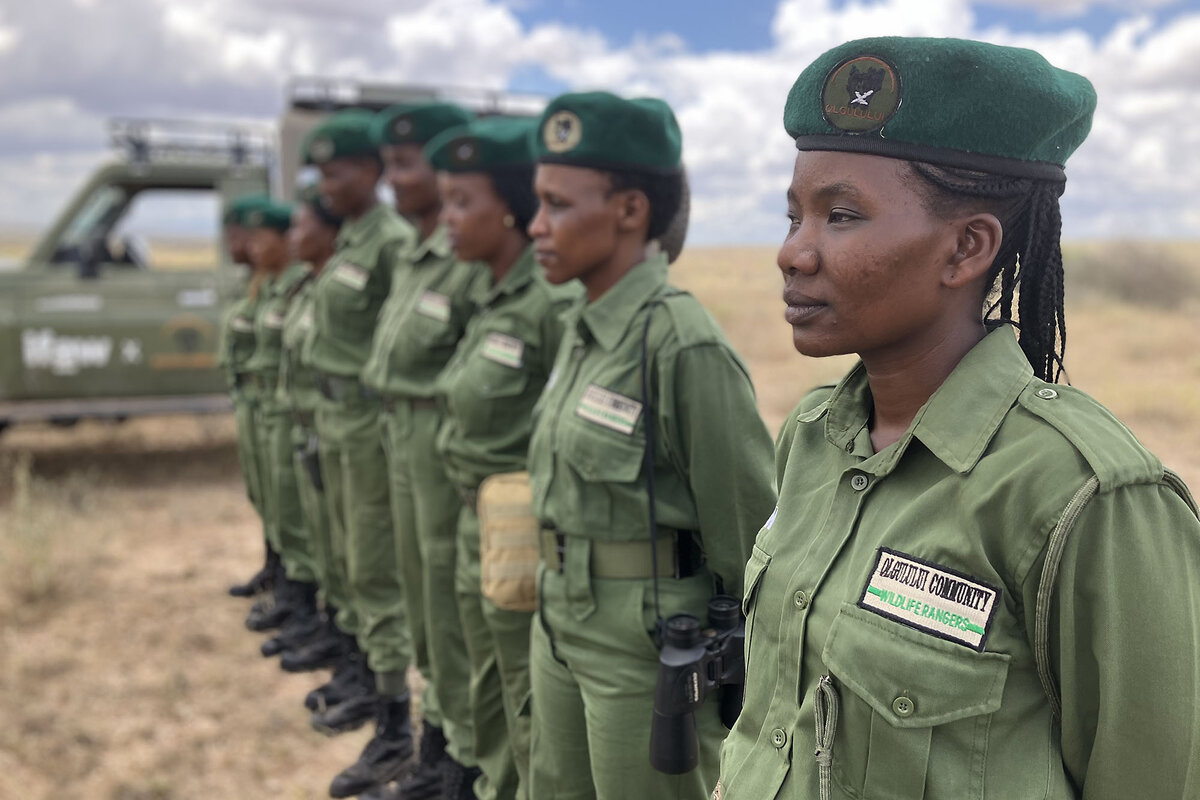
Senior Sgt. Purity Lakara (foreground) stands with members of Team Lioness at the Olgulului-Ololorashi Group Ranch. They make up Kenya’s first all-woman ranger force.

Maasai women are breaking out of traditional subservient roles, with some especially adventurous females deciding to serve as conservation rangers.

Lenny Rashid Ruvaga writes at the Christian Science Monitor, “The breakthrough was a bottle of water. For three days, wildlife ranger Everlyne Merishi had been embedded with a group of Maasai morans, or hunters. It was mid-2023, and they were searching for lions that had killed several of their cattle near this national park at the foot of Mount Kilimanjaro. For the Maasai, cows are sacred and considered members of their families. The men wanted vengeance. 

“Mrs. Merishi understood that feeling, because she is Maasai herself. That is also why she was convinced there could be a less destructive solution. 

“The group had already walked about 25 miles that day when members stopped, exhausted, for a break. Mrs. Merishi and her team began to pass around bottles of water. As the hunters drank, their faces softened and they mustered weak smiles. 

“Mrs. Merishi remembers walking over to a group where one of the leaders sat. ‘I told them that I understood their pain and that an injustice had occurred, but I promised that we would ensure that the authorities would relocate these two lions,’ she says. 

“Mrs. Merishi is part of an all-woman ranger unit working on Maasai lands near Amboseli National Park in southern Kenya. That’s rare: Globally, women account for only 3% to 11% of all park rangers. Team Lioness, as the Kenyan unit is known, was formed in 2019, part of a worldwide movement to increase those numbers. 

“These efforts are important, experts say, because they challenge stereotypes – but also because they help conservation efforts reach a wider audience. In the Amboseli area, for instance, the Lionesses have been particularly effective among the ranger teams at connecting with locals like the Maasai. 

“ ‘It’s astonishing to see the incredibly positive ripple effect of employing women from local communities and the benefits on their lives and their communities at large,’ says Holly Budge, the founder of World Female Ranger Week and a longtime advocate for women in wildlife protection. …

“The commander of Team Lioness, Sgt. Purity Lakara, has dreamed of this life since she was a child. 

“She grew up in a Maasai village approximately 30 miles from here. Her community placed heavy value on living in harmony with both animals and nature. And when she saw wildlife rangers patrolling the area, she was awed by the sense of authority they projected. There was one problem though: ‘They were all men,’ she says. 

“Meanwhile, girls like her were expected to get married young and settle into a domestic life. … But Mrs. Lakara’s parents were determined that she should get an education, and her timing was fortuitous. 

“In 2013, Africa’s first all-woman ranger unit, the Black Mambas, was formed in South Africa, and others soon followed in countries such as Zimbabwe and Congo. Supporters of the trend argued that women were more approachable and were able to communicate more easily with other women in the communities where they worked.  

“The idea to form an all-woman ranger team in Amboseli came up in 2019. It was the brainchild of a female Maasai elder named Kirayian Katamboi and the International Fund for Animal Welfare, a global charity. 

“At the time, Mrs. Lakara had just finished high school. When village elders called a meeting to pitch the new ranger unit, ‘my heart leapt for joy,’ she says. She became one of its founding members.

“Today, Team Lioness is made up of 17 women, each of whom has completed a three-month training in ecology, first aid, and ‘bushcraft’ – or the art of talking to people about conservation. They live for stretches of 21 days at a simple base camp with concrete floors and a sheet iron roof in the Olgulului-Ololorashi Group Ranch, as the Maasai land surrounding Amboseli National Park is known. 

“Each morning, the rangers patrol the surrounding area on foot, walking about 12 miles as they look for signs of poaching and survey the wildlife in the area.  The women are also responsible for managing occasional conflicts between locals and the animals, which usually flare up when lions or cheetahs from Amboseli cross into Maasai villages and kill cattle. 

“In the past, these situations often led to tensions between park rangers, who didn’t take kindly to attempts to kill the offending wildlife, and communities, who often felt authorities wanted to protect animals but didn’t care about the people they harmed. 

“However, the honest communication style of Team Lioness and other ranger units from Maasai communities has helped gain trust. They explain the law and people’s rights – like their right to be compensated for cattle killed by big cats from the park. …

“The rangers also give back to the community in other ways. In April 2022, they started a school outreach program where they hope to inspire students – particularly girls – to stay in school and pursue careers in conservation. 

“ ‘I beam with joy when I hear the students say, “I want to be like Ranger Lakara or Ranger Merishi,” ‘ Mrs. Lakara says. ‘It means that they see us as role models.’”

More at the Monitor, here.

Read Full Post »

Photo: EPA/Ali Haider via the National News.
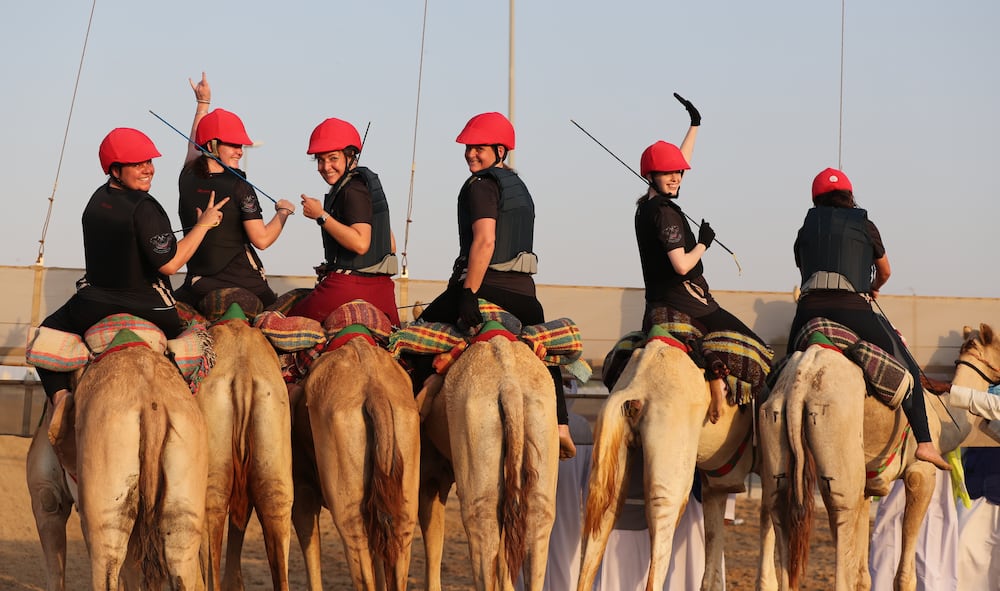
Female camel-racing event in Dubai, October 2021. Of the eight women who took part, seven were trained at the Arabian Desert Camel Riding Centre, the first in the region dedicated to teaching women to race camels.

For some reason, I’ve been hearing about camels a lot lately. Not just how long they can travel without refueling but how nutritious their milk is, how lovely their hair. Today we learn about racing camels.

Stacey Vanek Smith reports at PRI’s (Public Radio International’s)The World, “It was a scorching hot day at the Al Marmoom Camel Racing Track located just outside of Dubai in the United Arab Emirates. …

“On a typical morning, [the] arenas are packed with hundreds of enthusiastic fans placing bets on the early-morning camel races (early morning because temperatures are often in the triple digits by 10 a.m.). …

“Camel racing is an ancient sport — its roots stretch back to at least the 7th century on the Arabian Peninsula. But the races at Al Marmoom are a modernized version. Instead of riders, small robots sit atop the camels’ humps and control them with reins. The robots are controlled remotely by men who speed alongside the racetrack in cars, directing their camels. But the people gathered on this hot afternoon had come for something different but also far more traditional: The season’s first women’s race. 

“Though the crowd was undoubtedly smaller than the hundreds who regularly show up for the men’s races, the women’s team — a part of the Arabian Desert Camel Riding Center — has started to get real traction in the last few years. News outlets covered the race, and Jeep sponsored the event, along with a handful of local businesses, including Camelait, a company that sells camel milk.

” ‘It’s high in calcium,’ the emcee informed the crowd. …

“Meanwhile, the four women riders led their camels to the racetrack. One of the racers, 31-year-old Linda Krockenberger, is the reason behind the rise of women’s racing — she founded the women’s camel racing team. 

“Krockenberger came to Dubai in 2015 to work in the hospitality industry. She had raced horses back in Germany and decided to try her hand at camel riding. She was instantly hooked and was determined to learn how to race camels. The only problem was she couldn’t find anyone to train her. For years, she was told the sport was not for women. …

“But Krockenberger kept trying until she found a willing trainer, Obaid Al Falasi, a highly respected community member.  As soon as she felt comfortable with her skills, Krockenberger and Al Falasi decided to open a school. …

“Before she knew it, local and tourist women were flocking to her for lessons. Krockenberger emphasized the support she has gotten from the camel-riding community. … Still, Krockenberger added, there have been many skeptics.

“ ‘Critics sometimes say, “Oh, do we really need a German to teach us an Arabic tradition?” Of course, these comments do get to me because I don’t want to impose myself on the culture,’ she said. ‘But I try to calm these thoughts by saying, “Well if you’re such a great teacher, there’s nothing that stops you from teaching as well.” ‘

“Krockenberger’s riding school emphasizes the Bedouin camel riding tradition. The racers ride barefoot and don’t use saddles, just Bedouin blankets. 

‘Barefoot, it’s more freeing,’ racer Rawan Salah explained. ‘You feel everything. You can feel the belly of the camel. You can feel if they’re nervous. Everything.’

“ ‘The Bedouin didn’t have shoes, so we don’t have shoes,’ racer Yanna Schmiel added. …

“While the racers led their camels to the start line, a group of spectators got into their nearby cars and drove up beside the camel track where the riders mounted their camels. Spectators may watch the races from their vehicles or stand at the finish line.

“The women perched just behind the hump on their single-humped Dromedary camels, sitting on blankets. They clung to the camels with their legs, wearing riding helmets and team jerseys.

“Salah said that she feels that all-women racing is a special experience. ‘It feels empowering,’ she said.”

More at PRI’s The World, here.

Some additional fun: “Camels and Riders will be disqualified for the following reasons:

  1. “Belts used to strap rider to camel.
  2. “Electric shockers found mounted to the camel or used in whips, overusage of the whip.
  3. “External influence of camel owner on camel during race beyond vocal cheering on.
  4. “Interference with gear of competitor camels and riders
  5. “Riding gear that has not been tested and approved prior to the race.”

Read Full Post »

Photo: Adri Salido.
From the Christian Science Monitor: “Elsa Cerda (with spear) leads Yuturi Warmi, a group of Indigenous women who guard against illegal mining in the community of Serena in the Ecuadorian Amazon.”

As a group of indigenous women in the Ecuadorian Amazon have shown, when something is wrong in your neighborhood, it pays to join with others and fight.

Al Jazeera wrote a good report on this last year.

“As a child, Leo Cerda would spend his mornings helping his family cultivate cassava, plantains and other fruits and vegetables in their chakra, a traditional garden in Kichwa communities.

“In the Ecuadorian village of Napo, traditions form a large part of family and spiritual life. At around 3 am each morning, before heading to their chakras, many families take part in a traditional tea ceremony. Once freed from his farming duties at around midday, Cerda recalled running to the river to swim and fish with friends. Fish would later be grilled on an open fire and eaten with large amounts of fruit.

“ ‘As a kid, I got to enjoy nature,’ Cerda told Al Jazeera.

“These days, however, the 34-year-old spends his days chasing gold miners from his community and campaigning against those who threaten to destroy his ancestral lands. …

“ ‘Within three years, everything changed,’ Cerda said. ‘The land has been poisoned. There are no more fish, except ones that are contaminated. People eat them, and they get sicker and sicker.’

“A recent study carried out in mining areas of the northeastern Andean foothills of the Ecuadorian Amazon, close to where Cerda lives, revealed high concentrations of toxic metals. They are up to 352 times above permissible limits established by environmental guidelines. …

“Mariana Capparelli, a researcher who contributed to the study, told Al Jazeera it was ‘very sad to see the conditions these communities are exposed to as well as the total degradation of an ecosystem that is so important for the entire planet.’ …

“Due to what critics say is an absence of sufficient government regulation, mining in Ecuador has led to environmental pollution and adverse effects on the health of Indigenous communities. In recent months, authorities have carried out several raids against illegal miners.

But with widespread state corruption and tip-offs given to miners, machinery is sometimes withdrawn immediately before police operations take place, activists say. …

“Ecuador has a national system of protected areas that aims to safeguard biodiversity and local ecosystems in national parks, wildlife refuges, marine reserves and other designated areas throughout the country. Although the government has taken some steps to protect local water systems, rivers have traditionally not been included in this system. …

“According to Andres Tapia, a spokesperson for the Confederation of Indigenous Nationalities of the Ecuadorian Amazon, illegal mining has become ‘uncontrollable’ in parts of the country. …

“ ‘I thought I would always be able to drink from this river,’ Eli Virkina, a member of an Indigenous Kichwa community in Napo, told Al Jazeera. ‘Now I’m at this point where maybe I shouldn’t even swim in the water. That is really heartbreaking for me.’ …

“Across Napo, Indigenous communities and organizations have been monitoring, mobilizing and resisting mining activities. To defend their land, they have formed alliances and connections across riverine communities, including the Amazon’s first women-led Indigenous guard.

“In February 2022, a landmark Constitutional Court ruling recognized the rights of Indigenous communities to have a final say over extractive projects that affect their territories. The ruling ‘offers one of the strongest legal precedents in the world, which upholds the rights of Indigenous peoples to decide on the futures of their ancestral territories,’ according to the Amazon Frontlines advocacy group.

“But in December [2022], the ruling was disregarded when the government approved a mining project in Las Naves in Bolivar province without gaining the consent of affected communities.

“In the meantime, Napo has installed four alarm systems around the village to signal when miners are close by.

“ ‘In our territory, spears were not used anymore, but now we have one in at least every house because it’s part of the way we have to defend ourselves,’ said Majo Andrade, a member of the female-led Indigenous guard Yuturi Warmi. …

“Virkina says Indigenous resistance is vital to the region’s future. ‘Once [Indigenous people] disappear, it is way easier for miners and people to come in and access the river,’ she said. ‘When we have stronger Indigenous communities, we have stronger forests and a stronger river.’ More at Al Jazeera, here.

Adri Salido has a collection of beautiful pictures at the Christian Science Monitor and adds a few more comments to the story of Yuturi Warmi: “Yuturi Warmi refers to a type of ant (Paraponera clavata) that will attack when an enemy enters its territory.

“The group, which formed in 2020, joined with other Ecuadorian and international organizations to urge the government to enforce laws against illegal extraction and to restore habitat. But officials have not acted, according to Yuturi Warmi. Since then, the group has worked to ensure that no illegal mining takes place in its community. It patrols the riverbank, conducts canoe inspections, and maintains constant surveillance. So far, it has kept intruders out of Serena. 

“The situation is far different upstream, in Yutzupino, where illegal extraction has destroyed the basin of the Jatunyacu River, a tributary of the Amazon River.”

More at the Monitor, here. No firewall. Great collection of photos.

Read Full Post »

Photo: SBS News.
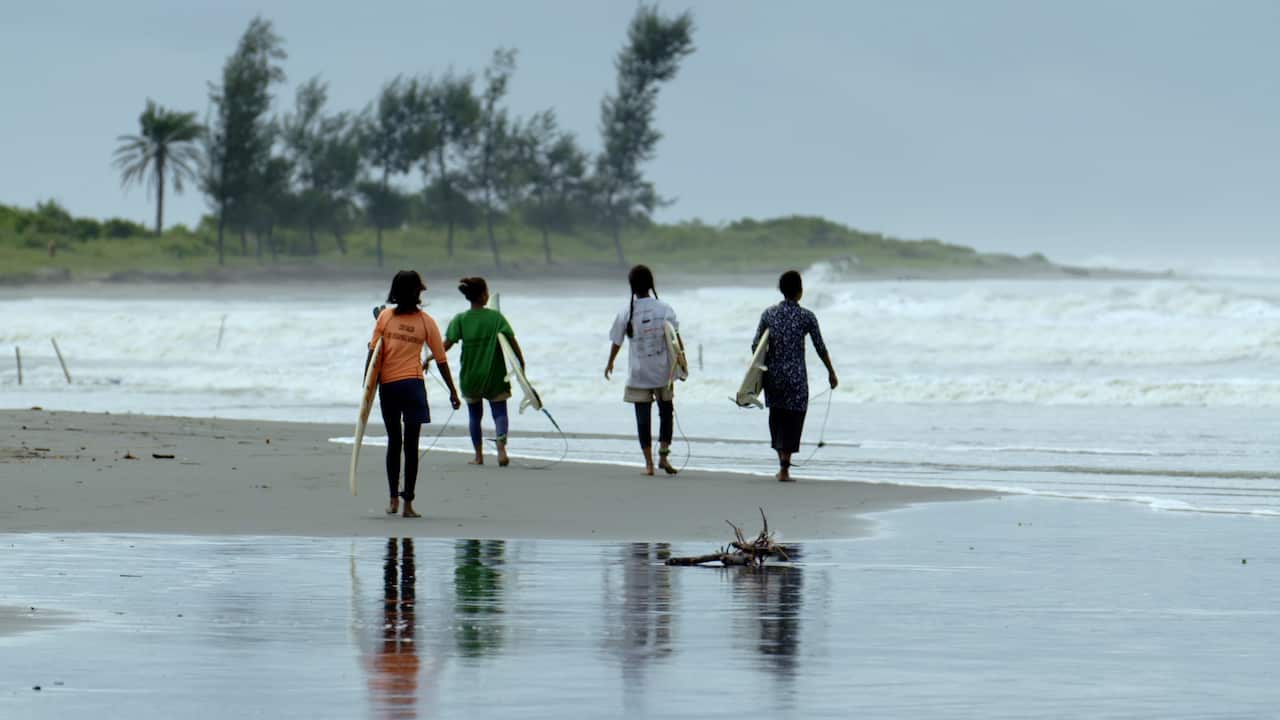
The surf club in Cox’s Bazar teaches girls in Bangladesh how to surf.

From the little I know about Bangladesh, it’s a hard life there. It’s hard even for a man, even for a famous one like Nobel Peace Prize winner Muhammad Yunus, who has drawn the resentment of the country’s prime minister. But for most females, it’s almost out of the question to have any kind of independent life.

Today’s story suggests that some young women in Bangladesh are bucking tradition. Rhiona-Jade Armont writes at SBS News, “Along one of the longest uninterrupted beaches in the world, two young surfer girls paddle out past the break.

“The conditions out here are rough and unruly, but these fearless teens cling to their boards, waiting for the perfect wave to ride back to shore.

“Here, in the coastal town of Cox’s Bazar in Bangladesh, Shobe and Ayesha are not your average 13-year-olds.

“ ‘Everybody says I live like a boy,’ Shobe says. ‘I go everywhere wearing a t-shirt. I’ve been surfing since childhood, so people are used to seeing me like this.’

“Girls in Cox’s Bazar are often expected to follow a set path, including working from a young age, marrying early and bearing children. Bangladesh has one of the highest rates of child marriage in the world.

“Parents who struggle to earn a steady income often marry off their teenage daughters, despite it being illegal until age 18. … Shobe’s older sister was married at 13. …

“These girls often come from poorer households and are more likely to miss out on a full education. But a small surf club has given girls like Shobe a chance to change their fate and do something they love. …

“Blazing a new trail has meant breaking tradition, and girls like Ayesha have fought hard battles at home. Her father has been the toughest to win over.

“ ‘If I tell [people] my girls do surfing they ridicule us,’ he says. ‘I want a good future for them. I don’t want to live from their earnings. Now that they are 14 and 15 years old, I have to think about their marriages.’

“For Ayesha, the pressures at home only drive her further away. ‘I don’t feel good at home. That’s why I spend as much time as I can at friends’ home or school.’

“Ultimately, she always ends up where she feels the most free. ‘My best friend is the sea.’

“For Shobe and Ayesha, surfing provides a future filled with possibility. They’ve excelled in local competitions, but the next stage is seeking out opportunities to compete on the international circuit.

“Shobe in particular dreams of one day being a famous surfer and representing Bangladesh. But fame is not only a shiny way to a new life. It’s a means of finding family who she’s lost contact with and receiving recognition.”

More more at SBS News, here. No firewall.

Read Full Post »

Photo: Sunday Alamba/AP.
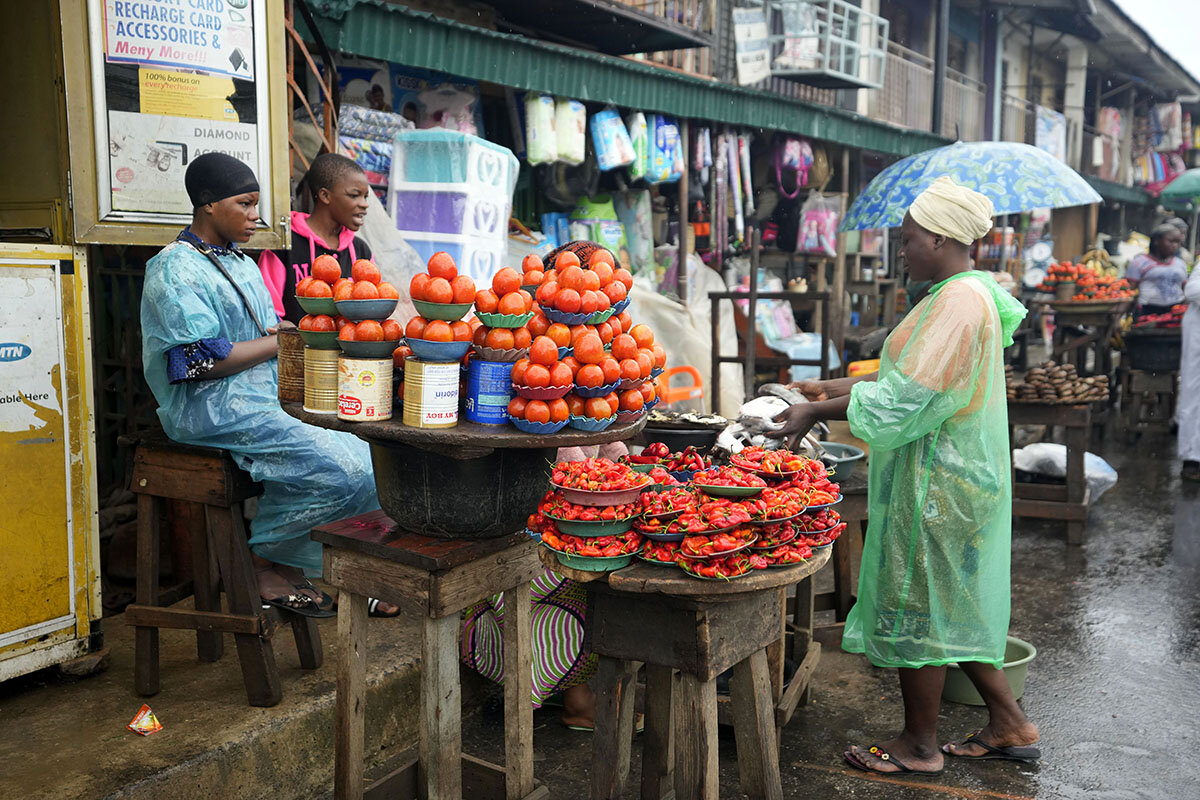
Nigerian women find it hard to secure the bank loans needed to start a business, but social media platforms are providing alternative credit lines.

Do you know about lending circles? I learned about them when I worked at the Fed. Immigrants in the US sometimes use them to save money, waiting for their turn to get the whole pot. The circles can be risky, but they are needed.

Ogar Monday wrote for the Christian Science Monitor about a What’sApp lending circle in Africa.

“When Pricilla Yaor found a dream job that meant moving to the Nigerian capital, Abuja, there was just one hitch: There was no way she could afford rent in the country’s most expensive city. For the supermarket cashier, it was a struggle to raise the 300,000 naira ($390) she needed for a single-room flat on the outskirts of the city. Like most renters, she was expected to pay her entire annual rent in one lump sum – a typical practice among Nigerian landlords.

“Still, armed with a new job, Ms. Yaor thought she could get a loan from the bank. ‘I was given plenty of forms to fill, asked to bring two sureties, and I was asked if I had any property that I could use as collateral,’ she recalls. 

“None of this was surprising. In Nigeria, 98% of women have no access to formal credit, limiting their ability to run businesses, pay for studies, or buy a home. Ms. Yaor never returned to the bank. Even if she had met its criteria, she could not afford the 18.75% interest on a bank loan, a typical charge.

“Instead, her saving grace – and a lifeline for a growing number of women in Africa’s most populous nation – came in the form of a women-only WhatsApp group that she was invited to by a cousin. Members of the group each pool in an equal sum every month and rotate who receives the payout. …

“There were no processing charges, and a trusted member of the group was appointed as an admin. A month after joining, Ms. Yaor received 400,000 naira ($506).Soon, she joined another group to raise funds for her younger brother’s school fees. The groups also helped her buy a fridge for her apartment and later a generator to keep the lights on during daily blackouts.

Rotating saving programs, as they’re officially called, provide a safety net across much of Africa. … The use of these programs has skyrocketed in Nigeria recently – aided by technology such as WhatsApp and boosted by inflation that has soared to its highest level in two decades. 

“In the past year, some 4 million Nigerians have been pushed into poverty by inflation that has caused eye-watering price rises for everything from food staples to transport. Women have borne the brunt of the country’s debt crisis. …

“Opportunities for women lag in many fields ranging from education to income; on average, their wages are 22% lower than those of men. Meanwhile, culture and tradition have subjected women to the role of caregiver at home, for which they are not paid. What’s more, women face historical biases embedded in the formal banking system, says Okpetoritse Akperi, a financial expert with a multinational company based in Nigeria.

“As in many other developing countries, Nigerian women struggle to get loans because “creditworthiness is typically judged by the ability to repay. … Even when banking services are available, they are not accessible to half of the women who run businesses, who have to rely on cash for all transactions. 

“But that is slowly changing. Mobile credit companies such as Branch and FairMoney, boasting a combined 20 million downloads on the Google Play Store, are gaining popularity due to their lenient lending regulations.

“ ‘Technology now allows alternative credit assessments, helping women to access financial services without traditional barriers,’ says Iyonuluwa Pikuda, a financial analyst with Lagos-based Money Africa. Using WhatsApp lending groups, though, allows users to bypass any kind of formal structure altogether. …

“While the program has few overall downsides, the risks that do exist are not negligible. ‘We have had cause to report the admin of a group to the police because she refused to release the funds after everyone had sent in theirs,’ Ms. Yaor says of one such experience. But because everyone in the group is known to at least one other person, such matters are usually quickly resolved. … Members are united by their shared interest in helping each other raise funds, she points out. And the alternative is the banking sector’s bureaucracy and high interest rates.”

More at the Monitor, here.

Read Full Post »

Photo: Charles Lawrence.
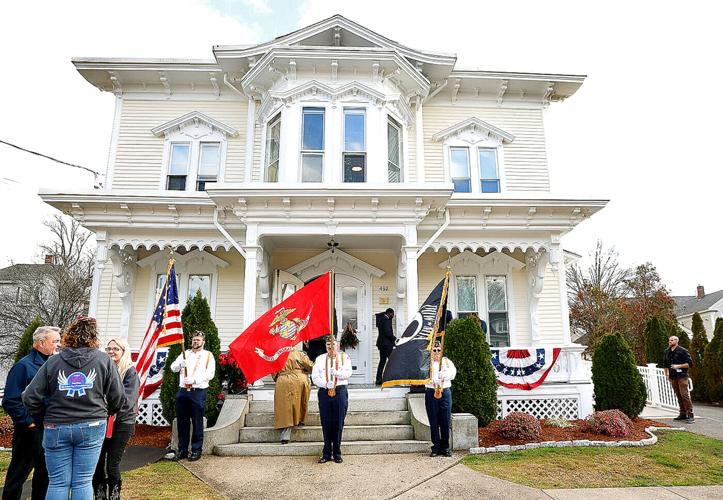
A renovated 1865 Woonsocket, RI, home now provides living space for homeless female veterans.

When one thinks of homeless veterans, one tends to think of men. I remember visiting a new space for veterans when I worked at Rhode Island Housing. Saccoccio & Associates were the architects for the historic renovation of the Heaton and Cowing Mill in Providence, which created 20 units of veterans housing. It was beautifully done, but it did not house women.

So I was interested to read about housing specifically for female veterans in nearby Woonsocket, Rhode Island.

Bella Pelletiere has the story at the Valley Breeze.

“Homeless female veterans in Woonsocket will now have a home to spend the holidays in, say representatives from Operation Stand Down Rhode Island.

“[In November] the historic house at 495 South Main St. was reopened as transitional housing for female veterans in honor of the late Marine Corporal Andrea Ryder.

“Operation Stand Down Rhode Island is Rhode Island’s primary nonprofit resource for homeless and at-risk veterans. OSDRI facilitates a combination of permanent supportive, transitional and recovery housing to low-income and disabled veterans and has 88 locations for housing throughout the state.

“Executive Director Erik Wallin told The Breeze that since 2010, OSDRI has been operating a six-unit facility in Johnston for female veterans. That facility was recently filled to capacity and they have been trying to find alternative ways to house female veterans, who are currently allowed to stay between 6 and 24 months. …

“In May, Wallin told news sources that lead paint had been discovered during renovations, but OSDRI was working with the city and painters to restore the building. Though it was a long process, he said they knew they wanted to restore this ‘magnificent piece of architecture’ for the veterans who were coming to live there.

He added that they wouldn’t house veterans in any building they wouldn’t put their own family members in. …

“OSDRI dedicated the home to Ryder, a Rhode Island native who enlisted in the Marine Corps after graduating high school and was diagnosed with stage three melanoma when she left the service. After numerous surgeries she appeared to be in remission. In 2014, Ryder learned both that she was pregnant and that the cancer had returned at stage four.

“Ryder give birth to her baby girl in 2014, and in 2020, she ultimately succumbed to her illness after spending some time in hospice.

“Wallin said that throughout the years, they had gotten to know Ryder and her family, hosting fundraisers and supporting her until she died. …

“Many officials attended the reopening of the [house], including Tony DeQuattro, president and chairperson of the board of OSDRI, Sen. Sheldon Whitehouse, and Ryder’s family members.

“Ryder’s mother, Donna Paradiso, as well as her daughter, Olivia, and husband, Dennis Bourassa, also came to celebrate the life of their loved one and her name that will live on at 495 South Main St.”

These stories of veteran homelessness are so sad. You just know every time a war starts up that some who serve will come back traumatized. Some will end up homeless. We never do enough for them, but organizations like Operation Stand Down keeping chipping away at the needs.

More at the Valley Breeze, here. No firewall.

Read Full Post »

Photo: Jorge Gardner via Unsplash.
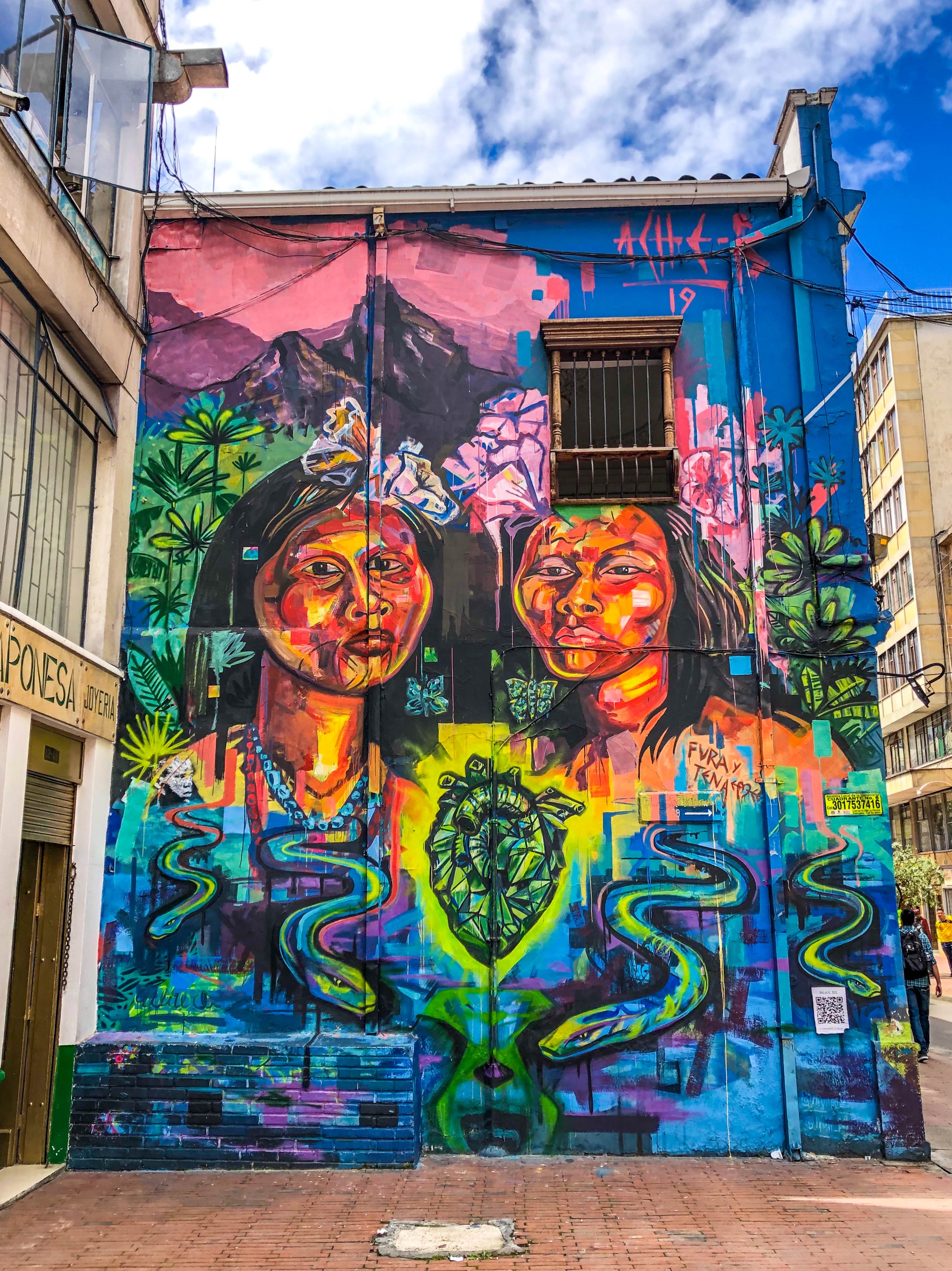
Street art in Bogotá, Columbia.

We who have so much reason to be thankful at Thanksgiving can spare a thought today for those who have little — and are grateful for that little. An experiment in Bogotá is offering hope to some of the poorest women in Columbia.

In an opinion piece at the Washington Post, Bina Venkataraman writes, “One day in the distant future, caregiving could be as celebrated as carrying a football into an end zone. Rather than toil in the shadows, people who juggle children and aging parents might be applauded for their skills — or stopped on the street by admirers. Family caregivers could get paid for the hours they put in minding the young, the sick, the disabled and the old. Men would be as proud as women to care for their children. Governments would fund more services to relieve at-home caregiving, recognizing its physical and psychological toll. …

“For now, consider a small experiment hatched in Ciudad Bolívar, the second-poorest district of Colombia’s capital city, where settlements of makeshift houses sprawl up a steep mountainside, emblazoned with colorful street murals. This district has long been a hotbed of political resistance, home to diverse Indigenous peoples as well as Venezuelan refugees. …

“Since 2020, it has become the site of Bogotá’s first manzana delcuidado, or ‘care block,’ in a city where caregivers — mostly women, mostly poor — ordinarily labor in obscurity without compensation or formal recognition. More than 30 percent of Bogotá’s female population, some 1.2 million women, provide unpaid care full time, some for as much as 10 hours a day.

“Most lack formal education beyond some years of high school, and the city estimates that 1 of every 5 of these women has a diagnosed illness, ranging from arthritis from long hours spent hand-washing clothes to sexually transmitted diseases and untreated cancers. And many of them, says Nathalia Poveda, who manages the Manitas care block in Ciudad Bolívar, don’t recognize that when their husbands hit them, it is domestic abuse.

“A care block is a modest attempt to shift the way caregivers are viewed and supported, and the way they view themselves. It’s a community-scale solution — something that’s needed if poor women are to benefit from global progress in gender equality.

“In Ciudad Bolívar, women can drop off dirty clothes and bedding each week to a city-funded laundromat. Demand is so high in the district, and given only four washing machines and dryers, the women have to rotate out of using the program every three months.

“A community center offers free courses to help women earn high school diplomas and practice yoga while city employees mind the children, elderly or people with disabilities in their care. Caregivers and their spouses can learn to use a computer or cellphone and get STD testing, psychological counseling and legal aid — all under one roof. In the same building, a child can get a strep test and his mom can get a Pap smear, rather than having to shuffle to clinics around the city.

‘It gives me a breath, a break,’ said Lisbeth Diaz.

“This isn’t rocket science, but it is innovation. ‘We need to care for the people who care for us,’ says Diana Rodríguez Franco, Bogotá’s secretary for women’s affairs, who came up with the idea. The city now has 20 care blocks, as well as a program to send relief caregivers directly to people’s homes. The city funds the program with an annual budget of $800,000, and it has attracted grants from global organizations for pilot projects such as caregiving classes for men.

“I spoke with several women using services at various care blocks in the city. ‘It gives me a breath, a break,’ said Lisbeth Diaz, who was taking a class that would certify her skills as a caregiver at the Manitas care block in Ciudad Bolívar. The idea behind certification, said Poveda, is to help women recognize that the work they do in the home is valuable.

“ ‘You have to take care of yourself to take care of everyone else,’ said Sandra Quevedo, who was glad to learn yoga, lifting her chin and chest with pride as she spoke. At a care block within a high-altitude ecological park called Entrenubes, a group of middle-aged women in a program called Las Mujeres Que Reverdecen — ‘the women who regreen’ — giggled and flexed their muscles when I asked what it was like to get paid to learn to plant trees and care for city parks part time. …

“The manzanas are one of several initiatives that Bogotá’s first female and openly gay mayor, Claudia López, has launched to try to shift the balance of power between men and women. … The López government also brought in an all-electric fleet of city buses, called La Rolita, and has been hiring and training women to drive and maintain them.

“ ‘There’s been huge pushback,’ says Rodríguez Franco, noting that the city was sued in 2021 by a man who objected to the care blocks’ focus on women. (La Rolita also inspired a lawsuit.) But Rodríguez Franco is heartened to see some men now coming to the care blocks with their female partners to finish high school or to learn to use computers. …

“International development experts have long argued that, along with fostering social progress, educating girls and women and putting more income in their hands can break cycles of intergenerational poverty and moderate population growth. Helping caregivers finish school and find jobs has been an often overlooked but critical piece of this puzzle.

“In recent decades, Colombia has made strides toward recognizing the rights of women — especially caregivers. In 2010, it became the first country to require that women’s contributions to the care economy be documented. …

“Much change is needed to lift the burden on caregivers worldwide and to give women greater access to education and jobs. As political leaders in rich nations debate policies that can put more women into the halls of power, Bogotá’s efforts are a reminder that the world’s poorest caregivers also need innovative measures — if we are one day to inhabit a world in which the average woman’s economic and political power is equal to that of the average man.”

More at the Post, here.

Read Full Post »

What do you do for exercise? I take walks. I also do a bunch of physical therapy exercises I’ve collected over the years for preventing a repeat of various aches and pains.

The kind of exercise in today’s story sounds too energetic for me, but I see that it could be exhilarating. Maybe if I had been doing it since our days in nursery school with the friend who sent me the story, I could handle it today.

The exercise is jumprope. Specifically, Double Dutch.

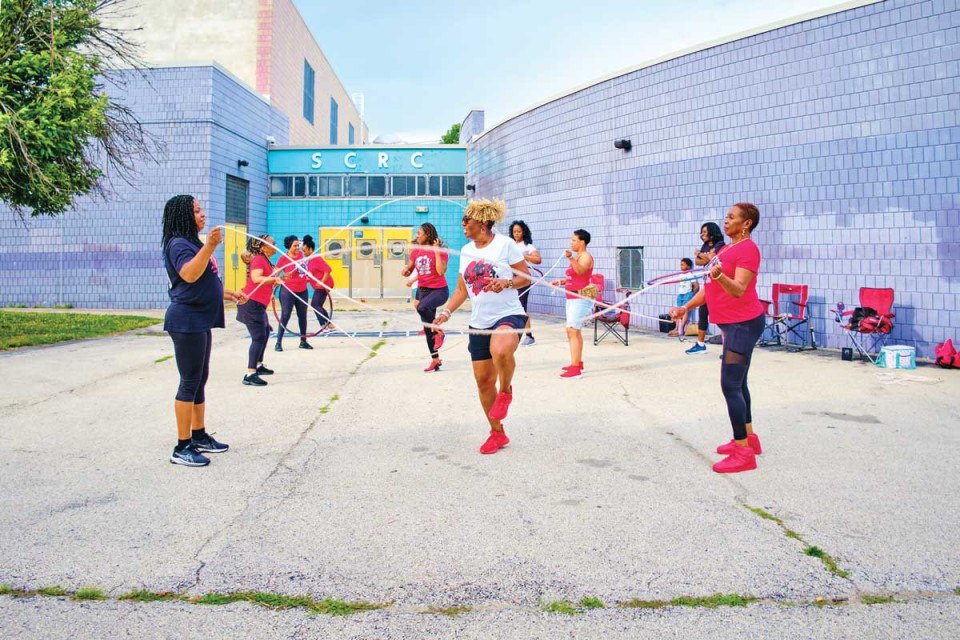
Shaunice Ajiwe at Philadelphia wrote that the magazine’s 2022 “Best Pastime winner, 40+ Double Dutch Club, started from a 2016 gathering of friends in Chicago and is now a nationwide women’s fitness movement. Sharon Hatcher and Iesha Jackson steer the Philly chapter, where a quick visit to observe their footwork turned into much more.

6:00 p.m.

“Earth, Wind & Fire echoes down the halls of a West Oak Lane community center. Inside a multi-purpose room, seven women stand in bright red t-shirts, hula-hooping and chatting about their plans for the summer: graduations, prom send-offs, cookouts, new babies. In the middle of the room, a trio gets to the main event. Two begin turning the ropes while the third dives into the fray, alternating feet at breakneck speed. To a layman, it’s perfect. To these experts, it’s anything but. They stop and ask for a different set of ropes. Hatcher hands them a lighter woven set, and feet start to fly again.

6:08 p.m.

“ ‘It started off with two friends who wanted to do something that was just for them to have fun,’ Hatcher says. ‘They were in their heads about different things — divorces, kids growing up, all that. They thought back to how they jumped rope when they were kids and how much fun they had.’ From that original duo, the club has amassed more than 30,000 members across the country.

6:20 p.m.

“Hatcher took to double Dutch at age five, she says. Many women join the club without having jumped rope in decades; just like riding a bike, they return to the childhood pastime with ease.

6:30 p.m.

“Fun, fitness and fellowship, Hatcher says, is the name of their game. They don’t concern themselves with competition, just with passing down skills, traditions and memories. …

6:45 p.m.

“When I thank Hatcher for her time and turn to leave, she stops me: ‘Oh no, now we’re gonna teach you.’ Prince’s ‘I Wanna Be Your Lover’ is playing. Each time I trip, they offer another tip: Get in when the rope closest to you is raised. Don’t jump in; run in. Don’t be scared. When I get the hang of it, they speed up and have me turn in a circle. When I finish the revolution, they cheer.”

Pretty cute, huh?

There’s more. Matteo Iadonisi interviewed Jackson for ABC television.

” ‘I was scrolling on Facebook one day, you know, just looking for something to do,’ said Iesha Jackson, who is now 44 years old. ‘And I ran across, you know, the 40+ Double Dutch page.’

“The 40+ Double Dutch Club was founded in 2016 in Chicago as a means for women over a certain age to come together, work out, and relive childhood memories. It spread across the country, reaching Philadelphia in 2018 thanks to Jackson. Locally, there are also chapters in Delaware County, Pennsylvania, and South Jersey.

” ‘When I started the group, I was actually going through something really depressing,’ said Jackson, referring to a breakup. ‘And just coming and meeting a bunch of the sisters really just improved my mental health, my physical health, so, it’s just been a complete turnaround for me.’

“What started with about five women in Philadelphia has grown to include dozens, including those who cannot physically jump rope. Other activities such as hop scotch and line dancing keep everyone engaged.

“But the group is also a safe space for prayer, conversation, and camaraderie among women who can mentor and be mentored by one another.

” ‘We all have a lot of things going on with family and work and all of that, and this is a time for us to come together,’ said Philadelphia co-captain Sharon Hatcher, ‘And just have a good time and enjoy some of the things that we did as children.’ “

From the club website: “0+ Double Dutch Club exists to empower women in mental health and physical fitness, all while inspiring them in friendship. fitness, fun, and fellowship. …

” ‘No Sister Left Behind’: Financial assistance for official members in an effort to support our sisters who are experiencing emotional, spiritual and/or financial challenges and showing not only through our words but also our actions that we are our sisters’ keepers.

“We envision communities where women can live out their purpose as they walk in mental and physical health, encouraging and empowering themselves and other women over 40 while inspiring generations to come. “

More at ABC, here, and at Philadelphia magazine, here.

Hat tip: Hannah.

Photo: Jeff Fusco.
40+ Double Dutch Club at Philadelphia’s Simons Community Recreation Center.

Read Full Post »

Photo: WCIA [Welsh Centre for International Affairs].
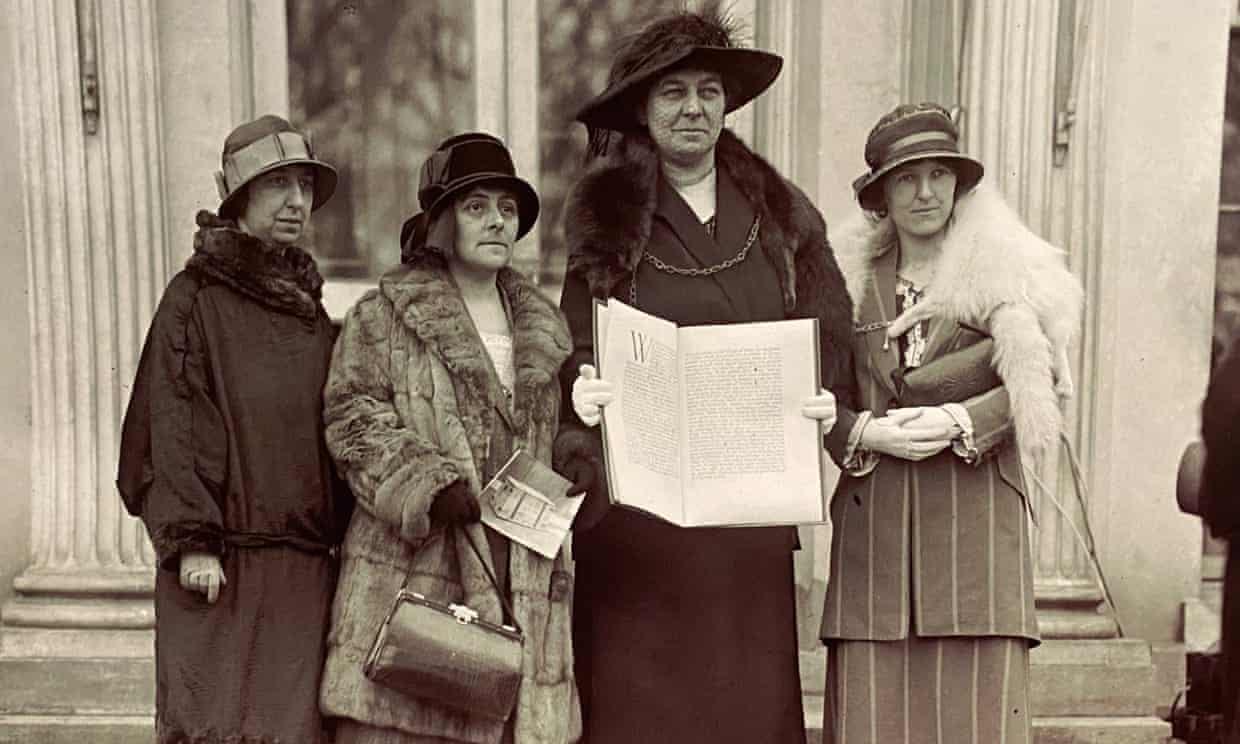
Annie Hughes-Griffiths holds the women’s peace appeal outside the White House in 1924 after a meeting with President Coolidge, with (from left) Gladys Thomas, Mary Ellis and Elined Prys. 

There are so many great initiatives by women that take years to get broad recognition because, at the time, they weren’t highly valued. That’s why I love sharing them now.

Steven Morris covered today’s example for the Guardian.

“There were tears of joy, speeches of hope and sighs of relief that all had gone smoothly after an extraordinary century-old document – reputedly seven miles long – completed its transatlantic trip back to Wales.

“The peace petition, signed by almost three-quarters of all Welsh women in the 1920s but forgotten until the last few years, arrived at the National Library of Wales [in April] after being gifted to the country by the National Museum of American History in Washington.

“Over the coming weeks and months, the reams of sheets will be taken carefully out of the hefty oak chest where they are stored, then digitized at the library in Aberystwyth, before a crowd-sourcing exercise takes place to transcribe all 390,296 signatures and addresses.

Prof Mererid Hopwood, the chair of the Peace Petition Partnership, said she was so excited she could hardly breathe and, though it was an overcast day in Wales, quoted the Welsh phrase mae’r haul yn gwenu – the sun smiles.

” ‘Actually, I think the sun’s practically chuckling with joy in Aberystwyth today. We are so very delighted,’ she said.

“In 1923, galvanized by the horrors of the first world war, a group of Welsh women decided to organize a campaign for world peace.

“During a Welsh League of Nations Union (WLNU) conference at Aberystwyth University, they agreed that the best way would be to appeal to the women of the US to work with them for a world without war. Two paid officers and 400 local organizers set about collecting names from every community in Wales.

“In 1924 the Welsh delegation, led by Annie Hughes-Griffiths, the chair of the WLNU, crossed the Atlantic with the petition and worked with American women such as the women’s rights campaigner Carrie Chapman Catt to disseminate their message.

“They received an enthusiastic welcome and travelled through the US addressing audiences. The US press claimed that if the signature sheets were laid end to end they would go on for 7 miles.

“However, over the years the petition was forgotten, until a mysterious plaque mentioning it was uncovered at the time of the centenary of the first world war in Cardiff’s Temple of Peace.

“ ‘It was a lost story, a hidden story,’ said Hopwood, a poet and the chair of Welsh and Celtic studies at Aberystwyth University. She said the idea of returning the petition to Wales was both to remind people of its amazing story and to inspire people today to campaign for peace.

“Hopwood pointed out that Wales has a history of its citizens working for peace, including … the women who marched from Wales to Greenham Common in Berkshire in 1981 to protest against nuclear weapons. …

“The Welsh deputy minister for arts and sport, Dawn Bowden, said it was an inspiring document: ‘I hope that the return of the petition to Wales will inspire and motivate a new generation of advocates for peace.’

“Dafydd Tudur, the head of digital services at the National Library of Wales, called it an ‘historic’ day.

“He said he hoped a pilot of the crowd-sourcing exercise would take place in the autumn, before fully beginning next year. An exhibition will be organized to present the chest and petition at three locations – Aberystwyth, St Fagans in south Wales, and Wrexham in the north.

“Tudur studied modern Welsh history but had not heard of the petition until the plaque was found. ‘It was forgotten. People are amazed when they hear about it,’ he said.” More at the Guardian, here. No firewall.
For more on the peace agenda, click here on an article co-authored by my friend Ann Tickner. The article examines “feminism in international relations from the emergence of women’s peace pragmatism during WW I to the development of the United Nations (UN) Women, Peace, and Security (WPS) agenda a century later. … We show how the principles articulated by women peace activists at the 1915 Hague Conference represent distinct contributions to the discipline.”

Read Full Post »

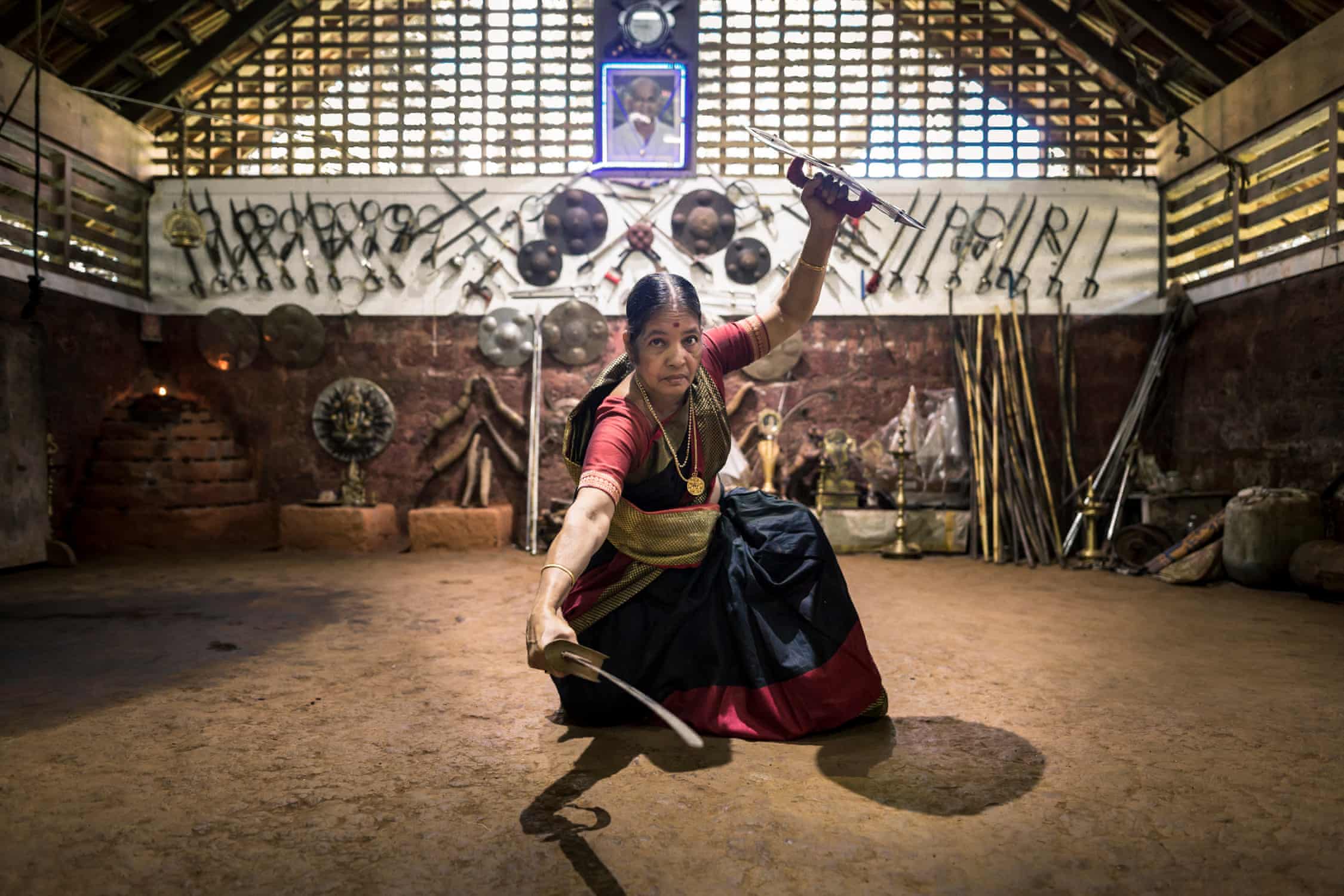
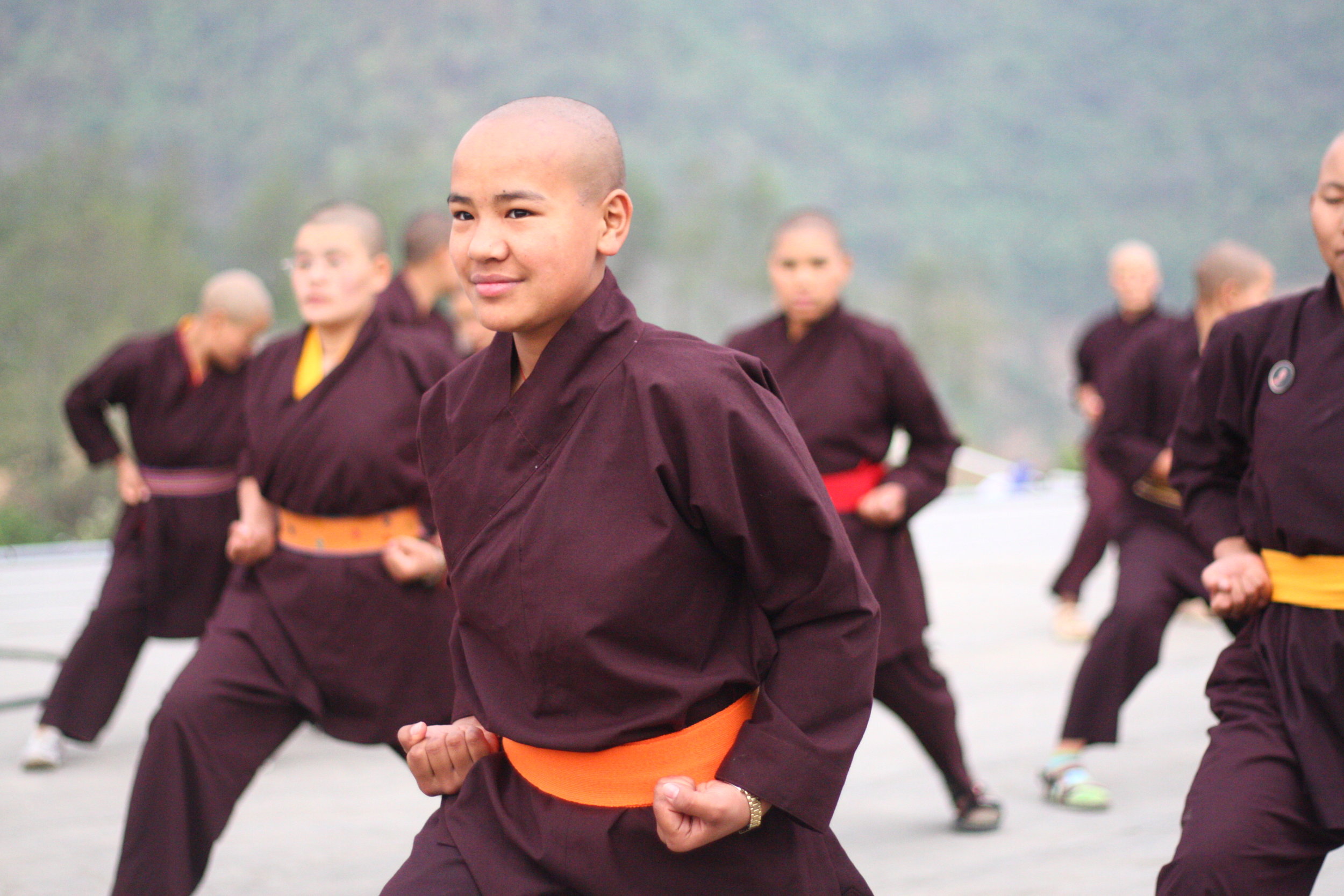
Photo: Kung Fu Nuns.

The roles of women around the world keep evolving. Today we learn that the traditionally quiet Buddhist nuns of Nepal are branching out — through their practice of kung fu and through good works in the community.

Sameer Yasir reports at the New York Times, “As the first rays of sun pierced through the clouds covering snowcapped Himalayan peaks, Jigme Rabsal Lhamo, a Buddhist nun, drew a sword from behind her back and thrust it toward her opponent, toppling her to the ground. …

“Ms. Lhamo and the other members of her religious order are known as the Kung Fu nuns, part of an 800-year-old Buddhist sect called Drukpa, the Tibetan word for dragon. Across the Himalayan region, and the wider world, its followers now mix meditation with martial arts.

“Every day, the nuns swap their maroon robes for an umber brown uniform to practice Kung Fu, the ancient Chinese martial art. It’s part of their spiritual mission to achieve gender equality and physical fitness; their Buddhist beliefs also call on them to lead an environmentally friendly life.

“Mornings inside the [Druk Amitabha] nunnery are filled with the thuds of heavy footsteps and the clanking of swords as the nuns train under Ms. Lhamo’s tutelage. …

“ ‘Kung Fu helps us to break gender barriers and develop inner confidence,’ said Ms. Lhamo, 34, who arrived at the nunnery a dozen years ago from Ladakh, in northern India. ‘It also helps to take care of others during crises.’

“For as long as scholars of Buddhism remember, women in the Himalayas who sought to practice as spiritual equals with male monks were stigmatized, both by religious leaders and broader social customs. Barred from engaging in the intense philosophic debates encouraged among monks, women were confined to chores like cooking and cleaning inside monasteries and temples. They were forbidden from activities involving physical exertion or from leading prayers or even from singing.

“In recent decades, those restrictions have become the heart of a raging battle waged by thousands of nuns across many sects of Himalayan Buddhism.

“Leading the charge for change are the Kung Fu nuns, whose Drukpa sect began a reformist movement 30 years ago under the leadership of Jigme Pema Wangchen, who is also known as the 12th Gyalwang Drukpa. He was willing to disrupt centuries of tradition and wanted nuns who would carry the sect’s religious message outside monastery walls.

‘We are changing rules of the game,’ said Konchok Lhamo, 29, a Kung Fu nun. ‘It is not enough to meditate on a cushion inside a monastery.’

“Every year for the past 20, except for a hiatus during the pandemic, the nuns have cycled about 1,250 miles from Kathmandu to Ladakh, high in the Himalayas, to promote green transportation. Along the way, they stop to educate people in rural parts of both Nepal and India about gender equality and the importance of girls.

“The sect’s nuns were first introduced to martial arts in 2008 by followers from Vietnam, who had come to the nunnery to learn scriptures and how to play the instruments used during prayers. Since then, about 800 nuns have been trained in martial arts basics, with around 90 going through intense lessons to become trainers.

“The 12th Gyalwang Drukpa has also been training the nuns to become chant masters, a position once reserved only for men. He has also given them the highest level of teaching, called Mahamudra, a Sanskrit word for ‘great seal,’ an advanced system of meditation. …

“But the changes for the sect have not come without intense backlash, and conservative Buddhists have threatened to burn Drukpa temples. During their trips down the steep slopes from the nunnery to the local market, the nuns have been verbally abused by monks from other sects. But that doesn’t deter them, they say. When they travel, heads shaved, on trips in their open vans, they can look like soldiers ready to be deployed on the front line and capable of confronting any bias.

“The sect’s vast campus is home to 350 nuns, who live with ducks, turkeys, swans, goats, 20 dogs, a horse and a cow, all rescued either from the knife of butchers or from the streets. The women work as painters, artists, plumbers, gardeners, electricians and masons, and also manage a library and medical clinic for laypeople.

“ ‘When people come to the monastery and see us working, they start thinking being a nun is not being “useless,” ‘ said Zekit Lhamo, 28, referring to an insult sometimes hurled at the nuns. ‘We are not only taking care of our religion but the society, too.’ ”

More at the Times, here. The pictures are wonderful, but you do need a subscription.

Read Full Post »

Photo: Sara Miller Llana/Christian Science Monitor.
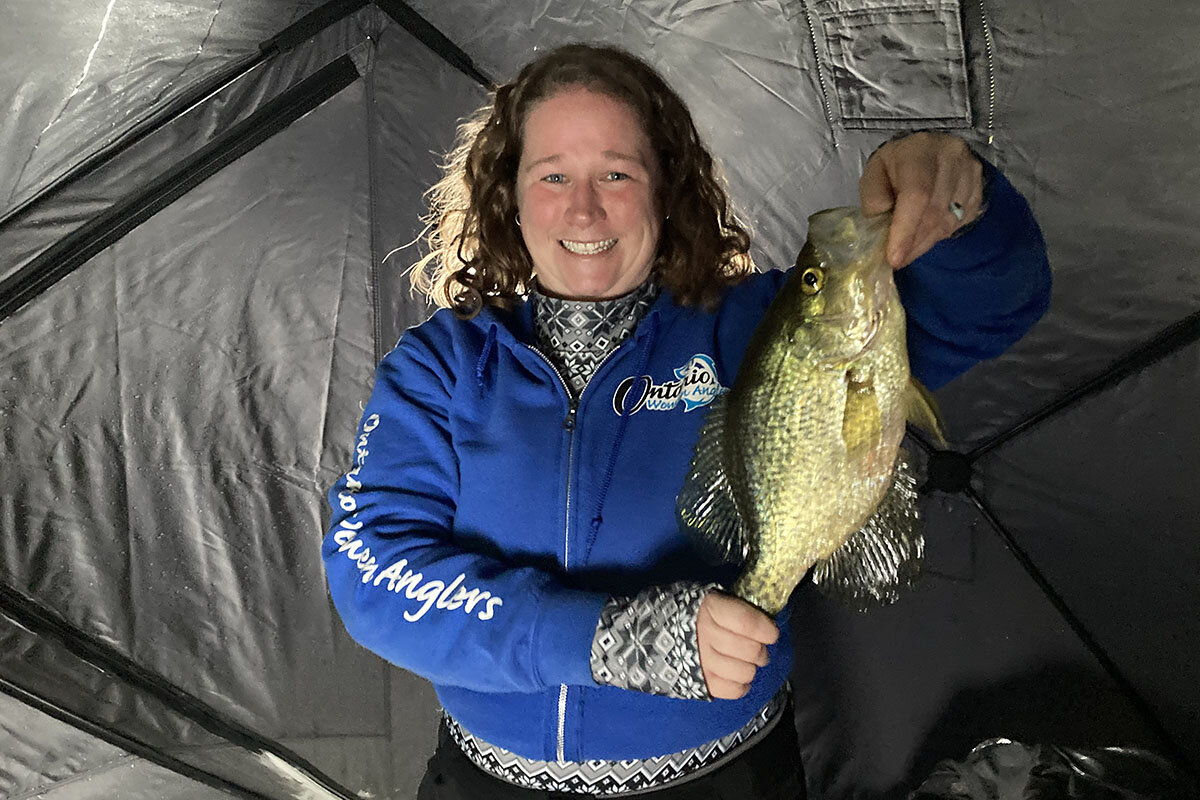
Nicole Chafe holds the black crappie she just caught – her biggest ever through the ice – Feb. 4, 2023. The Bob Rumball Camp of the Deaf hosted the Ontario Women Anglers for a women-only ice fishing weekend.

It’s the time of year for articles on ice fishing. You may have seen one recently about a Maine man who reeled in a “massive, ‘world-class’ 25.9 pound northern pike on his first time ice fishing.” Today’s is about women who go ice fishing. Sara Miller Llana covers the story at the Christian Science Monitor.

“Pauline Gordon and Nicole Chafe load their sled – with rods, a bucket of pinners and shiners, a bump board, chairs, a shovel, a heater and propane, a sonar fish finder, a scoop for the ice, and food for the day – and haul it across the frozen lake.

“A half-mile later we arrive at their pop-up hut, which they’d set up the day before shoveling out knee-deep snow, making sure to pack extra at the sides so it didn’t blow away overnight. It’s minus 20 degrees Fahrenheit in the morning, so cold my phone dies every time I try to record. But we aren’t the most hardcore of the bunch. Some women set out in pitch black, headlamps leading the way over multiple layers of clothing.

“Ideal girls’ weekend? It is for the 30 participants who joined the Ontario Women Anglers (OWA) on a women-only ice fishing expedition this month. ‘I love this,’ says Ms. Gordon, her arms wide greeting the [rising dawn] and snow-crusted forest hemming Second Lake.

“Ice fishing in North America traces back about 2,000 years to Indigenous communities, but for the last century has been a sport dominated by men. Now groups like OWA are introducing more women to the beauties of the ‘hard water,’ in an extreme embrace of winter. ‘Being on a frozen lake is kind of like walking on the moon. When the ice is building, it’s actually an audible noise that kind of sounds like whales,’ says Capt. Barb Carey, who founded Wisconsin Women Fish because all of this felt inaccessible to women at one time. …

“That ice fishing clubs for women are popping up in the United States and Canada is in large part due to Captain Carey, a U.S. Coast Guard-certified captain who, when she discovered ice fishing, had to teach herself everything.

‘Nobody would tell you where they were catching fish or how they were doing that,’ she says. ‘It was kind of like this secret that was shared between a couple of buddies.’

“Women still make up a minority in fishing overall. In Canada, men made up about 80% of all domestic anglers, according to a 2015 government survey. The demographics in ice fishing are harder to pin down since licenses are year-round, but club presidents, anglers, and tourism operators on both sides of the border say women are increasingly present on the ice. And ice fishing is particularly appealing because participants don’t need a boat. …

“Today Wisconsin Women Fish counts 600 women from 20 states and Canada. One of those women is Yvonne Brown, the founder of OWA, who organized the expedition outside Parry Sound, 150 miles north of Toronto. …

“Ms. Chafe whoops as a head comes out of the 16-inch thick hole they drilled in the morning. It’s the biggest black crappie she’s ever caught – at over 13 inches it means she has earned her status as ‘master angler.’ …

“ ‘This is the kind of cold that keeps the men inside,’ says [Terri] Fracassa, as she revs the engine of the all-terrain vehicle she just learned to drive across the ice. ‘And the women are doing it.’

“Ms. Brown says she began mentoring women a decade ago because there were no fishing organizations in Ontario where women were teaching other women. She found her niche providing a safe, noncompetitive space where there are no ‘stupid questions,’ she says.

“That’s not to say there is no competition in Parry Sound. … But mostly it’s a weekend of learning and helping. ‘Who needs the auger?’ ‘Does anyone need a ride back to the lodge?’ The women swap jig heads and fish bags.

“ ‘When I learned of OWA, I thought, “how awesome to learn from a bunch of ladies.” This is a judgment-free zone where everybody’s learning from everybody,’ says Ms. Chafe, who learned how to read a sonar from Ms. Gordon this weekend. ‘You don’t feel put down if you don’t know something.’ …

“Roselle Turenne, a colleague of Captain Carey’s and member of OWA who was not at Parry Sound, has studied gender dynamics in fishing, writing a thesis titled ‘Women Fish Too’ for her master’s in tourism management. She found that fishing ‘has almost nothing to do with fish.’ Instead, says Ms. Turenne, who now runs Prairie Gal Fishing in Winnipeg, ice fishing is a lot of decompressing, a lot of being out in nature, of getting outside and through the dark of winter, and sitting down and simply talking to whoever is next to you. …

“[One angler says] she needs to be out here … returning to an activity that she loved when little – until her teens when people started to say ‘fishing is weird’ or fishing isn’t for girls.’

“Oh yes it is, she retorts today. ‘I can feel it in myself. I need my fish therapy.’ ”

Have any of you tried ice fishing, male or female? Did you catch a fish or wasn’t that the point?

More at the Monitor, here. No firewall. Subscriptions welcome.

Read Full Post »

The organization Daughters for Earth believes women are key to solving the climate crisis.

Here’s a nonprofit I just learned about that’s working to, among other things, restore the Colorado River with a diverse environmental team. It’s called Daughters for Earth.

From the website: “The Colorado River has not connected to the sea for a generation, and its Delta is dying out. This once lush region of 3,000 square miles teeming with plant, bird, and marine life lived only in the memory of older community members.

“Most had abandoned hope that nature would ever return. … [The plan is to] help the Sonoran Institute (SI) revive, enhance, and maintain 751 acres of this area and reconnect the Colorado River to the sea. By reintroducing water, landscapes, wildlife, and communities thrive together.

“Led by Edith Santiago, who has 22 years of experience in the restoration of wetlands, this project comprises a diverse team of biologists, ecologists, hydrologists, community planners, environmental educators, and economists. Women hold over 50% of these positions.

“[The team aims to] monitor the water and surrounding wildlife and conduct restoration activities that include irrigation, weeding, fire prevention, vigilance, and signage to prevent vandalism. It will also help grow native species at the SI nursery near the Delta. Producing vegetation closer to restoration activities prevents plant damage and reduces transportation time.

“Environmental education and outreach activities are essential to inspire the local community to help restore and conserve the Colorado River Delta. SI will achieve this through an online course about wildlife and vegetation, guided visits to restored areas, talks, presentations, and workshops. Building a training and multiple-use site will serve as a gathering and educational spot for the community.

“SI has already engaged people through the visitor center at Laguna Grande, guided tours, and ‘Family Saturdays.’ Through these programs, nearly 26,000 people have reconnected with the river.

The recovery and stewardship of the Delta ultimately depend on the commitment of people who live in the region.

“Having local community groups, leaders, and government agencies participate in the restoration work, operate plant nurseries, manage restoration sites, and welcome guests is a significant part of this project. With a flowing river and a steady stream of visitors, the conservation site will become the heart of an economy based on working with nature, and a living, learning laboratory for the one million residents of Mexicali.

“The long-term plan is to restore and protect 30,000 acres of habitat. Another prime goal is to connect the river and sea for an average of 146 days a year.

“Through education and social media, it aims to reach more than 400,000 people who will get to know the endangered beaver and many of the 380 bird species in the Delta. It will continue implementing virtual and in-person activities with students from kindergarten through college, families, national and international media, and donors. …

“SI’s work has been crucial to adopting agreements between the United States and Mexico that have become a global example of collaboration. The Minute 319 and 323 accords between the two governments support the complete restoration of the Colorado River Delta.

“By advancing agreements governing the river, restoration can succeed in the Delta as people connect with their natural resources.” More at Daughters for Earth, here.

From the nonprofit’s Who We Are page: “Our planet and people are in crisis. Around the world, we face massive climate change due in large part to the destruction of Earth’s lands, waters, and wildlife, and women are being severely impacted. They are also on the frontlines fighting to protect our future.

“Women-led initiatives are combating this global crisis, making strides in protecting and regenerating the Earth, and ultimately transforming their communities. Yet, this work and leadership is often not seen, heard, appreciated, or funded.

“Daughters was co-founded by female leaders in the women’s rights, environmental and philanthropic sectors who came together to address the marginalization of women in climate change action. It is a campaign of One Earth, an organization working to accelerate collective action to solve the climate crisis through groundbreaking science, inspiring storytelling, and an innovative approach to climate philanthropy.”

Hat tip: Priscilla Stuckey on Mastodon.

Check out this urgent grandma rap on YouTube: “Grandmothers are calling for all daughters to rise.”

Read Full Post »

Photo: Paul Stremple.
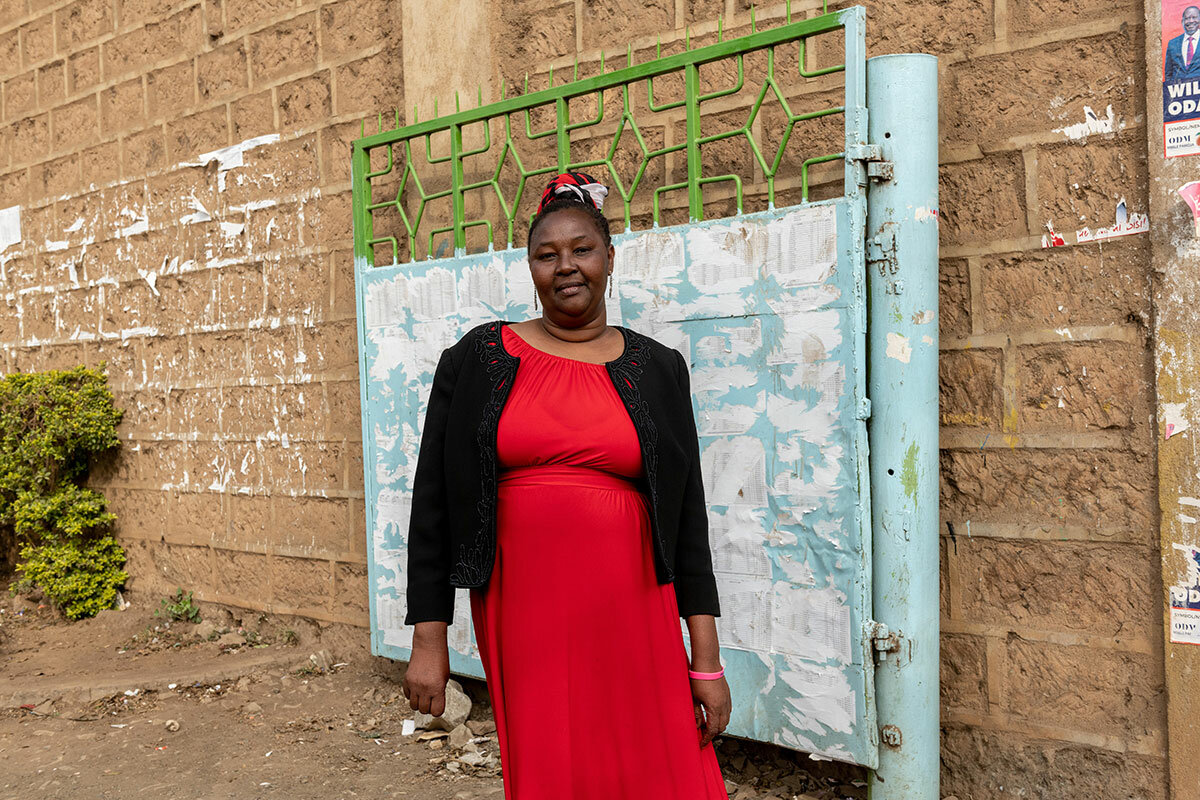
Beatrice Karore, a community leader involved in peace building during Kenya’s elections, stands outside a local vocational college in Mathare that served as a polling station.

Blessed are the peacemakers.

Often they are women. We know that not all women are peacemakers, but many are. They see where differences of opinion can get out of hand and take action.

Today’s article is about peacemakers in Kenya trying to change the pattern of violent election periods. The story was written before the country’s Supreme Court made its decision on the recount. If you can’t stand suspense, skip to the end.

Mukelwa Hlatshwayo writes at the Christian Science Monitor, “The Kenyan presidential elections are over, but peace campaigner Beatrice Karore’s work is not done.

“One recent cloudy morning in Nairobi, the founder of Wanawake Mashinani – Swahili for Grassroots Women – walks to her office in Mathare, one of the most densely populated slum areas in the Kenyan capital. 

“Sliding a heavy-duty padlock off a thick metal door, Ms. Karore and her team file into the tiny room that serves as their headquarters, and sit on blue plastic chairs. Over loud music blaring from a nearby shop, Ms. Karore begins with a prayer for a good ‘walk for the peace’ ahead.

“Ms. Karore is one of dozens of grassroots peace activists across the country who sprang into action in the months leading up to Kenya’s Aug. 9 presidential elections. Now, as the country waits for a final verdict on disputed results, that work has become increasingly important.

“The Supreme Court is due to hand down a judgment on Sept. 5, after opposition candidate Raila Odinga challenged official results that showed him losing to William Ruto by a margin of 200,000 votes. A former prime minister, Mr. Odinga has blamed five previous presidential election losses on rigging – claims that have sparked deadly riots in the past. 

“For now, an uneasy calm is holding. But some campaigners fear the Supreme Court verdict could yet unleash the violence that followed disputed polls in 2007, when more than 1,200 people were killed, and again in 2017, when more than 100 people died. 

“As her team walk out of their modest office into narrow passageways crammed with shacks, Ms. Karore says she knows the current lull is far from guaranteed. ‘We [are still] doing peace campaigns to empower the community,’ she says.

‘We realized that when there is no peace, everyone loses.’ …

“Some analysts believe that the relatively peaceful election campaign, in which the main candidates ran on social and economic issues, rather than demanding voters’ ethnic loyalty, points to a maturing democracy. 

“Widely touted reforms to the electoral process, including the effective registration of voters in the diaspora, may have given more Kenyans a sense of greater transparency. And battered by two years of COVID-19 lockdowns and rising costs of living, most Kenyans would prefer to accept the Supreme Court verdict than go to an election rerun, analysts say. …

“The manner in which Kenyans navigate the decision by the court will set a precedent for future disputes across Africa. … Even if the fragile peace holds, electoral watchers caution it will take more than one election cycle to show Kenya has left violence in the past. …

“For the past two presidential elections, Ms. Karore’s team has organized the kind of ‘holistic’ monitoring that Kenya’s human rights commission says will transform how communities like Mathare – which typically bear the brunt of any unrest – participate in the post-electoral process. Wanawake Mashinani has held several community meetings at which faith-based leaders have encouraged people to remain calm. It’s given safety tips to residents on election day. 

“And in a neighborhood that’s neglected by officials, where violence, drug abuse, and crime are prevalent, perhaps the group’s most important work is also the simplest: It checks in on residents and listens without judgment. 

“On this August morning ‘peace walk,’ Ms. Karore stops first to talk to a group of women selling hair-care products outside a corrugated iron-roof shack. Speaking in Swahili, she asks them how they are and how things have been since the elections. The discussion is light and jovial; the women laugh at a joke about a fake flour scandal doing the rounds in Mathare. 

“One vendor, a young woman called Kim, says that things have been quiet and business has been slower. She tells the group they are glad major protests didn’t break out after the results were announced, because that would have meant they would have lost everything. 

“ ‘Anything small can trigger violence on the streets,’ Ms. Karore says. ‘Many people leave their homes and go to rural areas at this time, or where people of their same tribe live.’

“Research has shown that when marginalized communities feel that their favorite candidate loses an election due to irregularities, they are more likely to resort to violence. Human rights organizations say the unrest often breaks out along ethnic and identity lines. …

“As Ms. Karore and her team walk deeper into the township, checking in on neighbors and store owners, they are greeted by passersby who recognize them from previous door-to-door visits.

“Buoyed by the work of peace campaigners across Kenya as a whole, the political atmosphere has been significantly calmer than in two previous elections. A range of activists, from artists to religious leaders, have been galvanized into action in recent months. A campaign by artists in Kibera, Kenya’s largest township, displays works that celebrate the country’s ethnic diversity. Another group of activists organized a ‘peace caravan’ across the country, carrying messages urging voters to remain calm during the heated polls.

“Still, violence and intimidation persist. … In Mathare, Reagan Victor Ondigo says he barely escaped with his life when a mob of men tried to burn down his home as he and his family slept. … He blames politicians for whipping up ethnic grievances, but he’s cautiously hopeful that those perceptions are slowly changing.

“ ‘I hope that my daughter will know that freedom is there,’ he says.”

Looks like Kenya’s Supreme Court decision was accepted by both sides. More at the Monitor, here.

Read Full Post »

Elizabeth Catlett: Sharecropper (1968)

If you are on Twitter, I recommend following @womensart1. She has introduced me to some outstanding art by women.

Her website says, “Art is art and artists are artists, yes, but there is also a gendered historical, social and cultural framework in which it is produced and received, which has ongoing implications on issues of value and recognition. The masculine term ‘master,’ for instance, and the ideal of lone male genius, still underpin the omnipresent Western concept of ‘the artist.’ …

“My own online project was created with the simple premise of raising the profile of women artists. By highlighting their diverse historic and global work, the project clearly reflects that ‘women’s art’ is not a category in itself, yet it does indicate genres to which women are more culturally and socially linked.

“#WOMENSART also creates an integral opportunity to promote women’s self-representation and to explore the female rather than much more scrutinized ‘male gaze.’ … Specific exploration of the artwork of women has enabled insights into areas including capitalism, migration, class, globalization, ethnicity, disability and so on, from an unusual, uniquely female perspective. …

“In addition, the project has enabled consideration of genres such as textiles, ceramics, zines, crafts and street art rather than focusing solely on the Western definition of ‘high art’ (sculpture and painting), therefore challenging the hierarchical limitations of a system historically based on discrimination rather than ability.

“Utilizing social media as an outreach facility has, in turn, proved quite a leveler, as it provides access to/for artists, genres and audiences that the establishment may ignore.” More here.

At MoMA, I learned more about the artist shown above, Elizabeth Catlett: “Catlett once said that the purpose of her work was to ‘present black people in their beauty and dignity for ourselves and others to understand and enjoy.’ Sharecropper calls attention to the tribulations of tenant farming — a system in which rent for the land is paid by the farmer with a part of the crop, creating an impossible-to-escape cycle of debt — while also offering a heroic portrait of an anonymous woman. …

“Her printmaking practice included woodcut, screenprint, lithography, and, most importantly, linoleum cut, which she learned at the Taller de Gráfica Popular (People’s Graphic Workshop) in Mexico City.

“Founded in 1937, the workshop aimed to continue the Mexican tradition of socially engaged public art. It specialized in linoleum cut, a technique that produces inexpensive prints and can accommodate large editions. Catlett first visited this renowned workshop and artists’ collective while she was in Mexico on a fellowship in 1946, where she found a kinship with the Mexican muralists, including Diego Rivera and José Clemente Orozco. Like them she tried, she explained, to make art ‘for the people, for the struggling people, to whom only realism is meaningful.’ ” More at MoMA, here.

One of the many advantages of @womensart1 is that it inspires you to find out more about the female artists you see there.

Read Full Post »

« Newer Posts - Older Posts »