Feeds:
Posts
Comments

Archive for May, 2017

On Thursday we are off to our hosts’ summer place on Sweden’s west coast. So these pictures are probably my last from Stockholm.

A few words on what you see here. Swedish day care is largely outdoors. We loved seeing these adorable groups of toddlers in the park.

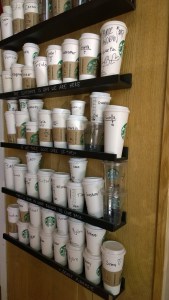
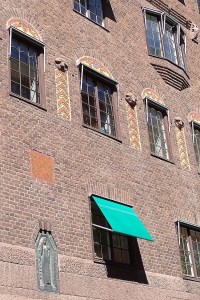
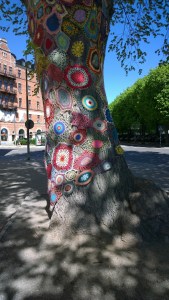
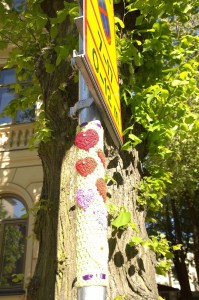
Starbucks saves cups for regular customers. Air balloons and decorated buildings are common. Some crocheted objects may have a deep meaning about offering covering to the stranger.

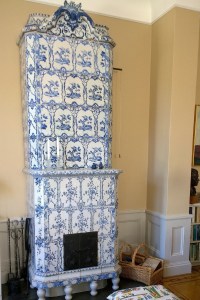
Our hosts have three traditional porcelain fireplaces in their apartment.

The history museum includes an ornate door and a model of an 830 AD Viking ship that was unearthed in 1904. Although no others like it have been found, it has become the image of what everyone thinks of as a typical Viking ship.

053017-Sweden-outdoor-daycare

052917-customer-cups-Sweden


052917-hot-air-balloon-Stockholm

052917-Stockholm-windows


052917--crocheted-tree-Stockholm

052917-Swedish-porcelain-stove


052917-antique-Swedish-oven

053117-history-museum-Stockholm


053117-history-museum-door

053117-viking-ship-in-history-museum-


Read Full Post »

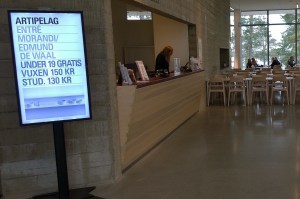
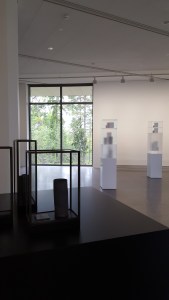
Tuesday we went to Artipelag, a pretty spectacular new museum in the archipelago on the east coast of Sweden. It was built by the founder of Baby Bjorn, with great attention to detail. We liked the wide windows that brought the outdoors in and the way that massive archipelago rocks were kept in place and worked into the design of the rooms.  Below you can see the rock wall in the bathroom, for example, and the rock in the lunchroom with its live candles marching along one edge.

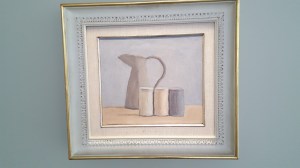
I took some of these pictures, and Stuga 40 took the rest. The current exhibit features the still life paintings of Giorgio Morandi (Italian, 1890-1964) and ceramic pieces made in admiring response by British potter and author Edmund de Waal. (Some people know the latter for the book The Hare with Amber Eyes, a memoir highlighting his family’s netsuke art.) I had not known about Morandi and found his simple, domestic shapes and shadows beautiful.

I should mention that the food at Artipelag was delicious. We had a smörgåsbord buffet, and Stuga 40 made sure we knew how to eat the dishes in the correct Swedish order. I have posted a picture of her friend Anna (in orange) discussing the art with me.

On less wet days, you can have a beautiful walk up and down the Artipelag grounds or tie up your boat at the museum’s dock and climb up for a picnic.

053017-Artipeleg-museum-Sweden

053017-rockc-wall-Artipelag-bathroom


053017-candles-and-native-rock-in-museum

053017-Morandi-at-Artipelag-Sweden


053017-Artipelag-Edmund-de-waal-show

053017-Anna-at-Artipelag-on-her-bday


Read Full Post »

Good morning.

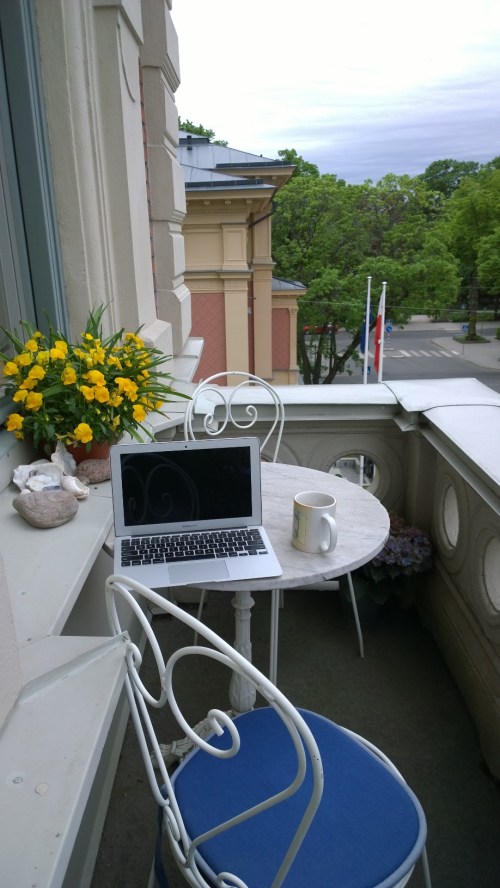
I’m watching Stockholm from the balcony. A garbage truck came for the trash cans behind the publishing house across the street. At 7, a young man on a bicycle took off his helmet and stowed his bike, came around the iron gate, and went into the front of the building.

People are running along the edge of the park. Soon parents will be rushing their toddlers to day care in the park. A blond woman is walking a small black dog with a curly tail past the Royal Swedish Academy of Letters, History, and Antiquities.

Spring was late here, so after we had enjoyed the tulips and daffodils and lilacs back home, we are getting to enjoy them again in Stockholm. A dad pulls down a branch of white lilacs and lifts his son to smell them.

From where I sit, I can see pink rhododendrons in the park, a red bus picking up passengers, and a man commuting by Segway.

Time to get a refill on tea.

053017-Stockholm-dream

Read Full Post »

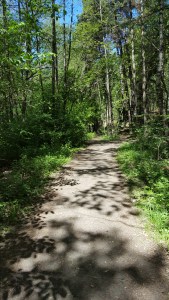
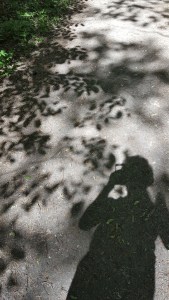
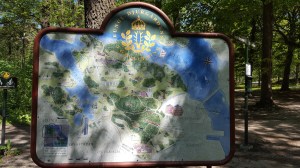
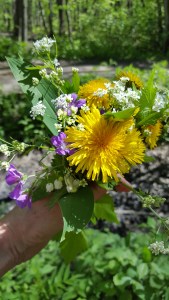
My hostess knows just the kind of pictures I like. Lots of sunlight and shade. While my husband and I were window shopping in Stockholm today, she went for her seven-mile run and took these photos along the way.

052917-woodland-shadows-stockholm

052917-photographer-and--shadows-stockholm


052917--map-and-shadows-stockholm9_120138

052917-flowers-and-shadows-stockholm


Read Full Post »

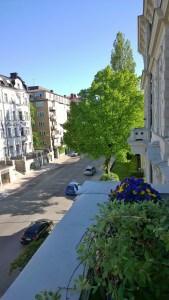
With the best Swedish tour guides imaginable, Erik’s folks, we saw many Stockholm highlights today, starting with a couple views from their balcony.

052817-view-of- Stockholm

052817-Stockholm-balcony


052717-knitting-on-sign-post

052817_6tag_Stockholm_chimneys


052817-Stockholm-from-a-hill

052817-Stockholm-cafe


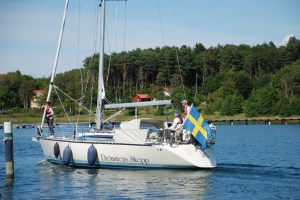
052817-the-Baltic-Sea-Sweden


Read Full Post »

Off to Sweden!

Will blog if I can. Otherwise … see you June 7.

Read Full Post »


Photo: Los Angeles Times
Jackie DesRosier conducts a YOLA at HOLA (Youth Orchestra Los Angeles at Heart of Los Angeles) youth orchestra spring concert.

The arts have a mysterious capacity to touch people in ways that nothing else does. It’s as if most of what we do or even think about every day is on the surface of things, involving the small part of our brains that is conscious. The arts, however, can reach into the unconscious part and make hidden flowers bloom.

Read how, in Los Angeles, an arts program is helping students flourish.

Jessica Gelt writes at the Los Angeles Times, “It is one of the most densely populated areas west of the Mississippi. The poverty rate is over 35%, and more than a quarter of all households earns less than $15,000 per year. At least 30 gangs roam the streets, recruiting children as young as 9. The high school graduation rate is around 50%.

“That’s the state of affairs in Westlake, Pico Union and Koreatown, according to the organization Heart of Los Angeles. The group reaches more than 2,000 kids in those neighborhoods every year through after-school arts and athletics programs, but its crowning achievement is its partnership with the Los Angeles Philharmonic: Youth Orchestra Los Angeles at Heart of Los Angeles, or YOLA at HOLA. …

“The program provides intensive orchestral instruction, including classes on music creativity, singing and ensemble rehearsals, to 250 students in 1st through 12th grades. Classes take place daily. An hour of academic tutoring is thrown in each afternoon for good measure. …

“More than 350 families land on the waiting list for programs at HOLA every quarter, so Brown said HOLA wants to build a recreation center to serve more people. The statistics coming out of the HOLA’s academic enrichment, visual arts and music programs speak to why demand is so high.

“Of the 63 students in those programs who were high school seniors in 2015, 100% of them graduated, and 97% went on to college. …

“[HOLA Executive Director Tony] Brown and his staff are aggressive in preventing kids from falling between the cracks. They sometimes attend parent-teacher conferences to find out what support a child needs, and when a student disappears from their programs, a staff member might make a house call to help bring that student back. …

“Brown likes to tell the success story of a boy named Raymond who came through the program as a troubled middle-school student. His grandmother brought him to YOLA at HOLA because he was failing in school and in danger of joining a gang.

“ ‘This young man started playing the clarinet, and he played the heck out of it. Next thing you know he’s earned his way to playing in London with YOLA at HOLA and Dudamel,’ Brown said, referring to the youth orchestra’s 2013 trip overseas. Raymond is now attending UC Santa Cruz.”

Read why National Endowment for the Arts is crucial to this program, here.

Read Full Post »


Photo: Chandana Banerjee
Dr. Medha Tadpatrikar found a nontoxic way to burn plastic and produce a cheap fuel for India.

I never use plastic in the oven or the microwave because I know that as plastic heats and disintegrates, it lets off toxic fumes.

So I was a little surprised — but also relieved — to learn that a new process burns plastic waste to generate energy and doesn’t expose anyone to danger.

For the Christian Science Monitor, Chandana Banerjee reports, “In 60 cities in India, 16,876 tons of plastic waste are generated each day, according to data from the country’s Central Pollution Control Board. Multiply that by 365, and you have more than 6 million tons of plastic that end up in landfills a year. …

“Dr. [Medha] Tadpatrikar resolved to find a way to make plastic waste useful. She and Shirish Phadtare started experimenting in Tadpatrikar’s kitchen, trying to ‘cook’ plastic in a pressure cooker to create a practical fuel. ‘Plastic is made of crude oil, and we wanted to reverse the process to get usable oil,’ Tadpatrikar explains.

“After lots of kitchen R&D, some trial and error, and help from engineer friends, this experimenting duo has come up with an operation in the Pune, India, area that benefits the environment in several ways. They are indeed producing fuel, using a process that doesn’t emit toxic gases. …

“ ‘We blew up quite a few cookers in the process,’ says Tadpatrikar, smiling. Later that year, they cofounded Rudra Environmental Solution. …

“ ‘Our two new machines, one that we launched in 2013 and the other in 2015, use up every bit of the byproducts, including the gases,’ says Tadpatrikar, noting that even the leftover sludge can be mixed with bitumen to create roads. …

“The fuel churned out by the two machines is carefully collected in bottles, and it’s sold to people in 122 villages around Pune at a subsidized rate of 38 rupees (53 cents) per liter. It’s a boon for villagers like Nanda Shinde, who can’t afford to buy any other fuel. …

“ ‘In the monsoons, when the wood is soggy, I’d have to burn plastic bags to cook a meal on,’ explains Shinde, who toils in the fields, attends to household chores, and looks after her family of six from the first light of dawn until the last of the evening.

” ‘Now I give my waste plastic to Rudra, and I am doing this so my children will have a cleaner world to live in,” adds Shinde.”

More at the Christian Science Monitor, here.

Read Full Post »

Photo: Charleston County School/Facebook
South Carolina teacher Katie Blomquist said she wanted her students to grow up with happy biking memories like hers.

I woke up one morning and checked the headlines and saw four stories on horrible things and felt the weight of the world descending. But I also keep finding stories reminding me that, whatever happens, the human spirit of kindness survives.

Here is a recent example from South Carolina, where a teacher was so moved by the poverty of her students that she took an unusual action.

Eun Kyung Kim reported the story at TODAY.com.

“Students jumped with joy, hugged one another and squealed with delight as teachers at their South Carolina elementary school revealed hundreds of custom-made bicycles beneath parachutes normally used for P.E. class.

“The new set of wheels [came] courtesy of first-grade teacher Katie Blomquist.

“ ‘I made a really conscious effort to watch their faces and let it soak in and imprint in my brain when those tarps went up,’ she told TODAY. ‘It was that moment I’ve been waiting for seven months.’

“But the idea originated more than a year ago. Blomquist, 34, teaches at North Charleston’s Pepperhill Elementary School, where many of the students live in poverty. Last year, one of her students mentioned how much he wanted a bike for his birthday. His parents couldn’t afford to buy him one, and neither could she.

“ ‘I started thinking about all the other kids who might not have bikes. We take a lot for granted and we forget that there’s a large category of kids out there who don’t have bikes,’ she said. ‘That was such a large piece of my childhood memories, and I immediately thought, “oh, they’re not getting that!”‘ …

“In September, Blomquist started a ‘Every Kid Deserves a Bike!’ GoFundMe page and set a $65,000 goal, enough to buy bikes and helmets for the 650 students at Pepperhill. Within three months, she had raised more than $82,000. …

“ ‘This was an entire second job for me, when I got home from work until midnight every night,’ she said.

“Radio Flyer donated 100 big-wheel tricycles and training bikes for the pre-school students, while a local business, Affordabike, worked with Blomquist to customize the remaining 550 bicycles …

“Beyond the children’s reactions — and the hugs from parents as they picked up the bikes —Blomquist said she’s enjoyed the sense of community created by strangers around the nation who donated to the campaign. It was support she hadn’t anticipated. …

“ ‘But maybe one day when they’re adults, they’ll know that this gift, it wasn’t from me. It was from our community and our country,’ she said.”

More here.

Read Full Post »

Here’s an extra post. It’s from the blog Safira’s Journey and describes a colorful Indonesian festival.

Safira's Journey

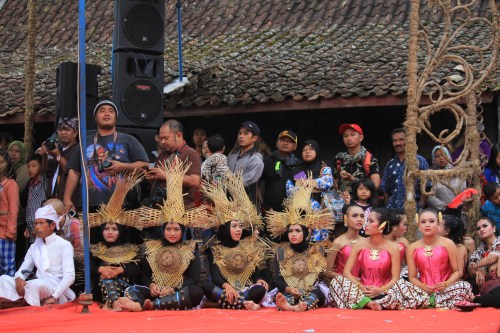
I have joined in a dancing community in Yogyakarta called Paradance. Last year, there was a festival called Borobudur International Writer and Art Festival. It is located in a hill called Andong near Borobudur Temple.

IMG_2867

The theme of the art is about Centini Gunung. Centini is a book about Javanese encyclopedia. So, it’s complete with all the ceremonies, Javanese kamasutra and all the Javanese life in the encyclopedia. Unfortunately, there is no full translation in English. Even it hasn’t finished in Bahasa translation as it is in Javanese Manuscripts. In the festival, all the dancers and artists performed their interpretation about Centini.

IMG_2871IMG_2872

Some of the photos in this post are not only from me but also from my friend who took the picture of performance. Btw, I found my dancing teacher in the festival. Then at the first time, there must be a parade. So, all the dancers and performers…

View original post 86 more words

Read Full Post »

Image: NPR Multimedia/AP Photo
Purple, Prose: The new book Nabokov’s Favorite Word is Mauve subjects thousands of books to statistical analysis.

Nabokov’s favorite word is mauve. That is actually the name of a book by statistician Ben Blatt.

Glen Weldon reviewed it at National Public Radio’s Morning Edition. Blatt, he reports, “loaded thousands of books — classics and contemporary best-sellers — into various databases and let his hard drive churn through them, seeking to determine, for example, if our favorite authors follow conventional writing advice about using cliches, adverbs and exclamation points (they mostly do); if men and women write differently (yep); if an algorithm can identify a writer from his or her prose style (it can); and which authors use the shortest first sentences (Toni Morrison, Margaret Atwood, Mark Twain) versus those who use the longest (Salman Rushdie, Michael Chabon, Edith Wharton). …

“Blatt’s book isn’t terribly interested in the art of writing. What it’s fascinated by — and is fascinating about — is the craft of writing.

“Technique. Word choice. Sentence structure. Reading level. There’s something cheeky in the way Blatt throws genre best-sellers into his statistical blender alongside literary lions and hits puree, looking for patterns of style shared by, say, James Joyce and James Patterson. …

“Blatt looked for the specific words that authors use much more frequently than the rate at which those words generally occur in the rest of written English (i.e., compared to a huge sample of literary works — some 385 million words in total — written in English between 1810 and 2009, assembled by linguists at Brigham Young University). …

“Here’s some that jumped out at me. Jane Austen: civility, fancying, imprudence … Dan Brown: grail, masonic, pyramid. … Truman Capote: clutter, zoo, geranium. John Cheever: infirmary, venereal, erotic … Agatha Christie: inquest, alibi, frightful. F. Scott Fitzgerald: facetious, muddled, sanitarium. Ian Fleming: lavatory, trouser, spangled … Ernest Hemingway: concierge, astern, cognac … Toni Morrison: messed, navel, slop.”

For many people, doing this to literature would be off-putting, but to me it is interesting. And fun. One of the reasons a favorite mystery writer, Eliot Pattison, stopped being my favorite was that I got bored with everyone who got hurt “moaning.”

Check out Weldon’s favorite findings from the book at NPR, here.

Read Full Post »

Photo: Leila Navidi/Star Tribune
Kate Coleman, outreach coordinator at the Minneapolis Central Library, met with Byron Brooks about his housing issues.

Ever since the Ferguson, Missouri, library created a safe zone for residents during the 2014 riots, my eyes have been opened to the range of services that contemporary libraries offer the public.

In Minneapolis, for example, one library branch has a social worker who focuses on helping homeless patrons find resources.

Haley Hansen at the Star Tribune reports, “Kate Coleman worked with nearly 500 homeless people at Minneapolis Central Library last year … as part of a yearslong effort by the Hennepin County Library system to better help the homeless connect with tools and resources in the area. …

“Coleman’s position allows the library to be more than just a basic reference point for help. She said the full-time role fits in with the library’s overall mission of connecting all parts of the community with help and information. …

“Coleman works for St. Stephen’s Human Services, a nonprofit whose mission is to end homelessness. Her position is funded by Hennepin County’s human services and public health department and the Downtown Council. …

” ‘I think the library allows people to feel human and to just feel like they can comfortably be themselves when they’re here,’ she said. … ‘It’s my job to always keep up with what’s available and stay connected with those other community service providers.’ …

“Coleman asks [clients] about income, disability diagnoses and the length of time they’ve been homeless to help connect them with the services that best fit their needs.”

I suspect that people who are down on their luck may also be treated more courteously at libraries than at overwhelmed social service agencies. I hope the libraries never get overwhelmed.

More at the Star Tribune, here.

Read Full Post »

The Rose Fitzgerald Kennedy Greenway in downtown Boston is not only the place to go for peaceful walks among gorgeous trees and flowers, it is loaded with art. One example: a 3-D printer in the Chinatown stretch of Greenway for passerby to celebrate the Year of the Rooster.

Allison Meier at Hyperallergic writes, “Acquiring a 3D-printed rooster from the “Make and Take” installation in Boston’s Chinatown Plaza on the Rose Fitzgerald Kennedy Greenway requires a bit of luck.

“The small objects are printed continuously, dropping into a slot when complete. Although artist and engineer Chris Templeman designed his project with ample space for accumulating roosters, visitors have been arriving day and night to collect the free birds. …

“The ‘Make and Take’ machine, made in collaboration with New American Public Art, is housed in an eight-foot-tall polycarbonate kiosk, positioned just before the red gate to the plaza. It was launched on Chinese New Year in January in honor of the Year of the Rooster. The interactive art machine follows previous Greenway Conservancy projects based on the Chinese zodiac, including Kyu Seok Oh’s handmade paper ‘Wandering Sheep‘ for 2015’s Year of the Goat, and Don Kennell’s steel ‘Monkey See‘ for 2016’s Year of the Monkey.

“Templeman’s rooster was 3D scanned from a porcelain statue at the Museum of Fine Arts, Boston. …

“Running a 3D printer constantly out in the elements of Boston has had its challenges, with wild tangles, and misshapen botched birds. …

” ‘Over the first month I was on site on average every other day, so it was a tough start, but I learned so much and I got to interact with the public which was awesome,’ Templeman said. ‘I am awe-struck that people are waiting hours to get a rooster.’ ”

More here. If you are on instagram, check this out, too: @newamericanpublicart.

Image: Chris Templeman
“Make and Take” 3D printer installed in Chinatown Plaza on the Rose Kennedy Greenway, Boston.

Read Full Post »

Image: Norah Borges
The artist’s older brother, Jorge Luis Borges, wrote that Norah was the fearless one in the family and “I the slow, timid, submissive one. She climbed to the top of the roof, traipsed through the trees, and I followed along with more fear than enthusiasm.”

How many women in the arts have been overshadowed by the men in their families? Countless. Just the other day I was surprised to hear some work by Fanny Mendelssohn — composer of more than 480 pieces of music — that was pretty impressive.

Maria Popova at Brain Pickings wrote recently of another female artist who was new to me: “Few people know that literary titan Jorge Luis Borges had a sister, and even fewer that Leonor Fanny Borges Acevedo (1901–1998), better-known under the pseudonym Norah Borges, was an acclaimed artist in her own right, who emerged in the 1920s as one of the female pioneers of modern art. …

“During her lifetime, Borges illustrated close to eighty books, including some of her brother’s, in addition to editorial illustrations for a number of avant-garde magazines belonging to ultraísmo — the first major avant-garde movement in Spain, comprising an eclectic group of writers and artists influenced by Italian futurism.

“Her soulful paintings and drawings, the earliest of which is collected in the out-of-print Spanish-language volume Norah Borges: Obra Gráfica, … spans more than seven decades and is nothing short of breathtaking.” See examples of that oeuvre here, at Brain Pickings.

For details on the life of Norah Borges, go to Wikipedia, here.

Photo: Wikipedia
Norah Borges, Argentinian artist, 1901-1998

Read Full Post »

Photo: Big Car Collaborative
The search for a housing model that benefits both artists and communities.

Low-income communities often benefit artists by providing cheap housing. And artists benefit low-income communities — at least until a tipping point comes and improved ambience spills over into gentrification. That’s when neighbors find that rents have gone too high, and the artists do, too.

Indianapolis is testing an approach to make artist and community interaction a long-term benefit for all.

Adele Peters writes at Fast Company, “For artists, the gentrification cycle in cities often goes something like this: struggling photographers or painters or writers move into an industrial neighborhood with cheaper rents and transform it. As new businesses spring up to serve these new residents, the neighborhood becomes more desirable to a wider swath of upper-middle class professionals. Eventually, rents increase so much that the artists have to move away.

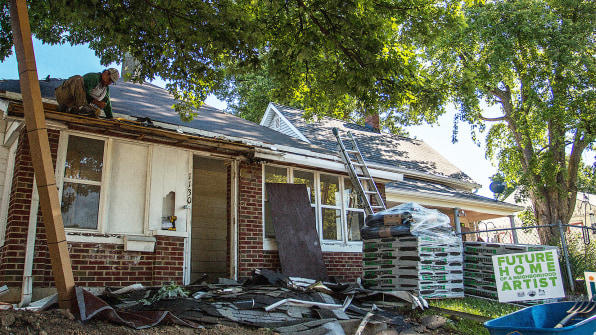
“In Indianapolis, one block in the Garfield Park neighborhood south of the city’s downtown is experimenting with a different model. An arts nonprofit worked with other partners to buy and renovate vacant houses and is now offering to co-own them with artists.

“Artists will pay half the cost – one $80,000 home, for example, will sell for around $40,000. If they later move out, they’ll get their equity back, but no more; the house will be sold at the same cost to someone else, keeping the neighborhood accessible as the artists help make it more desirable.

” ‘Neither of the two sides can profit off of an inflated market value,’ says Jim Walker, executive director of Big Car Collaborative, the art and placemaking nonprofit leading the project along with the local Riley Area Development Corporation and local neighborhood associations. ‘That’s to keep us from pricing out future owners of the homes.’ …

“When Big Car bought an abandoned factory on a block in Garfield Park, converting it into a community art center that opened in 2016, the organization realized that there was a bigger opportunity in the area. The block, cut off from part of the neighborhood by a highway built in the late 1960s and early 1970s, had declined for years; roughly half of the houses were abandoned. …

“ ‘These homes were available to us below $20,000, on average, because they were owned by banks in Florida and other investors who just walked away,’ says Eric Strickland, executive director of Riley Area Development Corporation, which works on community development in and around downtown Indianapolis. …

“The Artist and Public Life Residency program is designed for artists who are particularly interested in community and placemaking. ‘What we’re really looking for, first and foremost, is leadership in trying to invest in the community, and use the talents and resources that you have to support your own neighborhood,’ says Walker. …

“The development corporation wants to encourage other developers to build new affordable housing for the area to help keep the most vulnerable people in place. …

“Big Car is working closely with neighbors, who they say have been supportive of the changes–particularly the potential for local commercial streets to gain new businesses and bringing life to vacant houses.”

More at Fast Company, here.

Photo: Big Car Collaborative
Read Full Post »

Older Posts »