Feeds:
Posts
Comments

Archive for January, 2018

Photo: Rafael Herrin-Ferri/Architectural League of New York
“Eclectic Row, Briarwood, NY” (2017), from the exhibit
All the Queens Houses.

How much do you know about Queens, New York, a Big Apple borough located on Long Island? I think you’ll like this. A photographer, intrigued by the fiercely independent architectural self-expression of the borough’s denizens, recently showcased some of the quirkiest styles at the Architectural League of New York.

As Allison Meier reports at Hyperallergic, “In 2012, Rafael Herrin-Ferri began systematically photographing the houses of Queens, the New York City borough he calls home. The Spanish-born artist and architect lives in Sunnyside, one of the many neighborhoods which make up one of the world’s most ethnically diverse urban areas. Herrin-Ferri noticed that the architecture of Queens reflected this diversity. ,,,

“Over 270 of Herrin-Ferri’s photographs of 34 neighborhoods [were recently] installed at the Architectural League of New York in All the Queens Houses. … The ongoing photographic survey can be explored on his project website, also called All the Queens Houses. There viewers can explore by neighborhood, typologies (like detached houses and apartment buildings), and architectural details (including stoops and gardens). There’s a map of where he’s surveyed houses, with about a third of the borough covered in 5,000 photographs.

“ ‘I have always been interested in houses and was impressed by how idiosyncratic — and unorthodox — the low-rise housing stock is,’ Herrin-Ferri said. ‘They express the personal preferences and cultural backgrounds of their owners without much regard for what is “correct,” marketable, or fashionable. … I started this series of house portraits with the idea that it would reveal something about the urban vernacular in the “world’s borough.” ‘ …

“He believes that the community demographics inspire an ‘urbanism of tolerance’ for more extreme experiments in architecture. …

“ ‘[Most] residents of Queens … accept multiculturalism and embrace a laissez-faire attitude about building,’ Herrin-Ferri said. ‘Homeowners that I have talked to understand that people from different cultures have different ideas about what their houses should look like, and there is mutual respect.’ ”

See more photos at Hyperallergic, here.

Photo: Rafael Herrin-Ferri/Architectural League of New York
“Splayed Brick-and-Stone Rusticated Entry Porch, Maspeth, NY” (2015), from All the Queens Houses.
Read Full Post »

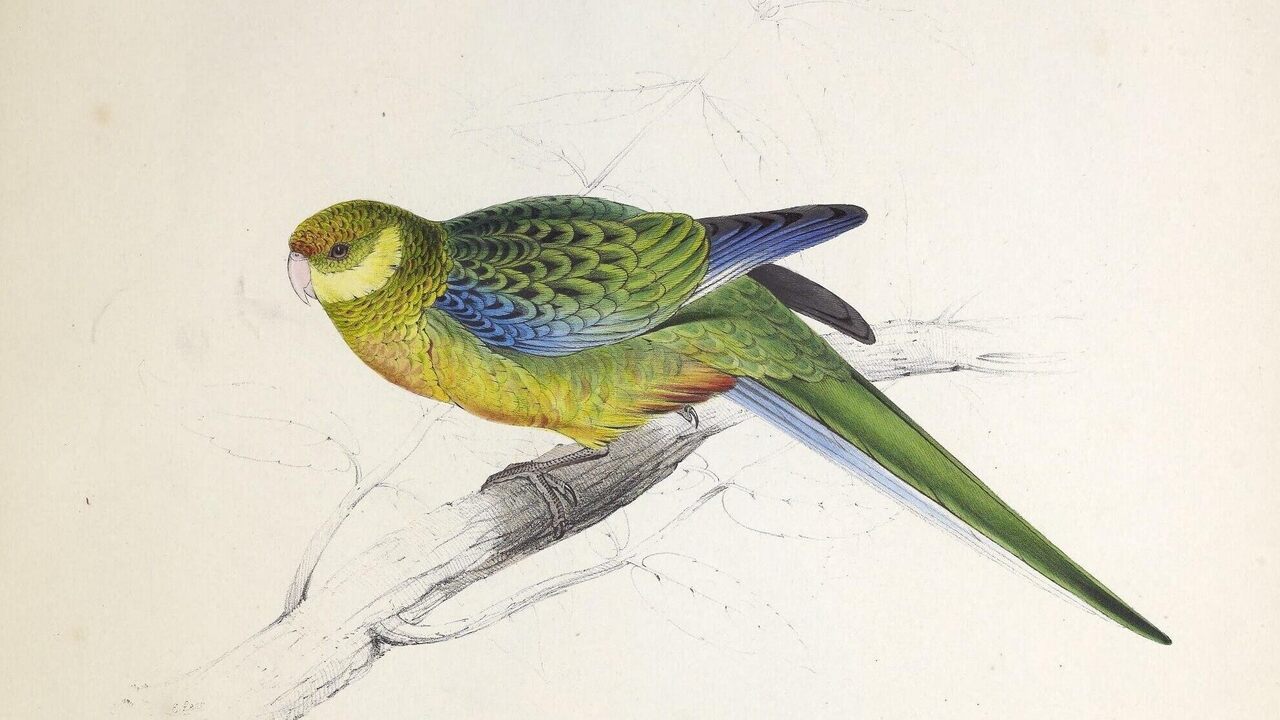
Source: Biodiversity Heritage Library
A Stanley parakeet, one of 42 plates in Edward Lear’s
Illustrations of the Family of Psittacidae, or Parrots.

Years ago, I read a biography of Edward Lear in which I learned that Lear had distinguished himself at a young age as an illustrator of nature — long before his playful limericks found an audience.

A new biography by Jenny Uglow brings more details to Lear’s story. And Cara Giaimo has a post about him at Atlas Obscura, where she reviews Peter Levi’s Lear biography.

“Edward Lear was a man unafraid of his own imagination,” writes Giaimo. “In his best-known nonsense poems and limericks, he wrote of things the world has never seen: green-headed Jumblies; toeless Pobbles; oceanic romances between birds and cats.

“But before he began bringing these impossibilities to life, Lear had a different focus: he drew parrots. When he was young, Lear was employed as an ornithological illustrator, and he spent years learning to draw birds, favoring live models in an era when most worked from taxidermy. Before he turned 20, he’d published Illustrations of the Family of Psittacidae, or Parrots, a critical success, and the first monograph produced in England to focus on a single family of birds.

“Lear was born in London in 1812. One of the youngest of a gaggle of kids. … He was raised mostly by his oldest sister, Ann. According to biographer Peter Levi, it was Ann who taught Lear to draw. …

“Early on in Lear’s childhood, his father went into debt, and his family fell on hard times. When he turned 15, he decided to put his talents to work professionally, and began taking commissions for everything from decorative fans to ‘morbid disease drawings for hospitals,’ as he later wrote a friend. In this way, he explained, he managed to make enough money ‘for bread and cheese.’

“But when he found the time to choose his own subjects, he often made his way to London’s Zoological Gardens. … While many artists of the time relied on taxidermied specimens—which, after all, were better at staying still—Lear preferred drawing live animals, and was known to occasionally enter their cages, so as to get a better look. …

“Lear’s models inspired at least one bit of verse. In December of 1830, he ended a letter to a friend with an account of a parrot-filled day that had left him rather peckish:

‘Now I go to my dinner,
‘For all day I’ve been a-
‘way at the West End,
‘Painting the best end
‘Of some vast Parrots
‘As red as new carrots,—
‘(They are at the museum,—
‘When you come you shall see ‘em,—)
‘I do the head and neck first;
‘—And ever since breakfast,
‘I’ve had one bun merely!
‘So — yours quite sincerely.

“As this poem suggests, the job was rather demanding. … Eventually, though, he boiled the process down to a science. First, Levi writes, ‘A young zookeeper would hold the bird while Lear measured it in various directions.’ Then Lear would make a few pencil drawings of the parrot, in different poses, doing his best to ignore the curious public (although sometimes he drew them, too). …

“By 1831, he and Ann had moved houses to be closer to the Zoo; the next year, he put out what would be his final batch of parrot lithographs, drew up a table of contents, and encouraged his subscribers to bind them into a complete book. He was 19 years old.

“Although he started out expecting to produce 14 sets of illustrations, depicting about 50 species, Lear ended up stopping just short. … He didn’t want to make the same mistakes as his father. ‘To pay colourer and printer monthly I am obstinately prepossessed,’ he explained, ‘[and] I had rather be at the bottom of the River Thames than be one week in debt.’ …

“Levi writes of Lear’s participation in [John] Gould’s Birds of Europe, ‘The queerer the animal the more it arrested him.’ ”

More here.

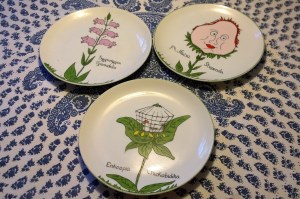
Lear-inspired plates that my family members have cherished for years.
012518-Edward-Lear-plates


Read Full Post »

Photo: Hulton Archive/Getty Images
Trumpeter Miles Davis, circa 1959. He once said, ‘”There are no wrong notes in jazz. It’s the note you play afterwards that makes it right or wrong.”‘ A small study suggests that jazz and classical music have different effects on the brain.

Pacific Standard loves these small-scale studies because they are fun and interesting. But as a retiree from an organization dominated by economists, I feel compelled to remind you that larger studies are needed.

Now for the fun. Tom Jacobs writes at Pacific Standard, “Can creativity be taught? Not directly, perhaps. But if such a curriculum exists, it would train one’s brain to regard unforeseen occurrences as potential springboards, rather than disturbing anomalies.

“Fortunately, there is at least one type of specialized training that shapes neural activity in precisely that way. …

“In a new, small-scale study, a Wesleyan University research team led by Psyche Loui and Emily Przysinda report the brains of jazz musicians are uniquely attuned to surprising sounds. Electronic monitoring revealed these players have ‘markedly different neural sensitivity to unexpected musical stimuli,’ the researchers write.

“These musicians are trained not only to anticipate unpredictable turns, but also to engage with them in a positive, creative way. That dynamic reflex stimulates creative thinking.

“The study in … Brain and Cognition featured 36 students from Wesleyan University and the Hartt School of Music. Twelve were studying jazz (including improvisation), 12 classical music, and the final 12 were non-musicians. …

“The participants completed a short version of a well-known creative thinking test, in which they were given six open-ended prompts such as ‘List all the uses you can think of for a paper clip’ in three minutes. They were scored on both the number of items they came up with, and their originality (that is, how often each answer was also given by other students). …

“The young musical improvisers were uniquely receptive to unexpected sounds. …

” ‘The improvisatory and experimental nature of jazz training can encourage musicians to take notes and chords that are out of place, and use them as a pivot to transition to new tonal and musical ideas,’ Loui and her colleagues write. ‘This could lead to the increased cognitive flexibility in jazz musicians.’ …

“It’s possible that people who decide to learn an instrument have brains that are pre-wired in a certain way, but previous research suggests that’s unlikely. Loui plans to study that issue, as well as whether other types of artistic training — say, improvisational theater — will yield similar results.”

More here.

Read Full Post »

Photo: Marcus Teply/PRI
Dr. Andre Niemann with a partial model of his plan to turn Prosper-Haniel into a pumped storage system (basically a giant, water-powered battery). “It shows responsibility. It shows that if mining is over you’re not leaving the place.” 

Recently I read a sad story about a coal miner in the U.S. who once thought he and his infant son would have secure jobs long into the future. Now his mine is closing and he’s off to find another.

What’s sad to me is that although there are opportunities to retrain in up and coming industries, he and his family are chasing a dead one. But I can understand that he wants to keep earning six figures, a salary unlikely in most fields for which he might train.

Meanwhile, in Germany, people in an old coal town are biting the global-warming bullet and moving on.

Valerie Hamilton reports at PRI’s the World, “For most people, the top of the mine shaft at the Prosper-Haniel coal mine in Bottrop, Germany, just looks like a big black hole. But Andre Niemann looked into that hole and saw the future.

“Niemann leads the hydraulic engineering and water resources department at the University of Duisberg-Essen, in the heart of German coal country, western Germany’s Ruhr Valley. For more than 150 years, Germany mined millions of tons of anthracite, or hard coal, from coal mines here that at their peak employed half a million miners. But that’s history now — Germany’s government decided a decade ago to end subsidies that made German hard coal competitive with imports. …

“The end of hard coal mining in Germany comes just as Germany is working to slash its CO2 emissions by replacing fossil fuels with renewable energy sources like wind and solar. The country calls it the Energiewende, or ‘energy transition.’ But wind and solar aren’t always there when they’re needed, so a key challenge of the Energiewende is to find ways to store sun and wind energy for later use.

“One way to do that is with a pumped energy storage system — basically a giant, water-powered battery. When the sun is shining or the wind is blowing, the excess energy is used to pump large amounts of water uphill into a reservoir. When the sun goes down or the wind dies, that excess energy can be released by letting the water flow back downhill, through turbines that generate electricity like in a hydroelectric dam.

“Existing pump storage systems make use of hills or mountains for the necessary difference in altitude. But Niemann says the depth of a coal mine — like Prosper-Haniel — would work just as well.

“He and a team of researchers have worked up a plan to turn the mine into a pumped energy storage system that could generate 200 megawatts of power, enough for almost half a million homes. Water would be pumped through a closed system of pipes from 2,000 feet below ground level up to the surface and fall back down again on demand, regenerating 85 percent of the renewable energy used to pump the water up in the first place — energy that would otherwise be wasted. …

“Niemann, who grew up in a coal-mining family in the coal city of Ibbenbueren, says it would be a powerful symbol that as Germany transforms its energy landscape, coal regions won’t be left behind. …

“[Miner Ernst] Mueller explains the deal offered to him and every other mine worker in 2007, when the German government moved to end the subsidies that kept Germany’s hard coal mines afloat. …

“Underground workers over 50, and above-ground workers over 55, like Mueller, can retire early, paid by a company fund, as long as they have 20 years on the job. About 400 of their younger co-workers can stay on to maintain the mine area after it closes. The rest get job placement and training. Beike says [the company] promises to find every worker a new job. …

“The hope is, eventually, green business will pick up where coal left off. To prepare, the region has opened a new technical college in Bottrop to train the next generation of workers — not in coal, but in fields like green tech, water management and electro-mobility.”

More at Public Radio International, here.

Read Full Post »

Photo: AP
Hurricane Marie, as seen from the International Space Station last year.

To understand more about how tropical storms evolve and become hurricanes, two Penn State professors from very different fields are joining forces.

Mark Ballora, professor of music technology, and Jenni Evans, professor of meteorology, report on their research at the Conversation.

“During the 2017 hurricane season, major storms in the North Atlantic devastated communities in and around Houston, Florida, Puerto Rico and the wider Caribbean. The destruction shows how important it is to understand and communicate the serious threats that these storms pose. …

“Since 2014, we have been working together to sonify the dynamics of tropical storms. In other words, we turn environmental data into music. …

“Most of us are familiar with data visualization: charts, graphs, maps and animations that represent complex series of numbers. Sonification is an emerging field that creates graphs with sound.

“As a simple example, a sonified graph might consist of a rising and falling melody, instead of a rising and falling line on a page.

“Sonification offers a few benefits over traditional data visualization. One is accessibility: People with visual or cognitive disabilities may be better able to engage with sound-based media.

“Sonification is also good for discovery. Our eyes are good at detecting static properties, like color, size and texture. But our ears are better at sensing properties that change and fluctuate. Qualities such as pitch or rhythm may change very subtly, but still be sensed quite easily. The ears are also better than the eyes at following multiple patterns simultaneously, which is what we do when we appreciate the interlocking parts in a complex piece of music. …

“We distilled the changing characteristics of a hurricane into four features measured every six hours: air pressure, latitude, longitude and asymmetry, a measure of the pattern of the winds blowing around the storm’s center. …

“In our recordings, air pressure is conveyed by a swirling, windy sound reflecting pressure changes. More intense hurricanes have lower values of air pressure at sea level. The winds near the ground are also stronger in intense storms.

“As pressure lowers, the speed of the swirling in our sonic recordings increases, the volume increases and the windy sound becomes brighter.

“The longitude of the storm center is reflected in stereo pan, the position of a sound source between the left and right speaker channels.

“Latitude is reflected in the pitch of the swirling sound, as well as in a higher, pulsing sound. As a storm moves away from the equator toward one of the poles, the pitch drops to reflect the drop in temperatures outside the tropics.

“A more circular storm is typically more intense. Symmetry values are reflected in the brightness of a low, underlying sound. When the storm has an oblong or oval shape, the sound is brighter.

“So far, we have sonified 11 storms, as well as mapped global storm activity from the year 2005. …

“Even for experts in meteorology, it can be easier to get a sense of interrelated storm dynamics by hearing them as simultaneous musical parts than by relying on graphics alone. For example, while a storm’s shape is typically tied to air pressure, there are times when storms change shape without changing in air pressure. While this difference can be difficult to see in a visual graph, it’s easily heard in the sonified data.”

More here.

Read Full Post »

Radio Lifeline for Syria


Photo: Amandas Ong
An Alwan radio producer in the station’s recording studio. The broadcast lifeline to Syria is located in an apartment complex in Turkey.

Where people struggle to carry on their lives in the midst of war, radio can provide comfort and hope. This is a story about Syrians in exile who broadcast news and normalcy to people back home.

Amandas Ong writes at Slate, “I push my way out of the metro station in southwestern Istanbul where Sami — not his real name — and I have agreed to meet. …

” ‘It’s not far from here,’ he says, directing me down an overhead bridge through a number of serpentine streets. …

“The hive of activity inside forms the Istanbul operations of Radio Alwan, (Alwan means ‘colors’ in Arabic) an independent Syrian news station broadcasting into that devastated country every day. Alwan provides much-needed news updates to information-starved Syrians and also runs popular entertainment programs and controversial discussions. …

“Three bedrooms have been converted into a meeting room, a recording studio, and an office. … Most of the staff had no prior training in radio journalism before joining Alwan. Sami describes himself as having ‘come from a regular, boring HR job in Dubai.’ …

“ ‘The point of Alwan,’ he had told me in a prior conversation over FaceTime, ‘is not just to report the news. Radio is also a form of activism, and through our programs, we try to do our part by encouraging people to engage with civic organizations within Syria, and to inform them on what’s really happening both around the country and outside of it.’ …

“A law student named Ahmad al-Qadour started Radio Alwan in 2014 in the northern Syrian city of Idlib. … They decided to relocate Alwan’s central office to Istanbul after a series of threats from Islamic radical groups such as the al-Nusra Front, which had been part of the Syrian wing of al-Qaida before splitting from the group in 2016. …

“A typical day at Alwan begins at 6 a.m. in the Istanbul office, where the team of about 15 staff members assembles for a variety of Syrian and international news segments, followed by talk shows and short radio skits, some educational, others comedic. …

“Sami is especially proud of Oh, Grandma, a program presented by a woman from Idlib who is identified by her initial, N. She has a day job as a teacher, but in her role at Alwan, she visits the houses of women in the city and interviews them about their lives, their daily struggles, and discusses salient issues with them, such as the legal age for marriage for Syrian women. …

“Maram, a 24-year-old in a slouchy sweater and jeans, comes to talk to me. She graduated from a media school in Damascus and decided to come to Turkey to seek better job opportunities, before stumbling upon an open position at Alwan. …

“I ask her what she likes most about Alwan, and she doesn’t hesitate: ‘I learn a lot every single day, but most of all, it’s taught me so much about how to deal with uncertainty.’ …

“Sami [has] a philosophical approach to the objective of radio itself.

“ ‘We have a program called Acute Angle,’ he says, ‘that encourages people to accept the idea that there is no such thing as true fact. In each segment, we talk about different personalities like Michael Jackson, Ataturk, and even Walt Disney, and how these people have been represented both positively and negatively. I want our listeners to know that there are no taboos, and also no perspective on any one issue or narrative that should be taken for granted.’ …

“[It’s staff member] Dima who has perhaps the most poetic vision of her work at Alwan. ‘What I’ve learned is that the people who listen to us aren’t just suffering day in and out. They want to live, love, dance, laugh. Sometimes we draw courage from them, other times they are comforted by us, hundreds of miles away,’ she says. ‘That’s the beauty of radio: It has soul.’ ”

More here.

Unhappy Update, Dec. 29, 2019, here.

Read Full Post »

012518-dolls-from-my-childhood

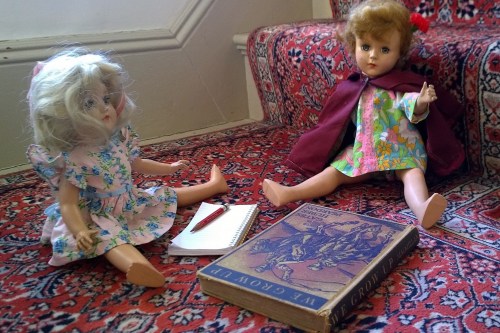
Dolls that used to attend my “school.” I’m sorry to say that the book We Grow Up was pilfered from my second grade classroom.

On the third floor landing in the house where I spent most of my childhood, there was an alcove with a window and a couch. On nice days, the sun streamed in and revealed the perfect spot to set up a space of my own. I called it “The Little House” and hung signs around to indicate it was off-limits to everyone else.

In my space, which eventually evolved into “The Little School,” I set out all the toys related to keeping house or teaching school. The two pupils above I had received earlier. Susie, on the right, is still my favorite. She came into my life when I was 5. The cape is the original, but I don’t know what happened to the blue- and white-striped dress Susie arrived with, or her black shoes and white knee socks.

On the left is Toni, who when I was 7 brought along her hair curlers and styling lotion, courtesy of the Toni hair-perm company. I was an easy grader as a teacher but firm about hard work.

I suppose that whatever children most like to play with reflects their interests and is a way of practicing something grown-ups do that looks like it might be fun. I myself moved on from teaching dolls to using teaching as a camp counselor, a parent, an editor — and an actual teacher.

Nowadays, girls don’t seem to spend as much time with dolls, but nurturing remains a life skill worthy of being practiced by any child. When today’s small daughters enter the workforce (let’s say daughters for the sake of argument), will those engineering and truck driving jobs be the ones that are available? Young adults will probably invent new kinds of jobs, and who knows? Maybe nurturing will be useful in those fields, too. Certainly, there will always be a need for nurturing parents, caregivers, and teachers.

Read Full Post »

duazqv5w0aea-x9

Although I’ve always been a fan of Dickens, his abjectly self-sacrificing women could get pretty cringe-worthy at times. Which is why I wondered how the character of Madeline would be handled in the Royal Shakespeare Company dramatization of Nicholas Nickleby back in 1980.

Madeline is at the altar with a miserable old codger she is about to marry to save her invalid father from penury when her father’s remorse causes a fatal heart attack. Saved by the bell.

But what would a 20th century audience make of Madeline?

Interestingly, the actor played Madeline as a mild but strong woman who was not being forced to a desperate act by anything but her love for her father and her sense of herself and her values. She immediately stepped away when the dreadful choice was no longer necessary.

Hmm. It’s hard to describe. But I was really impressed by the actor’s ability to convey a more modern woman without changing any of the words in the Victorian novel.

Meanwhile, at this year’s Women’s March, a group of 13-year-old girls transformed the typically self-abjugating Disney princesses into 21st century feminists. That caught the attention of BuzzFeed reporter Brianna Sacks and ultimately Teen Vogue.

De Elizabeth at Teen Vogue wrote, “Huge crowds gathered in cities all over the world [January 20] for the second annual Women’s March, and among the masses of people were plenty of colorful signs and creative outfit choices.

“One group of 13-year-old girls at the Los Angeles march took their posters and their wardrobe to the next level with a Disney princess theme.

“BuzzFeed News reporter Brianna Sacks shared photos of the Disney crew on Twitter, writing: ‘These 13-year-olds took “damsels in distress” and turned it around.’

“In the pictures, you can see the six girls dressed as various princesses — including Aurora and Belle — and carrying signs with powerful messages related to the classic fairy tales.

” ‘Bright young women, sick of swimmin’,’ one sign read, in an homage to The Little Mermaid‘s Ariel. ‘I will not let it go’ was the slogan of the girl dressed as Elsa from Frozen, while Peter Pan’s Tinkerbell carried a poster saying, ‘Pixie dust won’t fix this.’

“When Sacks asked the girls why they chose to dress as these iconic characters, [Ava/Sleeping Beauty] replied: ‘We’re sick of being seen as princesses, so we made our own take on it.’ ”

I am not surprised to see Teen Vogue pick this up: the magazine has become quite a cultural phenomenon in the last year, speaking truth to power. Check out its impressive array of topics, here.

PS. Kevin’s daughter is the lovely, new-world mermaid.

Read Full Post »

If you live anywhere near Worcester, Mass., try to get to a unique photography exhibit at the Worcester Art Museum by February 25.

Asakiyume and I meet up about once a year, often in a museum, and we saw three interesting shows at the Worcester Art Museum over the Martin Luther King, Jr., holiday.

First, we checked out a small exhibit on antique Japanese metalwork from the Higgins Armory collection. I thought Asakiyume would be interested because of her many ties to Japan. We especially liked a tiny metal dragon and a lifelike lobster — beautiful.

We appreciated the museum’s main event, too, a show featuring art Winslow Homer created while living in England. Related work by J.M.W. Turner and other artists who influenced Homer filled out the exhibit, here.

But it was the collection of William Bullard‘s recently discovered photos of an early 20th century mixed-race Worcester community that had us riveted. Asakiyume wrote about it on her own blog, here.

What was the most remarkable aspect? That there was a mixed-race community at all in Massachusetts at that time? That the photographer whose photos were mostly of African Americans was white? That his subjects looked so relaxed, as opposed to the stiff people seen in most portrait photography of the time? That the works were lost for decades? That they were recovered in the form of glass slides and were printed for the first time for the show?

No, I think what touched us the most were quotations in certain wall texts. Amazingly, the photographer kept detailed notes on who everyone was, so stunned descendants of many subjects got to see their ancestors for the first time or to learn that a family legend was true.

The photographer was poor and couldn’t afford handsome settings. Some subjects had to pose in front of a worn sheet. Bullard lived with his mother and earned little money or recognition from his avocation. He died by his own hand.

How I wish he could have seen what his art meant to people! It wasn’t until the purchaser of the slides remembered he had also bought Bullard’s logs that two and two made four.

Reports the Daily Mail, “In January 2014 [purchaser Frank J. Morrill] and Clark University history professor Janette Thomas Greenwood and her class began researching the stories behind Bullard’s subjects, constructing rich individual narratives and community history. ” (Asakiyume found the Daily Mail article. Read it here and enjoy the array of pictures.)

The Worcester Art Museum adds, “A comprehensive website hosted by Clark University (www.bullardphotos.org) offers teaching resources for educators, all of the photographs and sitters featured in Rediscovering an American Community of Color, a map of the Beaver Brook neighborhood (circa 1911), and additional research written by the Clark students who participated in a seminar related to the exhibition.”

Asakiyume took this photo of Bullard’s photo because she loved sweet-faced Luvenia Ward (right), shown here with her sisters. The photo was printed in 2016 from recently discovered glass slides of Worcester, Mass., photographer William Bullard (1876-1918).

Read Full Post »

010618-ice-lanterns-Arlington 2


When you don’t have to travel, ice and snow are not the burden they are to a driver. You can wander a little outside your home and take pictures, bake banana bread, put out carrots for the bunny that appears at dawn, feed the birds, make ice lanterns.

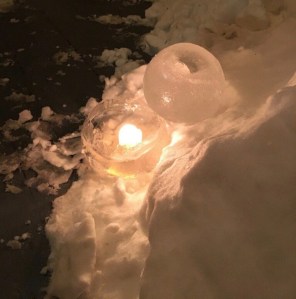
The ice lanterns above were made by John’s children, and the photo was taken by my daughter-in-law. I love the smoky, swirly, mysterious aura that she captured.

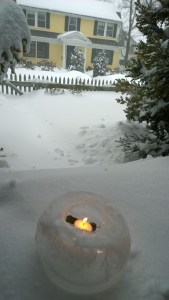
My own 2018 ice lantern is below. My husband was critical to the enterprise. If you want to make an ice lantern yourself, check out an earlier post, here. You need a really cold day.

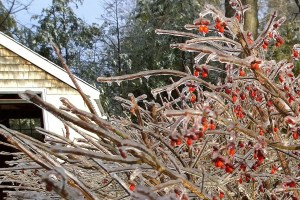
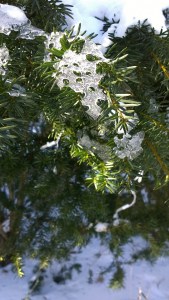
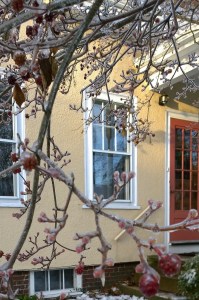
Right before Christmas, I took several photos of ice on trees and bushes because it looked so pretty. I know it’s not good for plants, though.

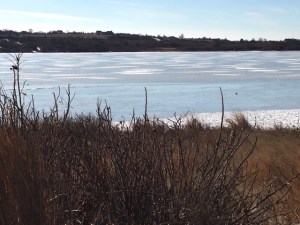
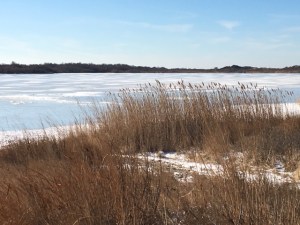
Sandra M. Kelly is the photographer behind the two photos of frozen bodies of water in New Shoreham — water that hardly ever freezes. It didn’t stay frozen long enough for her to get shots of ice boat racing, however. New England is swinging too quickly from deep freeze to balmy.

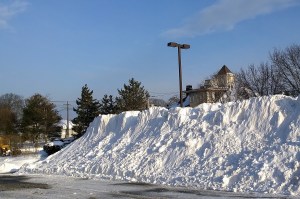
The big snow January 4th produced the mountain I noticed in a parking lot and the deceptive cushions on Suzanne’s porch furniture.

010418-newest-ice-lantern

122417-nice-ice-not-great-for-bush


010318-lacy-ice

122417-when-ice-in-the-dooryard-bloomed


010318-Sandra-Kelly-Block-islandJPG

010318-Sandra-Kelly-New-Shoreham-frozen-pond


0518-snow-pile-in-parking-lot

010818-snow-pillows-Providence


Read Full Post »

Photo: Tim Clyne
Genesis Blu calls herself a “raptivist” — a mix of rapper and activist. She also works as a psychotherapist.

I heard Genesis Blu interviewed on National Public Radio (NPR) one day when I was driving and thought you might be interested. She is a rapper, an activist, and a psycotherapist.

NPR’s Lulu Garcia-Navarro interviewed her at SugarHill Recording Studios, where Genesis Blu recorded the tracks for her EP, “Bluming Season.”

“Genesis Blu calls herself a ‘raptivist,’ mixing hip-hop with advocacy. She says she dedicates time to ‘facilitating change in her community.’ The dual passions for politics and music started at a young age.

” ‘I would be like 12 years old, going to a nightclub, where people are smoking and drinking. I was always a different type of kid, so my songs would be about the struggle, the political climate — even that young. And they would be like, “Where is this little girl coming from with this stuff?” ‘

“But when she got older, she put the music career on hold and focused on school — a lot of school. She got a bachelor’s, a master’s and started her doctorate. Until she had an epiphany one day — she wanted to be back in the community, writing music. She was in the middle of her dissertation.

” ‘I literally stopped that day, put down that pen and picked up another pen and a notepad and began to write music,’ she says. ‘And I’ve been doing that since.’

“Well, it’s not quite all of what she’s been doing since. She’s also a full-time psychotherapist. Blu works with children and families and teens ‘who are removed from their home due to abuse of some sort or due to their emotional disturbances,’ she says.

” ‘People ask me to choose [between music and therapy] and I cannot, I love them equally,’ she says. ‘Because you’re able to change lives both ways.’ ”

Here are some highlights of the interview.

” ‘I don’t want my people left behind. So, what’s happening [in Houston] right now is gentrification, in the worst way. They are pushing these people out. And there’s not many other options [of places] to go, because we don’t have a great public transportation system …

” ‘It’s upsetting a lot of us who have been in this community and are working in this community. And so even though I’m very happy about the diversity, what it also is doing is allowing people to come in with a bunch of money, throw money at some things, tear some things down, buy it out — and then leave the people who have been here stranded.’ …

” ‘My history is that my grandmother grew up in another neighborhood in Houston as well called Acres Homes. So living between Greenspoint and Acres Homes, which were rivals at the time when I was a kid by the way. So I would have to go to my grandmother’s house after school if my mother couldn’t be home from work.

” ‘And that was interesting because I was bullied — a lot. Because I’m too proper for the black kids and I’m not white enough for the white children, so I’m in a very awkward place. But still loving the culture of where I come from.

” ‘But my grandmother was also an activist. She was very influential in the war on drugs here in Houston. So … she would have me marching with her. So I get that from her.’ ”

More at NPR, here.

Read Full Post »

You probably don’t need to be told this, but bathing yourself in nature can help you calm down, reduce stress. When I was a child, I lived near forest and could take a walk in the woods almost anytime. Not everyone can do that, which is why it’s so important to bring nature into cities and towns as much as possible. Even listening to recordings of nature can be soothing.

Anjali Nayar at Motherboard writes, “When Cale Holmes moved from Virginia to New York City for grad school, he started to have trouble sleeping. All night long the trains thundered past his building, garbage trucks groaned, and police sirens wailed. …

“One night, Holmes recalled how calm he used to feel whenever he visited a beach. He went to YouTube and ran a search for ocean sounds. Innumerable recordings of ocean waves popped up, some as long as 12 or 14 hours. He selected a nighttime version and let his room fill with the sound of the crashing of waves. …

“The next thing he knew, warm sunlight was filtering in through the curtains. When he checked his laptop, he saw that the recording had paused at just after four minutes when the laptop had powered off. … How had the recording helped him so much? …

“Jake Benfield, soundscape researcher and professor of Environmental Psychology at Penn State University, has been studying nature sounds for over a decade. … In 2014, Benfield led a research study to examine whether natural sounds had any impact on participants’ moods. The researchers first evaluated the volunteers’ moods and then deliberately spoiled their moods by showing them disturbing medical videos of hand surgeries. ‘As we would expect,’ Benfield said, ‘watching medical videos makes people disgusted, negative, and generally in a bad mood.’

“The researchers then randomly assigned the volunteers to three groups and made them listen to different soundscapes. One group was made to listen to city sounds and traffic. Members of this group reported that their moods became worse. Another group listened to mixed environments containing nature and city sounds, and this group reported no significant mood changes.

“The third group, however, listened to purely natural sounds — like the sound of the wind rustling through trees or the chirping of birds. Participants in this group reported a complete mood recovery.”

In another study, Benfield told Motherboard, “Researchers at University of Gavle, Sweden [designed] an ambiguous, fuzzy sound, which wasn’t entirely discernible, and hence open to interpretation. The researchers then enlisted participants and told half of them that the sound was that of a waterfall while telling the others that it was from an industrial source.

“What they discovered was that the first group, the one that had thought that the sound was that of running water, showed remarkable mood recovery. On the other hand, the second group that had assumed the sound was unnatural, reported no mood recovery.”

Several related studies are described at Motherboard, here. Enjoy!

Read Full Post »

A quilt in Liberia’s executive mansion. Former president Ellen Johnson Sirleaf was a great booster of Liberia’s quilting tradition.


Here’s a tidbit for the quilters who visit this blog.

According to Cholo Brooks at Global News Network Liberia, the African nation founded by former US slaves has a proud quilting tradition that includes a story about Queen Victoria.

Brooks writes that Ellen Johnson Sirleaf, until recently president of Liberia, got together with Liberian quilters last fall to reaffirm her support. She praised “the Associations of Liberian Women who produced quilts for national and international use – urging them to work together and be strong in lifting Liberia: ‘Let me commend you for what you have been doing.’ …

“President Sirleaf made the statement on Thursday, October 26, 2017, at her Foreign Ministry office in Monrovia when she received in audience over 23 female quilters from different communities in Monrovia and parts adjacent. …

“At a forum aimed at promoting Liberian women in business, President Sirleaf … pledged her continued support and thanked them for their contribution to Liberia, including keeping the peace Liberia now enjoys. …

“The women appealed to President Sirleaf for additional support in promoting quilts both nationally and internationally, especially by securing a place for them to operate their businesses.” More at Global News Network Liberia, here.

See also this BBC article about Martha Ricks, the Liberian who made a Coffee Tree quilt for Queen Victoria — and delivered it to her.

Photo: Penny Dale
Quageh quilting group in Caldwell, Liberia, recreated the Coffee Tree quilt that Martha Ricks gave to Queen Victoria at Windsor Castle in 1892.

Read Full Post »

Photo: Kathryn Scott Osler/Denver Post via Getty Images
Black-footed ferrets are the most endangered mammal in North America. Scientists in Montana are trying to save the ferrets by saving their main food source, prairie dogs.

Never doubt the power of a research report written in elementary school. Maybe I would have become interested in conservation anyway (my mother headed up a local conservation group for years), but a report I wrote in 6th grade about the devastation to birds caused by fancy hats pre-WWI made me pay particular attention to birds. John, an environmentalist today, really got into the cause of endangered black-footed ferrets when he wrote a report on them in elementary school.

Although once-threatened birds like the snowy egret and the great egret have been saved, the black-footed ferret, alas, is still endangered. At National Public Radio, Nate Hegyi reports on how scientists are addressing the problem today.

“In central Montana, drones are dropping peanut butter pellets on prairie dog colonies. It’s part of an effort by biologists to save North America’s most endangered mammal — the black-footed ferret (or as the U.S. Fish and Wildlife Service calls it, the BFF).

“Prairie dogs make up the vast majority of a BFF’s diet. Save the food and you save the ferret, biologists wager. …

“Kristy Bly, a senior biologist with the World Wildlife Fund, [said] there are only about 300 black-footed ferrets left in the wild, and they depend almost entirely on prairie dogs to survive. And protecting the prairie dog population is beneficial to species beyond the ferrets.

” ‘Prairie dogs are Chicken McNuggets of the prairie, where so many species eat them,’ Bly said.

“But in recent years, prairie dog towns across the American West have been exposed to a deadly disease called sylvatic plague. While it’s treatable in humans, sylvatic plague can wipe out entire prairie dog towns in less than a month. And that means no more food for endangered black-footed ferrets.

“So Bly, [Fish and Wildlife biologist Randy Matchett] and a team of scientists and engineers have spent this year vaccinating prairie dogs in central Montana against the plague using drones.

“Drone pilots fly the machines across the prairie, dropping blueberry-sized pellets about every 30 feet. They are flavored to taste like peanut butter, and prairie dogs love peanut butter. The kicker is that they’re laced with a live vaccine that protects them from the plague. …

“By the end of [one] day, they hope to expose more than 4,000 prairie dogs to the vaccine. Past field trials have shown that prairie dogs living in vaccinated areas survive waves of the plague.

” ‘Without [the ferret], do we really have a complete ecosystem?’ Bly asked. ‘You start taking those pieces apart, it’s like a domino effect. When we have ferrets on the landscape the piece of the puzzle that is the American prairie all fits.’ ” More here.

I like the idea of using drones this way. Makes me wonder if the technique could be adapted to handle the overabundance of deer in areas suffering from tick-borne disease. Couldn’t a deer contraceptive in salt pellets be scattered by drones? Just asking.

Read Full Post »

Today’s bonus is a wonderful poem by Alexa Selph that appeared on the Poetry Foundation website. Asakiyume sent it to me.

Market Forecast
By Alexa Selph

“Adjectives continue
“their downward spiral,
“with adverbs likely to follow.

“Wisdom, grace, and beauty
“can be had three for a dollar,
“as they head for a recession.

“Diaphanous, filigree,
pearlescent, and love
“are now available
“at wholesale prices.

“Verbs are still blue-chip investments,
“but not many are willing to sell. …”

Please read the whole, delicious thing here.

“Alexa Selph, a freelance editor in Atlanta,” says the Poetry Foundation website, “teaches a class called ‘The Pleasure of Reading Poetry’ as part of the adult education program at Emory University. She has contributed poems to Georgia State University Review, Habersham Review, and Blue Mesa.”

alexa-selph

Read Full Post »

Older Posts »