Feeds:
Posts
Comments

Archive for May, 2023

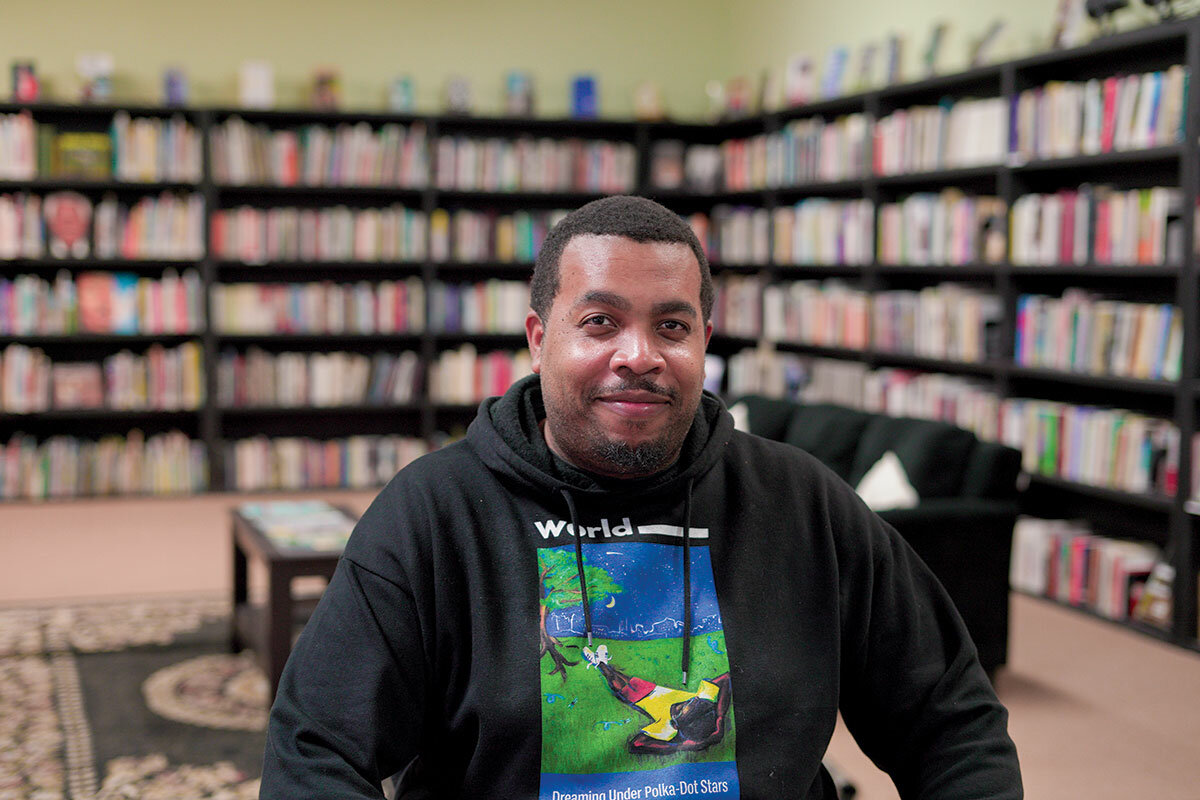
Photo: Dua Anjum.
“Poet Hiram Sims,” the Christian Science Monitor reports,” has given poetry a permanent home in his South Los Angeles neighborhood.

This is another story about how the Covid pandemic gave some people a moment of “not much going on” to pursue a dream.

Dua Anjum writes at the Christian Science Monitor, “From Hiram Sims’ earliest memory, poetry defined his inner world – songs of praise at his church choir; the rap lyrics of The Notorious B.I.G., Puff Daddy, and Mase’s ‘Mo Money Mo Problems’; Edgar Allan Poe’s ‘The Raven’ in seventh grade.

“ ‘Poetry’s like a frequency that I can hear above all other frequencies,’ he says. … ‘When I hear that sound, I pay attention.’

“That sound became his favorite form of expression. As a kid, he wrote about candy, his thoughts about God, and a lot of verses for girls at school. In college, while he progressed to mature writing around the Black experience in America and the struggles of being young and broke, witty comic poems remained key to his repertoire. He chuckles recalling a poem comparing Ugg boots to rhinoceros feet. Now, he has published three collections of poetry and frequently writes love poems for his wife.

“While it was clear early that his calling was poetry, Mr. Sims remembers having an anchorless feeling: Poetry sections of libraries were rare, and the poetry scene was a series of countless borrowed spaces in restaurants, cafes, and bars. It felt like ‘poetry is homeless because it’s constantly couch surfing,’ says Mr. Sims, who became a creative writing and composition professor at colleges in the area, including his alma mater, the University of Southern California.

“In 2020, he gave poetry a permanent home in his South Los Angeles neighborhood, founding the Sims Library of Poetry, for reading, writing, studying, and performing poetry. 

“The space has evolved into an indispensable gathering place for anyone looking for inspiration, say poets who live nearby. It whimsically invites the public in: ‘Poetry Lives Here’ is painted on a low concrete boundary. A mural pays homage to the dragon fire that poets spit in words. A ‘Poet Parking Only’ sign peeks from a patch of grass. 

“The spiritual foundation for this landmark came from what Mr. Sims considers a personal triumph: the Community Literature Initiative (CLI), through which he helps poets produce manuscripts ready for publication and connect to presses.  

“ ‘I was at an open mic and I heard all of these amazing poets. After the show, I said, “I’d like to buy a copy of your book,” and none of them had books,’ says Mr. Sims, who has coached poets in publishing now for 10 years in space provided by USC. … Sims Library origin story goes back to a $29.99 suitcase.

After assigning his CLI students to read one book of poetry a week, he realized: They couldn’t afford them, and libraries had slim poetry offerings. 

“So, he fit 80 books from his collection into the purple-brown suitcase, carted it around in his car, unzipped it, and let students borrow poetry collections by living authors, especially local LA poets.

“ ‘One of my students said, “This is the little Sims library of poetry right here.” And I was like, “Wow.” … After that, I put all my energy into building that microcosm of the library that I had in my head.’

“The idea came to life in his garage at a birthday party-turned-library-launch. … Several poets read their own verse. And people brought boxes full of books: The party started with 300 and ended with 2,000. 

“Mr. Sims’ mother, Gwendolyn, who remembers her young son loved to read greeting card stanzas at the Rite Aid, was one of the first to donate money. The library continued to thrive with family, community, and foundation contributions of books, cash, and grants. And CLI class tuition also helped. 

“It was peak pandemic, and the preschool run by his wife, Charisse, closed. The family decided to take over the building as the next iteration of the library. Mr. Sims’ father, Edward, who is a contractor, and his brother Job helped with shelves. Word of another donation drive reached further and book donations came from across the country. …

“The nonprofit offers more than 9,000 volumes of poetry, says Mr. Sims. ‘So many of these books are people that live in LA, you know, people in this community.’ 

“Open until 8 on Saturday nights, the thrum of activity – from book launches, workshops, and open mics – spills into the neighborhood with singing voices, fingers snapping, and the rhythm of rhyme. …

“Mr. Sims says, ‘I think the library represents value for a part of people they don’t often share. So people often bring poems from their shoeboxes and folders. It’s so personal with people.’ …

“ ‘When the first volunteers came in, they expected to come to a library, but then realized, we have to build one,’ says Karo Ska, library manager and a CLI writer. For them, the best part is that the library has books that can’t be found elsewhere – pre-1950s special collections, self-published collections, periodicals, local literary journals, and handmade chapbooks.

“ ‘The idea of giving back to the community is a phrase that a lot of people use but isn’t always manifested,’  says Lynne Thompson, 2021 Los Angeles poet laureate. ‘[Hiram] is as interested in the work of others and facilitating not only the writing of it but the publishing of it as he is in his own work.’ …

“Poet bridgette bianca, who grew up in the neighborhood without a public library nearby, says: ‘We are in an area that’s very much Black, very much brown, very much working class. And that somebody built a library here is just fantastic.’ 

“Now, as a community college professor, she uses the library as a resource, encouraging students to explore the poetry collection and attend events for extra credit.”

More at the Monitor, here. No firewall, but subscriptions are encouraged.
Read Full Post »

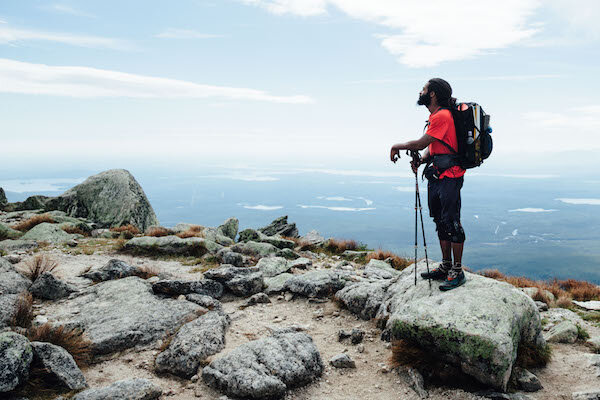
Photo: AkunaHikes.
“I learned that I was capable of living, I was capable of leading,” said the 41-year-old Army veteran who had struggled with post-traumatic stress disorder after Iraq.

I know that the Sound of Music is a little corny, but there is wisdom in the line “I go to the hills when my heart is lonely,” which Maria (soon to be Maria von Trapp) sings. Nature can be healing.

Andrea Sachs writes at the Washington Post about an Iraq war veteran and how the mountains healed him.

“Will Robinson was about 100 miles into his hike on the Pacific Crest Trail when the dark clouds started to lift. Not the ones high in the California sky, but the ones clustered in his head.

“ ‘I learned that I was capable of living, I was capable of leading. I was capable of inspiring and motivating people. That was something I had completely lost for a decade-plus,’ said the 41-year-old Army veteran who struggled with depression, anxiety and post-traumatic stress disorder after his medical discharge in 2003. …

“Since that first long-distance hike in 2016, his mileage has multiplied to more than 11,000 miles and counting. In 2019, he became the first Black American man to earn the Triple Crown of thru-hiking by completing the trifecta of legacy trails: the 2,650-mile PCT from California to Washington state, the 2,194-mile Appalachian Trail from Georgia to Maine and the 3,100-mile Continental Divide Trail from New Mexico to Montana. Two years later, ESPN declared Robinson ‘the trailblazing superstar of thru-hiking.’ He also received the 2022 George Mallory Award, which honors exceptional outdoor explorers. …

“Before the PCT, Robinson had never seriously hiked, though the military had prepared him for similarly tough challenges. ‘The closest thing I did to hiking was drill marching,’ said Robinson, who grew up on bases with his Army father. ‘It’s a lot different with a 100-pound pack and an M16, but it gave me a basis for hiking.’ In the armed forces, he powered through his pain, a practice he had to unlearn as a trekker. …

“After six months in Iraq and a stop in Germany for medical treatment, he returned to Louisiana, where he often felt too broken to leave the house, much less pursue outdoor activities. He underwent multiple surgeries and tried various therapy treatments and medications, to no avail. ‘After Iraq, I was disabled at 23,’ he said. A chance ‘encounter’ with celebrity long-haul hiker and Wild author Cheryl Strayed provided the jolt he needed to recharge his life.

“On that fateful day in March 2016, Robinson was in his room, ‘like always,’ when he glanced at the TV and saw Wild on the small screen. In the film version of Strayed’s best-selling memoir, he watched Reese Witherspoon lug her pack by a PCT trail marker, a scene that stirred up a memory from Iraq. During his downtime, Robinson would often pore over a PCT guidebook that someone had sent to the soldiers in a care package. ‘One day I’d love to do this,’ he said, reminiscing about that period in his life when he envisioned a future filled with adventure.

Without waiting for the closing credits, he jumped onto his computer and acquired a free long-distance permit, one of 5,657 issued that year.

“On April 2, he arrived in Southern California and embarked on a journey of personal discovery and recovery that resembled Strayed’s transformative quest two decades earlier. …

“In addition to the physical benefits of hiking in nature, medical experts extol its psychological virtuesStanford University-led research from 2015 determined that walking at least 90 minutes in a non-urbanized setting can help alleviate depression, lower stress and anxiety, and reduce rumination, the infinite loop of negative thoughts. A 2019 study called ‘Nature and mental health: An ecosystem service perspective’ also explored the wide-ranging rewards, such as a happier state of mind, more positive social interactions, a clearer sense of purpose and a sturdier grip on life’s demands. …

“Robinson did not initially set out to complete the entire PCT, which runs from the Mexican border to the Canadian border. His primary goal, he said, ‘was to try to see if I could find me again, regardless of how many miles it would take.’ With only a few weeks to prepare, he trained around Slidell, about 30 miles northeast of New Orleans. …

“Early in the hike, he found his trail family and earned his trail name, ‘Akuna,’ a riff on a Swahili phrase (and The Lion King refrain) that translates to ‘no worries.’ The nicknames are bestowed by other long-distance hikers or are given to oneself. They are often fanciful, silly or philosophical.

“About five miles in, he was resting on a rock, feeling sluggish, when a woman named ‘Cookie’ appeared at his side. She determined that he needed food and proceeded to stuff her namesake snack into his mouth. The pair forged a bond, along with ‘2Pie,’ a teacher from Ohio, and ‘Nothing Yet,’ a veteran who had tackled the AT [Arizona Trail] the previous year to quell his PTSD. The group hiked together for long stretches, a major breakthrough for Robinson, who for years had avoided social situations because of his fraught mental state.

“ ‘Being around people triggered panic and anxiety attacks, and I didn’t want any part of it. I just shut down,’ he said. ‘But on the trail, I ran into so many great individuals who were there for me. All they wanted was to be part of my adventure and help me accomplish my goal.’ …

“He said, ‘For me, every hike is like a therapy session in progress. I’m going through things in my head, working out problems. When I find a solution, I can zone out and be in peace.’ “

More at the Post, here, and at AkunaHikes, here.

Read Full Post »

Photo: Francisco Kjolseth/Salt Lake Tribune.
Dropping lake levels on the Great Salt Lake, along the north side of Antelope Island, continue to expose more reef-like structures called microbialites on Wednesday, Jan. 4, but the lake benefited from an epic snowfall this past winter.

Good news/bad news on climate change today. Utah’s Great Salt Lake, in danger of disappearing entirely, got recharged after heavy snow in the mountains this past winter. So what does its future look like now?

As Dan Stillman reported at the Washington Post in April, “Just three months ago, scientists issued a report with a dire warning: Utah’s Great Salt Lake, after decades of drying that had only accelerated in recent years, was on track to disappear in five years. Now a record snowpack, fueled by more than 800 inches of snow during the season in some locations, offers a glimmer of hope for the Western Hemisphere’s largest saltwater lake and an important economic driver for the state.

“The Great Salt Lake reached its record low in November when it dipped to 4,188.6 feet above sea level, having lost more than 70 percent of its water since 1850, according to the report published in January by researchers at Brigham Young University. [However] the lake had risen three feet in a little more than five months, primarily because of snow and rain dumped directly into the lake by a season-long series of water-loaded storms. …

“ ‘While we celebrate our progress, we must continue to prioritize water conservation efforts and make sustainable water management decisions for the future of this vital ecosystem and for water users throughout the basin,’ said Candice Hasenyager, director of the Utah Division of Water Resources, in an email.

“This season’s record snowpack promises to push water levels even higher in the coming weeks as warmer temperatures melt the snow and runoff enters the lake. The statewide average snowpack, which is measured by calculating the amount of water contained in the snow, reached 30 inches on Thursday, beating the previous record of 28.8 inches in 1952.

“ ‘This year’s snowpack is nothing short of miraculous. After so many years of drought, this definitely feels like an answer to prayers,’ Brigham Young University ecologist Ben Abbott said in an email. Abbott was the lead author for the January report, which warned of ‘widespread air and water pollution, numerous Endangered Species Act listings, and declines in agriculture, industry, and overall quality of life’ if the lake were to vanish.

“Despite its recent rise, the lake is still six feet below what is considered ‘the minimum acceptable elevation for the lake’s ecological and economic health,’ according to Abbott. … Even if the water level recovers to an ‘acceptable’ level, the longer-term sustainability of the lake will depend on water management decisions and conservation efforts. …

“Historically, management of the Great Salt Lake watershed has prioritized human water usage over the health of the lake, with most of the river and stream water flowing toward the lake diverted for home, business and agricultural use. A February assessment by a team of Utah researchers and state officials found that 67 to 73 percent of the decline in water levels is due to natural and human water use.

“Water levels have been further diminished in recent years by an intense drought, made more likely by climate change, which has only finally started to ease with this winter’s record snowfall. In March 2021, the federal drought monitor showed most of the state in extreme or exceptional drought, the two driest out of five drought categories. In the latest report, [extreme] and exceptional drought have disappeared, with most of the state classified under the two least severe drought categories.

“Reduced inflow of fresh water into the lake results in high salinity levels that have far-reaching consequences including the release of toxic dust, poor air quality, the collapse of food webs and loss of brine shrimp that feed fish and shrimp sold worldwide. …

“More controlled water releases, such as the one coordinated by city and county officials in early March, could not only reduce flood risks this spring but also help restore the lake closer to a healthy water level. Yet regardless of how much improvement comes from spring runoff, Abbott stands by the cuts in water consumption he and his co-authors recommended in their report earlier this year.

“ ‘We’ve got to keep our eye on the conservation ball,’ Abbott said. ‘To replenish Great Salt Lake, we need to reduce our consumptive water use by 30 to 50 percent.’ “

More at the Post, here.

Read Full Post »

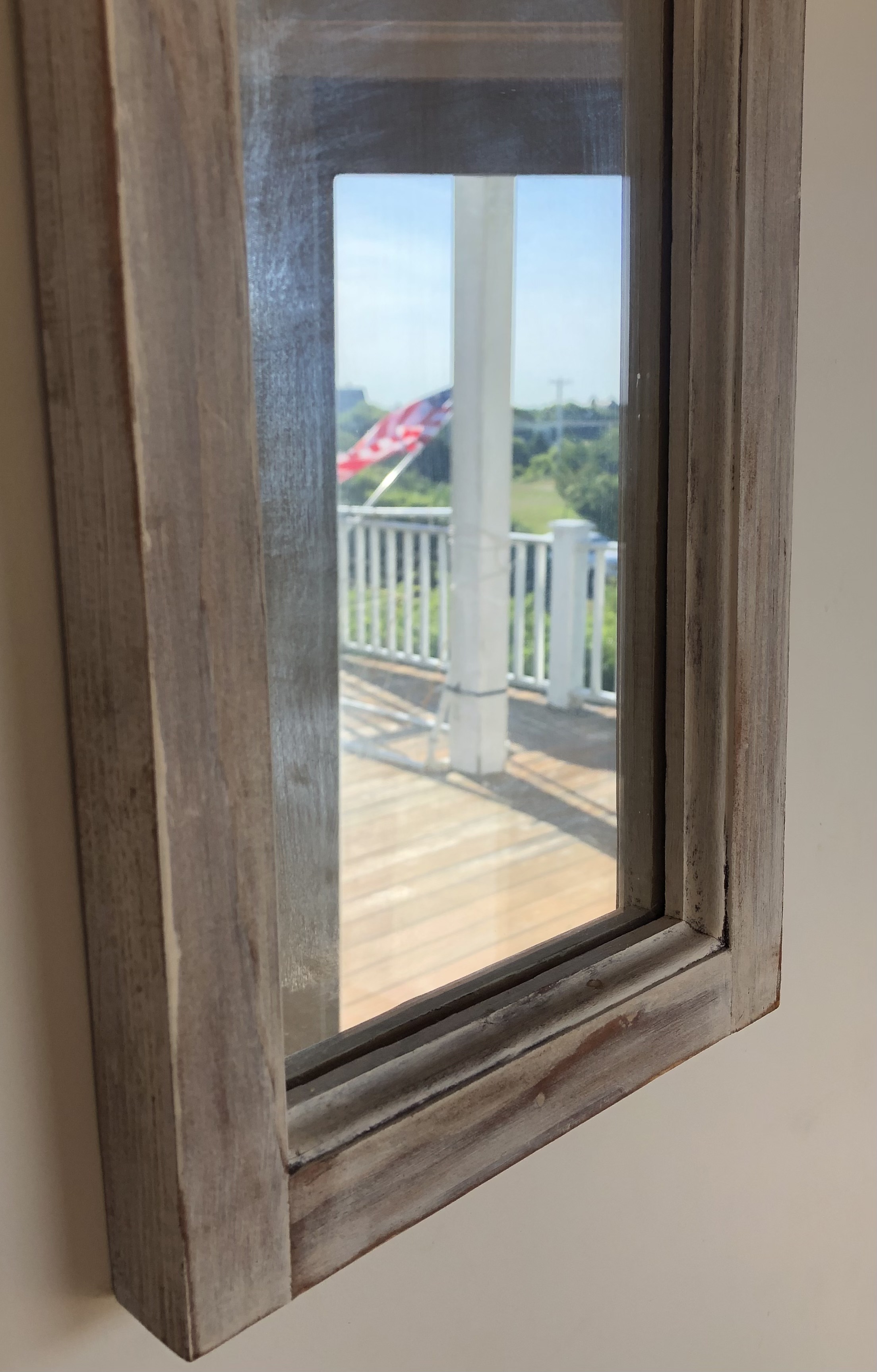
Photo: Suzanne and John’s Mom.
The flag as seen through a window and a mirror.

I may feel ambivalent about the goodness of my country at times, and especially about its wars. But I never feel ambivalent about the people who have died and need to be remembered.

Monday is Memorial Day here, and I thought it would be a good idea to learn more about exactly what we’re memorializing. I know Veterans Day in November specifically honors the sacrifices of veterans, but is Memorial Day different?

Turns out, the details depend on who you talk to. Different groups come at it from different angles. For many years, as I learned from Wikipedia, the commemorations of lives lost during the Civil War were split into those honoring the Confederate soldiers and those honoring the Union dead.

Here are other things I discovered from the entry.

“Memorial Day (originally known as Decoration Day) is a federal holiday in the United States. … It is observed on the last Monday of May. From 1868 to 1970, it was observed on May 30. … Many people visit cemeteries and memorials on Memorial Day to honor and mourn those who died while serving in the U.S. military. Many volunteers place American flags on the graves of military personnel in national cemeteries. …

“The first national observance of Memorial Day occurred on May 30, 1868. Then known as Decoration Day, the holiday was proclaimed by Commander in Chief John A. Logan of the Grand Army of the Republic to honor the Union soldiers who had died in the Civil War. This national observance was preceded by many local ones. …

“Many cities and people have claimed to be the first to observe it. However, in 2022, the National Cemetery Administration, a division of the Department of Veterans Affairs, credited [Southerner] Mary Ann Williams with originating the idea. … The world wars turned it into a day of remembrance for all members of the U.S. military who fought and died in service.  …

“Of documented commemorations occurring after the end of the Civil War and with the same purpose as Logan’s proclamation, the earliest occurred in Charleston, South Carolina.

On May 1, 1865, formerly enslaved Black adults and children held a parade of 10,000 people to honor 257 dead Union soldiers.

“Those soldiers had been buried in a mass grave at the Washington Race Course, having died at the Confederate prison camp located there. After the city fell, recently freed persons unearthed and properly buried the soldiers, placing flowers at their graves. The estimate of 10,000 people comes from contemporaneous reporting,”

Other documented claims of being first, Wikipedia says, come from Virginia, both Jackson and Columbus in Mississippi, and Gettysburg and Boalsburg in Pennsylvania.

Have you ever seen veterans or veterans’ families handing out red paper lapel poppies around this time of year? Here’s the backstory, also from Wikipedia: “In 1915, following the Second Battle of Ypres [in World War I], Lieutenant Colonel John McCrae, a physician with the Canadian Expeditionary Force, wrote the poem, ‘In Flanders Fields.’ Its opening lines refer to the fields of poppies that grew among the soldiers’ graves in Flanders.

“In 1918, inspired by the poem, YWCA worker Moina Michael attended a YWCA Overseas War Secretaries’ conference wearing a silk poppy pinned to her coat and distributed over two dozen more to others present. In 1920, the National American Legion adopted it as its official symbol of remembrance.”

As my neighbors headed off to the annual commemoration at the local Veterans of Foreign Wars, and I just went for my daily walk, I thought about one line from the Wikipedia entry that particularly struck me as a person guilty of neglecting the “memorial” part of Memorial Day: “In 1913, one Indiana veteran complained that younger people born since the war had a ‘tendency … to forget the purpose of Memorial Day and make it a day for games, races, and revelry, instead of a day of memory and tears.’ “

“In Flanders Fields, the poppies blow
“Between the crosses, row on row. …

“We are the dead. Short days ago
“We lived, felt dawn, saw sunset glow,
“Loved and were loved, and now we lie,
 “In Flanders fields.”

Read Full Post »

Photo: Bluetti Power.
Using solar power for a fish farm is better for the environment than the usual diesel.

Who wouldn’t be encouraged to see all the clever ways innovators are working to reduce the harm that human activity can cause to the planet?

If it’s happening anywhere near Rhode Island, the nonprofit ecoRI News will find it and tell you about it. For example, Rowan Sharp covered the advent of a solar-powered, self-cleaning fish farm in Rochester, Massachusetts, back in 2012.

“Dale Leavitt told me to meet him at the 7-Eleven in this small town of about 5,000. I wouldn’t be able to find the fish farm on my own, he said. ‘It’s way out in the woods — it would be impossible.’

“He pulls up in a pickup — a cheerful, mustached man with slightly wild silvering hair. He wears a weather-beaten baseball cap and T-shirt, both advertising the marine biology program at Roger Williams University, where he teaches part time. He has blurry tattoos on his forearms, including one of a cartoonish, polka-dotted octopus. …

“I follow him down Route 28, until he veers into forest. Soon we’re rolling slowly down an unpaved track, just rutted wheel marks with grass tufting up between them. … Leavitt parks on a little scrap of solid ground amid the bogs, where a murky pond and a bank of solar panels are the only clues to the one-of-a-kind innovation hidden here. But this unassuming exterior packs a punch. Leavitt, cranberry farmer Brad Morse, Roger Williams University engineering professor Charles Thomas and a handful of undergraduate students from Roger Williams University have turned hard-won Environmental Protection Agency (EPA) grant money into a solar-powered, self-cleaning fish farm that may prove two to three times more efficient than conventional fish farms, at scant environmental cost. …

“Leavitt — his students call him Dale — is in his element here. He produces a plastic container of what looks like dog food pellets — Purina Fish Chow, actually — and happily leads me over to an unnervingly rickety plank onto a metal walkway over the pond. Weathered boards delineate the 15 6-by-8-foot mesh-sided fish pens.

The 15 6-by-8-foot fish pens are stocked with juvenile largemouth bass. … Soon the surface roils with activity: 6-inch juvenile largemouth bass, voracious eaters, which, by fall, will grow into 14-inch, one-and-a-quarter-pounders. Each pen is a module that can be lifted out with a backhoe. The mature fish will be sold at Boston’s live seafood markets or over-wintered for pond stocking this coming spring.

“Each pen can comfortably hold 100 bass, though some aren’t yet filled. Soon three of Leavitt’s assistants drive up with more fish in plastic tanks. Leavitt bought the bass as 2-inch hatchlings from a Delaware hatchery last winter; he and his students raised them to their current size in a Roger Williams University laboratory. …

“[Cranberry] farmer Morse is out today, but this enterprise owes its beginnings to a struggling late-1990s cranberry market that left Morse searching for other options. Morse is a fifth-generation grower who has farmed the 65-acre bog surrounding us since 1971.

“By 1999, cranberry prices were so depressed that many farmers feared selling their land for development was the only viable option. But Morse had another idea.

“ ‘I was looking for ways to diversify,’ he says in a telephone interview. He connected with the Massachusetts Department of Agriculture, where Leavitt then worked as an aquaculture extension agent. Leavitt found funding to help Morse launch a fish farm, and the two became good friends as they worked together on an elegant partitioned aquaculture system, kept clean by phytoplankton.

“It was a two-pond design: one pond for the fish, with water circulating by paddle wheel through a wider, shallower pond — a converted cranberry bog — where naturally occurring algae absorbed fish waste from the water. An aerator gave the needed oxygen boost.

“The farm was ‘a learning curve,’ Morse says, but it supplemented his income until the cranberry market recovered. The project’s Achilles’ heel, however, was its fuel consumption. The bog is too isolated for an electricity connection; a diesel generator powered the paddle wheel and aeration.

“In 1999, diesel had cost 76 cents a gallon. By 2006, it was well over $3. The fish were no longer profitable; Morse converted the filtration pond back to cranberries. Leavitt turned his attention to other things.

“But Leavitt’s passion has never strayed too far. He joined the Roger Williams University biology department and continued doing aquaculture outreach, advising new oyster farmers and even designing a solar-powered shellfish growing system. His lab also grows oysters for restoration of Narragansett Bay.

“In 2008, Leavitt called Morse to say, ‘Brad, I’m ready to start fish farming again.’

“This time, Leavitt had a different plan. He applied for an EPA grant to work with undergraduates in developing technology for sustainable living. Morse was more than willing to get involved. …

“Morse, Leavitt, and Thomas worked with a team of senior engineering students to “completely revamp the concept” of the fish farm. They modeled the new system on the flow dynamics of an automobile turbo-charger — a lucky stroke of inspiration from a student. They designed a single-pond system, with waist-deep fish pens on one side and a shallow, 18-inch algae filtration area on the other; algae need plenty of sunlight to photosynthesize fish waste, so depth matters. A single pump would aerate and circulate the water, and the whole pond would only be a quarter acre.

“Eighteen 200-watt, 24-volt solar panels power the fish farm’s water pump.Goodbye diesel. They were going solar.”

More at ecoRI News, here. No firewall.

Read Full Post »

Photo: The Smart Local.
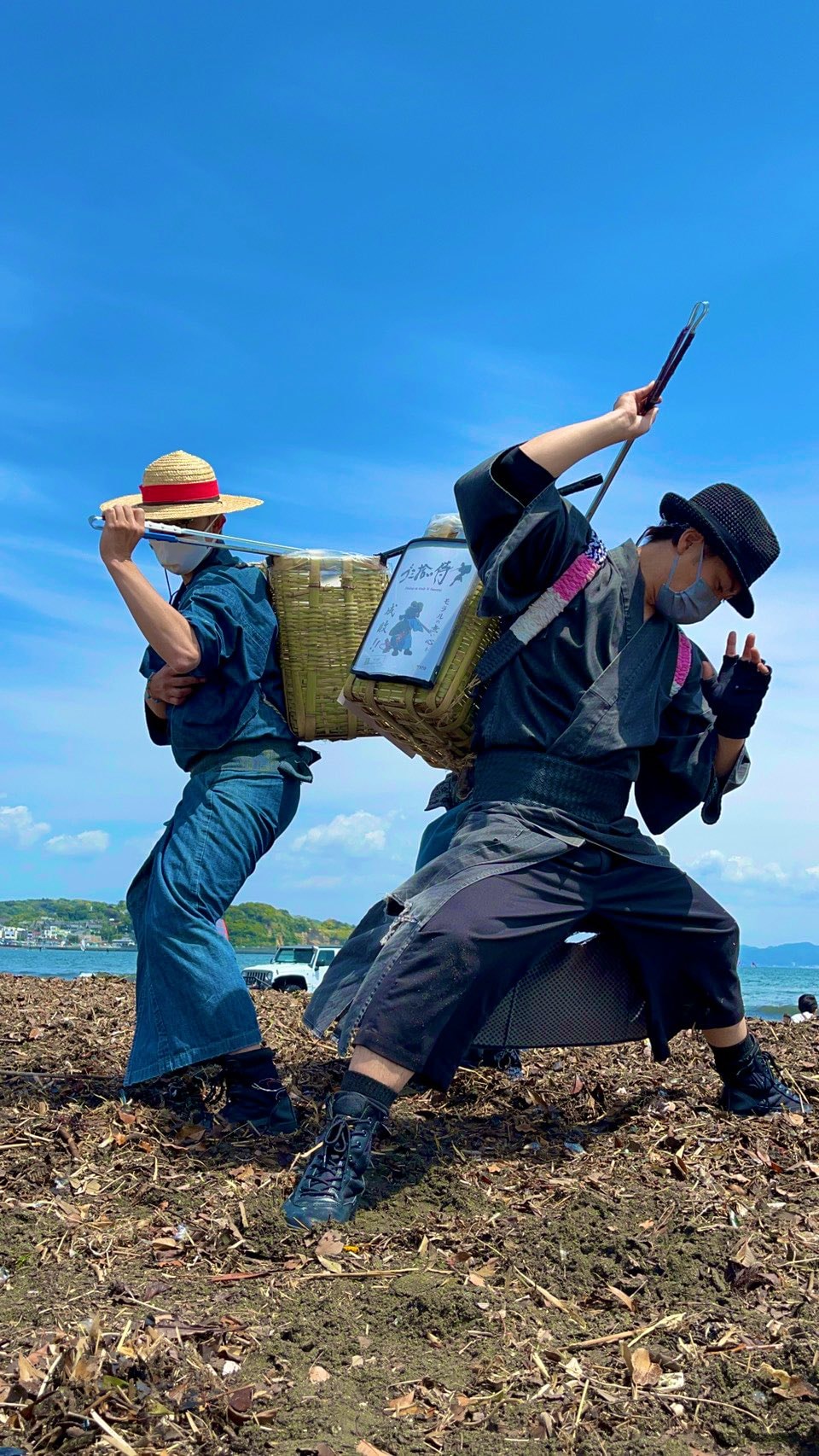
Members of the Gomi Hiroi Samurai, or the trash-collecting samurai, wear full-length samurai outfits and wield waste tongs that look like swords.

Proving that any kind of work can be turned into a game, Rebecca Rosman and Julia Kim report at Public Radio International’s the World, about some waste pickers in Japan.

“Passersby do a double take when they see Kaz Kobayashi and Ikki Goto. The two men glide through Tokyo’s bustling Ikebukuro district in full-length samurai outfits, while wielding objects that look like swords. They are members of the Gomi Hiroi Samurai or the trash-collecting samurai. …

“On closer inspection, their samurai swords — or katanas — are actually just very long tongs, used to pick up litter. Kobayashi said the tongs are important for novelty value.

“ ‘We’re doing this as entertainment … but it can be tiring sometimes. It’s tough, Man.’

“The Gomi Hiroi Samurai do this three times a week. There’s four of them, and they’re professional actors. In their spare time, they volunteer to keep the streets of Tokyo clean. Goto formed the group in 2009. Since then, they have become a viral sensation on TikTok, with over 700,000 followers and counting.

“Here in Ikebukuro, they target back alleys and parking lots, which are rife with litter. Kobayashi and Goto, working in sync, slice and spin their tongs through the air, meticulously seizing cigarette butts one by one before tossing them into the wastebaskets strapped to their backs. …

“An hour later, Kobayashi and Goto took their wastebaskets to a recycling base. There, they separated out every piece of rubbish they’ve collected. They said that they hope to recruit more Gomi Hiroi samurai  in Japan — and around the world — to spread their message: ‘We punish immoral hearts.’

“It means that trash in and of itself isn’t bad. Instead, it’s people and the actions that stem from their negative mindsets. And a growing sense of negativity is something that Kobayashi said worries him.

“ ‘This is a problem in Japan,’ he said. ‘People don’t go outside.’

“Last month, a government survey showed that 1.5 million people are living as social recluses in Japan. With loneliness and depression on the rise, Kobayashi said he hopes that their fun, zany take on something as mundane as trash-collecting helps people reengage with the outside world.

“ ‘Samurai is a warrior,’ he said. ‘Our philosophy is to help people.’

“For these eco-warriors, ‘clean space, clear mind’ is more than just a saying — it’s the way of the Gomi Hiroi samurai.”

More at the World, here. I was amazed that the “samurai” are doing this hard work as volunteers. PRI also has stories on trash pickers in countries like India, Ghana, and Colombia, where they earn a meager amount of pay and live very difficult lives.

I have to say, I think that public litter is best addressed by everybody pitching in. Clean communities are often the result of peer pressure against creating litter in the first place and individuals who are proud enough of their community to pick up litter where they see it.

PS. In case you don’t always read the Comments, do look at Hannah’s, which included a tip about Ya Fave Trashman. Like the trash samurai, he adds entertainment to an undervalued job. His online talks gained him fame during the pandemic, when trash was piling up in Philadelphia. Read about him here.

Read Full Post »

Photo: Suzanne and John’s Mom.
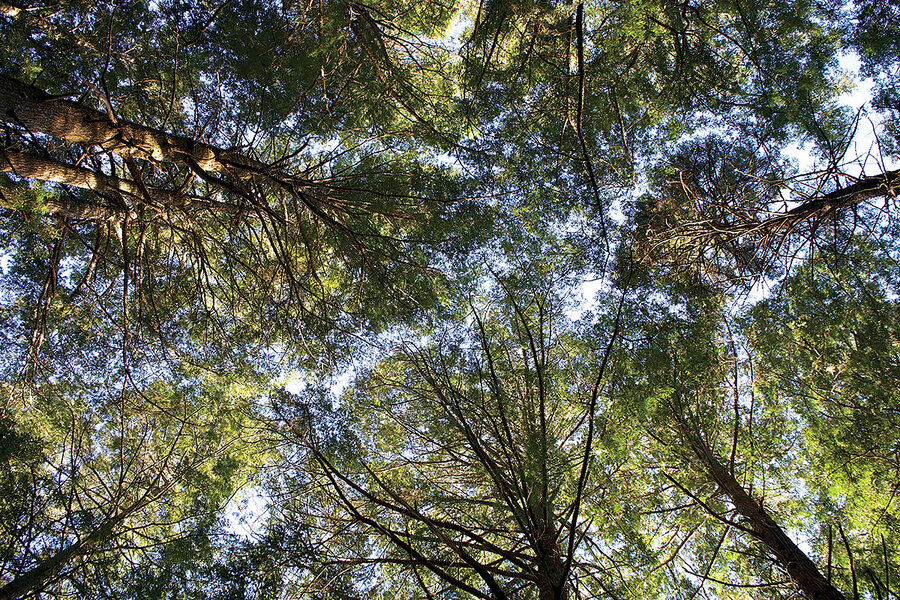
A tree canopy benefits any community.

After one of my posts on the importance of urban trees, Hannah sent me a 2021 report on what Philadelphia had started doing.

Katherine Rapin wrote at the Philadelphia Citizen, “Imagine, for a moment, it’s 2025 and you have a bird’s eye view of Philadelphia. As you scan the stadiums up to William Penn’s hat and beyond, you see a whole lot of verdant green amid the concrete as much as 40 of the city’s 142 square miles.

“These trees are purifying our air; storing tons of carbon dioxide; and reducing residential energy costs. Their masses of living roots absorb and hold water, reducing flooding, and their leaf canopy lessens the impact of rain drops on the ground, decreasing erosion. Their shade and transpiration magic is reducing temperatures by as much as 20 degrees. And they’re raising property values: Houses on streets with a lot of trees see a 10 percent boost in their sales price.

“The City’s goal is to increase our tree canopy to 30 percent by 2025 as part of the Greenworks program. …

“ ‘The big problem is that, for the last several decades at least, we as a city have not been planting enough trees to make up for the trees that naturally die or are lost to development,’ says Tim Ifill, Director of Trees at the Pennsylvania Horticultural Society [PHS].

“Granted, the decline would be worse if not for the efforts of programs like Tree Philly, launched by the City in 2011 along with Greenworks to give free sidewalk and yard trees to building owners who would care for them, which has given away more than 20,000 trees. … And PHS, which has been fighting to catch up with canopy loss through their Tree Tenders program — training more than 5,000 volunteers who have collectively planted over 25,000 trees in their neighborhoods.

“ ‘Every neighborhood is different,’ says Ifill. ‘Both from a canopy perspective but also for the types of people who get involved and how they decide to set up their tree tenders group.’ In East Passyunk tenders worked with PHS to establish an urban arboretum, mapping about 40 different tree species … in the neighborhood. In Hunting Park, Esperanza partnered with PHS to host the first bilingual tree tender training — their group has been among the most dedicated tenders since, says Ifill.

“If you’re tree tender curious, join the fall tree planting bonanza this week; from November 17th-21st, PHS Tree Tender groups and community orgs and volunteers will plant more than 1,350 trees (60 different species!) across the city. No prior tree-planting experience is required; volunteers will be led by at least one official Tree Tender who knows the ins and outs of this process well. …

“[Here are] some of Philly’s least green neighborhoods, according to conservation nonprofit American Forests’ recently released Tree Equity Score map. The Equity Score measures the gap between targeted tree canopy in a given block group — considering population density and climate as well as income level, employment rate, race, age distribution, health outcomes and heat island impact — and existing coverage. …

“To get all block groups to a score of 75 or higher, we’d need to plant 198,923 trees here in Philly. Compare that to Washington DC, which only needs 28,121 more trees to achieve the same goal. And the city isn’t far from their targeted 40 percent canopy coverage by 2032.

“Planting nearly 200,000 trees here in Philly would save an estimated 106,165 cubic meters of runoff; remove 14.6 tons of particulate matter pollution; and sequester 2,707.4 tons of carbon every year. And they [studies show they] reduce violence and increase mental health. …

“ ‘Even in a built environment like Philadelphia, we’re all part of nature and we have that connection with trees, with plants,’ says Ifill.” More at the Citizen, here.

I was unable to find out how the trees being planted in the 2021 article are doing now, but there were many sites covering the ongoing planting and protection of trees in Philadelphia.

The USDA Forest Service, here, described the work of Michelle Kondo, a Northern Research Station scientist, who “studies the many benefits trees provide and the ways cities are investing in programs to expand tree cover.”

The City of Philadelphia wrote that the Department of Commerce and Philadelphia Parks and Recreation were “collaborating on a new proactive model for community-based maintenance of street trees. The TCB Cleaning Ambassadors scope of work would be expanded to encompass tree care while receiving training and being paid for the additional hours of work involved. For the past two years, the William Penn Foundation also provides funding support to the Overbrook Environmental Education Center (OEEC) expanding their Philly Green Ambassador (PGA) pilot program. The program enhances the careers of PHL TCB Cleaning Ambassadors by teaching tangible skills related to environmental stewardship.” 

And PHS has a lot more as it leads in spreading the word that “the Greater Philadelphia region still needs more trees. While a ‘good’ tree canopy coverage (the area of land shaded by trees) is considered to be 30% of land area, the city of Philadelphia only has 20% coverage and as little as 2.5% in some neighborhoods.” Apparently cities like Washington are much farther along in reaching their canopy goals.

Find your city, here. on a 2023 list of urban areas with the best tree canopy. Minneapolis is at the top.

Read Full Post »

Photo: World Farmers.

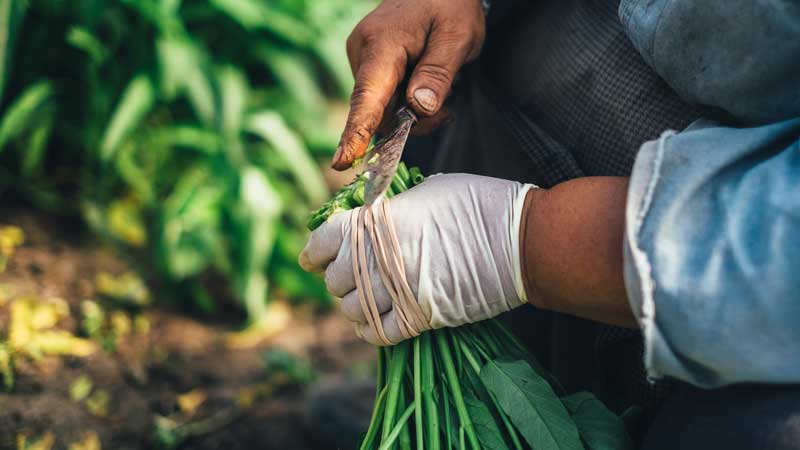
Immigrants to the US, if they were farmers in their home countries or just want to grow food they can’t find here, may end up working in agriculture. And as this University of Rhode Island professor’s research shows, many are joining the new wave of urban growers.

Frank Carini reports at ecoRI News on John Taylor, associate professor of agroecology at URI, who recently received a $973,479 award from the National Institute of Food and Agriculture for his research.

I had to look up that new-to-me field of study. The Soil Association says that “agroecology is sustainable farming that works with nature. Ecology is the study of relationships between plants, animals, people, and their environment – and the balance between these relationships. Agroecology is the application of ecological concepts and principals in farming. [It] promotes farming practices that mitigate climate change … work with wildlife … put farmers and communities in the driving seat.” Read all about it here.

Carini writes, “The $973,479 award from the National Institute of Food and Agriculture was one of 12 to receive funding through the institute’s Urban, Indoor, and Other Emerging Agricultural Production Research, Education and Extension Initiative. The agency’s $9.4 million in grants are part of a broad U.S. Department of Agriculture investment in urban agriculture, funding research that addresses key problems in urban, indoor, and emerging agricultural systems.

“The project will bring together Taylor’s research with immigrant gardeners and farmers in Rhode Island, Julie Keller’s agriculture-focused work with diverse communities, Melva Treviño Peña’s work with immigrant fishers, and Patrick Baur’s work on food safety and urban agriculture. …

“Although always a part of city life, urban agriculture has recently attracted increased attention in the United States, as a strategy for stimulating economic development, increasing food security and access, and combating obesity and diabetes.

“Food justice is about addressing access to healthy and affordable food for low-wealth and marginalized communities. It seeks to ensure the benefits and risks of where, what, and how food is grown, accessed, distributed, and transported are shared equally.

“Many neighborhoods in metropolitan areas, including in Rhode Island’s urban core, have little to no access to fresh food or full-service grocery stores — a situation often referred to as living in a ‘food desert.’ Other marginalized communities are surrounded by ‘food swamps,’ areas in which a large amount of processed foods, such as fast food and convenience-store fare, is available with limited healthy options.

“One solution to this environmental justice problem is to encourage the growing of local food. Developing effective policies and programs demands as a first step the accurate mapping of existing urban agriculture sites, according to Taylor. He hopes to provide that template.

“Taylor and colleagues at URI, the University of Maryland, and the University of the District of Columbia will soon begin mapping the alternative food provisioning networks of immigrant communities and communities of color in three East Coast cities — Providence, Baltimore, and Washington, D.C. — to better understand these networks.

“He hopes this transdisciplinary research will reap new information about alternative food provisioning networks in the Northeast, evaluating their impact on food system outcomes, and identifying opportunities for policy support. …

“At URI, Taylor’s ‘home garden’ is a quarter-acre plot at the Gardiner Crops Research Center [at] the bottom of the Kingston Campus. His plot, visible from Plains Road, represents in microcosm the immigrant foodways he will be studying for his research during the next few years.

“At URI’s Agrobiodiversity Learning Garden and Food Forest, he grows crops that are integral to the food traditions of Rhode Island’s diverse communities: South American sweet potatoes, Mexican tomatillos, Haitian tomatoes, Mediterranean herbs, Asian bok choy, and produce from an African diaspora garden. Taylor tends the garden with students in URI’s Plant Sciences and Sustainable Agriculture and Food Systems programs and URI master gardeners, demonstrating how sustainable farming reinforces community-building.

“With the learning garden, he follows a lead set by generations of immigrants who moved to Providence and cities like it, bringing their growing practices, and sometimes seeds, with them. …

“A descendant of five generations of Pennsylvania farmers, he grew up on a 100-acre integrated crop-livestock farm near Pittsburgh. Taylor began gardening at the age of 6 and started a market garden while in high school. He left the farm to attend the University of Chicago … then managed federal education studies for 10 years before returning to school to study horticulture and practice landscape architecture.”

More at ecoRI News, here.

Read Full Post »

Photo: Kinfolk.
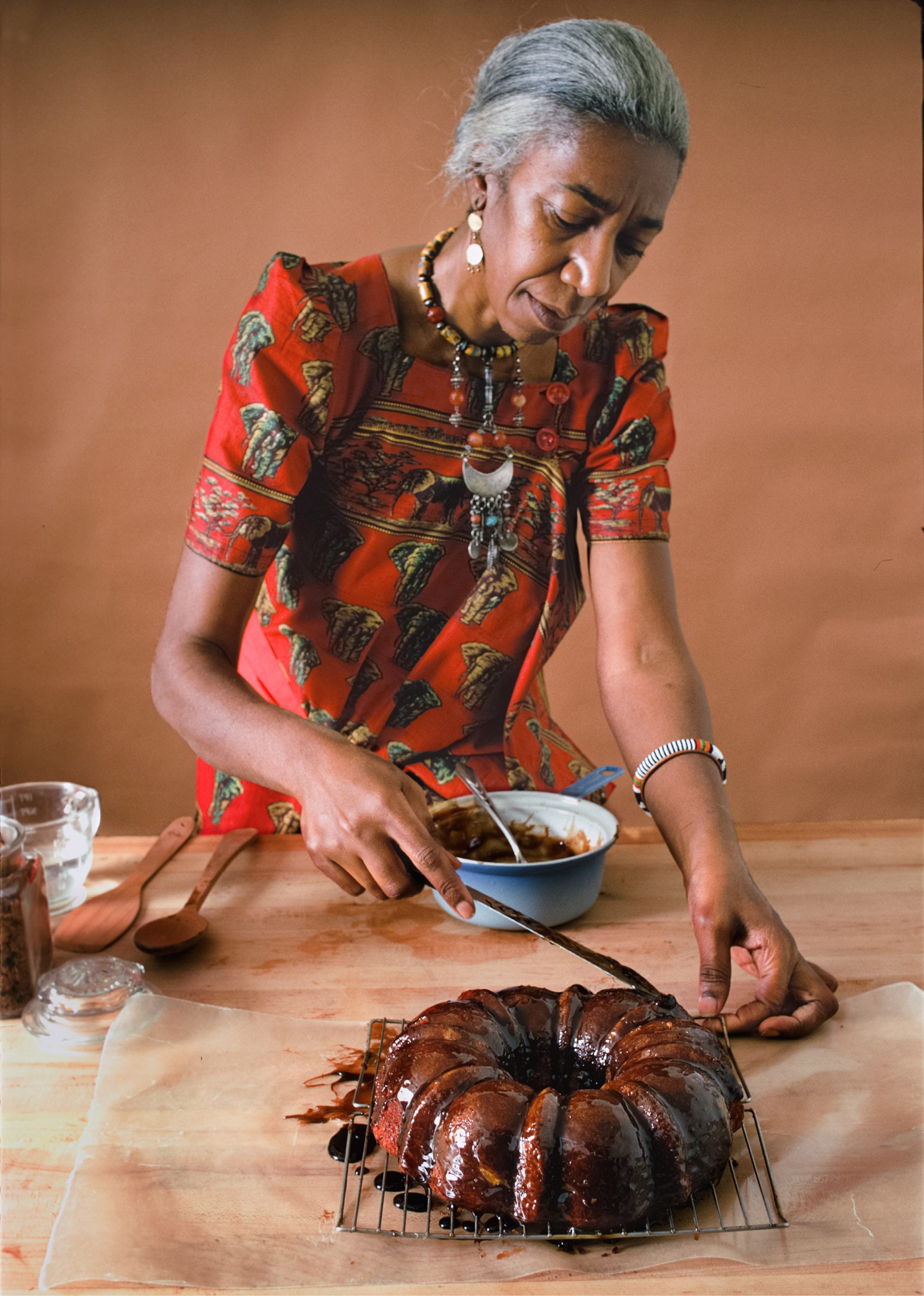
Edna Lewis, sometimes called the “Grande Dame of Southern cooking.”

A long time ago, I made an Edna Lewis cake recipe that had been featured in the New York Times. Apart from its being delicious, the thing I remember most were curious little tips on cooking that she added. For example, she said to stir the batter only in one direction. To me that meant that I shouldn’t beat up on a cake while beating it.

Lewis died in 2006, a monumental figure in the world of cooking. At the Washington Post, Aaron Hutcherson wrote about taking a tour of Edna Lewis country.

“It was late afternoon when I checked into my hotel perched on the top of a hill in Virginia’s Piedmont region. The front-desk attendant mentioned the lovely view from my room as he handed me the keys. … With time to kill before my dinner reservation, I decided to rest. As I lay on the bed gazing out the window at the sun setting over the Blue Ridge Mountains, I was struck by the beauty of this majestic setting — and I began to understand why Edna Lewis loved her birthplace so much.

“ ‘I grew up in Freetown, Virginia, a community of farming people,’ Lewis wrote in her 1976 memoir/cookbook, The Taste of Country Cooking. ‘It wasn’t really a town. The name was adopted because the first residents had all been freed from chattel slavery and they wanted to be known as a town of Free People.’

“Throughout her career, Lewis’s work served as a means of preserving the memory of Freetown and its people, and to share that with the world through cooking. About 10 miles from the town of Orange, there isn’t much of Freetown still standing save for the remnants of a couple of buildings, but through the creation of the Edna Lewis Menu Trail, its legacy in this region lives on.

“Organized by the Orange County Office of Tourism, the menu trail launched on Thanksgiving in 2022 to celebrate the 50th anniversary of The Edna Lewis Cookbook, and it runs through Memorial Day. It includes seven restaurants within 33 miles of one another, whose menus are featuring recipes from Lewis’s cookbooks or dishes inspired by her.

“Often described as the ‘grande dame of Southern cooking,’ Lewis was an accomplished chef and cookbook author who helped increase America’s understanding of the breadth and elegance of Southern cuisine. ‘It’s not all fried chicken and greasy greens,’ she said in a 1990 Washington Post interview. Beyond that, Lewis inspired the now-ubiquitous farm-to-table movement by championing the virtues of growing one’s own food and cooking with local, seasonal ingredients. When she died in 2006, she had been honored by just about every American culinary group, including the Southern Foodways Alliance and the James Beard Foundation, and now her impact is resonating again.

“The menu trail was created to celebrate the place that shaped Lewis’s culinary philosophy and educate visitors and locals alike about what she stood for. ‘She always insisted this is the area where it all started,’ said her son Afeworki Paulos from his home in Georgia, and I was ready to explore this nurturing ground.

” ‘My first stop was ClearWater Fire Grill in Locust Grove, where the whipped sweet potatoes with brandy, brown sugar and freshly grated nutmeg were a lovely match for the simply seasoned pork chops draped with a pan sauce. My server’s bubbly warmth put me at ease after the 90-minute drive from D.C. And with every interaction along the trail, I began to realize I was on the receiving end of the Southern hospitality Lewis embodied.

“ ‘The memories of that community that she grew up in and the care they took of each other and the hope they had for their future left an indelible mark on her,’ Lewis’s niece Nina Williams-Mbengue said over the phone from her home in Colorado.

“Lewis was born in 1916, one of eight children, and she learned to cook from the people in Freetown, who lived an agrarian lifestyle. After her father died, she moved North at age 16, first to Washington and then New York, where she found work as a seamstress. In 1949, she partnered with a friend who knew of her cooking prowess to open Cafe Nicholson, a French-inspired restaurant frequented by artists and celebrities, and served as its head chef. The Edna Lewis Cookbook, her first book, was published in 1972 and explored a variety of cuisines while tying recipes to her focus on seasonality.

“Chef Andrew Eppley was drawn to that tendency when skimming through Lewis’s work to find a dish for his menu at Vintage Restaurant at The Inn at Willow Grove in Orange — the site of that evening’s dinner.

“He settled on a rabbit dish from Lewis’s second book, The Taste of Country Cooking, then put his own creative spin on it. … ‘Some people come down and they don’t know who Edna Lewis is,’ Eppley said. ‘It creates a really great talking point and experience for our guests, giving them a little bit of history of culinary arts in the region, and everything she did not just for Southern cooking but cooking in general.’ …

“Eppley said what most stood out about Lewis’s cooking was the love. ‘It wasn’t like, “I’m trying to be the best in the world,” ‘ he said. ‘She was trying to cook food that she loves for the people and the community she loves.’ …

“Lewis ‘was very driven to let people know the contributions of African Americans to cooking,’ her niece Williams-Mbengue said. …

“Next to the [Bethel Baptist Church in Unionville] under a canopy of trees, there’s a group of picnic tables where I imagine Edna Lewis may have sat when she made her annual pilgrimage for the church’s summer revival.

“ ‘Her and my mother would serve food outside the church for revival,’ said family friend Mary Freeman, whose father farmed with Lewis’s brother. ‘She wasn’t a Southern cook who had all the awards when I was a kid. She was just Miss Edna.’ On top of the delicious pies, cakes and tarts Lewis prepared, Freeman remembers her as ‘a very quiet-spirited lady’ who was ‘very self-assured, very confident.’ ” More at the Post, here. Mouth-watering pictures.

A nice Kinfolk article — with no firewall — delves deeper into Lewis’s biography. Read it here.

Read Full Post »

Photo: John and Suzanne’s Mom.
Shagufa got her master’s at Brandeis University on Sunday. So there, Taliban!

A quick update on Shagufa Habibi of Herat, Afghanistan, a determined young woman I first wrote about here. (You can find related articles by searching on her name at this blog or on the web.)

As everybody knows, the Taliban are now running Afghanistan and are opposed to higher education — or almost any kind of education — for girls and women. Well, too bad! Shagufa spent the last two years studying at Brandeis University, and yesterday she was awarded her master’s degree.

Read Full Post »

Photo: Manufactured Housing Village.
Willow Pines mobile home park in Kaysville, Utah. An empathetic woman makes the manufactured housing parks she manages truly homes.

At a manufactured housing park in Utah, as Cathy Free reports at the Washington Post, one woman is making a huge difference in residents’ sense of security.

“Pat Blake, who manages two mobile home communities in Utah, began to notice some of the children who lived there seemed hungry after parents came to her to inquire about food assistance. Blake was one of seven siblings raised by a single mom. She knew hunger personally.

“She started using some of her own money to pick up extra jars of peanut butter, cans of soup and bread at the grocery store. Then she let her residents know to come to her office and help themselves.

“ ‘It doesn’t matter whether a child lives in a mobile home or in a fancy apartment — they all deserve to be fed,’ she said, explaining that there are 120 families in one community and 45 in another at the mobile home parks in Davis County. …

“With rent increases hitting most mobile home communities in recent years, more families are finding it difficult to afford groceries and housing, she said.

“ ‘I started bringing food in for people, just a little at a time,’ said Blake, who has been managing the two parks since 2020. “And then I realized that I had a huge room behind my office that wasn’t being used, and I could do more.’

“Blake, 79, lives in a mobile home in Apple Acres, one of the communities that she manages. She said she asked a friend to help install some shelves in the large room at the second mobile home park, Willow Pines, so she could turn it into a pantry.

“Then she stepped it up a level. She contacted the Bountiful Food Pantry, which collects donated food and distributes it throughout Davis County, including in Fruit Heights City, where she lives. They started coming twice a month to offer groceries to residents.

“Blake stocked the shelves of her pantry with some of the donated items, and she told her tenants they could come by on Thursdays to pick up any extra staples they needed.

She used her savings to buy a refrigerator to hold meat, cheese, eggs and gallons of milk, she said.

“Almost three years later, she said residents at Apple Acres and Willow Pines now have enough to eat, regardless of their family size or financial circumstances. …

“Linda Wilson lives at Willow Pines and is among those who have felt the pinch of rising food and housing costs. Three years ago, Wilson, 75, took in her daughter and three grandchildren when they were going through a difficult time, she said. They are still living with her in her mobile home. …

“ ‘I’ve lived in several mobile home parks over the years, and I’ve never run across a manager like Pat,’ she said. ‘She helped me with some rental assistance, and she takes the time to get to know every resident here and what their needs are.’

“Before Blake became manager of Willow Pines, Maribel Urquizo said she often struggled to buy groceries for her three children in the week before her husband, who works with granite countertops, received his regular paycheck.

“ ‘It was a little hard sometimes to make ends meet,’ said Urquizo, 29. ‘Now we can go to Pat’s office, and she gives us what we need to get us through. Milk, eggs, snacks for the kids — she has it all.’ …

“Blake said she understands the struggles of many of her tenants because she’s been there. She dropped out of school at 13 to help look after her siblings and bring in extra money from babysitting kids in her neighborhood, she said, noting that she eventually received her high school diploma at age 29. …

“Besides keeping food in her residents’ refrigerators, Blake said she makes sure they have Christmas presents every year and that children have backpacks and school supplies.

“The families she helps often thank her by bringing her casseroles, cookies and jars of salsa made with the free groceries they pick up every other week.

“She said she can go to sleep content at night knowing that nobody at Apple Acres and Willow Pines is hungry.

“ ‘Needing groceries is nothing to be ashamed of,’ she said. ‘We could all use a boost sometimes. These families need someone, and I’m happy that I can be that person to help. More at the Post, here.

I’d be remiss if I didn’t also mention that protection from rising rents at mobile parks is often best tackled by joining with neighbors to become a Resident Owned Community. Read about how to do that here.

Read Full Post »

Photo: Kate Laster.
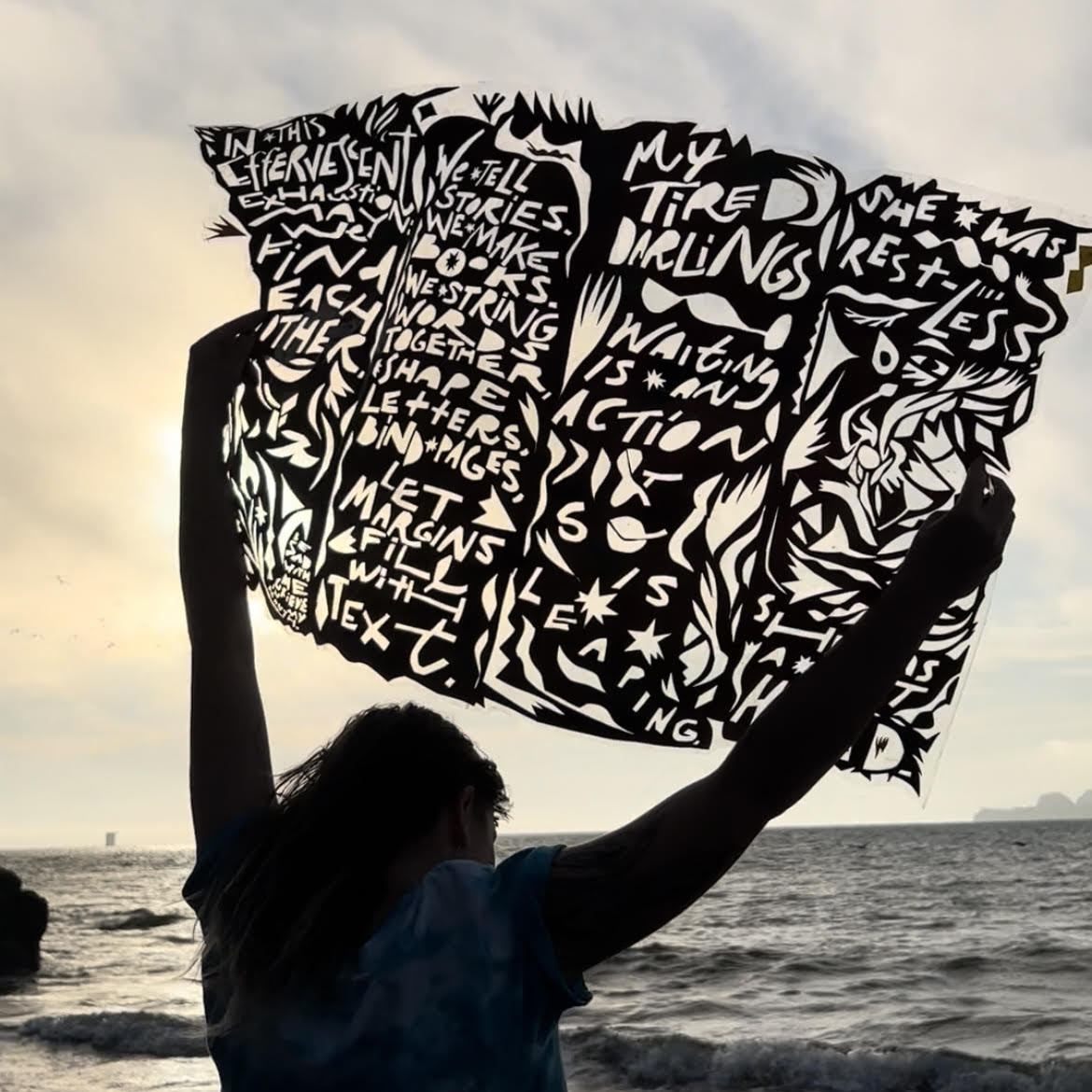
Kate Laster’s paper cutout “Waiting Game” (2022).

I’ve been reading almost more than I can bear lately about the Holocaust, so when I saw this unusual use of a Jewish paper-cutting tradition at Hyperallergic, it really spoke to me.

Isabella Segalovich wrote, “April 5 marked the first night of Passover. Upholding Jewish tradition, we reclined in our chairs, sang boisterously, and drank ample wine. We reveled in the joy and safety many of us are thankful to have in the present while holding close the memory of those that came before us. Alaskan-born Jewish artist Kate Laster carves those memories into delicate paper cuts. Then, she dunks that paper in the ocean.

“ ‘My art is about the people we carry with us,’ she told Hyperallergic in an interview.

“Laster’s first memories are of snow floating on water. She grew up moving from place to place in rural Alaska, from temperate rainforest of Juneau to the icy treeless wilderness in Utqiaġvik. In a world ‘dense with imagination,’ as she described it, she learned to whittle scraps of wood into small figures while hearing stories and poetry by a warm fireside. She said she first saw language being used as a ‘visual medium in the sense of people putting time aside and really either being in nature or being in warm space talking.’

“Today, she uses the visual force behind letters themselves, cutting paper into vibrant collages with fragments of poems — some collected, some written by her. The paper is thoroughly weathered as stencils, multiplying its message as it’s doused in spray paint again and again. Then, she painstakingly laminates the paper by hand, using ‘really scruffy bits of tape.’ The ritual is completed at sundown when Laster dips her works into the Pacific Ocean. As the paper undulates and floats, she understands the waves, part of a living, ‘primordial soup,’ to be reading the text on the pages.

“Laster’s youth in Alaska is proof that the Jewish diaspora spreads far beyond the urban landscape. But for all of us, Jewish practices are deeply tied to the natural world. Festivals begin with the setting sun. … As the great star sets, Laster lifts the text up from the water. And as drips fall off its edges, she uses the hollow paper cut as a viewfinder, so words are filled with the sky. 

“The water that laps at Laster’s paper cuts is of the same body that carried our ancestors as they wandered the world, searching for home and safety. “…

“Laster is one of growing number of anti-Zionist American Jews. For those who do not wish to move to Israel, it’s common to lift up and celebrate the beauty of the diaspora. Following the love of movement, this celebration is also a deep love of the places we find ourselves now. For the Laster, that place is the Bay Area, where the Mexican and Chicano paper-cutting tradition of papel picado is tied to trees lining the Mission, a historically Latinx neighborhood. Chinese paper cuts — 窗花 chuāng huā, or ‘window flowers’ — bloom in glass panes. …

“But this artist’s work is also a part of her own ancestry. Jewish paper cutting is a centuries-old tradition that used to be much more commonplace. It was practiced by both professionals and amateurs at home, not only for marriage contracts or ketubot, but also for holidays like Shavuot and Sukkot. Laster now sees herself as a part of the newest generation carrying it forth. With no other materials needed than paper and a sharp edge, she sees the beauty in paper cutting’s accessibility.

“The belief that everyone has a fundamental right to engage with and create art is central to Laster’s work, both in and outside of her visual practice. She runs suggested donation-based art history classes, and has held a position as a studio assistant at Hospitality House’s Community Arts Program, a free-of-charge art studio for unhoused and low-income residents of the Tenderloin. Today, she works as a studio facilitator at the NIAD Art Center, a creative space for artists with disabilities. …

“ ‘Printmaking and paper cut in general are about accessibility, making a message, a transmission, go as far as possible,’ she said. Laster is also in the tradition of modern Jewish graphic arts: Words that dance and shout diagonally across the page recall the utopian dreams of the 1920s Eastern European Kultur-Lige (Culture League) artists like El Lissitzky and Nathan Altman. …

“Messages can be interpreted differently depending on who hears them. ‘This is the struggle of sharing, of trying to convey anything you feel to someone else. And knowing once it’s public, it can be altered and transformed and interpreted,’ Laster noted. ‘I revel in that.’

“Laster’s work is also deeply personal, as she grieves the loss of her father during the COVID-19 pandemic. In ‘Kaddish Reunion’ (2021) a self-portrait shows the artist sitting by her father’s bedside. Spray-painted shapes bleed into each other. The text typical of her pieces is replaced by swirls, stars, and leaves. Shadows of these words return in another laminated book. Lovingly saved scraps from past paper cuts are laminated alongside a plastic bag that says ‘THANK YOU.’ The only full words are on the cover: ‘I don’t know how to say goodbye.

“Laster’s father was a pilot of a small bush plane. As a child, she studied the dense text and cartoons of flight emergency manuals, replicated today in her shining messages of grief, love, and hope. Perhaps the Haggadah is another kind of emergency manual: a guide on how to keep on going?

“On Passover, we remember those that came before us and those that we lost. … We taste the bitter herbs of longing and grief, but also wash down dry matzoh with sweet wine. And most importantly, we argue, laugh, and tell stories of our survival.”

More at Hyperallergic, here. No firewall. Check out the short video of a paper cutout floating on water.

Read Full Post »

Photo: John and Suzanne’s Mom.
Do we know what’s in our drinking water? University of British Columbia researchers are working on an experimental material to remove toxic “forever chemicals” from water. 

As soon as we learn about a new hazard to humans, it seems, science labs pop up to address it. Lately, we’ve been hearing a lot about “forever chemicals,” dangerous compounds that are often in drinking water. Thank goodness, a variety of labs are on the case.

For example, as Allyson Chiu reports at the Washington Post, Canadian researchers “have developed a method to filter toxic ‘forever chemicals’ from water and potentially destroy the long-lasting compounds permanently.

“Commonly known as ‘forever chemicals’ because they can persist in the environment for years, these hazardous compounds have long troubled environmentalists and regulators. Their harmful effects on human health are well documented, but their ubiquitous use and the challenges in breaking them down have complicated efforts to eliminate them.

“Pressure to do so is growing. In March, the Environmental Protection Agency proposed the nation’s first drinking-water standards requiring water utilities to reduce levels of PFAS — perfluoroalkyl and polyfluoroalkyl substances.

The new technology, described by one of its developers as a ‘Brita filter, but a thousand times better,’ could help address the problem, experts say.

“ ‘The potential impact will be huge,’ said Madjid Mohseni, a professor of chemical and biological engineering at the University of British Columbia who led the research. …

“Polyfluoroalkyl and perfluoroalkyl substances are a class of thousands of different chemicals with varying properties. The highly durable chemicals have been used for decades to make nonstick cookware, moisture-repellent fabrics and flame-retardant equipment, and they are found in other commonly used consumer goods such as cosmetics and food packaging.

“Several U.S. states and other countries have banned certain types of PFAS, and many major companies say they have discontinued their use, but the compounds have shown up in the water supplies of communities across the country and the world. The chemicals have been linked to infertility, thyroid problems and several types of cancer.

“Technologies already exist to remove PFAS from water, but Mohseni and other experts say these approaches have limitations.

“Activated carbon, for example, can filter what is known as long-chain PFAS but does not as effectively trap the shorter-chain variants of the chemicals. Short-chain PFAS, some of which can be toxic at low doses, are becoming more prevalent as many manufacturers use them as a replacement for the long-chain compounds.

“Existing methods also typically create waste products that contain high concentrations of PFAS, which often end up in landfills or are incinerated, said Erik Olson, a senior strategic director at the Natural Resources Defense Council.

“From landfills, the harmful chemicals could leech back into the environment. Burning them is not ideal, either. ‘Only extremely high-temperature incineration can even start to destroy PFAS,’ Olson said. ‘Normal incineration just simply sends PFAS up the smokestack.’

“Mohseni said the material his team developed — which looks like tiny porous plastic beads — can remove long- and short-chain chemicals at rates that match or exceed industry standards. The PFAS it captures could be stripped away, also making the beads potentially reusable or recyclable, he said.

“Additionally, Mohseni said, the team engineered techniques designed to break the leftover PFAS down into harmless compounds.

“The beads eventually could be used in products to filter water in homes, industrial sites and at municipal levels, he added. However, for in-home applications, users would have to send the used filters to centralized locations for regeneration or recycling, and for the PFAS to be broken down fully — somewhat like how some used coffee pods are sent back to manufacturers for recycling, Mohseni said.

“His team’s findings have been published in several peer-reviewed journals.

“Although the technology is promising, experts not involved in the research say it has yet to be proved in real-world settings at scale. The UBC research team has launched pilot trials in British Columbia, but none of the sites are yet sources of drinking water. …

“Removing the chemicals from water and breaking them down is only part of the solution to the PFAS problem, said Cora Young, an associate professor of chemistry at York University in Toronto who studies the chemicals.

“ ‘Destroying PFAS that already exist is a useful thing, but a lot of other approaches have to be used to actually reduce its impact as an environmental problem,’ Young said.”

More at the Post, here. Good on you, Canada!

Read Full Post »

Photo: Fatih Aktas / Anadolu Agency / Getty via the Atlantic.
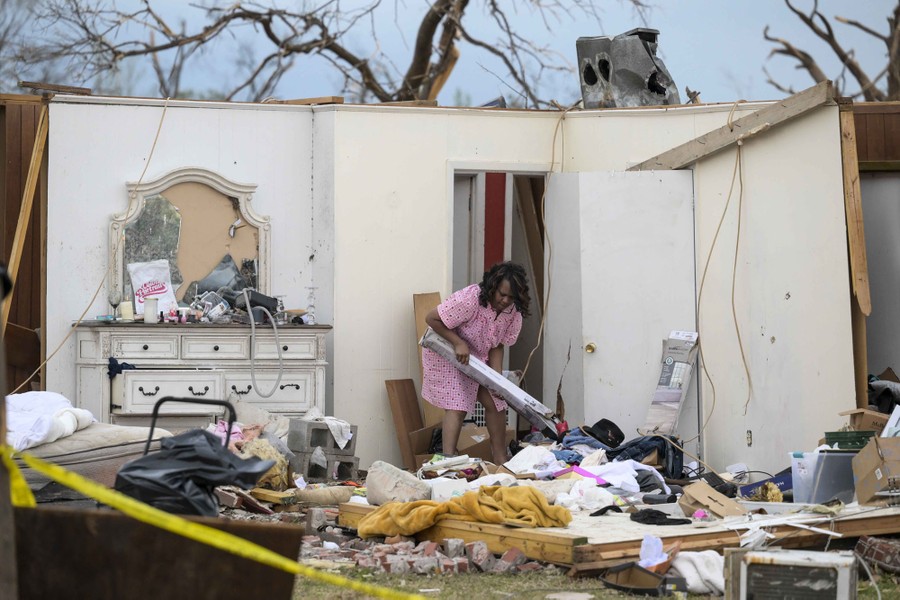
Cleaning up from the fierce tornado that struck Mississippi in March 2023.

Sometimes people who have suffered become hardened to the misfortunes of others. But very often when they see suffering, they want to reach out and help.

Daniel Wu reported recently at the Washington Post about refugees from Ukraine, currently living in Minnesota, who rushed to provide assistance in Mississippi after the March tornado.

“The seven Ukrainians set out just before midnight to make the long drive to their destination,” Wu wrote. “They were on an aid mission to a grimly familiar scene of devastated communities and leveled homes.

“But the refugees were thousands of miles from their homeland and the war that changed their lives. Their journey wound down Interstate 55, starting in Minnesota, where they had resettled just months earlier, and ending in a disaster zone wracked not by bombs, but by the wind: several towns in Mississippi recovering from a devastating tornado that killed at least 25 in late March.

“Dmytro Fedirko, a 34-year-old former van driver, puzzled through American road signs on his first road trip in the country. With him were couple Denys Pavliuk and Viktoriia Hasiuk, 19 and 18, who had arrived in the United States 10 days before. Iryna Hrebenyk, a 51-year-old hairdresser turned forklift operator for Home Depot, tried to stay awake — she joined the group after a night shift, with only a few hours of sleep in between.

“They had all been in the United States for a few months at most, thrust by war from cities and towns across Ukraine into new lives in Minnesota that had not yet settled — they had immigration forms to complete, job interviews to prepare for and families to support.

“But they said they decided, without hesitation, to put that on hold last week upon hearing news of the tornado that leveled towns in Mississippi. They made the 16-hour drive south to donate bottled water and volunteer with aid workers, buoyed by the idea that they could help a community facing a similar struggle to theirs.

“ ‘We had to leave our home,’ Pavliuk told the Washington Post in Ukrainian, in an interview interpreted by Hrebenyk. ‘And they don’t have a place to go back, either.’ …

“Pavliuk’s group had all been helped by the same nonprofit organization, the American Service. Aswar Rahman, a Minneapolis-based digital producer, founded the agency in March 2022 after visiting the Polish-Ukrainian border and seeing the challenges facing refugees there, he said. A month later, when the Biden administration’s Uniting for Ukraine program created a path for Ukrainians with an American sponsor to secure two-year stays in the United States, the American Service started helping refugees resettle in Minneapolis.

“Rahman said he was struck by the kinship that grew in the apartment building where the American Service found housing for Ukrainian refugees. Those who had been there for a few weeks or months were quick to help with the myriad challenges facing new arrivals: like buying SIM cards, applying for Social Security numbers and completing post-arrival immigration forms.

“ ‘I feel like I have a big family,’ said the American Service’s Minnesota director, Sofiia Rudenko, who arrived in the United States from Ukraine in late December. ‘realized that last week, I didn’t even cook because my neighbors kept feeding me every day.’

“That spirit convinced Rahman that the refugees wouldn’t hesitate to help other communities in need, too. When he saw news of the March 24 tornadoes that devastated Mississippi towns, he pitched the idea of taking a team to deliver aid. Rudenko, 22, thought it was a great idea. …

“Everyone leaped at the proposal. The team of eight — seven recent Ukrainian arrivals, accompanied by Rahman — had to turn down additional volunteers because they no longer had room in their cars, Rahman said. None of the Ukrainians had been in the United States for longer than three months. Pavliuk and Hasiuk didn’t mind that it had been less than two weeks since they arrived. …

“The group piled into two cars late Monday night and drove to Memphis, where they rented a U-Haul van and bought several pallets of water bottles from a Costco. The Ukrainian group paid for the water themselves against Rahman’s protests, he said. …

“Rahman contacted the nonprofit Volunteer Mississippi to ask where the group could be of use. A coordinator directed them to a school being used as a distribution center in the city of Belzoni. They distributed the water in Belzoni on Wednesday. In the afternoon, the group drove farther south to Silver City and helped unload additional trucks of aid and supplies. …

“Rahman said their donation, about 13,000 bottles of water, probably wasn’t much compared with those by large corporate donors. But the backstory of the Ukrainian volunteers resonated, both in teary exchanges with other workers on the ground and with Volunteer Mississippi’s coordinators. …

“The group returned to Minneapolis on Thursday evening, just in time for several people to make their shifts at the Home Depot and for Pavliuk to make a weekend job interview.

“Now, the seven Ukrainians will resume the new starts they’re pursuing for themselves. All of them are grappling with the devastating toll that the war is taking on Ukraine and their family members there. But the trip to Mississippi lifted their spirits, Rudenko said, and the American Service is looking for other ways that the refugee community can volunteer in Minneapolis.

“ ‘That’s something that is special about our community,’ Rudenko said. ‘Because we want to share, to give, and to keep doing that because we feel better, and we feel that we are not alone.’ ”

More at the Post, here.

Read Full Post »

Photo: Dale Robinette/ Lionsgate Publicity.
Emma Stone and Ryan Gosling are not primarily dancers, but thanks to coaching, they did a good job dancing in the film La La Land.

Fred Astaire and Ginger Rogers were film stars who were best known for dancing. But what if your stars need to dance but know no more steps than the average partygoer? For stunts, you get stunt experts, but do you also get experienced dancers to stand in? Can’t imagine how that would work.

Haley Hilton has the answer at Dance Magazine, “From Patrick Swayze lifting Jennifer Grey above his head in Dirty Dancing, to John Travolta and Uma Thurman doing ‘The Twist’ in Pulp Fiction, to Emma Stone and Ryan Gosling tapping their way through ‘A Lovely Night’ in La La Land, dancing Hollywood A-listers have made simple steps iconic on the silver screen. Behind the movie magic and clever choreography is a hard-working choreographer, navigating the challenges unique to actors with varying levels of skills in dance. Leading industry choreographers Chloé Arnold, Marguerite Derricks and Mandy Moore [say] creating choreography for celebrities takes a different set of skills — and amount of time — than working with elite professional dancers.

“ ‘With dancers, you know they can do anything you come up with,’ says choreographer and tap dancer Chloé Arnold, who created the moves for Ryan Reynolds, Will Ferrell and Octavia Spencer for the 2022 holiday film Spirited. ‘Whereas with celebrities, you have to first build trust, then take the time to discover how their body naturally moves.’ Uncovering strengths is the first step: For example, certain actors­ might have an innate musicality. Once a choreographer is aware of that, they can highlight that strength while avoiding steps that magnify their weaknesses.

“Marguerite Derricks, who choreographed for the Amazon Prime series ‘The Marvelous Mrs. Maisel’ from 2016 to 2022, believes that adaptability is essential when choreographing for A-listers. ‘Once I have the script, I go into a studio with an assistant and put together movement ideas,’ she says. ‘Then I take those ideas to the actors, but I’m very ready to change up the moves. Right when I walk in, I tell them I have hundreds of ideas in my pocket, so if we try something that looks great and feels good we continue. If not, I will remove it and start playing with new ideas.’

“Derricks, whose movement has been featured in more than 50 films and 40 television shows, cultivates an open dialogue with performers and a low-stress environment in the studio. ‘It’s not about pushing a style or an idea on actors, but going in as their confidant and cheerleader, and making them feel comfortable,’ she says. ‘When they see my patience, they are more patient with themselves.’

“When La La Land choreographer Mandy Moore works with celebrities, she makes sure that she will have ample time to teach them to dance. ‘On set, things can change and shift, and if the actor understands the basics of movement and weight changes, as well as the choreography, they will be able to make changes without melting down.’ She, too, enters the rehearsal space with an open mind. ‘I am someone who preps everything to a T, knowing it could all change the first second I get into rehearsal,’ she says. …

“Having an A-lister on a project will bring attention to the work, but for these three choreographers, the benefits extend far beyond that. ‘What actors bring to the choreography is so rich — they totally embody the character,’ Derricks says. ‘I get so excited because I know that in some ways, they will take my movement deeper than even dancers can.’ That’s why Derricks encourages dancers to take acting classes. ‘You can kick and spin and pas de bourrée, but the magic is how you put it all together in a story. Acting brings greater depth to your dancing.’

“The Spirited celebrities shared their genuine enthusiasm for tap with their massive fan base—as well as their appreciation for the dancers on set. … ‘Everyone was so kind, and there were no big egos,’ [Arnold] says. ‘If one of the actors grasped something and the other didn’t, they would respond with comedy. If the steps didn’t work out and needed to be changed, they were trusting. They could have challenged me or pushed back, but there were no excuses.’ …

“ ‘So much of choreography is reading the room,’ Derricks says. ‘When working with actors for the first time, I want them to know that I am here for them. I’m not here to win an award. I will do whatever I can to help make them comfortable and confident for the scene.’

“Building that confidence is no easy task. Moore says she’s found many actors have been told they’re not good dancers, leading to insecurities. ‘It’s time-consuming, but you need to help them believe in themselves,’ she says. ‘It’s almost like therapy — you don’t want to feed into their complex. You want them to leave you loving dance.’ One of the ways Moore fosters confidence in the rehearsal studio is by not having mirrors on the walls. ‘I don’t want them to get critical of how they look,’ she says. She also holds off on filming portions of rehearsal until the dancers are ready.

“Navigating difficult personalities is another potential challenge. When casting dancers, choreographers can choose who to work with, but when they are part of a larger work with celebrities, they don’t have that luxury. Arnold does all she can to change the energy in the room. ‘If you are seeing negative things, introduce alternatives,’ she says. ‘Dress for the betterment of the space. Sometimes I will come in wearing a message T-shirt that says something uplifting. Be kind, lead by example and make sure the rest of the cast feel supported by you.’ ”

More at Dance, here. No firewall. Nice pictures from movies.

Read Full Post »

Older Posts »