Feeds:
Posts
Comments

Archive for the ‘Uncategorized’ Category

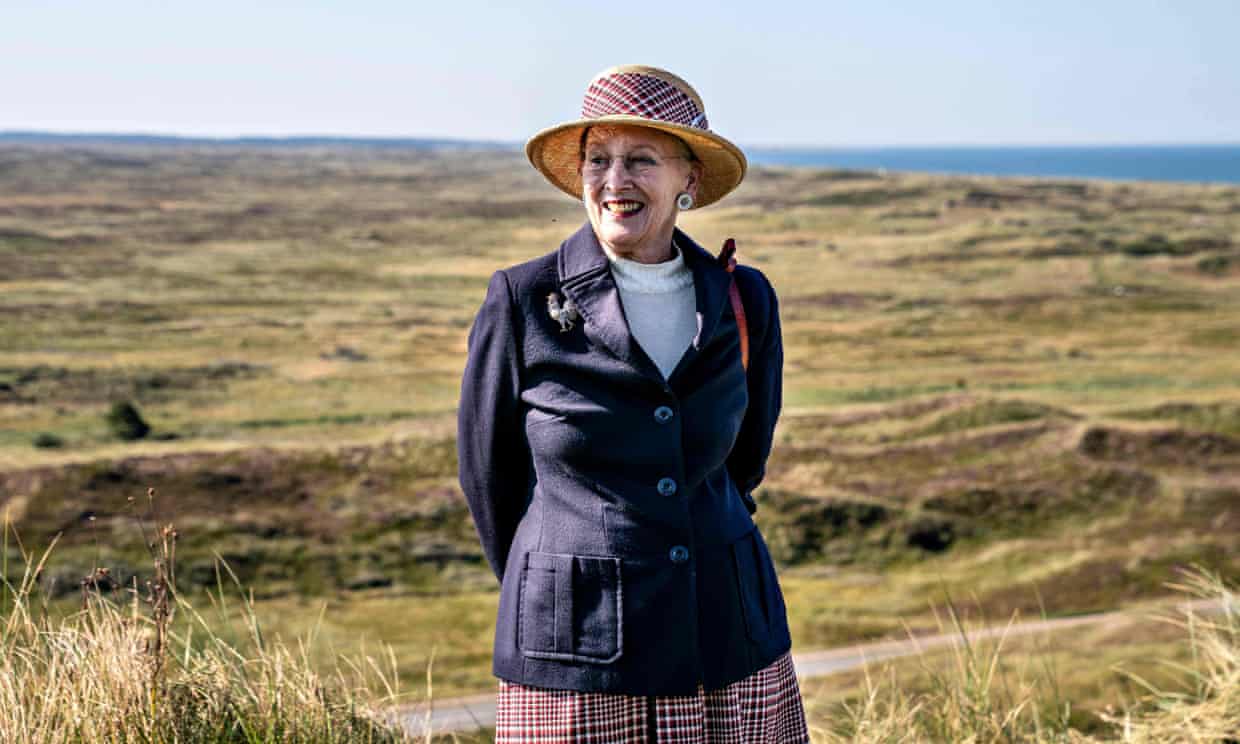
Photo: Henning Bagger/Ritzau Scanpix/AFP/Getty Images.
Queen Margrethe II of Denmark is set designer on a Karen Blixen fantasy movie. So cool! But this is not the queen’s first rodeo.

I didn’t know anything about Denmark’s artist-queen before seeing an article in the Guardian. The report made me want to learn more.

Andrew Pulver wrote, “Queen Margrethe II, reigning monarch of Denmark, is to design the sets for a forthcoming Netflix film adapted from a novel by Karen Blixen. …

“A romantic fantasy set in the fairytale kingdom of Babenhausen, Ehrengard will be directed by Bille August, the veteran Danish director of Pelle the Conqueror (which won both the Palme d’Or and Oscar for best foreign language film in 1988) and The Best Intentions (which won August a second Palme d’Or).

“Margrethe, who ascended to the Danish throne in 1972 and is commander-in-chief of the country’s defence forces, has also had a long career as an artist, including drawing the illustrations for Danish editions of Lord of the Rings, and exhibitions at galleries including the Arken Museum of Modern Art in Ishoj near Copenhagen. She also has screen credits as a production designer on the 2009 [fairy] tale The Wild Swans, and a short film adaptation of Hans Christian Andersen’s The Snow Queen in 2000.

“In a statement, Margrethe said: ‘Karen Blixen’s stories have always fascinated me, with their aesthetic tales, their imagination and their, to me, image-creating worlds – and I’m very happy to be part of this project.’ …

“August added: ‘The Queen has created the most fantastic decoupages for the occasion, and they will be the dominant feature of the film’s overall scenographic expression.’ ” More at the Guardian, here.

In a WordPress blog post from the Danish Home of Chicago, Mia wrote more about the queen: “Bewitching memories came tumbling out when I read about ‘The Fairy-Tale Queen‘ at Amalienborg Museum in Copenhagen. The special exhibit … is the work of Queen Margrethe II, whose artwork is on display. The exhibit shows the queen’s costume designs and scenography for productions of fairy tales, including ThumbelinaThe Steadfast Tin SoldierCinderella and The Nutcracker, that were presented at The Royal Theatre and The Pantomime Theatre. …

“I couldn’t wait to ask our friend Farfar, who lives at the Danish Home, whether he knew about the multi-talented queen of Denmark.[He] always thought of Margrethe as a pretty young thing. Her father, Frederik IX, was the Danish sovereign Farfar grew up revering. He had moved to the U.S. by the time Margrethe became queen in 1972. ‘I remember that she wore a daisy pin on her wedding gown,’ Farfar said, surprising me. ‘Daisy is her nickname, you know.’

“As a resident of The Danish Home, Farfar celebrates Queen Margrethe’s April 16 birthday every year … but he had never heard of her prodigious artistic talent. …

“While still the crown princess, Margrethe had sent J.R.R. Tolkien her own illustrations for his Lord of the Rings book. She used a pseudonym, so Tolkien had no idea the artwork that so charmed him had a royal provenance. The queen’s illustrations were published in a 1977 Danish edition of the Tolkien classic.

“Over the years, Margrethe has not only dreamed up costume designs, scenography and illustrations, but has also designed some of her own clothes and created paintings that have been displayed in some of Denmark’s most popular museums. Some of her watercolors appeared last year on postage stamps of Greenland, which is a constituent country of Denmark.

“She [is] serious enough about her art to clear her schedule every Thursday afternoon in devotion to it.” More.

At the Culture Trip, Aliki Seferou has more on the queen’s illustrations for the Danish version of The Lord of the Rings. “In 1977, five years after Margrethe’s father had died, leaving her the throne of Denmark, the Queen’s illustrations were printed and published in the Danish edition of The Lord of The Rings as well as on a British edition published by the Folio Society. If you’ve seen these editions and wonder how her name slipped your attention, it’s because Queen Margrethe used the pseudonym Ingahild Grathmer. …

“Even though the Queen of Denmark has an impressive academic background with studies in Political Science at Aarhus University, … Archaeology at the University of Cambridge and some years at the London School of Economics, it seems that she’s always been attracted to more creative activities. She’s known for designing her own dresses, ceremonial garments for the Danish bishops as well as costumes for theatrical plays. Among her most popular works are her designs for the movie Wild Swans, which is based on Hans Christian Andersen’s renowned fairy tale, and her costumes for the Royal Danish Ballet’s production of A Folk Tale.” More.

I have to say that my favorite part may be that, by tradition, this woman artist is the commander in chief of her nation’s defense department.
Read Full Post »

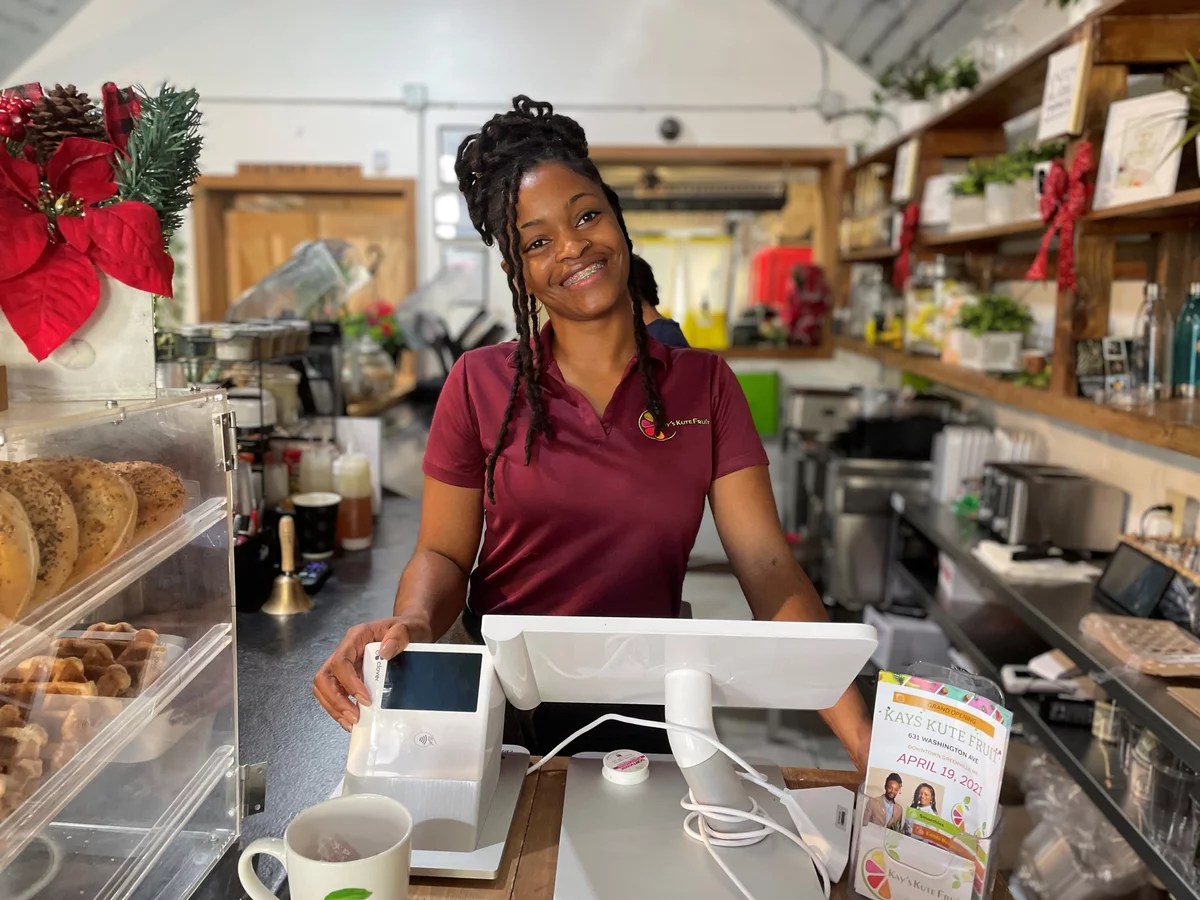
Photo: Kirk Siegler/NPR.
Kenesha Lewis, 30, opened a juice and smoothie shop in her hometown of Greenville, Miss. where fresh and healthy food options are hard to find.

Why do valuable communities get forgotten? Because they are rural? Because they are minority? Because they are very small businesses? Well, watch out, World! Remember the Mouse That Roared. In two years of stepping back and taking stock, we are starting to see more people refuse to be sidelined.

Kirk Siegler has a report at National Public Radio (NPR) one one example: Black businesses in rural Mississippi.

“In Greenville, Miss., pop. 27,000, a modern, brightly lit juice bar stands out in the small downtown lined with mostly mom and pop businesses and a few taverns near the town’s riverbank casino. …

“Turning heads is the owner of Kay’s Kute Fruit, 30 year-old Kenesha Lewis.

” ‘I’m really excited for the young people to walk in, and they say, who’s the owner, and they’re like, what? I had somebody do that to me,’ Lewis says laughing.

“Growing up here, she can’t recall any prominent Black-owned businesses like hers (today the town is about 81% Black). She and her husband Jason Lewis opened up this brick and mortar last Spring after a few years of making edible fruit arrangements and smoothies and selling them out of their home on the side of their regular jobs. …

“The Delta is known the world over for its delicious comfort food, but fresh produce and even regular grocery stores are few and far between. At Kay’s the blenders appear to always be running, churning up pineapple or mango smoothies with the popular add-ons of chia seeds or turmeric. …

“Lewis got the idea to start a business after her husband kept getting on her case for eating too much sugar.

” ‘I lost two teeth and he said, “wait a minute now, you’re too young to be losing these teeth,” ‘ she recalls, laughing. [So] we created smoothies together, and I said, okay, this is good for me.’

“And it turns out, it was also good for business. Lewis exceeded her projected annual sales in her first month after opening. Growing up, she says people in her community were good entrepreneurs but they usually worked out of their homes. …

” ‘Our Black people are waking up, they know that they can do this,’ Lewis says. ‘I think that we have helped them to understand that they can do this, they can succeed.’ …

“Hundreds of new Black-owned businesses like Lewis’s are starting to spring up in this region long seen as being dismissed or ‘forgotten’ by outsiders.

“Drive south of Memphis, near the massive river levees, and a lot of small town store fronts are boarded up. … So when Tim Lampkin, 35, moved back to his hometown of Clarksdale after college and a stint working in corporate America, he had an idea.

” ‘When I came back I noticed that a majority of the businesses in [Coahoma County] are white owned,’ Lampkin says. Like in nearby Greenville, more than 80% of Clarksdale’s 15,000 residents are African American.

“In 2016, Lampkin started what he calls an economic justice non-profit. Higher Purpose Co. helped Kenesha Lewis in Greenville from start to finish, applying for a loan, prepping her for meetings with bankers. And they follow up frequently with her today, all things Lampkin says would probably be a given for aspiring white business owners in the area.

” ‘If we’re going to make special exceptions for entrepreneurs because, you know, they’re a white farmer and we know their family, why can’t a Black entrepreneur get the same level of access and understanding and patience when it comes to getting access to capital?’ Lampkin asks.

“A mentorship program Higher Purpose started in late 2019 is now helping some 300 Black entrepreneurs across Mississippi take their business acumen to the next level. The non-profit helps them do things like find grants to cover closing costs or tap into donations and seed money for renting or buying spaces and storefronts. …

“At Delta State University in Cleveland, Miss., Rolando Herts, director of the Delta Center for Culture and Learning, says the region is a microcosm for the country’s broader racial and economic inequality.

” ‘In the consciousness of America, this is considered to be one of, if not the most, racist states in the union,’ Herts says. ‘Everybody’s able to look at Mississippi and say, “at least we’re not Mississippi.” ‘

“Ever since the Delta was plowed up into plantations mostly after the Civil War, Herts says there’s been a permanent Black underclass. Many don’t trust the banks, for good reason, he says, and in turn many banks traditionally haven’t done business in the still segregated Black communities. …

“For Herts, it will take hundreds more groups like Higher Purpose to really right the wrongs of the past. But he does see momentum behind their work, which is driven by mostly young, energetic and social media savvy people.

“And the businesses they’re supporting are filling a need. One of Higher Purpose’s biggest success stories is Dr. Mary Williams in Clarksdale. She opened what was then the town’s first urgent and primary care facility about three years ago. Before then, she says, working people had to drive 45 miles or go to the local ER just to get routine care after hours.

“She soon discovered there were many untreated cases of hypertension, high blood pressure, diabetes and obesity in her community. …

” ‘A lot of them … didn’t know their blood pressure was up, they didn’t know they were diabetic,’ Williams says.

“But getting to where she is today, weathering the pandemic with a clinic that now serves some 3,000 patients, wasn’t easy.

“While working as a nurse practitioner at the local hospital, Williams got ‘no’ after ‘no’ from banks when she applied for loans to start her business. One told her she may be a good health care provider, but that didn’t mean she was a good business owner. Another said there was no business like hers in Clarksdale to base her proposal on, so she’d have to put up her house as collateral.

” ‘I mean, the whole idea for this loan was for community development,’ Williams says. ‘Here I am bringing in a clinic to develop the community and improve our health care and I got a hard “no” unless I give them my house.’

“That lit a fire in her: she was going to help her underserved community if it took everything she had.” Read more at NPR, here.

Read Full Post »

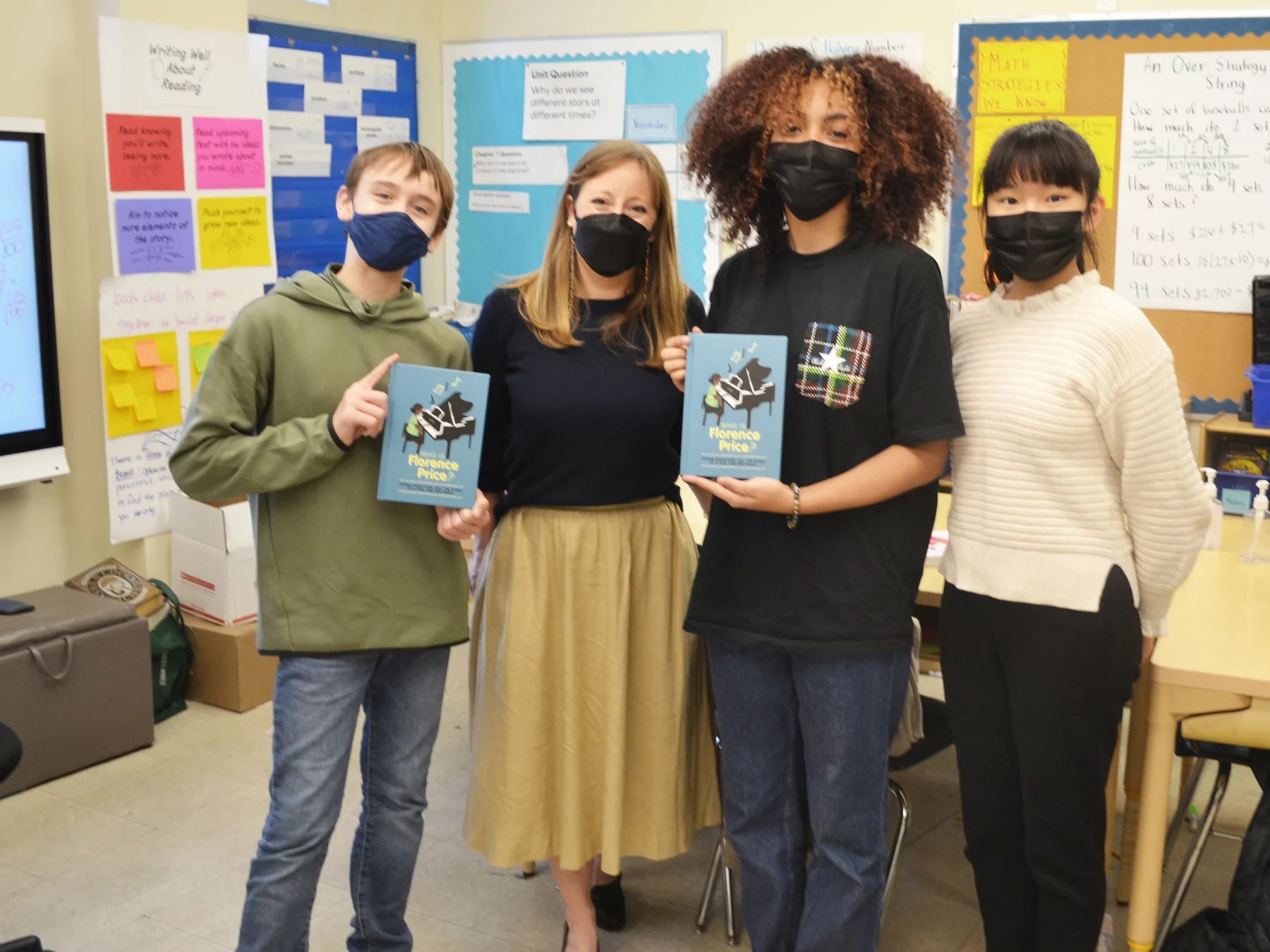
Photo: Special Music School.
Three of the student authors of Who Is Florence Price? (left to right: Sebastián Núñez, Hazel Peebles and Sophia Shao), joined by their English teacher, Shannon Potts.

I want to follow where today’s kids are leading. So many of them seem to recognize they have to take matters into their own hands if they want change in their lifetimes, whether it’s a question of global warming or gun safety or race relations.

In today’s story, we see that empowerment can start early.

Anastasia Tsioulcas reports at Natural Public Radio (NPR), “For decades, it was almost impossible to hear a piece of music written by Florence Price. Price was a Black, female composer who died in 1953. But a group of New York City middle school students had the opportunity to quite literally write Florence Price’s history. Their [book]Who Is Florence Price? is now out and available in stores.

“The kids attend Special Music School, a K-12 public school in Manhattan that teaches high-level music instruction alongside academics. Shannon Potts is an English teacher there.

” ‘Our children are musicians, so whether or not we intentionally draw it together, they bring music into the classroom every day in the most delightful ways,’ Potts says. …

“Potts assigned her sixth, seventh and eighth grade students to study Florence Price — a composer born in Little Rock, Arkansas in 1887. She was the first Black woman to have her music played by a major American orchestra: the Chicago Symphony Orchestra performed her Symphony No. 1 in 1933 and her Piano Concerto in One Movement the next year. …

“Despite Price’s talent and drive, most classical music performers and gatekeepers put her aside, and her work failed to gain traction with the large, almost exclusively white institutions that could have catapulted her to mainstream renown. …

“Recently, though, there’s been a blossoming of interest in Price’s work. A recording of her symphonies by the Philadelphia Orchestra was just nominated for a Grammy. In the months ahead, her music will be performed by the San Francisco Symphony, the Atlanta Symphony Orchestra and the Chicago Symphony Orchestra.

“When the students began researching Price, however, they realized that although there were a few materials written about her life for grown-ups, there was nothing aimed at kids.

“That gave Potts had an idea: She would have her students write and illustrate their own book about Florence Price, and about how her music was rediscovered. As the kids’ book begins:

” ‘In 2009, a couple bought an old house outside of Chicago. in the attic, they found boxes filled with yellowed sheets of music. Every piece was written by the same woman, Florence Price. “Who is Florence Price?” they wondered…

” ‘Florence’s mind was filled with music, but she had a big question. She was a girl and her skin was a different color than so many of the composers she knew about. Could she grow up to be a famous composer, too? When Florence was only 11, her first piece was published. Was it possible that Florence’s music could change things?’

Special Music School [executive] director Kate Sheeran was extremely enthusiastic about the students’ work. …

“Sheeran was so impressed that she ordered a small, self-published print run of their work. She sent it around to various people in the classical music community — including Robert Thompson, the president of G. Schirmer, the company that publishes Florence Price’s music.

‘I think it’s one of the few moments in my job where I had to cancel the next meeting and I was just kind of filled with tears,’ Thompson recalls. ‘It was just an incredibly beautiful moment.’

“Thompson agreed to publish the book; all royalties will go to Kaufman Music Center, which is a non-profit organization.

Rebecca Beato is a 14-year-old violinist from Queens. She was also one of the lead illustrators of Who Is Florence Price? and she says that Price has been a personal inspiration. ‘Her music has been out there, performed by major orchestras,’ Beato says, ‘and she’s a woman of color, which even now — it’s like difficult to get your music shown to the world.’ …

“Hazel Peebles, a 13-year-old violist from Harlem, says that you can hear Price’s personal history in her music. ‘It really is beautiful,’ Peebles observes. ‘She worked in some of her history, some of her Black background into the music.’ …

“What the students learned in creating this book goes far beyond music, Kate Sheeran says.

‘They’re also seeing that they can have a voice in shaping who writes history and who tells stories … and that we don’t have to just accept the way music is presented to us or the way music history is presented to us — that they too can shape that.’ …

“Potts says that the very last lines of her students’ book have already come true, thanks to their hard work and creativity. ‘Today, Florence’s music can be heard all around the world just like she dreamed of when she was young,’ Potts reads. ‘If someone asks, “Who is Florence Price?” you can tell them.’ “

More at NPR, here.

Read Full Post »

Photo: Ben James/Connecticut Public Radio.
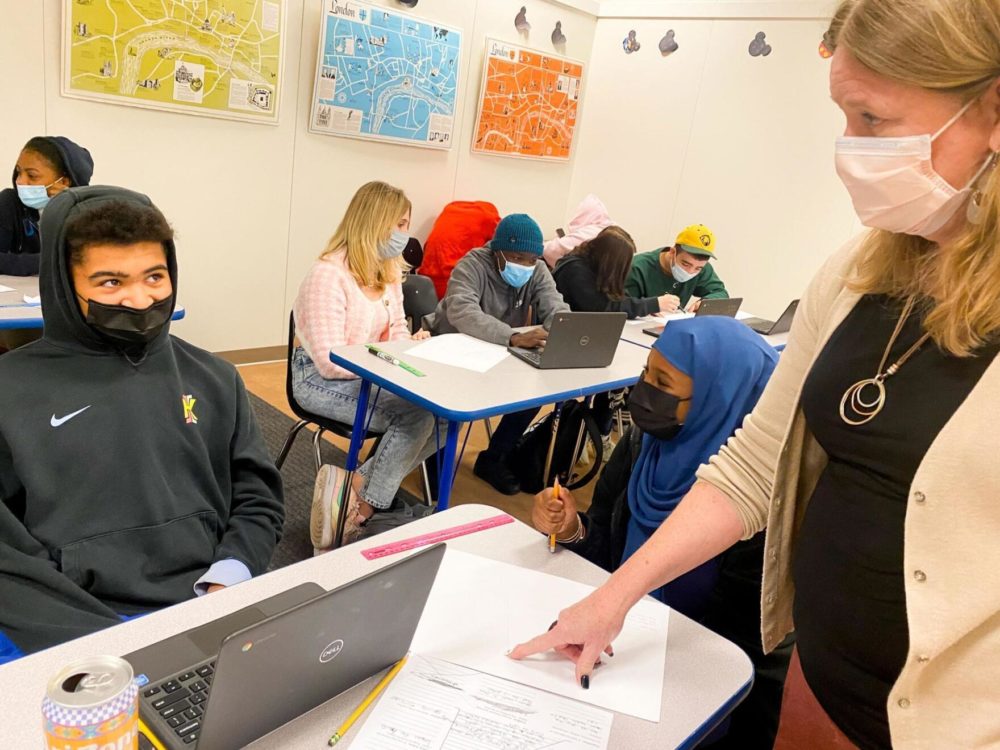
Teacher Susan Blethen supports ESL students in a normal high school classroom in Burlington, Vermont.

On Mondays and Tuesdays, I assist teachers at two different Rhode Island agencies where they lead English as a Second Language classes. Since Covid, the classes have been online. I think it’s harder for the adults to learn a new language than kids, but our students are very motivated. They have their reasons — “to get a better job,” “to help my children with their homework,” “to talk to the doctor,” “to go to university.” It’s satisfying to watch them progress.

Young students from other countries also have reasons. Ben James of Connecticut Public Radio has a story about a few in the public school system of Burlington, Vermont, where multilingual liaisons smooth the transition to American schools.

“In an office at Burlington High School, just off Lake Champlain in northern Vermont, Chacha Ngunga made a phone call.

“ ‘Jambo jambo,’ he said, greeting a student’s father in their shared language, Swahili.

“Ngunga is a multilingual liaison — one of 12 employed by the Burlington district.

“A few feet away, Noor Bulle, another liaison, made a call in Maay Maay, one of the two major dialects of the Somali language. He reaches a Somali Bantu mother whose five children would soon enter district schools. The mother expressed amazement that her family was already on Bulle’s radar.

“Tens of thousands of Afghans who left their country after the Taliban took over in August will be resettling in the United States. Many of them are kids, so schools across the country are preparing to get these students up to speed. According to Bulle, the multilingual liaisons act as cultural brokers, helping refugee families understand how the U.S. school system works.

“Bibek Gurung, a graduate of Burlington High, is now a junior at Champlain College in Burlington, studying criminal justice. He arrived in Burlington during fifth grade, speaking almost no English. He said his Nepali-speaking liaison helped him with high school and with what he calls life stuff.

“ ‘I was actually looking for a job, and he advocated for me,’ Gurung said. ‘Through him, I was able to work for the Burlington Police Department as a beach-and-park patrol officer.’ …

“Shawna Shapiro, an associate professor at Middlebury College whose research focuses on the high school-to-college transition for refugee students, says many English learners in the U.S. finish high school unprepared for college. Part of the problem, she said, lies with English language learning programs that place students in lower-level academic classes, leaving them bored and underchallenged.

“Shapiro said educators underestimate not only refugee students’ abilities, but also their cultural and family resources.

“ ‘When you talk with students … you hear [them say,] “I feel underchallenged,” and then you pursue that a little more, and they say, ‘That’s frustrating because my parents were leaders in the refugee camp, and my mom was a professor, and my uncle was a police officer, and we’re here, and it feels like no one recognizes any of that,’ ” she said.

“Samjana Rai, a college-bound senior who arrived from Nepal when she was in seventh grade, has heard a similar frustration from her peers about low expectations.

” ‘A lot of my friends want to go to college,’ Rai said. ‘But because of classes that they had to take in sophomore year, freshman year, it’s a little harder for them to go to the college that they want to go to.’ …

“Down the hallway from the multilingual liaison office, 30-year veteran teacher Susan Blethen introduced a lesson to her integrated class of native English speakers and English learners. It’s taught by two teachers: the regular subject teacher and Blethen, who is a specialist in English Language Learning. …

“One purpose of the mixed classes, Blethen explained, is to make sure the English learners are being taught material that stimulates and inspires them to take on more challenges. In previous years, many of the English learners in this class would have been placed in what’s called ‘sheltered instruction,’ separated from their native-English-speaking peers.

“Blethen was the first teacher in Vermont to become certified as an English language learning instructor. She recalled a moment from early in her career.

“ ‘I actually had a social studies teacher yell at me when I was a young teacher, saying, “Why are they in my class if they can’t speak English? You have to teach them English before they can come into my class.” ‘ …

“Standing with a group of her peers, [Somali student] Aden said the languages and cultures of refugee students are still undervalued. …

“ ‘Bilingual people aren’t dumb. [They] can be challenged, and they can be doing higher things.’

“Aden herself plans to take honors civics next semester. ‘I thought, instead of doing an easy class, I should just challenge myself, because I’d be learning more if I did.’ ”

More at WBUR, here.

Read Full Post »

Photo: TBC via Flipboard.
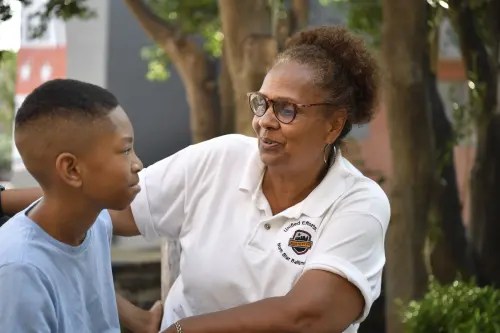
Phyllis Ali and her grandson are both involved in a retired Baltimore cop’s inspiring youth initiative.

In Baltimore, a former cop saw that, for poor children, a lack of options can create desperation. So she created a foundation to help kids envision a world of possibility — and to give them the tools to make dreams come true.

Theresa Vargas writes at the Washington Post, “During a drive earlier this week, Phyllis Ali asked the children in the car with her what they wanted to be when they grew up.

” ‘An astronaut,’ said one.

“ ‘A schoolteacher,’ said another.

“A boy replied that he hoped to be the owner of ‘a nice house.’

“ ‘I’m just glad they want to be something,’ Ali said, reflecting on that drive. ‘I’m just glad that none of them said, “I don’t know.” ‘ …

“The 68-year-old Baltimore native has spent much of her adult life working with the city’s children, and she has seen how people too often write off those who live on blocks with boarded-up buildings. She has also seen what is lost when they do.

“ ‘We can’t cast them away because of their environment,’ she said. ‘Don’t take their hope away. They are somebody. Just because they are here doesn’t mean they don’t have talents and hopes and futures. They are somebody.’

” ‘In the car with Ali that day were her 12-year-old grandson, whom she calls Scooter, and his younger siblings, ages 6, 7 and 8. They were headed to the Baltimore offices of the advertising agency TBC to join other children in the filming of a commercial.

“For hours on Monday, those children would wait for their names to be called, and then step under bright lights, look into a camera and offer an answer to that same question Ali had asked. …

“The children are participants in a program that is based in a Baltimore neighborhood where many families live below the poverty line. It’s also a place that people across the nation saw burn six years ago after a CVS was looted and torched during the uprising that followed Freddie Gray’s police-custody death.

“Debbie Ramsey, a former Baltimore police detective and the founder of the nonprofit Unified Efforts, said that about a week before that fire, she and others — with the blessing of community leaders — had picked the Penn-North neighborhood as the site for a program that would aim to help children thrive.

“ ‘When the uprising began, that did not scare us away,’ Ramsey told [me]. ‘I said, “Okay, that’s a confirmation. This is where we have to be.” ‘

“In the six years that have followed, Unified Efforts has worked in the neighborhood with more than 120 young people between the ages of 5 and 24. Initially, the organization planned to stop working with teenagers once they graduated high school, but the staff continued to hear from participants even after they got their diplomas. A college student in New York recently reached out to say that if she had a bike she could get to her classes more easily. The staff helped her get one. …

“It takes only spending a day in some of the city’s most impoverished neighborhoods to see that the organization is up against a mix of painful and complex challenges. In the year that followed Gray’s death, I spent months profiling a teenager who attended a Baltimore high school that was located next to a public-housing project. …

“The teenager I wrote about had spent three weeks alone in his home without hot water, a working stove or lights, after his mother was hospitalized. His school records showed he had struggled, ending one year with a 1.64 GPA, but I also witnessed him be the only student in his class to complete an assignment. It called for him to write a poem using a simile or metaphor.

‘The sun is the smile behind the night,’ his began.

“That tug-of-war between struggle and potential is something Ramsey knows well. She saw it as a police officer and she sees it now as the executive director of Unified Efforts. [The program] aims to ‘reduce summer and vital learning loss’ … offering children a safe haven to learn and exposing them to experiences they might not have otherwise. …

“Participants not only spent days learning from a violinist; they were handed their own violins to take home. They not only spent a summer with staff who made sure they were fed (and given clean clothes if they showed up in ones that were soiled in a way that would draw insults from their peers); they were given laptops to continue working at home. High school students are sent every year to a college prep writing workshop and given the chance to work with professionals to produce a magazine filled with their stories.

“ ‘I have something I call “the crayon model” and that is what really forms our foundation,’ Ramsey said. ‘When our kids are at a table and creating, we put no less than 300 crayons on the table. We do that to show what abundance looks like.’ “

More at the Post, here.

Read Full Post »

Photo: West Volusia Beacon.
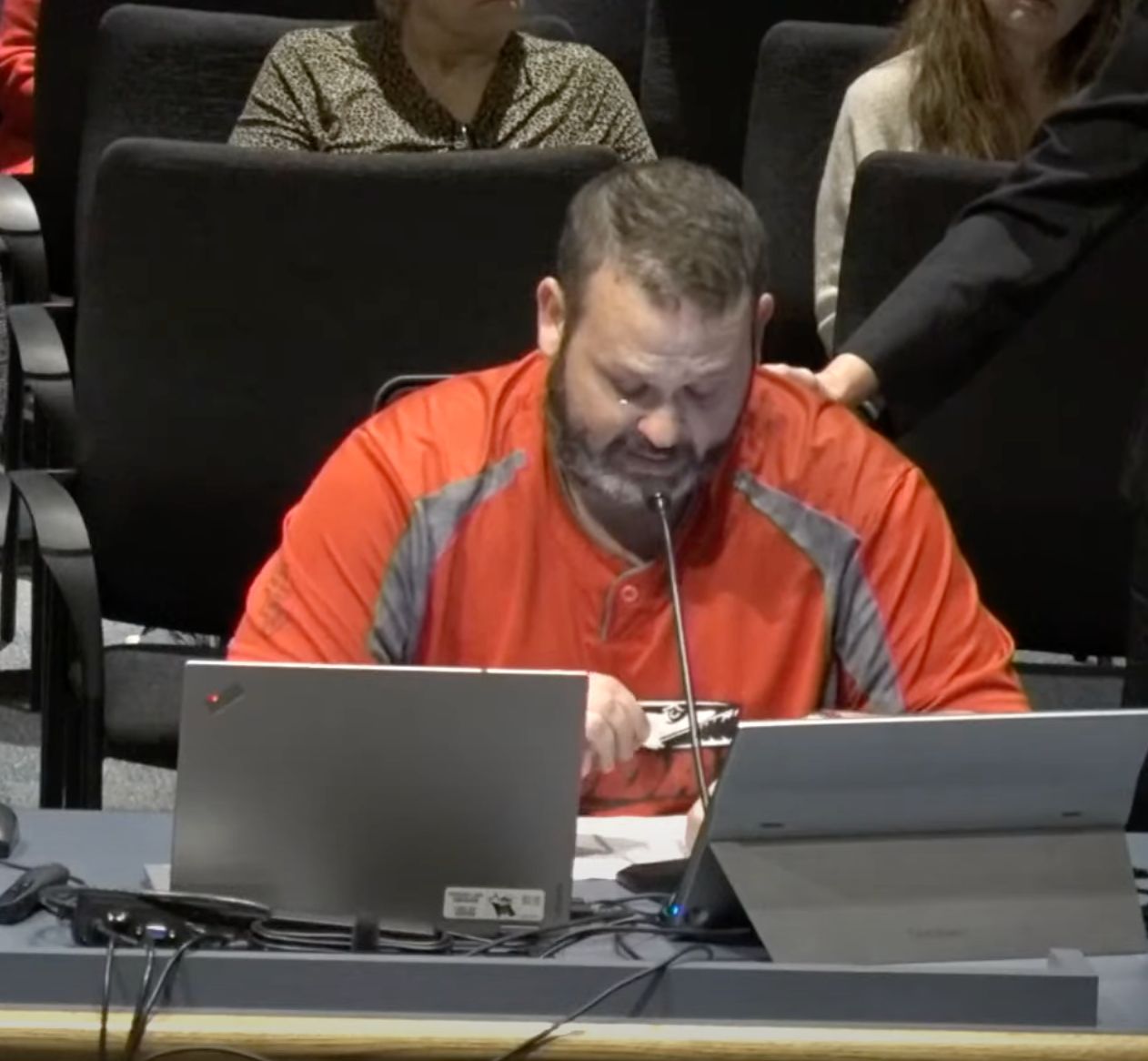
Charles Peacock, a paraprofessional at New Smyrna Beach High School, tells the Volusia County School Board that he has recently been made homeless.

It pains me to think how little most of those entrusted with educating America’s children — daycare professionals, teachers, teachers’ aides — are paid. We are talking about work that any country should give the highest respect and reward.

In today’s story, a popular Florida teaching assistant confesses that he cannot find housing on his income. The shame he feels should be for us.

Kyle Swenson wrote at the Washington Post recently about the moment Charles Peacock went public.

“They called his name and Charles Peacock hustled up to the microphone to address the Volusia County School Board. The public comment period gave him three minutes. He had practiced his speech, but the 40-year-old knew that somewhere in that time frame, his emotions would overwhelm him.

“He introduced himself as a teacher’s assistant — called a ‘paraprofessional’ in the district — at New Smyrna Beach High School, a school of nearly 1,900-students near Daytona Beach, Fla. The divorced father of three detailed how overworked he and his colleagues are, how the ranks have thinned due to high demands and low compensation.

“Then he paused, knowing that his next sentences swung from workplace complaint to raw confession.

‘I myself, like most others, have to work multiple jobs in order to simply scrape by. I put in 80-plus hours each week, every week, between four jobs to barely make it,’ he said, the words bobbing along on muffled sobs.

“ ‘After four years with the county, I make a minimum salary which equates to less than a thousand dollars per month.’

“Peacock stopped, took a breath, and looked at the board.

“ ‘I personally have been made homeless,’ he said. ‘At least one of your employees — one who is great at their job, has been nominated for para of the year, who loves his students beyond measure — is homeless. Living out of his car. Crashing on couches from time to time. Getting showers at friend’s houses. I dare you to look me in the eyes right here, right now, and tell me that this is okay.’

“His three minutes were up.

“Peacock … represents a large number of Americans who struggle outside the reach of public policy because they don’t fall inside the traditional definitions of poverty. He was homeless, but he technically wasn’t poor.

“Untangling the difference for the board, or explaining it in public, was nothing compared with knowing that after the meeting that his family would now have questions.

“ ‘It wasn’t hard facing the board,’ he said later. ‘Facing my kids was harder.’

“Peacock’s typical day starts at 7 a.m. He is at the school by 8 a.m. He is done by 4 p.m., but then it’s off to a local bar where he works security. That gig ends between midnight and 2 a.m. Weekends, he umpires youth baseball games.

“For all of this scramble, Peacock estimates he makes somewhere between $22,000 to $25,000 each year.

“ ‘It was exhausting, and I was not the only one of my colleagues trying to keep this kind of schedule,’ he said. ‘We were all exhausted.’ …

“For decades, poverty experts have warned that the federal government’s official measurement misses a larger chunk of Americans. One measure that has since emerged has been pioneered by the United Way: the ALICE threshold, or Asset Limited, Income Constrained, Employed. Since 2009, United Way and its partners have used the criteria to take a high-definition snapshot of people in Peacock’s position — those living above the federal poverty line but scrambling to pay for necessities. …

“After his divorce, Peacock could only afford to rent a bedroom in a friend’s house. The profession he had chosen — he makes $11.65 an hour — alone could not support his basic needs.

” ‘I make next to nothing doing a job that I love,’ Peacock told the board in November. ‘But when does that love get outweighed by the need to survive, and dare I say, thrive? … If I’m in this situation, how many other paras are on the brink?’

“He decided to speak before the board and publicly detail his own situation. ‘That was difficult, trying to swallow my pride.’ “

More at the Post, here.

Read Full Post »

Photo: Taylor Luck.
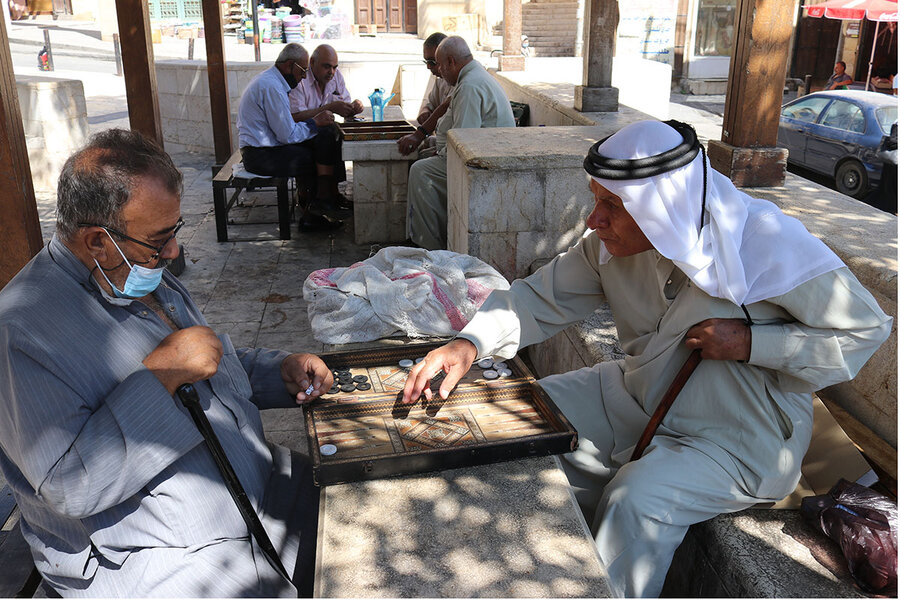
Elders in Salt, Jordan, play a daily game of backgammon in the town square. Salt is a new UNESCO World Heritage Site. It is known for remarkable hospitality.

Pretty much every religion adjures believers to welcome the stranger, but every day we see that the size of the need overwhelms even those who have not forgotten about that. Except in Salt, Jordan.

Taylor Luck writes at the Christian Science Monitor, “Welcome to the world’s newest UNESCO World Heritage Site, a breezy hillside town perched above the Jordan Valley that is celebrated for, well, its legendary hospitality.

“In Salt, history and economics have helped create a unique mix of cultures and faiths and a harmony of yellow-gold stone buildings and community. Don’t believe it? Simply ask the city’s elders.

“You can find them every day gathered in the Ain Plaza, formerly the site of fresh springs and now the town square in the twin shadows of Salt’s Great Mosque and Anglican Church. They will gladly tell you how their hospitality and way of life were passed from generation to generation – if they have time.

“For most of the day, they huddle around stone tables locked in intense games of backgammon and mancala, exhibiting the steely concentration of professional athletes. They say they welcome the UNESCO designation as a chance to share what they call ‘hospitality and harmony’ with the world.

“ ‘Here we welcome all, and we embrace every person,’ says Abu Ali, awaiting his turn at backgammon. He pointed to his compatriots of different faiths and tribes embroiled in matches. 

‘We don’t see Muslim, Christian, tribes, or urbanites – we see each other’s humanity, and the humanity in all who visit.’

“Dating back to the Iron Age, Salt is located strategically on the trade and pilgrimage routes between Damascus and Jerusalem, and between the Mediterranean Sea and the Arabian Peninsula. The agricultural village grew into a flourishing hillside city in the 17th, 18th, and 19th centuries, attracting residents from across the Levant, Turkey, Arabia, the Caucasus, and west Asia.

“The constant, diverse flow of visitors and merchants created neighborhoods in which each street and hill had a mix of Christians and Muslims – Palestinians, Syrians, Turks, Circassians, Chechens, and members of local tribes all building their homes together.

“For centuries, Salt families would house and feed travelers, including merchants, Christian pilgrims on their way to Jerusalem, or Muslims heading east for the Hajj – offering at least three days of lodging, no questions asked.

“Not a single hotel was built in the town, as it was considered ‘shameful’ not to host a guest in one’s home. Only in the past two years have guest-houses emerged; but the idea of a guest paying for lodging is still highly controversial.

“ ‘Please have lunch with me,’ strangers told Jordanian visitors and a reporter, during a visit in mid-August.

“In its announcement in late July that Salt had been added to the World Heritage list, UNESCO highlighted the city’s unique makeup as a ‘Place of Tolerance and Urban Hospitality.’

“ ‘In Salt, there is not a single area here that is segregated by race, religion, or origin,’ says former Mayor Khaled Al Khashman. ‘This is very rare in this region and, historically, rare in the world.’

“The town’s traditional architecture has long encouraged community. Most of Salt’s yellow sandstone homes consisted of a single room with a domed roof, with two or four homes sharing a communal courtyard, walls, rooftop, and entrance.

“Families would sit in their communal courtyard, cooking or drinking evening tea together while their children played. Neighbors shared food, drink, and supplies, and took part in each other’s celebrations, religious holidays, and family milestones. The layout meant neighbors were often closer than blood relatives. …

“Salt resident Nadia Abu Samen, a Muslim, restored one of these compounds. … She says her mother was raised by her family’s Christian neighbors, and her uncles and aunts were given Christian first names to honor their neighbors.

“For the past decade Ms. Abu Samen has carefully preserved an abandoned compound of four joined rooms – two homes belonging to Christian families, two homes belonging to Muslim families – and turned them into a cultural center, exhibition, and cafe. She traces Salt’s trademark harmony to the ‘uniform simplicity of traditional life.’ ” More at the Monitor, here.

If your ethnicity or religion is not mentioned in the article, I hope you will visit sometime and let us know if you were welcomed. A town that has been given such a high award for hospitality has a reputation to uphold!

Read Full Post »

Photo: James Rebanks via BBC.
A farmer in England shows how regenerative farming can produce better food while fighting climate change.

There’s a farmer in the UK who hopes to change the way farmers farm in order to promote biodiversity and a healthier planet. He raises sheep.

Here’s a report by William Booth at the Washington Post: “Britain’s rock-star shepherd and best-selling author, James Rebanks, is out at the family farm, giving the tour, waxing rhapsodic about his manure. The glory of it — of the crumbly, muffin-top consistency of a well-made plop from a grass-fed cow. …

“Don’t get the man started on soil health. Rebanks is a soil geek, with the zeal of the convert. … Rebanks represents one possible future for farming, which is set to be transformed in the promise of a post-Brexit, zero-carbon world. The British government plans to strip away all traditional farm subsidies and replace those payments with an alien system of ‘public money for public goods.’

“What are these public goods? Not food. Bees! In 21st-century Britain, the goods will be clean water, biodiversity, habitat restoration, hedgerows, pretty landscapes, wildflowers, flood mitigation and adaptation to climate change. …

“This transformation could be huge: Farmland is 70 percent of England’s landscape and produces 10 percent of its greenhouse gases. There is no net-zero-carbon future without farmers.

“As the best-known farmer in the whole of the United Kingdom, Rebanks finds himself at the center of this transition. In agriculture circles, he’s a super influencer, famous for his Twitter feed. He has nearly 150,000 followers, who check for his posts and postcard-perfect videos and photos of his idyllic home in England’s poetic Lake District and the doings of his beloved Herdwick sheep.

“The shepherd riffs on the circle of life, the frenzy of lambing season, the deliciousness of grilled mutton and the wisdom of sheepdogs — speckled with rants against the alleged ruinous stupidity of industrial farming ‘where the field has become the factory floor.’ …

“He cannot fathom that the planet, and his little corner of it, has been so messed up. He also cannot make up his mind whether we are doomed or just might pull through, a feeling that resonates with many.

“He wrote two books about all this, both international bestsellers. The latest, published to stellar reviews this month in the United States, is Pastoral Song: A Farmer’s Journey.

“On one level, the book is about how cheap food culture, globalization and super-efficient, ­hyper-mechanized, highly productive modern farms (giant monocultures of beets, wheat, corn) are terrible for nature (insects, rivers, climate) and our health (obesity, diabetes) and our farmers (indebted, pesticide-dependent, stressed).

“On a deeper level, though, the pages are about healing, about how one farmer in Cumbria is trying very hard to turn his landscape into a sustainable, profitable little Eden by deploying both ancient and cutting-edge techniques. …

“British politicians make the pilgrimage to see what he has done. So do British journalists. He has made the cover of the Financial Times magazine and is the subject of a 30-minute documentary on the BBC. He pens guest columns for the right-wing Daily Mail and the left-wing Guardian. …

“The government is embarking on the biggest change in the management of its countryside since the end of World War II. No longer will farmers live on the Basic Payment Scheme. They will be paid for those new public goods; the old subsidies for ‘food security’ will end. It is a radical experiment, to be carried out on a national scale.

“Yesterday’s farms grew food and outgassed methane. The farms of tomorrow will grow food and sequester carbon. Or at least that is the idea. …

“British farmers, like their counterparts elsewhere in Europe, have subsisted for three generations on subsidies. Without the dole, government figures show, 42 percent of all farms here would operate at a loss. Most small operators wouldn’t survive without the checks. The payments — $3 billion annually — are to be phased out over the next seven years. …

“Rebanks doesn’t think the plan is nearly smart enough or big enough, or that the public understands how much it will cost to have a real impact for farmers, nature and climate. He thinks $3 billion year is ‘a drop in the bucket.’ …

“If anyone can make the switch to this new system of ‘public money for public goods,’ surely it should be Rebanks. He seems more than halfway there already. …

“His family has been shepherding in Cumbria for 600 years. His methods — moving sheep between the communal hilltop fells and the valley below — would be recognizable to the Vikings, who did the same when they settled here more than a millennium ago with a similar breed of hearty sheep.

“Over the past 10 years, with help from conservationists and supporters, he and his family — his wife and four kids — have ‘re-wiggled’ a drainage ditch and created a natural stream plus wetland. They’re planting 25,000 saplings. There were no ponds on the property before. There are 25 now, with otters. Three miles of hedgerows have been restored and 30 acres revived as a wildflower meadow. …

“He’s chopping up the farm to smaller and smaller fields — ‘it’s all hedges and edges, which is good for nature.’ He estimates he has taken 15 percent of his farm out of active production.

“ ‘Listen, the truth is there must be some letting go,’ he said. ‘You can’t drain it all and use it all for farming or grazing. You have to set some aside.’ ”

More at the Post, here.

Read Full Post »

Photo Reflections

The next time that I post photos, I hope I can include some action around the bird feeder. Although there are experts who recommend feeding the birds year-round, I usually wait to put seeds in the feeder until it’s really hard for birds to find other food. As of this moment, they are still having a good time with all the berries and naturally occurring seeds in our yard.

I continue to take outdoor walks in the cold, identifying birds with my Merlin app for birdsong. I’m also working with a grandson to learn more about birds through Wingspan, the board game. (I blogged about it here but didn’t understand then how difficult it is to learn the rules.)

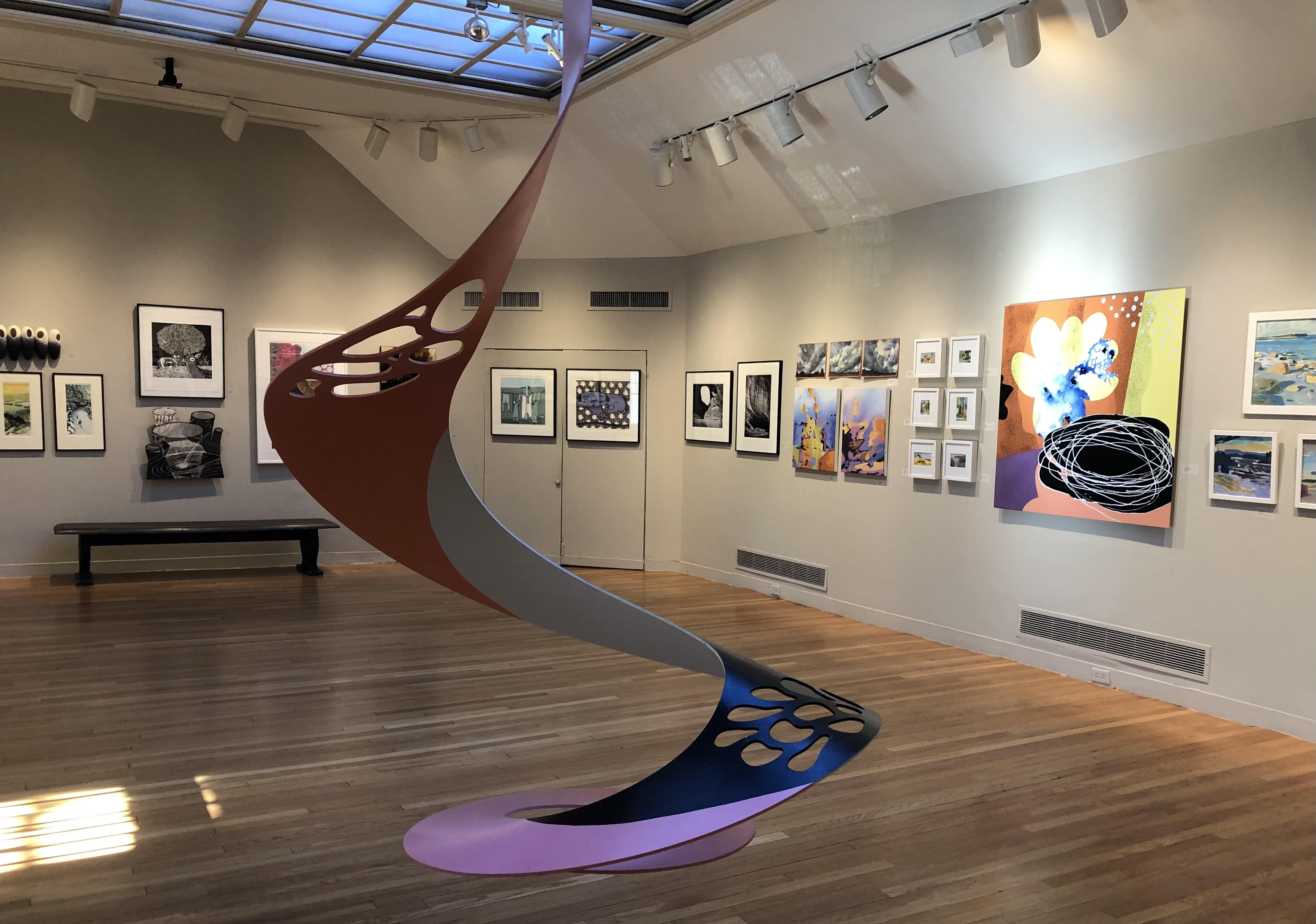
Here are a few more photos: from cold, frosty walks; from a nice, warm art gallery featuring a circus of skate-egg-case performers; and from Kristina’s visit to balmy North Carolina.

Read Full Post »

Photo: Jordan Salama.
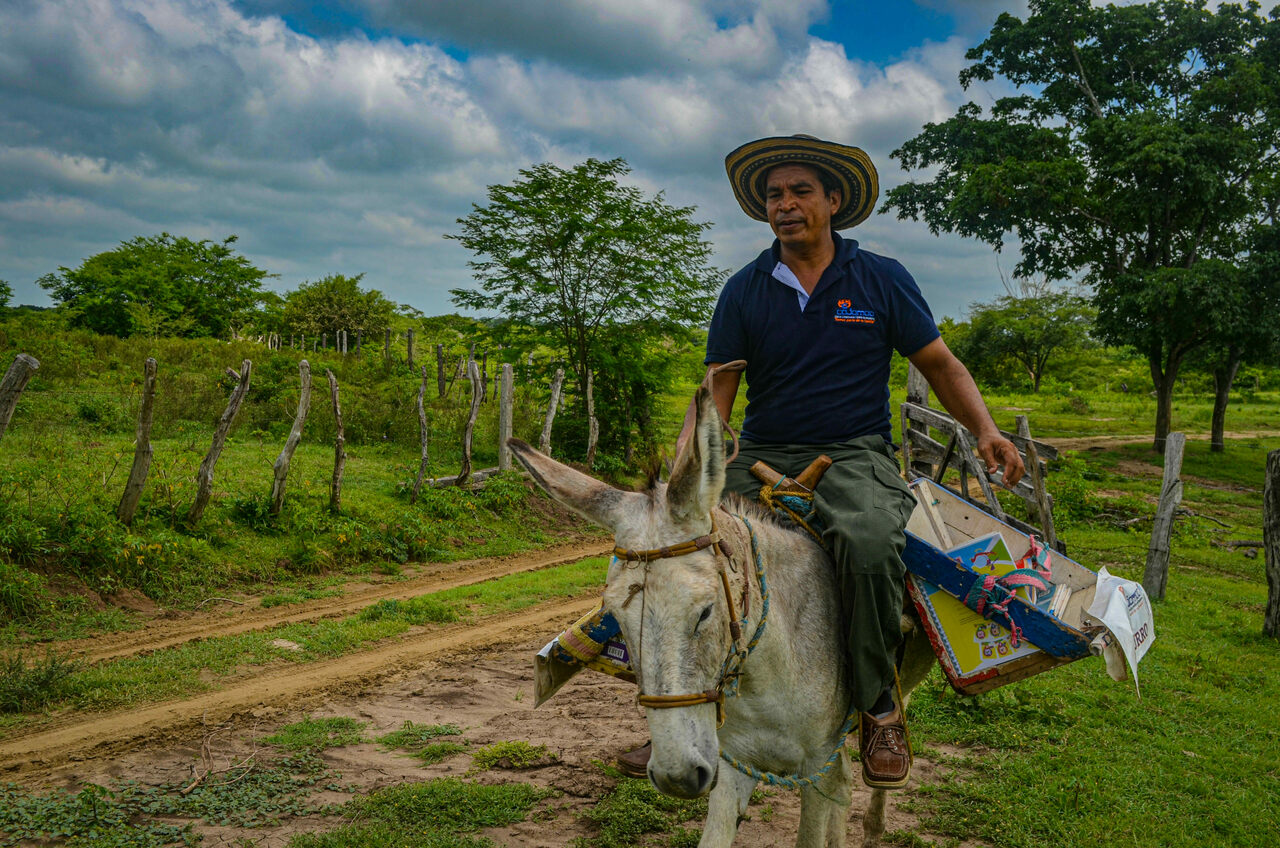
Luis Soriano and Beto, one of his two burros, set out into the Magdalena countryside with books for children who live on isolated farmsteads in Colombia.

Hannah, a friend since preschool, knows I love stories about unusual libraries. (Search on the word “library” at this blog, and see what I mean.)

I love the feeling I get that libraries have a mind of their own, that they reach out to people because we need them. This week Hannah sent me an article about a burro library. Atlas Obscura adapted it from Jordan Salama’s new book, Every Day the River Changes: Four Weeks Down the Magdalena.

“Luis Soriano was born so premature that when he arrived into the world, everyone was sure that he would die. He was born in 1972, in the very same Colombian village of La Gloria (Magdalena Department) where he grew up and made his life. His father was a cattle rancher, and his mother sold fruit and milk on the side of the road. They were hardworking campesino parents who emphasized to their many children the importance of an education over everything else.

“Luis grew up playing in the rolling fields of the Magdalena valley. La Gloria was set inland from the river by about one hour, yet the river wielded great influence upon the town. … It was said that the Magdalena dictated the rains and the floods of the nearby lowlands, which influenced the rains and the floods in La Gloria, and during droughts, the town felt the river’s pain. The river’s beaches and sandy islands yielded the yucca, plantains, and beans of the Caribbean diet — La Gloria is nearly 100 miles from the nearest Caribbean seaside town, but yes, its people will tell you, it is indeed a Caribbean place.

“Raised in the countryside, Luis learned things from the land that people from the city never understood. In the hot, humid afternoons, a line of ants hurrying across the path meant that the skies were about to open and intense rains would fall and freshen the air; at night, the sudden silence of the frogs and the toads meant that another person was approaching in the darkness. From watching the birds, he gathered certain observations about their daily routines, like which of the trees the flocks of red-and-green macaws preferred for their nightly roosts and at what hours of the day the sirirí sang its lonely song. …

“But Colombia’s escalating violence in the 1970s and ’80s meant that Luis would not be able to stay. When the paramilitaries and other criminal groups plagued La Gloria and the surrounding countryside, Luis’s parents sent him and his siblings to live with family in Valledupar, hours away. His life playing among the animals was replaced by the loud, gritty streets of a valley city.

“By the time Luis finished high school and returned to La Gloria, he decided, maybe as a product of all of this learning and absorbing in his own life, that he wanted to become a schoolteacher. He got a job in a small, rural primary school in nearby Nueva Granada, where he taught reading and writing. At the same time, he completed a remote degree from the Universidad del Magdalena.

“None of his students did any of their schoolwork or seemed to make any progress in the first few years, and Luis blamed himself for it. He thought he was a bad teacher [but] he realized that many of the children, living on isolated farmsteads that were several miles along narrow dirt paths from the nearest school, couldn’t practice reading at home because they didn’t have access to books. A teacher with limited resources himself, he decided to do the only thing he could: bring his own books to them.

“And so, before dawn one day in 1997, he took one of his donkeys and a stack of books and set off across the countryside. Covering several miles of difficult terrain, he stopped at the homes of each one of his students and read with them, before lending them the book and telling them he’d be back the next day to pick it up. And in this manner, he returned day after day, in the early hours of morning, well before school started, for he knew from experience that families living in the fields rose with the first song of the sirirí and the crows of roosters in the dark.

“More than 20 years on, he hasn’t stopped.

‘At first, people saw me as nothing more than a half-insane teacher with some books and his donkey,’ Luis liked to say. ‘Without realizing it at the time, I’d created the very same rural traveling library that the world now knows as the Biblioburro.’

“Biblioburro started out with just seventy books, all of them Luis’s own, and only one donkey. He quickly added a second donkey, affixing wooden bookcases to both of their saddles for ease of transport, and named the two animals Alfa and Beto (alfabeto, alphabet in Spanish). He started extending and diversifying each day’s route to reach more children in the area. When the beloved Colombian national radio broadcaster Juan Gossaín got wind of the Biblioburro story in 2003 and shared it with his listeners, book donations from around the world started pouring in — today, Luis boasts a collection of more than 7,000 titles.

“Yet for all the international attention, it remains a humble operation. When Luis sets off on a Biblioburro visit, he does it alone, quietly, with his two trusted donkeys. Often, he won’t encounter another person for hours as he makes his way across the rugged, lonesome terrain — an uncomfortable ride, and an even more arduous walk, beneath the merciless sun. But the children who live in these lonely places await the arrival of the Biblioburro and its stories with great fervor, running wide-eyed toward Alfa and Beto when they spot them on the horizon.

“Perhaps, in the children he serves, Luis Soriano sees some part of himself. He sees that they can beat the odds — for while Luis has easily become the most famous person to ever come from La Gloria, at the moment of his birth, you would have been hard-pressed to find anyone who imagined he would have resurged from his situation as well as he did.

“Except for one person, that is. As the story goes, his parents called upon an older woman, who was very respected in town, to come examine the child and give him her blessing. Minutes after Luis’s birth, she made her way over to the house and stood over him, looking his tiny body up and down, seeming to ponder whether he would be destined to live as long as she had. After several moments, she spoke. ‘This little one, he isn’t going to die’ was what the old woman said (though who knows if she actually believed it herself). ‘He is going to grow up and become a doctor, and he will save this town.’ “

He did not become a doctor, but whether he saved his town, you can decide after reading more at Atlas Obscura, here. P.S. I just noticed I had a short post about the burro librarian in 2015, here!

Read Full Post »

Photo: Classical Voice America.
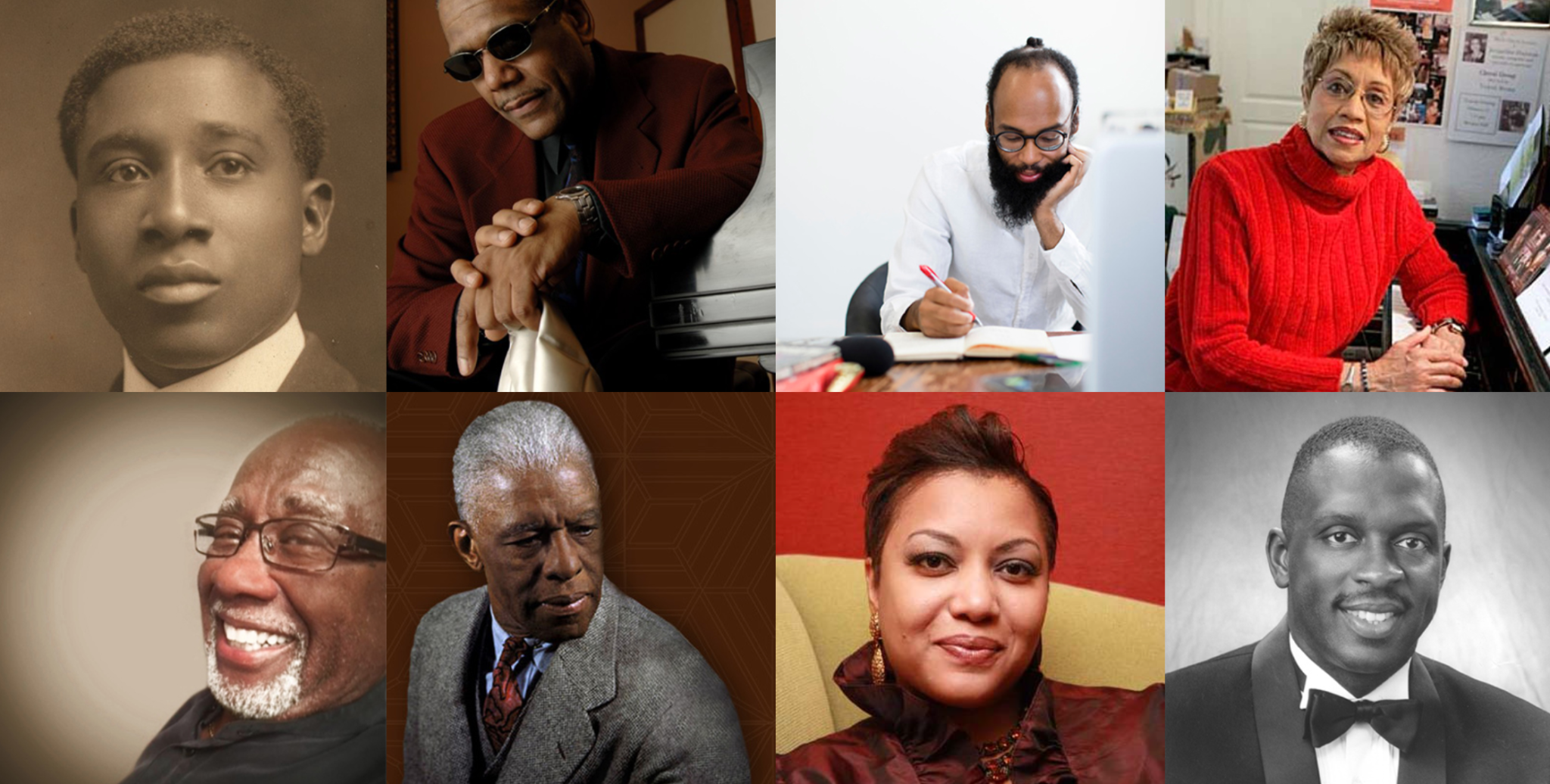
The composers represented in the African Diaspora Music Project include (top row, left to right) Nathaniel Dett, Donal Fox, Anthony Green, and Jacqueline B. Hairston, and (bottom row, left to right) Robert A. Harris, Roland Hayes, Lori Hicks, and Moses Hogan.

During lockdown, I read an excellent biography of Black classical singer Marian Anderson and learned a lot I didn’t know about Black musicians and composers of the early 20th century. To America’s shame, most of these musicians had to seek training and experience in Europe, which was more open to giving their talents space to grow.

There are still challenges for Black musicians, especially in the classical arena, which is why Louise Toppin has created the African Diaspora Music Project.

Xenia Hanusiak at Classical Voice America has the story.

“ ‘How do you move something from being token to intentional?’ asks musical polymath Louise Toppin. This provocation is just one of the many questions that occupy the mind of the international scholar, opera singer, and activist. As a musical avatar who has performed at Carnegie Hall and Elbphilharmonie, Toppin is on a mission to recalibrate who, what, and how we program our concert seasons to enable a more equitable representation of music from composers of African descent. She is seeking a sustained and systemic cultural shift.

“Toppin’s solution? Her recently launched African Diaspora Music Project, a database that houses nearly 4,000 songs and 1,200 symphonies by composers of African descent. …

‘We need to stop presenting one movement of Florence Price for Black History Month and giving no time to rehearse it,’ she says, ‘and then spend two weeks on the Beethoven Ninth Symphony that everyone has played for the last 30 years.’ … 

“The spotlight programming on African American composers during this year’s post-COVID season openers points to recent mea culpa moments. The staging of Terence Blanchard’s Fire Shut Up in My Bones at the Metropolitan Opera on opening night represented the first production of an opera by a Black composer in the company’s 138-year-old history. Riccardo Muti conducted a work by Florence Price for his opener with the Chicago Symphony. The question arises about what happens next.

“ ‘Before the pandemic, I was talking to programmers about their programming in Black History Month,’ says Toppin. ‘You are bringing in singers of color to sing Mozart? What does this have to do with Black History Month?’

“You might think Toppin is angry or frustrated with the historical lack of representation of African American composers in programming. But in our recent Zoom conversation from her office at the University of Michigan’s School of Music, Theatre & Dance, where she is professor of music and voice, Toppin presented her case with high-octane optimism and boundless passion.

“Her life’s work is genetically pre-determined to advocacy and pushing boundaries. Toppin’s commitment continues the legacy of her father, Edgar Allan Toppin (1928-2004), an author and professor of history specializing in Civil War, Reconstruction, and African American history. His accomplishments were many. But perhaps his most enduring legacies eventuated as board president of the Association for the Study of Afro-American Life and History. In this role, he was instrumental in turning Black History Week into Black History Month in 1976. …

“Toppin’s database is built on her lifelong commitment to her cause. She has been researching, recording, editing, and performing African American music across the globe. In October, Toppin gave a recital dedicated to the songs of Harry T. Burleigh — one of the most influential figures in the history of American song — at London’s Oxford Lieder Festival. The impetus for her database is further inspired by the vocal competition on African American art song and opera that she co-founded with tenor George Shirley. Toppin realized pretty quickly that the same repertoire kept resurfacing in the competition. So, the idea of a database to expand knowledge of the repertoire for the young singers began to take shape.

“ ‘My father’s passion for history as a public historian — not someone who spent his time just writing works for an academic audience, but hosting television and radio shows, writing for newspapers, finding ways to reach a wide audience — has deeply informed my approach and scope for this project.’ …

“Toppin’s father devoted his life to academia, but in equal parts he shared his work with his children. For the Toppin household, the line between his work and their play entwined with daily life.

“ ‘When I was a little girl, my father would take me to the library, and I would do the microfiche with him,’ says Toppin. ‘He would also take me to the stacks. He would teach me to look things up for him. He would give me a date. I could barely read, but I could manage January 1865.’ …

“Toppin began her African American Music Diaspora project in earnest during the 1990s as a way to catalog the music she had been collecting. She became a doctoral research student of Willis Patterson, bass-baritone and professor emeritus associate dean at the University of Michigan, who edited what the New York Times described as a ‘ground-breaking anthology of black art songs’ in 1977. ‘It made an international splash, and it is still selling,’ says Toppin.

“ ‘While I was organizing his music, I made sure that I made extras copies. It was part of what inspired me to start collecting. I had the foresight to see and record everything you see on the data base today: Dedications, dates, performances, biographical information, and recordings are all part of the catalog.’ ”

More at Classical Voice America, here.

You might also be interested a New York Times article on the importance of Europe for Black composers neglected at home. It begins, “In early September 1945, amid the rubble of a bombed-out Berlin, the Afro-Caribbean conductor Rudolph Dunbar stepped onto a podium and bowed to an enthusiastic audience of German citizens and American military personnel.

“The orchestra had gathered in an old movie theater functioning as a makeshift concert hall in the newly designated American zone of the city. First on the program was ‘The Star-Spangled Banner.’ Then came a fairly standard set of orchestral pieces, with Carl Maria von Weber’s ‘Oberon’ Overture followed by Tchaikovsky’s ‘Pathétique’ Symphony. But one piece stood out from the rest: William Grant Still’s ‘Afro-American Symphony.’ When it premiered in 1931 in Rochester, N.Y., it was the first symphony by a Black American to be performed by a major orchestra.” Europe helped that happen. Continue here.

Read Full Post »

Photo: Tom Hansell.
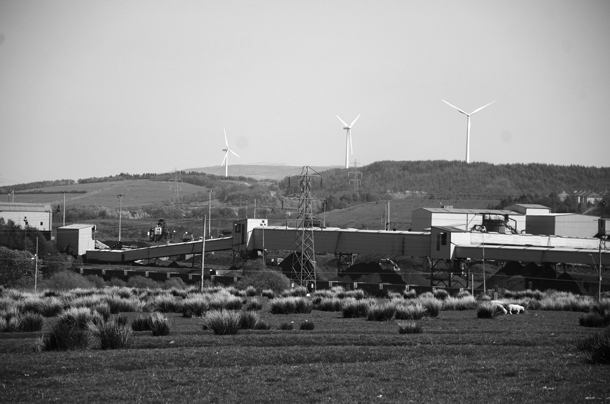
Wind farm in Wales coal country.

It’s possible that a US Senator who makes money off coal hasn’t gotten the message, but there are miners and mining unions getting practical about the future. This Living on Earth story appeared even before the devastation of Covid was added to the troubles of mining communities.

“STEVE CURWOOD: Some of the fiercest opposition to climate action in the US has come from regions that built their economies on fossil fuel extraction. Think Texas and Oklahoma for oil and gas and especially Wyoming, Kentucky, West Virginia, Pennsylvania, and Ohio for coal. Those regions have been hit hard economically as coal production dropped, leaving miners out of work, and their communities with shrunken tax bases and fewer paying customers for local businesses. It’s a story that has also played out in Wales in the UK. The experiences on both sides of the Atlantic are the theme of Tom Hansell’s new book, After Coal: Stories of Survival in Appalachia and Wales. … So, Tom, how did you get involved with the story of After Coal?

“TOM HANSELL: I learned about this long-term exchange that had been started by, through the center for Appalachian studies here and learned that they were bringing students and community members over to South Wales where the coal mines had shut down in the 1980s. And so I thought that would be really interesting to go over, gather stories of how those communities had survived, bring them back to Appalachia, and start an international conversation about how communities can survive the loss of the main industry that they were built around.

“CURWOOD: Now, one of the most interesting parts of your reporting here, Tom, is about the unions. And in both places, unions have been a major part of how these coal communities’ function. And one of the things that’s really interesting about the union phenomenon, it’s like a huge, almost secular society of the people who live in these communities. …

“HANSELL: I was really interested to learn that in Wales, the unions were not just doing these gathering spaces you were talking about and building political power for the miners, but they were also providing continuing education services. There was a whole system of miners’ libraries and free courses after hours so that miners could continue their education and fully participate in civic life. [And] then other kind of cultural aspects of the unions including male voice choirs or brass bands are big things happening in the UK. In Appalachia, union halls also very much community gathering places, places where local foods are celebrated, places where you can hear great traditional music.

“But the difference between the actually complete domination, closed shop and nationalized industry in the UK and the private industry and the lesser power of the unions in the United States was also pretty much a stark contrast. … These cultural spaces, these democratic spaces, for the most part, were built up around this industry, and what is there to take their place when the industry crumbles? [People] are still gathering sometimes in churches or chapels, sometimes around arts projects. There were some interesting arts projects, particularly the higher ground of Harlan County project that I followed in Eastern Kentucky that provided really interesting ways for diverse groups of people to participate in making something new that spoke to their identity and their history and their hopes for the future. [In America, there] is a lot of community life happening, but it’s perhaps a lot more dispersed than it was in the days when union halls were the place that you went to see your neighbors. …

“CURWOOD: How do we support those communities affected by taking the economy greener and climate disruption? …

“HANSELL: The only way to get deep and lasting solutions is to reach out very first to people that have been part of an extractive economy, whether that’s the oil fields, or the gas fields or the coal fields. These places that have been built up around a single industry need other options [and] maybe need some extra support. … For most of the 20th century, there was coal that helped us win world wars, there was coal that helped build the strongest industry and economy in the world.

And very little that wealth was left behind. Most of that wealth went to corporations that were headquartered outside of the coal fields. And there needs to be some system where some of that wealth gets returned. …

“I was actually really impressed at the amount of local farming that’s sprung up really during the time of the After Coal Project. My last project was actually looking at the controversy around a coal-fired power plant in southwestern Virginia. In Wise County, Virginia. That plant eventually was built. … But it was interesting at those forums, people wanted to talk about farming and agriculture and local foods. And it took me a while to listen and to understand that when they were talking about diversifying the economy, that’s where they saw their assets.”

More at Living on Earth, here.

Read Full Post »

Photo: Folger Theatre.
Actor/director Holly Twyford got interested in a new kind of theater project during the pandemic.

How many of us began pandemic activities that we liked enough to keep? In my case, being obliged to do my volunteering via Zoom showed me there is often a greater feeling of individual connection when I can see English students’ faces up close on screen instead of in a large room. What new way of doing things did you decide to keep?

In one example, an actress was invited to teach elderly shut-ins during the down time and found she liked it. Peter Marks reported the story for the Washington Post.

“In the courtyard of an independent living residence in Rockville, Md., Holly Twyford brought her acting class to order. With the script of Spoon River Anthology in front of them, one of her students, 93-year-old Shelly Weisman, recited the words of Lucinda Matlock, a character who speaks of a marriage that lasted seven decades.

“ ‘I spun, I wove, I kept the house, I nursed the sick. I made the garden, and for holiday rambled over the fields where sang the larks,’ Weisman declaimed, as Twyford — long one of Washington’s premier actors — listened.

“ ‘I love that piece,’ Twyford said at last.

“ ‘I do, too,’ Weisman replied. ‘I love her.’

“And so it went for an hour with Twyford and several residents of Ring House, in the Charles E. Smith Life Communities, off Rockville Pike. Organized by Theater J, an arm of the Edlavitch D.C. Jewish Community Center, the class wasn’t just an exercise to nourish the artistic spirits of theater-loving seniors. It was an invigorating lifeline, too, for Twyford. Sidelined by the pandemic from pursuing her customary evenings-and-matinees vocation, the actress was hired by Theater J Artistic Director Adam Immerwahr to teach enrichment courses and earn some needed cash.

“ ‘The pandemic has been a nightmare for us who depend on large, live audiences,’ said Twyford, a ubiquitous presence on Washington stages, in everything from Shakespeare to Sondheim. When covid-19 collapsed the theater industry, Twyford lost two acting and two directing jobs.

‘I can only say Adam subsidized many out-of-work actors and directors by saying, “Hey, you should teach a class.” … That’s what he did for me.’ …

“Theater J, with only a handful of full-time staffers, took on a sizable mission, hiring dozens of theater folk to teach more than 50 classes, most of them virtual. …

“Angela Hughes, a die-hard theatergoer who lives in Northern Virginia, has enrolled in 16 of Theater J’s virtual classes. ‘It was a way to have theater in my life,’ she said in a phone interview. …

“The combination of pandemic isolation, audience fascination and artist deprivation created highly favorable circumstances for Theater J’s initiative: From July 1, 2020, to June 30, more than 700 people from 23 states and Israel, Canada and Australia took the company’s Zoom courses, according to Immerwahr. During that period, he has paid out more than $40,000 in fees to his improvised faculty.

“That might not boil down to a king’s ransom — national philanthropic organizations, such as the Actors Fund, have doled out millions. But every extra paycheck helps when one is scrambling.

“ ‘At times, it’s been serious,’ Immerwahr said of the need in the D.C.-area theater community. ‘We’ve had people who couldn’t qualify for unemployment, because they worked in seven different states.’

“Naomi Jacobson, another familiar talent to Washington theatergoers, has taught six courses for Theater J, including ‘Inside the Actor’s Process’ and ‘Inside the Rehearsal Room: “Collected Stories,” ‘the latter with actor Emily Whitworth and Immerwahr. ‘I had nine months of work lined up, and it all went away,’ she said, noting that she took her pension early to make sure she and her husband, actor John Lescault, could pay their mortgage.

“While Lescault carried on in the recording booth in their basement for his side business, narrating books for the Library of Congress, Jacobson built up a coaching practice for actors and public speakers in other professions. How she’ll balance the pedagogical pursuits with her acting life remains an open question: She is scheduled to return to the stage in September to portray Ruth Westheimer in Mark St. Germain’s one-person Becoming Dr. Ruth at Theater J. …

“It so happens that Twyford is directing Jacobson in the piece, a process they began before the shutdown. When that assignment abruptly ended, Twyford [says] ‘I did apply for a job at a hardware store, and I was turned down,’ she said. ‘I know tools and I build things, and it was really harsh to get that rejection.’

“But Immerwahr came calling, which was why on this warm August day, Twyford had driven to Rockville to teach the weekly sessions of her monologue-preparation class to students in their 80s and 90s, one at Ring House and another at its sister building, Revitz House. …

“The students had been asked to choose speeches from the script, a compendium of the more than century-old poems that make up Edgar Lee Masters’s cycle of ordinary townsfolk, narrating their personal tales from the afterlife.

“Weisman wasn’t sure at first about the material. ‘I said, “Why on earth did you pick this? It’s people speaking from the grave! We’re close to the grave!” ‘ The teacher thereby learned quickly that these pupils were not shy about speaking up. …

“Over several weeks of talking and rereading, though, she came to understand the value of immersing herself in the persona and hardships of her character. ‘As I was reading it over and over, it became much more real to me,’ Weisman said. ‘Every life has disappointment and tragedies. Lucinda didn’t dwell on it.’ …

“[Says Twyford] ‘Shelly asked me, “What have you learned about 90-year-olds?” I gotta say, talk about some role models! … These folks, they just haven’t stopped learning.’ “

More at the Post, here.

Read Full Post »

For the holidays, consider the Alchemist’s beautiful raku pottery, offerings from nonprofits, or generally off-the-beaten-path treasures like those at Luna & Stella.

You know that many of the things on your holiday gift list are sitting in container ships in harbors around the country, so let me draw your attention to some of my favorite nonprofits and small businesses with unique presents ready to ship right now. Do something different this year.

I’ll start with Beautiful Day, one of my favorite nonprofits. I buy gift boxes there for family members and myself because I’m so impressed with how the granola and granola bars get made at Beautiful Day. It’s all part of a training that helps refugees learn about US workplace norms so that after they finish the program they can get jobs with local companies that love to hire them. If you want to take advantage of Beautiful Day’s 15% Shop Small discount, use code SBS21 at checkout before 11:59 p.m., Sunday, 11/28/21.

Dean’s Beans, a coffee seller, is not a nonprofit, but the environmental and social justice work they do in the countries where they source beans makes me think I’m doing a good deed while drinking my very favorite coffee. Consider gifts from Dean’s for the coffee drinkers on your list.

UTEC is a nonprofit that works miracles with teens who’ve been in trouble with the law, teaching marketable skills, including how to make these handsome cutting boards.

I’d also like to highlight items from a few folks who have engaged with this blog for years. I really feel like I know them now. Pottery from the Alchemist is available as tree ornaments, coffee mugs, gorgeous raku vases, and more.

Or how about books? Blogger Laura Graves sells young adult fantasy novels from her highly imaginative Great Library series here. Francesca Forrest also writes novels, including the delightful Pen Pal and an otherworldly series beginning with The Inconvenient God, here.

You can buy singer-songwriter Will McMillan’s music on Spotify, among other places. Perhaps my favorite is the album Blame Those Gershwins that Will made with composer Steve Sweeting, here. Blogger friend Tiffany Arp-Daleo makes colorful abstract art that she turns into items such as T-shirts and coffee mugs. Check her out here.

And don’t forget Luna & Stella (my daughter’s jewelry company) and the Shop Small sale, where she’s offering 15% off through Monday, 1/29/21.

Read Full Post »

Photo: Washington Post.
The city of Anchorage sits on the homeland of the Dena’ina tribe. The Anchorage Museum installed “This is Dena’ina Ełnena” on its facade as part of its land acknowledgment efforts to recognize the Indigenous people of a place.

Now that more of us are paying attention to those who were living in North America before First Contact, a tool has been created that lets us check which tribes lived where we live now.

I sent my zip code by text to (907) 312-5085 and learned I live on former Nipmuc and Pawtucket land. The return text (enabled by land.codeforanchorage.org) also taught me how to pronounce Massa-adchu-es-et. Now I need to look up how the Nipmuc and Pawtucket tribes are or aren’t related to the Wampanoag, as I always thought it was Wampanoag land in this part of Massachusetts.

You can find information about the land initiative in an article called “We’re Still Here” at the Washington Post.

I was also interested in an article at the74million.org about the history that Rhode Island’s indigenous children get in public school.

“Growing up in Charlestown, Rhode Island, Chrystal Baker remembers reading a textbook in history class that said the Narragansett Indigenous people, who have lived in southern New England for tens of thousands of years, were extinct.

‘We’re not extinct,’ the young student ventured, nervous about contradicting the lesson, but feeling she had to speak up. ‘I’m a Narragansett.’

“No response came from her teacher or classmates, recalls the Chariho Regional School District alum, who graduated in 1986.

“ ‘It just didn’t matter,’ she told The 74. ‘You were insignificant.’

“Now, decades later, Baker has two children in the same school system who have navigated similar experiences of hurt and invisibility. …

“ ‘In history class, it’s mostly the history of the colonizers,’ said her daughter Nittaunis Baker, 19, who graduated from Chariho High School in spring 2021 and now attends the University of Rhode Island. 

“ ‘We didn’t really talk about Native people that much.’ …

” ‘There is no United States history, there is no Rhode Island history, without Indigenous history,’ the West Warwick mother told The 74.” Read how the state is now handling indigenous history at the74million.org.

Photo: Asher Lehrer-Small/ the74million.org.
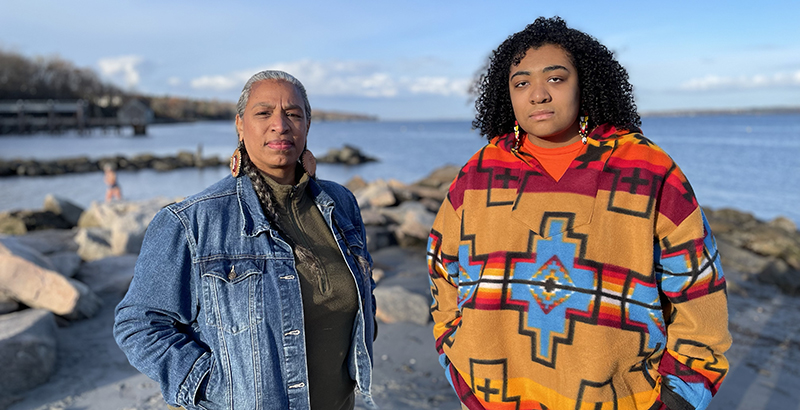
Chrystal Baker and her daughter Nittaunis on the water at the University of Rhode Island’s bay campus, where the 19-year old studies marine biology. They belong to the Narragansett tribe.

Read Full Post »

« Newer Posts - Older Posts »