Feeds:
Posts
Comments

Archive for the ‘Uncategorized’ Category

Photo: Tim Street-Porter.
The view looking across the Los Angeles Music Center Plaza toward the Dorothy Chandler Pavilion, one of four venues to pass a new UL verification program for indoor air quality.

We have learned so much in the past year! Remember when we thought Covid-19 might be like Ebola, when we were advised to wipe down all the groceries with bleach? Gradually we learned that although it might be possible to get the coronavirus from surfaces, the air we were breathing in close quarters was the real danger. Even now, when more people are getting vaccinated every day, spending time in crowded indoor spaces with poor ventilation could extend the life of the scourge.

That is why people who manage buildings, once concerned that they be airtight to keep in heat and air conditioning, are now much more concerned about ventilation. How is the public to know which buildings will be safe to enter?

Jessica Gelt writes at the Los Angeles Times, “The Music Center in downtown Los Angeles [recently announced] that it is the first performing arts organization in the country to receive a UL ‘healthy building’ verification, representing high standards for air quality at four venues — Walt Disney Concert Hall, Dorothy Chandler Pavilion, Mark Taper Forum and Ahmanson Theatre.

“Don’t throw away your mask just yet, though.

“ ‘This isn’t necessarily a COVID program. It’s not about putting up a force field for keeping a building completely safe from COVID. You can’t do that,’ said Sean McCrady, director of assets and sustainability, real estate and properties at UL, the safety science company that issues the Verified Healthy Buildings for Indoor Air Verification Mark, which will be posted at the entrances of Music Center venues.

“McCrady reiterated the scientific consensus that air purification and good ventilation can reduce airborne germs in indoor spaces. In September the Centers for Disease Control and Prevention updated its guidance to say the coronavirus spreads most commonly through the inhalation of droplets and tiny respiratory particles that can remain suspended in the air.

“The UL verification program emphasizes filtration, ventilation and the overall hygiene of air systems and of buildings in general. Buildings are required to use MERV 13 air filters, which remove particles between 1 and 5 microns. The coronavirus is smaller than that, but McCrady said the filter has an 85% efficacy rate and captures much of the particulate matter to which the virus hitches itself. Prior to COVID-19, the industry standard was the lower-performing MERV 8 filter.

“UL verified buildings must bring in fresh air and move it effectively around the space. The Music Center will be facilitating four to six air changes per hour, which is recommended by the American Society of Heating, Refrigerating and Air-Conditioning Engineers.

That means the air volume of a building will be replaced an average of every 10 to 15 minutes. …

“The hygiene of the air filtration and ventilation systems also is crucial. If mold spores or fibers are present, the technology won’t work as it should. … UL also looks at the chemicals used in the cleaning of the space and makes sure that they don’t pollute the air. …

“The Music Center hopes the UL verification will help to maintain the trust of audiences. … If the science surrounding the virus and how to protect against it changes, or if the CDC or more local health officials issues new guidance, the Music Center intends to pivot too. …

“ ‘This is an ongoing process. We will not be stopping when we open our doors,’ ” Music Center COO Howard Sherman told the Times. More here.

Photo: Michelle Chiu
The Walt Disney Concert Hall in Los Angeles has Healthy Building Certification.

Read Full Post »

Photo: Society for Science.
Seventeen-year-old Dasia Taylor was named one of 40 finalists in the Regeneron Science Talent Search, the country’s oldest and most prestigious science and math competition for high school seniors.

These are things I already knew about beets: girls of my mother’s generation used a cut beet to color their cheeks; boiling beets makes a good egg dye. Today I learned from a teenager that beets’ can detect infection.

Theresa Machemer reported at Smithsonian, “Dasia Taylor has juiced about three dozen beets in the last 18 months. The root vegetables, she’s found, provide the perfect dye for her invention: suture thread that changes color, from bright red to dark purple, when a surgical wound becomes infected.

“The 17-year-old student at Iowa City West High School in Iowa City, Iowa, began working on the project in October 2019, after her chemistry teacher shared information about state-wide science fairs with the class. … This January, Taylor was named one of 40 finalists in the Regeneron Science Talent Search, the country’s oldest and most prestigious science and math competition for high school seniors.

“As any science fair veteran knows, at the core of a successful project is a problem in need of solving. Taylor had read about sutures coated with a conductive material that can sense the status of a wound by changes in electrical resistance, and relay that information to the smartphones or computers of patients and doctors. While these ‘smart’ sutures could help in the United States, the expensive tool might be less applicable to people in developing countries. … On average, 11 percent of surgical wounds develop an infection in low- and middle-income countries, according to the World Health Organization, compared to between 2 and 4 percent of surgeries in the U.S.

“Infections after Cesarean sections particularly caught Taylor’s attention. In some African nations, up to 20 percent of women who give birth by C-section then develop surgical site infections. Research has also shown that health centers in Sierra Leone, the Democratic Republic of the Congo and Burundi have similar or lower rates of infection, at between 2 and 10 percent, following C-sections than the U.S., where rates range from 8 to 10 percent. But smartphone access is markedly different. …

“ ‘I’ve done a lot of racial equity work in my community, I’ve been a guest speaker at several conferences,’ says Taylor. ‘So when I was presented with this opportunity to do research, I couldn’t help but go at it with an equity lens.’ …

“Healthy human skin is naturally acidic, with a pH around five. But when a wound becomes infected, its pH goes up to about nine. Changes in pH can be detected without electronics; many fruits and vegetables are natural indicators that change color at different pH levels.

‘I found that beets changed color at the perfect pH point,’ says Taylor. Bright red beet juice turns dark purple at a pH of nine. ‘That’s perfect for an infected wound. And so, I was like, “Oh, okay. So beets is where it’s at.” ‘

“Next, Taylor had to find a suture thread that would hold onto the dye. She tested ten different materials, including standard suture thread, for how well they picked up and held the dye, whether the dye changed color when its pH changed, and how their thickness compared to standard suture thread. After her school transitioned to remote learning, she could spend four or five hours in the lab on an asynchronous lesson day, running experiments. A cotton-polyester blend checked all the boxes. …

“Kathryn Chu, the director of the Center for Global Surgery at Stellenbosch University in South Africa, focuses on improving equitable access to surgical care. ‘I think it is amazing that this young high school scientist was inspired to work on a solution to address this problem,’ the surgeon writes in an email. ‘A product that could detect early [surgical site infections] would be extremely valuable. However,’ she adds, ‘how this concept could translate from the bench to the bedside needs further testing.’ …

“The same non-absorbency that makes standard suture thread hard to dye with beet juice also keeps bacteria out, and vice versa. While cotton thread’s braided structure gives it the ability to pick up the beet dye, it also provides a hiding place for bacteria that cause infections.

“Taylor has been pursuing a line of research since the beginning of her project that might counteract the risks posed by using cotton.”

More at Smithsonian, here. Also at the Washington Post, here.

Photo: Nick Collins via Unsplash

Read Full Post »

Photo: US Department of the Interior.
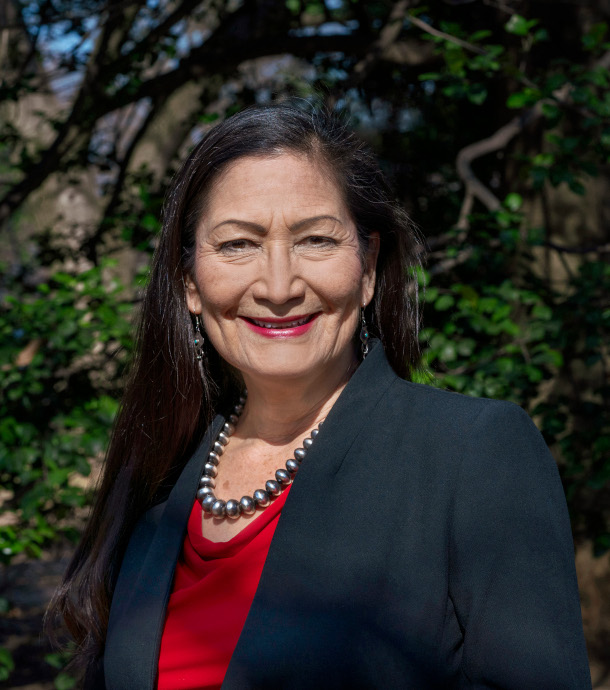
Deb Haaland, Secretary of the Interior, is the first Native American to become a cabinet secretary. She served as a representative for New Mexico’s 1st congressional district from 2019 to 2021.

Deb Haaland, a member of the Laguna Pueblo tribe in New Mexico, recently moved from Congress to her pathbreaking role as US Secretary of the Interior. Indigenous people around the country hope she will be able right some wrongs of the past.

In March, National Public Radio (NPR) and the show Living on Earth had stories about this beautiful gift to America from the Laguna Pueblo tribe.

At NPR, Kirk Siegler said, “With so much land under federal control in the West, it’s long been said the secretary of the Interior has much more of a direct affect on most people’s lives than the president. This experience could arguably be multiplied tenfold on reservations.

“In her confirmation hearing earlier this year, Deb Haaland of the Laguna Pueblo in New Mexico nodded to the fact that the department she now leads was historically used as a tool of oppression toward tribes.

‘This moment is profound when we consider the fact that a former secretary of the Interior once proclaimed his goal to, quote, civilize or exterminate us,’ Haaland said quoting an Interior report from 1851. … ‘I’m a living testament to the failure of that horrific ideology.’

“[Haaland made history] by becoming the first indigenous Interior secretary. She’s promising to begin repairing a legacy of broken treaties and abuses committed by the federal government toward tribes. It’s one pillar of a long and ambitious to-do list of reforms the administration is planning at the sprawling agency that is the federal government’s most direct contact with the nation’s 574 federally recognized — and sovereign — tribes. …

” ‘It feels like we are moving and we are claiming what we could have done a long time ago,’ said Mary Jane Miles, 81, a member of the Nez Perce Tribal Executive Committee in Idaho.

“Miles said a traditional song was sung and there was an impromptu celebration at her tribe’s headquarters the moment Haaland was formally confirmed by the Senate.

“The Nez Perce, or Nimiipuu in their native language, consider much of the Northwest their ancestral land. But through a series of treaties they’re now confined to a small slice of remote Idaho river country. Like most tribes, their land is held in trust by the federal government and leaders here say the U.S. has long shirked its obligation to protect the land, its wildlife and other issues of cultural importance to the tribe.

“Today, the salmon and steelhead trout that were once abundant on the Snake and Clearwater rivers are nearing extinction. Miles also pointed to a legacy of toxic messes from mining that occurred on ancestral Nez Perce land often with little or no consultation by the tribe.

” ‘Sometimes when we look at some of the things that the past has done for our tribe, we’ve noticed that maybe we’ve been taken,’ she said.

“Nationwide, tribal leaders believe the injustices of the past might start to be reversed under Haaland. …

” ‘Protection of this government-to-government relationship is all important to the tribes,’ said Jon Echohawk, executive director and attorney with the Native American Rights Fund in Colorado.

“Echohawk said that relationship is fraught because Interior agencies like the Bureau of Indian Affairs have been chronically underfunded. He says the previous administration also spurned tribal input on major lands decisions like the opening up the Arctic National Wildlife Refuge to drilling, the Keystone Pipeline and the 85% reduction of the Bears Ears National Monument.

“There is already pressure on the new administration to reinstate Bears Ears in Utah or possibly even expand it beyond its original boundaries. The land is rich with artifacts and other cultural resources considered sacred to many tribes. Haaland has said only she’s planning to travel there next month for a listening tour.

“Traci Morris, executive director of the American Indian Policy Institute at Arizona State University, said she expects Haaland to take a measured approach on a lot of controversial issues at Interior given the historic nature of her appointment.

” ‘If she goes in and is radical, you know, who comes behind her, what native comes behind her, all of us will get judged by what she does,’ Morris said.”

Bobby Bascomb, speaking with Haaland at Living on Earth, brought up the subject of fossil fuels because the resistance to the new secretary’s appointment came from supporters of that sector in Congress.

Haaland said, “There’s no question that fossil energy does and will continue to play a major role in America for years to come. I know how important oil and gas revenues are to critical services. But we must also recognize that the energy industry is innovating, and our climate challenge must be addressed. Together we can work to position our nation and all of its people for success in the future.”

More at NPR, here, and at Living on Earth, here.

Read Full Post »

Photo: Rainer Jensen/picture-alliance/dpa/AP Images.
A visitor walks through the exhibition of Aboriginal artist John Mawurndjul at the Sprengel Museum in Germany.

As much as we have appreciated seeing the art of indigenous people around the world, it can’t be right for museums and collectors just to help themselves. In the US, many items now being returned have religious significance for tribes or were raided from burial sites.

Perhaps as art gets repatriated, native communities will show some of the works in their own way. In any case, one country has big plans to get Aboriginal art back from overseas. Tessa Solomon writes at the Art Newspaper that Australia is putting serious money behind repatriation of artifacts.

“The Australian government has pledged A$10.1 million (about $7.2 million) in additional funds over four years toward the return Indigenous cultural heritage objects held in collections overseas. The pilot program was launched in 2018 with a A$2 million ($1.4 million) budget by the Australian Institute of Aboriginal and Torres Strait Islander Studies (AIATSIS), a national institution that supports the cultural resurgence of Australia’s native peoples.

” ‘We wanted to help the nation understand that there was an Indigenous perspective on this history,’ Lyndall Ley, the executive director of the institution’s Return of Cultural Heritage project, told the Art Newspaper.

“The project’s first two years were focused on artifacts held in public collections overseas and will now expand to facilitate the return of objects held in private collections. According to Ley, a U.K.-based collector made the first private repatriation, retuning eight secular artifacts of the Australia’s Yindjibarndi community. …

“A report released in September by AIATSIS under the title Return of Cultural Heritage 2018-20 identified 199 overseas institutions with Aboriginal and Torres Strait Islander cultural heritage collections — collectively containing around 100,000 secular and ceremonial Indigenous objects. Some 33 percent of these objects are held in U.K. collections.

Of the 199 institutions identified by the report, 44 expressed enthusiasm at the prospect of returning Indigenous artifacts to their respective communities.

“The project’s second phase kicks off amid renewed interest. … In March, Arts Council England asked the Institute of Art and Law to develop guidance for U.K. museums on restitution, including advice on ‘dealing with claims and making decisions on the potential return of objects.’

“France voted this earlier this year to pass a bill to return 27 artifacts from French museums to Benin and Senegal. The vote followed a 2018 report on the repatriation of African artifacts commissioned by President Macron from the French historian Bénédicte Savoy and Senegalese economist Felwine Sarr, which recommended the restitution by French museums of works in their collections taken ‘without consent’ unless the institutions can prove the objects where acquired legitimately from former African colonies. Macron pledged in a speech in Burkina Faso that his government would facilitate ‘the temporary or definitive restitution of African heritage to Africa’ within five years.”

More at the Art Newspaper, here

Read Full Post »

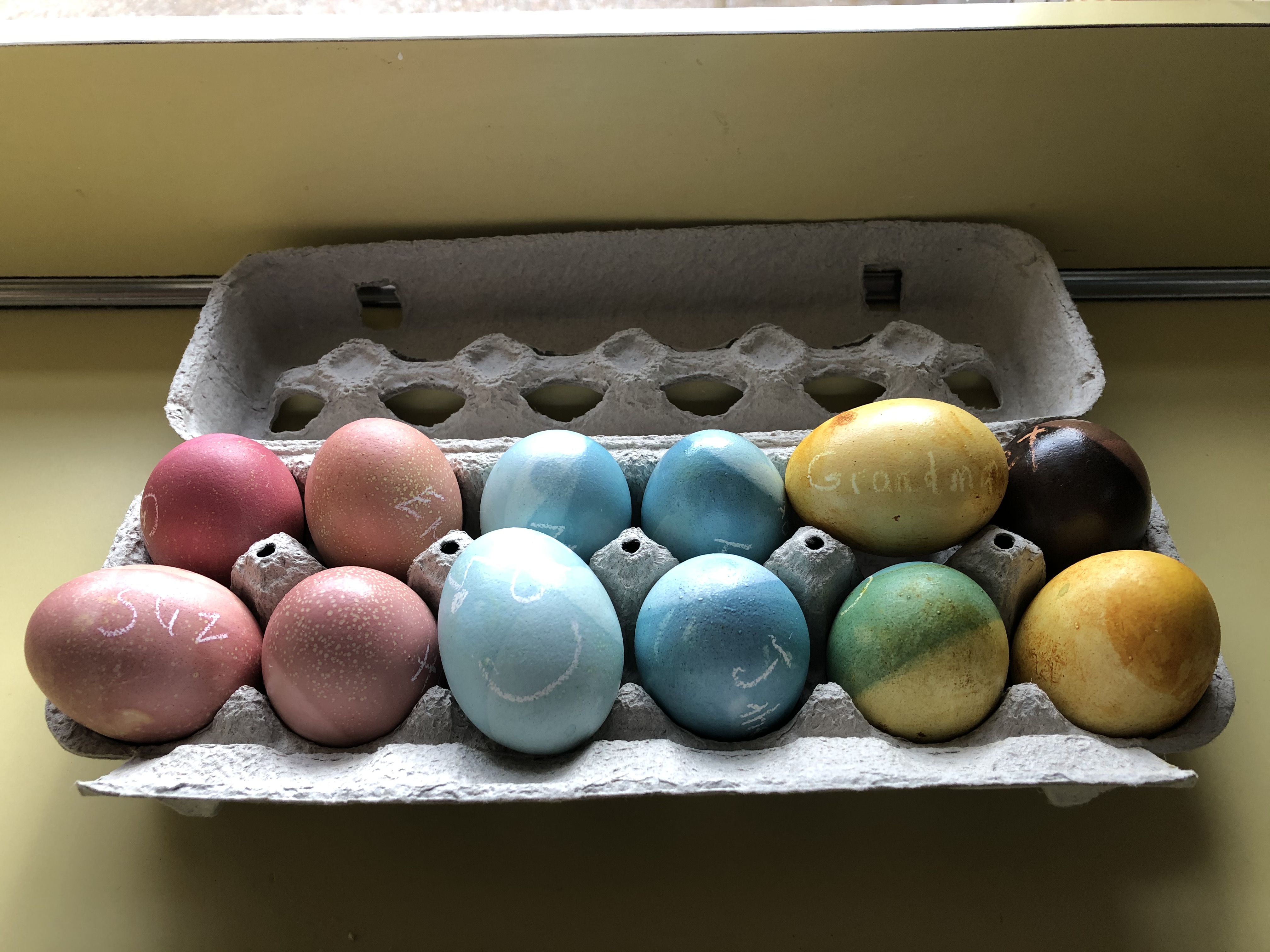
Dyes were made with cabbage, beets, and tumeric because there was a Paas kit shortage this year.

When I made an absent-minded mistake with the egg coloring this year, it occurred to me that misadventures at Easter are sort of a family tradition. For some reason, we like to try new things for this holiday. That’s good. But our adventures frequently lead to hilarious results.

I remember the time our Philadelphia niece and nephew were visiting, and we decided to make bunny cookies from a recipe Suzanne got at Girl Scouts. Barbara went to add milk. The recipe said 2 Tablespoons. She thought it said 2 cups — and, oops! How we laughed!

We turned the cookie batter into something we referred to as “fritters.”

The family has also had lots of experiments with egg-decorating. We’ve tried dipping two sides separately for two-toned eggs; blowing out the raw insides before marbleizing with oil paint floating on water in a bucket; and making Ukrainian wax-resist eggs. Even before John grew up and founded a company that involved visits to Ukraine and employing Ukrainians, he thought we could get Ukrainian egg-decorating instructions and just sit down and do it.

He sat down and did it. I have to say that experiment wasn’t bad.

But I want to tell you about 2021. After not going in a grocery store for a year, I was thrilled to enter at last, and I went looking for white eggs and the Paas coloring kits. The guy who was stocking announced with regret that there were no kits available this year, not even food coloring.

I was floored. But I remembered that one year we made egg dyes with vegetables, so I bought a red cabbage and a beet and went online. One website also suggested tumeric. In three pots, I boiled cabbage for blue, beets for pink, and tumeric for yellow. The tumeric was impossible to strain thoroughly in my strainer and made the yellow eggs all lumpy. (See above.) Plus I forgot the vinegar to set it. The shredded beets worked fine and we ate the leftover beets at dinner.

But I had to do the cabbage twice, and here’s why. The cabbage was the first ingredient I strained after boiling had created a dye. I held the strainer in one hand and the cooled-off pot in the other.

And in true Easter tradition, I poured the dye right down the drain!

Read Full Post »

Photo: Kevin Bacher / NPS, Flickr CC BY 2.0.
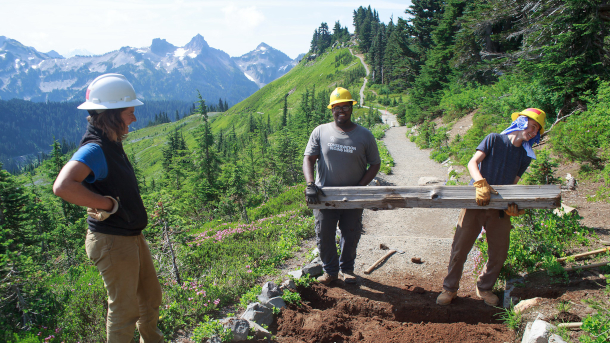
A Student Conservation Association crew is all smiles as they work to restore a trail in the popular Paradise area of Mount Rainier National Park.

I love the way the radio show Living on Earth zeroes right in on whatever environmental issue is most important at any given time. In this episode, it discusses federal plans to tap civilians concerned about climate change — kind of the way FDR tapped civilian energy during the New Deal.

Host Steve Curwood talks to Washington Governor Jay Inslee about how a climate corps could aid conservation, combat climate disaster, and help save energy.

“CURWOOD: The modern CCC harkens back to the Civilian Conservation Corps created by President Franklin Delano Roosevelt in the 1930s. FDR’s CCC put some 3 million men to work in conservation efforts. … Today a Civilian Climate Corps could put people to work reducing the risk of forest fires, restoring wetlands, planting trees, and weatherizing homes both in the United States and abroad. During the Democratic primary, several of President Biden’s opponents also proposed a climate corps. Among them was Washington state Governor Jay Inslee. … Welcome back to Living on Earth, Governor!

“Let’s say that you were to take a look at your own state of Washington for some examples of the kind of work that the CCC would do. You’ve had horrendous wildfires, so I imagine you’re very interested in thinning the forests, the fuel that can add to those. Where else might it be especially useful?

“GOV. JAY INSLEE: Everywhere. This is a ubiquitous opportunity, because anywhere there’s a house, there is an opportunity to reduce energy wastage. And that’s the first place you get clean fuel, the very cheapest, first, most productive fuel, clean energy … stop wasting it. So helping people rehab their houses, get more insulation into their homes, starting with those who are in low-income homes, who frequently are living in places that just waste humongous amounts of energy, so these poor folks are trying to make huge energy payments to the utility company. … Then a part that I think hopefully is more focused on vocational skill development … to really focus on a long-term career, not just in the climate corps. That might be as exotic as, you know, learning how to maintain electric vehicles, because that’s we’re going to be driving. …

“CURWOOD: Many young people I speak to are desperate to do something to deal with the climate emergency, which they see as this humongous freight train barreling at them out of the future, and no way to jump out of the way. …

“INSLEE: I hear this as well, how do I plug in? What do I do? Where do I go, you know, what, you know? And this is just perfect to capture that huge energy that’s out there. [We] want that energy to be released. And I think this climate corps is a way to do that. It will help as well build, you know, public support, political support. …

“CURWOOD: The original Civilian Conservation Corps under FDR reinforced some social injustices, and even segregated black and white corps members into different camps, and there weren’t a whole lot of women that were involved in this. How can this new CCC help progress towards greater equity in our society?

“INSLEE: You’ve put your finger on a very important point. One is the most obvious one, which is economically to give people more economic opportunities. And I’m convinced it will do that big time. [Also] we have so many children, urban children particularly, who’ve never had experiences in the natural world. And giving them these experiences in a vocational setting is life changing for people. …

“My dad and mom used to re-vegetate alpine meadows on the slopes of Mount Rainier during the summer. They ran a group called the Student Conservation Association. [They] were kids, mostly from the East Coast, who came out to Mount Rainier National Park. [Once] they got that shovel in their hands, and once they spent a night in the tent, they were conservationists for their whole lives.”

More here.

Read Full Post »

Talk about making delicious lemonade out of unwanted lemons! Here’s what two creative friends came up with during lockdown.

Sarah Buttenwieser writes at the Daily Hampshire Gazette, “Like so many of us, artist Katy Schneider worried about how to face quarantine and its uncertainty. Rather than bake sourdough, she reached for a bunch of discarded 3-by-4-inch aluminum slides from Smith College, where she’s taught art for 30 years.

‘I knew I could repurpose the aluminum plates,’ Schneider says. ‘I knew I needed a project to get through quarantine. I like working on things that are the same size.’

“She decided to paint shoes each day. ‘I wanted to play with color and texture,’ she says. ‘These tiny paintings became an exercise to keep me in the studio.’

“After a few weeks, she shared the images with friends, inviting them to write stories or poems about the paintings. … Her most loyal respondent was musician, music teacher and songwriter Jim Armenti.

“ ‘Jim wrote about every single shoe painting,’ Schneider says. There were 40 paintings.

“Schneider moved on from shoes. She began to paint other things she found around her house, like ‘laundry in a laundry basket.’ … Meanwhile, she kept sending Armenti images.

“ ‘Jim continued to write a poem about each painting. It was like we became beholden to one another to complete this daily practice, which has become essential. As soon as I am in my basement sitting with my paints, I feel more relaxed. …

“ ‘Unlike portraiture, which I’ve done so much of, these paintings are of things I’ve never focused upon,’ Schneider says. ‘I feel no pressure to match my best work, because I don’t have best work of these objects; it’s all new discoveries. I’m creating these weirdly joyful images during an abysmal time. It’s energizing. I’m having fun with it.’ …

“Schneider enjoys the fact that the slide dividers worked to protect history — slides — and that she’s repurposing them to create an historical document.

“ ‘These images preserve this time in history, as the slides did before they were digitized,’ she reflects. ‘We are all going through this at once, but alone, and there’s something echoed in that from the tiny images, each divided by squares on the wall, as the dividers kept the slides from one another originally.’ …

“Armenti … loved ‘the solidity of the project right away. It was in my wheelhouse. I just like to do the thing — write the poem — much as I like live performance.’

“He doesn’t watch videos of his musical performances and he doesn’t like to return to the poems he’s written, either. Instead, he considers the poems ‘part of my day.’ …

“Before 8:30 a.m., he responds to email, completes chess moves, takes language lessons online — Spanish, Italian and Turkish — and writes a poem in response to Schneider’s daily painting.

“ ‘I think of her paintings as being of things that are overlooked,’ Armenti conjectures. ‘I like to let a narrative emerge from them, for them to take me on an emotional journey.’ ”

More here.

Photo: Concord Art.
Silver Linings: Paintings, Process and Poetryis an exhibit of Katy Schneider paintings and Jim Armenti poems. Visitors can see it at Concord Art until May 13, 2021. Covid safety rules are in force.

Read Full Post »

Photo: Donnel Baird.
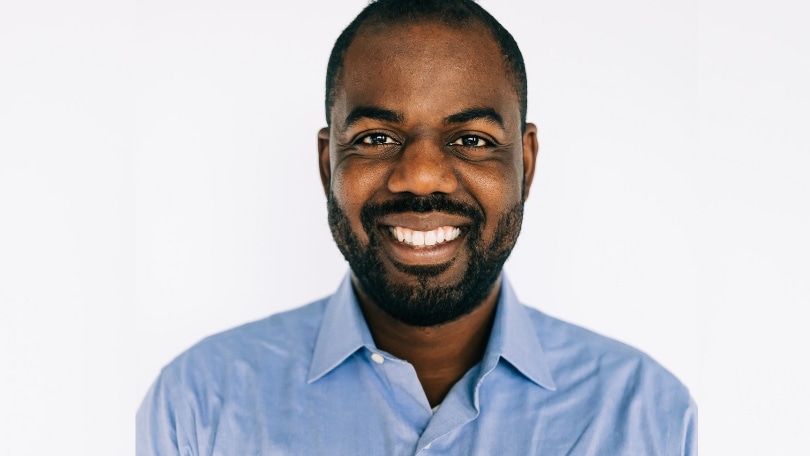
Donnel Baird is the founder and owner of BlocPower, a Brooklyn-based energy technology startup that markets, engineers, and finances renewable energy and energy efficiency technologies to buildings in underserved market segments.

This article starts by showing how a professor and a college friend helped motivate a young man depressed about race in America and then describes how he turned himself into a force for change.

Sarah Kaplan writes at the Washington Post, “Donnel Baird kept his coat on while he toured the aging sanctuary. His breath froze on his face mask as he took in the peeling plaster, the dusty basement, the failing boiler that never seemed able to make Bright Light Baptist Church warm.

But when he peered into the kitchen, the shiver he felt was one of recognition. Every burner on the stove was lit. The oven door was open, its temperature set on high. It was exactly how Baird’s family tried to heat his childhood home more than three decades earlier, in another Brooklyn building with a dysfunctional HVAC system.

“The landlord wouldn’t address the problem, and the family couldn’t afford to move. So they stayed, the need to keep their children warm outweighing the danger of toxic fumes and open flames.

“Baird, 40, has made it his life’s work to ensure other people don’t have to make that choice.

“That’s why he launched BlocPower. Since its inception in 2012, his Brooklyn-based start-up has brought clean energy to more than 1,100 low-income buildings across the New York area. Baird’s business plan is simple: the company replaces heating and cooling systems that run on fossil fuels with greener, more efficient alternatives such as electric heat pumps and solar panels. That reduces the pollution driving climate change while also making indoor air healthier. The gains in efficiency generate enough savings to lower costs for property owners and deliver a profit to BlocPower investors. And the renovations create jobs and increase property values, building wealth in neighborhoods that have long been marginalized. …

“The foundations for BlocPower were laid during Baird’s childhood in Bedford-Stuyvesant, a Brooklyn neighborhood just a few miles from Bright Light. It was a community with a spirit of civil rights activism — the center of school integration protests; the home district of Rep. Shirley Chisholm, the first woman and African American to seek a major party’s presidential nomination in 1972. But the area had also been depleted by predatory real estate practices and ravaged by the crack epidemic.

“By the 1980s, when Baird’s parents emigrated from Guyana, the neighborhood was at a nadir. Buildings were in disrepair, jobs were hard to come by, tensions with police were high. As an elementary-schooler, Baird witnessed a fistfight escalate into a deadly shooting. That taught him about desperation, he says; when someone pulls the trigger, it’s because their back is already against the wall.

“Baird’s family eventually moved to Atlanta, where Baird got scholarships to attend a private high school and then Duke University. Surrounded by Whiteness, wealth and privilege, ‘I really started to see the structural elements of racism in America,’ Baird said.

“Then police in the Bronx killed an unarmed Black man named Amadou Diallo, firing 41 shots at him. The immigrant from Guinea was only a few years older than Baird and had been standing in front of his apartment building when he was killed.

“Baird sank into a deep depression. He might have stayed there if he hadn’t wound up in a course at Duke about social movements taught by historian Larry Goodwyn. He became close with the professor, who called the struggling sophomore into his office one day and told him, Baird recalled, to ‘get my s— together.’

“ ‘He said, “You’re so smart, there’s no excuse for you not to figure out how to plug in and get active on the issue of race,’ ” Baird said. …

“After graduation, Baird moved back to New York to work as a community organizer, then got a job partnering with the Department of Energy to retrofit low-income houses so that they used less energy and cost less to heat.

“Roughly a third of U.S. households have trouble paying energy bills, according to the Energy Information Administration. Wealth disparities and decades of racist housing policies mean that Black and Latino Americans are disproportionately likely to live in homes with broken or inefficient HVAC equipment that is more expensive to operate.

“This energy inequality is a public health crisis: aging gas and oil furnaces — as well as the stoves and ovens used to supplement them — can fill homes with dangerous pollutants. A recent MIT study found that ozone and lung-irritating particles from buildings are the nation’s biggest cause of premature death from air pollution. In the neighborhood around Bright Light, where 67 percent of rented homes suffer from maintenance defects, children are hospitalized for severe asthma at twice the citywide rate.

“It’s also an environmental crisis. The energy needed to heat, cool and operate buildings produces almost a third of the United States’ planet-warming emissions.

” Working on buildings ‘brought all the themes of my life together,’ Baird said. ‘The racial justice stuff, the economic justice, the climate stuff.’ …

“Baird began to envision a company that could raise huge amounts of capital and use it to finance green retrofits in low-income buildings. Investors would be paid back out of a portion of the utility bill savings. Baird would make the venture profitable by embracing technology and seeking out partnerships every step of the way.”

Read how he established his company, BlocPower, here, and what it has accomplished so far.

Read Full Post »

Photo: PD Rearick.
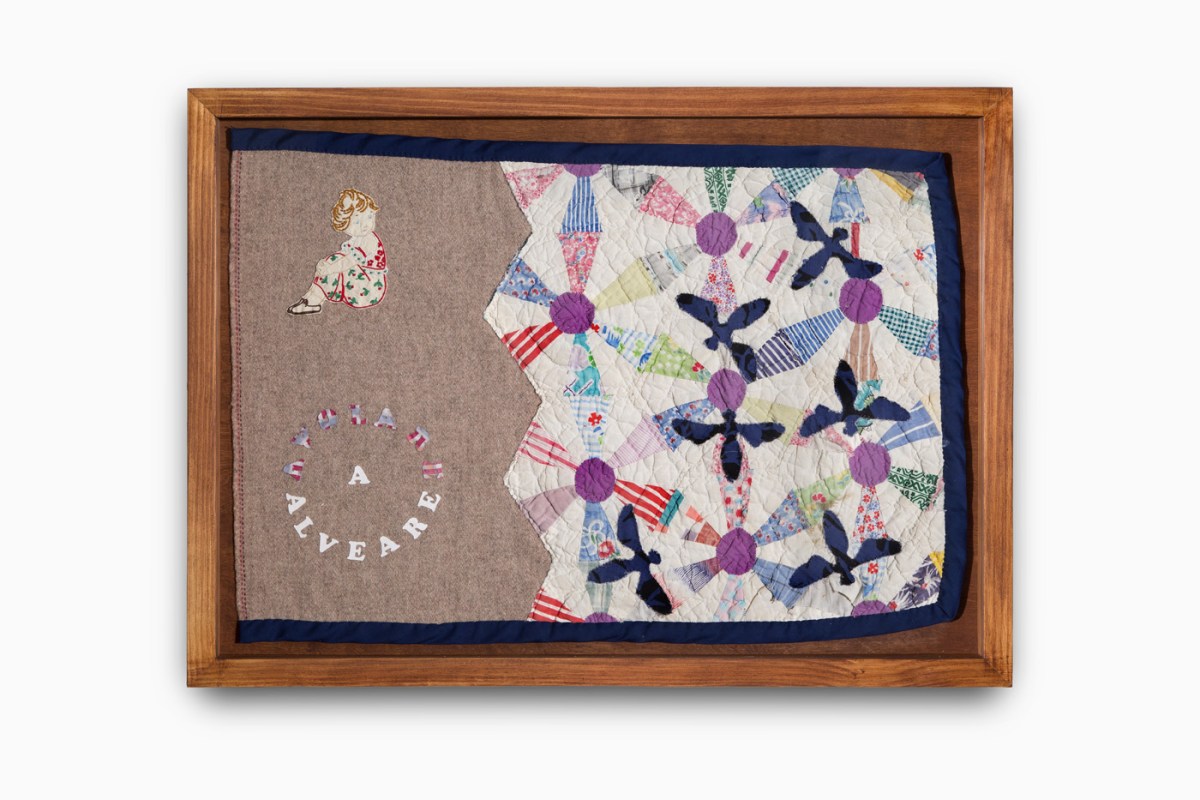
Sarah Rose Sharp’s “Avolare A Alveare (Fly Away from the Hive),” 2016, wool, salvage quilt fragment, found embroidery, printed cotton, iron-on letters, silk, hem binding.

You and your friends have probably already speculated about how many lockdown adaptations will survive the pandemic. Working from home, FaceTime and Zoom calls with distant family, increased handwashing and awareness of aerosols, paying for entertainment online, etc.

In today’s article, an artist praises the Pandemic Unemployment Assistance benefits to freelancers and imagines a world in which basic income could provide a kind of at-home residency for creatives.

Sarah Rose Sharp writes at Hyperallergic that government payments allowed her to create without worry about money during the pandemic.

She says, “One of the basic truisms of freelancing is: You can have time, or you can have resources, but you will almost never have both simultaneously. A foundational lesson of this workflow is doing the work when it’s available and saving as much as possible for the slow times. But its counterpart is this: When times are slow, that’s the opportunity to do your own (uncompensated) thing, and you should not waste this time wallowing in anxiety about the next paid gig.

“I truly never expected the government to identify freelancers as a vulnerable population needing to be covered by unemployment. Mostly 1099 workers pay disproportionately into public benefit systems without being able to access them. Imagine my complete surprise when I discovered that freelancers were being offered unprecedented unemployment benefits through Pandemic Unemployment Assistance. In other words: every 1099 worker is being offered a paid artist residency. …

“In pre-pandemic times, artists competed tooth and nail for residency opportunities. Even when you get them, they tend to conceal sunken costs, such as requiring travel away from your life and home, thus necessitating use of resources you’re granted just to maintain your permanent homestead. You may have to pay to board pets. You may have to ship supplies or buy new ones when you get to New Hampshire or Maine or Houston or a tiny remote island and realize you left the perfect thing back in your studio.

“There are arguably many benefits of destination residencies, from offering new social connections, to providing bucolic surroundings, to the stimulation of a change of scene, but

In my experience, the best conditions for making art involve getting paid to make art where I’ve already built the infrastructure that enables me to make art.

“Since March of 2020, that’s what I’ve done, and it’s been a productive year.

“And it’s a terrific moment to have creative people collectively on paid residency, because this past year has otherwise been hell, with many of the things that inform and structure quotidian existence shaken to their foundations. Because artists make meaning out of chaos the pre-COVID world that others inhabited so effortlessly didn’t actually make all that much sense to us to begin with. During this time I find myself and other creative people asking a lot of questions about how necessary nine-to-five workdays were in the first place (or conversely, understanding how utterly crucial and underpaid teachers are), and dreaming about new ways we might approach what is to come — ways that centralize, value, and hold people when our labels peel back or entirely fall away.

“The work I’ve seen artists doing this year in lockdown, the solace and continuity the creative community has offered to a population scared, grieving, uncertain, and bored, the ways people have found a way to stay connected through distance, difficulty, and estrangement from social norms — all of these are testaments to the creative spirit. And on a policy level, they also make a strong case for Universal Basic Income. [Read three of Suzanne’s Mom’s posts on that concept here, here, and here.]

“I haven’t seen anyone working less, I’ve just seen them directing their efforts into things that feel meaningful, instead of clock punching.

“The French philosopher Blaise Pascal wrote: ‘All of humanity’s problems stem from man’s inability to sit quietly in a room alone.’ While this year has made it clear that some of humanity’s problems stem from bats, it’s definitely given some of us the opportunity to attempt to live in the solution to our other problems — which is to say, there are worse things we could practice than sitting quietly in a room alone. There are lots of things that I will never see in the same way again, but personally, I no longer see the artist residency as an away-game activity, but one to be cultivated as thoroughly as possible on the home field.”

Pascal’s words are worth thinking about. As Maria Popova at Brain Pickings likes to remind us (quoting Ruth Krauss), “Everybody should be quiet near a little stream and listen.”

More at Hyperallergic, here.

Read Full Post »

Photo: AP/Marta Lavandier.
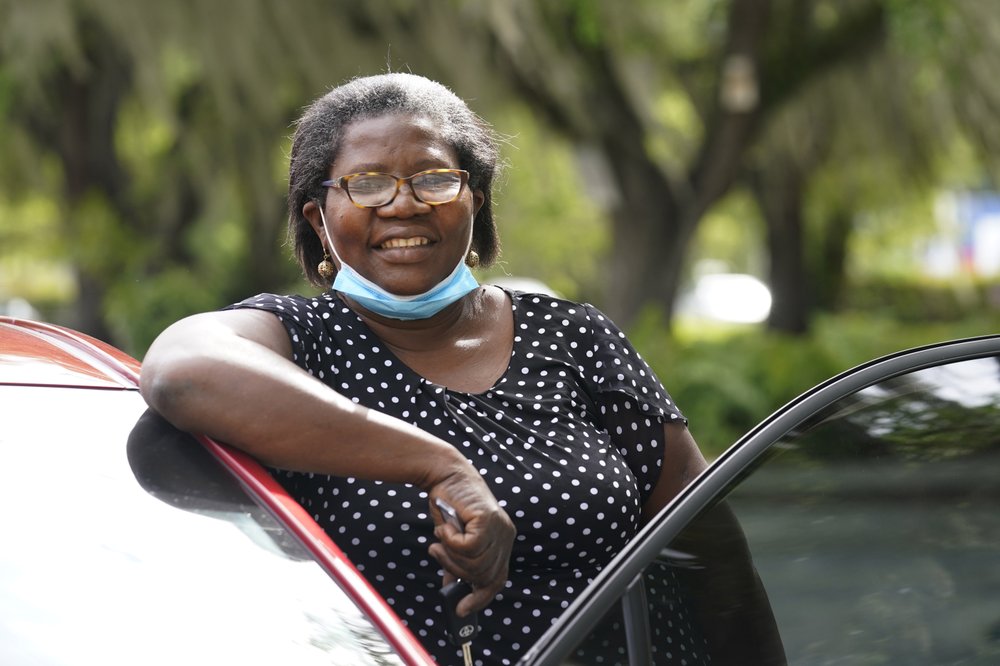
Doramise Moreau is a part-time janitor at a technical school. She spends most of her time shopping for ingredients and helping to cook meals for 1,000 to 1,500 people a week that show up for food at Notre Dame d’Haiti Catholic Church in Miami.

Last week, I finally felt safe enough to go get my hair trimmed and was glad to catch up on Tracie’s year. It was difficult at times, as it was for us all. Her teenage daughter had had a painfully lonely time at home, and her mother was relieved to see her back at in-person school, at least part time.

Tracie really lit up when she talked about giving free haircuts to residents of a nursing home. As she described the grateful things the seniors said to her, it was clear just how happy the volunteering made her.

Today’s story is about another volunteer who lights up when she can help people.

As reporter Cathy Free noted at the Washington Post earlier this month, “Miami Beach has declared a state of emergency because spring break partyers have overwhelmed the city, but across the causeway in Miami’s Little Haiti, a very different scene unfolds: Each Friday night, a school custodian finishes her day job, then spends 12 hours quietly cooking for the hungry.

“Doramise Moreau arrives at the Notre Dame d’Haiti Catholic Church each Friday, where she stays on her feet deep into Saturday morning, pausing briefly for a nap. …

“Less than 10 miles from South Beach, Moreau, 60, lovingly turns bulk-size bags of rice and beans and hundreds of chicken and turkey drumsticks into about 1,500 meals for people in her Little Haiti neighborhood who might not have enough to eat. …

“ ‘I don’t need a lot of sleep. I would rather be here making food for the people. I ask every day for more strength to keep doing what I’m doing.’

“She first volunteered to buy groceries with church donations and prepare a feast once a week, she said, when her pastor, Reginald Jean-Marie, mentioned that he was concerned about hunger in the community.

“ ‘I told him, “Don’t worry, I can do this — I have the time,” ‘ Moreau said. ‘When people are hungry, it is our responsibility to help. I know how hard it can be out there.’

“Moreau grew up with nine siblings in Haiti and often took food from her family’s pantry to give to those who had less than her family did, she said. In 1980, she immigrated to the United States at age 19 and lived with her brother in Miami until she fell in love and started a family of her own.

“When the relationship didn’t work out and she became a single mother, Moreau said, she took two hotel jobs to pay the bills and keep her four kids fed. …

“For her first batch of meals last spring, Moreau made several enormous pots of rice and beans seasoned with her special blend of green and red peppers, onions, cilantro, bay leaves and garlic. She has never used a recipe, relying instead on instinct and what she remembers from watching her aunt and sister cook in Haiti, she said.

“ ‘Who has time to measure? I just chop everything up and toss it in,’ she said. …

“Although rice and beans are a mainstay, Moreau’s fried chicken, roast turkey, baked fish and fried plantains are also popular with the 1,000 to 1,500 people she feeds each week.

“The meals are loaded into two delivery trucks and distributed on Saturday afternoons by volunteers who cruise slowly through the neighborhood in Little Haiti and hand them out to people as they come out of their apartments.

‘Sometimes I go with them to deliver the meals, and it’s rewarding when you see how it helps,” Moreau said. “For some people, this might be the only meal they get for a while.’ …

” ‘American, Spanish, Haitian — I don’t want anyone to go hungry,’ Moreau said. ‘People are suffering during the pandemic. There’s no work, the rent is high, they might not have money to go to the store. This is just one meal, [but] it’s something I can do.’ …

“Jean-Marie, the pastor, urges Moreau to occasionally take off her apron and rest. ‘I ask myself all the time how she does it,’ he said. ‘Not once do I ever hear her complain. We have to beg Doramise to take a rest, but she keeps showing up, day after day. She gives everything she has.’ ”

More here.

Read Full Post »

Photo: Wikimedia.
Above, the portrait of William Shakespeare that was long thought to be the only one with any claim to have been painted from life — until the Cobbe portrait was revealed in 2009.

A week ago I saw that the Globe Magazine had a cover story on a newly discovered source for Shakespeare, but I didn’t think I was interested. Like others who have read theories about Shakespeare, I thought, “Here we go again.” And I have an extra reason to roll my eyes. A great uncle I never met was known for trying to prove that Francis Bacon was Shakespeare. His theory was put to rest by his own codebreakers.

But then blogger Carol got in touch to tell me the article was about her brother-in-law, and I got interested.

Michael Blanding, a Boston-based journalist, has written a book about self-taught Shakespeare researcher Dennis McCarthy and his quest to uncover a possible Shakespeare source. The Globe article was an excerpt.

It seems that McCarthy, a polymath with no academic credentials but with expertise in deep internet searches, has identified a 16th century writer called Thomas North as the source of a lot of Shakespeare themes and even some phrases. North was already known as a writer, but his plays are no longer in existence. Nevertheless, 16th century references to his work are a treasure trove if you know what you’re looking for. No one else has done McCarthy’s deep dive into North. Blanding’s aim seems not only to cover the new ground but to make a sort of scandal out of it by using words like “plagiarism.”

Blanding recounts his first reaction to McCarthy: “Oh, he is one of those, I thought to myself — a conspiracy theorist who thought Shakespeare didn’t write Shakespeare. But McCarthy hurriedly added that in fact he believed the Bard of Avon wrote every word attributed to him during his lifetime. He also believed, however, that Shakespeare had used the earlier plays written by Thomas North for his ideas, his language, and even some of his most famous soliloquies.” Blanding is eventually persuaded.

My reaction: Sure, why not? If the guy has proof of Shakespeare using similar language to North’s, so what? Proof is proof. The importance lies in its newness. Blanding’s emphasis on McCarthy’s — and Darwin’s — lack of standard credentials strikes me as irrelevant.

After all, this is what writers do. They build on previous writers.

Look. Here is T.S. Eliot writing “Ash Wednesday”:

“Because I do not hope to turn again
“Because I do not hope
“Because I do not hope to turn
“Desiring this man’s gift and that man’s scope …”

And here’s Eliot’s source, Shakespeare’s Sonnet 29: “Desiring this man’s art, and that man’s scope.”

Would anyone accuse Eliot of plagiarism for that? Just because so many centuries have passed and manuscripts have been lost, does that mean Shakespeare was hiding a deep, dark secret? And just because McCarthy has no PhD or scholarly cred, does that mean he can’t notice things?

I admit I don’t have a PhD either and I’m often accused of being gullible, but I have no problem with research into a possible inspiration for some of Shakespeare’s art, especially as no one is saying he didn’t write the plays and poetry himself. For me, the only problem that McCarthy and Blanding could have would be over-hyping and using words like “plagiarism.” I really wish them success getting the word out, though.

More at the Globe, here.

Read Full Post »

Photo: Erika Thompson via StyleBluePrint.
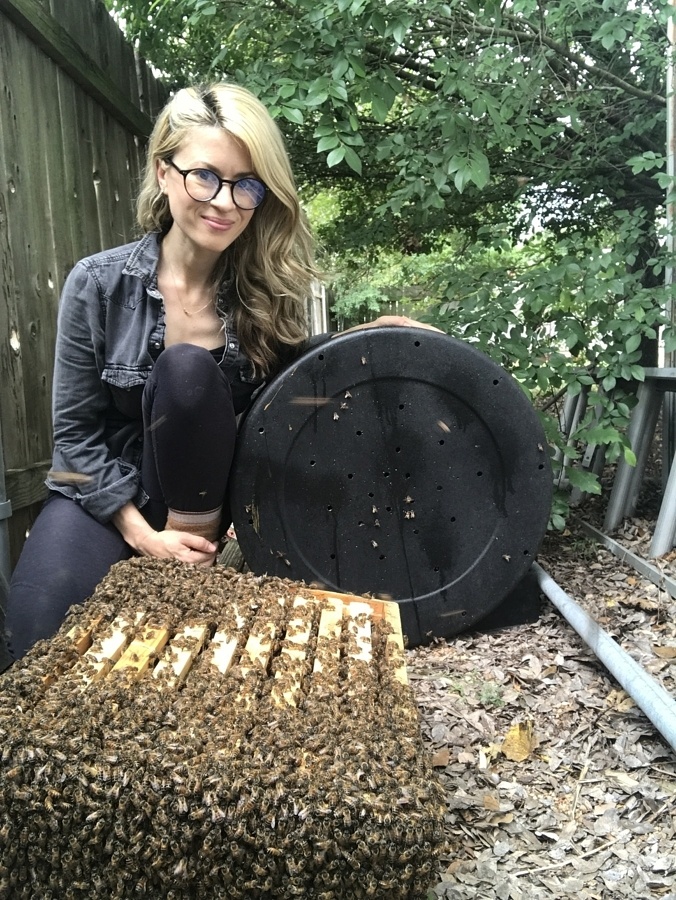
This Texas woman really loves bees. “Bees need advocates,” she says.

If you were to search this blog on words like “bees,” “Honeyland,” and “beekeepers,” you would see that I have a friendly attitude to bees. Besides the fact that they set such a good example for industry and cooperation, there’s this: no bees, no food.

Today’s post is about a woman who really, really loves bees.

Travis M. Andrews writes at the Washington Post, “The bees drip from Erika Thompson’s bare hand, as if she’s holding a scoop of melting ice cream. But she’s not worried. Just a simple flick of the wrist, and the gentle insects rush into their new home.

“This scene’s out of a recent TikTok from Thompson, an Austin-area beekeeper who has amassed an enormous social media following by documenting her work of ethical bee removal. In this particular video, she explains that she was asked to safely remove a colony of bees that have been living in a backyard shed for two years. At one point, she lifts up a section of wooden flooring to expose hundreds of bees crawling over one another. A delighted grin spreads across her face.

“And like a fly to honey, viewers flocked to the TikTok. It’s been viewed more than 60 million times. …

“Thompson simply love bees. Really loves them. The 35-year-old’s backyard is filled with about 50 hives. … Growing up, Thompson so admired Jane Goodall and Dian Fossey that she would pretend to be them, stringing binoculars around her neck and setting up her stuffed animals like creatures in the wild. Then, she’d head outside.

‘I spent a lot of time in my backyard on nights and weekends, trying to collect bugs and put them in jars … to keep them and care for them,’ she said. ‘It’s something I’ve been into my entire life.’

“About a decade ago, she took a beekeeping class out of curiosity. The University of Texas graduate didn’t expect it to become a living. She worked as a communications director at a nonprofit and didn’t even know if she could keep bees in her central Austin home. But she found herself learning more and more about bees and eventually keeping her own hive.

“She soon launched Texas Beeworks, spending nights, weekends and even some lunch breaks helping others keep bees and driving around with hives in the back of her hatchback. Two years ago, she made it full-time, making her feel like ‘the luckiest person in the world.’ …

“Thompson began making the videos to document her process for clients who, unsurprisingly, usually choose to be absent during a removal. Last year, when the pandemic began, several speaking opportunities she had lined up went by the wayside. With a little more time on her hands, she started a TikTok account. …

” ‘Most of the time when I tell people I’m a beekeeper, they say, “Oh, you’re a bookkeeper?” ‘ Thompson said. ‘I don’t know what has really captivated people, because for me, it’s just so normal. Maybe it’s people seeing something that they’ve never seen before and maybe that they didn’t know was possible.’

“Plus there’s an awful lot to admire about bees, she added, ‘from the way they work together as a superorganism and nobody thinks of herself as an individual but does everything for the good of the colony to the way they build the hive and forage and raise their young.’ …

“Though she didn’t expect her videos to become so popular, she hopes they can help continue changing our attitude by correcting misconception about bees, perhaps the largest one being that ‘all kinds want to sting you all the time.’

“For one, there are more than 20,000 species of bees, all of which have different temperaments. Plus, Thompson said, ‘Most bees, and most honeybees, are docile and do not want to sting you.’ ”

More at the Washington Post, here.

Read Full Post »

Photo: Bassem18/Wikipedia.
The rare Mountain Gazelle is returning to Turkey.

Today’s story is about both environmental rescue and the power of one individual to make a difference.

Carlotta Gall writes at the New York Times, “Turkey’s southern border with Syria has become a place of hardship and misery, with tented camps for people displaced by a decade of war on the Syrian side and a concrete wall blocking entrance to Turkey for all but the most determined.

“Yet amid the rocky outcrops in one small area on the Turkish side, life is abounding as an endangered species of wild gazelle is recovering its stocks and multiplying.

“The mountain gazelle, a dainty antelope with a striped face and spiraling horns, once roamed widely across the Middle East, and as Roman mosaics reveal, across southern Turkey as well. But by the end of the last century, it was hunted almost to extinction, with only a dwindling population of 2,500 left in Israel, according to the International Union for Conservation of Nature.

“In Turkey, the gazelle was forgotten and thought to no longer exist. The only ones officially recorded were a subspecies, known as goitered gazelles, in Sanliurfa Province in the southeast of the country.

The rediscovery and survival of the mountain gazelle in Turkey has been largely thanks to one man and his love of nature.

“Yasar Ergun, a village teacher who became a veterinarian and professor at Hatay Mustafa Kemal University in the city of Antakya, heard in the mid-1990s from an old hunter that there were wild gazelles in the mountains along the border with Syria.

“A keen hiker, he set out to try to find them. Barely 25 miles from Antakya — the ancient city of Antioch — Kurdish villagers knew about them and shepherds occasionally saw them. The gazelles live on the rocky hillsides, where their markings and coloring make them almost invisible. But they come down in groups to graze and find water on the surrounding agricultural land.

“The professor spotted his first one in 1998 and, after a decade of observing them, estimated that there were about 100 living in the area.

“With a small grant for a teaching project, he bought a camera and telephoto lens, which led to a close encounter and a breakthrough discovery.

” ‘It was the mating season,’ he recalled. ‘I ran to the road, and the male ran toward me to defend his females. It was very unusual.’

“When he examined the photos, he realized the gazelles differed from those in southeastern Turkey.

“ ‘This one was light brown, with some parts white, and the horns were completely different,’ he said. He was sure he was looking at the mountain gazelle, but found little interest in his claims in academic circles, he said.

‘I sent the photographs around — professors just laughed,’ he said.

“He drew on the help of Tolga Kankilic, a biologist, who gathered samples of dung, fur and skin from the remains of dead gazelles for genetic testing, and found that the DNA matched that of mountain gazelles.

“The discovery presented Mr. Ergun with an altogether more important task: to help the gazelles survive. There were several threats to them — lack of water and habitat especially — but by far the greatest danger was illegal hunting. Hunting is allowed only under license in designated areas in Turkey, but illegal hunting is rife.

“The gazelles had disappeared completely from other regions, including Adana, farther west, where American soldiers stationed at Incirlik air base used to hunt them 20 years ago, he said.

“ ‘The end of a genetic source is the same as the collapse of Earth,’ he said. ‘Nature needs biodiversity.’

“He won a grant from the World Wildlife Fund in Turkey for a grass-roots project with local villagers and bought mountain gear and amateur walkie-talkies for several shepherds, who began monitoring the gazelles. They dug basins in the rock to collect water for the gazelles, though it took the animals months to trust the water source.

“With his knowledge of village life, Mr. Ergun began softly, gaining the support of local shepherds, educating children to protect the gazelles and even encouraging a local Kurdish legend of a holy man who lived with the gazelles and milked them.

“With the hunters, Mr. Ergun and his helpers adopted an approach of traditional courtesy and respect, drinking tea with them but never mentioning their hunting.

“ ‘We never tried to use force to stop them,’ he said. ‘We would say, “Hello, we are from the Nature Project.” Sometimes silence is more powerful than talking.’

“The local people were Kurds, a mountain people with their own language and culture — and a history of resistance to the Turkish state.

“ ‘If you make an enemy, just one, in 10 years you will have 10 enemies, and in 100 years you will have 1,000,’ Mr. Ergun said. But as the shepherds began monitoring the gazelles, the hunters got the message.”

More here.

Read Full Post »

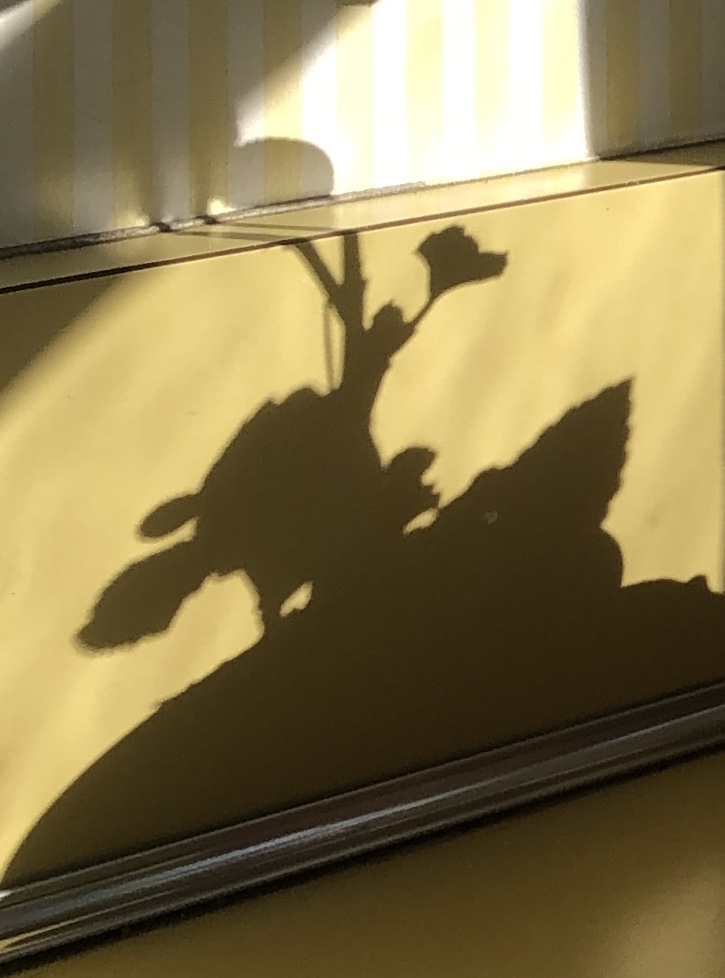
On Shadows

Photo of Magritte art: Thomas Hawk.
René Magritte’s “La Trahison des Images” (“The Treachery of Images”) (1928-9) or “Ceci n’est pas une pipe” (“This is not a pipe”). The work is now owned by and exhibited at LACMA.

The first time I saw the Magritte work called in English “This is not a pipe,” I thought, “What do you mean? Yes, it is.” It took me a long time to consider that it’s only a picture of a pipe, not the pipe itself. My pipe-smoking father wouldn’t have been able to put tobacco in it and smoke it.

I mention this because it relates to one of the reasons I’m fascinated by shadows.

Peter Pan’s shadow goes off on its own for a while, but it wouldn’t exist without Peter Pan. The shades in the Greeks’ Underworld are both the real people and not the real people. In “A Midsummer Night’s Dream,” when Puck says to the audience, “If we shadows have offended,” he’s describing actors as shadows of characters, and characters as shadows of people. He recommends thinking about the play as a dream — another kind of meaningful shadow.

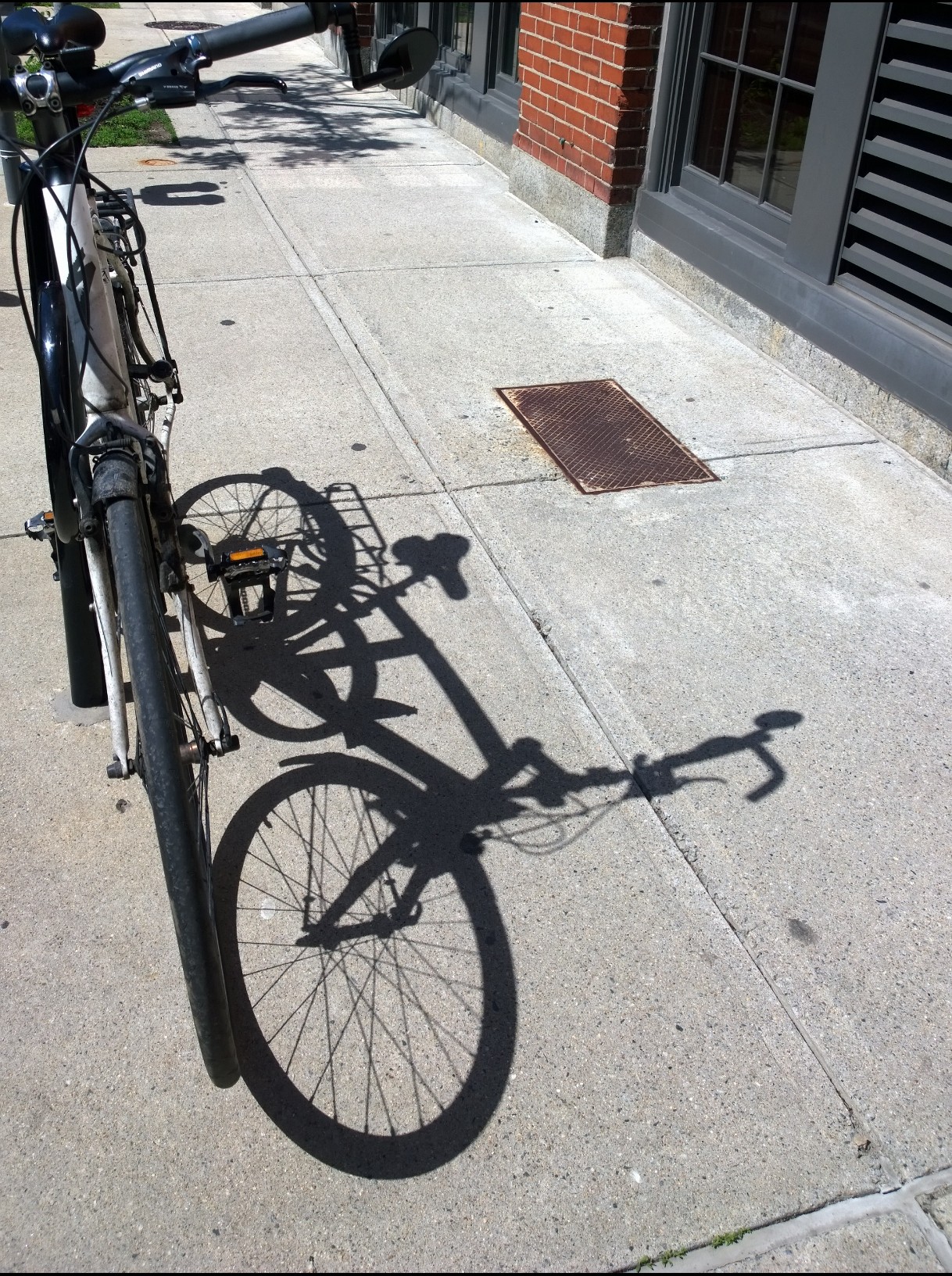
This is not a bicycle.

A shadow is the thing and not the thing, a distorted version of the thing that may lead to interesting or useful thoughts. Perhaps Orpheus will come and ride that bicycle into Hades and try bringing Eurydice home on the back. In the myth, though, he turned around despite dire warnings not to because he couldn’t hear her footsteps. I fear he will make the same mistake with the bicycle as he won’t be able to feel her sitting behind him.

Shadows are a way of thinking about things unseen that can stimulate the imagination and provide extra insight into the everyday world we experience. Since first reading The Princess and the Goblin, I’ve sensed that fiction and fantasy may provide the best ways to understand the “real.” It’s why I enjoy, for example, Francesca Forrest’s other world in Lagoon Fire, here, and blogger Laurie Graves’s fantasy series about the Great Library and her podcast, here.

There are so many things in our lives that are hard to fathom, and sometimes the imagination helps to get a grip on them. Some years ago, I read about a woman in Guatemala who was trying to explain why her neighborhood volcano erupted and killed so many people. She said it was because of her husband’s misdeeds. It was just her way to get her head around something too enormous to comprehend.

This is not a planter Suzanne made as a child. No plants here.

This is a planter Suzanne made as a child. Or is it?

Read Full Post »

Photo: Stuff.
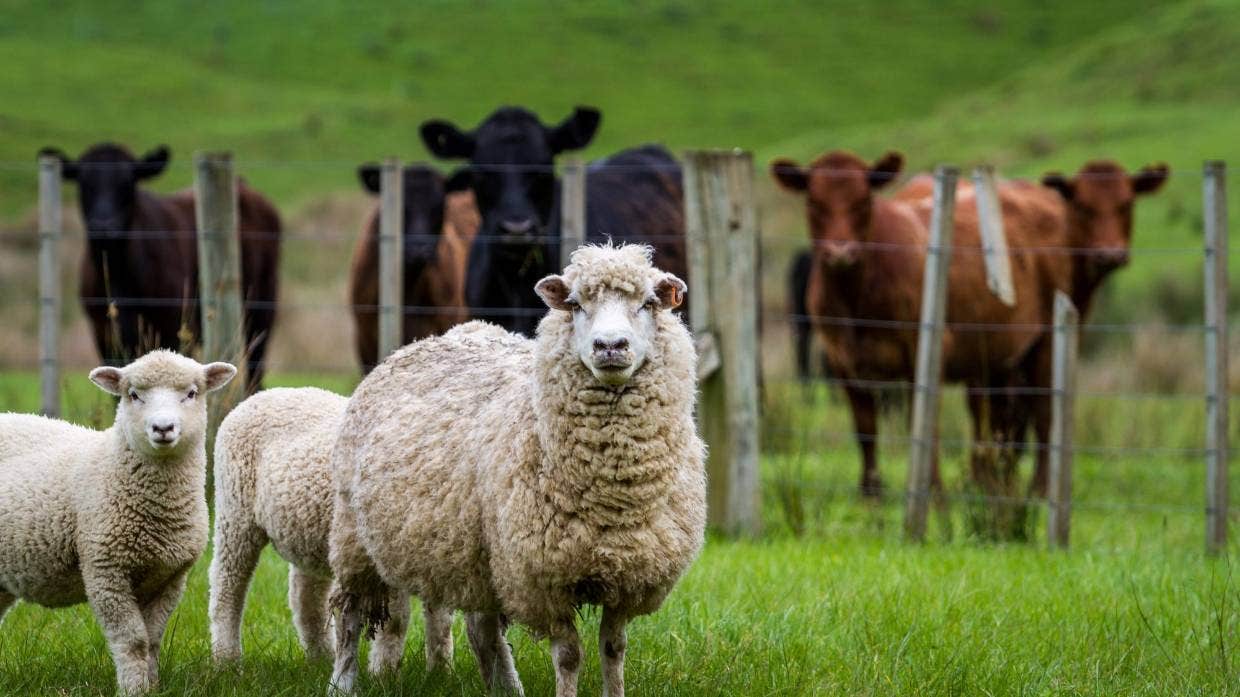
To meet methane goals, New Zealand must cut the number of sheep and cows by 15 per cent, the Climate Change Commission’s decarbonisation blueprint says.

Although I’m eating a vegetarian meal tonight, I’m disappointed in myself for not coming up with lots of interesting vegetarian recipes during lockdown. I had plenty of time to think about it. Part of my problem is that my Covid-era delivery services didn’t offer many prepared vegetarian meals, but it’s a weak excuse. Fortunately, my daughter-in-law knew I was interested in anything vegetarian and often added me to her shopping.

Meanwhile, in New Zealand, they’re way ahead of everyone as usual — not only in terms of trying to cut back on livestock emissions but addressing many other aggressive climate-change goals.

Olivia Wannan writes at Stuff, “Whether you work on the land, in a factory, an office or are still in school, life in 2035 will look significantly different under the Climate Change Commission’s decarbonisation blueprint.

“[If] the Government follows it to the letter., by 2025, you’ll be eligible for a public transport card offering discounted fares until you’re 25, to encourage low-carbon transport habits that may last a lifetime. …

By 2023, the Government’s emissions standards will start to bring lower-carbon cars into the country. The ban on petrol and diesel cars will also be in place as early as 2030. By 2035, both restrictions will also be influencing the second-hand car market, so if you do become an owner, the vehicle will be a lot greener than the cars on the road today. …

“Between now and 2035, you may be one of the thousands of employees that will transition out of carbon-intensive industries and into new jobs. … If you work in an at-risk industry, you’ll be eligible for government support to be re-trained for other roles. If you’re tangata whenua, you’ll be able to opt for education and training developed by Māori. By 2035, many Māori workers will have already transitioned to new industries, with the job gains outweighing losses. …

“The renewable electricity sector will be busy – the country requires one new wind farm to be built almost every year to meet the increased demand for power, plus new transmission lines. …

“By 2035, most truck drivers will be behind the wheel of a low-emissions vehicle, after the battery technology has developed enough to cover longer distances. But there will be fewer trucking jobs, as more freight will travel by rail or sea. … You’ll be twice as likely to head to the office by bike or on public transport, compared to today. If you still want to drive to the CBD, you may have to pay a congestion charge, with your cash helping to fund lower-carbon forms of travel. …

“By 2035, your office must be a pleasant place to be in all seasons, courtesy of energy efficiency standards for new and existing buildings. Building owners will have ditched coal in all heating systems by 2030. Natural gas will be phased out after that. …

“Across the country, dairy and meat farmers will reduce animal numbers by 15 per cent between 2020 and 2030. However, this isn’t an across-the-board cut. The efficiency gains you’ll make on your farm will probably differ to what your neighbours achieve. It’s the collective effort that matters.

“This could mean changing your farm management. You’ll need to use the plans, advice and tools developed by the agricultural industry partnership with Government, He Waka Eke Noa – though this guidance won’t be finalised until 2022. You may require reliable internet to precision-manage your farm, so you should have access to broadband by 2023 at the latest. …

“A farm might take a look at the efficiency gains required and choose to replace its cows and sheep with horticulture. An additional 20,000 hectares of land will grow grain, fruit and vegetables by 2035.

“Farmers staying in the meat or dairy business will carefully manage their use of nitrogen fertiliser (which creates the greenhouse gas nitrous oxide) and supplementary feed, which will cut expenses. Some will try their hand at regenerative farming, which aims to create healthier soil and land.

“Sheep farms will select rams that carry the genes to produce less methane when food is digested. The widespread uptake of low-methane sheep breeds will cut the country’s agricultural methane by 3 per cent by 2035. …

“If you have unproductive land sitting around, you’ll be able to access public funding to plant it with native trees. Nearly 250,000 additional hectares of sheep and beef farmland will be afforested by 2035. Combined with a ban on native deforestation in 2025, you’ll more frequently spot native birds and lizards, particularly if you fence off your bush and undertake pest control.

“Collective action will allow New Zealand to continue to promote the comparatively low-carbon credentials of its dairy and meat to international markets. …

“Buildings will be increasingly constructed using timber, which is less emissions-intensive than concrete and steel. By 2025, new natural gas connections will be banned. A decade after that, remaining gas appliances for cooking or heating will be increasingly costly. Because the domestic carbon price will steadily rise, the average annual gas bill will cost $150 more in 2035 compared to 2020.

“In comparison, the price of electricity will drop during the 2020s, after the Tiwai smelter closes. It’ll gradually rise again towards the end of the decade but should stay lower than today’s costs. …

“Remote and Māori communities will be able to access funds to build their own solar generation.”

It will likely to be hard to achieve all that, even with the less environmentally friendly biomass use and burning of “renewable” wood. But I think they are taking this seriously.

More at Stuff, here. Hat tip: Svein Tveitdal, @tveitdal, on twitter.

Read Full Post »

« Newer Posts - Older Posts »