Feeds:
Posts
Comments

Archive for the ‘Uncategorized’ Category

Former Minnesota Twin Brian Dozier’s trading card on eBay.

Both Asakiyume and I work with Spanish-speaking students who are learning English, but she has gone above and beyond in her efforts. She learned Spanish on Duolingo and began listening to Spanish songs in order to connect better with high school students.

I know that Tina, who’s in one of the classes where I volunteer, is getting impatient with me for not doing the same after four years, but if I decide to learn a language, it’s going to be Swedish. So I can understand what Erik is saying to my grandchildren.

Barry Svrluga reports at the Washington Post about a baseball player who was more like Asakiyume in this regard.

“Brian Dozier had 4,900 major league plate appearances, and only 482 of them came with the Washington Nationals. When he retired from baseball last month, he did so as a Minnesota Twin, the team that drafted him, developed him, brought him to the big leagues and made him an all-star.

“And yet in Washington … Dozier is best remembered as the shirtless dude from Mississippi, … crooning reggaeton lyrics in … Spanish? …

‘I think we, as Americans, need to take it upon ourselves to say, “Hey, these guys are going to be playing for a championship just like us, and you need real camaraderie to make that happen, and in order to have that, we need to take it upon ourselves to learn Spanish,” ‘ Dozier said. …

“[Baseball is] a team sport, and in some ways — ways as undeniable as they are difficult to pin down — team dynamics matter deeply. Baseball players spend ungodly amounts of time with one another, from early in the afternoon until late at night, on buses and planes, in hotels and restaurants (at least when there’s not, um, a pandemic), for eight months of the year. They come from backgrounds both affluent and poor. They are Black and White, American and Asian and Latino.

“That last part, it’s important. According to data released by Major League Baseball, nearly one in four players on 2020 Opening Day rosters or injured lists came from a Spanish-speaking country. That would affect any company trying to get its employees to work together, so it has to affect baseball teams.

“ ‘There’s so many times where things have gotten lost in translation,’ Dozier said. ‘Just small stuff, on the field, off the field, in the dugout, in the clubhouse. And all you need — it could be one word. An expression. It could be anything.’ …

“Long ago, when he was in the minor leagues, … he decided to learn Spanish.

“ ‘There were so many great guys that I became friends with, but I really couldn’t break that real true friendship barrier,’ Dozier said by phone last week, ‘because you couldn’t really communicate in the way that you need to communicate in to have that real bond.’

“Dozier had no experience with Spanish, but he took up Rosetta Stone, the language immersion software, and began teaching himself after ballgames and on bus rides. He learned the basics, but there were issues.

” ‘Rosetta Stone kind of taught you the proper way to speak Spanish,’ Dozier said, ‘but not the slang you use in the clubhouse.’

“During one of his offseasons in the minors, he played winter ball in Venezuela. Around that same time, he met Eduardo Escobar, who was new to the Twins organization. They didn’t know they would play seven years together. Still, they made a decision: make each other better.

” ‘I taught him English,’ Dozier said. ‘He taught me a lot of Spanish, just how to communicate day in and day out and stuff like that. I took it upon myself to start reading books on planes and bus rides just to kind of teach myself more. And then obviously the best way to learn it is being around it every day and actually using it.’

“A funny thing then happened for Dozier: He became friends — close friends — with many of his Latin teammates. Go figure. Escobar, now with the Arizona Diamondbacks, missed the beginning of a team meeting last week to call into Dozier’s retirement ceremony. ‘I call him one of my best friends to this day,’ Dozier said.

“[Major League Baseball] has come miles and miles in fostering a more welcoming culture for its Latin players. Most clubs offer some sort of Spanish instruction, and MLB has mandated that each team designate an interpreter so players who aren’t comfortable speaking English can conduct interviews and therefore convey their thoughts and personalities to largely English-speaking fan bases.

“But Dozier’s approach is the right one. Why not meet teammates where they are, making them comfortable rather than demanding they conform — or at least allow them time to develop? …

“Dozier took the time. And now, even though he was in Washington for just one season, his imprint remains here. Not because of much that he did with his bat or glove. But because when the Nationals celebrated their postseason victories, there was Dozier — bare-chested, in the center of a group of Latin players — crooning the song ‘Calma’ by Puerto Rican star Pedro Capó, which became the Nats’ anthem.”

More here.
Read Full Post »

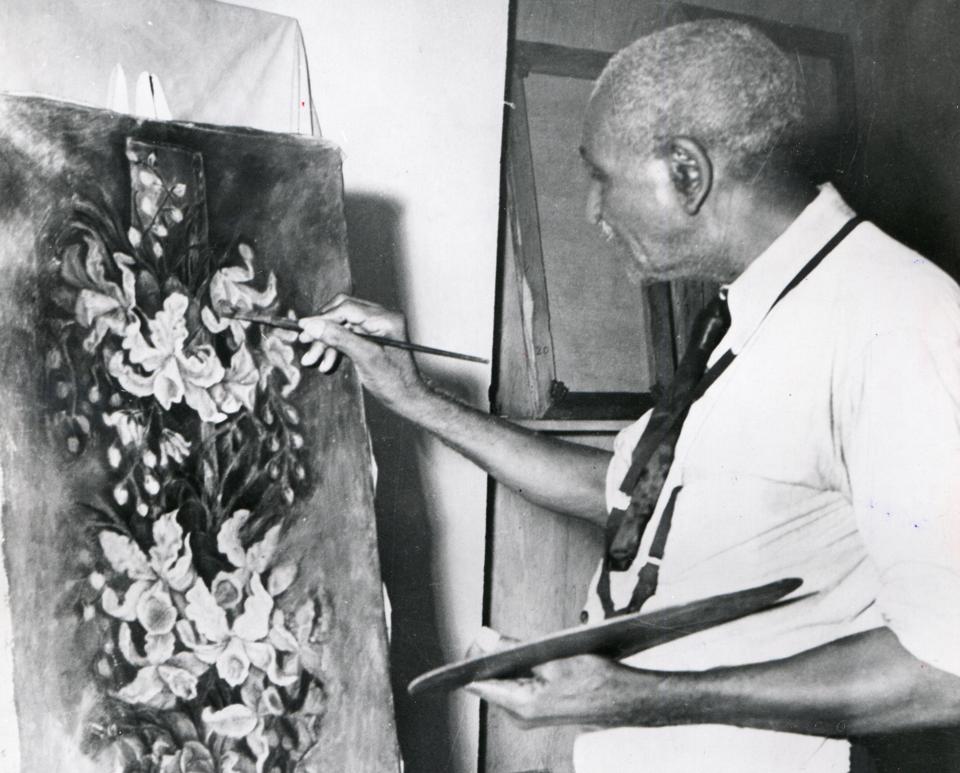
Photo: Photoquest/Getty Images.
American scientist and educator George Washington Carver (1864 – 1943) was also an artist. Above, he works on his painting “The Yucca.”

It’s reasonable to ask, Why celebrate women or Black Americans only one month a year each? But one advantage is that there’s an incentive for the media to dig out stories about interesting people we either wouldn’t know about at all or wouldn’t know about in detail. For example, most Americans know that a Black scientist called George Washington Carver did research on peanuts that helped farmers in the South. But I, for one, didn’t know anything about his paintings.

Eva Amsen reports at Forbes, “Last month, the Getty Foundation announced the grant recipients for the 2024 exhibit series ‘Pacific Standard Time 2024: Art x Science x LA.’ This event will include different galleries and institutes in California, which will each focus on the theme of science and art. While some of the planned exhibits focus on current and future science, one grant recipient is featuring an artist from science history. The California African American Museum received $120,000 for their exhibit ‘World Without End: The George Washington Carver Project.’

“Although George Washington Carver is best known for his research on new uses for peanuts, he was also an artist. In 1941, two years before his death, Time Magazine featured a piece about Carver in which they mentioned that 71 of his paintings were being shown at Tuskegee at the time.

“Carver spent most of his career as an agricultural researcher at Tuskegee, but he didn’t start his university career in science. When he initially enrolled in college (after searching for a place that would accept Black students in the 19th century) he studied art and piano at Simpson College in Indianola, Iowa. He’d always loved plants and particularly excelled at painting them. …

His art teacher, Etta Budd, encouraged him to enter one of his paintings to a local art exhibit, where it was selected as one of the artworks to represent Iowa at the World’s Fair in Chicago in 1893. Carver’s painting, ‘Yucca and Cactus,’ got an honorable mention at the fair.

“Despite his talents, Budd worried that Carver wouldn’t be able to make a living as an artist, so she suggested that he take his plant illustration skills to the botany department at Iowa State Agricultural College. After receiving his bachelor’s degree here in 1894 and his master’s in 1896, Carver took on a research position at Tuskegee Institute. 

“One of his initial interests was to help farmers increase the yield of their crops. Besides doing research, he invested a lot of time in talking to farmers and explaining the benefits of fertilization and crop rotation to restore nutrients to the soil.

“Partly thanks to Carver, crop production in the South did indeed increase, but this led to a new problem. Now farmers were stuck with an agricultural surplus of crops they had harvested but could not sell. … Carver invented more than a hundred new uses for sweet potatoes and over three hundred different ways to use peanuts. …

“Unsurprisingly, considering his art background, one of the new uses he found for peanuts was to develop paints.  He didn’t just use peanuts to make dyes, but other natural resources as well. Carver even created a line of household paints using pigments from Alabama soil that he envisioned would be more affordable for poor families.

“Carver used some of his self-created paints for his art as well. In the 1941 profile about his art, Time Magazine noted that he used a series of plant-based earth tones created by his assistant A. W. Curtis Jr.”

Using Alabama soil to make dyes caught my attention because I love the work of natural-dye scarf artist Jamie Bourgeois. Sometimes she augments nature to document the polluted waters of Cancer Alley in order to help the Louisiana cleanup efforts. It’s amazing to see how pollution changes the colors. Read about that work here. And support the pollution cleanup here.

More at Forbes on George Washington Carver, here.

Read Full Post »

Photo: Business Trip Friend, 2017.
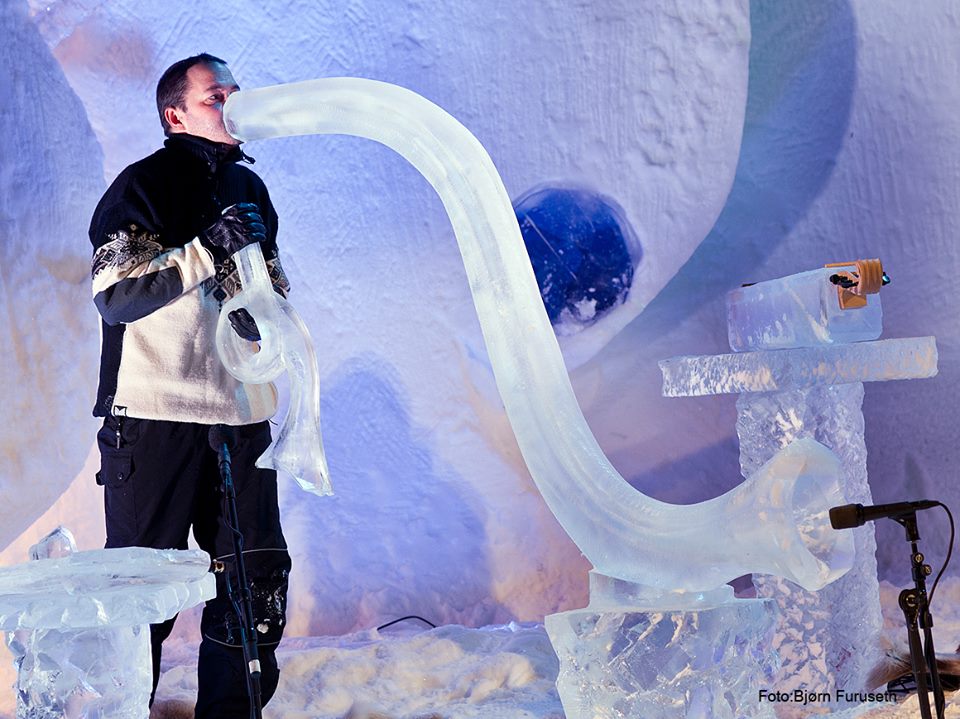
An Ice Music Festival is held in Norway most every year, although it was cancelled for 2021 because of Covid. In 2020, it was held in the village of Finse, near the Hardangerjøkulen glacier.

Finally, the ice is melting where I live. I can’t help but think “good riddance” after an outdoor birthday party Sunday that saw us slipping and sliding with the grandchildren through the woods. But I have to remind myself that they actually love the ice (two kids are hockey players), and in fact, there are a variety of reasons to love ice.

Consider Lola Akinmade Åkerström’s report at National Geographic.

“Brittle bursts that mimic cymbals. Deep hollowed notes reminiscent of metal drums. These are some of the surprising sounds that Siberian percussion group Ethnobeat created from Russia’s frozen Lake Baikal in a 2012 viral video that introduced millions around the globe to ice music.

“But similarly haunting melodies had been filling dark Arctic nights across Norway and Sweden for several years. In 2000 Norwegian composer and percussionist Terje Isungset performed the world’s first ice music concert inside a frozen waterfall in Lillehammer.

“Six years later Isungset founded the annual Ice Music Festival Norway, drawing curious adventurers willing to brave subzero temperatures in order to experience this unique way of bonding with nature through music. (This winter’s festival was canceled due to the pandemic, but he’s planning to livestream a concert on March 14.)

“For Isungset, who was already experimenting with natural elements such as stone and wood when composing music, his foray into ice was an organic next step.

‘When I first started playing on clear ice, I found its pure sound surprisingly warm and gentle compared to the sound of crushed ice beneath your feet.’ …

“So what exactly is ice music? Musicians tap beats out of naturally occurring ice or play instruments crafted from ice. Many of the instruments may seem familiar, but with ice music, nature takes center stage—and brings more than a few notes of unpredictability. Both the making and playing of the instruments are processes that can’t be fully controlled, which only adds to the art’s appeal.

“Carved instruments can be either completely made of ice, such as horns and percussion, or hybrids, like harps, in which the main body is ice with metal strings attached. Isungset collaborates with award-winning ice sculptor Bill Covitz, who is based in the United States but travels to concert destinations around the world to make instruments on location.

“Another American artist, Tim Linhart focused on snow and ice sculptures in the U.S. before moving to Europe and building a reputation for crafting ice instruments. Thirty-six years later he has created hundreds of them. …

“By studying and intricately blending materials — such as homemade clear ice and carbonated water, plus crushed mountain snow — Linhart can make instruments like violins and tune them as close to perfect as nature allows. …

” ‘When you approach that breaking point between the tension of the string and the thickness of the material, right there is where music truly happens,’ says Linhart, who honed his craft through trial, error, and a few exploding instruments. …

“When the show starts, other complications arise. “’Ice is always in motion; expanding, contracting and sublimating away into the atmosphere,’ says Linhart. ‘Warm bodies melt instruments. Audiences increase temperatures because they are breathing. Instruments need to be re-tuned differently. Some drop several notes, others rise.’ To mitigate this, he designs domed concert venues that ventilate heat away from the instruments.

“Another hazard? Horn players’ lips can stick to the mouthpieces of their instruments. And most of the time, the performers can’t practice on their delicate tools, so they often compose music live and improvise in front of the audience. …

“Other instruments such as the ‘iceofon’ — a cross between a xylophone and a marimba that pairs nicely with the harp — need to be tuned differently to avoid playing entire concerts in one tone.”

Lots more about musicians up for a challenge at National Geographic, here.

Read Full Post »

Photo: Nadia Tugwell.
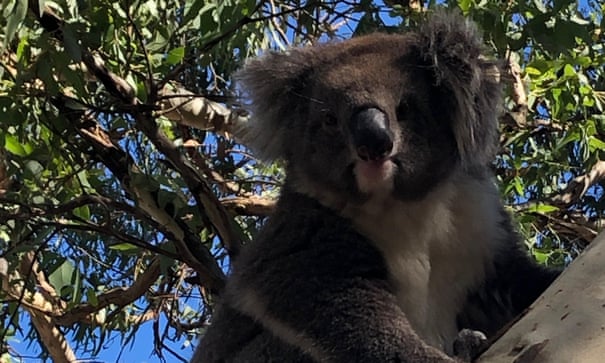
After the koala caused a multi-vehicle crash by ‘stomping’ on an Australian freeway, Nadia Tugwell put it in her car and called for help. The koala played around with the car’s steering wheel while waiting for Adelaide Koala Rescue and was ultimately released at a safe distance.

It was only last summer, when bushfires raged through koala habitat in Australia, that the adorable marsupials were threatened with extinction (story). Here’s a recent article about one that got itself into a different kind of danger but stayed calm and carried on.

Josh Taylor reported at the Guardian, “A koala crossing one of South Australia’s busiest freeways has led to a six-car pile-up as drivers abandoned their vehicles to mount a rescue of the ‘calm’ marsupial.

“[South Australia] police confirmed the multi-car crash occurred on Adelaide’s South Eastern Freeway. … A male driver reportedly was the first person to stop his car to try to rescue the koala before 7am. His car was then hit from behind, causing a chain reaction.

“An Adelaide woman, Nadia Tugwell, was behind the pile-up and said at first she couldn’t tell what was causing the delay in traffic. … Then Tugwell saw the koala moving between the cars and a concrete barrier in the middle of the freeway.

“ ‘The koala was just cute … sort of stomping between the cars and the barrier. Then I saw a lady running behind it, trying to catch it with a blanket or something.’

“Tugwell grabbed a jacket from her car and also raced towards the koala.

‘When it saw me it instantly turned around to run backwards but the other lady was there and so we jumped it, bundled it up, and it ended up in my car because she had children,’ she said.

“Tugwell had previously rescued animals from other roads so she had the number for the Adelaide Koala Rescue centre saved in her phone. She arranged to meet them at a nearby service station.

“While she waited an hour for the rescuer to arrive, Tugwell said the koala made itself at home in her car, including on the steering wheel.

“ ‘I was sitting there entertaining myself but I had to jump out of the car at that stage when he decided to take over,’ she said. …

“ ‘He was actually quite a calm koala, he didn’t even fight about being in the bag, he was just calm and went into the basket,’ Tugwell said.

“The volunteer released the uninjured koala back into the wild a kilometre from the freeway.

“An Adelaide Koala Rescuer volunteer, Ann Bigham, told the ABC, … ”The koala was in really good condition, it was lucky it hadn’t been hit at all and thanks to the rescuers it was kept safe.’ “

Wouldn’t it be something to have that experience? I’d love to be a koala hero like Tugwell. Can’t see it happening in New England, though.

More at the Guardian, here.

Read Full Post »

Photo: Attributed to Eugène Atget.
The great ballerina and choreographer Bronislava Nijinska performing in Stravinsky‘s Petrushka.

A sweet text message and a post on Facebook from my mentee reminded me early this morning that it’s International Women’s Day. With her example of accomplishment — and Suzanne’s and my daughter-in-law’s — an old-fashioned grandma like me is starting to pay attention to the issues behind the need for an International Women’s Day.

It isn’t news to me, of course, that women have long taken a back seat, but I have “leaned in” to the idea that one can make a virtue of invisibility. I’d make a good spy.

Even so, I feel a bit outraged that I’d never heard of the subject of today’s post, only her famous brother. Nadia Beard at the Calvert Journal enlightened me.

“Dancer and choreographer Bronislava Nijinska, a Minsk-born Pole, was an instrumental force in redirecting the choreographic cannon towards a vision of process and motion. Despite her pioneering choreography, Nijinska’s legacy is often overshadowed by that of her brother, ballet dancer and choreographer Vaslav Nijinsky. …

“The Nijinsky name, however, does not belong to him alone. In an era where static positions were the marrow of classical dance, Nijinska envisioned a modernist ballet, one which saw focus shift towards the movement which connected these positions.

Ultimately, she believed it was not the final posture that encapsulated the beauty of ballet, but the spaces in between.

“The daughter of two Polish dancers, Bronislava Nijinska was born in Minsk on 8 January 1891, and accompanied her parents to shows across provincial Russia even as a baby. It was through their parents that both Nijinska and her brother, Vaslav, first absorbed dance, learning movements outside of ballet’s traditional canon — Polish folk steps danced by her parents and acrobatics from the circus performers they met on their travels — which would influence the subversive, minimal choreography of their later years.

“Later in life, Nijinska’s contributions to performance and choreography would be dominated by her brother’s, but at the turn of the century, the pair both joined the Imperial Ballet School in St Petersburg, briefly graduating from the Imperial Ballet (now known as the Mariinsky) in 1908 before leaving together for Paris to join the Ballet Russe.

“The radical, itinerant ballet corp, founded by Russia-born arts impresario Serge Diaghlev, became legendary, a crucible for the radical performance that encapsulated the strange daring seen across the artistic spectrum of the time.

“Nijinska helped her brother choreograph some of the Ballets Russes’ earliest controversial works: L’Après-midi d’un Faune, premiered in Paris in 1912, and 1913 ballet Le Sacre du Printemps. Marriage and pregnancy precluded Nijinska from starring in some of Diaghlev’s ballets, much to the dismay of her brother, but where her brother’s creative life was cut short by deteriorating mental and physical health, Nijinska’s endured alongside family life, until she had made her mark on both sides of the Atlantic. …

“Her 1920s treatise on ballet, The School of Movement (Theory of Choreography), now lost to posterity, foregrounded the idea that movement is the essence of dance. Today this seems an obvious point, but it is so only because of the legacy of fringe luminaries like Nijinska; in early 20th century Europe, movement in dance was largely auxiliary, used in service to the final aim of achieving a complete position which could be held and admired. For Nijinska, motion became more important.”

More at the Calvert Journal, here, where you can watch a video of Nijinska’s dark choreography for Stravinsky’s Les Noces. Talk about women’s issues!

Read Full Post »

Photo: Xinhua/Rex/Shutterstock.
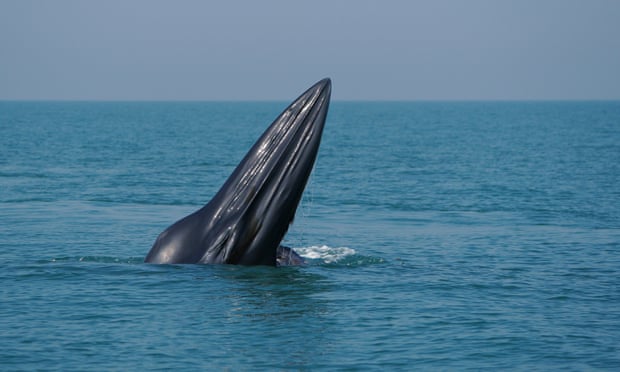
This is a Bryde’s whale, related to the newly described whale species called Rice’s whales. Rice’s whales were previously believed to be a population of Bryde’s but were recently found to be a whole new species.

Lately, I’ve noticed how many mainstream publications reuse stories from other publications, which helps me feel less guilty sharing others’ work at Suzanne’s Mom’s Blog. As a former magazine editor myself, I am pretty scrupulous about providing links and credits and not using the whole original piece.

And if the use of a photo is blocked, I try to find a different photo elsewhere. But I must say that blocking your photo reduces the number of ways people online can find your article.

In an article from Hakai magazine (an online publication about science and society in coastal ecosystems), Joshua Rapp Learn reported on a unique whale. I learned about it from a reprint at the Guardian.

“Genetic analysis and a close examination of the skulls from a group of baleen whales in the north-eastern Gulf of Mexico have revealed that they are a new species.

“ ‘I was surprised that there could be an unrecognized species of whale out there, especially in our backyard,’ says Lynsey Wilcox, a geneticist with the US National Oceanic and Atmospheric Administration who helped uncover the new species. ‘I never imagined I would be describing a new species in my career, so it is a very exciting discovery.’

“The newly described whales weren’t exactly hiding in plain sight. With a population estimated at fewer than 100, the new whales – which researchers have dubbed Rice’s whales after American biologist Dale Rice – aren’t commonly seen even in the corner of the Gulf of Mexico they call home. It doesn’t help that the whales, previously believed to be a population of Bryde’s whales, have a feeding strategy that takes them deep under the water around DeSoto Canyon, about 100km south of Mobile, Alabama.

“Researchers have long known that this group of Bryde’s-like whales in the Gulf of Mexico was different. They seemed to mostly stay put in the north-eastern corner of the gulf, and didn’t mingle with Bryde’s whales, which … typically forage near the surface.

“But it’s difficult even for experts to tell large baleen whales apart in the field – so much so that Bryde’s whales sometimes get confused with fin whales, says John Hildebrand, a biological oceanographer at Scripps Institution of Oceanography at the University of California San Diego who was not involved in the recent study. …

“Wilcox’s colleagues first began collecting tissue samples from Rice’s whales in 2000, eventually collecting samples from 36 different individuals.

Comparing their genes with Bryde’s whales, Wilcox says she and her colleagues ‘noticed that they weren’t quite what was expected.’

“To compare their morphologies, the scientists inspected skeletons held in museums. Then, in January 2019, an 11-meter-long Rice’s whale washed up on a key in the Florida Everglades. Examining the whales’ skulls revealed some differences in the shape and size of the bone material around the blowhole. …

“Rice’s whales are already considered endangered by the United States. They were listed under the Endangered Species Act as a population of Bryde’s whales in April 2019, and the discovery that they are a distinct species is unlikely to change much – other than requiring an update of their name. Living in the Gulf of Mexico, the whales face threats from oil spills, ship strikes, ocean noise and entanglement in fishing gear.

“Hildebrand says the whales are particularly vulnerable to ship strikes because they have the ‘unfortunate habit’ of sleeping at night just under the sea’s surface. … Hildebrand speculates that the whales might once have been more widespread in areas with deeper water, but they are now holing up in an area that sees less ship traffic.

“ ‘They are the most endangered, or nearly the most endangered, baleen whales in US waters,’ Hildebrand says. ‘In terms of the responsibility for the health of the whale, it really does fall on us.’ ”

Read some really wonderful stories about sea life at hakaimagazine.com.

Read Full Post »

Photo: Regeneration International.

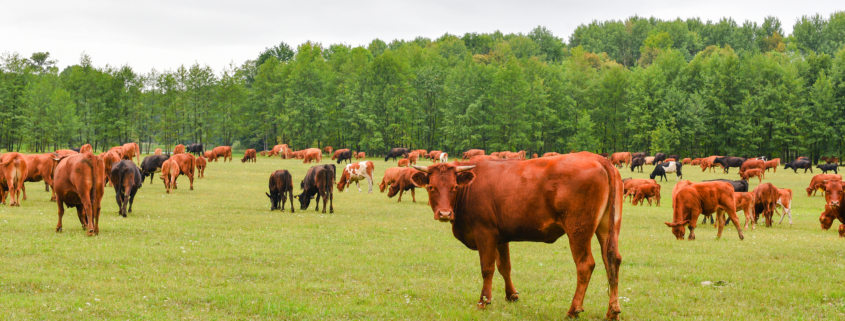
We are told we have to give up meat if we want to fight global warming, but I know that livestock farmers are not going to give up farming. Some are experimenting with techniques to have less harmful effects on the planet — for example, using methane from farm waste to power their farms. But, as Earle keeps reminding me, methane is also a greenhouse gas, and it’s better to put a greenhouse gas into the soil, not the air. It’s called sequestration.

In today’s article, we learn about a Texas farmer who is improving the quality of his land by avoiding herbicides and letting the cows stomp down weeds and brush. At the same time, he is practicing sequestration.

Henry Fountatin writes at the New York Times, “Adam Isaacs stood surrounded by cattle in an old pasture that had been overgrazed for years. Now it was a jumble of weeds.

“ ‘Most people would want to get out here and start spraying it’ with herbicides, he said. ‘My family used to do that. It doesn’t work.’

“Instead, Mr. Isaacs, a fourth-generation rancher on this rolling land in the northeast corner of the Texas Panhandle, will put his animals to work on the pasture, using portable electrified fencing to confine them to a small area so that they can’t help but trample some of the weeds as they graze.

“ ‘We let cattle stomp a lot of the stuff down,’ he said. That adds organic matter to the soil and exposes it to oxygen, which will help grasses and other more desirable plants take over. Eventually, through continued careful management of grazing, the pasture will be healthy again.

‘These cows are my land management tool,’ Mr. Isaacs said. ‘It’s a lot easier to work with nature than against it.’

“His goal is to turn these 5,000 acres into something closer to the lush mixed-grass prairie that thrived throughout this part of the Southern Great Plains for millenniums and served as grazing lands for millions of bison.

“Mr. Isaacs, 27, runs a cow-calf operation, with several hundred cows and a dozen or so bulls that produce calves that he sells to the beef industry after they are weaned. Improving his land will benefit his business, through better grazing for his animals, less soil and nutrient loss through erosion, and improved retention of water in a region where rainfall averages only about 18 inches a year.

“But the healthier ranchland can also aid the planet by sequestering more carbon, in the form of roots and other plant tissues that used carbon dioxide from the air in their growth. Storing this organic matter in the soil will keep the carbon from re-entering the atmosphere as carbon dioxide or methane, two major contributors to global warming. …

“Soil sequestration has gained favor as a tool to fight climate change. Done on a large enough scale, proponents say, it can play a significant role in limiting global warming.

“But many scientists say that claim is overblown, that soils cannot store nearly enough carbon, over a long enough time, to have a large effect. And measuring carbon in soil is problematic, they say.

“The soil-improving practices that ranchers like Mr. Isaacs follow are referred to as regenerative grazing, part of a broader movement known as regenerative agriculture.

“There are no clear-cut definitions of the terms, but regenerative farming techniques include minimal or no tilling of soil, rotating crops, planting crops to cover and benefit the soil after the main crop is harvested, and greater use of compost rather than chemical fertilizers.

“Regenerative grazing means closely managing where and for how long animals forage, unlike a more conventional approach in which animals are left to graze the same pasture more or less continuously. Ranchers also rely more on their animals’ manure to help keep their pastures healthy.

“These practices are spreading among farmers and ranchers in the United States, spurred by environmental concerns about what industrialized farming and meat production have done to the land and about agriculture’s contribution to global warming. In the United States, agriculture accounts for about 10 percent of greenhouse gas emissions.

“Agribusiness companies and large food producers are launching initiatives to encourage regenerative practices, part of efforts to appeal to consumers concerned about climate change and sustainability.

“[The] administration, in its initial moves to combat climate change, has cited agriculture as a ‘linchpin’ of its strategy. One idea is to allocate $1 billion to pay farmers $20 for each ton of carbon they trap in the soil.

“Proponents of regenerative agriculture have sometimes made extravagant claims about its potential as a tool to fight global warming. Among them is Allan Savory, a farmer originally from Zimbabwe and a leader in the movement, who in an often-cited 2013 TED Talk said that it could ‘reverse’ climate change.

Some research has suggested that widespread implementation of regenerative practices worldwide could have a significant effect, storing as much as 8 billion metric tons of carbon per year over the long term, or nearly as much as current annual emissions from burning of fossil fuels.

“While there is broad agreement that regenerative techniques can improve soil health and bring other benefits, some analyses have found that the potential carbon-sequestration numbers are vastly overstated. …

“ ‘It’s really great to see the private sector and the U.S. government getting serious about reducing agricultural emissions,’ said Richard Waite, a senior researcher at the World Resources Institute, an environmental research organization in Washington. But for carbon sequestration in soils, the institute’s analysis suggests that ‘mitigation opportunities are on the smaller side.’

“Focusing on carbon sequestration through soil also risks drawing attention from other important ways to reduce agriculture’s carbon footprint, Mr. Waite said, including improving productivity, reducing deforestation and shifting food consumption to more climate-friendly diets.”

My gut feeling is that we should use as many techniques as possible to reduce carbon emissions — that every little bit helps. Read more at the New York Times, here, and me know what you think.

Read Full Post »

Photo: Mark Humphrey/AP.
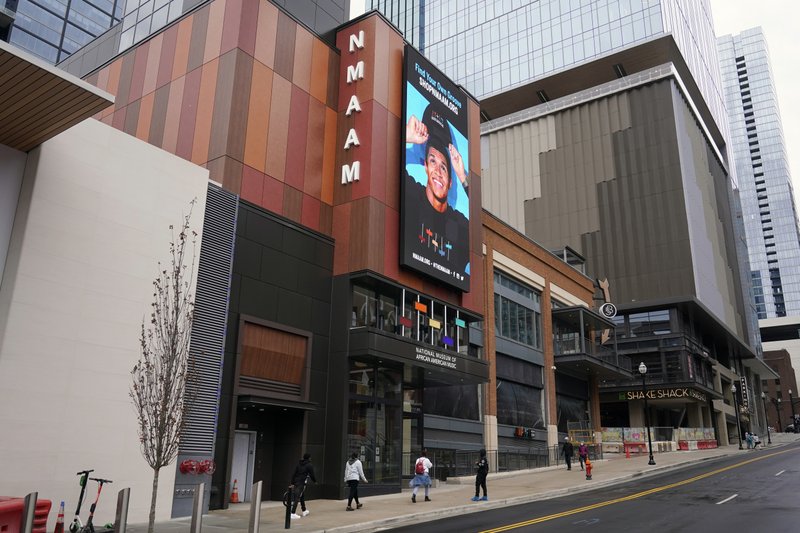
National Museum of African American Music, Nashville, Tennessee.

I haven’t headed back to museums yet, but I’m pretty sure I will be allowing myself to go this year. I’ve been interested to read that many museums plan to keep some presentation techniques they’ve used during the pandemic. Meanwhile, other museums are actually just launching.

Kristin M. Hall reports at the Associated Press (AP), “A new museum two decades in the making is telling the interconnected story of Black musical genres through the lens of American history.

“The National Museum of African American Music, which opened with a virtual ribbon-cutting on Martin Luther King Jr. Day, is seated in the heart of Nashville’s musical tourism district. …

“Even as Nashville has long celebrated its role in the history of music, the new museum fills a gap by telling an important and often overlooked story about the roots of American popular music, including gospel, blues, jazz, R&B and hip-hop.

” ‘When we think of the history of African American music and the important part it has played in our country, it was long overdue to honor it in this type of way,’ said gospel great CeCe Winans, who serves as a national chair for the museum.

“The idea for the museum came from two Nashville business and civic leaders, Francis Guess and T.B. Boyd, back in 1998, who wanted a museum dedicated to Black arts and culture. And while there are museums around the country that focus on certain aspects of Black music, this museum bills itself as the first of its kind to be all encompassing. …

“Said H. Beecher Hicks III, the museum’s president and CEO, ‘[It’s]it’s one thing to say that I’m a hip hop fan or I’m a blues fan, but why? What was going on in our country and our lived experience and our political environment that made that music so moving, so inspirational, such the soundtrack for that part of our lives?’

The museum tells a chronological story of Black music starting in the 1600s through present day and framed around major cultural movements including the music and instruments brought by African slaves, the emergence of blues through the Great Migration, the Harlem Renaissance and the civil rights movement.

“When Winans recently took a tour of the museum, she saw her own family of gospel singers, the Winans, represented in the museum’s exhibit on spiritual music alongside the artists that influenced her own musical career.

” ‘You never start out doing what you’re doing to be a part of history or even be a part of a museum,’ said the 12-time Grammy-winning singer. She noted that the museum put gospel music in context with how it inspired social change, especially during the civil rights era. …

“The museum has 1,600 artifacts in their collection, including clothes and a Grammy Award belonging to Ella Fitzgerald, a guitar owned by B.B. King and a trumpet played by Louis Armstrong. To make the best use out of the space, the exhibits are layered with interactive features, including 25 stations that allow visitors to virtually explore the music.

“Visitors can learn choreographed dance moves with a virtual instructor, sing ‘Oh Happy Day’ with a choir led by gospel legend Bobby Jones and make their own hip-hop beats. Visitors can take home their recordings to share via a personal RFID wristband.

“There will be a changing exhibit gallery, with the first topic to be the Fisk Jubilee Singers, an a cappella group originally formed in 1871 to raise money for Fisk University. The group sang slave spirituals at their concerts. The tradition continues today.

“After a year of racial reckoning through the movement of Black Lives Matter, Hicks said the timing couldn’t be more perfect to highlight the contributions of Black music to our shared American experience.

“ ‘[It] is not an accident that we are able to finish and get the museum open in this moment, in this moment where we need to be reminded, perhaps more than others or more than in the recent past that we are brothers and we share more together than we do our differences.’ “

More at AP, here

Read Full Post »

In one of the Rhode Island English classes where I volunteer, there’s a former soccer pro. I do not know if he’s following this blog, but I would love to hear from any soccer player about the topic for today: ballet for sports agility and strength.

From an article by Toby Bryant in the Irish Times: “It’s November 29th, 2020, and Manchester United are 2-0 down at Southampton. Bruno Fernandes skews a shot goalward, it’s off target. Defeat seems inevitable.

“Out of nowhere, gliding across the box unnoticed with long black locks flowing, Edinson Cavani springs into the air and nods the misfired shot into the back of the net. With movement so stealthy and so swift, you’d easily mistake Cavani for a ballet dancer.

“As it happens, two months earlier the striker had swapped the football boots for the pointe shoes of ballet to train in his homeland of Uruguay at the Ballet Nacional de Sodre (BNS). … The images shared by the ballet company had soccer fans’ heads turning when they emerged. Such a sports star dabbling in ballet may have seemed unheard of, but it wasn’t a new trend.

“In 2017, over in the United States, St Paul Ballet and Element Gym’s boxers formed a partnership. The premise was simple: the ballet dancers box and the boxers dance ballet. Not simply as a social experiment but, for the boxers, to enhance footwork and balance. …

“American Footballer Eddie George spent hours forcing his 245lb body into demi-pliés and spins so it would become second nature on the field. England women’s rugby star Zoe Aldcroft spent her formative years balancing rugby with ballet and is now the Rugby Players’ Association England player of the year. … Former England rugby league international Darrell Goulding now coaches Wigan Warriors’ under-19 squad, another group who have dipped into ballet in the past.

“ ‘The season before we started we had quite a lot of ankle injuries and stability issues, so it was something we were keen to look at.’

Goulding tells the Irish Times, ‘Obviously our lads are not built for some of the ballet work, so a lot of the delicate stuff we didn’t progress to, but we used a lot of the simple drills to focus on that ankle area.’ …

” ‘Pound for pound, ballet dancers are the strongest athletes you will find,’ remarks ballet physiotherapist Luke Abnett, who believes the cross-sport benefits that ballet can offer are evident. ‘In ballet, there’s a need to not only have strength of movement but precision of movement. It’s a combination of the strong movement muscles with the fine-tuning stability muscles. …

“ ‘When you get to more advanced levels of ballet skills, you’re working on jumping, turning, pirouettes, control and rotation,’ Abnett says. ‘Landing in interesting positions and transferring your weight as you move into the next step – all of that would apply to situations like that.’

“Injury prevention is another benefit. While ballet can’t help stop the collisions that come with sports such as rugby and soccer, its muscle development can reduce the risk of any overuse injuries.

“One study compared basketballers, prone to ACL problems, and ballet dancers. Even though dancers would land at more difficult angles, their training meant they suffered far fewer ACL injuries. …

“ ‘Cavani’s movements have always been sharp but at his age and with the physical demands of the Premier League, it’s impressive,’ one fan tells the Irish Times. ‘Cavani’s spatial awareness and manoeuvrings are so incredible, it has me wishing he’d make ballet a thing in the United dressingroom too,’ another admits. …

“As well as the physical benefits, mainstream sports stars are entering the ballet studio to improve mentality and actively combat stereotypes.

“When speaking of his Wigan Warriors youth team, Goulding believes that ‘people only grow when they are outside of their comfort zone.

“ ‘As you can imagine, the idea of these physical rugby lads from tough working-class areas is a total contrast from ballet and how graceful it is. From the first session there was a lot of embarrassment – it wasn’t a comfortable situation for the lads. They grew a lot of respect, even from just trying the basics. They came back really sore and couldn’t believe some of the muscle they used.’ ”

More at the Irish Times, here.

Photo: ESPN.
Manchester United fans’ hopes of seeing … Edinson Cavani dancing through Premier League defenses may be helped by the striker’s passion for ballet,” says ESPN.

Read Full Post »

Photo: Barney Rowe/BBC.
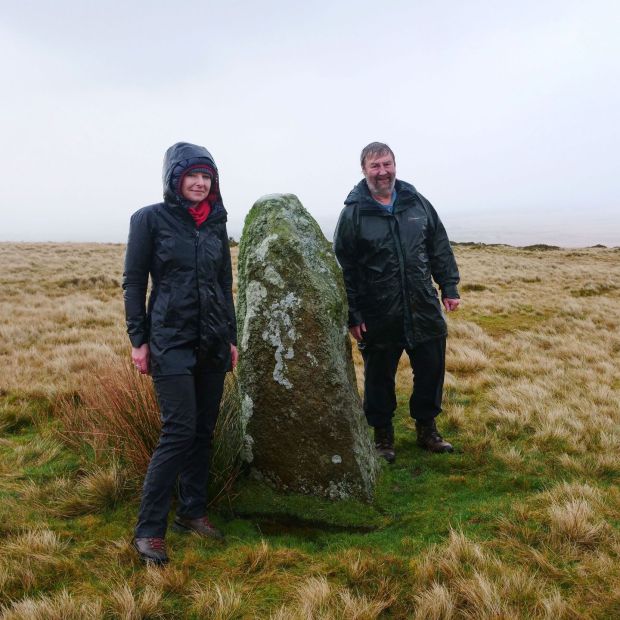
Professors Alice Roberts and Mike Parker Pearson in Wales with the key to a legend about Merlin.

One should never completely dismiss a myth. There is usually a grain of historical truth buried inside. It has just gotten distorted as told and retold over centuries. I feel the same qualified trust about fantasy novels. I know they are imagined, but there is something about them I believe.

In today’s story we find archaeological proof of historical truth underlying an Arthurian legend about the magician Merlin.

As Dalya Alberge writes at the Irish Times, “An ancient myth about Stonehenge, first recorded 900 years ago, tells of the wizard Merlin leading men to Ireland to capture a magical stone circle called the Giants’ Dance and rebuilding it in western England as a memorial to the dead.

“Geoffrey of Monmouth’s account had been dismissed, partly because he was wrong on other historical facts, although the bluestones of the monument came from a region of Wales that was considered Irish territory in his day.

“Now a vast stone circle created by our Neolithic ancestors has been discovered in Wales with features suggesting that the 12th-century legend may not be complete fantasy. Its diameter of [120 yards] is identical to the ditch that encloses Stonehenge, and it is aligned on the midsummer solstice sunrise, just like the Wiltshire monument.

“A series of buried stone holes that follow the circle’s outline has been unearthed, with shapes that can be linked to Stonehenge’s bluestone pillars. One of them bears an imprint in its base that matches the unusual cross section of a Stonehenge bluestone ‘like a key in a lock,’ the archaeologists discovered.

Mike Parker Pearson, a professor of British later prehistory at University College London, says:

‘I’ve been researching Stonehenge for 20 years now, and this really is the most exciting thing we’ve ever found.’

“The evidence backs a century-old theory that the great prehistoric monument was built in Wales and venerated for hundreds of years before being dismantled and dragged to Wiltshire, where it was resurrected as a second-hand monument.

“Geoffrey had written of ‘stones of a vast magnitude’ in his History of the Kings of Britain, which popularised the legend of King Arthur but is considered as much myth as historical fact. … The discovery will be published in Antiquity, the peer-reviewed journal of world archaeology, and explored in a documentary on BBC Two on [presented] by Prof Alice Roberts.

“A century ago the geologist Herbert Thomas established that the spotted dolerite bluestones at Stonehenge originated in the Preseli hills of Pembrokeshire [Wales] where, he suspected, they had originally formed a ‘venerated stone circle.’ The newly discovered circle – one of the largest ever constructed in Britain – is about 5km from the Preseli quarries from which the bluestones were extracted before being dragged more than 225km to Salisbury Plain some 5,000 years ago.

“In 2015 Parker Pearson’s team discovered a series of recesses in the outcrops of Carn Goedog and Craig Rhos-y-felin with similar stones that the prehistoric builders extracted but left behind … quarried almost four centuries before Stonehenge was constructed.

“It convinced Parker Pearson in 2015 that ‘somewhere near the quarries there is the first Stonehenge and that what we’re seeing at Stonehenge is a second-hand monument.’ “

At the Irish Times, here, you can learn how the archaeologists managed to carbon-date the circle despite the destructive effects of acidic soil.

Read Full Post »

Photo: Carole Fritz.
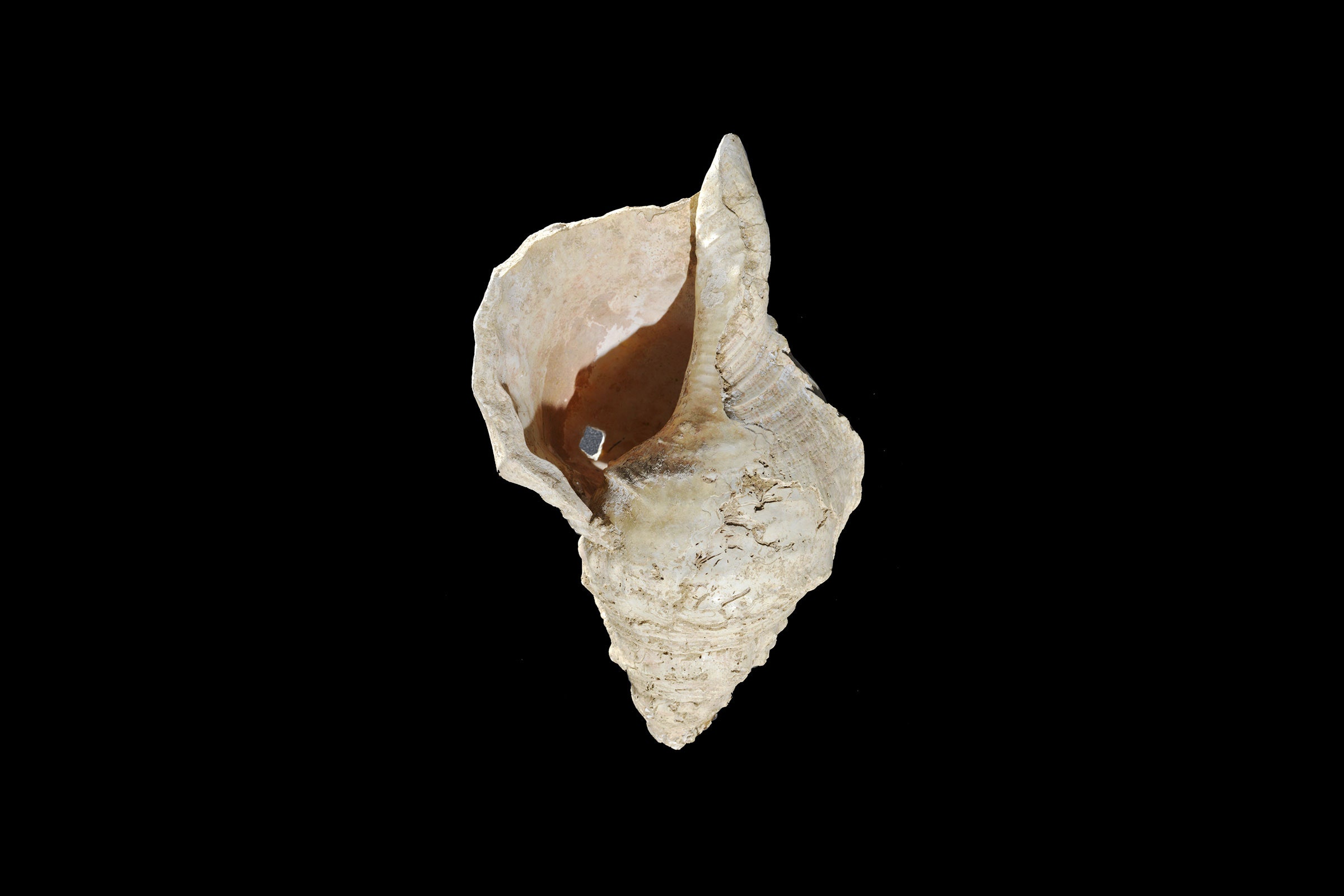
This ancient conch shell from modern-day France was once used to play music.

For today’s story, you’ll want to go to the original article to see the detailed illustrations showing how a conch shell was turned into a musical instrument thousands of years ago — and how archaeologists figured it out.

Matt Simon reports at Wired, “Some 18,000 years ago, in a cave in what we now call France, a human being left behind something precious: a conch shell. It was not just any conch shell. Its tip had been lopped off—unlikely by accident, given that this is the strongest part of the shell—allowing a person to blow air into it. The shell’s jagged outer lip was trimmed smooth, perhaps to assist in gripping, and it also bore red, smudgy fingerprints that matched the pigment from a cave painting just feet away from where the object was found in 1931.

“But those archaeologists missed its true significance: It was an intentionally crafted musical instrument. Writing today in the journal Science Advances, researchers from several universities and museums in France describe how they used CT scans and other imaging wizardry to show that a person during the Upper Paleolithic age took great care to modify the shell, the oldest such instrument ever found. They even got a musician to play it for us, revealing sounds that have not rung out for millennia.

“The first clue to suggest this shell was actually an instrument is that broken tip, or apex. If you find a conch shell on a beach, you can’t just toot it as-is — you’ve got to knock that tip off to get air flowing through the internal chambers and to exit through the opening of the outer lip. …

“The researchers had a musician try playing the shell in the lab. You can hear three notes [at Wired]. The sound is a bit breathy, like a more earthy version of a trumpet or trombone.

“But the breakage around the apex turned out to be quite jagged. ‘It’s very irregular, and it was hurting his lips,’ says archaeologist Gilles Tosello of the University of Toulouse, a corresponding author on the paper. … Why would an ancient human take the trouble to modify a conch shell and then not add a mouthpiece? …

“As for the shell’s outer lip, Tosello and his colleagues could tell it had been chipped away, both from wear patterns and by comparing it to pristine shells of the same species, which have significantly larger lips. In addition, the researchers enhanced a photo of the inside of the lip … to reveal faint red splotches.

These are fingerprints left behind in ocher, and the pigment matches a wall painting of a bison that was mere feet from where the shell was found. That bison was actually etched into the wall, then covered with over 300 ocher fingerprints to shade it in.

“The researchers couldn’t date the shell itself, since that’d require breaking a piece of it off to do carbon dating. But … based on these nearby objects, which they think would have been used by the same people around the same era, they surmised that the shell is likely 18,000 years old. …

“This was in pre-agricultural times, so they would have been Upper Paleolithic hunter-gatherers. [It is] likely that this person belonged to a band of 10 or 20 humans working together to survive.

“We also know that life must not have been too terrible, since people had the time and energy to make music. And after all, they didn’t need an instrument to make music in the first place. ‘With a voice, you can make music,’ says archaeologist Carole Fritz of the University of Toulouse, a corresponding author on the paper. That is, the shell is extraneous. ‘I think music is a very symbolic art for people,’ Fritz adds. …

“This find emphasizes the richness of Upper Paleolithic culture, says University of Victoria paleolithic archaeologist April Nowell, who wasn’t involved in the research. ‘We have music, we have art, we have textiles, we have ceramics,’ she says. ‘These were really complex people.’

More at Wired, here.

Read Full Post »

Photo: Charles-Foix Hospital.
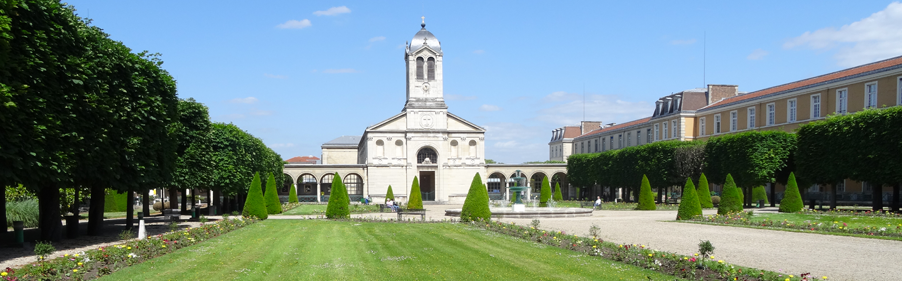
At “l’Orbe,” a hospital for the elderly in a suburb of Paris, some patients are getting visits from delightful strangers. Remote visits are offered worldwide.

What a great initiative this is! Free and in many languages. Maybe a poetry-loving Farsi-speaker who misses her family would like me to send her one of these poetic “consultations” sometime when she’s not too busy with work. I need to check.

Laura Cappelle reports at the New York Times, ” ‘I am calling you for a poetic consultation,” said a warm voice on the telephone. ‘It all starts with a very simple question: How are you?’

“Since March [2020], almost 15,000 people around the world have received a call like this. These conversations with actors, who offer a one-on-one chat before reading a poem selected for the recipient, started as a lockdown initiative by a prominent Paris playhouse, the Théâtre de la Ville, in order to keep its artists working while stages remained dark.

“It’s free: Anyone can sign up for a time slot, or make a gift of a call to someone. The exchange generally starts with simple questions about the recipient’s life, then ranges in any direction; after 20 to 25 minutes, the actor introduces the poem.

“As coronavirus restrictions in France stretch on, the program has become such a hit that the Théâtre de la Ville now offers consultations in 23 languages, including Farsi, its latest addition. It has also been expanded to encompass different subjects and formats: Since December, the actors have held consultations at a hospital and at emergency shelters run by the city of Paris.

“When Johanna White, the comedian who called me, asked how I was doing, I answered honestly. We may tell white lies to reassure loved ones, but there is no reason to skirt the truth with a kind stranger. White and I shared our pandemic coping strategies and talked about the ways in which theater has adapted in the past year.

“And then White picked my poem: ‘Incantation,’ by the Polish-American poet Czeslaw Milosz. ‘Human reason is beautiful and invincible,’ she began after a pause. …

“When I hung up the phone, I felt a little lighter. White, who has a rich, deep voice, was adept at putting an audience of one at ease, and Milosz’s words held hope.

“ ‘Through the phone it can be intimate, because generally you’re isolated,’ White, a trilingual voice actor, said in an interview the next day.

“She estimates that in the past year, she has talked to between 400 and 500 people, from places including Wisconsin, Los Angeles, Chile and Niger. A man based in Beirut told her about local riots in which he had lost half of a hand; from Mexico, an 85-year-old woman shared her grief about being separated from her 92-year-old lover by pandemic-mandated rules.

“Consultations involve a great deal of improvisation, White said, including choosing a poem for a person you’ve only just met. ‘Each of us has our own method,’ she added. ‘I file them by emotions, by feelings.’

“For the director of the Théâtre de la Ville, Emmanuel Demarcy-Mota, the idea of individual consultations with actors didn’t come out of the blue. In 2002, when he was at the helm of the northern French theater La Comédie, in Reims, he initiated in-person sessions at a local bar. …

“Other institutions have taken an interest in the program’s popularity. The Théâtre de la Ville has partnered with a handful of European playhouses [to] expand its roster of actors. Additionally, Demarcy-Mota and his team are in the process of holding phone training sessions with around 100 actors from nine African countries, including Benin and Mali, so theaters there can replicate the program.

“Demarcy-Mota acknowledged that the consultation format didn’t suit all stage actors. ‘Some were scared. You’re no longer performing while someone else watches: Instead, you’re in the position of listening to someone.’ It involves a degree of psychology, White said, but ‘we’re not psychologists.’ …

“The Théâtre de la Ville also brought back in-person consultations this winter in partnership with public institutions. The Charles-Foix hospital in Ivry-sur-Seine, a Paris suburb, was the first to allow performers to come for conversations with staff members and patients. …

“For some residents, especially those with dementia, the performances were adapted: Instead of asking questions, Kontou sang to them directly, in a transparent mask so they could see her mouth. Still, the music inspired interaction. At one point, a 97-year-old woman, Simone Gouffe, almost rose from her wheelchair and started singing, her voice powerful despite her slight frame.” More at the New York Times, here.

Photo: Artisanal Paper
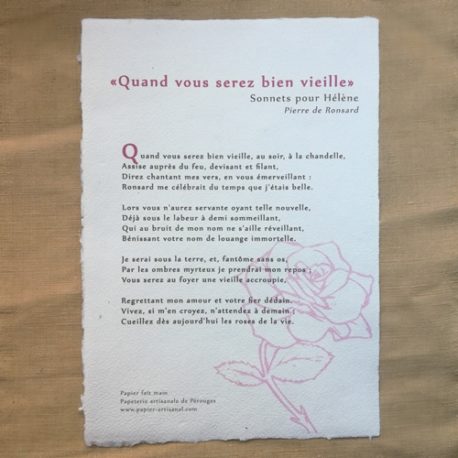
A classic poem that could be read to you by a French actor doing a poetry “consultation.”

Read Full Post »

Photo: robertharding/Alamy.
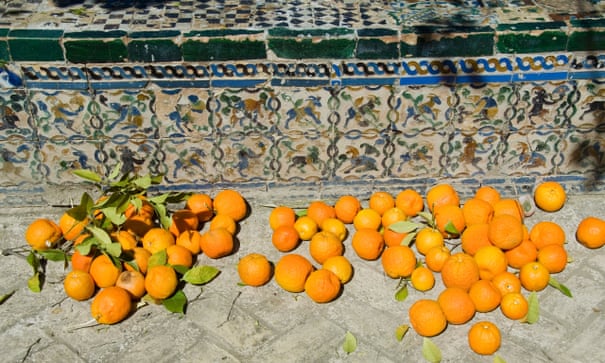
Ripe oranges in the gardens of Seville’s Real Alcazar. The city council employs about 200 people to collect the fruit after it falls and starts to rot. It’s now being used to produce electricity.

In sunny Spain, a pilot project to covert methane from fermenting fruit into clean power for a city water plant is creating hope for supporters of sustainable energy.

Stephen Burgen writes at the Guardian, “In spring, the air in Seville is sweet with the scent of azahar, orange blossom, but the [bitter] fruit the city’s 48,000 trees deposit on the streets in winter are a hazard for pedestrians and a headache for the city’s cleaning department.

“Now a scheme has been launched to produce an entirely different kind of juice from the unwanted oranges: electricity. The southern Spanish city has begun a pilot scheme to use the methane produced as the fruit ferments to generate clean electricity.

“The initial scheme launched by Emasesa, the municipal water company, will use 35 tonnes of fruit to generate clean energy to run one of the city’s water purification plants. The oranges will go into an existing facility that already generates electricity from organic matter. As the oranges ferment, the methane captured will be used to drive the generator.

“ ‘We hope that soon we will be able to recycle all the city’s oranges,’ said Benigno López, the head of Emasesa’s environmental department. …

‘It’s not just about saving money. The oranges are a problem for the city and we’re producing added value from waste.’

“While the aim for now is to use the energy to run the water purification plants, the eventual plan is to put surplus electricity back into the grid. The team behind the project argues that, given the vast quantity of fruit that would otherwise go into landfill or be used as fertiliser, the potential is huge. They say trials have shown that [2,000 pounds will] provide electricity to five homes for one day, and calculate that if all the city’s oranges were recycled and the energy put back into the grid, 73,000 homes could be powered

” ‘Emasesa is now a role model in Spain for sustainability and the fight against climate change,’ Juan Espadas Cejas, the mayor of Seville, told a press conference at the launch of the project. ‘New investment is especially directed at the water purification plants that consume almost 40% of the energy needed to provide the city with drinking water and sanitation.’ …

“The oranges look pretty while on the tree but once they fall and are squashed under the wheels of cars the streets become sticky with juice and black with flies. … The bitter oranges, which originate in Asia, were introduced by the Arabs around 1,000 years ago and have adapted well to the southern Spanish climate.

” ‘They have taken root here, they’re resistant to pollution and have adapted well to the region,’ said Fernando Mora Figueroa, the head of the city’s parks department. …

“The region produces about 15,000 tonnes of the oranges but the Spanish don’t eat them and most of the fruit from the surrounding region is exported to Britain, where it is made into marmalade. Seville oranges are also the key ingredient of Cointreau and Grand Marnier. …

“A handwritten recipe for marmalade dating from 1683 was found in Dunrobin castle in Sutherland in the Scottish Highlands. Legend has it that a ship carrying oranges from Spain took refuge in Dundee harbour and local confectionery maker James Keiller was the first to find a use for the otherwise inedible fruit. This may be a myth, but in 1797 Keiller did produce the first commercial brand of marmalade.”

More at the Guardian, here.

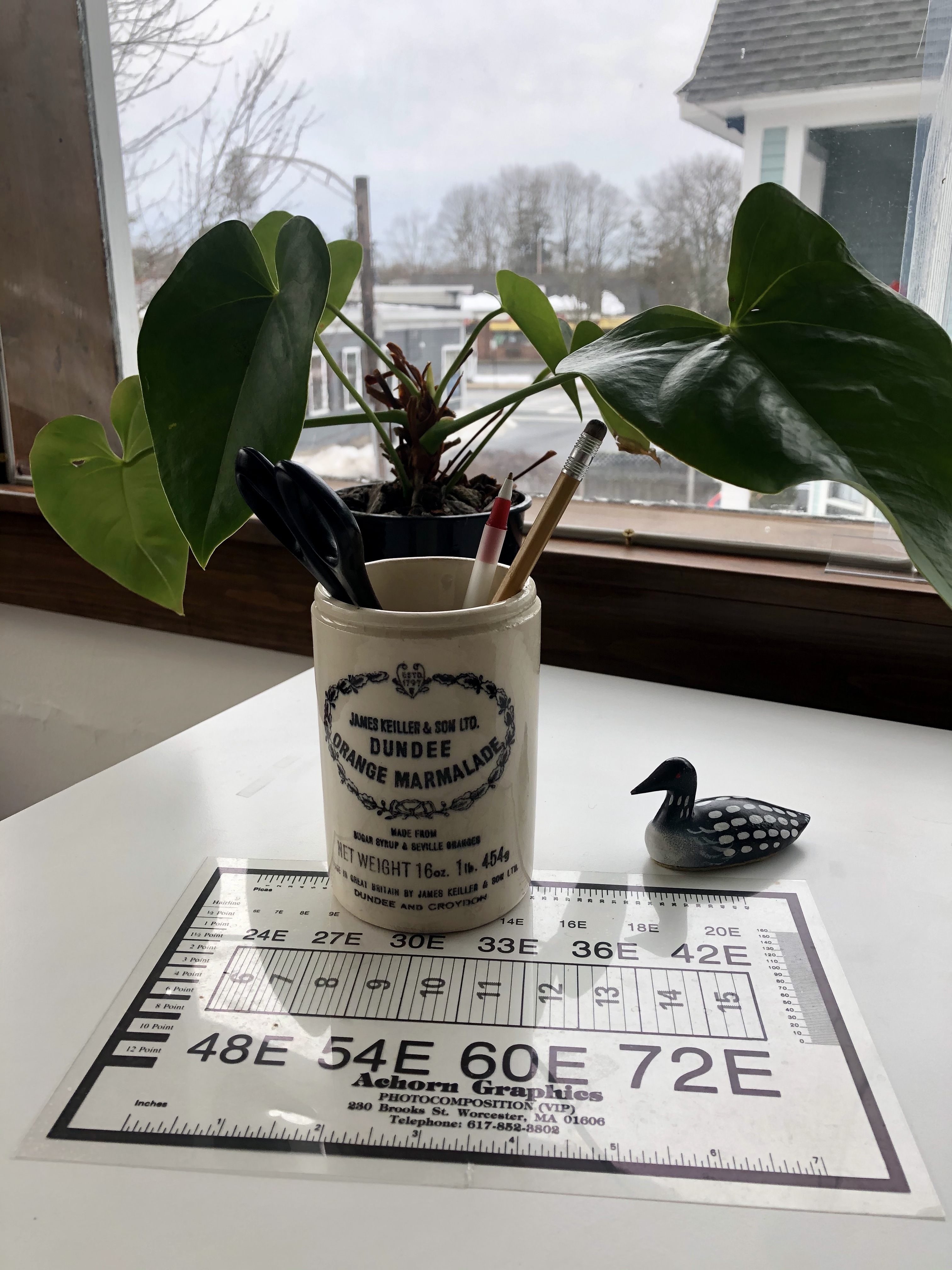
When I was a child, we saved all our Dundee Seville marmalade jars. Clay ones like these are now collectors’ items.

Read Full Post »

Photo: Youtube.
The way hamsters store food is the inspiration behind a word in German that emerged amid wartime hoarding. It has found new life during the pandemic.

Back in the early 1980s, when I was trying to learn Esperanto, I loved how you could make very specific words by gluing other words together. For example, we had a word in our house for me when I was the one to taste the filtered coffee to see if it was ready: kafgustumistino. If it had been my husband, we would have said kafgustumisto.

Rebecca Schuman at Slate explains why agglutinative languages are perfect for creating pandemic-appropriate vocabulary to suit one’s every need.

“During the otherwise Nietzschean abyss of the early pandemic, ” she writes, “one of the few bright lights was a German word: Hamsterkauf, which first emerged during World War II and began circulating in German media last March. Literally ‘hamster buy,’ this coinage described the act of succumbing to our basest animal-brain instincts to hoard more necessities than we would ever actually need. …

“Ah, those delightful Germans! Always with the single word that describes a very specific thing that any normal language would never have a single word to describe! … Over the past year, German has coined some 1,000-plus new terms endemic to the Now Times — ironic capitalization, by the way, being an annoying method that English speakers use to create new language.

“Speaking of which: Unlike English, whose own recent neologisms often read as nonwords that are only cute the first time you encounter them [such as] coronasomnia, situationship … German’s COVID lexicon just looks German. …

“Now, to really make a decent German compound noun, you have to either memorize a very long if-then chart, be a native speaker, or have what’s called a Sprachgefühl — literally ‘language feel,’ or an instinct for what sounds right. But for a semi-workable shortcut, it comes down to this: You start with two nouns, or an adjective and then a noun. … Now here comes the tricky part: Often you have to put in connecting letters, and which letter you use depends on the smaller words’ last letters; this will ostensibly make your big new word easier to pronounce. …

“There’s already a magniloquent viral Twitter thread in appreciation of new superstars such as Impfneid (vaccine envy) — but what about the particular cacophony of imperious voices bickering over how (or when, or if) to relax social distancing and lockdown measures? That’s an Öffnungsdiskusionorgie (OOF-nungs-dee-skoo-ZEEONS-or-ghee), literally an ‘orgy of discussions regarding opening,’ which is coincidentally also the only orgy it’s currently safe to attend.

“Then of course there’s the ol’ socially distanced drink, or Abstandsbier (AHB-stonds-BEE-uh, or ‘distance beer’), which carries with it the many connotations of the word Abstand, including ‘gap,’ ‘interval,’ ’empty space,’ and ‘difference,’ truly encapsulating just why chugging a Godforsaken Beck’s on a frigid sidewalk whilst avoiding small talk might be an unsatisfying Quarentänebruch (KVAH-ren-TAYN-uh-BRUK), or quarantine violation. …

“Here’s a new one: Risikoeinreisender (REE-SEE-koh-AYN-RYE-sun-duh), literally ‘risk-arriver,’ aka one who tromps undeterred into another country straight from an outbreak-rich region without regard to whether he might infect the entire staff of his $309 cabana at the Cancún Ritz-Carlton. (Hopefully the check-in counter at said Ritz-Carlton was already equipped with my personal favorite of this entire Teutonic enterprise: a clear fiberglass Spuckshutztrennscheibe (SHPOOK-shoots-TREN-shy-buh) — literally ‘spittle-protection separation pane.’)

“While it’s always fun to see exactly which surprisingly singular phenomena have heretofore claimed their own German word, I think that the nomenclatures of the Coronazeit (ko-RO-nah-TSITE) are particularly resonant for non-German-speakers because this really is a singular moment in time. …

“Even I, a blasé Germanist, could ruminate all night on such lexicographic majesty as Geisterspieltag (GUY-stuh-SHPEEL-tak), literally ‘ghost game day,’ or the practice of playing Fußball in an empty stadium. But alas, I don’t have time for all 1,000-plus words, given that my daughter has been in Zoom school for a year and possibly just set something on fire. But here’s one new German word that even I don’t really understand: Coronakindergeld (koh-RO-na-KIN-duh-gelt), the ongoing financial support for parents stuck at home with their kids.” Wow, is Germany really paying parents?

More at Slate, here.

Read Full Post »

Photo: Le Lac St Jean.
Jean-Daniel Bouchard (left) in a 2011
Nutcracker. Bouchard now divides his time between ballet and his family’s farm.

I like reading about independently minded people who make surprising decisions that are perfect for them. In this story from Canada, a successful ballet dancer realized during the pandemic that keeping his family farm going is just as important to him as ballet.

CBC has the story. “A farmer in the Saguenay–Lac-St-Jean region of Quebec is striking a fine, if unusual, balance: running his family dairy farm by day and working as a classical ballet dancer by night.

“Jean-Daniel Bouchard started dancing before he turned four, and after high school he decided to try to make a career of it. His dancing took him to Banff, Alberta, British Columbia, Toronto and Montreal. In all, Bouchard spent almost nine years more or less constantly on tour. …

“But eventually, his rural Quebec upbringing as a sixth-generation farmer in St-Bruno started to call him home.

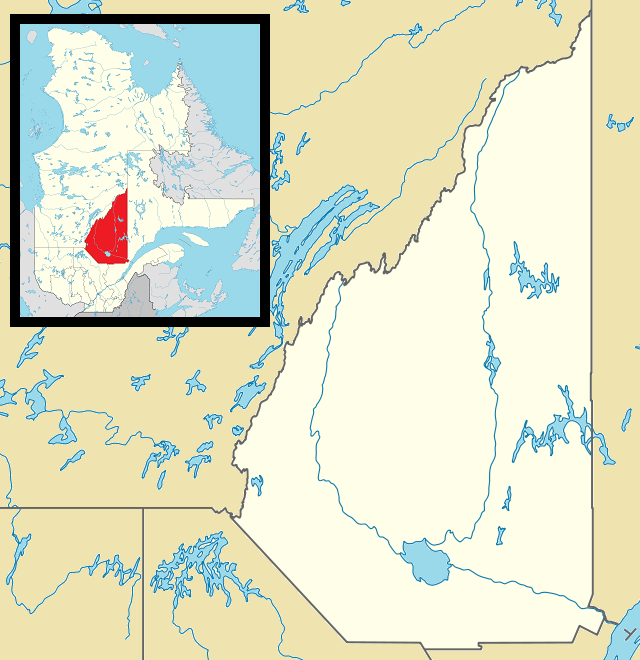
Map: Wikimedia Commons
St-Bruno, Quebec.

“Bouchard told Quebec AM that he was looking for more stability, to settle down, and his two older brothers were not especially interested in taking over the farm.

‘I thought it would be really sad to lose this family treasure,’ he said. ‘So I thought I could do both — I could come back here, start a company and dance, and do the farming with my dad.’

“Bouchard said although his twin passions may seem like something of a contradiction — farming can be gruelling physical labour and involves plenty of financial mathematics, versus an art form that depends on imagination and creativity — they help him find balance.

” ‘I think this is the perfect match for life,’ he said. ‘You have more stable work and then you can let go of the stress with dance.’

“Plus, there are physical benefits. Bouchard said farm work makes him stronger, which helps with his dancing, whereas the repetitive movements and stretching he uses for ballet help him prevent injury in the barn.

“With theatres closed due to the COVID-19 pandemic, Bouchard is both taking and teaching virtual dance classes. …

” ‘We can’t wait for the studios to open again so we can get back into a full dance ballet class, and to be able to move from a space in the studio to the other end,’ he said. …

“Bouchard said he sometimes misses touring and will dream he’s off dancing somewhere else, but he’s happy with the life he chose as both a farmer and a dancer. … ‘The point should be to be happy,’ he said.”

More at CBC, here. I can’t help wondering how Bouchard will manage when his father is no longer able to work. Somehow, I’m confident he’ll figure it out.

Video by Romy Boutin St-Pierre

Read Full Post »

« Newer Posts - Older Posts »