Photo: WJAR/file photo. Traffic on Interstate 195 west builds up on the approach to the Washington Bridge in East Providence, where one lane had to be closed a year ago. Now you can have a Washington Bridge Christmas ornament.
I do get tired of “Jingle Bells” and “Deck the Halls” on the radio starting before Thanksgiving, but there are other seasonal songs I look forward to hearing again, some that are lovely (“Mary’s Boy Child”) and some that are playful (“Santa Baby”).
If you want to hear holiday music that’s a bit different, check out WICN, the Worcester jazz station, here. It’s a breath of fresh air. I love seeing the creativity that holidays bring out in jazz musicians.
The holidays bring out the creativity of ornament makers, too, delighting people who want a small, kooky gift to give or something different for their own tree.
Ed Fitzpatrick at the Boston Globe has written about a new Christmas tree decoration that makes hay out of an unwelcome event in Rhode Island: the sudden closure last year of the westbound lane of a critically important bridge. Rhode Islanders are still dealing with the chaos that ensued.
“Forget Christmas ornaments of snowmen, Santa, or even the Big Blue Bug,” says Fitzpatrick. “This year, Rhode Islanders are decorating their Christmas trees with a miniature replica of the Washington Bridge ― complete with orange traffic cones shifting drivers away from the westbound lanes, which have been closed for more than a year. …
“Facing the choice of laughing or crying, many of the Rhode Island motorists who’ve spent time idling in bridge traffic jams have added a sardonic touch to their fir trees.
“Duke Marcoccio, the design artist behind mylittetown.com, said the Washington Bridge is by far the best seller from among the dozens of ornaments he sells. …
“Marcoccio, a Narragansett resident, said he has been making Christmas ornaments for 25 years now. The first was a replica of The Towers in Narragansett. Since then, he has created about 300 ornaments, including a Del’s lemonade cup, the Haven Brothers mobile diner, the Benny’s sign, and the Big Blue Bug. …
“The biggest hit has been the Washington Bridge ornament, Marcoccio said. He said he considered placing tiny orange traffic cones on the bridge deck, but they probably would have broken. So he just painted the cones and shifting lanes on the span. ‘They get the idea,’ he said.”
Read more of the entertaining story at the Globe, here. And please share holiday songs you like, especially ones that don’t get much play. Beautiful or quirky.
Louis Armstrong and his song “‘Zat You, Santa Claus?”
Photo: Estaban Bustillos/GBH News. A rider mounts a bull at New England Rodeo in Norton, Massachusetts, in September.
I have seen rodeos in Madison Square Garden and in Buffalo, Minnesota, and in the Southwest. But I never expected to hear there were rodeos in Massachusetts. I should have given a little more thought to the welcome variety of national cultures that have taken root here.
Esteban Bustillos reports at GBH News, “Drivers who pull onto the small road leading them to the New England Rodeo in Norton might well feel like they’ve arrived on a different planet.
“Located about an hour from Boston, the parking lot is a sea of cowboy hats, boots and pickup trucks. And as Kelly Pina, who helps with the behind-the-scenes paperwork for the rodeo, jokes, it’s New England’s best-kept secret. …
“The event is the only weekly event in the commonwealth to feature bull riding and barrel racing, making it a lifeline for rodeo culture that’s far from home. That’s especially important for Brazilians, who make up the vast majority of the bull riders at the rodeo. It makes for a swirl of English and Portuguese, Americans and Brazilians all coming together for a sport and lifestyle they love.
“Jullia Oliveira manages the rodeo’s bull riding — and she also speaks fluent Portuguese, a crucial skill given the high number of Brazilian bull riders in the sport. …
“Since Massachusetts has one of the largest Brazilian communities in the country, Norton’s rodeo is a natural hub. The owner, Elias DaSilva, hails from Brazil, too.
“ ‘It’s nice to have a place where they can come and feel comfortable and feel welcomed,’ Oliveira said. ‘Especially since they’re coming from another country, usually without being able to speak English.’ …
“As welcoming as the rodeo may be, the back of a bull is no place for the timid. As soon as the gate to the pen opens, it’s man versus nature. And for a few electrifying seconds, the riders are locked in a mesmerizing dance that shakes the earth beneath them as supporters scream and holler.
“But gravity and thrashing bulls have a way of getting the cowboys to hit the ground. As terrifying as it looks, they all dust themselves off and hop back up. Some even do so with a smile.
“Wesley Goncalves, Oliveira’s uncle, has been riding bulls most of his life. He says bull riding and soccer are the big sports in his home country of Brazil, so having the rodeo in Norton has been very important to him. … Walter Oliveira, Jullia’s father, is a bull rider as well. And having a local rodeo has been a game changer.
“ ‘We used to travel like six hours, seven hours, eight or more, sometimes sixteen hours, to go for a ride,’ he said. ‘And to have the New England Rodeo here, for us is great. For me, it’s one hour from my house.’
“Today’s established New England Rodeo is a long way from its humble beginnings. Tim Lee, one of the rodeo’s announcers, used to be a bullfighter — the type that helps wrangle a bull after it’s thrown a rider, not the matador-with-a-cape kind.
“ ‘Sometimes rodeo can be like a dying breed, but we’re never gonna let it die,’ Lee said. “There’s just nothing like rodeo, man. You bring so many people together like that, how could you have a bad time?’
“For Pina, the rodeo is a personal affair. Along with helping to run it, she’s a professional barrel racer, zooming through the dirt of the arena and weaving through barrels on horseback. And her husband, Ed Pina, is the other half of the rodeo’s announcing duo. …
“ ‘You come here a few times, you’re family. You work with us, you’re blood, no matter what,’ he said. ‘It’s about building our family bigger and teaching the next generation how to do our sport and to make sure our sport keeps going.’ ”
Shout-out to Craig, the bull rider who ran manufacturing for my husband’s former company. Despite bones repeatedly broken, he truly loved the sport. And he provided enthusiastic support to the many little kids who got their start by riding rams!
Photo: Ning Zeng. An ancient log excavated and likely buried naturally, cleaned and dried, with the lower end sawed off for lab analysis.
And while we’re on the subject of reducing carbon in the atmosphere, consider an ancient process that works without our help. You may find it a little weird, however, especially as intentionally pursuing this natural approach merely postpones carbon escape for a few thousand years!
Dino Grandoni writes at the Washington Post, “On the outside, its rust-red bark had peeled. Its sweet, distinct cedar smell had disappeared. But at its core, it’s still as hard as a tabletop — and may just contain a way of slowing down rapidly rising temperatures.
“A 3,775-year-old log unintentionally discovered under a farm in Canada may point to a deceptively simple method of locking climate-warming carbon out of the atmosphere for thousands of years, according to a study published [in September].
“ ‘This accidental discovery really gave a critical data point,’ said Ning Zeng, a University of Maryland climate scientist whose team unearthed the ancient chunk of wood. ‘It’s a single data point,’ he added, but it ‘provides the data point we need to really say under what conditions we can preserve wood for a thousand years or longer.’
“Figuring out ways of sequestering carbon may be crucial to meeting the world’s goal of halting warming beyond 2 degrees Celsius above pre-industrial levels. … Doing something as simple as burying wood underground in the right spot, these researchers say, may be a cheap and scalable way of doing just that.
“Forests are Earth’s lungs, sucking up six times the amount of carbon dioxide (CO2) that people pump into the atmosphere every year by burning coal and other fossil fuels. But much of that carbon quickly makes its way back into the air once insects, fungi and bacteria chew through leaves and other plant material. …
“What if that decay could be delayed? Under the right conditions, tons of wood could be buried underground in wood vaults, locking in a portion of human-generated CO2 for potentially thousands of years. While other carbon-capture technologies rely on expensive and energy-intensive machines to extract CO2, the tools for putting wood underground are simple: a tractor and a backhoe.
“Finding the right conditions to impede decomposition over millennia is the tough part. To test the idea, Zeng worked with colleagues in Quebec to entomb wood under clay soil on a crop field about 30 miles east of Montreal.
“ ‘We were trying to do a small pilot project at first,’ said Ghislain Poisson, an agronomist with Quebec’s Agricultural Ministry who worked with Zeng. … But when the scientists went digging in 2013, they uncovered something unexpected: A piece of wood already buried about 6½ feet underground. The craggy, waterlogged piece of eastern red cedar appeared remarkably well preserved. …
“Radiocarbon dating revealed the log to be 3,775 years old, give or take a few decades. Comparing the old chunk of wood to a freshly cut piece of cedar showed the ancient log lost less than 5 percent of its carbon over the millennia.
“The log was surrounded by stagnant, oxygen-deprived groundwater and covered by an impermeable layer of clay, preventing fungi and insects from consuming the wood. Lignin, a tough material that gives trees their strength, protected the wood’s carbohydrates from subterranean bacteria. The team wrote up their results in a paper in the journal Science. …
“Said Daniel L. Sanchez, an assistant professor at the University of California at Berkeley who was not involved in the study, ‘Scientists and entrepreneurs have long contemplated burying wood as a climate solution.’
“The next step is to find prehistoric logs in other locations, to see how well other types of soil preserve wood. … The researchers estimate buried wood can sequester up 10 billion tons of CO2 per year, which is more than a quarter of annual global emissions from energy, according to the International Energy Agency.
“One of the biggest challenges isn’t so much the supply of wood but rather the cost of transporting it to the right spots, Poisson said. ‘There’s probably a lot of unmerchantable wood right now that doesn’t have any market or doesn’t have any purpose.’ “
Hmmm. What do you think? Transporting wood to a burial site wouldn’t just be costly, it would cause more emissions. Not sure the scientists have thought this through. More at the Post, here.
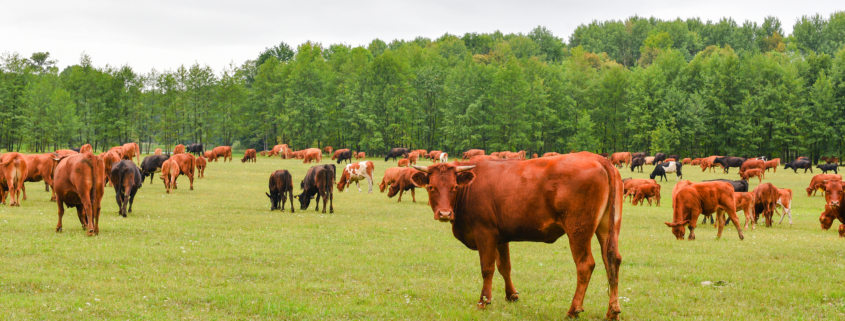
Livestock produces a lot of methane, which is unlikely ever to be balanced out by carbon captured in the soil. The Soil Association Exchange wants you to know about a few positive effects, however.
It’s an ongoing process to keep up on the latest, especially when it comes to protecting the planet. I myself once thought that massive tree planting had the biggest bang for the charitable buck. Then I learned that, although trees are important, they can’t help much without due consideration given to where and how they are planted, and what varieties of trees they are.
Today I’m trying to bone up on the situation with cows, which we all know (including a young grandson who has cut beef out of his diet) produce too much climate-warming methane gas.
James Tapper reports at the Guardian, “New data shows [cows] may play an important role in renewing farm soil. Research by the Soil Association Exchange shows that farms with a mixture of arable crops and livestock have about a third more carbon stored within their soil than those with only arable crops, thanks to the animals’ manure.
“This also has an effect on biodiversity: mixed arable and livestock farms support about 28 grassland plant species in every field, compared with 25 for arable-only and 22 for dairy-only.
“Joseph Gridley, chief executive of SAE, which was set up by the Soil Association in 2021 to support and measure sustainable farming, said it was unlikely that carbon captured in soil would balance out the enormous amounts of methane created by cattle. Farm livestock around the world creates about 14% of human-induced climate emissions.
“ ‘It’s pretty unequivocal in the data that having livestock on your farm does mean you have more emissions – five or six times more emissions,’ he said. ‘But if you integrate livestock into the system, on every metric on soil health, there’s an improvement, and on a lot of the biodiversity measures as well.’
“Soils are degrading, but by how much exactly is unclear. In 2015, the UN Food and Agriculture Organization claimed that the world had only 60 harvests left, but researchers at Oxford University and Our World In Data said in 2021 that there was a complex picture. …
“Lee Reeves, UK head of agriculture at Lloyds bank, which helps fund SAE … suggested ministers should create a decarbonization strategy, and a standardized carbon calculator, so that farmers and other businesses could use a single tool to calculate their carbon impacts.
“ ‘Moving from traditional to regenerative farming can see a dip in profitability for the first five years, so the government needs to support farmers and banks in that,’ he said.
“[In the UK] the Department for the Environment, Food and Rural Affairs has been investigating so-called methane blockers as a way to reduce emissions. Adding substances such as essential oils, probiotics and even seaweed to cattle feed can reduce the amount of burps and wind they generate.
“Last month the Green Alliance charity said that feeding Bovaer, a methane blocker, to a third of the UK’s dairy cows would cut the country’s emissions by about 1%. Yet this is not happening, the campaign group warned, because farmers were unwilling to pay extra for something they did not benefit from. It said methane blockers should be subsidized, as other green farming schemes were.”
More at the Guardian, here. The Natural Resources Defense Council explains more about regenerative farming here.
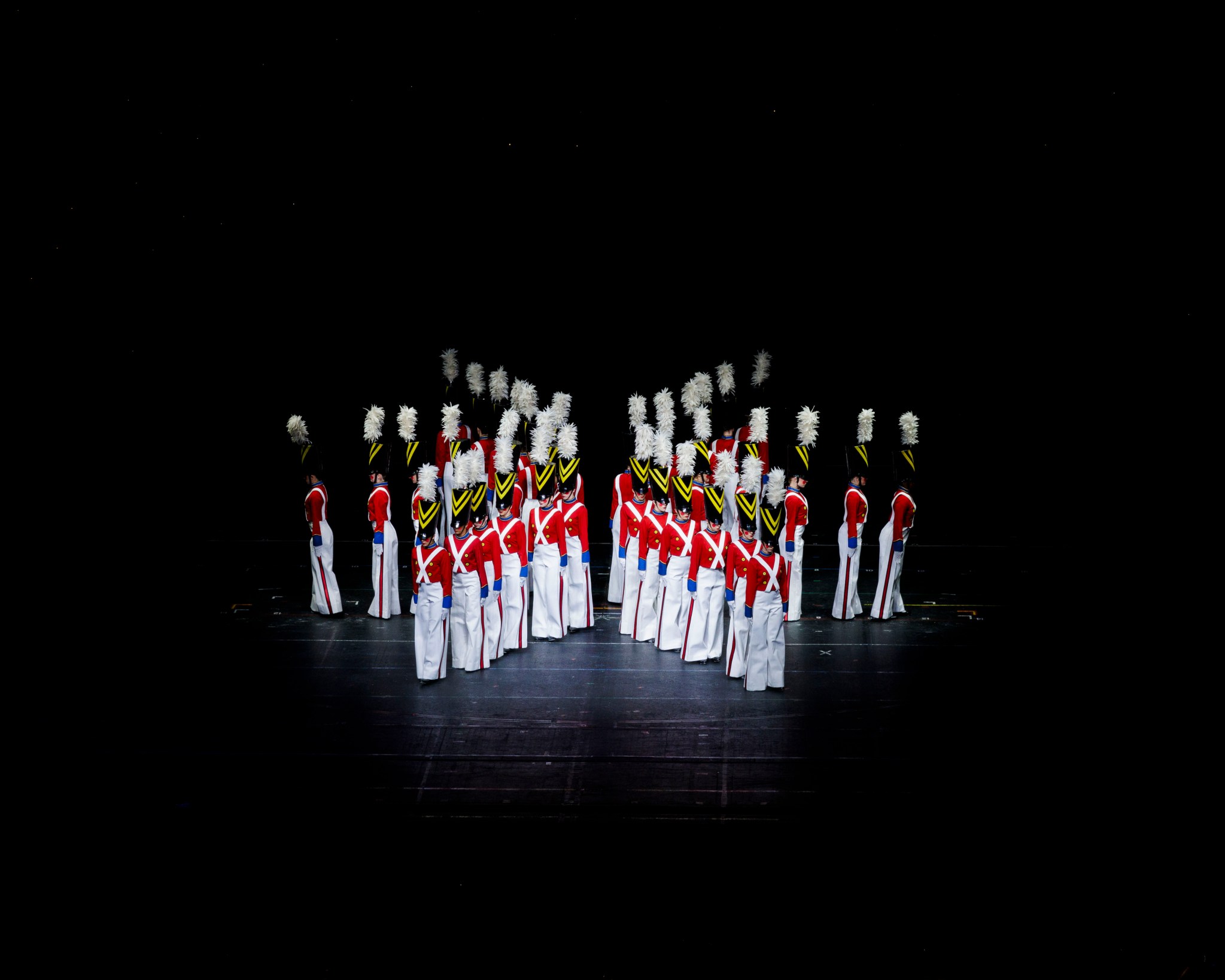
Photo: MSG Entertainment/Victoria Lewis. In “Parade of the Wooden Soldiers,” the 36 Rockettes on stage imitate the stiff movements of toy soldiers.This photo was taken during a dress rehearsal on November 6, 2024.
For many New Yorkers and visitors to New York, the holiday season is a time to see the Rockettes at Radio City Music Hall. I went there once as a child with my babysitter. We saw the Rockettes, and then we saw the featured movie. The movie was Million Dollar Mermaid, a biopic about an Australian swimming legend. It starred Esther Williams and it made a big impression on me. Maybe an even bigger impression than the Rockettes did.
But the Rockettes are a wonder of the world. And today’s article — from Popular Science, of all things — explains just how they do what they do.
Laura Baisas writes, “Every holiday season, the Radio City Rockettes dazzle with their eye-high kicks that seemingly defy gravity. During the precision dance company’s roughly 200 shows over eight weeks, a dancer can do up to 650 kicks in a single day. For all this kicking, Rockettes must stay in peak physical condition. While this signature kick is a festive feat of physics in its own right, the math on stage also makes the magic.
“The Rockette’s home at Radio City Music Hall in New York City first opened its doors in 1932. … With this storied stage history, it should come as no surprise that a show that has been running for close to a century continues to use some tried-and-true, but admittedly low-tech methods.
‘Our stage is set up like a giant piece of graph paper.’
“ ‘Our stage is set up like a giant piece of graph paper,’ Julie Branam, a former Rockette herself and the current director and choreographer of the Radio City Christmas Spectacular, tells Popular Science. ‘Every two feet, there’s a number and a dash or a solid line. There are also colored lines, so you will see red, green, blue, white, and upstage of each one of those lines is a dotted line. So everywhere you look, is a giant piece of graph paper and that’s how we figure things out.’ …
“Rehearsals typically start in October and the whole show is plotted onto actual paper so that the choreographers and dancers can get an idea of how their dances will look from the audience. For example, the iconic ‘Parade of Wooden Soldiers‘ number is seven pages long for roughly five to six minutes of dancing.
“ ‘As we are learning choreography, I can sort of see almost an overhead visual of where my coordinate is,’ Danelle Morgan, a current Rockette who also serves as an Assistant Choreographer and Dance Captain, tells Popular Science. …
“ ‘Parade of the Wooden Soldiers’ is one of the original numbers from the show, which has been performed since the Christmas Spectacular first premiered in 1933. It’s a fan favorite, for its military-like steps and the iconic slow fall at the piece’s conclusion. …
“ ‘Every four counts they’re going to replace the line in front of them and we have 24 counts. And then that spoke [of the wheel] will revolve,’ explains Branam. ‘So you can really see where you’re going and know where everybody is and how far they’re traveling.’
“Choreographers will also use design softwares like OmniGraffle to create a digital version of these stage puzzles and plot the movements of the 36 dancers on stage. Each dancer follows an individual track, so she knows what order and where to go on the stage. Everyone is also lettered so that they can refer back to the plot points and quickly see where they need to be. Still, it’s all easier said than done on paper.
“ ‘As a dancer, I challenge my body so much, but each Rockette has to challenge their brain so much as well.’ … says Morgan. ‘When you step into this position, then it’s a completely different brain game and a different brain challenge. It’s puzzles.’ …
“Since uniformity is key to making the precise patterns that the Rockettes are famous for, the company has what are called swings. In performing, swings are sort of an understudy times 10, who has to learn multiple parts instead of just one. Morgan is currently one of 12 swings in the company. …
“ ‘We know every single Rockette’s individual track, with the help of our charts and the information that we get in rehearsal, so we’re ready to jump in at a moment’s notice,’ says Morgan. … ‘We can jump in costume and then give the audience the same show that they deserve every single show. It’s a high adrenaline situation every time.’
“The festive costumes might make being Rockette look glamorous, but it takes a lot of grit to be a Rockette. In addition to the precision of their dancing, costume changes as short as 78 seconds, and physical challenges, there is also the mental load of performing in up to four shows a day for eight weeks.
“That comes down to ‘training your resilience,’ putting mind over matter, and importantly, leaning on your fellow Rockettes when you think you just can’t do another kick. The special appearances at major events like the Macy’s Thanksgiving Day Parade or Rockefeller Center Christmas Tree Lighting or working with younger dancers also help boost company morale.
“ ‘It’s just constantly having that reminder that what we do is something super unique that brings so much joy to so many people,’ says Morgan. ‘I think that helps us get through and keeps us motivated.’ “
Photo: Giacomo Augugliaro/Getty Images. A loggerhead turtle (Caretta caretta) off Elafonissos island in Greece, where the rebound in population has been called “phenomenal.”
Today’s article is about the resurgence of turtles in Greece. But before I get into it, I need you to indulge my current train of thought about turtles.
There are the chocolate, caramel, and pecan-footed “turtles” that my sister-in-law makes every Christmas, turtles that this week have gotten certain farflung relatives wildly excited.
There are songs about turtles like one I just found out my exercise teacher made for a fundraiser years ago, here.
And there are turtle fans all over the world who are bringing real turtles back from the brink of extinction. Slowly but surely.
Helena Smith writes for the Guardian about that.
“After nearly a quarter of a century observing one of the world’s most famous sea turtle nesting grounds,” she reports, “Charikleia Minotou is convinced of one thing: nature, she says, has a way of ‘sending messages.’
“Along the sandy shores of Sekania, on the Ionian island of Zakynthos, what she has seen both this year and last, has been beyond her wildest dreams. The beach, long described as the Mediterranean’s greatest ‘maternity ward’ for the Caretta caretta loggerhead sea turtle, has become host to not only record numbers of nests, but record numbers of surviving hatchlings as the species makes an extraordinary resurgence.
“ ‘The message sea turtles are sending is very clear,’ said Minotou, who coordinates the WWF program in the protected area. ‘And that is the measures we have taken over the past 25 years to ensure conditions are right for the marine turtles to nest here are working … It’s fantastic.’
“One of the oldest living species, sea turtles are believed to have existed for more than 100m years. Although highly migratory – over a lifetime, the reptiles cross thousands of miles of seas and oceans – female turtles always return as mature adults, about 20 to 25 years later, to the habitat where they were born to lay eggs. It is a reproductive cycle that happens with perfect synchronicity. In Sekania and other nesting grounds in Zakynthos and around Greece, turtles tagged at birth by conservationists a quarter of a century ago are now reappearing to nest.
“ ‘It’s hugely moving,’ says Minotou, a sustainable development expert who highlights the importance of technological advances, including the installation of CCTV cameras, in helping to ward off seagulls, ghost crabs and other predators. ‘This year more than 1,200 nests have been recorded in Sekania, which is one every 50cm [~20 inches] of beach. An amazing number.’
“From Spain in the west to Cyprus in the east, the Mediterranean has witnessed a record rise in sea turtle nesting – testimony to the painstaking efforts of environmentalists determined to save an ancient mariner that not that long ago was on the verge of extinction. Only one in 1,000 turtle hatchlings makes it to adulthood, making the turnaround even more remarkable.
“In Greece, which hosts 60% of Caretta caretta nests, the rebound has been phenomenal: from an average of 5,000 to 7,000 nests per year, since 2023 over 10,000 nests have been recorded annually, according to Archelon, the Sea Turtle Protection Society of Greece. …
“Thirty years ago, before the creation of a state-funded marine park on Zakynthos – the country’s biggest sea turtle nesting ground after the bay of Kyparissia in the Peloponnese – Greek authorities appeared oblivious to the plight of a species whose survival is now widely recognized as vital for marine ecosystems and the region’s ecological biodiversity.
“The doughty campaigner, now in her 90s, spent years lobbying successive Greek governments to legislate policies to protect Caretta caretta from the then nascent threat of tourism and other perils posed by speedboat propellers, beach furniture and human activity in marine turtle habitats, conservationists say. …
“ ‘It’s been the most wonderful news, at my age, to find out that the Caretta caretta are no longer so threatened, but it’s crucial protective measures continue to be enforced. One false move and everything could be lost.’ ”
Do you have any thoughts on why turtles are so beloved? I think for me it’s their patience, the way they get everything done that they need to do while moving slowly.
I’ve been following the singing career of Will McMillan even longer than I’ve been following his blog, which I see several of you also follow. If you haven’t checked it out yet, I think you will like it: not just for the thoughtful way Will writes about living life with awareness but for recordings of some of his songs and links to others.
One of the many things Will does is prepare fascinating research on famous songwriters and present shows about them, often in libraries or retirement places. He comes up with obscure tidbits about his subjects’ lives and obscure songs that I guarantee you’ve never heard, no matter how famous the featured songwriter.
Ever since Will and pianist Joe Reid presented a show I saw on Cole Porter, I’ve been wanting to share a song he unearthed, a funny one about an ambitious oyster.
Watch out now! I’m into spoilers. The song ends as the little oyster, having previously descended down an elegant throat, begins to get jostled:
“Off they go through the troubled tide “The yacht rolling madly from side to side “They’re tossed about till that fine young oyster “Finds that it’s time he should quit his cloister “Up comes the oyster
“Back once more where he started from “He murmured, ‘I haven’t a single qualm ” ‘For I’ve had a taste of society ” ‘And society has had a taste of me.’ “
Read all the lyrics at Oyster. If you don’t already read Will’s blog, click here. And you can download his songs at any of the sites that offer music, listed here.
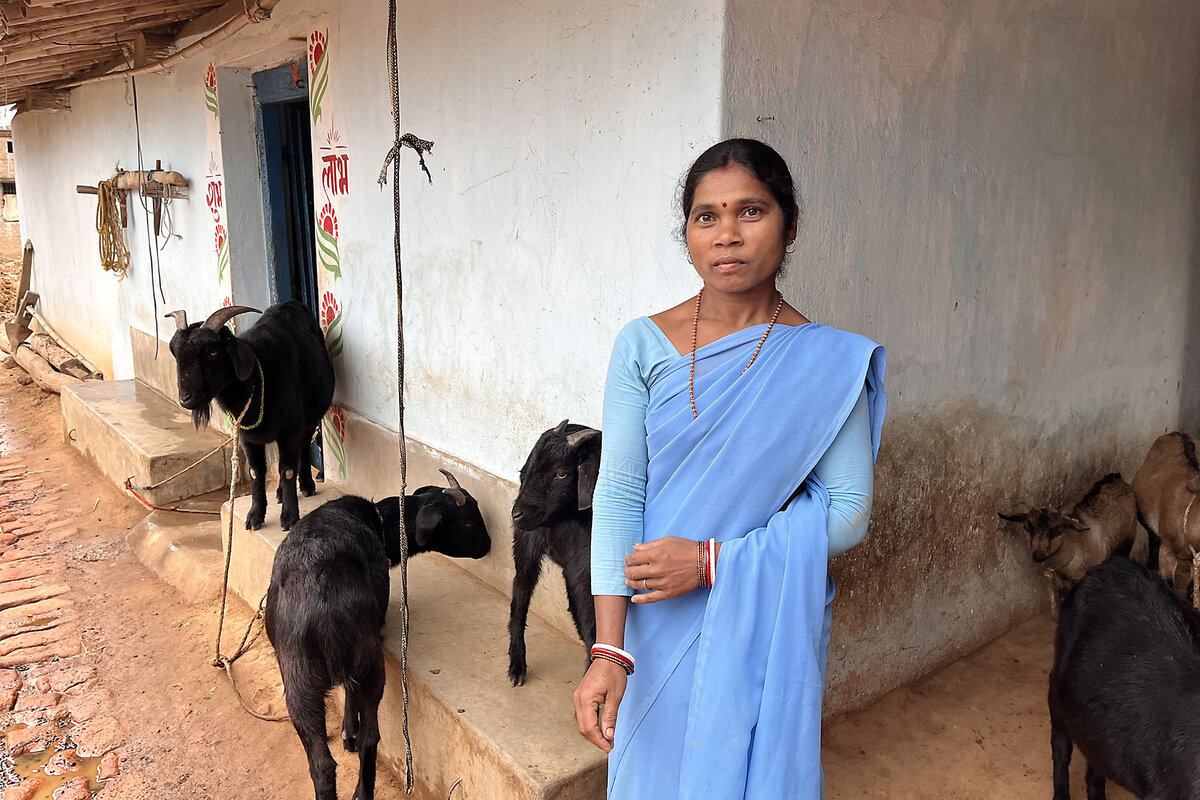
Photo: Sushmita Pathak. Ritmani Devi, one of roughly 60,000 women in India trained as goat nurses under the Pashu Sakhi initiative, stands with her herd in Angara, India, March 19, 2024.
It seems wrong somehow that there should ever be a need to “empower” women, anymore than there is a need to empower men.
But such is the case, whether women live in rich countries or in the most impoverished villages of India.
Still, it’s better to have empowerment initiatives for women than to do nothing about the imbalance.
At the Christian Science Monitor, Sushmita Pathak reports from India about one such initiative, “Dressed in a light-blue sari, Ritmani Devi cradles two black baby goats as she guides a flock of ducks toward its coop. …
“A few years ago, this muddy yard was much less lively. Ritmani Devi’s goats would often die, she says, and the ones that survived weren’t very healthy. This was common here in the east Indian state of Jharkhand and throughout the country.
“India is home to one-sixth of the world’s goat population. A goat is a valuable asset for a low-income family, ready to be sold at a moment’s notice in case of emergencies. But with owners lacking basic animal health knowledge, that’s all they were – a one-time, last-ditch safety net, rather than an alternative stream of income. Plus, poor access to veterinary services led to high mortality and morbidity rates among goats.
“Now, results from one novel initiative that began a decade ago indicate the tide may be turning. The Pashu Sakhi, or ‘friend of the animal,’ program works to fill gaps in veterinary care by transforming rural, semiliterate women into community animal health care workers, or ‘goat nurses.’ With support from the Indian government, the World Bank, the Gates Foundation, and others, around 60,000 women across India have been trained to provide services like vaccination and deworming, leading to a spurt in goat populations in several states. They are paid for the care they provide, and gain a sense of pride and independence. …
“At the community hall near Ritmani Devi’s home in Getalsud village, the walls are painted with training material, including illustrations of common symptoms to look out for, like swelling under the animal’s mouth or pale eyes, and tips on how to negotiate better rates for goats in the market.
“Jharkhand was one of the first states in India to adopt the Pashu Sakhi model. Having women at the forefront of the initiative was a natural choice, says Swadesh Singh, a livestock specialist at the Jharkhand State Livelihood Promotion Society, the government agency that runs the program.
“In rural India, the responsibility of managing small ruminants and poultry usually falls on women. Meanwhile, veterinary doctors – who sometimes serve multiple village clusters alone – focus on larger, more valuable animals like cows and buffalo. Before the program, goat mortality in Jharkhand was 50%, says Dr. Singh. Authorities say that figure is now below 15% – thanks in large part to the state’s goat nurses.
“The typical Pashu Sakhi candidate has at least eight years of schooling. After being selected by the state’s livestock department, they’re taught how to administer vaccines, what type of fodder is best for the animals, and how to give preventative care. More advanced nurses also get trained in managing disease, performing castration, goat breeding and marketing, and more.
“Goat nurses are often the first responders in any livestock-related medical emergency, in addition to conducting regular check-ups and advising others on goat rearing. Their proximity is a huge advantage. Hailing from the same community that they serve makes it easier to build trust, and the women can take on as much work as they like.
“Livestock owners pay a fixed sum for each service – about 12 cents for every vaccination, for example – and goat nurses also receive a small stipend from the government. Ahilya Devi says she makes anywhere from $25 to $85 a month. That money goes toward her children’s school fees, groceries, and other household expenses – and, occasionally, a personal treat like makeup.
“ ‘Earlier, I had to consult my husband for every expense,’ she says. …
“To be sure, the work comes with challenges. Farmers are often reluctant to pay for services, says Dr. Singh, and there’s the risk that goat nurses may be threatened or harmed if an animal dies under their care. …
“Still, the initiative has paid rich dividends. In some districts of Bihar, Maharashtra, and Haryana, goat mortality fell to single digits. Between 2012 and 2019, Jharkhand’s goat population – which had become stagnant – grew by nearly 40%, and another livestock census is expected to take place this year. Spurred by the program’s success, goat nurses in some parts of Jharkhand are also being trained to cater to larger animals like cattle, says Dr. Singh. …
“The initiative has contributed to ‘the building of social capital and self esteem’ among urban women, wrote [Observer Research Foundation senior fellow Arundhatie Biswas Kundal]. People often refer to the goat nurses as ‘doctor didi,’ meaning an elder sister or person you think highly of. …
“But none of this happens overnight. When Ahilya Devi first started as a goat nurse, people would look at her with some suspicion. ‘Even those from my own village did not recognize me, because I did not step out of the house much,’ she says.
“Now, nearly a decade later, they welcome her into their homes with respect.”
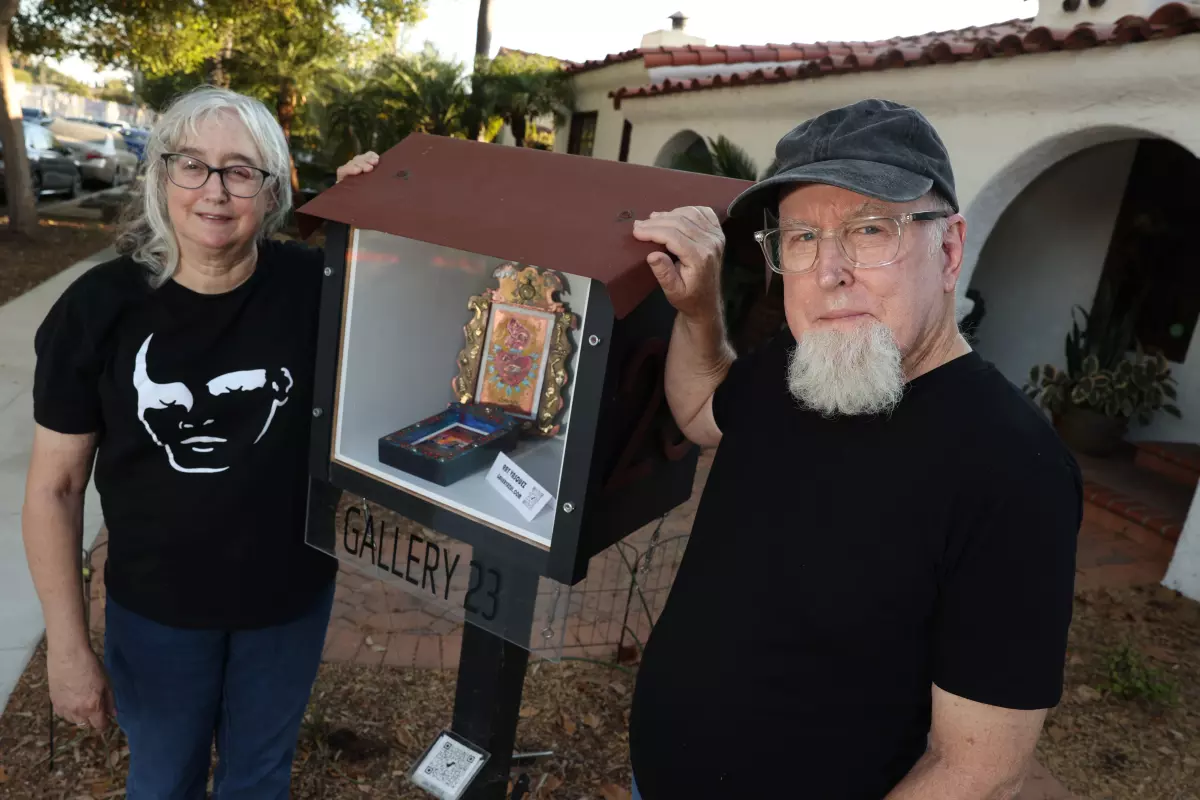
Photo: Michael Blackshire/Los Angeles Times. Carol and Dave Clark in front of artist Ray Vasquez’s works exhibited in one of the micro-galleries they built.
I wrote about Stacy Milrany’s mini art gallery a while back and have been following her work ever since via Instagram. Her idea was to create an art gallery similar to what most of us know as the Little Free Library, a box to hold free books, set up like a mailbox in residential neighborhoods.
Now a couple in California have taken the idea a step farther.
Stacy Perman wrote at the Los Angeles Times, “Two years ago, Long Beach artist Dave Clark exhibited a small sculpture of his called ‘Together. Forever. Maybe. Regret’ at the local Mantel Gallery — itself a small, repurposed Little Free Library that does double duty: When it’s not filled with books, it displays the works of artists like Clark.
“At the time, Clark and his wife, Carol, were struck by the concept. ‘That’s cool,’ he said. ‘But what if I had something bigger? You can put more art in there, and it becomes more of a real functional art gallery.’ While his neighborhood had many artists, he noted, it did not have any galleries.
“Inspired, he designed and built a micro-gallery measuring about 16 inches wide and 14 inches tall. It has movable walls, a floor and a ceiling that could be adapted for rotating artworks; a solar panel powers the little ceiling light. He installed it on the front yard of their house in the Wrigley neighborhood. They named it Gallery 17, the sum of the numbers on their Eucalyptus Avenue address.
“Last summer, the couple organized an exhibit by local artist Cody Lusby. About 40 people showed up. One of their neighbors saw it and wanted a Clark micro-gallery too. Soon, others began commissioning Clark to build micro-galleries on their front lawns. And then, artists from around Los Angeles and as far away as Ecuador began asking to show their works in them.
“An archipelago of 10 micro-galleries stretches around neighborhoods in Long Beach as well as in San Pedro and Lomita. Two more, also in Long Beach, are set to be built in the coming weeks. …
“ ‘It’s important that art become a part of everyday life,’ said Linda Grimes, executive director of the San Pedro Waterfront Arts District, who’s husband commissioned a micro-gallery for her birthday in April. ‘Not everybody feels welcome going into an art gallery or a museum. We started painting those traffic signal boxes so that people could see art and appreciate it outside, on the street every day. And then we painted large scale murals.’ …
“ ‘I thought what a great idea Dave had,’ [said Eric Almanza, a classically trained oil painter]. ‘Instead of books, this has little masterpieces that can brighten someone’s day. There’s been many times I’ve headed outside the house to run an errand and encounter someone at the box looking inside.’ …
“Almanza, whose own photo realistic paintings examine the nexus between politics, culture and identity with a focus on the border wall and immigration, initially made scaled down prints to show in the box and sold them for $50. …
“ ‘I like the idea of being able to bring art to the masses in the community,’ he said. ‘I think nowadays we don’t see much public art. I feel like art in general is not as appreciated as in the past. This felt like a good way for artists to show their work and to put public art in my neighborhood.’ ”
Photo: Artists for Humanity. At Artists for Humanity, teenagers are able to express their artistic creativity and talents while also earning money, bridging passion and profit.
Today’s story is about a wonderful nonprofit I visited several times in the years I was working at the Boston Fed. Its mission to involve urban kids in making art — and earning some money from it — is still sending joy into the world.
Artists for Humanity (AFH), they report, has been giving “talented teens — most of whom are people of color from low-income communities — the opportunity to earn and create.
“Through murals, sculptures and more, Artists for Humanity … brings joy, beauty and a sense of belonging to their community. And, by paying its artists, they’re addressing economic inequities as well.
“Anna Yu, the executive director, and Jason Talbot, co-founder and managing director of program, joined GBH’s All Things Considered host Arun Rath to discuss the decades-long history of the nonprofit. …
“Jason Talbot: Back in 1991, they had just defunded art in schools. I was a Boston Public School student at the Martin Luther King Jr. Middle School, and [AFH’s] former executive director, Susan Rodgerson, came to the King School to reintroduce art. … I found her willingness to hear out my ideas and implement them in projects was super refreshing. We continued to work together with the other fellow co-founder, Rob Gibbs, in a studio over in SoWa [South of Washington Street].
“There were just us six boys in that studio, and we painted and we created a gallery exhibition. It just showed us the capabilities of art, it helped us understand this artist community and we just loved doing work there.
“Our organization has evolved over the years. We’ve built in this entrepreneurial aspect where we’re producing and selling art to clients. It’s just been an extremely enriching experience. …
“Arun Rath: Anna, tell us about that enrichment. How has the organization evolved since that? …
“Anna Yu: While the core of the model is essentially the same — meaning this radical idea of paying teens to create client project work that is of the quality of a professional — that piece is always running through our work. But today, we are the largest employer of youth in the city of Boston, which is over 400 teens that we employ.
“[Today] we not only provide after-school employment, we also partner with schools during the school day in a program we call Co-Lab. …
“Rath: What are some of the success stories? …
“Talbot: Teenagers — one thing that’s pretty universal is they really are looking for adult experiences, you know? So to be in the workplace, to be respected, to be able to attend meetings, to be able to propose ideas, it really gets our young people super excited about having a career and really re-invested in their education.
“And teens are graduating at a higher rate; AFH graduates 100% of our high school students, and we’re able to offer secondary education to 100% of our teen artists. …
“Rath: Tell us about the business side of this. How do you get these young artists paid? …
“Yu: Something that is so radical about the organization — it’s hard to believe that Artists for Humanity has been doing this for 33 years — is that clients actually hire us to create work for them. So it’s often beautifying office spaces, it’s creating a unique or custom piece of art for them, it can even be branding and promotional materials. It could be a website.
“The beautiful thing is they are paying teens to do this work, and they are valuing their voices, their creativity. And they’re getting a very unique product at the end of the day. …
“Rath: Talk about the collaborative process between these young artists and the professionals.
“Talbot: Well, AFH is a tremendously collaborative organization. … Our clients really get visionary work. Our teens are up on the latest trends. They’re digital natives — they know what’s going on — and they’re really able to help our clients have some really great new innovative ideas. …
“Rath: You’ve seen so many go on to become adults and blossom in amazing ways. Are there any moments of joy you’d like to share? …
“Yu: The beautiful thing about Artists for Humanity is that a lot of our alumni are actually not just artists. Many of them do become artists. Many of them actually pursue a career in STEM, or some of them go on to become lawyers. We have [one] who’s actually on our board of advisors right now, and she’s a lawyer at the Fed. … We have someone who is an alumni from AFH and is at Harvard Medical School. So it’s really this idea that by opening up these pathways, by inspiring them to think creatively, by building that confidence, they can really achieve anything.”
Photo: Sarah Rose Sharp/Hyperallergic. Hallmark’s “Oscar Mayer Wienermobile” Christmas ornament from 2001.
As Christmas approaches, I usually write something about traditional Christmas ornaments or handmade ornaments with special meaning for me.
In today’s article, we learn about Hallmark items that are a bit less traditional. Just as dictionaries choose new words each year to add to their new editions (eg, rewild for “return to a natural state” or smishing for “sending text messages to trick someone into giving away personal information”), Hallmark liked to identify cultural touchstones to make into Christmas ornaments.
Hyperallergic‘s Sarah Rose Sharp wrote skeptically about the Hallmark decorations exhibited in a 2022 show at the Henry Ford Museum.
“Christmas is an occasion for many, especially in the United States, to engage in a series of depraved practices — from overwhelming our aural space with relentless Christmas music and offering free holiday parking in shopping districts to sending photo cards that insincerely highlight family accomplishments. …
“At Detroit’s Henry Ford Museum of American Innovation, an exhibition [celebrates] decorating the Christmas tree. Miniature Moments: A Journey Through Hallmark Keepsake Ornaments features an impressive 7,000 ornaments that range from traditional spheres and bulbs to admittedly weird baubles honoring an Oscar Mayer weiner, The Twilight Zone, a 2009 Jonas Brothers moment, and yes, Michael Scott from The Office.
“The Christmas tree, at least as recognizable in its modern conception, is credited to 16th-century Germany. Certainly, the practice of holiday decoration utilizing evergreen boughs — not to mention literal tree worship — predates this, but as far as the practice of kidnapping trees from their natural environment, dragging them into our homes, and dressing them up in lights and tiny objects, that’s all Germany. The holiday trend became more widespread through the marriage of Prince Albert of Saxe-Coburg and Gotha to Queen Victoria, which brought the tradition to England. …
“Hallmark, having already established an empire built on greeting cards, broke out in a bold and definitive new direction in 1973, launching its annual series of keepsake ornaments that would go on to become a fixture of American Christmastime. The series was discontinued in 2009, and in 2019, the Henry Ford Museum announced its acquisition. [The exhibition shows] an overall shift from very traditional, Christmas-oriented ornaments in the ’70s and ’80s to more pop-culture and personality-reflecting trends from the ’90s onward.
“ ‘There are some things that perhaps 40 years ago we wouldn’t have thought of as appropriate Christmas ornaments to appear on people’s trees,’ curator Jeanine Head Miller, who oversaw the acquisition and installation of the monumental collection, told Hyperallergic. ‘Christmas tree decorating has become more about personal identity and self expression now, as opposed to more traditional Christmas tree decorating. So, people choose things to put on a tree that reflect their interests, or even their personal experiences.’
“Certainly, there are many ornaments that would make no sense without some context — from a Star Wars Imperial AT-AT Walker about to be felled by a rebel Snowspeeder, to Indiana Jones poised to replace a golden idol with a bag of carefully weighted sand.
“Perhaps even stranger are those pop culture figures that have been adapted to the Christmas context. This is at least marginally on brand for characters like the Peanuts, who famously star in a series of beloved and confoundingly depressing holiday specials, and more of a stretch with, say, an ornament of Pixar’s WALL-E, wrapped in a string of seasonal lights.
“ ‘One of the ornaments that’s the hardest to find, so it’s very popular, is Cousin Eddie’s RV from National Lampoon’s Christmas Vacation,’ said Head Miller. Naturally, one does not immediately think of hanging a rusty RV on the Christmas tree, but that just goes to show you how eclectic and odd some of the Hallmark ornaments can be — even though a huge majority of them are fairly sentimental and nostalgic. …
“Then there’s stuff like the bear. It appears to be a reference to Steiff stuffed animals on wheels, which were apparently all the rage in 1904. … Hilariously and with no additional context, the bear ornament is labeled ‘Son.’ …
“And don’t even get me started on an ornament of Ralphie in his pink rabbit sleeper, instantly recognizable as a moment from the iconic 1983 holiday film A Christmas Story — but utterly confusing when taken out of context as a small, unhappy child in a pink rabbit costume hanging on a Christmas tree. …
“These Hallmark ornaments touch people, as is obvious during a visit to the exhibition, which finds visitors of all ages and types pointing to this or that on the wall, exclaiming in recognition. It’s always lovely to see folks bask in the collective glow of shared culture.
“From an outsider perspective, it is a wild mish-mosh of insane symbols and signifiers — which is actually wonderful in its own, secular way.”
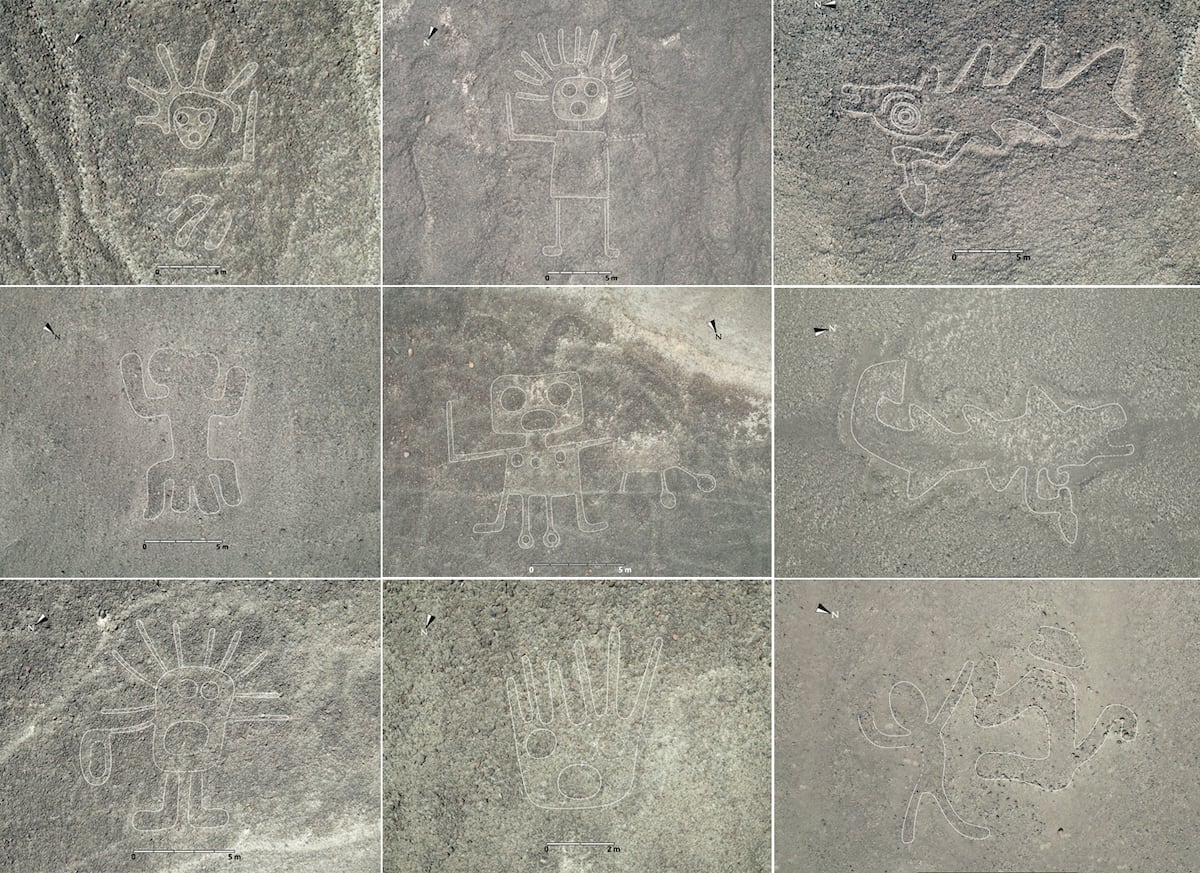
Photo: Instituto Universitario Yamagata de Nazca. Some of the new geoglyphs found in Nazca. With their lines eroded by the passage of time, AI has achieved in months what used to take decades.
Let’s have kind word for scary old artificial intelligence and how it has, for example, helped to uncover 303 new geoglyphs in the Nazca desert. (By which I don’t mean to say AI doesn’t have serious potential dangers.)
In an El País archaeological article from Peru, Miguel Ángel Criado reports, “With the help of an artificial intelligence (AI) system, a group of archaeologists has uncovered in just a few months almost as many geoglyphs in the Nazca Desert (Peru) as those found in all of the last century. The large number of new figures has allowed the researchers to differentiate between two main types, and to offer an explanation of the possible reasons or functions that led their creators to draw them on the ground more than 2,000 years ago.
“The Nazca desert, with an area of about 1,900 square miles and an average altitude of 500 meters above sea level, has very special climatic conditions. It hardly ever rains, the hot air blocks the wind and the dry land has prevented the development of agriculture or livestock. Combined, all this has allowed a series of lines and figures, formed by stacking and aligning pebbles and stones, to be preserved for centuries.
“The first layer of soil is made up of a blanket of small reddish stones that, when lifted, reveal a second yellowish layer. This difference in color is the basis of the geoglyphs and is what was used to create them by the ancient Nazca civilization. Some are straight lines stretching several miles. Others are geometric shapes or rectilinear figures, also huge in size.
“The other major category includes the so-called relief-type geoglyphs, which are smaller. In the 1930s, Peruvian aviators discovered the first ones, and by the end of the century more than a hundred had been identified, such as the hummingbird, the frog and the whale. Since 2004, supported by high-resolution satellite images, Japanese archaeologists have discovered 318 more, almost all of them high-profile geoglyphs. The same team, led by Masato Sakai, a scientist from Yamagata University (Japan), has discovered 303 new geoglyphs in a single campaign, supported by artificial intelligence. …
“ ‘The Nazca Pampa is a vast area covering more than 400 square kilometres and no exhaustive study has been carried out,’ the Japanese scientist recalls. Only the northern part, where the large linear geoglyphs are concentrated, ‘has been studied relatively intensively.’ … But scattered throughout the rest of the desert are many relief-type figures that are smaller and that the passage of time has made more difficult to detect.
“Convinced that there were many more, Sakai and his team contacted IBM’s artificial intelligence division. … They had high-resolution images obtained from airplanes or satellites of all of Nazca, but with a resolution of up to a few centimeters per pixel, the human eye would have needed years, if not decades, to analyze all the data. They left that job to the AI system. Although it was not easy to train its artificial vision … with so few previous images and so different from each other, the machine proposed 1,309 candidates. The figure came from a previous selection also made by the AI with 36 images for each candidate. With this selection, the researchers carried out a field expedition between September 2022 and February 2023. The result, as reported in the scientific journal PNAS, is 303 new geoglyphs added to this cultural heritage of humanity. All are relief-type geoglyphs.
“The newly discovered shapes bring the total number found in Nazca to 50 line-type and 683 relief-type geoglyphs, some geometric and others forming figures. The large amount has allowed the authors of this work to detect patterns and differences. Almost all of the former (the monkey, the condor, the cactus…) represent wild animals or plants. However, among the latter, almost 82% show human elements or elements modified by humans. ‘[There] are scenes of human sacrifice,’ says Sakai. …
“The accumulation of data that has made this work possible brings to light a double connection. On the one hand, these relief-type forms are found a few meters from one of the many paths that cross the desert … paths created by the passage of people until a path is created. According to the authors of the study, these creations were made to be seen by travelers.
“On the other hand, the large linear figures appear very close, also meters away, from one of the many straight lines that cut through the pampas. Here, according to Sakai, the symbolic value rules: ‘The line-type geoglyphs are drawn at the start and end points of the pilgrimage route to the Cahuachi ceremonial center. They were ceremonial spaces with shapes of animals and other figures. Meanwhile, the relief-type geoglyphs can be observed when walking along the paths.’
“Cahuachi was the seat of spiritual power of the Nazca culture between from around 100 BC to 500 AD and, for the authors, the large forms could be ceremonial stops on the pilgrimage to or from there.
“These explanations do not necessarily rule out, according to the authors, other possible functions that have been attributed to the Nazca lines and figures, such as being calendars, astronomical maps or even systems for capturing the little water that fell.”
Things do get fuzzy when we start to interpret ancient signs. Read more at El Pais, here. No firewall.
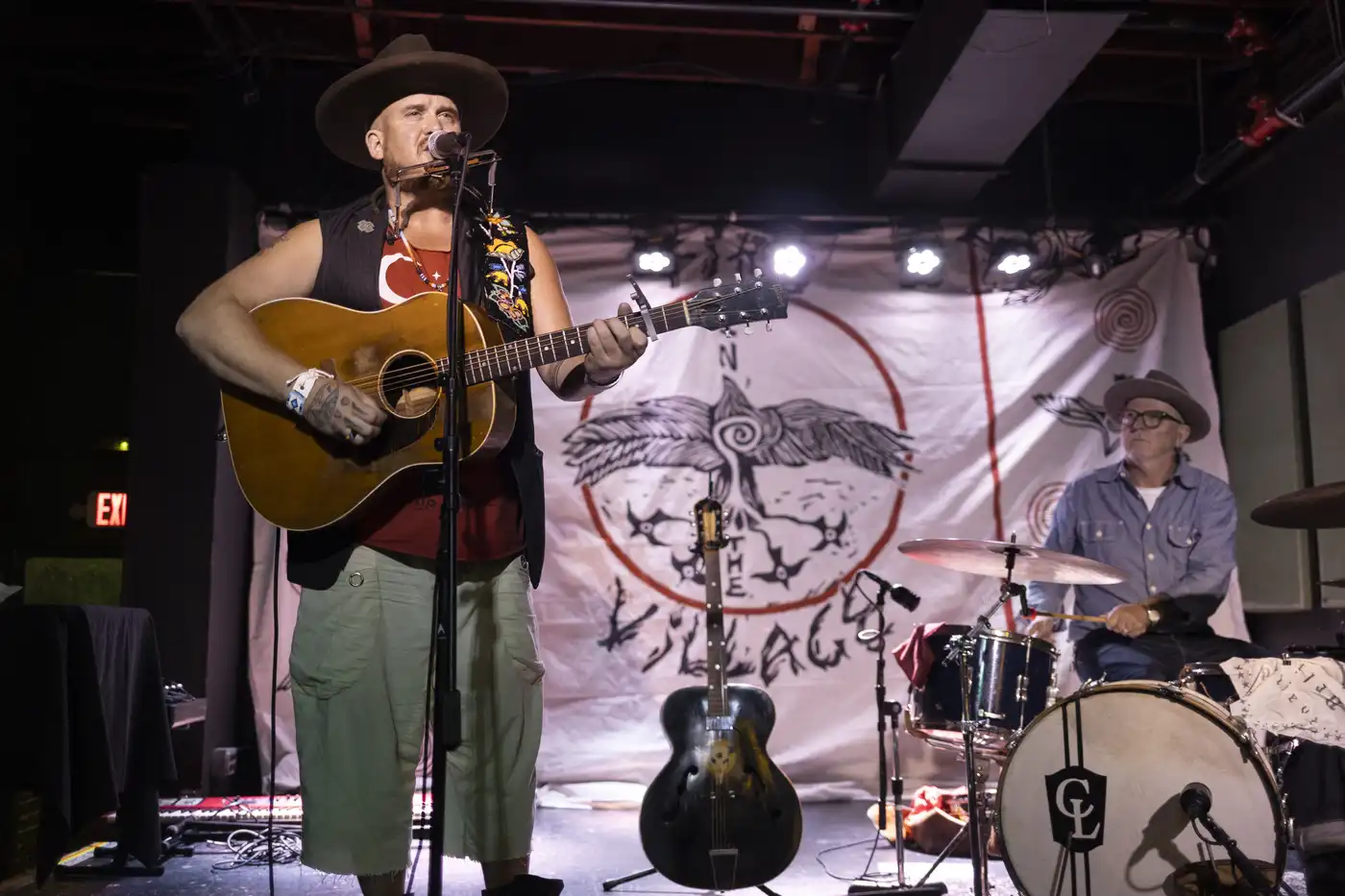
Photo: Liam James Doyle/MPR News. David Huckfelt performs on the Turf Club stage. “We’re building these little fires in small places,” Huckfelt says.
Because I still believe that “one and two and fifty make a million,” as Pete Seeger used to sing, I get a kick out of all the stories I’ve been seeing lately that confirm the power of small.
Alex V. Cipolle reports at Minnesota Public Radio (MPR) about one small but mighty effort, a new arts collective that “goes on tour to build community in rural Minnesota and beyond. …
“On a September evening at the Turf Club in St. Paul, models weave through bar tables in upcycled designs.
“Annie Humphrey, an artist and musician based on the Leech Lake Reservation, performs on the stage, followed by Minneapolis musician David Huckfelt. On a back table Shanai Matteson, an artist from Palisade leads printmaking demos with a stencil of a black aandeg (the Anishinaabe word for crow) and an orange-red sun.
“ ‘There’s a story about the crow. Long ago, the crow had bright, beautiful, vibrant colored feathers,’ Humphrey recalls. ‘But crow also saw that the people were suffering because they had no fire.’ To bring fire to the people, crow flew close to the sun and scorched his feathers black.
“ ‘He was able to grab the fire and bring it back down to the earth and bring fire to the people so that they could be warm,’ Humphrey continues. ‘If you take a crow feather and hold it in the sun, it’s iridescent, and all these colors are still in that feather.’
“The trio all share a background in activism, specifically fighting the Line 3 oil pipeline. … But with Fire in the Village, the collective wants to do something untethered from any one cause.
“ ‘If we were going to start something, I knew that it should center on art and the human spirit, the human condition,’ Humphrey says, ‘and have no politics involved at all.’
“Through art, fashion, music and collaborative events with schools and local organizations, the collective is hoping to heal divides and put a dent in the loneliness epidemic in rural communities and on reservations.
“ ‘I think a lot of people are feeling isolated,’ Matteson says. ‘There’s a lot of divisiveness going on. Personally, I’m not interested in continuing that. I don’t want to be part of a cause where it feels like it’s putting another barrier between me and the people who live around me.’ …
“ ‘We like the feeling of the collective and not pushing one person as a front for something,’ Huckfelt adds. ‘So, we’re really working together with our skillset because we believe in music, we believe in art, we believe in community, and so that’s what’s being put forward here.’ …
“ ‘Fire in the Village is a way to connect with individuals and to smaller communities that you’re a part of,’ says Meira Smit, one of the Macalester students who came to the Turf Club. ‘A way to build messages and movements around the things that we deeply care about.’
“Haley Cherry, a producer for Minnesota’s Native Roots Radio on AM950, also came out to walk in the fashion show after meeting Humphrey and Huckfelt this past year.
“ ‘It’s important to hear from both perspectives: issues of Indigenous identity, but also [from] David, as a white ally, I think it’s important to draw those bridges of community concerns,’ says Cherry, who is a descendant of the Ho-Chunk Nation of Wisconsin. …
“In June, Humphrey also led a community mural with youth groups on the Leech Lake Reservation, the Boys & Girls Club in Deer River and the Long Lake Conservation Center. Soon, the mural will be installed at the powwow grounds in Ball Club, a village on the reservation. There are more murals to come, Humphrey says.
“The tour is also about revival, Huckfelt says, stopping at historic community buildings in small towns, such as the 210 Gallery and Art Center in Sandstone Oct. 19 and the Historic Chief Theater in Bemidji on Nov. 2. ‘A lot of these spaces are really beautiful old music and theater art spaces,’ Huckfelt says. …
“Huckfelt says, ‘We’ve been doing this work in our own ways for a long time, individually and together. It’s a natural step to call it “Fire in the Village” — little fires that we can sustain and we can huddle around for good ideas and for community.’ …
“ ‘It’s a very gentle way to say really hard stuff,’ Humphrey says. ‘I have played in front of people who don’t agree with what I speak, but when I sing it?’ “
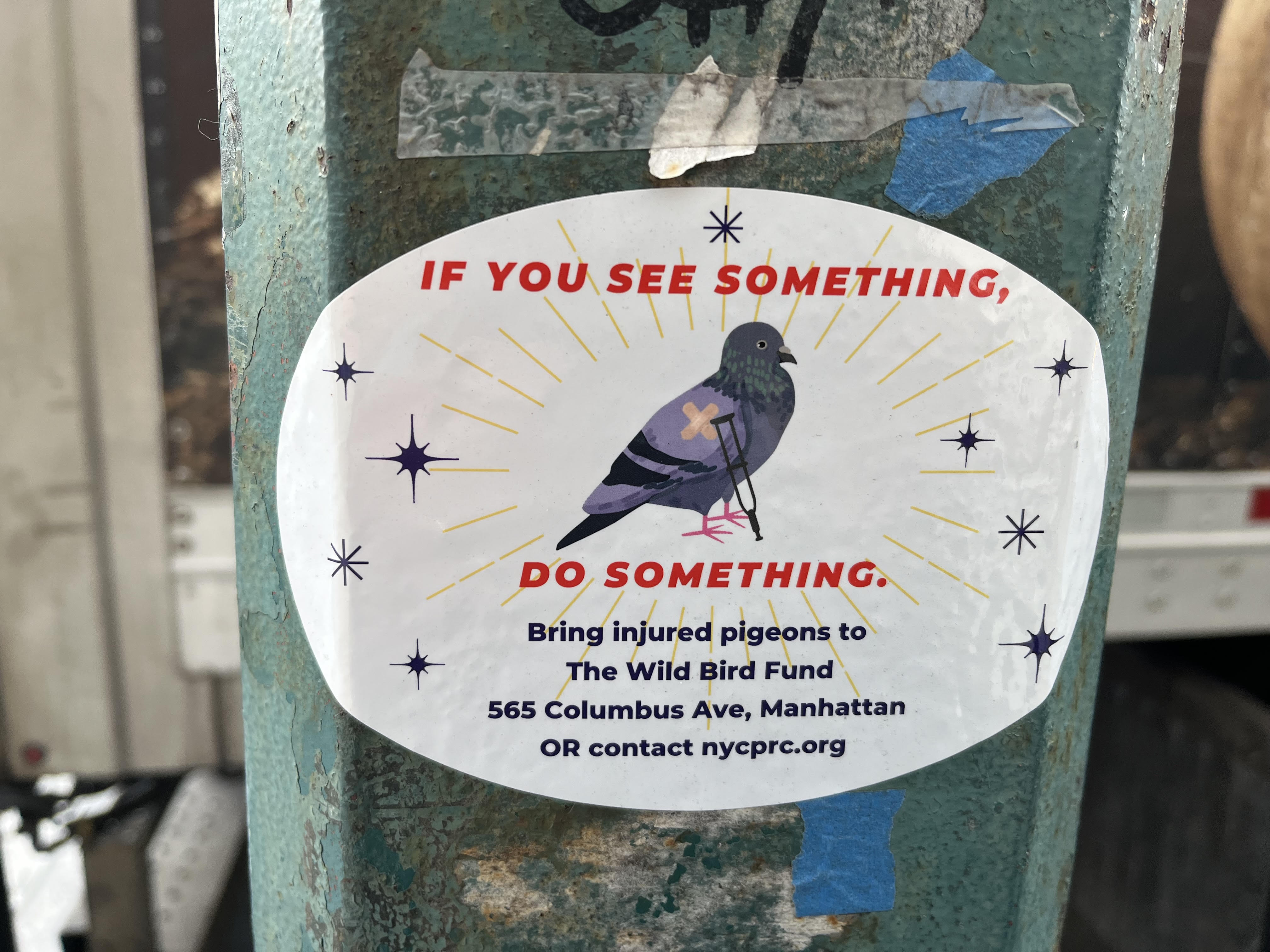
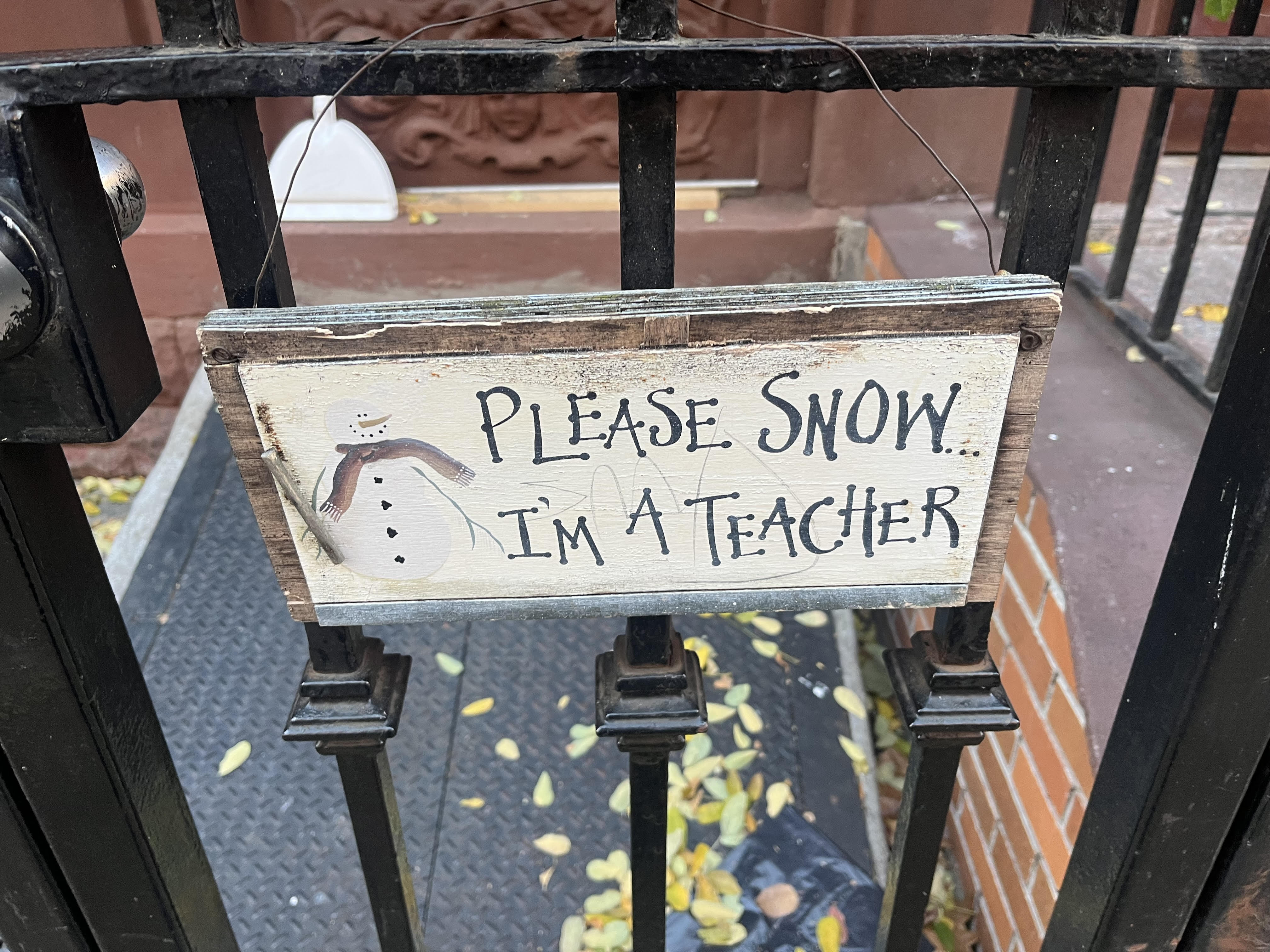
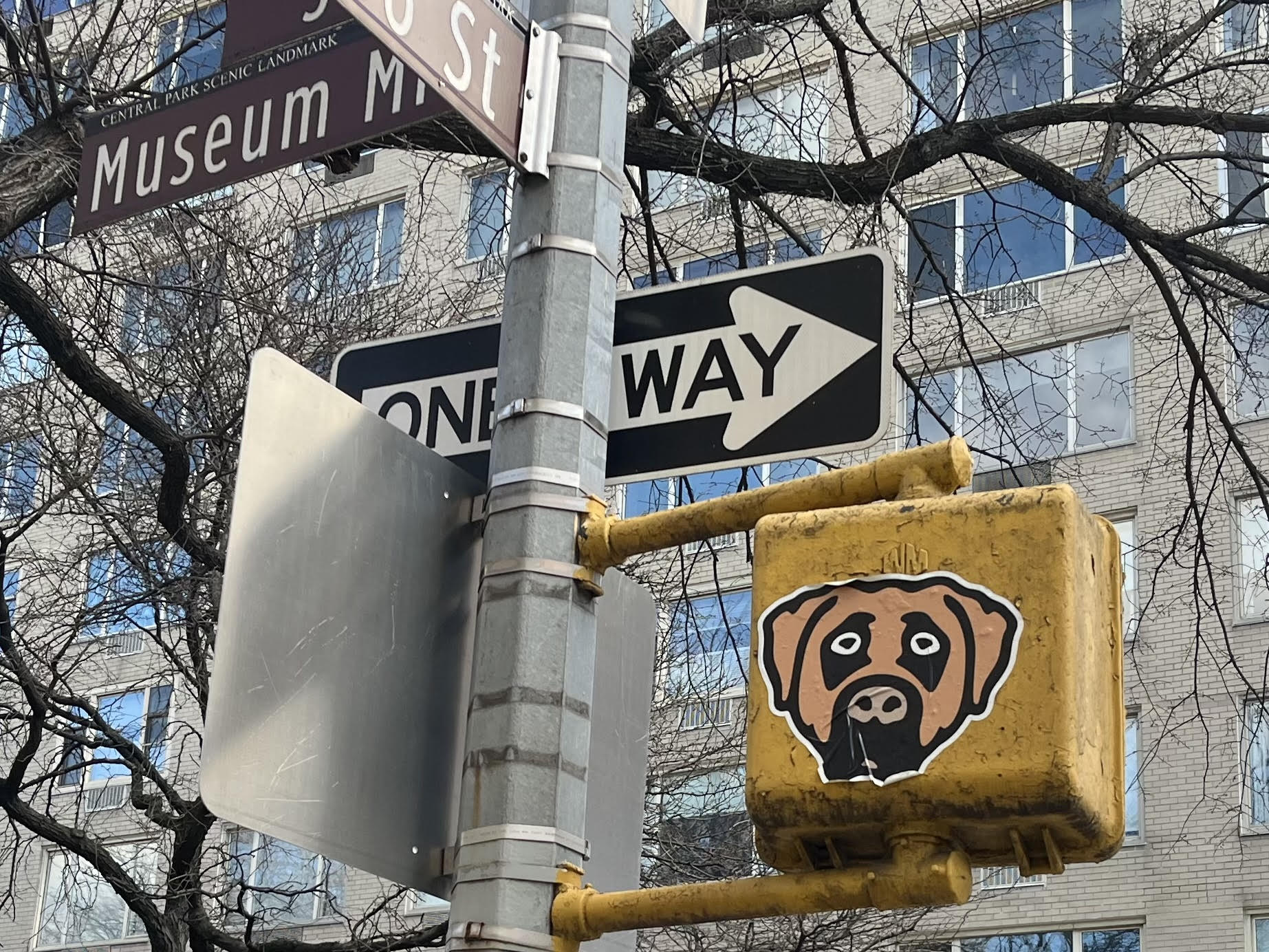
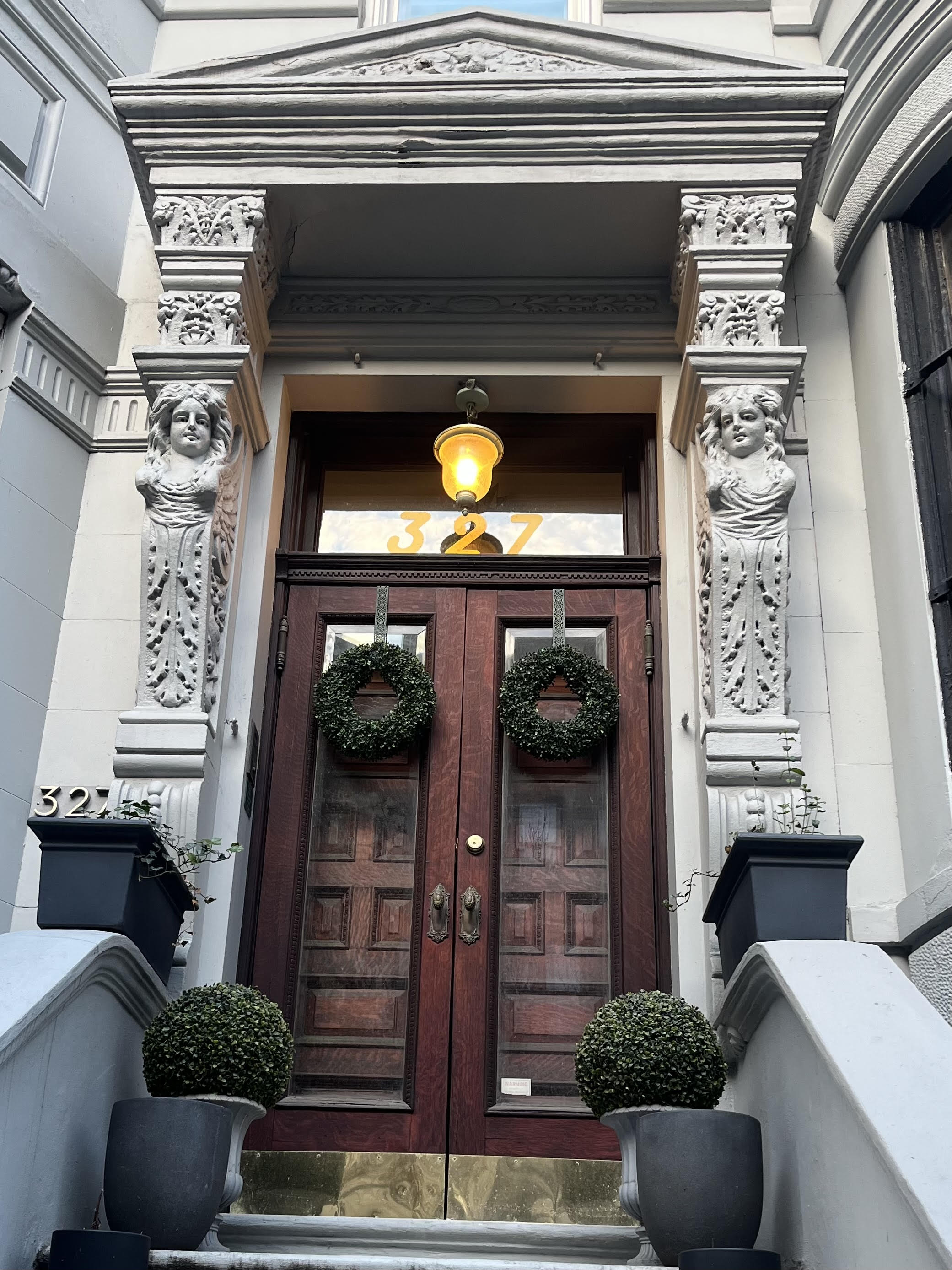
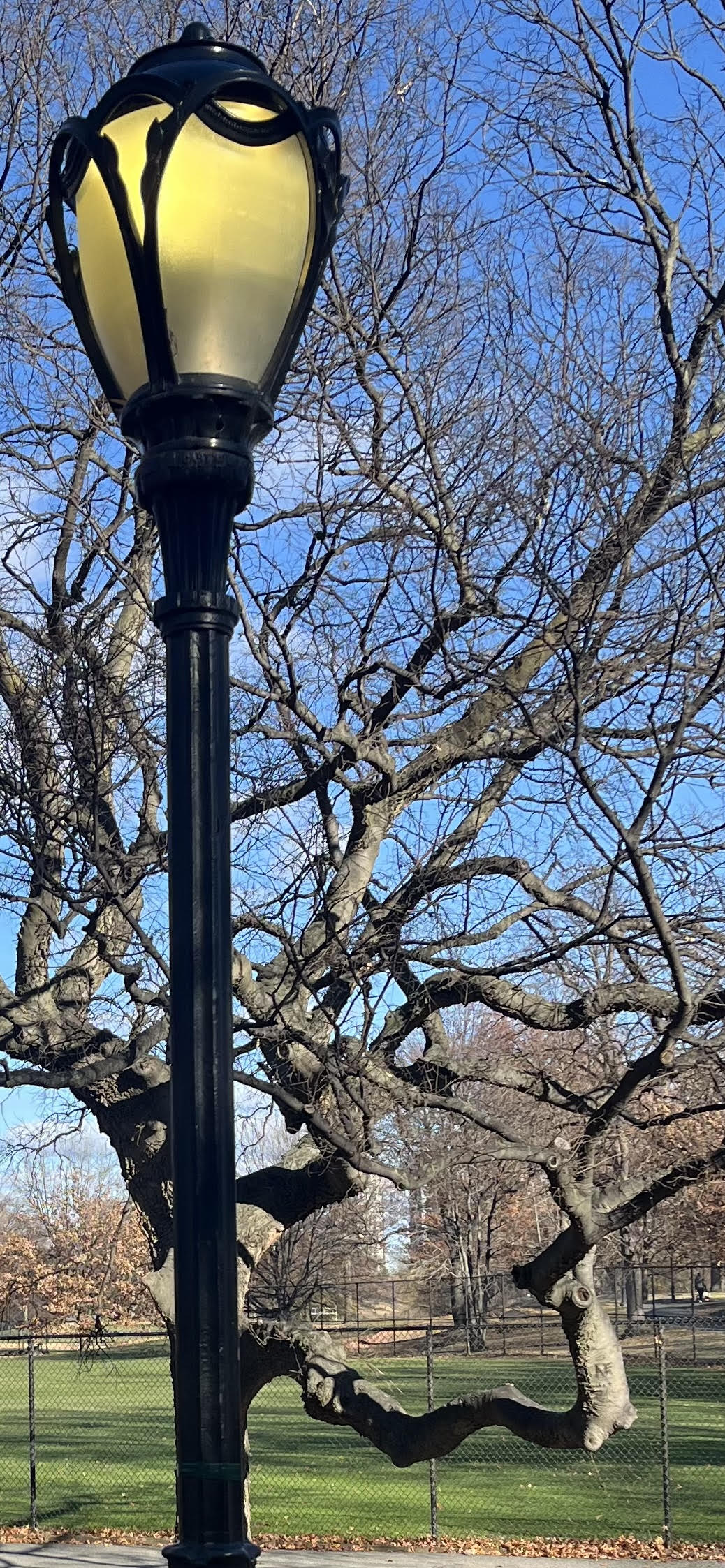
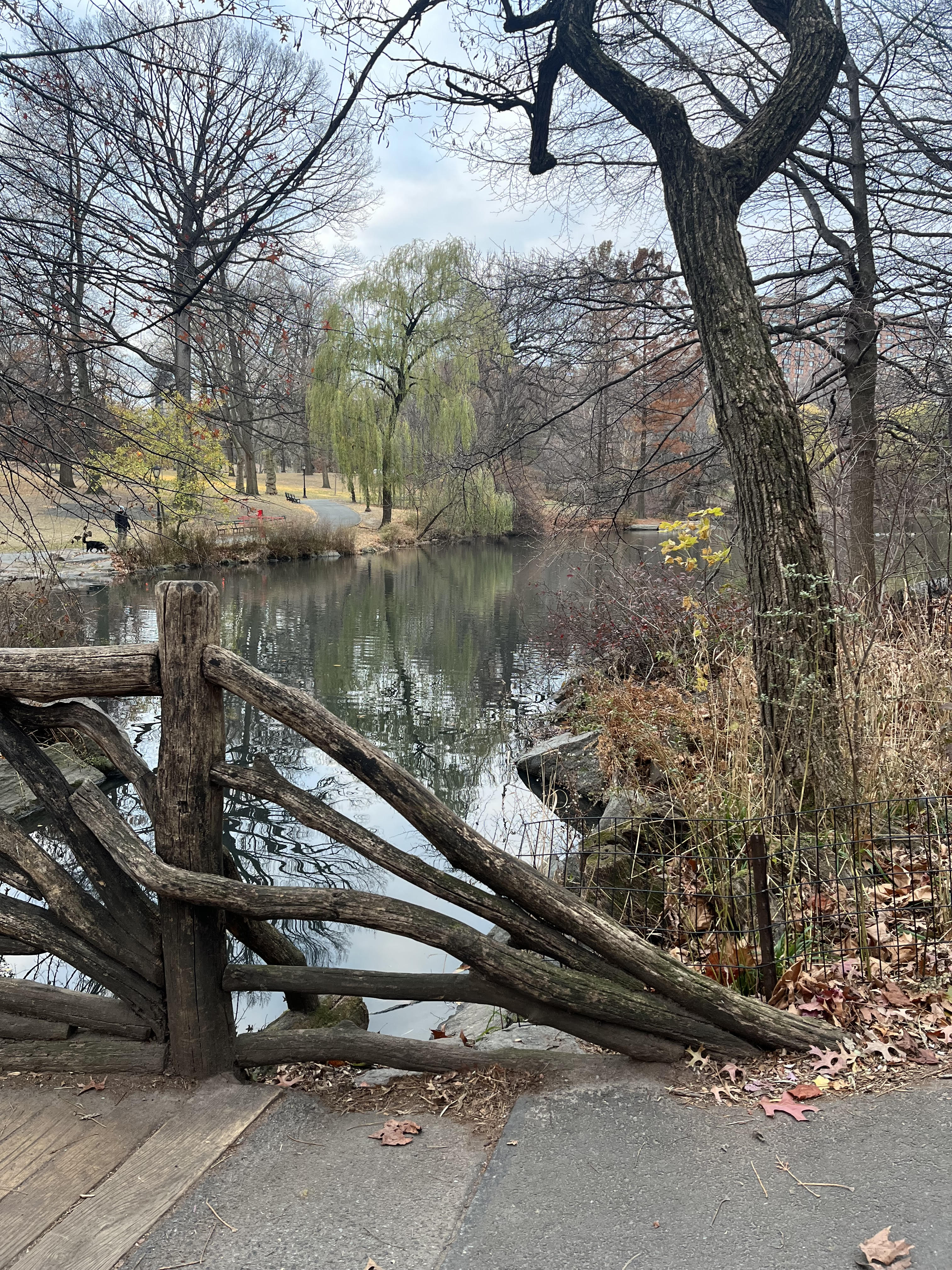
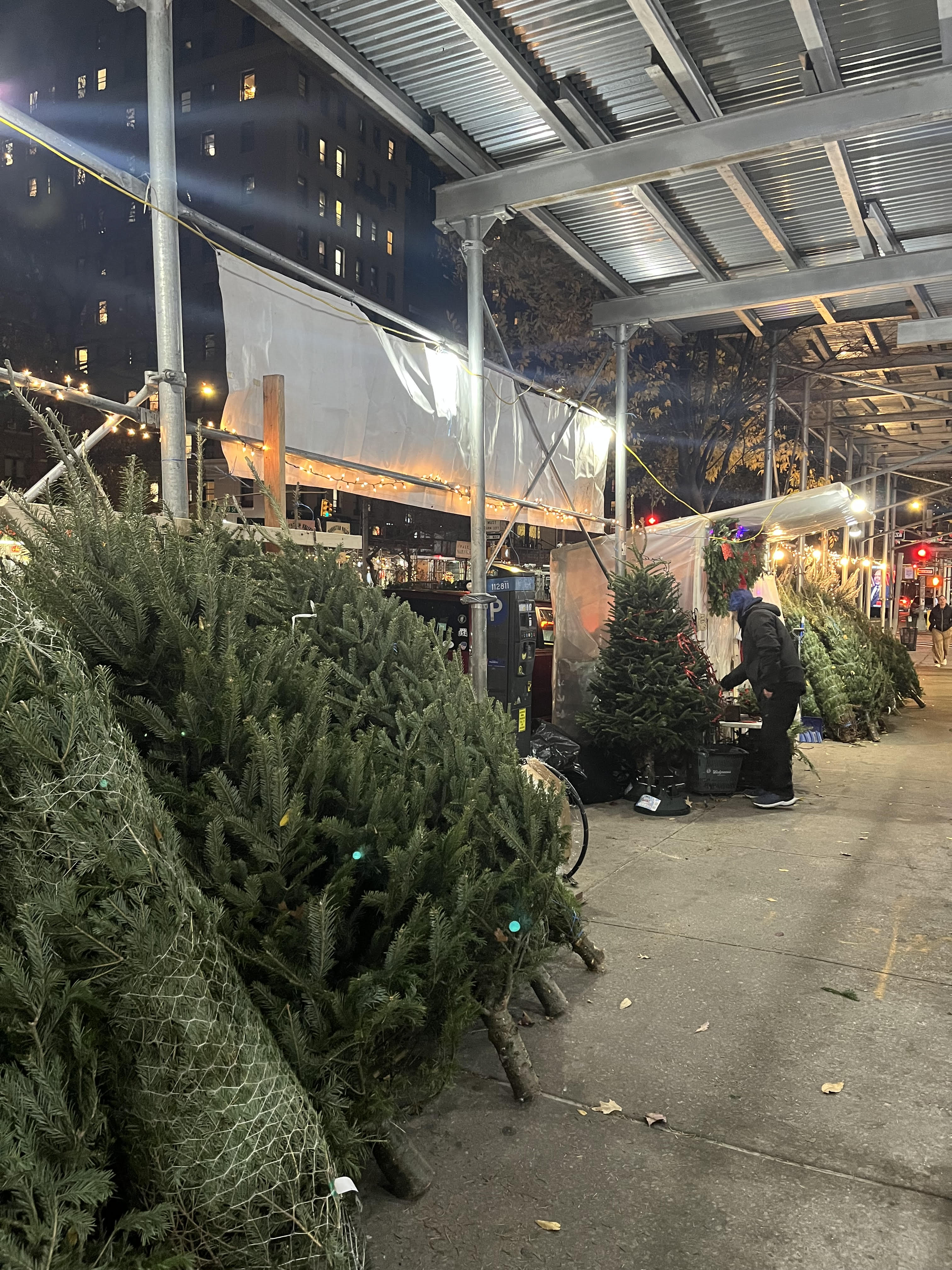
Photos: John and Suzanne’s Mom. Only in New York will you find people who care what happens to pigeons.
I was in crazy and wonderful New York for a few days. The occasion was the memorial for my friend Manny Kirchheimer, who was, as A.O. Scott of the New York Times once said, “an indispensable New York filmmaker, a noticer and a listener without peer.”
I walked around a lot and took pictures. And since I was in the city, I went to see “Egon Schiele: Living Landscapes” at the Neue Galerie, which was great. I do think New York museums have an awful lot of rules and waiting lines, but if you expect that, it’s easier to accept.
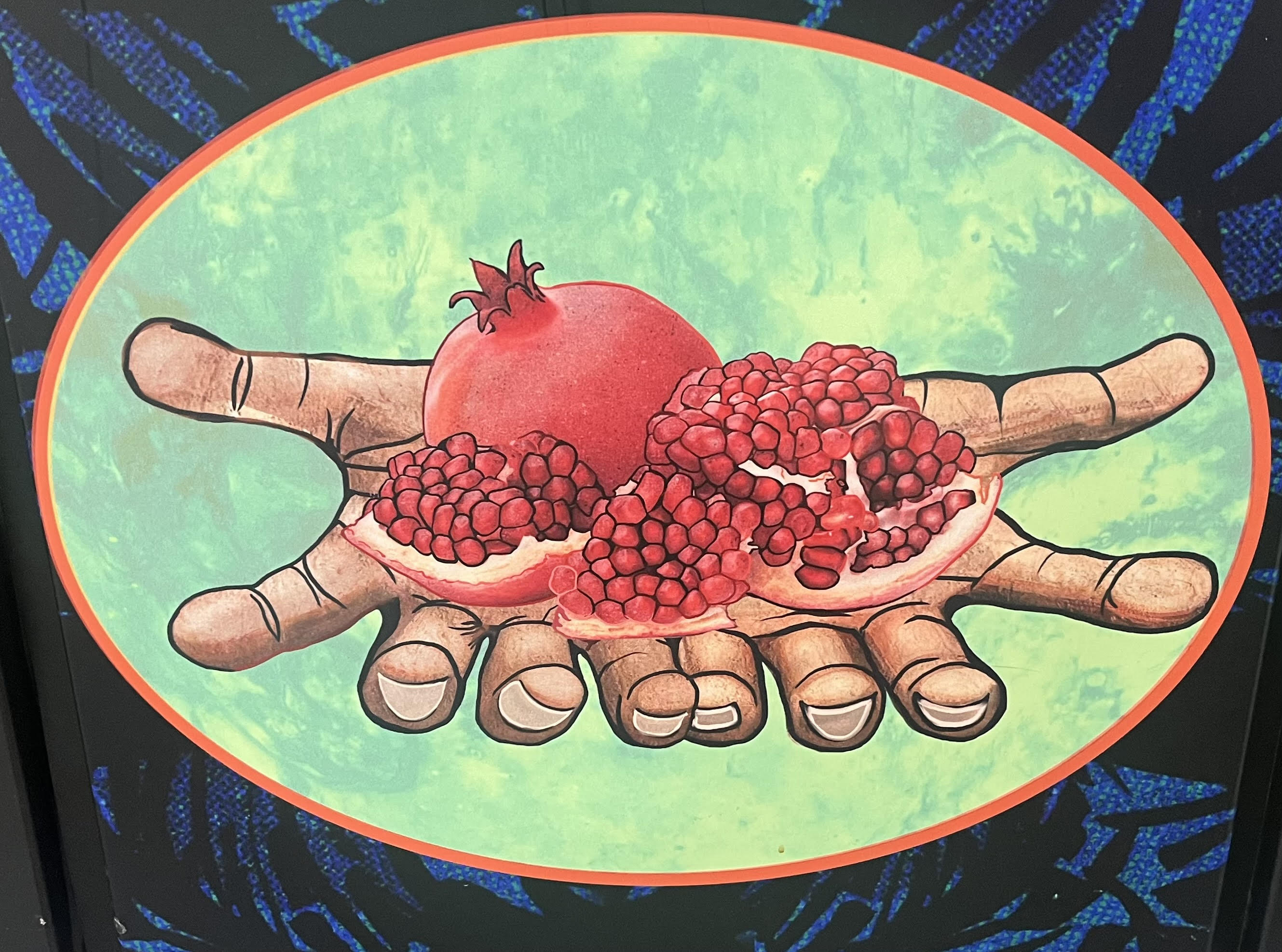
Among sights that caught my eye were giant murals by Chitra Ganesh in Penn Station (see Art at Amtrak). The hands offering pomegranates were on a pillar.
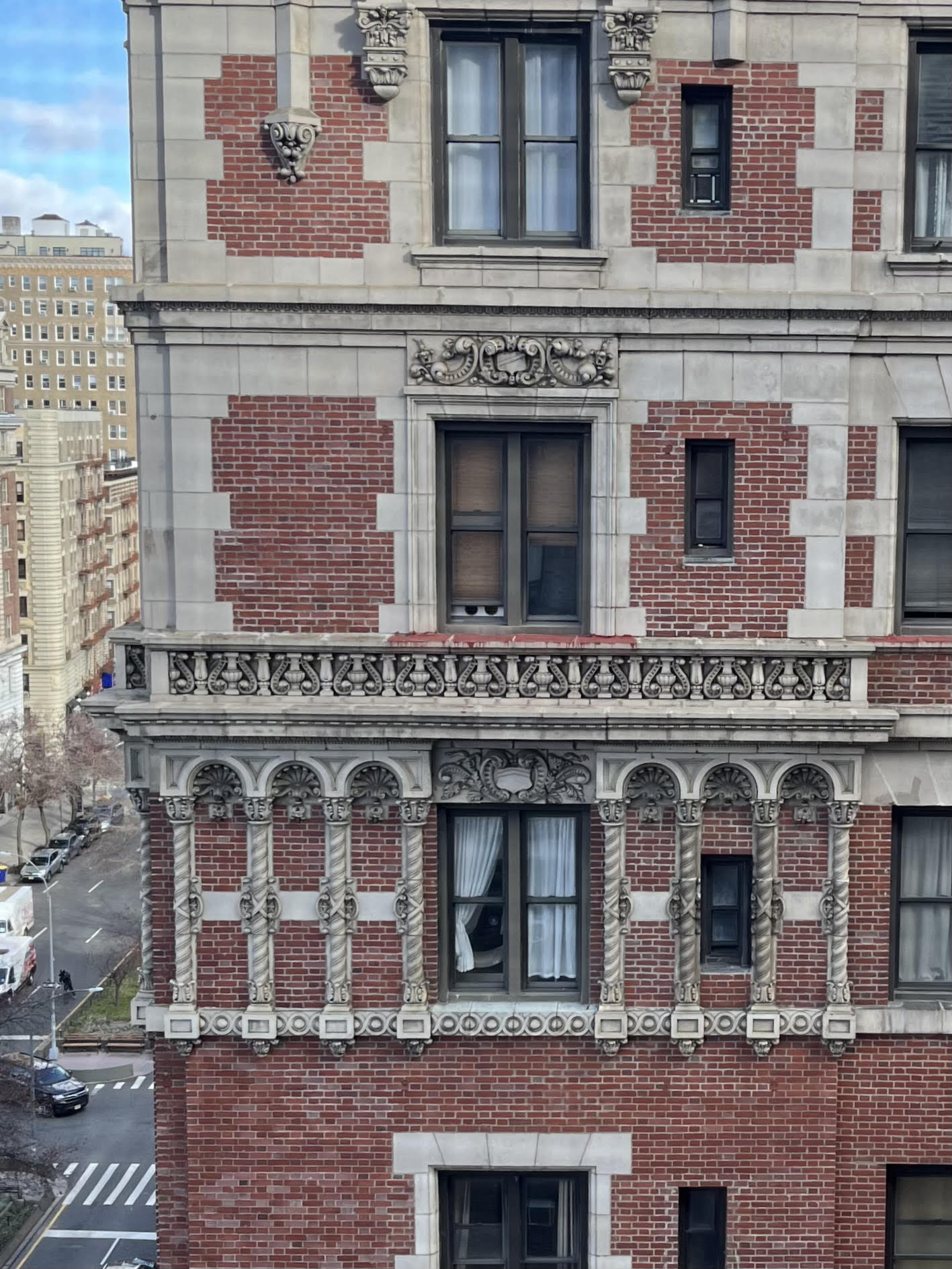
Although I can never compete with blogger Sherry’s Thursday Doors, which she gathers on a continent that really knows doors, I shot a New York one for her.
The two shots of Central Park are similar to ones I’ve taken before and shared, but every time I see that fantasy bridge or the Narnia lamp posts, I see them anew.
Photo: Alexandra Genova for the New York Times. Last year, Churchtown Dairy in Claverack, N.Y., drew hundreds of carolers. (Notice the loft above.)
Other than blogger Deb at A Bear’s Thimble, most of us have lost the daily connection with farm animals that our ancestors knew. When we take our kids to a farm, it seems exotic. No wonder people jump at the chance described in today’s story.
Arielle Gordon reported at the New York Times, “About 200 carolers had just begun the second verse of the classic Christmas song ‘The Friendly Beasts’ when a little girl let out a squeal of delight. About 20 feet below the balcony, on the floor of the large domed barn, two of the half-dozen dairy cows were butting heads. As the grazing heifers lifted their horns, their playful roughhousing seemed like a display of holiday cheer.
“[The] Churchtown Dairy in Claverack, N.Y., once again hosted a Yuletide tradition: caroling to the herd of 28 cattle that call the cathedral-like barn their winter home. What began a decade ago as a way for the farm’s staff and their families to celebrate the herd has since grown to an annual tradition that brings locals and out-of-towners to the farm’s 250-acre property each December.
“[Preregistration] for the two caroling events filled up within hours of going online. Farm staff fielded phone calls from frustrated would-be carolers, some of whom blamed an Instagram post advertising the event for its rise in popularity.
“ ‘We’re considering adding a third night next year to accommodate all the interest,’ said Grace Pullin, Churchtown’s director of partnerships and programs. …
“Attendee, Sharon Mclees, 64, has attended for six years. Growing up around cows, Ms. Mclees said she felt comforted by the tranquillity at Churchtown. ‘I love the farm atmosphere,’ she said. ‘It’s just so back to nature.’
“Churchtown Dairy was founded in 2012 by Abby Aldrich Rockefeller, the granddaughter of the business magnate John D. Rockefeller, but the property has been under her family’s purview for decades. Her mother, Peggy Rockefeller, purchased the land as part of a larger acquisition of over 2,700 acres by the American Farmland Trust, an agricultural nonprofit Peggy started in 1980.
“The younger Ms. Rockefeller partnered with the architect Rick Anderson to design the farm, traveling the country visiting barns for inspiration. For her, the dome is a sign of a healthy, biodynamic farm. … Mr. Anderson explained that its shape served a more practical purpose: ‘Cows hate corners.’
“The dairy is not unique in its caroling tradition; just a few miles up the Taconic State Parkway, Hawthorne Valley Farms has been singing to its herd in a smaller event on Christmas Eve for the past 40 years. Staff members at Churchtown each had a different theory on the origins of the practice. Ms. Pullin suggested it might have been inspired by the work of the German esoteric philosopher and biodynamic farming pioneer Rudolph Steiner, who claimed that cow horns had ‘astral-ethereal formative powers.’
“Eric Vinson, a herd manager on the farm, referenced the old European myth that animals are able to communicate with humans at Christmastime. In more contemporary contexts, scientists at the University of Leicester found that cows produced more milk when played songs with less than 100 beats per minute. (R.E.M.’s ‘Everybody Hurts’ seemed to go over especially well.) By that logic, carols, with their measured pace, could be conducive to a happy herd. …
“Carolers, armed with illustrated songbooks, began with Christmas classics — ‘The First Noel,’ ‘Silent Night,’ ‘Joy to the World,’ — before Ms. Pullin opened the floor to requests. There were shouts of ‘Free Bird,’ but the crowd eventually settled on ‘Feliz Navidad’ as the final number of the night.
“The cows wagged their tails in appreciation — or maybe they were swatting away loose hay — and for a moment, the myth seemed to come alive: Animals and humans communicating for the holiday.”
The farm sells raw, unpasteurized milk. My mother sometimes bought raw milk at a farm near brother Will’s nursery school in Rockland County, New York. That was definitely a Rudolf Steiner farm. The nursery school followed his ideas, too.
You can read about the quality control drill that keeps raw milk safe at Churchtown Dairy, here. And do let me know if you have ever sung carols to cows! I want to try it.







 Suzanne's Mom's Blog