Feeds:
Posts
Comments

Archive for the ‘Uncategorized’ Category

Photo: Artists for Humanity.
At Artists for Humanity, teenagers are able to express their artistic creativity and talents while also earning money, bridging passion and profit.

Today’s story is about a wonderful nonprofit I visited several times in the years I was working at the Boston Fed. Its mission to involve urban kids in making art — and earning some money from it — is still sending joy into the world.

Kana Ruhalter and Arun Rath have an update at GBH radio.

Artists for Humanity (AFH), they report, has been giving “talented teens — most of whom are people of color from low-income communities — the opportunity to earn and create. 

“Through murals, sculptures and more, Artists for Humanity … brings joy, beauty and a sense of belonging to their community. And, by paying its artists, they’re addressing economic inequities as well.

“Anna Yu, the executive director, and Jason Talbot, co-founder and managing director of program, joined GBH’s All Things Considered host Arun Rath to discuss the decades-long history of the nonprofit. …

Jason Talbot: Back in 1991, they had just defunded art in schools. I was a Boston Public School student at the Martin Luther King Jr. Middle School, and [AFH’s] former executive director, Susan Rodgerson, came to the King School to reintroduce art. … I found her willingness to hear out my ideas and implement them in projects was super refreshing. We continued to work together with the other fellow co-founder, Rob Gibbs, in a studio over in SoWa [South of Washington Street].

“There were just us six boys in that studio, and we painted and we created a gallery exhibition. It just showed us the capabilities of art, it helped us understand this artist community and we just loved doing work there.

“Our organization has evolved over the years. We’ve built in this entrepreneurial aspect where we’re producing and selling art to clients. It’s just been an extremely enriching experience. …

Arun Rath: Anna, tell us about that enrichment. How has the organization evolved since that? …

Anna Yu: While the core of the model is essentially the same — meaning this radical idea of paying teens to create client project work that is of the quality of a professional — that piece is always running through our work. But today, we are the largest employer of youth in the city of Boston, which is over 400 teens that we employ.

“[Today] we not only provide after-school employment, we also partner with schools during the school day in a program we call Co-Lab. …

Rath: What are some of the success stories? …

Talbot: Teenagers — one thing that’s pretty universal is they really are looking for adult experiences, you know? So to be in the workplace, to be respected, to be able to attend meetings, to be able to propose ideas, it really gets our young people super excited about having a career and really re-invested in their education.

“And teens are graduating at a higher rate; AFH graduates 100% of our high school students, and we’re able to offer secondary education to 100% of our teen artists. …

Rath: Tell us about the business side of this. How do you get these young artists paid? …

Yu: Something that is so radical about the organization — it’s hard to believe that Artists for Humanity has been doing this for 33 years — is that clients actually hire us to create work for them. So it’s often beautifying office spaces, it’s creating a unique or custom piece of art for them, it can even be branding and promotional materials. It could be a website.

“The beautiful thing is they are paying teens to do this work, and they are valuing their voices, their creativity. And they’re getting a very unique product at the end of the day. …

Rath: Talk about the collaborative process between these young artists and the professionals.

Talbot: Well, AFH is a tremendously collaborative organization. … Our clients really get visionary work. Our teens are up on the latest trends. They’re digital natives — they know what’s going on — and they’re really able to help our clients have some really great new innovative ideas. …

“Rath: You’ve seen so many go on to become adults and blossom in amazing ways. Are there any moments of joy you’d like to share? …

Yu: The beautiful thing about Artists for Humanity is that a lot of our alumni are actually not just artists. Many of them do become artists. Many of them actually pursue a career in STEM, or some of them go on to become lawyers. We have [one] who’s actually on our board of advisors right now, and she’s a lawyer at the Fed. … We have someone who is an alumni from AFH and is at Harvard Medical School. So it’s really this idea that by opening up these pathways, by inspiring them to think creatively, by building that confidence, they can really achieve anything.”

More at GBH, here.

Read Full Post »

Photo: Sarah Rose Sharp/Hyperallergic.
Hallmark’s “Oscar Mayer Wienermobile” Christmas ornament from 2001.

As Christmas approaches, I usually write something about traditional Christmas ornaments or handmade ornaments with special meaning for me.

In today’s article, we learn about Hallmark items that are a bit less traditional. Just as dictionaries choose new words each year to add to their new editions (eg, rewild for “return to a natural state” or smishing for “sending text messages to trick someone into giving away personal information”), Hallmark liked to identify cultural touchstones to make into Christmas ornaments.

Hyperallergic‘s Sarah Rose Sharp wrote skeptically about the Hallmark decorations exhibited in a 2022 show at the Henry Ford Museum.

“Christmas is an occasion for many, especially in the United States, to engage in a series of depraved practices — from overwhelming our aural space with relentless Christmas music and offering free holiday parking in shopping districts to sending photo cards that insincerely highlight family accomplishments. …

“At Detroit’s Henry Ford Museum of American Innovation, an exhibition [celebrates] decorating the Christmas tree. Miniature Moments: A Journey Through Hallmark Keepsake Ornaments features an impressive 7,000 ornaments that range from traditional spheres and bulbs to admittedly weird baubles honoring an Oscar Mayer weiner, The Twilight Zone, a 2009 Jonas Brothers moment, and yes, Michael Scott from The Office.

“The Christmas tree, at least as recognizable in its modern conception, is credited to 16th-century Germany. Certainly, the practice of holiday decoration utilizing evergreen boughs — not to mention literal tree worship — predates this, but as far as the practice of kidnapping trees from their natural environment, dragging them into our homes, and dressing them up in lights and tiny objects, that’s all Germany. The holiday trend became more widespread through the marriage of Prince Albert of Saxe-Coburg and Gotha to Queen Victoria, which brought the tradition to England. …

“Hallmark, having already established an empire built on greeting cards, broke out in a bold and definitive new direction in 1973, launching its annual series of keepsake ornaments that would go on to become a fixture of American Christmastime. The series was discontinued in 2009, and in 2019, the Henry Ford Museum announced its acquisition. [The exhibition shows] an overall shift from very traditional, Christmas-oriented ornaments in the ’70s and ’80s to more pop-culture and personality-reflecting trends from the ’90s onward.

“ ‘There are some things that perhaps 40 years ago we wouldn’t have thought of as appropriate Christmas ornaments to appear on people’s trees,’ curator Jeanine Head Miller, who oversaw the acquisition and installation of the monumental collection, told Hyperallergic. ‘Christmas tree decorating has become more about personal identity and self expression now, as opposed to more traditional Christmas tree decorating. So, people choose things to put on a tree that reflect their interests, or even their personal experiences.’

“Certainly, there are many ornaments that would make no sense without some context — from a Star Wars Imperial AT-AT Walker about to be felled by a rebel Snowspeeder, to Indiana Jones poised to replace a golden idol with a bag of carefully weighted sand.

“Perhaps even stranger are those pop culture figures that have been adapted to the Christmas context. This is at least marginally on brand for characters like the Peanuts, who famously star in a series of beloved and confoundingly depressing holiday specials, and more of a stretch with, say, an ornament of Pixar’s WALL-E, wrapped in a string of seasonal lights.

“ ‘One of the ornaments that’s the hardest to find, so it’s very popular, is Cousin Eddie’s RV from National Lampoon’s Christmas Vacation,’ said Head Miller. Naturally, one does not immediately think of hanging a rusty RV on the Christmas tree, but that just goes to show you how eclectic and odd some of the Hallmark ornaments can be — even though a huge majority of them are fairly sentimental and nostalgic. …

“Then there’s stuff like the bear. It appears to be a reference to Steiff stuffed animals on wheels, which were apparently all the rage in 1904. … Hilariously and with no additional context, the bear ornament is labeled ‘Son.’ …

“And don’t even get me started on an ornament of Ralphie in his pink rabbit sleeper, instantly recognizable as a moment from the iconic 1983 holiday film A Christmas Story — but utterly confusing when taken out of context as a small, unhappy child in a pink rabbit costume hanging on a Christmas tree. …

“These Hallmark ornaments touch people, as is obvious during a visit to the exhibition, which finds visitors of all ages and types pointing to this or that on the wall, exclaiming in recognition. It’s always lovely to see folks bask in the collective glow of shared culture.

“From an outsider perspective, it is a wild mish-mosh of insane symbols and signifiers — which is actually wonderful in its own, secular way.”

More at Hyperallergic, here.

Read Full Post »

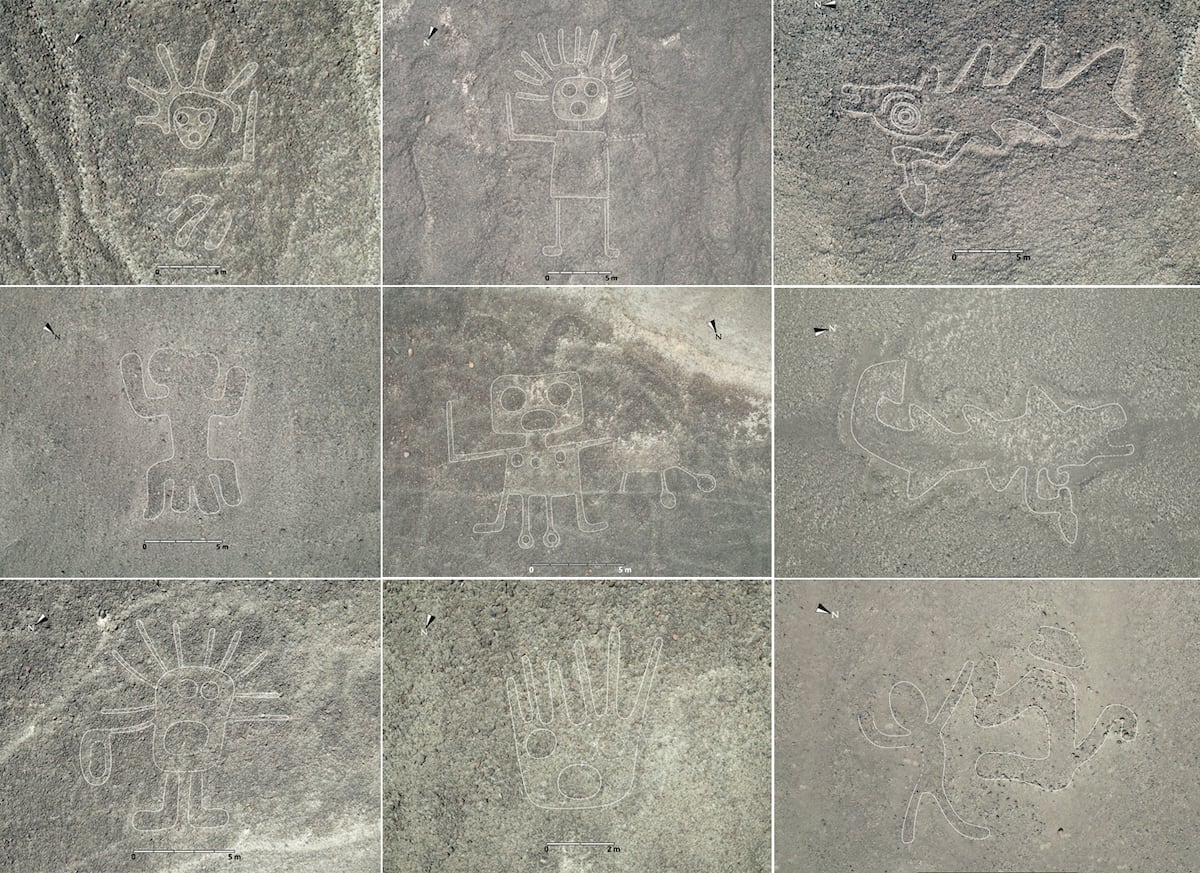
Photo: Instituto Universitario Yamagata de Nazca.
Some of the new geoglyphs found in Nazca. With their lines eroded by the passage of time, AI has achieved in months what used to take decades.

Let’s have kind word for scary old artificial intelligence and how it has, for example, helped to uncover 303 new geoglyphs in the Nazca desert. (By which I don’t mean to say AI doesn’t have serious potential dangers.)

In an El País archaeological article from Peru, Miguel Ángel Criado reports, “With the help of an artificial intelligence (AI) system, a group of archaeologists has uncovered in just a few months almost as many geoglyphs in the Nazca Desert (Peru) as those found in all of the last century. The large number of new figures has allowed the researchers to differentiate between two main types, and to offer an explanation of the possible reasons or functions that led their creators to draw them on the ground more than 2,000 years ago.

“The Nazca desert, with an area of about 1,900 square miles and an average altitude of 500 meters above sea level, has very special climatic conditions. It hardly ever rains, the hot air blocks the wind and the dry land has prevented the development of agriculture or livestock. Combined, all this has allowed a series of lines and figures, formed by stacking and aligning pebbles and stones, to be preserved for centuries

“The first layer of soil is made up of a blanket of small reddish stones that, when lifted, reveal a second yellowish layer. This difference in color is the basis of the geoglyphs and is what was used to create them by the ancient Nazca civilization. Some are straight lines stretching several miles. Others are geometric shapes or rectilinear figures, also huge in size.

“The other major category includes the so-called relief-type geoglyphs, which are smaller. In the 1930s, Peruvian aviators discovered the first ones, and by the end of the century more than a hundred had been identified, such as the hummingbird, the frog and the whale. Since 2004, supported by high-resolution satellite images, Japanese archaeologists have discovered 318 more, almost all of them high-profile geoglyphs. The same team, led by Masato Sakai, a scientist from Yamagata University (Japan), has discovered 303 new geoglyphs in a single campaign, supported by artificial intelligence. …

“ ‘The Nazca Pampa is a vast area covering more than 400 square kilometres and no exhaustive study has been carried out,’ the Japanese scientist recalls. Only the northern part, where the large linear geoglyphs are concentrated, ‘has been studied relatively intensively.’ … But scattered throughout the rest of the desert are many relief-type figures that are smaller and that the passage of time has made more difficult to detect.

“Convinced that there were many more, Sakai and his team contacted IBM’s artificial intelligence division. … They had high-resolution images obtained from airplanes or satellites of all of Nazca, but with a resolution of up to a few centimeters per pixel, the human eye would have needed years, if not decades, to analyze all the data. They left that job to the AI system. Although it was not easy to train its artificial vision … with so few previous images and so different from each other, the machine proposed 1,309 candidates. The figure came from a previous selection also made by the AI with 36 images for each candidate. With this selection, the researchers carried out a field expedition between September 2022 and February 2023. The result, as reported in the scientific journal PNAS, is 303 new geoglyphs added to this cultural heritage of humanity. All are relief-type geoglyphs.

“The newly discovered shapes bring the total number found in Nazca to 50 line-type and 683 relief-type geoglyphs, some geometric and others forming figures. The large amount has allowed the authors of this work to detect patterns and differences. Almost all of the former (the monkey, the condor, the cactus…) represent wild animals or plants. However, among the latter, almost 82% show human elements or elements modified by humans. ‘[There] are scenes of human sacrifice,’ says Sakai. …

“The accumulation of data that has made this work possible brings to light a double connection. On the one hand, these relief-type forms are found a few meters from one of the many paths that cross the desert … paths created by the passage of people until a path is created. According to the authors of the study, these creations were made to be seen by travelers.

“On the other hand, the large linear figures appear very close, also meters away, from one of the many straight lines that cut through the pampas. Here, according to Sakai, the symbolic value rules: ‘The line-type geoglyphs are drawn at the start and end points of the pilgrimage route to the Cahuachi ceremonial center. They were ceremonial spaces with shapes of animals and other figures. Meanwhile, the relief-type geoglyphs can be observed when walking along the paths.’

“Cahuachi was the seat of spiritual power of the Nazca culture between from around 100 BC to 500 AD and, for the authors, the large forms could be ceremonial stops on the pilgrimage to or from there.

“These explanations do not necessarily rule out, according to the authors, other possible functions that have been attributed to the Nazca lines and figures, such as being calendars, astronomical maps or even systems for capturing the little water that fell.”

Things do get fuzzy when we start to interpret ancient signs. Read more at El Pais, here. No firewall.

Read Full Post »

Photo: Liam James Doyle/MPR News.
David Huckfelt performs on the Turf Club stage. “We’re building these little fires in small places,” Huckfelt says.

Because I still believe that “one and two and fifty make a million,” as Pete Seeger used to sing, I get a kick out of all the stories I’ve been seeing lately that confirm the power of small.

Alex V. Cipolle reports at Minnesota Public Radio (MPR) about one small but mighty effort, a new arts collective that “goes on tour to build community in rural Minnesota and beyond. …

“On a September evening at the Turf Club in St. Paul, models weave through bar tables in upcycled designs.

Annie Humphrey, an artist and musician based on the Leech Lake Reservation, performs on the stage, followed by Minneapolis musician David Huckfelt. On a back table Shanai Matteson, an artist from Palisade leads printmaking demos with a stencil of a black aandeg (the Anishinaabe word for crow) and an orange-red sun.

“ ‘There’s a story about the crow. Long ago, the crow had bright, beautiful, vibrant colored feathers,’ Humphrey recalls. ‘But crow also saw that the people were suffering because they had no fire.’ To bring fire to the people, crow flew close to the sun and scorched his feathers black.

“ ‘He was able to grab the fire and bring it back down to the earth and bring fire to the people so that they could be warm,’ Humphrey continues. ‘If you take a crow feather and hold it in the sun, it’s iridescent, and all these colors are still in that feather.’

“The stencil is the logo for the new arts and community-building collective Fire in the Village, started by Humphrey, Matteson and Huckfelt this year. (Fire in the Village is also the title of a book of Ojibwe stories by Humphrey’s mother, Anne Dunn.) …

“The trio all share a background in activism, specifically fighting the Line 3 oil pipeline. … But with Fire in the Village, the collective wants to do something untethered from any one cause. 

“ ‘If we were going to start something, I knew that it should center on art and the human spirit, the human condition,’ Humphrey says, ‘and have no politics involved at all.’

“Through art, fashion, music and collaborative events with schools and local organizations, the collective is hoping to heal divides and put a dent in the loneliness epidemic in rural communities and on reservations.

“ ‘I think a lot of people are feeling isolated,’ Matteson says. ‘There’s a lot of divisiveness going on. Personally, I’m not interested in continuing that. I don’t want to be part of a cause where it feels like it’s putting another barrier between me and the people who live around me.’ …

“ ‘We like the feeling of the collective and not pushing one person as a front for something,’ Huckfelt adds. ‘So, we’re really working together with our skillset because we believe in music, we believe in art, we believe in community, and so that’s what’s being put forward here.’ …

“ ‘Fire in the Village is a way to connect with individuals and to smaller communities that you’re a part of,’ says Meira Smit, one of the Macalester students who came to the Turf Club. ‘A way to build messages and movements around the things that we deeply care about.’

“Haley Cherry, a producer for Minnesota’s Native Roots Radio on AM950, also came out to walk in the fashion show after meeting Humphrey and Huckfelt this past year.

“ ‘It’s important to hear from both perspectives: issues of Indigenous identity, but also [from] David, as a white ally, I think it’s important to draw those bridges of community concerns,’ says Cherry, who is a descendant of the Ho-Chunk Nation of Wisconsin. …

“In June, Humphrey also led a community mural with youth groups on the Leech Lake Reservation, the Boys & Girls Club in Deer River and the Long Lake Conservation Center. Soon, the mural will be installed at the powwow grounds in Ball Club, a village on the reservation. There are more murals to come, Humphrey says.

“The tour is also about revival, Huckfelt says, stopping at historic community buildings in small towns, such as the 210 Gallery and Art Center in Sandstone Oct. 19 and the Historic Chief Theater in Bemidji on Nov. 2. ‘A lot of these spaces are really beautiful old music and theater art spaces,’ Huckfelt says. …

“Huckfelt says, ‘We’ve been doing this work in our own ways for a long time, individually and together. It’s a natural step to call it “Fire in the Village” —  little fires that we can sustain and we can huddle around for good ideas and for community.’ …

“ ‘It’s a very gentle way to say really hard stuff,’ Humphrey says. ‘I have played in front of people who don’t agree with what I speak, but when I sing it?’ “

More at MPR, here. No firewall. Great pictures.

Read Full Post »

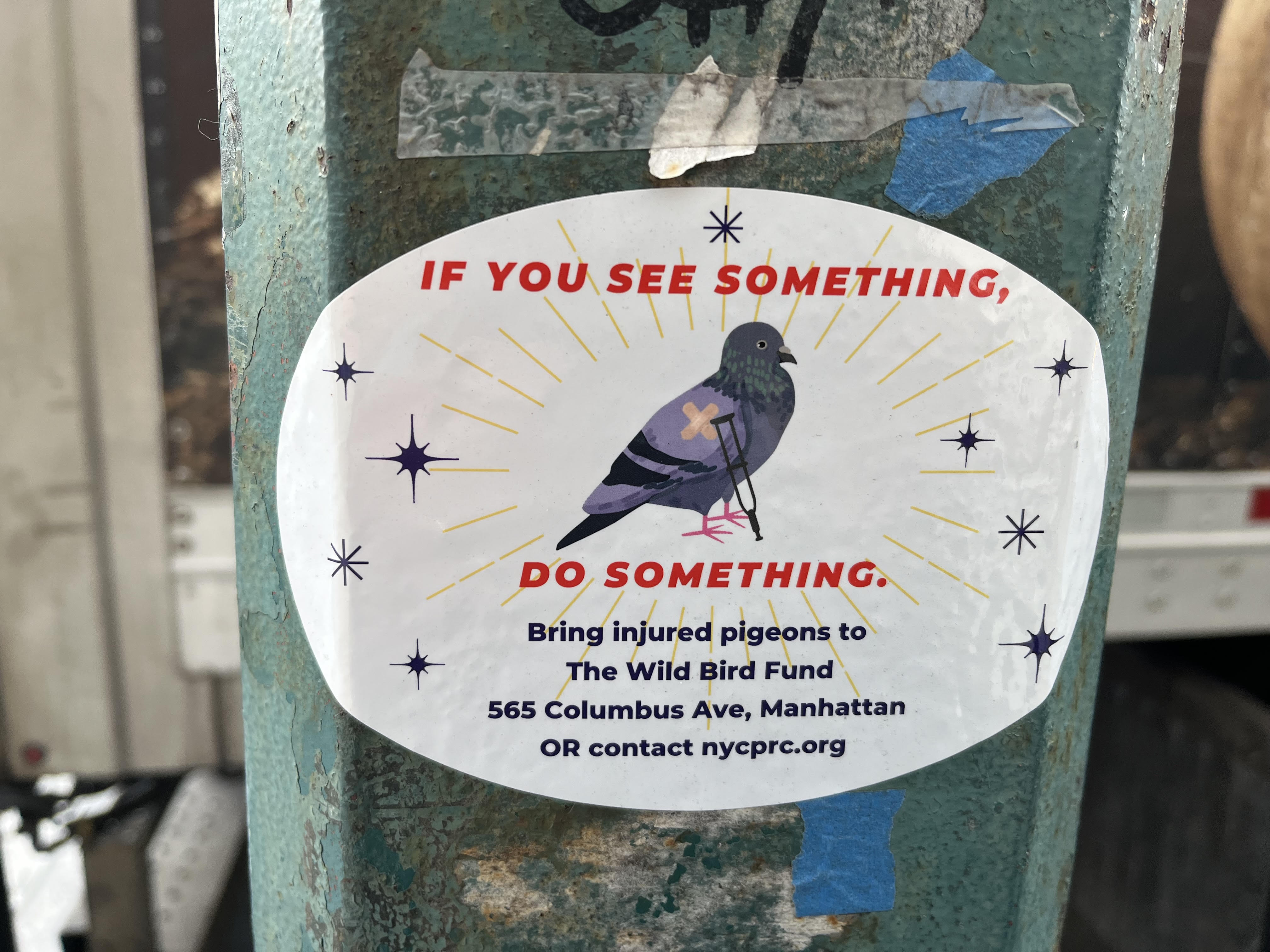
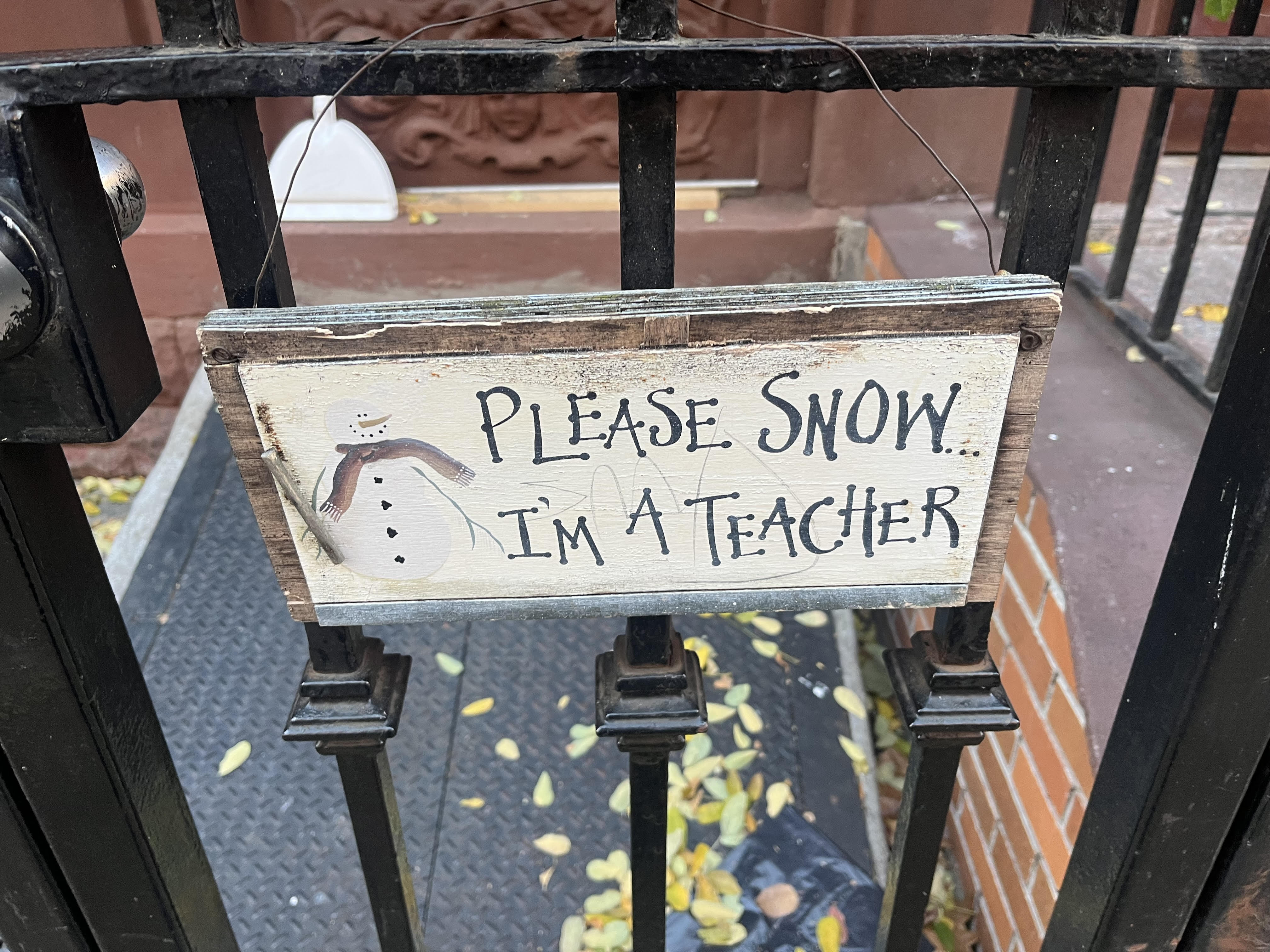
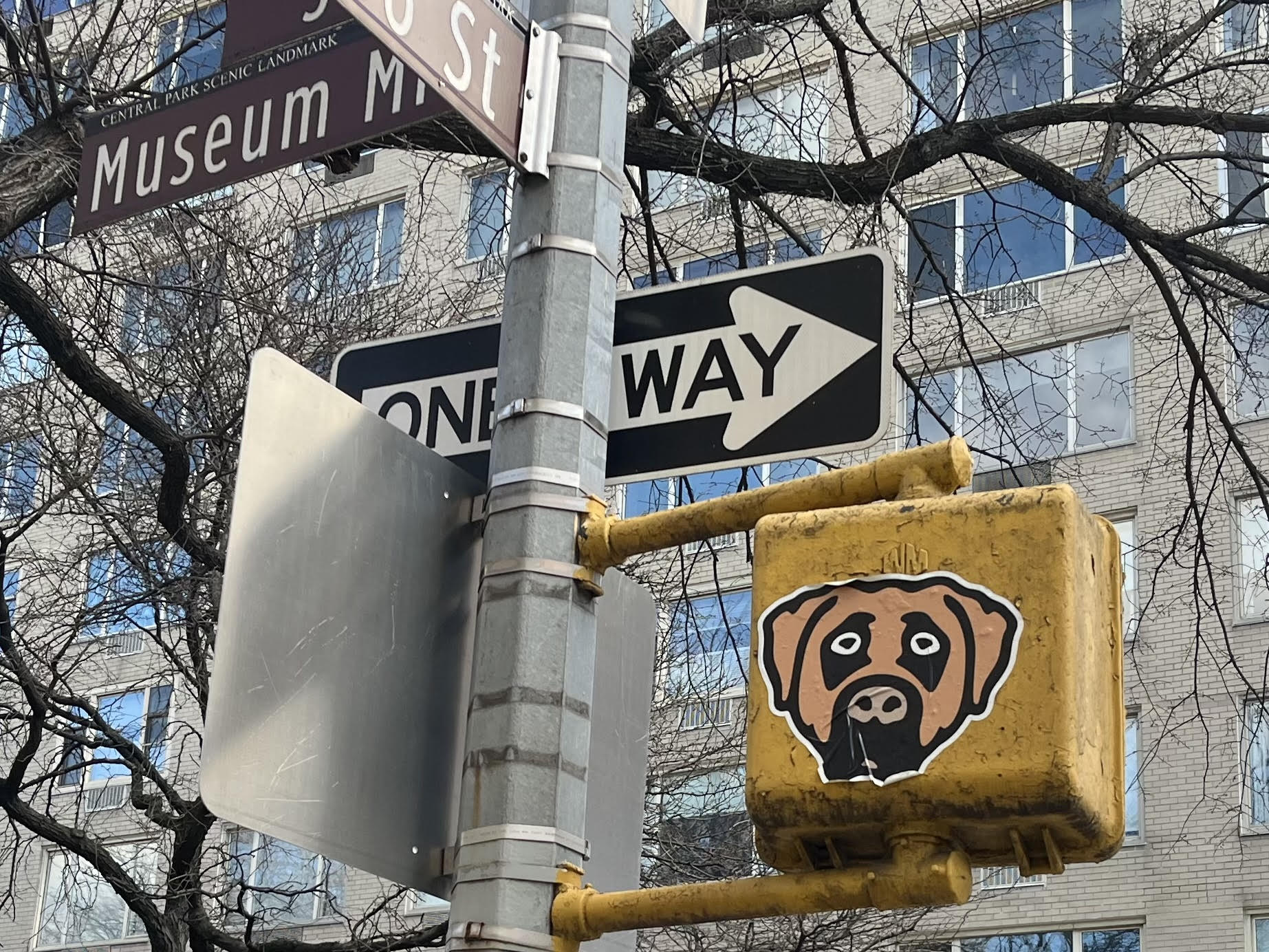
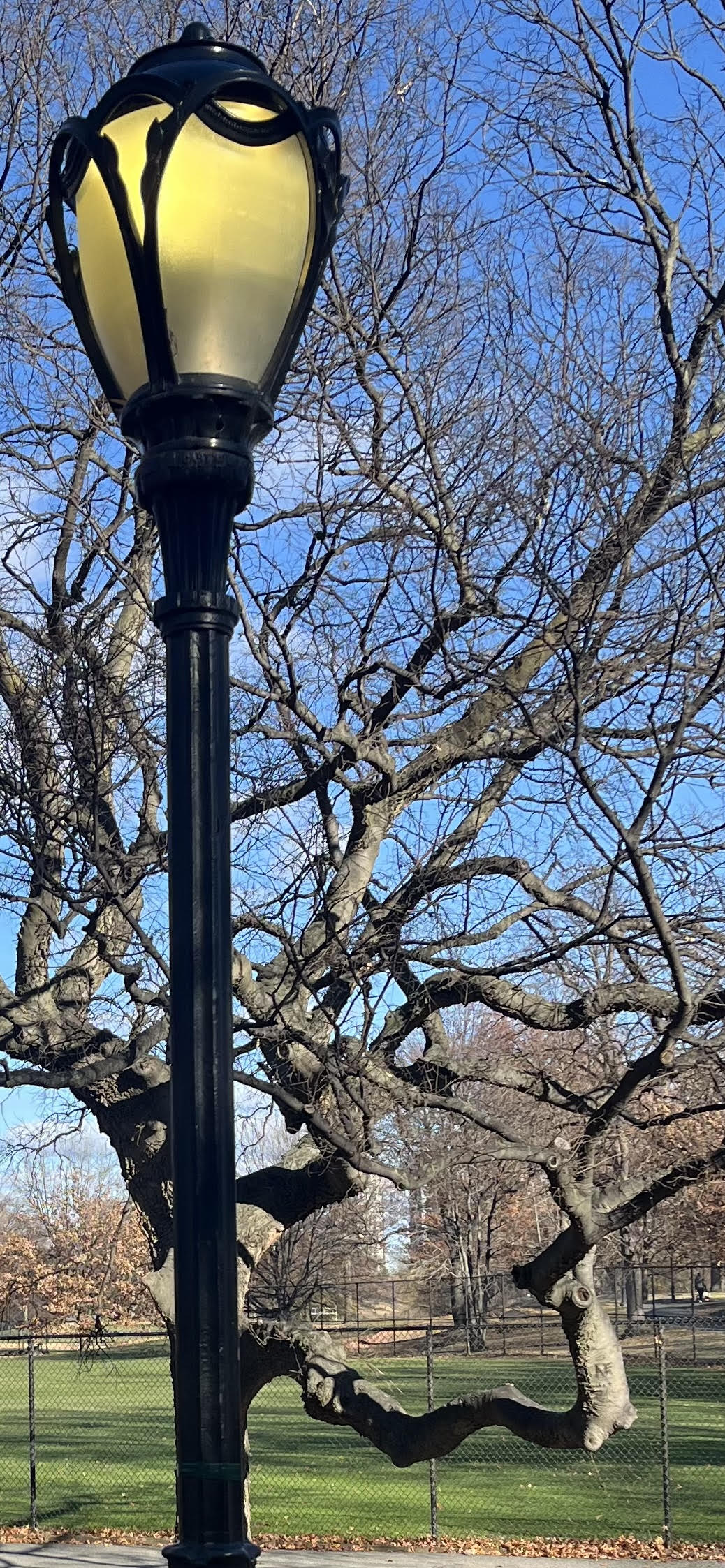
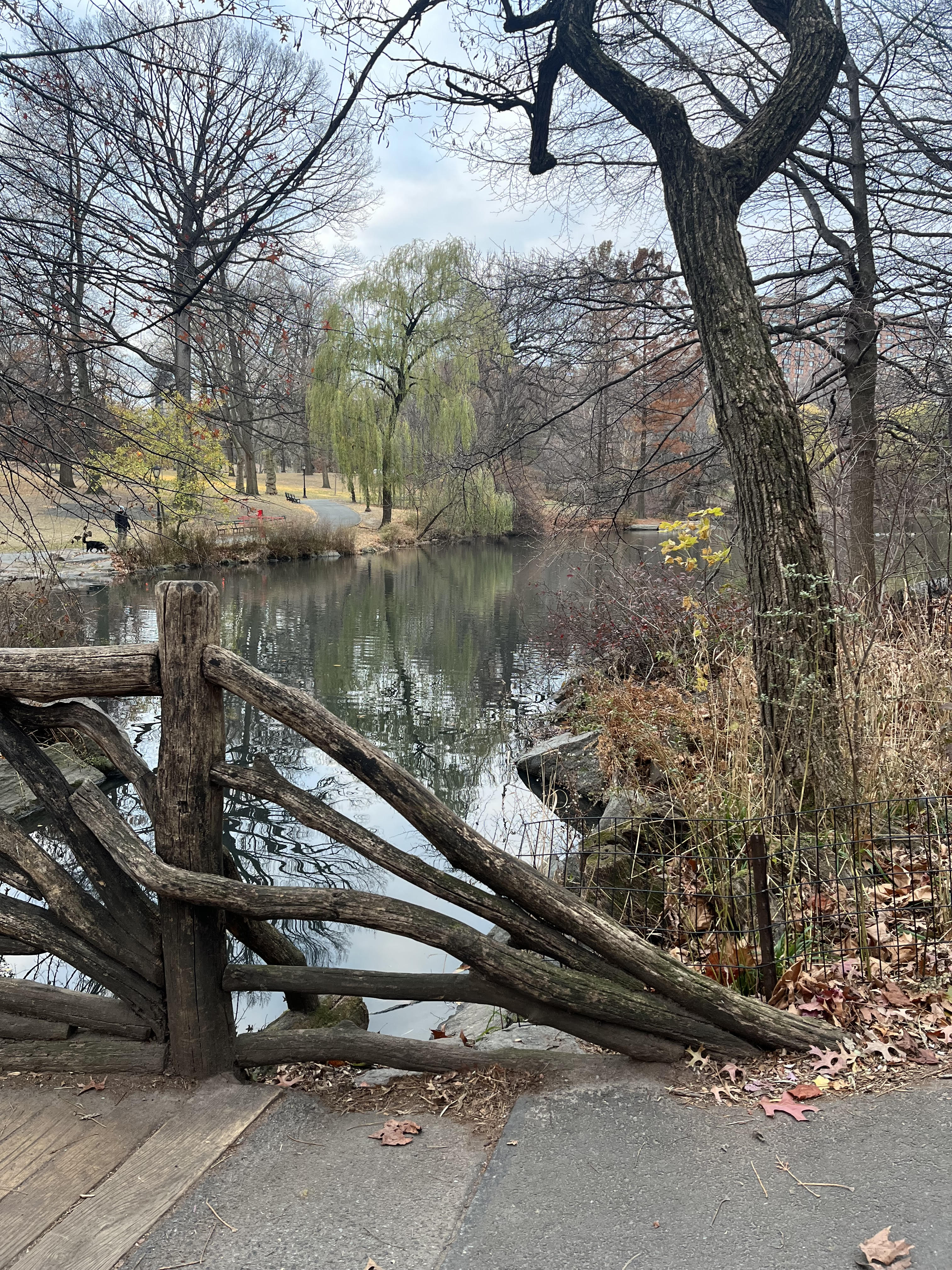
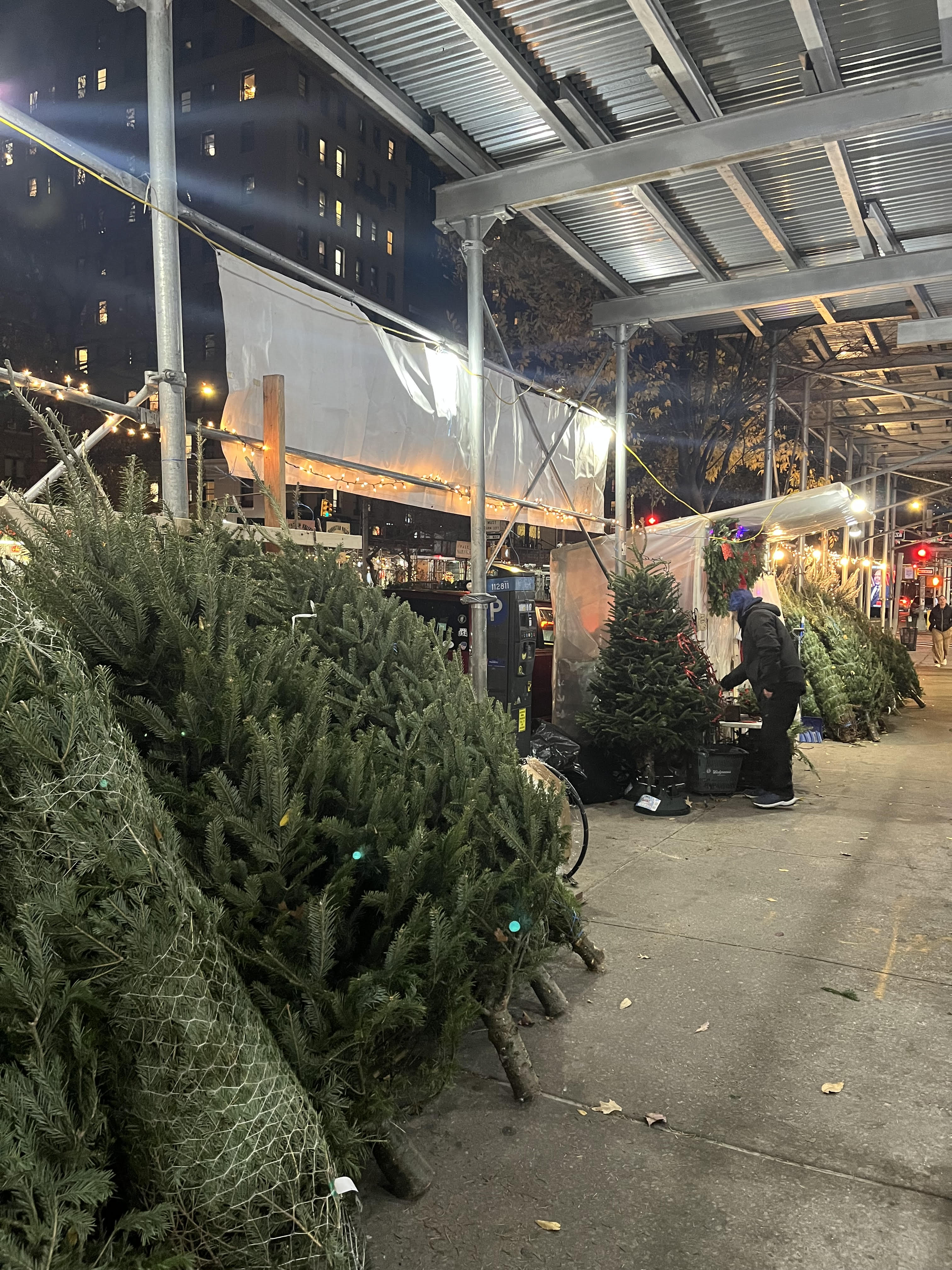
Photos: John and Suzanne’s Mom.
Only in New York will you find people who care what happens to pigeons.

I was in crazy and wonderful New York for a few days. The occasion was the memorial for my friend Manny Kirchheimer, who was, as A.O. Scott of the New York Times once said, “an indispensable New York filmmaker, a noticer and a listener without peer.”

I walked around a lot and took pictures. And since I was in the city, I went to see “Egon Schiele: Living Landscapes” at the Neue Galerie, which was great. I do think New York museums have an awful lot of rules and waiting lines, but if you expect that, it’s easier to accept.

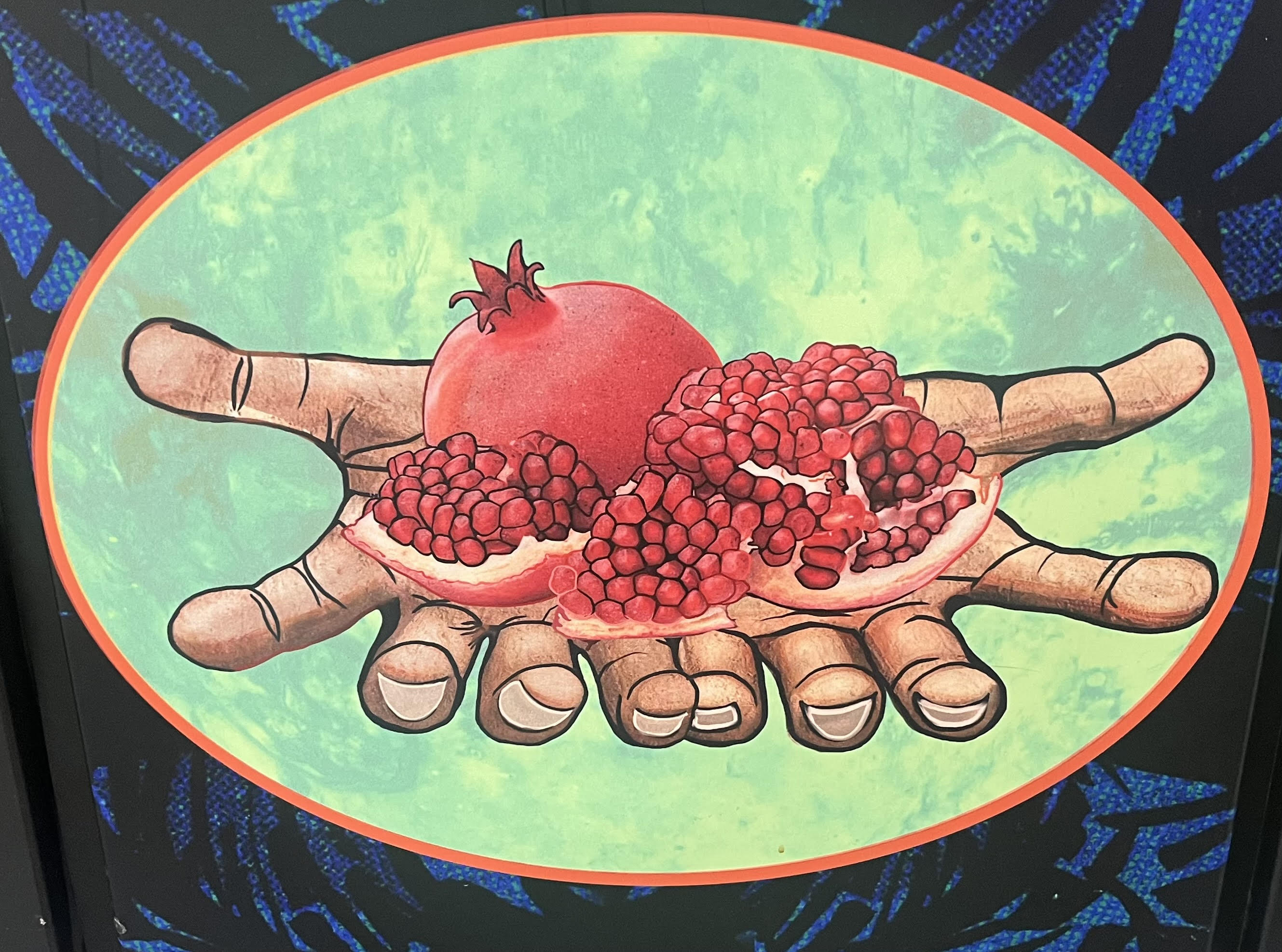
Among sights that caught my eye were giant murals by Chitra Ganesh in Penn Station (see Art at Amtrak). The hands offering pomegranates were on a pillar.

Although I can never compete with blogger Sherry’s Thursday Doors, which she gathers on a continent that really knows doors, I shot a New York one for her.

The two shots of Central Park are similar to ones I’ve taken before and shared, but every time I see that fantasy bridge or the Narnia lamp posts, I see them anew.

Read Full Post »

Photo: Alexandra Genova for the New York Times.
Last year, Churchtown Dairy in Claverack, N.Y., drew hundreds of carolers. (Notice the loft above.)

Other than blogger Deb at A Bear’s Thimble, most of us have lost the daily connection with farm animals that our ancestors knew. When we take our kids to a farm, it seems exotic. No wonder people jump at the chance described in today’s story.

Arielle Gordon reported at the New York Times, “About 200 carolers had just begun the second verse of the classic Christmas song ‘The Friendly Beasts’ when a little girl let out a squeal of delight. About 20 feet below the balcony, on the floor of the large domed barn, two of the half-dozen dairy cows were butting heads. As the grazing heifers lifted their horns, their playful roughhousing seemed like a display of holiday cheer.

“[The] Churchtown Dairy in Claverack, N.Y., once again hosted a Yuletide tradition: caroling to the herd of 28 cattle that call the cathedral-like barn their winter home. What began a decade ago as a way for the farm’s staff and their families to celebrate the herd has since grown to an annual tradition that brings locals and out-of-towners to the farm’s 250-acre property each December.

“[Preregistration] for the two caroling events filled up within hours of going online. Farm staff fielded phone calls from frustrated would-be carolers, some of whom blamed an Instagram post advertising the event for its rise in popularity.

“ ‘We’re considering adding a third night next year to accommodate all the interest,’ said Grace Pullin, Churchtown’s director of partnerships and programs. …

“Attendee, Sharon Mclees, 64, has attended for six years. Growing up around cows, Ms. Mclees said she felt comforted by the tranquillity at Churchtown. ‘I love the farm atmosphere,’ she said. ‘It’s just so back to nature.’

“Churchtown Dairy was founded in 2012 by Abby Aldrich Rockefeller, the granddaughter of the business magnate John D. Rockefeller, but the property has been under her family’s purview for decades. Her mother, Peggy Rockefeller, purchased the land as part of a larger acquisition of over 2,700 acres by the American Farmland Trust, an agricultural nonprofit Peggy started in 1980.

“The younger Ms. Rockefeller partnered with the architect Rick Anderson to design the farm, traveling the country visiting barns for inspiration. For her, the dome is a sign of a healthy, biodynamic farm. … Mr. Anderson explained that its shape served a more practical purpose: ‘Cows hate corners.’

“The dairy is not unique in its caroling tradition; just a few miles up the Taconic State Parkway, Hawthorne Valley Farms has been singing to its herd in a smaller event on Christmas Eve for the past 40 years. Staff members at Churchtown each had a different theory on the origins of the practice. Ms. Pullin suggested it might have been inspired by the work of the German esoteric philosopher and biodynamic farming pioneer Rudolph Steiner, who claimed that cow horns had ‘astral-ethereal formative powers.’

“Eric Vinson, a herd manager on the farm, referenced the old European myth that animals are able to communicate with humans at Christmastime. In more contemporary contexts, scientists at the University of Leicester found that cows produced more milk when played songs with less than 100 beats per minute. (R.E.M.’s ‘Everybody Hurts’ seemed to go over especially well.) By that logic, carols, with their measured pace, could be conducive to a happy herd. …

“Carolers, armed with illustrated songbooks, began with Christmas classics — ‘The First Noel,’ ‘Silent Night,’ ‘Joy to the World,’ — before Ms. Pullin opened the floor to requests. There were shouts of ‘Free Bird,’ but the crowd eventually settled on ‘Feliz Navidad’ as the final number of the night.

“The cows wagged their tails in appreciation — or maybe they were swatting away loose hay — and for a moment, the myth seemed to come alive: Animals and humans communicating for the holiday.”

The farm sells raw, unpasteurized milk. My mother sometimes bought raw milk at a farm near brother Will’s nursery school in Rockland County, New York. That was definitely a Rudolf Steiner farm. The nursery school followed his ideas, too.

You can read about the quality control drill that keeps raw milk safe at Churchtown Dairy, here. And do let me know if you have ever sung carols to cows! I want to try it.

Read Full Post »

Photo: George E. Koronaios via Wikimedia Commons.
One of the oldest depictions of Jesus lying in a manger is on view at the Byzantine and Christian Museum of Athens.

Today’s article is about the many ways nativity scenes have changed through the ages.

Maya Pontone reports at Hyperallergic, “With Christmas upon us, many observers of the Christian holiday commemorate the season with reconstructions of the famed Nativity scene, depicting the birth of Jesus Christ. From early two-dimensional renderings to elaborate Baroque sculptures, the practice has been adopted by numerous communities around the world and reinterpreted by various artists. In 2019, the elusive British street artist Banksy released ‘The Scar of Bethlehem‘ (2019) as a political statement against Israel’s concrete wall around the city of Bethlehem in the West Bank. That same year, a United Methodist Church community utilized the art form to call attention to the imprisonment of children in detention facilities along the United States-Mexico border.

“But long before the nativity became a protest symbol, the holiday staple can be traced back hundreds of years to the first visual depictions of the biblical story of Christ’s birth. Based on the Gospel of Matthew, these visual representations largely focused on the biblical visit from the three wise men, who brought gifts of gold, frankincense, and myrrh to the newborn Jesus, according to a 2016 essay by Yale professors Felicity Harley-McGowan and Andrew McGowan. The earliest surviving examples depicting this scene include the ancient ‘Adoration of the Magi‘ fresco in the catacombs of Priscilla in Rome, dating from the late 3rd or early 4th century, as well as early 5th-century carvings on a Roman marble sarcophagus, found during excavations of the cemetery of Saint Agnes.

“As the Yale historians point out, the Gospel of Luke narrative about Jesus Christ lying in a manger was not portrayed until the 4th century. One of the earliest surviving examples is a marble rendering on view at the Byzantine and Christian Museum in Athens, depicting Jesus Christ resting alone in a manger, accompanied by an ox and a mule on either side.

“Historians debate when exactly the first three-dimensional depictions of the birth of Jesus emerged. Some claim that papal documents prove that the practice came about in 432 CE when Pope Sixtus III commissioned the recreation of Bethlehem’s stable scene in the newly built Santa Maria Maggiore Basilica. According to this unconfirmed theory, this ‘cave of the Nativity’ was supposedly the first presepio (Italian for ‘nativity’), commemorated with a ‘festive celebration.’ 

“Despite the lack of conclusive evidence, the earliest surviving nativity scene figures sculpted by Arnolfo di Cambio during the late 13th century also indicate Santa Maria Maggiore as a birthplace for the Nativity tableau practice. The cluster of marble statues was displayed alongside a wooden manger structure, inspired by Saint Francis of Assisi’s living nativity in 1223 Greccio, which featured real people and animals.

“The Italian city of Naples is often credited with helping popularize presepios during the 15th-century Renaissance, as local artists began creating life-size statue displays for neighborhood chapels. Subsequently, in the 17th century, elaborate tableaus featuring detailed architectural structures and characters dressed like Neapolitans of the Baroque era helped inspire an entire movement of Nativity scenes that can still be viewed seasonally today at institutions like Pittsburgh’s Carnegie Museum of Art and New York’s Metropolitan Museum of Art.

“With the global expansion of Christianity, the practice of staging living and sculptural Nativities has been adopted by countless cultures and peoples, who reenact the scene often in ways that reflect their communities. In the Philippines, these crèches are referred to as beléns, introduced during the 16th century with Spanish colonization. 

‘In Austin, Texas, the Mexic-Arte Museum stages an annual nacimiento (Spanish for nativity) that reflects both Indigenous Mexican culture and the historical impact of Spanish colonization. Featuring more than 600 pieces, the colorful display includes depictions of Mexico City, Tzintzunztan, and Michoacan, and is one of several nativity scenes from all over Mexico in the museum’s permanent collection.

“Year-round, audiences can view more than a hundred nativity scenes featuring over 2,000 figurines from various countries at the International Museum of Nativity Scene Art in Málaga, Spain. ‘My wife, Ana Caballero, and I noticed that every year after Christmas high-quality works were dismantled by their creators. However, they deserved to continue so that other people could enjoy them,’ museum co-founder Antonio Díaz, told Hyperallergic. ‘That’s why we decided to launch this museum.’ …

“The museum includes classic creches from Italy, Austria, and Spain, as well as contemporary interpretations based on popular culture and current events, including one in the style of the sci-fi Star Trek series and another display set in an unnamed neighborhood besieged by war, illustrating the boundless evolution of the art form.”

Wonderful photos at Hyperallergic, here. No paywall, but donations are encouraged.

Read Full Post »

Art: Xiomara Morgan and Kathy Urbina, “Found in New York City” (2023), styrofoam life preserver, found Metrocards, plastic water bottles, candy wrappers, snack bags, labels, and bottle tops with a crocheted ribbon of plastic, rope, and caution tape.

Artists can turn anything into art. And I have learned that among New York City Parks employees, there are a few who are artists like that and a few who just have fun playing at art.

Maya Pontone wrote about a New York City Parks’ exhibition called “Wreath Interpretations” in 2023.

“More than 30 original holiday wreaths handcrafted from unexpected materials, including discarded Metro cards, thumbtacks, artificial hot dogs, pharmaceutical vials, and candy wrappers,” she reported were “on display in Central Park for the 41st iteration of New York City Parks’‘Wreath Interpretations‘ exhibition [bringing] together an eclectic assortment of alternative wreaths created by Parks employees, commissioned artists, and New York City residents for a whimsical display.

“Wreaths have historically played a number of roles. In Roman and Greek antiquity, they were emblems of power and victory, frequently awarded to the winners of sporting competitions and appearing in depictions of various deities, such as Apollo in Antonio Canova’s marble sculpture ‘Apollo Crowning Himself‘ (1781–1782). In Christianity, evergreen wreaths symbolize eternal life and everlasting faith; during Advent season, laurel rings are decorated with four candles that are subsequently lit each week leading up to Christmas.

“But the artists in ‘Wreaths Interpretations,’ go beyond these classic meanings to transform a holiday staple into new works of art, from an aluminum and gold leaf display commemorating Caribbean cooking to a diorama wasp nest containing a hidden memorial honoring Ukraine. On one wall, an unsettling wreath crafted out of plastic eyeballs tackles sleep deprivation, while another piece made of yellow Post-It notes playfully comments on work-life imbalance.

“In another corner, a pizza box with wiry rat tails emerging from the center — an unmistakable homage to the viral ‘Pizza Rat‘ — is situated between a spiral of playing cards and a ring of glistening frankfurters, humorously titled ‘The Wurst Wreath Ever Made: You Never Sausage a Terrible Wreath’ (2023). As Elizabeth Masella, Public Art Coordinator for the NYC Department of Parks & Recreation, told Hyperallergic, ‘the weirder, the better.’ …

“Many of the artworks are constructed out of found objects and recycled materials, such as Xiomara Morgan and Kathy Urbina’s joint project ‘Found in New York City’ [above]. … Marie Ucci’s ‘The Shape of Dreams’ (2023) is an assemblage of ceramic shards, dried fruits and vegetables, scraps of felted wool, and feathers, carefully pieced together like a bird’s nest, while Suzie Sims-Fletcher’s ‘All is Calm, All is Bright (Home for the Holidays)’ (2023) comprises cleaning puffs, scouring pads, plastic mesh, and rubber gloves. …

“Several of the displays also focus on environmental issues plaguing the city’s parks. A work by Maria Magdalena Amurrio employs repurposed water bottles for a wreath of butterflies, an insect increasingly threatened by climate change and human development, while Jean-Patrick Guilbert’s ‘Coral Wreath’ (2023) calls attention to the destruction of our oceans’ coral reefs. Another wreath made of saltmarsh cordgrass, hay, lavender branches, and other natural materials native to Staten Island’s William T. Davis Wildlife Refuge tackles the issue of marsh degradation. The work was created over two days by a team of eight ecologists, wildlife biologists, and botanists from NYC Parks Environment and Planning.

“ ‘The wreath is meant to symbolize how New York City salt marshes are at risk of drowning from sea level rise under climate change,’ Desiree Yanes, an NYC Parks wetlands restoration specialist, told Hyperallergic, pointing out the materials’ symbolic placement around the circle.

“ ‘We’re very much a science driven team, but it was a really refreshing mindset shift just to undertake an artistic endeavor together,’ Yanes added.”

More at Hyperallergic, here. No paywall. Does it make you want to try your hand at a wreath this year? You still have time.

Read Full Post »

Photo: Eduardo Sampaio and Simon Gingins.
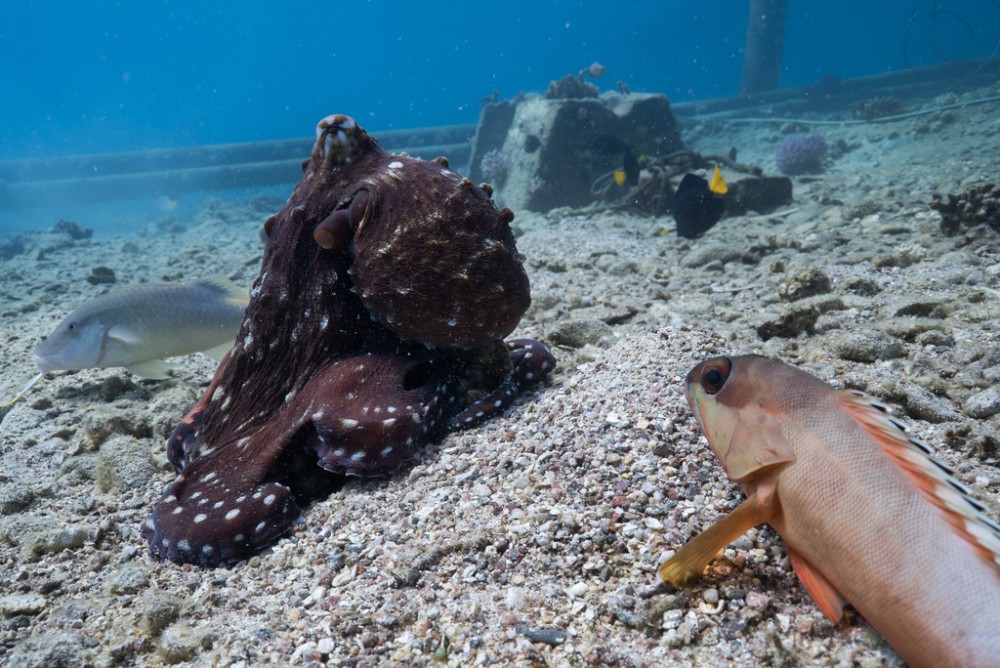
An Octopus cyanea, center, hunts with a blacktip grouper on one side and a blue goatfish on the other.

There are trends, I think, in which animals are popular and get the most news coverage. Lately, octopuses seem to be “in.” That is probably because the people who know them best, like naturalist Sy Montgomery, have demonstrated how intelligent octopuses are.

Now we learn that some octopuses hunt with partners from other species and may make the group decisions.

Evan Bush writes at NBC News, “A new study shows that some members of the species Octopus cyanea maraud around the seafloor in hunting groups with fish, which sometimes include several fish species at once.

“The research, published in the journal [Nature], even suggests that the famously intelligent animals organized the hunting groups’ decisions, including what they should prey upon.

“What’s more, the researchers witnessed the cephalopod species — often called the big blue or day octopus — punching companion fish, apparently to keep them on task and contributing to the collective effort.

“Octopuses have often been thought to avoid other members of their species and prowl solo using camouflage. But the study [is] an indication that at least one octopus species has characteristics and markers of intelligence that scientists once considered common only in vertebrates. …

“Said Eduardo Sampaio, a postdoctoral researcher at the Max Planck Institute of Animal Behavior and the lead author of the research, ‘We are very similar to these animals.’ …

“To understand the inner details of octopus lives, researchers dived for about a month at a reef off the coast of Eilat, Israel, and tracked 13 octopuses for a total of 120 hours using several cameras. The team followed the octopuses for 13 hunts, during which they observed groups of between two and 10 fish working with each octopus.

“These hunting groups typically included several species of reef fish, such as grouper and goatfish. The octopuses did not appear to lead the groups, but they did punch at fish to enforce social order — most often at blacktip groupers.

“ ‘The ones that get more punched are the main exploiters of the group. These are the ambush predators, the ones that don’t move, don’t look for prey,’ Sampaio said. …

“ ‘If the group is very still and everyone is around the octopus, it starts punching, but if the group is moving along the habitat, this means that they’re looking for prey, so the octopus is happy. It doesn’t punch anyone, Sampaio said.

“The researchers think fish benefit from such hunting groups because an octopus can reach into crevices where prey hides and root out lunch. The octopus benefits, they believe, because it can simply follow the fish to food, rather than perform what the researchers call speculative hunting. …

“After shooting their video, the researchers fed all of their hunting scenes into software that creates a three-dimensional representation, then used another program to track each animal and log its position in relation to others. The data allowed the researcher to measure how close the creatures remained to one another and which creatures anchored or pulled the group in one direction or another.

“The data showed that a particular fish species, the blue goatfish, would roam off and lead the hunting groups in that direction, but the group of fish would linger if the octopus didn’t immediately follow.

“The goatfish ‘are the ones exploring the environment and finding prey,’ Sampaio explained. ‘The octopus is the decider of the group.’

“The researchers did not see evidence that the creatures shared prey. All the species involved are generalists that eat crustaceans, fish and mollusks, but whoever was able to catch the prey got a meal. Questions remain, however, including whether certain octopuses recognize or prefer to hunt with a favorite fish companion. … It’s also not clear if this social hunting behavior is something octopuses learn or if it’s innate.

“ ‘In my intuition, I think it’s something they learn, because the smaller octopuses seem to have a higher difficulty to collaborate with fish than the large ones,’ Sampaio said.

“Jonathan Birch, a professor of philosophy at the London School of Economics who studies animal sentience but was not involved in the new research, said he … appreciated that the study’s observations were made outside a laboratory setting, where a lot of animal cognition research takes place. Octopuses can be difficult to study outside their natural setting. …

“ ‘Octopuses were seen as a problem case because they are intelligent and yet solitary, it was assumed, so researchers puzzled for a long time about what’s going on there,’ Birch said. ‘[This study shows that] For at least one species of octopus, there is quite a rich social life.’ “

More at NBC, here. No paywall.

Read Full Post »

Photo: Michael Claxton Collection.
Ellen Armstrong as a teenager in a costume she would typically wear while performing as a magician.

Among the many accomplished black Americans almost lost to history is a young female magician called Ellen Armstrong. Today we find out what Vanessa Armstrong at the New York Times (no relation) learned about this intriguing performer when she was assigned to write a belated obit.

“In December 1949, an article in Ebony magazine showcased a dozen Black magicians as ‘among America’s oldest entertainers although few in number.’ The sole woman among them was Ellen Armstrong,. …

“Armstrong began by practicing magic onstage with her father but later performed a solo act full of illusion and humor. One trick involved a blank pane of glass in a picture frame, where a cascade of sand fell from top to bottom when she turned it upside down. When the sand cleared, the frame held an image of someone famous, like the boxer Joe Louis. In another routine, called ‘Miser’s Dream,’ she made coins appear out of thin air and land with a miraculous clunk into a metal bucket. …

“Ellen Emma Armstrong was born on Dec. 27, 1905, in South Carolina to Ida [and] John Hartford Armstrong. The Armstrongs were a magic-performing dynasty, believed to be the first to come from and focus on the Black community. Her father started performing with his brother when he was a teenager. Later, he performed with Ellen’s mother, who died soon after giving birth to Ellen, and then with his second wife, Lillie Belle.

“Ellen was only 6 when she started performing with her father and stepmother, going by the name ‘Little Zelle,’ as they traveled to Black schools and churches along the East Coast, from Key West, Fla., to Philadelphia. … They performed during a time of legal segregation, sundown towns and lynchings. …

“J. Hartford Armstrong, as Ellen’s father was billed, and Lillie Belle had what they called a ‘Second Sight’ act: One of them, blindfolded, identified people and objects while fed information by the other via an elaborate verbal code system. Ellen did some mind-reading of her own in the show, and as she grew older she developed a ‘Chalk Talk’ routine in which cartoons she drew morphed into different images as she told a story.

“ ‘There were times when she would draw hats and then a rabbit coming out of it, and then she would elaborate on the rabbit, turn it upside down, and it’d be a picture of Abraham Lincoln,’ said Michael Claxton, a historian of magic and a professor of English at Harding University in Arkansas.

“Ellen Armstrong studied at the Haines Institute, in Augusta, Ga., and Barber-Scotia College, in Concord, N.C. After she graduated, she continued in the family business. When her father died of heart failure in 1939, she worked the circuit with her stepmother for three years or so. When her stepmother retired, Armstrong continued on her own, using dozens of props she had inherited from her father. But she continued to invoke her father’s name. …

“ ‘She did everything in honor of her father,’ said Nicole Cardoza, a magician who is making a documentary highlighting Armstrong and other Black female entertainers. …

“The places where she brought her act — churches and schools, mostly — were a refuge for African Americans and integral to Black culture, serving as public squares ‘that allow for joy, that allow for pleasure, that allow for restoration amidst the climate of injustice,’ said [Treva Lindsey, a professor at Ohio State University specializing in Black popular culture and African American women’s history]. …

” ‘Armstrong was fully aware of the inequities Black people faced, and as a Black woman she faced discrimination on two fronts. ‘We talk about Jim Crow often, but we don’t often talk about Jane Crow,’ Lindsey said, referencing the term coined by the activist and legal scholar Pauli Murray.

“The magician Kenrick Ice McDonald, in an interview, touched on the same point. ‘White women had to put up with chauvinism, yes, but they could still go in the front door of a theater,’ he said. He added, ‘To travel while Black can get you killed.’

“[Armstrong] continued to practice magic until about the 1970s. ‘She performed until she couldn’t perform anymore,’ Cardoza said. …

“Armstrong died on March 21, 1994, in a nursing home in Columbia, S.C. She was 88. … In January 2024, she was posthumously inducted into the Society of American Magician’s Hall of Fame. Today, a second documentary in which she figures prominently is also in the works, titled Going Fine Since 1889: The Magical Armstrongs, by the filmmaker Jennifer Stoy.”

More at the Times, here.

Read Full Post »

Photo: Earth.com.
In the bad old days, parents were misled about what was good for children. Remember forcing left-handed kids to use their right? Remember that counting on fingers was wrong? Fortunately, humans do learn from mistakes.

Everything old is new again. But you knew that. Here’s new old news from the world of elementary school arithmetic. Stephen Beech wrote the story at TalkerNews and many outlets carried it, including NBC.

“Counting on fingers really does help youngsters improve their math skills, according to a new study. The research is the first to show that children’s performance in arithmetic can show a ‘huge’ improvement through the teaching of a finger-counting method. …

“Swiss and French researchers explored whether finger counting can help primary school-aged children to solve maths problems in a new study, published in the journal Child Development. …

“Young children who use their fingers to solve such problems are recognized as intelligent, probably because they have already reached a level that allows them to understand that a quantity can be represented by different means.

“It is only from the age of eight that using finger counting to solve very simple problems can indicate math difficulties, according to the study.

“The research aimed to determine whether children who don’t count on their fingers can be trained to do so, and whether such training would result in enhanced arithmetic performance.

“The study focused on 328 five- and six-year-old children at kindergarten, mainly living in France, and tested their abilities to solve simple addition problems. Participating children were recruited through their teachers who voluntarily took part in the experiment.

“The study included a pre-test, training held over two weeks, a post-test closely after the training’s end, and a delayed post-test.

“The results showed an ‘important increase’ in performance between pre- and post-test for the trained children who did not count on their fingers originally — from 37% to 77% of correct responses – compared to non-finger users in the control group.

“The research team suggests that since children who use their fingers to help solve math problems outperform those who do not, teaching a finger-counting strategy could help reduce inequity among children in math.

“However, they say whether children who use finger counting are using it as an arithmetic procedure or understand something deeper about numbers will still need to be determined with future research.

“Study leader Dr. Catherine Thevenot said: ‘Our findings are highly valuable because, for the first time, we provide a concrete answer to the long-standing question of whether teachers should explicitly teach children to use their fingers for solving addition problems — especially those who don’t do so naturally. Our study demonstrates that finger calculation training is effective for over 75% of kindergartners.

” ‘The next step is to explore how we can support the remaining 25% of children who didn’t respond as well to the intervention.’

“Dr. Thevenot, of the Institute of Psychology at the University of Lausanne in Switzerland, says the study came about as a result of conversations with primary school teachers.

“She said: ‘They often asked me whether they should encourage or discourage children from using their fingers to solve calculations. Surprisingly, the existing research didn’t offer a clear answer, which left teachers understandably frustrated with my frequent response of “I don’t know.” …

” ‘The best way to provide a meaningful answer was through experimental studies — so that’s exactly what I set out to do.

” ‘When I first saw the results, I was amazed by the huge improvement in performance among children who didn’t initially use their fingers to solve the problems. Before our intervention, these children were only able to solve about one-third of the addition problems at pre-test.

” ‘After training, however, they were solving over three-quarters of them. The difference was striking, especially compared to the control groups, where gains were insignificant. The extent of this improvement truly exceeded my expectations. …

” ‘An important question now is to determine whether what we taught to children goes beyond a mere procedure to solve the problems. In other words, we want to know whether our intervention led to a deeper conceptual understanding of numbers, specifically whether children better grasp how to manipulate the quantities represented by their fingers.

” ‘In fact, we have already started addressing this question and the initial results are very promising. However, we still need to carry out additional experiments to confirm that these improvements are indeed a direct result of our training program.’ “

More at NBC, here, and at Earth.com, here.

Trust those Swiss to figure things out!

Read Full Post »

Photo: Candace Dane Chambers for the New York Times.
Arianne King Comer, an artist, wearing hand-made textiles in her home studio on Wadmalaw Island, S.C. She first learned batiking at Howard University.

I was drawn to this story about about dyeing textiles on the South Carolina mainland and islands after reading Pat Conroy’s amazing memoir The Water Is Wide. That book recounts his 1960s teaching experience among impoverished black children on one of the islands — a sad and moving tale.

I am happy to learn something more upbeat about the islands.

The New York Times says reporter Patricia Leigh Brown “followed South Carolina’s indigo trail from Charleston to Johns Island to St. Helena Island” for this story.

“On a spring morning nearly a decade ago, Leigh Magar was out walking rural Johns Island, off Charleston, S.C., with her ‘snake stick,’ a wooden cane with a jangling Greek goat be. … As she tells it — and she swears this story is true — a beautiful blue dragonfly alighted on her stick and then encircled her, before fluttering toward the woods. She followed it into a thicket of pines, where she discovered a patch of wild blue indigo hidden among the trees.

Magar, a textile artist and dressmaker partial to indigo-dyed jumpers and indigo-stained silk ribbons tucked into her hair, is at the artful forefront of the ‘seed to stitch’ movement — the growing, harvesting and processing of Indigo suffruticosa, a robust plant that flourishes in the tropics and produces a deep, cherished ocean-blue color, one of humankind’s oldest dyes.

“This benign-looking bush is used in designing garments and batiks. It was a major export in 18th-century South Carolina. Like rice and cotton, the lucrative indigo crop was dependent on the skills and labor of enslaved Africans, who tended the plantation fields and extracted the dye in preparation for shipment to England for its burgeoning textile industry.

“Today, the revival of indigo by a diverse group of artists, designers and farmers is hardly confined to South Carolina. … In the United States, the passion for indigo dovetails with a growing appreciation for nontoxic plant-based dyes, including turmeric and marigolds, and the renewed focus on Africa’s role in contemporary fashion, spotlighted by recent museum exhibitions like ‘African Fashion‘ at the Brooklyn Museum and the Portland Art Museum, and by ‘Blue Gold: The Art and Science of Indigo,’ which opened at the Mingei International Museum in San Diego on Sept. 14 [until March 16, 2025]. …

“Fashion designers like Awa Meité van Til, who is based in Bamako, Mali, draw inspiration from her ancestors. In Africa, her grandmother re-dipped her clothes in what the older woman called ‘the blue of life’ when they aged, van Til recalled by email. In Lagos and other major cities, adire, a woven indigo-dyed cloth historically made by the Yoruba, is a fashion staple. …

“Magar was drawn to indigo after a career designing hand-stitched hats and fedoras for Barneys New York from her shabby chic cottage in Charleston. In 2015, she and husband, Johnny Tucker, an architect and artist, moved to a house on Johns Island. …

“Madame Magar, as she is known professionally, became infatuated with the idea of creating art from Mother Nature and began reading histories about Johns Island indigo. At the time, indigo seeds were hard to come by. Then a local botanist told her about a ‘hermit monk’ deep in the woods who not only had seeds but a thriving indigo garden. …

“The ‘hermit’ turned out to be an affable Eastern Orthodox monk named Father John, who lives down a rutted sand road. In his black cassock, he had a slightly bohemian air, with a bountiful silver beard and hair pulled back in a tight bun. …

“Father John is adept at ‘resist techniques,’ in which certain areas of a textile are blocked from receiving the dye, most often by applying molten wax (the process is often called batik). He prefers making a golden paste out of rice bran which he then applies through intricately hand-cut stencils to create patterns on fabric, in a centuries old Japanese technique known as katazome.

“He pulled out a small plastic bag full of tiny brown curlicues — they were indigo seed pods (you could hear them rattling). He demonstrated their alchemy in the yard, in tubs — one dye steeped with dried leaves, and a deeper color, from concentrate, its bubbling iridescent surface resembling a liquid stained-glass window.

“When Father John immersed his stenciled textile into the brew, it turned a distressing pickle green. But as he fished it out and exposed it to the air, it transformed into a breathtaking blue, enhanced by intricate white patterns where the rice paste had been. …

” ‘Every country that does indigo honors ancestors through this magical blue,’ said Arianne King Comer, an artist who first learned batiking at Howard University and has an indigo plant tattoo above her ankle.

“ ‘It aligned me,’ she said of her indigo education, which began in 1992, when she made her first trip to Nigeria on a grant to study with Nike Davies-Okundaye, a celebrated textile artist who has built centers for young people to learn traditional arts and crafts. …

“King Comer’s indigo-dyed tunics and silk scarves, sold on her website, practically spill out of her trailer, many employing shibori, a Japanese technique in which cloth is twisted or folded to create different patterns. … She will stay in her DIY outpost until she is able to build a center honoring historical and cultural crafts techniques, through her nonprofit, IBILE. Her work is part of the permanent collection of the Acres of Ancestry/Black Agrarian Fund, a cooperative that supports efforts to secure and protect Black farmlands.”

More at the Times, here.

Read Full Post »

Photo: Wil Crombie/Organic Compound.
In a good example of agroforestry, hazelnut trees and tall grasses are seen growing in the chicken paddocks at the Organic Compound, a farm in Faribault, Minnesota. 

Something about connectedness is in the air these days. Those of us with aches and pains have had to learn how muscles and bones and nerves are connected in unexpected ways. And what about connections in the environment? Even ten years ago, I failed to appreciate how soil and fungus and insects connect or how forests and farms need each other.

Tom Philpott explains at Yale Environment 360 shows agroforestry leading the way to a healthier ecosystem.

“Drive through rural Minnesota in high summer and you’ll take in a view that dominates nearly the entire U.S. Midwest: an emerald sea of ripening corn and soybeans. But on a small operation called Salvatierra, 40 minutes south of Minneapolis, Reginaldo Haslett-Marroquin is trying something different. When he bought the land in 2020, this 18-acre patch had been devoted for decades to the region’s most prevalent crops. The soil was so depleted, Haslett-Marroquin says, he thought of it as a ‘corn and soybean desert.’ Soon after, he applied 13 tons of compost, sowed a mix of prairie grasses and rye, and planted 8,200 hazelnut saplings.

“While he won’t reap a nut harvest until 2025, the farmer and Guatemalan immigrant doesn’t have to wait to make money from the land. He also runs flocks of chickens in narrow grassy paddocks between the rows of the fledging trees, where they hunt for insects and also munch on feed made from organic corn and soybeans, which they transform into manure that fertilizes the trees and forage.

“Salvatierra is the latest addition to Tree-Range Farms, a cooperative network of 19 poultry farms cofounded in 2022 by Haslett-Marroquin. Chickens evolved from birds known as junglefowl in the forests of South Asia, he notes, and the co-op’s goal is to conjure that jungle-like habitat. Chickens crave shade and fear open spaces; trees shelter them from weather and hide them from predators. In 2021, Haslett-Marroquin’s nonprofit, Regenerative Agriculture Alliance, purchased a poultry slaughterhouse just south of the Minnesota border in Stacyville, Iowa, where farms in the Tree-Range network process their birds. You can find the meat in natural-food stores from the Twin Cities area to northern Iowa.

“By combining food-bearing trees and shrubs with poultry production, Haslett-Marroquin and his peers are practicing what is known as agroforestry — an ancient practice that intertwines annual and perennial agriculture. …

“It’s widely practiced across the globe, particularly in Southeast Asia and Central and South America. According to the U.N. Food and Agriculture Organization, 43 percent of all agricultural land globally includes agroforestry features.

“Bringing trees to the region now known as the Corn Belt, known for its industrial-scale agriculture and largely devoid of perennial crops, might seem like the height of folly. On closer inspection, however, agroforestry systems like Haslett-Marroquin’s might be a crucial strategy for both preserving and revitalizing one of the globe’s most important farming regions. And while the corn-soybean duopoly that holds sway in the U.S. heartland produces mainly feed for livestock and ethanol, agroforestry can deliver a broader variety of nutrient-dense foods, like nuts and fruit, even as it diversifies farmer income away from the volatile global livestock-feed market. In recognition of this potential, the U.S. Department of Agriculture (USDA), in late 2022, launched a $60 million grant program to help farmers adopt such practices. …

“Using satellite imagery, a team of University of Massachusetts researchers has calculated that a third of the land in the present-day Corn Belt has completely lost its layer of carbon-rich soil. And what’s left is washing away at least 25 times faster than it naturally replenishes. As prime topsoil vanishes, farmers become more dependent on fertilizers derived from fossil fuel.

“Not surprisingly, given those applications, the Corn Belt is also in the midst of a burgeoning water-pollution crisis, as agrichemicals and manure from crowded livestock confinements leach away from farm fields and into streams and aquifers. … As University of Washington geomorphologist David Montgomery noted in his magisterial 2007 book Dirt: The Erosion of Civilizations, ‘With just a couple feet of soil standing between prosperity and desolation, civilizations that plow through their soil vanish.’

“Breaking up the corn and soybean rotation with trees — and freeing some farm animals from vast indoor facilities to roam between rows, where their manure can be taken up by crops — could go a long way to addressing these crises, experts say.

“Trees actually have a much longer and more robust history in the Midwestern landscape than do annual crops. Think of the Midwestern countryside before U.S. settlers arrived, and you might picture lush grasses and flowers swaying in the wind. That vision is largely accurate, but it’s incomplete. Amid the tall-grass prairies and wetlands, oak trees once dotted landscapes from the shores of Lake Michigan through swathes of present-day Indiana, Illinois, Iowa, and Missouri, clear down to the Mexican border. These trees didn’t clump together in dense forests with closed canopies but rather in what ecologists call savannas — patches of grassland interspersed with oaks. Within these oak savannas, which were interlaced with prairies, tree crowns covered between 10 percent and 30 percent of the ground. They were essentially a transition between the tight deciduous forests of the East and the fully open grasslands further west.”

More at e360Yale, here. The long and interesting article is by Tom Philpott, a senior researcher at the Johns Hopkins Center for a Livable Future and author of Perilous Bounty. No firewall. Donations sought.

Read Full Post »

Photo: Baker Consultants Ltd. via Living on Earth.
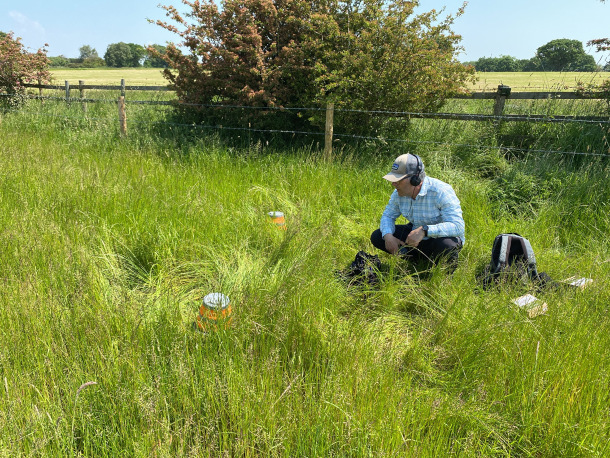
Listening to sounds in the soil is a minimally invasive way to measure biodiversity underground.

Remember when you were a kid and thought millipedes and bugs in general were icky?

It turns out, those tiny critters in the soil help to make the planet healthy. Just listen to them.

From Luca Ittimani at the Guardian: “Ever wondered what the Earth sounds like? New research suggests healthy soil has a distinctive soundtrack of its own – the crackles, pops and clicks of ants and worms bustling around underground.

“Scientists from Australia’s Flinders University listened to microphones planted in the ground to see if invertebrate instrumentals are a good indicator of biodiversity and soil health. Land filled with plants and tiny animals carried diverse underground sounds, while cleared land only had bland white noise, they found.

“ ‘It’s a bit like going to the doctor,’ the ecologist Dr Jake Robinson said. ‘They put a stethoscope on your chest, take a health check, listen to your beating heart … we’re doing something similar in the soil.’ He said the effectiveness of the microphone method could make it easier for researchers, conservationists and farmers to find and fix soil degradation. …

“Insects and other invertebrates build up soils, improve their nutrient content and prevent erosion, so their presence is a good indication of soil health.

Soil full of worms carries low bubbly sounds, while lighter, six-legged ants make frequent higher-pitched clicks, Robinson said.

“ ‘A millipede has lots of tiny legs and they make little tapping sounds, whereas the snail has a more slimy glide sound,’ he said.

“Because the noises cannot be heard by the human ear, scientists set up microphones that pick up vibrations from contact with the dirt – then amplify the recording by 20 decibels. …

“Robinson and his colleagues reviewed hundreds of hours of recordings from 240 locations around Mount Bold in South Australia, near Adelaide, adding to previous research in the UK. … The new study confirmed the acoustic method worked just as well as traditional methods of checking soil health, which include expensive DNA testing or destructive methods such as digging up the soil or laying traps for invertebrates. …

“Audio tech may even be able to improve soil health. Robinson’s forthcoming research found playing certain sound frequencies can speed up growth of fungi and bacteria that fend off plant diseases.”

At the Guardian, here, you can listen to healthy soil. Similarly, at Living on Earth, here, or at The World, here.

Read Full Post »

Photo: Neal’s Yard Dairy/Instagram.
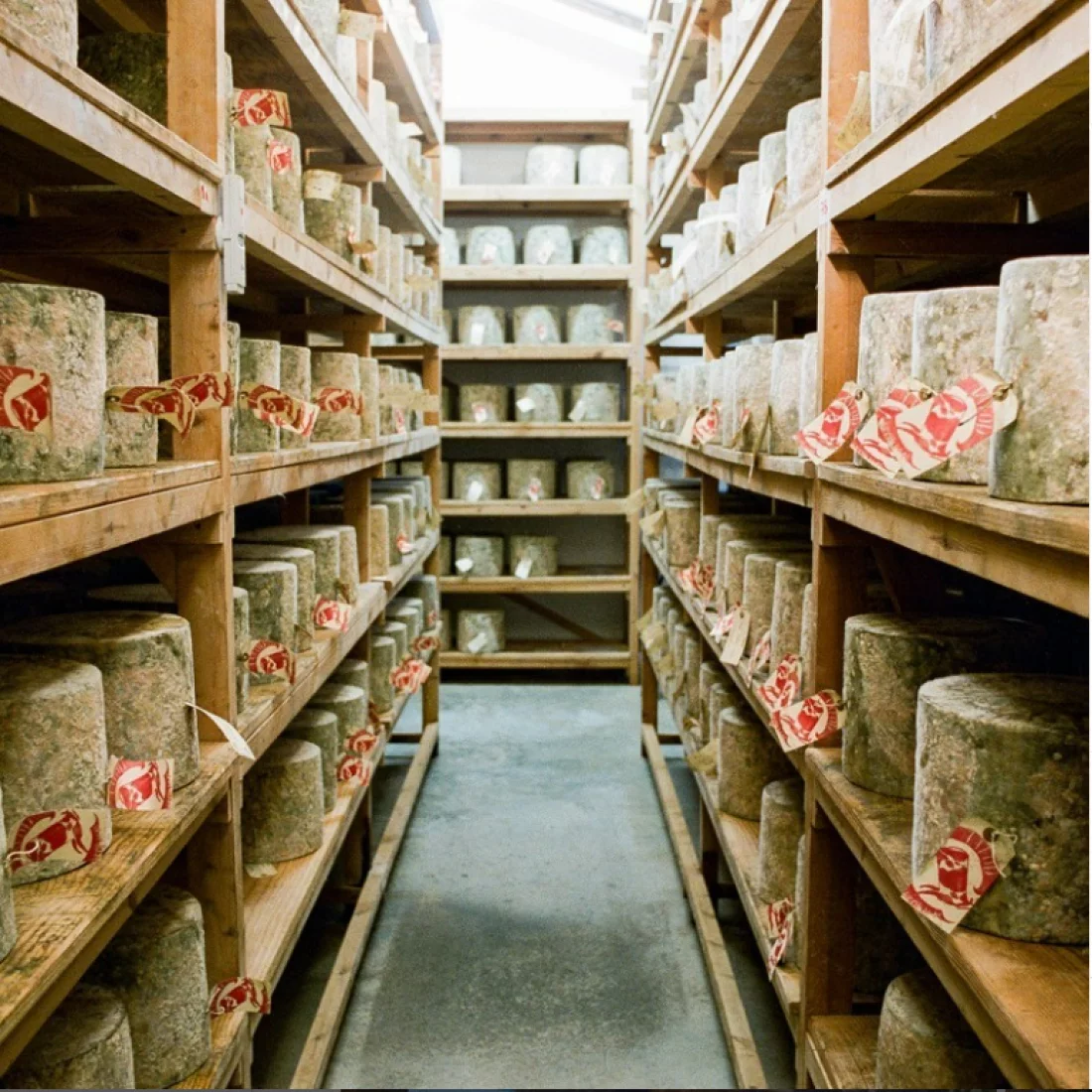
London-based distributor Neal’s Yard Dairy announced recently on Instagram that it was “the victim of a sophisticated fraud” involving high-value cheddar cheese.

You really don’t want to get mixed up with people who are intense about cheese. Years ago, when I was a member of Cheese Lovers International, I crossed knives with the highly emotional founder, whose name I no longer recall. To compensate for something I once complained about, he told me he would give me a discount on every order for my life. Unfortunately, his staff had no way of knowing about my discount. Explaining got to be too much work.

Rachel Treisman and Juliana Kim have a great cheese story at National Public Radio.

“Authorities in London have arrested a 63-year-old man in connection with the cheese heist of 2024, in which tens of thousands of pounds of high-value cheddar were stolen from a major distributor. ..

“ ‘The man was taken to a south London police station where he was questioned. He has since been bailed pending further enquiries,’ a police spokesperson said.

“Over the past week, the British artisanal cheese community has been reeling after Neal’s Yard Dairy announced it had been the ‘victim of a sophisticated fraud resulting in the loss of over £300,000 worth of clothbound Cheddar’ — the equivalent of more than $389,000.

“ ‘The theft involved a fraudulent buyer posing as a legitimate wholesale distributor for a major French retailer, with the cheese delivered before the discovery of the fraudulent identity,’ the company said.

“The thief made off with 950 wheels — over 22 metric tons, or roughly 48,500 pounds — of Hafod, Westcombe and Pitchfork cheddar. … The wheels came from three different artisan suppliers across England and Wales.

“ ‘Between them, these cheeses have won numerous awards and are amongst the most sought-after artisan cheeses in the U.K.,’ Neal’s Yard Dairy said. … The crime cuts deep: Cheddar, which originated in a village by the same name in Somerset, England, is the best-selling cheese in the U.K. and a big source of national pride.

“Last week, British celebrity chef Jamie Oliver explained in an Instagram video that there is ‘only a small handful of real cheddar cheese makers in the world,’ and that’s where the stolen cheese came from. …

“Neal’s Yard Dairy is shouldering the cost of the crime, having already paid the artisan cheesemakers in full. The company says it is now taking steps to ensure its own financial stability. …

“Tom Calver with the cheesemaker Westcombe says they were led to believe they were sending their products to France via Neal’s Yard Dairy.

“ ‘These guys … basically impersonated a wholesaler-slash-customer, quite a large retailer over in France,’ he said in an Instagram video, showing a row of empty shelves and noting he had posted excitedly about the 10-ton order just weeks earlier. ‘It was a hoax, it was theft, it was fraud. I mean, it’s nuts.’

“Patrick Holden, whose Hafod Welsh cheddar was taken, told the BBC … he believes they may be trying to sell it in the Middle East or Russia, ‘because people won’t ask questions there.’

“ ‘I think if they tried to sell it closer to home they’d find it difficult,’ he said, naming North America and Australia as examples. ‘Because the international artisan community is very connected.’ …

“Neal’s Yard Dairy is asking its ‘esteemed community of cheesemongers around the world’ to keep an eye out for the cheese and contact them if they are offered or receive any suspicious deals — especially clothbound cheddars of certain weights (10 kg and 24 kg) with the tags detached. …

“ ‘Because we can potentially trace it back — hopefully, maybe, I don’t know.’ “

I have one more question: Where was Ratatouille at the time of the crime?

More at NPR, here.

Read Full Post »

« Newer Posts - Older Posts »